
The requests landing in my inbox have shifted. Fewer couples want plain stacked tiers with one safe flower on top; more arrive with photos of heavy vintage piping, bows, pearls, sculptural shapes, even a decorated sheet cake beside a dessert table. Smooth buttercream hasn’t gone anywhere, and color is coming back through softer florals. What matters more than the trend is fit: the venue’s temperature, the season, the menu and how many people you’re feeding. Here are 25 cake styles couples are booking now, with the practical side of each from the baker’s bench.
Turning a Saved Photo Into a Brief Your Baker Can Price
Most couples send me a screenshot and ask how much it costs. The honest answer depends on what’s in the photo that you can’t see: hours of hand piping, sugar flowers made over several days, or a structure that has to be built and delivered in pieces. A good brief speeds up the quote and avoids surprises.
- Your guest count and whether the cake is the only dessert.
- The venue, the room the cake will sit in and whether it’s indoors or out.
- Two or three photos, with a note on what you like about each one: the shape, the piping, the color.
- Your budget range, so the baker can suggest where to save.
Where the money goes
Hand time is the biggest cost. Lambeth piping, sugar flowers and sharp square corners take far longer than a smooth buttercream round. If the design you love is over budget, I’d look at a smaller display cake with kitchen sheet cake behind it, swapping some sugar flowers for fresh ones, or keeping heavy detail to one tier. Prices vary a lot by region and baker, so compare like with like.
1. Vintage Wedding Cake
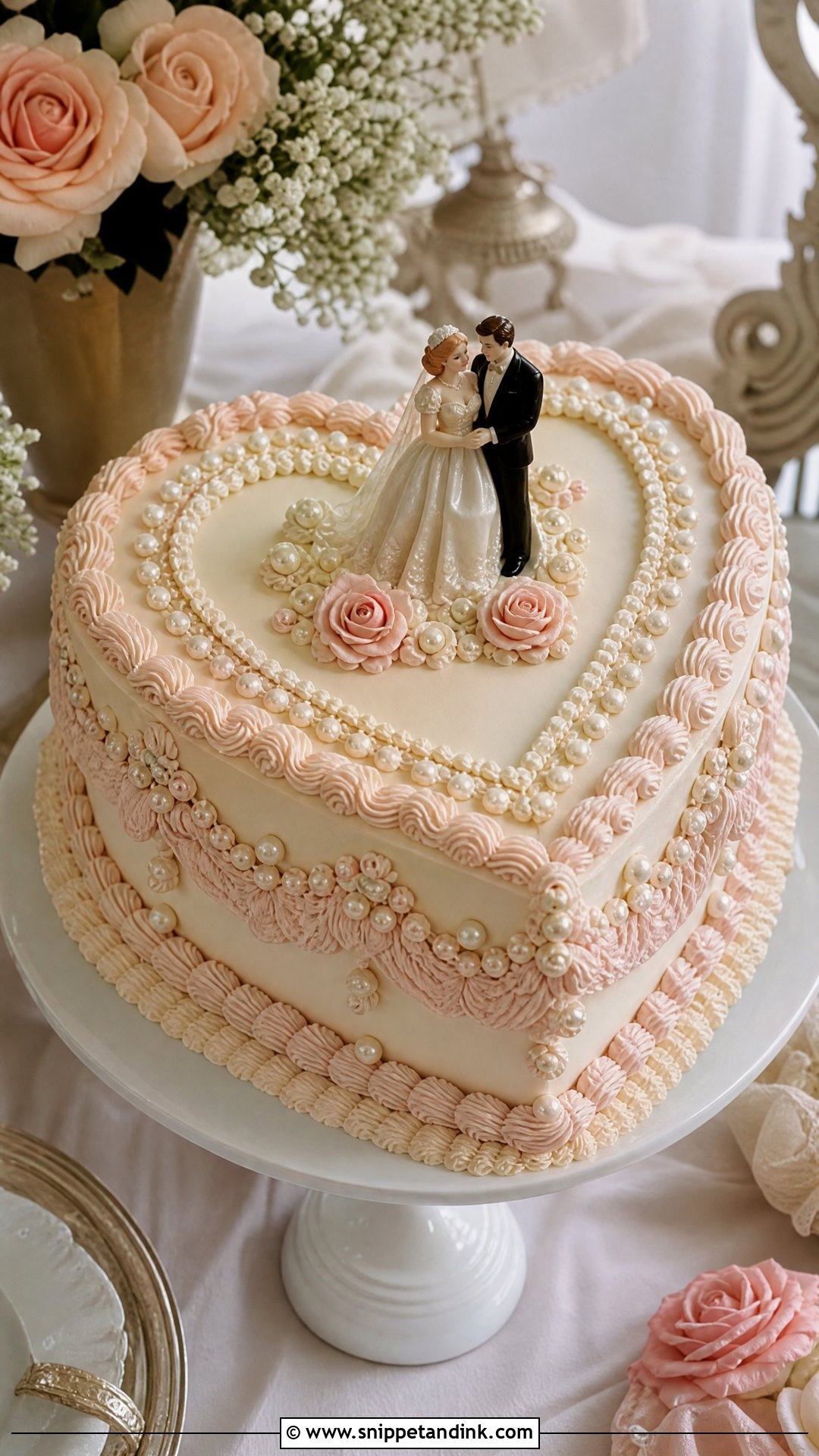
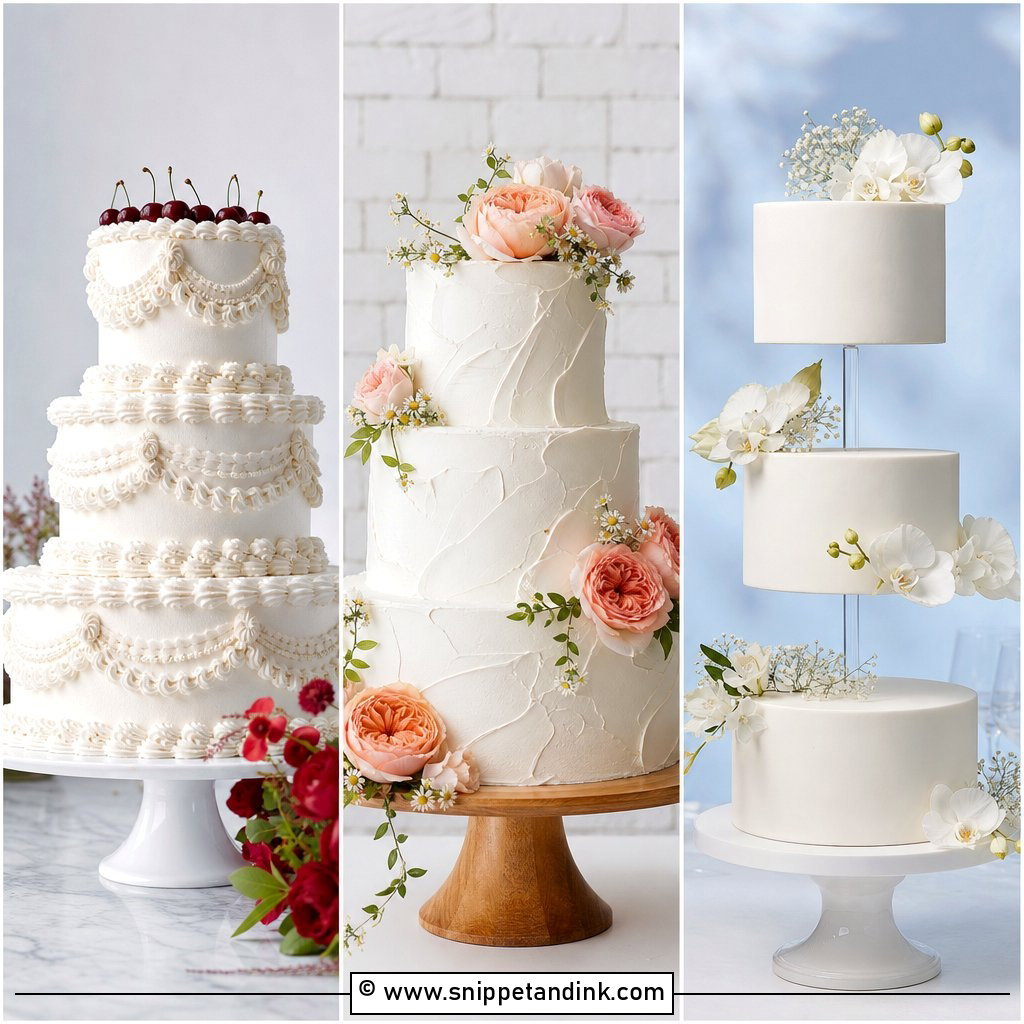
Vintage cakes lean on buttercream piping: shell borders, ruffles, pearl dots and swags in pastel accents. They work as a heart-shaped cake, a tall single tier or a two-tier centerpiece. The line between charming and childish is color, so I steer couples toward ivory, blush, butter yellow or powder blue rather than bright pink. Vanilla bean, almond, lemon or raspberry-filled layers suit it, and glacé cherries on top are a nice nod to the era.
2. Lambeth Wedding Cake
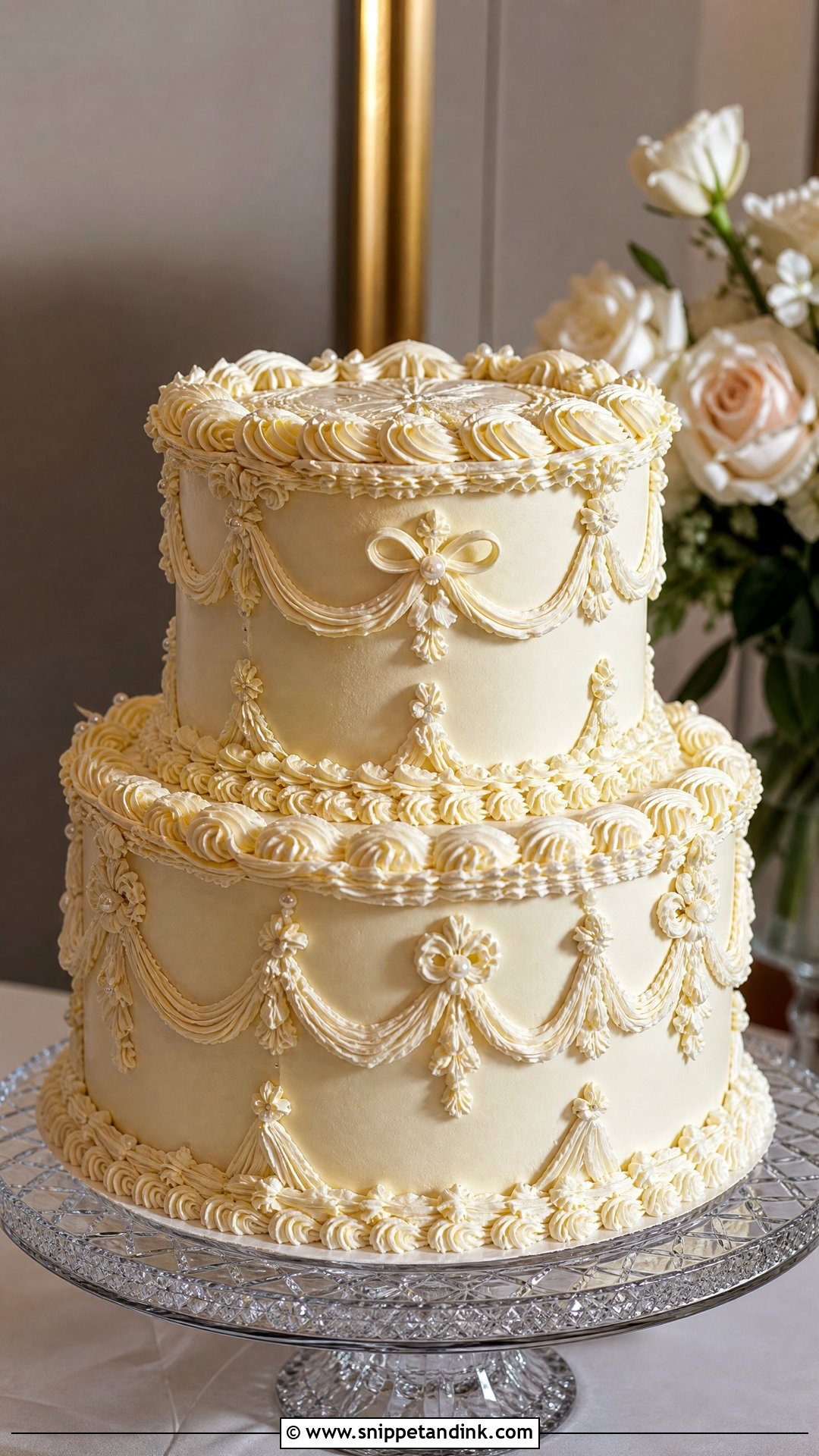
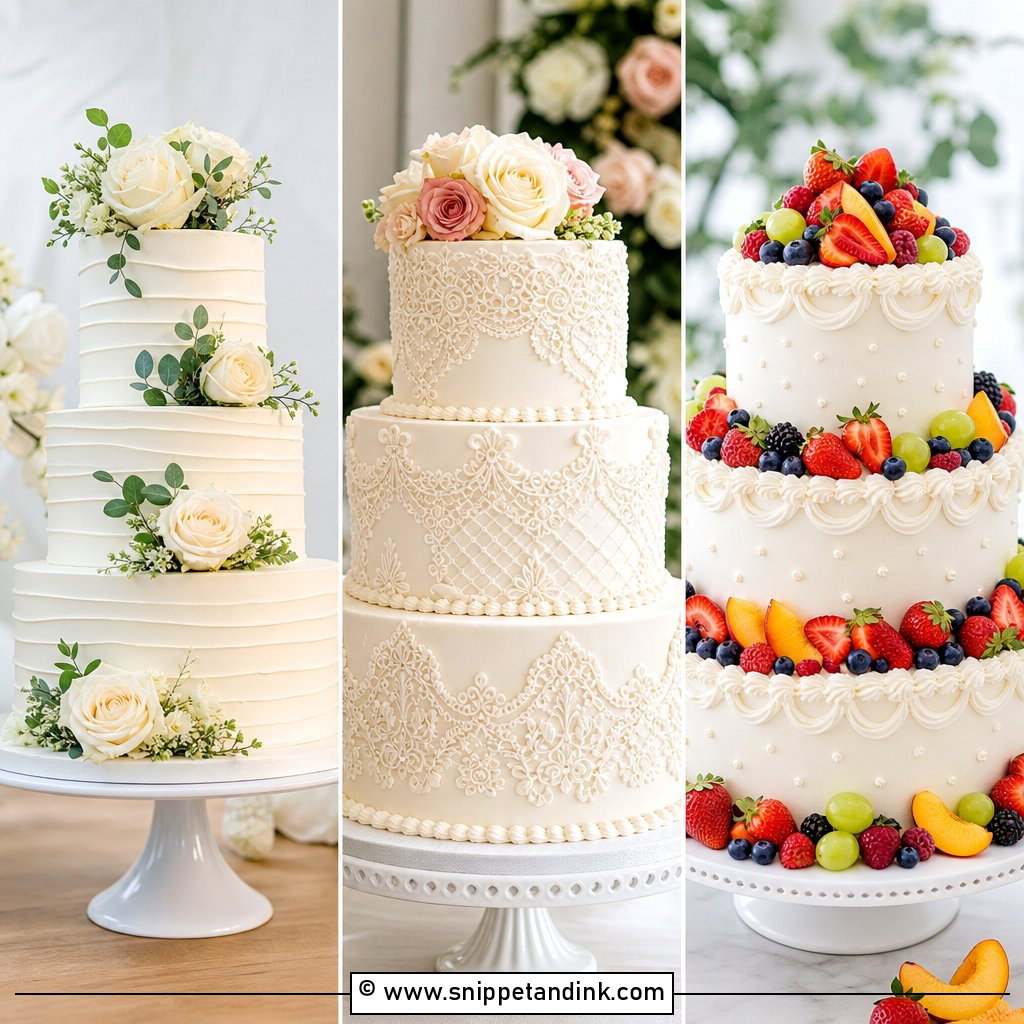
Lambeth is a specific technique, not just a lot of piping. Layers of piped scrolls, swags and borders are built on top of each other, so the decoration stands proud of the cake and throws strong shadows. It’s slow work and priced accordingly. I pipe it in a firm buttercream or royal icing, since soft frosting slumps under the weight of overpiping. All white is classic, blush is romantic, and pale blue with ivory piping is very current. Keep the flavor clean and the stand plain.
3. Pearl Wedding Cake
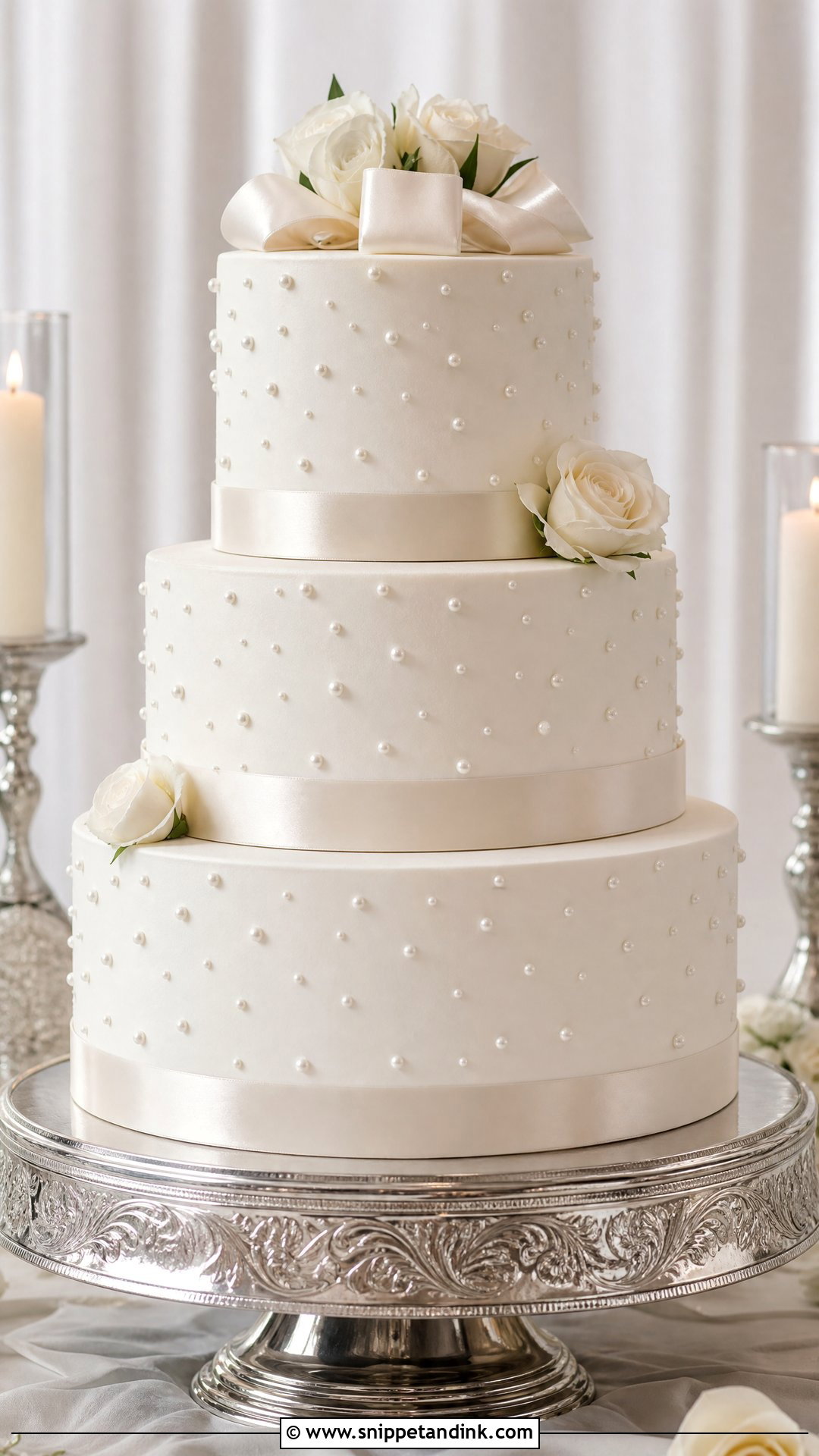
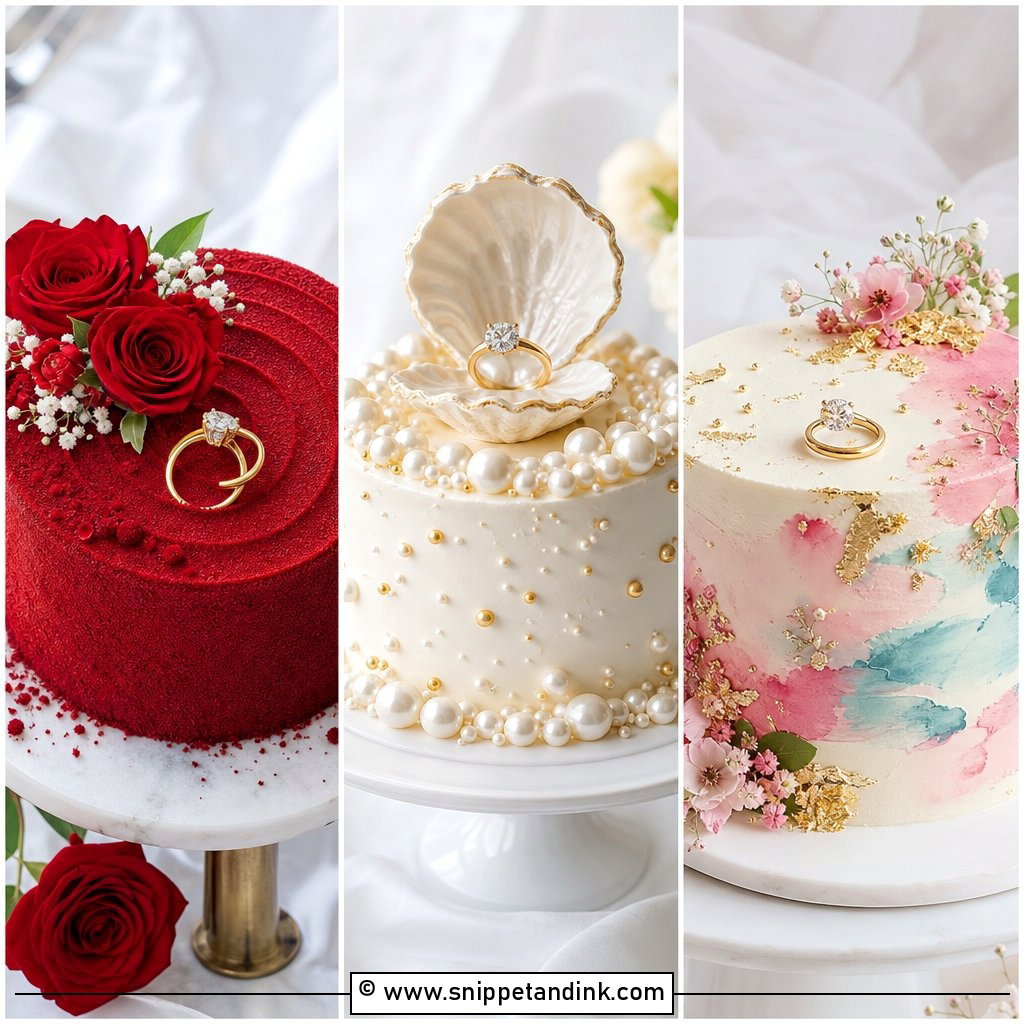
Edible pearls can be scattered, lined along tier edges or arranged in swags, and placement makes the difference between refined and heavy. On buttercream I press them in while the coat is still slightly soft; on fondant they need a dot of edible glue. Hard sugar pearls are crunchy and some guests won’t expect it, so I keep them away from the cutting side. Ivory frosting, white roses and a silk ribbon suit them, with vanilla bean, coconut, almond or white chocolate layers inside.
4. Bow Wedding Cake
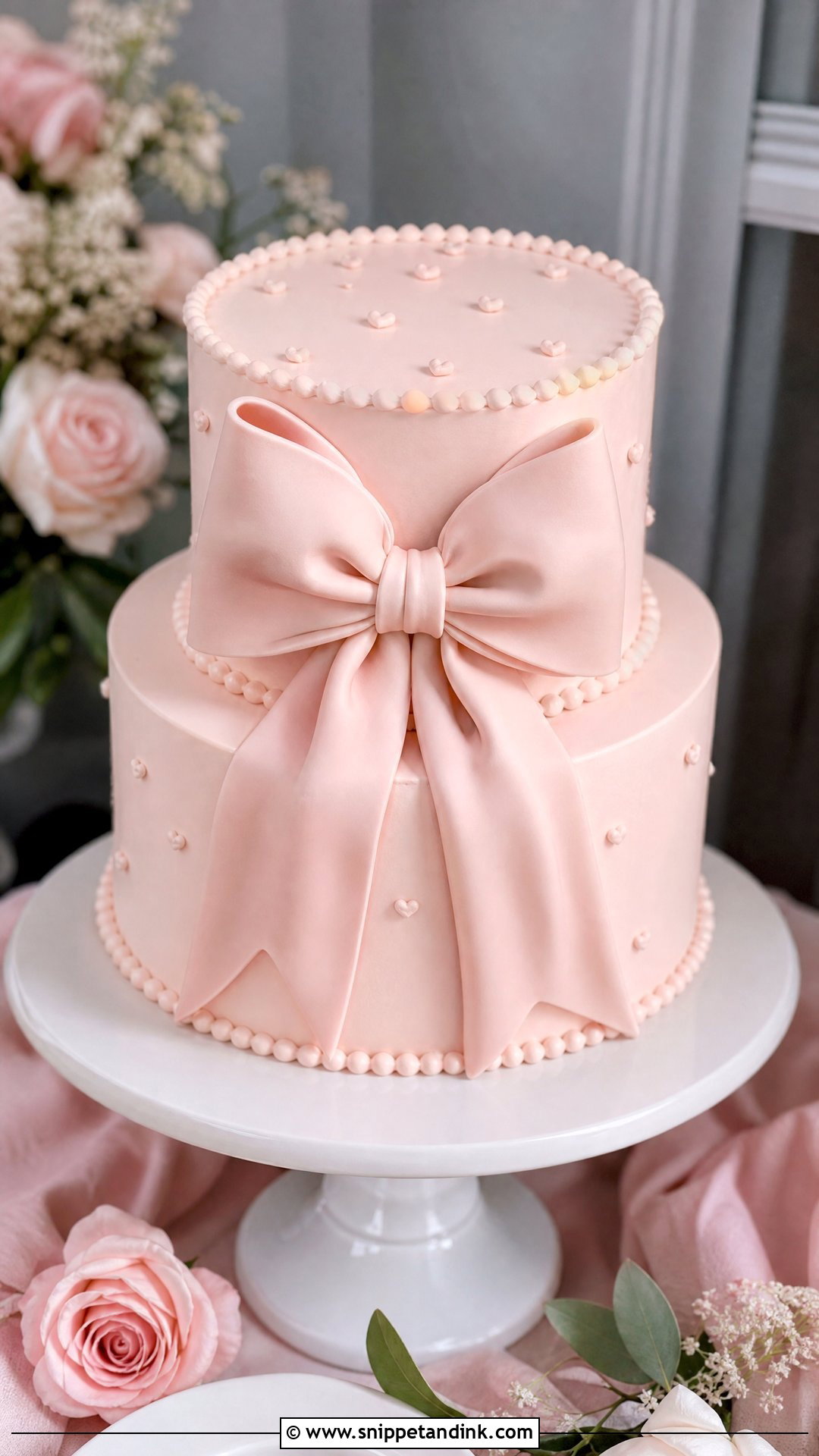
One large bow on a clean tier looks modern; lots of small piped bows give that coquette, vintage feel. A bow wedding cake can use fondant, wafer paper, gum paste, buttercream or real ribbon kept off the frosting with a barrier. Large gum paste bows need several days to dry hard before they can stand up on their own, so they can’t be rushed. Soft colors like ivory, blush, butter yellow and pale pink suit the shape, with strawberry, vanilla, almond or lemon inside.
5. Pressed Flower Wedding Cake
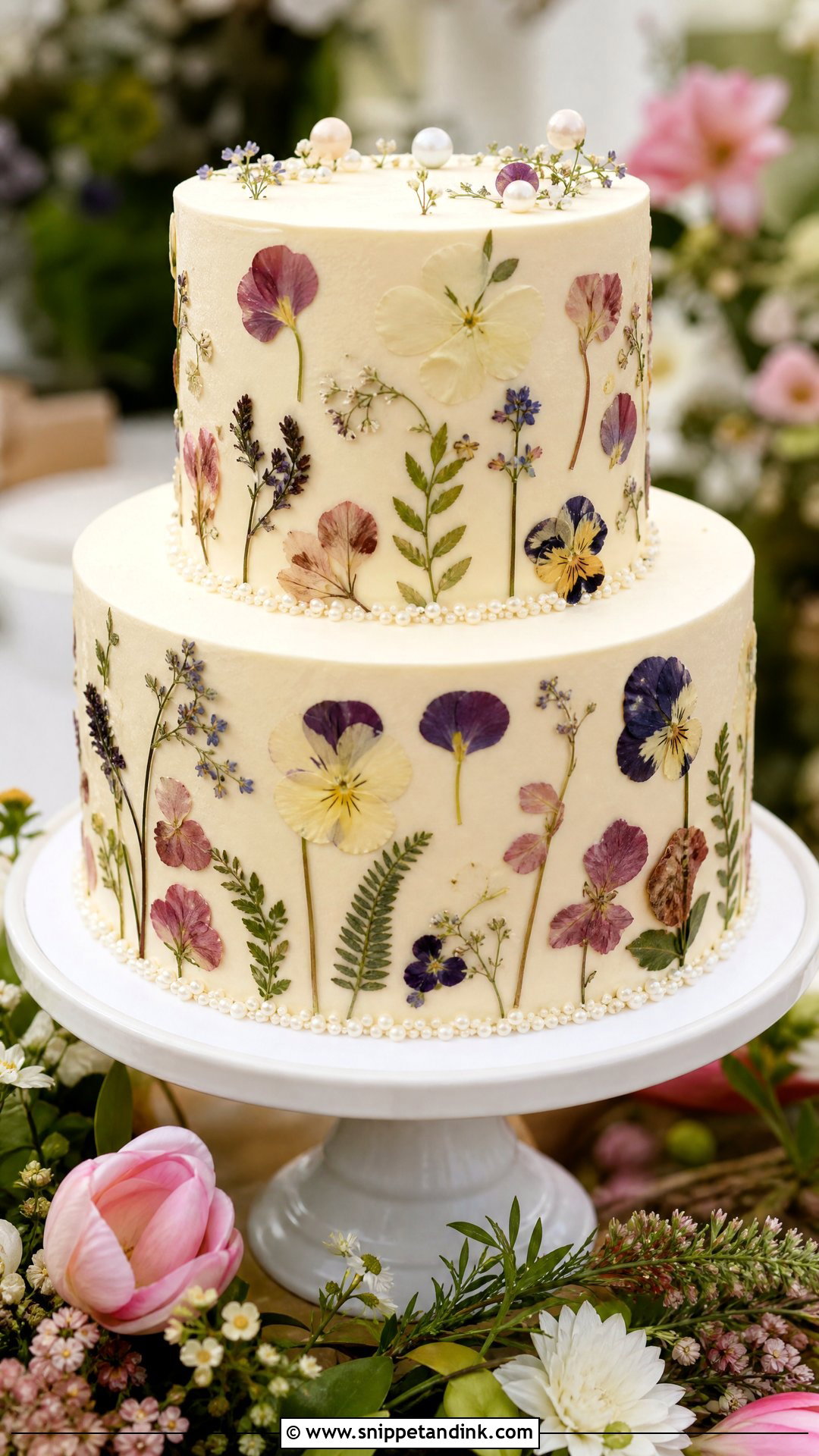
Pressed flowers lie flat against buttercream or fondant, so they give a botanical look without any height. They have to be edible varieties grown without pesticides, like pansies, violas, cornflowers and calendula, sourced from a supplier who grows for food. A flower pulled from the bouquet is not safe. I place them in a loose pattern rather than covering every inch, and add them close to delivery, because moisture from buttercream can make petals darken. Lemon, honey, lavender and berry flavors suit a spring garden wedding.
6. Buttercream Wedding Cake
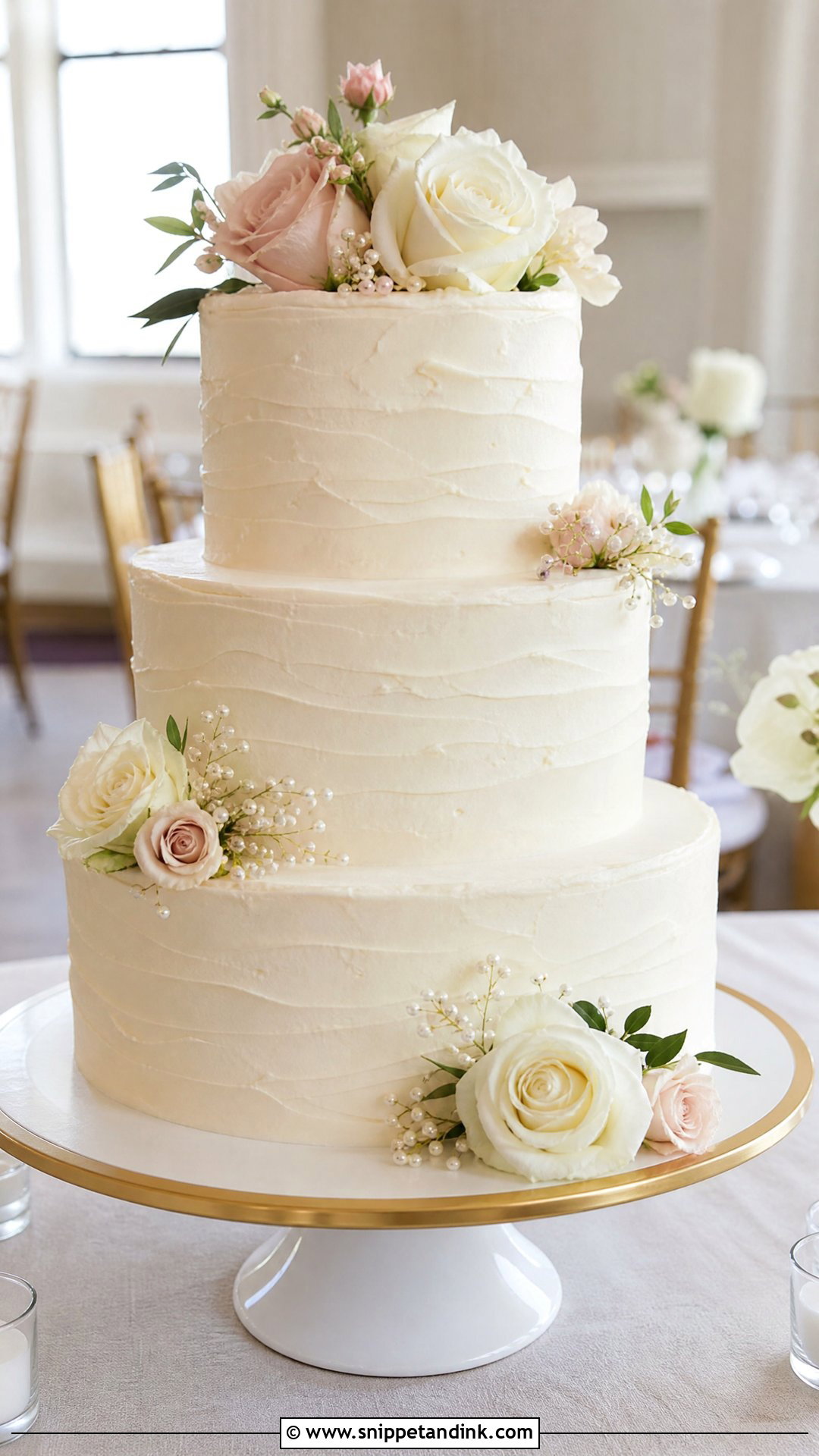
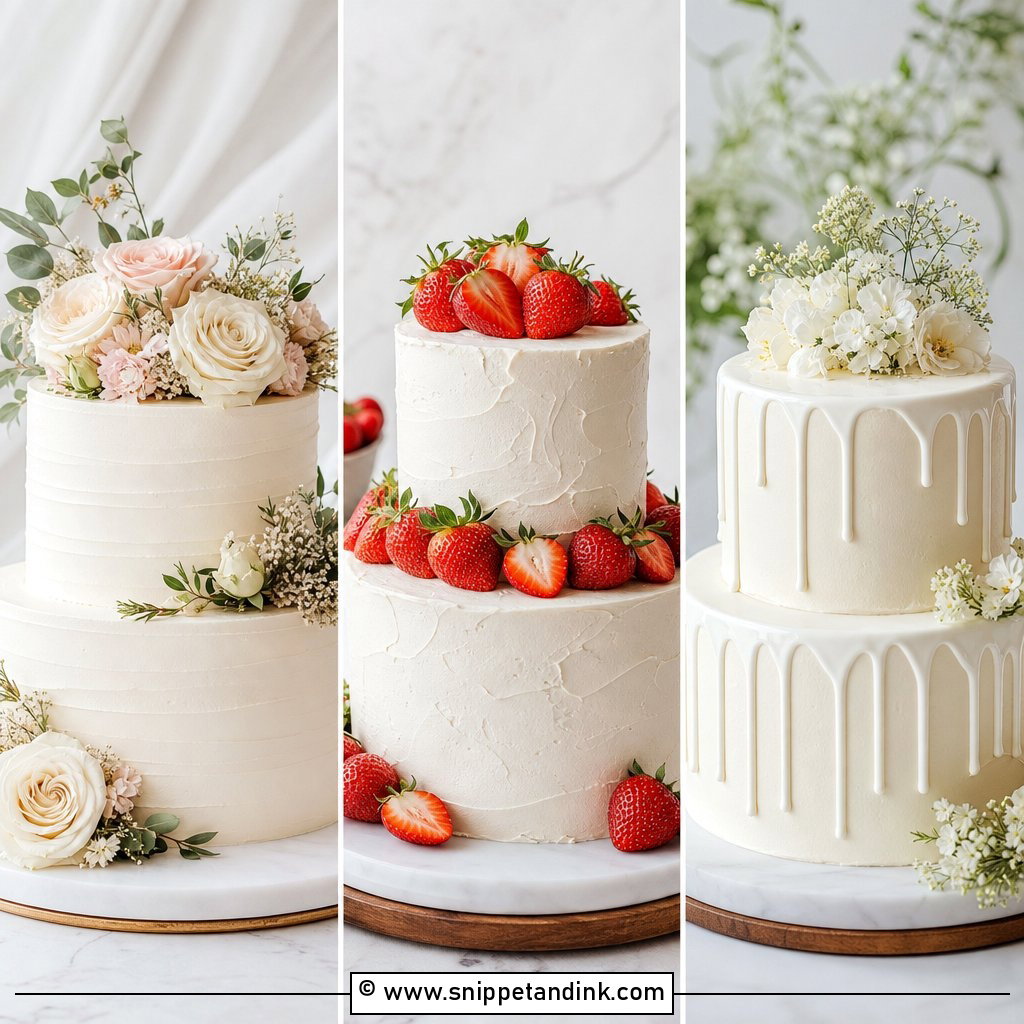
Buttercream is what most guests actually want to eat. It can be smooth, combed or finished with loose spatula marks, and it fits a barn as easily as a hotel ballroom. The question I always ask is how warm the room will be. Meringue-based buttercreams taste light but soften quickly in heat, while American-style or ganache-backed cakes hold up better. Ask your baker how long the cake can safely stand out on display. Fresh flowers, piped borders, fruit, pearls or ribbon all finish it.
7. Minimalist Wedding Cake
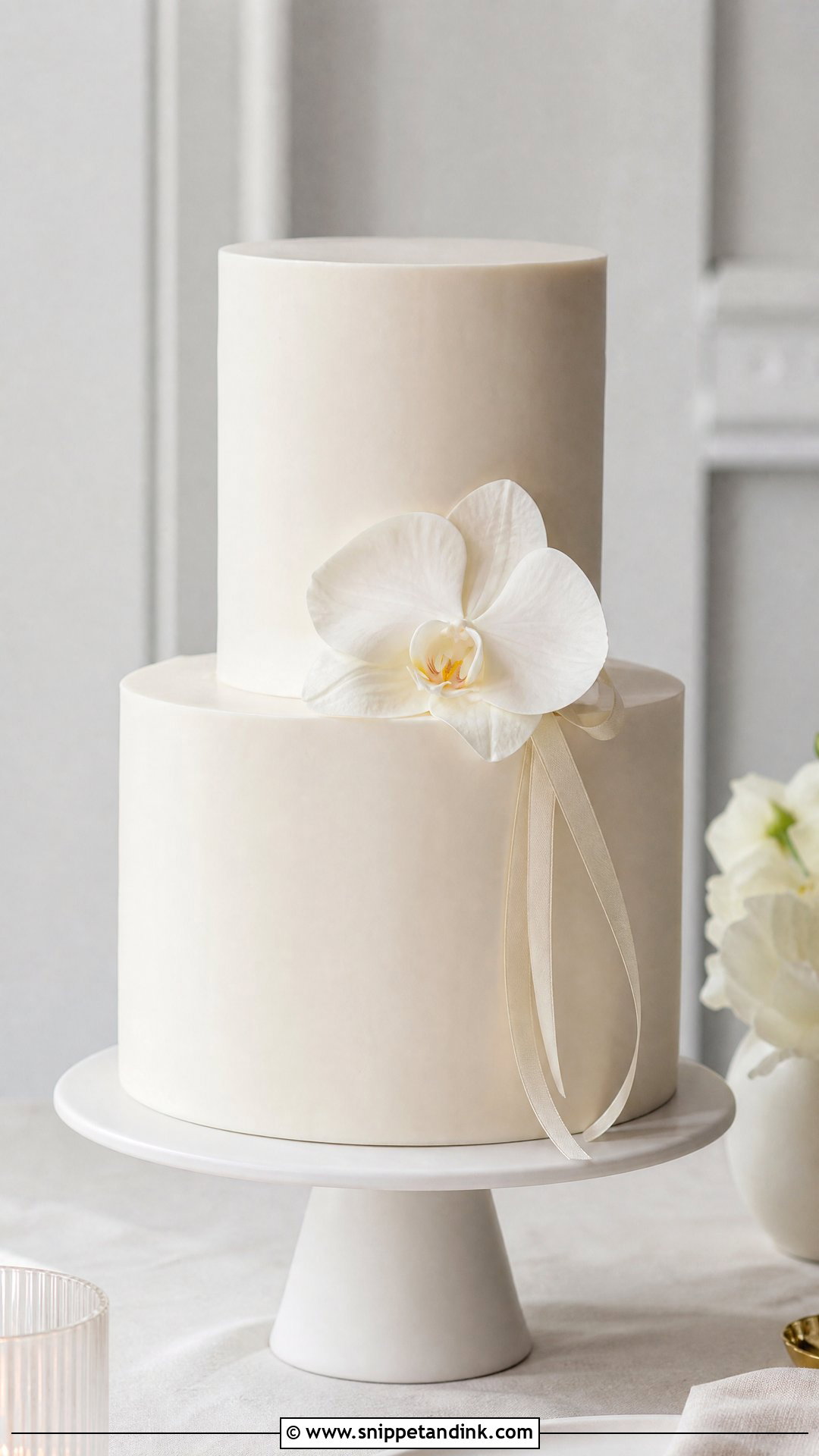
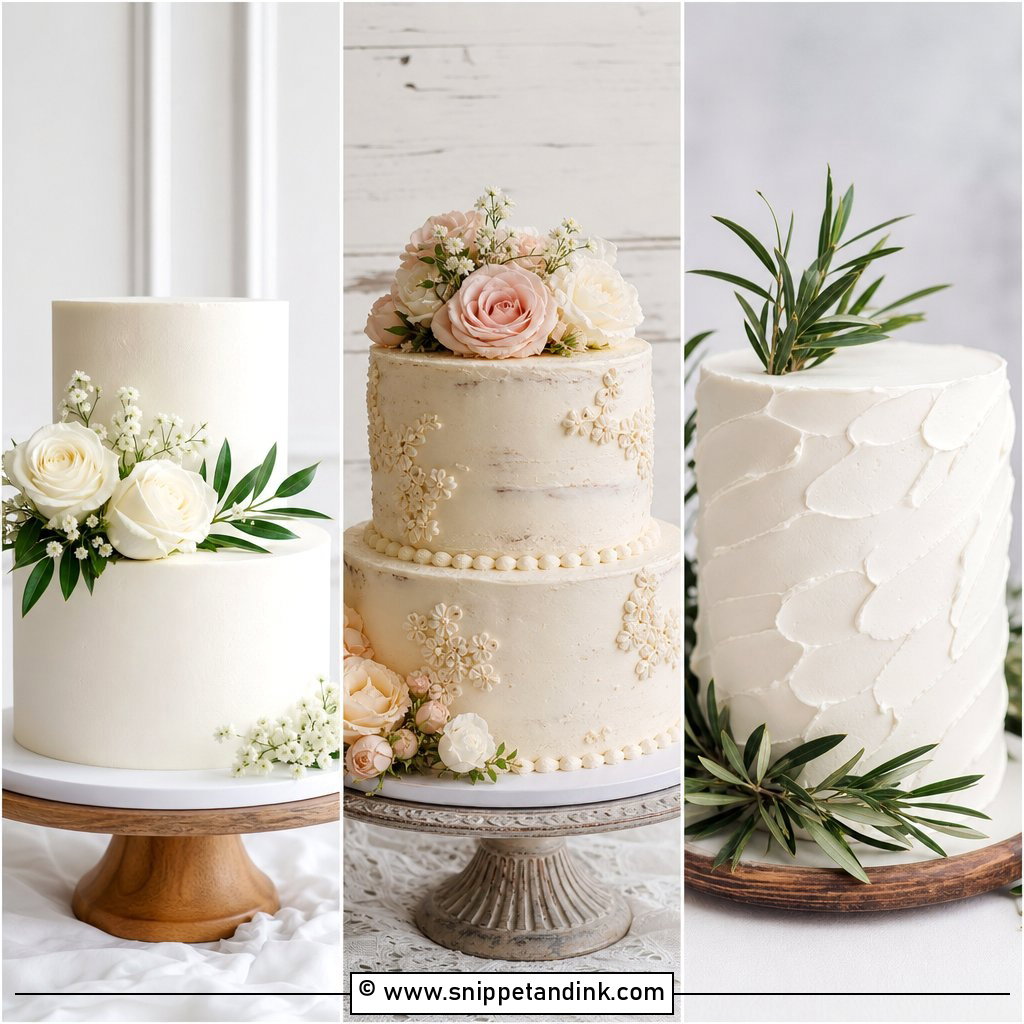
A minimalist cake has nowhere to hide. With smooth frosting, clean edges, a quiet color and one deliberate detail like a single sugar flower or a curved edge, every bump and air bubble shows. I chill between coats and use a hot scraper for the final pass to get it truly flat. It suits modern venues, courthouse weddings and small receptions. Because the look is simple, put the effort into flavor: vanilla bean with raspberry, lemon elderflower, almond cream or chocolate espresso. A sleek stand finishes it.
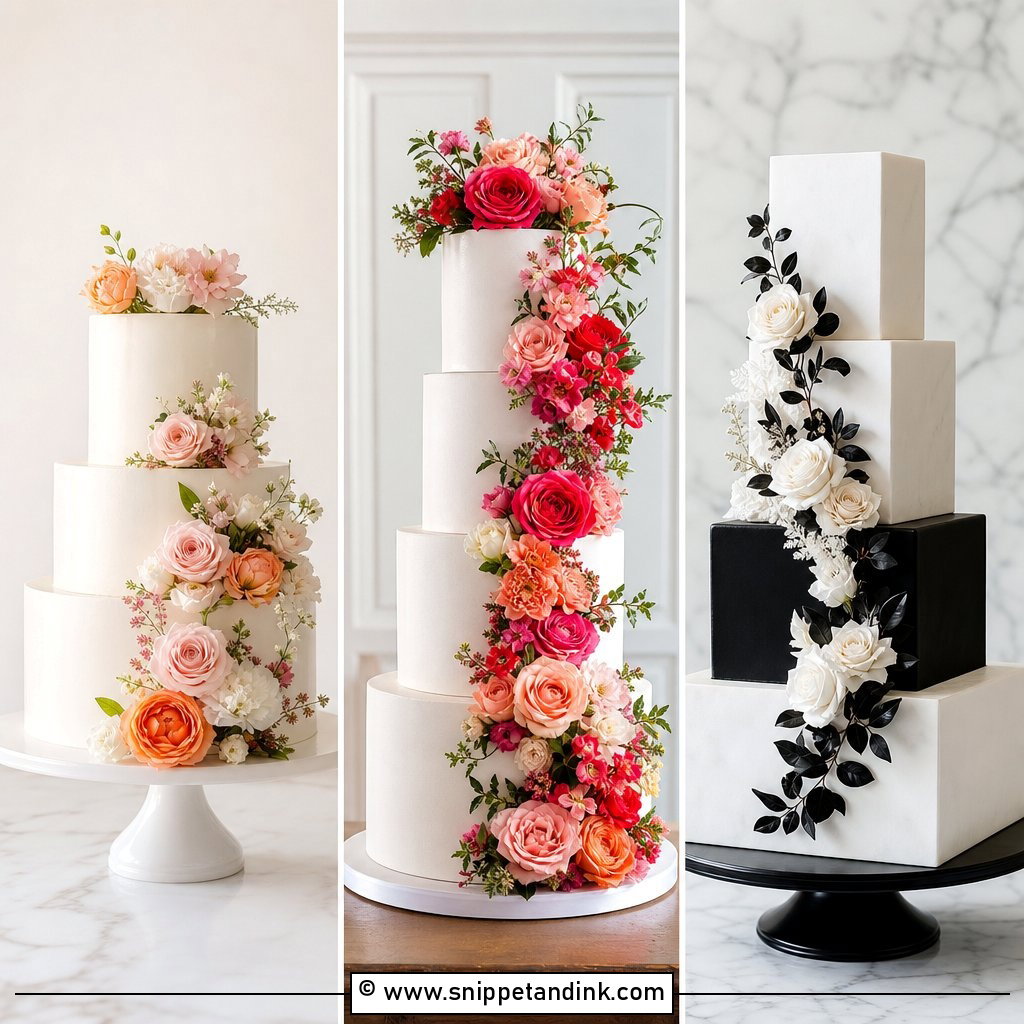
8. Floral Wedding Cake
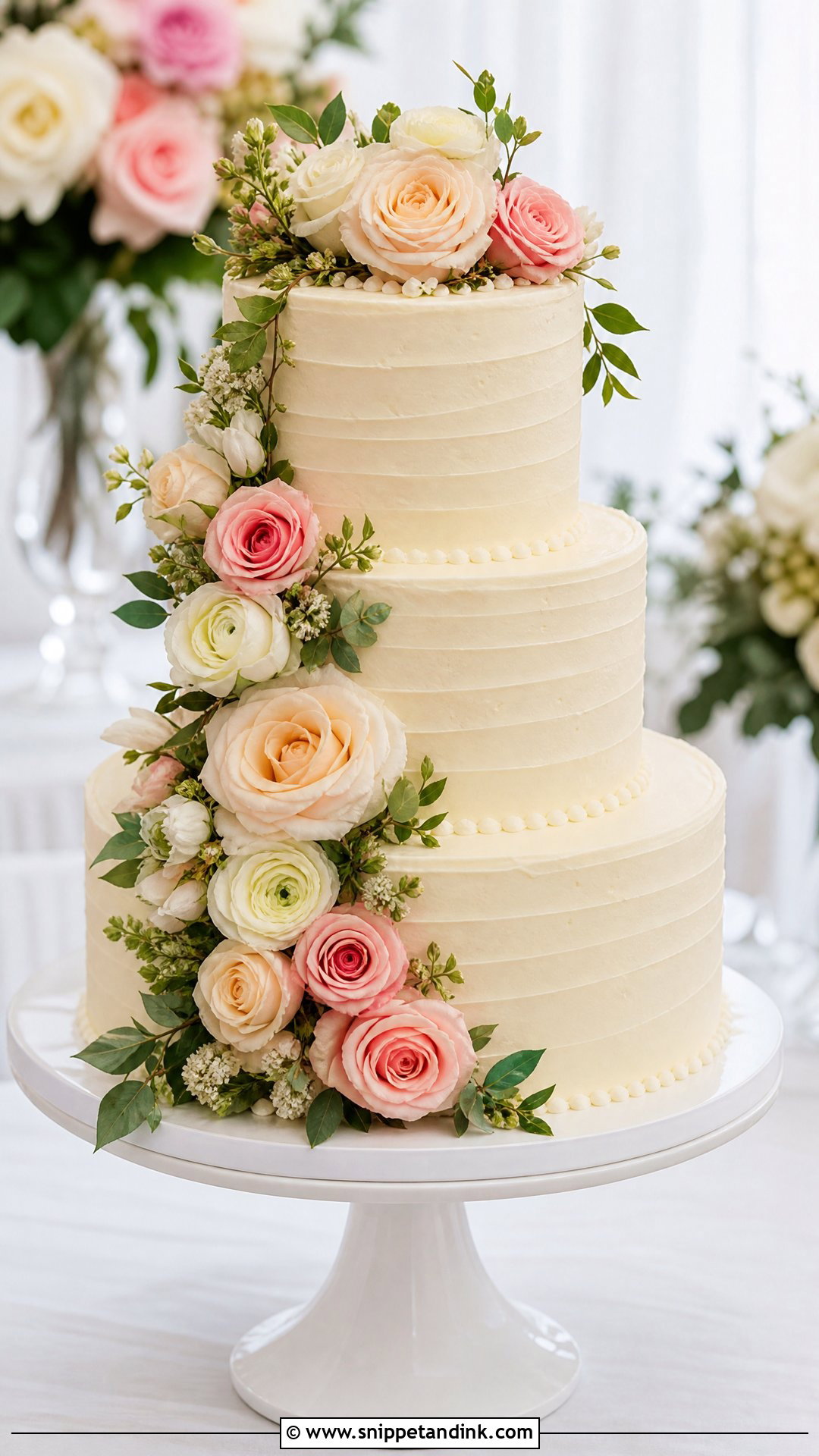
Flowers connect the cake to the rest of the wedding, which is why they’re always requested. Roses and ranunculus read romantic, garden blooms read bold, white orchids and greenery read airy. A floral cake should look designed, not dressed in a rush ten minutes before guests arrive, so I settle placement and timing with the florist well in advance. Stems need to be wrapped and set in picks, and some popular flowers are toxic, so the list should be checked. Match the flowers to the bouquet.
9. Sugar Flower Wedding Cake
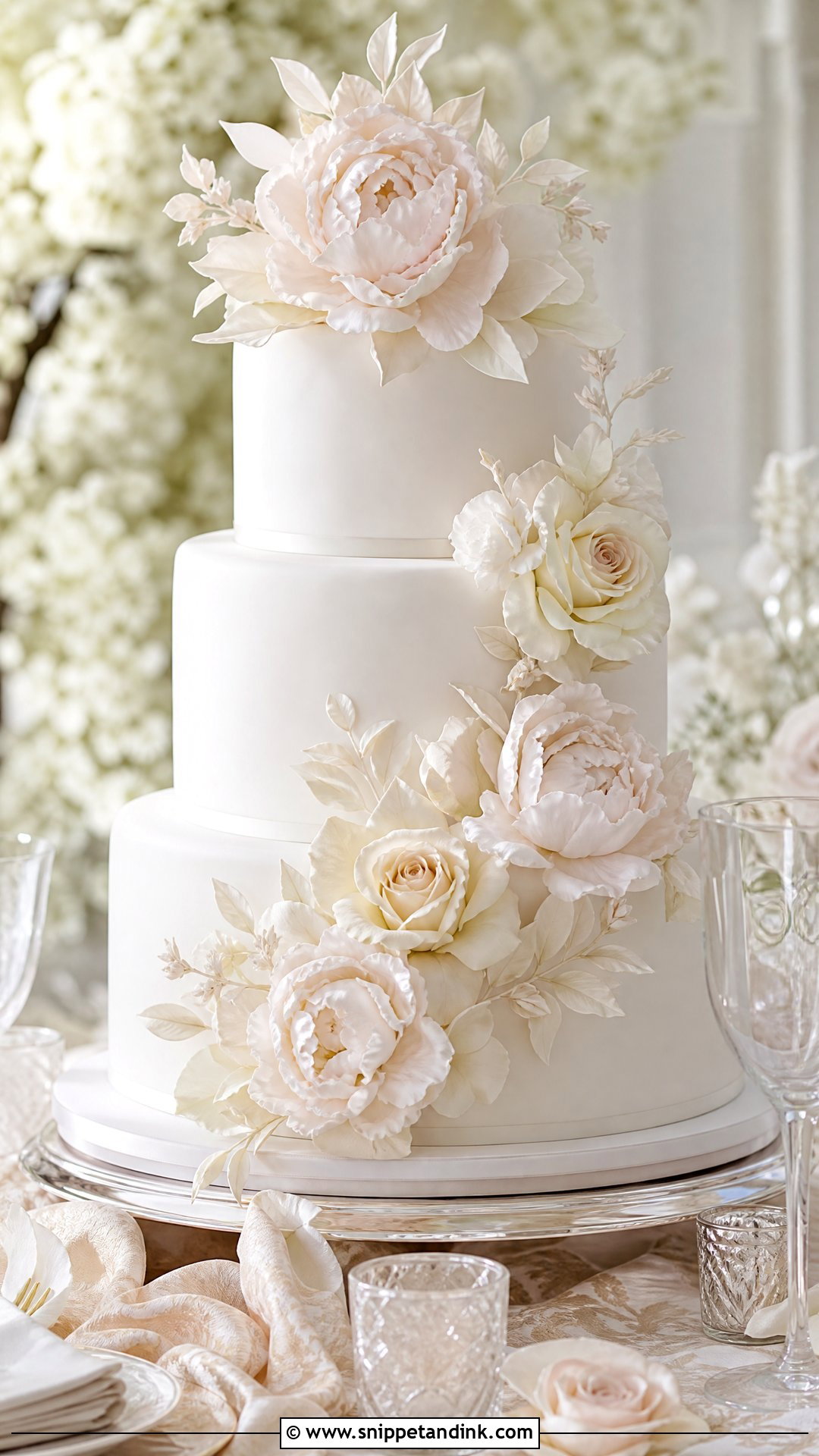
Sugar flowers never wilt, and they’re the answer whenever the flower you love is out of season, fragile or unsafe near food. They can be colored to the exact palette and look remarkably real. They also take hours each to make by hand, petal by petal on wire, which is reflected in the price. A few large blooms make a plain cake look expensive; a cascade suits tall tiers. Smooth fondant or polished buttercream lets the flower work stand out.
10. Textured Wedding Cake
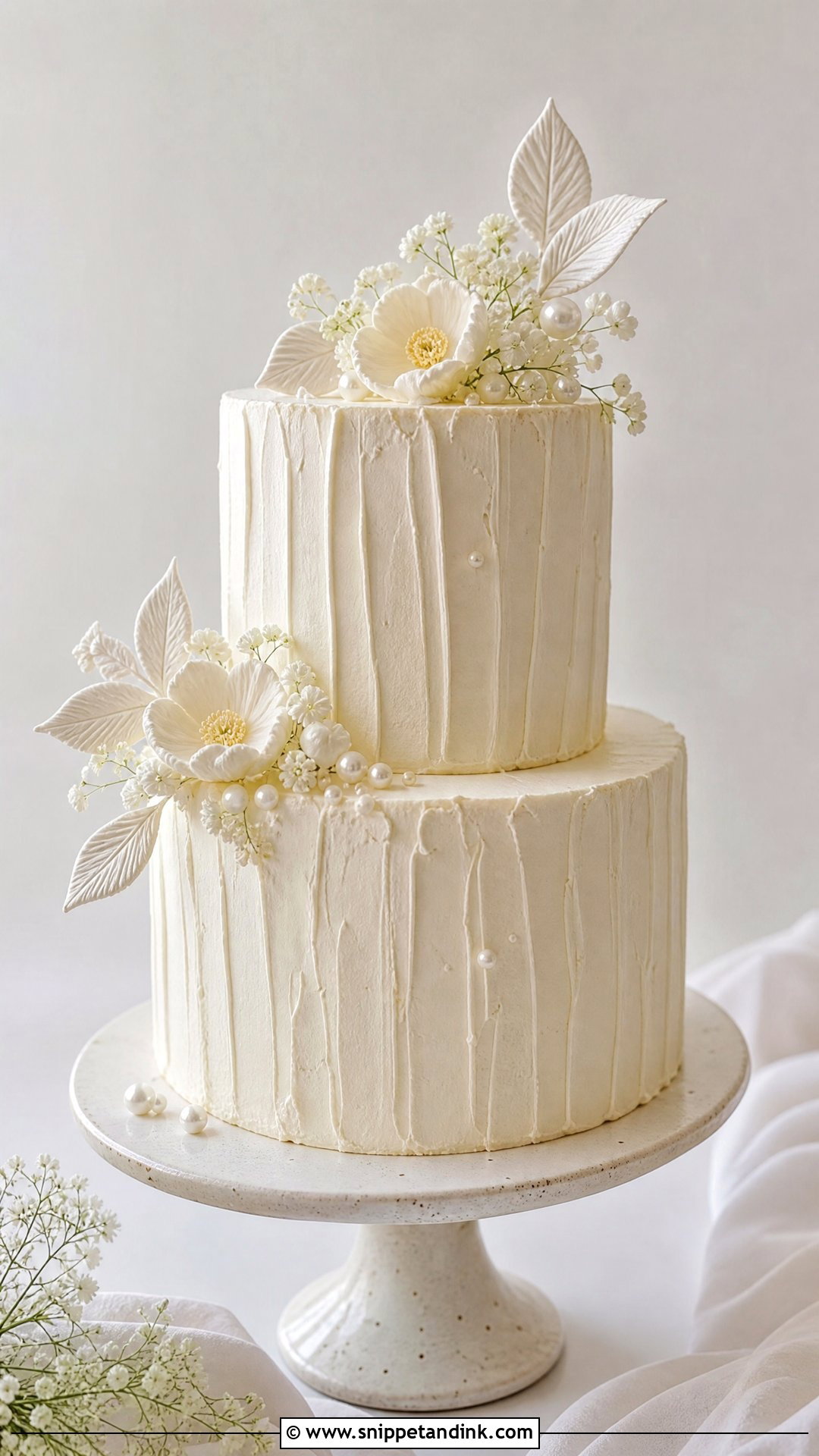
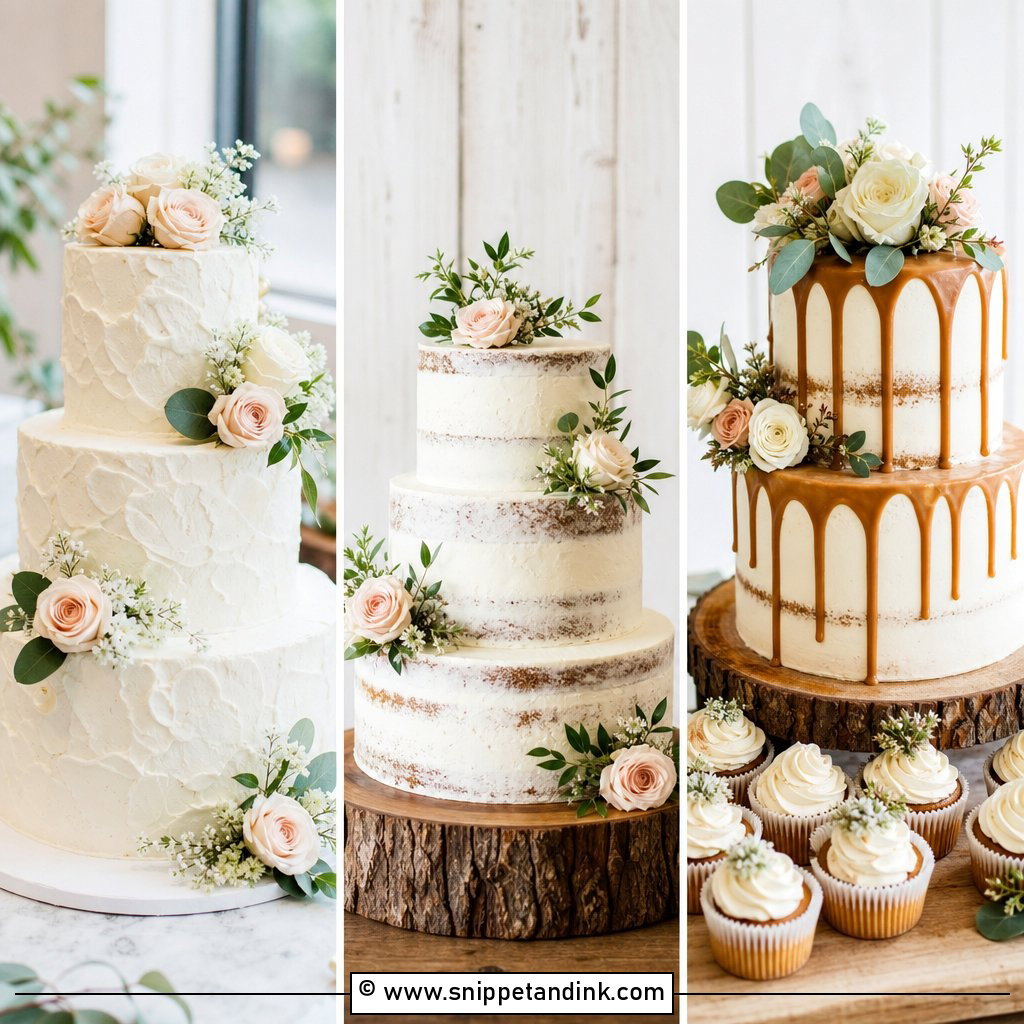
Texture adds depth without any color. Combed buttercream, vertical ridges, palette knife strokes, wafer paper, pleats and plaster-style frosting all give a cake movement. I’d point you here if you want modern but warm. White and ivory look elegant; beige, blush or sage feel more editorial. Texture is also forgiving, hiding small marks that a smooth coat would show. A few flowers, pearls or dried citrus wheels are enough on top.
11. Square Wedding Cake
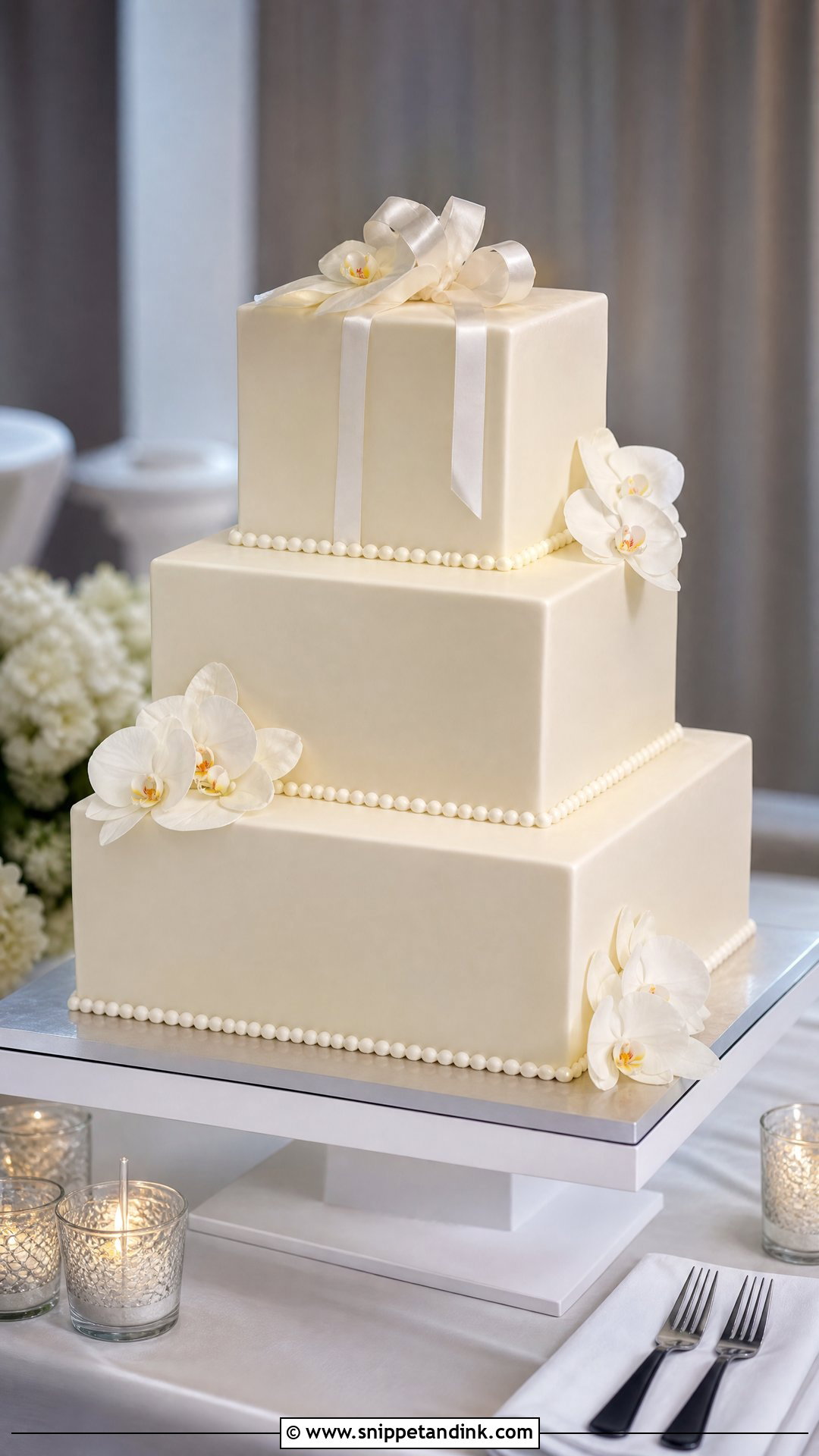
Square tiers stand out precisely because most wedding cakes are round. The corners give an architectural look for city and gallery venues, and mixing square with round tiers softens it. Sharp corners are hard work: fondant can tear there, so I cover the cake in ganache first and use two smoothers at once. Clean florals, pearl borders, pressed flowers or a thin ribbon suit the shape. Square cakes also cut into neat portions, which helps when serving.
12. Oval Wedding Cake
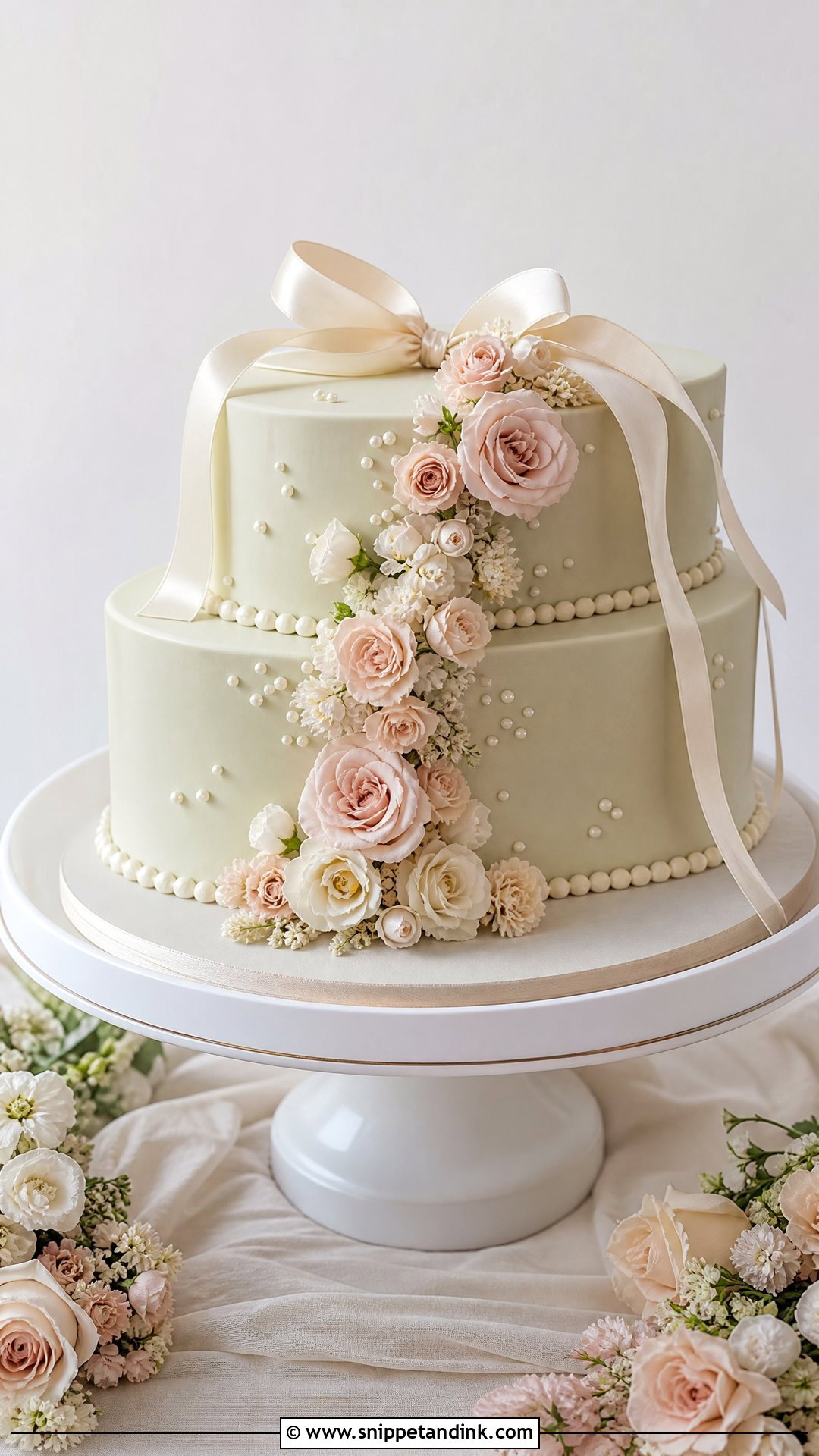
Oval cakes have the softness of a round with a longer face, so they look generous from the front even when small. That makes them good for intimate weddings, and they show off a bow, a cascade or vintage piping across the long side. Keep the finish smooth so the shape reads. Oval pans are less common, so not every baker offers it; ask early. An oval or rectangular table suits the display.
13. Heart Wedding Cake
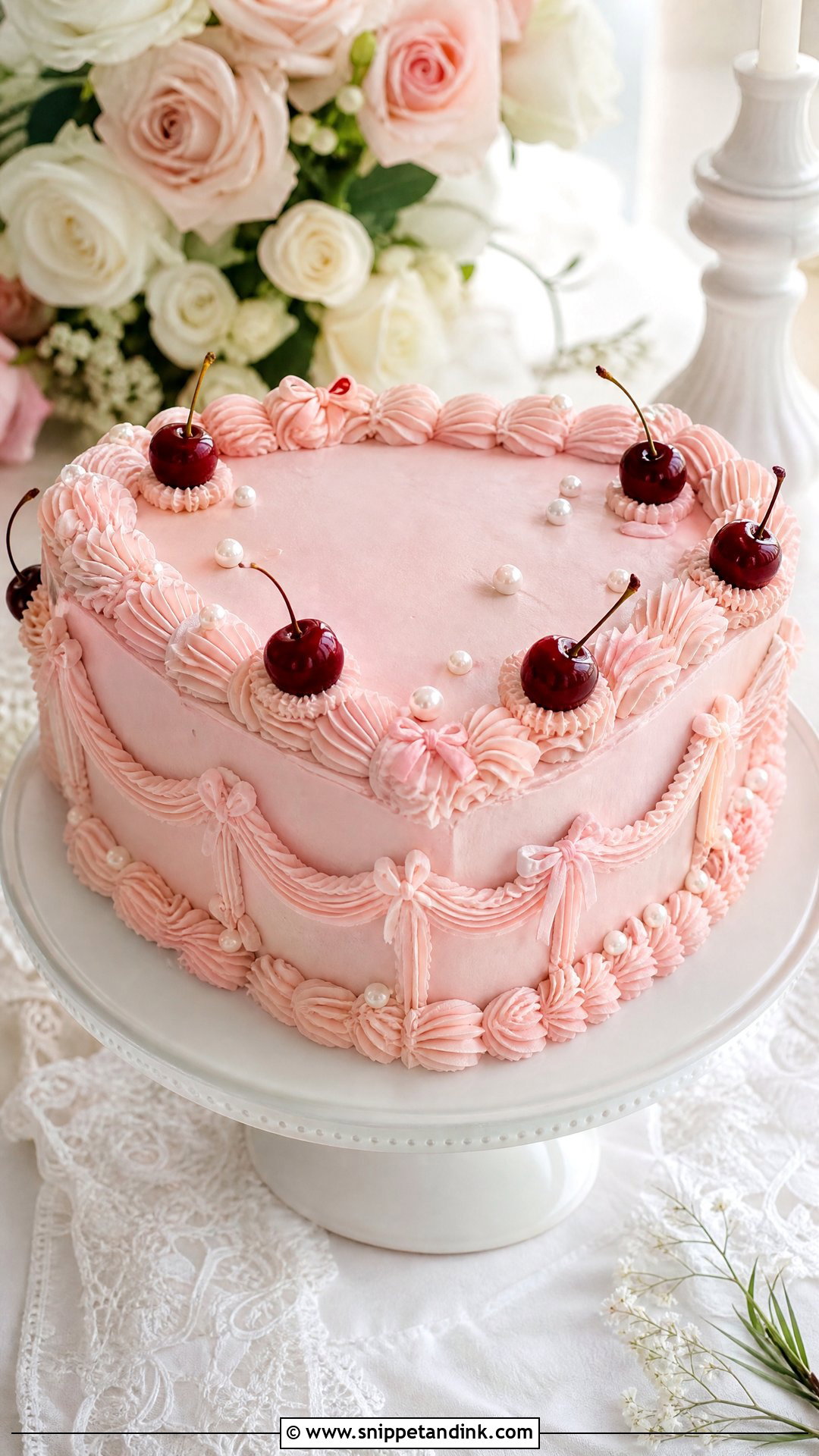
Hearts bring personality and a bit of play. A heart wedding cake can be vintage with piped borders, modern with smooth buttercream or bold with cherries and pearls. The point at the bottom is where piping looks uneven, so I pipe borders from the point outward on both sides to keep them symmetrical. Hearts are popular at small weddings, engagements and showers, and as a cutting cake beside cupcakes or kitchen cake. Ivory, blush, pale blue or soft pink keep it bridal.
14. Tiered Wedding Cake
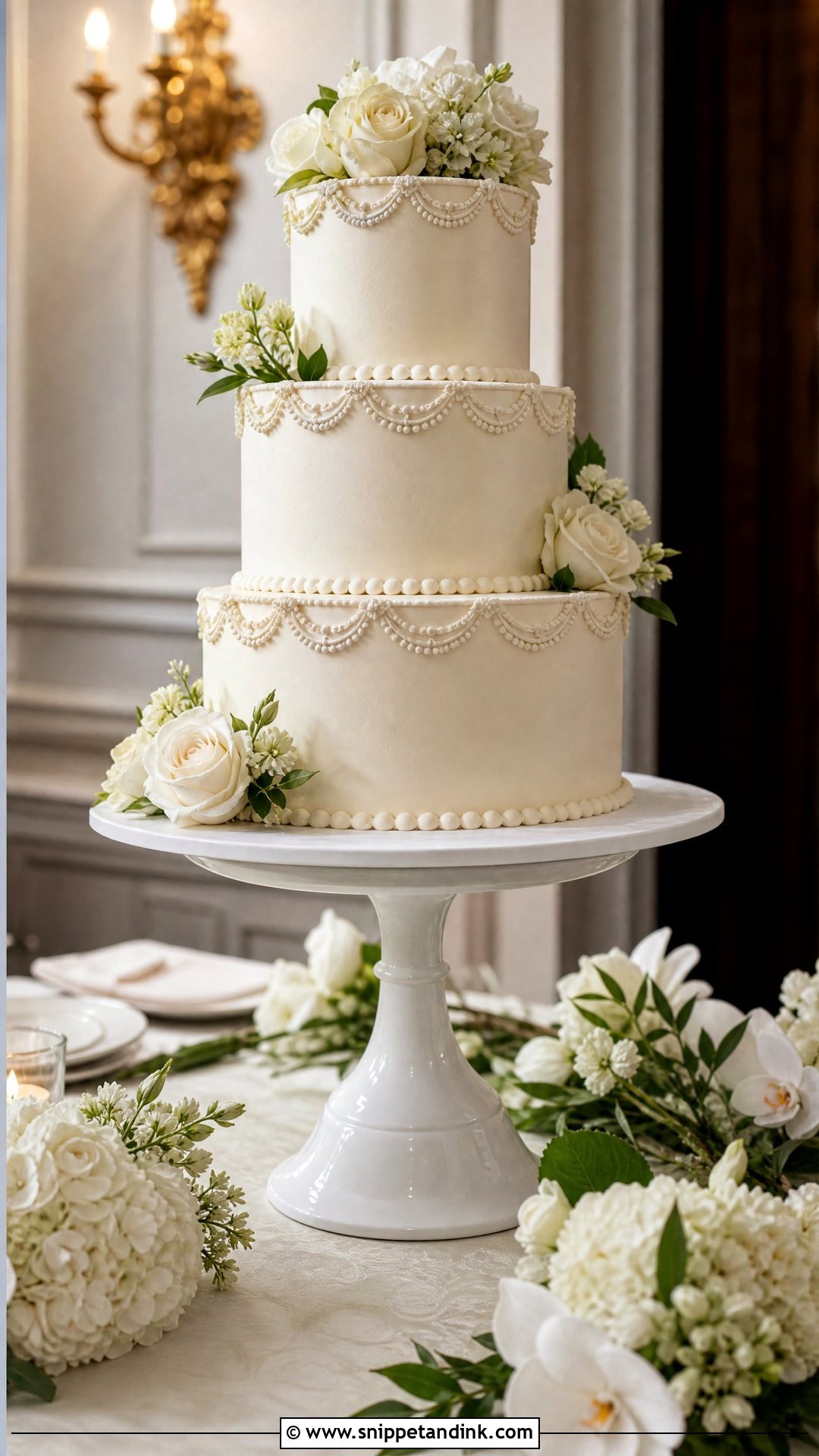
A tiered cake still gives you height and the cutting moment many couples want. The design can be simple or full of flowers, piping, pearls and texture. Proportion to the room matters: a small cake disappears in a ballroom, while a towering one crowds a small dinner. I often add a dummy tier for height when the guest count doesn’t justify a bigger real cake. Different flavors in each tier keep everyone happy, with vanilla, chocolate, lemon and almond as safe choices.

15. Small Wedding Cake
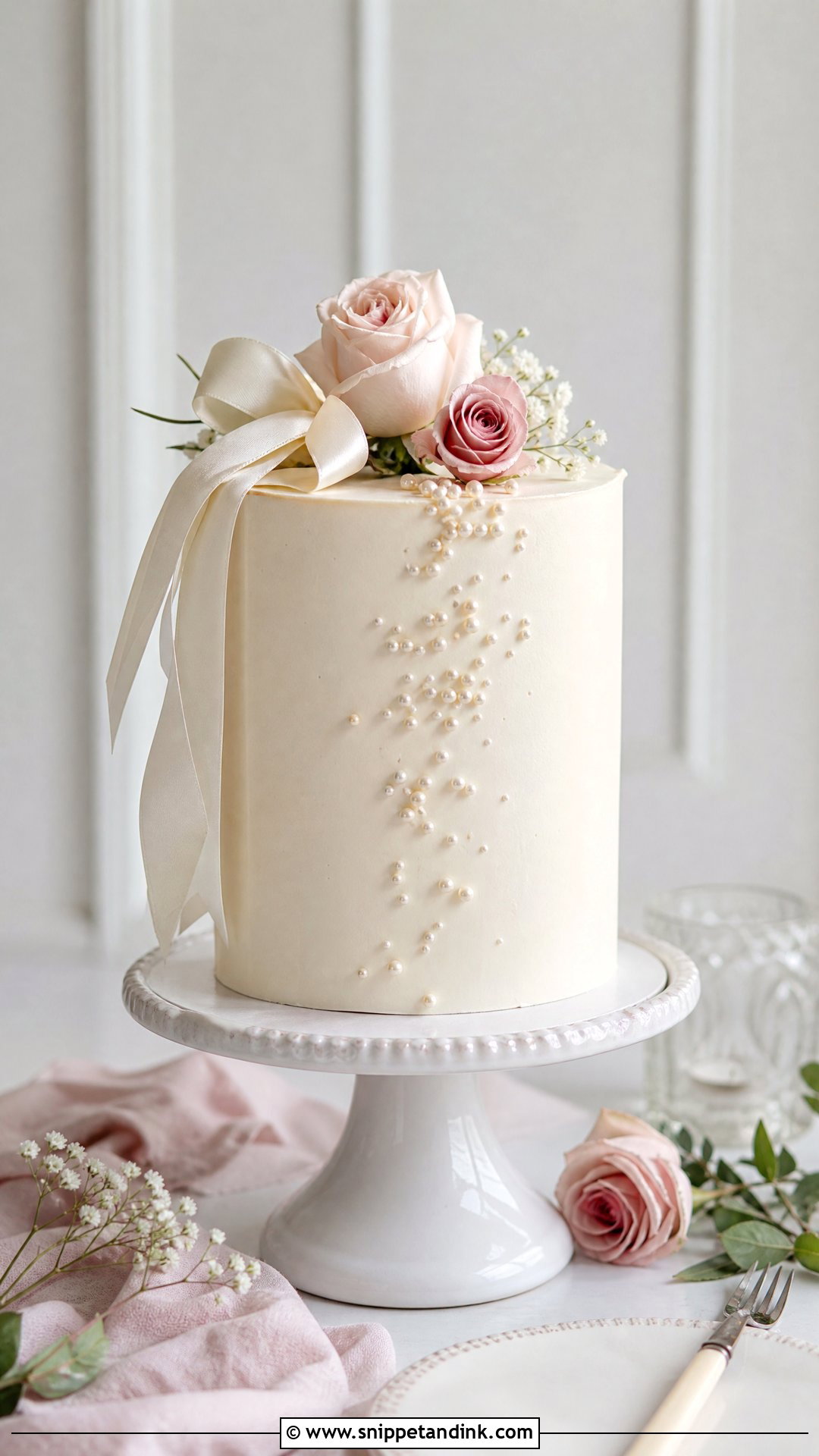
One or two tiers can look special with the right detail, and that’s the advantage of a small cake: with less surface to cover, you can afford more detailed piping or a sugar flower. It suits elopements, intimate weddings and couples who want a cutting cake without over-ordering. Pair it with kitchen sheet cake if you need more servings. Flavor can be more personal, like lemon raspberry, carrot cake, coconut or chocolate fudge.
16. Sheet Wedding Cake
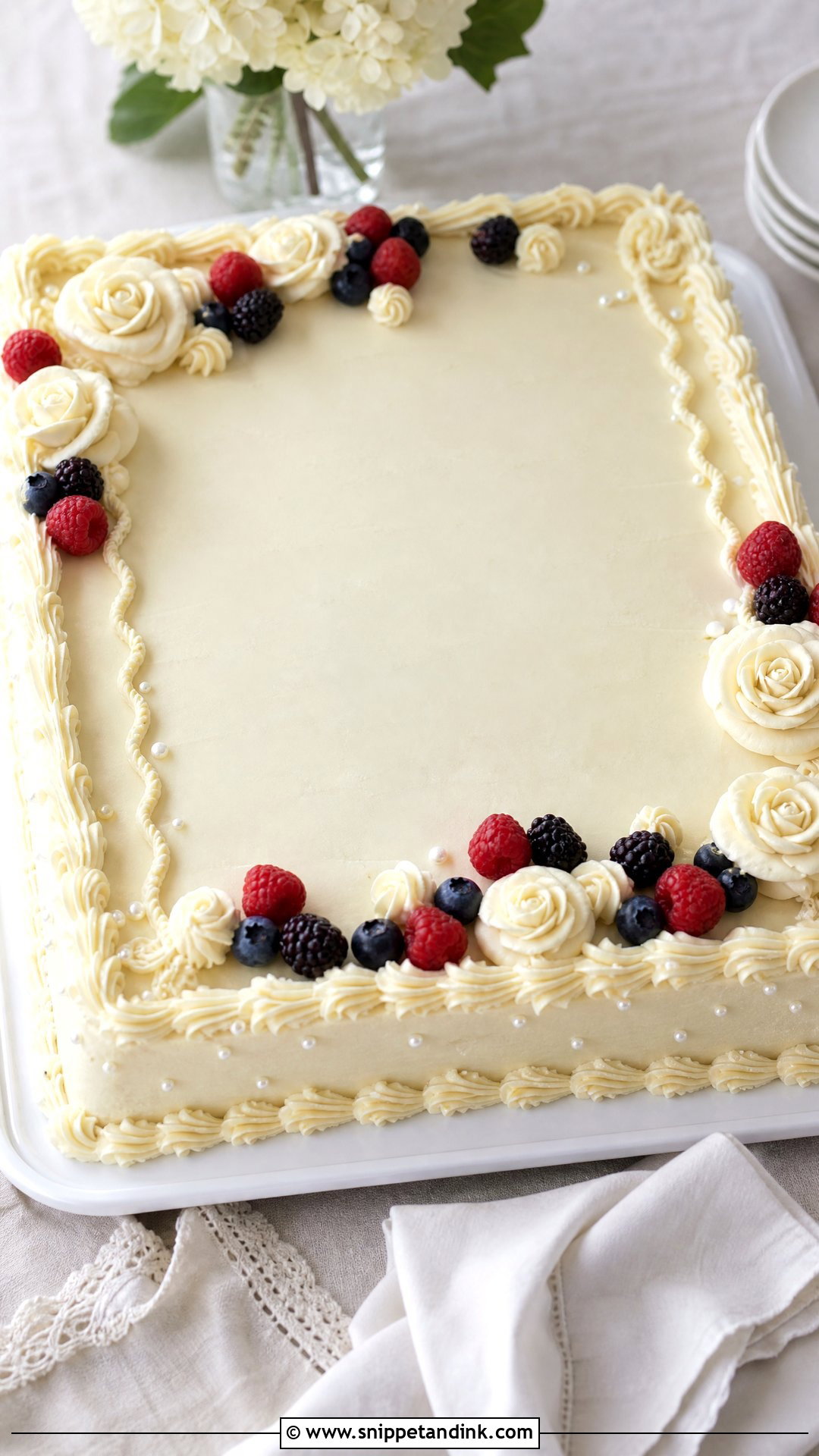
Sheet cakes are back, and they’re not the plain supermarket kind. Piped borders, fresh flowers, fruit, edible pearls and even buttercream writing turn a sheet into a design piece. They’re practical: easy to cut, generous portions and usually cheaper per serving than tiers. Backyard, brunch and relaxed receptions suit them. I’d serve flavors everyone knows, like vanilla, chocolate, lemon or red velvet, and set it on a handsome tray or board.
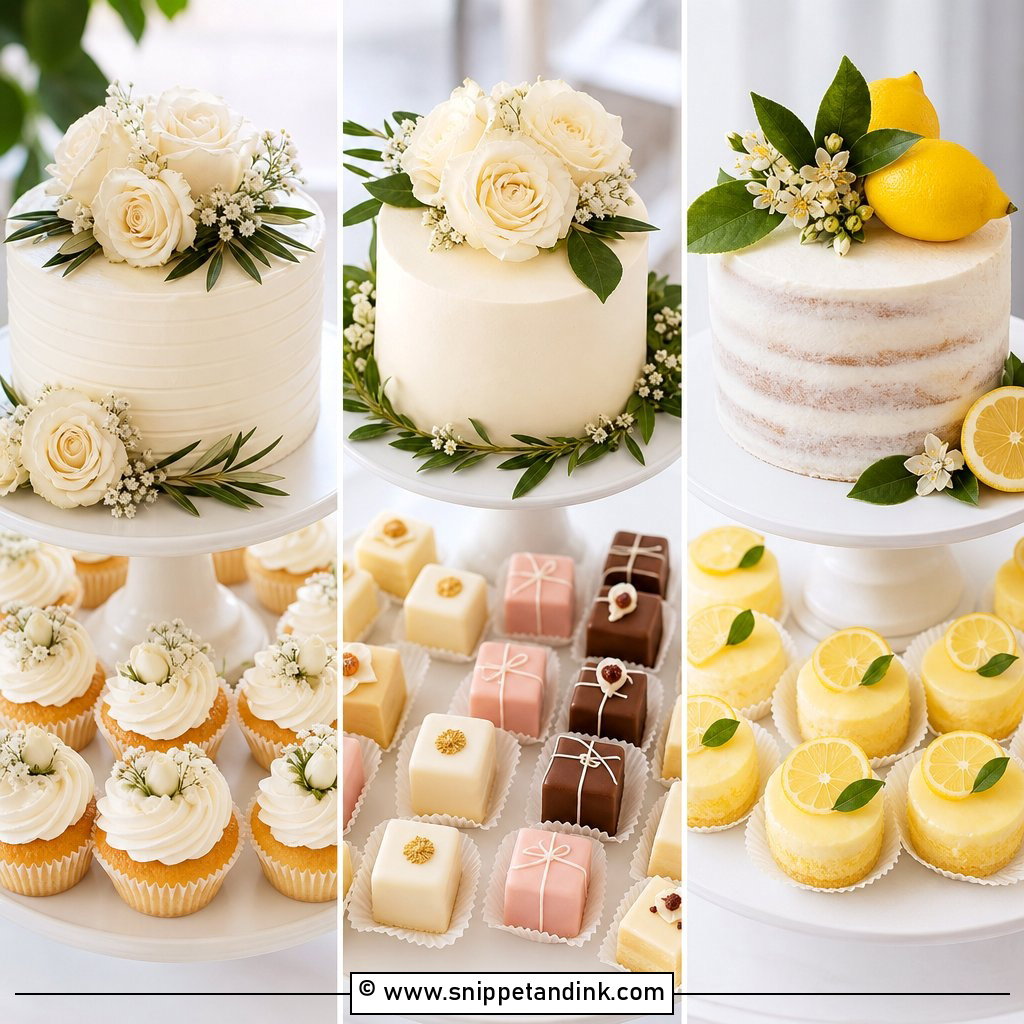
17. Dessert Table Wedding Cake
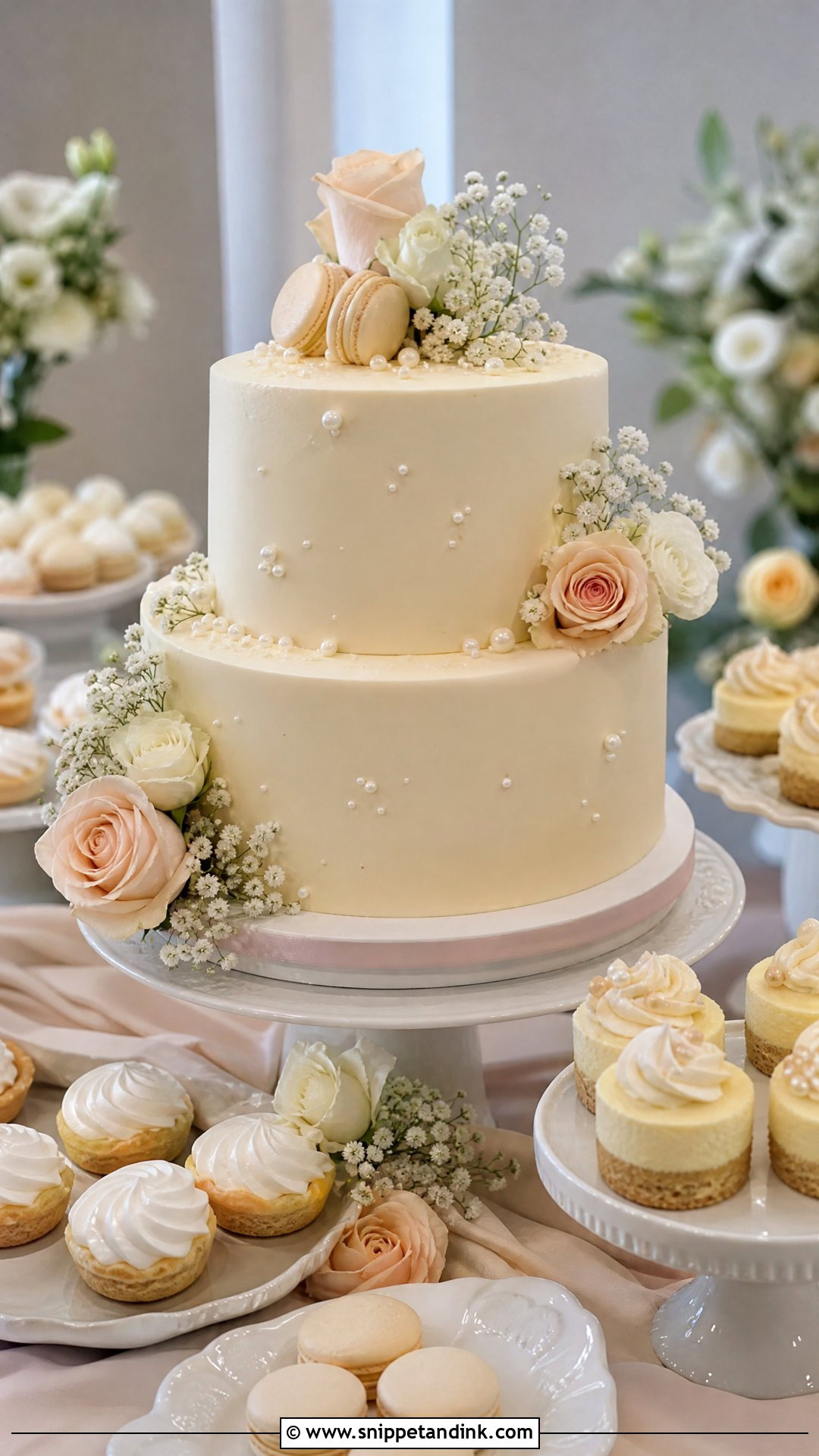
Instead of one large cake, a dessert table wedding cake is smaller and surrounded by cupcakes, macarons, cookies, tarts and mini cakes. It photographs well because of the layers and abundance. Cohesion is the challenge, so I suggest matching stands, one floral style and a tight color palette. The cake should still read as the centerpiece. Give it a versatile flavor like vanilla berry, almond or lemon that sits alongside the other sweets.
18. Garden Wedding Cake
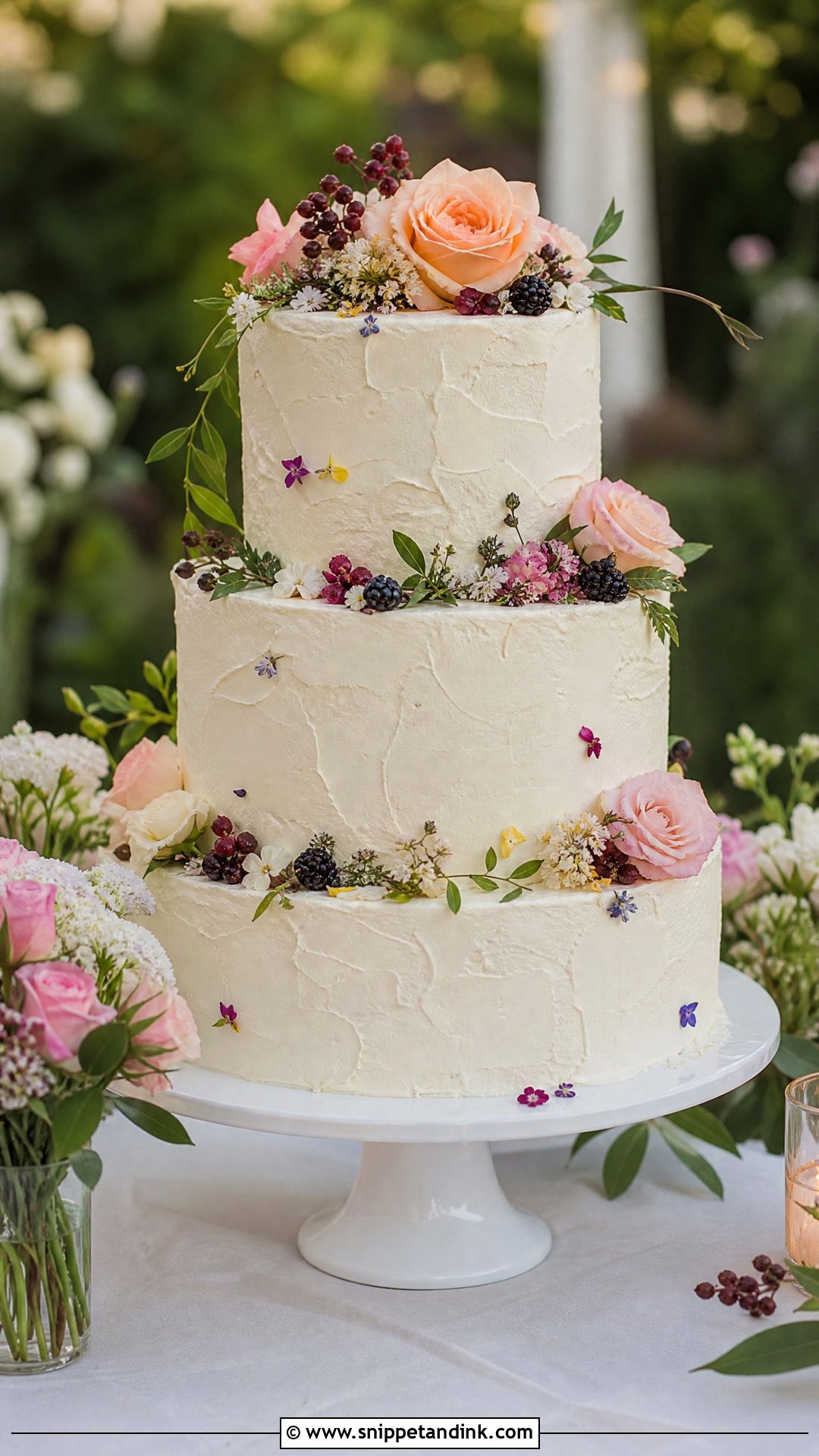
Garden cakes use soft buttercream, fresh blooms, greenery, fruit or pressed flowers, and they need to look natural without looking messy. Ivory, sage, blush, peach and lavender sit well together. Semi-naked finishes look rustic but dry out faster because the sponge is exposed, so I add them close to serving time. Lemon, vanilla, berry, honey and pistachio suit it. Outdoors, put the cake table in full shade, not just under a light canopy.
19. Coastal Wedding Cake
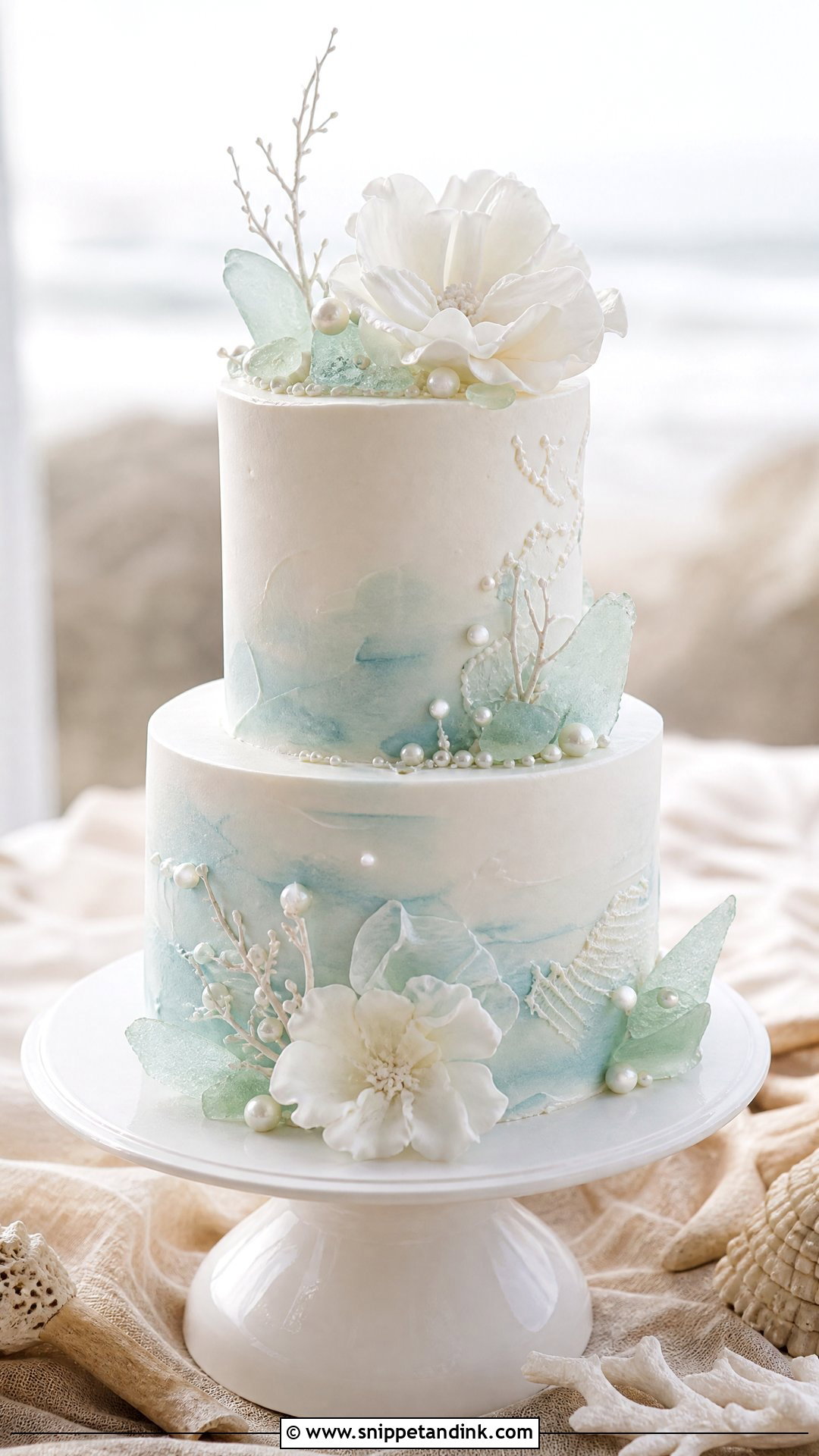
Coastal cakes should feel calm, not themed. Soft blue tones, pearls, smooth buttercream, a watercolor finish or white sugar flowers say beach more gracefully than a pile of shells. Ivory, sand, pale blue and sea-glass green are the palette. Coconut, lemon, key lime and almond keep it light. Beach venues bring wind and salty humidity, so I’d avoid wafer paper or delicate standing decorations and keep the cake indoors or covered until the cutting.


20. Rustic Wedding Cake
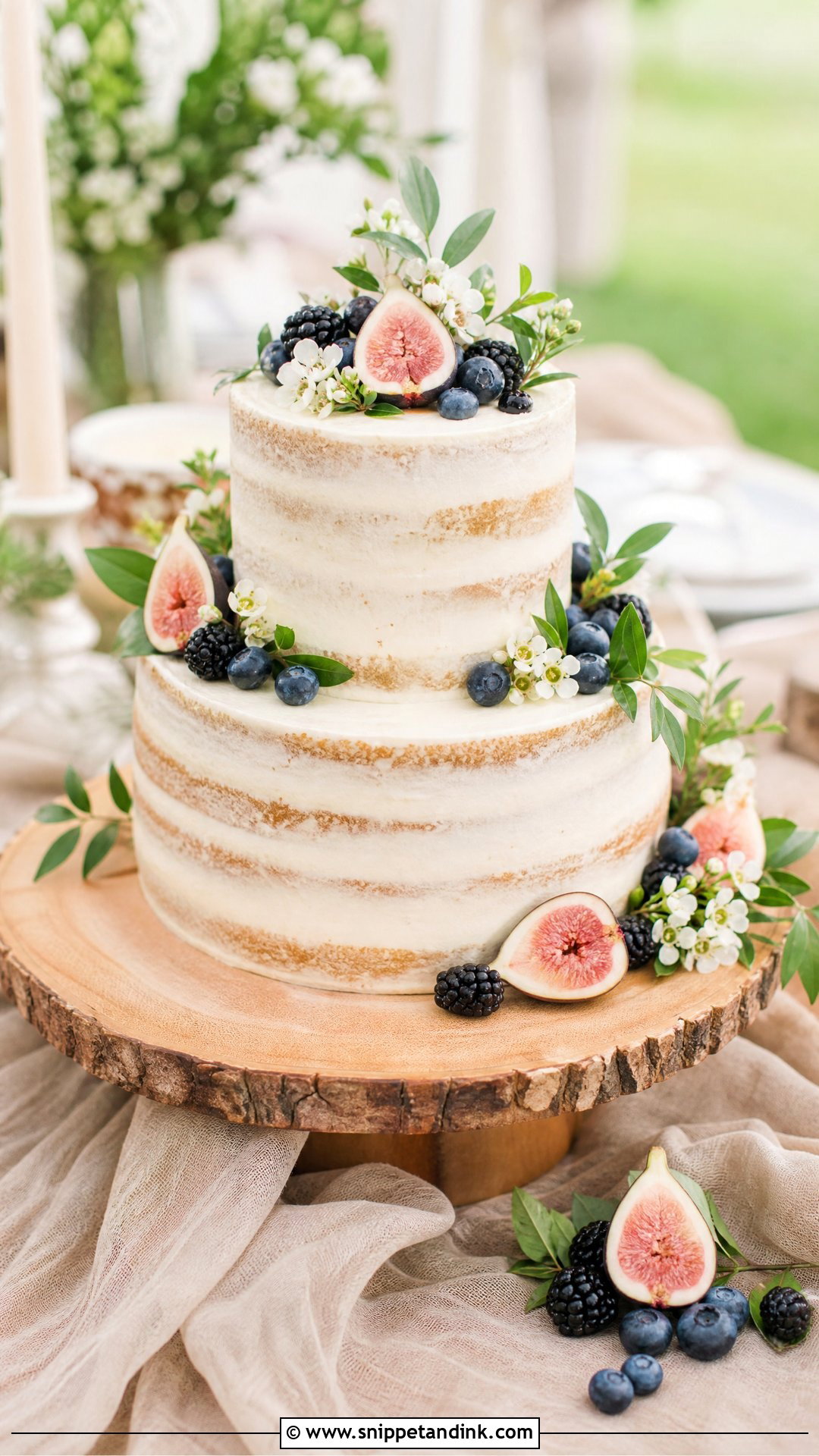
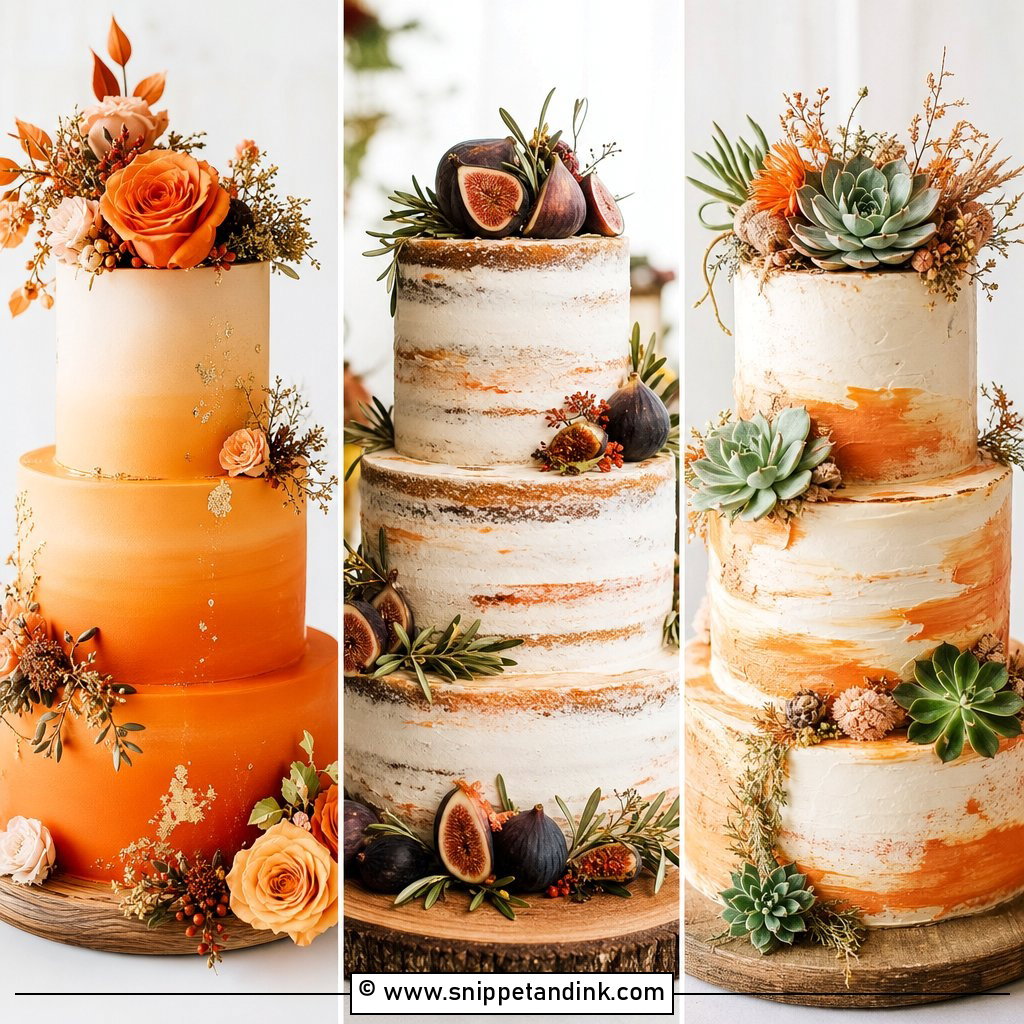
Rustic cakes suit barns, vineyards and mountain receptions with semi-naked buttercream, texture, berries, figs, greenery or simple flowers. The cake should still look clean and professional, not unfinished. A wood slice is the expected stand, but a neutral ceramic or white pedestal looks more current. Carrot cake, spice cake, vanilla berry, chocolate and lemon fit the mood. Seasonal herbs like rosemary add scent, but wrap the stems where they touch the cake.
21. Black And White Wedding Cake
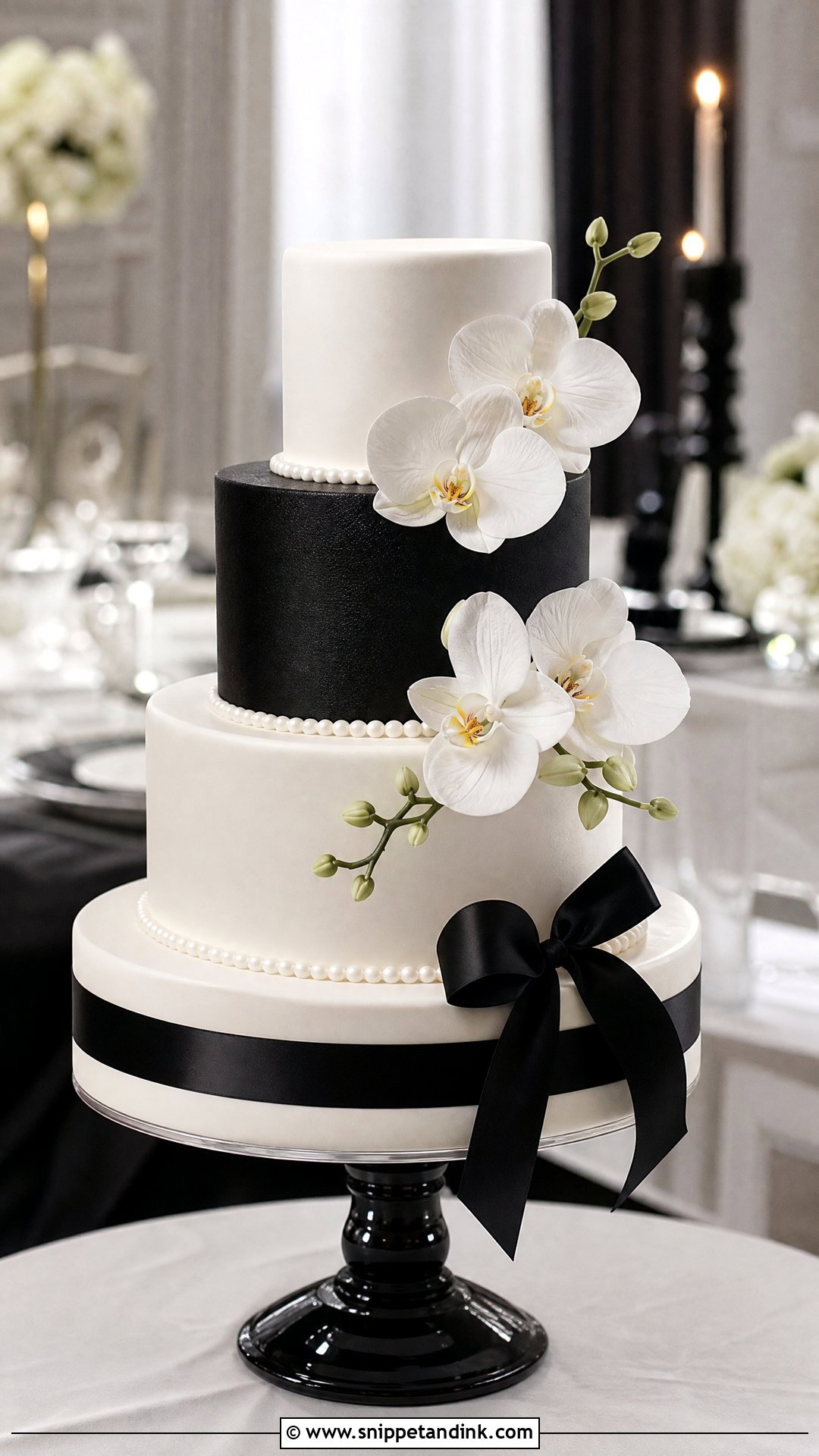
Contrast makes even a simple cake look striking. Black ribbon, black piping, painted fondant, dark sugar flowers or a black base tier under white tiers all work. A warning I give everyone: black buttercream needs a lot of coloring, it can taste bitter and it stains teeth and lips, so I use black on fondant or decorations rather than the frosting you eat. Keep the design clean so it feels elegant. Vanilla, dark chocolate, cookies and cream or almond inside, with white orchids or pearls on top.
22. Colorful Wedding Cake
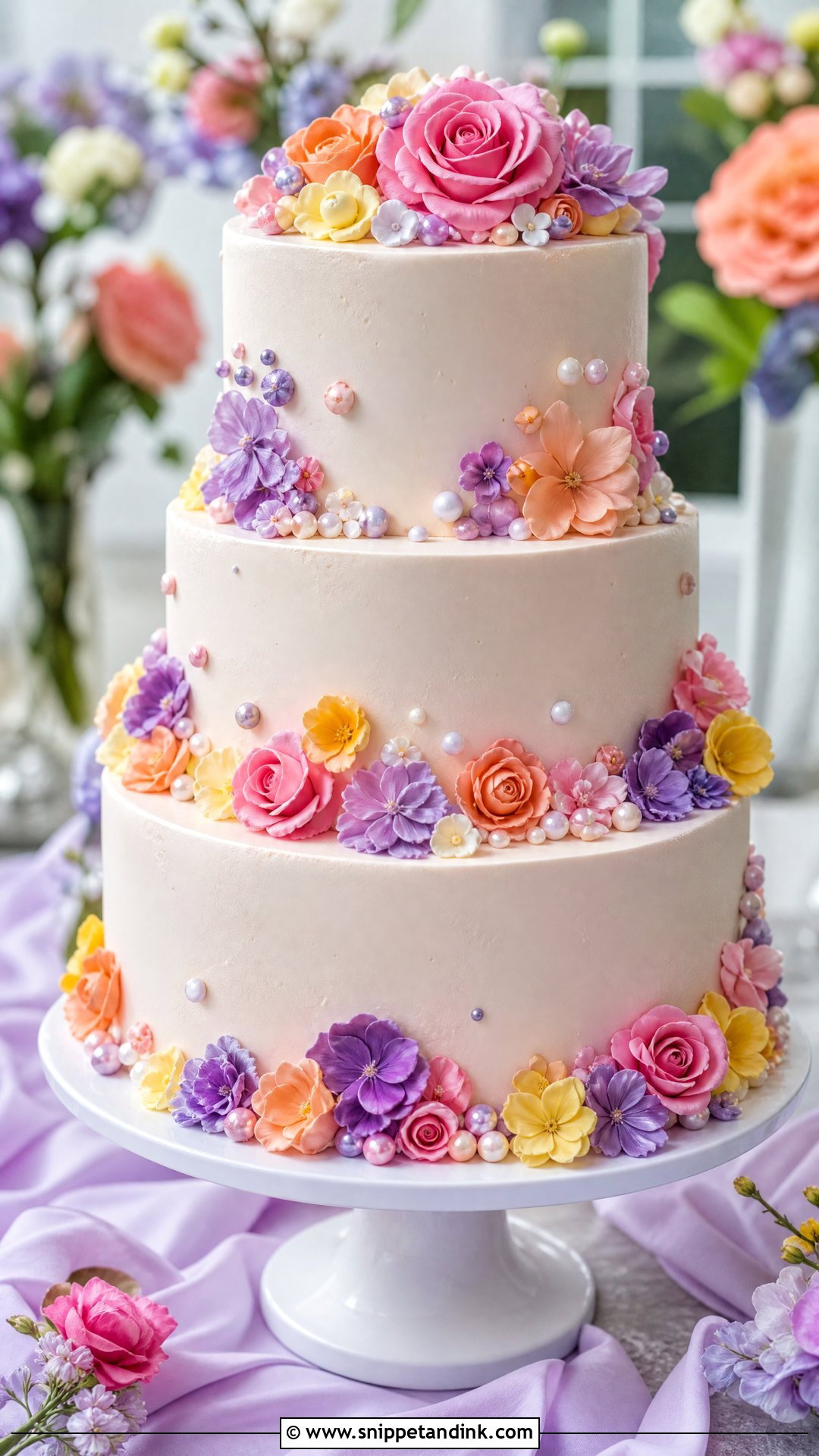
A colorful cake works when it has a clear palette, like pink and orange, blue and white, lavender and yellow or jewel tones. Color can come from buttercream, flowers, painted details, fruit, pressed petals or piping. Deep, saturated colors in buttercream fade and can bleed in sunlight, so I keep bright cakes out of direct light. Using every color at once only works if the whole wedding is designed that way. Flavors like strawberry, lemon, funfetti, pistachio or vanilla berry carry the upbeat mood inside.
23. Metallic Wedding Cake
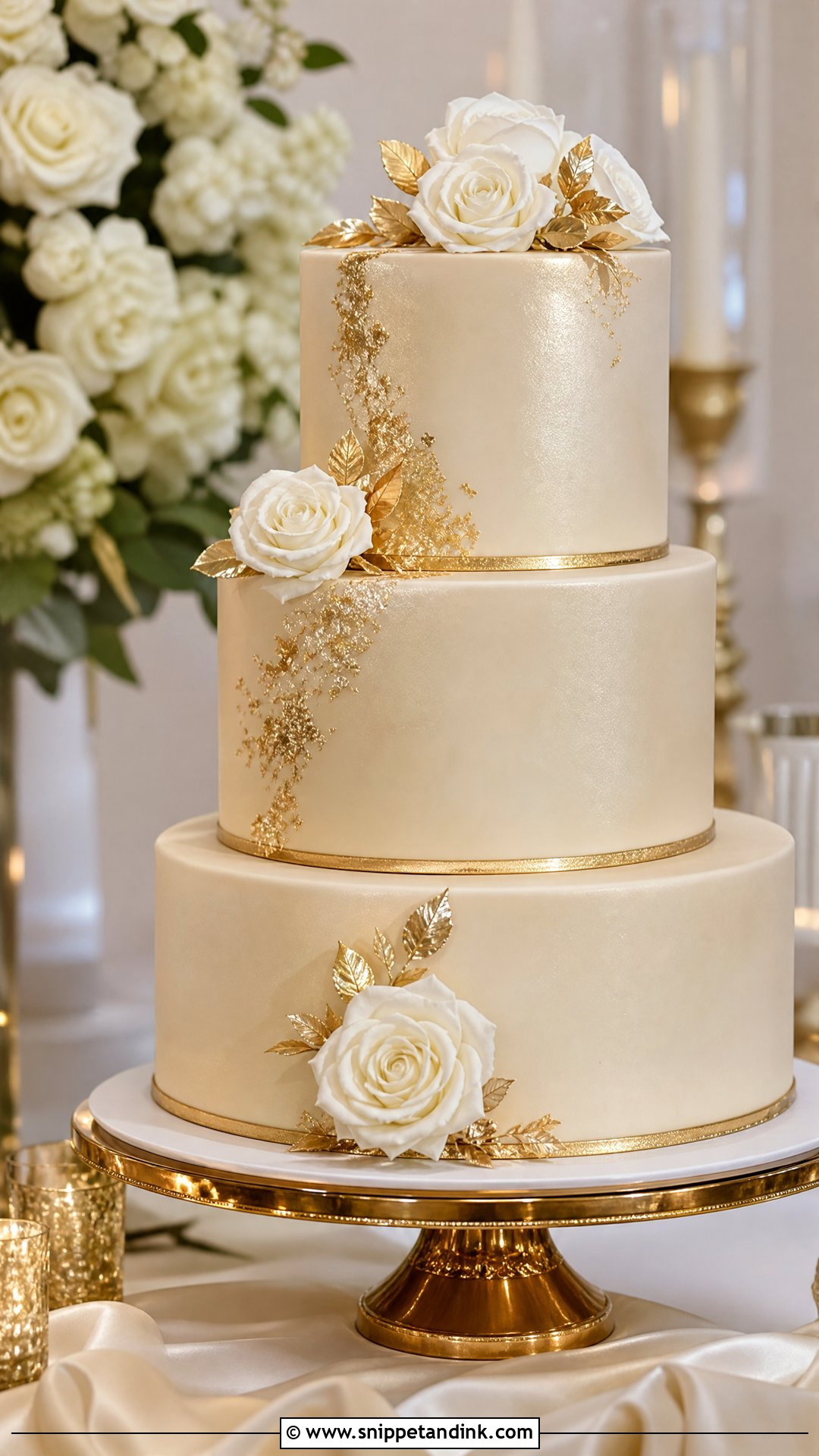
Shine goes a long way. Gold leaf, silver accents, pearl shimmer, bronze brushstrokes or painted fondant make a cake special without much else. I’d use it like jewelry: a thin gold edge, one brushed tier or a few metallic pearls. Check that the gold or silver is labeled edible and not just non-toxic, because decorative dusts aren’t meant to be eaten. Ivory, blush, black, sage and navy pair well, with vanilla almond, chocolate hazelnut, caramel or coconut inside.
24. Fruit Wedding Cake
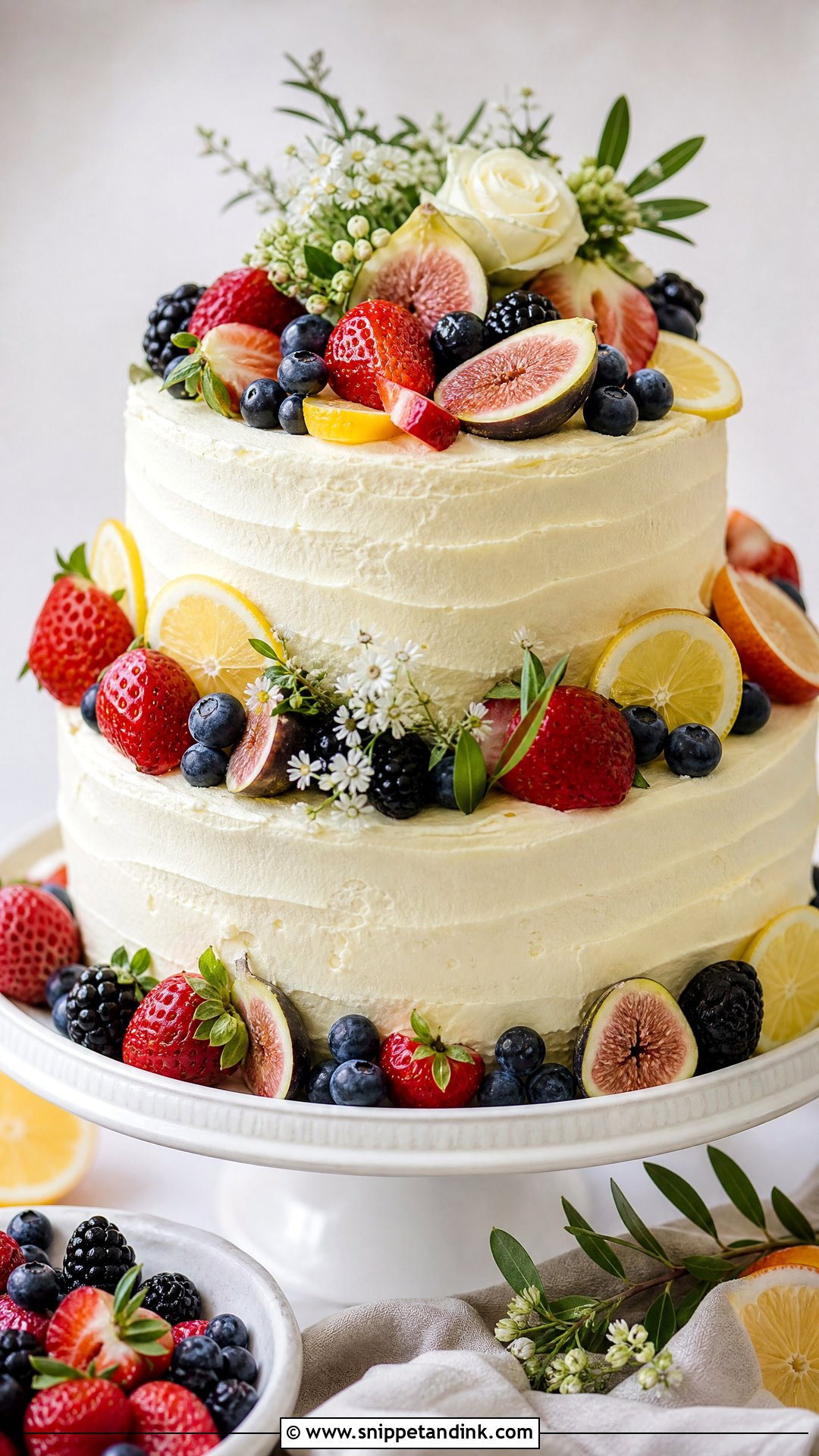
Fresh fruit looks best when it’s arranged with intent, not heaped on. A fruit wedding cake can carry berries, citrus slices, figs, cherries, peaches or grapes depending on the season. Cut fruit weeps juice onto frosting within hours, so I use whole berries and figs, glaze cut pieces lightly and add fruit close to the event. Spring and summer weddings, brunches and outdoor venues suit it. Lemon blueberry, vanilla strawberry, almond raspberry and coconut mango are good pairings.




25. Floral Meadow Wedding Cake
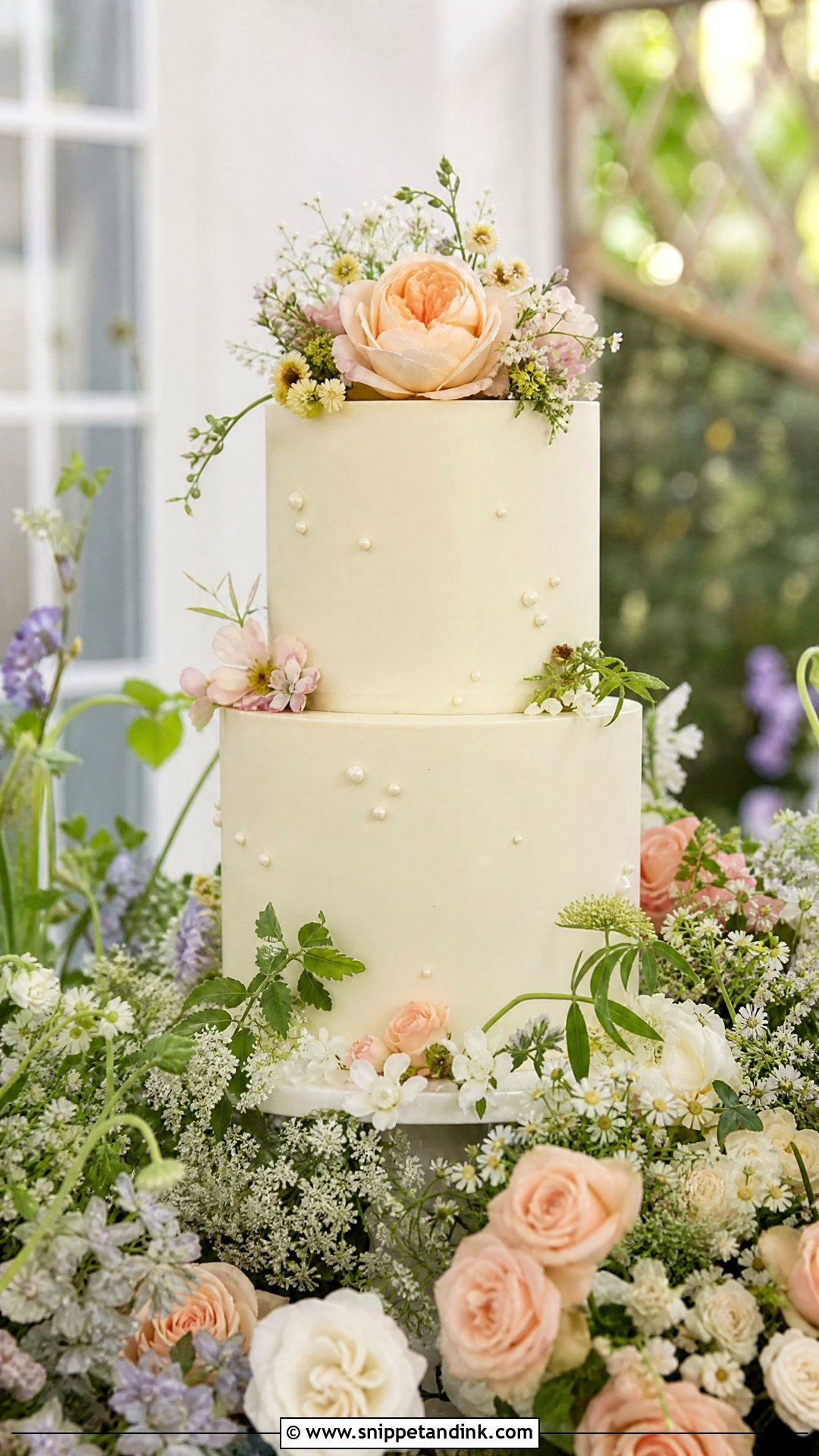
The meadow look moves the flowers off the cake and around its base, so the cake appears to sit in a garden. It creates height, color and softness around a simple cake in smooth buttercream, texture or fondant. Raise the cake on a stand so it doesn’t sink into the blooms. The florist usually builds the meadow, so agree when they’ll set it up relative to cake delivery, and use flowers that match the other arrangements.
Which Trends Hold Up at a Hot Summer Reception?
Heat and humidity treat these styles very differently, and it’s worth knowing before you fall for one.
Handles warmth well
Fondant over ganache, sugar flowers, edible pearls, metallic leaf and square or tiered cakes with a firm internal structure all stay stable for longer. Sheet cakes are low and less prone to sliding.
Needs careful timing
Meringue buttercream, heavy Lambeth piping in buttercream, semi-naked finishes and cut fruit all suffer in heat. Wafer paper bows and ruffles go limp in humidity. Pressed flowers can discolor if the cake sweats. For these, I plan a later delivery and ask the venue to keep the cake in a cool room until close to the cutting.
Whatever you choose, ask your baker two direct questions: how long can this cake stand out at my venue’s temperature, and what happens if the reception runs late?
Taste First, Then Decide on the Piping
Any of these can be right for your wedding, from a Lambeth showpiece to a practical sheet cake. What decides it is guest count, how stable the frosting needs to be in your venue’s temperature, the table it will sit on and whether your guests will enjoy the flavors. Taste before you commit to a design, since the frosting you love on the fork narrows the decoration options. A cake should look good in photos and taste good on the plate.
You'll Like These Ideas:



Leave a Reply