
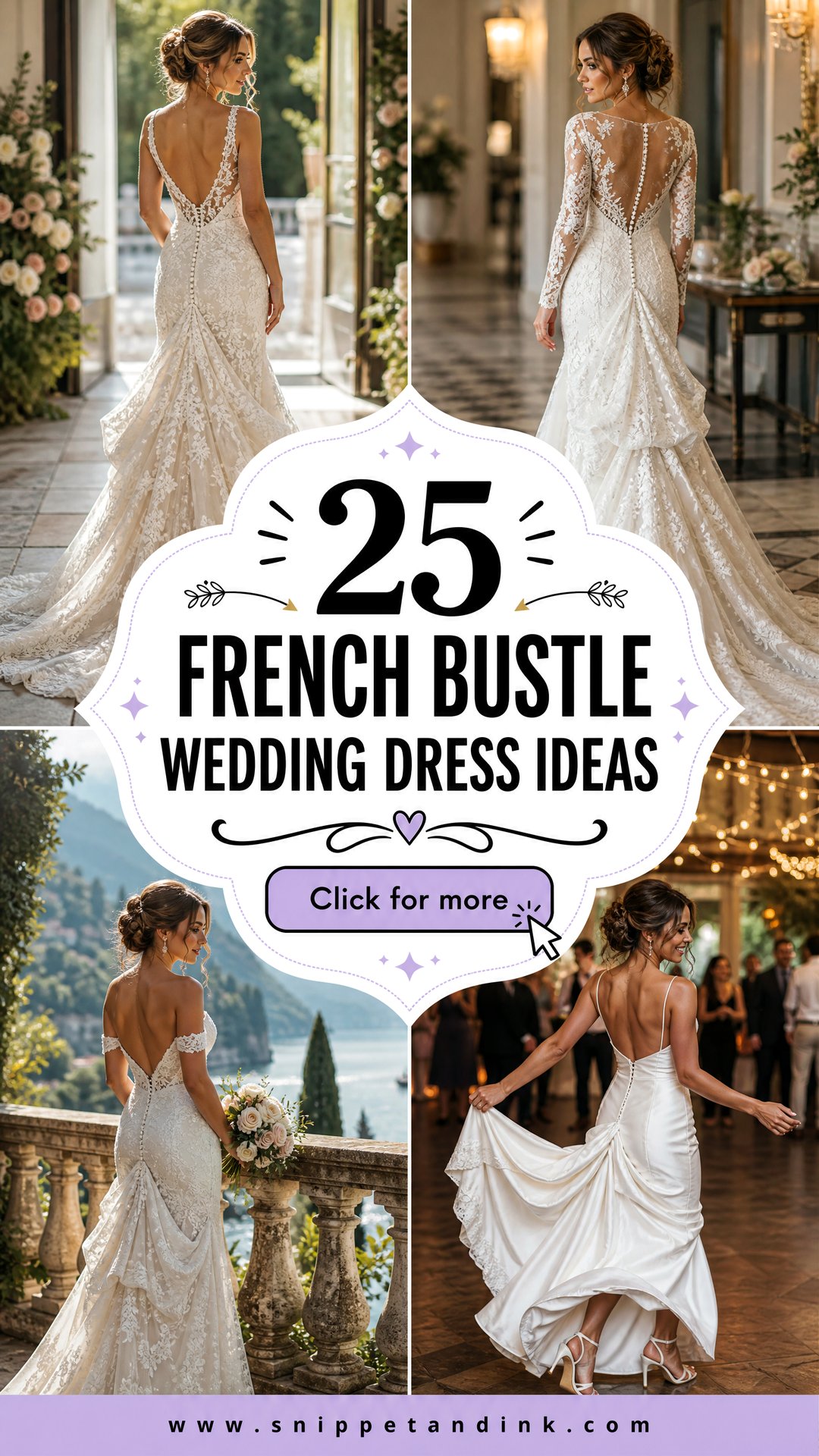
A French bustle, also called an under bustle, folds the train up underneath the skirt and ties it in place, so from the outside you see soft pouffs of fabric instead of a gathered pile on top. It is the bustle I recommend most for gowns with a train you want to show off at the ceremony and get off the floor before the first dance. Not every fabric bustles the same way, though. Tulle tucks almost invisibly, satin shows every bit of tension, and beaded skirts need more support points than plain ones. Below are twenty-five gowns, each with notes on how its fabric and train behave once bustled, followed by how to teach someone to do it on the night.
What Actually Happens Under the Skirt
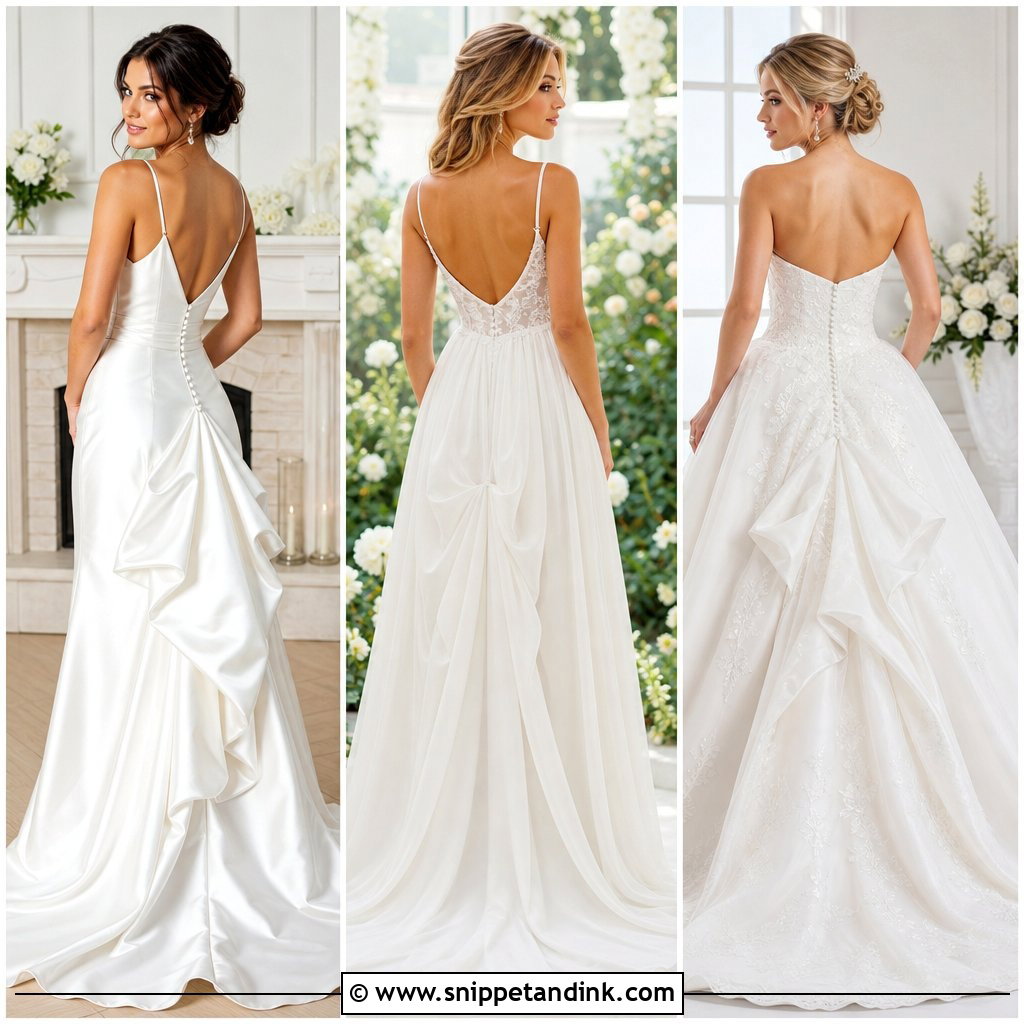
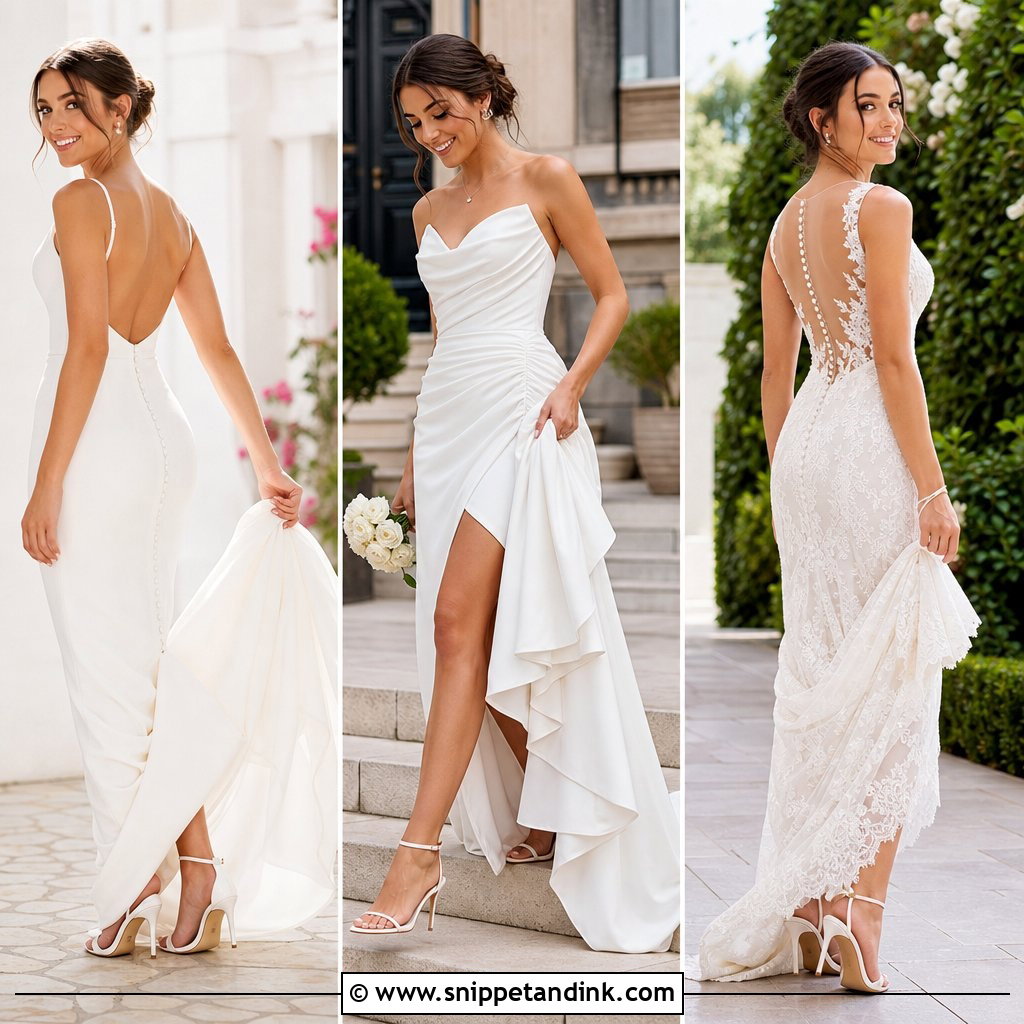
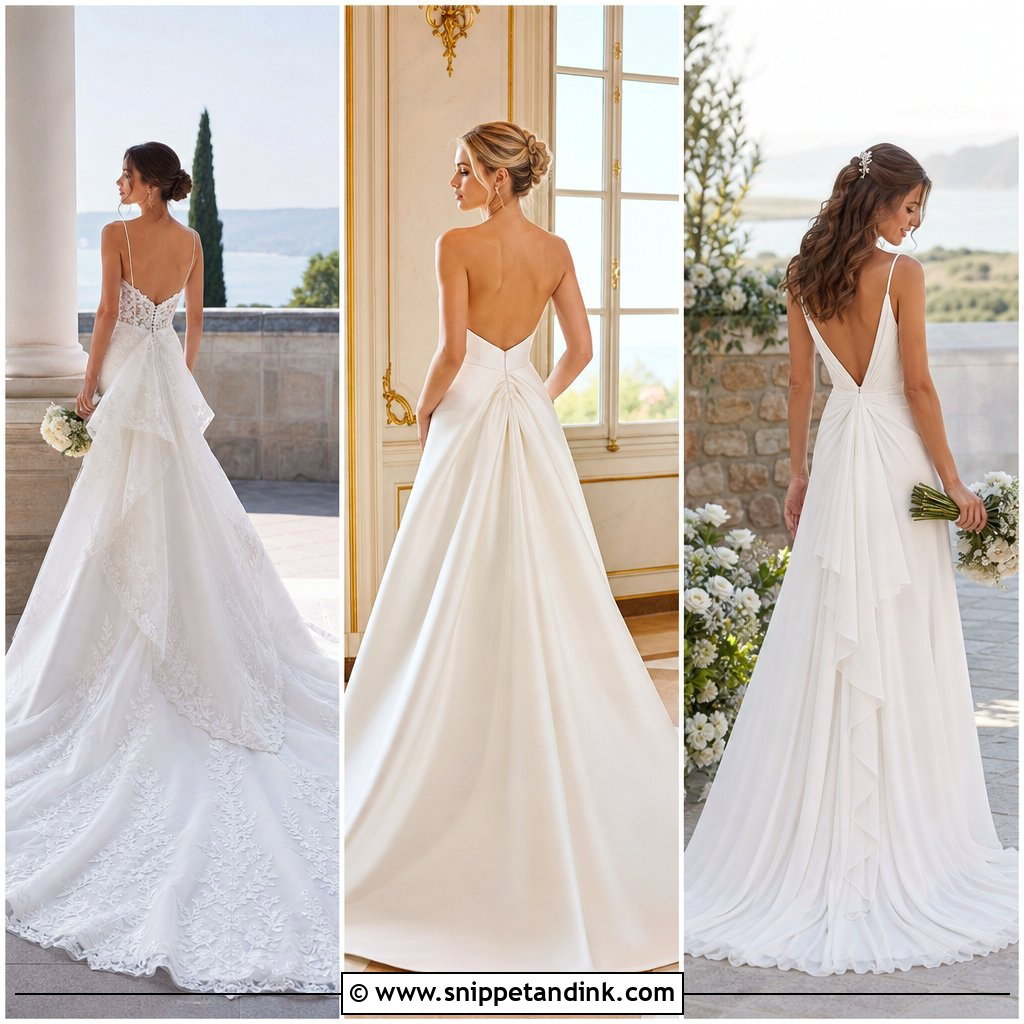
A French bustle is added by your seamstress, usually at your second or third fitting once the hem is set. She sews small loops or ribbons to the underside of the train and matching ties inside the skirt. On the day, each ribbon is tied to its partner, folding the train up and underneath.
The number of points depends on length and weight. A light chapel train may only need two or three; a heavy cathedral train or beaded skirt can need many more. More points spread the weight and stop any one tie from tearing.
French versus over bustle
An over bustle, sometimes called American, hooks the train up onto buttons at the back of the waist, so the folds sit on top. It is quick to do and suits heavier fabrics, but it covers some of the skirt. A French bustle hides the mechanics and keeps the outside of the gown visible, which is why I prefer it for lace and appliques. Ask your seamstress to pin both styles up at a fitting so you can compare them in the mirror before she sews anything.
1. French Bustle Ball Gown Wedding Dress
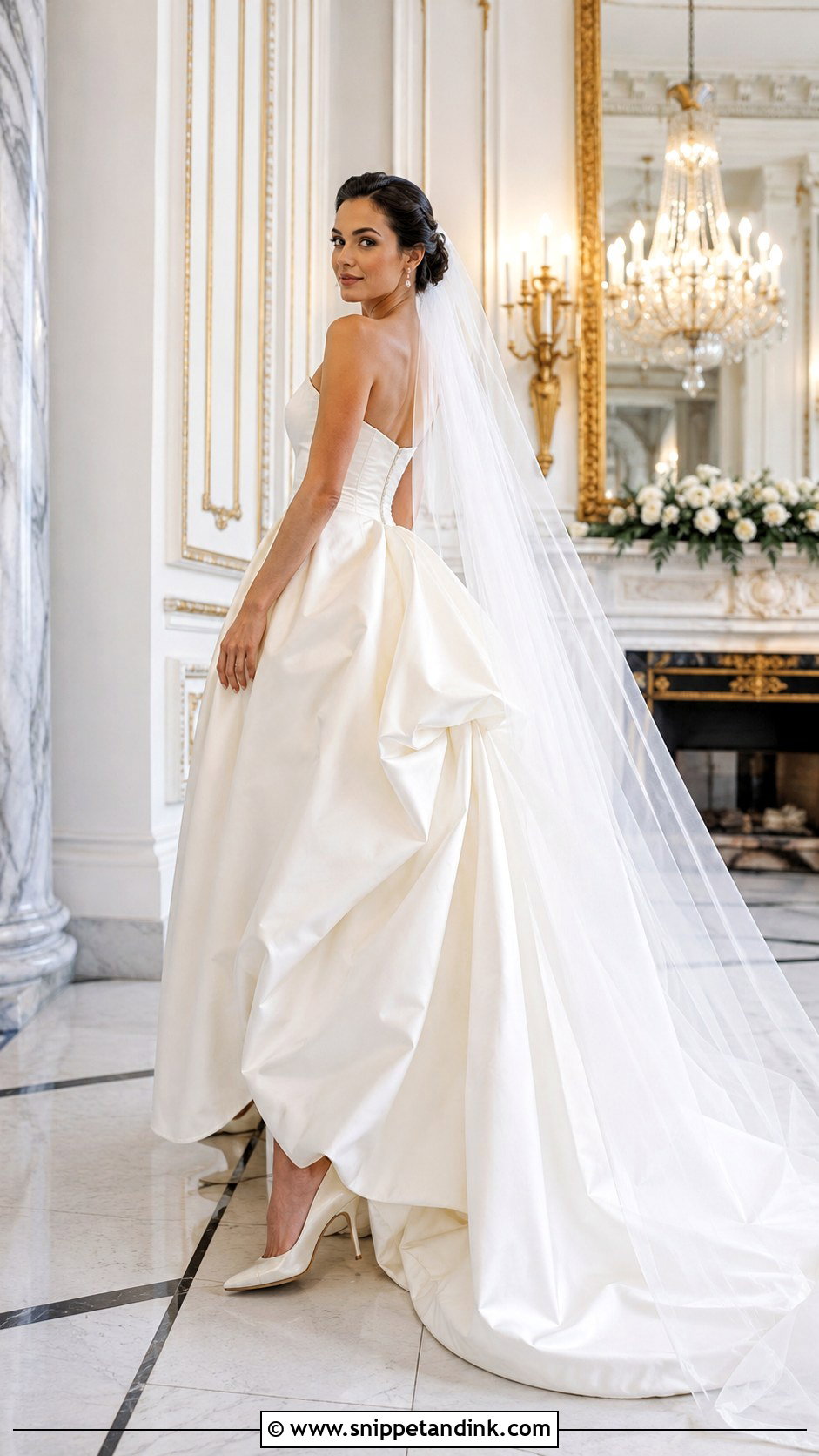
A French bustle ball gown wedding dress gives the bustle the most fabric to work with, so the tucked folds sit soft and even rather than bunched. I’d pair a structured bodice and defined waist with a chapel or cathedral train, then finish with satin pumps, pearl earrings and a long veil for a ballroom or grand hotel. Expect more ties on this one than on a slimmer cut; a heavy skirt needs its weight spread across several points or one will carry too much and sag. Once it is up, the skirt is far easier to turn in.
2. French Bustle Lace Wedding Dress
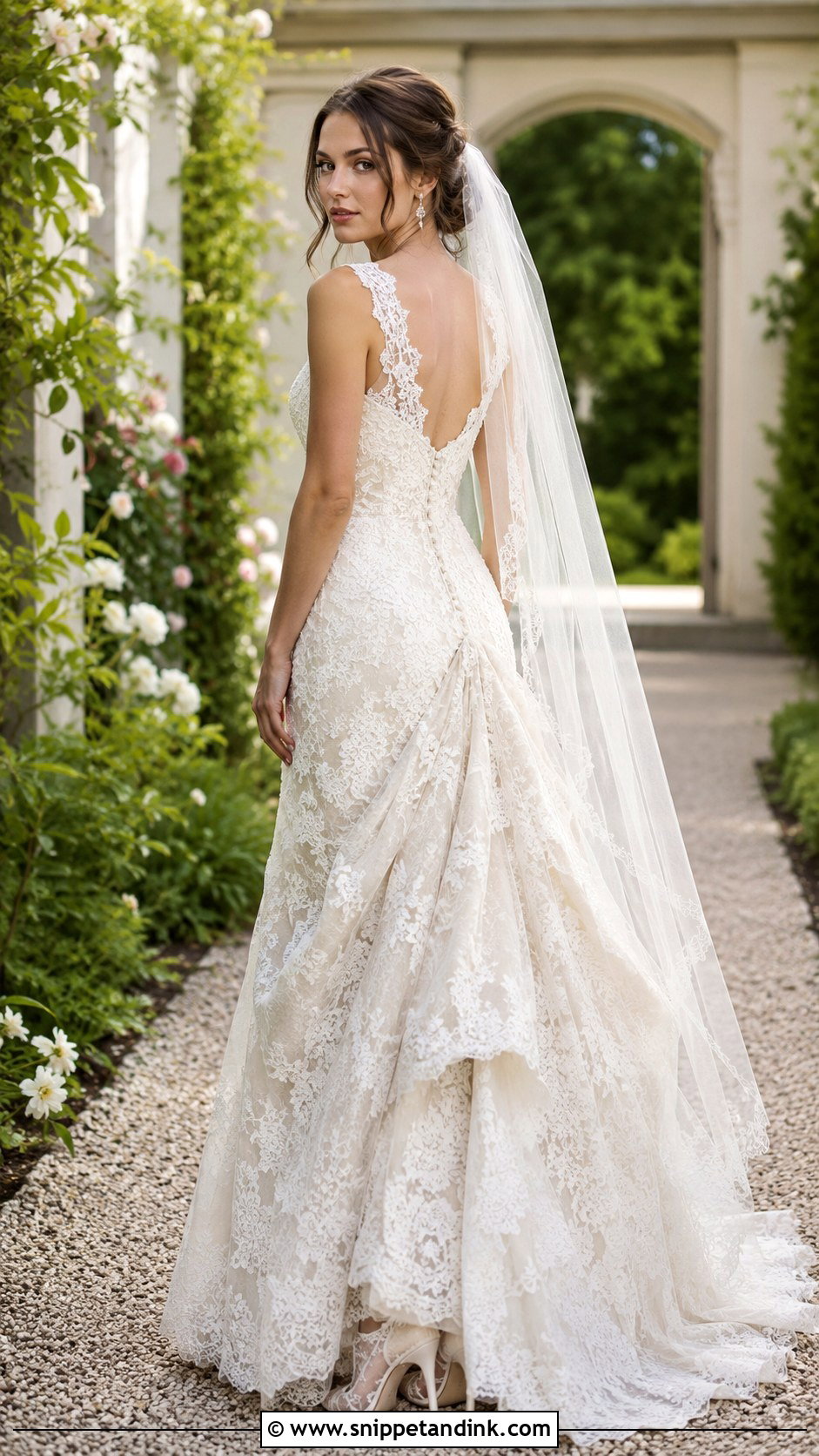
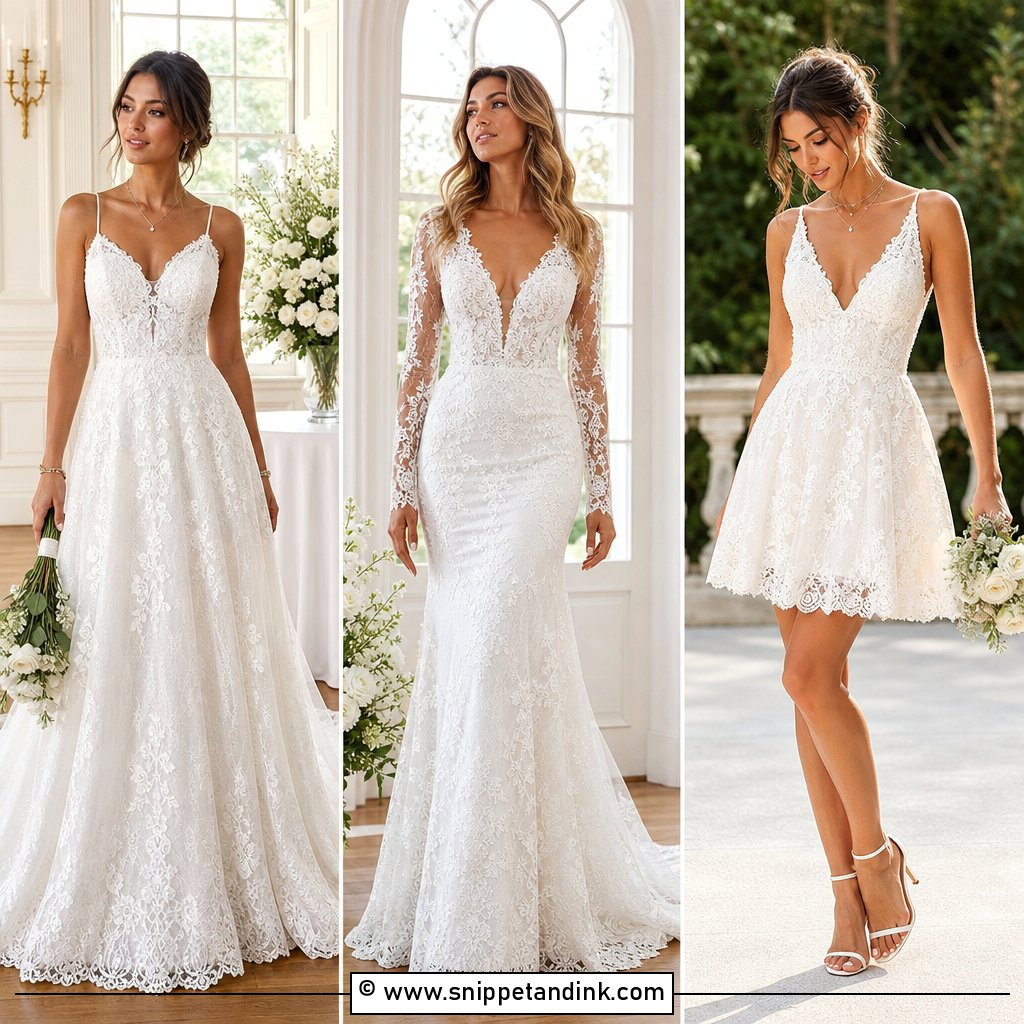
Lace is where an under bustle really proves itself. The train tucks below, so the outer lace pattern stays visible instead of being folded over itself the way an over bustle would hide it. Floral lace, scalloped hems and fine applique all keep their shape. A fitted bodice with a soft A-line skirt stays light enough for garden weddings and estate venues. I ask the seamstress to place each tie behind a motif, never in open net, because net alone tears under a pulled ribbon. Keep shoes and earrings small so the lace stays the focus.
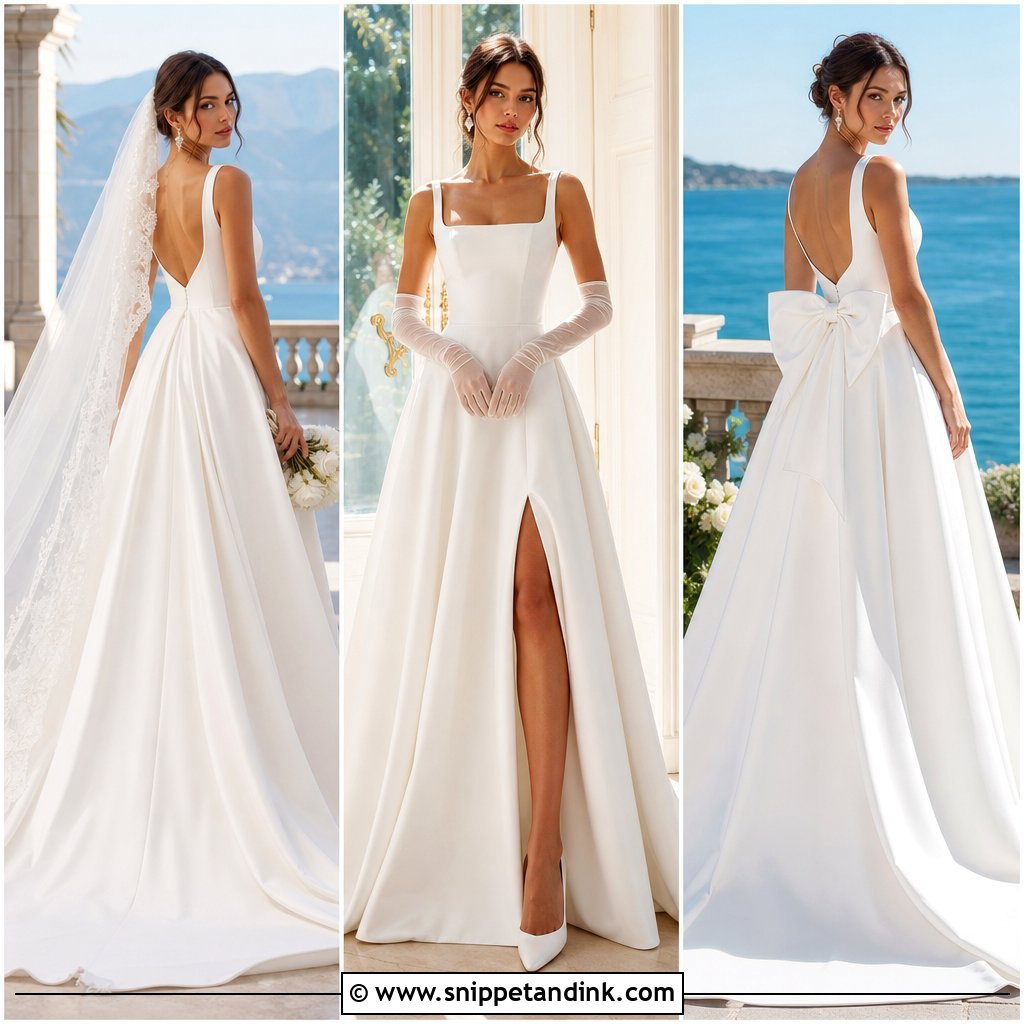
3. French Bustle Satin Wedding Dress
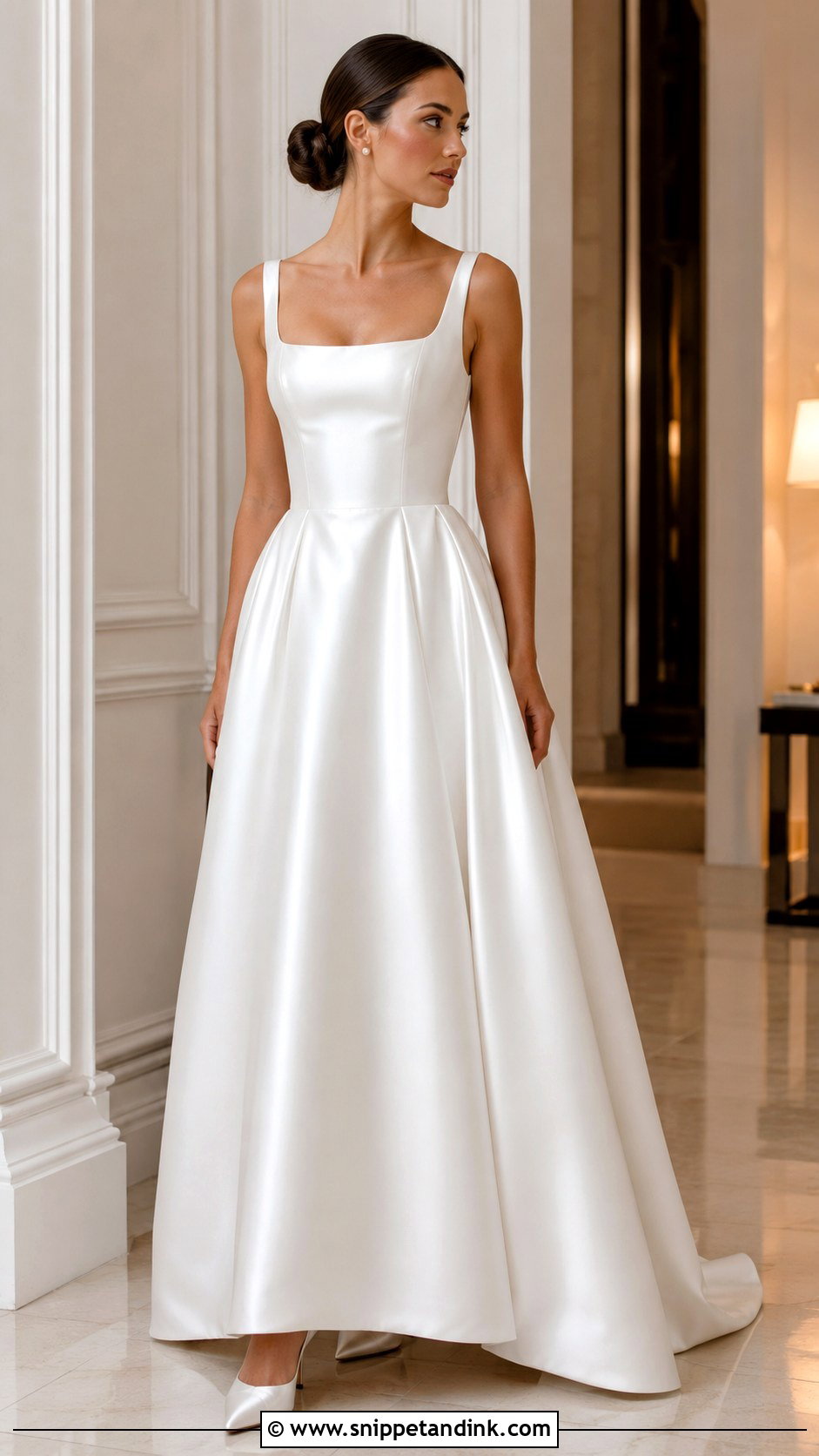
Satin is the hardest fabric to bustle well. Its smooth surface shows strain lines from any tie that is pulling slightly harder than its neighbor, so placement needs an experienced hand and usually a second check at the final fitting. When it is right, the folds look clean and deliberate. A square neckline, fitted waist and full skirt with pointed satin heels, a sleek bun and pearl studs give it a modern royal feel. Ask to see it bustled in natural light; strain lines that hide under shop lighting show clearly in daylight photos.
4. French Bustle Mermaid Wedding Dress
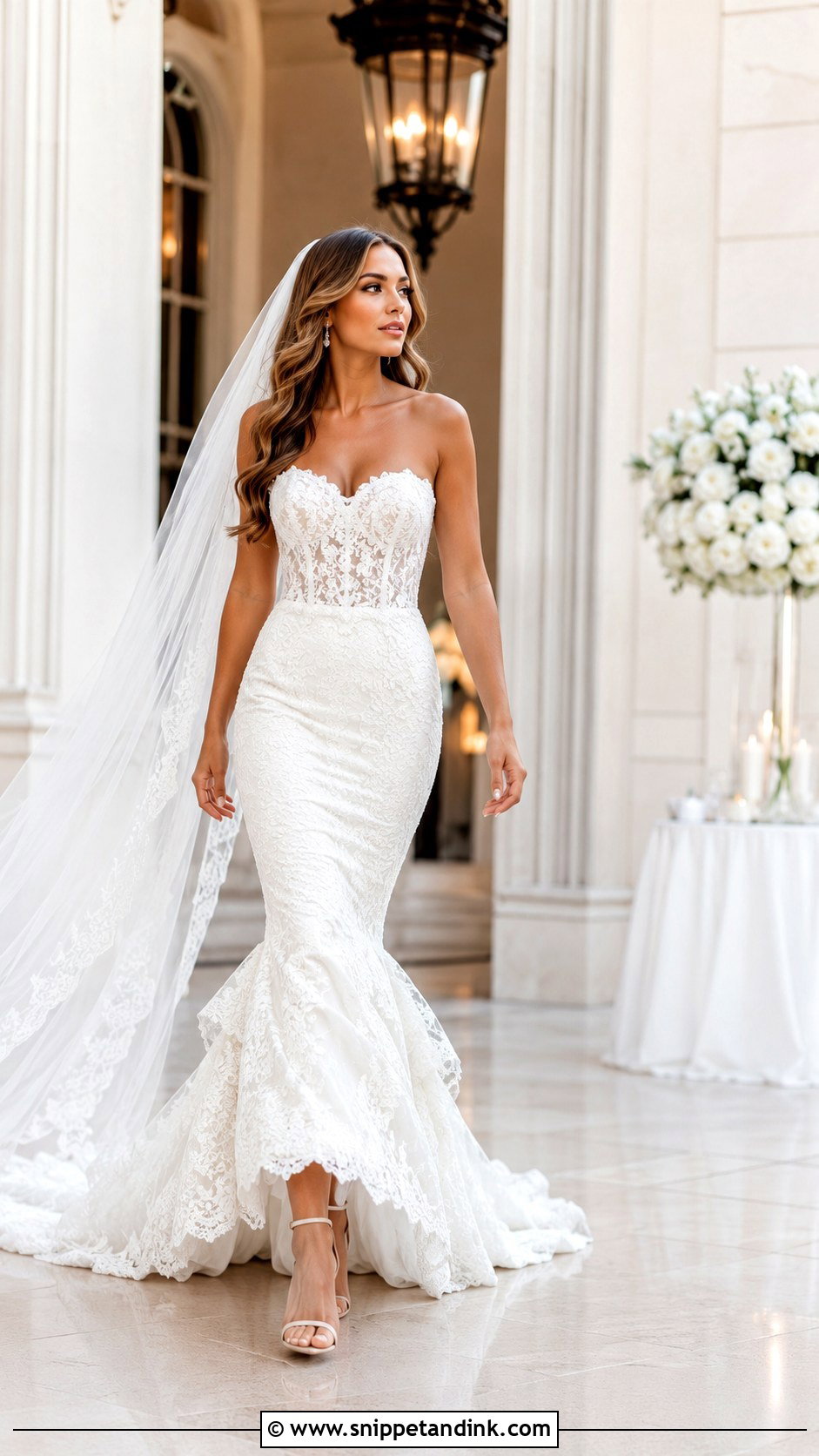
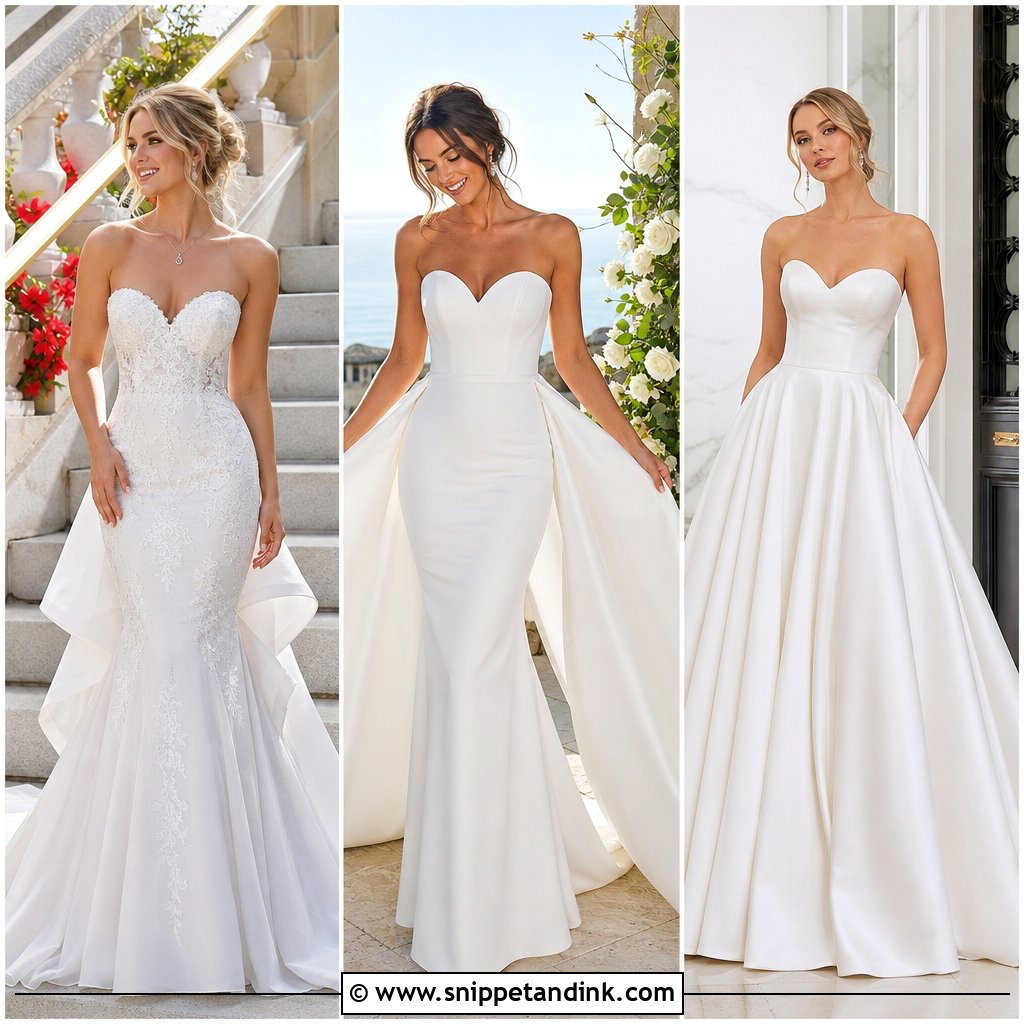
On a mermaid the bustle goes below the flare, around the knee or lower, never at the hip. Placing it higher spoils the fitted shape the gown is built around. Crepe, lace or stretch satin with firm structure through the hips holds the line best. Strappy heels, a long veil and polished waves suit an evening reception or coastal venue. One thing brides don’t expect: a mermaid with a bustle can feel heavier at the knee, so walk and do a small step-turn at the fitting before signing off.
5. French Bustle A Line Wedding Dress
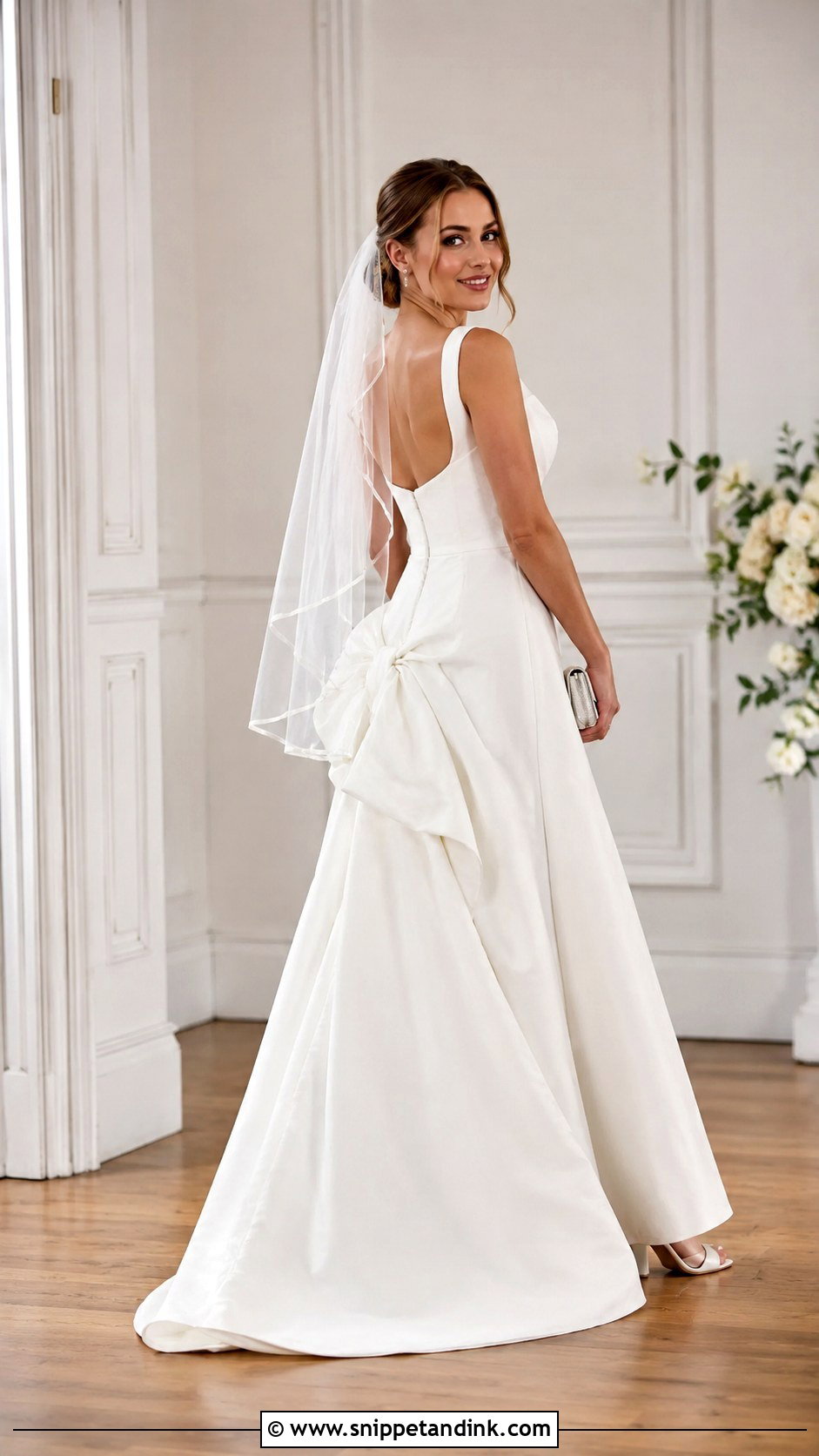
A-lines are the simplest shape to bustle. The skirt already falls away from the waist, which leaves room for the tucked train without adding width at the hips. Tulle, lace, satin or organza all suit it. I’d add a fingertip veil, block heels you can actually stand in for hours and a small clutch. If this is your first gown fitting, it is also the shape where your seamstress can try a French bustle and an American one quickly so you can compare them in the mirror.
6. French Bustle Tulle Wedding Dress
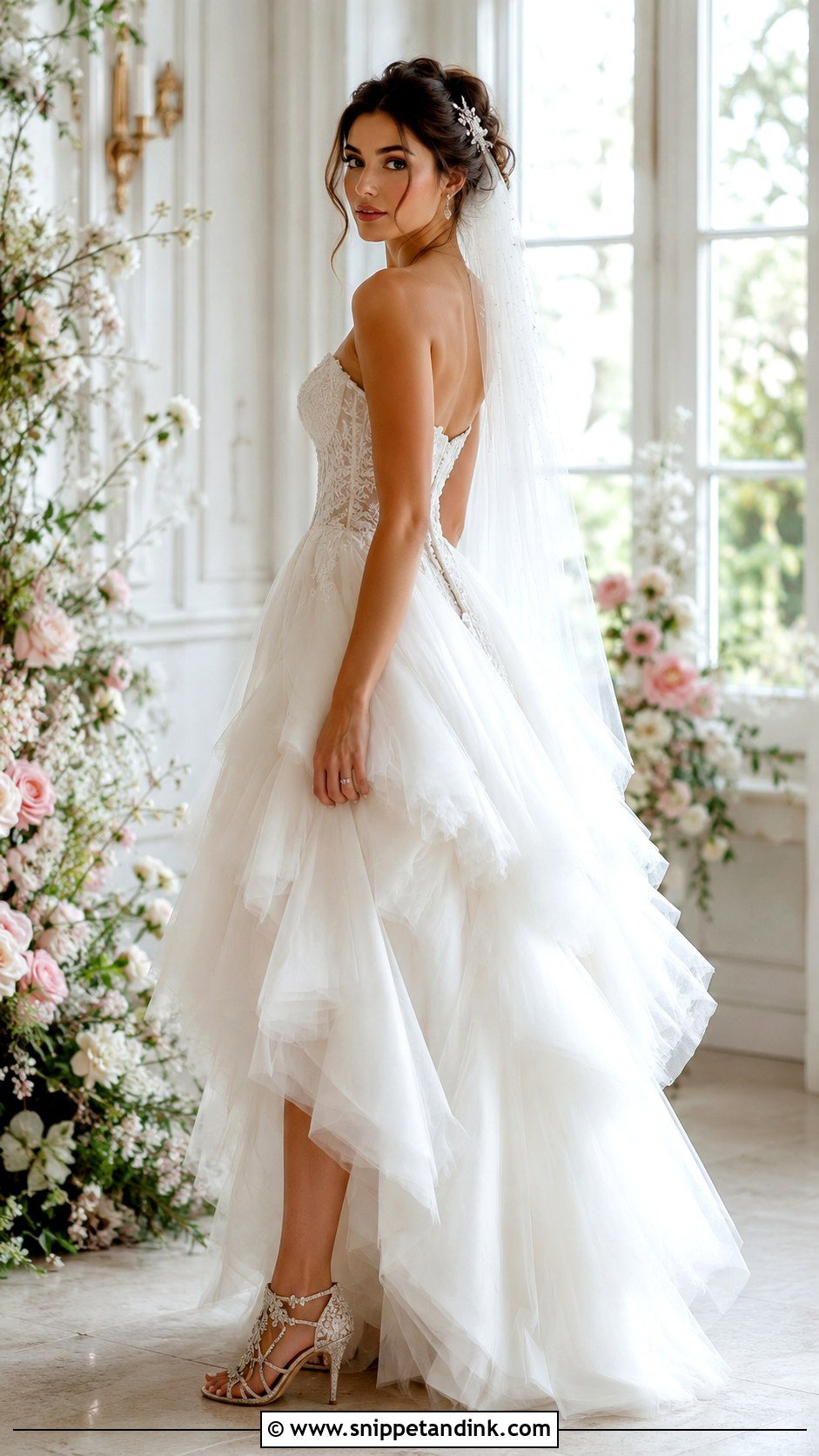
Layers of tulle disappear into a French bustle better than any other fabric, gathering into a soft cloud at the back. The catch is snagging; tulle layers can tangle around the ties, so I ask for each layer to be bustled separately rather than all at once. A fitted corset bodice gives the light skirt some structure. Embellished heels, fine hair pins and a sheer veil suit a spring ceremony. Once bustled, the skirt floats rather than dragging across the floor.
7. French Bustle Organza Wedding Dress
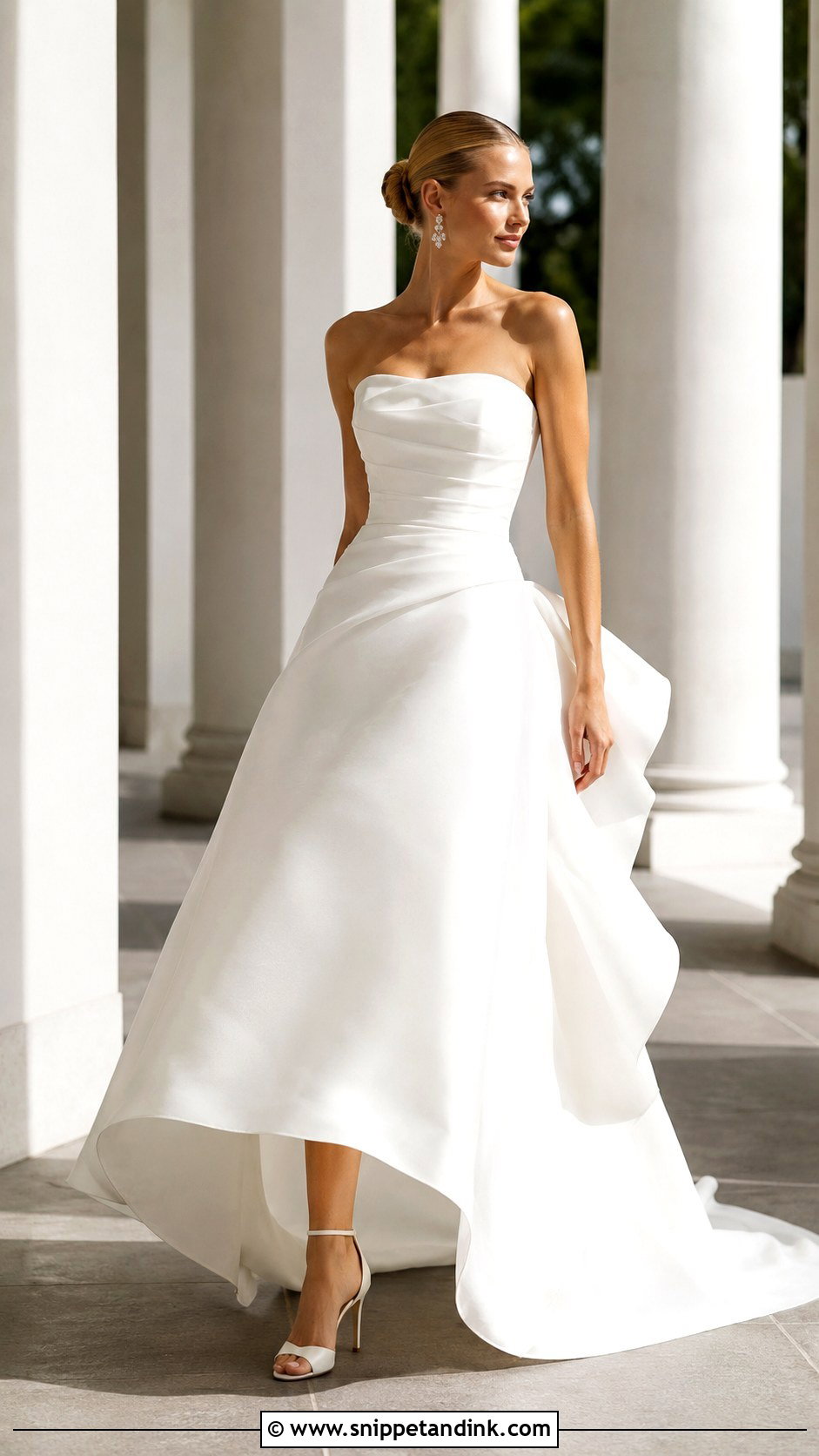
Organza sits between tulle and satin: crisp enough to hold sculpted folds, light enough not to weigh the back down. Bustled underneath, it forms rounded shapes that catch light at the edges. A strapless, off-shoulder or clean V bodice all work. Ivory heels, crystal earrings and a smooth updo keep it refined for a modern ballroom or summer evening. Organza creases where it is folded for long, so I’d leave the bustle undone until just before the reception rather than tying it early.
8. French Bustle Mikado Wedding Dress
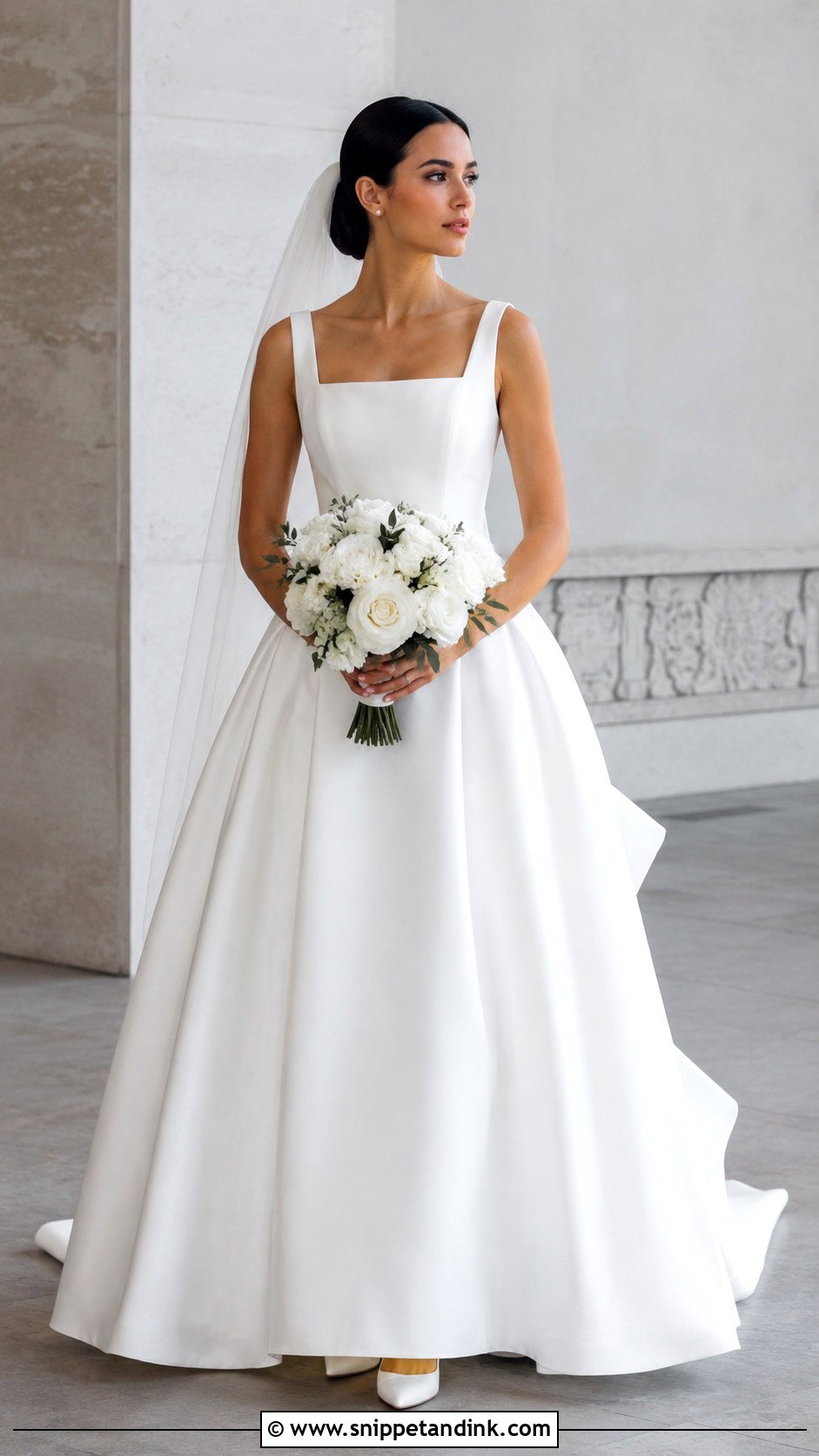
Mikado is heavier and stiffer than ordinary satin, so it folds in broad architectural shapes rather than soft ripples. A French bustle mikado wedding dress needs its ties spaced carefully or the thick fabric forms sharp creases at each point. A bateau, square or off-shoulder bodice over a full or A-line skirt suits a city venue or museum. Closed pumps, a smooth veil and a structured bouquet match its clean lines. I’d only suggest it to a bride who likes structure, since mikado never moves softly.
9. French Bustle Crepe Wedding Dress
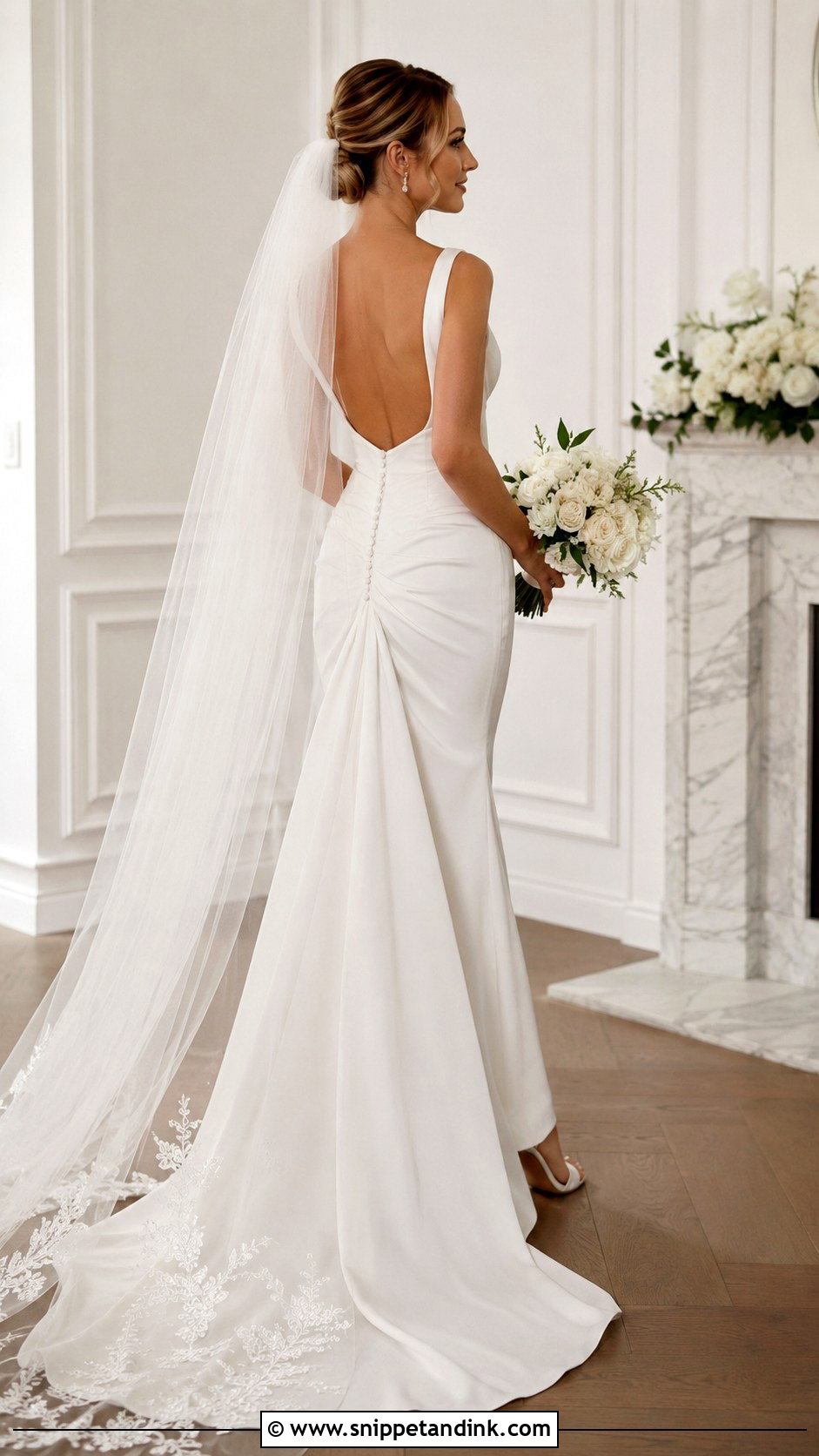
Crepe hugs the body, so the bustle has to stay flat and small or it creates a lump on an otherwise sleek line. Brides who like clean lines and quiet elegance often choose sheath, fit-and-flare or soft A-line shapes in it. A low back, long sleeves or a simple strapless neckline keeps it modern. Slim heels, a cathedral veil and fine jewelry complete it. Crepe trains are usually lighter, so two or three ties are often enough.
10. French Bustle Long Sleeve Wedding Dress
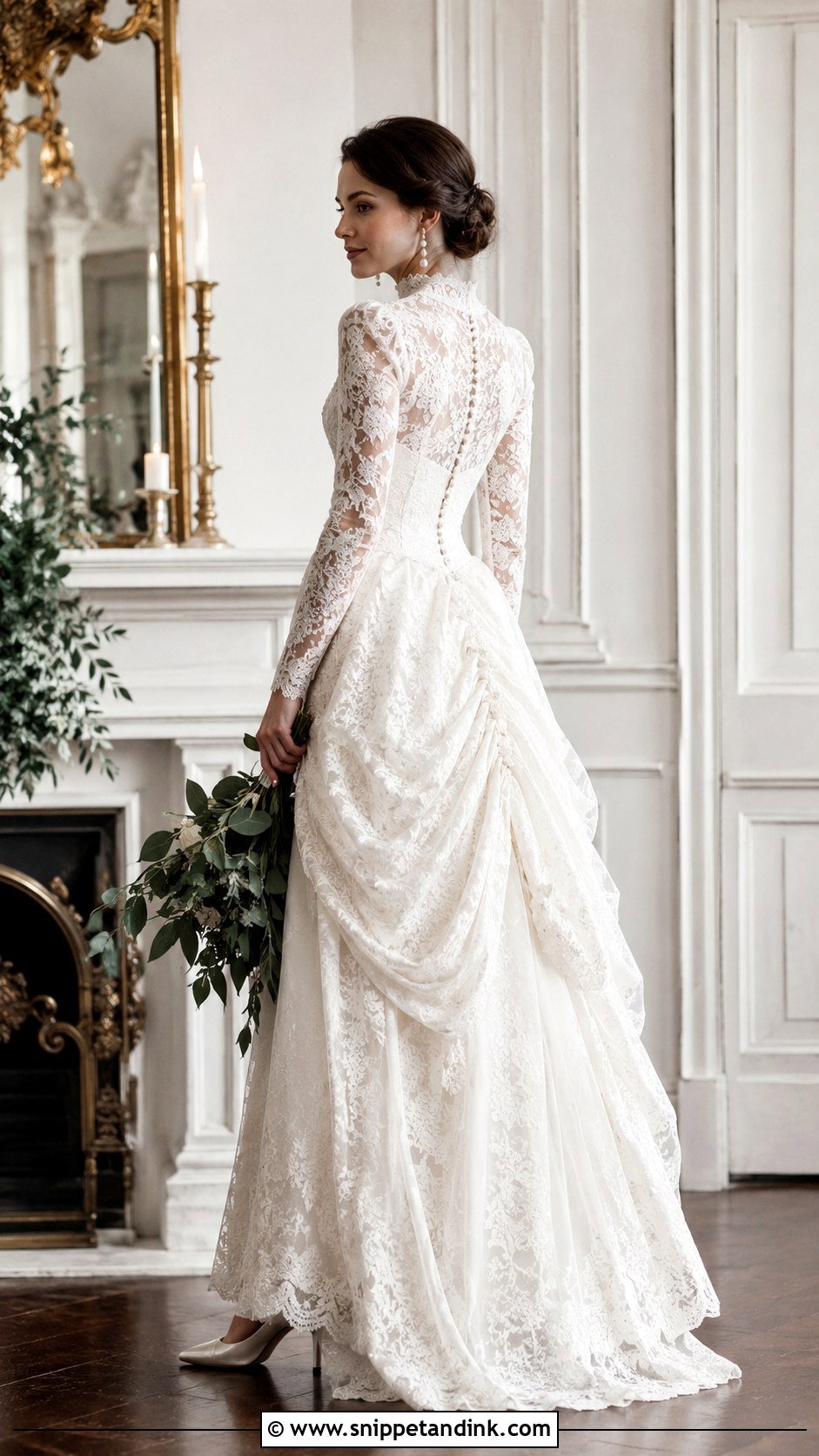
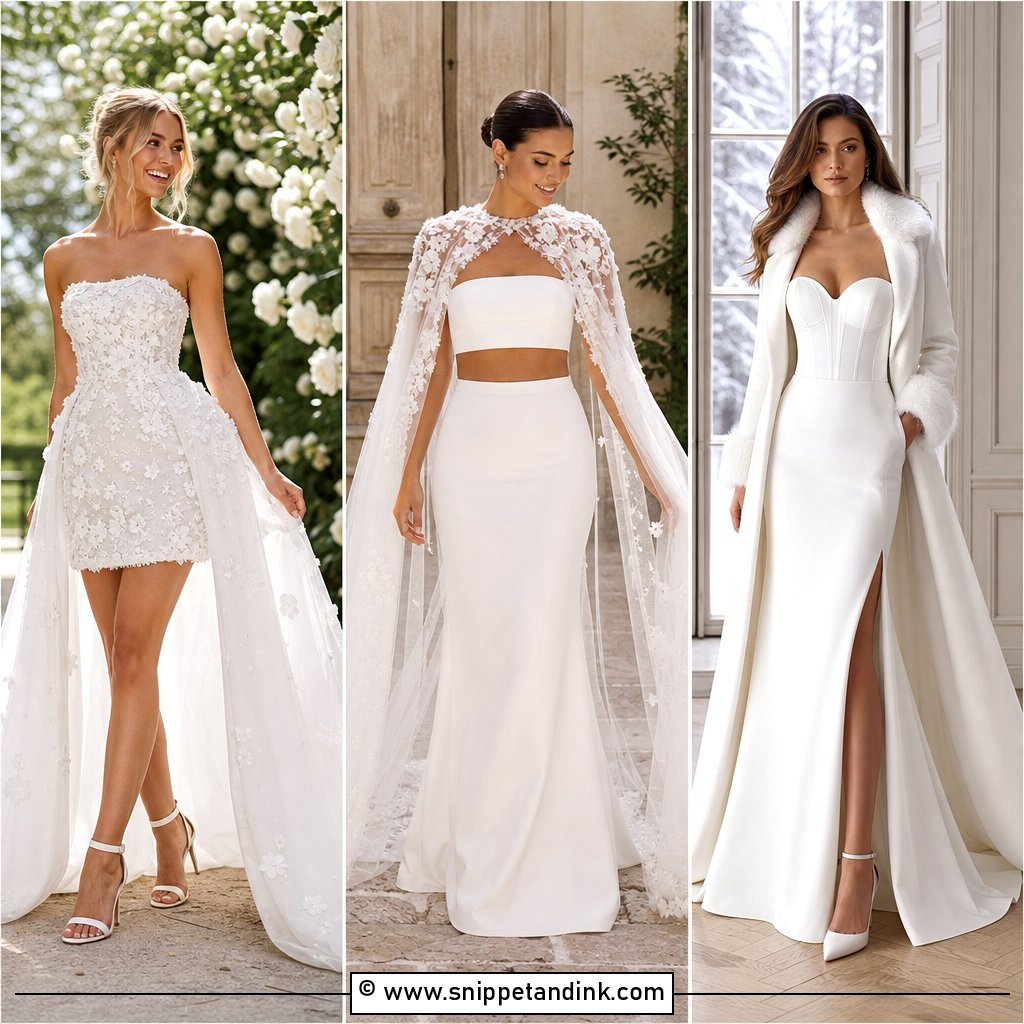
Long sleeves bring coverage to the top half, and the bustle gives the bottom half movement so the gown doesn’t feel rigid. Lace sleeves soften the look; crepe or satin ones sharpen it. Pointed heels, pearl drops and a low chignon suit a fall or winter wedding. For a cathedral veil plus bustle, plan the order: the veil usually comes off before the bustle goes up, so ask your attendant to handle both in one trip to a quiet room.
11. French Bustle Strapless Wedding Dress
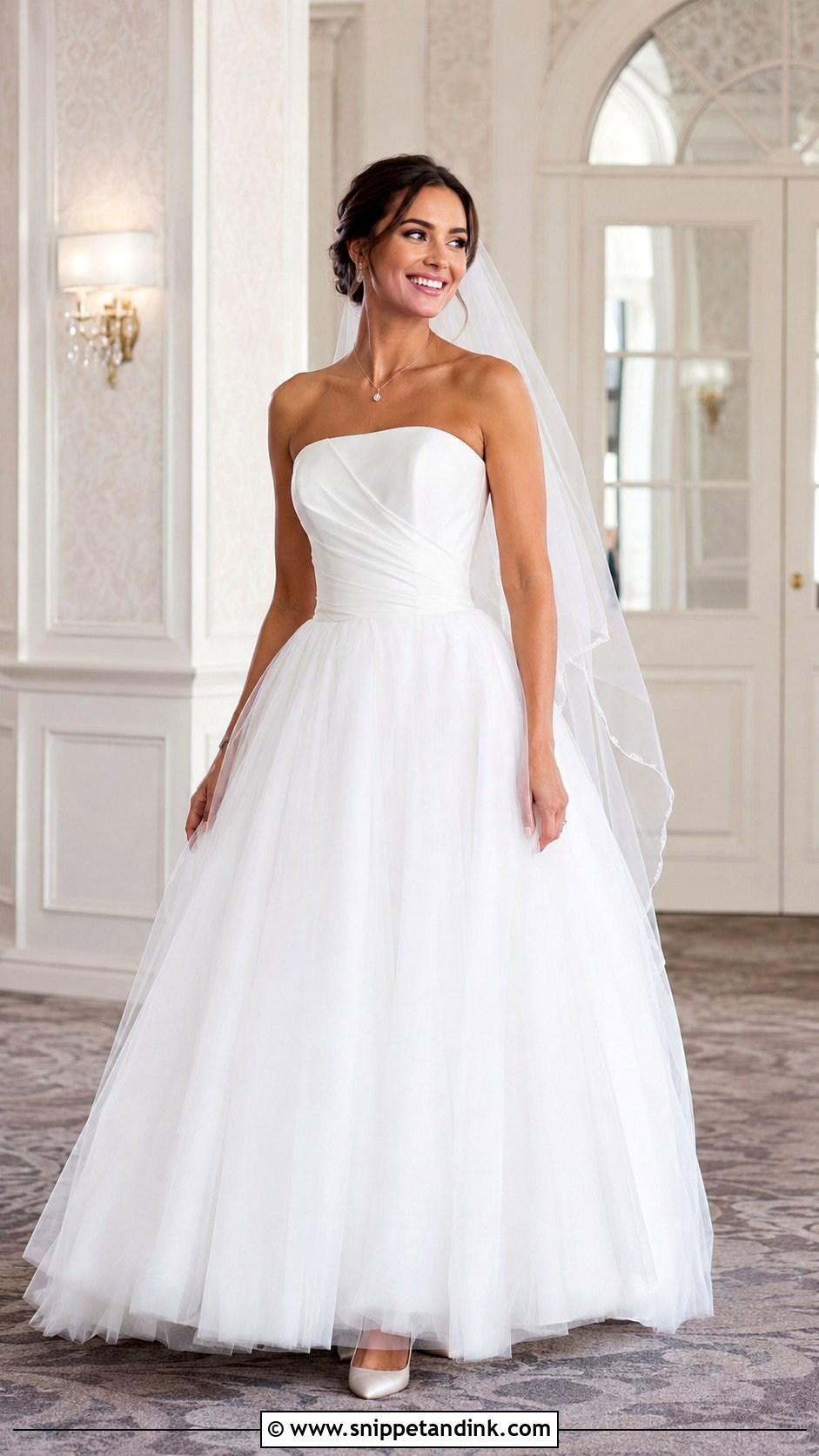
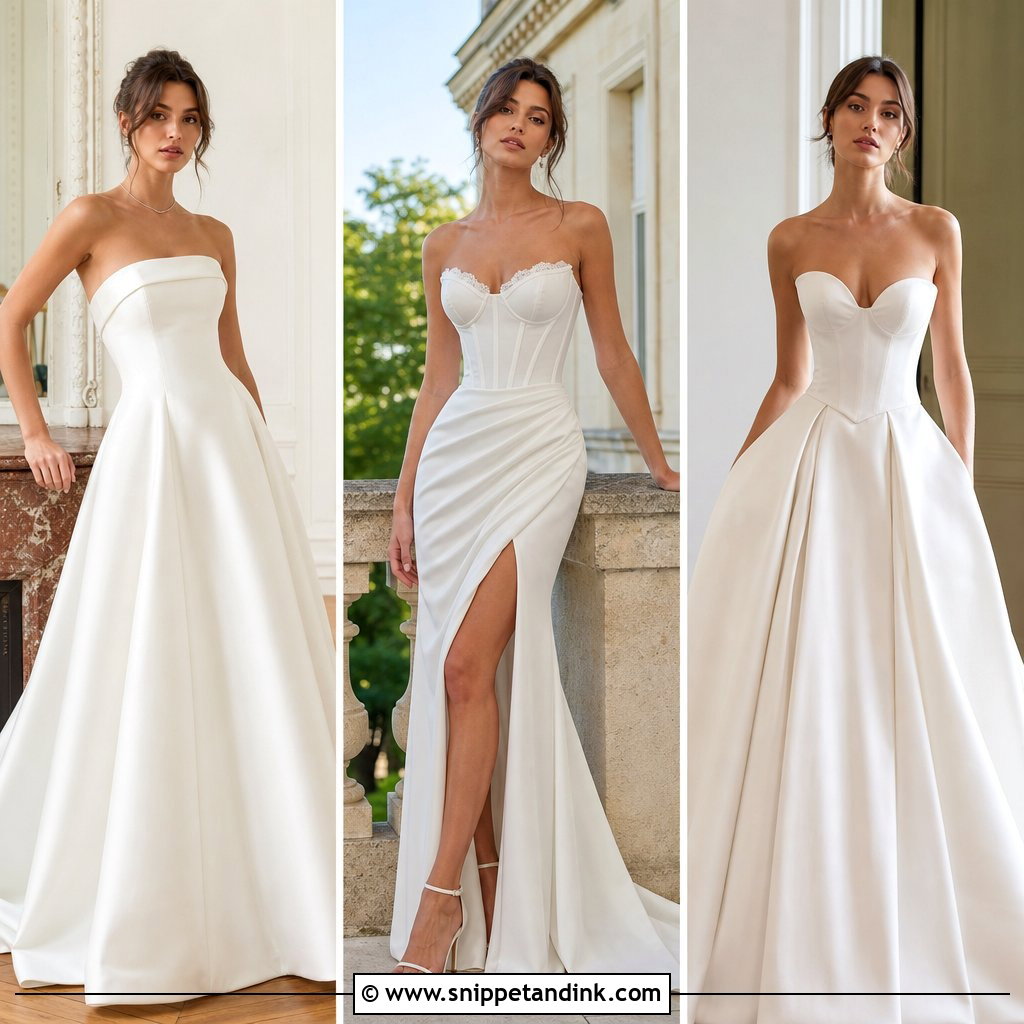
Strapless gowns depend on the bodice staying put, and a bustled train adds weight that tugs gently downward at the back. That is why I insist on a well-boned, snug bodice with this combination. Satin, tulle or organza skirts all work. Statement earrings or a delicate necklace, depending on the neckline, and pointed or block heels finish it. If you find yourself hitching the bodice up at the fitting, mention it then, because the bustle will make it worse by evening.
12. French Bustle Off Shoulder Wedding Dress
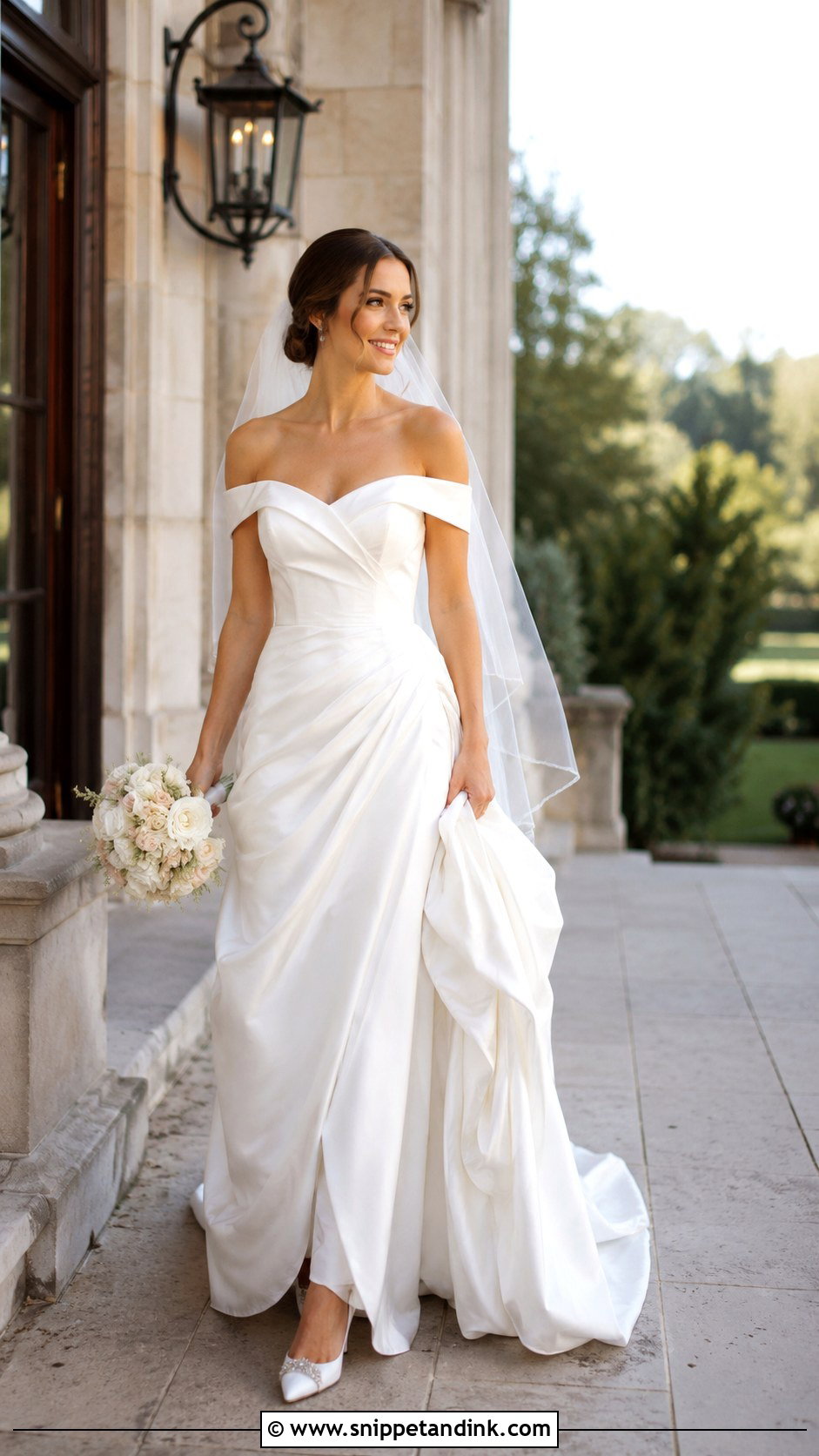
An off-shoulder neckline frames the collarbones while the bustle fills out the back of the skirt. Lace, satin, mikado and tulle all suit the pairing. Off-shoulder bands restrict how high you can lift your arms, which matters when you reach behind to check your bustle; let someone else check it for you. Keep jewelry light, add classic heels, a low bun and a medium veil for an estate or garden reception.
13. French Bustle Corset Wedding Dress
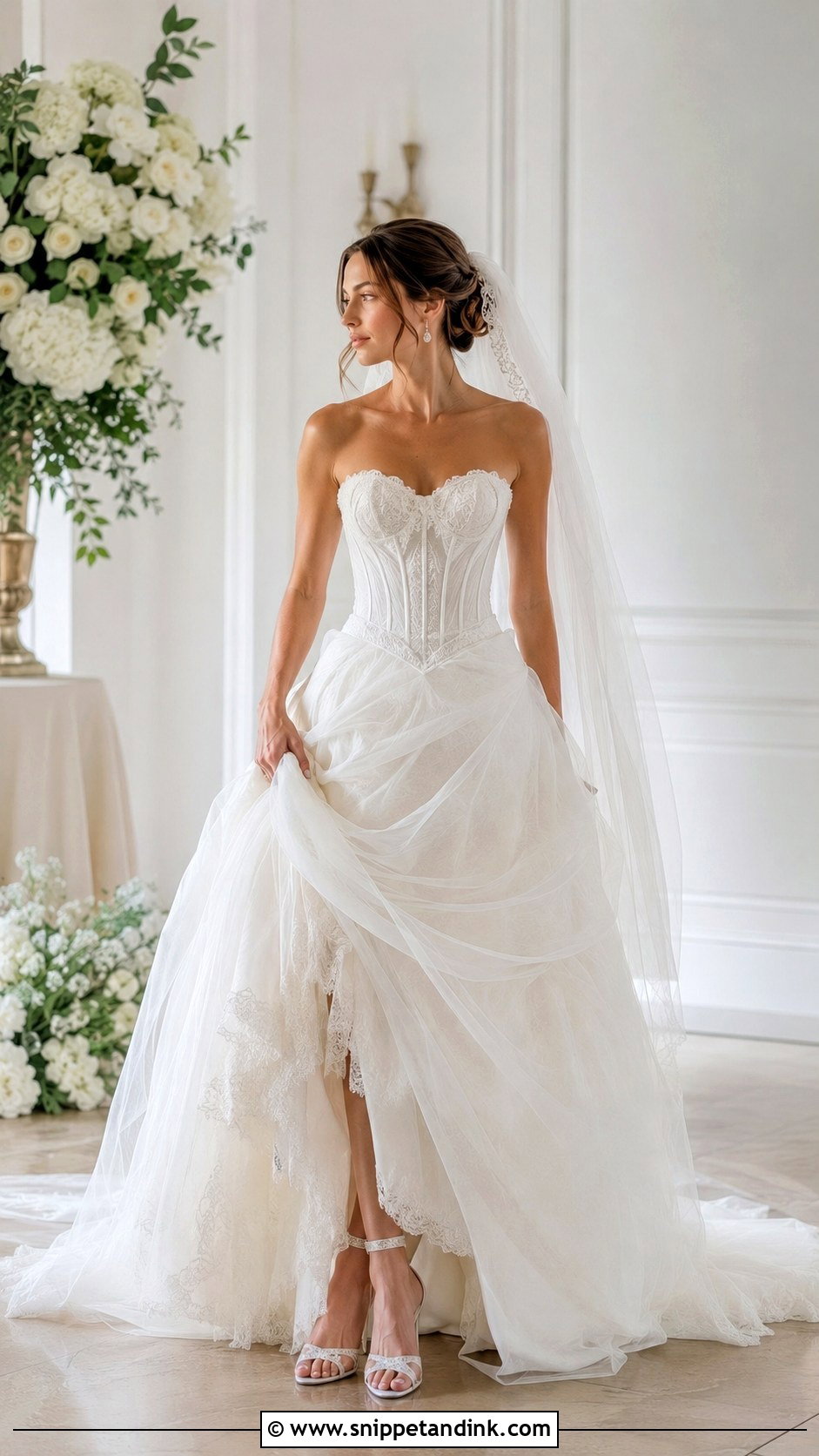
A corset bodice handles the support, and the bustle handles the skirt, so the gown feels secure through a long day of hugging and dancing. It suits ball gown, A-line and layered tulle silhouettes. Visible boning gives a modern edge; hidden structure feels softer. Lace heels, a sheer veil and simple earrings complete it. Tie the corset a touch looser at your final fitting if you plan to eat a full dinner; a laced back is easy to adjust, unlike a zip.
14. French Bustle Sweetheart Wedding Dress
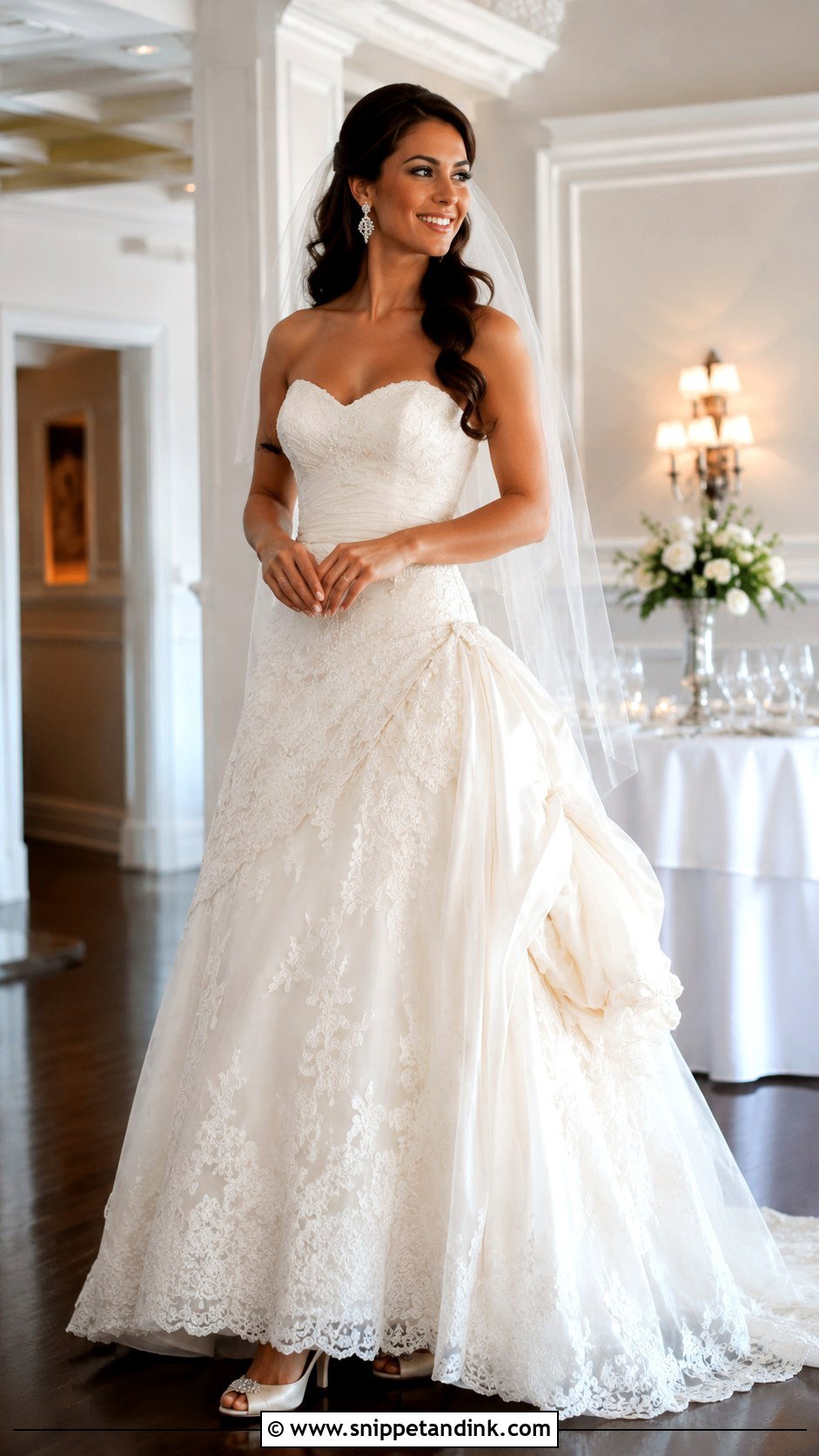
Sweetheart necklines and French bustles share a romantic shape, the curve at the front echoed by soft folds at the back. Lace, satin, tulle or organza all work. A full skirt keeps it traditional, a fitted mermaid makes it more glamorous. Crystal earrings, ivory heels and a soft veil finish it. With a sweetheart neck, I’d check the fit by having you lean forward slightly, since a gap at the top shows instantly in photos taken from above.
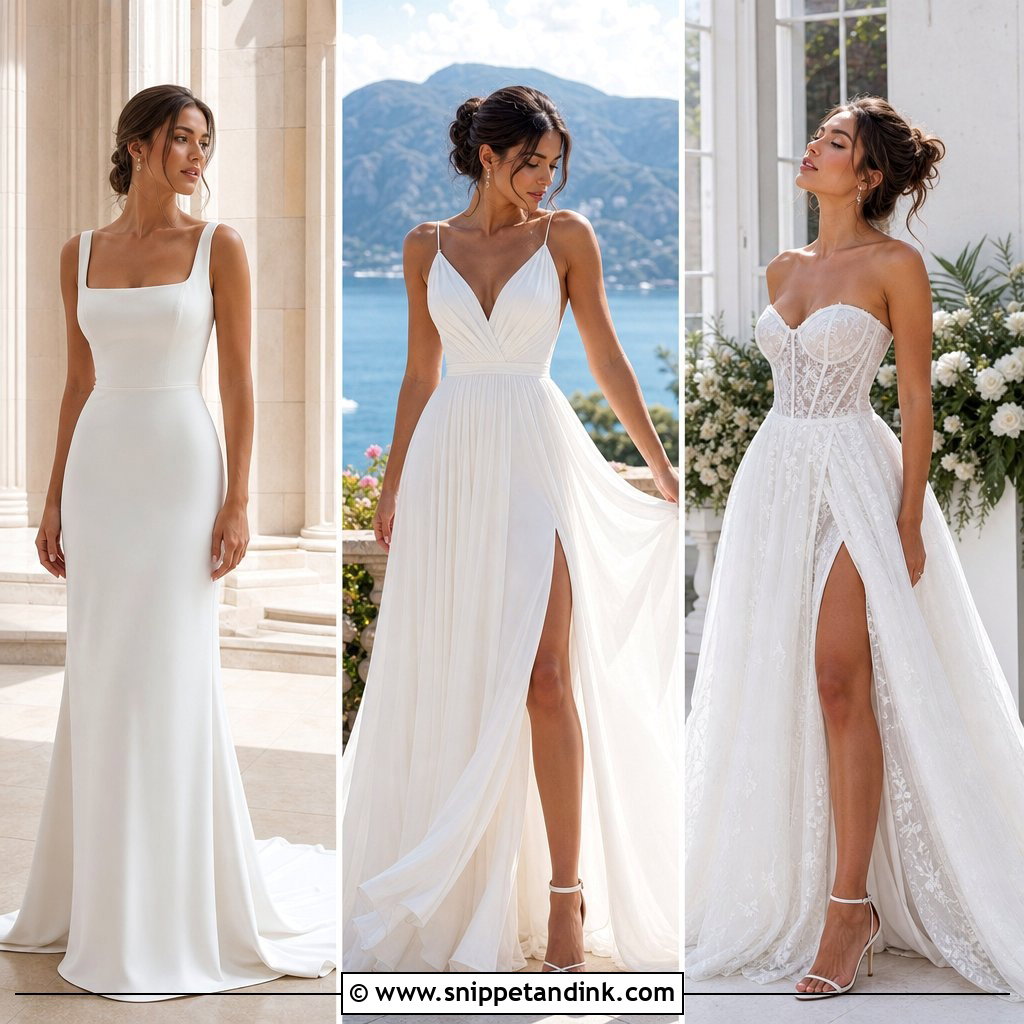

15. French Bustle V Neck Wedding Dress
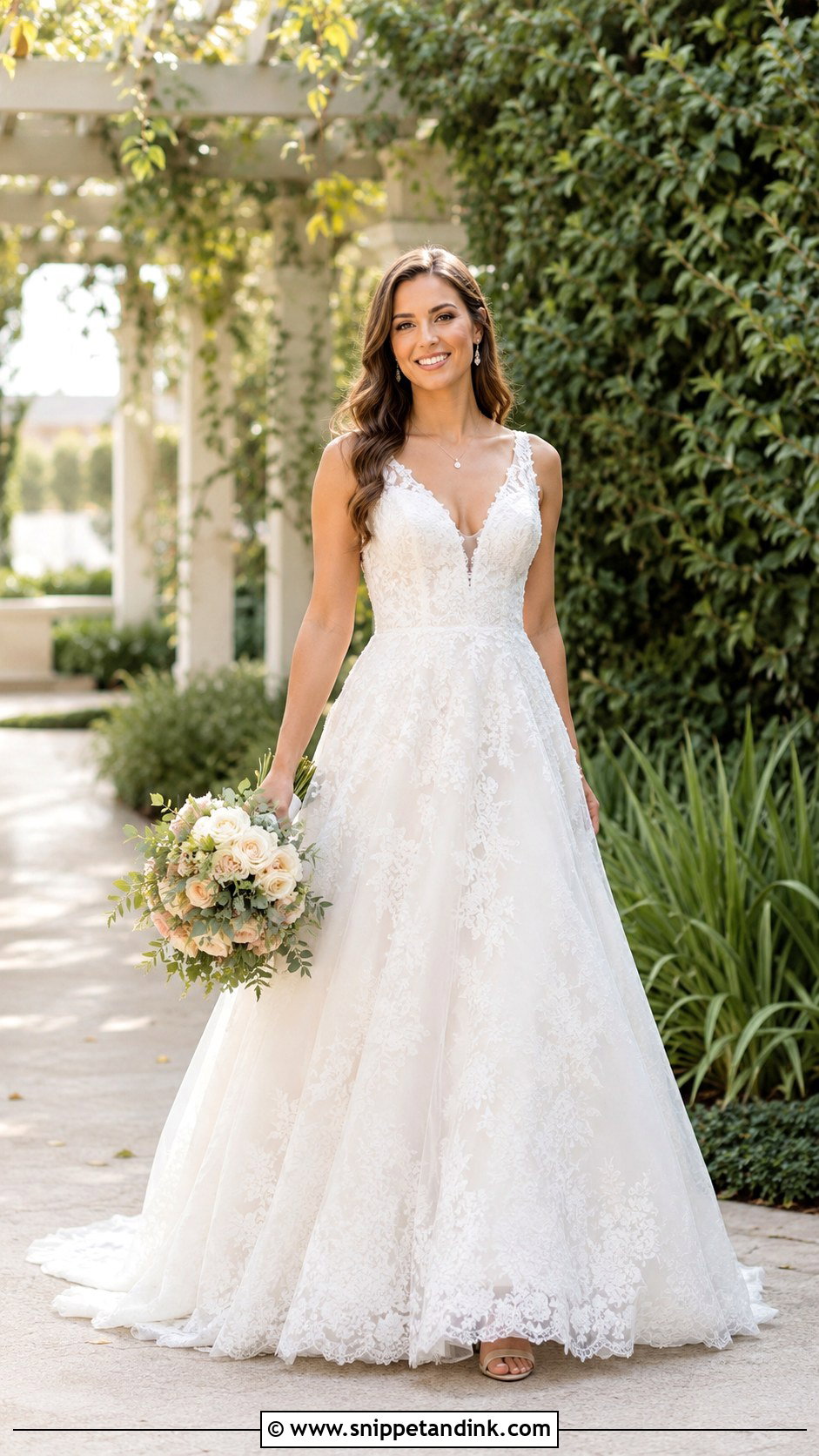
A V neck lengthens the torso, and a neatly bustled train keeps the line clean from front to back. Lace softens it; crepe or satin makes it sharper. If the neckline plunges, illusion mesh or firmer straps give support. Slim heels, a pendant and soft waves or an updo complete the look for an outdoor ceremony and indoor reception. Deep Vs need fashion tape on the day, so pack some in your emergency kit along with the spare bustle ribbon.
16. French Bustle Square Neck Wedding Dress
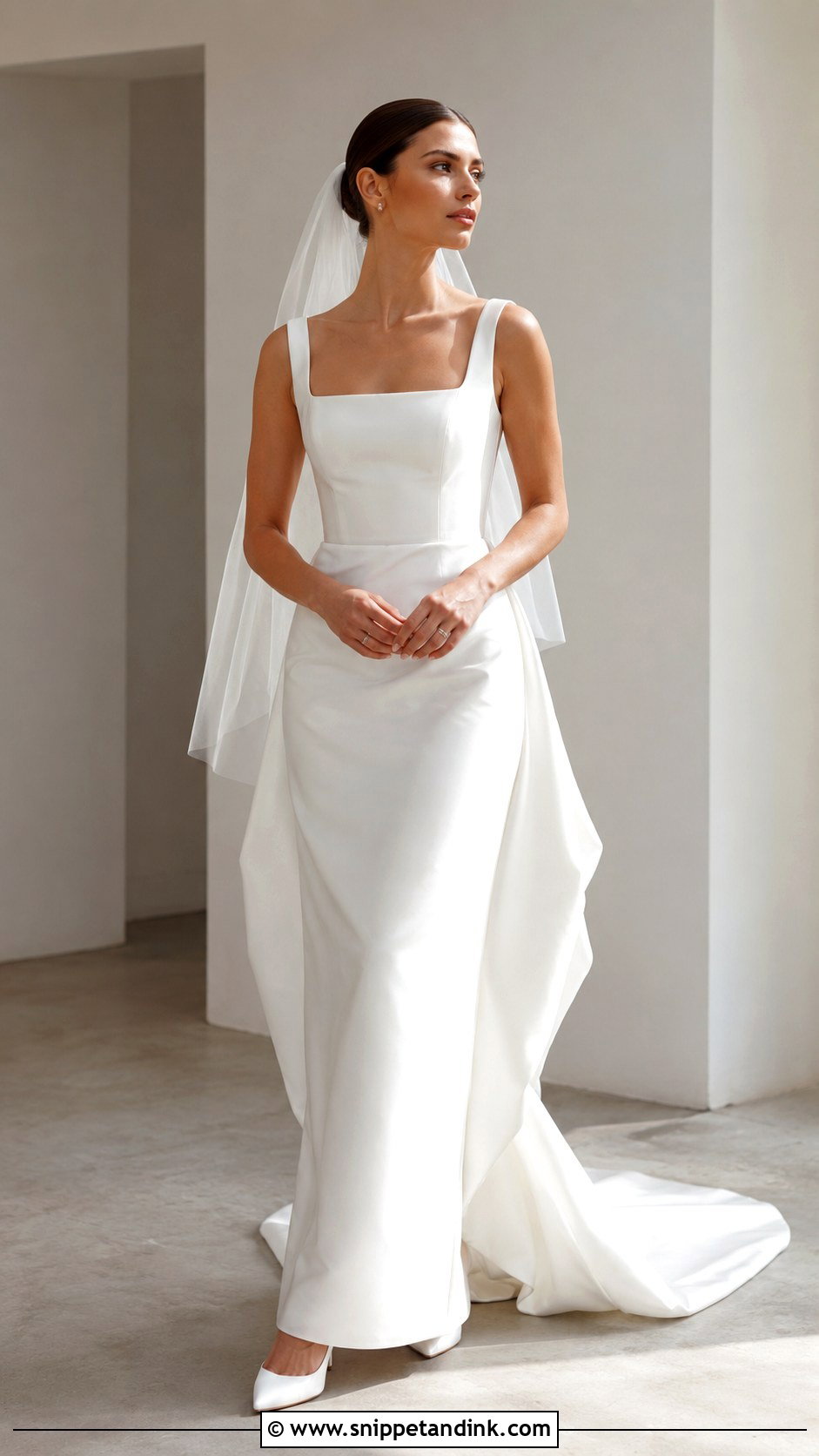
A square neckline gives the bodice a tailored edge, and the tucked train adds softness behind. Satin, mikado, crepe and minimalist lace suit it. A fitted waist keeps the proportions crisp. Pearl studs, a sleek veil and simple pumps make it a polished outfit. Both the neckline and the bustle create clear lines, so ask your photographer for at least one full-length shot from behind after the bustle is done.
17. French Bustle High Neck Wedding Dress
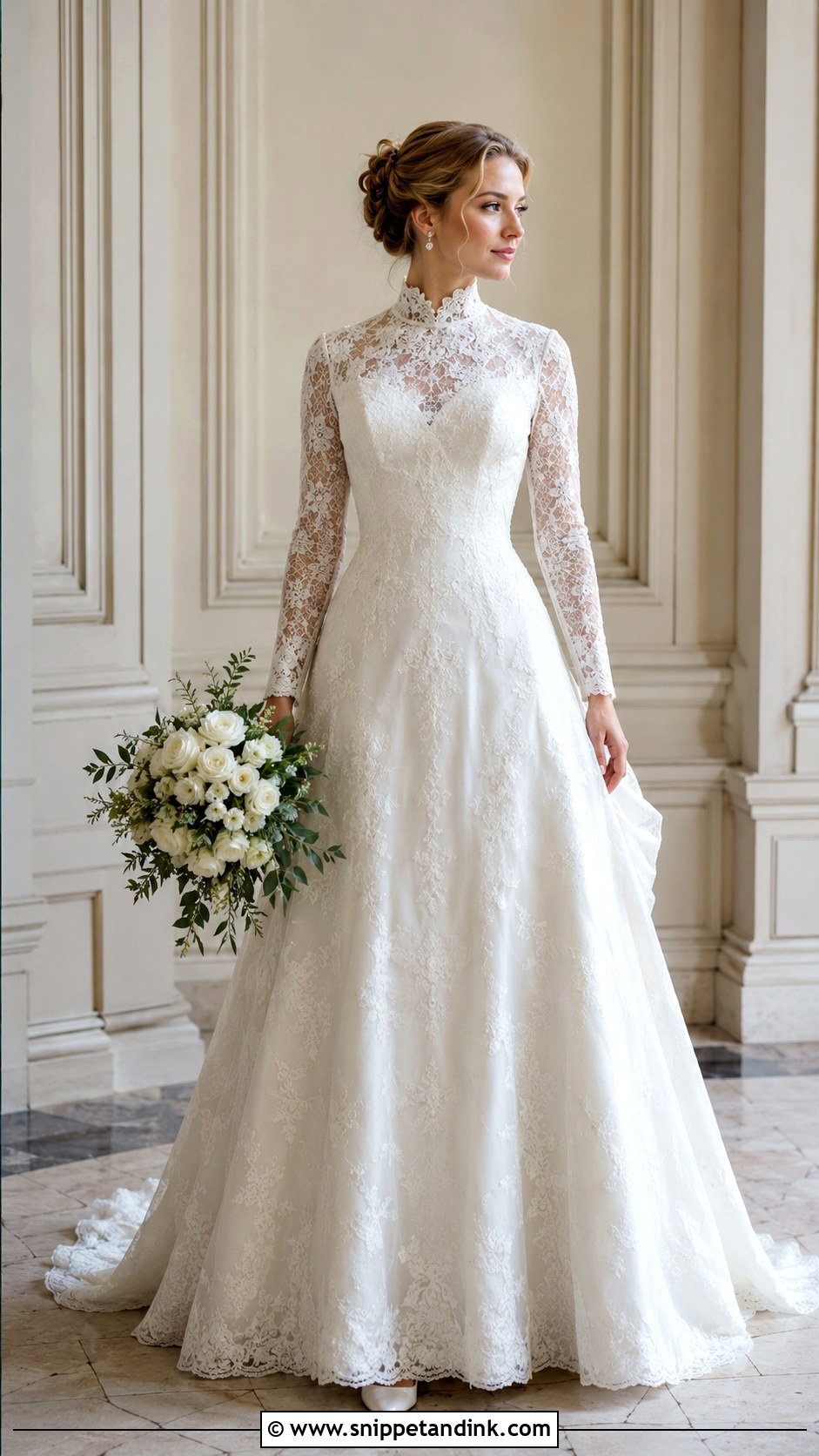
High necklines have a slightly vintage feel, especially in lace; crepe or satin versions look more modern. The bustle keeps the train controlled without competing with the neckline for attention. Small earrings, an updo and simple heels keep it balanced, and a long veil softens a very structured gown. Cooler seasons and formal venues suit it. I check how the collar sits when the bride looks down, because high necks can buckle at the throat.
18. French Bustle Cathedral Train Wedding Dress
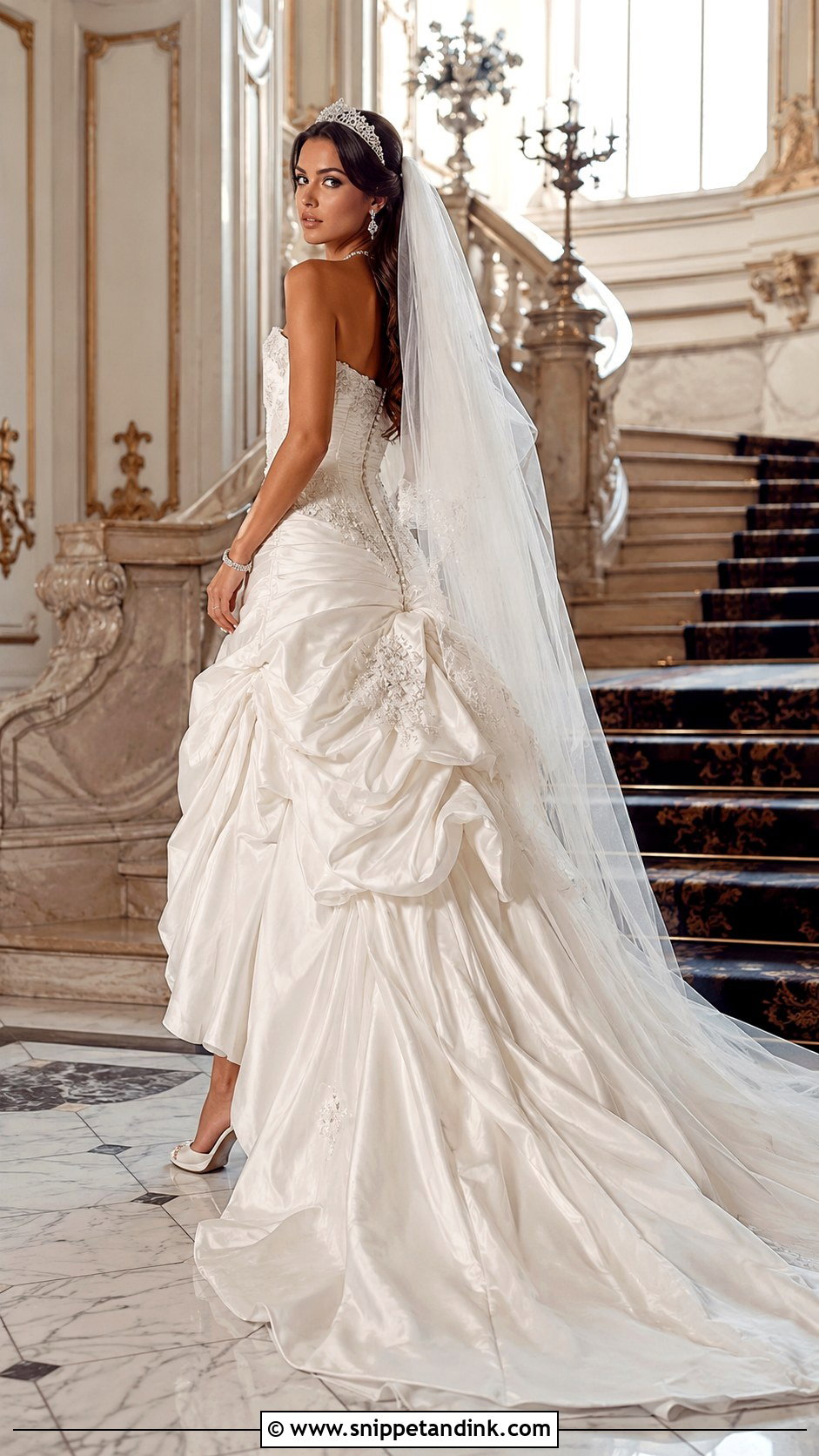
A cathedral train makes the entrance, and the bustle makes the evening possible. With this much fabric, I want several secure points, often more than on any other gown here, so the train lifts evenly instead of drooping on one side. Fuller silhouettes, structured fabrics or layered skirts carry the weight best. Choose a dramatic veil, supportive heels and jewelry matched to the formality. Plan staircase portraits before bustling, and allow your attendant extra time; a long train takes noticeably longer to tie up.
19. French Bustle Chapel Train Wedding Dress
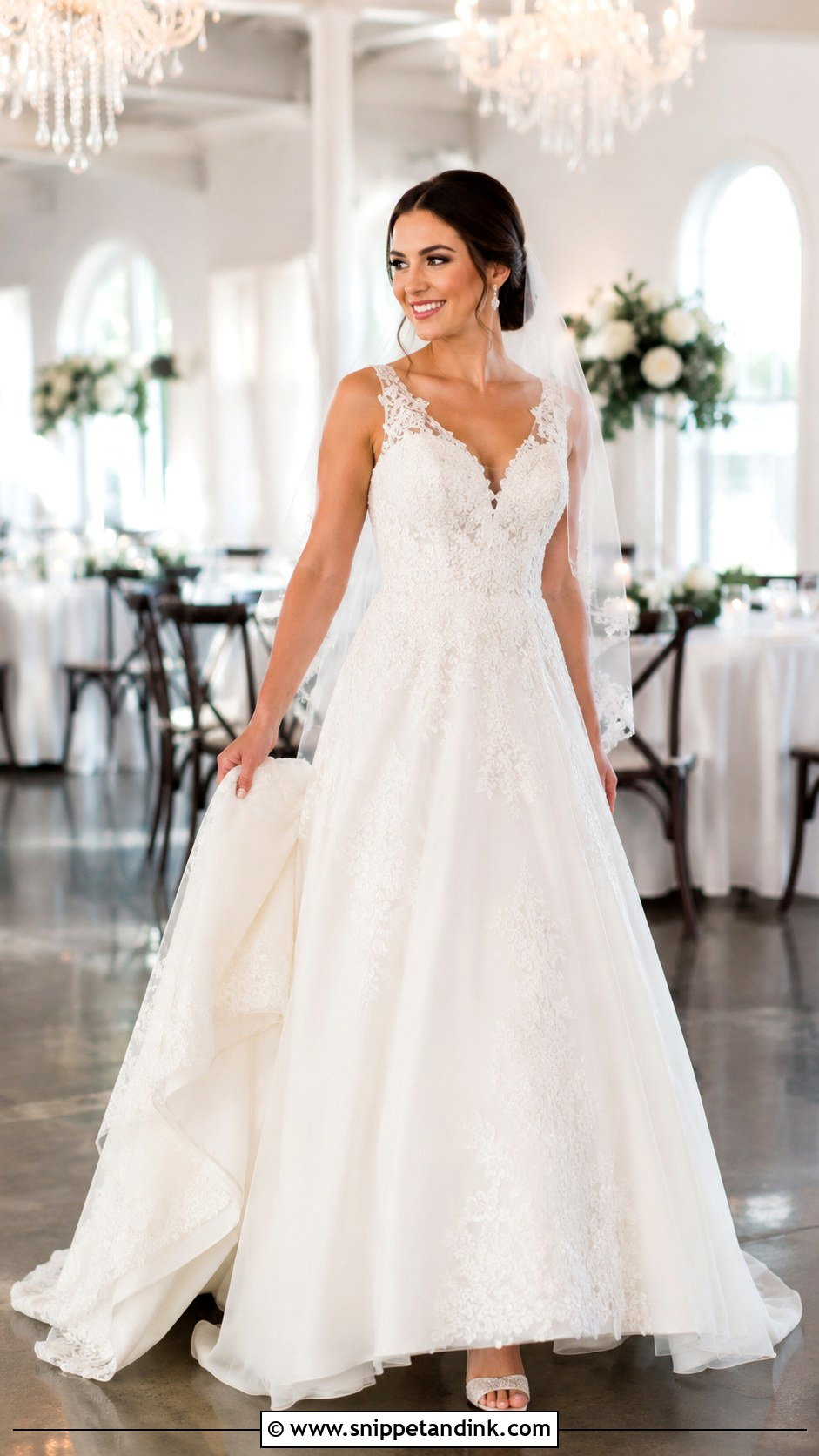
Chapel trains are the middle ground: long enough to look special, short enough to bustle quickly. The fabric forms soft under-folds without much weight. A-line, fit-and-flare, mermaid and ball gown shapes all suit it. Comfortable heels, a fingertip veil and classic earrings complete it. With fewer points to tie, a chapel train is often bustled in a few minutes, which makes it the easiest choice if you’re short on reception time.
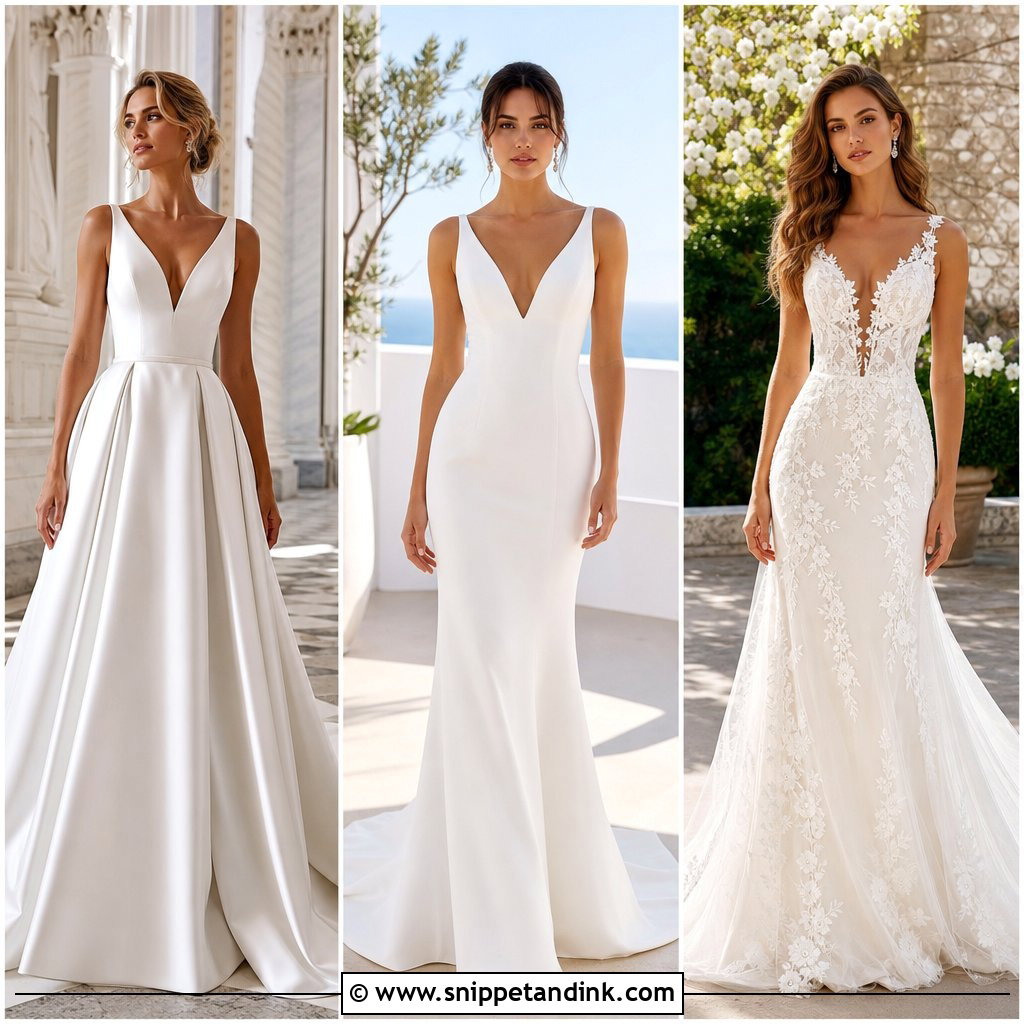


20. French Bustle Floral Applique Wedding Dress
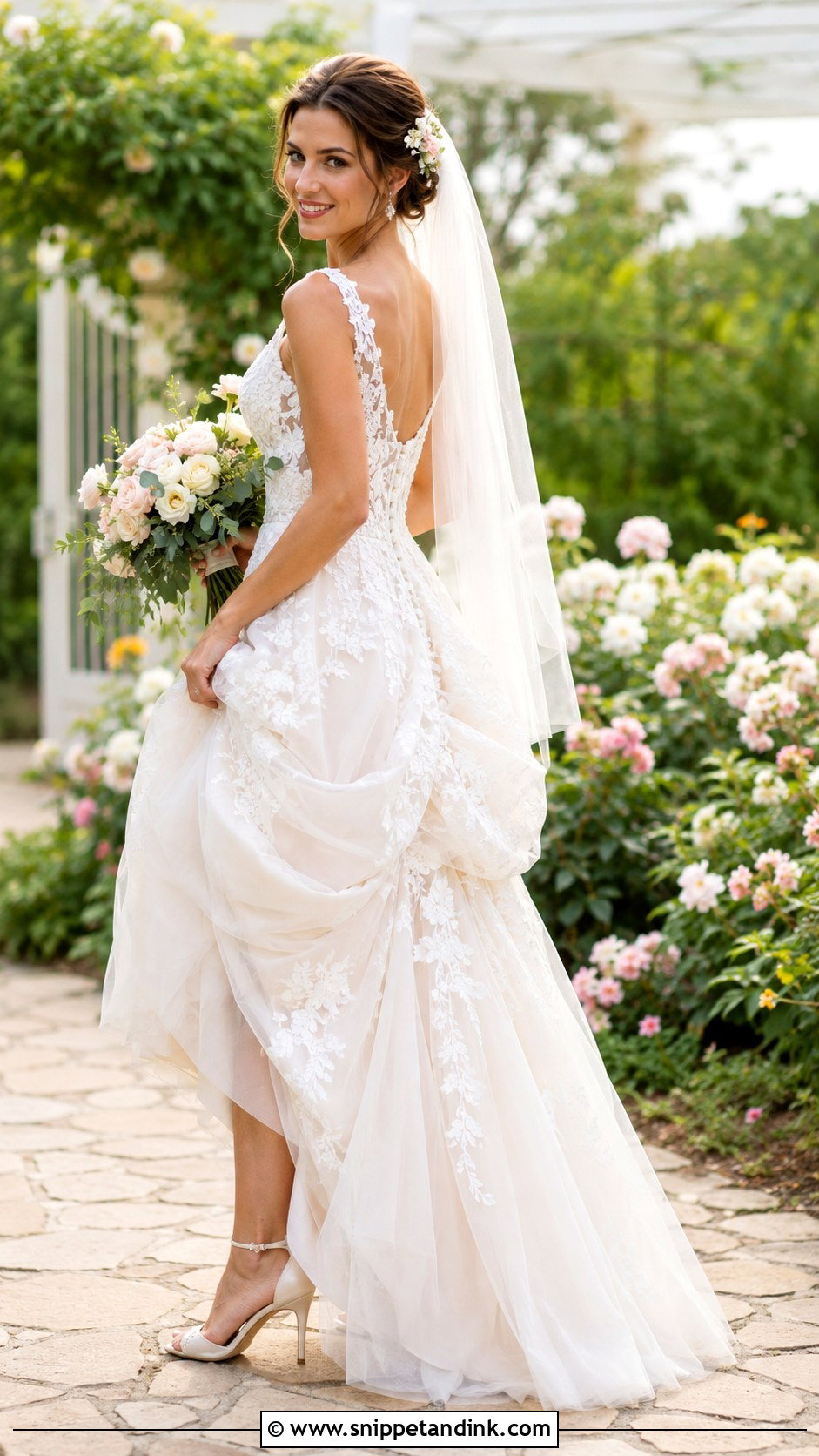
Floral applique benefits from an under bustle because nothing gets folded over the outside, so the flowers stay visible from bodice to hem. Tulle, lace or organza give the softest effect. Floral pins, ivory heels and a simple veil suit a spring garden ceremony. Watch for appliques near the hem catching on the ties underneath; your seamstress can tack loose petals so they don’t snag when the train lifts.
21. French Bustle Beaded Wedding Dress
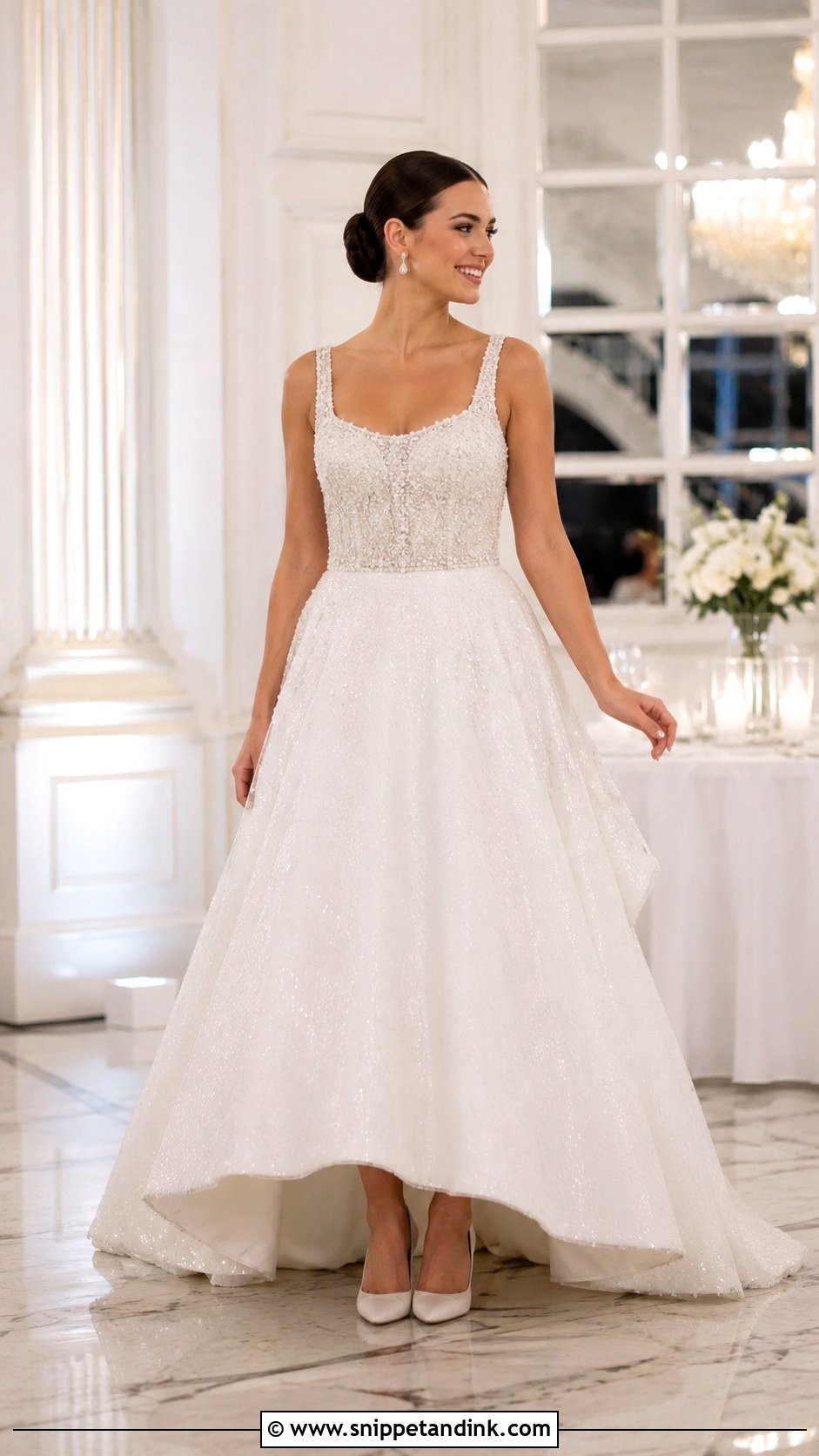
Beading adds real weight to a train, so I treat a beaded gown as a structural job first. The bustle needs strong inner support, reinforced loops and secure ties, or the weight drags the skirt into awkward pulls and hides the sparkle. A beaded bodice with a softer skirt is easier to bustle than an allover beaded gown. Simple heels, smooth hair and understated earrings keep it from feeling busy at an evening reception. Check that no beads sit where a tie will rub against them.
22. French Bustle Minimal Wedding Dress
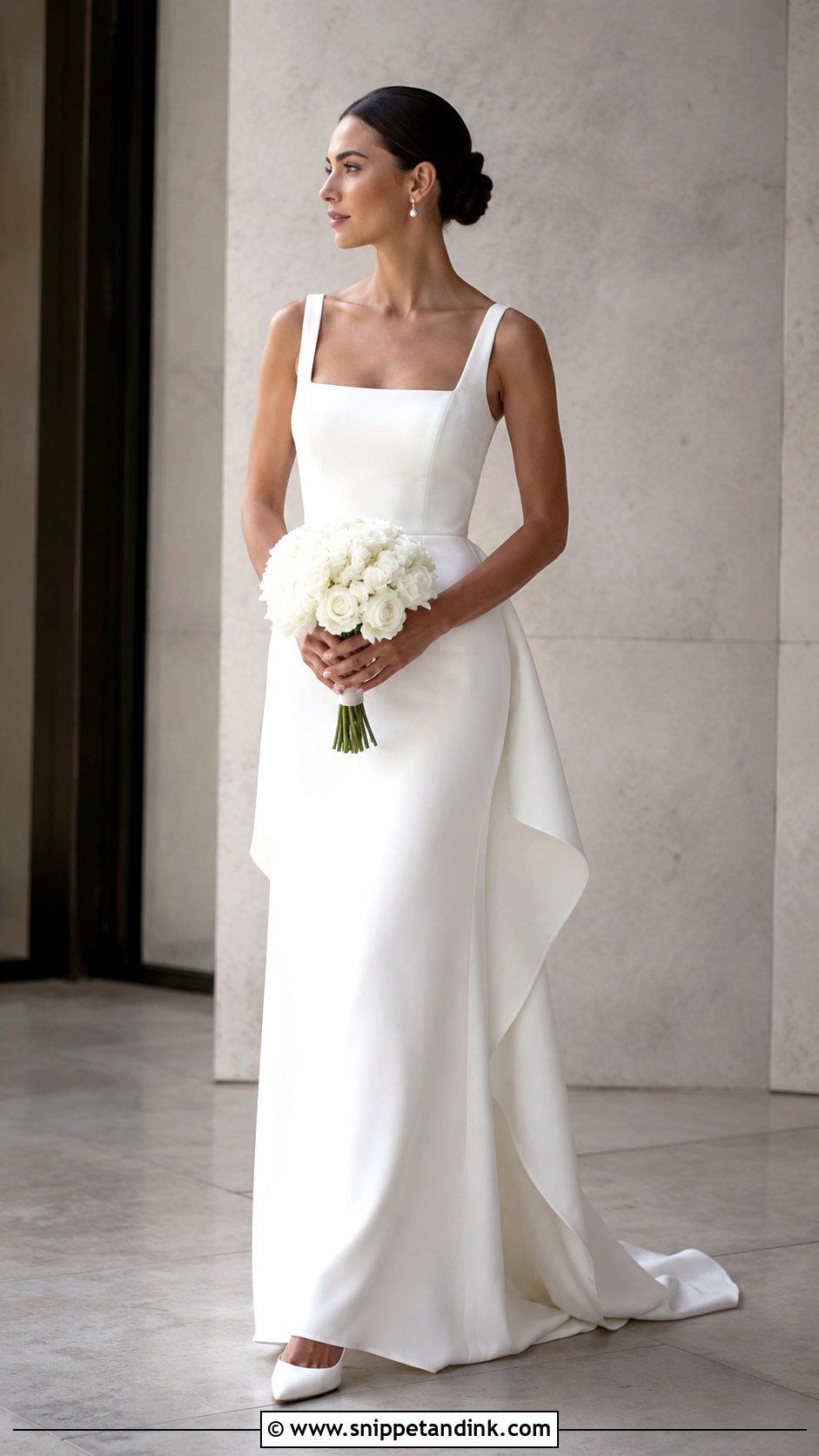
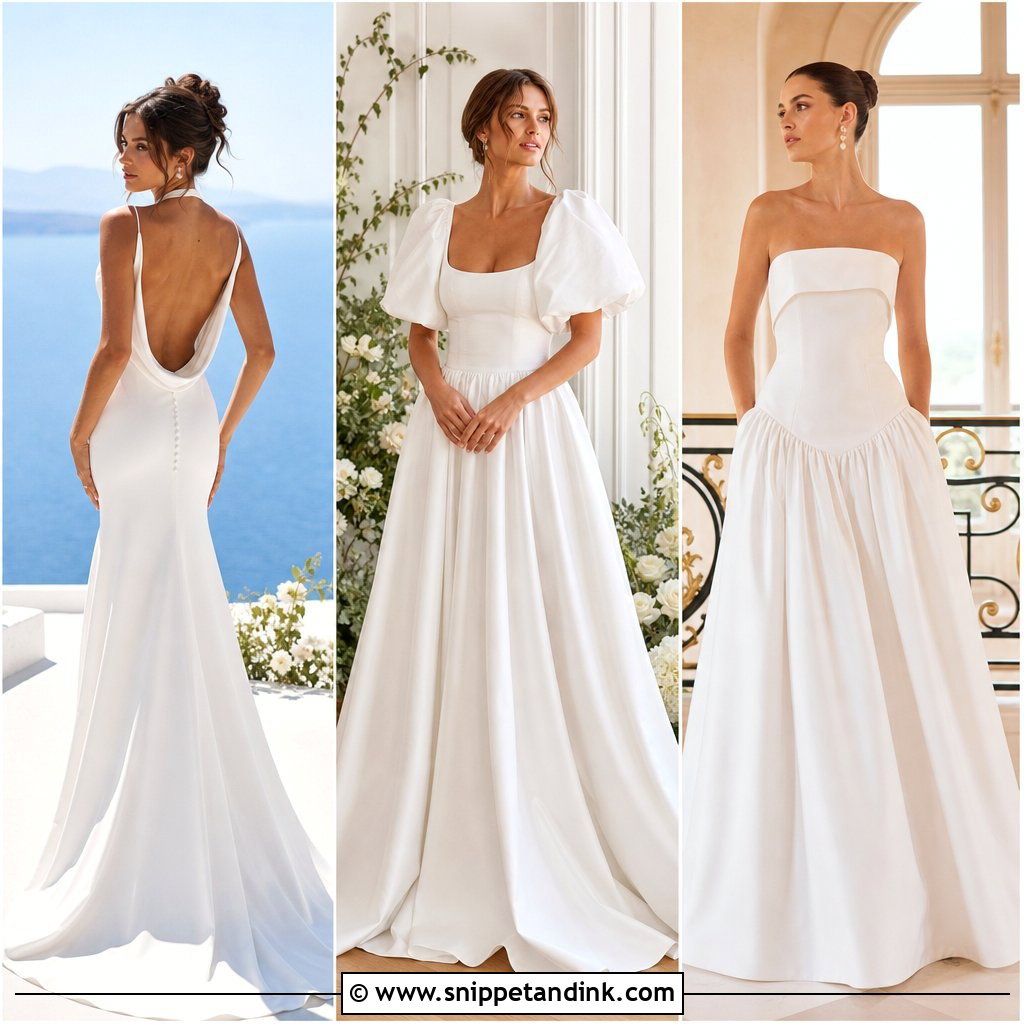
On a plain gown, the bustle becomes one of the few details people see, so it needs to look intentional. Satin, mikado and crepe suit this style. A square neck, strapless bodice or long sleeves work depending on your taste. Sleek pumps, small pearls and a polished bun keep it modern for a city or contemporary venue. With no lace or beading to hide behind, even folds matter, so ask for a final check of the bustle after you have sat down once.
23. French Bustle Vintage Wedding Dress
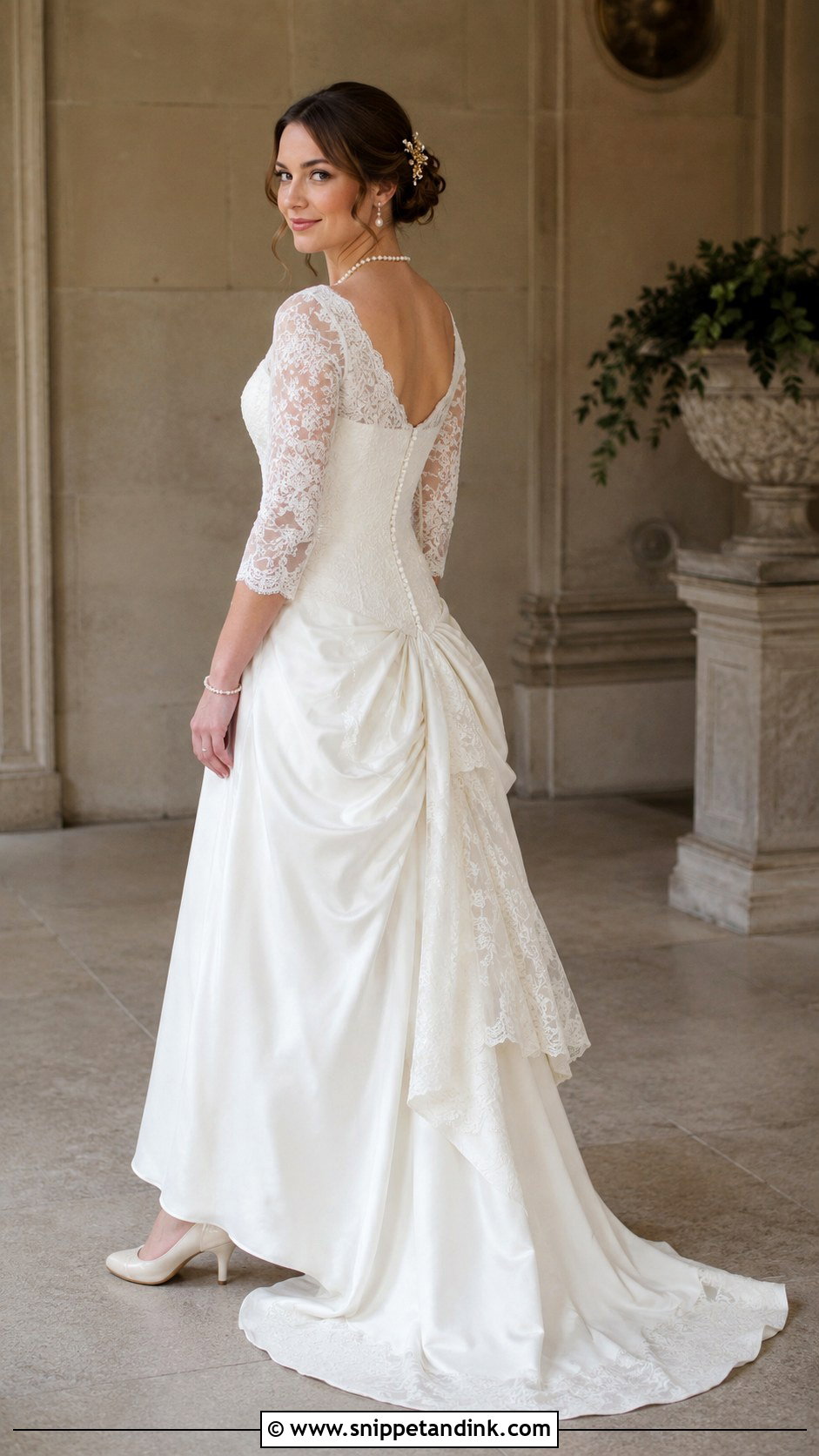
Bustles have an old-world feel, so they suit vintage-inspired gowns naturally. Lace sleeves, covered buttons, basque waists, high necklines or soft corset details all bring out that mood. Pick one or two of those details, not all of them, or the gown starts to look like a costume. Low heels, pearls and a soft veil or vintage comb finish it for a historic venue. If the gown itself is genuinely vintage, have the seamstress check the fabric strength before adding ties, since older fibers can be fragile.
24. French Bustle Plus Size Wedding Dress
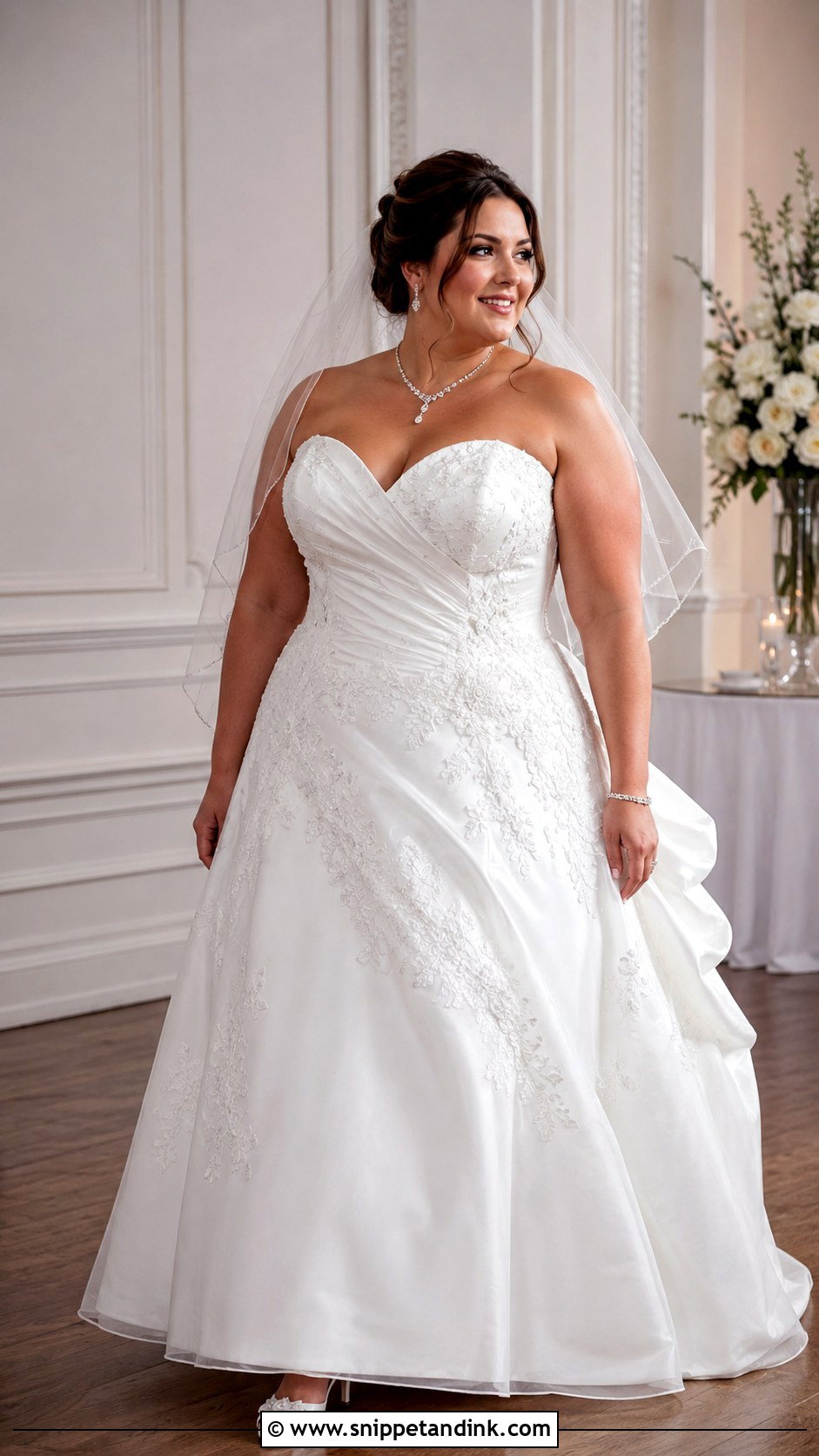
For a plus size bride, a bustle should feel secure and balanced rather than add bulk at the hip. A-line, ball gown and structured fit-and-flare shapes give the train room to fall smoothly. I look for firm bodice construction, strong bustle points and fabric that supports the shape without pulling. A sweetheart, V or off-shoulder neckline frames the top half. Comfortable heels, supportive undergarments and jewelry matched to the gown’s detail level complete it. The aim is a dress that moves well with you all night.

25. French Bustle Reception Wedding Dress
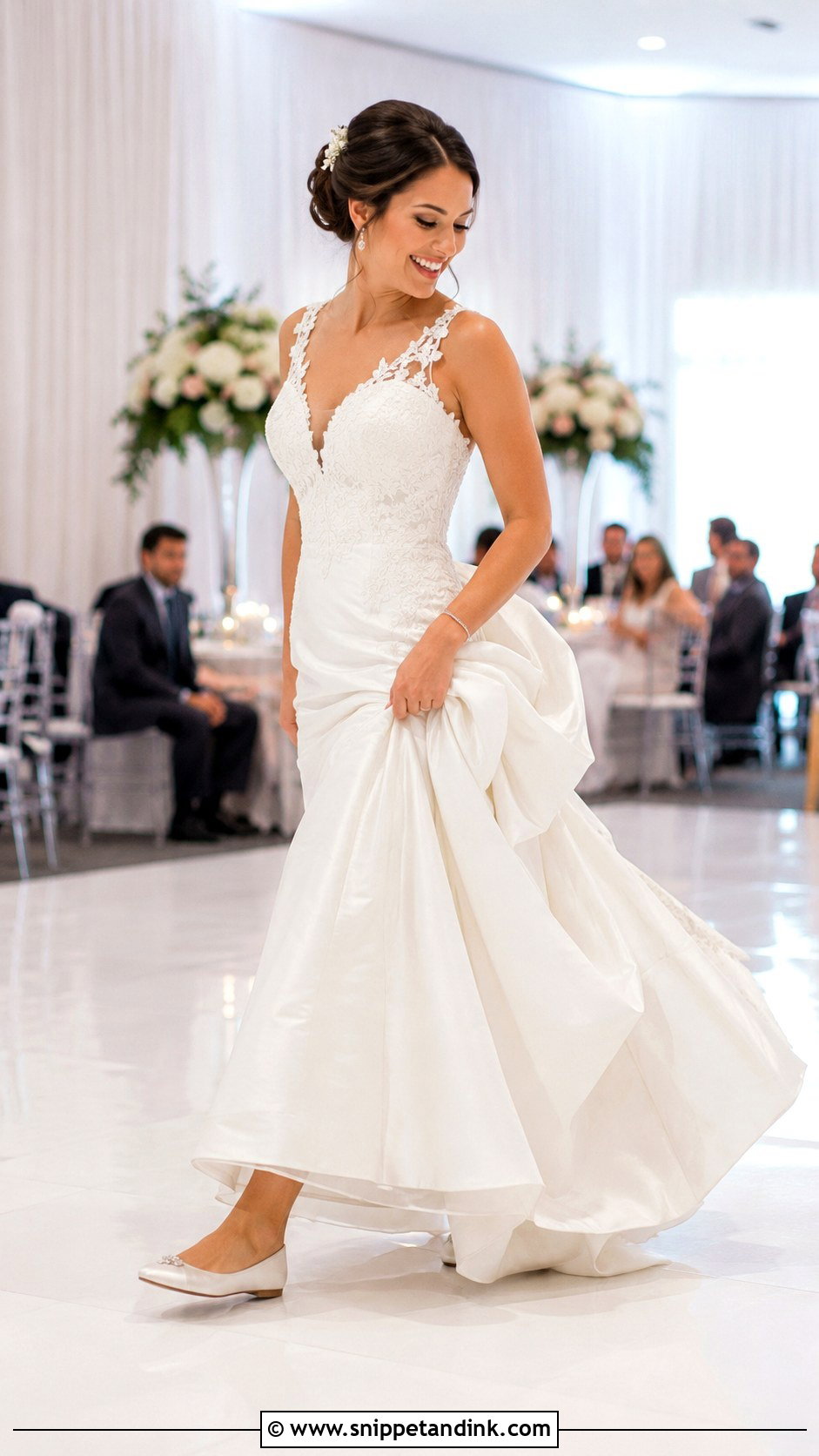
Some brides want photos with the full train but no second dress, and a French bustle makes that easy. The train trails behind for the ceremony and portraits, then tucks up into a cleaner shape for dancing. Practice bustling with your helper before the day, add comfortable heels or bridal flats, swap a long veil for a smaller hair piece and keep jewelry simple. It is a cheaper option than buying a reception dress, though it does need a good seamstress.
Teaching Someone to Bustle You in Five Minutes
Brides can’t bustle their own gown; the ties are behind and underneath you. Choose one or two people who will be at your side when the reception starts, ideally your maid of honor and a backup, and bring them to the final fitting.
- Ask the seamstress to number or color-code each pair of ribbons. Matching colors make it far easier for a nervous helper.
- Have your helper do the bustle themselves at the fitting, start to finish, while the seamstress watches.
- Take a short video and a photo of the finished bustle from behind on their phone.
- Schedule ten quiet minutes for it on the day, after portraits and before the grand entrance or first dance.
If a Tie Snaps Halfway Through the Night
It does happen, usually on the dance floor when someone steps on the hem. A single broken point leaves a droop rather than a collapse, so there is time to fix it. Keep a small kit with your helper: a few large safety pins, a needle threaded with white or ivory thread, and a short length of spare ribbon. A safety pin through the loop from the inside will hold until the end of the evening. For long trains, I also suggest a wrist loop sewn to the hem, which lets you lift the skirt yourself for a quick fix.
Fabric, Train Length and a Helper Who Knows the Ribbons
An under bustle suits almost every silhouette, from satin ball gowns to sleek crepe sheaths, but it only looks right when it matches the gown’s structure, fabric weight and train length. Bring photos of bustles you like to your fittings, ask how many points your gown needs, and practice before the wedding. A good bustle feels secure and looks like it was always part of the dress.
You'll Like These Ideas:


Leave a Reply