
Pakistani bridal fashion right now balances old handwork with lighter silhouettes and newer colors, and dressing a bride for it usually means dressing her four times. Nikah, mehndi, baraat and walima each ask for something different in weight, color and coverage. Red and maroon still lead for the baraat, while ivory, blush, champagne, mint and jewel tones have become normal choices for the other events. Below are twenty complete outfits, from velvet lehengas to pishwas, ghararas, shararas, gowns and one saree, with the dupatta, jewelry, shoes and hair I’d put with each and the practical problems I’d watch for.
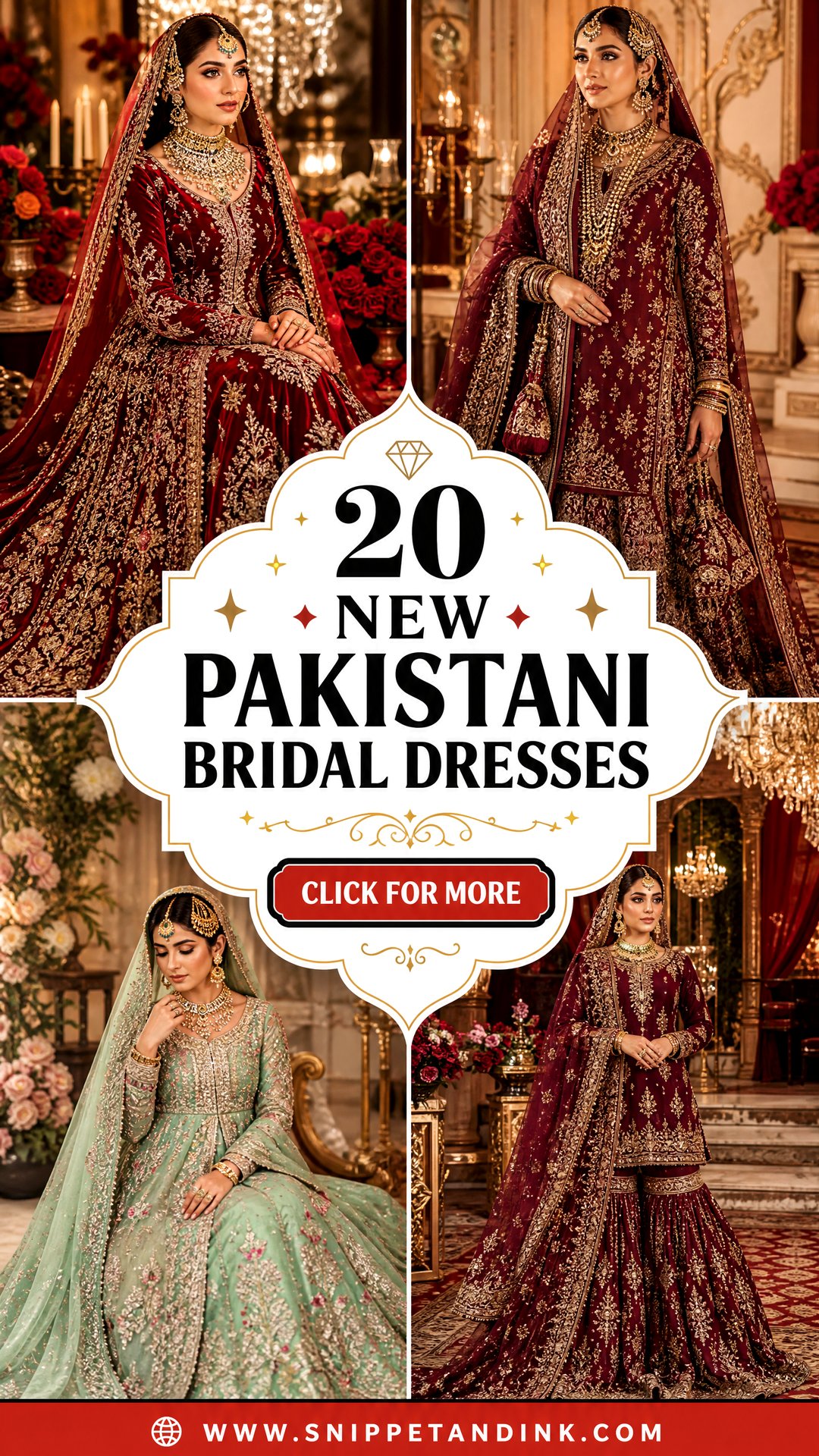
Four Events, Four Weights of Outfit
When a bride plans her wardrobe across the wedding week, I start with how long she’ll be standing, sitting and dancing at each event, then fit the outfits to that. The heaviest embroidery belongs where she does the least moving.
- Mehndi: lighter fabrics, brighter colors and shararas or ghararas you can dance in. Floor seating is common, so avoid stiff skirts.
- Nikah: modest and usually lighter in color. Long sleeves and a dupatta that stays on the head through the ceremony.
- Baraat: the heaviest, most traditional outfit, often red or maroon, worn for photos and the rukhsati rather than dancing.
- Walima: softer colors and gowns or maxis, since you’ll walk the room greeting guests.
Heavily worked outfits take months to embroider by hand. Order the baraat outfit first, as early as your designer asks, then the others. A ready-made walima gown is far easier to source at short notice than a custom lehenga.
1. Red Velvet Pakistani Bridal Lehenga
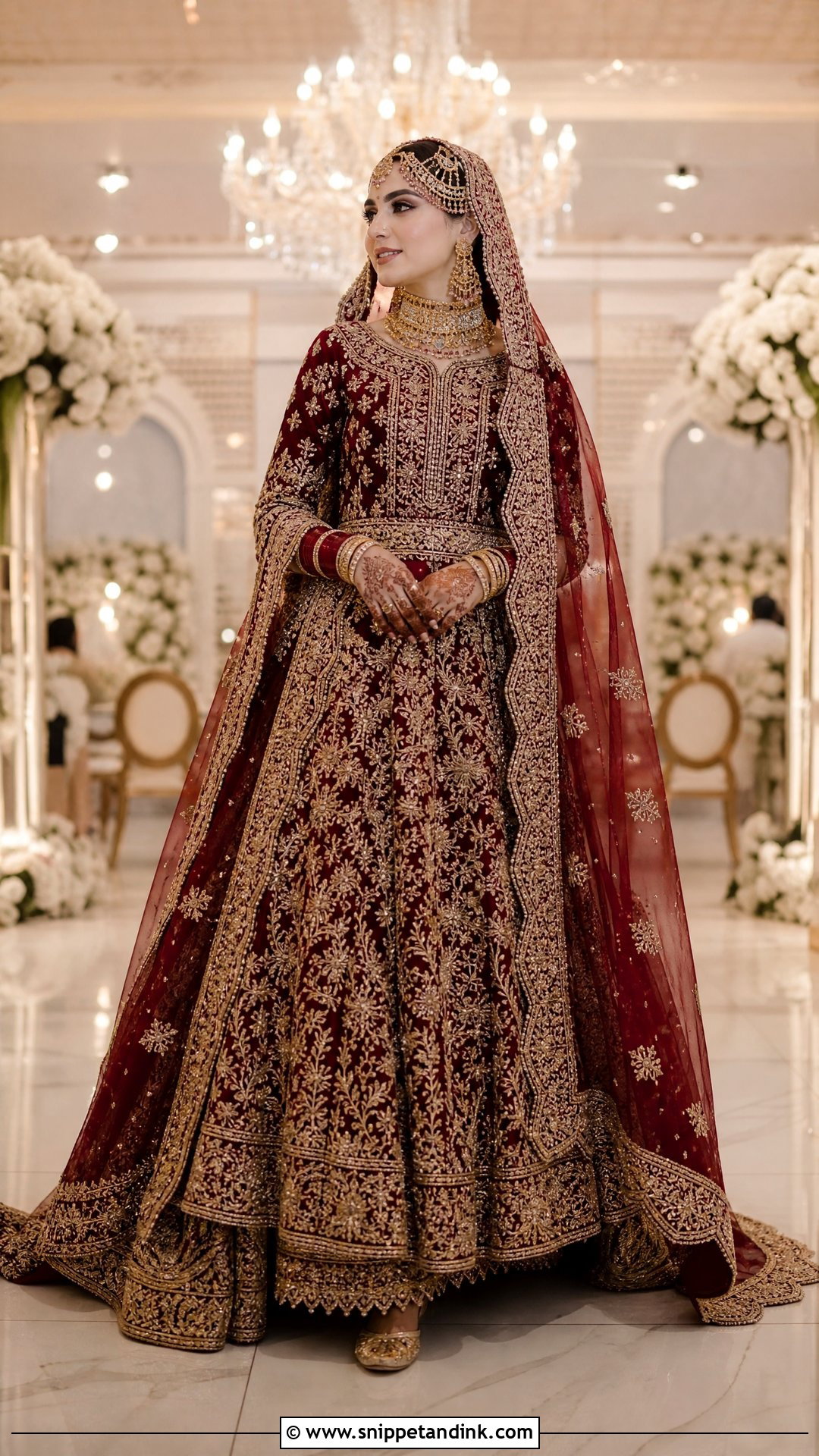
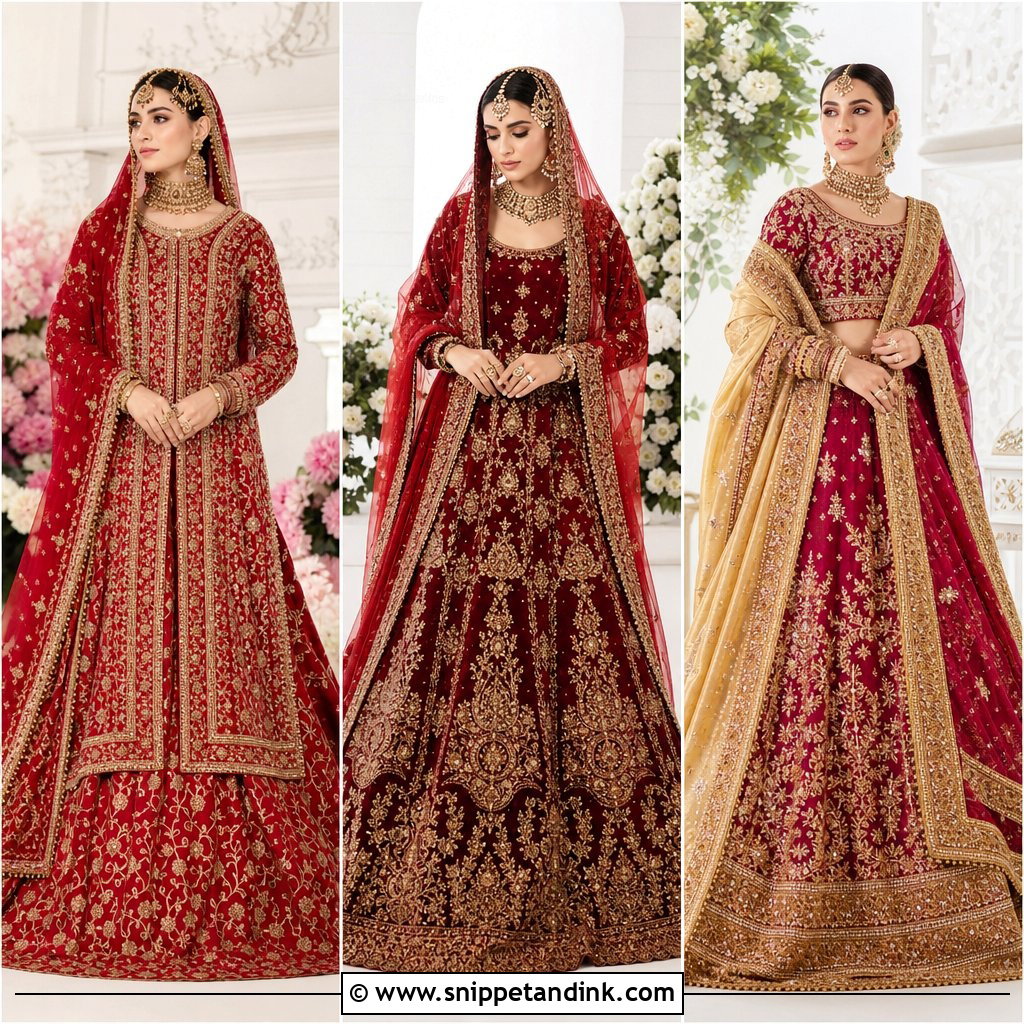
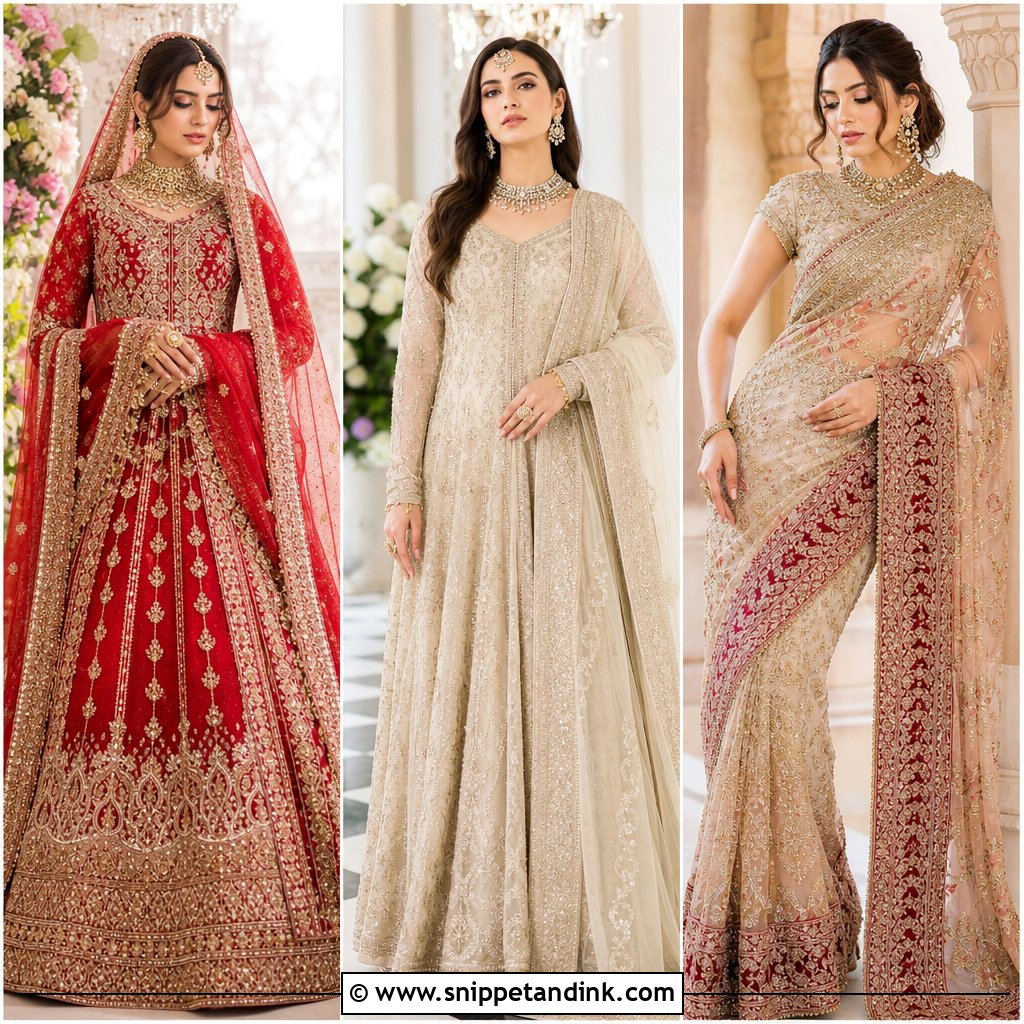
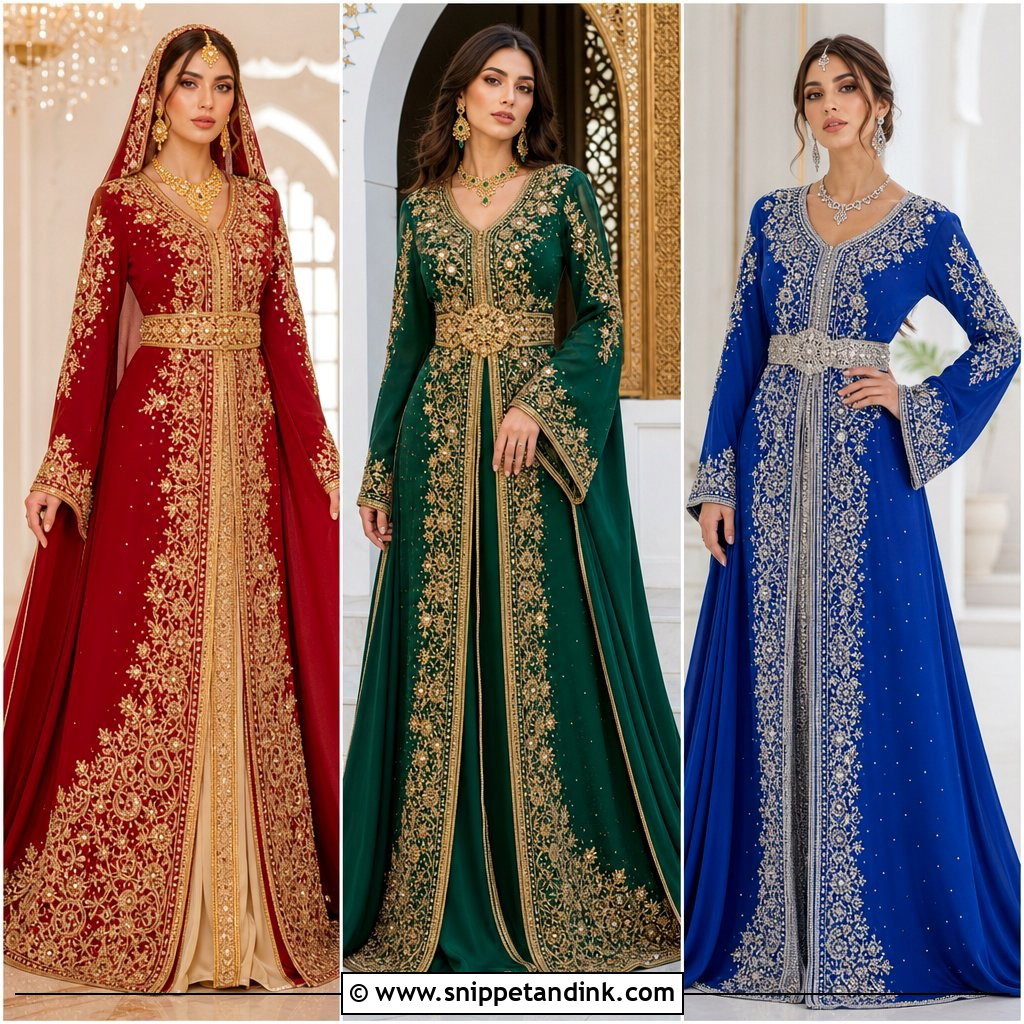
Red velvet is still what many families picture for the baraat, and it earns that place under evening lights. A structured blouse with a modest neckline and fitted sleeves, antique gold embroidery at the cuffs and bodice, and a broad worked hem give the classic look. Put a red net dupatta over the head and a lighter second one across a shoulder. Gold jhumkas, a matha patti, layered necklaces and bangles complete it, with embroidered khussas underneath. Velvet is hot and heavy, so I always ask whether the venue is air-conditioned. For a summer baraat outdoors, I’d steer a bride toward raw silk in the same red instead.
2. Maroon Raw Silk Pakistani Bridal Lehenga
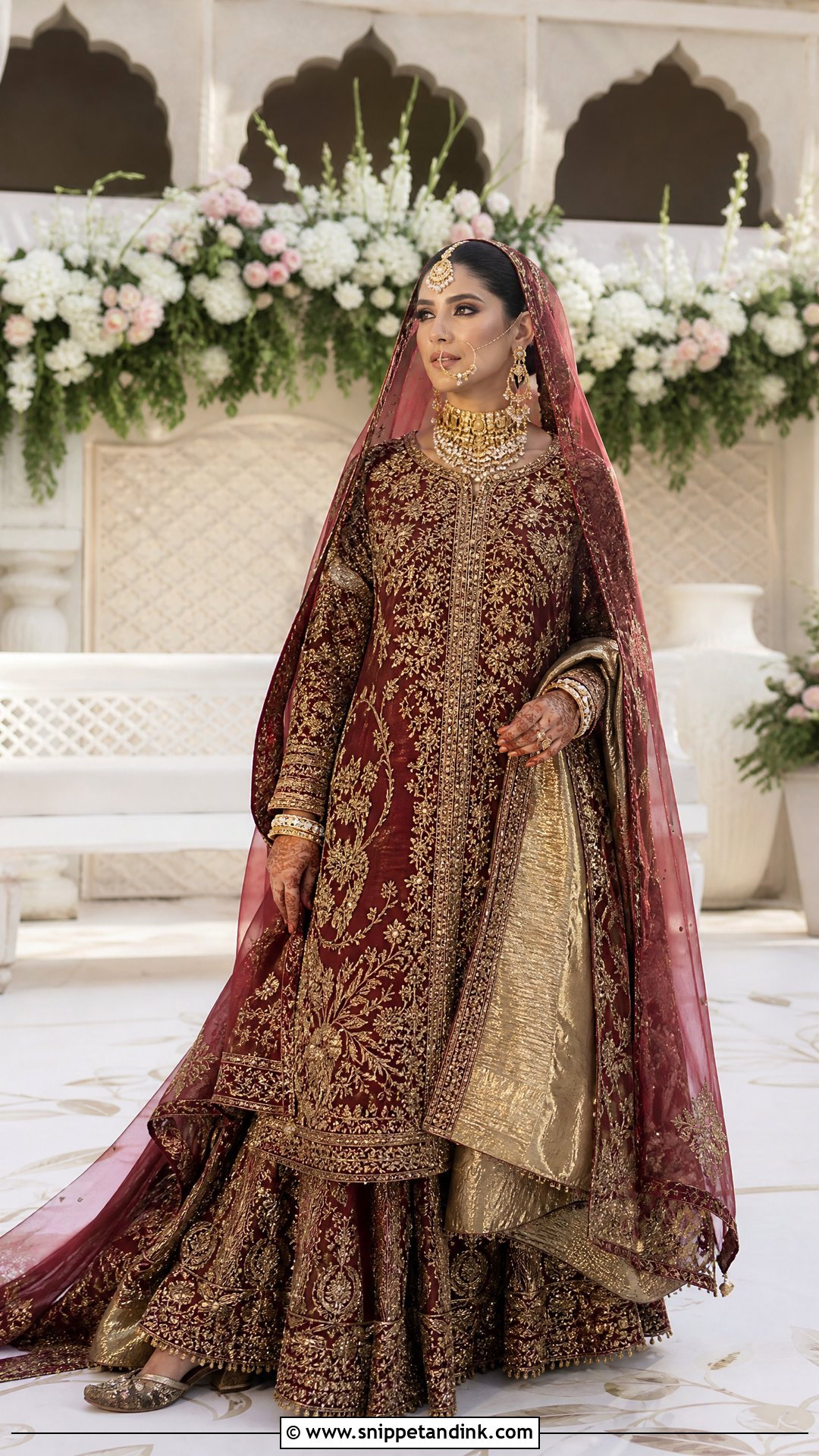
Maroon raw silk is softer than bright red and forgives warm lighting better. A long fitted shirt over a generously flared lehenga gives a modest shape that moves well. I look for dull gold zardozi, dabka, pearls and fine florals concentrated at the neckline, sleeves and border, because raw silk shows its slub texture best where it’s left plain. Use a sheer maroon dupatta with a worked frame over the head and a tissue dupatta for a little metallic contrast. Antique gold, a choker, a fine nose ring and embroidered block heels finish it. Bronze eyes and a muted berry lip sit well against the maroon.
3. Ivory Pakistani Bridal Pishwas
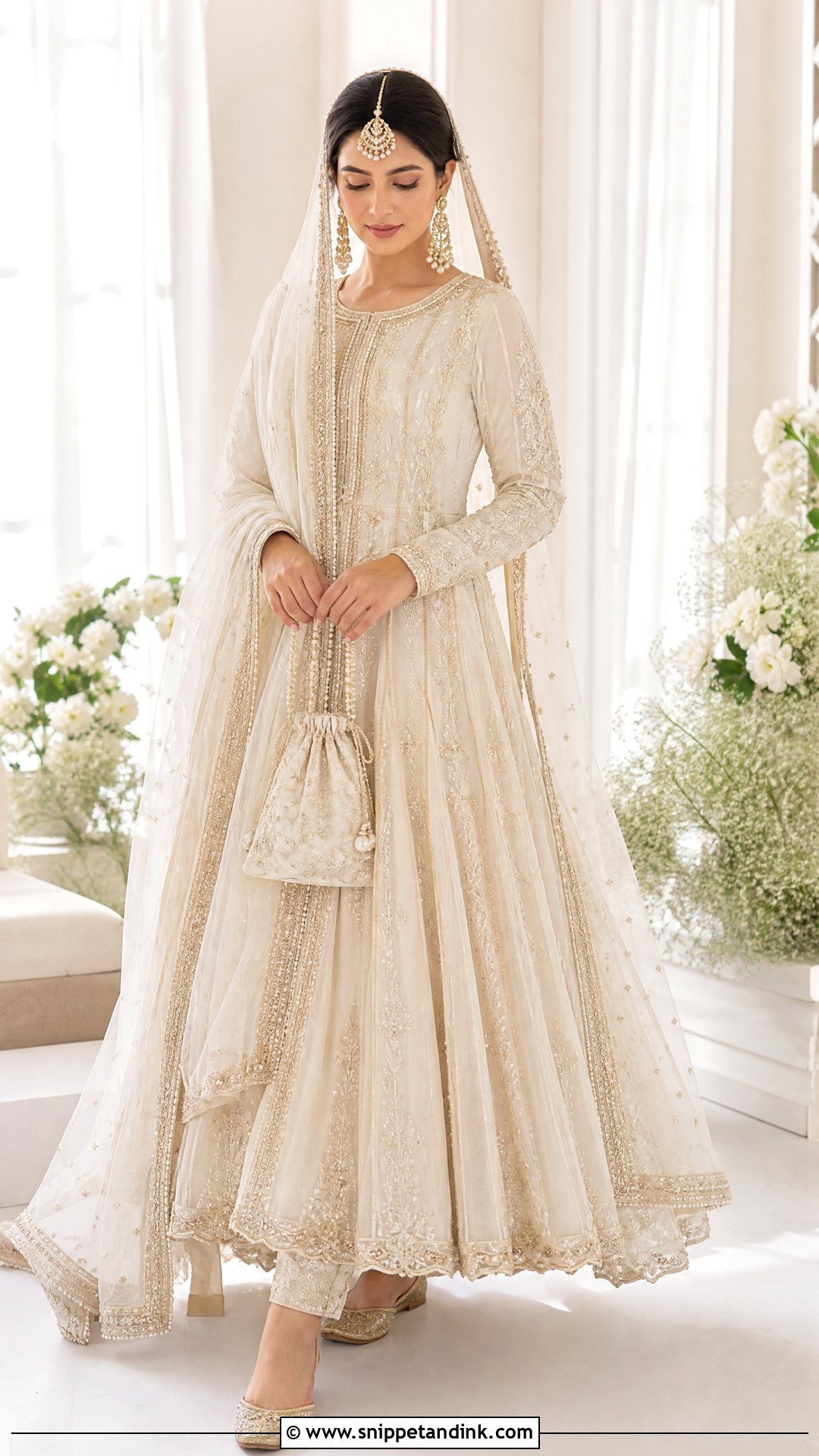
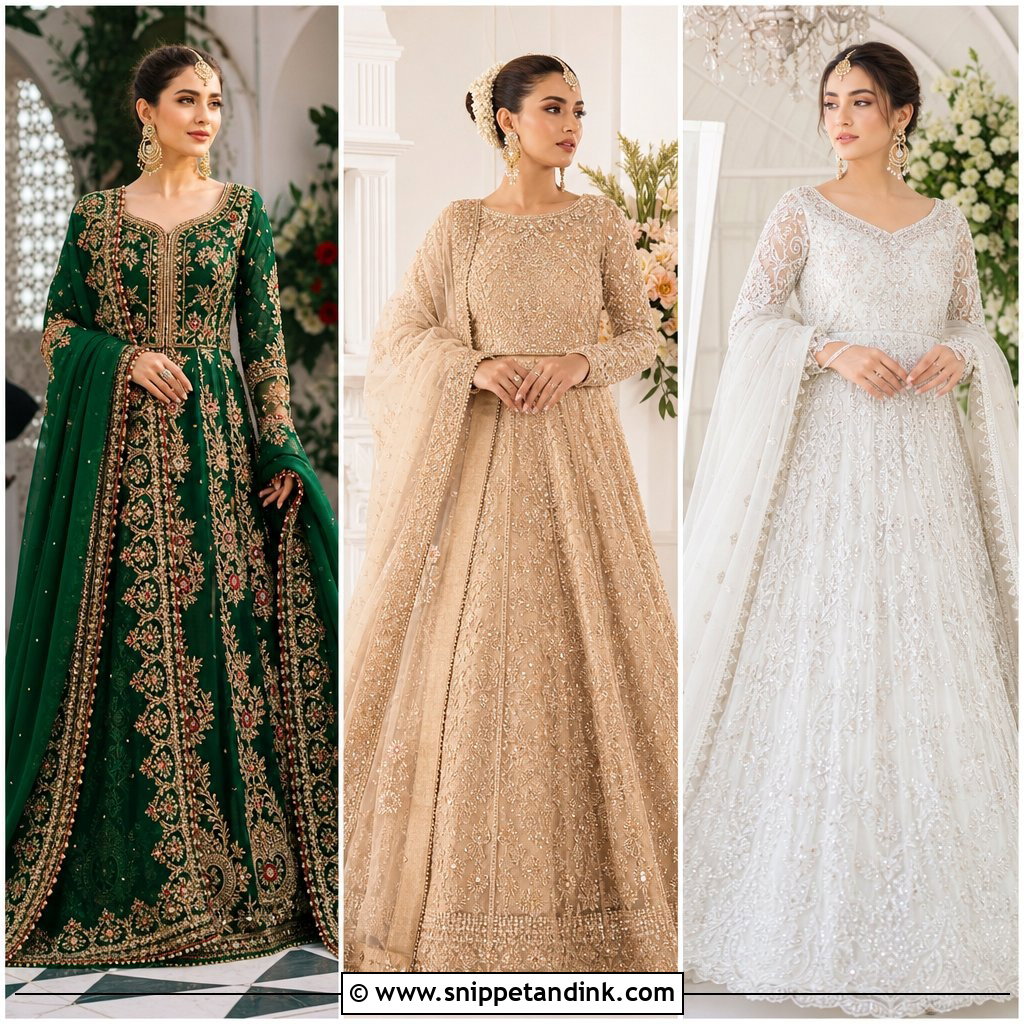
For a nikah, ivory pishwas give a calm, quiet look. The cut needs enough panels to swing as you walk without becoming heavy, and full sleeves with a fitted bodice keep it modest. Pearl work, silver thread and pale gold embroidery define the neckline and hem. Slim trousers or a light lehenga underneath give full coverage when you sit cross-legged on the stage. An ivory organza dupatta with scalloped edges, pearl drops, a small tikka, metallic khussas and a potli are all it needs. A low bun with white flowers suits the palette. My one warning: ivory shows makeup marks, so dress after foundation is set and drape a scarf over your face.
4. Blush Pink Pakistani Bridal Gharara
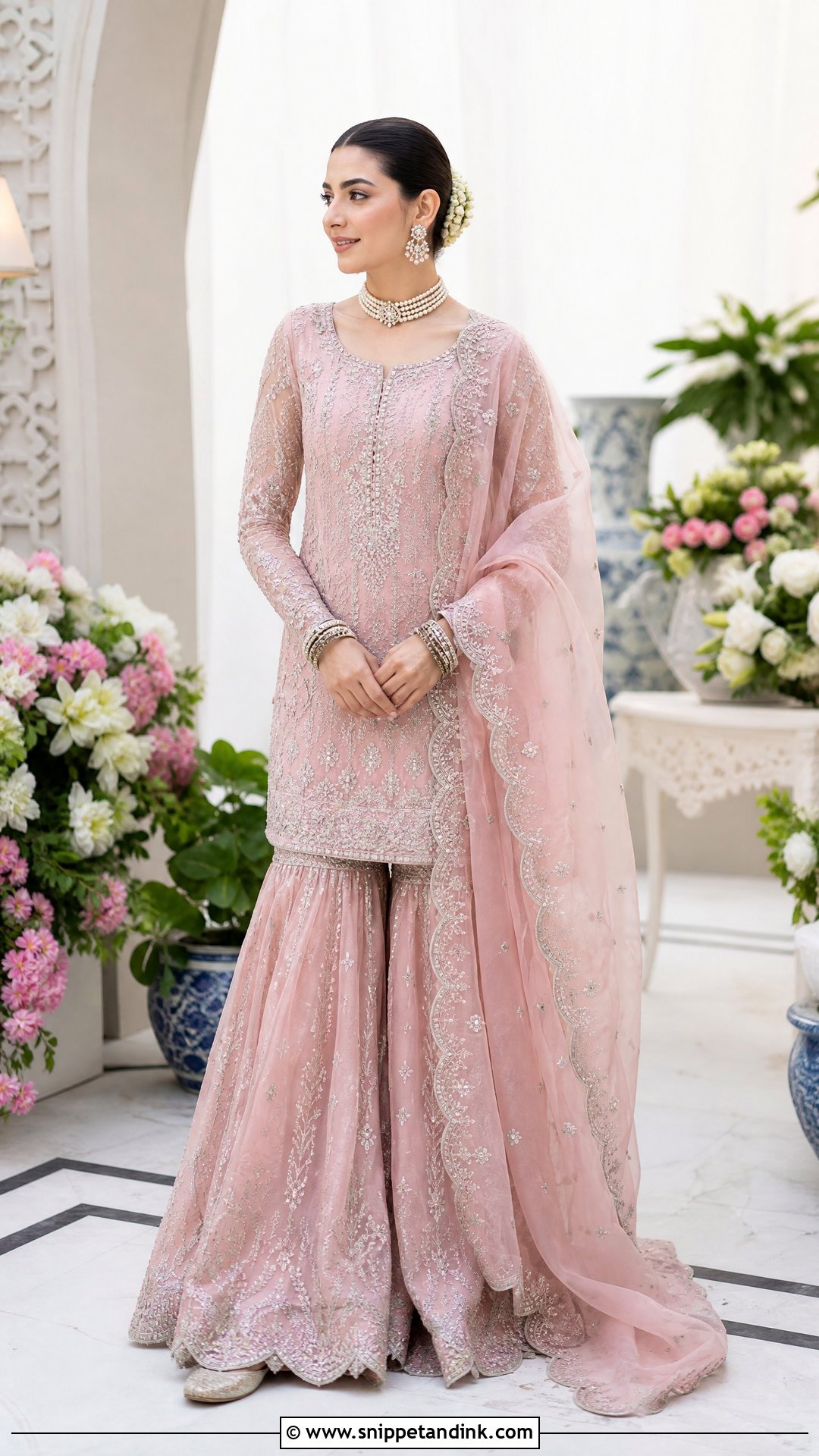
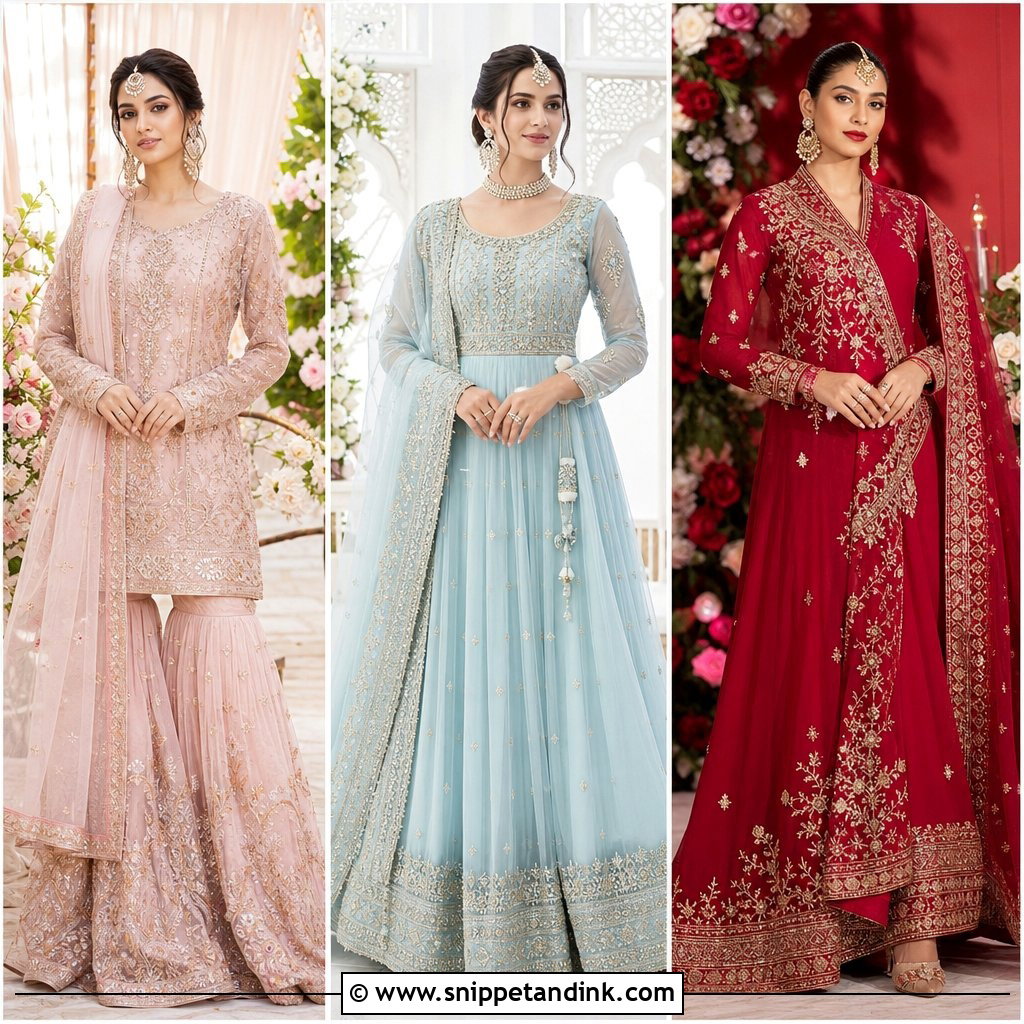
Ghararas are fitted to the knee and flare below, so the knee joint has to be cut generously or sitting on the floor for the nikah gets awkward. A blush gharara with a structured knee-length shirt in silver, pearl and crystal embroidery is a good fit for a daytime nikah or small ceremony. Keep the net dupatta light, loose over the head or across both arms. Silver khussas, pearl bangles, a choker and matching earrings give sparkle without weight, and a center-parted bun shows off the neckline. Pink-toned makeup with soft lashes and a rose lip suits it.
5. Champagne Pakistani Bridal Maxi
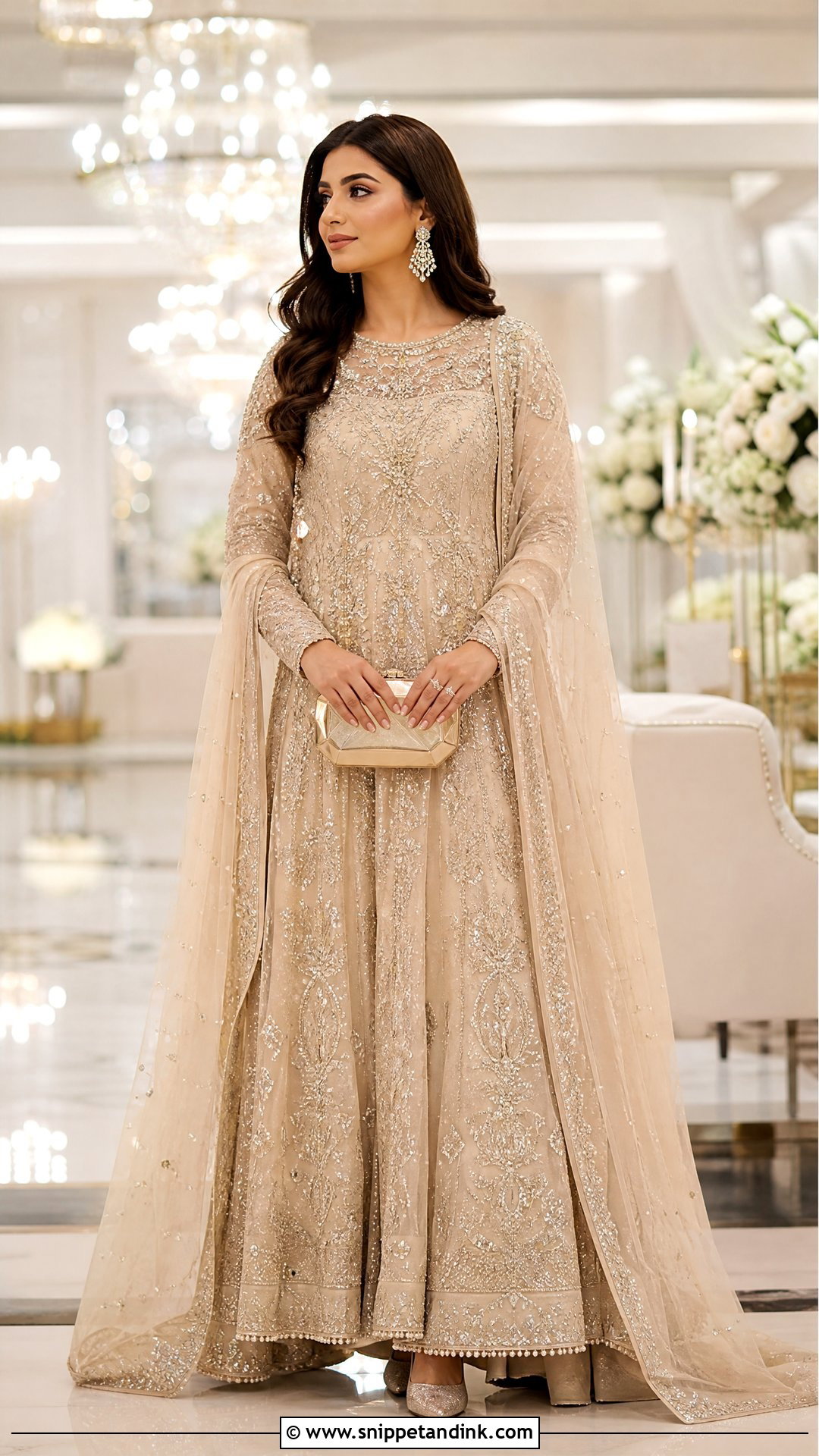
Champagne is the walima color I recommend most when a bride wants something that works in daylight and in evening photos. A floor-length maxi with a fitted bodice, defined waist and gentle flare gives a long line. Ask for tonal embroidery in crystals, pearls, sequins and pale gold; high-contrast work on champagne looks busy. Full sleeves and a high or soft curved neckline keep it formal. A sheer champagne dupatta over one shoulder, or a light worked cape, gives modern coverage. Crystal earrings, a fine bracelet, a metallic clutch and closed-toe heels, plus a smooth bun or brushed waves, finish it. Do check the shade against your skin in daylight, since some champagnes turn grey on deeper skin tones.
6. Emerald Green Pakistani Bridal Lehenga
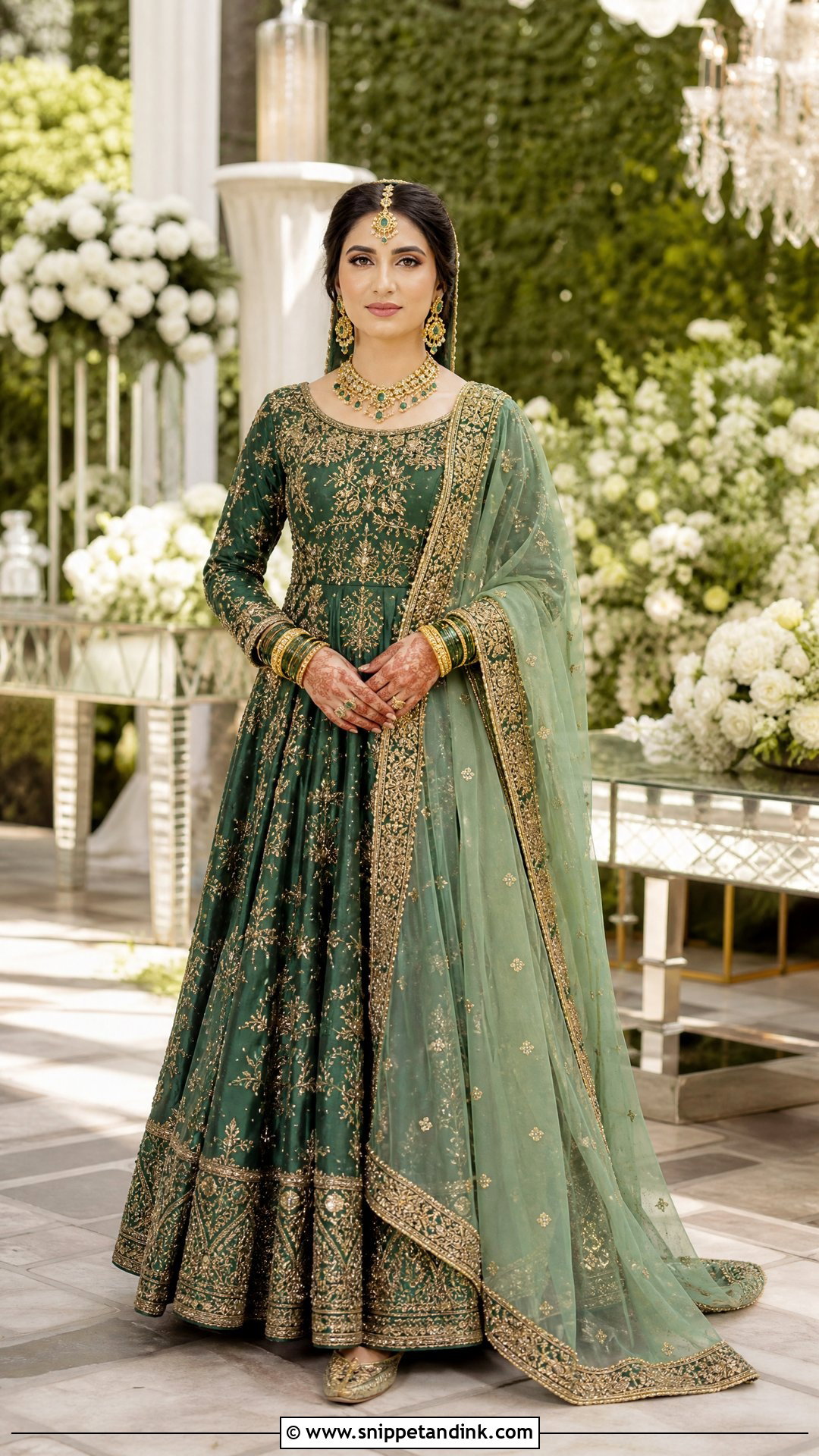
Emerald works for a mehndi, a reception or an evening event, and it photographs rich under warm lights. Raw silk with antique gold threadwork, small colored stones and florals has depth. The blouse length depends on coverage: a long blouse for more, a waist-length choli for less. Dark green can swallow a bride in photos, so I break it with a sage or muted gold dupatta. Gold jewelry with green stones, stacked bangles and a small forehead piece suit it, with gold khussas or low block heels. A sleek bun, softly smoked eyes and a neutral lip keep the color in charge.
7. Gold Pakistani Bridal Sharara
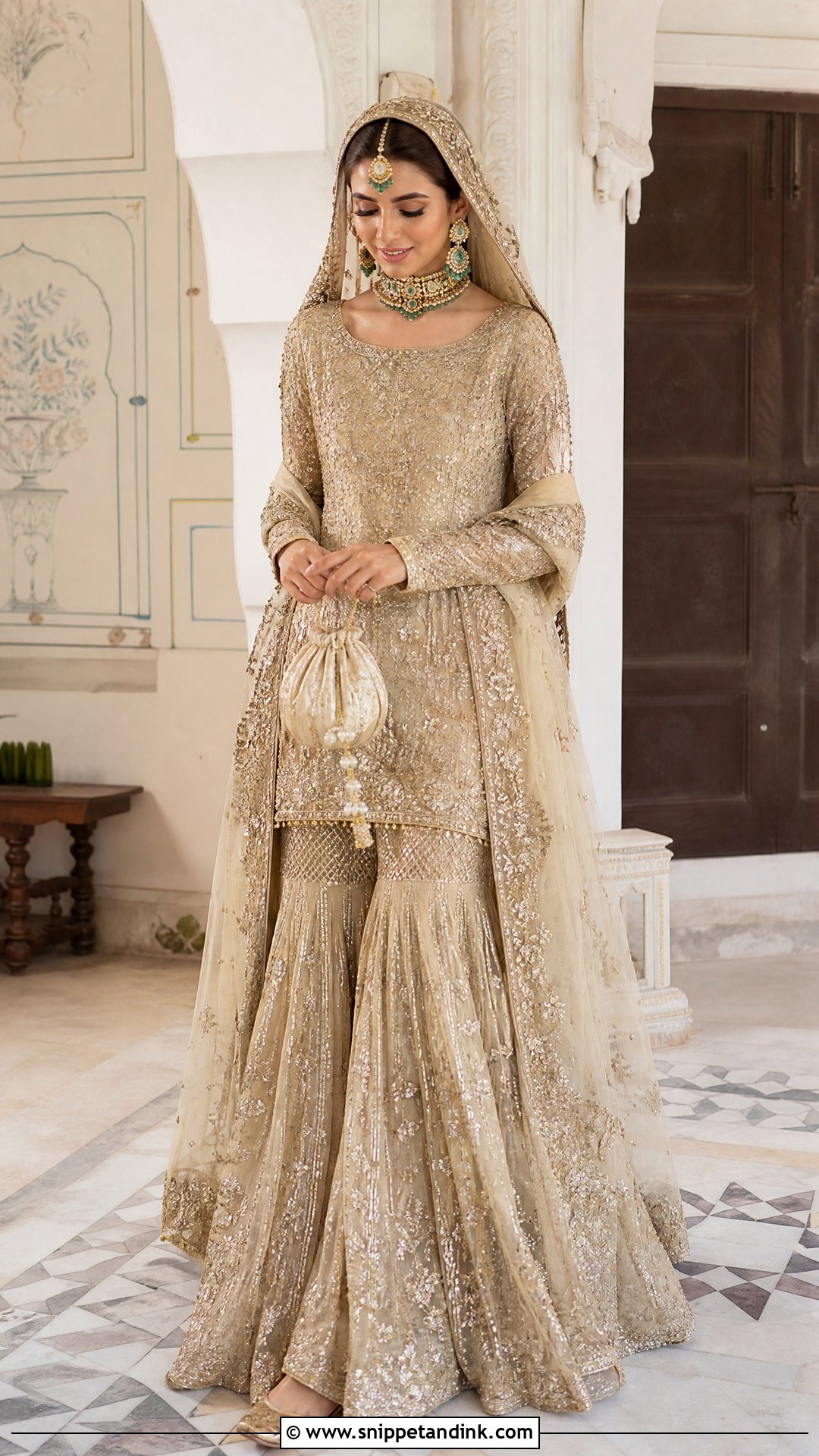
A gold sharara is one of the most comfortable bridal outfits to move in, because each leg has its own wide flare. A short or mid-length shirt with a shaped neckline and dense handwork on the bodice carries the weight; the sharara falls wide from the waist with worked panels or borders. I mix matte gold, champagne and ivory embellishment so the outfit has depth instead of a flat shine under camera flash. Wear a sheer bordered dupatta over the head for the ceremony, with emerald or ruby jewelry for color. Gold khussas, a pearl potli, bangles and a center-parted low bun complete it for a nikah or walima.
8. Silver Gray Pakistani Bridal Gown
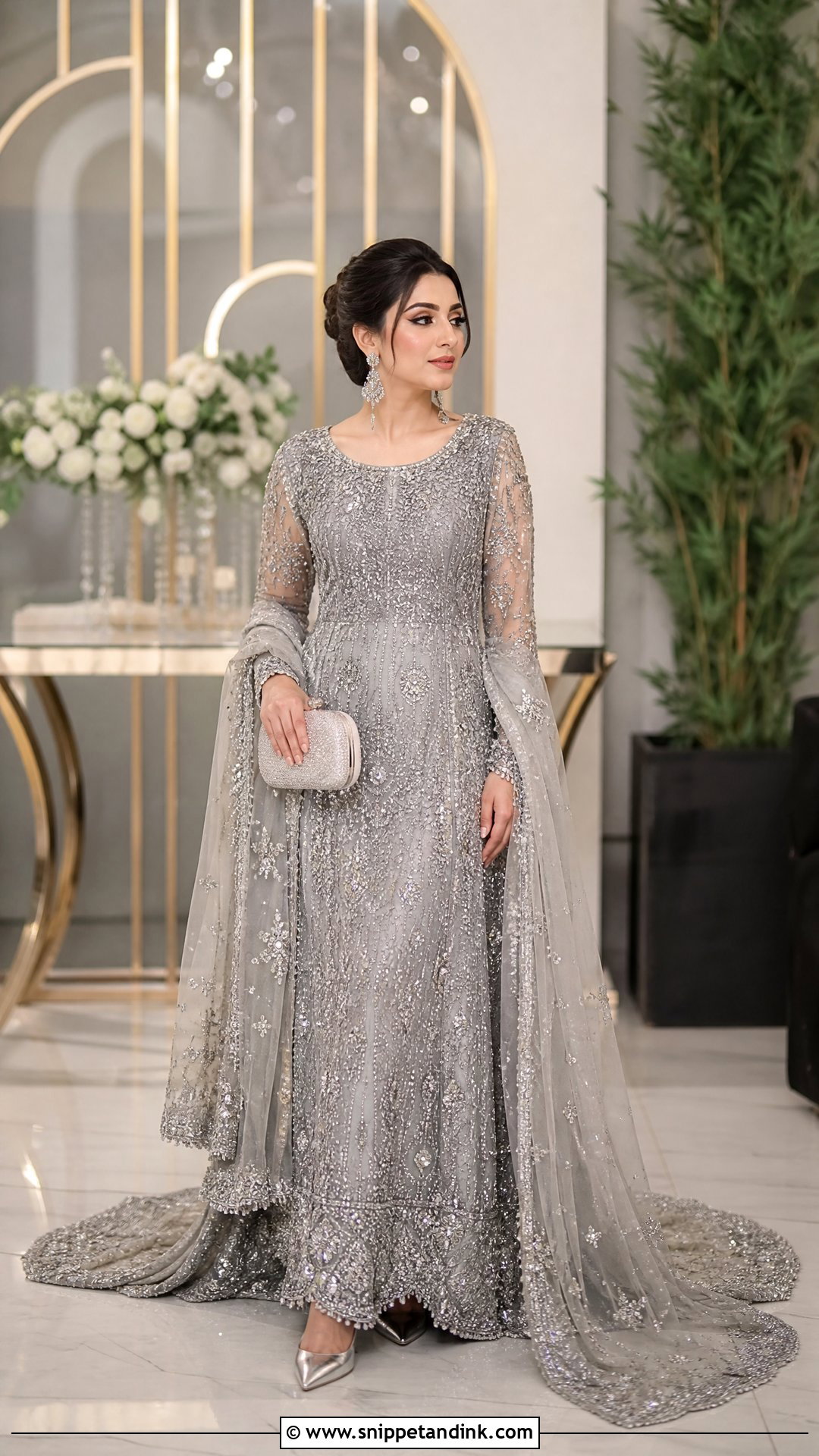
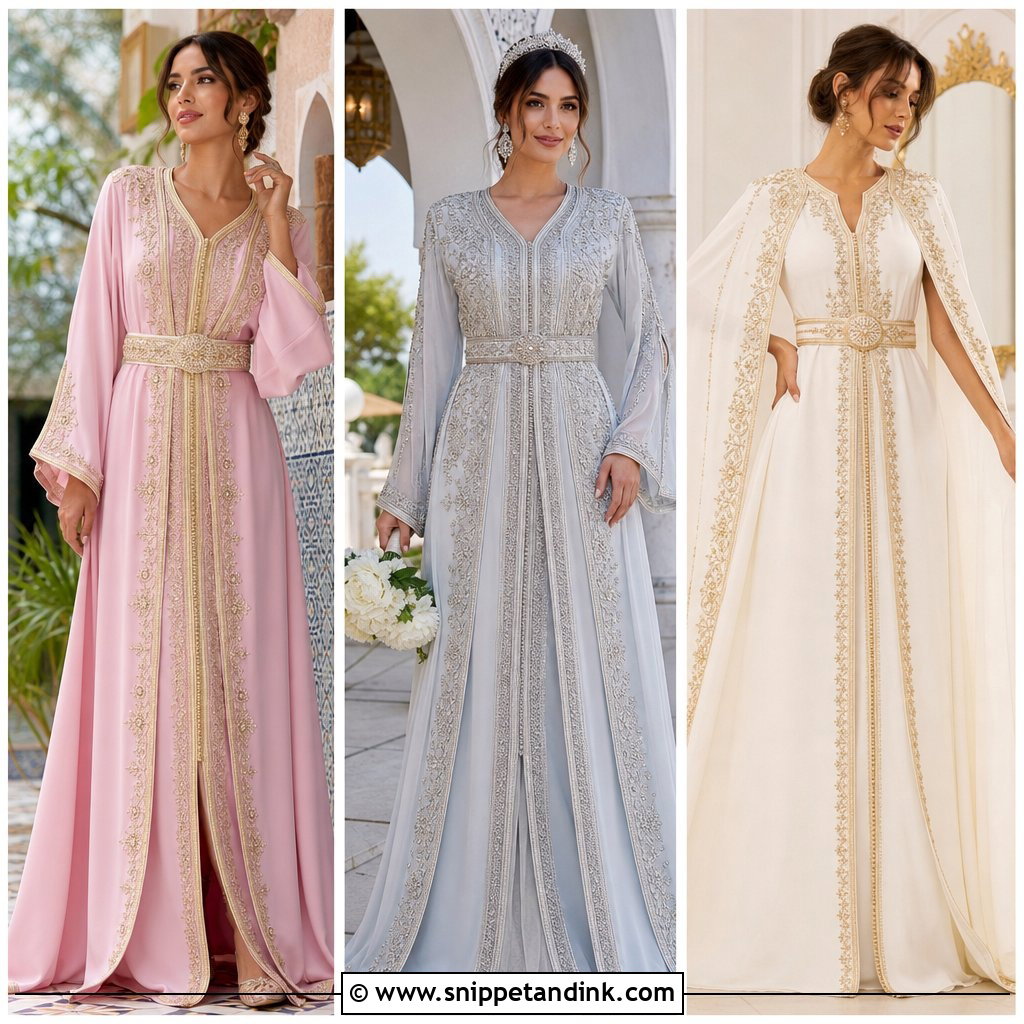
Silver gray is cool and modern, and I’d keep it for the walima. A full-length gown with a fitted upper body, defined waist and fluid skirt that ends in a short train works better than a long one, since you’ll be greeting guests table to table. Crystal beading, silver embroidery, pearls and fine vines add texture without clutter. Long sleeves or a sheer worked neckline give coverage. Drape a light silver dupatta over one shoulder or choose a detachable cape. Crystal drops, a slim bracelet, pointed metallic heels and a structured clutch finish it, with smooth waves or a low twisted bun. Cool-toned eyes and a soft pink lip suit gray better than warm bronze.
9. Peach Pakistani Bridal Anarkali
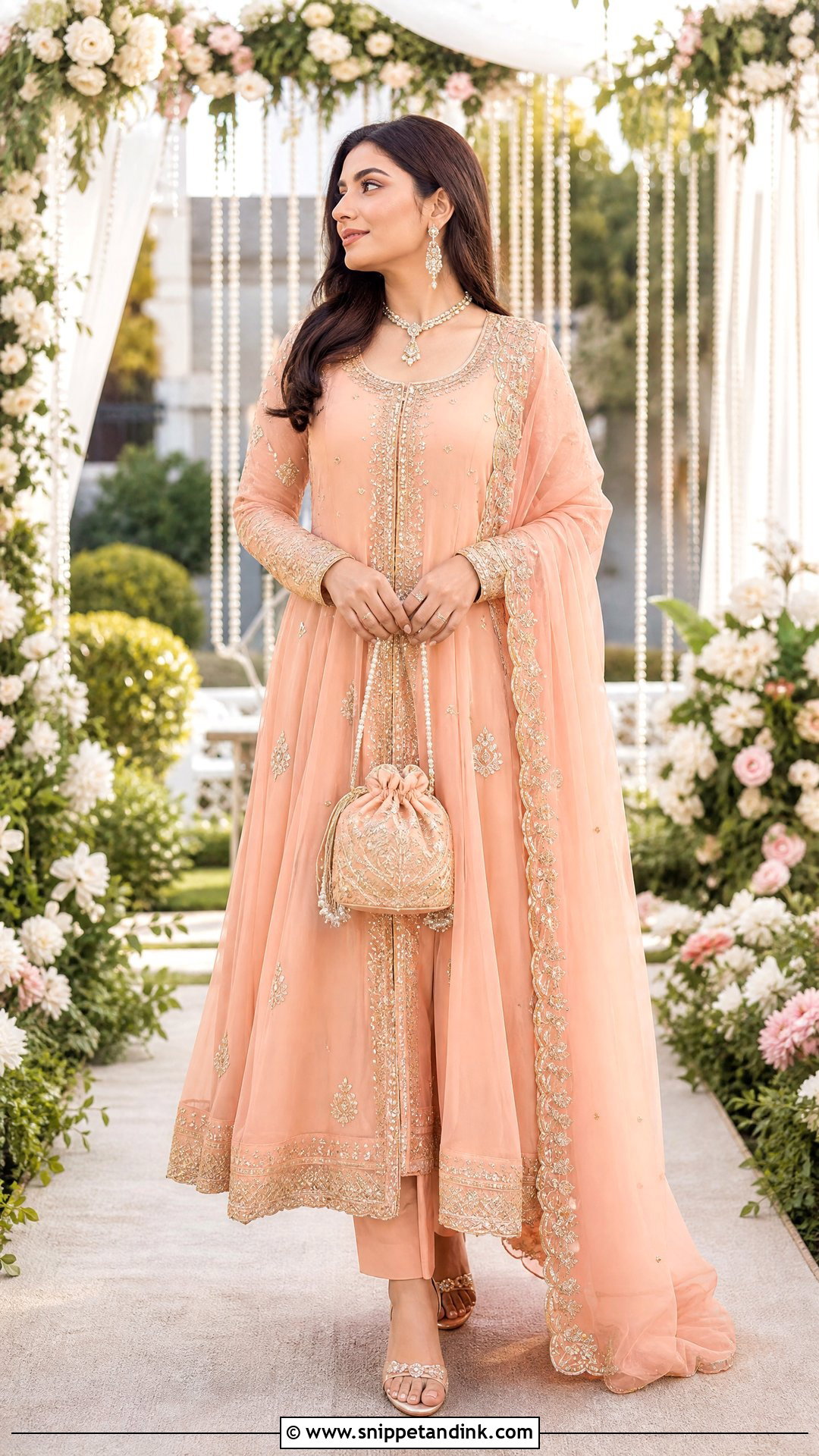
Peach is warm and kind to most skin tones, which is why I suggest an Anarkali in it for a daytime nikah, engagement or walima. The panels should start near the natural waist; if they start too high the outfit reads as a maternity cut. Gold embroidery, small pearls and pastel florals add interest without overpowering the color, and full or three-quarter sleeves keep it traditional. Narrow trousers and a sheer peach dupatta with a scalloped edge go with it. Pearl and gold earrings, a fine tikka, embellished nude heels and a small potli suit it, with a loose low bun and a few face-framing strands.
10. Mint Green Pakistani Bridal Pishwas
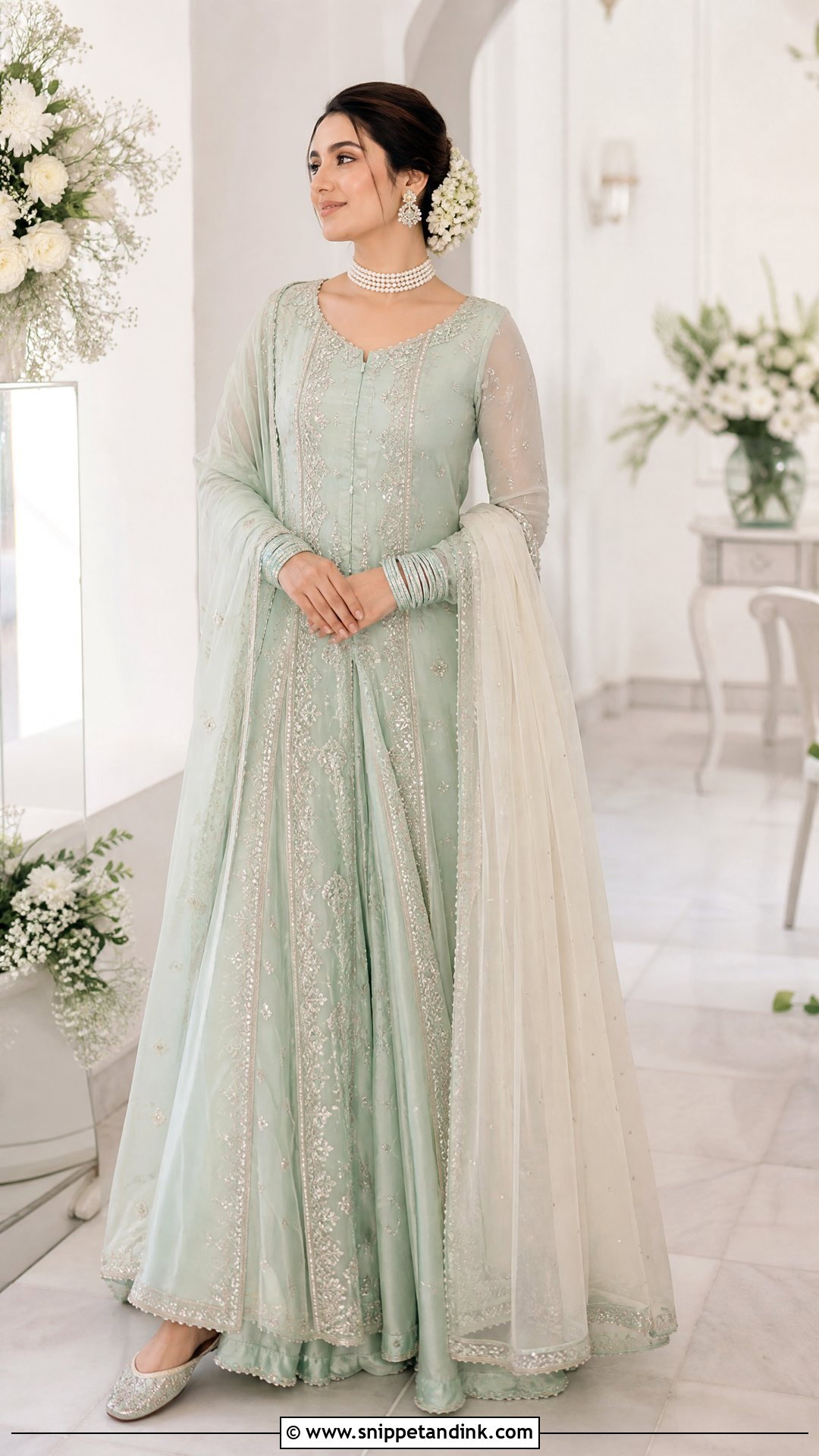
Mint reads fresh and light for brides wanting a distinctive nikah outfit that isn’t red. A paneled pishwas in organza, chiffon or tissue silk gives volume while staying easy to carry. Silver-gold embroidery on the bodice, sleeves and lower border, with small motifs on the skirt, keeps it delicate. Wear a lehenga underneath for fullness or straight trousers for a slimmer line. Layer a pearl-edged mint dupatta with a second ivory one. Pearl jewelry, a small choker, silver khussas and pastel bangles, plus a braided low bun with tiny white flowers, finish it. Mint fades under yellow lighting, so check it under the venue’s bulbs if you can.
11. Deep Blue Pakistani Bridal Lehenga
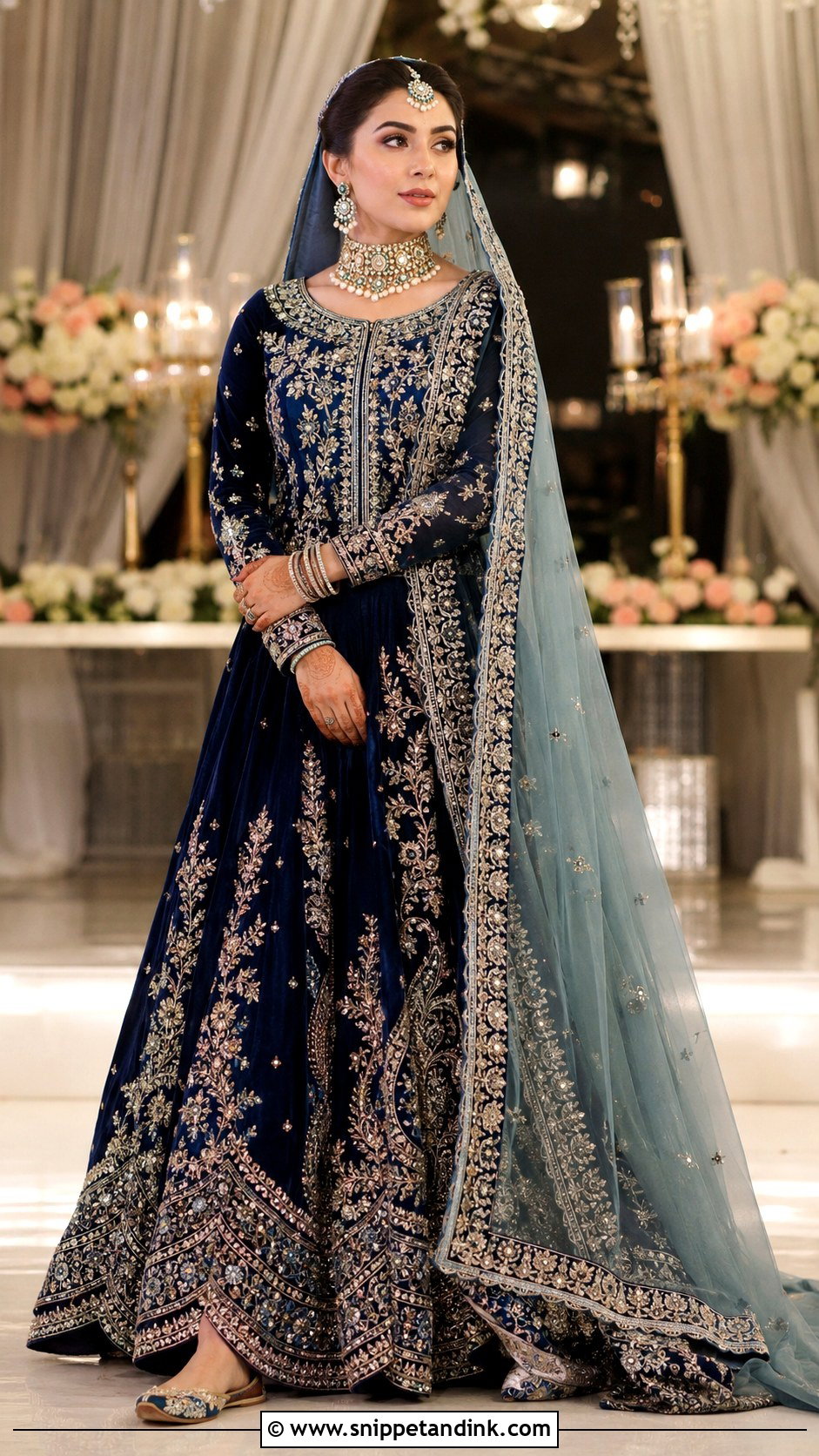
Deep blue for an evening event feels royal without the expected red. Velvet or raw silk with silver, antique gold and muted turquoise embroidery arranged in balanced panels gives the skirt rhythm. A long blouse with fitted sleeves is modest and gives the karigar more room for handwork. A dusty blue or silver net dupatta over the head, with a worked edge framing the face, softens the depth. Polki, blue stone earrings, a matching tikka and metallic bangles suit the palette. Choose embroidered heels or khussas, a sleek bun and smoky eyes, and keep the lip neutral. Blue and silver can go cold in photos, so a touch of gold in the jewelry helps warm it.
12. Rust Pakistani Bridal Angrakha
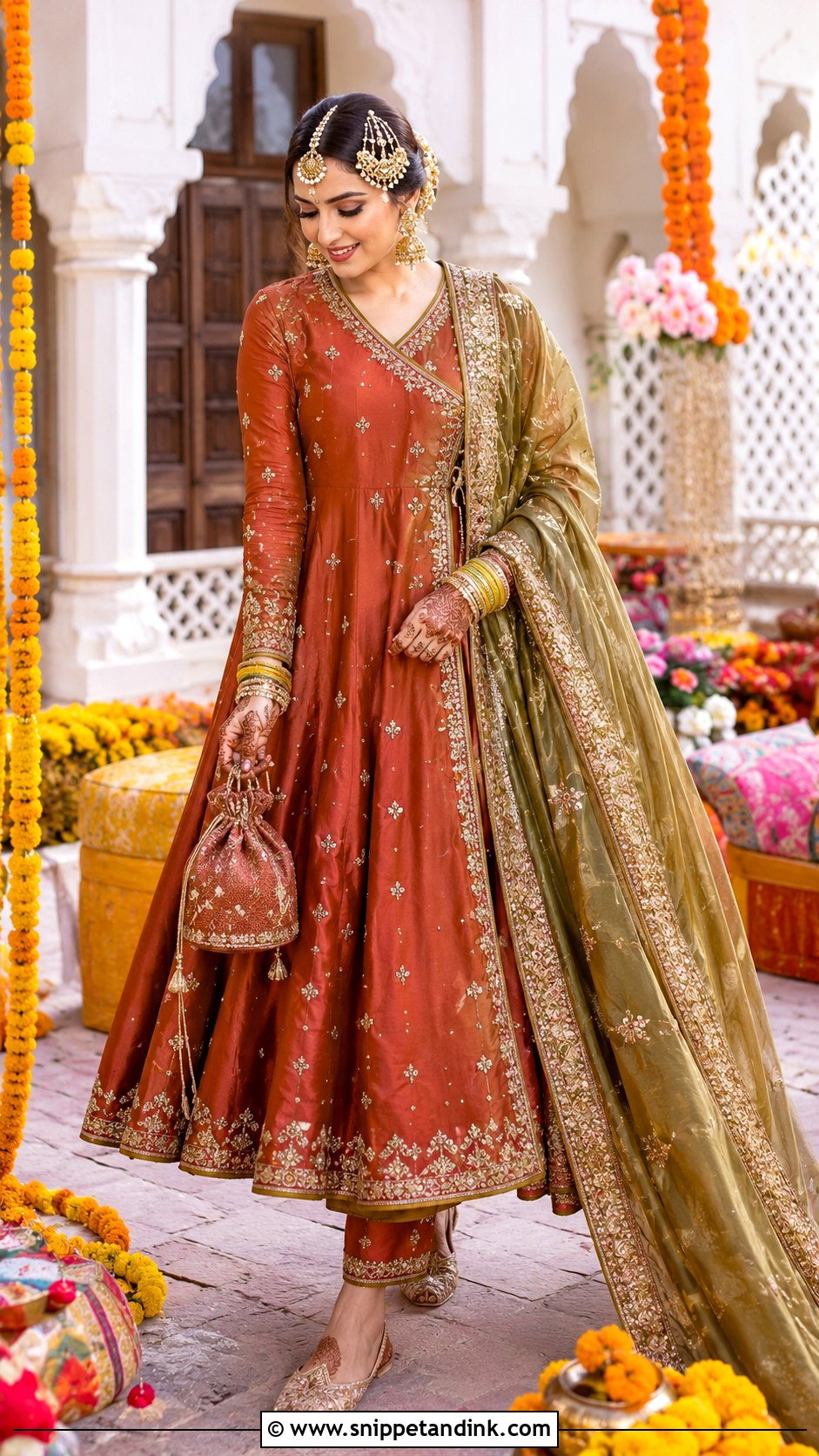
An angrakha’s overlap creates a diagonal across the bodice, and that line is flattering on most figures as long as the tie sits at the true waist. In rust it suits a mehndi or traditional event. Choose raw silk or jamawar with antique gold work, small tassels and green or coral accents. Fitted trousers or a lightly worked lehenga go underneath. An olive dupatta draped over one shoulder and across the arms deepens the warm palette. Antique jewelry, a passa, stacked bangles, embroidered khussas and a textured potli suit it, with a braid or low floral bun and bronze makeup with a terracotta lip.
13. White And Gold Pakistani Bridal Gharara
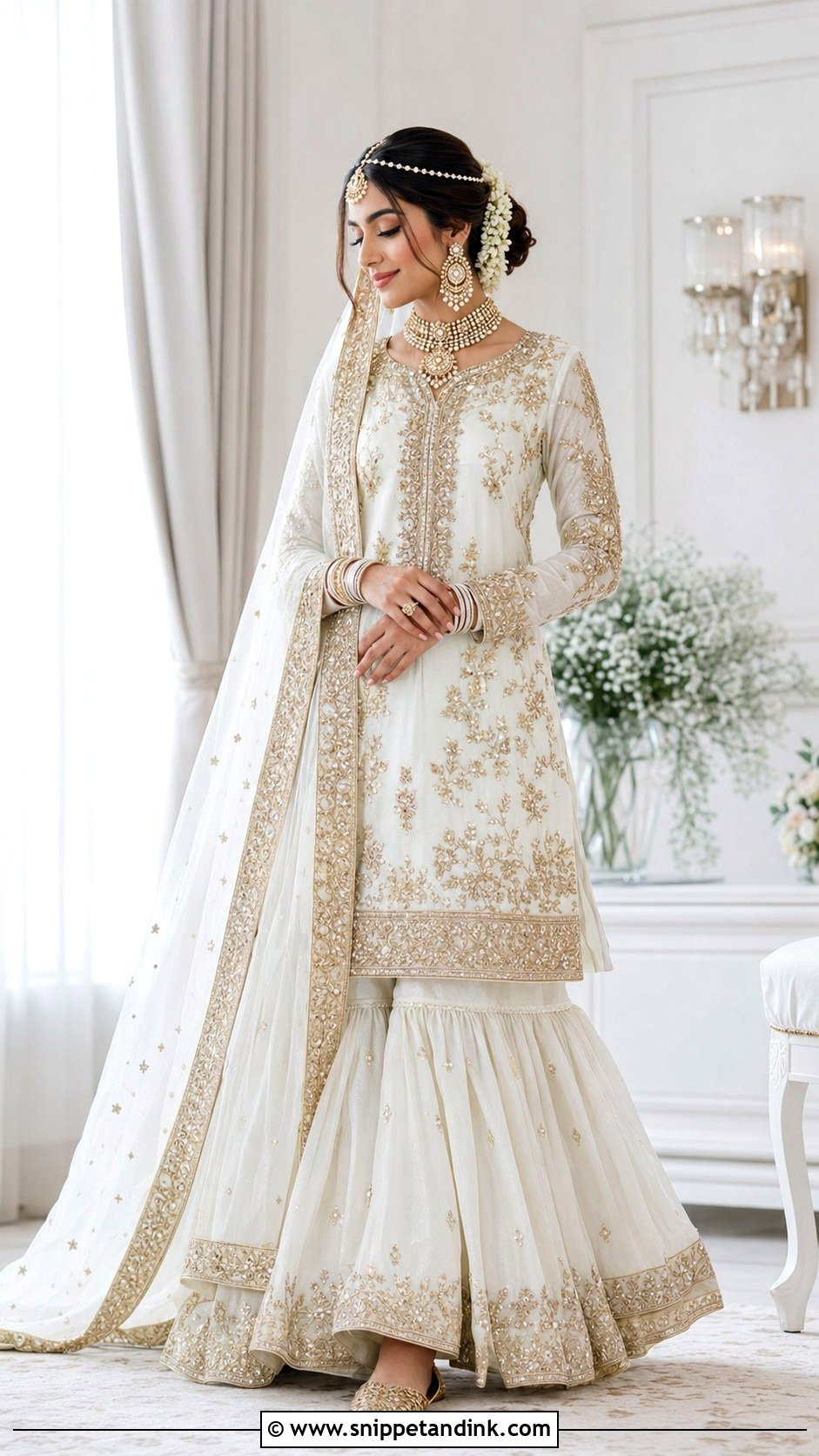
White and gold is a classic nikah palette with a ceremonial feel. A white silk gharara with gota, zari or fine floral embroidery around the knees and flared hems, and a knee-length shirt with full sleeves, carries the cultural character without needing heavy work all over. A sheer white dupatta with a structured gold edge can cover the head and still look light. Pearl and gold jewelry, a fine matha patti, white bangles and gold khussas suit it, with a neat bun and fresh white flowers. Gota tarnishes if it’s stored damp, so I’d air the outfit after the event and wrap it in muslin, never plastic.
14. Rose Gold Pakistani Bridal Saree
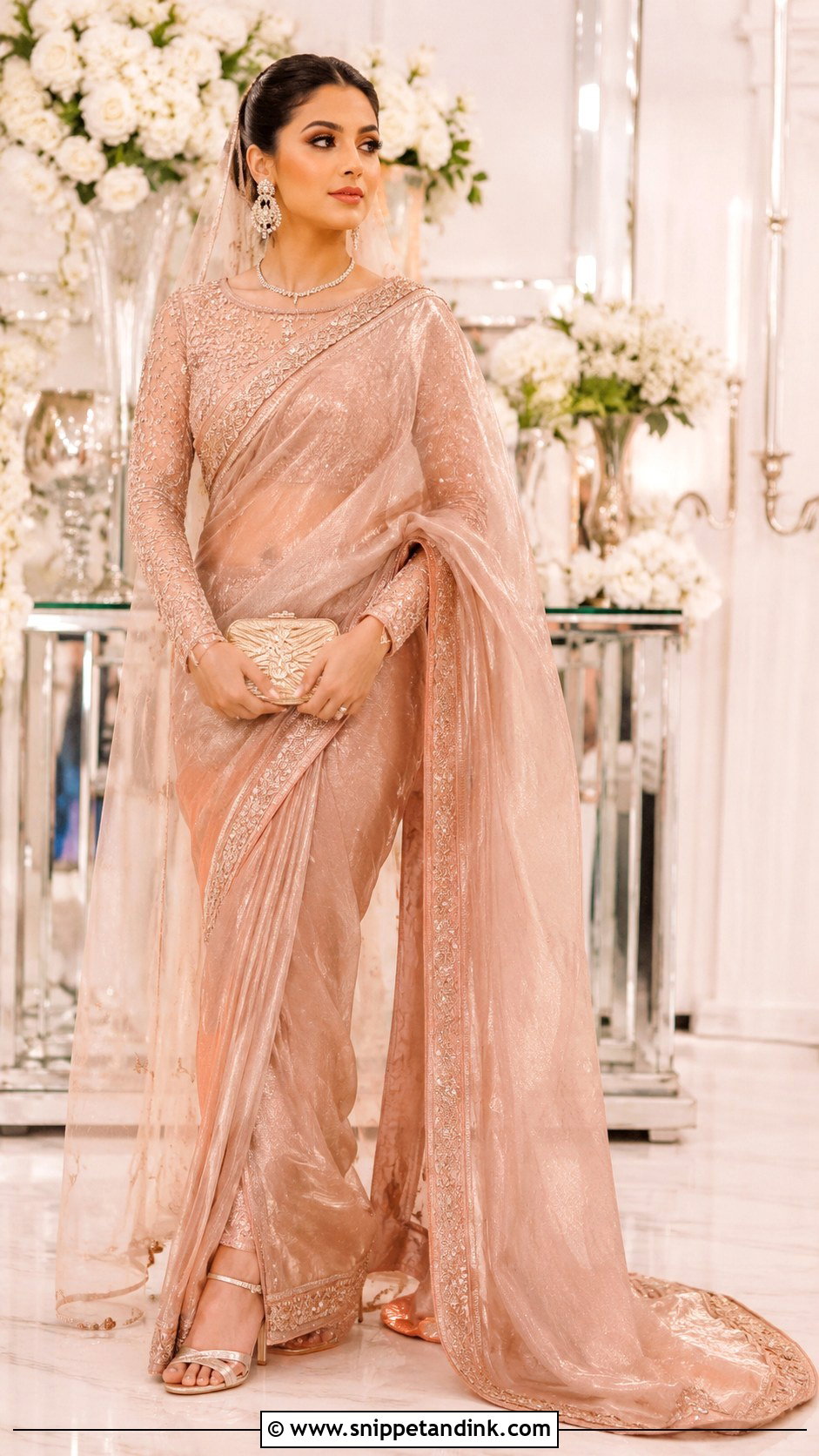
A rose gold saree is the sleek option for a walima or reception, and it’s lighter than any lehenga here. Tissue, organza or silk with fine crystal embroidery and a defined border looks rich without bulk. Pair it with a structured blouse, full sleeves and a high back for balanced coverage. The drape is where sarees go wrong: book someone experienced to drape and pin it, because a home-tied saree slips after an hour of greeting guests. A sheer matching veil over the head adds a traditional touch. Diamond-style earrings, a slim necklace, metallic heels and a compact clutch, plus smooth waves or a low bun, finish it.


15. Plum Pakistani Bridal Lehenga
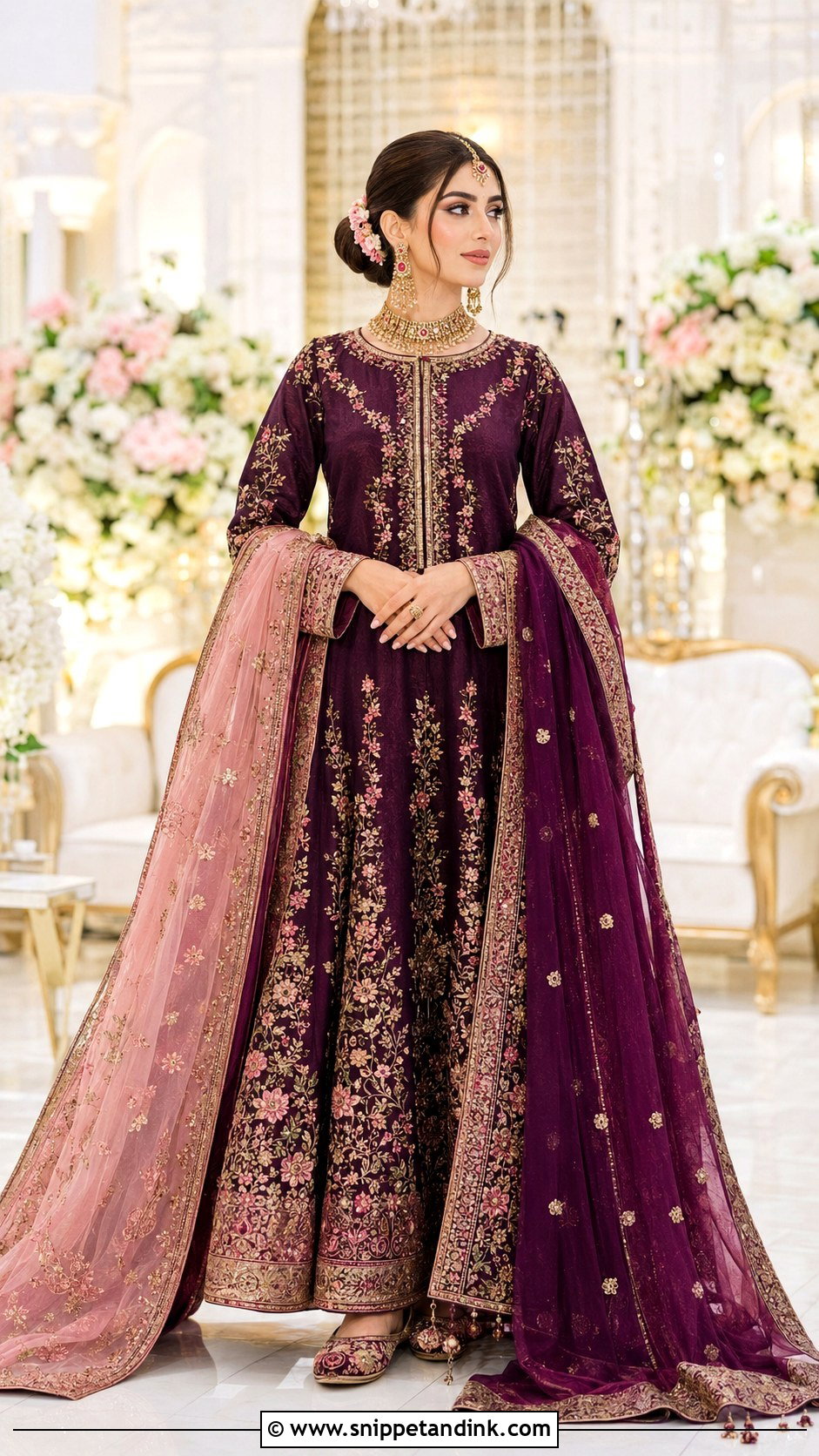
Plum suits brides who want something darker than maroon and less expected. Raw silk with antique gold work, muted pink florals and motifs spaced far enough apart to let the base show looks rich. A long blouse with a defined waist and fitted sleeves keeps it modest. I’d add contrast with a dusty rose dupatta over the head and a lighter plum one across the arm. Antique gold with pink stones ties the colors together, and embroidered khussas keep you comfortable. A low bun with soft face-framing pieces sits well under two dupattas. Warm eyes, berry blush and a neutral rose lip suit it.
16. Mustard Pakistani Bridal Sharara
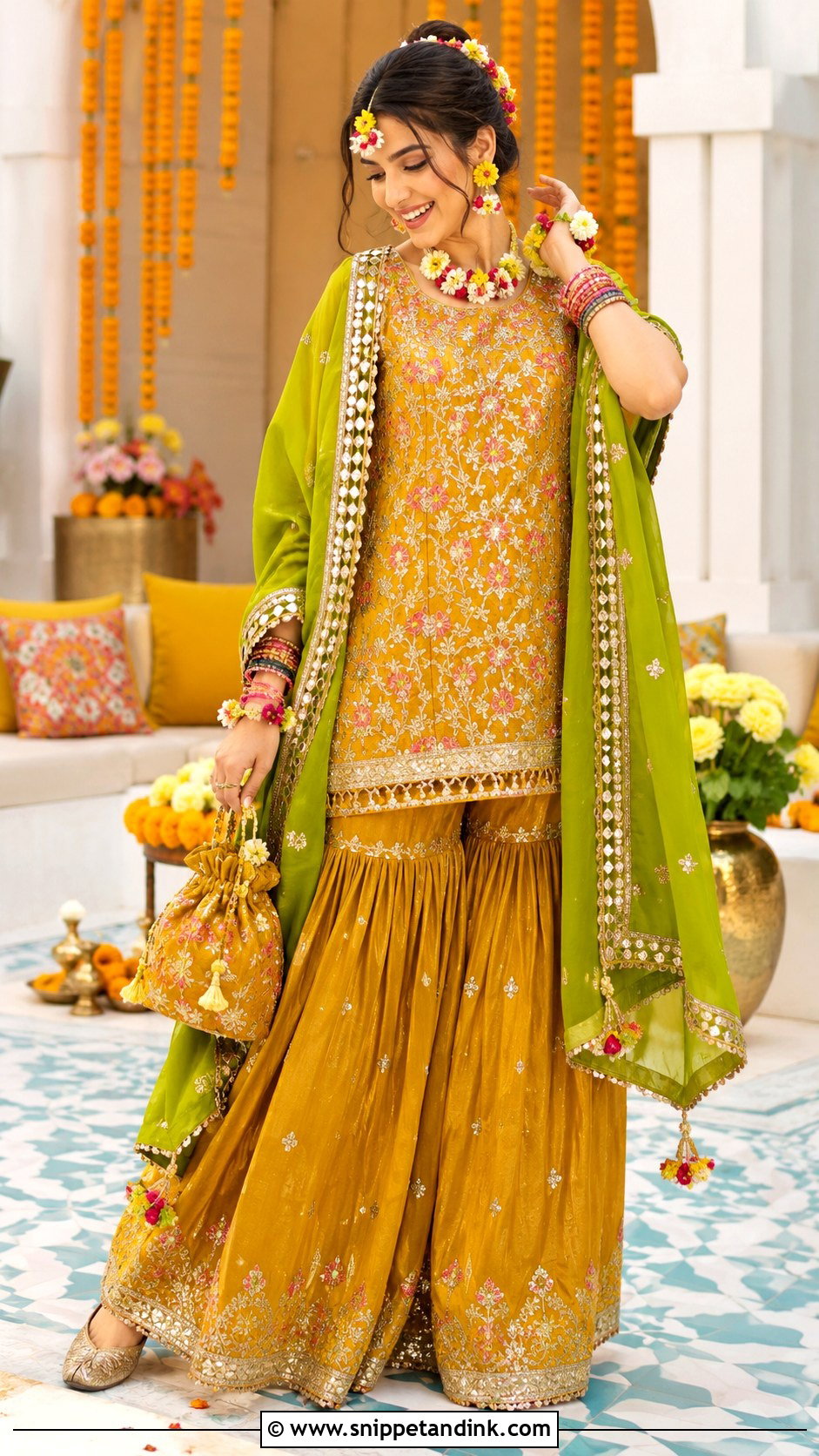
Mustard is the mehndi color I see brides have the most fun in. A short embroidered shirt over a wide sharara in silk, chiffon or lightly crushed fabric gives easy movement for dancing. Green, pink, orange and gold threadwork can form florals along the shirt and lower legs, and a bright green or coral dupatta with gota edging and tassels adds contrast. Floral jewelry, colorful bangles, gold khussas and an embroidered potli suit the mood, and a side braid with fresh flowers is more relaxed than a formal bun. One practical point: crushed fabric hides creases well, which matters when you’ll be sitting on floor cushions all night.
17. Powder Blue Pakistani Bridal Maxi
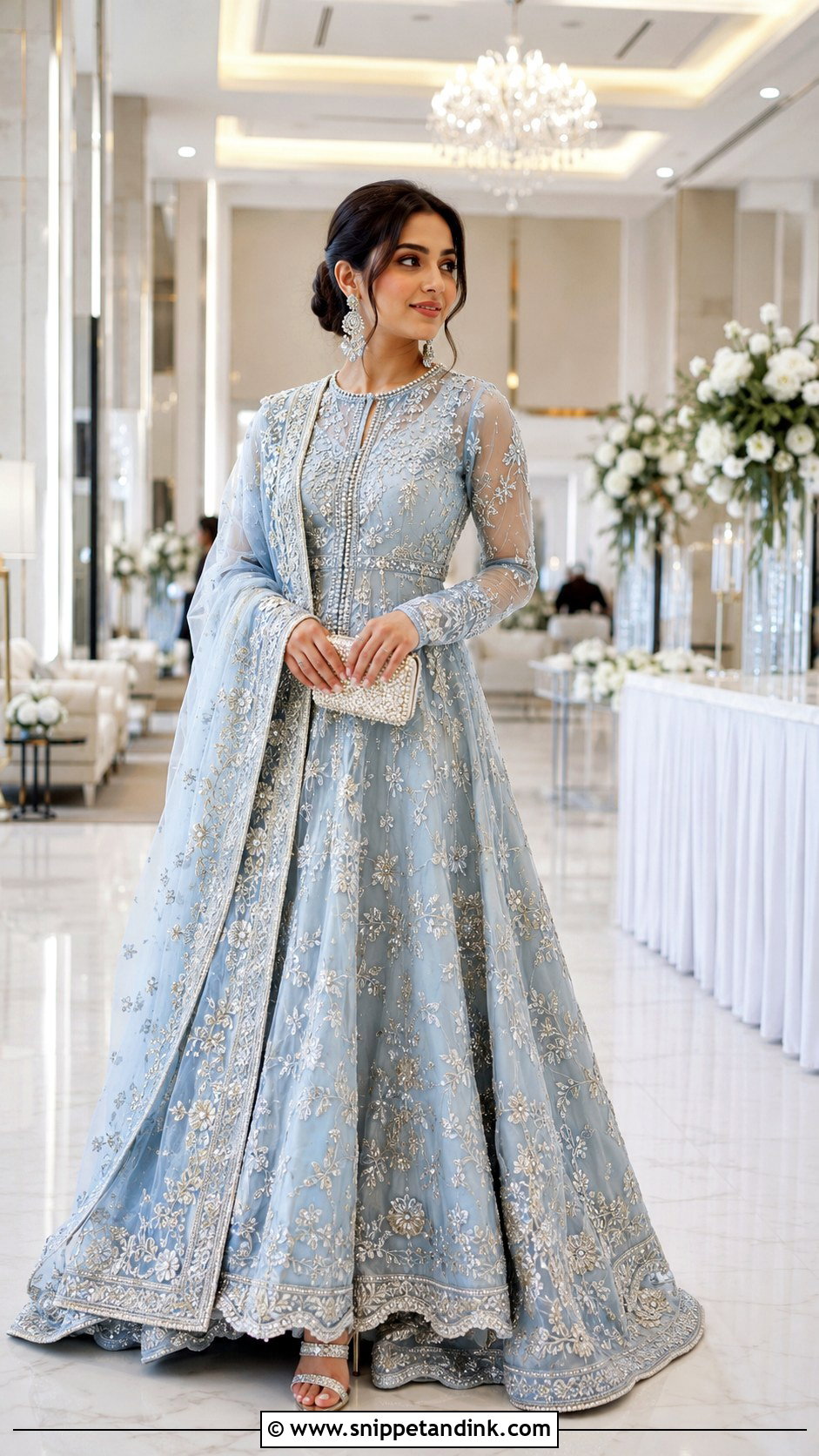
Powder blue gives a calm walima or daytime reception. A long maxi with a shaped bodice and A-line skirt suits most body types, and silver embroidery, pearl clusters and some crystal work at the neckline, waist and hem keep it refined. Sheer full sleeves add coverage while staying light. A powder blue dupatta with a narrow worked border can sit over one arm or as a soft veil. Crystal earrings, a fine bracelet, silver heels and a pearl clutch finish it, with loose waves or a low bun. Pale blue washes out on very fair skin in harsh sun, so I’d test the shade outdoors before ordering.
18. Coral Pakistani Bridal Lehenga
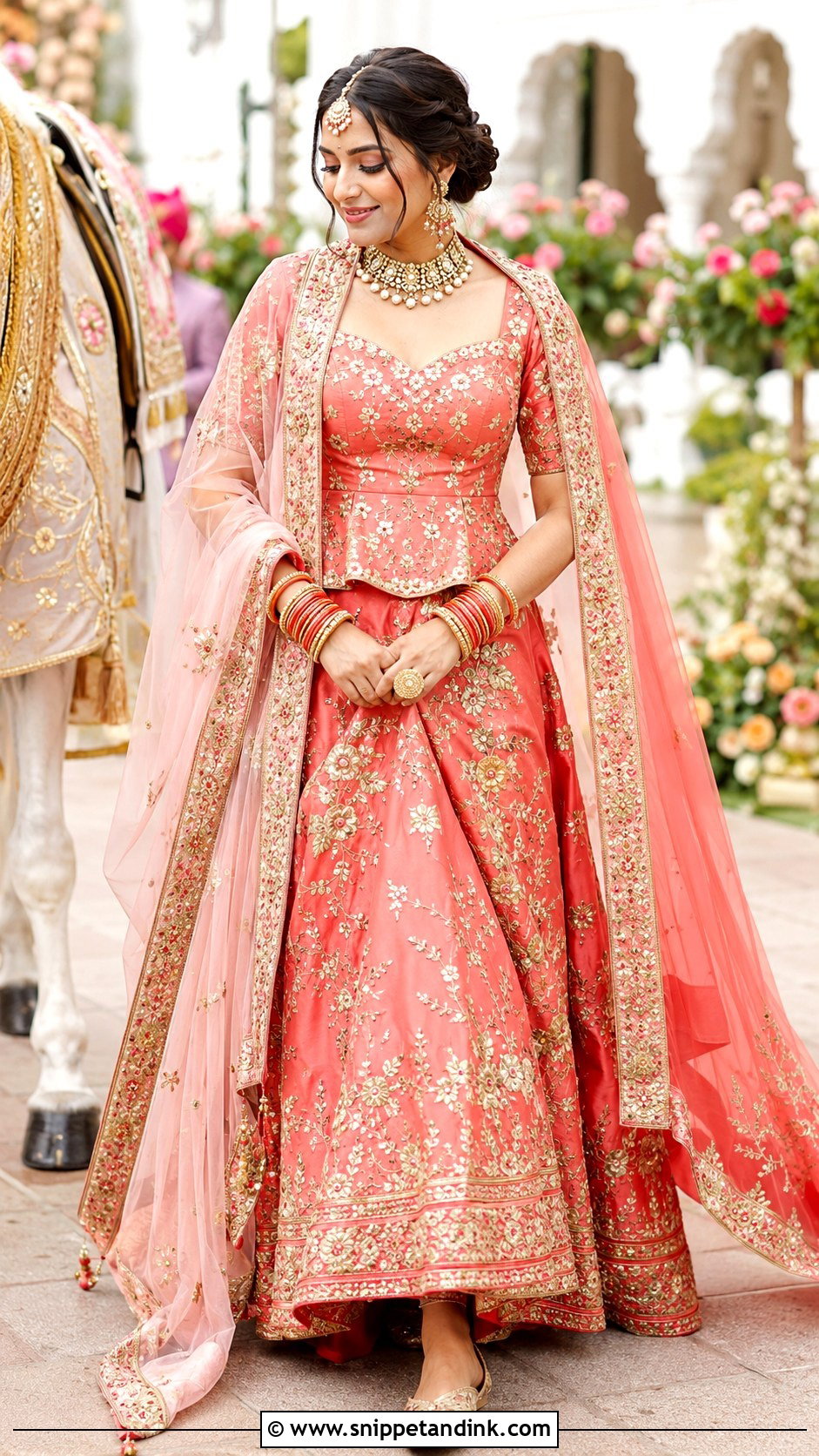
Coral sits between red and peach: softer than the first, livelier than the second. A silk lehenga with gold florals, fine beadwork and borders that show off the flare, plus a long fitted blouse or a peplum-style top, gives coverage and a defined waist. A light coral net dupatta over the head and a pale pink one over a shoulder add depth. Gold with pearl details, stacked coral bangles and nude embroidered khussas complete it. A textured low bun matters here more than you’d think, because it gives the dupatta pins something to grip. Bronzed eyes, peach blush and a rose-coral lip suit a daytime baraat or reception.
19. Burgundy Pakistani Bridal Farshi Gharara
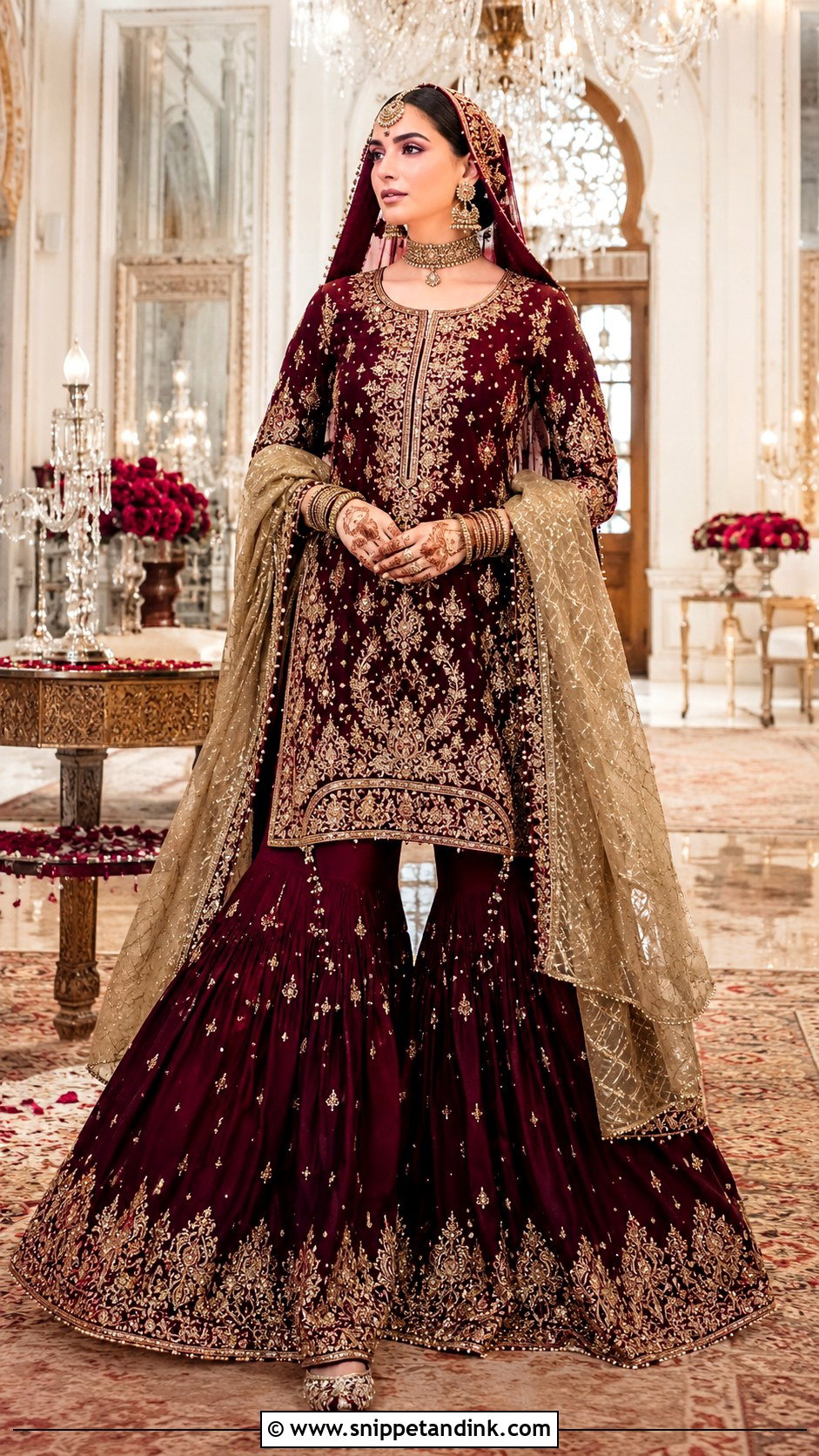
A burgundy farshi gharara is the most regal shape here and the hardest to walk in. The fabric trails behind on the floor, so the thighs need careful tailoring before the flare, and you’ll want someone holding the hem on stairs. A richly worked knee-length shirt with antique gold handwork, fitted sleeves and a structured neckline balances it. Add a burgundy dupatta over the head and a muted gold tissue one across the shoulder. A choker, passa, jhumkas and bangles keep it traditional, and khussas are the only sensible footwear. A center-parted bun and classic makeup suit a formal baraat.
20. Pastel Lilac Pakistani Bridal Gown
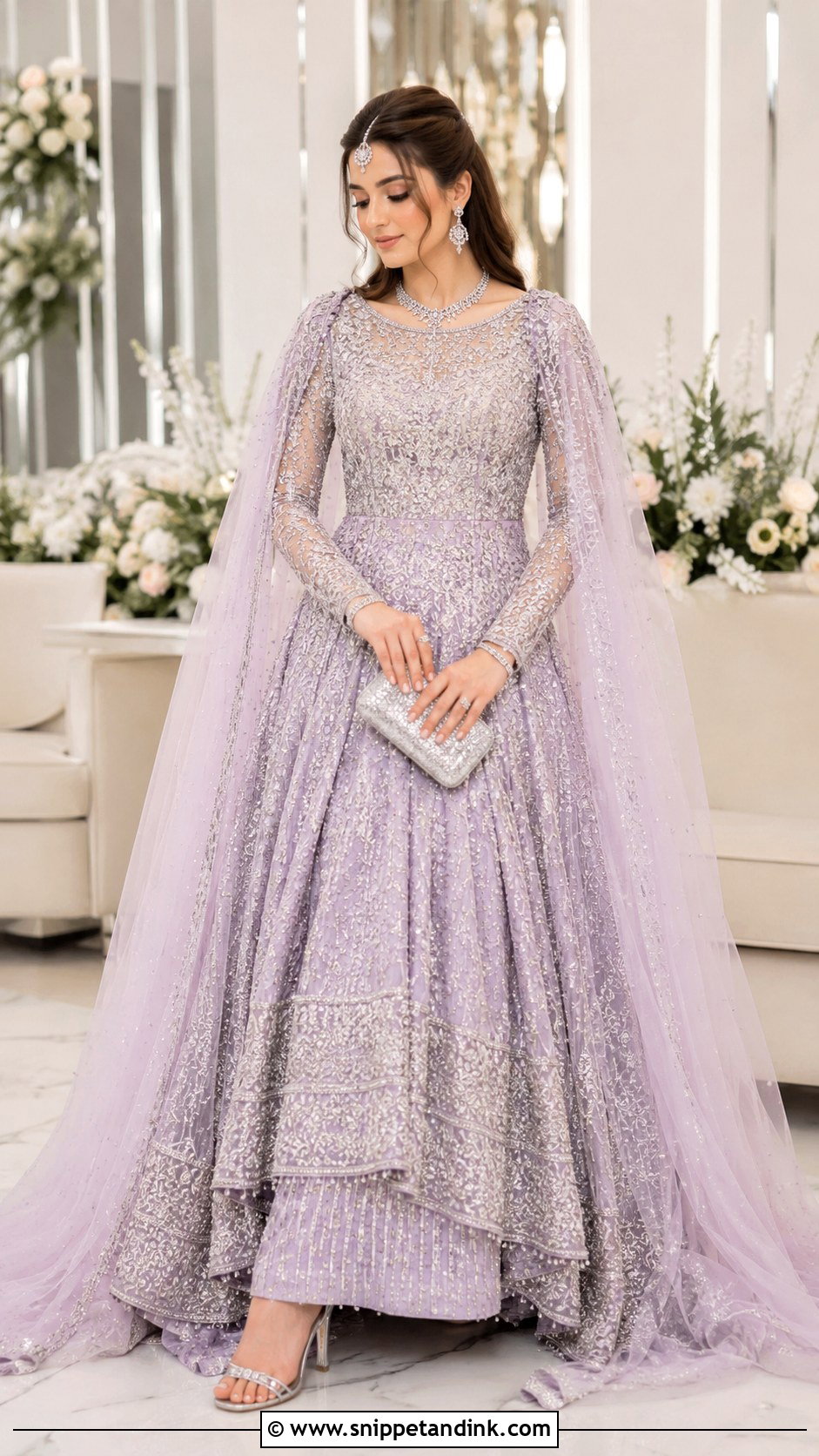
Lilac is a soft walima color, and it photographs well in bright reception lighting. A floor-length gown with a structured bodice, full sleeves and a layered skirt carries silver thread, crystals, pearls and tiny lavender florals without losing its lightness. A sheer lilac cape or lightly worked dupatta gives coverage and movement at the shoulders. Crystal earrings, a slim necklace, silver heels and a small clutch suit it. Half-up loose waves look modern; a low bun is more formal. Lilac can lean grey or pink depending on the dye lot, so ask for a fabric swatch before the outfit goes into embroidery.
Two Dupattas, Heavy Lehenga, Long Night: Setting It All Up
The double dupatta is the part of these looks that goes wrong most often, usually because nobody practised it. I set it in this order on the day.
- Finish hair and the bun first; the head dupatta needs a firm base to pin into.
- Pin the head dupatta at the crown and behind each ear with U-pins, then hide the pins under the matha patti or tikka.
- Drape the second dupatta over a shoulder or across both arms and safety-pin it to the blouse from the inside.
- Have someone walk you up and down once and sit you down before photos, then re-pin anything that pulled.
Heavy lehengas sit on the hips, so I ask for a wide, padded waistband with hooks plus a drawstring backup. If the skirt has can-can, try it with your actual shoes, because adding height changes where the hem lands. Keep a small kit with safety pins, U-pins, fashion tape and a needle threaded in the outfit’s color in your handbag or with a sister. And after the event, store worked outfits flat or rolled in muslin, away from plastic and damp, so zari and gota don’t tarnish.
Matching Each Outfit to the Event It Has to Survive
A bridal outfit should suit the bride, the event, her comfort and her family’s traditions all at once. This collection runs through lehengas, pishwas, ghararas, shararas, refined gowns and a saree. Red, maroon, burgundy and emerald carry the grand evenings; ivory, mint, champagne, powder blue and lilac suit the lighter events. The dupatta setting, footwear, jewelry weight, hair that holds pins and makeup matched to the fabric are what make each one complete. Whatever the event, you should be able to sit, stand and greet your guests without anyone needing to rescue your outfit.
You'll Like These Ideas:






Leave a Reply