
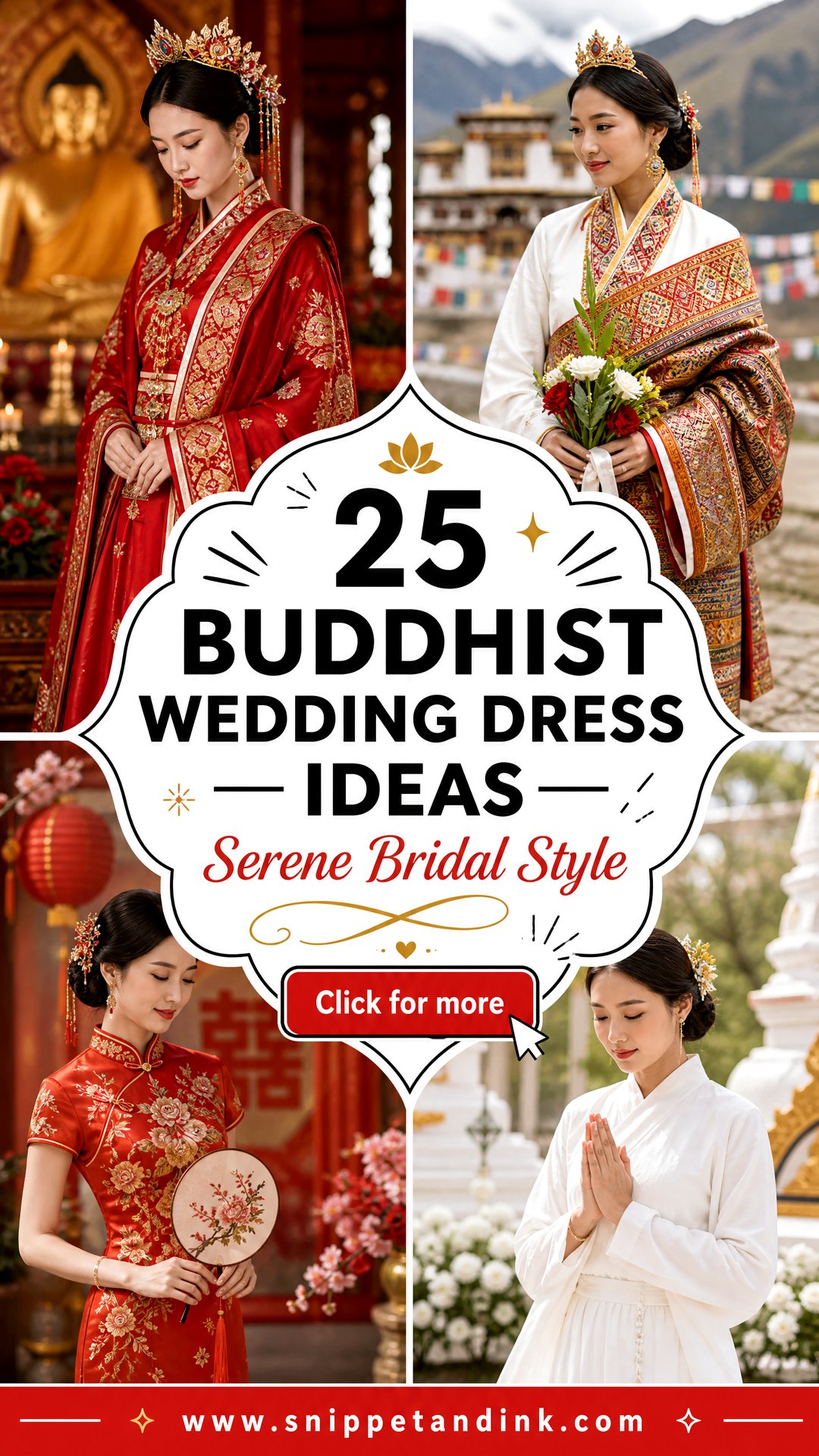
There’s no single Buddhist wedding dress, and that’s the first thing I tell brides who come to me asking for one. What you wear usually follows your family’s country and culture, the temple, and how traditional the ceremony will be. A bride might wear Thai silk, a Sri Lankan osariya, a Bhutanese kira, a Tibetan chuba, a Vietnamese ao dai or a modest white gown. What they share is practical: you will bow, sit, walk barefoot in places and greet elders, so the outfit has to cover the shoulders and let you move. Soft whites, gold, red, saffron and jewel tones can all be right depending on tradition. Below are 25 outfits I’d style for these ceremonies, with notes on how each one behaves once the rituals begin.
Dressing for a Shrine Hall Where Shoes Come Off at the Door
In many Buddhist temples, shoes are removed before entering the shrine hall, and that one custom changes how I style a bride. A hem set for heels will drag once you’re barefoot, so I ask where the ceremony takes place before any alterations begin. If most of the day is inside, hem for bare feet or flat slippers and keep the heels for the reception.
Sitting, kneeling and bowing
Expect to sit on the floor or on low cushions, often with your feet tucked to the side, as pointing the soles of your feet toward a Buddha image or the monks is considered disrespectful. I have brides practice this at the fitting:
- Sit with legs folded to one side for several minutes and check the skirt doesn’t ride up past the ankle.
- Bow forward with palms joined and look at the neckline in a mirror from above.
- Stand up from the floor without using your hands on the hem.
- Raise both arms to shoulder height, as you might when receiving a blessing, and see whether the blouse lifts at the waist.
Any outfit that fails one of these needs a fix before the day: more ease at the hip, a deeper overlap on a wrap or a slip underneath.
1. White Buddhist Wedding Dress
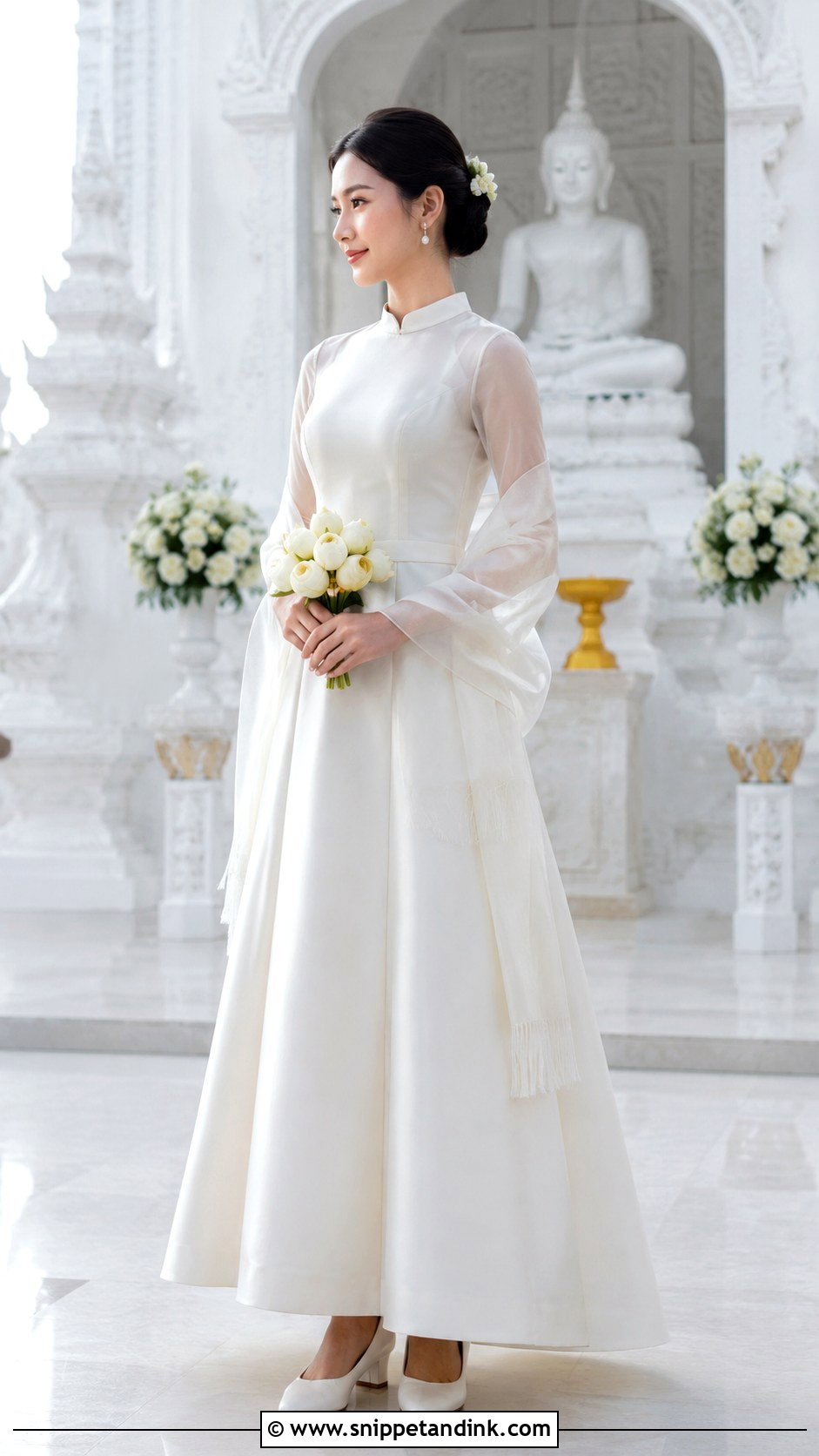
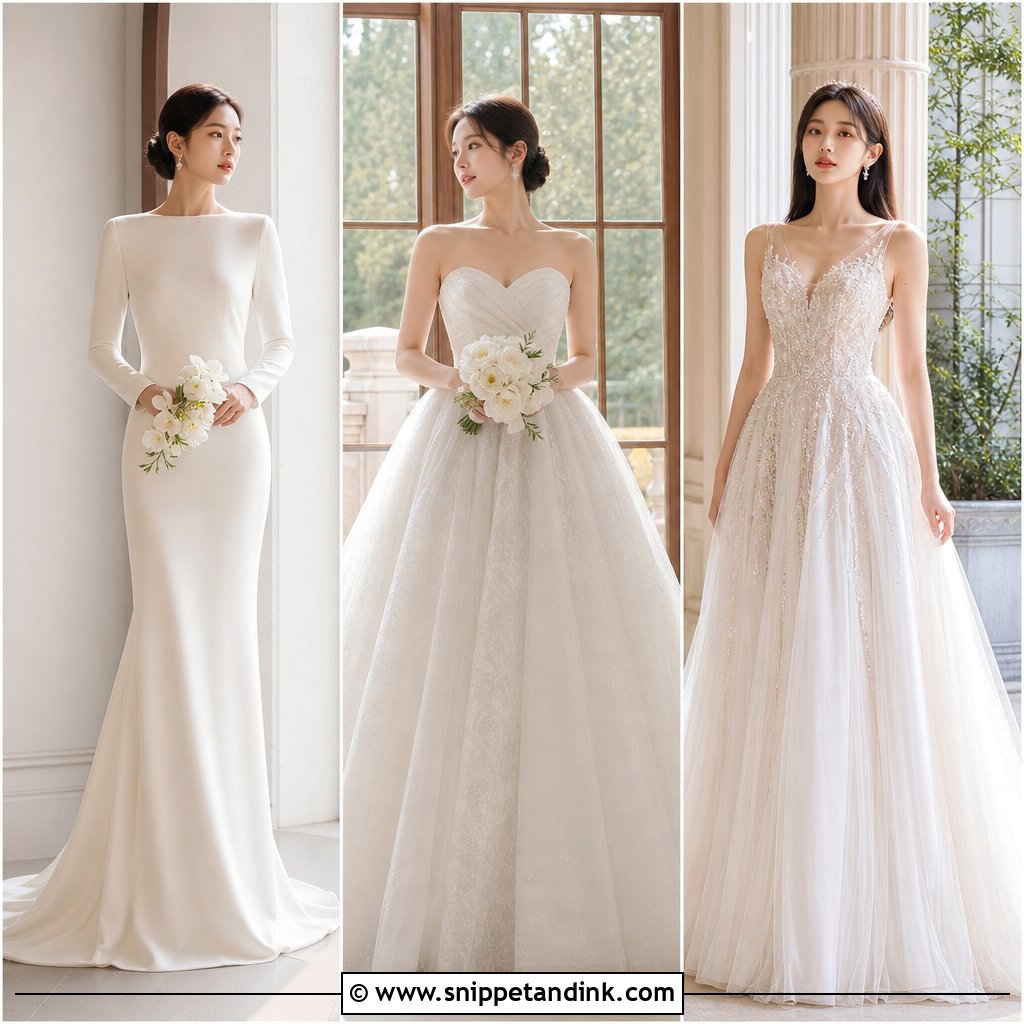
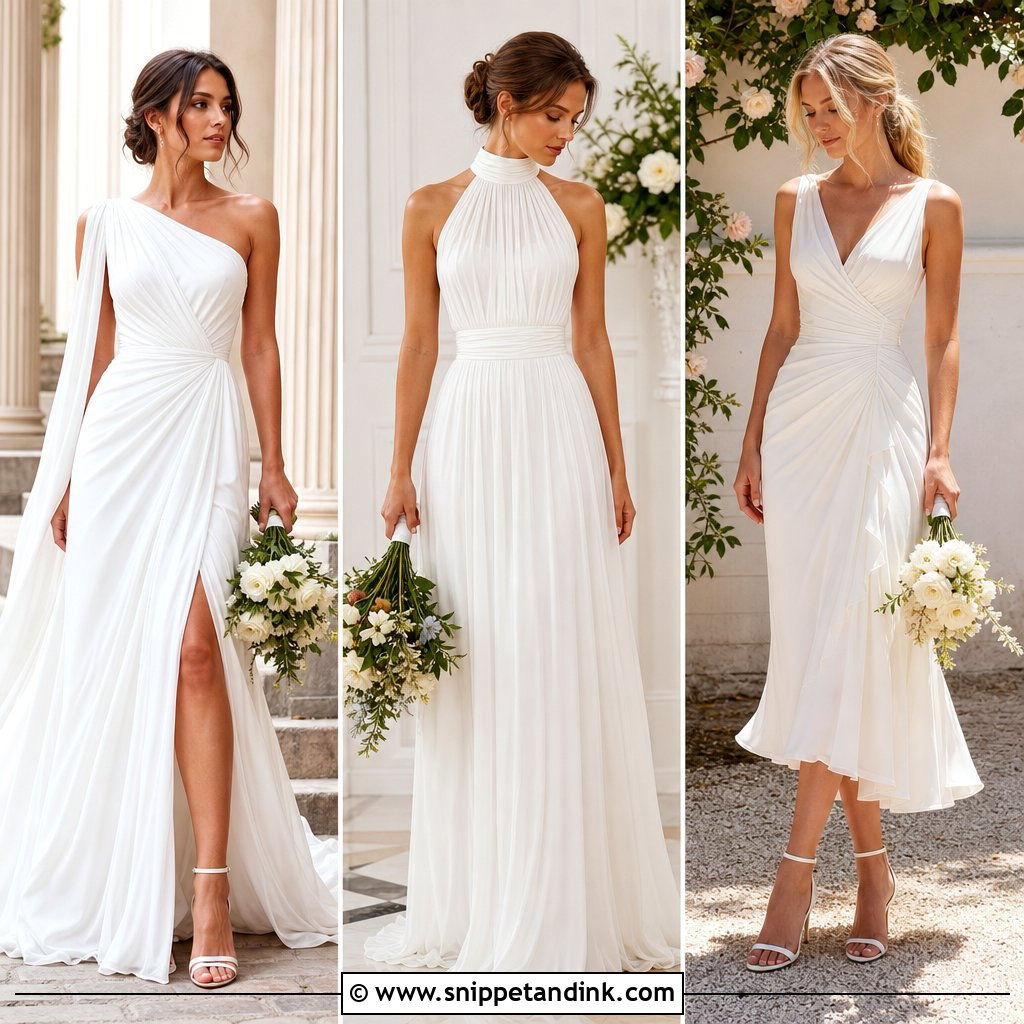
A white gown works well for a temple or interfaith ceremony when it’s chosen for coverage first. I look for covered shoulders, a soft A-line skirt and lace or embroidery that sits flat rather than sparkling. A bateau neckline or sheer long sleeves keep it modest without feeling heavy. Since you may remove your shoes inside the shrine hall, embroidered flats are the easier choice; heels just mean more to take off at the door. Pearl earrings, a smooth bun and a light veil or silk shawl finish it.
2. Ivory Buddhist Wedding Dress
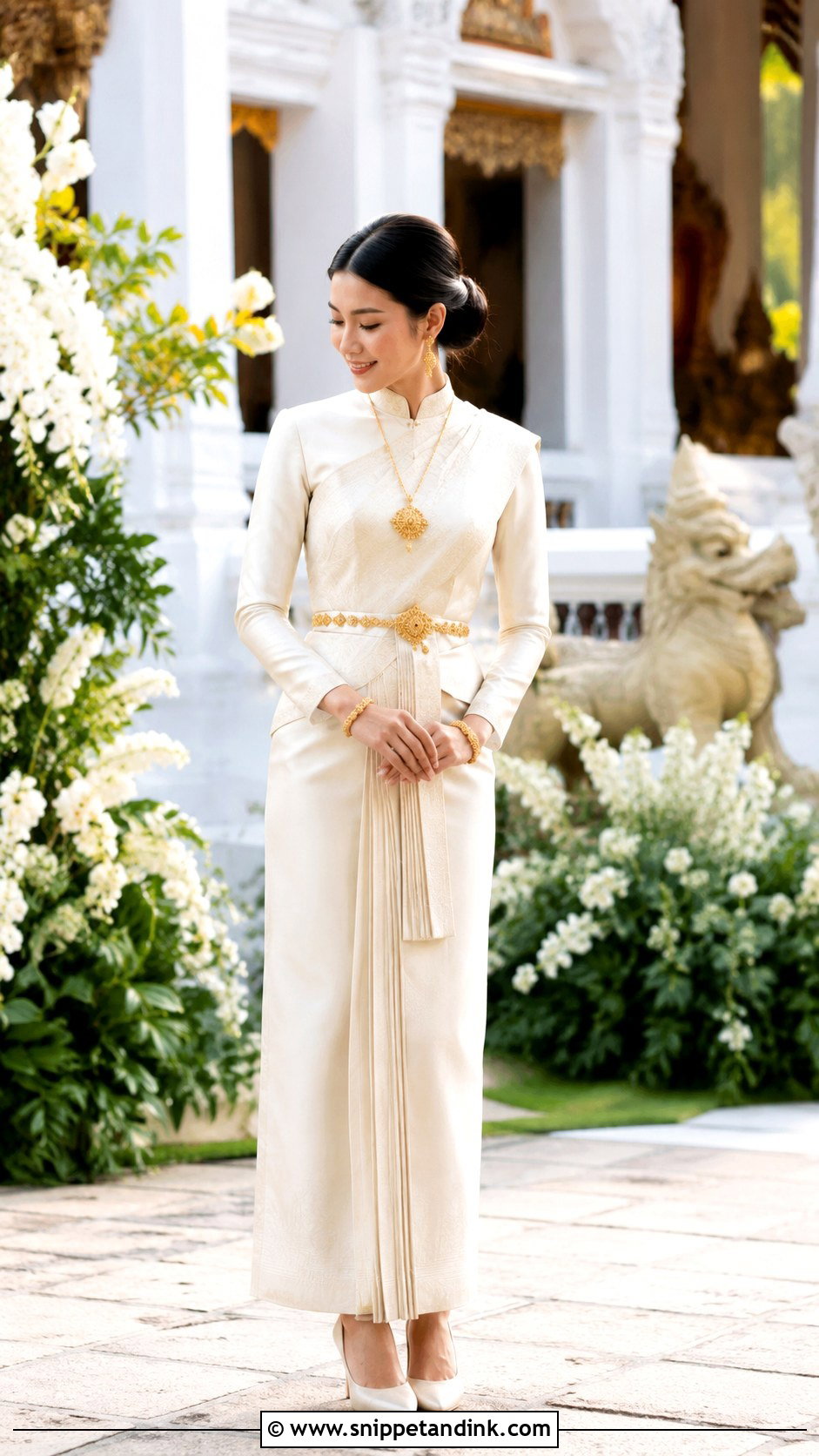
Ivory reads softer than white in daylight and flatters more skin tones, which is why I reach for it more often. It pairs naturally with gold jewelry, lotus-shaped hair pins and cream accessories. Pick a modest gown in silk, crepe or organza with gentle waist shaping. The detail that matters most here is the hip: if you’ll kneel or bow, a skirt that’s fitted through the hips will pull and ride up, so I’d have at least a little ease built in. A matching ivory wrap adds coverage without hiding the dress, and natural makeup keeps the whole look quiet.
3. Red Buddhist Wedding Dress
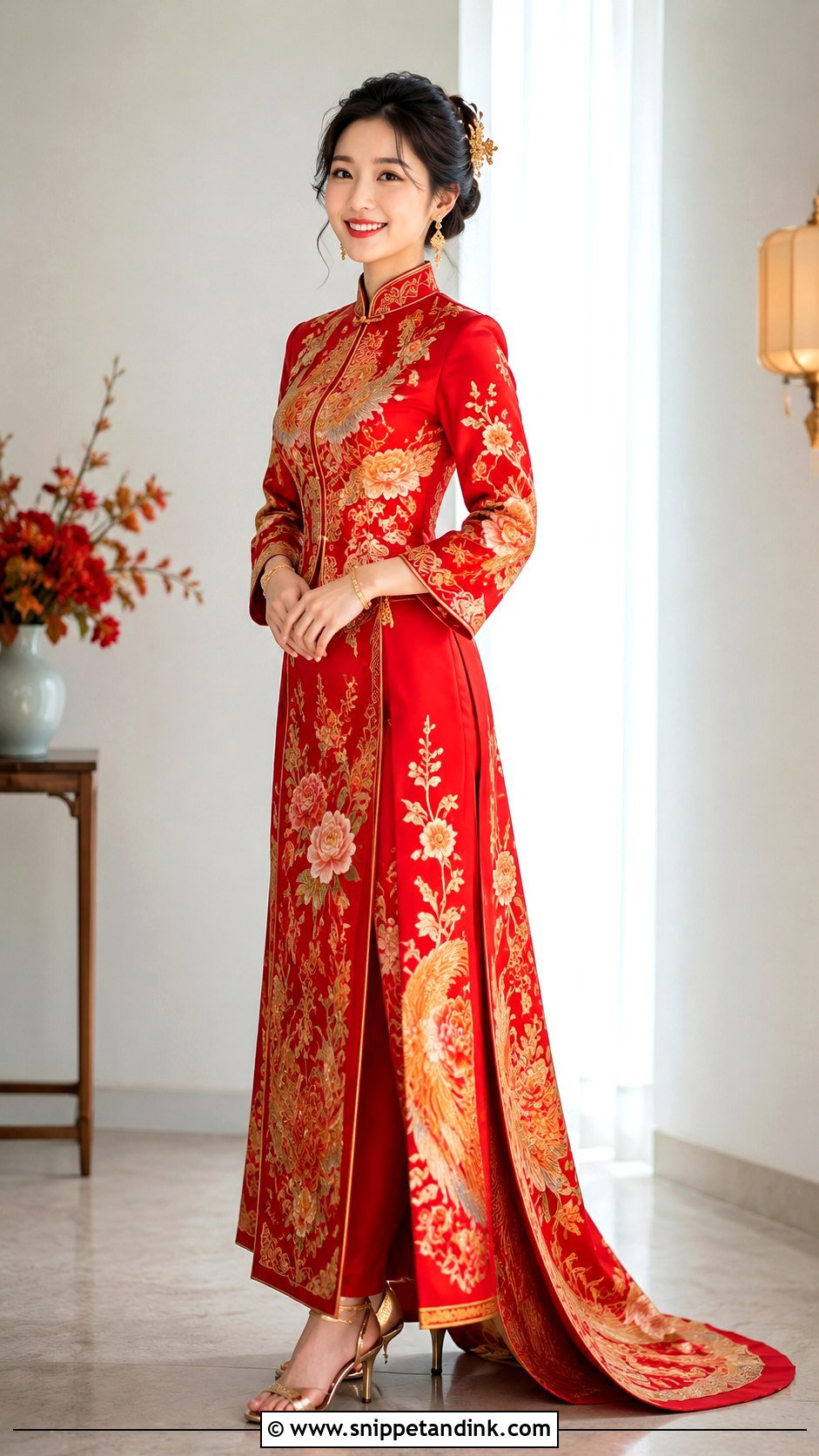
In many traditions red stands for good fortune, and a red outfit gives a ceremony real warmth. Rather than a revealing cut, I’d build it from a structured gown, a silk dress, a lehenga, a qipao-inspired dress or a long embroidered set with full coverage. Gold threadwork and beaded borders do the bridal work. Red is already loud, so I keep the jewelry to gold earrings and a neat updo, with metallic flats or low heels. Check that the dye is colorfast before the day; a damp red silk can mark a white shawl or a family member’s sleeve during greetings.
4. Gold Buddhist Wedding Dress
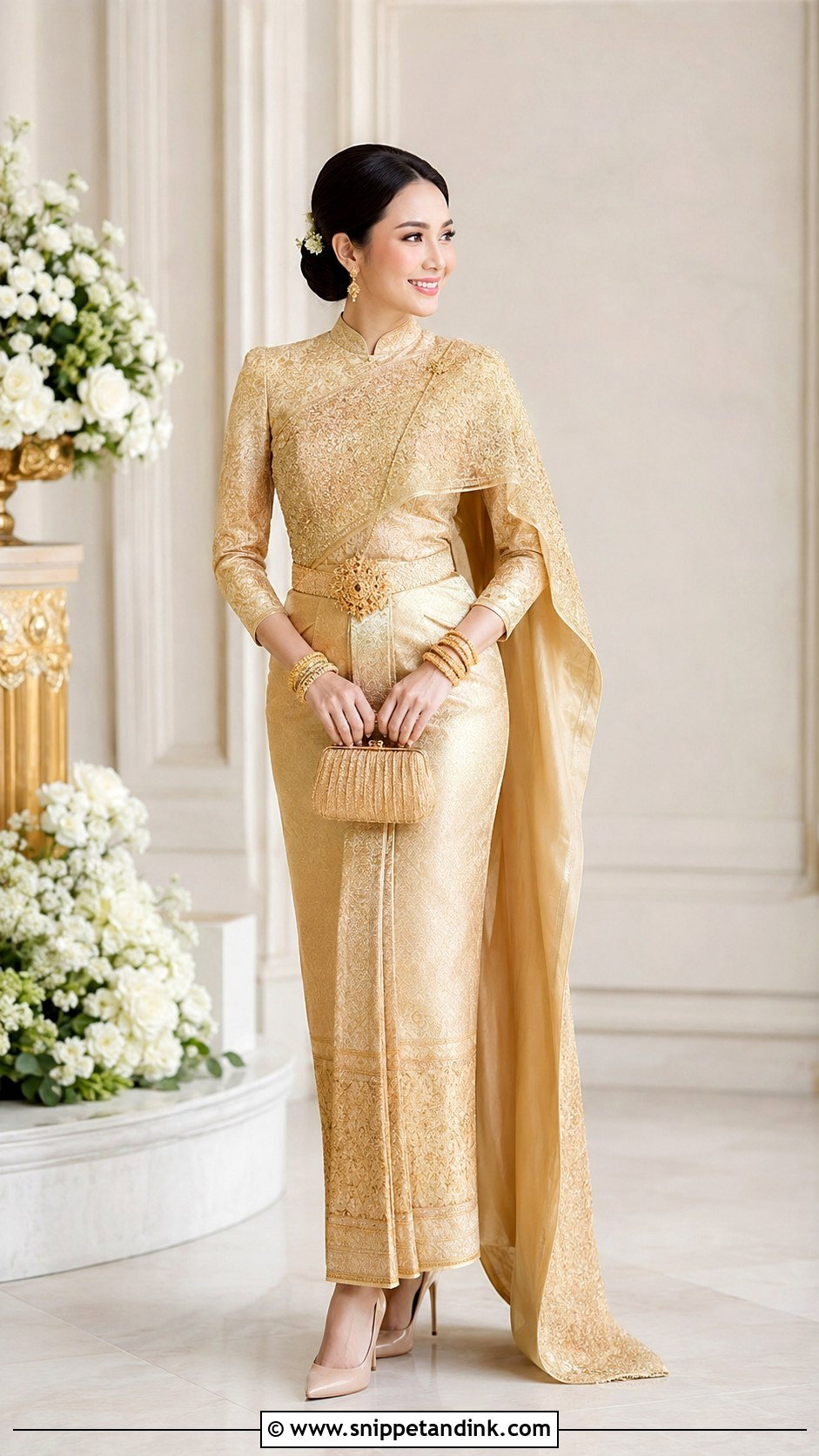
Gold feels festive and ceremonial without needing a strong color. Antique gold, champagne gold or pale metallic silk looks especially refined in temple light and at family ceremonies. A long dress, saree, Thai silk ensemble or skirt-and-blouse set all work, provided the coverage is modest. Bright metallic weaves can reflect harshly in photos, so I usually suggest the softer antique tones. Gold bangles, small drop earrings and a single hair ornament keep it coordinated, with nude or metallic shoes that won’t compete.
5. Thai Buddhist Wedding Dress
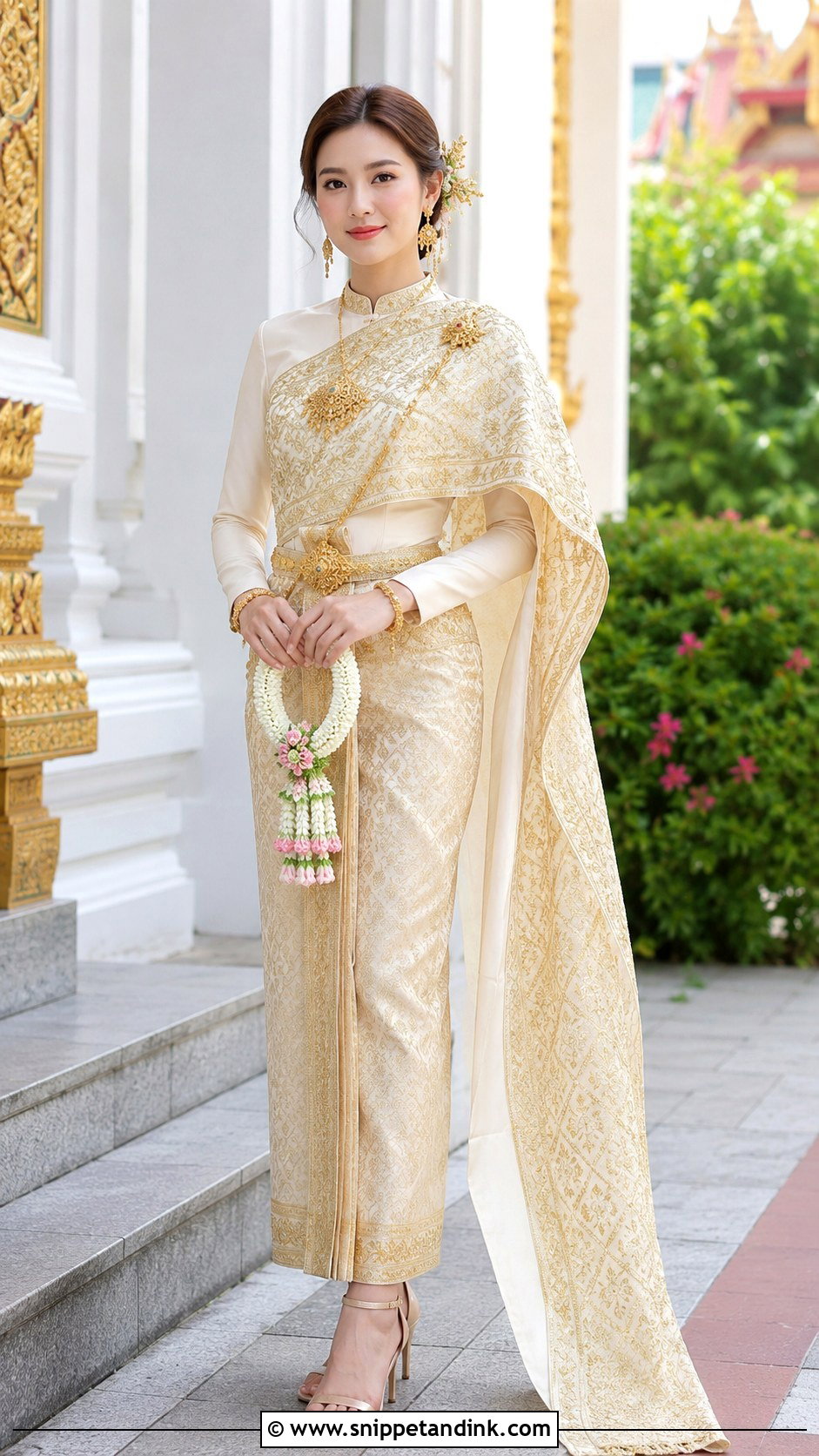
A Thai Buddhist wedding dress usually combines silk, a fitted bodice or blouse, a wrapped skirt and a sabai-style draped sash. The sabai traditionally leaves one shoulder bare, so for a temple blessing I’d add a fitted blouse underneath or a light shawl, then save the open-shoulder drape for portraits. Ivory, gold, blush and silver suit a calm morning ceremony; rich jewel tones feel more traditional. Thai silk has its own shine and structure, so I keep makeup soft and hair in a low bun with floral pins.
6. Sri Lankan Osariya Wedding Dress
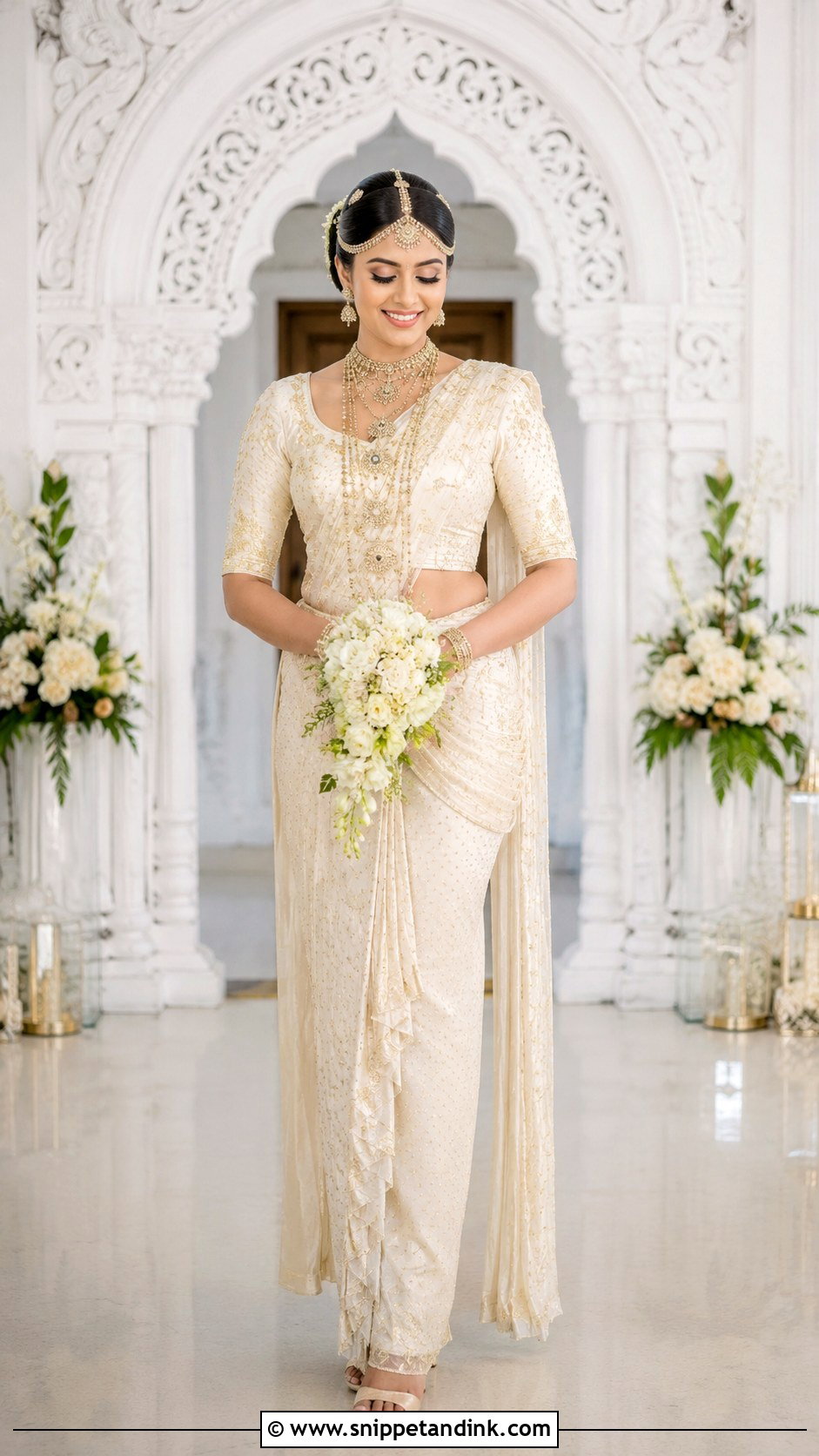
A Sri Lankan osariya wedding dress draws on Kandyan bridal tradition: a draped sari with a distinctive front and a fitted blouse, giving a regal, modest shape. White, ivory, champagne and gold are the usual bridal colors. The drape takes skill, and I’d book the person who will dress you on the day for a trial, because an osariya pinned in a hurry slips at the waist. Traditional jewelry is heavy, with layered necklaces and bangles, so I keep the hair neat and secure enough to carry it.
7. Tibetan Buddhist Wedding Dress
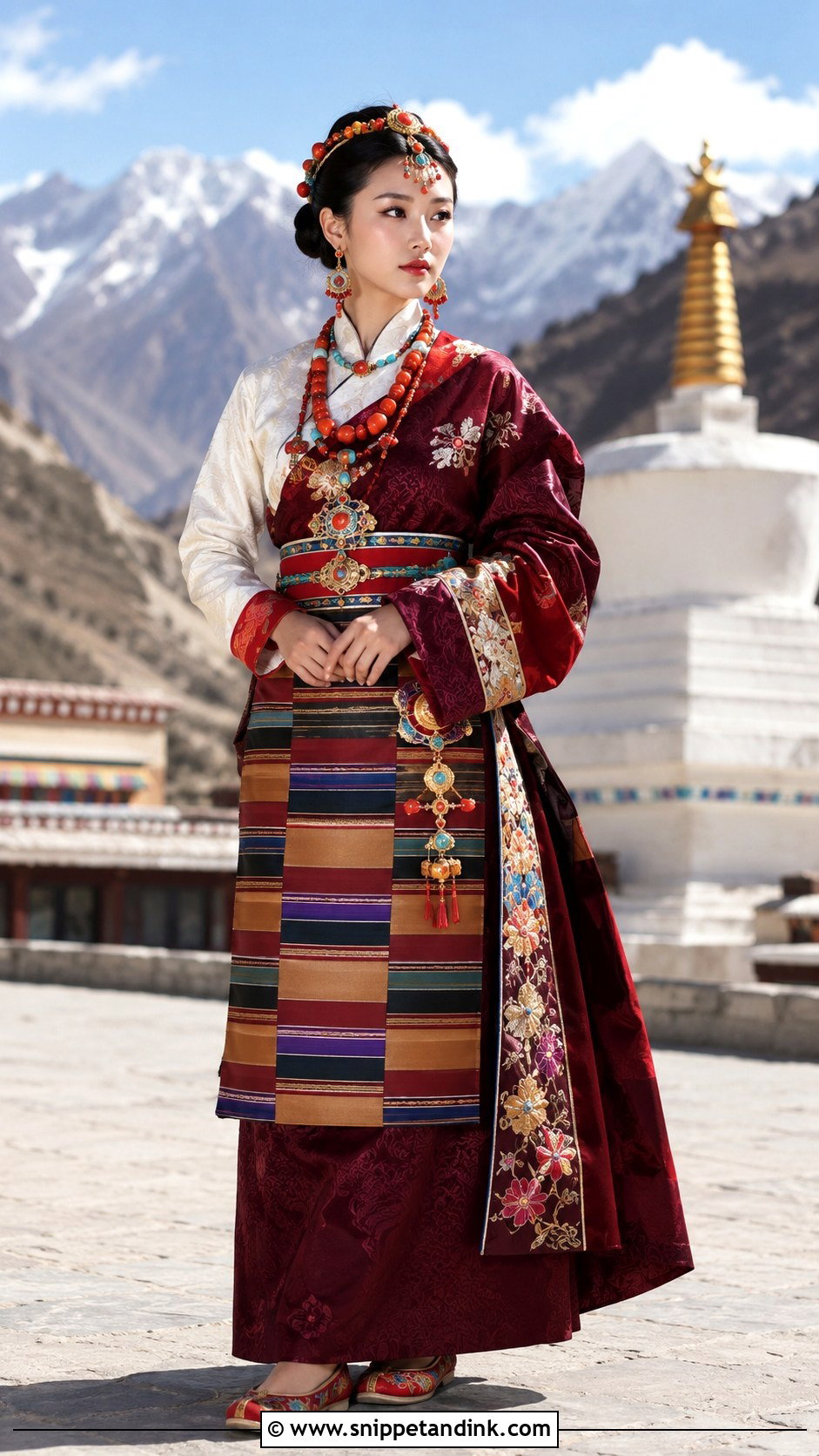
A chuba-inspired outfit layers a blouse, a wrap robe, a sash and often an apron, with jewelry worn generously. Red, maroon, blue, gold and emerald all feel festive. It’s a practical, warm silhouette, which matters at altitude or in a cold season. The one fitting point I watch is the sash: tied too high, it makes the robe bunch at the back; tied at the natural waist, the folds fall straight. Turquoise and coral-style jewelry, a long-sleeved silk blouse and comfortable boots or embroidered flats complete it.
8. Bhutanese Kira Wedding Dress
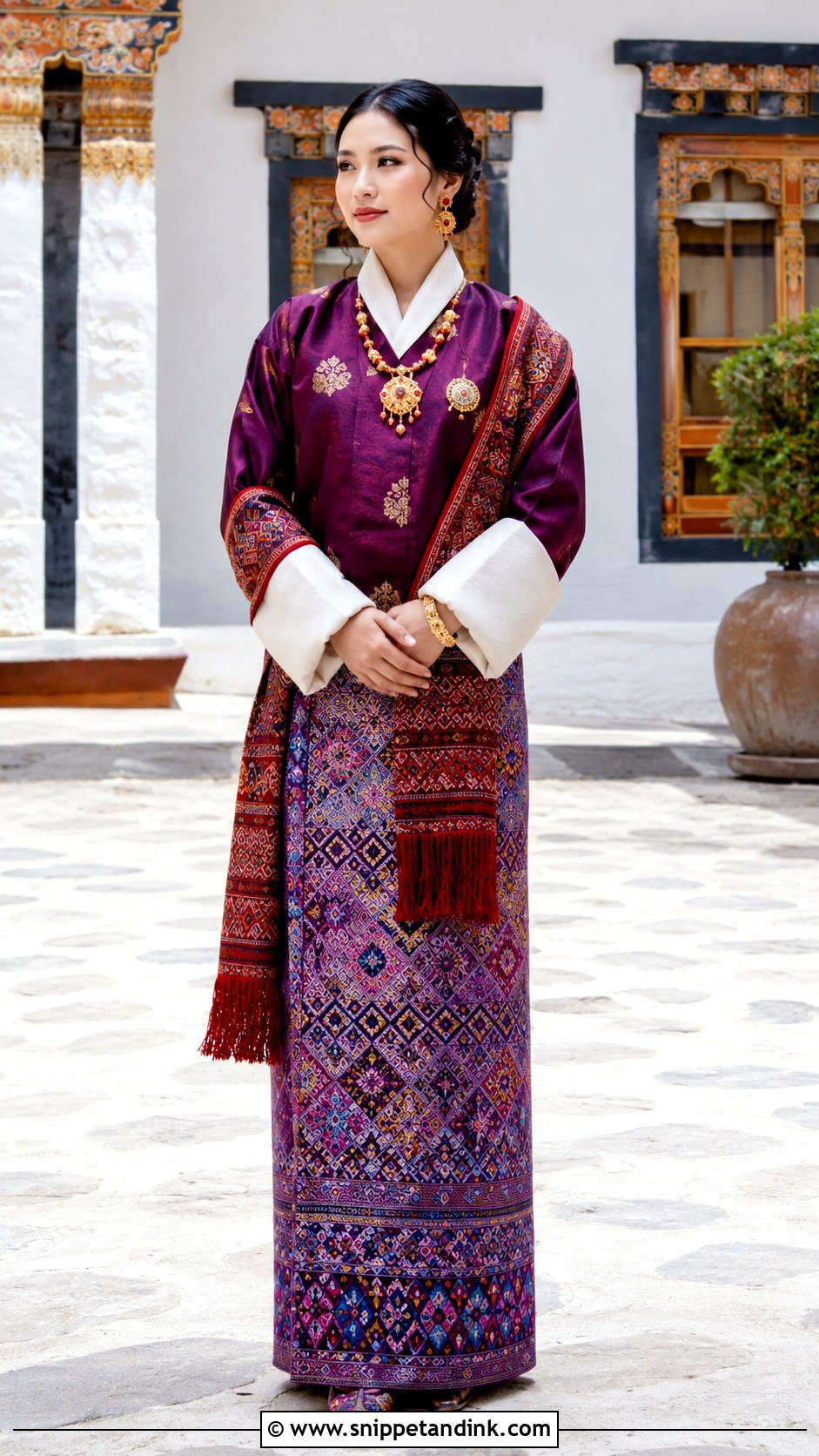
The Bhutanese kira is a full-length wrapped dress worn with a blouse and a tego jacket, and handwoven kiras are works of real craft. Choose the weave first, jewel tones, gold accents or soft bridal shades, then build the rest around it. Because the patterns are already detailed, I keep the shoes and hair simple. A kira is fastened at the shoulders and belted at the waist, so I’d practice sitting and standing in it, since the belt is what keeps the length even when you rise.
9. Vietnamese Buddhist Ao Dai Wedding Dress
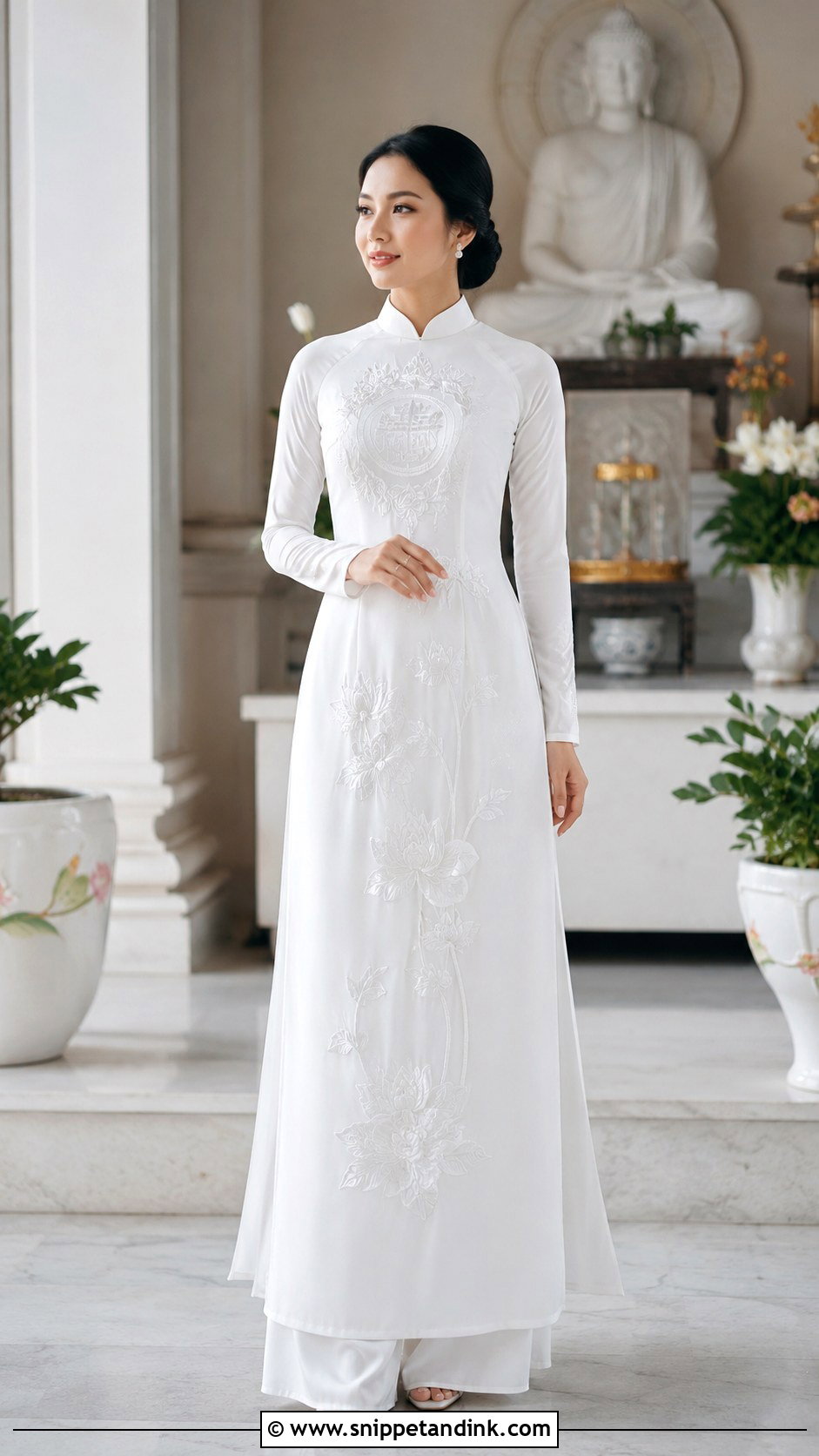
The ao dai’s long tunic over flowing trousers gives a graceful line and real freedom to move, which makes it one of the easiest outfits on this list for a temple day. White, ivory, red, blush and gold are all common, and lotus or phoenix motifs add bridal detail without weight. The side slits should sit at or just above the waist, as they’re designed to; when a tailor lowers them for modesty, the tunic tends to pull when you sit. Simple heels, pearl or gold earrings and a matching headpiece complete it.

10. Chinese Buddhist Qipao Wedding Dress
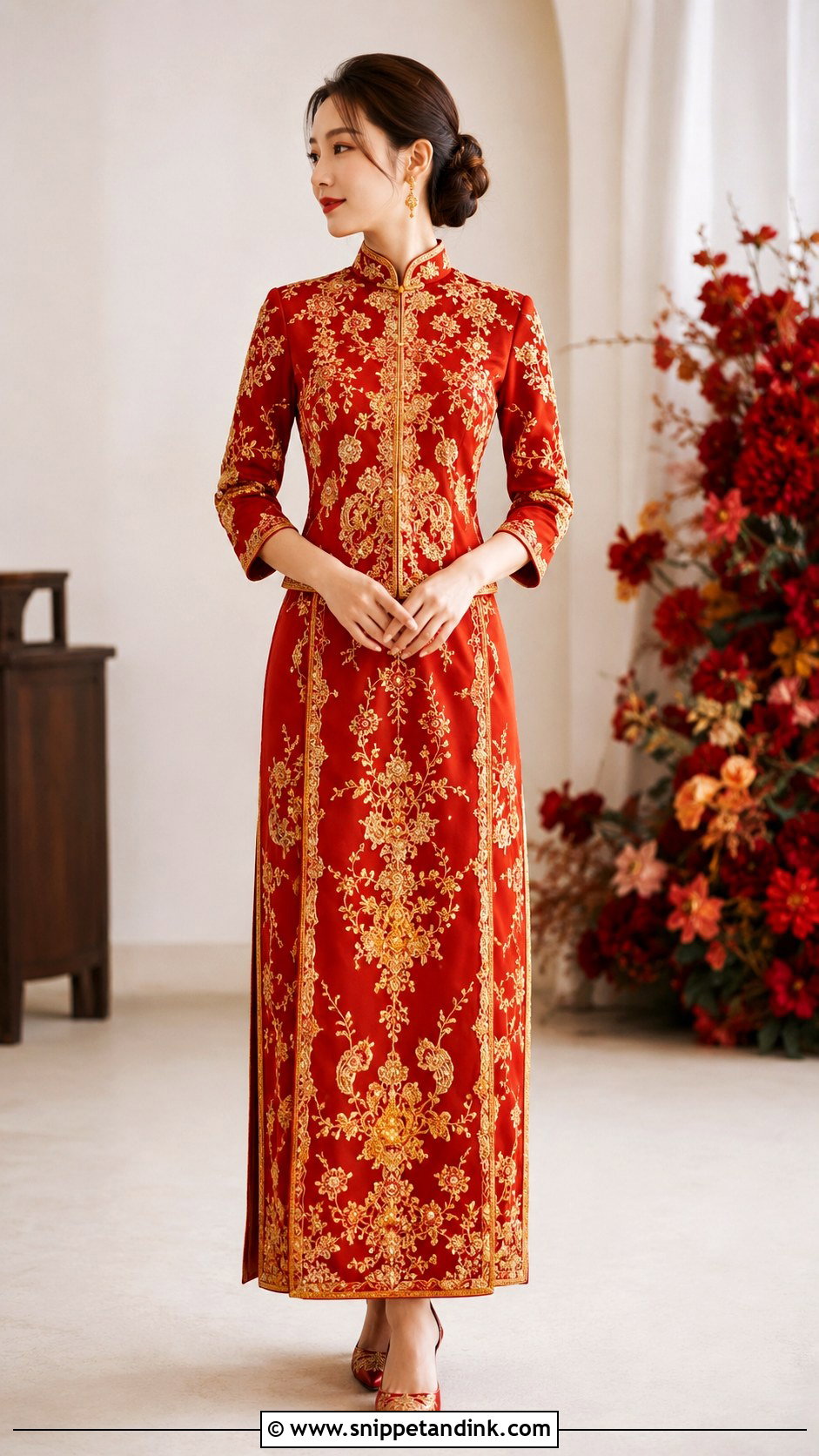
A Chinese Buddhist qipao wedding dress suits a ceremony when it’s chosen long, with sleeves and a high neckline. The fit point I check every time is the slit: it has to let you sit and bow without the fabric straining at the hip, which usually means a slit higher than brides first want, worn with a slip underneath. Red and gold are classic, while ivory and blush feel modern. Silk brocade or jacquard gives richness, with gold earrings, a low bun and comfortable heels.
11. Korean Buddhist Hanbok Wedding Dress
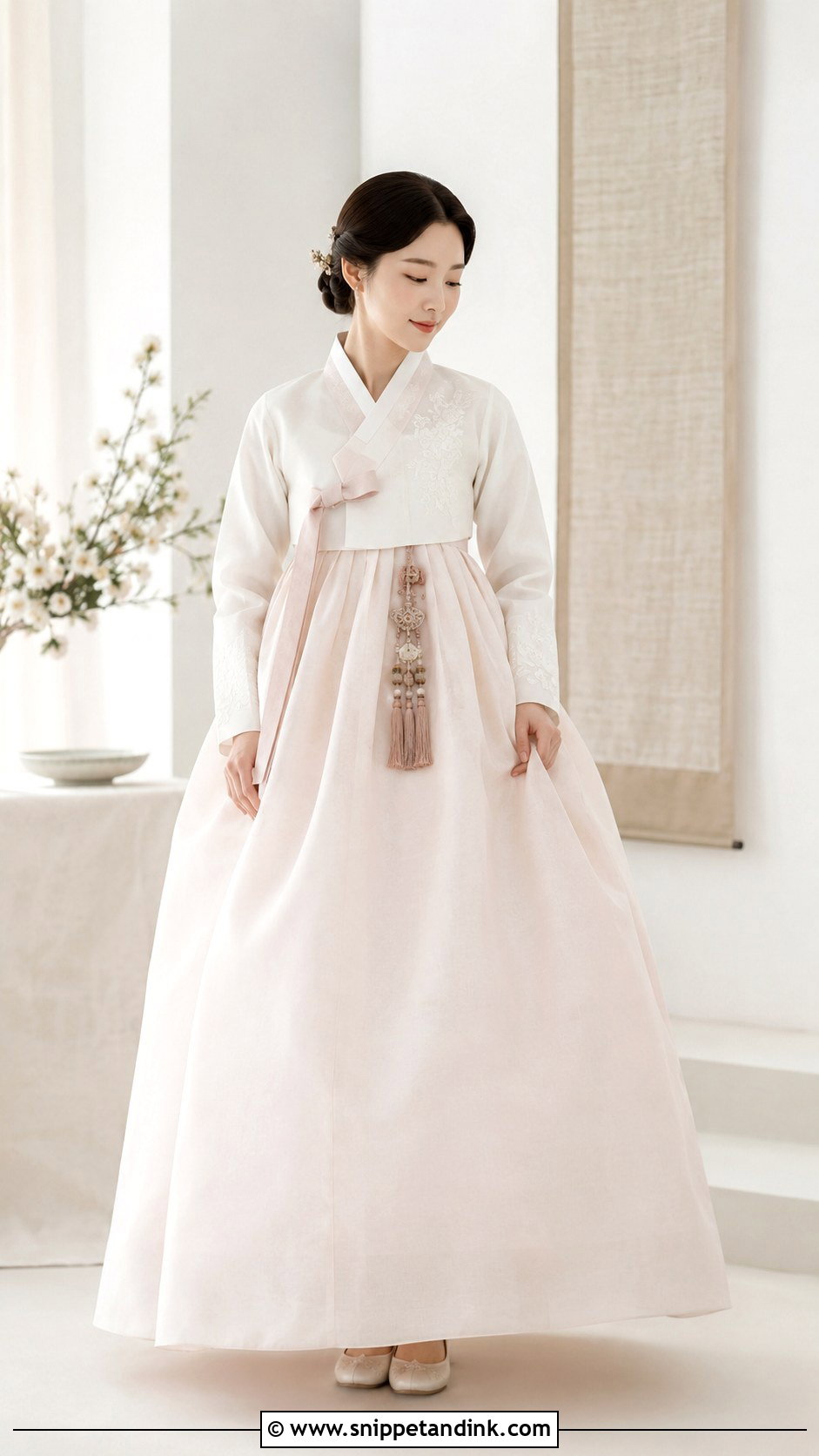
A Korean Buddhist hanbok wedding dress has a short jacket and a full, high-waisted skirt that gives you all the room you need to bow. White, ivory, blush, pale blue, soft green or red accents can follow family custom. A norigae tassel adds detail without excess. The skirt is wrapped and tied over the chest, and I’d ask the person dressing you to tie it firmly, as a loose tie lets the whole skirt sag after a few hours. Simple flats, a neat updo and soft makeup finish it.
12. Japanese Buddhist Kimono Wedding Dress
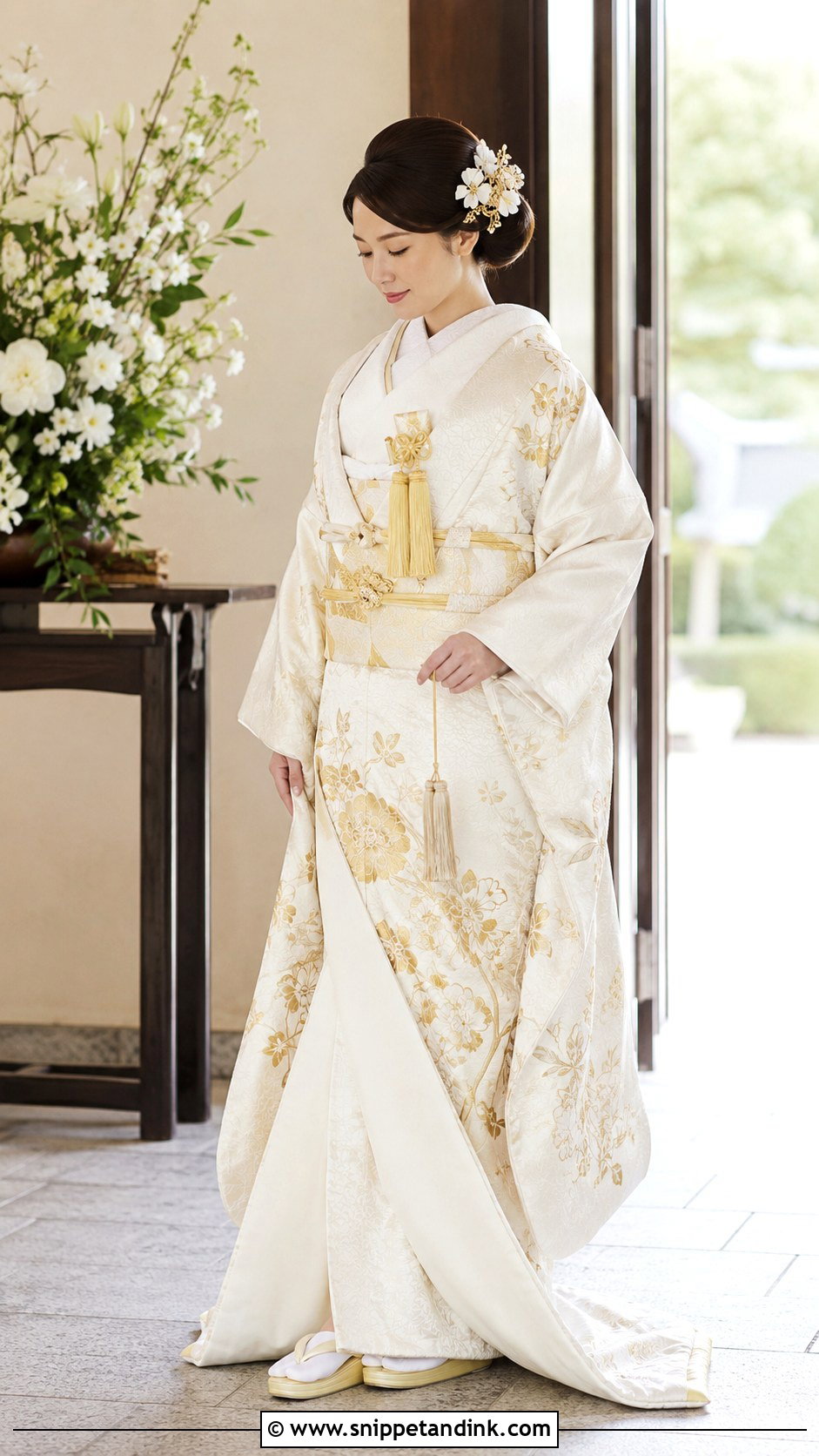
A Japanese Buddhist kimono wedding dress carries its own meaning, so it deserves proper dressing rather than improvised styling. White or ivory looks serene, and soft florals or gold accents add celebration. The full outfit includes the kimono, the obi, the correct underlayers, traditional footwear and a set hairstyle. I’d never dress a bride in a kimono myself without a specialist dresser, because the obi and layers take training to tie correctly and comfortably. Keep accessories minimal and let the garment speak.
13. Burmese Buddhist Wedding Dress
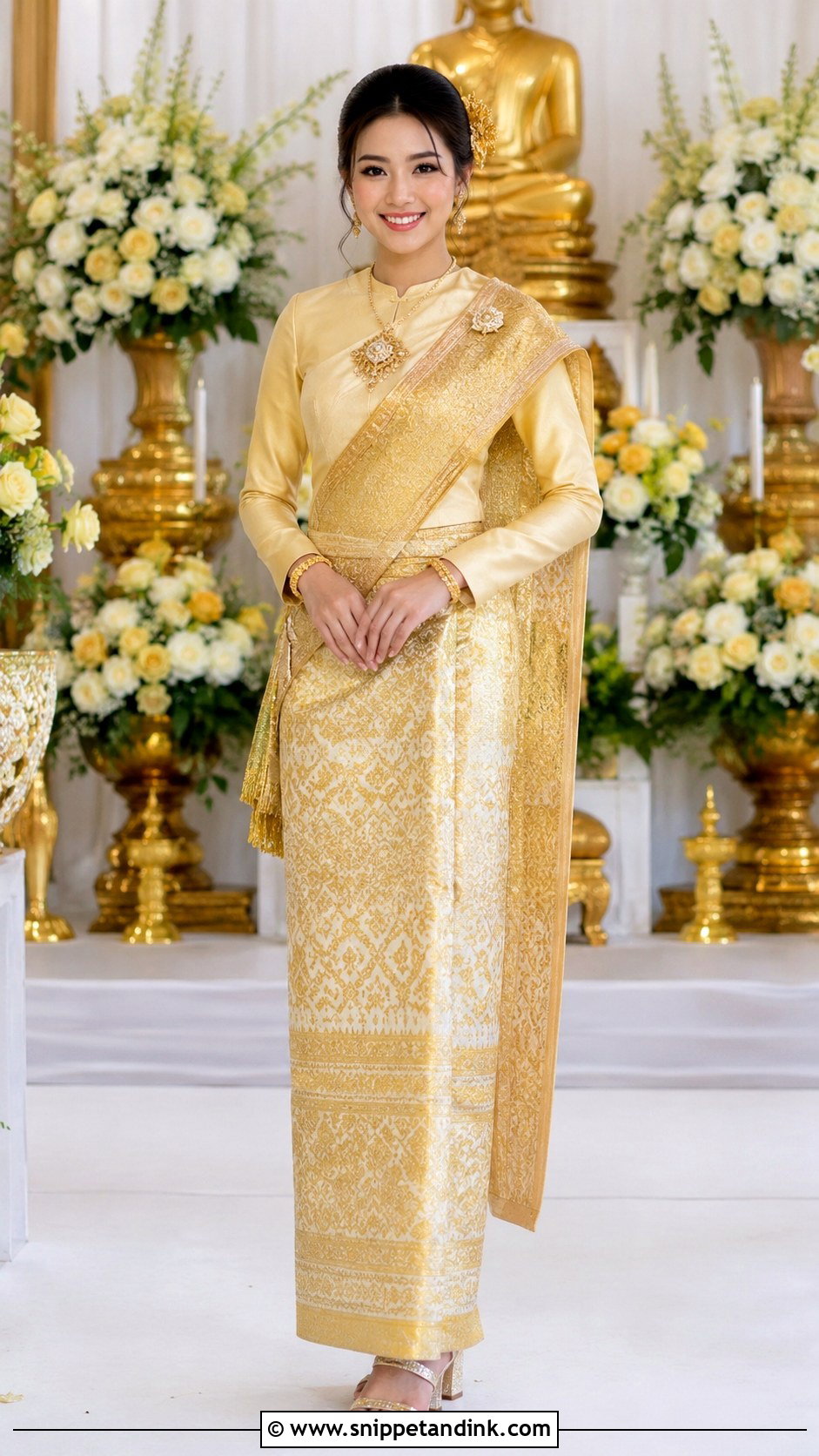
A Burmese bridal outfit centers on a fitted blouse or jacket, a longyi-style wrapped skirt, silk and gold jewelry. Gold, red, ivory, pink and jewel tones all appear, depending on family custom. Choose sleeves and a skirt wrapped with enough overlap for walking, bowing and greeting. A wrapped skirt that’s too tight makes kneeling to elders awkward, so I always test it at the fitting with a full kneel. Embroidered borders and silk sheen supply the detail, with gold accessories and comfortable sandals or heels.
14. Cambodian Buddhist Wedding Dress
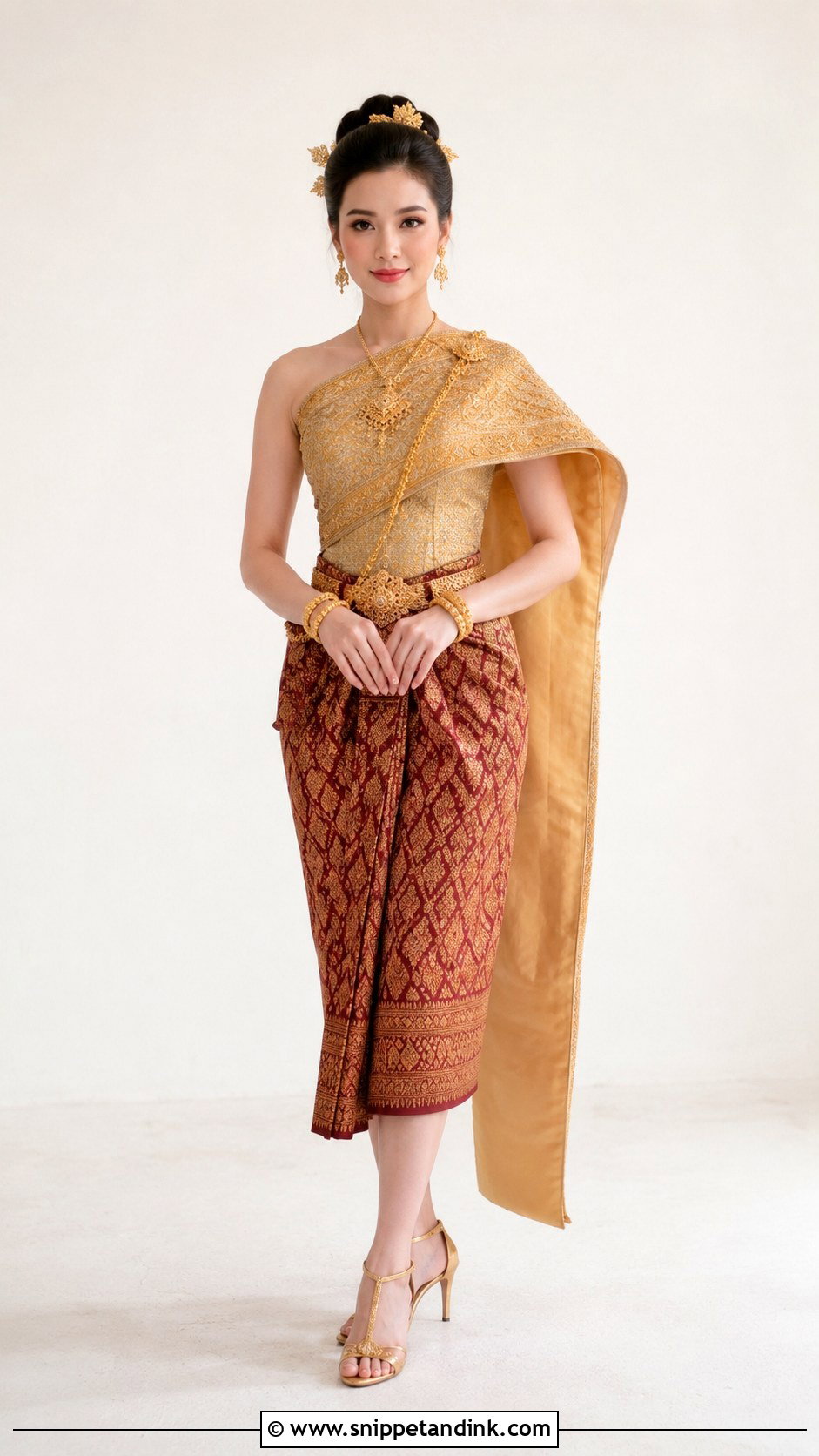
Cambodian bridal dress is ornate and colorful while staying modest. A sampot-inspired skirt with a fitted silk top, gold accents and traditional jewelry is the classic base, in red, gold, emerald, royal blue or soft pink. Weddings often involve several outfit changes, so I plan each look around the ritual it serves: a covered, calmer outfit for blessings and family rituals, the most ornate one for portraits. Gold hair details and a polished updo stay put through the changes better than loose hair.

15. Lao Buddhist Wedding Dress
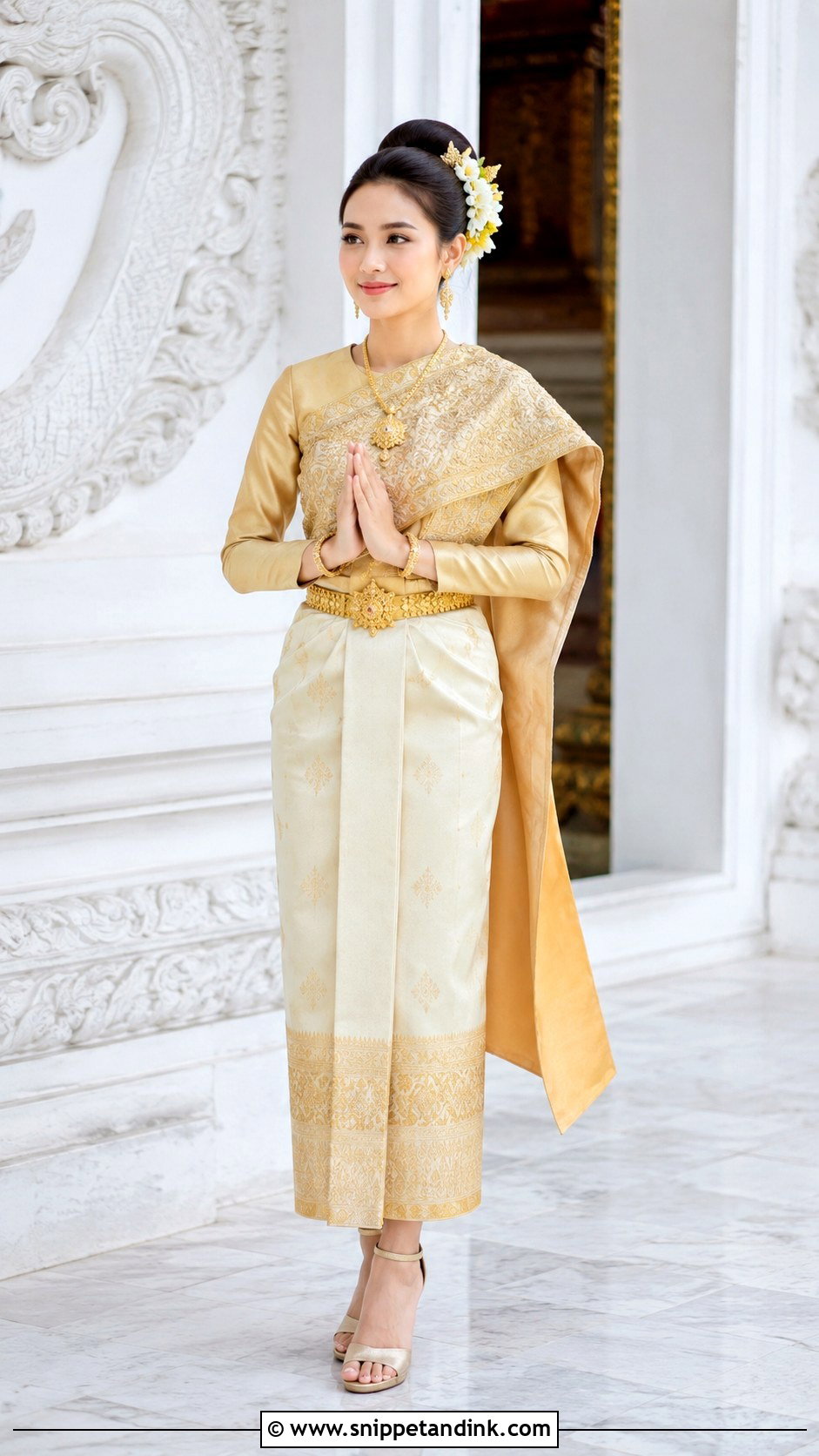
A Lao outfit pairs a woven sinh skirt with a silk blouse and an elegant sash across the body. The textiles are rich while the shape stays simple, which makes it comfortable through a long blessing. Ivory and gold feel ceremonial; red, pink, green or blue feel brighter. The sinh’s woven border sits at the hem, so I hem it with the shoes you’ll actually wear, or barefoot if most of the day is inside a temple. Gold jewelry, a smooth bun and a few flowers complete it.
16. Nepali Buddhist Wedding Dress
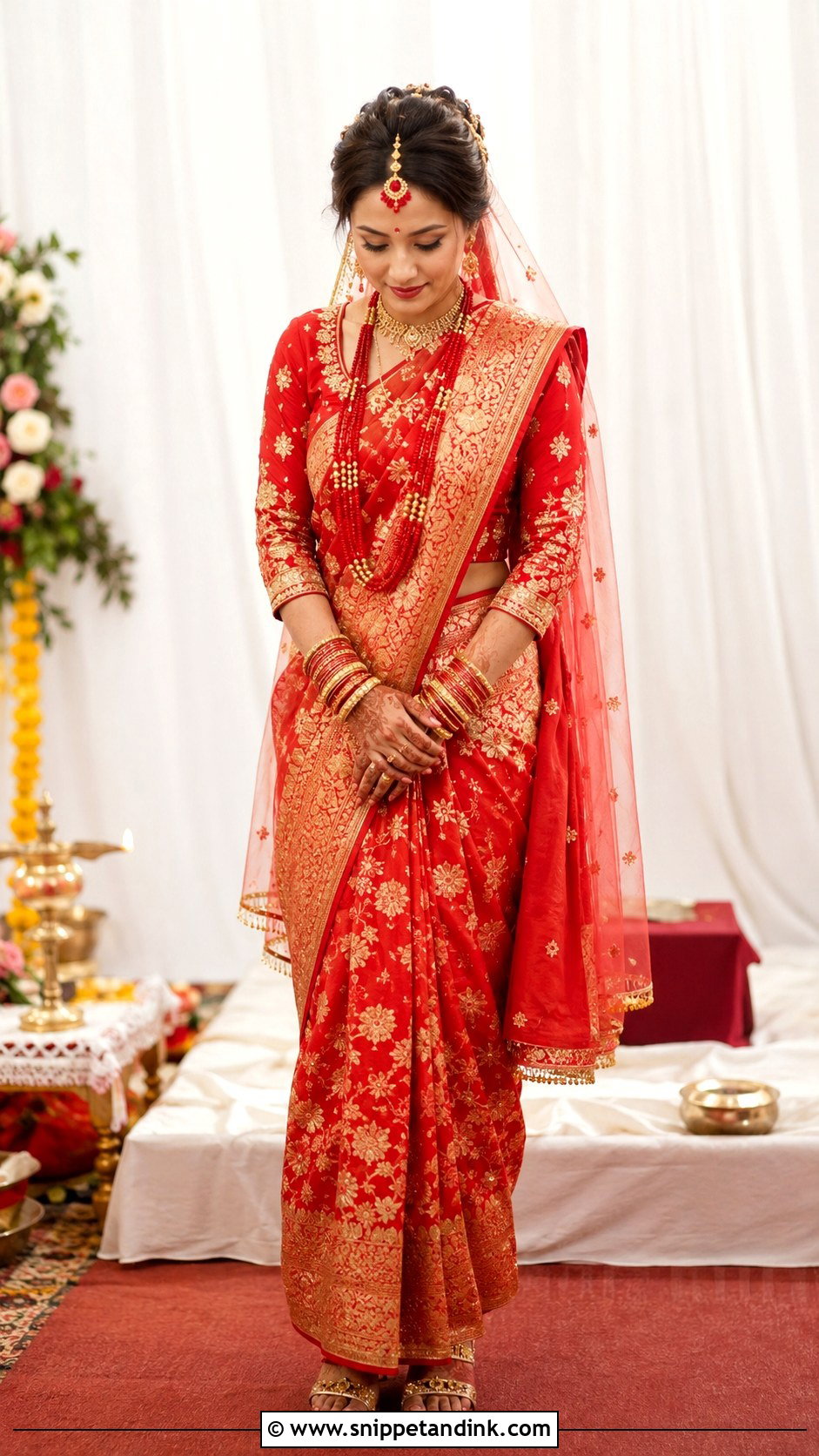
Nepali Buddhist brides might wear a richly colored sari, a traditional blouse or a Himalayan layered dress, depending on background. Red, gold, maroon and deep jewel tones feel festive. My main concern is security: whichever drape you choose has to stay put while you walk, bow and sit with family for hours, so I pin at the shoulder and the pleats more firmly than for a party. Traditional jewelry, bangles, a statement necklace and a soft veil or shawl for temple blessings round it out.
17. Indian Buddhist Sari Wedding Dress
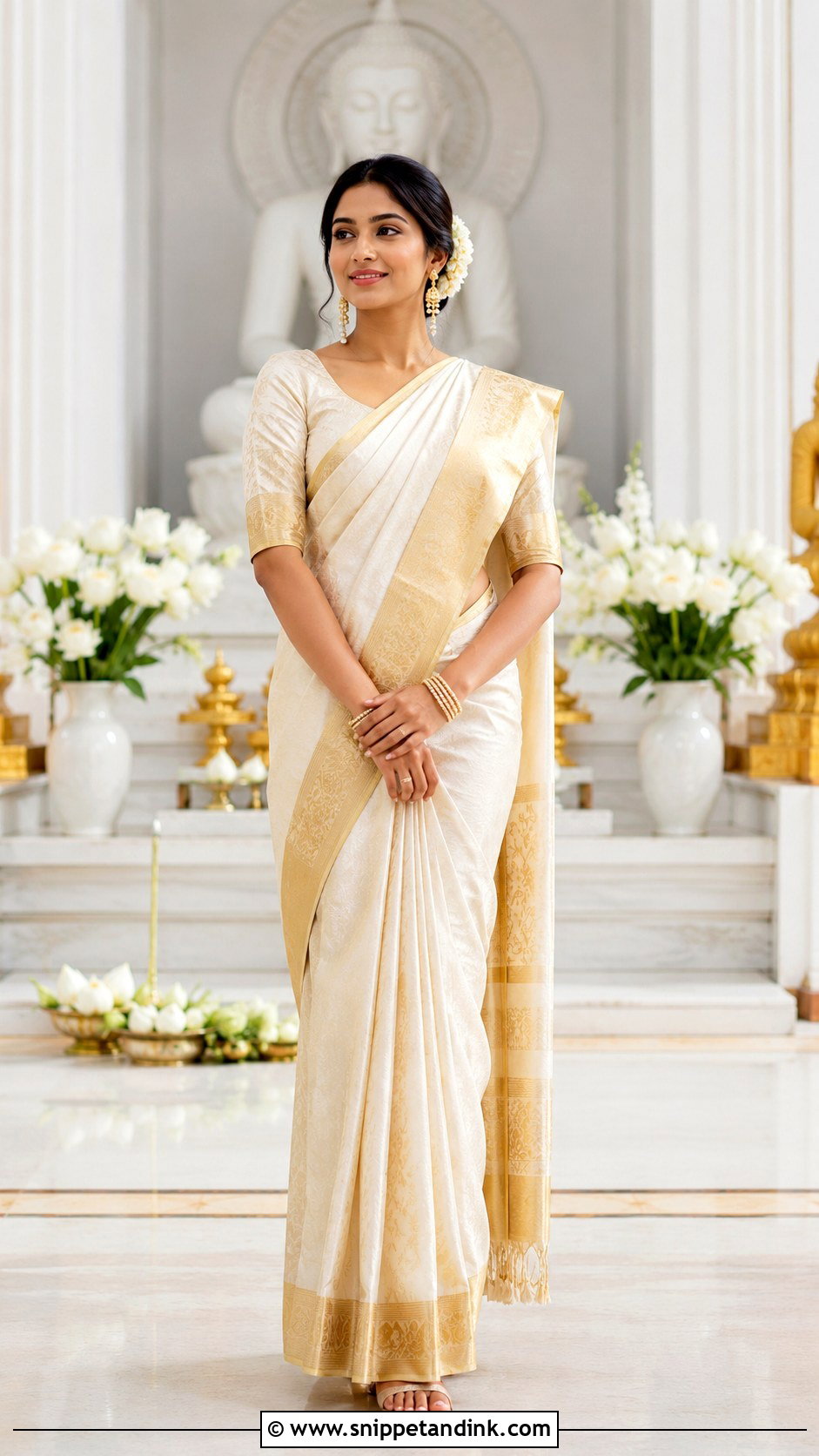
A sari adapts to almost any region and family custom, from red and gold to white or a soft pastel silk. For a Buddhist ceremony I’d pick a blouse with sleeves and a petticoat with enough width to sit cross-legged without strain, a problem with the narrow mermaid-cut petticoats that are popular now. A lighter embroidery suits a minimal ceremony; brocade or zari borders suit a formal one. Gold jewelry, bangles and elegant sandals complete it.
18. Buddhist Wedding Lehenga Dress
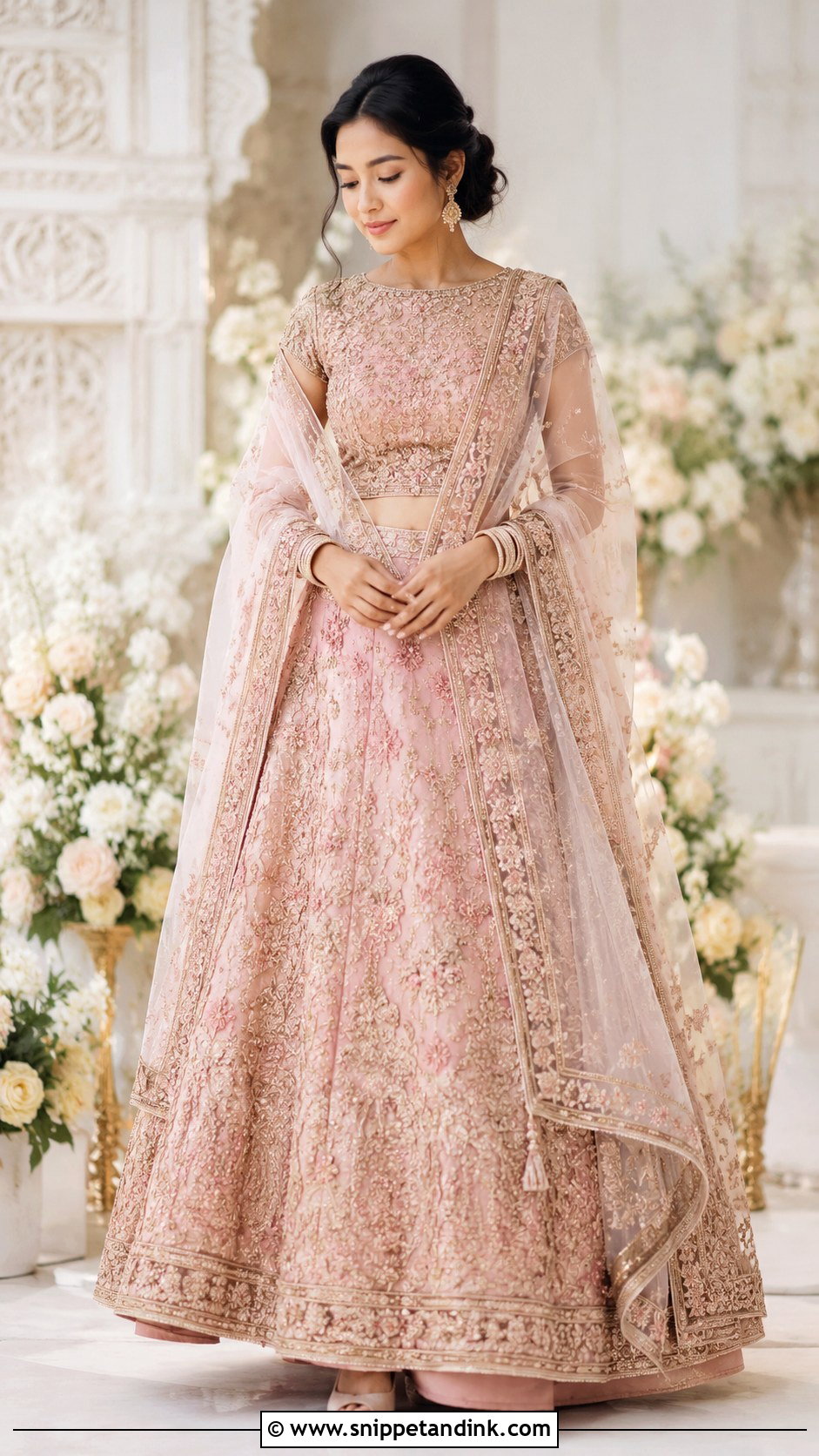
A lehenga gives you skirt volume, color and movement, with more structure than a sari. Choose a modest blouse, a long skirt and a dupatta that can cover your shoulders during the ceremony. Ivory, red, blush, champagne and gold are strong bridal options. Heavy embroidery adds real weight, sometimes several kilos in a full bridal lehenga, which is tiring when you sit on the floor and rise again repeatedly. For a ceremony with a lot of bowing, I’d steer you to lighter work. Comfortable heels, bangles and a neat hairstyle finish it.
19. Buddhist Wedding Anarkali Dress
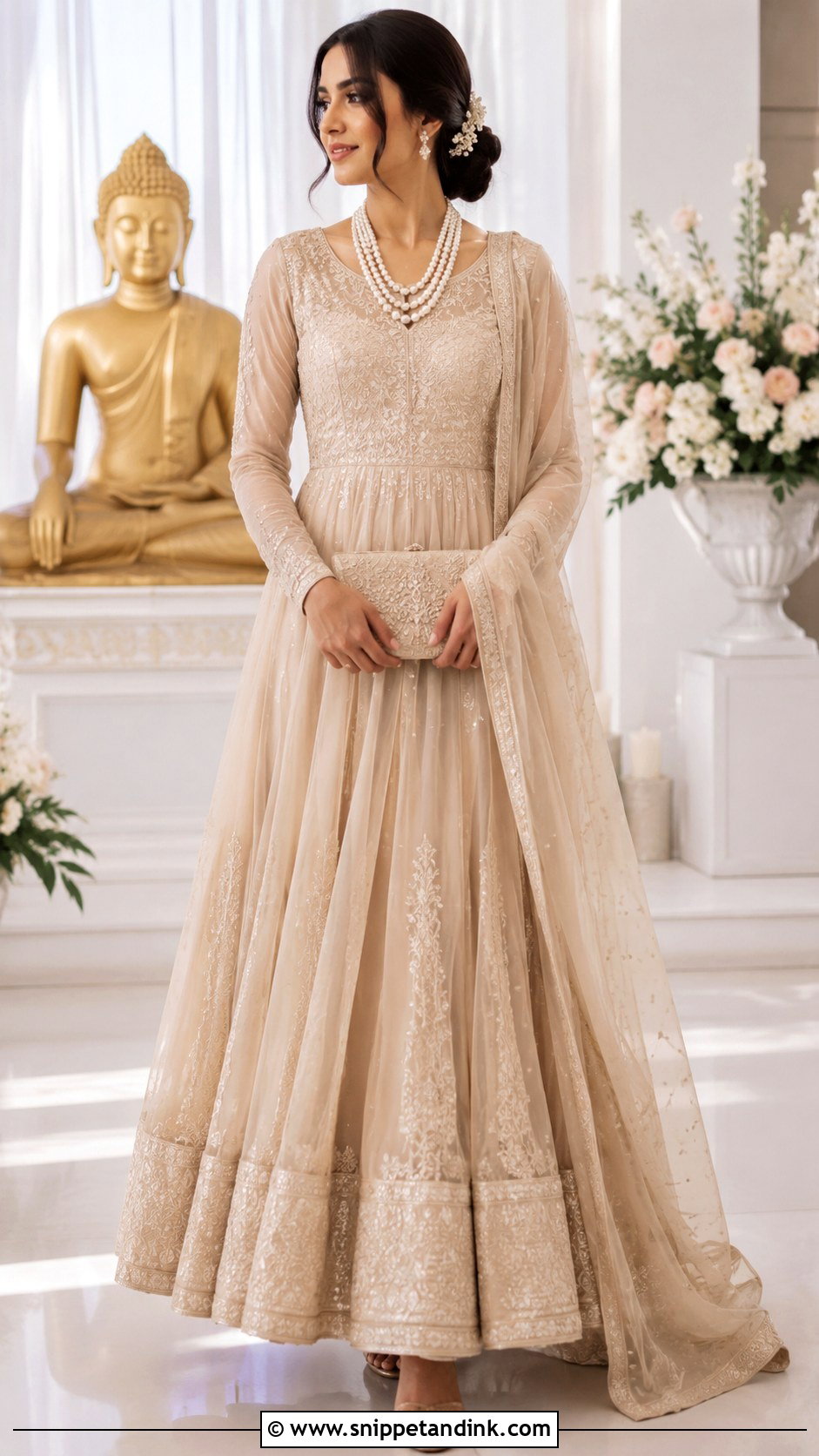
An anarkali gives you modest coverage and an easy line with no draping to manage, which is why I suggest it to brides nervous about a sari slipping. The fitted bodice and flowing skirt move naturally through a long ceremony. Ivory, blush, red, gold and soft sage all suit a temple or family blessing, with long sleeves, a higher neckline and a matching dupatta. Low heels, delicate earrings and a small embroidered clutch complete it.
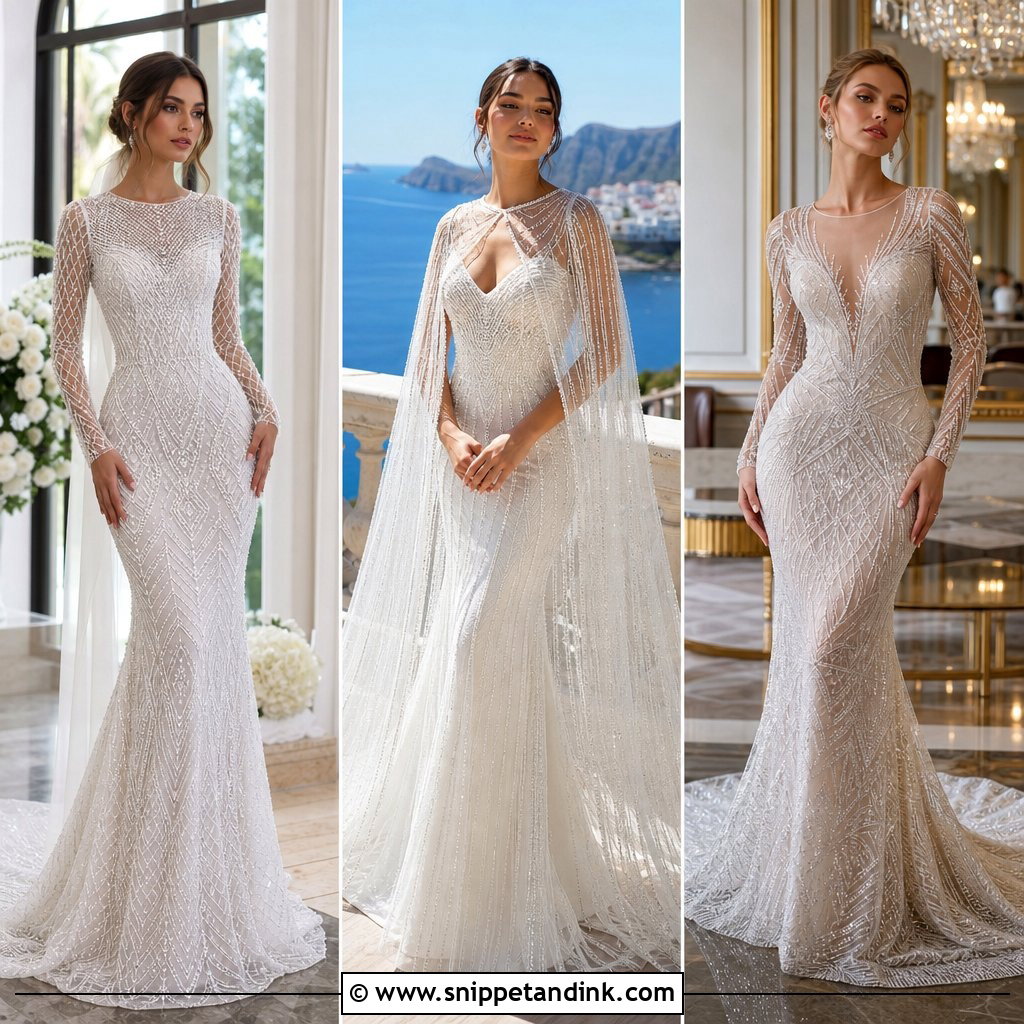
20. Modest Buddhist Wedding Dress
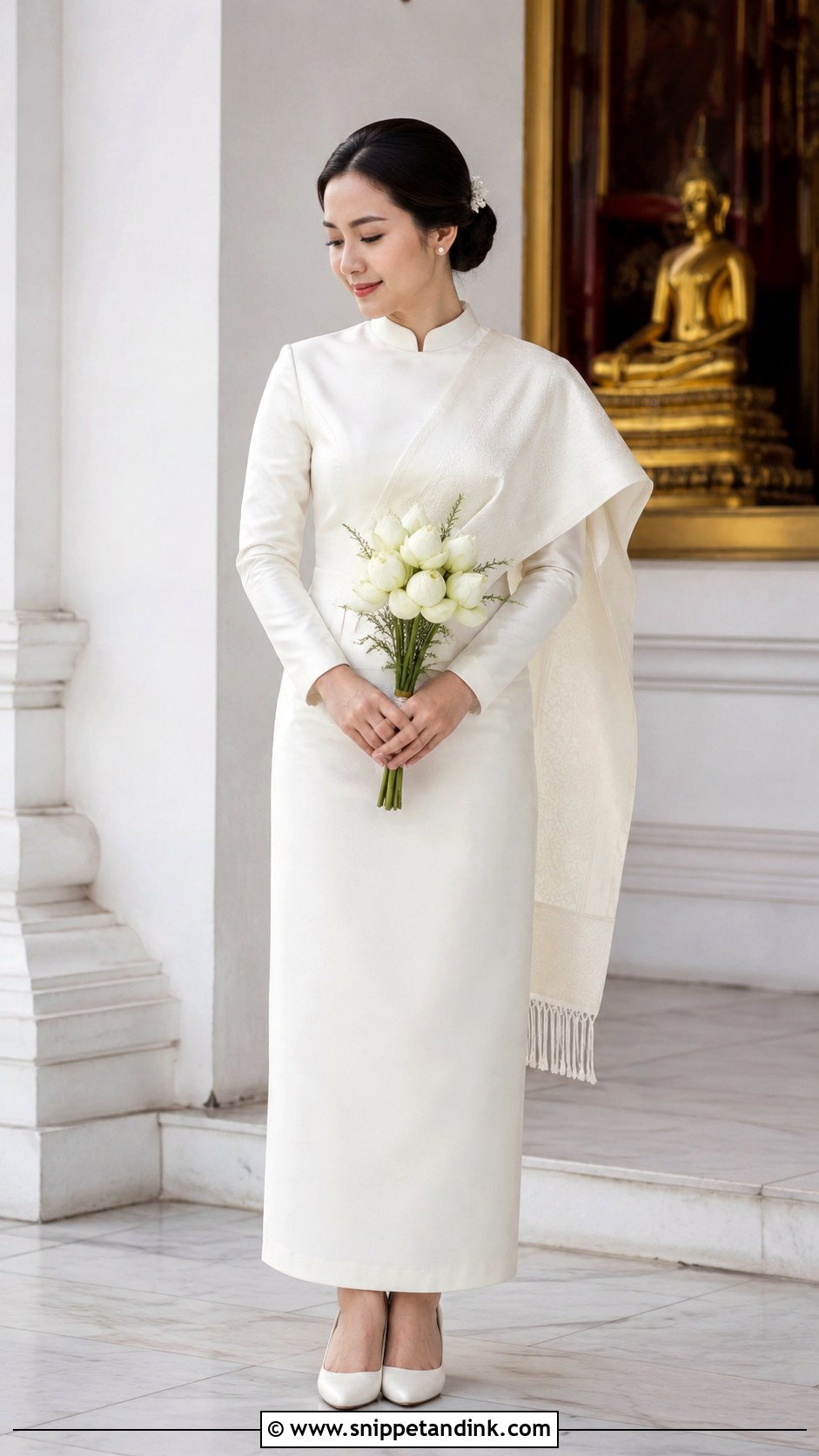
If coverage and comfort are your priorities, start with long sleeves, a higher neckline, a floor-length skirt and fabric that doesn’t cling. Ivory, white, champagne, blush and pale gold all create a peaceful look. I’d always add a silk shawl or embroidered wrap you can put on for prayers and remove for the reception, rather than designing every bit of coverage into the dress. Keep the shoes simple for long periods of standing, with pearl studs, small gold hoops or a pendant.
21. Simple Buddhist Wedding Dress
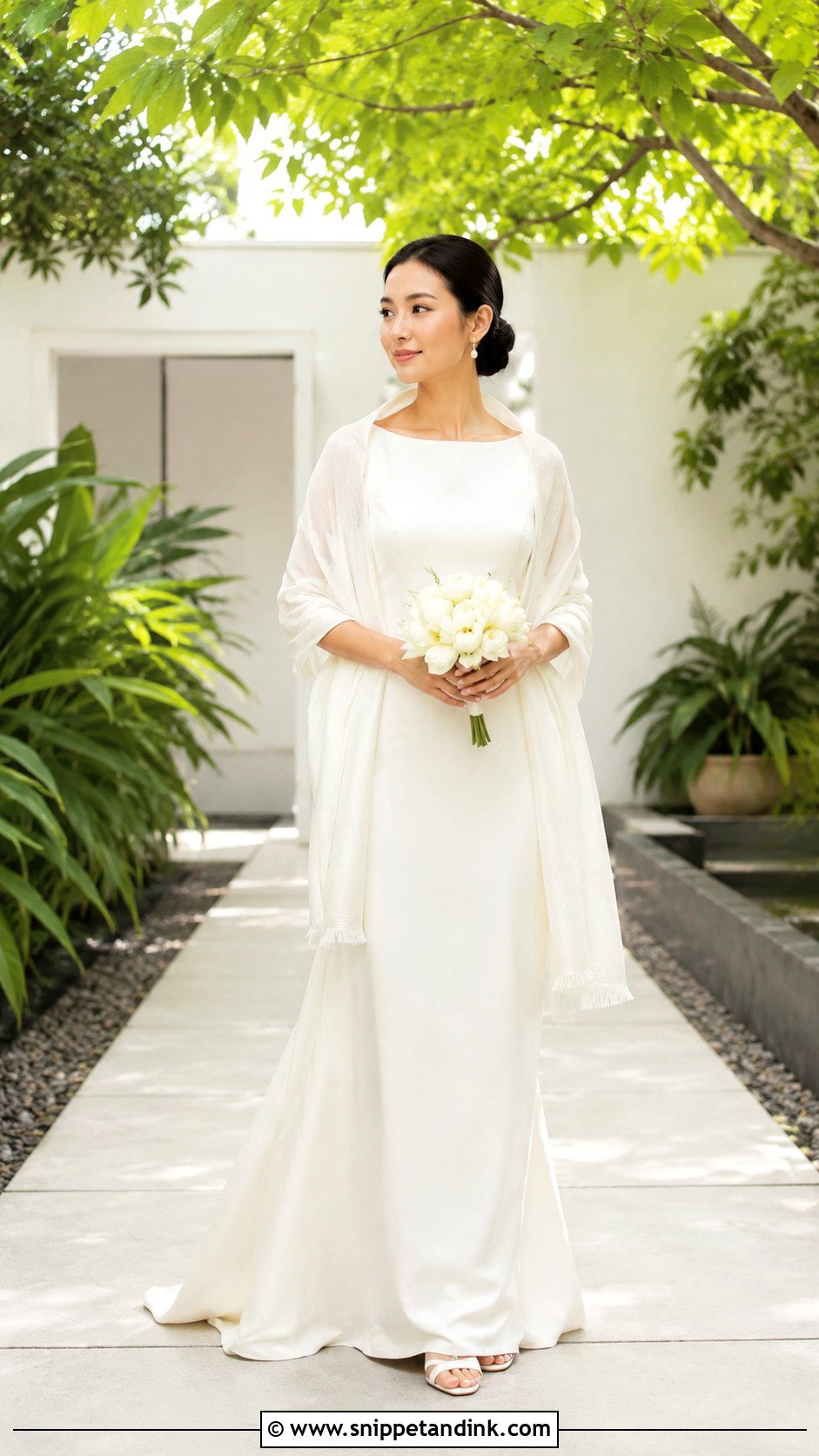
A simple outfit can be every bit as meaningful as an ornate one, and at a quiet temple blessing it often looks more at home. A clean A-line, a silk slip dress worn with a shawl, a minimalist long-sleeve dress or a refined column all work when the fit and fabric are good. Ivory crepe and matte satin look polished without feeling grand. I’d put the budget into tailoring here, because a plain dress shows every fit problem. Low heels, a small bouquet, pearl earrings and a low bun or soft waves finish it.
22. Saffron Buddhist Wedding Dress
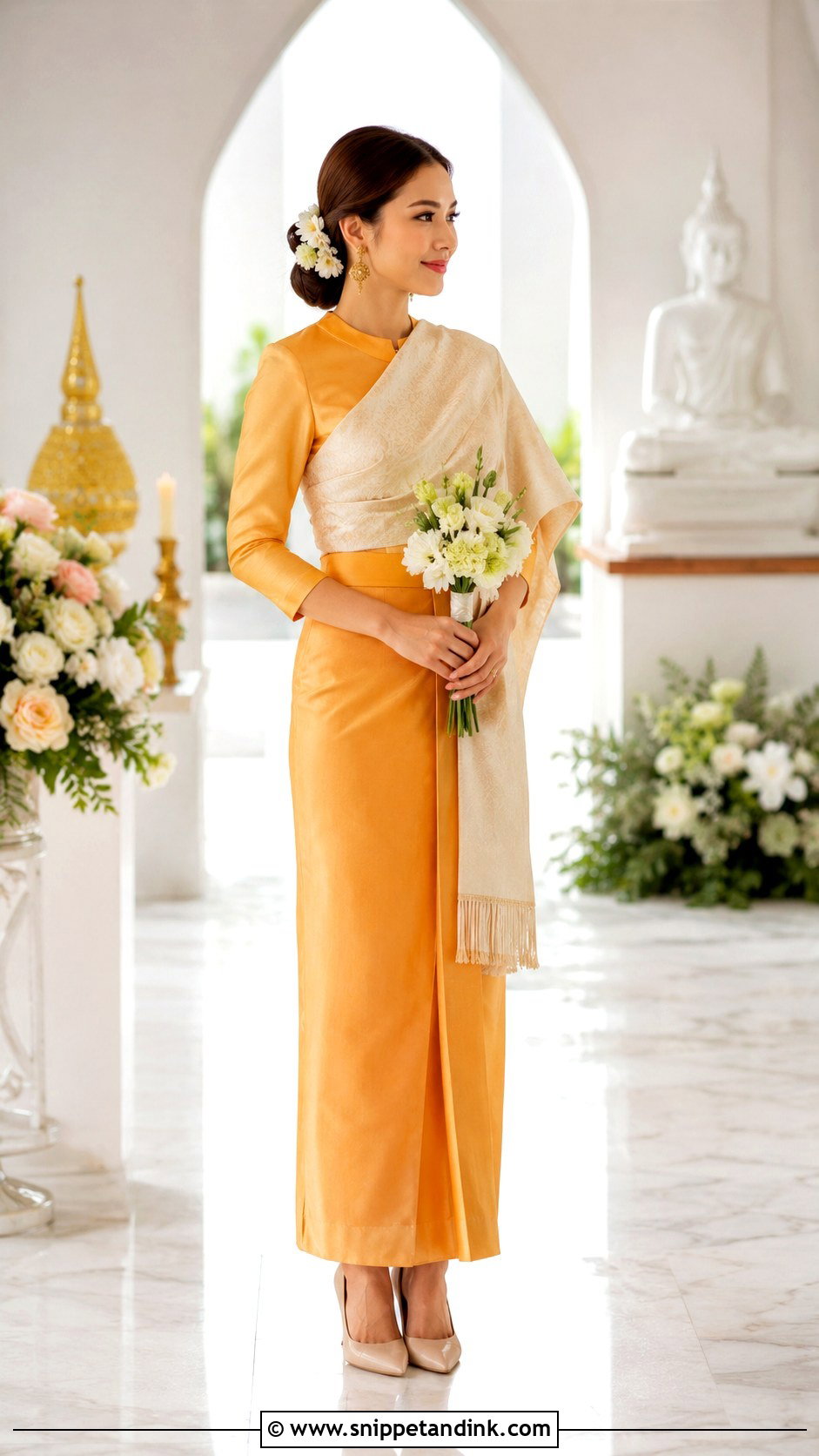
Saffron draws on the warm tones people associate with Buddhist robes and temples, so I treat it thoughtfully. In some communities the color is closely linked to monastic robes, and I’d ask your family or temple whether a bride wearing it would feel appropriate there. When it’s welcome, choose soft saffron, marigold or muted golden-orange over anything neon. A silk sari, Thai-inspired dress or modest two-piece set all work, with gold jewelry, neutral shoes and a cream shawl to soften it.
23. Blush Buddhist Wedding Dress
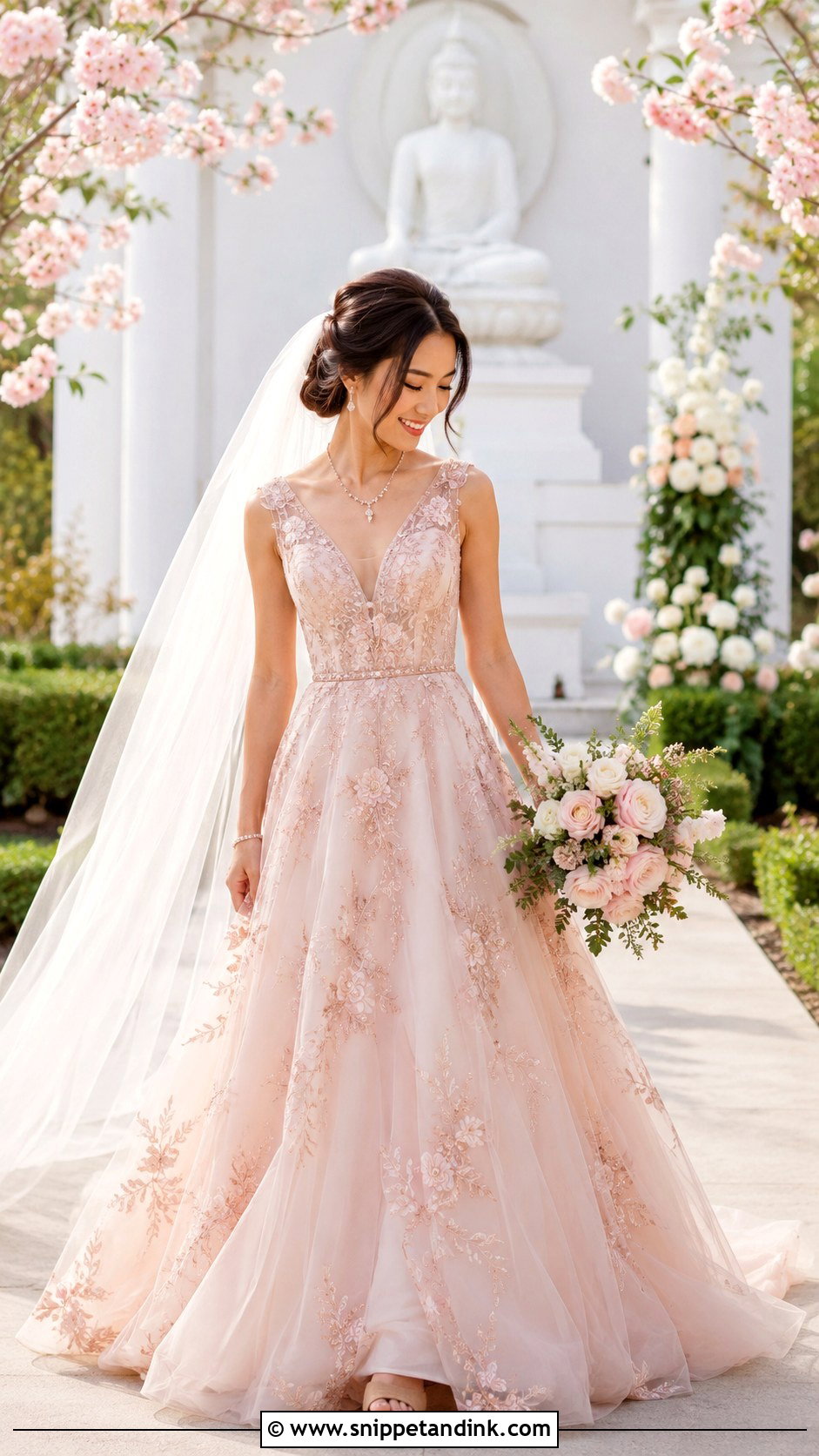
Blush is different from white while staying just as subtle, so it suits brides who want a little color without a statement. A full-length gown, an embroidered ao dai, a silk lehenga or a modest A-line in blush pink all work. Rose-gold jewelry, pearl accents and nude or champagne shoes keep it soft. Blush can wash out under fluorescent temple lighting, so I’d check the shade on you indoors before committing. A soft veil or shawl adds coverage and movement.
24. Champagne Buddhist Wedding Dress
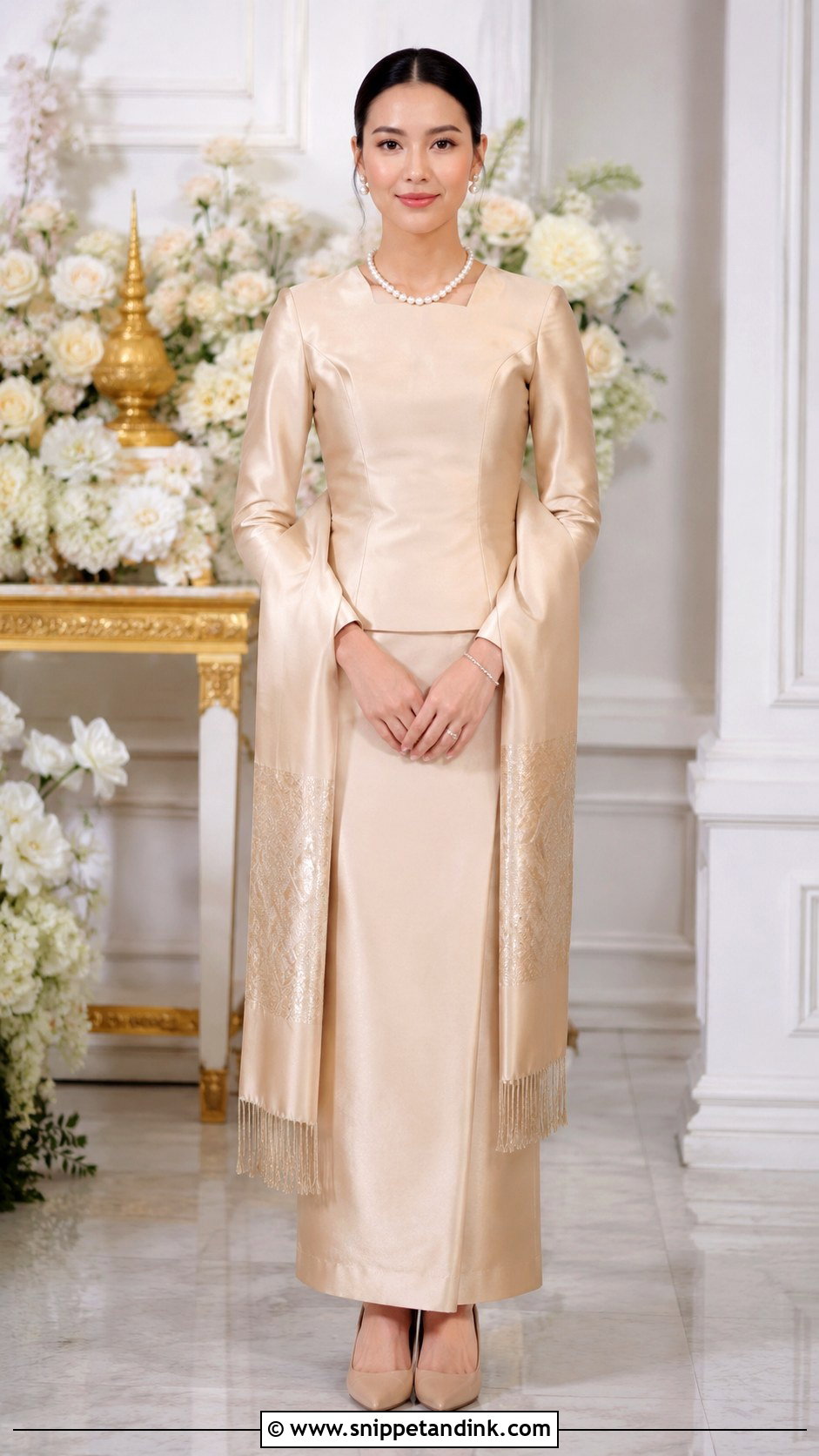
Champagne sits between ivory, gold and beige. It looks warm and sophisticated without the brightness of white. A satin gown, silk wrap dress, beaded anarkali or modest fitted dress with a flowing skirt all suit it. Champagne pairs well with pearls, gold accessories and nude heels. Avoid an overly tight silhouette: satin in particular shows strain lines when you sit, and you’ll do a lot of sitting at a blessing. Add a matching shawl for shoulder coverage during traditional rituals.
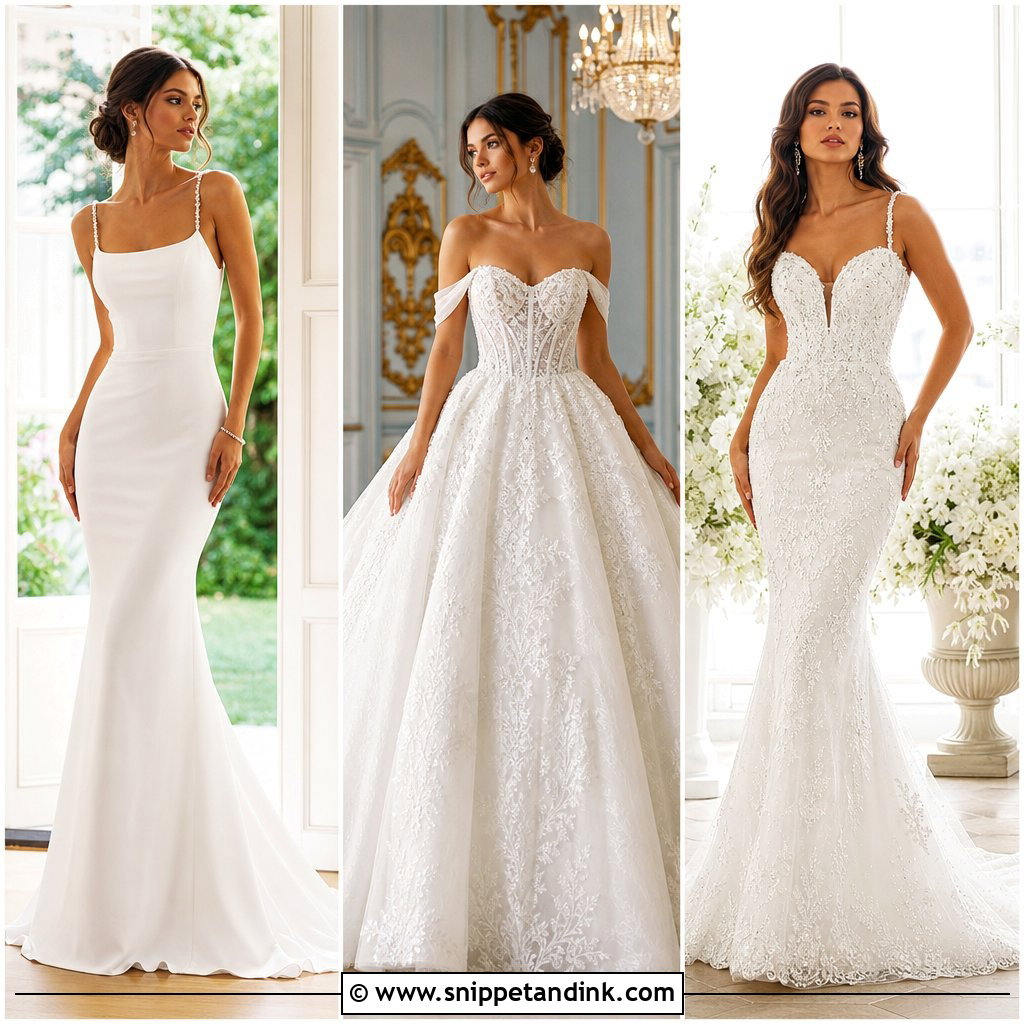
25. Two Piece Buddhist Wedding Dress
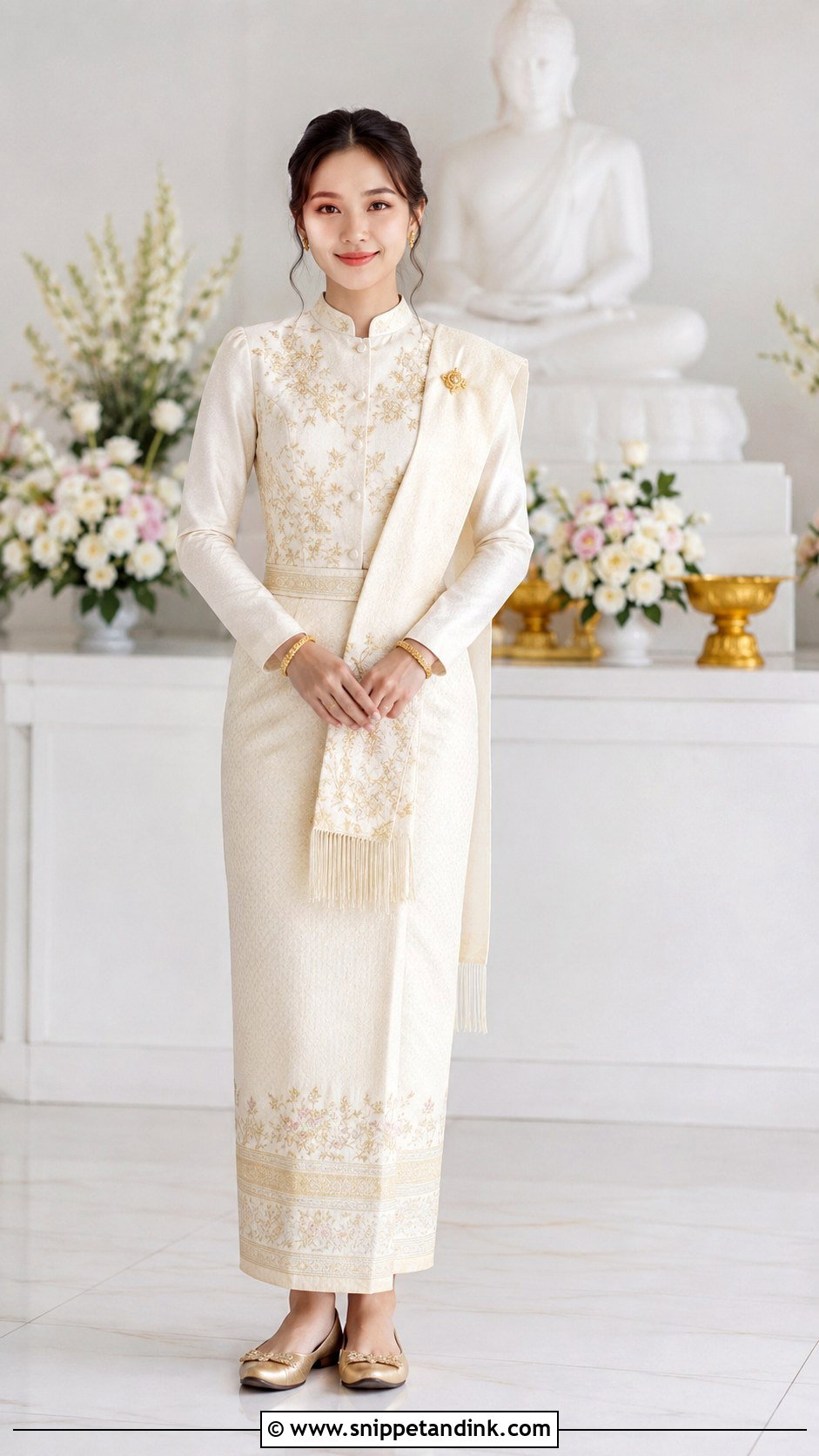
A two piece gives you flexibility. It can be a long skirt with a modest blouse, a silk wrap skirt with a fitted top, or an embroidered blouse with a high-waisted skirt and a draped shawl. The detail I watch is the midriff, since a gap that’s invisible standing can open when you bow, so I’d overlap the top and skirt by a couple of inches or add a sash. Ivory, gold, blush, red and soft pastels all work, and the pieces adapt easily to different cultures.
A Morning With the Monks and an Evening With Guests
Many Buddhist weddings start early with merit-making or a blessing from monks and end with a reception that evening. I plan these as two different dressing jobs. The morning outfit should be quiet, covered and easy to sit in, with jewelry kept modest. In Theravada traditions women don’t touch monks or hand items directly to them, so long sleeves that fall away from the hands are useful while offerings are passed.
The evening look can carry more shine, a bigger hairpiece and heels. Allow time between the two for a proper change, and pack these in a separate bag so nothing gets lost in the rush:
- Safety pins in the outfit colors and a small sewing kit for a pulled hem.
- Clean socks or footlets if you’ll walk barefoot across hot temple stone.
- A light cardigan or shawl for air-conditioned halls.
- Blotting papers and a lip color, since the morning makeup will have softened.
If you’re unsure what your temple expects, ask the abbot’s office or an older relative a few weeks ahead. Customs vary from country to country and temple to temple, and a quick question saves a last-minute scramble for a shawl.
Dress for the Bow, the Blessing and the Family Photo
No single color, silhouette or culture defines a Buddhist bridal outfit. The right one respects your ceremony and your family’s background and lets you stay calm and present through every ritual. From a white gown or red silk to Thai silk, an osariya, an ao dai, a kira or a plain modest dress, the same checks apply: can you bow in it, sit in it, take your shoes off and still feel put together, and does the coverage suit the temple? Get those right, and the color and embroidery become the easy part.
You'll Like These Ideas:










Leave a Reply