
Shopping for a plus-size wedding gown should be fun, and it gets a lot easier once you stop following body-shape rules and start judging construction. Extended-size collections now cover classic A-lines, structured ball gowns, sleek crepe, fitted mermaids and relaxed bohemian designs. What separates a gown that holds you from one that fights you is on the inside: flexible boning, a supportive bodice, a defined waist, good lining and a capable alterations team. I pick a silhouette by venue and by how a bride wants to move, never by what she’s been told to hide. Here are twenty, with the fitting point I watch on each.
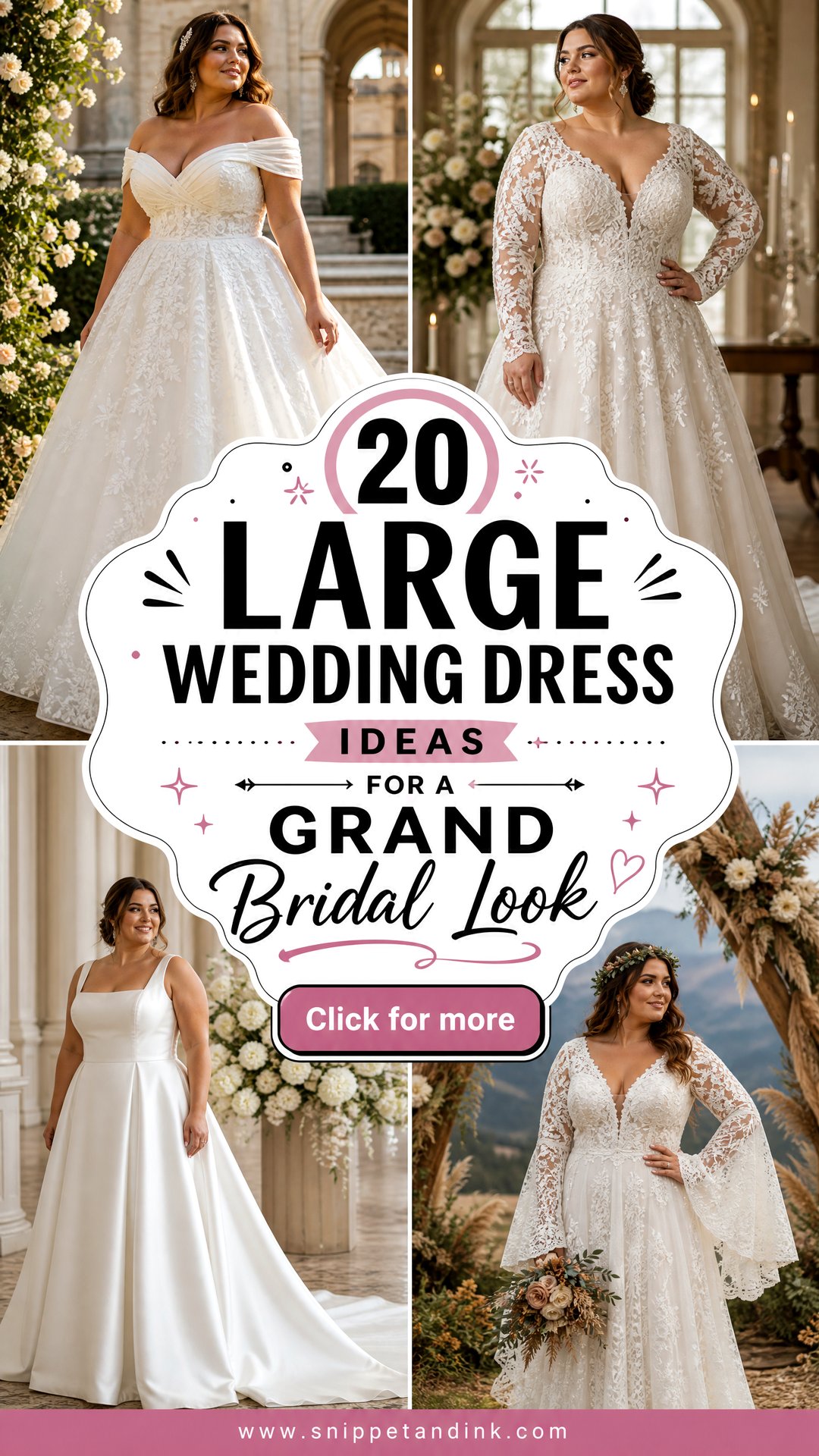
Ask Which Sample Sizes a Salon Carries First
Many bridal salons stock their try-on samples in a narrow band of sizes, often at the smaller end of the range, and a plus-size bride can end up holding a dress against herself while a consultant clips the back. That’s a poor way to judge a gown. When you call to book, ask:
- Which sample sizes do you carry, and how many of the gowns I like come in a size I can actually close?
- Do you have dedicated plus-size samples or a separate appointment for them?
- Can a gown be ordered in my size without a try-on, and what happens if it doesn’t work when it arrives?
Bring the bra you’d wear on the day, or a strapless or longline one if you’re unsure, plus any shapewear you’re considering. A sample one size too big is fine, since it can be pinned. One that’s too small tells you nothing about how the bodice will feel.
1. Plus Size A-Line Lace Wedding Dress
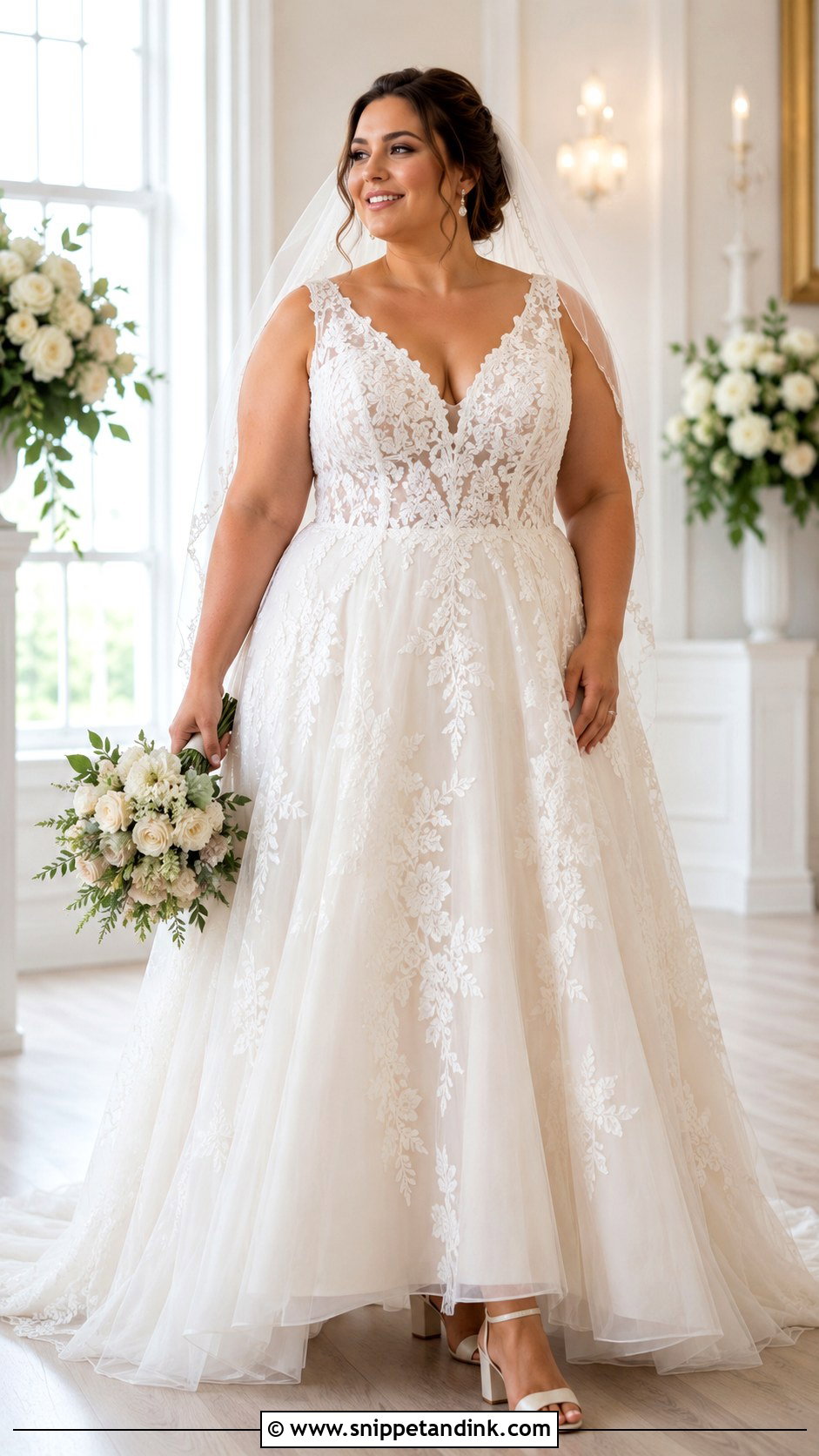
The lace A-line is the gown I pull first for a bride who doesn’t know where to start, because it shows the waist and then gets out of the way. Floral lace over a smooth lining gives texture without bulk, and a supportive V-neck or sweetheart bodice with wide straps covers comfortably. What I watch is where the skirt starts to widen. If it flares too high, the hip seam pulls every time you sit. Check waist, bust and straps sitting down as well as standing, and choose block heels that stay steady on a dance floor.
2. Plus Size Corset Ball Gown Wedding Dress
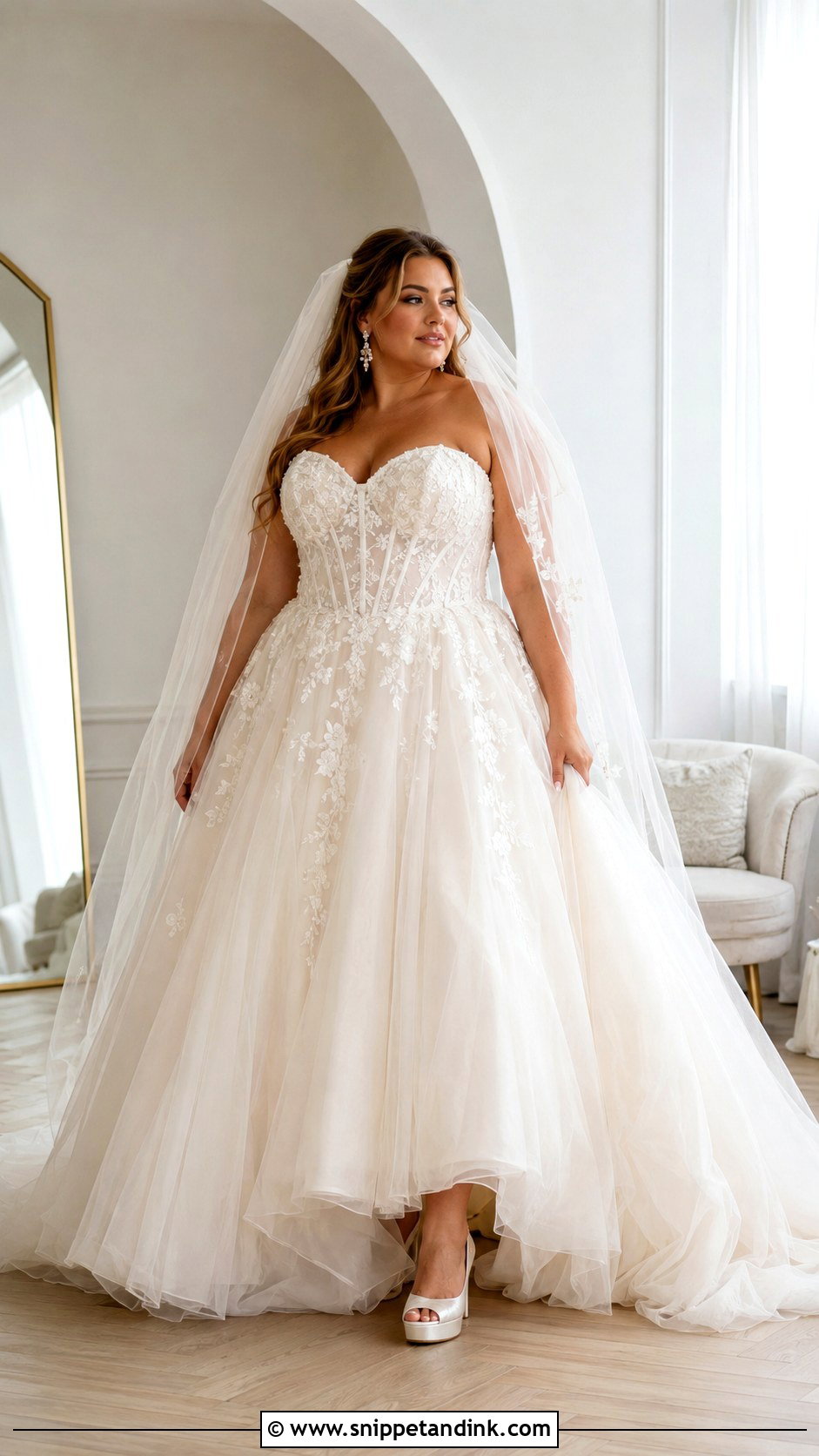
Don’t be put off by the word corset. On a fuller figure, a properly boned bodice is often the most comfortable thing to wear for twelve hours, because it spreads the gown’s weight around your torso instead of hanging it from your shoulders. Look for flexible boning, a supportive lining and a lace-up or carefully tailored back, with a scoop or sweetheart neck over a full tulle or satin skirt. Have the tailor adjust it while you stand, sit and reach up. Bones that fold or dig into the ribs are too long for your torso and need shortening.
3. Plus Size Off-the-Shoulder Wedding Dress
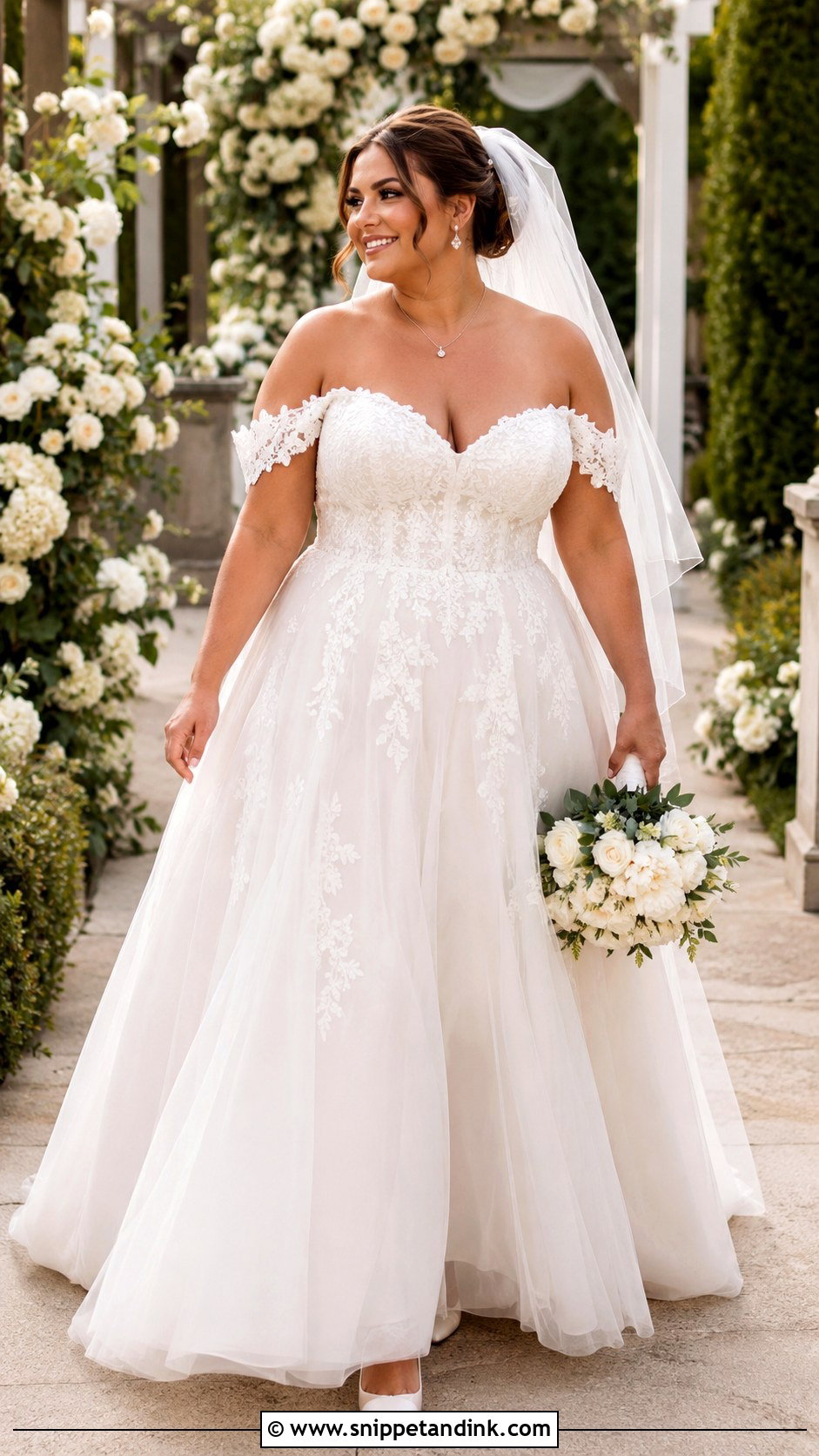
Off-the-shoulder sleeves frame the collarbone and soften a strong bodice, but on a heavier gown they can’t carry any load. The inner bodice has to be structured enough that you could cut the sleeves off and the dress would still stay up. An A-line or gently flared skirt keeps the proportions easy. Practice hugging someone in the sample. Sleeves sitting on the upper arm limit how high you can lift, and a tailor can lower them slightly to give you more reach.
4. Plus Size Long Sleeve Lace Wedding Dress
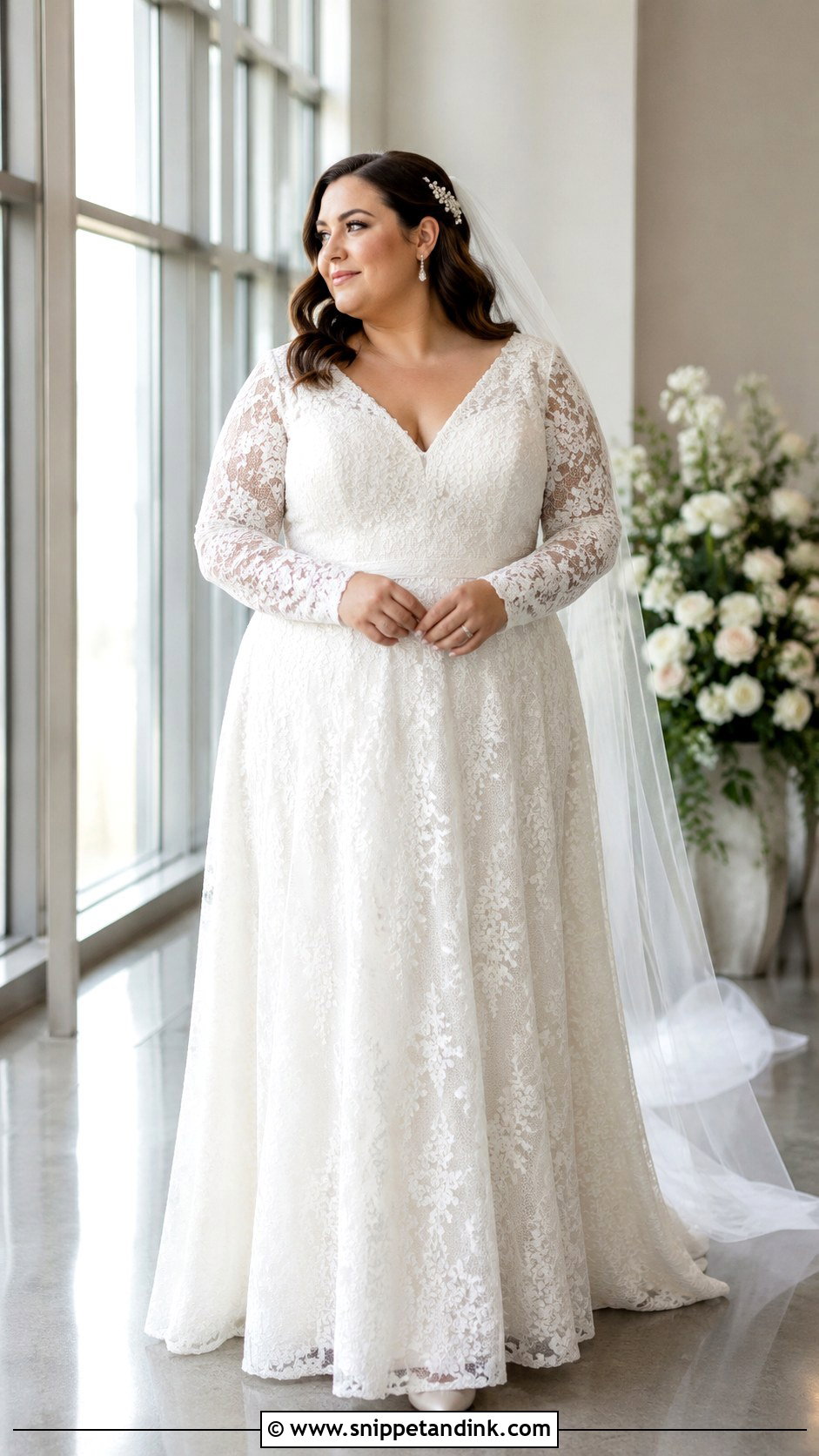
Long lace sleeves look romantic until you try to raise a glass in them. I prefer stretch lace, or appliqué on soft mesh, because rigid lace binds at the elbow and drags the shoulder seam forward. A lined bodice with a V, illusion or modest scoop neck does the supporting, over a flowing A-line skirt and a soft train. Keep the veil plain; lace on lace on lace gets busy quickly. At the fitting, bend your elbows and lift your arms so the tailor can adjust arm width, cuff and shoulder placement.
5. Plus Size Mermaid Wedding Dress
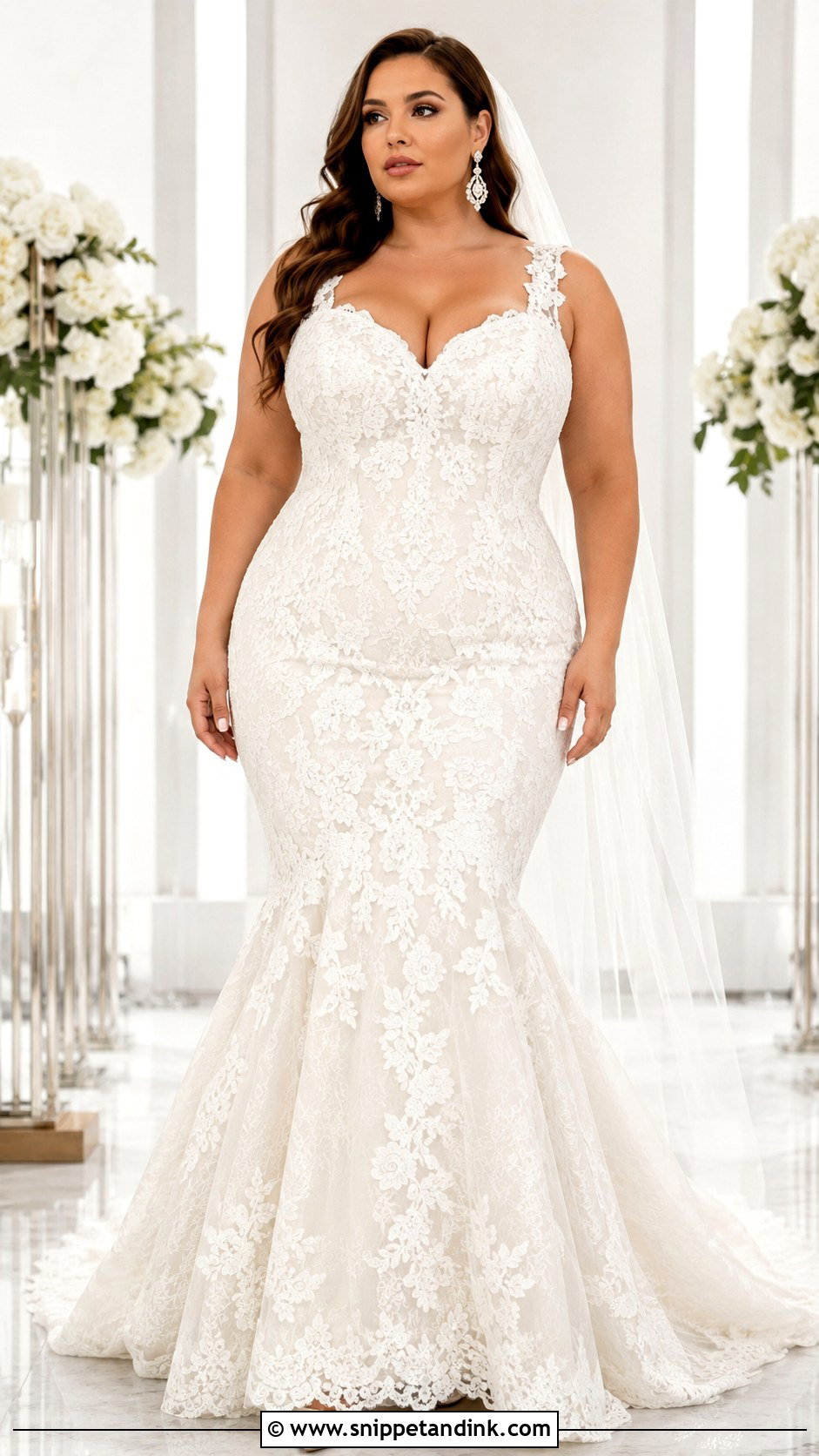
A mermaid shows curves from bust to knee, and that’s the whole point. The real test is where the flare begins. Set too high, it reads like a fit-and-flare; too low, and you’ll shuffle all night. I mark it while the bride takes full steps and sits down, then adjust from there. Stretch crepe, lined lace or supportive mikado hold the shape without trapping you, and a sweetheart neck with wide straps adds structure above. Keep accessories to earrings and a simple veil.
6. Plus Size Fit-and-Flare Wedding Dress
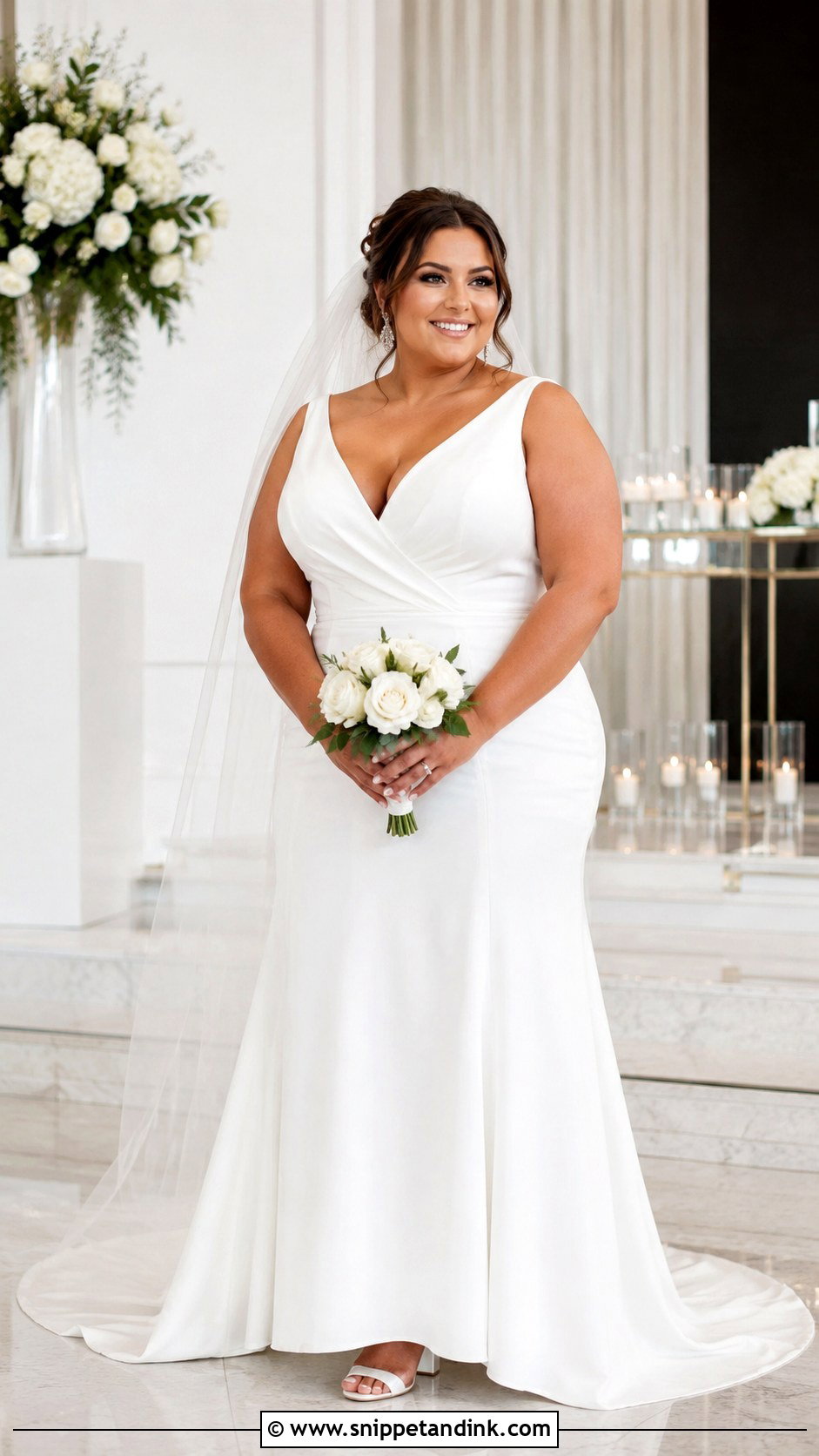
Fit-and-flare is the easier cousin of the mermaid. It releases around the lower thigh, so stairs and dancing are no problem. Choose a supportive bodice with a V, square or sweetheart neck; stretch crepe looks clean, lace softer. If you want a belt, match it to the dress, because a contrasting belt cuts the figure in two. Walk, sit and climb a few stairs at the fitting. The hips are where this shape usually pulls, and a good tailor smooths that while keeping the curve-hugging silhouette you chose it for.
7. Plus Size Empire Waist Chiffon Wedding Dress
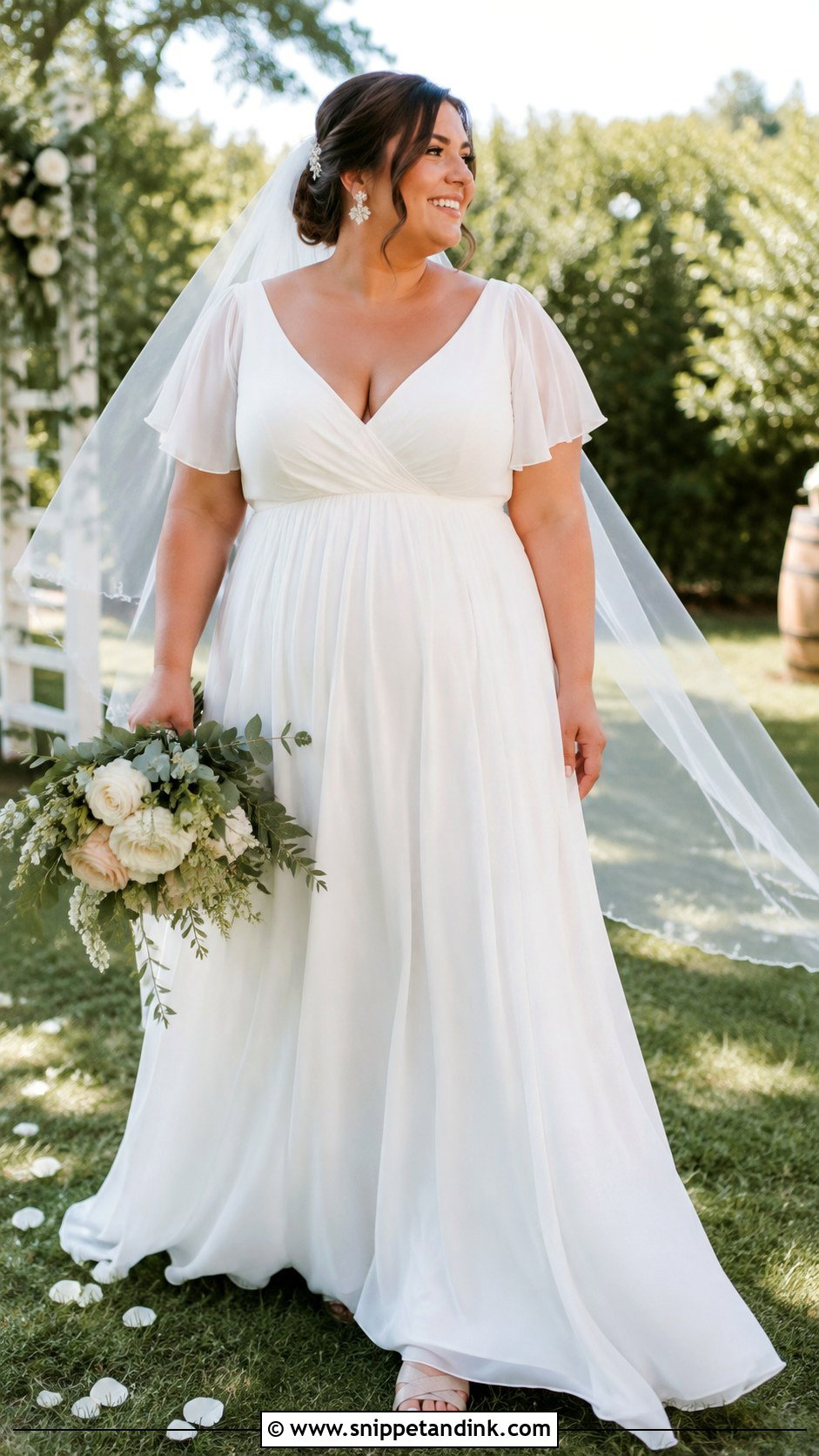
Chiffon with an empire waist is cool and light, which makes it easy to wear outdoors. The seam sits under the bust and the skirt falls over the midsection and hips. Two things decide whether it works on a fuller body: the gathers must lie flat instead of puffing out at the seam, and the lining must be opaque. Hold the skirt up to a bright window before you buy. Wide straps and a V-neck keep the bodice secure. Chiffon frays easily, so ask for the hem and seams to be checked closely during alterations.
8. Plus Size Basque Waist Wedding Dress
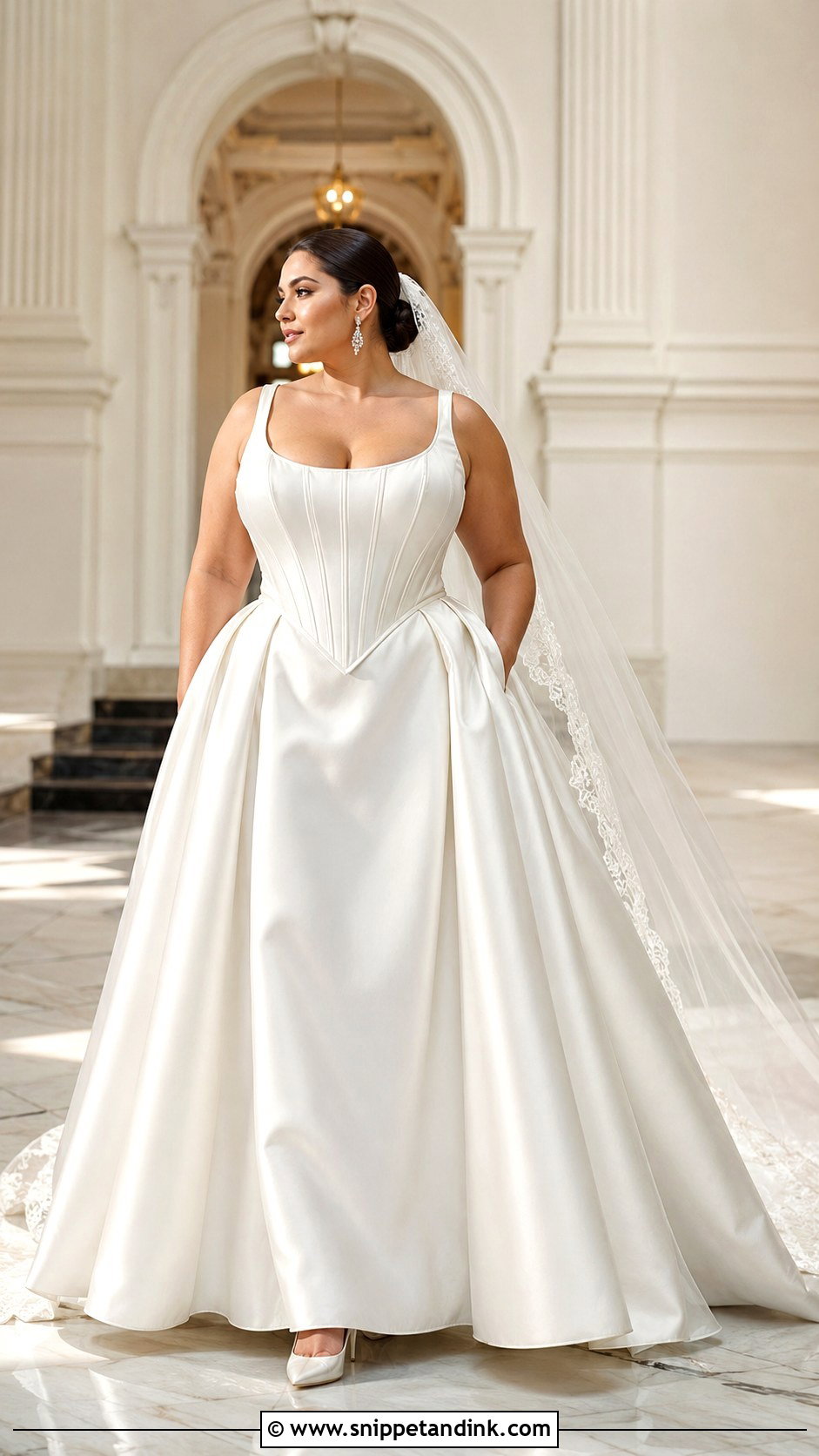
The dropped V of a Basque waist flatters most figures, provided it matches your torso length. On a shorter torso the point can hit the top of the thigh when you sit and curl upward, which is uncomfortable and very visible. Ask for correctly placed boning and have the tailor set the point while you’re seated, not standing. A full satin or tulle skirt shows off the shape. Choose the neckline by how much support you want, and let the waist do the talking.
9. Plus Size Square Neck Satin Wedding Dress
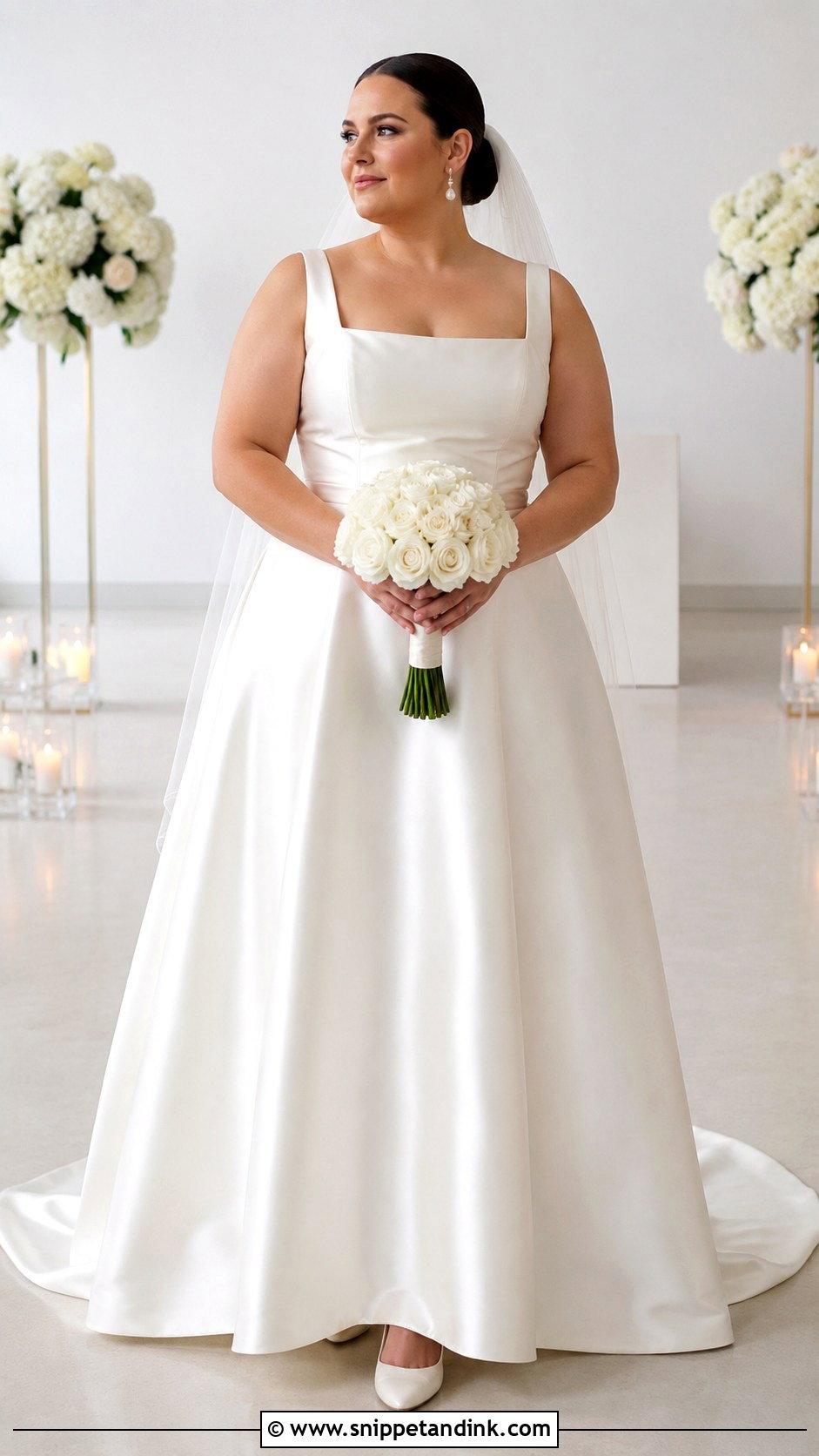
A square neck in matte satin or mikado is clean and modern and suits almost any venue. Wide straps frame it and leave room for proper internal support. My check here is simple: the top edge has to stay level. On a fuller bust, a square neck can bow outward at the center when the cups are too small, and that gap shows in every photo. Satin-covered buttons down the back add quiet detail. Fix the veil below the bun so it doesn’t pull the neckline backward.
10. Plus Size V-Neck Tulle Wedding Dress
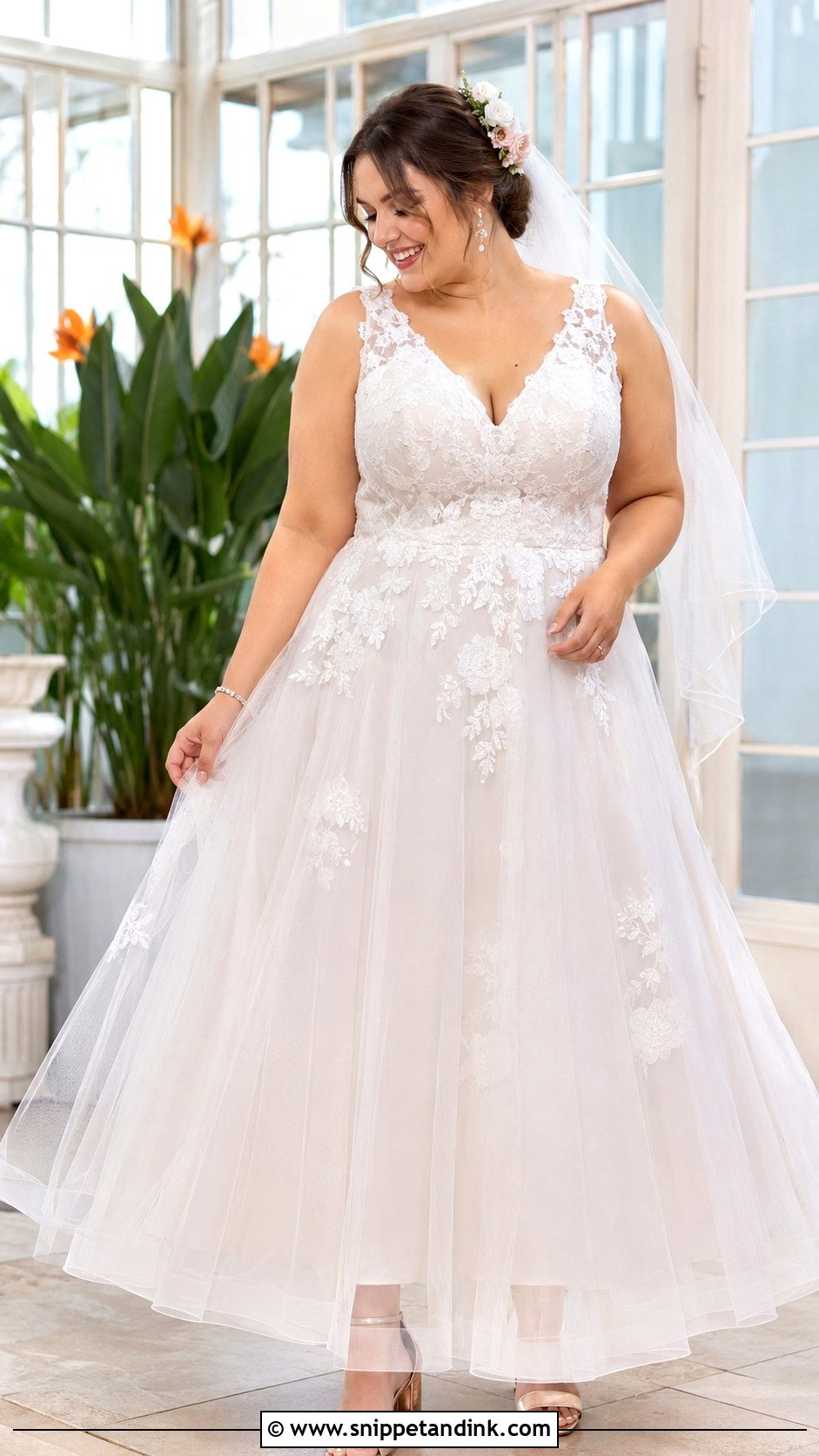
Tulle is the lightest way to get a full skirt, so this gives the ball-gown feeling without the ball-gown weight. A lined bodice with wide straps, supportive cups and carefully placed lace keeps the V secure, and a touch of shimmer in the tulle catches candlelight. Lean forward and sit in the sample. If the V opens, the tailor can shorten the straps or add a discreet strip of illusion mesh without changing the line. One warning: tulle snags on rough shoe buckles and stone floors, so pick smooth shoes.
11. Plus Size Sweetheart Lace Wedding Dress
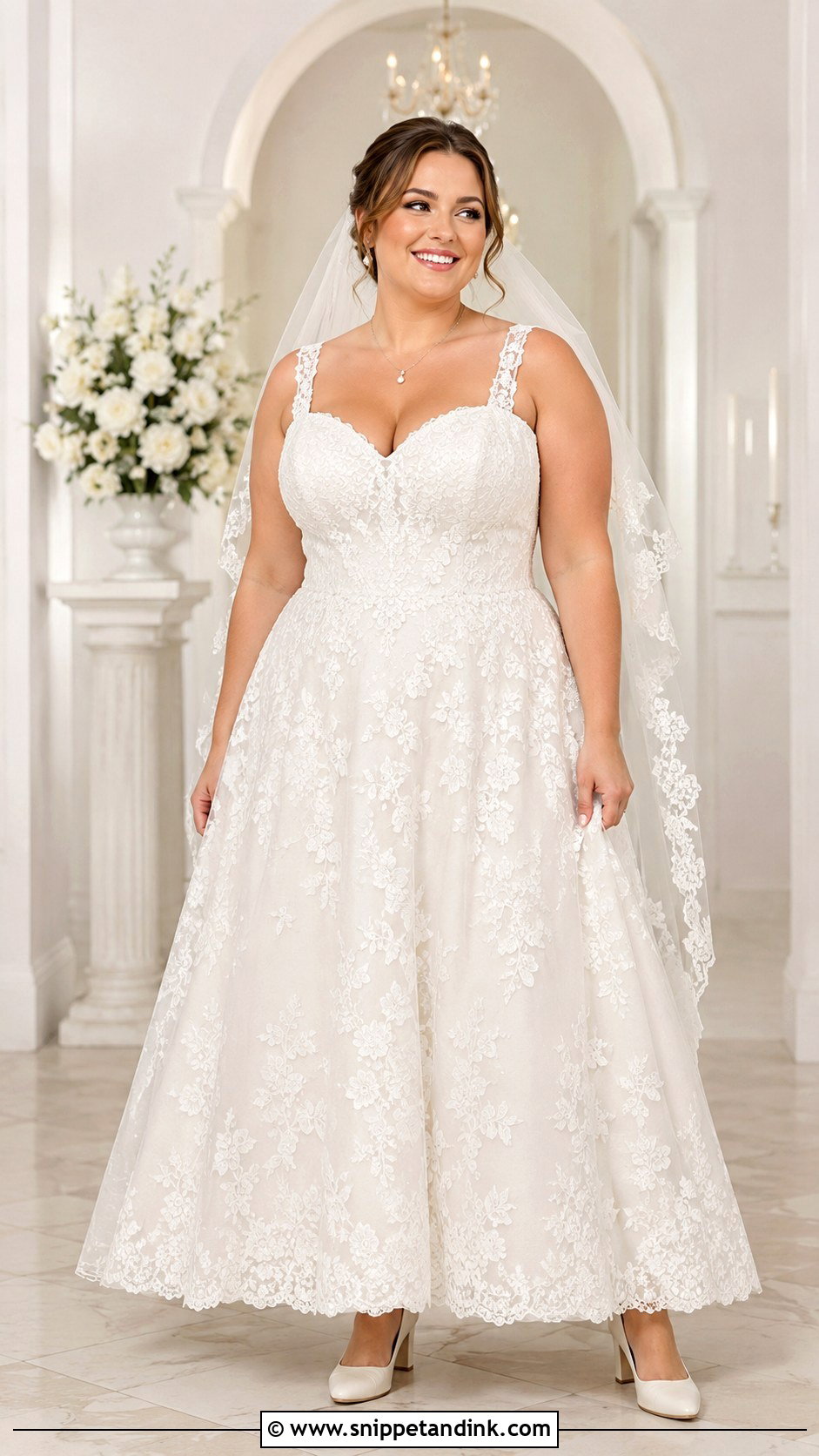
On a plus-size sweetheart gown, the dependability comes from what’s under the lace: boning, molded cups and quality lining. Many sweetheart samples are strapless, and straps can usually be added in alterations if you’d feel steadier with them. If you wear a necklace, keep it to a fine pendant that follows the curve instead of covering it. Then check the neckline from the side. A good fit lies flat, with no gaping or rolling at the bust.
12. Plus Size Strapless Mikado Wedding Dress
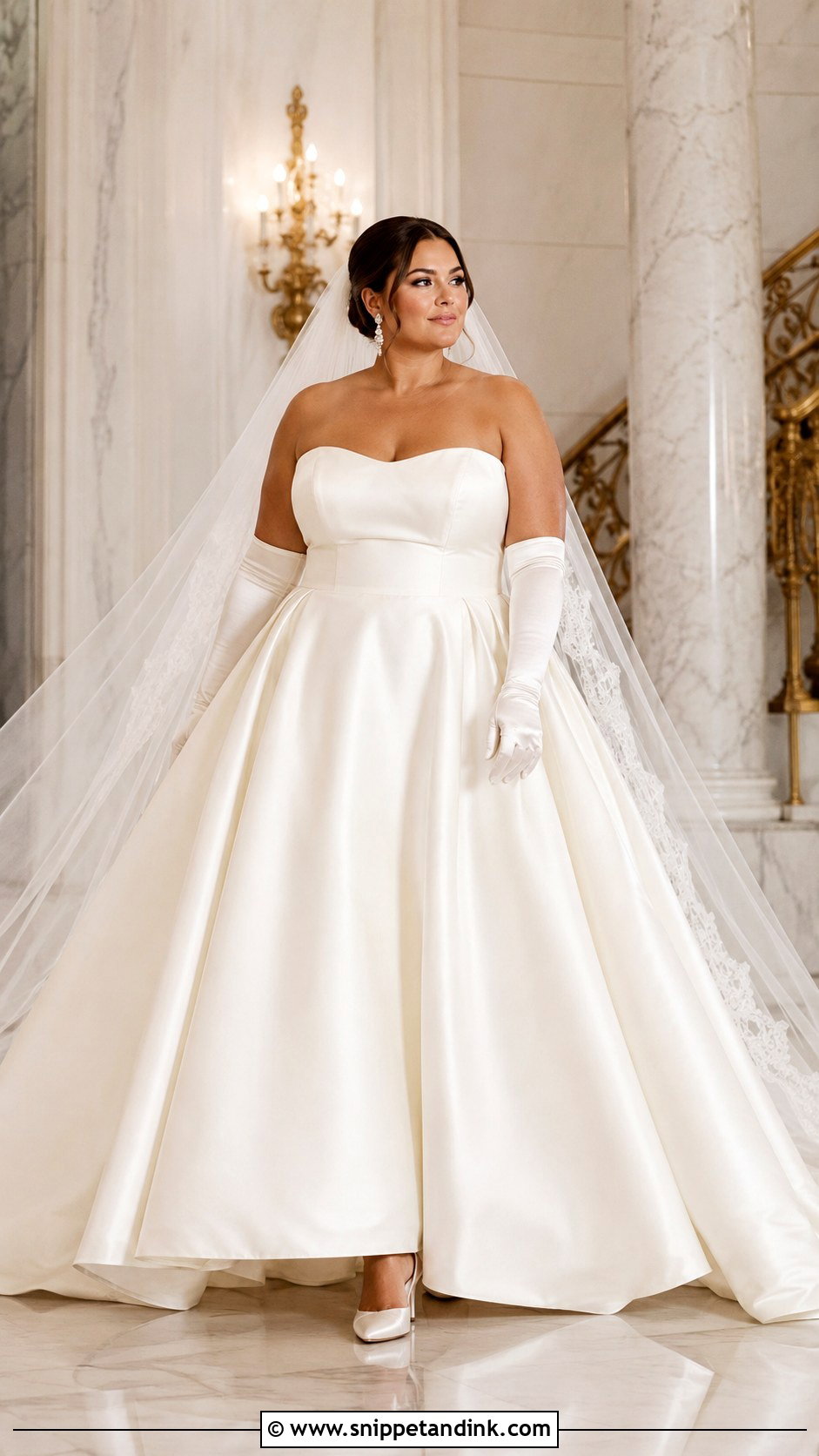
Mikado is a stiff, structured fabric, and it holds a strapless shape far better than soft satin does. Look for flexible boning, supportive cups, a secure waist stay and a back that closes without visible strain at the zip. An A-line or ball skirt balances the fitted top. During fittings, walk, sit, dance a little and raise your arms. If you catch yourself pulling the top up, the support needs work at the waist stay, not more tightness at the bust.
13. Plus Size Cap Sleeve Wedding Dress
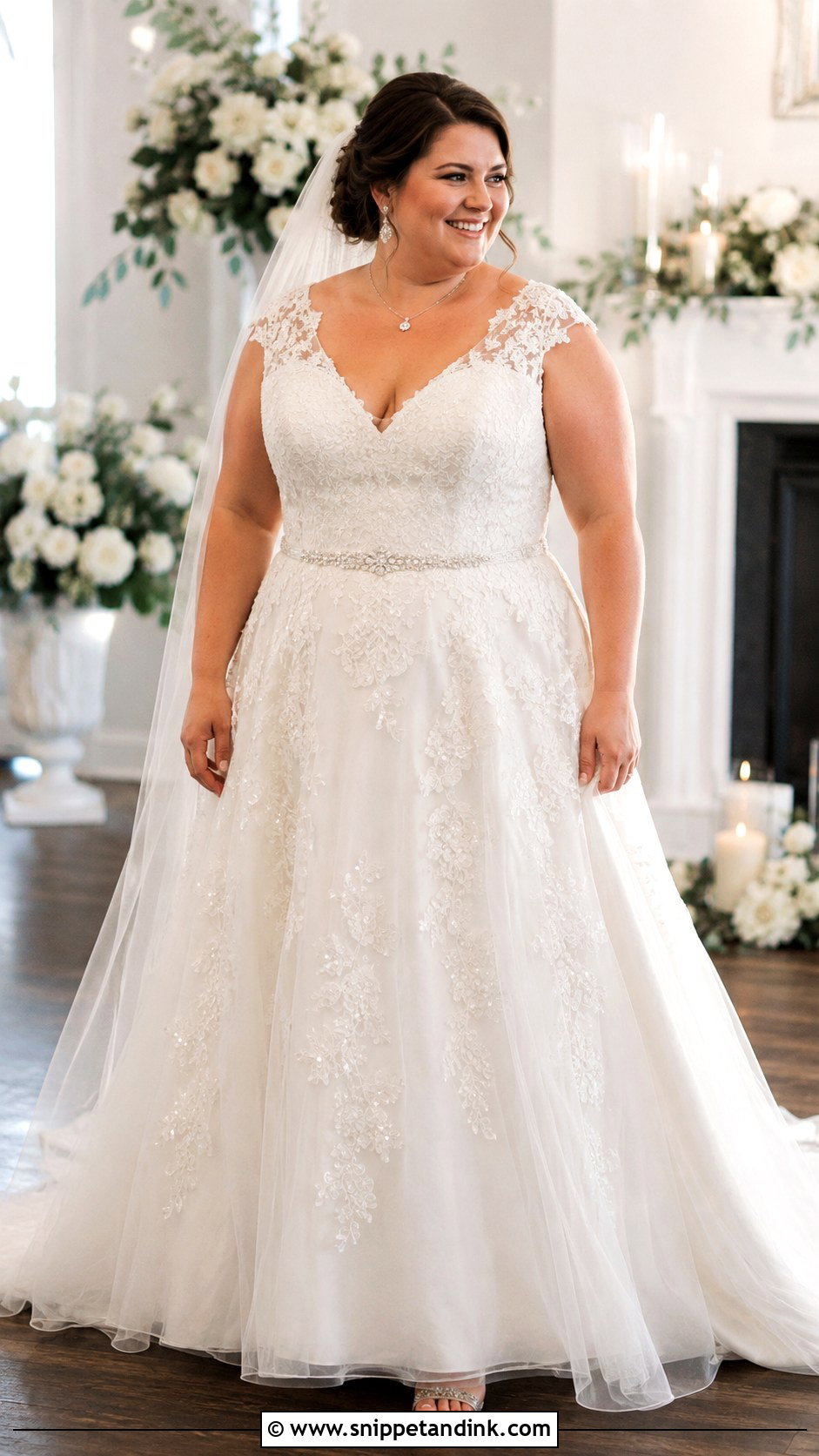
Cap sleeves sit right on top of the arm, the hardest spot to fit, where even a small difference between left and right shoulder shows. I almost always adjust each side separately. Choose lace, beaded tulle or smooth fabric that lies flat and doesn’t cut into the arm. A V-neck bodice and flowing A-line suit most settings, and subtle waist ruching or a narrow beaded band adds definition. Roll your shoulders forward and back at the fitting to feel for pulling.
14. Plus Size Boho Bell Sleeve Wedding Dress
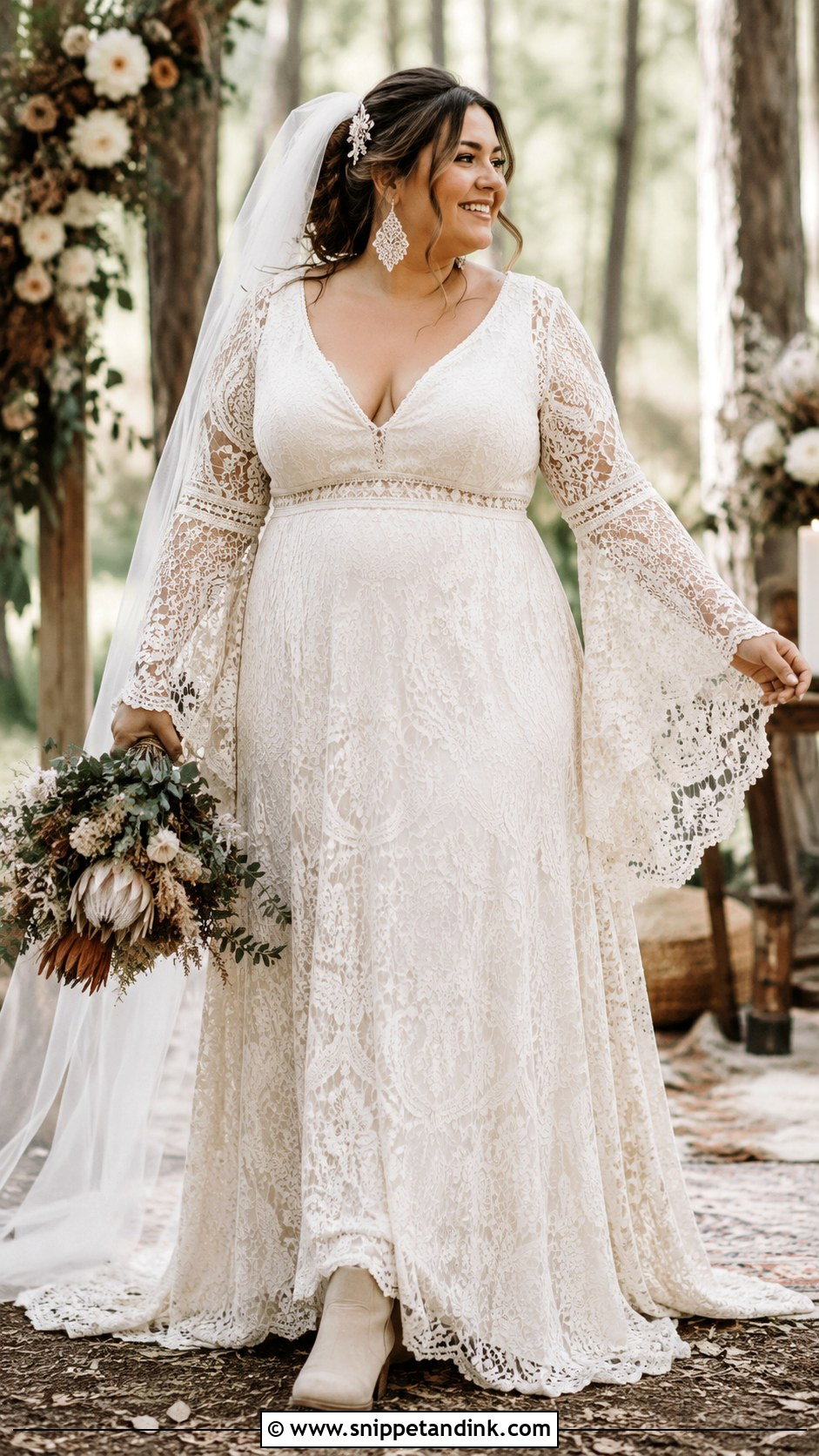
A boho gown with bell sleeves belongs in a garden, a wood or a barn. Choose lace with some give through the shoulders and elbows, a lined V-neck bodice and a flowing skirt. The sleeves should widen below the elbow but stop before they trail into your dinner; I hem them so the opening ends around the wrist bone. Low-heeled ankle boots and a sheer cape keep it natural without tipping into costume. Practice lifting the skirt and carrying your bouquet at the fitting.



15. Plus Size Tea-Length Wedding Dress
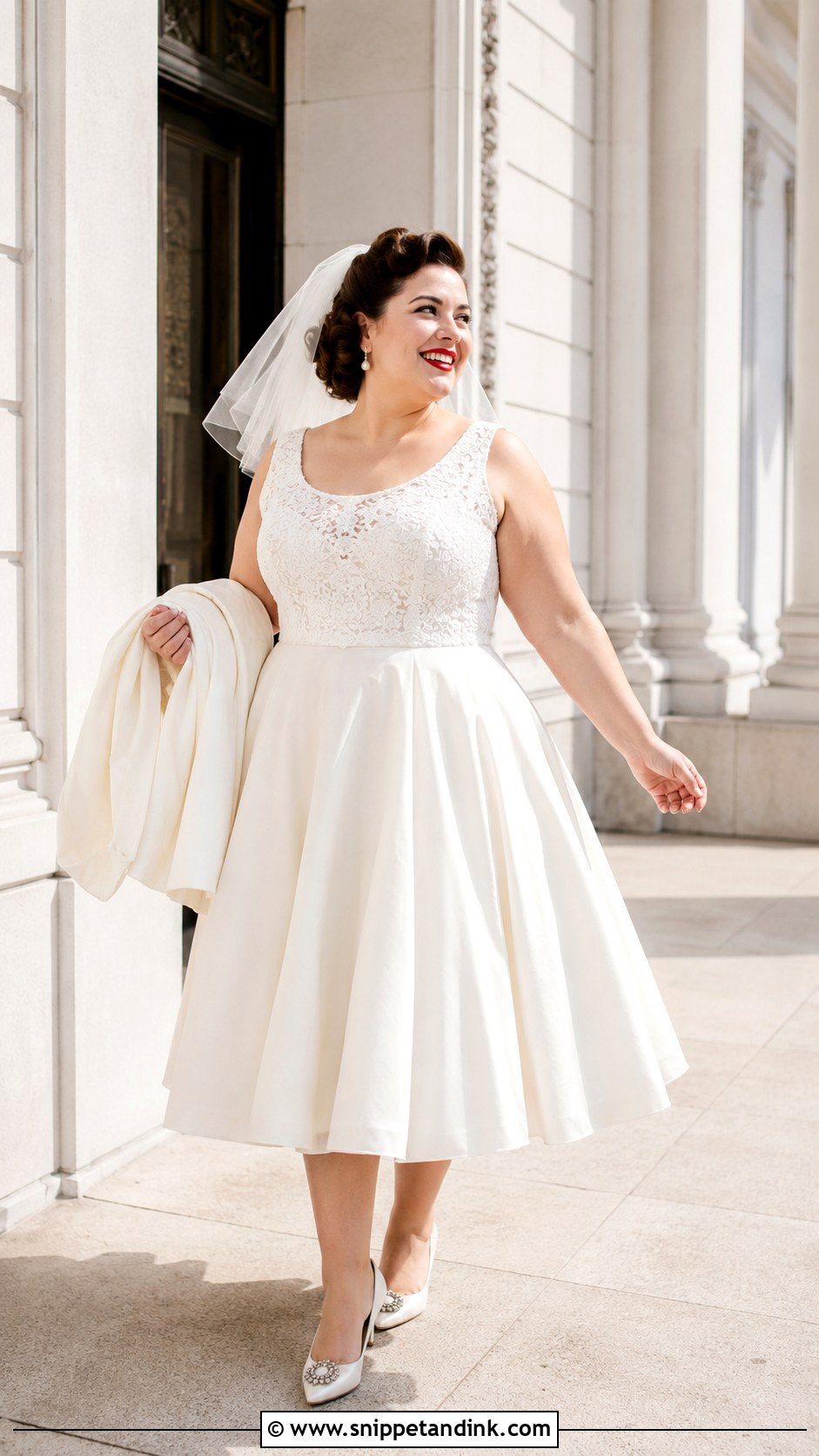
Tea length lands between knee and ankle, so the shoes become part of the dress. That makes it a smart pick for a courthouse ceremony, a relaxed venue or a reception change. Choose a structured bodice with a scoop, V or sweetheart neck and a gently flared skirt; lace reads vintage, satin cleaner. The hem point matters more here than on a floor-length gown. I set it with the bride in her actual shoes, usually where the calf starts to narrow, which gives most legs the neatest line. A birdcage veil and a cropped jacket for cold weather finish it.
16. Plus Size Minimalist Crepe Wedding Dress
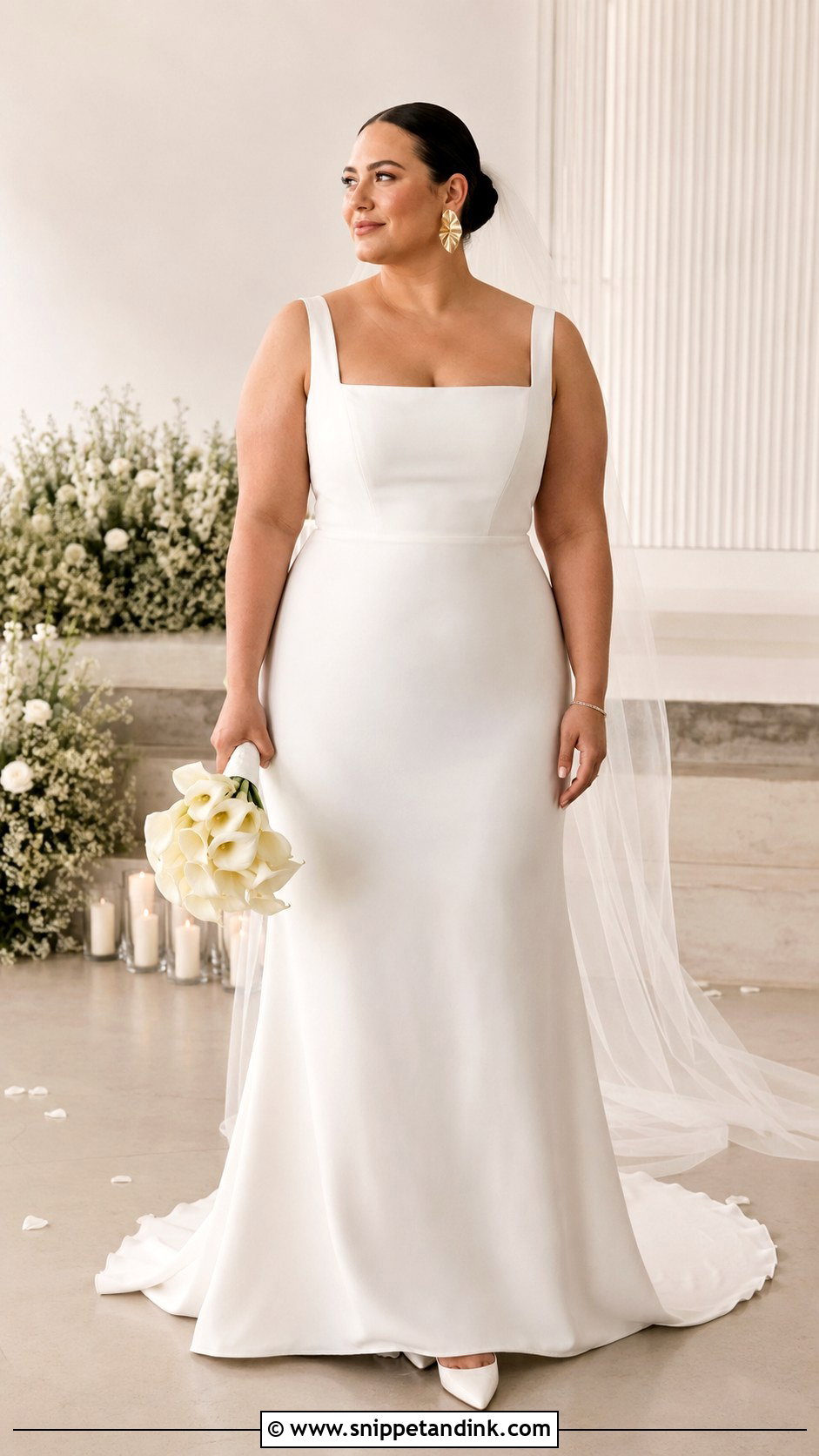
Crepe has nothing to hide behind, so I treat a minimalist gown as a tailoring project. Look for a structured lining, a carefully fitted waist and enough stretch to sit and move. A square, bateau or V-neck bodice can go with long sleeves, wide straps or none, over a column or softly flared skirt. Test it in daylight and indoor light, and settle undergarments early, because a smooth slip or a light shaping layer keeps lines invisible. The finished gown should skim the waist and hips, never cling.
17. Plus Size Floral Appliqué Wedding Dress
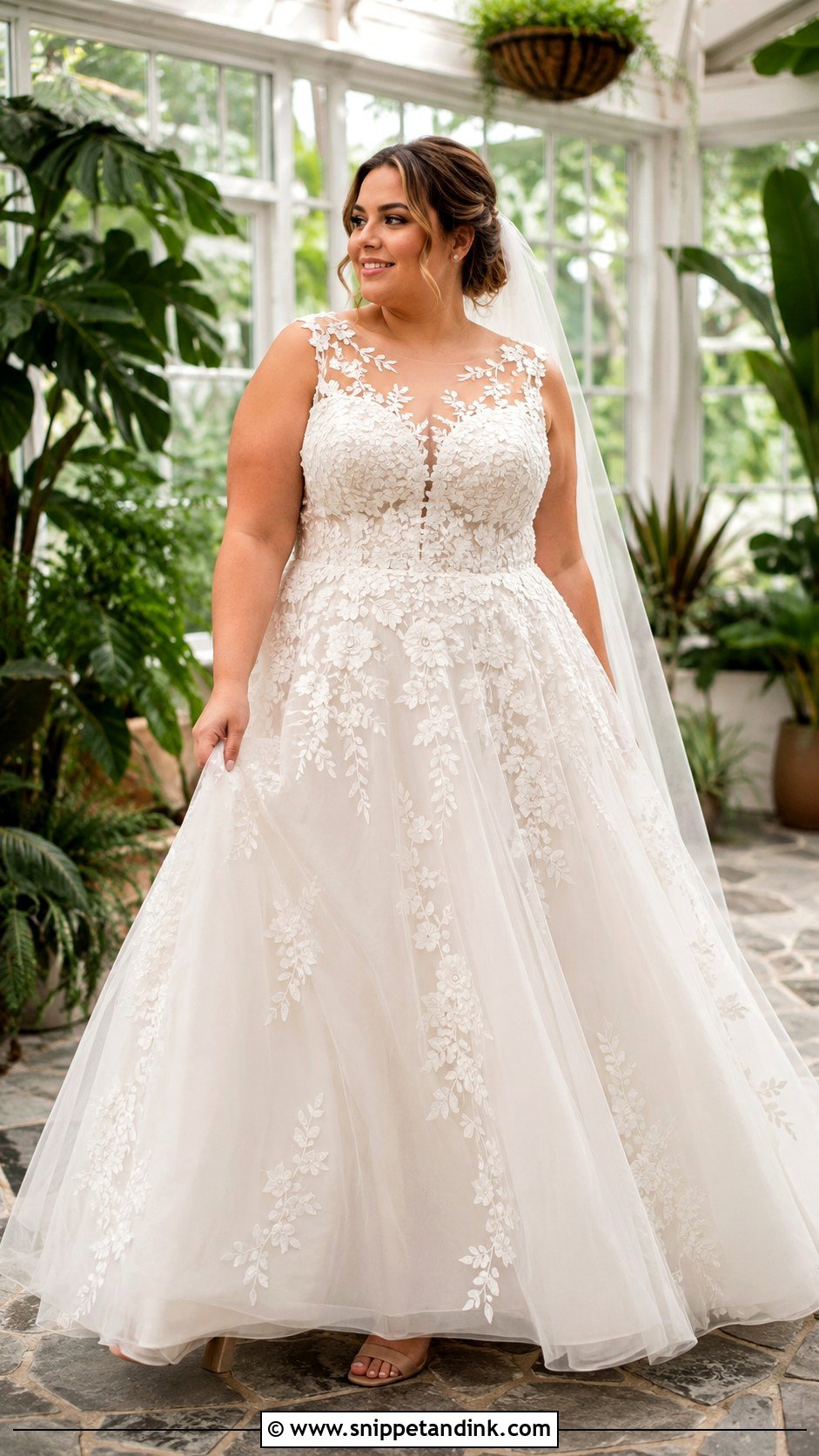
Three-dimensional flowers bring texture, and their placement makes or breaks the dress. I want blossoms spaced across the bodice and trailing lightly onto the skirt, not clustered in a band at the widest point of the hip. An illusion, V or off-the-shoulder bodice anchors them, and an A-line tulle skirt keeps them airy. At the fitting, check every appliqué near the underarm, waist and seat. Loose edges scratch skin and catch on chairs, and they’re easy to tack down.
18. Plus Size Beaded Wedding Dress
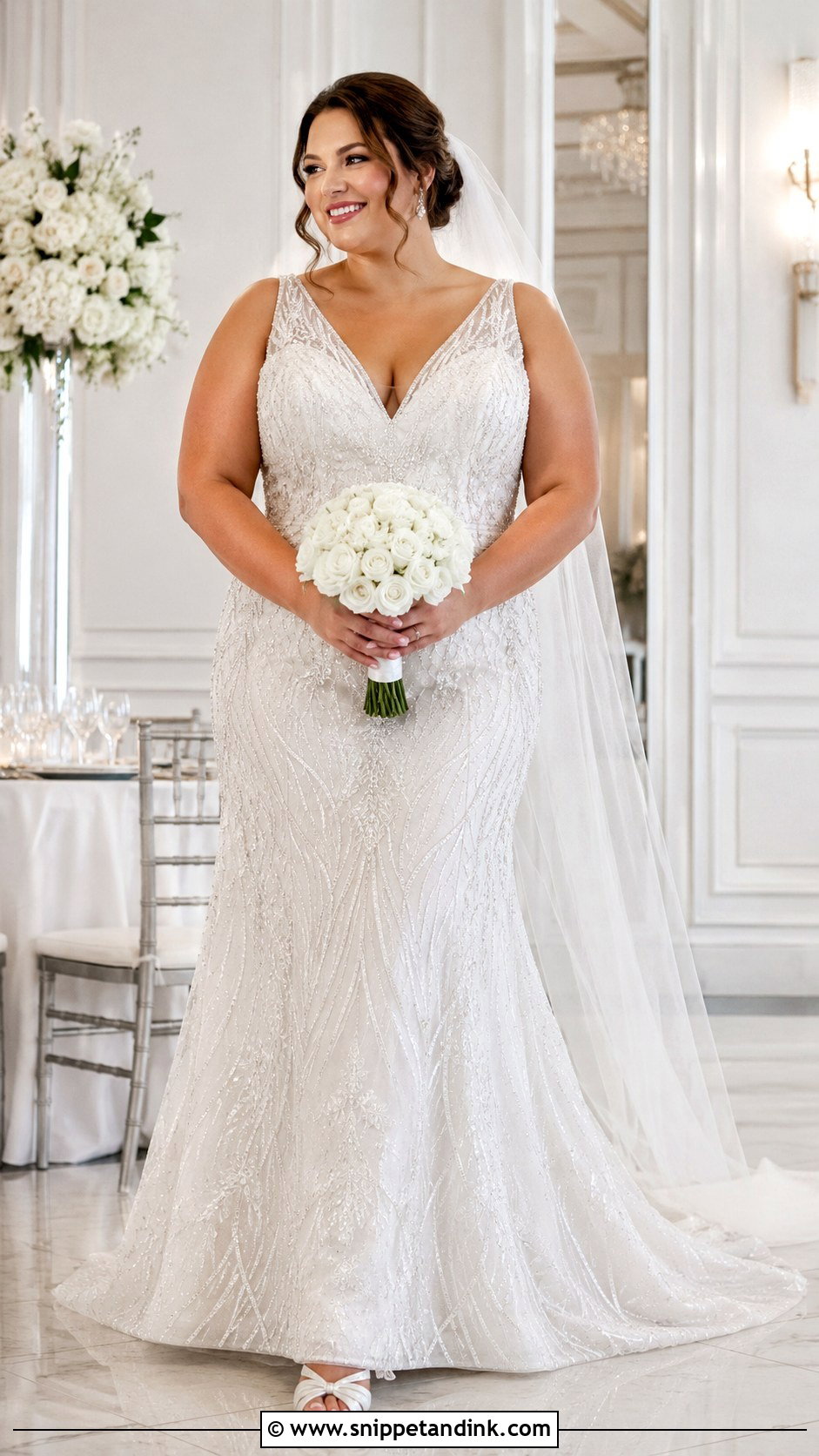
Beading catches light from every angle, and it adds real weight. A fully beaded skirt can feel noticeably heavy by evening, so lift the gown off the hanger before you fall for it. Look for a supportive lined bodice and beadwork that follows the seams rather than scattering at random; a V-neck column reads sleek, a beaded A-line moves more. Run your hand along the underarm for rough beads that will rub. Alterations take longer on beaded gowns, since the tailor removes beads, sews the seam and reattaches them to keep the pattern.
19. Plus Size Beach Chiffon Wedding Dress
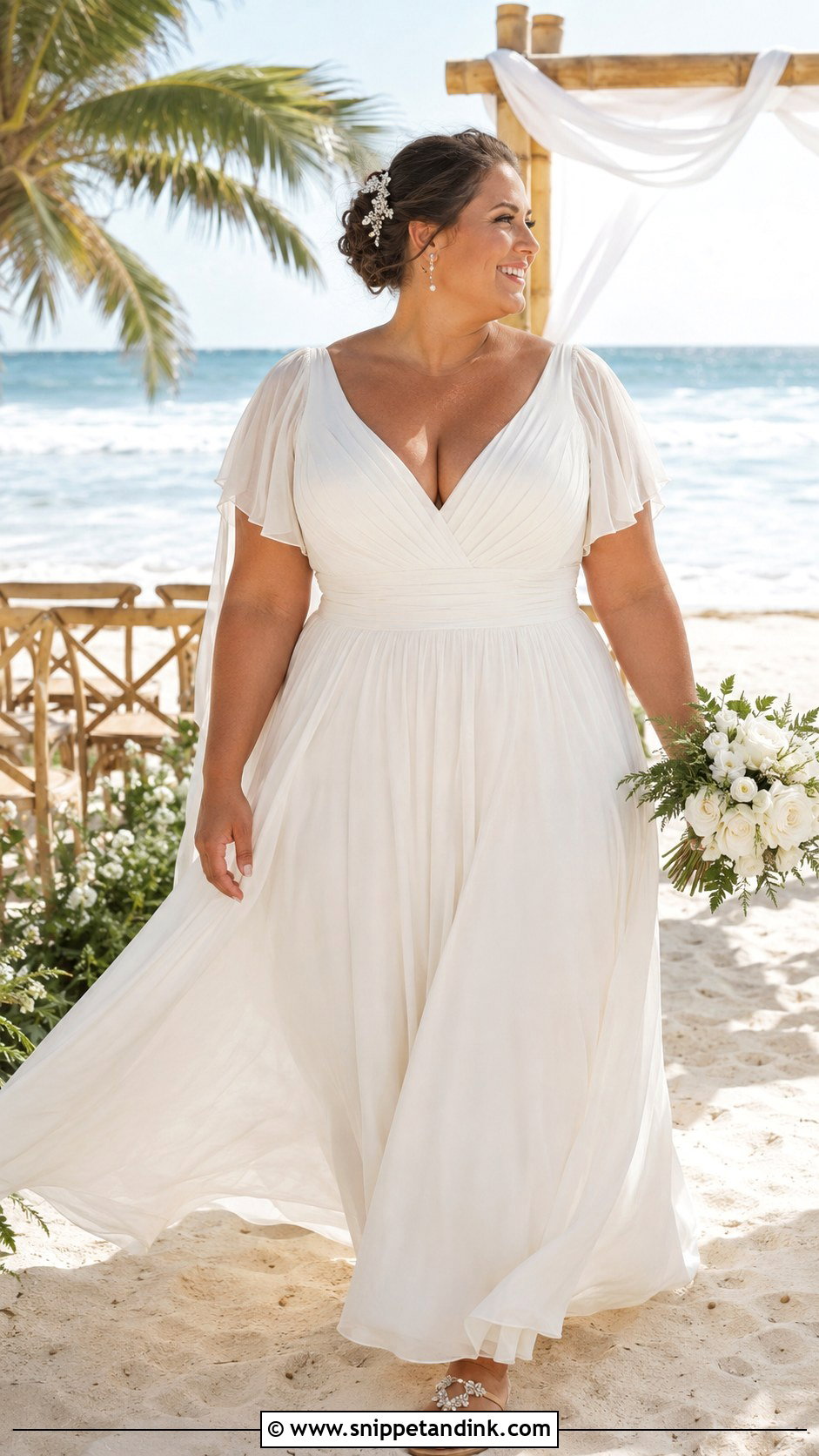
Sand, wind and heat change the brief. Choose breathable chiffon over an opaque lining, a supportive bodice with wide straps and a soft A-line skirt from an empire or natural waist, with flutter sleeves for light coverage. I shorten a beach hem slightly so it clears the sand when you walk, and skip a long train unless a bustle is planned. Test the dress outside if you can. Wind shows you which layers fly up, and sunlight shows whether the lining is opaque enough.





20. Plus Size Wedding Dress With Detachable Sleeves
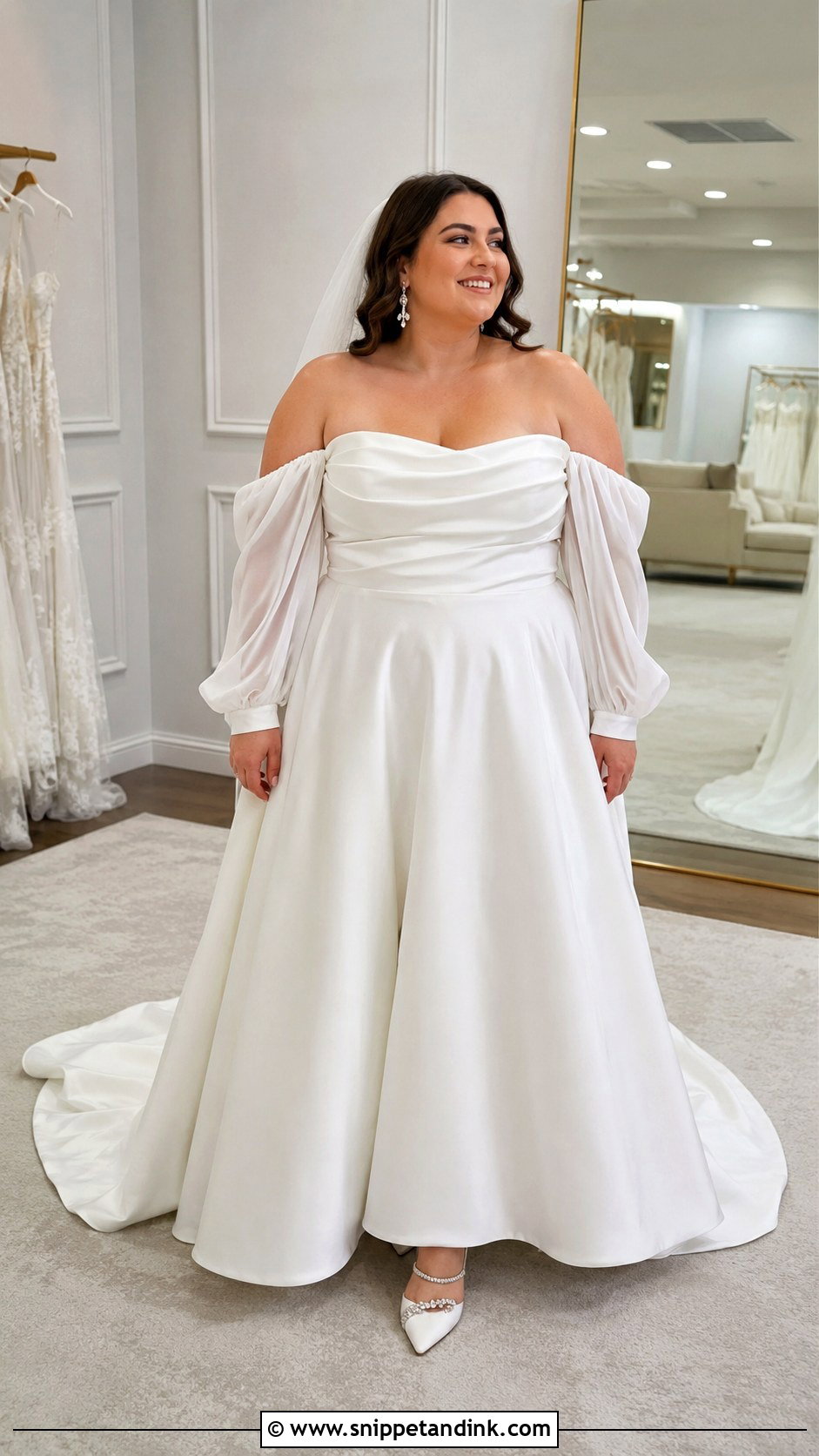
Detachable sleeves give you two looks from one gown: covered for the ceremony, bare for the reception. Start with a structured strapless or sleeveless gown that fits securely on its own, then add fitted lace, draped sleeves or off-the-shoulder straps. Small hooks or snaps hidden in the bodice seam beat a row of visible buttons. Practice taking them off with whoever will help you, and have a labeled bag ready so they don’t disappear into the reception chaos. Check both versions from every angle during alterations.
Gown Weight, Heat and a Long Day on Your Feet
Over twelve hours, fabric weight matters more than any neckline. Layered satin and heavy beading weigh the most, tulle and chiffon the least, with crepe and mikado in between. Ask to hold the gown off the hanger, then stand in it for ten minutes before you decide.
Straps tell you a lot here. If a gown leaves red marks on your shoulders after a short try-on, the skirt is hanging from them, and that will feel twice as heavy by the speeches. Ask whether a waist stay can be added so the bodice carries the load at the waist instead.
Chafing nobody warns you about
Thigh chafing is the comfort problem rarely mentioned at the salon and felt by plenty of brides at the reception. Anti-chafe bands, light cycling shorts or a smooth slip under the skirt solve it. Linings matter too, as a polyester lining holds heat close to the body. Put a small tube of anti-chafe balm in a bridesmaid’s bag for the underarm and bra line.
Bustle the train before the first dance
A train tugs on the back of the bodice every time someone steps on it, and on a heavier skirt that pull reaches the neckline. Ask the tailor for a bustle with enough attachment points to share the weight, and have two people practice fastening it before the wedding.
Try the Shape You Were Sure You’d Hate
A successful plus-size bridal look comes from personal style, solid construction and a fit that lets you move. The gowns above cover traditional, modern, glamorous, bohemian and casual weddings. Try at least one silhouette you’re sure you’ll dislike; it’s surprising how often that ends up being the one. Watch the bodice, lining, sleeve mobility, hem length and fabric weight, and bring your shoes and undergarments to alterations. A wedding dress doesn’t need to make you look smaller. It should fit your proportions and let you stay present and comfortable all day.
You'll Like These Ideas:






Leave a Reply