
A long frock is the outfit I reach for most often when a client wants coverage and movement in one piece, with no lehenga skirt to manage and no separate blouse to fit. The design still has to match your role, the venue and how formal the function is, and it has to survive a long ceremony, a sit-down dinner and some dancing. Below are twenty frocks I’d genuinely style, from classic Anarkali cuts and regal pishwas silhouettes to cape designs, velvet for winter and softly layered net. Occasionwear right now leans toward saturated color, softer draping and long shapes you can wear again, so I’ve kept rewearability in mind. Each look comes with shoes, jewelry, a bag and a dupatta plan, with notes for brides, sisters and guests.
Reading the Invitation Before You Pick a Hem and Fabric
When a client brings me a frock she loves, my first question is which function it’s for. A mehndi or dholki is usually daytime, often seated on floor cushions, and full of dancing. A nikah or baraat is more formal and more photographed. A walima or reception runs late, indoors, under warm lighting. The same frock rarely suits all three.
- Seated on the floor: choose a flare that pools neatly when you kneel. Pishwas and net skirts behave well; a narrow jacket frock rides up.
- Outdoor daytime: chiffon, georgette, cotton-silk and gota stay cool. Velvet and heavy zardozi will be miserable by noon.
- Evening hall: raw silk, velvet and denser embroidery photograph richly under warm light, and air conditioning makes the weight manageable.
- Your role: family members can carry more embellishment than guests. Guests should stay clear of red, maroon and ivory-gold unless the family has said otherwise.
Length matters more than people expect. For dancing functions I pin the hem a little higher, just off the floor in flats. For formal evenings it can graze the floor in heels. Decide your shoes before your fitting, never after.
1. Floor-Length Anarkali Frock for Wedding
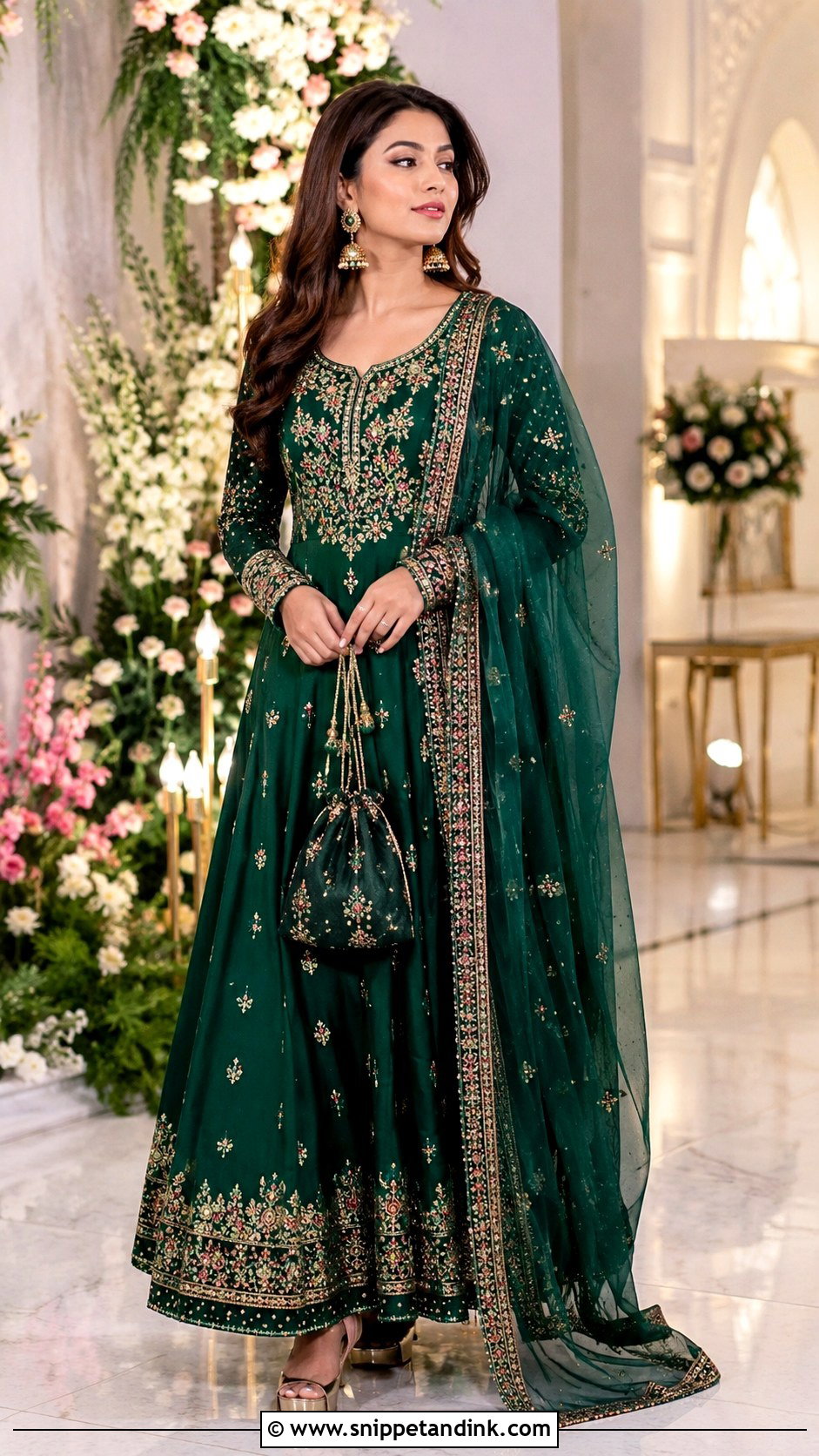
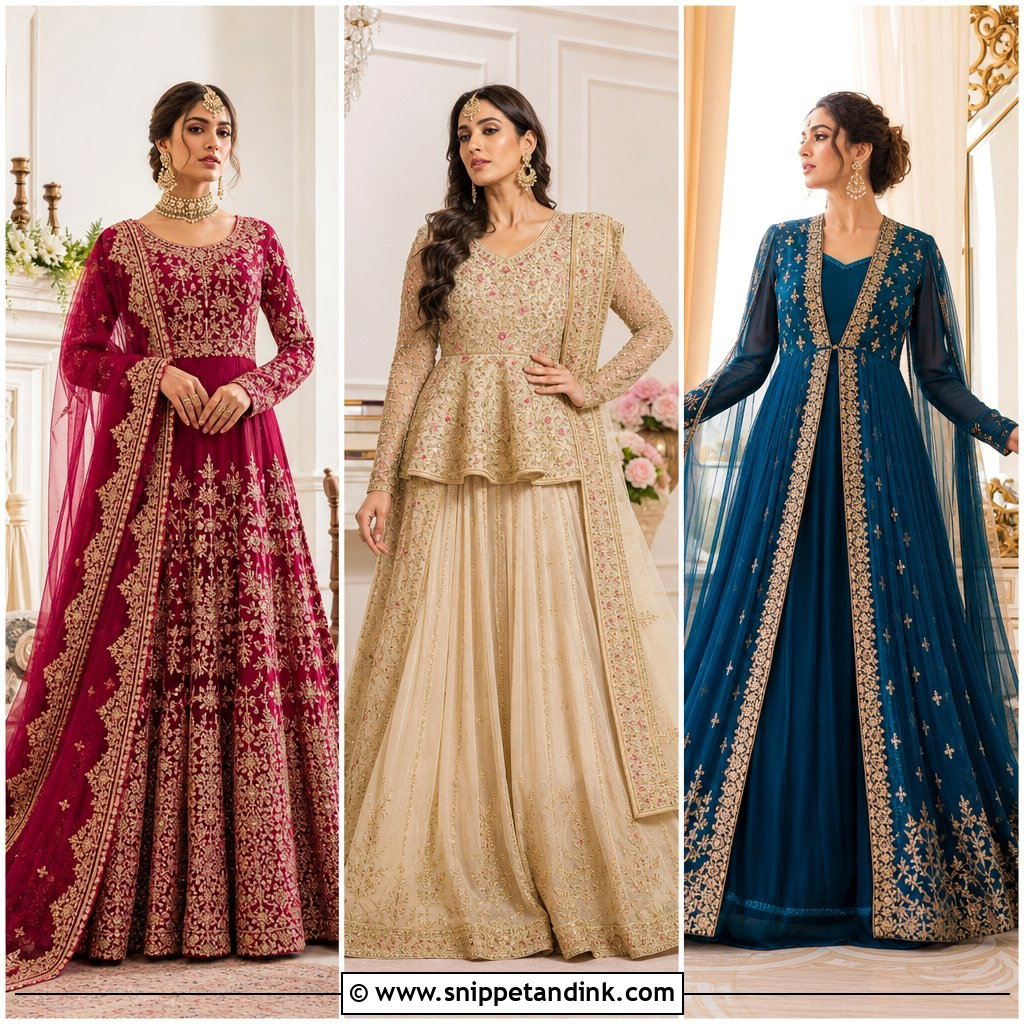
The floor-length Anarkali is the safest starting point, and for good reason. Look for a fitted embroidered bodice with the skirt flaring from the natural waist; if the seam sits lower, the flare starts at the hip and the frock reads heavier. Chiffon and georgette give the swing without weight, and soft silk holds more shape. For evening I like emerald, sapphire, plum or deep teal, with a lightly bordered dupatta over one shoulder, metallic block heels, a structured potli and medium jhumkas. Pin the hem with your actual shoes on so it grazes the floor without dragging.
2. Embroidered Pishwas Frock for Wedding
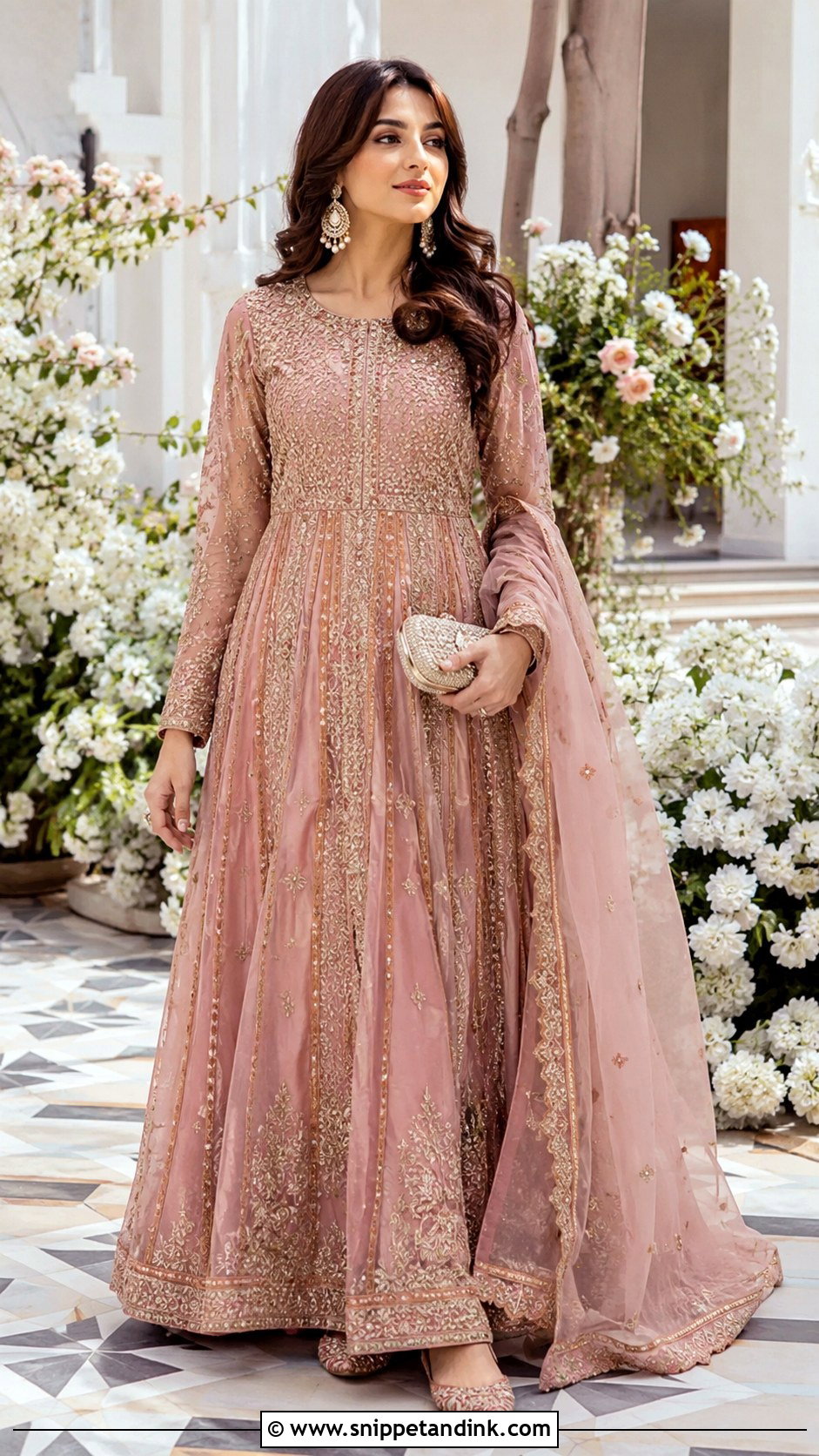
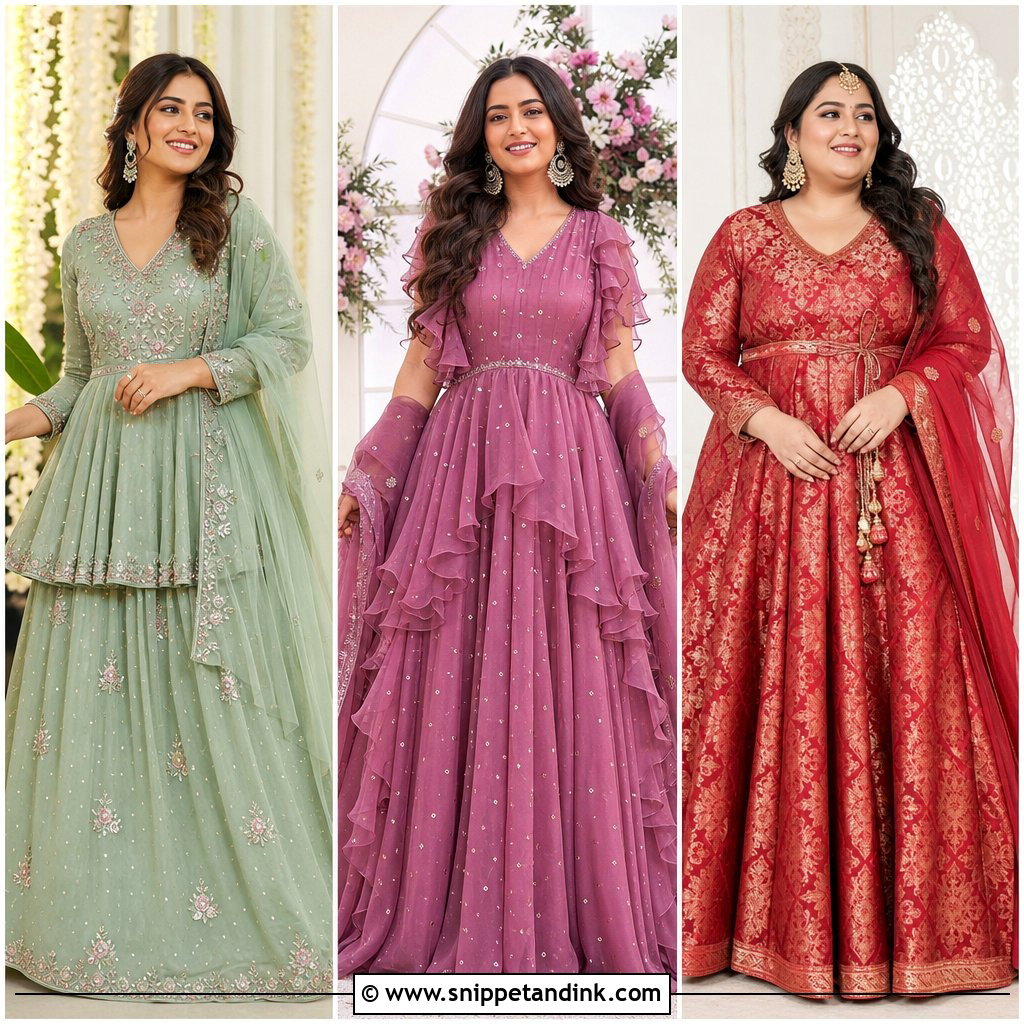
A pishwas is built from many panels, which is why its hem opens into that wide circle when you turn. The trouble I see most is embroidery everywhere: on this many panels it flattens the shape, so keep work to the bodice, cuffs and lower border. Daytime suits dusty rose, sage, ice blue or lavender, with a matching organza dupatta, pointed embellished flats, pearl drops and a small beaded clutch. A soft braided bun stays out of the embroidery’s way. If you’re petite, ask for fewer panels and a slightly raised waist; taller women can carry a fuller skirt and a deeper border without being swallowed.
3. Front-Open Long Frock for Wedding
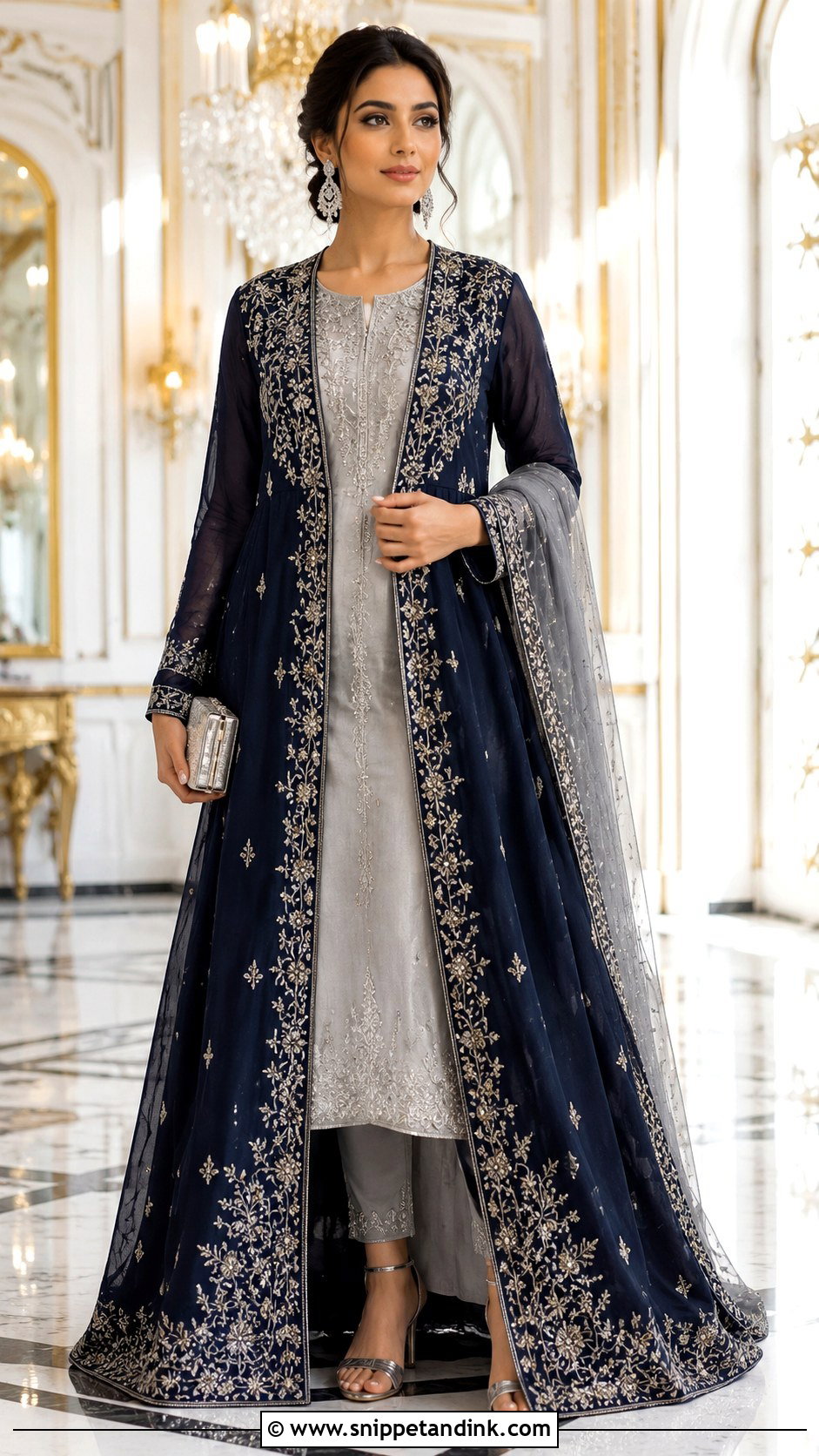
A front-open frock gives you two layers to play with, and the inner one has to earn its place. The outer frock can open from the waist or the upper bodice over slim trousers, a straight inner dress or a lightly flared lehenga. I pair colors that contrast but stay related: navy with silver, burgundy with blush, teal with antique gold. If the outer panels carry zari or sequins, keep the inner layer plain, otherwise the opening just looks cluttered. Pin the dupatta to one shoulder so the split stays visible, and add heeled sandals, a box clutch, statement earrings and a slim bracelet for an evening function.
4. Jacket-Style Long Frock for Wedding
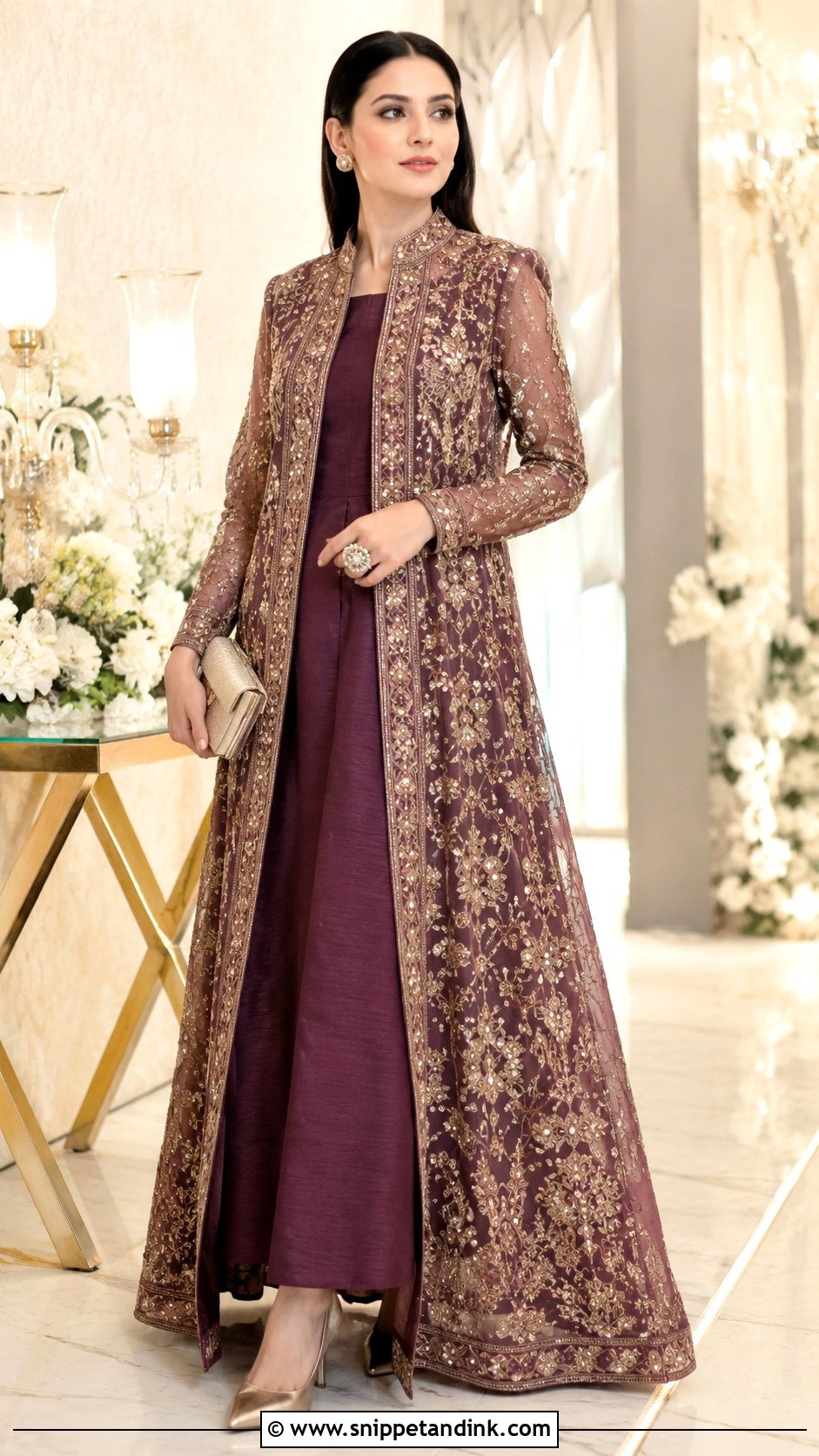
Wondering how to make a simple frock look more formal? Add a long embroidered jacket that reaches the ankles or floor over a sleeveless or short-sleeve inner frock in satin, crepe or raw silk. Organza, net or brocade all work for the jacket; brocade is warmer but stiffer through the elbow, so try bending your arm in it. Ivory-gold jackets read bridal, so as a guest I’d choose plum, turquoise, rust or rose instead. Skip the heavy necklace when the jacket has a worked neckline, and keep to studs and one ring. The real advantage is that the jacket comes off when a hall overheats, and goes back on for the drive home.
5. Cape Long Frock for Wedding
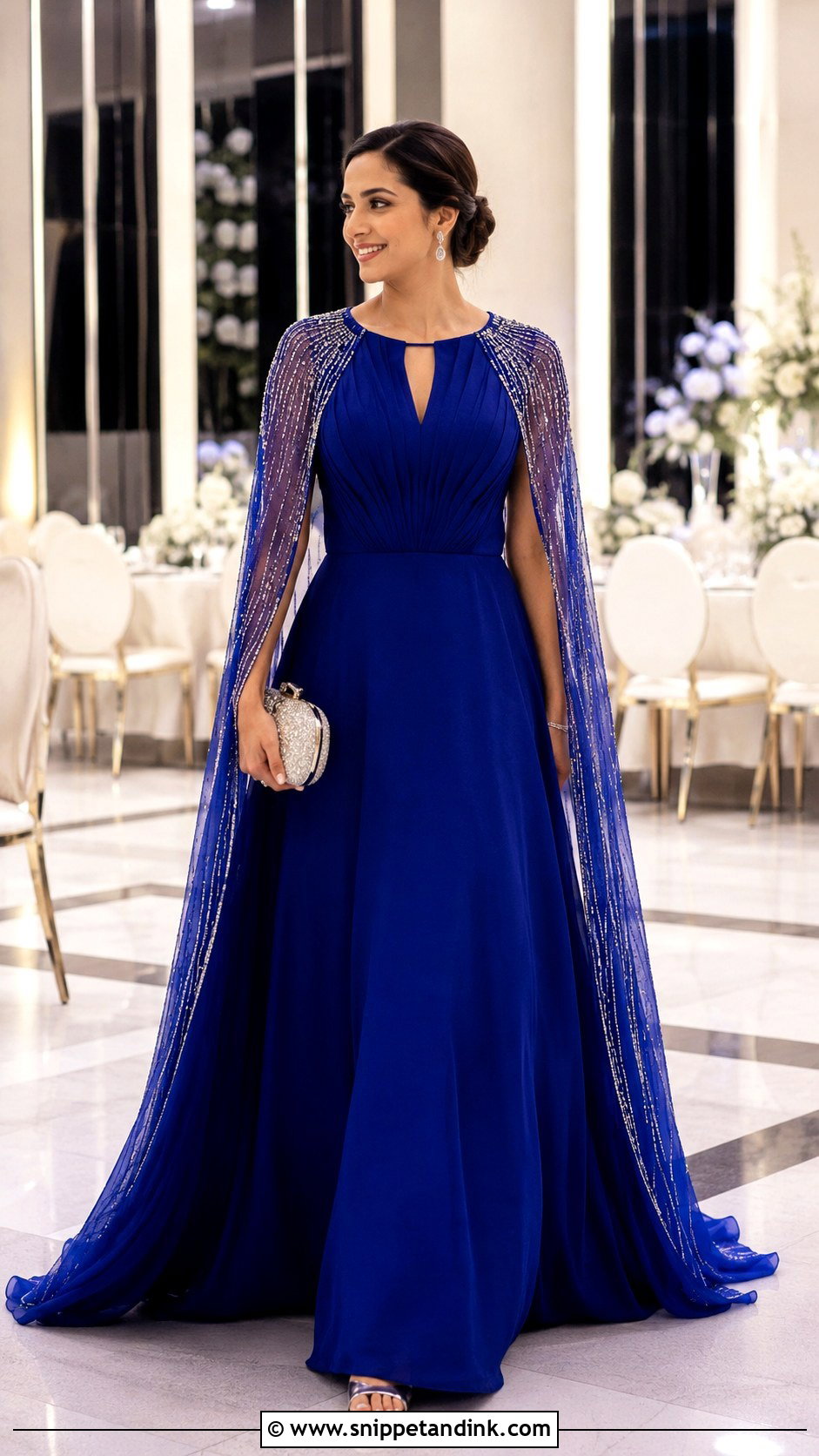
A cape frock gives you shoulder coverage without a dupatta, which is exactly why I suggest it to clients who hate managing fabric all evening. Choose a clean A-line or gently flared dress with the cape attached at the shoulder seam, not just tacked at the neck, or it will slide back when you lift your arms. A sheer cape with pearl or tonal thread detail moves well in cobalt, magenta, forest green or aubergine. Wear hair low and smooth; loose curls tangle in a cape within the first hour. Sleek heels, crystal drops and a structured minaudiere finish it, and I’d leave the dupatta out unless family custom asks for one.
6. Angrakha Long Frock for Wedding
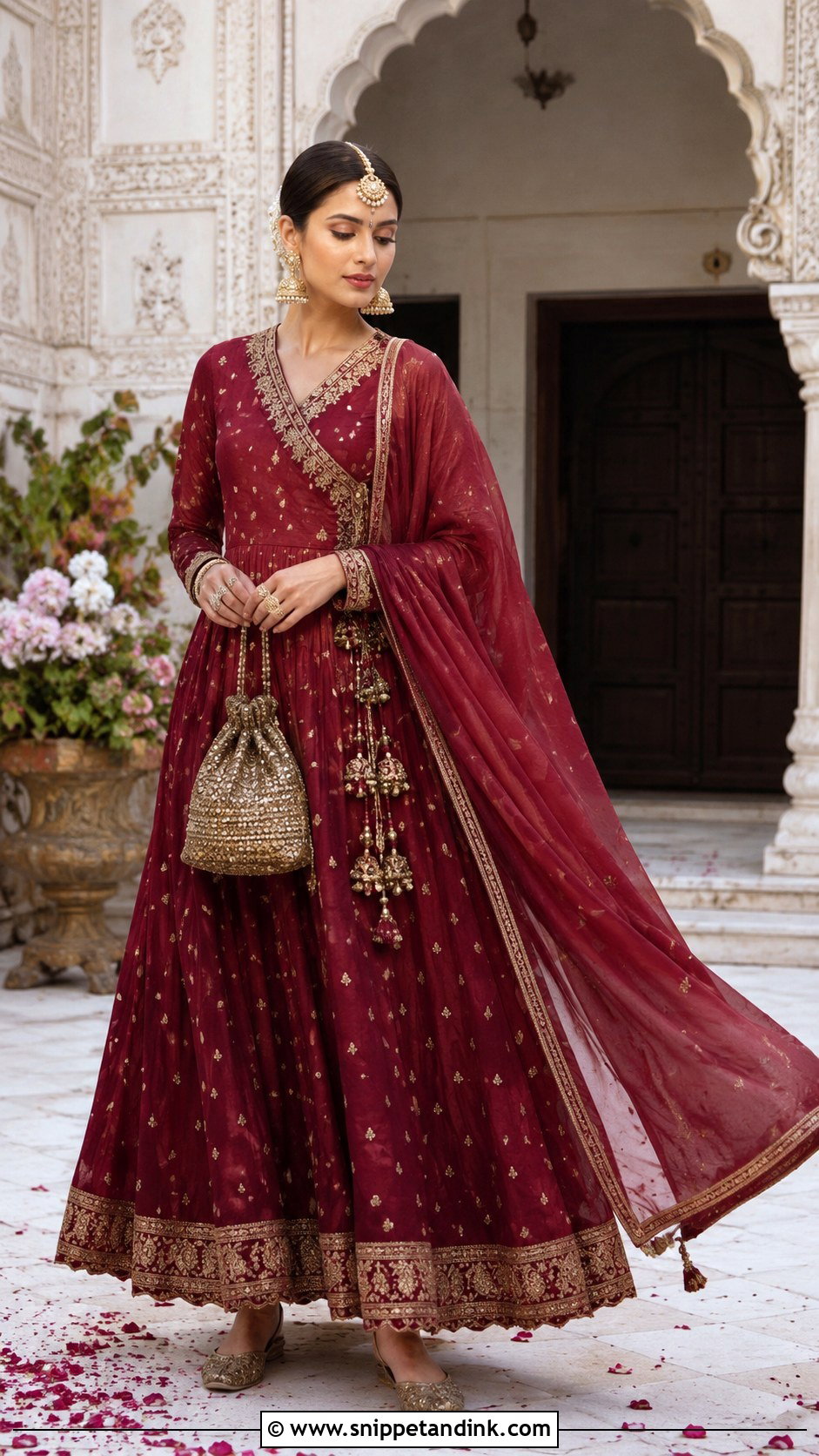
The Angrakha’s overlapping neckline is cut on the diagonal, and that line does the waist-shaping for you. Check the side ties before anything else: thin cords loosen during a long dinner, so I ask for a hidden hook under the tie and treat the tassels as decoration. Deep maroon, bottle green, mustard or royal blue take antique gold embroidery well. A light chiffon dupatta with a narrow border, jhumkas, a potli and embroidered juttis keep it traditional, and low metallic heels can swap in under the hem if you want height. Keep tassels modest, because oversized ones swing into your plate.
7. Layered Net Long Frock for Wedding
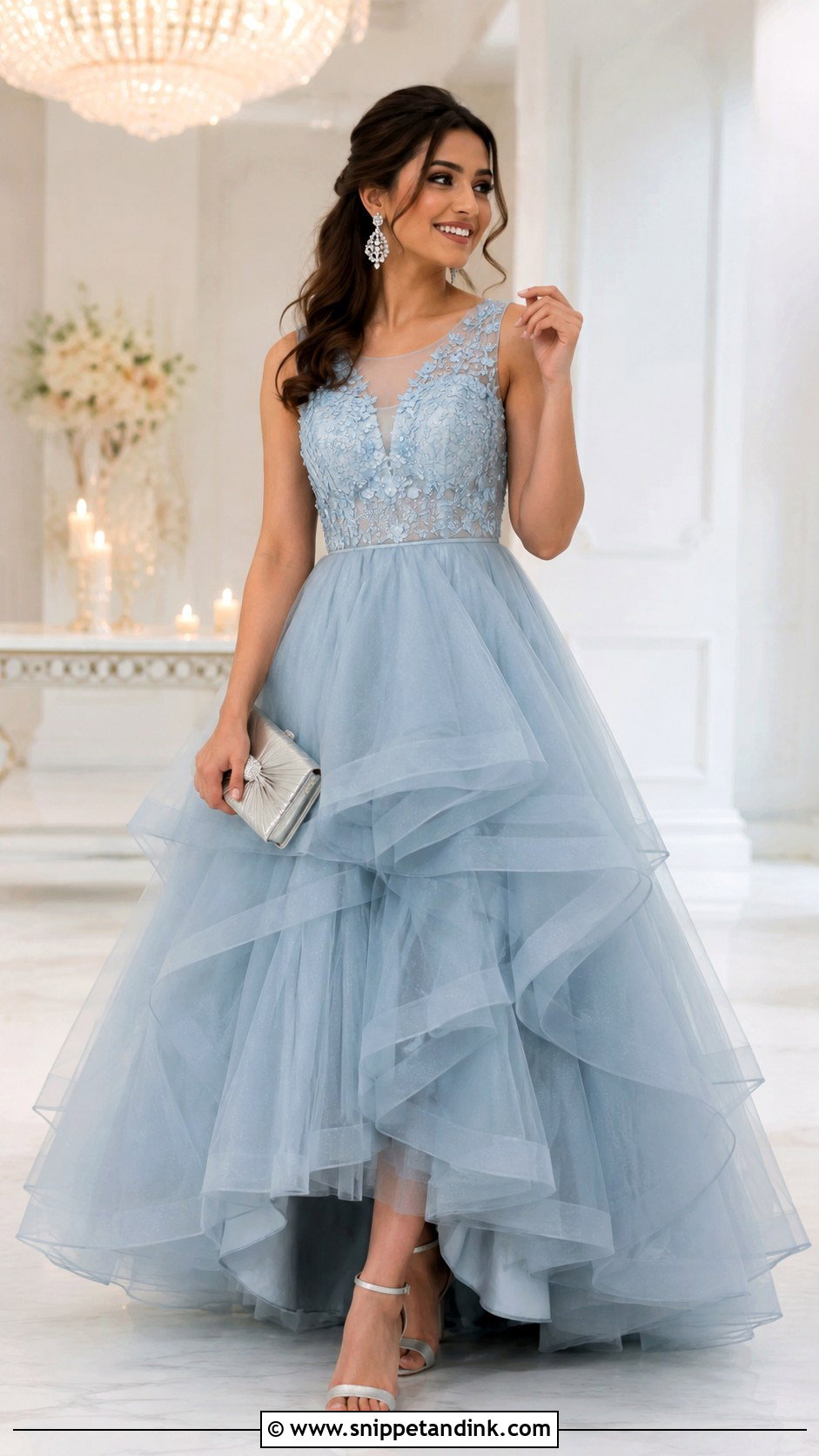
Net gives a frock air and volume without much weight, but only if the volume is controlled. Two or three lined skirt layers are plenty; more than that and the skirt turns into a tutu once you sit down. A fitted bodice with small sequins or scattered beads balances the softness below, and mauve, powder blue, peach and smoky gray all look right in net. Ankle-strap heels are my choice here because net catches on buckles and open toes, so check the shoe against the hem at your fitting. A loosely curled half-up style and a satin clutch complete a look I often put on bridesmaids and sisters at engagements.
8. Velvet Long Frock for Winter Wedding
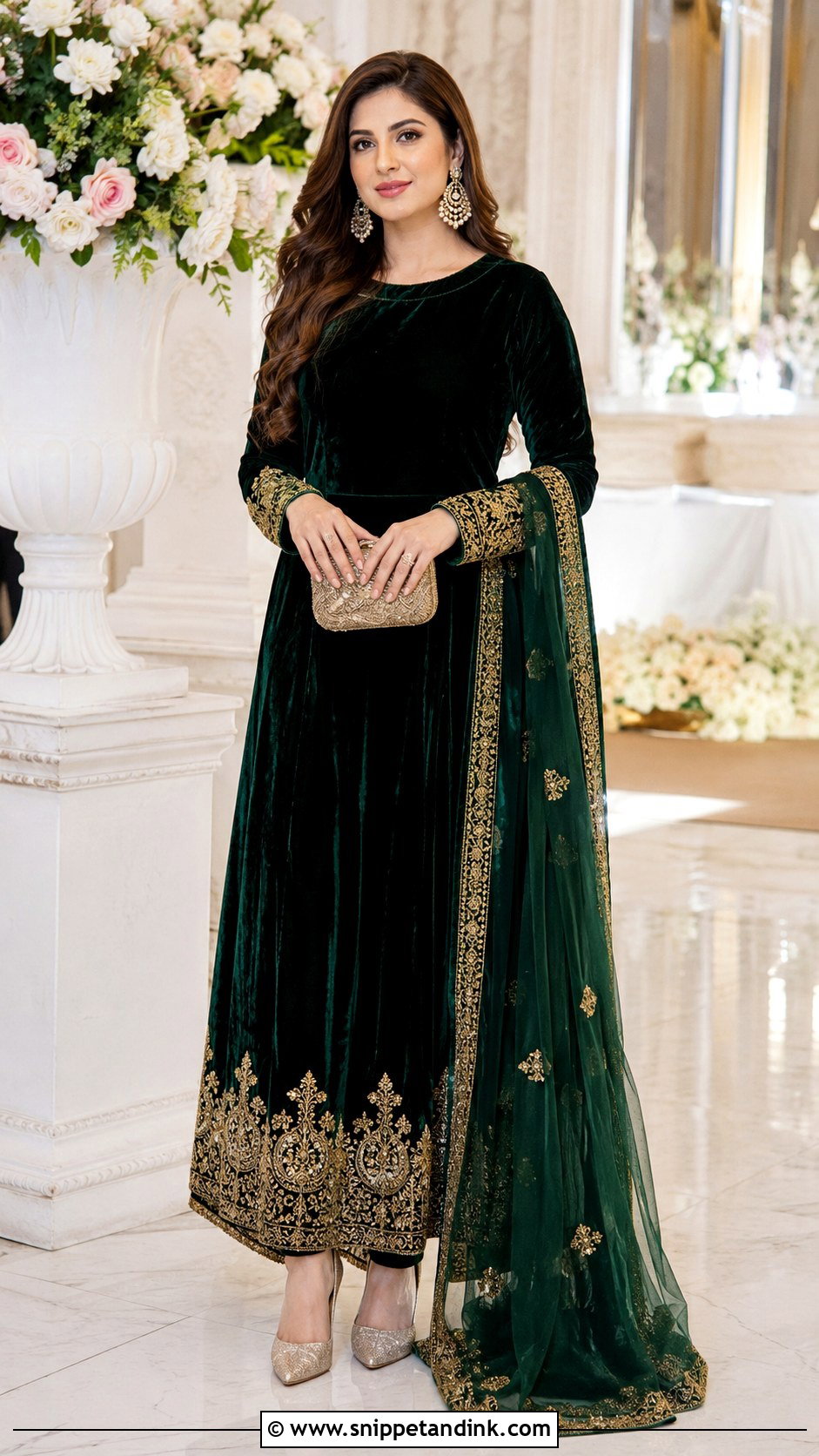
Velvet is the one fabric I steer clients toward in cold weather and away from in a packed summer hall. A structured Anarkali or A-line in burgundy, midnight blue, chocolate brown or deep plum carries gold embroidery at the neck, cuffs and hem without looking overloaded. Long sleeves balance the heavy pile and keep you warm between venues. Velvet already reflects light unevenly, so jewelry should be focused: chandelier earrings and a brocade clutch, with closed-toe metallic pumps. One practical warning is that velvet marks where it’s pressed, so hang it the night before and don’t sit on the skirt in the car.
9. Chiffon Floral Long Frock for Wedding
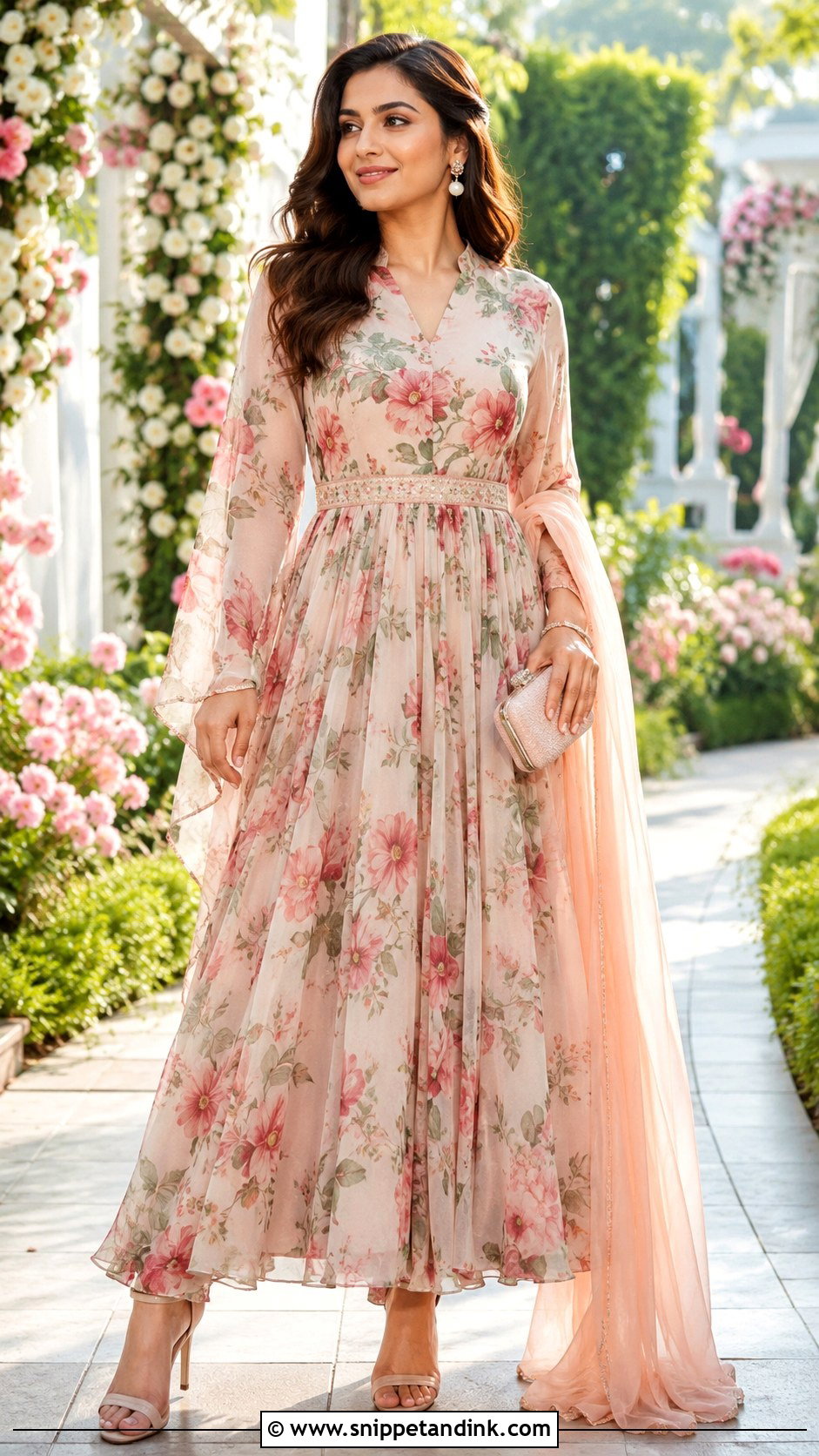
A chiffon floral is my first suggestion for a garden or daytime wedding, mainly because it breathes. Medium-scale prints read clearly in photos; tiny busy florals turn into texture from a few feet away. Look for a defined waist, soft sleeves and a combination like blush with green, blue with lavender or coral with soft yellow. Pull one color from the print for a plain chiffon dupatta and keep shoes in nude block heels so you don’t sink into lawn. As a guest, avoid prints on a white or cream ground, which can read bridal in group photos.
10. Raw Silk Long Frock for Wedding
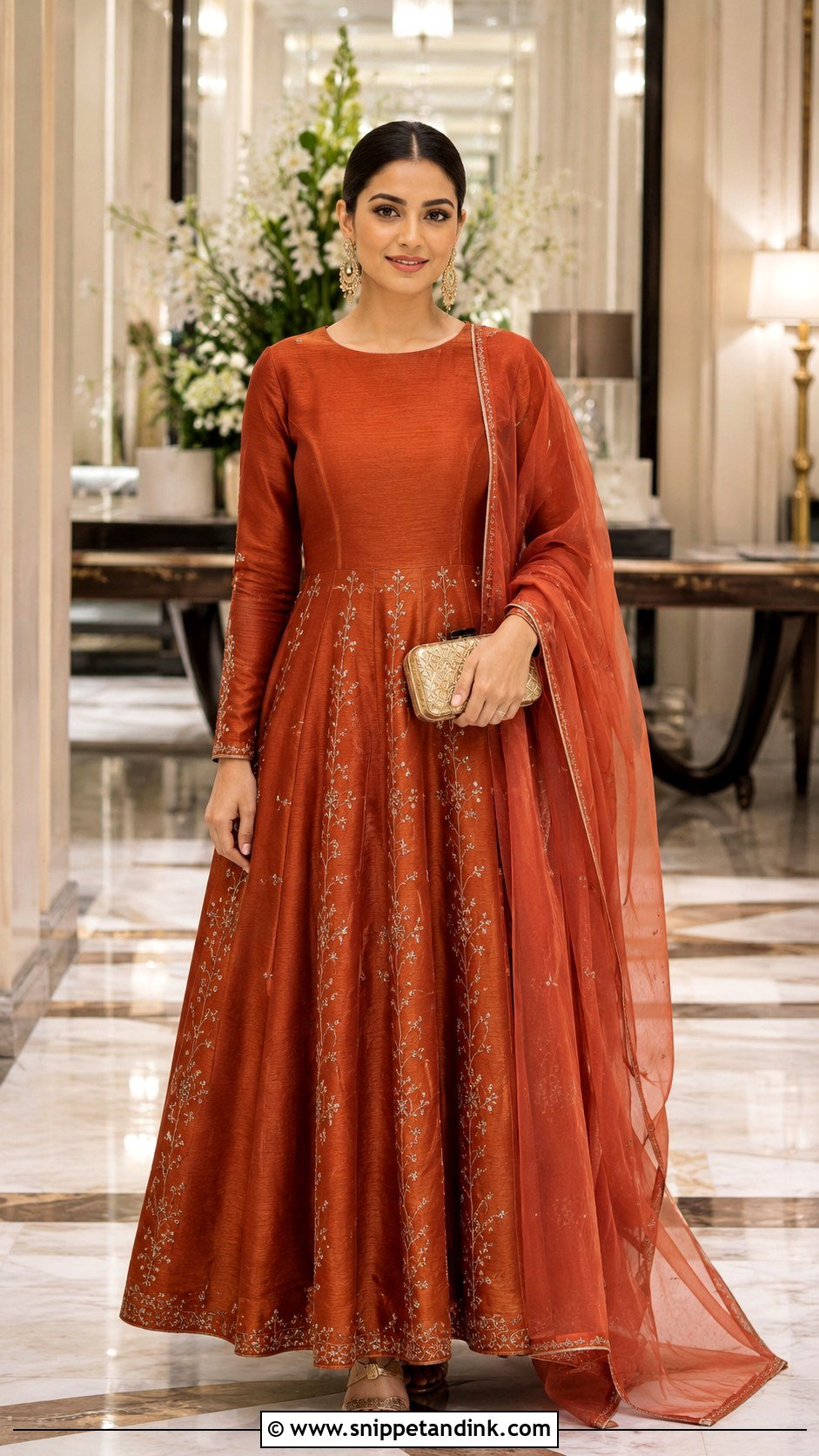
Raw silk has a slub texture and a firm hand, so it holds a fitted bodice and a moderate flare all day without collapsing. That firmness is also its weakness: it doesn’t give at the armhole the way chiffon does. At fittings I ask clients to reach forward as if hugging someone, and if the sleeve pulls, we let it out. Rust, olive, peacock blue, raspberry or bronze work day or night, with an organza dupatta finished in a narrow border, block heels, gold earrings and coordinated bangles. A sleek center-parted bun suits the textured fabric.
11. Mirror Work Long Frock for Wedding
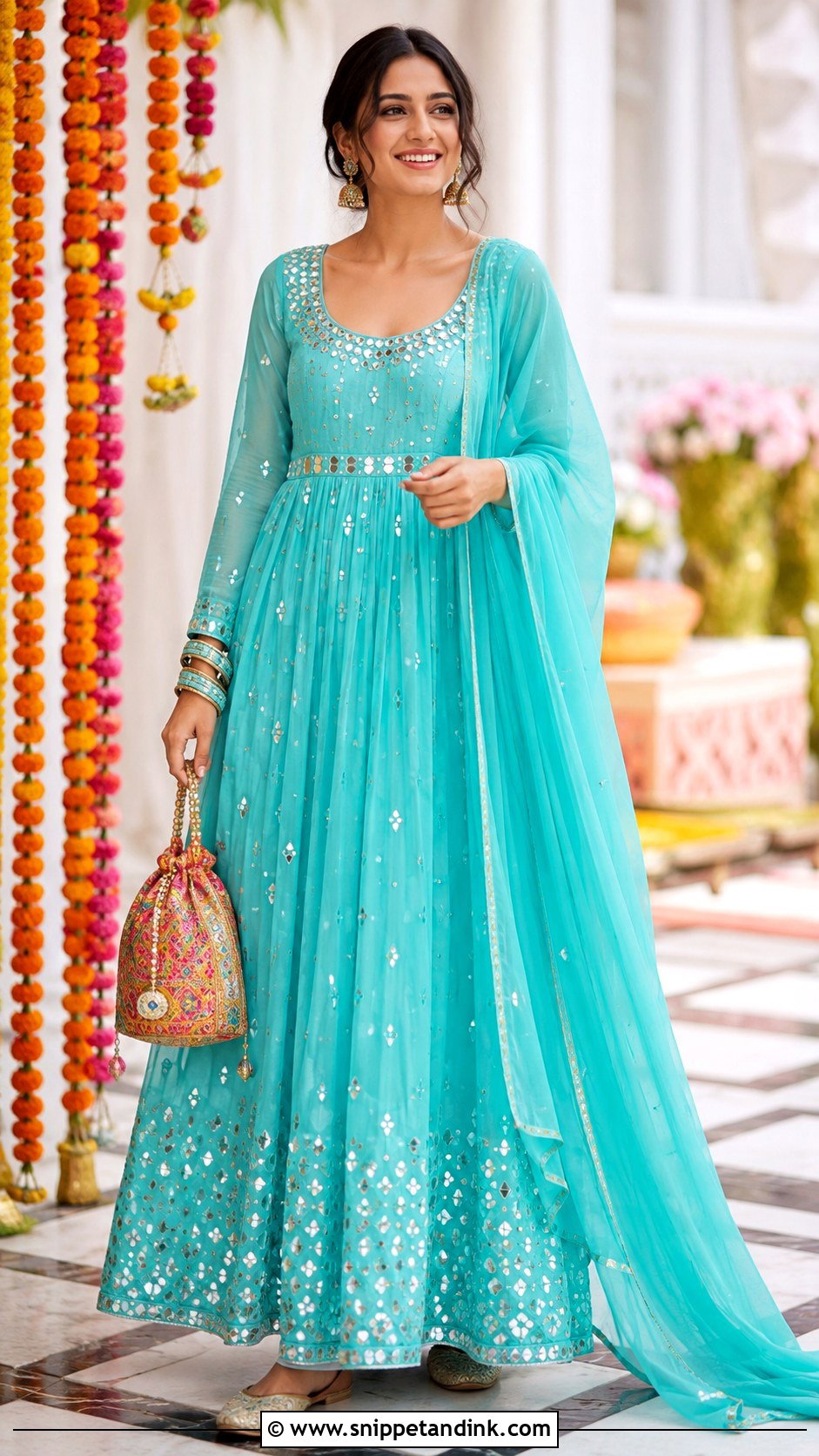
Mirror work throws light back at every camera flash, which makes it great fun for a mehndi or sangeet. I prefer a frock with concentrated mirror detailing at the neckline, waist, sleeves or panel seams rather than all over, because a fully mirrored skirt gets heavy and scratches whoever sits next to you. Fuchsia, turquoise, orange, purple and lime suit the energy of daytime events. Pair metallic juttis, a bright potli, small jhumkas, stacked bangles and a plain dupatta. Run your hand over the inside of the bodice before you buy; rough mirror edges will rub your skin raw by the end of the night.
12. Zardozi Long Frock for Wedding
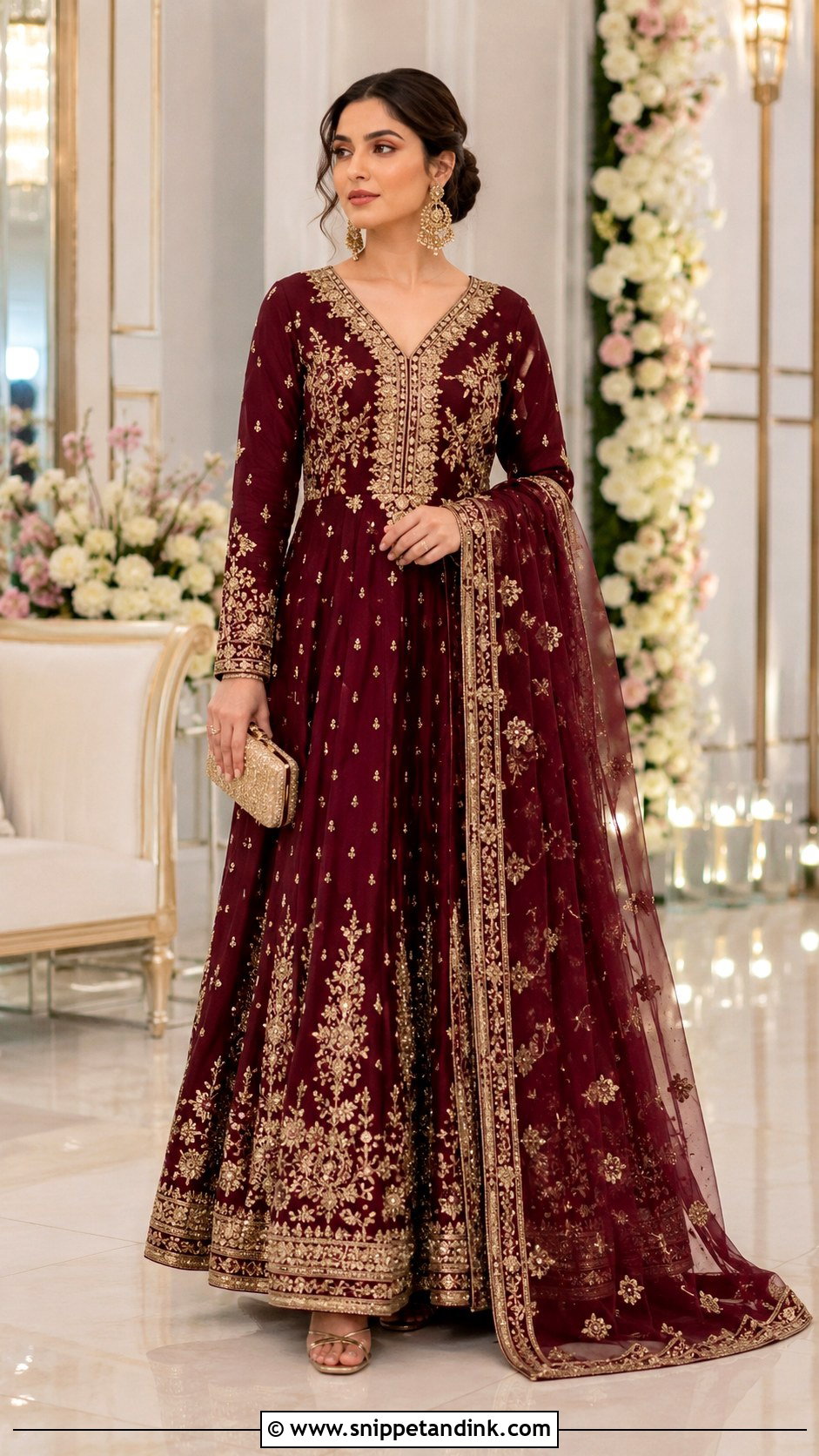
Zardozi is metal thread couched by hand, and a heavily worked bodice can weigh noticeably more than the rest of the frock. For a reception or formal evening, a deep base such as wine, charcoal, navy, maroon or forest green shows antique gold or copper work best. Keep the upper body fitted and the skirt gently flared so the weight sits evenly. I drape the dupatta over one arm instead of across the bodice, since that’s where the work is. Ask for a soft cotton lining against the skin, because the back of zardozi can scratch. Traditional earrings, one statement ring and smooth waves or a low bun are enough.
13. Gota Patti Long Frock for Wedding
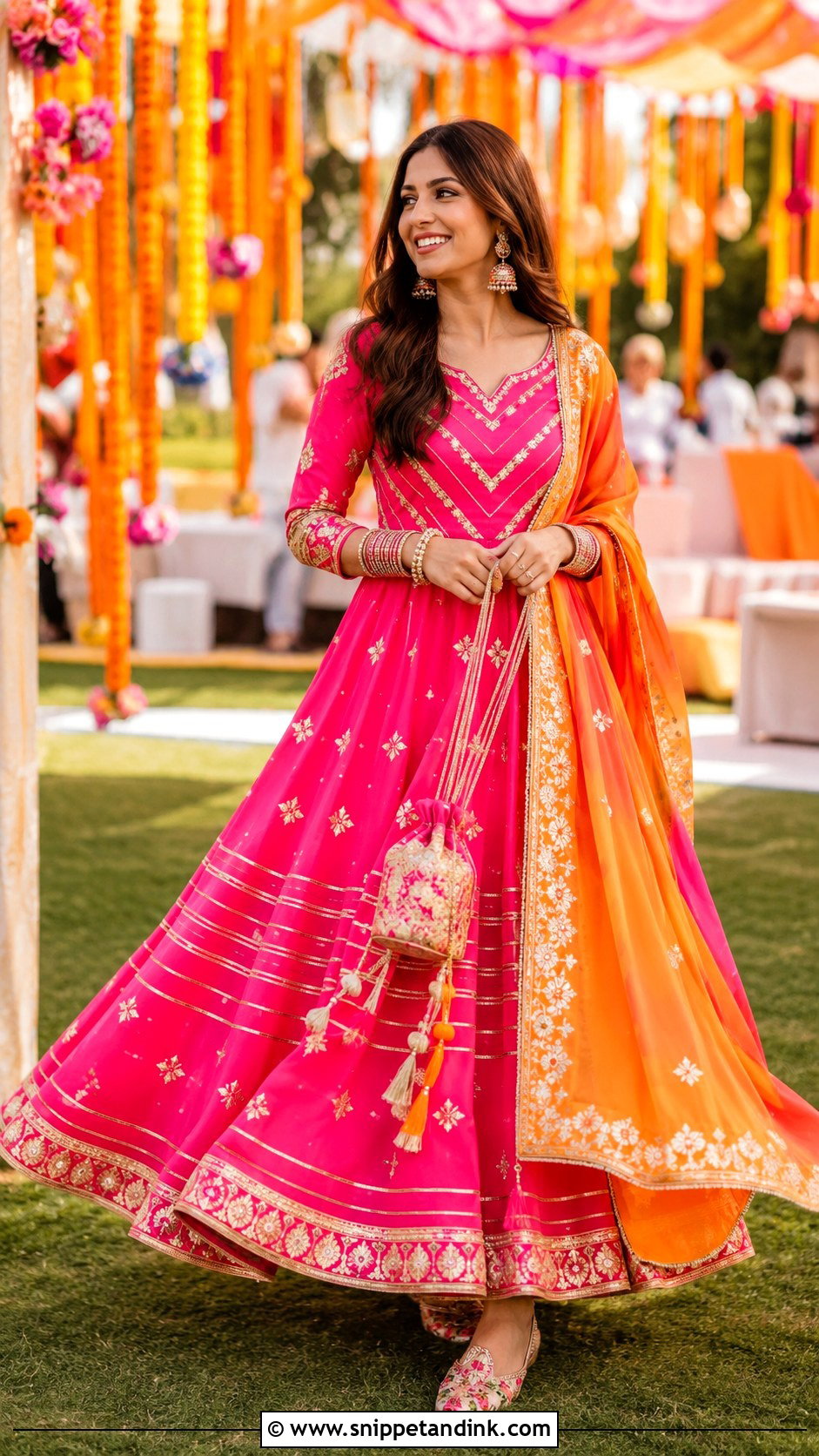
There is something festive about gota patti moving through a bright venue in daylight. The metallic ribbon is light, so it suits a flared cotton-silk, georgette or chiffon frock in yellow, hot pink, orange, turquoise or green. Add a contrasting dupatta with a gota border, embroidered juttis, traditional earrings and a tasselled potli, then stop; the trim already supplies the shine. Gota can tarnish and turn dull if it gets damp, so I keep these frocks out of plastic and away from perfume sprayed directly onto the fabric. Three-quarter sleeves and an ankle-skimming hem make it easy to dance in.
14. Pastel Organza Long Frock for Wedding
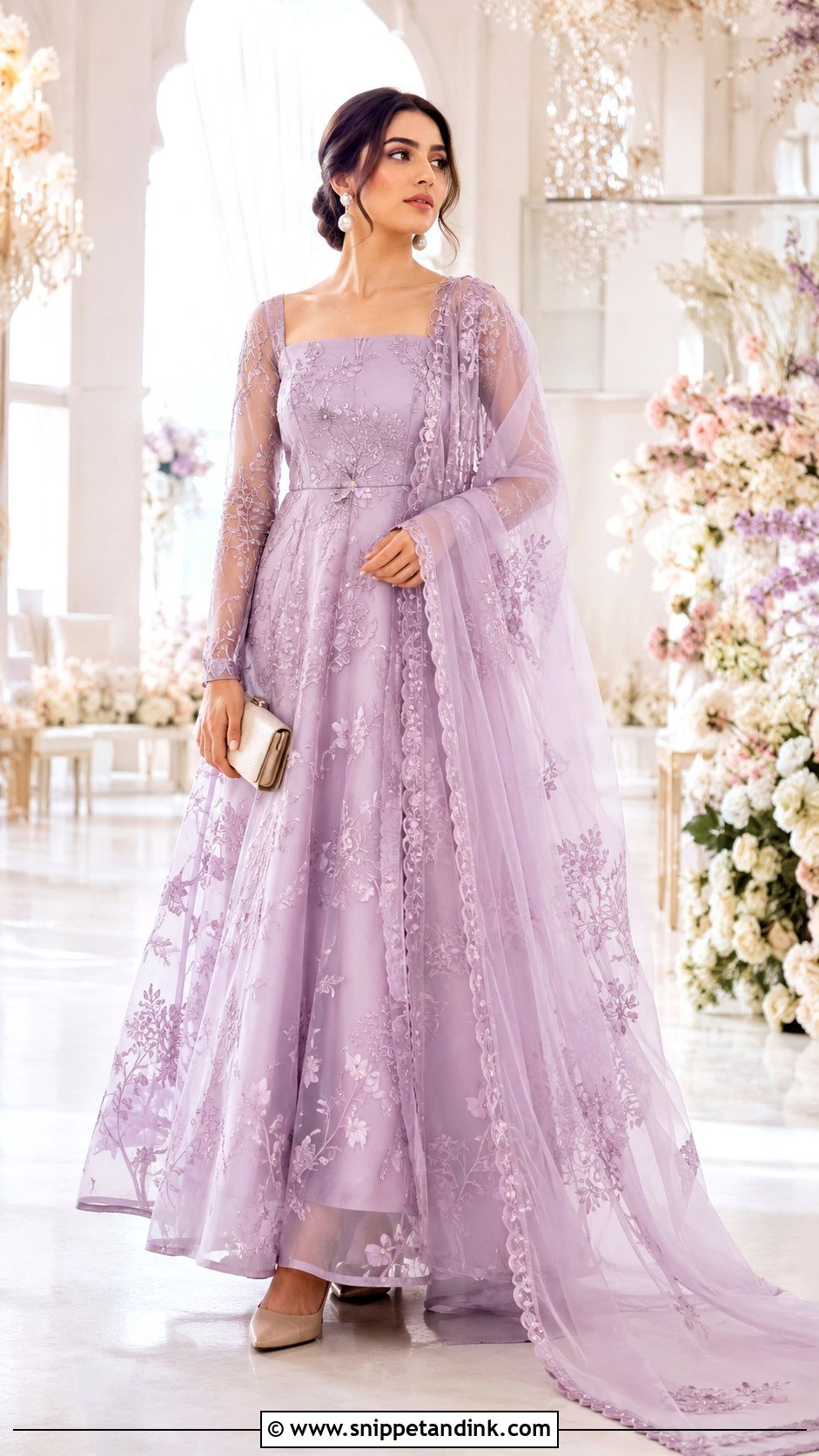
Organza is crisp, and it keeps whatever volume you give it, which is lovely in a pleat and unforgiving in a gather. For a refined daytime ceremony, I’d choose a softly structured skirt with placed pleats, a fitted bodice and sheer sleeves in lilac, pistachio, dusty blue, peach or muted rose. Pearl or tonal threadwork keeps the palette light. Insist on full lining; unlined pastel organza goes see-through in direct sun. Pearl earrings, nude heels and a sheer dupatta draped loosely over the arms are all it needs, with a low twisted bun.
15. Black and Gold Long Frock for Wedding
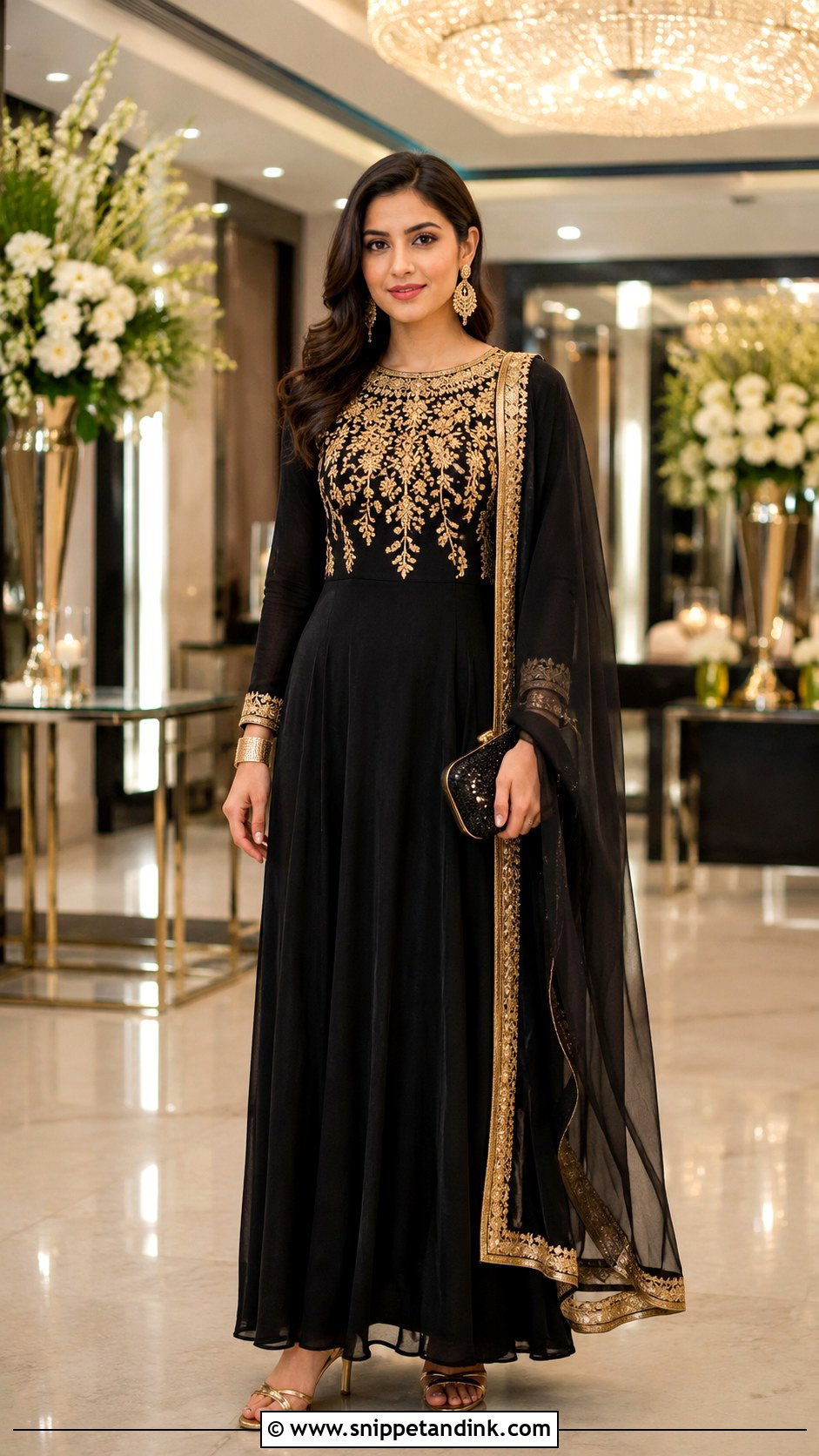
Black and gold is dramatic at a formal evening reception, but I always check first whether the family or community is comfortable with black at a wedding, because in some it’s avoided. If it’s welcome, start with a floor-length black frock in chiffon, velvet, crepe or raw silk and leave enough plain fabric between the gold borders for contrast. Choose one gold tone and keep to it across heels, cuff and earrings; mixing antique and bright gold looks accidental under evening lighting. A sheer black dupatta with a narrow gold edge, a beaded clutch and fresh, balanced makeup keep the look celebratory.
16. Maroon Bridal Long Frock for Wedding
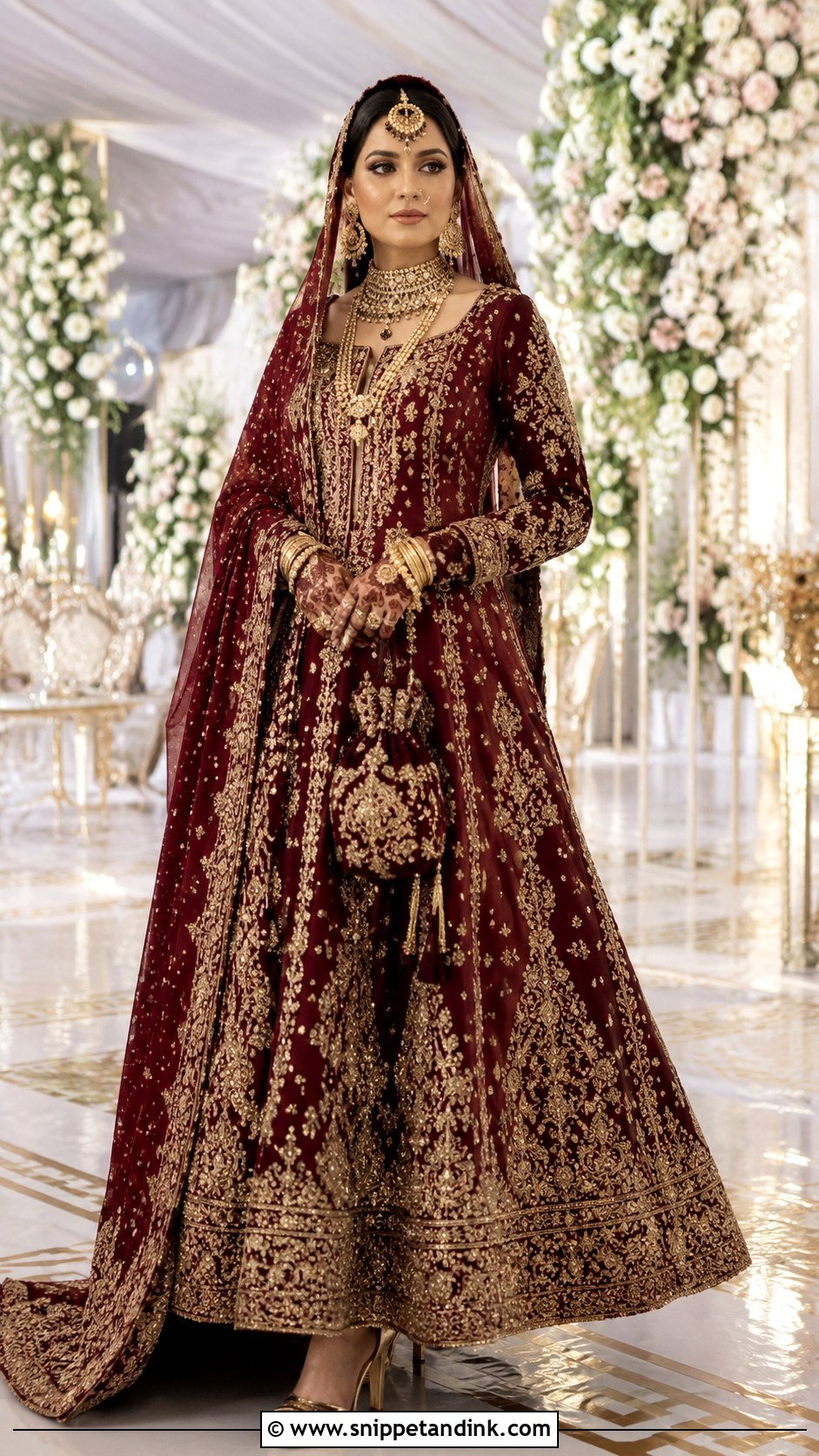
For a bride who wants a single flowing silhouette instead of a lehenga, a maroon bridal long frock is a strong option. A heavily embroidered pishwas or Anarkali with zardozi and beadwork across bodice and hem gives the weight a bridal look needs. The dupatta usually goes over the head and one shoulder, so the hairstylist needs to build a secure low bun as an anchor for the pins. I always have the bride walk the length of a room and sit in the skirt at the final fitting: it should have enough volume for portraits without catching under her feet. Layered necklaces and a forehead piece complete it.
17. Emerald Green Long Frock for Wedding
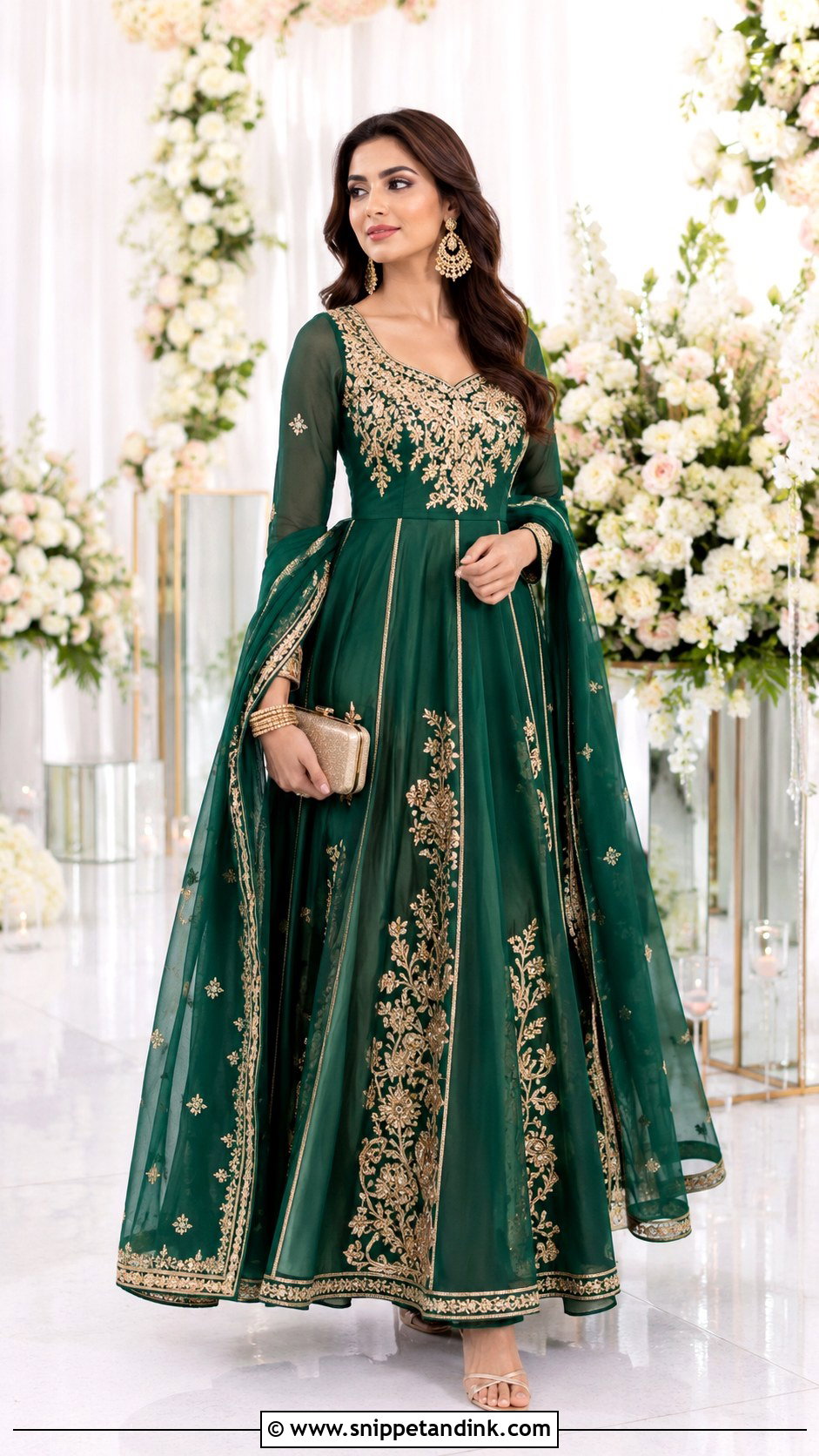
Emerald holds its depth under warm evening light, which is why it works at receptions where paler greens wash out. Velvet, silk, chiffon or georgette all take gold, champagne or tonal green embellishment. A fitted bodice over a paneled skirt is the most forgiving cut I know for a wide range of body types. Champagne heels, a gold clutch, drop earrings and one or two slim bangles are enough; on heavily worked fabric, drop the bangles. Choose a matching dupatta for a column of color, or muted gold for contrast, and finish with a side-parted low bun.
18. Navy Blue Long Frock for Wedding
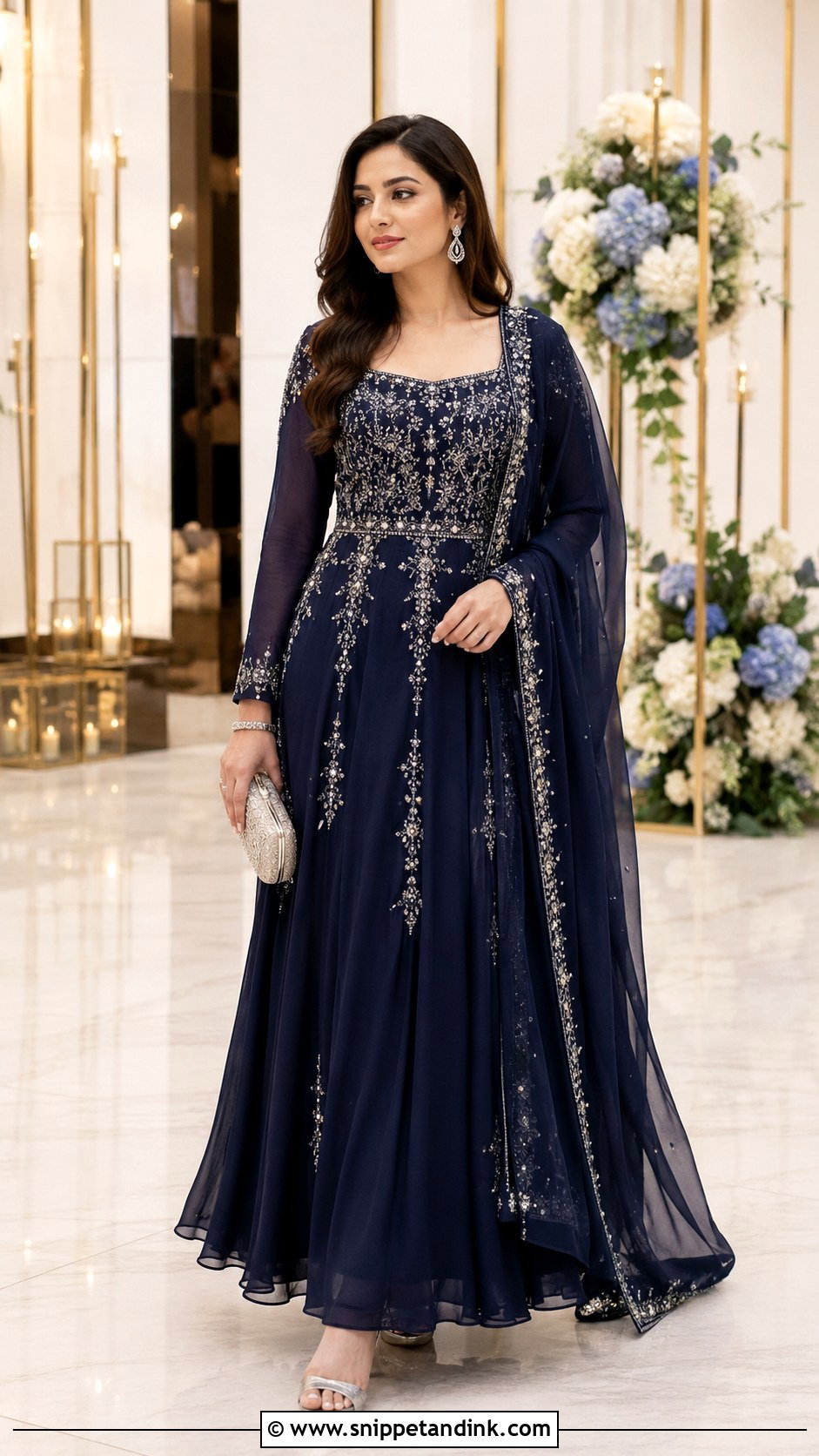
Navy is my standard suggestion for clients who want black’s formality without the question of whether black is appropriate. A floor-length frock with silver embroidery or tonal beadwork works for traditional and modern functions alike, and the neckline can follow your jewelry plan. Keep the metals silver across heels, clutch, earrings and bracelet. A smoky blue or matching navy dupatta keeps the color story calm. For daytime, I’d lighten it with chiffon and less embroidery, because dense navy in direct sun can look flat.
19. Blush Pink Long Frock for Wedding
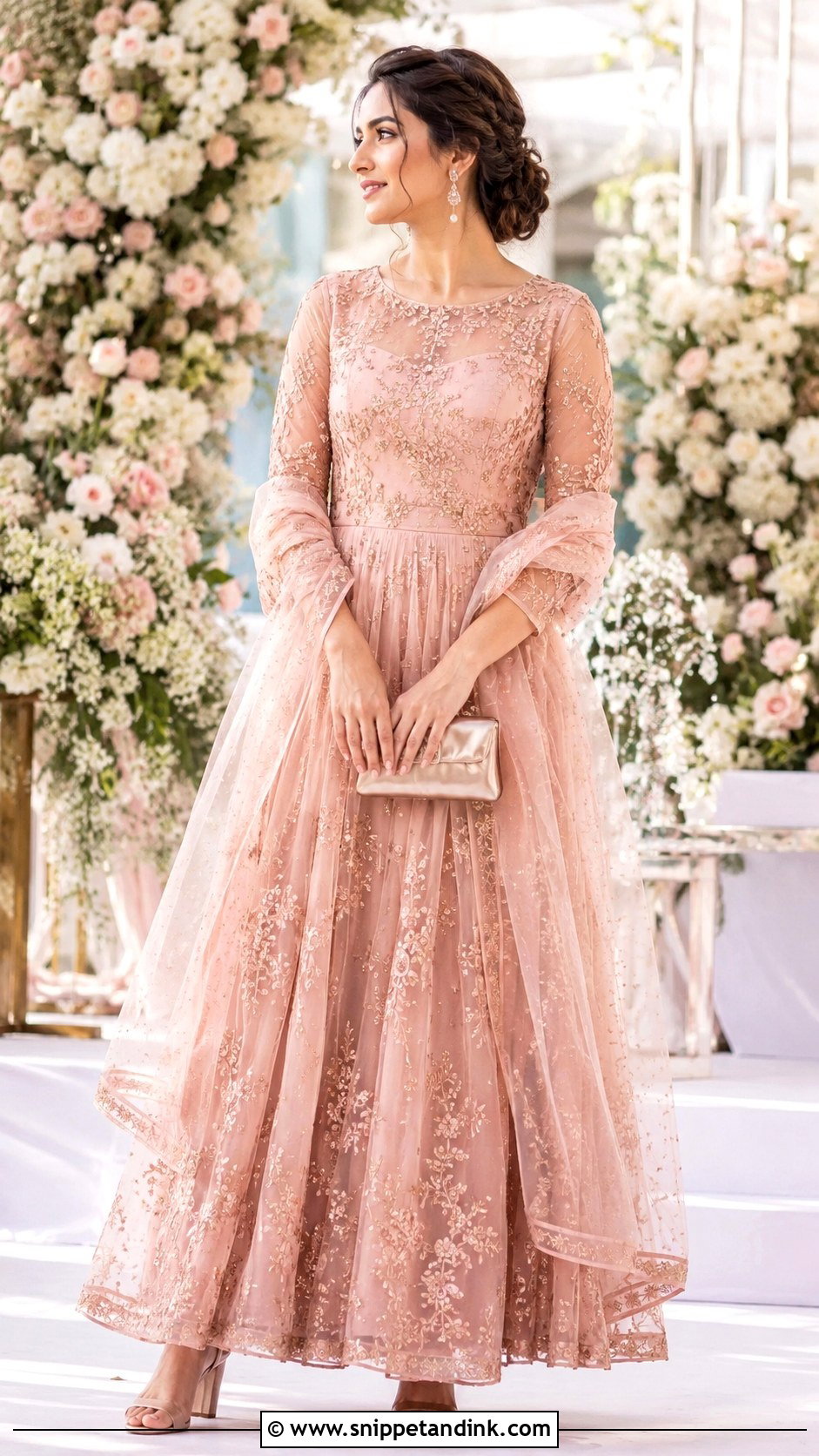
Blush pink is the shade I’m most careful with for guests, since it often sits close to the bride’s own palette. Before you buy, ask a sister or the planner what the bridal party is wearing. In flowing chiffon or net with rose-gold embroidery or scattered pearls, keep the waist defined and the volume controlled so the pastel doesn’t tip into sugary. Nude or rose-gold block heels, pearl drops, a satin clutch and soft curls finish it. If you need more contrast against a pink-heavy wedding, bring in mauve or berry accessories.
20. Plus-Size Long Frock for Wedding
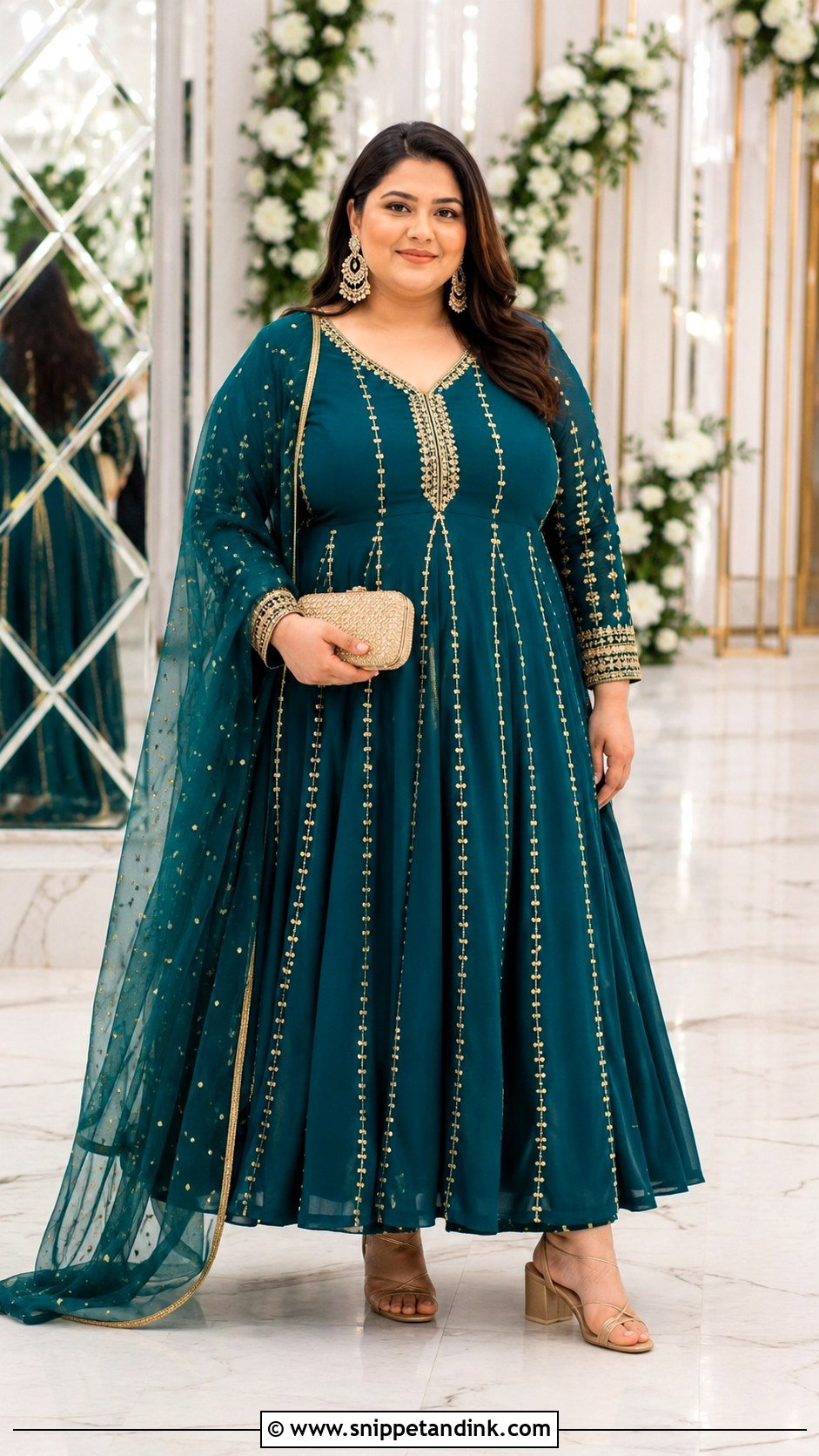
A well-tailored long frock works at every size, and the cut matters more than the fabric. I look for an Anarkali, wrap-style Angrakha or paneled A-line that fits through the shoulders and bust, then releases. Stiff fabric and dense gathers add bulk exactly where clients don’t want it, so I choose chiffon, georgette, crepe or soft silk with a smooth lining. Vertical embroidery lines lengthen the frame. Supportive block heels, statement earrings and a light dupatta held with discreet pins make it wearable all evening, and the right undergarments, fitted at the same appointment, finish the job.
Three Things I Test at the Last Frock Fitting
A long frock that looks right standing still can still fail in the first hour. At the final fitting I run the same three checks with every client, in the shoes and undergarments she’ll actually wear.
The Stair Test
Walk up and down a few steps holding the skirt in one hand. If you have to lift more than a few inches to clear the hem, it’s too long or the flare is too full at the front. A tailor can shorten the front slightly so the back still sweeps.
The Plate Test
Sit, reach across a table and lift your arms as if serving food. Fitted bodices in raw silk, brocade and velvet pull at the armhole first. A little extra ease there costs nothing in photos and saves the evening.
The Dupatta Test
Pin the dupatta exactly as you plan to wear it and turn quickly. If it slides, add a second safety pin underneath the fold or a small snap sewn to the shoulder seam. Brides wearing the dupatta over the head should rehearse this with their hairstylist present.
Carrying an Embellished Frock Between Three Functions
Wedding weeks mean frocks get packed, unpacked and worn again within days, and embellished fabric suffers most in transit. I fold heavy pieces inside out with tissue between the layers, so mirror edges and zardozi don’t snag the fabric below. Breathable cotton garment bags beat plastic, which traps moisture and dulls gota and metallic thread.
Steam from the inside, never press embroidery face down on a hot iron, and keep perfume off the fabric itself. After the wedding, air the frock for a day before storing it, and have heavily worked pieces professionally dry cleaned rather than washed at home.
Mehndi Afternoon or Walima Night, the Frock Should Change
Most frock decisions come down to the function, the weather and your role. An Anarkali or pishwas belongs at traditional ceremonies; cape, jacket and front-open designs suit receptions; velvet and zardozi carry formal winter evenings; chiffon, organza, florals and gota come alive in daylight. Before the day, check the hem, lining, sleeve movement and how your shoes feel after an hour. Then let the frock’s embellishment decide your jewelry rather than piling on every statement piece you own.
You'll Like These Ideas:






Leave a Reply