
A wedding frock has to suit more than your taste. It has to suit the function, the venue, the season and your role, because what works for the bride at a walima is not what her sister should wear to the mehndi. The designs below range from floor-length Anarkalis and pishwas to layered jackets, short frocks over sharara and clean satin. Defined waists, corset-style bodices and textured fabrics are popular right now, and most of these can be customized by a good tailor. Each look comes with shoes, jewelry, hair and a bag, and I’ve noted which shapes suit the bride, a bridesmaid or a guest.
Which Frock for Mehndi, Nikah, Baraat or Walima?
In a multi-day wedding, each function has its own mood, and the same frock rarely suits all of them. This is roughly how I divide them when styling a family.
- Mehndi and dholki: bright colors, shorter frocks over sharara or gharara, mirror work, and fabrics you can sit on the floor in. Expect dancing.
- Nikah: often quieter and more modest. Pastels, ivory, gentle embroidery and longer sleeves suit the ceremony, especially in a mosque or at home.
- Baraat: the most formal function. Floor-length Anarkalis, pishwas and heavier embroidery in jewel tones. Guests should avoid red if the bride is wearing it.
- Walima: elegant but lighter than the baraat. Net, organza, pastels and silver or pearl work suit the hosted, sit-down mood.
If you can only buy one, pick a mid-weight frock in a jewel tone and change the dupatta and jewelry between events.
1. Floor-Length Anarkali Wedding Frock
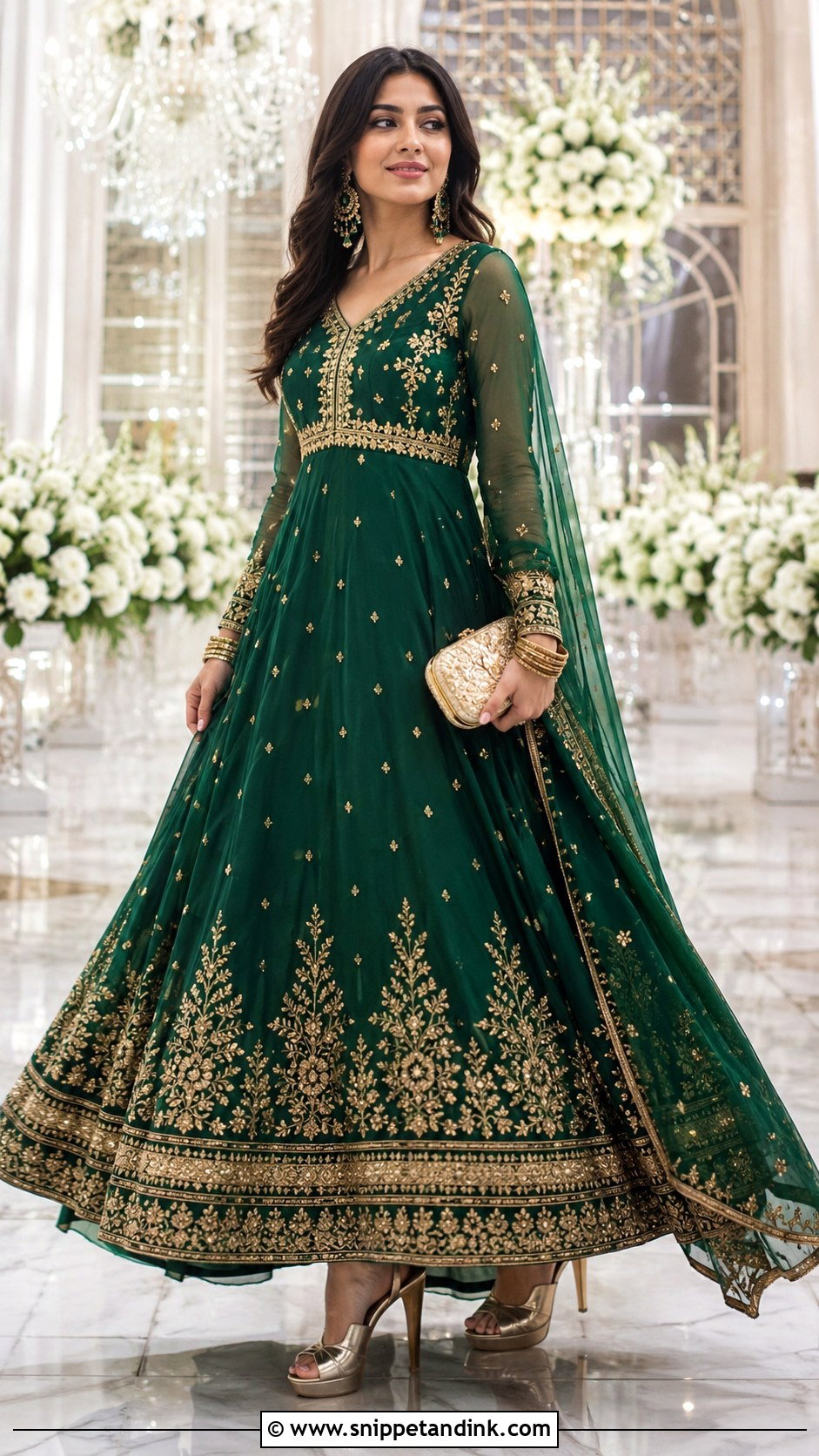
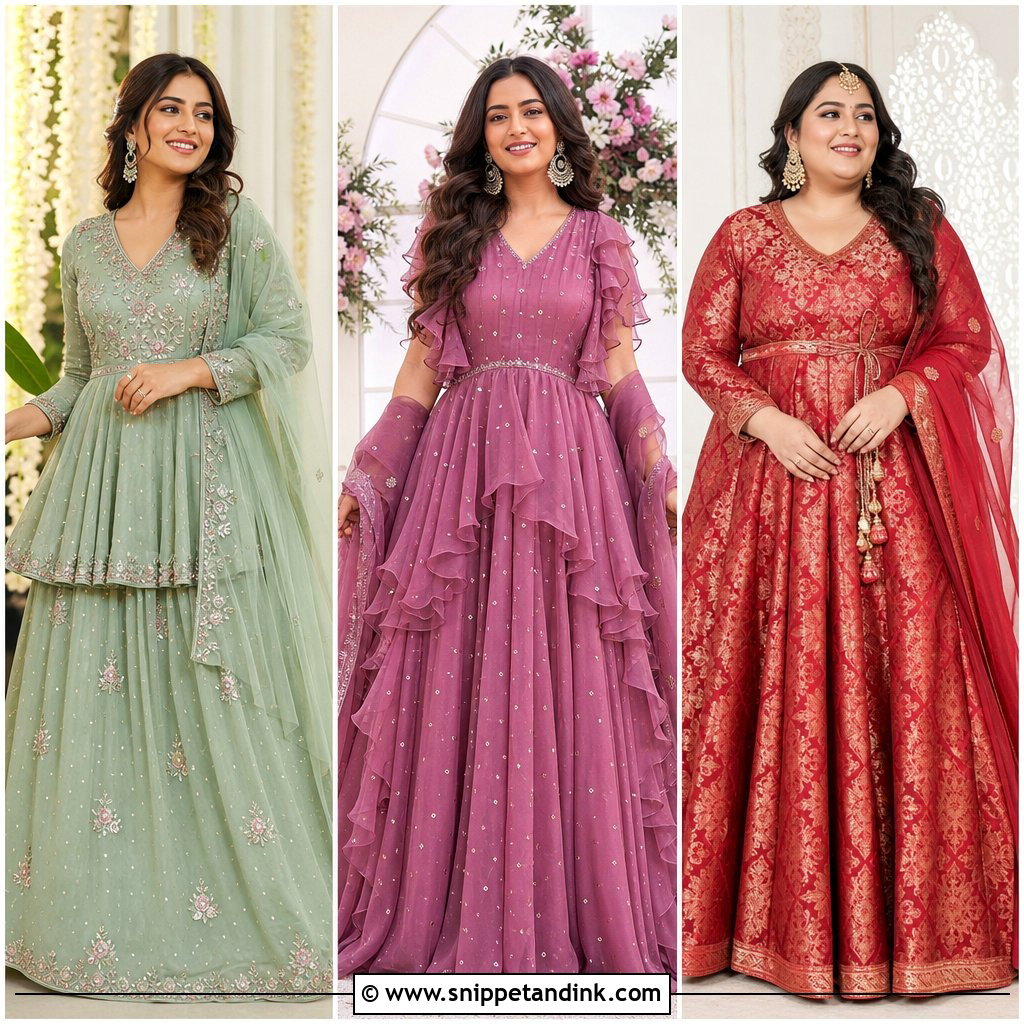
A floor-length Anarkali frock takes its flare from the panels, or kalis, sewn into the skirt; more panels mean a fuller swing when you turn. A fitted bodice above them keeps the shape from looking like a tent. Silk, georgette and light chiffon all drape well, and emerald, ruby, plum and navy look rich under evening lights. Keep the gold work to the neckline and cuffs. If the fabric is a little sheer, slim ankle pants underneath solve it. Metallic block heels, an embroidered clutch, drops and stacked bangles finish it, with a low bun or side-swept waves.
2. Embroidered A-Line Wedding Frock
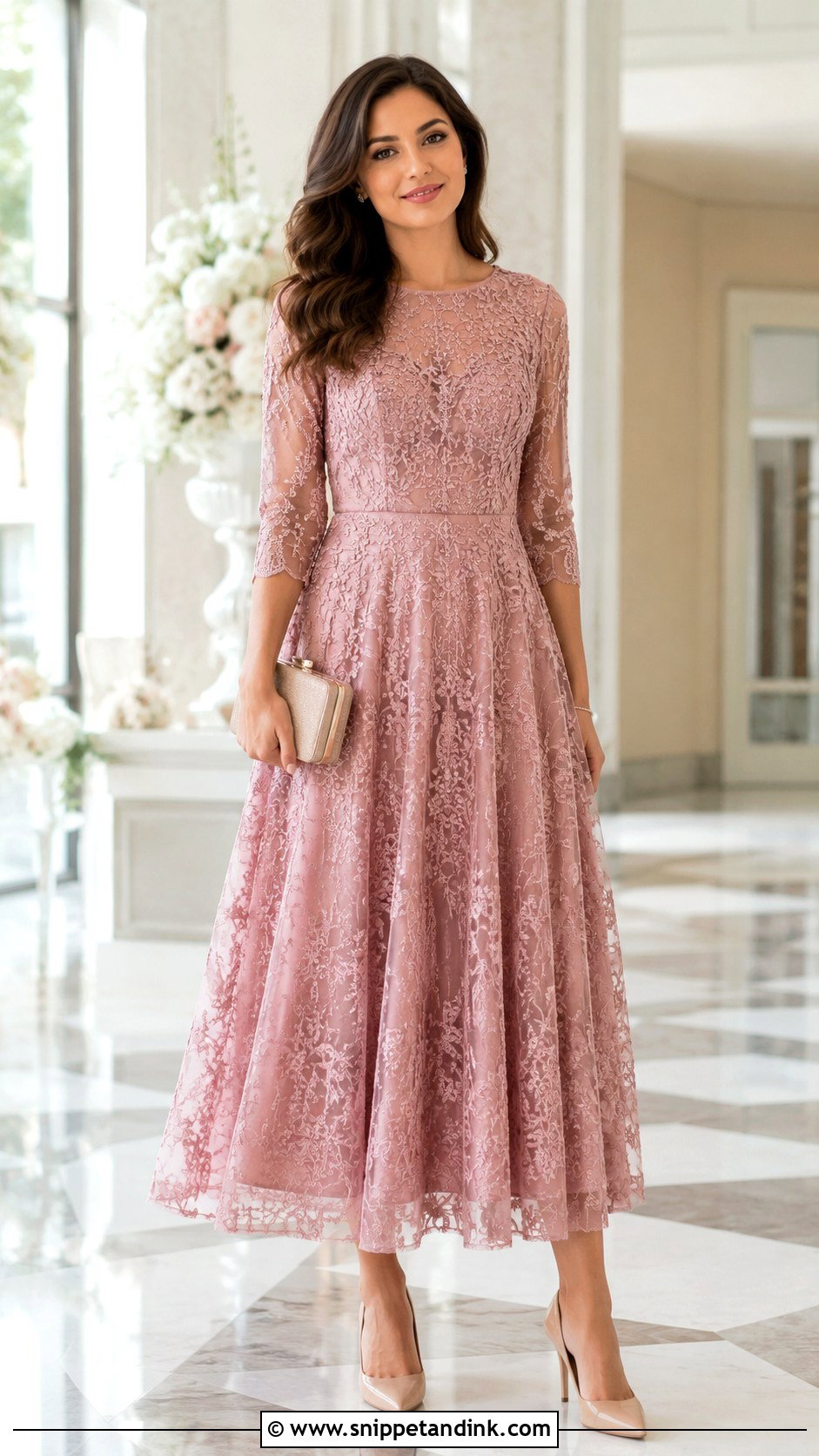
The A-line follows the shoulders and upper body, then widens gradually, so it defines you without clinging. I suggest it to brides’ sisters and cousins who want something fitted but will be on their feet hosting all day. Threadwork, sequins or beading should sit around the bodice and sleeve edges, where it frames the face in photos. Dusty rose, deep teal, mauve and champagne cross from day to evening. Pointed pumps or embellished sandals, a box clutch, crystal studs and a slim bracelet keep the shine controlled. Three-quarter sleeves and a light dupatta over one shoulder add coverage.
3. Long Pishwas Wedding Frock
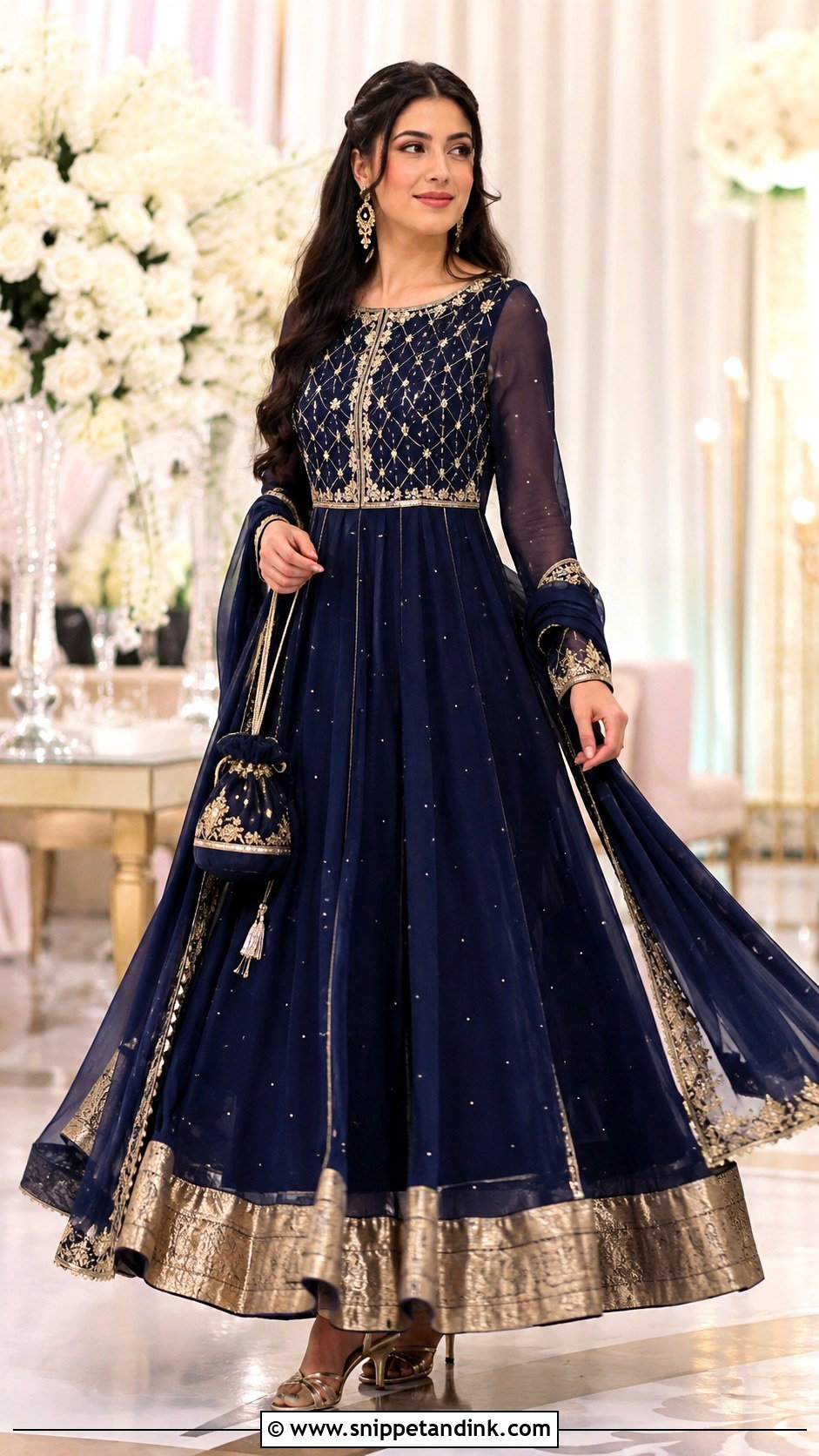
The pishwas is fitted to the upper body and then falls into a long, generous flare. A long pishwas frock moves best in chiffon, organza or georgette, which swing when you dance. Paneled construction spreads the volume around the hem rather than bunching it at the waist, so ask your tailor how many panels the pattern uses. Hem borders in zari, pearls or threadwork add weight at the bottom, which helps the skirt hang. Maroon, forest green, midnight blue or antique gold with low metallic heels and a matching potli is enough. Long earrings and a ring, and a center-parted bun with soft pieces at the face.
4. Angrakha Wedding Frock
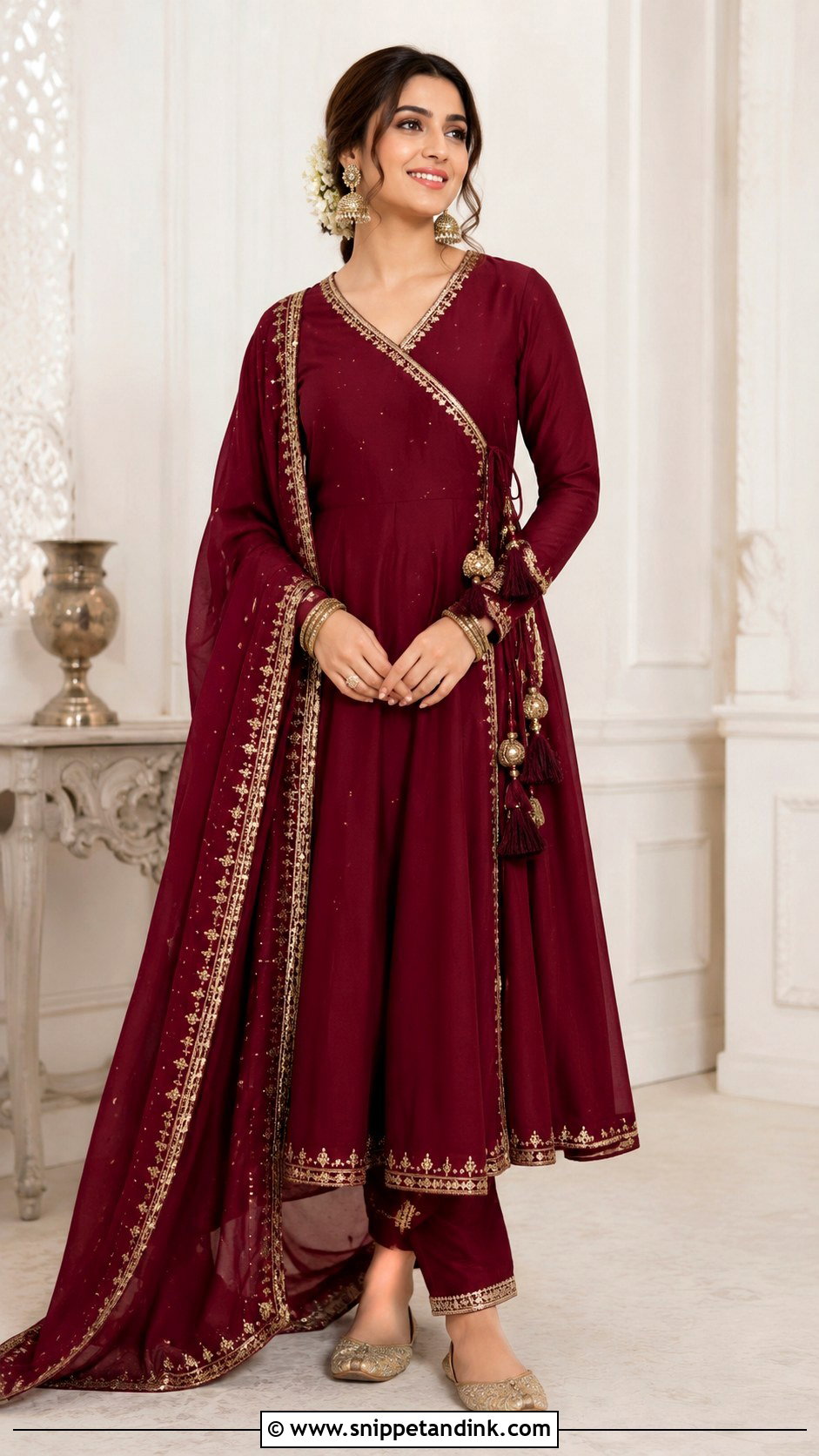
The angrakha wraps across the body and ties at the side, giving a diagonal neckline and a waist you can adjust. That adjustability makes it the frock I recommend most for a long day with a big meal in the middle. Calf or floor length both work, with decorative ties, beaded tassels and a contrasting border. Raw silk suits winter; chiffon and georgette keep summer weddings bearable. The ties are the weak point, so check they’re stitched securely and the overlap doesn’t gape when you sit. Narrow trousers, embroidered flats, jhumkas and a few bangles suit it, with the dupatta on the opposite shoulder so it doesn’t hide the wrap, and a braided low bun.
5. Jacket Style Wedding Frock
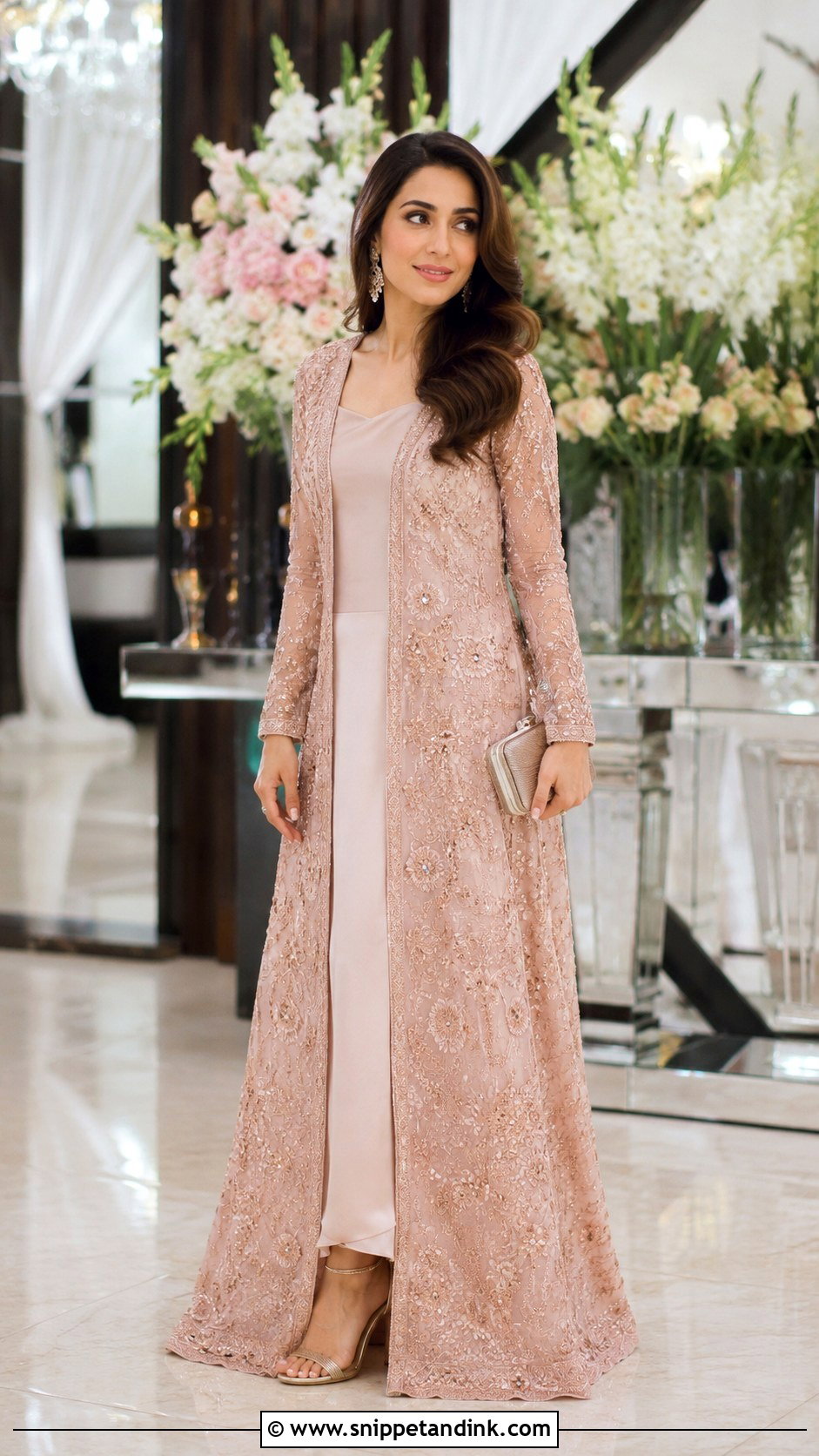
Layering is the answer when you want coverage without heavy sleeves. Start with a simple sleeveless or short-sleeved inner frock, then add a long embroidered jacket in organza, net or brocade, worn open or fastened at the waist. A plain inner layer under a detailed outer one keeps it from looking busy. Ivory with gold, navy with silver or blush with rose gold all work. The jacket adds warmth too, which is useful in winter marquees, and you can take it off once the dancing starts. Sleek heels, a structured clutch and medium earrings are enough; skip bracelets if the cuffs are worked. Straight hair or a polished ponytail keeps the long vertical line.
6. High-Low Wedding Frock
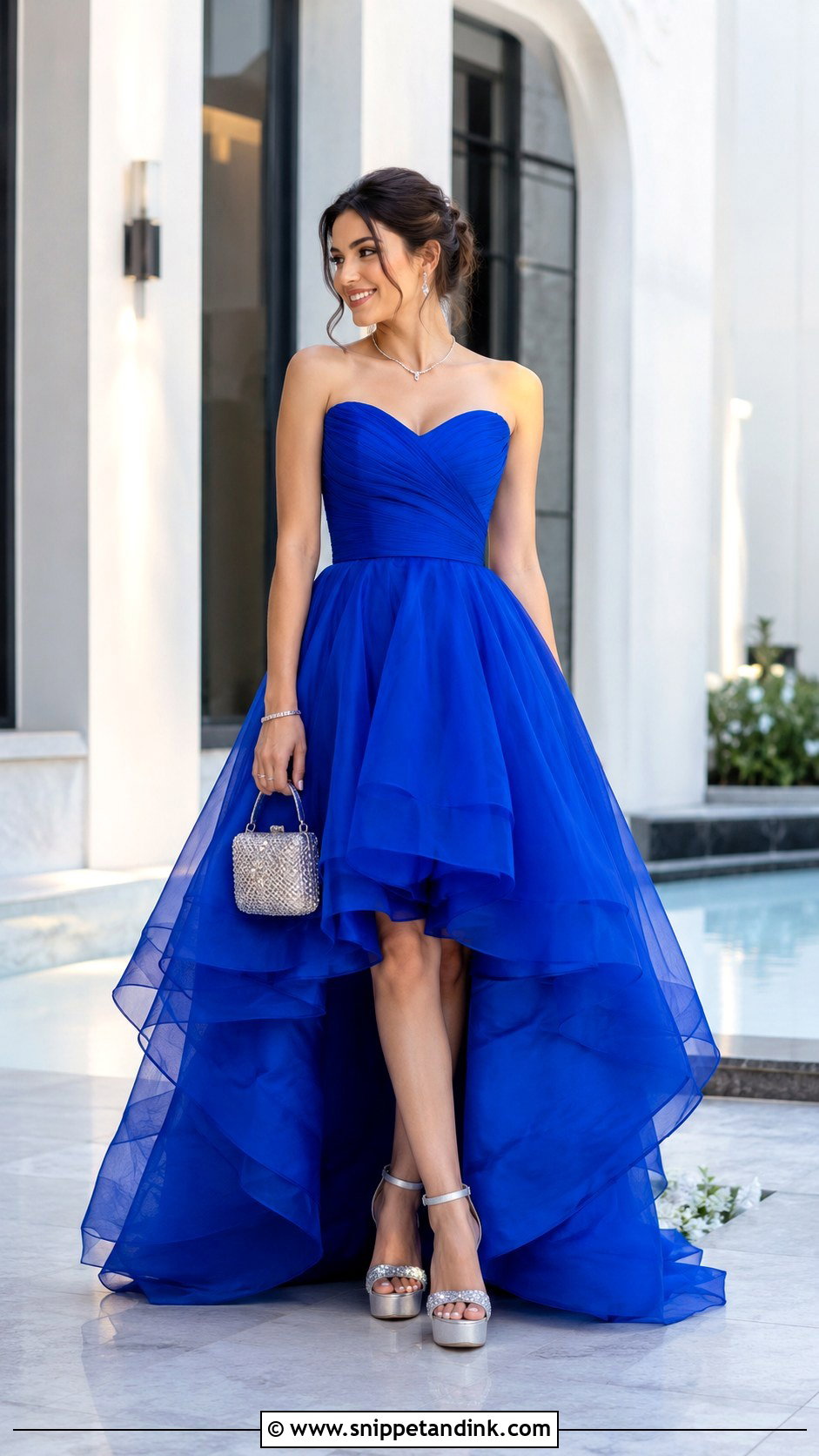
High-low hems show the shoes while keeping a long back, which makes them better for receptions and cocktail events than for a traditional ceremony. Keep the drop between front and back subtle; an extreme cut looks casual. Satin, taffeta and layered organza hold the curve of the hem, while soft fabrics let it collapse. The front should land at a point below the knee that works with your heels, so fit it with your shoes on. Cobalt, berry, sage or burgundy with statement heels and a small metallic bag, crystal earrings and one bracelet, plus a smooth ponytail or loose curls.
7. Cape Sleeve Wedding Frock
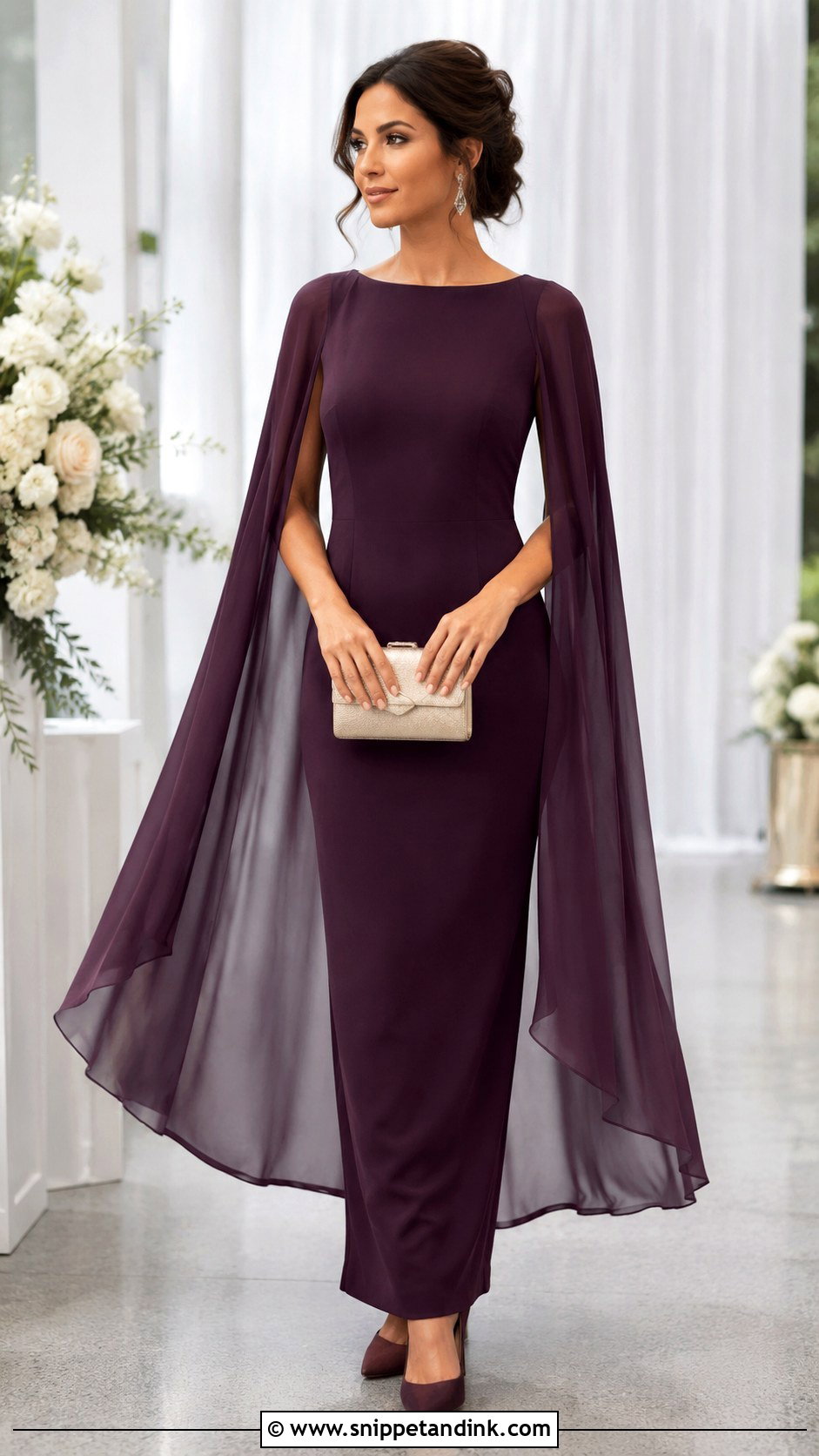
Cape sleeves give arm coverage without the tightness of a fitted sleeve, which I find suits women who run warm or don’t like their arms restricted. The cape can fall from the shoulders, attach at the neckline or float down the back. Sheer chiffon or organza moves well over a satin or crepe base. A slim A-line or column base keeps the layered top from overwhelming you. Plum, sapphire, dark green and soft gray suit formal settings. Pointed heels, an envelope clutch and drop earrings work, with no necklace if the cape has beading. Wear your hair up so the cape stays visible.
8. Floral Organza Wedding Frock
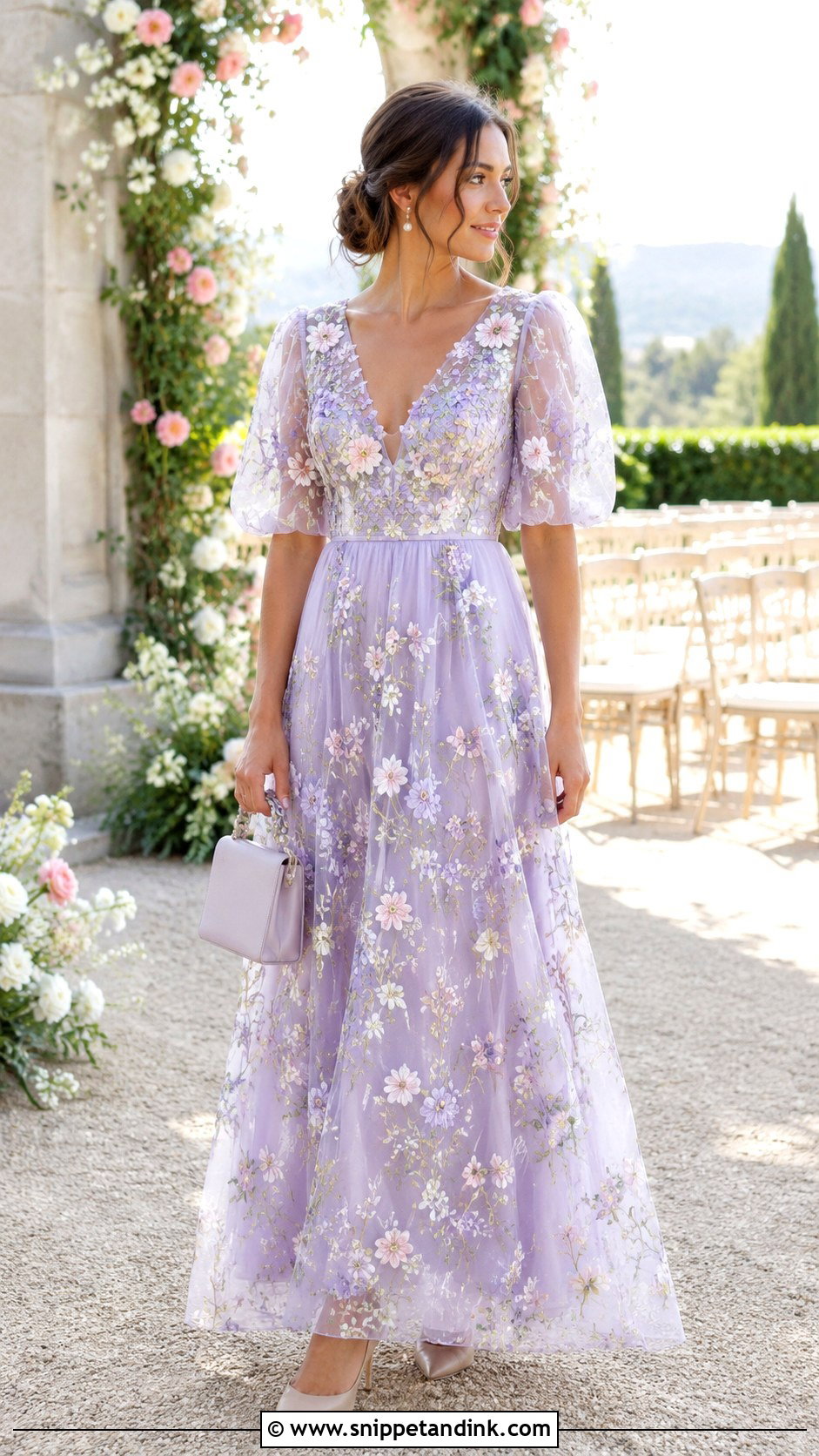
Organza is transparent, so the lining is the first thing I check on a floral one. A lining close to your skin tone or to the background color of the print gives a clean finish; a white lining under pastel organza can look chalky in photos. Printed flowers, embroidered vines or a few 3D appliqués work better than decoration everywhere. A fitted bodice with a tea or ankle-length skirt gives the fabric shape. Lavender, pale blue, peach or mint suit a garden or daytime event, with neutral slingbacks, a small pastel bag, pearl earrings and loose waves. If the print is bold, keep everything else plain.
9. Velvet Winter Wedding Frock
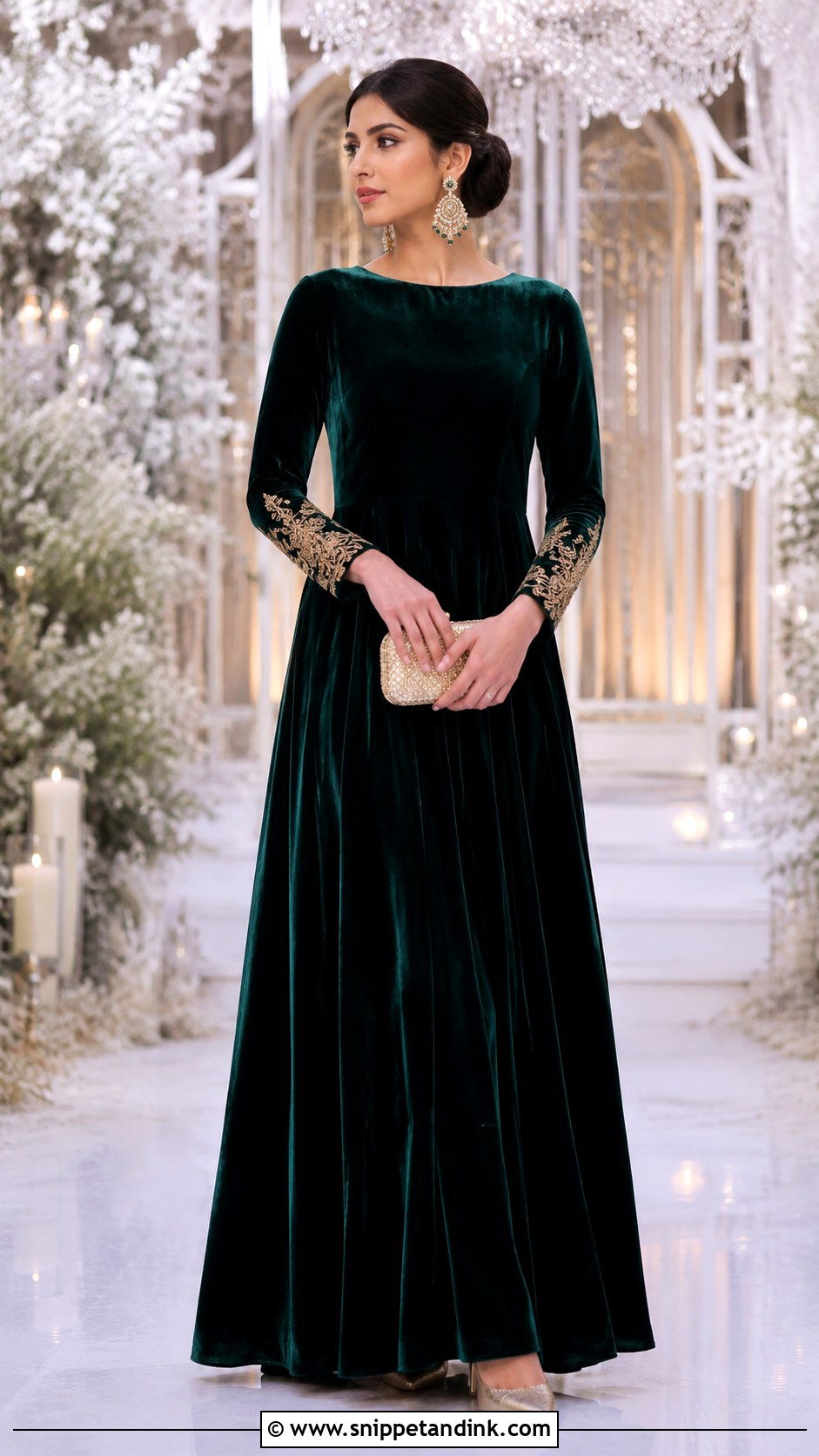
Velvet is warm, and that is both its charm and its problem. It keeps you comfortable at an outdoor winter function and can feel heavy in a crowded, heated banquet hall, so I ask brides to choose a breathable lining and sleeves with a little room. Burgundy, navy, bottle green and plum look deep and rich. A fitted waist, full sleeves and a gently flared skirt are classic. Gold work at the neck, cuffs or hem is enough; velvet already has texture. Closed-toe heels or embellished flats, a metallic clutch, chandelier earrings and one ring complete it. A low bun shows off a worked neckline.
10. Pastel Net Wedding Frock
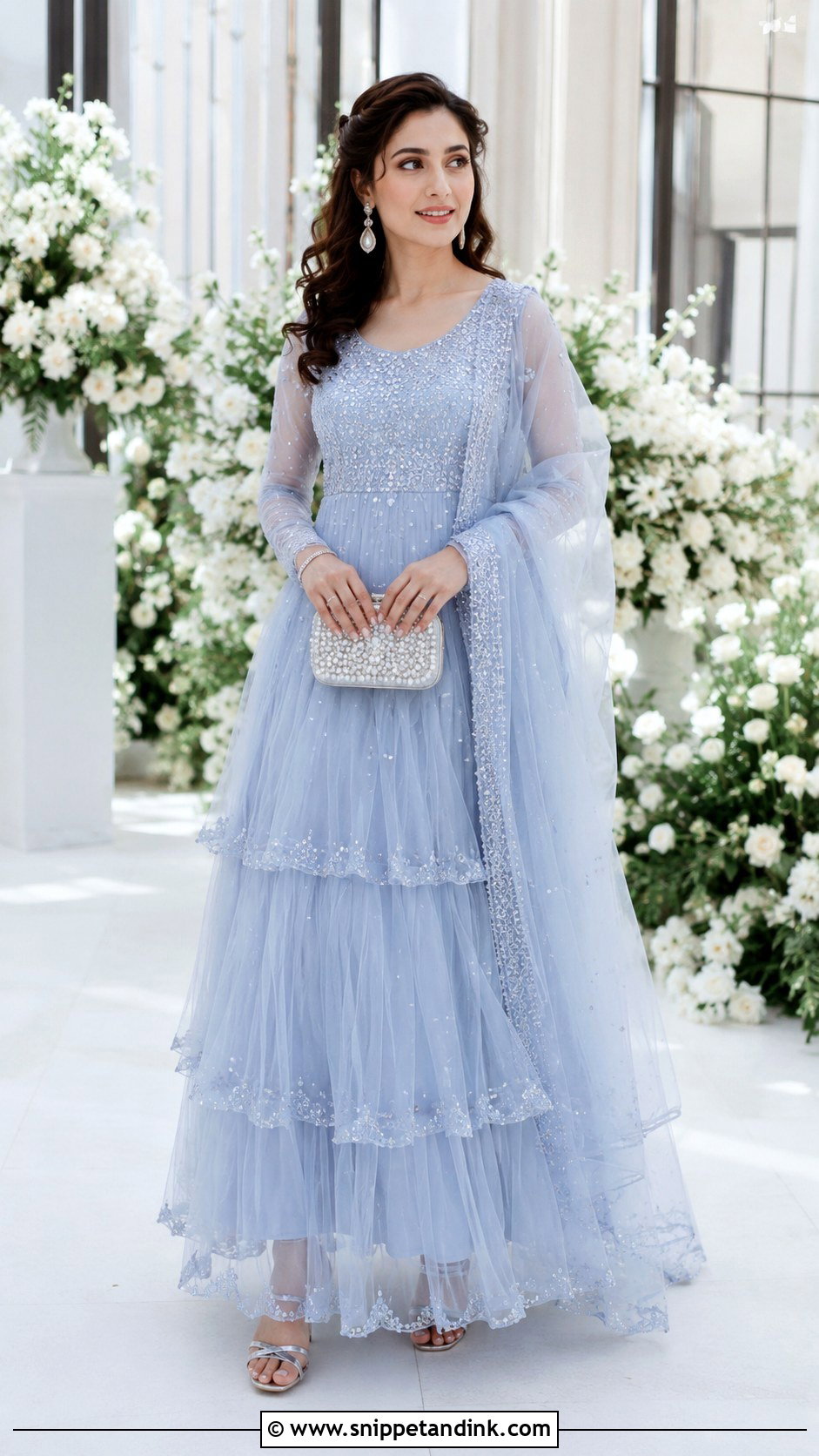
A pastel net frock looks light because the net is sheer; underneath, it needs an opaque lining or it looks unfinished. Powder blue, lilac, blush, mint and peach glow in daylight. Embroidery concentrated at the bodice and lower skirt, with a defined waistband, keeps the airy fabric shaped. Net catches on rough jewelry and bangles, so I keep bracelets smooth. Pin the dupatta lightly at one shoulder so you aren’t adjusting it all day. Nude or silver heels, a pearl-trimmed clutch and small earrings suit it, with loose curls pinned on one side or a neat bun.
11. Peplum Wedding Frock
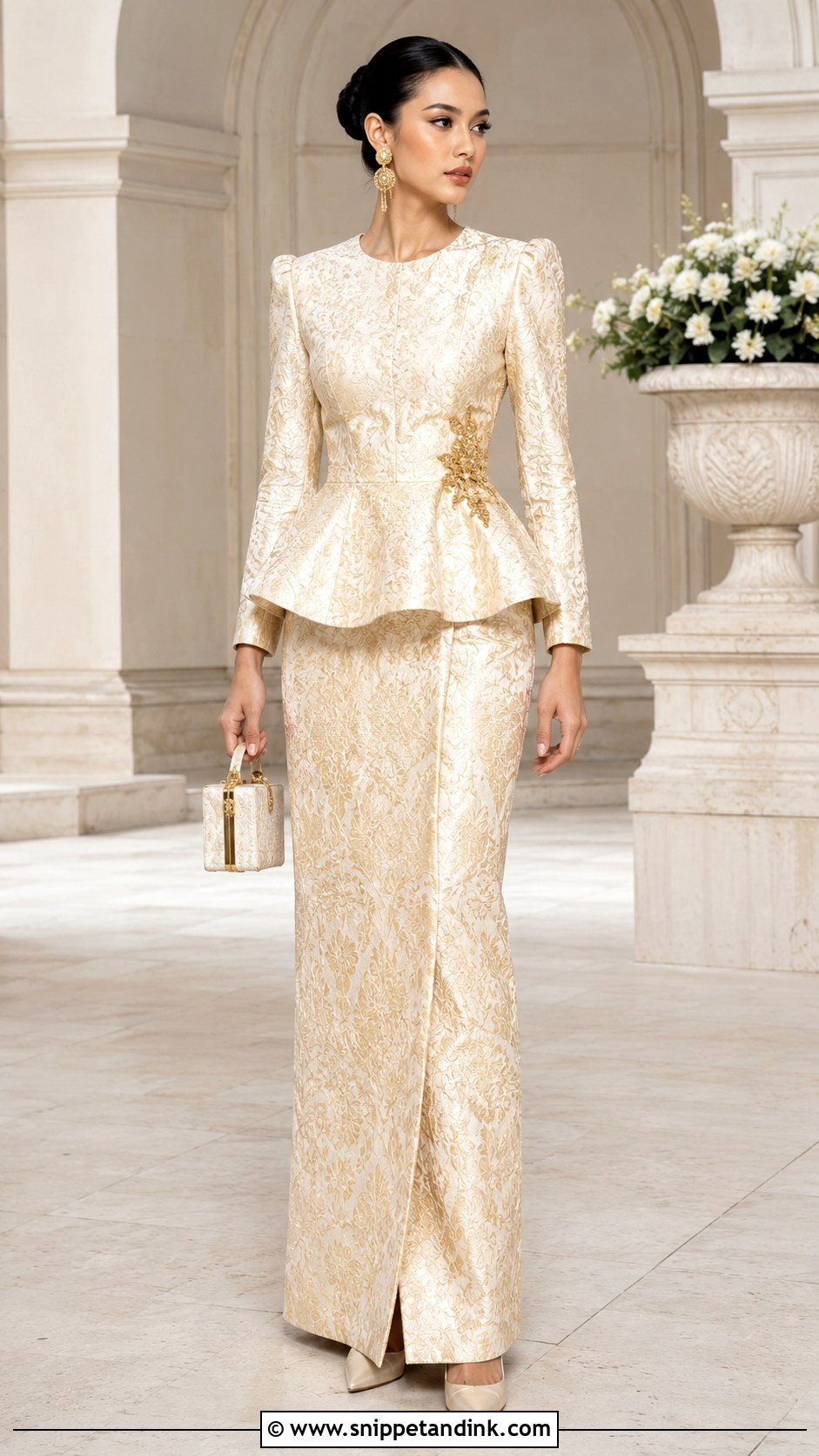
A peplum adds a short flared overlay at the waist, and its length decides whether it flatters. It should end below the widest part of your hip; a short peplum that stops right at the hip makes that area look wider. Below it, choose a straight maxi skirt, a light flare or slim trousers. Brocade, raw silk and jacquard hold the flare. Ivory and gold, wine, teal or black and silver look polished with pointed pumps and a structured mini bag. Wear bold earrings, skip a heavy necklace if the neckline is worked, and keep hair sleek. The waist fit has to be exact.
12. Layered Tulle Wedding Frock
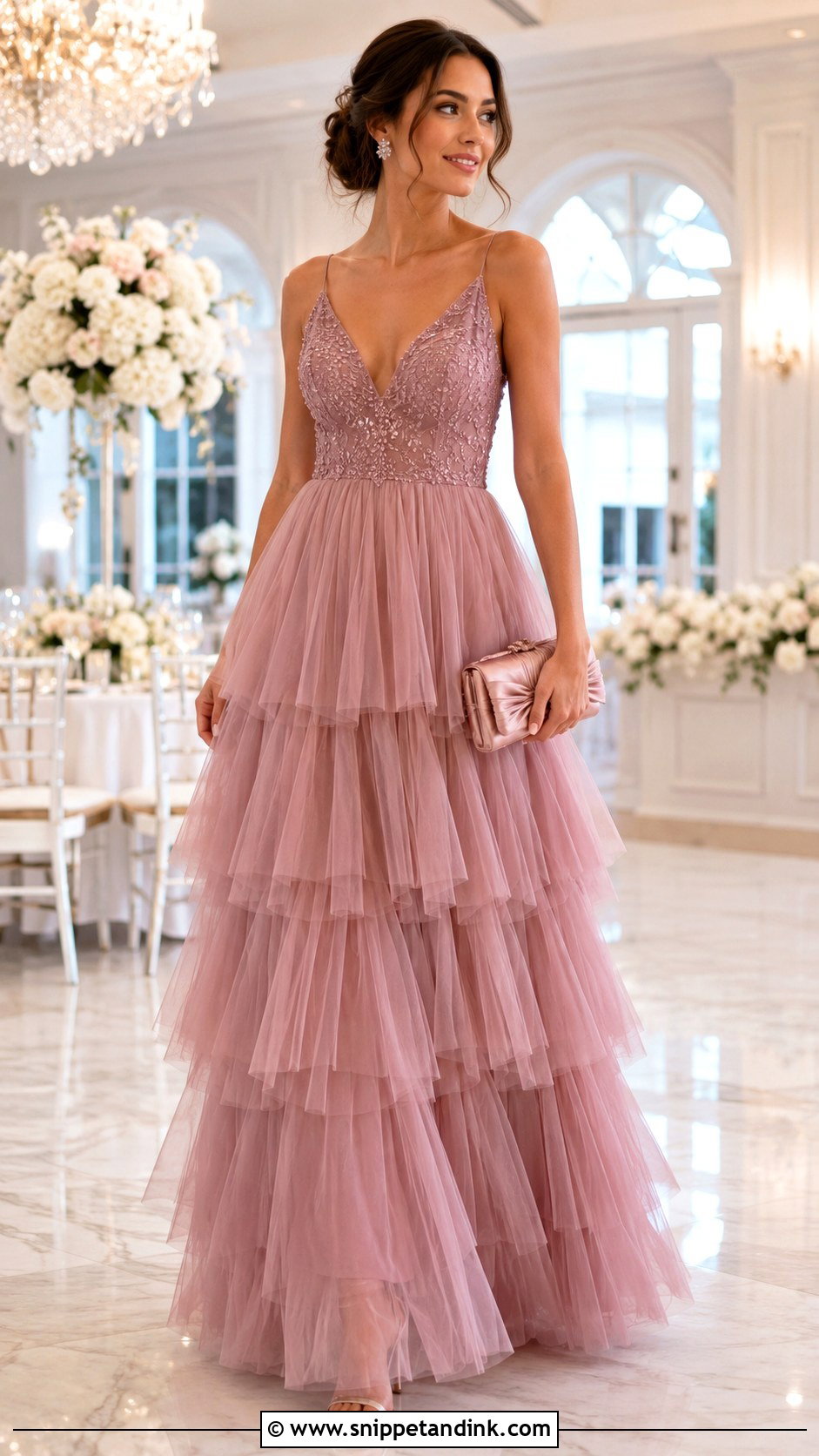
Tulle gives volume without weight, which is why layered tulle frocks are popular for receptions and bridesmaids. A fitted bodice with a supportive inner structure keeps the soft layers from swamping you. The tiers should fall smoothly; stiff tulle ruffles look bulky. Dusty blue, muted rose, lavender and charcoal look sophisticated. Tulle hems tear easily, so have it altered with your shoes on to keep the layers off the floor. Slim heeled sandals, a satin clutch and sparkling studs suit it; skip a long necklace if the bodice is beaded. A low ponytail or soft updo finishes it.
13. Front-Open Wedding Frock
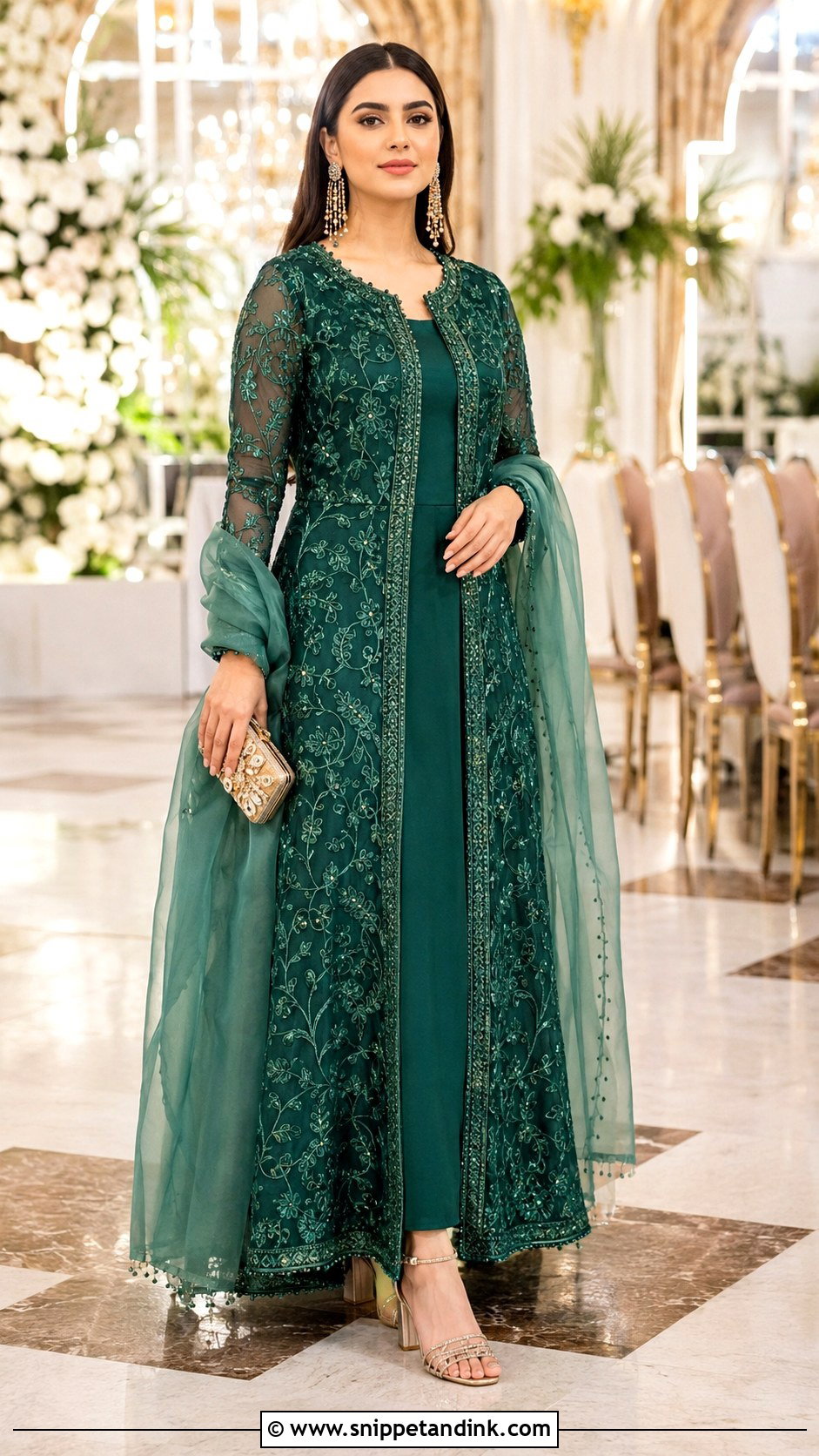
Front-open frocks create a long vertical line from neck to hem, which lengthens the whole outfit. The outer layer can open from the waist or neckline over a matching inner dress, skirt or slim trousers. I keep the two layers in one color family and contrast the texture instead, for example embroidered organza over plain silk. Gold, emerald, rust, navy and muted pink all work. The front panels must be pressed so they fall evenly, and heavy embroidery on one panel can make them hang unevenly, so check both sides match in weight. Block heels, a decorated clutch, long earrings and soft curls or a low bun suit it.
14. Short Frock With Sharara
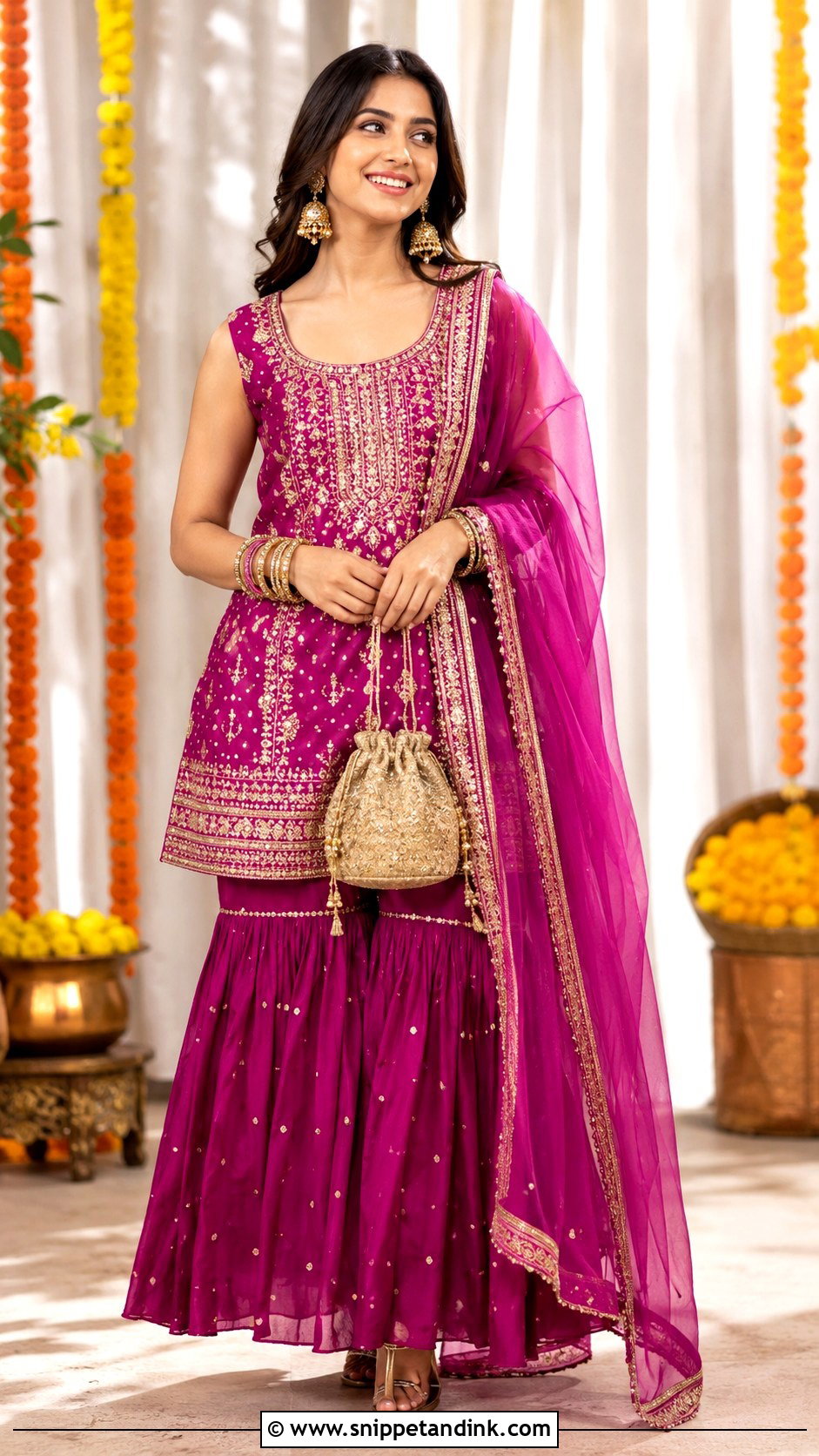
Short frock over sharara is the outfit I’d pick for a lively mehndi or dholki, where you’ll be dancing on floor cushions and moving constantly. The frock should end around the upper thigh or just above the knee, with the sharara flaring from below the knee. One decorated piece and one simpler piece look best; a worked short frock with a lightly embellished sharara is the easiest version. Add a sheer dupatta with a narrow border, metallic heels and a potli, plus statement earrings and stacked bangles. Magenta, turquoise, orange and lime suit daytime events; deeper shades suit the evening. Loose waves, a braid or a ponytail all work.
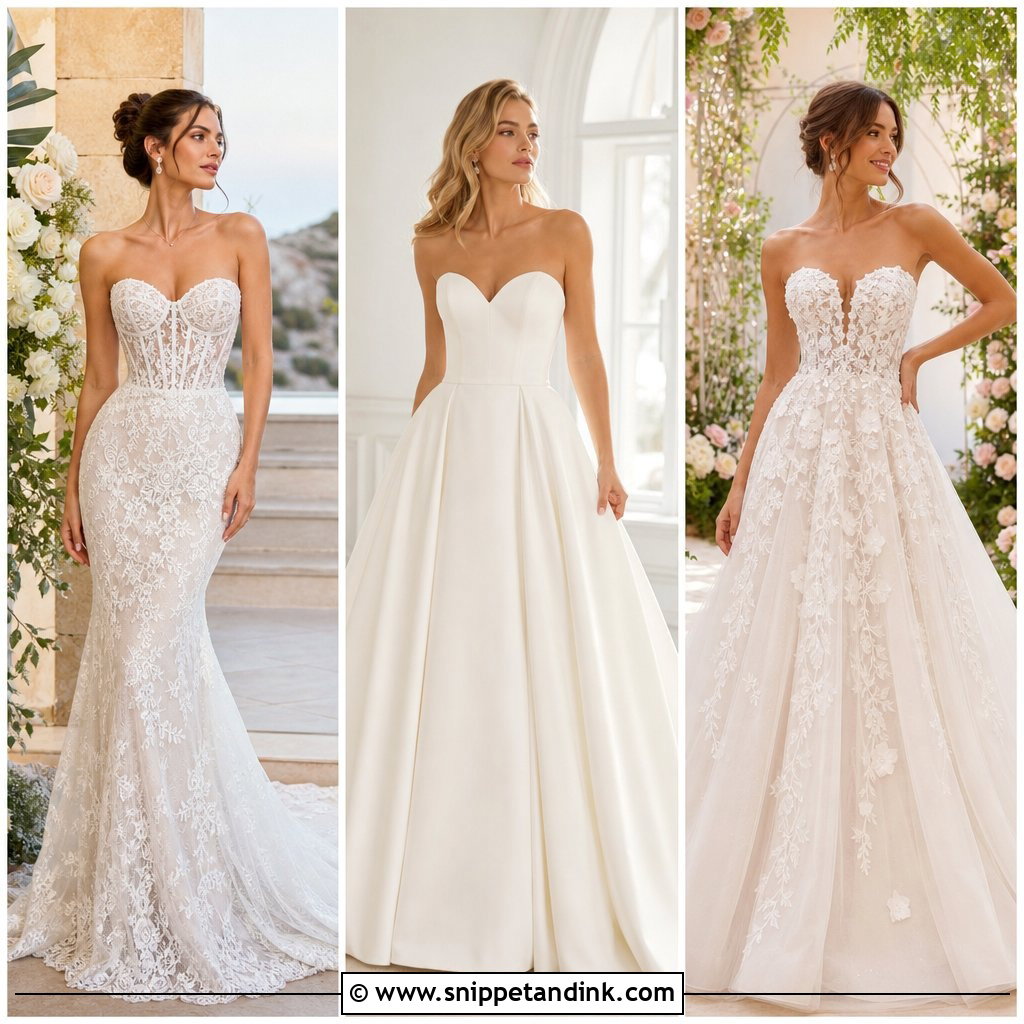
15. Asymmetrical Hem Wedding Frock
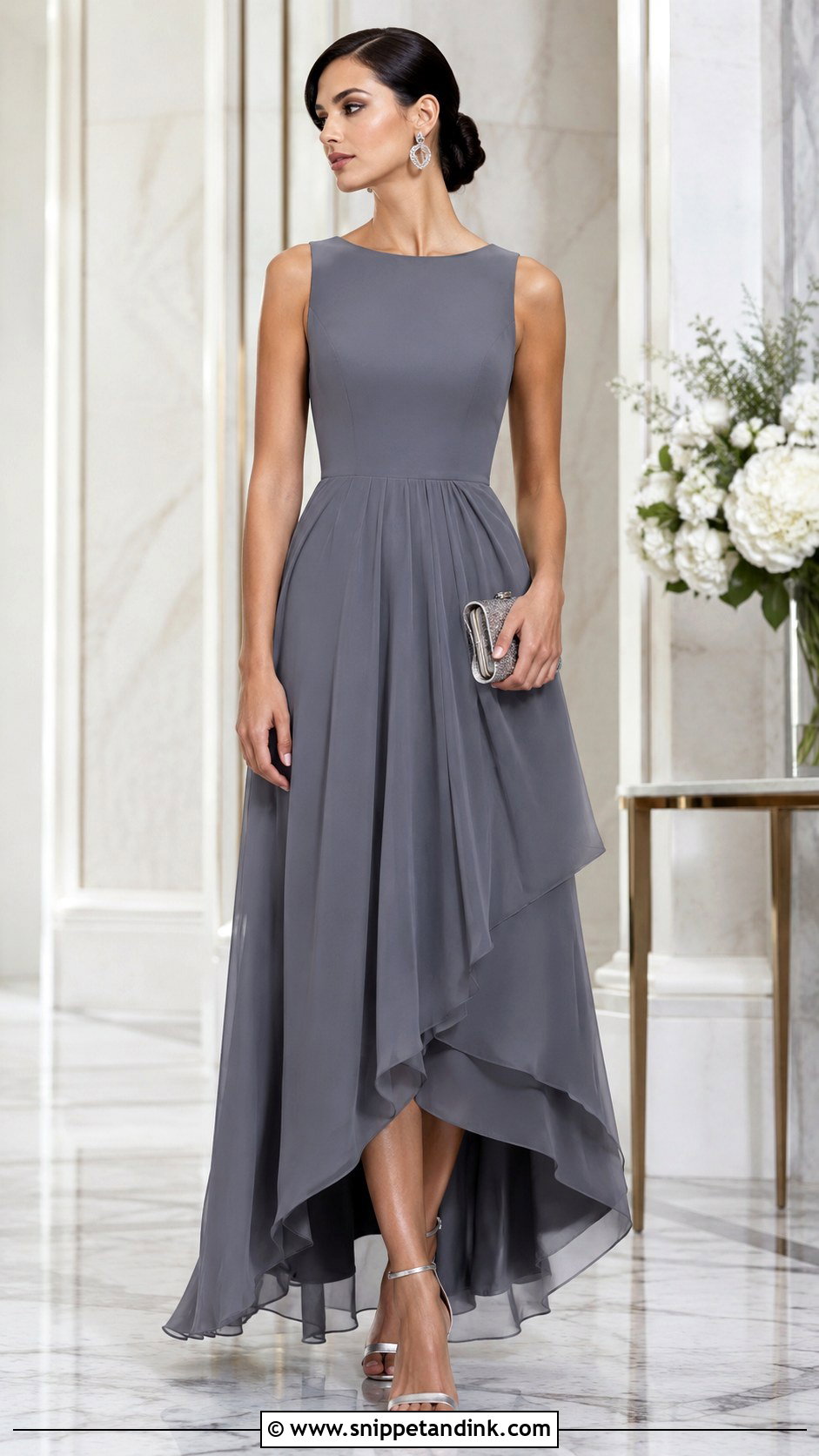
An asymmetrical hem dips at one side or falls on a diagonal, which is subtler than a high-low cut. It needs a fluid fabric to read as intentional: crepe, chiffon or soft satin. Keep the bodice clean and fitted so the hem is the only unusual feature. During alterations, check it from every side; an uneven hem can look like a mistake rather than a design if the angle is too slight. Deep red, midnight blue, steel gray or mauve with simple sandals, a compact clutch and one sculptural accessory, and a side-parted ponytail or sleek bun.
16. Pleated Chiffon Wedding Frock
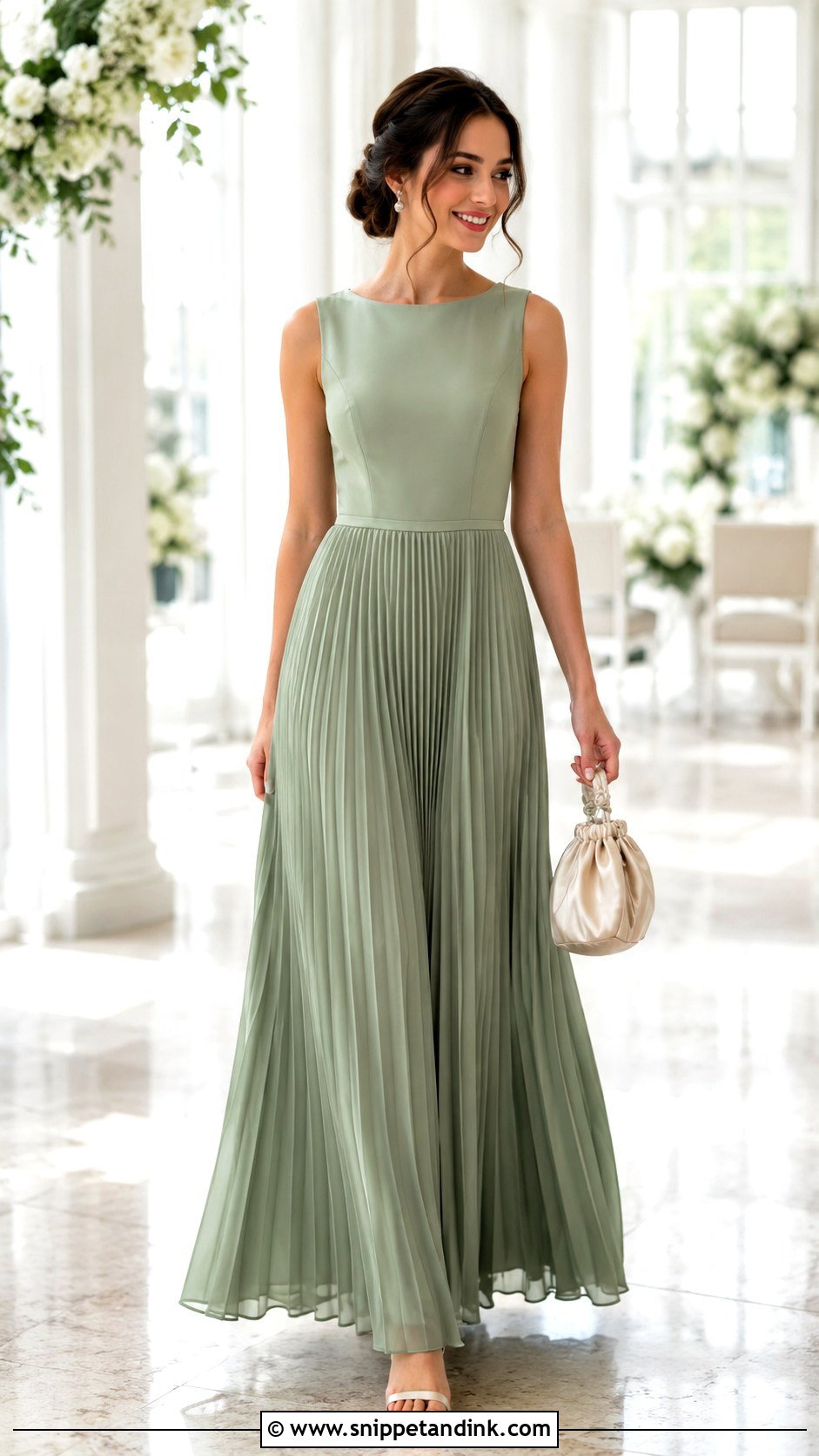
Fine pleats give chiffon texture while keeping it soft. Vertical pleats starting at or just below the natural waist look best with a smooth bodice. Sage, dusty rose, navy and champagne suit bridesmaids and guests. Pleats are fragile. Steam them gently from a distance before the event and store the frock hanging freely; folding it into a suitcase flattens them. A thin belt can add shape, but match it to the embroidery rather than adding a new color. Delicate heels, a small satin bag, pearl or crystal earrings and a soft updo or waves finish it.
17. Mirror Work Wedding Frock
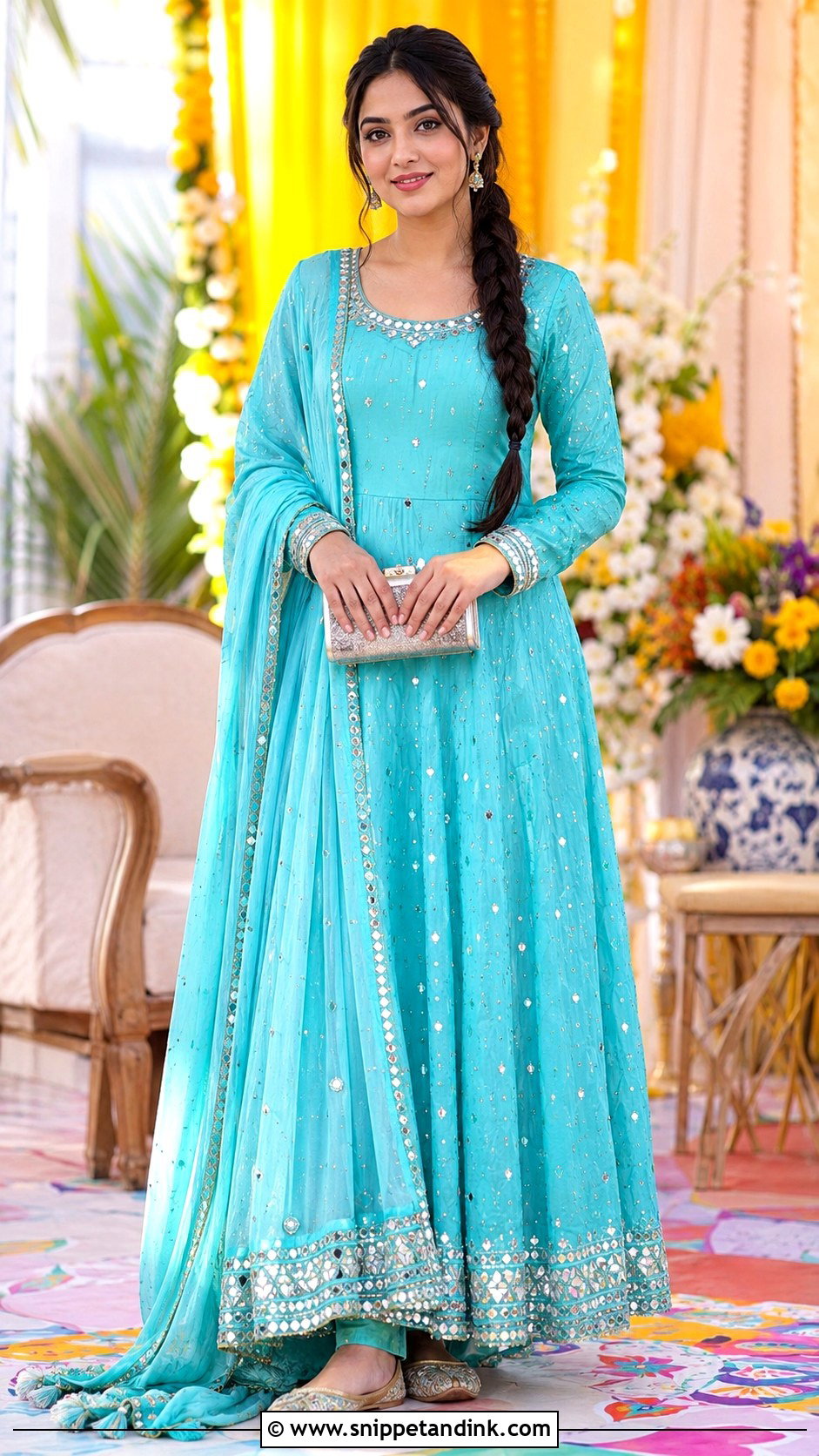
Mirror work reflects every light in the room, so it does most of the decorating for you. Keep the shape simple, a straight A-line or soft Anarkali, and concentrate the mirrors at the neckline, sleeves and border. Dense mirror work all over is heavy and can scratch the inside of your arms. Turquoise, fuchsia, mustard, royal blue and green suit the energy of daytime functions. One or two pieces of jewelry are enough; low metallic heels or embroidered flats and a plain clutch keep it balanced. Secure the dupatta, as chiffon snags on the mirror edges. A braid or half-up style keeps it practical.
18. Minimal Satin Wedding Frock
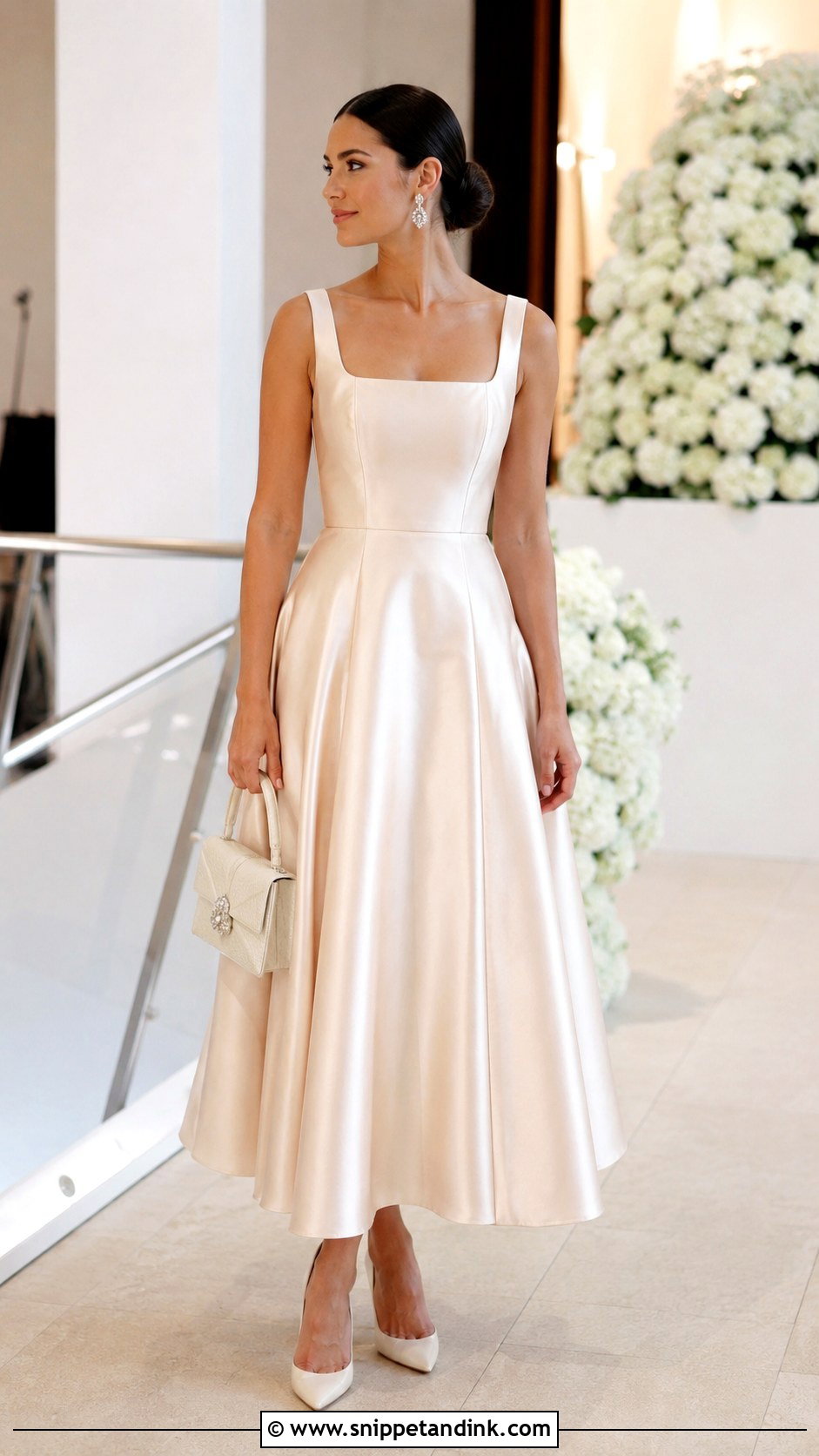
Plain satin hides nothing. The fit, the seams and the underwear all show, so this is the frock where I’d spend on tailoring before anything else. A defined waist with an A-line or softly draped skirt and a square, bateau or modest V-neck keep it refined. Jewel tones suit evening; champagne, sage, dusty blue and rose suit daytime. Choose smooth undergarments without visible edges. One noticeable piece of jewelry, either crystal earrings or a pendant, with pointed heels and a structured bag, plus a sleek low bun that shows off the sheen of the fabric.
19. Belted Maxi Wedding Frock
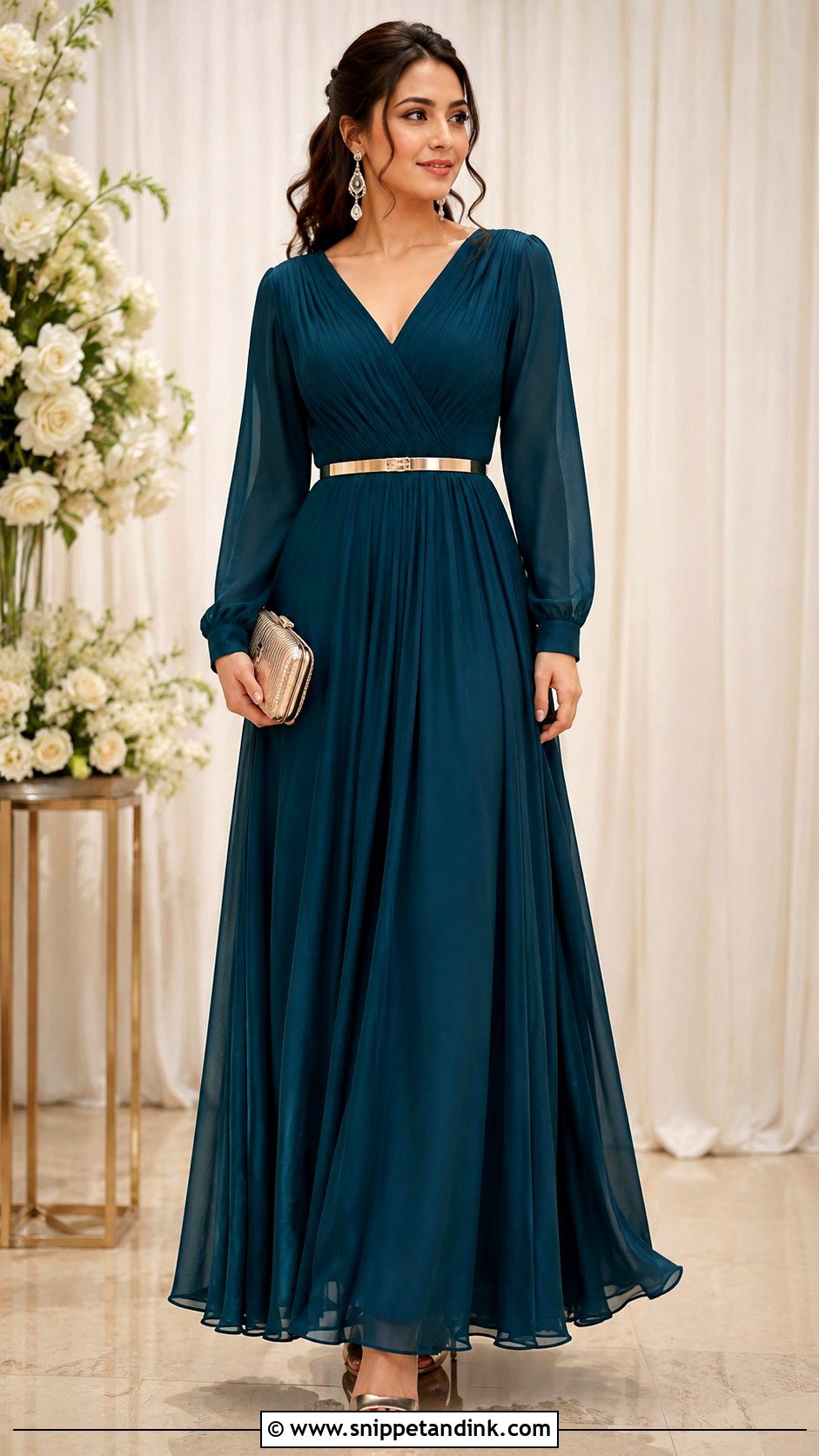
The belted maxi is the most adjustable frock here. A narrow embroidered, metallic or fabric-covered belt over chiffon, crepe or georgette lets you define the waist and loosen it after dinner. The belt should sit flat, without gathering bunches of fabric at the middle; a wider belt than the fabric can take always crumples. Long sleeves, a modest neckline and an ankle-length hem suit most settings. Teal, berry, soft gold or navy with coordinating heels, a slim clutch, drop earrings and a ring work well. It’s also useful if your measurements might change slightly before the wedding.
20. Tiered Ruffle Wedding Frock
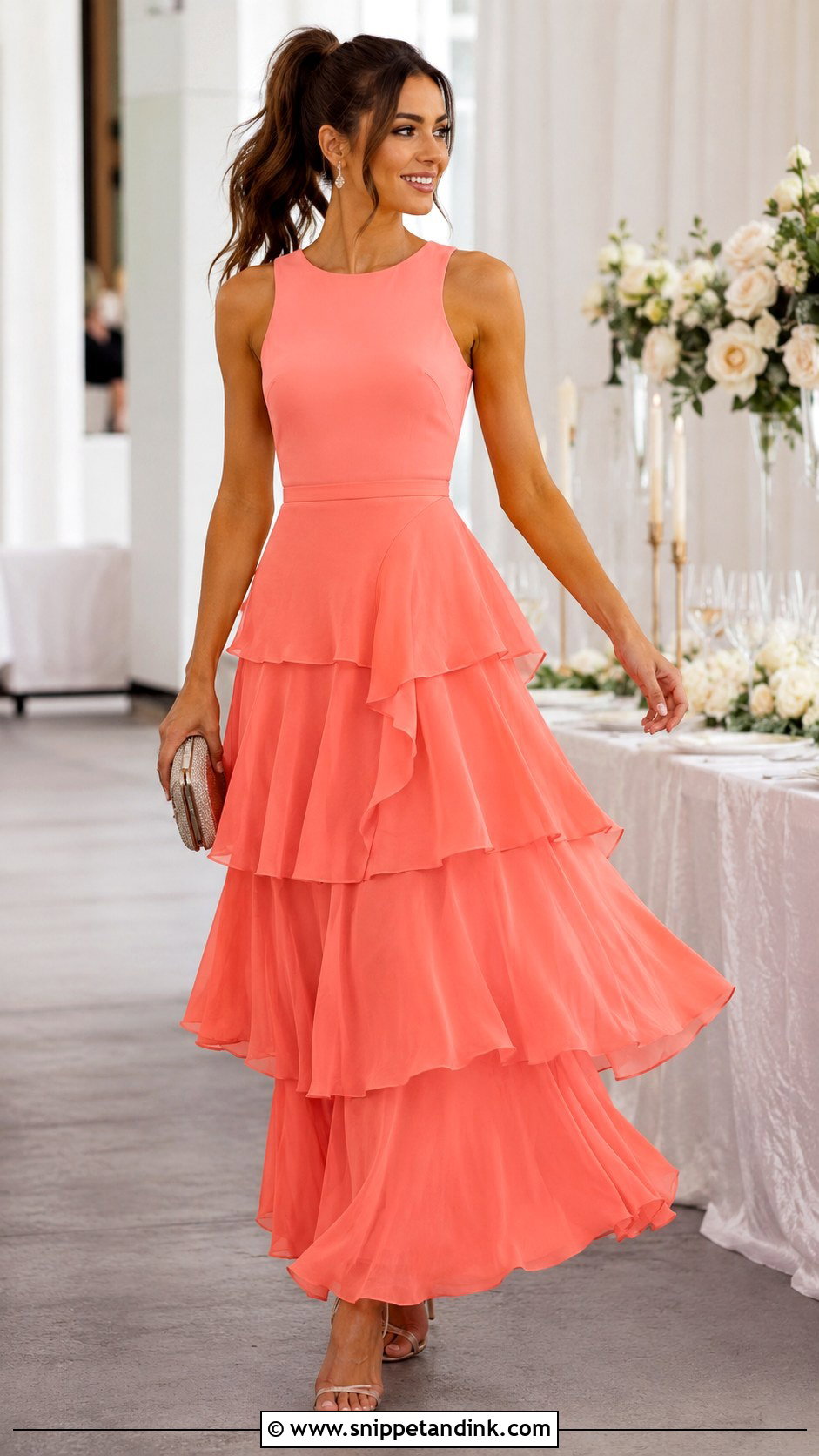
A tiered ruffle frock works for a reception or a semi-formal function. Narrow tiers in chiffon, georgette or light organza give movement without width; stiff fabrics make tiers look bulky. A smooth bodice and defined waist balance the fuller skirt, and one clear color, such as coral, emerald, lilac, cobalt or deep rose, keeps the layers looking sophisticated. Skip ruffled sleeves if the skirt already has several tiers. Walk and sit in it before the event, since tiers can bunch on a chair. Minimal heels, a small clutch, delicate earrings and a high ponytail or soft bun suit it.
Getting a Frock Stitched Without Last-Minute Panic
Most of these designs are made to measure, and wedding season fills tailors’ books quickly. I’d give a tailor several weeks for an embroidered frock, longer for heavy hand work, and plan at least one trial fitting with enough time left for changes.
Measurements and fabric
Have your measurements taken wearing the bra you’ll wear on the day; a different bra changes the bust and waist fit. For a flared frock, ask how many panels the skirt will have and whether a can-can petticoat is needed for volume. If you’re supplying cotton or lawn fabric, wash it first, since it can shrink after stitching.
The trial fitting
Bring your shoes. Sit, lift your arms and bend as if touching your feet, because a frock that fits standing can pull across the back when you sit at a table. Ask your tailor to leave some seam allowance at the side seams so the frock can be let out later. And check the lining against your skin: a scratchy lining under heavy embroidery is hard to tolerate through a long function.
Collect the finished frock at least a week before the first function, try it on at home with the full set of jewelry, and hang it in a cotton cover rather than plastic. That week is your buffer for a broken hook, a loose border or a hem that needs another centimeter.
Fitting the Frock to Your Role at the Wedding
Start with your role and the function, then the venue and season. Those decide most of the choices for you. Fabric weight, hem length, sleeve fit and how much embellishment you can comfortably carry for hours come next. Comfortable shoes, coordinated jewelry, a practical bag and a hairstyle that keeps the neckline visible complete any of these frocks. A good tailor can make a simple design look far more expensive than it is. Wear what lets you sit, eat and dance through every function without fuss.
You'll Like These Ideas:




Leave a Reply