
A wedding dress has to do more than look good on a hanger. It has to let you walk an aisle, sit through a meal, hug a hundred people and dance. That’s why I ask brides to compare shapes first and trends second. The gowns below run from classic A-lines and full ball gowns to slips, tea lengths, convertible layers and maternity cuts, with some newer details in the mix: basque waists, dimensional flowers, corsetry and short hemlines. For each one I’ve added the shoes, veil, jewellery and bouquet I’d pair with it, plus the fit point I’d check at the appointment.
Ordering Nine Months Out and Other Calendar Realities
Most bridal gowns are made to order after you choose them, and the wait catches people out. I tell brides to start trying on around a year before the wedding and to order by about nine months out. Production often takes four to six months, sometimes longer for heavily embellished or custom pieces, and alterations need another two to three months with several fittings.
- Ten to twelve months before: first appointments, focused on shapes rather than one specific gown.
- About nine months before: order, and get the delivery estimate in writing.
- Three months before: first alteration fitting, wearing your wedding shoes and underwear.
- Two to four weeks before: final fitting, and practise bustling the train with whoever will do it.
Short on time? Ask about off-the-rack and sample sales. A sample gown can be altered within weeks, though it has usually been tried on many times, so check the hem, zip and beading closely.
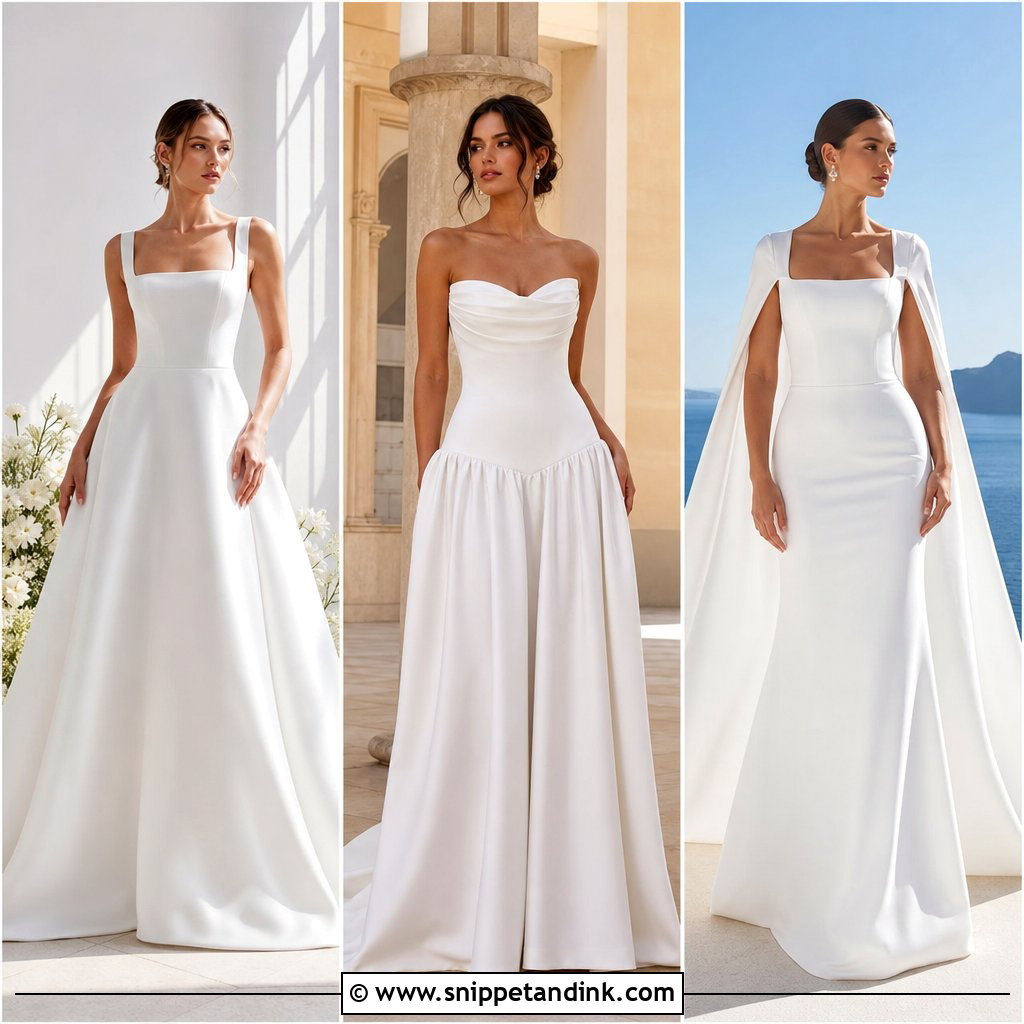
Why Your Bridal Size Will Look Wrong on Paper
Bridal sizing often runs smaller than high-street sizing, so many brides order a size or two above what they normally buy. It means nothing about your body. Gowns are ordered from your largest measurement, usually bust, waist or hips, and taken in elsewhere, because a seamstress can take a gown in far more easily than let it out. I’d ignore the number on the label entirely and let the measurements decide.
1. Classic A-Line Wedding Dress
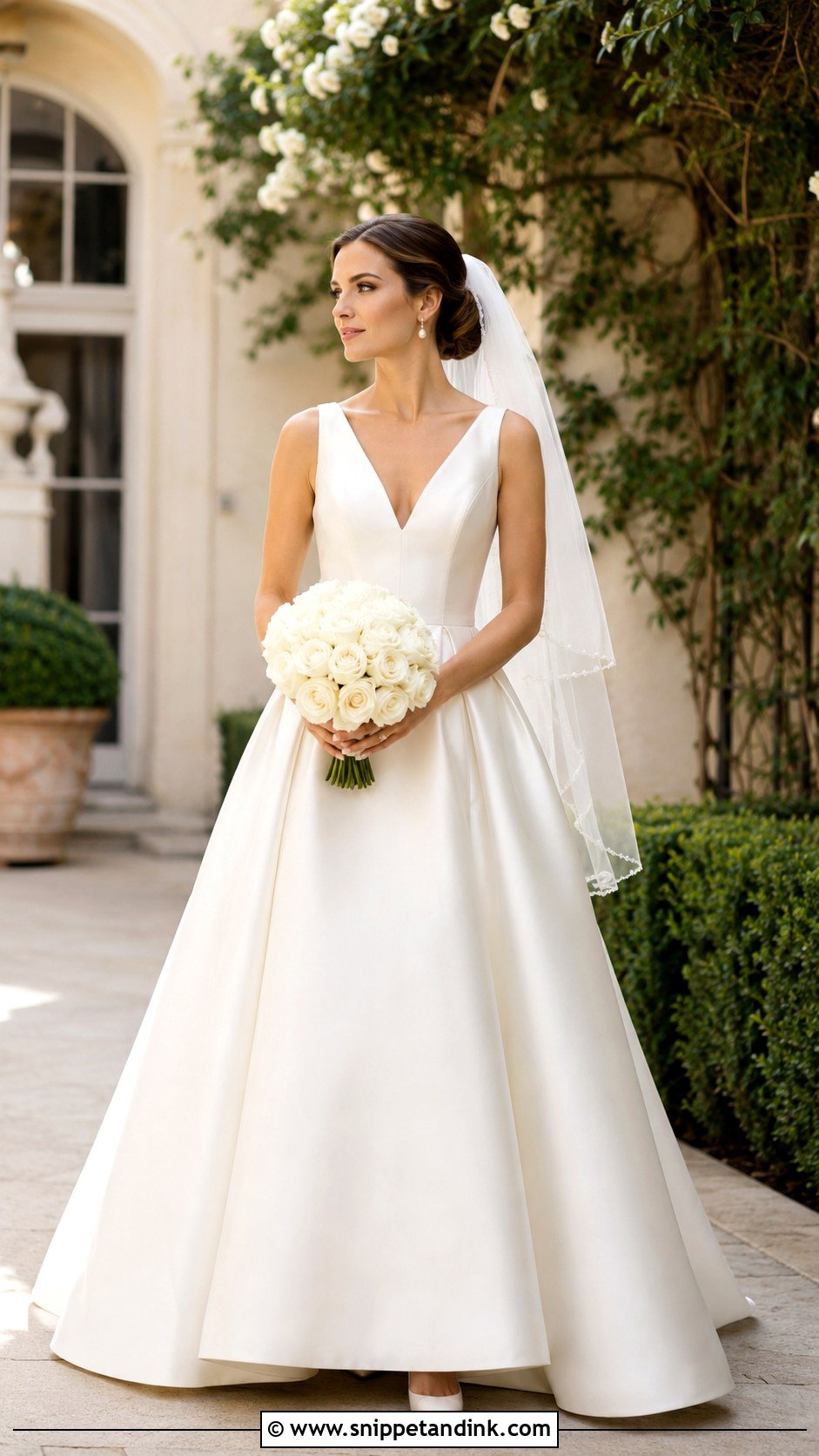
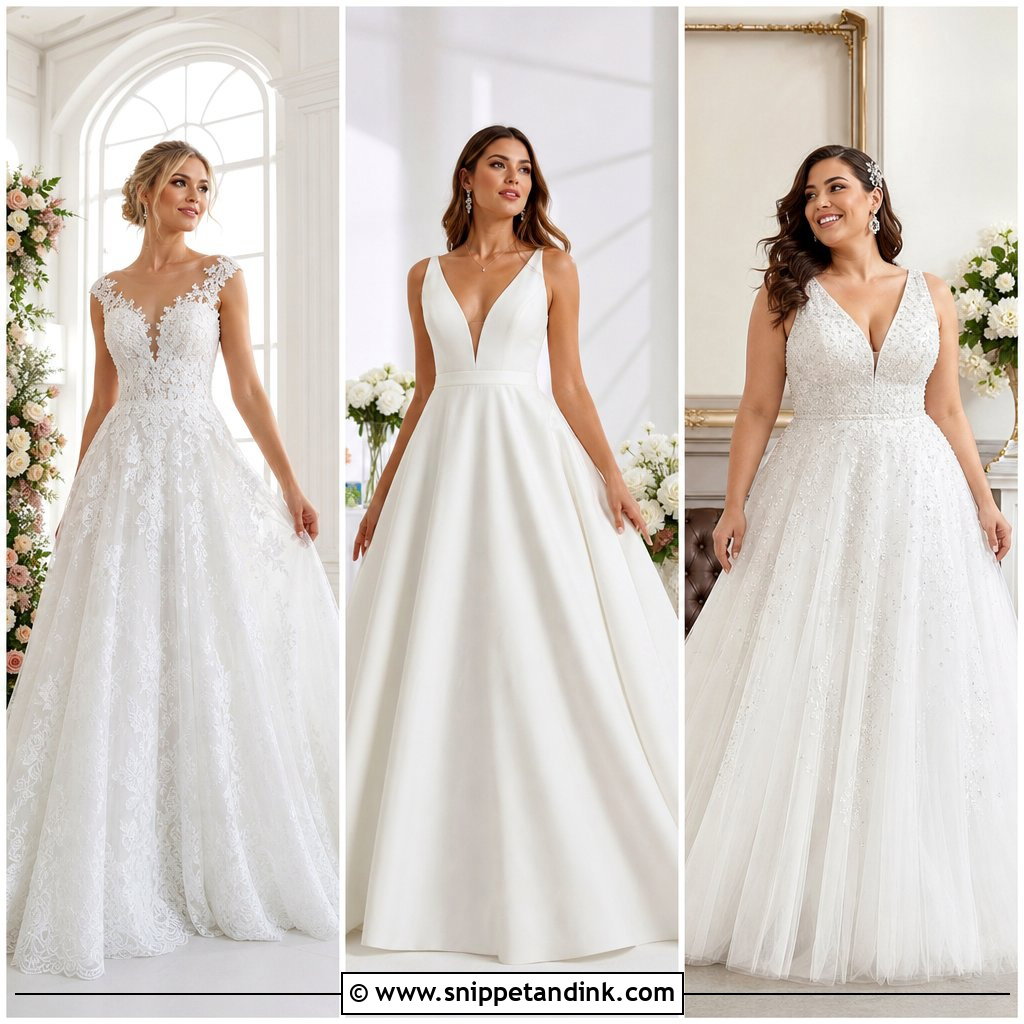
An A-line is the shape I pull first for a bride who isn’t sure what she wants, because it suits nearly every figure and tells you quickly whether you like a defined waist. The fitted bodice shapes the top half and the skirt widens gradually from the waist. Smooth satin reads polished; soft tulle is lighter and moves more. A sweetheart or V-neck opens the face, and wide straps give support without a strapless bodice working overtime. Pointed ivory pumps, pearl drops, a fingertip veil with a plain edge and white roses or seasonal greenery finish it. It sits comfortably in a garden, a ballroom or a hotel.
2. Satin Ball Gown Wedding Dress
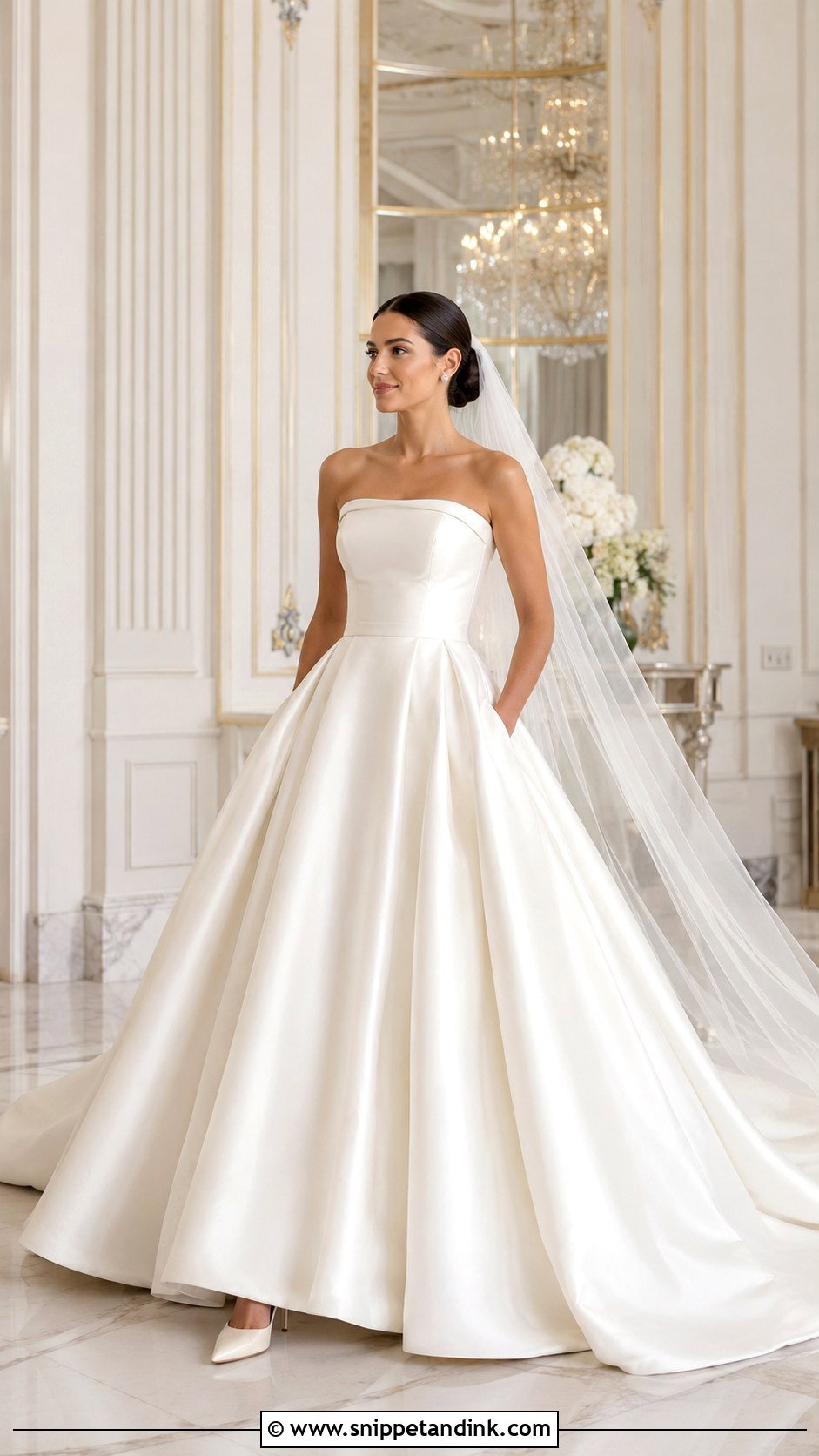
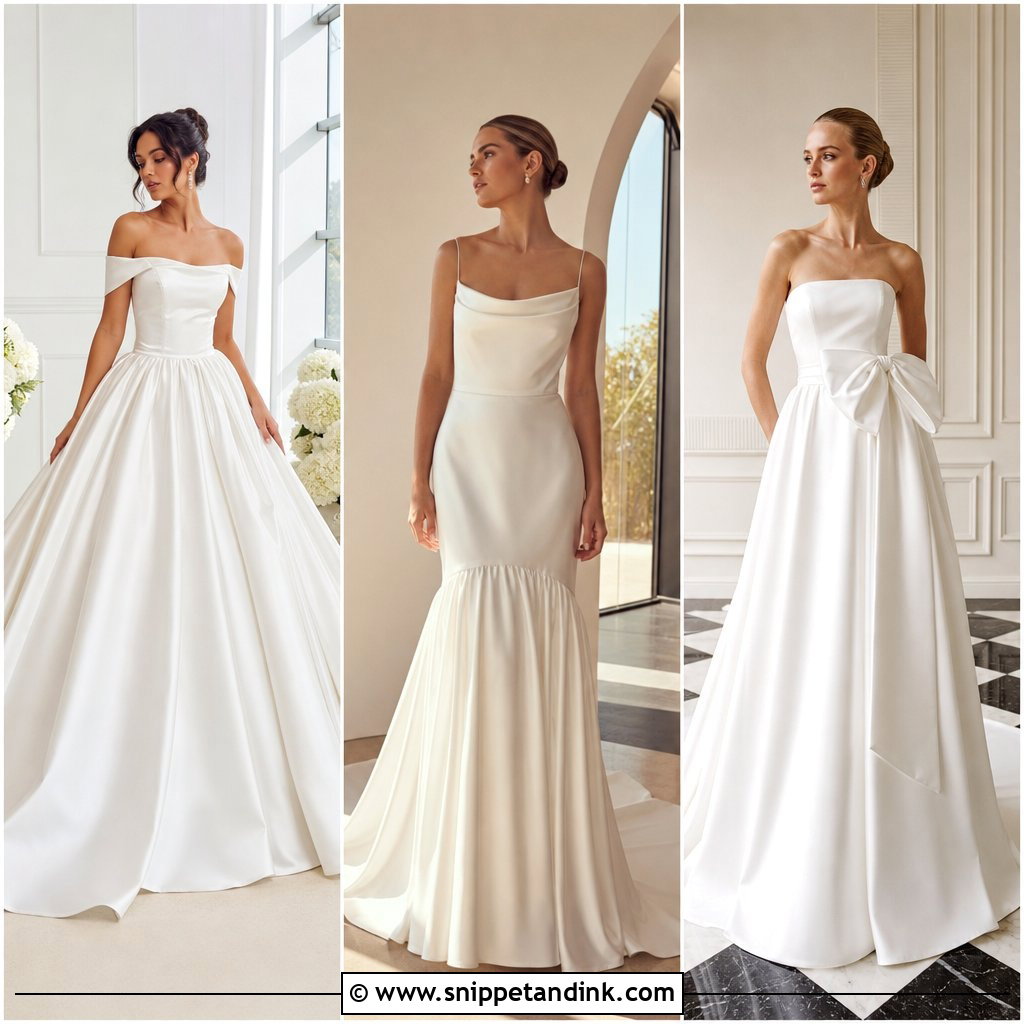
Nothing makes an entrance quite like a satin ball gown. The structured bodice and full skirt pull in the waist and give the volume. Mikado, a heavier satin with a slight texture, holds a clean skirt shape all day where thinner satins collapse by the evening. I keep the accessories controlled: crystal studs, ivory heels and a cathedral veil are plenty. A neat low bun shows the neckline. Ask for hidden pockets, they’re easy to add in seams. Be honest about the room, though. A ball gown needs space, and in a small venue with tight tables it spends the night getting stepped on.
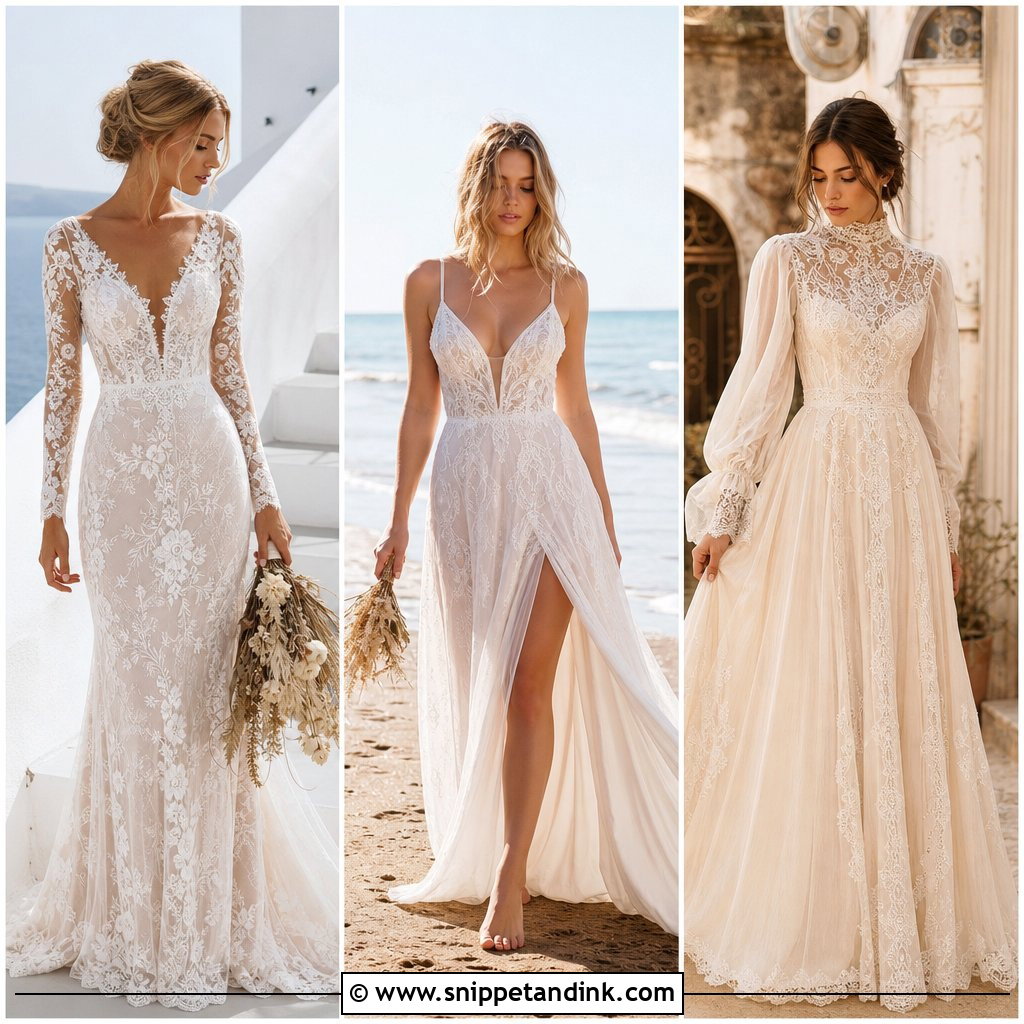
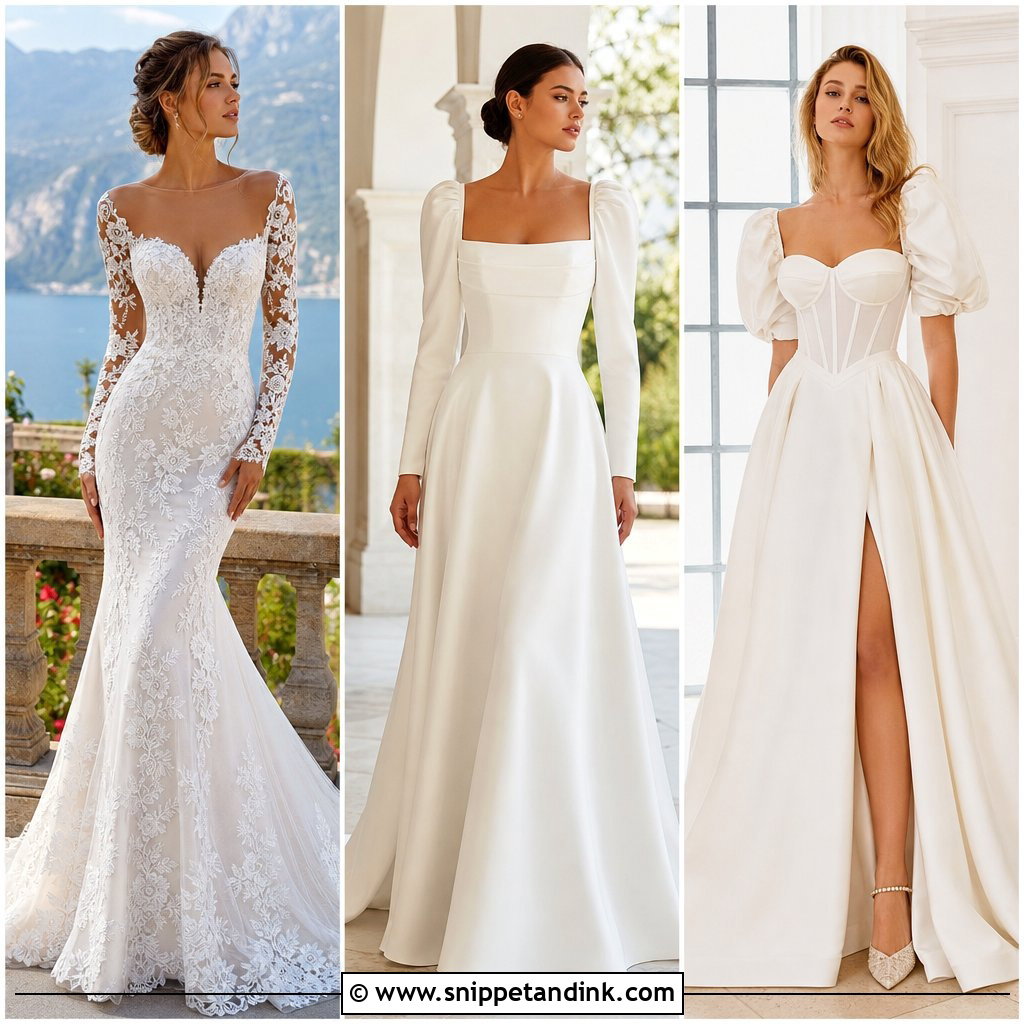
3. Lace Mermaid Wedding Dress
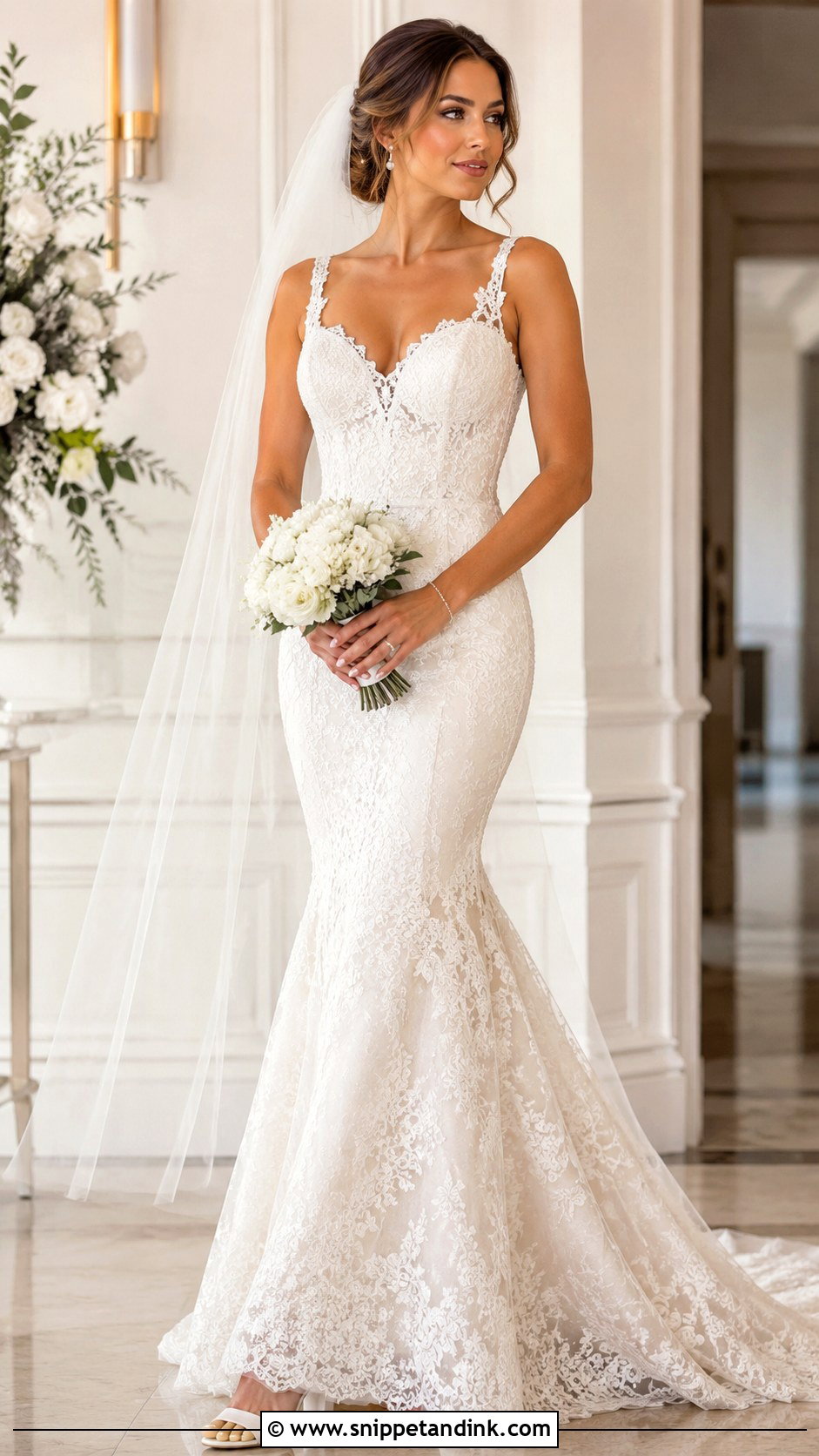
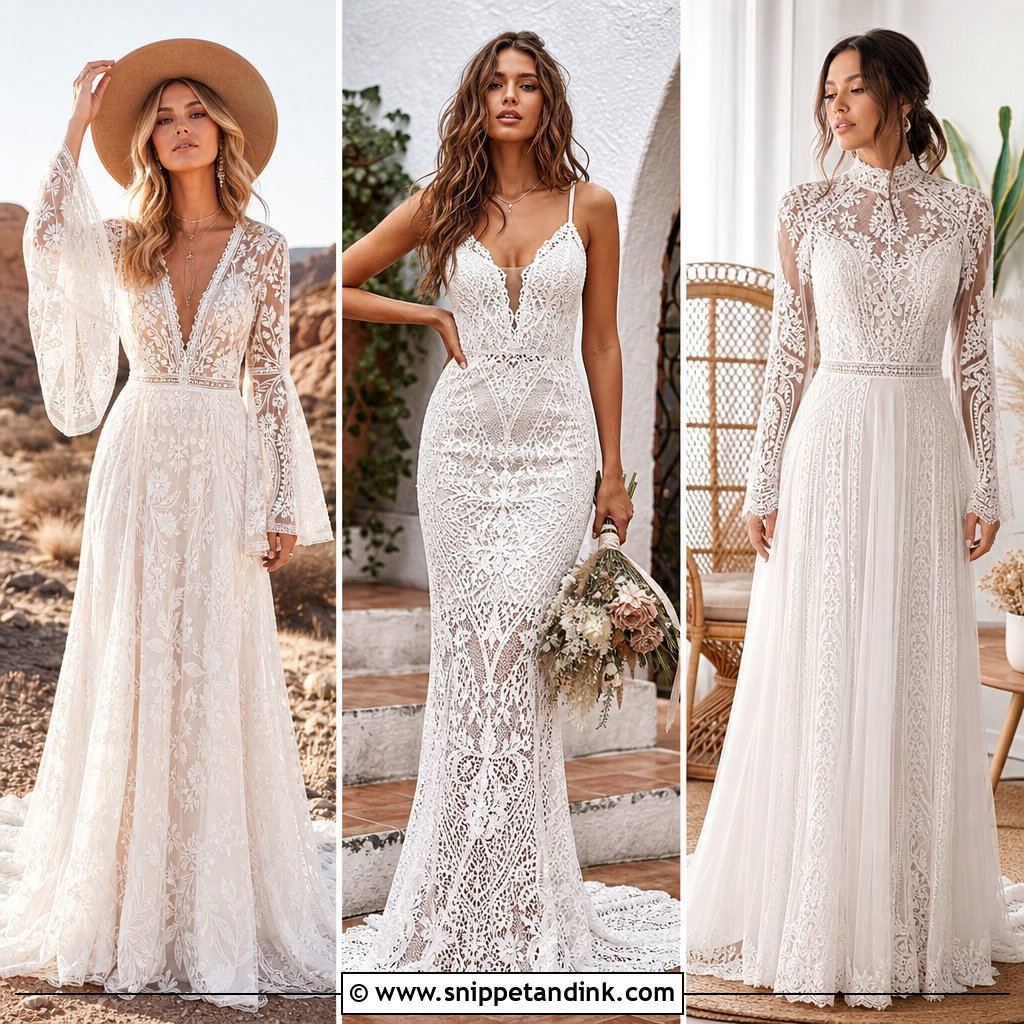
A lace mermaid hugs the body to the knee before it flares. It looks detailed from every side, which matters, because guests spend the ceremony looking at your back. The first thing I check is the inner construction: boning and a built-in corselet should do the holding, not the lace. A slightly higher back often sits more comfortably and smooths the line. Slim block heels, a fine bracelet and small pearl or crystal earrings are enough, with a plain tulle veil so the lace isn’t doubled. Soft waves or a side-swept style suit the texture. Sit, walk and climb a step in it before you buy. If the flare starts too low, you’ll shuffle all night.
4. Chiffon Empire Waist Wedding Dress
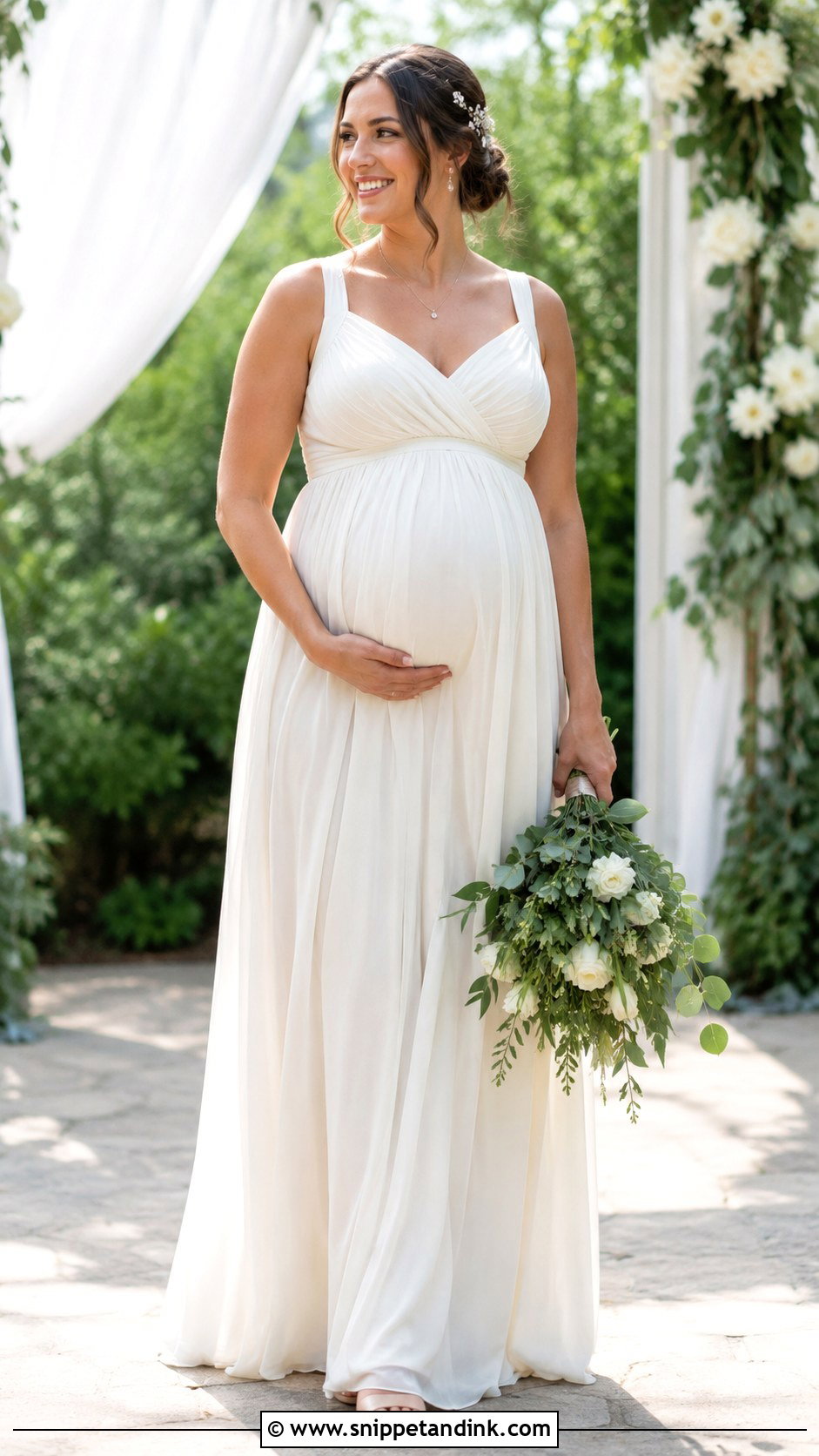
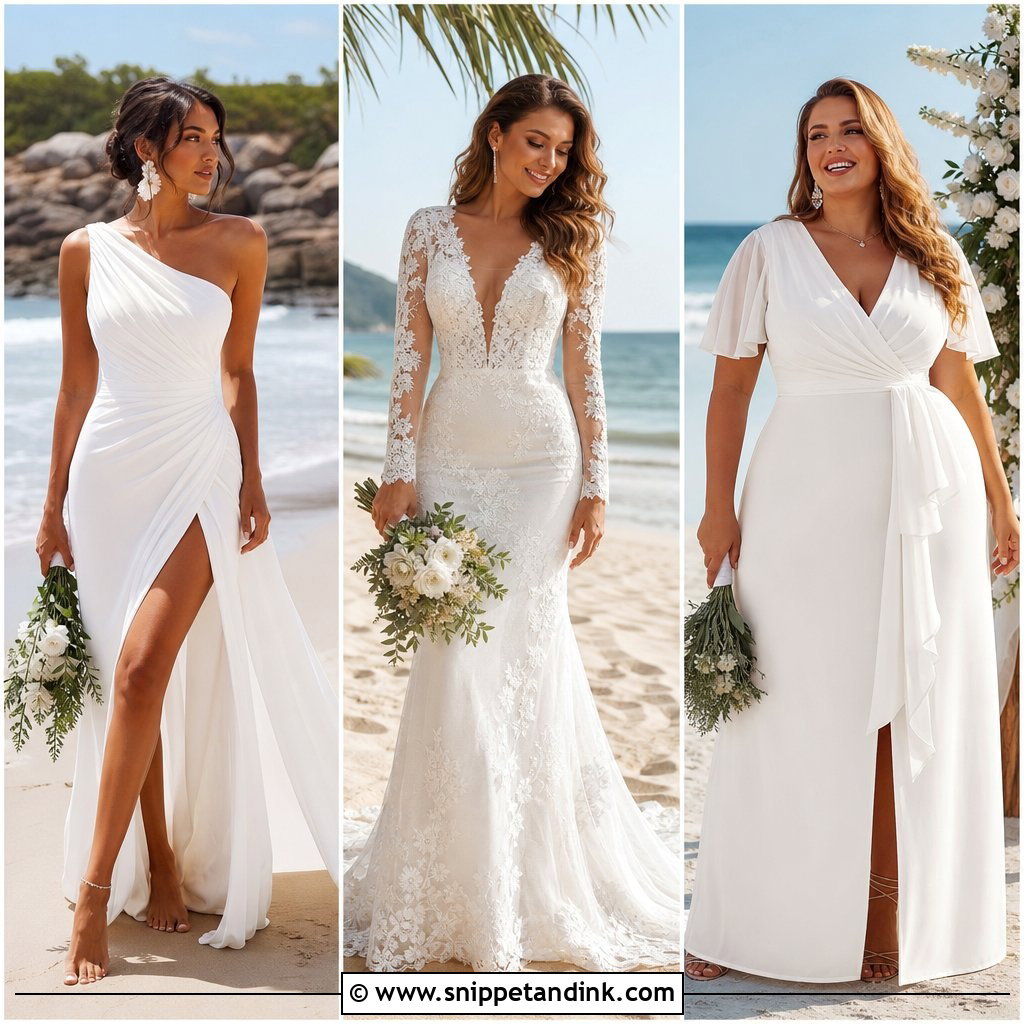
A chiffon empire waist dress falls from just under the bust, so nothing presses at the natural waist. That makes it a comfortable pick for a hot day or a long celebration. Chiffon is sheer, so the bodice and skirt both need lining or bright sun will show your legs through it in photos. Cap sleeves, thin straps or a modest V-neck suit the shape. Low block-heel sandals, a floral comb and fine gold or pearl jewellery finish it, with a loose bouquet of white flowers and greenery. The same construction makes it practical for maternity, destination weddings and anyone who hates a tight waist.
5. Square Neck Column Wedding Dress
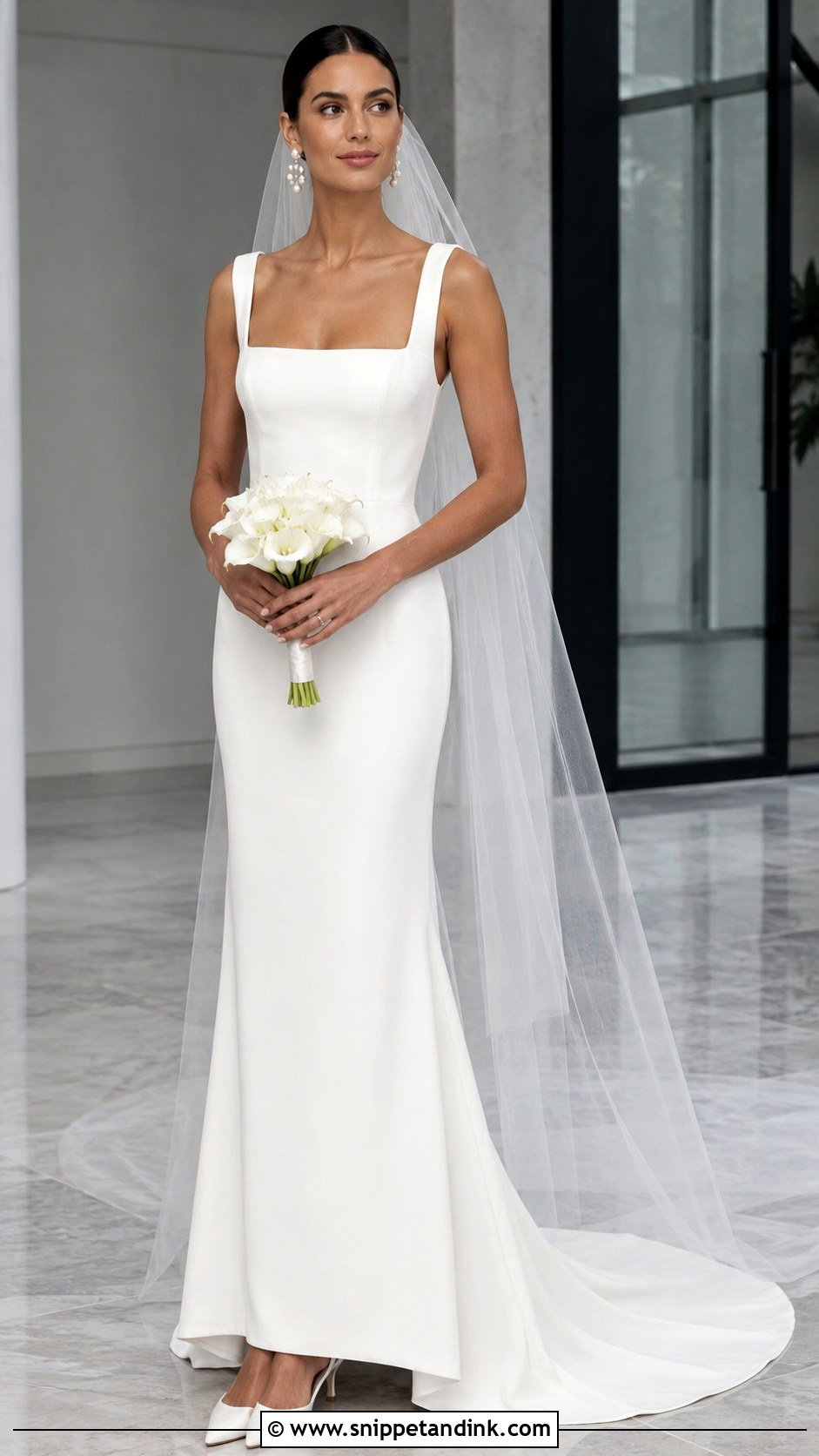
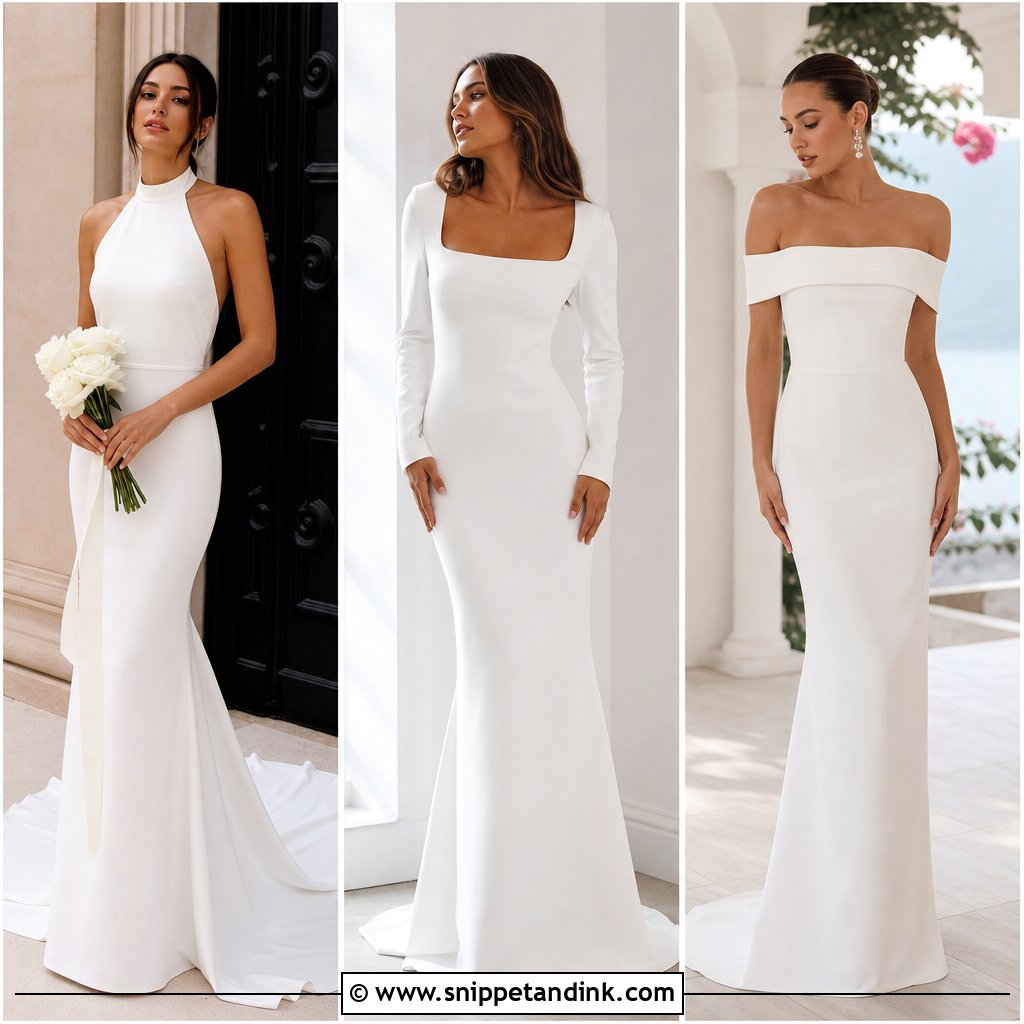
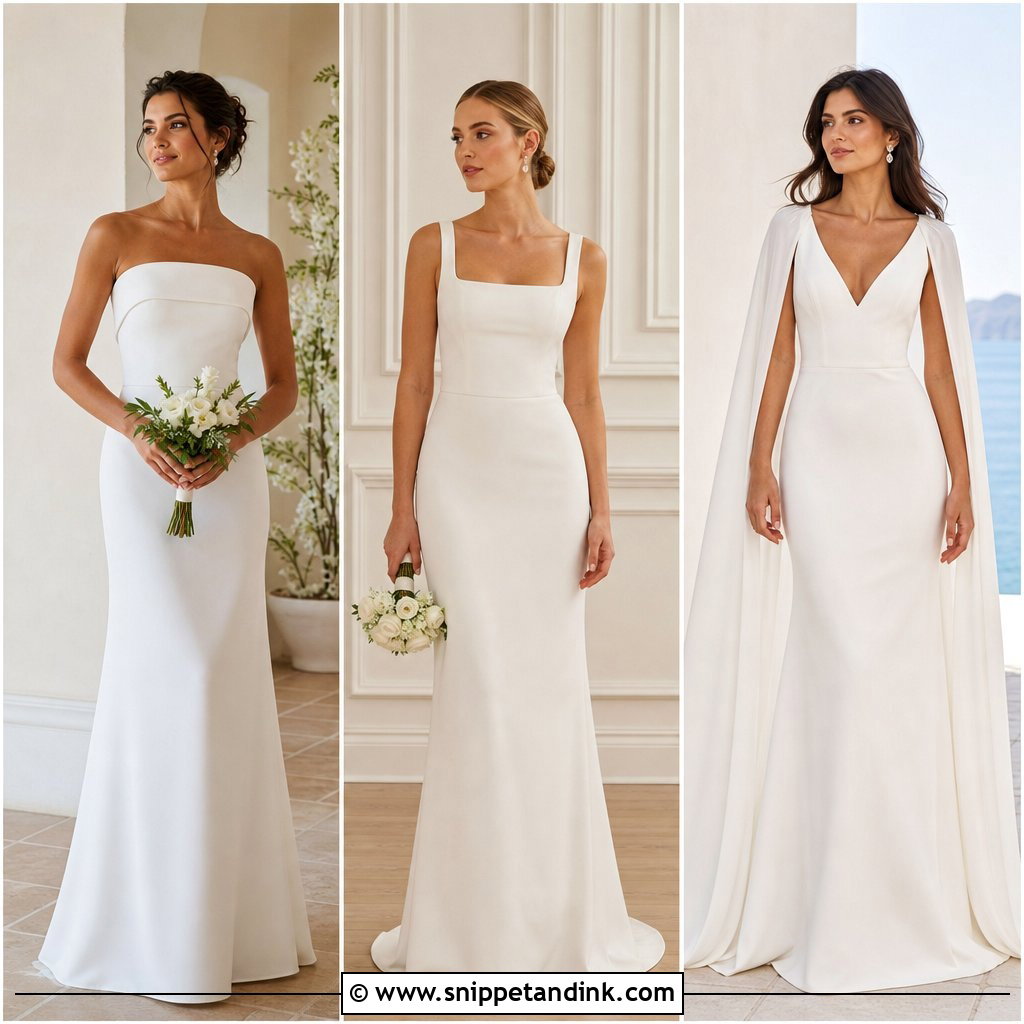
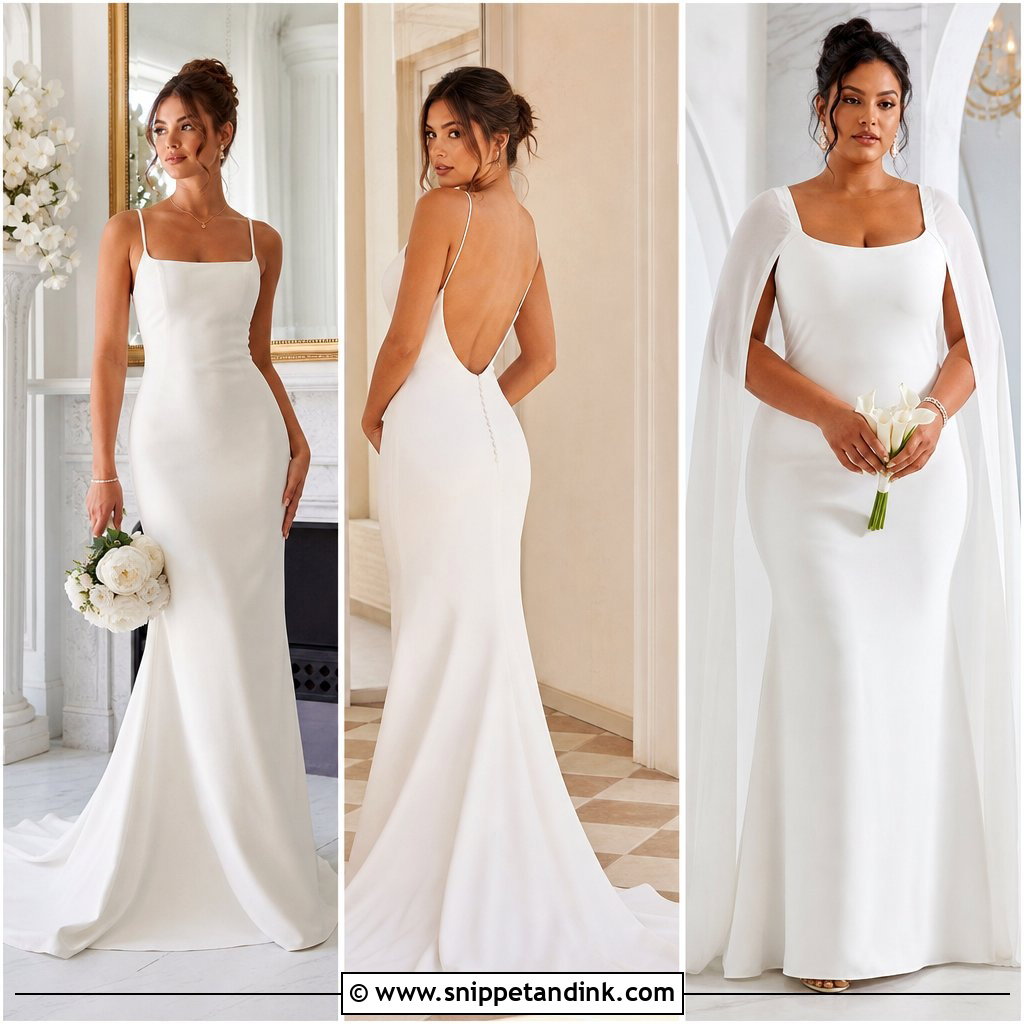
A square-neck column relies entirely on proportion. The neckline frames the collarbone, and the narrow skirt follows the body without a mermaid flare. Crepe gives a smooth, matte finish; satin gives a gentle sheen. With nothing to hide behind, tailoring is everything, and I watch for pulling across the hips when the bride sits, because a column shows every strain line. Slingback heels, sculptural pearl earrings and a compact bouquet keep it modern. A long veil adds ceremony drama; a short one keeps the line clean. It suits city hotels, galleries and small weddings where the cut is the point.
6. Off Shoulder Princess Wedding Dress
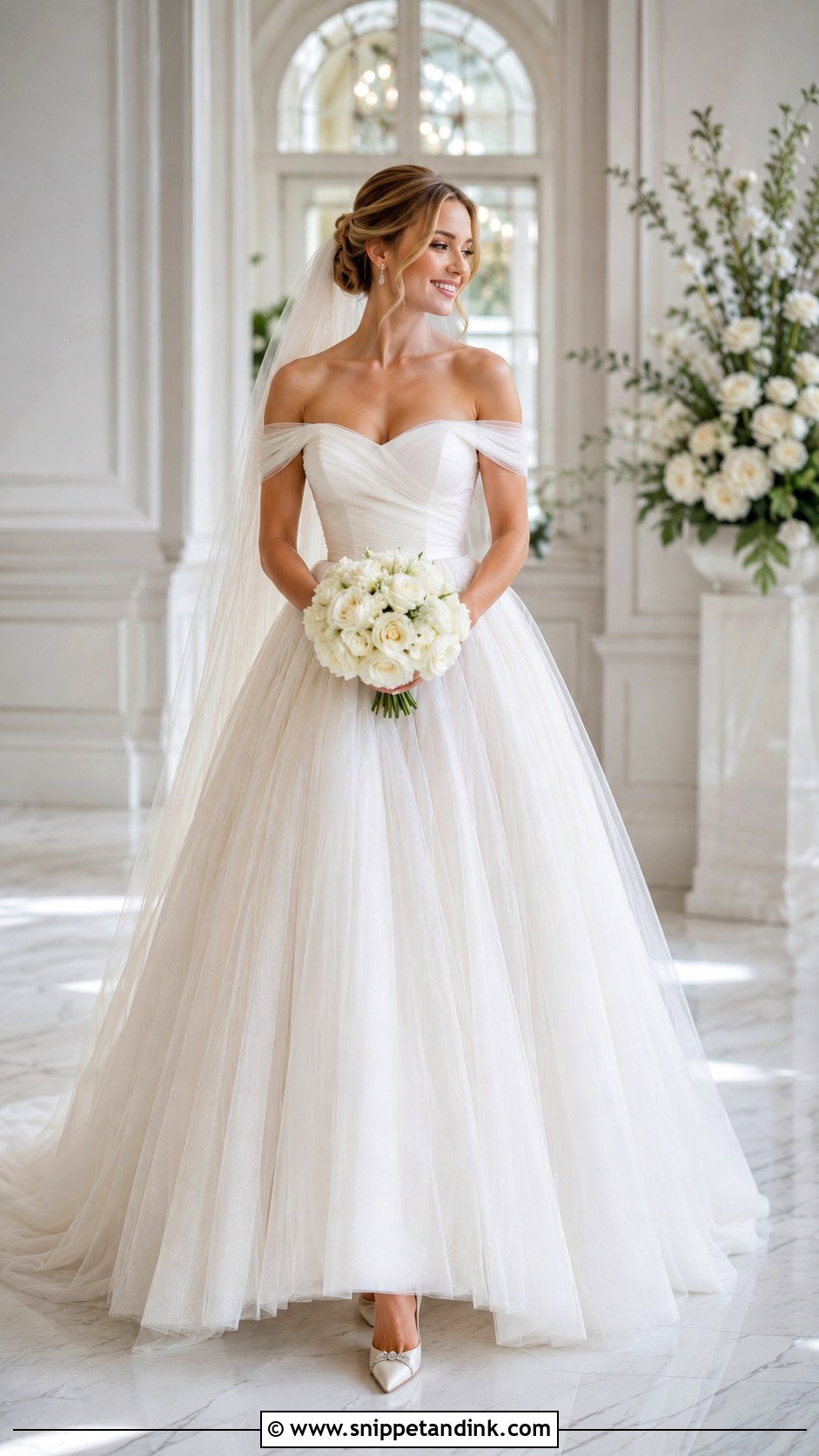
An off-the-shoulder princess gown pairs a soft neckline with a full skirt. The bands sit below the shoulders and frame the collarbone, and they are also the part that causes trouble. If the bodice doesn’t have firm internal support, those bands do the holding and you spend the night hitching them up. At every fitting I have the bride raise her arms and hug me. If the sleeves dig in or the bodice drops, it goes back for adjusting. Tulle reads dreamy and satin more formal. A small pendant, drop earrings, closed-toe heels and a long veil under a polished updo finish it, with a round bouquet.
7. Long Sleeve Lace Wedding Dress
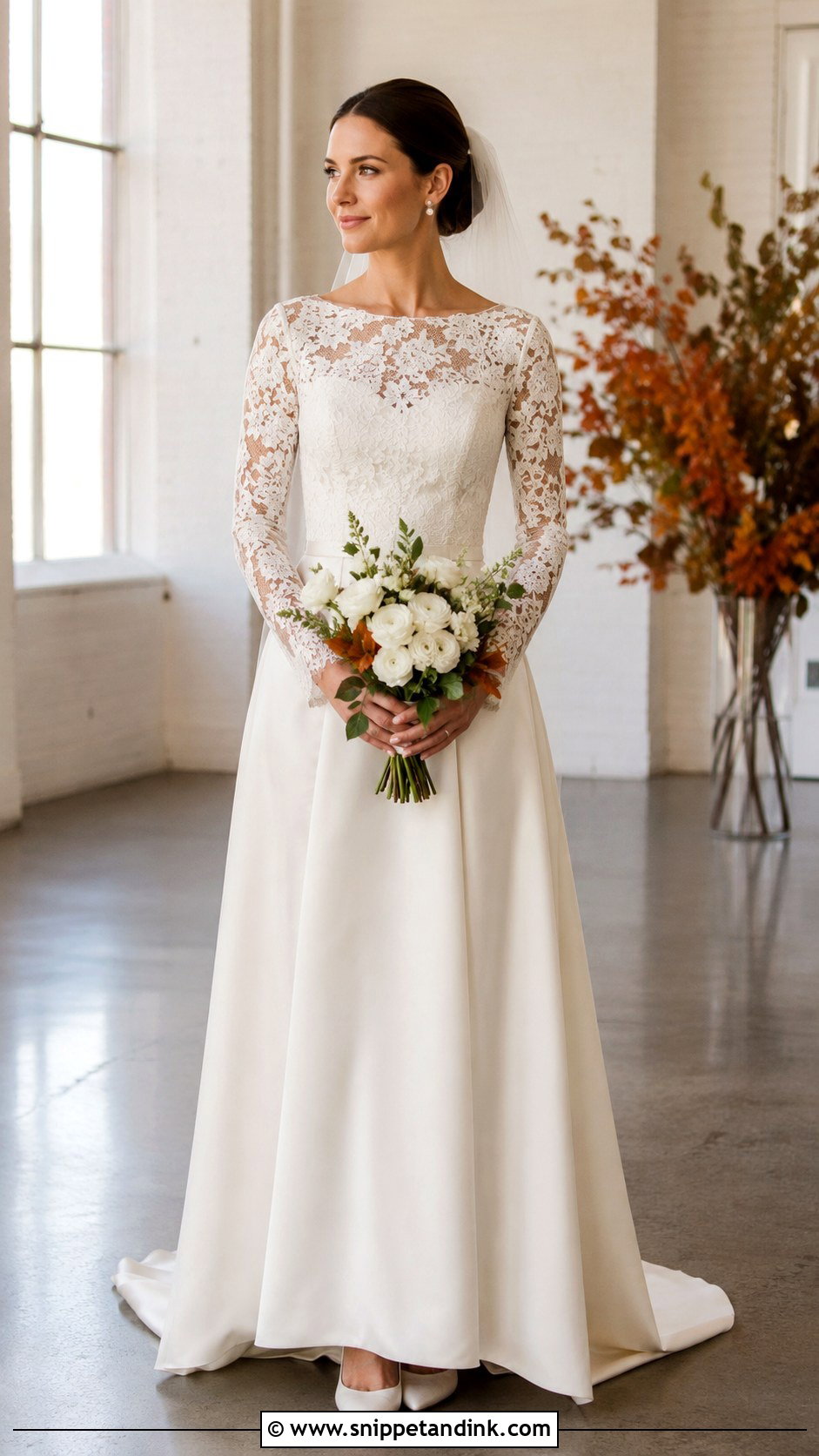
Long lace sleeves give coverage without hiding the shape. Sheer lace sleeves add texture; lined sleeves look more modest and structured. Pair busy sleeves with a quiet skirt: A-line, fit-and-flare or column. Cuffs should end neatly at the wrist bone and let you bend your elbows, since lace has little stretch and tight sleeves pull every time you lift the bouquet. Rub the lace against the inside of your wrist too; some corded laces are scratchy. Satin pumps, a plain veil, pearl studs and a small white bouquet complete it, with a sleek bun so the sleeves and neckline show. It’s a natural fit for autumn and winter, and lightweight lace carries into spring.
8. Strapless Basque Waist Wedding Dress
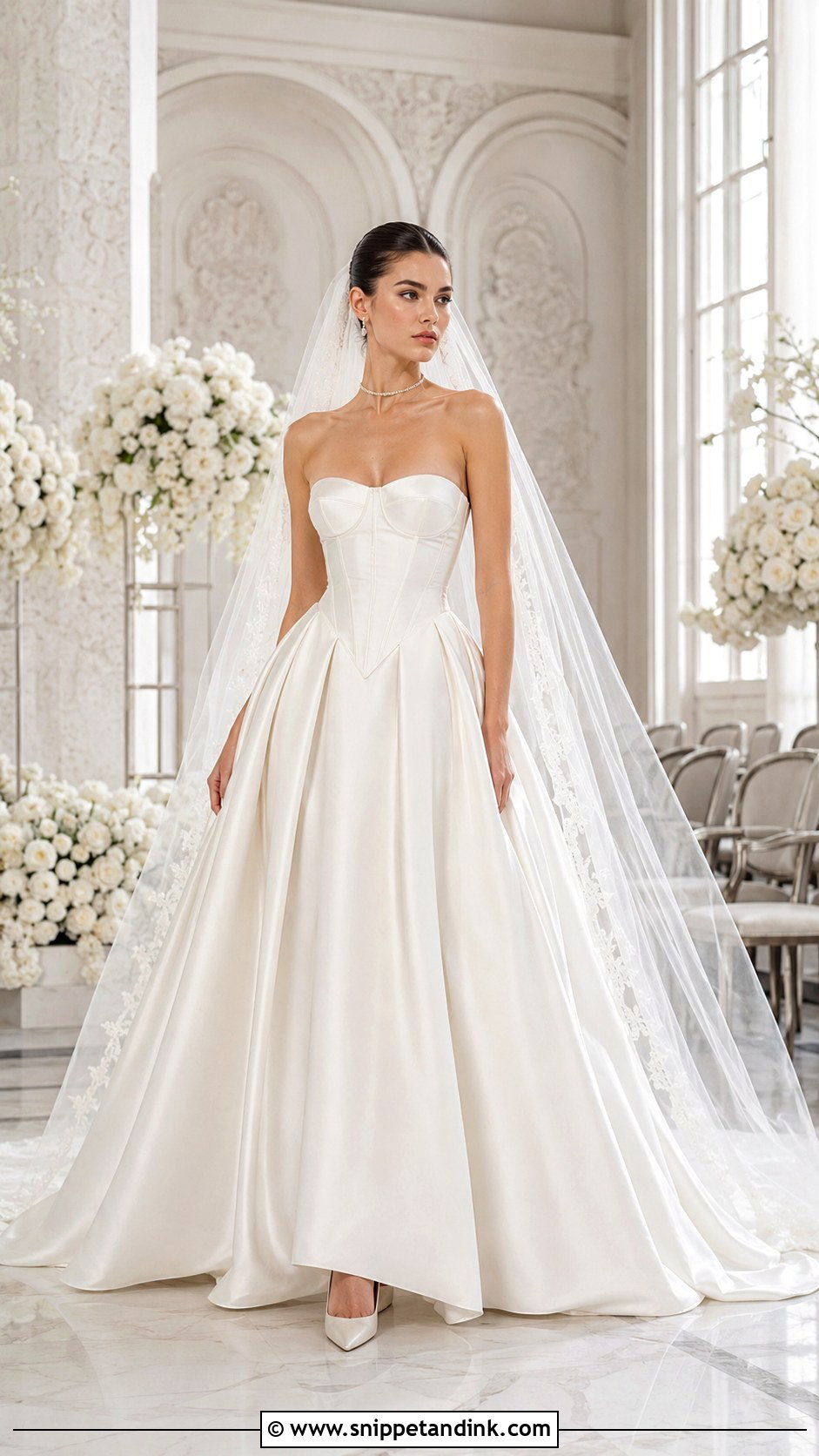
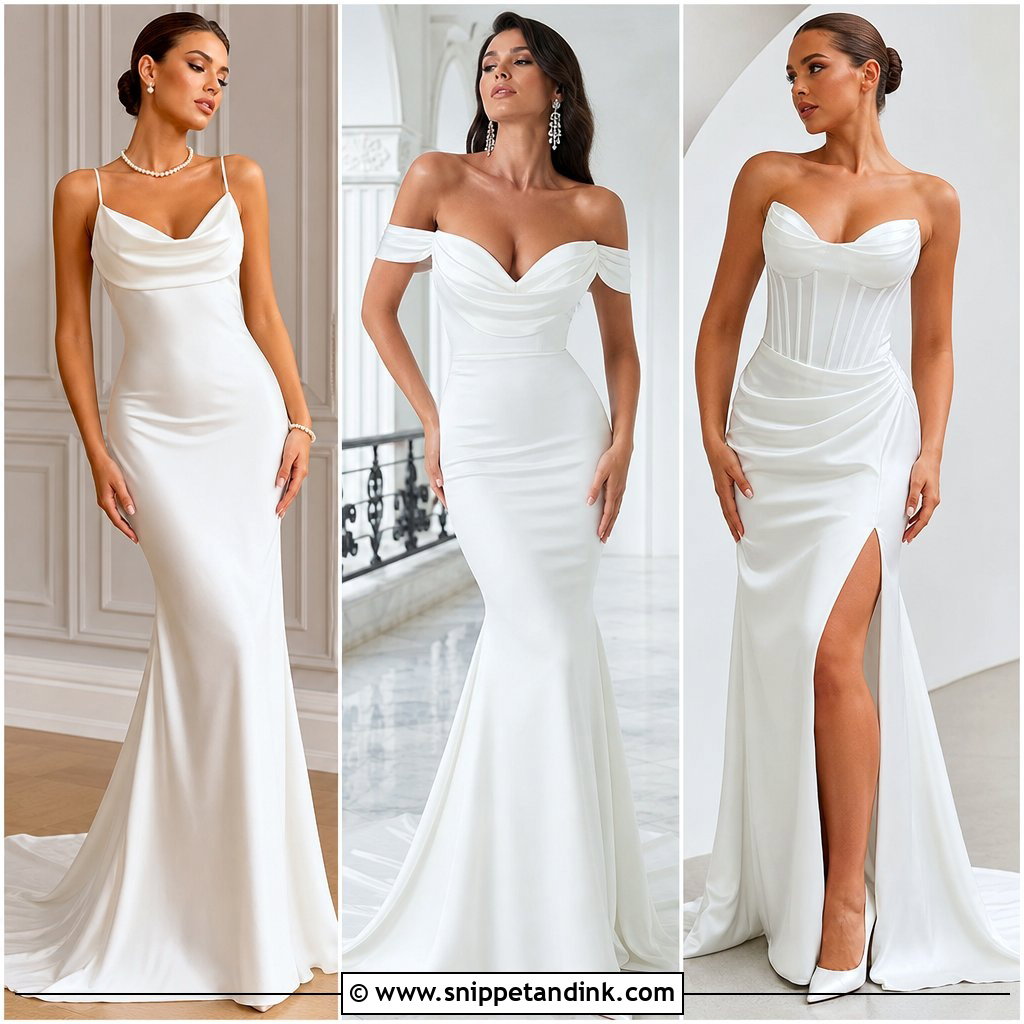
A strapless basque waist wedding dress takes its shape from the fitted bodice and the waistline that dips to a point in front. It’s a historic cut that has come back, often with corsetry, full skirts and smooth satin. The point should sit at the centre of your waist, and strapless bodices need precise alterations so they grip without pinching or slipping. That’s not a fitting to rush. A soft draped skirt looks romantic, a crisp one more editorial. A fine choker or short necklace, small earrings and pointed pumps finish it, with a sheer cathedral veil against the structured waist. Keep a wrap or fitted topper for more coverage later.
9. Floral Applique Wedding Dress
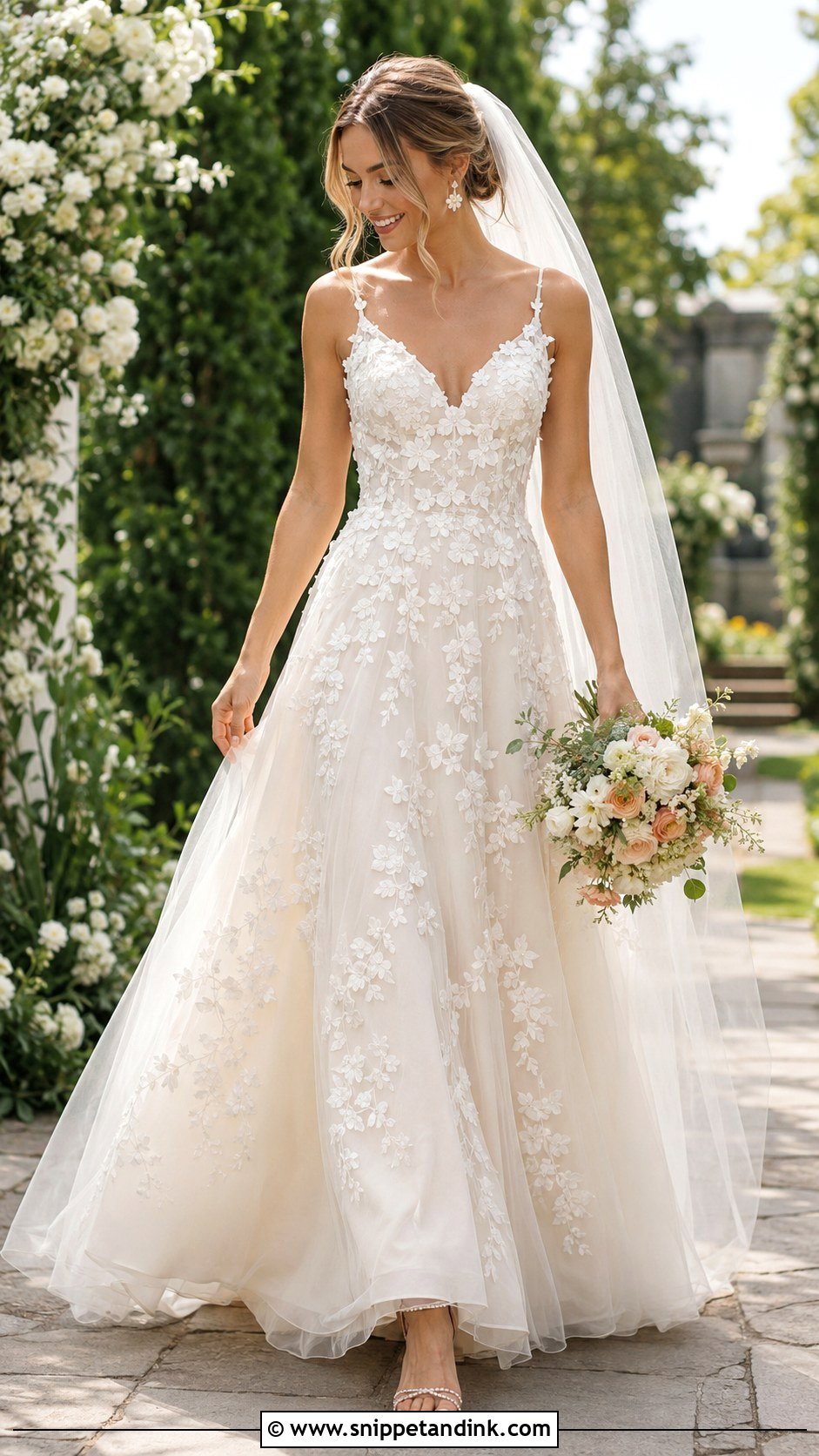
Dimensional flowers give a floral applique dress real texture, scattered across the bodice, trailing down the skirt or clustered at the neckline. Spaced appliques read clearly in photos; a gown covered edge to edge can turn into noise. Choose a soft A-line or fitted tulle and keep everything else light: barely-there ivory sandals, small floral earrings and a plain veil. The bouquet should complement the appliques, not copy them. I always drape the veil over raised flowers at the fitting, because beaded petals snag tulle, and a snag halfway down the aisle is an awful moment.
10. Minimalist Slip Wedding Dress
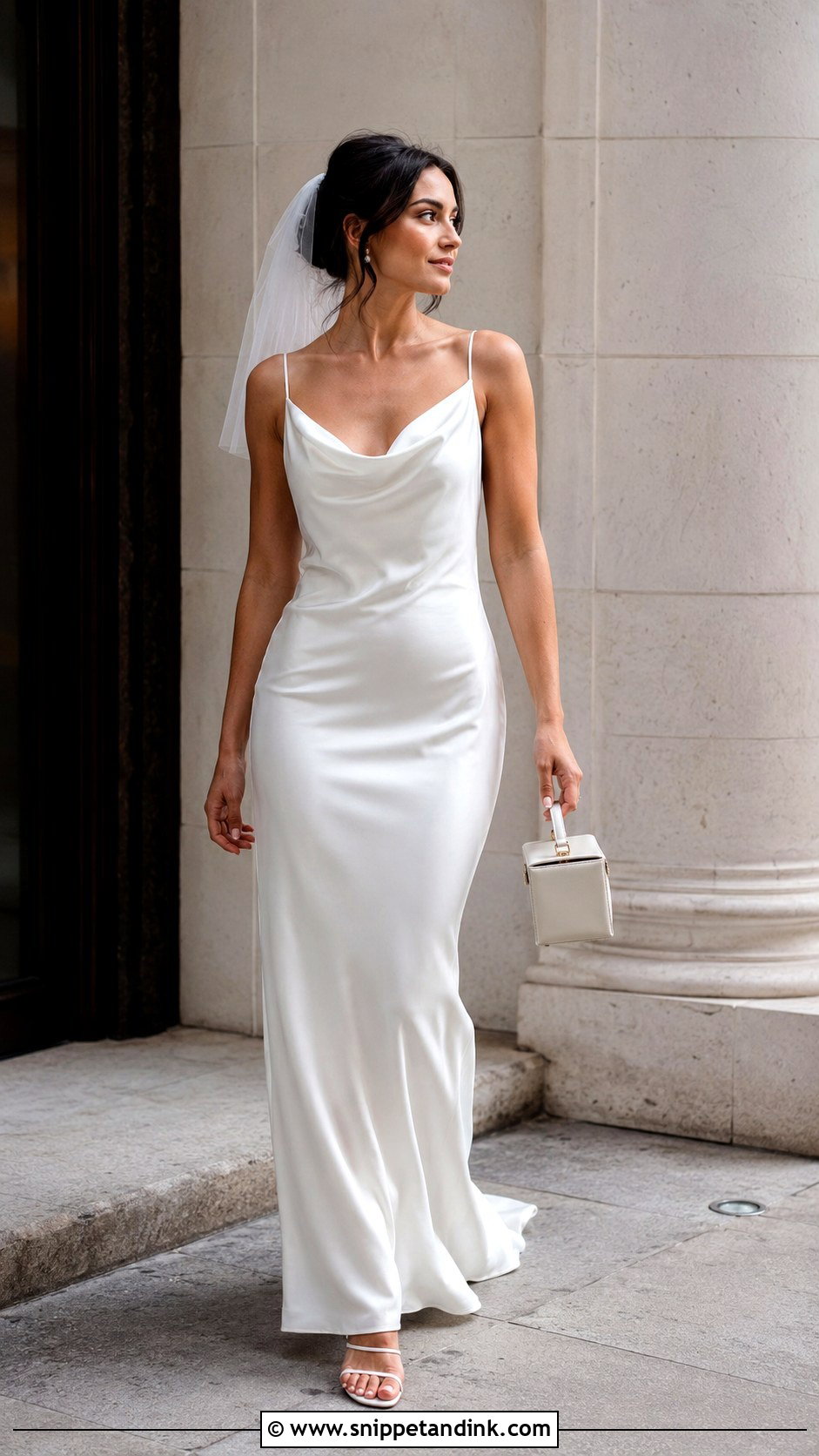
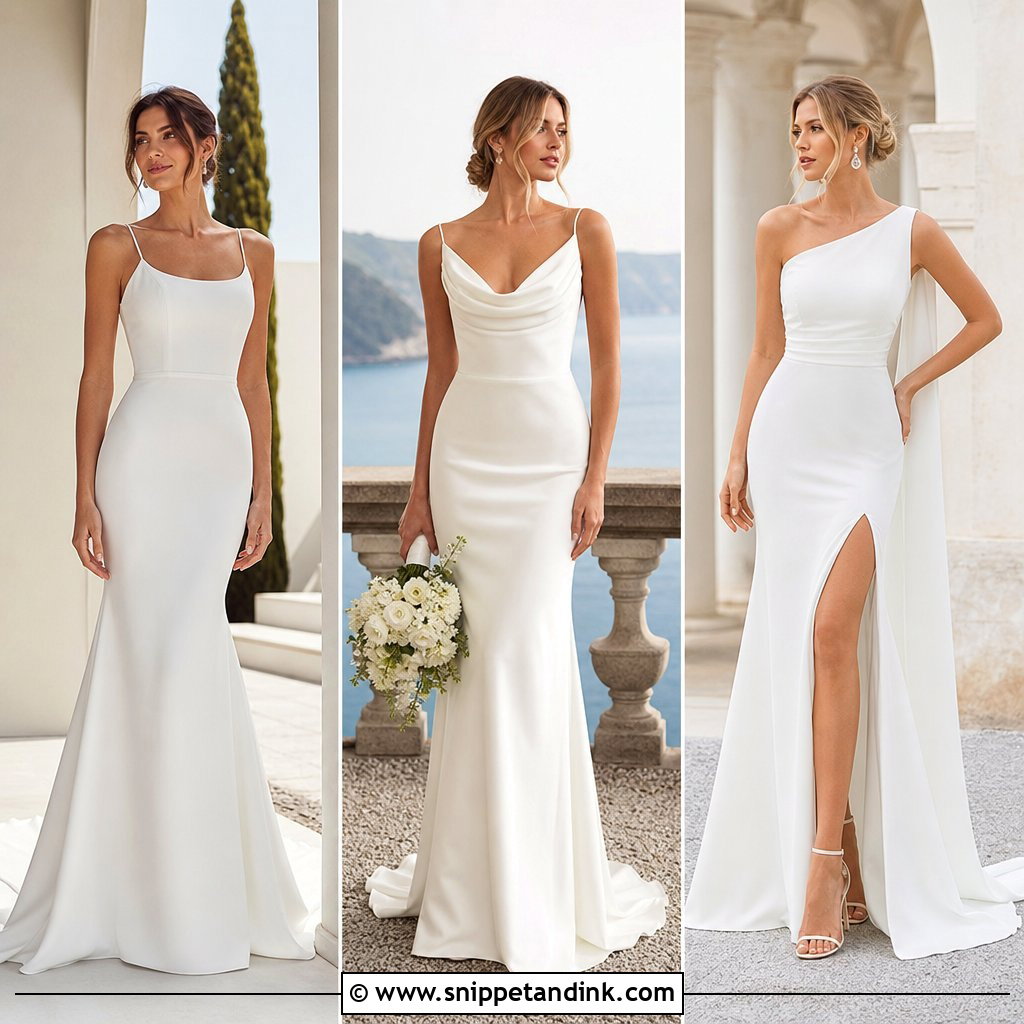
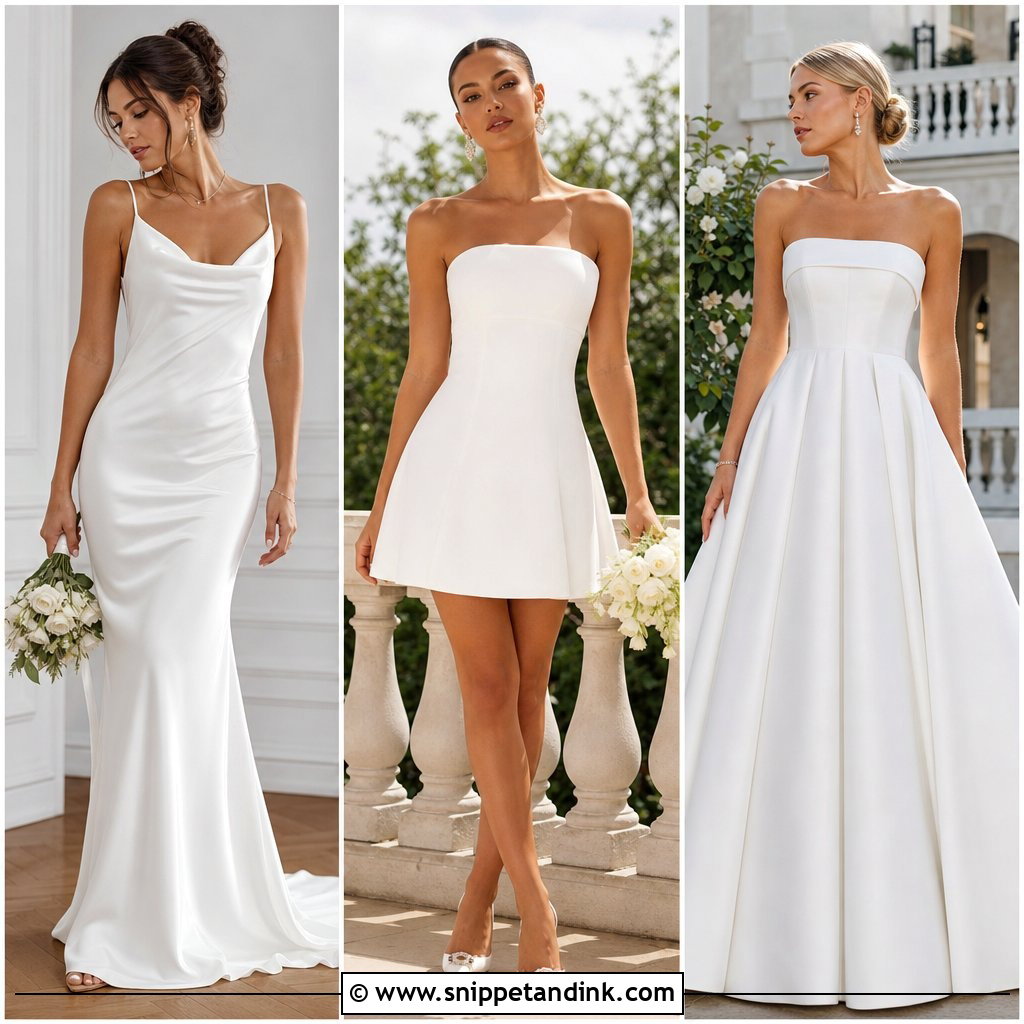
A minimalist slip dress is all cut, drape and fabric. Bias-cut satin follows the body in a fluid line, and that same quality makes it the least forgiving gown on this list. Smooth satin shows every seam, every line of underwear and every small fit issue, so I’d budget for careful alterations and the right undergarments before anything else. Strappy ivory heels, a structured mini bag for the reception and pearl studs or one sculptural earring finish it, with a short veil. For cool weather, add a tailored white coat or removable sheer sleeves over the gown. It suits city ceremonies, restaurants and small weddings.
11. Tea Length Wedding Dress
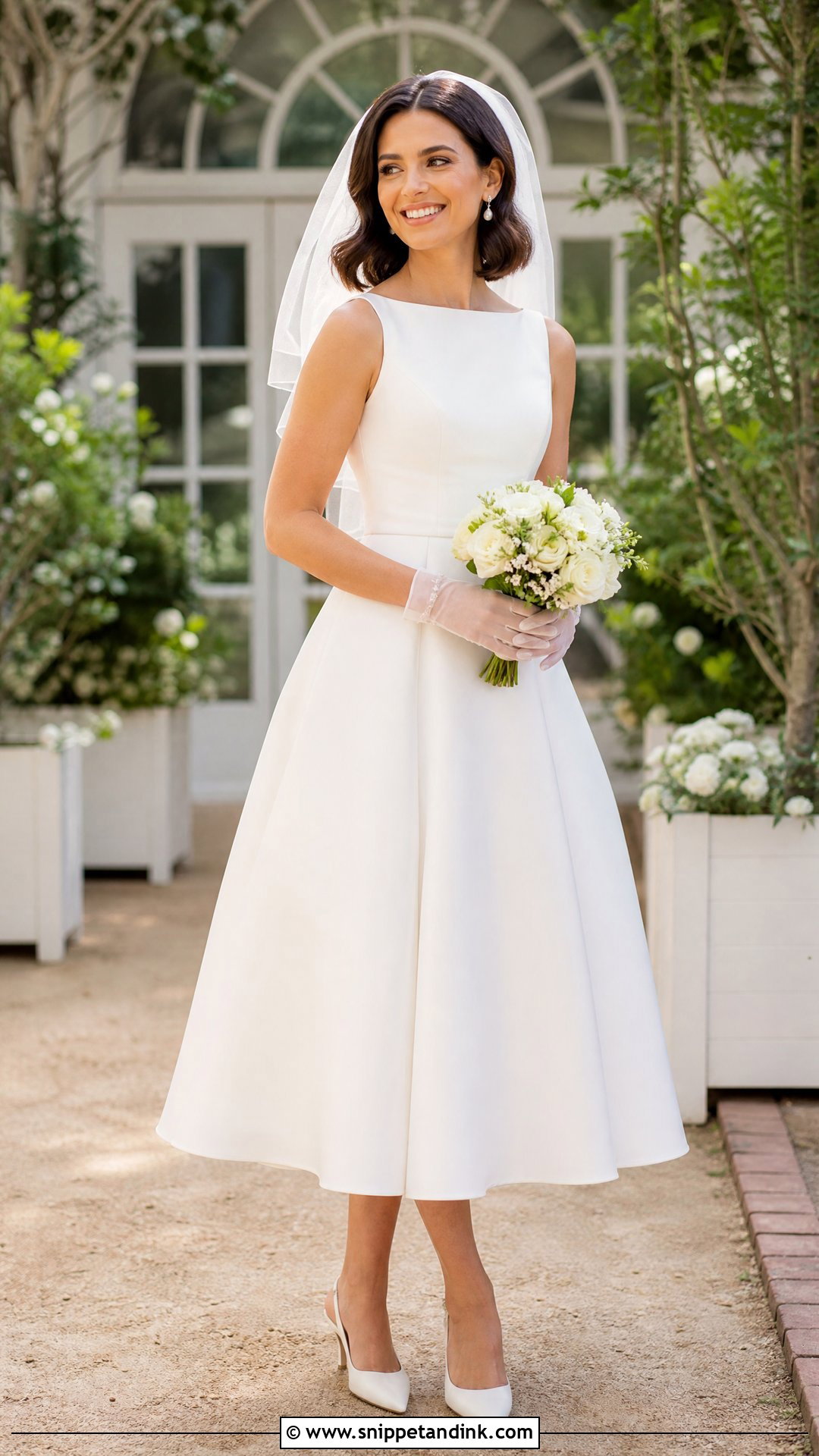
A tea-length dress ends between the knee and the ankle, so the shoes become part of the outfit. A fitted bodice with a softly flared skirt looks festive without a train, and the shorter hem makes it far easier to move and dance. Pointed slingbacks, embellished pumps or ankle-strap heels all suit it. Short gloves, pearl earrings and a birdcage or shoulder-length veil finish the look. I spend the most time on the hem point here. The narrowest part of your calf is usually the most flattering place for it to land, and an inch either way changes the whole proportion. It’s well suited to courthouse ceremonies, daytime weddings and gardens.
12. Short Wedding Reception Dress
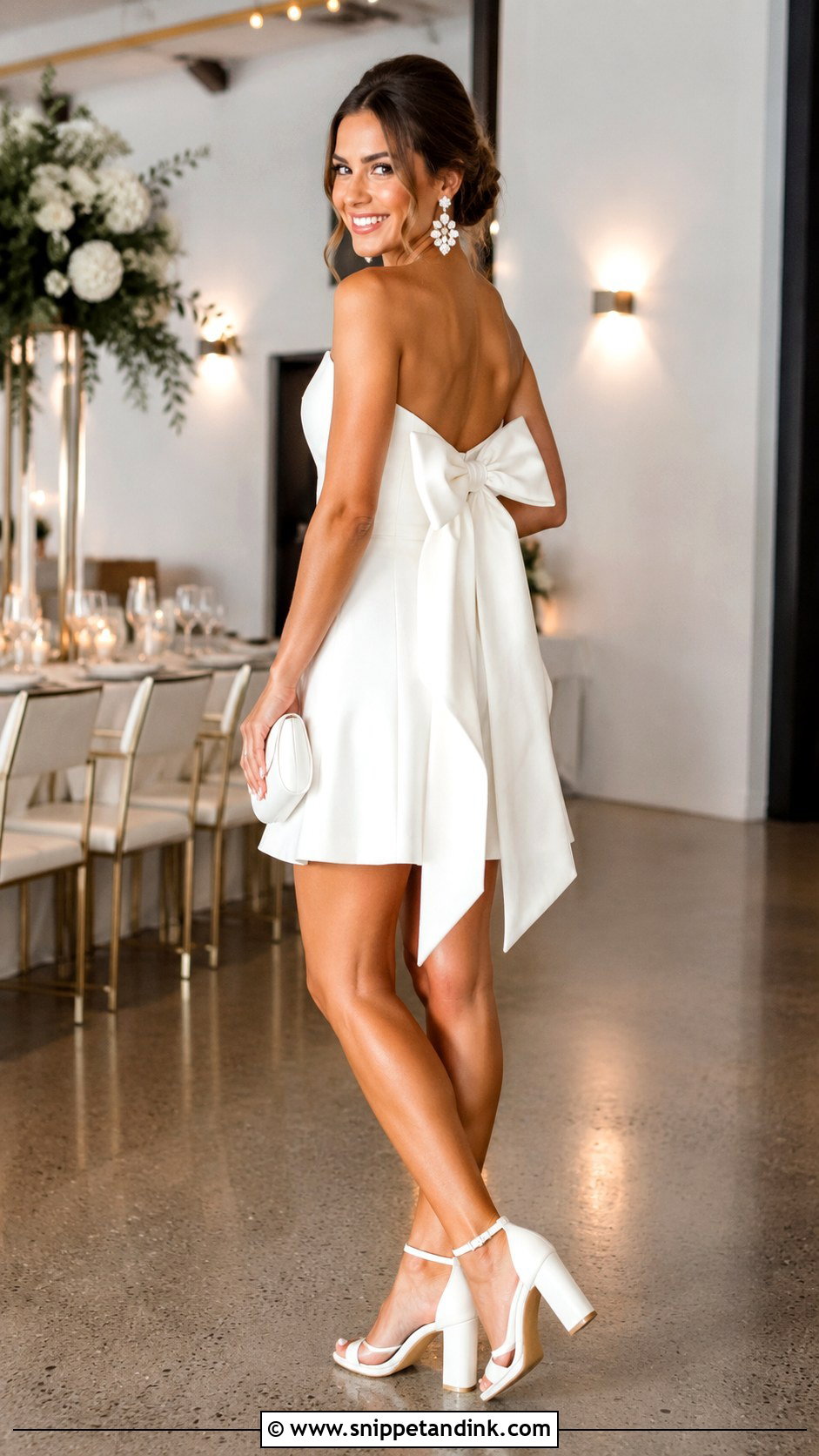
A short reception dress gives you room to dance and a clear change from the ceremony look. A structured mini with a modest neckline, a playful A-line or a fitted style with a detachable bow all work. Short bridal dresses and multiple looks are now common for receptions and small ceremonies. Balance a short hem with shoes you can last in: secure block heels, smart flats or low slingbacks. Statement earrings and a compact clutch replace the veil and bouquet. Under a full skirt, fitted shorts stop any worry on the dance floor. Keep it bridal with ivory fabric, good tailoring and one memorable feature rather than three.
13. High Neck Victorian Wedding Dress
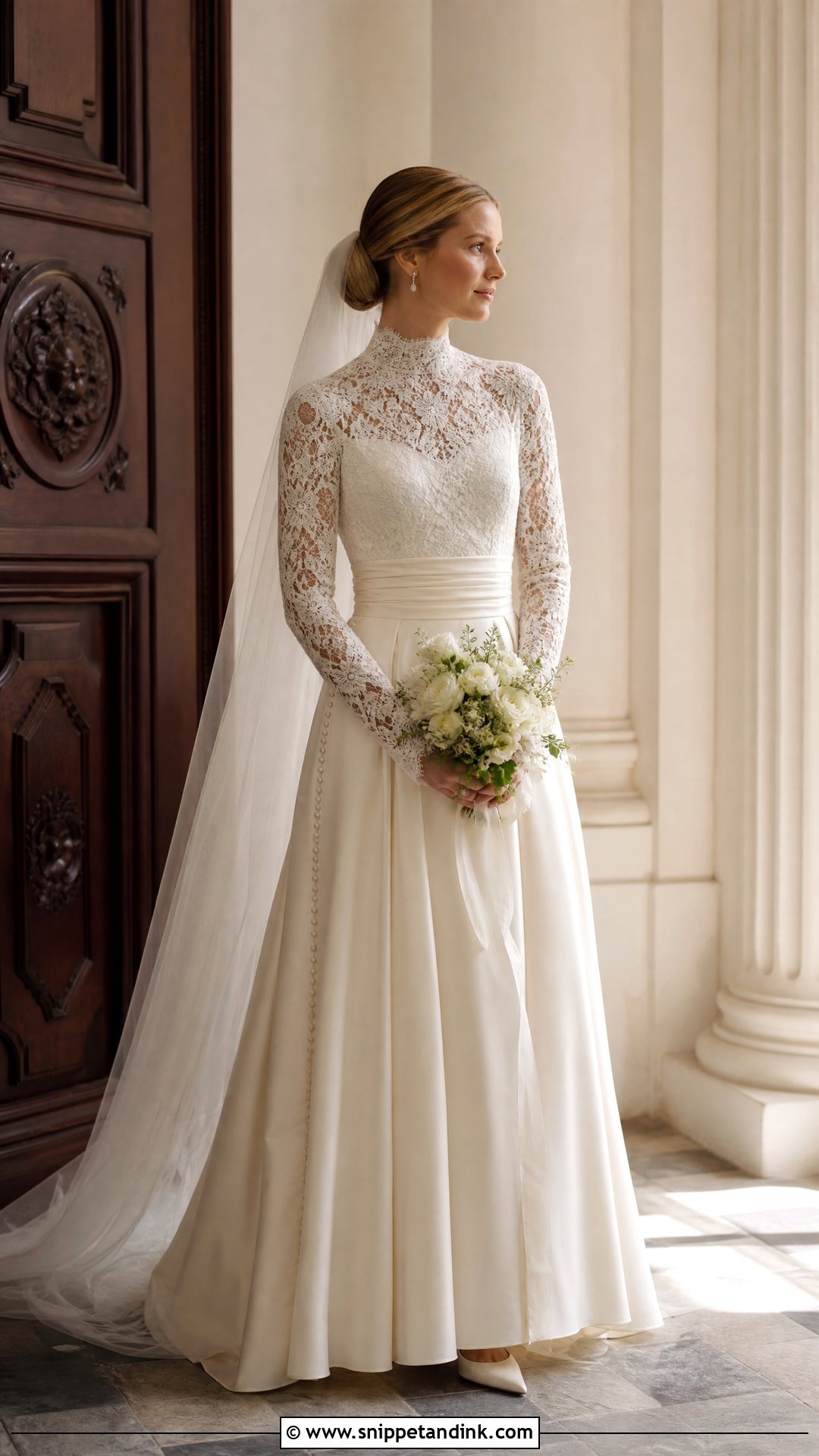
A high-neck Victorian-style dress gives graceful coverage and a romantic presence. A fitted lace bodice, long sleeves and a softly flowing skirt keep it wearable, while extra layers tip it toward costume. A high neck is the hardest neckline to fit, since it shows the slightest pull across the shoulders, so the shoulder seams and sleeve length need careful tailoring. Skip a necklace and wear small drops. Pointed satin boots or closed-toe pumps suit the covered shape, with a low bun so the neck stays visible. A plain chapel veil softens the lace. Choose a breathable lining; covered necks get warm over a long day.
14. Cape Sleeve Wedding Dress
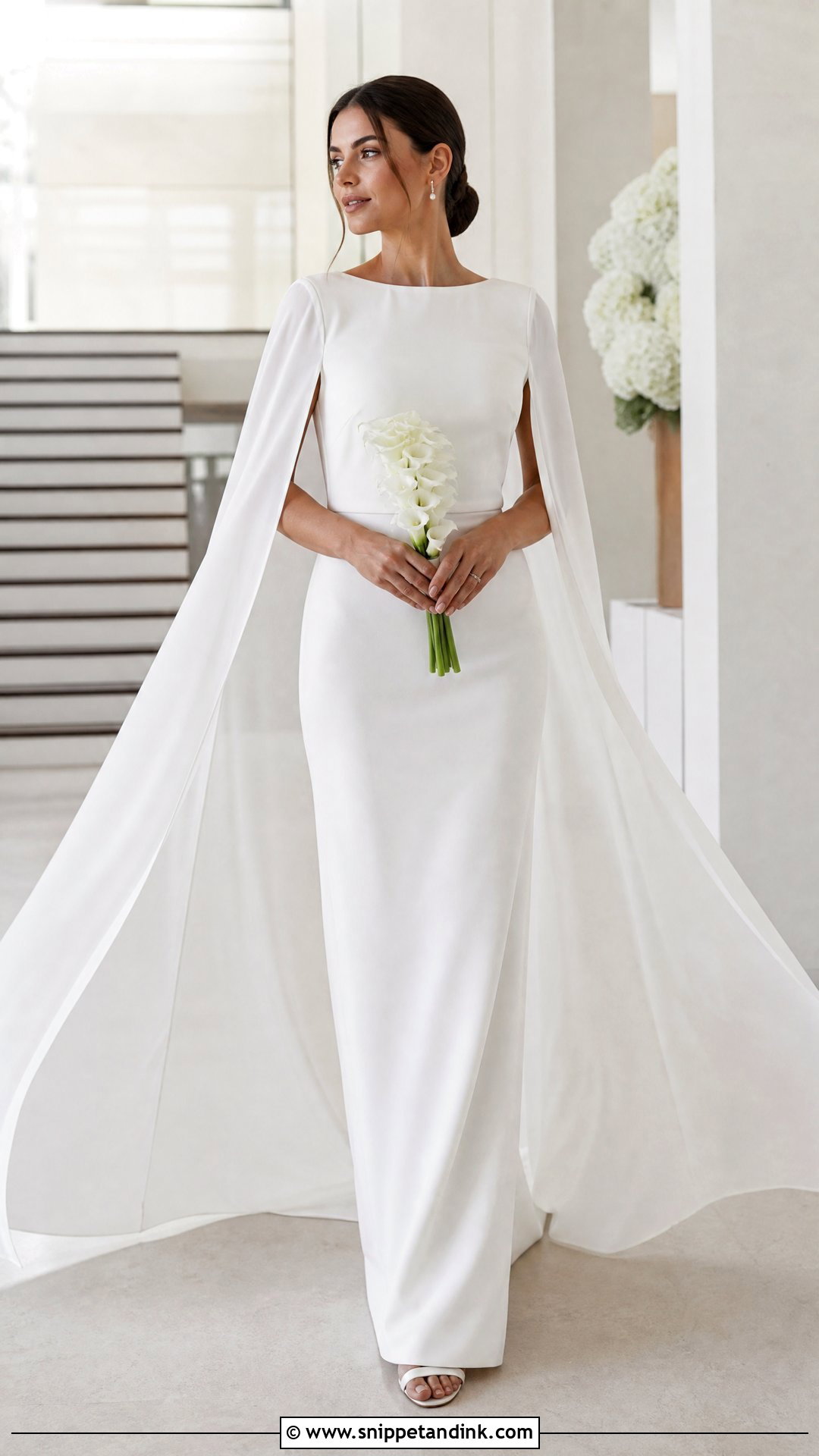
Cape sleeves give movement around the shoulders and can replace a veil altogether. The cape can attach at the neckline, fall from the back or unclip after the ceremony. Keep the gown underneath simple, a column, sheath or A-line, so the cape stays the focus. Crepe reads architectural; chiffon floats. Wear a low hairstyle and minimal earrings that won’t catch the fabric, and carry a narrow bouquet to keep the long vertical line. Wind is the thing I warn about. A floor-length cape outdoors acts like a sail, so practise walking in it, and if the ceremony is exposed, consider a shorter cape or hidden weights in the hem.
15. Convertible Overskirt Wedding Dress
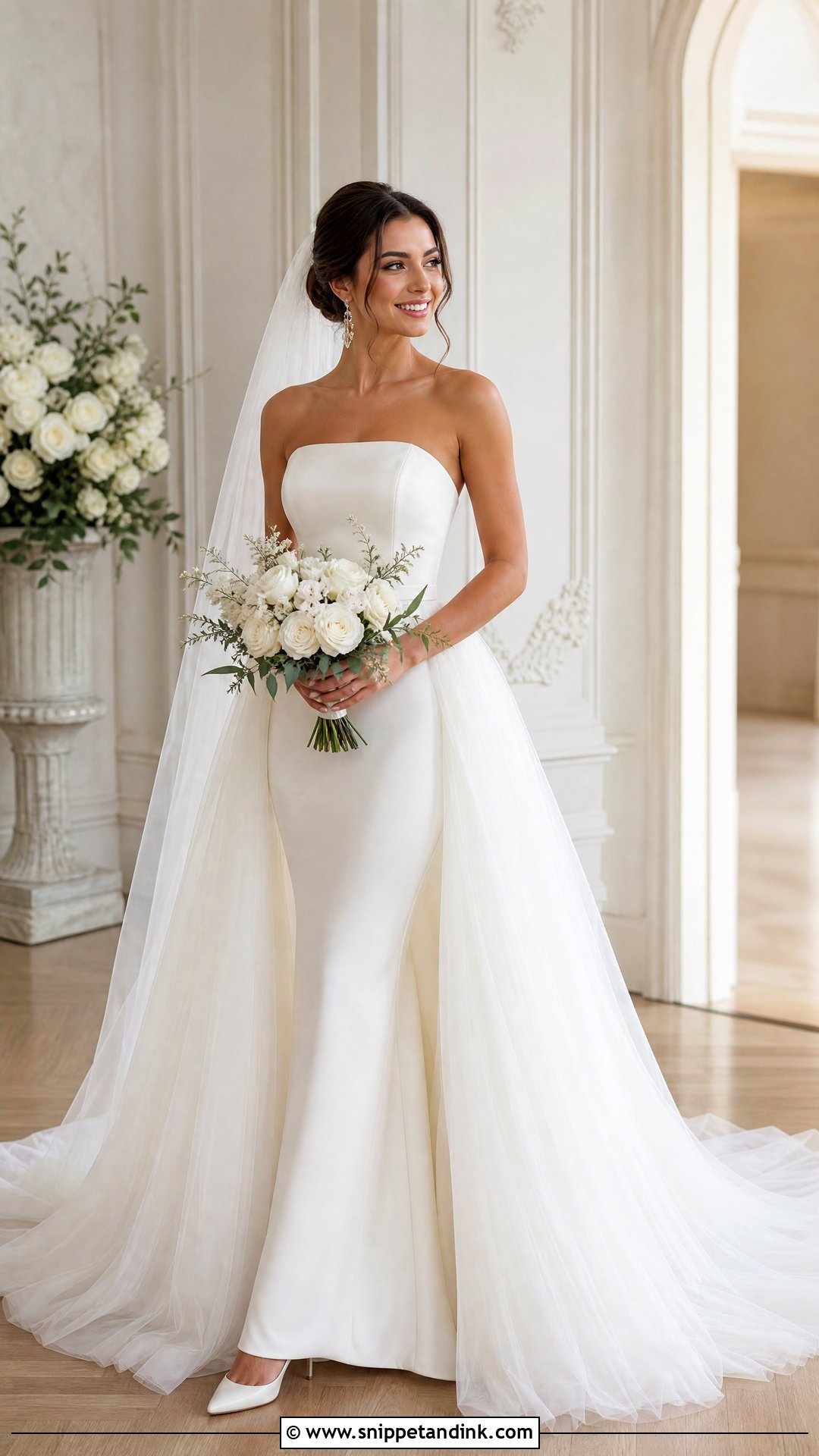
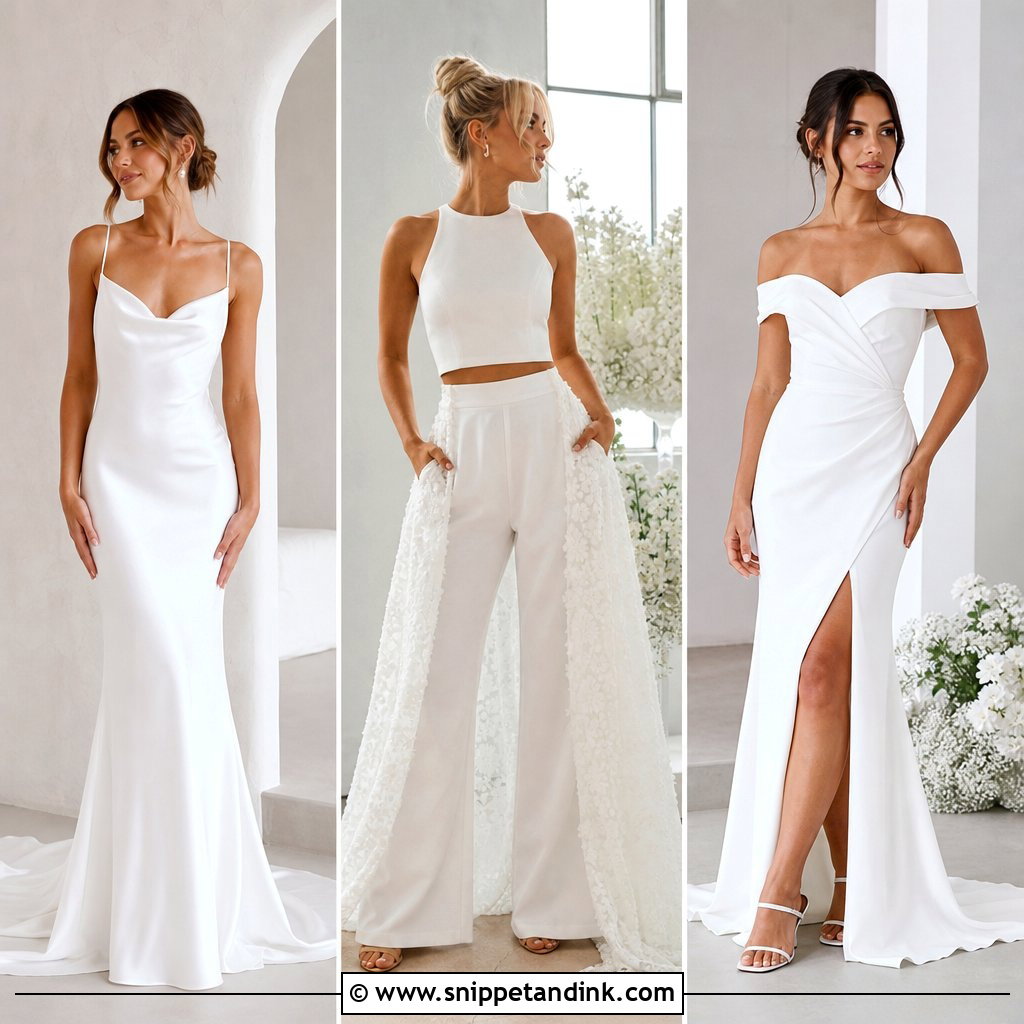
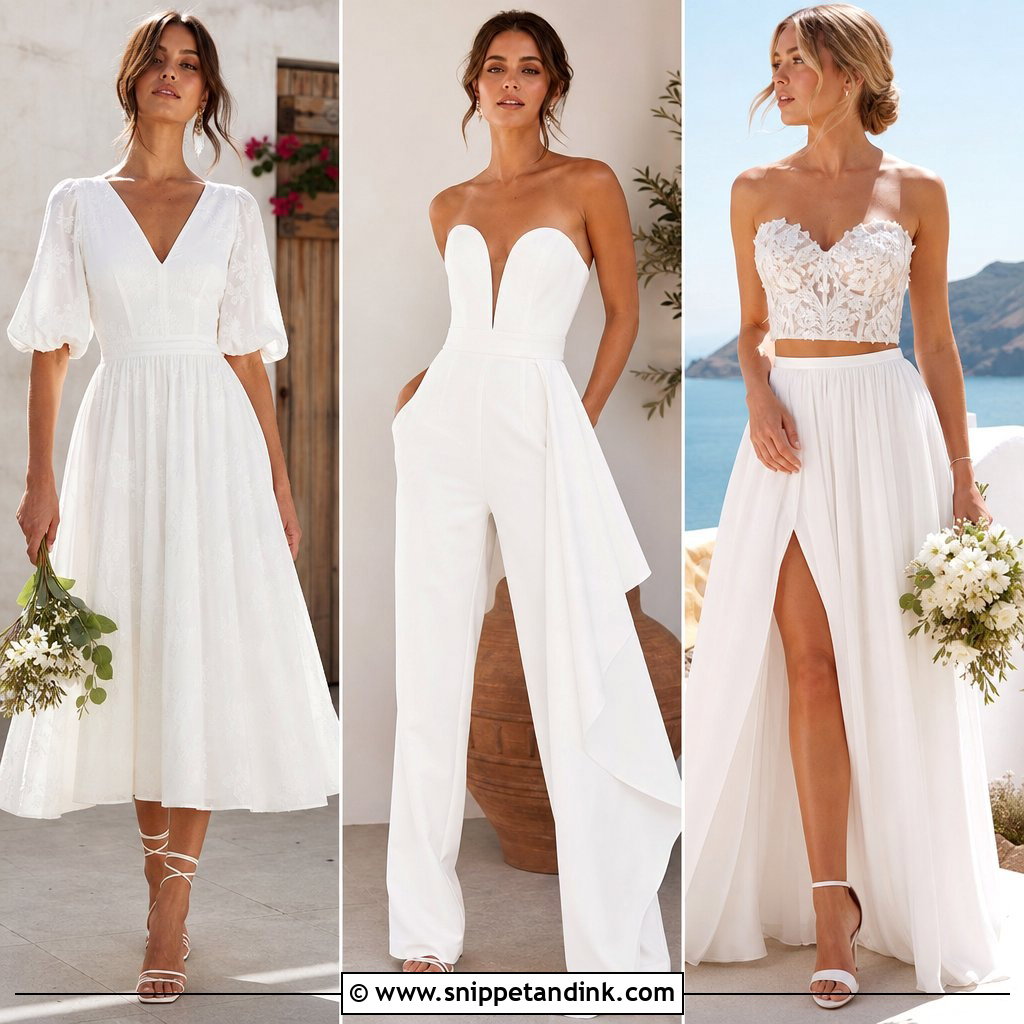
A convertible overskirt wedding dress gives you two looks without a full change. Start the ceremony in a fitted gown with a detachable tulle, lace or satin overskirt, then take it off for a lighter reception shape. The join should sit flat at the waist under a belt, seam or detail. Overskirts usually fasten with hooks or snaps, and I practise taking it off with whoever will help on the day; in a toilet stall with a nervous bridesmaid, a fiddly fastening takes forever. Wear a long veil and classic pumps for the ceremony, then statement earrings and comfortable heels or flats after. Allow alteration time to perfect both versions.
16. Boho Bell Sleeve Wedding Dress
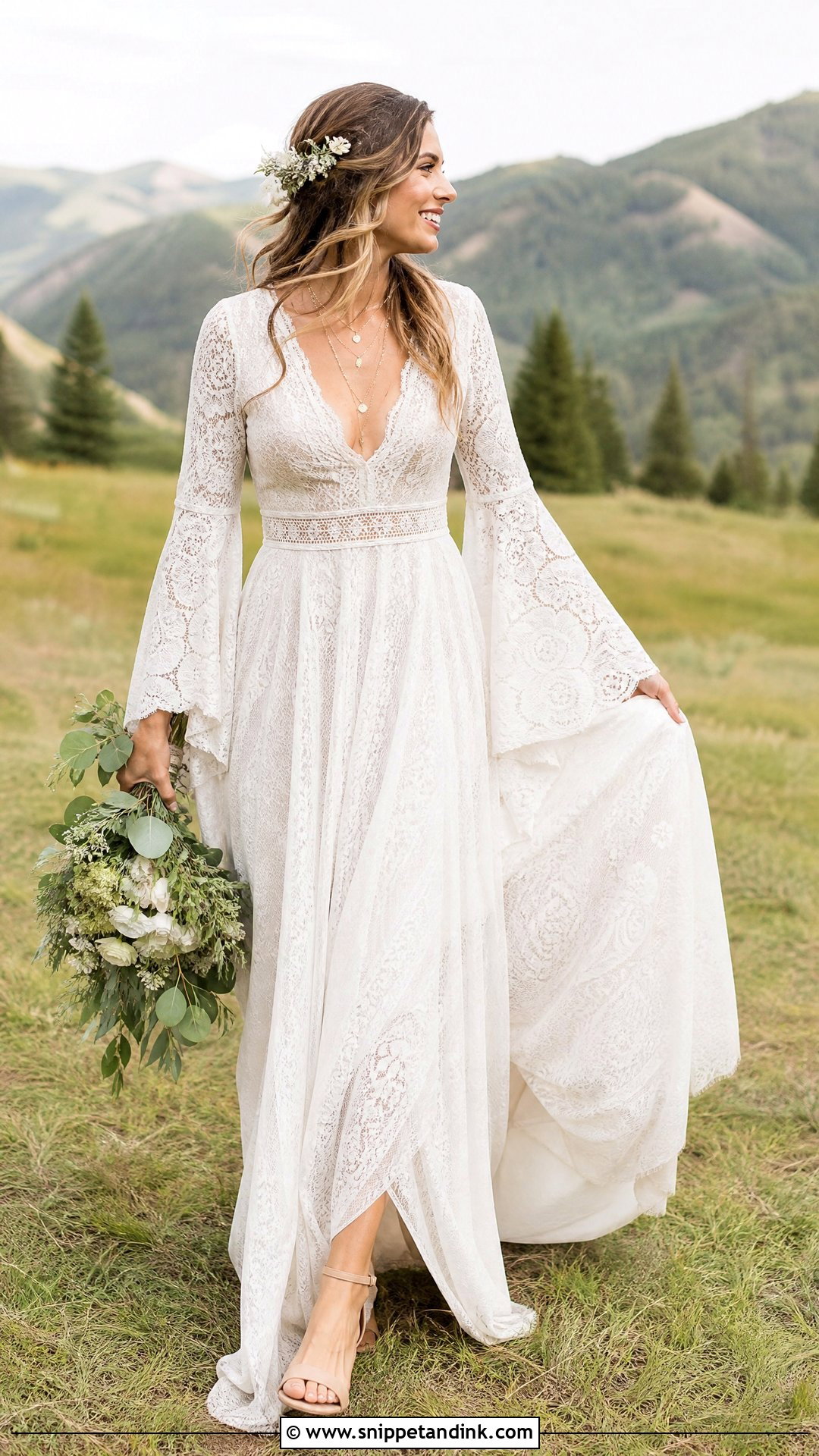
Soft texture gives a boho bell sleeve wedding dress its relaxed character: lightweight lace, subtle embroidery or dotted tulle, with sleeves that widen below the elbow. The skirt can skim or flow. Wide sleeves are practical only up to a point. If they drop over your hands, they’ll trail through the dinner plate and over the bouquet, so I have them shortened to end around the wrist. Keep the rustic touches few: a flower comb, a fine layered necklace and neutral block-heel sandals. An unstructured bouquet with white flowers, herbs and greenery suits it. Good tailoring keeps it polished enough for a more formal venue too.
17. Beach Halter Wedding Dress
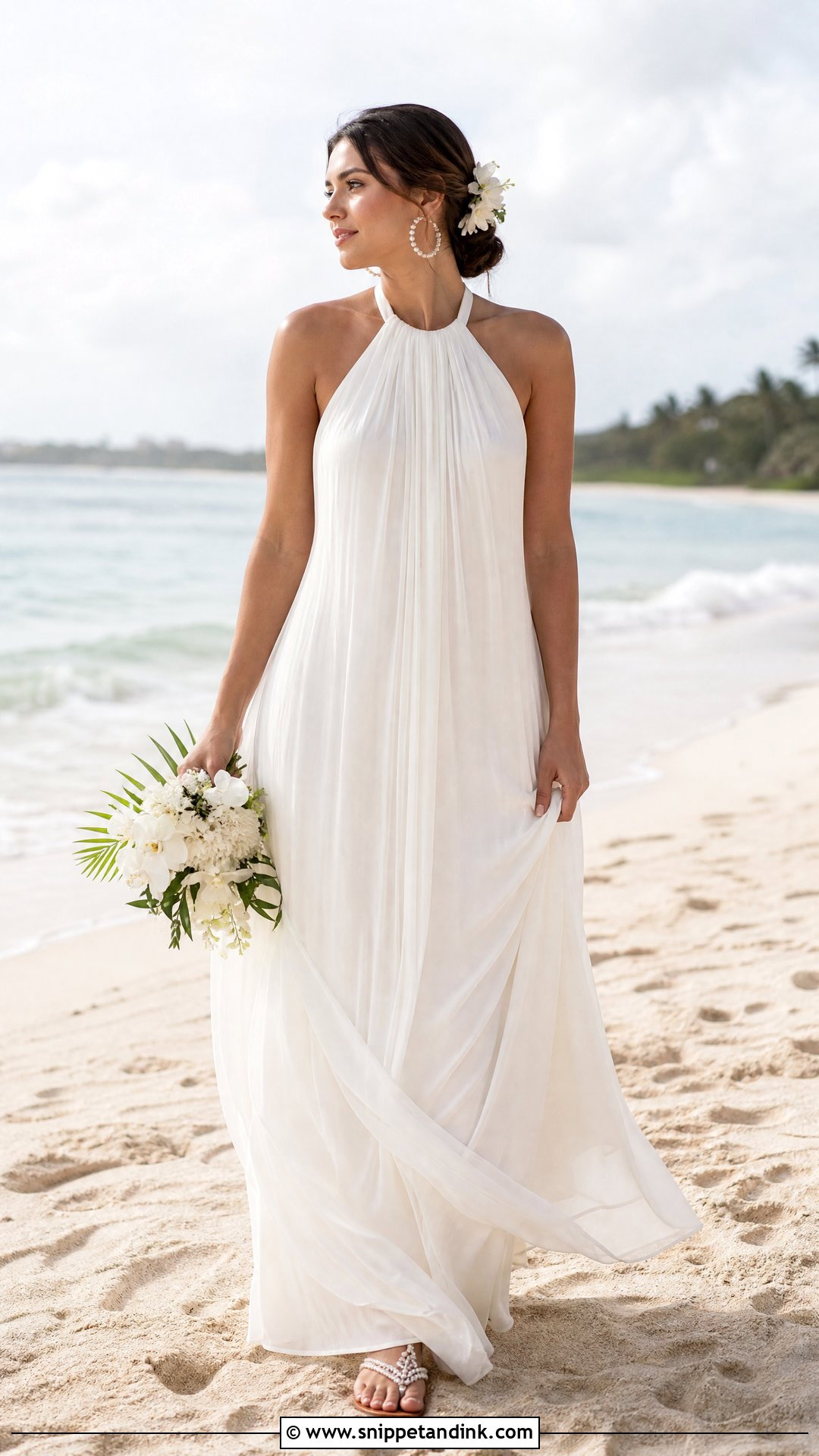
A halter neckline leaves the shoulders bare but feels more secure than strapless, which is why it suits a beach. Chiffon, lightweight crepe or soft satin moves in a sea breeze; a narrow A-line or gently fitted skirt handles sand far better than a heavy ball gown or train. All the weight of the bodice hangs from the back of the neck, so I check the halter at a fitting by having the bride sit and turn her head, because a heavy beaded front will ache by the reception. Flat embellished sandals, pearl hoops and a neat low bun suit the wind. A short veil or floral piece beats a cathedral, and a compact bouquet of hardy flowers survives the heat.
18. Plus Size Corset Wedding Dress
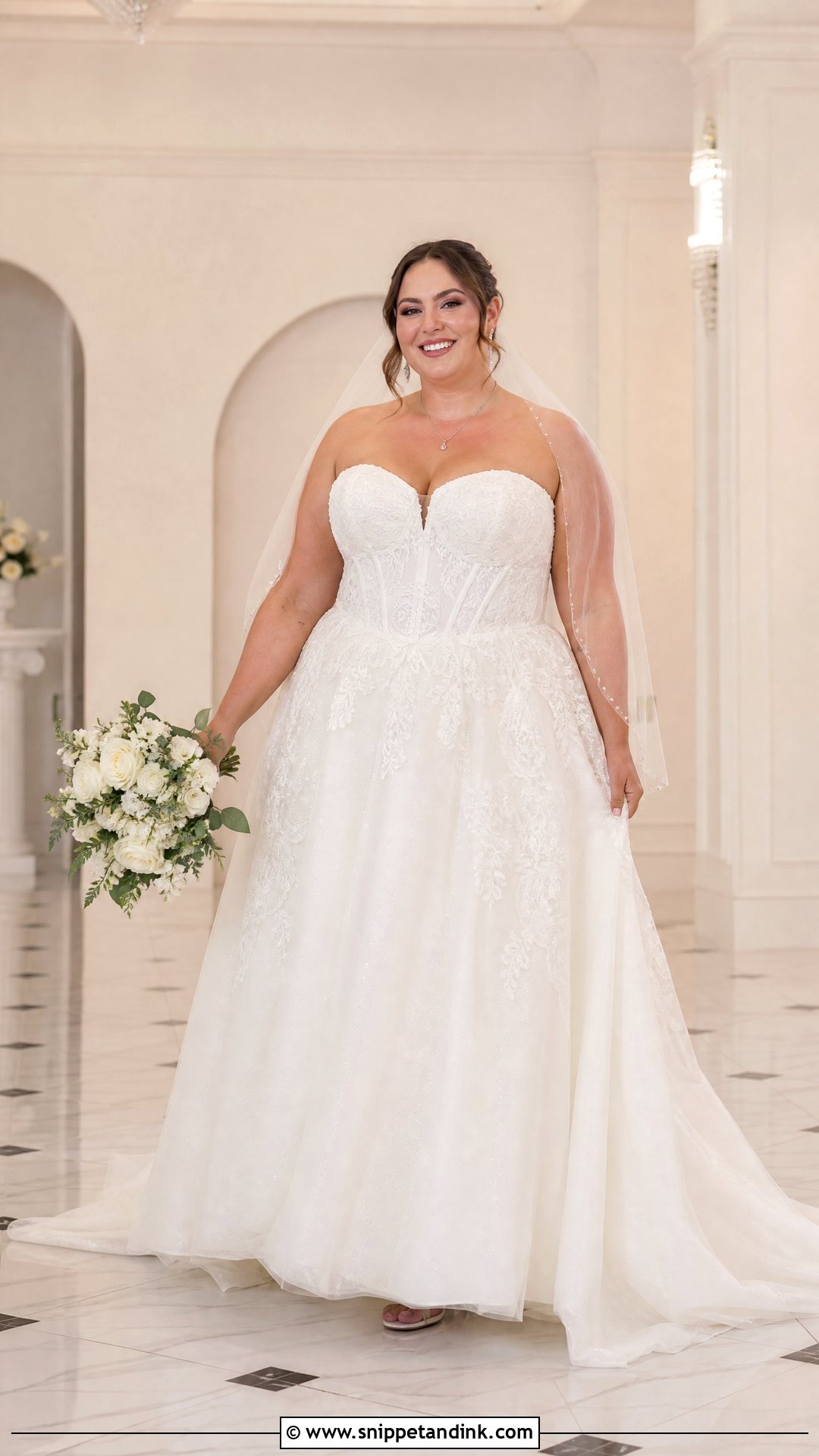
A corset gown on a curvy bride should give structure without forcing the body into a shape it isn’t. Flexible boning, proper cups, an adjustable lace-up back and a skirt that balances the bodice are what I look for. An A-line, ball gown or fit-and-flare can all work once the seam placement suits the wearer. Bridal shops often carry samples in a narrow range of sizes, so ask for samples close to yours; clipping a too-small sample tells you little about the real fit. Stable block heels, a longline undergarment if needed and jewellery chosen for the neckline finish it, with a fingertip veil and a medium bouquet. You should be able to breathe, sit and dance.
19. Maternity Empire Waist Wedding Dress
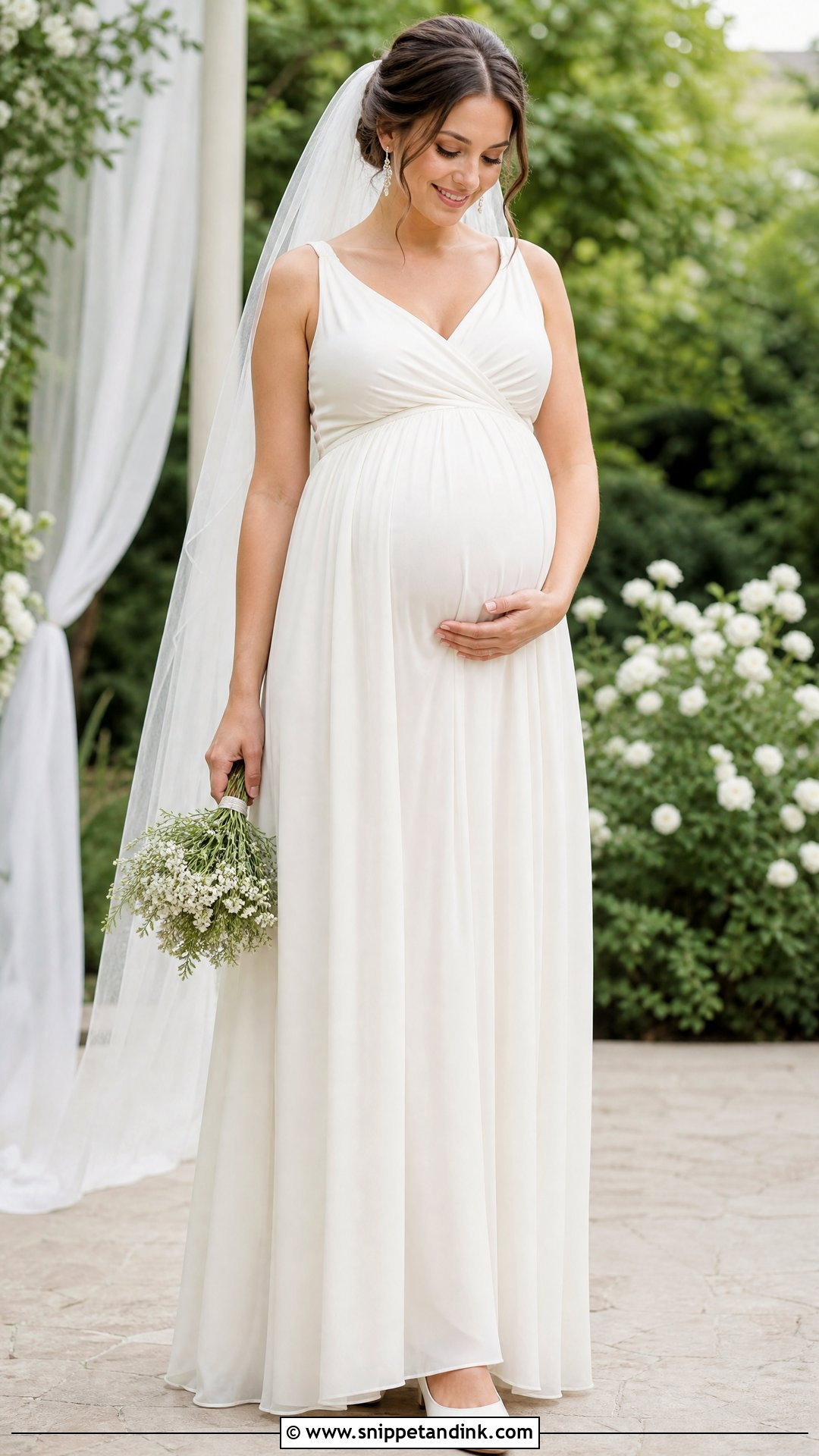
Comfort comes first with a maternity empire waist dress. The raised seam leaves room through the bump, and chiffon or tulle gives soft movement below it. Order based on how far along you’ll be on the day, and book the final alteration as late as your seamstress allows, often within a week or two, since the body keeps changing. A wrap bodice, soft V-neck or wide straps make the fit adjustable. Low block heels or cushioned flats, delicate earrings and a lightweight veil complete it. Heavy beading on the bodice adds weight you’ll feel by evening, and a small bouquet is easier to hold. Breathable lining makes a real difference.
20. Modest Satin Wedding Dress
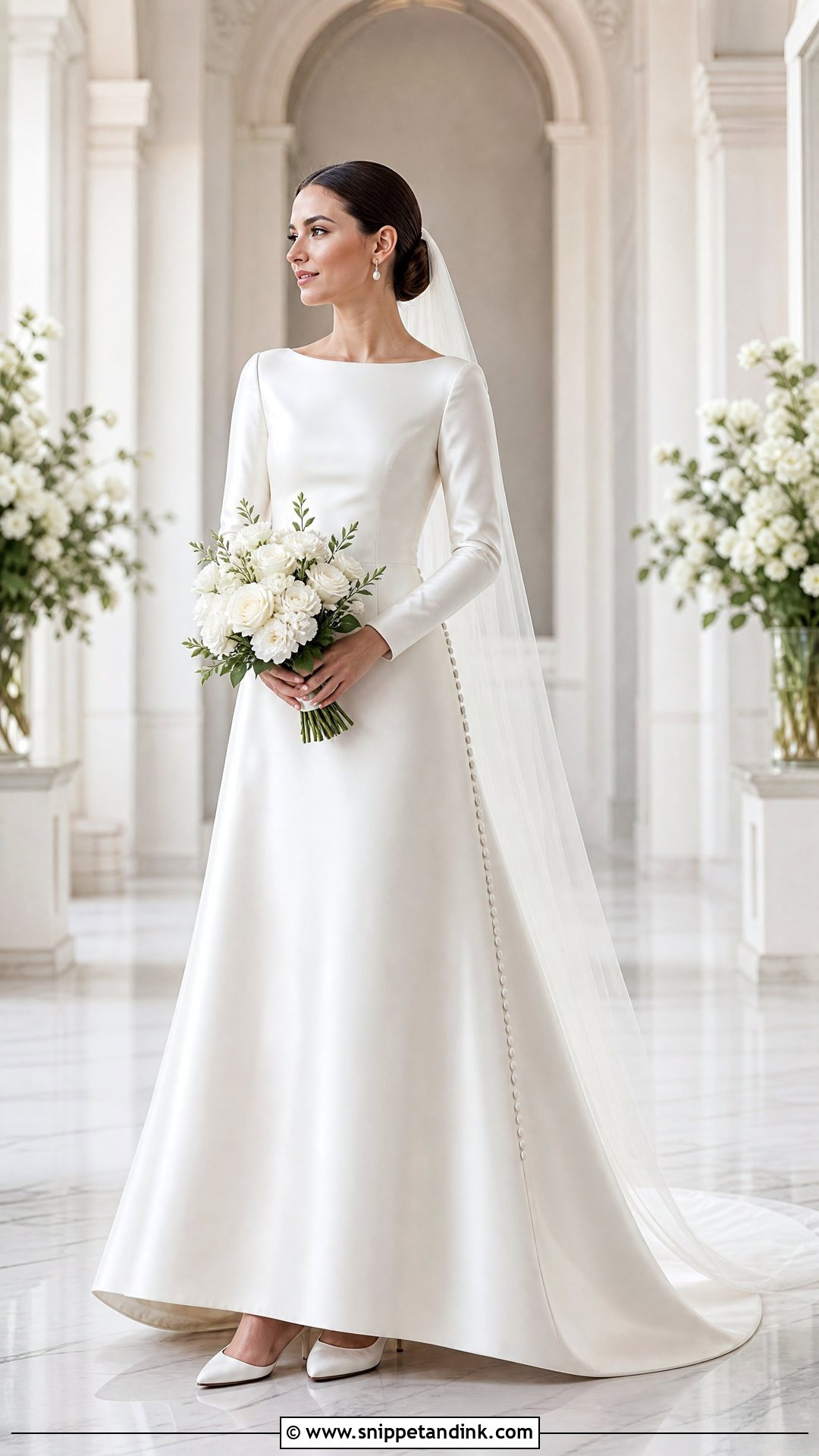
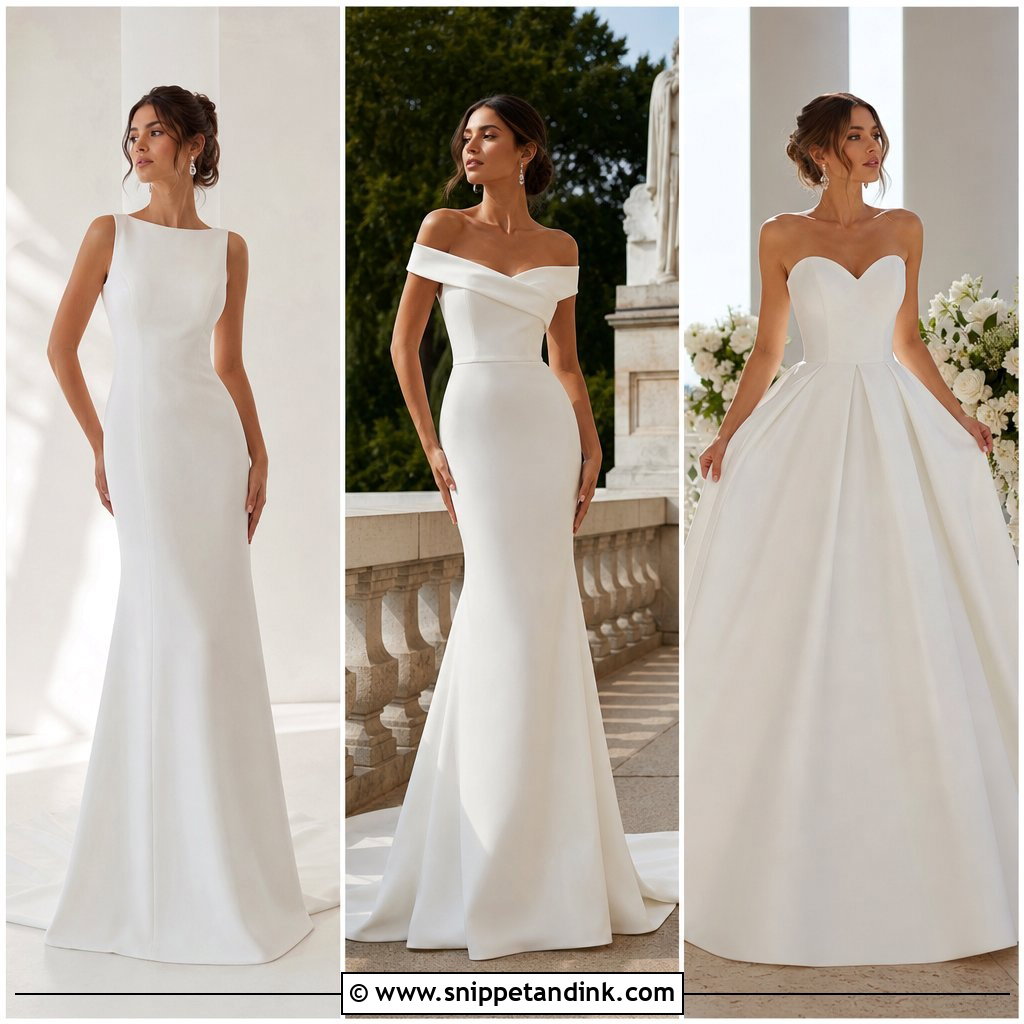
A modest satin dress shows that coverage can look sharp and modern. Think of a bateau or jewel neckline, fitted long sleeves and an A-line skirt with clean seams. Soft satin moves; heavier satin holds a formal shape. Satin sleeves need room at the bicep, because a slim satin sleeve with no stretch pulls the whole bodice when you lift your arms. Closed-toe pumps, pearl earrings, a low bun and a chapel veil finish it. Covered buttons down the back add quiet detail. Removable sleeves or a matching topper give you a second option. It suits any season and venue.
After the Party: Cleaning and Storing the Gown
Get the dress to a specialist cleaner within a few weeks of the wedding. Champagne, white wine and sugary drinks often dry invisible on ivory fabric, then oxidise into yellow-brown marks months later. Point out every spill you remember, even the ones you can’t see.
- Store it flat or folded in acid-free tissue in an acid-free box, or in a breathable cotton garment bag.
- Avoid plastic dry-cleaning bags, which trap moisture and can yellow fabric over time.
- Hang a heavy gown by its inner hanging loops, not the shoulder straps, so the weight doesn’t stretch the bodice.
- Keep it somewhere cool, dark and dry. Attics and basements are the worst places in most homes.
Walk, Sit and Lift Your Arms Before You Say Yes
A wedding dress only works as a whole look: it has to suit your body, the venue, the season and you. The shapes above run from classic A-lines and ball gowns to slips, tea lengths and maternity cuts. Note the silhouettes you’re drawn to, then try a couple you’d never pick. Brides often surprise themselves at the appointment. Walk, sit, turn and lift your arms in each gown. Think about shoes, veil, jewellery, hair and alterations before you sign. When it all works together, you’ll forget you’re wearing it and just enjoy the day.
You'll Like These Ideas:




Leave a Reply