
Satin is the fabric I hand to brides who say they want something polished but not fussy. It needs no beading or lace to look finished, and its smooth face catches light in ceremony, portrait and reception photos alike. The shapes it comes in now are wide: slips and structured ball gowns, corset bodices, basque waists, square necklines and modern midi lengths. That range is the point. A satin gown can be stripped back or grand depending on the cut, so below I’ve gathered 25 of them, from clean columns to long trains, with the fit and styling notes I’d give you at an appointment.
Silk Satin, Polyester Satin and What the Label Tells You
Satin is a weave, not a fibre, so two satin gowns can be made of completely different material. The label inside the dress tells you more about how the day will feel than the hanger does.
- Silk satin breathes, drapes softly and has a deep, quiet glow. It’s the most expensive option and the most delicate: water can leave rings and it creases readily.
- Polyester satin is tougher, cheaper and holds its shape. It doesn’t breathe as well, so it can feel warm at a summer wedding, and some finishes look shinier under flash.
- Blends and acetate sit in between. Ask to feel the fabric and see it in daylight before you commit.
I don’t think silk is automatically better. For an outdoor July wedding I’d still lean silk for breathability, but for a winter ballroom a good polyester satin will hold a big skirt beautifully and survive spilled drinks with less drama.
1. Satin Ball Gown Wedding Dress
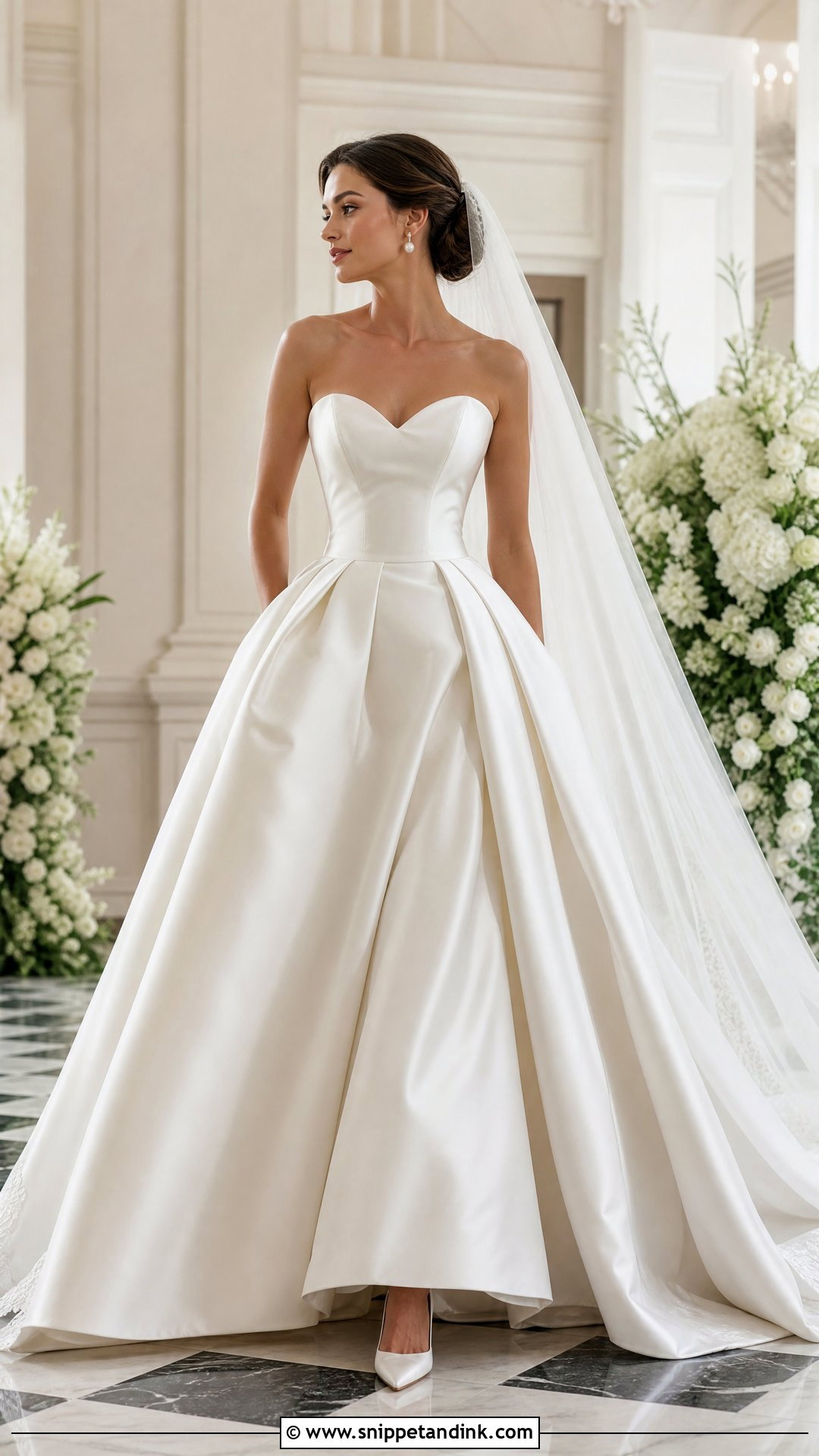
If you’ve pictured a classic aisle walk since childhood, this is probably the shape in your head. A fitted bodice defines the waist and the full satin skirt sweeps out with formal volume and very little sparkle. Satin is what keeps all that skirt looking smooth rather than fluffy. A cathedral veil, pearl earrings and pointed satin heels suit it. For a more modern version, go strapless or choose a clean scoop neck and skip heavy embellishment. Just know the skirt is heavy; ask the shop to let you wear it for twenty minutes before you decide.
2. Satin A Line Wedding Dress
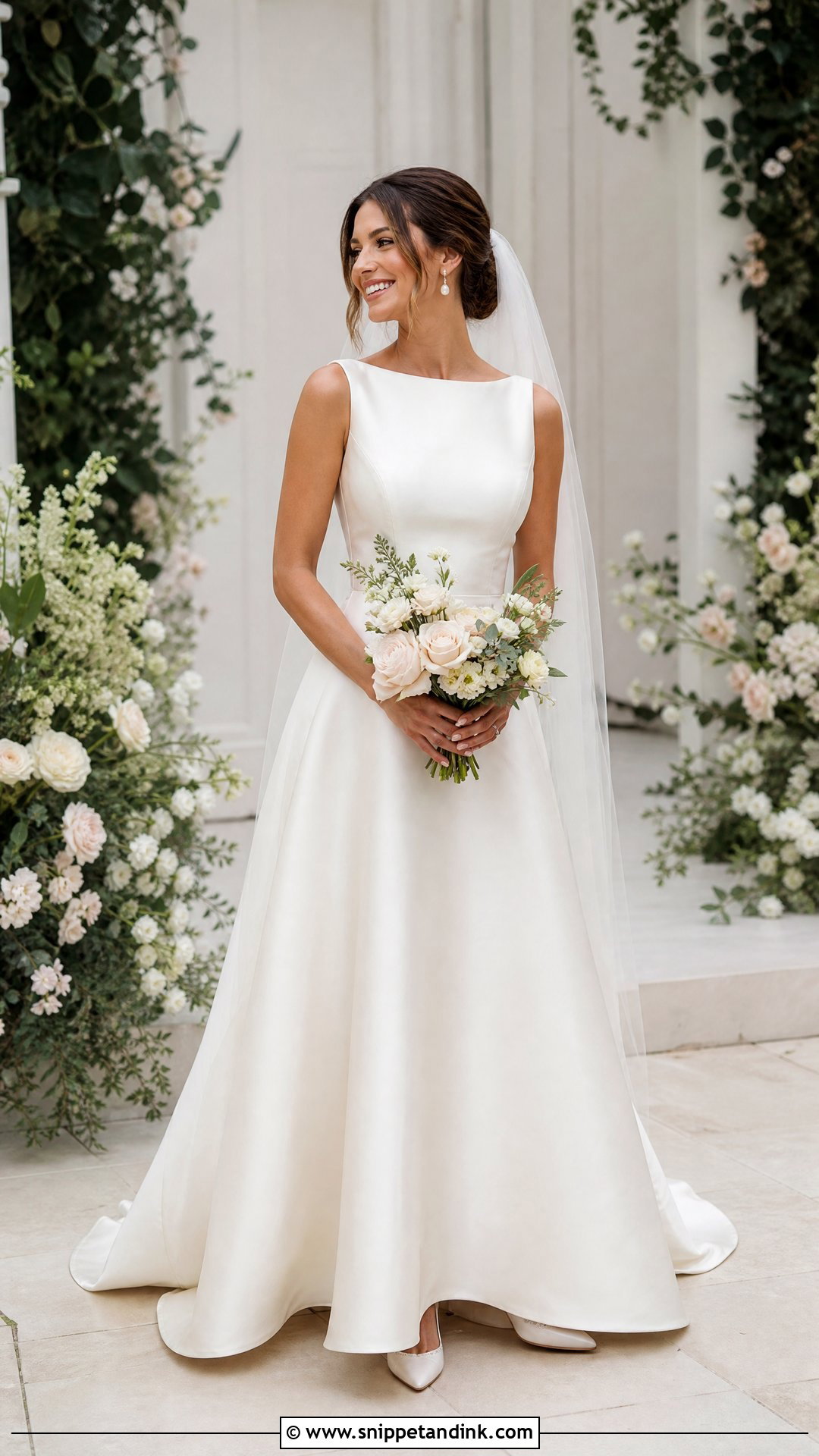
The A-line is the cut I’d start with if you’re unsure, since it shapes the waist and then falls away from the hips without clinging. That makes it comfortable through a long day and kind to most figures. It can stay minimal with a plain bodice, or turn romantic with buttons down the back, a soft train and pearls. Low ivory heels, a structured veil and a small bouquet keep it fresh. Satin A-lines move well when walking and dancing, though thinner satins will crease at the hip crease where you sit, so check the weight.
3. Strapless Satin Wedding Dress
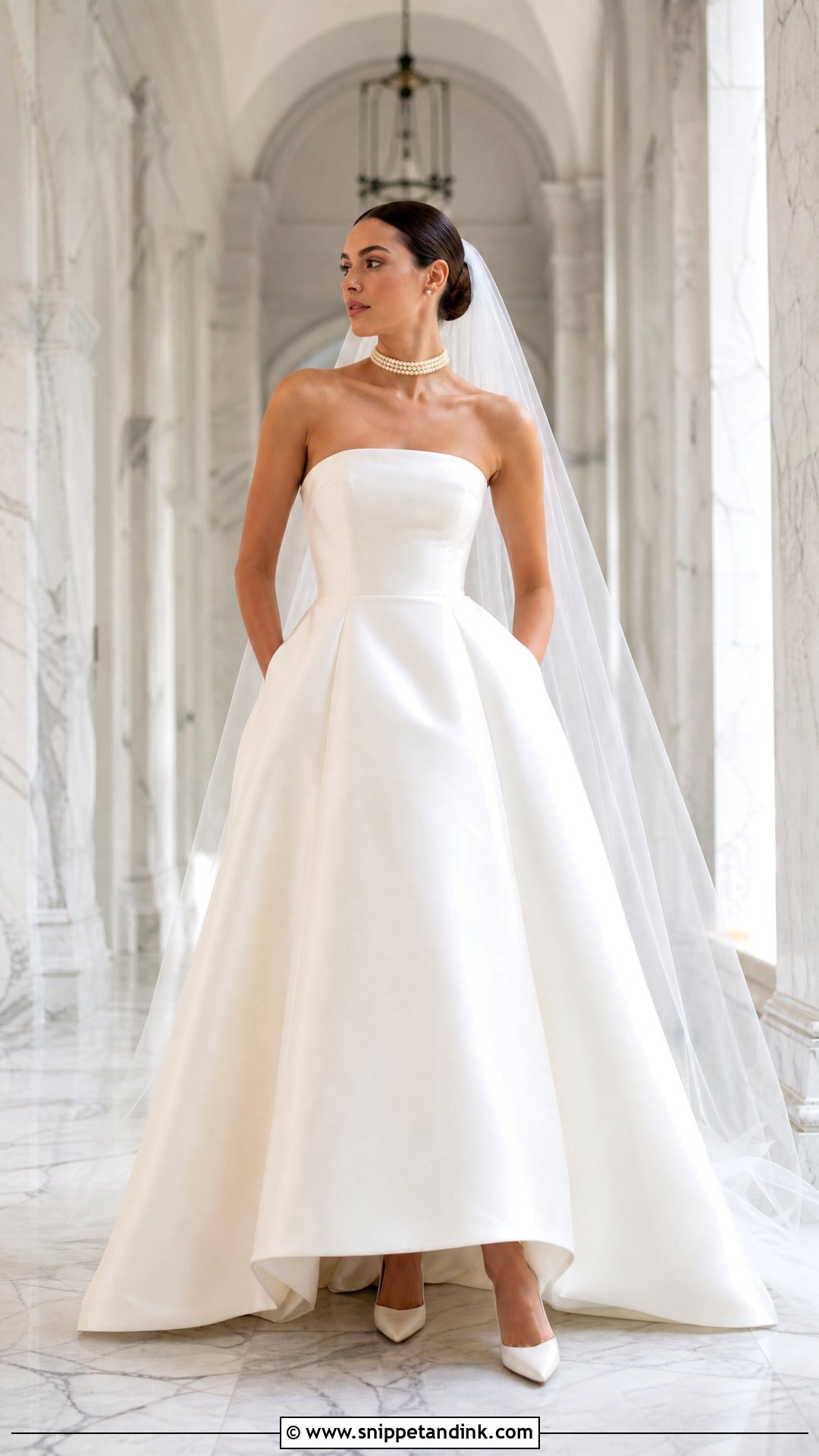
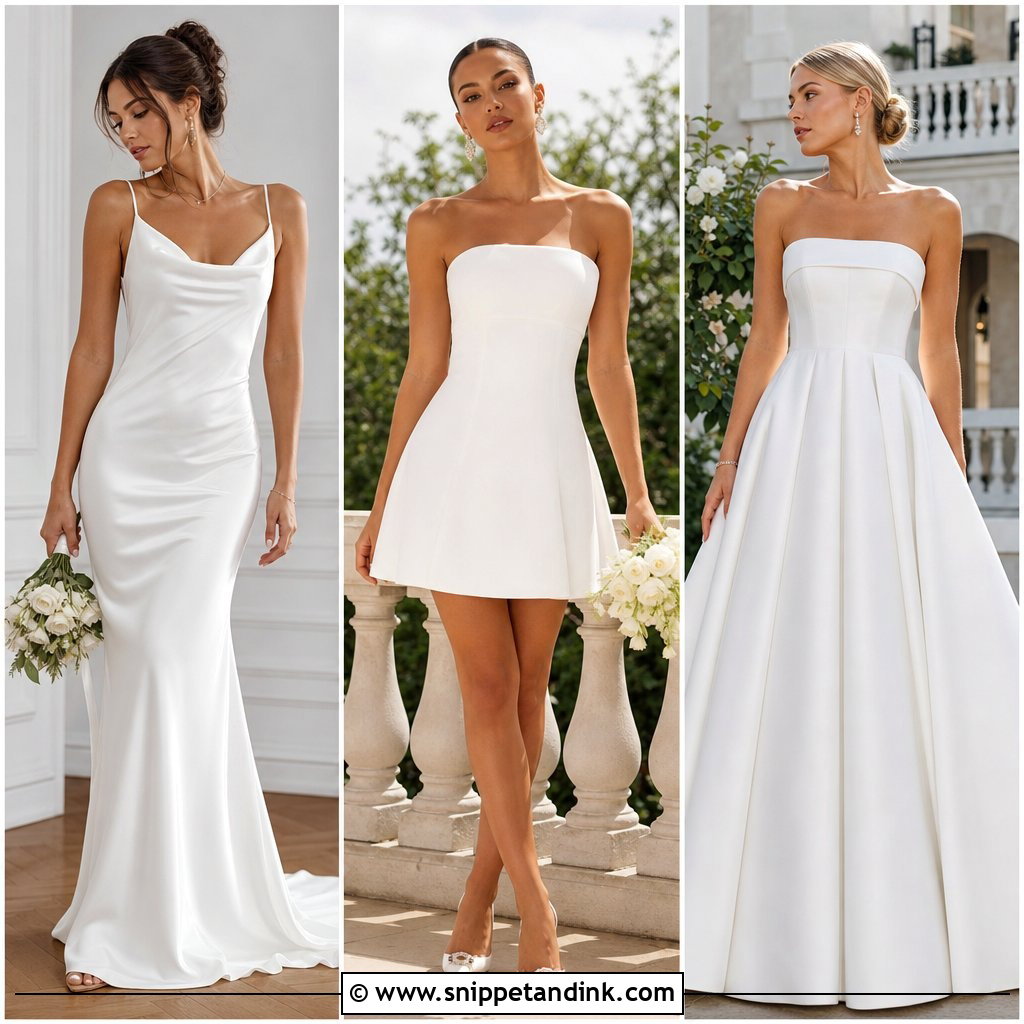
Strapless satin is all about the bodice. The open neckline frames the shoulders and collarbone, and satin gives the top enough body to look crisp rather than soft. On a full skirt it reads classic; on a slim column it reads fashion-led. With so much bare skin, accessories carry more weight than usual, so this is the gown for a pearl choker, opera gloves or a dramatic bouquet. A sleek bun, drop earrings and a long veil also suit it. If you’re hitching it up in the fitting room, the side seams need taking in.
4. Off Shoulder Satin Wedding Dress
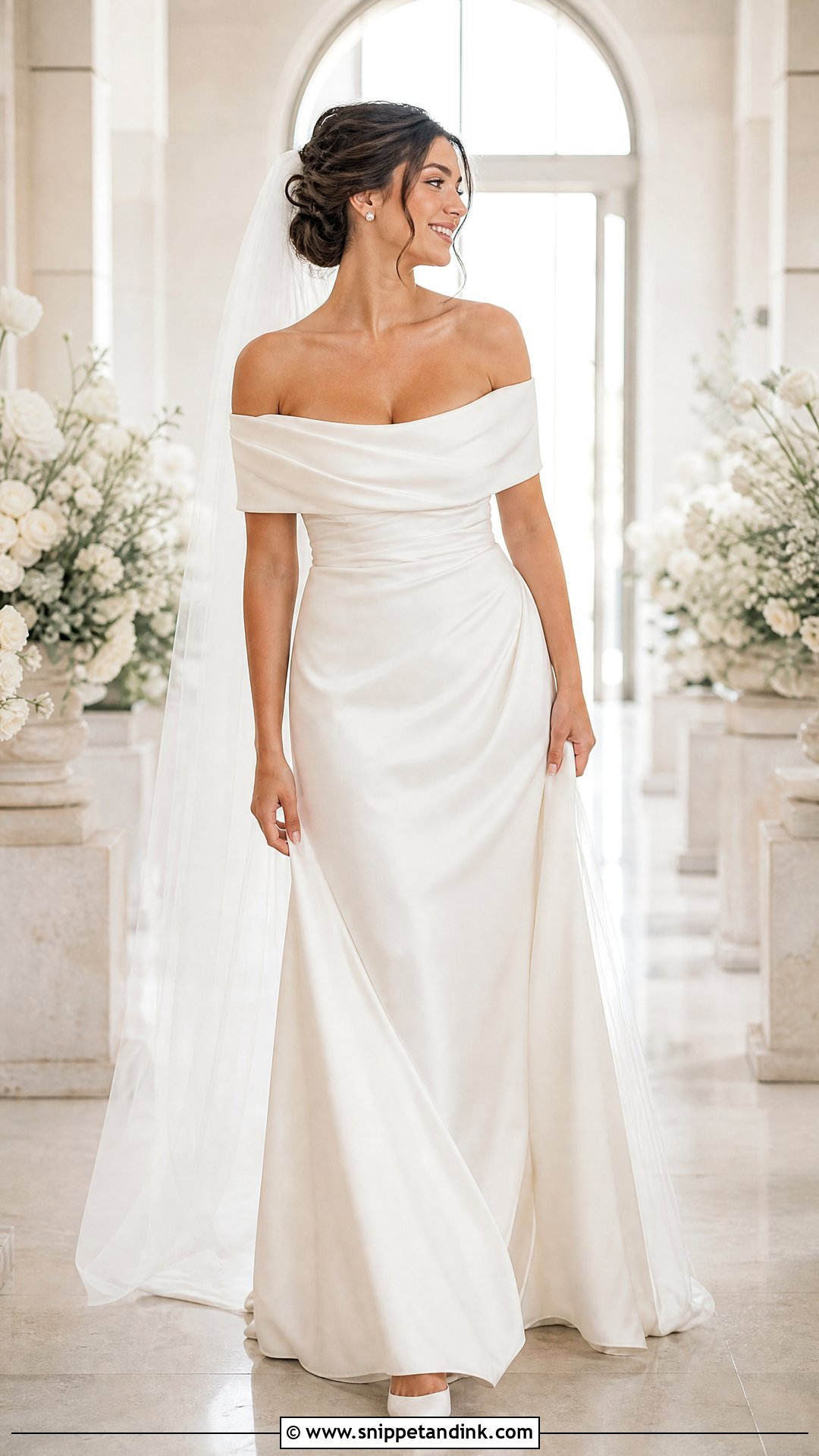
An off-shoulder neckline shows the shoulders while covering the upper arm, and satin lets the sleeves or drape hold their shape instead of collapsing. It sits well in fitted, A-line and ball gown cuts. The band across the arms decides how comfortable you’ll be, so have it fitted with your arms raised, not just hanging. Pearl studs, a low updo, satin pumps and a plain veil keep the neckline in charge. It’s softly dramatic without lace or beading, which suits brides who find embellished gowns heavy.
5. Long Sleeve Satin Wedding Dress
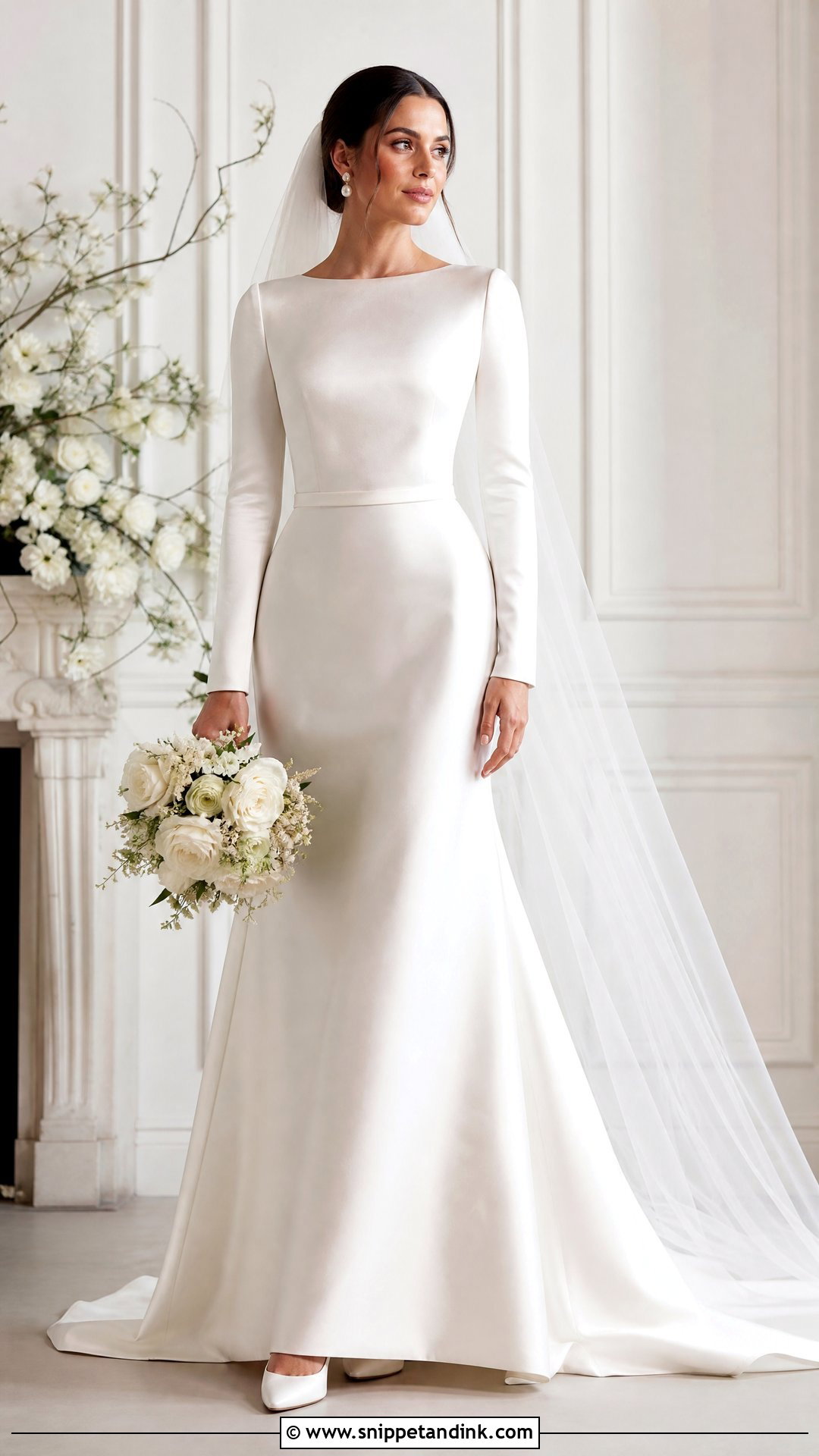
Long satin sleeves can be fitted for a sleek finish or slightly puffed for a softer shape. Satin makes them look polished rather than heavy, especially with a simple neckline and a defined waist. They are warm, though. For a summer date I’d steer you toward a lighter satin or a sleeve cut with room through the forearm. Pearl earrings, a smooth veil and closed-toe heels complete a tailored, modest look. Cooler seasons and formal venues suit it best, and the clean line shows up clearly in portraits.
6. Satin Slip Wedding Dress
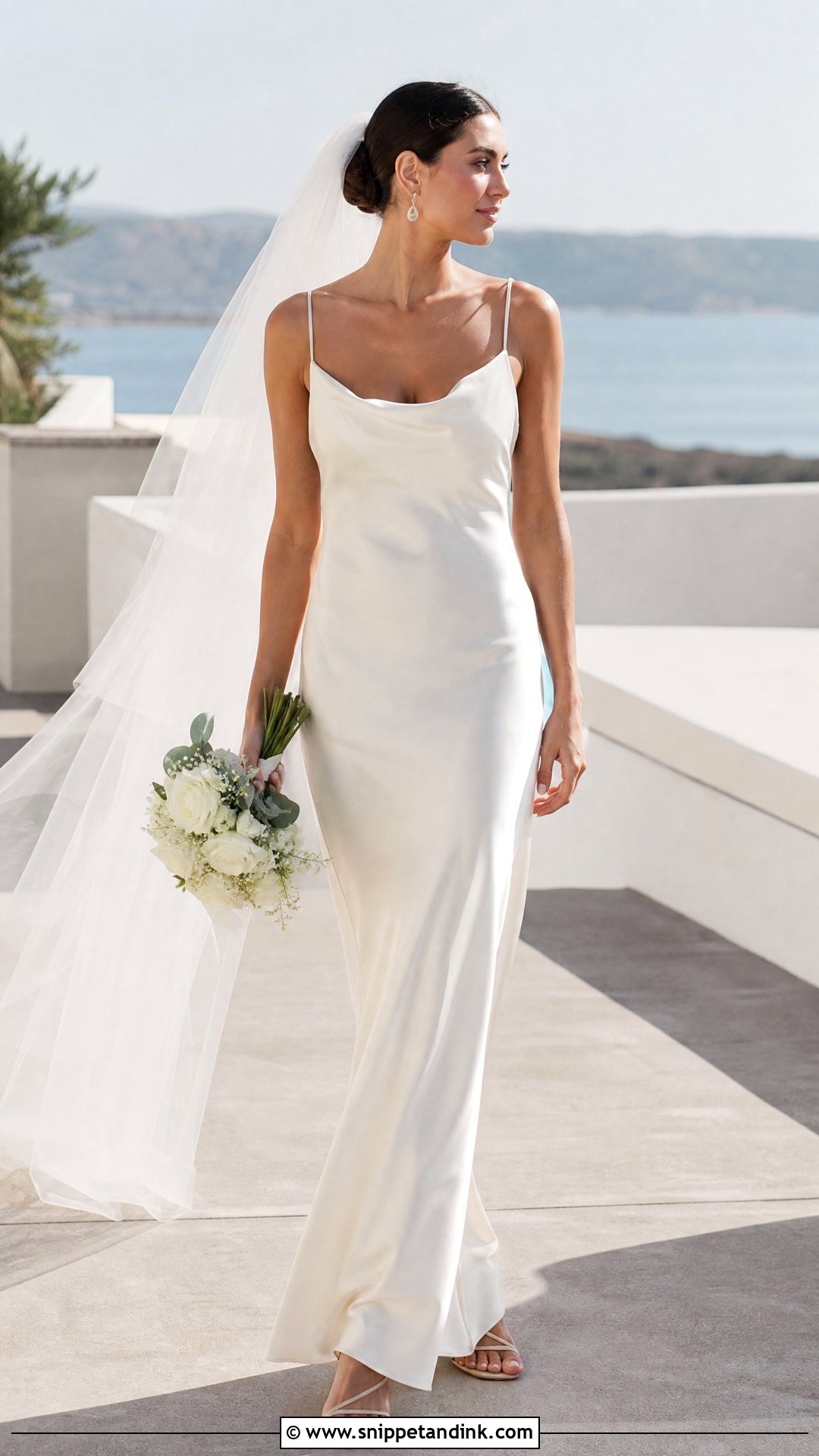
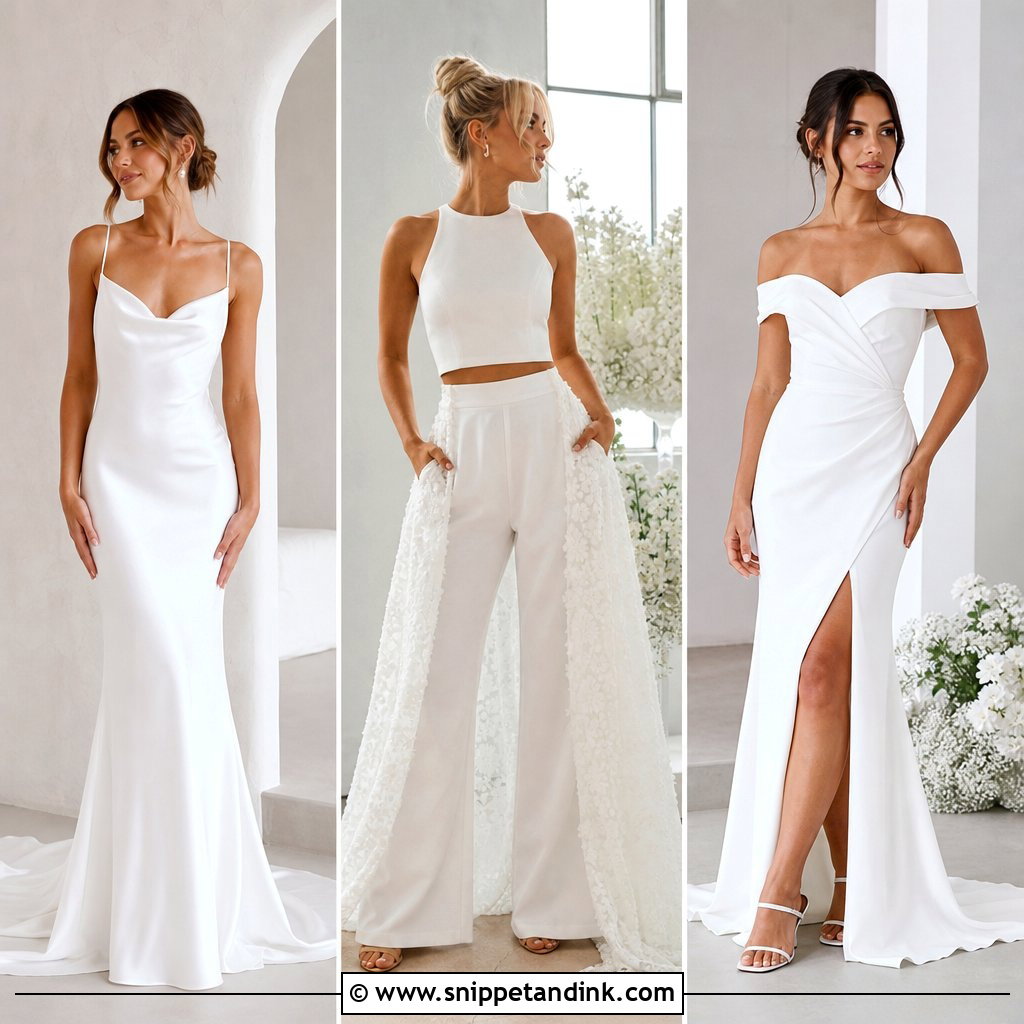
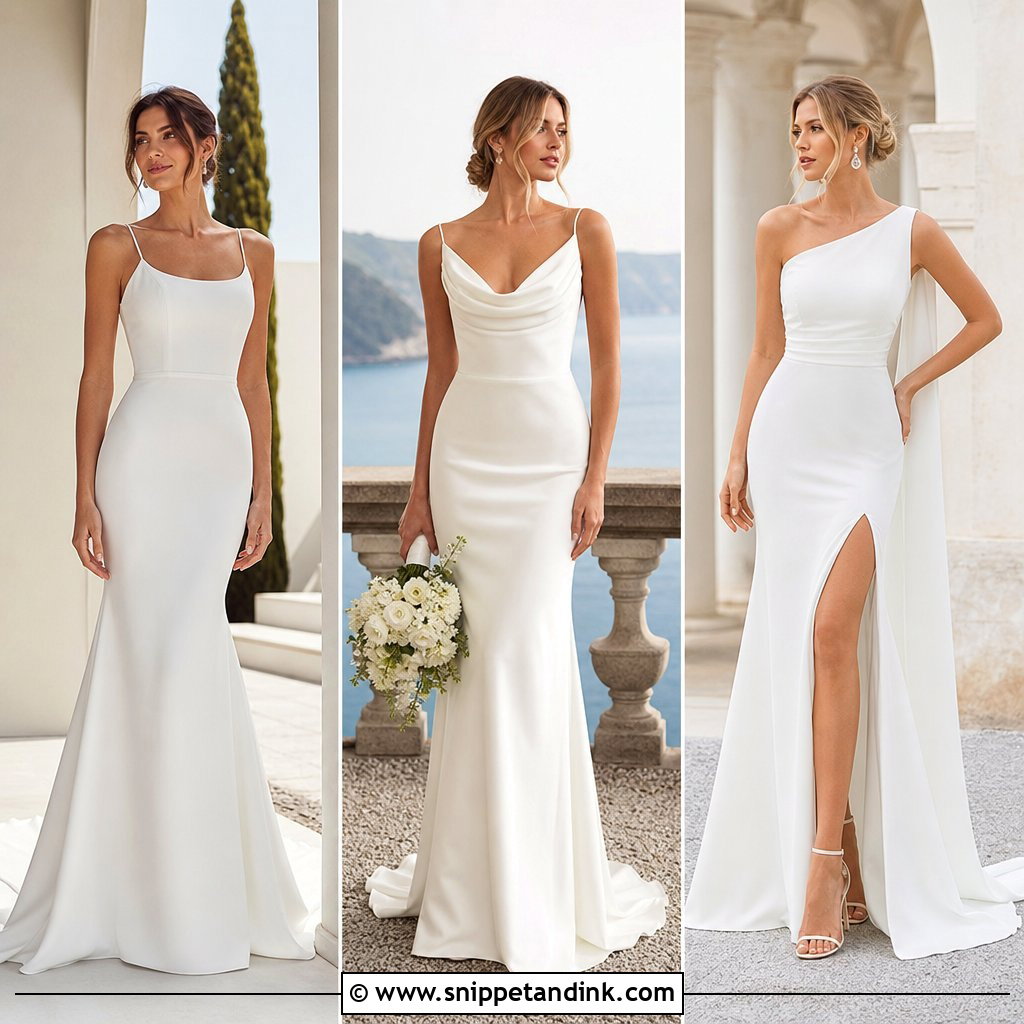
Cut on the bias, a slip skims the body instead of adding volume, and that’s where its relaxed feel comes from. Thin straps, a cowl neck or a bias shape all nod to classic 1990s minimalism. It’s the most revealing satin cut there is, though, so underwear needs real thought. Strappy ivory heels, fine diamond or pearl jewelry and a sheer veil suit it. It also restyles easily after dinner with a feather wrap, a cropped blazer or statement earrings, which makes it a good pick if you’d rather not buy a second outfit.
7. Satin Mermaid Wedding Dress
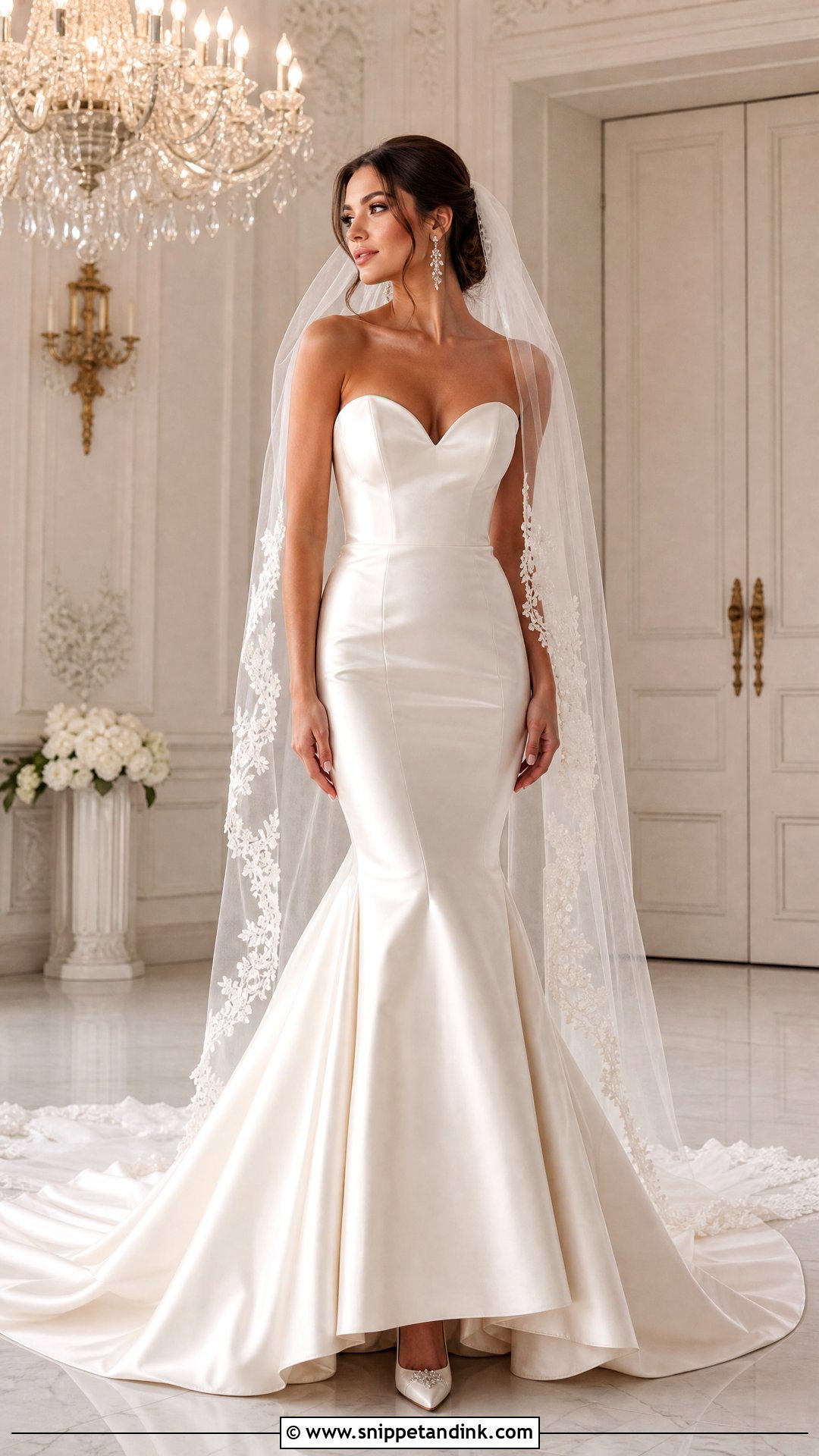
The mermaid hugs the bodice, waist and hips and flares near the knee, giving a sculpted hourglass. Satin keeps the surface smooth so the shape itself does the work. Walking is the trade-off. A flare set low restricts your stride, and stairs need practice, so I’d always test a mermaid on a step before buying. A long veil, pointed heels and refined earrings keep it balanced. A sweetheart or off-shoulder neckline softens the fitted shape, while a square neck makes it more modern.
8. Satin Column Wedding Dress
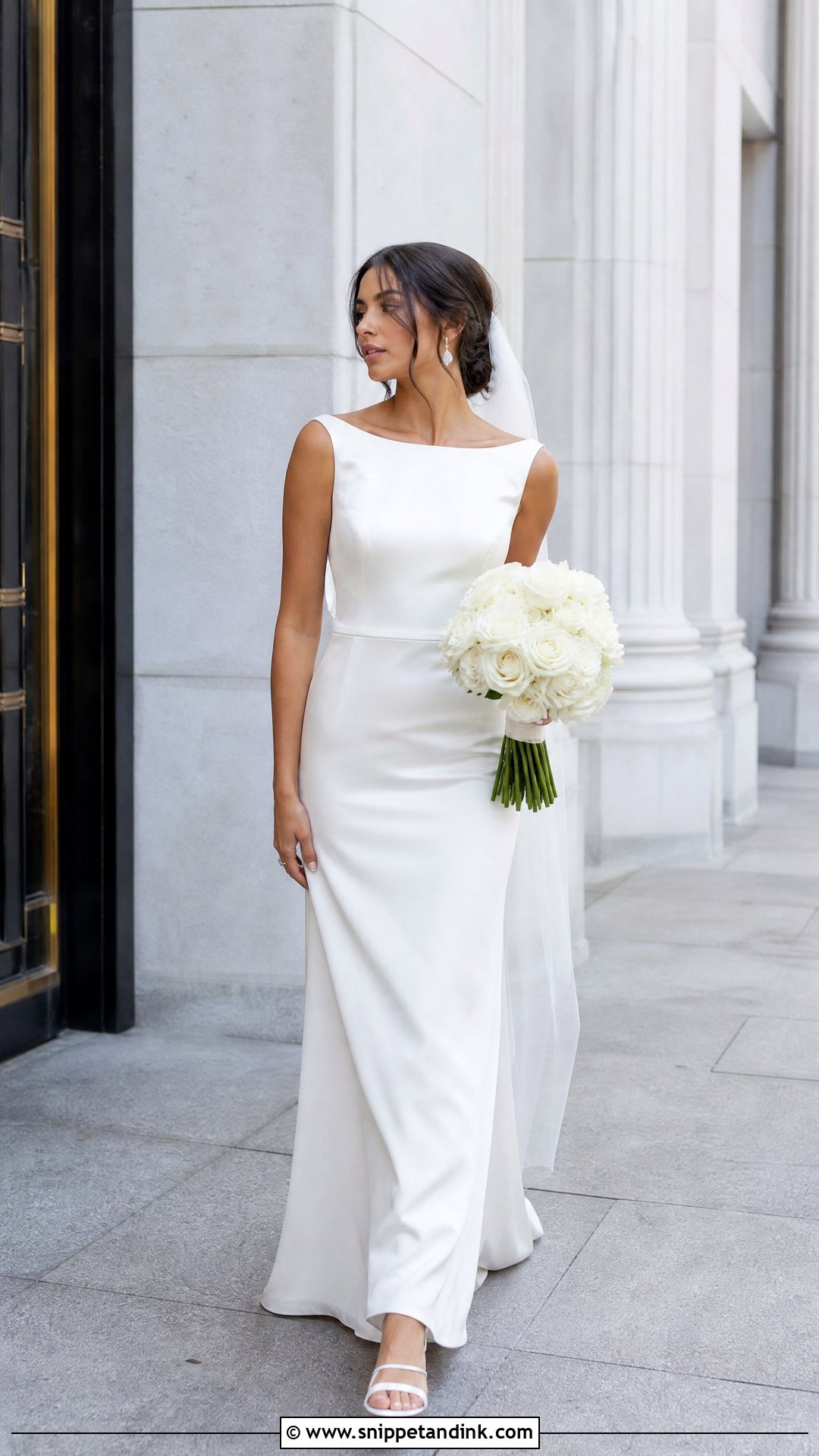
A column is the plainest silhouette on this list, which means fit is the whole story. With no flare to hide behind, any pull at the hip or ripple at the waist shows. I’d look for smooth tailoring, a supportive lining and a length that just brushes the shoes, hemmed with those shoes on. Minimalist heels, pearl drops and a low-set veil finish it. City weddings, small ceremonies and formal rooms all suit its sharp, quiet line.
9. Square Neck Satin Wedding Dress
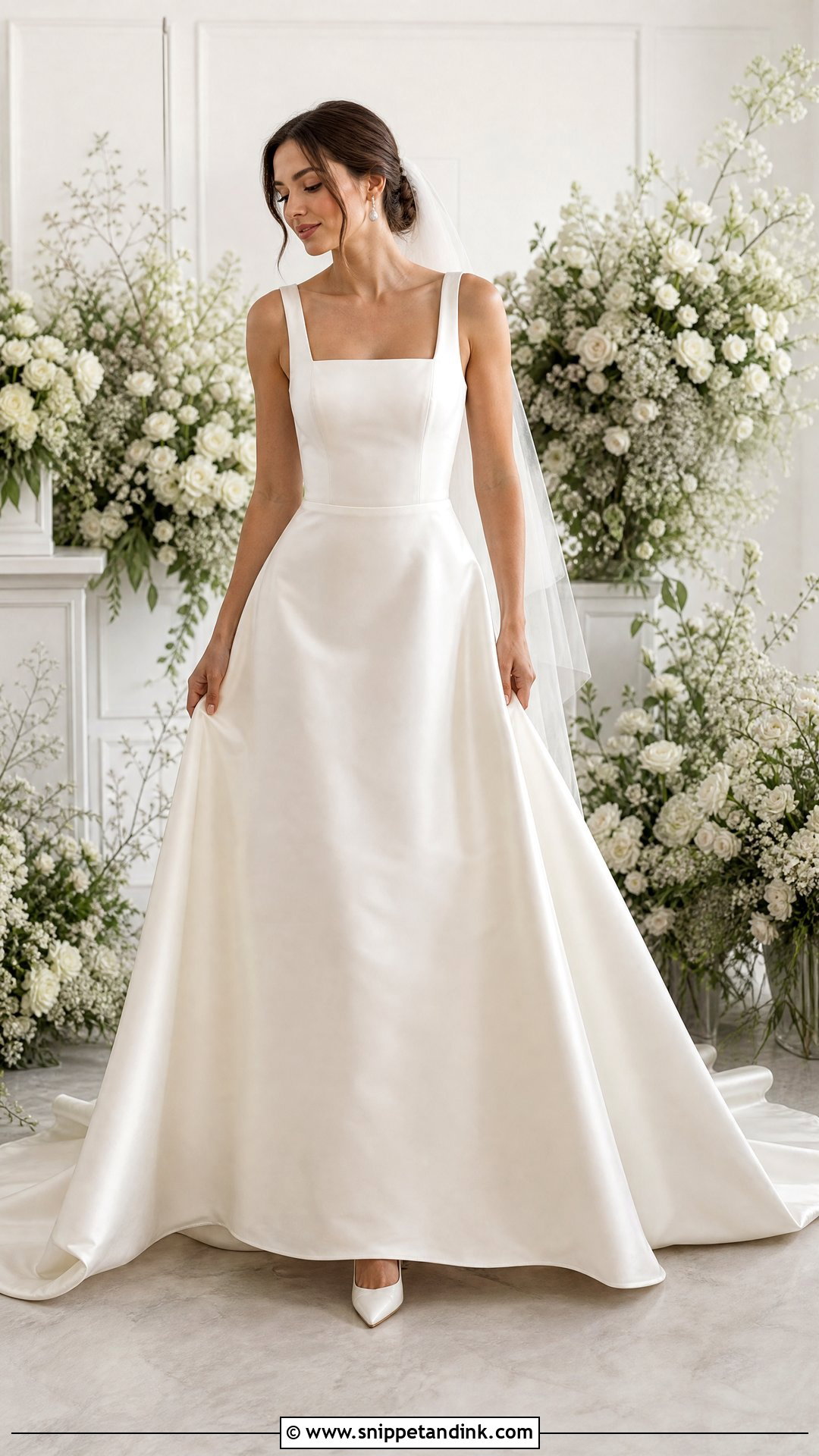
Straight across the chest, a square neck gives the bodice structure and balances the shoulders. It works with thin straps, wide straps or long sleeves, depending on how much support you want; wider straps carry more of the bodice weight. Check that the corners lie flat when you breathe in. A sleek veil, pearl earrings, a soft updo and pointed ivory heels suit it, and on a very plain gown a simple pendant fills the neckline. It’s classic without feeling old-fashioned.
10. Cowl Neck Satin Wedding Dress
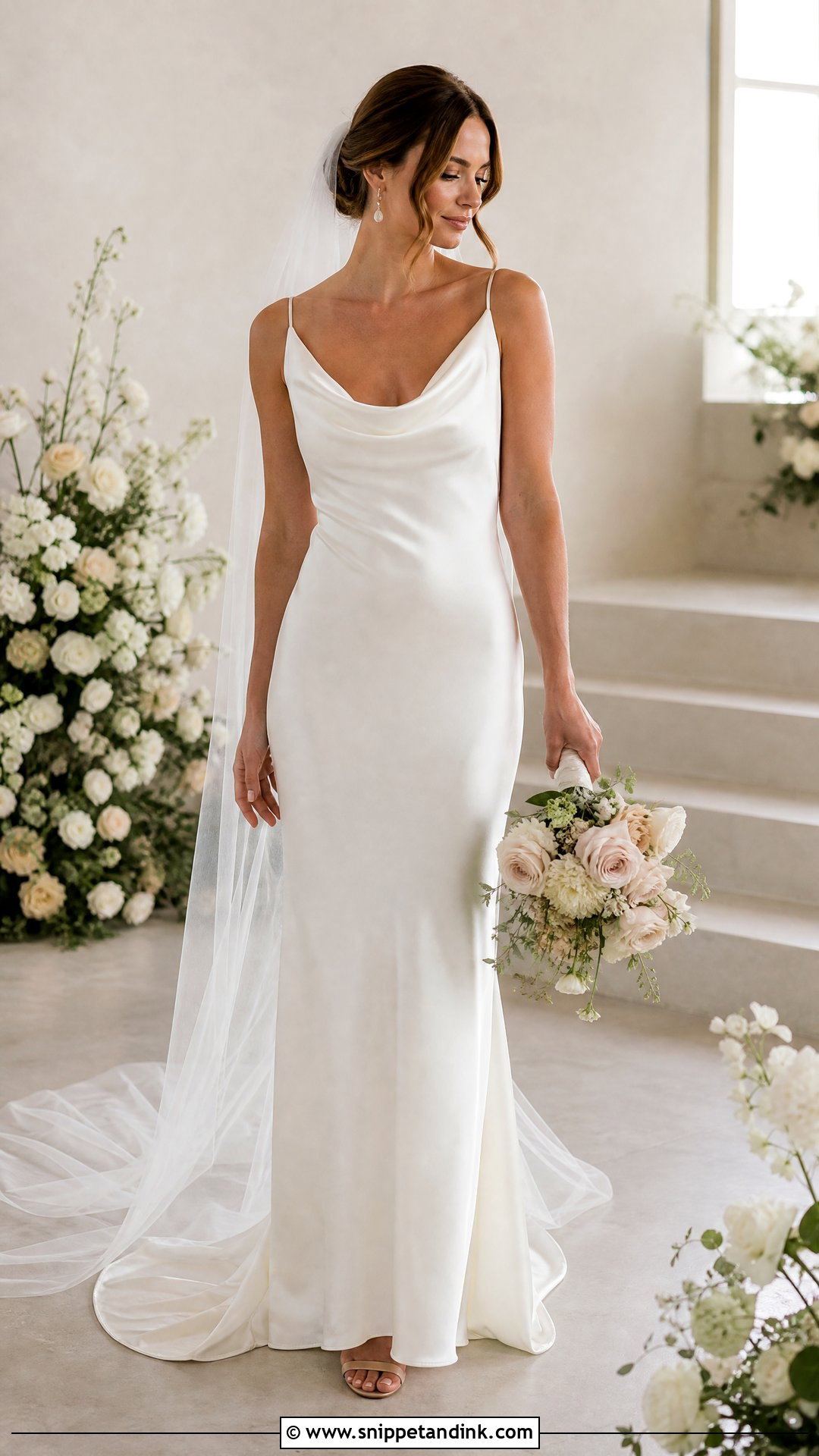
A cowl is fabric draped into soft folds at the neckline, and satin shows those folds better than almost any other cloth because each one catches light differently. It suits slip, column and bias-cut gowns. Cowls can shift and gape when you lean forward, so look inside for a small weight or a stitched anchor that holds the drape in place. Delicate earrings, barely-there heels and a soft veil complete a relaxed outfit. It’s a natural fit for destination weddings, small celebrations and reception changes.
11. Corset Satin Wedding Dress
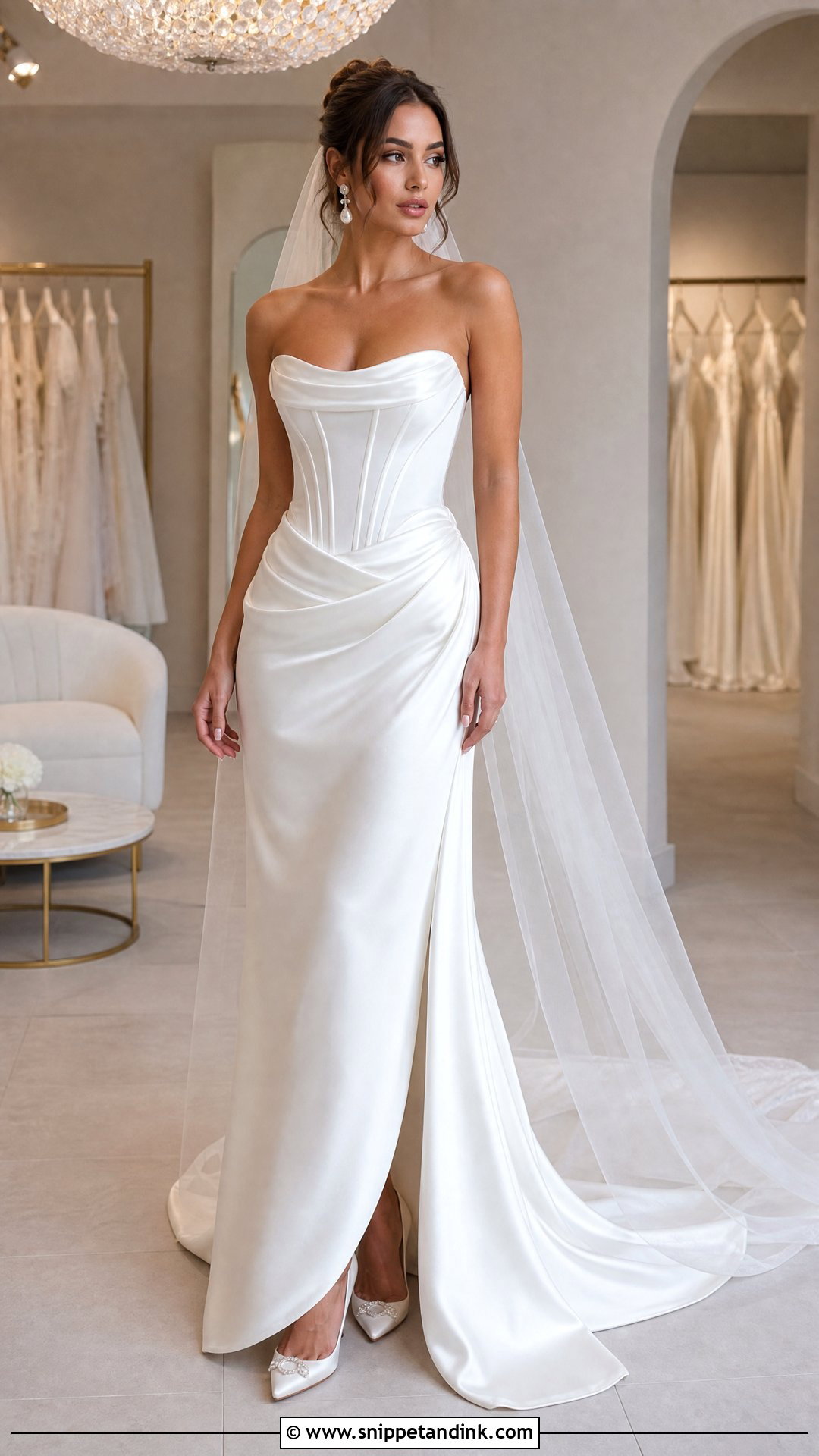
A corset bodice brings a defined waist and support, with visible seams, a sweetheart neckline or a strapless top, over a fitted, A-line or full skirt. Satin keeps it smooth. My checks: the top edge shouldn’t cut into you, and the boning shouldn’t dig into your hips when you sit. If the corset has strong detail, keep jewelry minimal; pearl earrings, a long veil and refined heels are plenty. It gives you shape and security with a modern edge.
12. Basque Waist Satin Wedding Dress
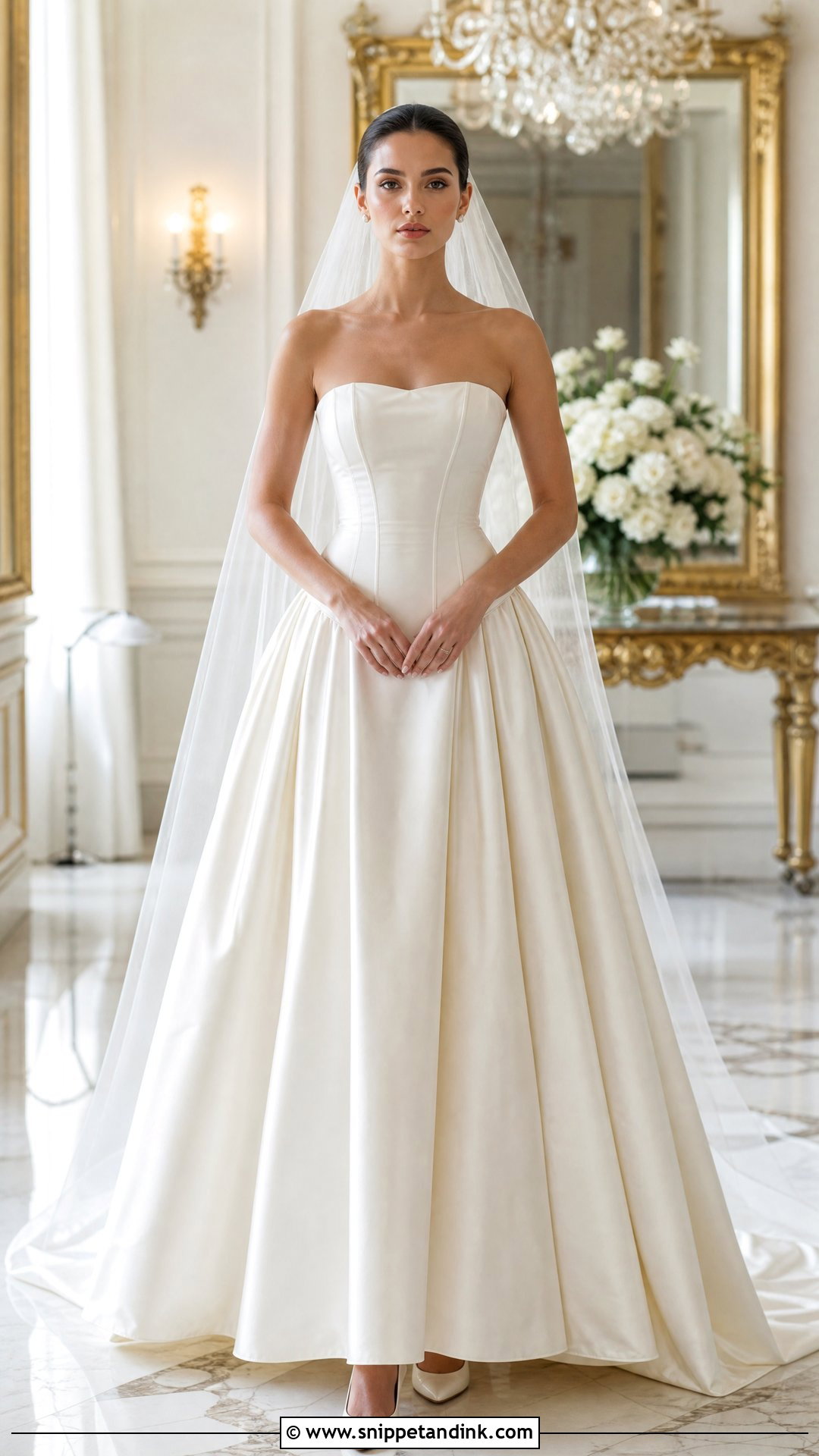
A basque waist satin wedding dress has a lowered, pointed waistline that lengthens the torso. It’s a vintage detail back in favour because it adds structure without decoration. It works with full satin skirts, pleats and classic ball gown shapes. The point should sit centred and flat; if it buckles when you sit, ask for it to be shortened slightly. A sheer veil, pearl studs and satin heels keep it elegant, and the clean satin stops it feeling too much like a costume.
13. Drop Waist Satin Wedding Dress
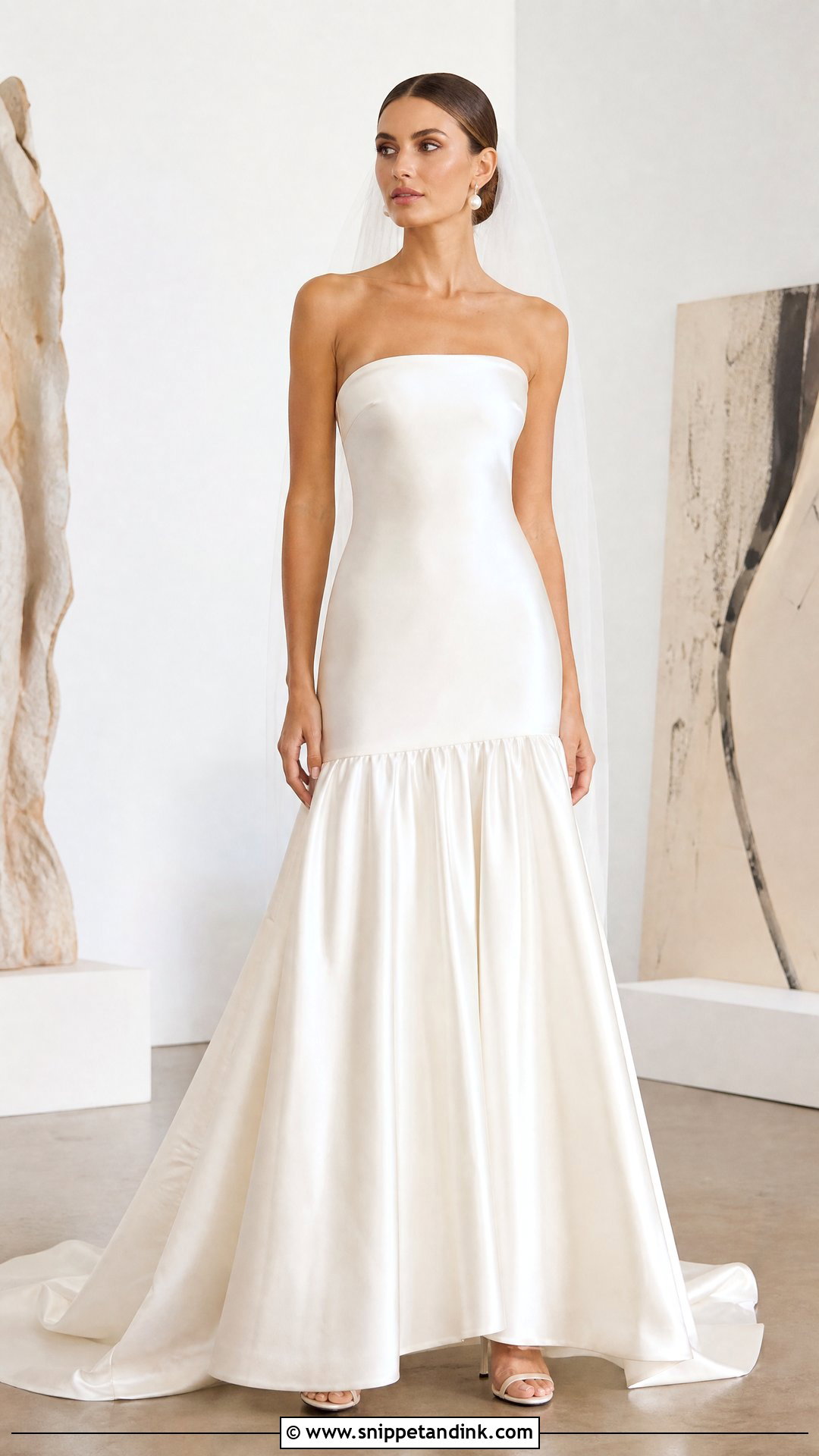
Starting the skirt low on the hips gives a long, elegant torso line. Paired with a clean strapless bodice or square neck, it feels modern, and satin helps the long bodice look intentional. It can be fitted through the body or softly flared. I’d be honest that it’s a cut to try on rather than order from a photo; on a short torso, the lowered seam can shorten the legs. Sleek heels, a simple veil and minimal earrings let the line speak.
14. Satin Wedding Dress With Pockets
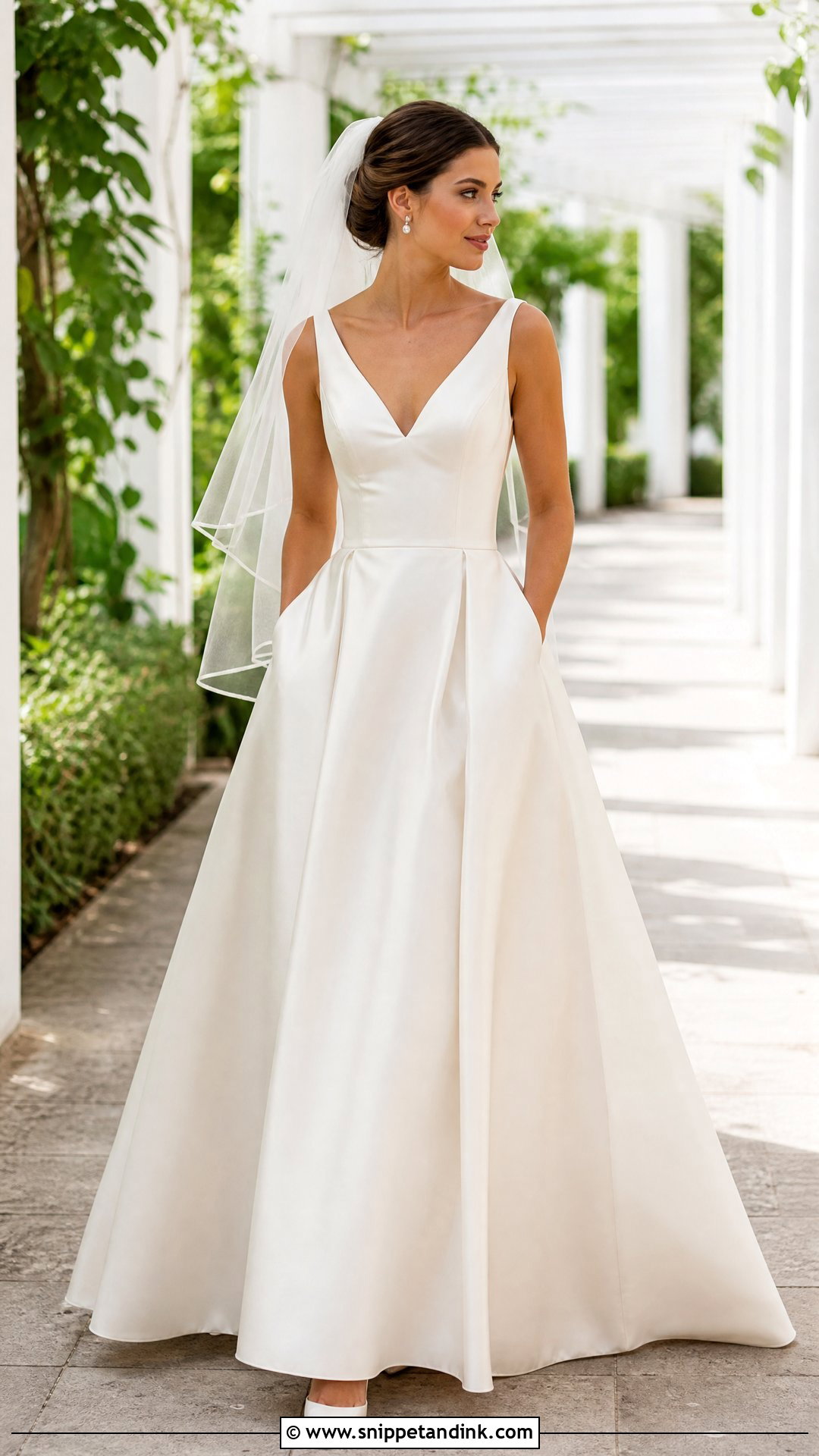
Choosing a satin wedding dress with pockets gets you a practical detail without losing anything bridal. Pockets sit best in A-line and ball gown skirts, where the fullness hides them. They give your hands somewhere to rest in photos and hold a lipstick or tissue. Ask for them to be set into the side seams with a light lining so they don’t add bulk at the hip, and don’t overload them, since satin shows the outline of anything heavy. Pointed heels, pearl jewelry and a medium-length veil complete it.
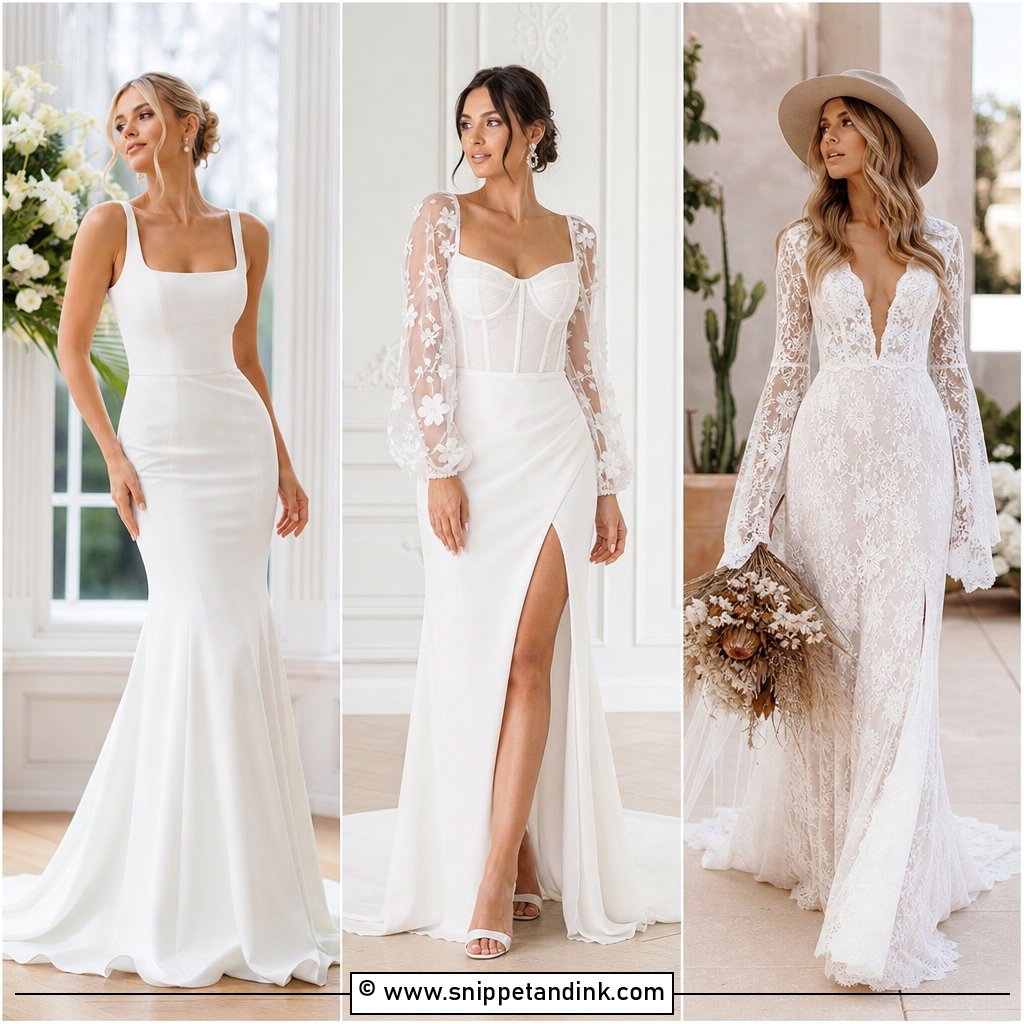
15. Satin Wedding Dress With Bow
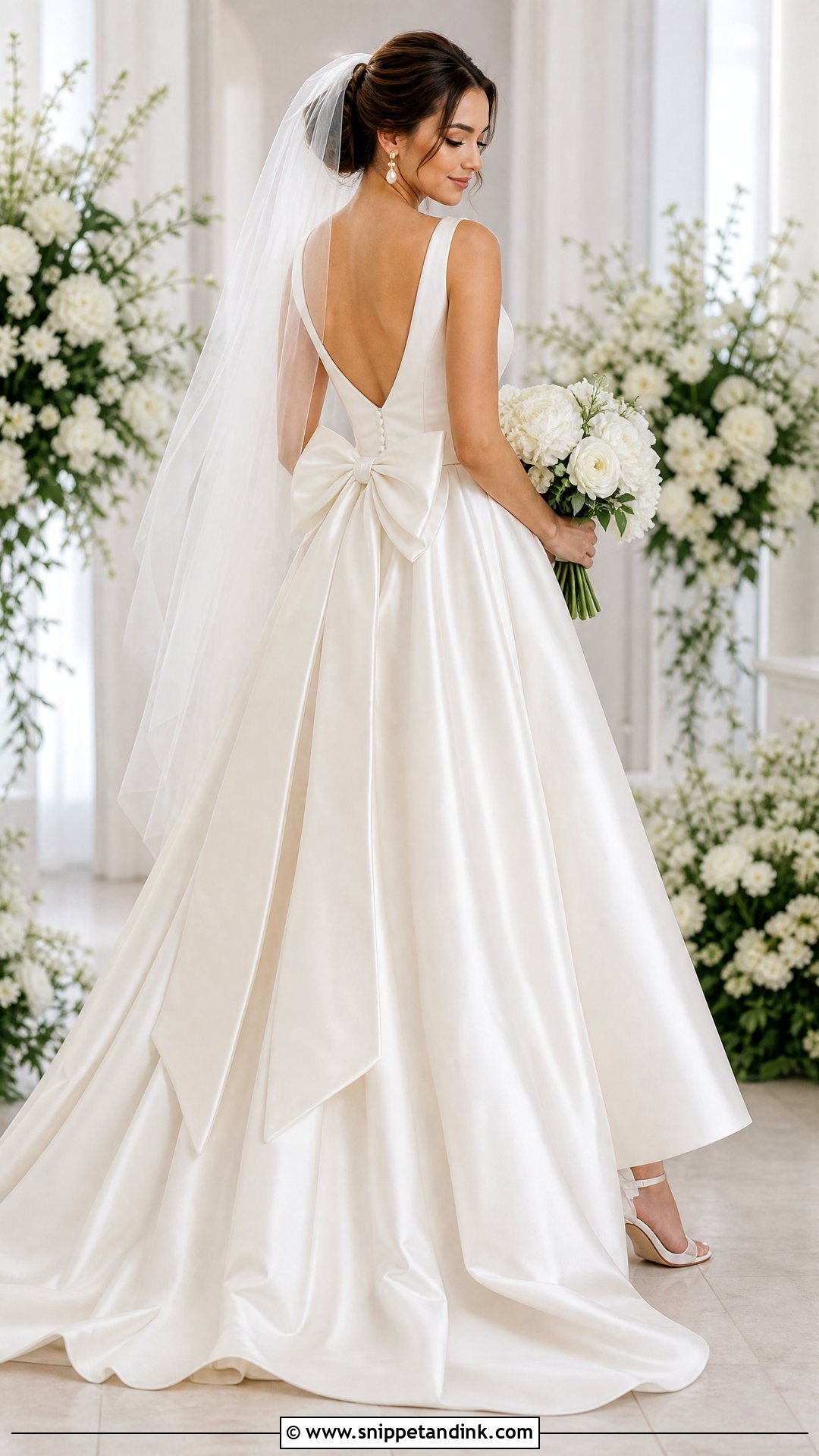
Bows can sit at the back waist, the shoulder or the neckline, and satin is the right fabric for them because it holds a crisp loop. A back bow shows in every aisle and portrait shot from behind; a shoulder bow is more fashion-led. Keep everything else plain with pearl studs, clean heels and a soft veil. Ask how a large bow is supported inside. Without interfacing or a few hidden stitches it can droop by the evening. Done well, it’s a sweet detail that still looks grown-up.
16. Satin Wedding Dress With Train
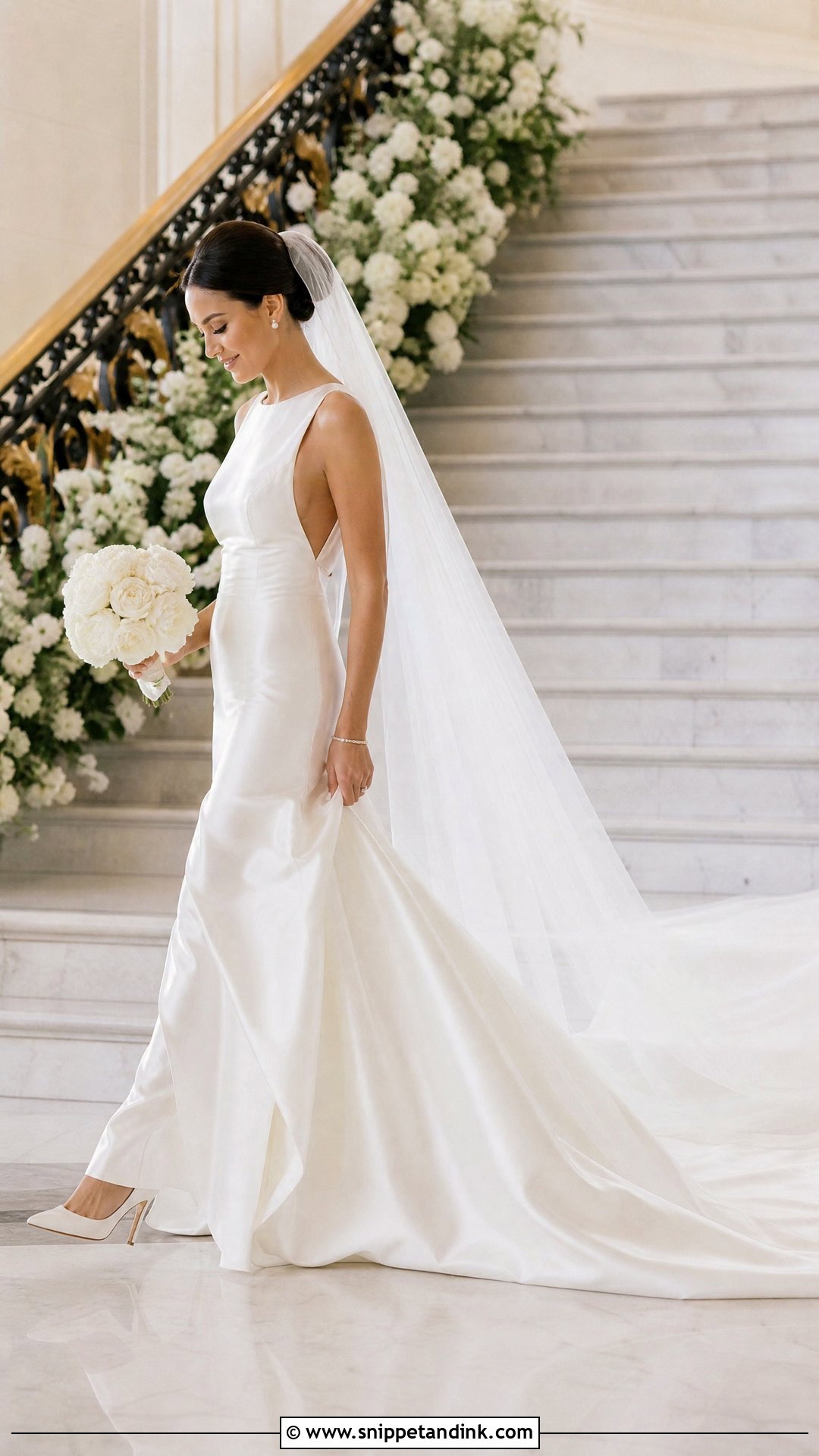
Satin lets a train fall cleanly behind you, so every step looks smooth. A chapel or cathedral length suits fitted, A-line and ball gown cuts. Plan the bustle at your second fitting rather than the last; a heavy satin train often needs several hooks, and someone in your party should learn to fasten it. A long veil, classic heels and simple jewelry keep attention on the movement. Formal ceremonies and long aisles show it off best.
17. Satin Wedding Dress With Slit
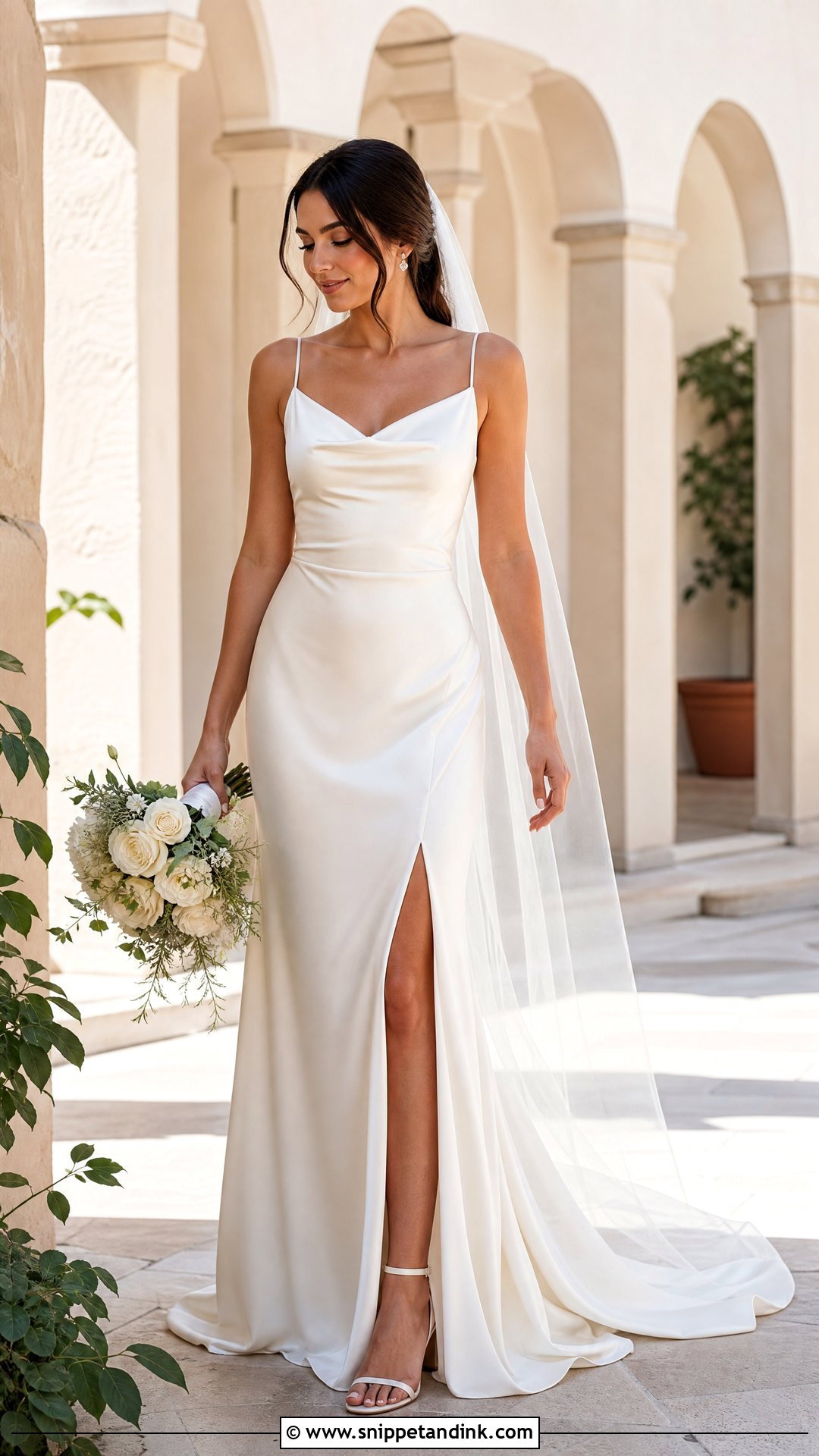
A slit breaks up a sleek satin skirt and makes the gown easier to move in, so it reads lighter and a touch less formal. It suits column, A-line and slip shapes. The key is balance. A high slit wants a clean neckline and very little jewelry. Placement matters too: a slit slightly off centre opens as you walk and closes when you stand, while a centre front one tends to split wide when you sit. Strappy heels, a soft veil and simple earrings finish it.
18. High Neck Satin Wedding Dress
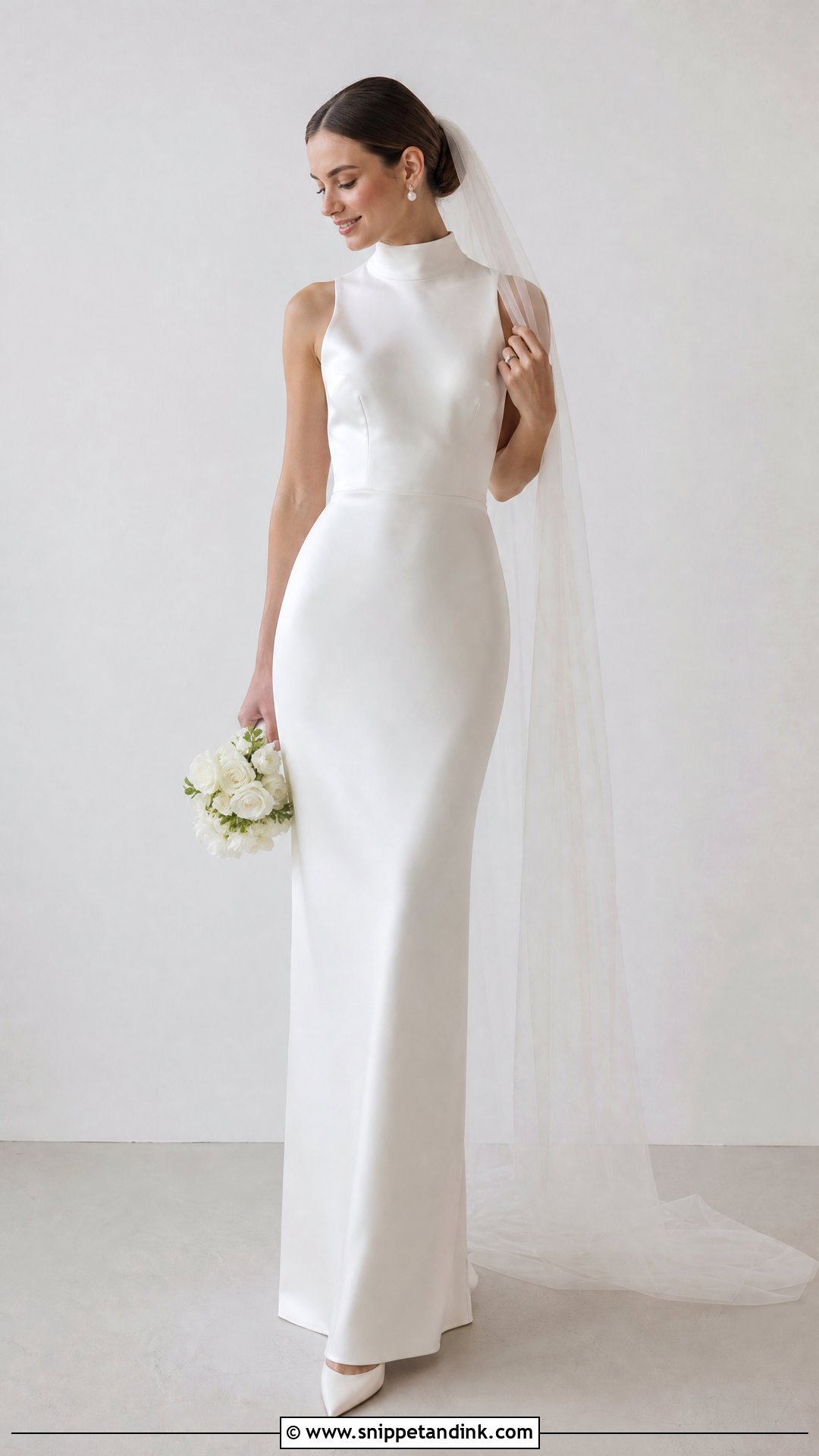
A covered neck creates one long line, especially on a column skirt or slim A-line. Jewelry decisions become easy: skip the necklace and wear pearl earrings, a sleek bun and pointed heels. Hair has to go up or the neckline disappears. Check the collar while turning your head side to side, because a high neck cut too snug rubs during a long day. Depending on the cut, it reads minimalist, vintage or modern, and it frames the face nicely in portraits.
19. Satin Halter Wedding Dress
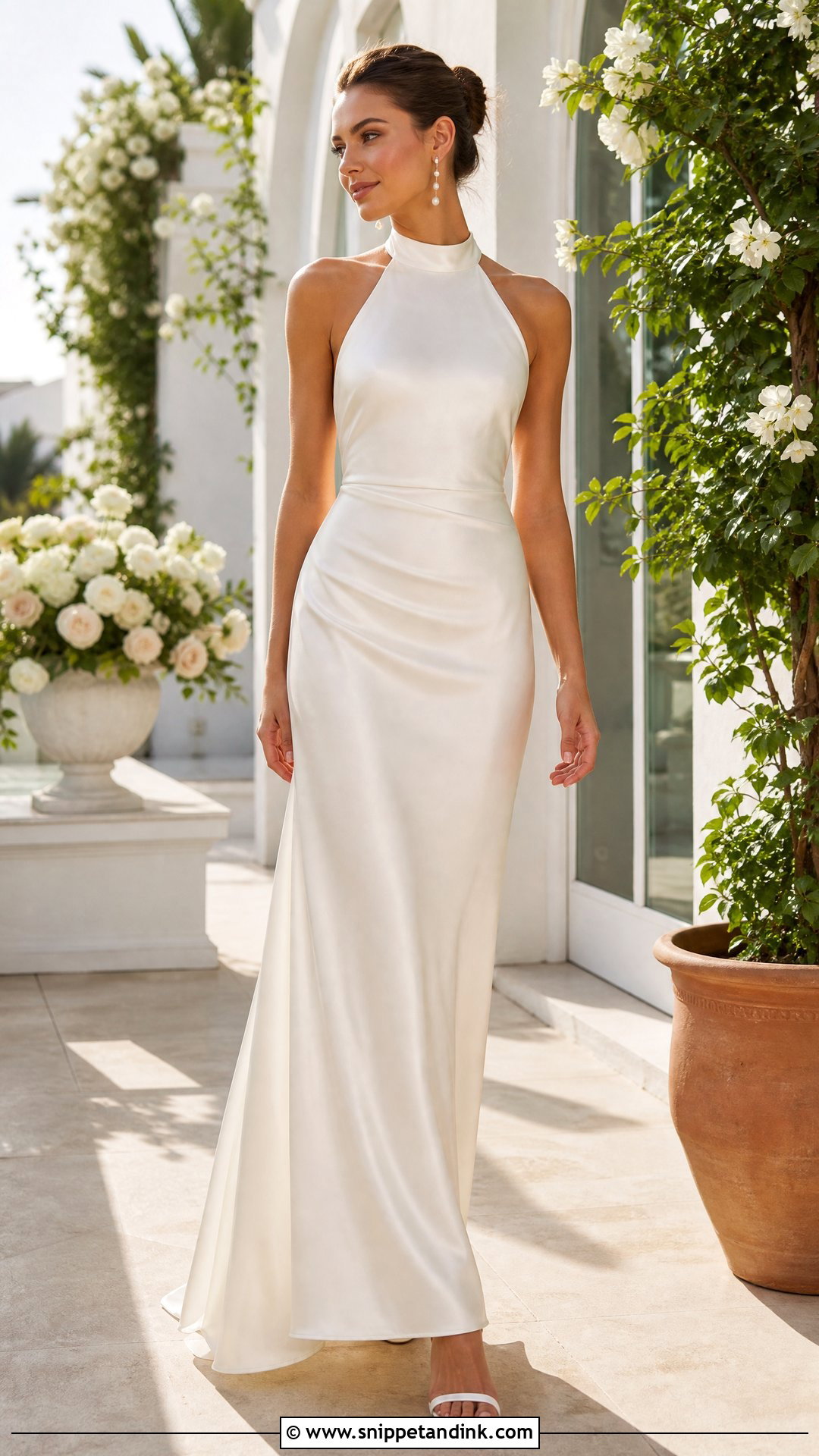
A halter puts the focus on the shoulders while holding the bodice securely, so you aren’t adjusting straps all night. A satin column halter feels modern; one with a full skirt feels classic. The neck strap carries weight, so I always check it isn’t pulling at the back of the neck after you’ve worn it for a while. A clean updo, drop earrings and simple heels show off the neckline. It’s open and comfortable for warm weather while still looking formal.
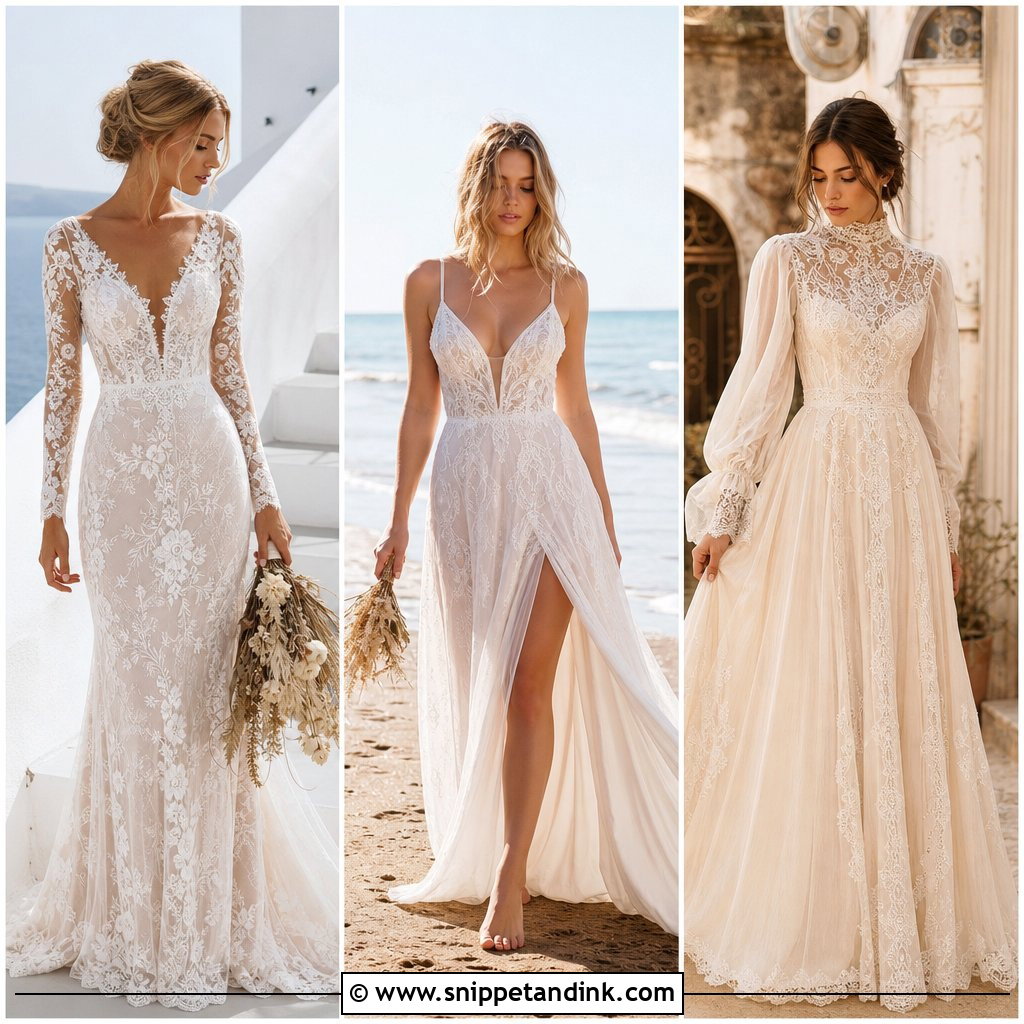
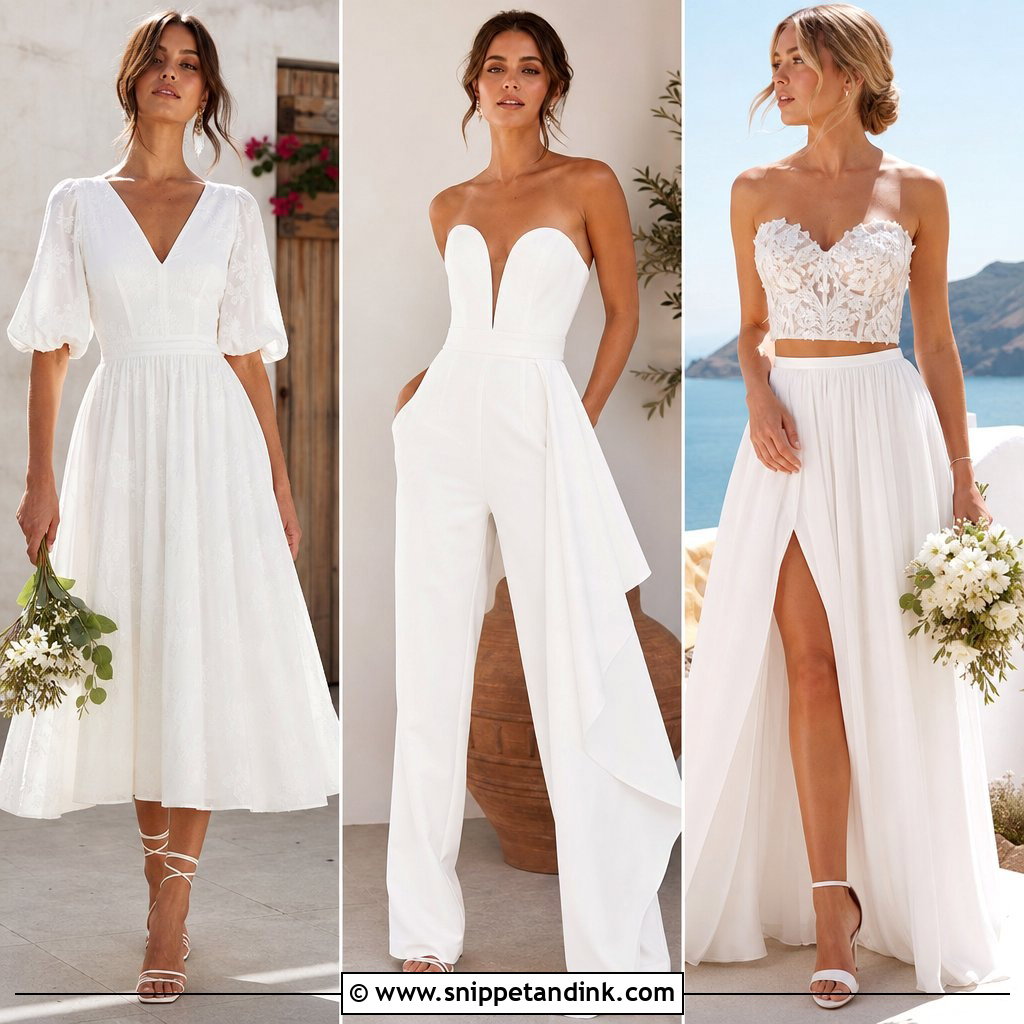

20. Satin Midi Wedding Dress
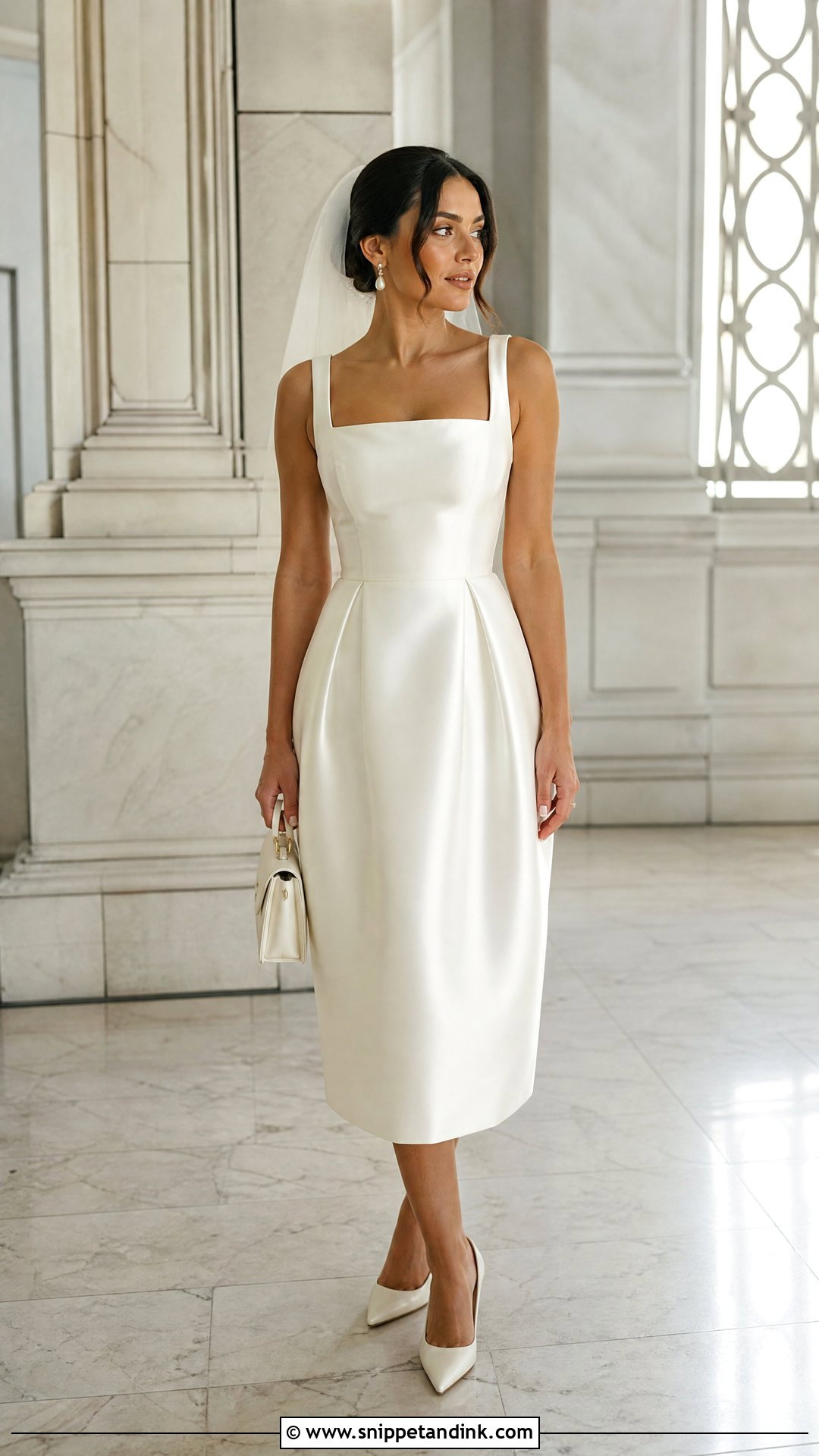
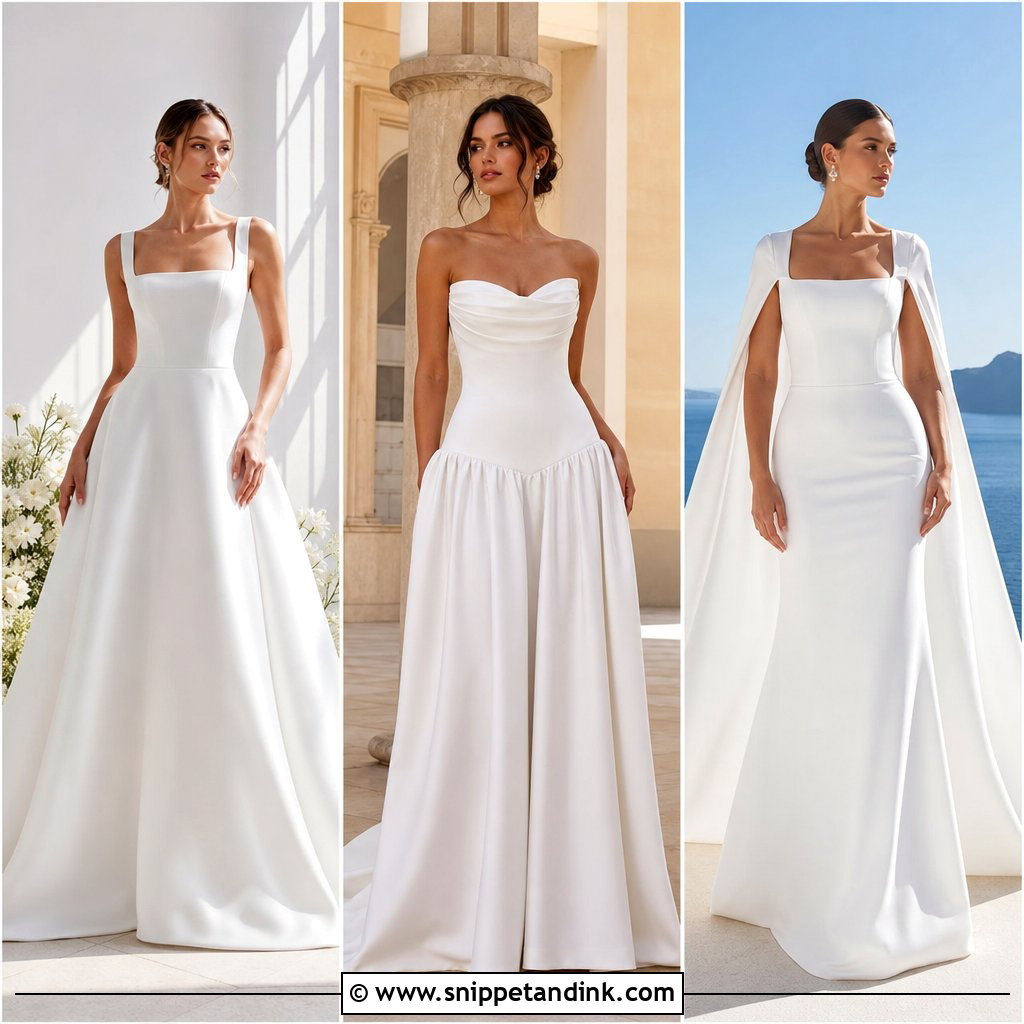
Midi length is the one I suggest for a civil ceremony, a bridal shower, rehearsal look or a second wedding outfit. The shorter hem is modern and easy, while satin keeps it special. A square neck, strapless bodice or fit-and-flare shape suit the length. Shoes are fully on show, so choose them with the dress, not afterward, and hem the dress wearing them. Pointed pumps, a mini veil or hair bow, pearl earrings and a structured bag complete it. You can walk, mingle and dance without thinking about the skirt.
21. Satin Mini Wedding Dress
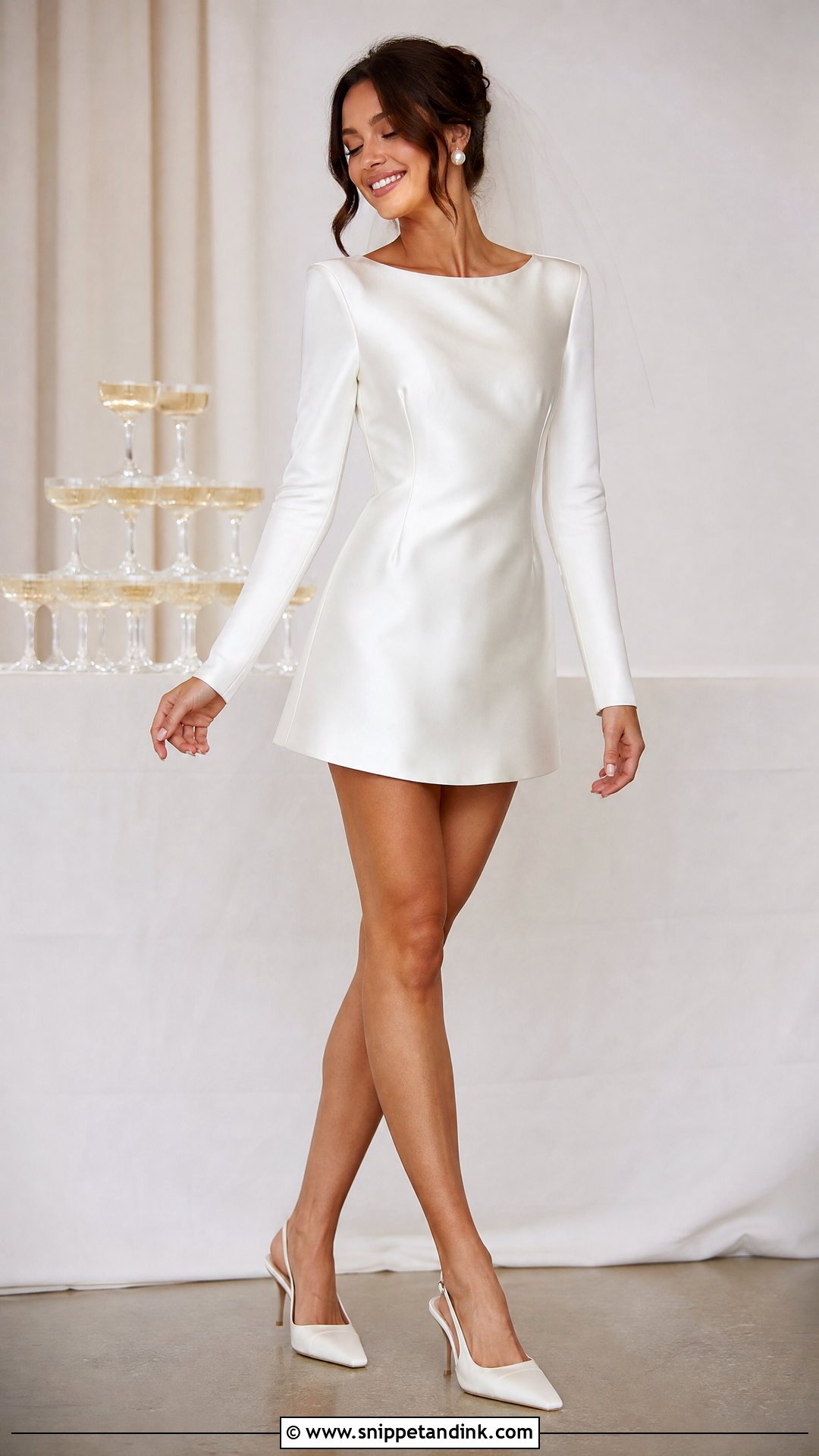
A mini makes a lively second look, and satin keeps it reading bridal rather than casual. A structured bodice, long sleeves or a bow give it intent. One practical point: short satin creases right across the lap when you sit, so a heavier satin or satin-backed crepe holds up better than a thin one. Slingback heels, pearl earrings and a small veil or headband suit it. It’s made for receptions, after-parties, smaller ceremonies and anyone who bought statement shoes.
22. Pearl Satin Wedding Dress
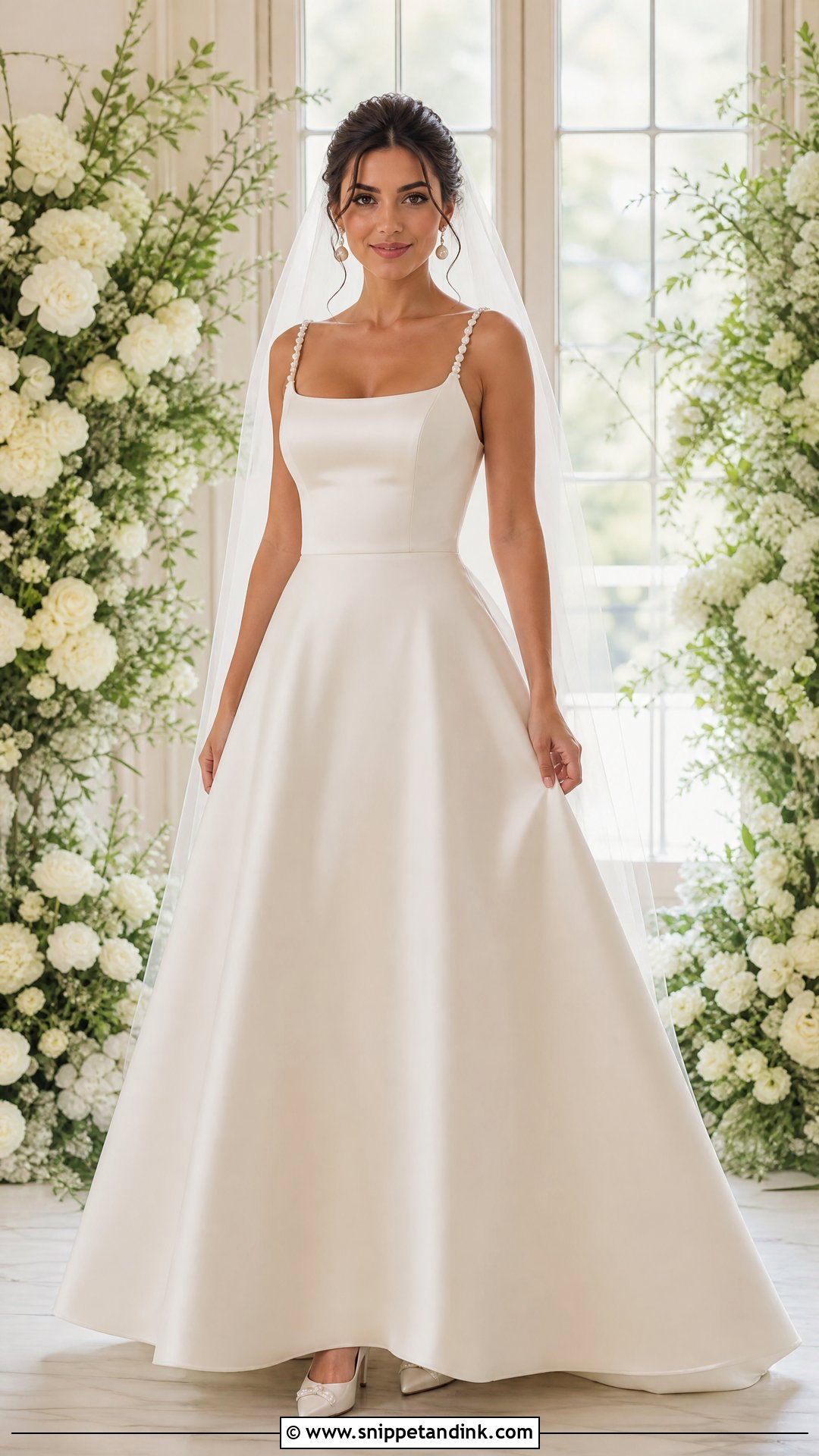
Pearls along the neckline, straps, bodice, sleeves or veil add texture without fighting the satin’s shine. The gown underneath should stay clean so the pearls look deliberate. Moderation is the skill. If the dress has pearls, I’d keep the veil plain and wear just one pearl element in the hair or ears. Pearl earrings, satin heels and a simple bouquet keep it cohesive. It gives a little more detail than a plain gown while staying classic.
23. Lace And Satin Wedding Dress
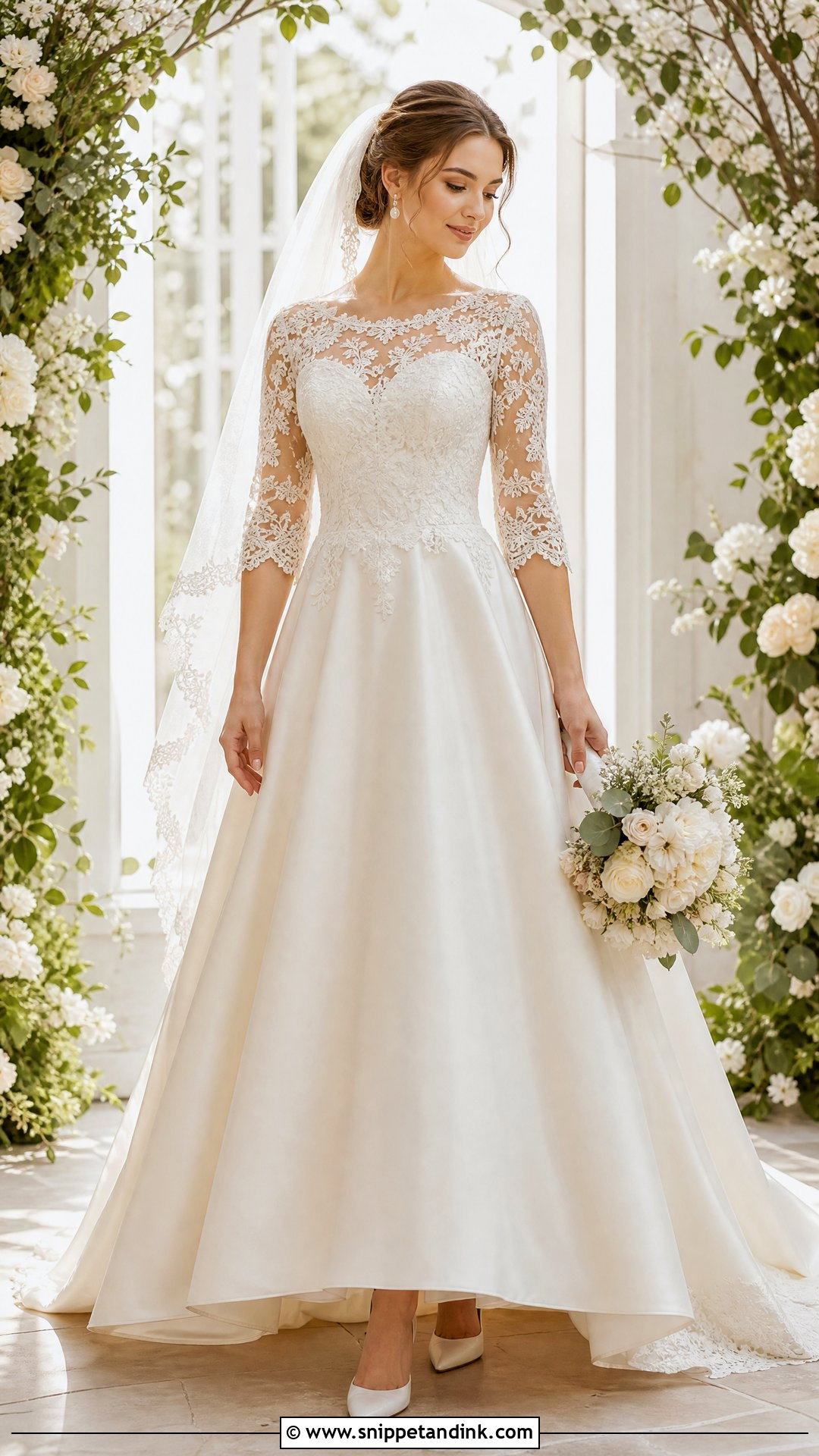
Satin provides the smooth base; lace brings softness through sleeves, bodice panels, neckline trim or a delicate overlay. The mix suits A-line, fit-and-flare and ball gown cuts. Match the veil to the lace rather than the satin, since the two rarely come out the same shade. With detailed lace, keep accessories understated: simple pearl earrings and classic heels. It gives you a traditional feel without committing to a full lace dress.
24. Minimalist Satin Wedding Dress
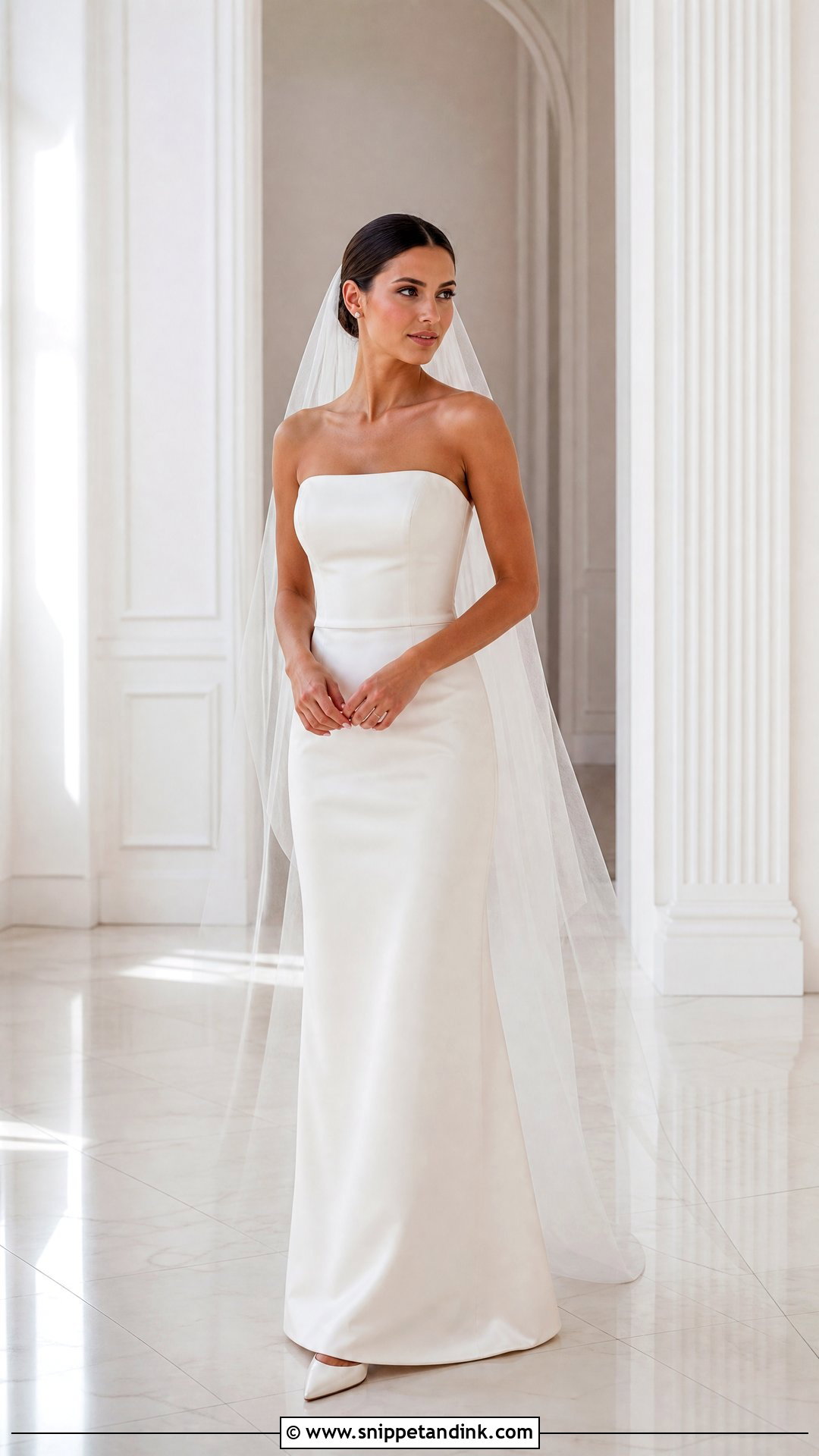
Minimal satin depends entirely on fit, fabric and proportion. A strapless column, a square-neck A-line or a simple slip all suit the approach. What I check most is the fabric itself; with nothing on top, a cheap satin’s shine or puckered seams are the first things you notice. Sleek hair, pearl or diamond studs, a smooth veil and good heels complete it. The gown changes mood with accessories: gloves for drama, a long veil for tradition, statement earrings for the party.
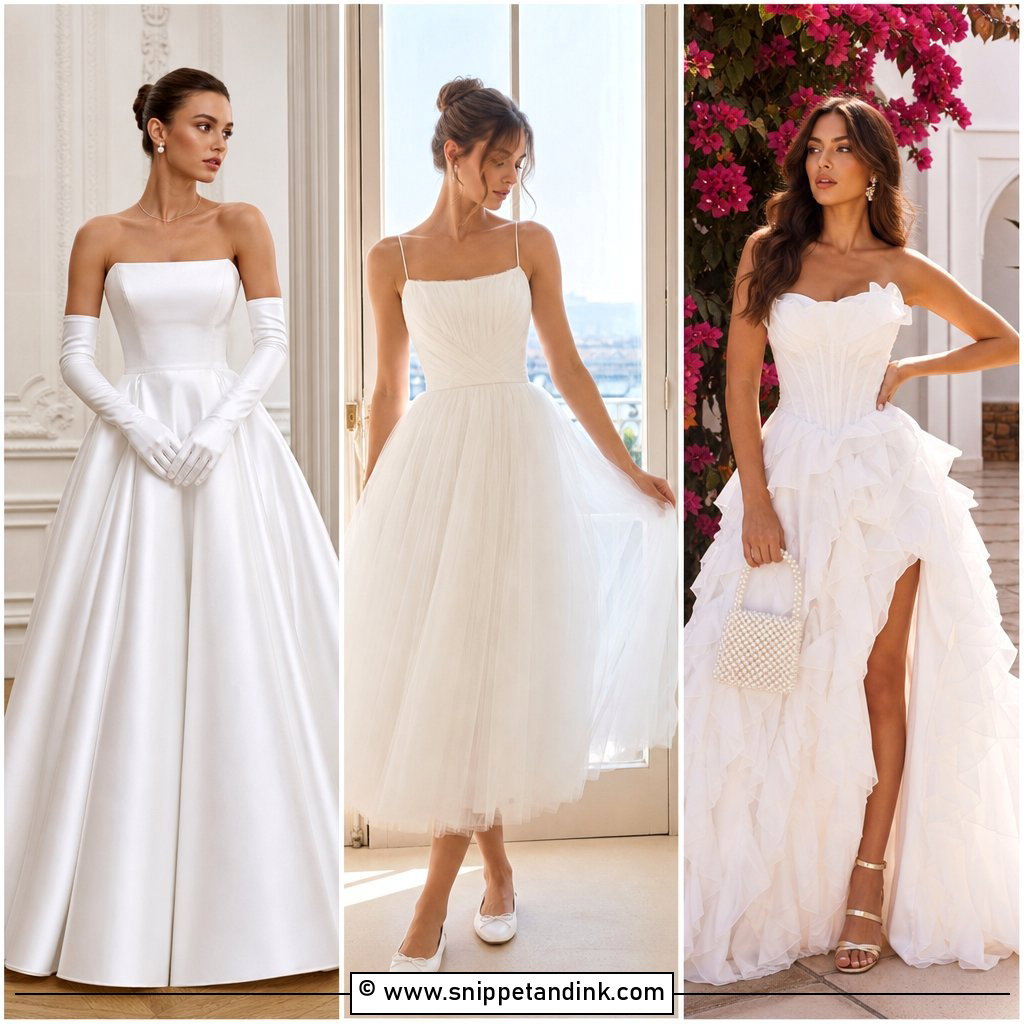


25. Vintage Satin Wedding Dress
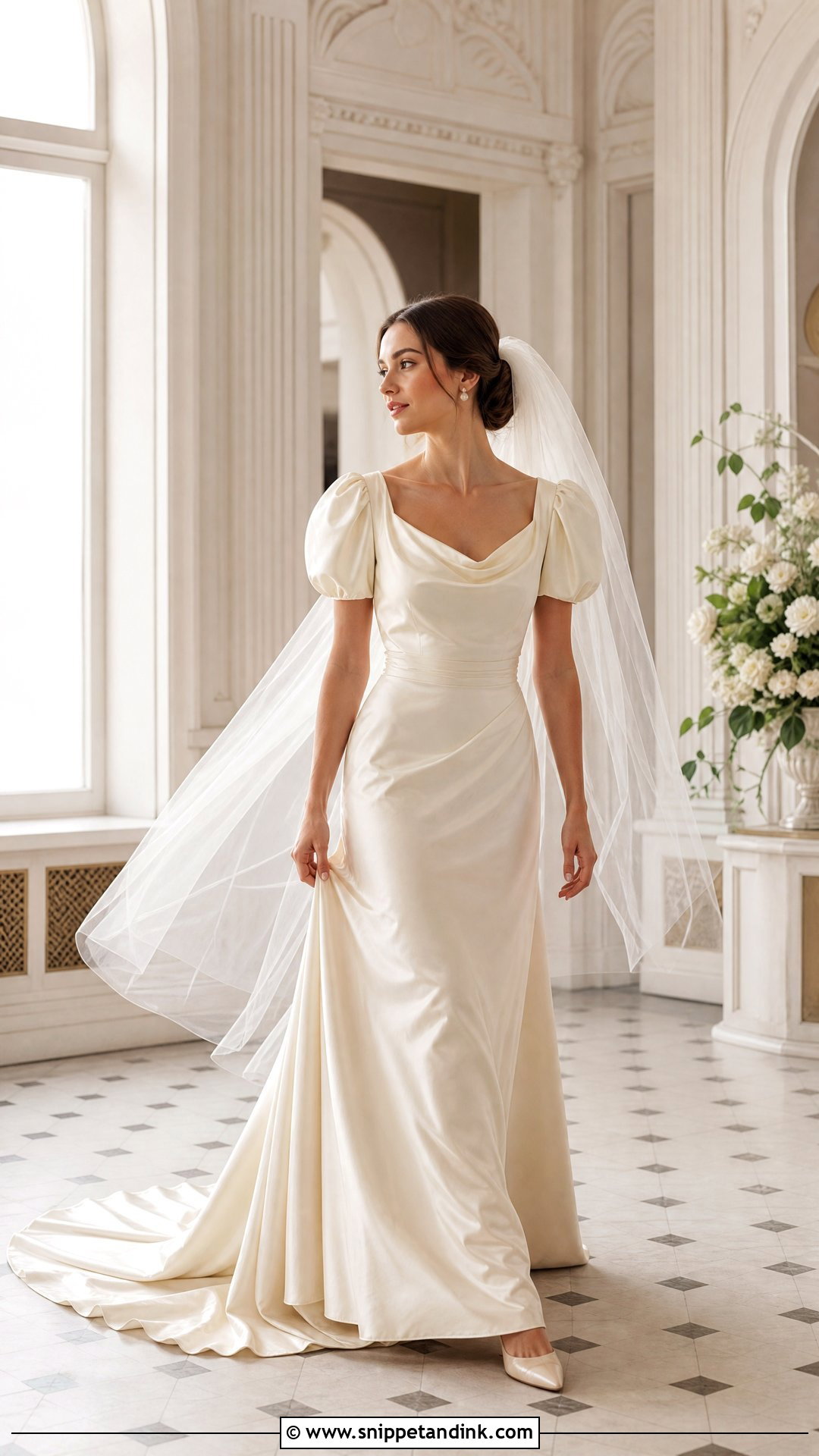
Vintage satin draws on past eras with cowl necks, basque waists, covered buttons, puff sleeves or long trains. Styled simply with pearl earrings, soft waves, ivory heels and a classic veil, it still looks current. You can choose a vintage-inspired new gown or a true antique one. A new gown gives you reliable fit and fabric; an original has history but often comes with limits on alteration and condition, which I cover further down. Either route suits anyone who loves old-world charm and a gown with a story.
What Shows Through Satin, and the Fixes I Use
Satin is smooth and reflective, so anything underneath it can show as a ridge or a shadow. Slip and column cuts are the most revealing; ball gowns hide more below the waist but not across the bodice.
- Wear laser-cut or bonded-edge underwear in a shade close to your skin, not white, which can show through ivory.
- Ask whether cups can be sewn into the bodice. It removes bra straps and bands from the equation entirely.
- Shapewear should end well above or below any fitted seam, or its edge prints through.
- Bring the exact underwear to every fitting. Swapping it later changes the fit.
If the satin gown is genuinely old
An original vintage gown needs a closer look than a new one. Old silk can split along fold lines, a condition often called shattering, and it can’t be repaired, only patched or covered. Hold the fabric up to the light and look along folds and under the arms. Yellowing is common and sometimes improves with specialist cleaning, but never promise yourself it will. Older gowns also have narrow seam allowances, so they can be taken in but rarely let out. Have a seamstress who works with vintage look at it before you buy.
Satin Changes With Every Cut, So Try More Than One
Satin is versatile because the same fabric reads classic, modern or minimal depending on the cut. Full ball gowns and sleek slips are both on this list for that reason. The right gown fits your body, suits your venue and feels good when you walk into the room. Try at least three different shapes before deciding, even ones you’re sure you won’t like, because satin behaves so differently from one silhouette to the next. You may be surprised which one you keep coming back to.
You'll Like These Ideas:




Leave a Reply