
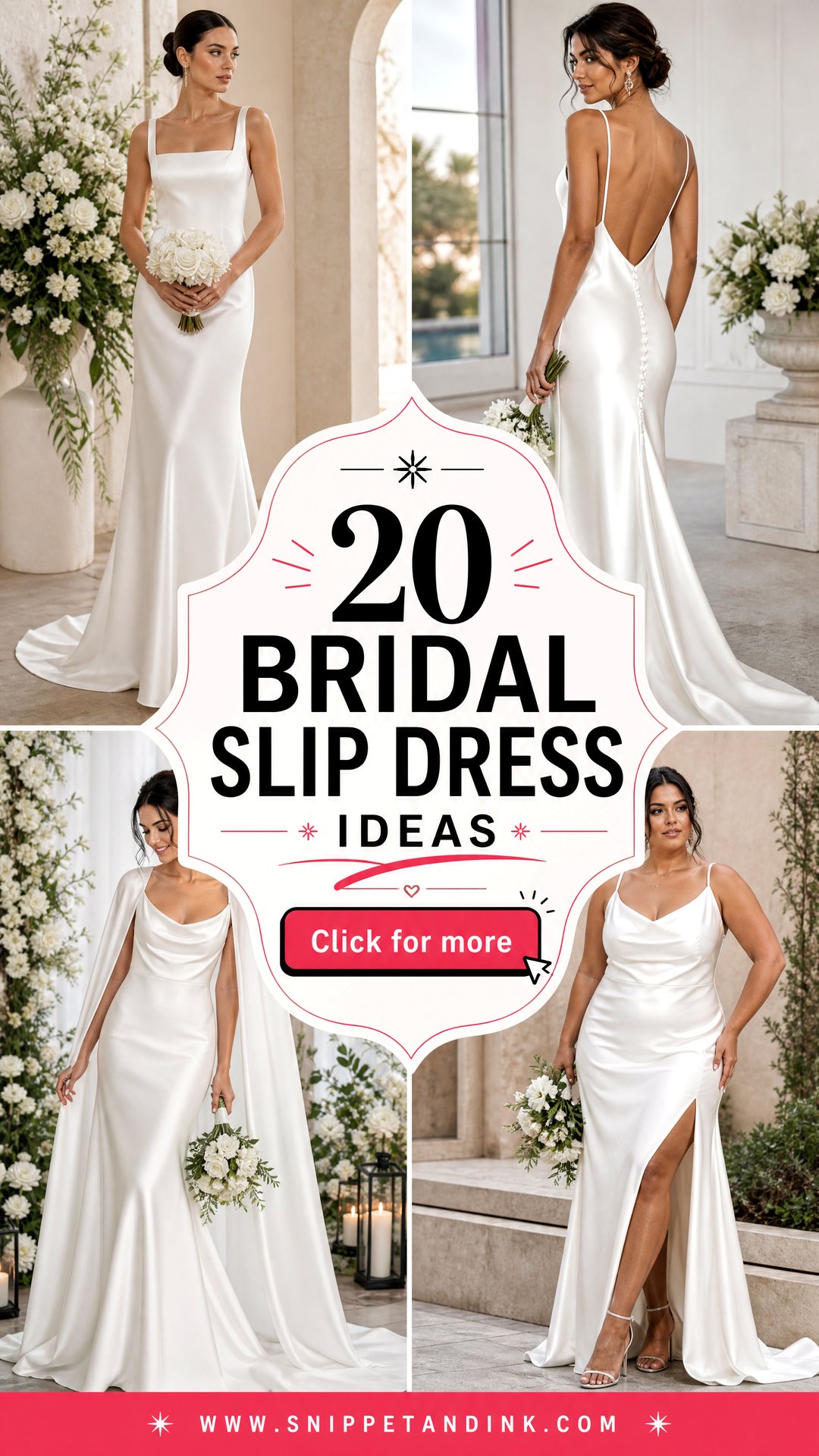
A slip dress is the most honest gown in a bridal shop. There is no boning, no tulle and no lace overlay to hide behind, so the fabric, the cut and the fit carry everything. That is exactly why I love styling them, and why I’m careful with them. The same simple column can read modern or vintage depending on the neckline, the weight of the satin and what you put with it, and today’s versions go well past the plain silk sheath: halters, pearl straps, detachable capes and overskirts, short hems for the after-party. Below are twenty ways I’d put a slip dress together from shoes to veil, with the fitting and fabric details that decide whether the look works on the day.
What Bias-Cut Satin Shows That Other Gowns Hide
Most slip dresses are cut on the bias, diagonally across the weave. That’s what makes them skim the body and swing as you walk, and it’s also why they show every line underneath. Before a bride falls for a photo, I want her to know what a slip needs from her, because it’s different from a structured gown.
The fabric decides how forgiving it is
Thin, shiny charmeuse is the least forgiving fabric in bridal. It reflects light off every curve and seam. Heavier crepe-back satin, silk crepe or a matte satin hangs straighter and smooths more. If you’re nervous about clinging, ask the shop whether the dress comes lined or can be lined; a lining can transform how a slip sits.
Undergarments go to the first fitting, not the last
A seamstress pins to the body in front of her. If you swap from a strapless bra to stick-on cups after the bodice is fitted, the whole thing moves. I ask brides to try a few options in the shop under the actual dress, then commit and wear those pieces to every appointment. Smooth, no-line briefs in a shade close to your skin, not white, disappear best under ivory.
Let the hem hang before it’s cut
Bias fabric stretches downwards over time, and a slip can grow noticeably in length once it’s been hanging. A good seamstress lets the dress hang before taking up the hem, and checks it again at the last fitting. Bring the shoes you’ll actually wear. A half-inch heel difference changes whether you trip on a slip or not.
1. Cowl Neck Bridal Slip Dress
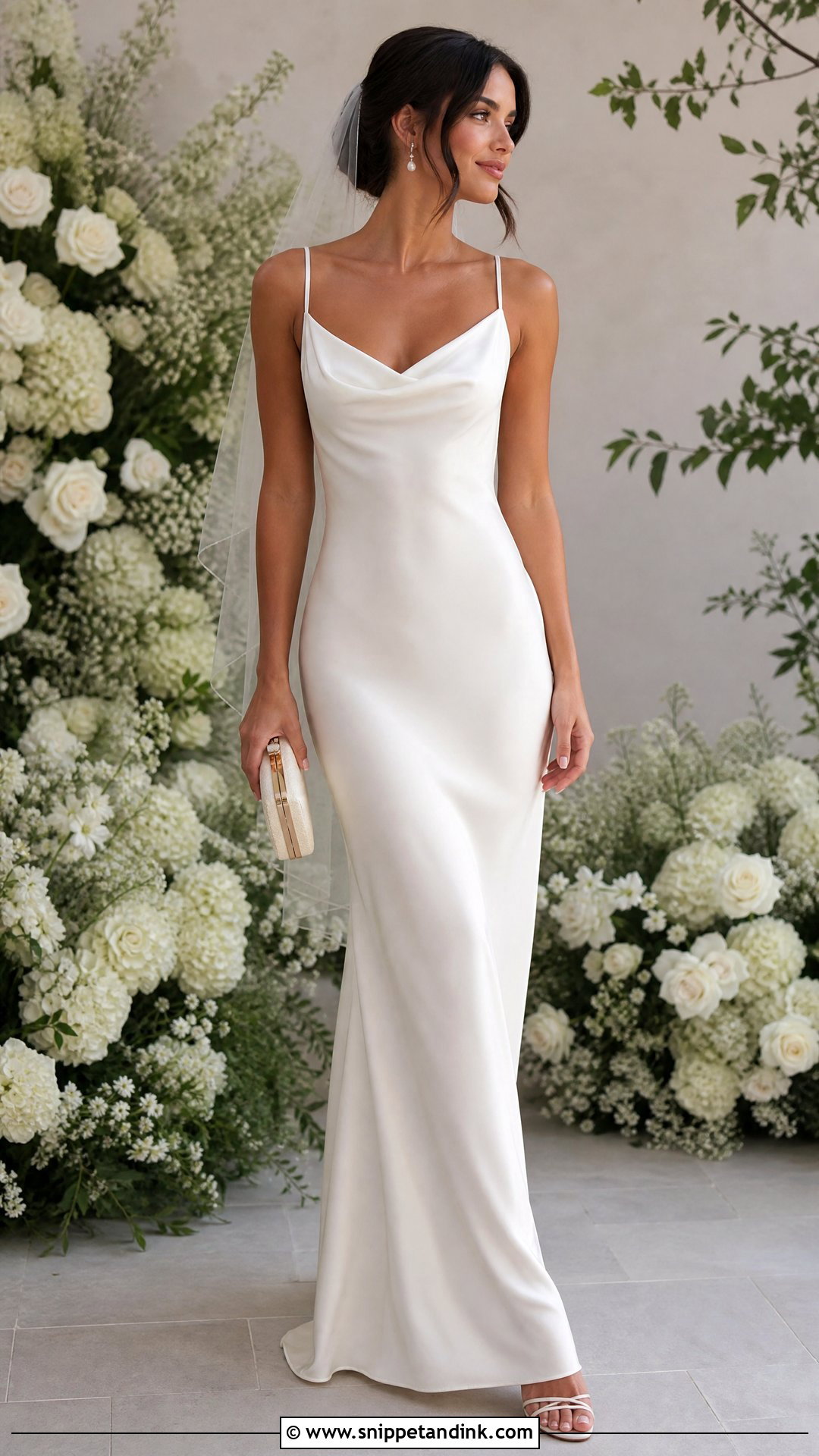
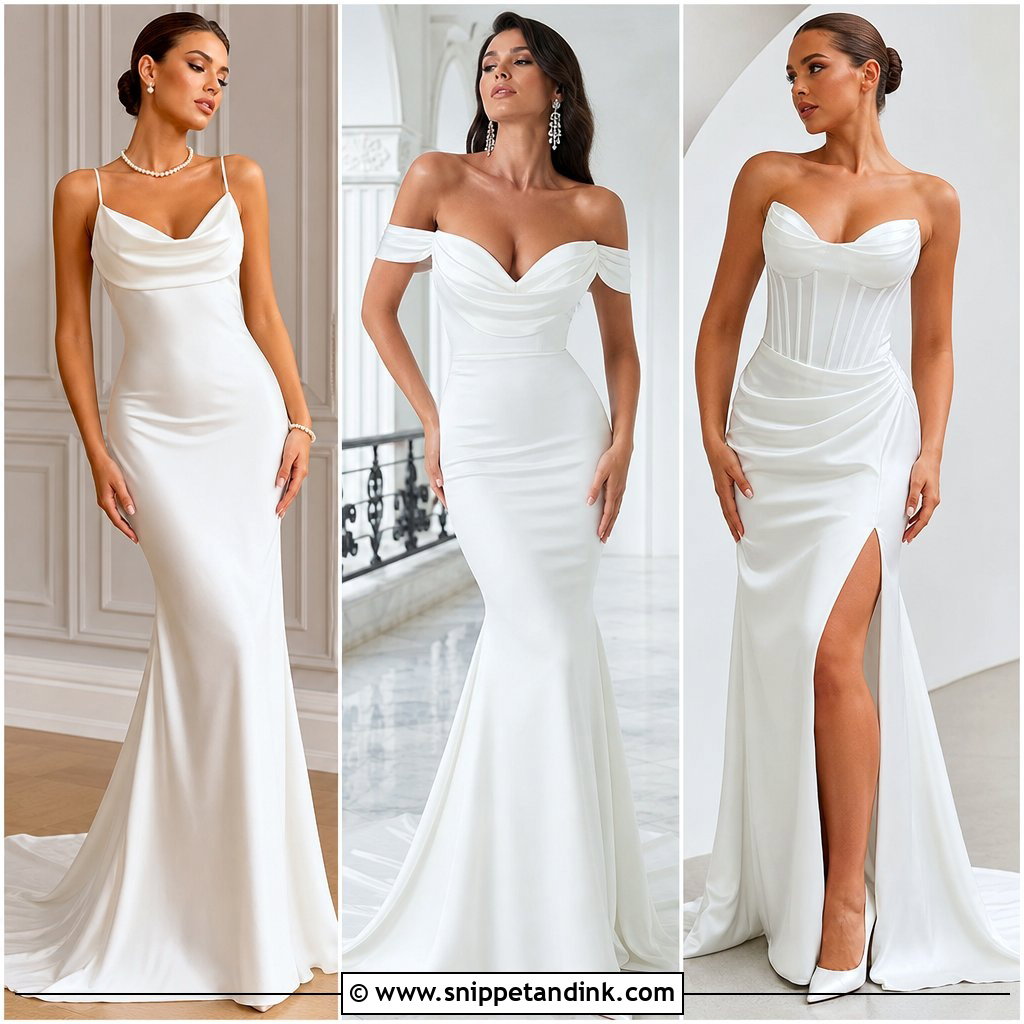
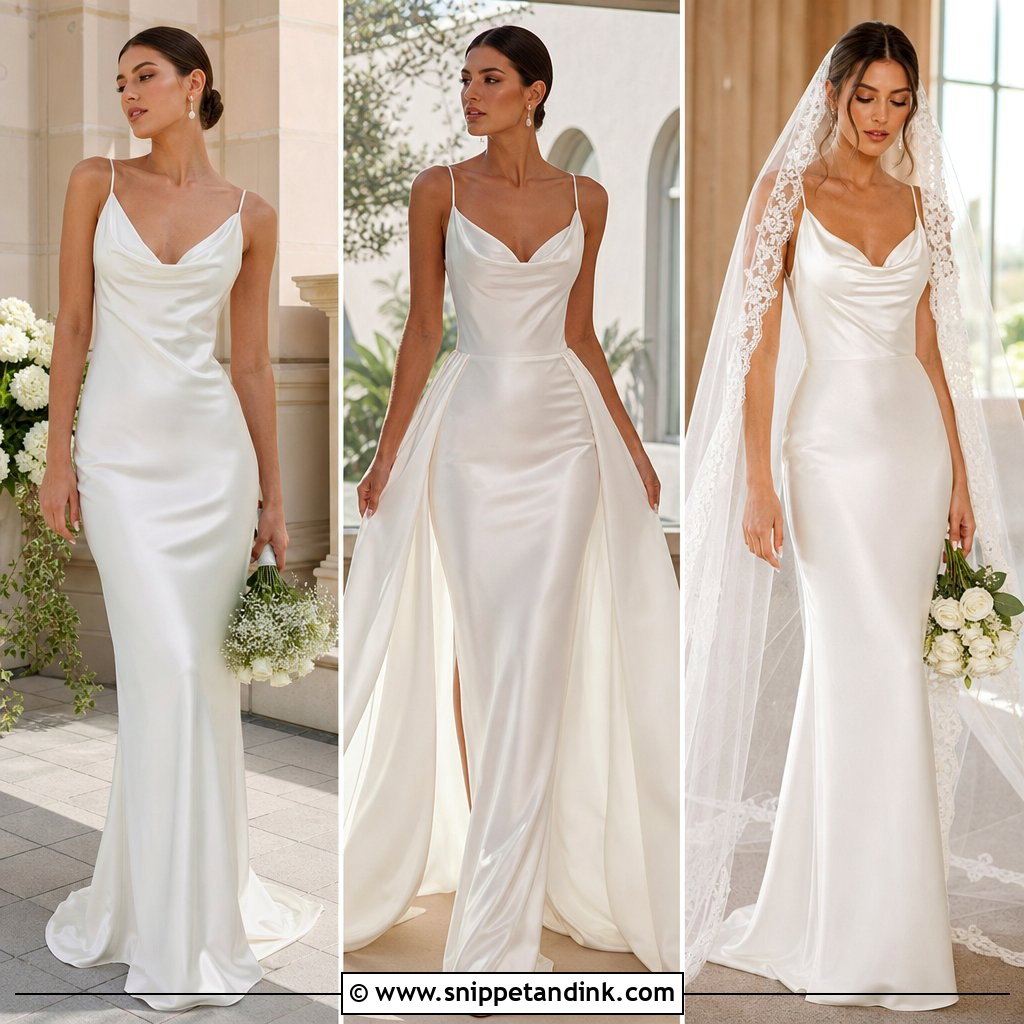
A cowl neck softens the face and gives a small-busted bride shape without padding, because the drape adds volume exactly where it falls. The catch is that a cowl moves: when you lean forward it opens, so I always have a bride bend and hug at the fitting, and a tiny weight or a hidden stitch at the center fold is often worth adding. Bias-cut ivory silk with spaghetti straps is the classic version. Pearl drops, a fingertip veil and ivory strappy heels are all it needs, plus a smooth low bun or waves tucked behind the ears so the drape stays visible.
2. Square Neck Bridal Slip Dress
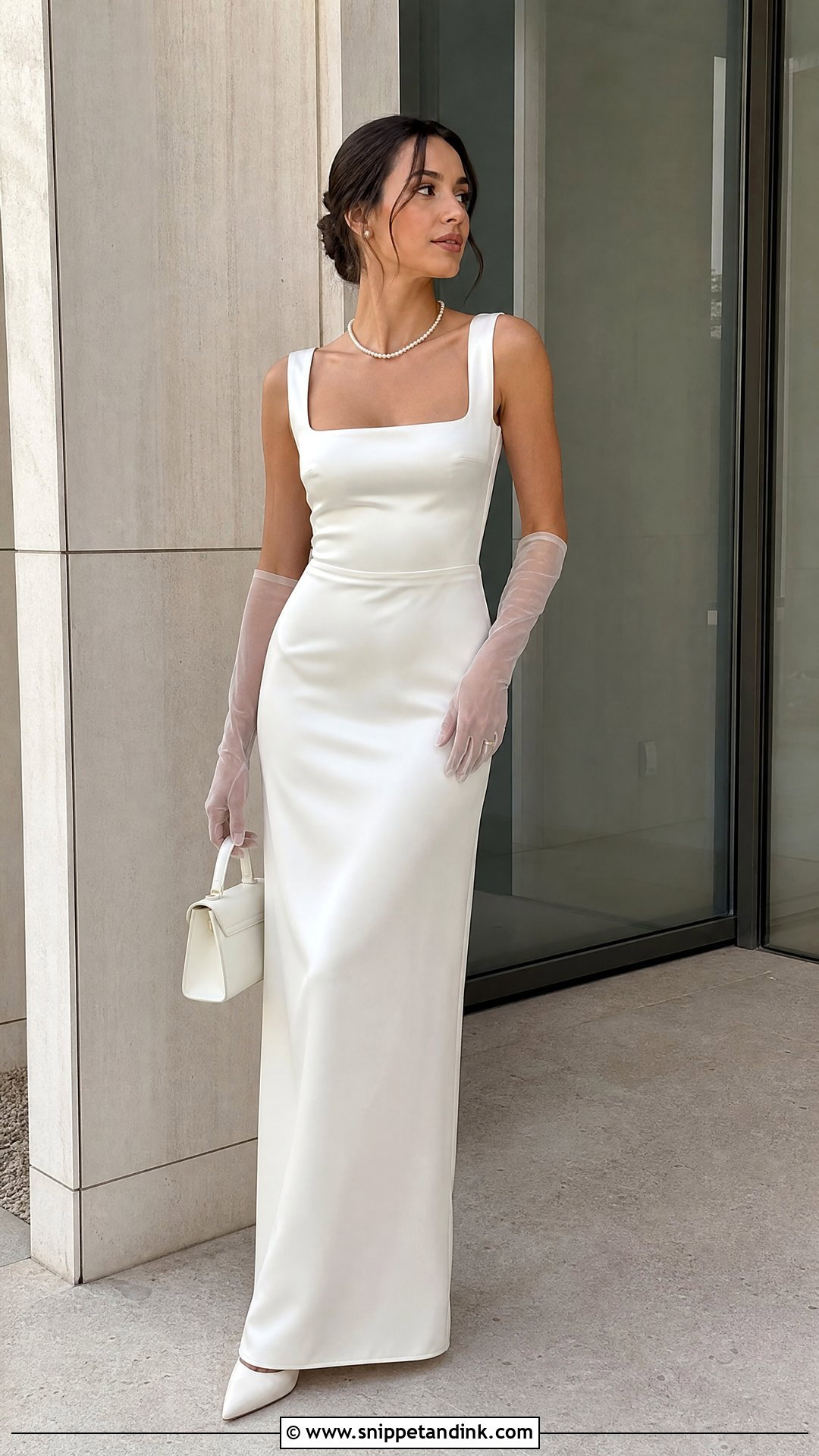
A square neckline gives the slip more architecture. Wider straps and a softly fitted bodice hold it, and that structure is why I suggest it to brides who want a slip but feel exposed in spaghetti straps. The straight edge leaves room for a short pearl strand, which a cowl never does. Go for satin with real weight, since a thin fabric will dimple at the corners of the neckline. Pointed ivory pumps, pearl studs, a top-handle bag and a sleek bun finish it, and sheer elbow gloves tip it gently toward the 1950s if that’s your mood.
3. Lace Trim Bridal Slip Dress
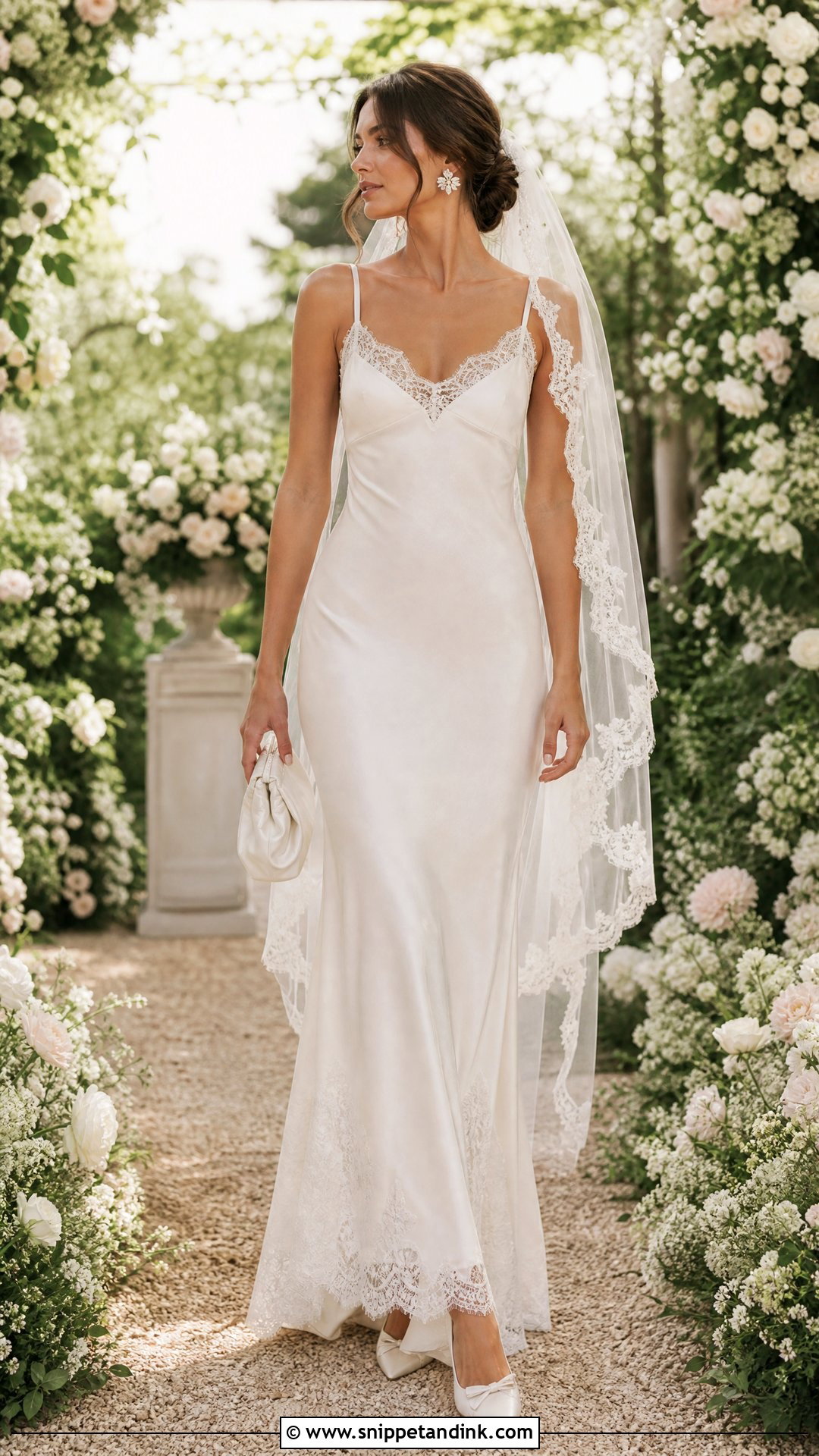
Lace on the edges only is how I bring romance to a slip without losing its line. Fine lace at the neckline, straps or hem is enough. Ivory-on-ivory reads subtle in person, but a slightly warmer cream lace shows up better in photographs, which tend to flatten tone-on-tone detail. If the neckline already carries lace, I leave the throat bare and put the interest into small floral earrings instead. Slim slingbacks, a lace-edged veil and loose waves suit the texture; a stiff updo tends to look too formal against something this soft.
4. Low Back Bridal Slip Dress
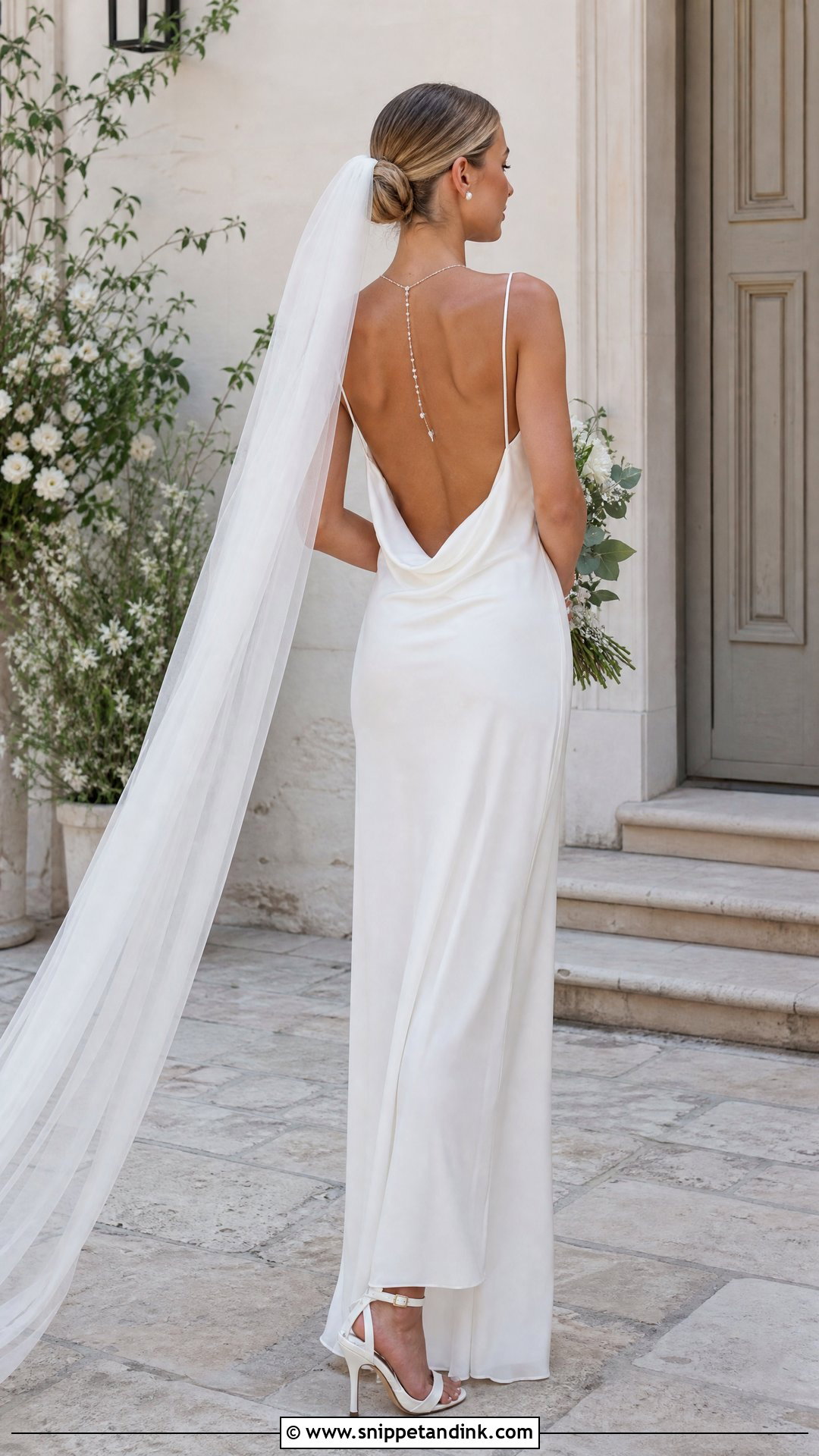
With a low back, the first conversation I have is about support, not jewelry. Stick-on cups and a low-back plunge bra behave very differently on silk, and the only way to know is to wear them to every fitting, because the seamstress pins the back around whatever you bring. Once that’s settled, keep the rest quiet: narrow straps, a clean floor-length skirt, a long sheer veil that frames the back during the ceremony and satin ankle straps. Back jewelry can work, but only if it doesn’t fight the drape. Hair goes up, in a low chignon or braided bun, or the whole point of the dress disappears.
5. Halter Neck Bridal Slip Dress
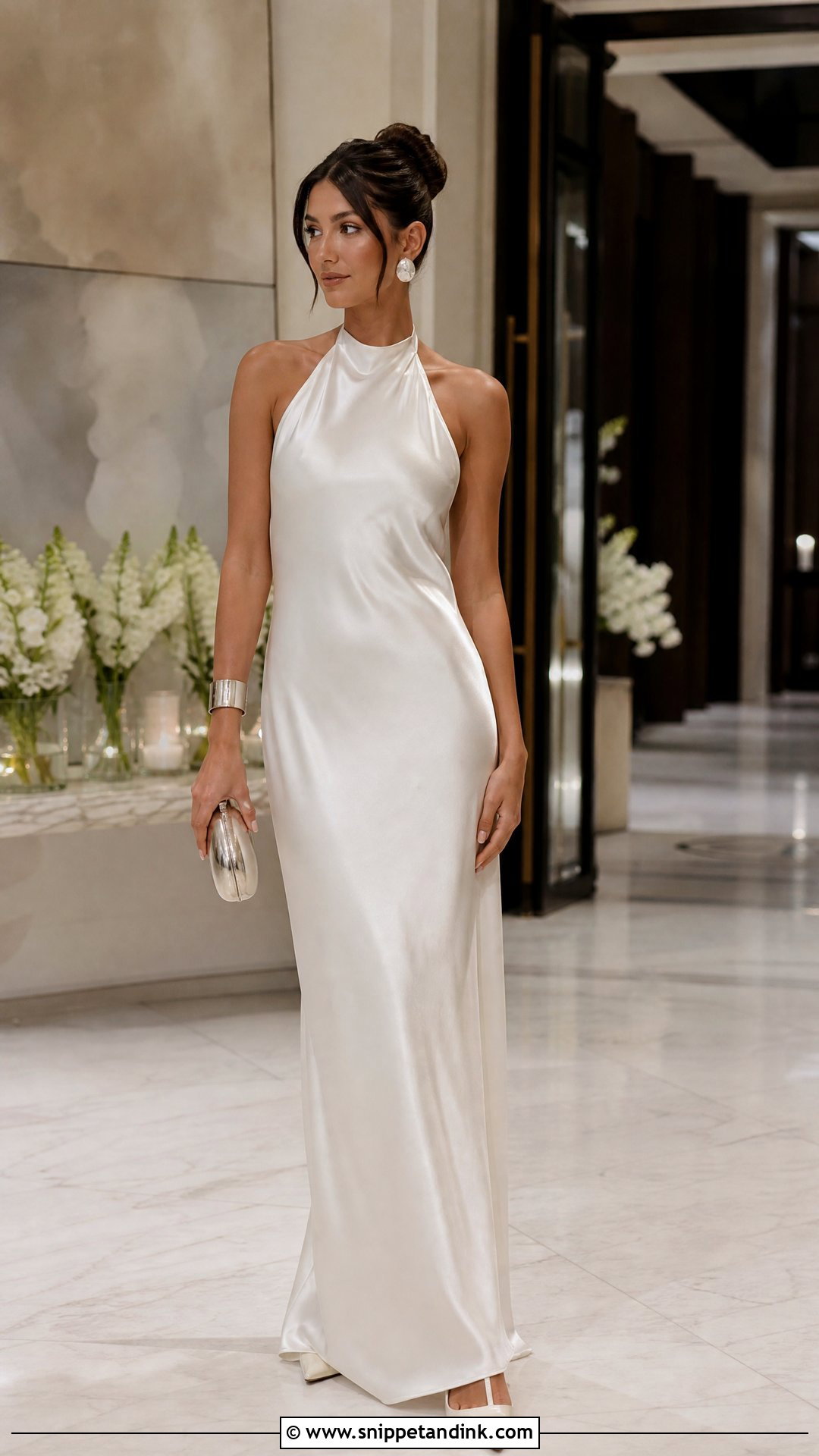
A halter shows off shoulders and collarbones, and it carries more structure than most slips. Pearl white satin, silk crepe or matte charmeuse all hold the shape well. The halter strap takes some of the bodice weight onto the neck, so I check how it feels after twenty minutes, not two. Skip the necklace entirely and put the interest at the ears with sculptural earrings, then add a cuff and pointed slingbacks. A high bun or polished ponytail keeps the neckline clean. In profile this cut is very strong, so it’s worth telling your photographer to use side angles.
6. Asymmetrical Bridal Slip Dress
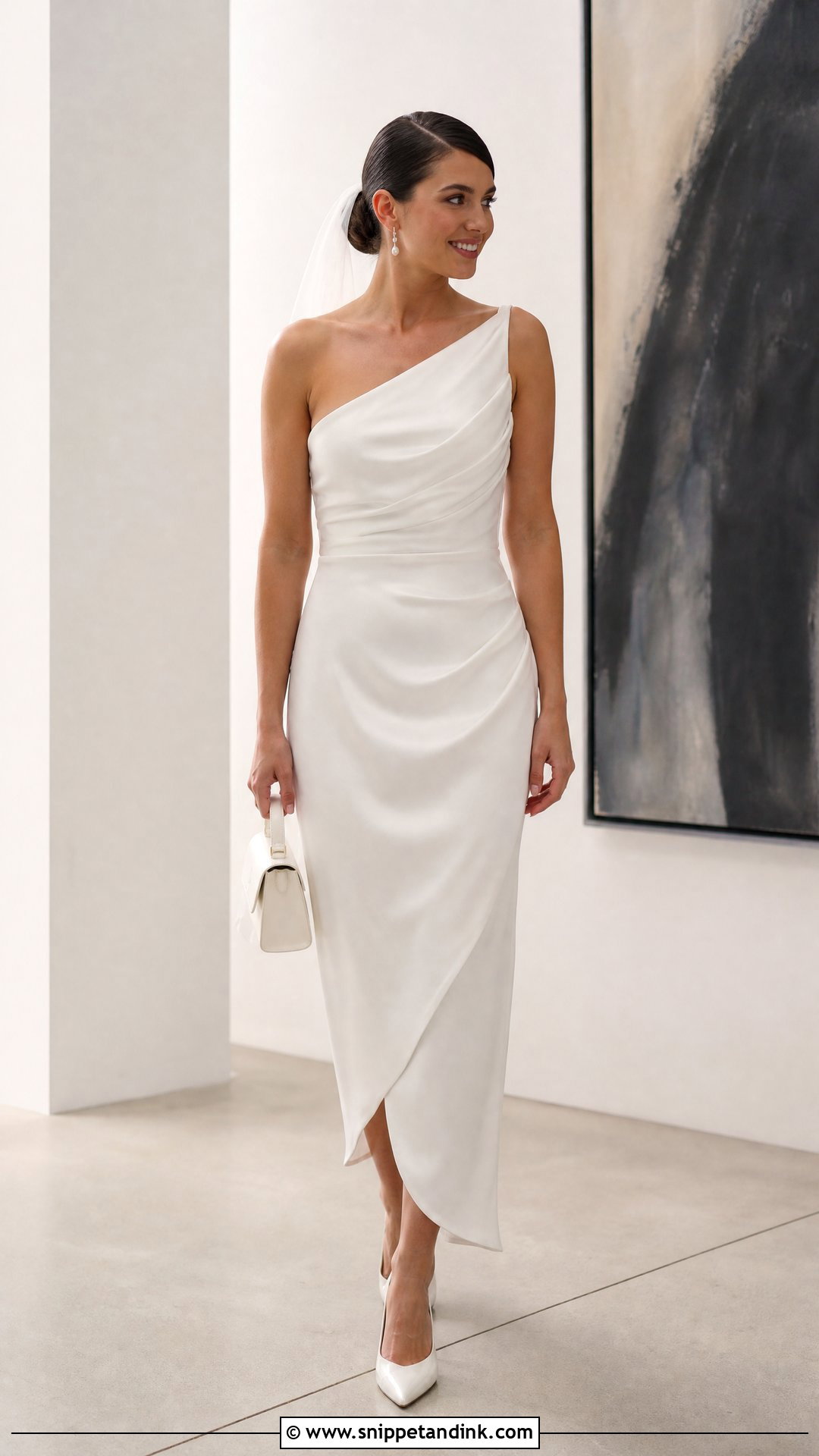
Asymmetry does the work here, so everything else should step back. An angled neckline, a single strap or diagonal draping across the bodice is enough interest for the whole outfit, and the fabric should stay plain. A one-shoulder strap is also less forgiving than people expect: if it’s even slightly loose it slides, so I have it fitted with the bride’s arm raised. Slim drops, a structured mini bag and pointed heels finish it. Wear your bun or sleek waves on the side opposite the strap to balance the line, and consider going without a veil, which suits this cut better than most.
7. Bridal Slip Dress With Sheer Sleeves
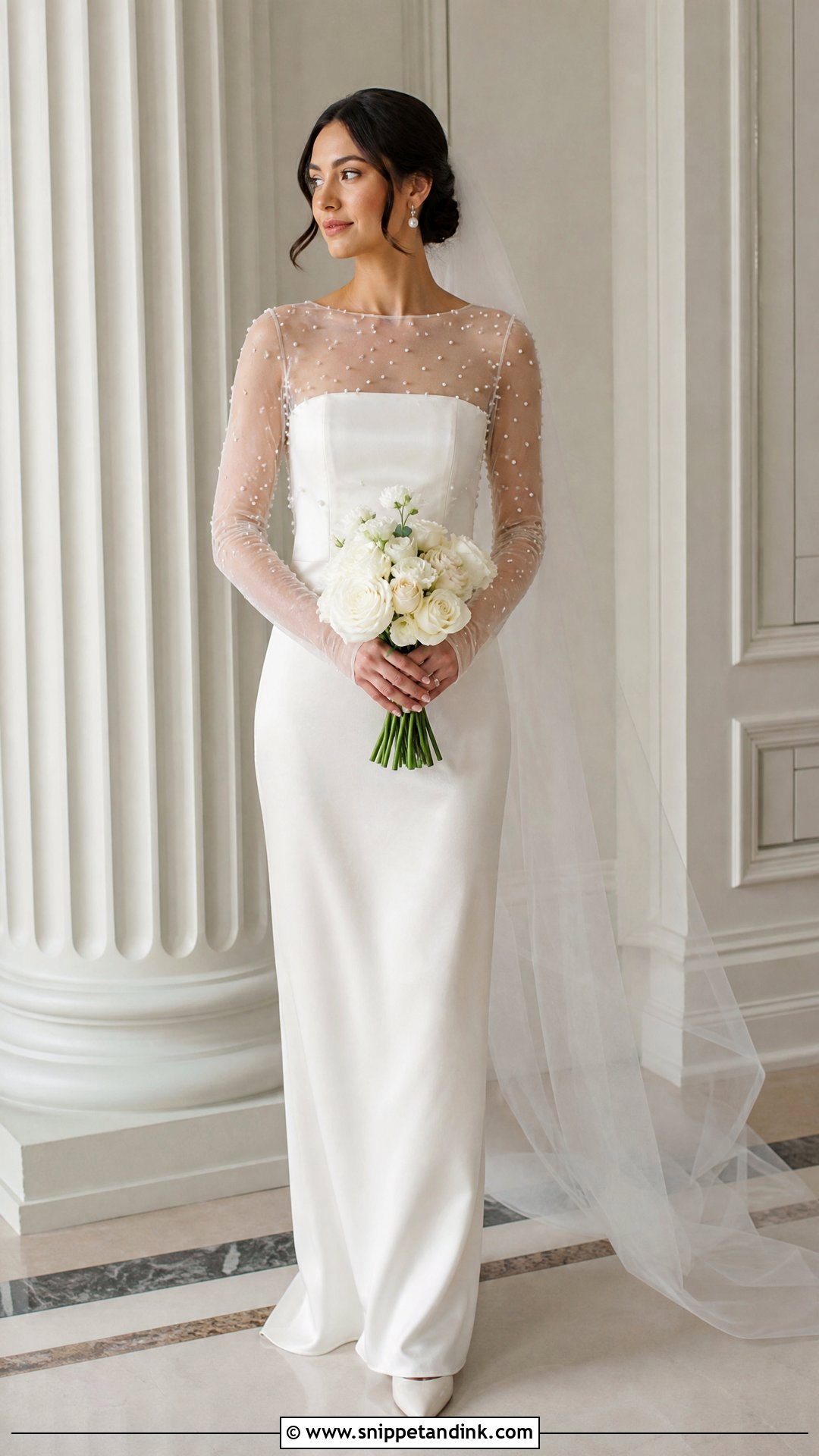
A removable sheer top turns a slip into a ceremony dress and back again. I usually suggest a fitted tulle or organza layer with sleeves over a plain ivory satin gown, because a built-in sleeve on a slip pulls the bias and changes how the skirt falls. A high neckline or scattered pearls on the top add detail while the satin shows through. Pearl earrings, closed pumps, a long plain veil and a low bun keep the upper half neat. Then you take it off for the reception and have a second look without changing dresses, which is a real help in a church with a coverage request.
8. Bridal Slip Dress With Cape
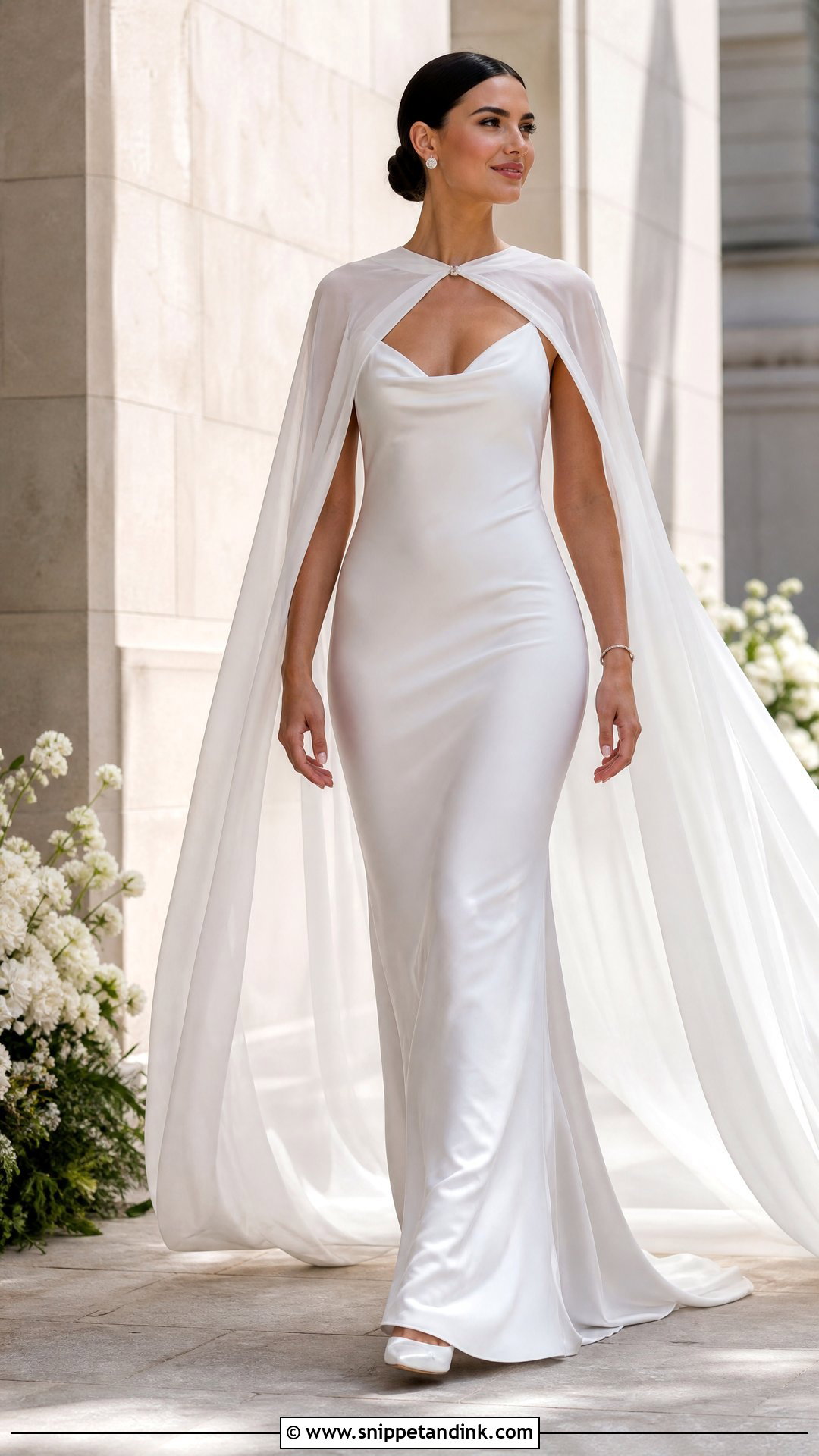
Most capes I fit are detachable chiffon, tulle or crepe, clipped or snapped at the shoulder over a clean satin slip. A floor-length cape reads formal; a short shoulder cape is lighter and easier to sit in. Because a cape already frames the back and shoulders, I’d usually drop the veil rather than layer two sheer things on top of each other. Small crystal studs, a slim bracelet, satin pumps and a polished bun keep it controlled. Do a practice removal before the day. Snaps are faster than hooks, and someone in your party needs to know how they work.
9. Pearl Bridal Slip Dress
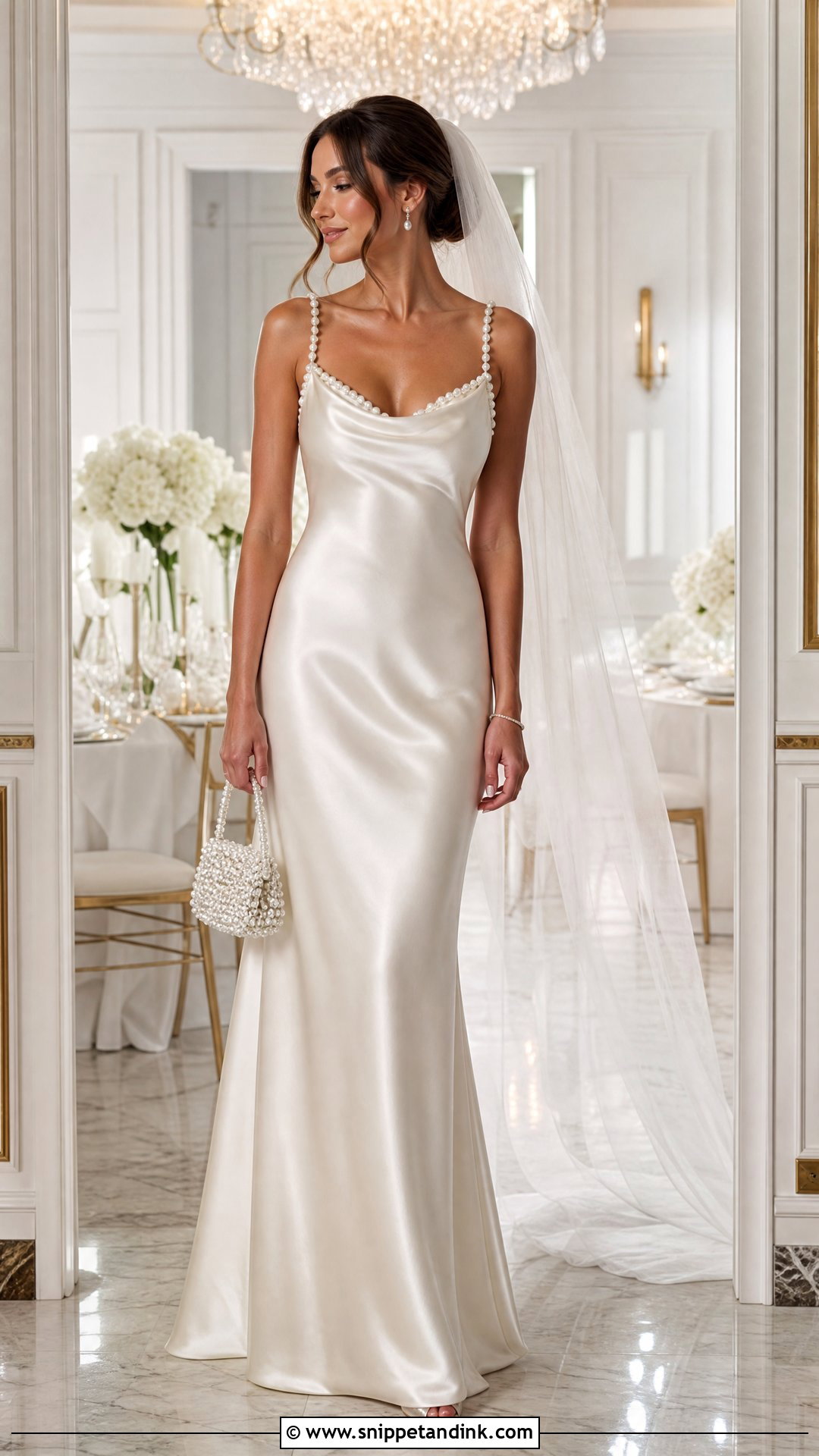
Pearls placed only at the neckline, straps or upper bodice give a slip some dimension while the skirt stays fluid. Heavy pearl work across the skirt drags bias-cut fabric down and spoils the drape. I also run a veil over the beading at the fitting, because a raised pearl will catch fine tulle and pull threads. Pearl drop earrings, a plain tulle veil and low or mid satin heels go with it, and a beaded mini bag only if the dress decoration is subtle. A center-parted low bun keeps it modern rather than fussy.
10. Beaded Bridal Slip Dress
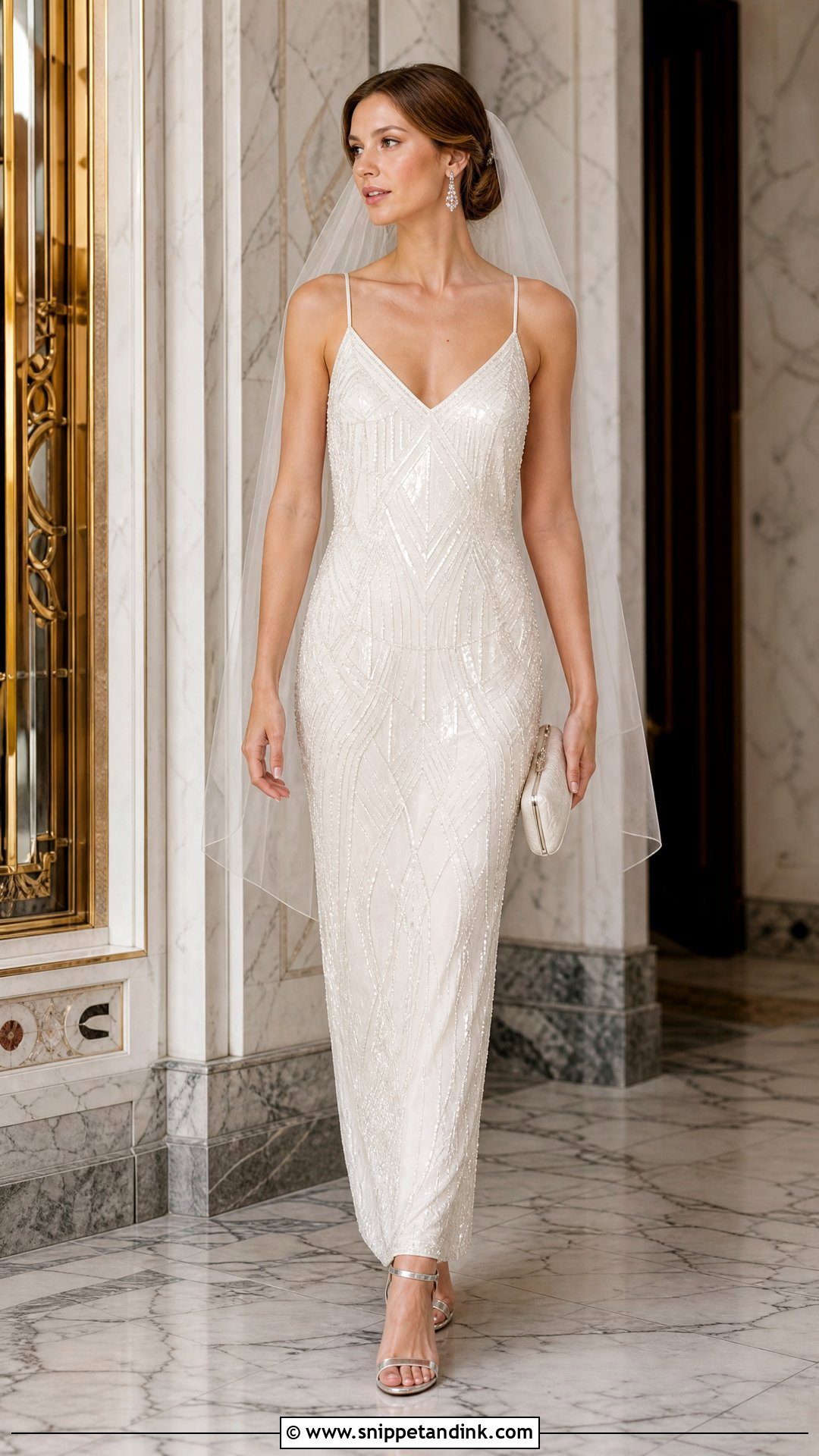
A beaded slip gives you shimmer without the bulk of a fully embellished ball gown. Fine crystal lines, small sequins or geometric beading over a light satin or crepe base all sit well. I let the bead color set the metal: silver beading goes with crystal earrings and metallic heels, warmer beading with champagne shoes and soft gold. Beaded fabric is heavier, so expect the dress to drop slightly after it’s been worn for a few hours, and have the hem set with that in mind. Add a plain fingertip veil, a compact satin clutch, and glossy waves or an updo depending on the neckline. It is very much an evening dress.
11. Bridal Slip Dress With Train
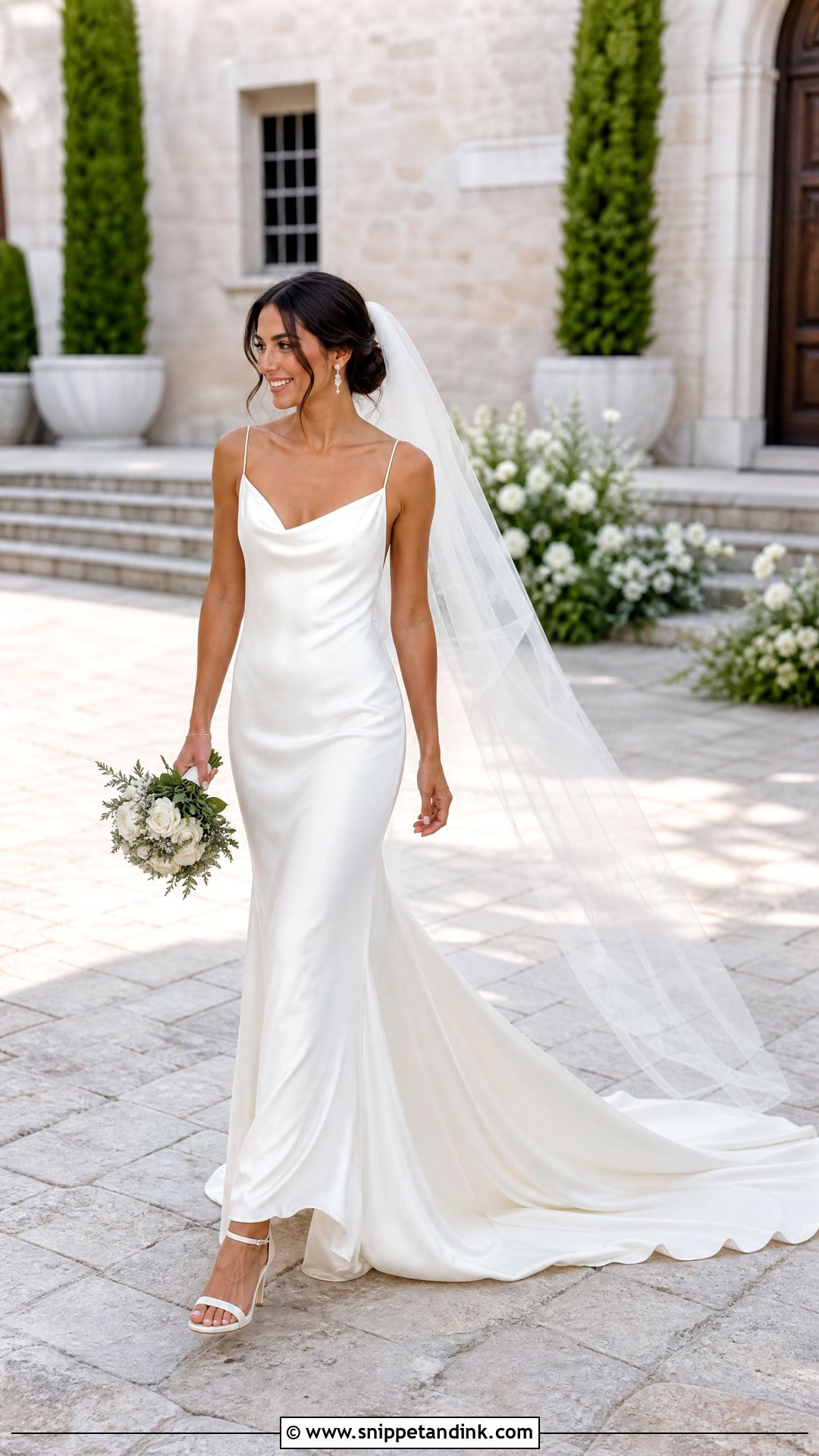
Add a train and a slip immediately becomes more formal. A bias-cut silk or satin gown with a sweep, court or chapel-length train extends from the narrow skirt without any petticoat. The bustle matters more on a slip than on a full gown, though. Silk is slippery and a heavy train will tear a badly placed hook, so I ask for a French or ballroom bustle with several small points rather than one. Wear ankle-strap heels so you’re not stepping out of your shoes, a long sheer veil, delicate earrings and a low bun, and keep the bag and neck plain so the length stays the focus.
12. Midi Bridal Slip Dress
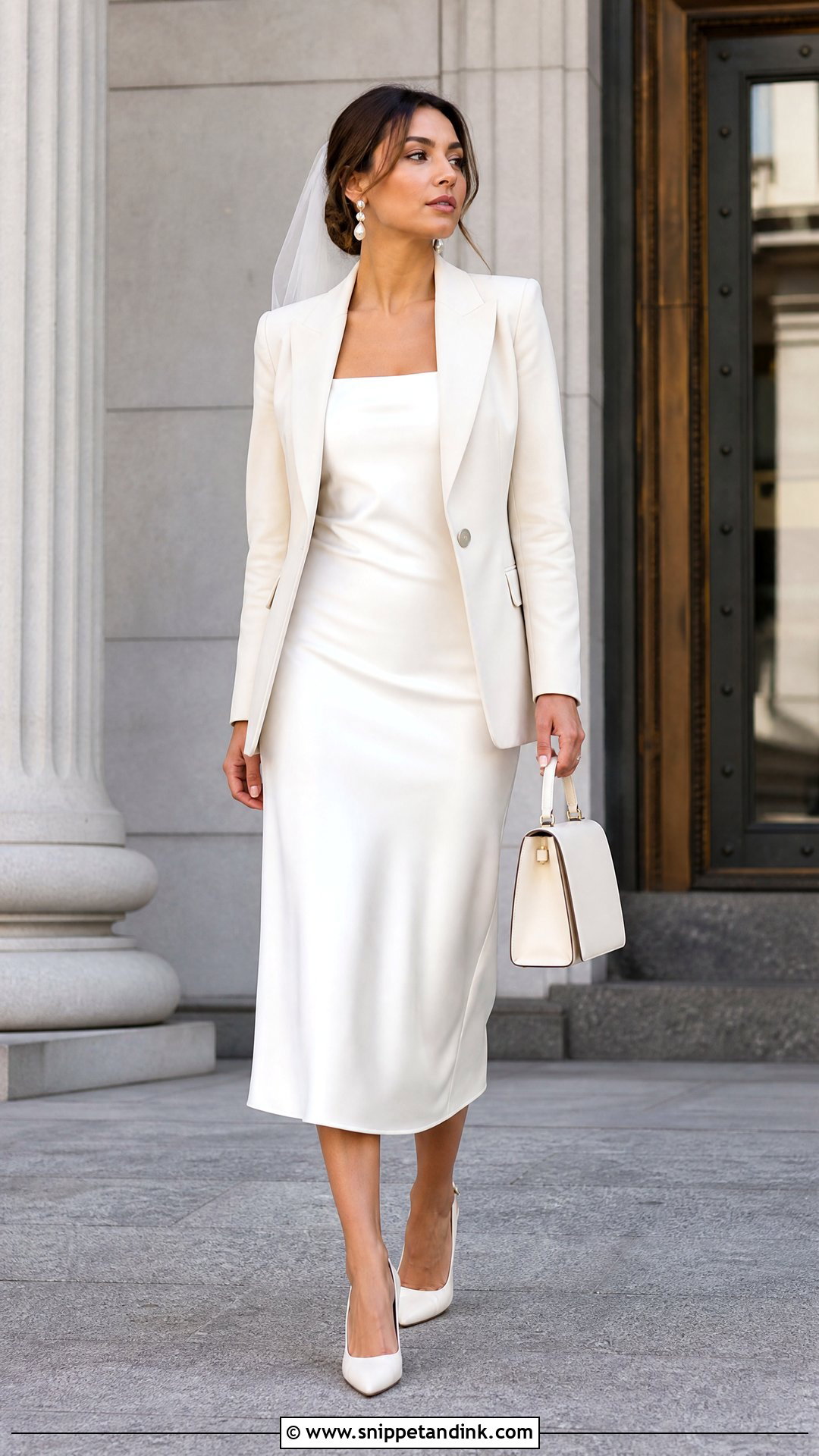
For a courthouse wedding, a welcome party or a small ceremony, a midi slip is the one I recommend most. The hem should fall between lower calf and ankle, high enough to show the shoes but not so high it reads as a cocktail dress. Medium-width straps help if you need support, and a cowl or square neck keeps it bridal. Pointed slingbacks, a small structured bag and pearl or gold earrings work well. A short veil, a hair bow or a slim headband tells everyone you’re the bride. It’s also the slip you’re most likely to wear again, with completely different accessories.
13. Mini Bridal Slip Dress
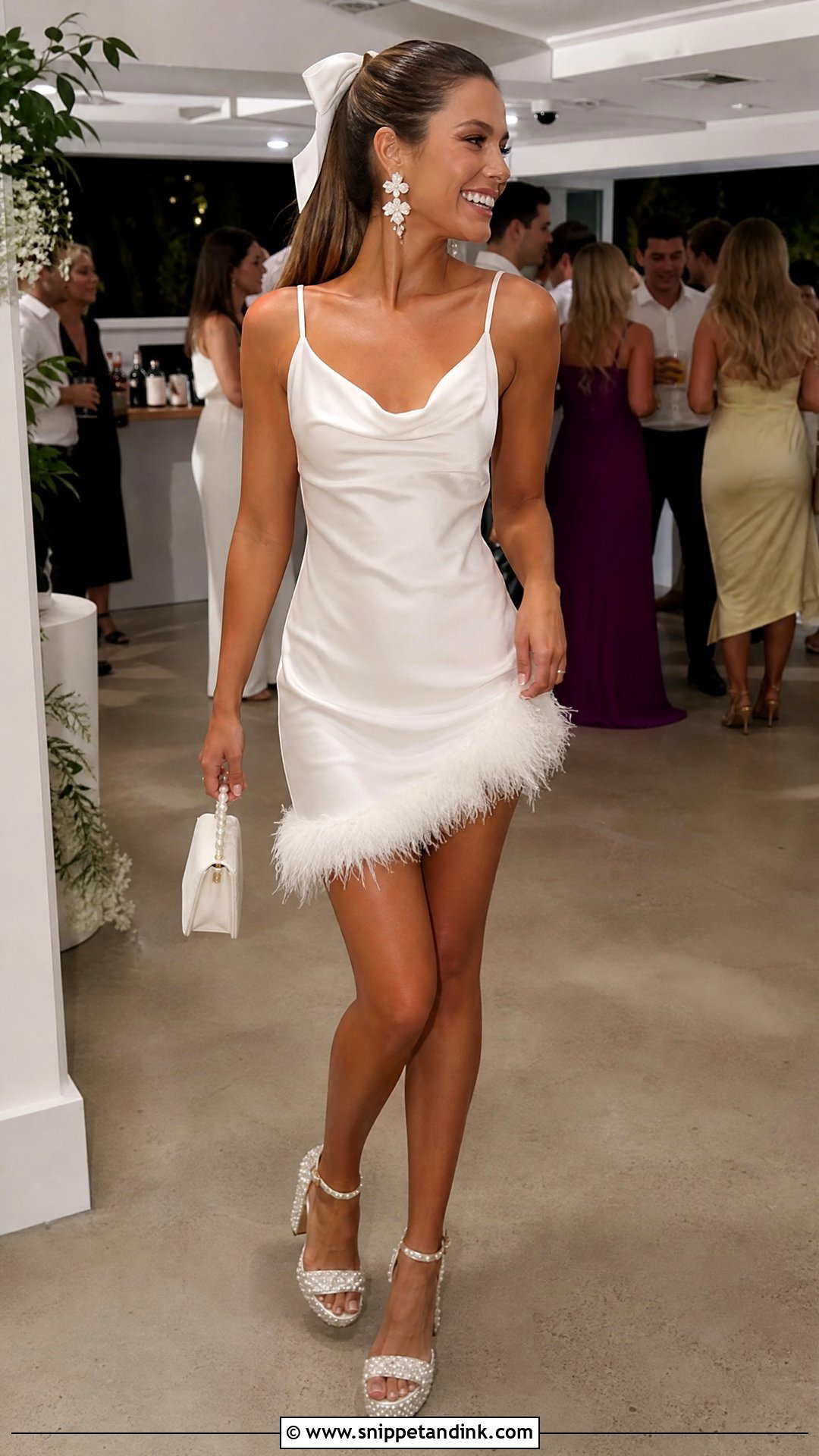
Short and fun, a mini bridal slip dress is my usual answer for the reception change or the after-party. The thing I test hardest is the bodice. Dancing lifts the arms, and a short slip with loose straps rides up and slips down at the same time, so adjustable straps and a secure bodice come first. Plain satin is the classic, and fringe, pearl or feather trim adds movement. Pick shoes by how much you’ll dance, from pointed pumps to embellished flats. A short veil or a structured bow keeps it bridal. Keep hair light: a ponytail or a bouncy blow-dry.
14. Bridal Slip Dress With Blazer
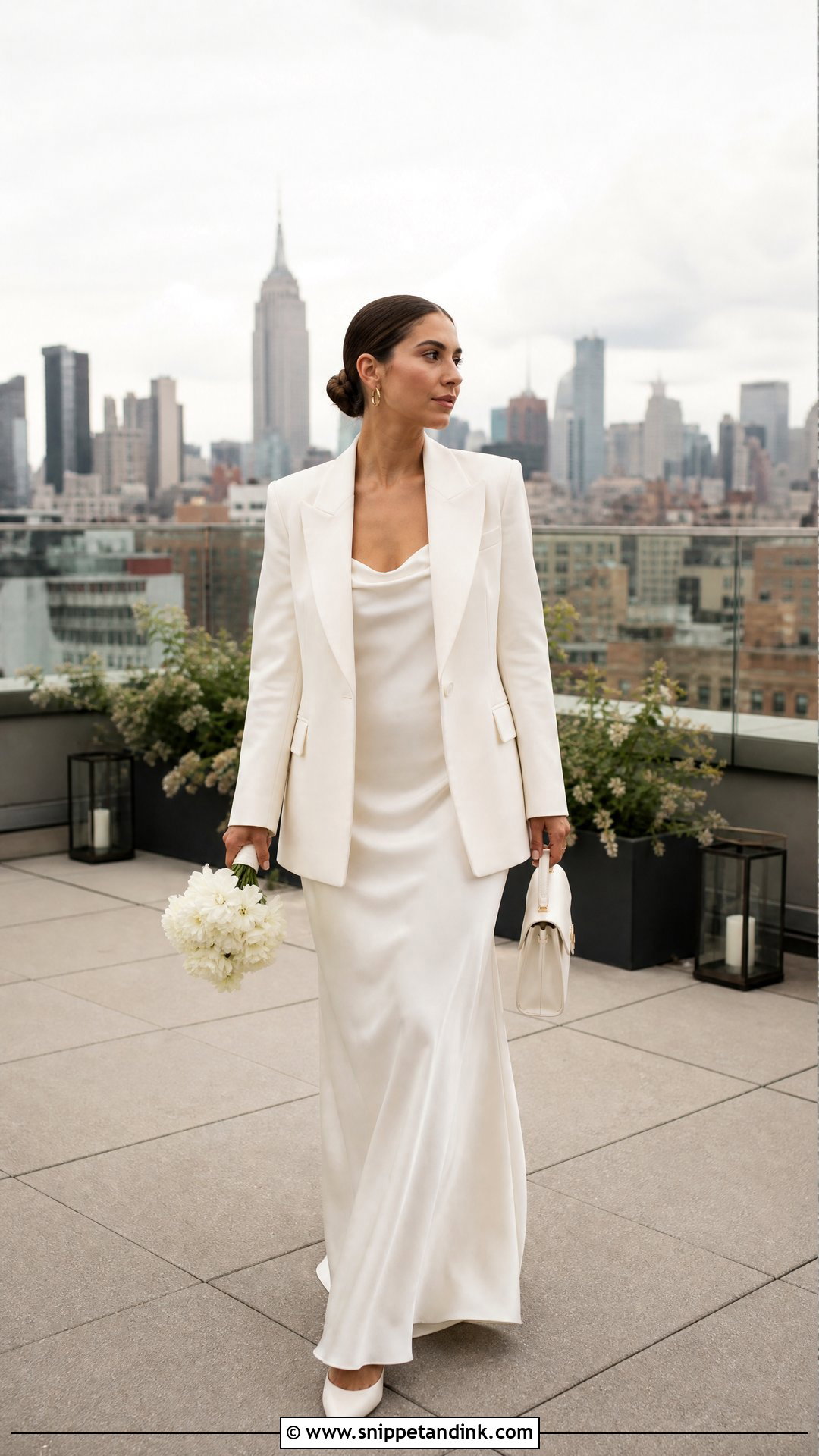
An ivory blazer over a slip is the most city-wedding look I know. The blazer needs clean shoulders and a slightly defined waist; a boxy one swallows the slip completely. I like a small tonal shift, such as cream over bright white, more than a perfect match, which can look like a suit that didn’t quite coordinate. Pointed pumps, small hoops and a structured handbag go with it. Push the sleeves up for the reception. A sleek bun or smooth shoulder-length hair suits the tailoring. For cooler weather and courthouse ceremonies, there’s nothing more practical.
15. Bridal Slip Dress With Overskirt
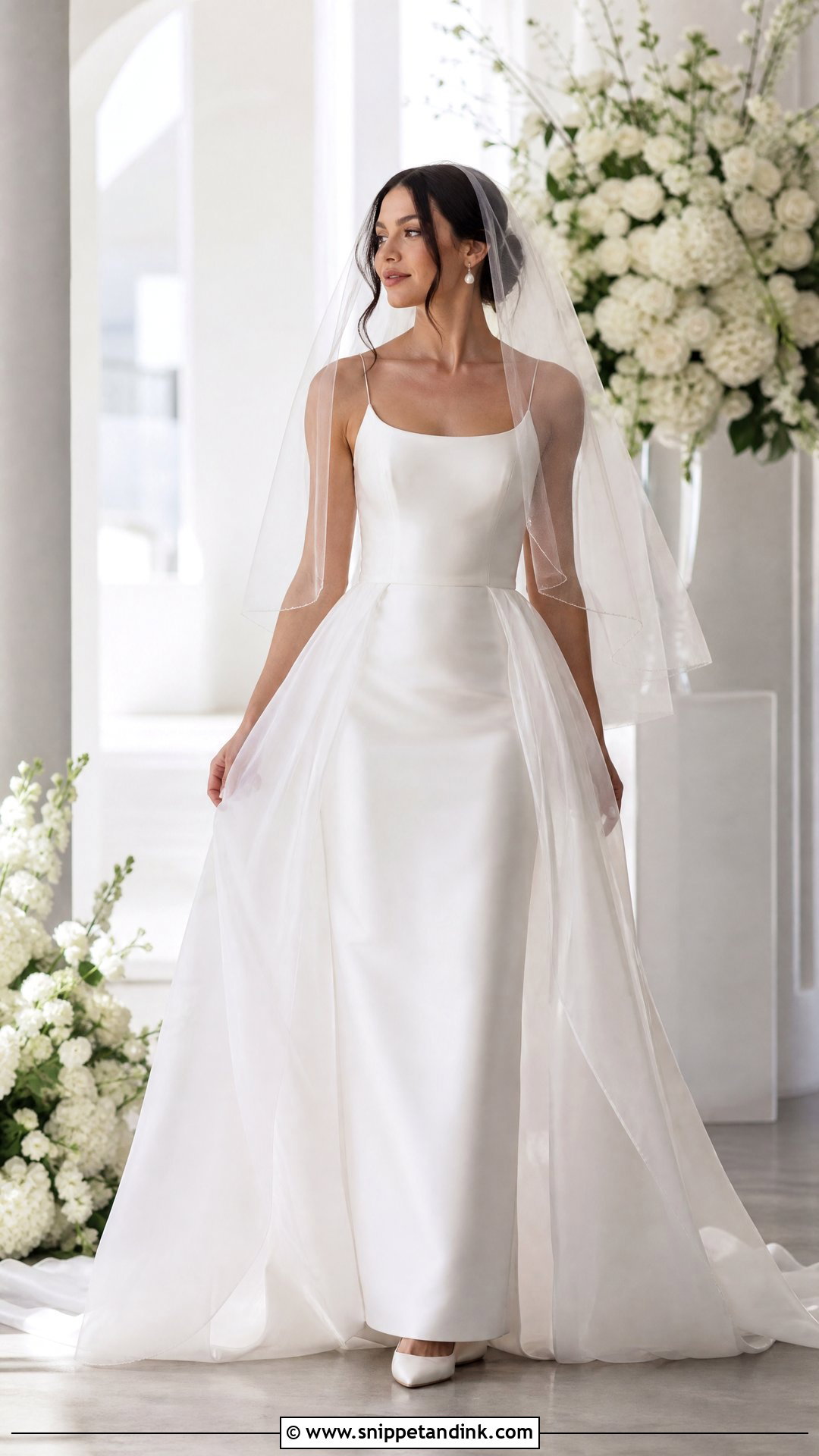
A detachable overskirt gives you two dresses. Over a fitted satin column, a light organza, tulle or silk overskirt fastens at the natural waist. Sheer layers still show the slip underneath; an opaque one makes the ceremony look like a full gown. Most problems are at the waistband, where the fastening can show a ridge through thin satin, so I have the closure placed over a seam and check it seated. A fingertip veil, pearl earrings and classic ivory pumps work for both halves. After the ceremony the overskirt comes off and you’re in a dress you can actually dance in.
16. Champagne Bridal Slip Dress
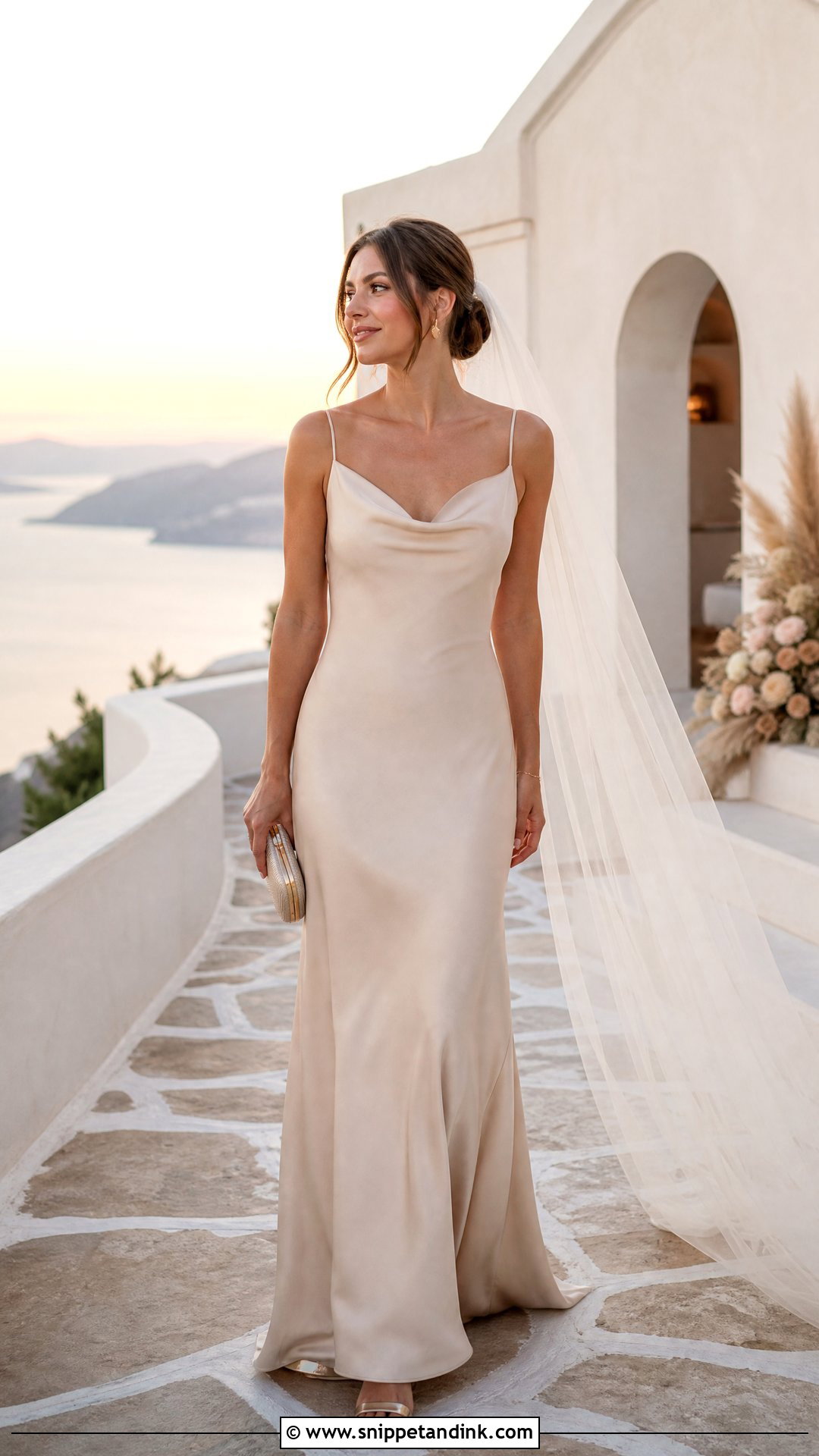
Champagne satin glows warmer than white and is kinder to many skin tones under evening light. The range is wide, from pale cream to a richer beige-gold, so I hold swatches against bare skin near a window before a bride commits. Keep the cut simple: cowl neck, narrow straps, a fluid floor-length skirt. The veil needs to be cream or champagne too, because a stark white veil next to champagne makes the dress look dingy. Warm metallic heels, fine gold earrings and soft waves finish it. It’s a strong pick for sunset ceremonies, autumn celebrations and candlelit rooms.
17. Beach Bridal Slip Dress
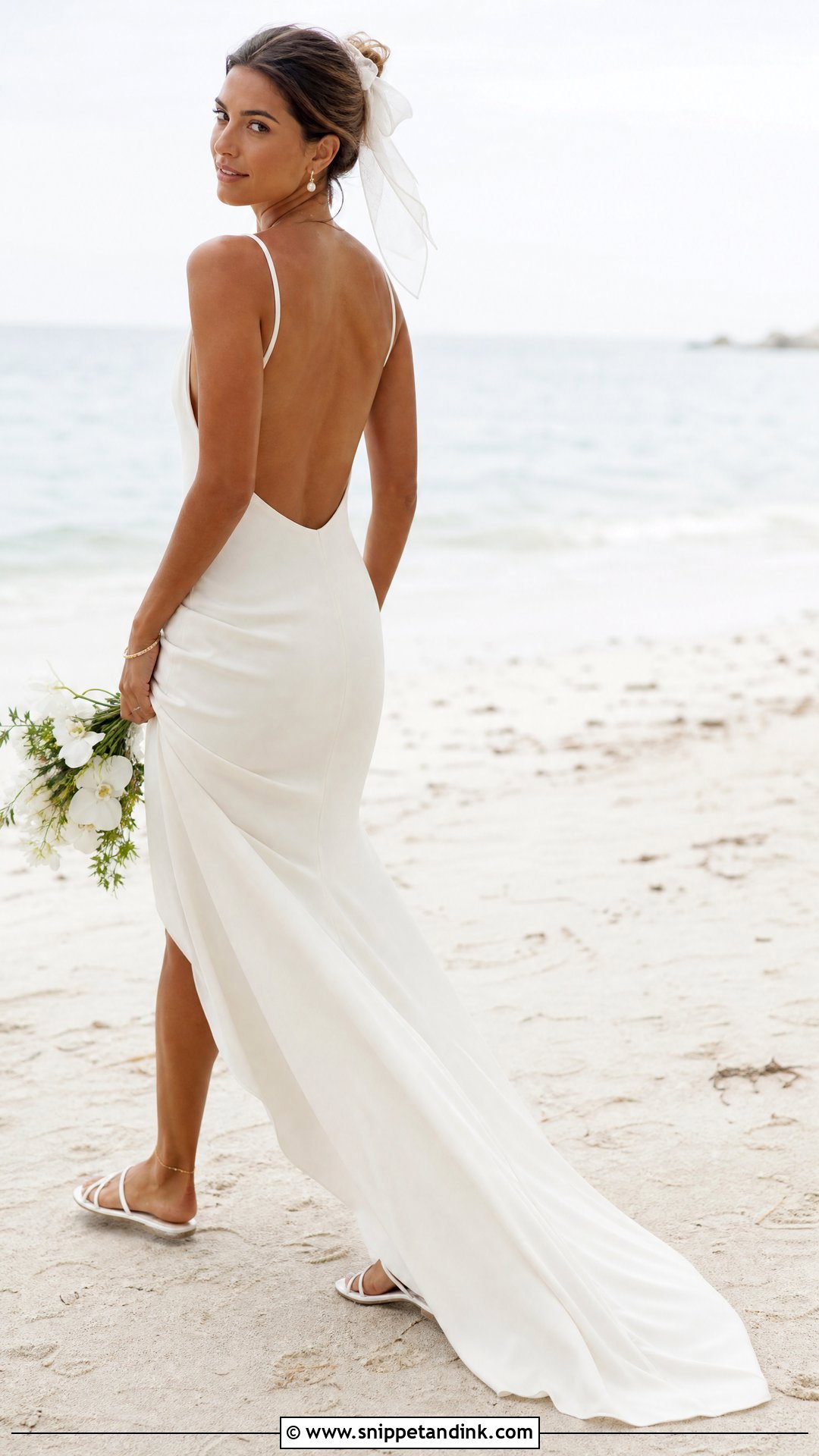
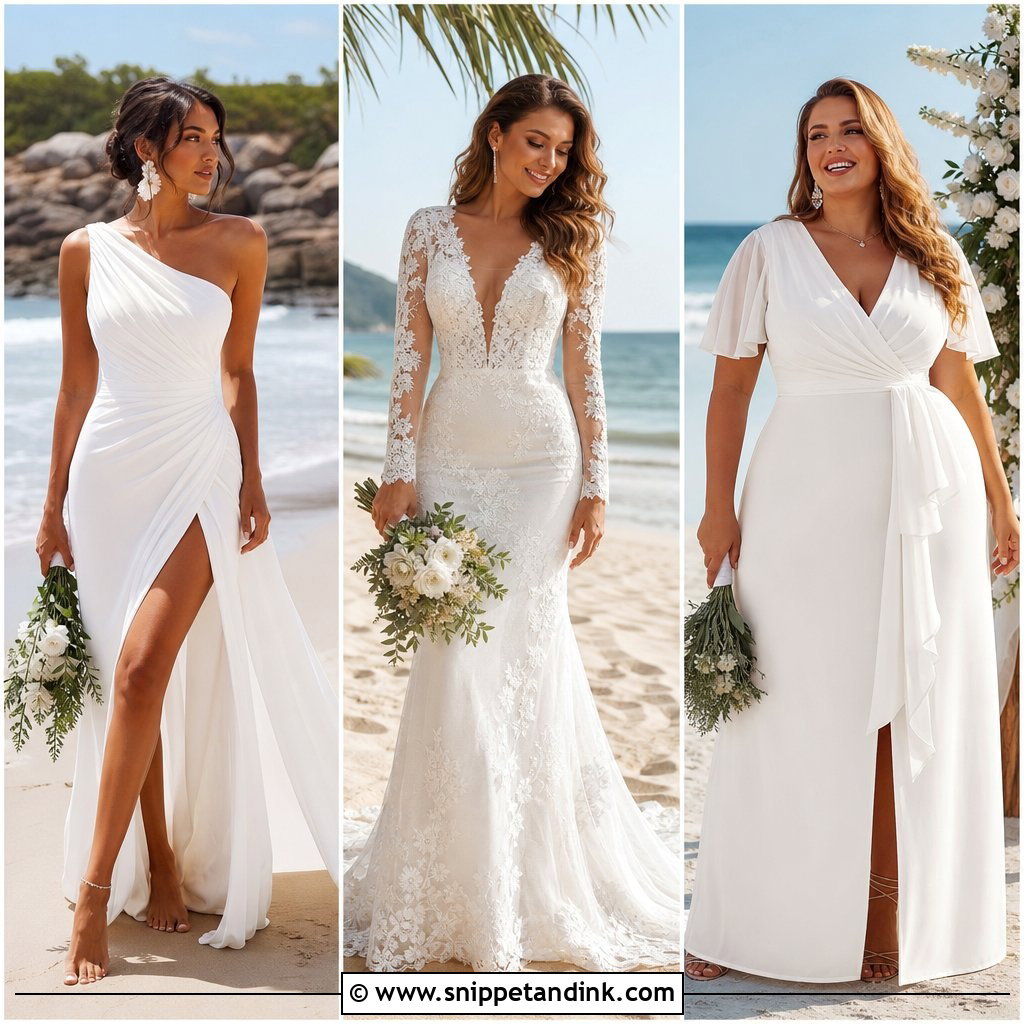
Light fabric and minimal layers make a slip a natural fit for a beach ceremony. I’d pick breathable silk, lightweight satin or crepe with a relaxed skirt and a sweep train at most, since sand clings to anything longer. A low back, cowl neckline or halter all suit an open setting. Wind is the real issue: it presses thin silk against the body and shows every line, so test undergarments outdoors if you can. Flat sandals, pearl earrings, a fine anklet and a short veil or hair comb instead of a long veil keep it practical. Leave heavy embellishment for indoor weddings.
18. Winter Bridal Slip Dress
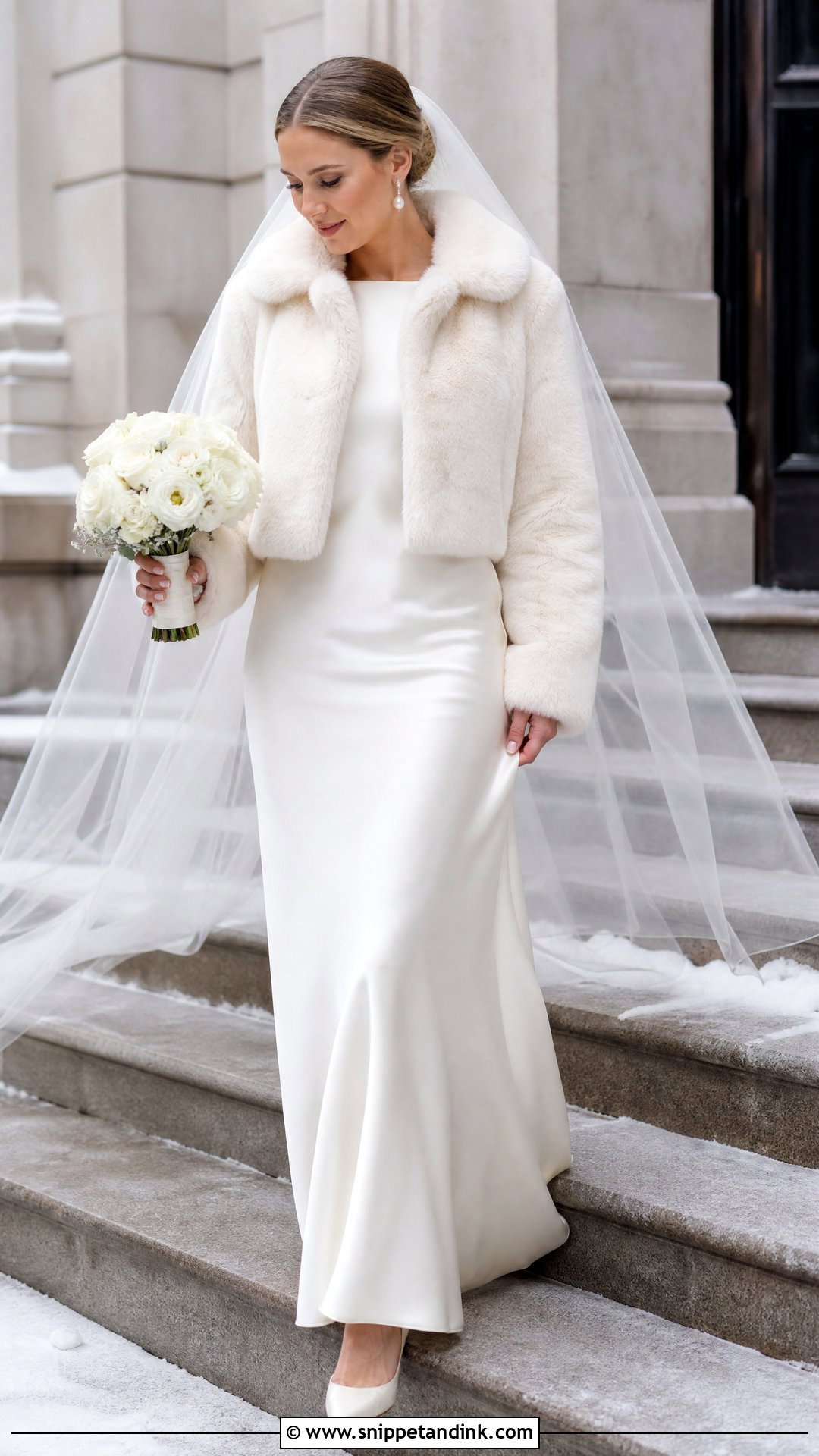
A winter slip works if the fabric is heavier and the layers are planned from the start. Choose a lined satin or silk crepe with a floor-length skirt, then add a tailored ivory coat, faux-fur stole or cropped plush jacket for outdoor photographs. I bring the coat to the final fitting, because a slip clings to wool and can twist under it. Closed pumps, sheer tights if the hem allows, pearl earrings and a cathedral veil suit a cold ceremony. A sleek bun stays neat under outerwear. Keep every layer within the same ivory family, or the slip will look grey beside a brighter coat.
19. Plus Size Bridal Slip Dress
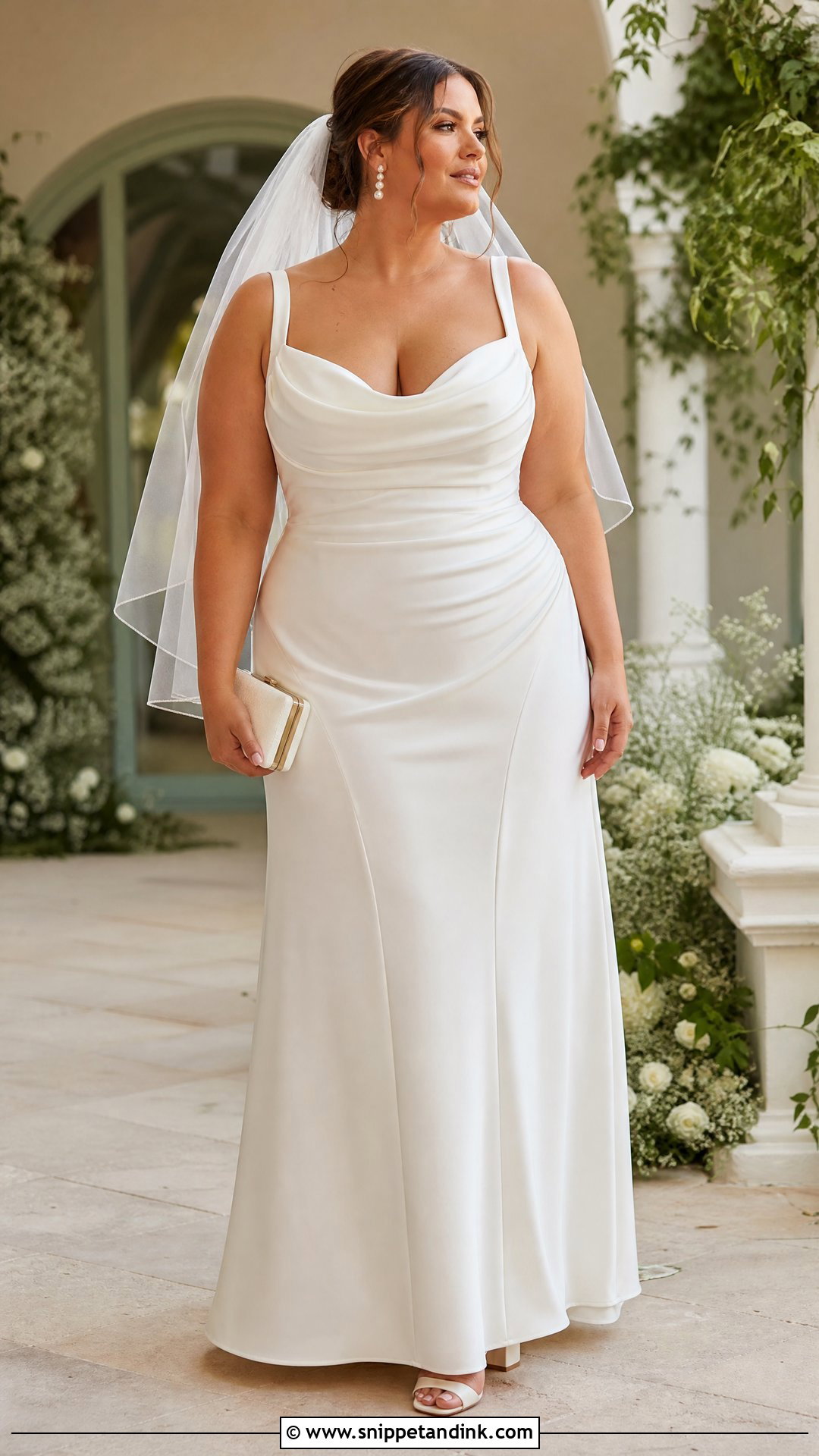
Support first, then drape. For a plus-size slip I look for wider adjustable straps, a softly draped neckline and a bias-cut or paneled skirt; panels give a seamstress more places to adjust than a single bias piece does. Silk crepe, matte satin and lined charmeuse are smoother on the body than thin shiny satin, which shows every seam of what’s underneath. An internal bra or a built-in support layer is worth asking for at the order stage, not added later. Block-heel sandals, statement pearl earrings, a fingertip veil and a structured clutch finish it. The aim isn’t hiding anything; it’s a dress that sits where it should all day.
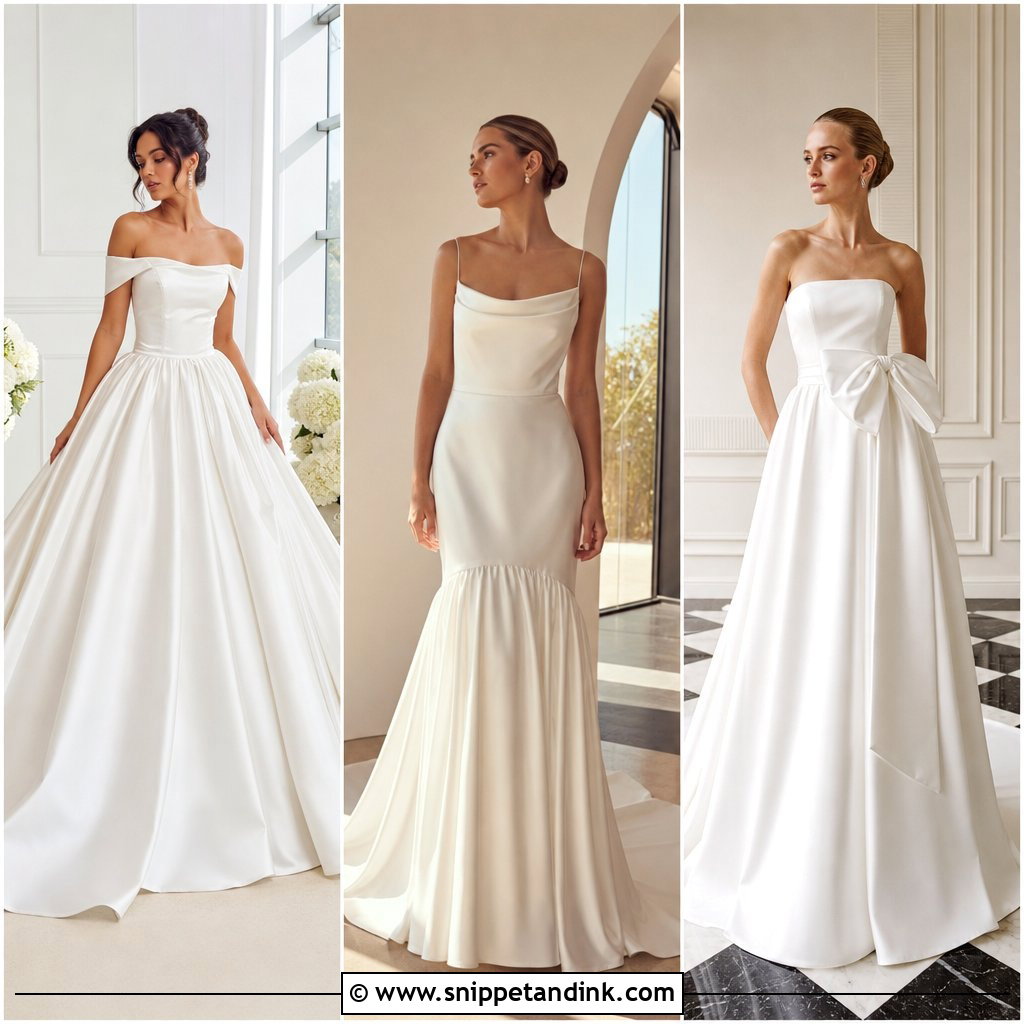

20. Maternity Bridal Slip Dress
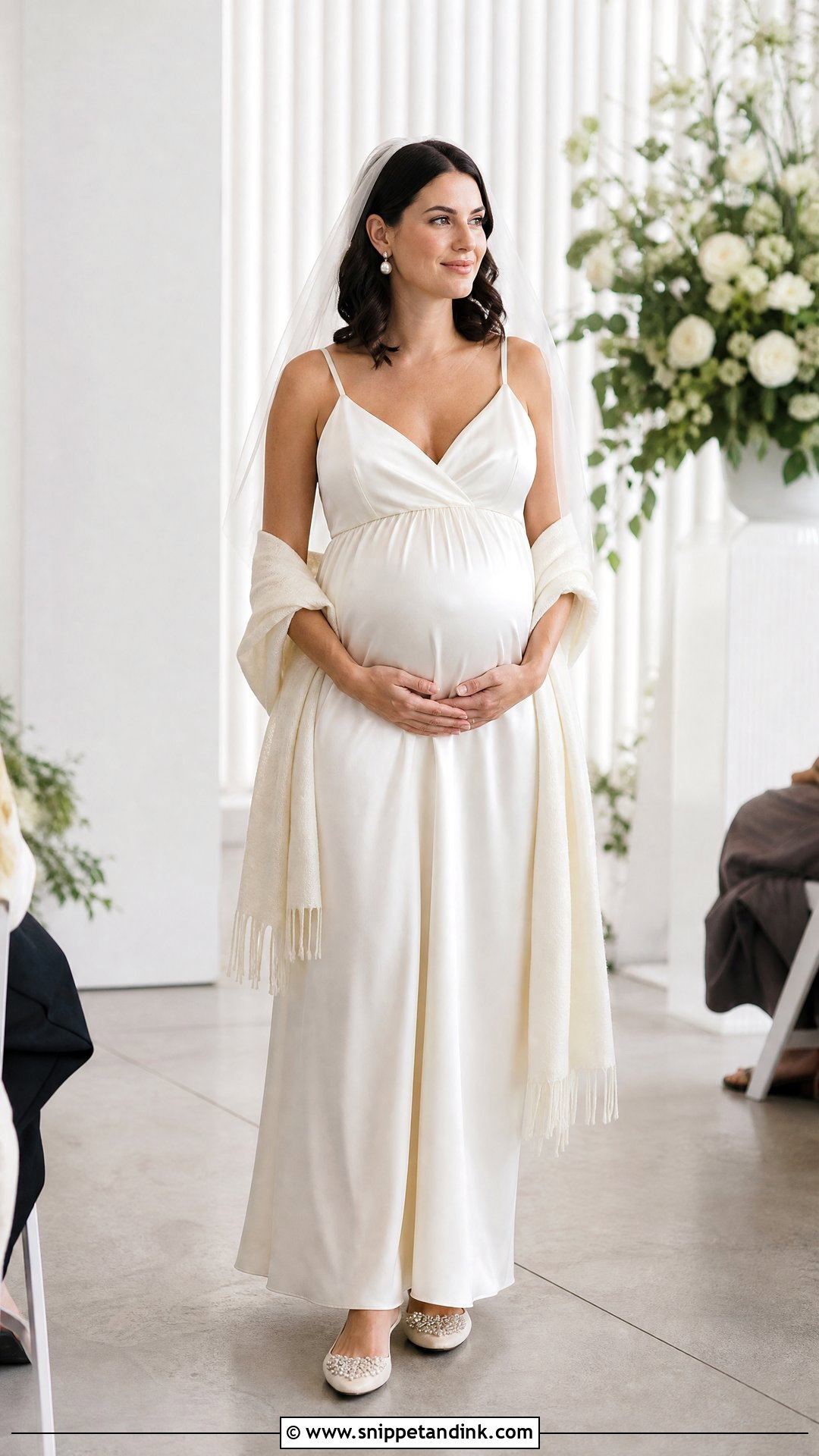
Comfort decides everything in pregnancy, and a slip is one of the kindest shapes for it. An empire seam with extra room through the waist, adjustable straps and stretch silk, lined satin or fluid crepe all give more than a stiff woven fabric. Bodies change quickly, so I book the final fitting as close to the wedding as the seamstress allows, sometimes within the last week. Low block heels or embellished flats, pearl earrings and a shoulder-length veil keep it light, and a soft shawl covers the shoulders without pressing on the bump. Loose waves or a low bun suit it.
Creases, Water Marks and Other Silk Problems on the Morning
Silk and satin slips crease where you sit and mark where they get wet. None of this is a reason to avoid one, but I’d plan for it rather than discover it in the car.
- Steam, don’t iron. Hang the dress the day before and steam from the inside on a low setting, keeping the head moving. A steamer that spits can leave water rings on silk, so test on the inside hem first.
- Get dressed last. Put the slip on after hair and makeup, over a button-front shirt for the earlier part of the morning, so nothing goes over your head once your face is done.
- Sit with care. Smooth the skirt under you before you sit, and stand for the car ride if it’s short. Seated creases across the lap show up in every standing photo afterwards.
- Leave spills dry. Water on silk charmeuse often leaves a ring, and rubbing it spreads the mark. Blot gently with a dry white cloth and leave it. Most faint rings fade once the fabric dries evenly.
- Pack a small kit: double-sided fashion tape for straps, a few safety pins, and a white chalk stick for small marks on ivory.
After the wedding
Get it to a cleaner who handles bridal silk within a few weeks, before sugar and perspiration marks set and turn yellow. Store it folded with acid-free tissue in a breathable box, not hanging, because the weight on a bias-cut dress keeps stretching it out of shape on a hanger.
A Slip Dress Is Made in the Fitting Room
The slip looks simple, but almost everything you see in the finished photographs was decided at fittings: the fabric weight, the undergarments, how the hem sits in your actual shoes. Accessories come second. Pearls lean romantic, structure leans modern, and detachable layers give you a second look. Start with the neckline and length that feel like you, wear the real shoes and support to every appointment, and keep the extras to one or two pieces. A dress this plain shows exactly how well it fits, and that’s the part worth spending on.
You'll Like These Ideas:



Leave a Reply