
A plain gown gets its impact from cut, proportion and fabric, so most of my styling time goes into those before anyone mentions earrings. The twenty looks below cover weddings, galas, graduations and black-tie dinners, and nearly every one follows the same discipline: a strong silhouette in good cloth, sleek shoes, restrained jewelry and one structured bag. Satin, crepe, chiffon and jersey do most of the work, because their surface and movement become the detail. Neutrals give you years of wear, and richer colors add personality without breaking the simplicity. Each look comes with the full outfit I’d build around it.
Getting a Floor-Length Gown Altered in the Right Order
Almost every gown on this list needs some tailoring, and with no embellishment to distract, small errors show. I send clients to the tailor in this sequence.
- Buy the shoes first. Hem length depends on heel height, and changing heels after the hem is cut means either re-hemming or tripping.
- Wear the undergarments you’ll actually wear. A different bra changes the bust fit, and shapewear changes the hip line on satin and jersey.
- Fix the top before the bottom. Bodice, straps and waist come first, because lifting the shoulders raises the hem.
- Set the hem last, standing still in your shoes. Floor-skimming means the front just clears the floor; a slight pool at the back is fine on a column but not on chiffon, which drags and catches.
- Leave room for a second fitting. Allow several weeks in busy seasons, and more for satin or mikado, which tailors handle slowly because needle holes show.
Fabric changes the hemming method too. Chiffon usually gets a narrow rolled hem, crepe a blind hem, and jersey a stitch that stretches with the fabric. Ask which one your tailor plans, because a rigid hem on jersey ripples as soon as you walk.
1. Black Satin Column Gown
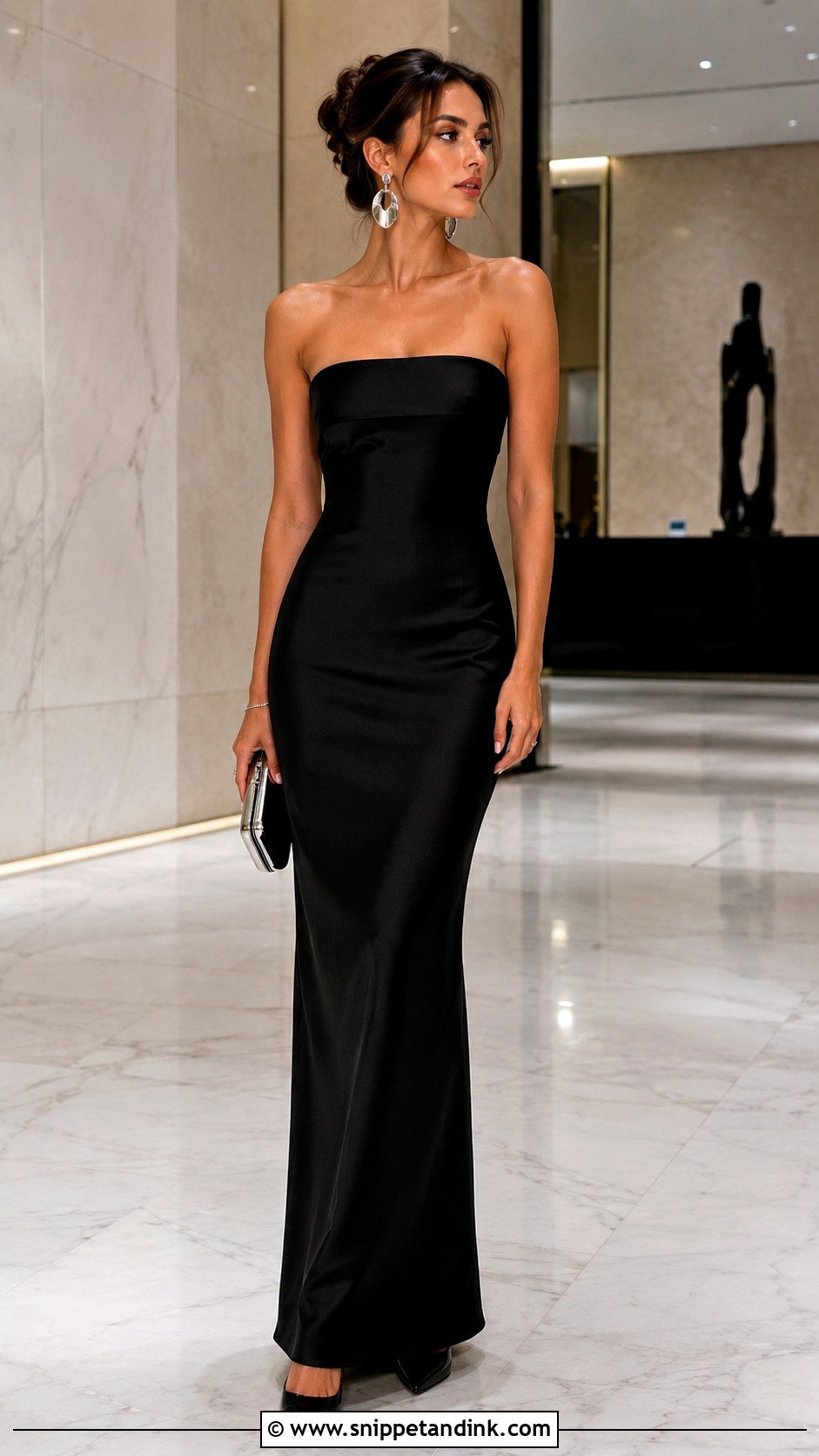
Black satin is less forgiving than people expect. Its sheen picks out every pull at the hip and every line underneath, so the fit has to be close to exact. A floor-length column with a straight neckline and a lightly shaped waist gives the longest line, and pointed black pumps carry it to the floor without a break. A compact silver clutch is the one contrast; small sculptural earrings or studs beat a necklace, and a center-parted low bun echoes the sharp edges. Reflective fabric bounces light onto the face, so keep makeup balanced, with defined lashes and a neutral lip. Galas, formal dinners and evening receptions where sparkle would be too much are where it shines.
2. Ivory Crepe A-Line Gown
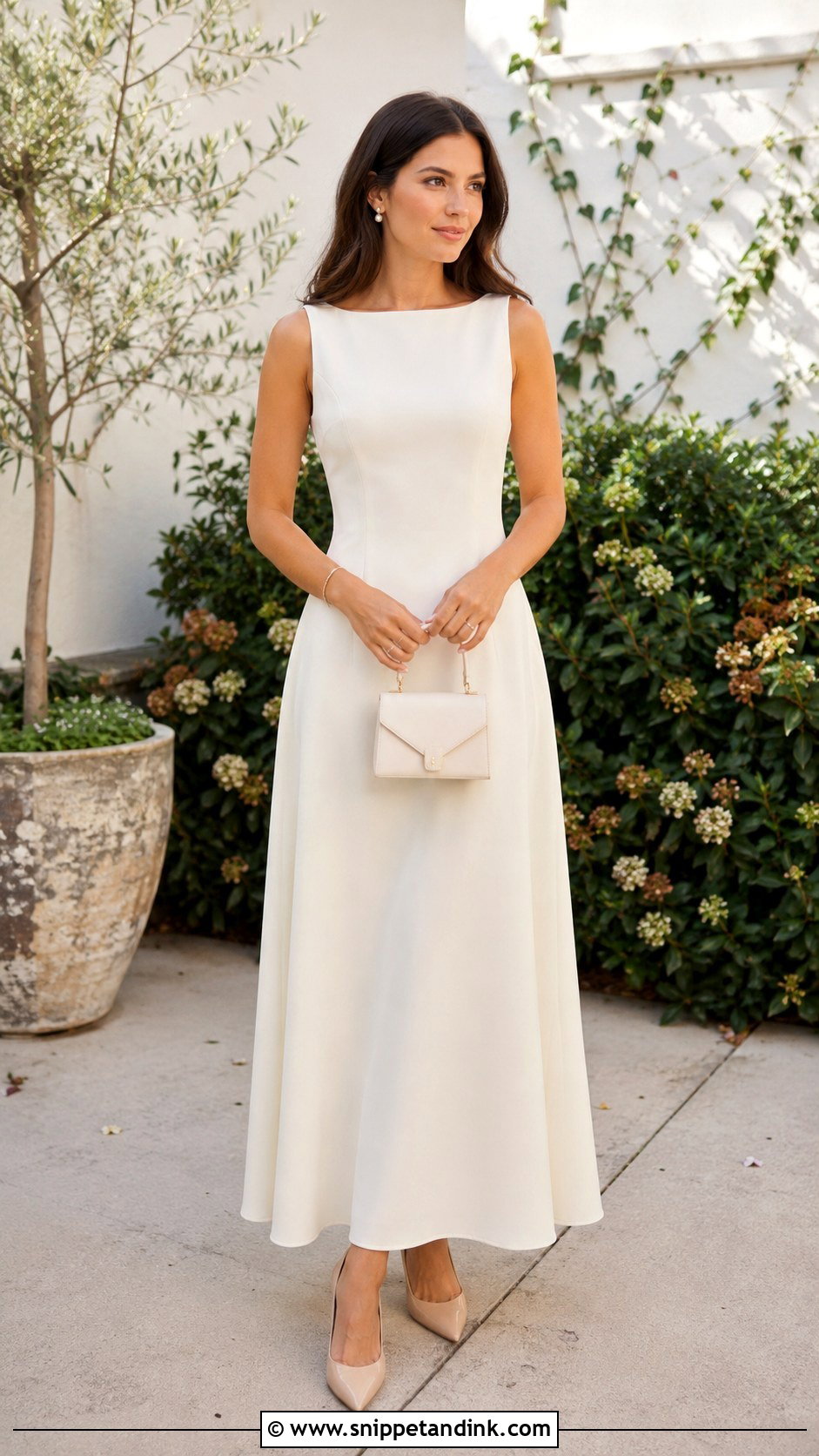
Crepe is the comfortable one among formal fabrics: it has some give, it breathes better than satin, and it doesn’t crush the moment you sit. On an ivory A-line, look for a fitted bodice, a natural waist and a skirt that falls away from the body without turning full. Nude pointed heels keep the hem line unbroken, and pearl studs, a slim bracelet and a small ivory top-handle bag are enough. Wear the hair in a polished twist or a loose low ponytail with fresh skin and a rosy lip, since ivory already brightens the face. Bridal showers, graduations, engagement photos and daytime events in gardens or modern rooms all suit it.
3. Navy Long Sleeve Gown
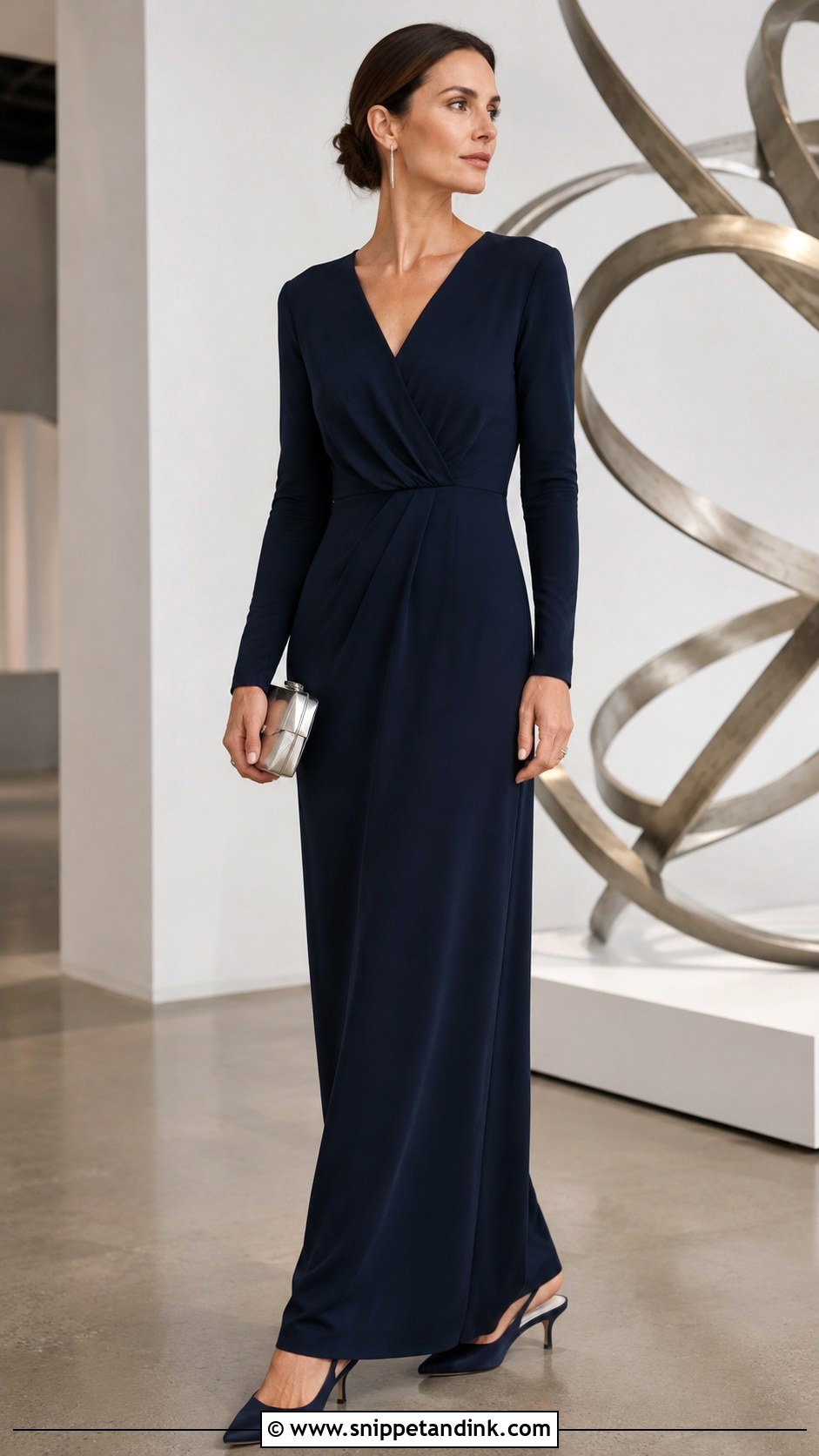
Navy is my answer when a client wants coverage and finds black severe. A navy long sleeve gown in matte crepe or smooth jersey, with a gently fitted waist and floor-skimming skirt, stays streamlined as long as the sleeves are narrow. A bateau, round or shallow V-neck keeps the top refined. Navy or metallic slingbacks, a structured silver clutch and narrow drop earrings finish it. Leave the wrists bare: stacked bracelets catch on the cuff and interrupt the line the sleeves already draw. A sleek bun keeps it formal and soft waves relax it, which makes it a strong pick for winter events and professional ceremonies.
4. Champagne Silk Slip Gown
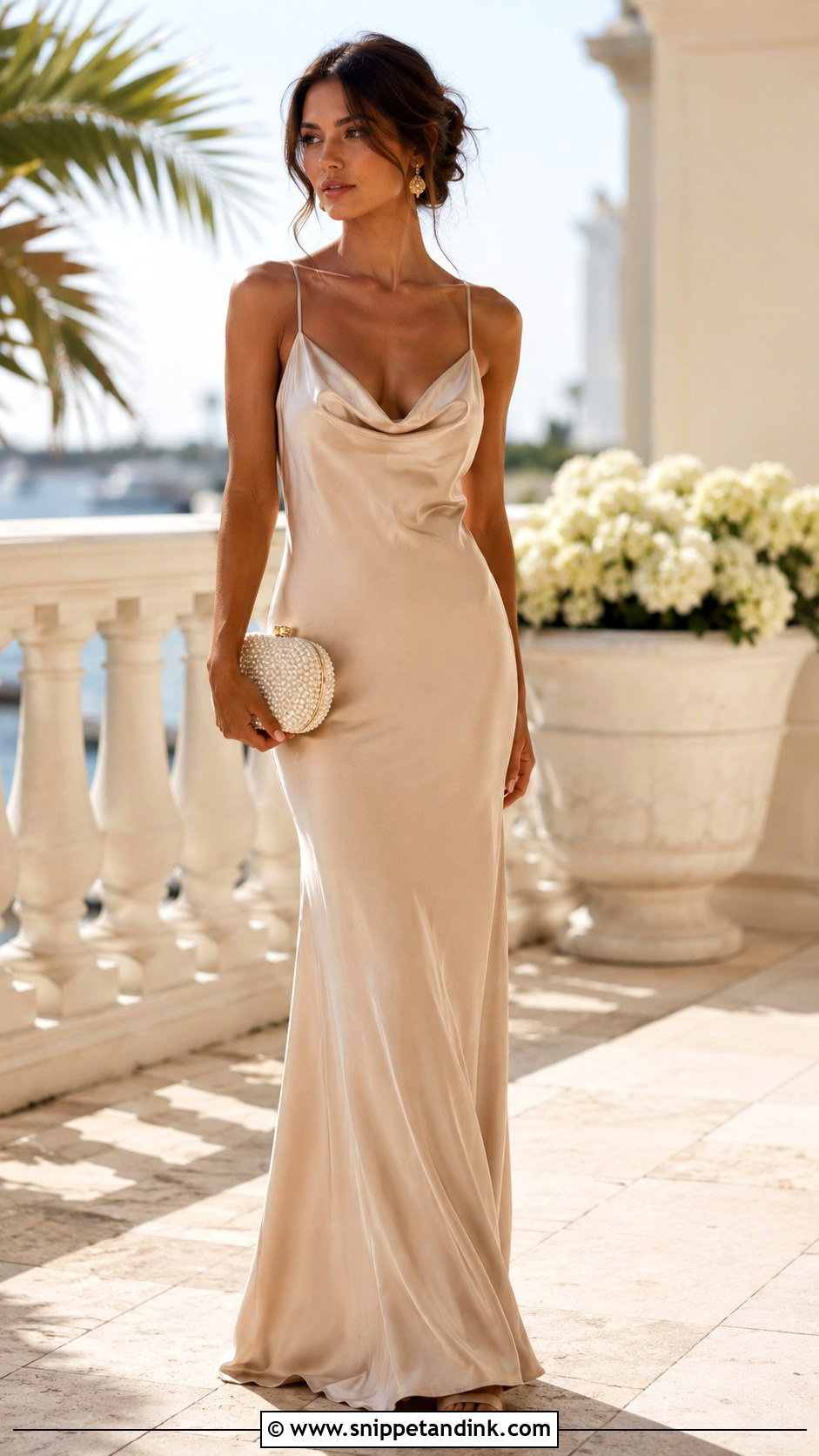
Champagne is one of the trickiest colors to wear, because a shade too close to your skin washes you out in photos. Hold the fabric against your face in daylight before buying. Choose substantial silk or good satin cut on the bias, with delicate straps and a softly draped neck, so it skims rather than pulls. Minimal champagne sandals, a pearl-accented clutch and fine gold earrings keep it tonal, and a cream or beige wrap covers the shoulders without competing. Keep the hair smooth, down or in a low knot, with warm neutral makeup. It moves well at summer receptions, destination events and long dinners.
5. Emerald One Shoulder Gown
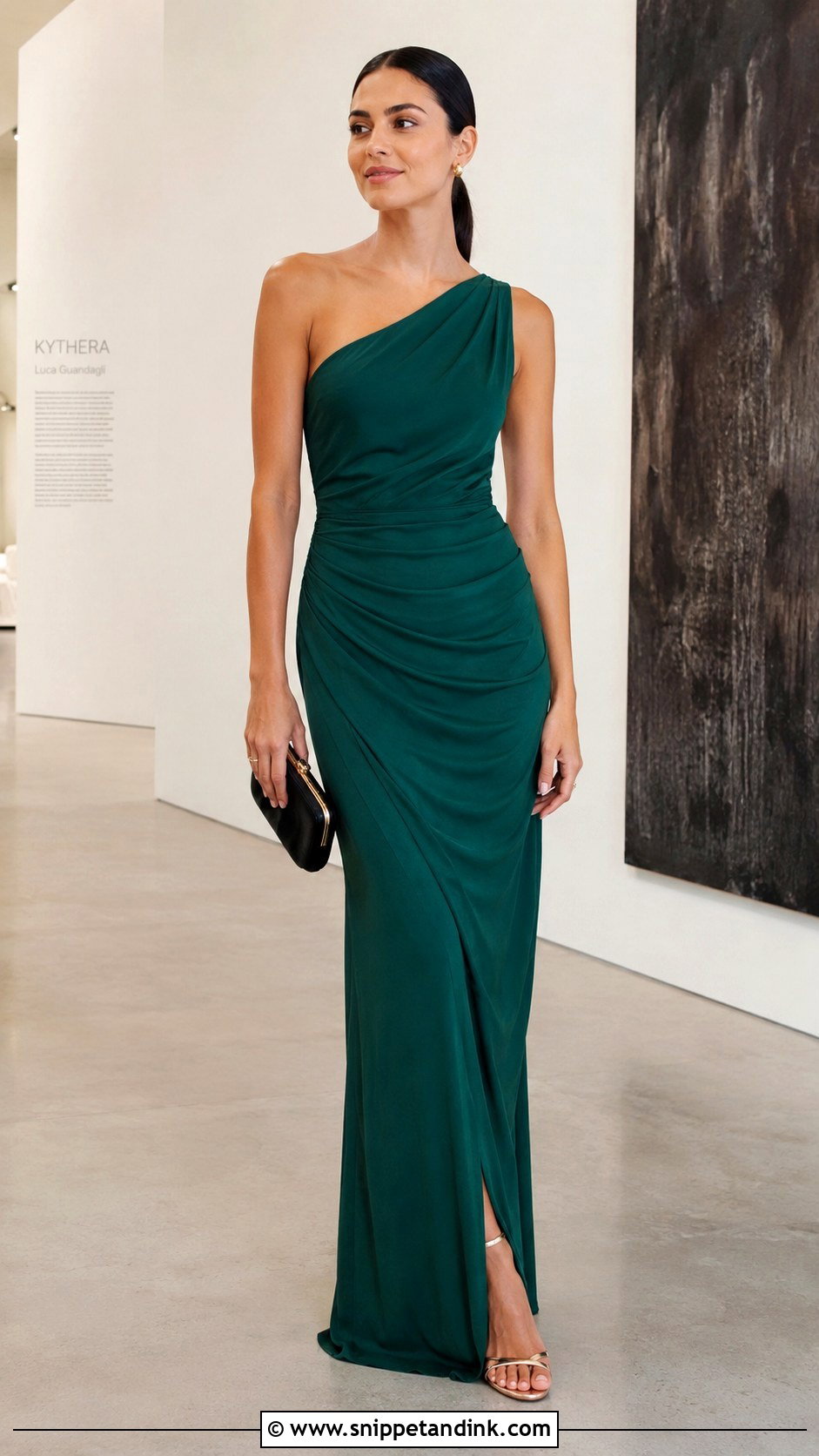
One shoulder does the job a necklace would, so I never add one. An emerald gown in a smooth column or soft drape, with a single fitted sleeve or a clean asymmetric strap, keeps a strong color looking spare. Simple black or metallic heels, a compact hard-case clutch and one pair of small gold earrings are the whole accessory list. Sweep the hair away from the covered shoulder so the asymmetry shows, and keep nails neutral and makeup softly defined. For black-tie evenings and fall or winter weddings, few colors work harder.
6. White Square Neck Gown
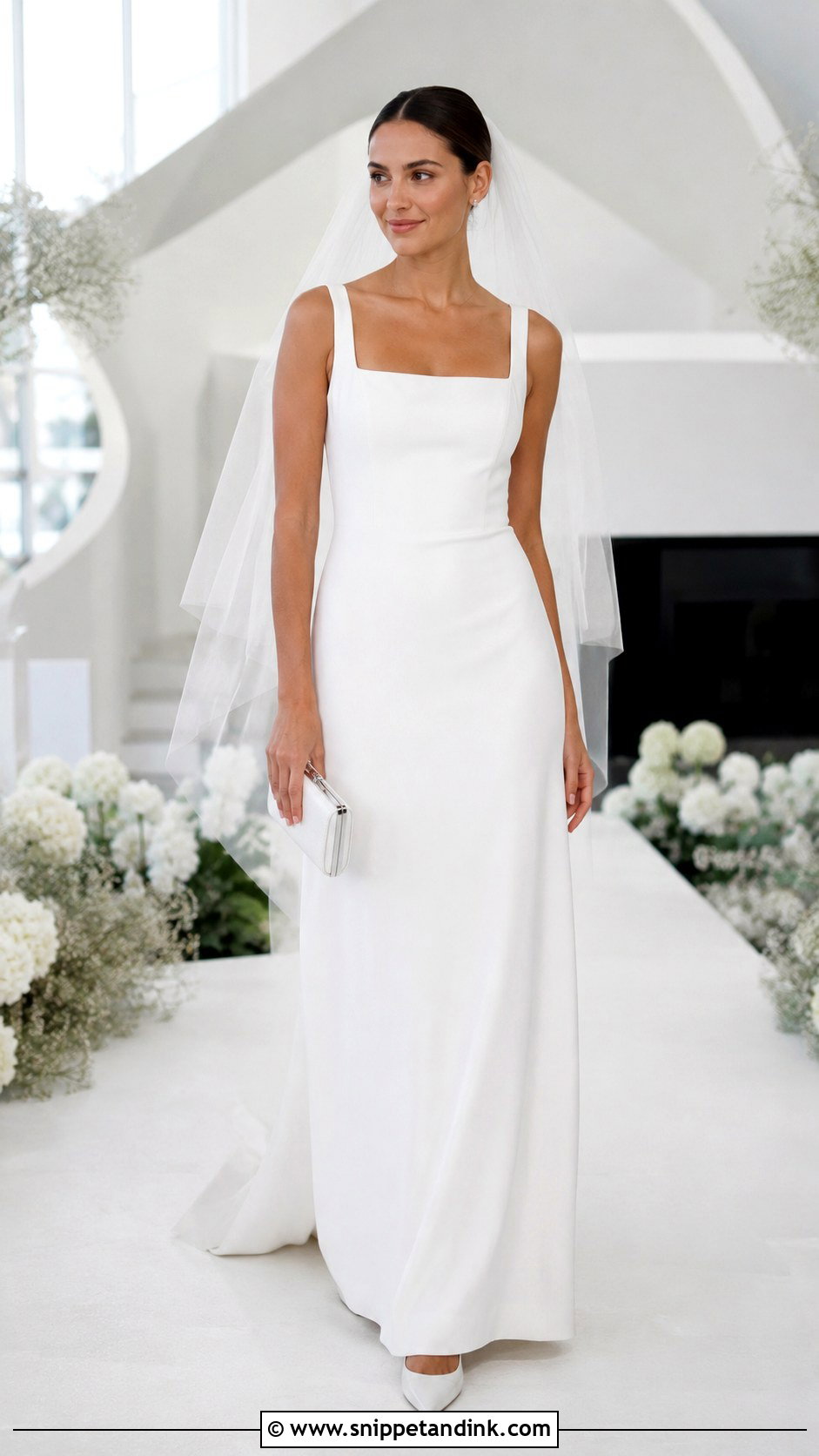
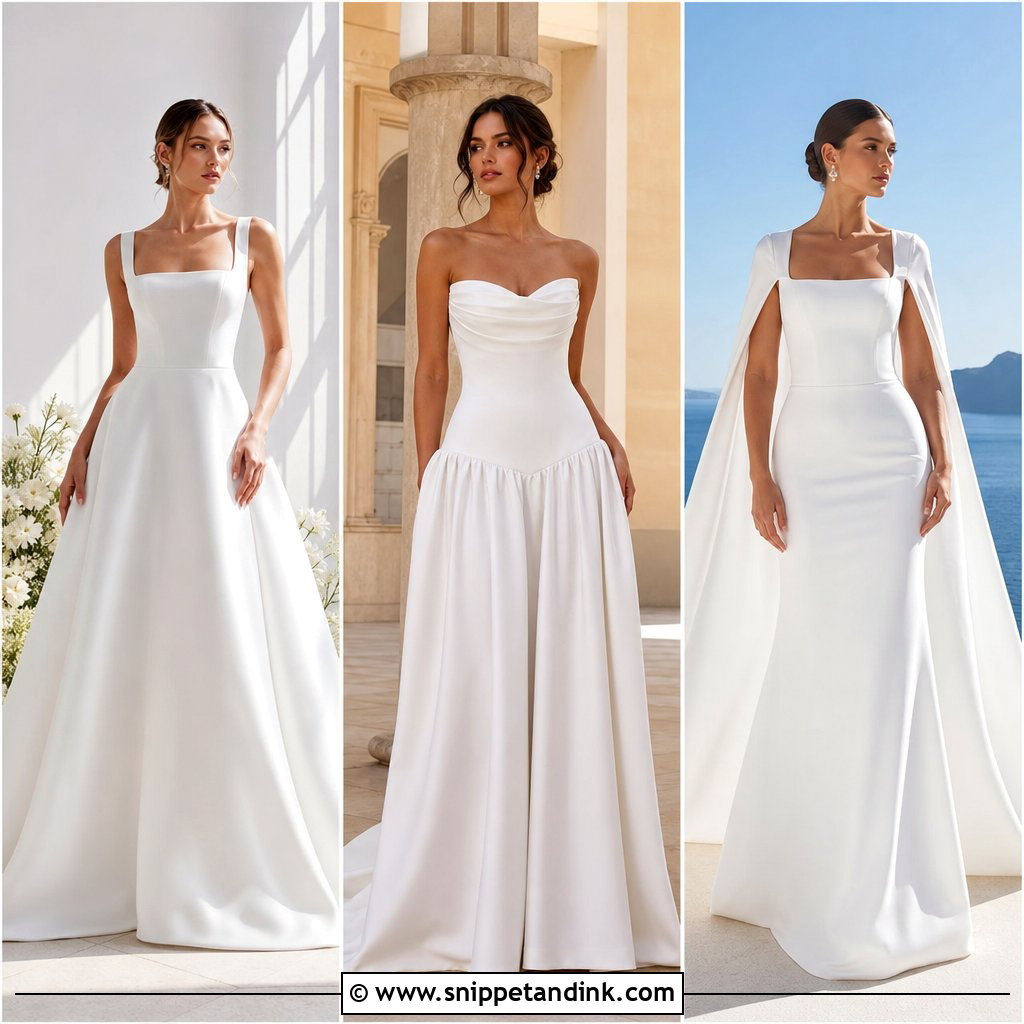
Opacity is the first thing I check on a white gown, because thin white crepe shows every seam allowance and undergarment under flash. Choose opaque crepe, mikado or heavyweight satin with a square neckline, fitted bodice and straight skirt, so the construction itself is the design. White pointed heels, silver studs and a slim rectangular clutch keep it sharp. A bride can add a sheer veil with a raw edge; for a non-bridal event, a metallic bag or contrasting earrings moves it away from wedding white. A neat bun keeps the neckline in view. Courthouse weddings, rehearsal dinners and bright modern venues suit it.
7. Burgundy Draped Gown
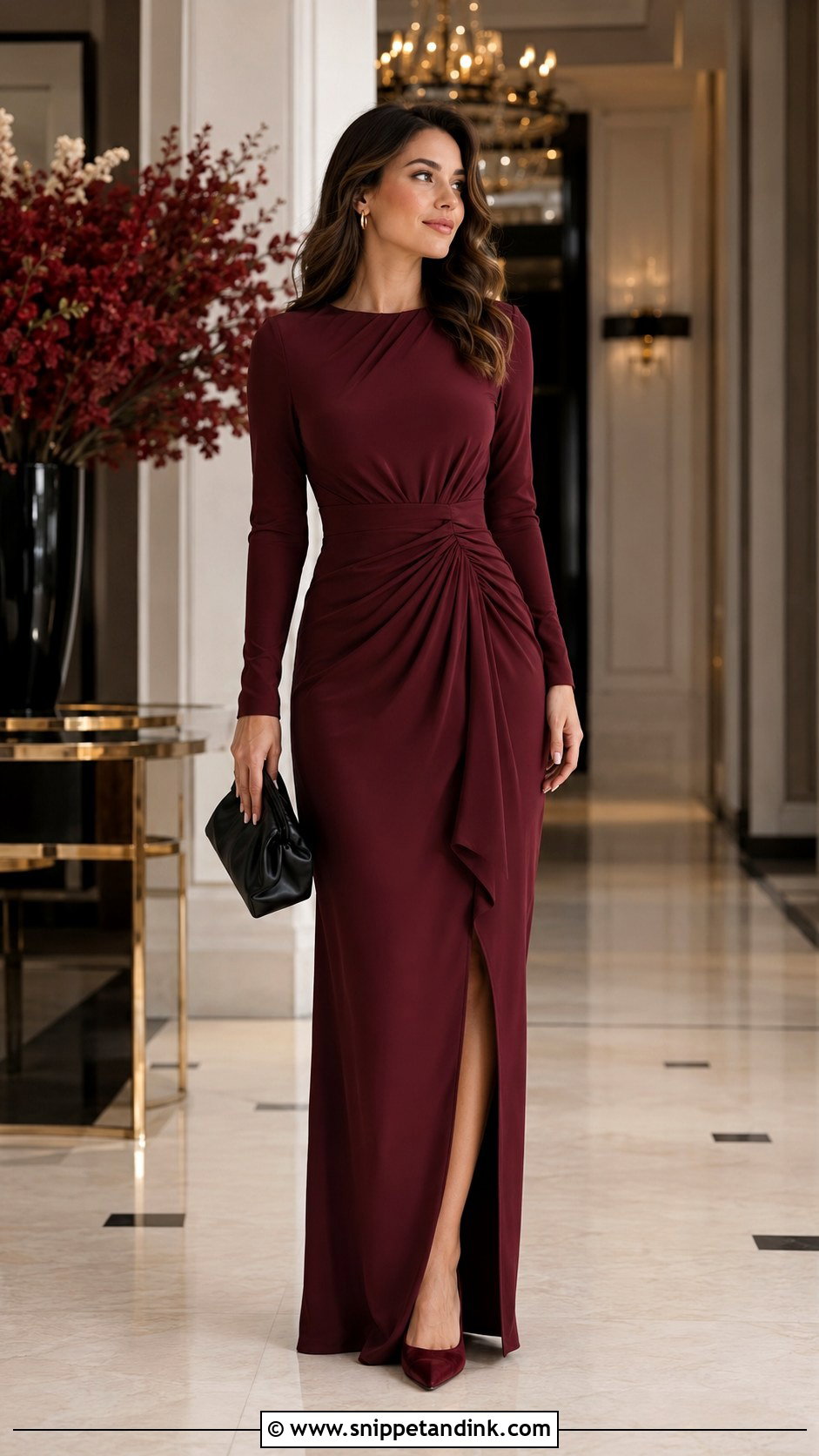
Draping is where cheaper gowns give themselves away. The gathers should be stitched to a lining underneath, or they slide and pucker by the end of the night. On deep burgundy, a little soft gathering at the waist or hip with a clean floor-length hem is all you need, plus a modest side slit for walking. Dark burgundy pumps, a black satin clutch and small gold hoops suit the depth of the color. Brushed waves soften it and a low chignon makes it formal. Go for a muted berry lip rather than matching the dress exactly, which tends to look like costume. Fall galas, winter receptions and classic hotel ballrooms are its setting.
8. Blush Off Shoulder Gown
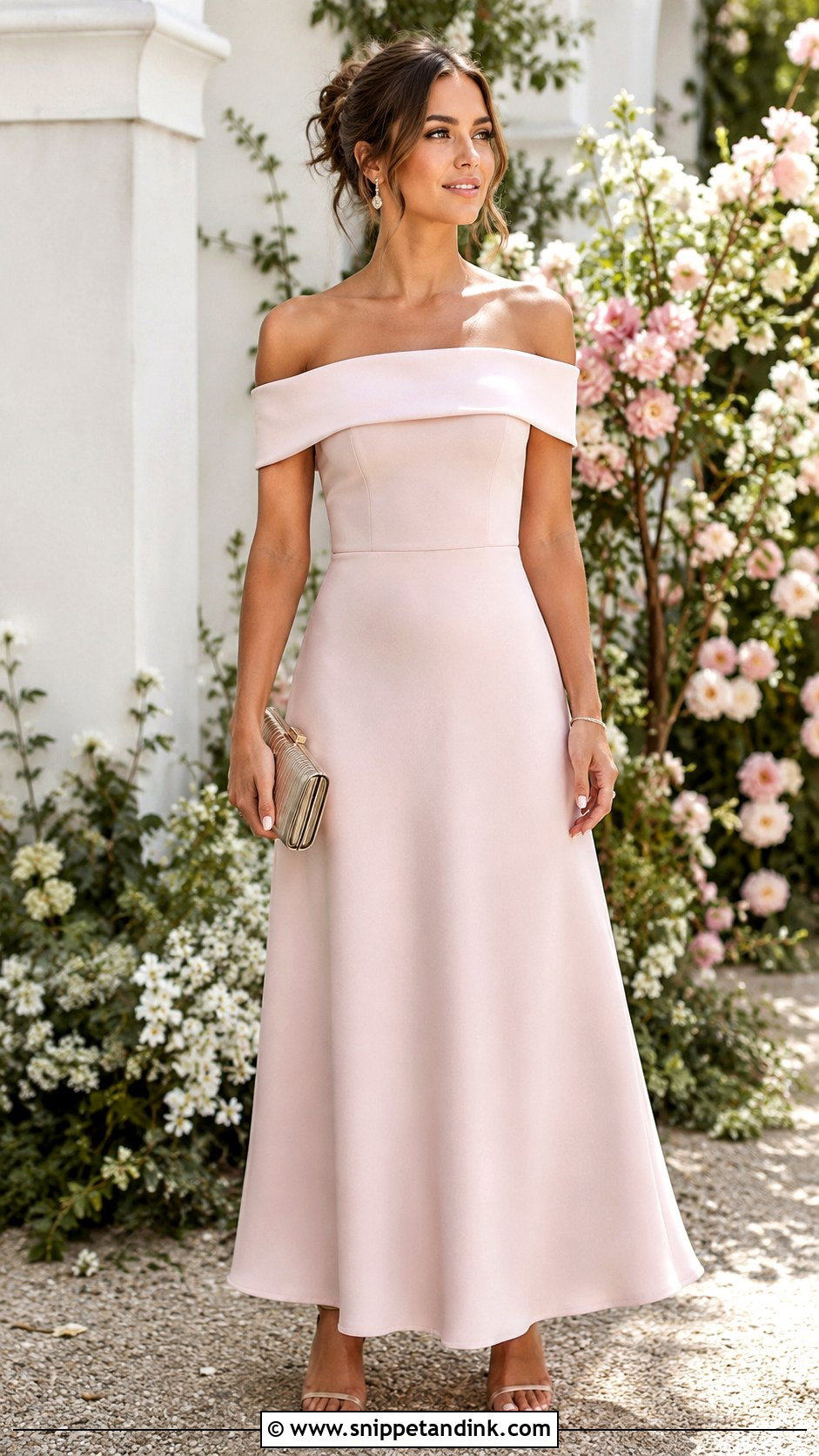
Blush sits close to many skin tones, so I like a pale metallic accent somewhere to stop the outfit blending into the wearer. Look for a smooth fold-over neckline, a supportive bodice and a straight or lightly flared skirt with no lace. Neutral sandals, a pale metallic clutch and delicate drops go with it, and the neck stays bare so nothing competes with the shoulder line. A loose low bun or controlled side-parted waves, luminous skin and a muted pink lip keep it gentle. Off-shoulder bodices limit how high you can lift your arms, so try a hug and a reach in the fitting room. Spring parties, garden events and bridesmaid lineups suit it.
9. Chocolate Halter Neck Gown
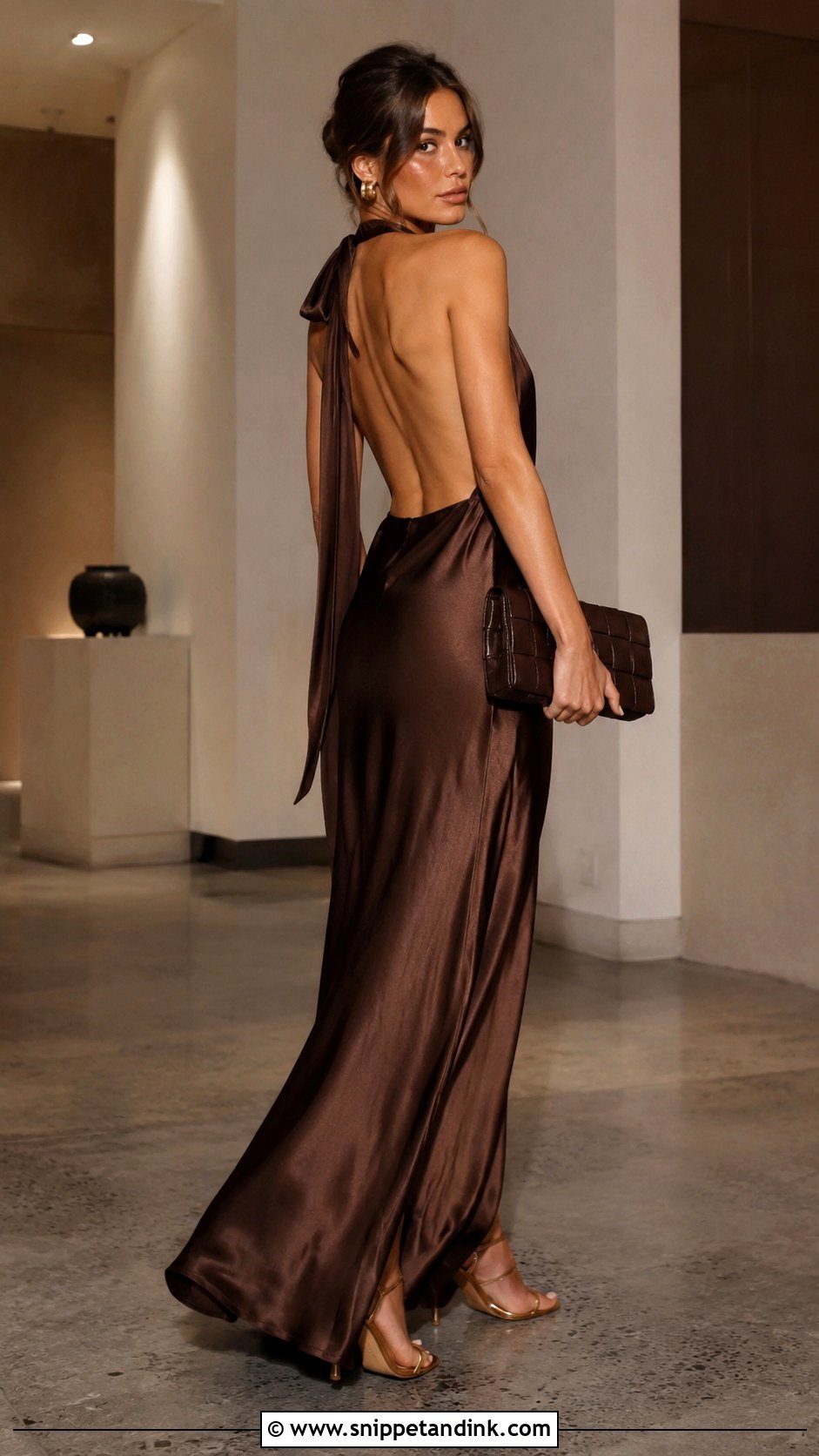
Brown is kinder than black on warm and olive skin, and in satin it reads rich rather than flat. Chocolate gives a halter neck gown that depth. Pick satin, crepe or fluid jersey with a clean high neck and an open or partly open back, following the body through the waist and then falling straight. Bronze sandals, a structured brown clutch and gold cuff earrings keep it tonal; skip the necklace, as the halter already frames the shoulders. A high bun or smooth twist shows the back. Wear it for an hour at home first to make sure the strap doesn’t drag at your neck. Autumn events and earthy-palette receptions are its natural home.
10. Red Cape Sleeve Gown
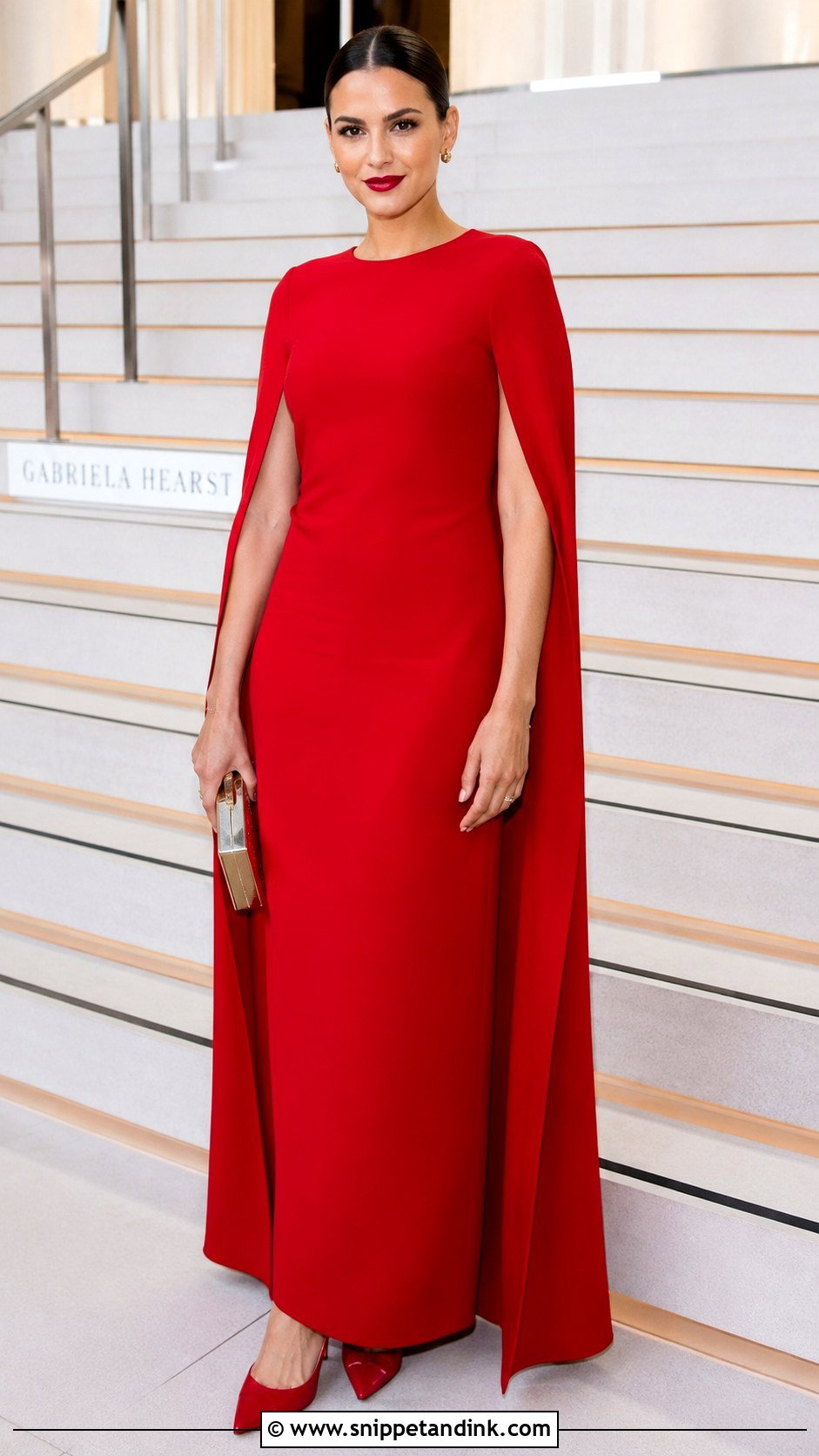
Red with a cape sleeve is already two statements, so everything else has to step back. A clean sheath or column with a cape panel falling smoothly from the shoulders, a plain hem and no ruffles, sequins or cutouts is the version I’d pick. Pointed red or nude pumps keep the vertical line, and a small gold box clutch and stud earrings let the cape lead. A sleek ponytail looks modern, a low bun more classic, with neutral makeup and a softly defined lip. Cape panels catch on chair backs, so lift the panel behind you as you sit. Galas, award nights and evening receptions all suit it.
11. Silver Minimalist Sheath Gown
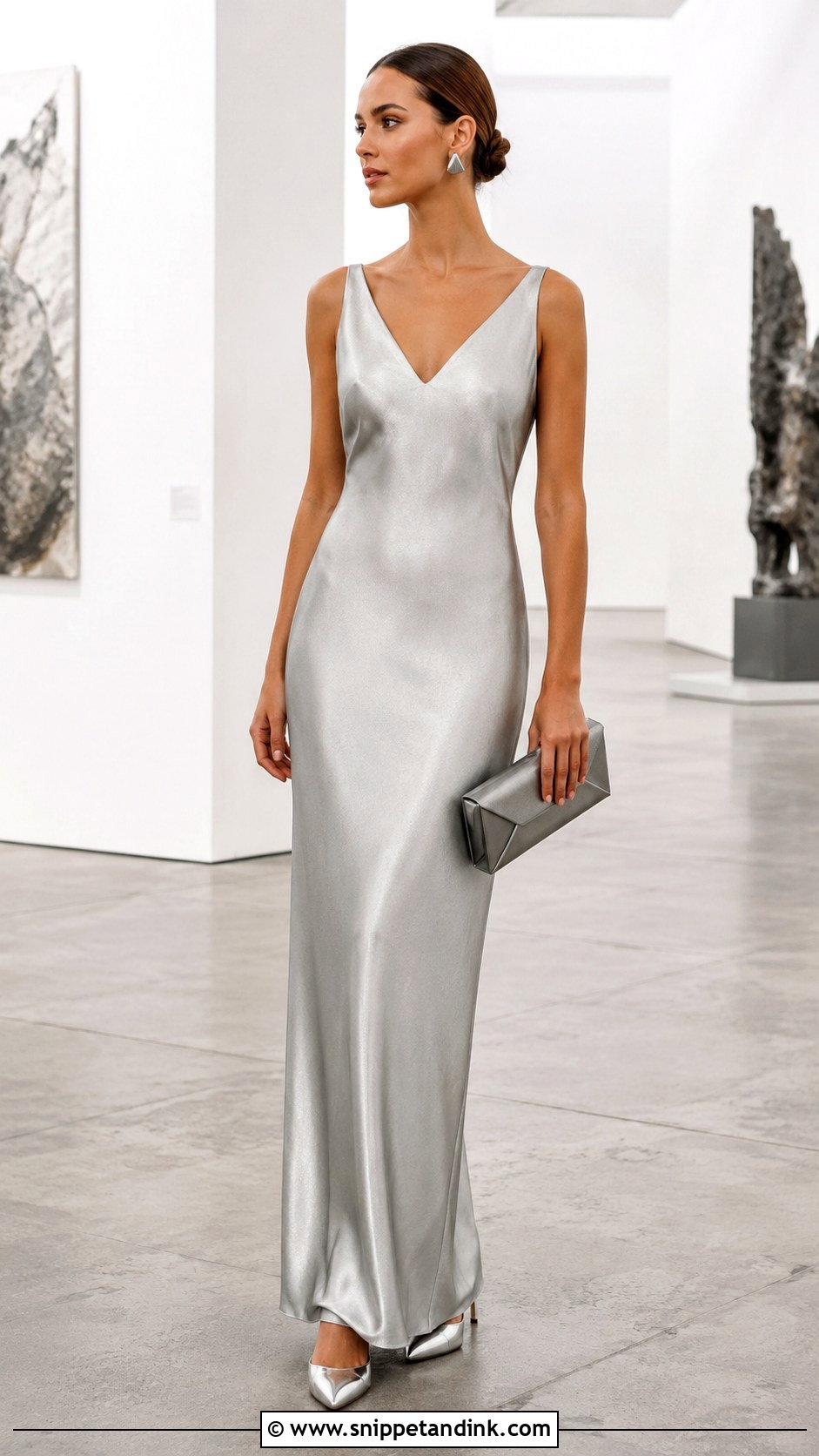
Silver reads clean in smooth fabric and cheap in heavy glitter. A minimalist sheath gown in matte satin, metallic crepe or softly reflective jersey, with a straight neckline or narrow V and a subtle back slit, gives the shine without the costume. Silver slingbacks, a white or gray clutch and geometric studs are enough; jeweled accessories only fight the fabric for light. Metallic jersey clings, so a smooth slip underneath makes a real difference. Sleek straight hair or a center-parted bun suits its contemporary mood at galas, graduation events and gallery or hotel evenings.
12. Blue Chiffon Gown
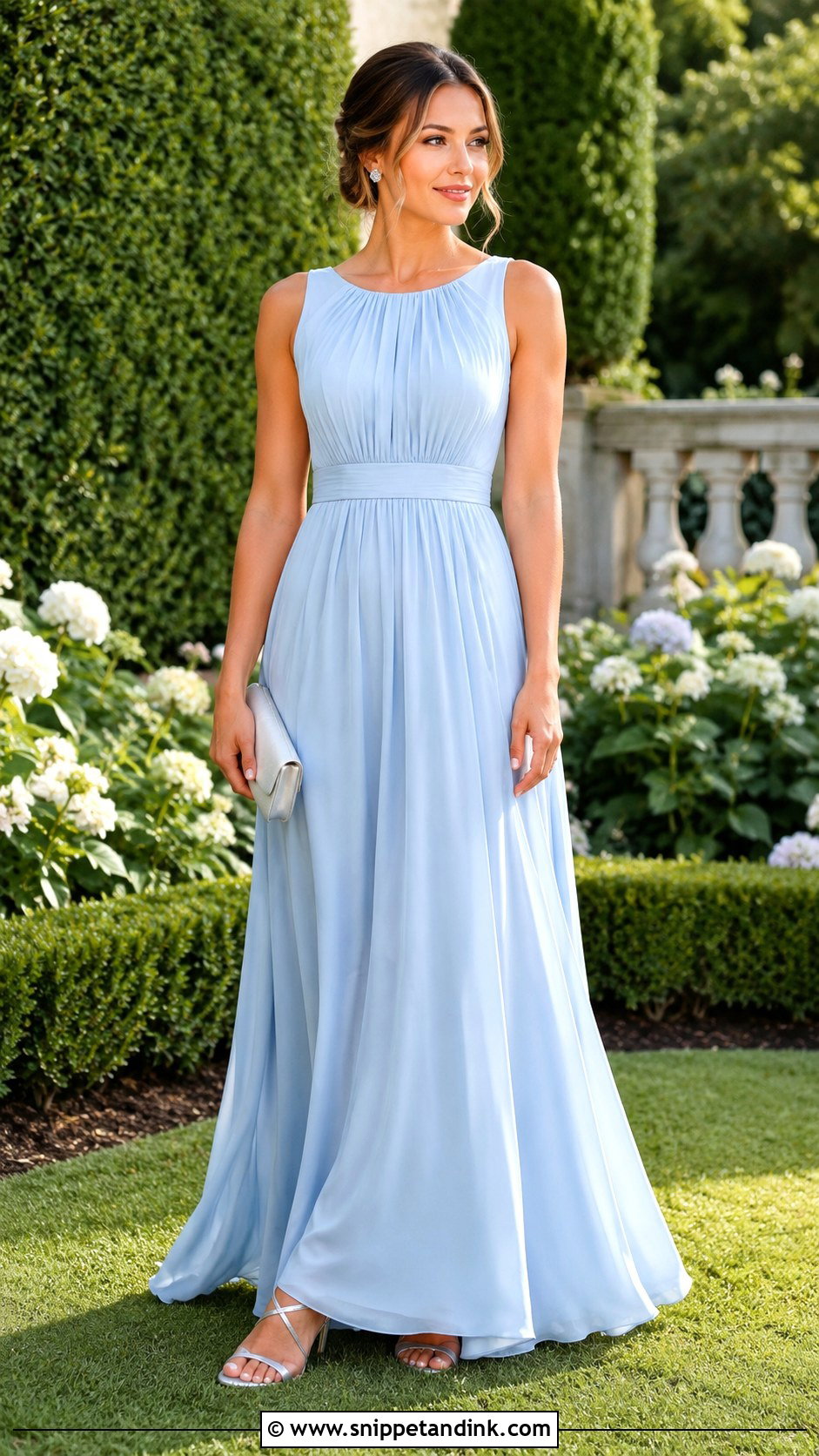
Chiffon is the most forgiving fabric here for warm weather and the least forgiving for snags, so keep chunky bracelets and textured clutches away from it. Look for a softly gathered bodice, a defined waistband and a floor-length skirt with its own simple lining, since unlined chiffon turns see-through in sunlight. Shades such as powder blue, slate, or muted cornflower coordinate easily. Silver sandals, a small satin clutch and crystal studs suit it, and a matching chiffon wrap adds coverage without stopping the movement. Soft waves or a relaxed low bun, depending on formality, and it’s ready for spring and summer daytime events or a bridesmaid party where a dark gown would feel heavy.
13. Olive High Neck Gown
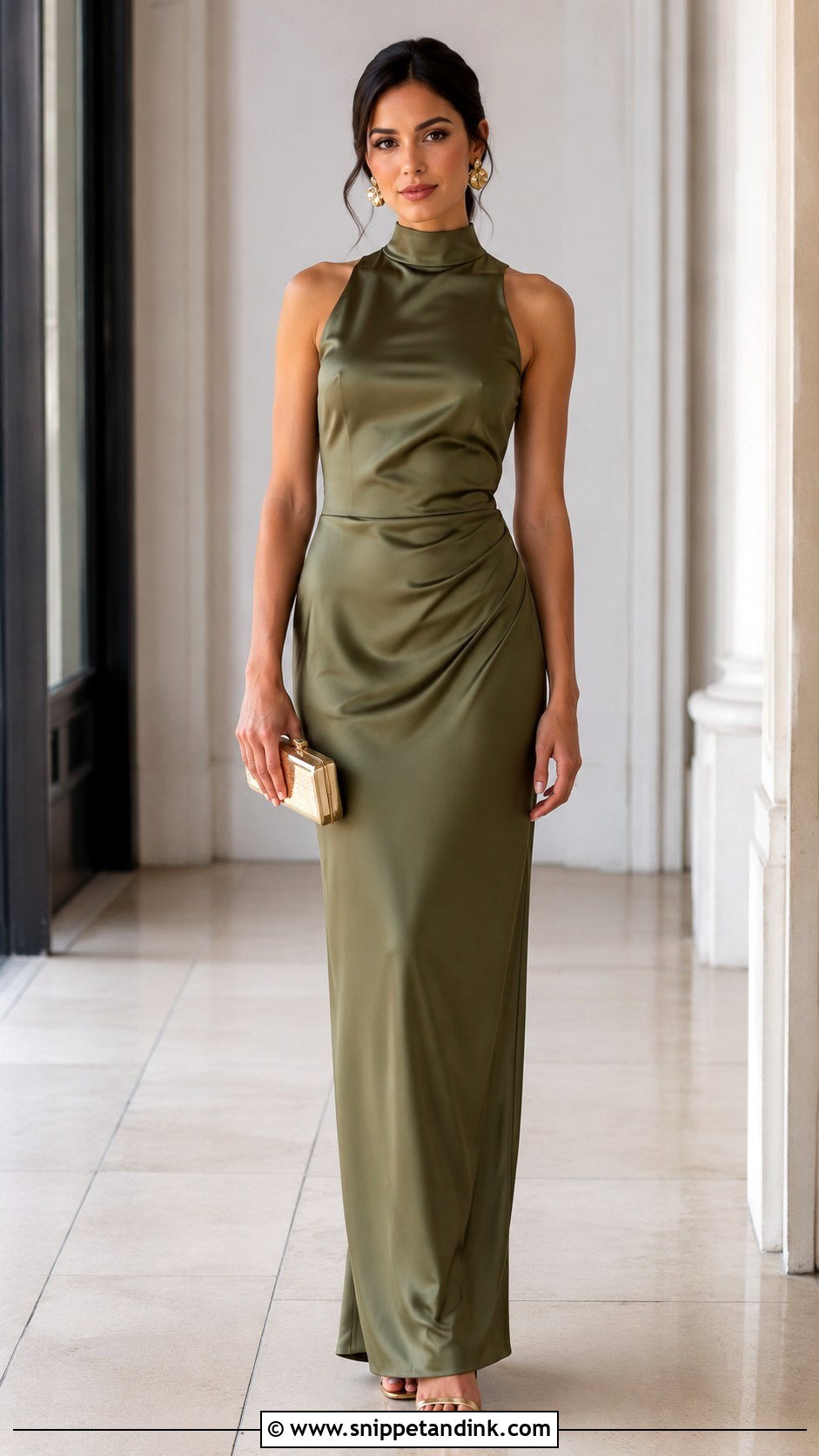
Olive is the color I suggest to someone tired of jewel tones but not ready for beige, and it shifts a lot with fabric: satin pushes it toward bronze, crepe toward khaki. Pick a sleeveless column with a clean high neck and subtle waist shaping. Gold heels and a slim metallic clutch warm the earthy tone. Small hoops or sculptural earrings are fine, but the neckline stays bare. A low ponytail emphasizes the long line, with soft bronze eyes and a neutral lip. It crosses seasons easily and suits formal dinners, cultural events and evening weddings in the city or outdoors.
14. Plum Fit And Flare Gown
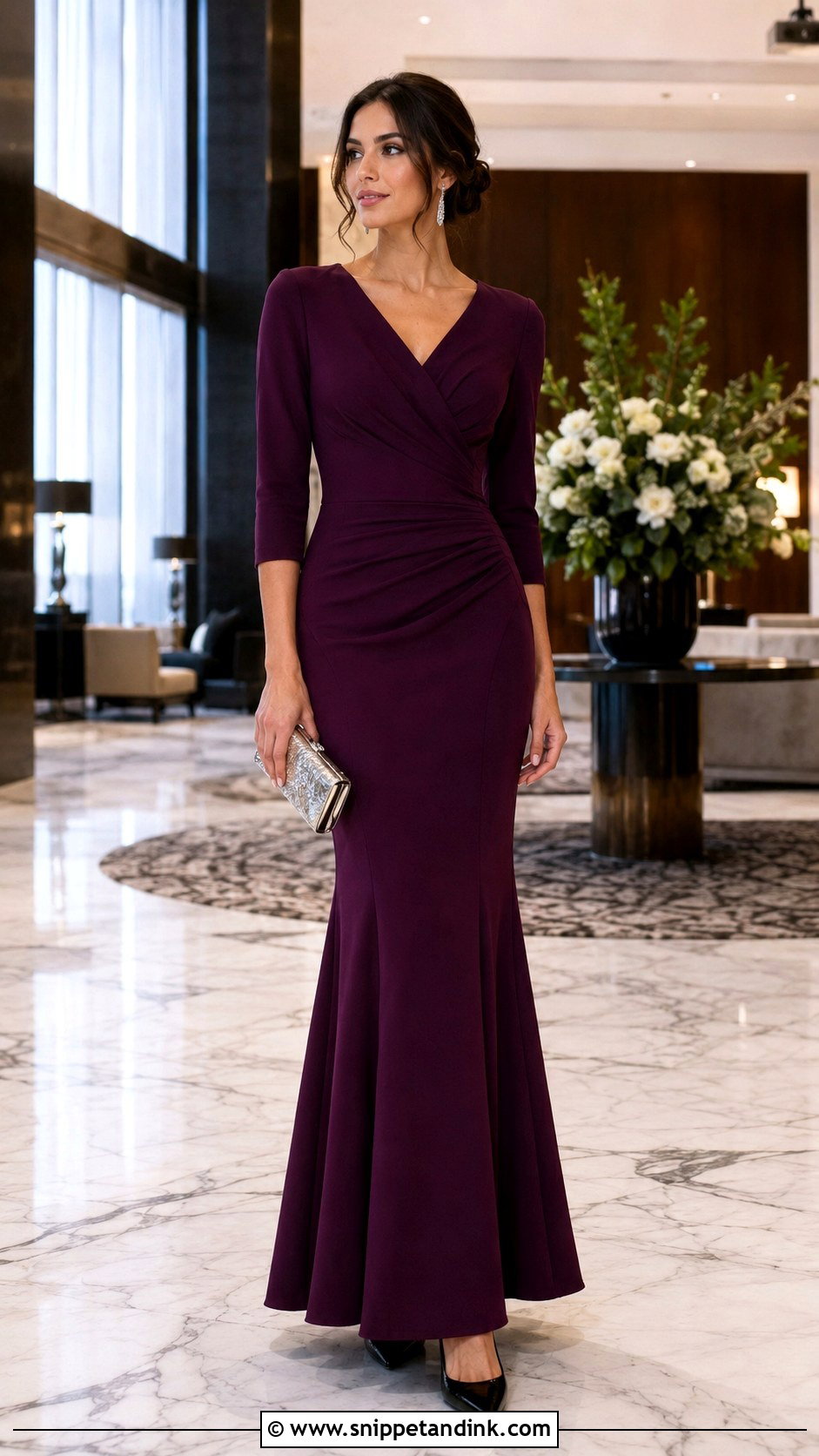
A plum fit-and-flare looks simple, yet the seat and thighs need careful tailoring so the skirt opens from the right point. The gown should follow the torso and hips and widen gently below the thigh or knee, and crepe gives that structure without much shine. Black pointed pumps, a small plum or metallic clutch and narrow silver earrings complete it. A clean side part and low bun suit the sculpted line; brushed waves tucked behind one ear are the softer route. Hold back on extras so the purple leads, and wear it to fall and winter weddings, receptions and galas.
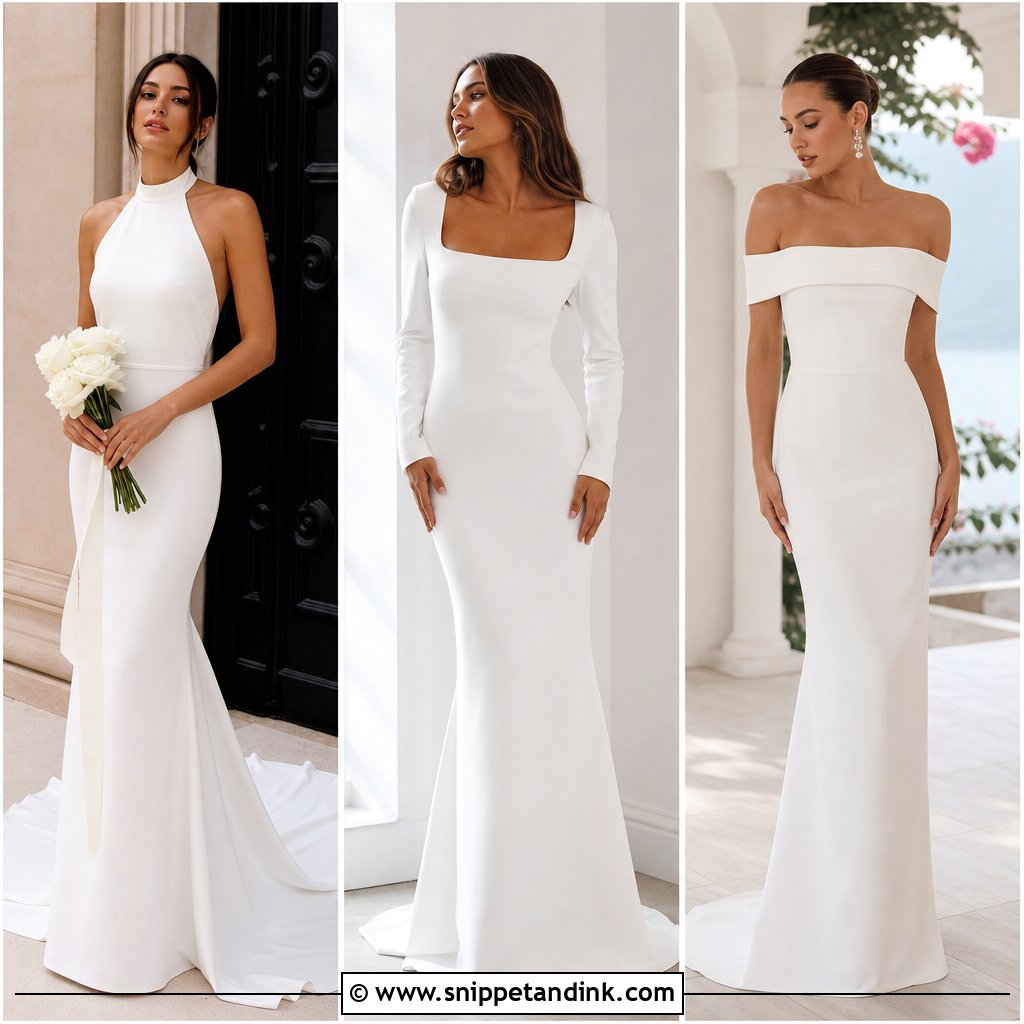

15. Cream Minimalist Bridal Gown
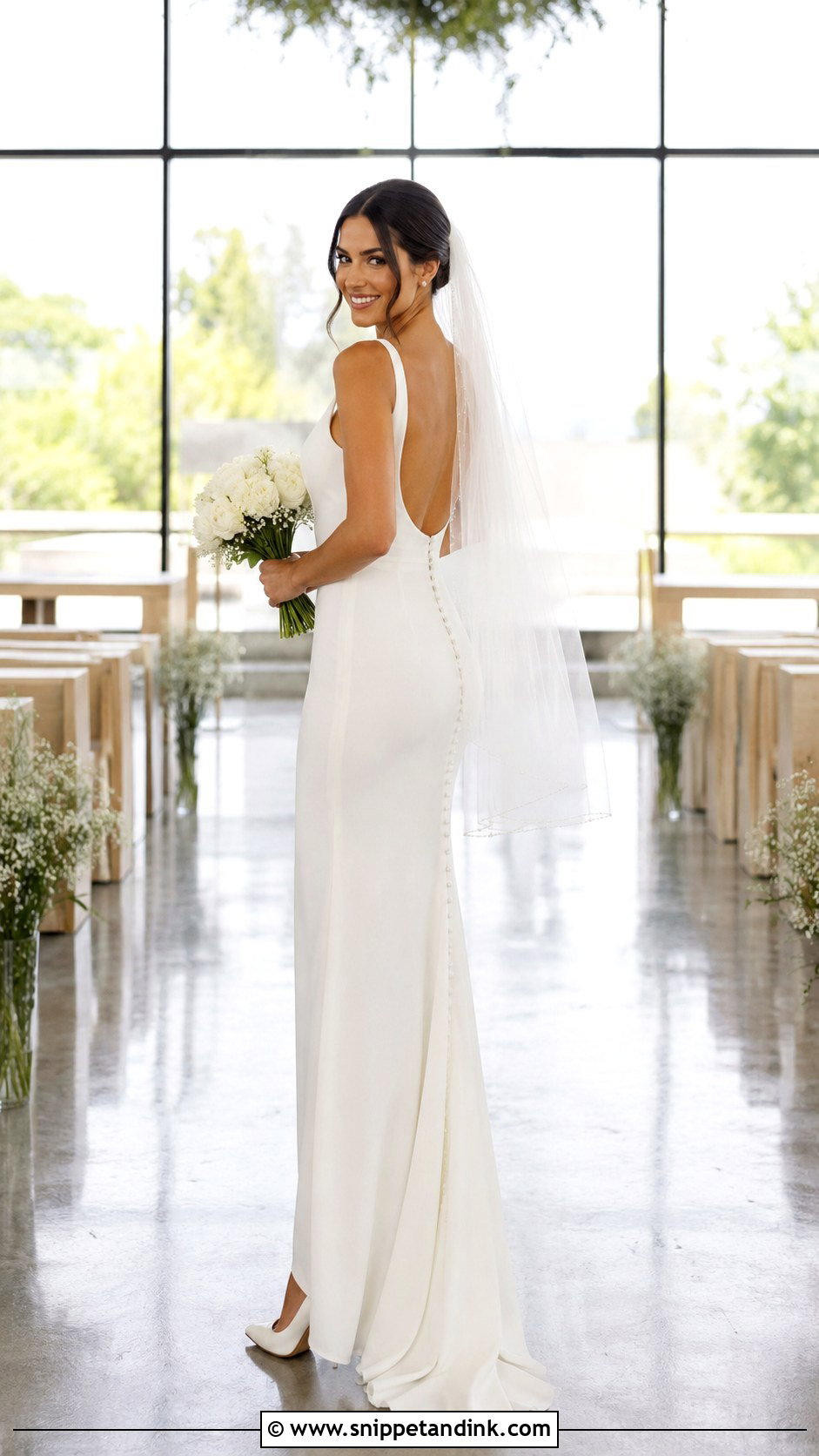
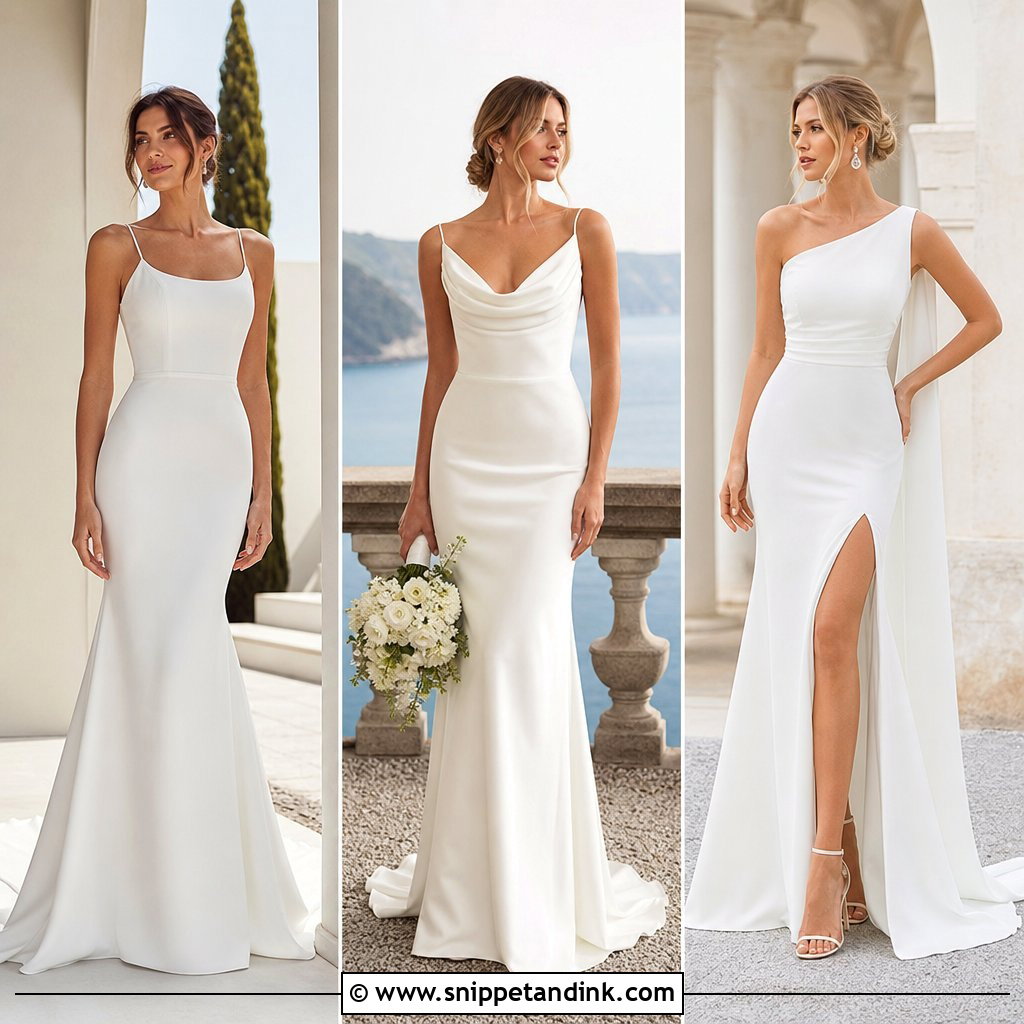
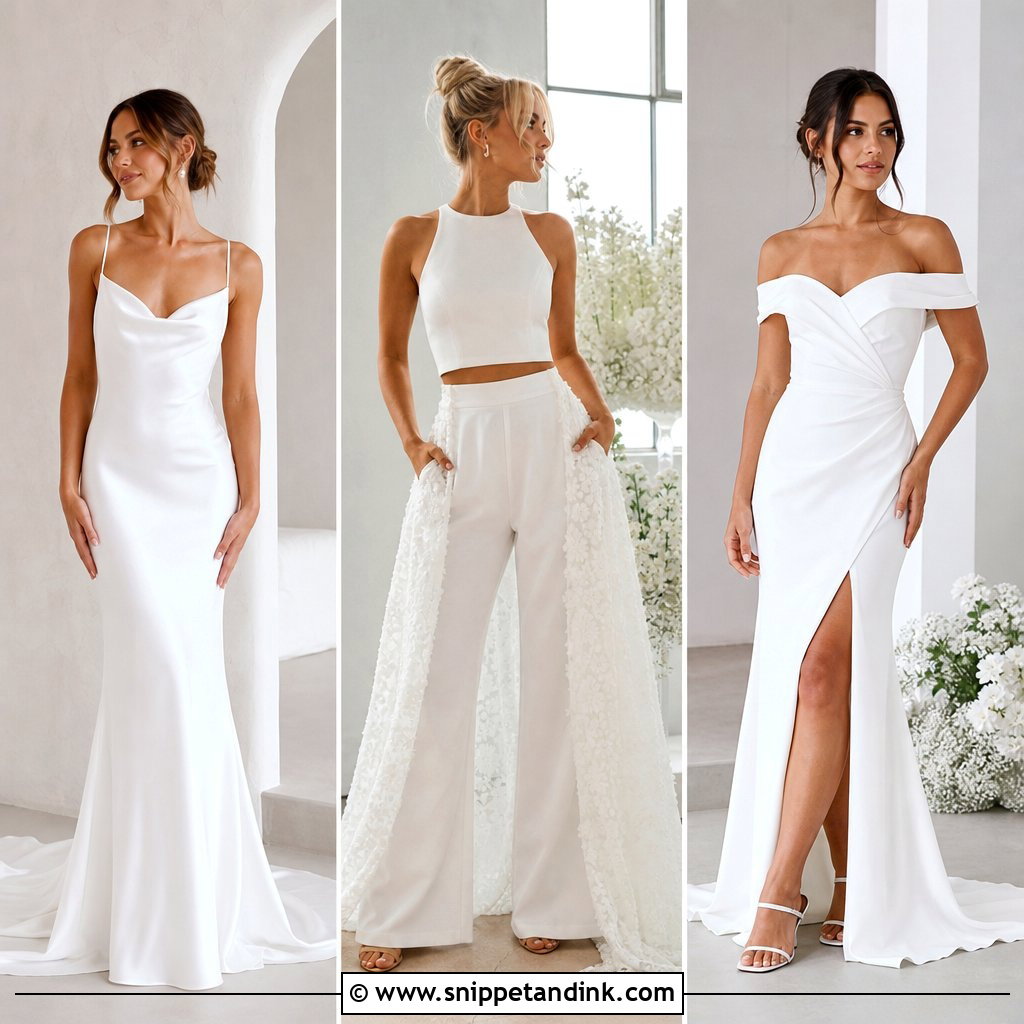
Cream is often kinder than bright white for brides with warm or olive skin, and it photographs softer. A smooth crepe column, satin A-line or gently fitted sheath with a scoop neck and low back is all the dress you need. Ivory pumps, pearl studs, a simple fingertip veil and a small bouquet of one flower variety keep the theme clean. A sleek chignon or controlled waves, and makeup that is polished but still looks like you. Book alterations early: a plain gown has no decoration to distract from a loose waist or a hem that pools. Courthouse ceremonies, modern venues, small weddings and destination events suit it.
16. Black And White Contrast Gown
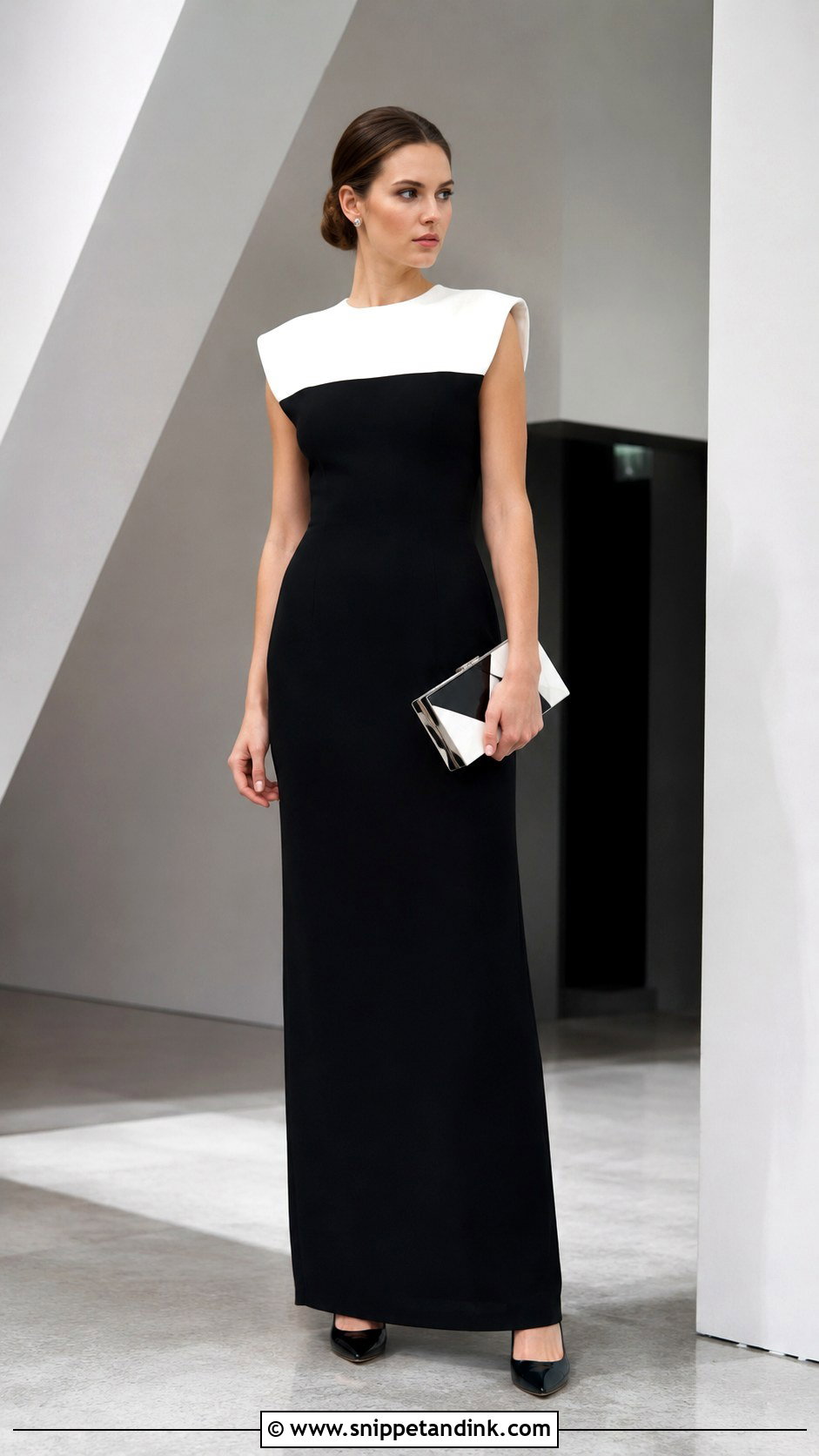
Color blocking only stays minimal when the blocks are large; small bits of white scattered over black start to look busy. A black column with a white neckline, shoulder panel or narrow waist detail works, as does a white bodice over a long black skirt. Placement matters more than people think, because the white panel pulls the eye, so put it where you want attention. Black pointed heels, a structured monochrome clutch and silver studs go with a sharp low ponytail. Leave colorful accessories out entirely. Art events, award nights and polished work functions suit it.
17. Satin Empire Waist Gown
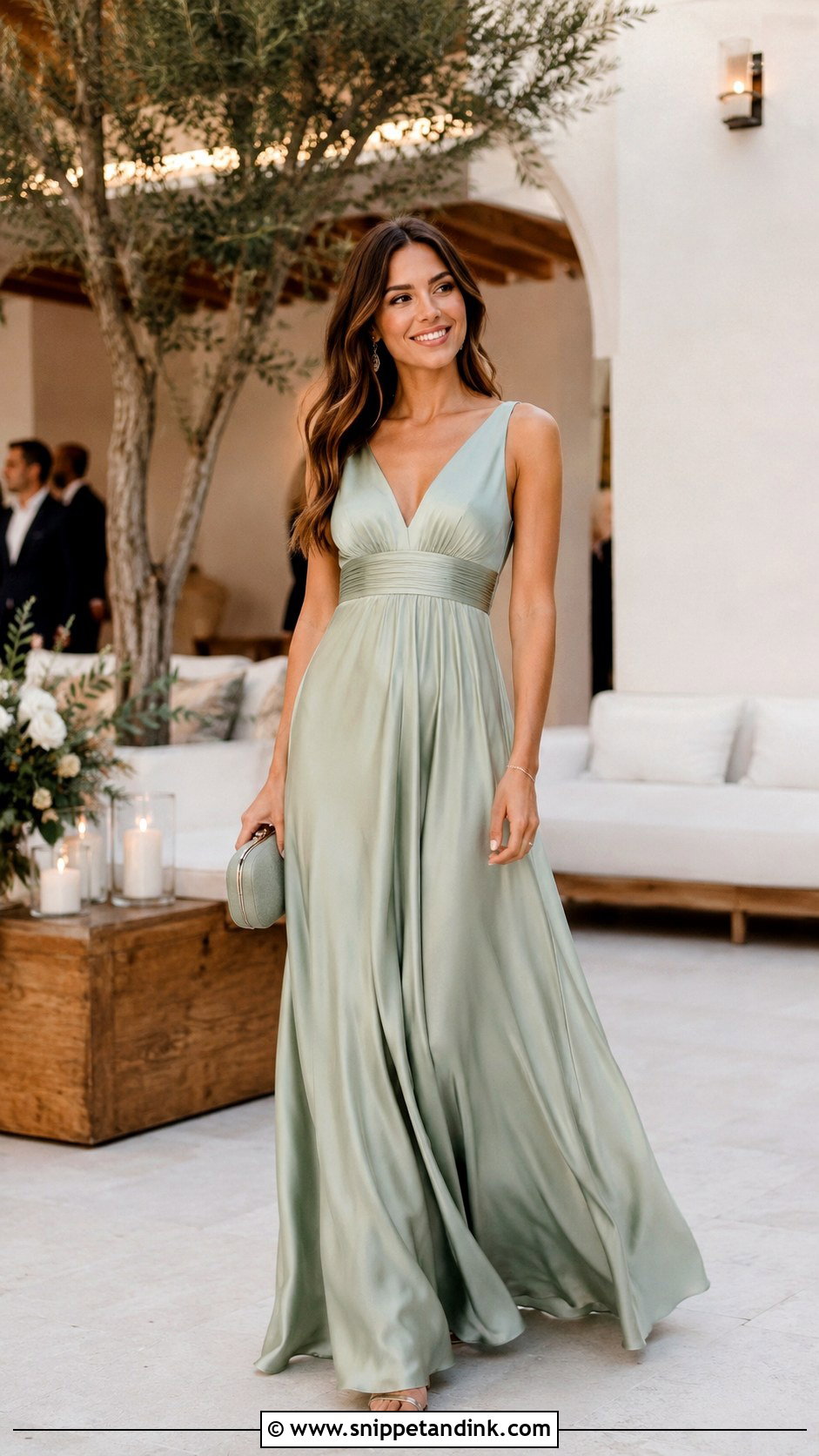
Long events with lots of sitting are where I steer clients toward a satin empire waist gown, because the seam sits just under the bust and nothing presses at the waist through a long dinner. Choose a clean scoop or V-neck and a fluid skirt that falls smoothly to the floor, in deep navy, soft taupe, sage or black. Slim heeled sandals, a compact satin clutch and delicate earrings, with a small pendant only if the neckline is open. Soft waves echo the flow; a low twist is more formal. It’s also the shape I’d suggest during pregnancy, since the skirt leaves room through the middle.
18. Asymmetric Pleated Gown
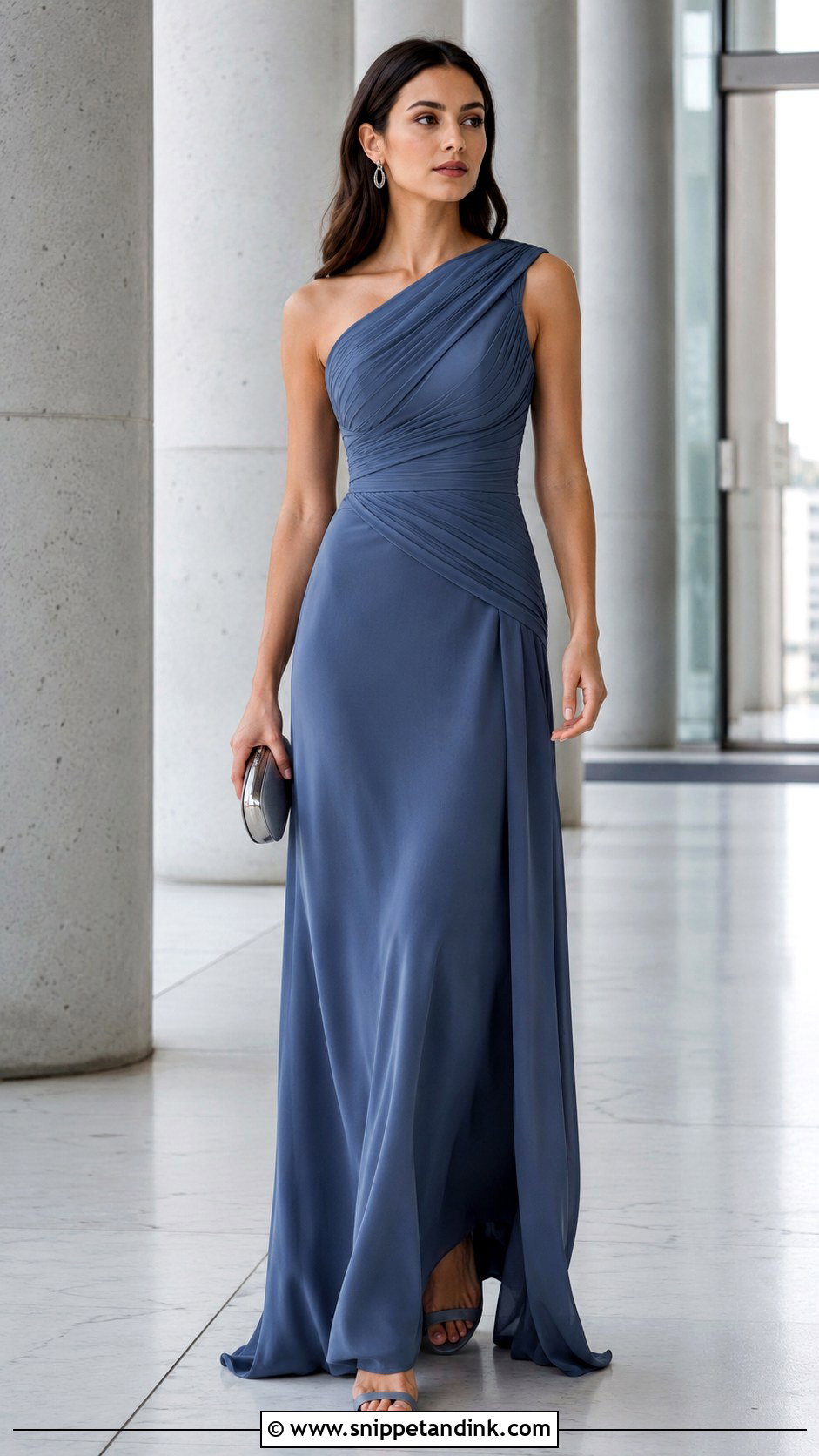
Pleats are a single design idea, and a gown that piles heavy beading, oversized bows, or multiple cutouts on top of them loses the point. Choose diagonal pleats across the bodice or waist over a smooth floor-length skirt, in a muted stone, slate blue, black or dusty rose. Check that the pleats are stitched down at the seam; loose pleats open up and flatten after hours of sitting. Tonal heels, a narrow clutch and simple metal earrings work, with hair swept to one side to follow the diagonal. Contemporary weddings, gallery events and award evenings suit it.
19. Strapless Mikado Gown
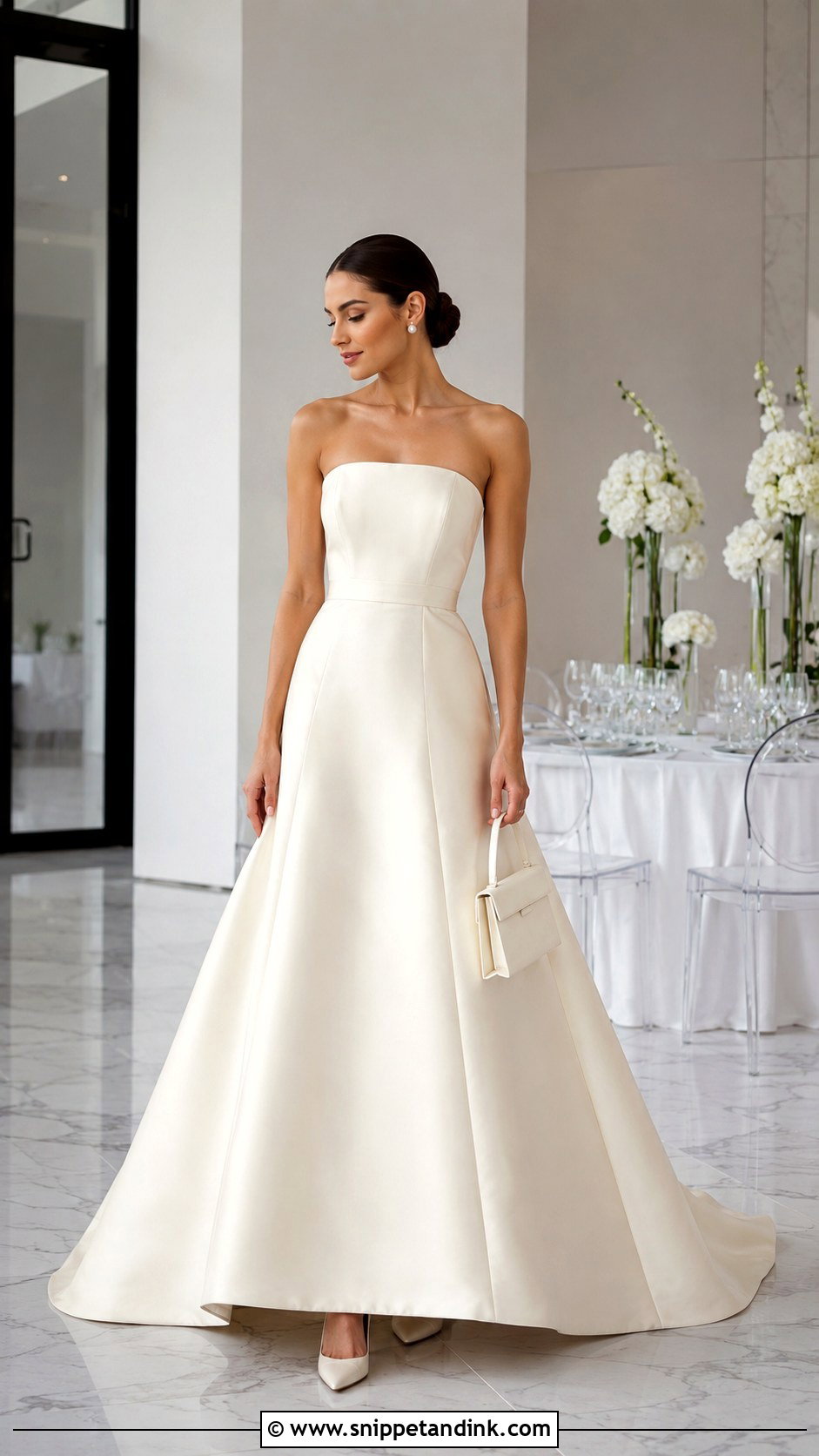
Mikado holds a shape so firmly that the bodice can’t hide any slack: if the top edge stands away from your body, it needs taking in. A straight or softly curved neckline, a fitted bodice and a controlled A-line skirt are the classic shape, and hidden boning with a waist stay keeps it up all evening. Pointed pumps, a small top-handle bag and one pair of pearl or metal earrings finish it. A short necklace can work, though bare collarbones look more current. A smooth bun shows the neckline and shoulders. It works as well for a minimalist bride as for a guest at a black-tie gala.
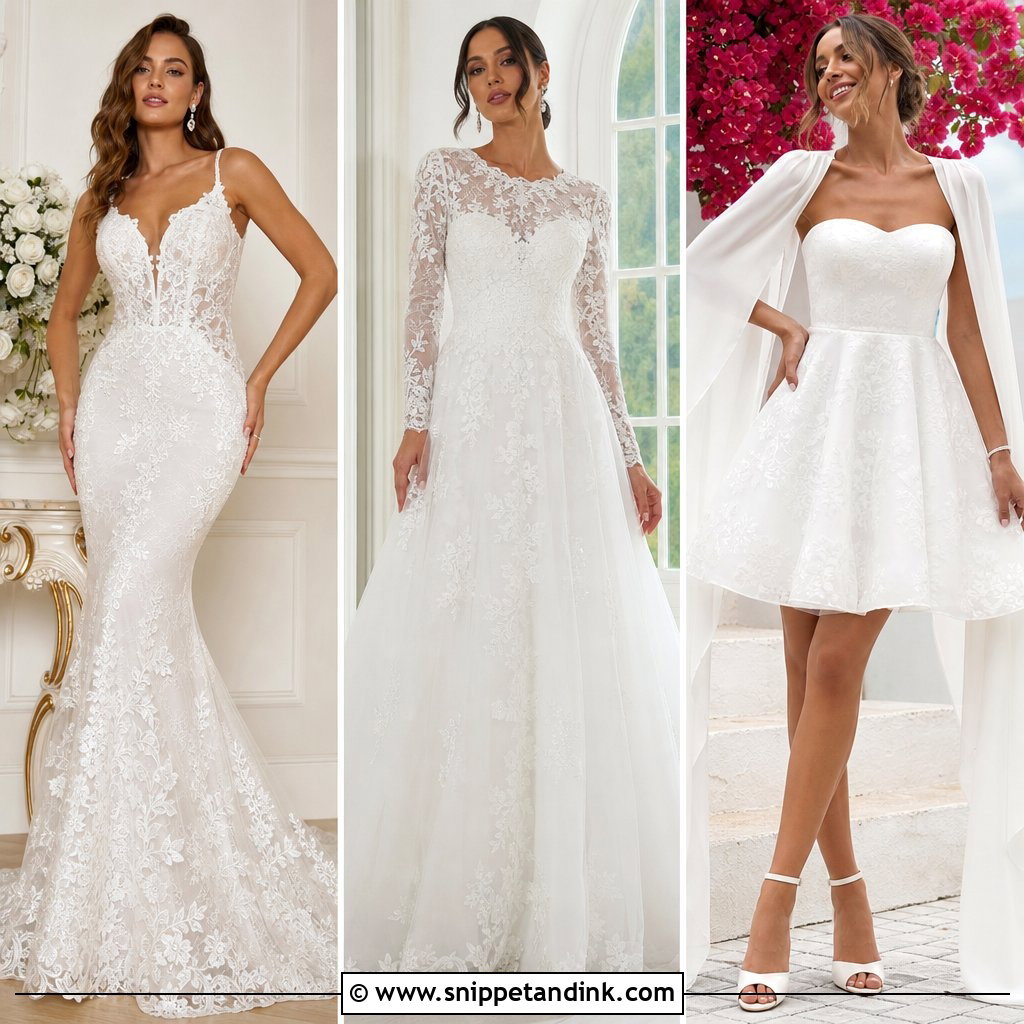
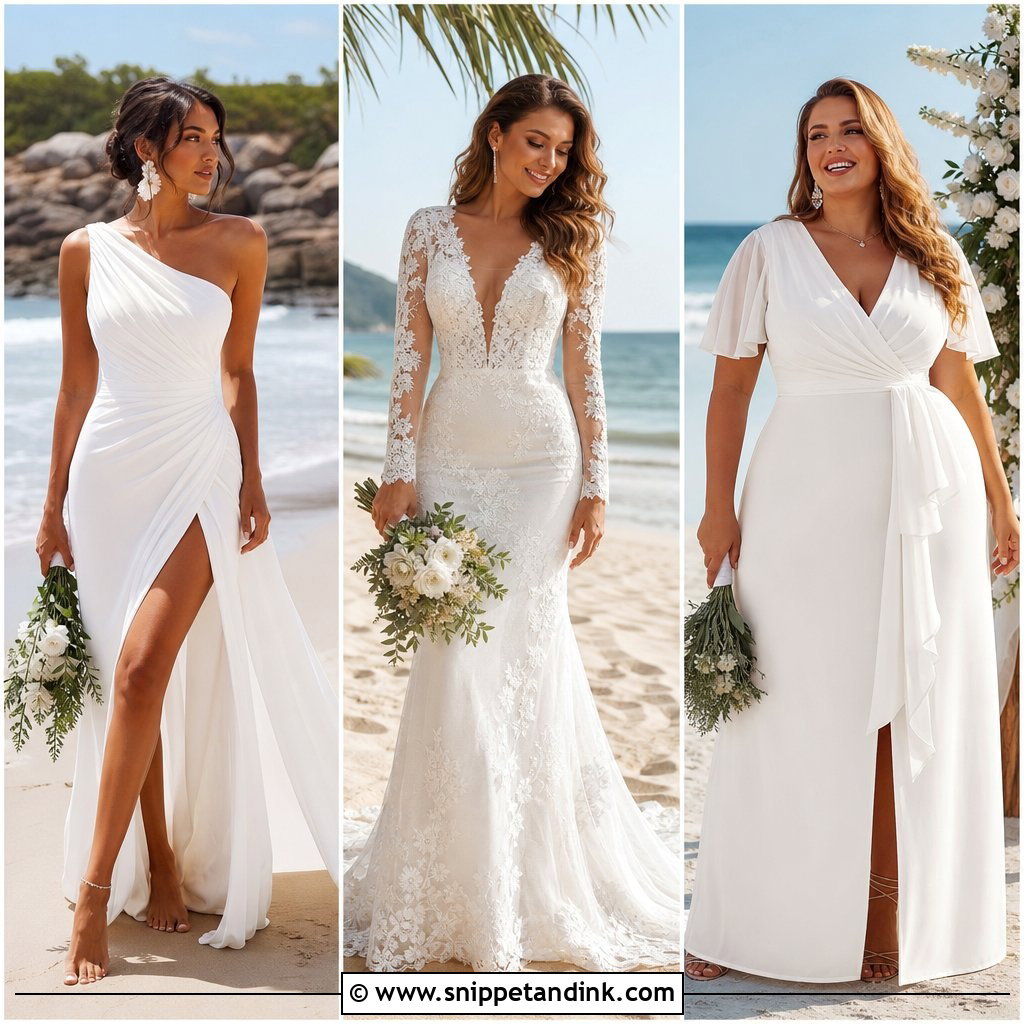

20. Modest High Neck Gown
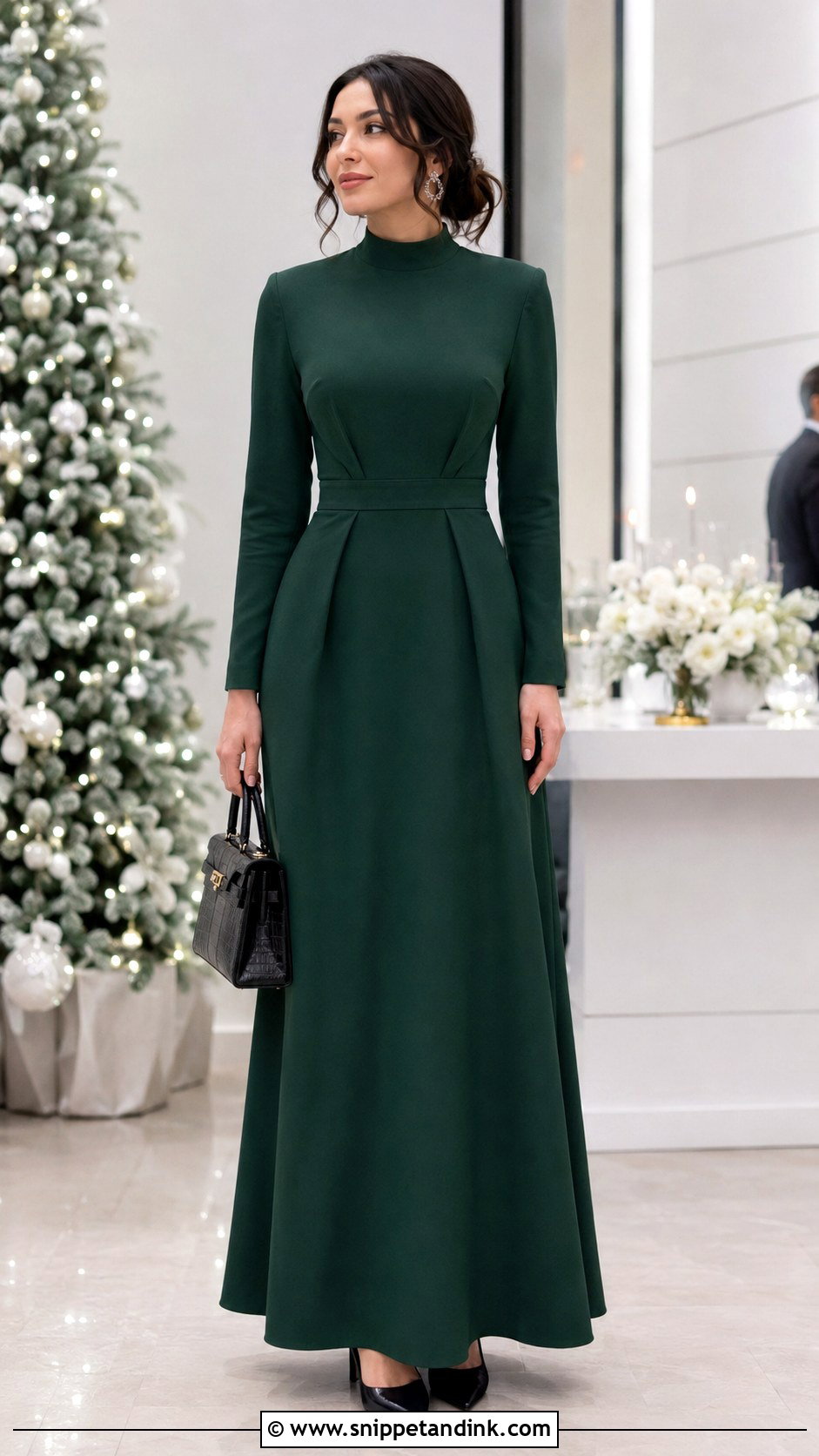
Coverage looks heavy when the fabric is thick and the cut is loose. It looks streamlined when the fabric drapes and the waist is defined, so choose matte crepe or fluid jersey with long fitted sleeves, a clear waist and a gently flared floor-length skirt, with a clean neckline free of lace, beading or a bow. Pointed closed-toe heels, a small structured bag and earrings that sit clear of the collar so they don’t scrape it. A smooth low bun balances the face. Navy, forest green, burgundy, taupe and black all work for professional ceremonies, family celebrations and winter events, and jersey is the easiest fabric here to pack and wear for hours.
Can a Guest Wear the White, Cream or Champagne Looks?
Several gowns here are pale enough to be mistaken for bridal from across a room, and it’s the question I hear most from guests. Here is how I answer it.
White and cream: not at someone else’s wedding
As a guest, leave white, ivory and cream to the bride, even in the plainest cut. The white square neck and cream looks above belong to brides, bridal events and occasions that aren’t another person’s wedding. A few couples ask for an all-white dress code; in that case, follow the invitation.
Champagne, blush and silver: test them in daylight
These pale shades can photograph close to white, especially under flash or strong sun. Stand by a window and hold a sheet of white paper against the fabric. If the two look nearly the same, pick a deeper shade for the wedding and save the pale gown for another event.
Black and red depend on the family
Black is widely accepted at evening weddings in many Western settings, and red is fine at most. In some cultures, though, red is the bride’s color and black is tied to mourning, so if the wedding follows a tradition you don’t know well, ask the couple or a relative. Navy, emerald and burgundy are the safest strong colors on this list.
Where the Restraint Should Stop
Simplicity can still say a great deal about you, as long as the fabric is good, the fit is precise and the proportions are deliberate. Start with shoes that continue the gown’s line, add one or two accessories, then stop. Venue, season, dress code and how much coverage you need should settle the color and silhouette before you fall for anything. Above all, wear a gown you can walk, sit and eat in. Structured crepe, fluid satin, soft chiffon or crisp mikado can each carry a complete formal outfit from head to toe.
You'll Like These Ideas:
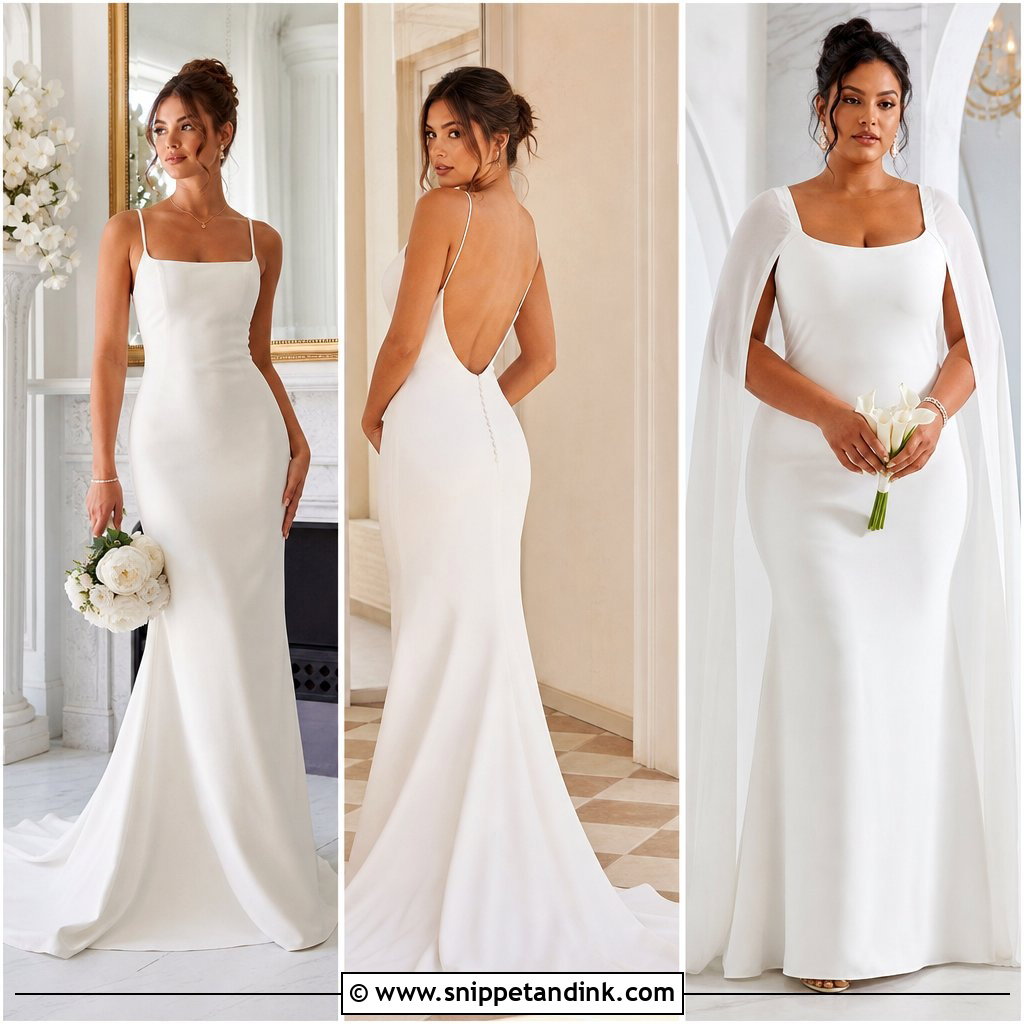
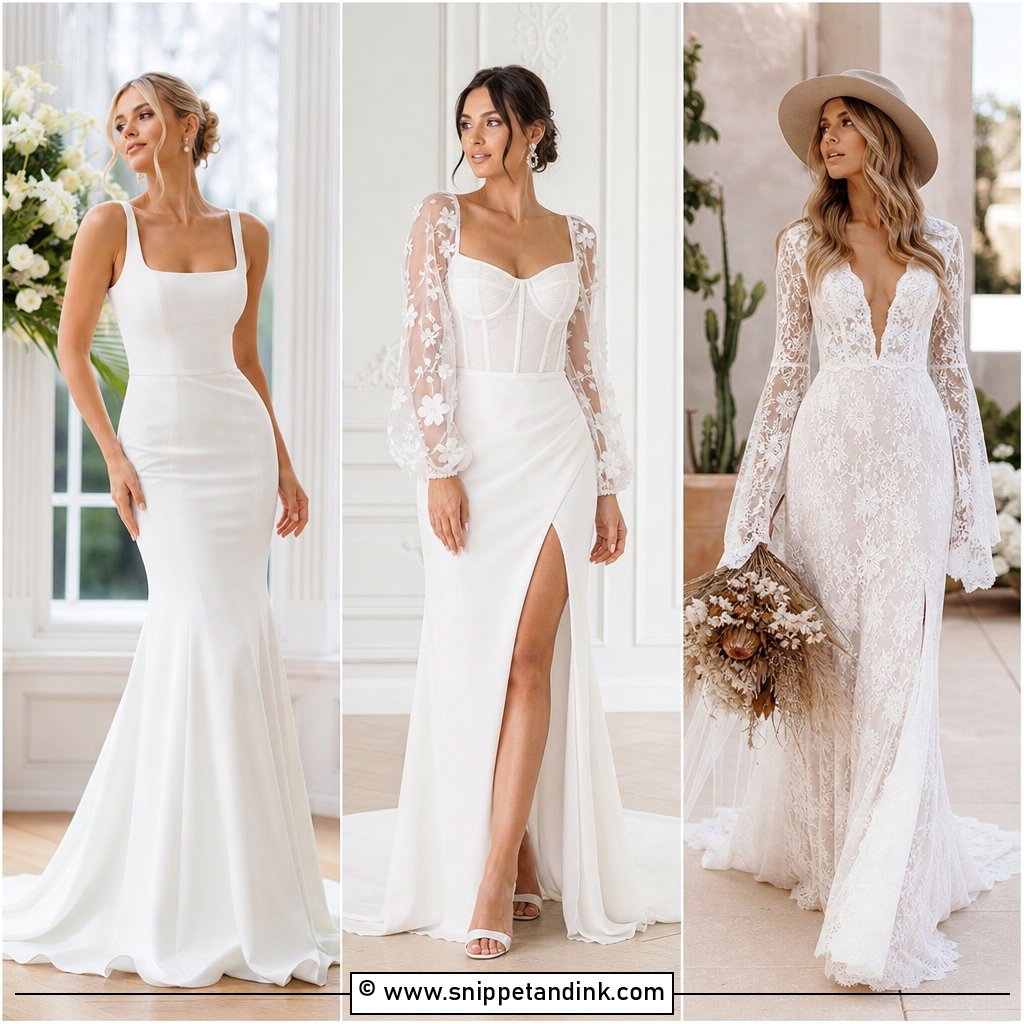
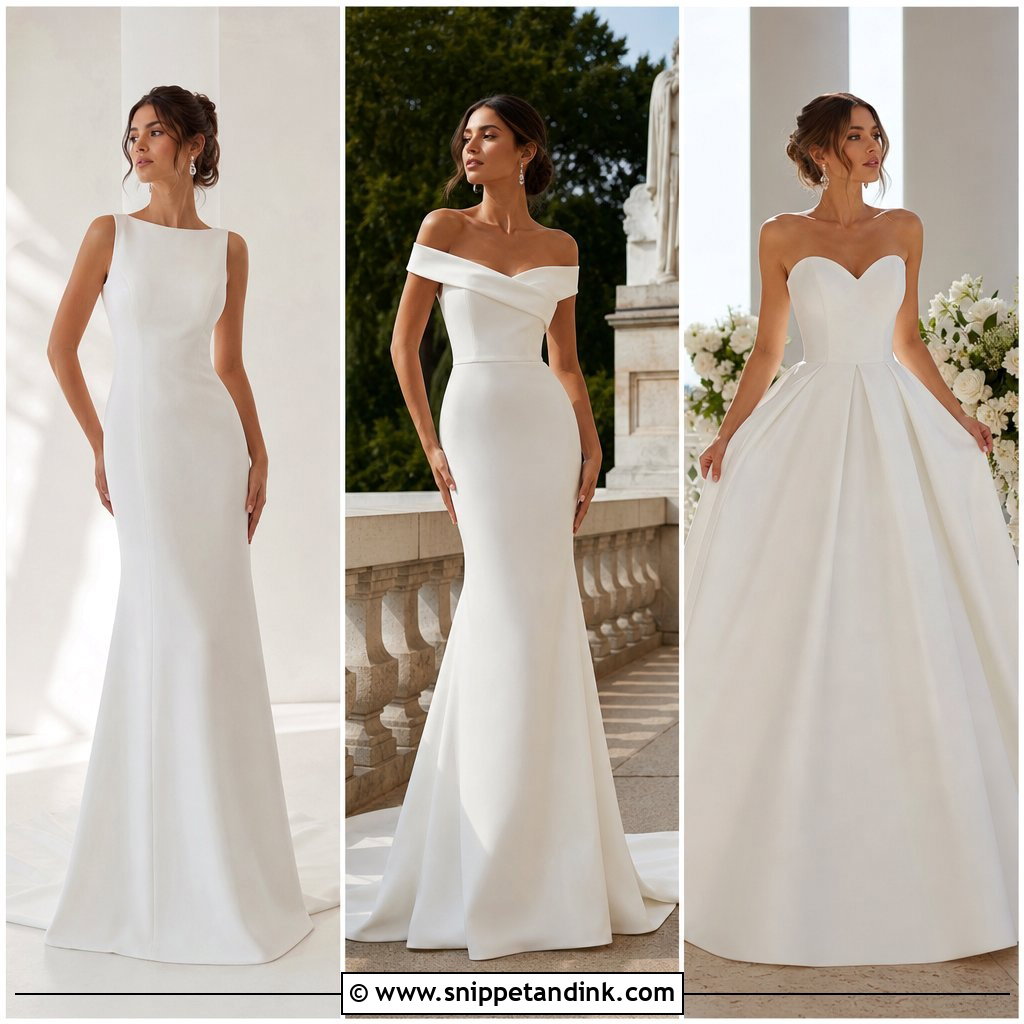


Leave a Reply