
A plain wedding gown can be just as memorable as a heavily decorated one, but only when the cut, fabric and fit are right, because there’s no lace to distract from a wrinkle or a pulled seam. The gowns below are all about clean lines and good materials, with accessories chosen to keep you in focus. They range from fluid satin slips to structured A-lines, and they suit ballrooms, gardens, lofts and city hall alike. Interest comes from proportion, a neckline, a texture or a striking back. Simple shoes, fine jewelry and a pared-back bouquet finish each look without leaving it bare.
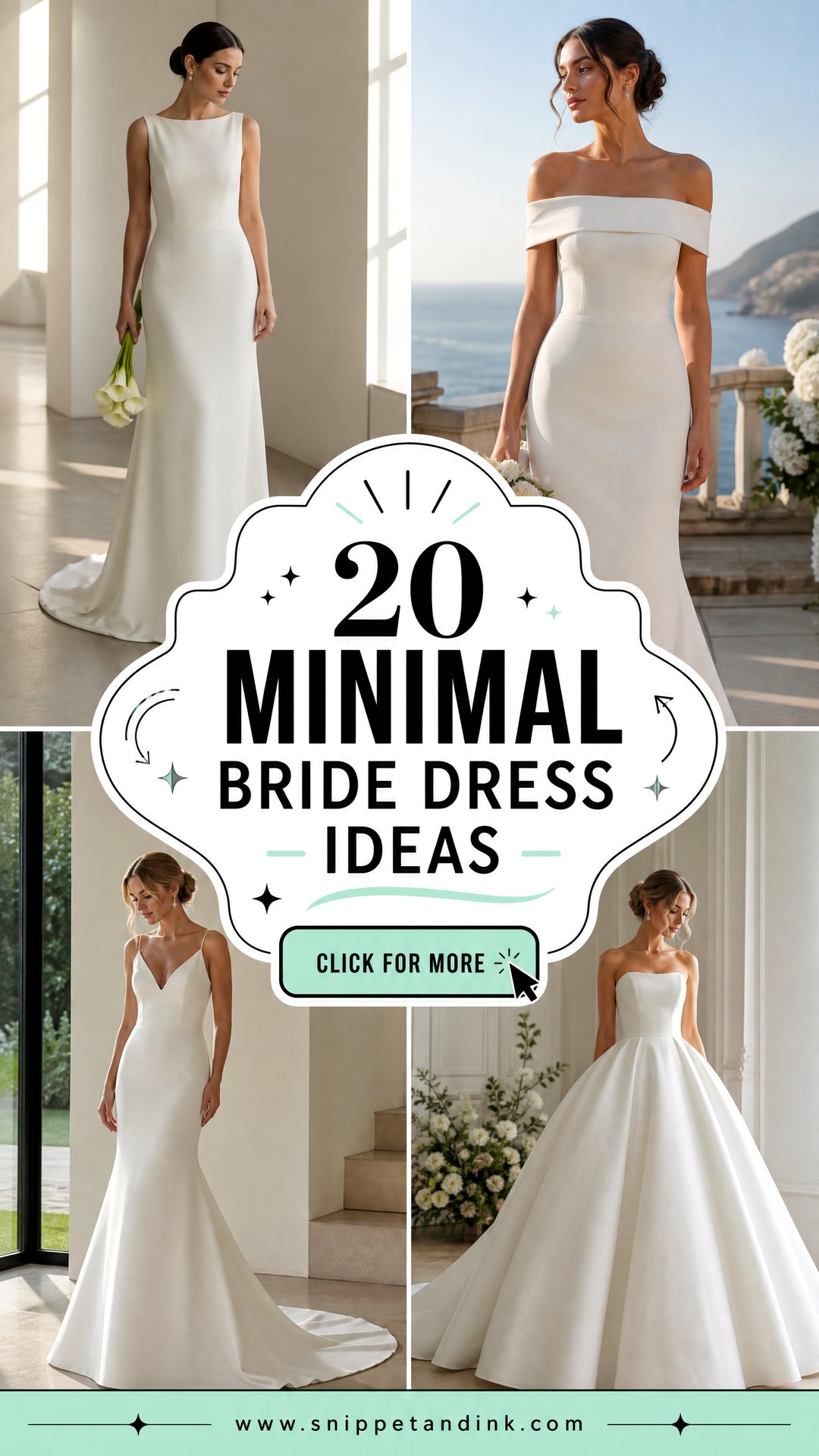
Testing Crepe and Satin With Your Hands Before Buying
A plain gown has nowhere to hide cheap fabric, so I judge the material before I judge the style. Hold the skirt in your hands. Good crepe feels dense and slightly springy, and it drops straight down when you let go. Thin crepe feels papery and clings to your legs as you walk.
With satin, squeeze a corner of the skirt in your fist for five seconds, then release it. Quality satin relaxes almost immediately; poor satin keeps a sharp crease, and you’ll see that crease in every seated photo. Look at the inside too. Clean, finished seams, a proper lining and a well-set zip tell you more about a dress than the label does.
Then stand under the brightest light in the shop and look at the bodice in a phone photo with the flash on. Flash exaggerates puckering at seams and shows whether a white fabric turns slightly blue or grey. If something bothers you in that photo, it will bother you in the album, and it’s much easier to walk away now than to fix it in alterations.
1. Minimal Satin Slip Wedding Dress
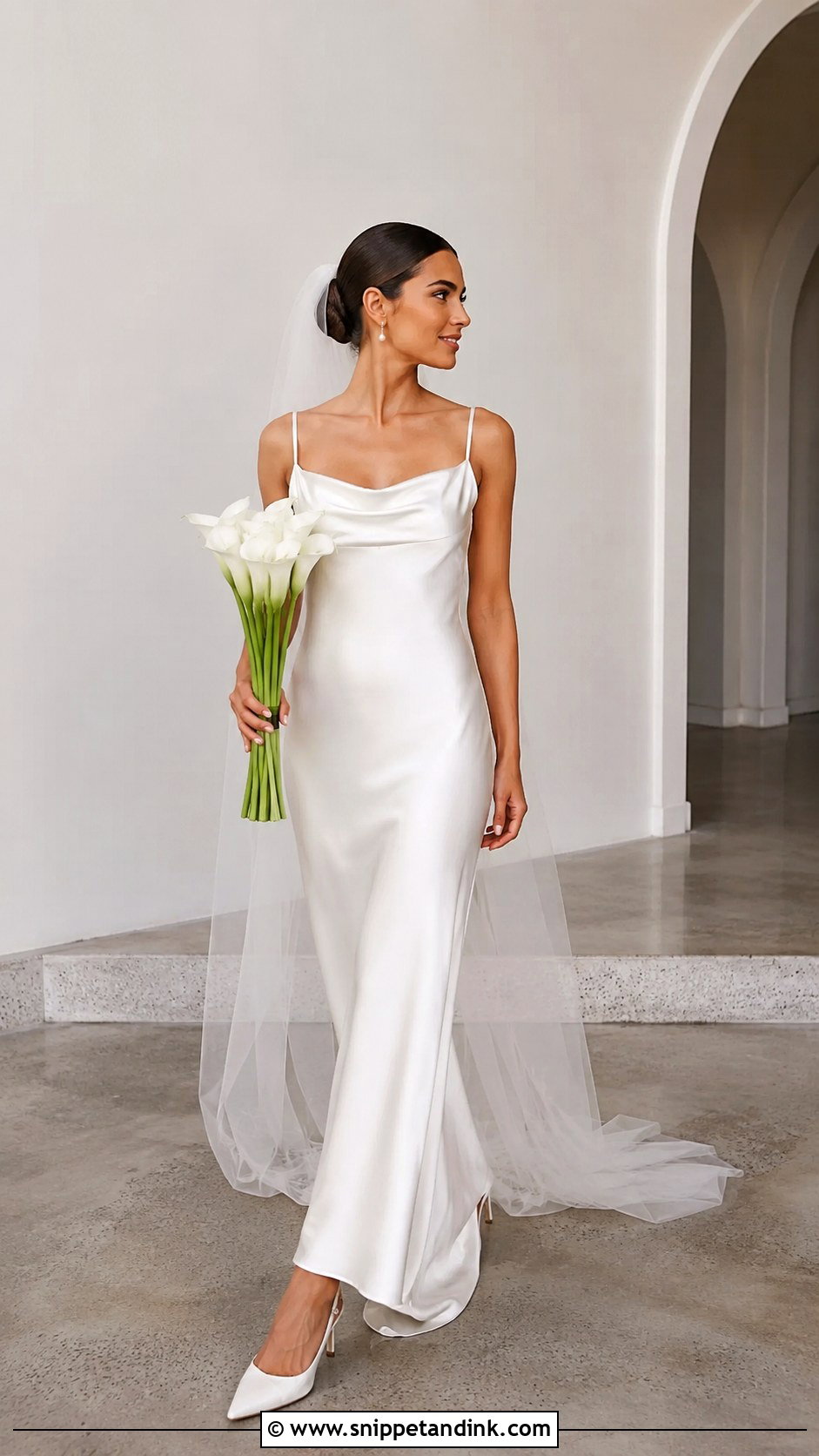
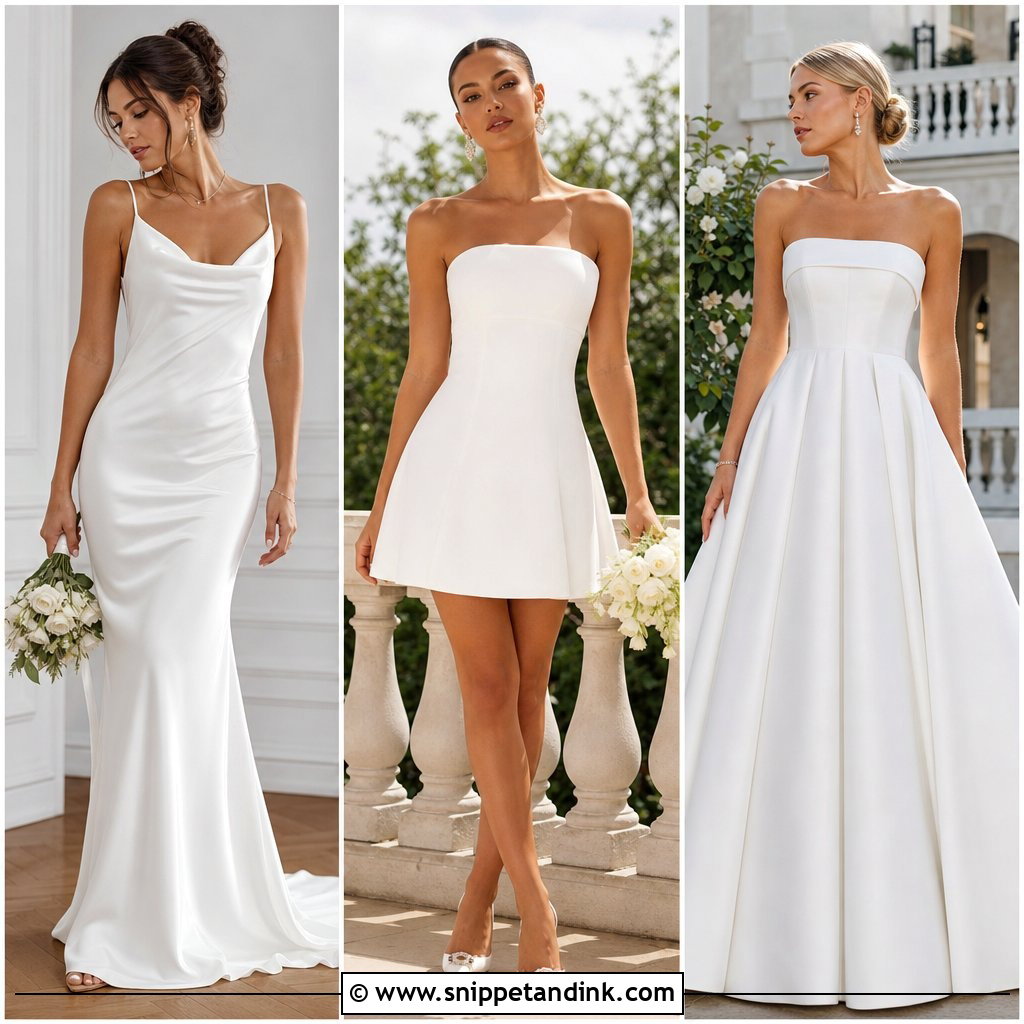
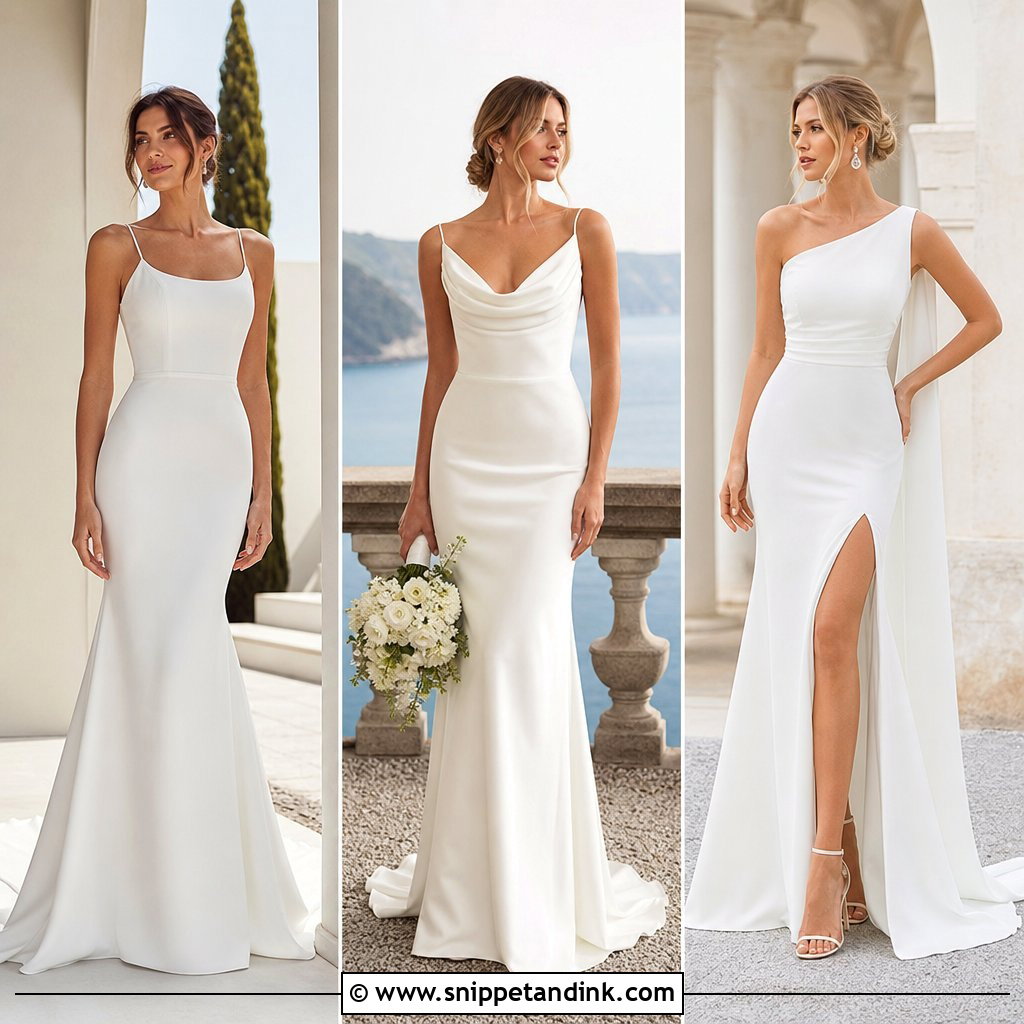
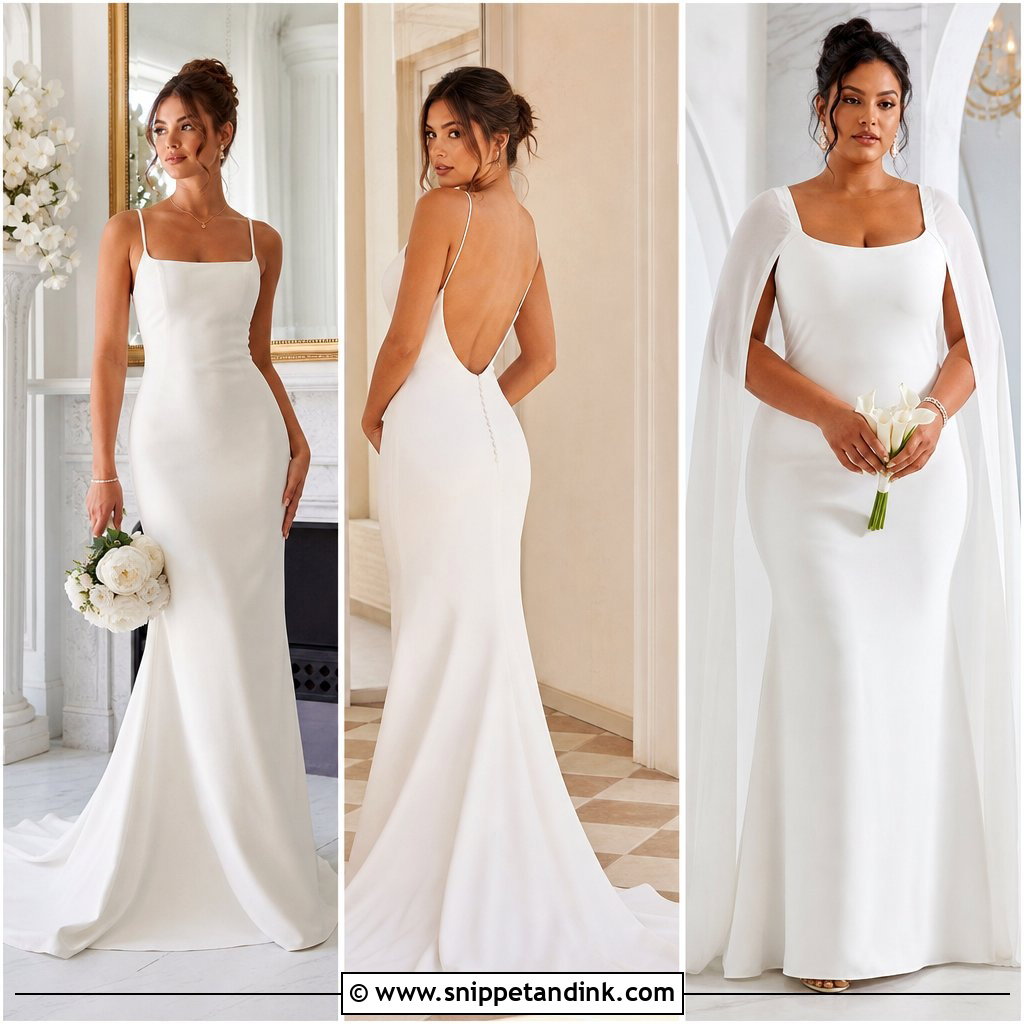
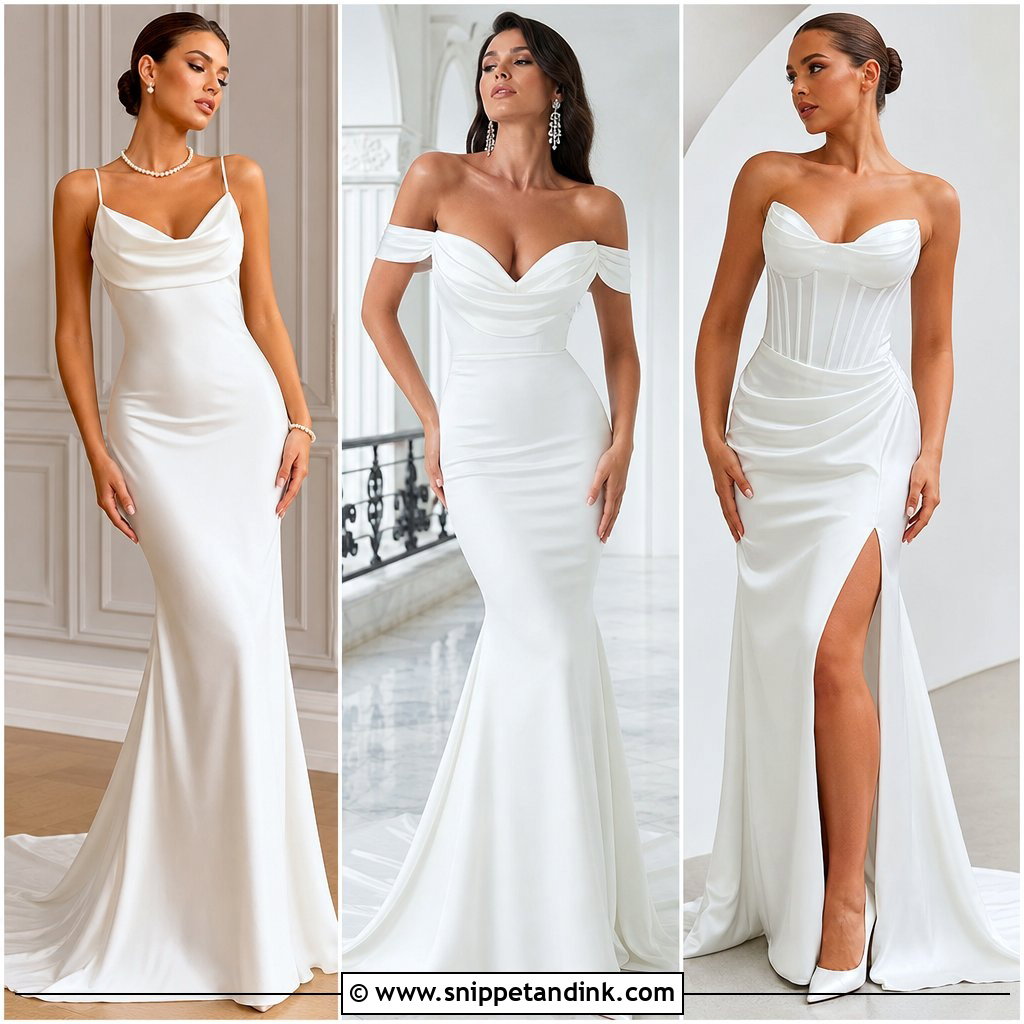
The slip is the minimalist bride’s classic, and it lives or dies on the cut. A bias-cut silhouette with slim straps and a soft draped neck follows the body rather than squeezing it. Bias-cut satin shows every line underneath and every pull at the seams, so I fit the undergarments first and the dress second. Ivory feels softer; bright white is crisper. Pointed slingbacks, pearl drops and a narrow fingertip veil of plain tulle keep it clean, with a low bun or smooth waves. A few callas or roses are all the bouquet you need. Hems on bias satin can twist slightly, which a skilled tailor will correct by letting the dress hang before hemming.
2. Minimal Square Neck A-Line Wedding Dress
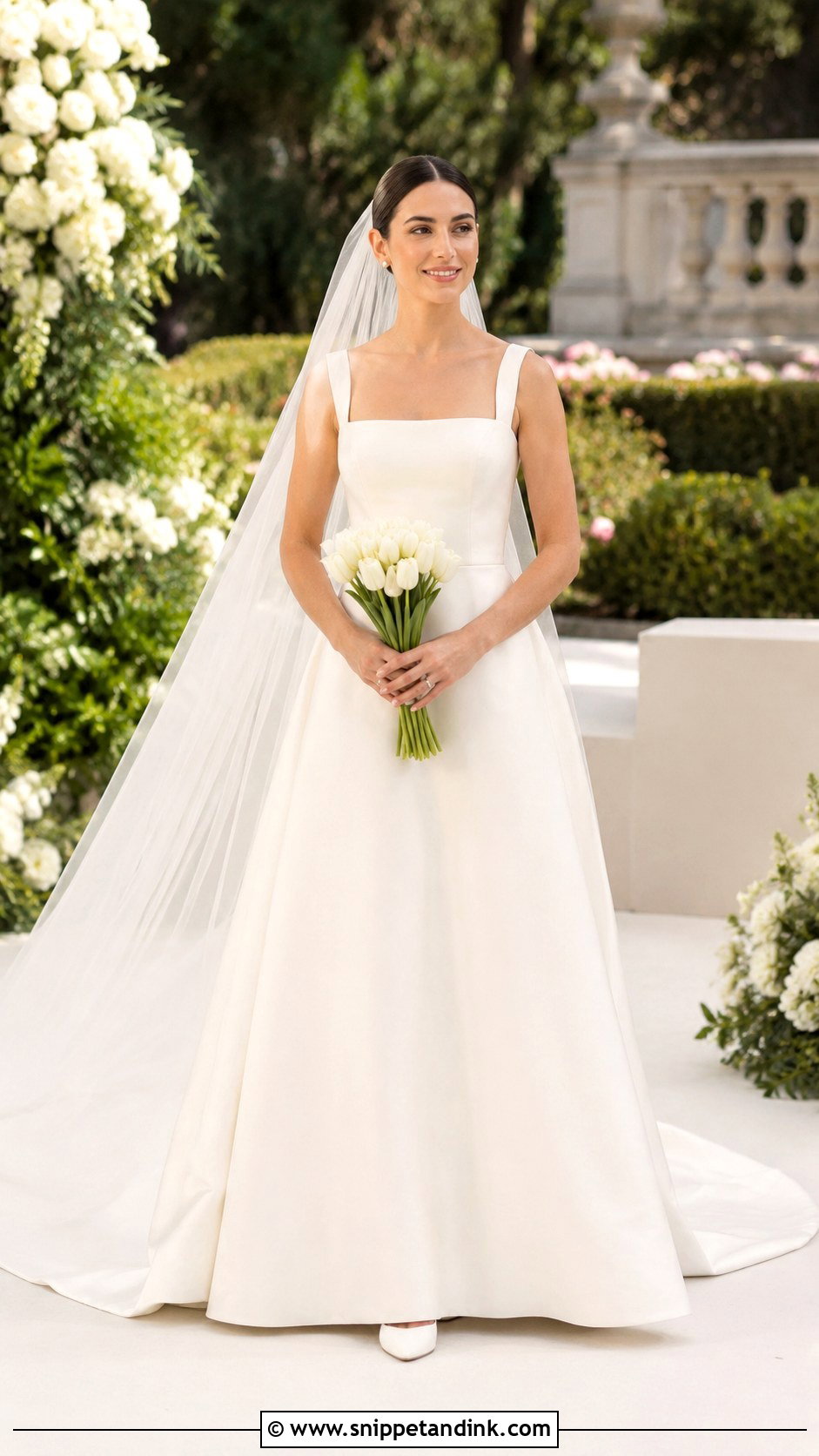
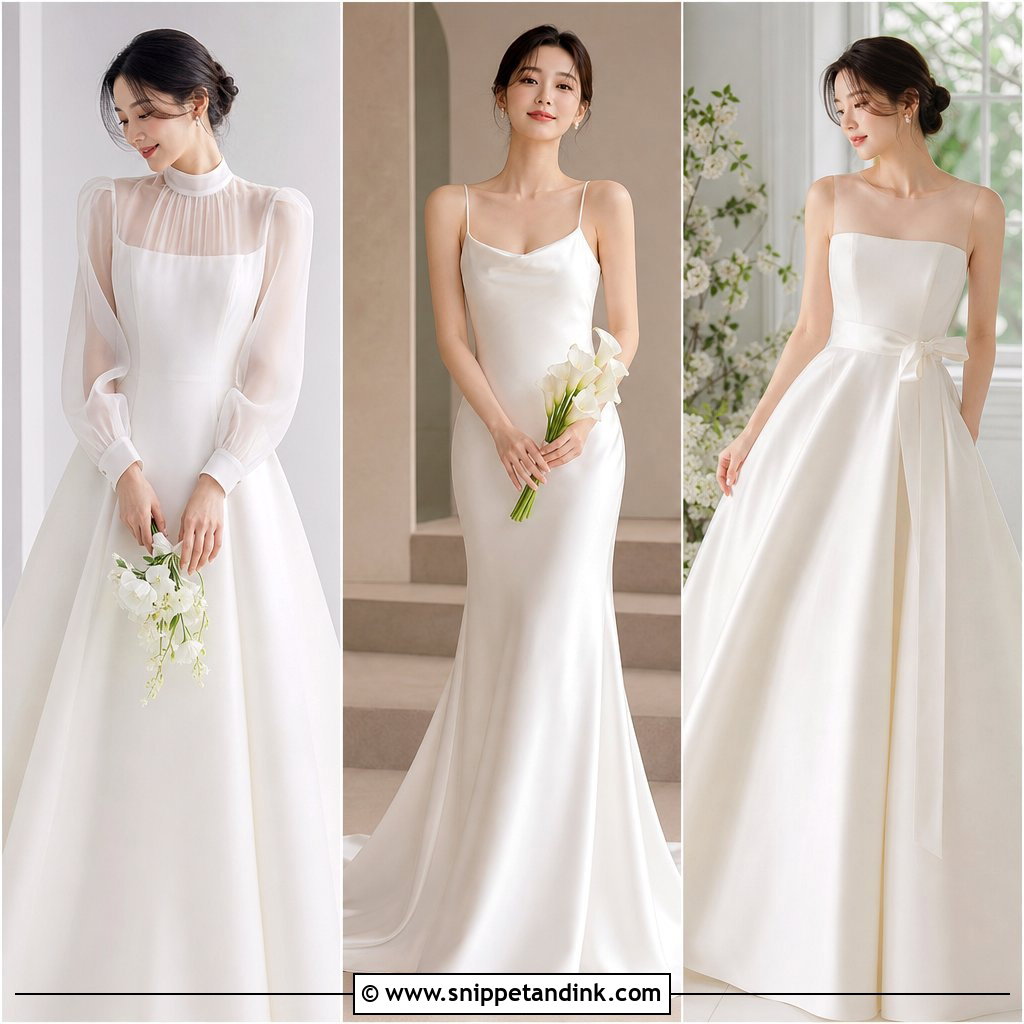
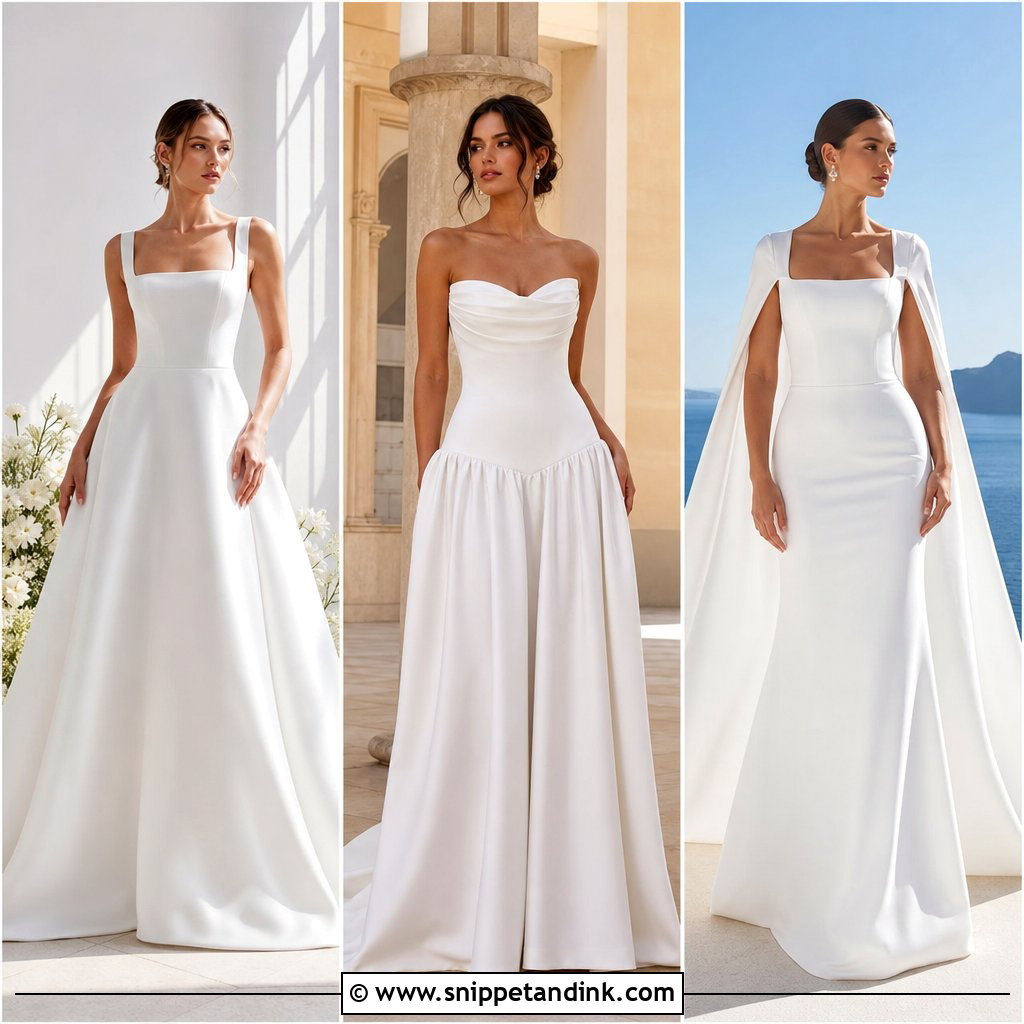
Square necks give structure without breaking the quiet mood. The straight line frames the collarbone, and a fitted bodice into a gently widening skirt keeps the proportions balanced. I look for matte satin, mikado or smooth crepe with as few seams as possible. Closed-toe pumps, small pearl studs and a plain cathedral veil give a traditional note, and a sleek center-parted bun leaves the neckline clear. Want more coverage? Ask for wider straps or a square neck raised by an inch. White tulips with a little greenery finish it, indoors or in a formal garden.
3. Minimal Crepe Column Wedding Dress
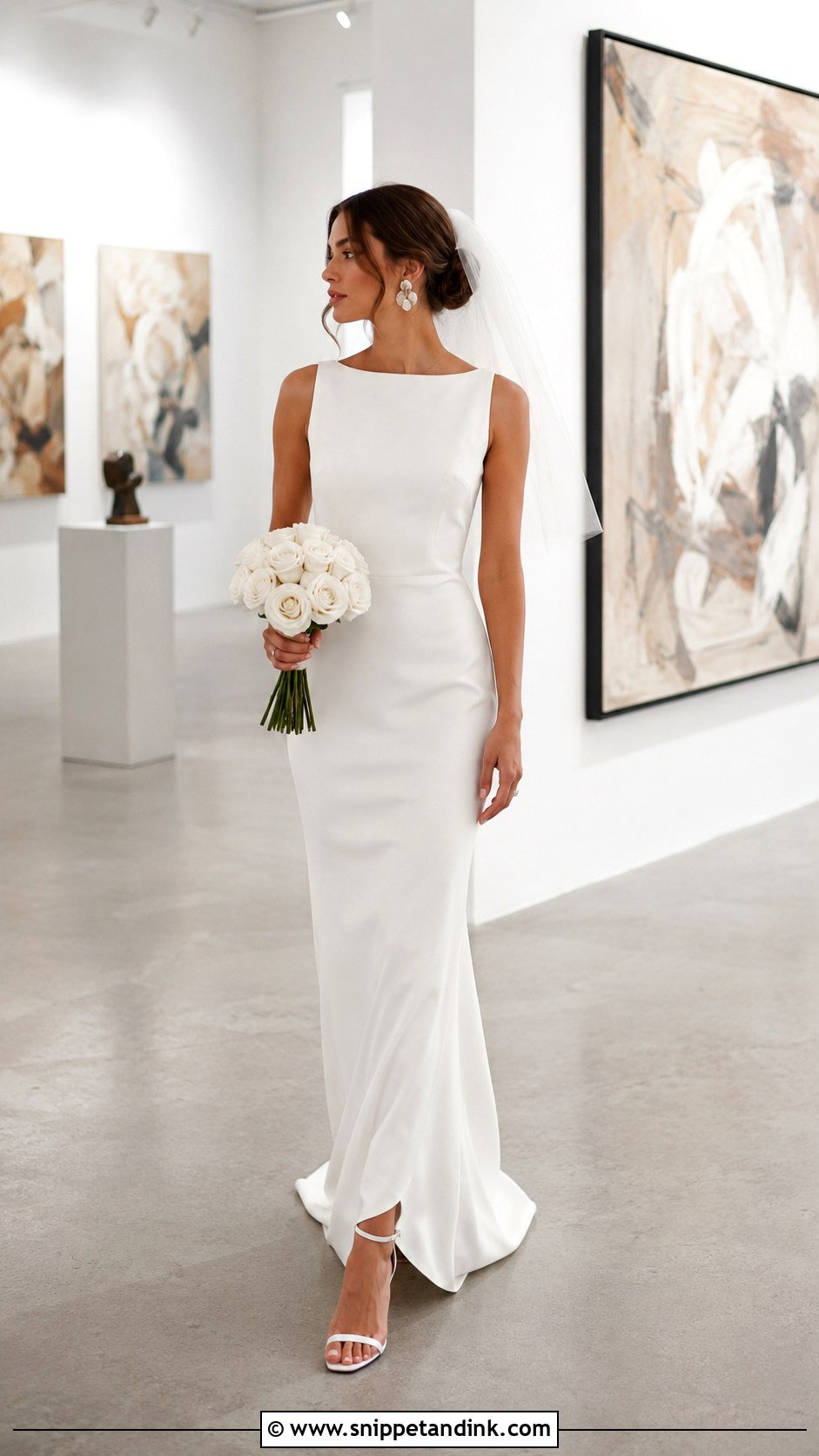
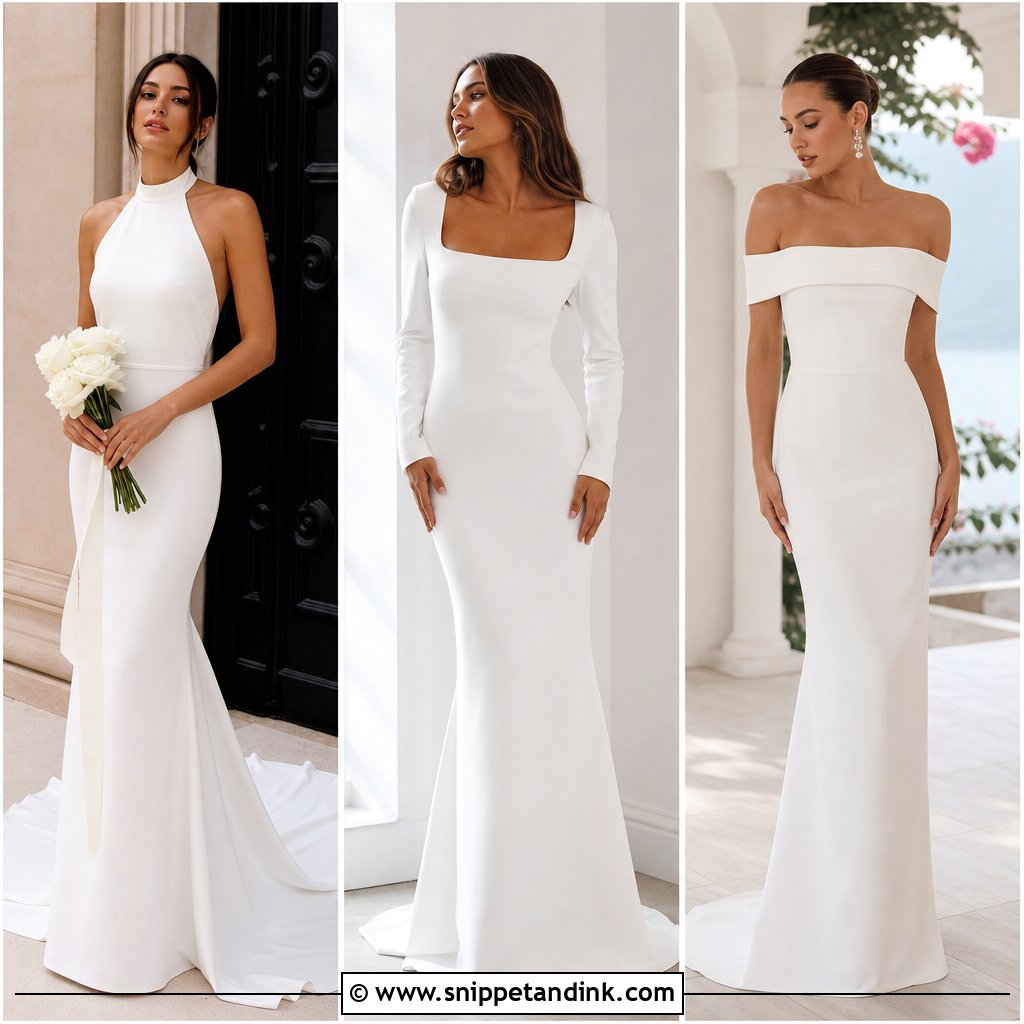
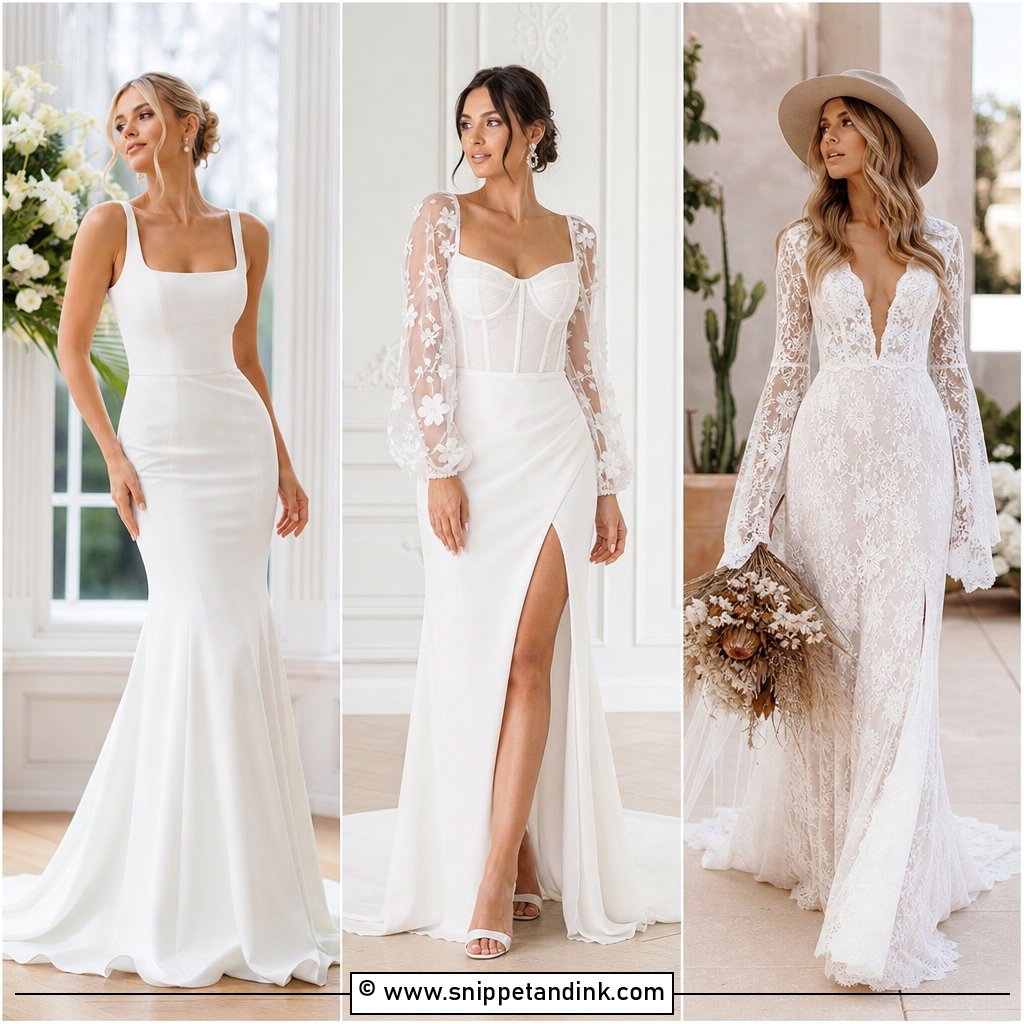
Crepe has enough weight to fall in one long, unbroken line, which is why it makes the best column dresses. The silhouette sits close to the body without needing to be skin-tight. Choose a gown with light internal structure, a defined waist and a small back slit so you can walk. Slim ankle-strap heels, a fine tennis bracelet and sculptural studs suit it, and a short blusher veil adds a bridal note without widening the shape. Carry a single variety, white roses or anthuriums. Wear smooth, no-line underwear to every fitting. With no decoration, fit at the bust, waist, hips and hem becomes the whole design.
4. Minimal Strapless Sheath Wedding Dress
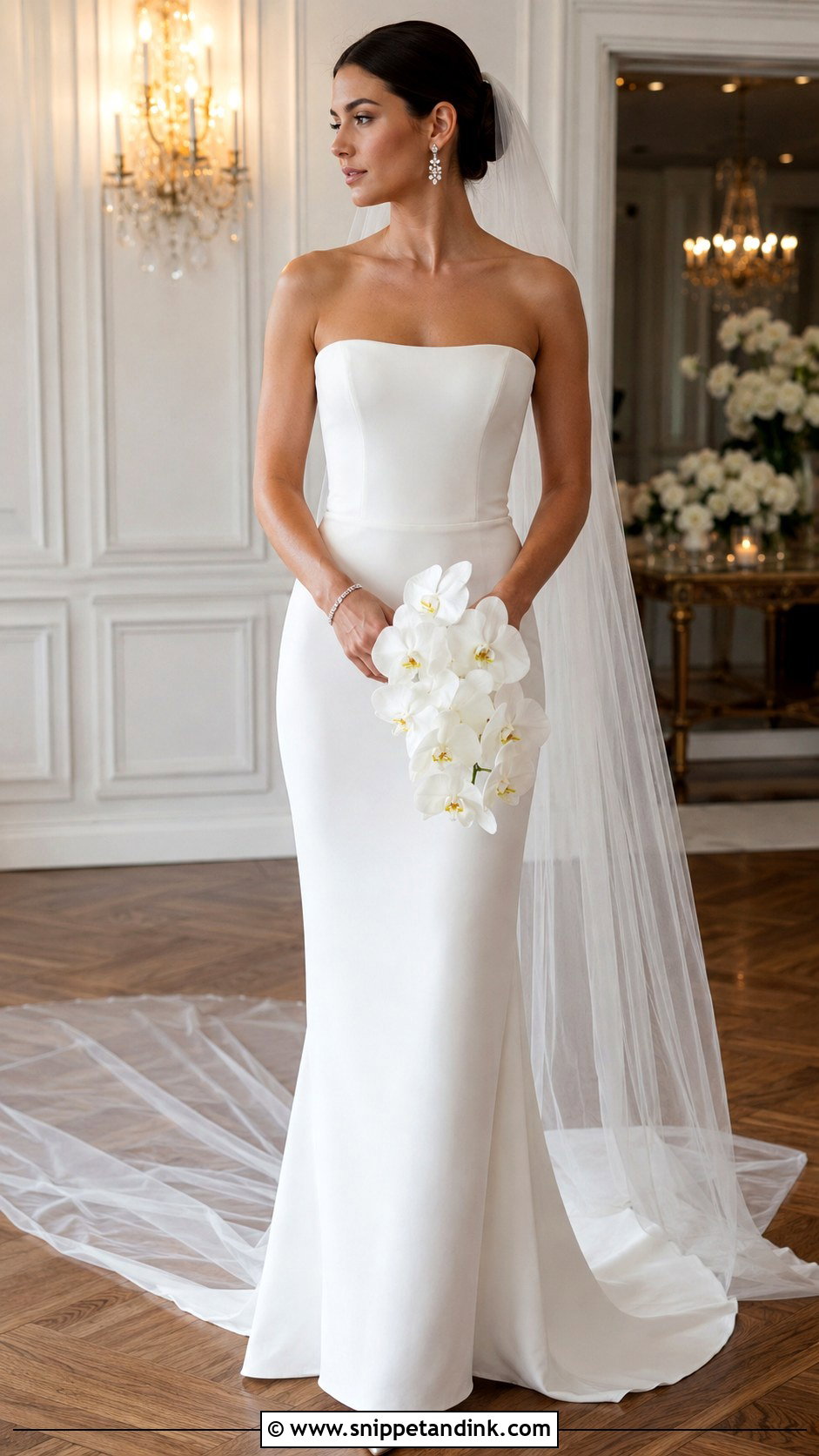
A strapless sheath shows off shoulders and shape, and the bodice has one job: stay up without help. That comes from internal boning and a properly fitted top edge, not from tightness. Double crepe or duchess satin gives the simple shape more substance than a thin fabric would. Pointed pumps, a slim metallic bracelet and small crystal earrings are enough, and a long untrimmed veil adds movement for the ceremony. Wear your hair up or tucked behind the ears. White orchids add a little texture. At fittings, I have brides sit, walk, lift both arms and dance a few steps; if the bodice moves, it goes back for adjustment.
5. Minimal Long Sleeve Wedding Dress
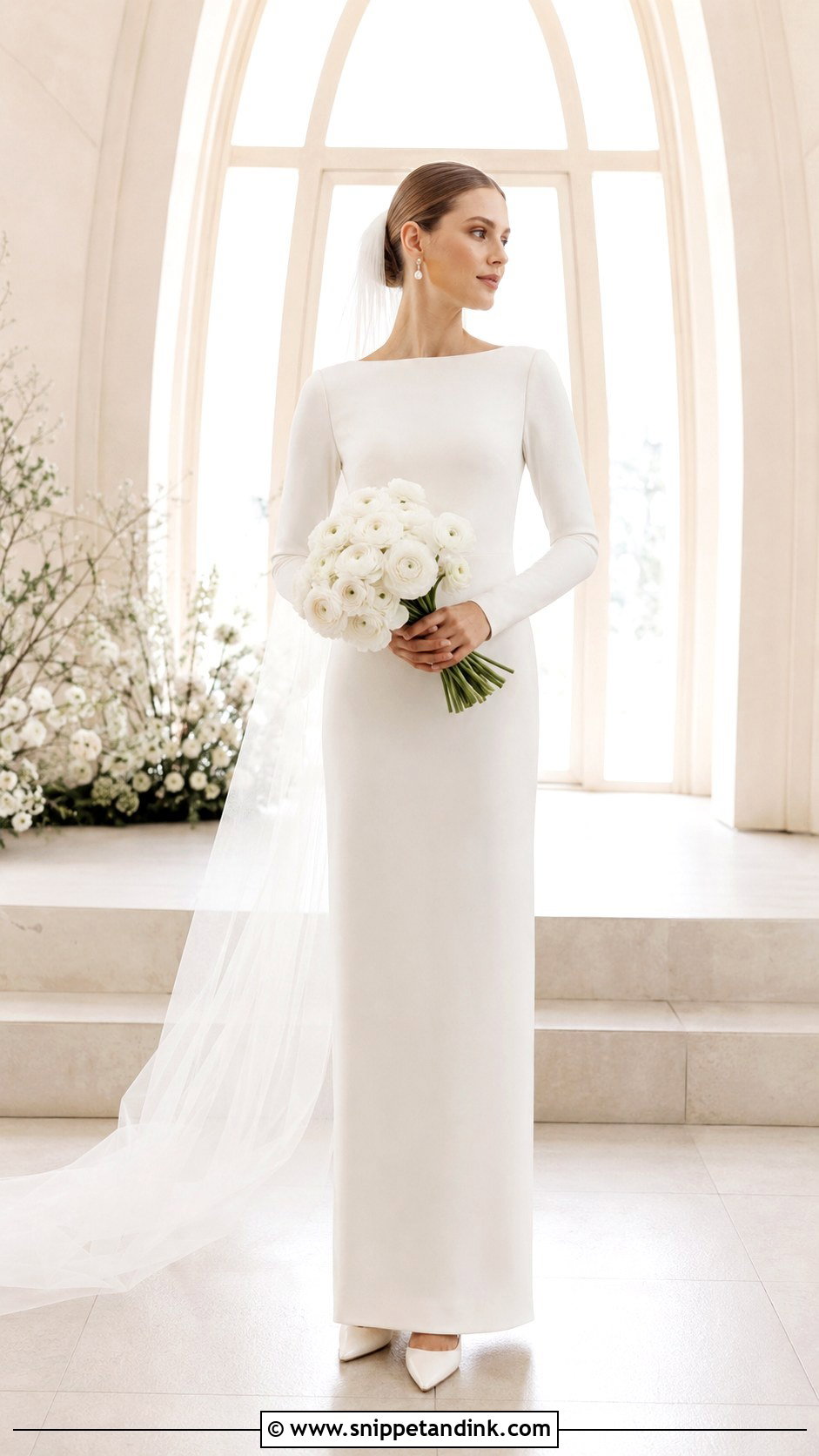
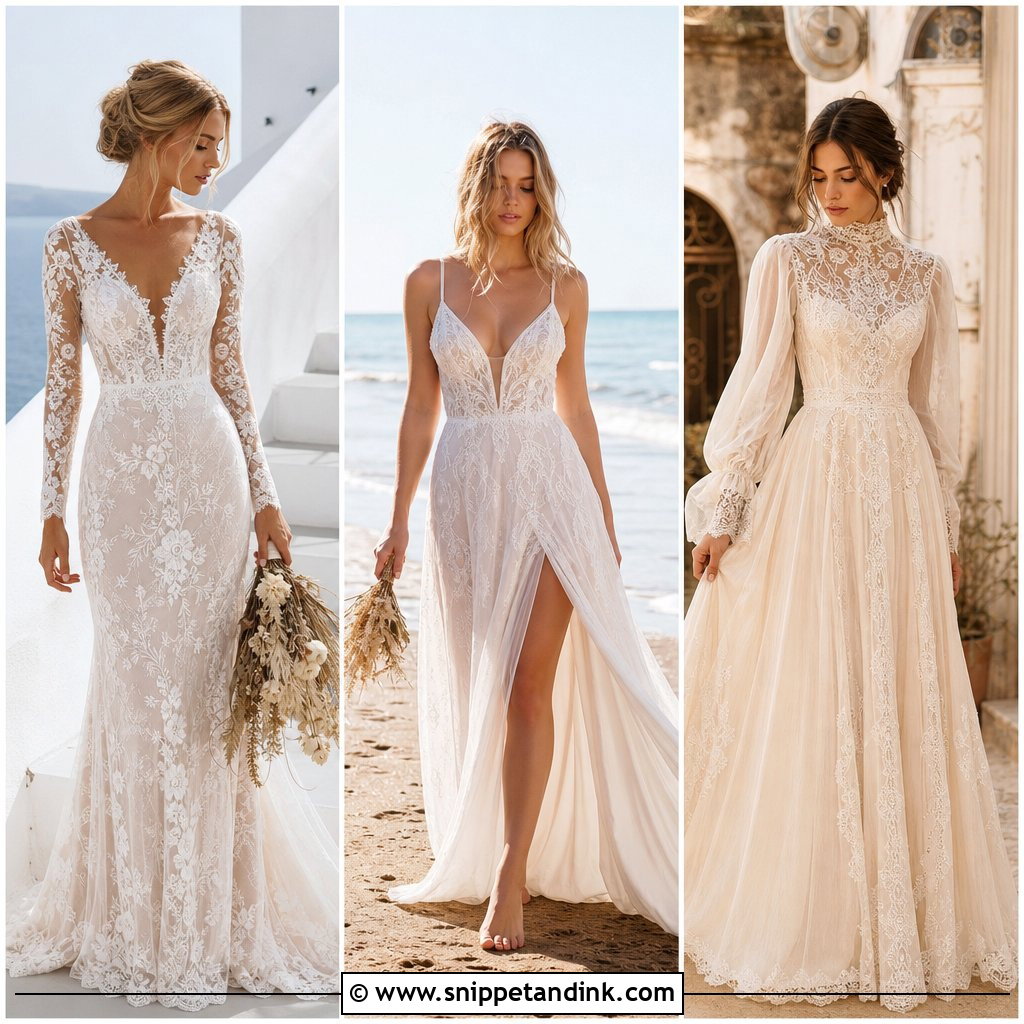
Long sleeves on a plain gown look quietly elegant, especially in cooler months. A bateau neckline with a fitted crepe bodice and straight skirt makes a clean line from head to toe with no lace needed. Crepe sleeves need room through the elbow and upper back; let your arms hang relaxed in the mirror, and if you see drag lines across the shoulder blades, the size or the tailoring is wrong. Ivory pointed heels, pearl earrings and a low chignon complete it. Skip the veil for a simple comb, or choose plain chapel length. White ranunculus with very little greenery softens the structure.
6. Minimal Halter Neck Wedding Dress
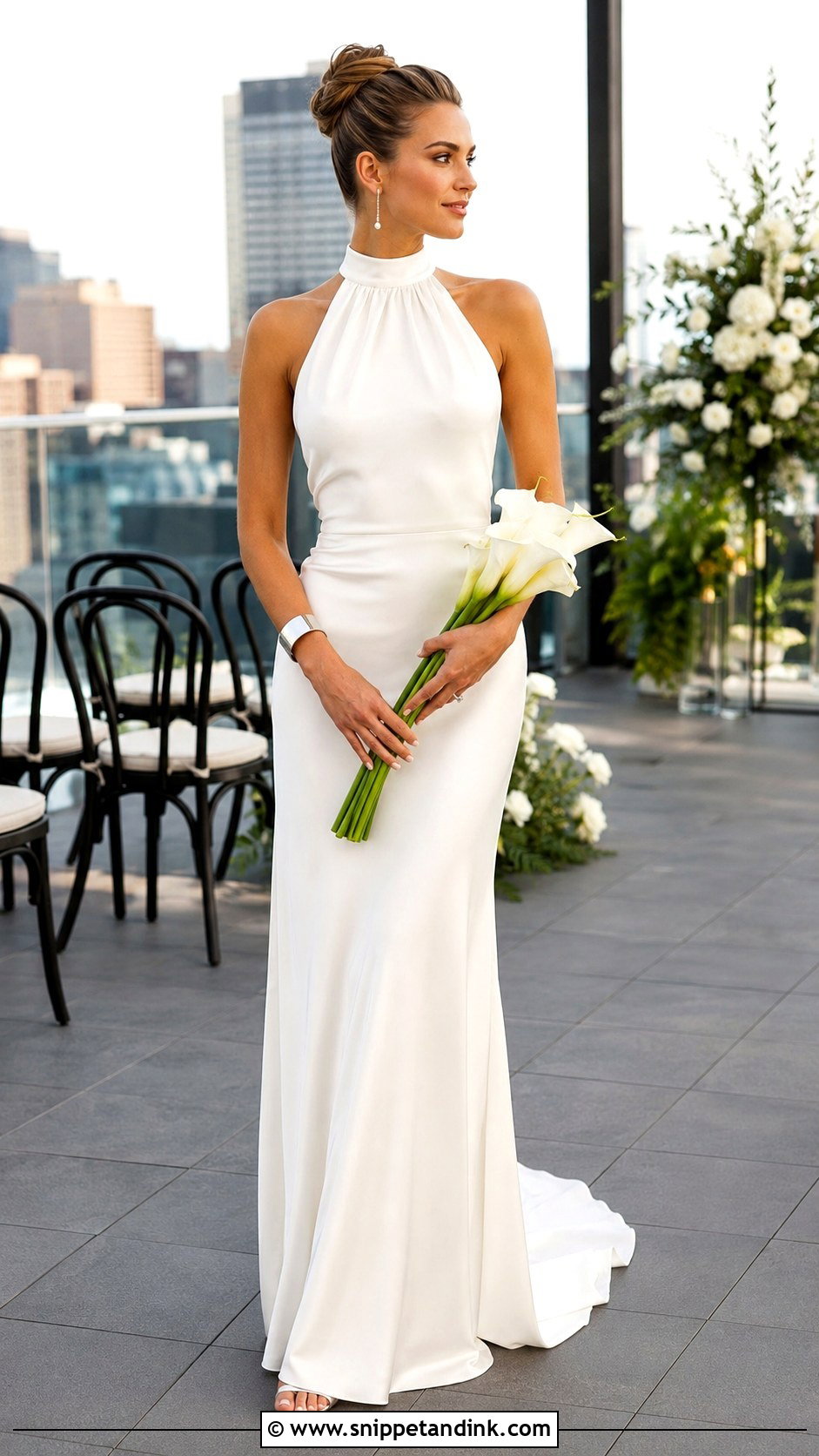
Halter necks give the upper body a strong shape while the rest stays simple. A smooth satin or crepe gown with a fitted waist and a column or gentle A-line skirt is the base. Gathered halters feel soft and move; sharply tailored ones look architectural. Open-toe heels, slim drops and a small cuff are enough, with no necklace. A bun or a high twist keeps shoulders and back on show, and a narrow bunch of callas suits the vertical line. The neck strap should rest flat without pressing on the back of the neck; if it bites after ten minutes in the fitting room, it’ll be unbearable by dinner.
7. Minimal Cowl Neck Wedding Dress
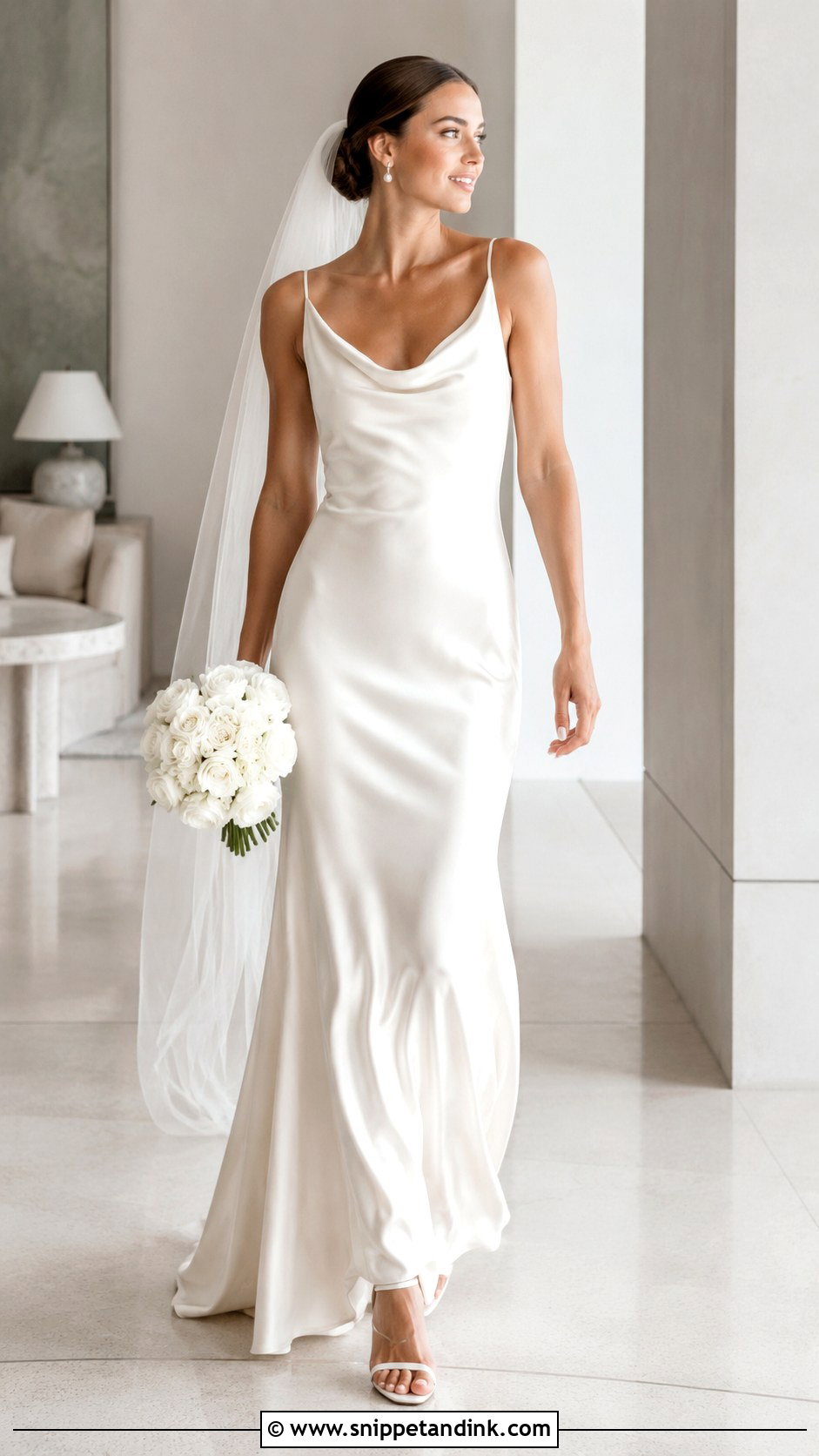
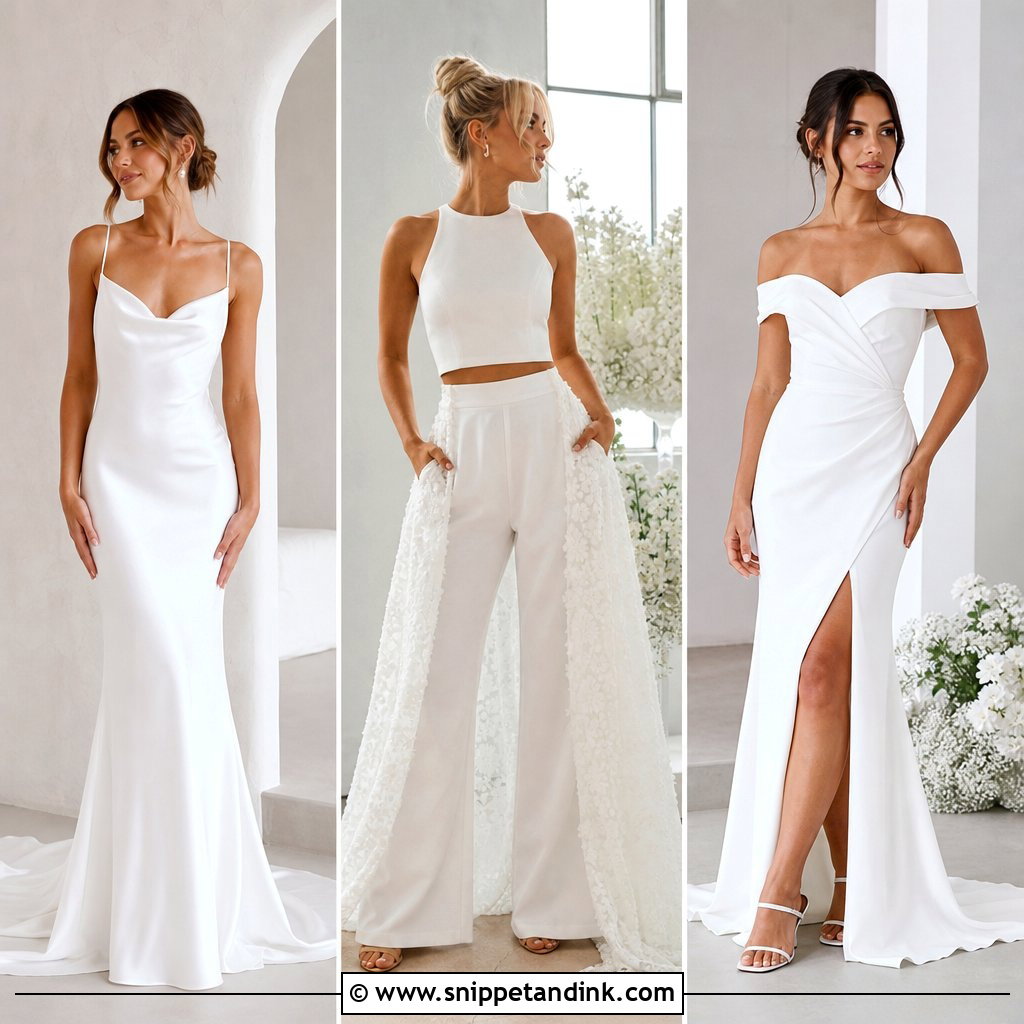
A cowl gives a plain gown dimension through drape alone. It only falls properly in fluid fabric, ideally silk satin, so stiff polyester cowls tend to stand away from the body. Pair it with a bias-cut skirt and a low or softly draped back. Slender slingbacks, pearl studs and a fine chain bracelet keep it delicate, with a plain fingertip veil and a low knot. Loose sweet peas or garden roses contrast nicely with the sheen. Cowls shift as you move, so bend, sit and lean forward to hug someone at the fitting; a small weight or a hidden tack inside the drape can keep the coverage where you want it.
8. Minimal Off Shoulder Wedding Dress
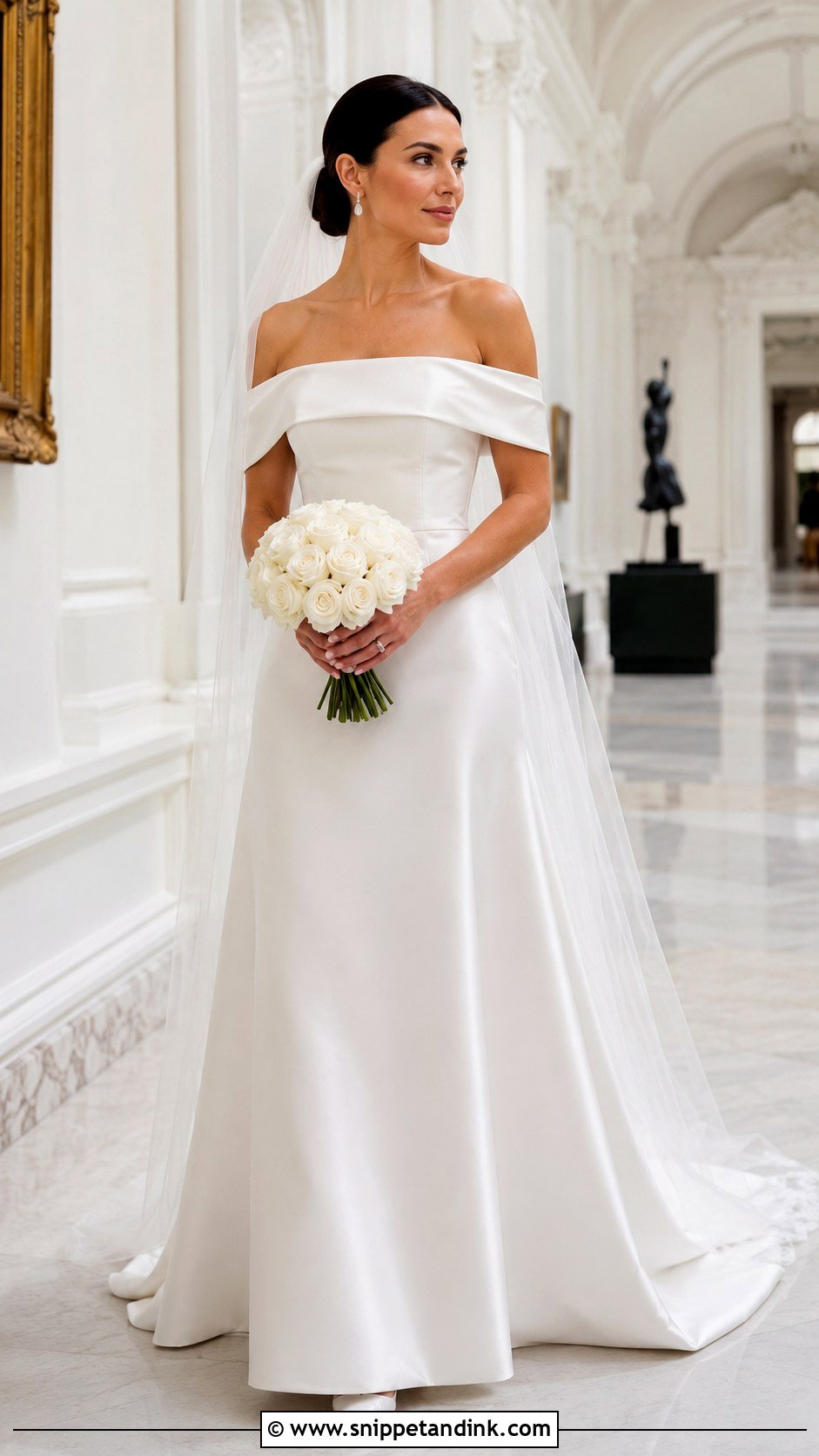
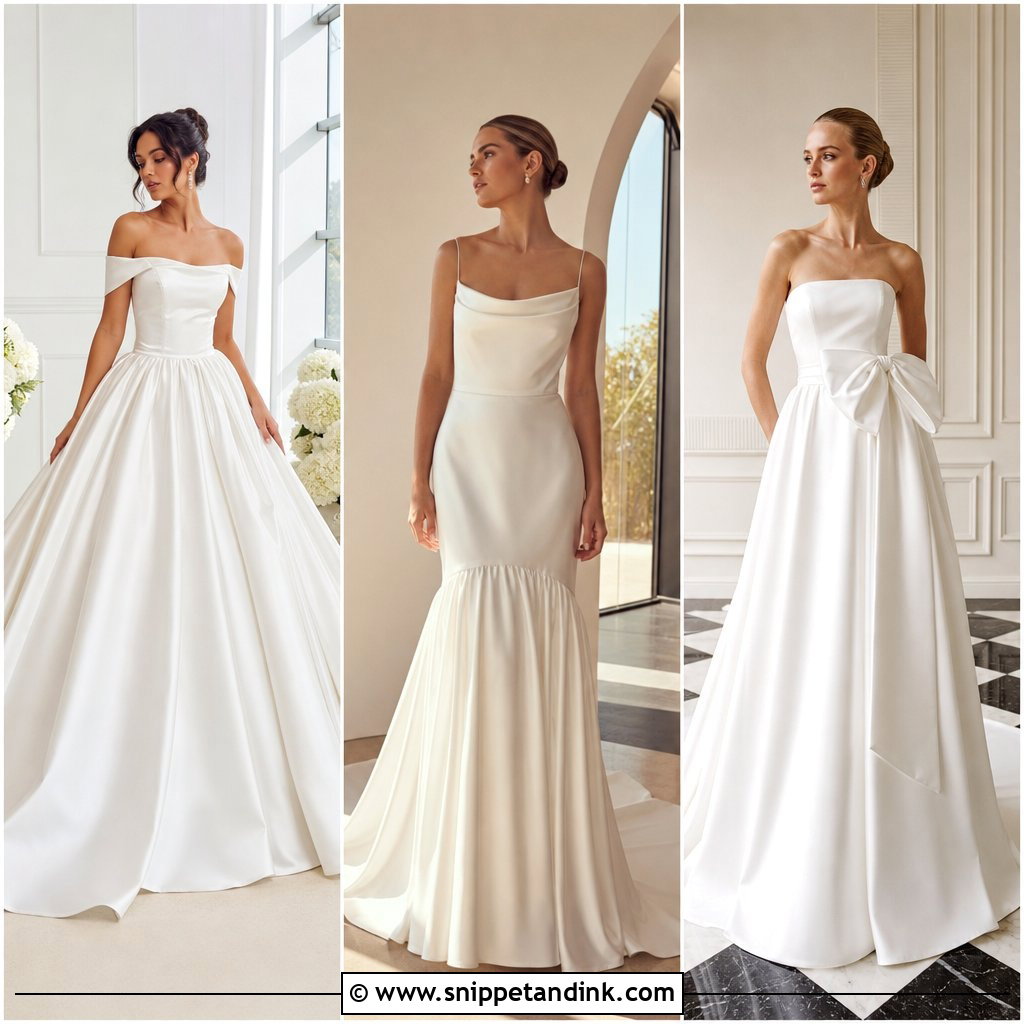
Off-the-shoulder doesn’t have to be fussy. A folded neckline over a fitted bodice and a smooth A-line or column skirt is about as simple as a romantic gown gets. The neckline must sit securely and still let you lift your arms, which is the first thing I test at alterations. Pointed satin heels, short drop earrings and a plain tulle veil under a polished bun suit it; leave the collarbone bare. A structured bunch of white roses keeps things classic. Detachable shoulder straps are worth asking about if you want total freedom on the dance floor later.
9. Minimal High Neck Wedding Dress
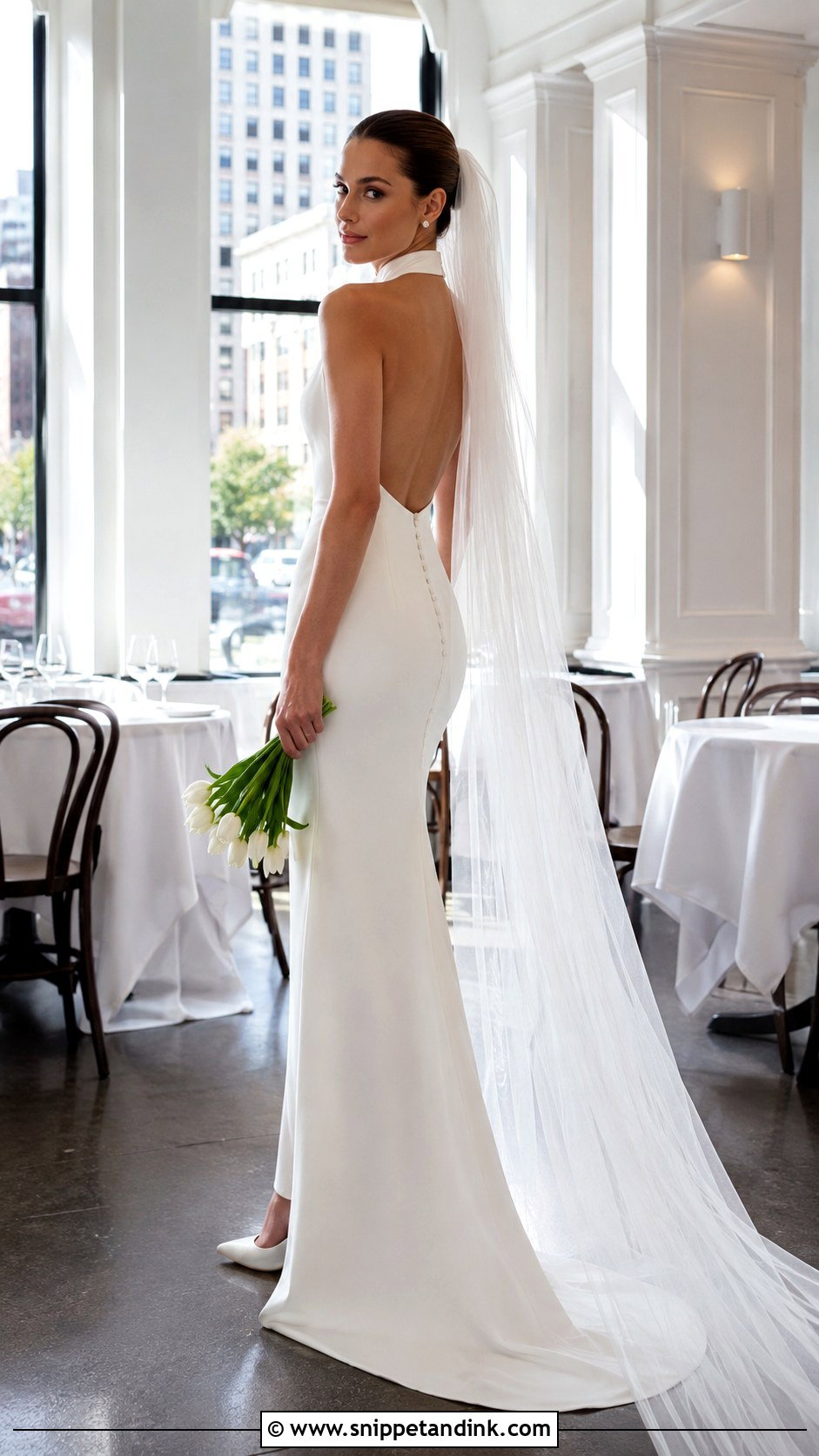
High necks feel sophisticated, and on a sleeveless gown they show more than you’d think. Matte crepe or silk with a softly fitted bodice and a long narrow skirt is the shape, and a low back keeps it from feeling buttoned-up. Delicate studs, a smooth bun, pointed heels and a plain floor-length veil are plenty; wear one ring or bracelet instead of a necklace. White tulips echo the vertical line. The neck edge and armholes are where this cut goes wrong. Both should lie flat without rubbing or gaping, so check them while turning your head and reaching across a table. It suits restaurants and city ceremonies.
10. Minimal Backless Wedding Dress
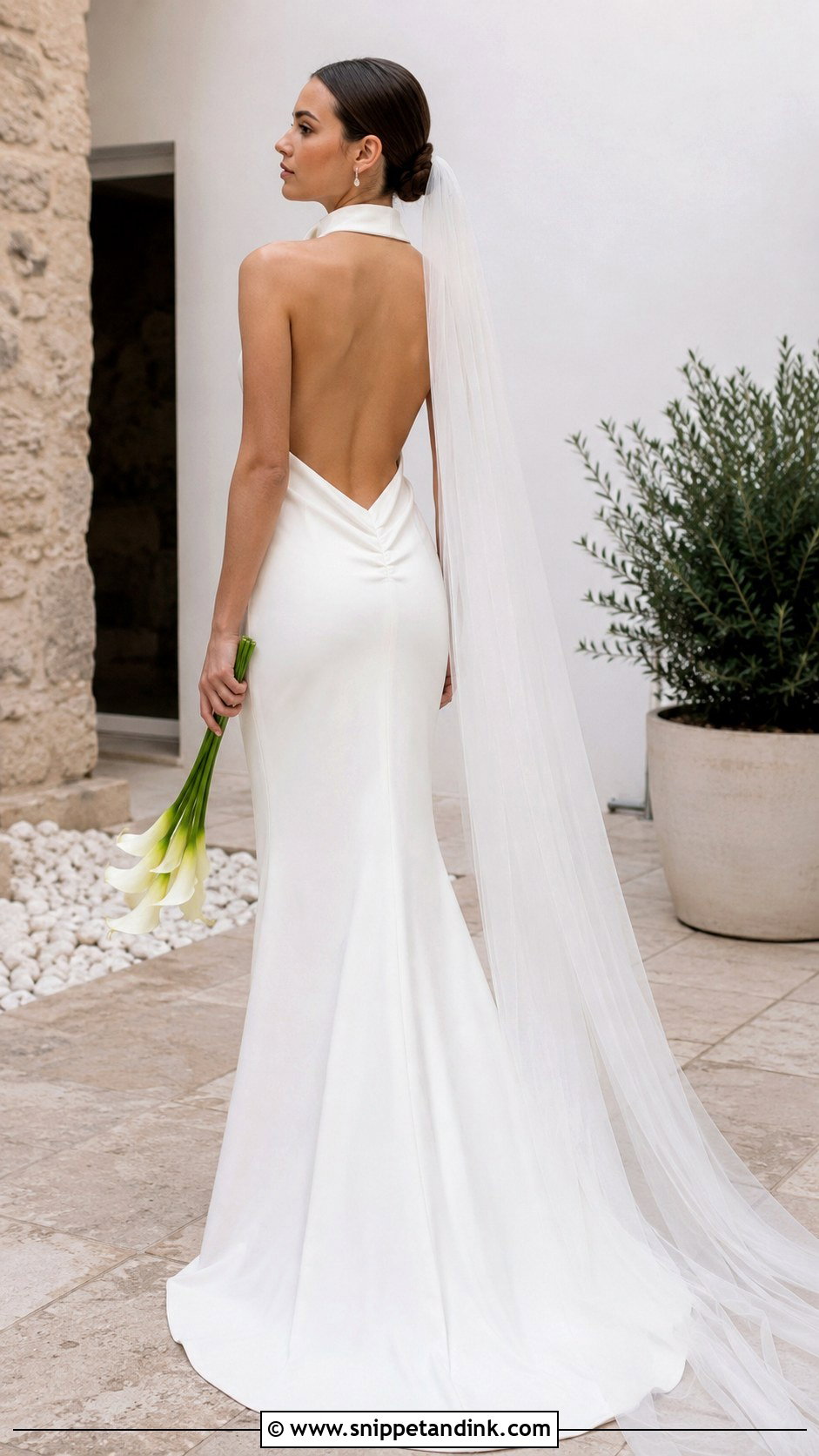
A backless gown makes its statement from behind. The front can stay simple, with a boat, scoop or high neck, while the open back carries the drama. Crepe or satin with secure side panels and hidden support is essential. Discuss undergarments early, because a low back usually needs built-in cups, extra boning or specially placed support rather than a bra. Understated heels, small earrings and a clear, unembellished veil pinned below a neat bun let the back show through. Orchids or long-stemmed callas give a sculptural finish.
11. Minimal Fit And Flare Wedding Dress
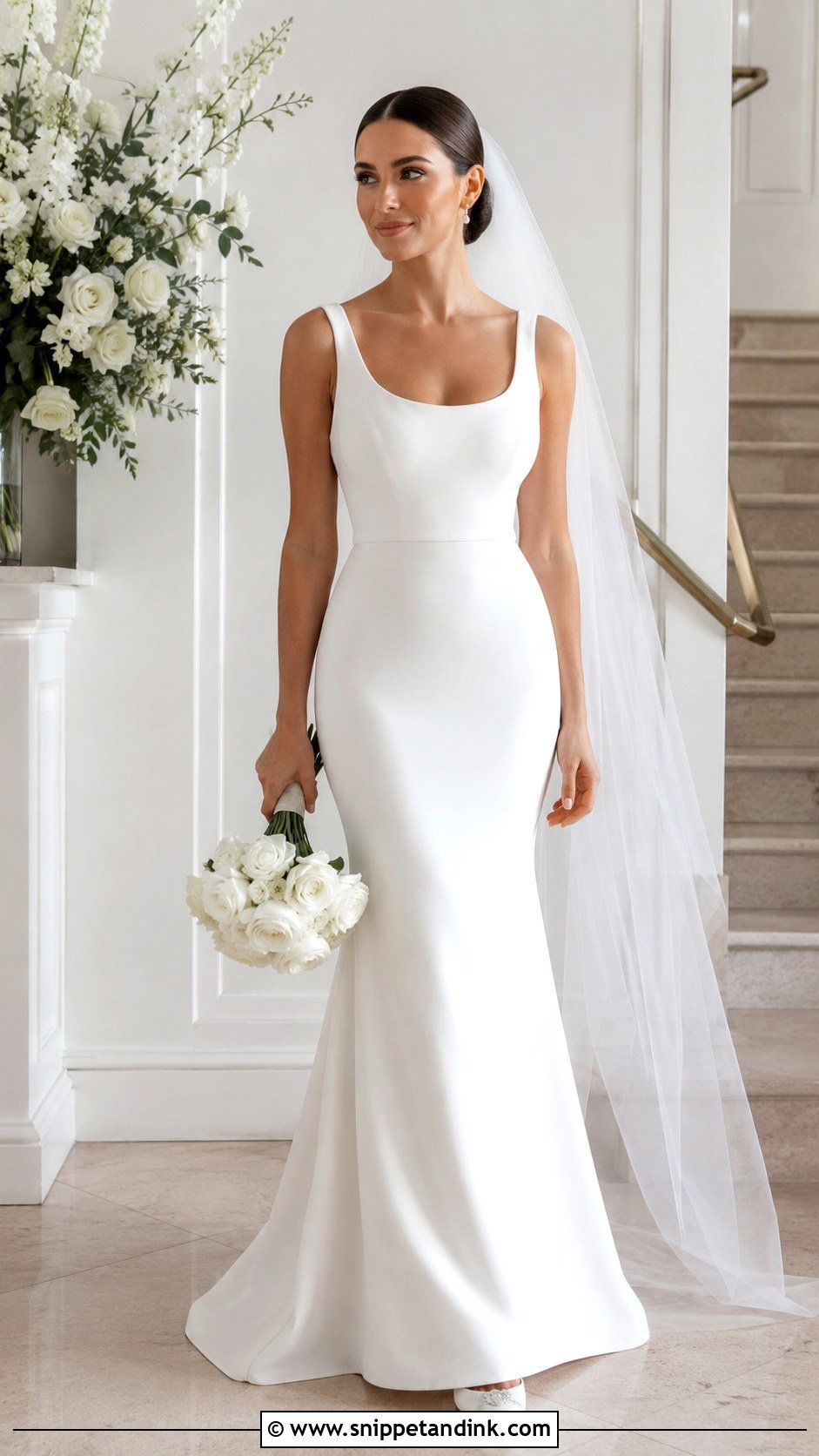
Fit-and-flare in heavy stretch crepe shows the waist and hips while staying minimal. Clean princess seams, a scoop or V-neck and a skirt that widens from mid-thigh keep it streamlined, so don’t add extra volume. Stretch crepe recovers well after sitting, which makes it kinder than satin for this fitted shape. Pointed heels, a fine bracelet, small pearls and a plain chapel veil suit it, with a slick low bun and white roses. Walk up steps and sit for a few minutes at alterations to check the thighs and knees. A small back slit or a slightly higher flare makes walking much easier without spoiling the line.
12. Minimal Drop Waist Wedding Dress
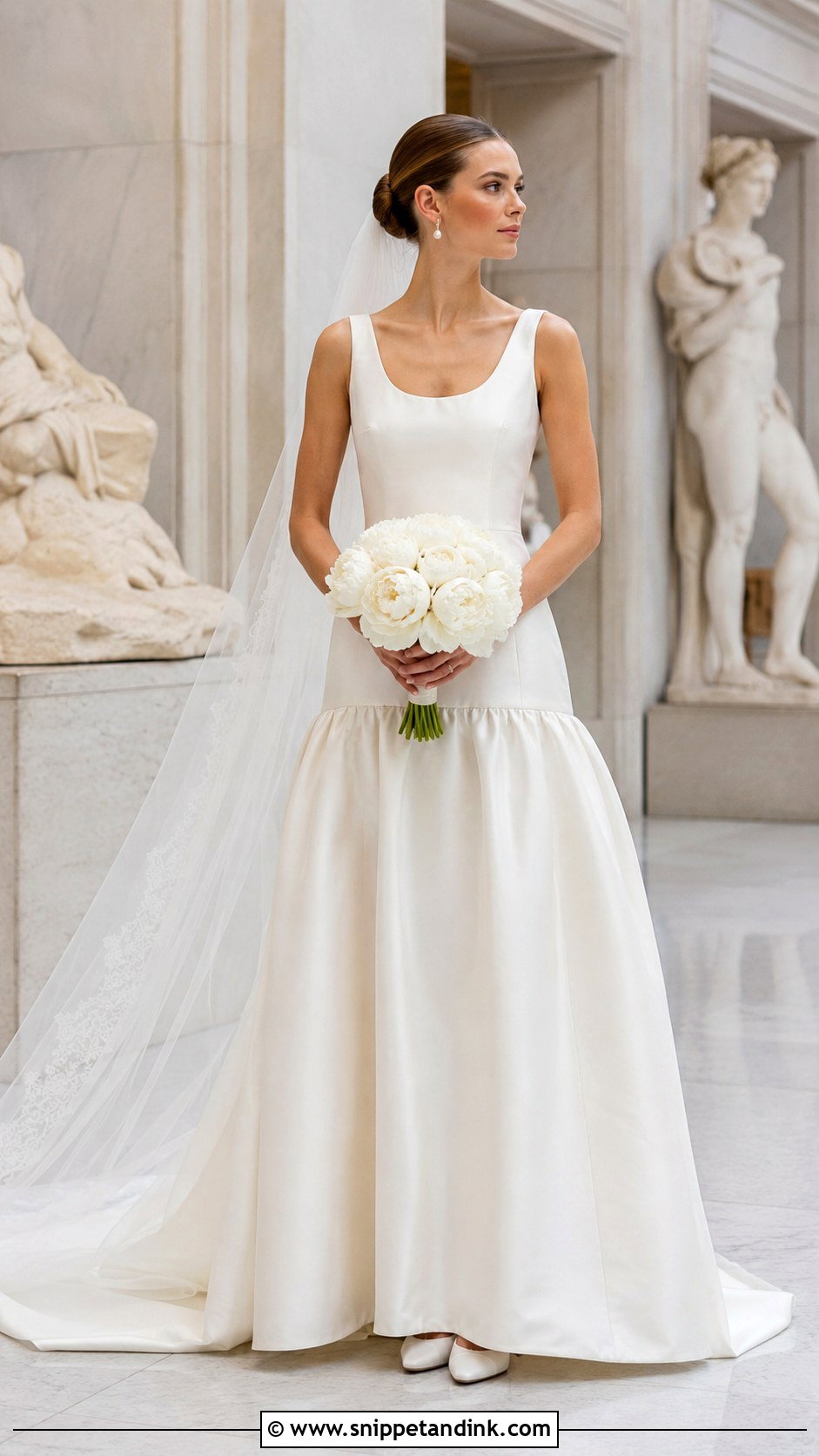
Drop waists lengthen the bodice before the skirt opens out. For a minimalist version, I’d choose smooth mikado or structured satin with no lace, beads or contrast panels. A straight, scoop or softly curved neck keeps it balanced. Closed-toe pumps, pearl studs, a narrow cathedral veil and a polished bun match the construction, and white peonies or roses soften it. The seam sitting below your natural waist has to follow your hips exactly, then release at the right point. Too tight and it folds across the hips; too loose and the skirt looks dropped.
13. Minimal Tea Length Wedding Dress
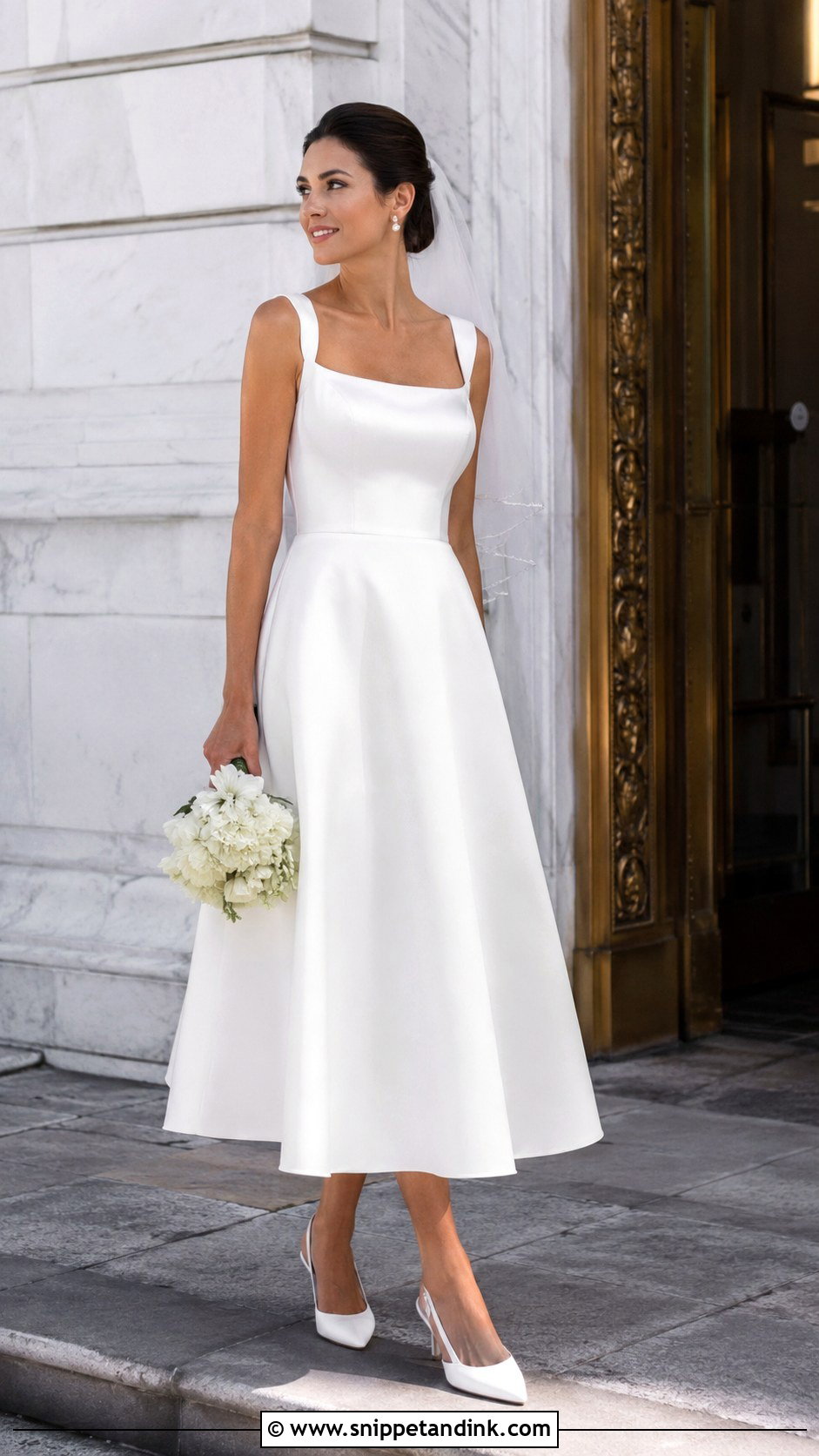
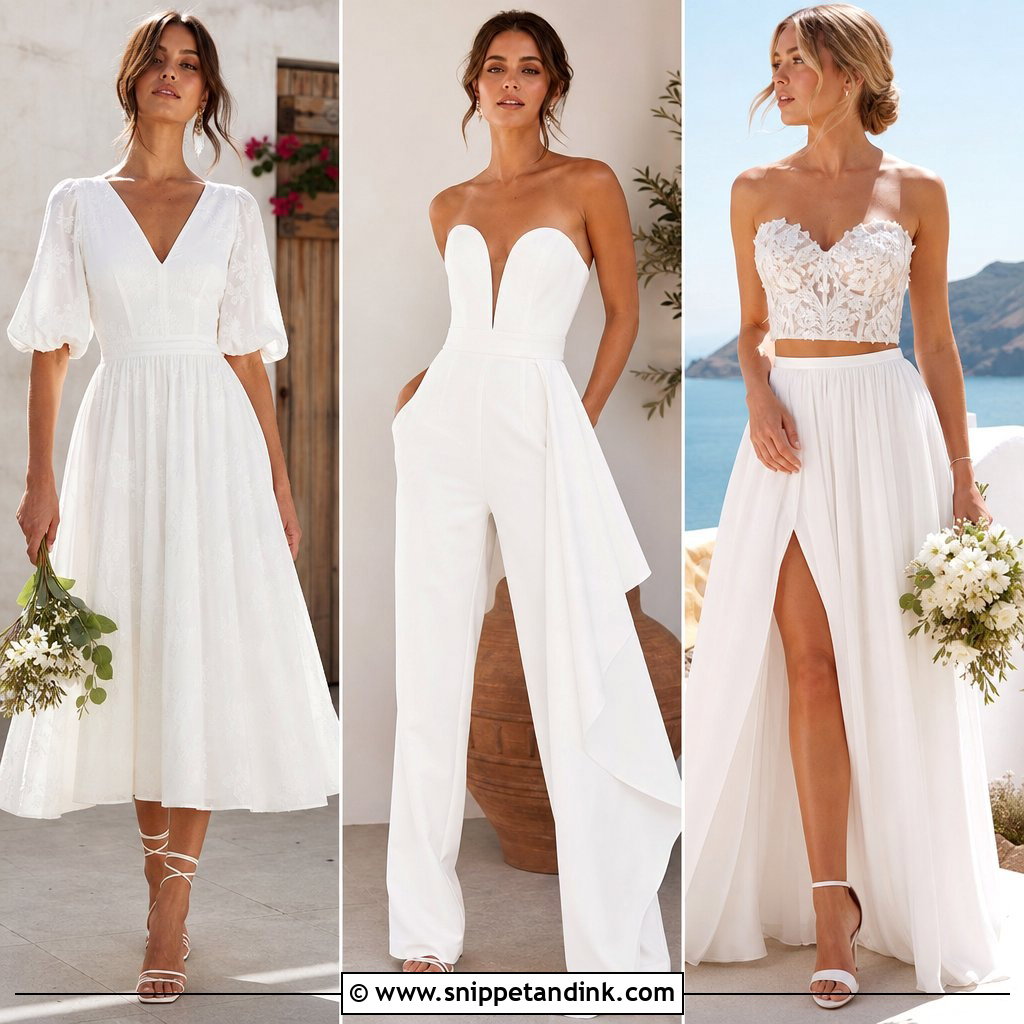
Tea length is the most practical gown here: it moves freely and travels well. A fitted bodice and a clean skirt falling between knee and ankle look polished in satin, mikado or crepe and too casual in jersey. Your shoes are on show, so choose pointed pumps, slingbacks or simple ankle straps in ivory or a soft metallic. Pearl earrings, a short veil and a small structured bouquet finish it, with a neat bun or tucked waves. It fits a courthouse, a restaurant or a daytime wedding. Pin the hem while you wear the actual wedding shoes, since even half an inch changes the proportions.
14. Minimal Midi Wedding Dress
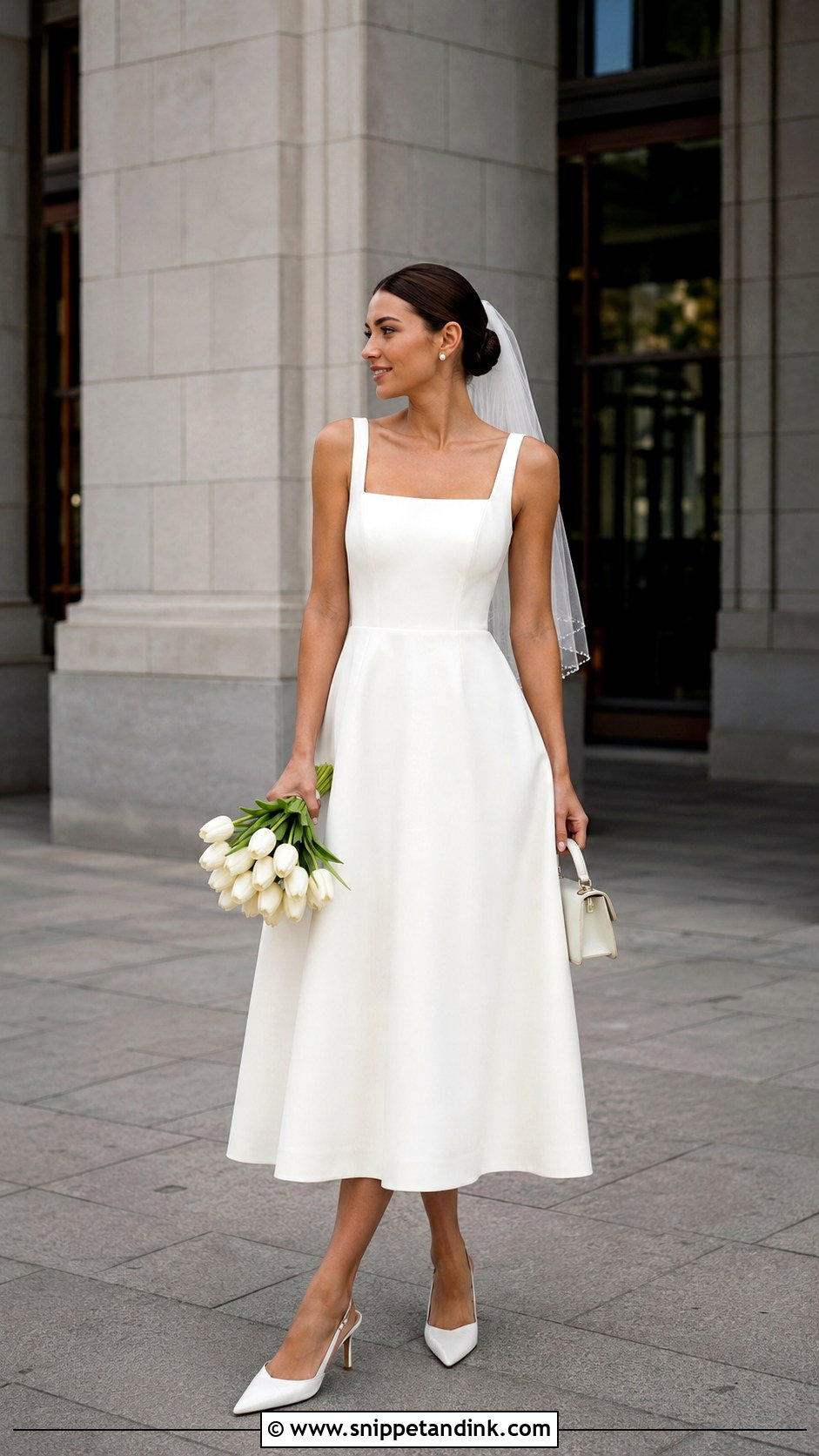
A minimalist midi dress is easy for a civil ceremony, a small gathering or a second outfit. A fitted column, a soft flare or a tailored A-line ending mid-calf all work. A square neck with wide straps gives structure; plain crepe or satin keeps it sophisticated. Hem placement is the detail I fuss over most with midis: ending at the widest part of the calf shortens the leg, so I usually move it an inch up or down. Pointed slingbacks, pearl studs and a small top-handle bag suit it, with a short veil or a sculptural bow. Keep dress, shoes and bag in the same tone, and carry tulips or roses.
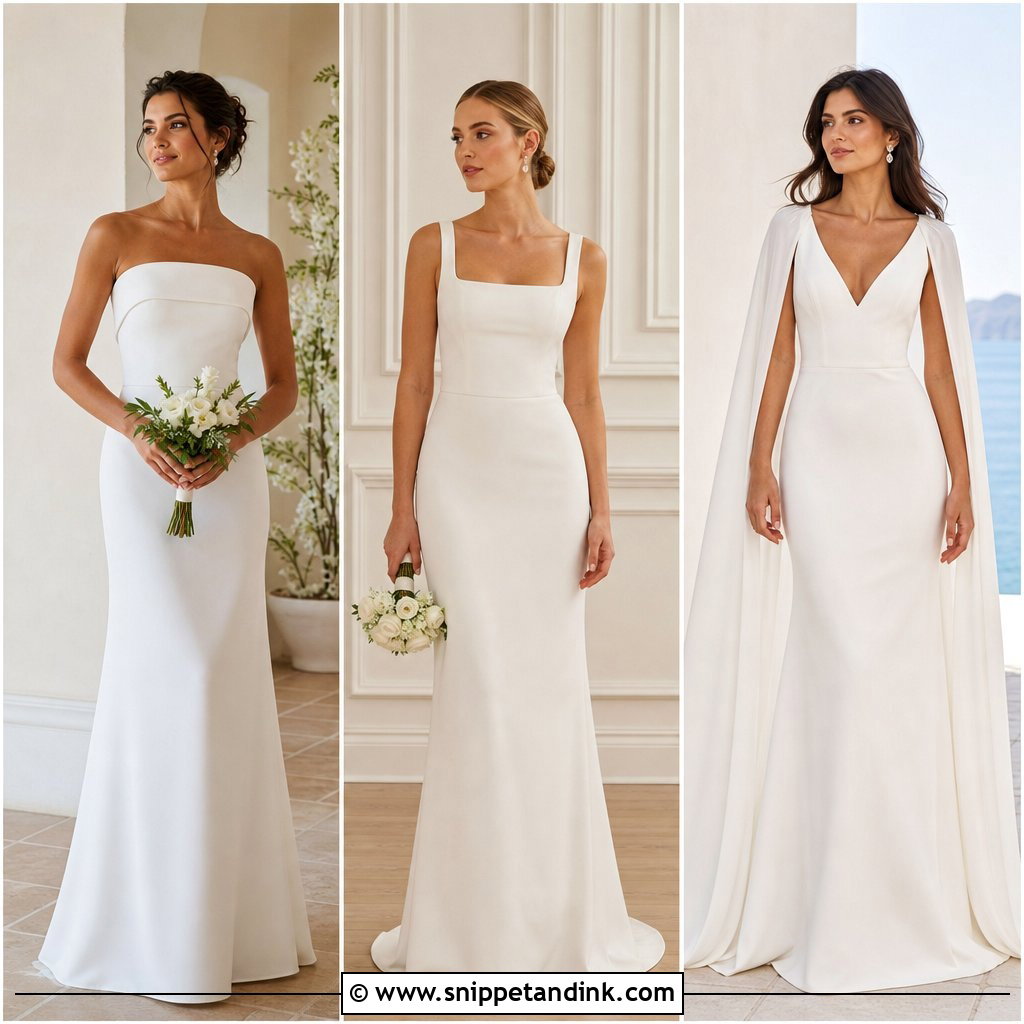
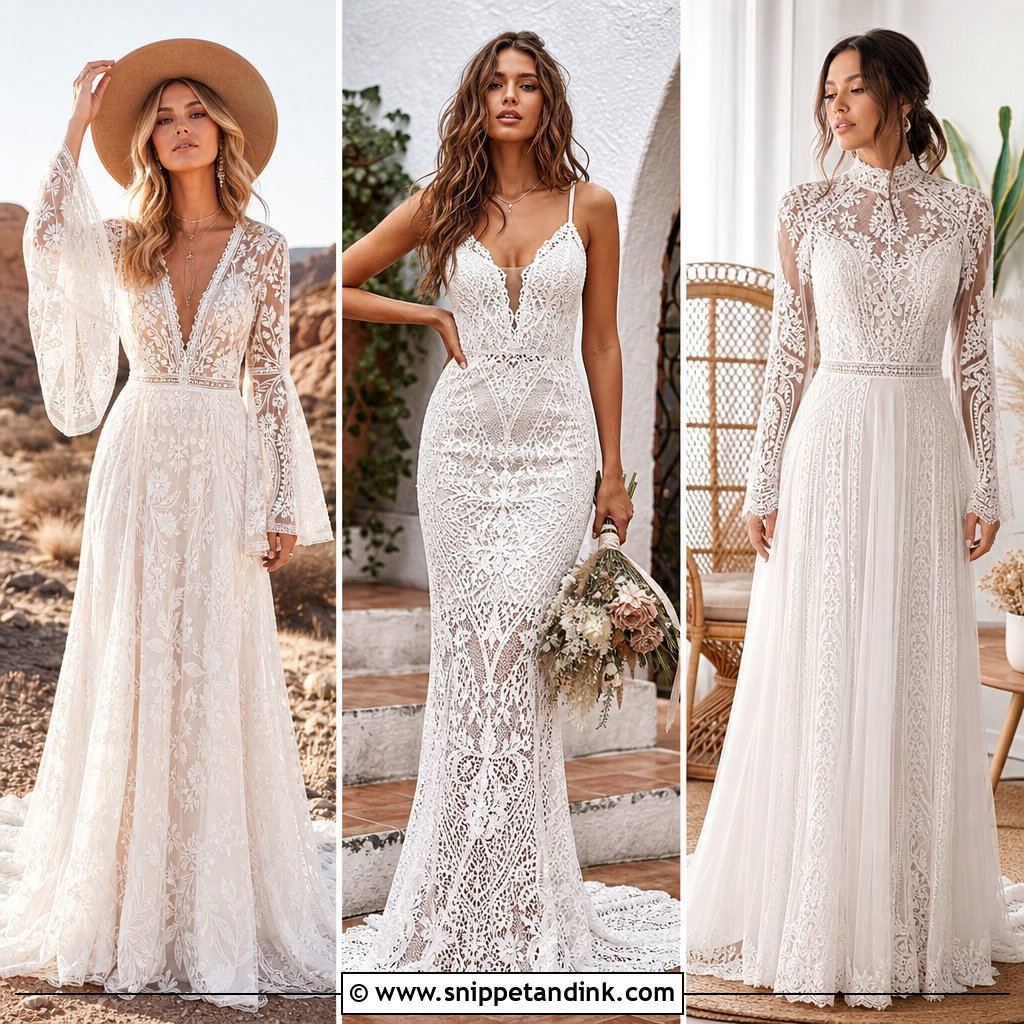

15. Minimal Mini Wedding Dress
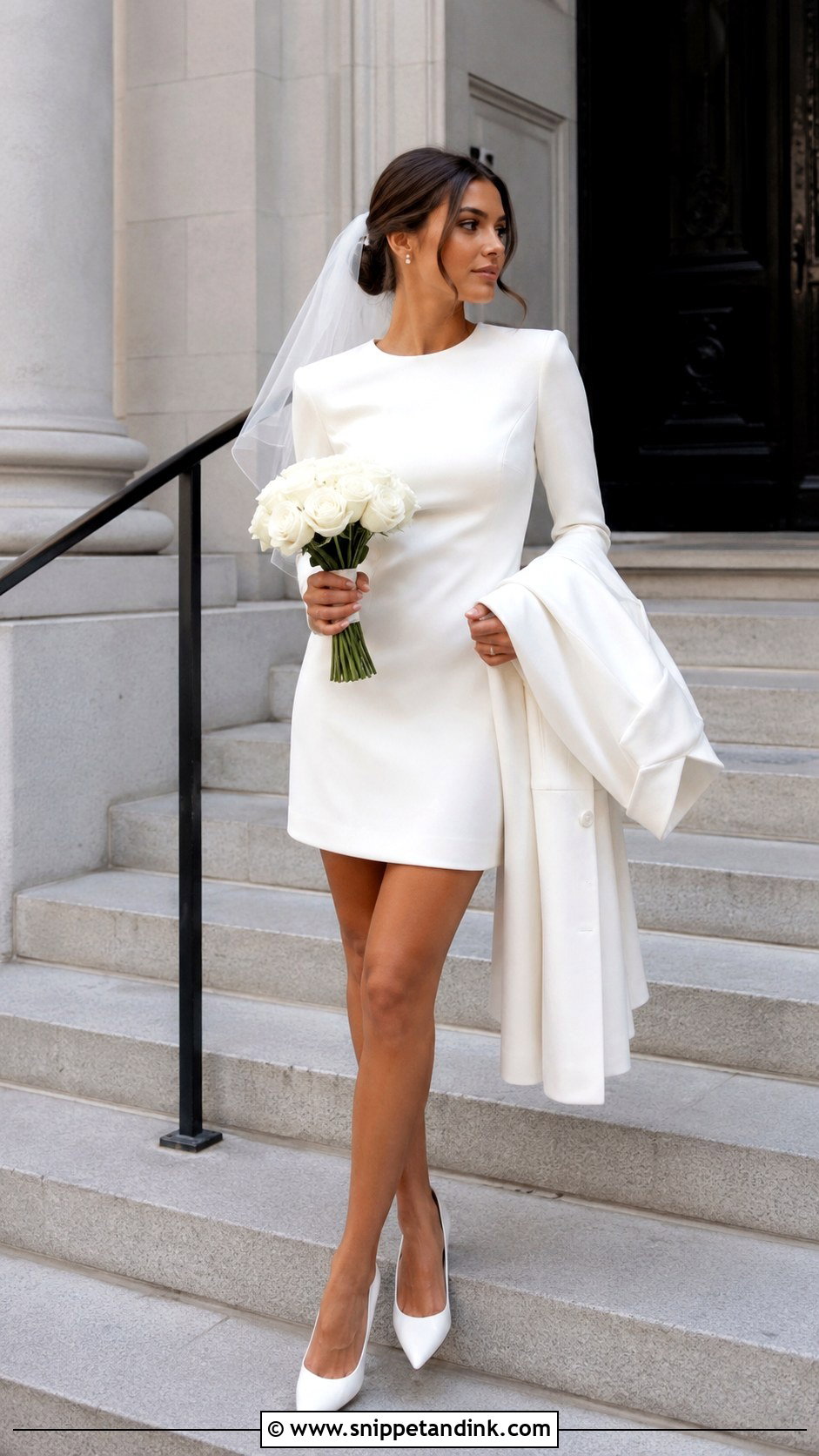
A mini is confident and modern for a courthouse, an elopement or a reception change. A structured shift, a fitted sheath or a gentle flare with a clean neck and a good lining look bridal; heavier crepe or satin helps the short dress hold its shape and photograph like a wedding dress instead of a party dress. Pointed pumps or low slingbacks, small earrings and a short veil keep it sharp, with a neat ponytail, bun or smooth bob. Carry something small. Walk, sit and climb stairs in it to test the hem. A long-sleeve mini or a tailored coat gives coverage for cooler weather and outdoor photos.
16. Minimal One Shoulder Wedding Dress
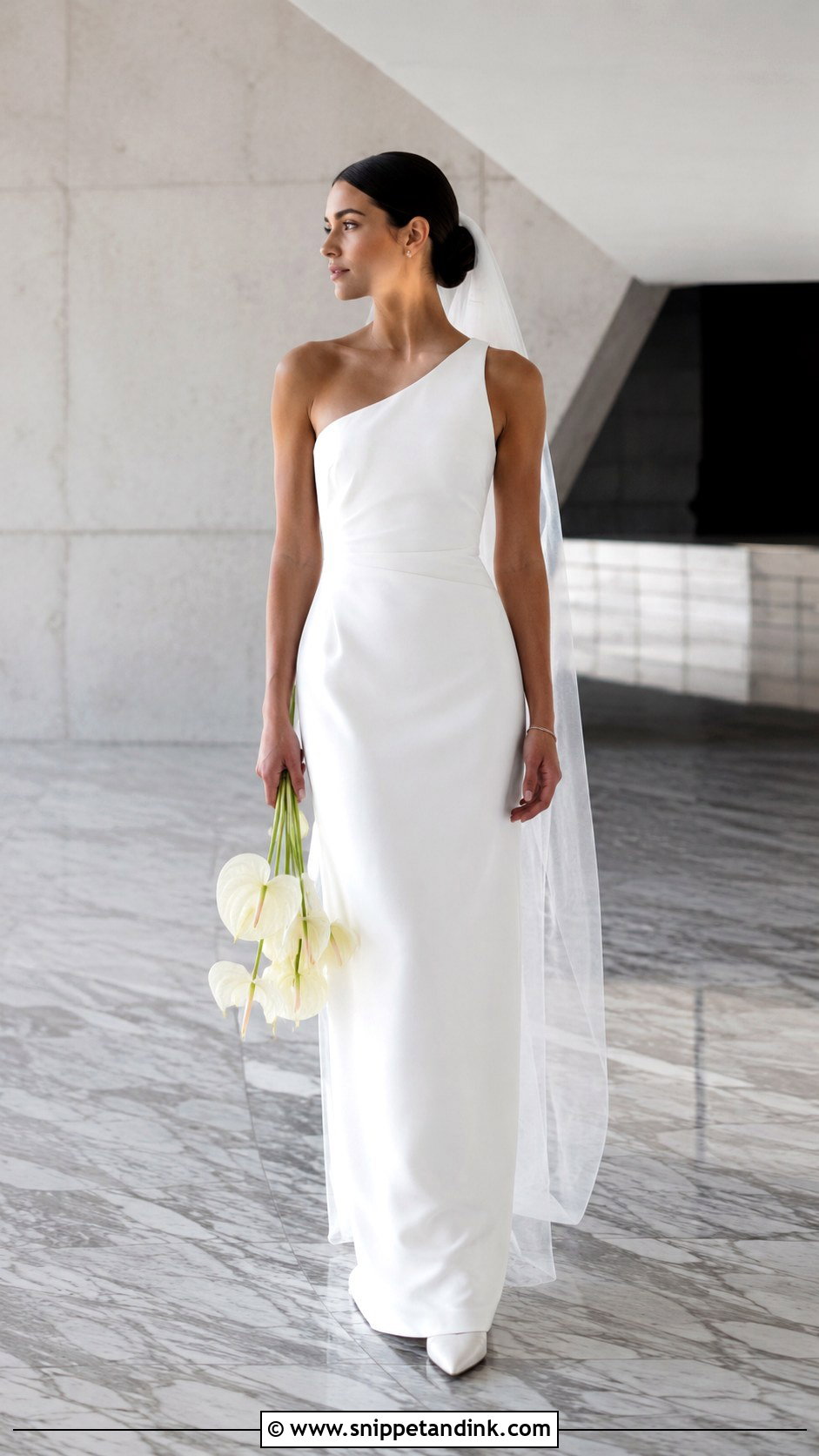
One shoulder adds asymmetry and stays restrained. Smooth crepe, satin or mikado with one structured strap over a fitted column or gentle flare is the shape. Leave the neckline bare and wear small earrings, a slim bracelet and simple pointed heels. A smooth bun set toward the bare side balances the strap. Add a plain veil under the bun or use a sculptural pin instead. Anthuriums or callas echo the architectural feel. The weak point is the strapless side, which tends to gape or slide as you move, so ask for a silicone strip or extra boning there.
17. Minimal Draped Silk Wedding Dress
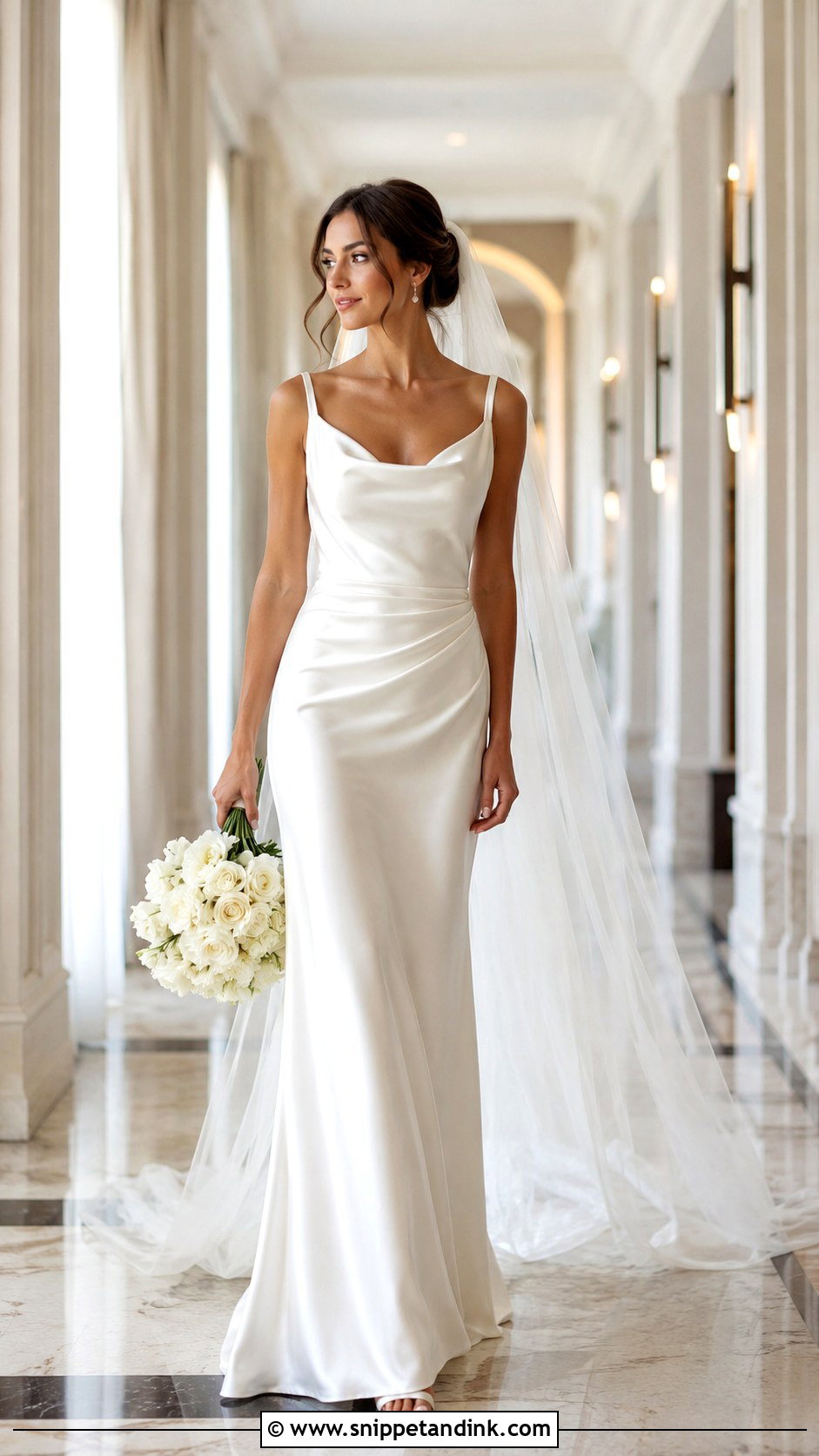
Draped silk looks rich without any surface decoration, provided the draping is controlled. Gathering at the waist, hip or neckline should form deliberate folds, not loose bulk. A column skirt with a subtle train keeps it elegant. Slim satin heels, delicate drops and a plain floor-length veil suit it, with relaxed waves or a low twisted bun. White garden roses add soft texture. Every alteration to the waist or hem changes how the drape falls, so the tailor should re-check the folds after each change. Steam it gently before the ceremony; pressing directly flattens the folds for good.
18. Minimal Cape Sleeve Wedding Dress
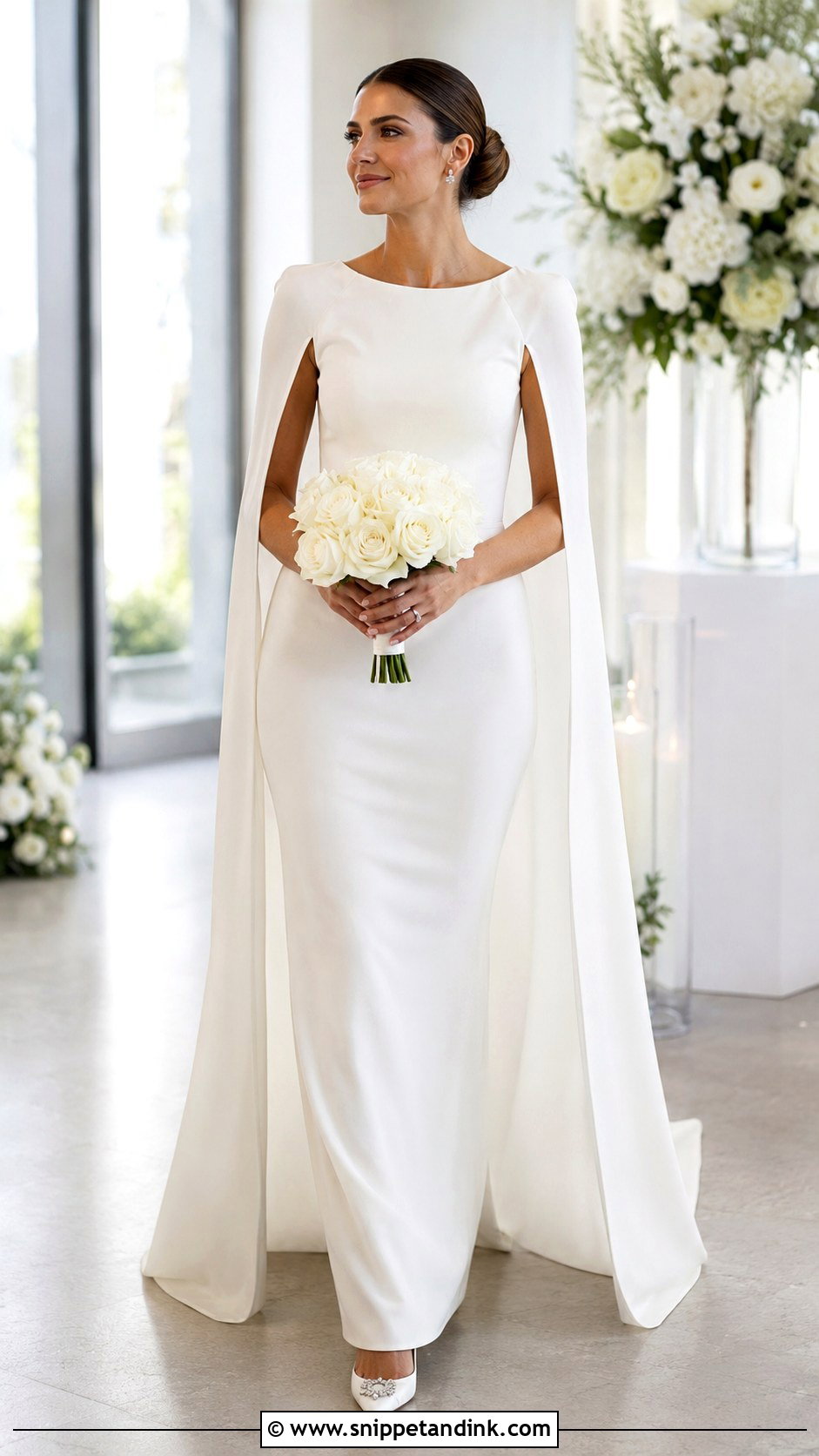
Cape sleeves add movement and coverage to a very simple gown. Choose a fitted crepe column with light cape panels attached at the shoulder, or a detachable cape falling from a clean neckline. Keep the fabric plain. Pointed pumps, crystal studs and a sleek low bun are enough. You don’t need a veil, since the cape already gives length; if you want one, keep it short and plain so the two don’t tangle. Carry a small bunch of white roses. Floor-length capes drag on grass and gravel, so practice walking outdoors in it; your tailor can shorten it slightly or add a wrist loop.
19. Minimal Ball Gown Wedding Dress
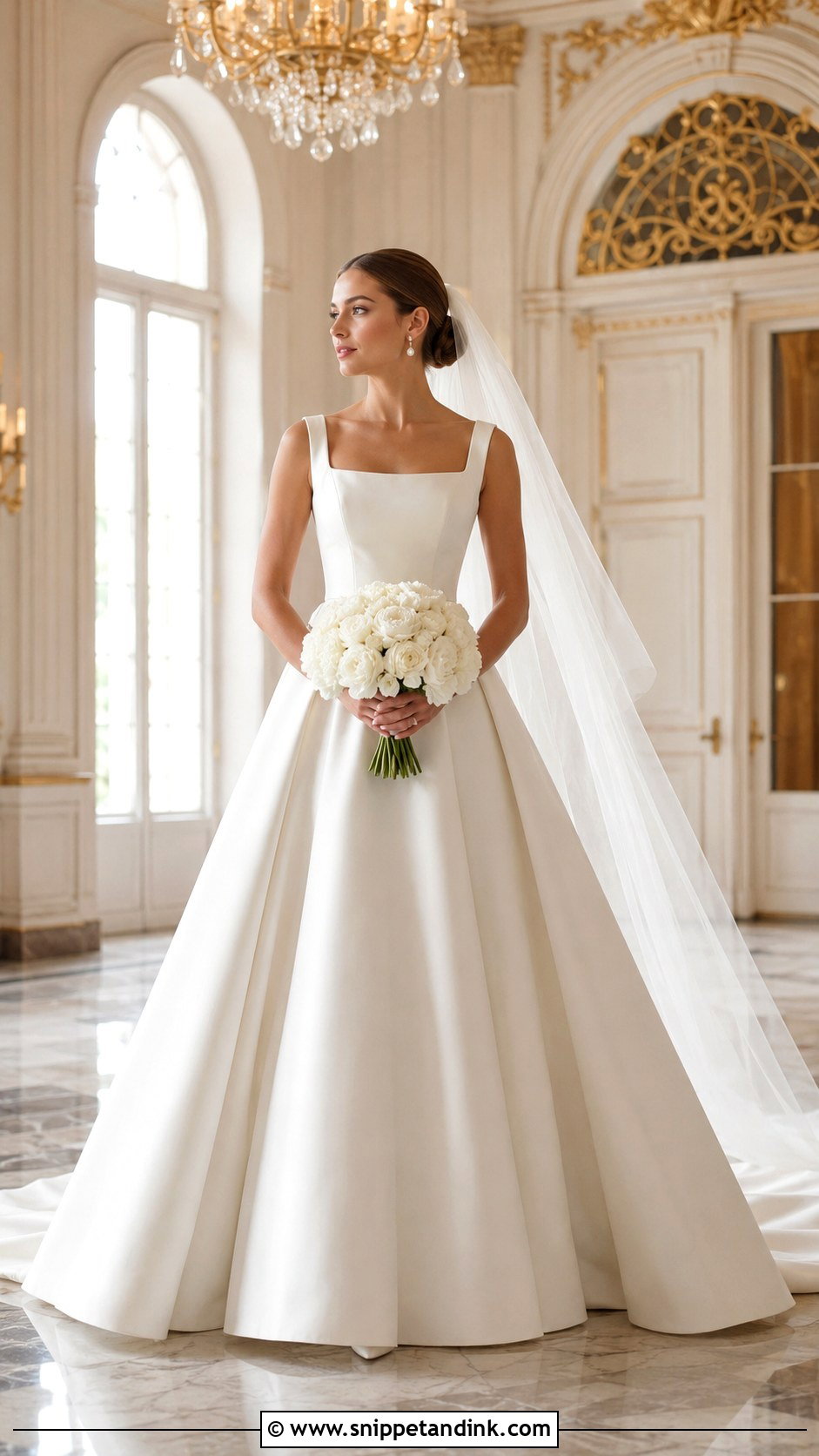
A ball gown can be minimalist if the impact comes from volume and proportion. Structured satin or mikado with a fitted bodice and a full clean skirt, plus a square, straight or soft scoop neck, gives a modern base. Closed-toe heels, simple pearls, a long plain veil and a low bun keep the styling controlled, and a single-variety white bouquet won’t fight the skirt. Ask how many underskirt layers there are and how much they weigh; I’ve often had extra tulle layers removed so a bride could walk and sit properly. A discreet bustle manages the train through dinner and dancing.
20. Minimal Bow Back Wedding Dress
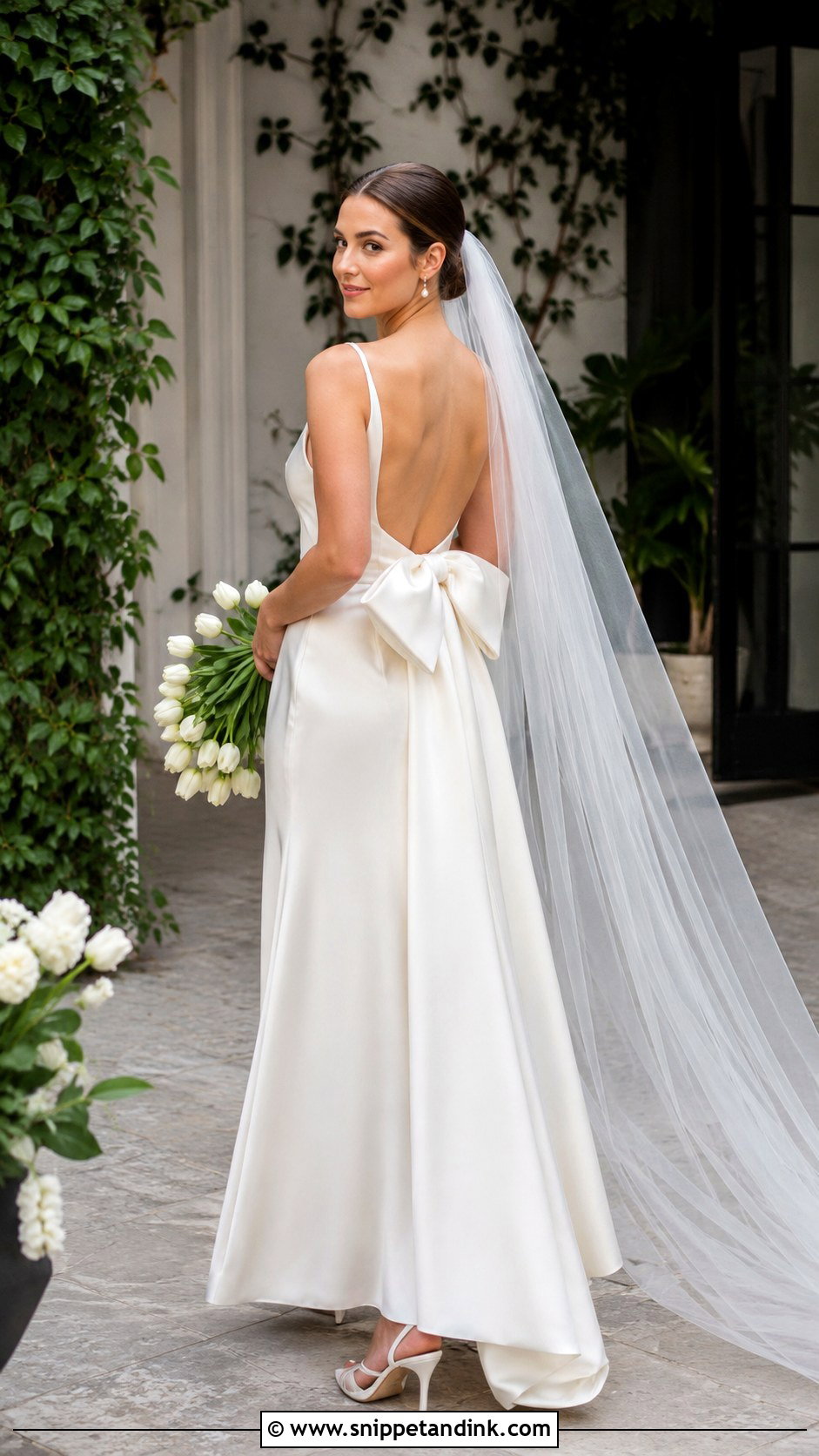
One detail, done well, is the minimalist principle, and a bow at the back is a good example. A smooth column or A-line with a flat, structured bow at the lower back, the waist or the neckline needs nothing else. Simple slingbacks, small pearls and a sleek bun suit it, with a plain veil under the style so the bow shows through the tulle. White roses or tulips keep it balanced. Bows collapse if the interfacing is weak, so press the loops lightly at the fitting and see whether they spring back. If it’s detachable, test the fastenings and assign someone to remove it later.
Underwear Lines Show on Smooth Fabric
Every ridge of a lace bra and every elastic edge shows through satin and crepe, especially under flash. Buy your underwear before the first fitting and wear the same pieces every time. Skin-tone, laser-cut briefs work under most of these gowns. For slips and backless styles, ask the tailor to sew cups into the dress instead of relying on stick-on bras, which tend to slip in heat.
Protecting White Satin From the Getting-Ready Room
Most stains happen before the ceremony, not during it. Get your makeup done before you put the dress on, and step into the gown rather than pulling it over your head. A thin scarf over your face as you zip up stops foundation landing on the neckline.
- Keep a white chalk stick for small marks on matte fabric; it covers rather than cleans.
- Blot spills with a dry white cloth instead of rubbing; water can leave a ring on silk.
- Hold your drink away from your body and choose clear drinks during photos.
- Ask a bridesmaid to check the hem for dirt before formal portraits.
Less on the Dress Means More Care in the Fit
A minimalist bridal look isn’t about one fabric or one shape. It’s about choices that make you, the dress and the accessories feel connected. Satin slips are fluid, crepe columns and structured A-lines give more shape, and a clean ball gown brings formality without decoration. Necklines, backs, sleeves and draping add personality. Whatever you choose, put secure construction, comfortable movement and precise alterations first, and let accessories support the gown. Use the ideas above as a starting point, then adjust them to your venue, your proportions and how you like to dress.
You'll Like These Ideas:



Leave a Reply