
Few bridal outfits in India have a shape as distinctive as the Potloi. Worn by many Meitei Hindu brides, it pairs a stiff cylindrical skirt with a fitted blouse, a woven waistband and a fine Innaphi over the upper body, finished with a ceremonial headpiece, jewelry and flowers. The shape is set by tradition, while colors, textiles and accessories leave room for the bride and her family. Below are traditional Potloi combinations, handwoven outfits for the functions around the wedding, jewelry pairings and reception looks. My one rule throughout: start from what the family’s custom asks for, then style within it.
Why a Potloi Is Dressed, Not Tried On
A Potloi isn’t a garment you zip into. The cylindrical skirt is built from many layers of cloth over a bamboo frame, stiffened with rice starch and decorated by specialist makers. On the day, it is fitted and tied onto the bride shortly before the ceremony, often an hour or two ahead, by people who know exactly how it should sit.
That changes how you plan the morning:
- Book the dresser as early as you book makeup, and confirm what time she needs you ready in blouse and base makeup.
- Finish hair and makeup first. Raising your arms over a fitted Potloi and Innaphi is awkward and risks the drape.
- Practice walking in short, even steps. The stiff skirt limits your stride, and the ceremony involves walking while holding flowers.
- Plan where you’ll rest. Sitting is restricted in a full Potloi, so ask for a stool or something to lean on between rituals.
Many families keep a Potloi for generations or borrow one from relatives, and renting is common too. If yours is borrowed, see it a few weeks early so the blouse can be made to suit its colors and borders.
1. Traditional Red Potloi Manipuri Bride
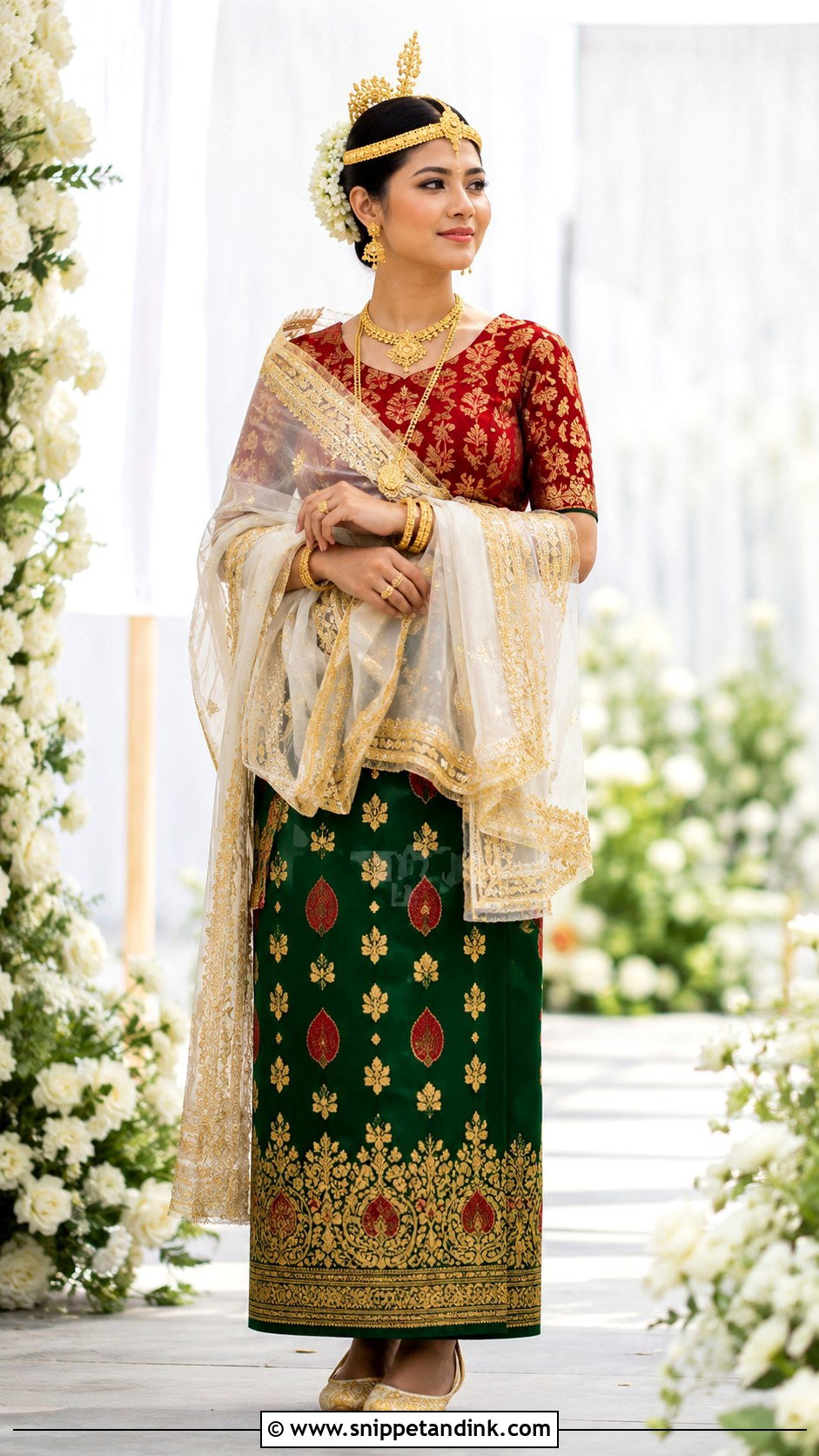
Red is the Potloi most families picture, and it’s the one I’d choose if the elders have firm views. The skirt carries gold borders, mirror accents and geometric motifs, so the blouse should stay plain in texture; velvet sits smoothly under a sheer white Innaphi. Many families traditionally pair the red skirt with a green blouse, so ask before matching it to the red. A Kajenglei or Leitreng frames the face, with layered gold necklaces, round earrings, bangles and a fine nose ring. Because the headpiece is heavy at the top, the bun underneath has to be firm. Finish with defined eyes, a classic red lip, and keep any footwear hidden under the hem.
2. Red And Gold Potloi Manipuri Bride
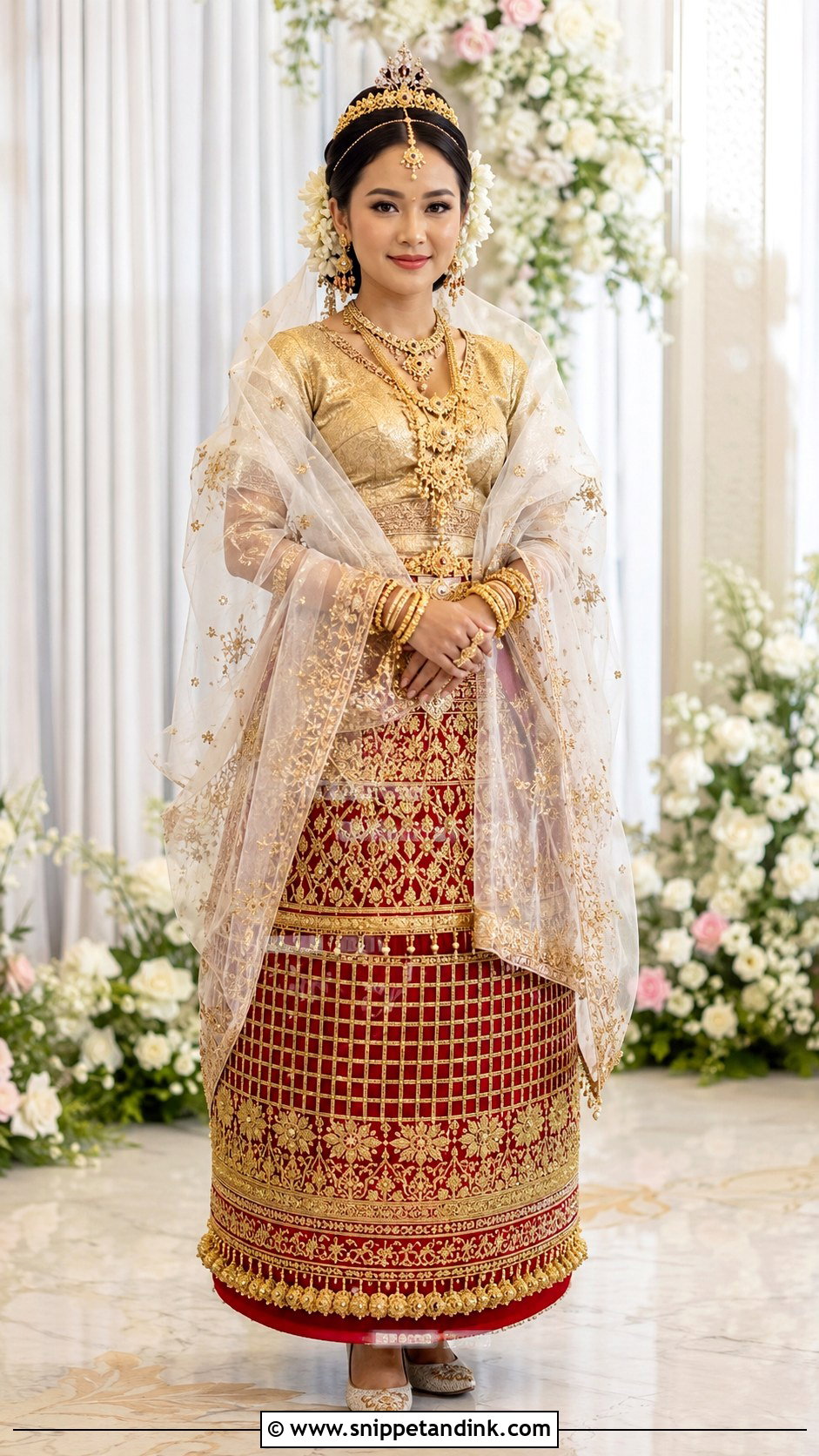
Gold-heavy Potlois catch every light in the room, which looks wonderful at an evening ceremony and harsh at midday. If yours has broad metallic borders, symmetrical appliqué and small mirrors, keep the face soft: highlighted skin, black liner, a muted red lip. A fitted gold blouse brightens the upper body, and a translucent ivory Innaphi stops the gold from becoming too much. Coordinate the necklaces and bangles with the blouse metal. I tell brides to skip a handbag during the rituals, since a skirt this structured gives you nowhere to set it down gracefully. A sleek center-parted bun with white flowers finishes it.
3. Pink Potloi Manipuri Bride
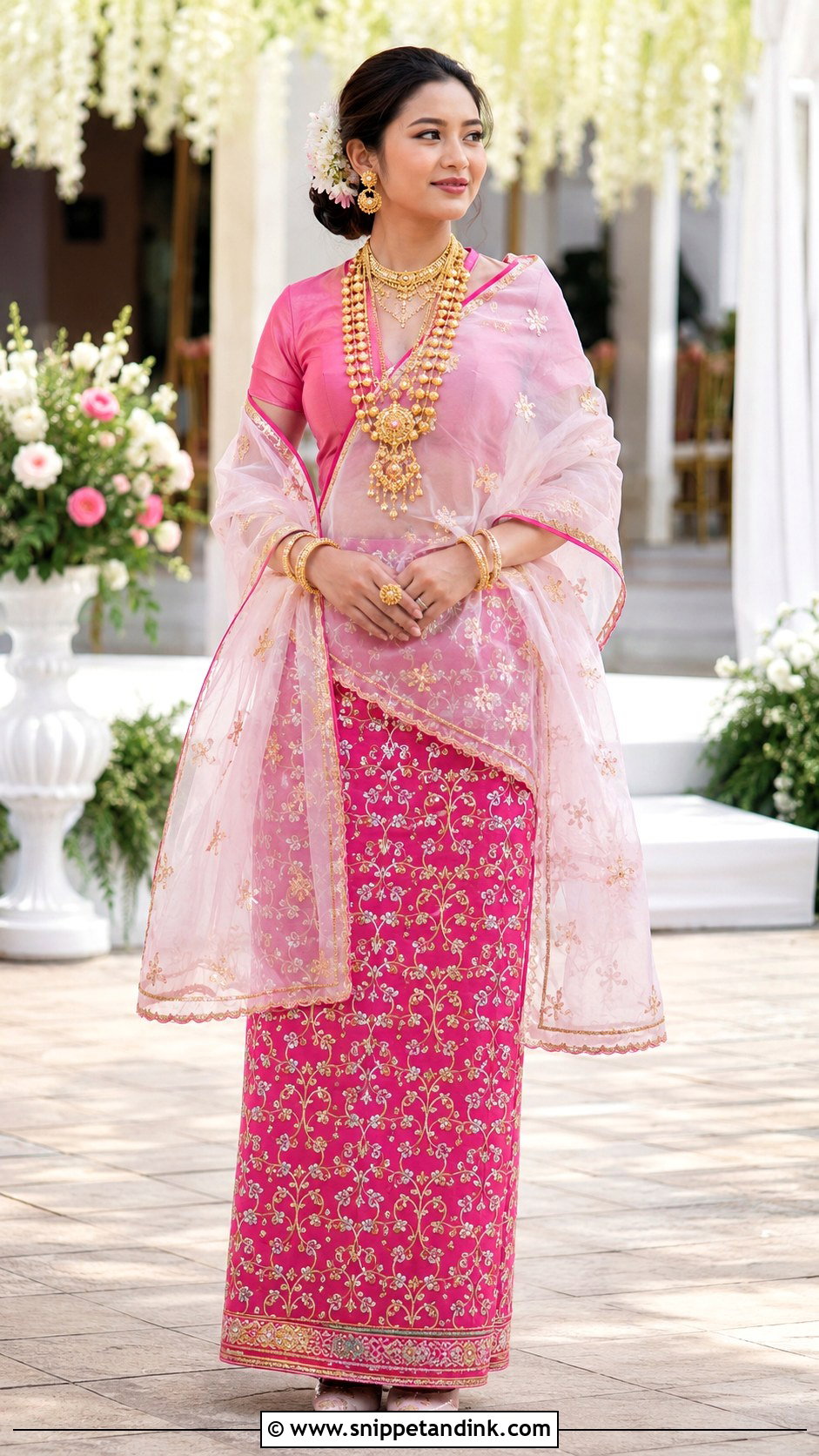
Pink keeps the Potloi’s shape while changing its mood, and it flatters in daylight because it throws warm light back onto the face. Choose medium or deep pink; very pale pink can look washed out next to the skirt’s mirror work. A satin or velvet blouse holds its shape best. A blush or ivory Innaphi gives contrast so the outfit doesn’t read as one block of pink. Arrange the flowers neatly around a smooth bun so they don’t fight the headpiece, and keep the lips rose-toned. Where shoes are worn, choose secure straps and a low heel.
4. Green Potloi Manipuri Bride
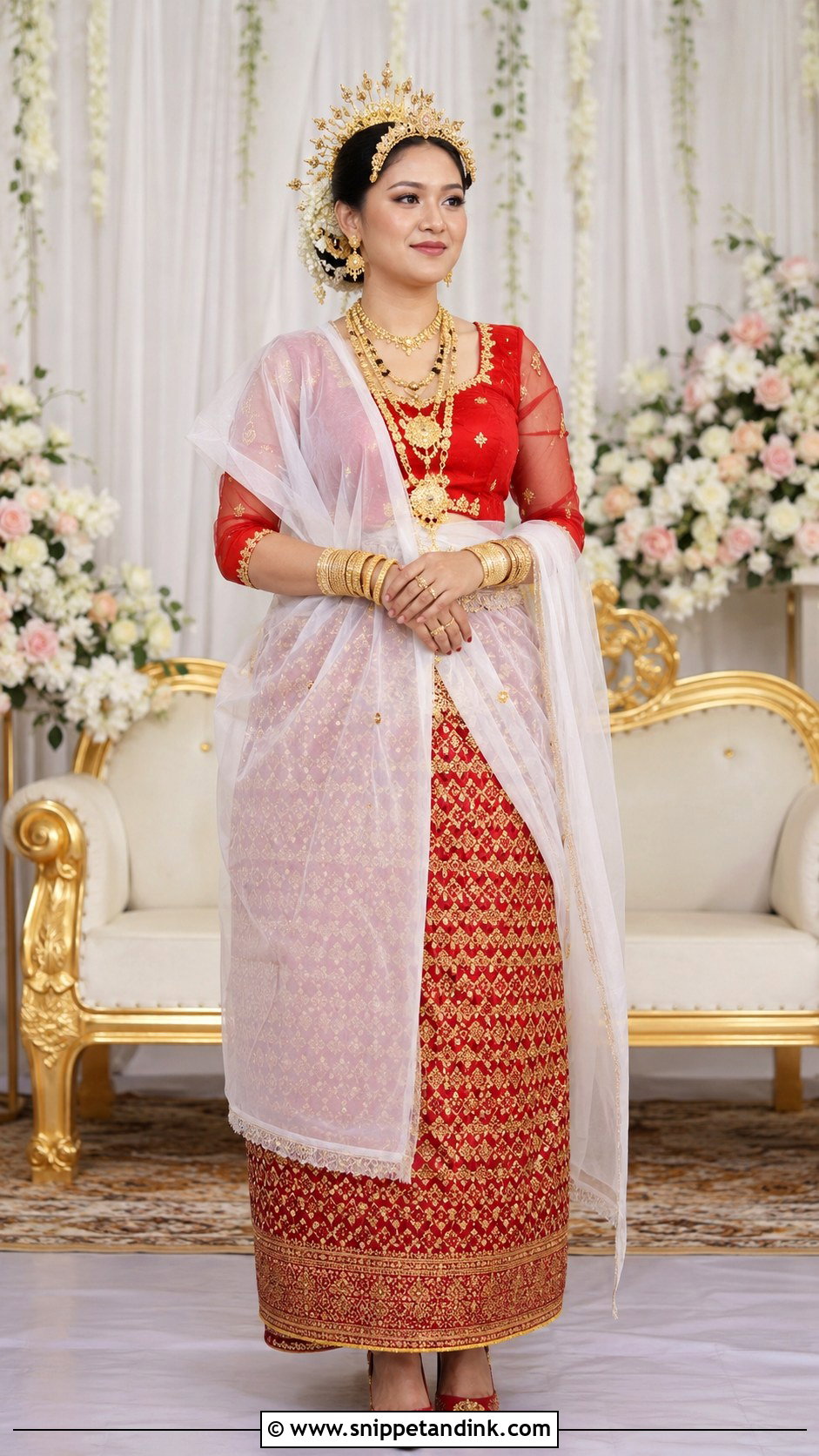
A green Potloi stands out, and with gold borders and red motifs it still reads festive. I’d pair it with a red or gold blouse and a cream Innaphi to calm the saturated colors. Green is also the shade most likely to clash with the decor: some greens turn yellowish beside marigolds and banana leaves, so hold a fabric swatch against the ceremony decorations before deciding. Traditional gold necklaces, round earrings and the headpiece complete it, with white flowers around a center-parted bun. Warm neutral eyeshadow and a brick-red lip balance the green.
5. Maroon Potloi Manipuri Bride
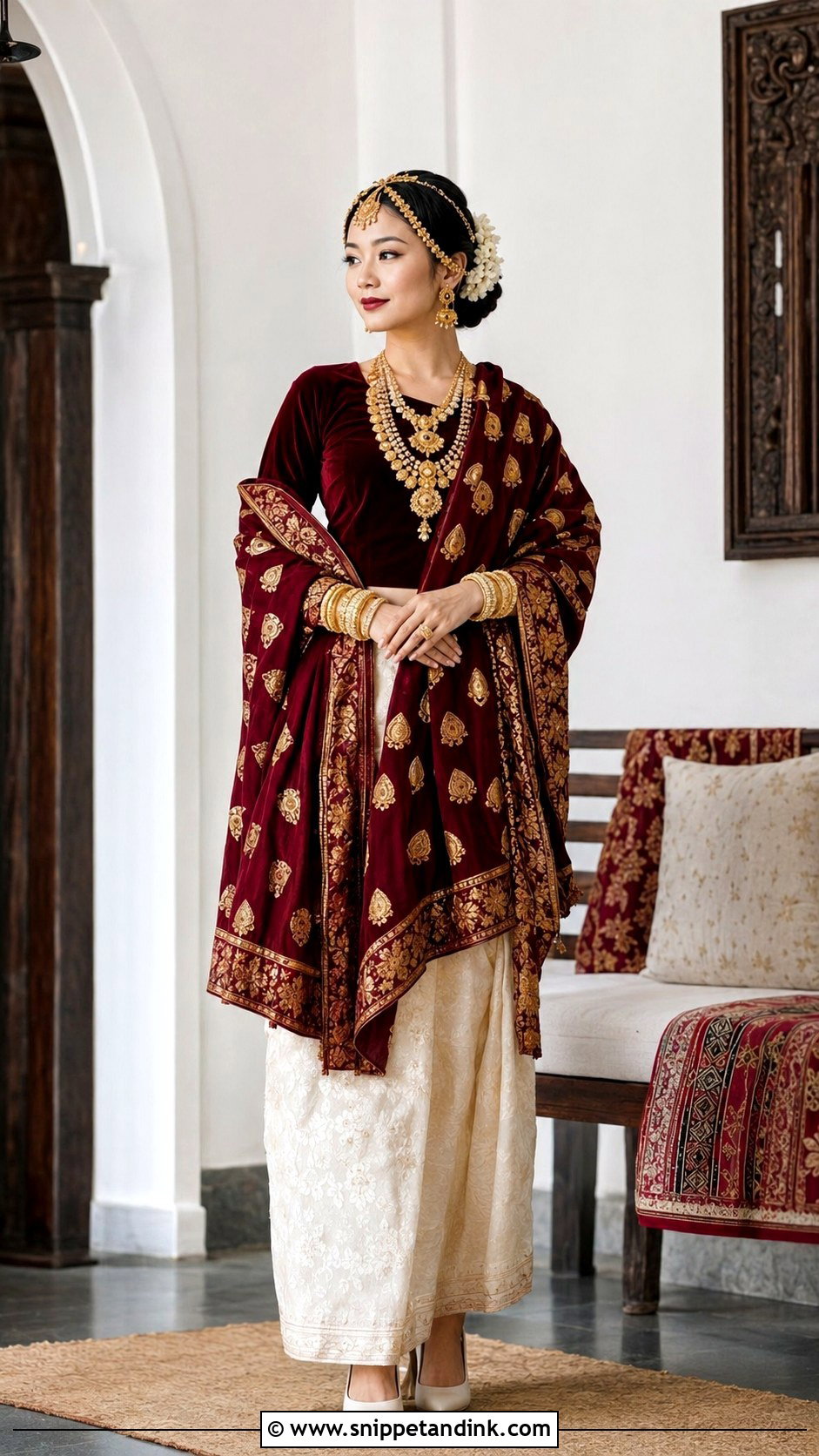
Maroon is the quieter sister of red, and it suits brides who feel swamped by bright color. Antique-gold embroidery, small reflective details and clear borders look rich against it. A matching velvet blouse adds depth, while an off-white or pale gold Innaphi lifts the upper body. Antique-finish jewelry suits the darker tone better than bright yellow gold. Keep the flowers controlled, because a big cluster looks heavy against maroon. Brown-gold shadow and a deep rose lip suit it, and in evening light it looks regal.
6. Red And White Manipuri Bride
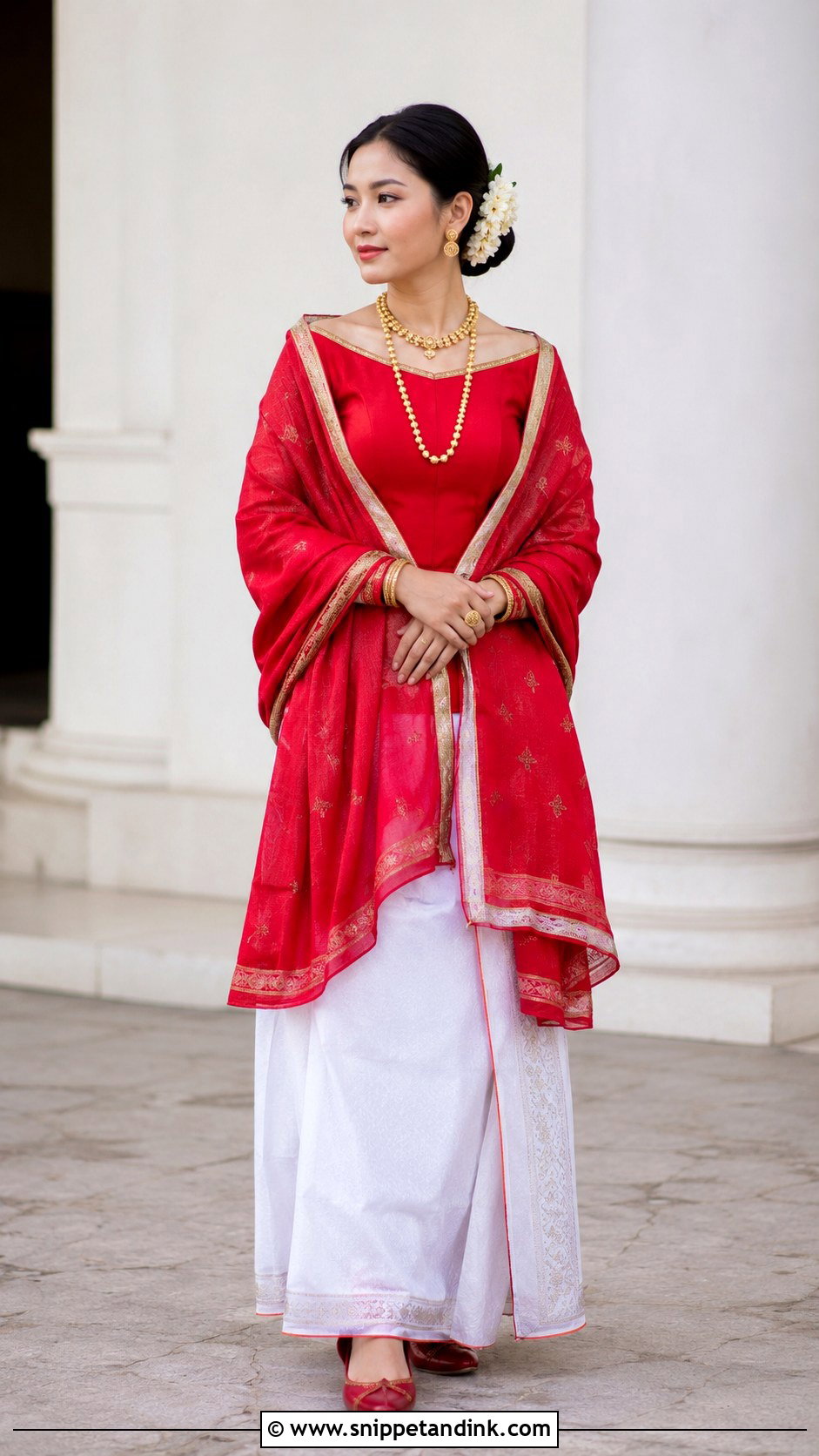
Red below, white above: it’s the clearest contrast a Potloi can make, and the white Innaphi does real work here. Draped generously, it calms the area around the face and makes the gold jewelry stand out. Keep the gold on the skirt restrained so the two colors stay the story. Wear a Kajenglei or whichever headpiece the family uses, with gold necklaces, round earrings, bangles and a nose ring if it belongs to your arrangement. A bun wrapped in white flowers carries the theme through. Match the lipstick to the skirt’s exact red rather than a generic one.
7. Pastel Innaphi Manipuri Bride
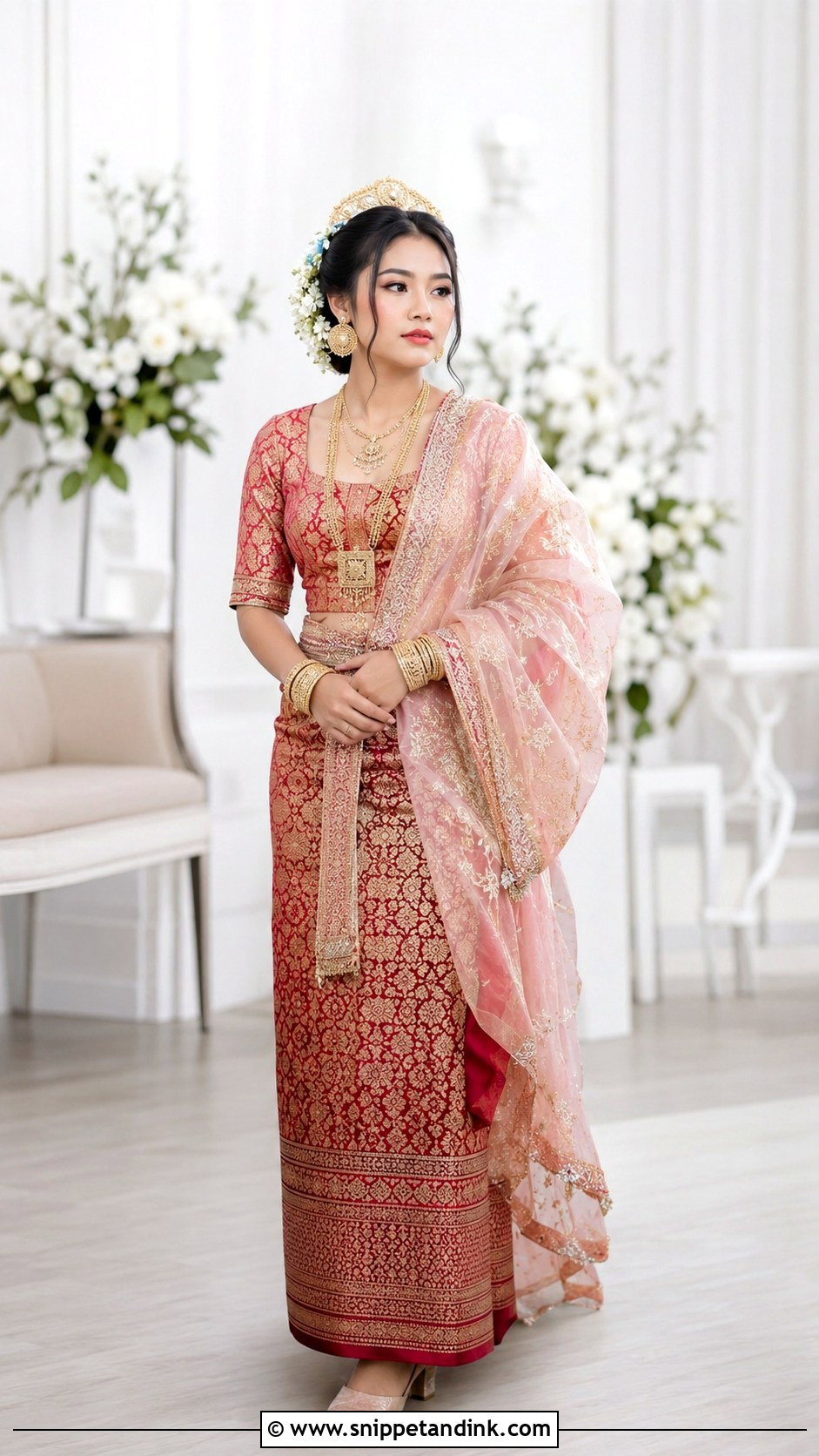
A pastel Innaphi brings soft color near the face while the skirt keeps its ornate weight. Start with a red, maroon, pink or green Potloi and a blouse that echoes its main shade, then pick an Innaphi in blush, peach, mint, powder blue or ivory. The fabric is fine and translucent, so it shows creases and pin marks easily; I steam it the morning of the wedding and pin it in as few places as possible. Draped well, it frames the blouse and jewelry instead of hiding them. Because the Innaphi carries ceremonial meaning, ask an experienced dresser to place it.
8. Kajenglei Manipuri Bride
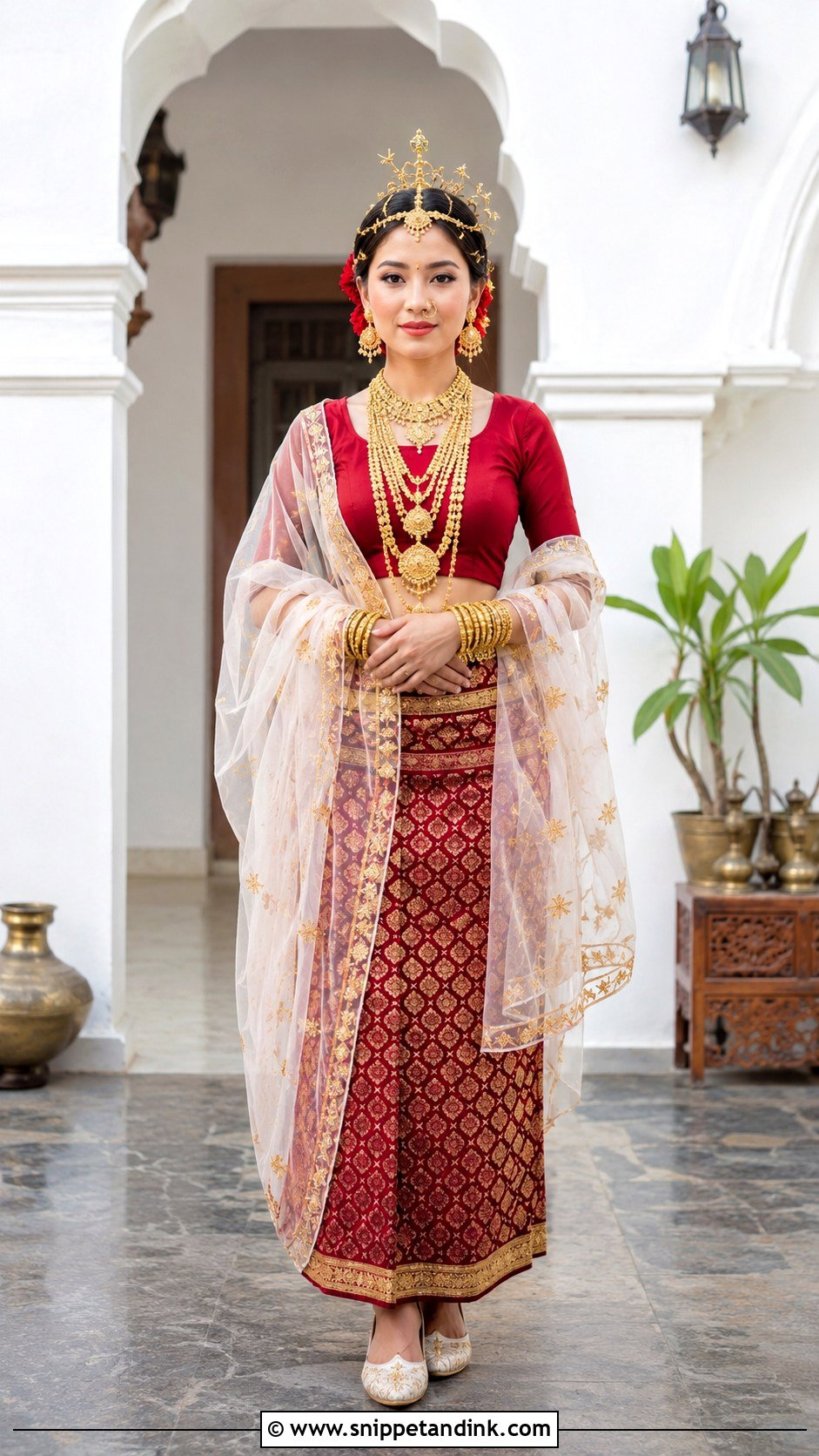
When the Kajenglei is the centerpiece, everything else should support it. A classic red Potloi, fitted red blouse and sheer white Innaphi give it a calm base. Keep the jewelry in proportion: a long necklace, shorter neck pieces, round earrings, bangles and a fine nose ring, and nothing oversized. The headpiece needs a firm base, so the hair is set according to local custom before it goes on, and flowers only go where they’ll stay pinned. A crown-like headdress tips forward when the bride bows, and a few extra pins at the back of the bun prevent that. Defined eyes keep the face from being lost beneath it.
9. Traditional Jewelry Manipuri Bride
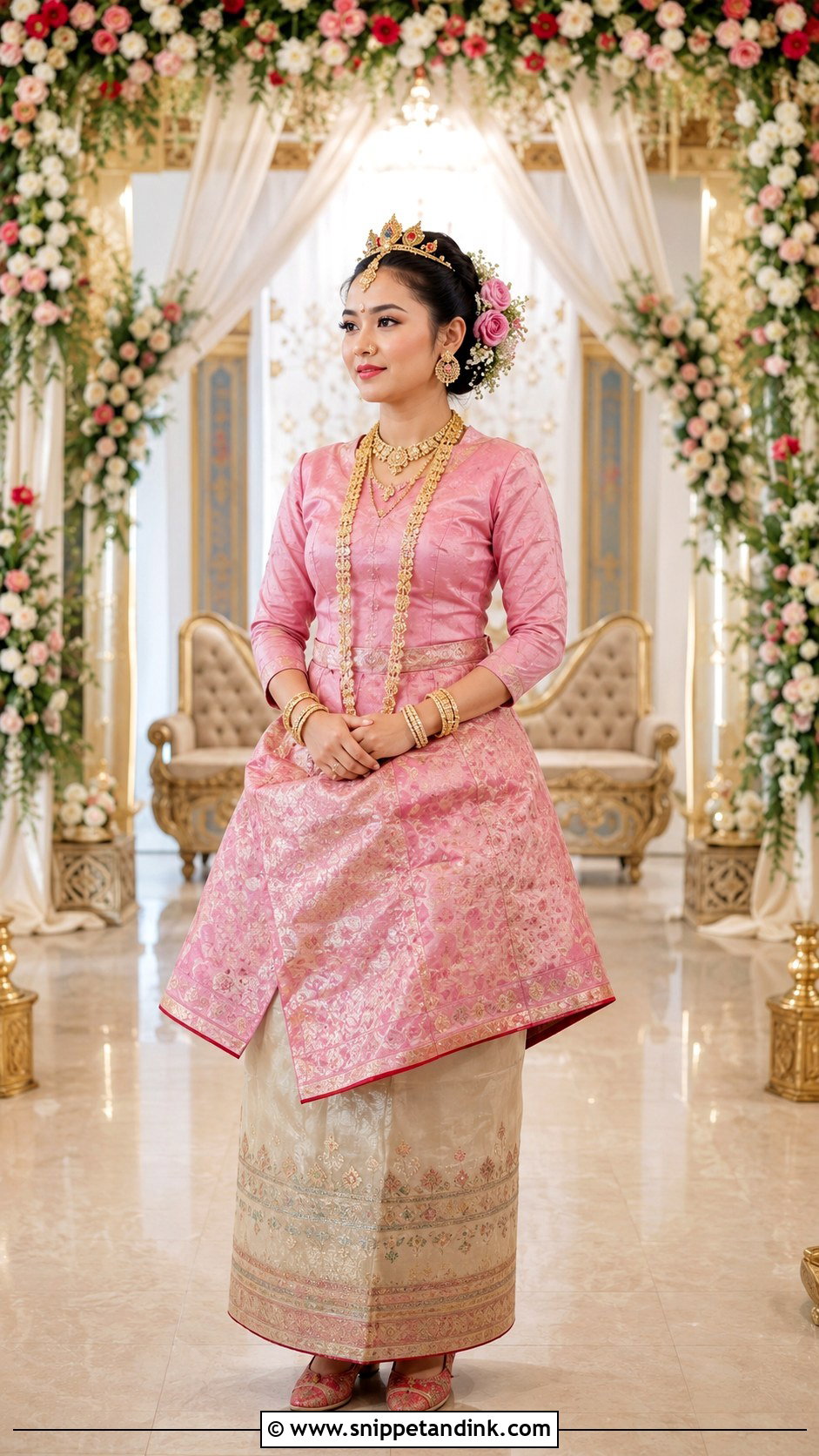
Layered traditional jewelry adds texture, but the weight adds up fast. Over a red or pink Potloi with an ivory Innaphi, build from a long necklace such as a Likhom, then shorter neckpieces, round earrings, bangles and a fine nose ornament, following family practice. Match the metal tones to the skirt’s embroidery. Wear the whole set for an hour at home first; necklaces that feel fine for five minutes can drag at the neck by the end of the rituals. Anchor the longest strand to the blouse with a small hidden pin so it stays centered, and go easy on skin shimmer, which competes with the metal.
10. Heirloom Jewelry Manipuri Bride
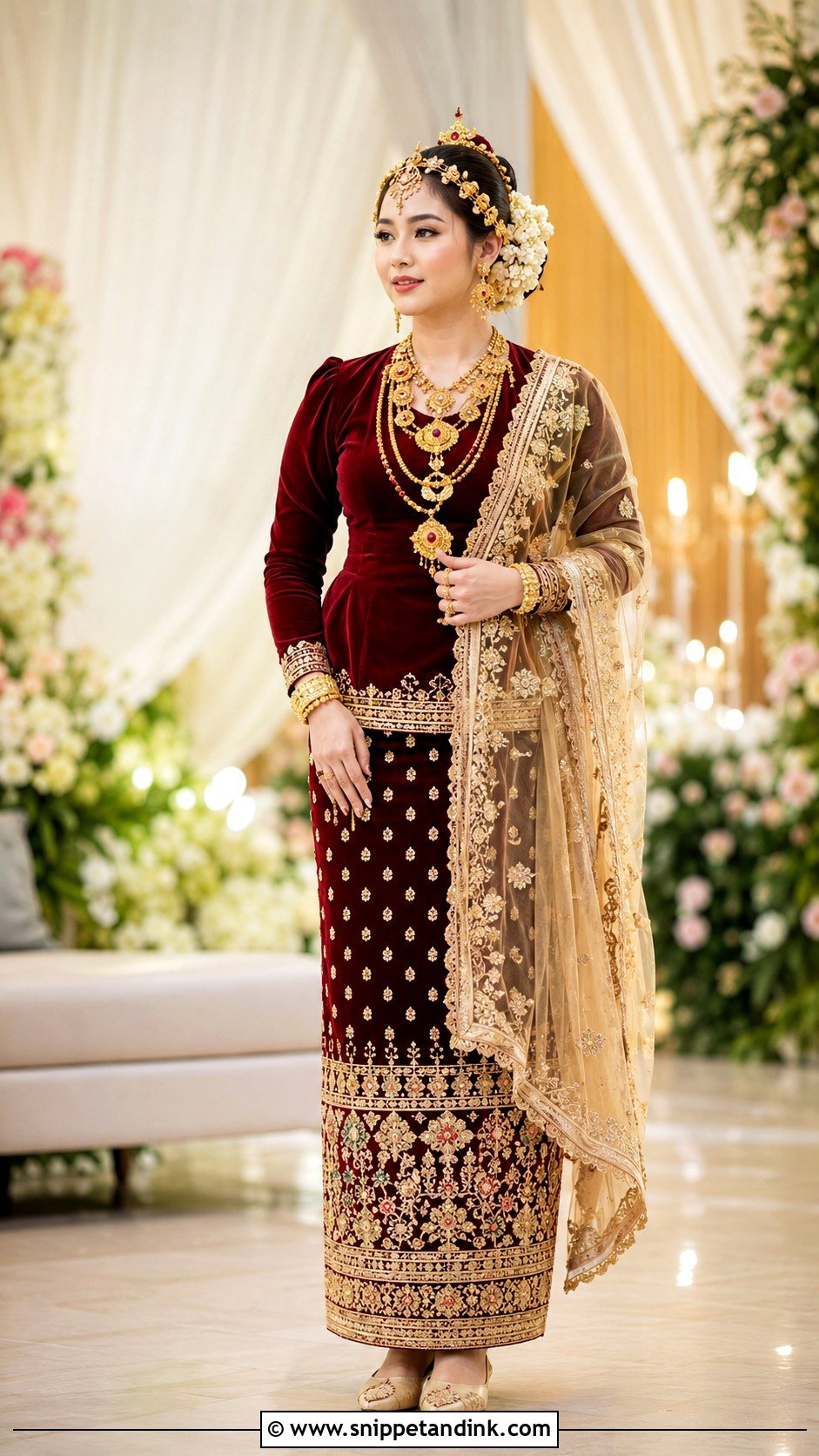
Heirloom pieces make the outfit personal without changing its foundation. With a red, maroon or green Potloi and a light Innaphi, build around one or two family pieces and add newer jewelry only to fill out the proportions. Match the metal finish to the skirt’s work rather than mixing many designs. Old clasps are the weak point, so have a jeweler check them a few weeks before and add a safety chain where needed. A traditional headpiece, sleek bun, white flowers and a classic lip complete it.
11. Floral Hair Manipuri Bride
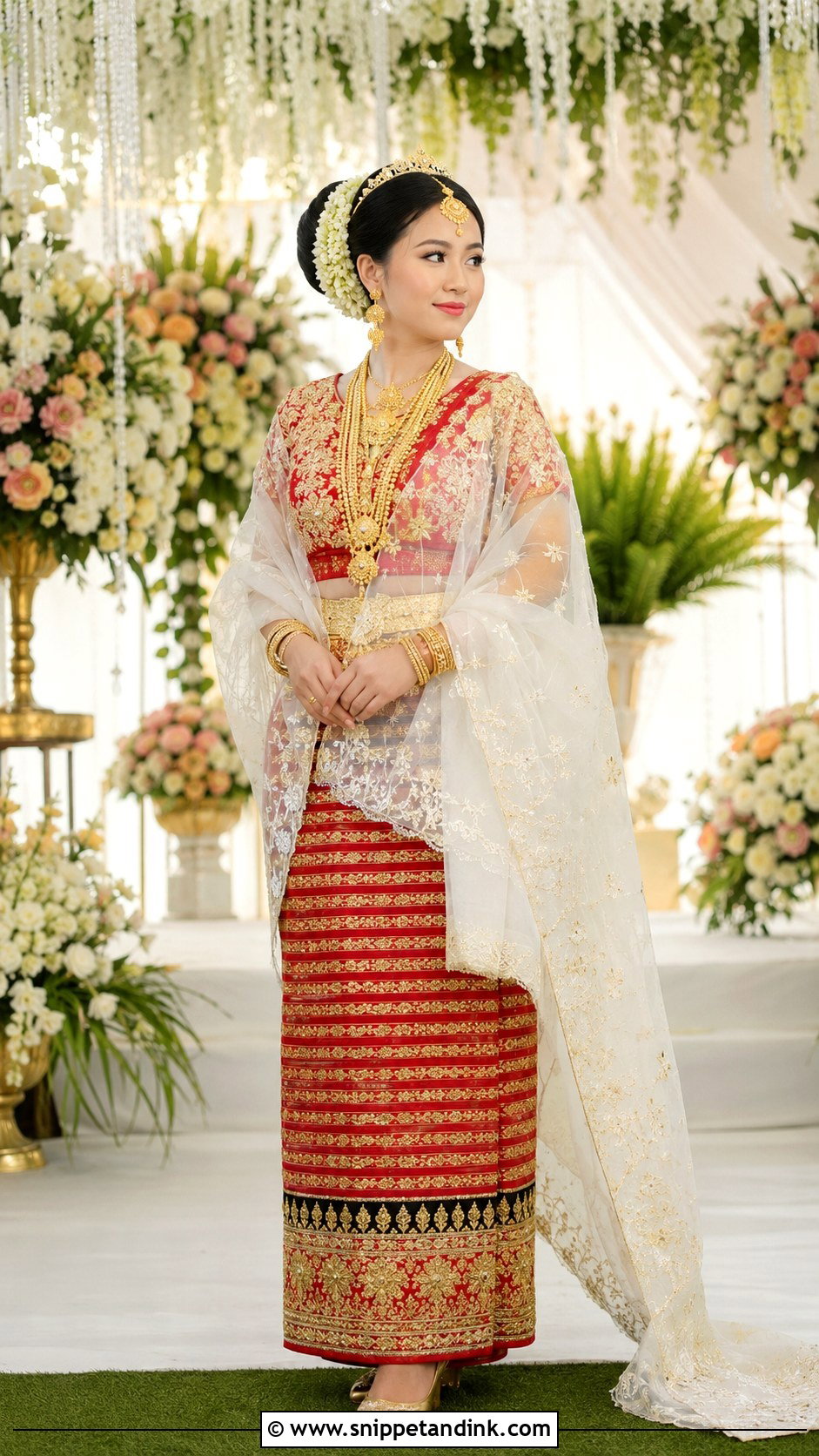
Flowers soften a Potloi, but they’re also the first thing to wilt or slide. Over a red or pink skirt with an airy white Innaphi, set the hair in a smooth center-parted bun and place small white flowers around it or beneath the headpiece, symmetrical and compact. Big blooms catch on the Innaphi and the Kajenglei. Ask for small, sturdy flowers prepared that morning and extra pins in the kit. Layered necklaces, round earrings and a nose ring complete it, with black liner and a red or rose lip.
12. Minimal Makeup Manipuri Bride
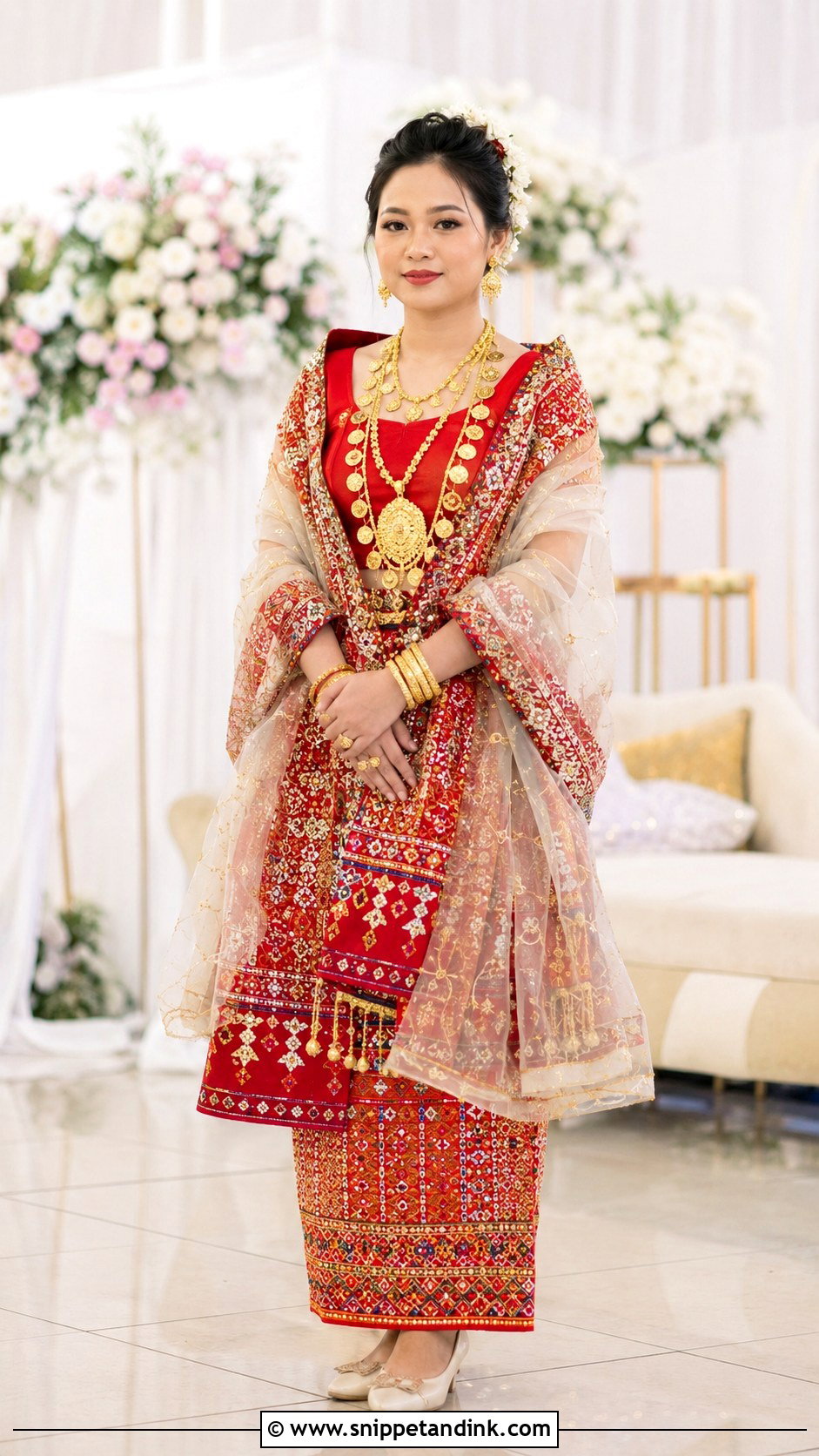
Minimal makeup doesn’t mean less preparation. With a richly decorated red Potloi, heavy jewelry and a headpiece, the face needs to be even and long-wearing rather than dramatic. Use a lightweight base set well, neutral shadow, clean black liner, softly filled brows and a muted red or rose lip, with blush for life and highlight kept away from the forehead where the headpiece sits. Do the trial in a blouse of the bridal color. Judging a lip shade against a T-shirt tells you very little.
13. Bold Red Lip Manipuri Bride
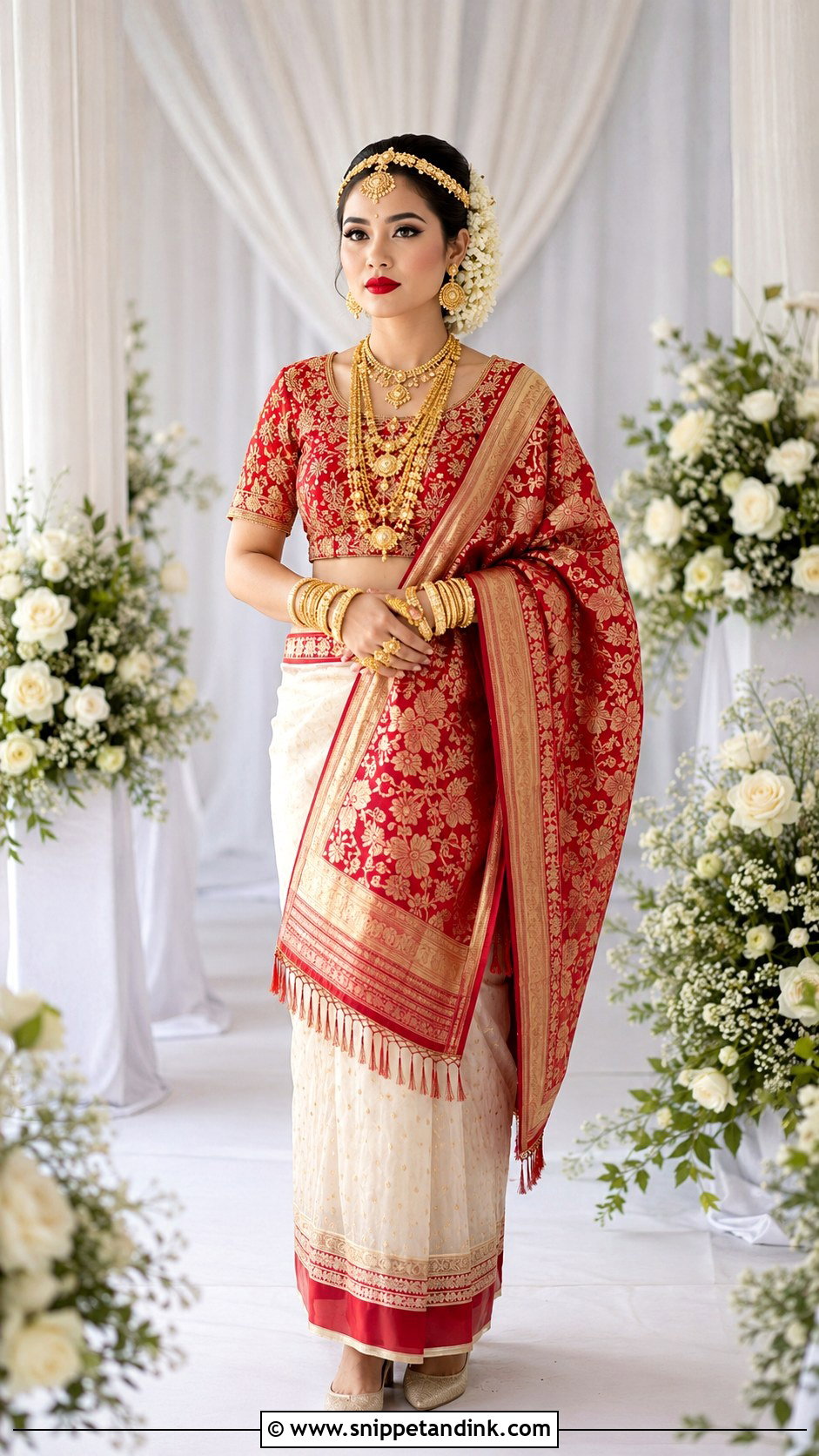
A classic red lip ties the face to the Potloi, but only if the undertone matches. Hold the lipstick against the skirt fabric in daylight, because a blue-red next to an orange-red skirt looks wrong in every photo. Pair it with a red-and-gold Potloi, fitted red blouse, pale Innaphi and gold jewelry, and keep the eyes to black liner and soft neutral shadow. To make it last, fill the whole lip with liner first, apply color, blot and reapply. That holds through greetings and a long ceremony far better than one thick coat.
14. Phanek And Innaphi Engagement Bride
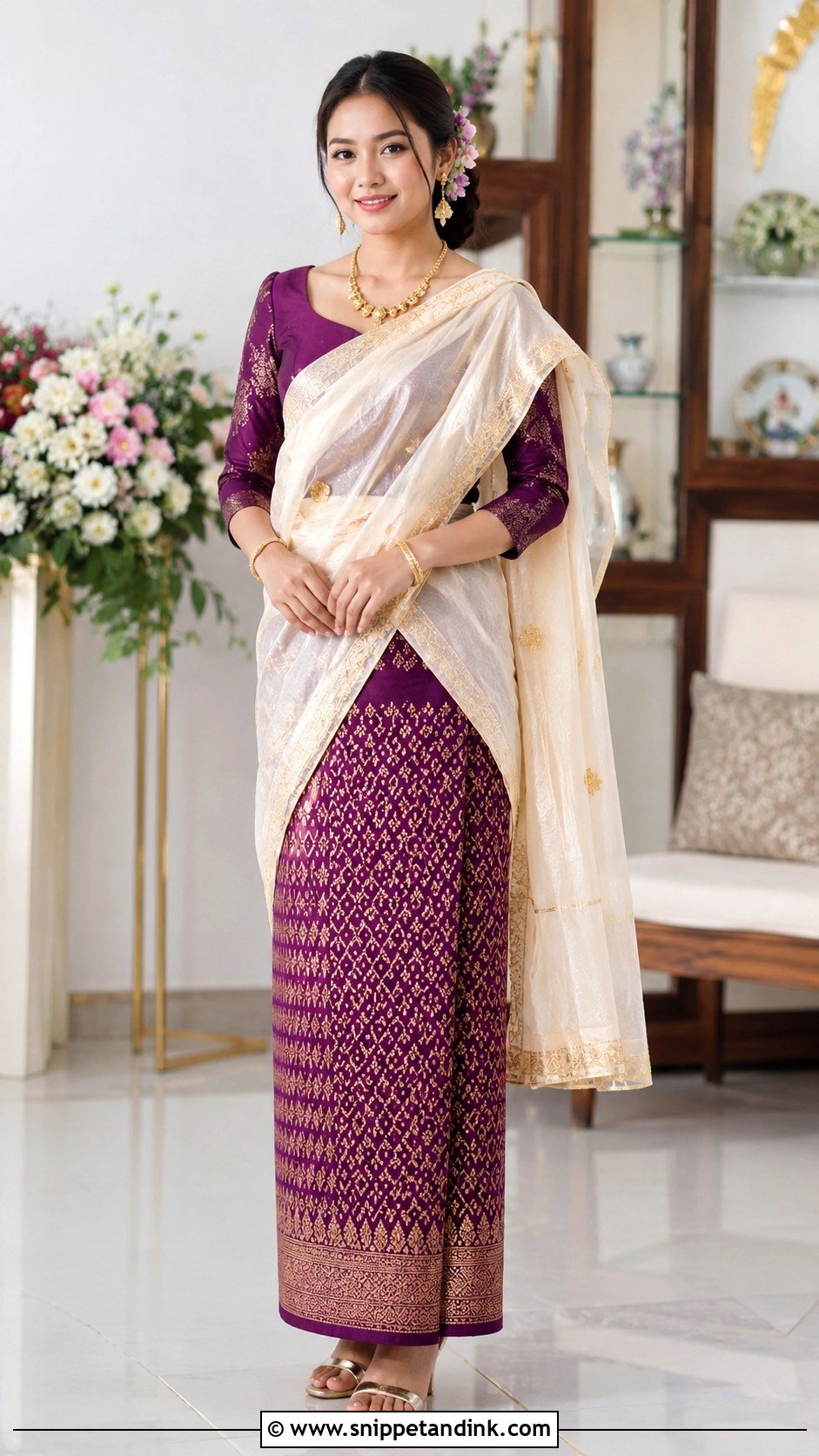
For an engagement or family ceremony, a Phanek with an Innaphi gives a Manipuri look without repeating the wedding Potloi. The Phanek is a wrapped skirt and its woven pattern matters, so choose one with meaning to the family rather than treating it as any wrap. Red, pink, plum and green are all used. Wrap it firmly at the waist and check it while seated, since a loose Phanek slips as you stand. A fitted blouse, a fine Innaphi, a traditional necklace, slim bangles and a floral bun complete it, with softer makeup than on the wedding day.
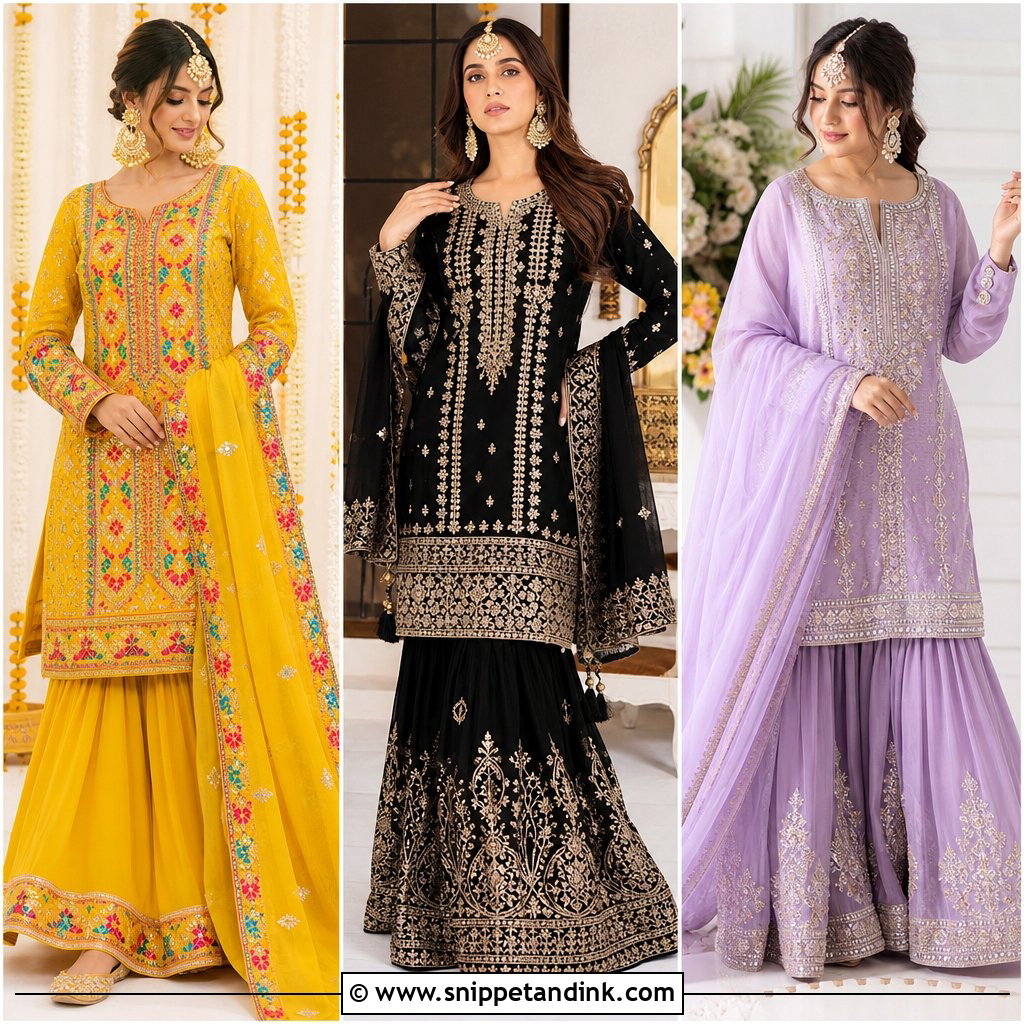

15. Mayek Naibi Phanek Manipuri Bride
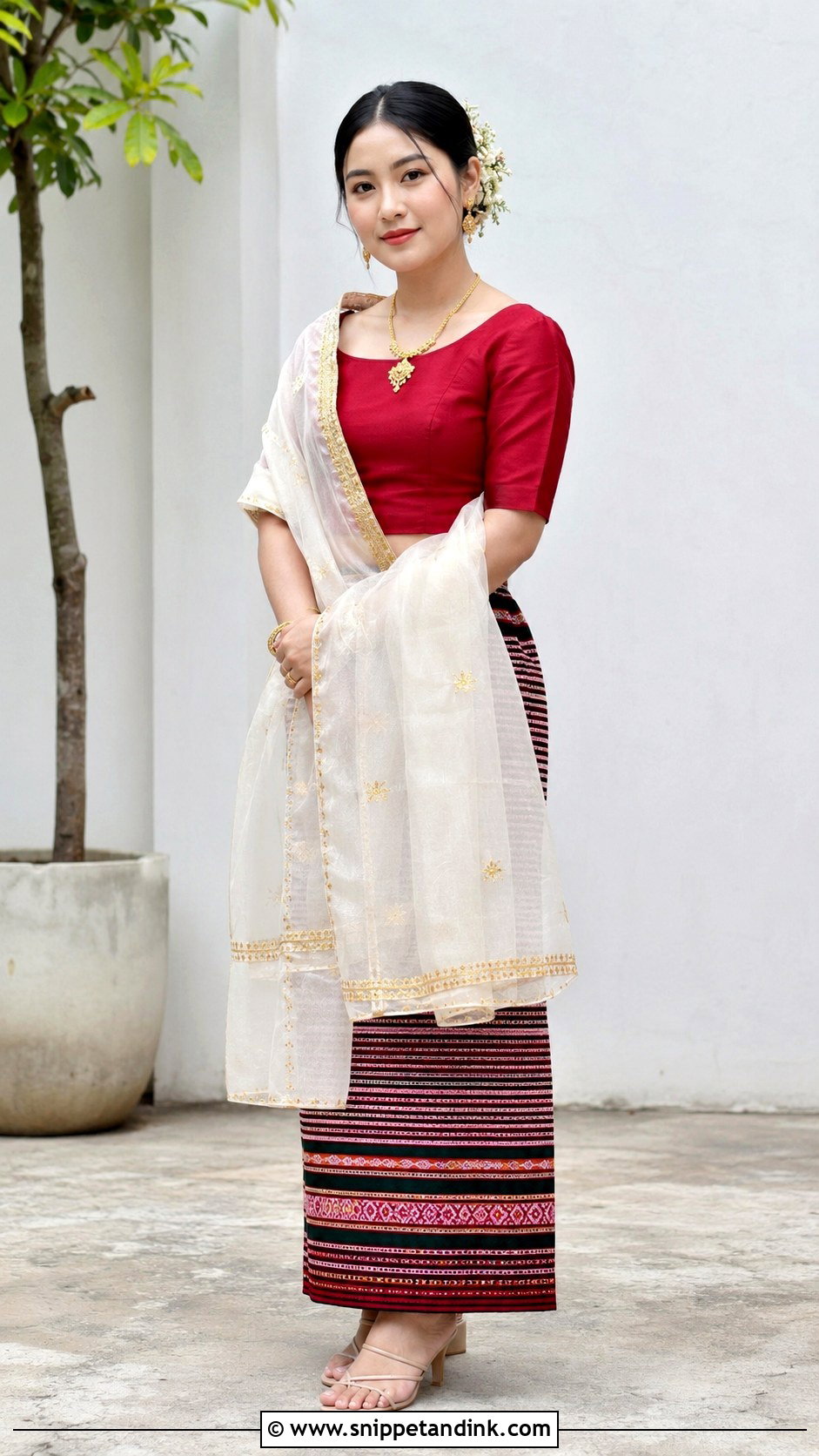
A Mayek Naibi Phanek is defined by its stripes, and the drape should keep them straight. Pair the striped wrap with a solid fitted blouse and an Innaphi in ivory, white or a soft pastel. I keep the wrap flat and clean at the front so the weave reads from waist to hem. If the Phanek has several colors, repeat only one in the blouse and accessories. A medium gold necklace, matching earrings, slim bangles and a floral bun are enough. It suits blessings, pre-wedding gatherings and portraits.
16. Wangkhei Phee Manipuri Bride
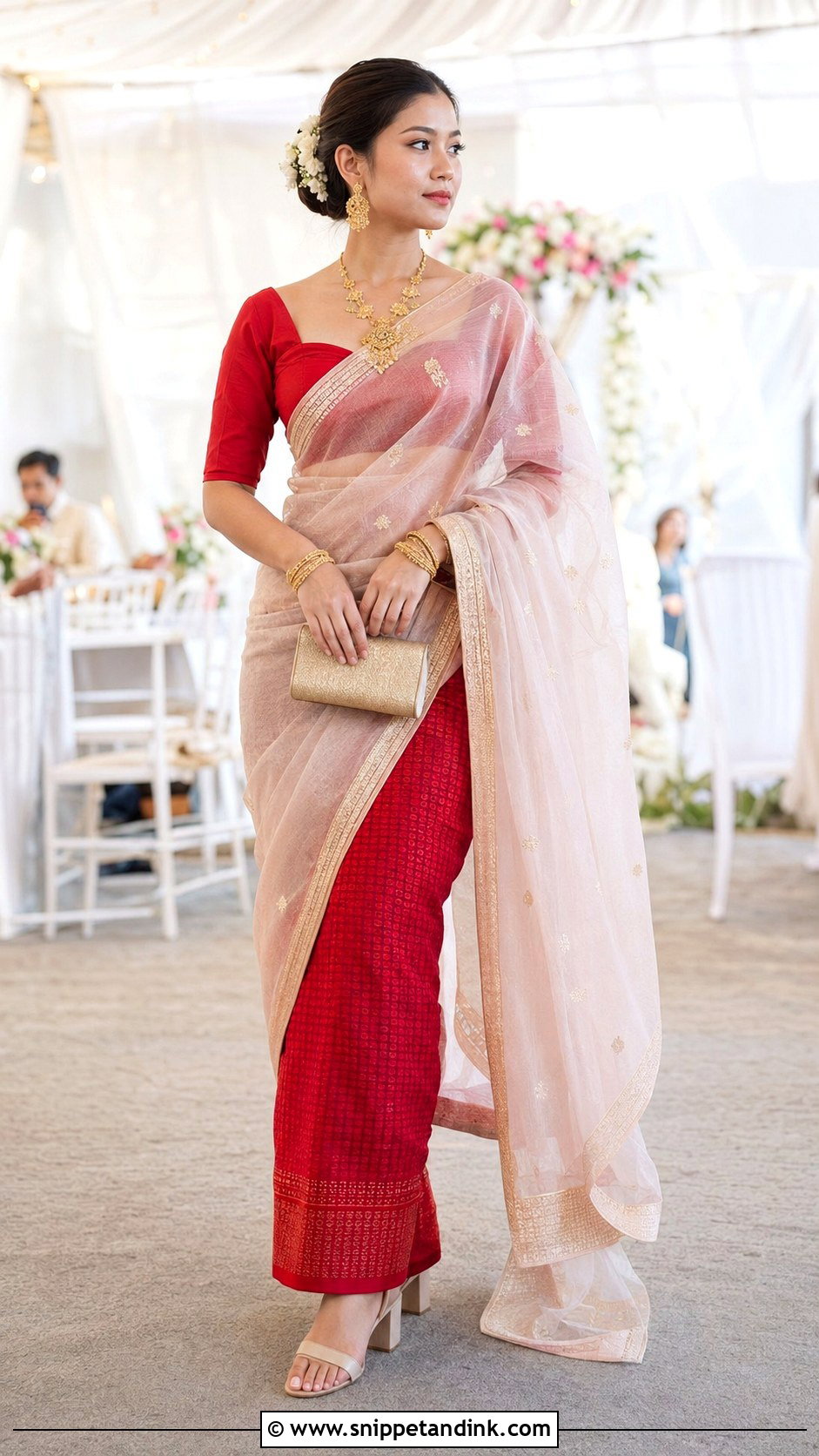
Wangkhei Phee is fine and light, and it’s easily overwhelmed. Pair the pale handwoven drape with a Phanek in a saturated red, pink or maroon, plus a solid blouse in a matching shade. Heavy borders and bulky jewelry flatten it, so keep accessories graceful. Delicate handwoven fabric creases readily; steam it from a little distance on a low setting rather than pressing with a hot iron. Gold earrings, a fine necklace and a center-parted bun with small white flowers finish it for a daytime function or reception.
17. Ivory Handloom Manipuri Bride
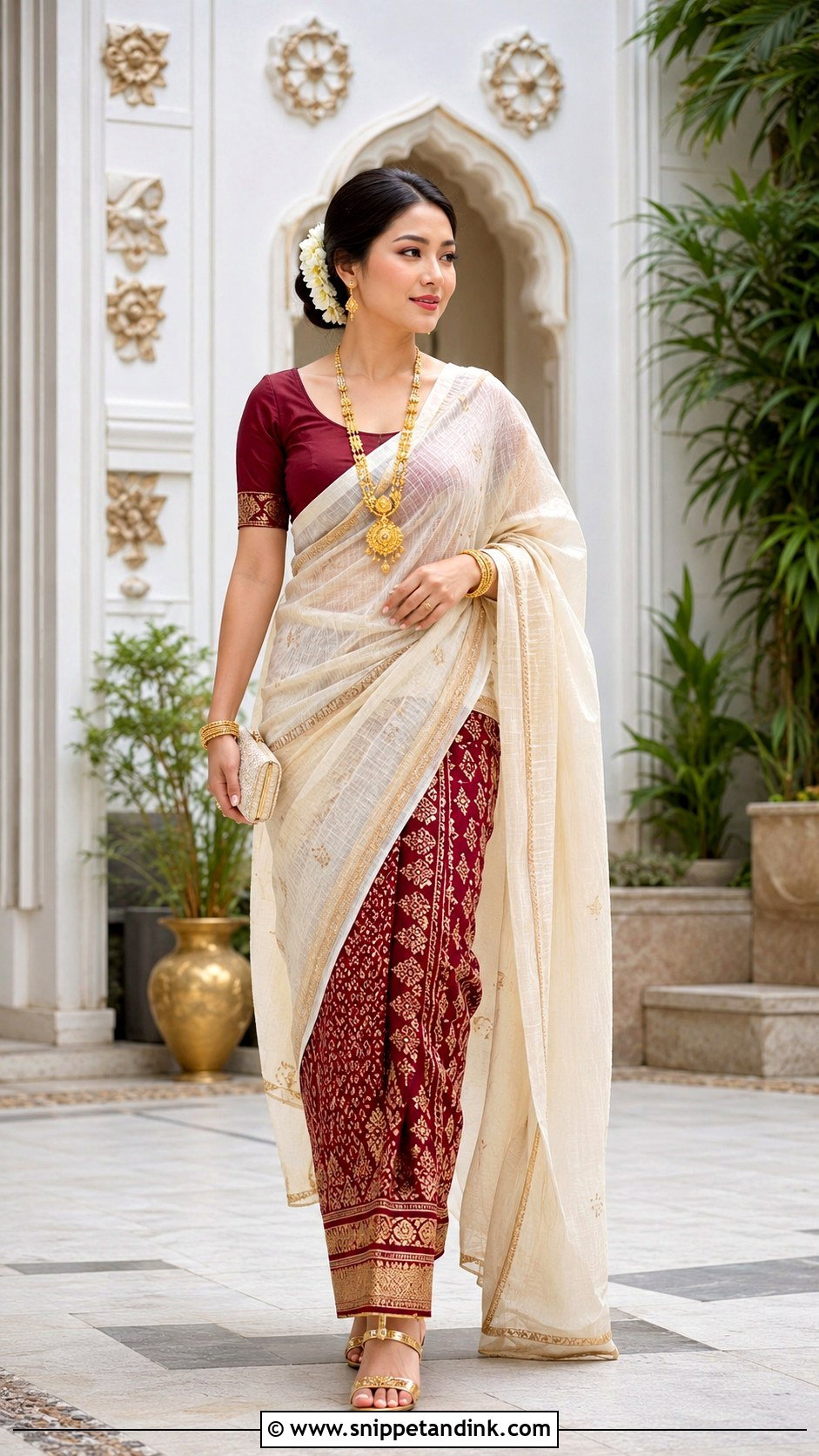
Ivory handloom is the calm option for a reception or the family meal after the wedding. Pair an ivory or cream drape with a rich red Phanek and a maroon, ruby or muted gold blouse; the strong lower color keeps it festive while the pale upper layer lights the face. Check the ivory against a window before the day, because handloom can be sheer and may need a layer beneath. Gold earrings, a long necklace, slim bangles and a small red bindi add definition. A low bun with white flowers or a sleek center part both work.
18. Red Handloom Saree Manipuri Bride
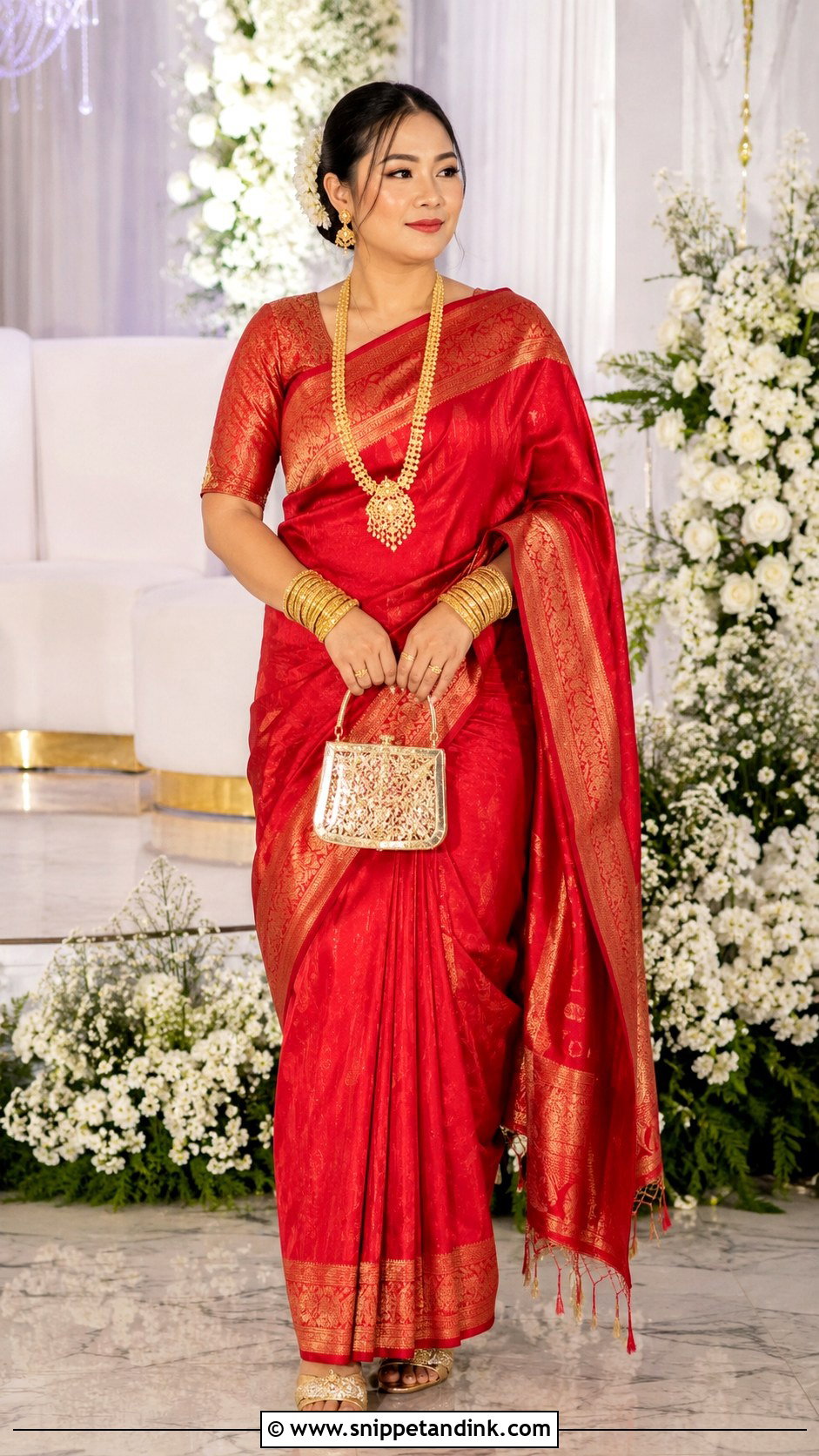
A red handloom saree moves more freely than any Potloi, which is exactly why I suggest it for receptions. Choose one with a strong woven border rather than dense embellishment, and pair it with a red, gold or green blouse. Woven motifs should line up across the pleats, so let an experienced dresser pleat and pin it. A long traditional necklace, earrings, bangles and a hair ornament complete it, and a low bun with white flowers looks bridal without copying the Potloi. Gold sandals and a deep rose lip suit it.
19. Pastel Handloom Reception Bride
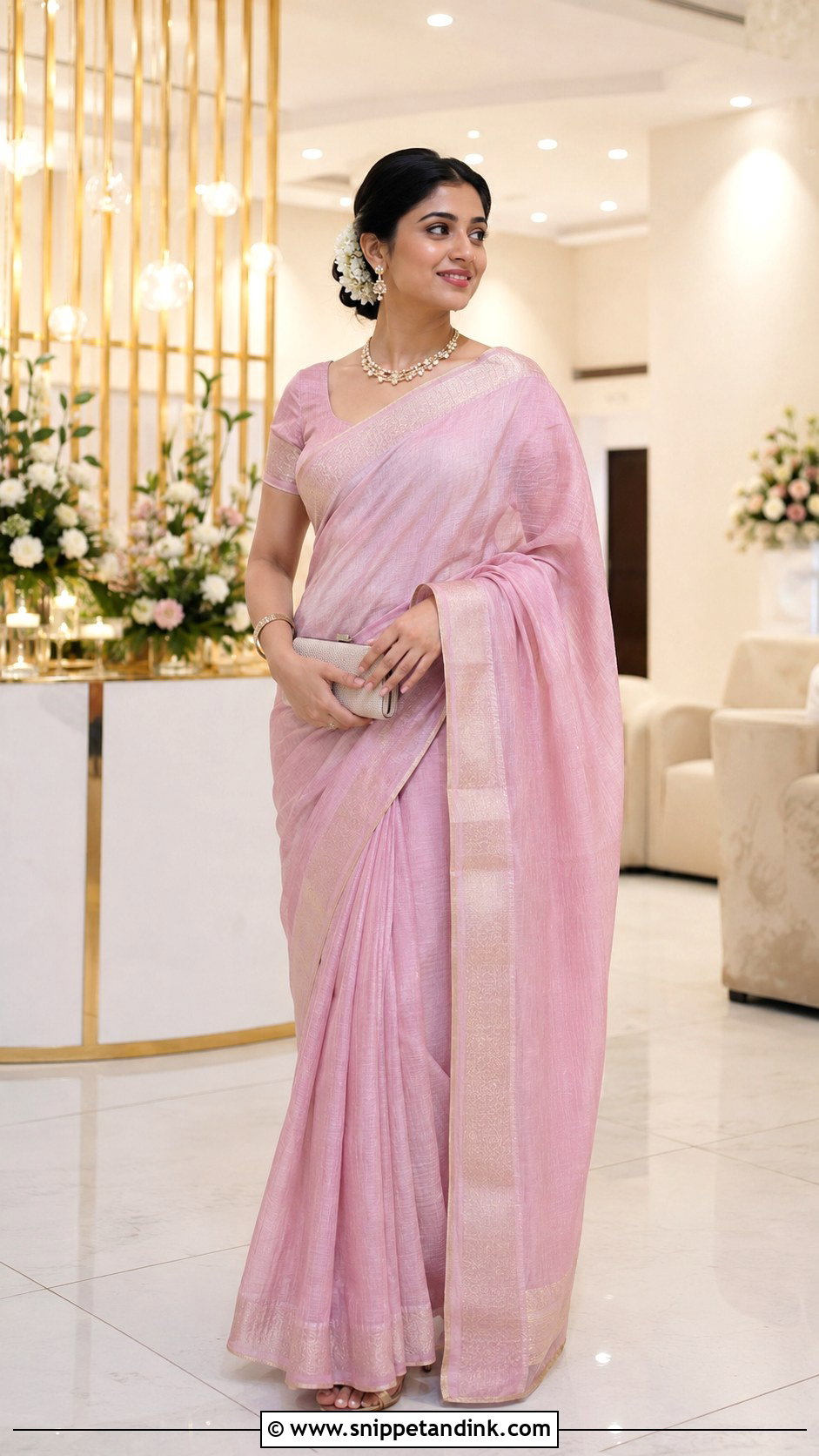
After the ceremony colors, a pastel handloom looks fresh at a daytime reception. Choose one main shade in a woven saree or a Phanek with Innaphi; several pastels together look muddled. Support it with ivory and gold, a fitted blouse in the same color family and pearl-accented gold jewelry. A low bun or polished braid with a few white flowers suits it. Keep the makeup fresh with luminous skin, brown liner, peach blush and a rosy neutral lip.

20. Modern Fusion Manipuri Bride
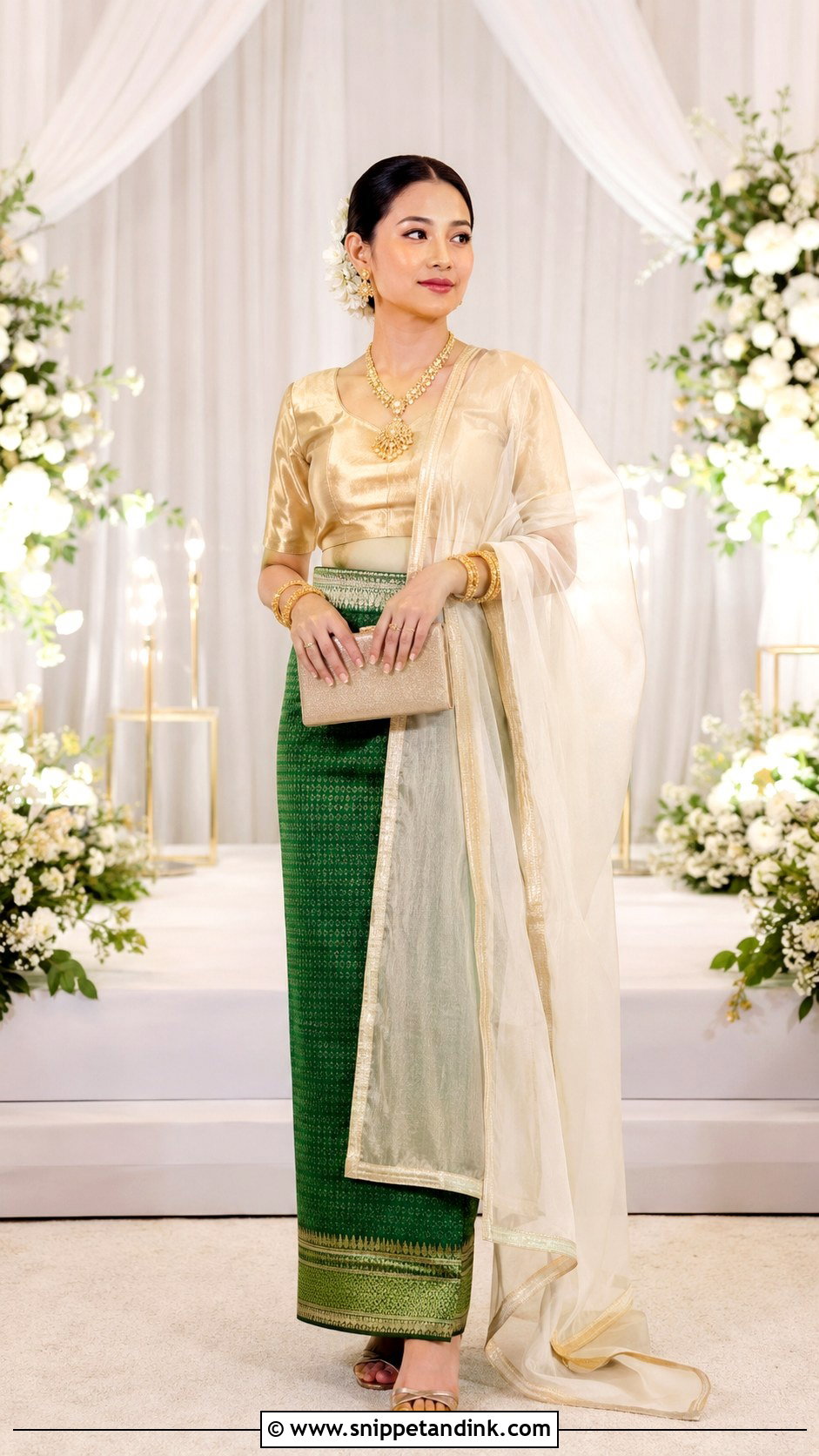
Fusion only works when the textile stays respected. Start with a traditional handwoven Phanek and pair it with a clean fitted blouse in silk or velvet, a soft Innaphi, a structured waist detail, traditional earrings and one statement necklace. Keep the colors focused, such as red with ivory or green with gold. Softly smoky eyes and a muted berry lip can modernize the face. The Potloi and ceremonial headpiece belong to settings the family approves, so I leave them out of fusion styling. Working with local weavers on a new blouse or drape is the respectful way to make it feel new.
Storing a Starched Skirt Through the Wet Season
Rice starch and layered cloth don’t tolerate damp. A Potloi left in a humid cupboard can mildew and soften, and once the starch breaks down the skirt loses its shape. After the wedding:
- Air it in sunshine on a dry day before storing, turning it so the decorated satin face isn’t in strong sun for long.
- Store it upright or on its side with room to breathe, never crushed, and wrapped in clean cotton rather than plastic.
- Check it after the monsoon months and air it again on the next dry, bright day.
- Cover mirror and sequin areas with soft cloth so they don’t scratch the fabric beside them.
The Innaphi and handwoven pieces
Fine muslin and handloom do best with a gentle cold hand wash or a dry cleaner used to handwoven textiles. Dry them flat in shade, and refold them along different lines now and then so the fibers don’t weaken at the creases.
Red Potloi, Woven Phanek, One Family’s Custom
A Manipuri bridal wardrobe usually has a fixed center and flexible edges. For many Meitei Hindu brides the Potloi and headpiece anchor the wedding itself, while the Phanek, Innaphi, handloom sarees and other woven pieces carry the functions around it. Whatever the color, plan for secure draping, comfortable footwear, balanced jewelry and makeup that lasts. Above all, talk to family elders, experienced dressers and weavers early, because their knowledge is what keeps the heritage accurate.
You'll Like These Ideas:








Leave a Reply