
Color, meaningful textiles, embroidery and heavy gold have always defined Gujarati bridal fashion, but the wardrobe I plan with a bride today mixes the ceremonial with the practical. The ceremony still tends to call for the white-and-red Panetar and the Bandhani Gharchola. Around it sit Patola patterns, mirror work, silk lehengas and festive chaniya cholis, often reworked into lighter drapes or new color pairings. What separates a good outfit from a tiring one is usually the unglamorous part: secure dupatta pinning, shoes you can stand in and jewelry that doesn’t pinch. The twenty looks below include traditional, modern and size-inclusive options.
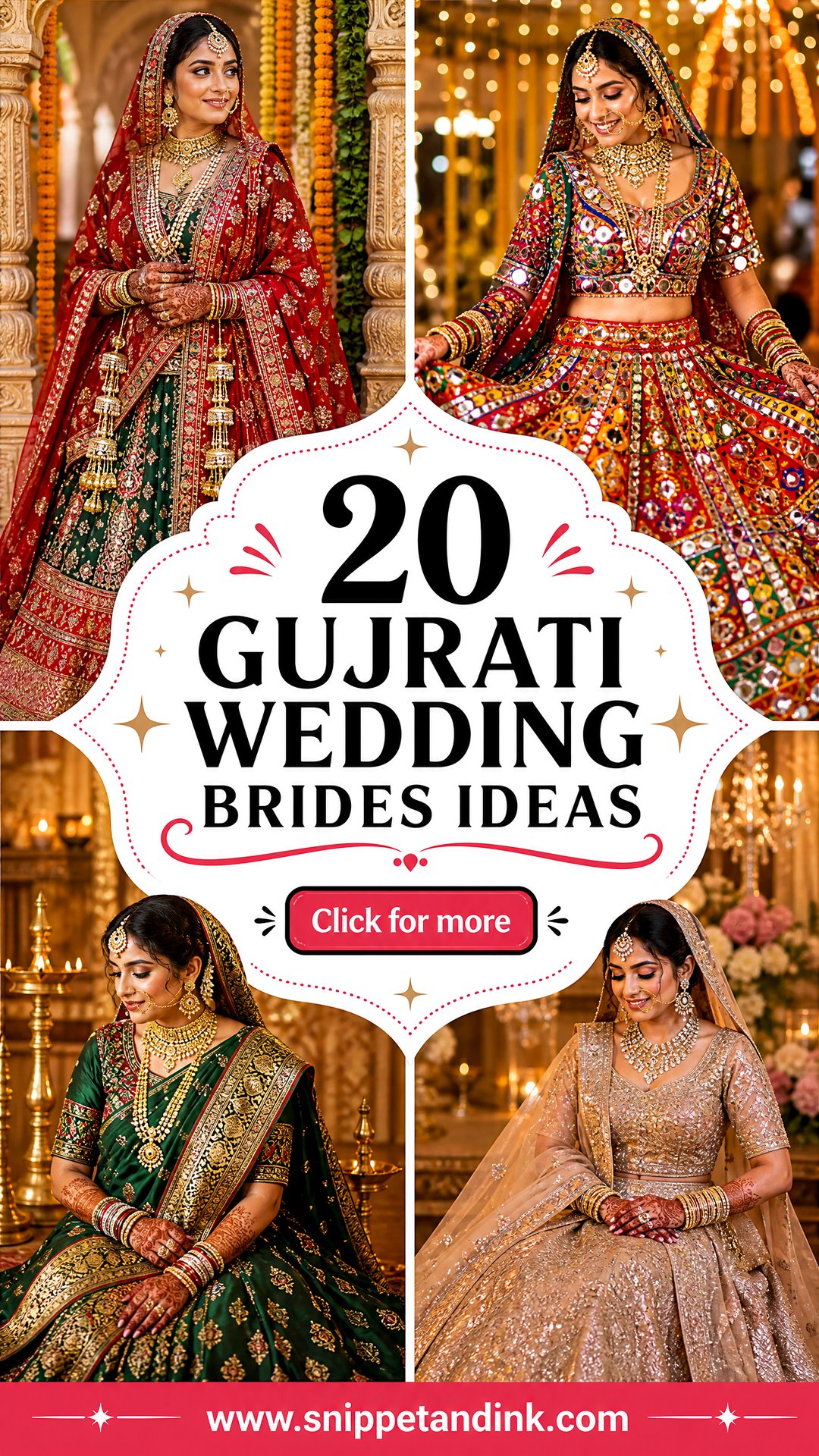
From Gol Dhana to Vidaai, Outfit by Outfit
The first thing I do with a Gujarati bride is write the events down in order, because the right outfit depends on what happens at each one. Customs vary between communities and families, so treat this as a starting map and confirm the details with your elders.
- Gol Dhana, the engagement: jaggery and coriander seeds are shared and rings are exchanged. A pastel or soft-toned lehenga works, formal but lighter than the wedding.
- Pithi: turmeric paste is applied, so wear washable yellow cotton or georgette you won’t mind staining.
- Mehndi: sleeveless or short-sleeve blouse, dupatta on one shoulder, hair tied back, flat shoes you can step into.
- Garba or dandiya night: a mirror work chaniya choli you can dance in for hours, with everything pinned.
- Mameru: in many families the maternal uncle’s side brings gifts that often include the Panetar and bridal bangles, so leave space in the plan to wear what arrives.
- The wedding: Panetar first, with the Gharchola placed or worn later in the rituals in many households. Confirm with family when the change happens.
- Reception: the moment for ivory, champagne or a color you haven’t worn yet.
1. Traditional Panetar Saree Bridal Look
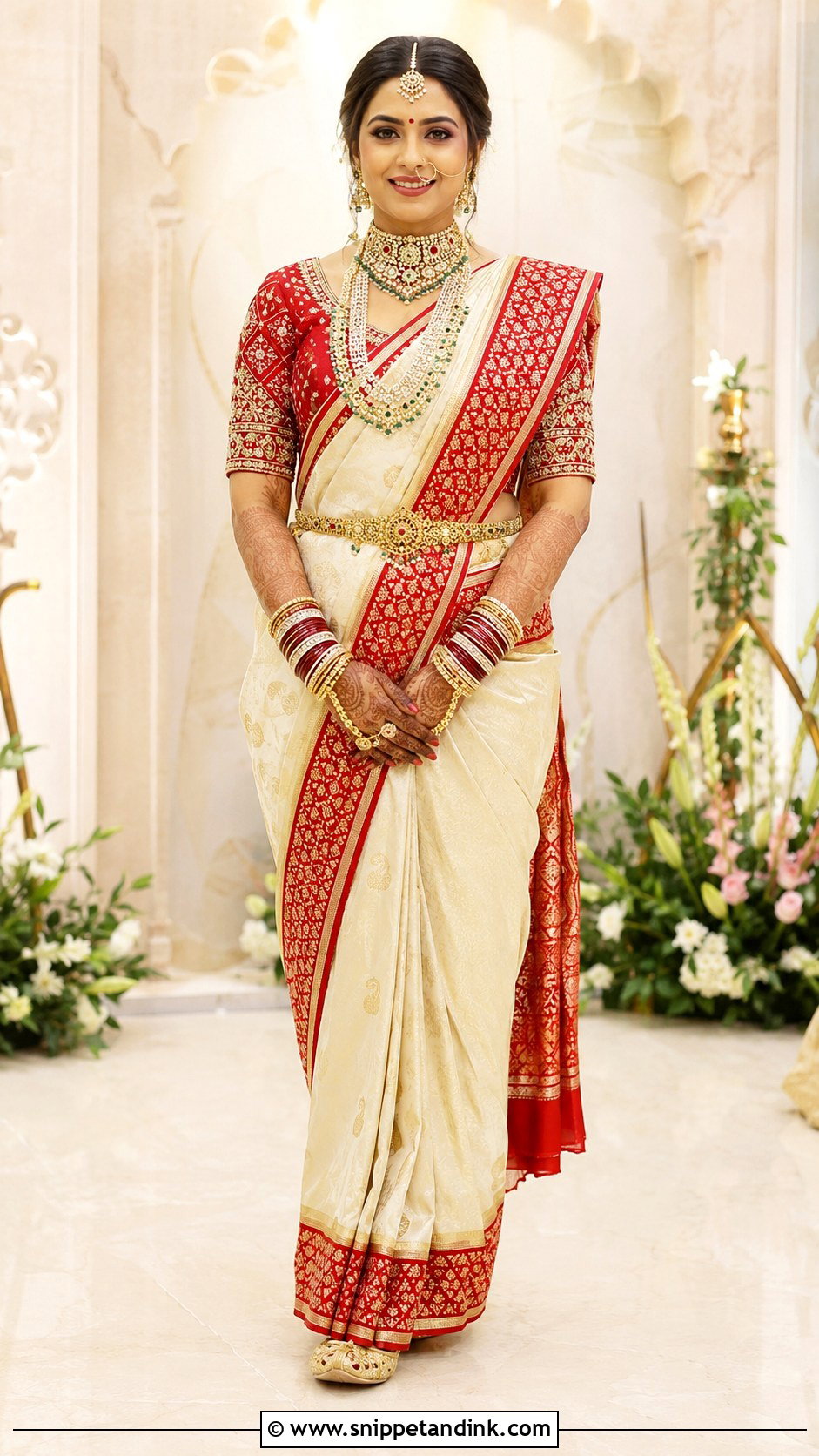
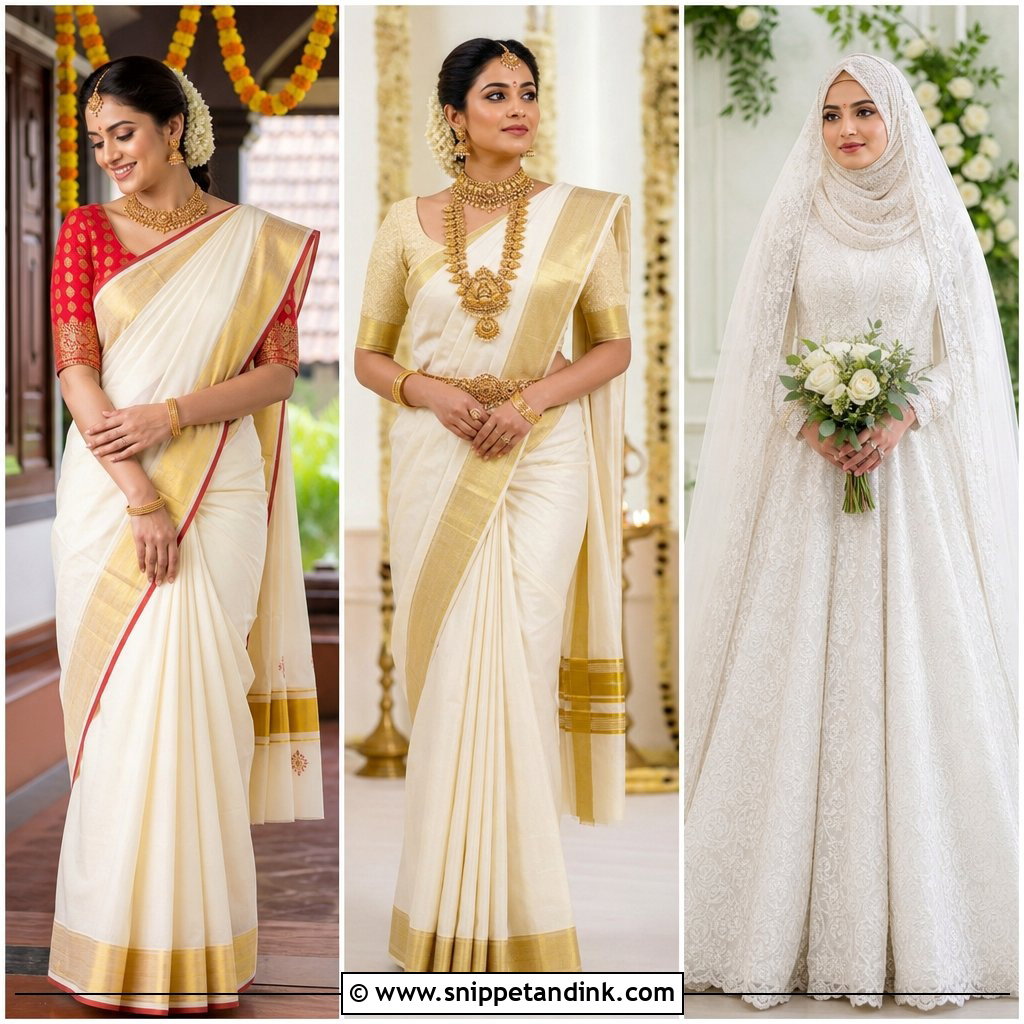
For the main ceremony, a Panetar saree is the look most Gujarati families picture. Choose ivory or white with a rich red border, a little Bandhani and gold zari. Drape it Gujarati-style so the pallu crosses the front, which keeps the decorated end in view during the rituals. I’d pair it with a fitted red blouse with elbow sleeves, gold embroidery and a neckline that doesn’t need tugging, because you will be photographed from every side. Kundan choker, long necklace, forehead jewelry, bangles, waist belt and embroidered juttis complete it. A smooth low bun with fresh flowers gives the head covering something to pin into without hiding the earrings.
2. Panetar Lehenga With Gharchola Dupatta
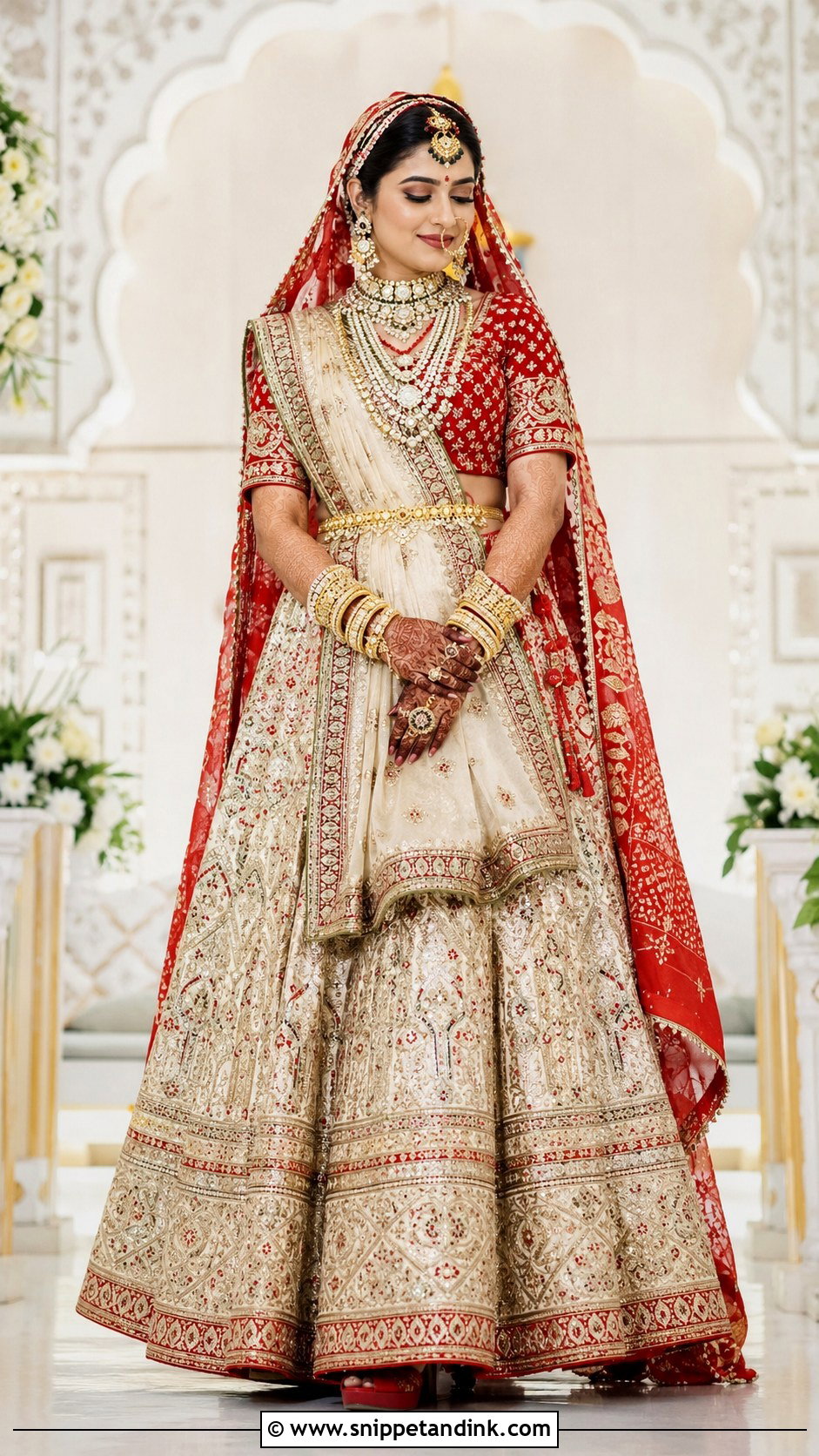
Walking seven or more hours in a saree is a real concern, and a Panetar-inspired lehenga solves it. An ivory silk skirt with red borders, fine gold embroidery and small Gujarati motifs keeps the palette. A structured red blouse and an ivory shoulder dupatta sit underneath a red Bandhani Gharchola worn over the head. That layering keeps the ceremonial colors where the camera sees them, at the face and shoulders. Gold choker, layered rani haar, statement earrings, bangles and a slim kandora around the waist finish it. Red or gold platform juttis give height without wobble. Luminous skin, defined eyes and a deep rose lip.
3. Red Gharchola Saree Bridal Look
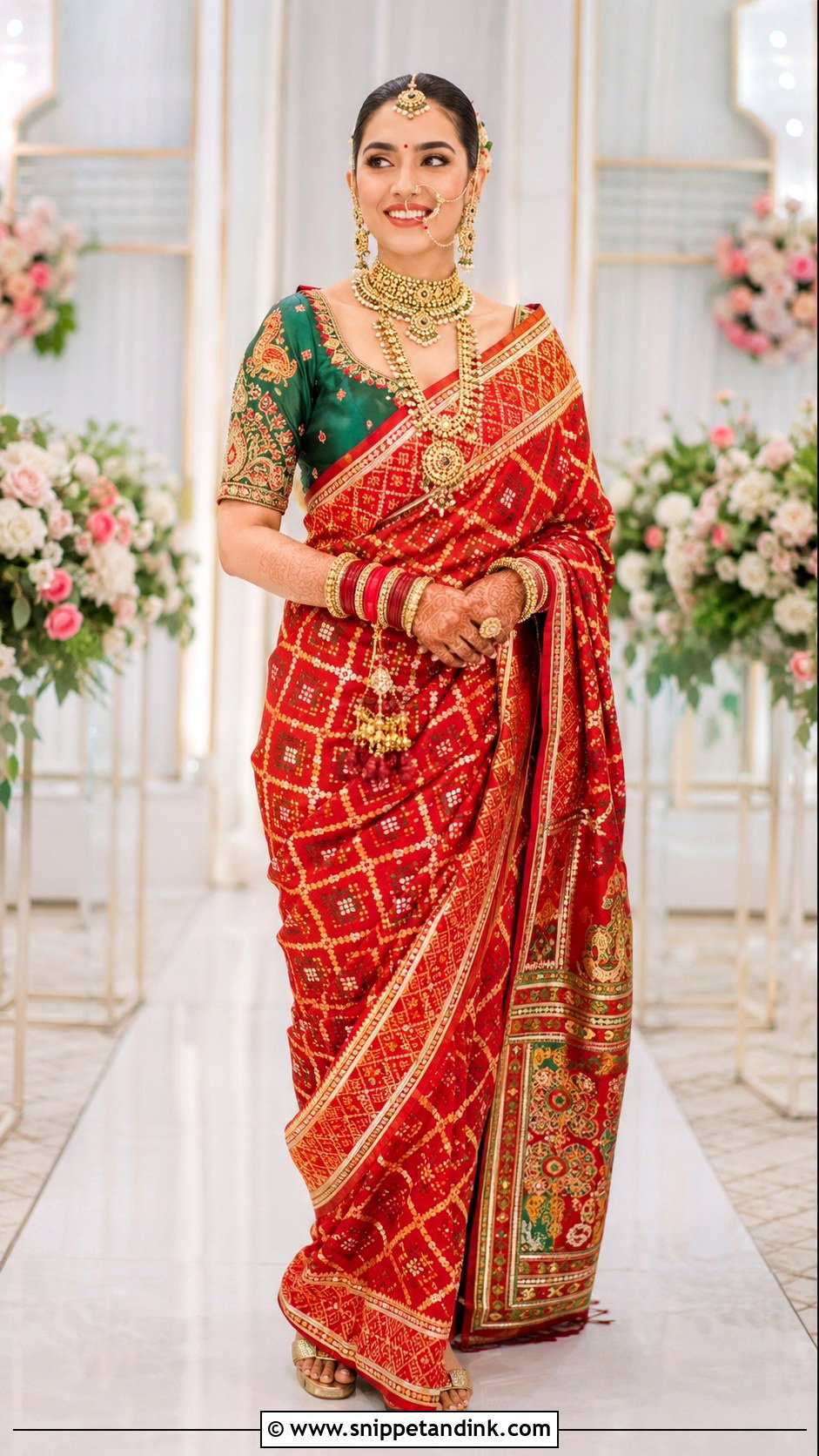
A Gharchola saree is red or green silk divided into a gold zari grid, with Bandhani dots and small motifs inside each square. That grid is what I want visible, so I always use a front-facing Gujarati drape, which spreads the pallu across the chest instead of hiding it down the back. A red or emerald blouse with restrained gold embroidery lets the saree lead. Kundan collar necklace, long gold haar, nose ring, bangles, armlets and a waist belt. Padded gold sandals or embroidered flats. A center-parted bun, a few flowers, glowing skin and red lipstick finish the ceremony look.
4. Ivory And Red Gujarati Bridal Lehenga
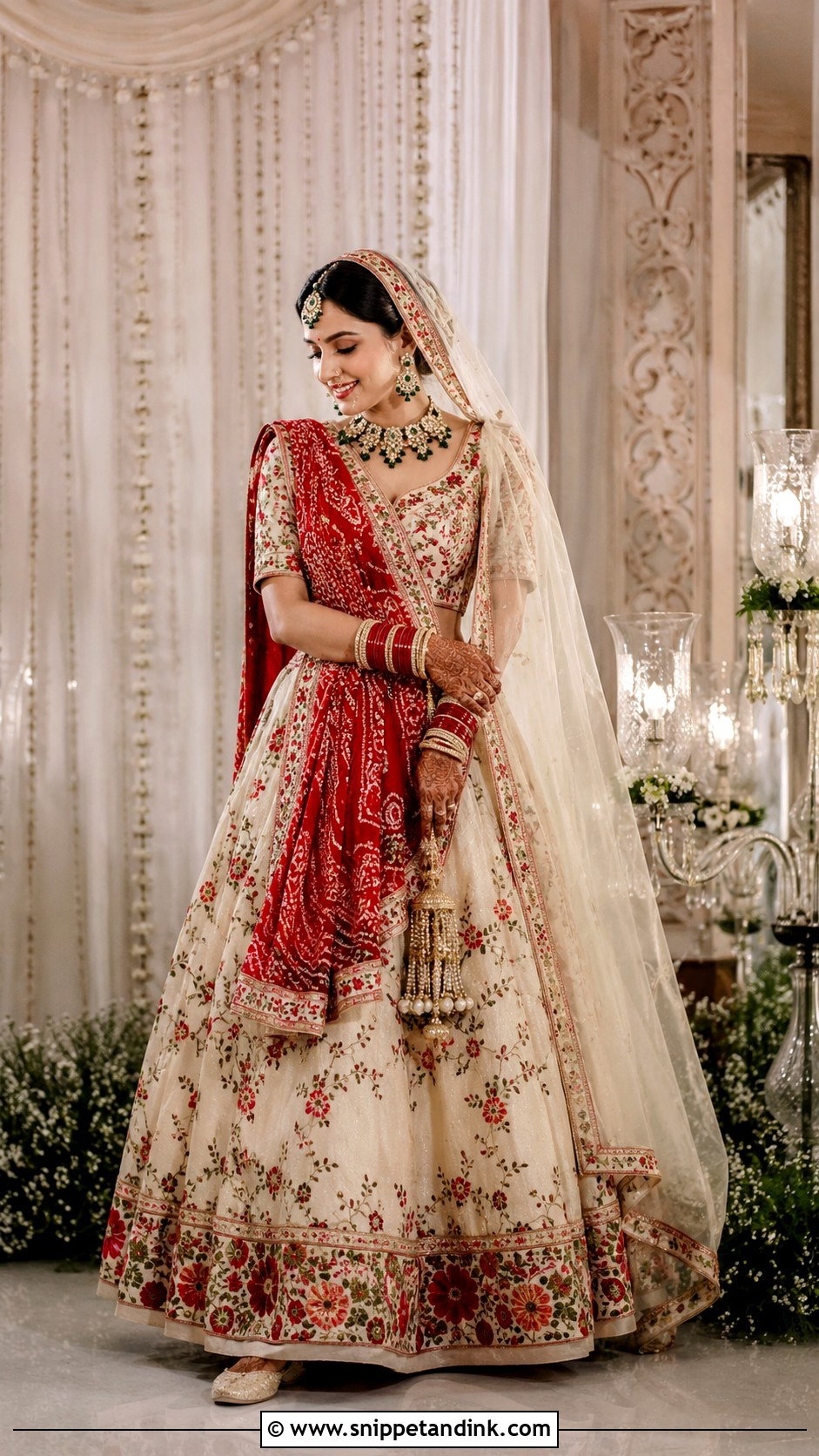
Ivory and red is the Panetar palette turned into a lehenga, and it’s easier to balance than people expect. Choose an ivory flared skirt with red floral embroidery, gold thread and a broad patterned hem, and a fitted ivory blouse with proper internal support. A red Bandhani dupatta across one shoulder and a lighter ivory veil over the head keep the upper body even. I like emerald-accented kundan here, because a little green breaks up a lot of red and white. Choker, long necklace, earrings, bangles and a fine waist chain look substantial without crowding the neckline. Ivory juttis, a polished low bun and a classic red lip.
5. Red And Green Bandhani Bridal Lehenga
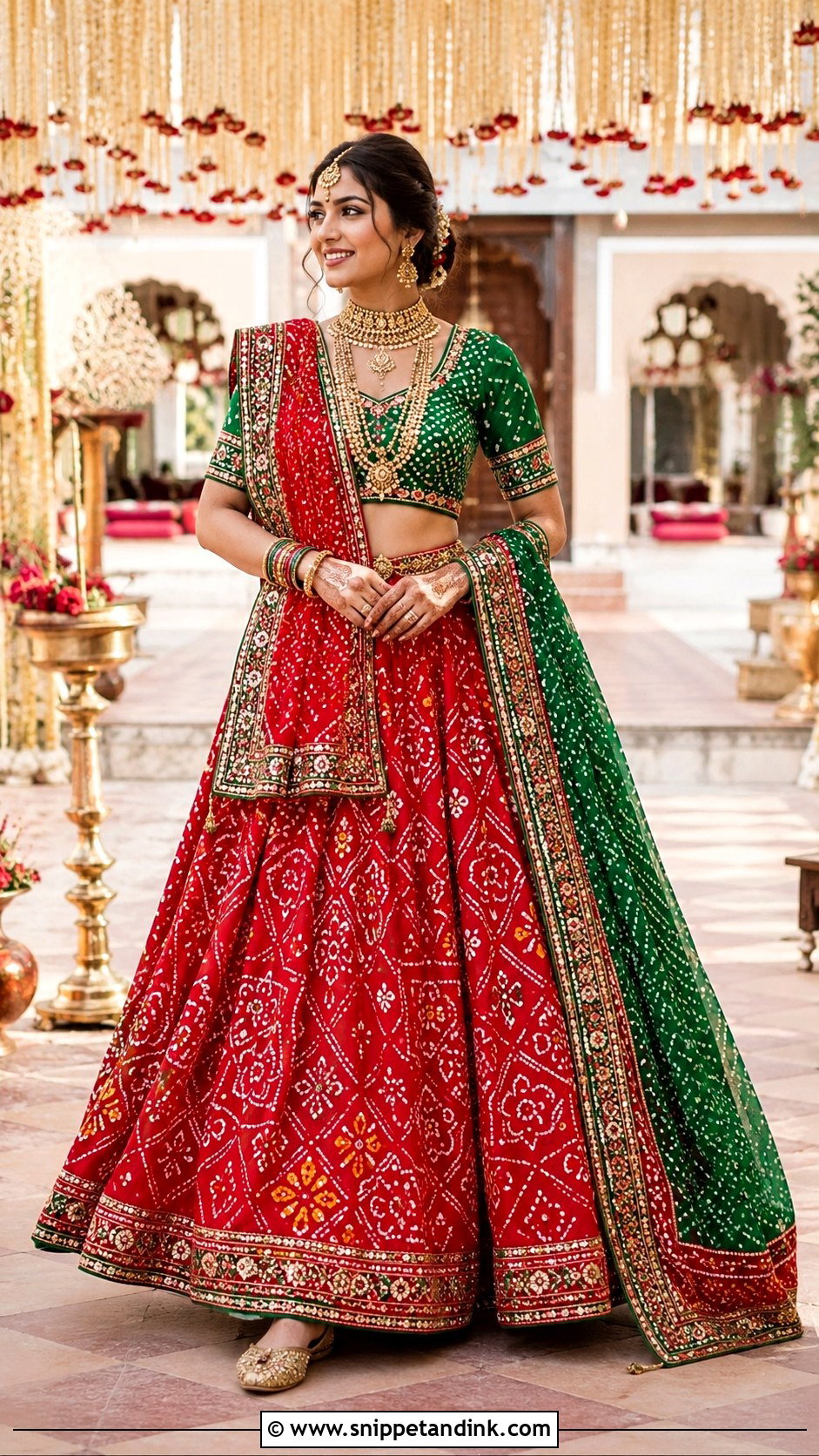
Red, green and gold is the most festive combination in Gujarati dress, and it holds up in daylight and under hall lights alike. Pair a red Bandhani lehenga with small tie-dye patterns, a structured border and moderate mirror or zari work with a green blouse trimmed in red piping and elbow sleeves. Drape a red-and-green dupatta across the torso, plus a light red veil if the ceremony needs one. Traditional gold jewelry suits the strong colors: choker, layered haar, jhumkas, bangles and kandora. Cushioned gold juttis under the skirt. A braided bun with fresh flowers and a warm red lip.
6. Patola Silk Gujarati Bridal Lehenga
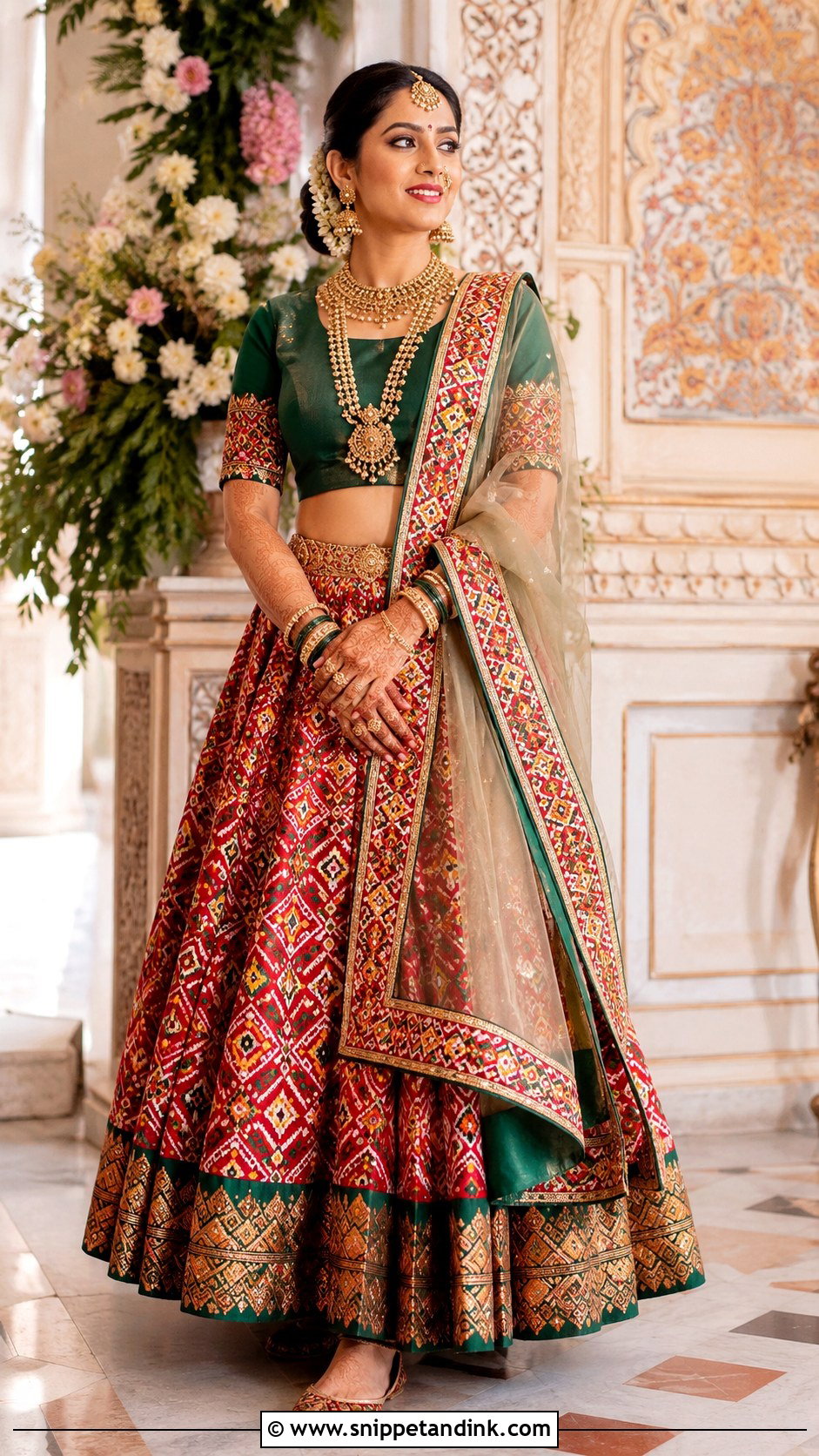
Patola-style patterns are already busy, so the blouse has to be quiet. Choose a lehenga skirt with deep red, magenta, green and gold motifs arranged in a clean layout, and pair it with a solid silk blouse in one of those colors with a square neck. A sheer dupatta with only a slim Patola border keeps weight off the shoulders. Antique gold reads better against woven pattern than bright stones do: a medium necklace, jhumkas, stacked bangles and a waist belt. Choose embroidered flats that pick up one color from the skirt. A sleek bun with fresh jasmine, neutral makeup and a berry lip.
7. Mirror Work Chaniya Choli Bridal Look
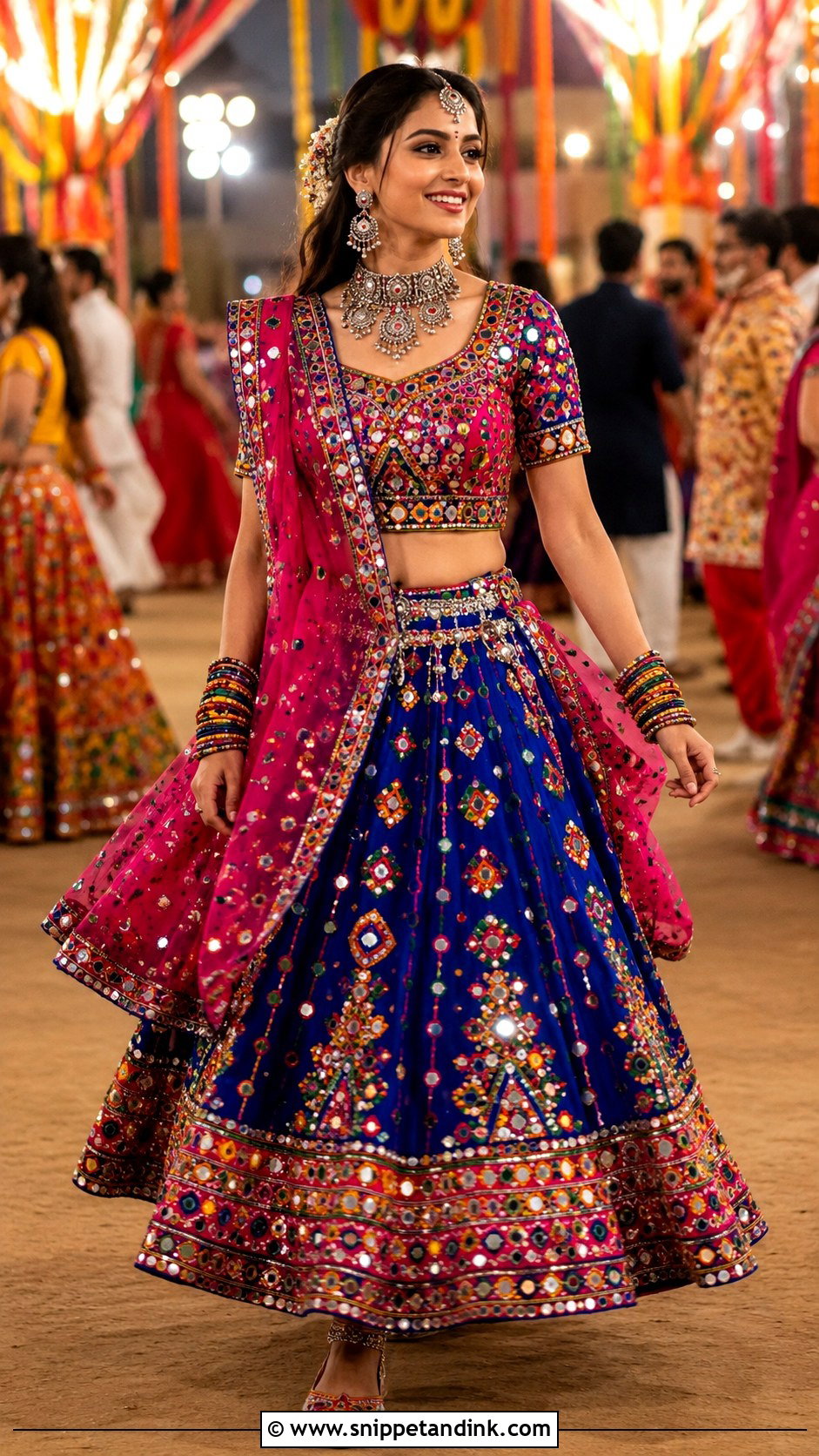
At a Gujarati bride’s garba, mirrors catch every light in the room as you spin, which is exactly why a mirror work chaniya choli belongs there. Choose a full skirt in red, royal blue, emerald or fuchsia with controlled mirror work and multicolored thread. The choli needs real support for hours of dancing; I’d add hooks or a hidden zip rather than relying on tie-backs alone. Pin a light dupatta at the front and the shoulder. Oxidized silver or antique gold depending on the embroidery, with a statement necklace, large earrings, bangles and a waist belt. Juttis with cushioned insoles, a long braid, waterproof eye makeup and a bright lip.
8. Maroon Velvet Gujarati Bridal Lehenga
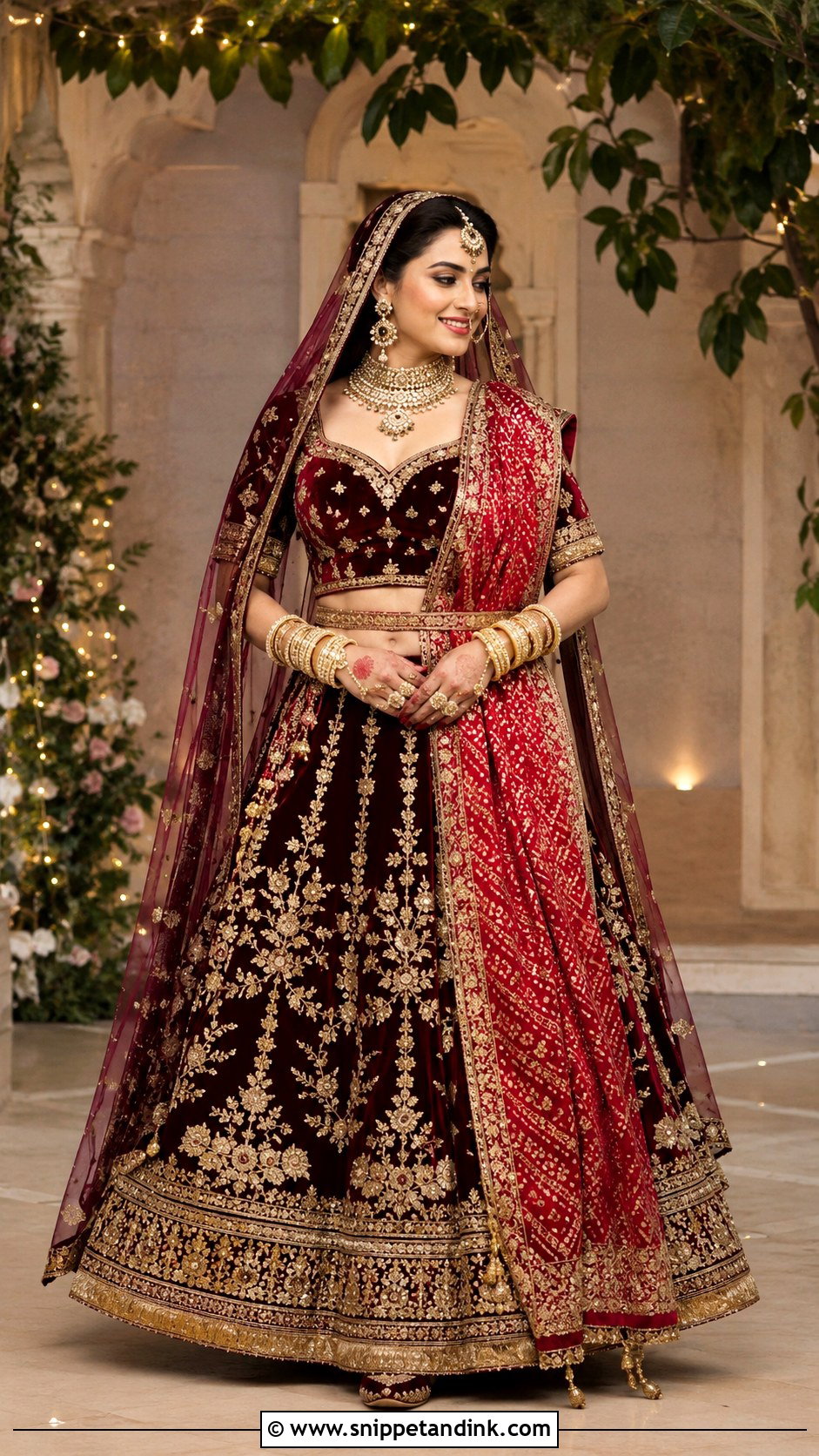
Velvet is warm, which makes a maroon velvet lehenga my first suggestion for a cold-weather or open-air evening wedding. Choose a deep maroon skirt with antique gold embroidery along the hem and waist, plus a matching velvet blouse with supportive sleeves. A red or maroon Bandhani dupatta across the body brings Gujarati character, and a light net veil over the head adds little weight. Velvet plus heavy embroidery plus heavy dupatta can be exhausting, so I keep at least one layer light. Uncut kundan, a long necklace, earrings, bangles and a gold waist belt. Maroon velvet juttis or gold platforms, a neat low bun and berry lipstick.
9. Emerald Green Gharchola Bridal Saree
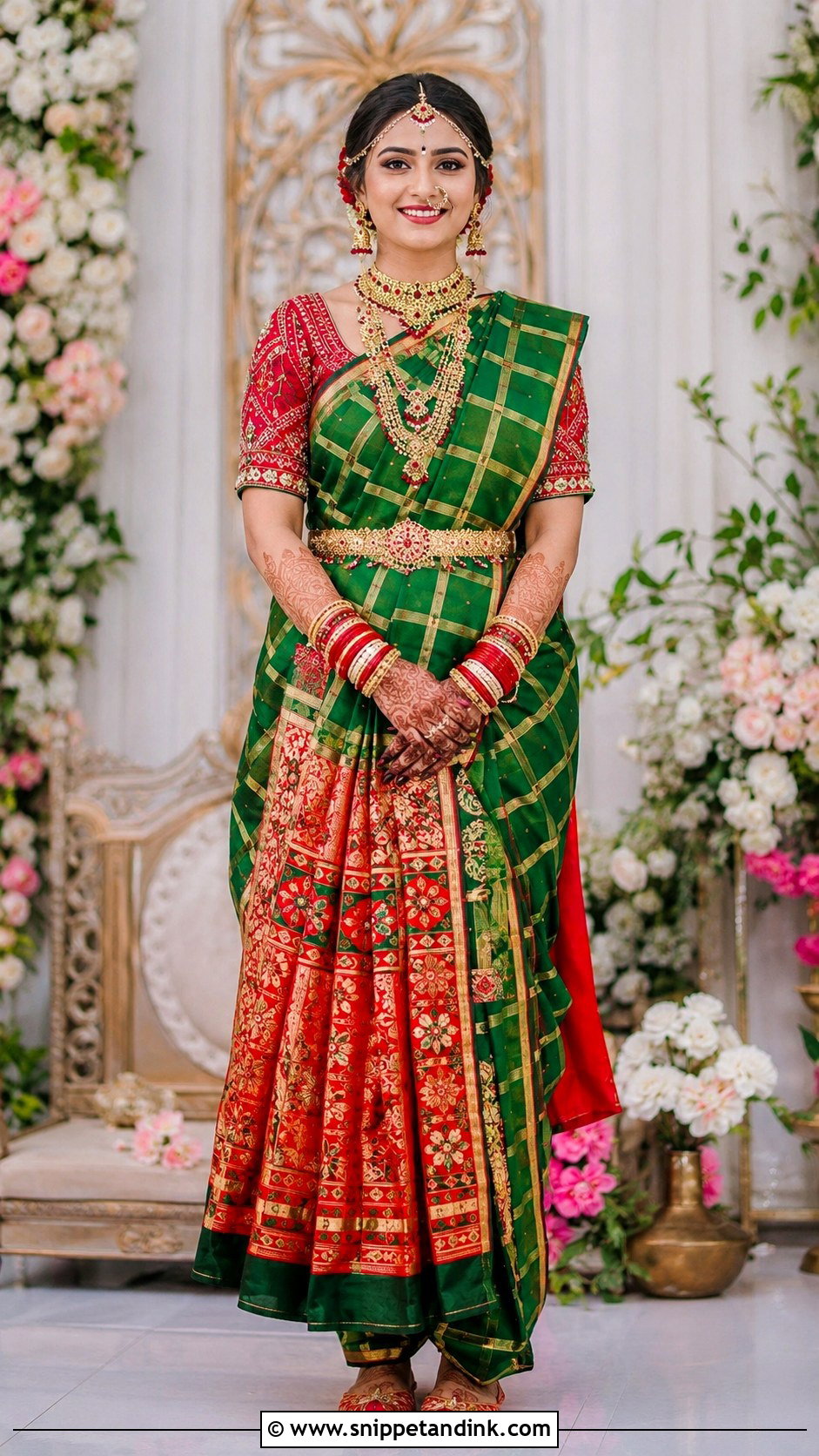
Green is part of the Gharchola tradition too, and an emerald version gives a bride something different from red without losing the ceremonial feel. Look for silk with gold zari checks, fine Bandhani dots and a red-and-gold border. A red blouse ties it back to classic wedding colors. Wear the pallu in front so the grid shows; draped back, the best of the saree disappears behind you. Gold jewelry with red stones, from choker to waist belt. Gold or red juttis. A center-parted bun with white flowers, warm gold eyeshadow and a rich red lip.
10. Pink Bandhani Gujarati Bridal Lehenga
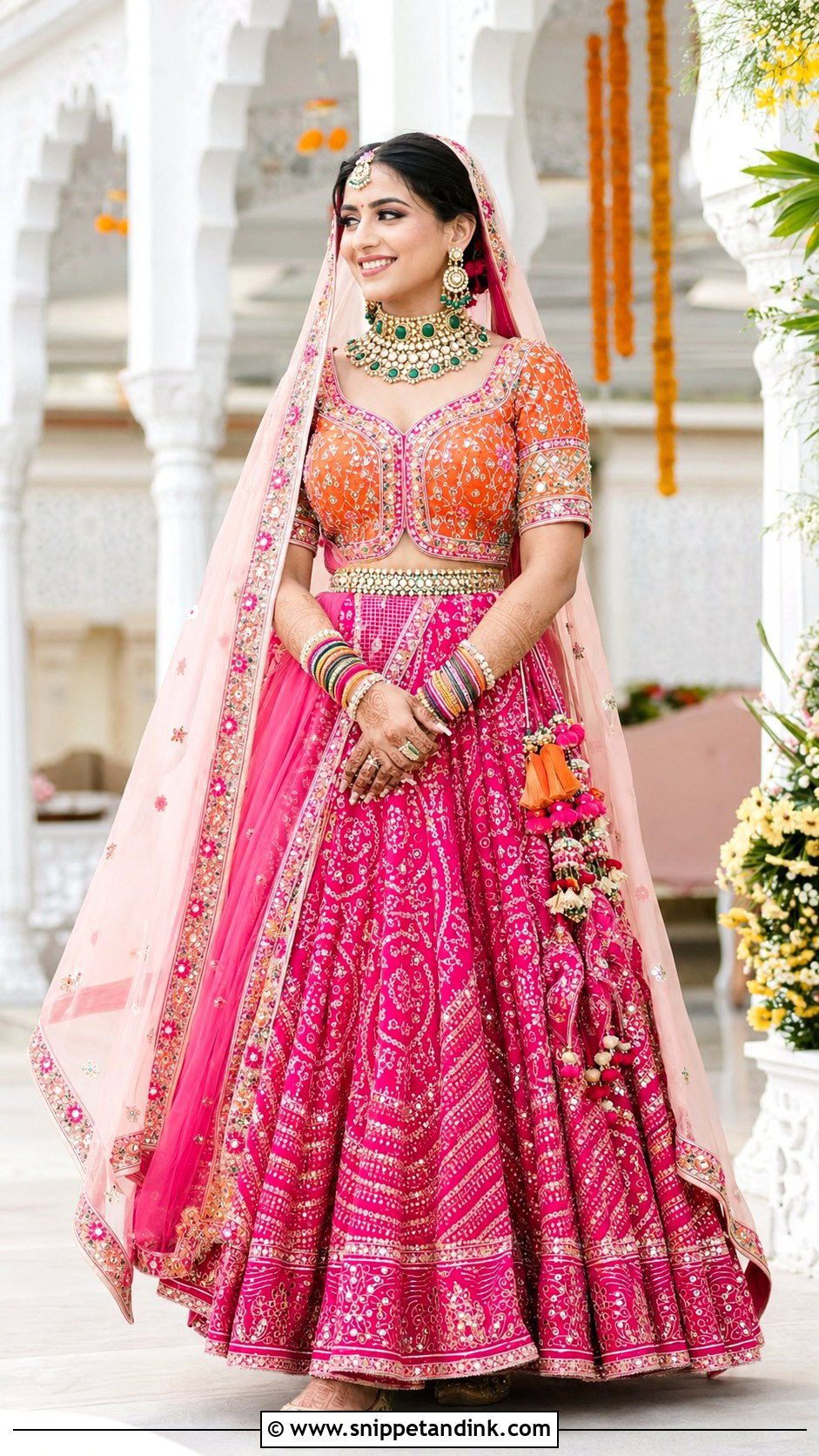
Pink suits the bride who wants color softer than red but still unmistakably festive. A rani pink or deep rose Bandhani skirt with a gold border and placed embroidery is the base. A matching blouse is calm; an orange one makes it brighter and very Gujarati. Drape a light pink dupatta across the torso and a sheer blush veil over the head. Emerald contrasts well with pink, and kundan with pearl keeps it bridal. Choker, earrings, stacked bangles and a slim waist belt. Gold juttis or block heels. A soft bun, rosy makeup and a berry-pink lip keep it from feeling heavy.
11. Orange And Pink Garba Bridal Chaniya Choli
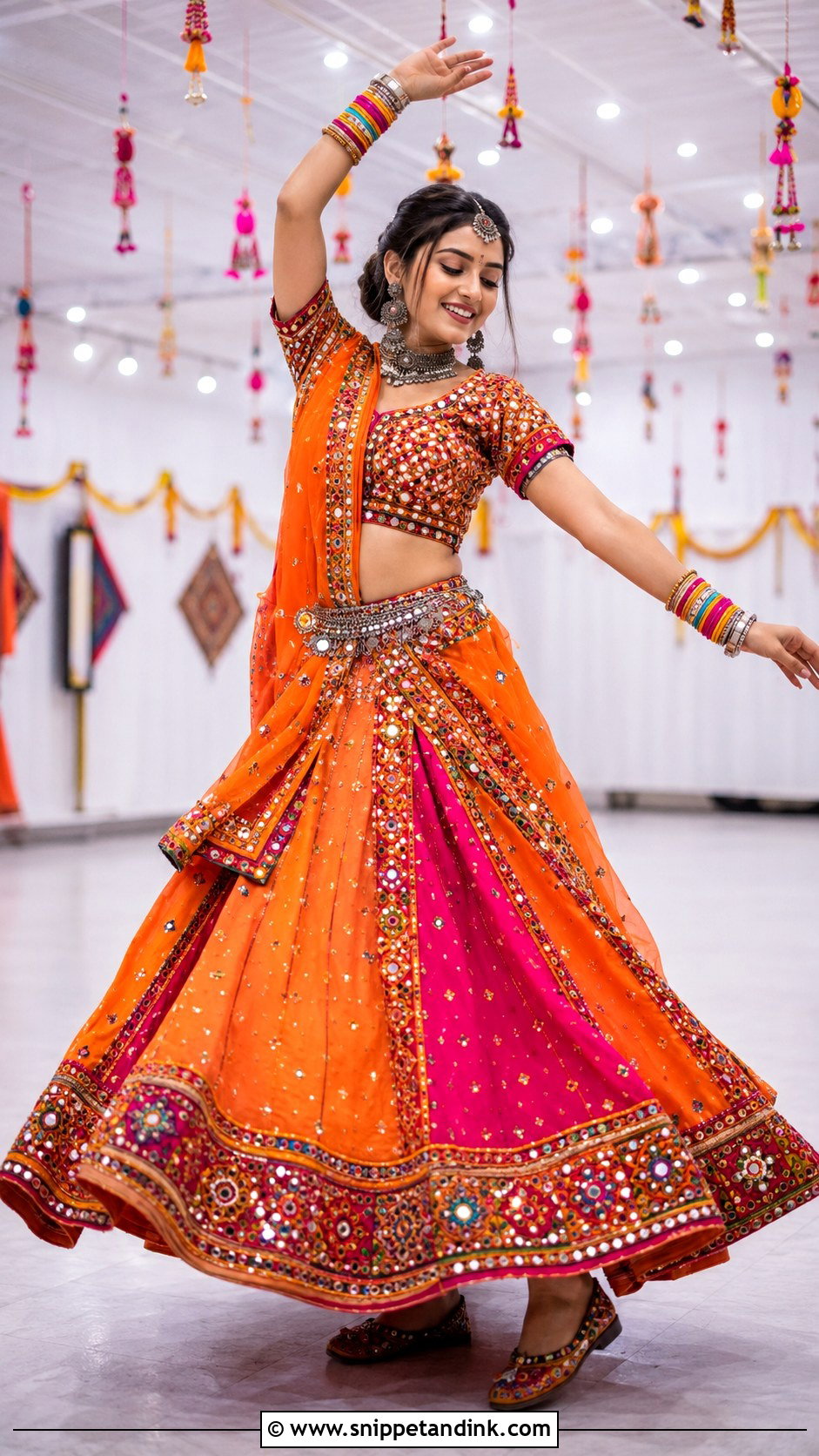
Garba night needs color, movement and an outfit that stays where you put it. An orange-and-pink chaniya choli does all three: a flared orange skirt with pink panels, mirror accents and embroidered borders, plus a pink choli with comfortable straps or sleeves and solid support. Pin a light orange dupatta at the shoulder and waist so you aren’t adjusting it every round. Oxidized silver, colorful bangles, statement earrings and a decorative waist belt. Leave heavy necklaces at home; they swing and bruise when you dance. Embroidered flat juttis beat narrow heels on a crowded floor. A long braid, sweat-resistant makeup and a vivid pink lip.
12. Yellow Bandhani Haldi Bridal Outfit
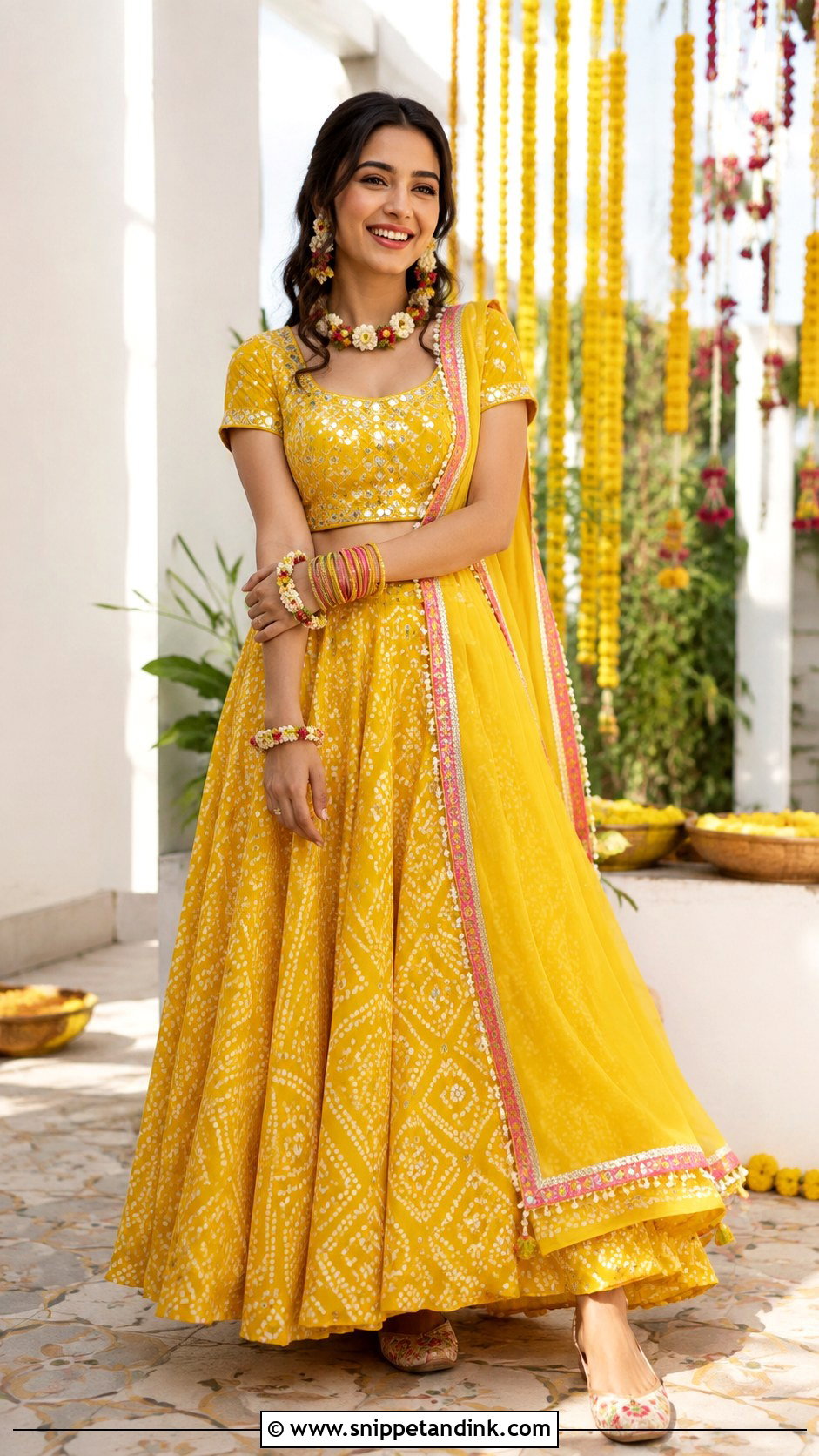
Haldi paste stains silk permanently, so for a Gujarati haldi bridal outfit I always choose something light and washable. A yellow Bandhani lehenga on cotton-silk or georgette is ideal. Pair it with a short-sleeve blouse with small mirrors rather than heavy embroidery. A matching dupatta with a pink, orange or green border should be pinned away from the hands. Floral jewelry in white and yellow is fresh, and simple gold earrings can be reused. Colorful bangles, a small bindi and flat embroidered sandals. Keep the skirt short enough to sit on the floor without trampling it. A loose braid, water-resistant makeup and a soft coral lip.
13. Green Mirror Work Mehndi Bridal Lehenga
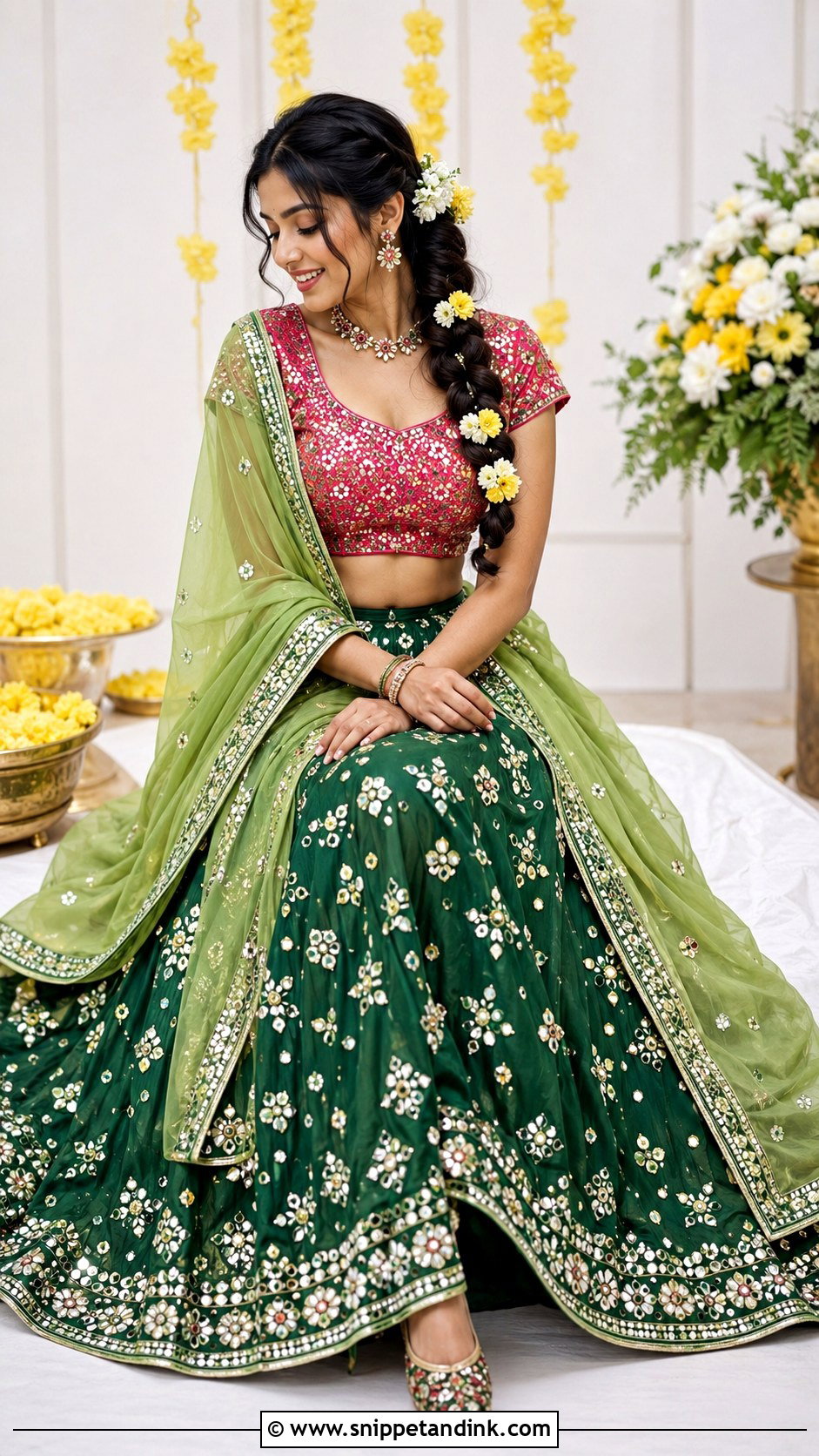
Henna stains read darker against green, which makes a green mirror work lehenga a smart choice for the mehndi. Choose bottle green, leaf green or emerald with small mirrors and colorful thread, and a matching blouse or a magenta one for contrast. Drape a light green dupatta over one shoulder and leave both arms free; the paste needs hours to dry and anything brushing it smudges the design. Floral earrings, a fine necklace and minimal bangles. Embellished juttis you can slip into. A side braid with small flowers, green or bronze eyeliner, waterproof mascara and a muted rose lip.
14. Pastel Gujarati Engagement Lehenga
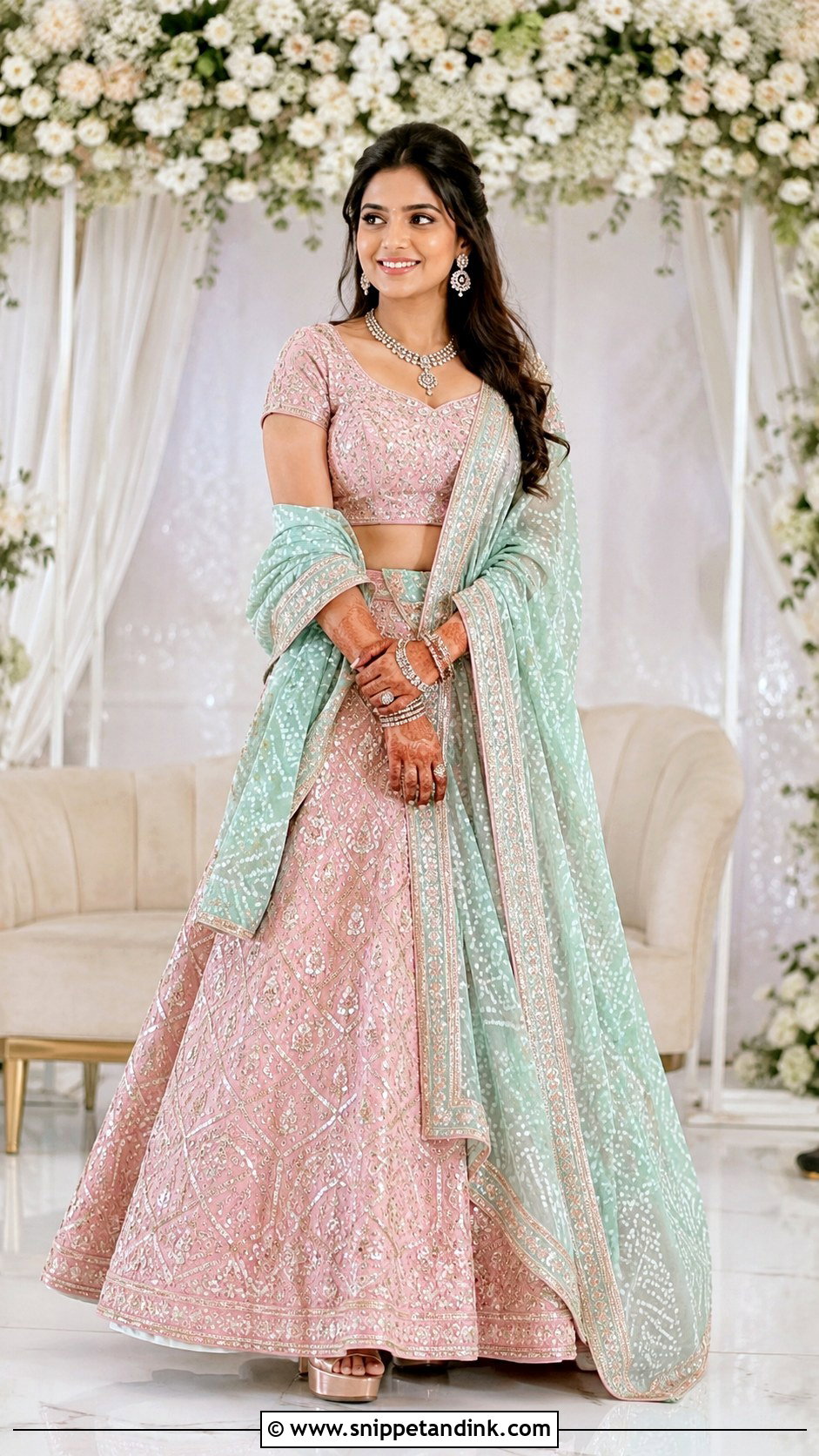
Engagement outfits should feel formal without upstaging the wedding, and pastels do that well. Consider powder pink, mint, lavender, peach or light blue with silver or champagne embroidery, a well-fitted blouse and a flowing skirt. A lightly patterned Bandhani dupatta in a matching pastel brings Gujarati character. Diamond-style jewelry, pearls or pale kundan suit the softness: a medium necklace, earrings, slim bangles and a small ring that won’t compete with the one going on your finger. Metallic block heels for hours of standing. Soft waves or a low textured bun, luminous makeup and a rose-nude lip.
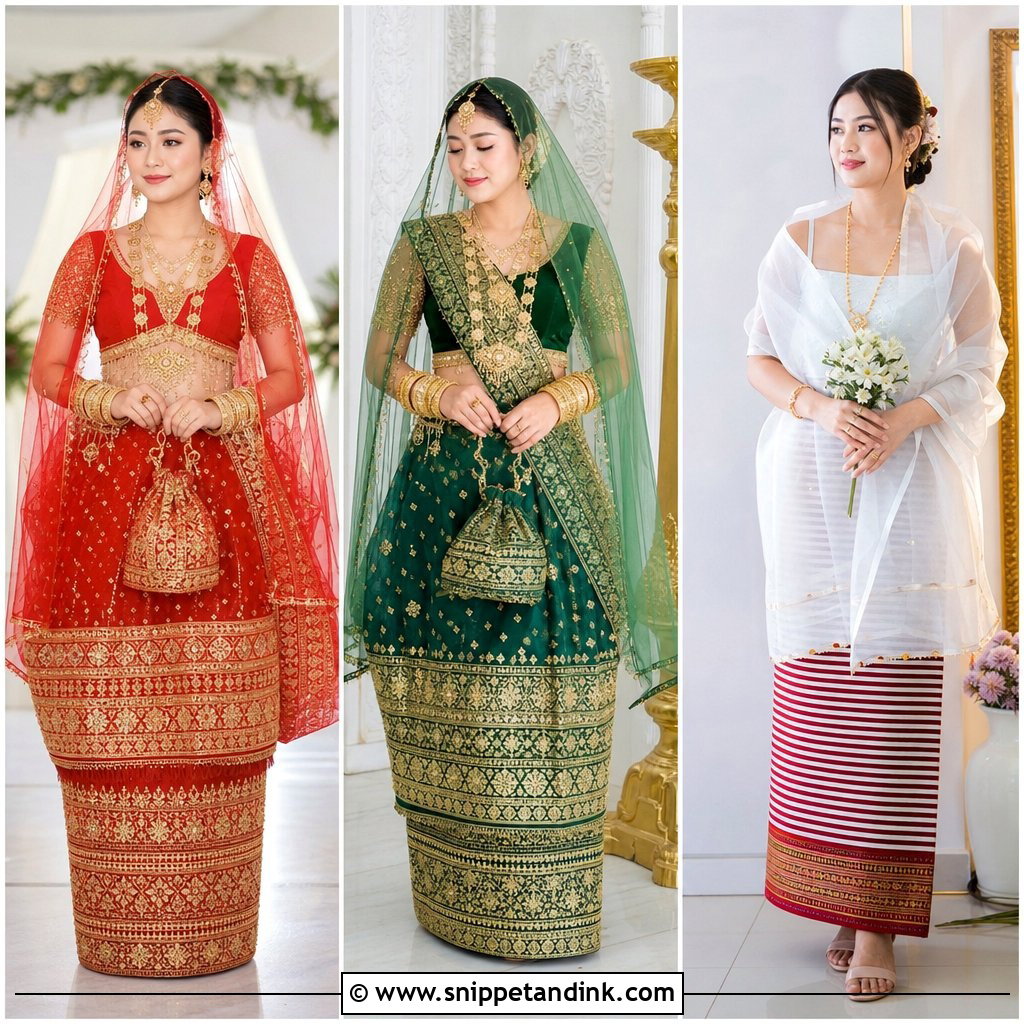

15. Navy Blue Sangeet Bridal Lehenga
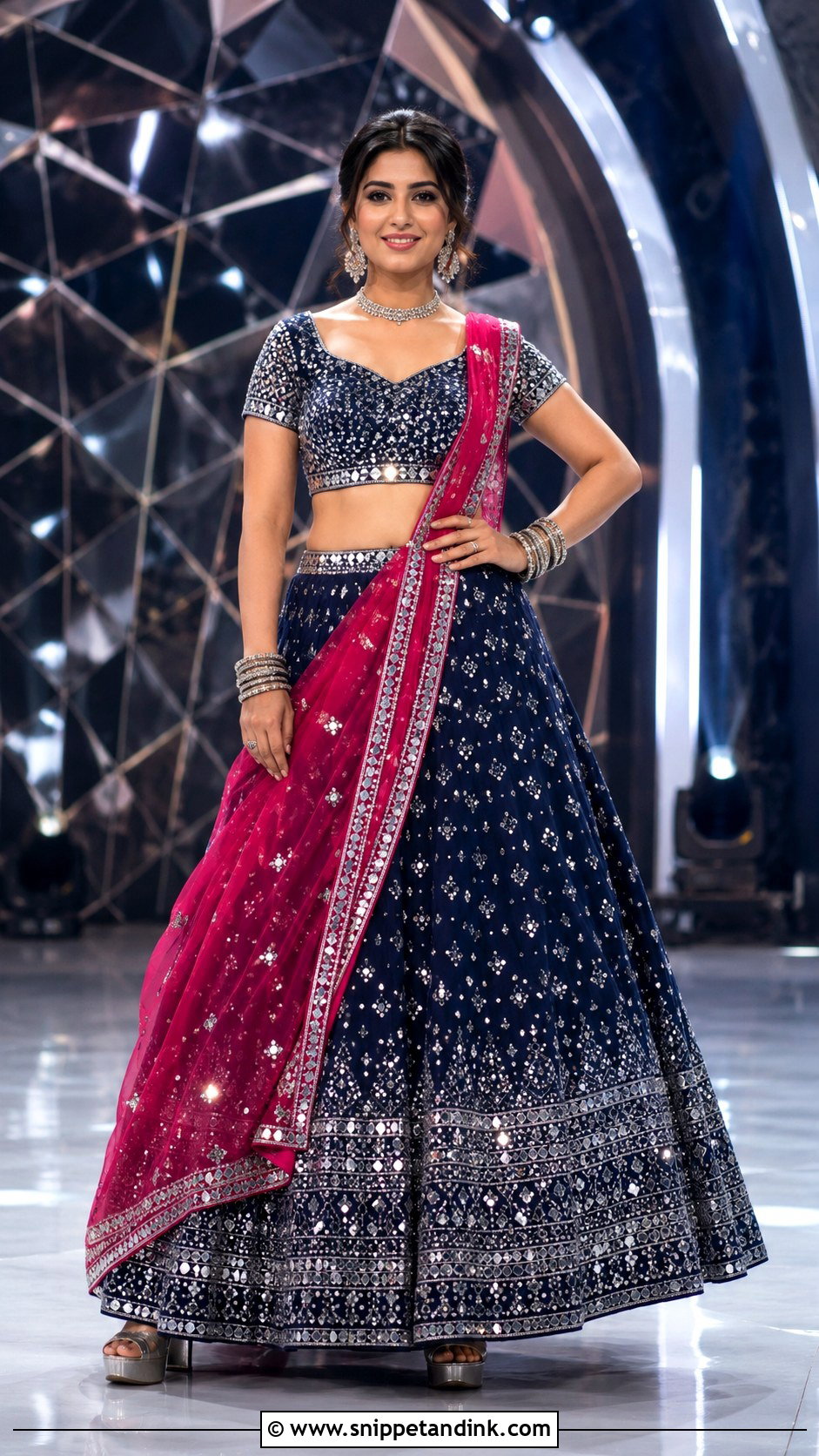
Navy blue is the outfit I suggest when a bride is tired of red by the sangeet. Under evening lights it looks deep and formal. Choose a flowing skirt with silver mirror work, gold embroidery or Gujarati-inspired motifs, and a supportive matching blouse you can dance in. Secure a light blue or magenta dupatta at one shoulder and the waist so your hands are free for any performance. Diamond-style jewelry gives a cool finish; kundan feels warmer. If the blouse is heavily worked, statement earrings, a short necklace and bangles are enough. Block heels or platforms with secure straps, a firm bun or braid, defined eyes and a berry lip.
16. Red Banarasi Gujarati Bridal Lehenga
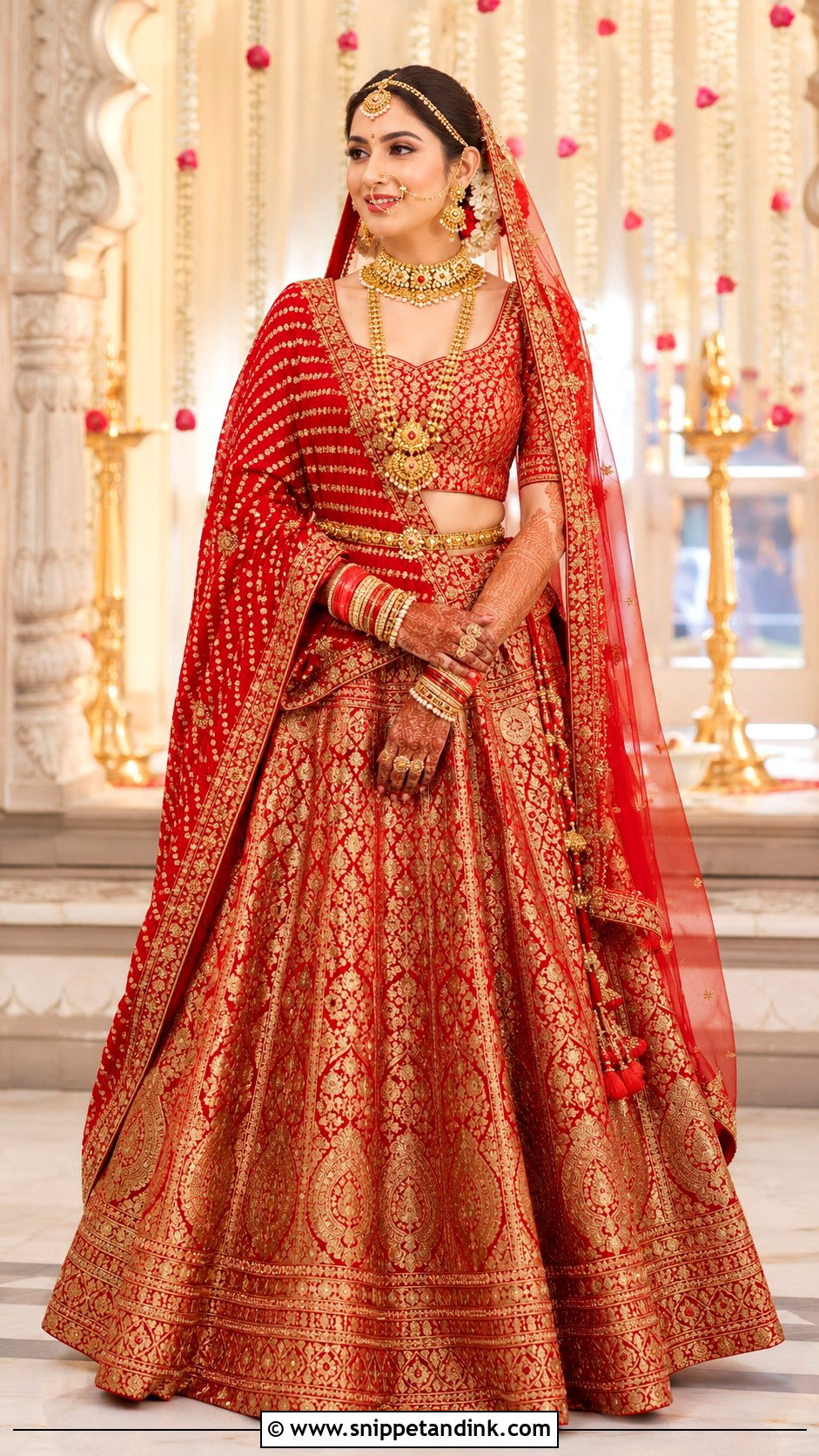
Woven silk has its own sheen, so a red Banarasi lehenga needs far less extra embroidery than people assume. Choose a skirt with gold motifs and a broad hem, and a fitted red blouse in silk or velvet. A Bandhani or Gharchola dupatta across the torso brings in Gujarati heritage, and a lighter red veil covers the head for the ceremony. Traditional gold or kundan: choker, long haar, earrings, bridal bangles, nose ring and waist belt. Red juttis disappear under the skirt. A sleek center-parted bun, gold-toned eyes and deep red lipstick.
17. White And Gold Reception Bridal Saree
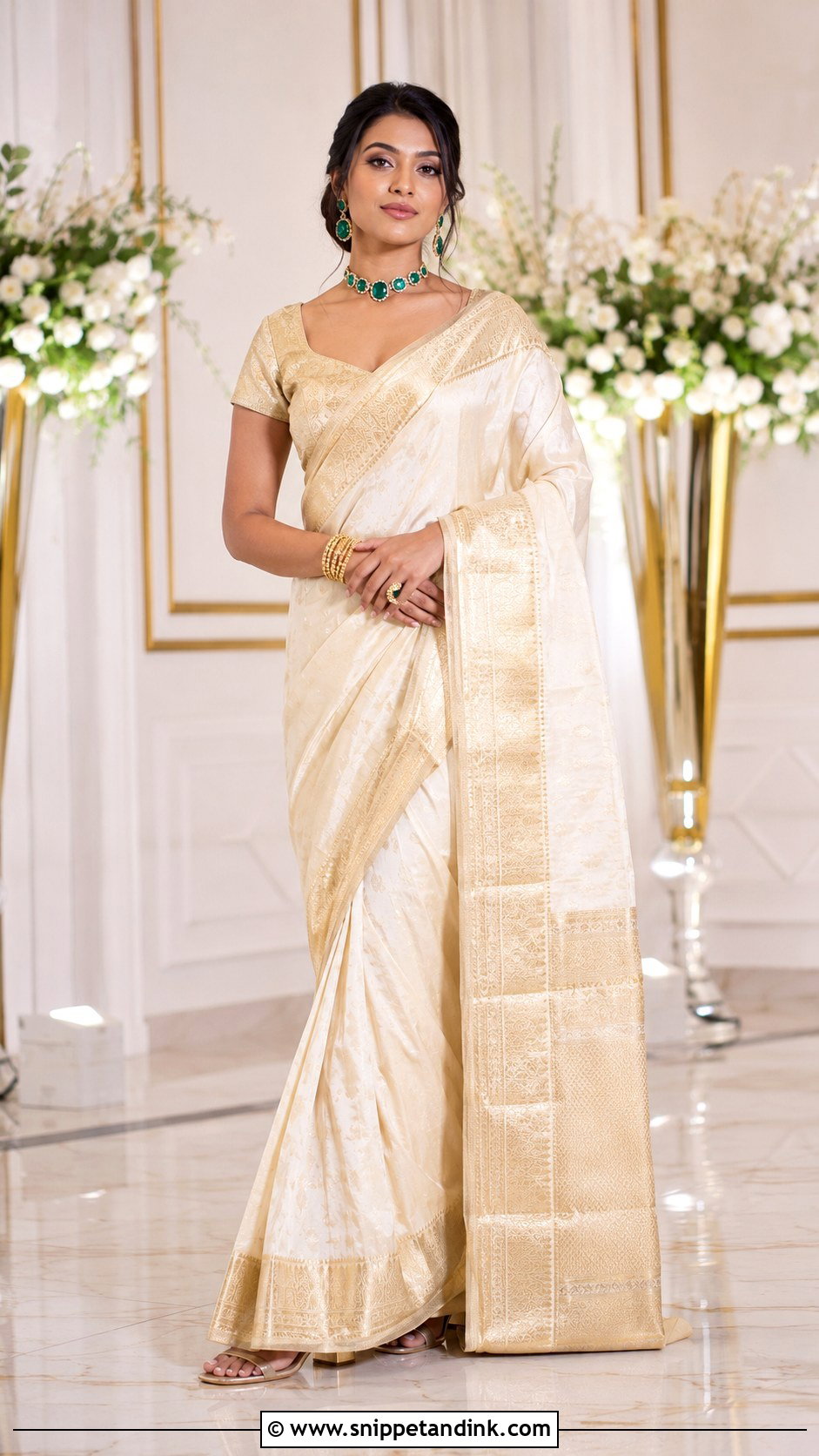
By the reception, most brides have worn red for days, and white and gold feels like a breath of air. Choose silk, tissue or light organza with a structured gold border, and a fitted gold blouse or an ivory one with subtle beadwork. A front pallu drape or a narrow Bandhani border keeps the Gujarati link. Emerald or ruby jewelry gives one strong accent against the neutral base. A choker, drop earrings, slim bangles and a ring keep it formal without repeating the ceremony’s weight. Gold block heels or metallic platforms. A sleek bun or brushed-out waves, luminous skin and a rose or red lip.
18. Champagne Gujarati Reception Lehenga
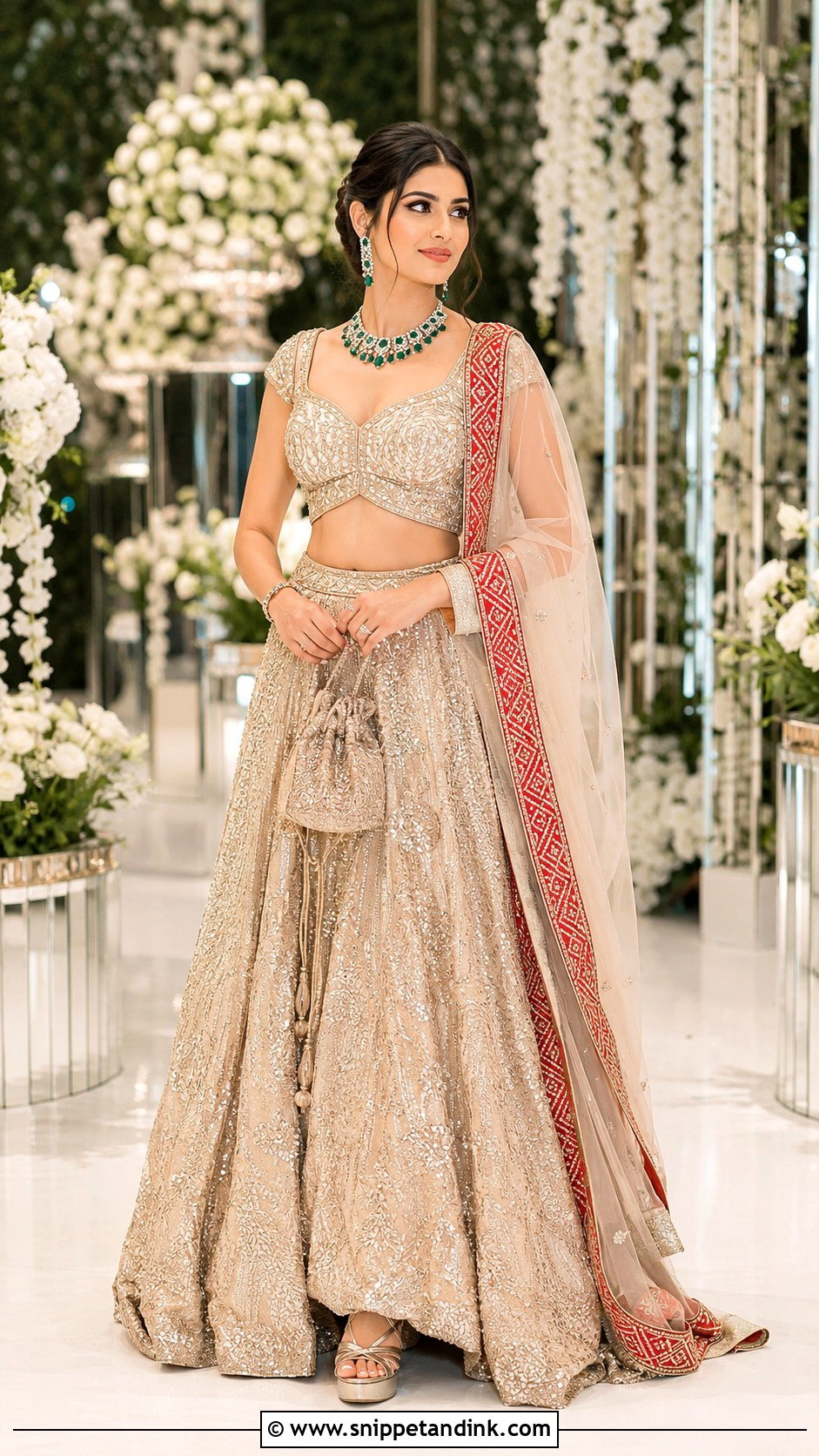
Champagne is softer than gold under camera flash, so it suits a reception where you’ll be photographed constantly. Select a flowing lehenga with tonal sequins, fine beadwork and restrained gold embroidery. The blouse should fit securely enough that you can hug a long line of guests without adjusting it. Add a sheer champagne dupatta over one shoulder, or a pale red Bandhani border for a quiet Gujarati touch. Emerald jewelry contrasts sharply; diamonds or crystals stay tonal. A statement necklace, earrings, bracelet and small evening bag. Metallic platforms are steadier than stilettos. Smooth waves or a low bun, softly smoked eyes and a neutral rose lip.
19. Plus Size Gujarati Bridal Lehenga
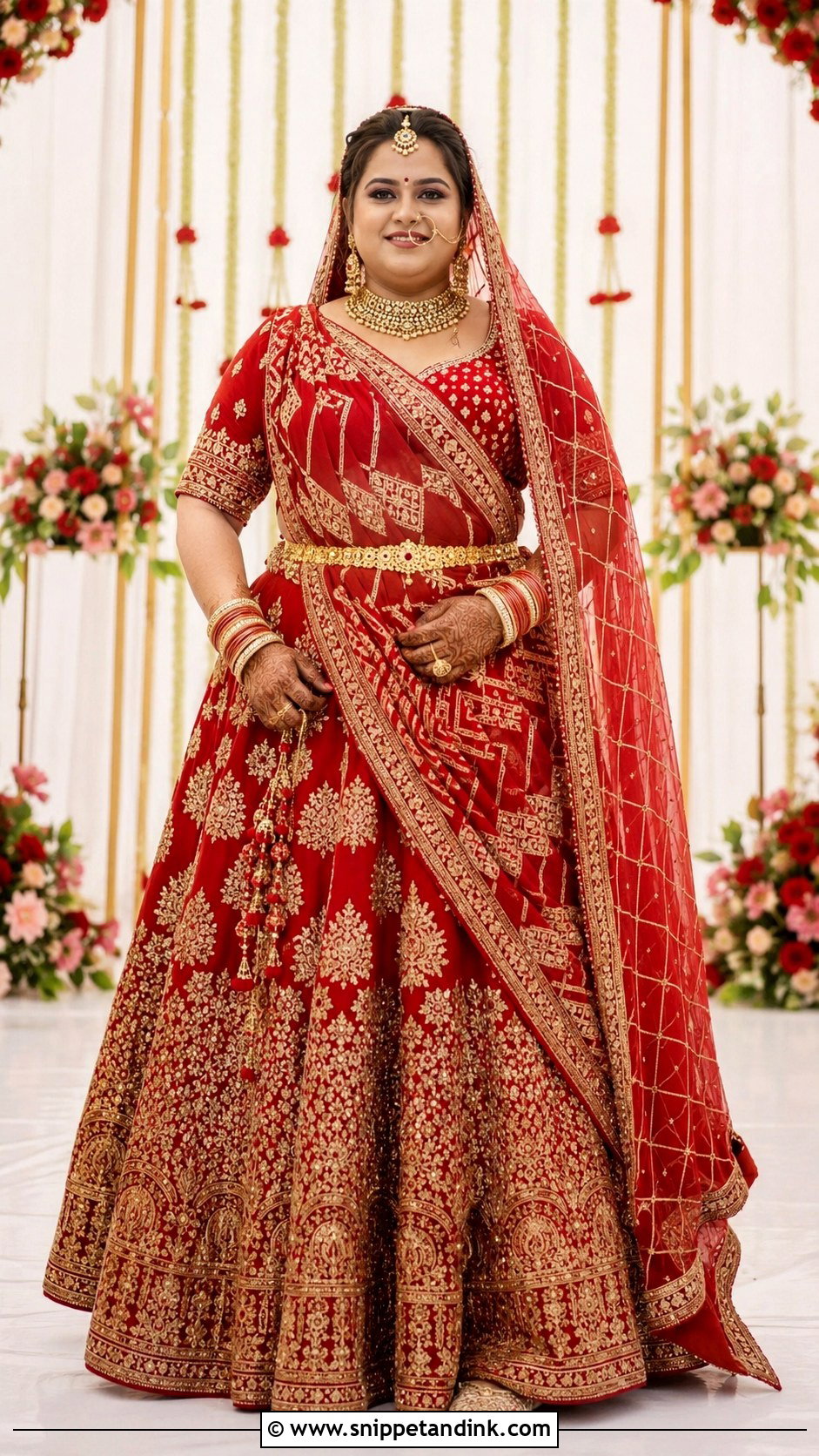
For a plus-size bride, structure and fit matter more than any rule about what to avoid. I’d start with a high-waisted skirt with controlled flare and embroidery spread evenly, so no single area carries all the weight. Vertical motifs, balanced borders and fluid fabrics give a clean line, but the bride’s own taste comes first. The blouse needs supportive cups, secure sleeves and a neckline she genuinely likes, and it’s worth an extra fitting. A red Bandhani or Gharchola dupatta in a diagonal drape shows its pattern without hiding the blouse. Proportionate kundan, bangles, a waist belt and cushioned juttis. A sleek bun, fresh flowers and a red or berry lip.
20. Minimal Gujarati Bridal Saree
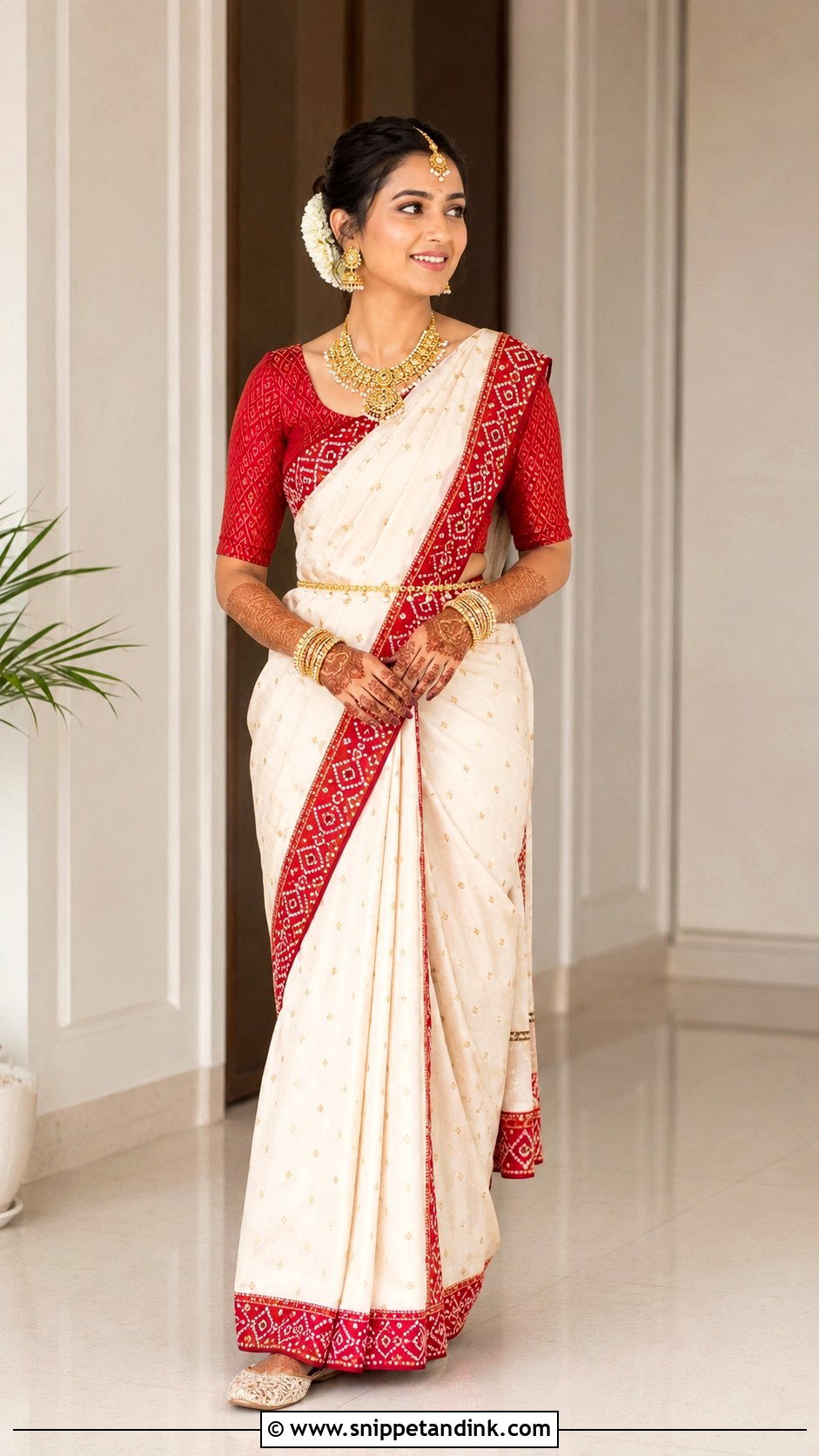
Not every bride wants a heavy outfit, and for a small ceremony a minimal saree often feels more like her. Choose an ivory silk saree with a red Bandhani border, or a simple red Gharchola with limited zari, and a clean, well-tailored blouse in red, green or ivory. A front pallu drape makes the textile the focus. Choose one statement necklace instead of several layers, then earrings, bangles, a small bindi and a fine waist chain. Gold sandals or embroidered flats. A neat bun with a modest flower arrangement and natural makeup with a classic red lip. Fewer pieces also means fewer pins, which you’ll appreciate at hour six.
Silk, Fire and a Long Sit at the Mandap
The ceremony is the longest you’ll wear any single outfit, and much of it is spent seated close to a sacred fire. That changes how I dress a bride for it. Pure silk and cotton are slower to catch and don’t melt the way some synthetic net and georgette can, so I prefer natural fibers for the sleeves and any dupatta edge that sits near the flames. I pin the dupatta firmly at the shoulder so nobody’s veil drifts toward the havan during the pheras.
Sitting cross-legged for an hour in a saree also loosens pleats. A drape held with enough safety pins at the waist and a well-fitted petticoat keeps it in place, and a lehenga with a soft, flexible waistband is kinder still. Ask your draper to show one person in the family how to re-tuck the pleats, since the draper may not be on hand mid-ceremony.
- Give a trusted cousin a small kit: safety pins, bobby pins, a fashion tape strip, blotting papers and a lipstick.
- Wear juttis or flats you can slip off and on quickly, since shoes usually come off at the mandap.
- Choose earrings you can wear for many hours; heavy jhumkas are easier with ear chains or supports that take the weight into the hair.
What Should the Week’s Outfits Have in Common?
Gujarati bridal dress can honor tradition and still leave room for comfort and taste. Panetar, Gharchola, Bandhani, Patola patterns, mirror work and rich silk can appear in sarees, lehengas and chaniya cholis across the whole week. Start each outfit with the ritual, the season and how much you’ll move. Then build the blouse, dupatta, shoes, jewelry, hair and makeup as one look. Red and white, green and pink, pastels or neutrals all have a place. The outfit that works best is the one that fits securely, photographs clearly and lets you feel connected to your family while you wear it.
You'll Like These Ideas:








Leave a Reply