
Nineties Indian brides wore deep reds, maroons, greens and real metallic gold, with glossy lips, strong kohl and a strong dose of Bollywood romance. What I notice most when I go through family albums from that decade is the proportion. Lehengas flared moderately instead of ballooning, cholis were often longer, and the dupatta did most of the framing. Film weddings shaped what brides asked their tailors for, and that influence shows in almost every look below. Each one can be recreated faithfully or updated with lighter fabric, softer makeup and shoes you can stand in through every ritual. The list covers lehengas, regional sarees, shararas and pre-wedding outfits.
Wearing Your Mother’s Saree or Jewelry From the 90s
The most authentic version of any look below is often already in a family trunk. Old silk and jewelry need checking before the wedding, though, ideally a few months ahead.
- Open the saree fully in daylight. Silk stored folded for years can weaken and split along the fold lines, and those are easy to miss until it’s draped.
- Look at the zari closely. Older metal zari can tarnish dark in places; a specialist cleaner can sometimes brighten it, but don’t try polishing it at home.
- Plan a new blouse. Old blouses rarely fit, and a tailor can often cut a new one from the saree’s own blouse piece or a matching fabric.
- Take heirloom jewelry to a jeweler for restringing and new clasps. Old threads on necklaces and tikkas snap under the weight of a long day.
Silk sarees should be dry cleaned only, then wrapped in soft cotton cloth rather than plastic, and refolded along different lines every few months so the creases don’t set.
1. Red Zardozi Bridal Lehenga
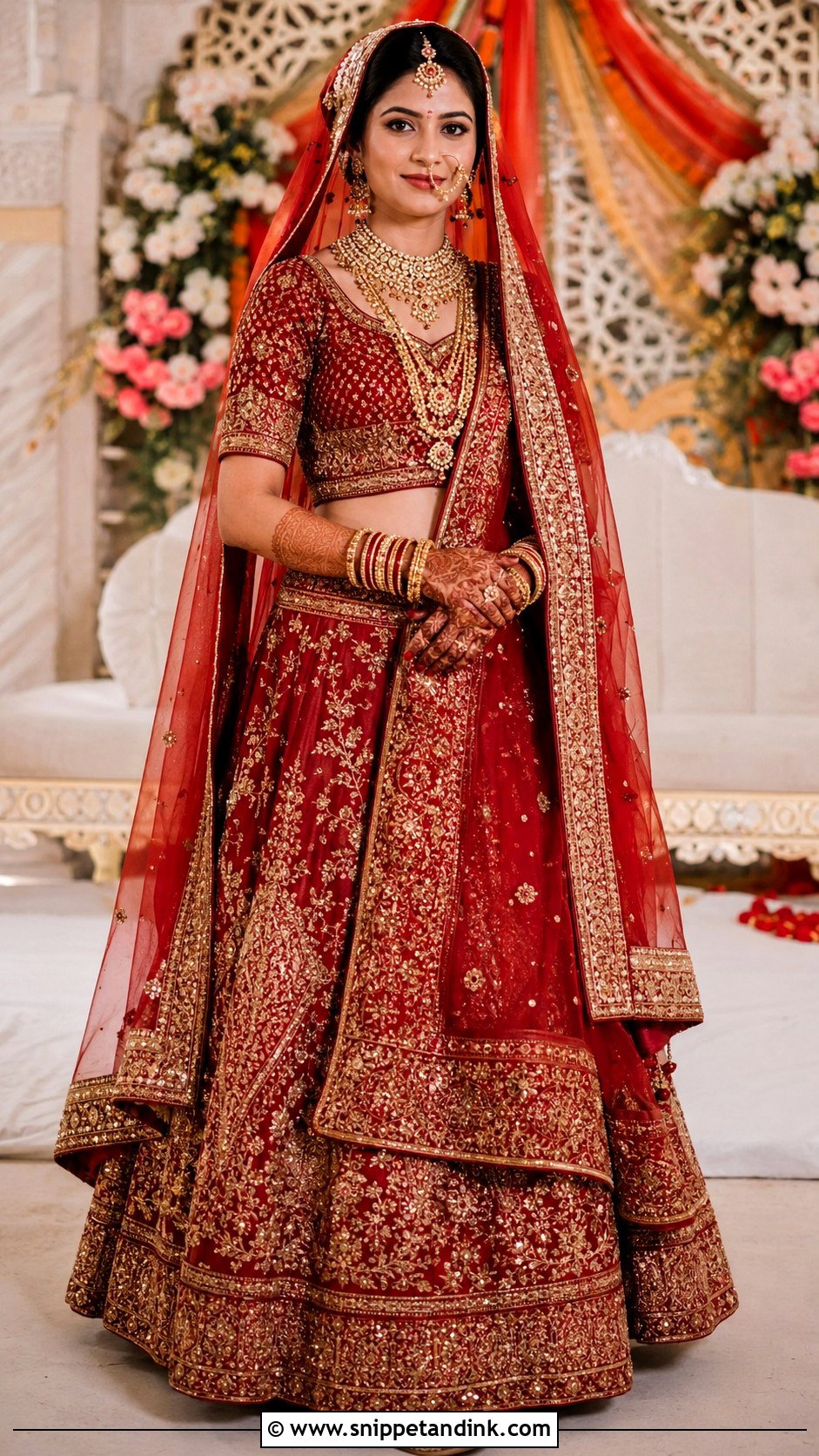
A deep red zardozi lehenga is the decade in one outfit. Ask for a moderate flare with the heaviest gold work along the hem, not the oversized can-can volume of recent years; zardozi is metal thread and it gets heavy fast, so concentrating it low keeps the waistband from dragging. A fitted short-sleeve choli and a red dupatta edged in gold, worn over the head and brought diagonally across the body. Layered gold necklace, round maang tikka, jhumkas, red bangles and a nath. Embroidered gold juttis underneath. Finish with a center-parted bun, black liner, red lips and a small red bindi, keeping the base light so the gold does the talking.
2. Gold DDLJ Bridal Lehenga
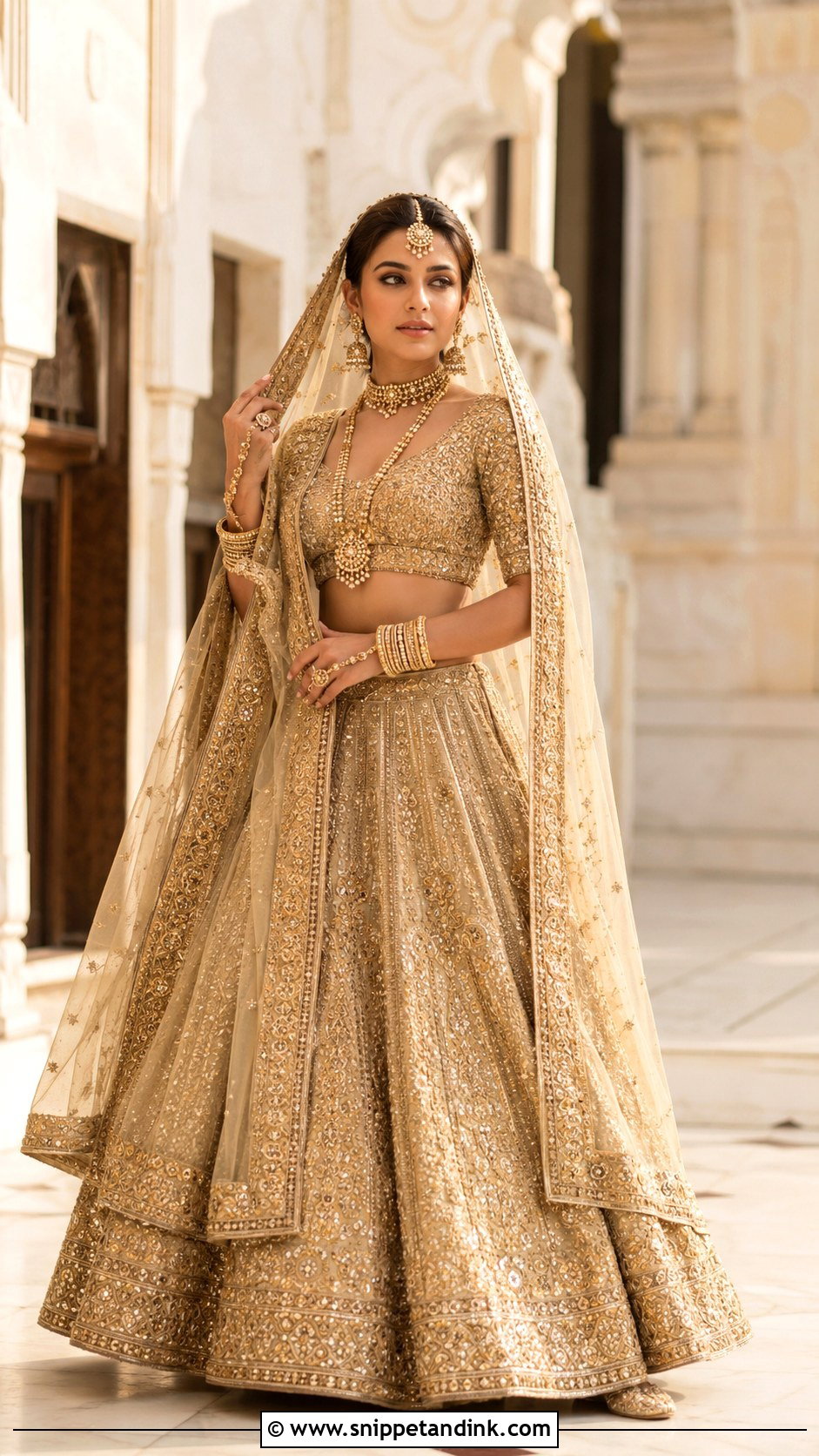
This look takes its cue from the most quoted Bollywood wedding of the decade, and the gold lehenga became a reference brides still bring to fittings. Choose a warm antique-gold skirt with traditional motifs, a fitted choli and a light net dupatta. Antique gold, with its slightly brown, aged tone, is what keeps it from looking new and shiny on camera; bright yellow gold and crystal stones date it to a much later era. Drape the dupatta over neat center-parted hair so the border frames the face. A gold choker, a longer necklace, jhumkas, maang tikka, stacked bangles and haath phool, with gold juttis. Kohl-rimmed eyes, muted red lips and flushed cheeks finish it.
3. Green Long Choli Bridal Lehenga
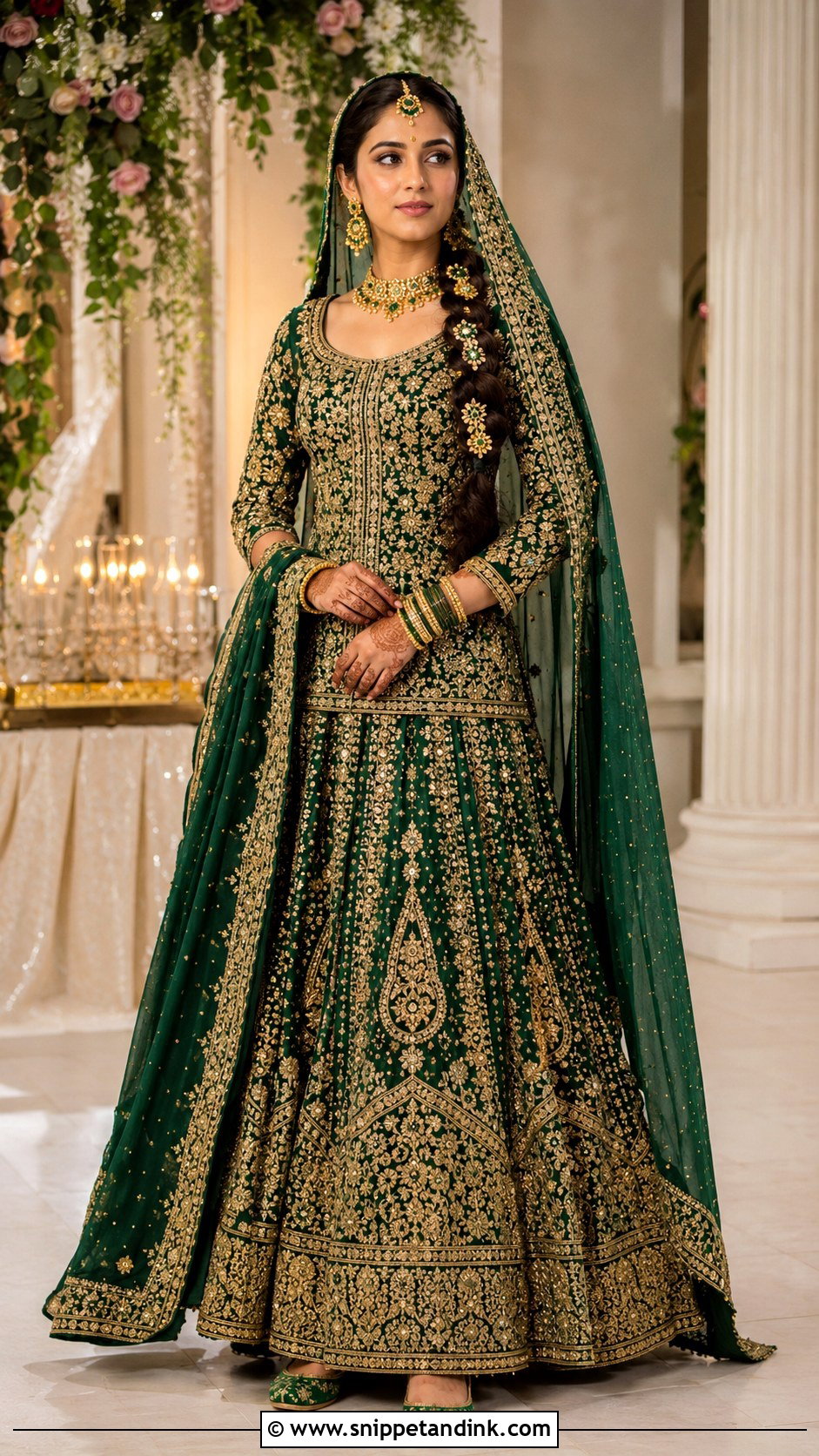
Green turns up again and again in 90s film wedding wardrobes, and the long choli is what makes this one unmistakable. It ends below the natural waist, so the shape is longer and more covered than a cropped modern blouse. Tailors cut it with side slits or a slight flare at the hem so you can sit cross-legged at the mandap without it riding up, so ask for that. Gold borders or scattered sequin motifs suit it better than allover sparkle. A matching dupatta over the head and one shoulder. Gold jhumkas, a medium necklace, a simple tikka, green and gold bangles and pointed juttis. A long braid with gold hair ornaments, black kajal and a brown-red lip.
4. Maroon Velvet Bridal Lehenga
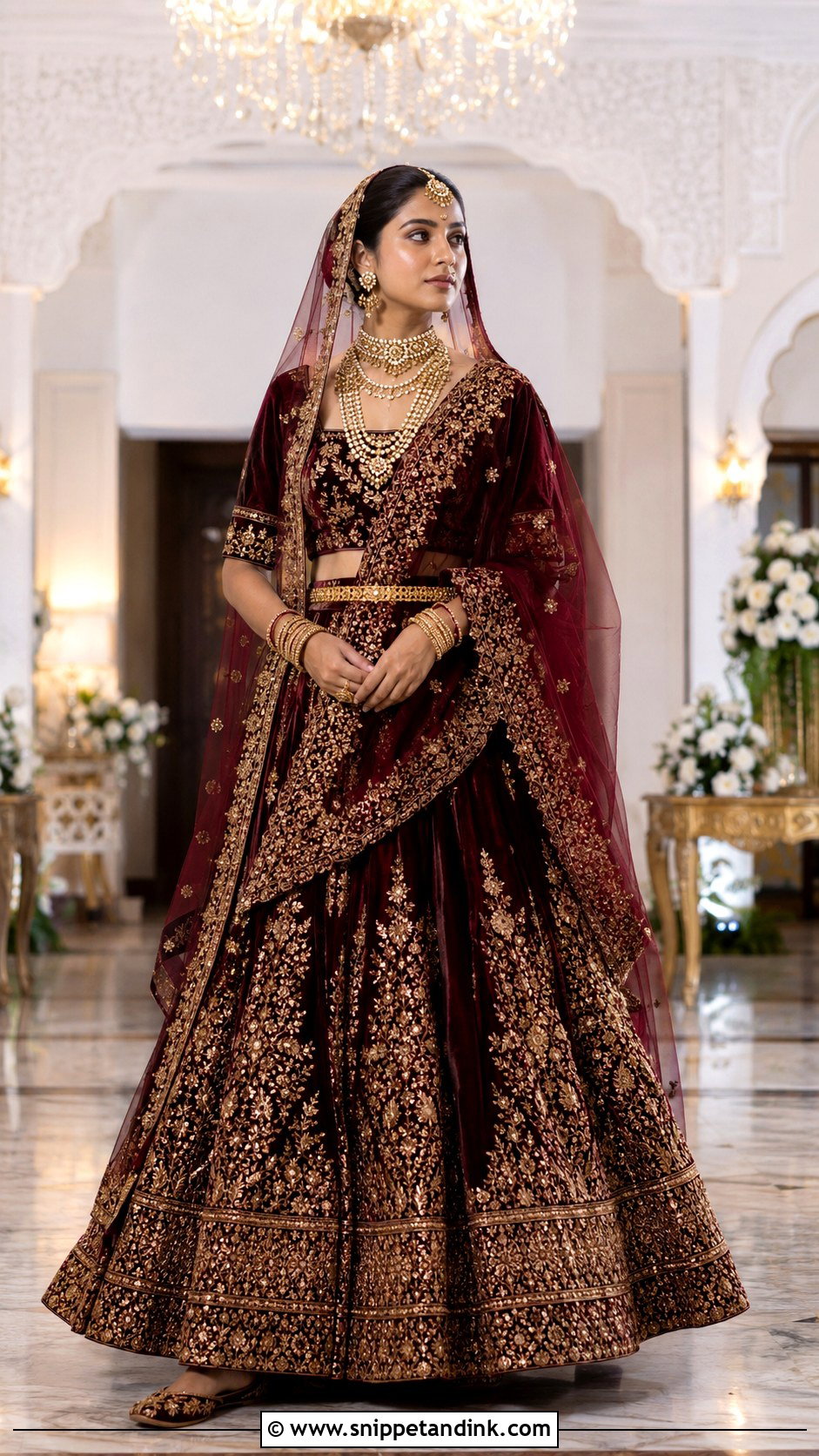
Velvet is a winter fabric, and in a December mandap it feels exactly right. Choose a maroon skirt with a broad gold border, spaced floral embroidery and enough body to move without ballooning. A fitted velvet blouse with a round neck and elbow sleeves. The dupatta should be net or organza, never velvet too, because a velvet dupatta on top of a velvet lehenga is heavy and hot under lights. Drape it over the head with the second end across the forearm. Antique-gold necklaces, big jhumkas, a round tikka, bangles and a kamarbandh. Padded velvet juttis. A smooth low bun, dark kohl, a berry lip and a classic bindi.
5. Purple Satin Bridal Saree
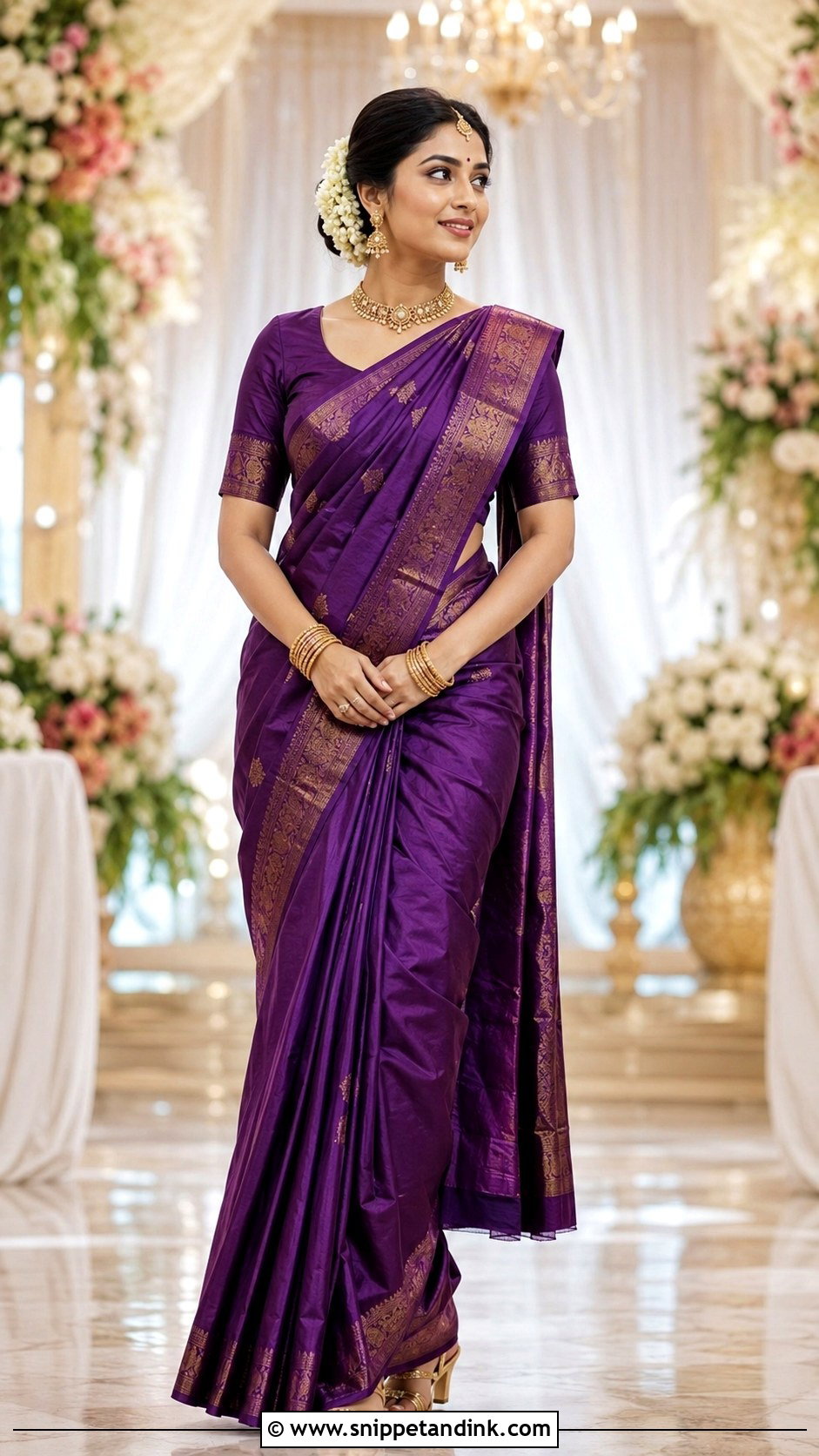
Purple satin sarees were a big color moment in 90s films, and they still flatter most skin tones. Pick silk satin or a fluid silk blend with a narrow embroidered border and scattered sequins. Satin slips, so the pleats need a few extra safety pins at the waist and the pallu should be pinned at the shoulder from underneath. Sharp front pleats and a long pallu over the shoulder. A short-sleeved blouse with a modest scoop neck and gold detail. Gold sandals or embroidered flats. A choker, drop earrings, coordinated bangles and a small tikka, rather than piling on big pieces. A smooth bun with jasmine or soft controlled waves, kohl, plum lips and a matching bindi.
6. Red Banarasi Bridal Saree
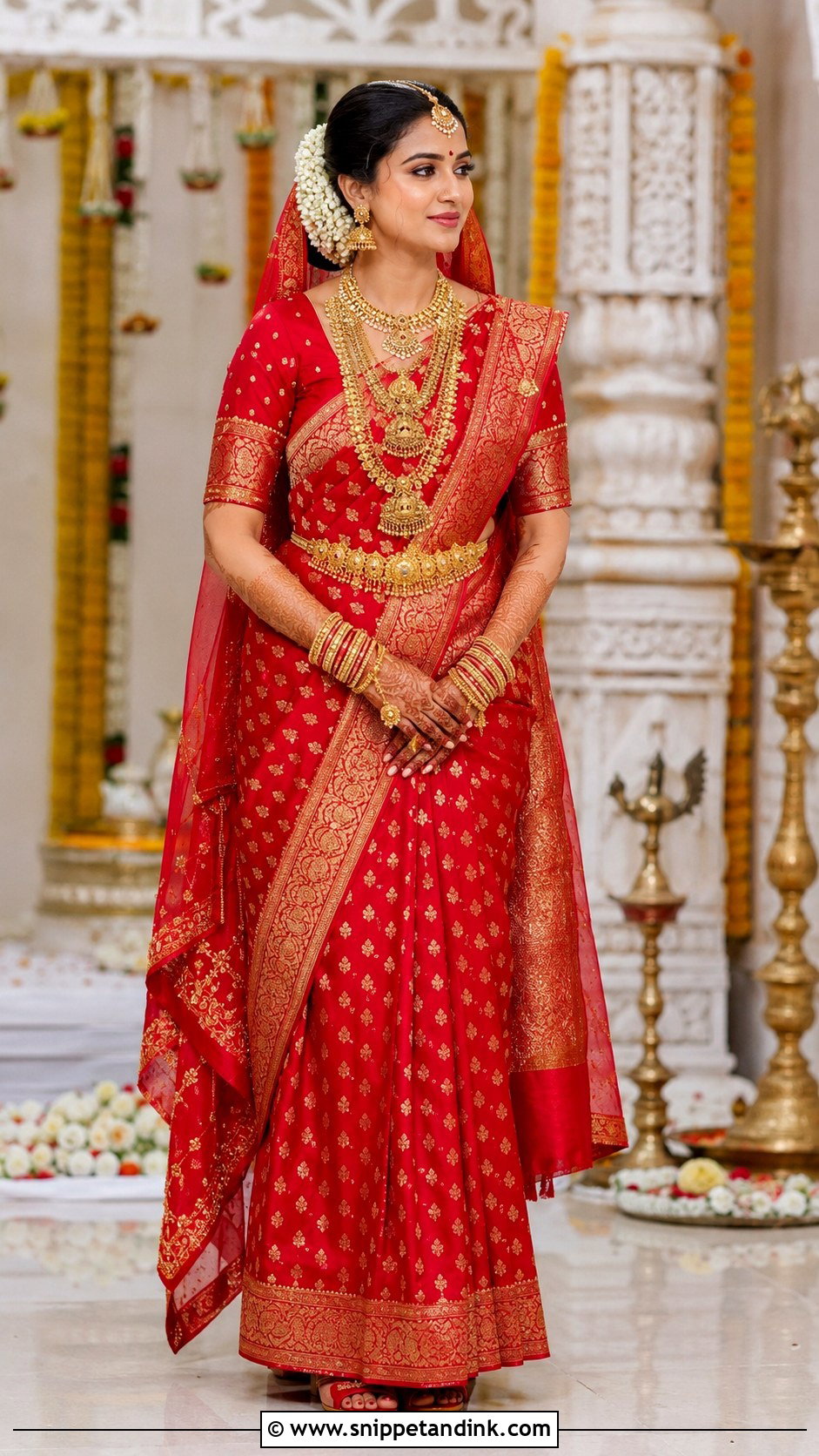
A red Banarasi with warm gold zari never really goes out of style. For a 90s version, choose a traditional pattern with a substantial border and pair it with a plain or lightly embroidered red blouse; elbow sleeves leave the saree in charge. Banarasi silk is stiff when new, so I like to have it pre-draped into pleats or at least steamed and folded the day before, which makes the morning much calmer. Pallu over the head for the ceremony, pinned at the shoulder for the reception. Gold choker, long necklace, jhumkas, tikka, bangles and a slim kamarbandh, with red and gold sandals hidden under the pleats. A center-parted bun with jasmine, kajal, red lips and a round bindi. It’s also the easiest look here to build around a family saree and heirloom jewelry.
7. Orange Kanjeevaram Bridal Saree
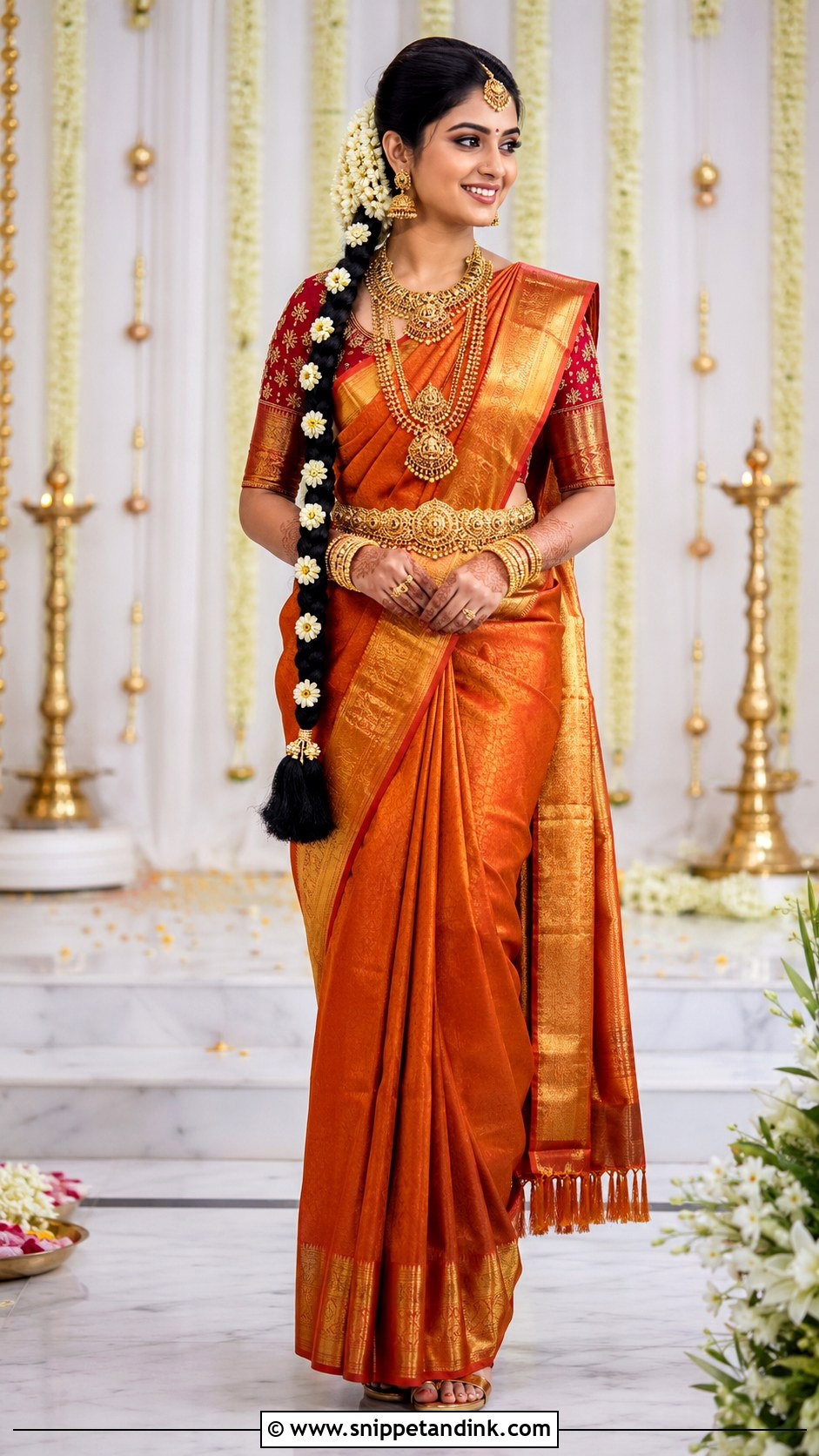
Burnt orange, saffron or rust silk with broad gold borders gives a South Indian bridal look real vintage character. Pair the Kanjeevaram with a contrasting red or green blouse, structured, short-sleeved, round neck. Kanjeevaram silk is thick and heavy, and the pallu and border carry most of the weight, so a blouse with a firm shoulder seam holds the drape better than a flimsy one. Keep the pleats crisp and leave the pallu visible. Layered temple necklaces, jhumkas, maang tikka, bangles, a waist belt and anklets, with simple gold sandals. A long braid with jasmine and traditional ornaments or a flower-covered low bun. Black liner and a warm red lip.
8. Ivory Saree With Red Border
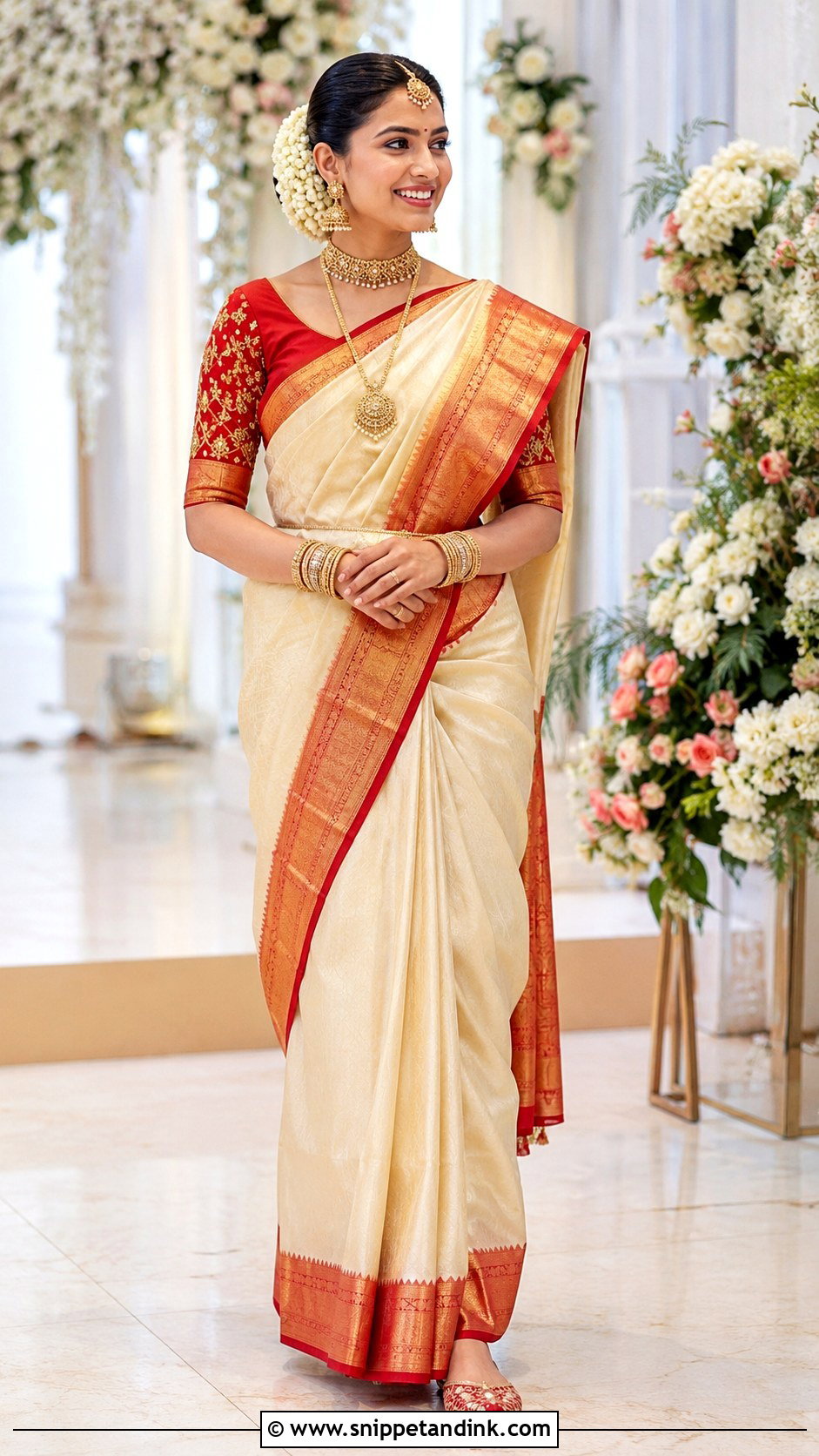
Ivory silk with a red and gold border is quieter than a full red saree and very sharp in photos, since the border draws a clean line around the whole figure. Choose a plain body so the border stays the feature. A fitted red blouse with elbow sleeves and a little gold piping. Whether the pallu covers the head or falls over the shoulder depends on the ceremony and your family’s tradition. A gold choker, a longer pendant, matching earrings, red and gold bangles and a centered tikka, with red embroidered flats. A sleek low bun with jasmine, kohl, red lips and a prominent red bindi. Practical note: ivory silk marks easily, so keep turmeric and mehndi well away on the day.
9. Pink Gota Patti Bridal Lehenga
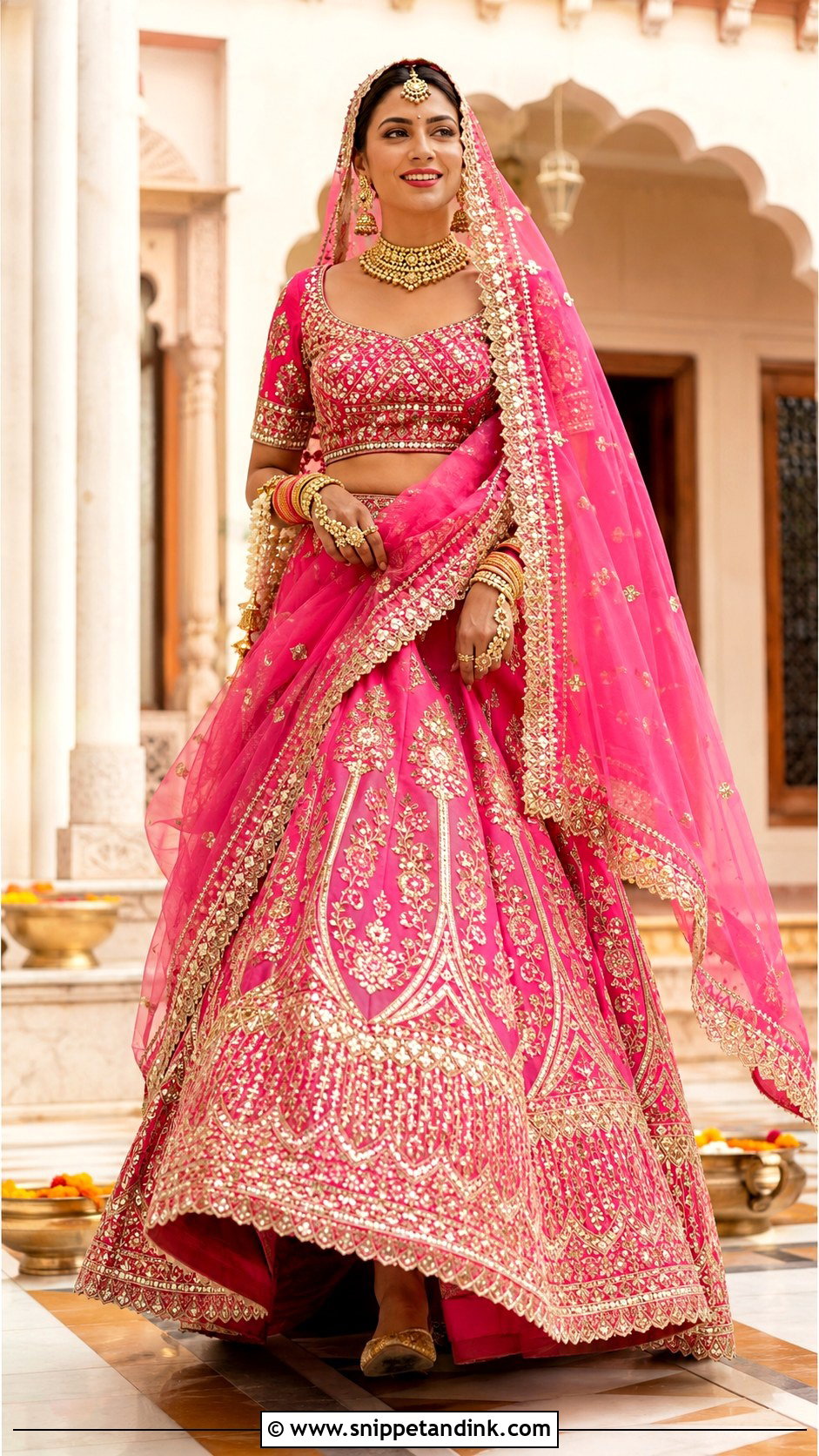
Gota patti is flat metallic ribbon appliqué, and in daylight it catches the sun in a softer way than sequins. That makes this rani-pink or fuchsia lehenga ideal for a daytime ceremony. Look for broad gota borders and smaller motifs across the skirt, a fitted matching choli and a light dupatta that can sit on the head without hiding the blouse. Gota is lighter than zardozi, so this is also kinder to wear for hours. Gold necklace, jhumkas, tikka, stacked pink bangles and haath phool, with pink or gold juttis for dancing. A low braided bun or long braid, defined liner, rosy cheeks and a deep pink lip. Skip modern crystals; they fight with the ribbon’s flat shine.
10. Mustard Mehndi Salwar Kameez
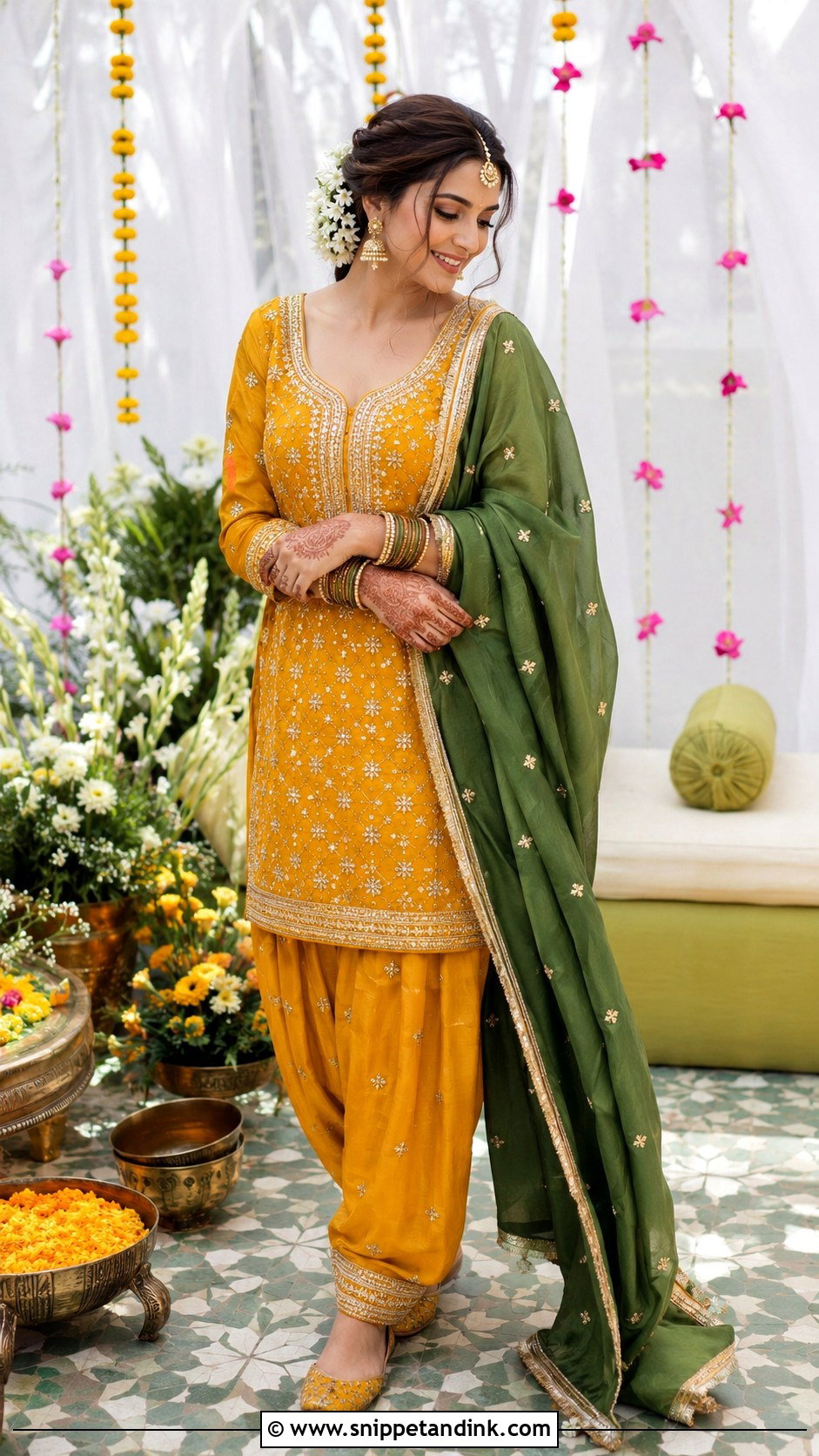
Mehndi day is the one event where the outfit has to work around your hands. A knee-length mustard kameez with a fitted waist, side slits and gold embroidery at the neck and cuffs, over a matching salwar rather than narrow pants. Cuffs should end above the wrist bone, or wide enough to push up, because fresh henna paste smudges onto anything it touches for hours. Drape a green or red dupatta loosely over both shoulders and leave it there. Gold jhumkas, glass bangles worn high on the forearm, a small tikka and flowers in the hair. Mustard, green or gold juttis. A side braid or half-up style, kajal, peach blush and a warm rose lip suit daylight well.
11. Green Sharara With Passa
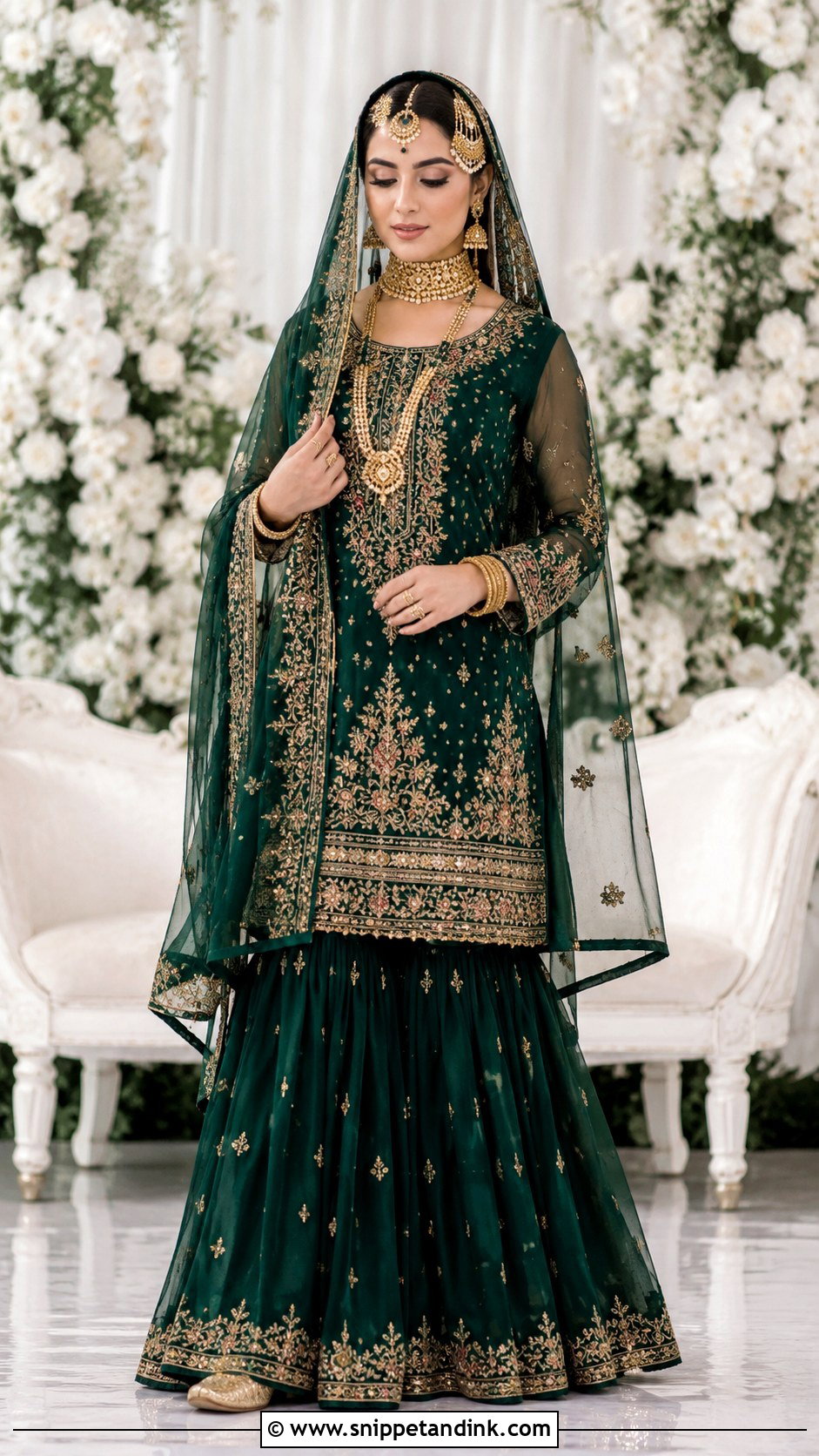
A bottle-green sharara moves wonderfully, and it suits a nikah, sangeet or formal pre-wedding event. Wide flowing sharara pants with gold borders under a knee-length embroidered kurta, plus a sheer green dupatta over the head or draped from one shoulder to the opposite wrist. The passa, worn at one side of the hair, is the detail that makes this read as the decade. It needs a secure base; a passa on loose hair slides forward, so it’s pinned into a firm section near the parting. A choker, long necklace, jhumkas, bangles and gold khussa. A center-parted low bun, smoky kajal, luminous skin and a brown-red lip, with a bindi only if it fits the bride’s own tradition.
12. Red Gharara Bridal Outfit
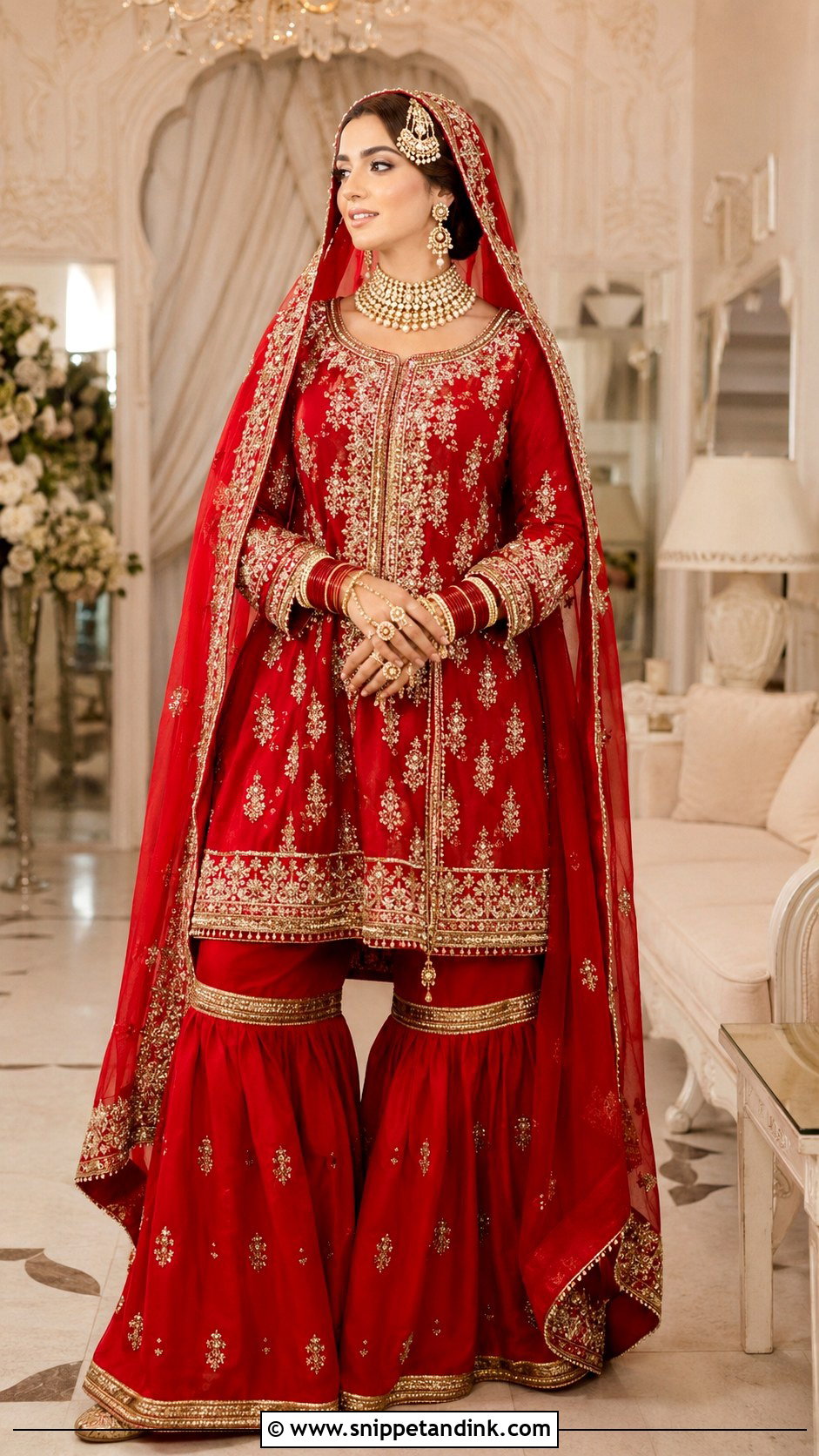
Ghararas look simple until you try one on. The trousers fit closely from the waist to the knee, then flare out with gathered fabric and gold trim at the knee seam, and that seam has to sit exactly at your knee or walking feels strange and the flare hangs wrong. Take your shoes to every fitting. Pair the red gharara with a knee-length zari-embroidered kurta and a dupatta with a broad border, over the head with the rest falling along one arm. A pearl and gold choker, jhumkas, passa, bangles and hand jewelry, with gold khussa flats. A center-parted bun anchors the head jewelry. Strong black liner, matte red lips and softly contoured cheeks.
13. White And Red Panetar Saree
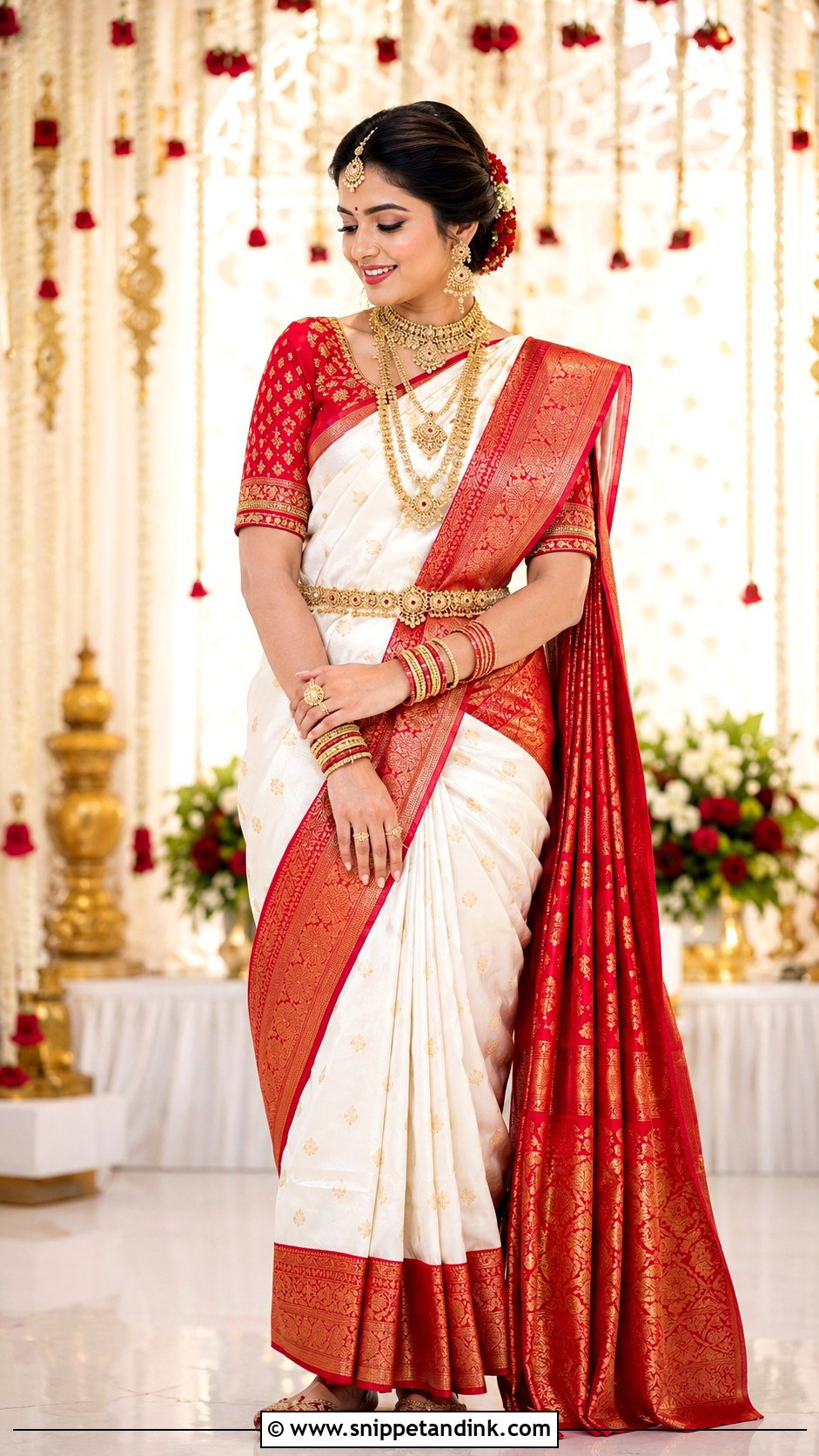
A white-and-red Panetar saree is a Gujarati bridal tradition with real meaning, so the drape is something to settle with your family before the stylist arrives. The body is white or ivory with a vivid red pallu, gold zari and traditional motifs, worn with a fitted red blouse. A second red head covering is sometimes added; use it only if your ceremony calls for it, since it can hide the woven pattern. Layered gold necklaces, earrings, tikka, bangles and a waist belt, with red and gold flats for long rituals. A secure low bun under the pallu, kajal, red lips and a round bindi. Ask an elder in the family to show you how it was worn at home; that detail matters more than any trend.
14. Punjabi Red Salwar Suit With Kalire
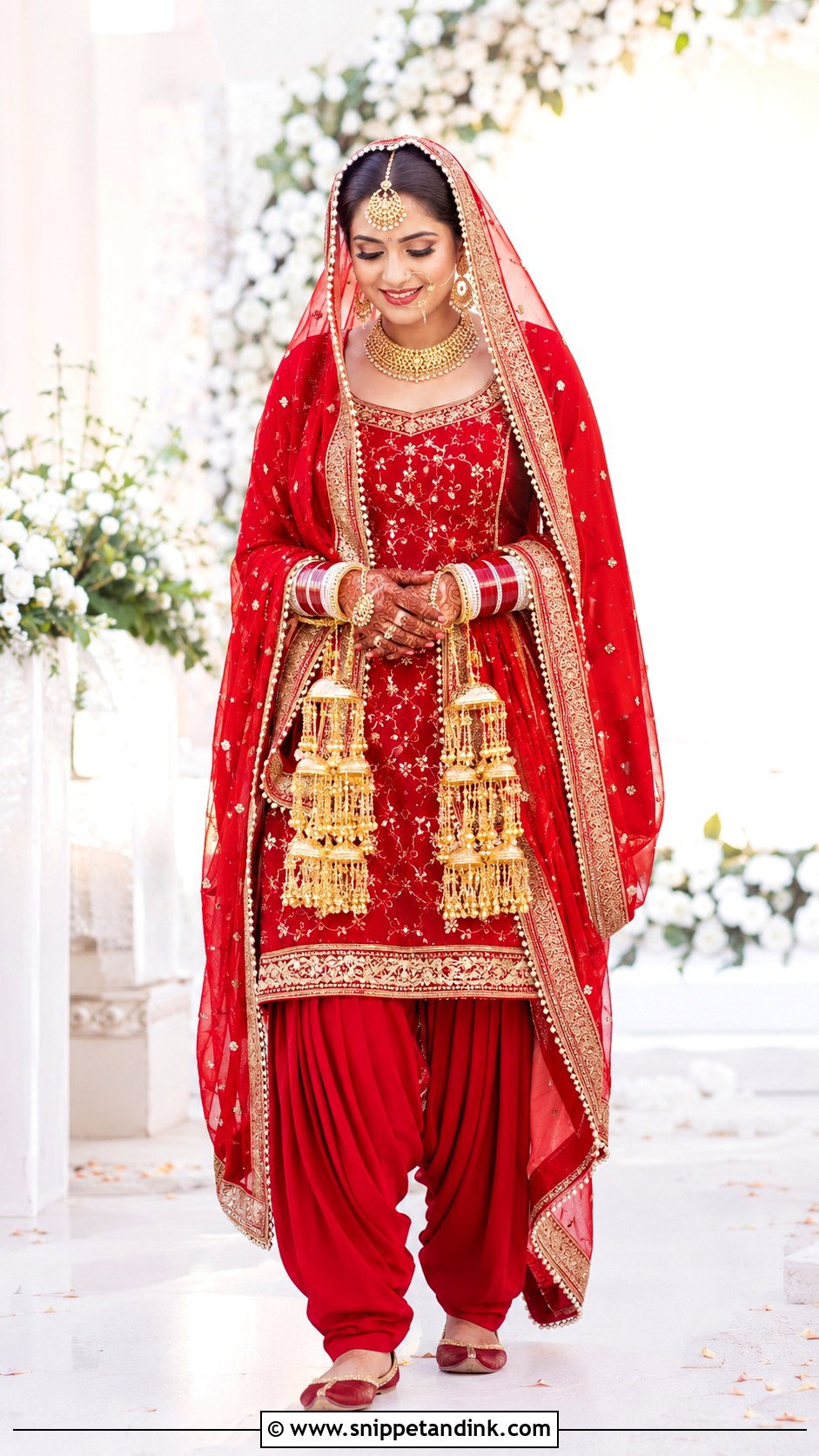
The chooda and kalire carry this outfit, so everything else should calm down around them. A heavily embroidered red kameez at knee length, a traditional salwar and a red dupatta over the head with its border framing the face. Gold zari, threadwork and small sequins give the 90s sparkle. Long kalire swing and catch on dupatta net, so I keep the dupatta border smooth near the wrists and suggest moderate kalire if the dupatta is delicate. Gold earrings, a necklace, tikka and nath, kept balanced. Gold or red Punjabi juttis. A center-parted bun or long braid under the dupatta, kohl-lined eyes, red lips, flushed cheeks and a small bindi.

15. Green Paithani Bridal Saree
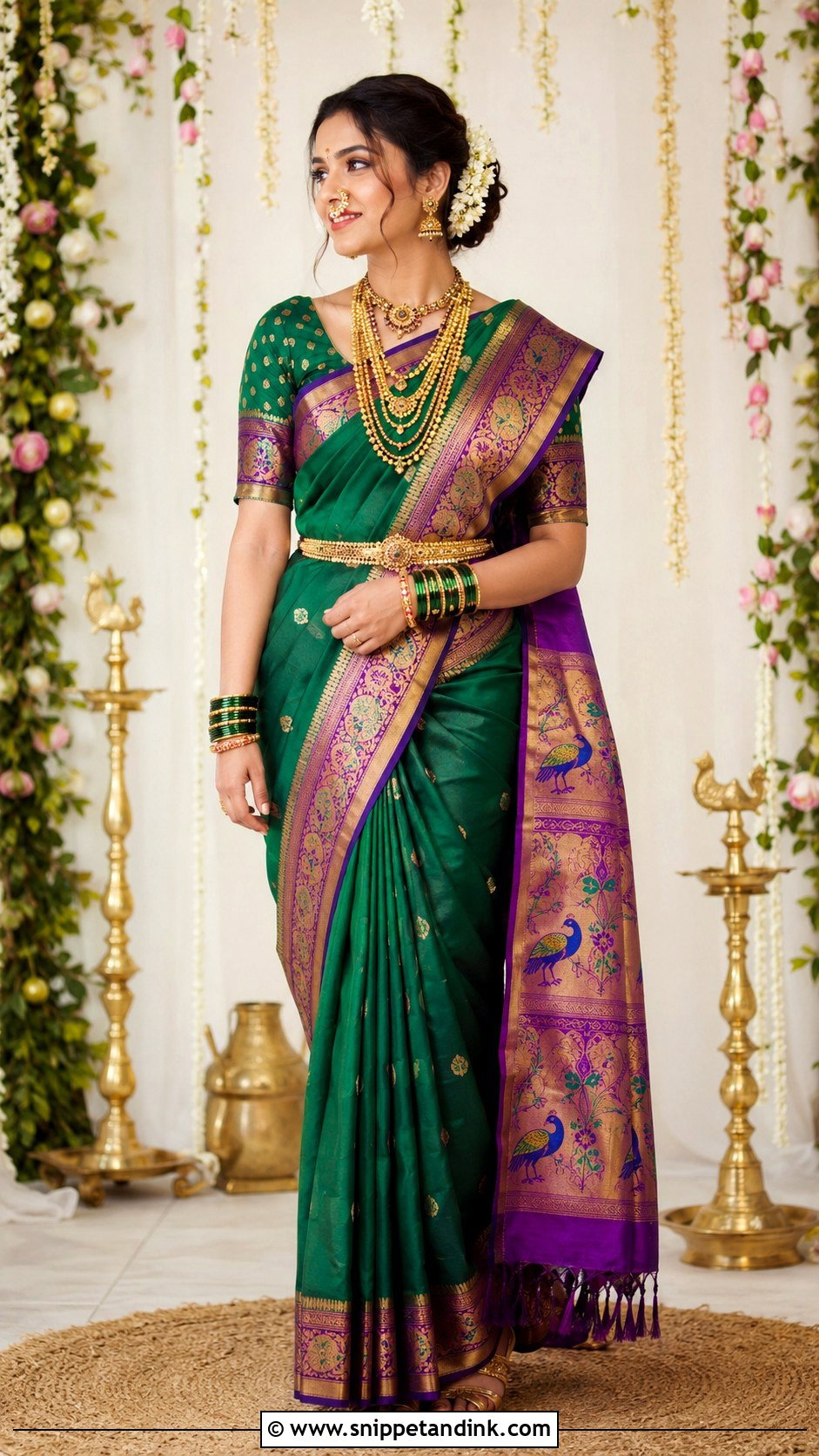
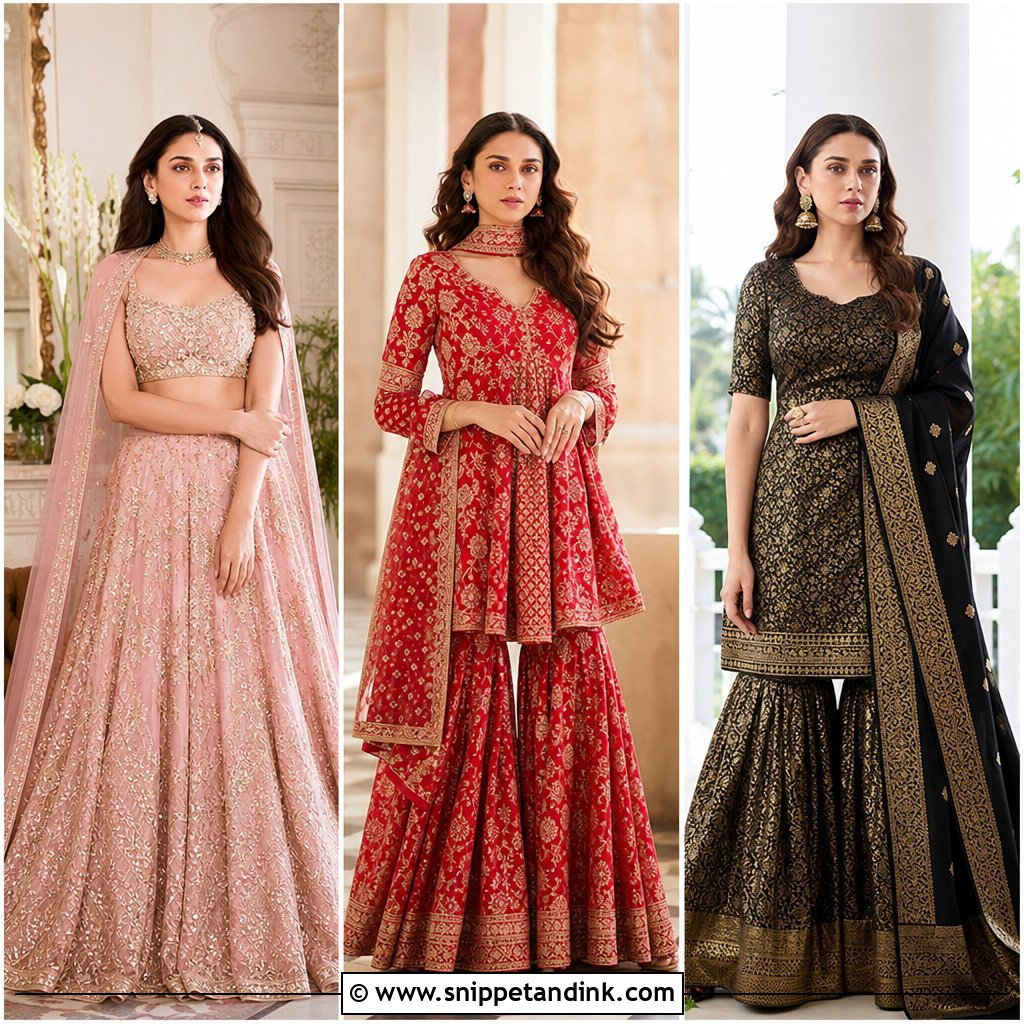
Paithani is woven, not embroidered, and the peacock and floral pallu is the whole point, so I’d add very little on top. Choose emerald or leaf-green silk with a purple, red or gold pallu, and a fitted blouse picking up one border color. Wear it in a traditional nauvari drape or a classic pleated style, depending on the ceremony and what you’re comfortable moving in; the nauvari needs someone who knows how to tie it. A gold choker, longer necklace, traditional earrings, green glass bangles, a waist belt and a statement nath. Gold sandals. A neat bun covered in jasmine and a crescent bindi if your family wears one. Strong kajal and a warm red lip.
16. Bengali Red And White Bridal Saree
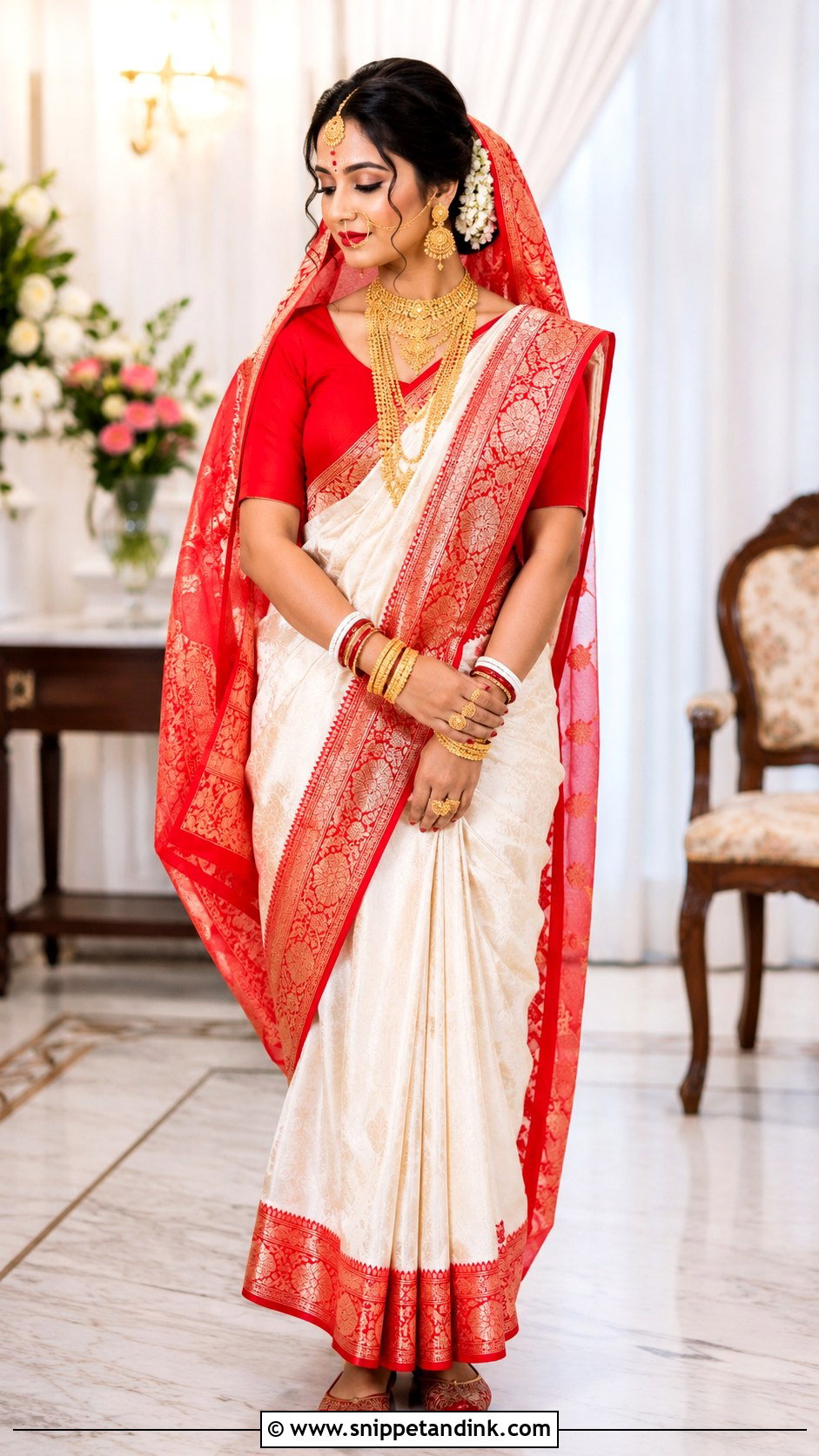
White silk with a broad red border is the classic Bengali bridal combination, worn with a red blouse with short or elbow sleeves. Neat pleats, and the pallu over the head so the red edge frames the face. Layered gold necklaces, jhumkas, bangles, a nose ring and the forehead adornments your family uses. Red flats or low sandals for long ceremonies. A smooth low bun with flowers under the veil, defined liner and red lips, plus the traditional red and white forehead design if appropriate. Customs differ between families, and the forehead pattern in particular is usually done by someone practiced at it. Ask a relative or an experienced stylist rather than copying a photo.
17. Rajasthani Bandhani Bridal Ghagra
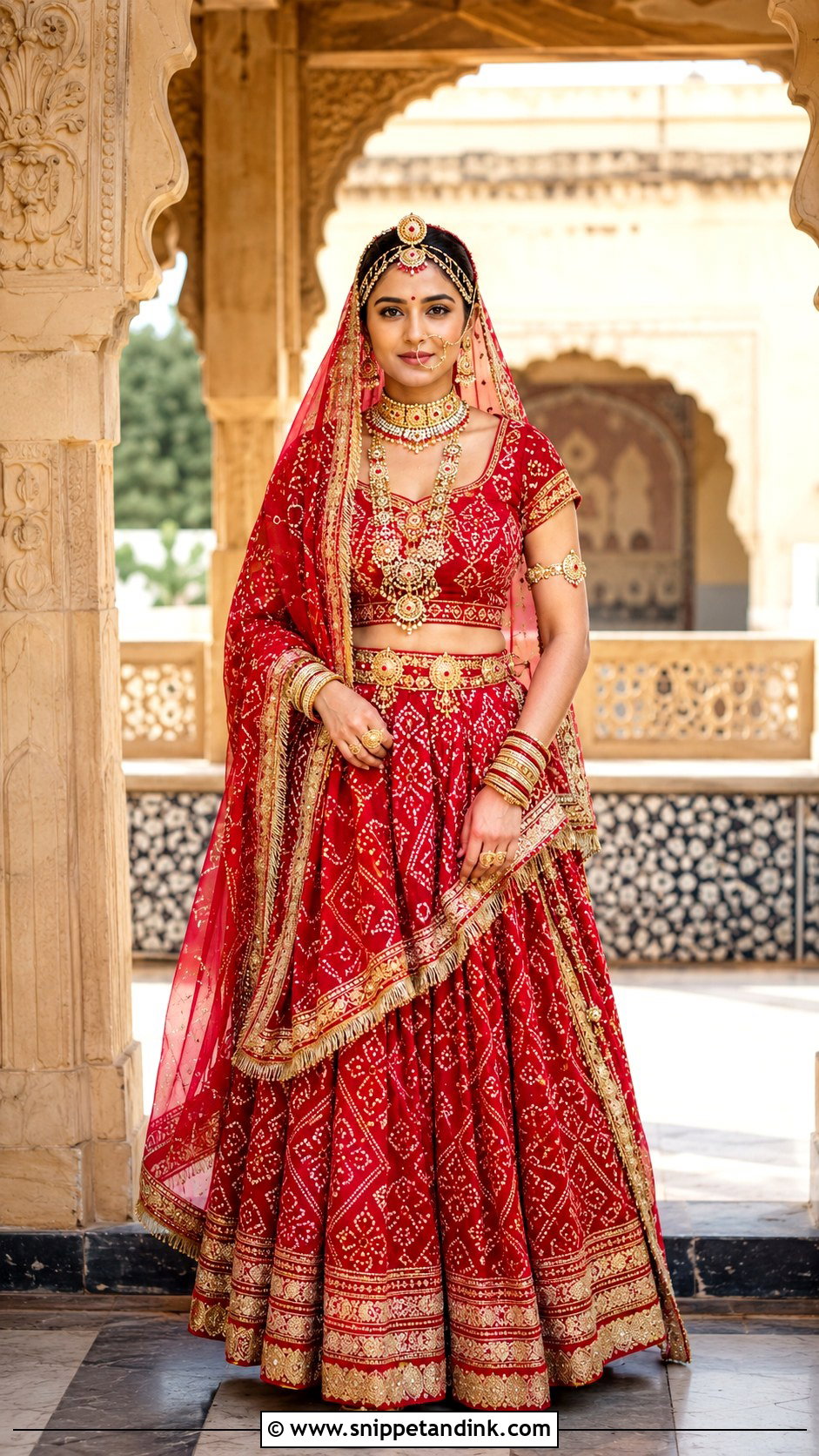
A red Bandhani ghagra is full of movement and dotted pattern. Bandhani is tie-dyed by hand, so small irregularities in the dots are a sign of the real craft, not a flaw. Choose red, maroon or deep pink with broad gota borders, a fitted choli and a matching odhni drawn over the head; yellow, orange or green accents give the lively Rajasthani palette. A full ghagra holds a lot of fabric at the waist, so a drawstring with a firm hook keeps it from slipping. Borla, layered necklaces, earrings, bangles, armlets and a waist belt, with embroidered mojaris. A secure center-parted bun, kohl, a warm red lip and a round bindi.
18. Hyderabadi Khada Dupatta Bridal Outfit
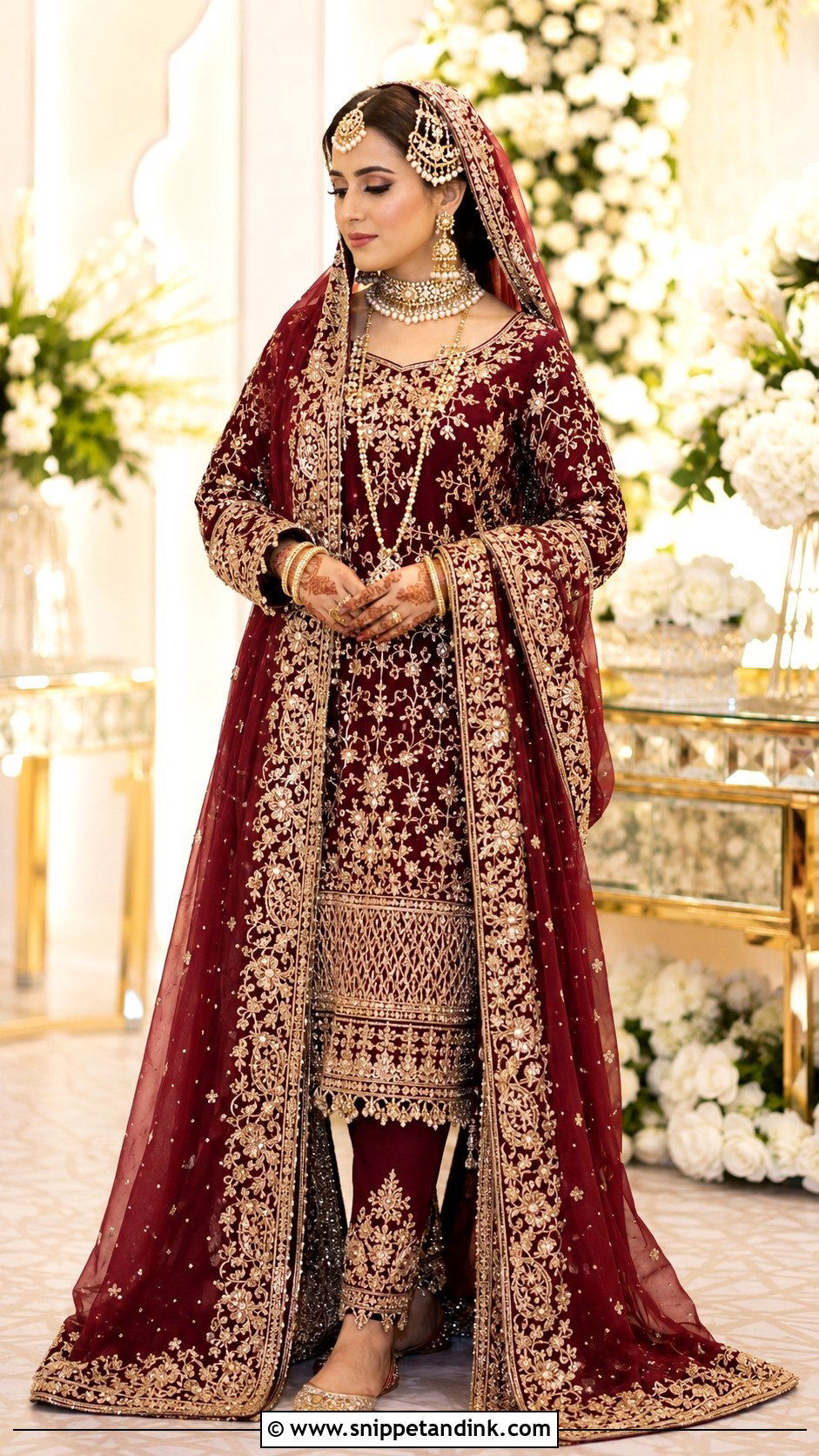
A Hyderabadi khada dupatta outfit is architectural: kurta, fitted churidar and a long dupatta set in a distinctive upright drape. Deep maroon, red or emerald with antique-gold embroidery suits it. The drape is precise and is usually set by someone who has done it many times, because a dupatta that’s pinned unevenly pulls the whole line off center in photos. A choker, long necklace, jhumkas, passa, bangles and embroidered khussa. Pearls soften the metal and brighten the face. A smooth center-parted bun under the dupatta, defined kajal, berry lips and softly highlighted skin. Don’t swap in a generic dupatta drape; it loses the point of the outfit.
19. Gold Reception Bridal Lehenga
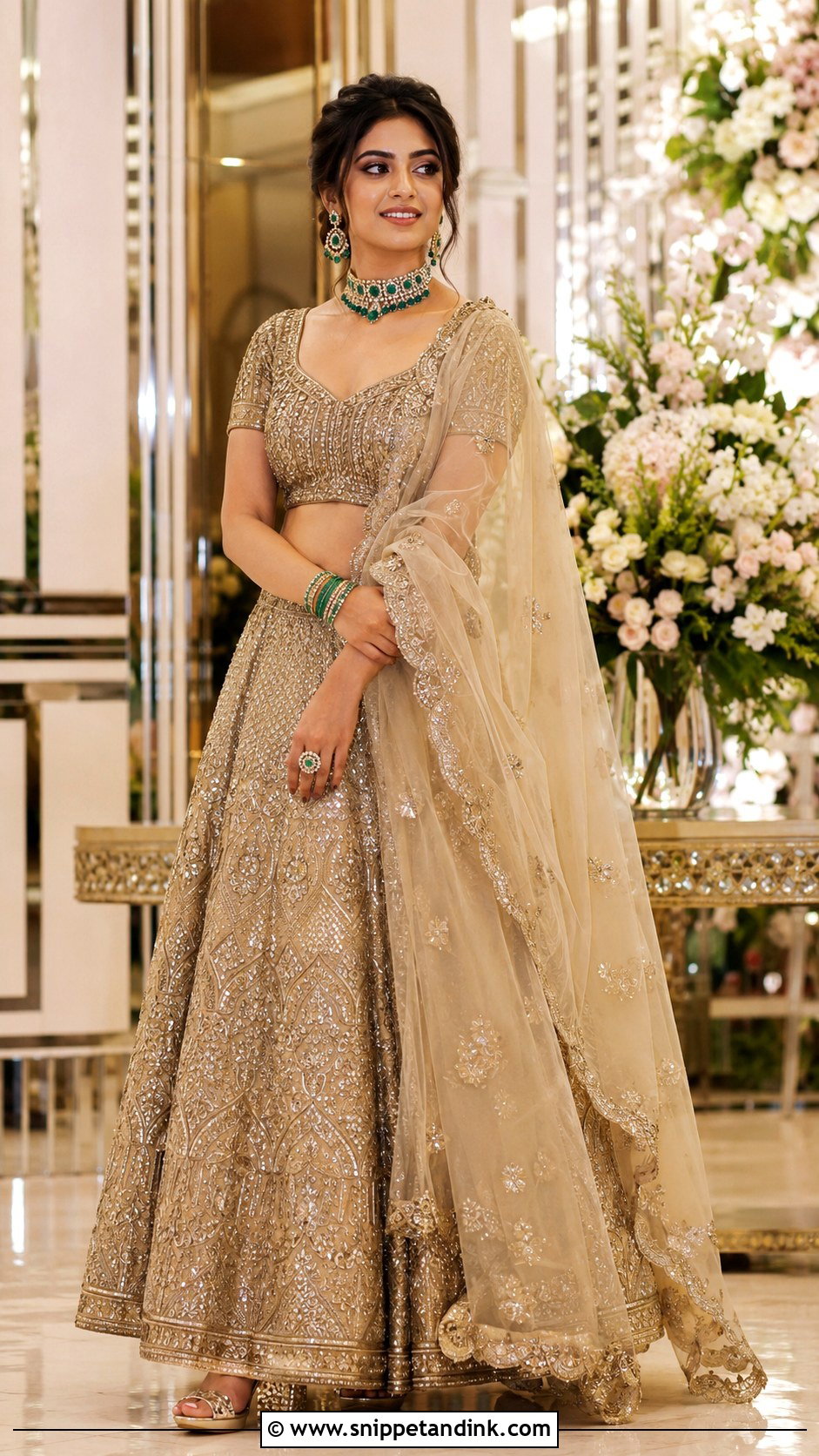
Reception gold should glow, not glare. Choose a skirt with a natural flare, traditional sequin work and antique-gold embroidery, and a short-sleeved blouse with a modest neckline instead of a sculpted modern bodice. Mixing matte gold thread with shiny sequins is what stops an all-gold outfit from flattening into one bright shape under flash, so look for both textures in the same piece. A sheer gold or beige dupatta over one shoulder leaves the hair visible. Emerald or ruby jewelry adds controlled color in a choker, earrings, bangles and a ring. Gold block heels or embellished juttis. A full bun or side-parted curls, black liner, bronzed cheeks and a brick-red lip.

20. Peach Sequin Sangeet Lehenga
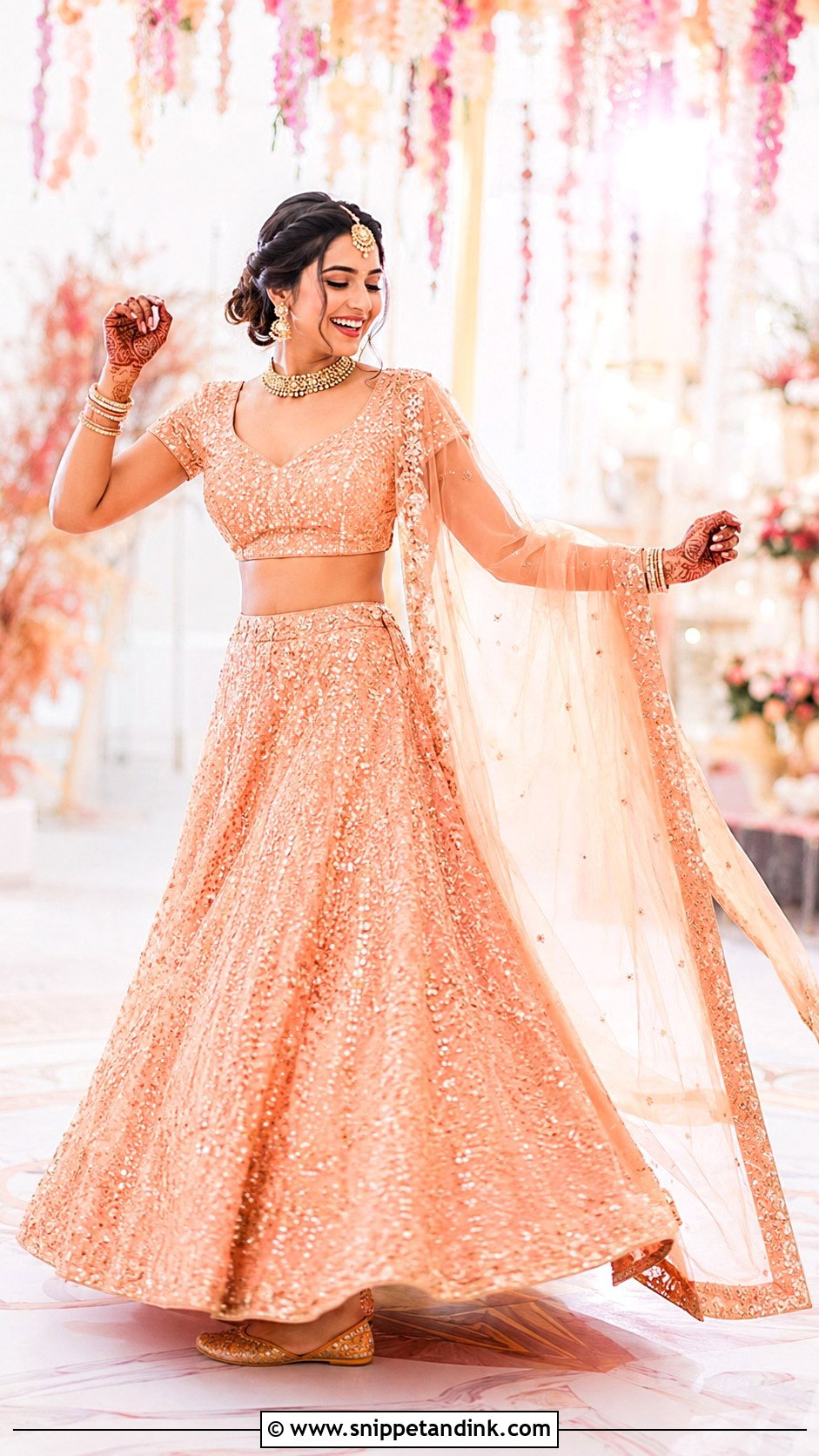
Peach is the lighter, late-90s take on the sparkly sangeet lehenga. A peach skirt with scattered gold sequins, a defined border and enough flare to dance in, a fitted short-sleeve choli and a narrow sheer dupatta over one shoulder. For a sangeet I always ask brides how much they plan to dance; if the answer is a lot, the dupatta gets pinned at the shoulder and waist, and the skirt shouldn’t sweep the floor. Gold trim ties all three pieces together. A delicate choker, drop earrings, stacked bangles and a small tikka. Low gold heels or cushioned juttis. Bouncy waves, a half-up style or a soft bun with small flowers, kohl, peach blush and a brown-pink lip.
Surviving a Long Ceremony in Zari and Gold
Many outfits here are heavy. Zardozi, velvet, Kanjeevaram silk and layered gold add up, and the rituals can run for hours, often seated on the floor. A few habits make a real difference to how you feel by the pheras.
- Wear the full lehenga or saree at home for an hour before the day, with the jewelry, and sit down in it on the floor.
- Ask your tailor for a wide, padded waistband with hooks rather than a thin drawstring on heavy skirts. The weight then rests on the hips instead of digging in.
- Have the maang tikka, passa and dupatta anchored to a firm base in your hair, not to loose strands. Heavy head jewelry pulls at the scalp otherwise.
- Give one person the job of carrying safety pins, a small towel, water with a straw and your juttis if you switch to flats.
Updating the 90s makeup
The makeup of the decade was heavy on matte foundation, brown-red lips and thin brows. Keep the kohl and the red or brick lip, but use a lighter base with some glow and fuller, brushed brows. It still reads as 90s in photos while looking like skin up close.
Your Mother’s Album Is the Best Mood Board
The 90s outfits that still look right balance strong color, traditional craft, sensible silhouettes and jewelry with character. Lehengas, sarees, regional ensembles and pre-wedding outfits all fit here, but treat them as a starting point rather than a costume guide. A vintage saree, a family necklace, a long choli, a classic dupatta drape or a deep red lip may be all the decade you need. Get regional drapes right, secure every piece of jewelry and choose shoes that last through hours of ceremony. Most of all, pick colors and details that feel like yours. A bride who’s comfortable in her clothes makes the nostalgia look natural rather than themed.
You'll Like These Ideas:





Leave a Reply