
Red is still the color most Pakistani brides ask me about first, and Pakistani red bridal dresses carry more family feeling than any other shade I dress. The silhouette changes the whole day, though. A farshi gharara asks you to walk differently, a peshwas lets you sit cross-legged on a stage, and a maxi behaves almost like a gown. Lately I see more maroon bases, antique gold work, velvet borders and organza dupattas that keep the head lighter. Below are the shapes I’d actually put a bride in, with what each one demands of her on the night.
Testing a Shade of Red Under Hall Lights Before You Order
Red changes more than any other bridal color between the shop and the stage. An orange-leaning red warms up under the yellow lights most wedding halls use, while a blue-leaning red or maroon can turn almost brown in the same light. Daylight in a boutique hides both effects. When I help a bride decide, I hold the fabric against her face in three places: by a window, under a warm bulb, and under a phone flash, since that last one shows roughly what event photography will do to it.
- Warm or olive undertones usually glow in tomato red, brick red and maroon with antique gold.
- Cool or very fair undertones tend to suit cherry and wine reds; bright yellow gold can look harsh on them.
- Velvet always reads darker than silk of the same dye, so compare swatches in the fabric you’ll actually wear.
- Ask for a swatch of the dupatta too. Net and organza look lighter than the skirt because light passes through them.
Custom bridal wear usually takes months rather than weeks, and heavy hand embroidery takes longest. I’d confirm the timeline with your designer at the first meeting and leave room for at least two fittings, the last one in your wedding shoes.
1. Red Bridal Lehenga With Gold Dupatta
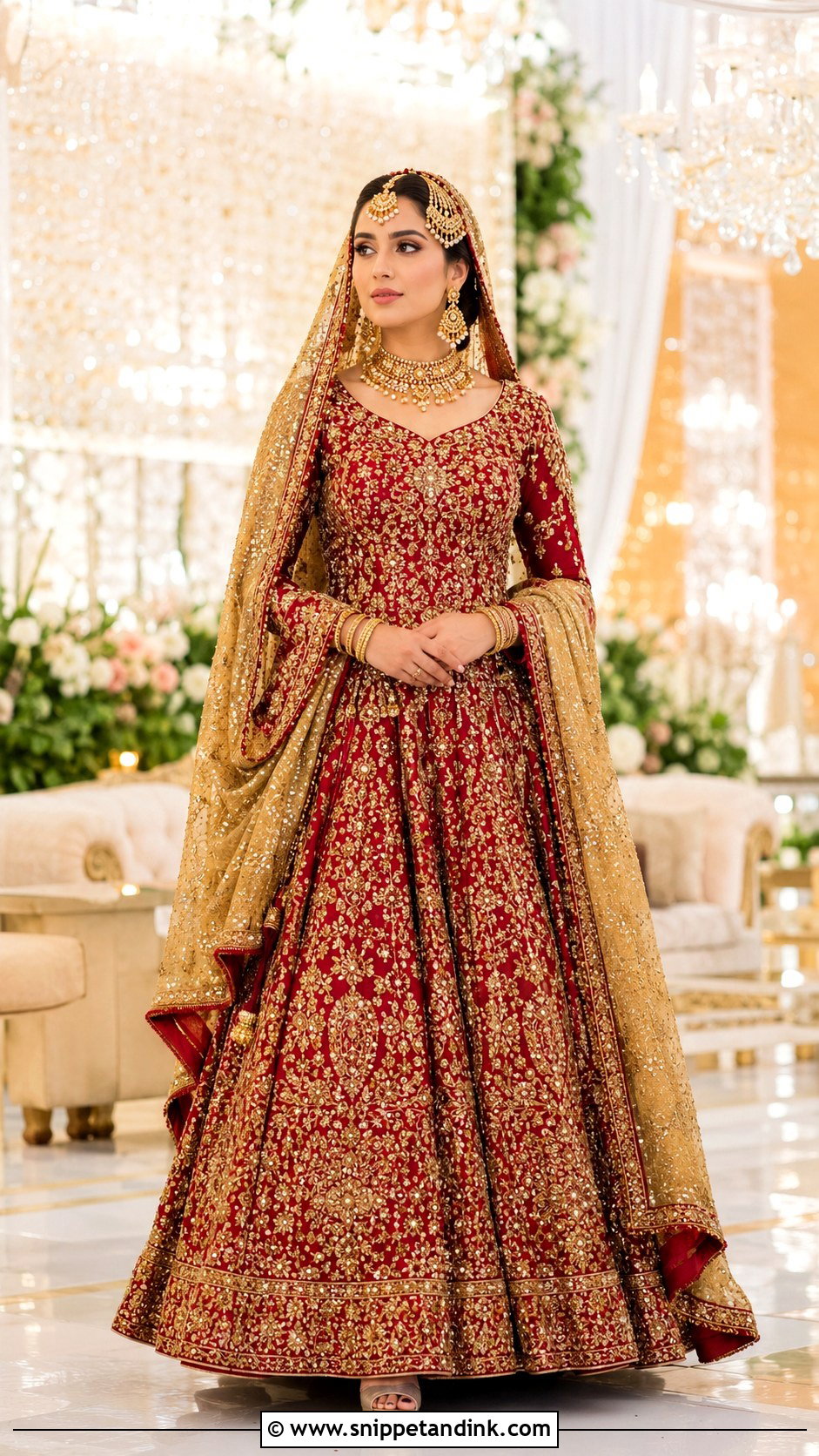
The red lehenga with a gold dupatta is the outfit most grandmothers picture, and there’s a reason it keeps coming back: gold beside red lifts the face in hall lighting that otherwise flattens deep colors. I’d look for zari, dabka and resham worked together, because sequins alone can look flat on camera. A longer choli calms a heavily worked skirt and covers the waistband when you raise your arms for photos. Matha patti, choker, jhumkas and gold khussas finish it without fuss.
2. Red Bridal Gharara With Short Shirt
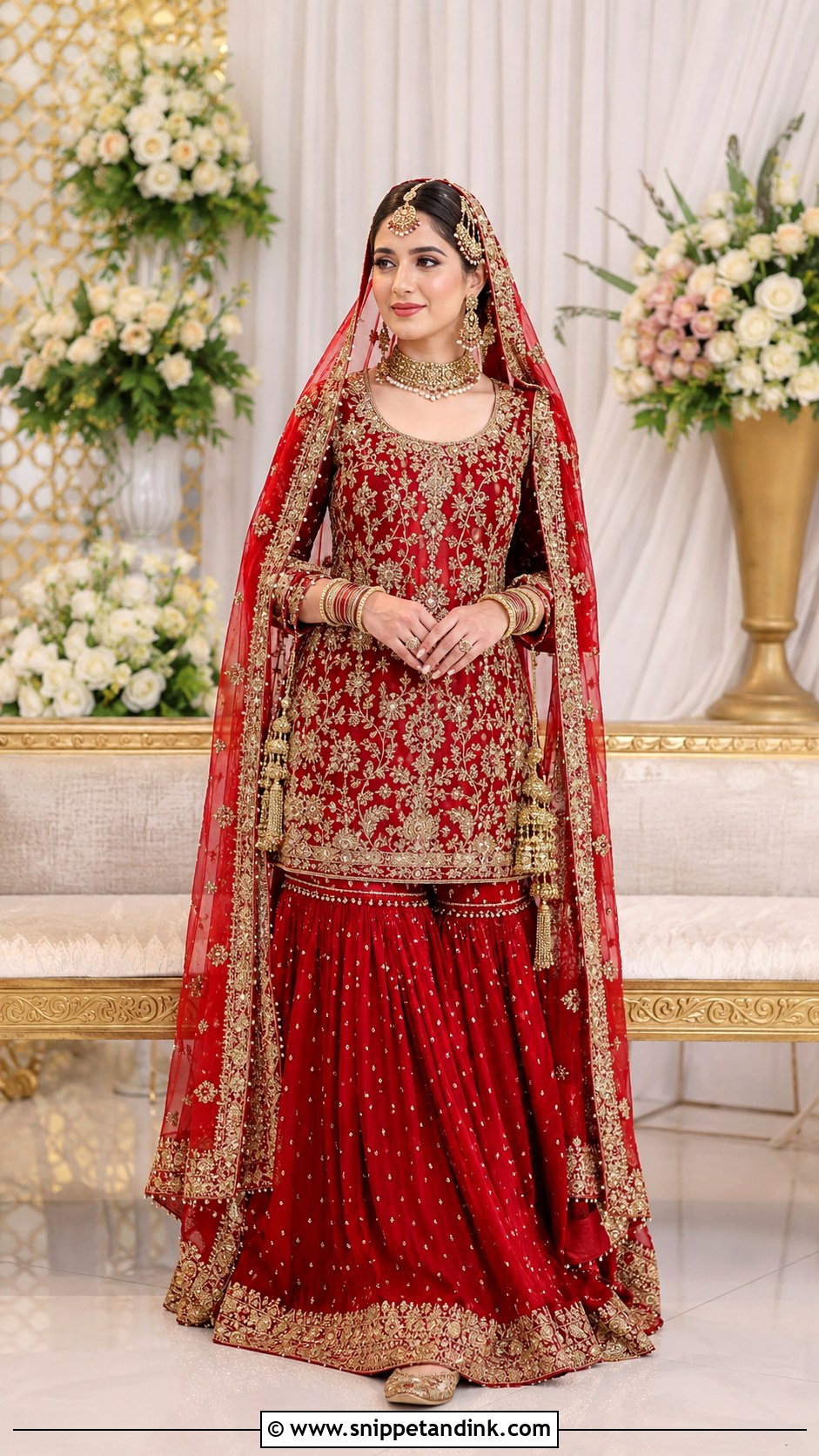
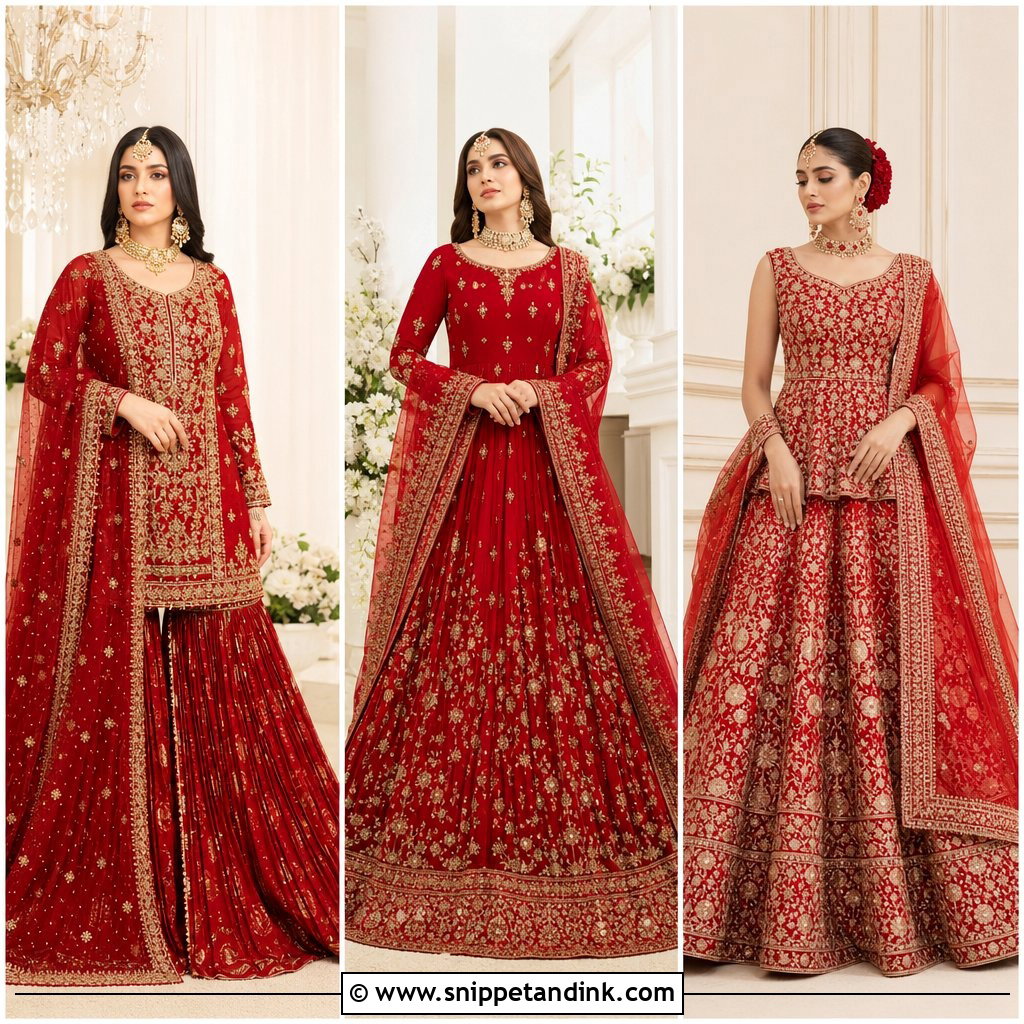
A red bridal gharara with a short shirt is pure heritage dressing, and it rewards good tailoring more than almost anything else on this list. The gharara has to sit snug from hip to knee, then the joint at the knee (where the gota band usually sits) must land exactly at your knee or the flare kinks when you walk. I check that seam with the bride standing in her actual shoes. Gota, kiran edging and antique zardozi suit it, and a passa on one side balances the heavy dupatta over the head.
3. Red Bridal Sharara With Long Kameez
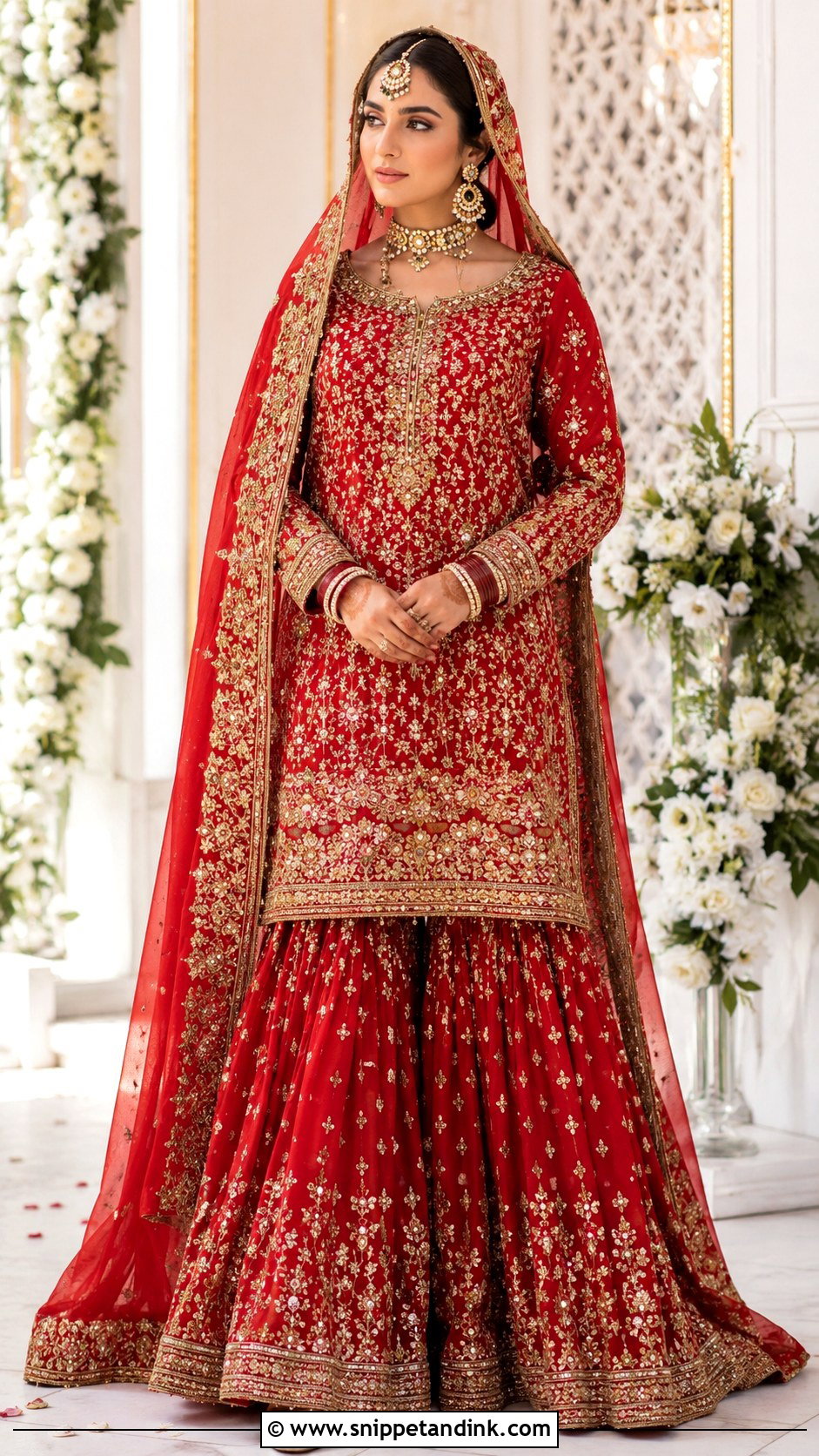
Brides who dread a heavy can-can usually end up loving the sharara. The wide legs give volume without layers of netting, so you can climb stage steps and sit through a long rukhsati without someone lifting your skirt. A long kameez needs its embroidery concentrated at the neckline, sleeves and border, otherwise the whole length starts to look like a tablecloth. Raw silk and jamawar hold the shape best; soft tissue tends to cling to the legs. Kundan, embellished sandals and a neat bun keep it grounded.
4. Red Bridal Peshwas With Lehenga
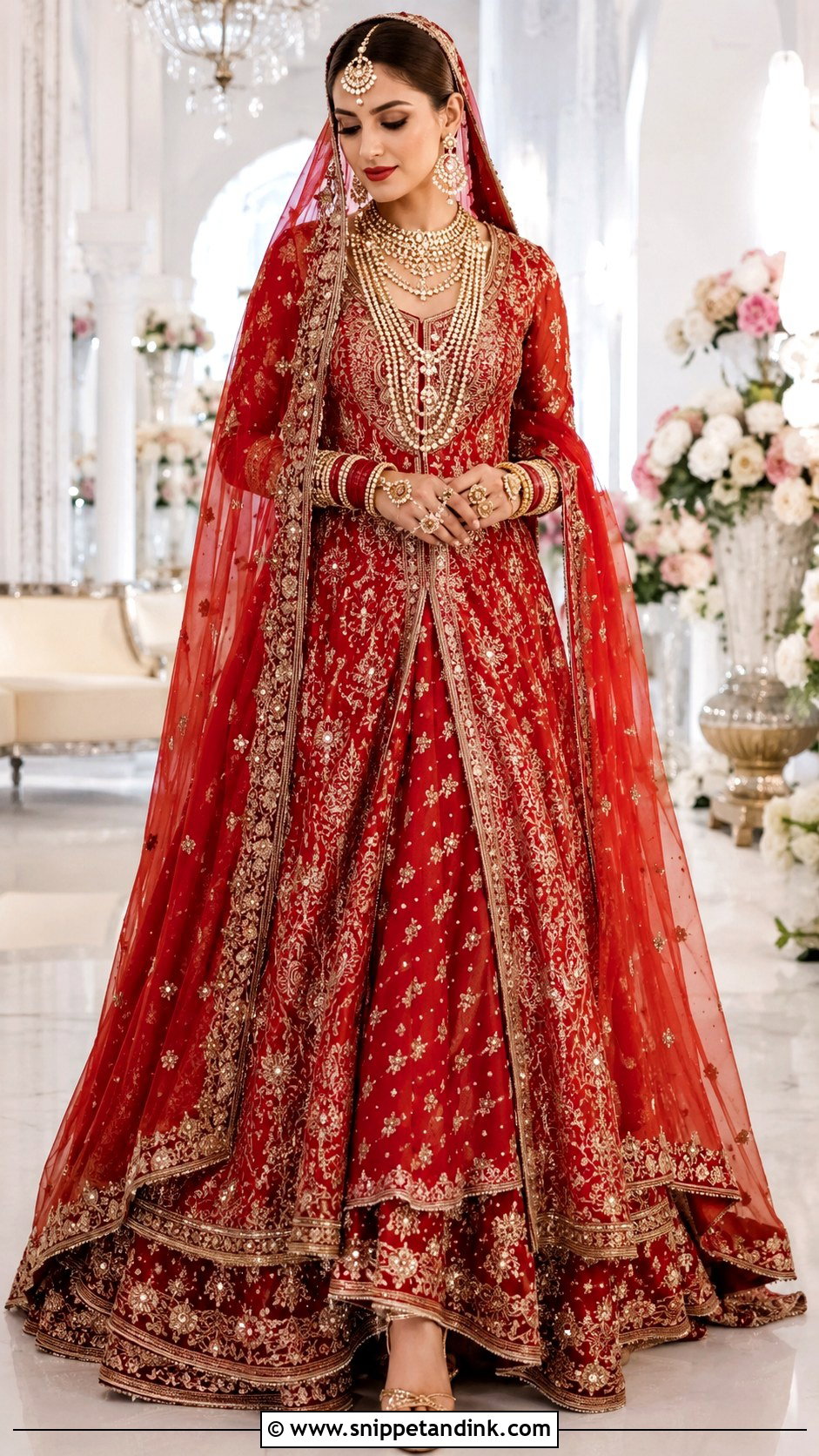
The peshwas over a lehenga gives that princess flare from the waist, with the lehenga underneath adding body. My one caution: two full layers of red add warmth and weight, so this is better in an air-conditioned hall than at an outdoor summer baraat. Keep embroidery fine on the bodice and heavier toward the hem so the eye travels down. A sheer organza dupatta softens the deep red, and pearls with a tikka stop the look from becoming too formal.
5. Red Bridal Maxi With Heavy Dupatta
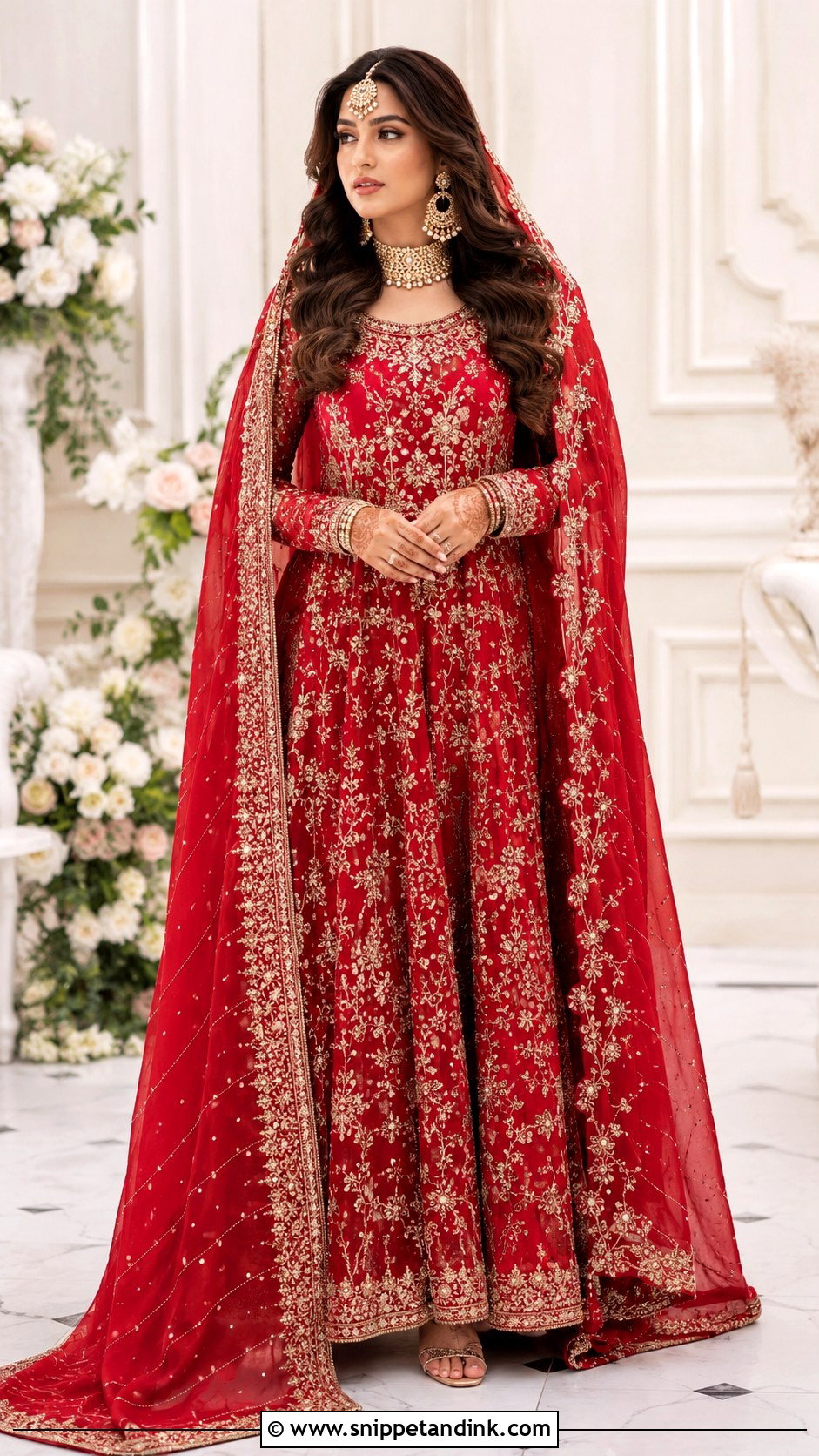
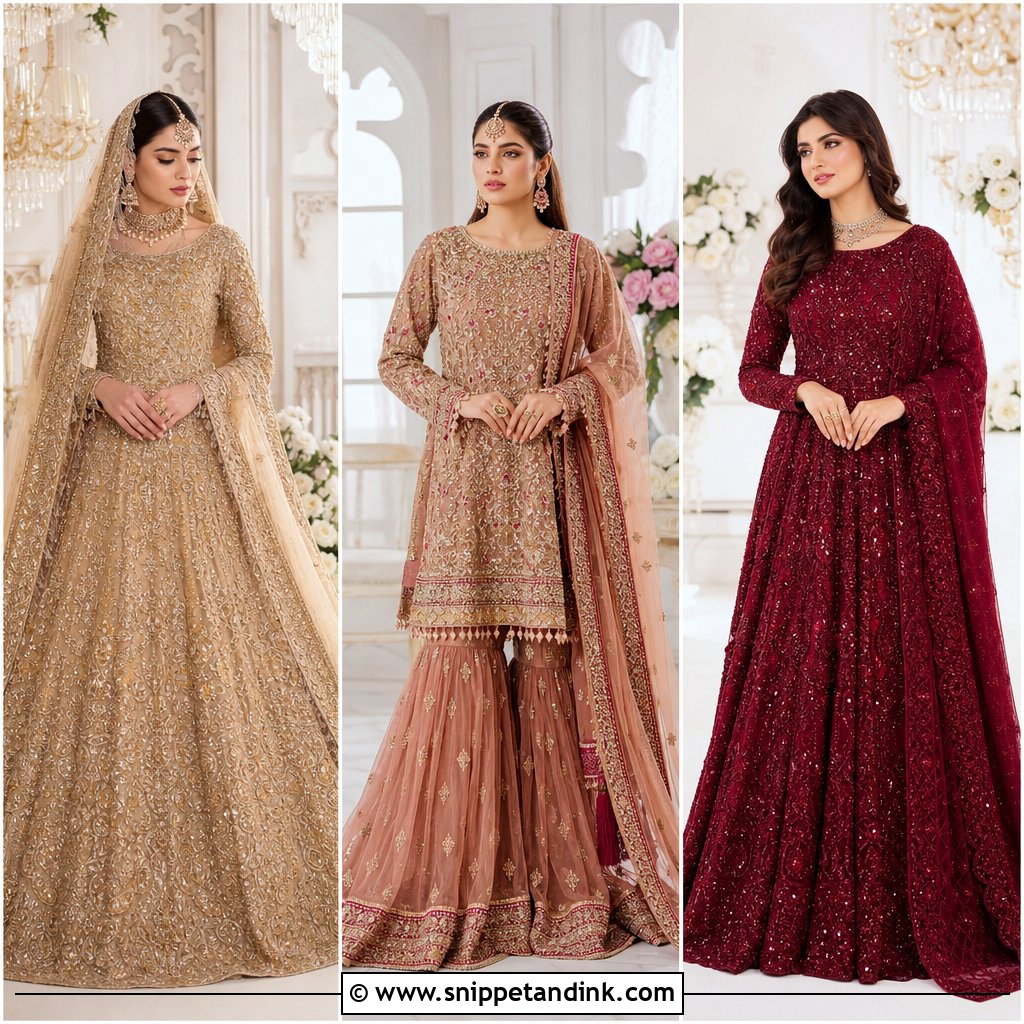
A red maxi with a heavy dupatta is the closest thing to a gown in Pakistani bridal wear. The single long line adds height, which petite brides appreciate. Work should sit at the neckline, sleeves and lower panels, with the bodice fitted and the hem flaring. Because there are no separate skirt layers, it’s one of the easiest outfits to manage at a long event. The zardozi dupatta does the formal work here, so I keep jewelry to statement earrings and a choker, with soft waves or a covered bun.
6. Maroon Red Bridal Lehenga With Velvet Blouse
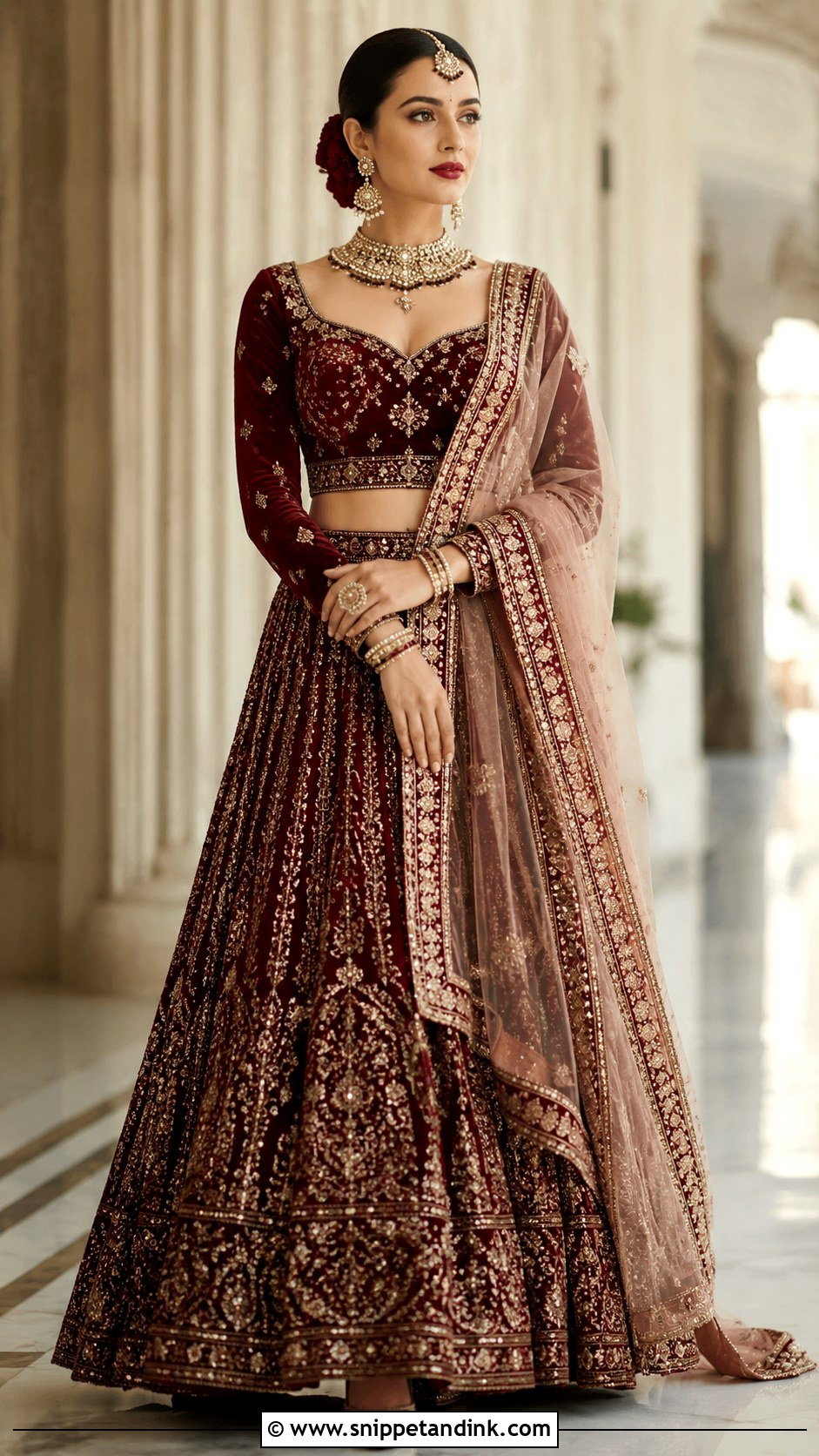
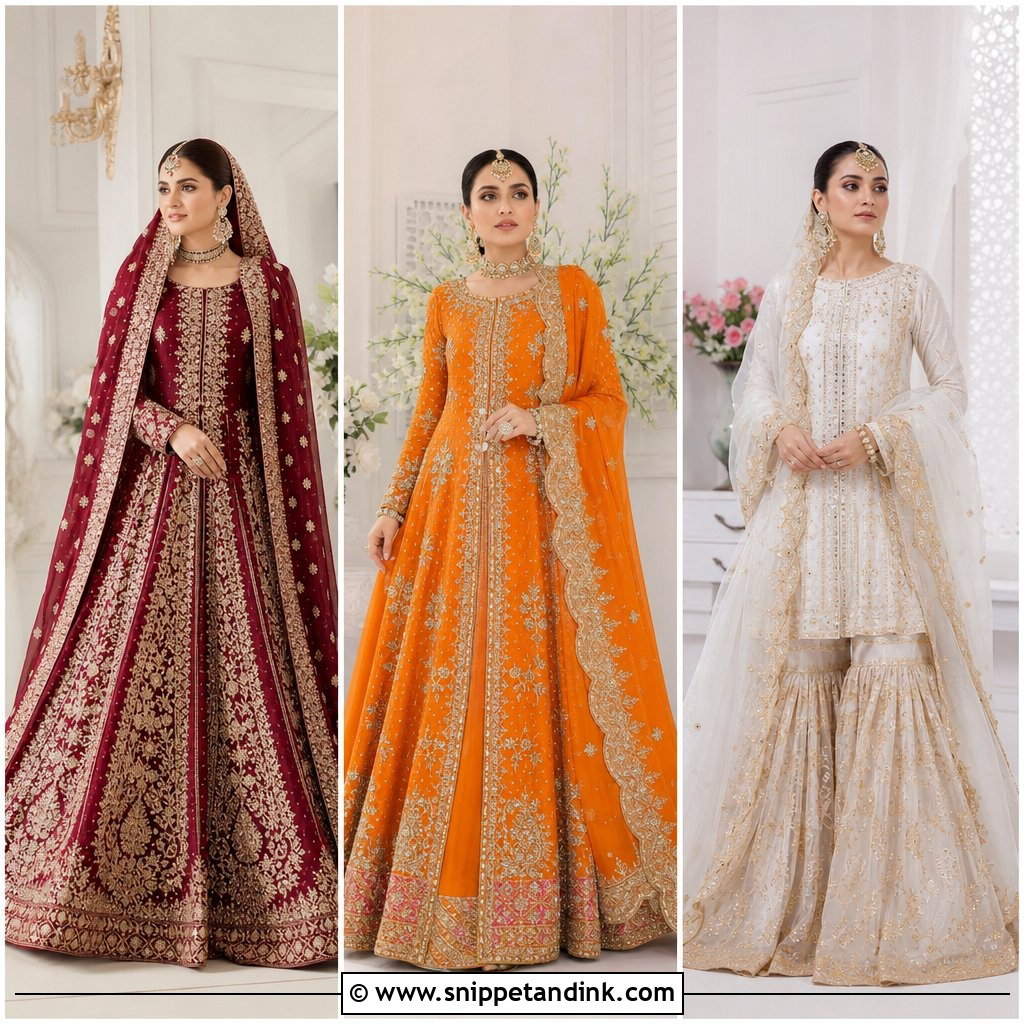
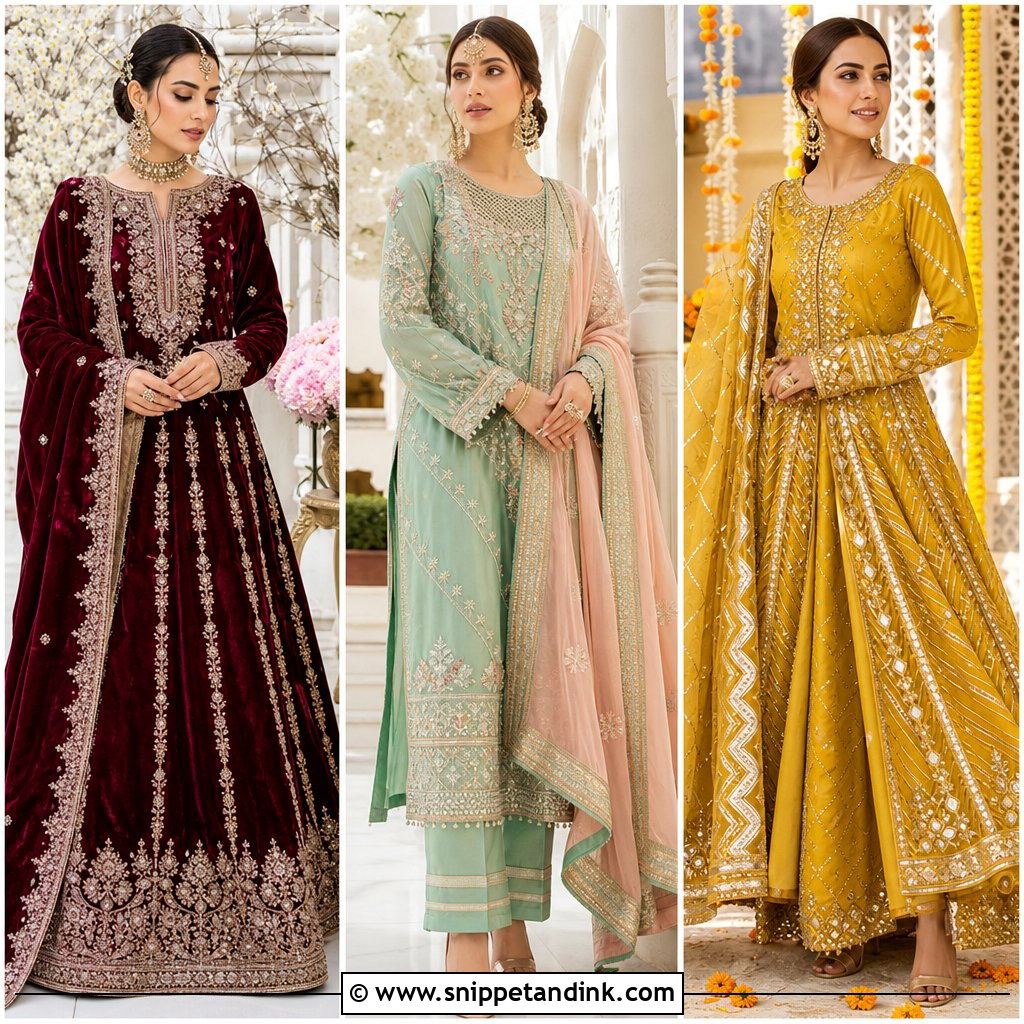
Maroon with a velvet blouse reads richer and older than bright red, in the good sense. Velvet absorbs light, so antique gold or copper embroidery shows up far better on it than bright yellow gold, which can look cheap against the pile. I’d choose full or elbow sleeves and a structured blouse, then pair a light net or organza dupatta so the top half doesn’t go dense. Velvet is warm. Wear it for an evening baraat in the cooler months, not a June afternoon.
7. Red Bridal Farshi Gharara With Dupatta
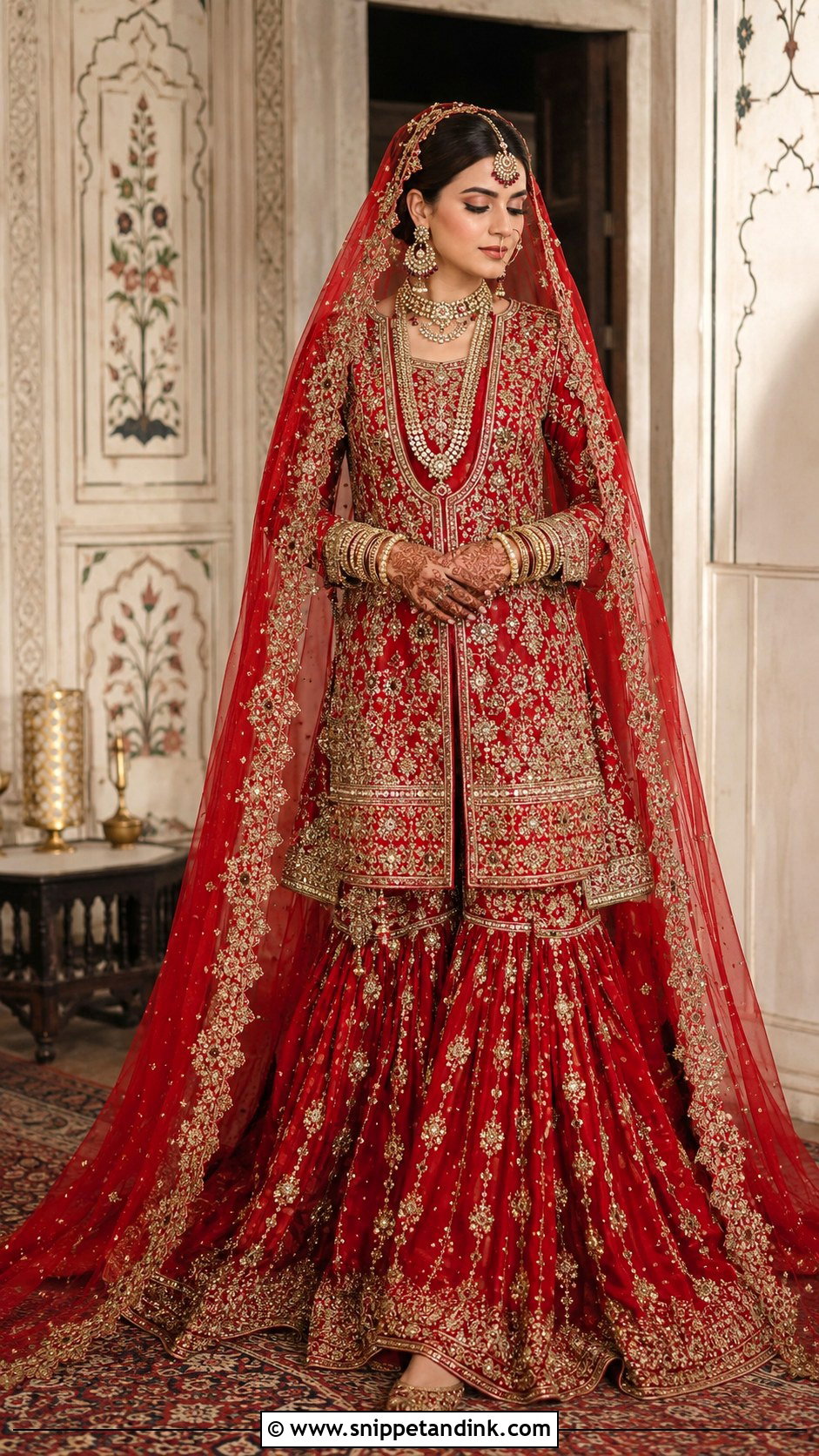
Nothing on this list is as grand as the farshi gharara, and nothing is harder to walk in. The trailing flare sweeps the floor behind you, so someone has to lift it on stairs and guide it around chairs. Before I approve one, I make the bride walk the length of a room and turn twice in it at the final fitting. A mid-length shirt keeps the proportion right. Keep the dupatta fabric light even if its border is heavy, or it won’t sit on the head.
8. Red Bridal Anarkali With Churidar
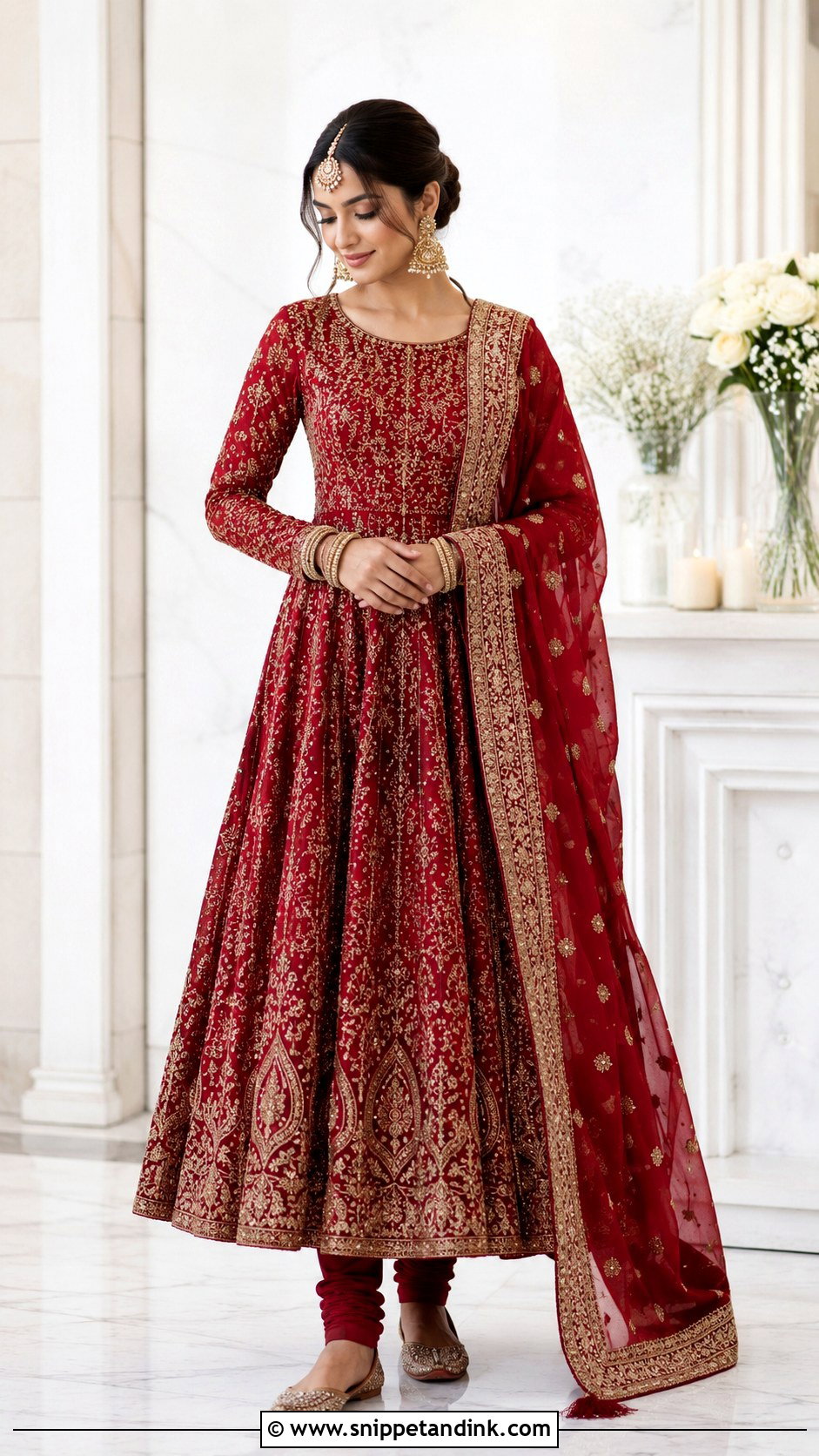
A red bridal anarkali with churidar suits the bride who wants coverage without bulk. The flare opens as you walk and settles neatly when you sit, and the churidar gathers at the ankle instead of tangling. The fit point that matters is the anarkali’s waist seam: too low and the flare starts at your hips and looks heavy. A kiran-edged dupatta, jhumkas, bangles and low khussas finish it. It also sits comfortably at a nikkah or a smaller baraat.
9. Red Bridal Lehenga With Long Shirt
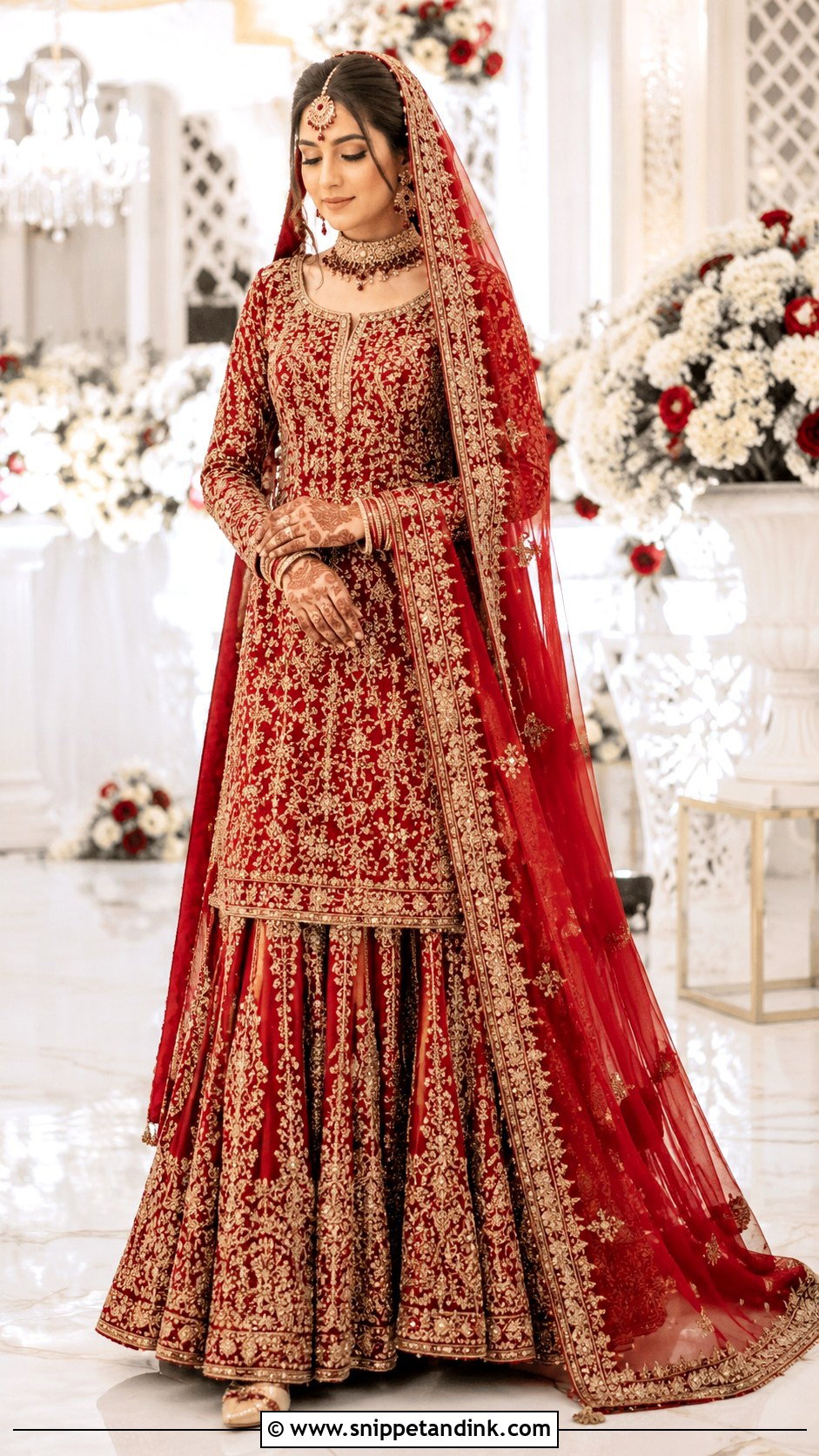
The lehenga with a long shirt is the most requested Pakistani combination I fit, mostly because it covers the midriff and still gives a full skirt. The shirt can be straight, slightly flared or open at the front. Pay attention to where its hem falls: just below the knee lets the lehenga border show, while ankle length hides most of the skirt you paid for. Heavy front panels and cuffs mean you need fewer accessories. A choker, tikka and soft gold heels are plenty.
10. Deep Red Bridal Lehenga With Organza Dupatta
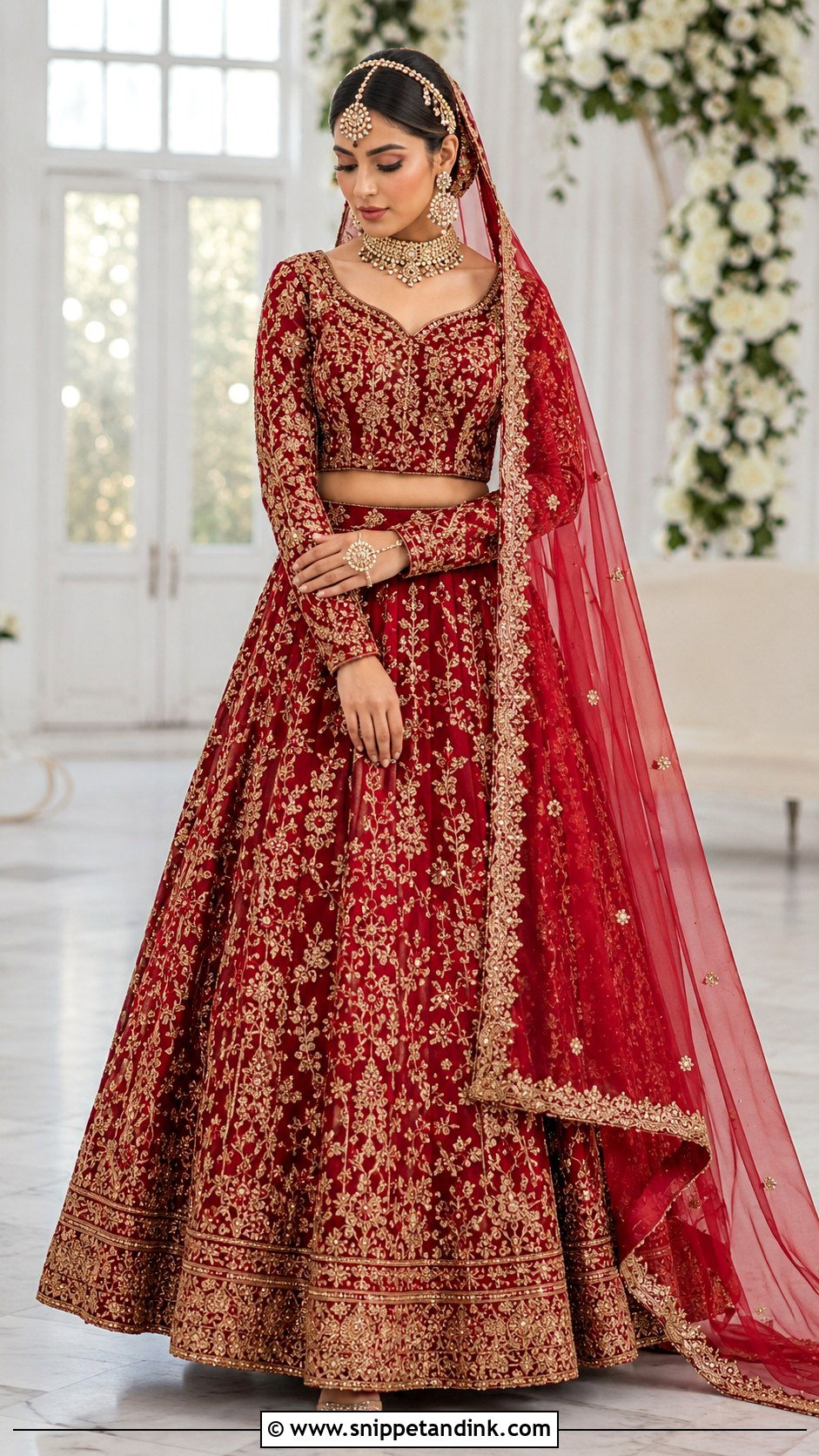
Organza is the dupatta I suggest most when a bride tells me heavy head coverings give her a headache. It’s crisp, light and holds a border well, so a deep red lehenga with an organza dupatta stays traditional without weighing on the bun. Antique gold, dull silver or champagne thread all suit deep red. One honest warning: organza wrinkles if it’s crushed in a bag, so have it steamed on the morning and carried flat on a hanger.
11. Red Bridal Lehenga With Double Dupatta
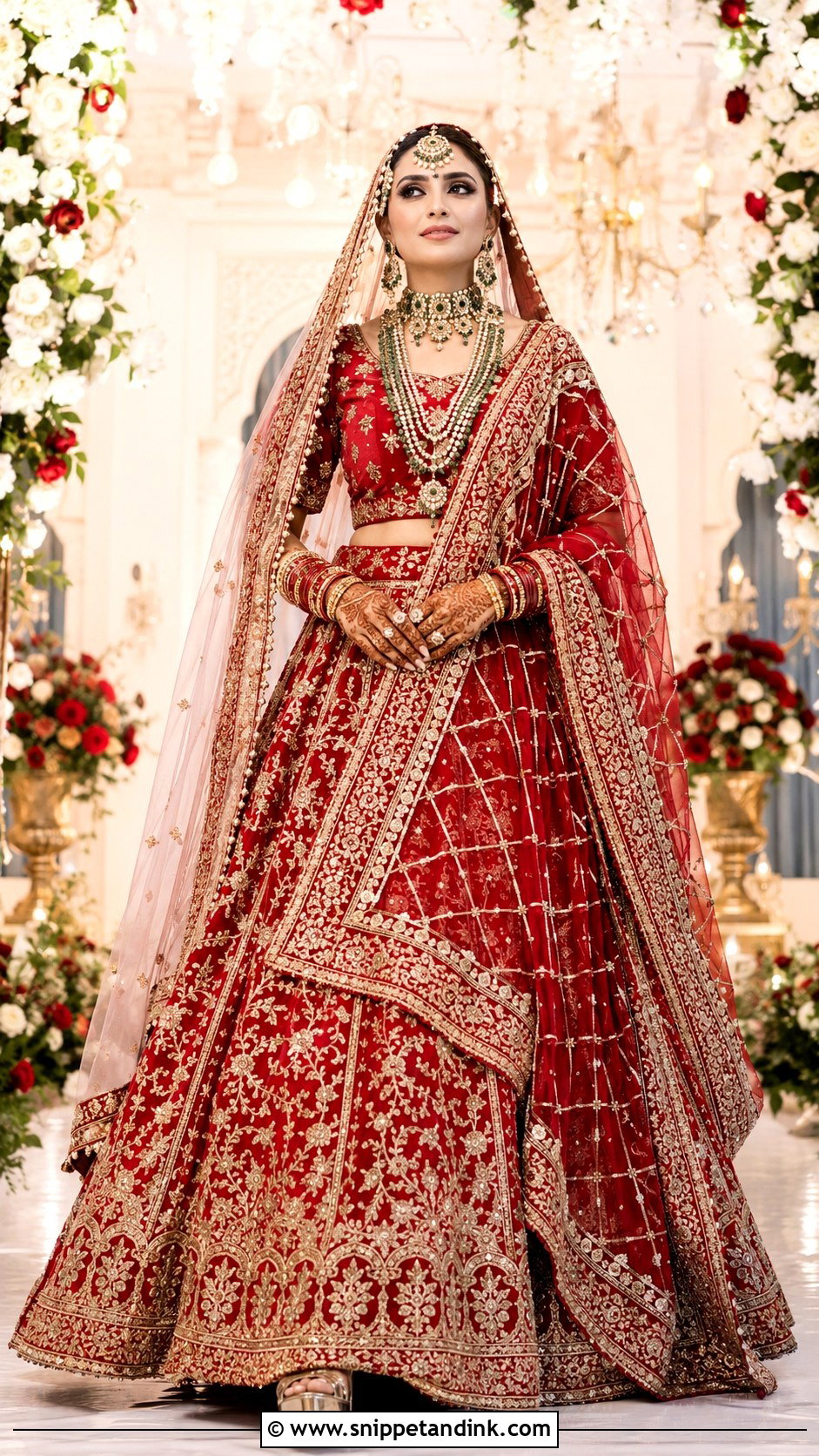
Double dupatta styling looks layered and ceremonial in photographs, and it takes planning. I put the lighter dupatta on the head and the heavier one across the shoulder or wrapped at the body, because two heavy pieces drag the hairstyle backward within an hour. The blouse needs a neat, close fit underneath so the layers don’t bunch. A matha patti, layered necklaces, bangles and heels complete it, and you’ll want a helper to reset the drape after the entrance.
12. Red Bridal Lehenga With Green Jewelry
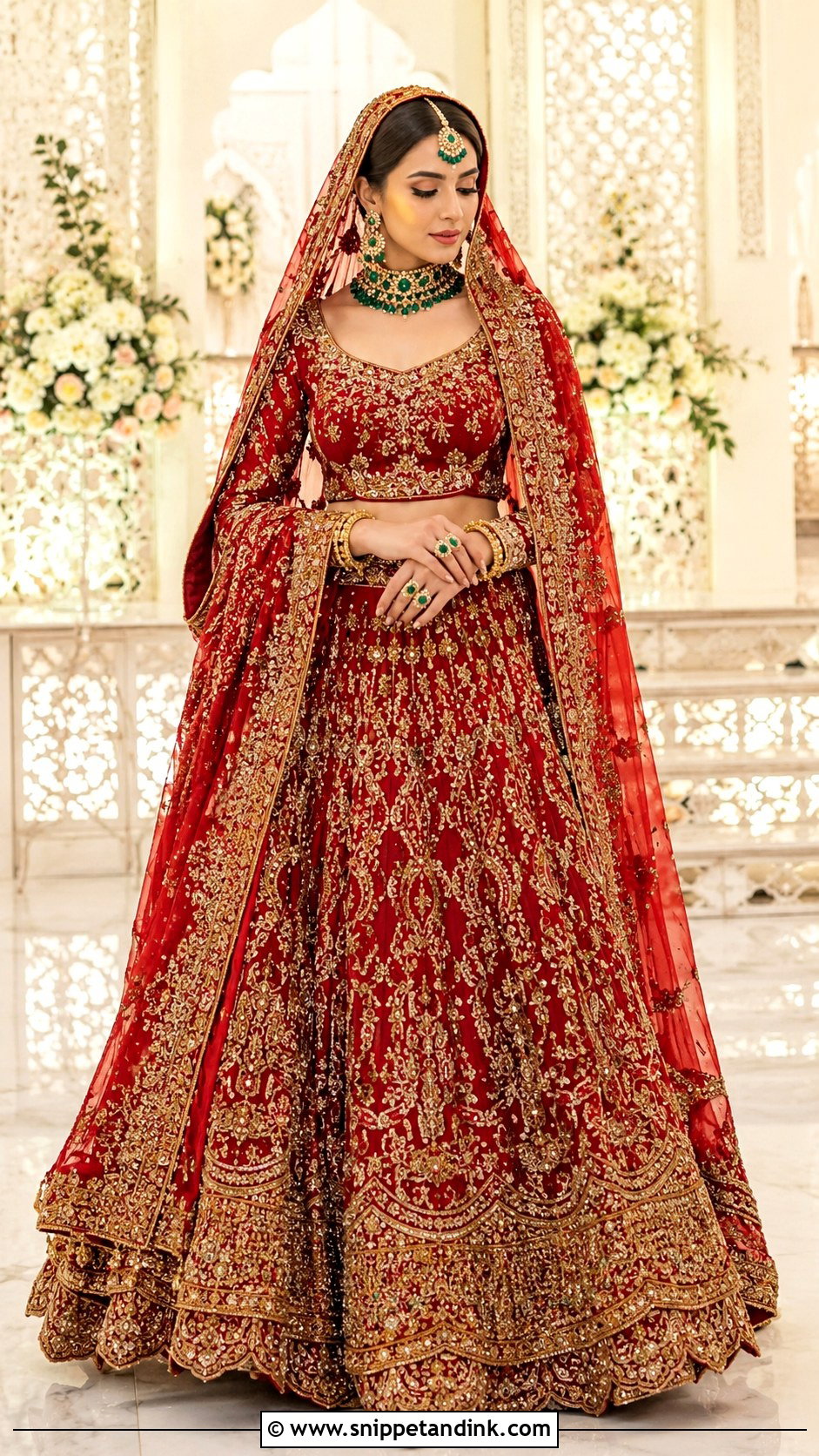
Green against red is the oldest contrast in Pakistani bridal jewelry. Emerald-toned stones pick up the cool undertone in red and make gold embroidery look warmer beside them. The trick is muted metal on the outfit: antique or dull gold lets the green read clearly, while very shiny gold competes with it. Red, maroon or gold-tinted dupattas all keep it cohesive. I’d buy the jewelry before finalising the dupatta so you can hold them together in daylight.
13. Red Bridal Pishwas With Chiffon Dupatta
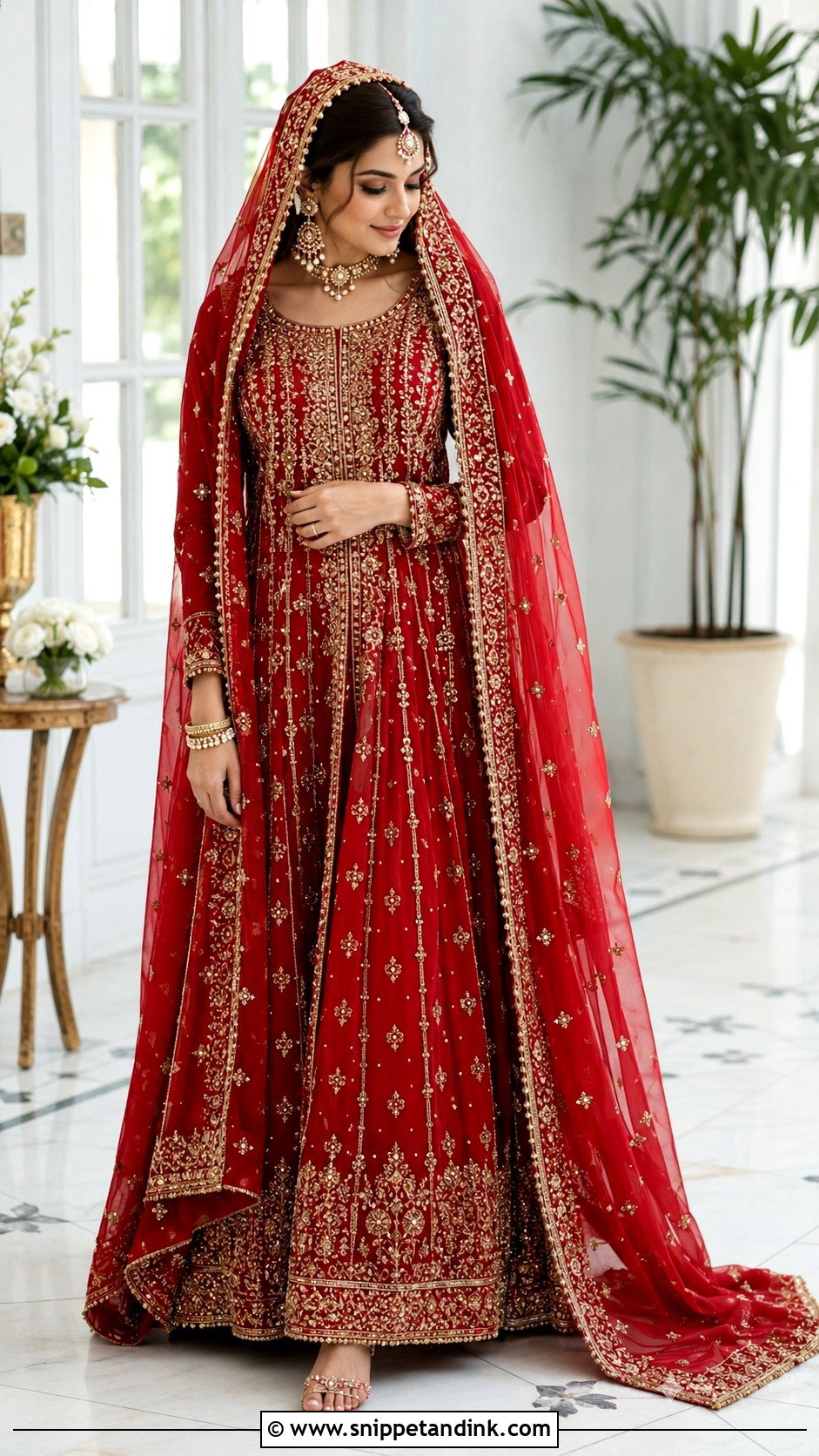
A pishwas with a chiffon dupatta is the softest silhouette here. Chiffon falls close to the head and shoulders, so it frames the face like a veil rather than standing away from it. It needs pinning in more places than organza, since it slides on silky hair. Keep embroidery on the bodice, sleeves and hem and choose a quiet dupatta border. Pearl-accented jewelry and a delicate tikka suit the lightness, and the whole thing moves easily through a long ceremony.
14. Red Bridal Lehenga With Peplum Top
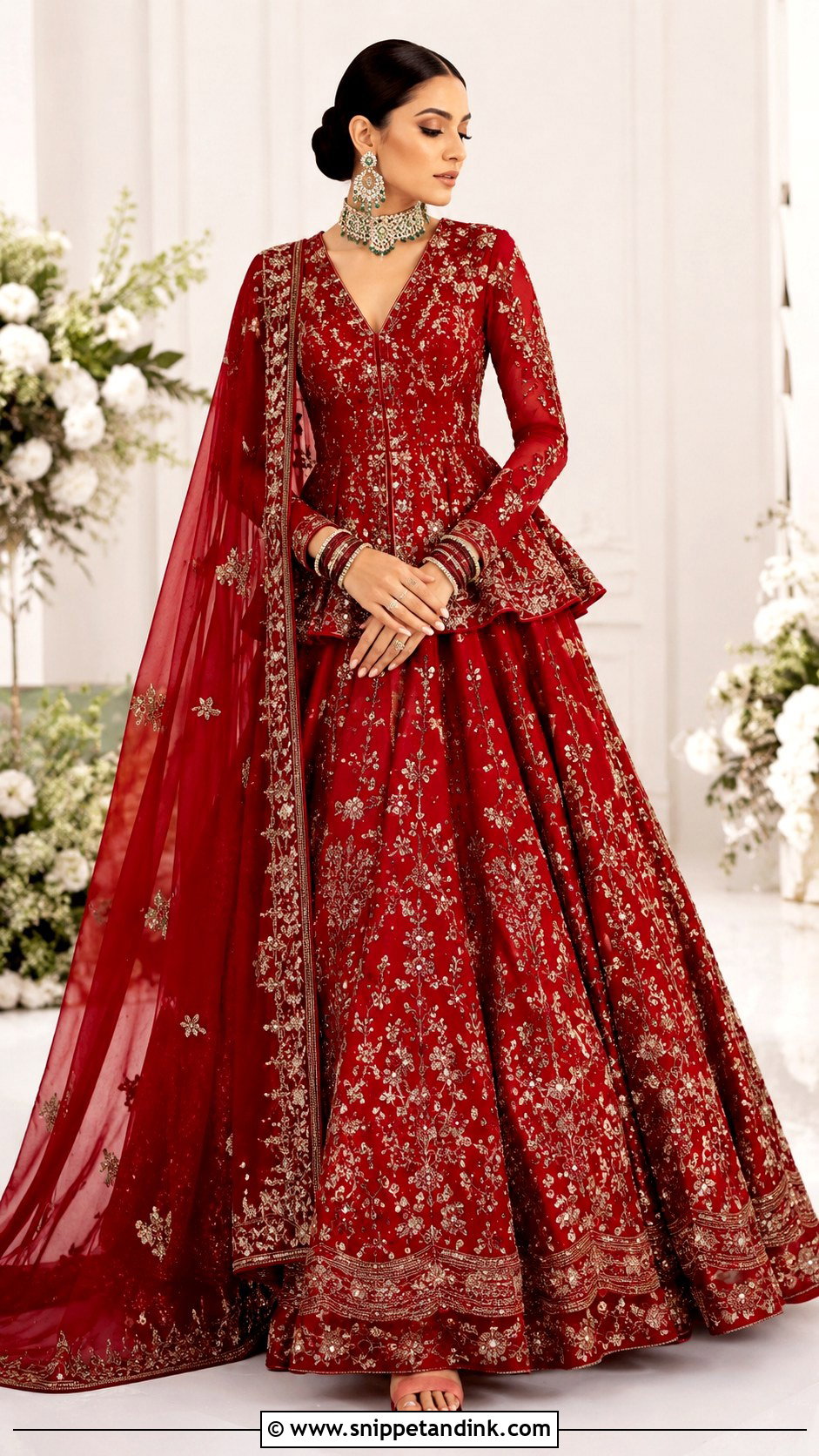
The peplum top gives a defined waist, which is why brides with a straighter frame often like it. It looks contemporary but sits well inside Pakistani bridal dressing. I keep the peplum flare short, ending at the high hip, so it doesn’t fight the volume of the skirt. Heavy neckline and sleeve work on the top, a richly worked lehenga and a sheer dupatta over the structure make it read as bridal. Statement earrings and sleek heels are enough jewelry.
15. Red Bridal Saree With Embroidered Blouse
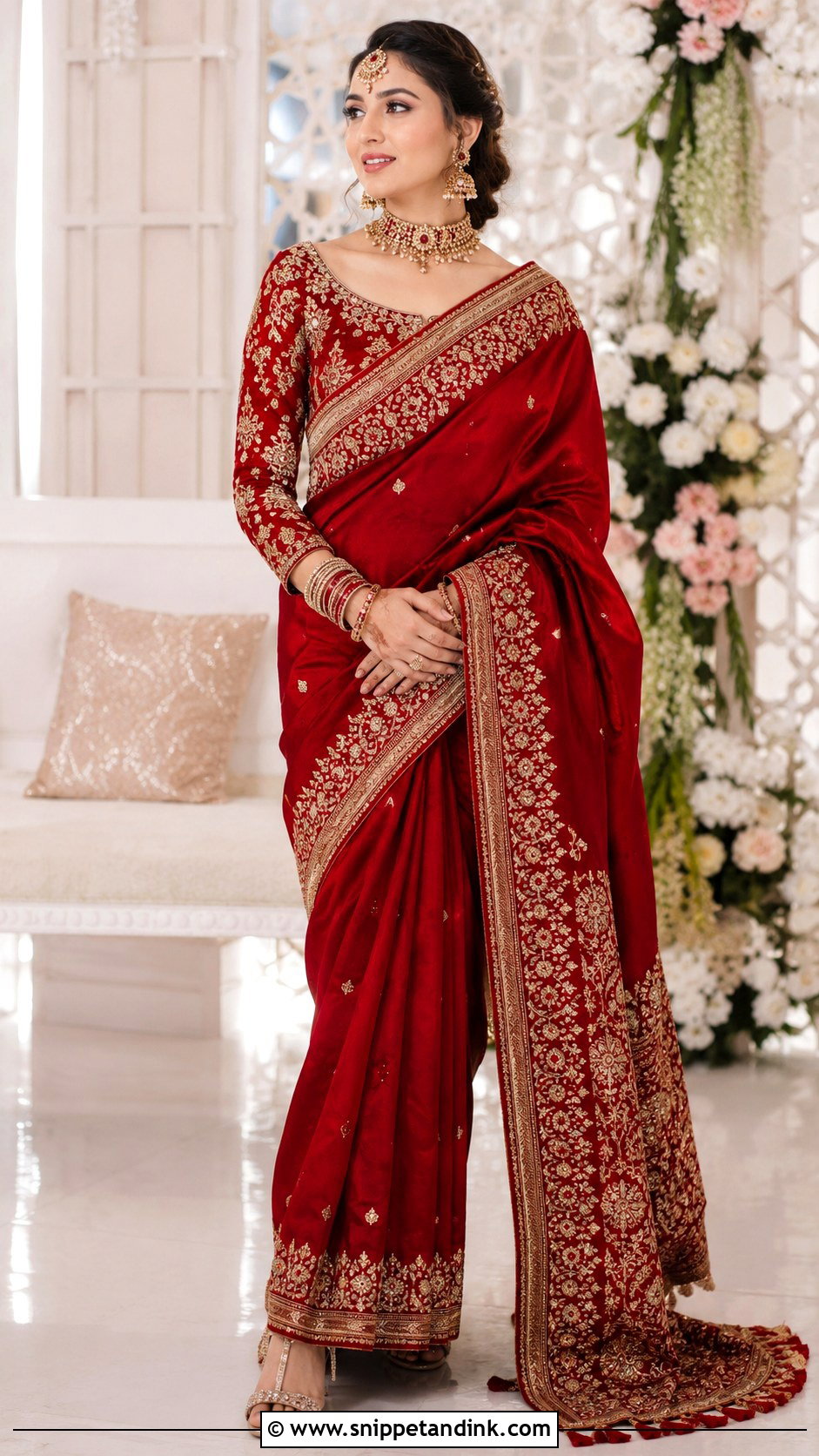
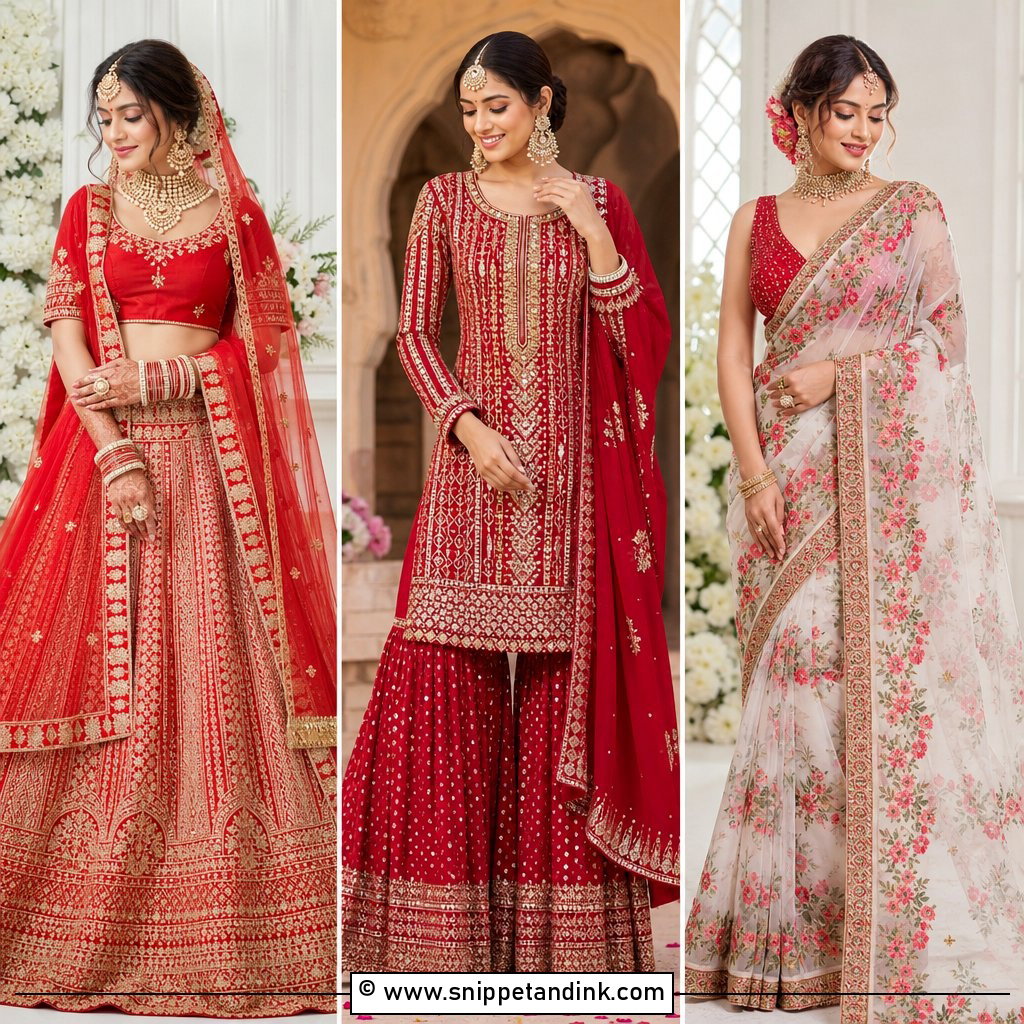
A red bridal saree stands out at a Pakistani baraat precisely because so few brides choose one. Silk, tissue or organza with a rich border and scattered motifs keeps it bridal, and the blouse carries the zardozi and sequin work. Drape it the morning of with plenty of safety pins at the pleats and pallu, because a saree loosens with every hug. I’d only recommend it to a bride who has worn a saree for a full evening before and knows how she moves in one.
16. Red Bridal Lehenga With Jacket
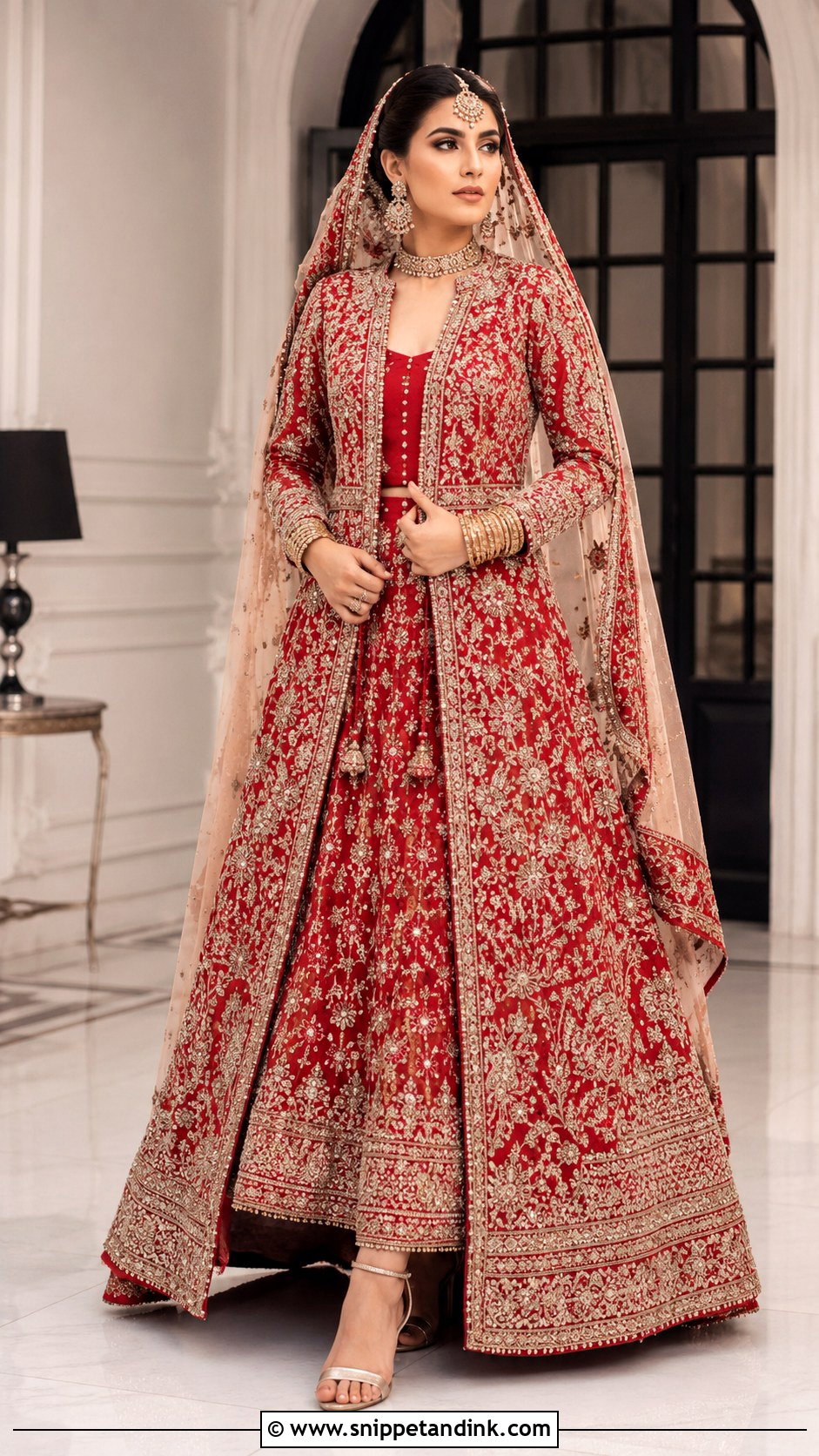
Adding a jacket to a red lehenga builds a layered, regal outline. A long front-open jacket gives drama and covers the arms; a waist-length one feels more fashion-led. The rule I follow is weight balance: if the jacket is heavily worked, the lehenga under it should be lighter, or the bride ends up carrying two full outfits. Add a light dupatta over the head, sleek jewelry, a bold tikka and heels.
17. Red Bridal Lehenga With Silver Embroidery
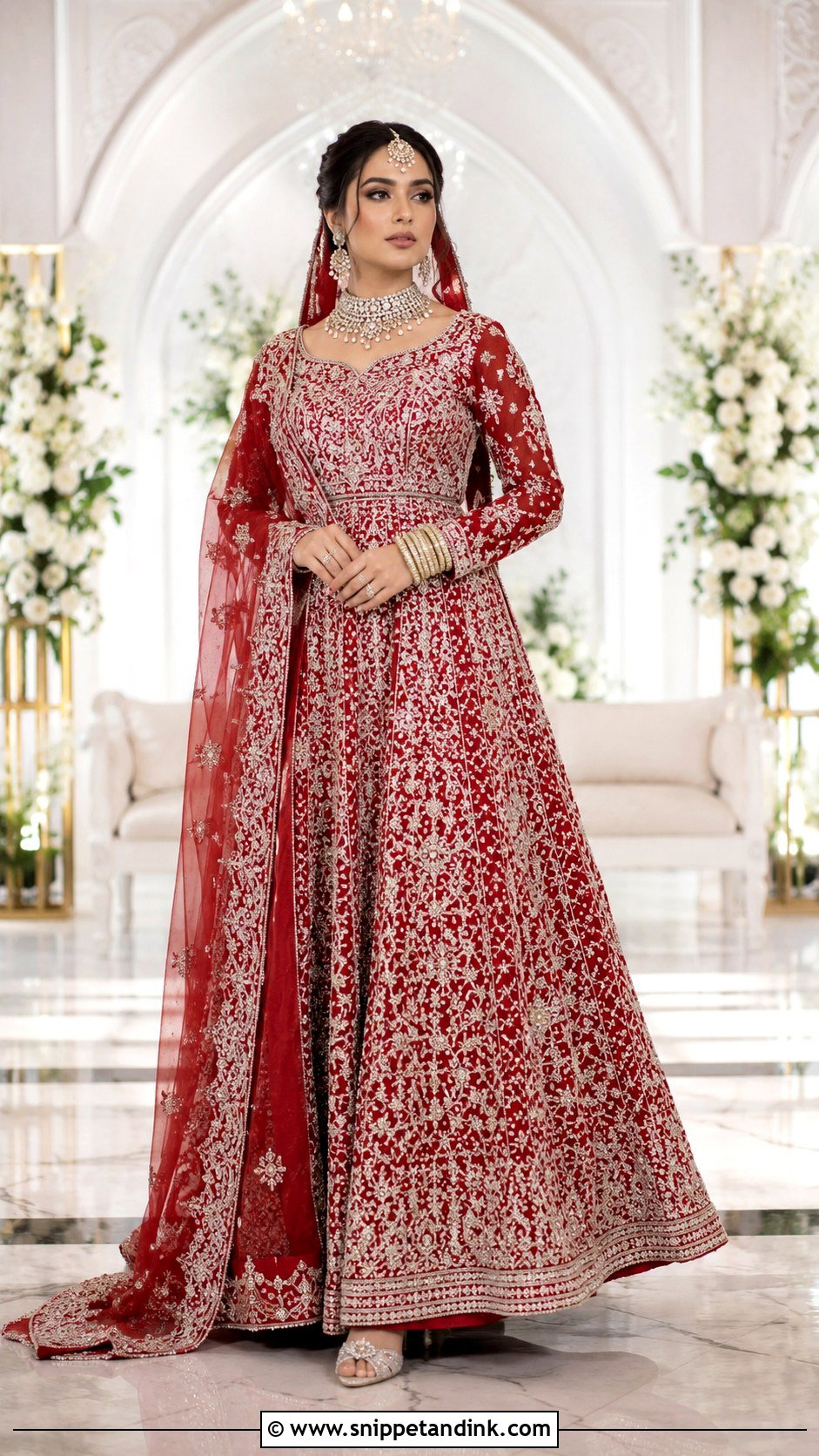
Silver embroidery on red is cooler and brighter than gold, and it changes the jewelry plan completely. I’d only go this way if you’re happy wearing silver-toned, diamond-look or pearl jewelry, because yellow gold beside silver thread looks mismatched. Crystals, sequins and fine threadwork all suit it. Keep the dupatta red with a silver border. If the skirt is heavily worked, keep the blouse simpler, and do the opposite when the skirt has open space.
18. Red Bridal Velvet Lehenga With Net Dupatta
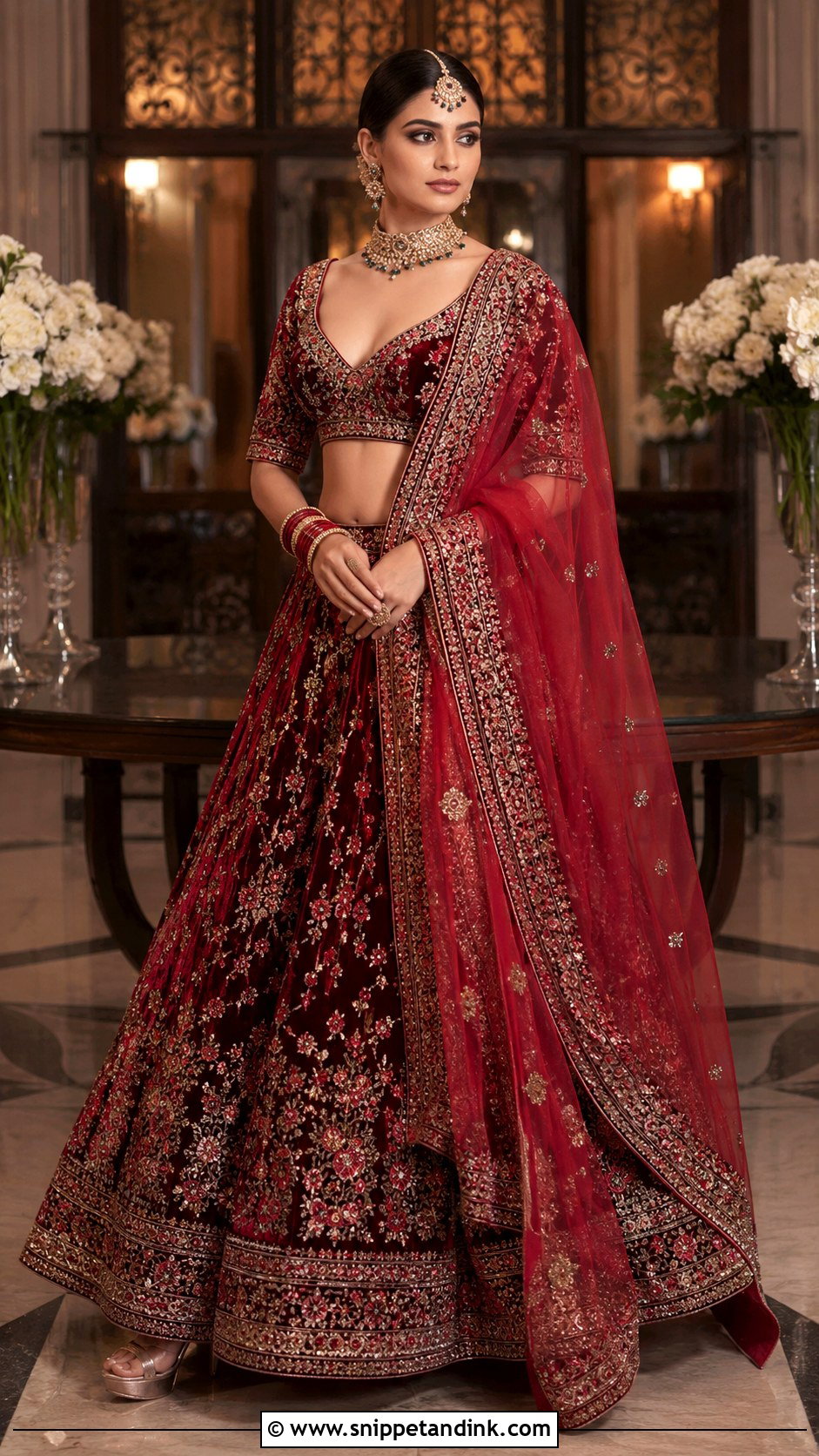
A velvet lehenga with a net dupatta is a winter outfit. Velvet’s weight makes the skirt hang beautifully and the net keeps the upper body airy, so the contrast looks balanced in person. Velvet also crushes where you sit, so I tell brides to stand for the main photographs and smooth the skirt before the stage portraits. Antique gold, copper or dull silver suit it. Avoid extra layers, keep the blouse fitted, and add a choker, passa and bangles.
19. Red Bridal Kalidar With Heavy Border
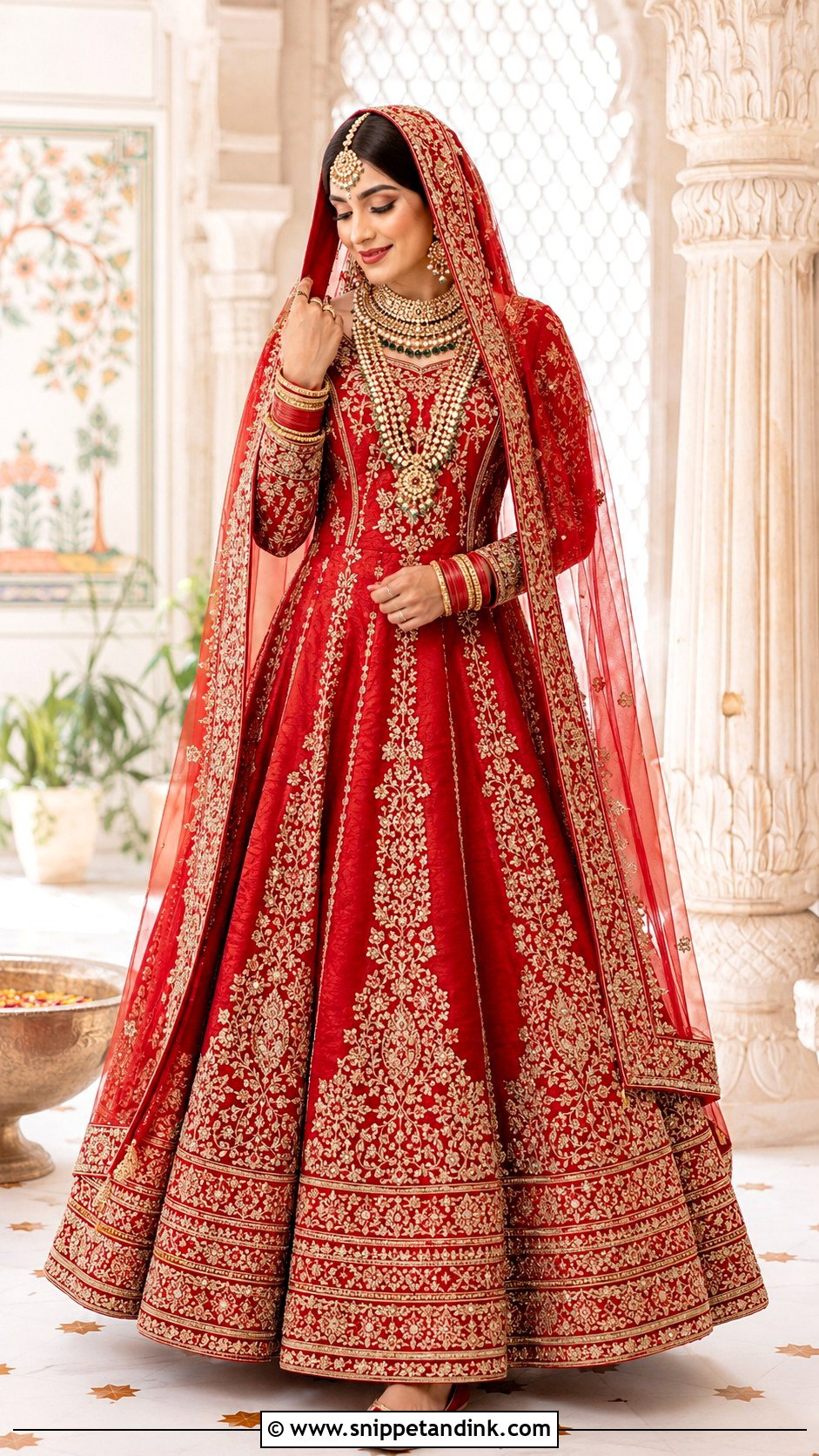
A kalidar is made from many panels, called kalis, that open as the bride walks. Those panel seams are what you see, so I want embroidery that follows the lines instead of covering them. A heavy hem border gives the flare its swing; without enough weight at the bottom, a kalidar just droops. Fit the bodice closely and let the flare start right at the natural waist. A matching bordered dupatta, a tikka, layered necklace and khussas finish it.



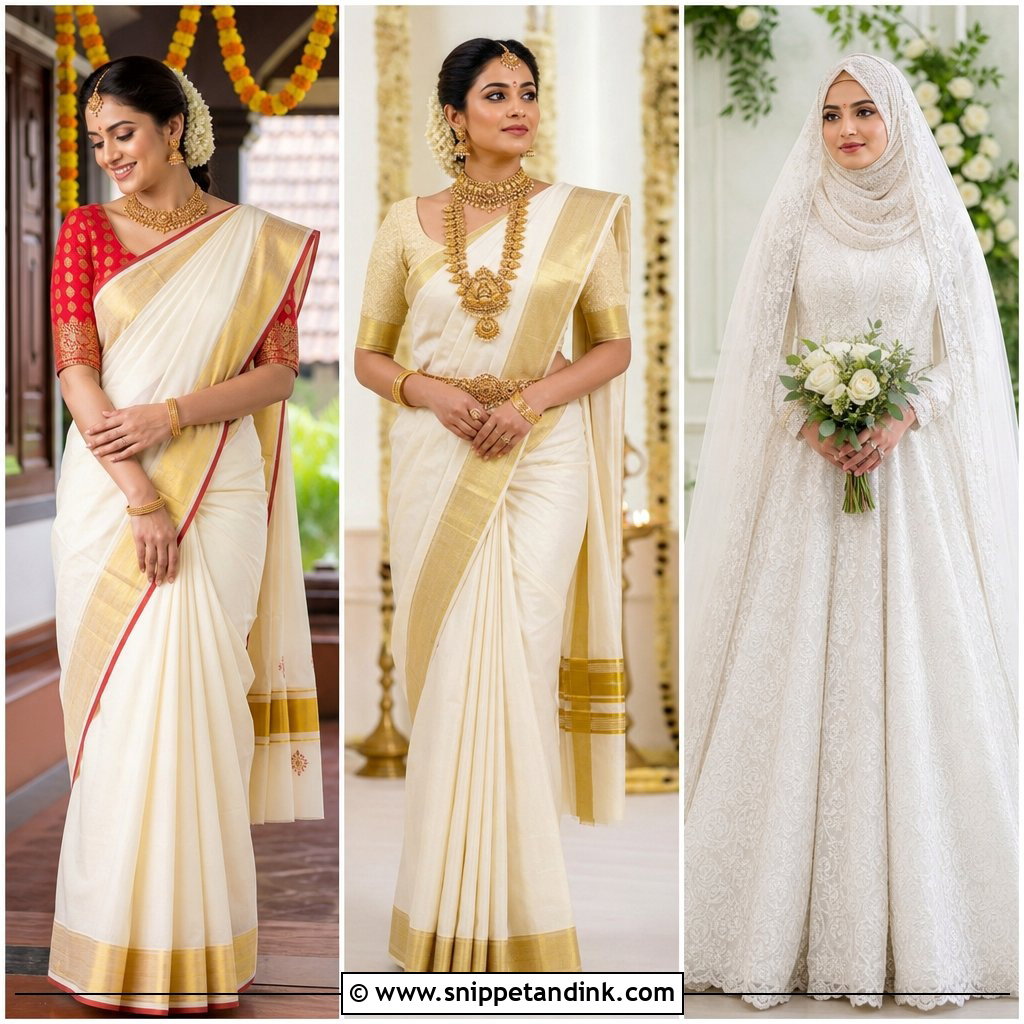
20. Red Bridal Lehenga With Mirror Work
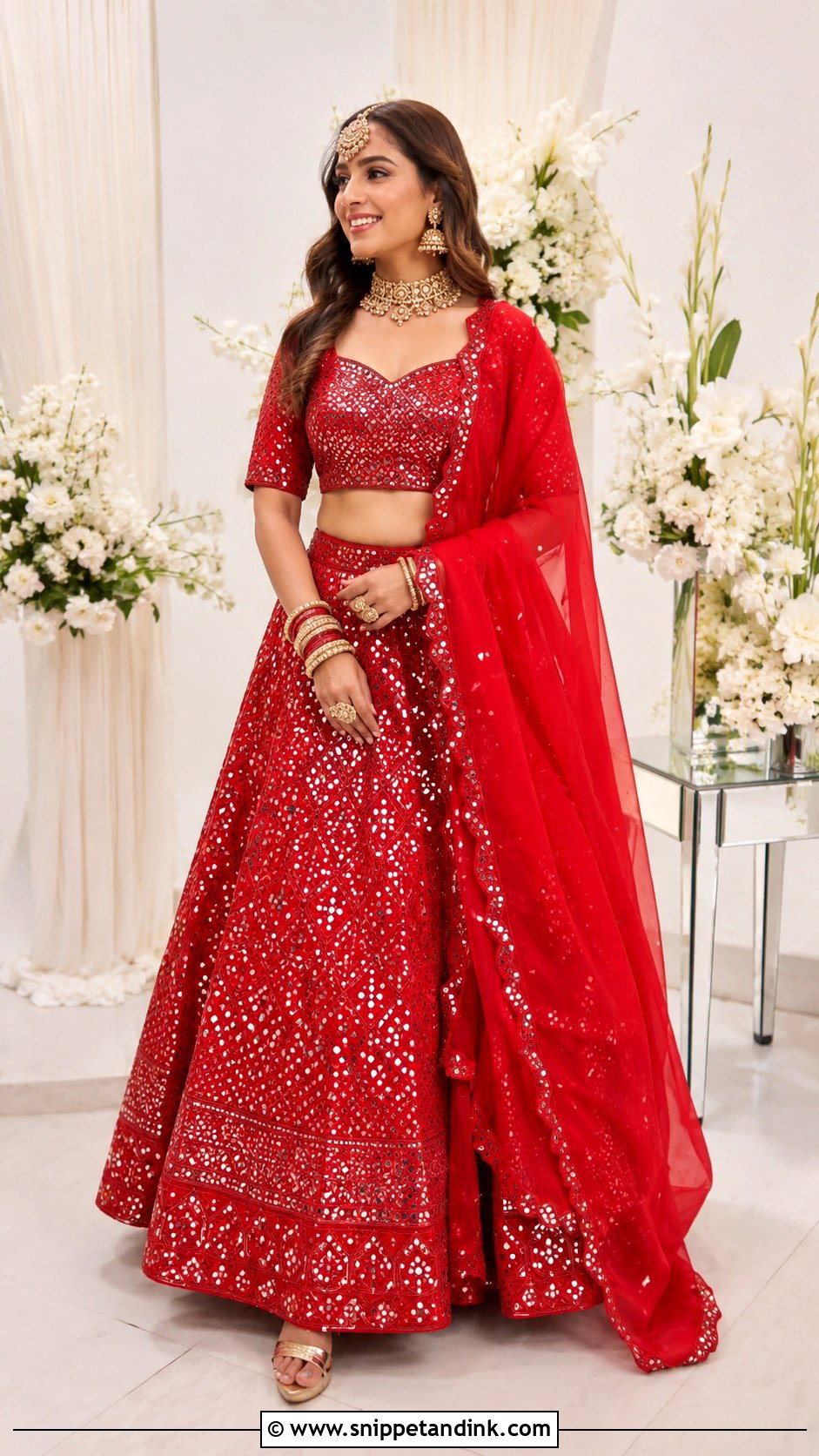
Mirror work catches every light in the hall and in video it sparkles as you move. On its own it can read mehndi rather than baraat, so I’d mix it with zardozi, thread embroidery or sequins to keep it formal. A structured blouse and a full lehenga help. Because the outfit already shines, cut back on jewelry: one strong necklace and earrings, not three layers. Check the mirrors are stitched, not glued, at the fitting; glued ones pop off when you sit.
21. Red Bridal Lehenga With Banarsi Dupatta
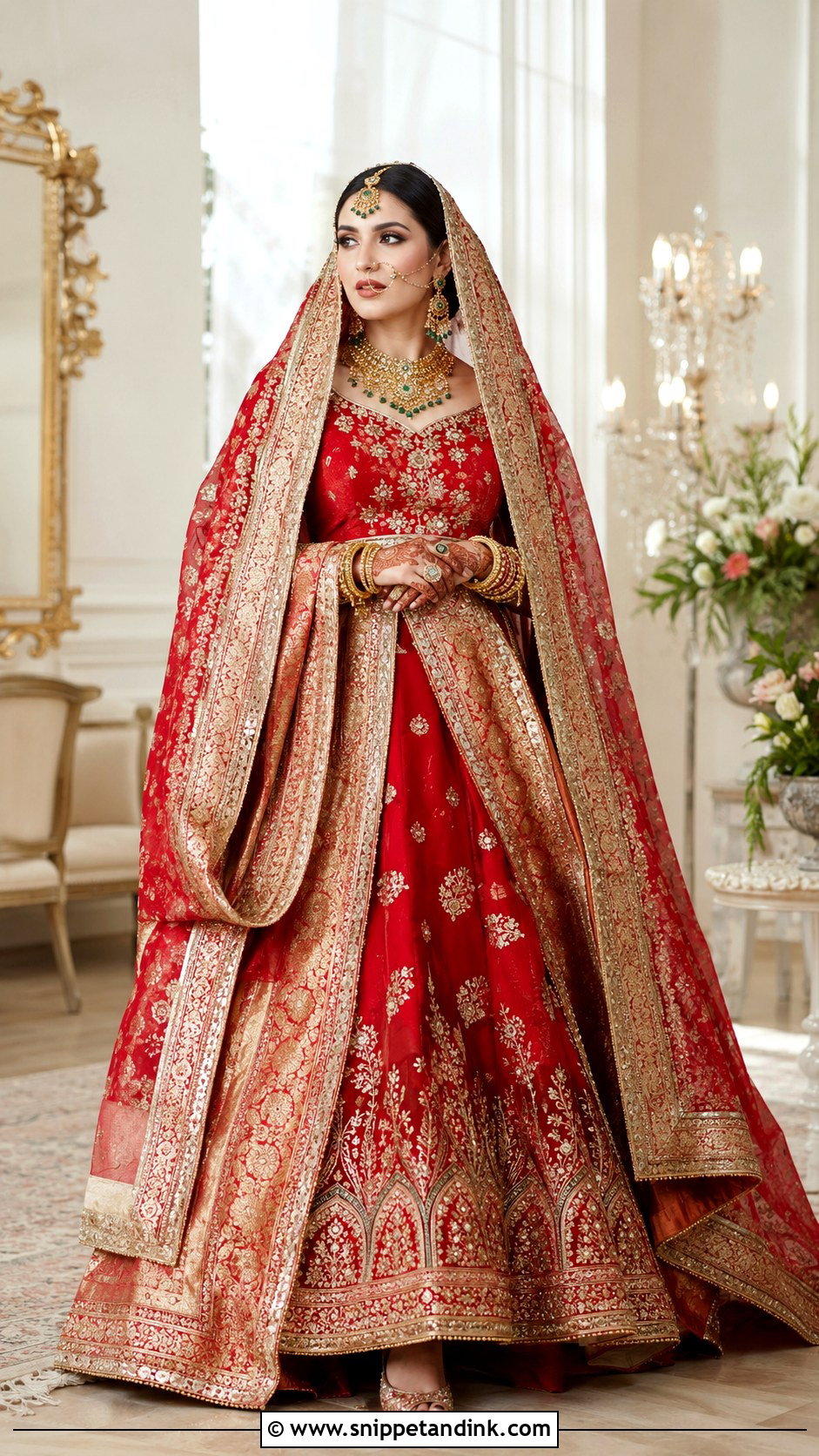
A Banarsi dupatta brings woven texture that embroidery can’t copy, and it lets a cleaner lehenga look expensive. Red or gold Banarsi draped over the head frames the face in the classic way. Banarsi silk is heavier and stiffer than chiffon, so it needs firm pinning at the crown. A raw silk lehenga, an embroidered blouse and antique jewelry suit it. I’d keep makeup soft but defined so the weave stays the focus. It feels like an heirloom, and often becomes one.
22. Red Bridal Long Frock With Trousers
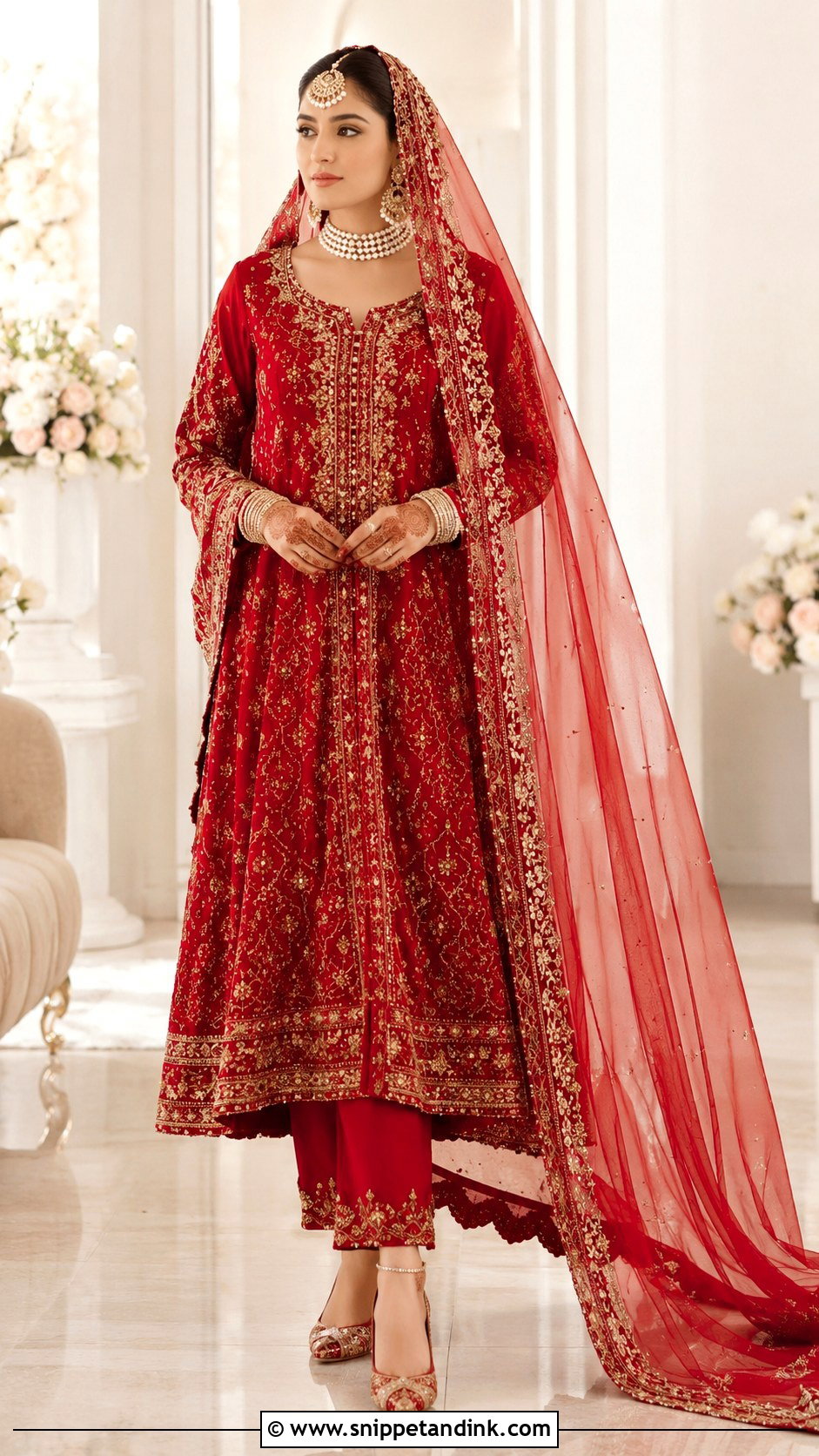
A long frock with trousers is the most practical outfit here, and I mean that as praise. It walks easily, sits comfortably and doesn’t need anyone holding a hem. It suits a nikkah, a small baraat or a bride who simply doesn’t want a lehenga. Embroidery on the neckline, sleeves, front panels and hem makes it bridal, and a sheer bordered dupatta can go over the head or one shoulder. Pearls, a tikka and embroidered heels keep it graceful.
23. Red Bridal Lehenga With Cape Dupatta
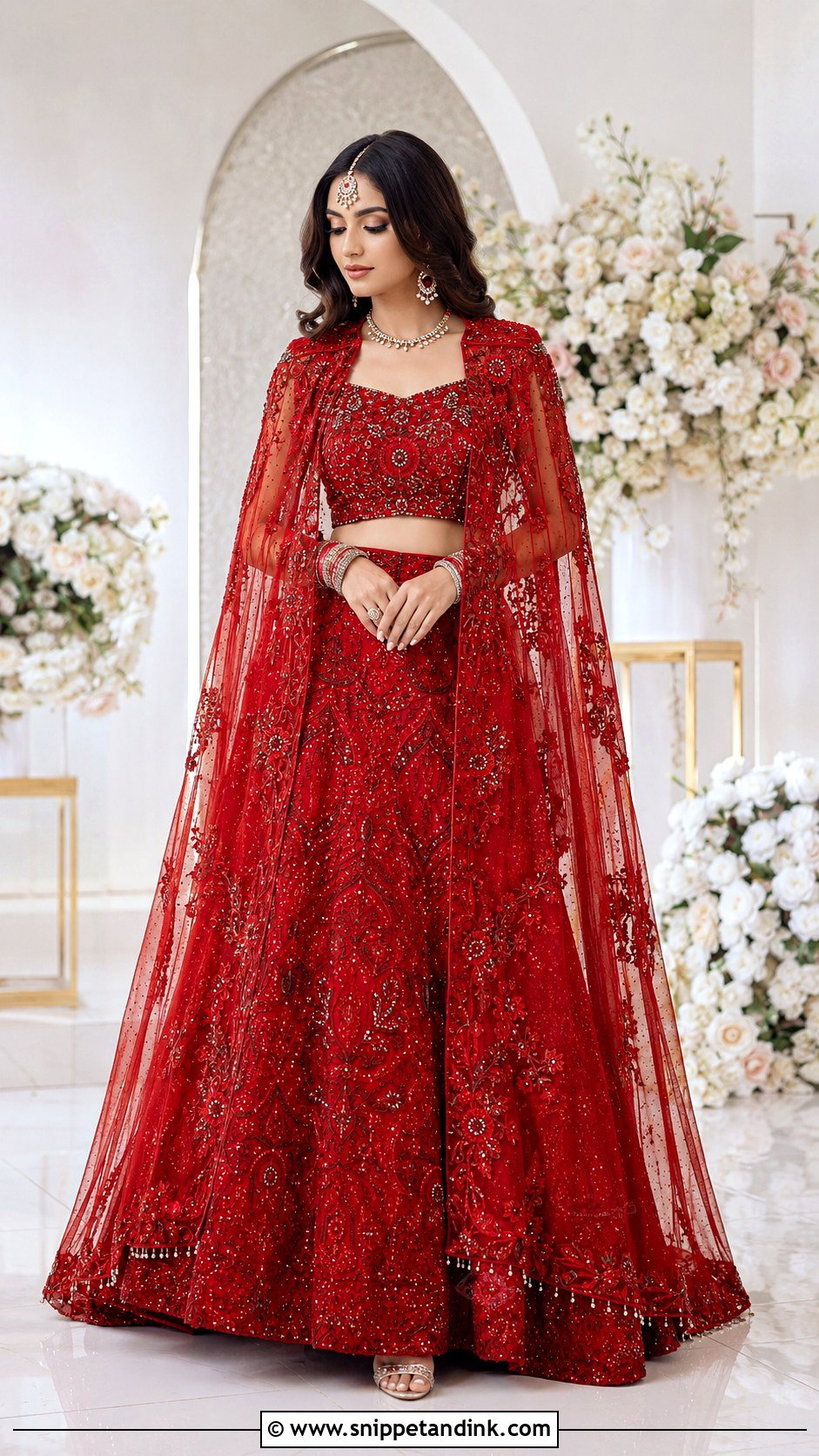
A cape dupatta sits on the shoulders and moves with you, so it’s easier to manage than a long drape that slips. Embroidered edges, small motifs or fine beadwork keep it bridal. The lehenga still has to carry volume and detail or the outfit looks unfinished from the back. I’d suggest this to a bride who wants something fashion-forward without going experimental, especially for a modern venue or a reception-style baraat. Sleek jewelry and soft curls suit it.
24. Red Bridal Lehenga With Trail
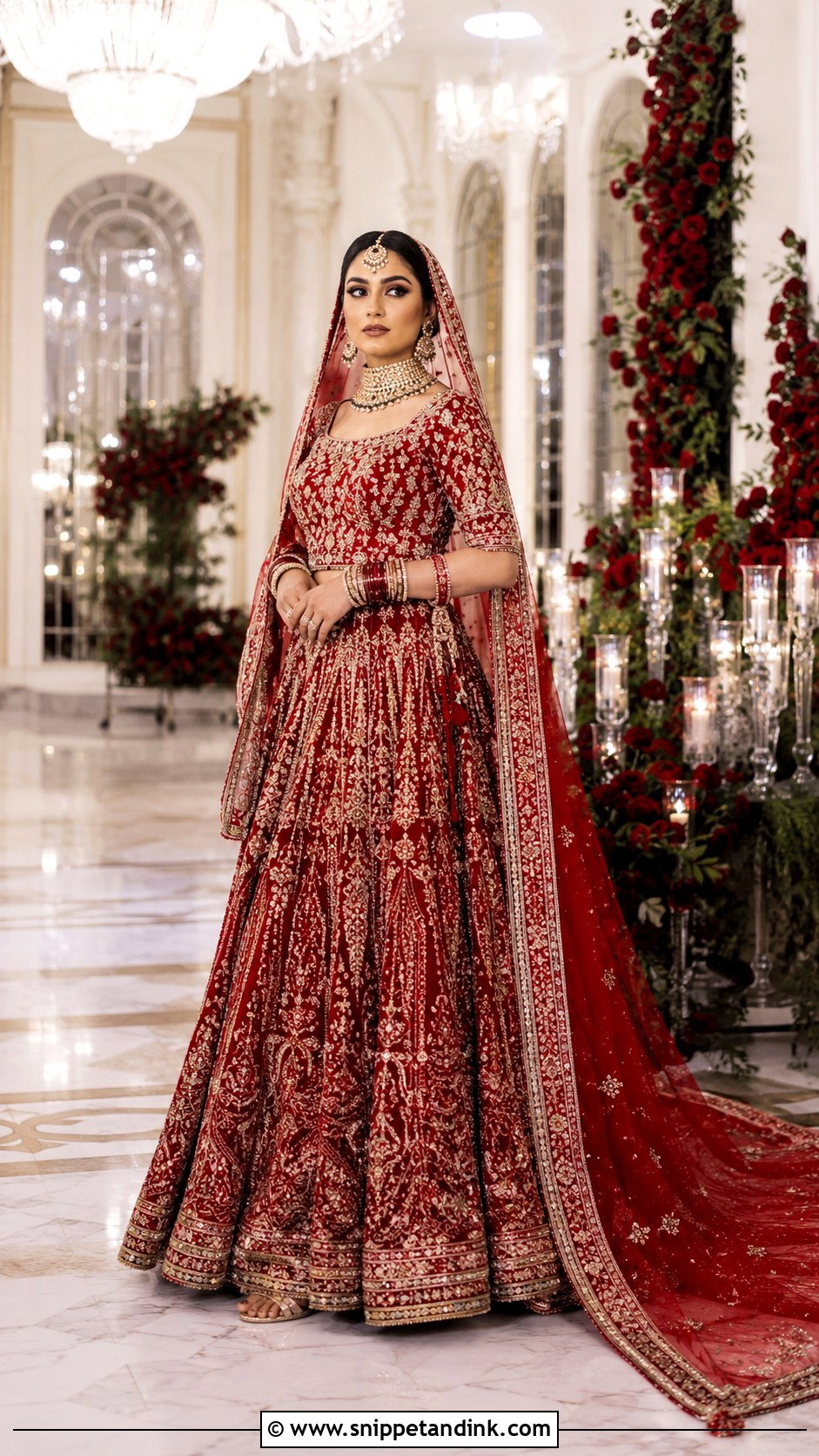
A trail at the back of a lehenga gives a real entrance moment without complicating the rest of the outfit. The front must clear the floor in your actual heels while the back holds controlled volume. I’d keep the dupatta lighter here, since trail plus heavy dupatta pulls the whole outfit backward. Someone should be assigned to arrange the trail each time you stop. A statement necklace, tikka and a soft veil drape complete it.



25. Red Bridal Lehenga With Minimal Embroidery
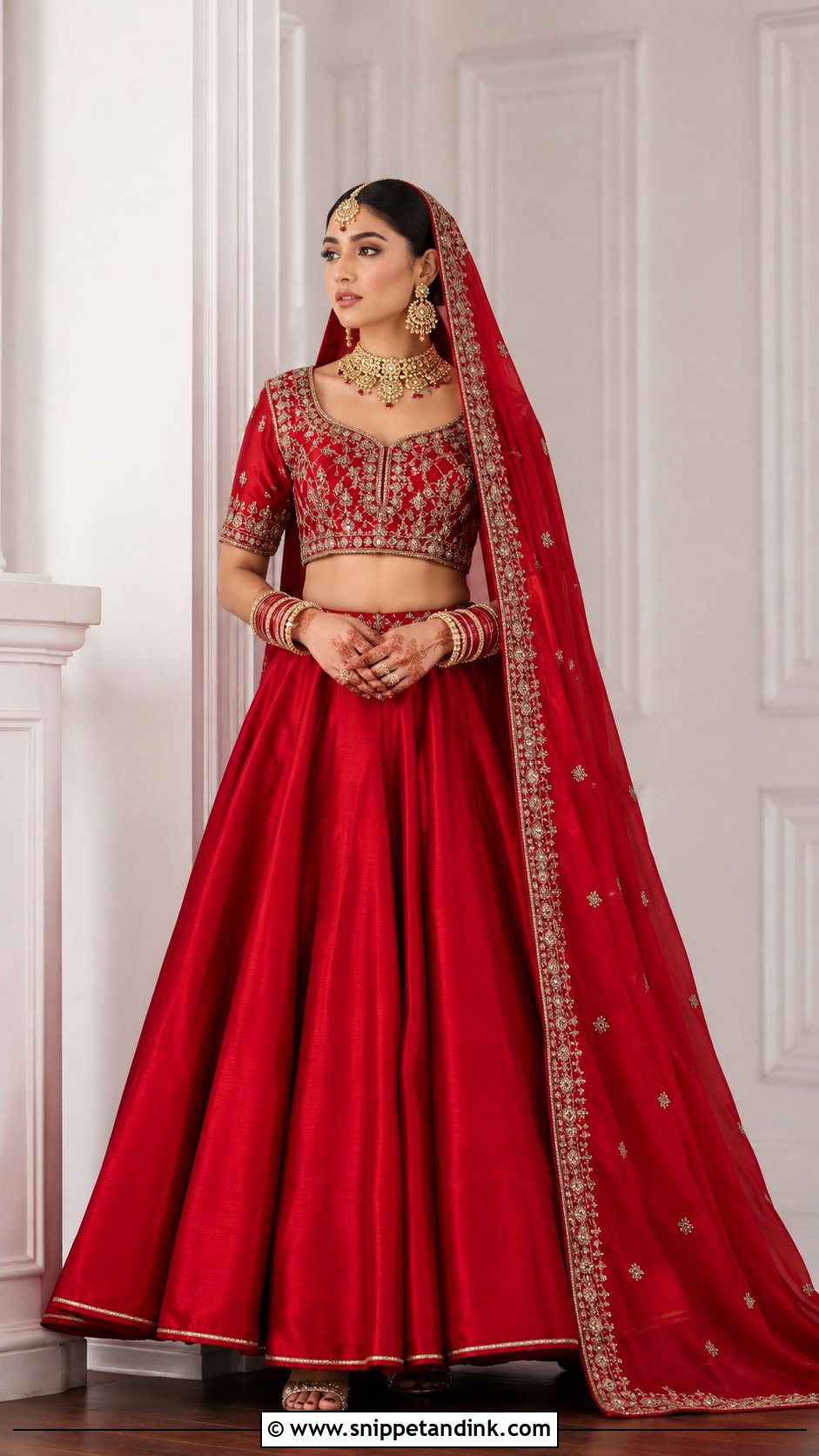
Minimal embroidery puts all the attention on fabric and cut, which means neither can be average. A raw silk or jamawar lehenga with a defined border holds its shape and looks bridal without the weight. Delicate neckline and sleeve work, plus a dupatta with a refined edge, leave room for classic gold jewelry and makeup to show. It’s also far cooler to wear. If you want the bride rather than the embroidery to be the first thing people see, this is my pick.
Wearing a Heavy Lehenga for Six Hours Without Wilting
A fully worked bridal outfit can be genuinely heavy, and the weight builds over a long evening. Most of it hangs from the waistband, so I ask tailors for a wide, firmly lined waistband with hooks, not just a drawstring, which digs in by the second hour. A lighter can-can underneath carries the flare without adding much weight.
- Pin the dupatta to the bun with U-pins and add one small safety pin at the shoulder of the blouse so it can’t slide when you hug relatives.
- Practise sitting down on a low stage sofa at the last fitting; long shirts and farshi hems both need a quick tuck forward.
- Choose one person to handle the dupatta and skirt for photos and the washroom, and show her how it’s pinned.
- Keep a small kit with safety pins, a needle and red thread, and blotting papers for the neckline embroidery.
Airing and Wrapping Red Embroidery Once the Baraat Is Over
Zardozi and zari tarnish when they stay damp or meet perfume, so the first job the day after is airing. Hang the outfit in a dry, shaded room for a day before it goes anywhere near a box, and never spray fragrance directly on the embroidery while wearing it.
For storage I wrap each piece in soft cotton or muslin, never plastic, which traps moisture. Fold heavy work inward with tissue between layers, and refold along different lines every few months so the metal thread doesn’t crack at the creases. If there’s a stain, take it to a cleaner who handles bridal embroidery rather than trying to scrub it at home.
Red That Still Feels Like You on the Baraat Stage
Every outfit above is red, and yet they ask very different things of the person wearing them. A lehenga gives traditional grandeur, a gharara or sharara carries cultural weight, and a peshwas, maxi, or kalidar brings flow, while a saree or jacket outfit sets you apart. Start with how long you’ll be on your feet and how hot the venue runs, then pick the shade, embroidery and dupatta. The outfit you can move, sit and hug in is the one you’ll look happiest in.
You'll Like These Ideas:







Leave a Reply