
A Balochi bridal look is recognizable from across a room: brilliant color, dense geometric needlework, a generous silhouette and handcrafted detail wherever the eye lands. The traditional set is a long embroidered shirt, loose trousers and a head covering, though cut and motifs vary between Baloch communities and regions. Bridal versions carry heavier embroidery, richer thread, mirror accents, beads and statement jewelry. Classic red or modern ivory, the outfit should respect where it comes from, stay comfortable through long ceremonies and still feel personal. I always suggest talking to elders in the family or an experienced Balochi embroiderer before settling on regional motifs, because they’ll know which patterns belong to your side of the family. The ideas below run from pashk-inspired classics to contemporary cuts.
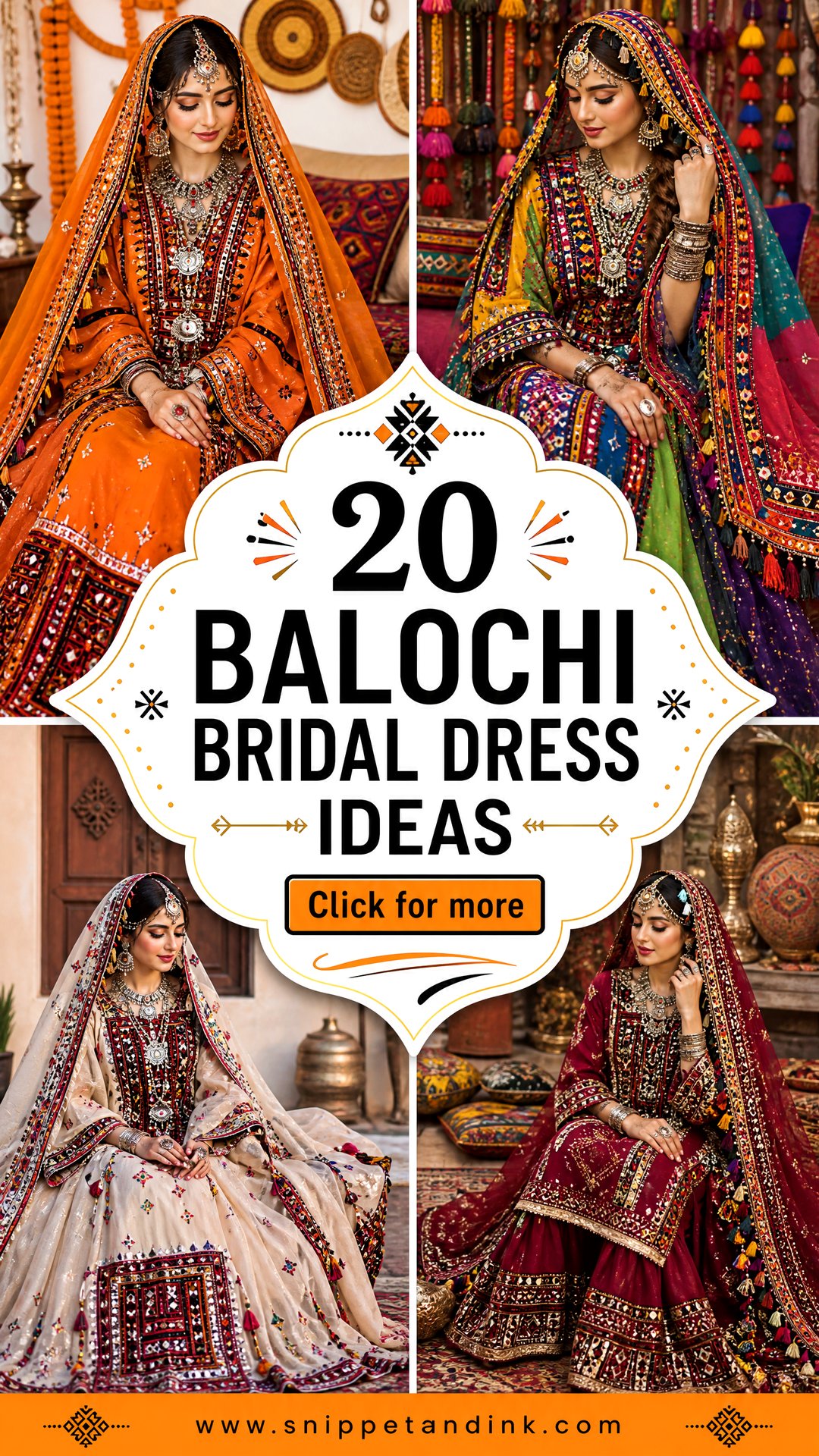
Hand Needlework or Machine Copy? What I Look At First
Machine-embroidered Balochi-style shirts are common and much cheaper, and in a photo they can look convincing. In person, a few minutes with the garment tells you which one you’re holding.
- Turn the panel over. Hand embroidery shows small irregularities, thread ends and knots on the back; machine work has an even, repeated stitch, often over a stiff stabilizer backing.
- Compare the motifs side by side. Hand-stitched geometric shapes vary very slightly from one repeat to the next, while repeats that match down to the last stitch point to a machine.
- Check the mirrors. In hand work each mirror sits inside a stitched frame of thread. Glued mirrors or mirrors set in plastic rings are a shortcut.
- Feel the weight. Dense hand embroidery uses a great deal of thread and makes the panel noticeably heavier and firmer.
If you’re commissioning a dress, ask early. Dense hand-embroidered panels can take an artisan many weeks or several months, and they’re often stitched as separate pieces before the shirt is assembled, so you can approve colors and motifs on a sample before the full work starts. Agree on thread colors in daylight, against the actual base fabric.
1. Traditional Red Balochi Bridal Dress
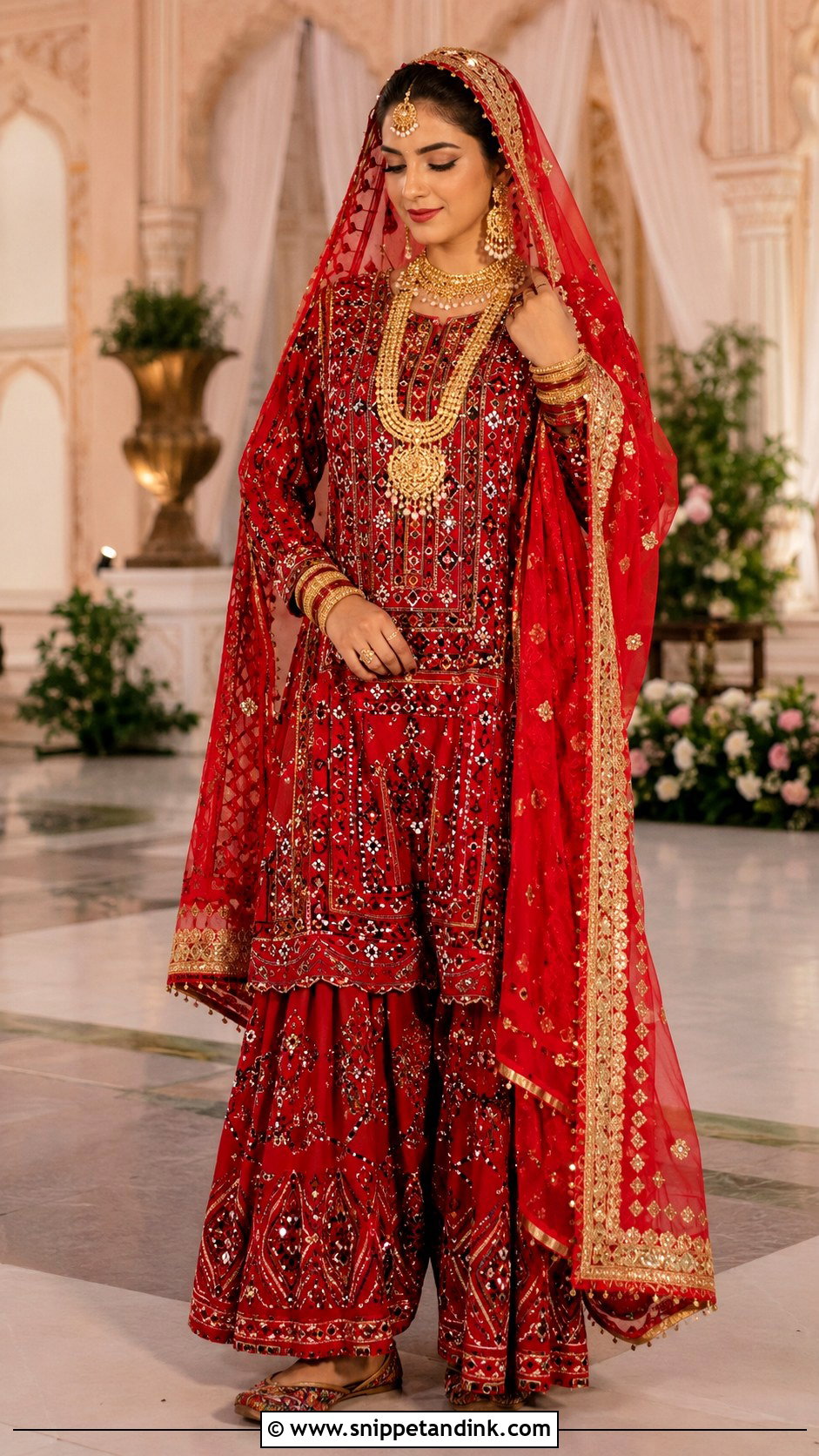
Red is the color most people picture for a Balochi bride, and it earns that place. The long, loose shirt carries its heaviest embroidery on the front panel, with detailed sleeves and a worked hem, usually in gold or silver thread with beads and multicolored geometric patterns. Pair it with a comfortable embroidered shalwar and a red sareeg or dupatta whose border picks up the shirt’s own colors; that one repeated border is what makes three pieces read as a set. Gold-toned jewelry, embroidered flats and a firm bridal hairstyle under the covering finish it. I’d keep the makeup measured. With this much needlework, a heavy face fights the dress.
2. Maroon Balochi Bridal Dress
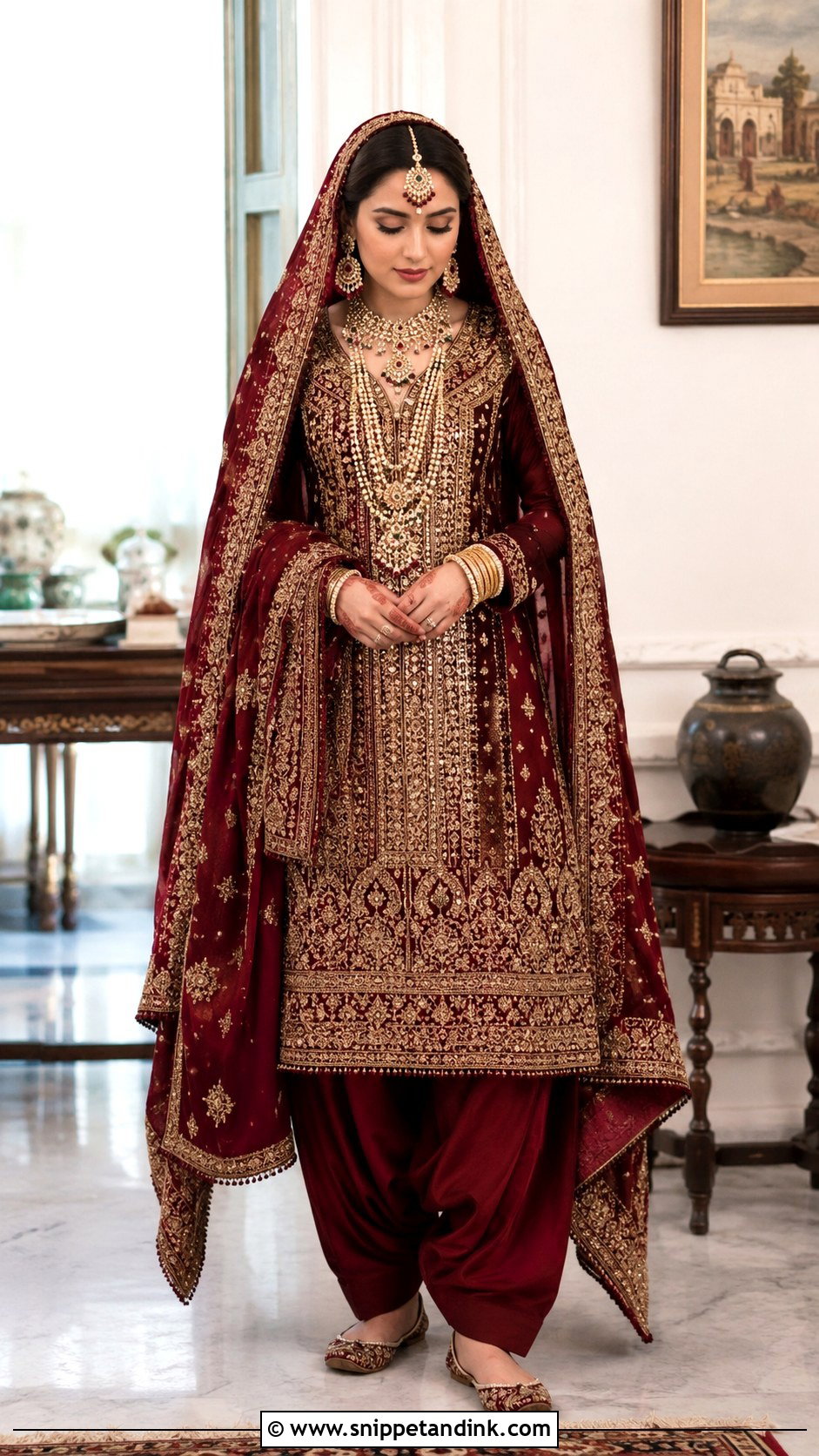
Maroon gives you red’s richness with a deeper, quieter finish. I’d build around a floor-length Balochi shirt with antique-gold embroidery on the chest panel, cuffs, pocket and lower border. On a dark base, small touches of rust, green, ivory or black thread are what make the geometric motifs legible, since all-gold work on maroon can blur into one texture from a few feet away. A wide maroon shalwar lets you move through a long celebration, and a matching sareeg with a broad embroidered edge frames the face. Antique-gold earrings, layered necklaces, bangles and embellished flats complete it, with berry lipstick and softly defined eyes.
3. Green And Gold Balochi Bridal Dress
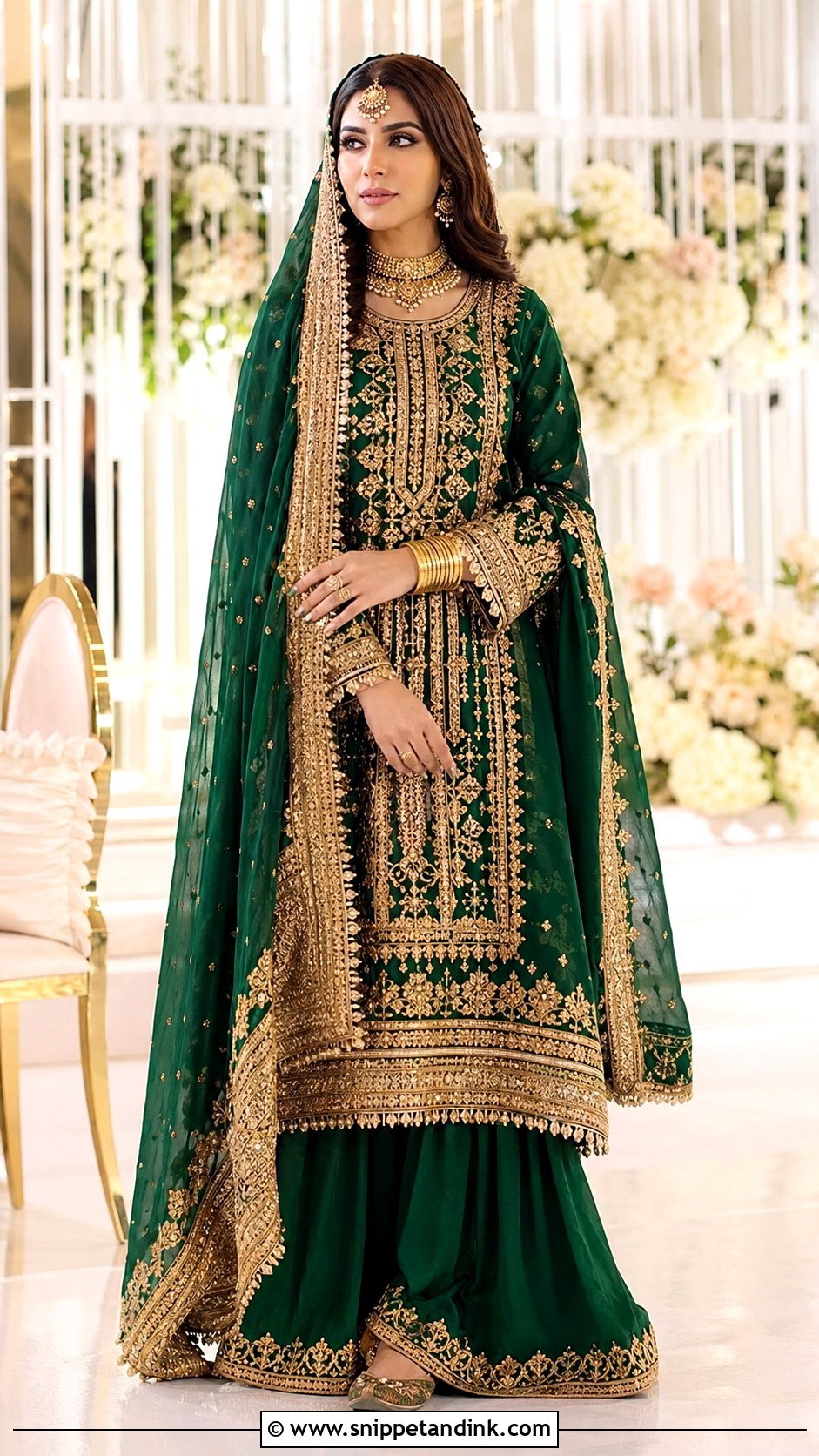
Green is what I suggest to brides who want something regal that isn’t red. Emerald, bottle green and forest green each suit different complexions, so hold the fabric up to your face in daylight before deciding. A long shirt with gold threadwork, multicolored geometric panels and embroidered sleeves feels festive without leaning on sparkle. If the embroidery is very dense, choose a matte base; shiny fabric under heavy needlework makes the work harder to read. A matching loose shalwar, a green head covering with a gold border, gold-toned necklaces, drop earrings, stacked bangles and embroidered khussa-style flats make up the rest. Softly glowing skin, defined brows and a muted rose lip keep it balanced.
4. Royal Blue Balochi Bridal Dress
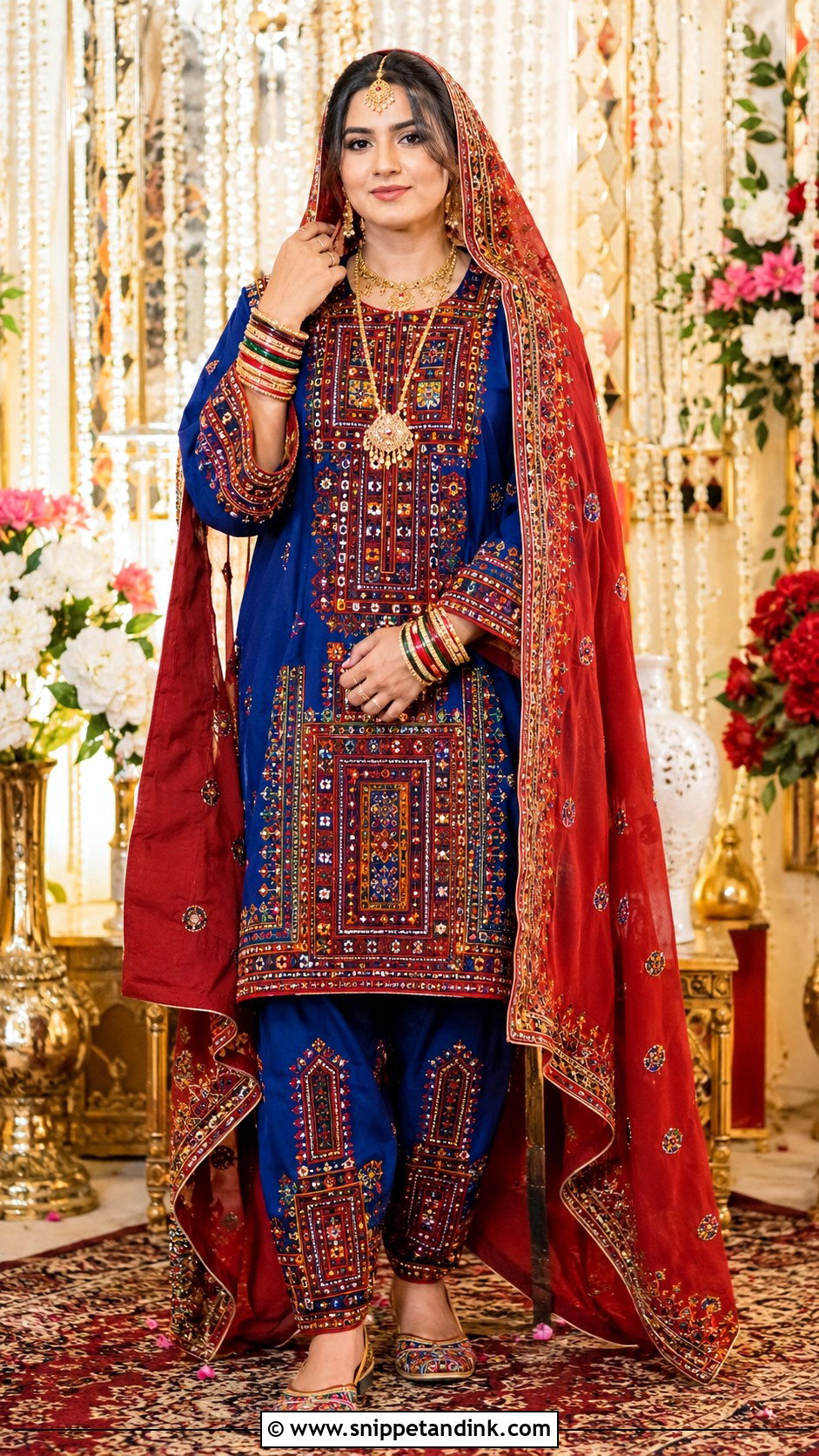
Royal blue is the base that makes red, gold, orange and ivory embroidery look sharpest. A long blue shirt, wide matching shalwar and a red sareeg repeating the accent colors is a pairing many families already love, and coins, tassels and gold details push it further. I concentrate the heaviest needlework on the front panel, sleeves and hem, which gives the outfit a clear structure instead of an all-over pattern. Choose embroidered flats over hidden heels. With long, full trousers, a heel catches the hem on every stair. Gold jewelry warms the cool blue, and a red lip ties back to the head covering.
5. Ivory Balochi Bridal Dress
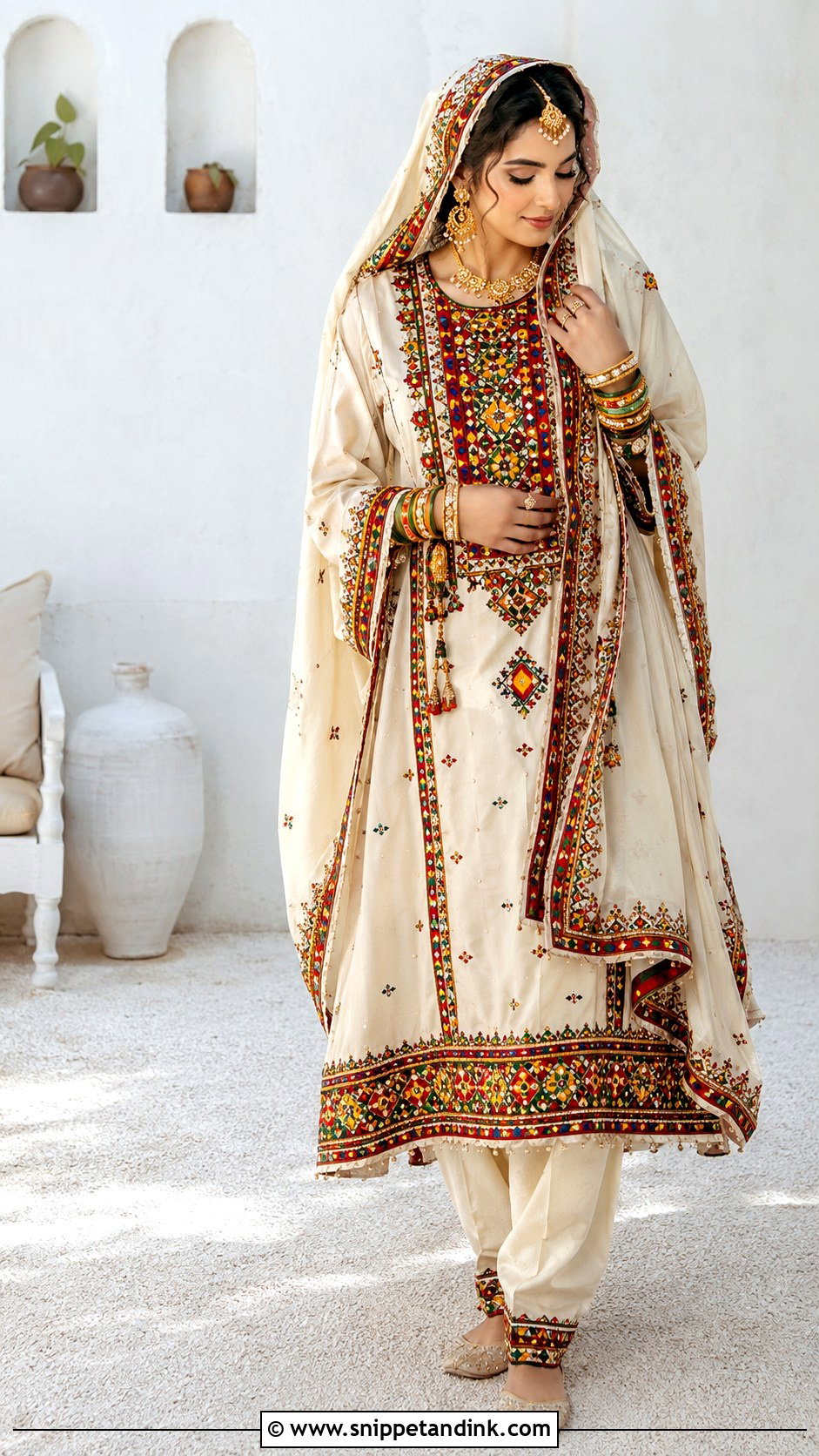
Ivory lets the embroidery do all the talking, so the needlework has to be clean and well spaced. Multicolored Balochi embroidery in red, green, mustard, black and blue on a long ivory shirt, with a few zari accents at the neckline, front panel and cuffs, is plenty. Pair it with an ivory shalwar and a head covering edged in the same geometric work. One practical warning: ask the artisan whether the threads are colorfast, because red thread bleeding onto an ivory base is very hard to undo. Gold jewelry, colorful bangles, an embroidered clutch and ivory flats finish it, with rosy cheeks and a defined lip. Daytime ceremonies suit this palette best.
6. Black And Red Balochi Bridal Dress
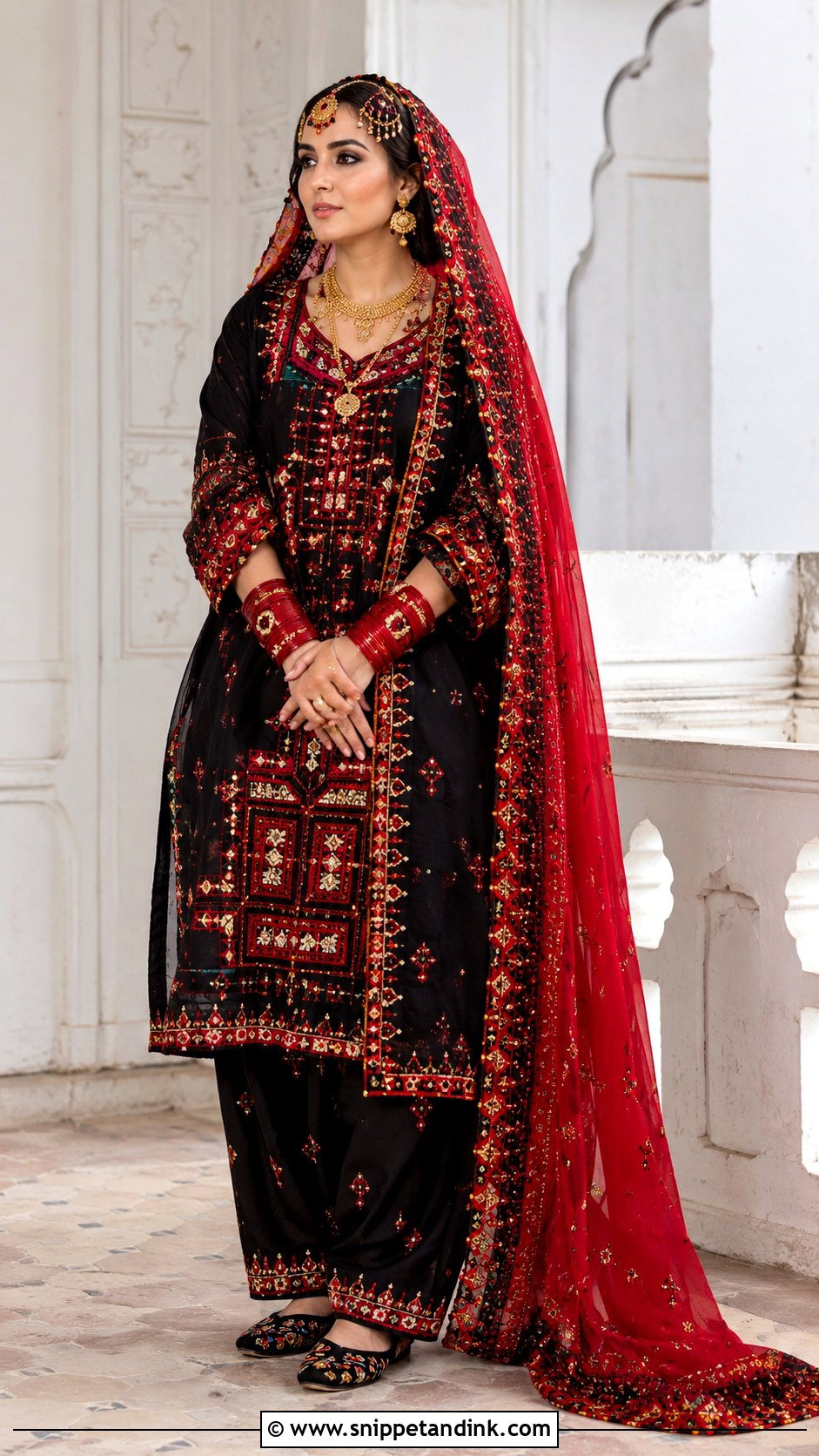
Black needs restraint. A black long shirt with red geometric embroidery, gold accents and small hints of green or ivory works because the open black fabric between motifs makes the handwork look sharper; cover every inch and that contrast disappears. Keep the chest panel and sleeves heavily worked, give the wide black shalwar a quiet border, and bring in a red sareeg to brighten the face and keep the color story bridal. Gold-toned jewelry, red bangles and black embroidered flats complete it. Softly highlighted skin, defined eyes and a classic red lip are enough.
7. Pink Balochi Bridal Dress
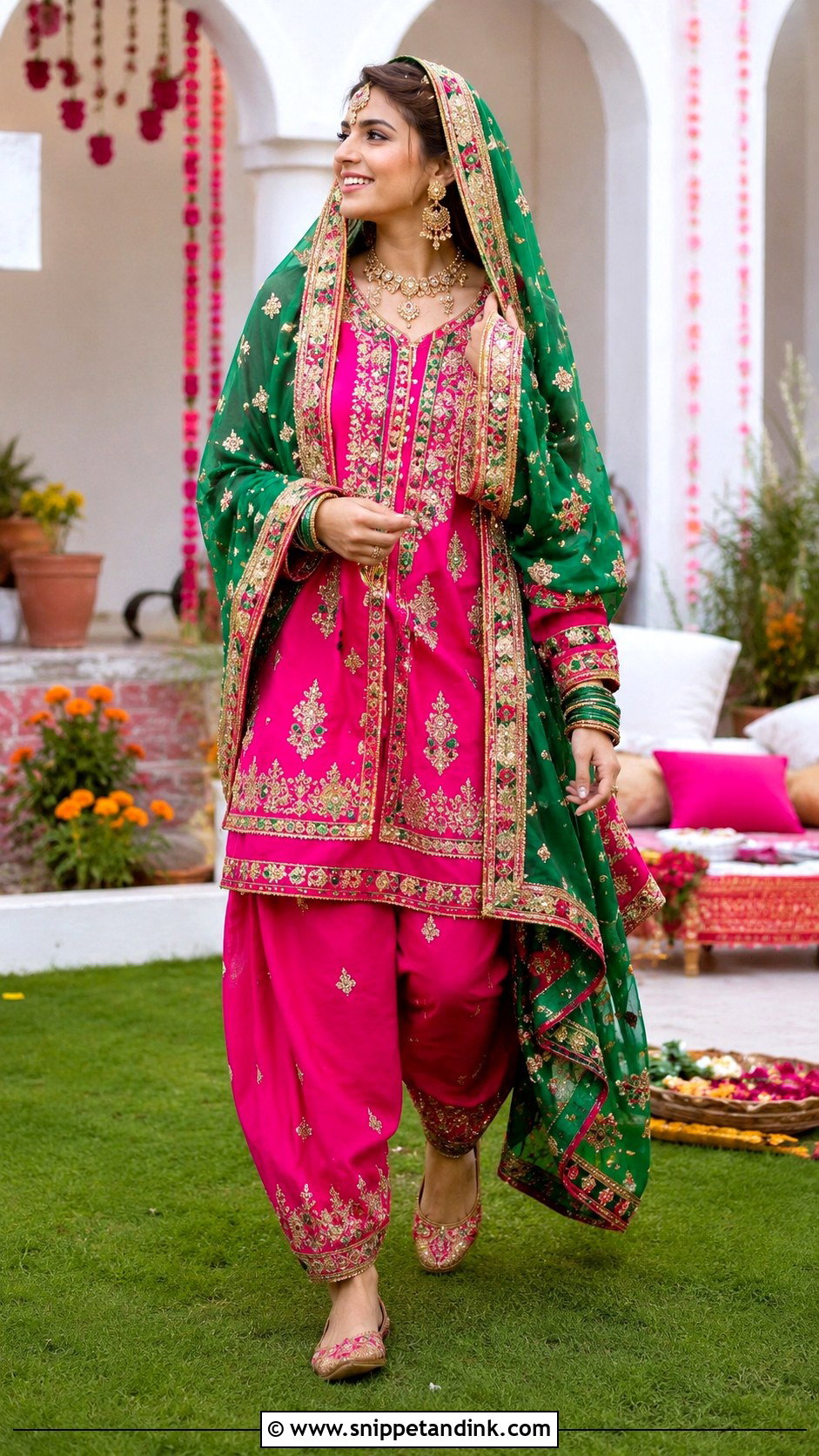
Want something joyful and a little less formal than deep red? Rani pink or raspberry has plenty of impact while keeping a celebratory mood. A long pink shirt with green, orange, gold and ivory embroidery across the front panel and sleeves pairs with a loose matching shalwar and a contrasting green or orange sareeg. The trick I use is making sure the sareeg’s color appears somewhere inside the embroidery, so the contrast looks planned. Gold earrings, a traditional necklace, stacked bangles and embellished flats are enough, with a small, simple bag. Rose-toned makeup and fresh flowers in the hair soften the brighter palette.
8. Mustard Balochi Bridal Dress
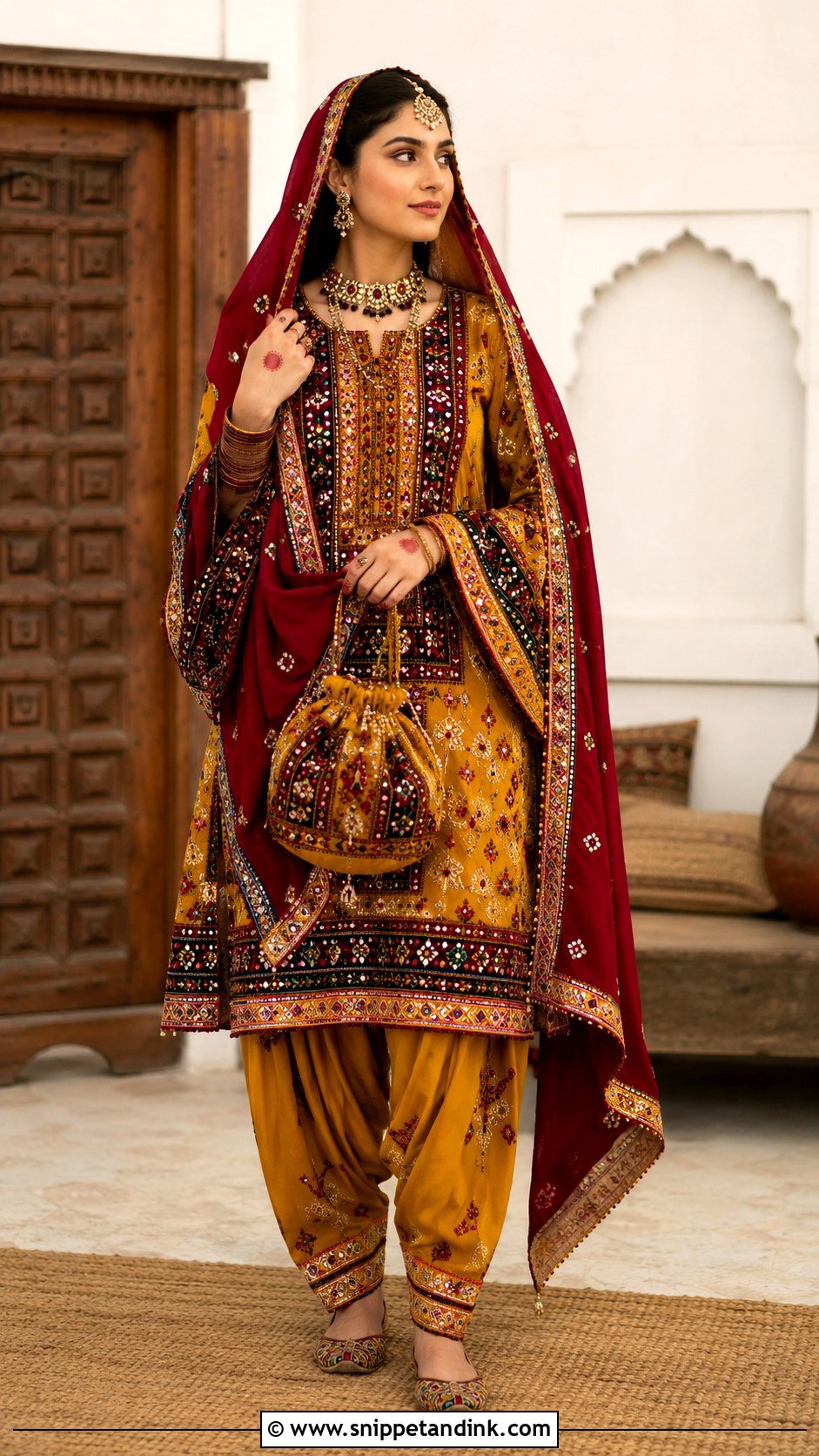
Mustard is an earthy choice, and fabric weight matters more with it than with darker colors. It needs enough body to hold a long, loose shirt without looking limp, but not so much that it turns stiff. Red, green, black and cream embroidery sits well on it: a geometric chest panel, embroidered cuffs, decorative pockets and a wide hem border. Match the shirt with a mustard shalwar and use a deep red sareeg for ceremonial contrast. Antique-gold jewelry suits the earthy palette, and red and green bangles tie the accessories back to the needlework. Embroidered flats and a compact potli bag finish it. It’s especially good for a daytime event or a pre-wedding function.
9. Orange Balochi Bridal Dress
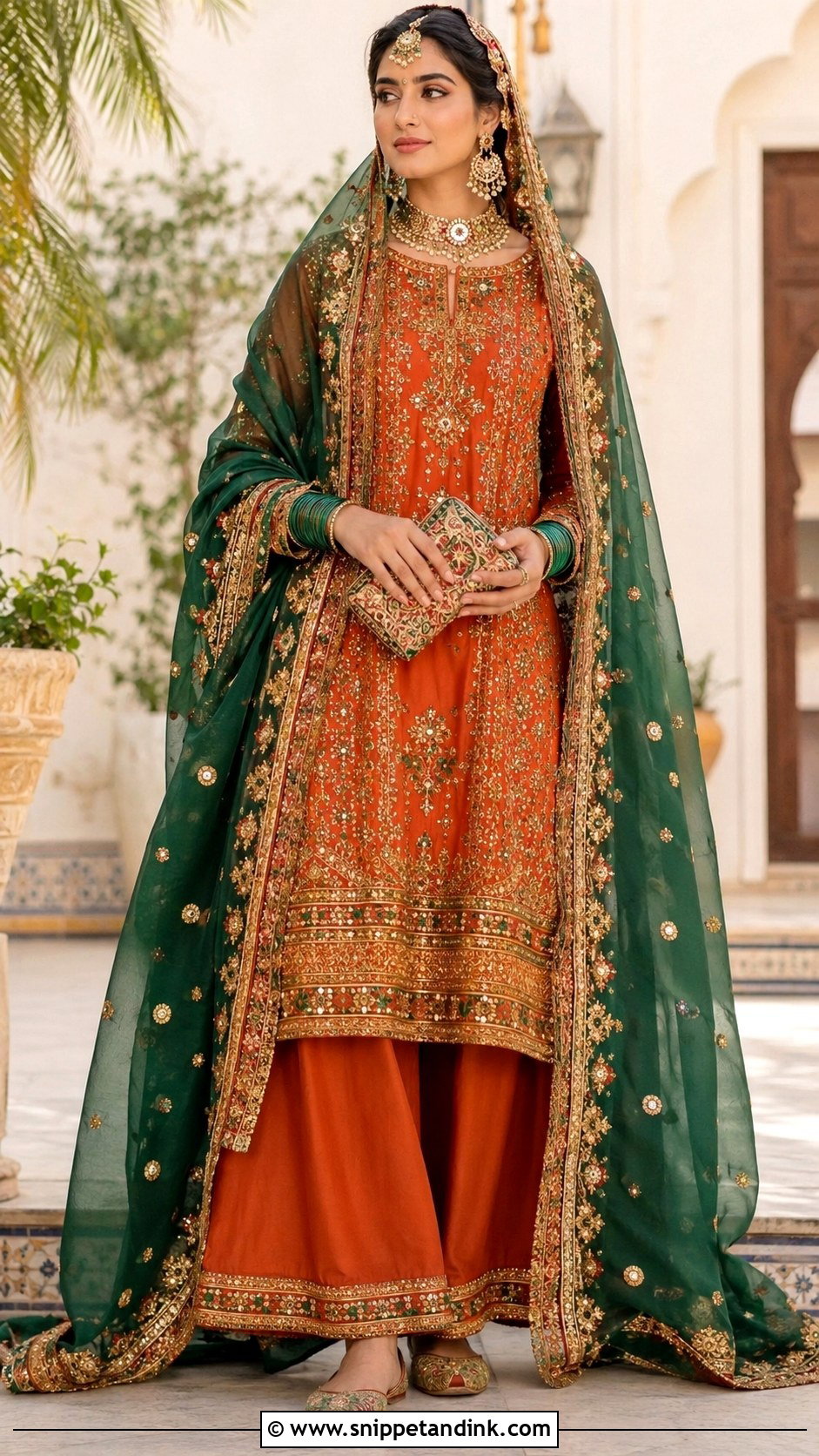
A saturated orange Balochi bridal dress comes alive in daylight. Choose burnt orange, saffron or deep tangerine, since fluorescent shades flatten on camera. Red, green, black, ivory and gold geometric embroidery belongs mainly on the front panel and sleeve cuffs, with a matching shalwar and a deep green sareeg for contrast. Antique-gold jewelry, green bangles, an embroidered clutch and flats repeating the dress colors complete it. Warm peach makeup and a brick-red lip suit the fabric without piling more orange around the face. If the shirt is heavily beaded, I’d keep the earrings light; a heavy shirt plus heavy earrings gets uncomfortable within a couple of hours.
10. Purple Balochi Bridal Dress
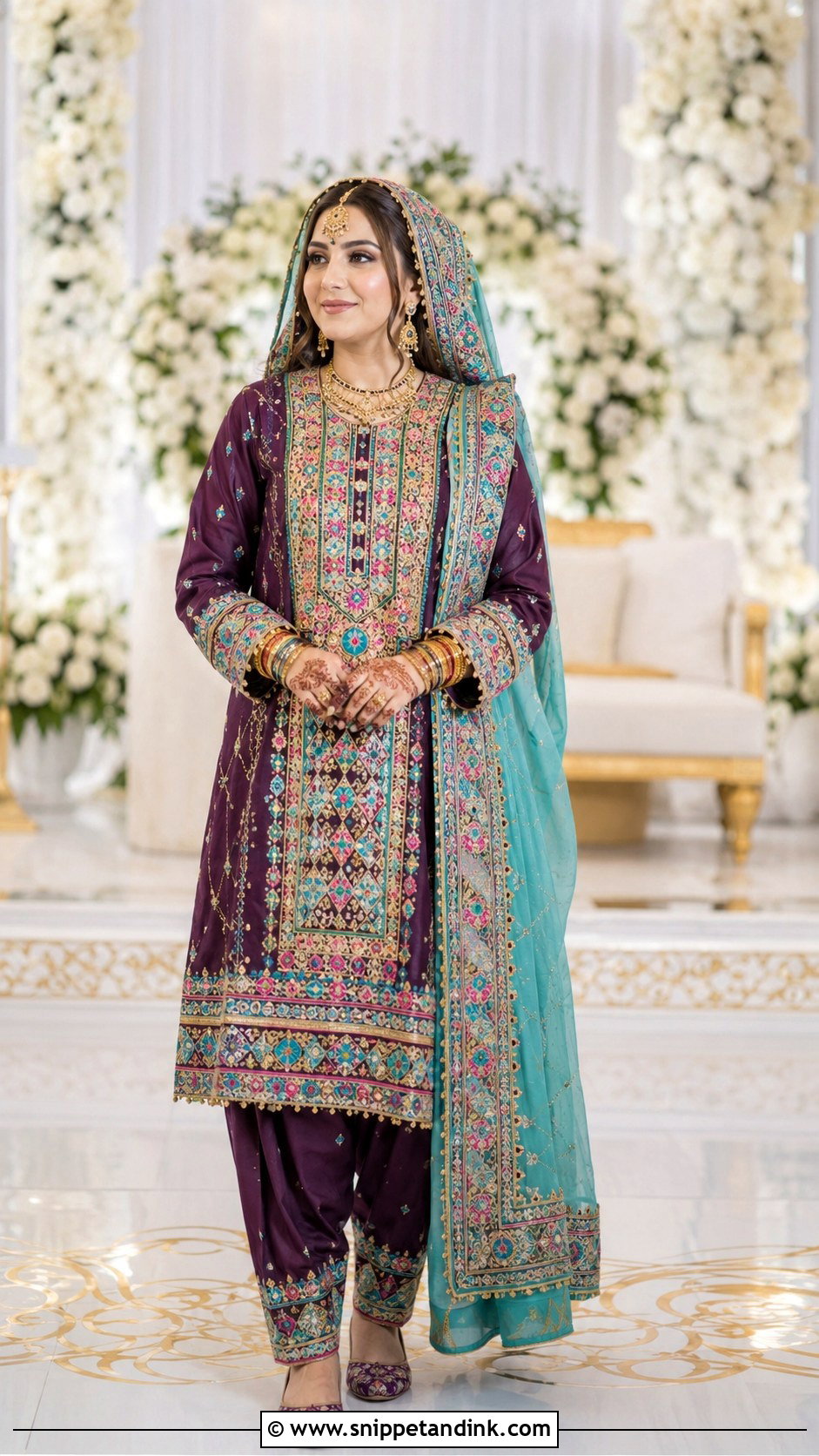
Purple sits outside the red family and still looks regal. Plum, aubergine and deep violet all carry gold, turquoise, pink, green and ivory threadwork well. Balance the decoration across chest, sleeves, pockets and hem, then pair a loose purple shalwar with a turquoise or magenta head covering. The sareeg border should repeat the shirt’s main motif so it reads as one handcrafted set. Gold-toned jewelry, coordinated bangles, purple embroidered flats, soft plum eyes and a neutral rose lip finish it. Watch the number of accent colors: a controlled palette makes the workmanship look more valuable, while five unrelated accents just look busy.
11. Multicolor Hapt-Rang Balochi Bridal Dress
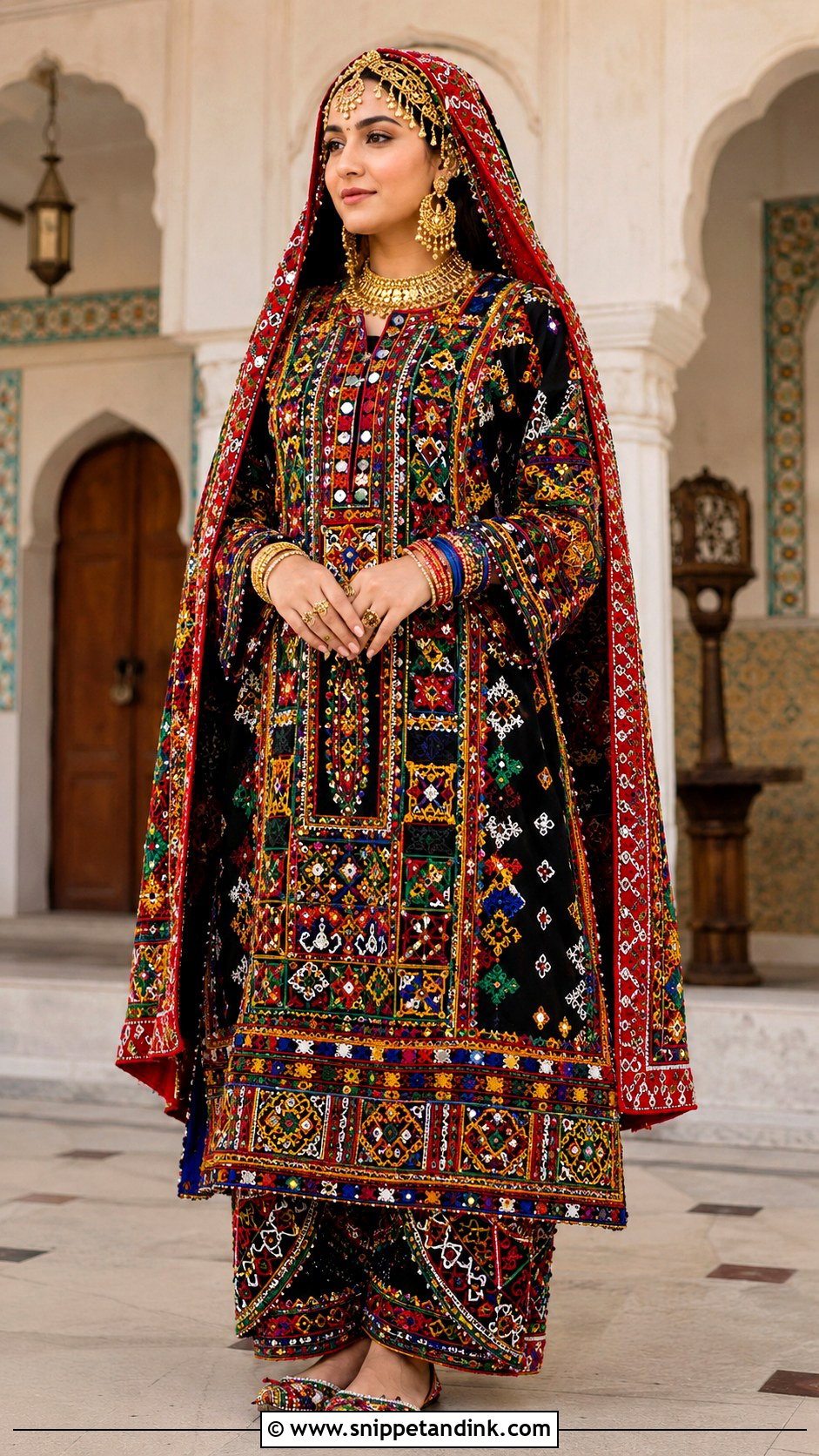
Hapt-rang means seven colors, and it’s one of the recognizable Balochi embroidery patterns, built on many thread shades working together. The base decides whether those colors read. Black, maroon, navy or ivory all let multiple threads stay visible. Cover the central panel and sleeves with carefully arranged geometric motifs rather than scattering color, then choose a sareeg that picks out one dominant shade, such as red or green, so the eye has somewhere to rest. Jewelry in a single metal tone keeps it from getting chaotic, and embroidered flats with a simple clutch are all you need. Pick this one when the needlework itself should be the statement.
12. Mirror Work Balochi Bridal Dress
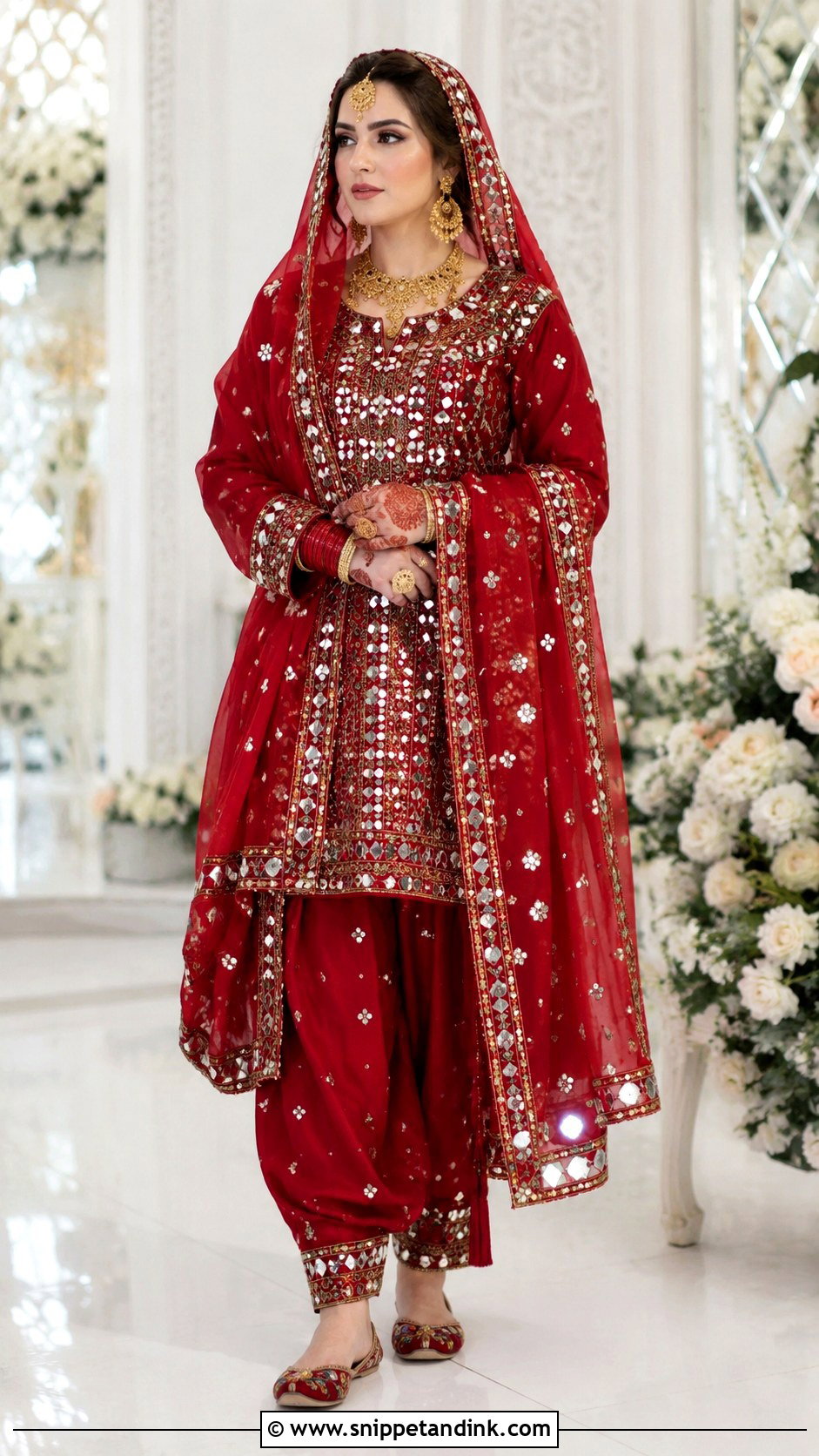
Mirror work makes a Balochi outfit glow without sequins, and it has long been part of Balochi decorative embroidery on clothing and accessories alike. On a red, green or royal blue shirt, small mirrors held inside geometric embroidered frames look controlled when they’re concentrated on the chest panel, cuffs and border. A matching shalwar and a sareeg with a lighter mirror-work edge keep the shine balanced. Gold or silver, the jewelry should match the thread around the mirrors. My comfort check is to turn the panel over. Every mirror should be firmly secured and the backing covered with soft lining, or the edges scratch through a long day.
13. Gold Thread Balochi Bridal Dress
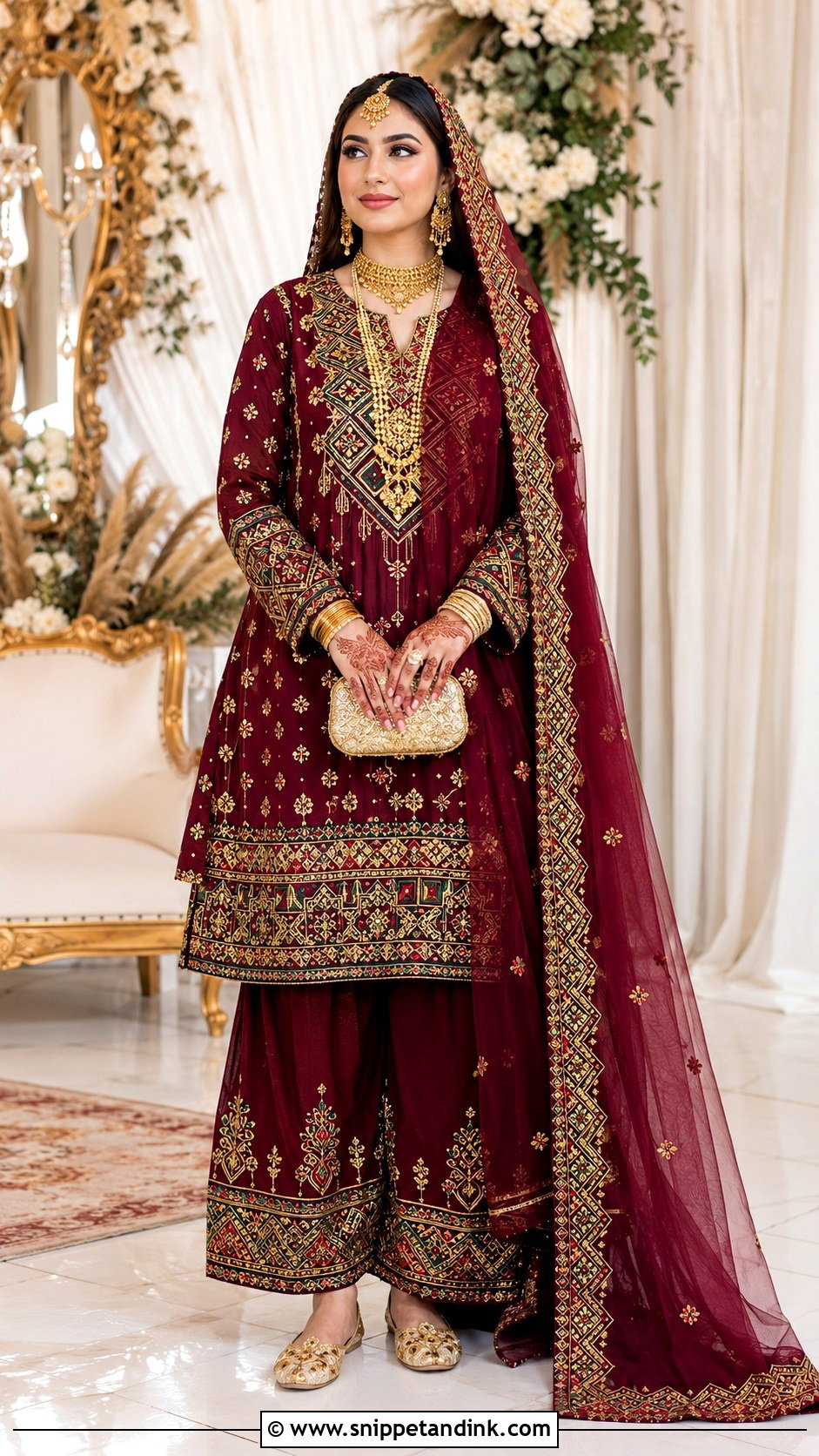
Gold thread is heavy, and that’s the first thing to know before you commission it. Start with a deep red, maroon, emerald, or navy shirt that gives the metallic work enough contrast, and mix the gold with restrained touches of colored thread so the geometric motifs keep their Balochi character. Pair it with a matching wide shalwar and a head covering with an embroidered gold border. Gold earrings, layered necklaces, bangles and an embellished clutch continue the theme; pick pieces with clean shapes so they don’t clash with the needlework. Comfortable gold or neutral flats go under the trousers. Ask for a soft lining behind densely worked areas, because metallic thread stiffens fabric and rubs the skin.
14. Silver Thread Balochi Bridal Dress
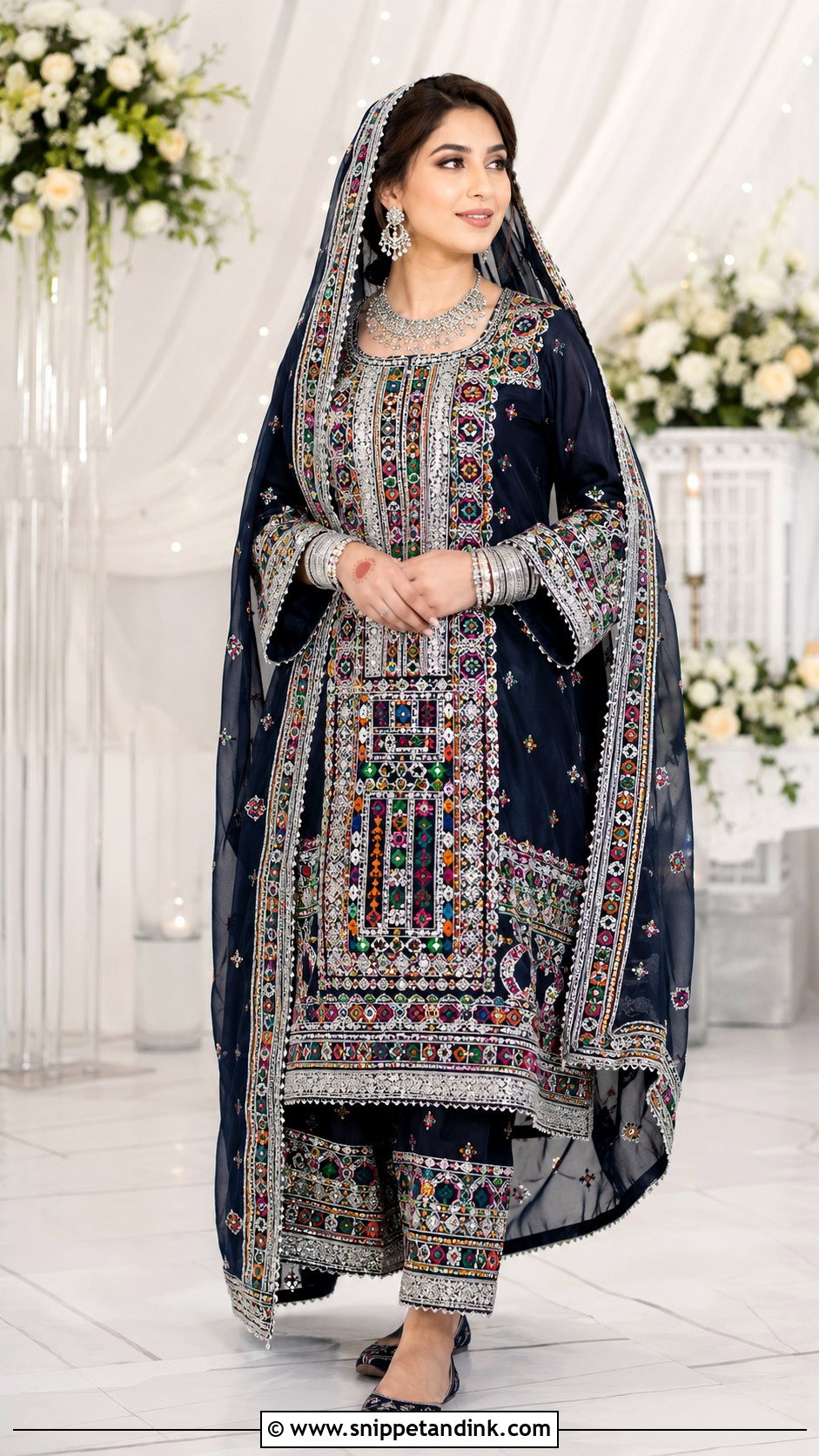
Silver reads cooler and brighter than gold, and it suits navy, charcoal, cool green, violet or ivory. Use it to outline colorful geometric motifs across the front panel, sleeves and hem; a few small beads add texture, but the embroidery stays the feature. Pair the shirt with a matching shalwar and a sareeg finished in a neat silver border, then silver-toned earrings, a statement necklace, bangles and embroidered flats. Cool rose makeup keeps it from looking icy. I always view silver thread samples against the actual fabric in daylight and under indoor lights before approving the design, since reflective silver shifts a lot between the two and again in photographs.
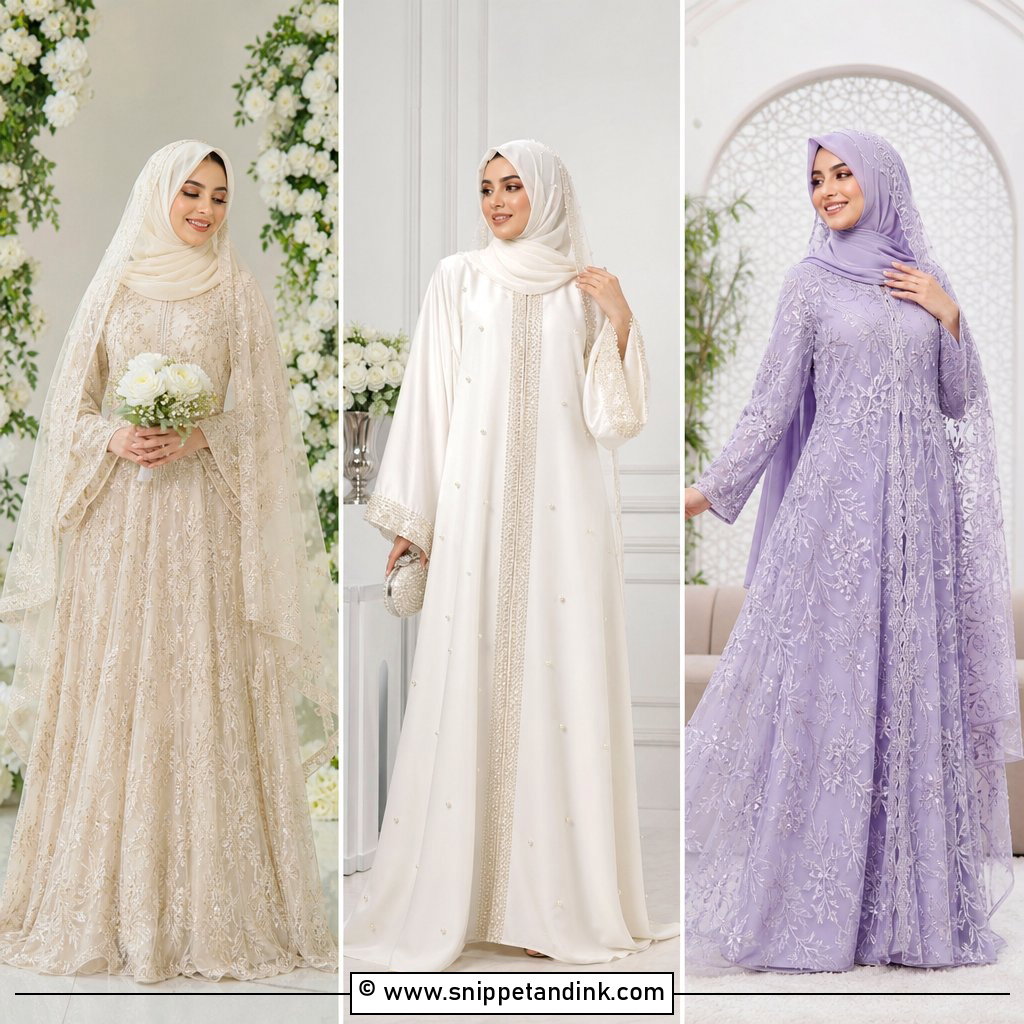
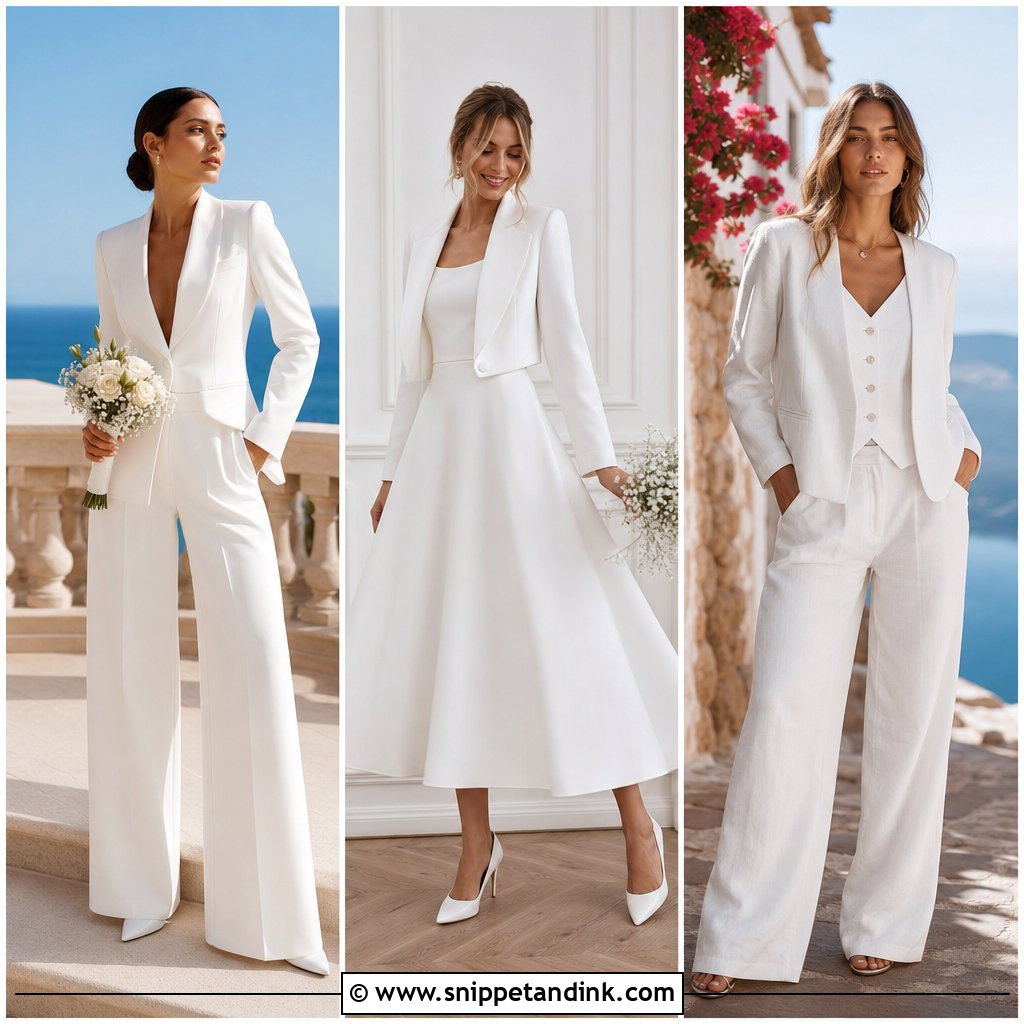
15. Balochi Bridal Frock
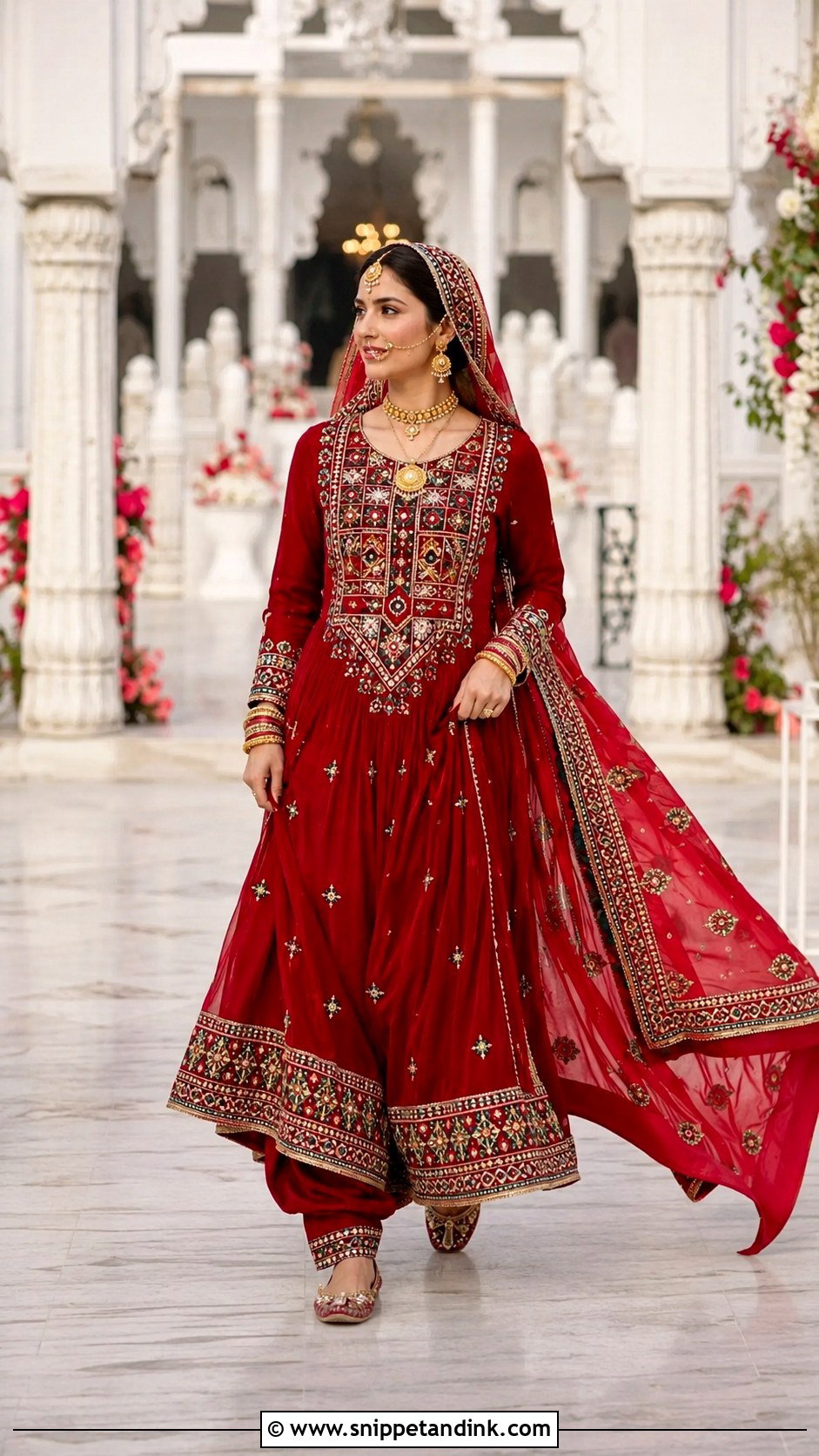
The frock takes Balochi embroidery into a flowing, contemporary cut. A fitted or gently shaped bodice opening into a comfortable A-line skirt works; an overly tight waist doesn’t, because embroidered panels lose their flat geometry when strained. Place the needlework on the neckline, central panel, sleeves and lower border, which is how embroidered yokes and sleeves are usually adapted to frock shapes. Straight or loose trousers go underneath depending on the length, with an embroidered sareeg or dupatta on top. Bridal flats, gold-toned jewelry and a compact bag finish it. Plan motif placement with the artisan, since a pattern drawn for a straight shirt panel has to be redrawn with care for a curved bodice.
16. Balochi Bridal Lehenga
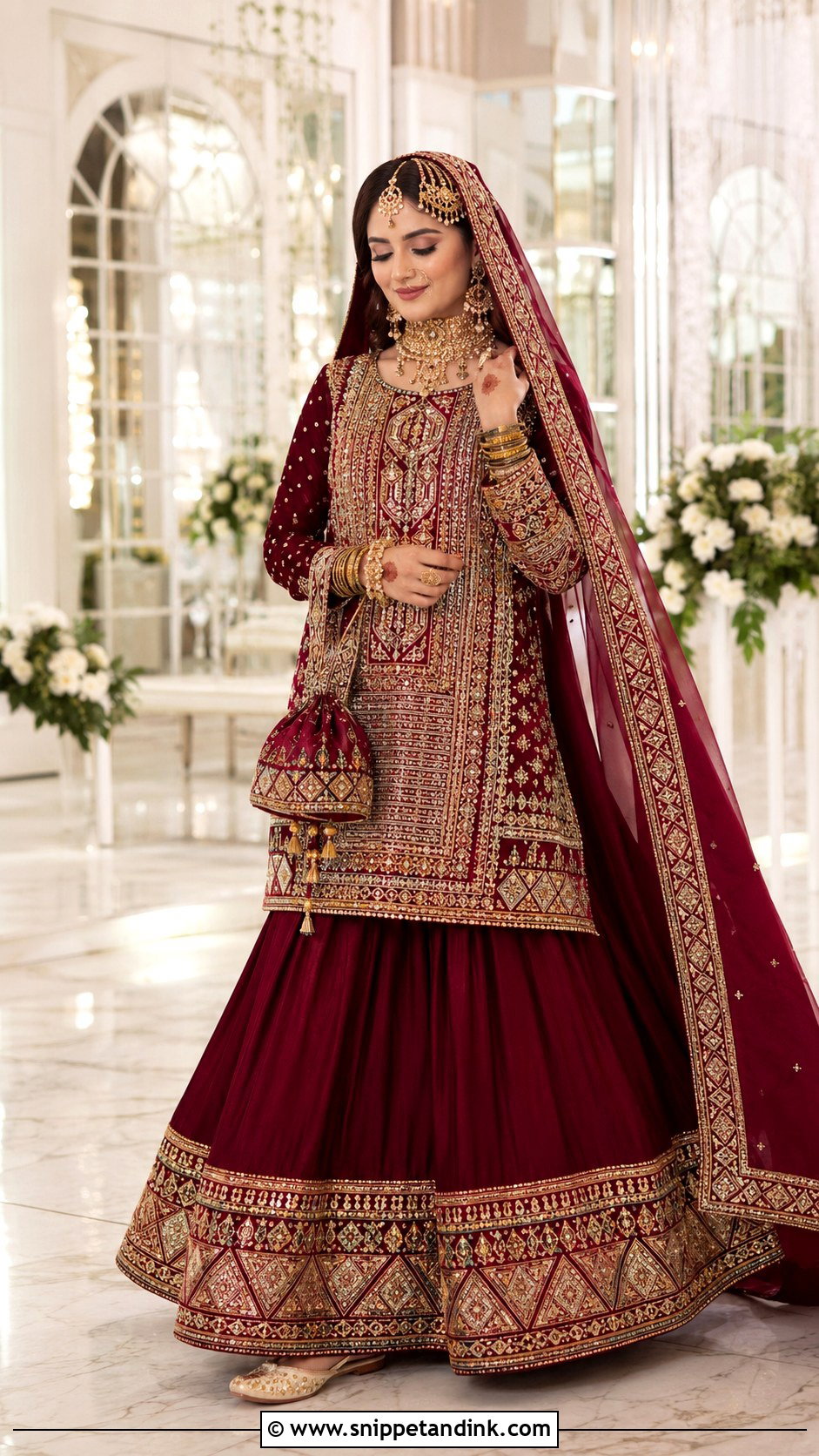
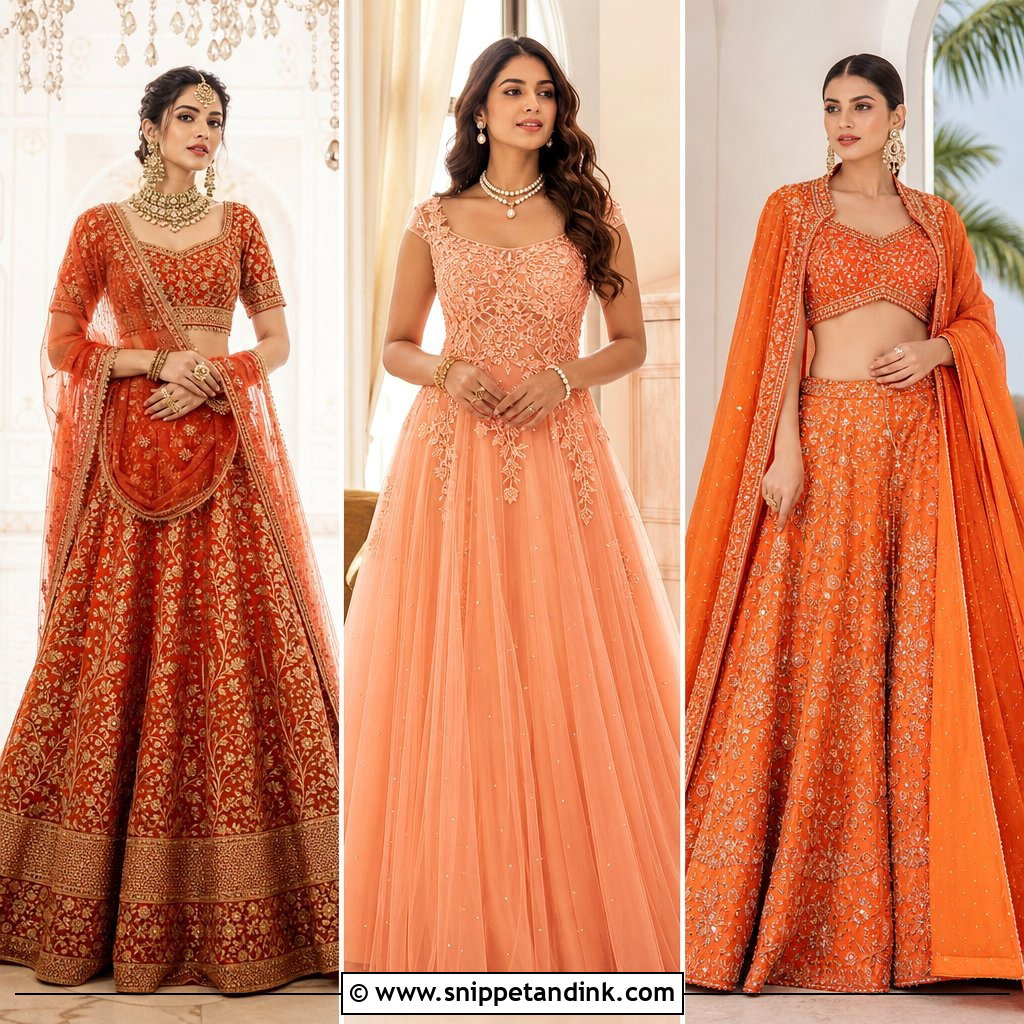
This is a fusion look, and I’d present it as one. Pair a full bridal lehenga with a long or hip-length Balochi embroidered top, putting broad geometric borders near the skirt hem and denser needlework on the chest and sleeves. Keep one base color across both pieces, whether red, maroon, green or navy, so they belong together. A coordinated dupatta with embroidered edging goes over the head and shoulder. Traditional jewelry, stacked bangles, a small embroidered bag and stable low heels or flats complete it. A lehenga isn’t the standard form of traditional Balochi bridal dress, so involving a knowledgeable artisan helps the embroidery keep its integrity on an unfamiliar shape.
17. Balochi Bridal Sharara
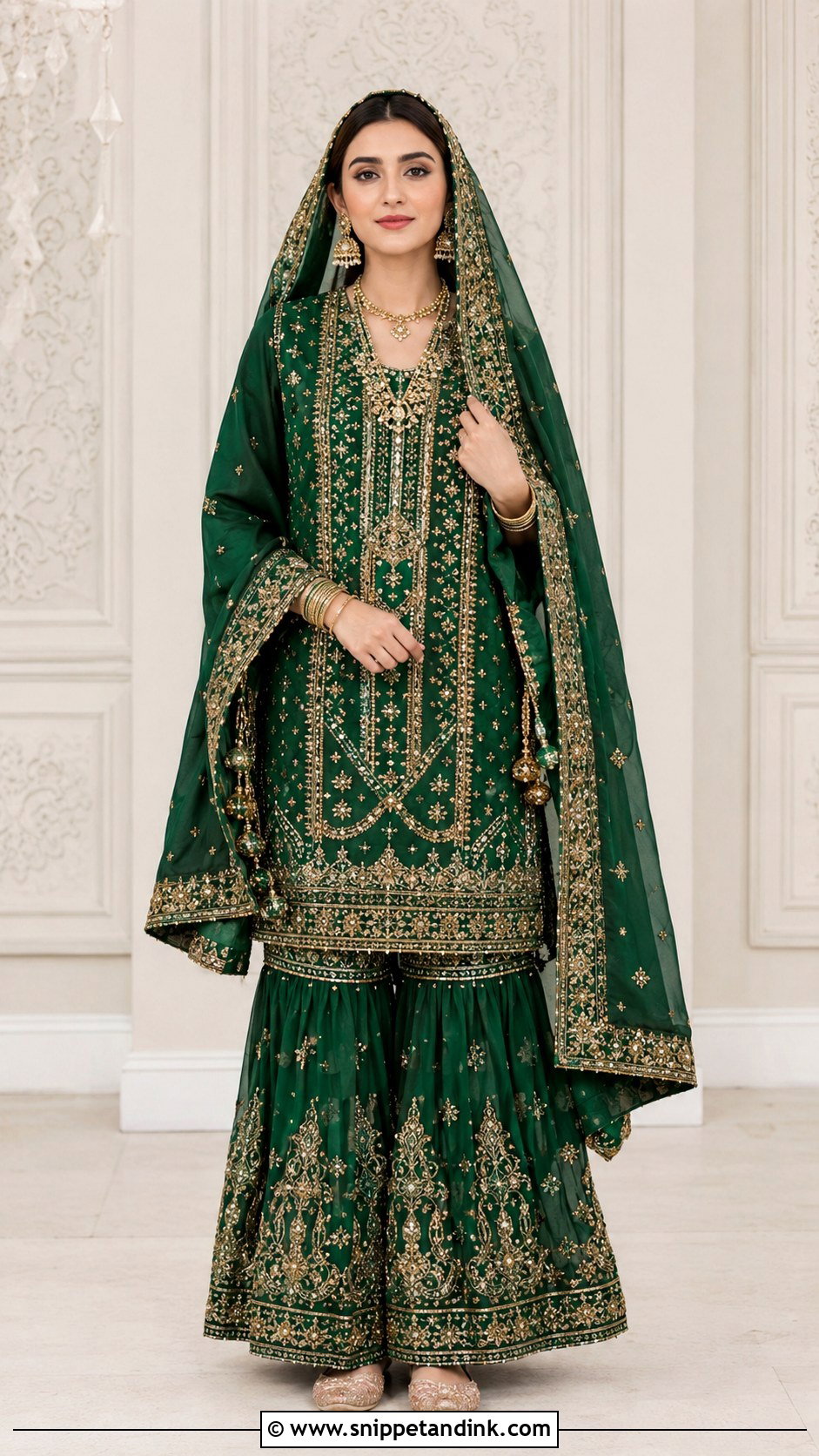
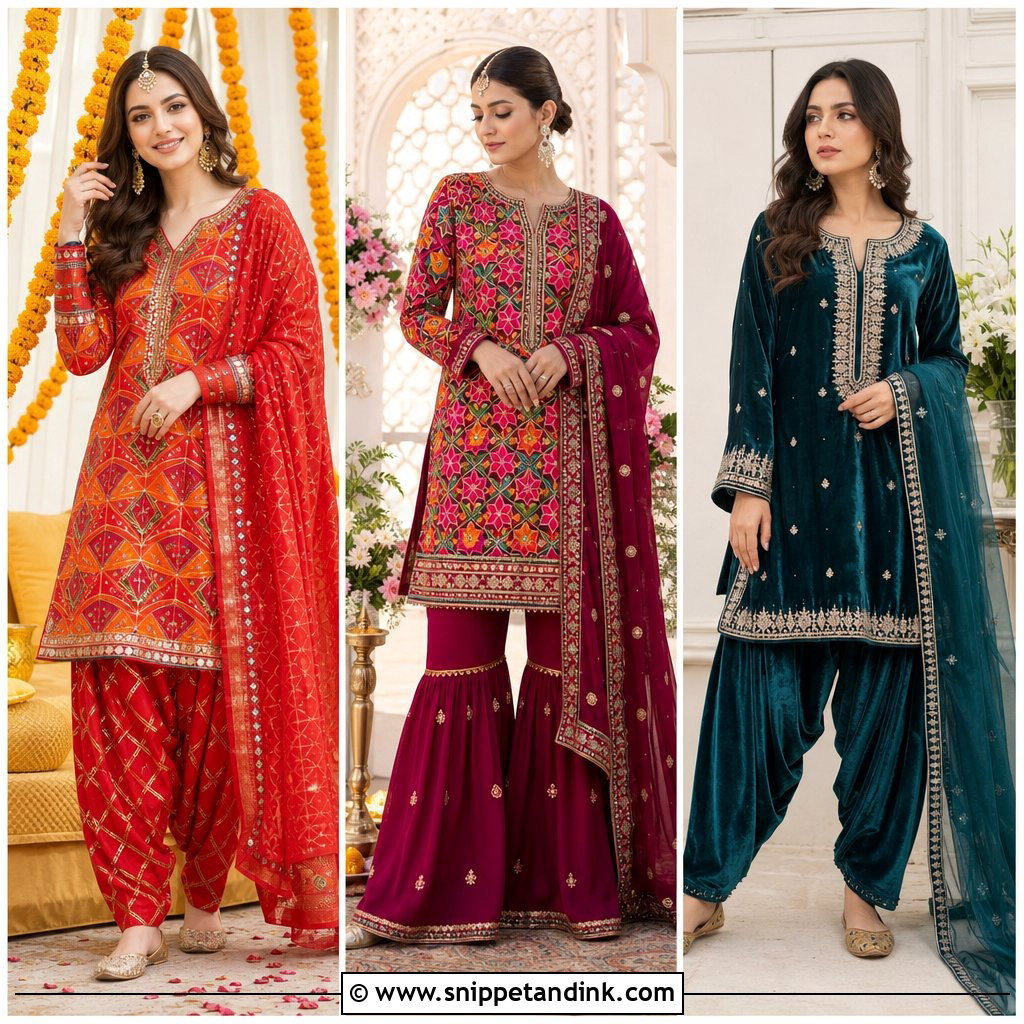
A sharara puts the movement in the trousers while the embroidered shirt stays the centerpiece. A knee-length or slightly longer shirt with geometric handwork across the front, sleeves and side panels sits over wide trousers that flare below the knee and carry a coordinated embroidered border. Rich red, emerald, plum or navy keeps this fusion outfit formal enough for the bride. Add a matching dupatta or sareeg with a detailed edge, gold jewelry, bangles and low embellished shoes. I ask for lighter work around the knee seams so the fabric still folds when you sit on the floor or kneel. Repeat the same motifs and colors across all three pieces.
18. Balochi Bridal Gharara
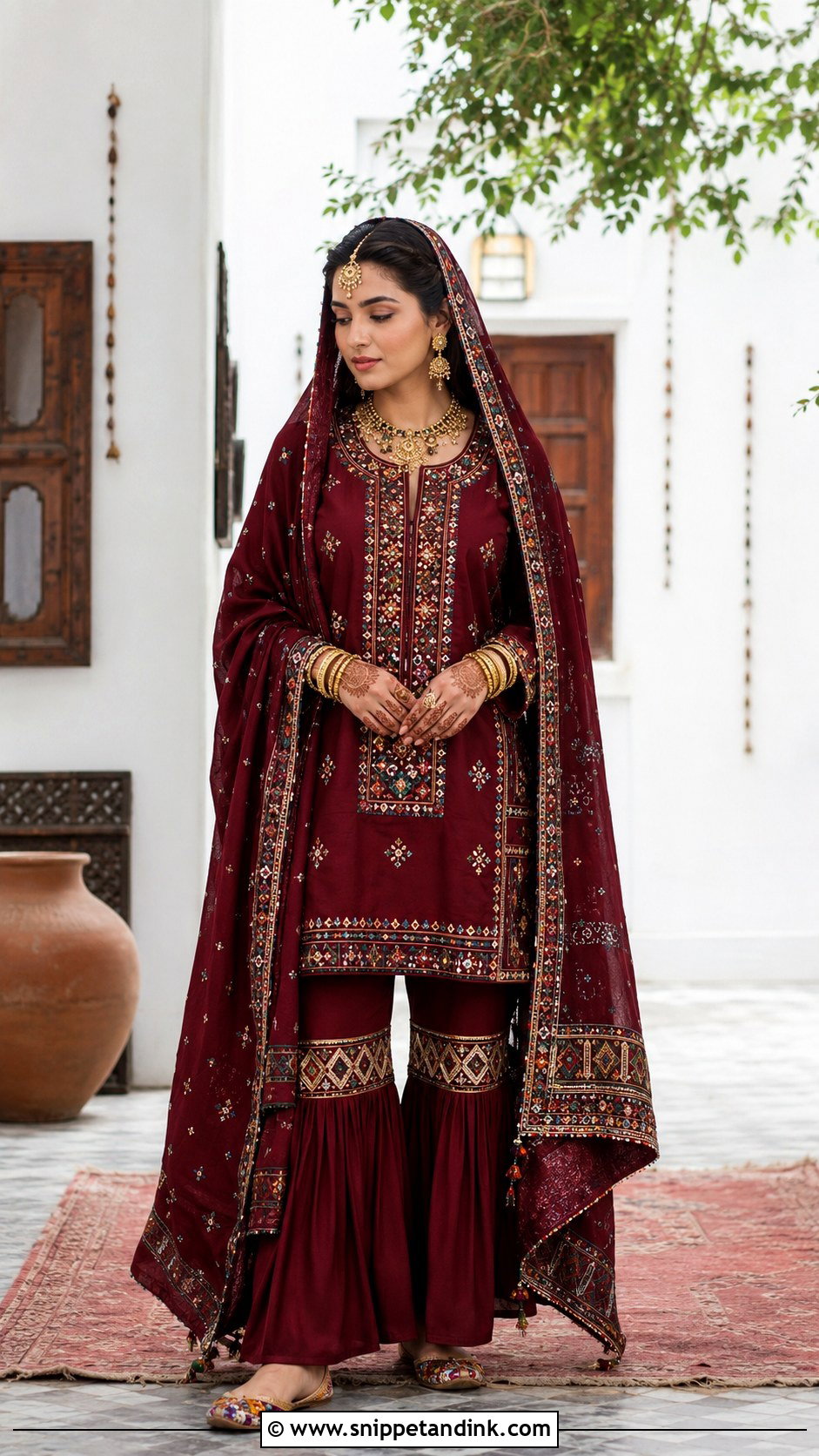
A gharara-inspired Balochi bridal dress is more structured than a sharara: fitted through the upper leg, then flaring dramatically from the knee seam. Start with a long embroidered shirt falling above or near the knee, and run Balochi embroidery along the shirt panel, cuffs, gharara border and decorative knee band. Maroon with antique gold feels classic; royal blue with red and gold is brighter. Drape the head covering over one shoulder so both the neckline and trouser detail show. Traditional jewelry, coordinated bangles and flat or low-heeled shoes finish it. The knee seam has to be measured on you, standing and sitting. Too high or too low, the flare restricts walking and throws the proportions off.
19. Balochi Bridal Dress With Sareeg
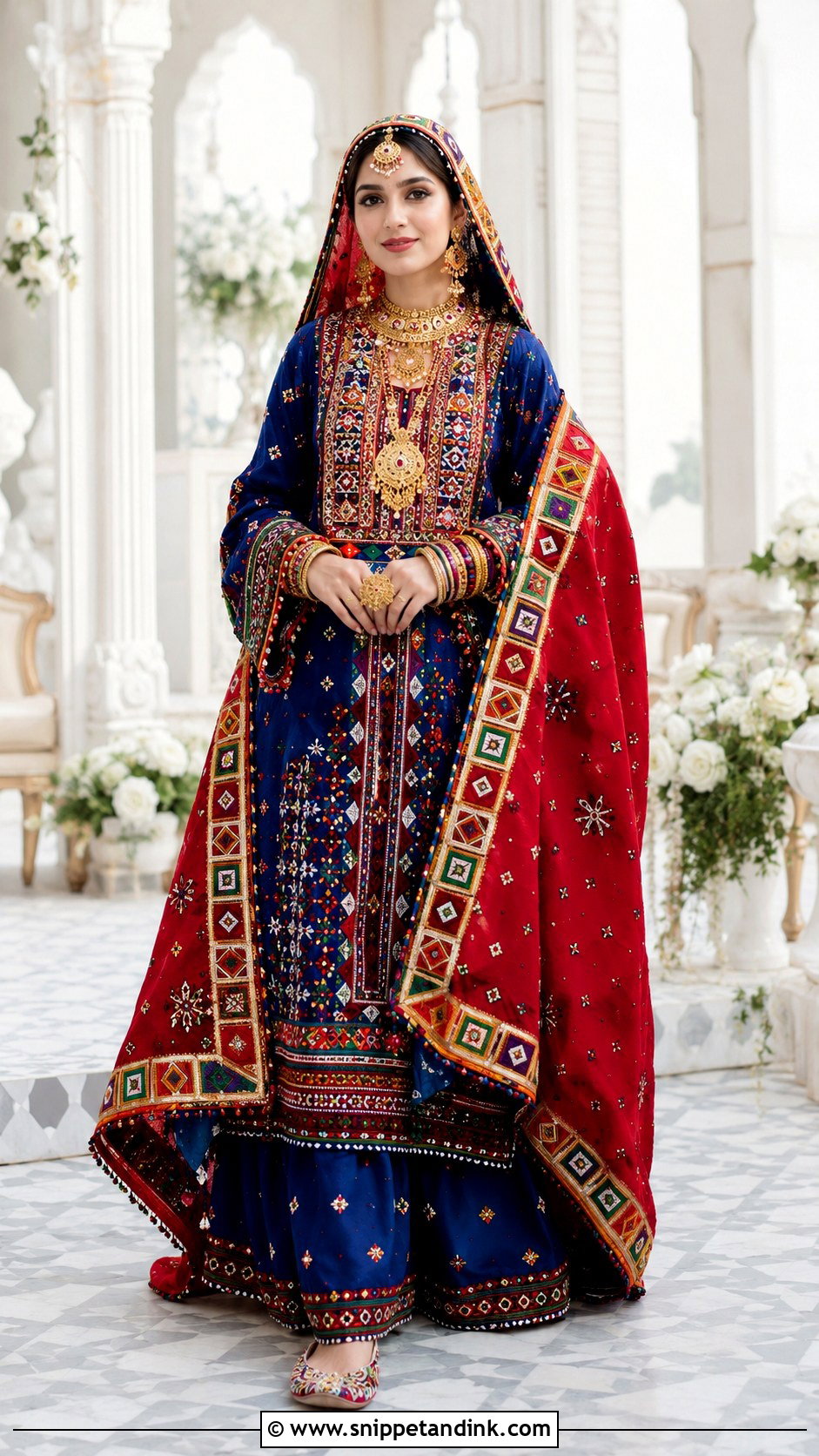
The head covering shapes the whole impression. A sareeg is traditionally worn with the long shirt and trousers to complete a three-part ensemble, and it should repeat either the base color or the strongest accent in the dress. A wide geometric border looks ceremonial; scattered embroidery keeps the fabric lighter and easier to drape. If the shirt is heavily worked, a lighter covering avoids doubling every dense motif and keeps weight off your head. I secure it with small pins hidden under the hair at the crown and at the shoulder, so you can turn your head without it sliding. It should frame the embroidery, jewelry and makeup, never bury them.


20. Modern Minimal Balochi Bridal Dress
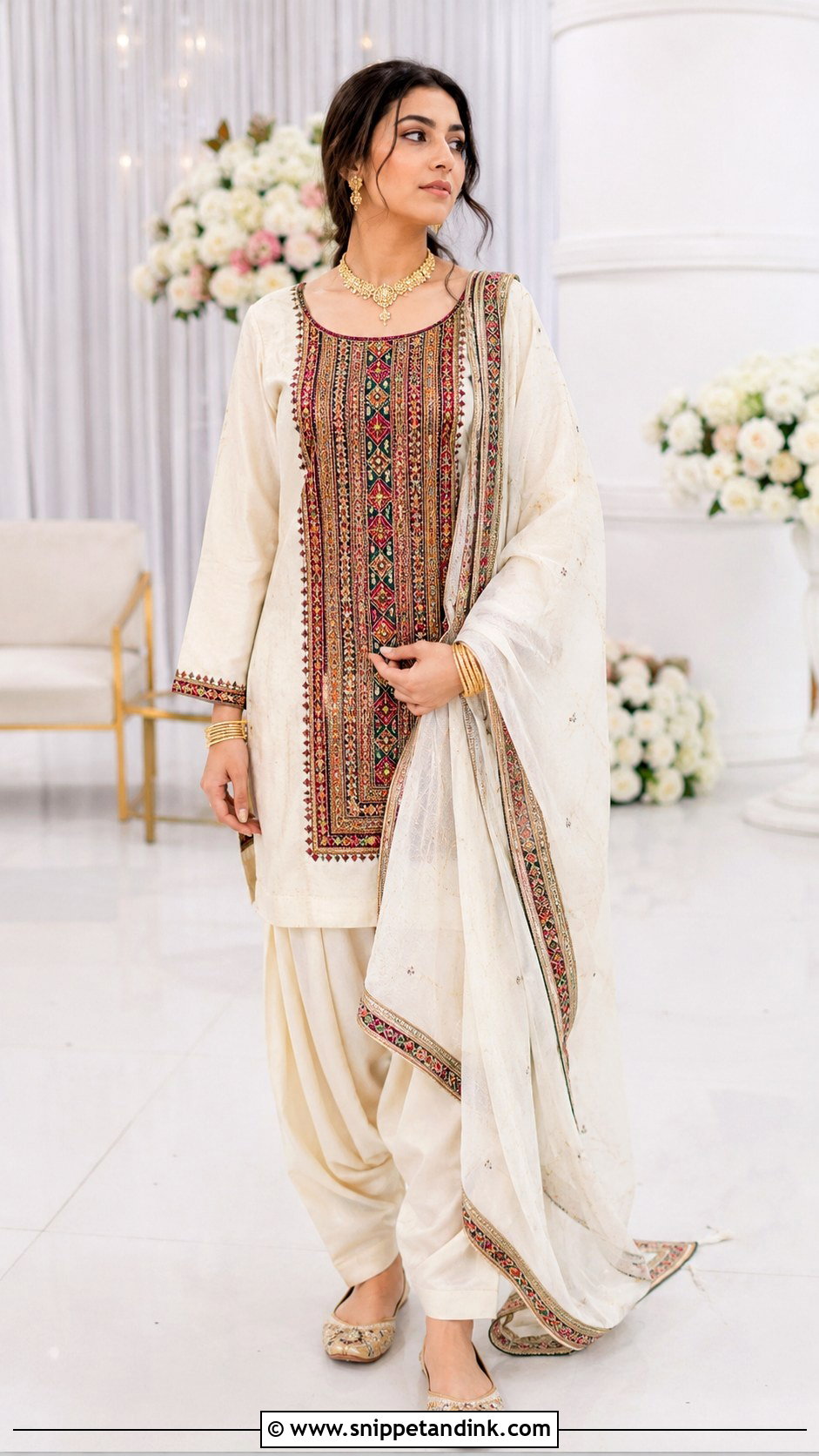
Minimal doesn’t mean plain. An edited palette, lighter fabric and concentrated embroidery can keep a modern dress unmistakably Balochi. Choose an ivory, blush, muted green or dusty blue shirt with one detailed central panel and coordinated sleeve borders, a loose shalwar and a lightweight sareeg with a narrow embroidered edge. Some contemporary Balochi clothing pairs traditional needlework with slimmer trousers or updated cuts, and the dress keeps evolving. One statement necklace, small earrings, clean bangles and comfortable flats complete it. Where I’d hold firm is on real workmanship. A printed imitation of the embroidery saves money but loses the reason the dress matters.
Heavy Embroidery Over Several Long Functions
Wedding celebrations often stretch across several functions, and a densely embroidered shirt, metallic thread and full trousers add up to real weight on the shoulders. Most of my styling decisions for these brides come down to keeping them comfortable for hours.
- Ask for a soft cotton lining behind every heavily worked panel. It stops metallic thread and mirror edges rubbing and absorbs sweat before it reaches the embroidery.
- Wear the heaviest outfit for the shortest function, and save lighter pieces for long dinners or daytime gatherings in the heat.
- Match the sareeg’s weight to your hairstyle. A heavy covering on a loose style slides all day, while a firm bun at the crown gives the pins something to grip.
- Have one helper who knows the outfit. Full trousers and a long shirt need a moment of arranging before you sit, and that saves a lot of creasing in photos.
Storing a Balochi Dress So It Can Be Passed Down
Many of these dresses become family pieces, and hand embroidery lasts generations if it’s stored well. After the wedding, air the outfit for a day out of direct sun before putting it away, and spot-clean marks rather than soaking the whole garment, since multicolored threads aren’t always colorfast. For a full clean, use a dry cleaner who handles hand embroidery and mirror work, and ask them to test a hidden area first.
Fold it with acid-free tissue between the layers, wrap it in clean cotton or muslin instead of plastic, and refold along different lines every few months so creases don’t set into the embroidery. Gold and silver zari tarnishes faster in humidity, so a dry cupboard matters even more than a dark one. Keep perfume away from the fabric altogether.
Start the Needlework Months Before the Wedding
A Balochi bridal outfit brings together cultural meaning, skilled handwork, comfort and a palette that makes you feel confident. Red is still powerful, while maroon, green, blue, ivory, pink and multicolor work offer real alternatives. You can keep to the classic long shirt, shalwar and sareeg or plan a fusion silhouette with an artisan. Either way, embroidery quality and coordinated accessories matter more than piling on embellishment. Start early, because genuine hand needlework can take weeks or months. And talk with family members and Balochi embroiderers before the regional details are fixed, so the dress you wear is one your family recognizes as its own.
You'll Like These Ideas:




Leave a Reply