
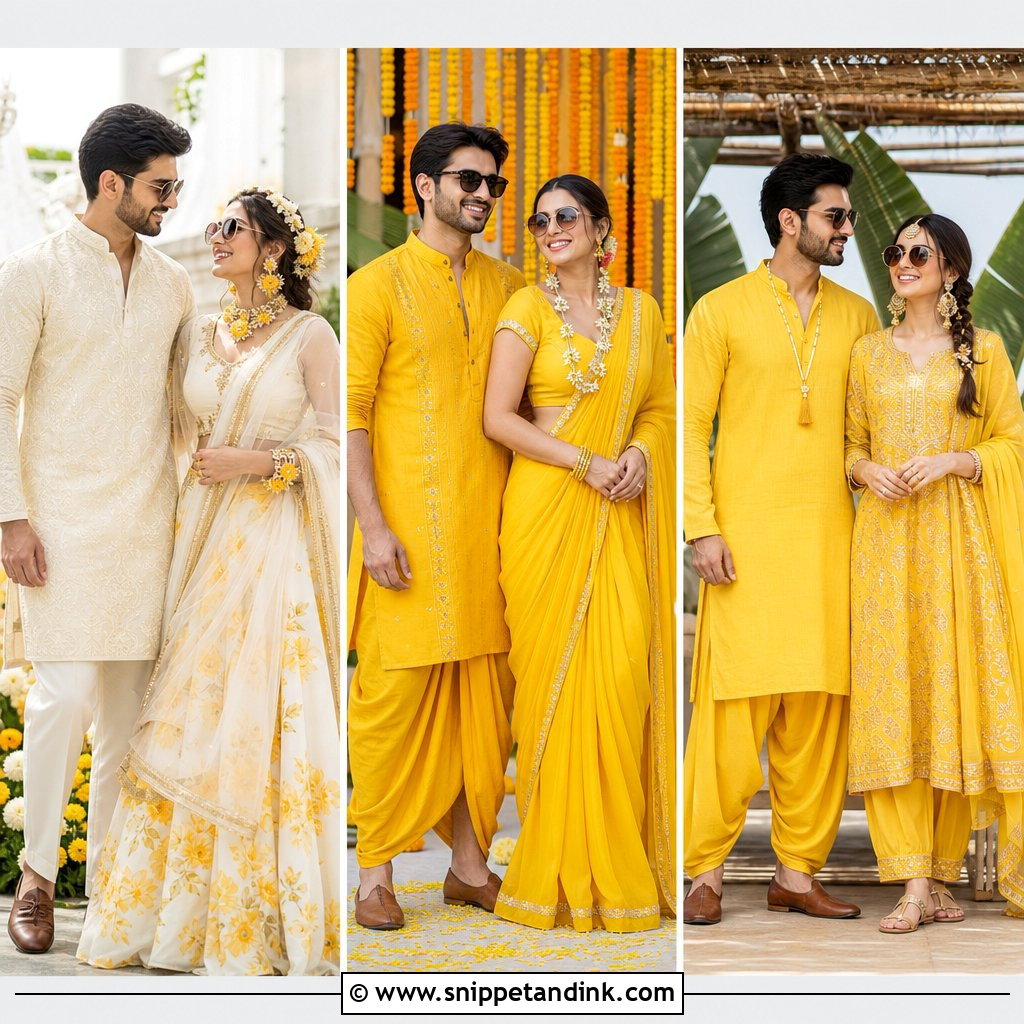
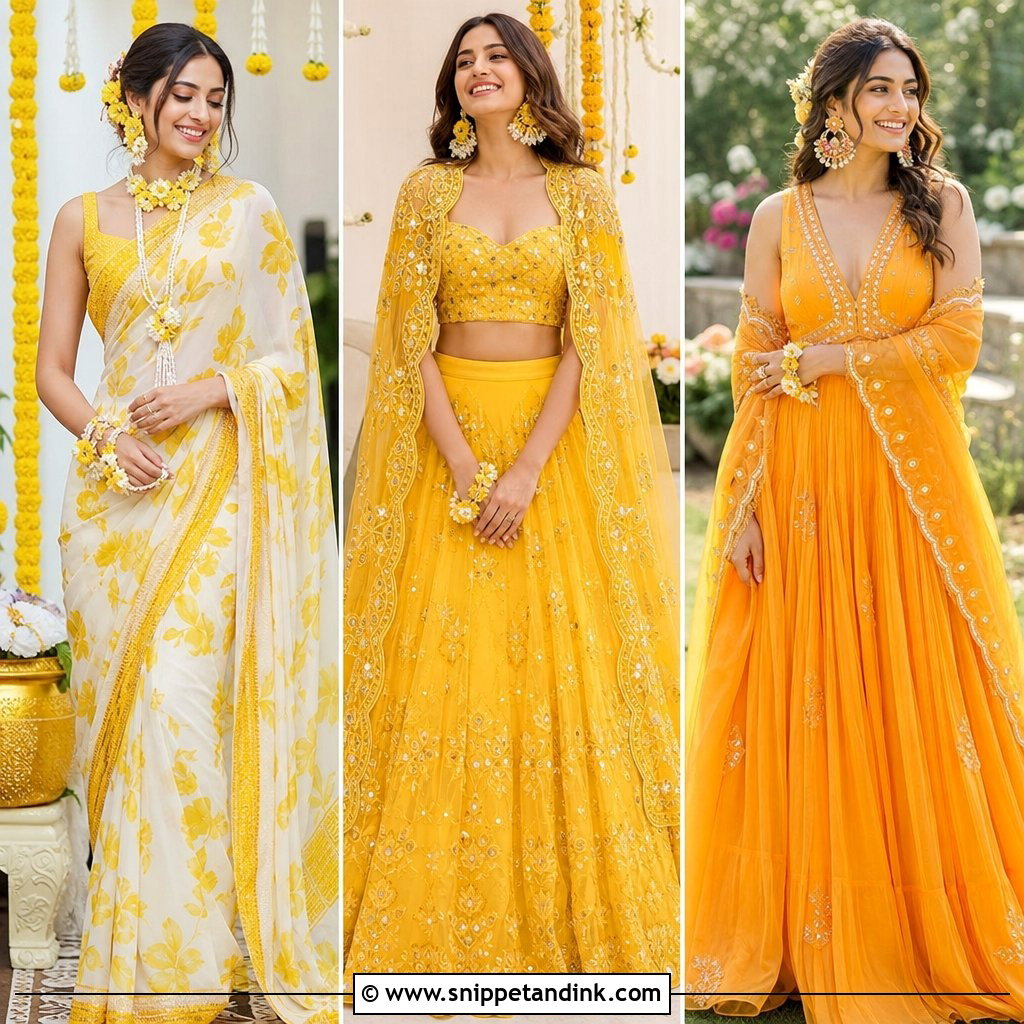
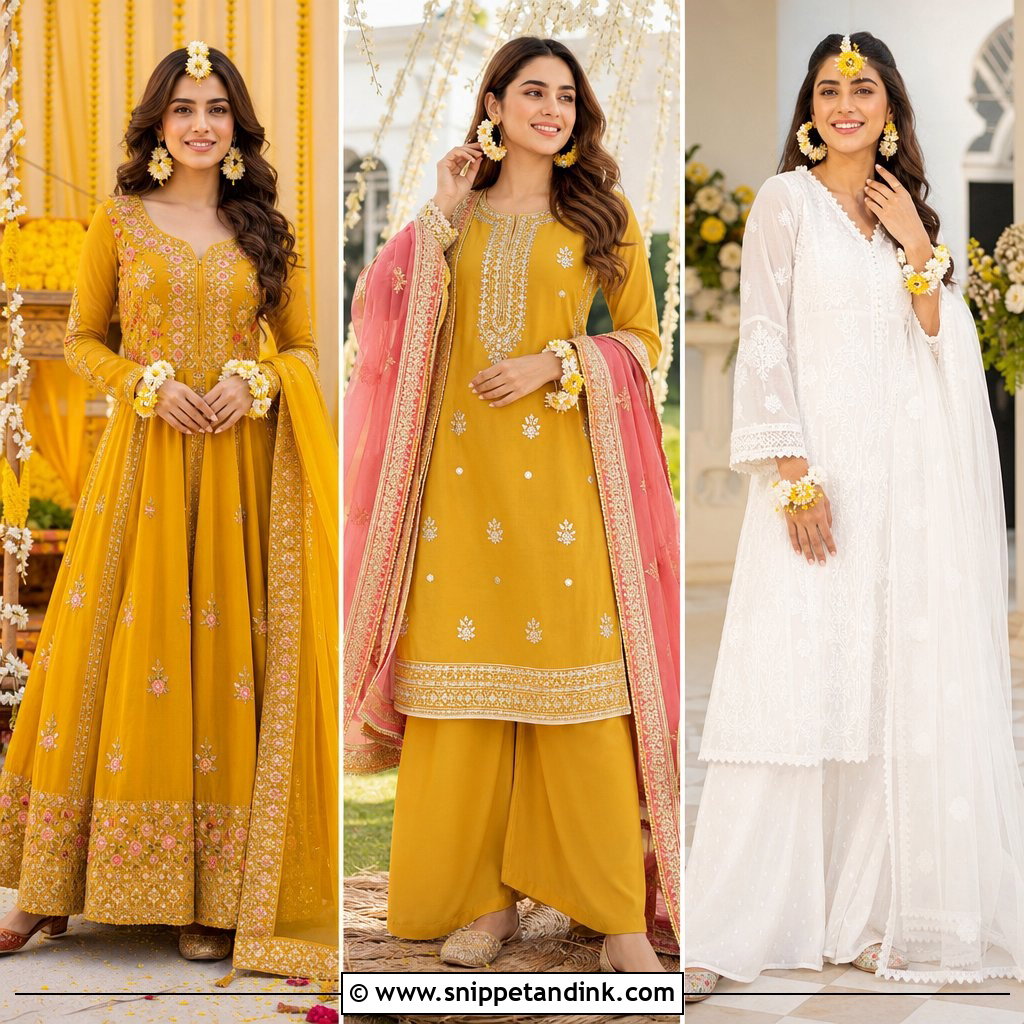
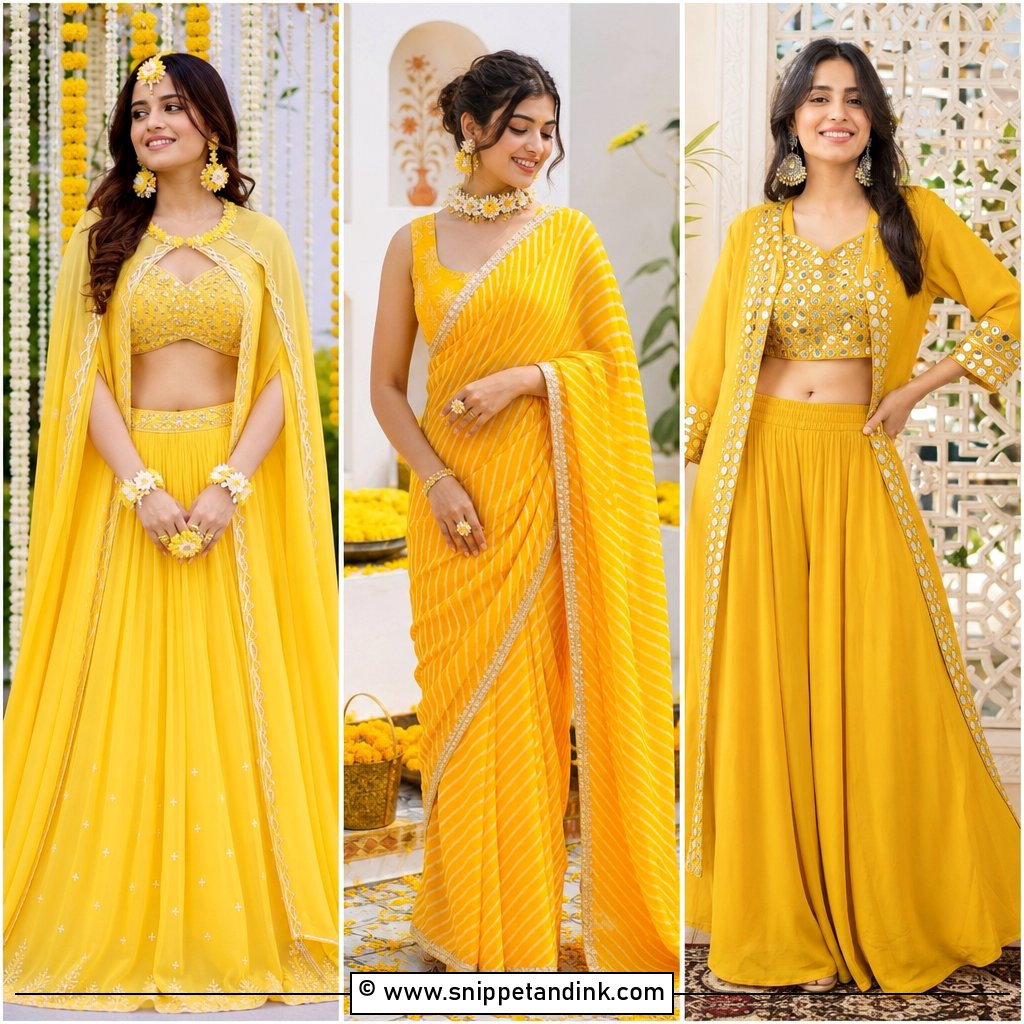
A Mayoon is the one wedding function where the clothes have to survive the ritual itself. Ubtan gets smeared on hands and cheeks, oil goes into the hair, and most of the evening is spent cross-legged on a floor cushion or dancing in a courtyard. Yellow still leads because it hides turmeric and belongs to the ceremony, but marigold, lime, pink and pista green all sit comfortably beside it now. Below are twenty outfits I would actually put a bride, a sister or a guest in, from ghararas and shararas to a plain cotton suit for a small family evening at home. The bride carries the richest embroidery and flower jewelry; everyone else dials it down a step.
Dressing for Turmeric Paste and Floor Seating
Before anyone falls for a color, I ask three questions: will you be sitting on the floor, will ubtan be applied to you, and how long will the evening run? The answers decide the fabric and the cut long before the embroidery does.
Fabric that can take a smear of haldi
Ubtan is mostly turmeric, gram flour and oil, and turmeric is a strong dye. On cotton and lawn it usually lifts with patience. On raw silk, chiffon and anything with gota, it can stay for good. If you are the bride and the paste is coming to you, wear the outfit you can afford to mark, and keep the expensive one for the evening dholki or the mehndi. Prints and deep marigold hide small smudges far better than ivory, white chikankari or pale pista.
Cut for sitting cross-legged
Most of the rasm happens on a low seat or a floor cushion. A gharara needs its knee joint placed right at the knee or it drags when you fold your legs. A lehenga waist sits more comfortably when it is fastened with a drawstring you can loosen, not a hook. Sarees and fitted pishwas skirts are the hardest to manage down there, so practise sitting and standing in them at home.
- Hem floor-length skirts just above the ankle so they do not pick up oil.
- Choose flats or khussa; heels sink into floor mattresses and sheets.
- Line any gota or mirror work that touches bare skin.
- Carry two safety pins for the dupatta, one for each shoulder.
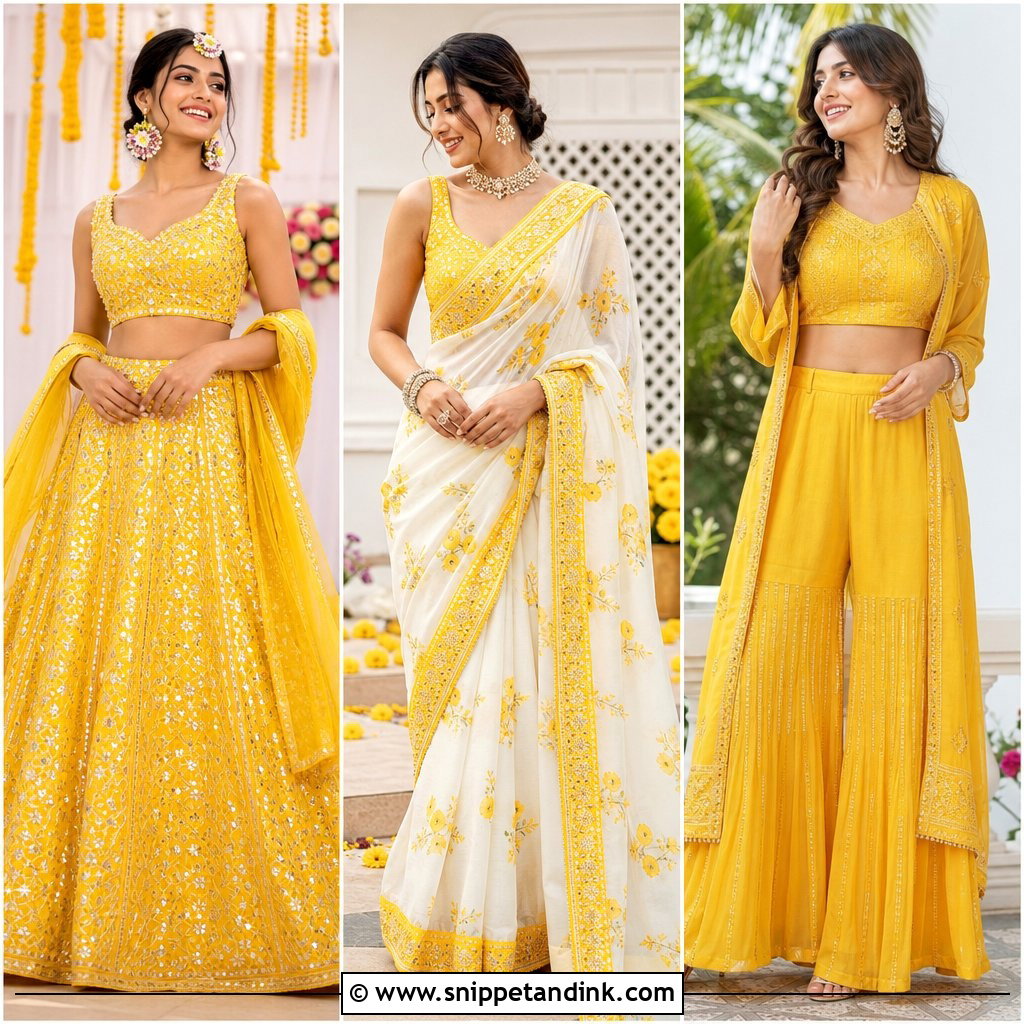
1. Yellow Gharara Mayoon Outfit
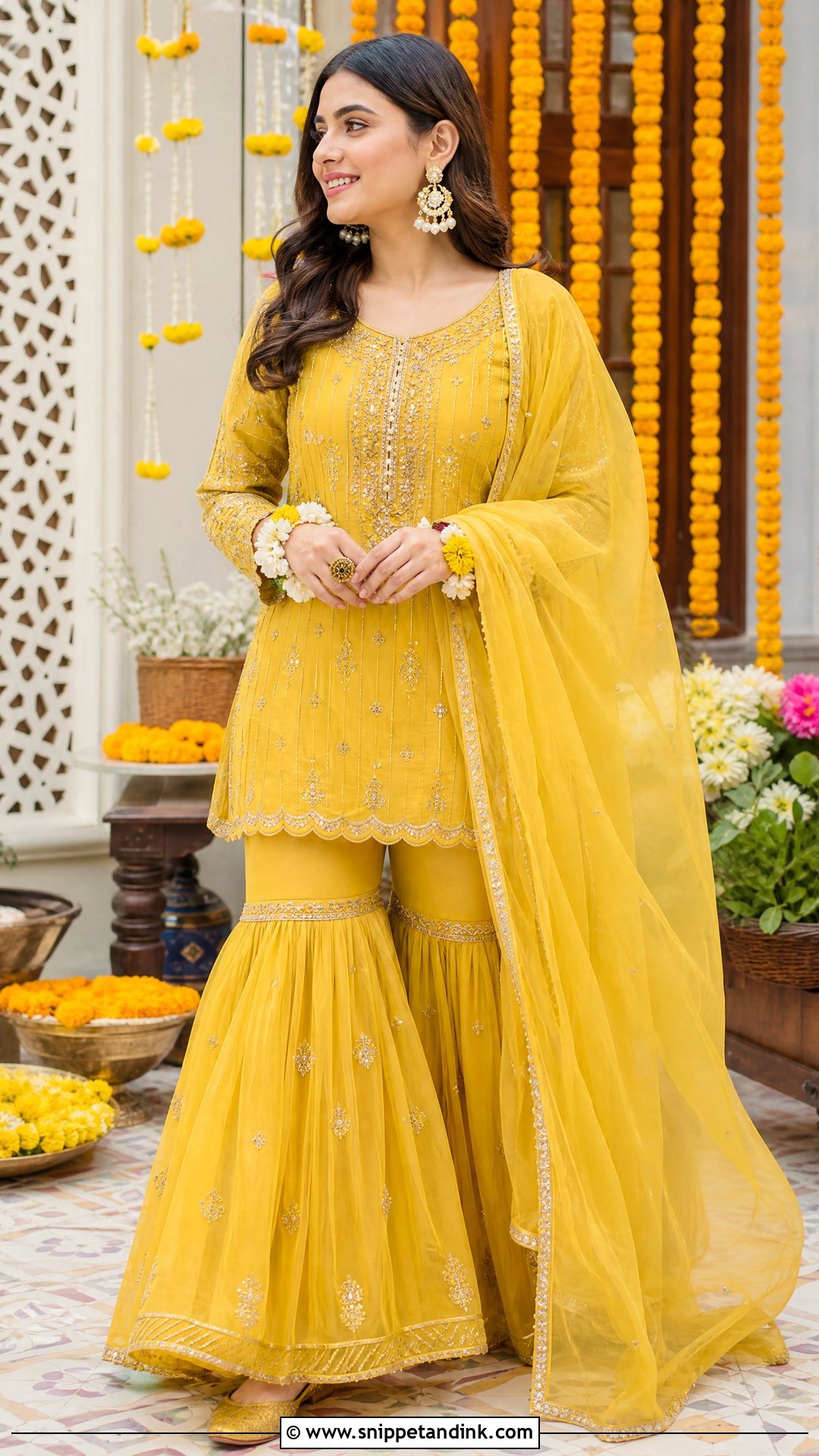
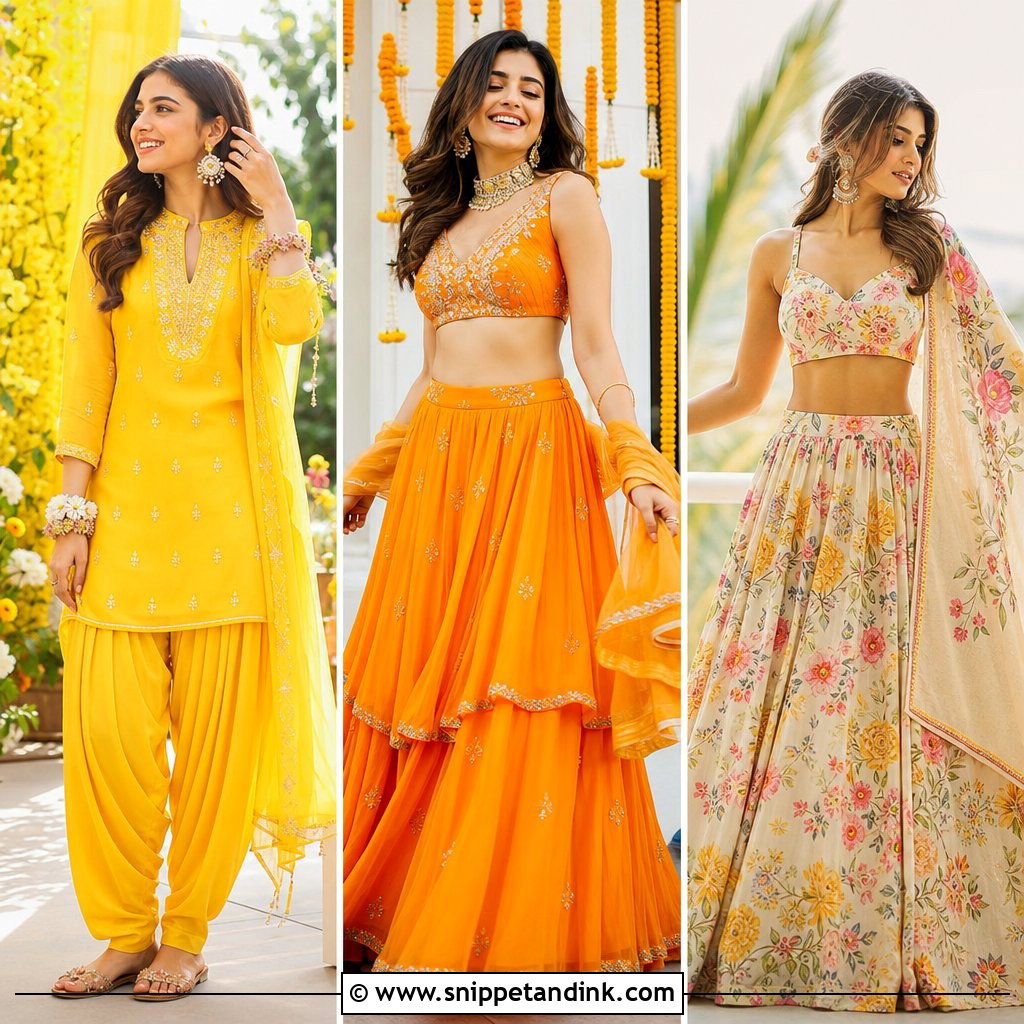
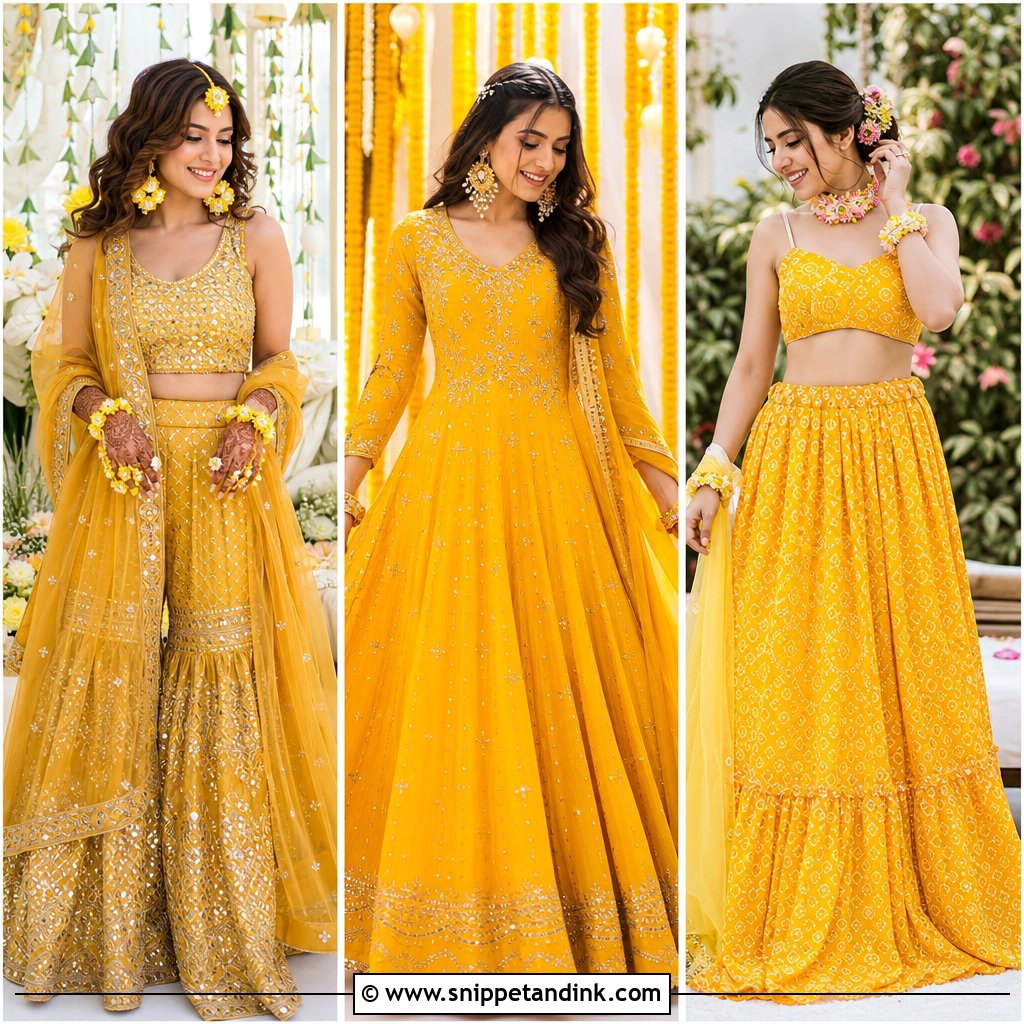
This is the outfit I reach for first when a bride wants the classic Mayoon picture. The gharara has to fit close through the thigh and break into its flare right at the knee joint, so I check that seam while she is sitting, because a joint cut too high pulls when she folds her legs. Keep the short kameez quiet: narrow gota edging or a little threadwork is plenty. An organza dupatta with a thin gold border, gold khussa, pearl jhumkas and fresh flower bracelets finish it. A bride can go deeper into marigold and heavier gota; a guest is better in butter yellow with almost no embellishment.
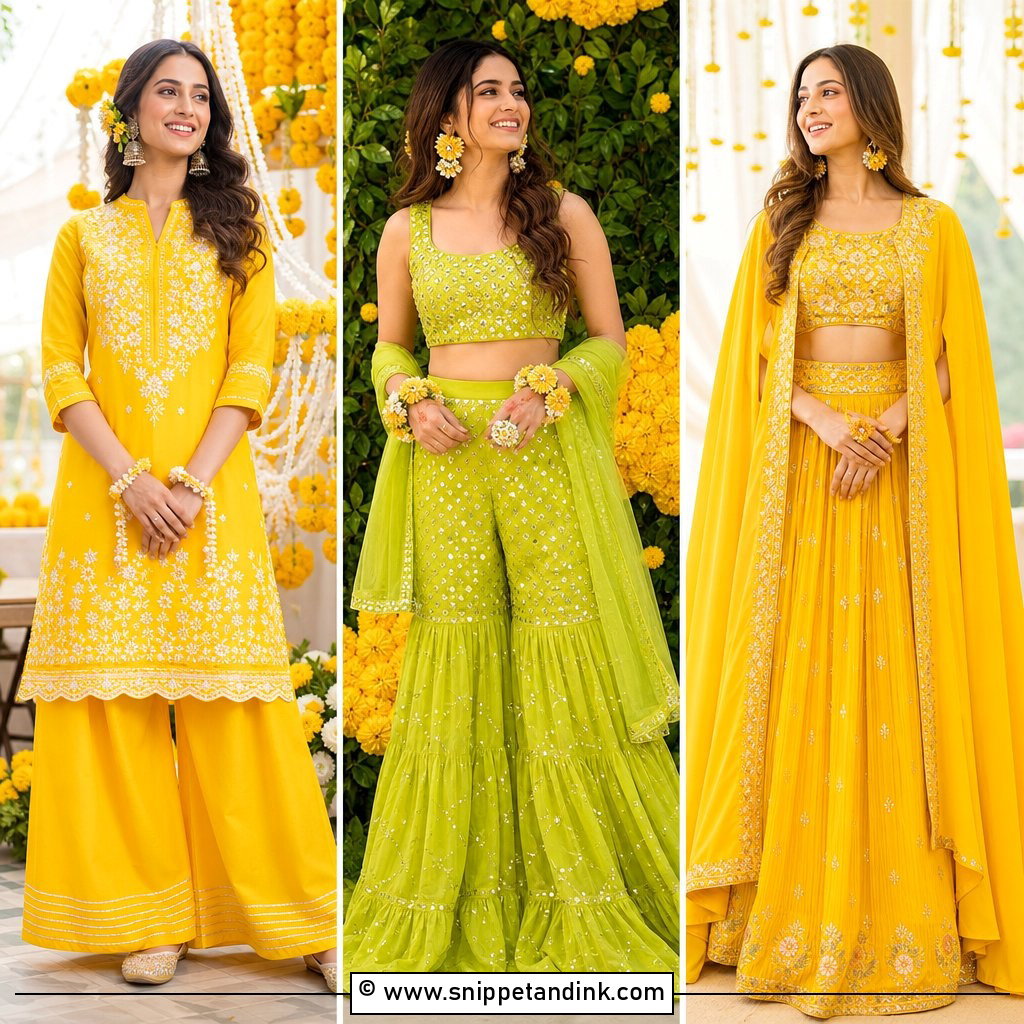
2. Mustard Sharara Mayoon Outfit
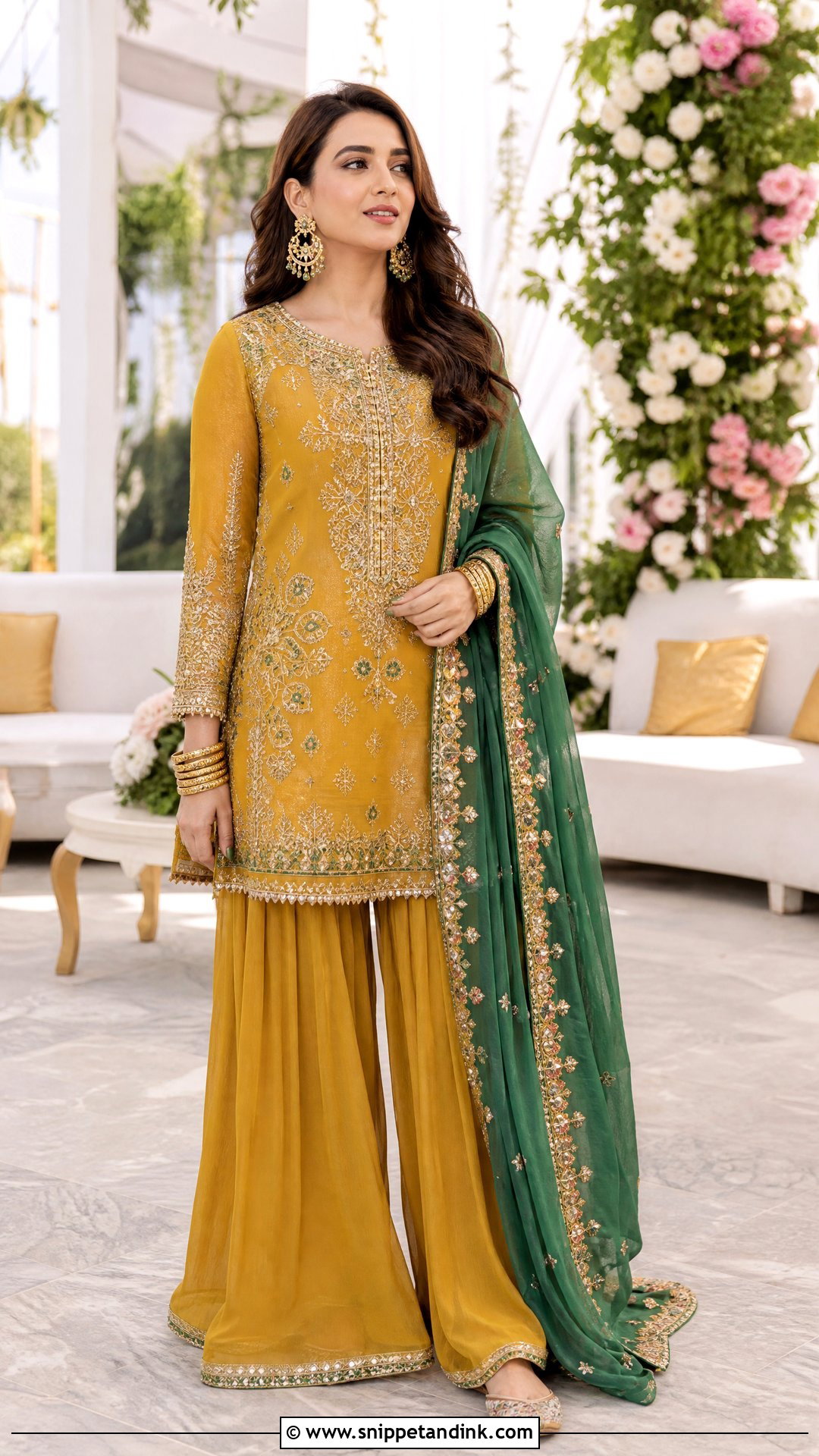
Mustard is kinder than lemon yellow to most skin tones, especially warmer ones, and a sharara makes it easy to wear for hours. Unlike a gharara, a sharara opens wide from the upper leg, so there is no joint to pull when you sit or dance. Pair a knee-length kurta with an embroidered neckline and a soft chiffon or georgette sharara. A green dupatta gives you the old mustard-and-green Mayoon pairing; a matching mustard one reads calmer. I keep the face fresh here, peach blush and a soft lip, and finish with antique gold earrings, stacked bangles and a loose braid threaded with tiny flowers.
3. Marigold Lehenga Choli Mayoon Outfit
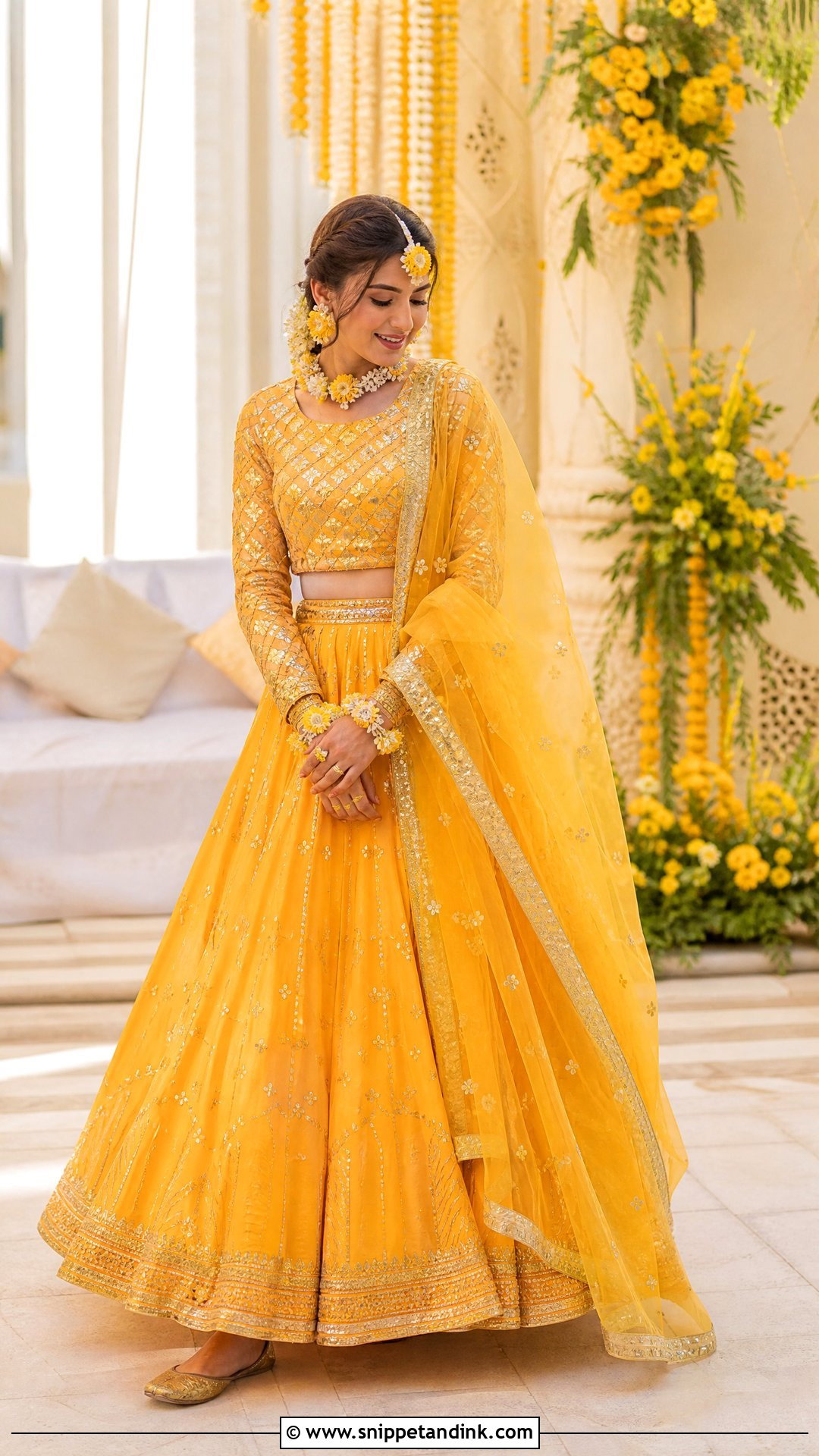
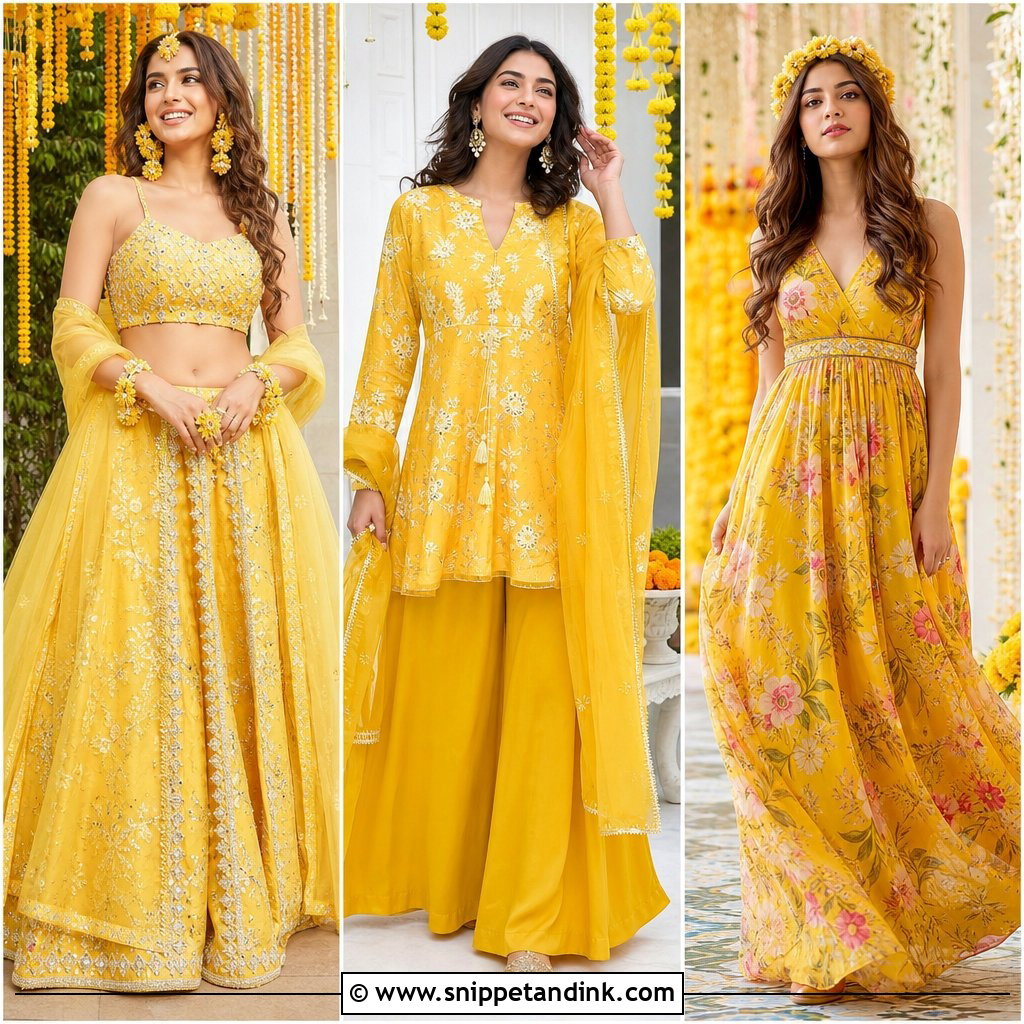
A marigold lehenga is the brightest thing in the room, so I keep everything else around it light. A moderate flare moves well in a courtyard without dragging through spilled ubtan. Pair it with a fitted choli or a slightly longer blouse if you want more coverage, and let gota borders and small mirror accents do the decorating. Drape a net or organza dupatta over one shoulder so the embroidery stays visible. On a bride, floral jewelry and hand garlands belong here; a guest needs nothing more than gold hoops and plain bangles.
4. Yellow Angrakha Frock Mayoon Outfit
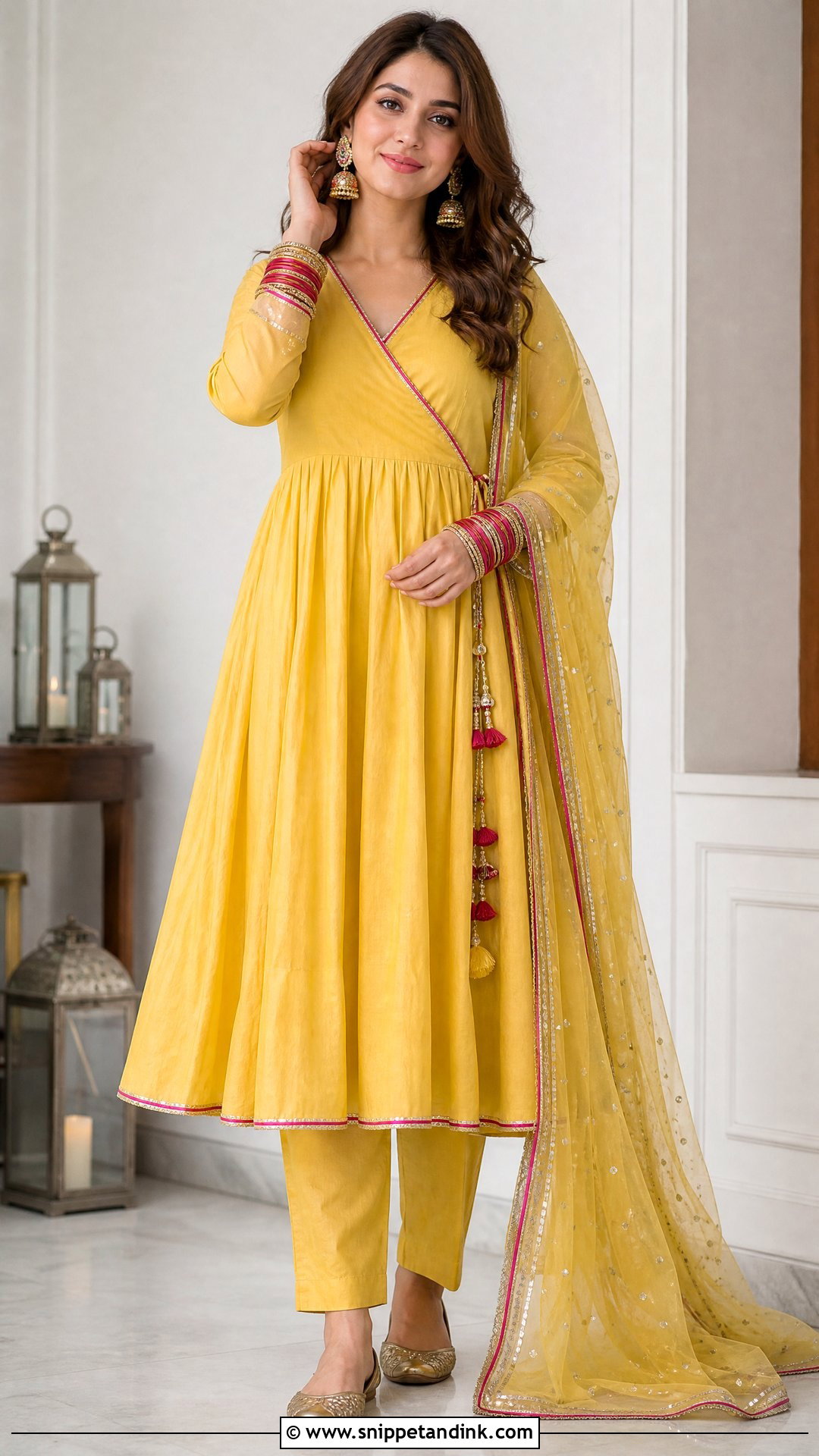
The overlapping front of an angrakha is what gives this frock its shape, and the waist ties are where I spend my time at a fitting. If they sit even an inch below the natural waist, the wrap gapes when you bend to receive ubtan. Knee or calf length both work, with tassels or pink piping tracing the wrap line. Straight trousers keep it clean; a light sharara underneath adds volume. A sheer yellow dupatta with scattered sequins, jhumkas and metallic khussa are enough. Hair should stay soft and away from the neckline, otherwise the ties disappear.
5. Green And Yellow Peplum Sharara Mayoon Outfit
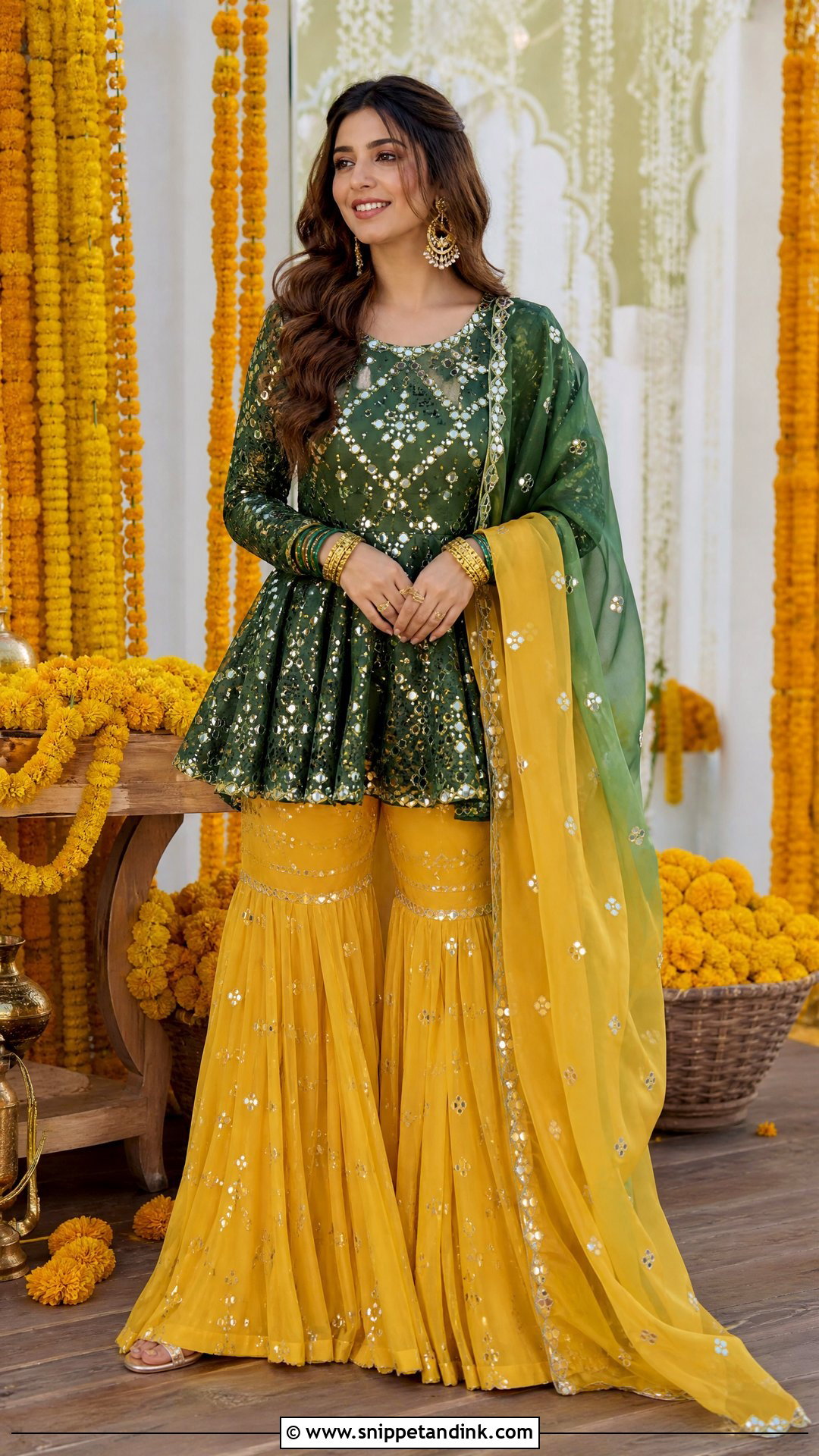
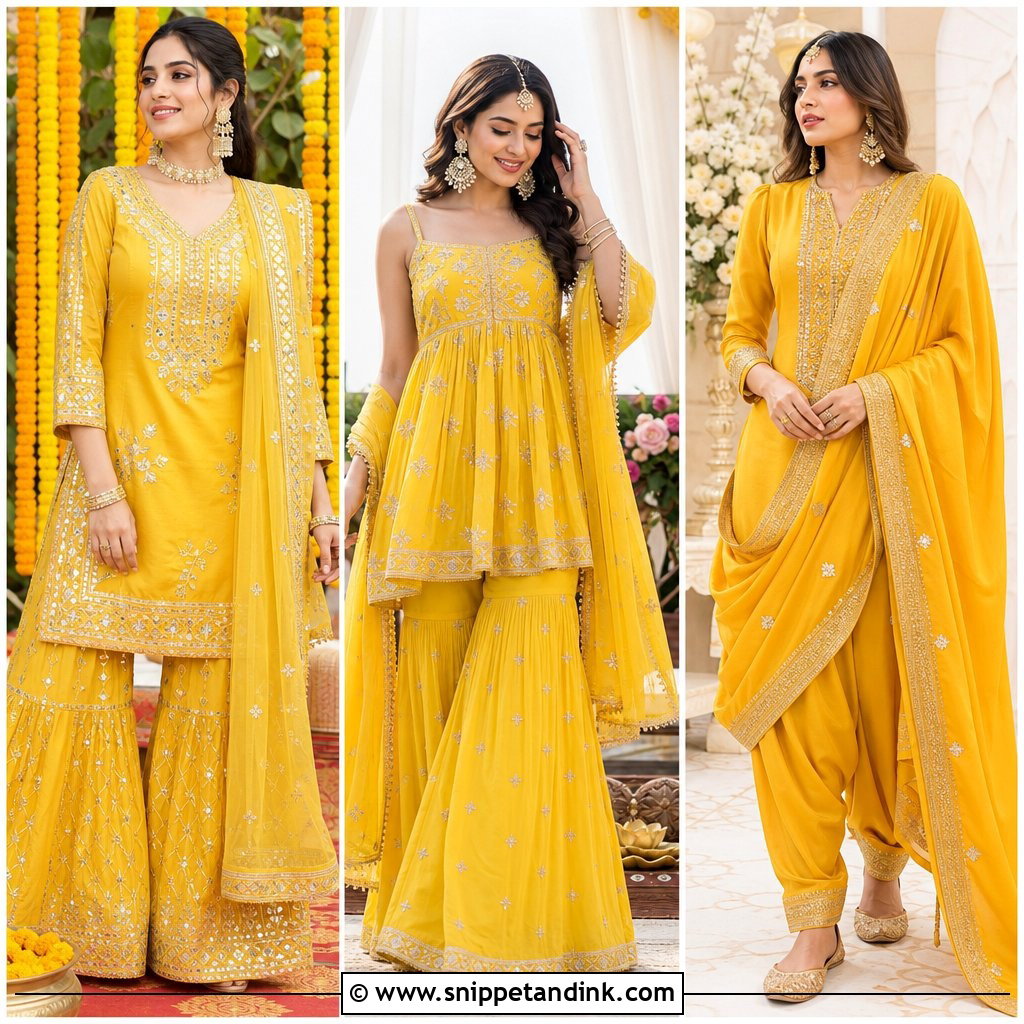
Green over yellow is a combination I suggest when a sister or bridesmaid does not want to look like a second bride. The peplum pulls in at the waist and balances the volume of the sharara below it, which helps shorter frames most. Put the mirror work or gold motifs on the top and repeat only a border on the sharara. A two-tone green and yellow dupatta ties the halves together. Several cousins can each wear a variation of this and still look like one group in the photos. A high braid or low ponytail keeps hair out of the way while dancing.
6. Floral Print Gharara Mayoon Outfit
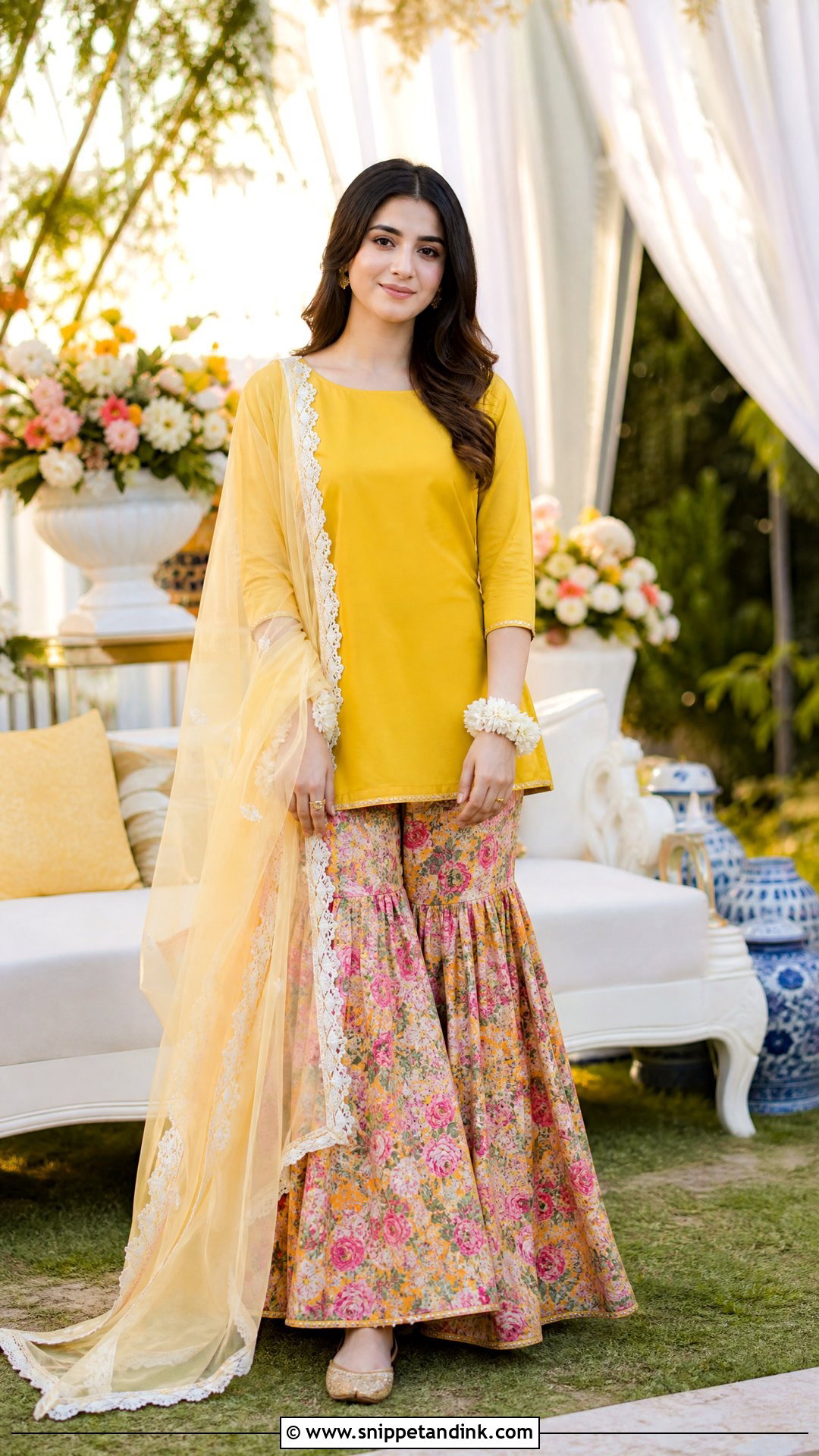
Prints hide turmeric smudges better than any solid, which is half the reason I like a floral gharara for a home Mayoon. Pick a yellow, ivory or pista base with pink and orange flowers, then pair it with a plain short kurta that picks up one shade from the print. Reversing it, floral kurta over a solid gharara, works just as well. Keep the dupatta sheer with a slim lace edge or the whole thing turns busy. Guests who want something to wear again after the wedding get the most use out of this one.
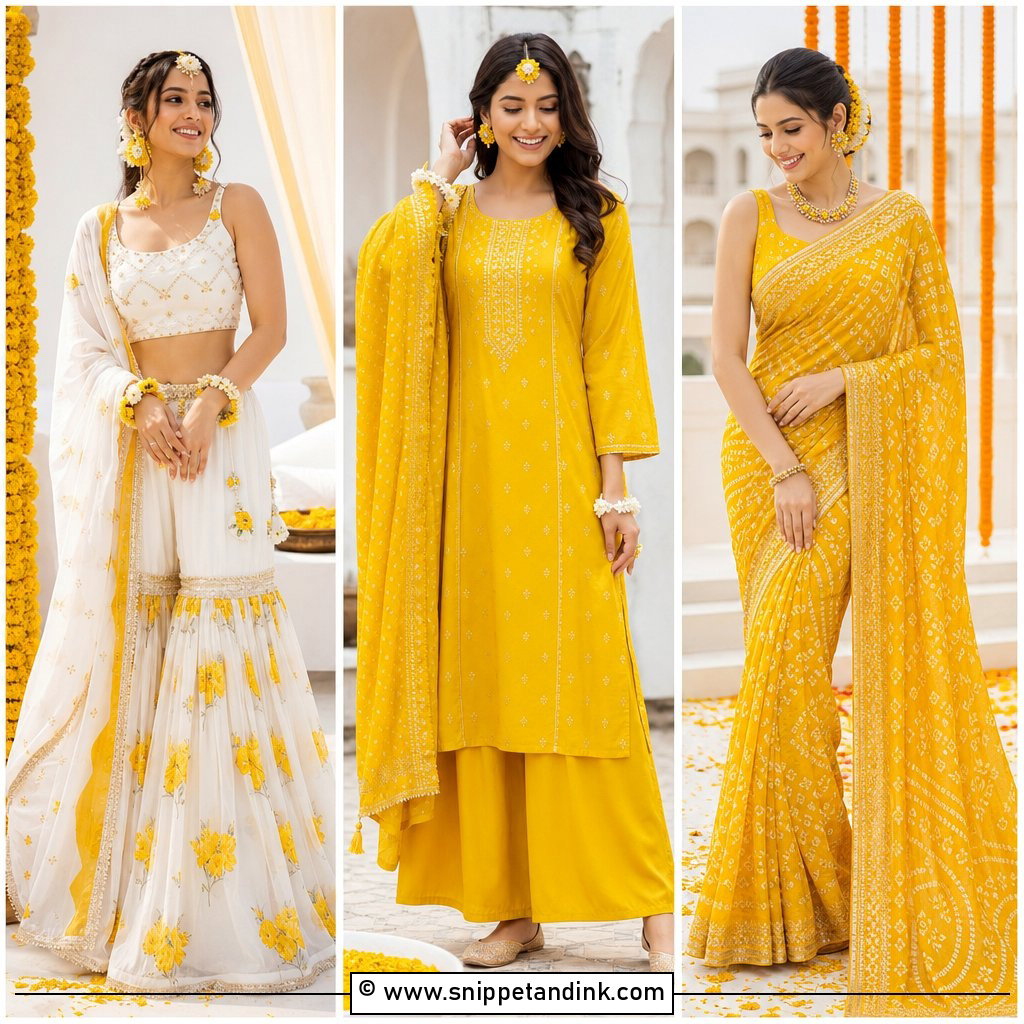
7. White And Yellow Chikankari Mayoon Outfit
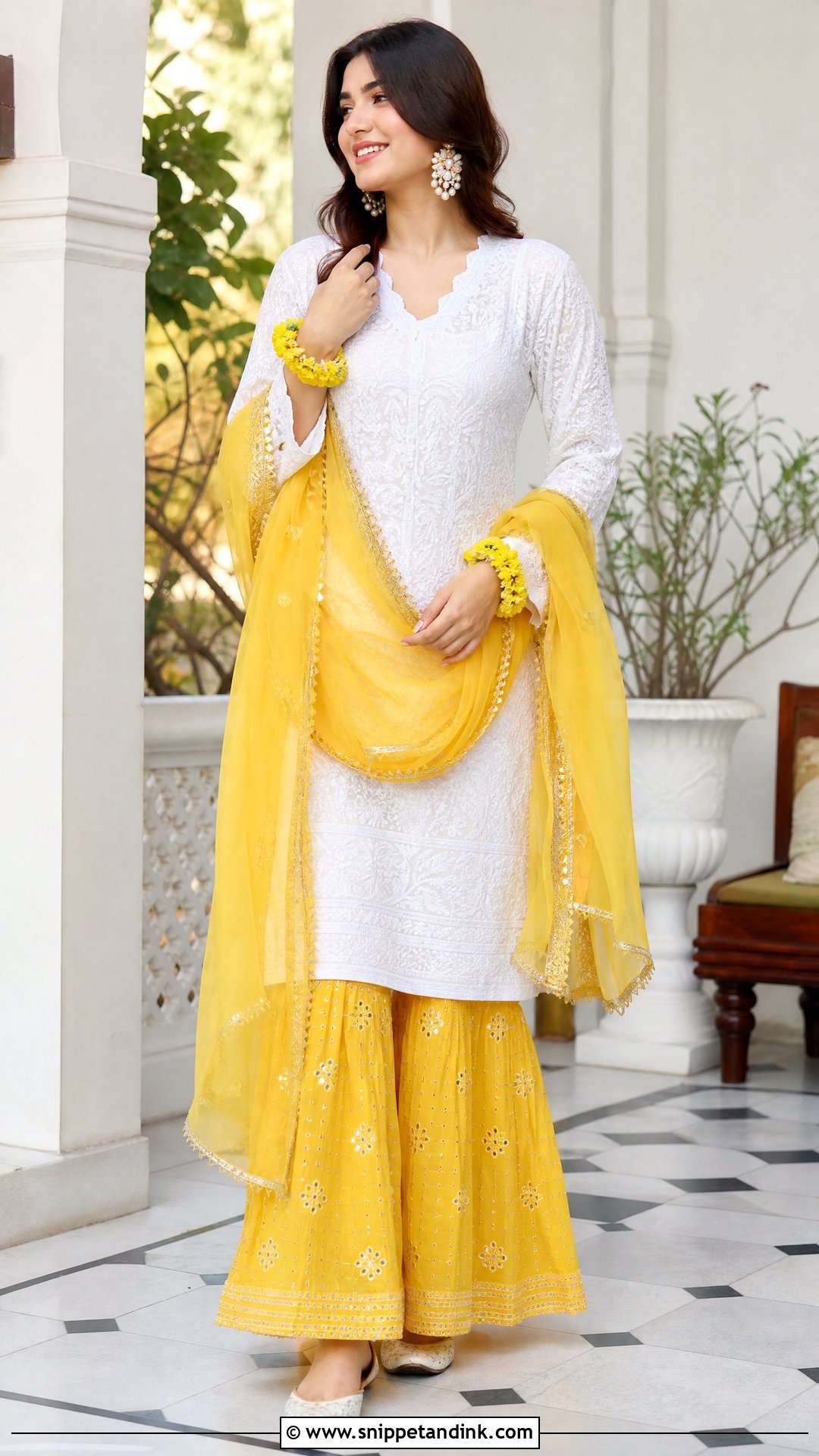
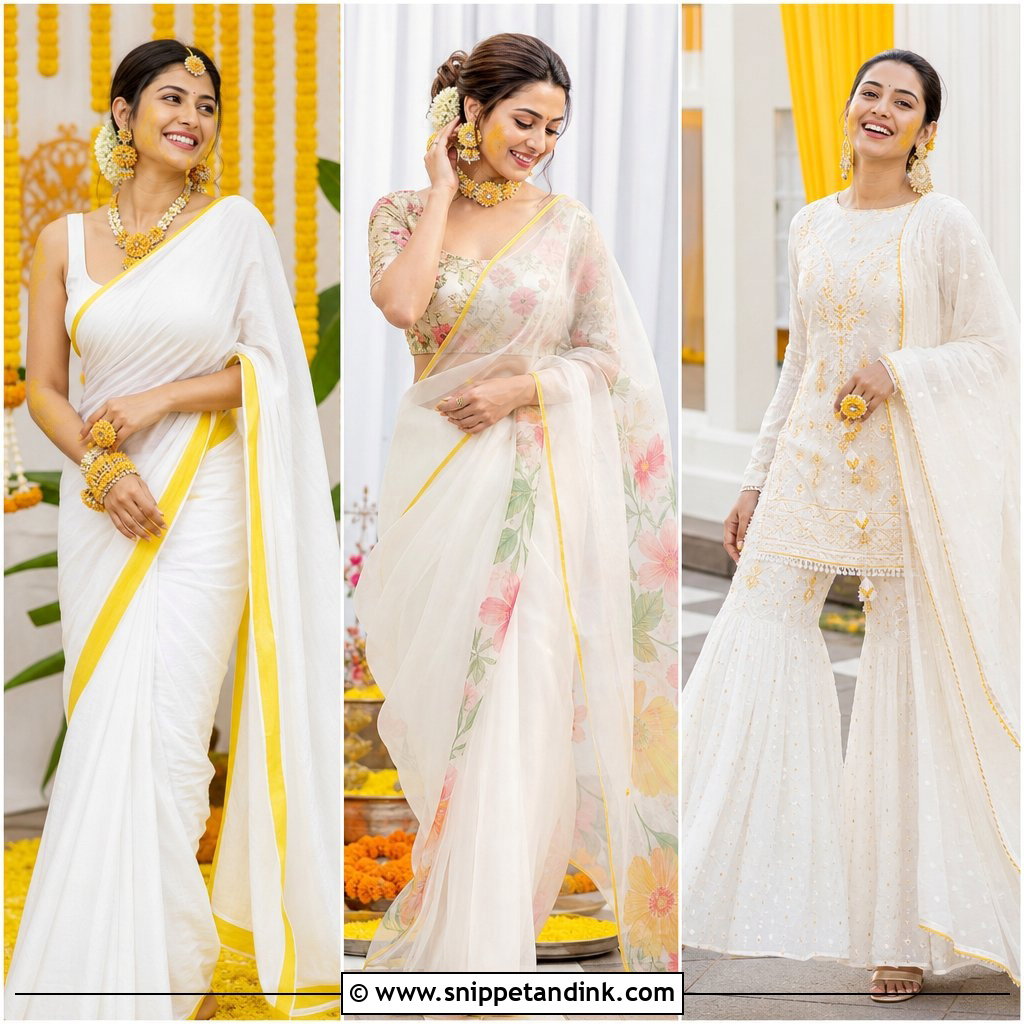
Chikankari is shadow work and fine stitching on fine cotton, and it is the most delicate fabric on this list when ubtan is flying around. I only put white chikankari on guests who will sit at the edge of the ritual. A white chikankari kurta over yellow straight trousers, a gharara or a gathered shalwar stays light and understated. Drape a yellow organza dupatta across both shoulders, or let it fall from one side if you expect to move a lot. Pearl earrings, white or gold khussa and yellow flower bracelets suit it. It respects the yellow palette without looking bridal.
8. Orange And Pink Lehenga Mayoon Outfit
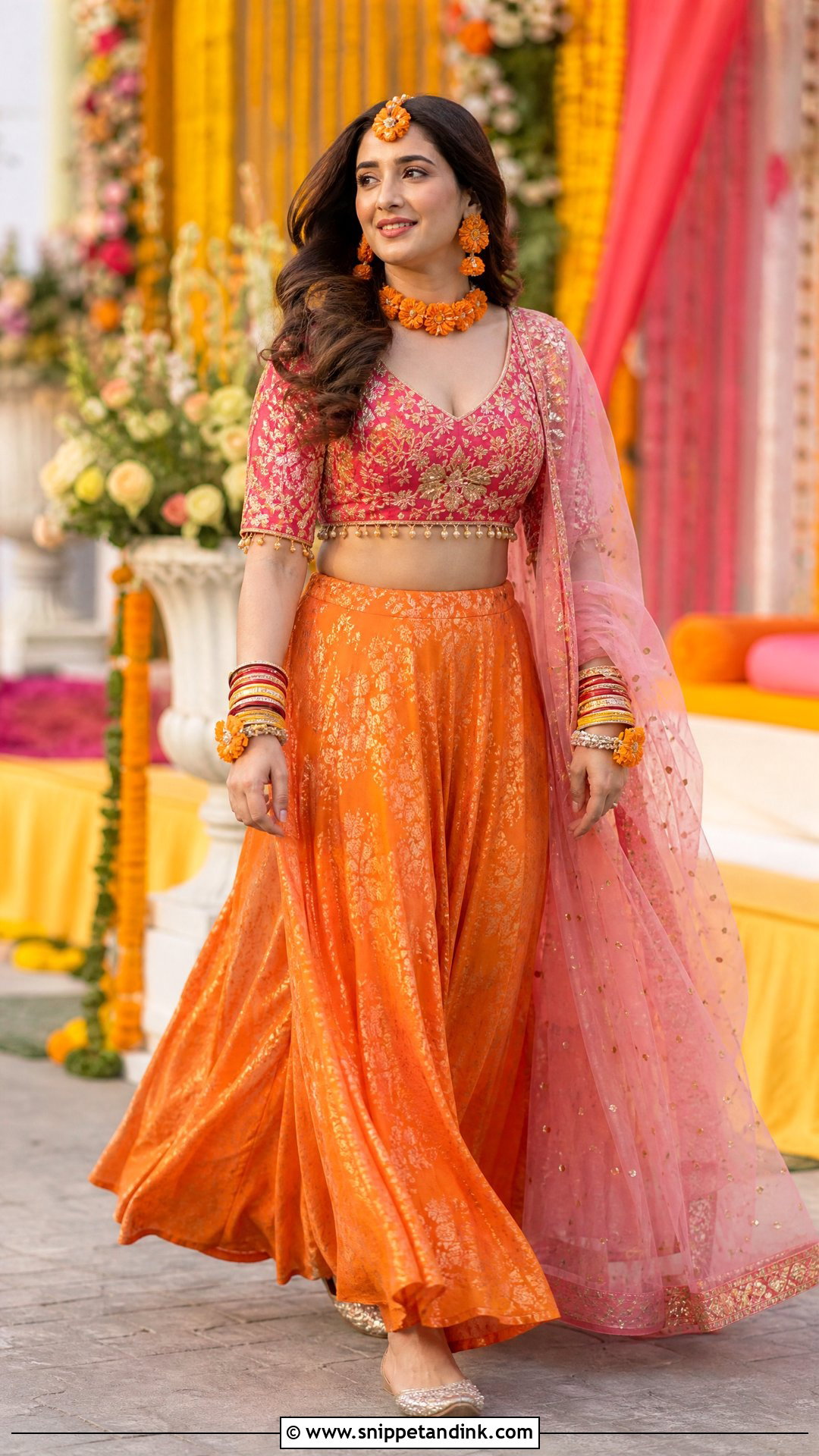
Orange and pink only look intentional when one piece carries both colors. I ask for embroidery on the kurta or blouse that mixes the two, so the orange lehenga and pink top feel connected rather than borrowed from different outfits. A multicolor border with a little green suits a venue full of marigolds and roses. Throw a light pink dupatta over one shoulder instead of covering the whole look. Skip heels; metallic flats are safer on floor mattresses. The palette is loud enough, so the hair goes into a low braid and makeup stays at defined eyes and a natural lip.
9. Lime Green Dhoti Pants Mayoon Outfit
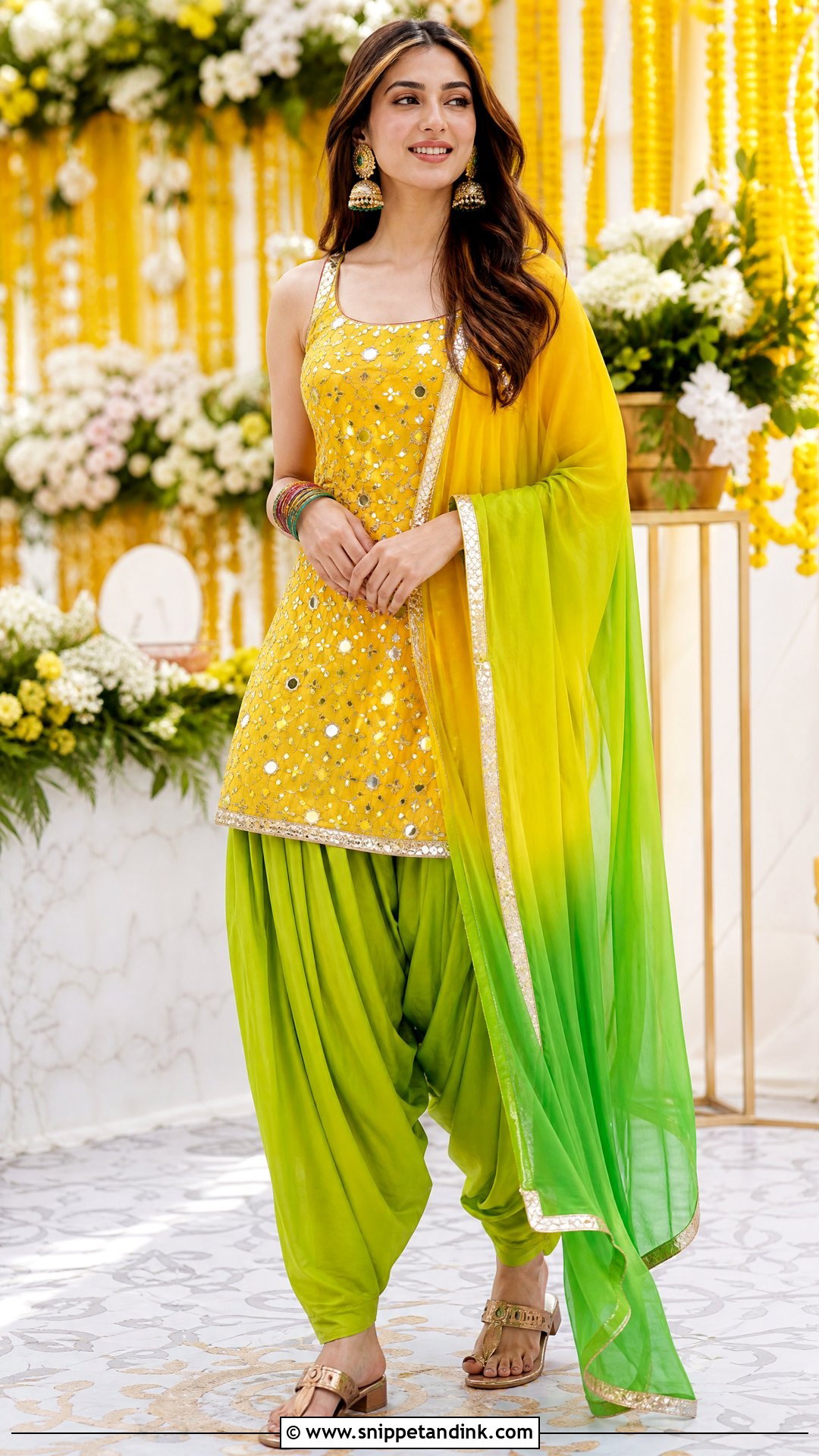
Dhoti pants carry all their volume around the hips, so the top has to be fitted or the proportions collapse. Lime green dhoti pants under a short yellow kurta with mirror work at the neckline is a young, quick-moving look for bridesmaids and cousins who plan to dance all night. The waistband and the ankle cuffs need tailoring; ready-made dhotis often bunch at the ankle and catch on sandal straps. A sheer lime or ombré dupatta, kolhapuri sandals and chunky jhumkas finish it. A sleek ponytail or bubble braid suits it far better than open hair.
10. Yellow Anarkali Mayoon Outfit
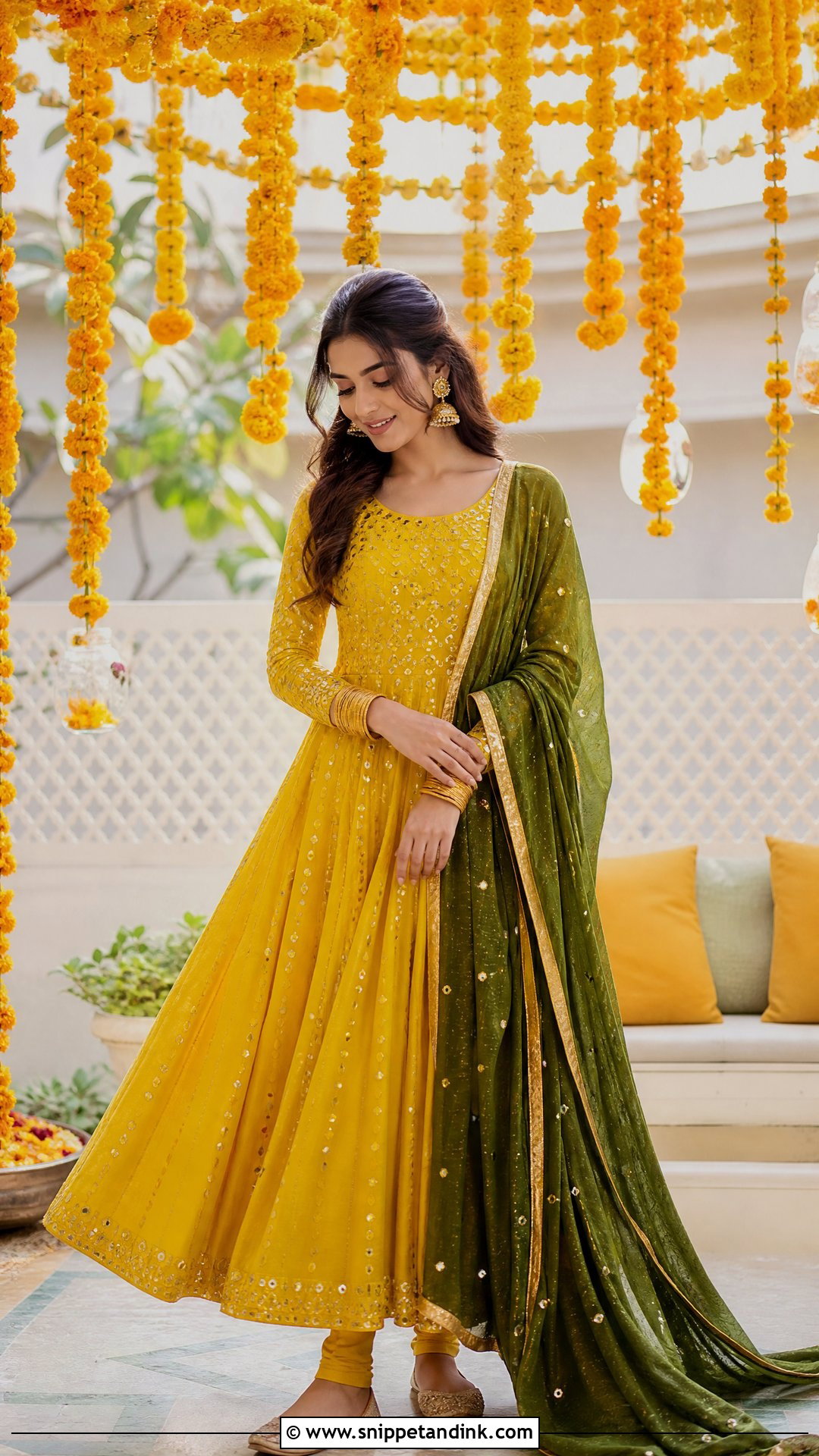
An Anarkali solves the whole outfit in one piece, which is why I suggest it to women who do not want to coordinate a top and a skirt. The flare should begin at the natural waist; on a petite frame I raise it slightly and control the volume, while a taller woman can carry a fuller skirt. Delicate threadwork or a decorated hem gives enough sparkle for a daytime function. Add slim trousers and a light green, pink or yellow dupatta. Pointed khussa peek out nicely as you walk. A side braid pinned with small flowers fits the Mayoon mood.
11. Pista Green Pishwas Mayoon Outfit
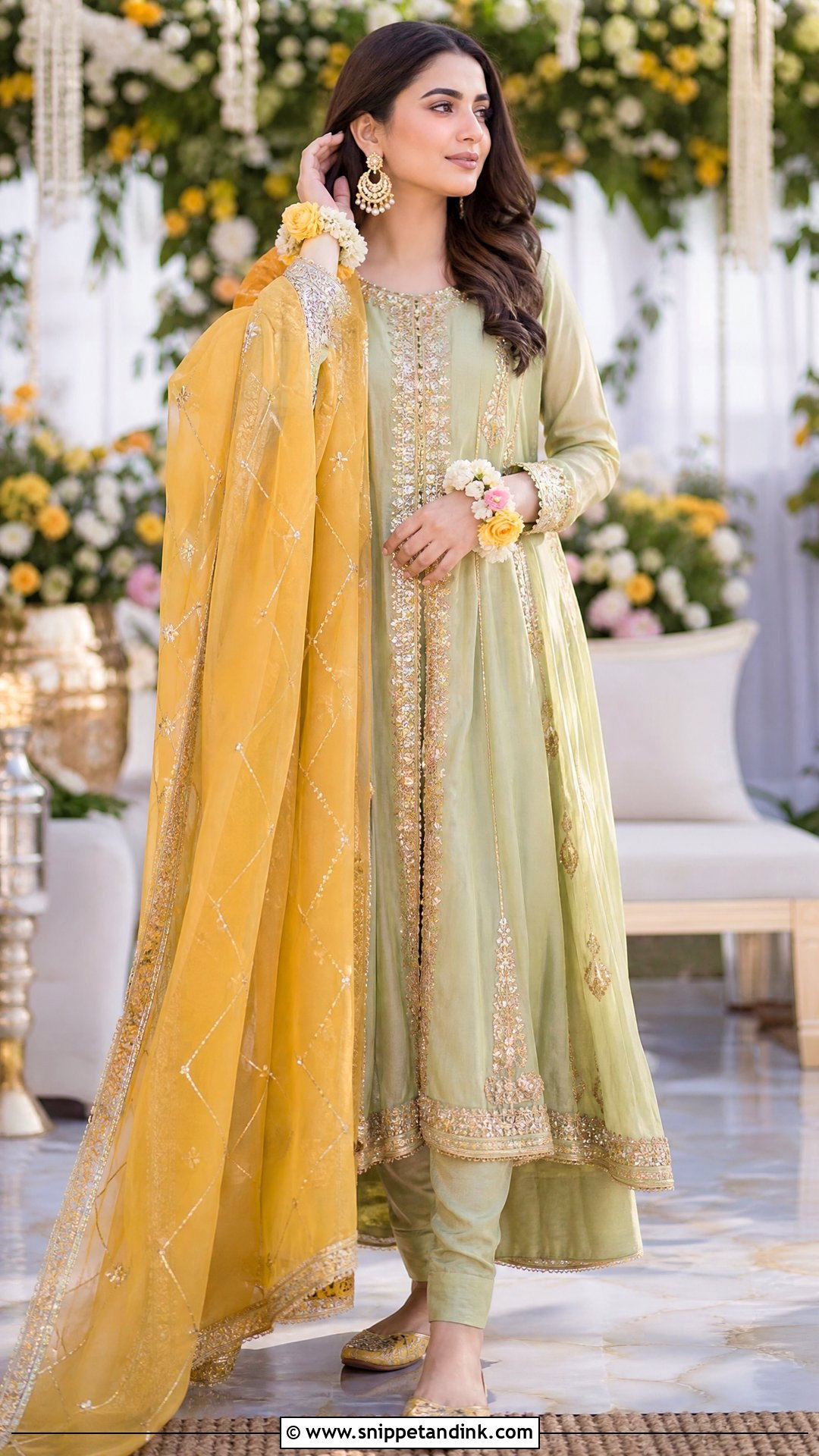
Pista green is my answer for the bride who looks washed out in strong yellow. A floor-length pishwas with a fitted top and paneled skirt moves gracefully, and a marigold border or yellow floral detail keeps it tied to the ceremony. Fitted churidar underneath and a sheer yellow dupatta balance the two colors. The one thing I check is skirt length: a pishwas that touches the floor will collect oil and ubtan while she is seated for the rasm, so I hem it just above the ankle. Pearl-and-gold earrings and small flower bracelets are all it needs.
12. Yellow Kurta And Palazzo Mayoon Outfit
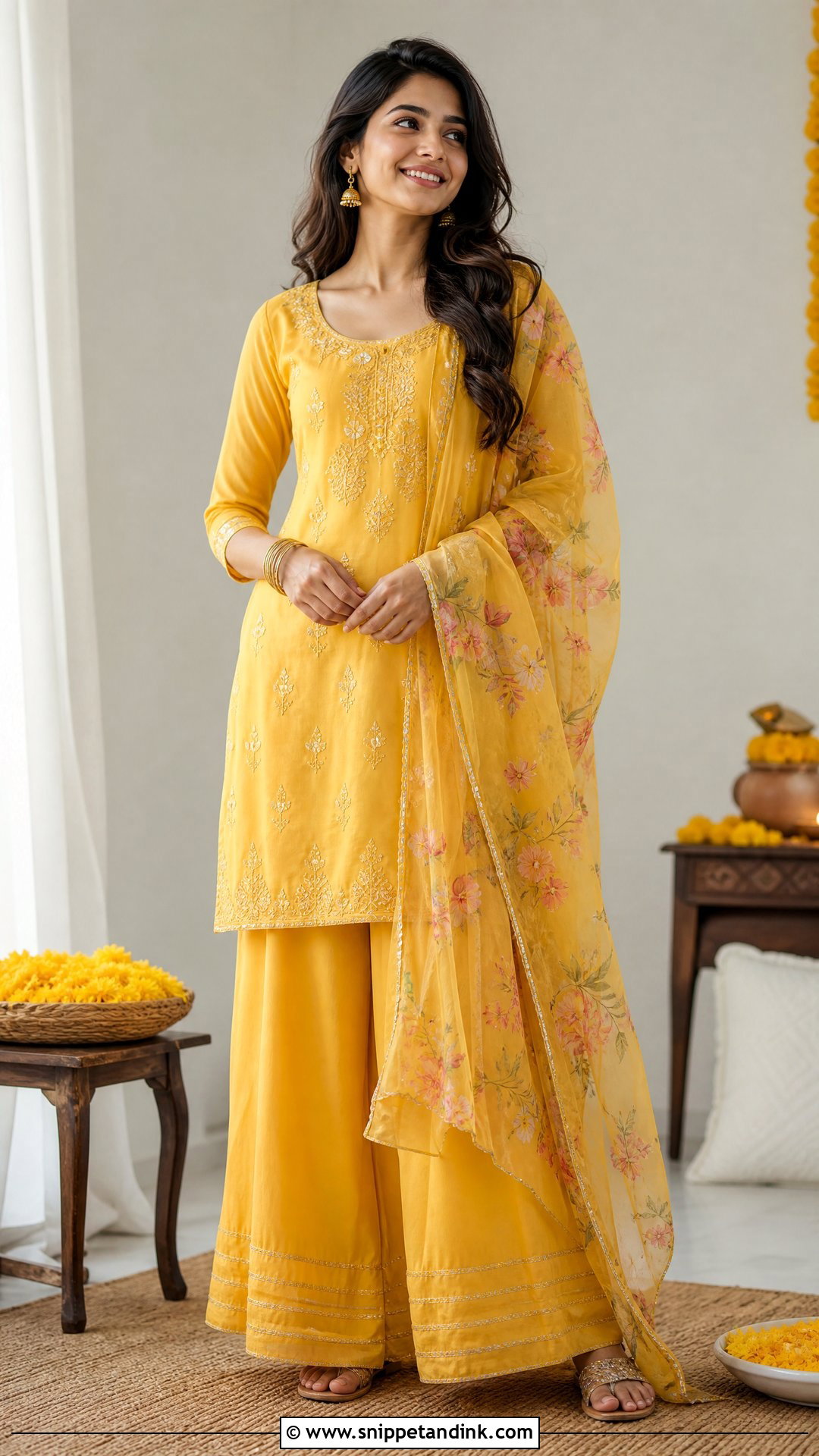
For a guest who will be on her feet serving tea and handing out mithai all evening, a yellow kurta and palazzo set is the practical choice. A knee-length kurta gives the cleanest proportion over wide palazzos; a longer one adds coverage. Cotton silk or lawn breathes in warm weather far better than polyester georgette. A floral organza dupatta brings in pink and green without extra pieces. Flat sandals, small jhumkas and a low bun keep it neat. Older women and anyone attending a casual Mayoon at home tend to be most comfortable in this.
13. Yellow Bandhani Sharara Mayoon Outfit
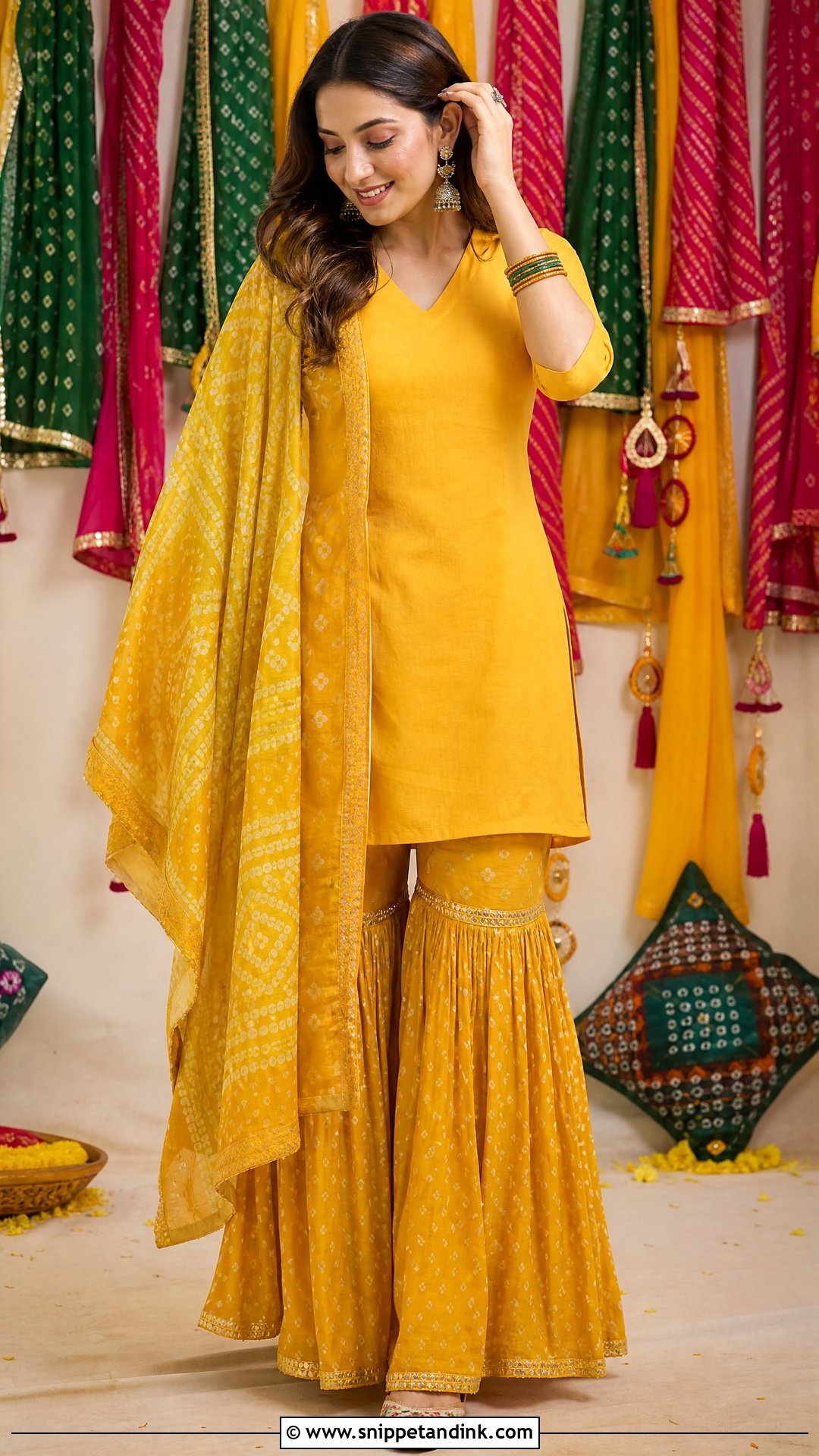
Bandhani is tie-dye, and genuine pieces are slightly uneven, which is part of their charm. A yellow or mustard sharara covered in small white dots needs a plain kurta in green, pink or orange so the pattern has somewhere to rest. A short kurta shows more of the dotted trousers. Choose a matching bandhani dupatta only if you want a maximal look; plain organza is quieter. Real tie-dyed fabric can bleed the first time it gets wet, so I would not wear it to a ritual where water is splashed around unless it has been washed once. It suits outdoor celebrations and family dholki gatherings, with a long braid wrapped in colored thread.
14. Mirror Work Sharara Mayoon Outfit
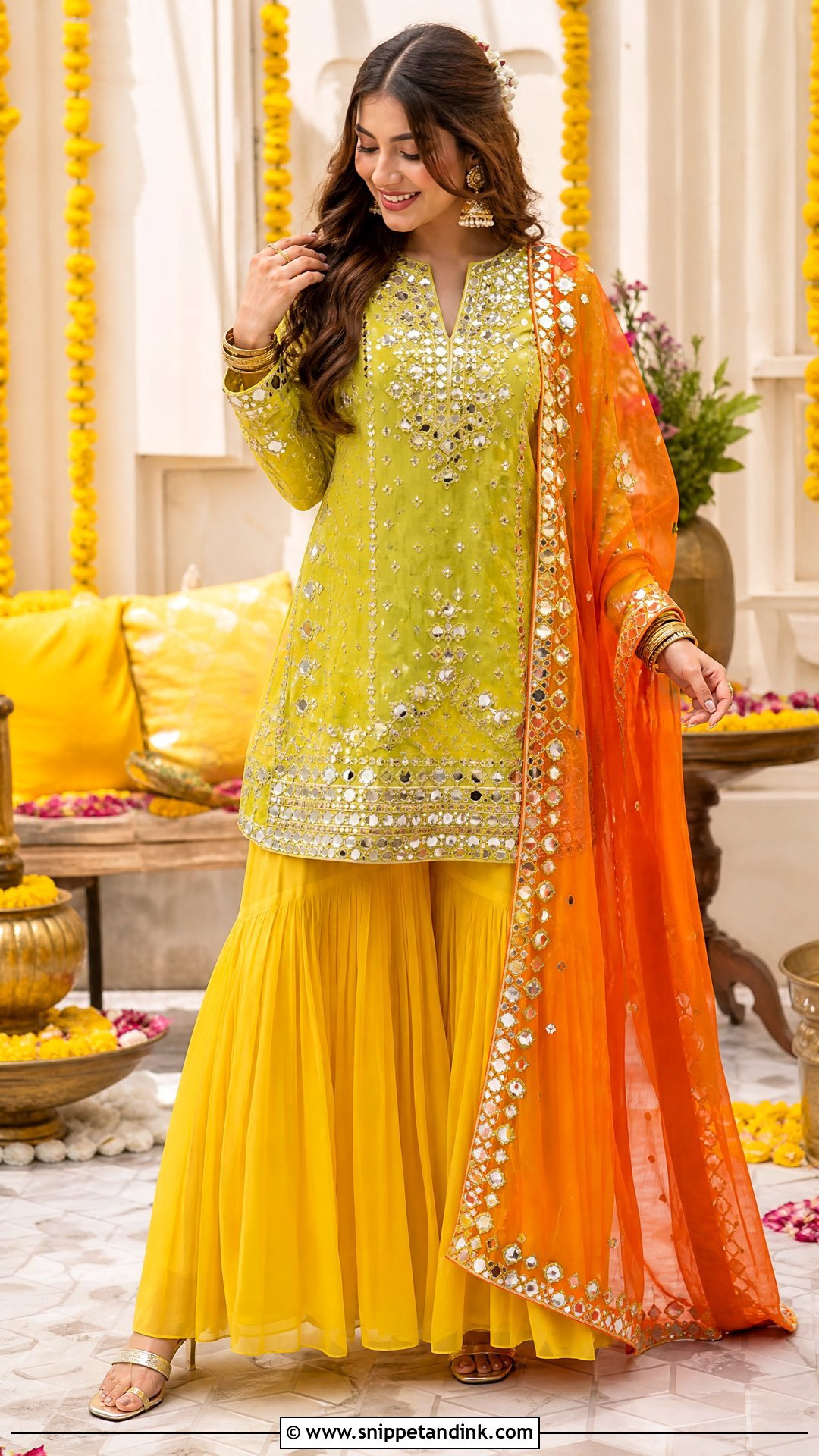
Mirror work throws daylight back in every direction, so it does a lot with very little. I always run a hand over the kurta first: loosely stitched mirrors snag dupattas and scratch the arms of whoever hugs you. Put the mirrors on a yellow or lime short kurta and keep the sharara plain, repeating a few only along the hem or dupatta edge. An orange, pink or turquoise dupatta adds contrast. Skip the large necklace; the neckline already sparkles. Hair goes up and away from the face so the earrings and neckline show.
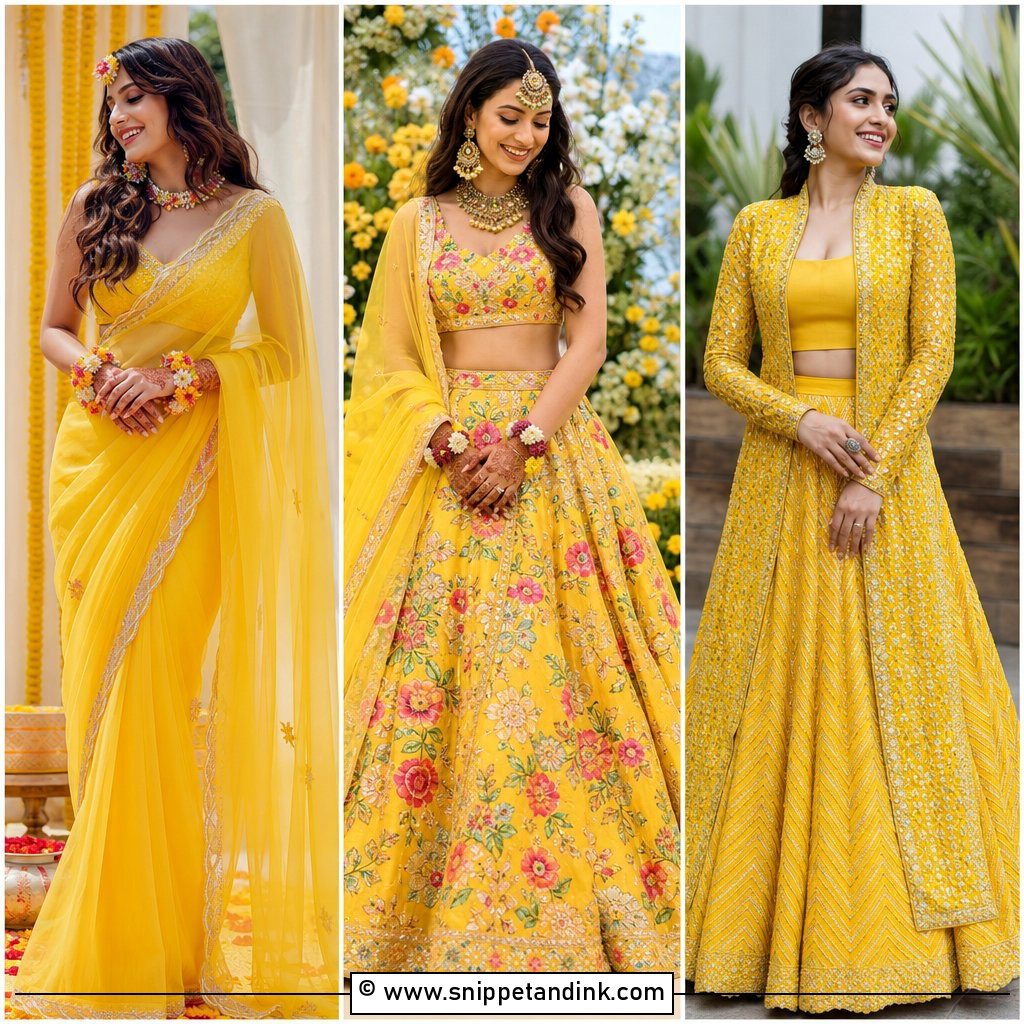
15. Gota Patti Gharara Mayoon Outfit
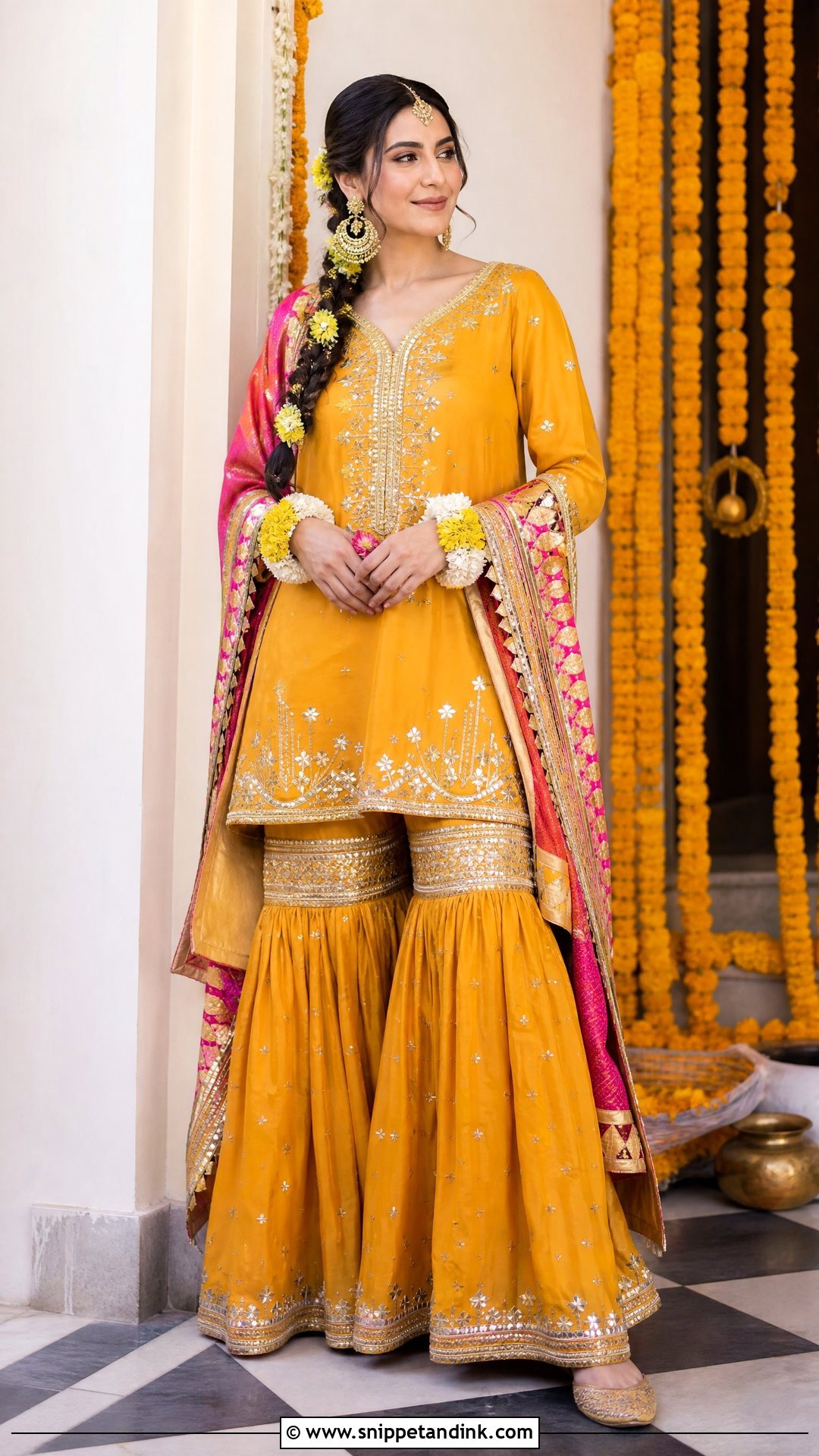
Gota patti is flat metallic ribbon appliquéd onto fabric, and it gives shine without the weight of stones. A marigold short kameez with diagonal gota lines over a gharara trimmed at the knee joint and hem is very traditional. I turn every gota piece inside out before an event, because the folded ribbon edges on the inside can rub the skin raw by the end of a long evening; a soft lining fixes that. A pink or green dupatta with a wider metallic border completes it. Brides can add a gota headband; guests do well with small chandbalis and a center-parted braid.
16. Phulkari Shalwar Kameez Mayoon Outfit
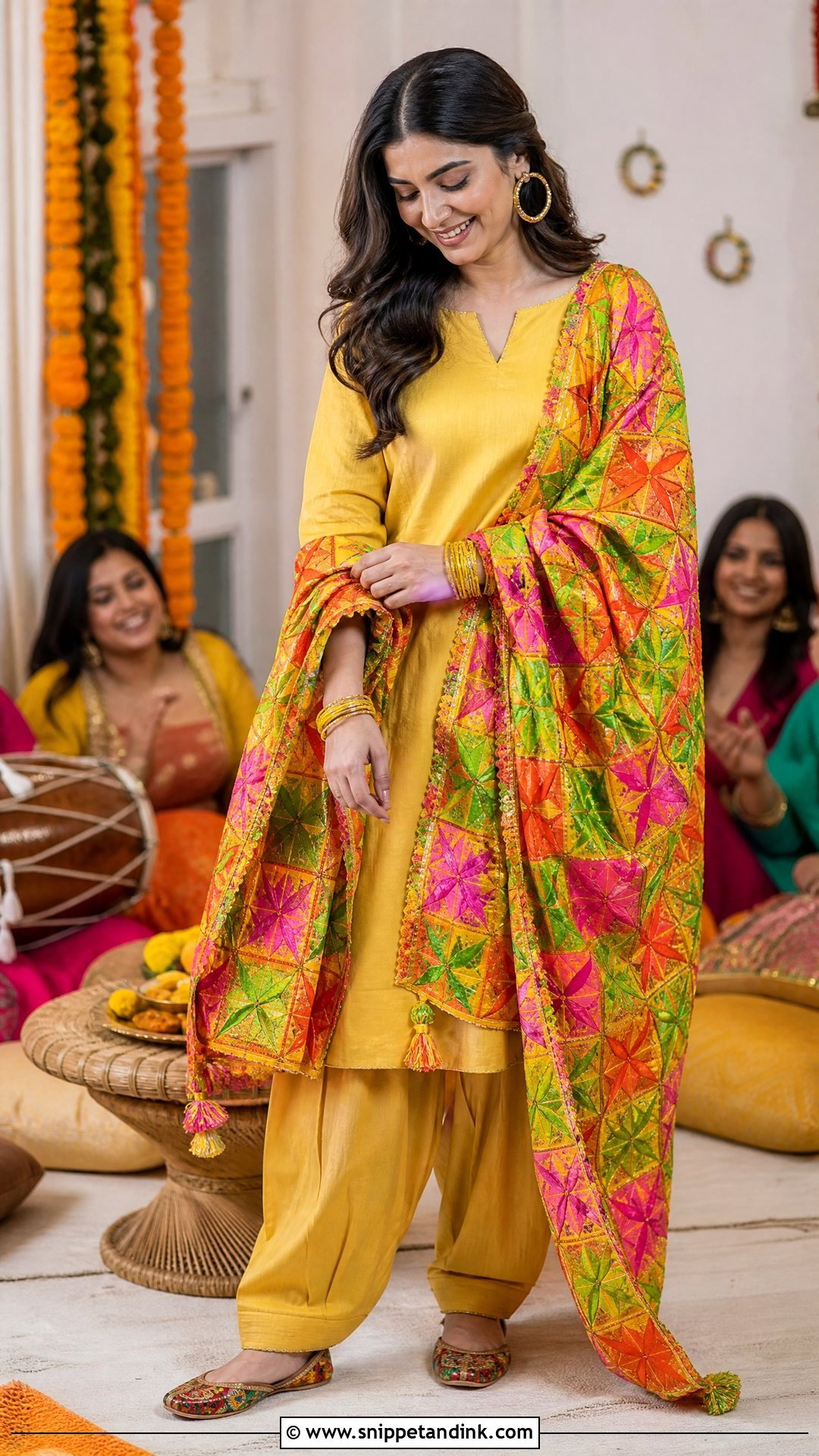
A phulkari dupatta is dense Punjabi floss embroidery, often almost covering the base cloth, so it does all the work in this look. Start with a plain yellow, orange or green shalwar kameez in cotton silk and keep the neckline and sleeves unembellished. Khussa, gold hoops and glass bangles finish it. Phulkari is heavier than it looks; a full piece slides off the shoulder constantly. I wear it over one shoulder for photographs, then fix it with a hidden safety pin at the back of the shoulder before the dancing starts. It works for any age and suits a dholki held on the same night.
17. Yellow Floral Kaftan Mayoon Outfit
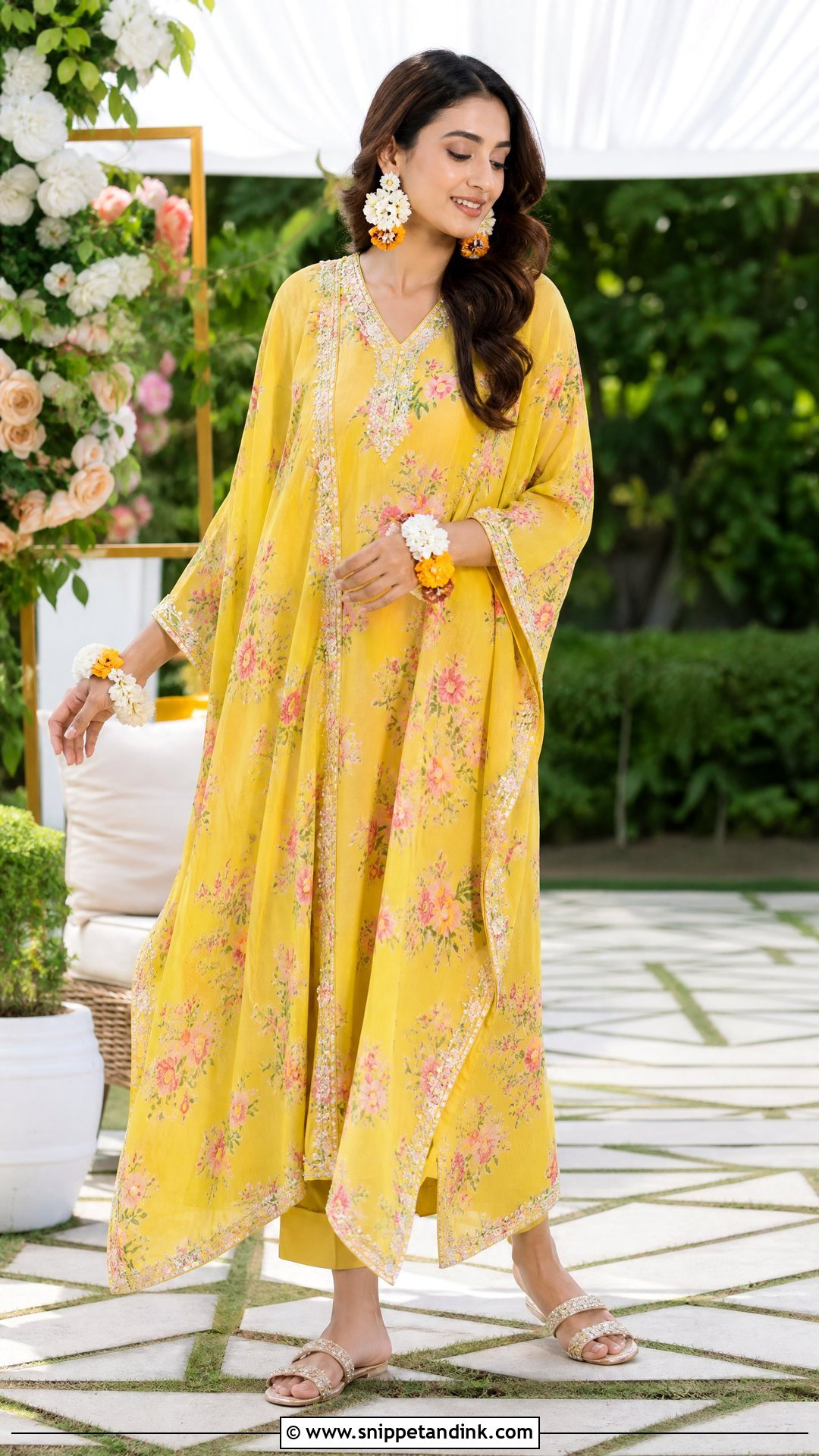
A kaftan is the outfit I steer pregnant guests and anyone wanting full coverage towards, because it gives room without looking like loungewear. Look for a floor-length cut with controlled volume, a defined neckline and sleeves that do not catch when you raise your arms. A shaped waist seam adds definition without tightening it. Add slim trousers if the side slits are high. Because the silhouette is so complete, keep accessories to statement earrings, flower bracelets and flat sandals. A braided half-up style stops the loose garment looking unfinished.
18. Yellow Saree Mayoon Outfit
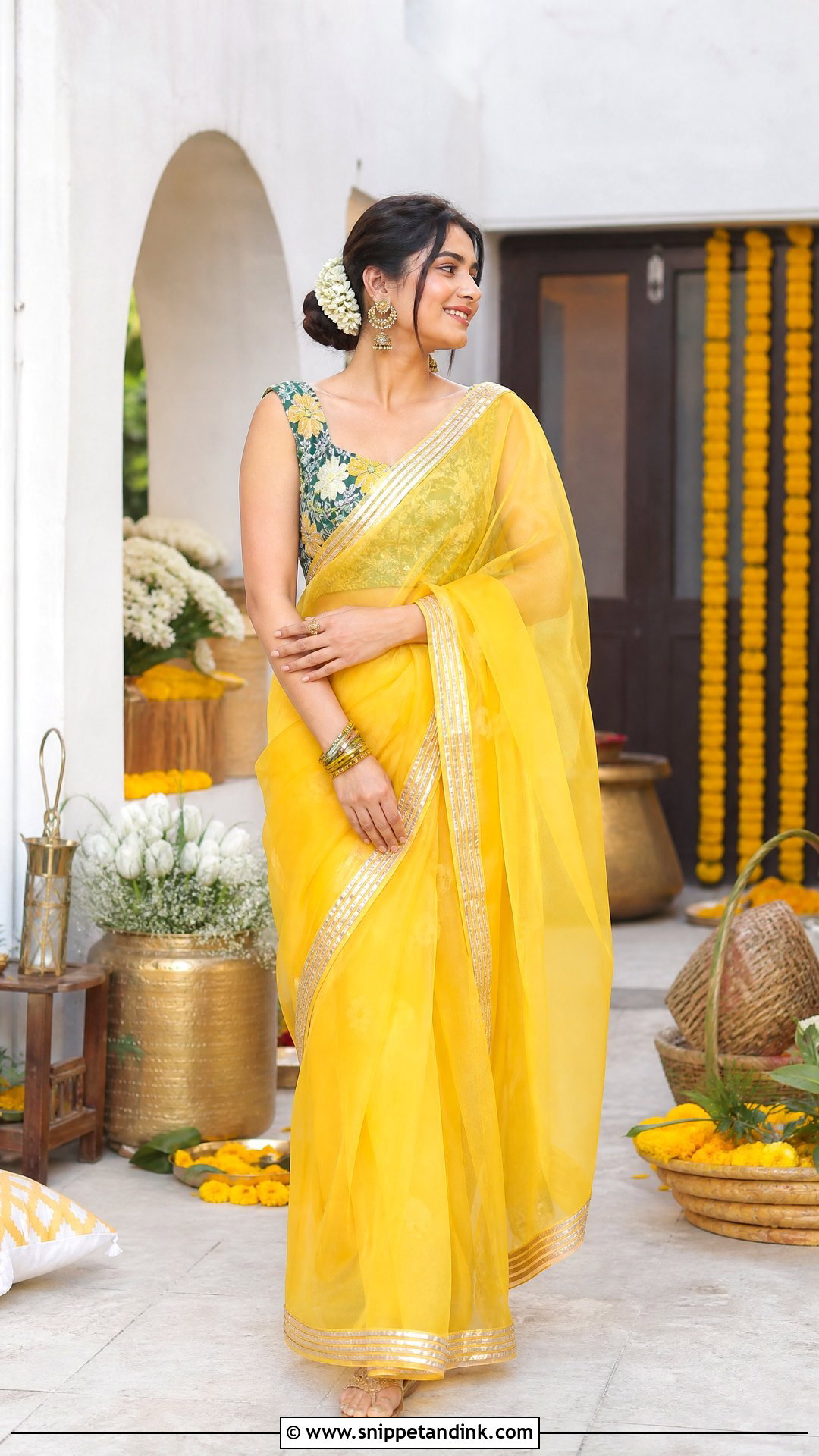
A saree is the least forgiving choice for floor seating, so I only suggest it to women who already wear one comfortably. A lightweight yellow saree in chiffon or georgette drapes and recovers well after sitting; stiff organza holds creases. Pair it with a green, pink or floral blouse with sleeves you can lift your arms in. Pin the pleats at the waist and the pallu at the shoulder, using more pins than you think you need. Flat gold sandals, jhumkas and a low bun with fresh flowers suit it. Brides can add floral jewelry; guests keep the saree simple.
19. Yellow Maxi Dress Mayoon Outfit
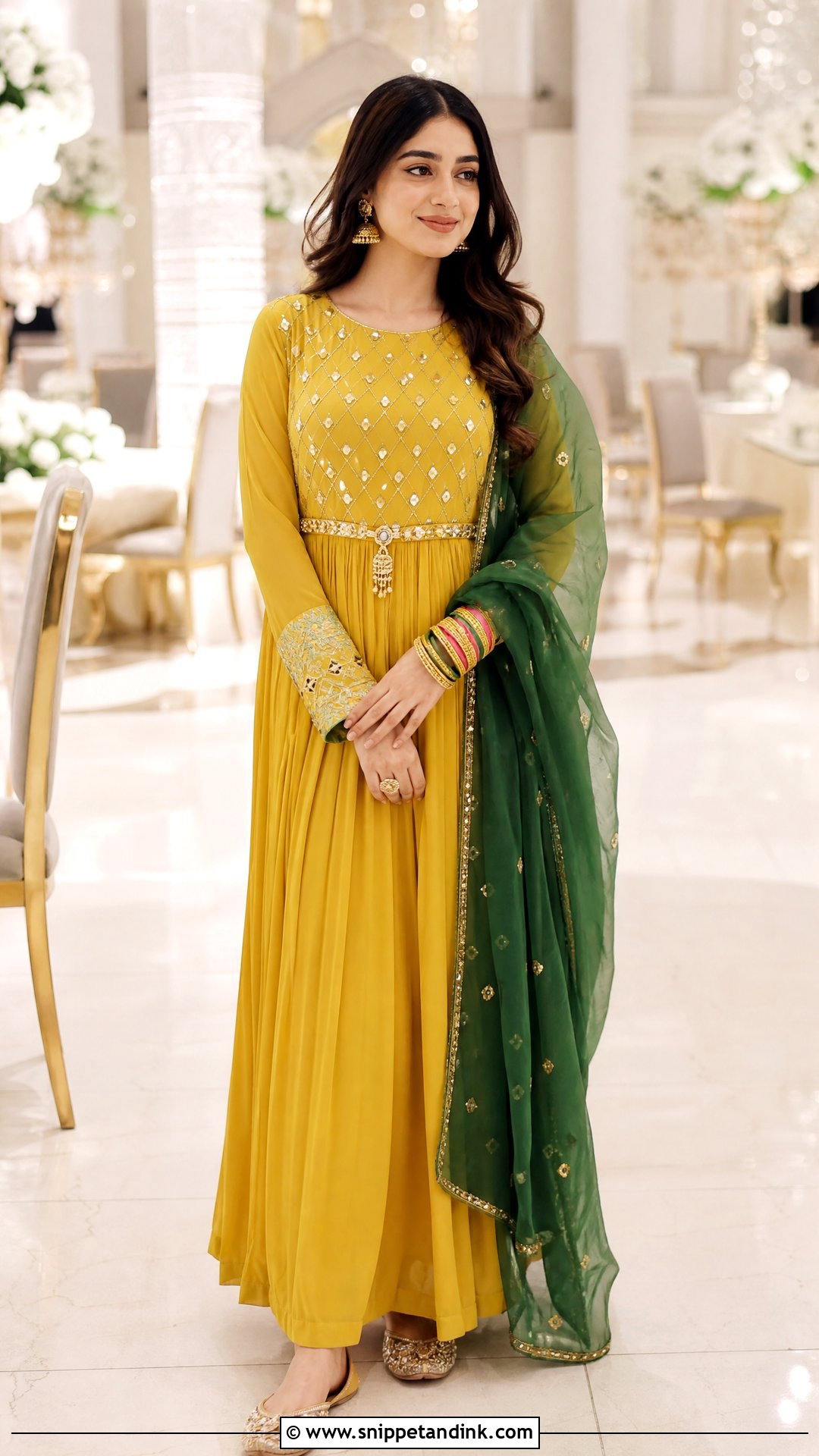
A maxi dress is the modern one-piece option, and it can look out of place at a traditional Mayoon unless something ties it back. Embroidered cuffs, a mirror-work bodice or a gota-trimmed hem does that. A contrasting green or pink organza dupatta makes it read more traditional still. Choose a modest neckline and a skirt with enough fullness to sit cross-legged in. If you add a waist belt, match it to the embroidery so the two do not compete. This one suits guests and small home ceremonies best, with soft waves or a low ponytail.
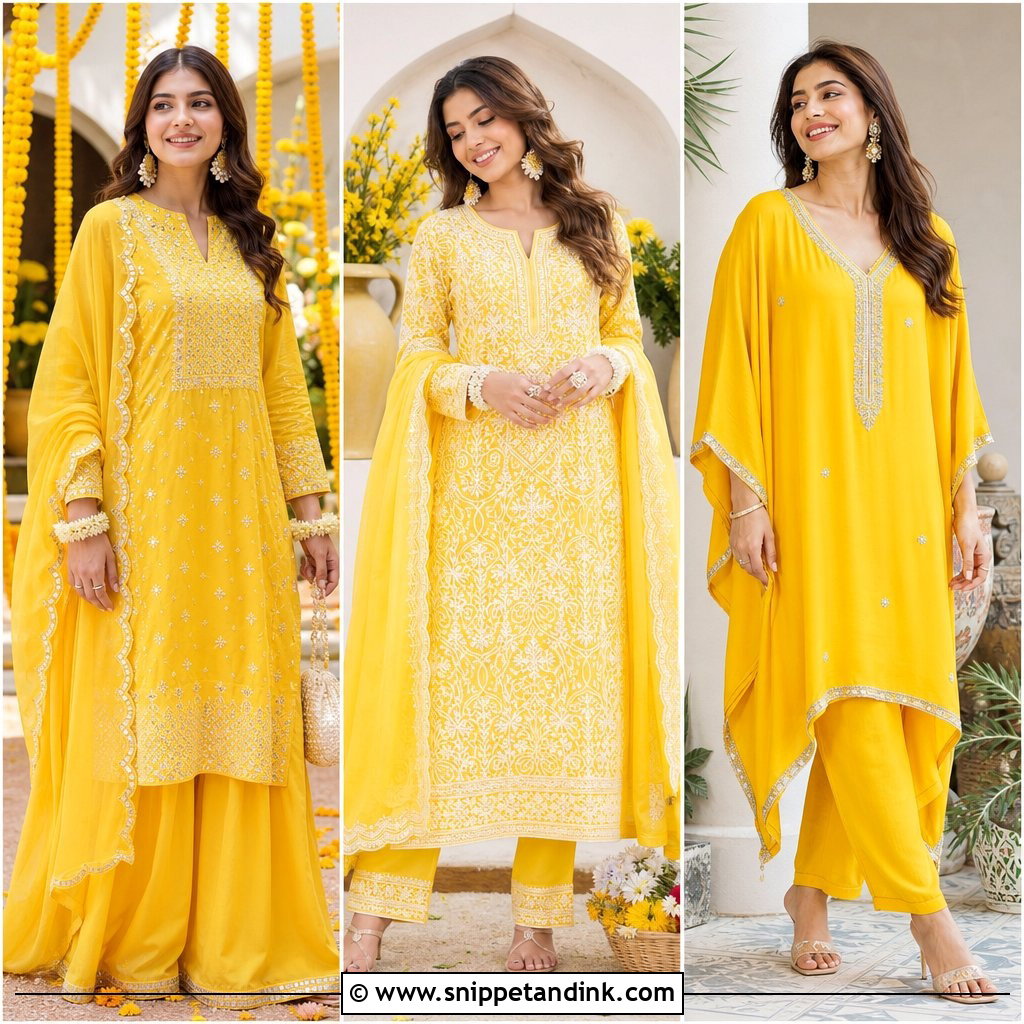

20. Simple Cotton Shalwar Kameez Mayoon Outfit
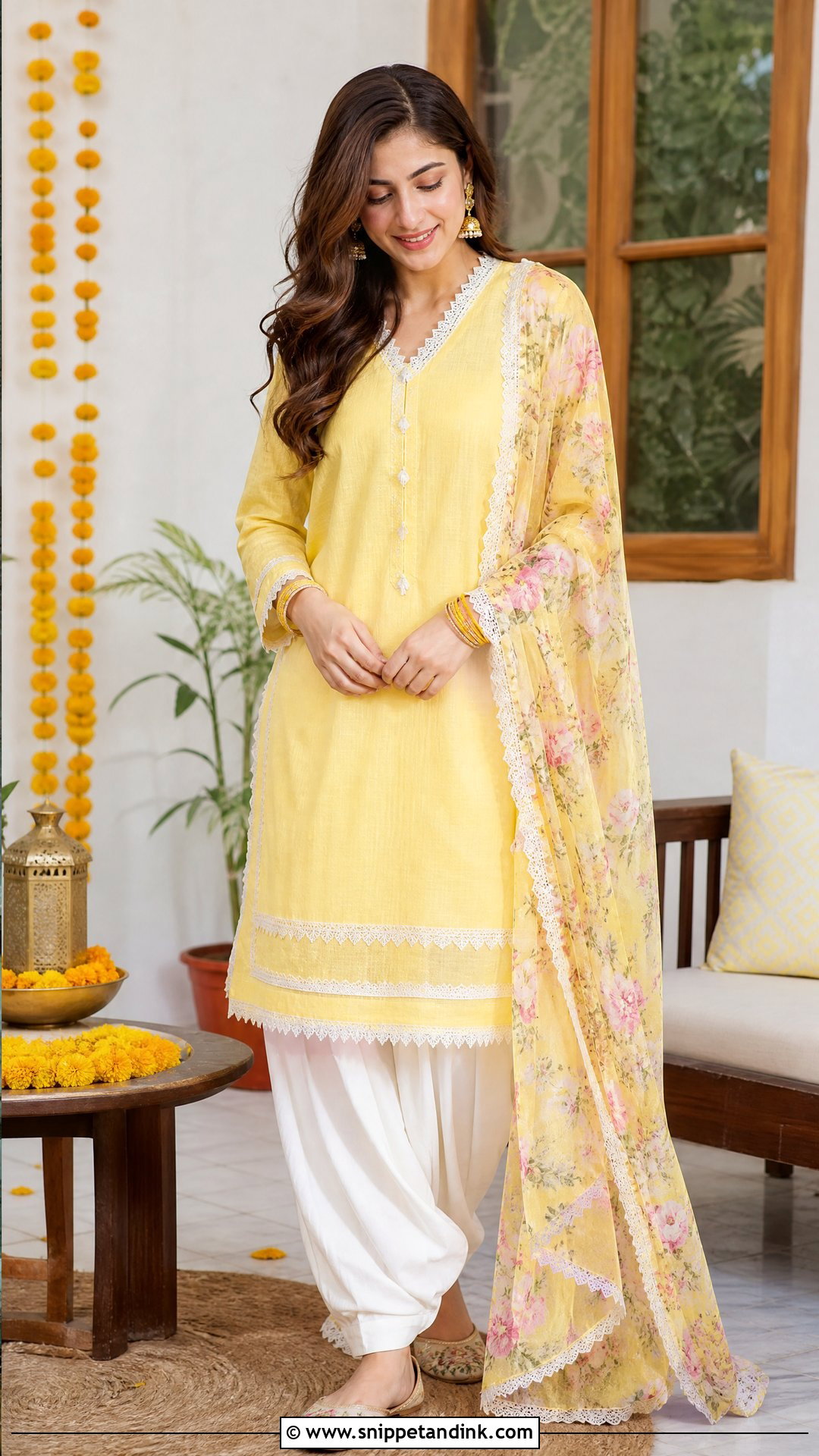
For a small family Mayoon at home, a sunshine yellow cotton shalwar kameez is completely appropriate, and in hot weather it is the most comfortable outfit here. Lace edging and a little embroidery at the neckline are enough. Pair it with a white or matching yellow shalwar and a light chiffon dupatta with a narrow gota border. Cotton also washes easily, so a turmeric mark is not the end of the outfit. Khussa, small earrings and glass bangles keep it festive. A neat braid and soft peach makeup finish a look you can wear again long after the wedding.
Getting Ubtan Out Once the Rasm Is Over
Act the same night if you can. Scrape off any thick paste with a blunt knife, then blot from the back of the fabric with a cloth. Never rub, because rubbing spreads the oil and pushes the turmeric deeper into the weave. Hot water sets the stain, so use cool water only.
On washable cotton, a little dish soap worked in with your fingertips breaks down the oil first, and the yellow mark that remains often fades if the garment dries in direct sunlight, since turmeric is not lightfast. Do not use bleach on colored fabric or near gota; metallic ribbon can discolor and the dye around it can lift.
Silk, chiffon, bandhani and anything with gota, mirrors or zari should go to a dry cleaner as is. Tell them it is turmeric and oil, and point to the exact spots. Once it is clean, store the outfit fully dry, folded in plain cotton or muslin rather than plastic, because trapped moisture tarnishes gota and leaves yellow lines along the folds. Refold it along different lines every few months if it will sit in a trunk until the next family wedding.
Let the Bride Wear the Brightest Yellow
Start from your role. The bride carries the strongest yellow, the heaviest gota and the flower jewelry; sisters and close cousins can go bright in a second color like green or pink; guests stay lighter in embroidery and accessories. Then check the practical side: how warm the venue will be, whether you will sit on the floor, and how much ubtan is likely to land on you. Sit down in the outfit before the day. If the joint pulls, the dupatta slides or the hem touches the floor, fix it then, so on the night you can enjoy every ritual instead of managing your clothes.
You'll Like These Ideas:






Leave a Reply