
Couples who dress as a pair for a traditional engagement, reception entrance or pre-wedding shoot usually start with the fabric, and I think that’s right. In coordinated African attire, the shared cloth does the matching, so each person can keep a silhouette that suits them. Aso oke, Ankara, kente, bazin and lace each behave differently once cut and sewn, and agbada, boubou, gele and fila each bring their own practical questions. Here are 25 pairings, with what I look for when I put a couple together, from heritage weaves to modern tailoring.
Buy Every Yard From the Same Bolt
The most common coordination failure I see has nothing to do with style. One partner buys fabric early, the other buys later, and the two pieces come from different dye batches. Side by side, the shades are visibly off. Hand-woven cloth such as aso oke and kente varies even more, since each weaving run is slightly different.
- Buy the fabric for both outfits in one purchase, including the gele, fila and any extra for alterations.
- Ask each tailor how much fabric they need before you buy. An agbada takes far more cloth than a fitted gown, and a gele needs its own length.
- If two different tailors are sewing, give them a swatch of each other’s fabric and agree on embroidery thread color in advance.
- Hand-woven pieces may need to be ordered from the weaver, which adds weeks before sewing can even start.
I plan for fabric in hand and sewing underway well ahead of the wedding, because a busy tailor in wedding season can take much longer than promised. Leave room for a fitting and a fix.
1. Matching Aso Oke Couple Wedding Outfit
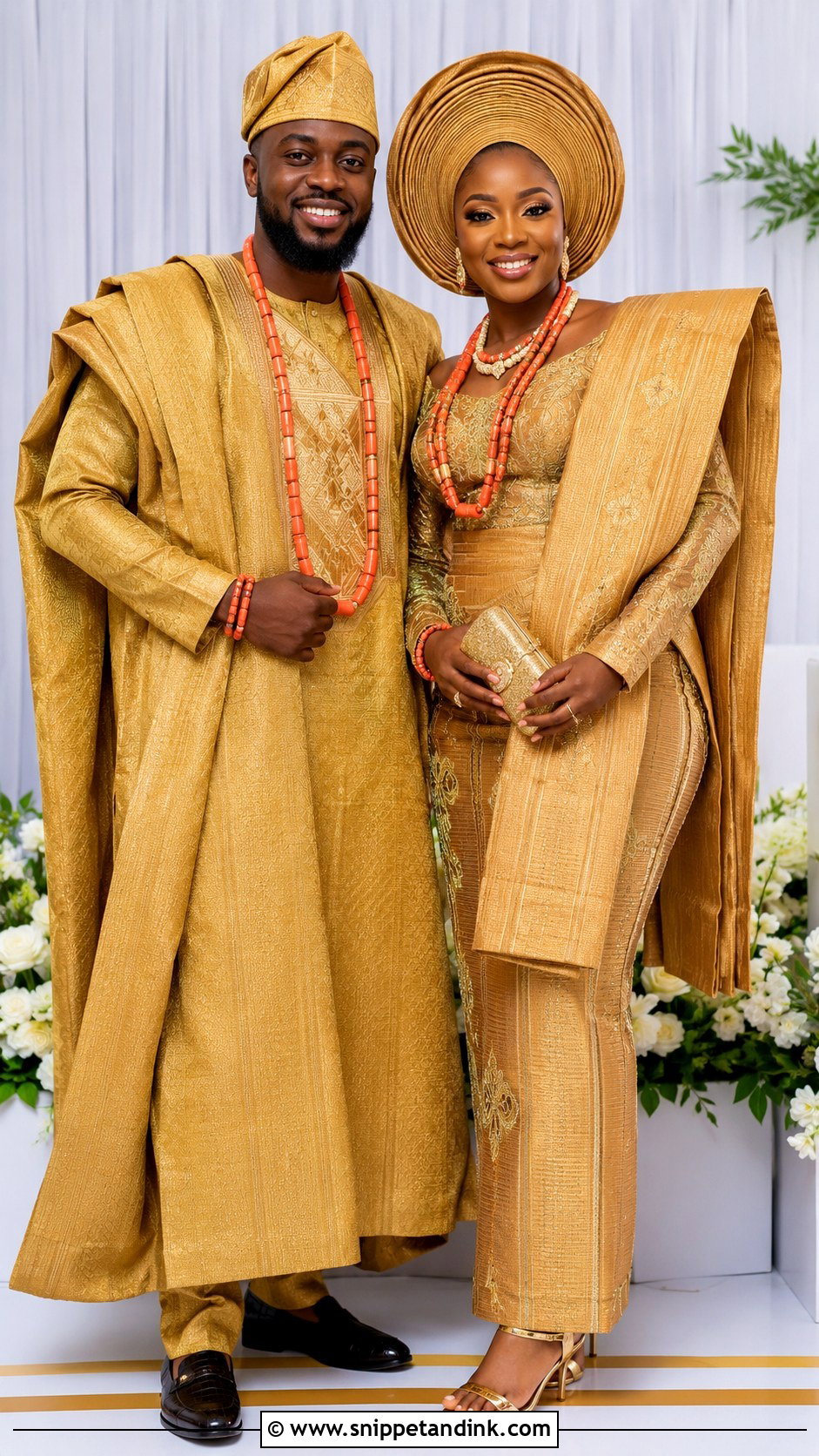
Aso oke is hand-woven in narrow strips that are then sewn together, which gives it a stiff, slightly crisp body. That stiffness is why it makes such a sculptural gele and holds the drape of a grand agbada. For a traditional Nigerian wedding, the bride wears a fitted wrapper and structured blouse, the groom an agbada, inner tunic, trousers and fila from the same cloth. Ivory, gold, burgundy and emerald all suit it. Because the weave is already rich, I keep jewelry simple and the shoes clean.
2. Ankara Dress And Shirt Couple Wedding Outfit
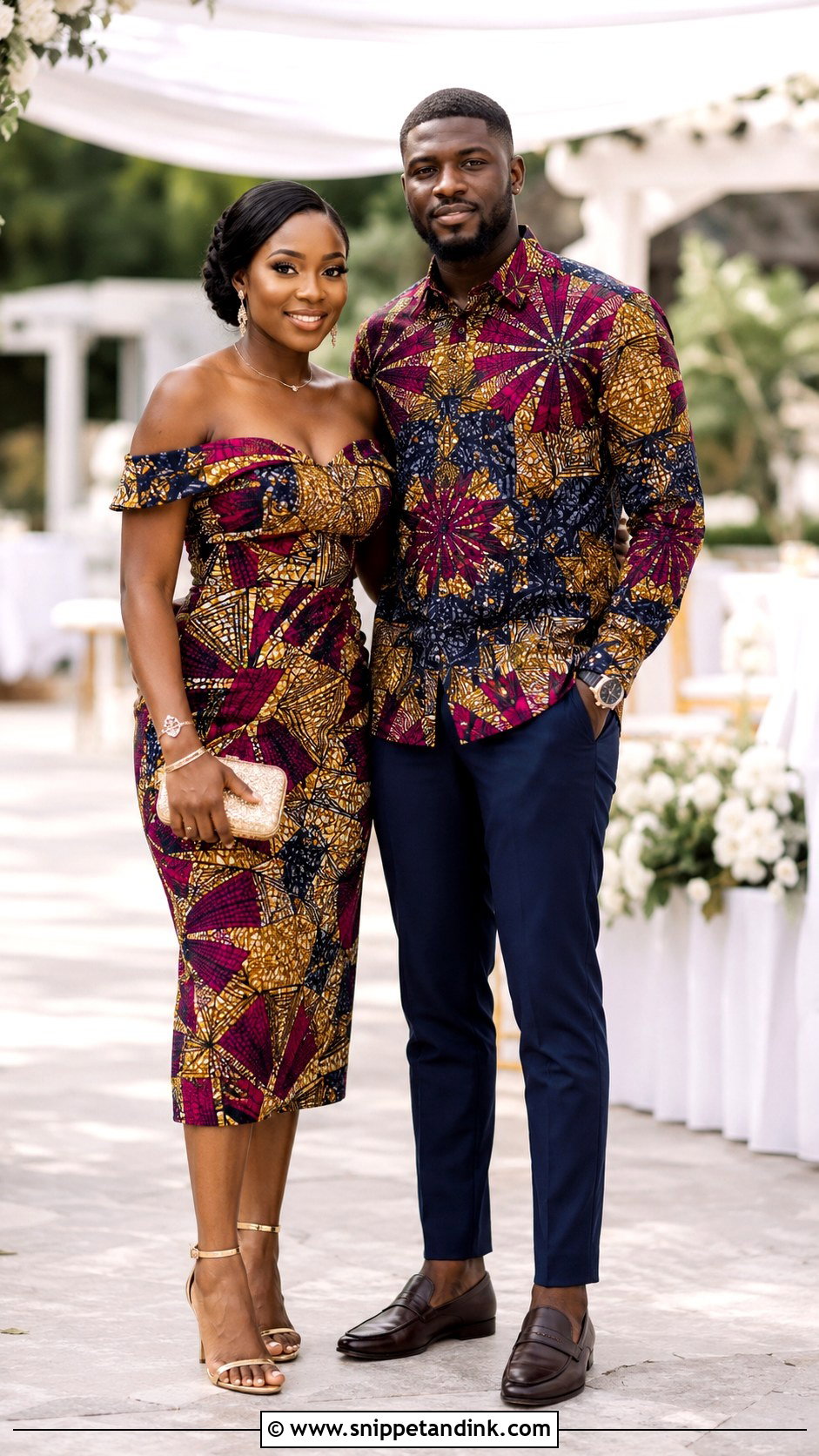
Ankara is wax-printed cotton, and it lets a couple coordinate without wearing identical shapes. The bride might choose a mermaid, wrap or peplum gown; the groom a button-up shirt in the same print with tailored trousers. The trick I use is one shared print plus one repeated solid color, so a navy print grounds into navy trousers and a yellow print into cream or tan. Ankara softens with washing, so if you want a crisp finish on the day, have the tailor sew it new and press it well.
3. Kente Couple Wedding Outfit
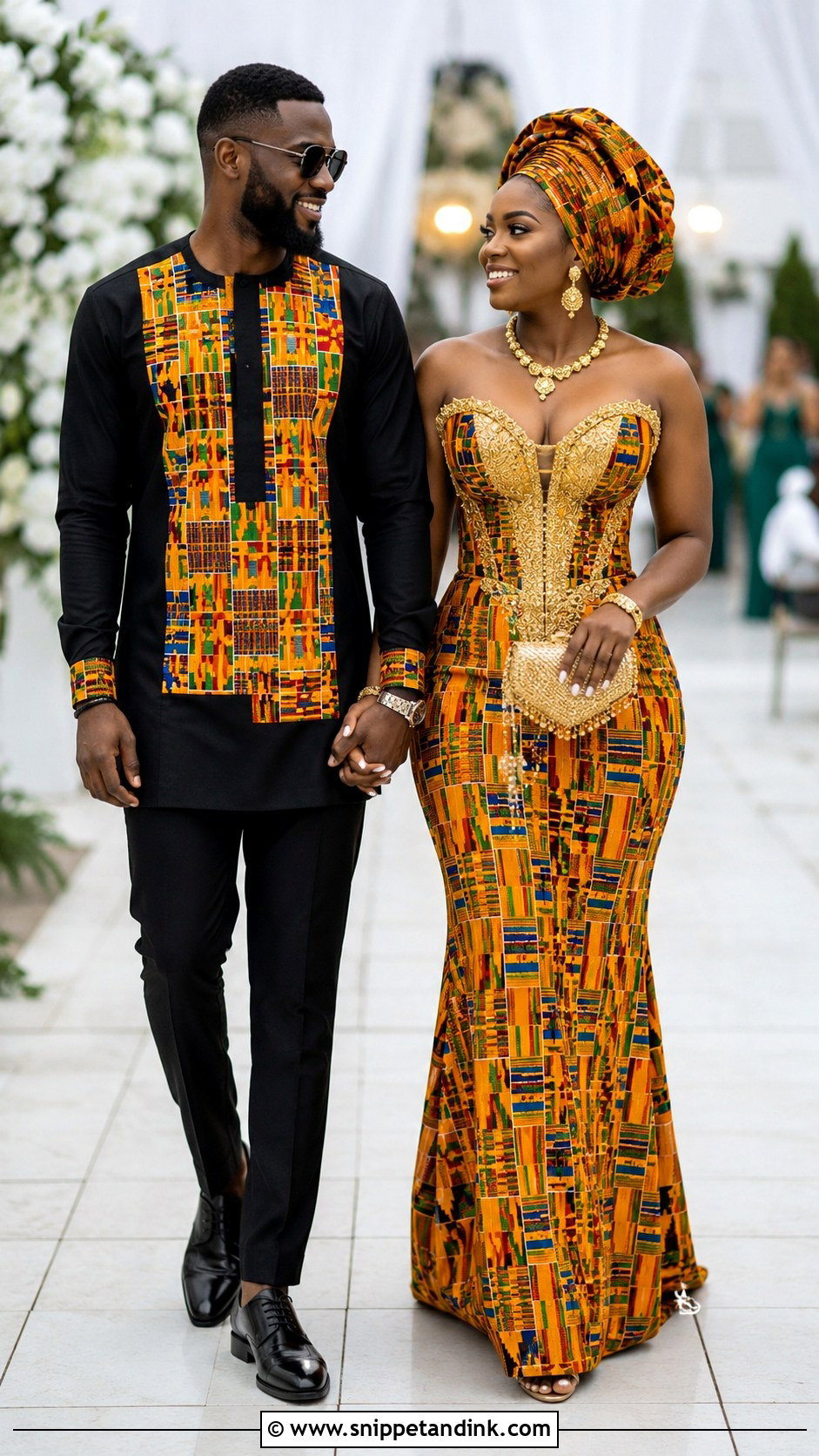
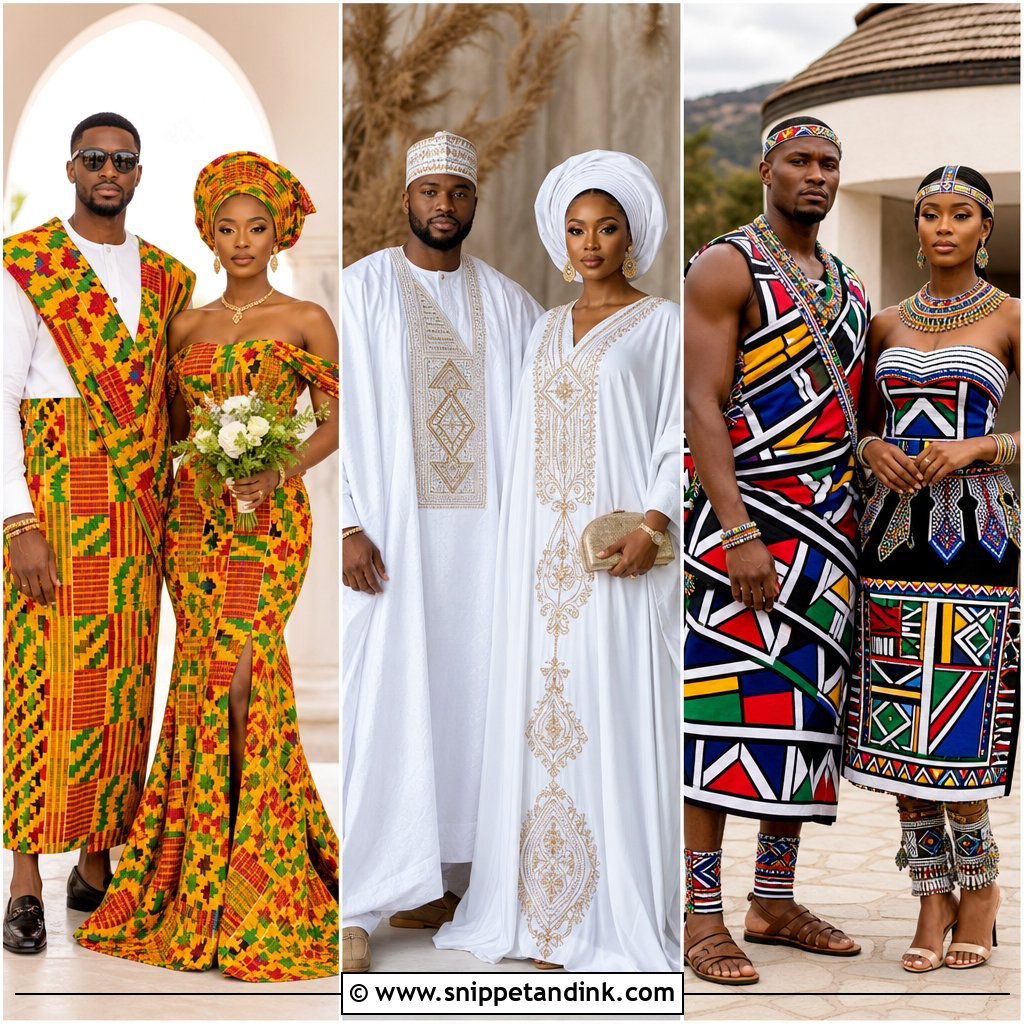
Kente is strip-woven cloth from Ghana, and every color combination carries meaning, so I ask couples whether they want a specific pattern for family reasons before choosing on looks alone. The bride can wear a kente corset gown, a skirt and top, or a draped wrap with a headpiece; the groom a kente stole, a trimmed tunic or full shirt and trousers. Since the cloth is bold, gold jewelry and neutral shoes are plenty. Plain backgrounds let the pattern read clearly in photos.
4. White And Gold African Couple Wedding Outfit
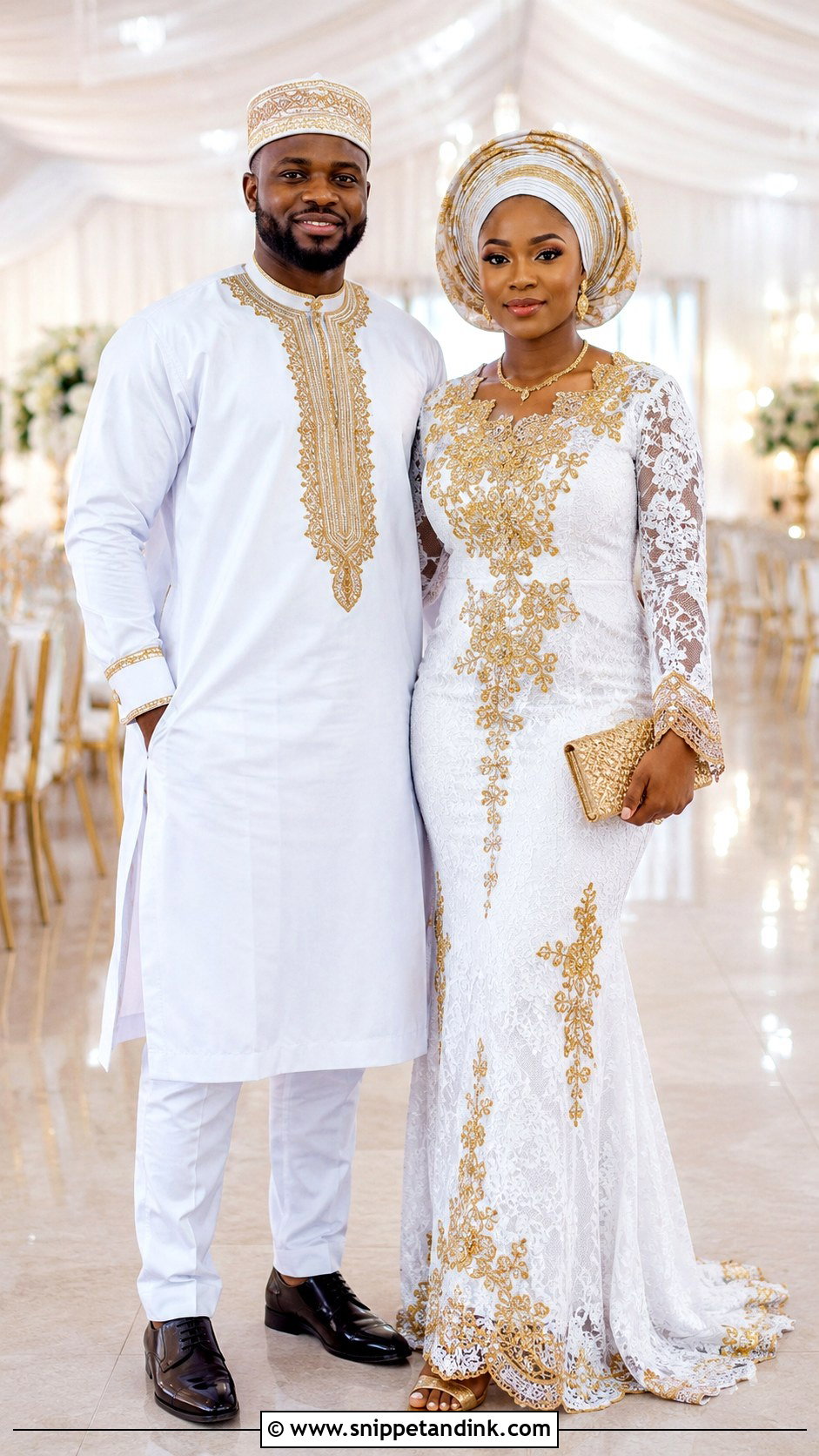
White with gold gives a regal, bridal feel within African formalwear. The bride wears white lace or brocade with gold embroidery and a matching gele; the groom a white kaftan, agbada or long tunic with gold at the neckline and cuffs. Gold thread varies a lot, from warm yellow to pale champagne, so I put both fabrics side by side in daylight before cutting. A mismatch that looks minor in a shop is obvious in a couple portrait. Pearl or bead jewelry for the bride and a trimmed cap for the groom finish it.
5. Red African Couple Wedding Outfit
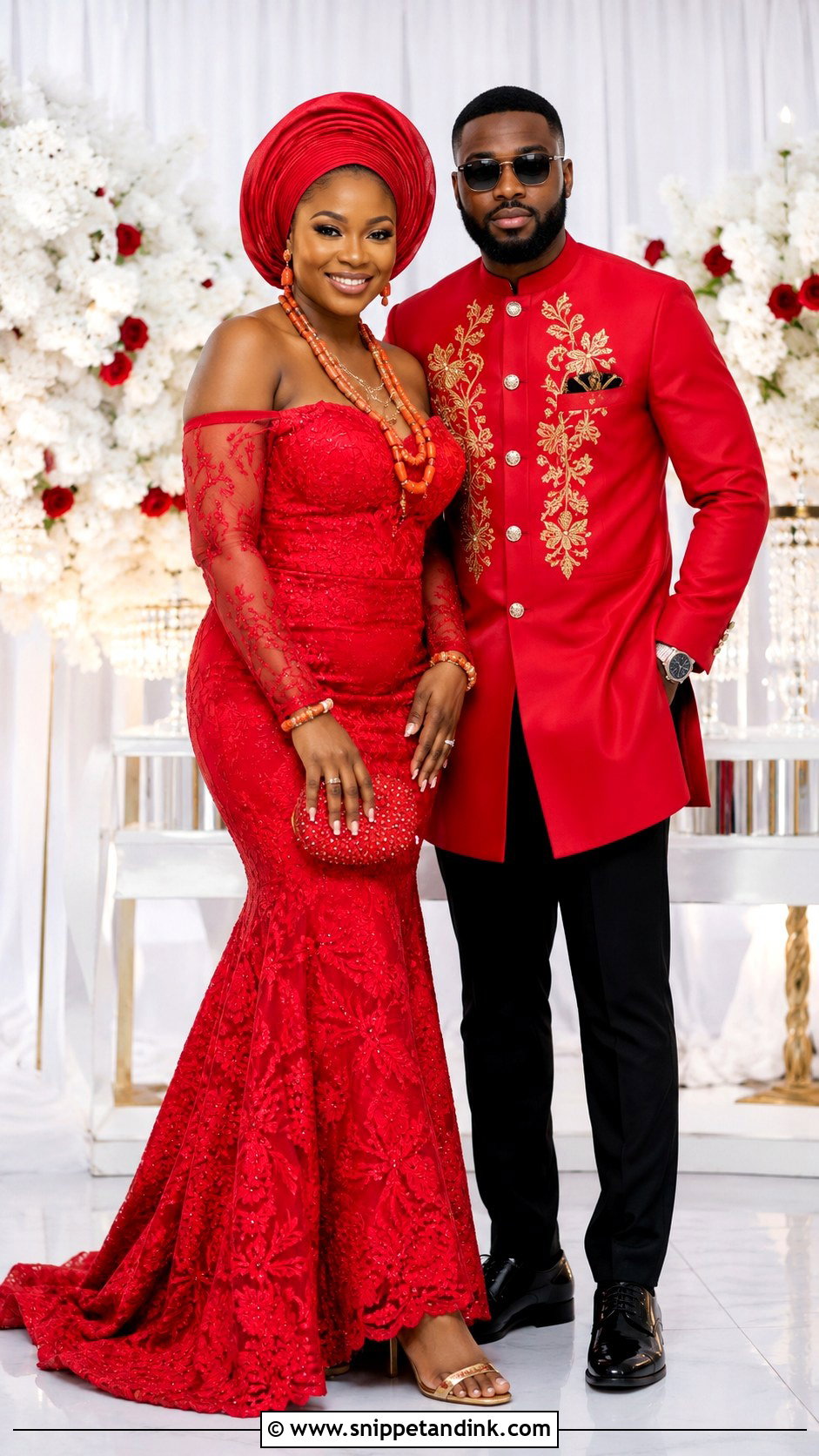
Red carries celebration in many West African traditions, and it needs texture to look rich rather than flat. Lace, jacquard, velvet and brocade all give depth. The bride can wear a red lace gown or wrapper set with coral beads; the groom a red embroidered tunic or agbada with black, cream or gold trousers. Red dyes vary from orange-red to blue-red between fabric types, so buy the couple’s red from the same supplier if you can. Keep the accessories to gold, ivory or deep brown.
6. Royal Blue African Couple Wedding Outfit
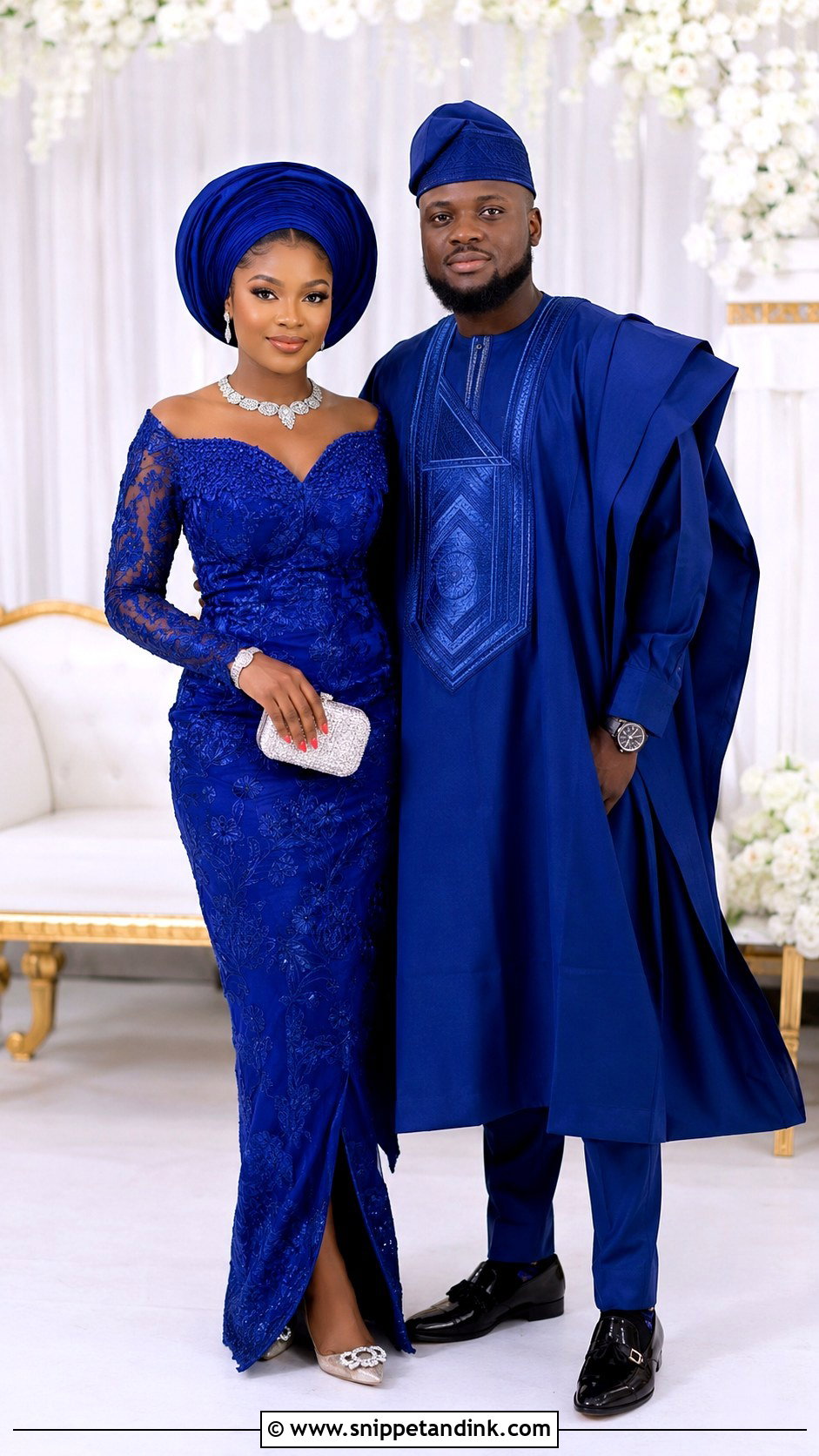
Royal blue is one of the easiest colors to coordinate because it pairs with silver, gold, white or black accents. The bride might wear a blue gown with lace sleeves or beading; the groom a blue agbada, embroidered kaftan or tailored suit with print trim. To tie it together, I repeat the exact same blue in both outfits and choose one shared accent that shows up in the jewelry, the caps and the clutch.
7. Emerald Green African Couple Wedding Outfit
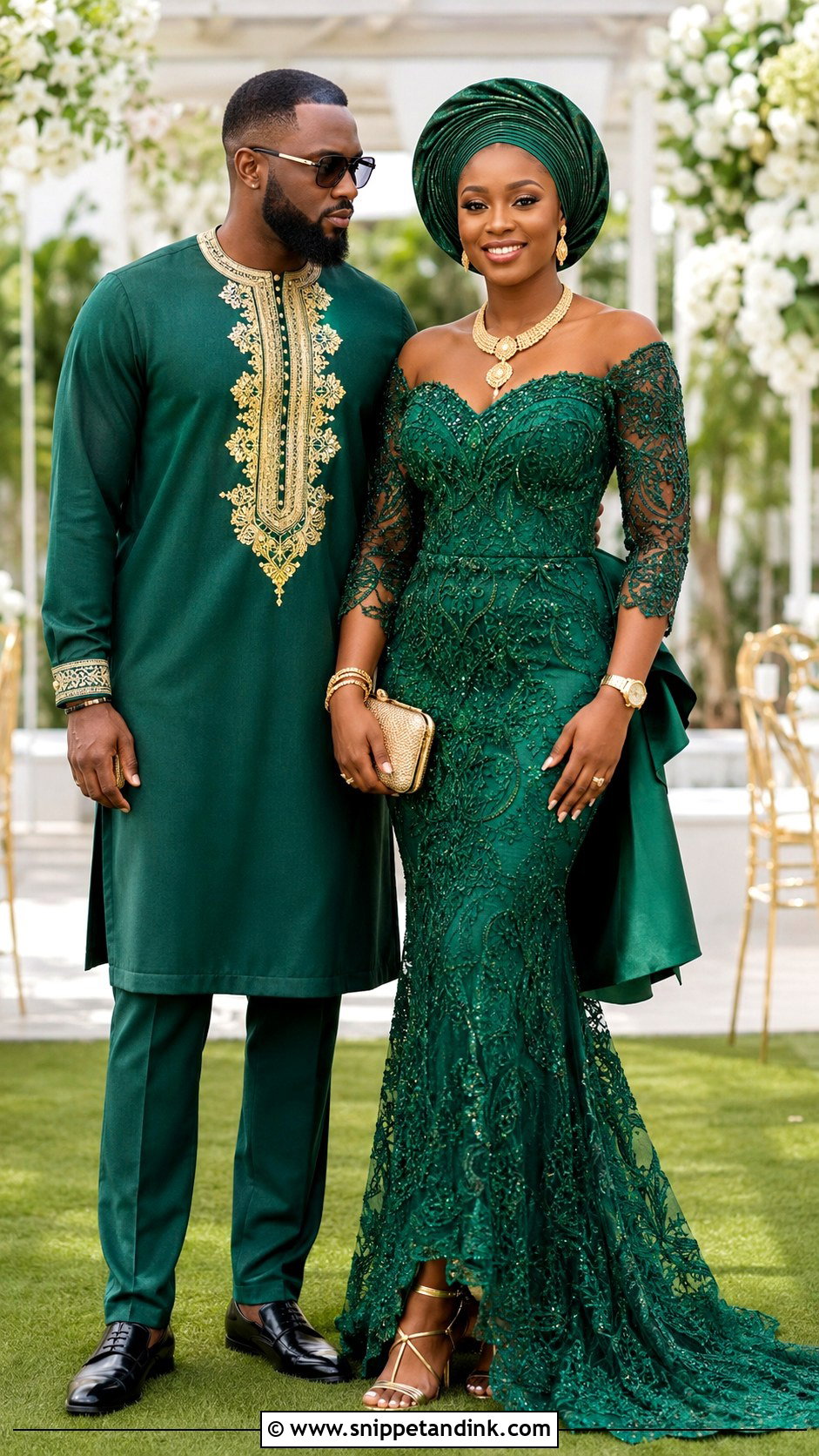
Emerald looks rich at an evening reception and formal ceremony. The bride wears emerald lace, a satin wrapper set or Ankara with gold jewelry and a matching gele; the groom an emerald kaftan, agbada or blazer with embroidery. I like using the same fabric for the small pieces, the groom’s cap and the bride’s headwrap, because that echo is what makes two different outfits read as a pair from across a hall. Gold accessories warm it; black shoes ground it.
8. Black And Gold African Couple Wedding Outfit
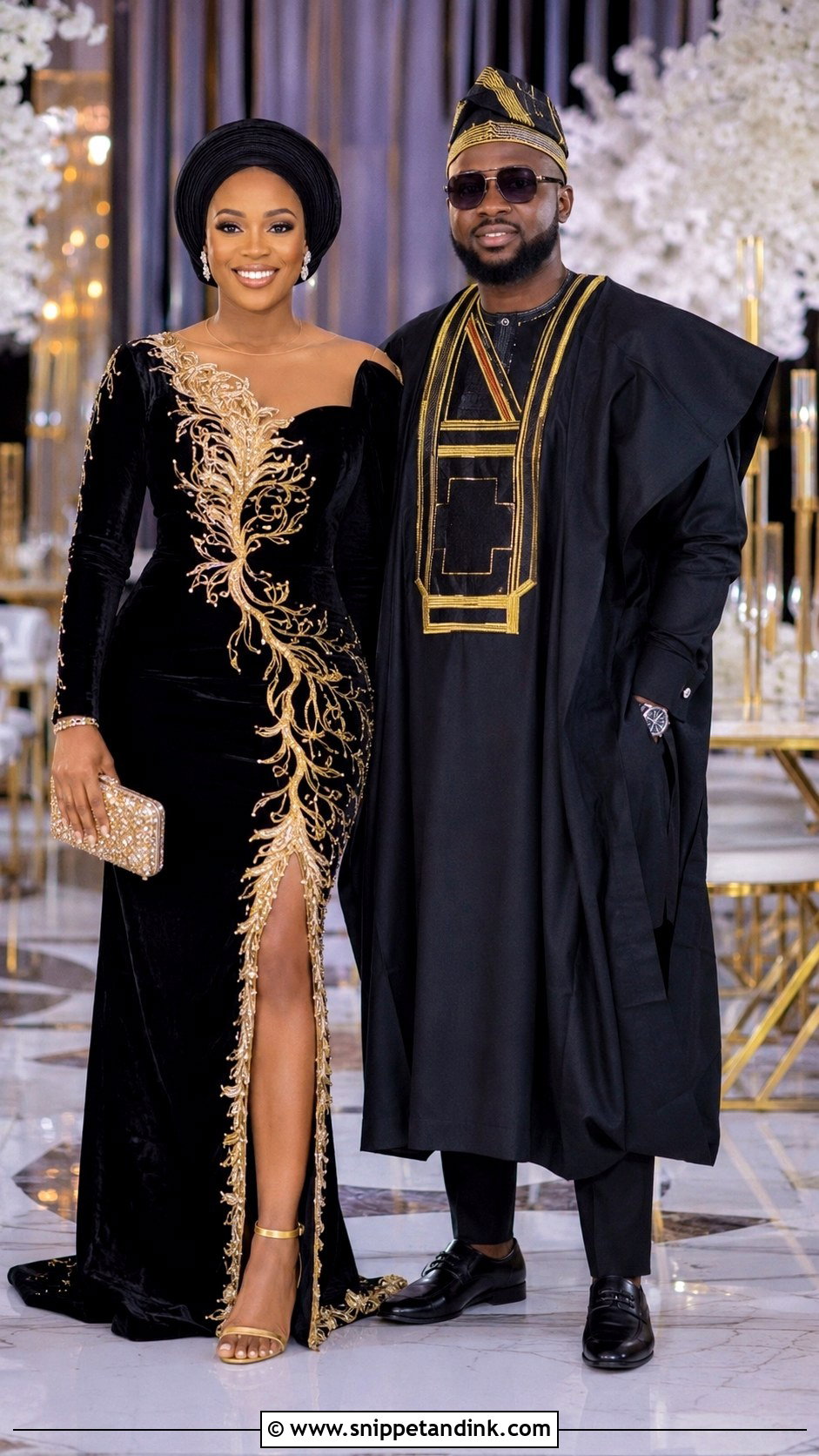
Black and gold looks dramatic and formal for evening receptions. The bride in black lace or velvet with gold embroidery; the groom in a black agbada, kaftan or suit with gold trim. With this pairing, fabric quality shows more than anything, since cheap black synthetics look gray under flash. I check fabric under a phone flash before buying for that reason. A matching gold gele and fila tie it together, with clean tailoring and polished shoes.
9. Burgundy African Couple Wedding Outfit
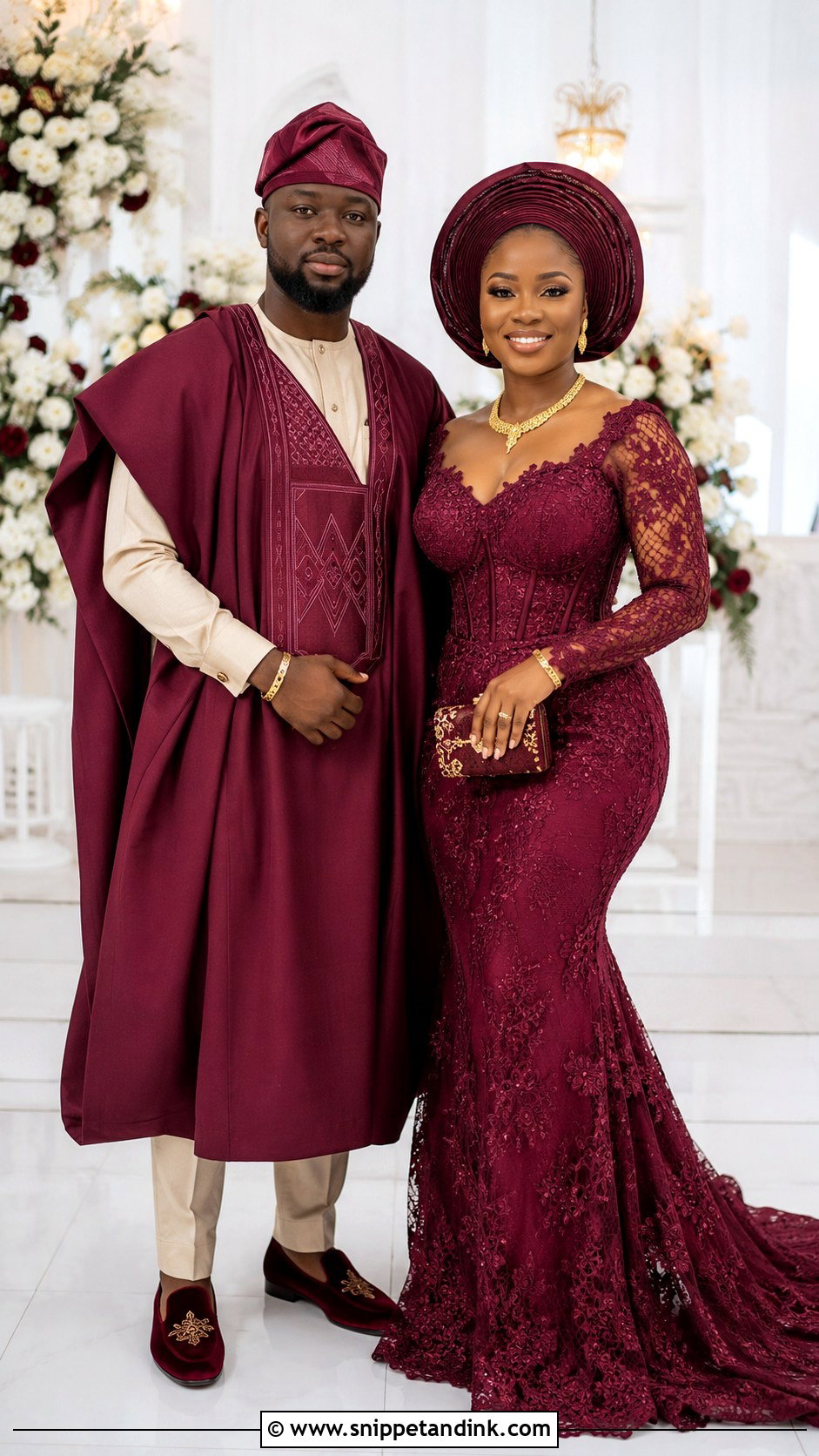
Burgundy reads deep and warm without shouting. The bride can wear a burgundy corset gown, lace wrapper set or satin dress with a matching gele; the groom an agbada, kaftan or embroidered shirt with cream or black trousers. It pairs well with gold, champagne and ivory. Coral beads look especially good against it. On darker skin tones, I lean toward a burgundy with a slight red undertone, since very brown burgundies can look muddy in evening photos.
10. Purple African Couple Wedding Outfit
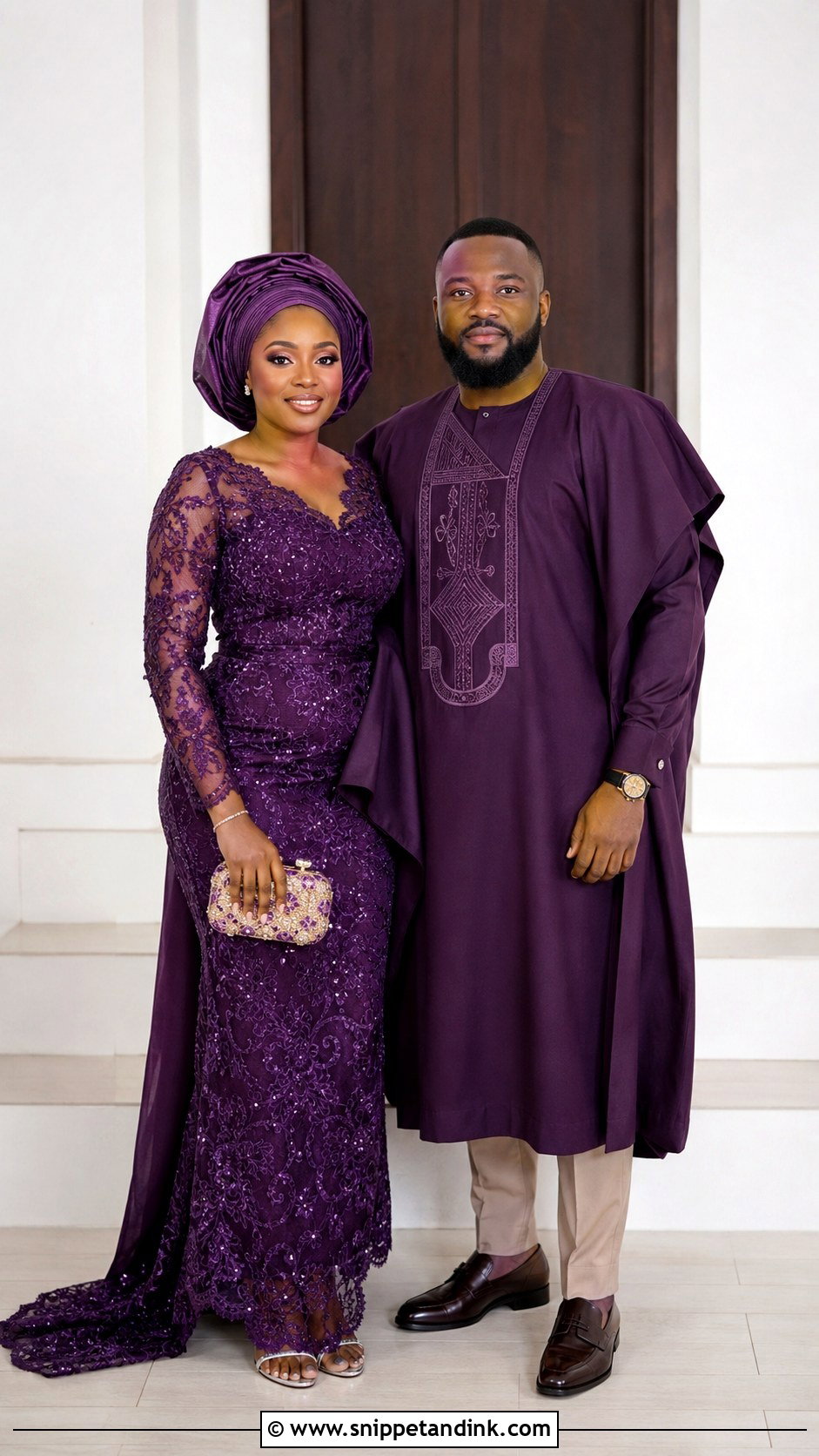
Purple ranges from royal to romantic depending on shade. Deep purple feels formal; lilac and lavender feel softer and more modern. The bride might wear purple lace, aso oke or Ankara; the groom a purple agbada, kaftan or tailored jacket with neutral trousers. Pick one main purple tone for both of you and keep everything else simple. Lilac pairs well with ivory or pale gold, while deep purple can take bolder gold.
11. Beige African Couple Wedding Outfit
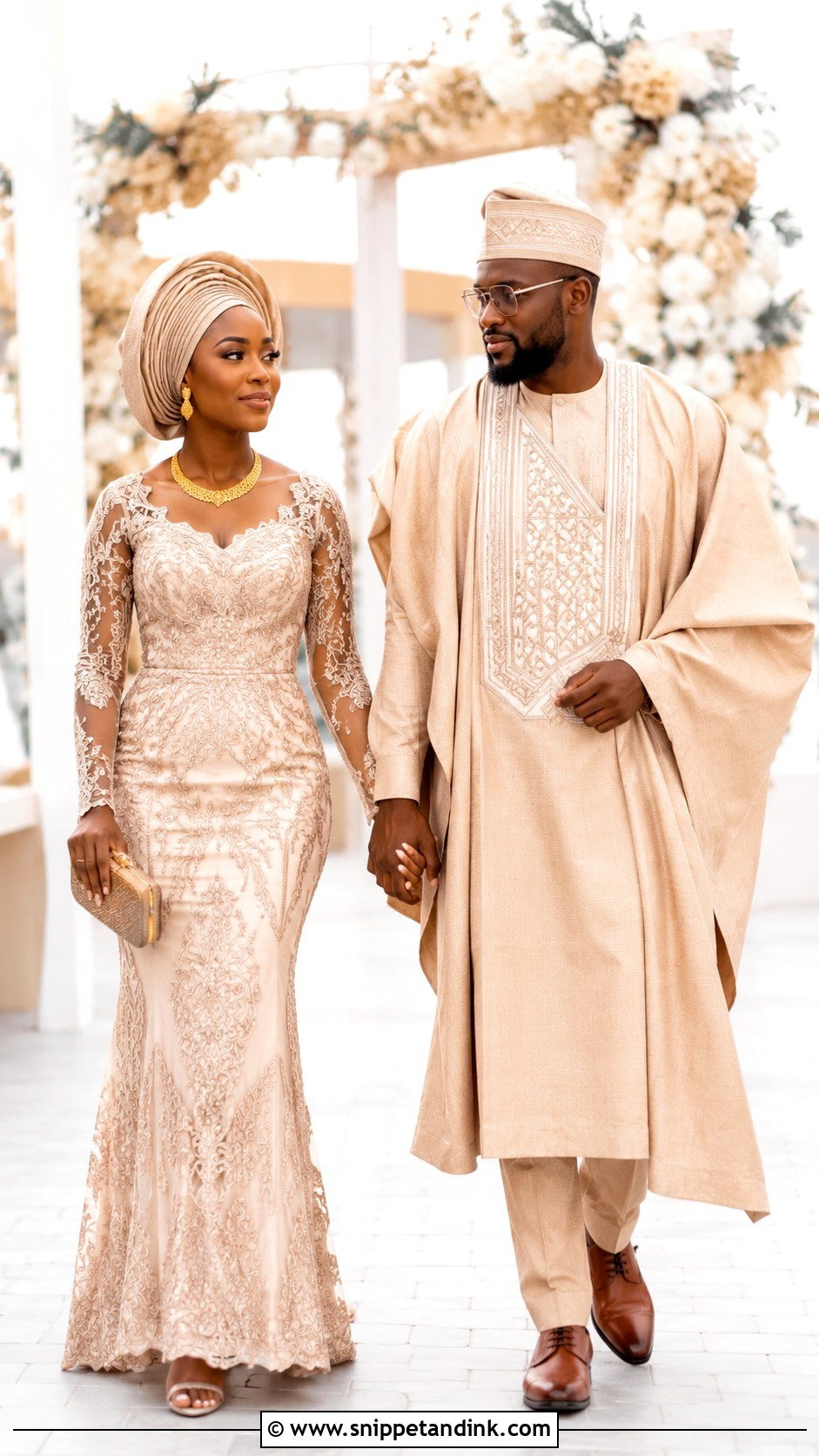
Neutral outfits need texture, otherwise beige looks unfinished in photos. Lace, brocade, woven cloth, embroidery and beadwork all add depth. The bride can wear a beige lace gown, satin skirt set or modest kaftan with a matching headwrap; the groom a beige agbada, tunic or embroidered suit with brown or cream shoes. Daytime outdoor ceremonies suit it well. A touch of gold or bronze stops the palette from going flat.
12. Pink African Couple Wedding Outfit
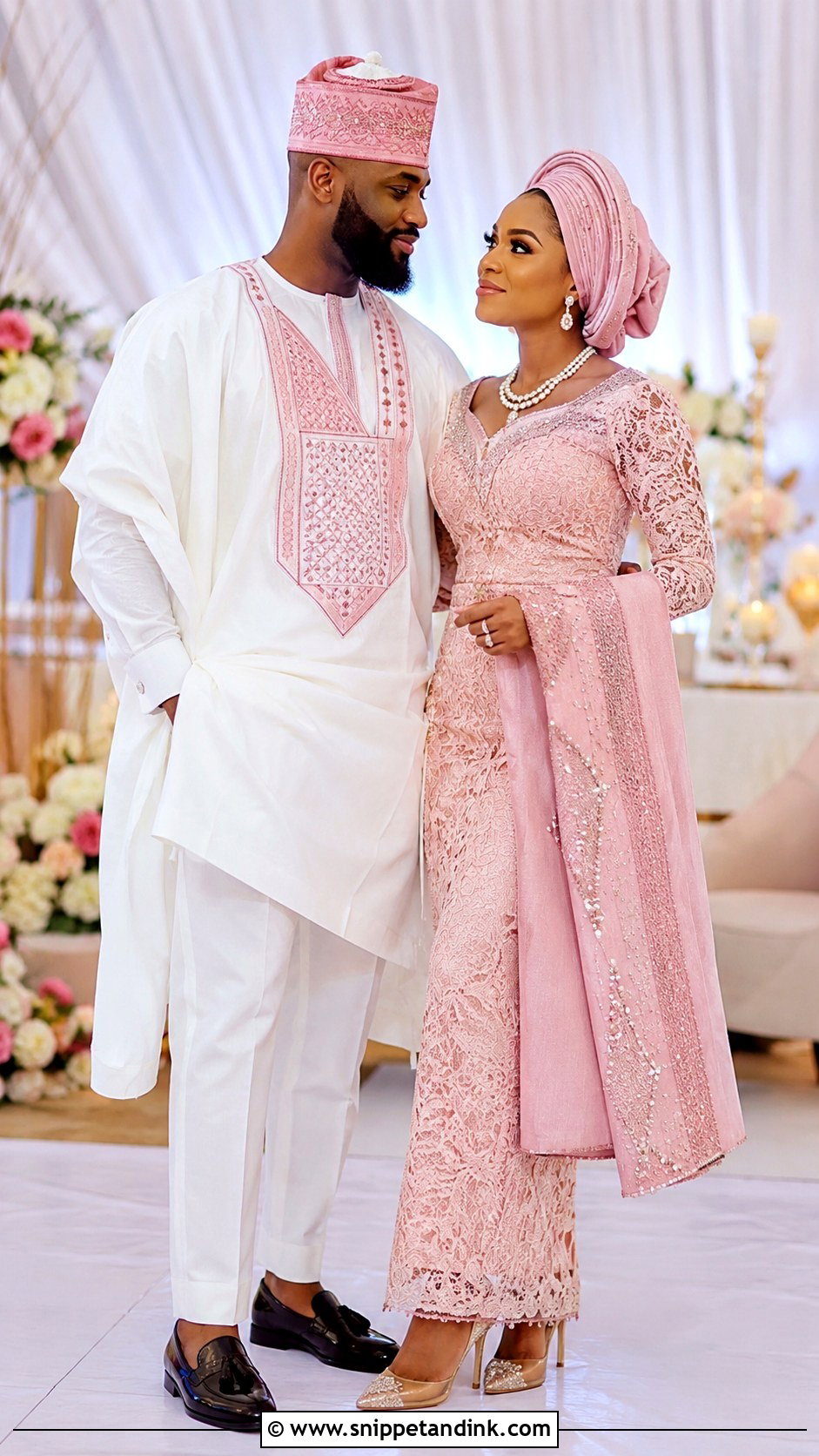
Pink can look youthful or grown-up, and the difference comes down to structure. Soft blush with champagne and pearls looks refined; hot pink with gold and cream feels festive. The bride wears blush lace, a hot pink wrapper set or a rose Ankara dress with gele; the groom a pink kaftan, a pink-trimmed agbada or a white tunic with pink detail. I keep the shapes tailored for pink, since loose cuts in a bright pink can look more playful than the occasion calls for.
13. Yellow African Couple Wedding Outfit
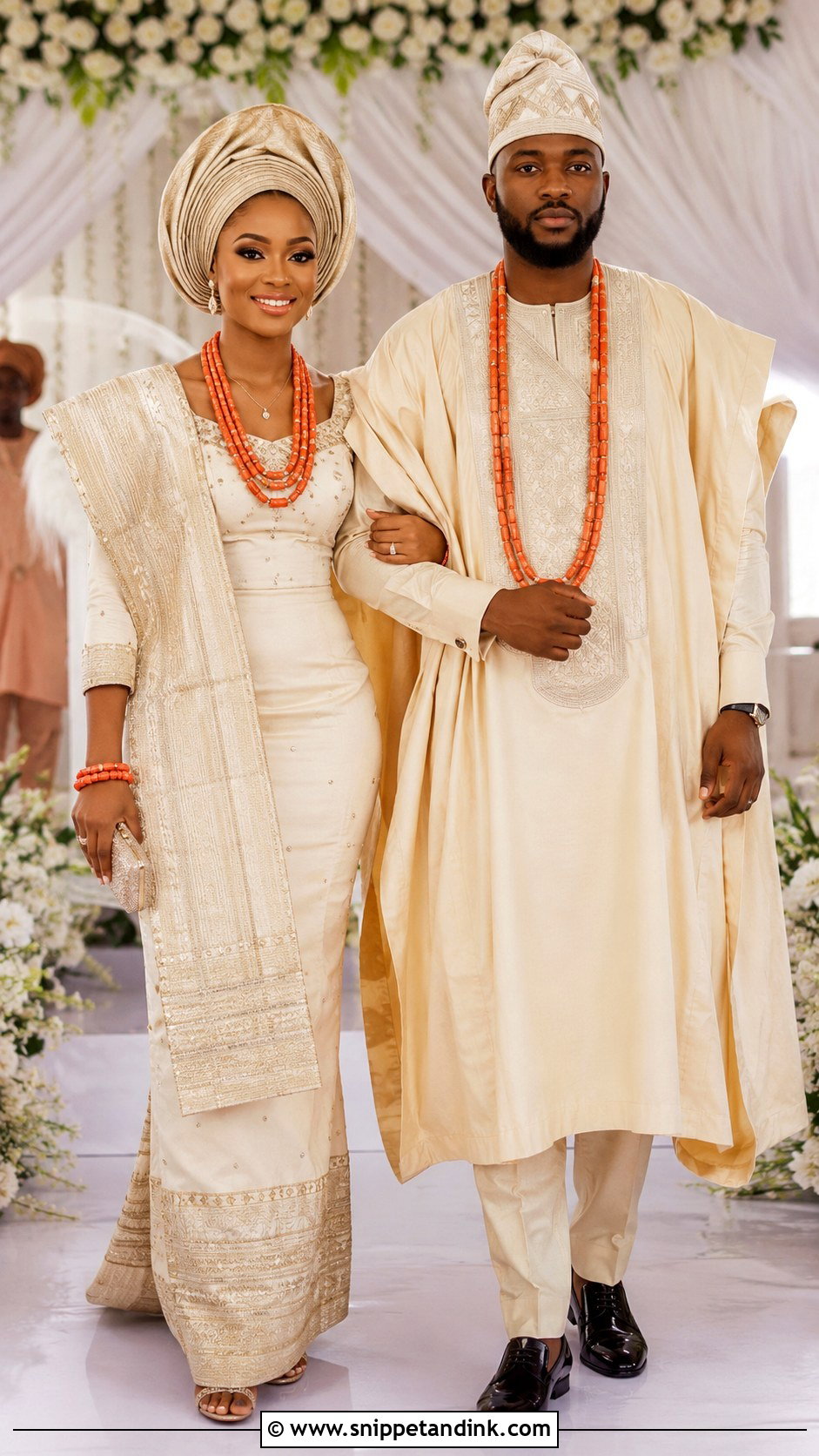
Yellow is cheerful and works best in daylight, where it glows. Under warm indoor lighting it can look orange, so I’d reserve bright yellow for daytime or outdoor events. The bride can wear a yellow Ankara gown, lace dress or skirt set with a bold headwrap; the groom a yellow print shirt, kaftan or agbada with neutral trousers. Balance it with cream, white, brown or gold, and keep the accessories simple if the shade is strong.
14. Navy Blue African Couple Wedding Outfit
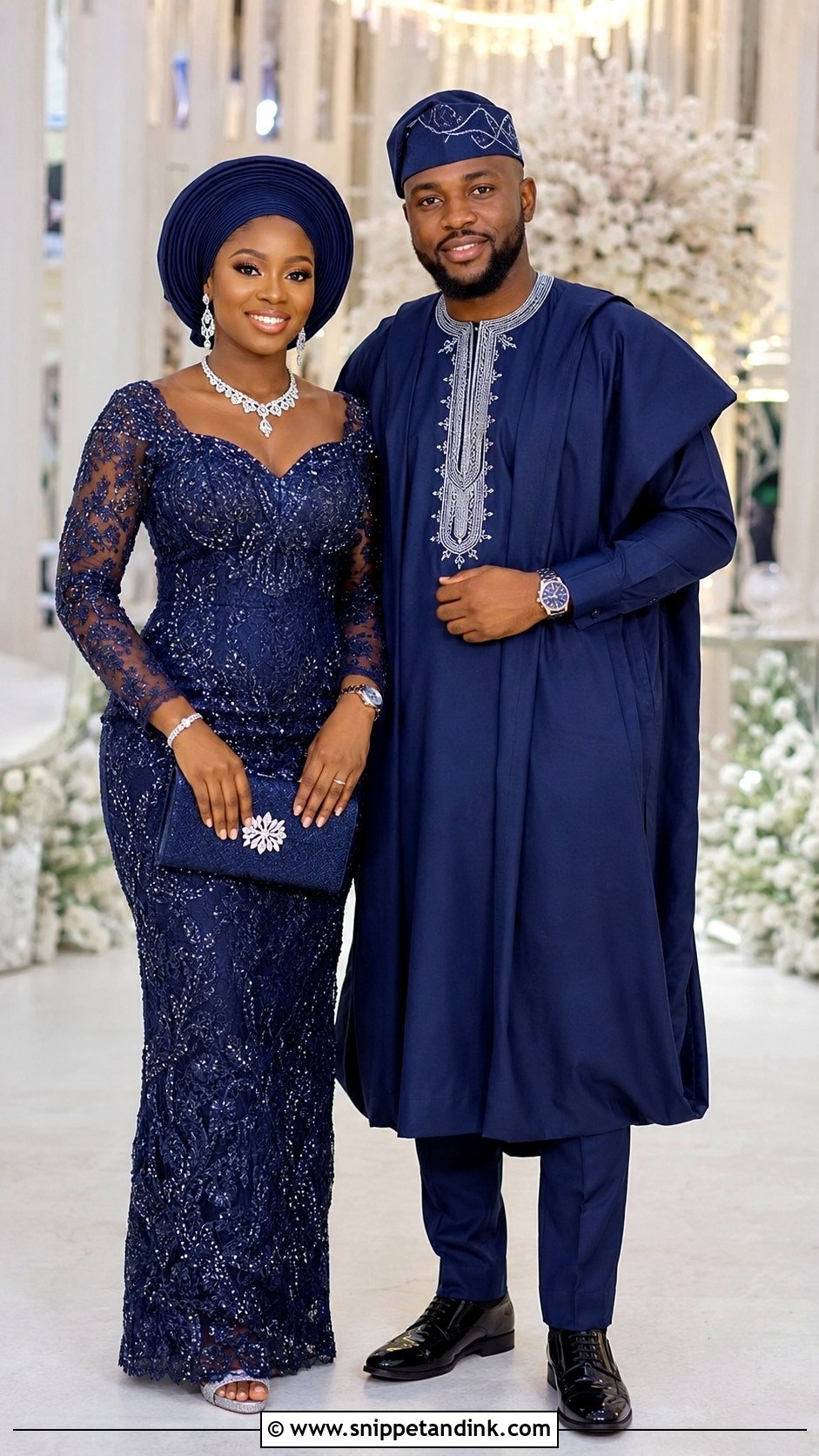
Navy suits couples who want color but nothing loud. The bride wears navy lace, Ankara or a brocade wrapper set with silver, pearl or gold; the groom coordinates with a navy kaftan, agbada, or a suit with print details. It flatters most skin tones and works day or night. Repeat navy in the bride’s gele and the groom’s cap, then let one shared metallic tie the two outfits together.
15. Dashiki Couple Wedding Outfit
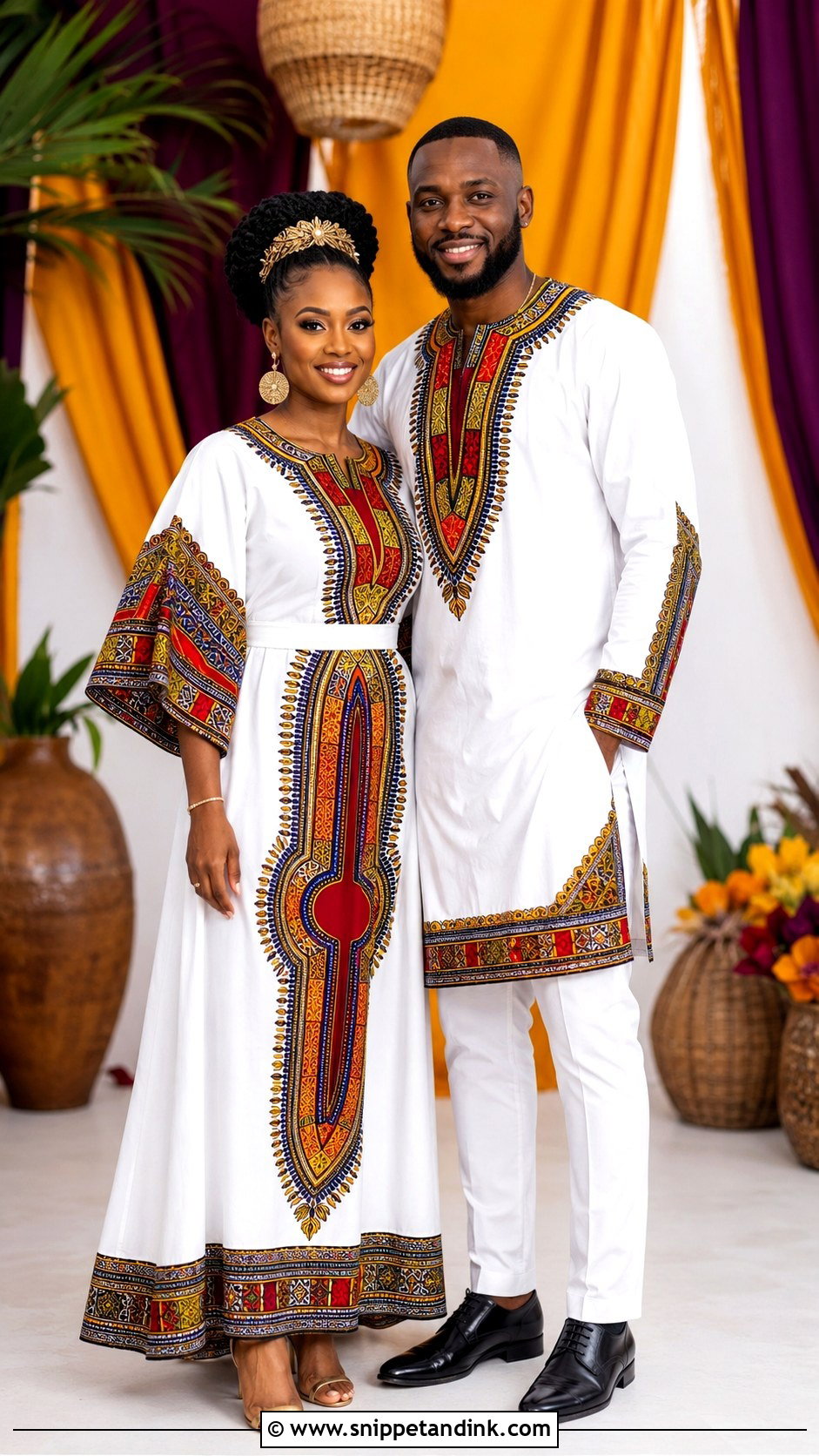
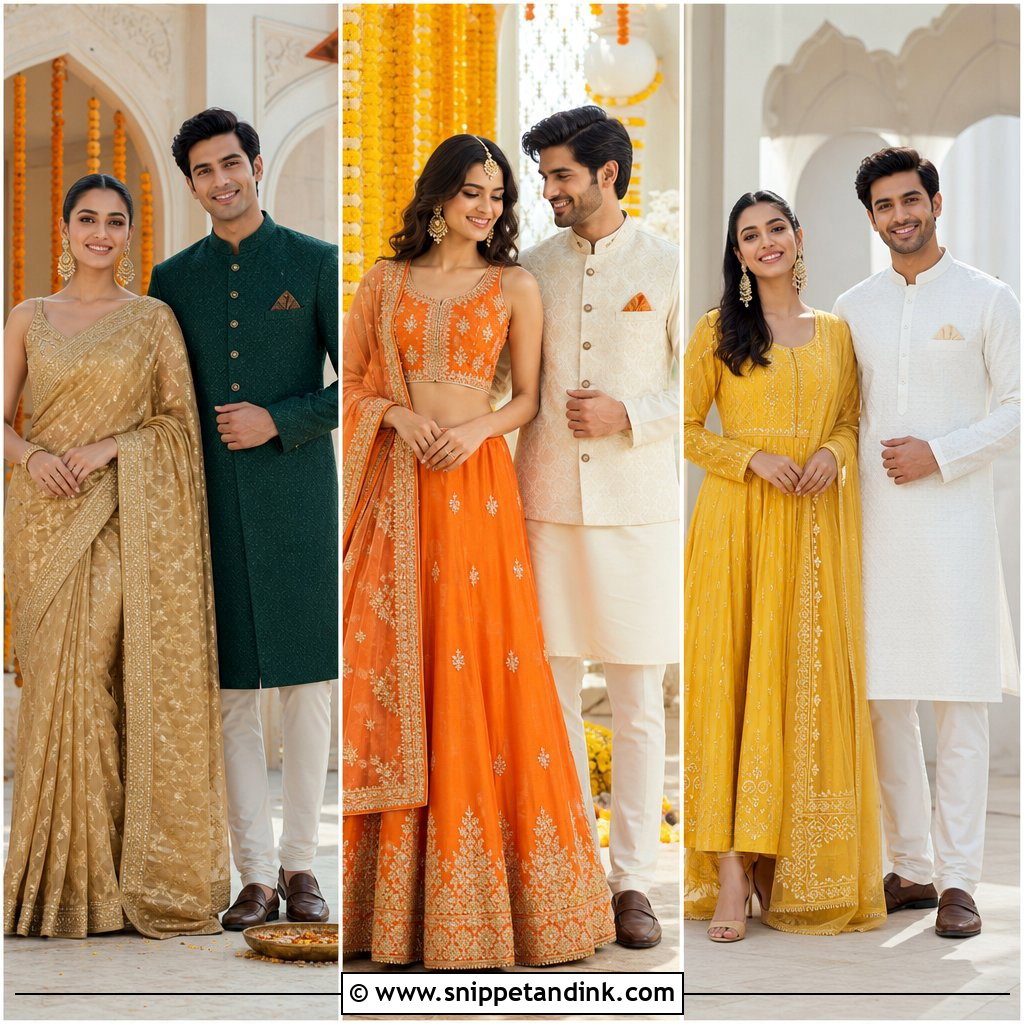
The dashiki’s printed neckline panel is instantly recognizable, and the loose cut keeps it comfortable. The bride can wear a dashiki-inspired maxi, fitted gown or kaftan; the groom a dashiki shirt or long tunic with matching trousers and dress shoes. For a wedding, I choose a heavier cotton and have the tunic tailored rather than buying it boxy off the shelf; that alone makes it look formal. Deeper base colors such as navy, burgundy, emerald or black also help it feel dressed up.
16. Agbada And Gown Couple Wedding Outfit
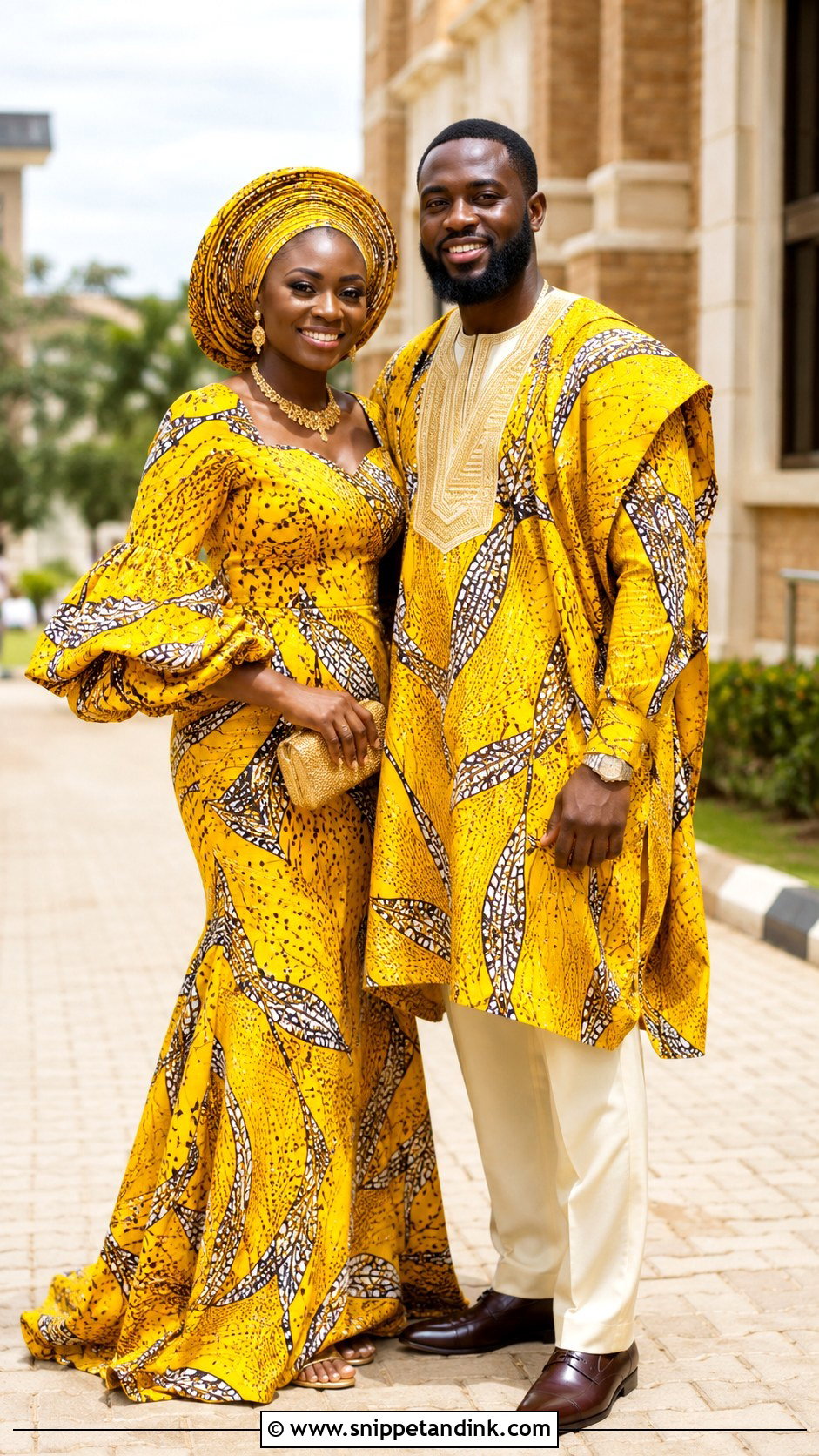
This is the classic Nigerian pairing because both outfits carry presence: the bride’s gown is fitted and the groom’s agbada is grand and voluminous. Lace, beading or aso oke on the gown, with matching or coordinating fabric on the agbada. To link them, I repeat the embroidery color or a fabric trim on both. A matching gele and fila complete it, and it is the pairing I’d choose for a grand entrance or formal portraits.
17. Boubou Couple Wedding Outfit
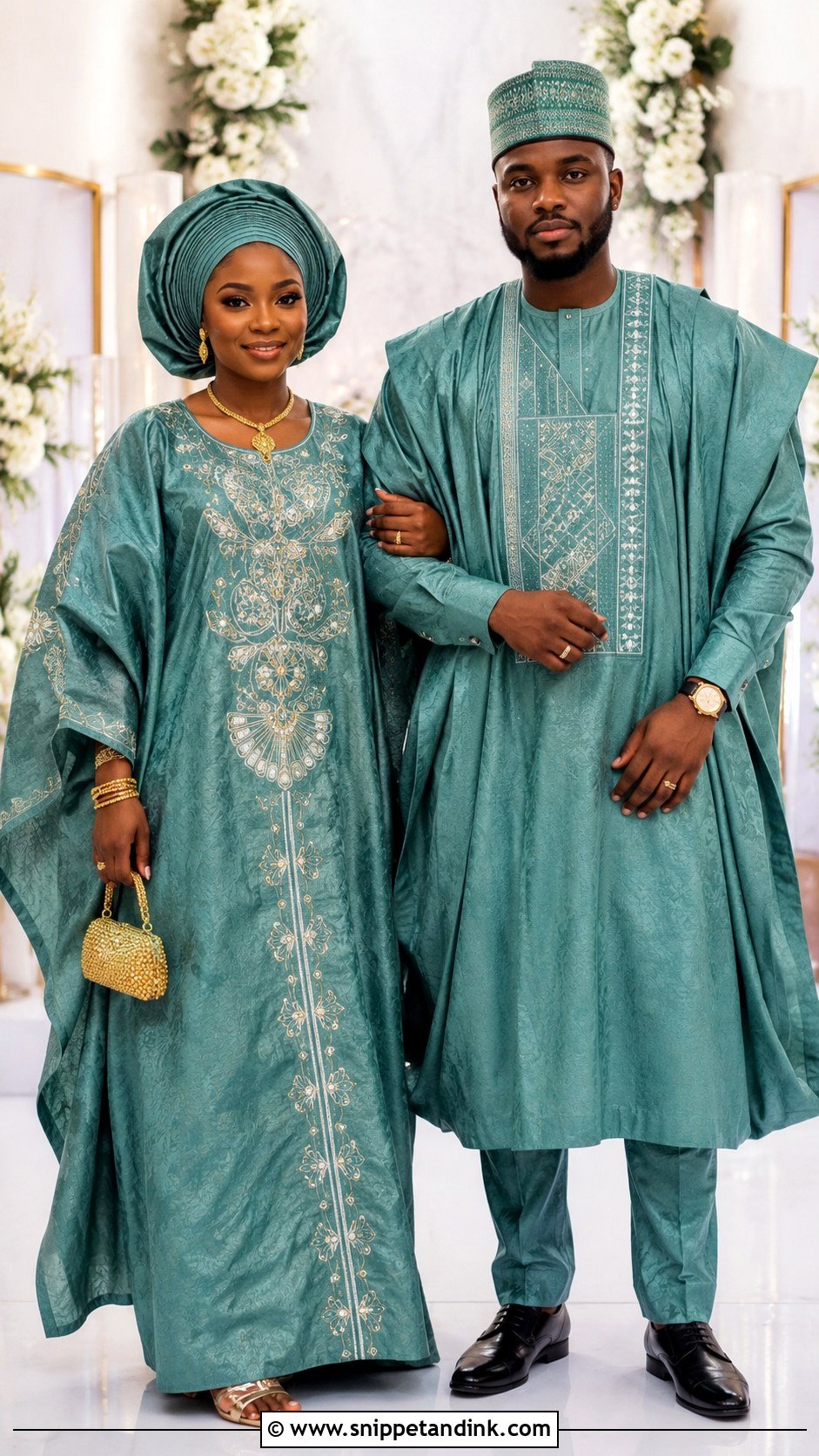
A boubou is a wide, flowing robe common across West Africa, and it is the most comfortable formal outfit in this list for long, hot ceremonies. The bride wears an embroidered boubou with a matching headwrap and heeled sandals; the groom a men’s boubou or grand boubou with trousers and a cap. Bazin, a polished damask cotton, gives it a slight sheen and keeps embroidery crisp. Ivory, teal, gold, navy and olive suit it.
18. Lace African Couple Wedding Outfit
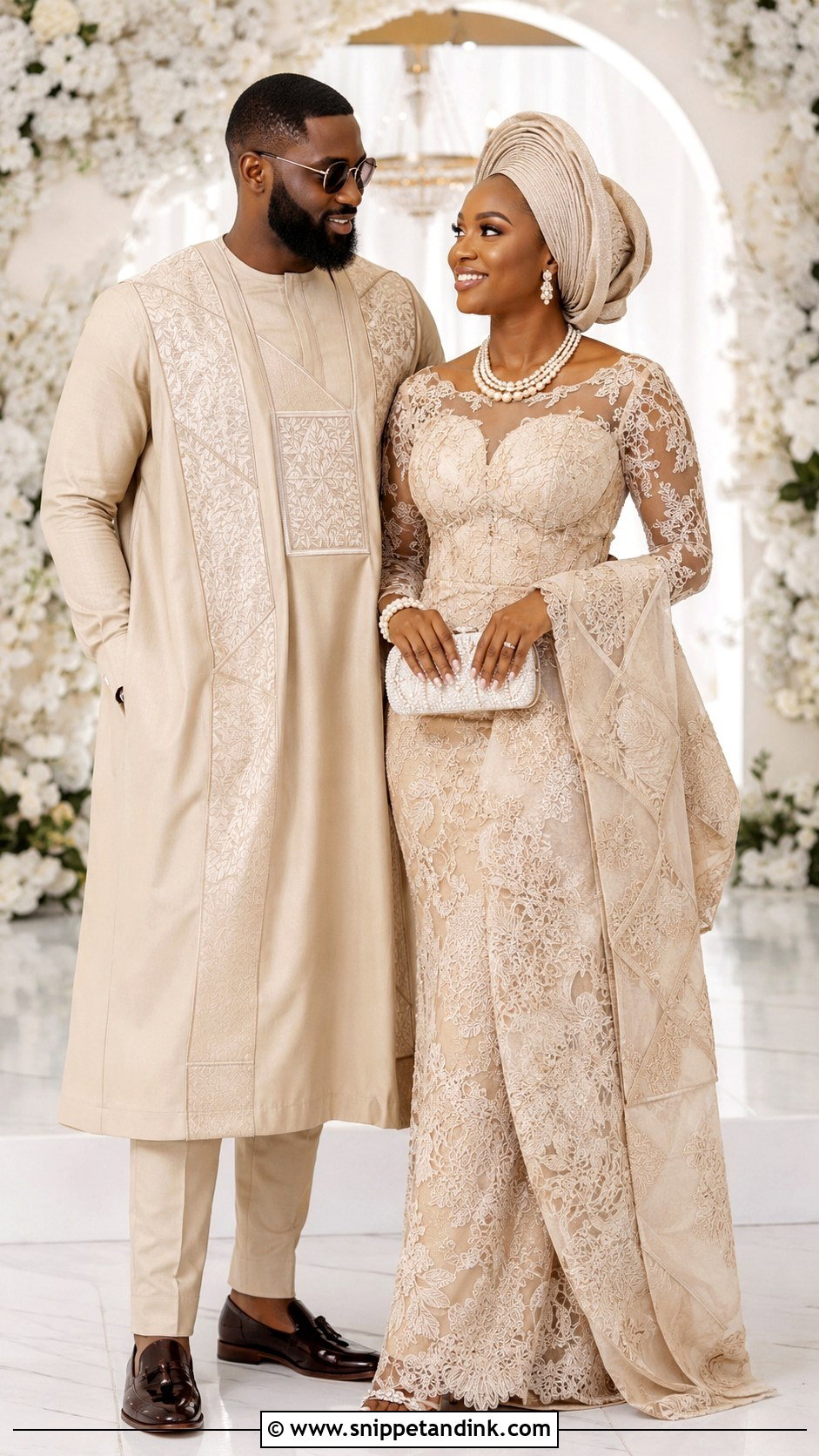
All-lace on both partners can look heavy, so I balance it. If the bride’s lace is very detailed, the groom wears lace trim or a lace yoke on a plain kaftan rather than full lace. The bride can choose a lace gown, a lace wrapper set or a lace blouse with skirt and gele; the groom matches the embroidery color. Lace works in white, champagne, burgundy, green, navy and blush. Corded or beaded lace is heavier than it looks, so check the weight before choosing it for an outdoor ceremony.
19. Sequin African Couple Wedding Outfit
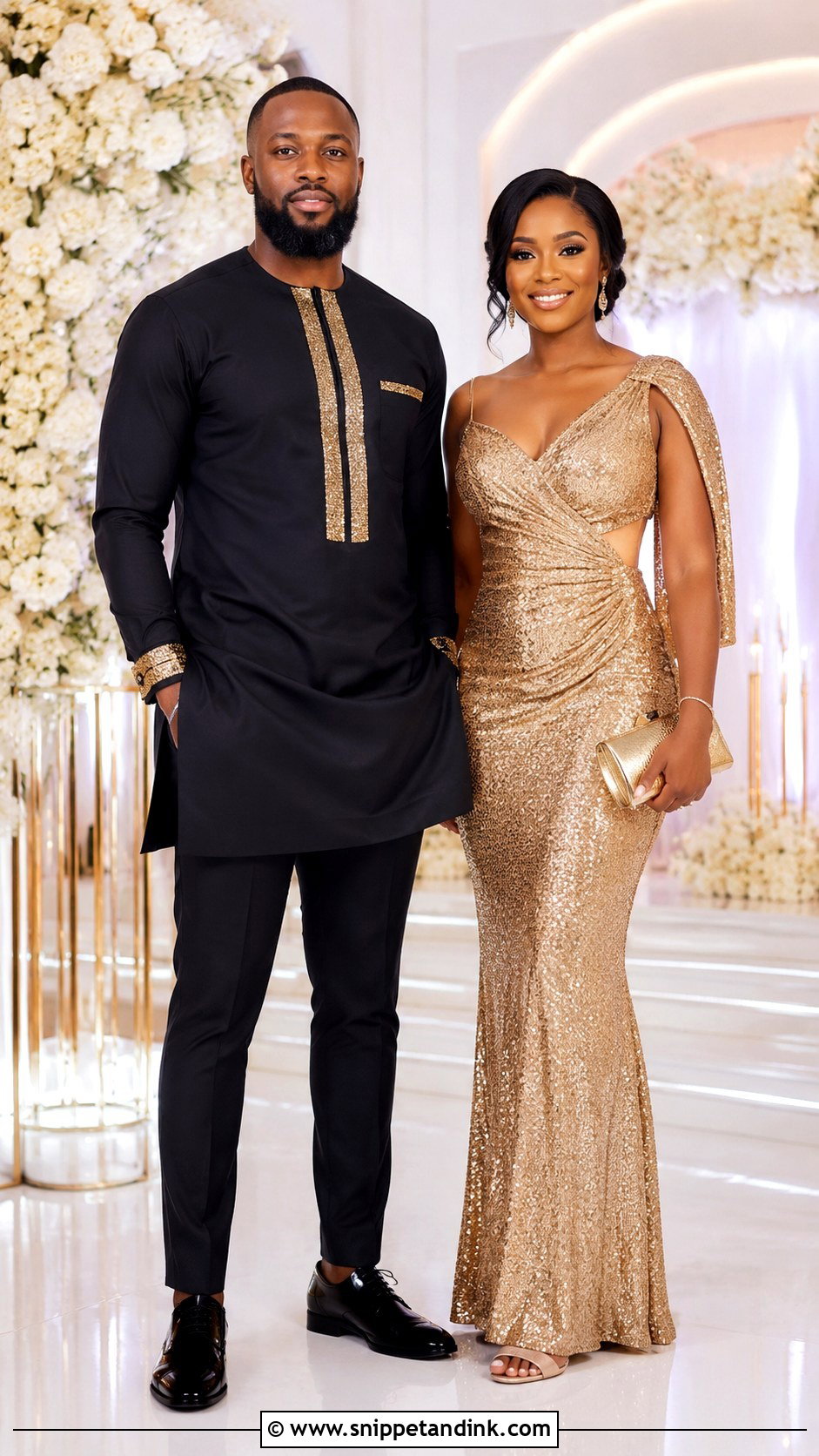
Sequins belong to the second entrance and the evening, where event lighting catches them. The bride wears a sequin gown, sparkly lace or a beaded skirt set; the groom a sequin-trimmed jacket or agbada with metallic accents. Choose one shine element for each outfit and keep the rest structured. Sequins can scratch a partner’s arms during a slow dance, so I ask for the bride’s sleeves or inner bodice to be lined if she’s wearing heavy sequin work.
20. Igbo Traditional Couple Wedding Outfit
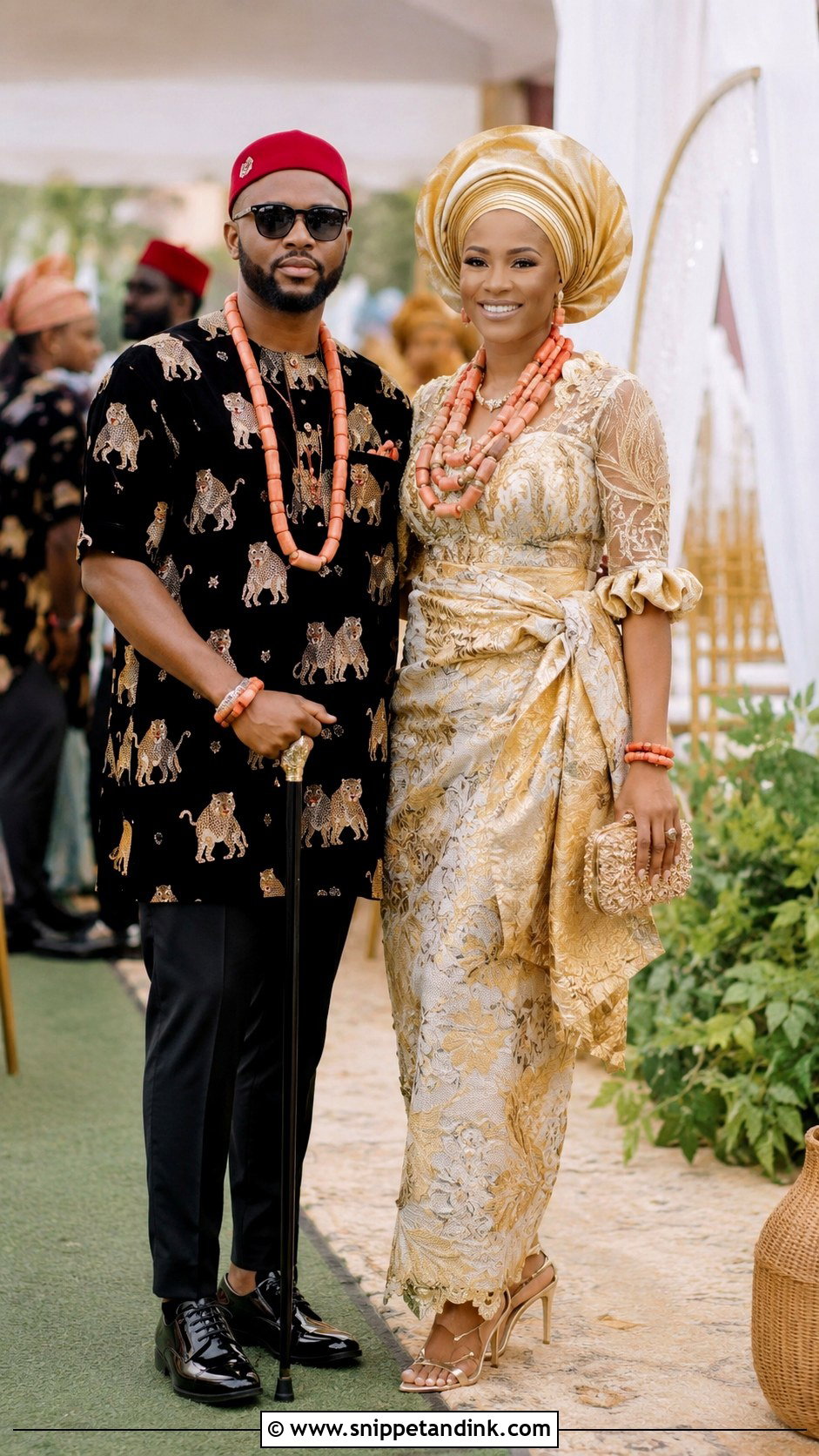
An Igbo traditional couple wedding outfit carries a lot of symbolism. The bride often wears a blouse and wrapper set or a George fabric gown with coral beads and a headpiece; the groom an isi agu top with its lion-head pattern, trousers, a red cap and coral accessories. Matching can come through fabric color, beads or embroidery. Red, gold, white and burgundy are traditional, though many couples now choose emerald, navy or champagne. George is heavy, so sharp tailoring keeps it from looking bulky.
21. Yoruba Traditional Couple Wedding Outfit
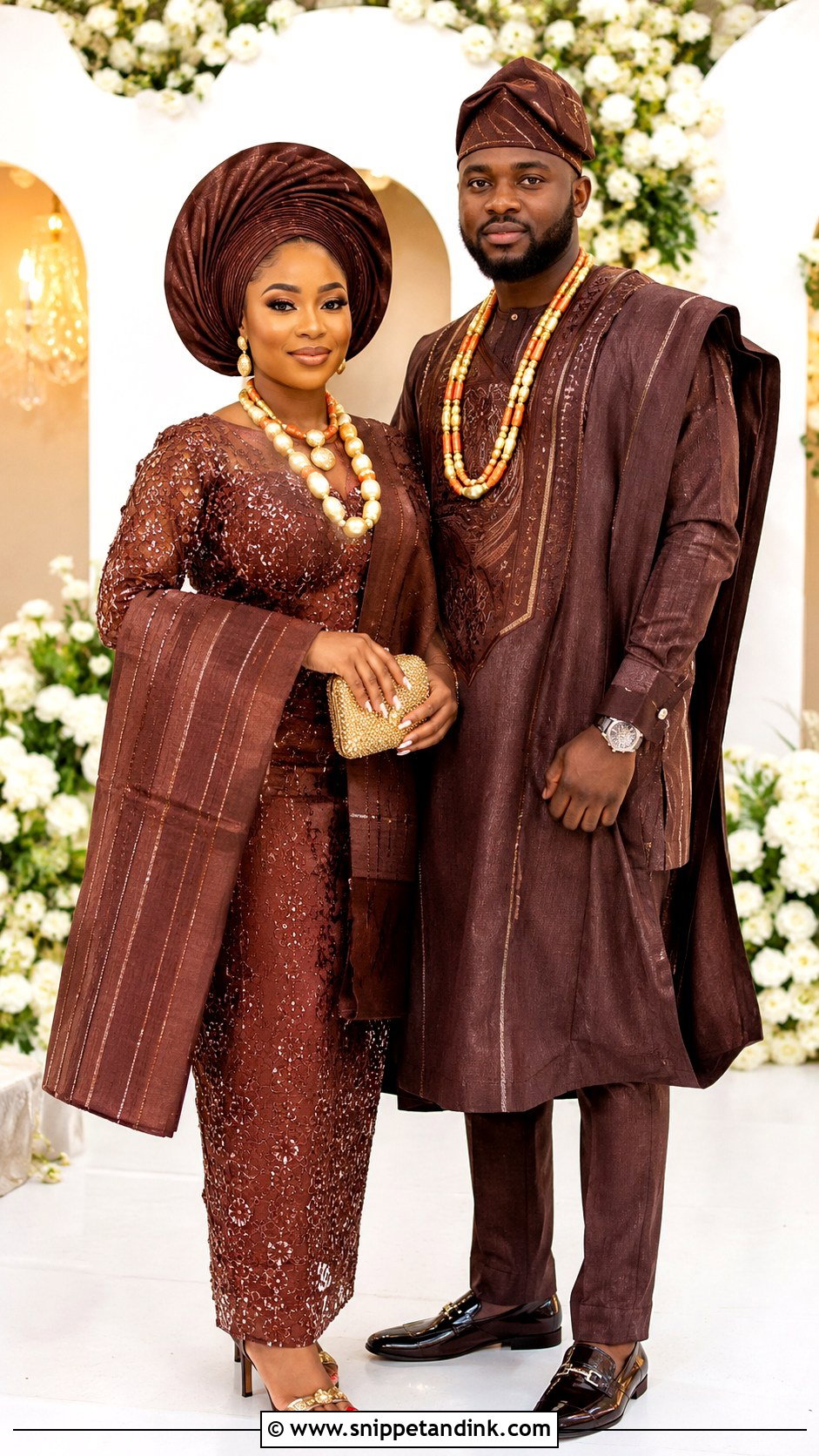
A Yoruba traditional couple wedding outfit is built on structure and coordination. The bride wears iro and buba, a fitted blouse and wrapper, or a modern aso oke gown with a high gele; the groom an agbada over buba and sokoto with a fila. Often the families also set a color for guests’ aso ebi, so I make sure the couple’s shades stand apart from the guests’ while still harmonizing. Beads, a hand fan and a clutch complete the bride’s look.
22. Habesha Couple Wedding Outfit
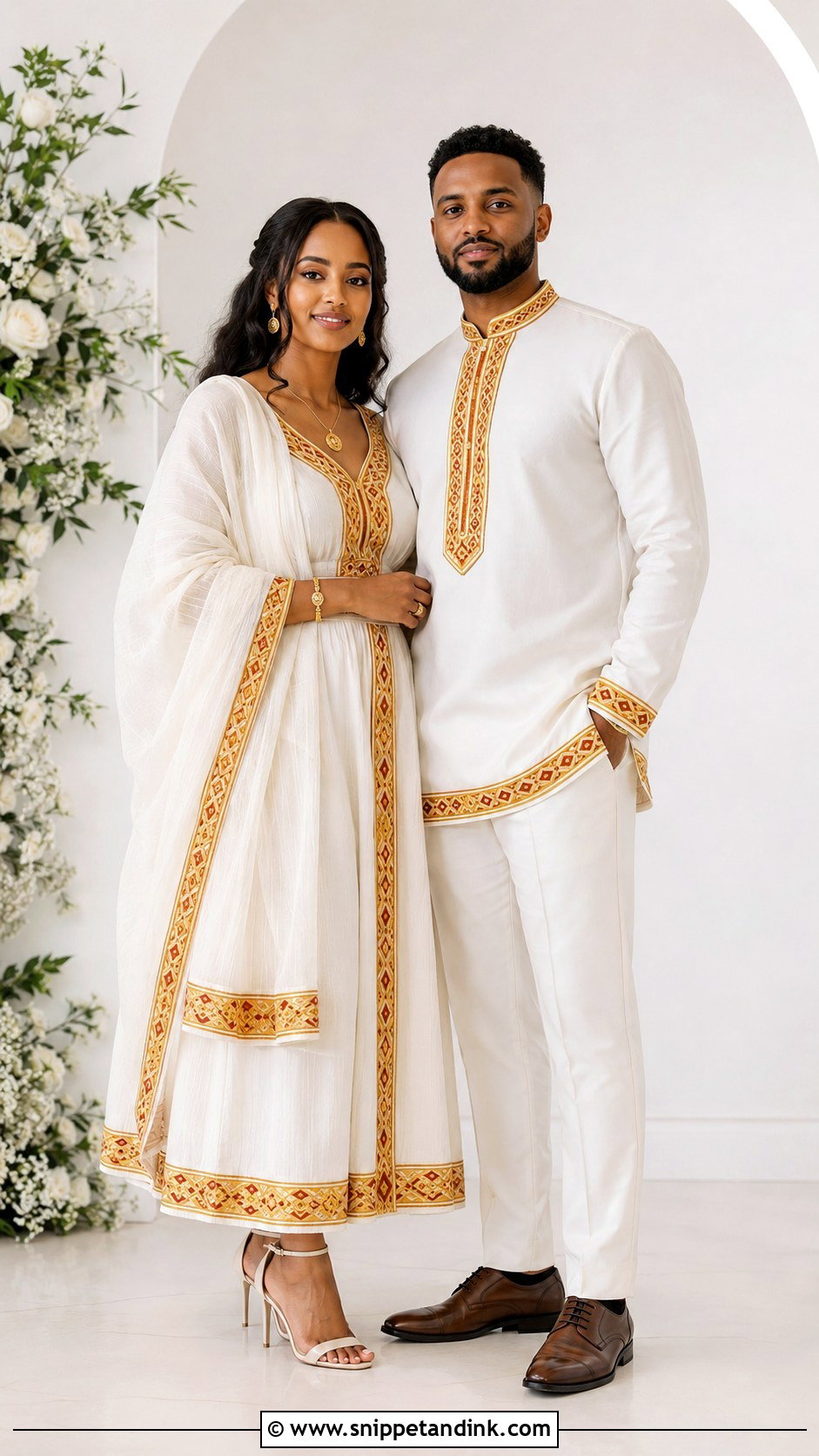
Habesha dress, from Ethiopian and Eritrean tradition, is usually white or ivory cotton with woven tibeb borders. The bride wears a traditional dress with embroidered borders, a shawl, delicate jewelry and simple heels; the groom a white shirt or tunic with matching border detail and tailored trousers. That shared border is the matching, and it is subtle enough not to overwhelm. Handwoven cotton creases, so I steam it on the day. Soft hair and makeup keep attention on the weaving.
23. African Print Suit And Dress Couple Wedding Outfit
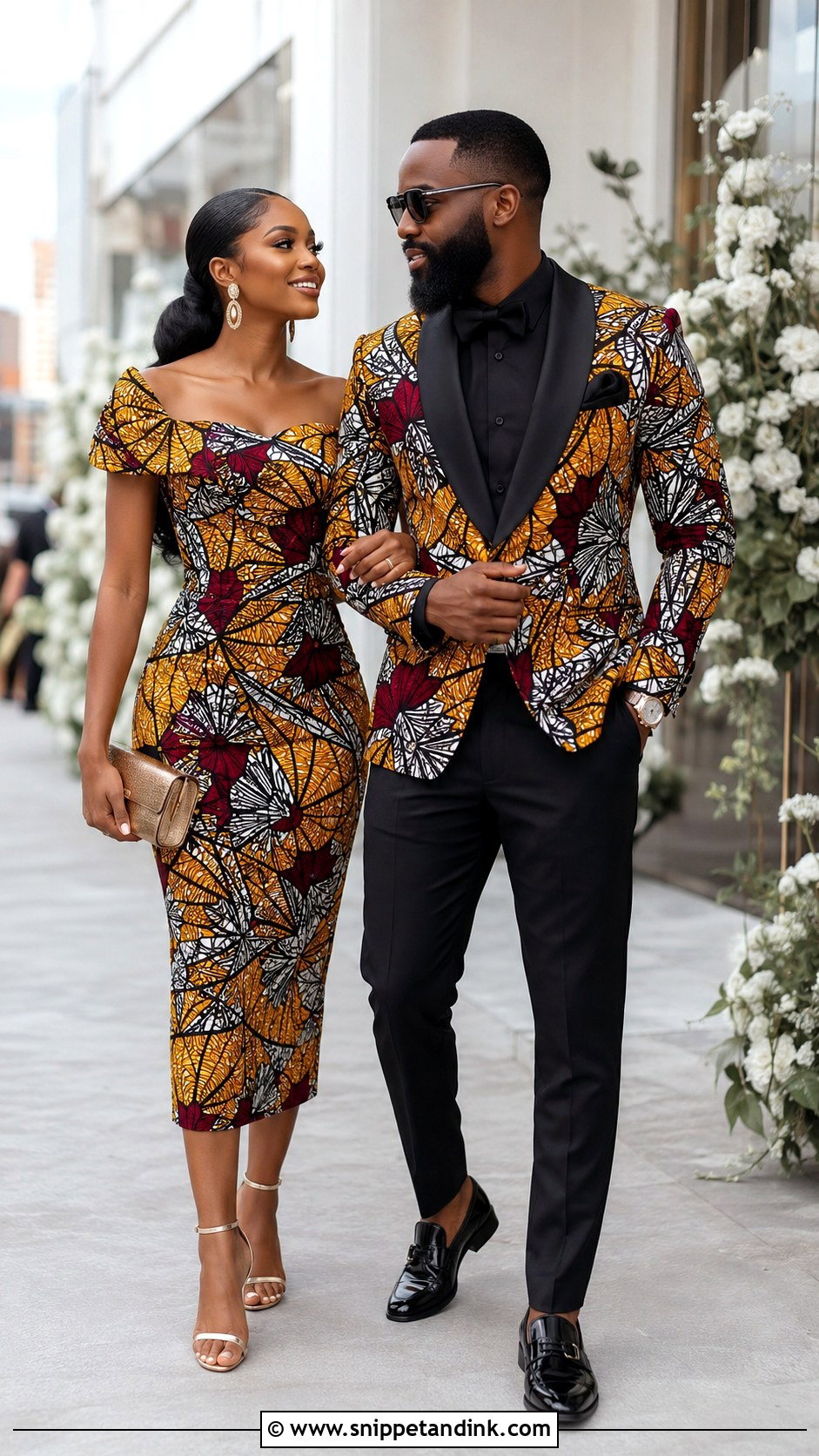
Print suits and print dresses are the modern pairing, ideal for receptions, courthouse weddings and guest looks. The bride wears a fitted print midi, maxi or structured gown; the groom a matching print blazer with solid trousers, or a full print suit if the pattern is calm. One bold print plus one neutral base keeps it clean. When a tailor cuts a blazer from wax print, I ask for the pattern to be centered on the back and matched at the front seams, because misaligned motifs are what make print tailoring look cheap.
24. African Couple Wedding Reception Outfit
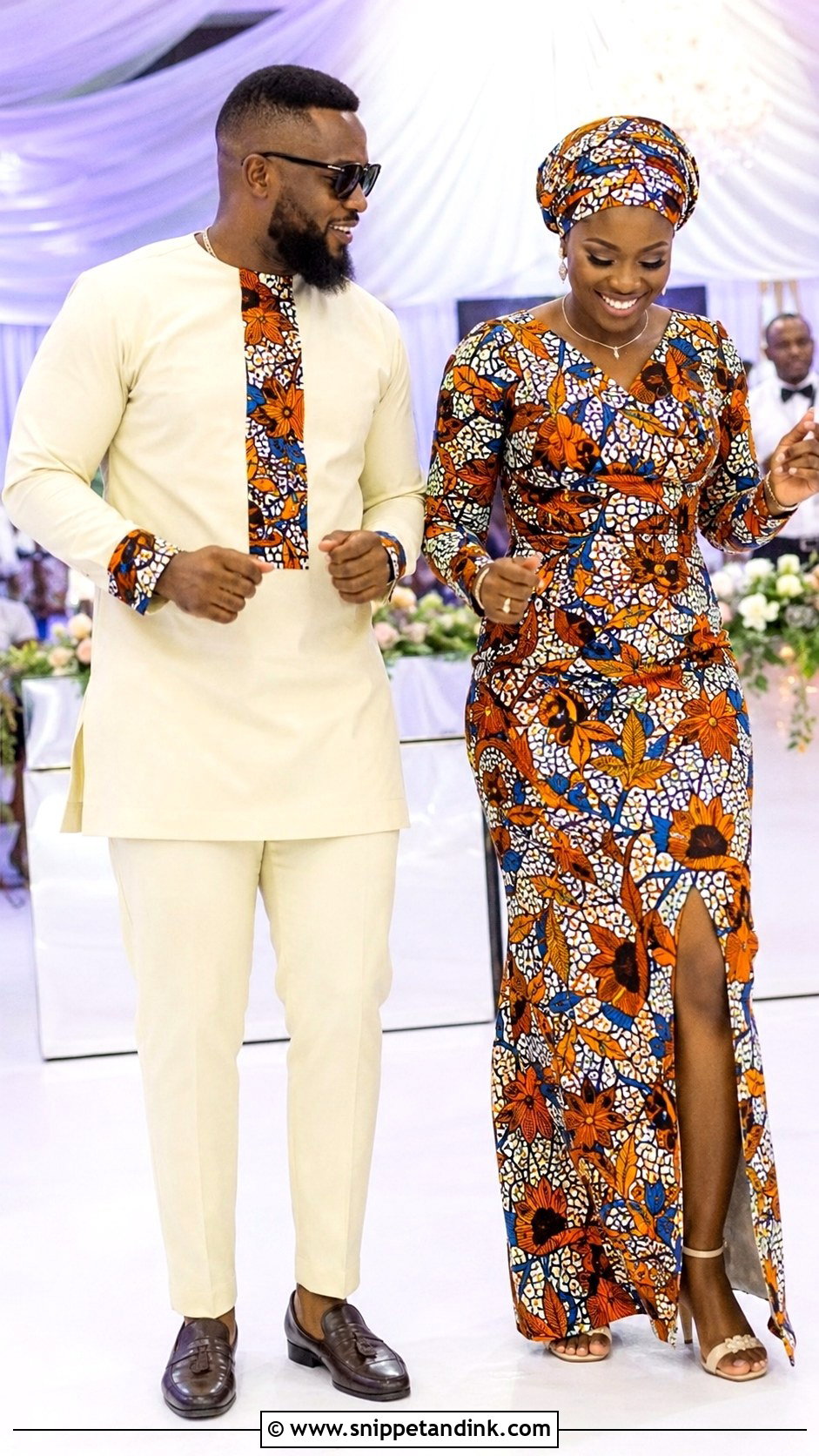
By the reception, comfort matters as much as looks. The bride can change into a lighter Ankara gown, sequin dress, lace midi or skirt set; the groom into a matching shirt, embroidered tunic or tailored jacket. This is the time for brighter colors and softer fabrics. Before the day, I have both partners do a few dance steps in their reception outfits to check movement. A matching headwrap and pocket square keep you linked as a pair.
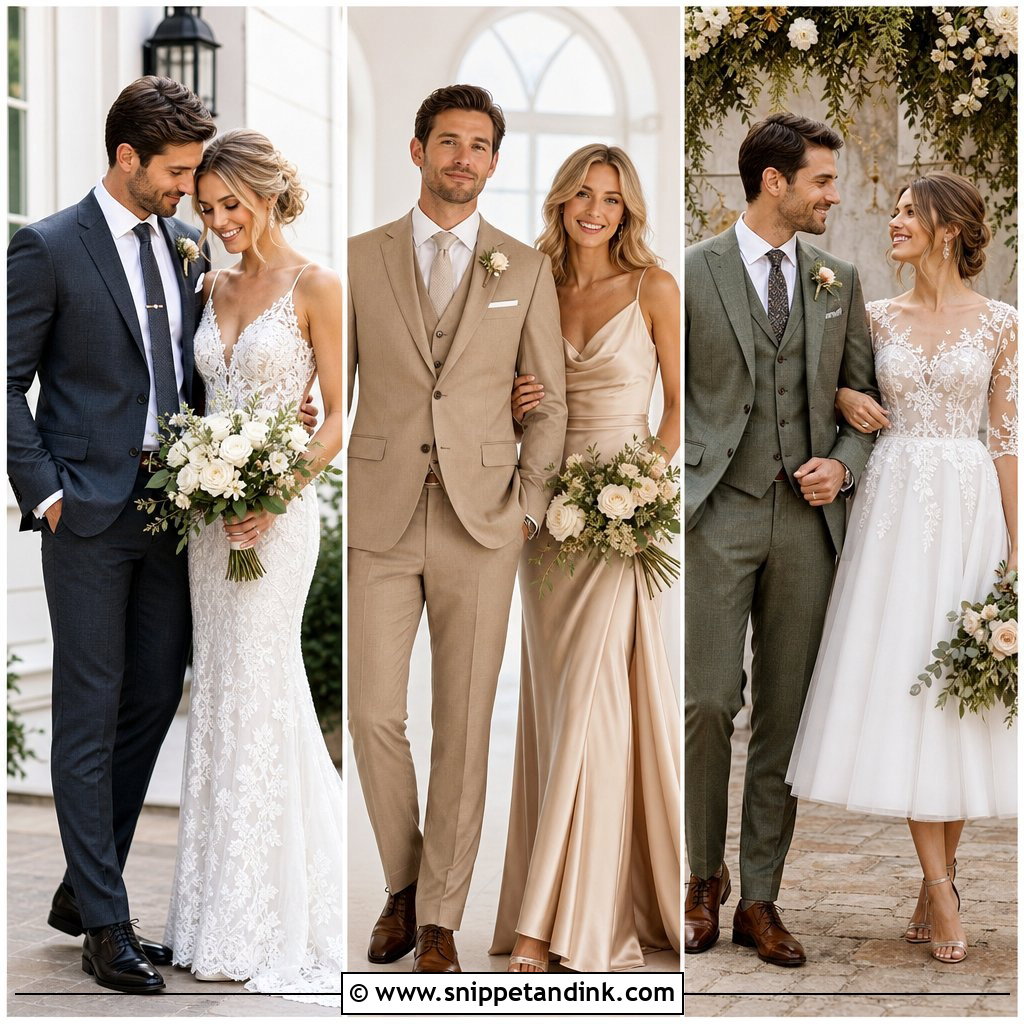
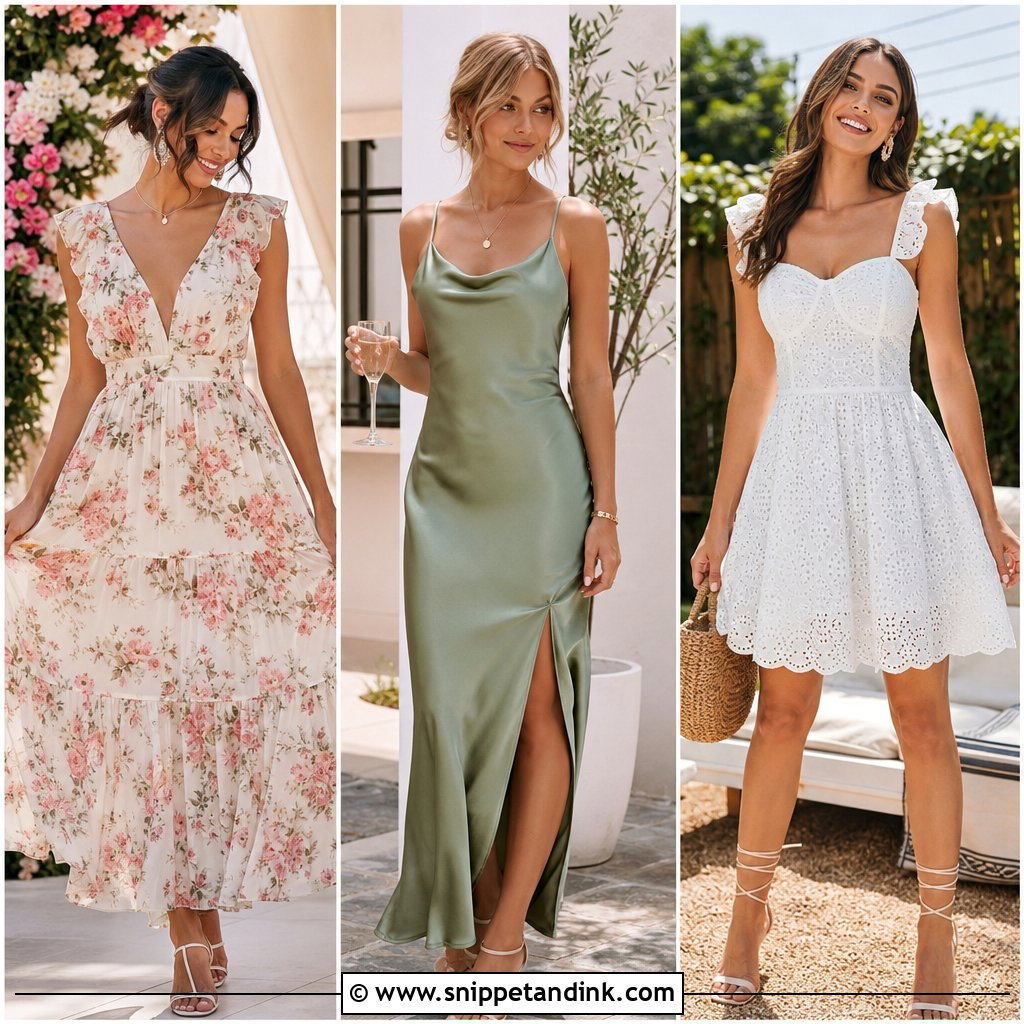
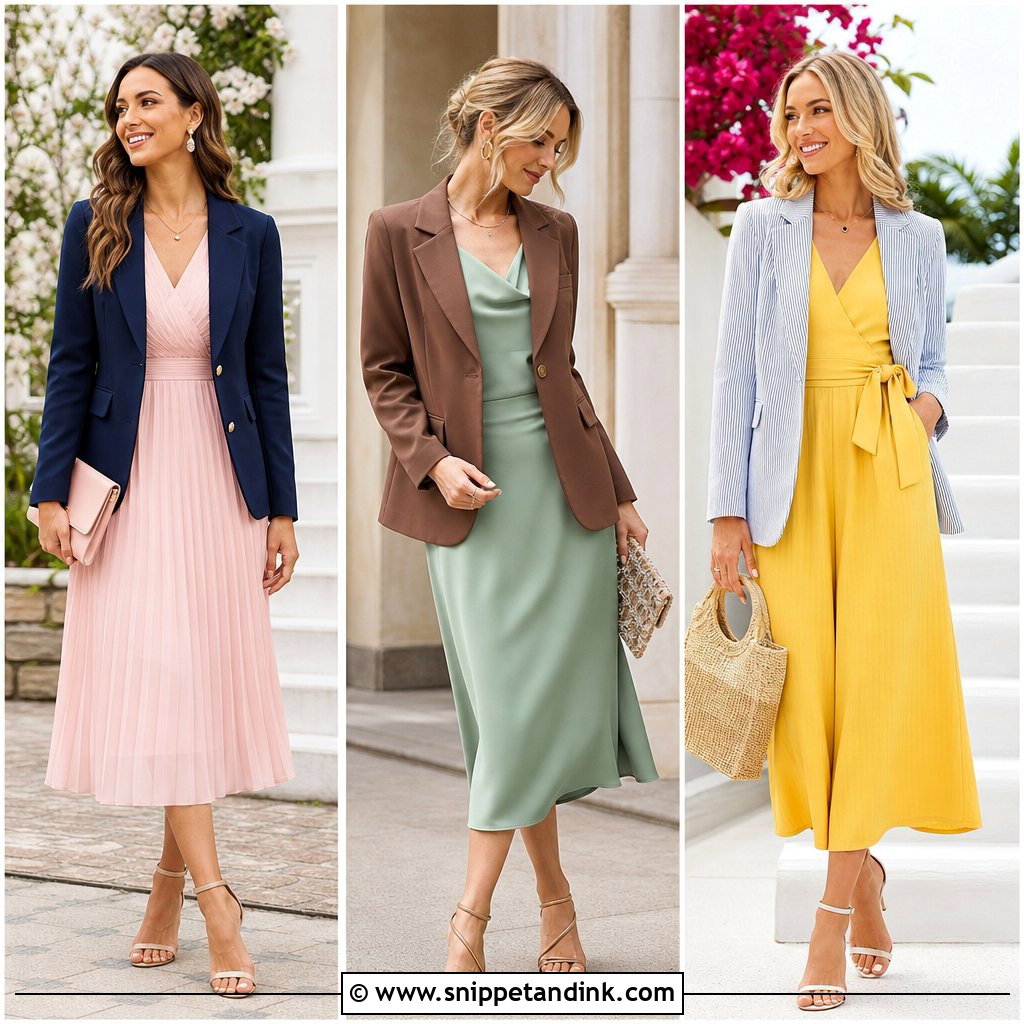
25. African Couple Pre Wedding Shoot Outfit
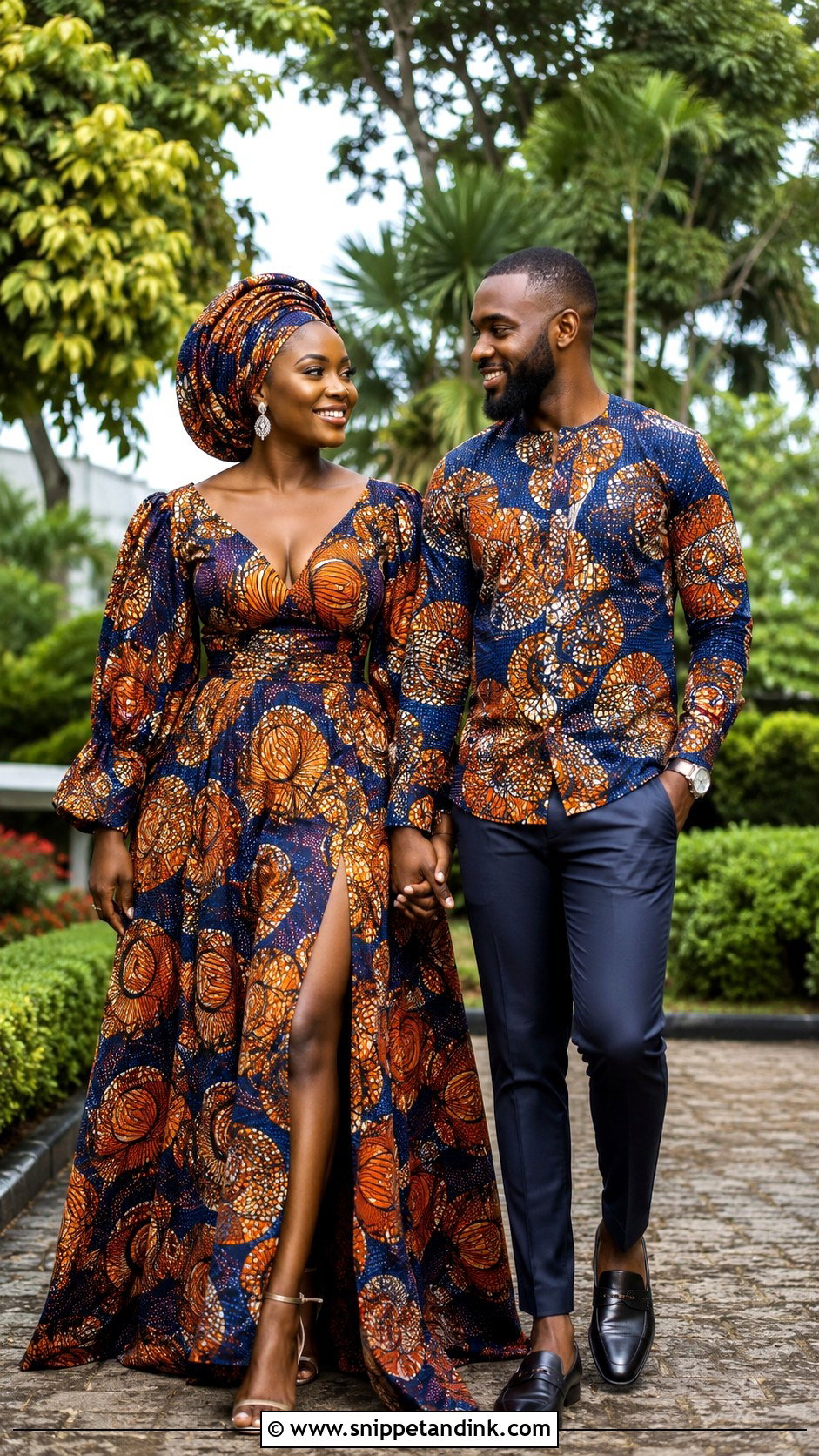
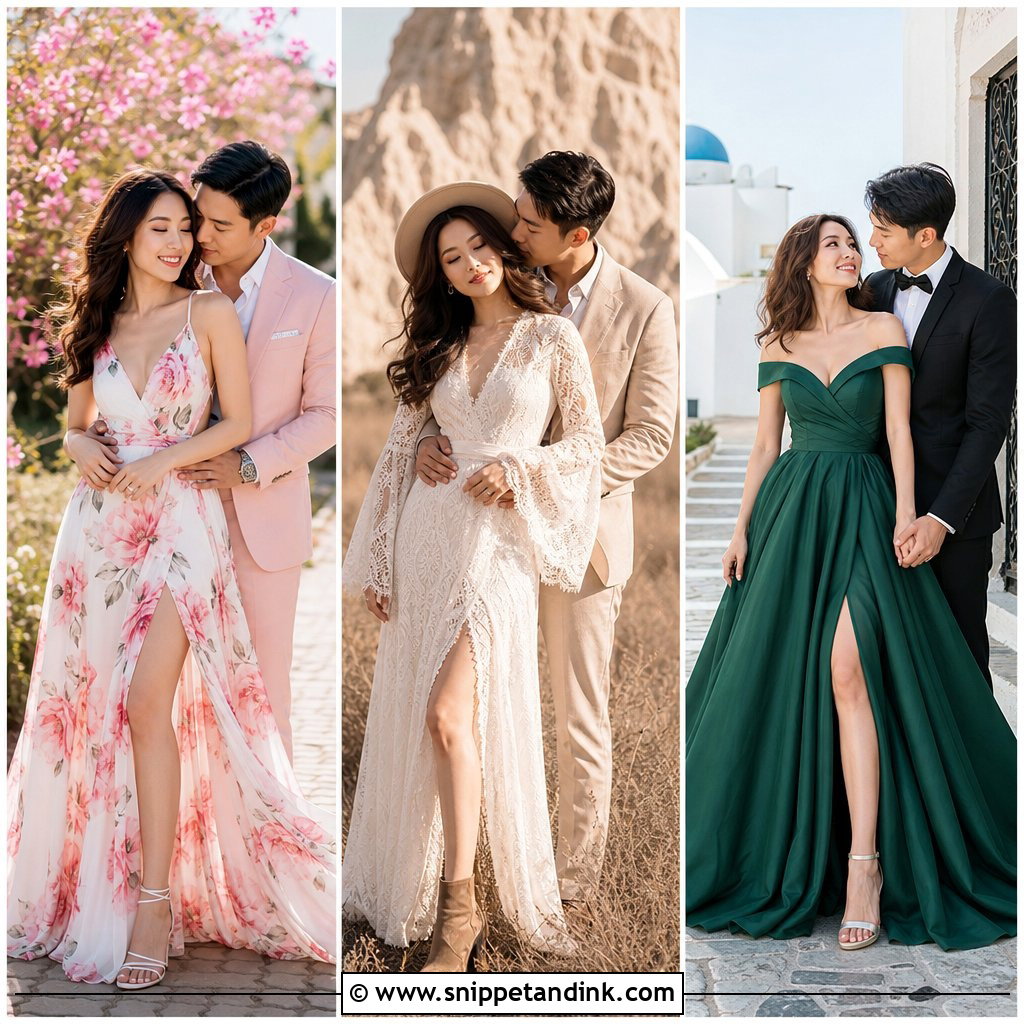
For a pre-wedding shoot, color against the location matters more than anything. The bride can wear a flowing Ankara gown, a kente wrap, aso oke or lace with a matching headwrap; the groom a shirt, kaftan, agbada or blazer in coordinated fabric. Bold prints read well in simple outdoor settings, and neutrals against a clean studio wall. Long gowns with trains need someone to arrange them between shots, so bring a helper.
Gele Pins, Agbada Sleeves and a Six-Hour Party
Traditional outfits look grand in a portrait and then have to survive eating, dancing and spraying money on the dance floor. A little planning keeps both of you comfortable.
The Bride’s Gele
A stiff aso oke gele is tied around the head and shaped by hand, and a good tie takes time. Book the gele tier into the getting-ready schedule after makeup, and ask for the folds to be anchored with pins so the shape holds through dancing. A lighter or pre-tied gele is worth considering for the reception change.
The Groom’s Agbada
The wide outer robe is heavy and warm. Most men fold the sleeves up onto the shoulders while eating or dancing, so make sure the inner buba and trousers look finished on their own. In a hot venue, have a place to set the agbada aside between entrances and photos.
For both of you, break in the shoes at home and keep a small kit with pins, a lint roller and blotting papers. Rich fabrics show sweat and fluff quickly under bright lights.
One Cloth, Two Personalities
Couple outfits work best when they share a fabric, color or detail and leave room for each person’s taste. Aso oke, Ankara, kente, lace, agbada, boubou, dashiki and print tailoring all coordinate well when that common thread is clear. Think about the type of ceremony, the venue, the season and how each outfit will photograph. Choose fabrics that move with you, and fit that lets you sit, dance and greet guests. Gele, fila, beads, clutches and shoes are the finishing touches that connect two outfits into one look.
You'll Like These Ideas:


Leave a Reply