
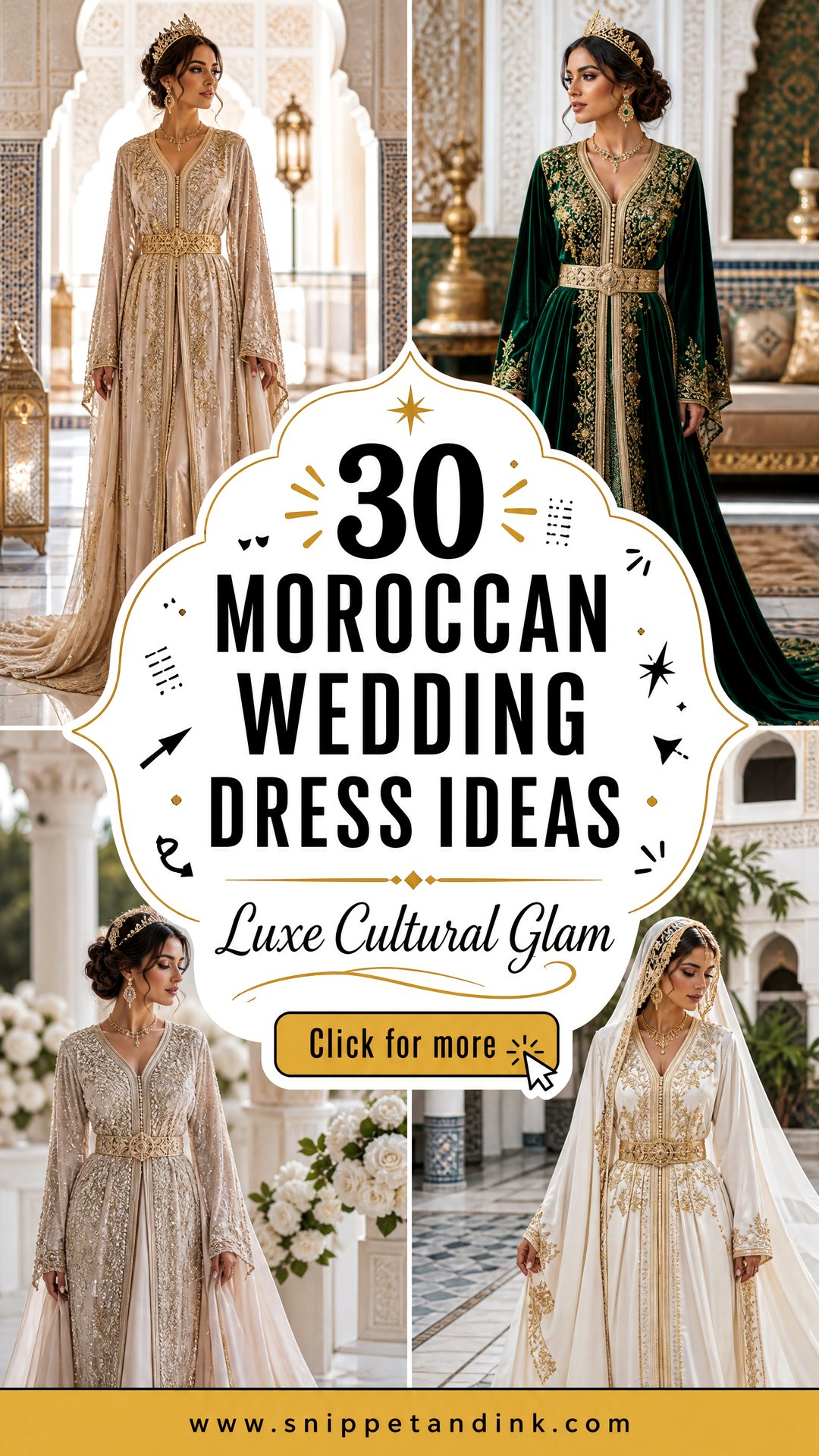
A Moroccan bride rarely wears one dress. Over a single night she may appear in a white takchita, a jewel-toned caftan, a gold-belted look for the amariya and a regional outfit from Fes, Rabat or Marrakech, each marking a different part of the celebration. When I help plan that wardrobe, I treat it as a sequence rather than a shopping list: which piece carries the entrance, which one has to survive hours of sitting, and which one she can actually dance in. Most looks share the same bones, a full-length caftan or two-layer takchita, an mdamma belt at the waist, heels hidden under the hem and jewelry chosen to sit with the embroidery. Here are 30 ways to build that wardrobe, with what I watch for in each.
The Neggafa, the Outfit Changes and How Many Looks You Need
Most Moroccan brides work with a neggafa, the woman who dresses the bride, manages each change, fixes the belt and jewelry and stays close all night. Many neggafas also rent out complete outfits with matching jewelry and headpieces. Before choosing any single dress, I sit down with the bride and settle the shape of the night.
- Count the changes. Brides commonly wear several outfits, and each change takes time, so plan them around the program instead of squeezing them between courses.
- Decide what to rent and what to own. Renting from a neggafa gives you more looks for the budget; commissioning gives you a dress that fits exactly and stays in the family.
- Allow months for a commission. Hand embroidery, sfifa trim and aakad buttons are slow work, so start well ahead and plan a fitting once the belt is chosen.
- Order the colors deliberately. Put the lightest and the heaviest looks where they make sense, and avoid two similar shades back to back so each entrance reads as new.
Ask your neggafa which pieces she supplies with each outfit. Belts, headpieces and jewelry are often included in a rental, and knowing that early saves you from buying duplicates.
1. White Moroccan Takchita Wedding Dress
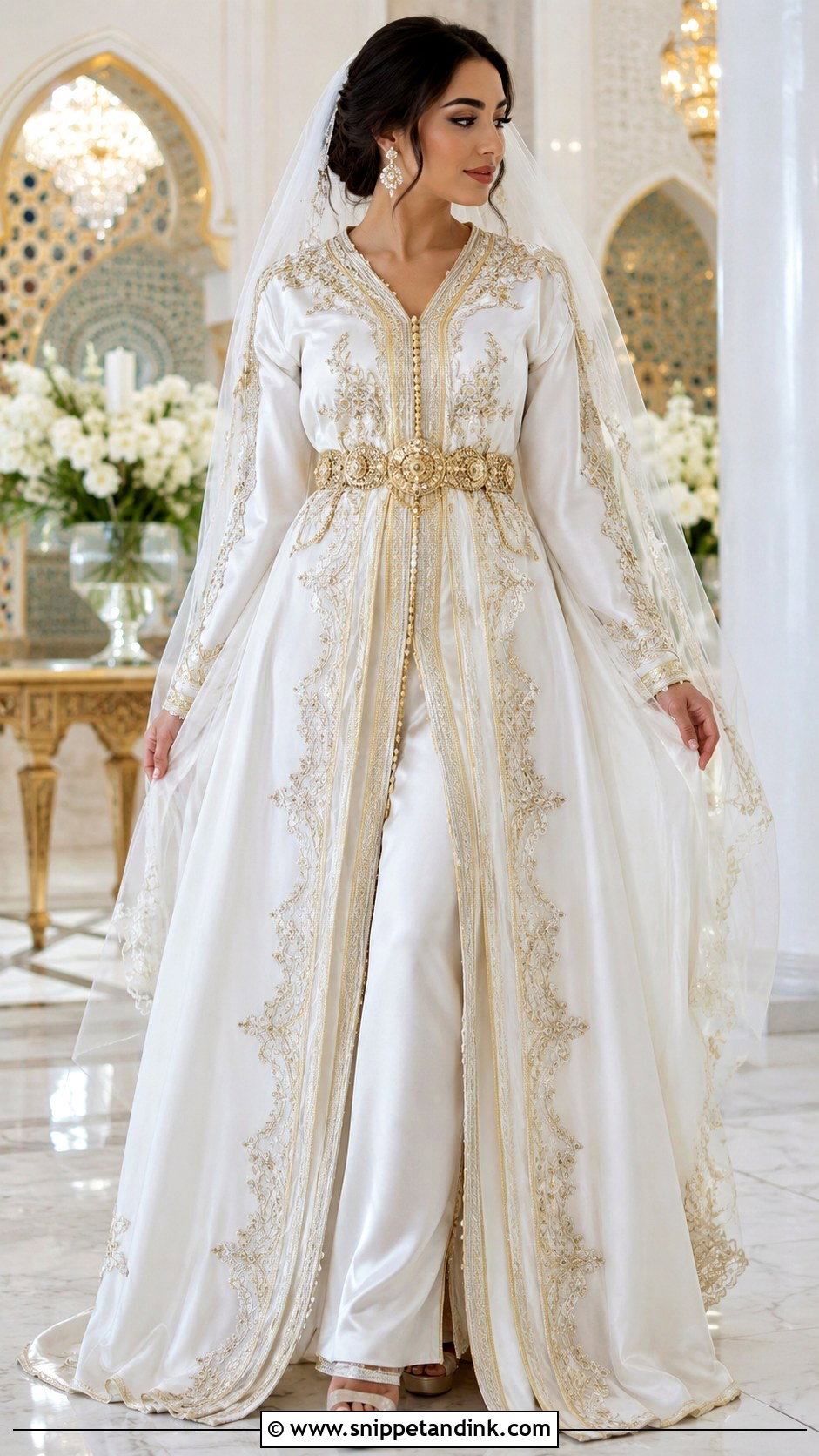
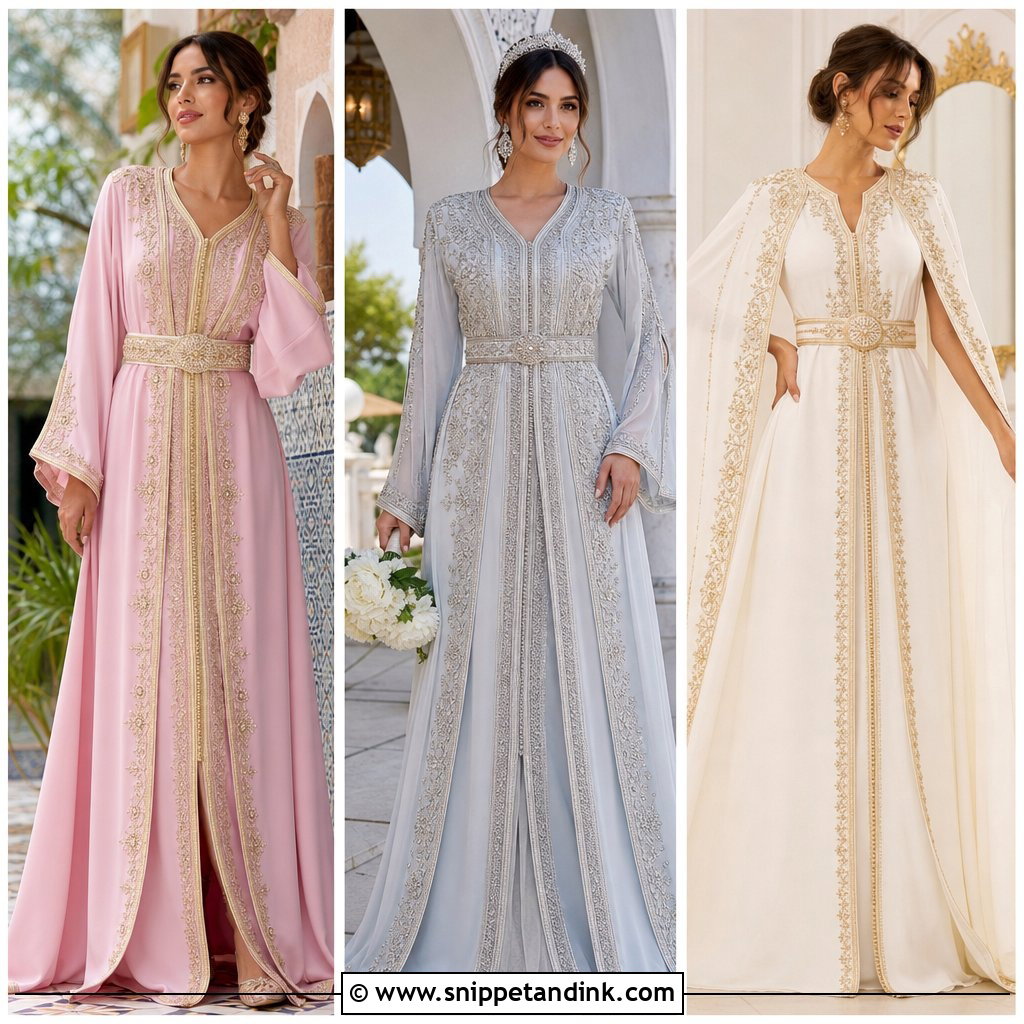
White is usually the outfit that carries the most meaning, so it’s the one I fit most carefully. A takchita has two layers: a plain inner dress and an outer layer worked with embroidery, beading or sfifa, the narrow braided trim that runs down the front opening. The front edges of that outer layer should meet cleanly over the belt without pulling apart when you sit, and that’s the first thing I check. A gold or silver mdamma gives the formal waist. Ivory or metallic heels, pearl earrings, a sleek bun and a sheer veil or scarf finish it, and it belongs to the main entrance and the formal portraits.
2. Gold Moroccan Caftan Wedding Dress
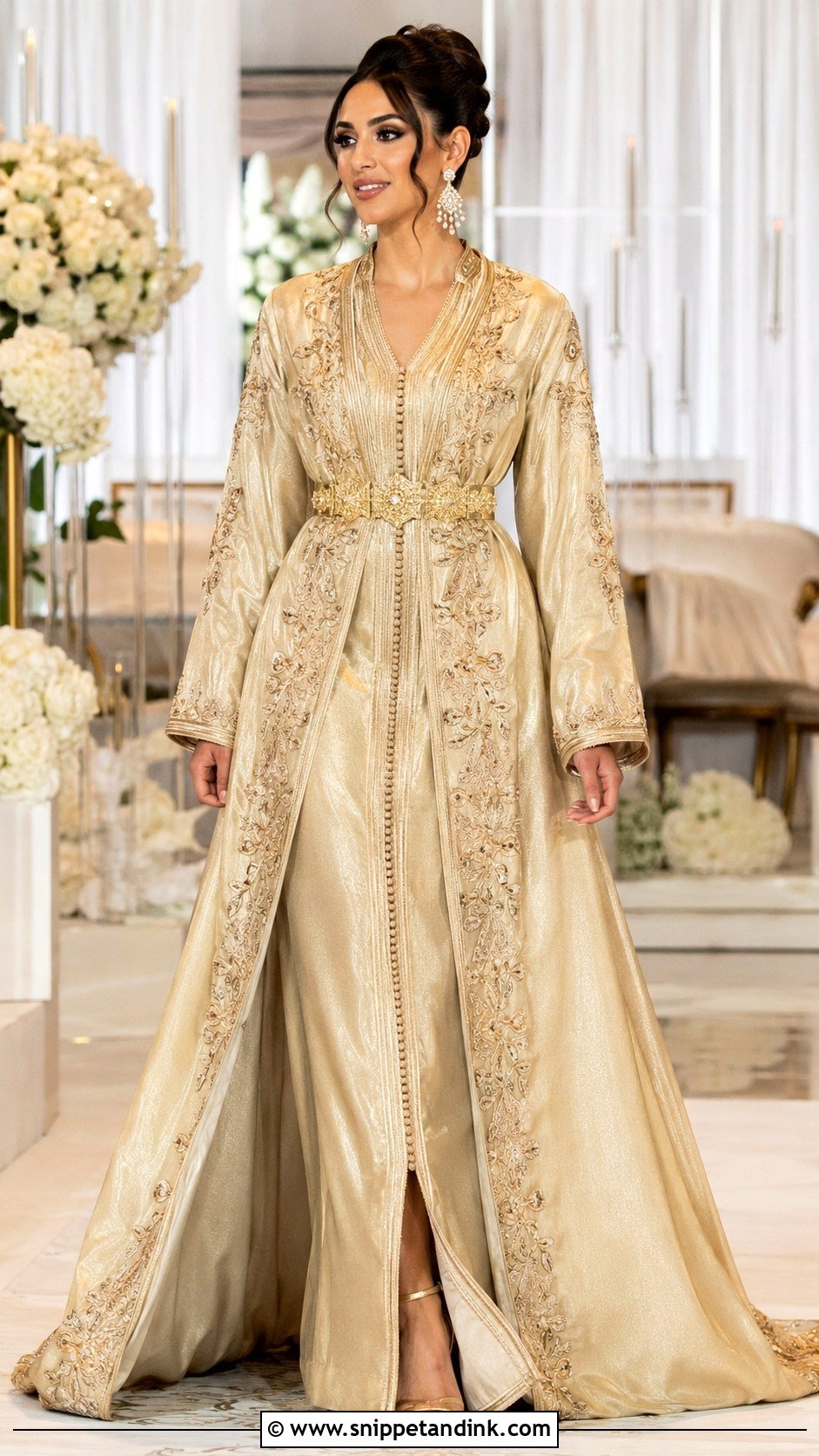
Gold is the color that turns a caftan regal, and it reflects every light in the room. In brocade or satin with metallic threadwork it does most of the work, so a one-piece caftan is enough here; you don’t need the extra layer of a takchita. Match the belt to the thread, bright gold or antique brass, rather than mixing the two. I keep the face clean and the hair polished, because gold on gold on heavy makeup tips into costume very quickly. Crystal drops, one smooth bracelet and soft gold heels are all I’d add for an evening entrance.
3. Red Moroccan Takchita Wedding Dress
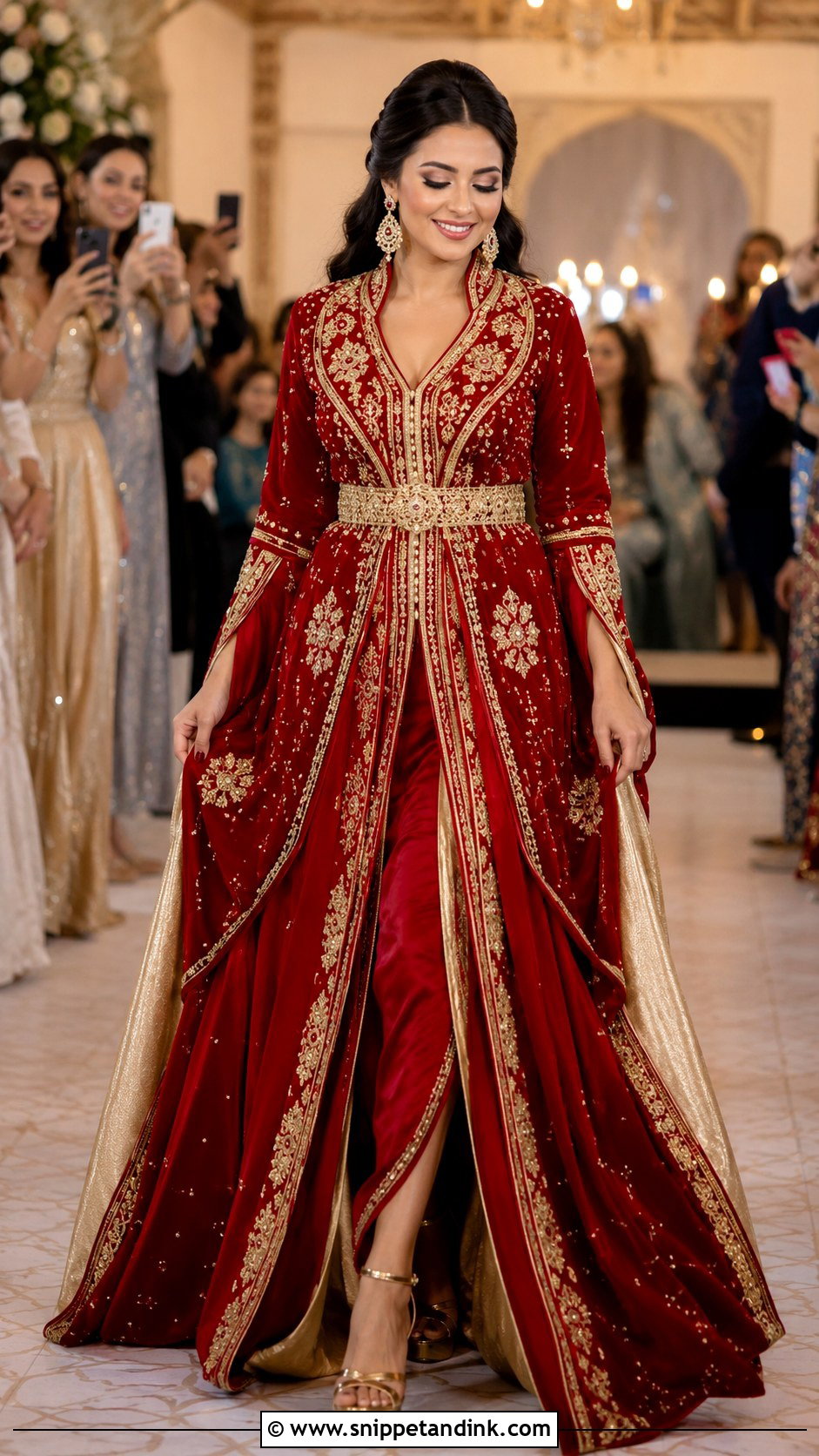
Red carries real weight in many traditional bridal wardrobes, and against gold embroidery and candlelit decor it reads warm and festive in photos. I’d build it as a two-layer takchita: a deep red base under an outer layer embroidered in gold, copper or ivory. A wide mdamma helps here because red takchitas often carry a lot of skirt volume, and the belt gives that volume a waist to fall from. Gold heels, statement earrings and a smooth updo complete it. A red lip suits the dress, but only with soft eyes; two strong features compete.
4. Emerald Green Moroccan Caftan Wedding Dress
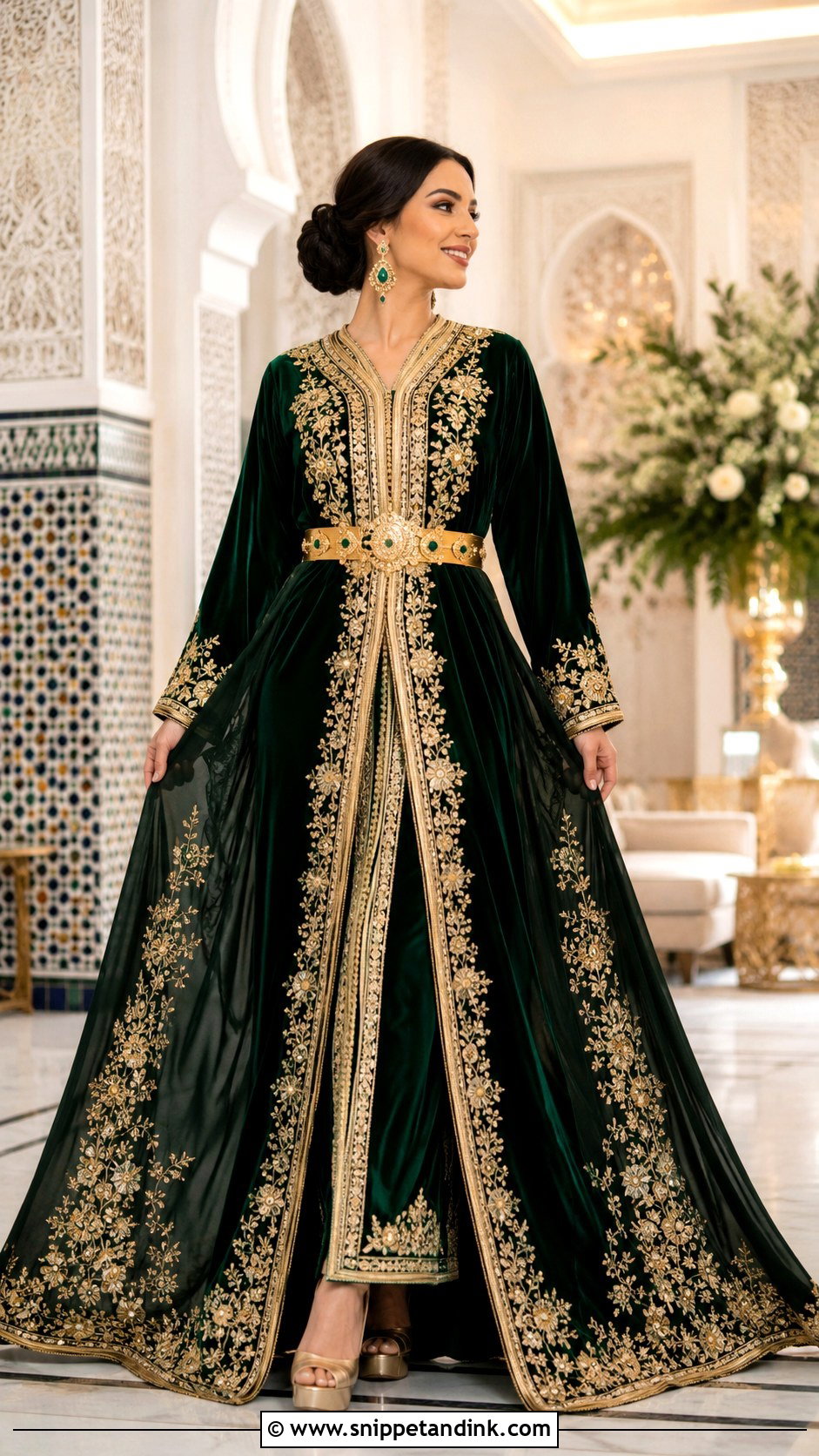
Emerald flatters a wide range of skin tones, warm and cool, which is why it’s one of the colors I suggest most often for a second or third outfit. Velvet makes it rich and suits cold months; silk or satin lightens it for summer. Gold embroidery or jeweled trim keeps it festive. With heavy neckline work, skip the necklace and let green-stone earrings and the gold belt carry the accessories. A center-parted bun or soft waves both sit well with it.
5. Royal Blue Moroccan Takchita Wedding Dress
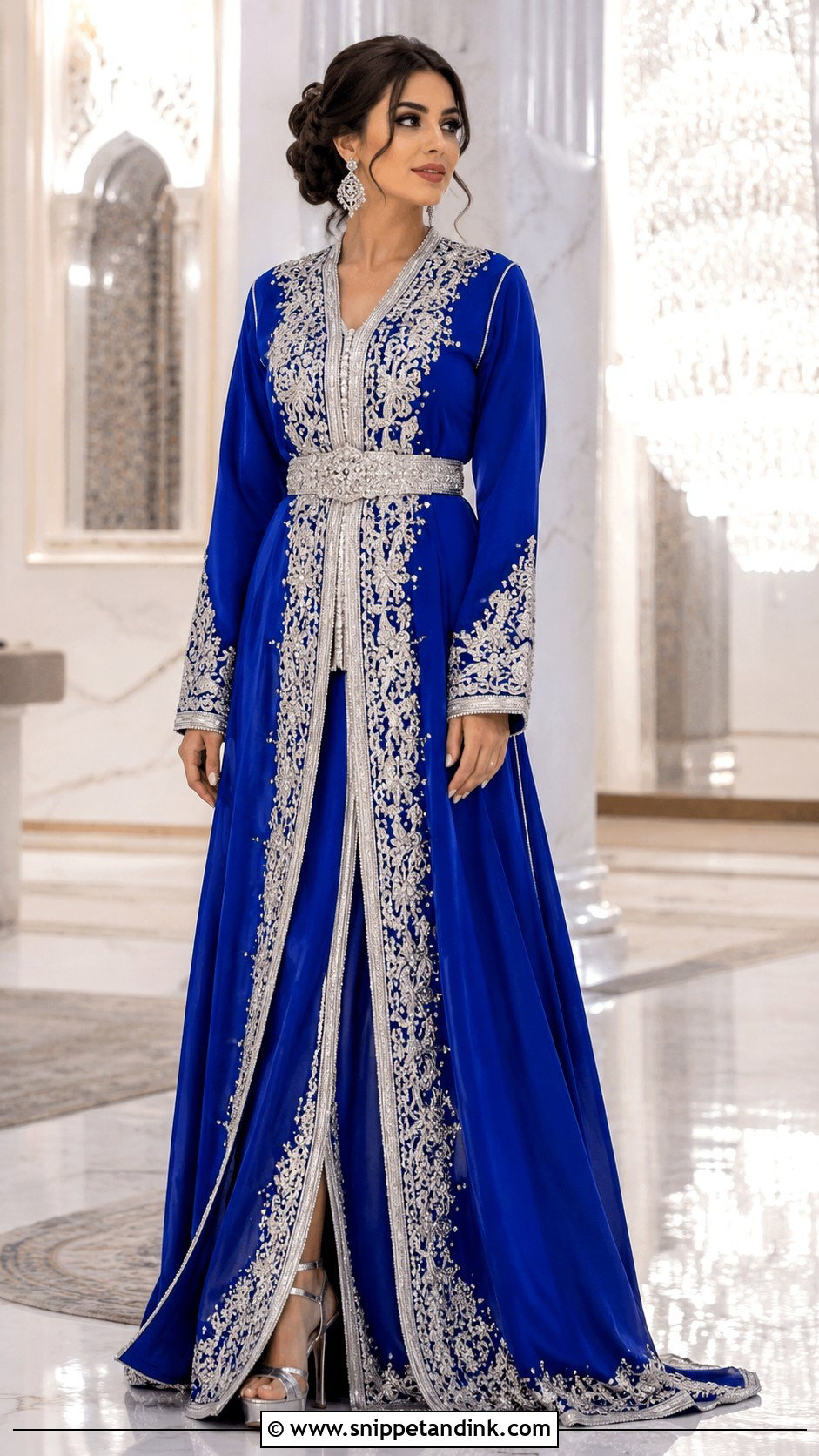
Royal blue holds its depth under strong reception lighting, where paler colors can wash out, so I place it in the evening. Silver, white or gold embroidery all work against it. A two-piece takchita with a smooth blue underdress and a decorated outer layer gives depth without bulk. Silver belts keep it cool-toned; gold warms it up. Metallic heels, chandelier earrings and a neat low bun finish the look, and for a bride who wants something regal that isn’t red, it’s my usual answer.
6. Ivory Moroccan Caftan Wedding Dress
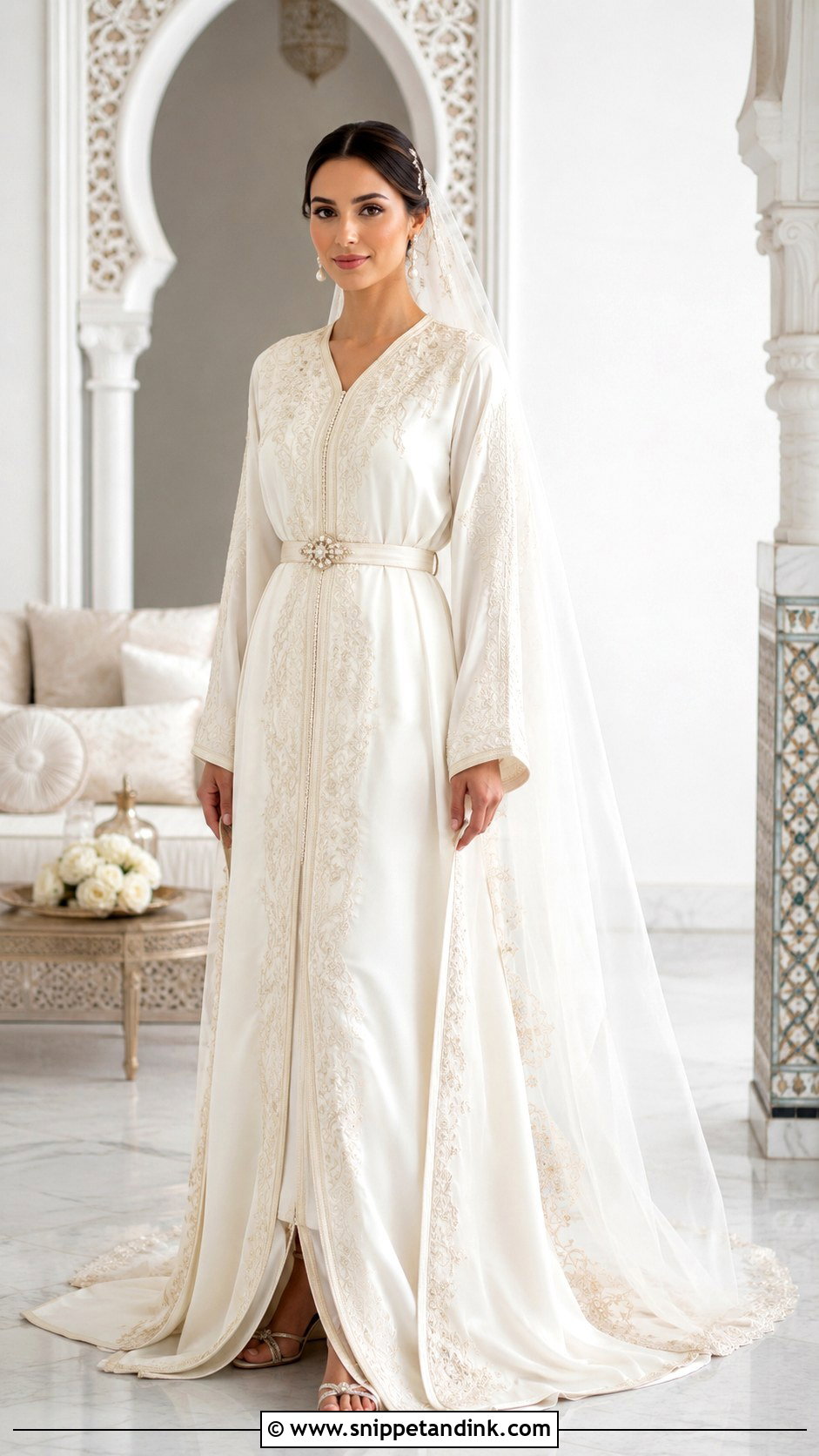
Ivory sits softer than bright white and is kinder to warm or olive skin in daylight. In silk, crepe or satin with tone-on-tone embroidery, a single caftan looks refined, and a beaded belt adds the bridal detail. My rule for accessories follows the thread: gold trim means warm metals and champagne heels, silver embroidery means crystal or white gold. Because it reads formal without overwhelming a small room, it suits intimate ceremonies and pre-wedding gatherings.
7. Blush Pink Moroccan Takchita Wedding Dress
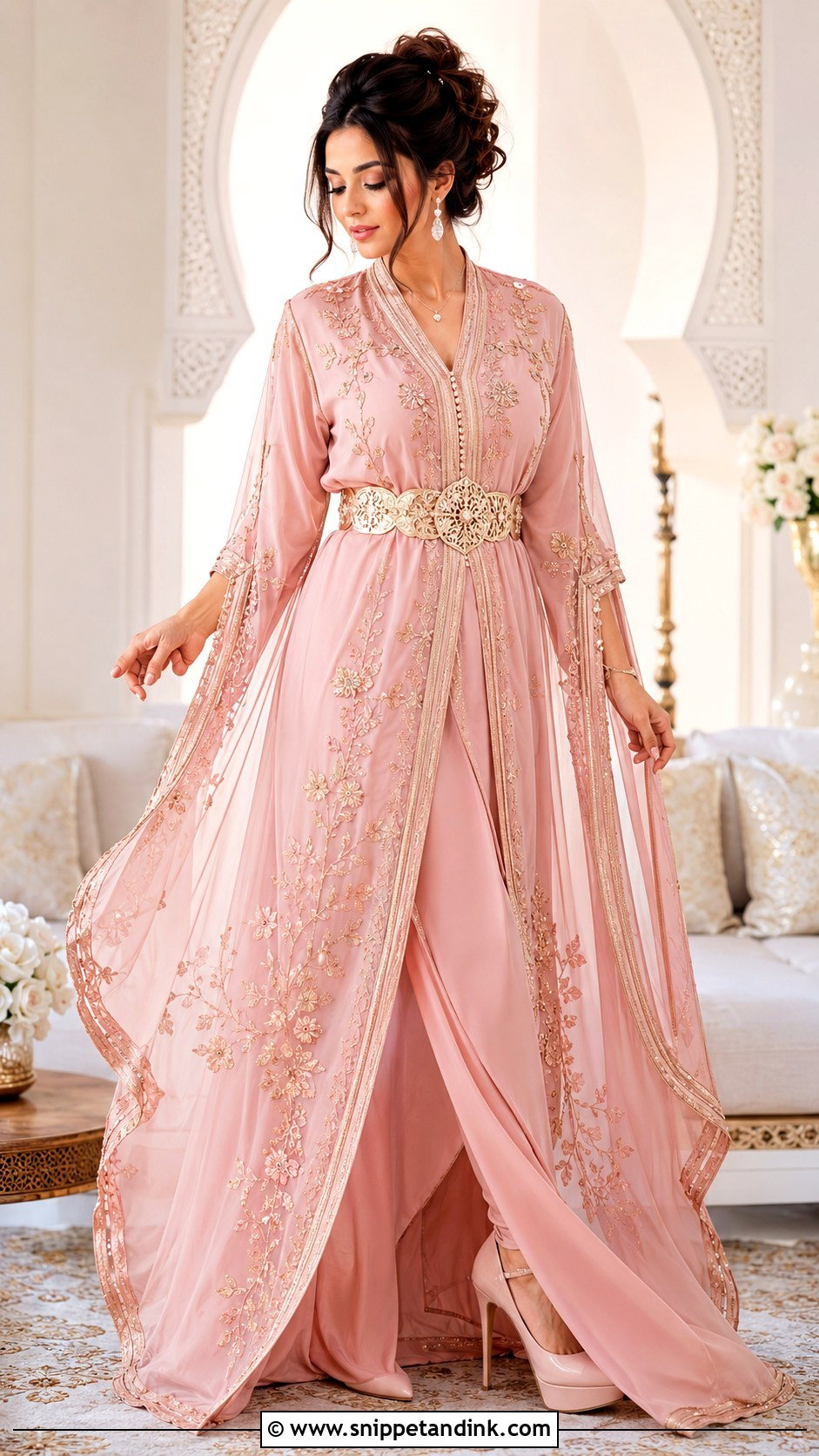
Blush gives a softer color story while keeping the Moroccan structure. Look for a pastel pink underdress with an outer layer embroidered in ivory, gold or rose gold. A rose gold mdamma ties it together, and nude or blush heels disappear under the hem so the line of the dress runs to the floor. One caution: very pale pink can look almost white in flash photography, so if the family expects a clear color change between outfits, choose a pink with a little more depth. Pearl earrings, soft makeup and a loose bun with face-framing pieces suit it, especially for an engagement or a lighter outfit change.
8. Champagne Moroccan Caftan Wedding Dress
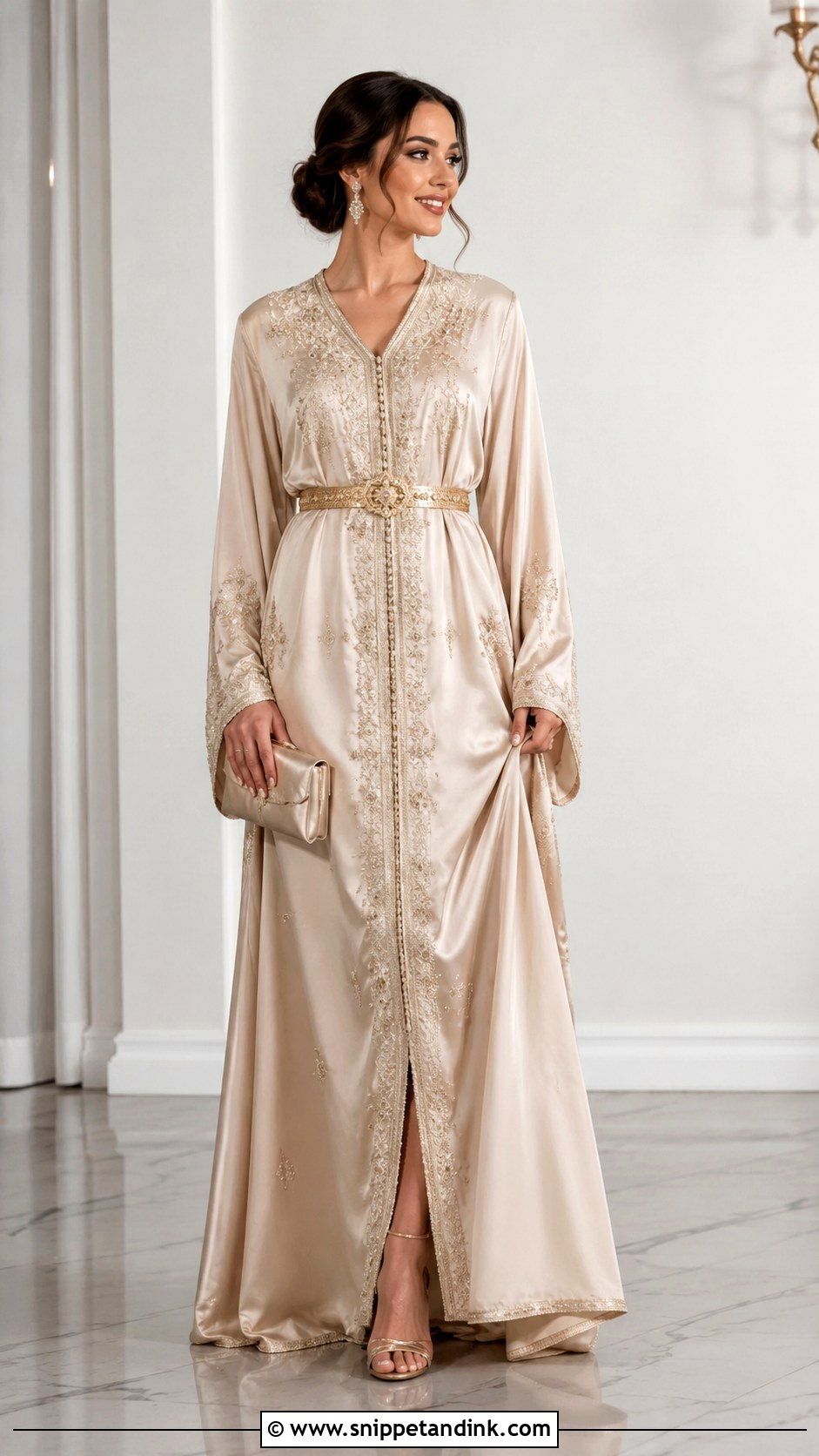
Champagne sits between ivory, beige and gold, so it reads as a metallic neutral that never looks harsh. Light beadwork, subtle embroidery or brocade texture gives it dimension. A slim gold mdamma shapes the waist without weighing it down. In bright venues the shade bounces soft light back onto the face, which is why I like it for daytime. Before committing, hold the fabric against your bare skin in daylight; on some complexions champagne blends in rather than lifting. Crystal earrings, champagne heels and a satin clutch complete it.
9. Velvet Moroccan Takchita Wedding Dress
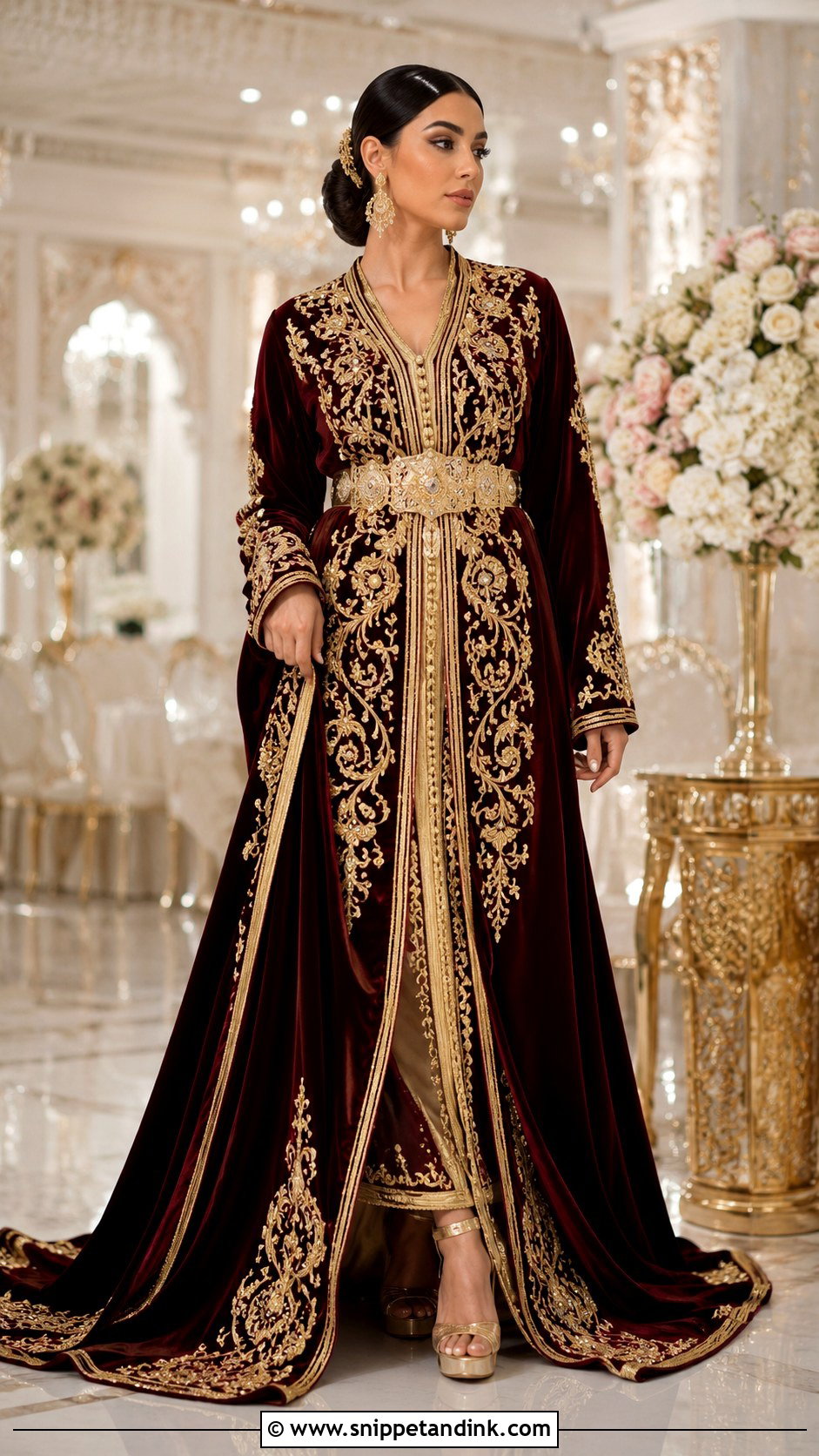
Velvet gives a takchita depth and weight, and it makes embroidery look raised and dramatic, especially in burgundy, emerald, navy or deep purple. That weight is real, though. A velvet takchita with heavy goldwork can be tiring by midnight and warm under lights, so I’d place it in a cooler season and earlier in the evening rather than as the dancing outfit. Choose a structured belt that carries some of the load and heels you trust. Gold suits warm velvet shades, silver suits cool ones, and sleek hair keeps the whole look clean.
10. Silk Moroccan Caftan Wedding Dress
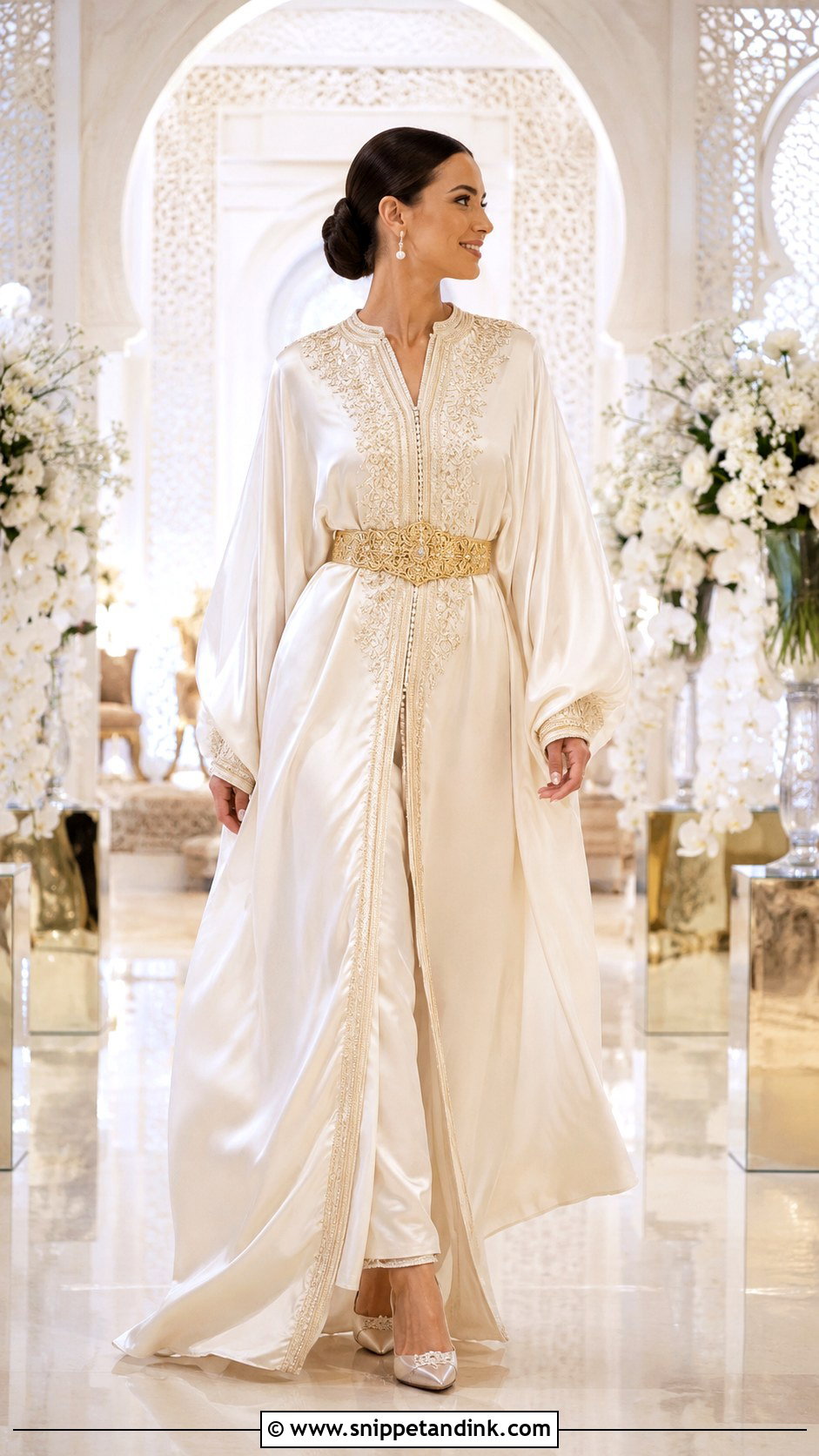
Silk is the caftan I’d pick for the longest stretch of the night, because it moves when you walk and never feels stiff. Embroidery along the neckline, sleeves and front opening keeps it formal. Keep the belt medium width, enough structure to define the waist without breaking the drape. Silk does mark easily with water and perfume, so spray fragrance before dressing, not after. Pointed heels, pearl or crystal earrings, a polished clutch and a low bun or smooth waves complete it.
11. Satin Moroccan Takchita Wedding Dress
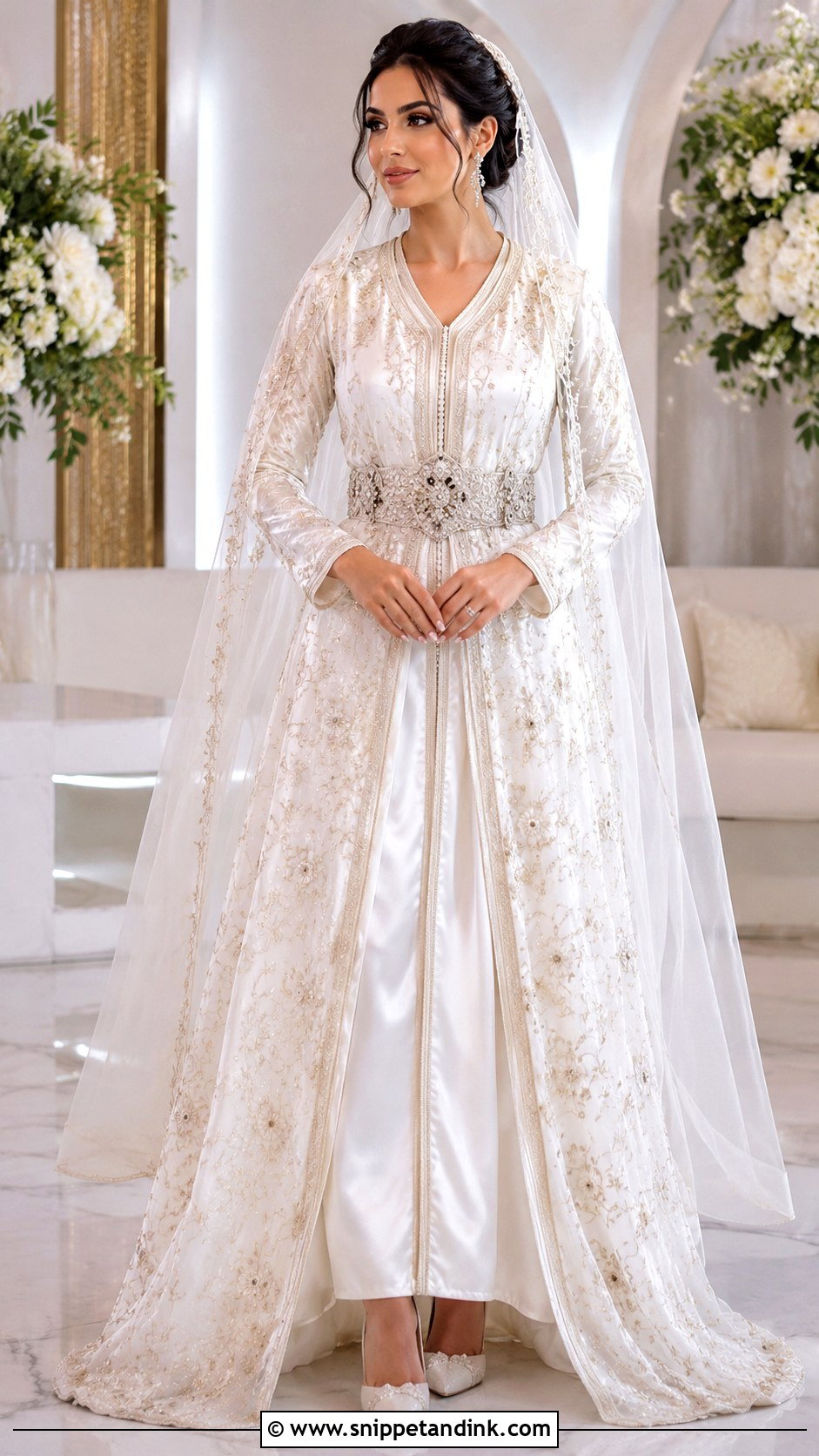
Satin reads bridal the moment you put it on, and it works in white, ivory, blush, gold and deep jewel tones. The contrast I like most is a smooth satin underdress beneath an embroidered outer layer, shine against texture. Satin shows every pull and bunch, so the fit at the waist has to be neat, with no excess fabric gathered under the belt. A crystal or metal-worked mdamma adds definition. Simple heels, drop earrings and a soft veil let the fabric speak.
12. Brocade Moroccan Caftan Wedding Dress
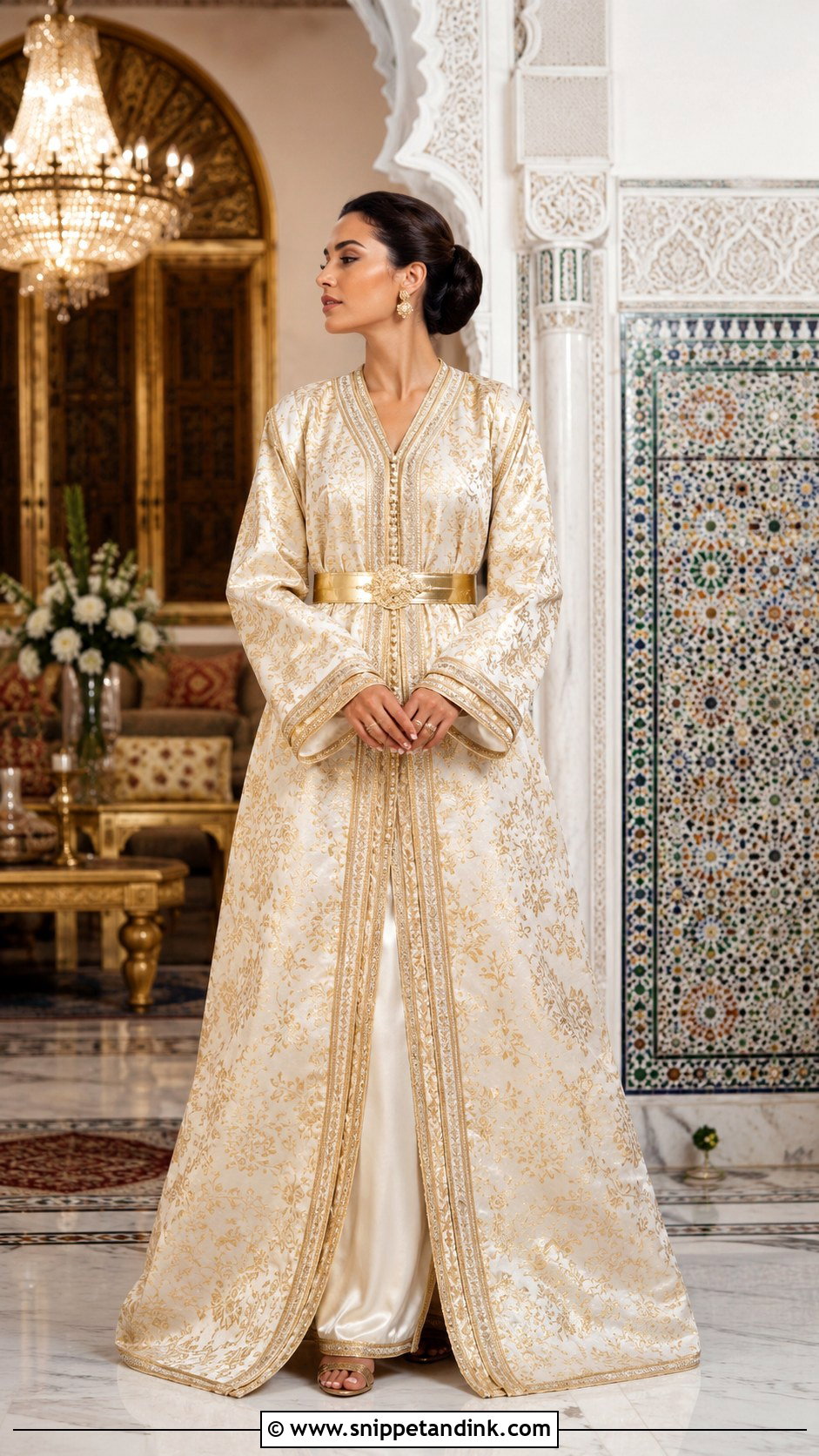
Brocade is woven with its pattern built in, so a Moroccan caftan wedding dress in brocade looks detailed before a single stitch of embroidery is added. Ivory, gold, green, blue and burgundy all carry it well. Because the pattern is busy, a solid mdamma breaks it up and gives the body a clear shape. Keep jewelry small, gold studs and a smooth bracelet, and wear metallic heels under the hem. Brocade is stiff, so check you can sit comfortably before you buy.
13. Beaded Moroccan Takchita Wedding Dress
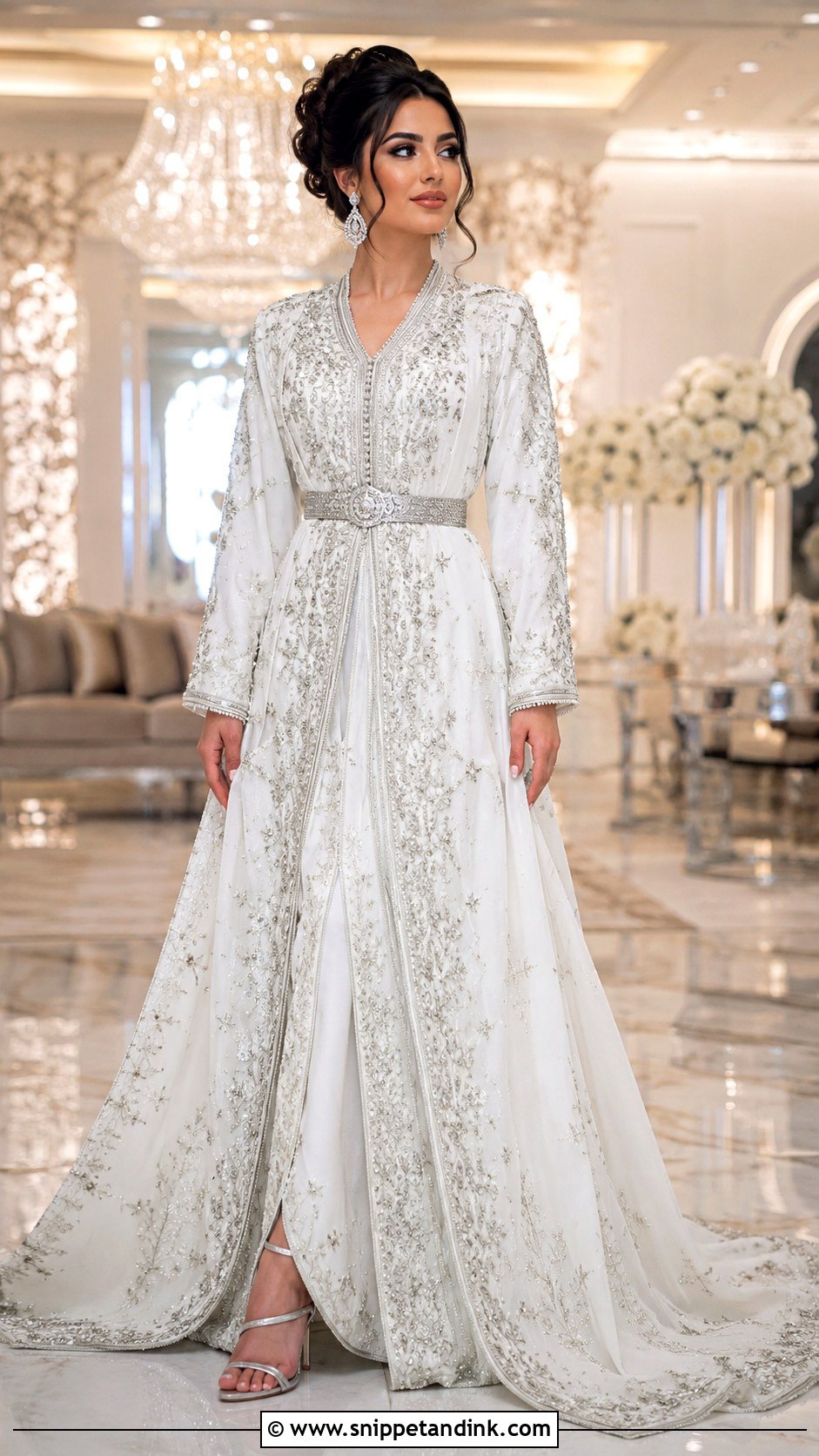
Beading can trace the neckline, sleeves, front opening and hem, and it catches light every time you move. I’d keep to one main color and one metallic accent: white with silver beads for classic, emerald with gold for drama. If the dress itself is heavily beaded, a smooth metal belt balances it better than a beaded one. Beaded takchitas are heavy, and the weight sits on the shoulders, so heels need to be the comfortable pair. Under bright evening lights, this is the one that glitters most in reception photos.
14. Embroidered Moroccan Caftan Wedding Dress
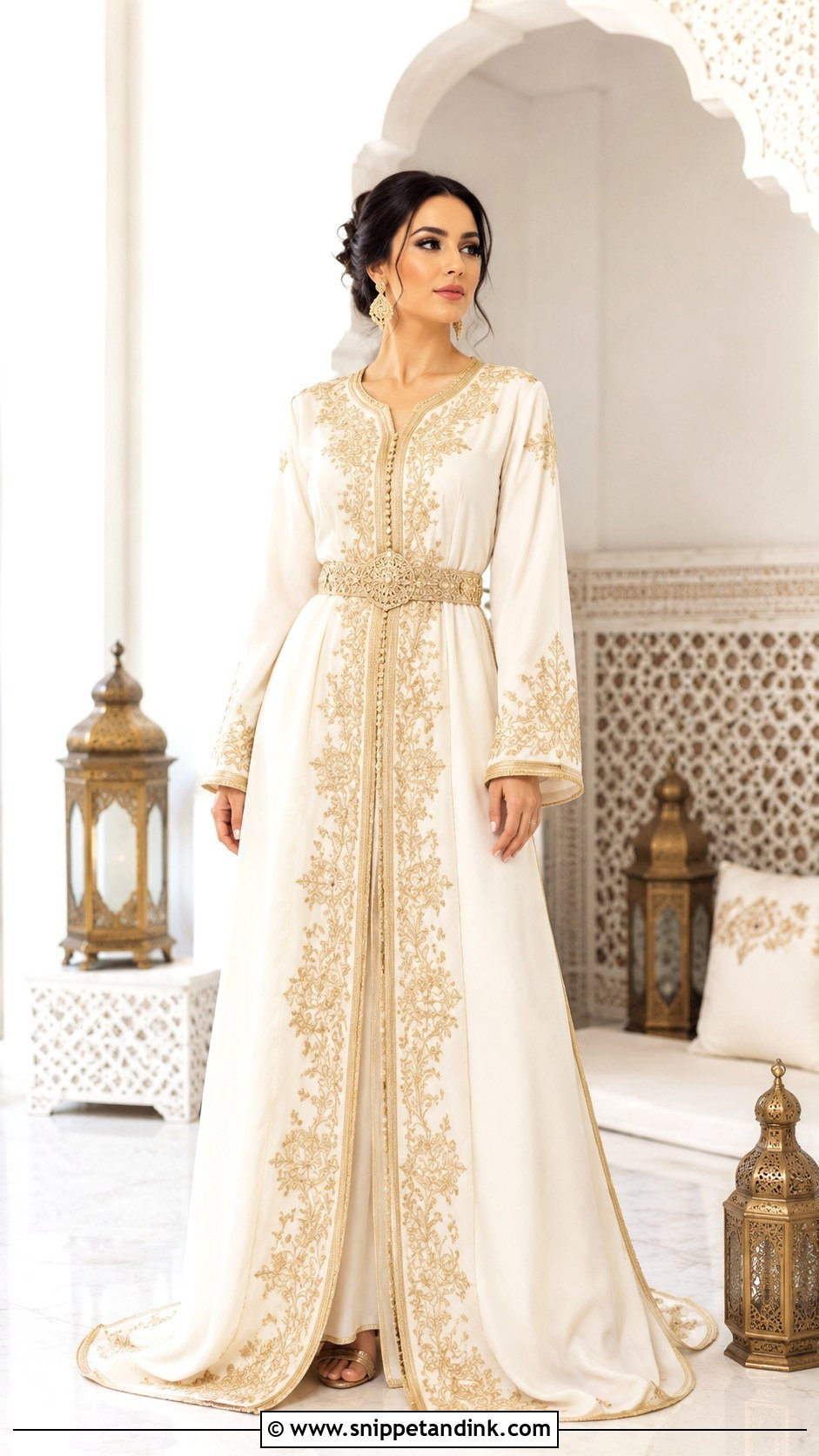
Embroidery is what makes the caftan so adaptable, from a single line of thread at the neck to dense work across the whole front. Gold on ivory is classic, silver on blue feels fresh, and tonal embroidery gives quiet luxury. A panel running down the center front draws the eye vertically and lengthens the figure. Match the belt and earrings to the thread color, and if the neckline is heavily worked, skip the necklace altogether. Hand embroidery is slow, so if you’re commissioning, this is where most of the lead time goes.

15. Pearl Moroccan Takchita Wedding Dress
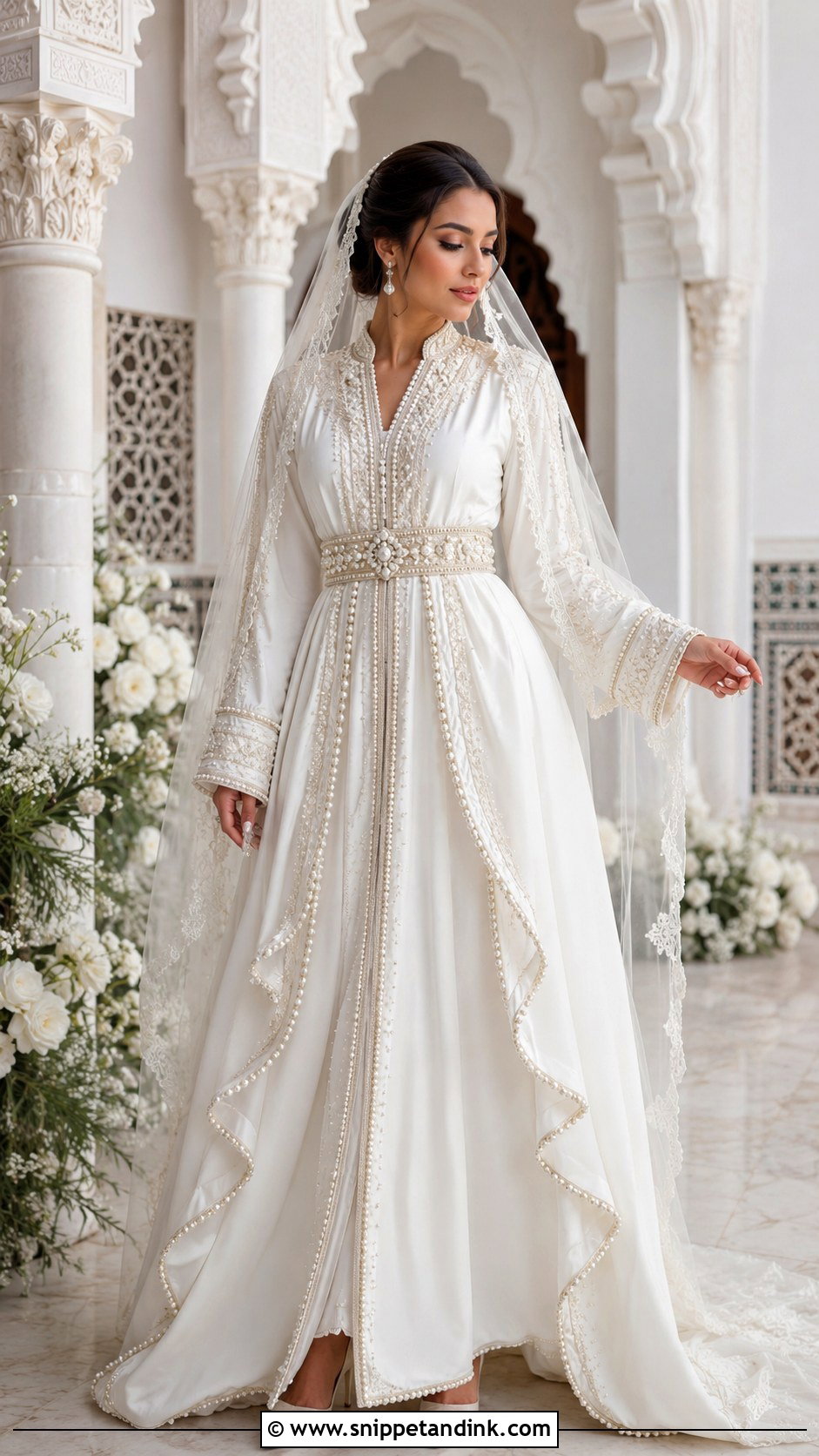
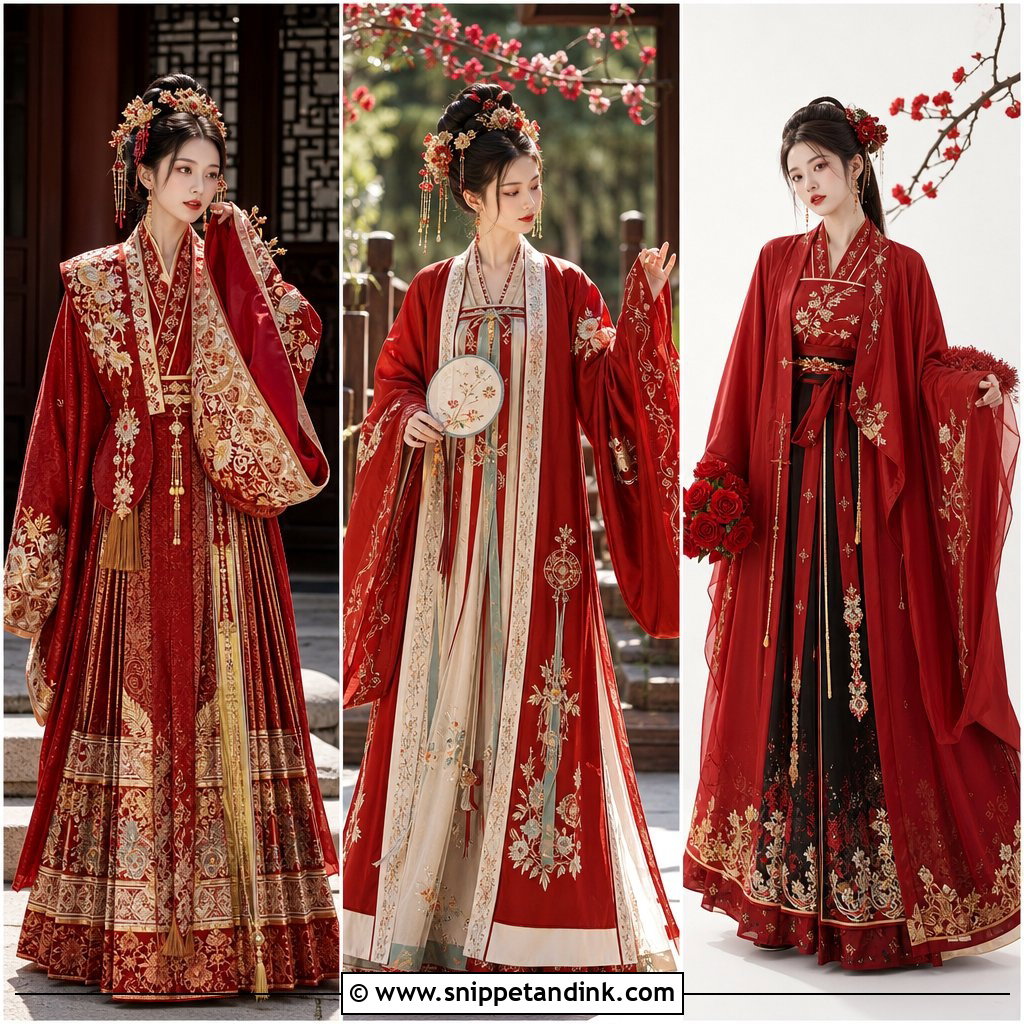
Pearls suit white, ivory, blush and champagne, either scattered across the outer layer or worked as trim around the sleeves and neckline. A pearl-detailed mdamma keeps everything consistent. The mistake I correct most often is mixing metals and stones on top of pearl work. Pearls already finish the look, so ivory heels, pearl earrings and a smooth updo are enough. It suits a first entrance or the ceremony portraits.
16. Lace Moroccan Caftan Wedding Dress
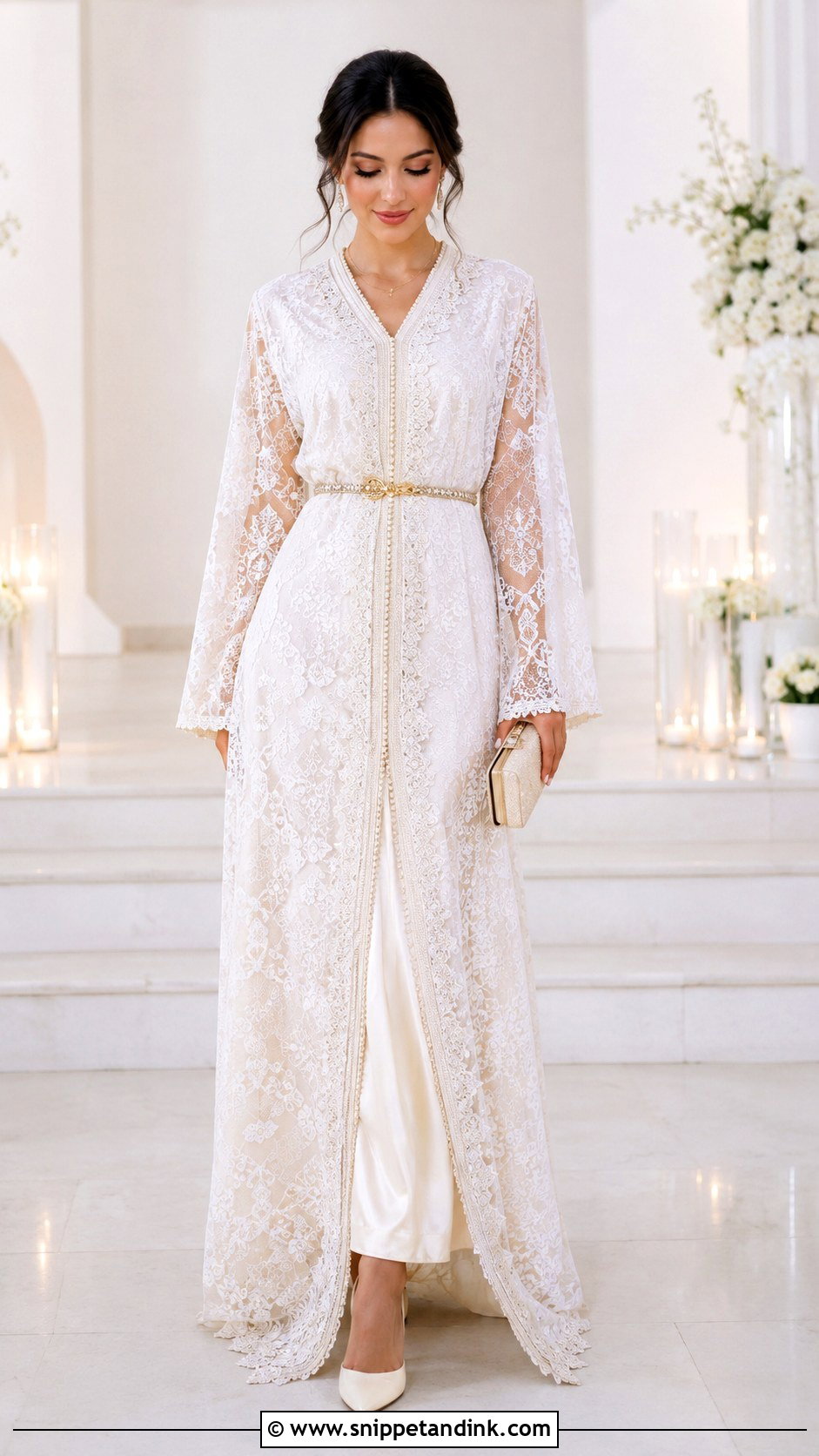
Lace over satin, silk or crepe brings a softer bridal texture to the Moroccan shape. White lace over ivory reads romantic; gold lace over champagne reads regal. With all that surface detail, the belt should be plain. Long lace sleeves give modest coverage while staying light. Pointed heels, delicate earrings and a small clutch complete it. For a bride who loves the look of a Western gown but wants the length, belt and line of Moroccan dress, it’s the natural bridge.
17. Cape Moroccan Takchita Wedding Dress
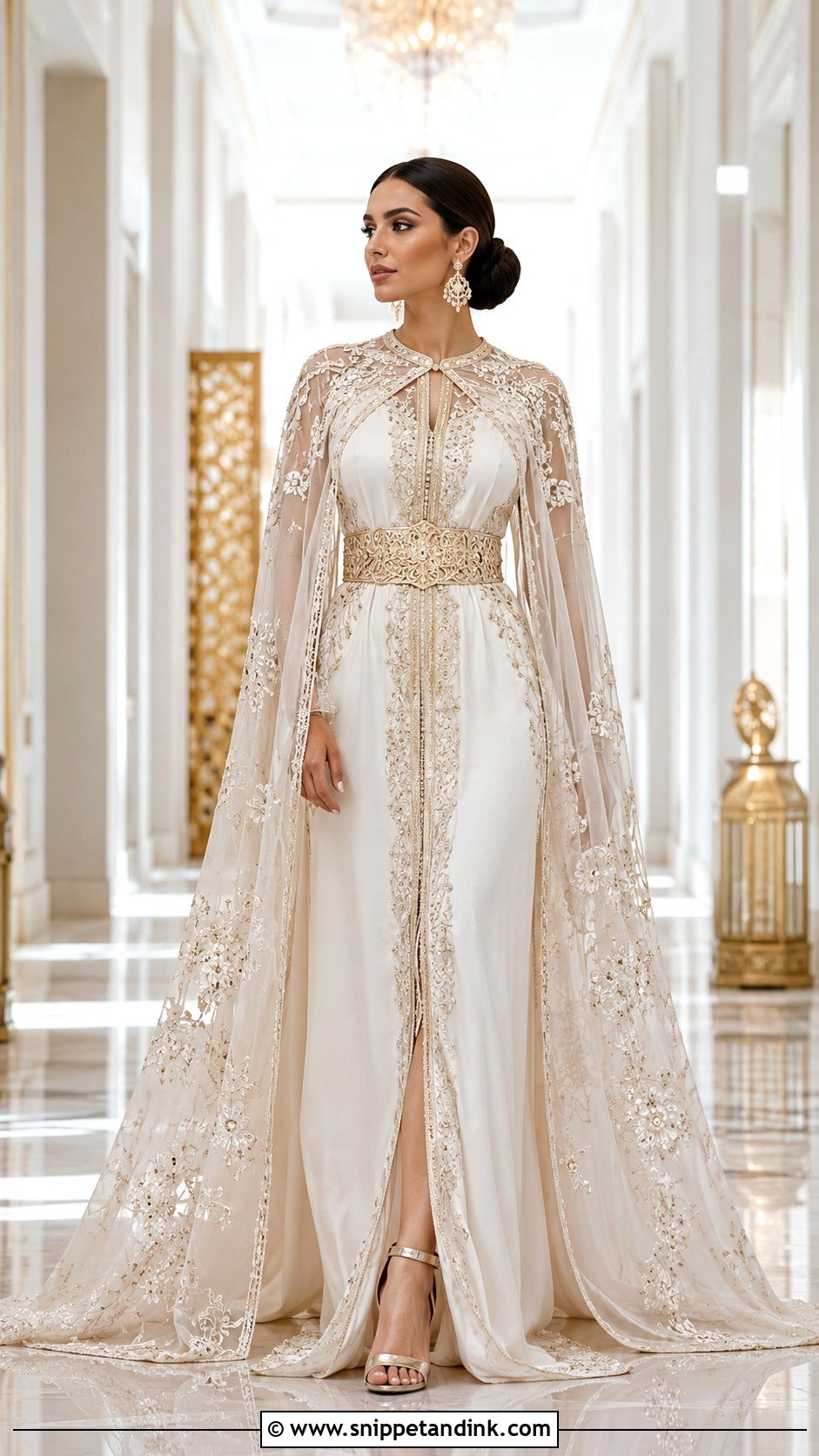
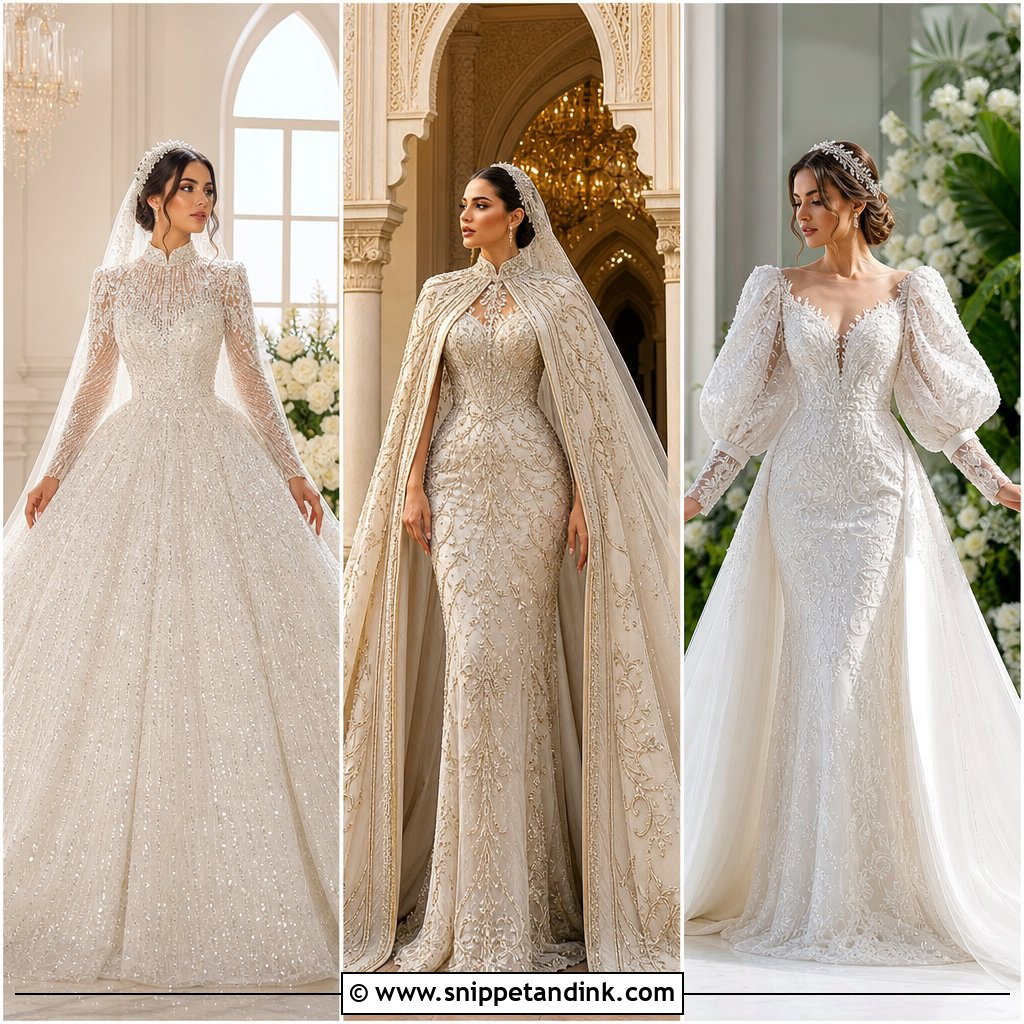
A cape adds movement without a long train, so you can walk the room and turn for photos without someone managing fabric behind you. The cape Moroccan takchita wedding dress works with a sheer, embroidered or beaded cape, or one cut from the dress fabric. Keep the underdress fitted and smooth so the cape stays the feature, and use a structured mdamma so nothing looks loose. Check that the cape is fixed securely at the shoulders, because amariya lifts and dancing both tug at it. Metallic heels, statement earrings and neat hair let the neckline show.
18. Modern Moroccan Caftan Wedding Dress
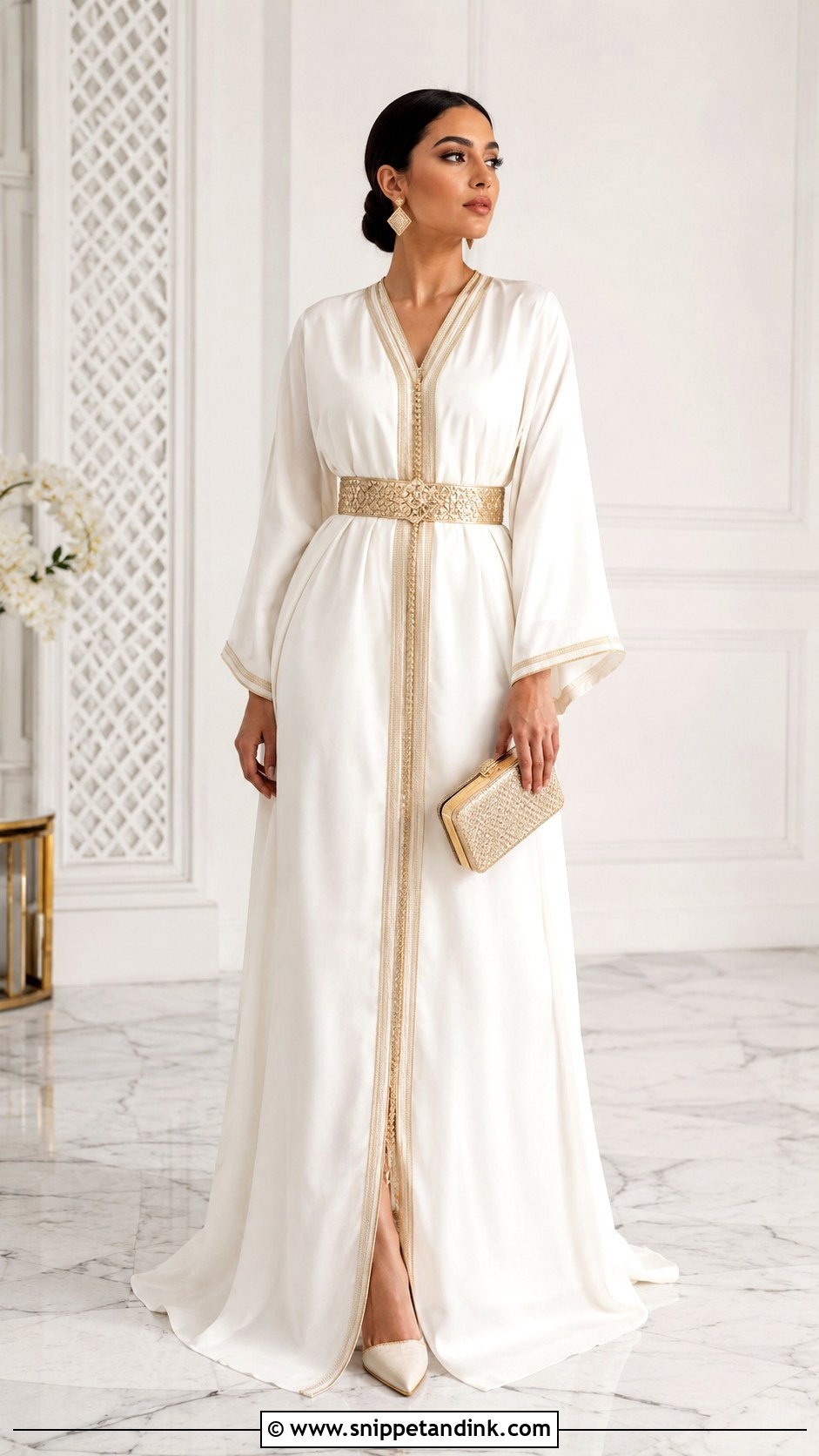
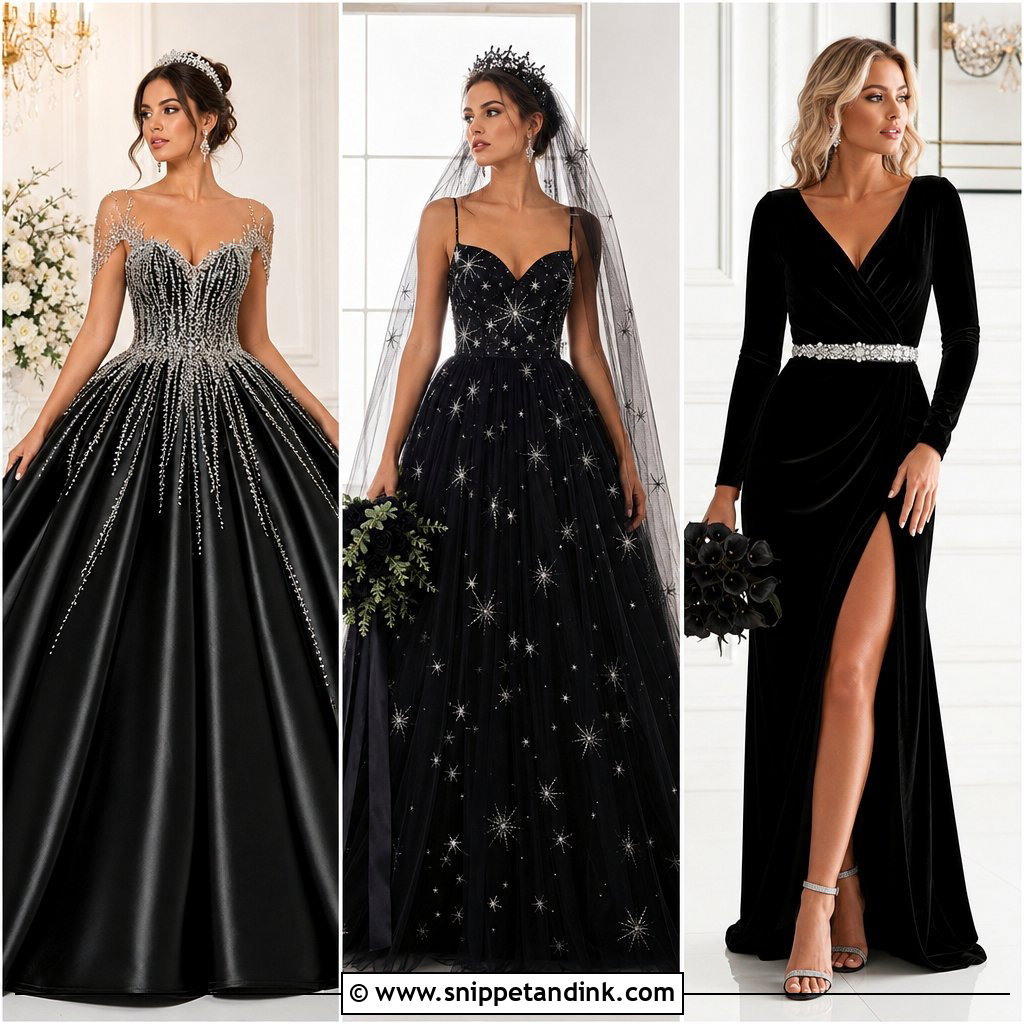
Restraint is the whole idea here. A simple silhouette, crisp fabric, minimal embroidery and a strong belt keep the tradition but drop the weight. White, ivory, champagne, black with gold, or soft sage can all look current and still formal. Sleek heels, geometric earrings and a small structured clutch finish it, with smooth hair and fresh makeup. It fits a civil ceremony or a smaller reception especially well.
19. Traditional Moroccan Takchita Wedding Dress
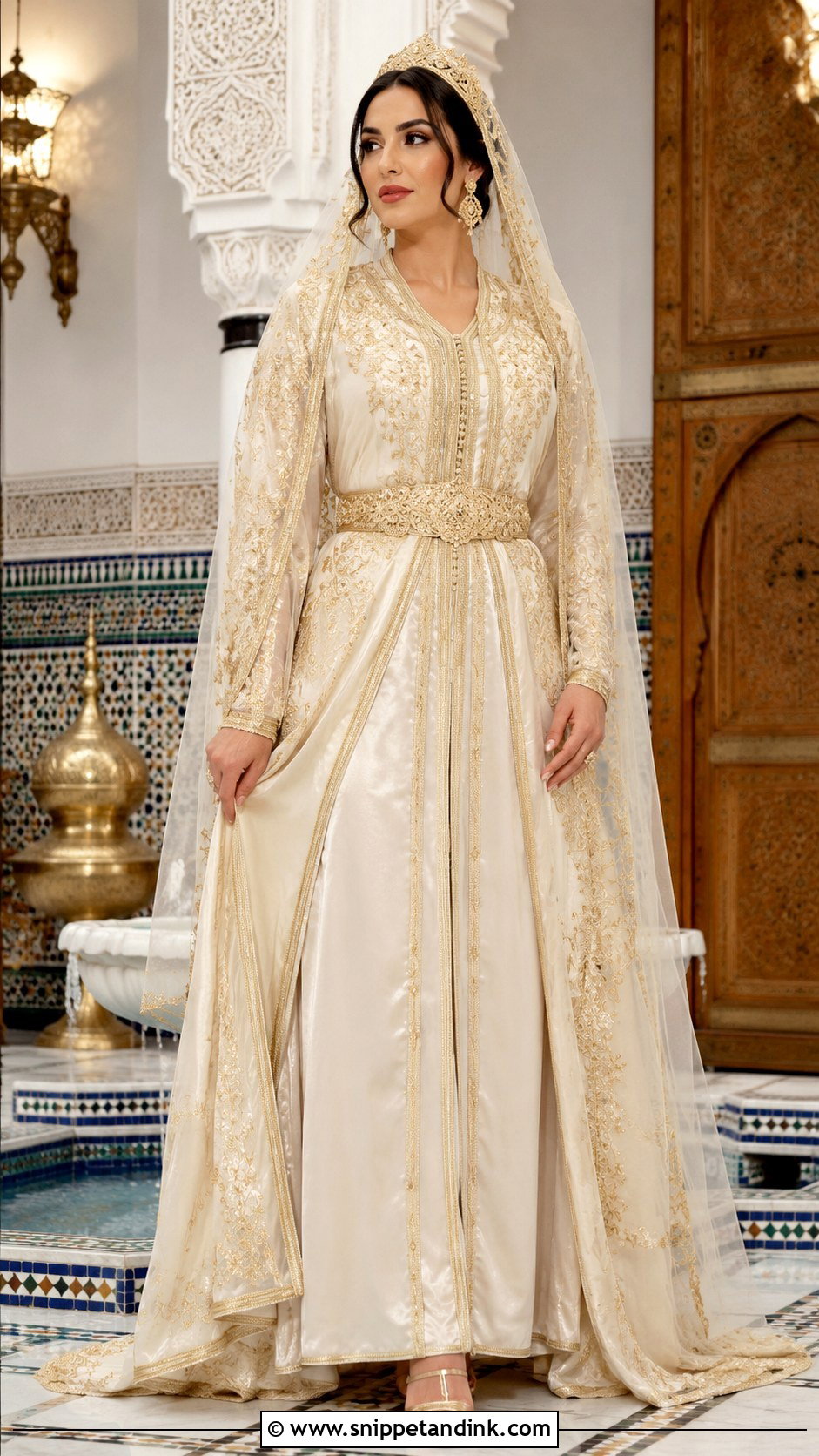
The traditional takchita is about layers and handwork: an inner dress, an ornate outer layer, and an mdamma belt, in silk, brocade, velvet or satin. The details that make it authentic are the sfifa trim and the aakad, the tiny hand-knotted buttons that run down the front. When I look at a traditional piece, I check that those buttons are knotted by hand and evenly spaced, since that’s where machine-made copies give themselves away. Formal heels, matching jewelry and a hairstyle that will hold a veil or headpiece complete it. For the main celebration, it’s the look many families expect to see.
20. Simple Moroccan Caftan Wedding Dress
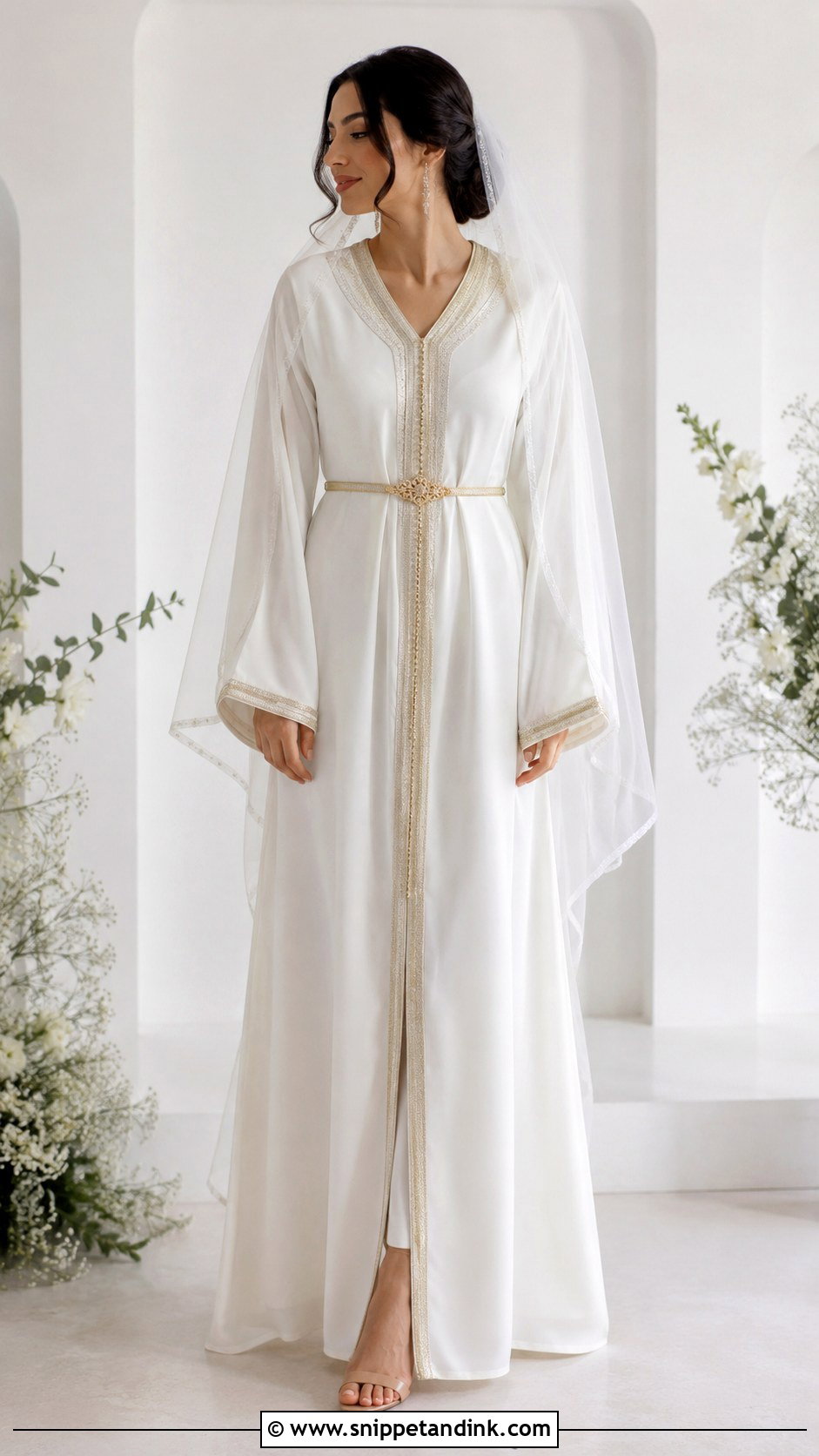
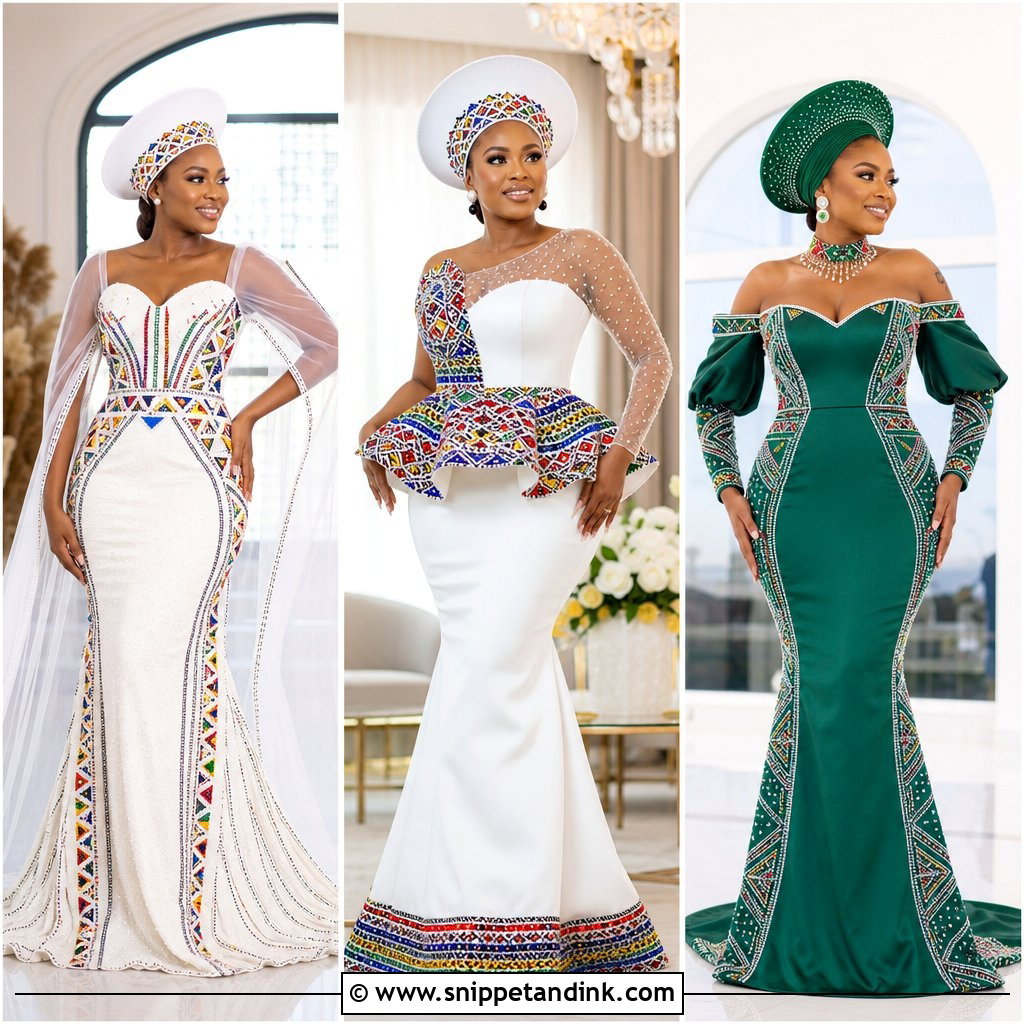
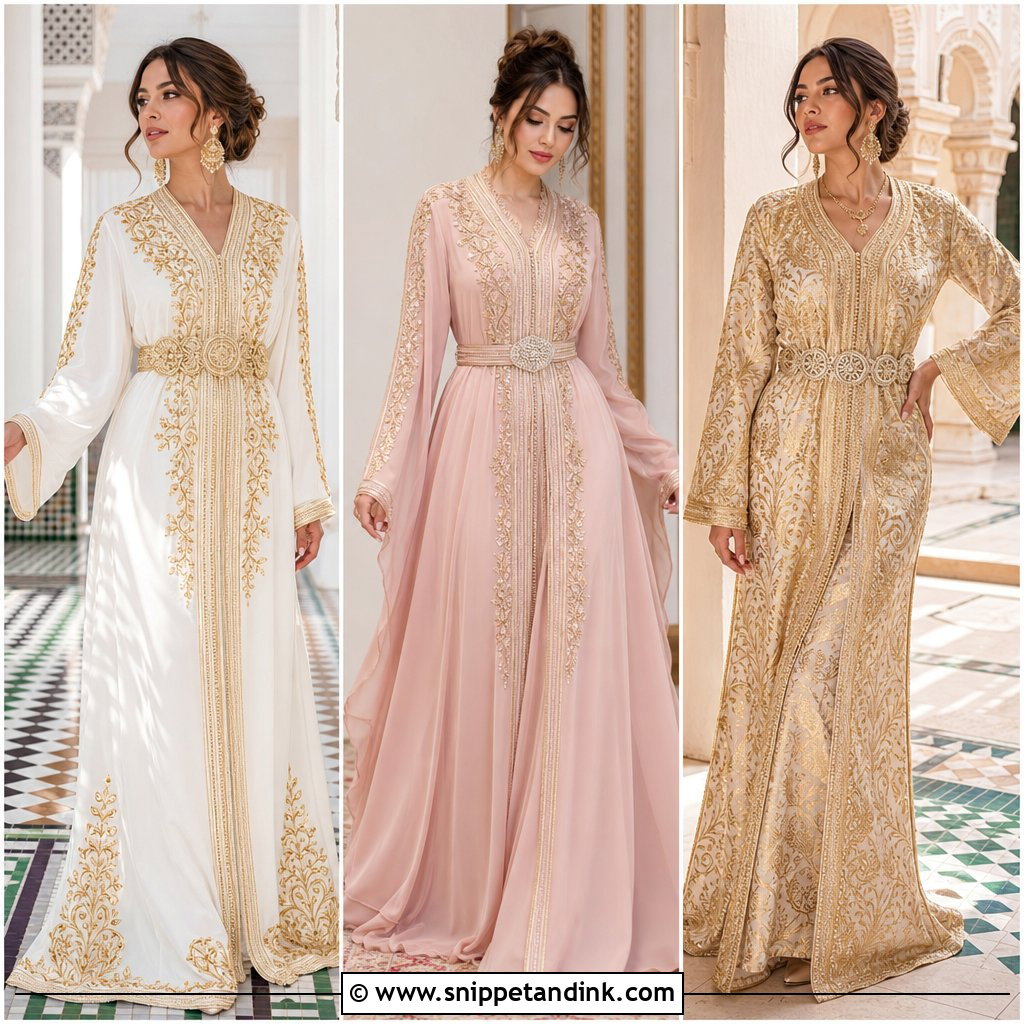
Without heavy decoration, a caftan lives or dies on fabric, color and finishing. Ivory silk, white crepe, champagne satin or blush can all read bridal with the right belt. Look closely at the seams and the hem, because nothing distracts from poor finishing here. A narrow mdamma, delicate earrings and elegant heels are plenty. It suits daytime events and intimate gatherings, and a sheer veil or metallic clutch adds impact if you want it.
21. Luxury Moroccan Takchita Wedding Dress
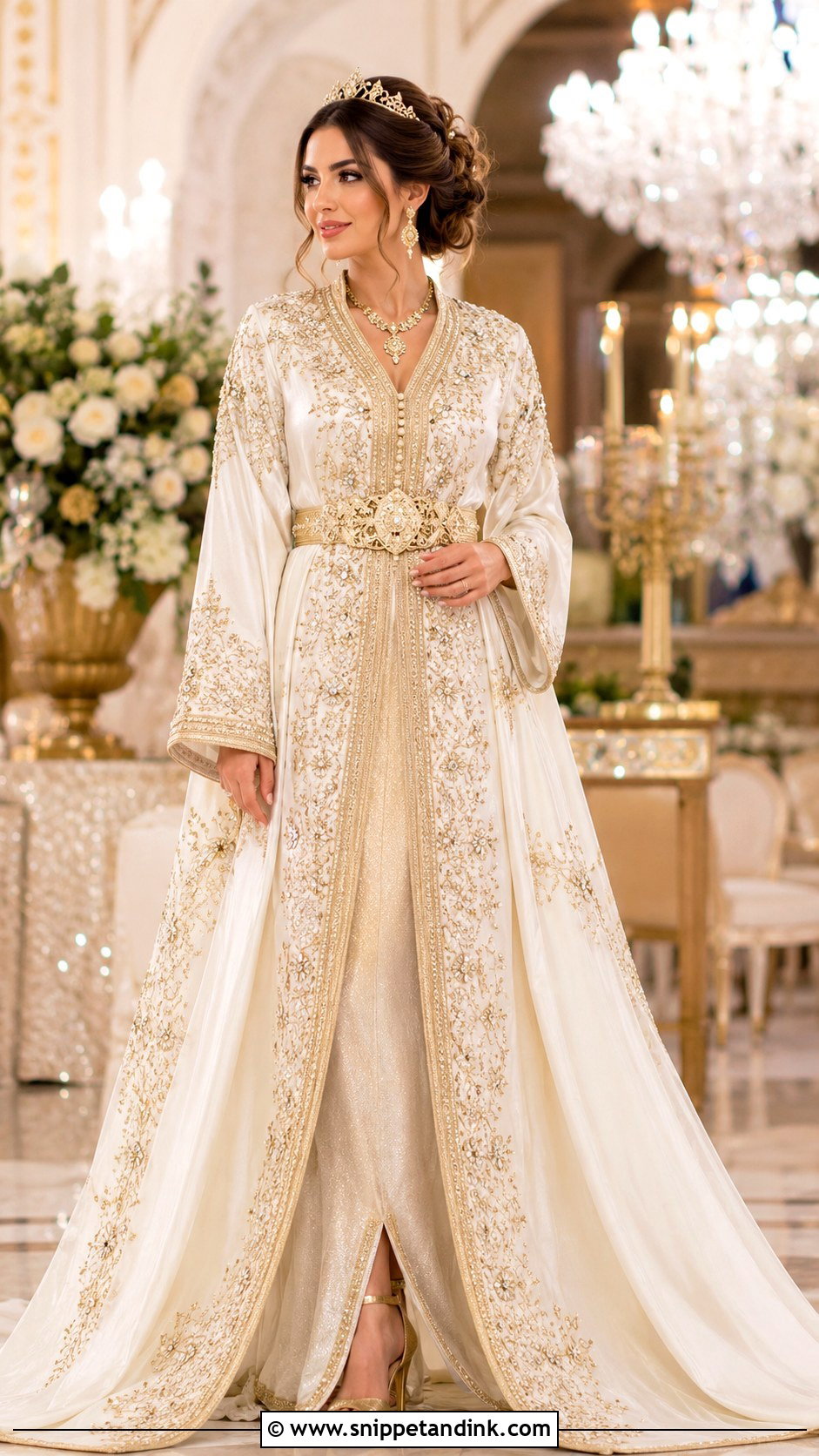
A luxury Moroccan takchita wedding dress is full glamour: layered fabric, dense embroidery, crystals, metallic thread and a dramatic belt. The trick is choosing one focus. If the beadwork is heavy, keep jewelry refined; if the fabric is rich but plain, go ornate with the mdamma. Gold, ivory, emerald, burgundy and royal blue all carry it. Expect real weight and ask your neggafa or helper to stay close during this change. Formal heels, a structured clutch and polished hair finish it for the main entrance or professional portraits.
22. Moroccan Henna Takchita Wedding Dress
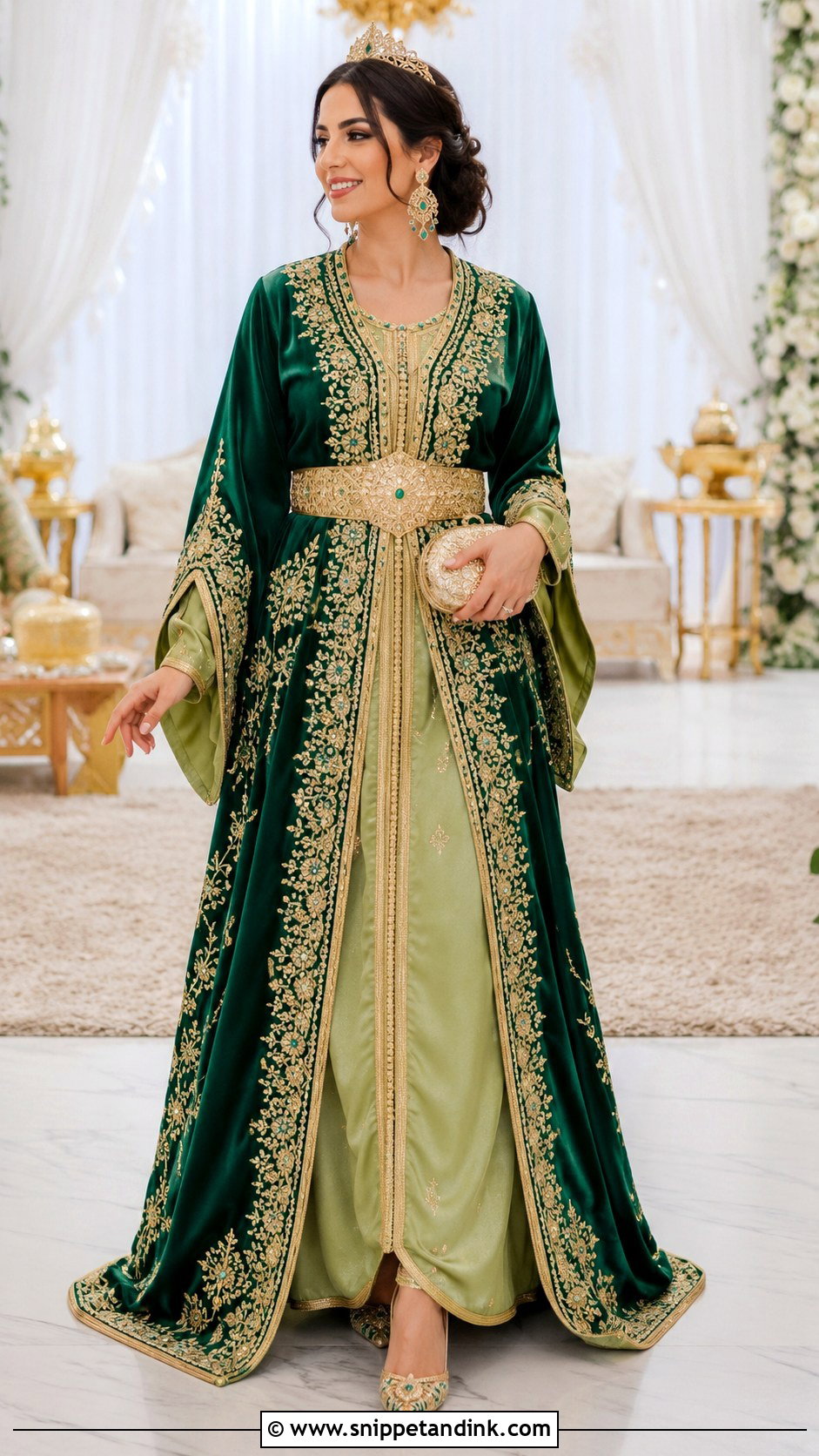
The henna outfit is usually the most colorful of the wardrobe. Green is a popular choice, though gold, red, emerald or white with green accents work too. Comfort matters more here than anywhere else, because the henna ritual means sitting still for a long time with your hands held out, and you can’t adjust a sleeve with wet paste on your palms. Choose sleeves that pull back easily or end above the wrist. A gold mdamma, slippers or low heels, statement earrings and a soft headpiece or scarf finish it.
23. Moroccan Amariya Wedding Dress
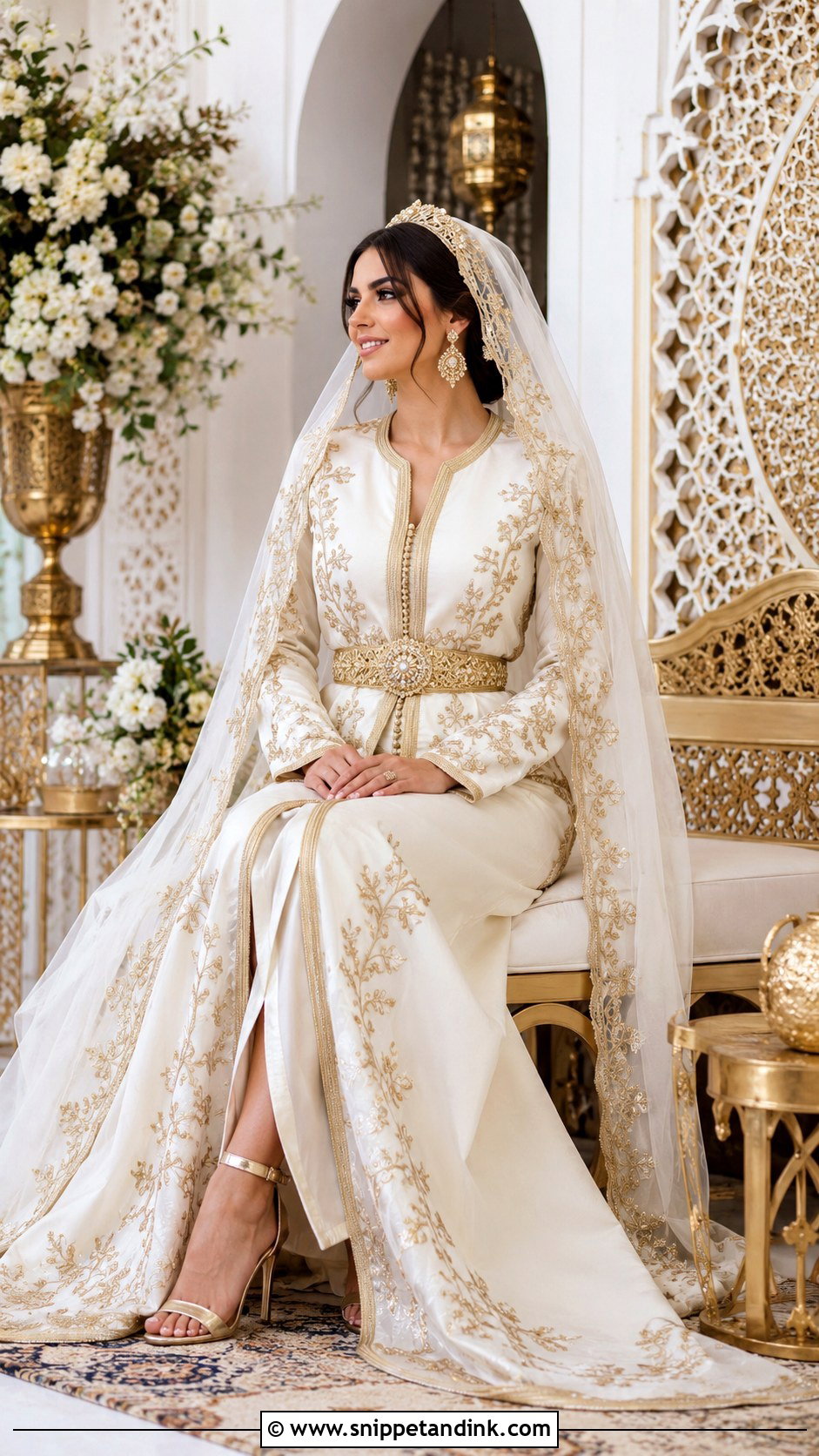
During the amariya, the bride is lifted and carried around the room on a decorated platform, so the dress is seen from every angle and from below. Choose a structured takchita or caftan that holds its shape while seated. White with gold, emerald with gold, royal blue with silver or deep red with gold all read clearly from across the room. Secure the belt and headpiece firmly, as the movement is real and sometimes bumpy. Shoes are mostly hidden, so comfortable heels or embellished flats are fine. Statement earrings and a polished hairstyle complete it.
24. Moroccan Reception Caftan Wedding Dress
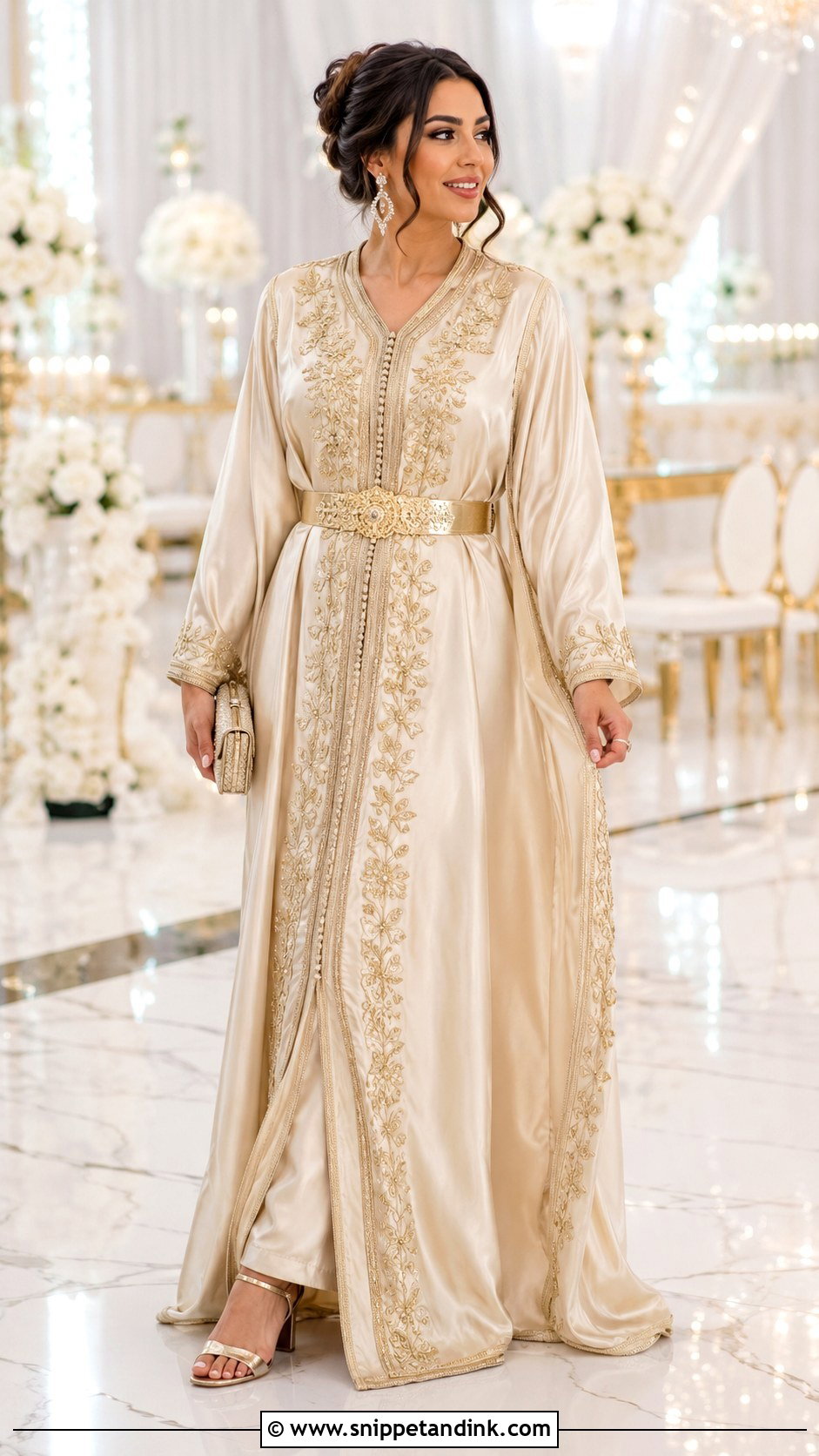
By the reception, most brides want freedom to move. A silk or satin caftan with embroidery down the front gives that while still looking special, in jewel tones, champagne, blush or ivory. Wear heels you can stand in for hours and a belt that stays put when you dance. Jewelry should be smooth enough not to snag the fabric when you hug guests. Bright venue lighting can handle more sparkle here than earlier outfits.

25. Moroccan Bridal Caftan With Mdamma Belt
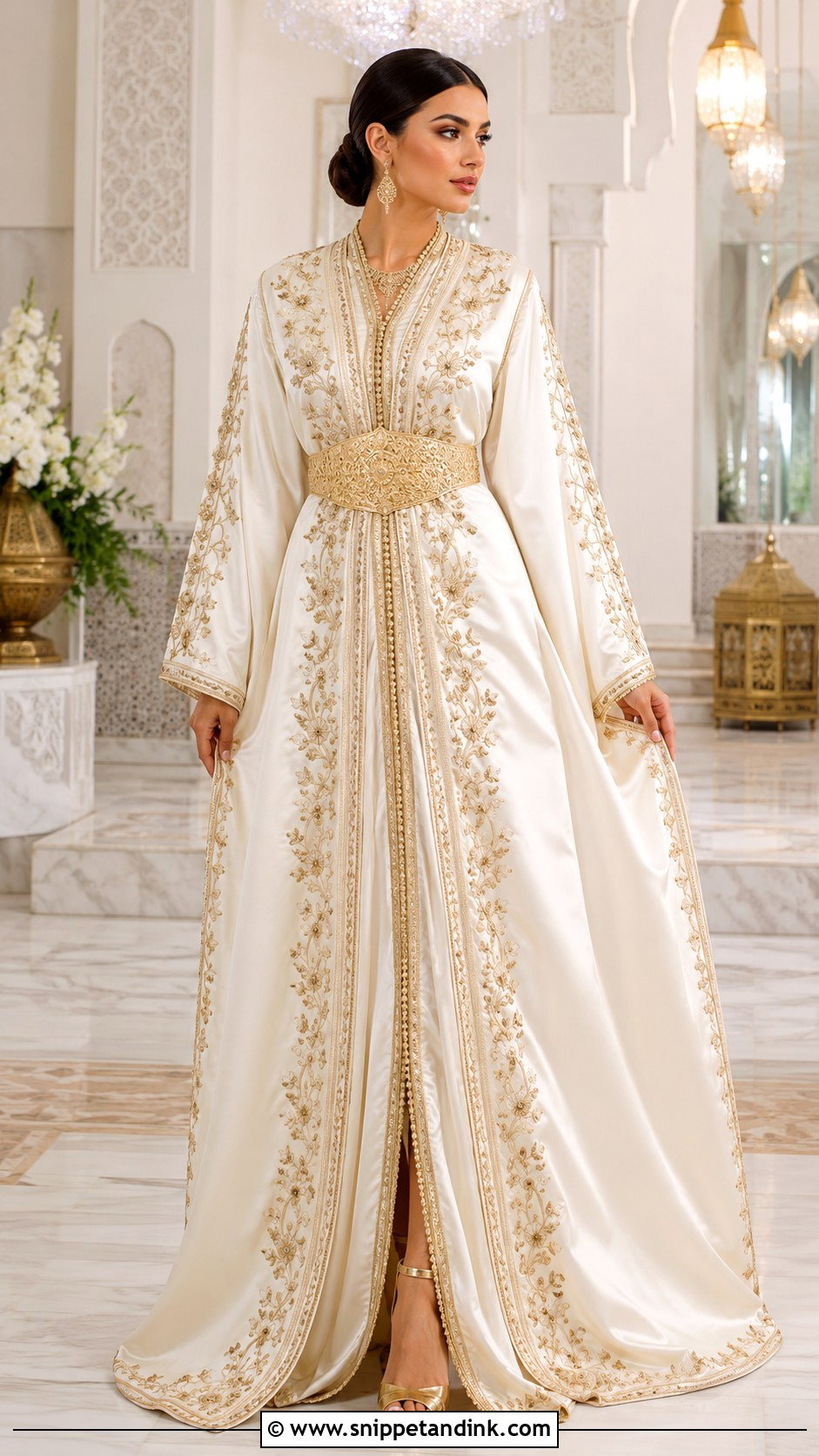
The mdamma belt is what turns a flowing caftan into a bridal silhouette, and it’s the piece I adjust most during a night of changes. Match it to the embroidery: gold with warm thread, silver with cool beadwork. Wide belts look more dramatic, slim ones cleaner and more modern. Because the belt fastens at the waist rather than relying on a zip, it suits many body types and can be loosened after dinner. Pair it with a full-length caftan, metallic heels and jewelry that supports the belt rather than competing with it.
26. Moroccan Bridal Caftan With Hijab
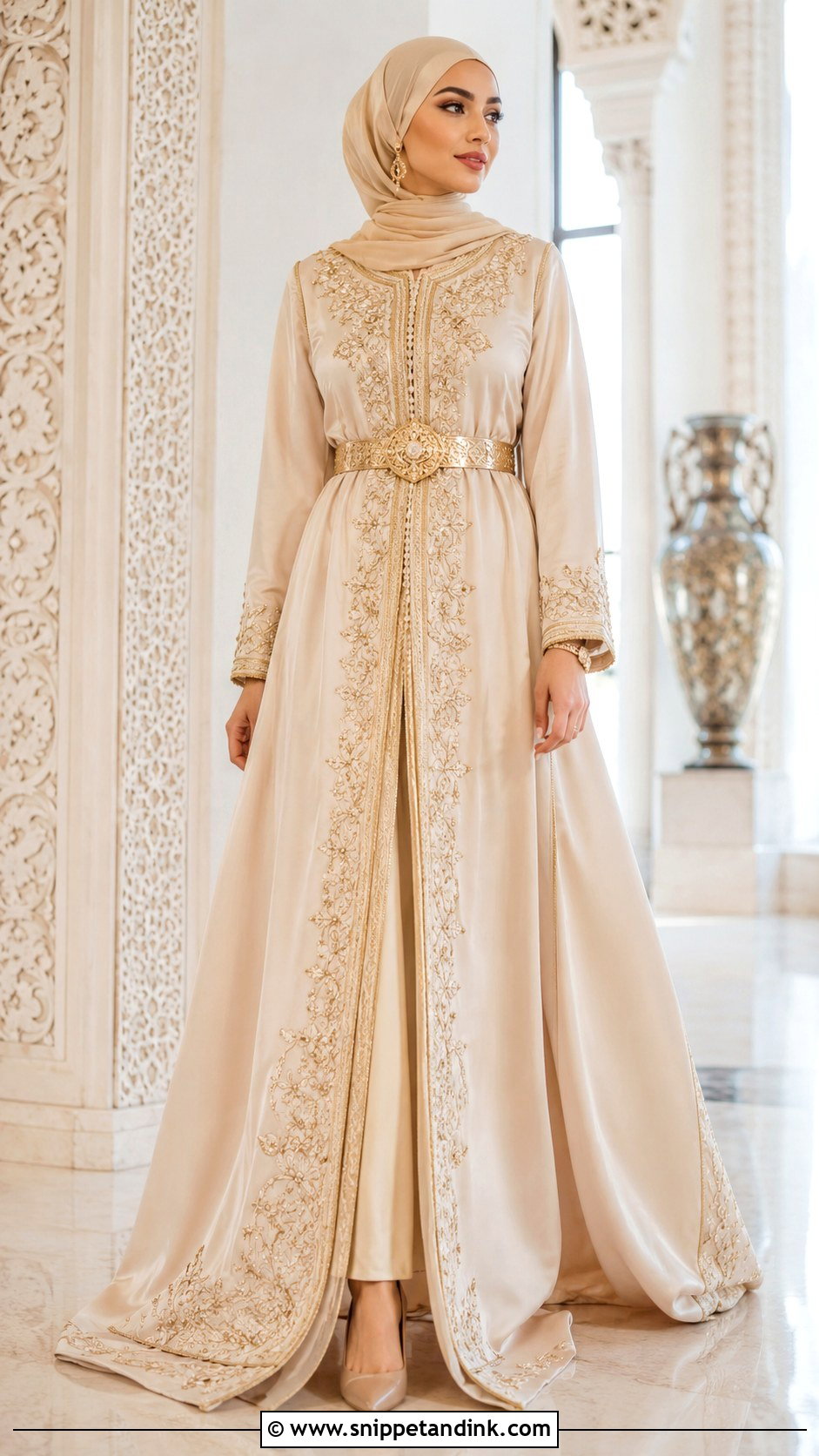
Coordinating a Moroccan bridal caftan with hijab works best when the hijab fabric matches the dress in tone but stays lighter in weight. Chiffon or silk pins smoothly; satin looks rich but slides, so it needs more pins and an underscarf. Choose a full-length dress with long sleeves, a defined mdamma and embroidery that frames the face. Ivory, champagne, blush, emerald and gold all work. Pin the hijab with the headpiece in place, not before, so nothing shifts during changes. Add a bracelet and comfortable heels.
27. Plus Size Moroccan Takchita Wedding Dress
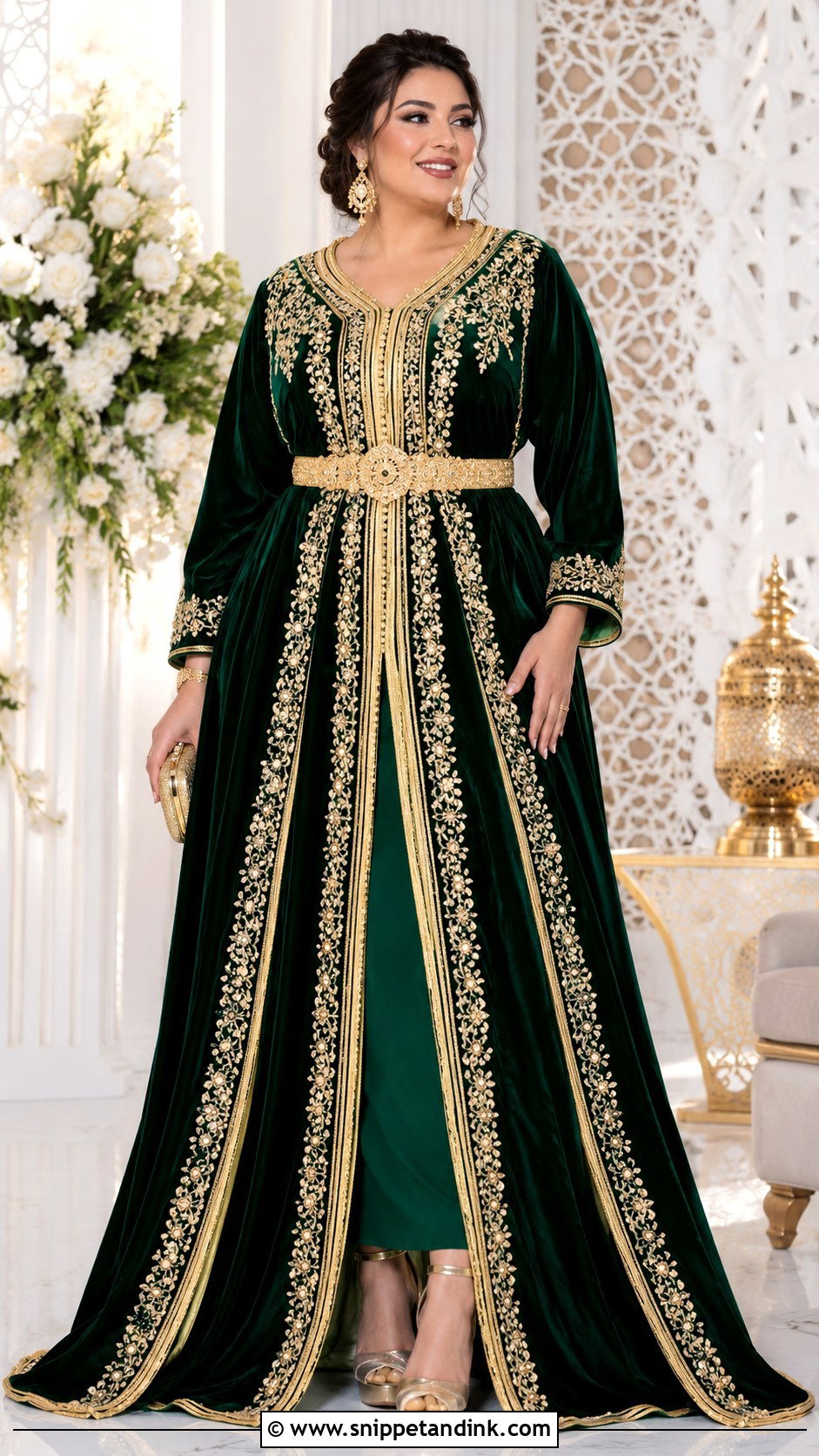
The long line and adjustable belt make a plus size Moroccan takchita wedding dress very forgiving. Pick a soft fabric with enough body to skim rather than cling. A vertical embroidered front panel lengthens the figure, and the mdamma should sit at the narrowest point of your waist, not where a standard size puts it. Very stiff brocade can feel restrictive seated, so try sitting before buying. Dark jewel tones, ivory with gold and rich satin shades all work, with supportive heels or embellished flats and statement earrings.
28. Petite Moroccan Caftan Wedding Dress
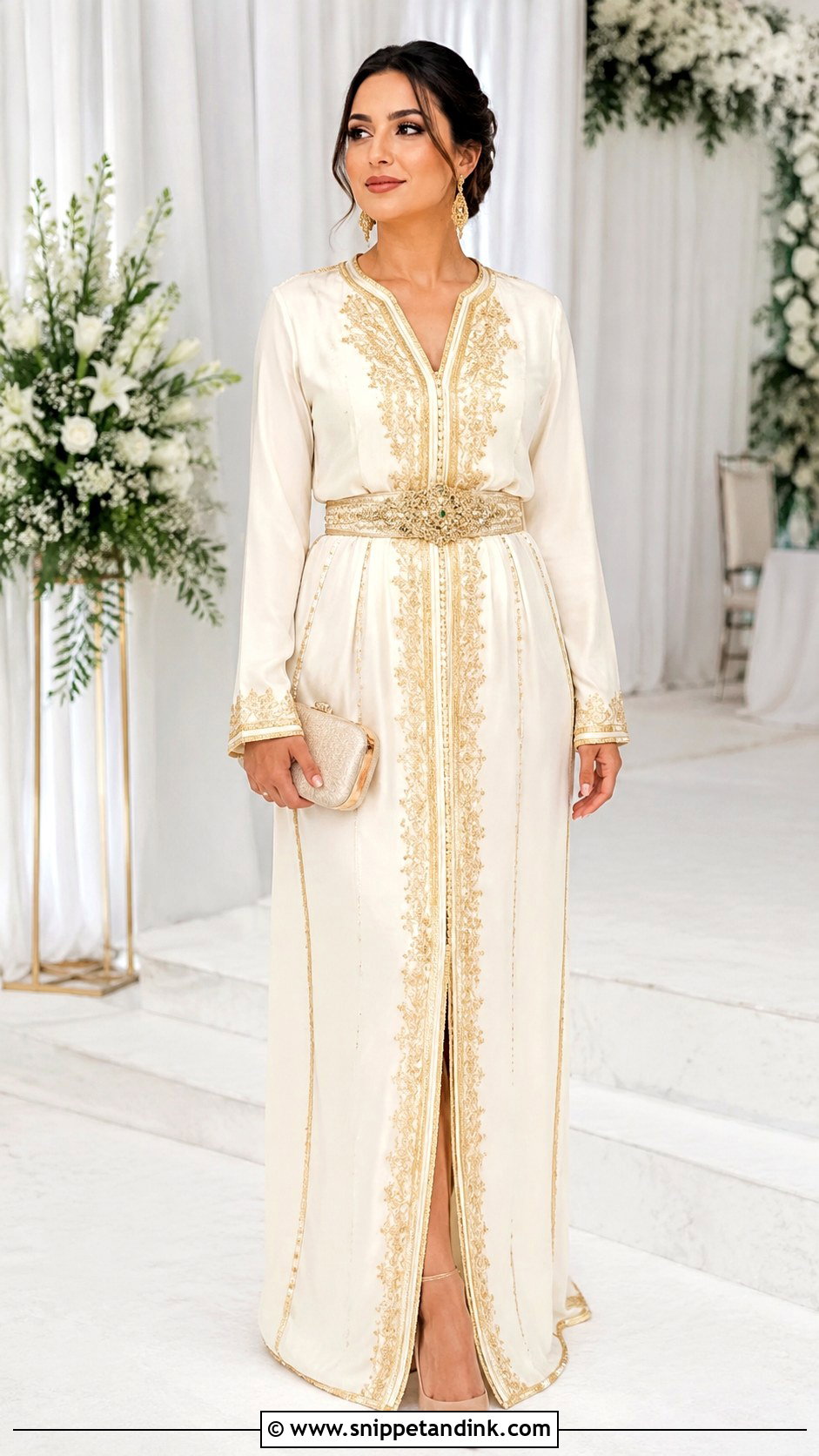
For petite brides, the risk is being swallowed by fabric and embroidery. Choose a slimmer caftan, lighter embroidery and a belt that sits neatly at the natural waist. A vertical front trim draws the eye up and down. Ivory, blush, champagne, sage or soft gold look elegant without heaviness. Heels help, but the hem still needs tailoring so you can walk without stepping on it. Avoid very wide sleeves. A neat bun, small drop earrings and a compact clutch keep it in proportion.
29. Moroccan Mother Of The Bride Caftan
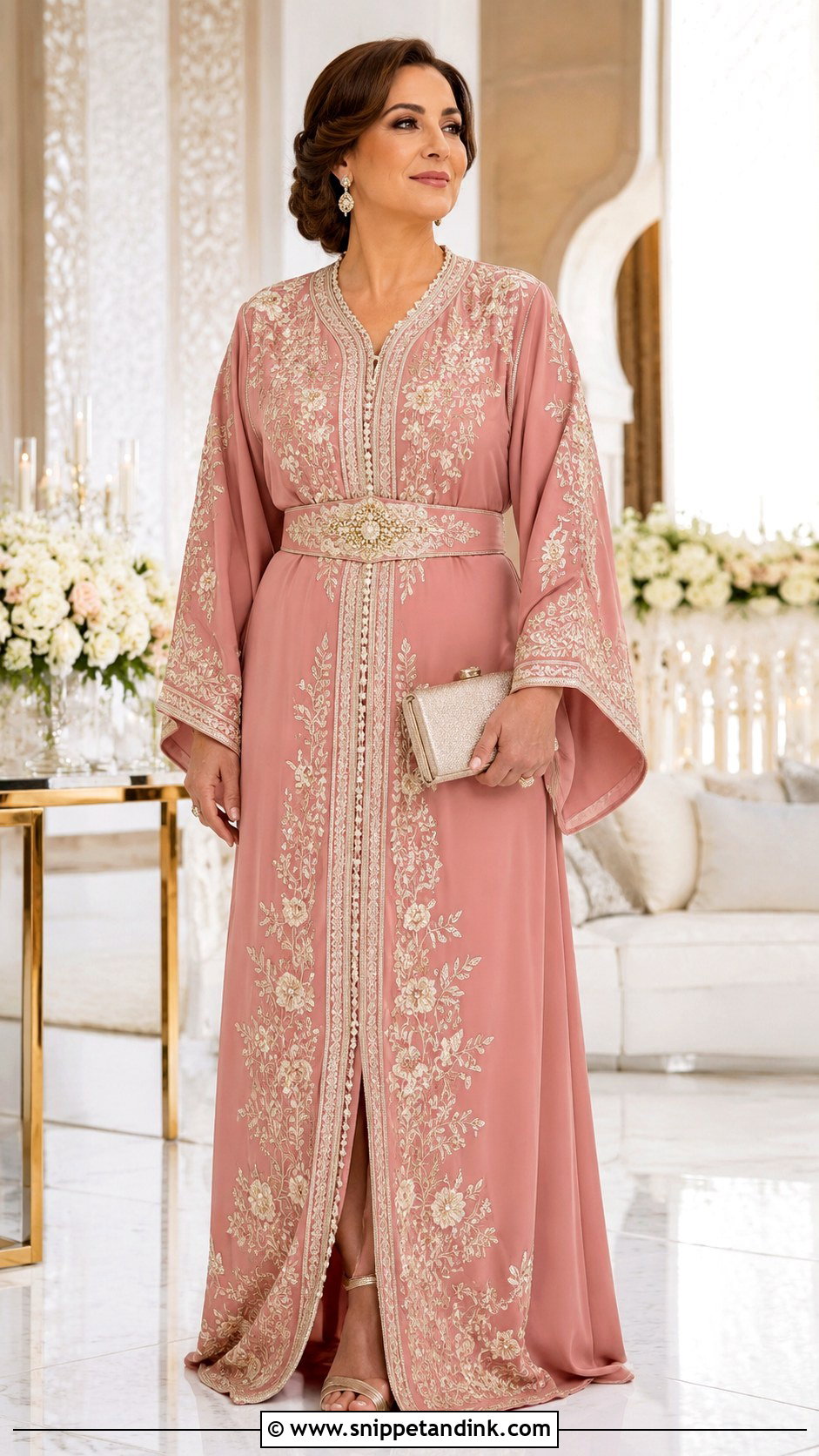
A mother of the bride caftan should look formal and respectful while leaving the spotlight on the bride. Soft gold, dusty rose, navy, emerald, silver or mauve work well. Embroidery, beading or brocade are all fine, but keep the styling restrained. I’d check the bride’s outfit colors first, so the mother doesn’t match one of her daughter’s changes. A matching mdamma, comfortable heels or embellished low shoes, a structured clutch and classic jewelry complete it, and the caftan’s ease makes a long night manageable.
30. Moroccan Wedding Guest Takchita Dress
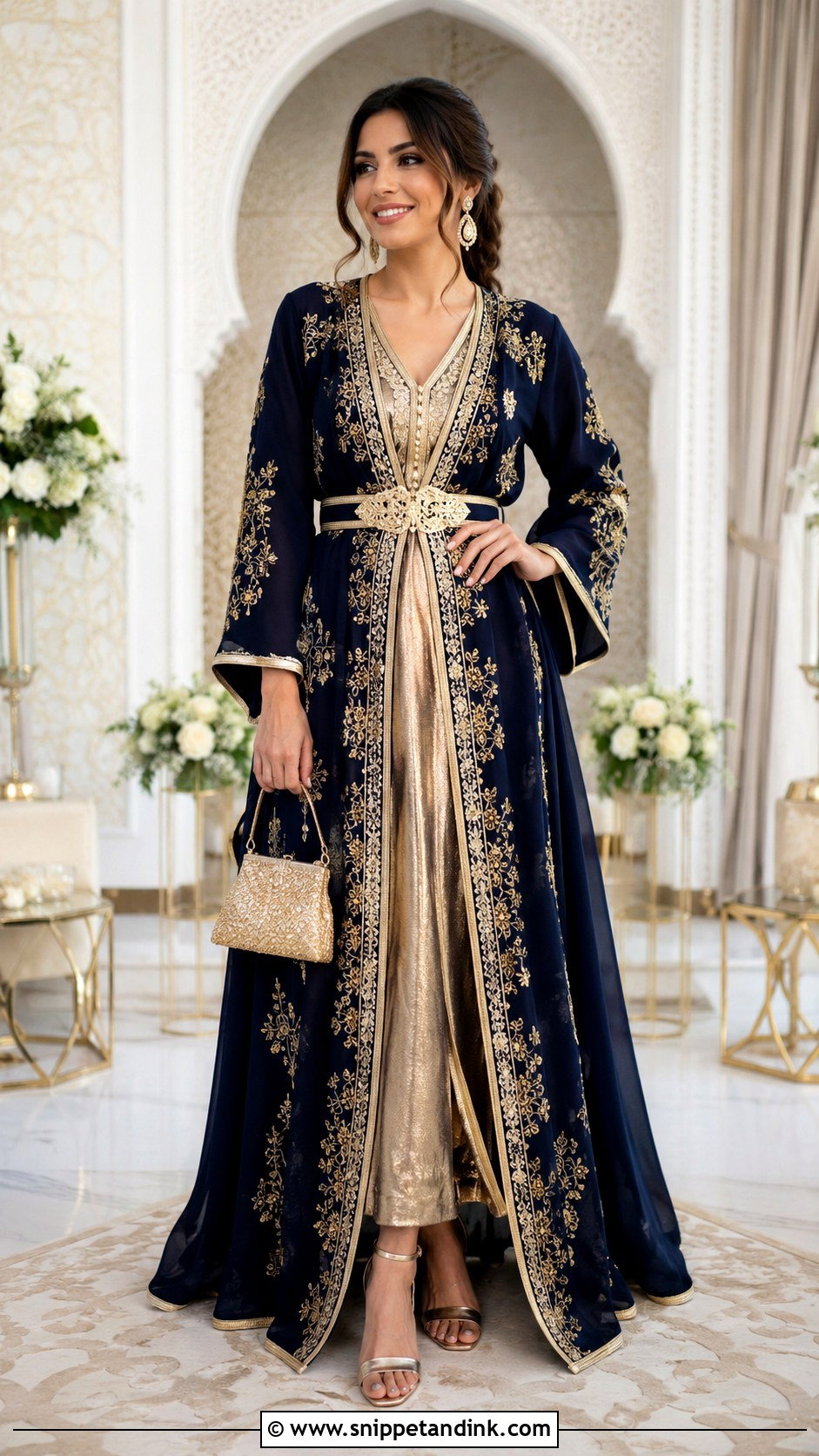
Guests can wear color, embroidery and rich fabric, but nothing that reads as bridal. Jewel tones, pastels, metallic accents and printed brocade are all safe. A two-layer takchita with a decorative belt is the easy formal choice. If you’re unsure about color, ask the family, especially before wearing very pale shades that could be mistaken for one of the bride’s looks. Heels or embellished flats, earrings and a small handbag finish it.
Sitting Through the Amariya and Dancing in an Mdamma
A Moroccan bridal wardrobe is worn hard. You’ll be lifted, seated, hugged and pulled onto the dance floor, often in the heaviest clothes you’ve ever worn. The fit details below make the difference between enjoying that and counting the minutes.
Fit the belt to how you’ll sit
An mdamma that feels fine standing can dig into the ribs once you sit. At the fitting, sit fully back in a chair, lean forward and breathe deeply. If the metal edge presses, have it set slightly lower or loosened by a link, and wear a soft cotton layer under the takchita to stop it marking the skin.
Shoes, hems and the platform
Hems are cut to your heel height, so bring the exact shoes to every fitting. For the amariya, wear the pair you trust most, since the platform moves and you’ll step on and off it in front of everyone. A block heel or embellished flat is far safer than a thin stiletto here.
Storing a commissioned piece
After the wedding, have heavy pieces cleaned by someone used to metallic thread, then store them folded in acid-free tissue rather than hanging. Velvet and beaded takchitas stretch at the shoulders on a hanger, and gold thread tarnishes faster in plastic, so a breathable cotton bag is the better home.
A Wardrobe That Moves From Entrance to Dance Floor
Every outfit in a Moroccan wedding has its own job. White takchitas and gold caftans carry the entrances, velvet and jewel tones carry the evening, pearl work and capes give portraits their drama, and hijab styling keeps everything modest. What makes the whole night work is balance: fabric that suits the season, embroidery that matches the moment and accessories that finish a look rather than crowding it. That applies to the bride, her family and every guest in a caftan.
You'll Like These Ideas:




Leave a Reply