
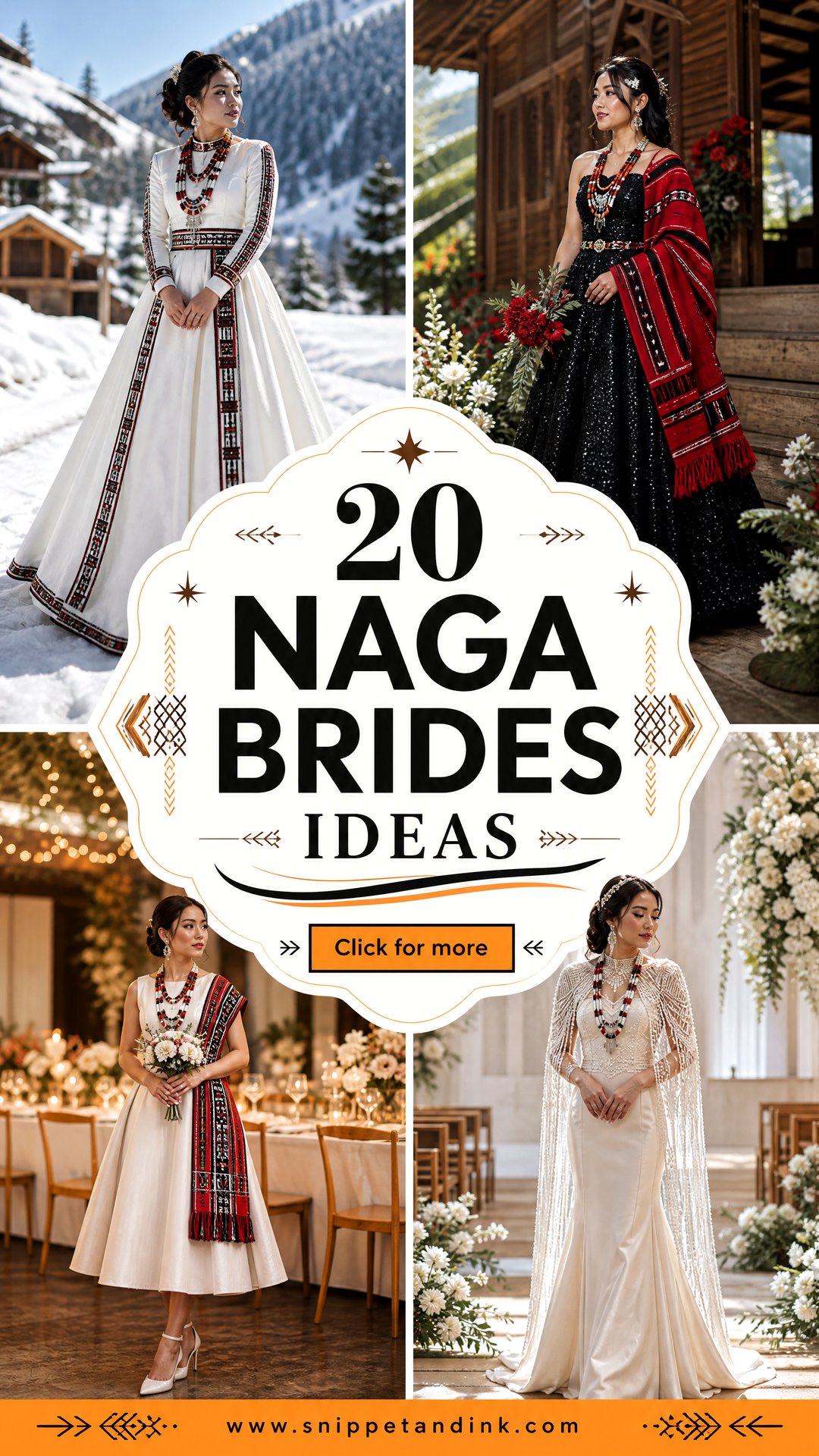
Sourcing a Naga Textile Before You Plan Anything Else
When I style a Naga bride, I ask for the woven pieces before I suggest a single gown or blouse. Everything else gets built around the textile, so it has to be settled first. Many shawls and wrap skirts are still woven by hand on a backstrap loin loom, and a commissioned piece is not something a weaver can rush in the last fortnight.
- Ask the family first. An heirloom shawl or a grandmother’s beads often carries more meaning than anything bought new, and relatives will know if a piece belongs to a particular clan or occasion.
- If you commission, give the weaver as much time as she asks for, and tell her the date of the ceremony so she can plan around it.
- Measure the woven length against the bride’s body. A wrap skirt cut for a shorter relative can sit high at the ankle, which shows in every full-length photo.
- Bring the textile to the blouse fitting. I match blouse colours to the actual threads in daylight, never to a photo on a phone.
Buying from a market stall is fine for a reception accessory, but for the ceremony itself I’d rather the bride wear something her family can vouch for.
1. Traditional Naga Bride Mekhela Outfit
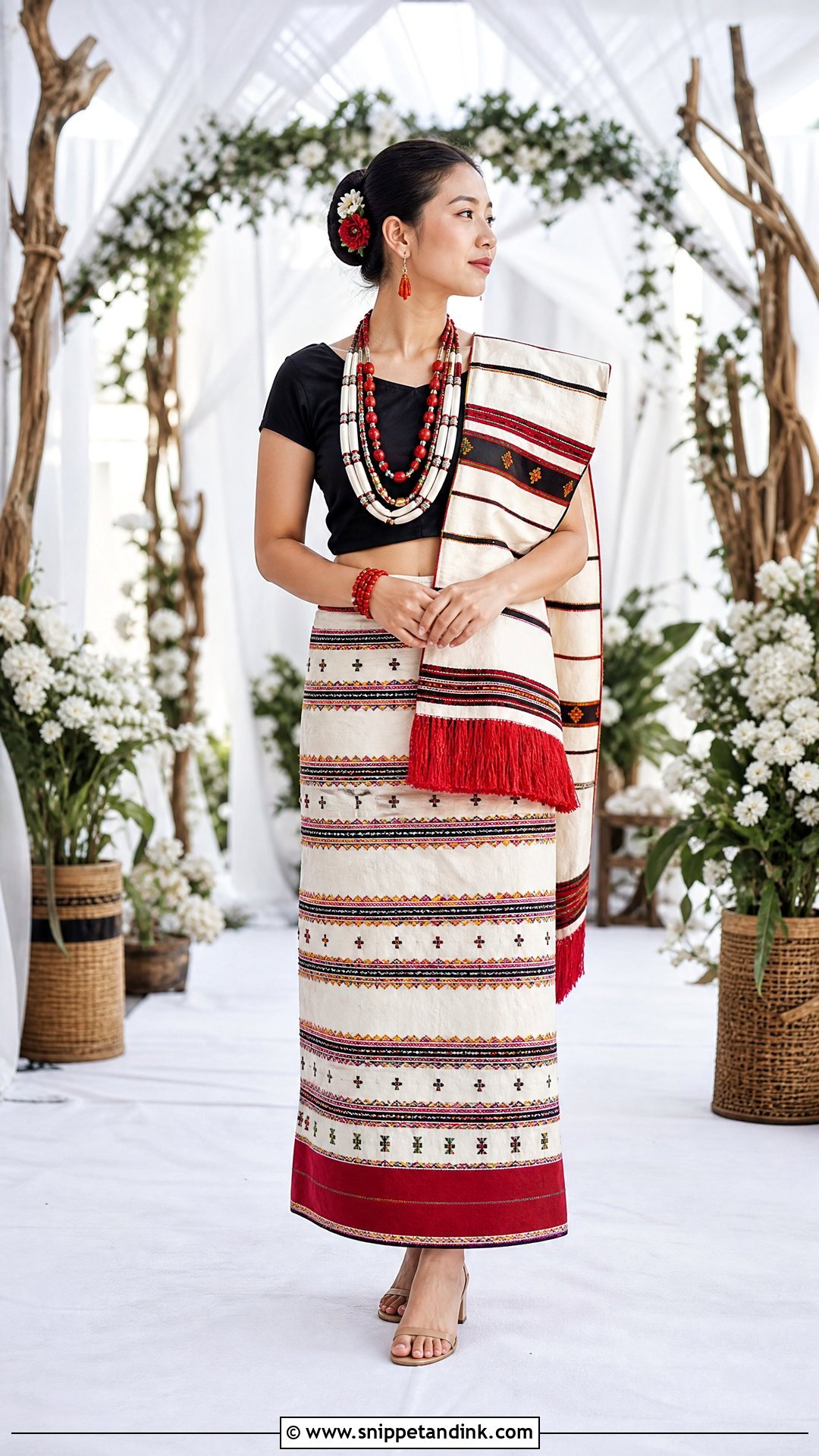
A traditional mekhela outfit gives you a foundation that already carries meaning, so my job as a stylist is mostly to stay out of its way. I start with the woven piece the bride’s family considers right for her community, then pick a fitted blouse in black, red or ivory taken straight from the weave. Layered bead necklaces, the family’s earrings, a matching shawl and low sandals finish it. I keep hair to a smooth bun or a centre part, because a busy hair accessory fights the textile for attention. Colours and motifs can signal clan and social standing, so I never sign off on the final combination until an elder or the weaver has looked at it. That one check is what keeps a traditional outfit from reading like a costume.
2. White Naga Bride Gown With Traditional Shawl
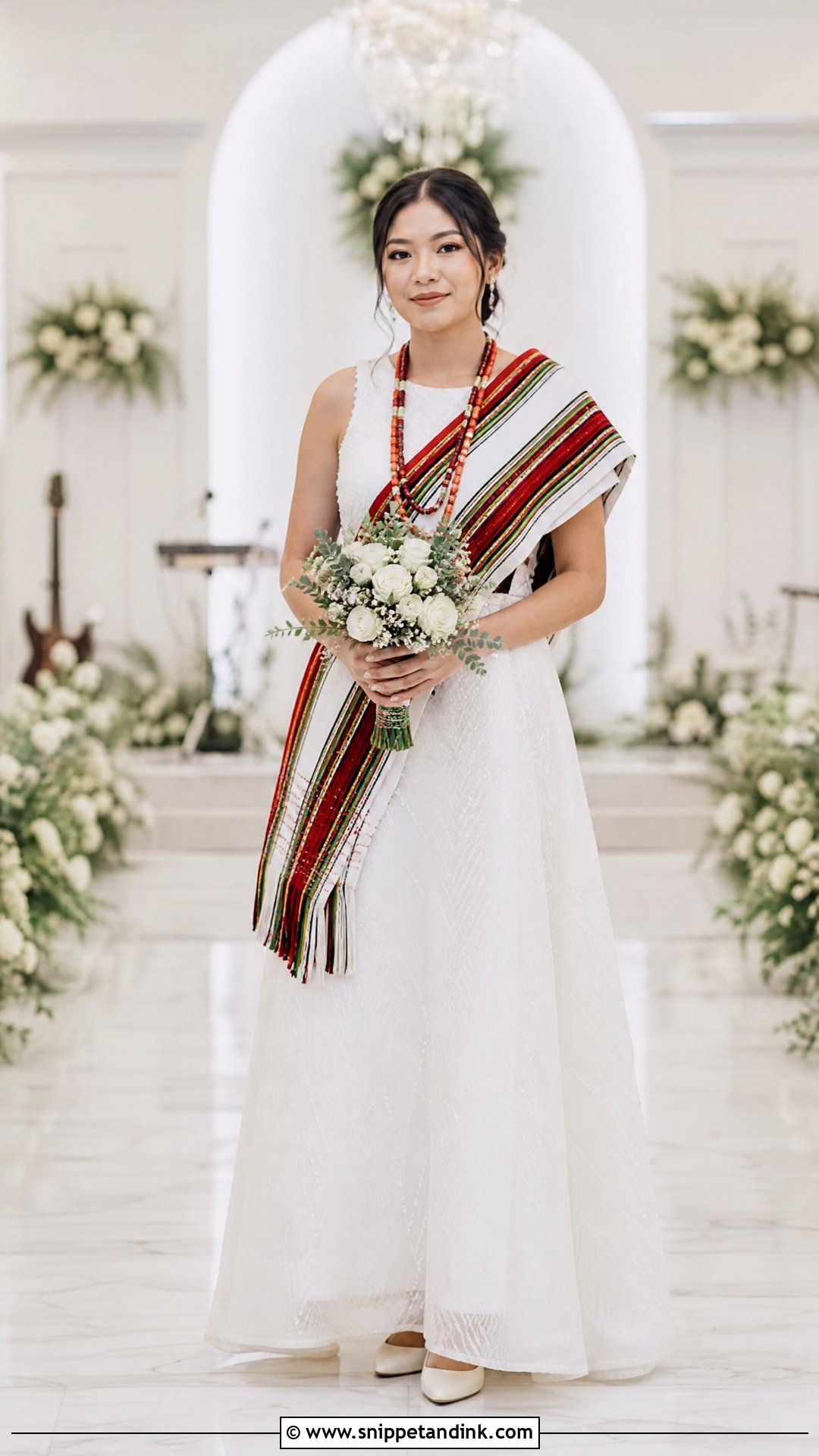
White next to a saturated Naga shawl is one of the strongest contrasts I get to work with. I pull a plain A-line or column gown with a modest neckline and a structured bodice, since a lace-heavy dress makes the woven stripes look noisy beside it. The shawl can sit across one shoulder, over both, or folded on the forearm for portraits; I test all three in front of a mirror at the fitting because each changes how much of the bodice shows. A bead necklace, quiet earrings, ivory heels and a small bouquet are enough. Soft waves or a sleek bun keep the gown from tipping into stiff formality. Ask family which shawl suits the occasion before you buy, since patterns can carry specific meanings.
3. Red And Black Naga Bride Outfit
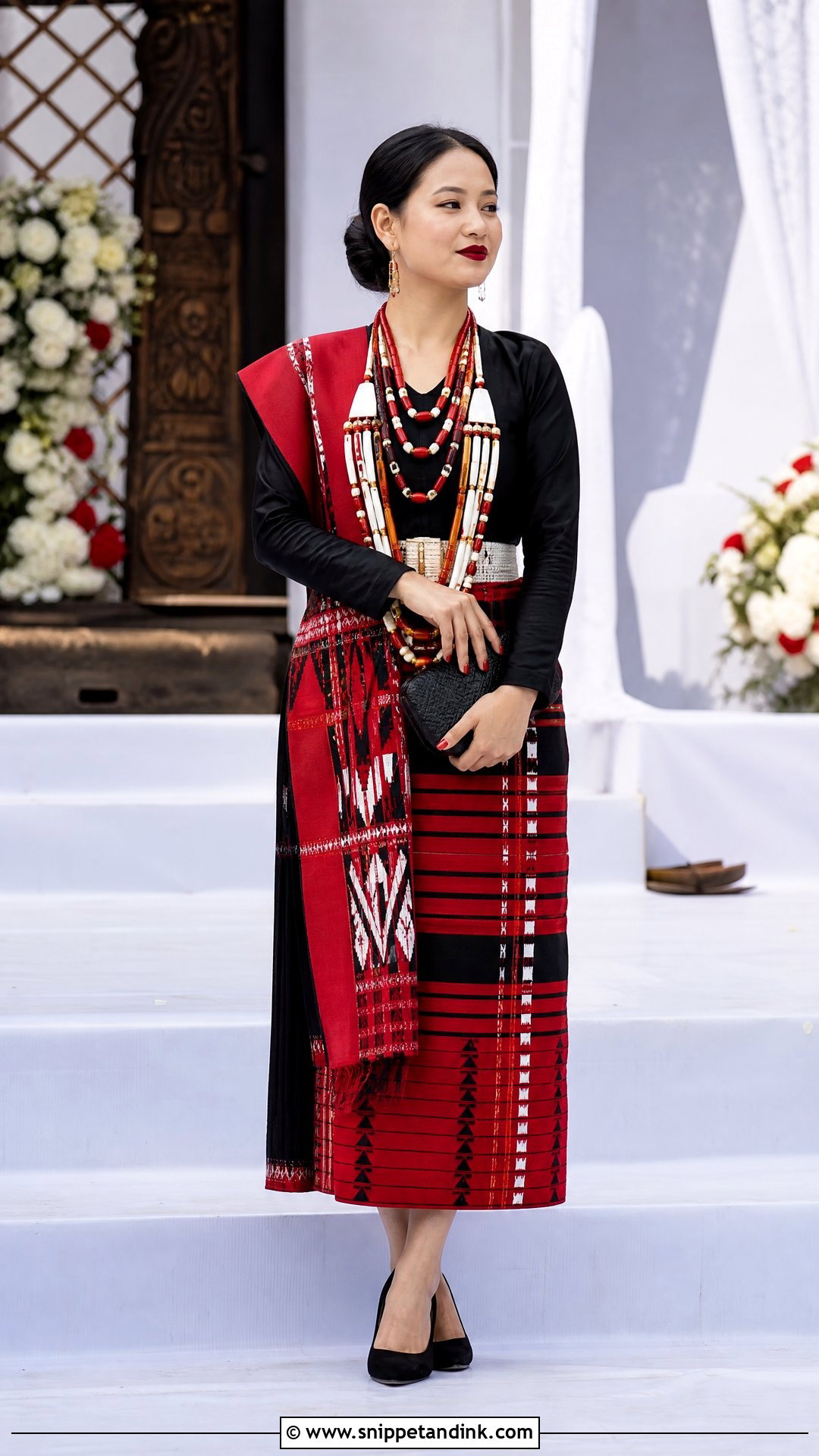
Red and black do most of the work on their own, which is why I hold back on extras here. The base is an authentic striped or geometric wrap skirt with a fitted black blouse, full-sleeved or high at the neck. Over that, a coordinating shawl and layered red, white and dark beads build depth around the face. Black closed-toe heels, a small structured clutch and a low bun finish it. On the makeup side, I’d ask for a muted red lip rather than a bright one, because a strong lip next to red stripes reads as two competing reds in photos. Stick to one accurately sourced set from the bride’s own community instead of mixing motifs from several.
4. Ao Naga Bride Traditional Outfit
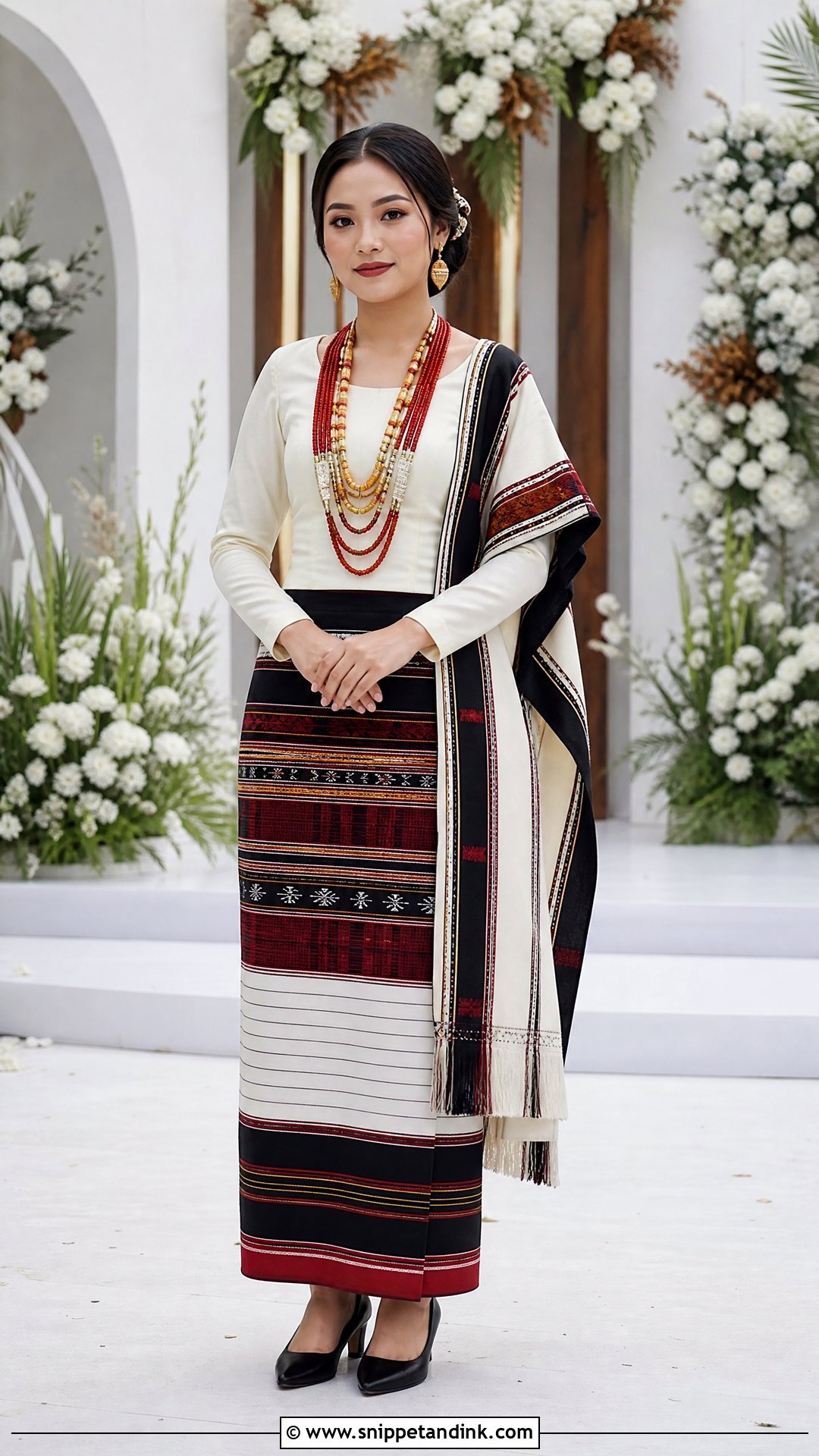
For an Ao bride, I treat family and community guidance as part of the fitting, not an afterthought. Start with an authentic women’s wrap skirt and a matching upper garment or blouse, and check that the wrap still closes properly when she sits, because a wrap that gapes on a chair is a common day-of surprise. Add the right shawl, layered beads, traditional earrings and a waist detail only if it belongs with that attire. Black pumps or low block heels keep the line clean. Hair stays simple, usually a low bun with a centre part. Ao dress can differ by clan, occasion and context, so the aim is her identity, not a general idea of Ao clothing.
5. Angami Naga Bride Traditional Outfit
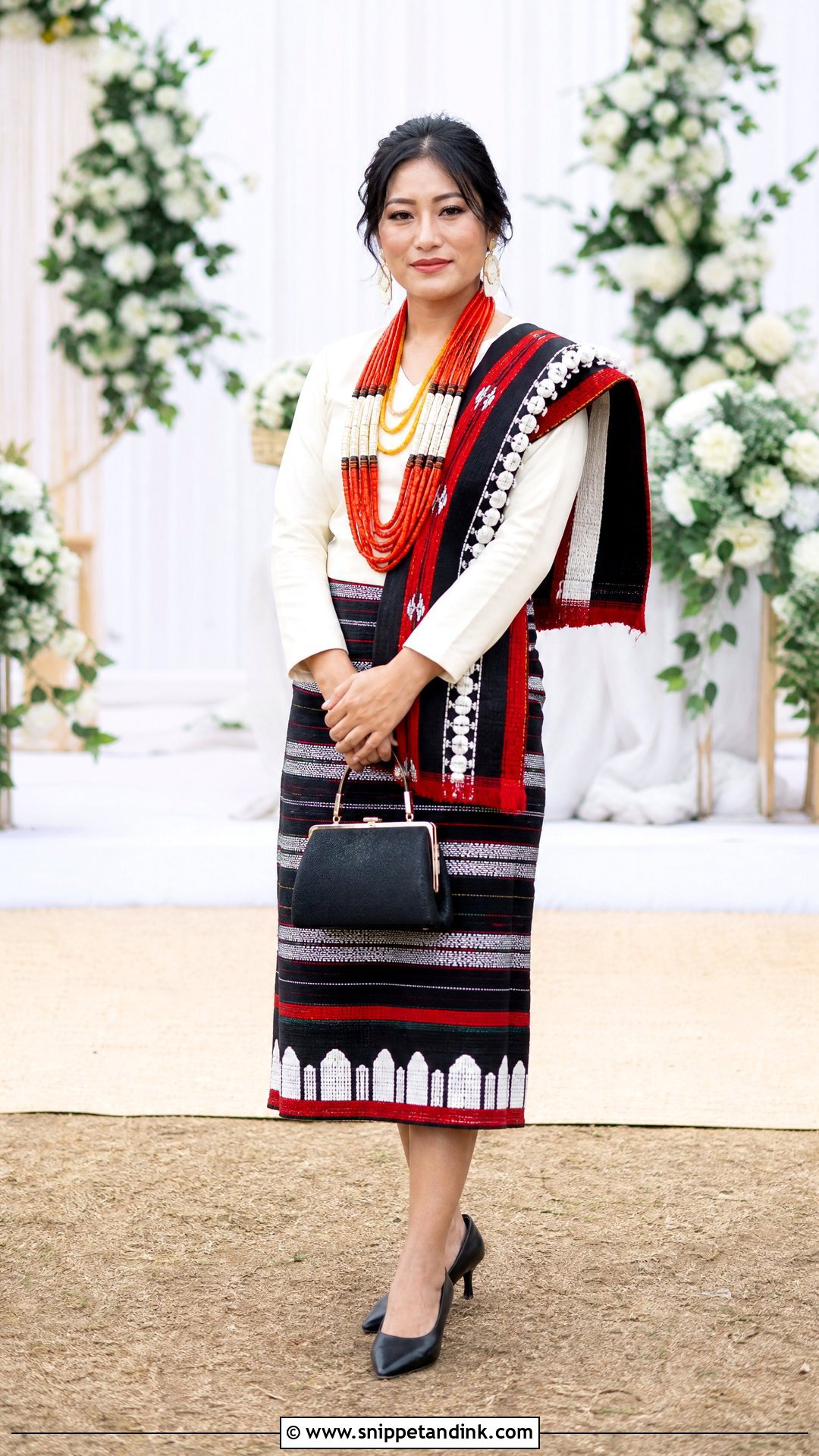
Angami dress rewards crisp lines. I pair the community-appropriate wrap skirt and shawl with a plain fitted blouse in black, ivory or a colour already in the weave, then keep the necklaces to a set that doesn’t crowd the neckline. The shawl drape across the shoulders is what gives this look its strong silhouette, and I usually pin it discreetly at the back so it holds its shape through photos. Comfortable black heels, a small bag and a smooth low bun complete it. Online images often show combinations that aren’t right for a particular family, so confirm the textile, drape and ornaments with Angami relatives or artisans before the day.
6. Konyak Naga Bride Nyikhex Outfit
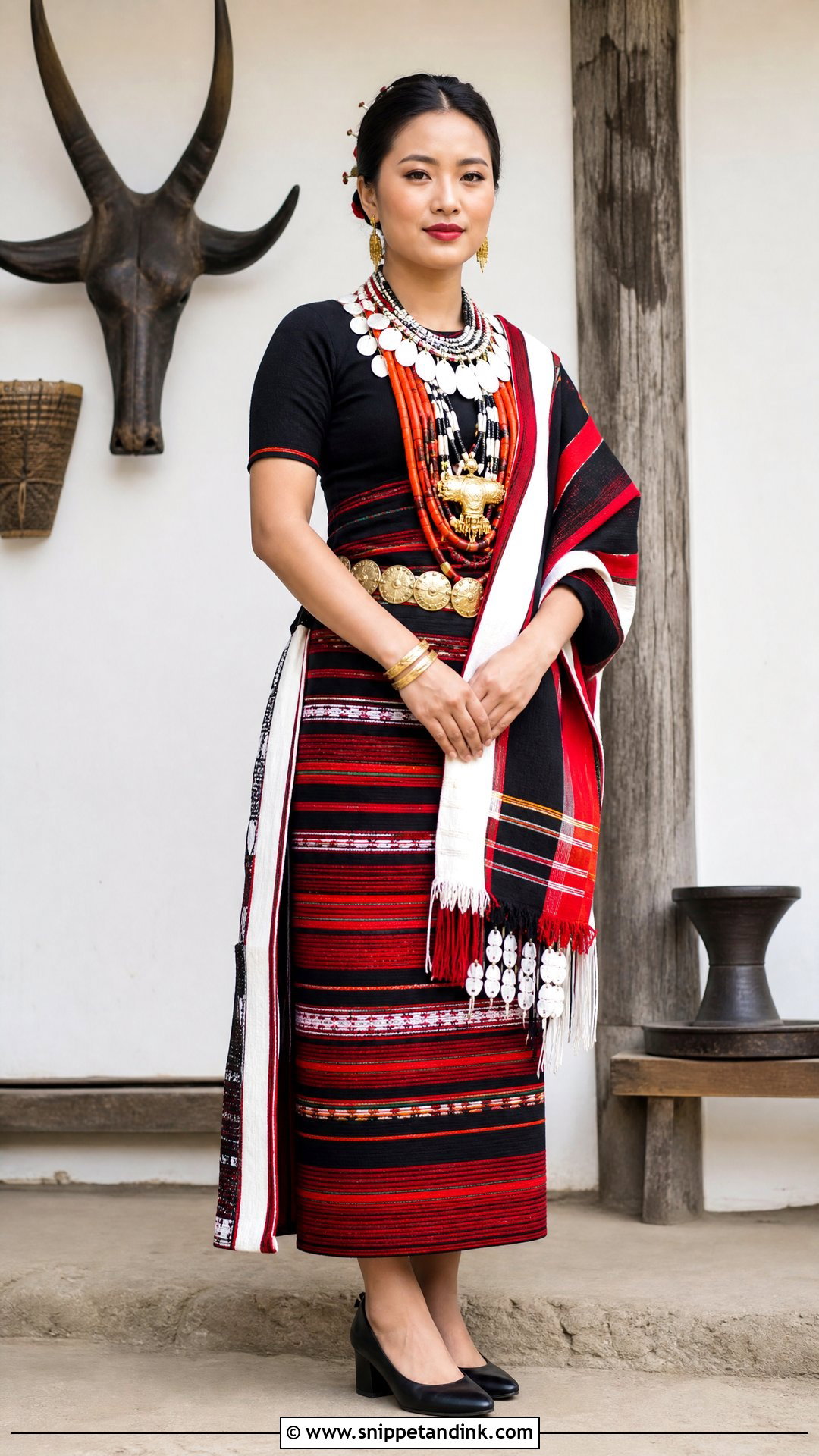
The Nyikhex wraparound skirt is detailed enough that everything else should simply frame it. I pair it with a fitted blouse in a plain colour so its texture and embellishment have a clean background, then add bead layers, earrings and a shawl chosen with the family. Ceremonies can mean long stretches of standing, so I’d put the bride in black flats or a low heel rather than anything she’ll want to kick off by noon. Hair pulled back keeps the jewellery visible. The Nyikhex is linked to Konyak bridal dress, while other skirts and ornaments may reflect family or social position, so Konyak elders and experienced makers should guide how each piece is worn.
7. Sumi Naga Bride Handwoven Outfit
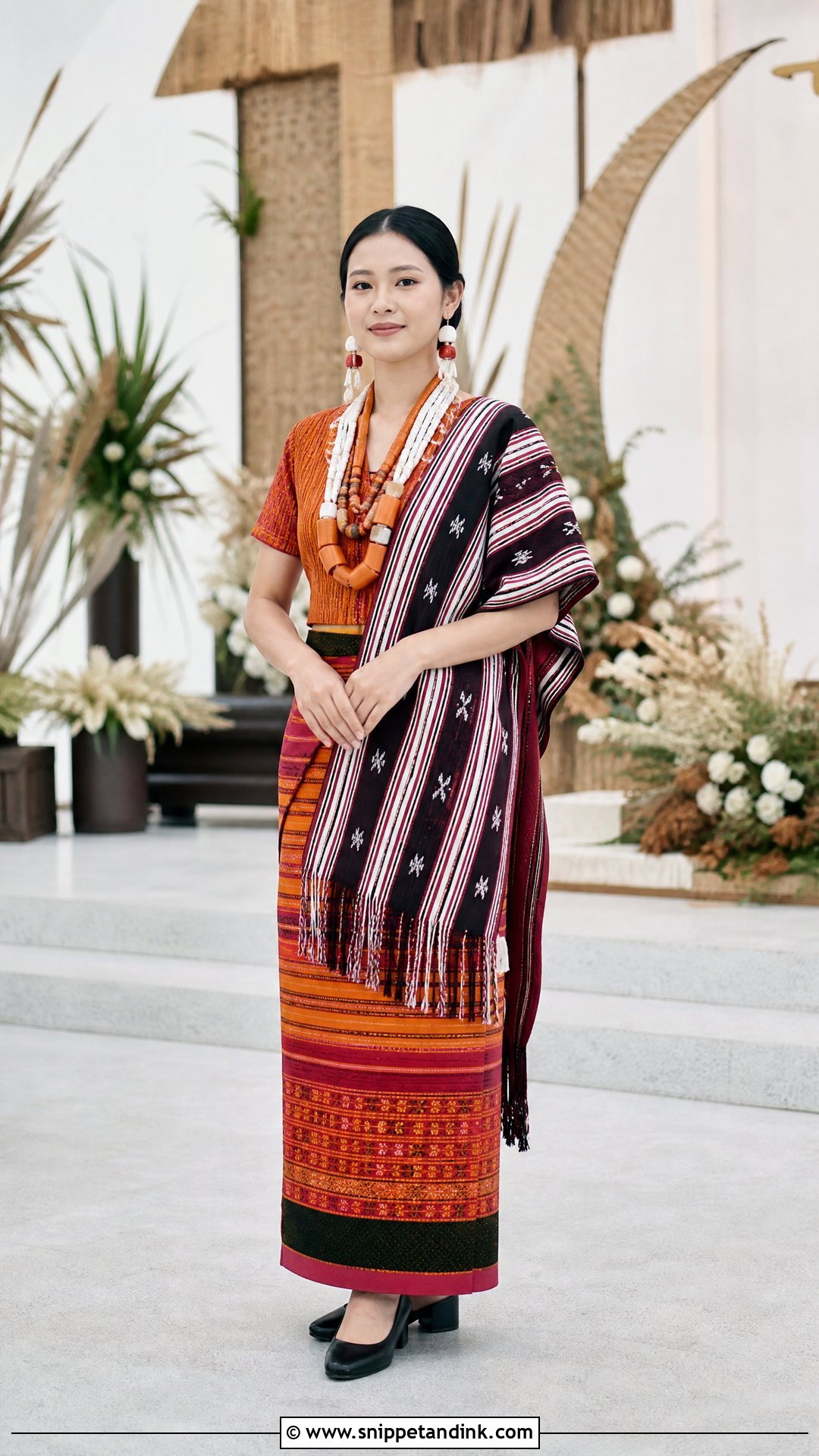
With a Sumi outfit I work from one colour story and refuse to break it. Once the correctly sourced wrap skirt is chosen, I lift the blouse, shoe and bag colours directly from its bands, so nothing unrelated sneaks in. Necklaces layered at different lengths frame the neckline, and compact earrings keep the face uncluttered. Low block heels or neat flats are the practical call. A centre-parted bun and fresh makeup carry from ceremony to portraits without a touch-up of the hair. Designs differ across communities and occasions, so I always want a family member at the final fitting to say yes.
8. Lotha Naga Bride Traditional Outfit
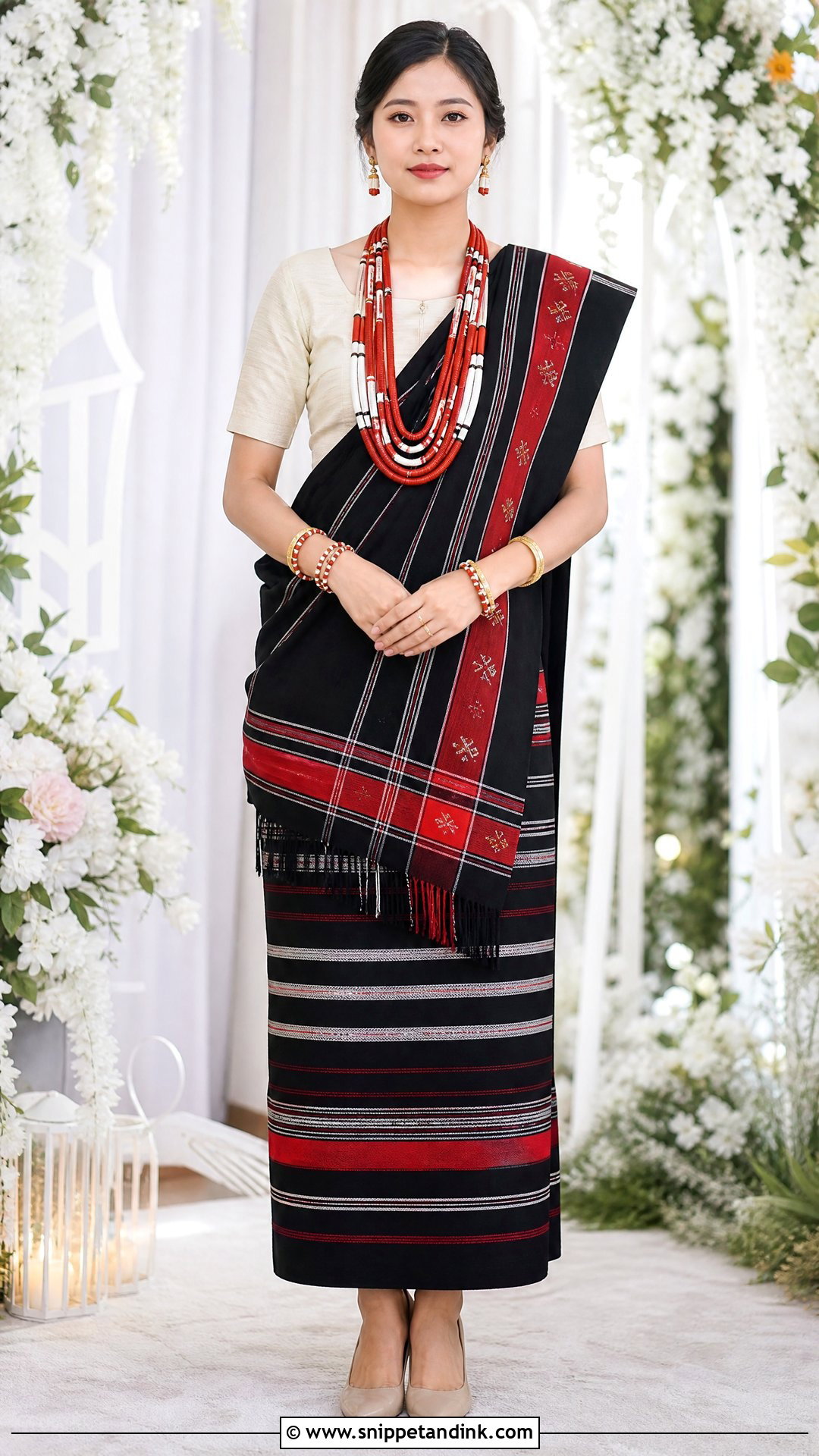
A composed Lotha look comes down to three things I watch at every fitting: authentic textiles, tidy draping and edited accessories. The wrap skirt pairs with a fitted blouse that echoes one woven band. The Lotha shawl or upper wrap needs to be secured so she can hug relatives and climb steps without it sliding. Beads, earrings and a bracelet add ceremonial weight, but I stop before they start hiding the pattern. Black or neutral low heels give a clean line to the floor, and a smooth bun with softly defined makeup finishes it. Ask Lotha relatives or weavers which garments and ornaments are right for her particular community.
9. Chakhesang Naga Bride Traditional Outfit
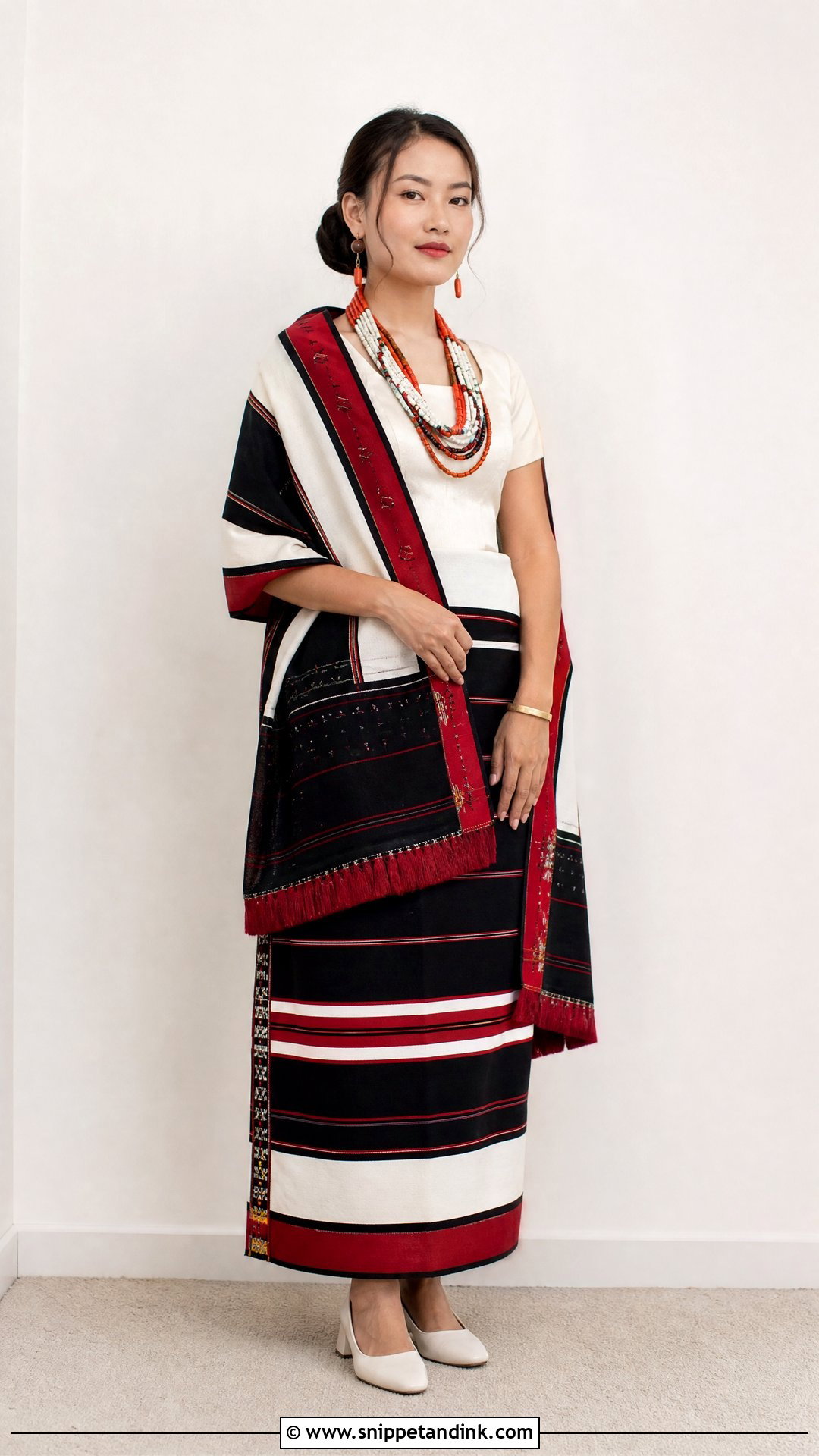
What I fuss over most with Chakhesang layers is keeping the woven lines straight. A wrap skirt that has twisted even slightly shows up as slanted stripes in every full-length photo, so I check the hem and shoulder drape from the side and back, not just the front. The skirt and shawl should suit her community, with a fitted blouse in a quiet supporting colour underneath. Add beads at the neckline, matching earrings and one bracelet or cuff. Closed-toe heels or embellished flats keep it formal. A low bun, natural skin and defined eyes let the textile lead. Confirm what each motif means before wearing it.
10. Rongmei Naga Bride Traditional Outfit
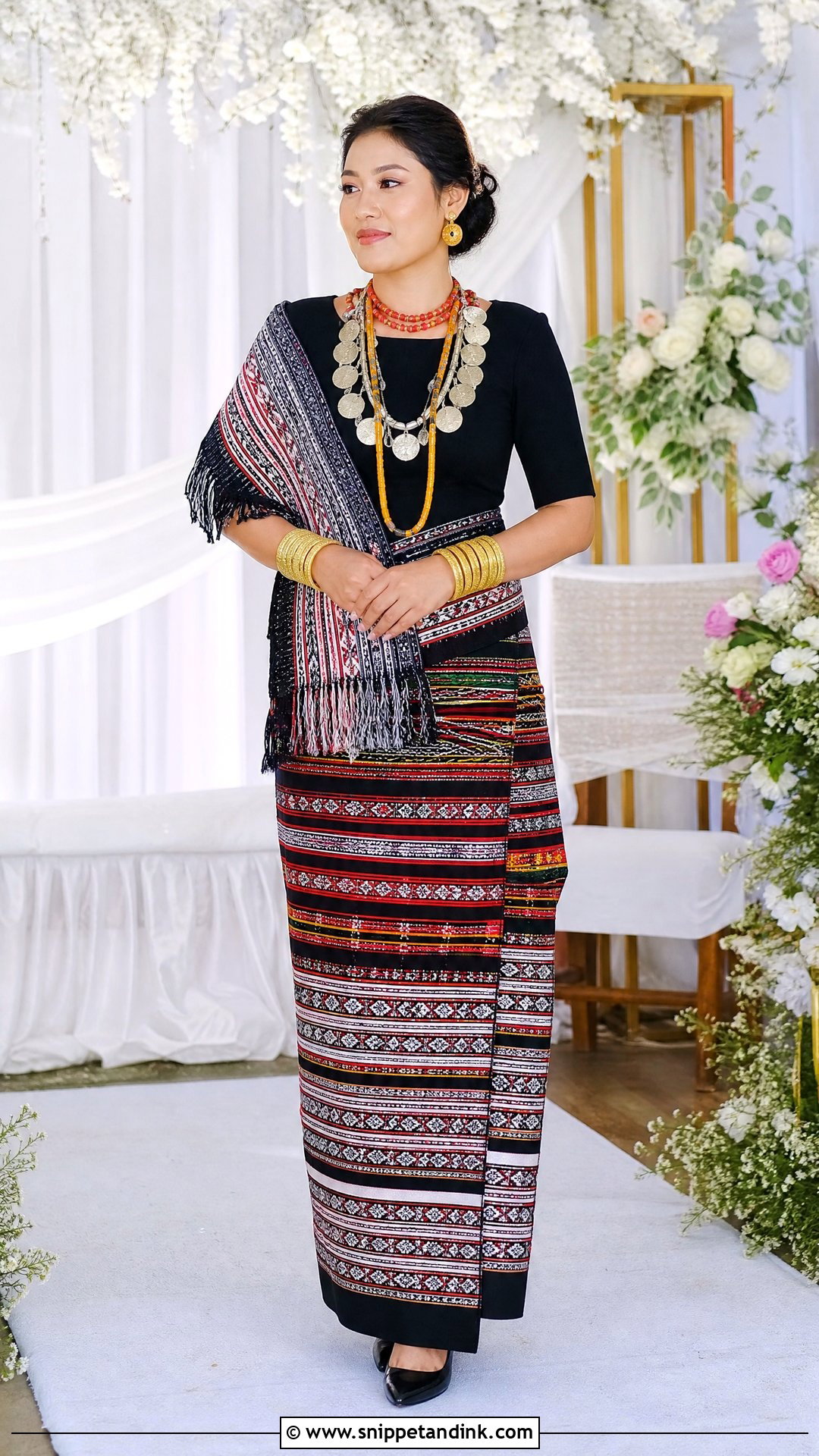
Rongmei weaving has varied line and colour work, particularly in the skirts, belts and sashes, and I build the whole outfit so those details lead. The ceremonial skirt and upper wrap or shawl should be chosen with family or knowledgeable artisans. A fitted blouse underneath gives coverage and comfort without breaking the traditional lines. Necklaces go over the blouse, with earrings and bangles kept smaller than the weave’s boldest band. Plain black heels or dressy flats tie it together. If flowers suit the event, a few small blooms in a neat bun are plenty.
11. Naga Bride Handwoven Skirt And Velvet Blouse
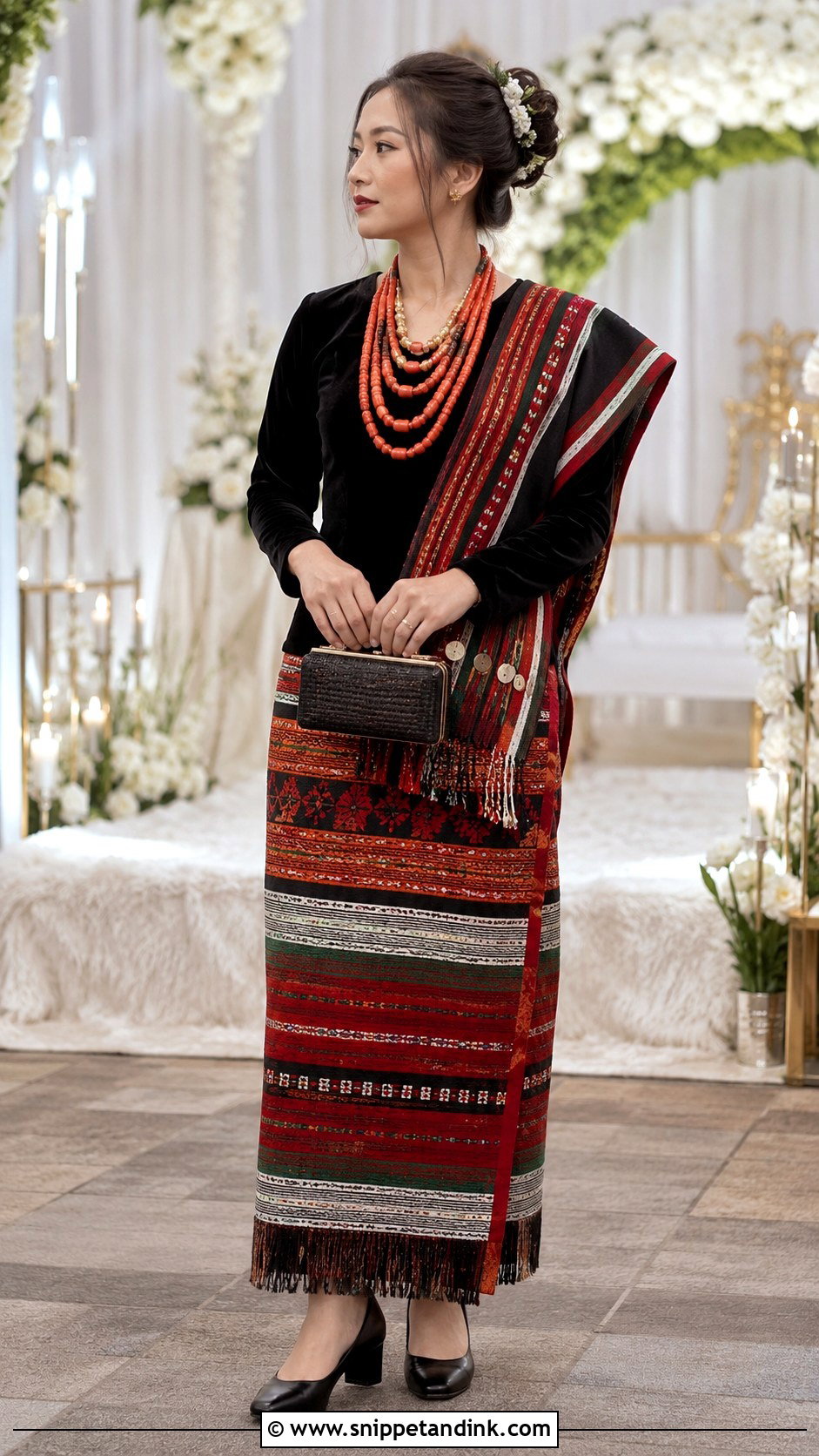
Many weddings in Nagaland fall in the cooler months, so a velvet blouse under a handwoven skirt is a practical choice as much as a pretty one. I pick the velvet colour from the textile itself, so black, deep red, forest green or navy depending on what the weave holds. A high neck and fitted full sleeves add warmth while keeping the bridal shape clean. Velvet has a nap that catches light differently from each direction, so I steam it gently from inside and never press it flat. Add an authentic shawl, appropriate beads, understated earrings, closed-toe block heels and a structured clutch. A polished bun and luminous makeup keep the focus on the skirt.
12. Naga Bride White Gown With Beaded Necklace
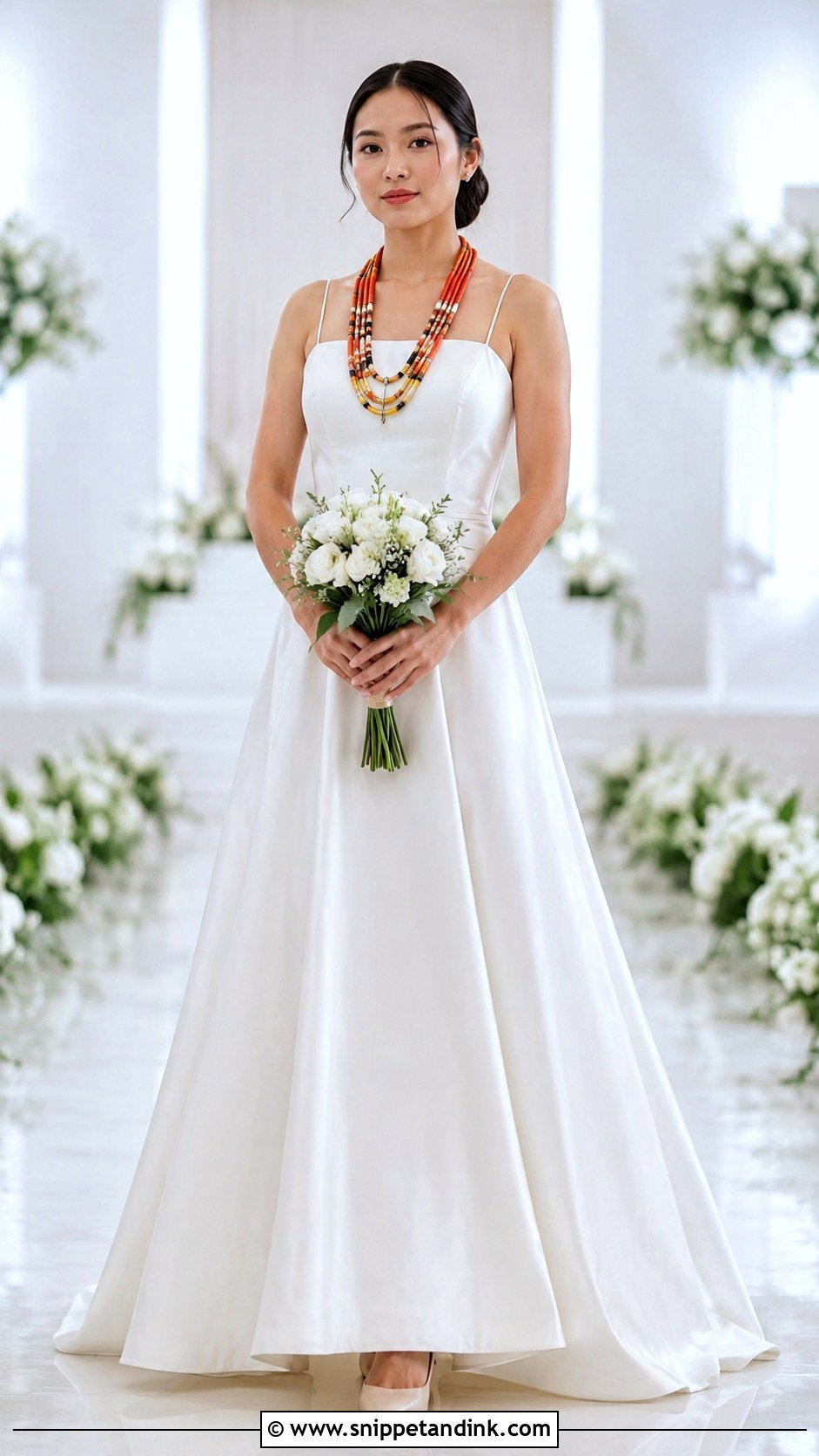
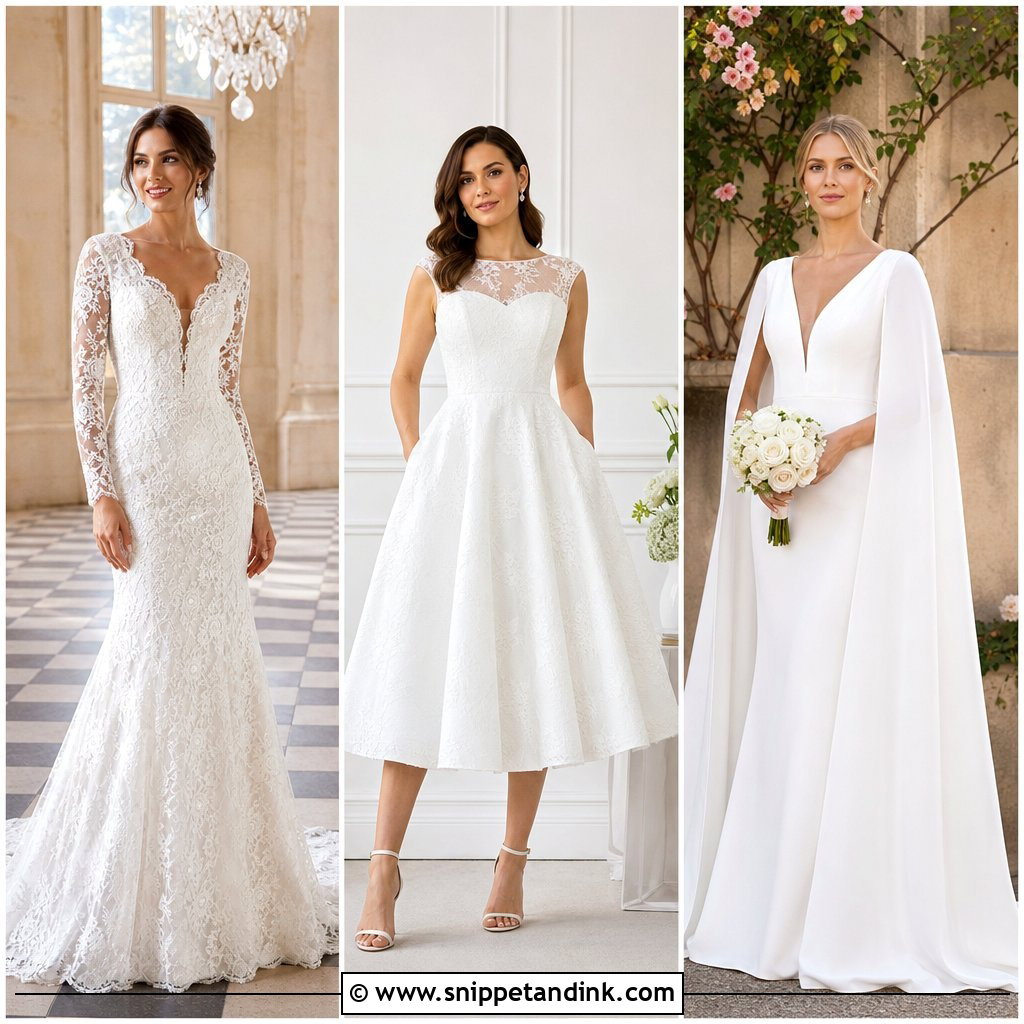
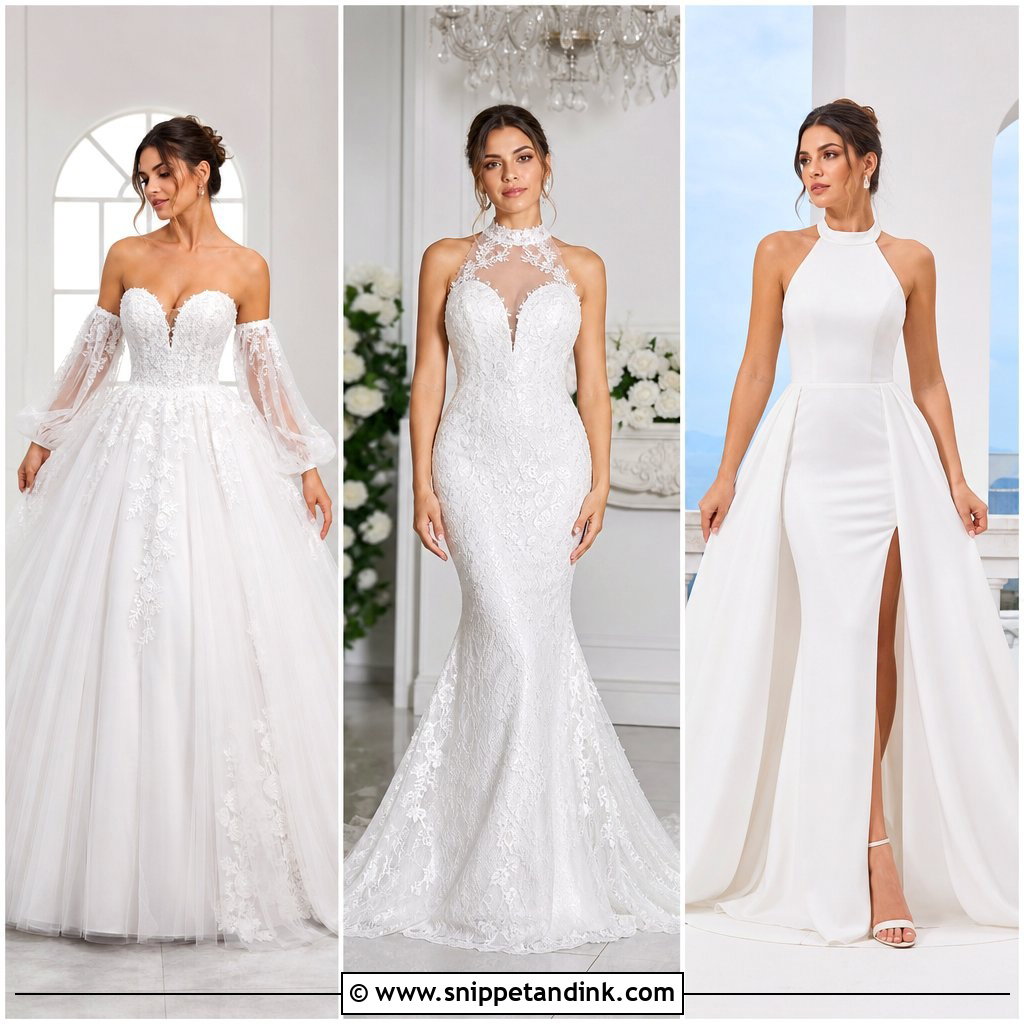
A family bead necklace can become the whole point of a minimalist white gown. The neckline has to leave room for it, so I look for a bateau, square or high neck where the beads sit flat instead of sliding into a V. A fitted bodice and a softly flowing skirt keep the silhouette formal. Earrings are optional; I only add them if the set looks balanced in a mirror from a few steps back. Ivory heels, a small white bouquet and a plain veil finish it, with a sleek bun keeping the neckline visible from every angle. The necklace should come from her own family or community and be appropriate for her to wear.
13. Naga Bride Satin Gown With Woven Sash
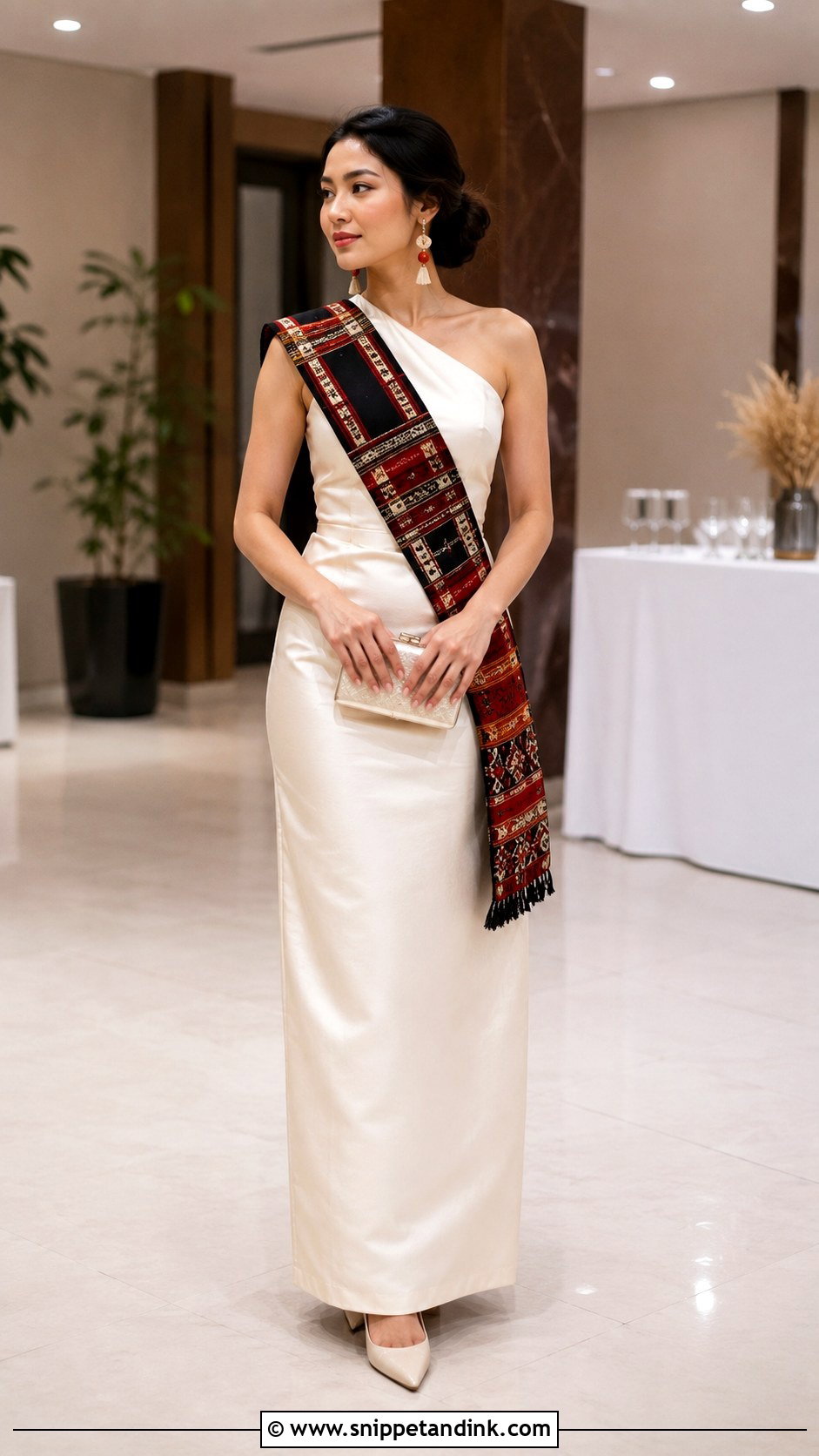
Satin against handwoven texture is a contrast I love, but it needs care. Start with an ivory, pearl or soft white satin gown in a column or gentle A-line. The woven sash can go across the torso, around the waist or over one shoulder depending on its intended use and what the family says. I won’t cut a ceremonial textile to fit a modern dress; if the shape doesn’t work, I’d ask a local artisan to weave a new piece in community-approved colours instead. Satin also creases where a sash is tied tightly, so tie it loosely and let a pin do the holding. Small bead earrings, pointed ivory heels, a clutch and a low bun complete the look.
14. Naga Bride Long-Sleeve Winter Gown
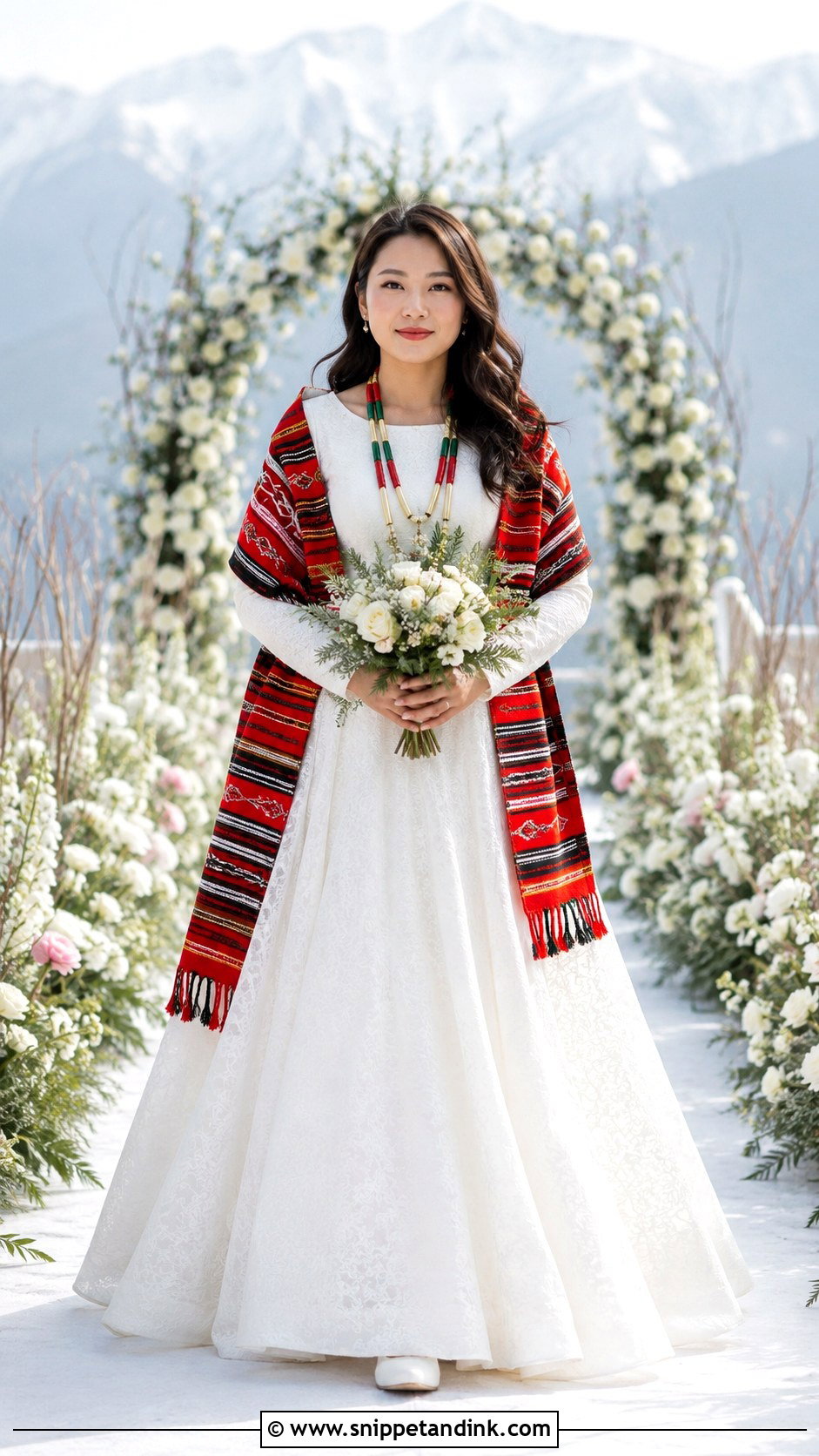
In cool air, a long-sleeve gown keeps the bride warm without hiding under a coat. I look for an opaque white or ivory dress with a fitted bodice, covered back and a skirt she can walk in. An authentic Naga shawl goes over the shoulders for outdoor photos and comes off indoors if the hall is heated. White closed-toe heels, delicate earrings and a simple bouquet complete it, and a bead necklace can join if its colours suit the neckline. Skip a heavily embellished veil, since the shawl and jewellery already carry the interest. Soft waves or a low bun with long-wear makeup hold up well in a cold, dry room.
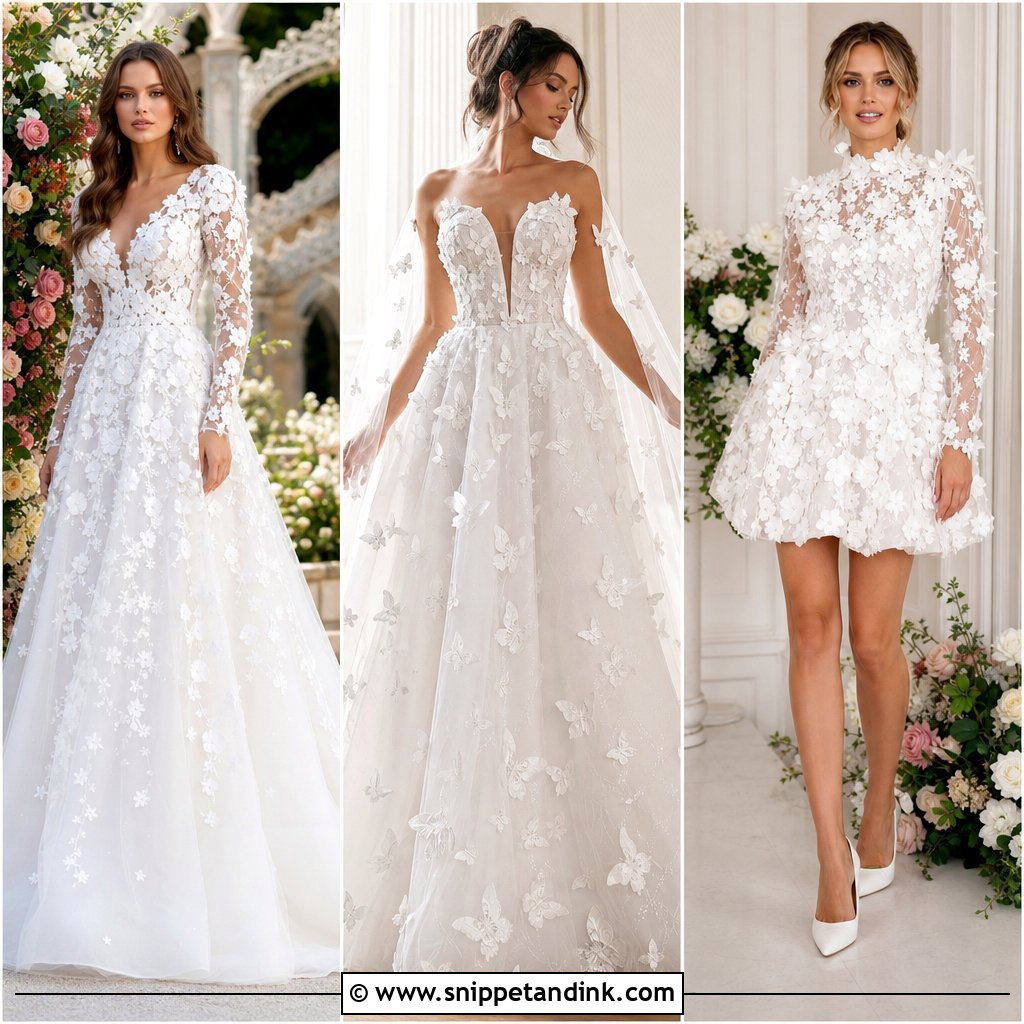
15. Naga Bride Black Gown With Red Shawl
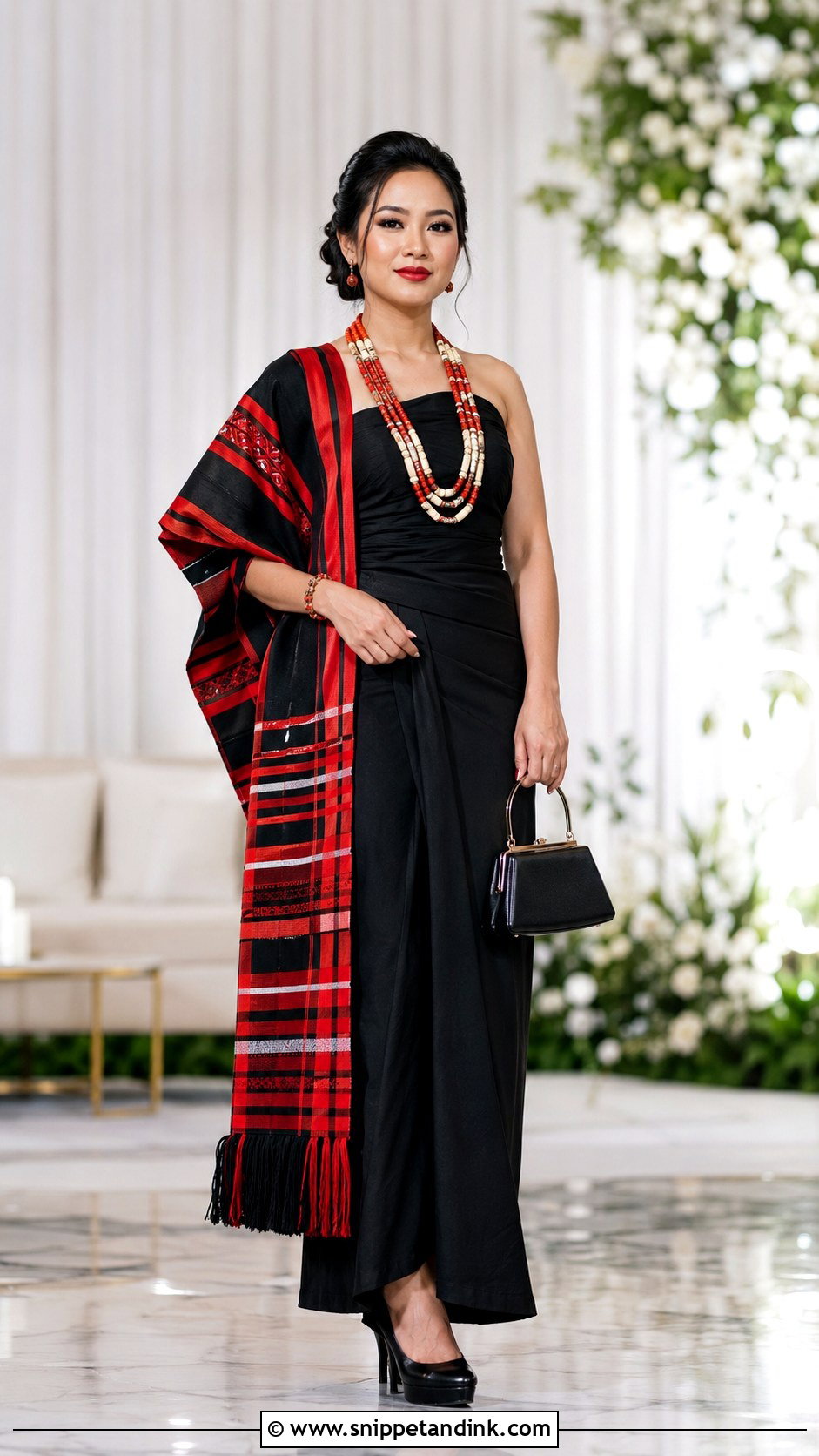
A black gown with a red-detailed shawl is a reception look, and I style it like one. The dress should be floor-length with a modest neckline, fitted waist and almost no embellishment, so the weave becomes the brightest thing in the frame. Drape the shawl over both shoulders or secure it across one with a pin through a seam, never with anything that marks the textile. Appropriate beads, black heels and a small structured bag are enough. A polished bun, defined eyes and a soft red lip suit evening lighting. Check first that the shawl is right for her and the occasion.
16. Naga Bride Two-Piece Fusion Outfit
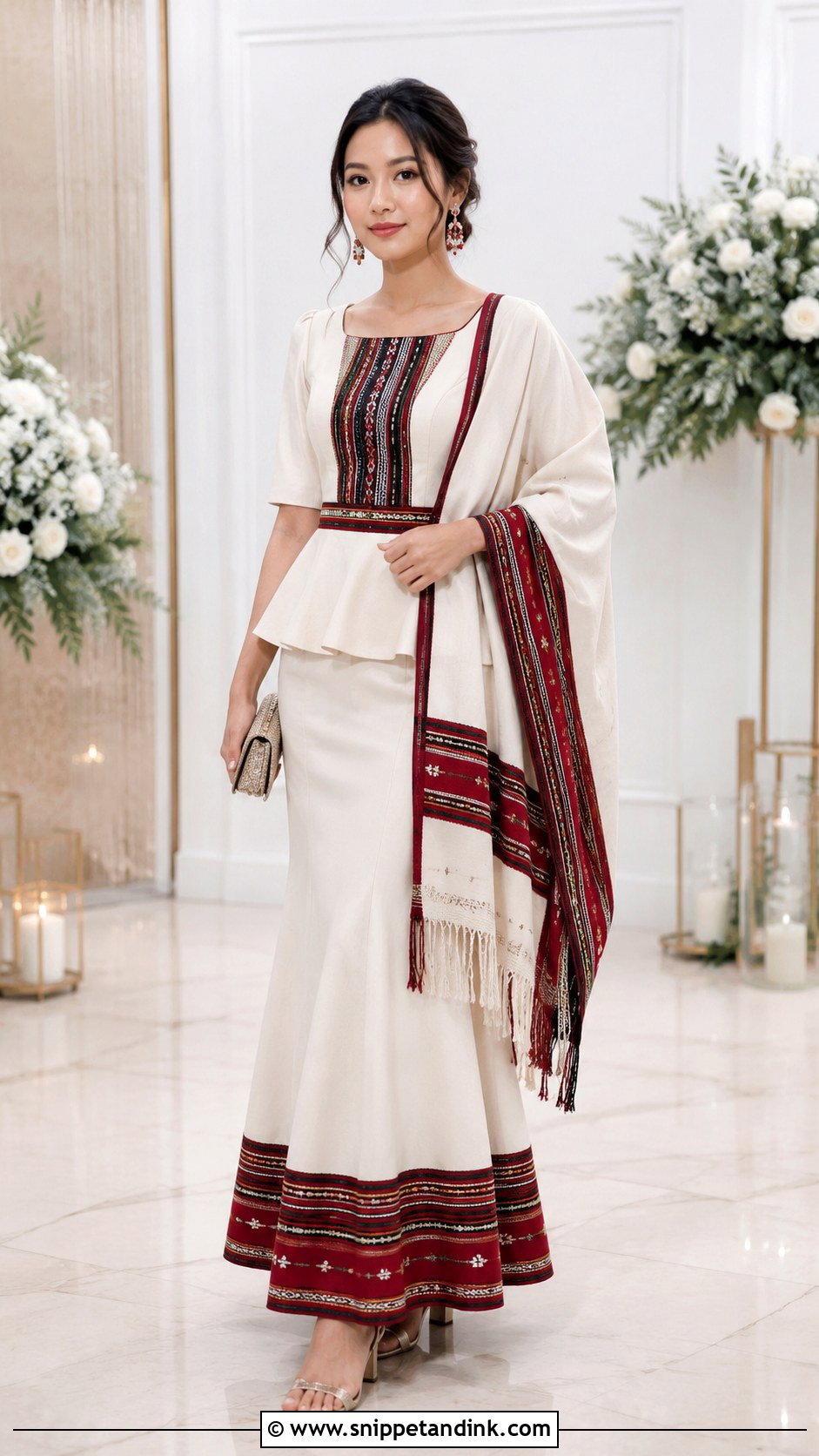
Two pieces give a bride room to move, which matters at receptions with dancing. I pair a fitted woven or solid peplum top with a long skirt in satin, crepe or a suitable traditional textile. A woven panel at the neckline, waist or sleeves should be made by an experienced artisan from community-approved motifs, not copied from restricted ones. Add a matching shawl, bead earrings, a small clutch and low block heels, with a neat ponytail or low bun. It suits an engagement, welcome dinner or reception, and because the top and skirt separate, she’ll wear them again.
17. Naga Bride White Pantsuit With Woven Shawl
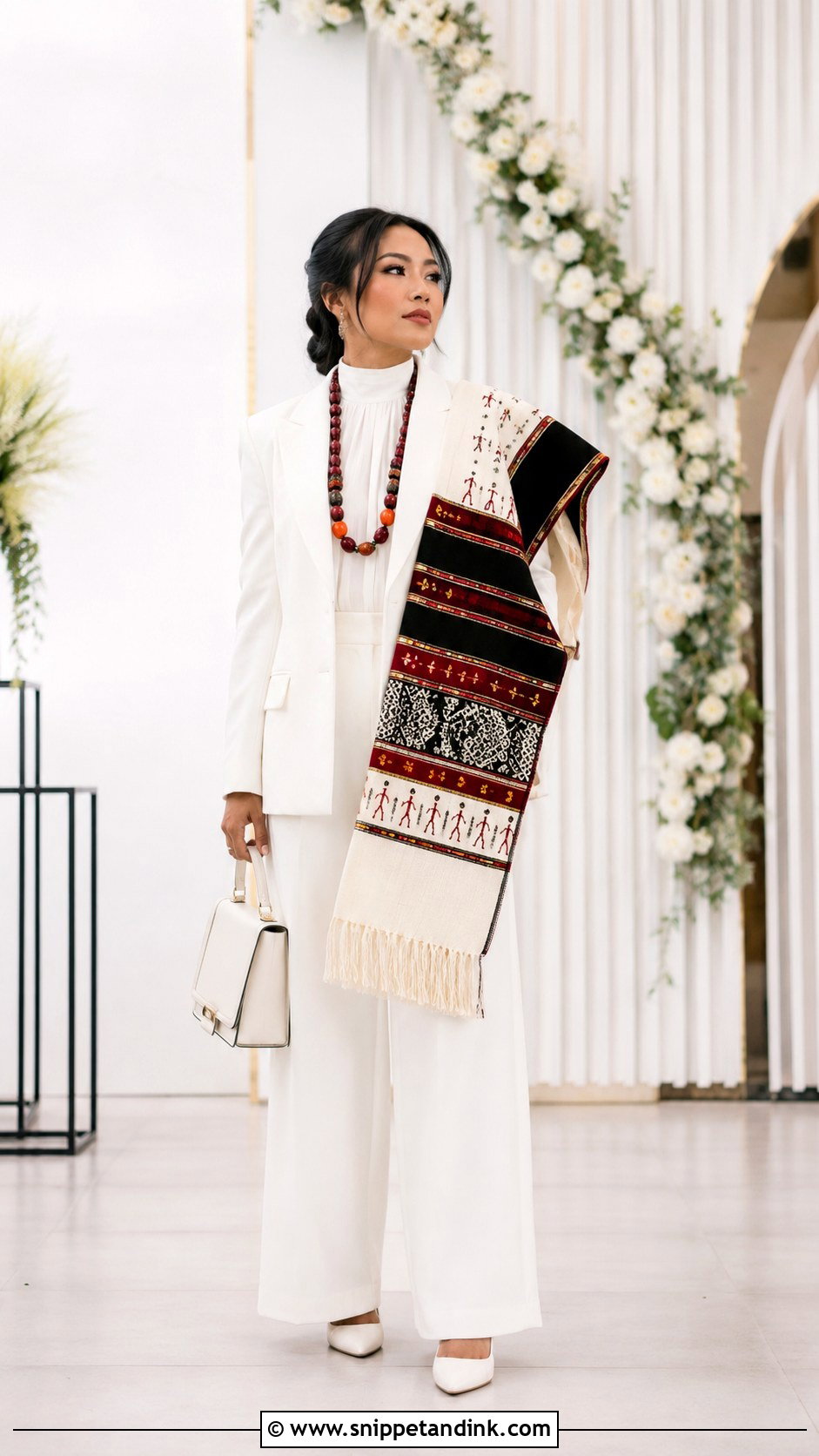
I reach for a white pantsuit when a civil ceremony or portrait session calls for structure. The well-fitted blazer can sit over straight or wide-leg trousers, with an ivory camisole or high-neck blouse beneath. I let the Naga shawl fall vertically from one shoulder so it lengthens the line instead of covering the tailoring. A community-appropriate bead necklace, pointed white heels and a top-handle bag finish it. Hair can be a sleek bun or a smooth shoulder-length style, with luminous makeup and restrained jewellery. Confirm how the shawl should be worn before pairing it with modern tailoring.
18. Naga Bride Tea-Length Reception Dress
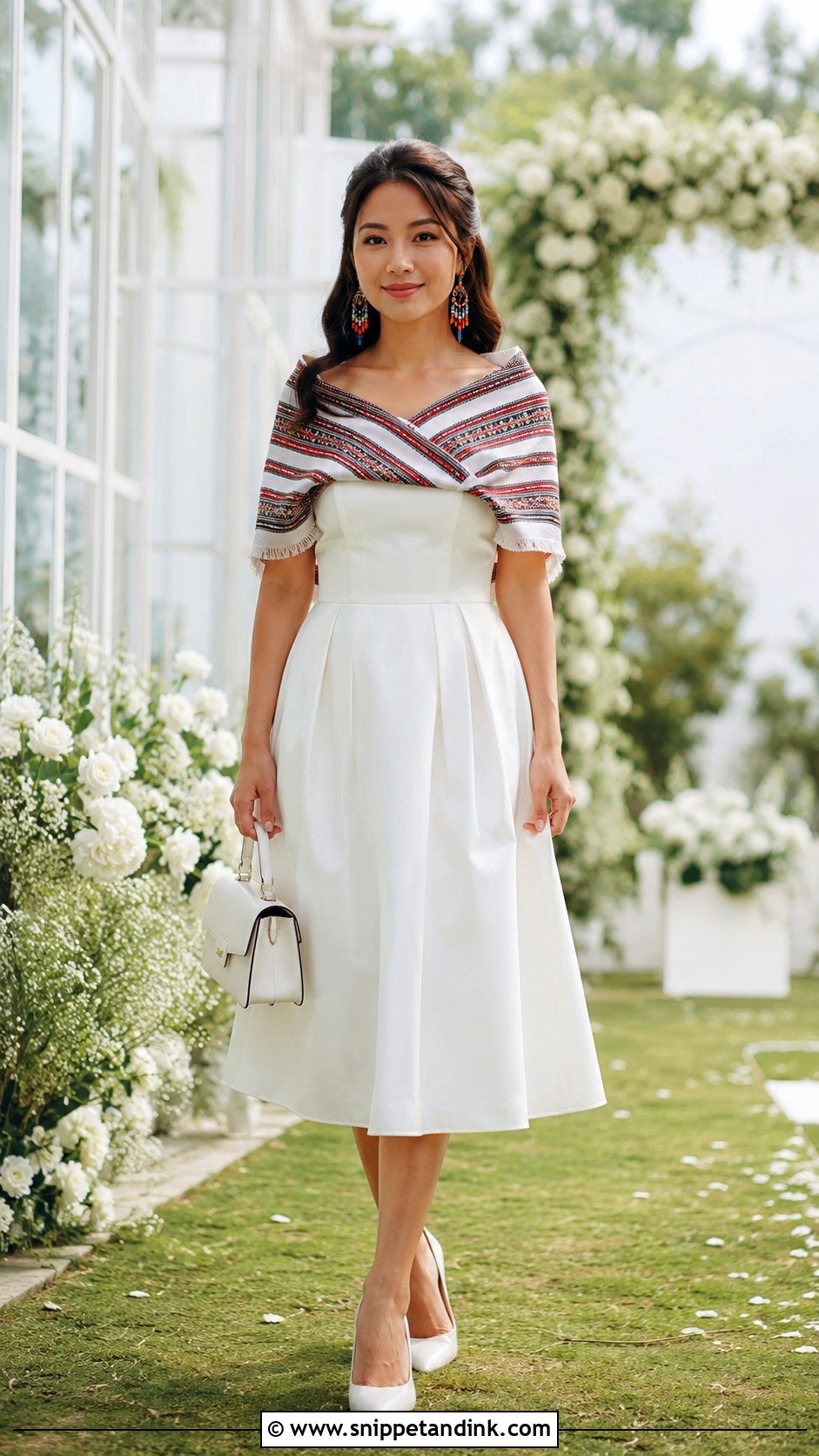
Tea length is the easiest reception change I can offer, because nothing drags and nobody steps on her hem on the dance floor. I choose an ivory or white dress with a fitted waist and a skirt that ends between knee and ankle, then add a short handwoven wrap, sash or shawl chosen with cultural guidance. Shoes show at this length, so I pick polished closed-toe pumps that match the dress rather than compete with the weave. Colourful bead earrings and a small handbag are plenty. A soft bun or half-up hair keeps it approachable and makes a clear shift from the ceremony gown.
19. Naga Bride Ivory Gown With Beaded Cape
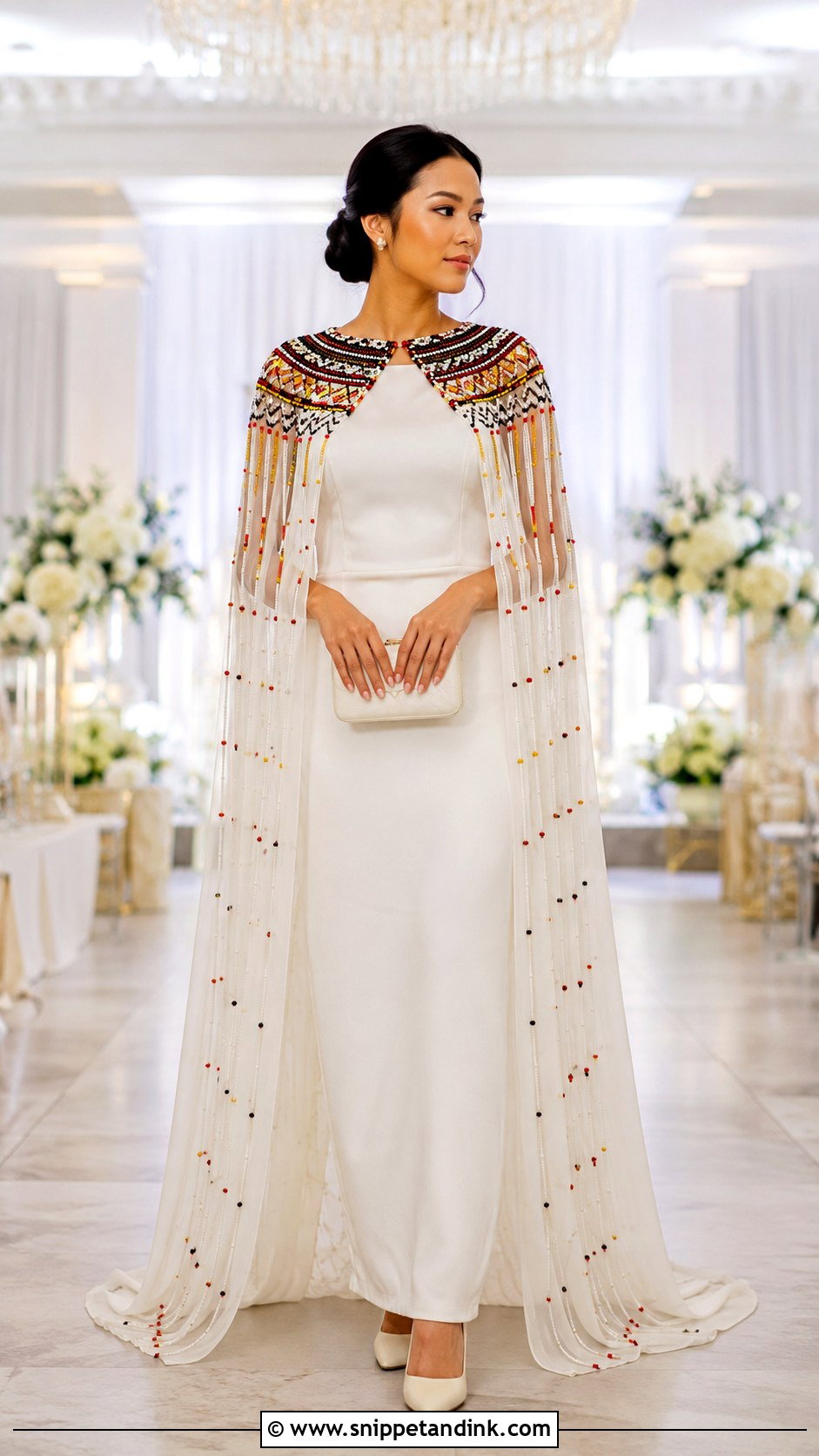
A beaded cape gives an ivory gown a regal outline without a heavy dress underneath. I start with a simple sleeveless or long-sleeve column, then have the removable cape made with a Naga designer or artisan. Bead colours can echo her community’s textiles without copying ceremonial objects or restricted patterns. Weight matters more than people expect: a heavy cape drags the gown’s shoulders back, so I ask for a lighter build that settles naturally. Ivory pumps, small earrings and a clutch finish it, and a low bun keeps the cape’s neckline visible. Once portraits are done, it comes off and she has a lighter gown for the rest of the night.
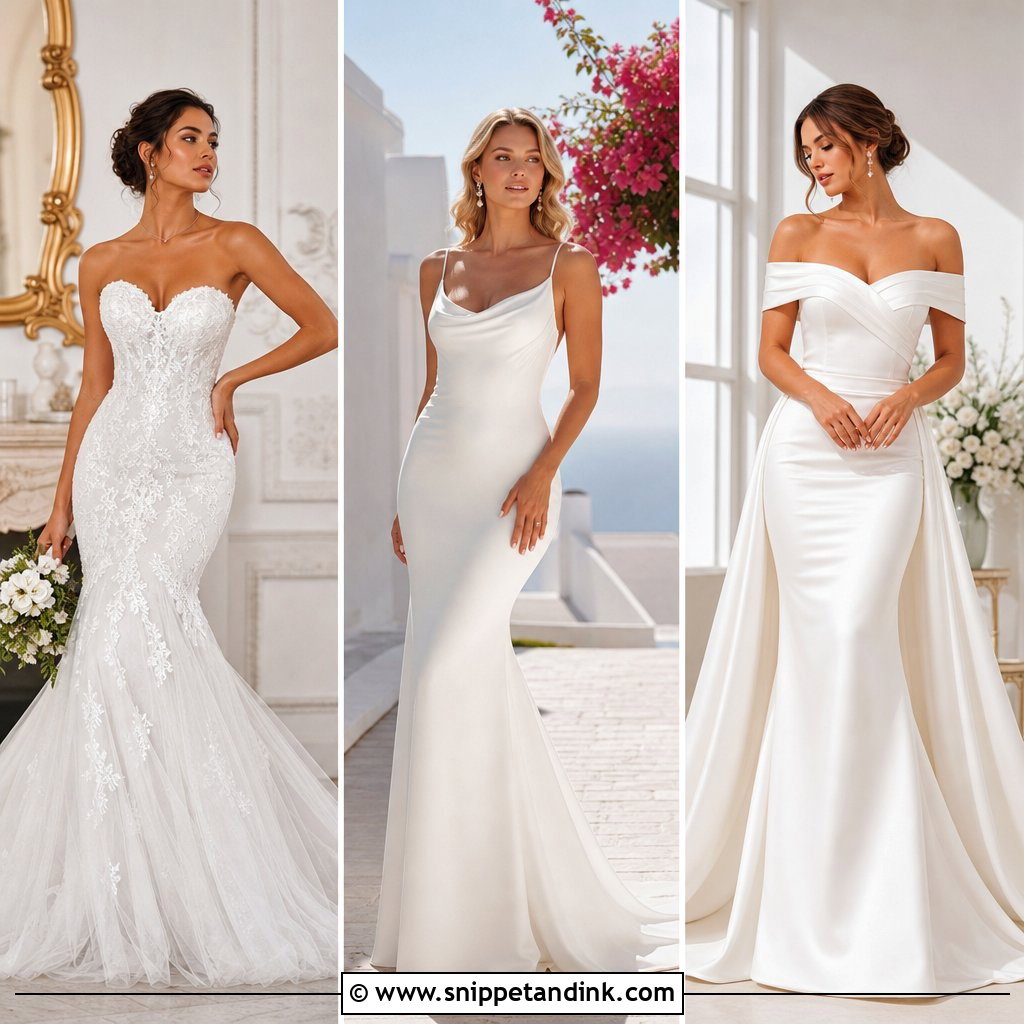
20. Naga Bride Traditional Ceremony And White Gown Look
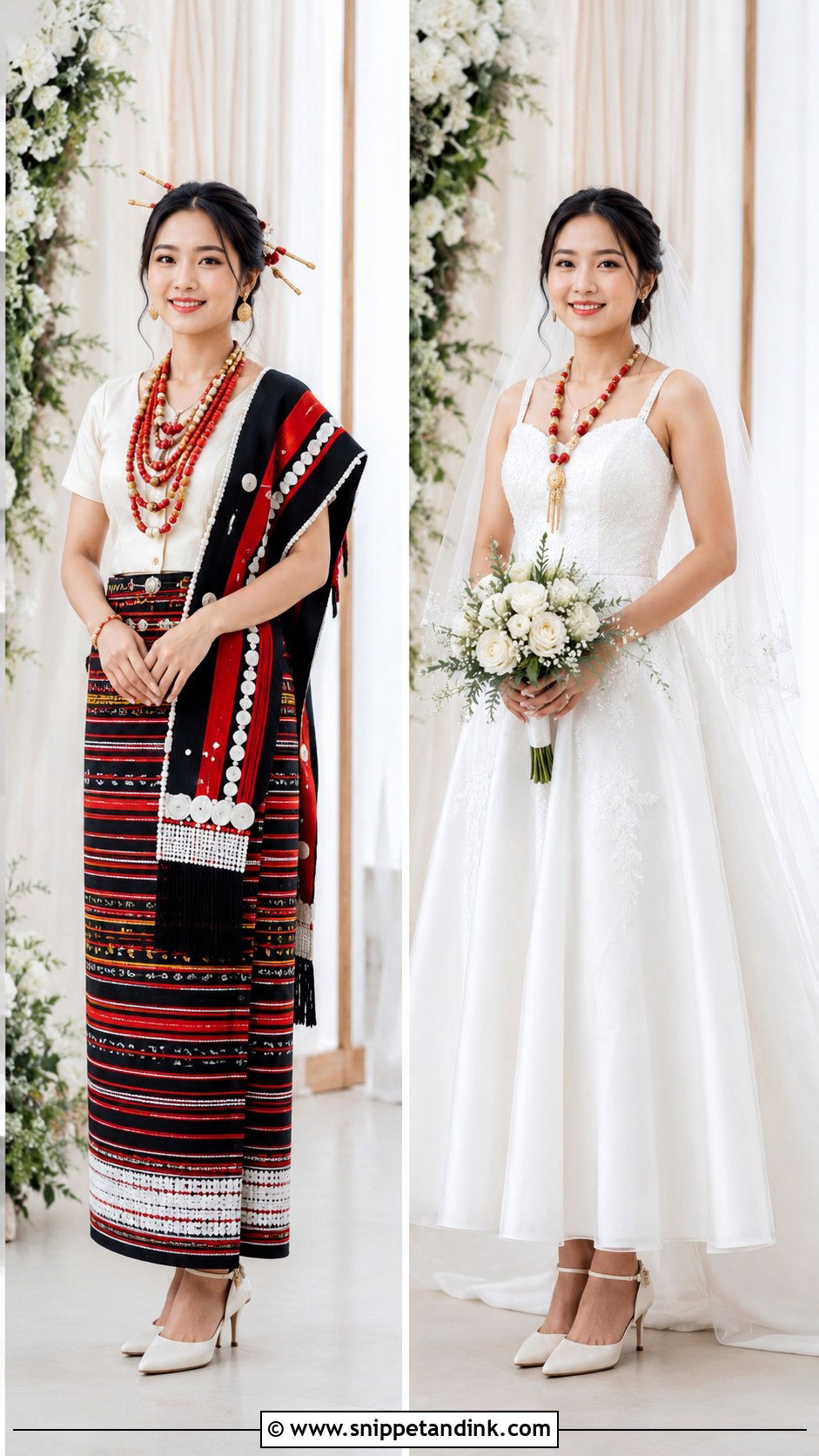
Two complete outfits let a bride honor traditional clothing and still have the white gown she pictured. For the cultural ceremony, I dress her in authentic community attire, with the correct wrap skirt, blouse, shawl, beadwork, earrings and comfortable shoes, all checked by family. For the later ceremony or reception, she changes into a white A-line gown, ivory heels, veil and bouquet. One bead necklace or woven accessory can link the two. The schedule is where this plan usually breaks, so build in real time for changing and hair adjustments. Giving each tradition its own outfit also stops anyone piling sacred pieces onto one look for decoration.
After the Wedding, Caring for Handwoven Pieces
A ceremonial shawl may be passed to a daughter, so how it’s handled the week after matters. I tell brides to air every woven piece flat on a clean sheet indoors overnight before putting anything away, since trapped body moisture is what invites mildew.
Cleaning and pressing
Spot clean with cool water and test on a hidden corner first, because some reds and blacks can bleed. If a professional clean is needed, take it to someone who handles handloom and tell them the fibre. To press, I turn the piece over, lay a cotton cloth on top and use low heat, keeping the iron off raised embroidery or beadwork entirely.
Storing it for years
Fold with acid-free tissue between the layers and refold along different lines every few months so permanent creases don’t form. Keep it in a cotton bag rather than plastic, out of direct sun, and away from damp walls. Beads should be stored separately so their weight doesn’t drag on the weave.
Letting the Weave and the Family Lead
In my experience the Naga bridal outfits that work best are the ones a bride’s grandmother would recognise as right at first glance. Wrap skirts, shawls, beads, white gowns, suits and artisan-made fusion pieces can all sit in one wedding wardrobe. What matters is that garments and motifs are chosen with the people who know what they mean, since that changes between communities, clans and occasions. Bring elders, weavers and Naga designers into the planning early. Then let the craftsmanship and her own identity make the final calls, from one ceremonial ensemble to three changes across the weekend.
You'll Like These Ideas:


Leave a Reply