
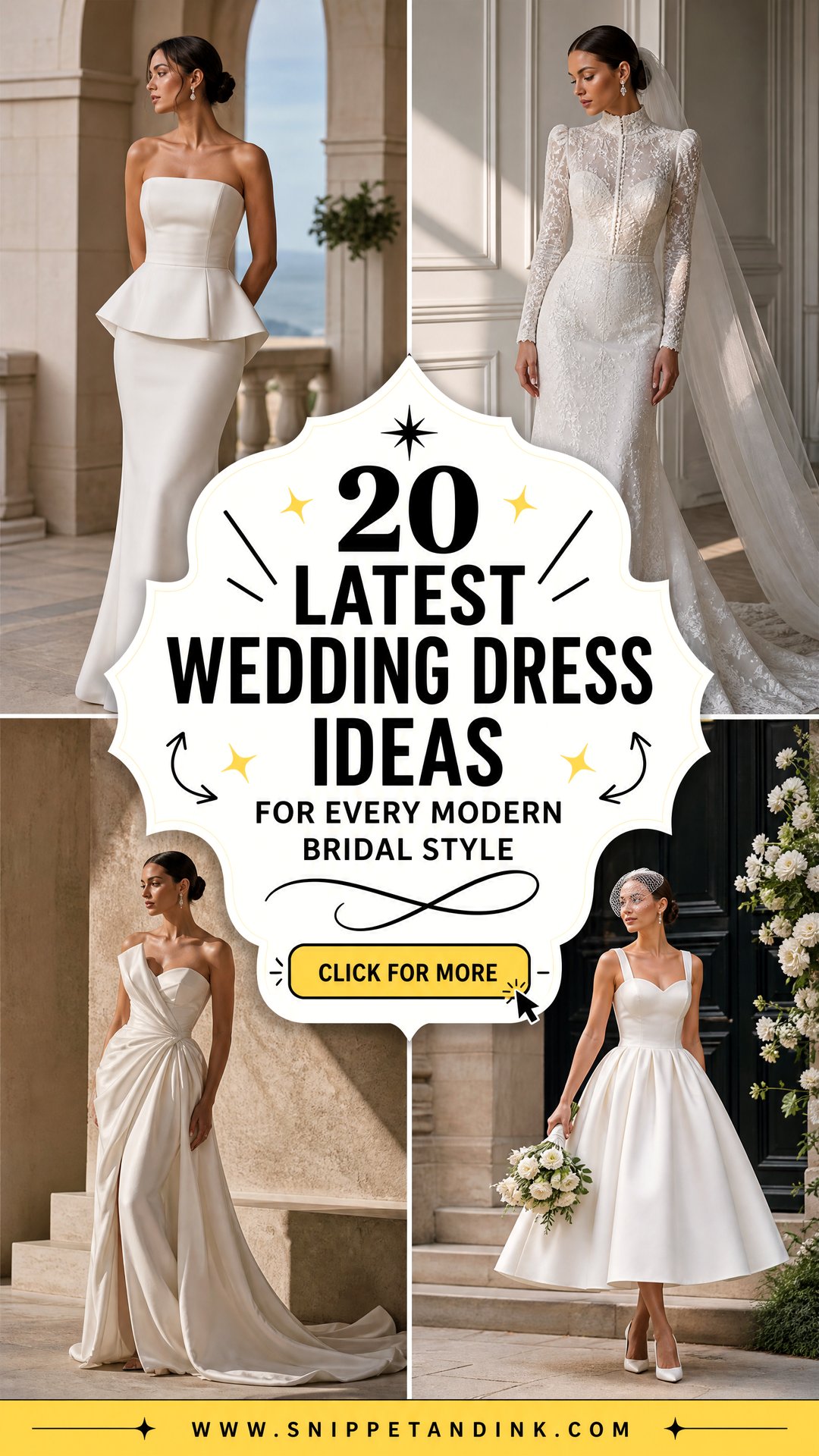
It’s far easier to pick a gown by comparing whole outfits than by chasing single trends. Right now the runway favors Basque and drop waists, bubble hems, peplums, prominent lace, pearls, detachable layers and big ball gowns. In the fitting room, though, the questions I ask are plainer: where does your waist naturally sit, how much will you dance, and how far is the walk from car to aisle? Below are twenty complete looks with the shoes, veil and jewelry worked out, plus what I check on each one before a bride says yes.
Why Bridal Sizes Run Small and Gowns Take Months
Two things surprise almost every bride at her first appointment. The size label usually reads one or two sizes larger than what she wears every day, because many bridal houses still cut to older sizing charts. Ignore the number. Gowns are ordered from your measurements, and the label is irrelevant once alterations begin.
The second surprise is time. Most designer gowns are made to order after you buy them, and delivery often takes several months. Then alterations need another two to three months, with two or three fittings. When I map a timeline, it looks like this:
- Start trying on roughly nine to twelve months before the wedding, so ordering isn’t rushed.
- Order with enough buffer that the gown arrives two to three months ahead.
- Bring your wedding shoes and the underwear you’ll wear to the first fitting. Hem length and bodice fit depend on both.
- Book the final fitting one to two weeks before the wedding, and have the person who will bustle you attend it.
Samples in the shop are often a standard size and clipped to fit, so the shape you see in the mirror is close but not exact. Ask the consultant to show you where each sample is pinned.
1. Basque Waist Ball Gown Wedding Dress
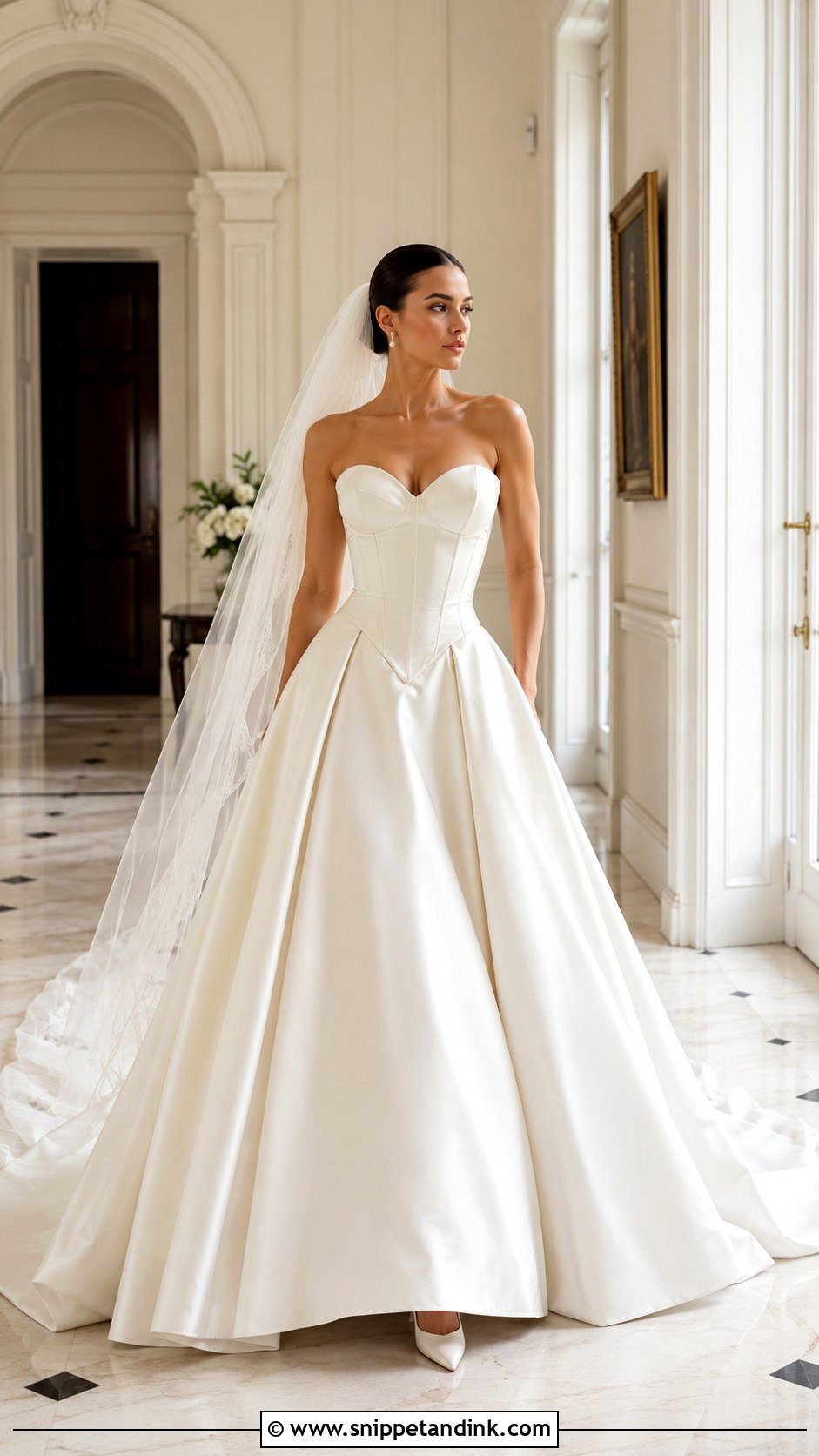
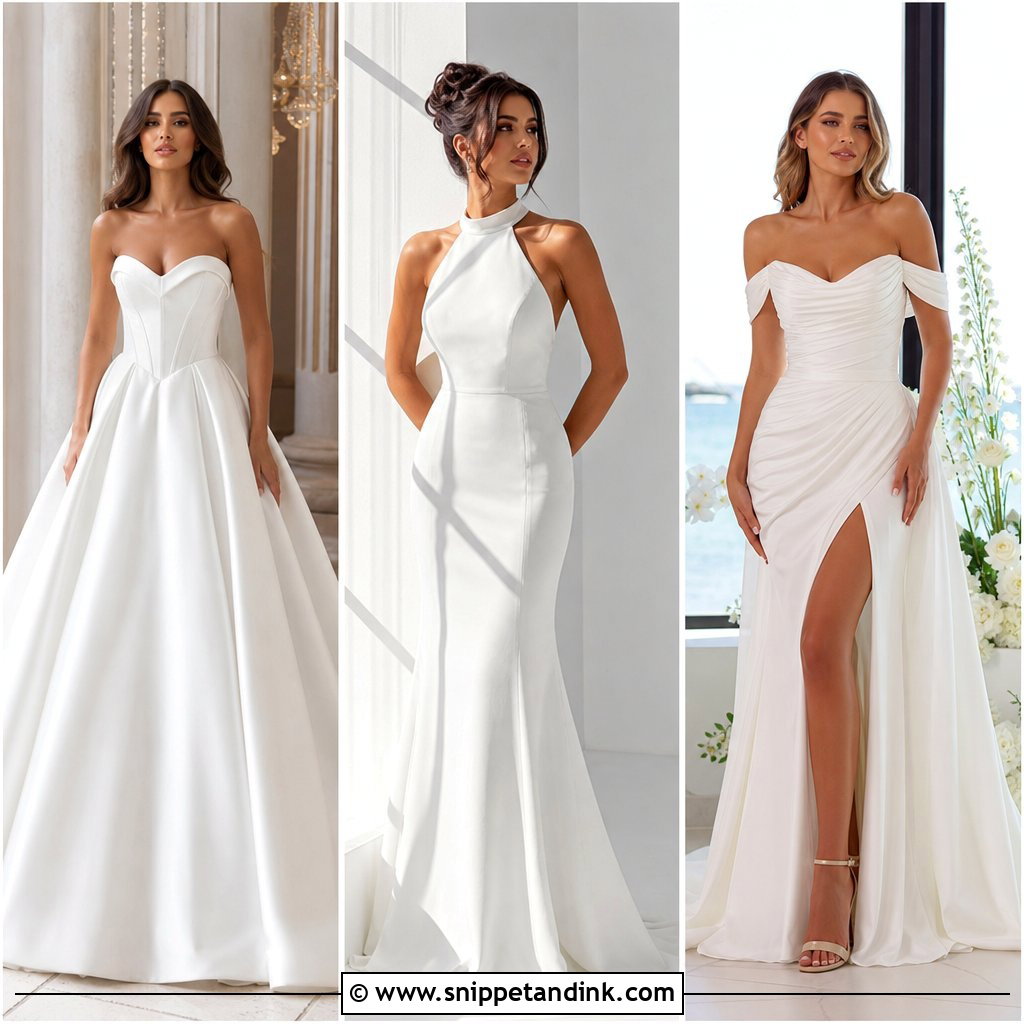
The V of a Basque waist ball gown lengthens the torso before the skirt opens out. Mikado and structured satin give the cleanest point; lace softens it. The boning in a strapless sweetheart bodice is what holds the V in place, and I check that it ends above the hip bone, because a bone that digs into the hip when you sit will hurt by the speeches. Petite brides can ask for fewer skirt layers. Add pointed ivory pumps, pearl drops and a cathedral veil with a plain edge.
2. Drop Waist Satin Wedding Dress
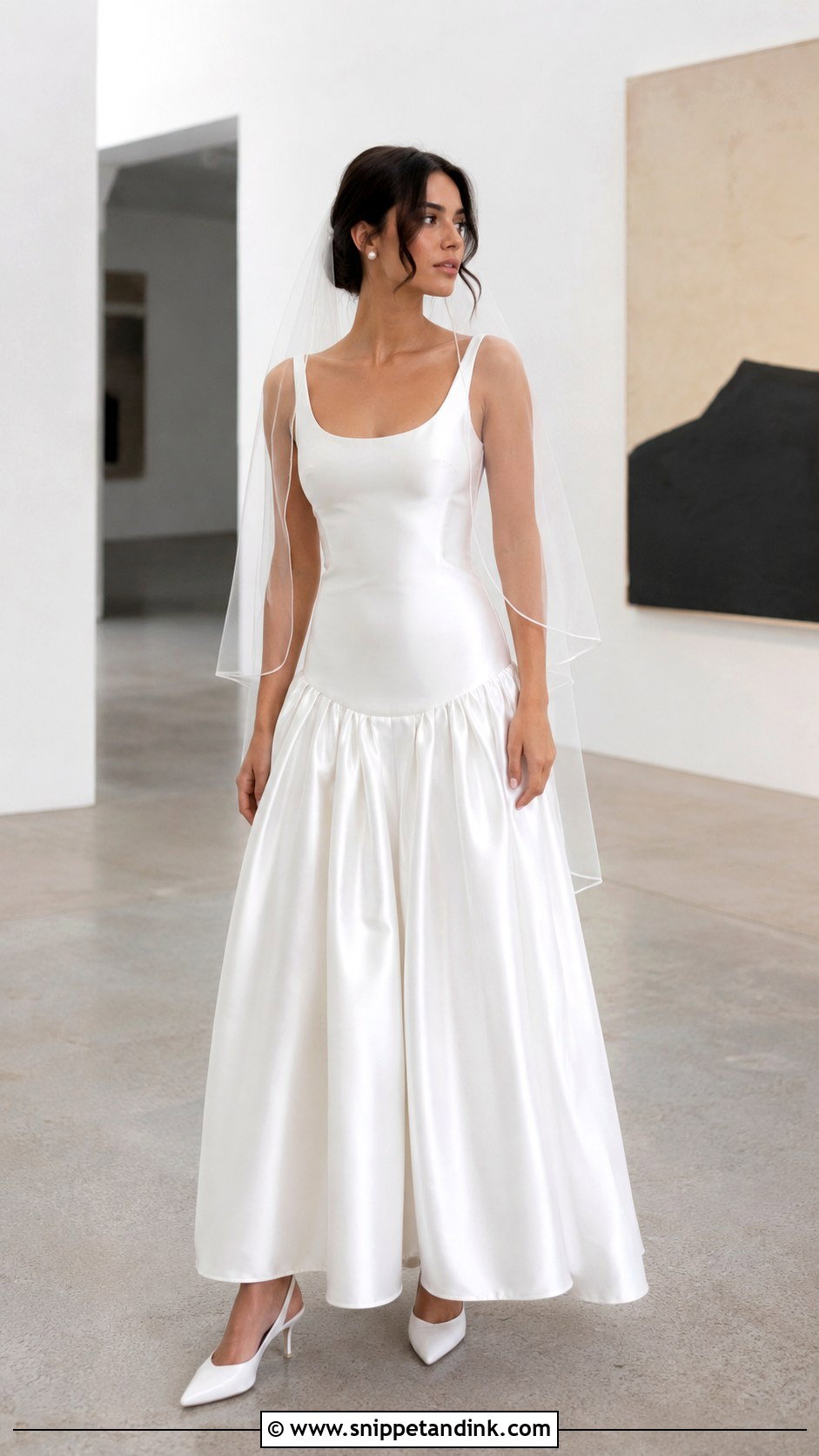
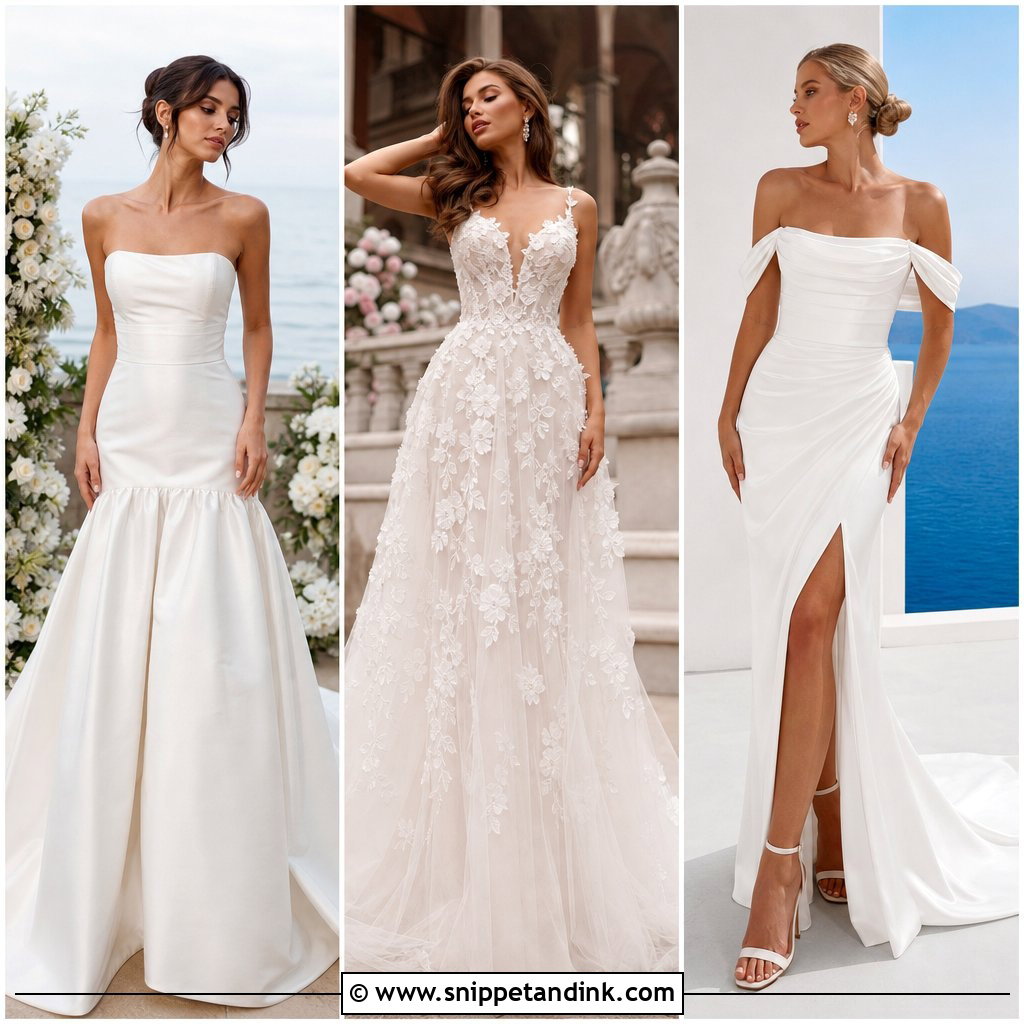
Satin shows everything, which is why a drop waist in satin looks so polished when it’s fitted right and so tired when it isn’t. The long bodice ends below the natural waist and meets a gathered or pleated skirt. Torso length decides how low that seam should go: a long torso can carry a dramatic drop, while a short one looks better with a subtle one. I always have the bride sit at this fitting, since a long fitted section has to bend somewhere and satin creases sharply where it does. Wide straps, pearl studs, slingbacks and a fingertip veil keep it clean.
3. Draped Corset Wedding Dress
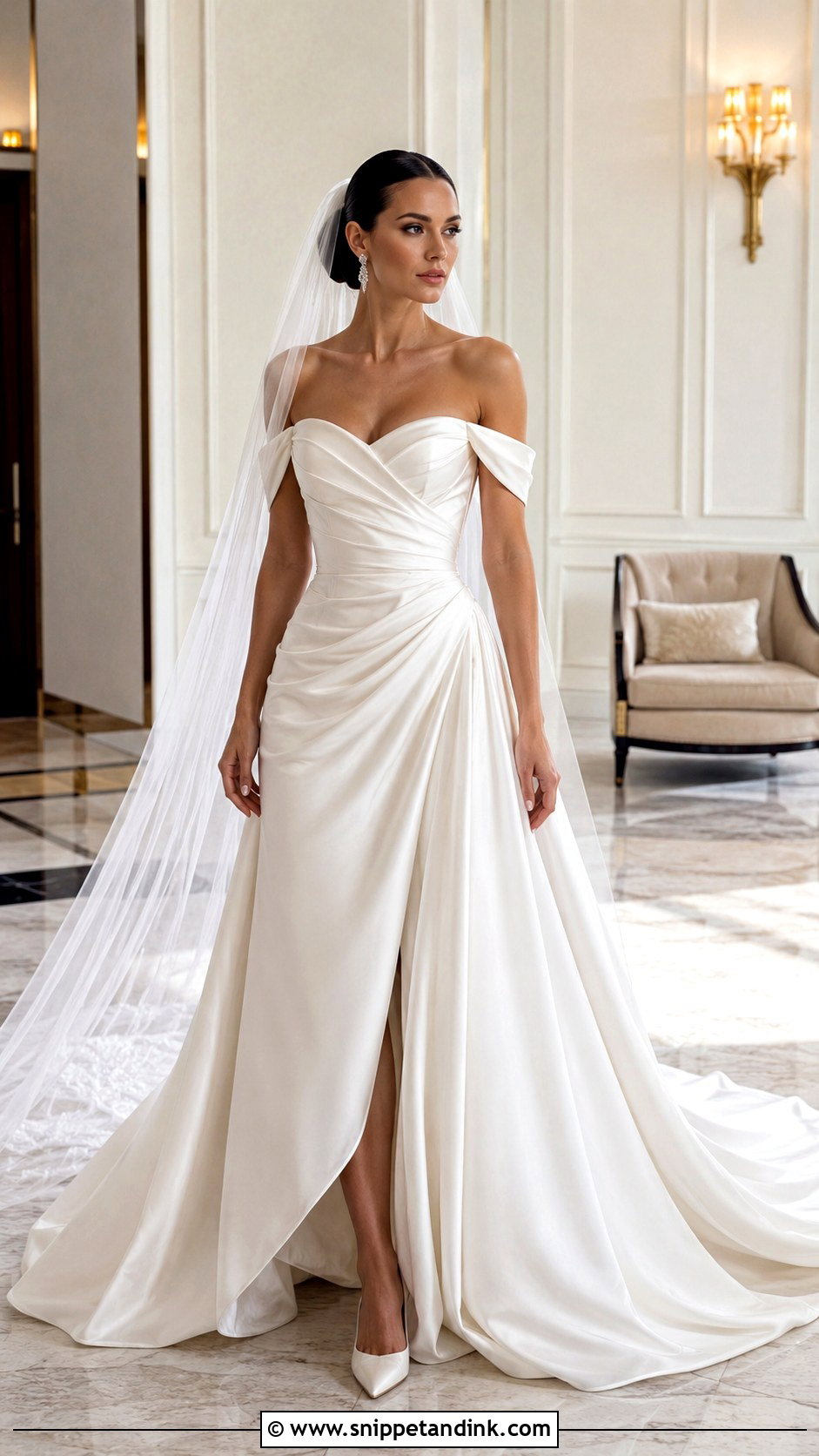
Draping across a corset softens all that structure. Look for diagonal folds that flow naturally into an A-line or column skirt, in matte crepe for understatement or silk satin for shine. The test of a good corset is simple: it should support the bust without pushing it up or leaving a gap at the top edge when you breathe out. That usually takes two or three small adjustments across fittings. Detachable off-the-shoulder straps give you a second look. Leave out the necklace so the folded neckline stays clean.
4. Lace A-Line Wedding Dress
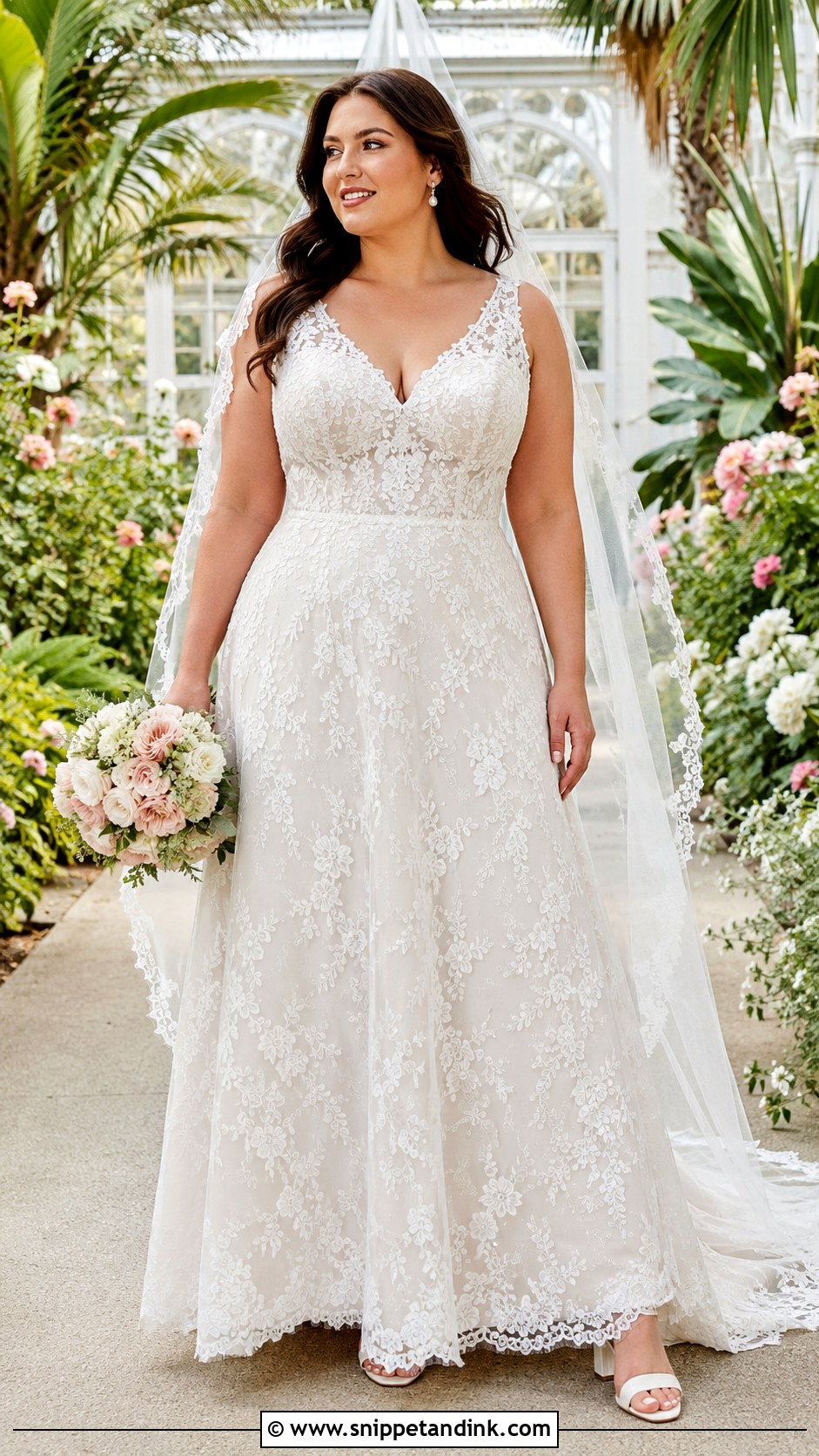
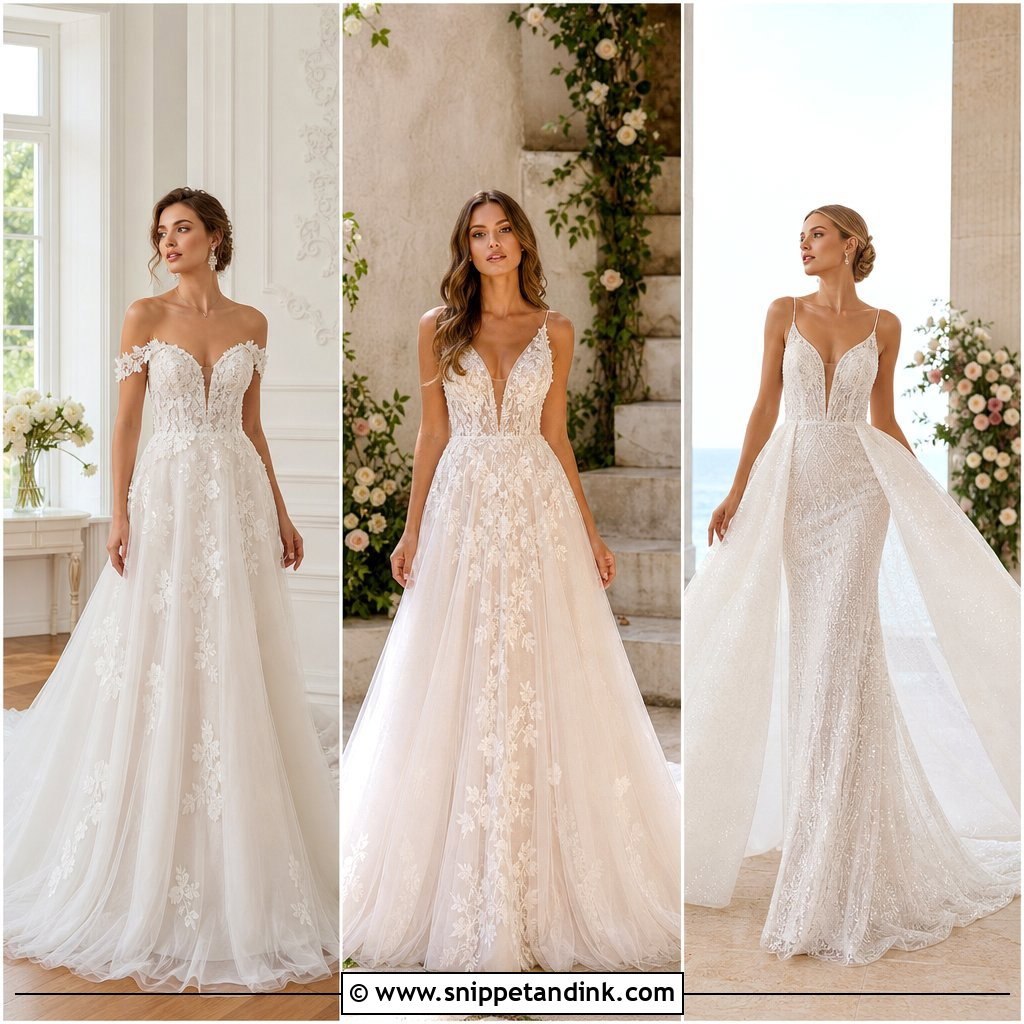
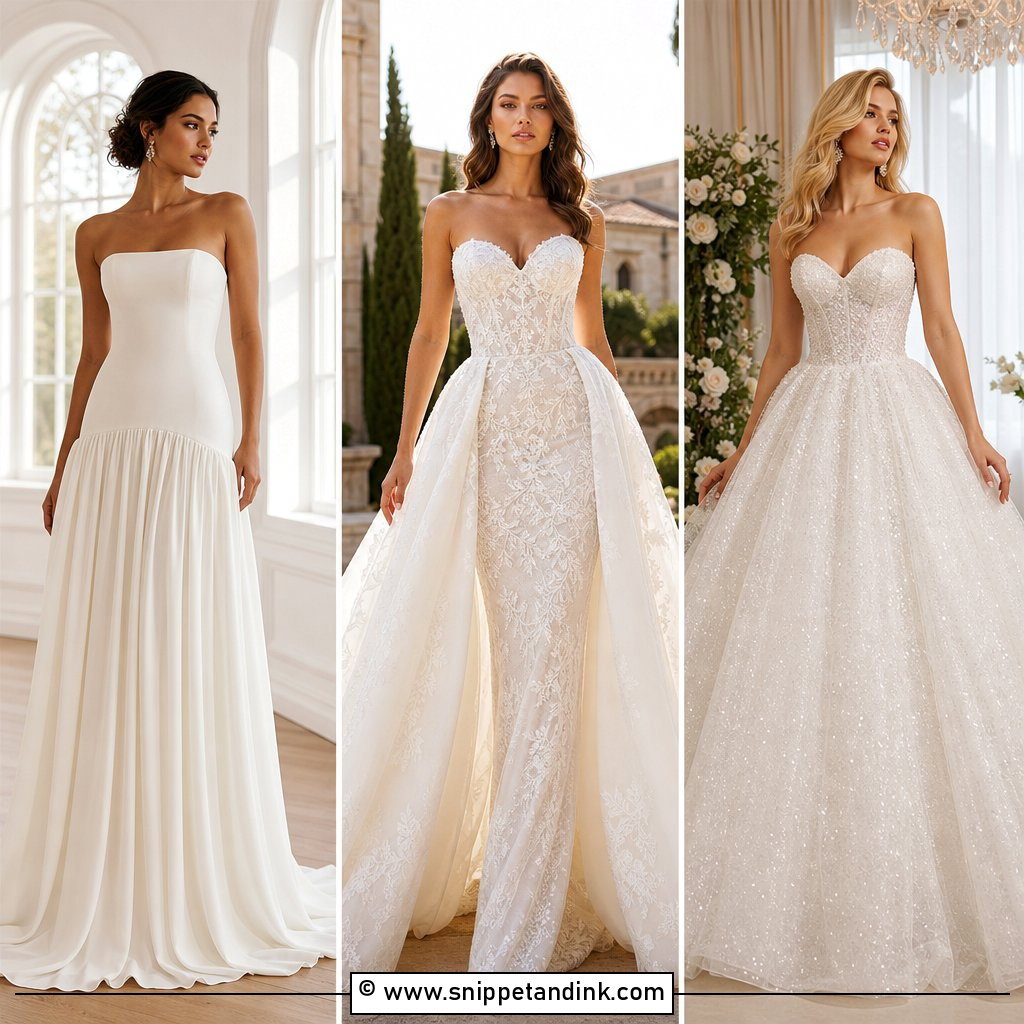
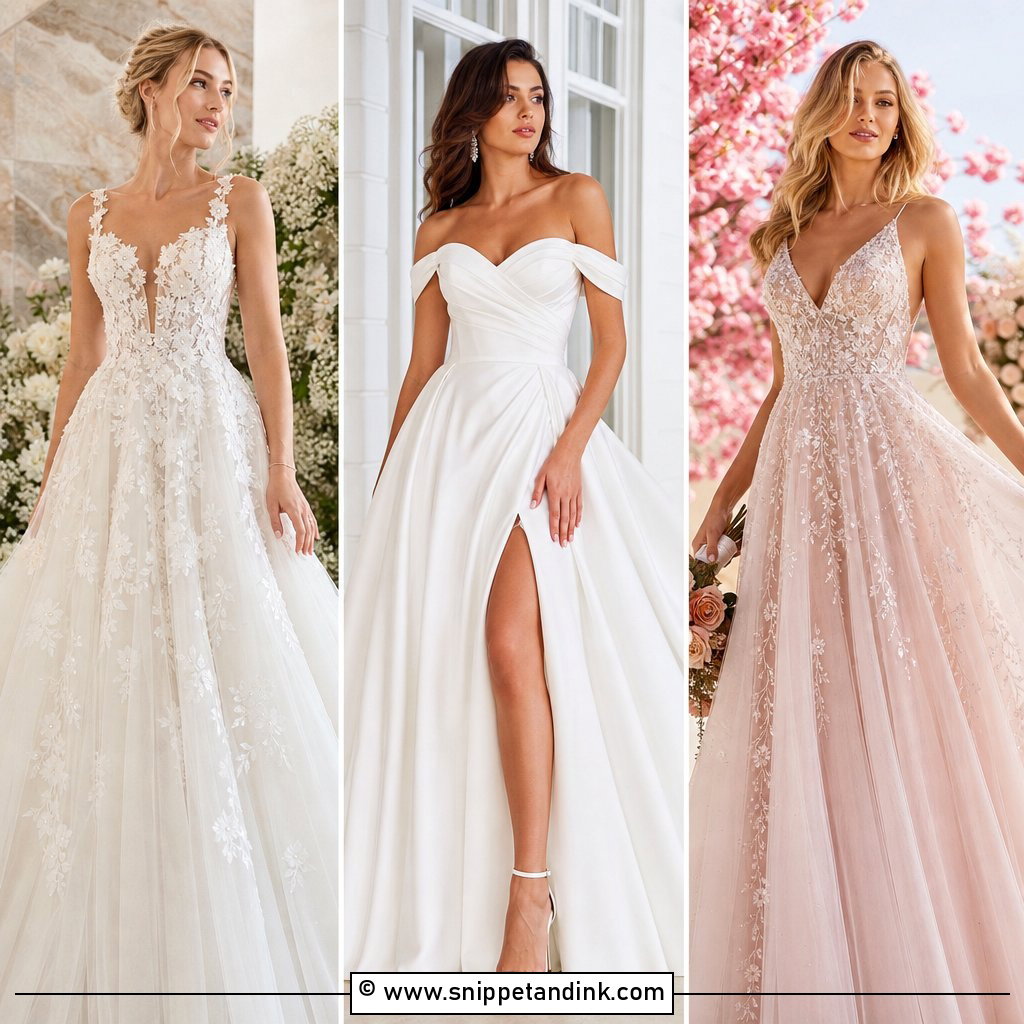
Is there a more forgiving shape than a lace A-line? It follows the upper body and widens gradually, so it suits most figures and walks easily. Floral lace over a nude or champagne lining shows its pattern; ivory on ivory reads more traditional. Go with a V-neck for openness, or cap sleeves for coverage. What I watch after alterations is motif placement. When a seamstress takes in lace, the motifs at the neckline and waist should be cut out and re-laid by hand so they stay symmetrical, not just sewn through. For outdoor ceremonies, choose a sweep train.
5. Pearl Embellished Wedding Dress
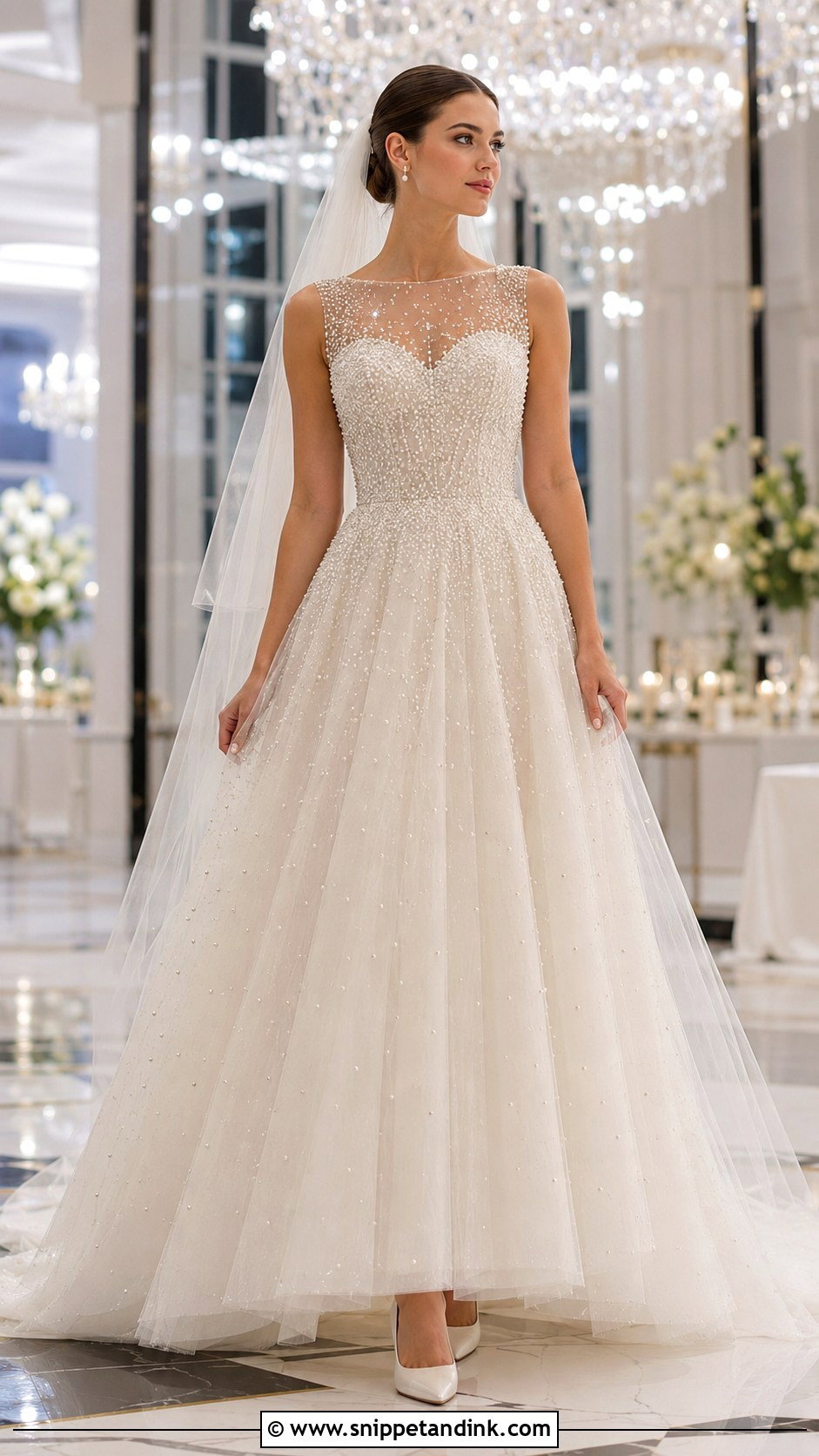
Pearls on tulle give off a soft glow rather than sparkle, so they read well in daylight and under warm reception light. A fitted bodice with a flowing A-line skirt keeps the scatter balanced. Before you buy, run your hand along the underarm, waist and hem, which are the places that rub all day. Loose pearls there will be on the floor by the first dance. A smooth underskirt stops tulle and beads scratching your legs. Keep the earrings small and the veil plain, and skip the big necklace.
6. 3D Floral Wedding Dress
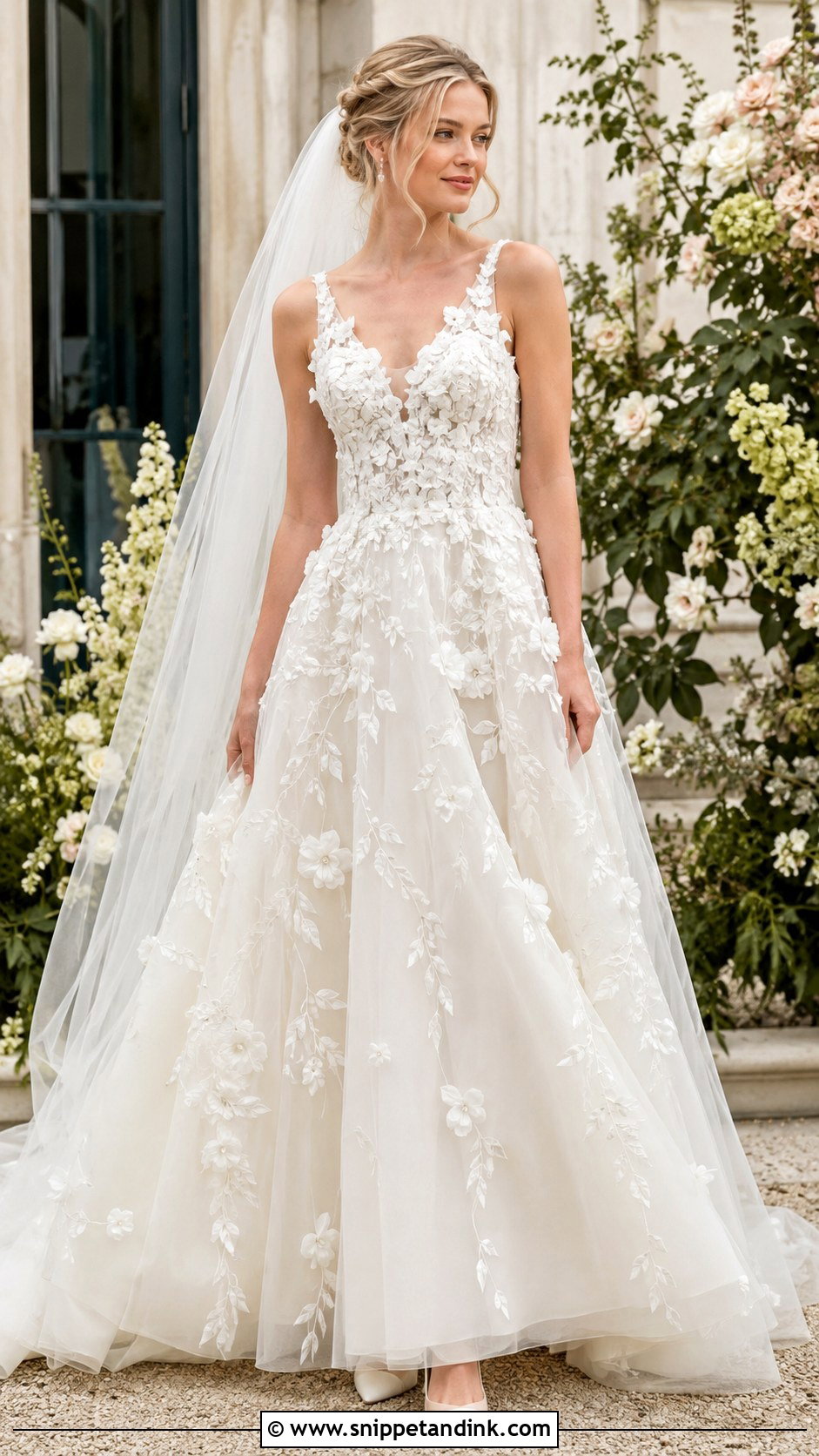
Three-dimensional flowers make texture the point of the dress. Organza petals, embroidered leaves and small appliqués clustered at the bodice and thinning down the skirt keep it from looking busy. Small tonal blooms suit quieter brides, and maximalist dressers can go large at the neckline or train. Alterations are the risk here. Ask your seamstress to lift and re-stitch any flowers sitting on a seam she’s taking in, otherwise you get half a petal disappearing into the seam. Wear the hair swept back and the veil plain.
7. Peplum Column Wedding Dress
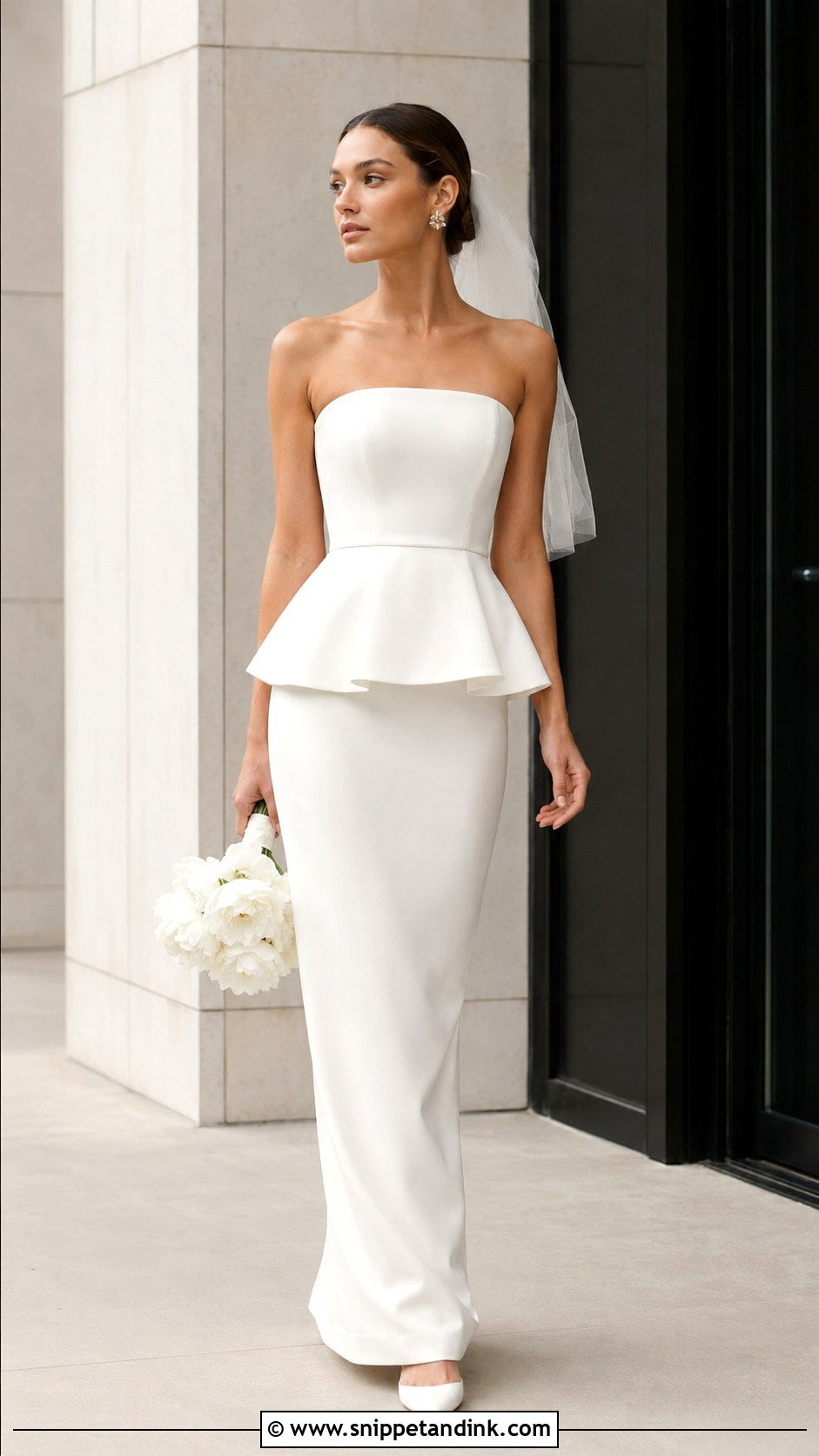
Mobility is the first thing I test on a column with a peplum, before any styling. Take long steps and sit before approving the hem, and ask about a back vent if the skirt stops your stride. The peplum itself can be sharply tailored or softly draped, short to show the waist or longer and curved for more coverage over the hips. Crepe, satin or lace all work. Slingback heels, sculptural earrings and a short veil or small hat suit the fashion feel. A compact bouquet keeps the waist detail visible.
8. Bubble Hem Wedding Dress
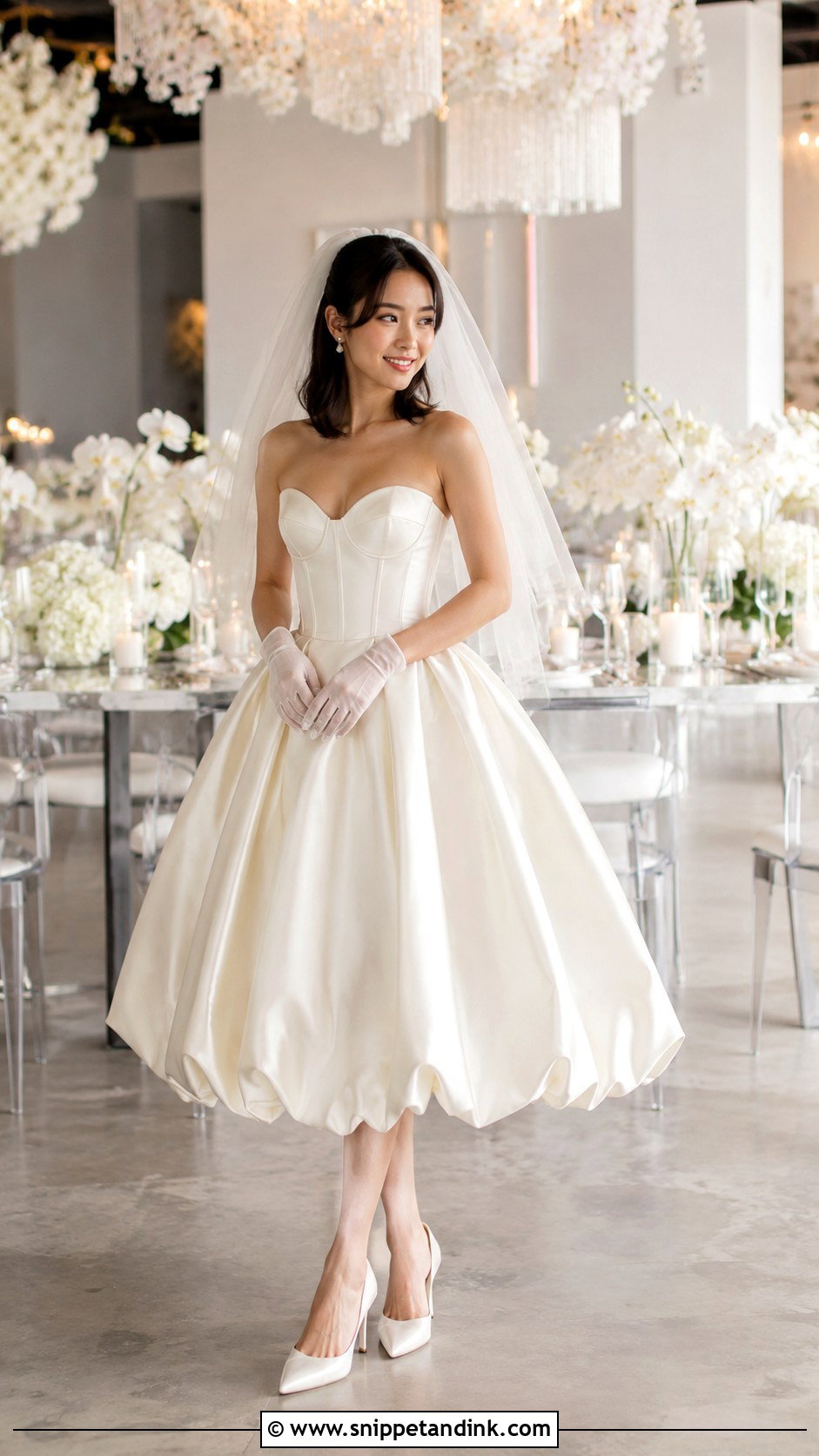
Bubble hems are fabric folded back under itself, and the shape is only as good as the underskirt holding it. A tea-length bubble with a corset bodice and clean satin is the version I’d suggest for a ceremony. Because the shoes show, choose a pair that’s special and that you can stand in for hours. Petite brides look best with moderate volume; taller brides can go fuller. Ask the shop how to steam and store it. Packed flat in a garment bag, the bubble crushes, so it should travel hanging with tissue stuffed inside the hem.
9. Ruffled Tiered Wedding Dress
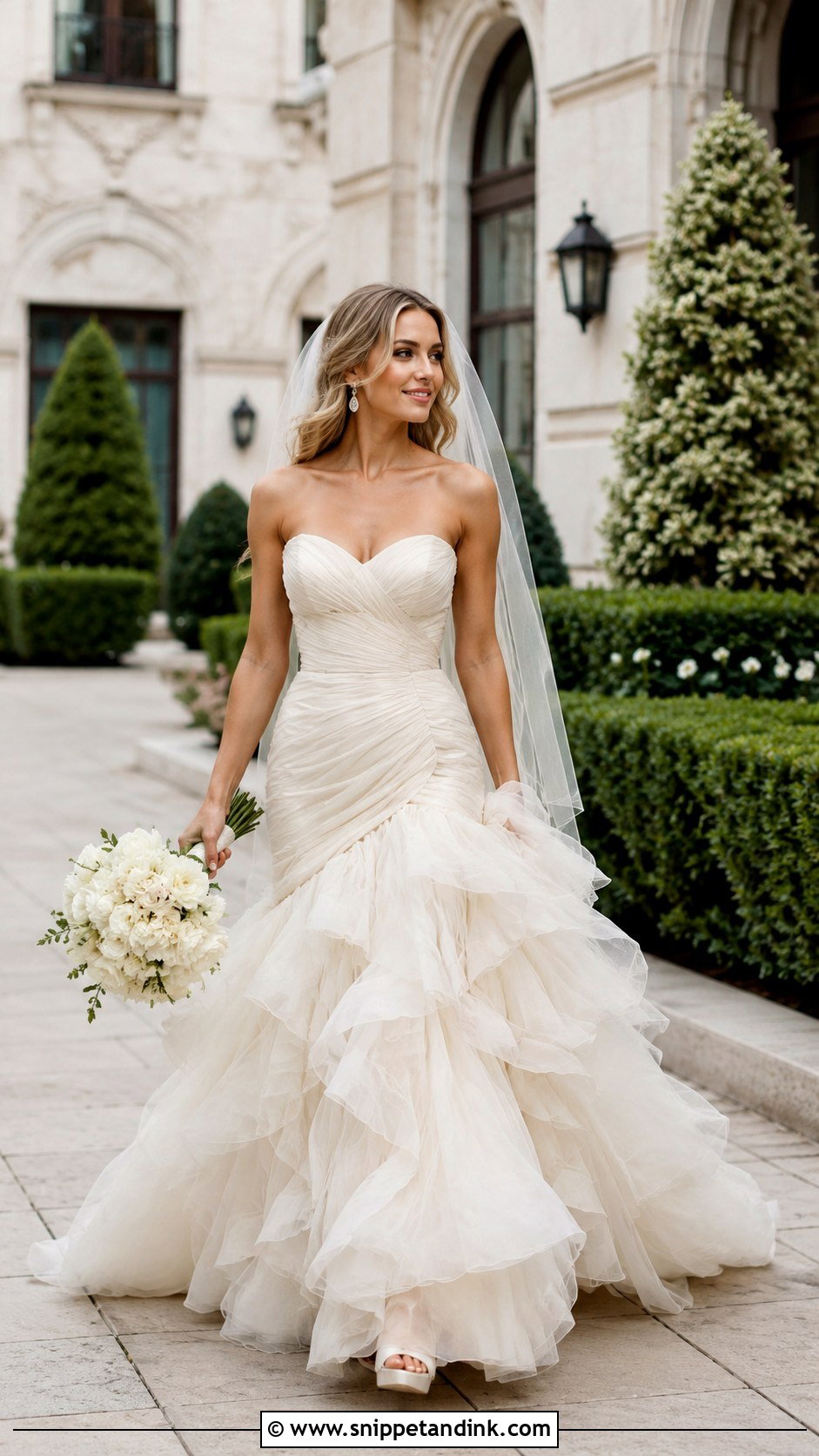
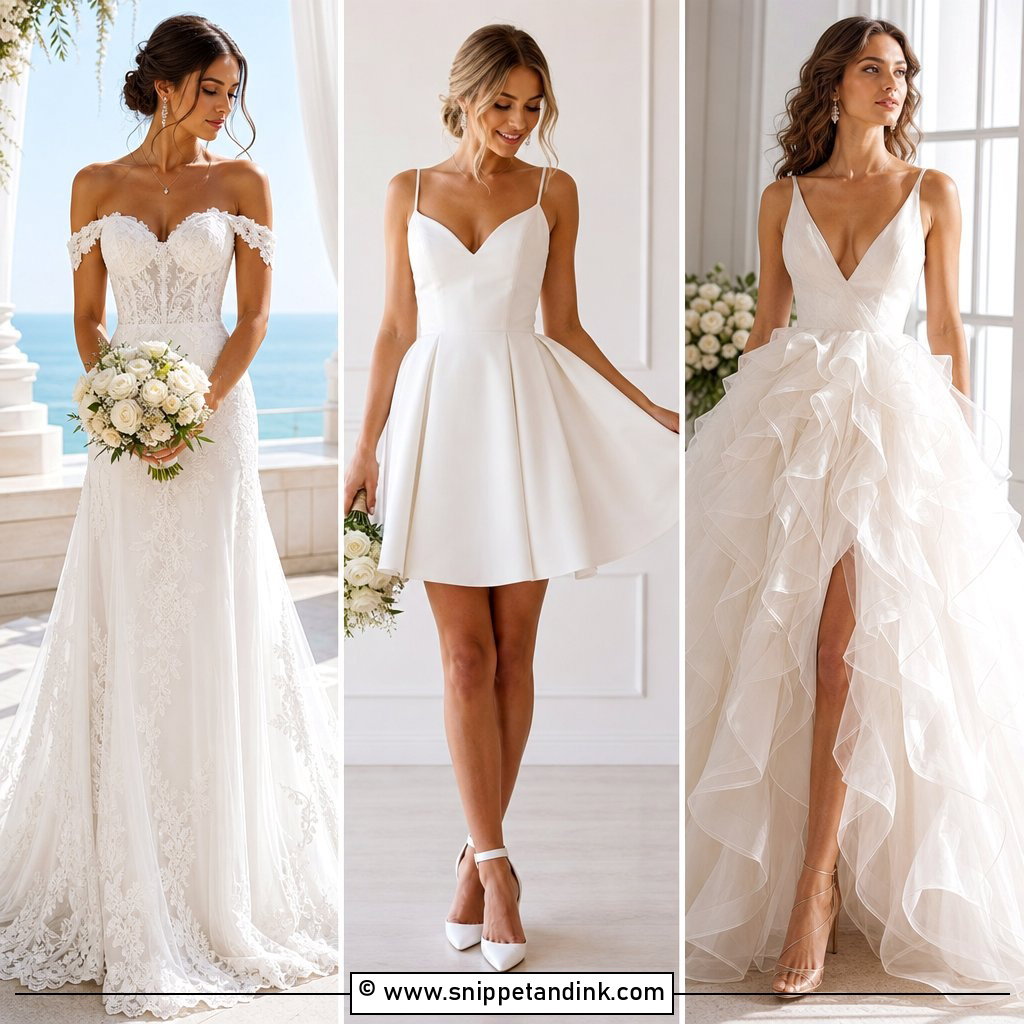
Tulle tiers move as you walk, which is the whole appeal of a ruffled tiered wedding dress. Keep the bodice simple so the volume stays below the waist. Cascading tiers look romantic; straight horizontal tiers look sharper. Layered skirts are heavy and long, so a proper bustle is essential for dancing. Outdoors, soft tulle ruffles wilt in humidity, so I’d ask for a firmer tulle there. Skip lace gloves and heavy accessories, and carry a compact bouquet.
10. High Neck Long Sleeve Wedding Dress
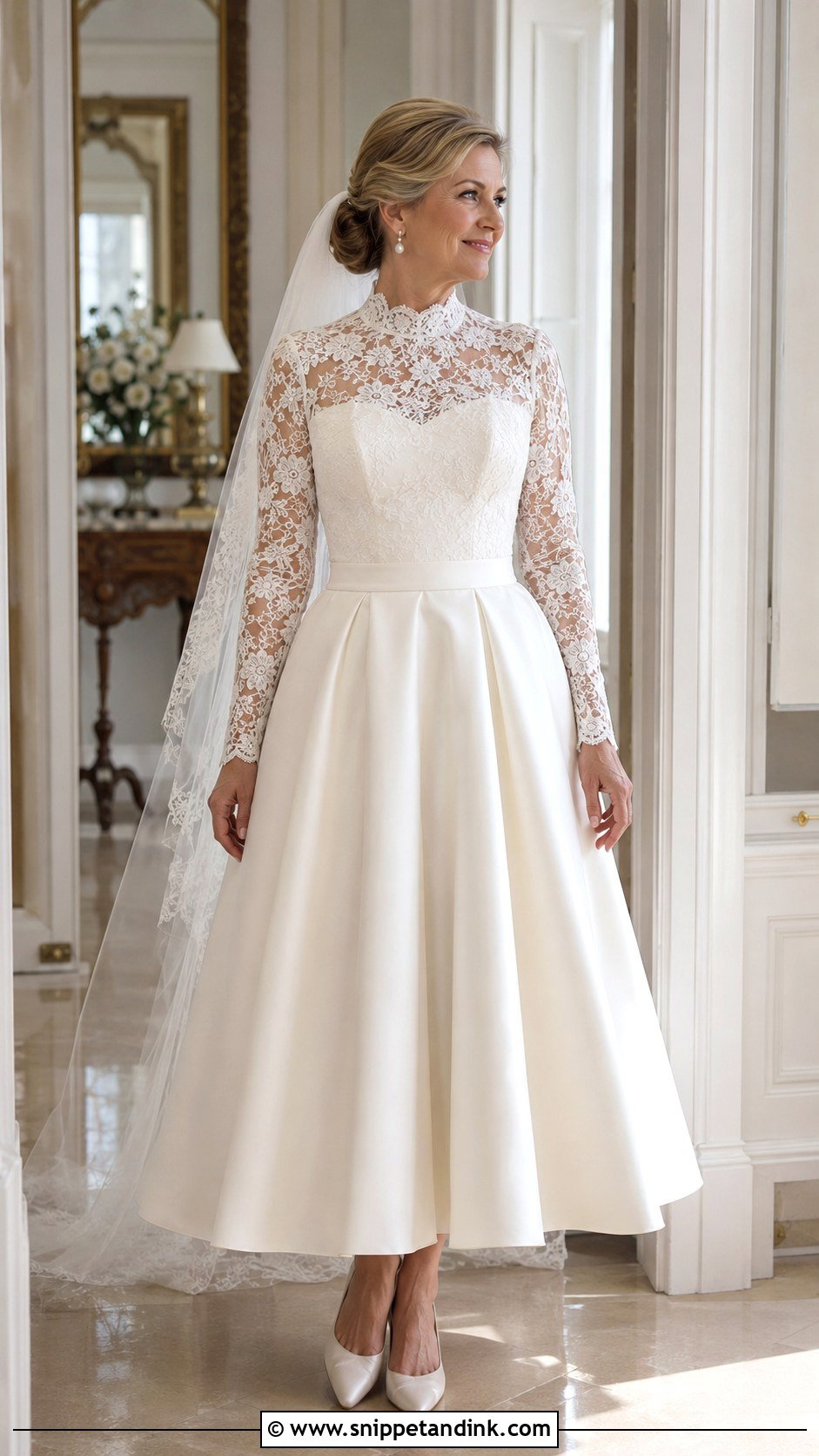
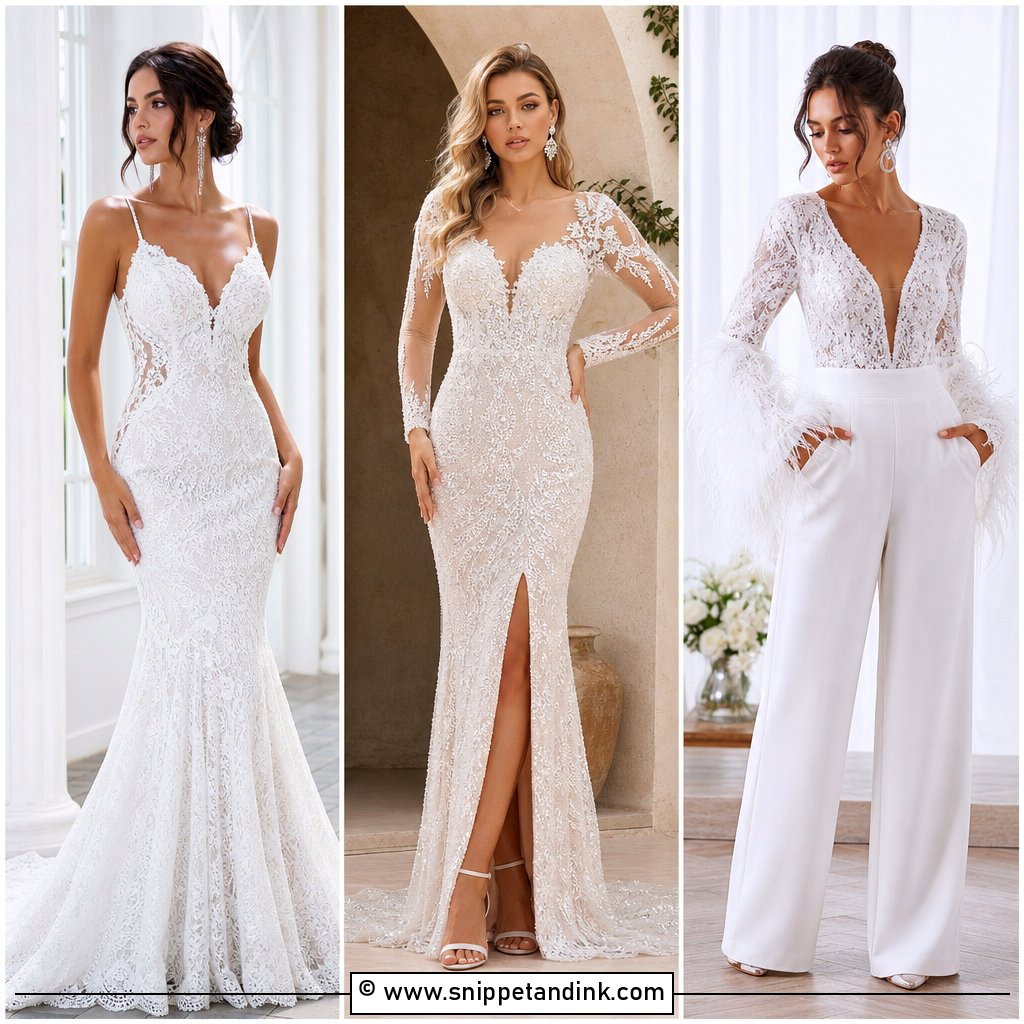
Lace sleeves and a high neck give a formal, covered look that suits cooler seasons and religious ceremonies. A lined bodice reads traditional; a sheer illusion neckline feels lighter. Lift your arms, hug someone and sit at your fitting, because fitted lace sleeves restrict reach more than any other detail. The neckline should rest on the throat, not press into it. Wear the hair in a low chignon with the veil comb tucked beneath it so fabric doesn’t bunch at the shoulders, and skip the necklace.
11. Halter Neck Wedding Dress
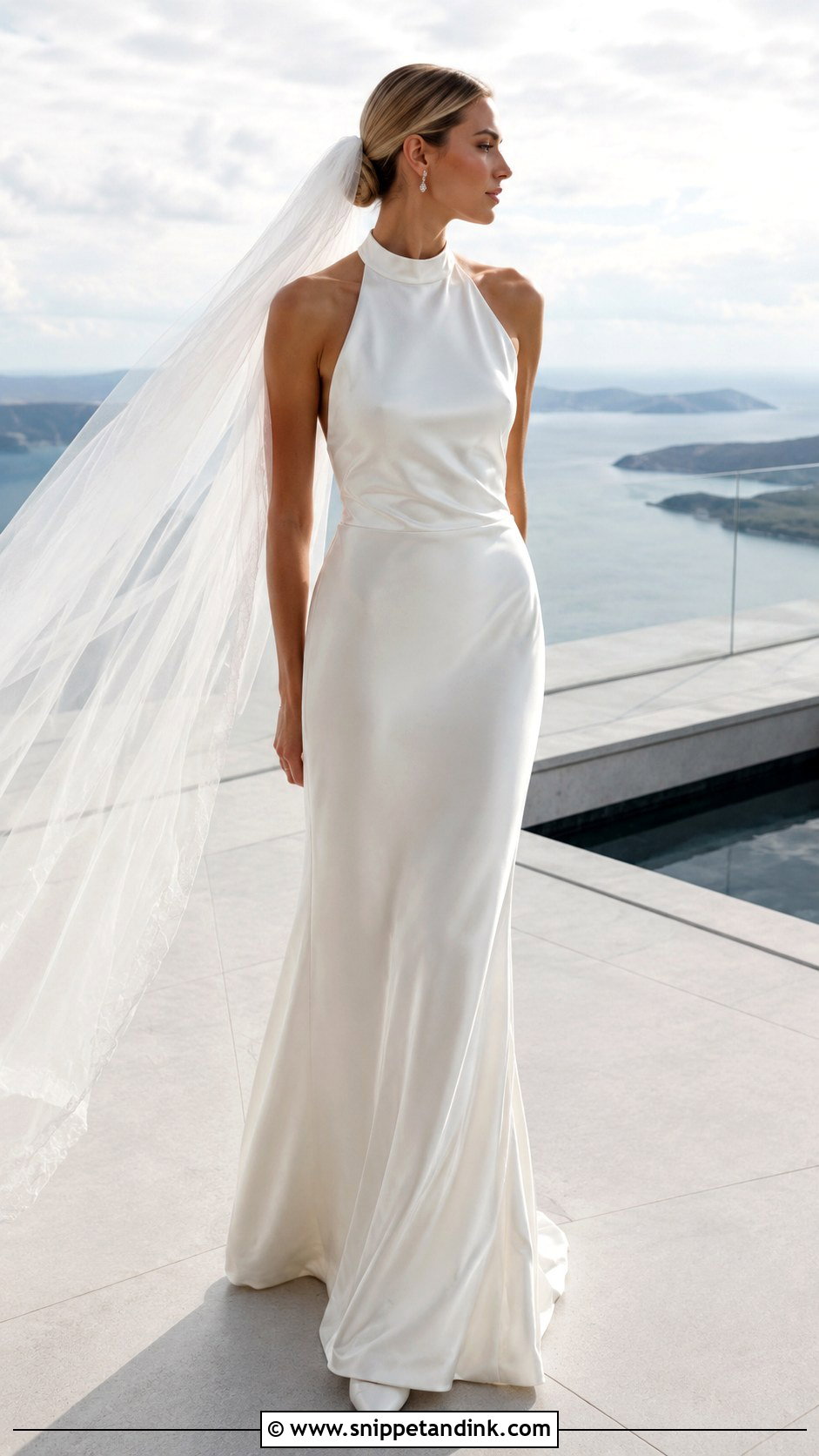
A halter puts all the attention on the shoulders and back. A fluid satin column looks sleek; a structured A-line adds ceremony drama. The neck strap carries weight, so I check that it doesn’t pull forward when you move your arms, which happens with heavier skirts. If the back is low, ask about internal support or hidden loops for fashion tape. Small earrings, a polished bun, pointed heels and a long veil placed low at the back of the head. No necklace needed.
12. Scoop Neck Wedding Dress
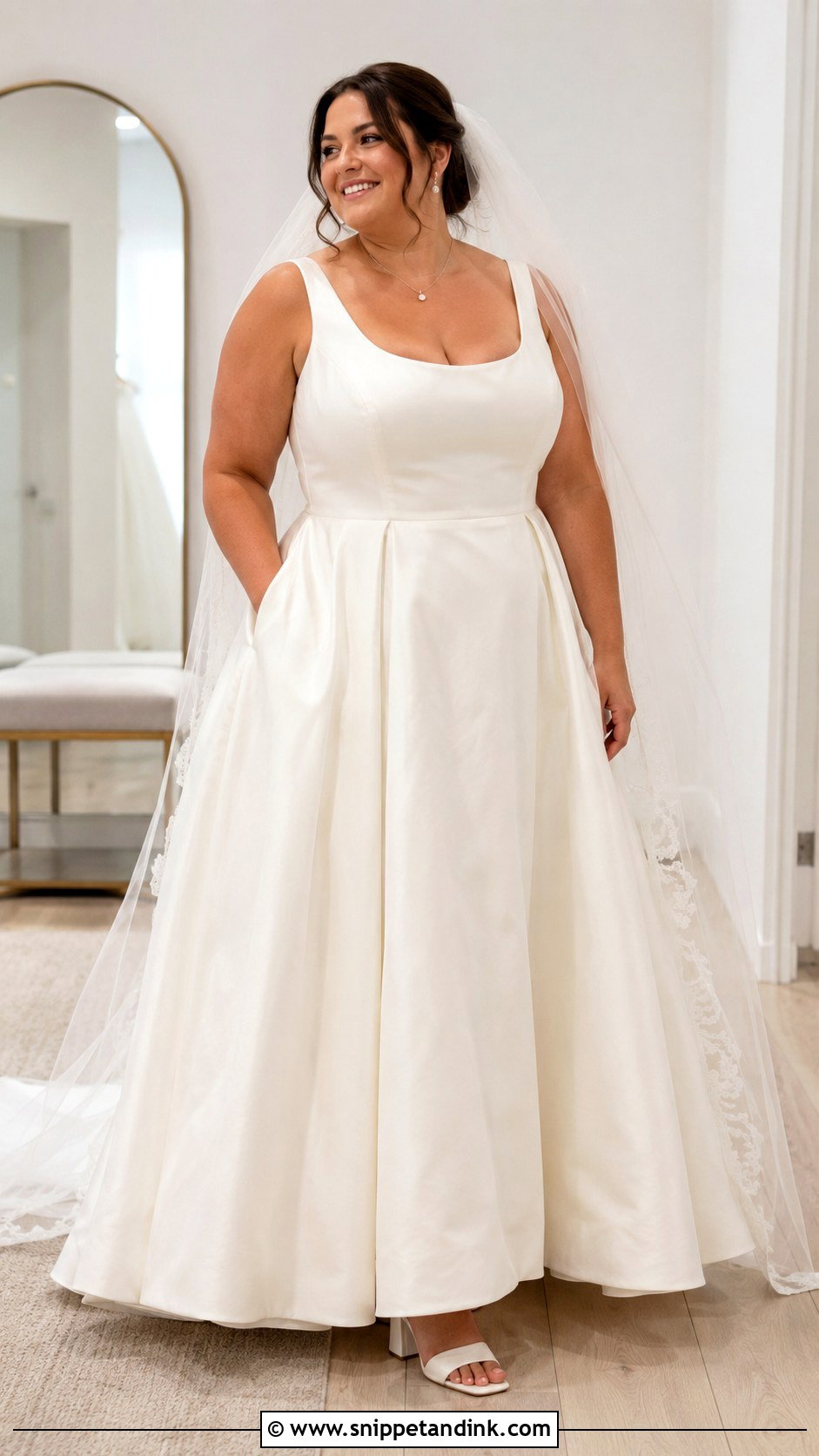
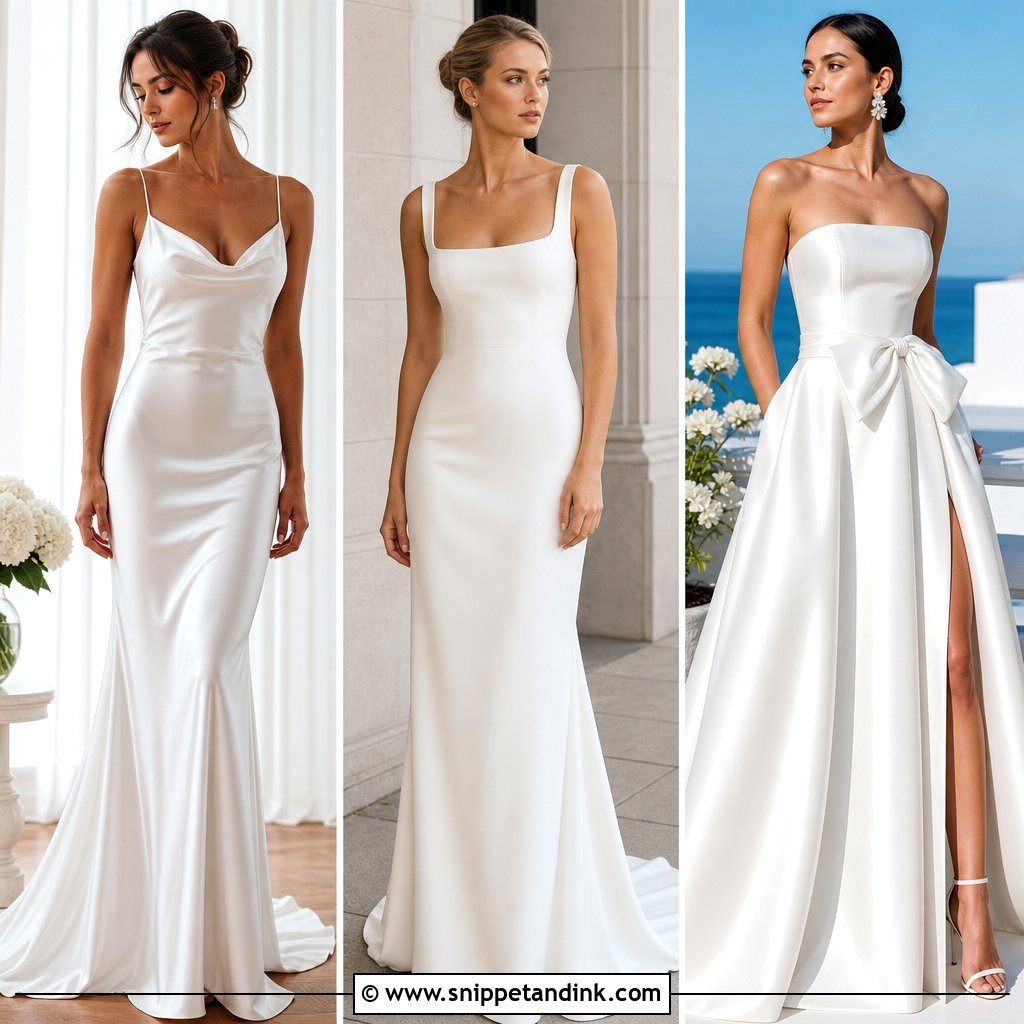
Scoop necks are comfortable and easy to wear. With wide straps and a supportive bodice, you get support without sleeves. Satin bodice with a pleated skirt for formal; fluid crepe for quieter days. Bend forward at your fitting: the scoop should stay flat against the chest without gaping. A shallow curve gives more coverage, while a deeper one is softer. Fuller busts do best with sewn-in cups and wider straps. A short pendant suits this neckline better than most.
13. Off Shoulder Wedding Dress With Detachable Sleeves
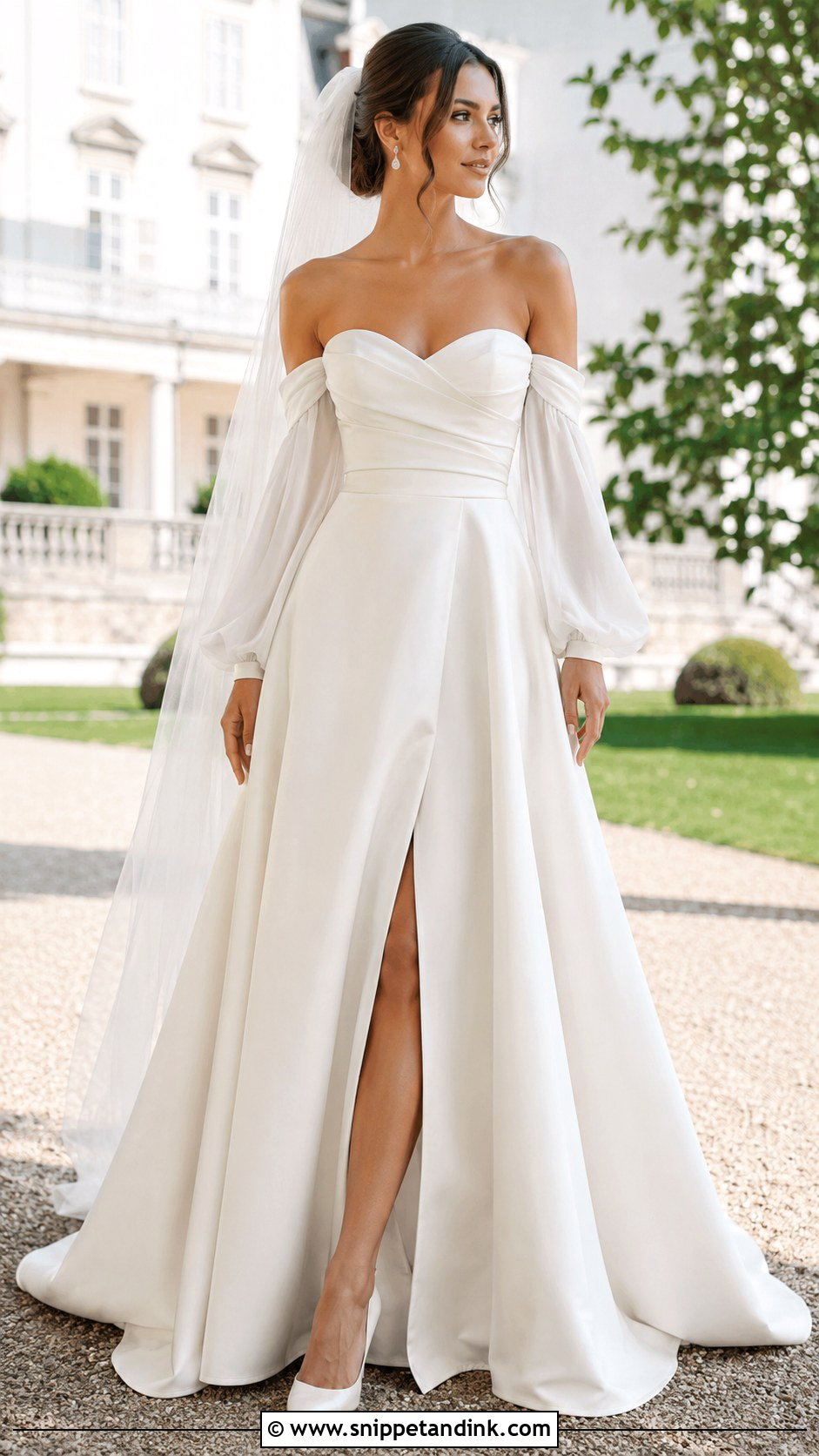
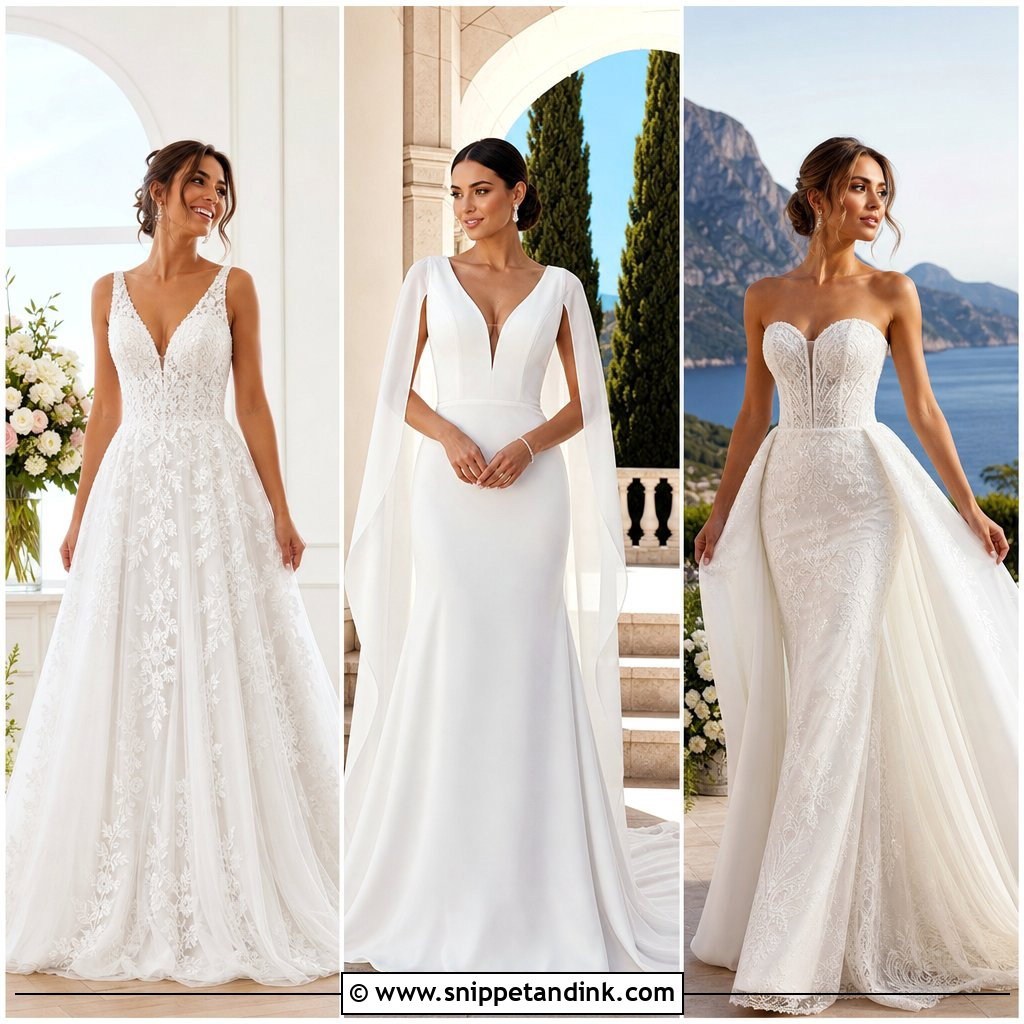
Detachable sleeves let one dress change between the ceremony and the dancing. The base is a structured strapless gown in satin, lace or crepe, and the sleeves fasten inside the bodice: long and sheer for coverage, short gathered bands for softness. Ask the seamstress to hide every snap and hook. Raise and lower your arms at the fitting, since sleeves that stay put but cut off circulation aren’t worth it. After photos, take them off and put them in a labeled bag. Removed sleeves get lost more often than you’d think.
14. Wedding Dress With Detachable Overskirt
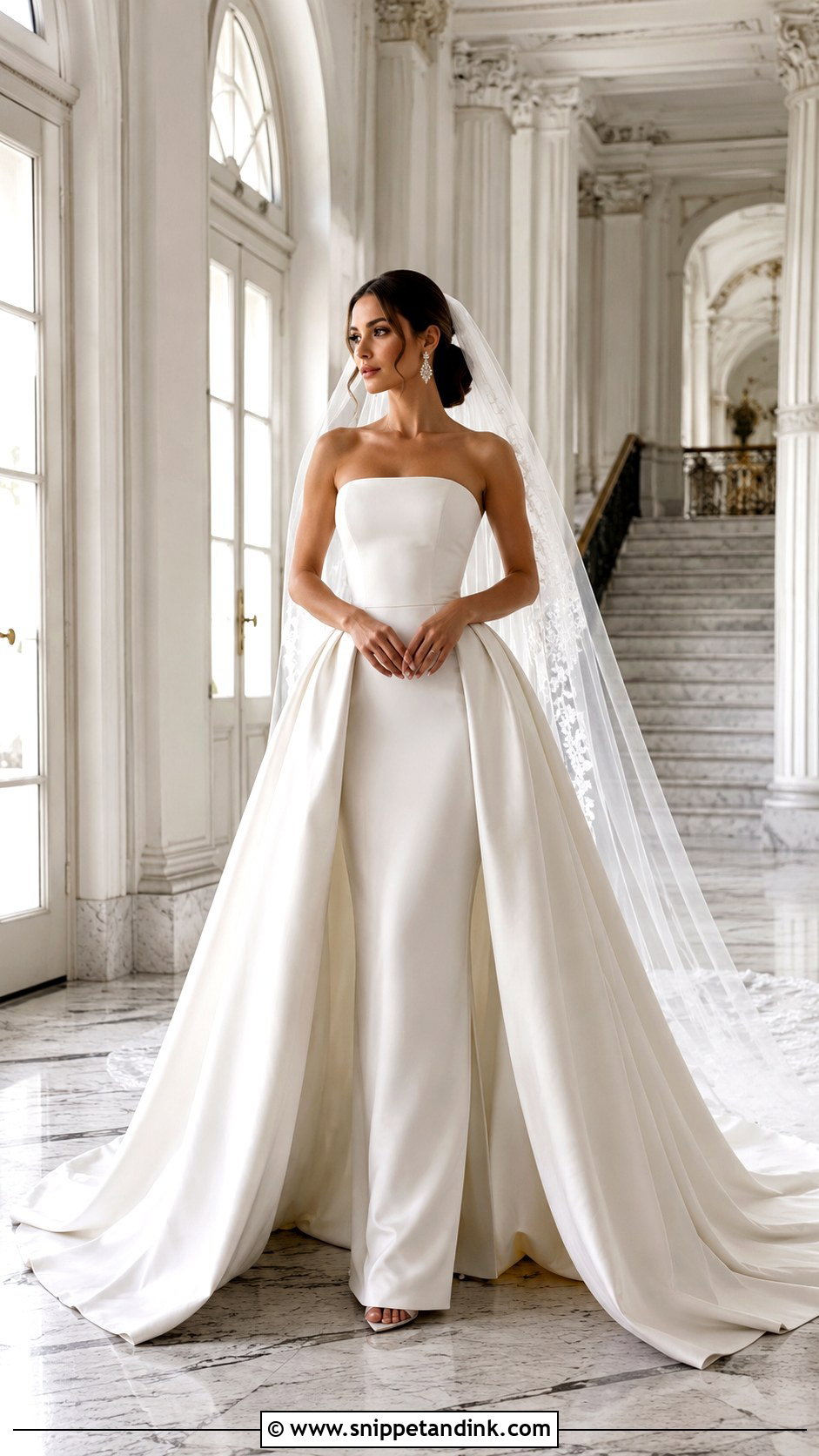
Two dresses in one: a fitted column or mermaid underneath, with a full satin, tulle or organza overskirt for the ceremony. The overskirt brings the volume and often the train, and once it’s off you have something far easier to eat and dance in. The waist attachment is the weak point; it should sit flat under the bodice, with no lumps. I ask one attendant to practice taking it off and putting it back on before the day. Clear labels on the fasteners turn a fifteen-minute struggle into a two-minute change.
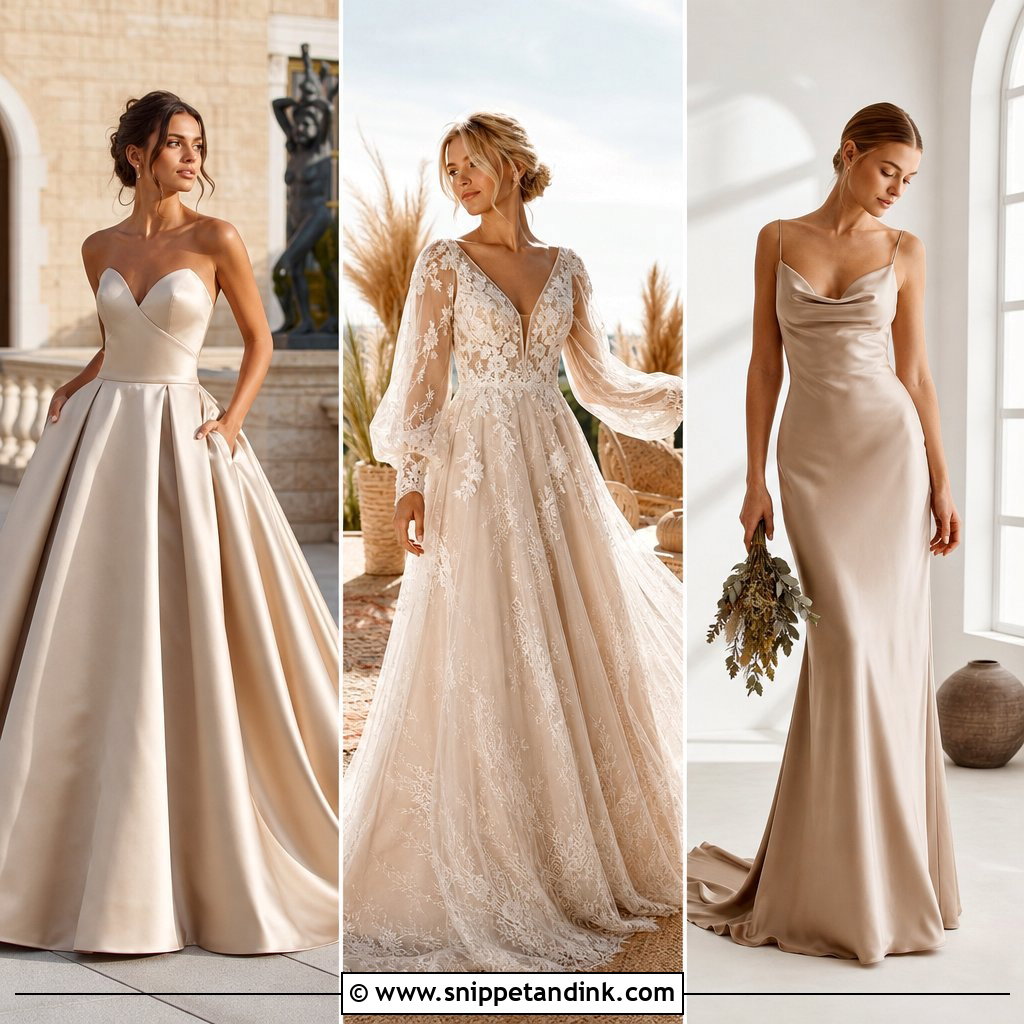
15. Front Bow Wedding Dress
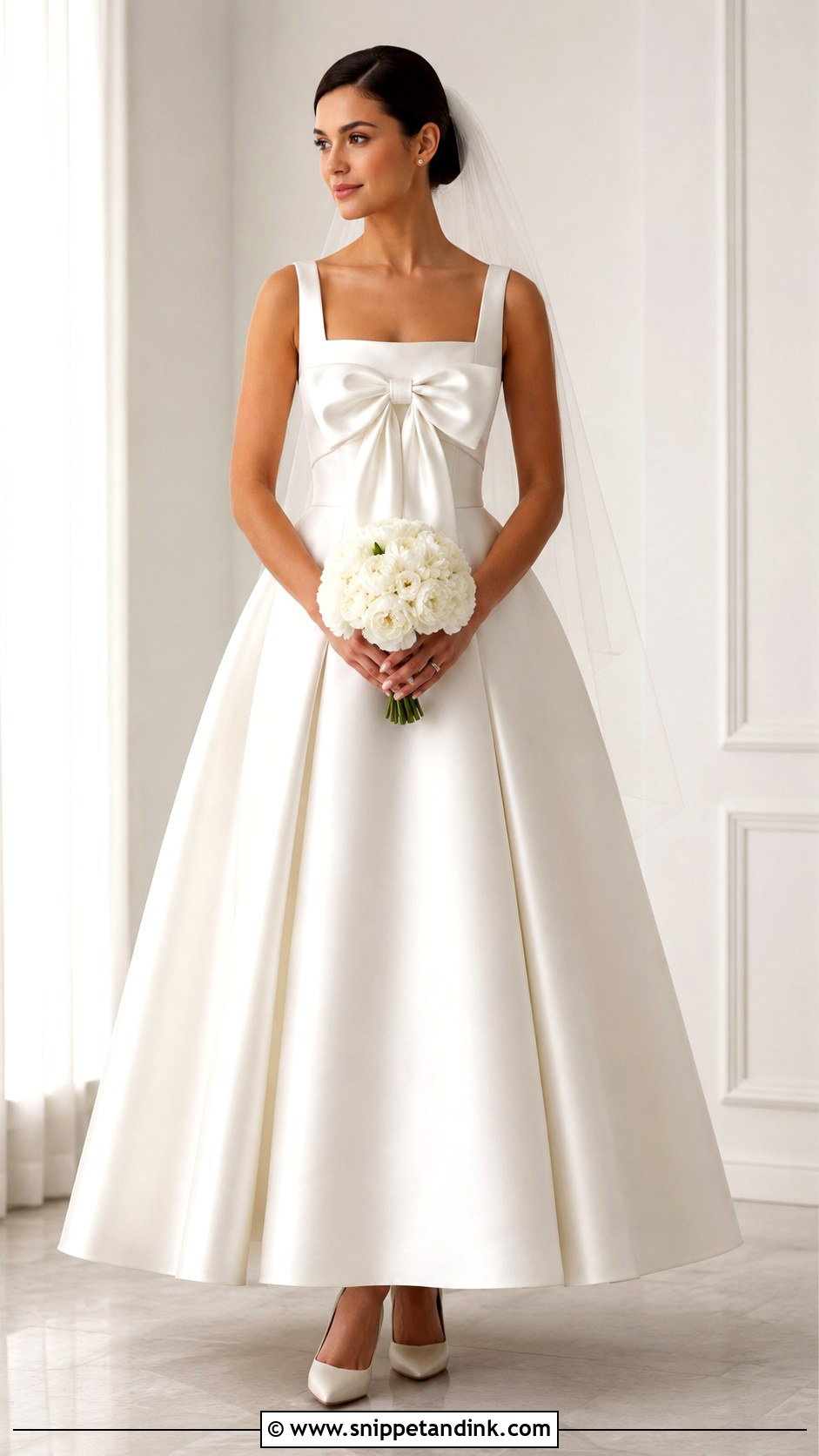
A front bow gives a simple gown one clear focal point. A strapless or square-neck dress with a structured bow at the neckline, waist or center bodice suits brides who like something sweet but graphic. Bows in soft fabric droop by the afternoon unless they have hidden interfacing or a wire, so check how it’s built. Look at it from the side at fittings, too, since a bow that sits flat from the front can tilt. If it’s detachable, take it off for the reception. Keep everything else plain: studs, satin pumps, a fingertip veil.
16. Minimalist Silk Slip Wedding Dress
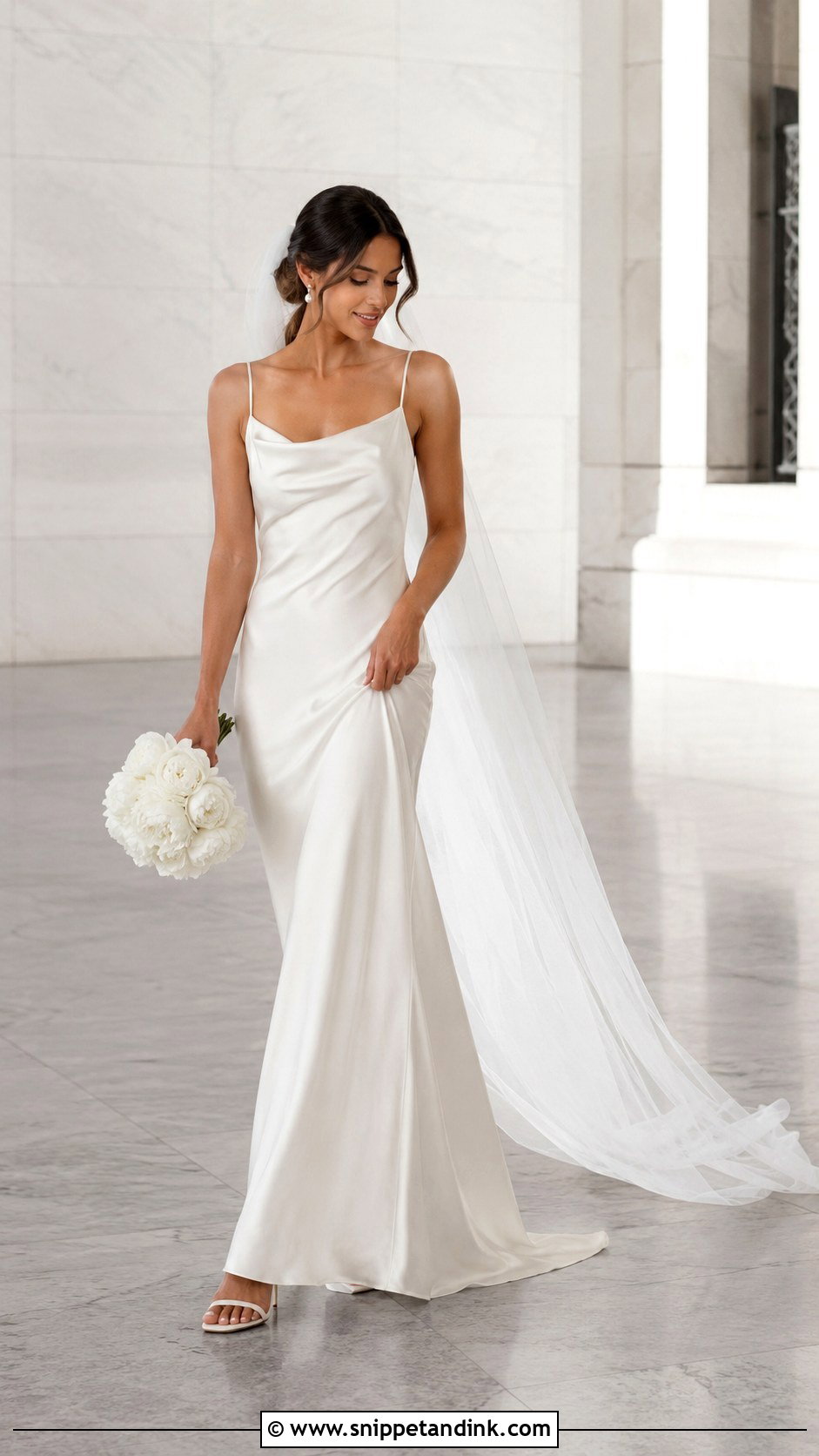
Nothing hides in a silk slip wedding dress. Fabric and fit carry the whole look. A cowl or straight neck, narrow straps and a bias-cut skirt that moves without clinging is the version I trust. Bias-cut silk shows every seam beneath it, so laser-cut underwear with no elastic edges and built-in cups or a smooth lining are worth asking about. For more coverage, add a bridal coat or lace topper. Transport it on a padded hanger and steam it on the morning, as every wrinkle shows.
17. Sculptural Draped Wedding Dress
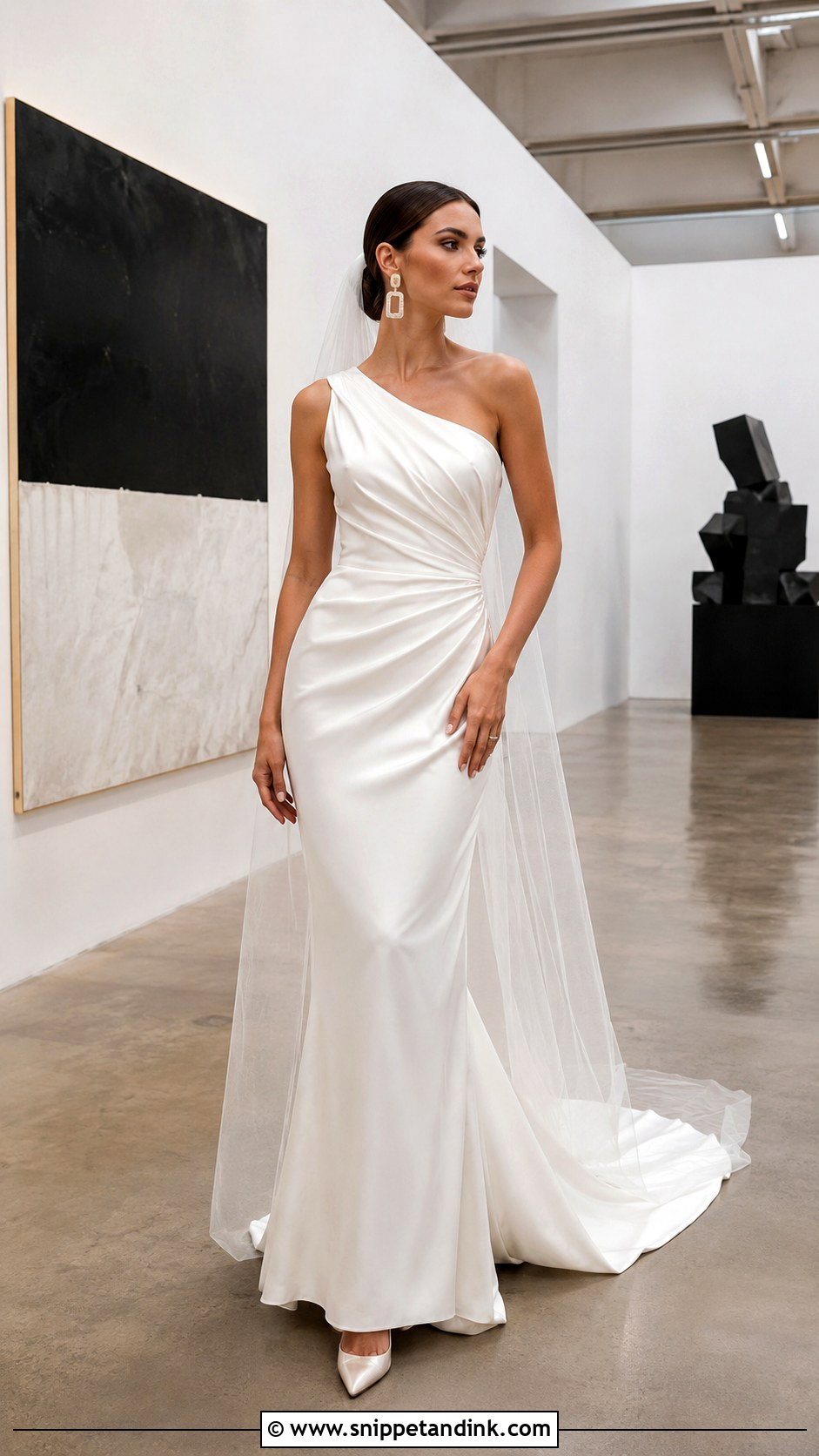
A sculptural draped wedding dress gets its drama from folds rather than sparkle. It needs a fabric with body, such as heavy satin, faille or crepe, to hold curved pleats at the neckline, waist or hip. A one-shoulder bodice with a column skirt is sleek, while a folded overskirt adds controlled volume. I photograph the bride from the front, side and back at each fitting, because draping that looks deliberate from the front can look accidental from behind. Find a seamstress who has handled complex drapes before. No necklace.
18. Tea Length Wedding Dress
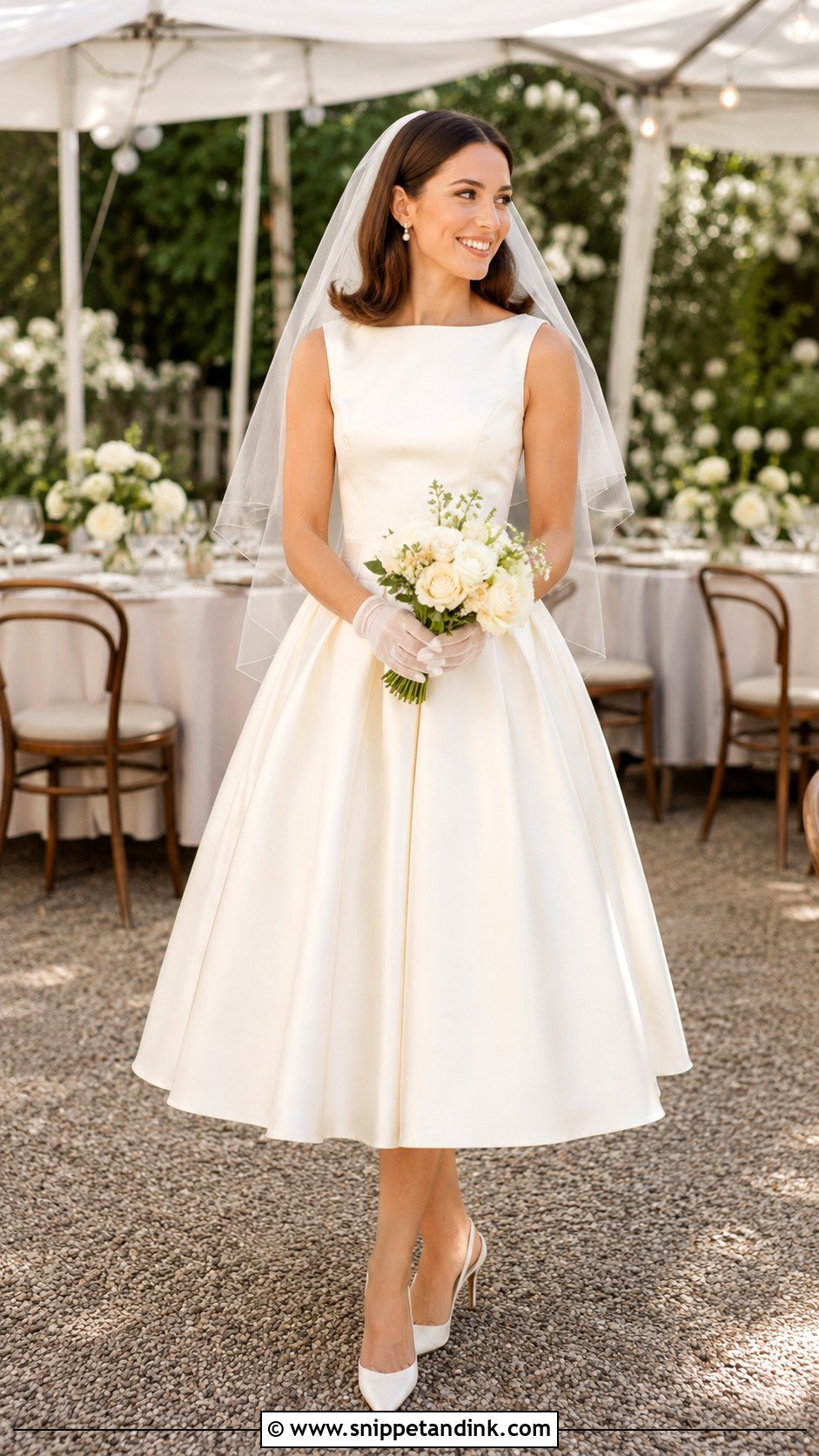
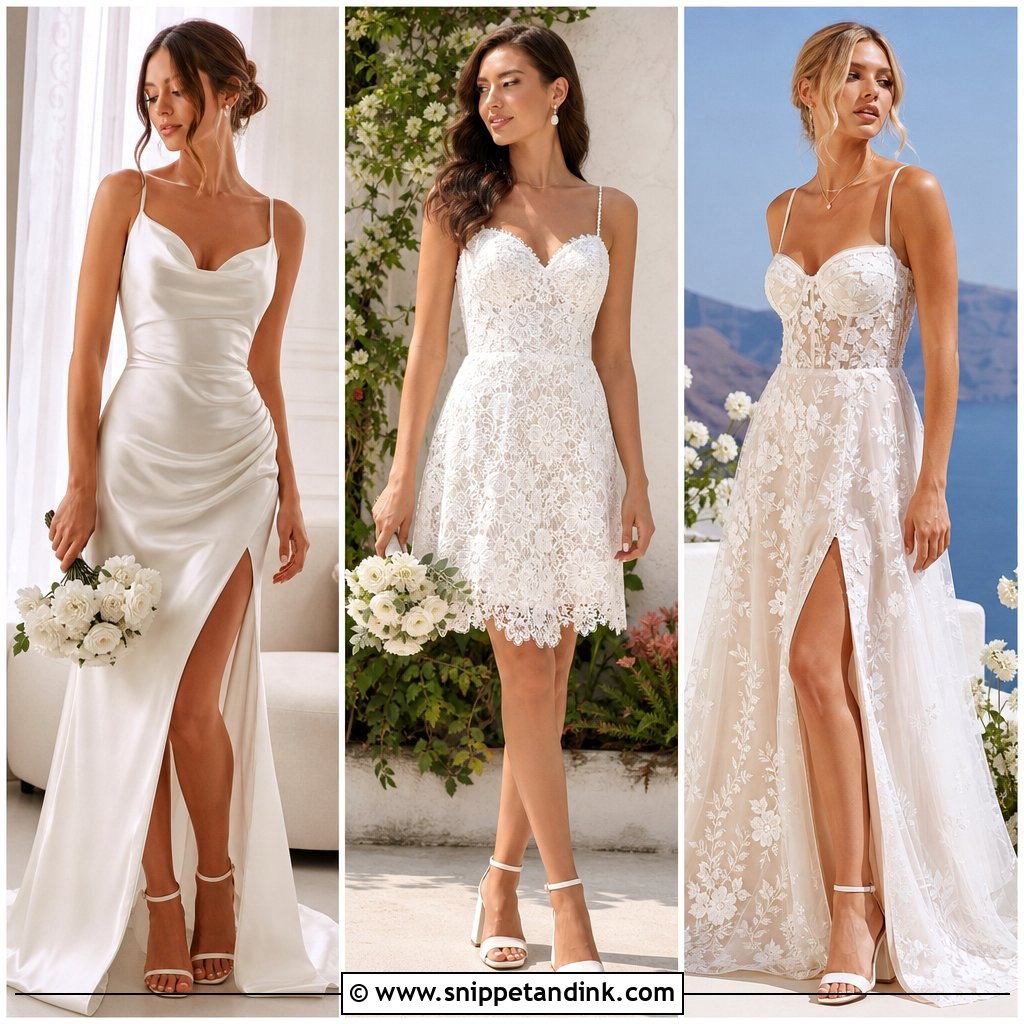
Tea length shows off the shoes and keeps everything light on its feet. The hem should land between the knee and ankle, but where exactly matters: ending at the widest part of the calf makes legs look heavier, while an inch above or below fixes it. Try it with your exact shoes before alterations. Satin is crisp, lace and embroidered organza softer. A light petticoat adds shape, though too much tips it into costume. It suits courthouse ceremonies, gardens and receptions. Carry a small structured bouquet.
19. Short Wedding Dress With Veil
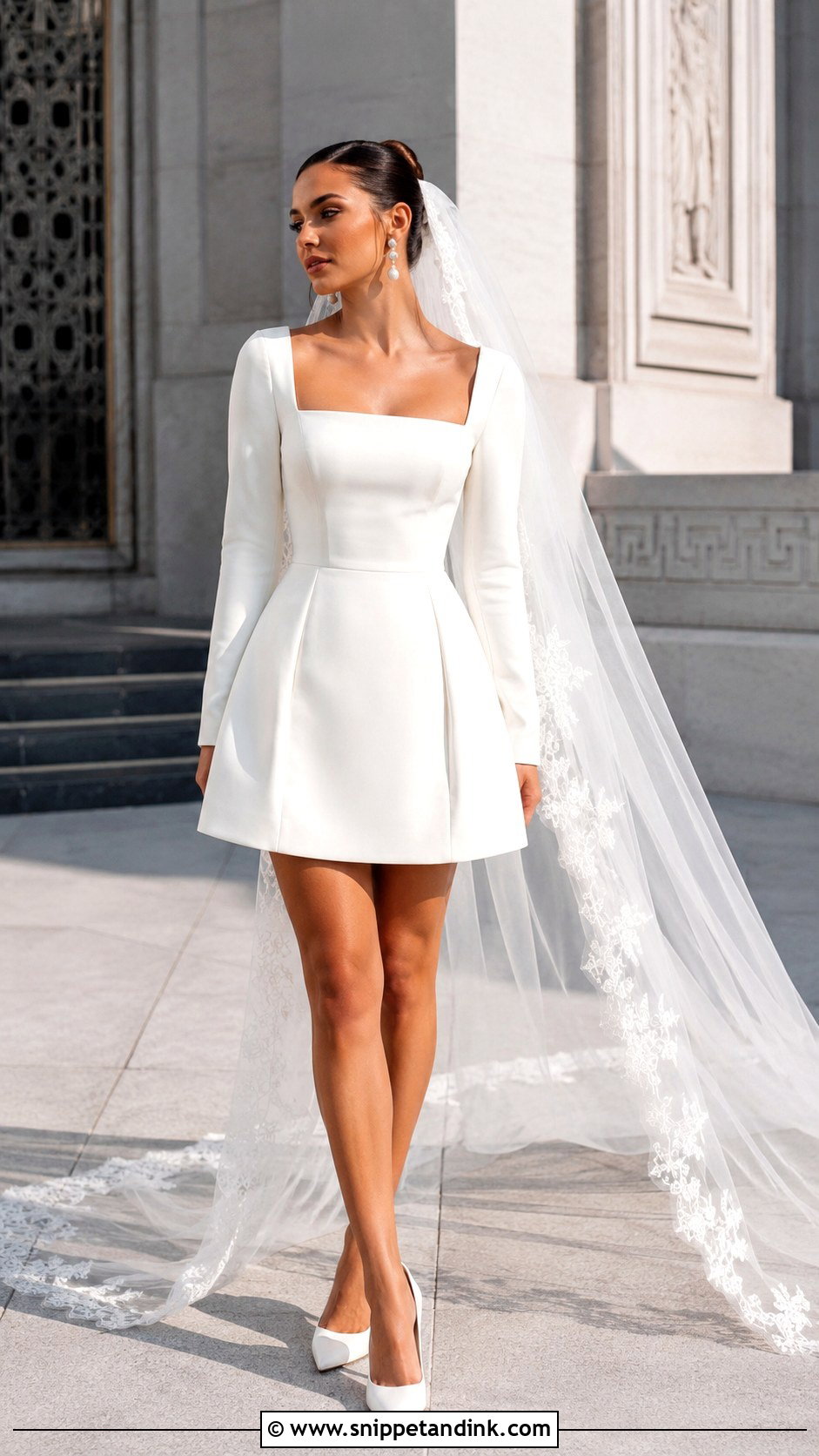
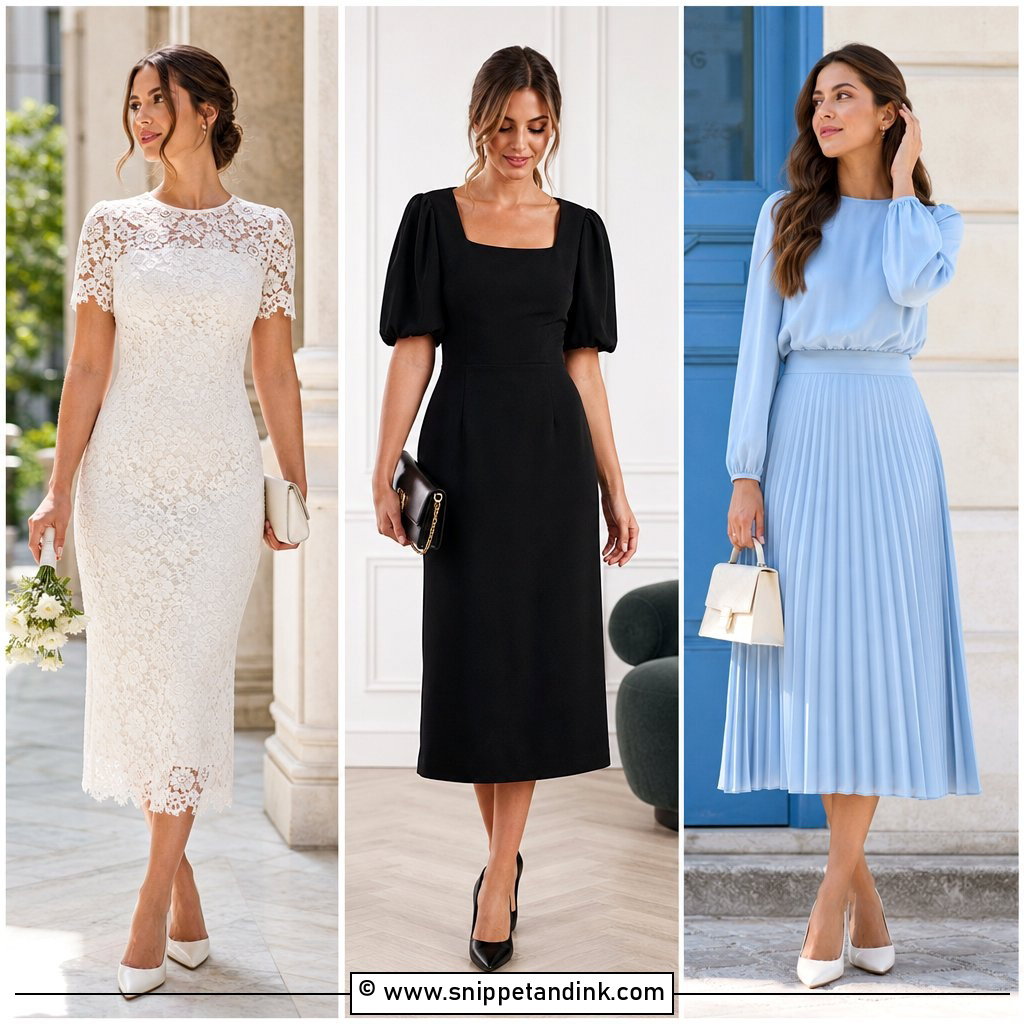
A long veil makes a short dress look unmistakably bridal. A tailored mini with a square neck, fitted waist and structured A-line skirt sets it up; long sleeves balance the short hem, and sleeveless feels lighter for warm weather. Sit and bend in it before you commit. If you’re tugging at the hem in the mirror, you’ll tug all day. Hidden shorts or a smooth bodysuit underneath help. Keep the fabric rich, in satin, heavy crepe, lace or subtle beading, so the dress feels intentional rather than casual.
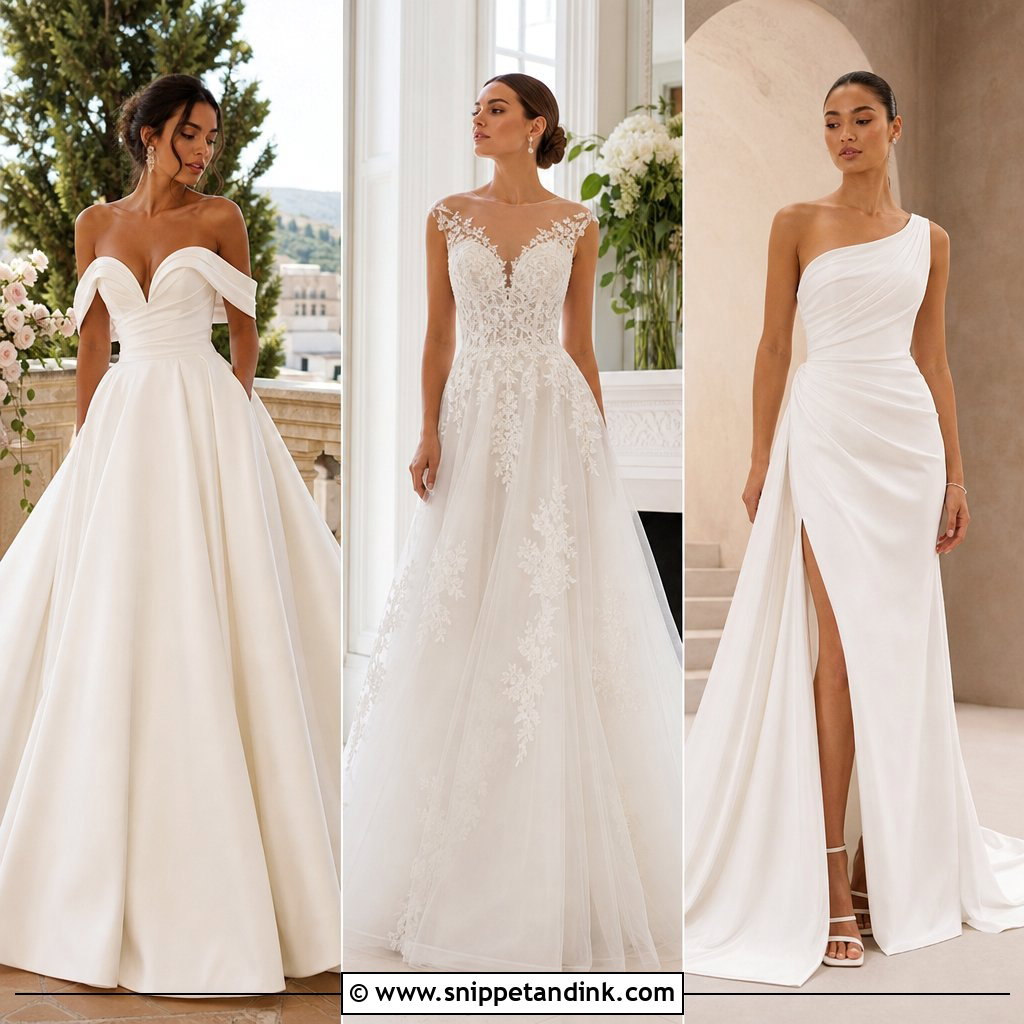
20. Wedding Dress With Bridal Cape
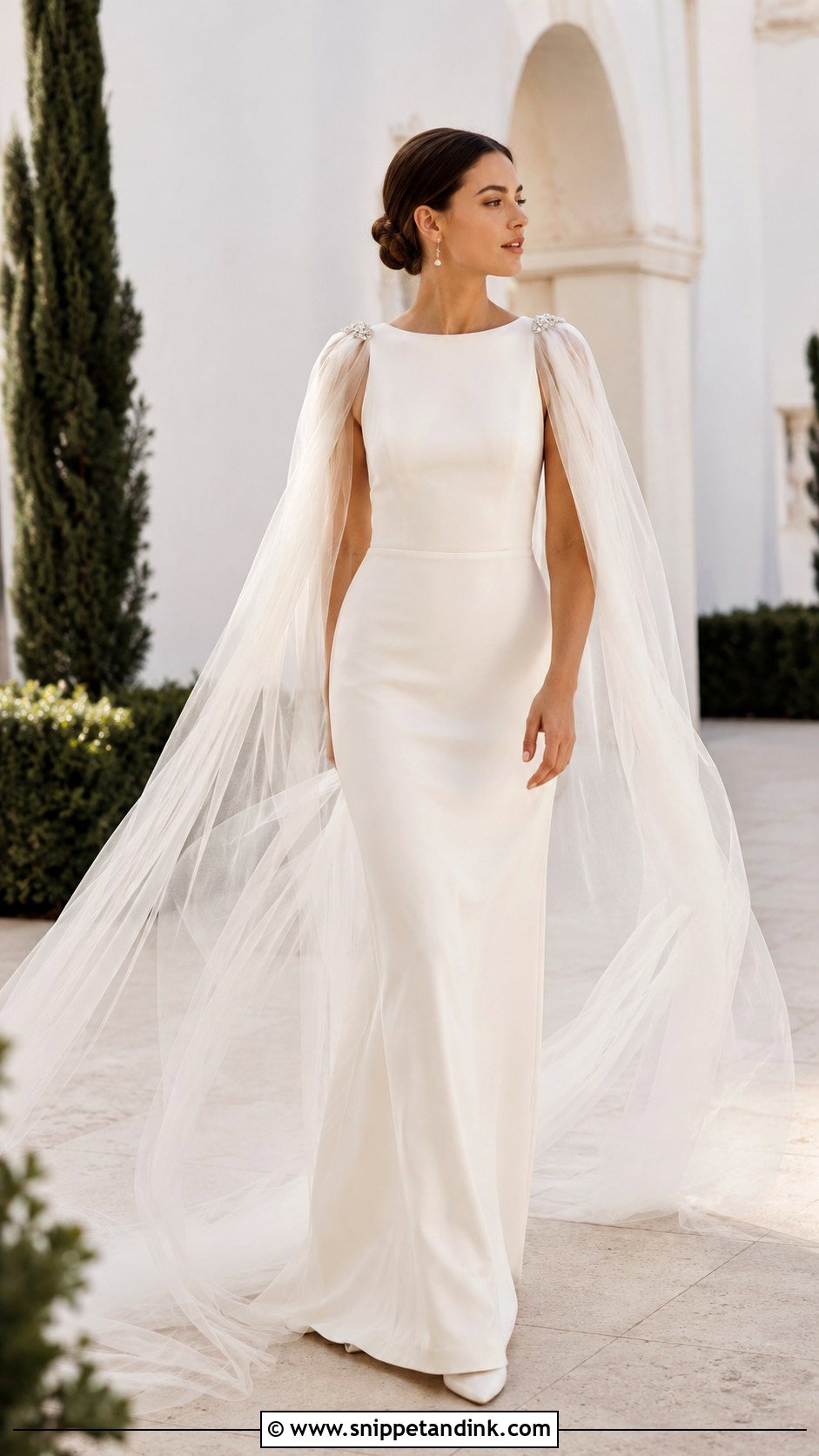
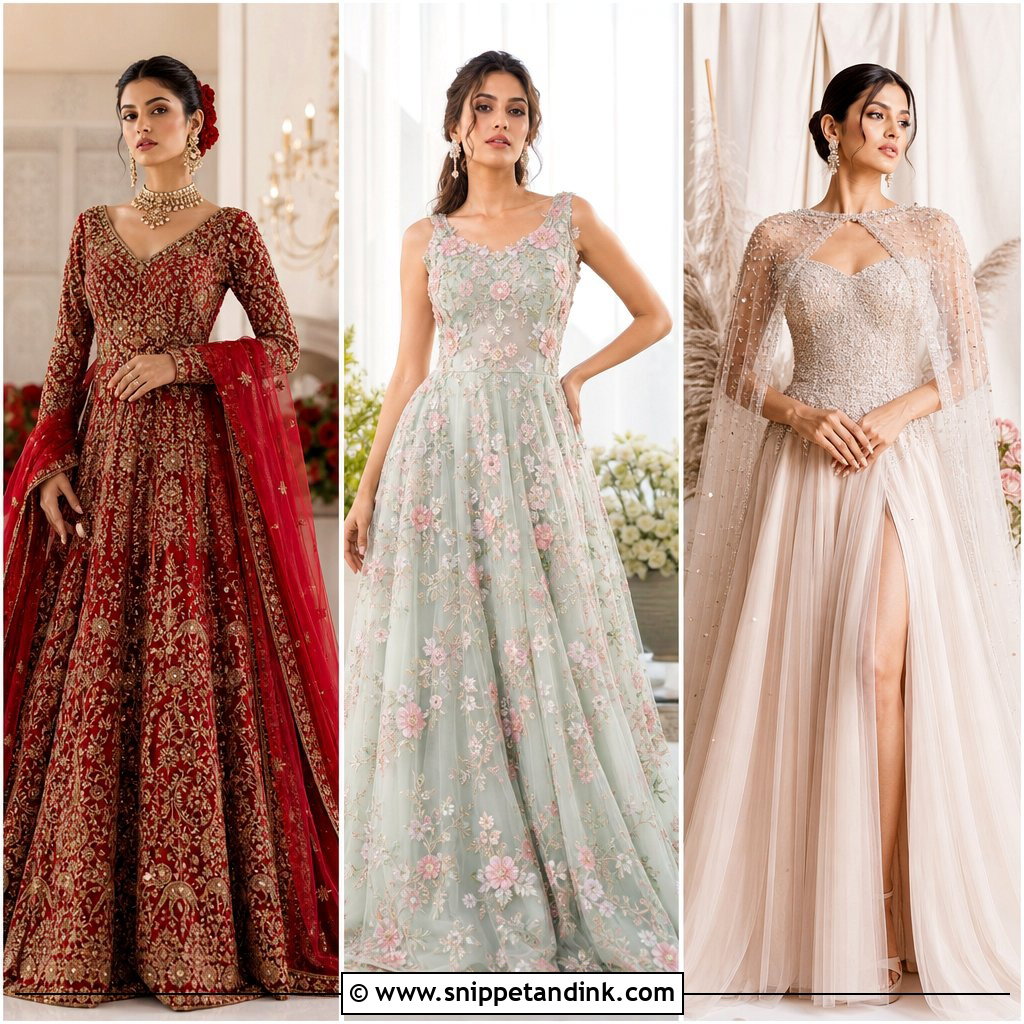
A cape gives you drama and coverage without changing the dress. Pair a simple strapless or sleeveless column with a floor-length cape in sheer tulle, lace or crepe: high-necked for formality, fastened at the shoulders to show the neckline. Skip the veil if the cape already trails. Practice walking and turning in it, because long layers catch under heels, especially on stairs. Fasteners should be secure yet easy for an attendant to release. For a cool day, a lined cape or a bridal coat comes off once you’re indoors.
Who Bustles the Train Once the Dancing Starts?
A train looks magnificent down the aisle and becomes a hazard on a dance floor. A bustle lifts it off the ground with hidden hooks, buttons or ribbon ties, and the style depends on the gown’s fabric and train length.
- Over bustle: the train hooks up onto the back of the skirt. It’s quick and suits lighter fabrics and shorter trains.
- French or under bustle: the train is tucked under and tied with numbered ribbons. It suits satin and heavy trains, and gives a soft layered look.
- Ballroom bustle: hidden ties make the train sit evenly so the gown looks floor-length all round. It takes the longest to do.
- Wrist loop: a simple loop for short, light trains. Fine for a few minutes, tiring for a whole evening.
My advice is to pick one person, a sister or a friend with steady hands, and have them do it at the final fitting while the seamstress watches. Ask for the ribbon ties to be color-coded. In a dim reception room, matching numbers on white ribbon are hard to read.
Walk, Sit, Hug: The Fitting Tests That Decide It
A good wedding dress brings fit, comfort and personality together. Some brides are drawn to structured corsets, others to lace, clean silk, big skirts, short hems or convertible layers. Start with the silhouettes you feel at ease in, then factor in the venue, season, shoes, underwear and how much you’ll move. Leave accessories until the dress is settled. And treat every fitting as a rehearsal: walk, sit, turn and raise your arms. The right gown lets you forget about it once the music starts.
You'll Like These Ideas:


Leave a Reply