
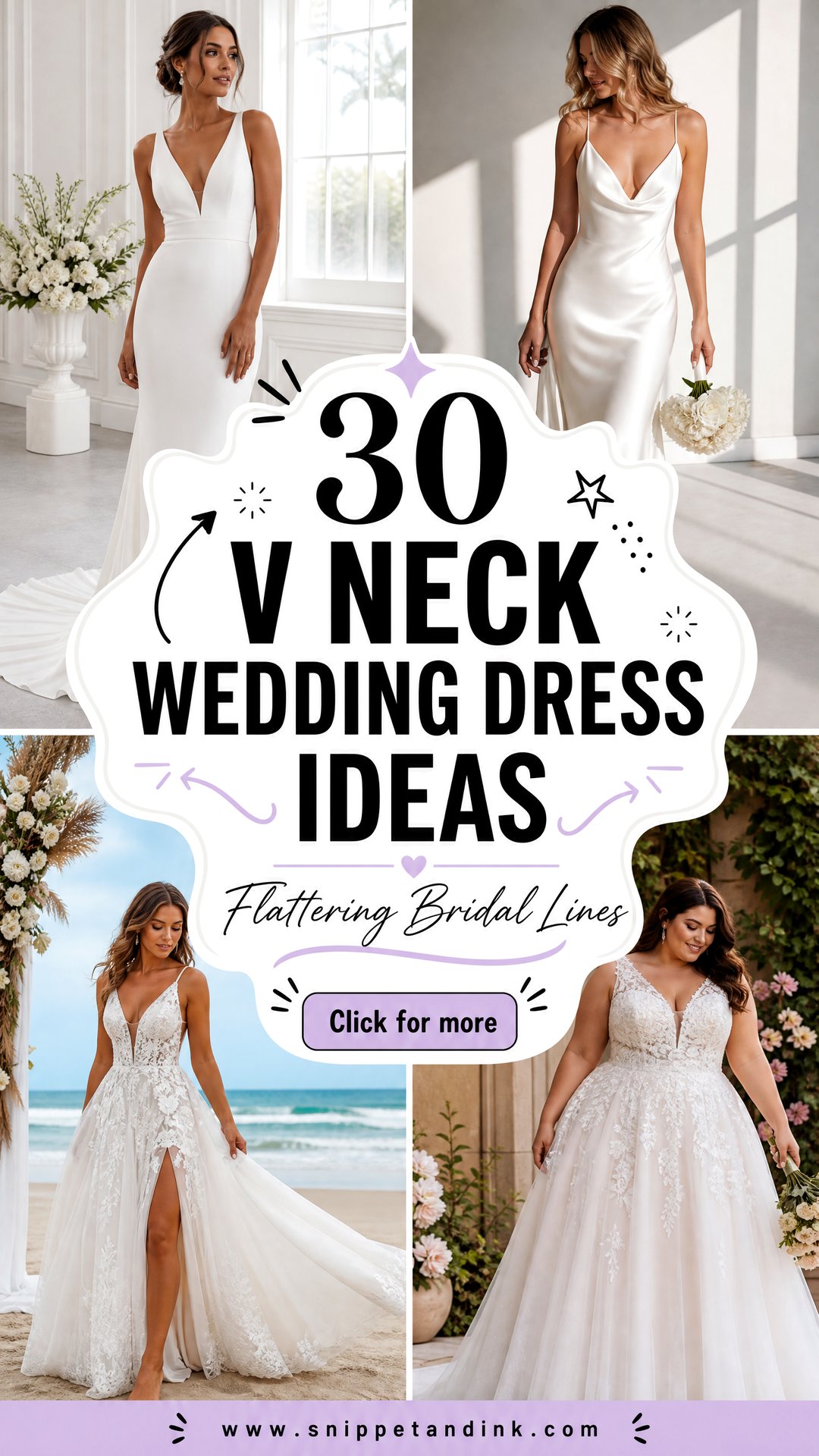
I reach for a V neckline more often than any other when a bride tells me she isn’t sure what suits her. The point of the V pulls the eye down the centre of the body and back up to the face, which makes the neck look longer and keeps the bodice from reading as a solid block of fabric. What changes everything is depth and build: a shallow V in heavy satin is a quiet, formal dress, while a plunge cut into sheer mesh is a different conversation entirely. Below are thirty versions I’d actually pull for a fitting, with notes on how each one behaves once you’re wearing it for a full day.
What Actually Holds a V Neckline in Place
Every V neckline is held up by something, and you should know what it is before you fall for the dress. In a good gown, the work is done inside: boning along the side seams, cups sewn into the lining, and often a strip of illusion mesh between the breasts that stops the two sides of the V from drifting apart. When I pick up a sample, I turn it inside out first, because the lining tells me more than the lace does.
Here’s how I match the depth of the V to the support it needs:
- Shallow to medium V, ending above the bust line: most strapless or plunge bras sit underneath without showing, and the bodice can stay fairly soft.
- Deep V, ending at or below the bust: a regular bra won’t hide. Ask for cups sewn into the dress, or plan an adhesive bra and test it at a fitting.
- Plunge to the waist: the gown needs mesh or a hidden corset, and double-sided fashion tape along the edges keeps them flat against the skin.
Test tape on your skin weeks before the wedding, not that morning. Some brides react to the adhesive, and a red patch along the neckline shows clearly in close-ups. Moisturiser and body oil also stop tape from holding, so skip them on your chest that day.
1. V Neck A Line Wedding Dress
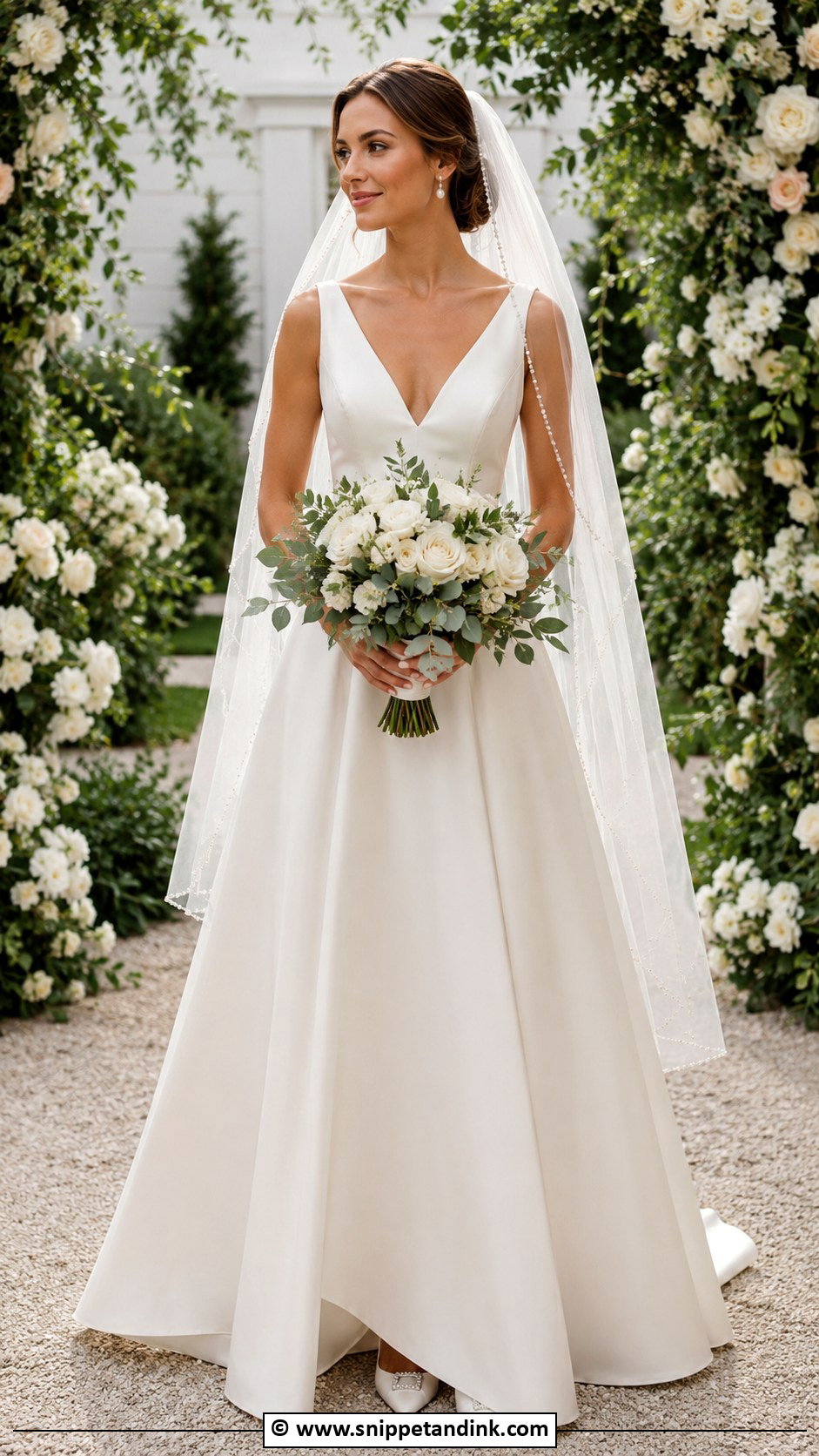
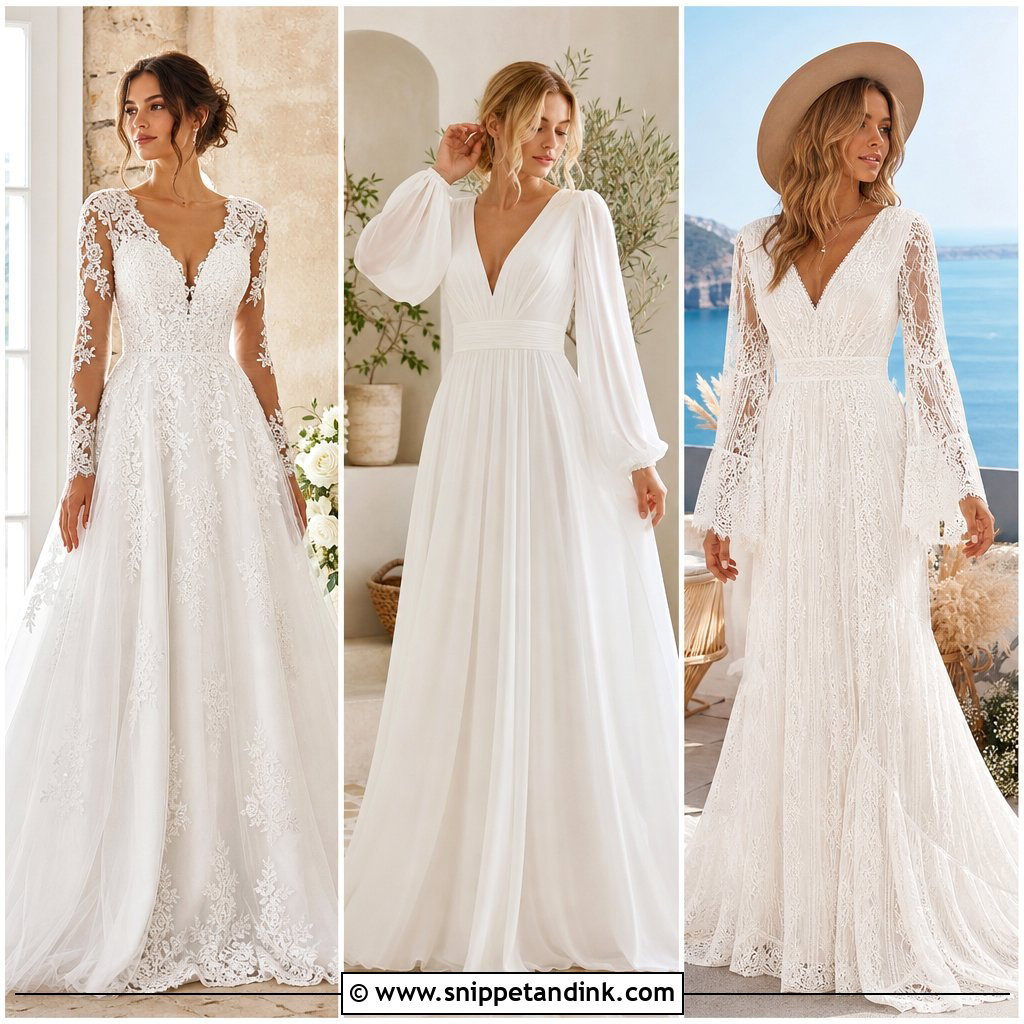
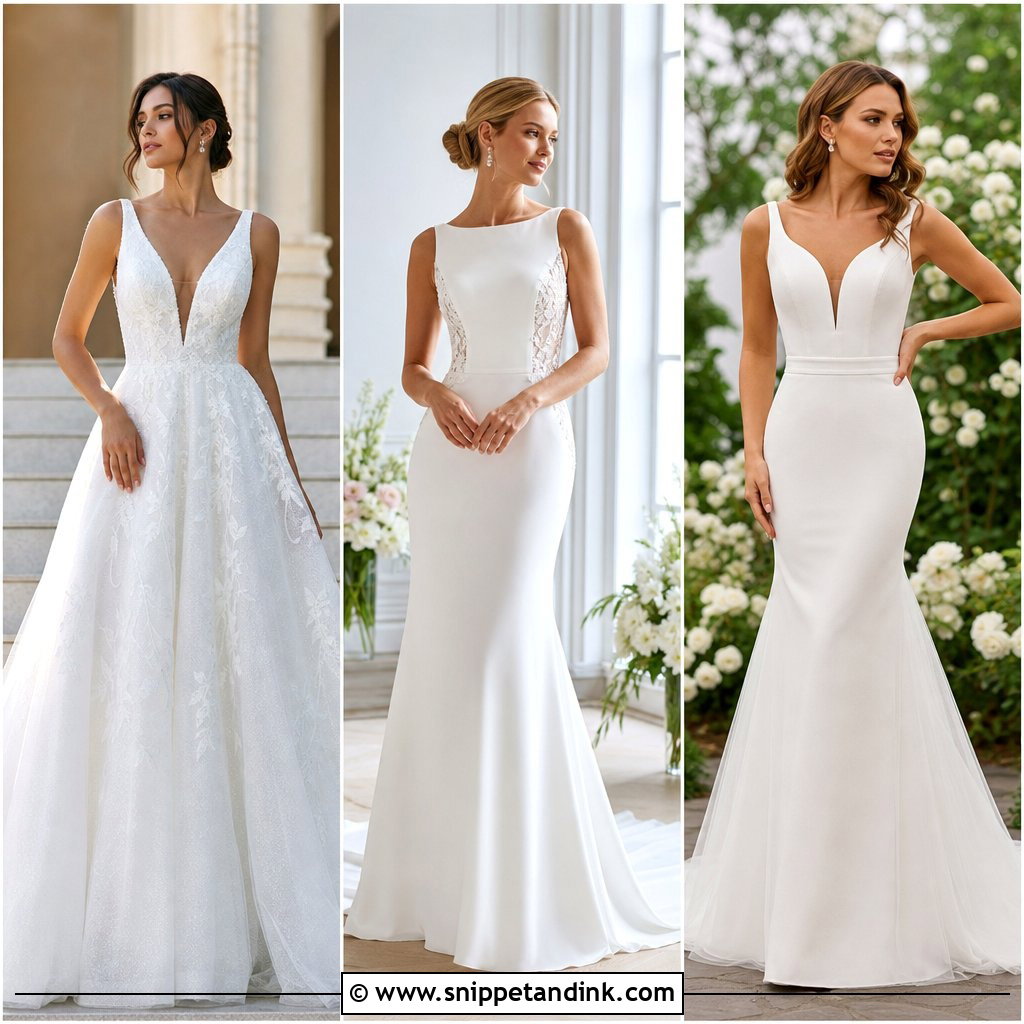
This is the shape I hand to a bride on her first appointment, because it tells us so much. The bodice sits close to the waist and the skirt releases from the hip, so it forgives a lot and still shows where your waist is. Tulle keeps it airy for a garden, satin gives it a cleaner line, and lace adds surface without weight. Watch where the waist seam lands on you: if it sits even an inch low, the V and the skirt start to look disconnected, and that’s a simple fix at alterations. A fingertip veil and pearl drops are usually all it needs.
2. V Neck Lace Wedding Dress
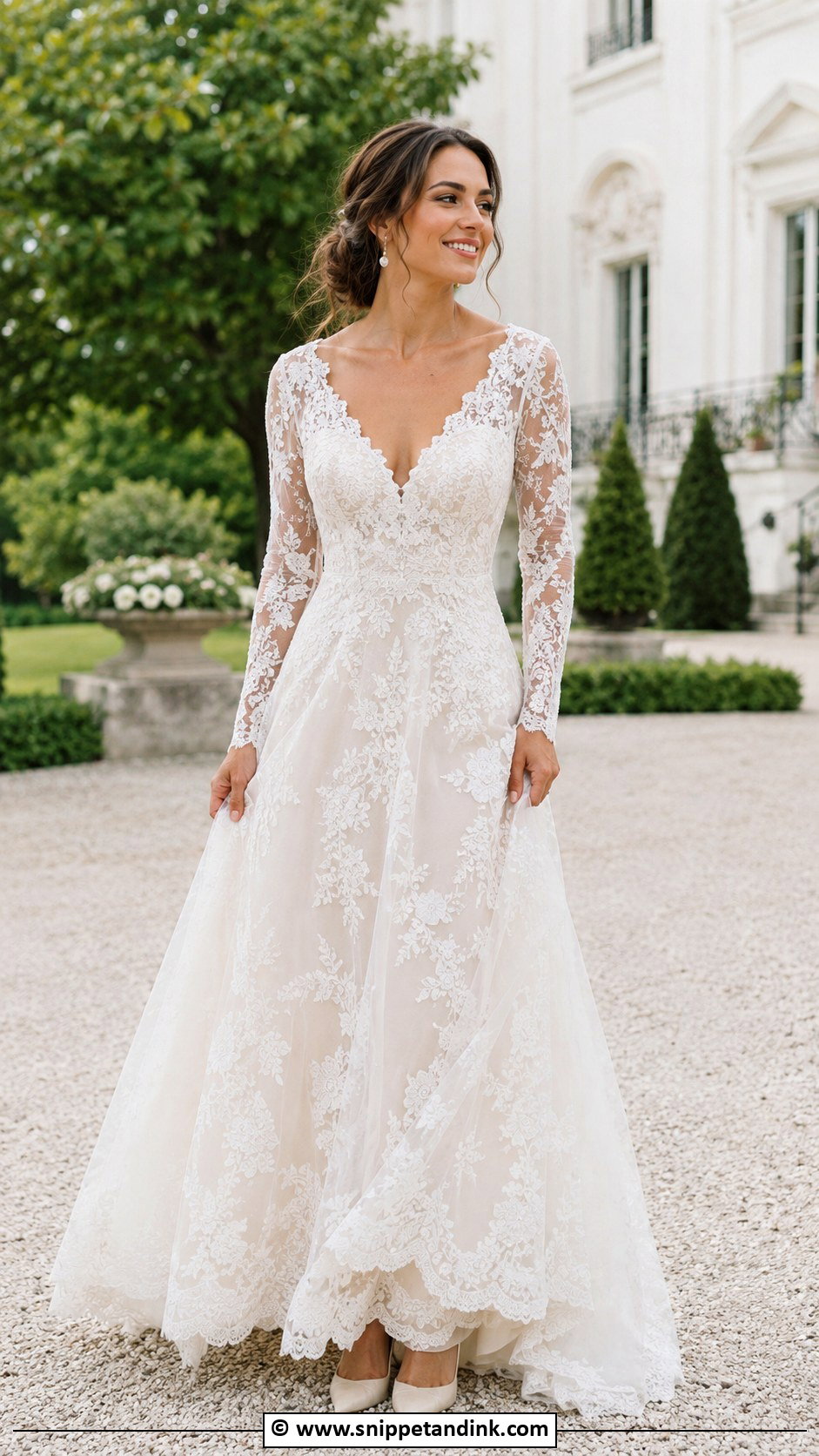
Lace does something useful at a V neckline: the scalloped edge finishes the opening, so you don’t need a necklace to frame it. Floral lace over a nude or ivory lining is the classic version, and I always hold the lining against a bride’s skin in daylight, because the wrong nude turns grey or pink in photos. Long lace sleeves balance a deeper V, while thin straps keep it light for warm months. Keep the hair low and the earrings small so the lace pattern stays the thing people look at.
3. V Neck Satin Wedding Dress
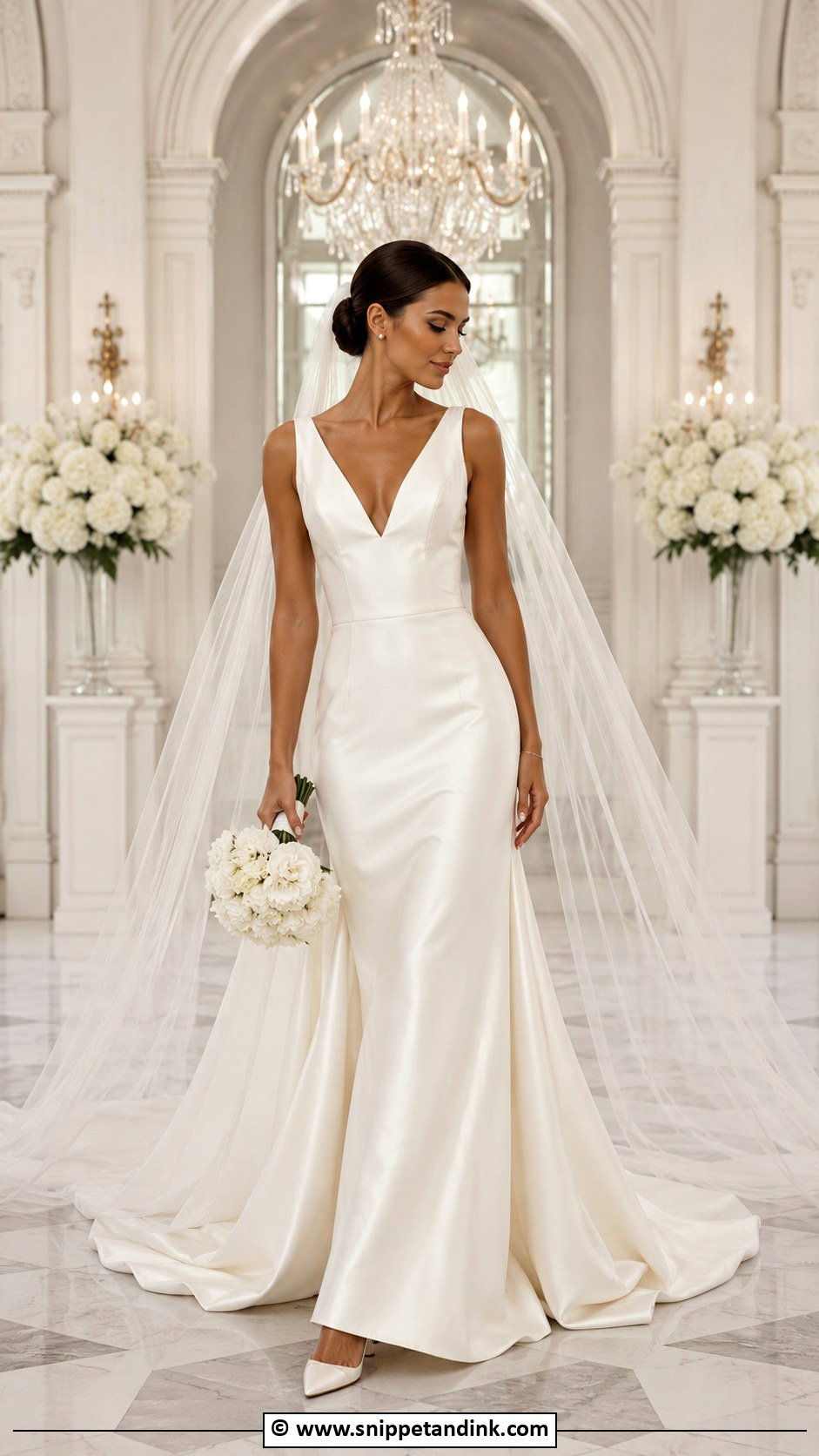
Satin is unforgiving at a neckline, and that’s exactly why it looks so sharp when it’s cut well. The fabric holds a crisp fold, so the V reads as a deliberate line rather than a soft drape. The catch: satin shows every pull, so if the bodice is even slightly too tight across the bust, you’ll see diagonal strain lines running toward the point. I’d always sit down in a satin gown at the fitting before signing off. Pearl studs, a sleek bun and a long cathedral veil suit its quiet, expensive feel.
4. V Neck Ball Gown Wedding Dress
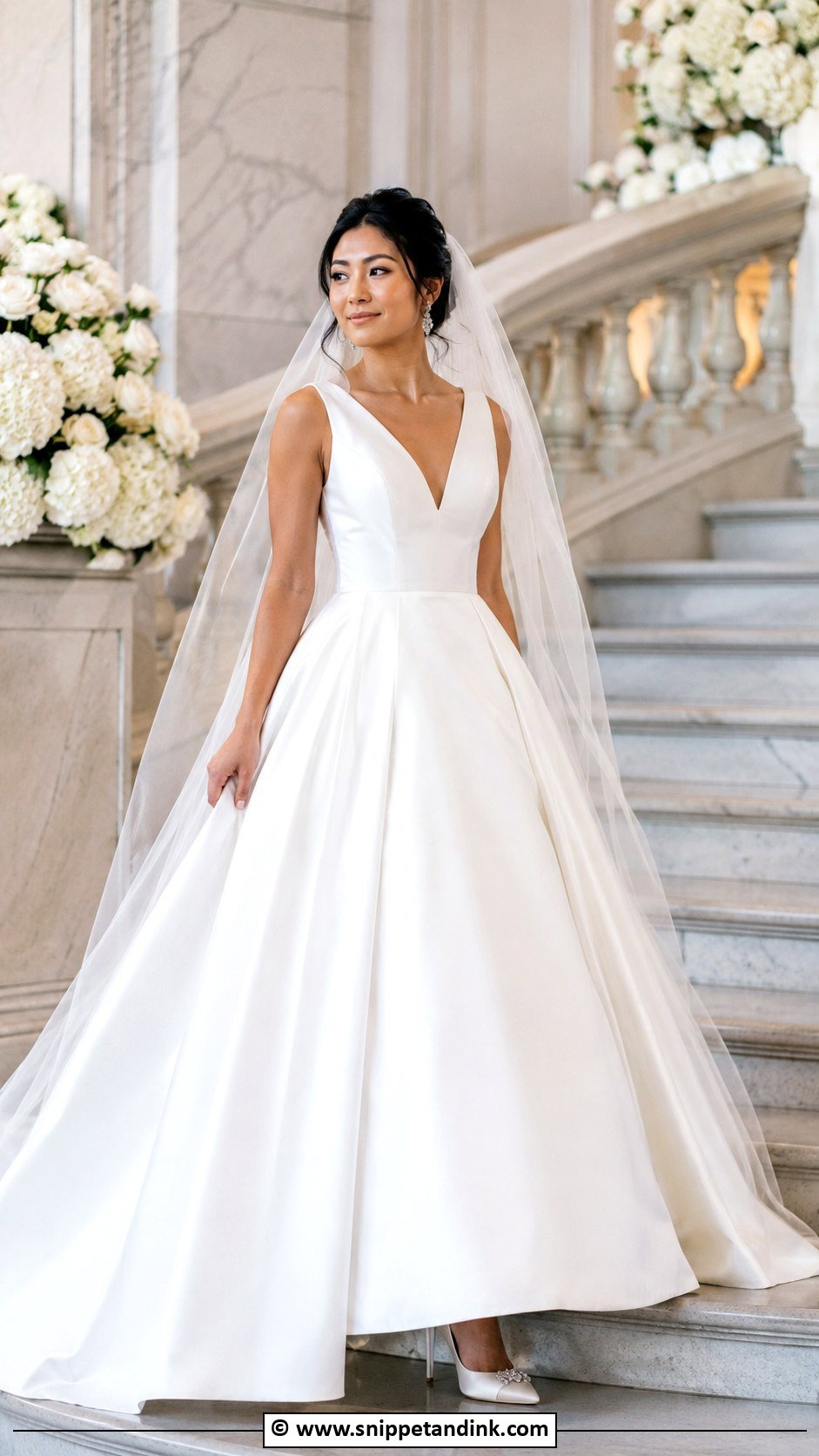
A full skirt with a high, closed neckline can swallow a bride whole. Opening the top into a V gives the eye somewhere to go, so the volume below feels balanced rather than heavy. Look for a structured bodice with real boning and a defined waist, because a ball gown skirt is heavy and it will drag a soft bodice down by the evening. Lace appliqué reads romantic, plain mikado reads regal. A long veil and crystal earrings carry it into a formal ballroom without trying too hard.
5. V Neck Mermaid Wedding Dress
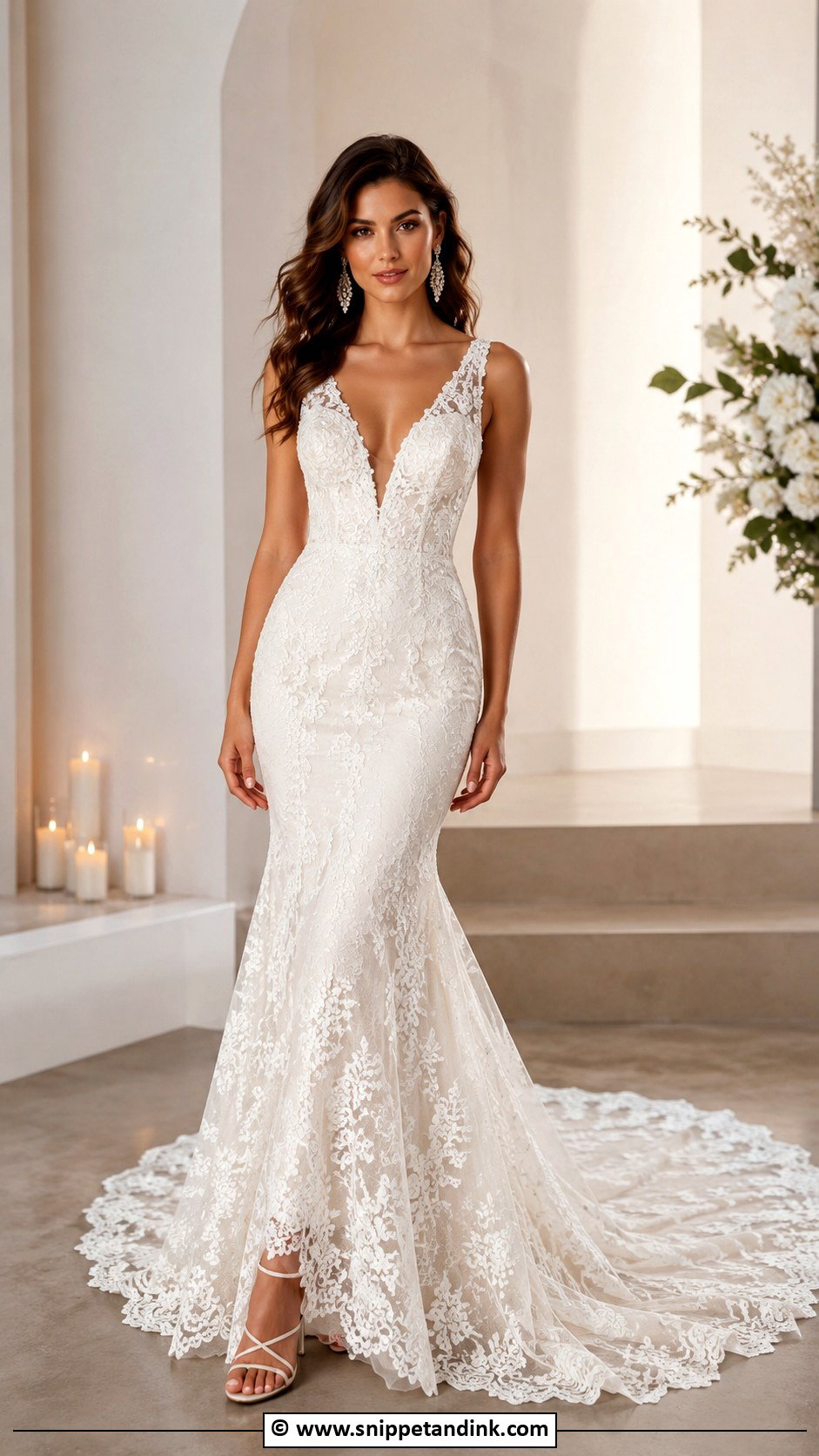
A mermaid gown hugs the bodice, waist, hips and thighs before flaring near the knee, and the V neckline is what stops that fitted, confident silhouette from feeling sealed in. Fit is the whole game here. The knee flare has to sit at your knee, not above it, or you’ll shuffle all night, so I have brides walk the length of the room and climb a step before we pin anything. Lace versions feel detailed, crepe and satin feel sleek. Insist on a built-in bust and a waist stay so the gown holds you rather than the other way around.
6. V Neck Fit And Flare Wedding Dress
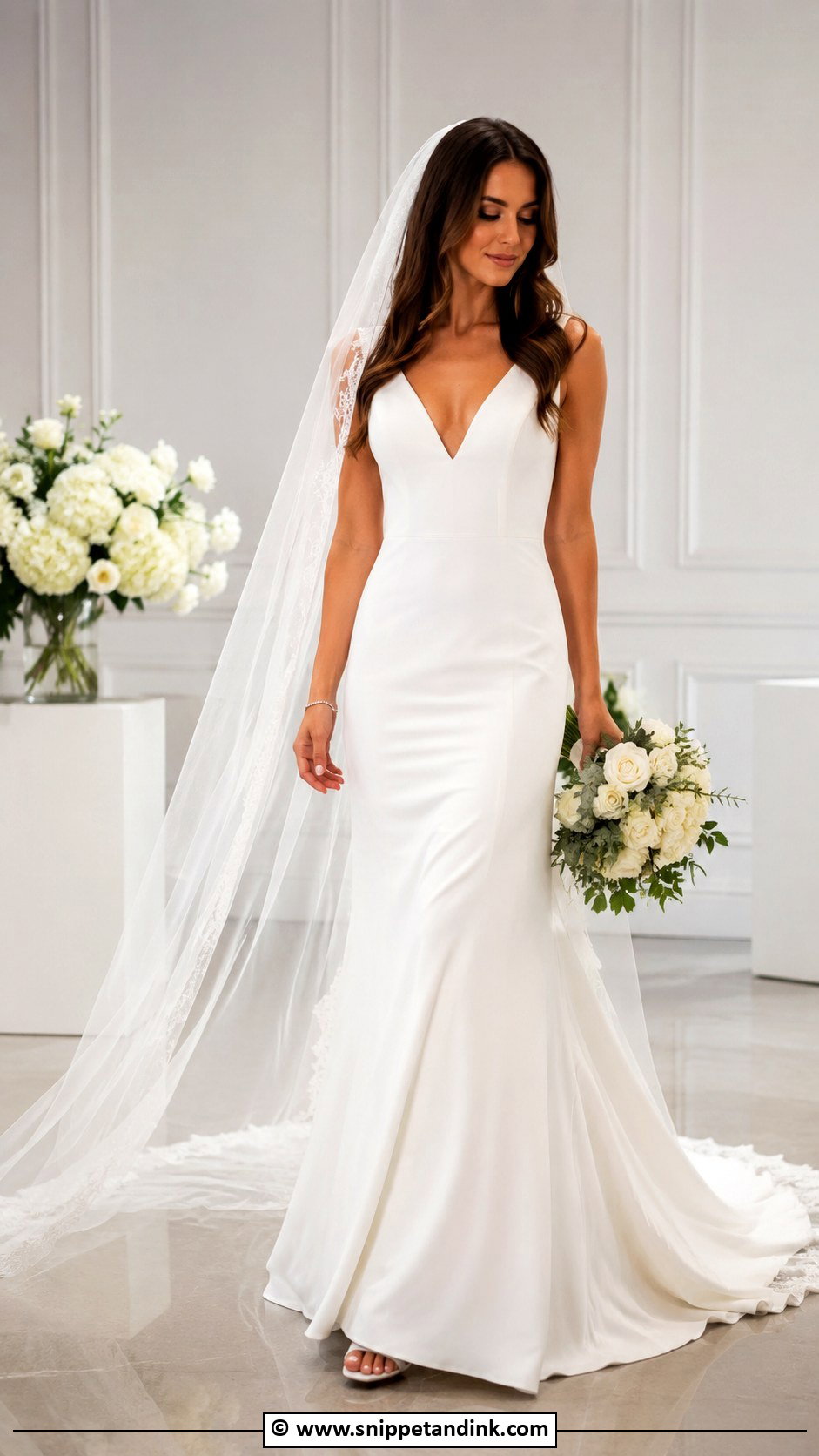
Fit and flare is the middle ground I suggest when a bride loves a mermaid in the mirror but hates sitting in it. The skirt opens higher, around the upper thigh, so you can walk, sit at dinner and dance without hitching. Crepe gives a smooth, modern surface; lace or beading adds more detail. A medium-depth V is the easiest version to wear with almost any bra solution. Finish with a chapel veil and heels you’ve actually tested on a hard floor.
7. Deep V Neck Wedding Dress
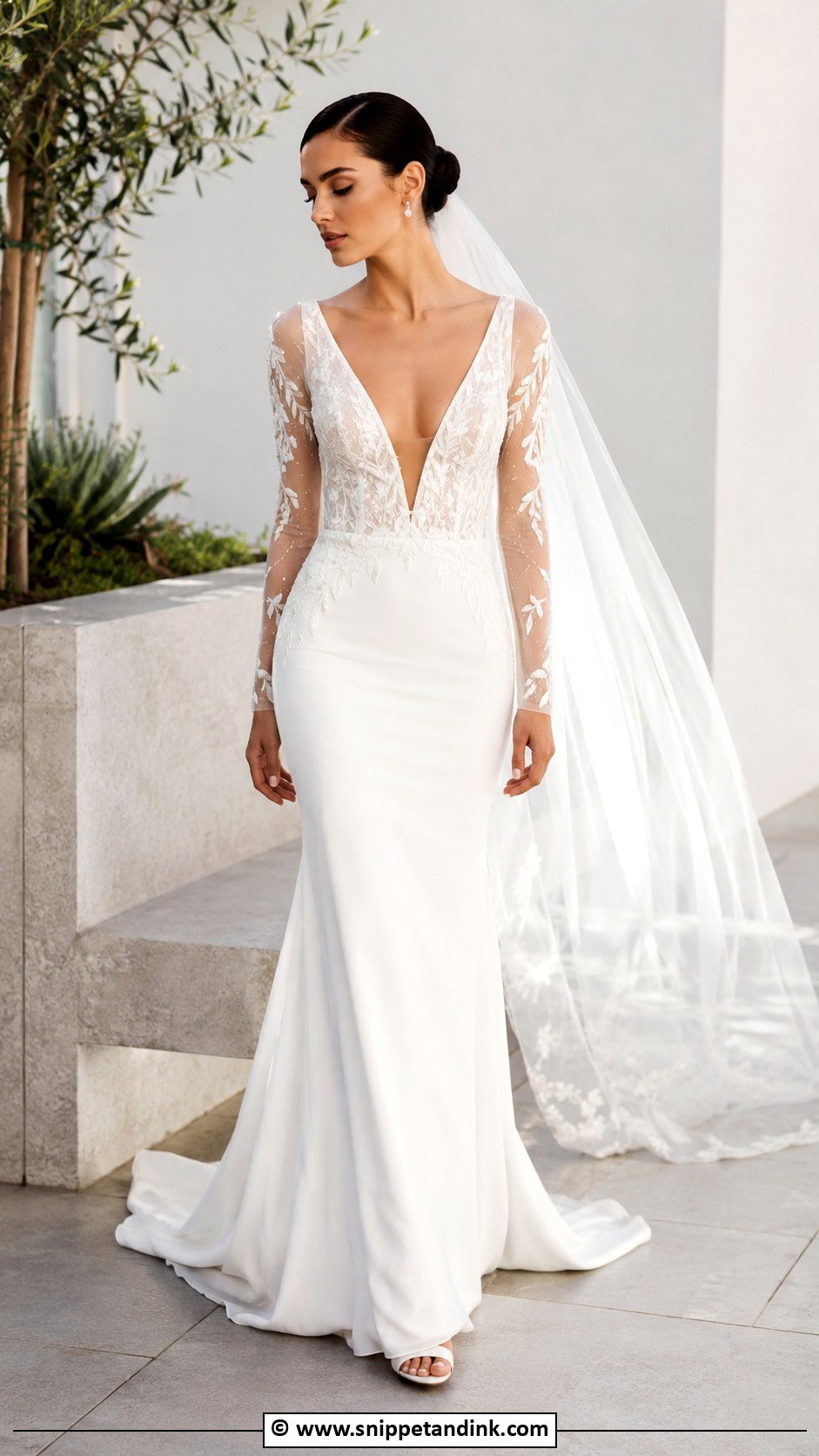
A deep V is a confident choice, and it works when everything around it calms down. Crepe, satin or smooth tulle keeps the plunge looking intentional instead of busy. Most deep V gowns are built on illusion mesh between the cups, and that mesh is doing structural work: if it’s cut too wide for your chest, the neckline gapes the moment you lean forward to sign the register. Long sleeves soften it; thin straps make it feel modern. Simple drop earrings, a sleek veil and minimal shoes, nothing else.
8. Modest V Neck Wedding Dress
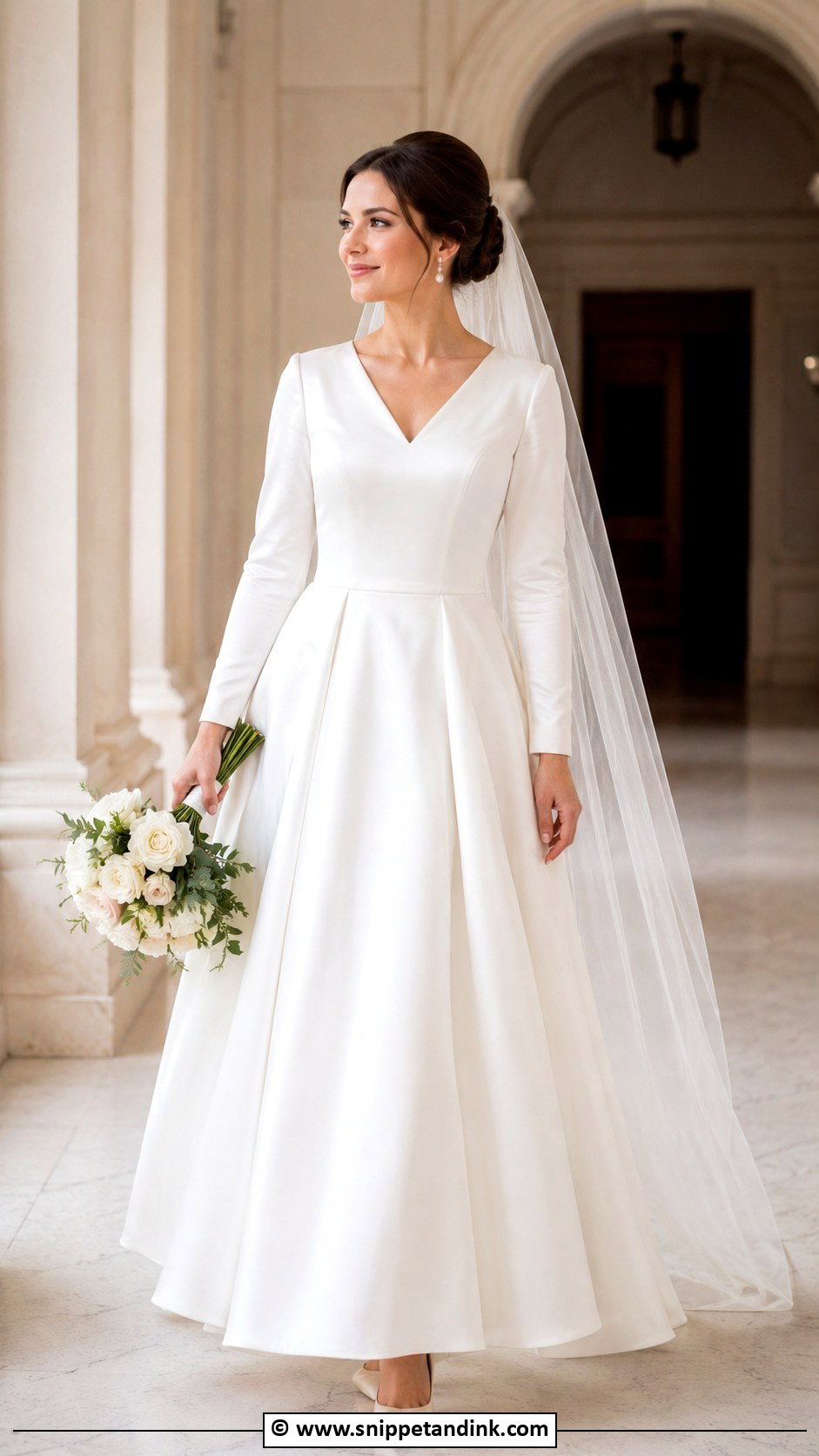
You can keep the shape of a V and still feel covered. Ask for a higher point, one that stops near the collarbone or mid-chest, and the V reads as a soft frame for the face rather than an opening. Long sleeves, a lined bodice and thicker straps all help. I’d check this one with your arms raised, as you would during a hug or when someone pins your veil, because that’s when a modest neckline shifts. Pearl earrings and a neat updo keep the whole look calm and traditional.
9. V Neck Wedding Dress With Sleeves
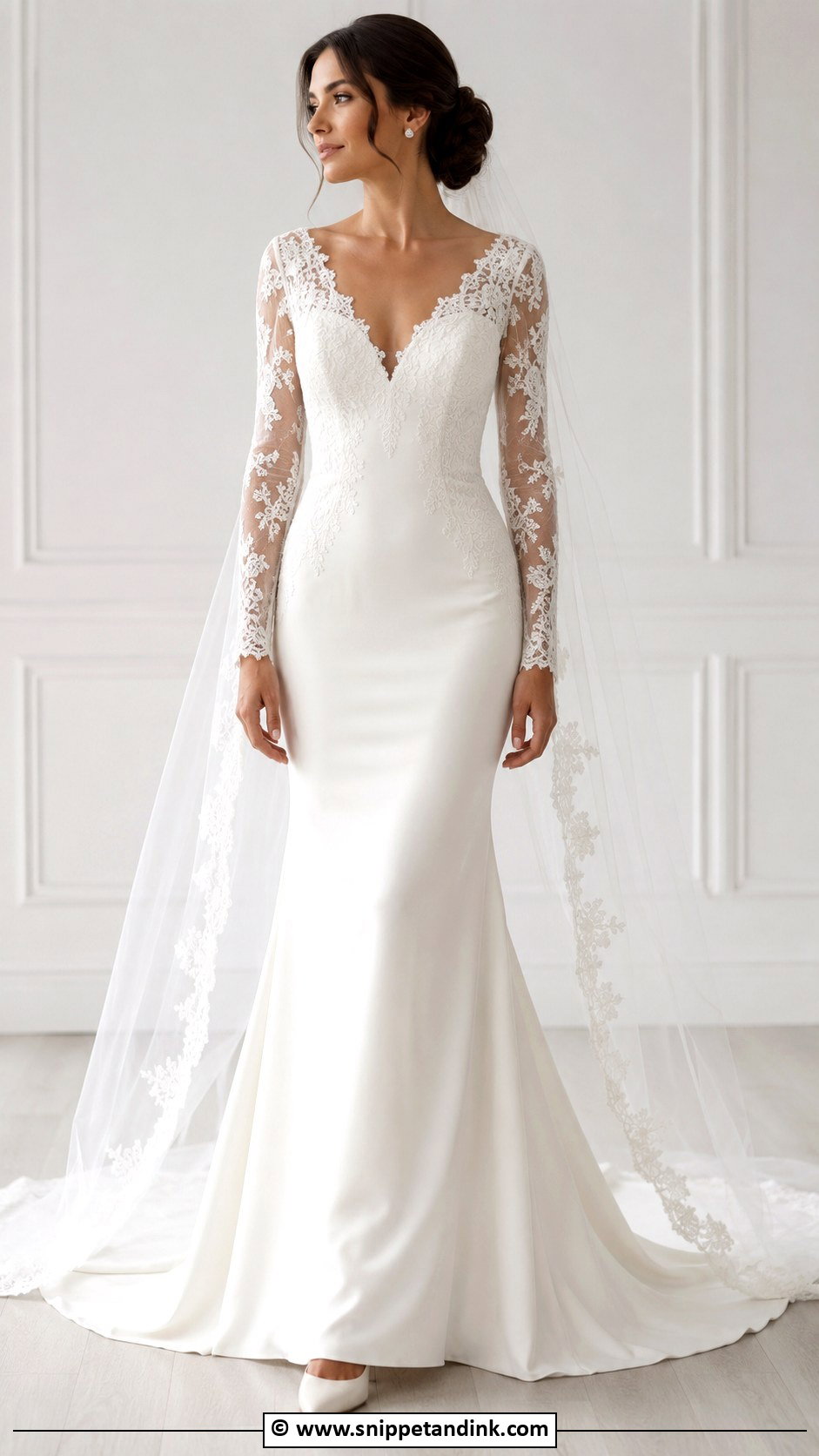
Sleeves frame a V neckline from the sides, so the point looks narrower and more deliberate. Long lace sleeves are the classic version, sheer sleeves feel lighter, and fitted crepe sleeves look sharp and modern. The thing I check first is the armhole: a sleeve set too low makes it impossible to lift your arms, and you’ll be lifting them more than you think. This suits a cooler season or a formal hall. A low bun and small earrings keep the shoulder line clean.
10. V Neck Wedding Dress With Short Sleeves
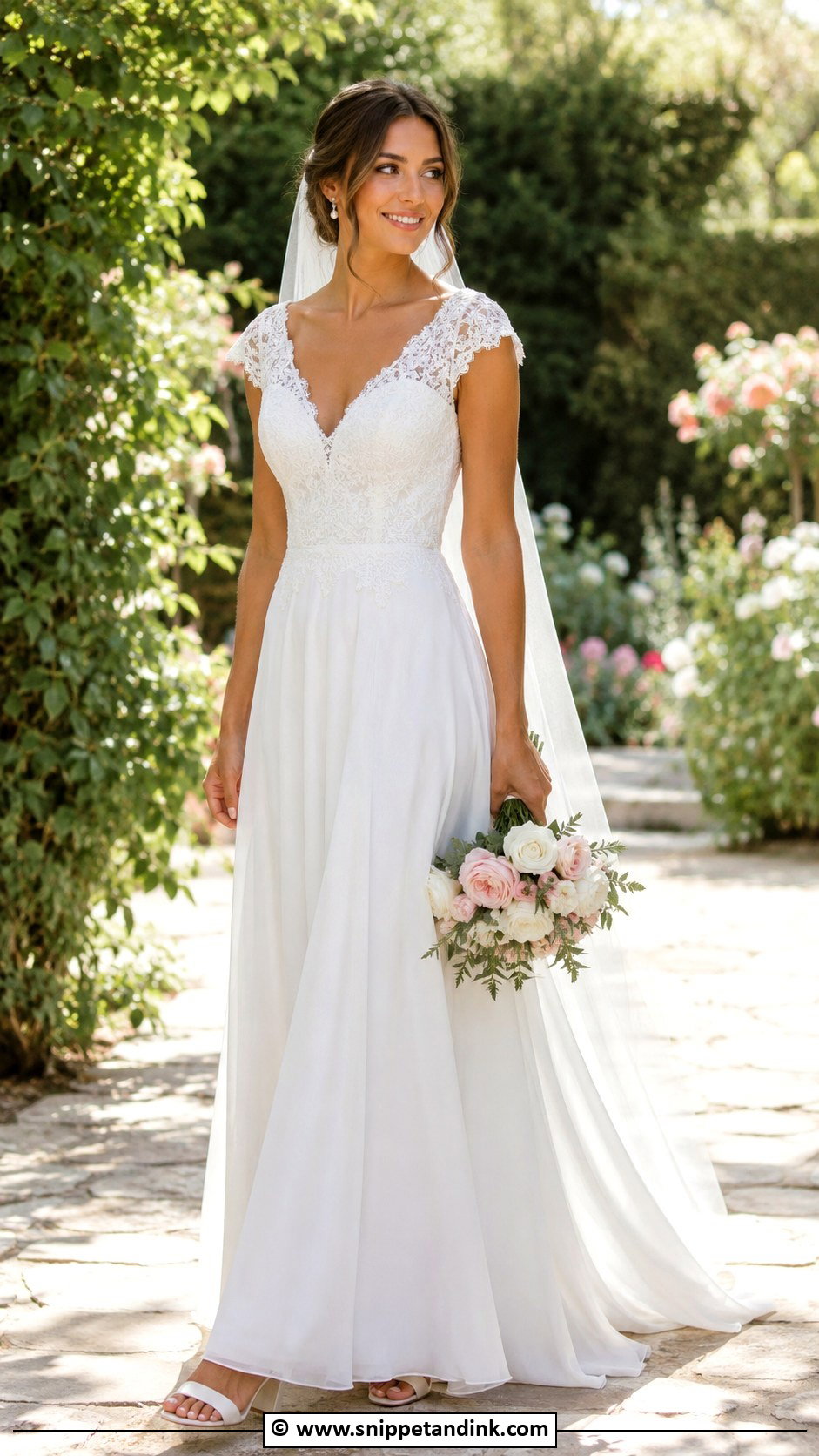
Short sleeves give the shoulders a little cover without the warmth of a full sleeve, which makes a big difference at a daytime summer ceremony. Lace, chiffon, satin and soft crepe all suit it. Flutter or cap sleeves in delicate lace lean vintage; a smooth, plain short sleeve looks current. Watch the sleeve hem against your upper arm: where it ends is where the eye stops, so I usually move it up or down by half an inch at the fitting until it looks right. Block heels and pearl earrings are enough.
11. V Neck Wedding Dress With Spaghetti Straps
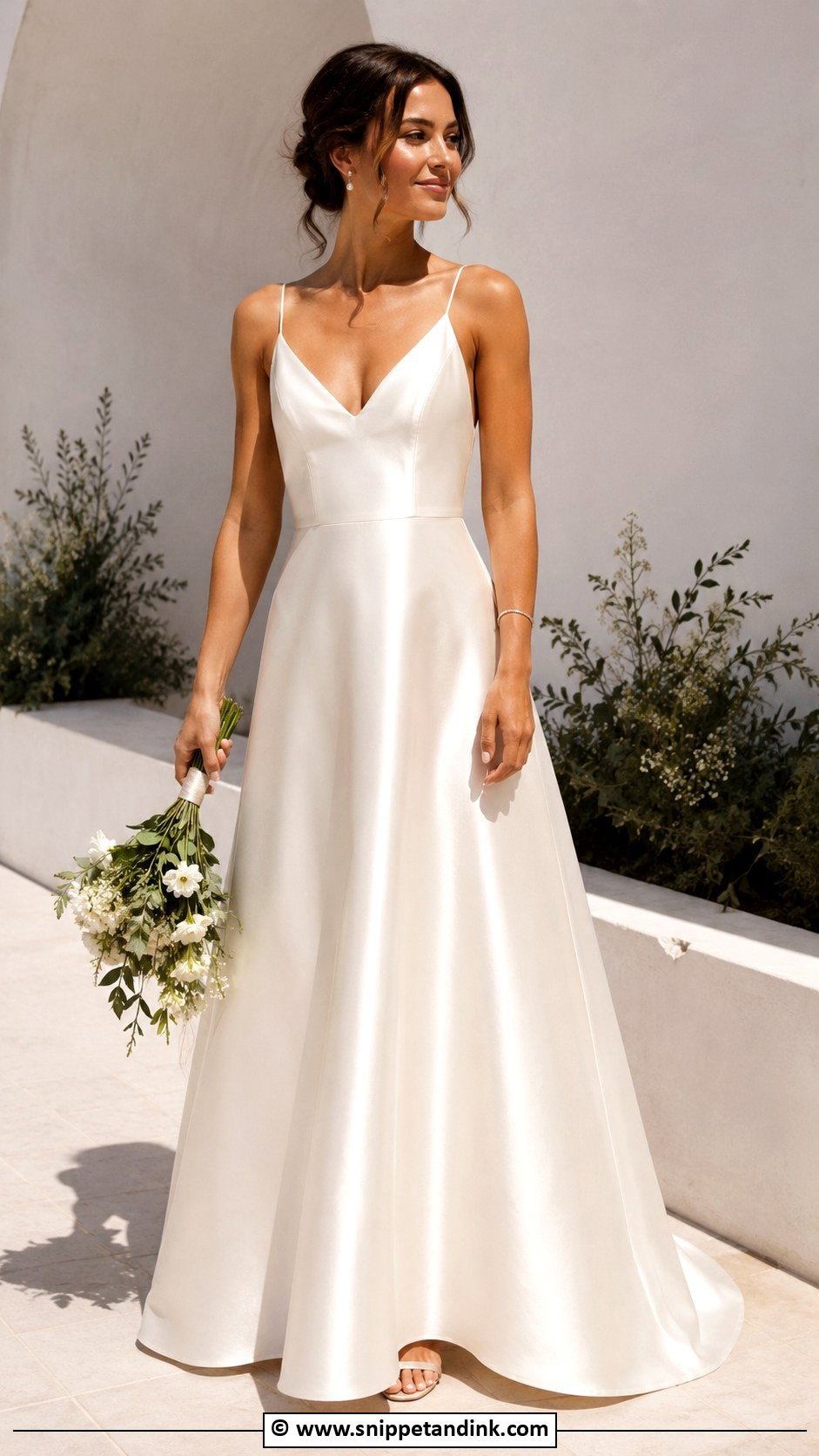
Thin spaghetti straps leave the collarbone and shoulders bare, so the V becomes the main shape on the upper body. Satin, chiffon, crepe and soft lace all hang well from a fine strap. My honest caution: these straps carry almost no weight, so the gown needs to stay up on its own construction. If you’re fuller in the bust, ask for a hidden corset or a sewn-in bra, or the straps will dig in by the reception. Keep jewellery fine, and add soft waves for movement. Warm destinations and beaches suit it best.
12. V Neck Wedding Dress With Wide Straps
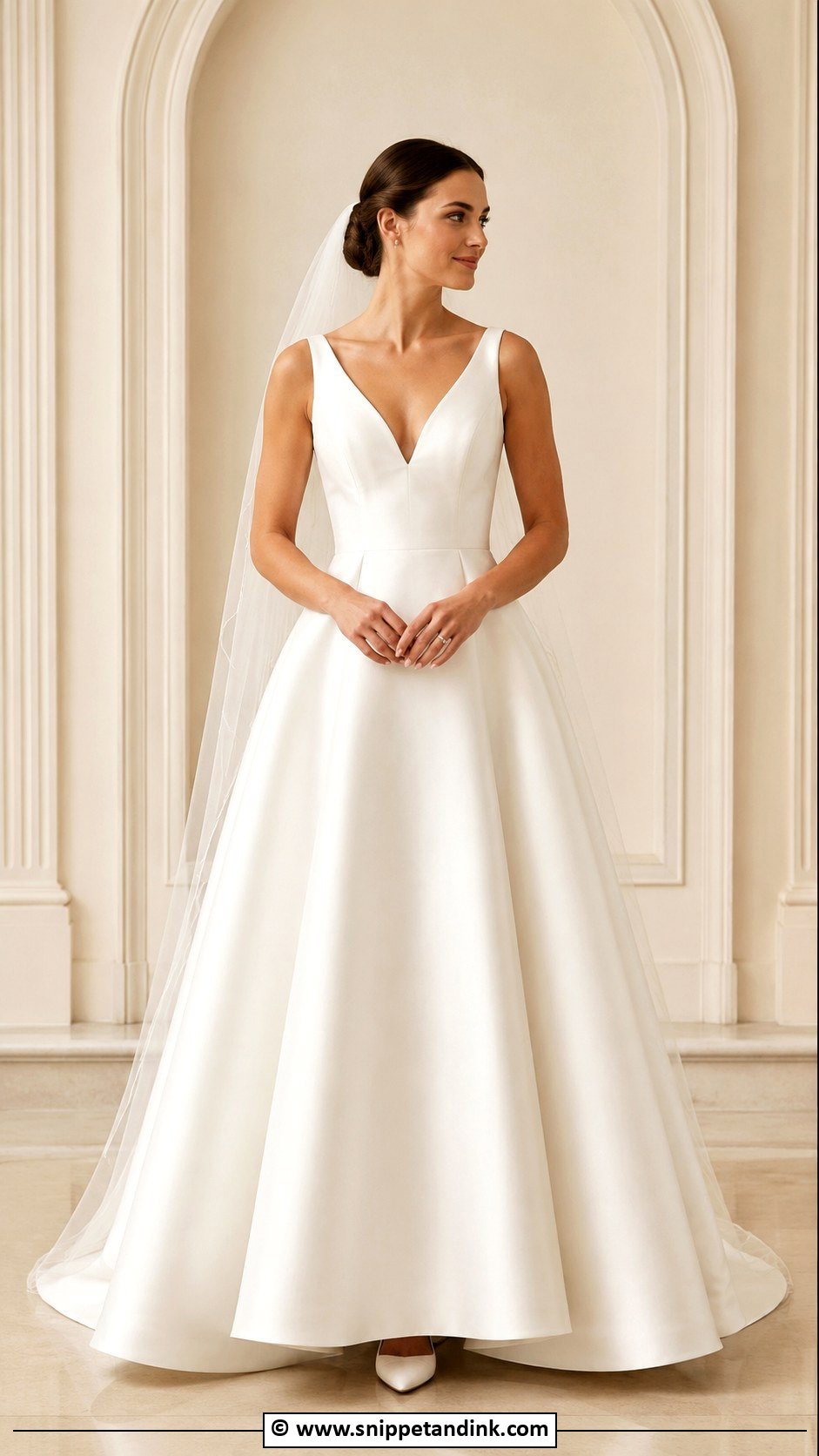
A wider strap spreads the weight of the bodice across the shoulder, and that’s why brides with a fuller bust often feel steadier in this cut. It sits naturally on structured bodices, A-lines and fit and flare gowns. Satin straps look clean; lace straps add softness. One fitting detail matters: the straps should sit just inside the edge of your shoulder, because if they’re set too wide they’ll slide off when you hug guests. The V itself can be shallow or deep to suit your comfort. A polished bun and chapel veil finish it.
13. V Neck Tulle Wedding Dress
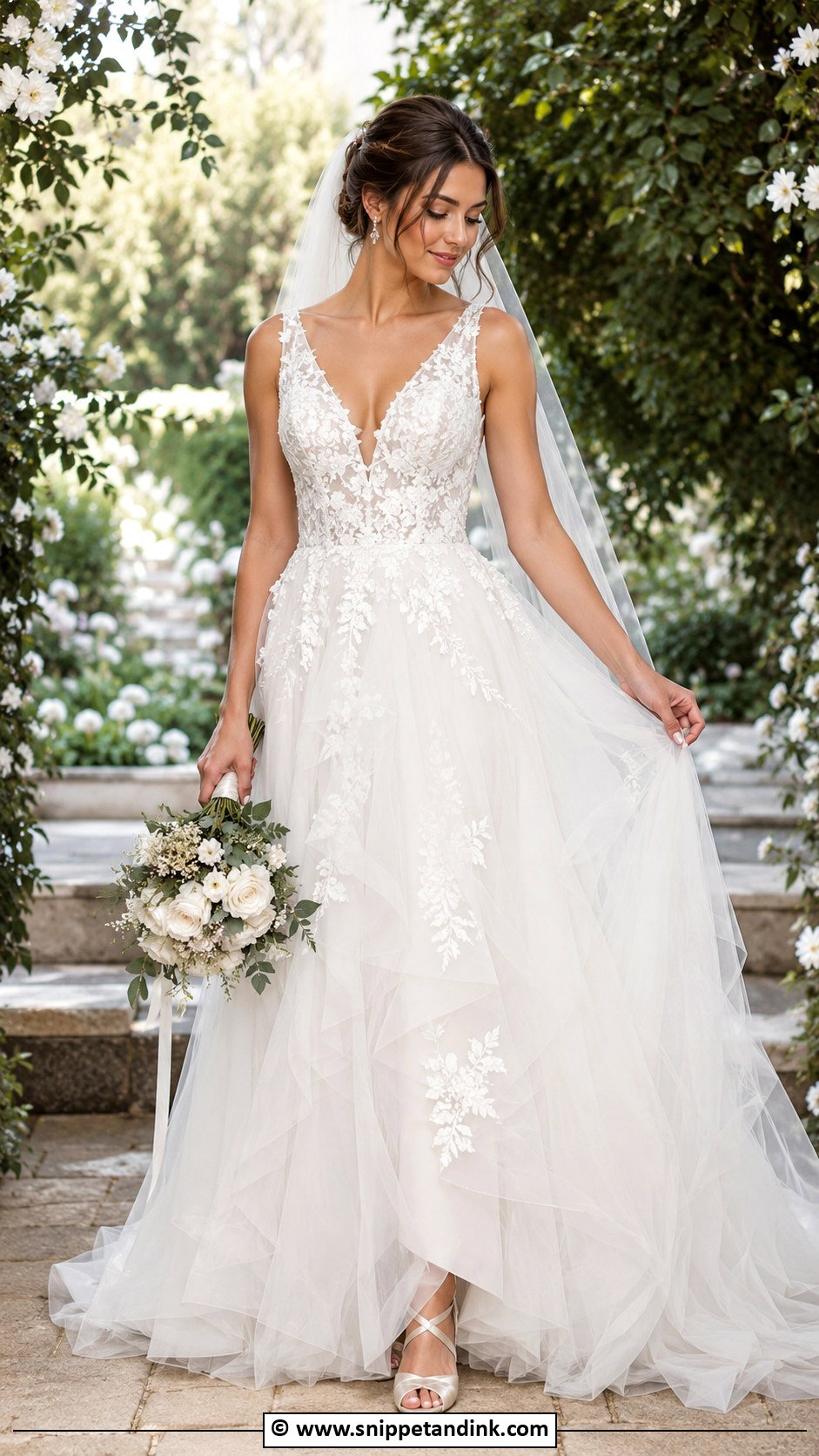
Tulle gives you movement without weight, and a V neckline stops all that softness from looking like a cloud with a head on top. A fitted bodice is essential here, because it gives the eye one clear shape before the skirt opens up. Small pearls, floral appliqué or a faint shimmer in the tulle add interest. A practical note: tulle snags on rough stone, rose bushes and Velcro, so it’s worth checking the venue paths. A soft veil and satin heels suit the mood.
14. V Neck Chiffon Wedding Dress
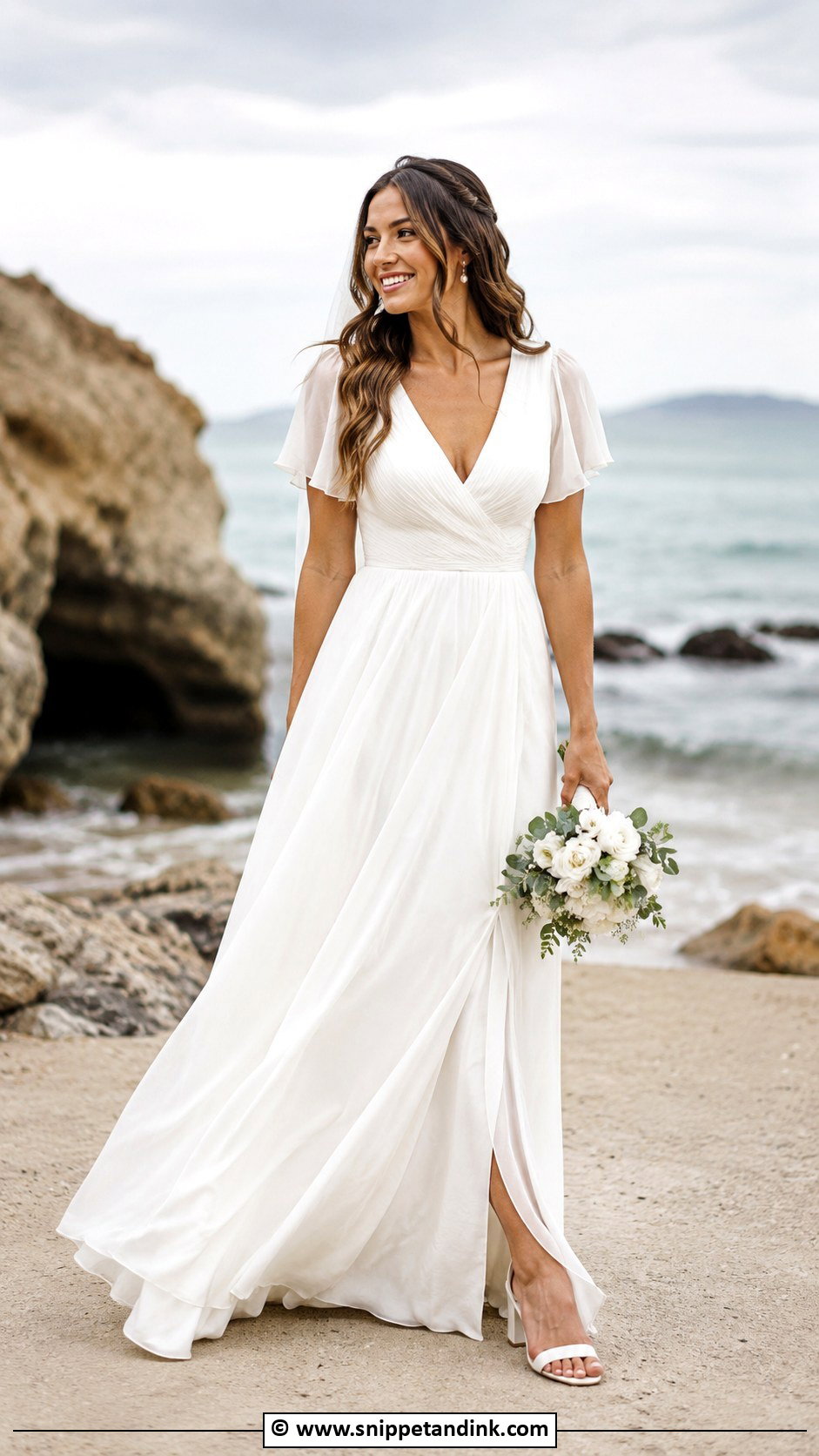
Chiffon is the fabric I steer people toward for heat. It’s light, it breathes, and it moves in a sea breeze instead of sticking. On its own it can look shapeless, so the V neckline and an empire or A-line waist give it structure. Soft pleating, flutter sleeves or a fine waist tie keep the detail low-key. One warning: chiffon wrinkles easily in a suitcase, so plan for steaming on arrival. Loose waves and flat bridal sandals suit an outdoor setting.
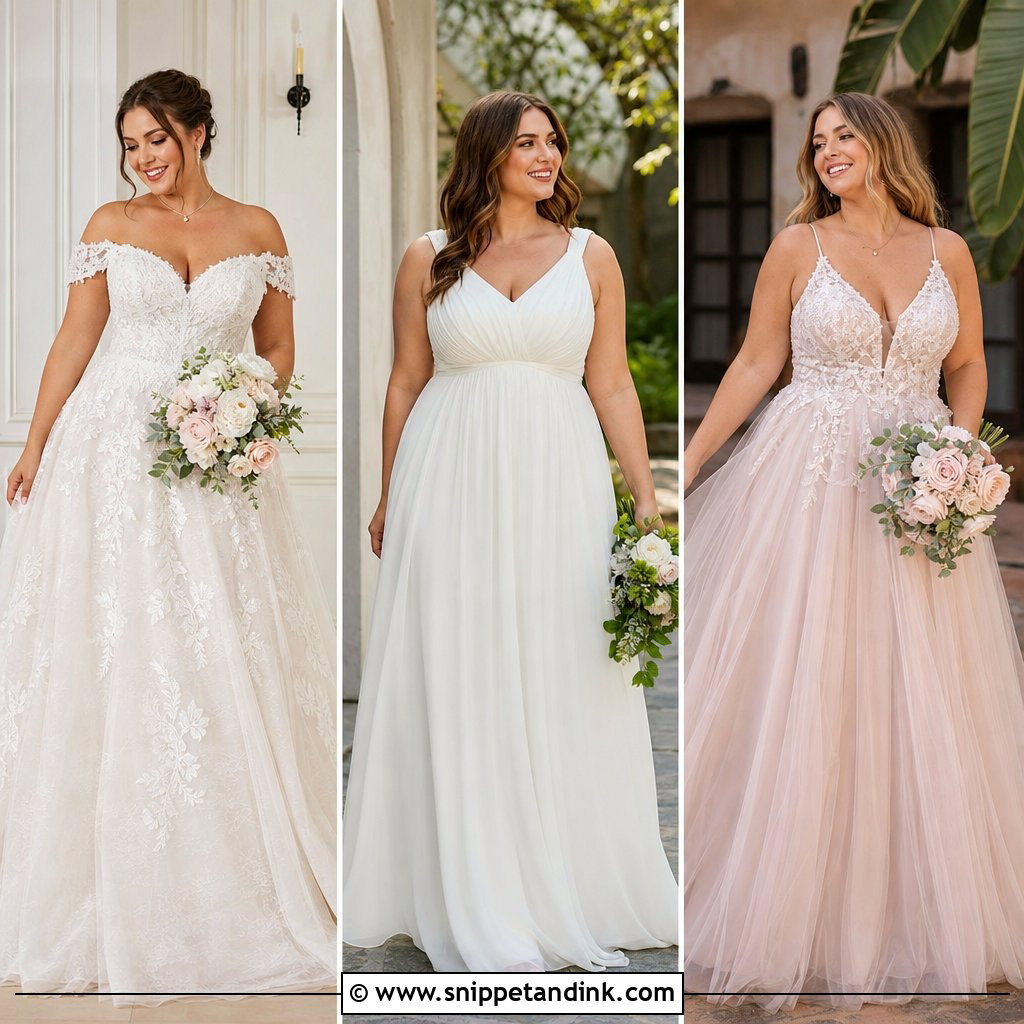

15. V Neck Crepe Wedding Dress
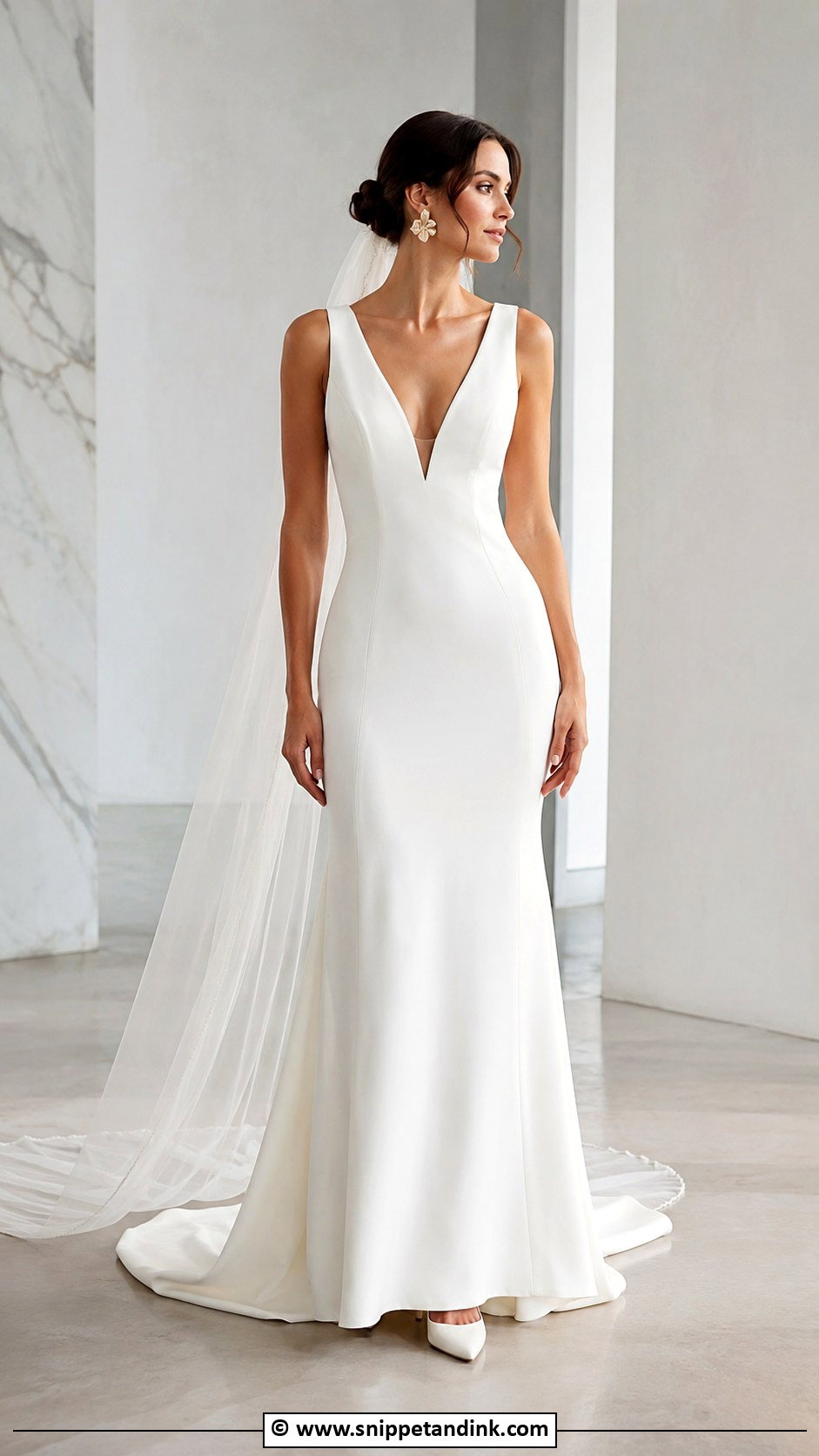
Crepe has a slight matte texture and a heavy drape, so it looks expensive with almost no decoration. That clean surface is also honest: it shows the line of the body and anything underneath, so I always fit crepe with the exact underwear the bride will wear on the day. The V neckline gives the plain fabric a focal point. Sharp seams, a low back or covered buttons add just enough. A smooth bun, sculptural earrings and pointed heels keep the minimal mood consistent.
16. V Neck Sheath Wedding Dress
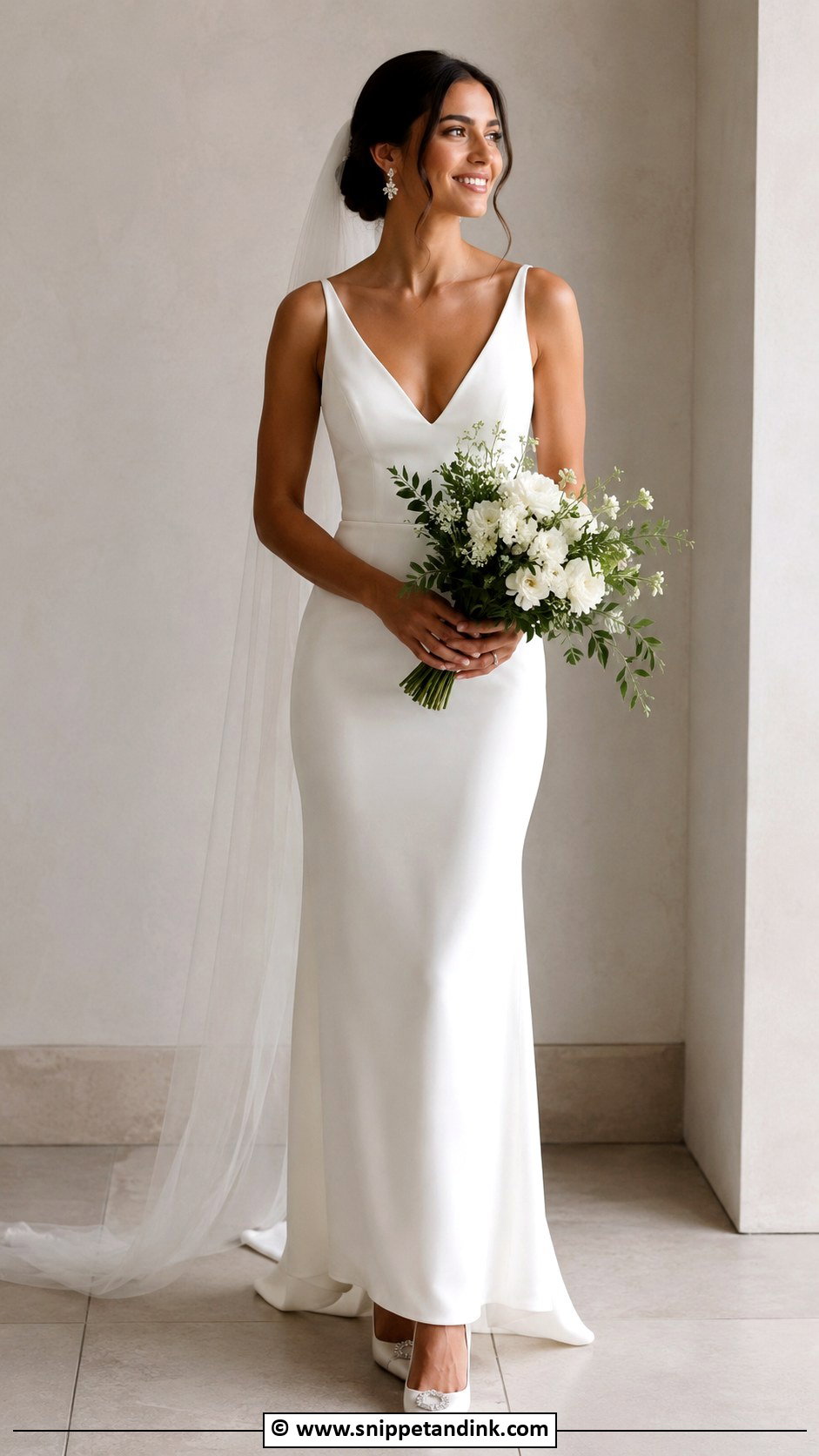
A sheath wedding dress falls in a soft, straight line from the bust with no dramatic flare, and the V adds the length a narrow column wants. Crepe, satin, lace and chiffon all work. Lightweight fabric with little structure makes it relaxed; beading or a long train makes it formal. Sheaths can feel narrow at the knee, so take a full stride in the fitting room. Drop earrings and a delicate veil suit intimate ceremonies and courthouse vows.
17. V Neck Slip Wedding Dress
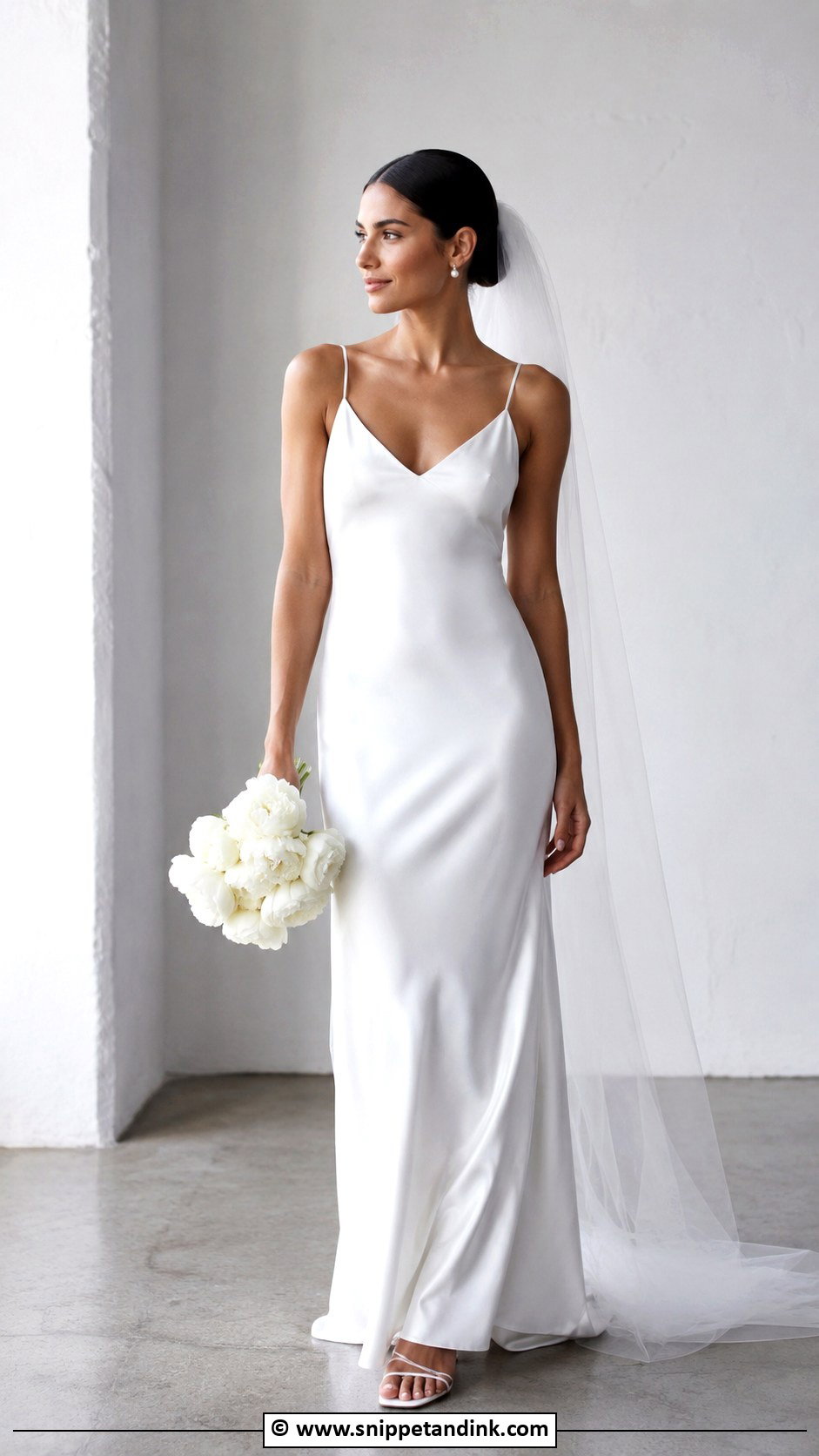
A slip dress hides nothing, which is both its appeal and its risk. Bias-cut satin or silk-style fabric skims the body with a soft glow, and a V neckline adds shape to an otherwise simple outline. I’d only recommend it to a bride who’s comfortable being seen as she is, and I’d always pair it with smooth, no-line shapewear or a silicone bra planned at the first fitting, not the last. Because the gown is so plain, the styling carries it. Pearl earrings, a low bun and a sheer veil, plus a cape or tailored jacket if the evening turns cold.
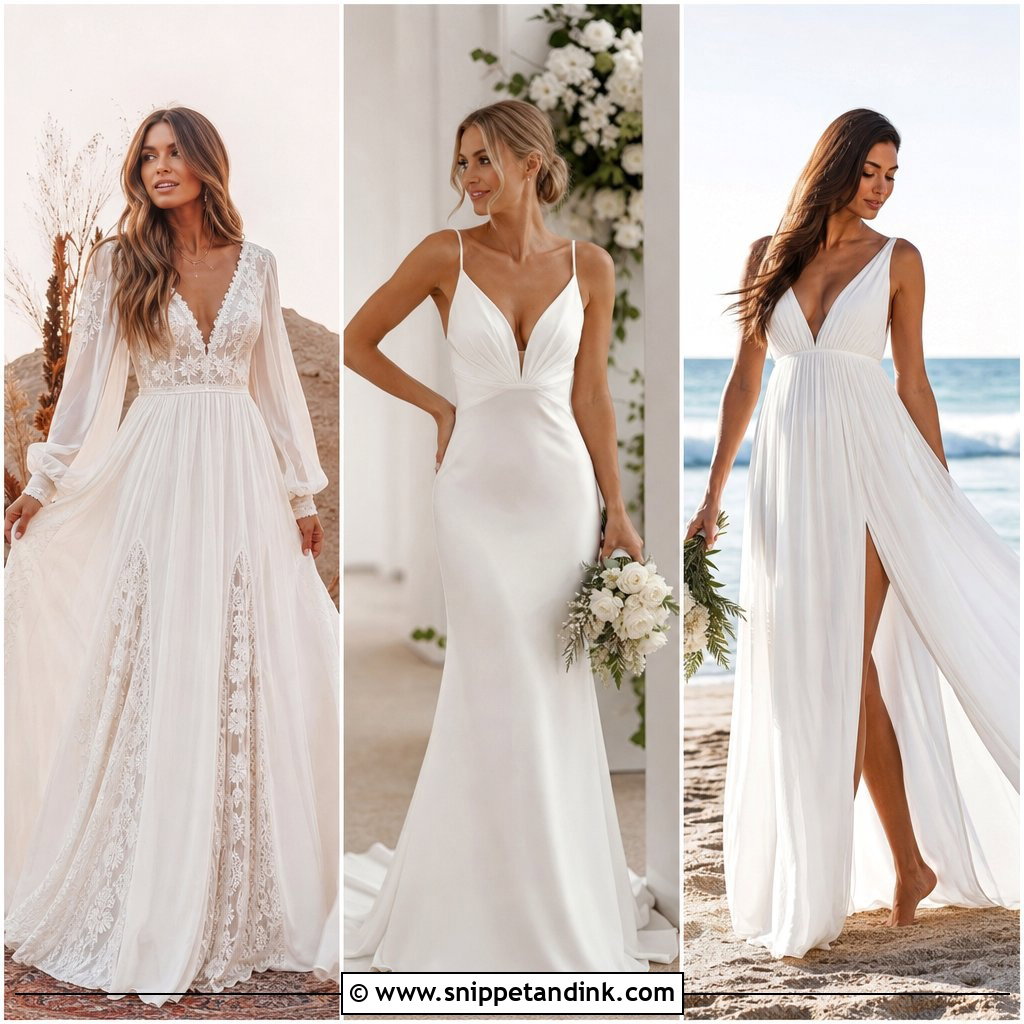
18. V Neck Boho Wedding Dress
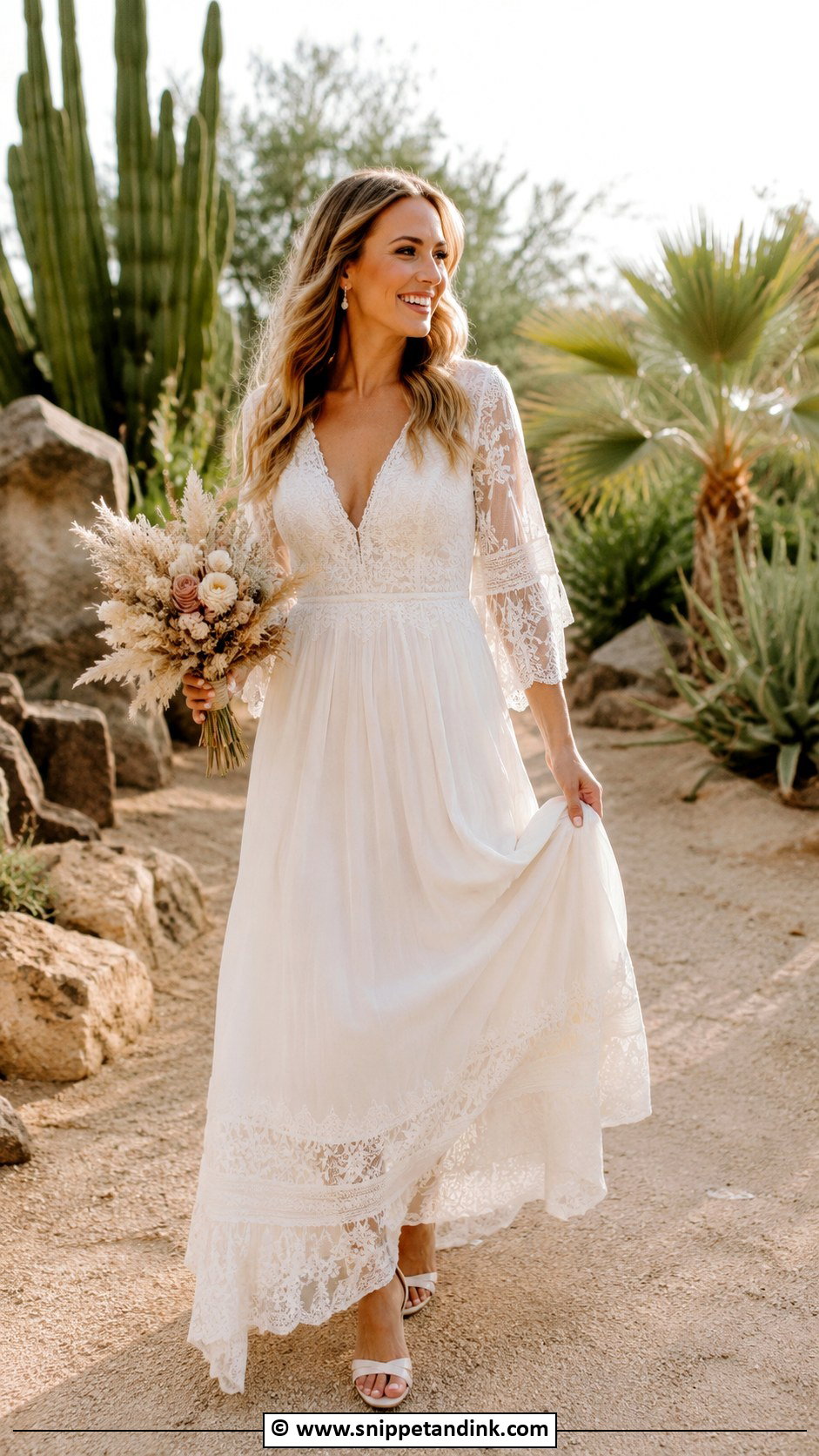
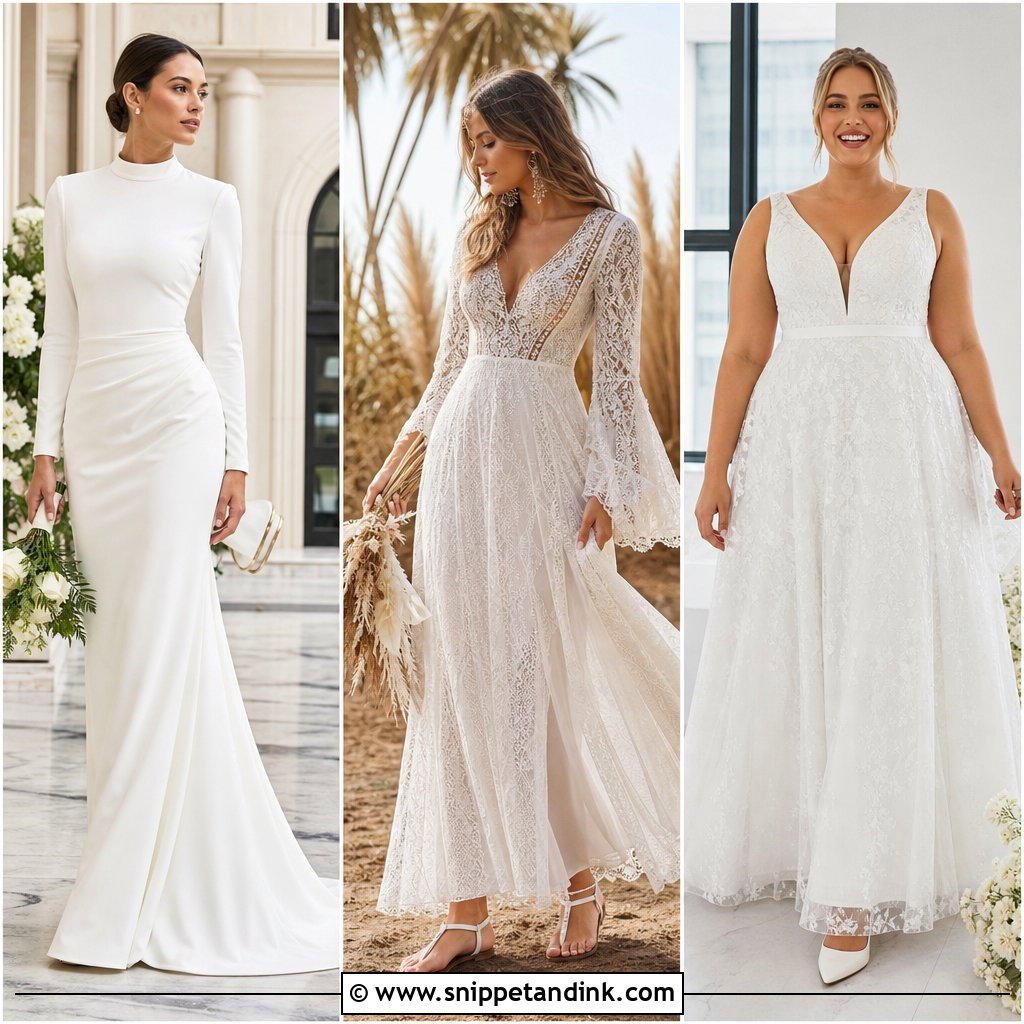
Boho gowns tend to be full of pattern, and the V keeps all that lace from closing in around the neck. Soft lace, loose sleeves, light skirts and natural textures define this look. Bell sleeves, crochet-inspired lace or a short soft train add character without looking like a costume, as long as you stop at one or two of them. Unlined crochet lace can show skin in ways you didn’t expect under a flash, so check photos from the fitting. Loose waves, small floral pins and comfortable sandals finish it.
19. V Neck Beach Wedding Dress
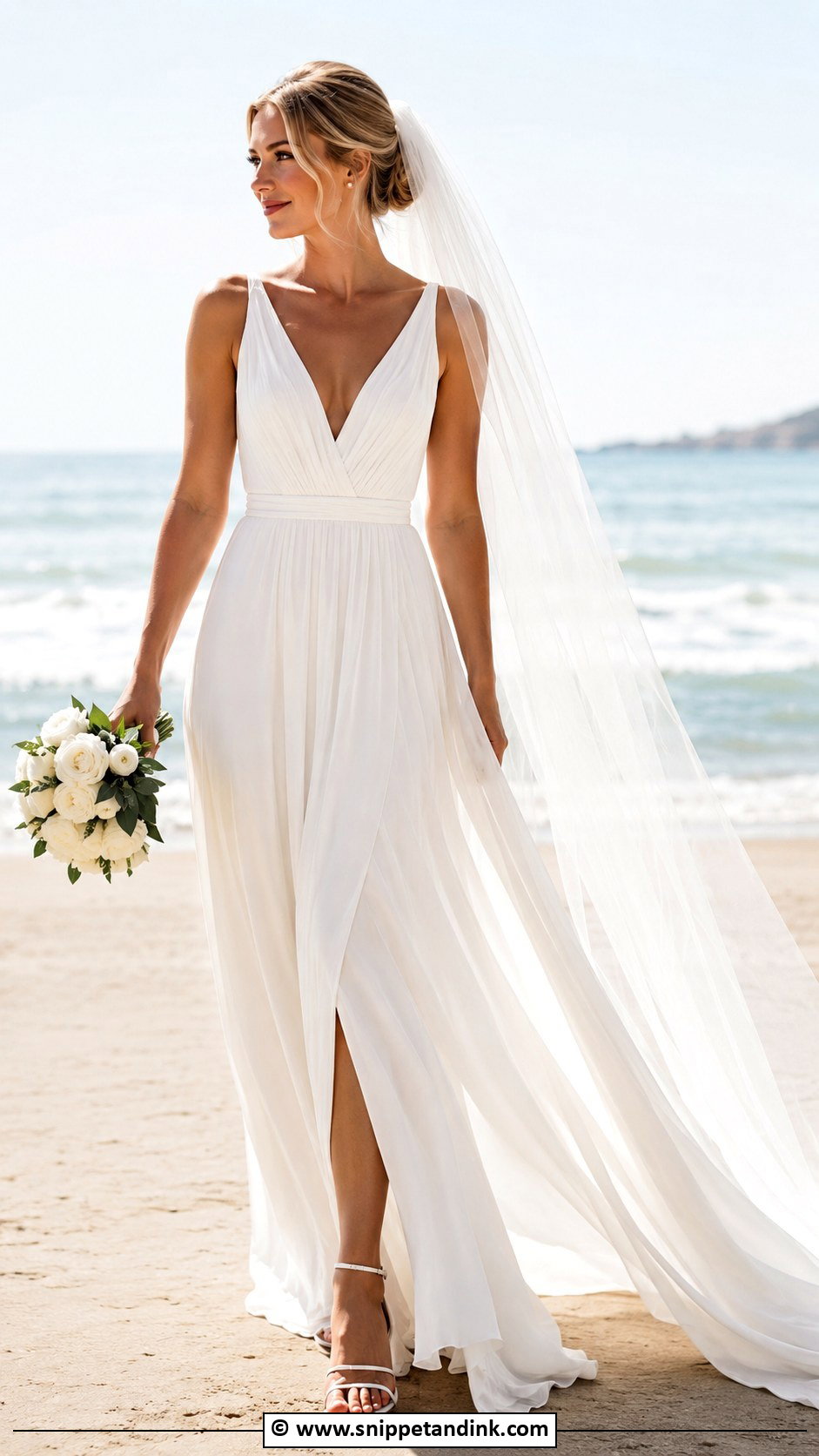
On a beach, weight and hem matter more than anything else. Chiffon, crepe, and lightweight lace stay comfortable near the water, and a soft A-line, sheath or slip shape won’t trap sand the way a full skirt does. I’d have the hem taken up a touch shorter than you would for a hard floor, because a wet, sandy train looks heavy in photos within minutes. A short or fingertip veil and pearl studs are enough. Pin the hair securely; coastal wind finds every loose section.
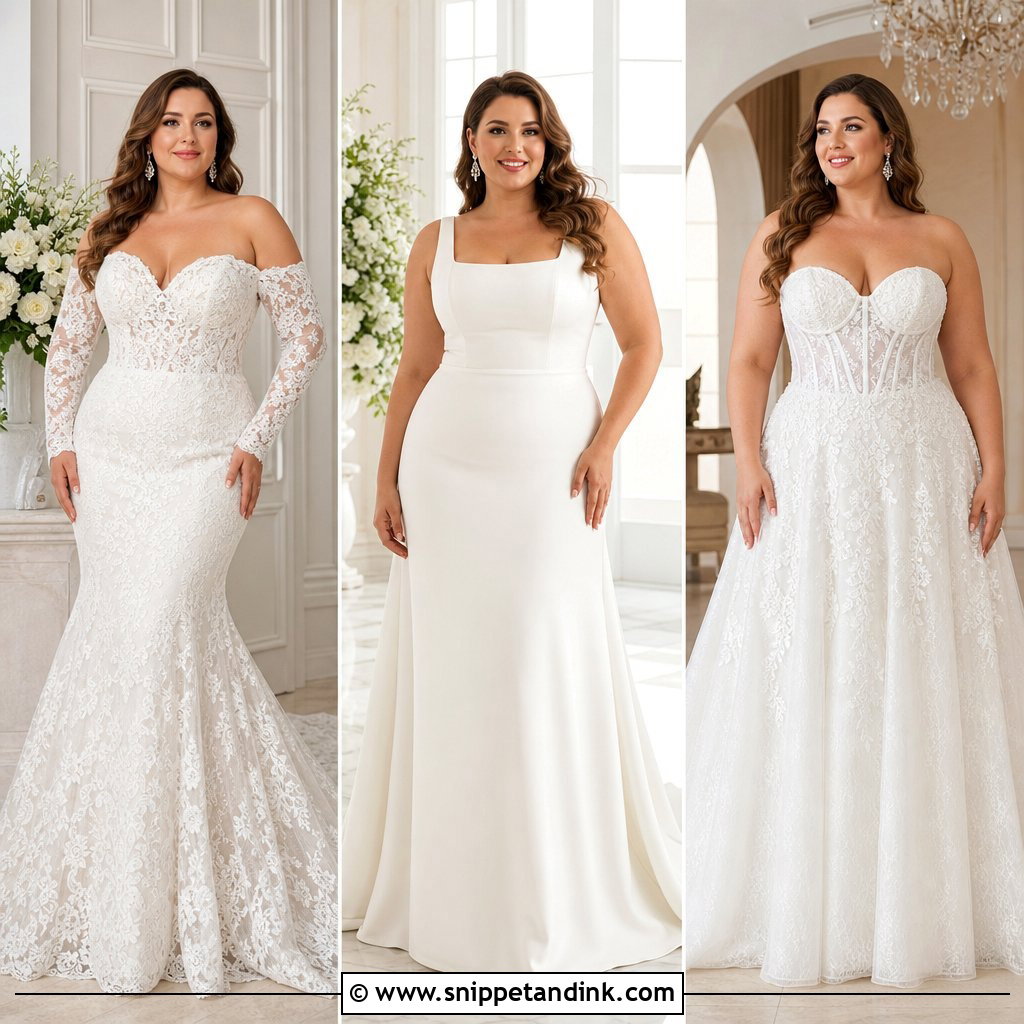
20. V Neck Garden Wedding Dress
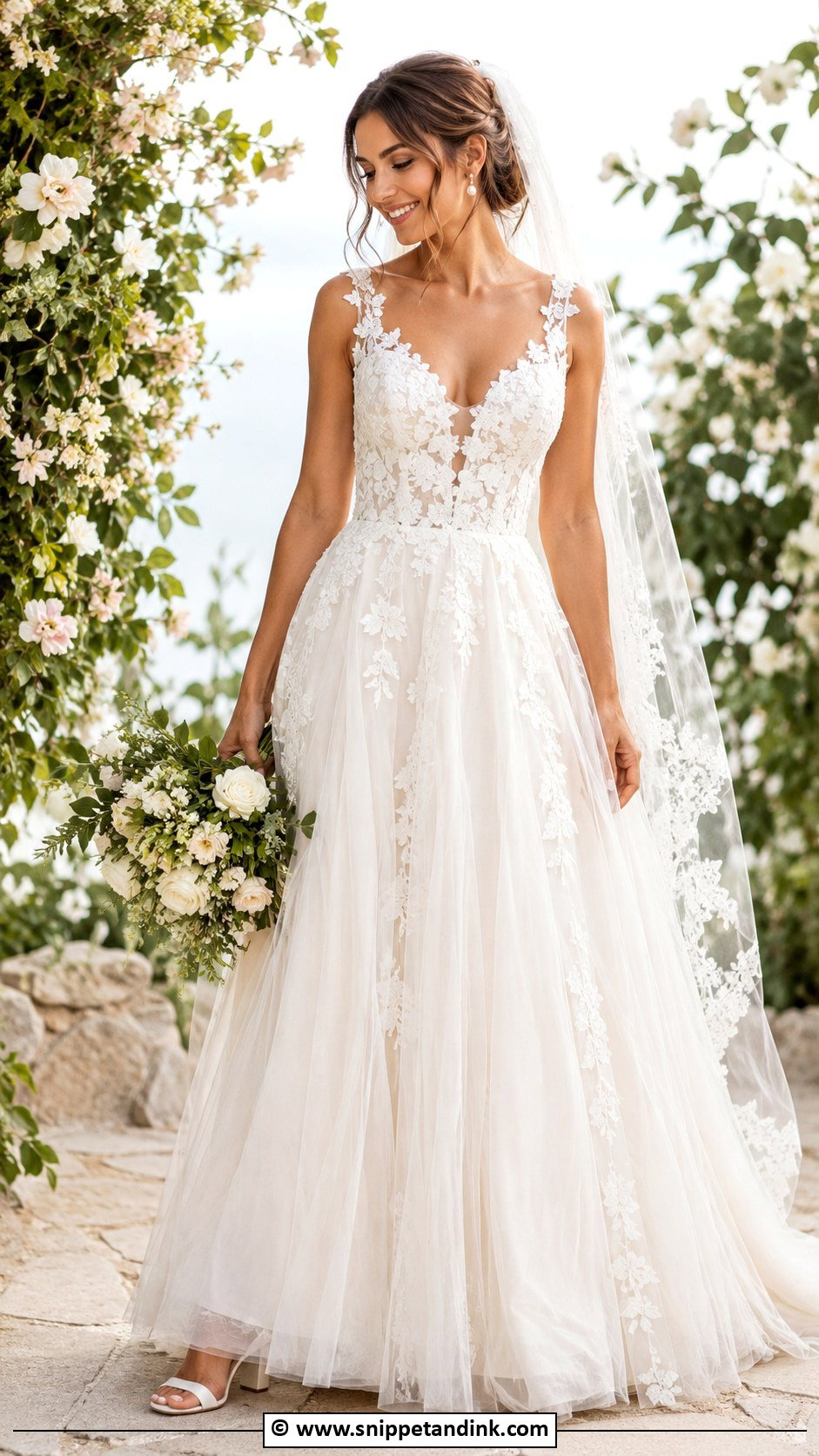
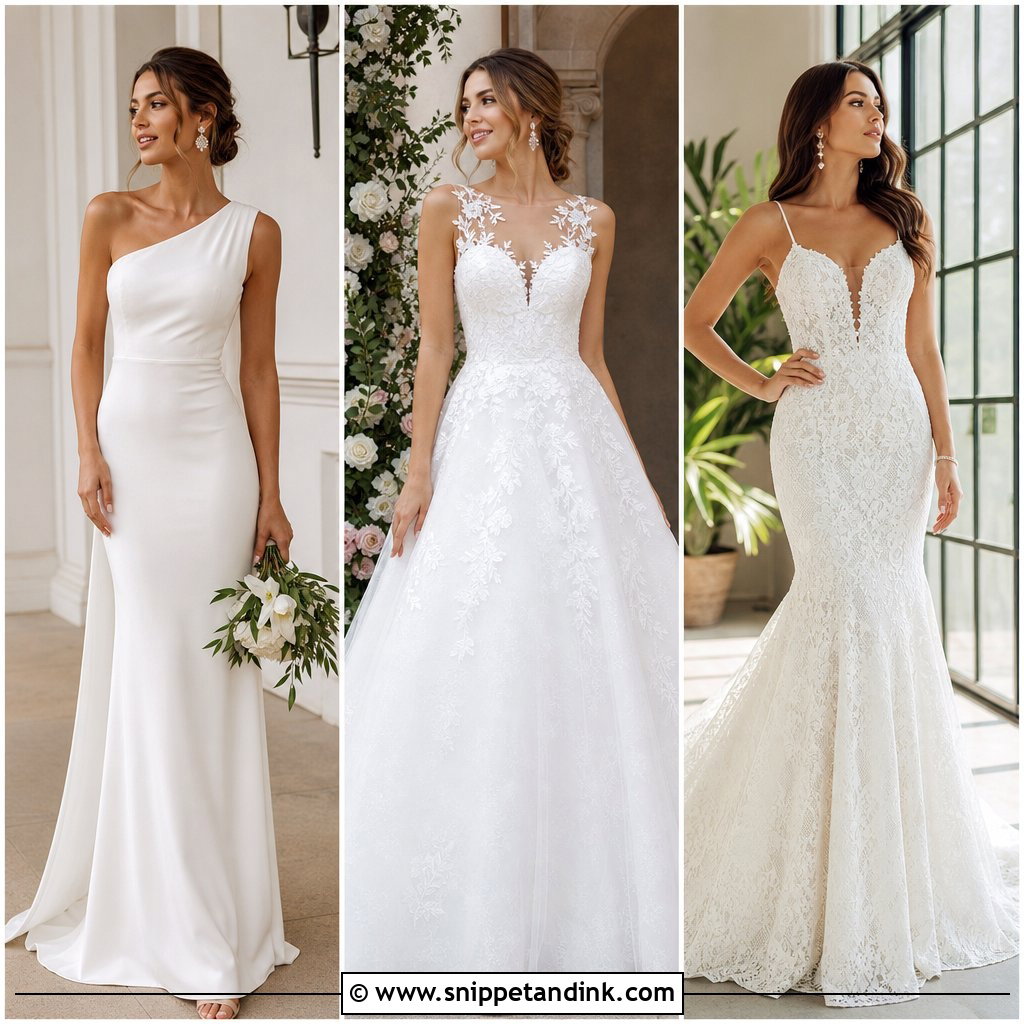
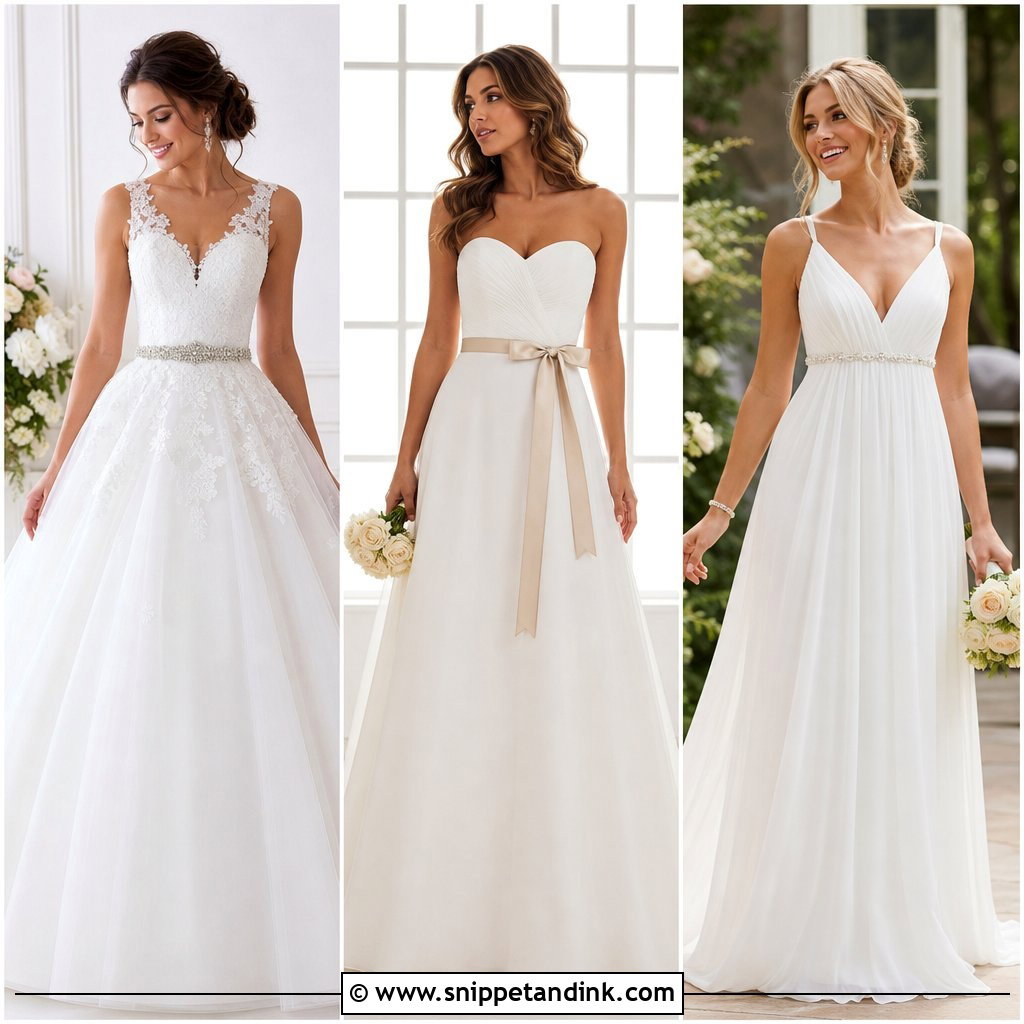
For a garden ceremony, I think about the ground first and the flowers second. An A-line skirt moves easily over grass and gravel, while floral lace, soft tulle, chiffon and organza sit naturally in a green setting. Organza and tulle both catch on thorny borders, so ask the venue which paths you’ll walk. Block heels or heel protectors stop you sinking into the lawn. Light beading, sheer sleeves and a veil with subtle lace edging add detail, and soft curls keep the mood relaxed for spring.
21. V Neck Courthouse Wedding Dress
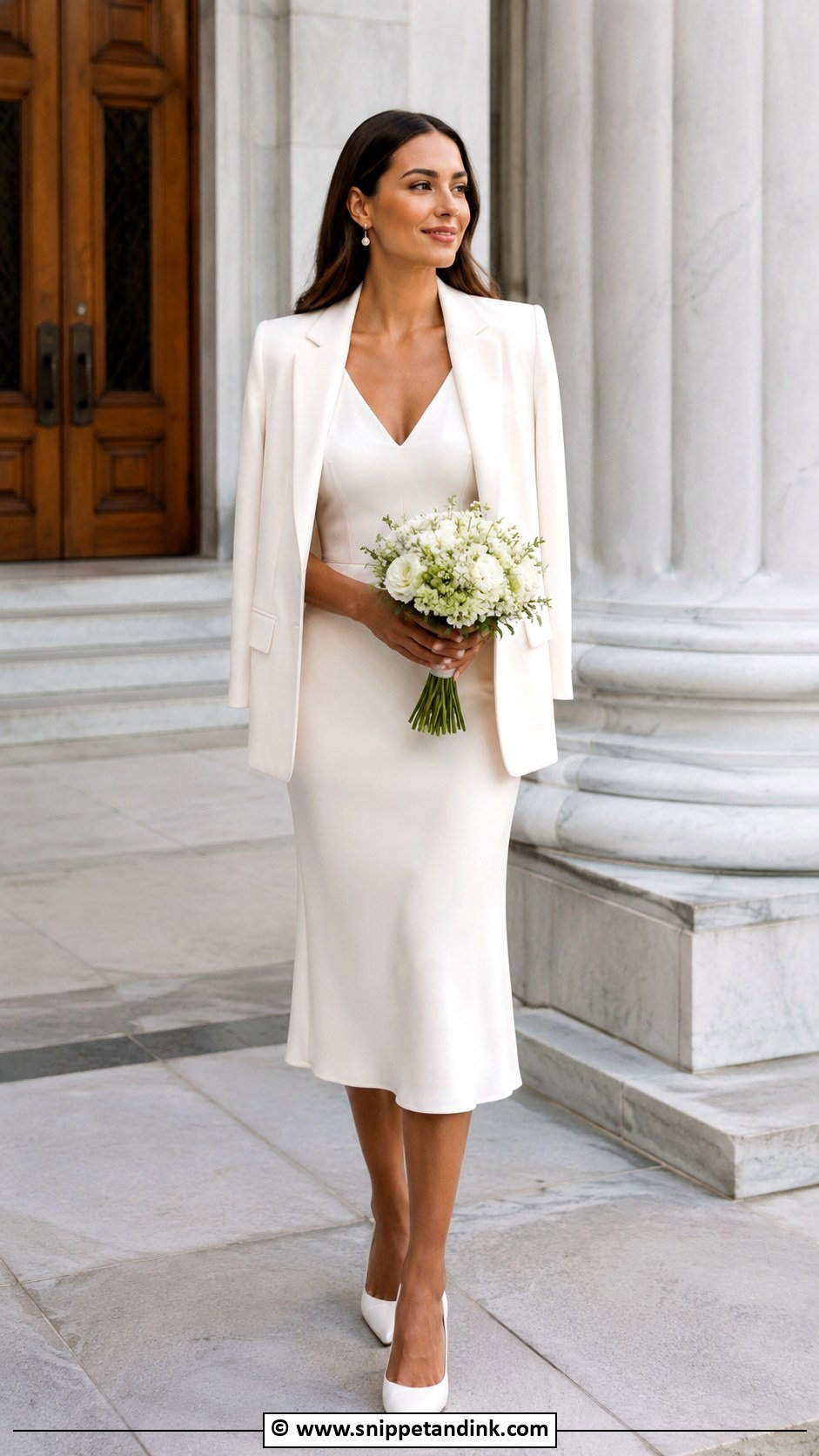
A civil ceremony gives you room to play with length and shape. A sleek sheath, a midi or a minimal satin gown all look right in a registry office, and the V keeps a short dress feeling bridal without embellishment. A tailored blazer over the shoulders adds polish and warmth for the steps outside. Full-length is fine too, just keep the train minimal; courthouse corridors and lifts are not built for it. Small bouquet, pearl earrings, pointed heels, and you can go straight on to lunch.
22. V Neck Plus Size Wedding Dress
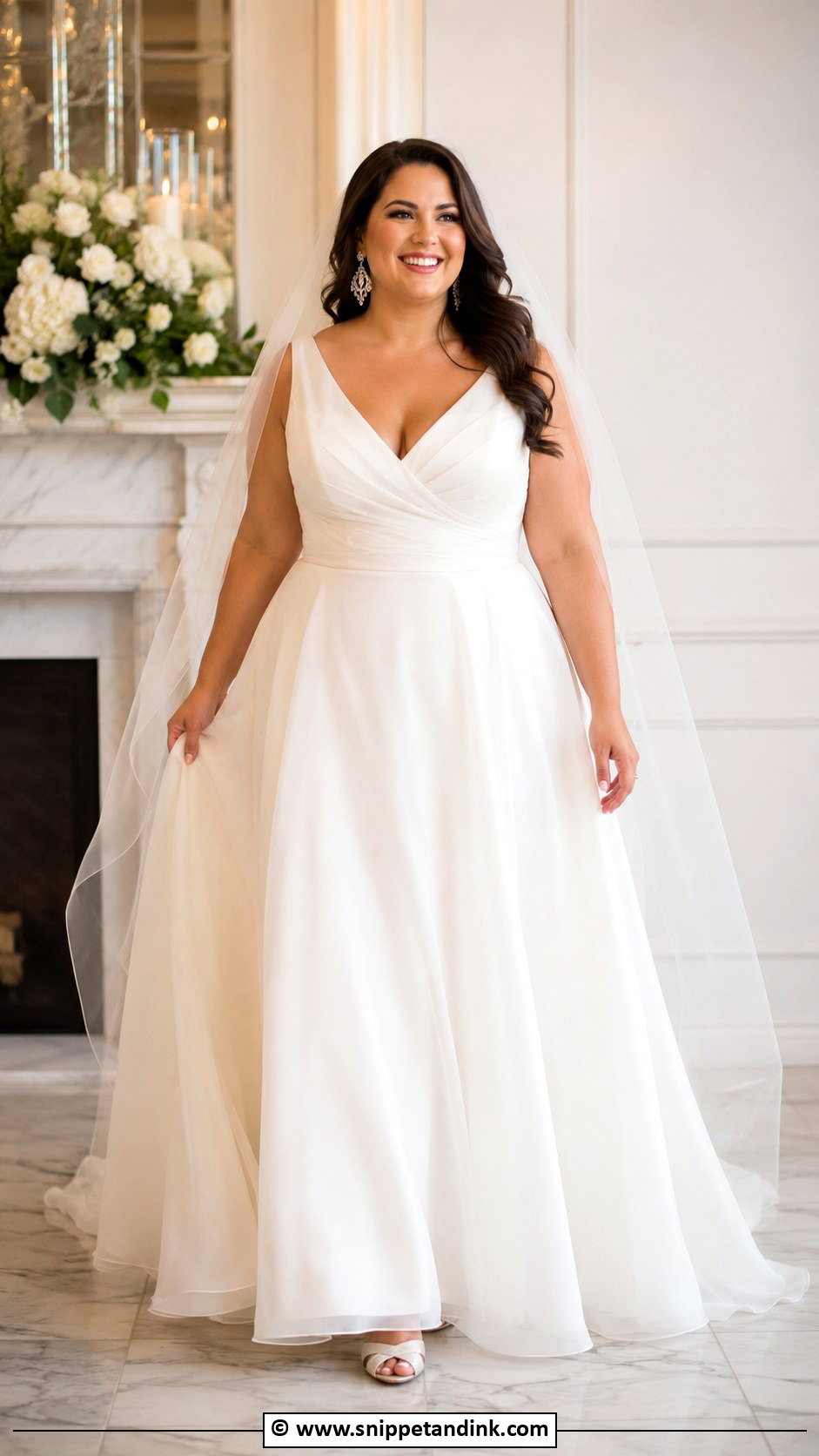
On a plus size bride, a V neckline draws the eye vertically, and that long line is exactly why I suggest it so often. What makes or breaks the dress is support. Ask whether the bodice has internal boning, a sewn-in bra or a corset back, because those are what keep the V lying flat instead of pulling apart. A-line, ball gown and fit and flare all work; choose the shape you feel most like yourself in. Wide straps add comfort for a long day. Statement earrings, a veil, and heels you can stand in for hours.
23. V Neck Petite Wedding Dress
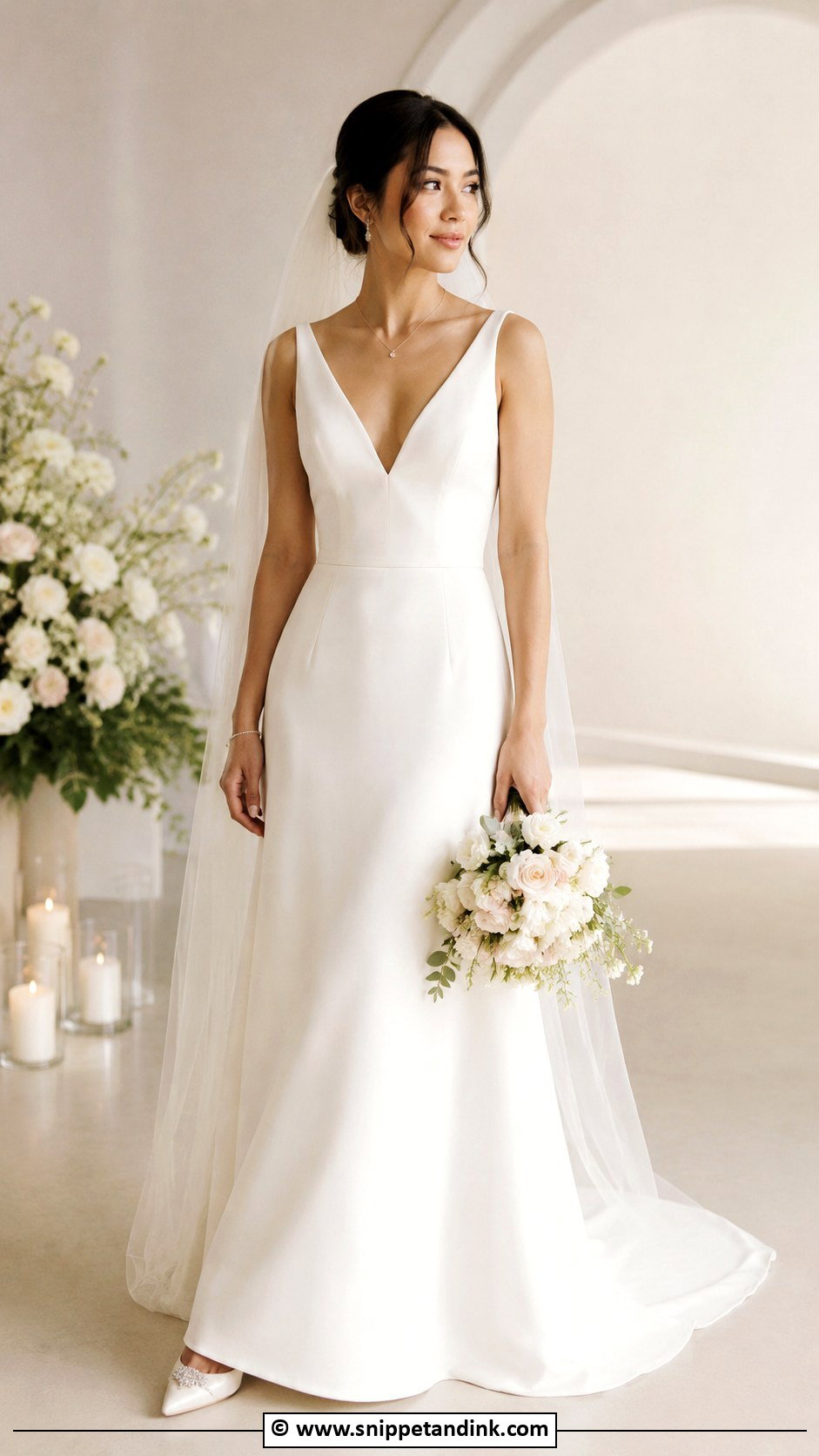
Petite brides get swamped by details that are scaled for a taller frame, so I look for proportion before anything else. A sheath, slim A-line or soft fit and flare keeps the line long, and the V lengthens the upper body. Vertical seams and fine lace add height; heavy horizontal bands cut it. The hem must be tailored to your actual wedding shoes, so bring them to every fitting. A narrow veil and delicate jewellery keep everything in scale.
24. V Neck Wedding Dress With Open Back
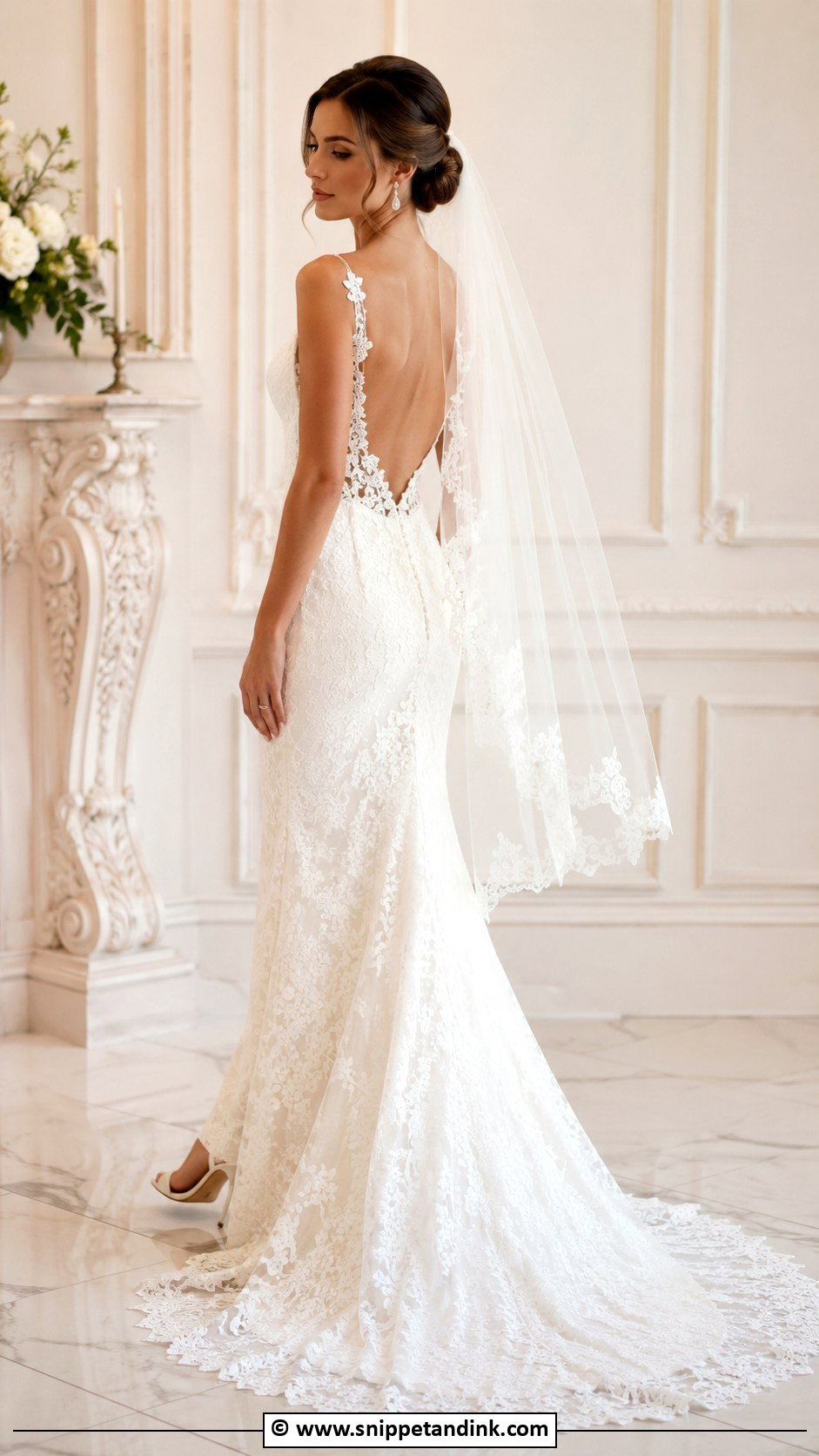
A V at the front and an open back is a lot of exposed skin from two directions, so the structure has to work twice as hard. If the front is deep, I’d look for an open back with illusion panels, buttons or a low internal strap that anchors the bodice. Without that, the whole top can slide forward when you sit. Done well, the back becomes a quiet surprise for the aisle and the first dance. Keep the necklace off, wear drop earrings, and choose a sheer veil so the back still shows through.
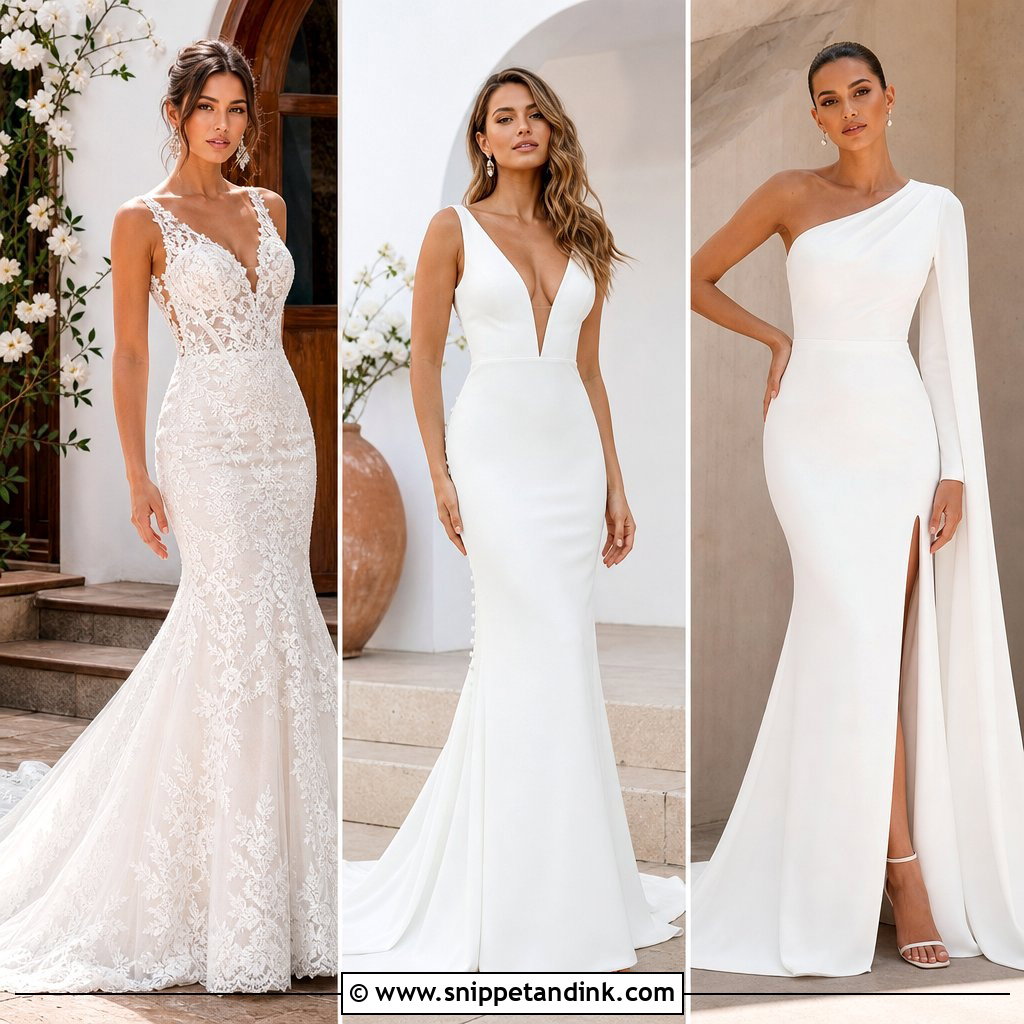
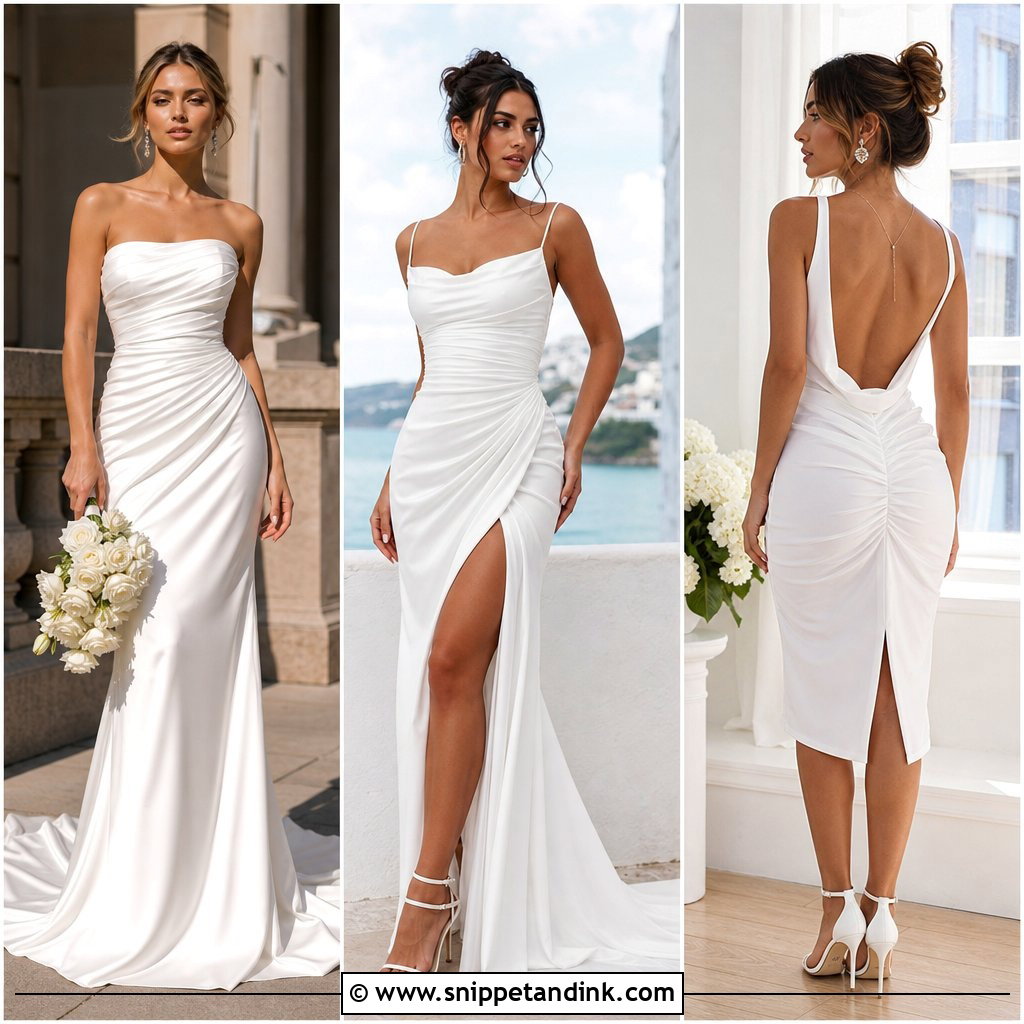
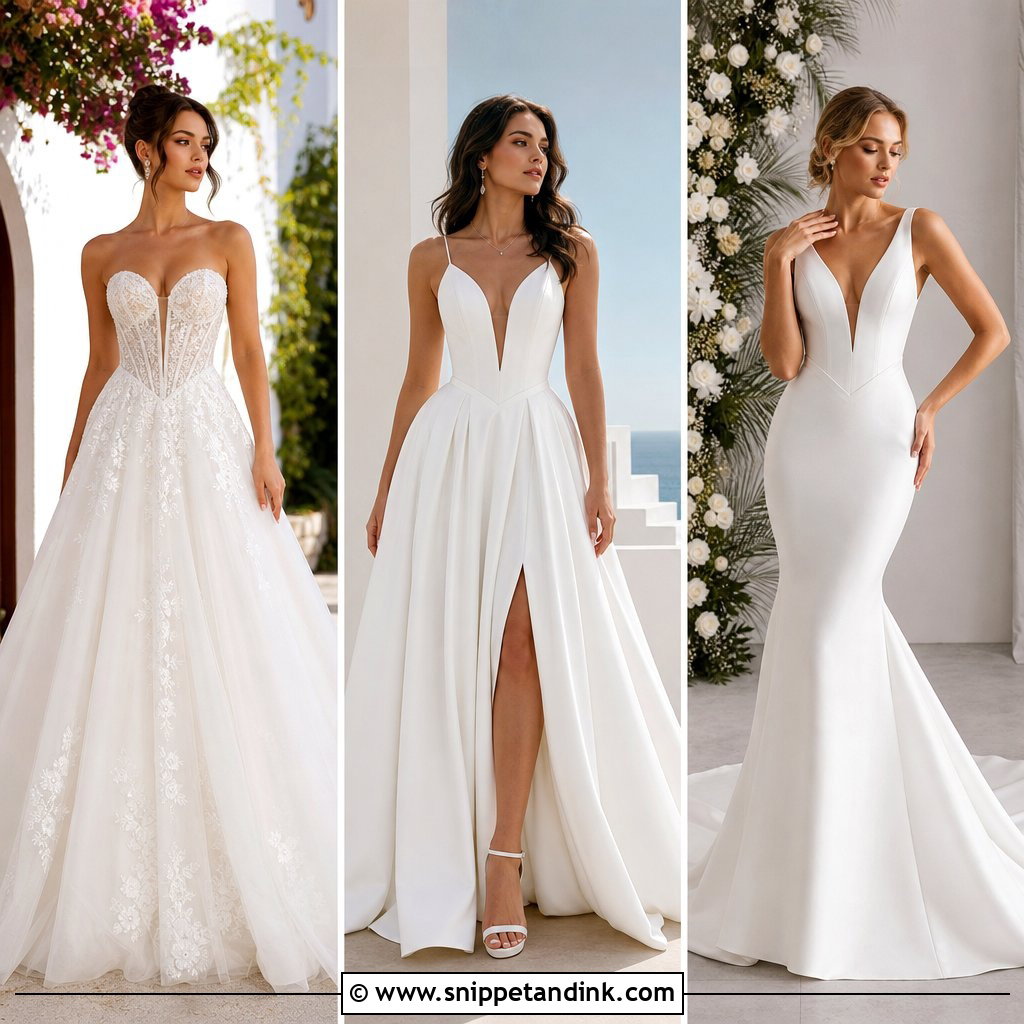
25. V Neck Wedding Dress With Train
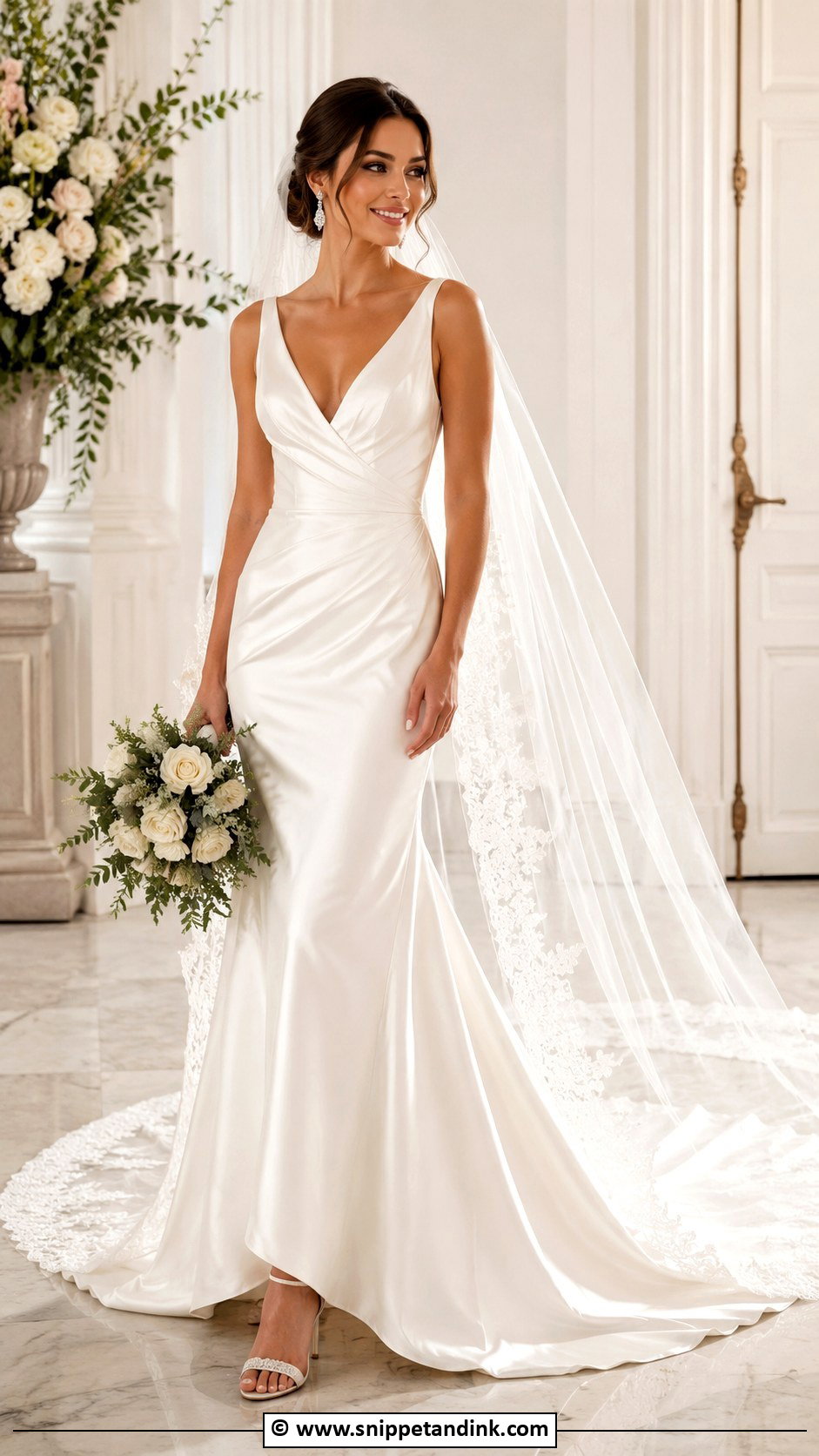
A train adds movement behind you while the V keeps the front shape clean. A chapel train is the length I recommend for most venues: it looks formal in the aisle and it’s still manageable afterward. A cathedral train suits a grand church or a long staircase entrance, but plan for a bustle, and ask your seamstress to show your maid of honour how to fasten it before the day. Lace trains feel romantic, satin trains look regal. A long veil and classic heels complete it.
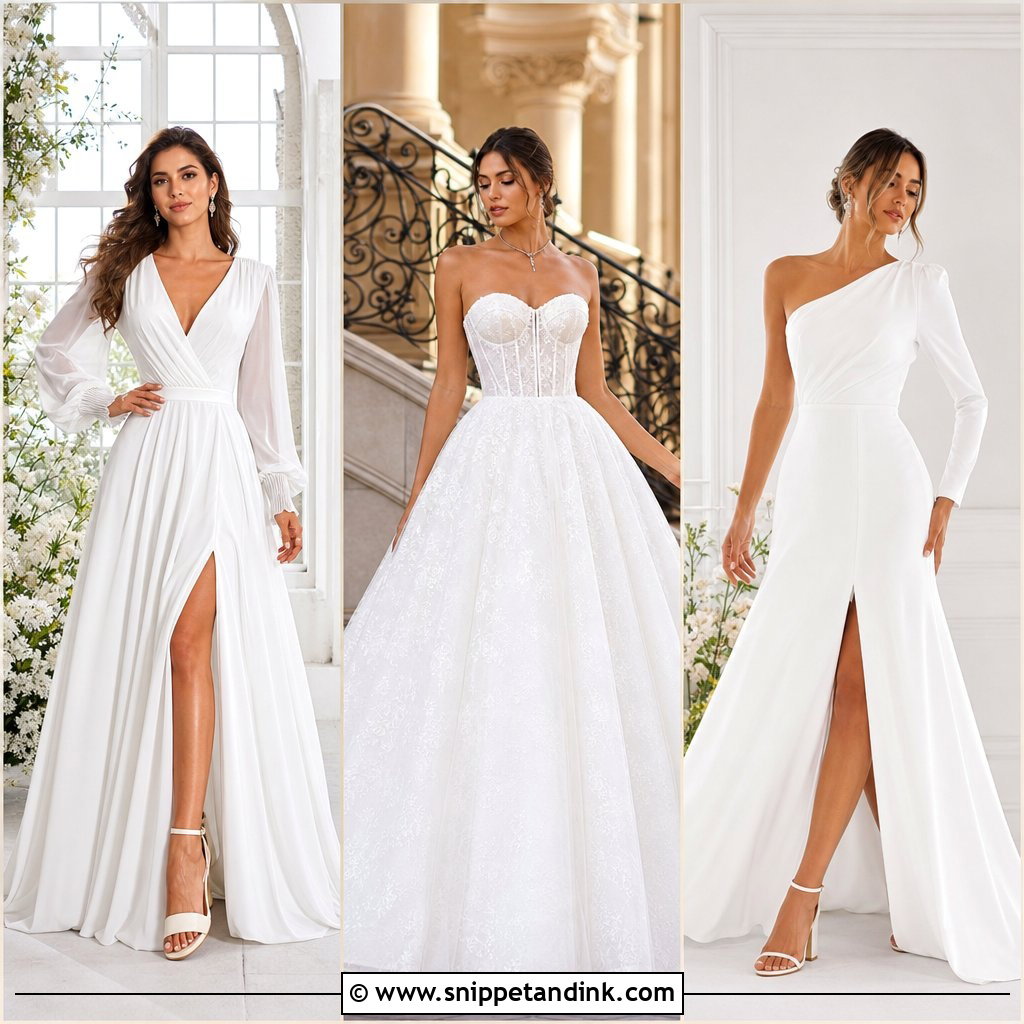
26. V Neck Wedding Dress With Slit
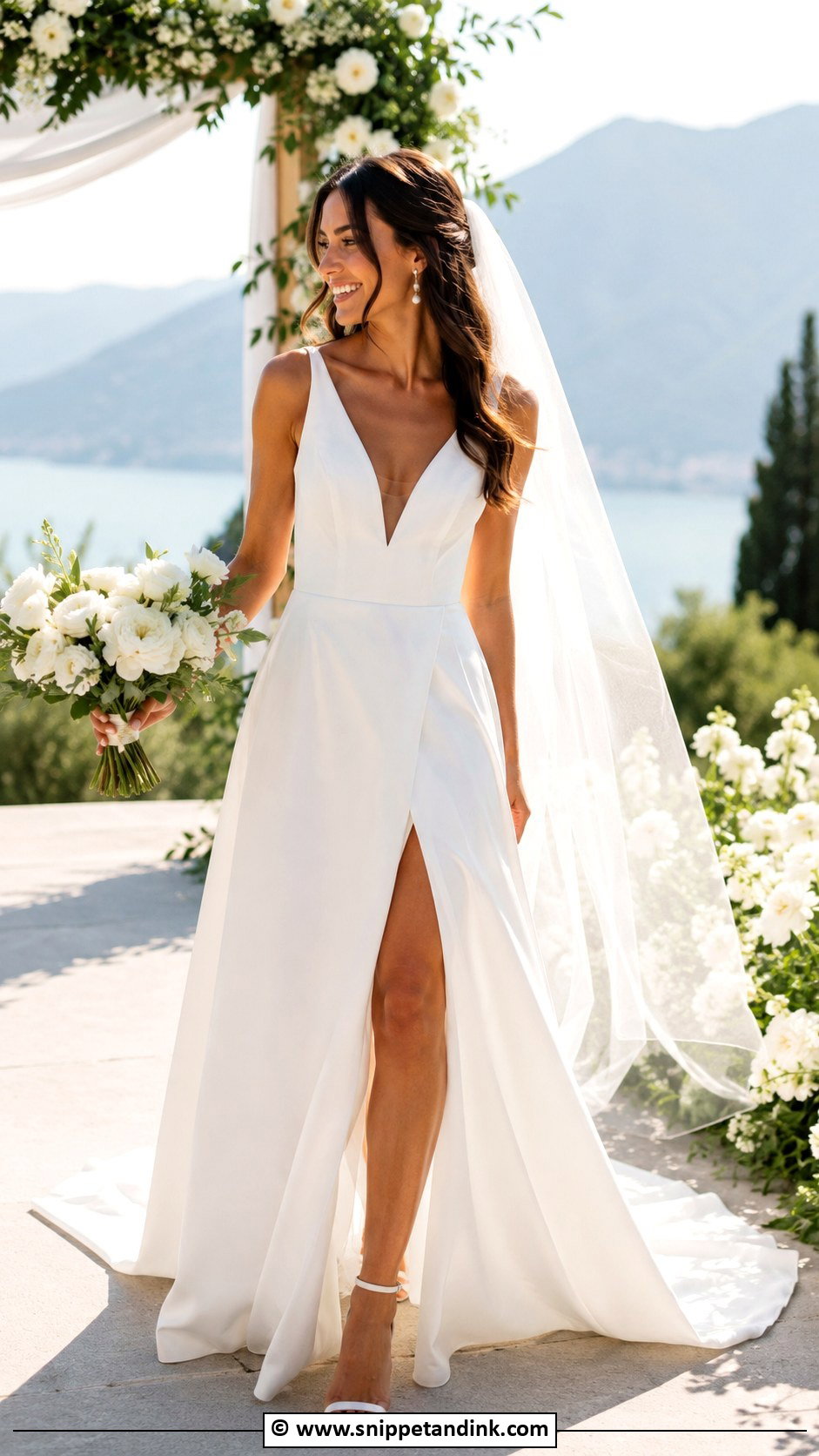
A slit makes a V neck gown feel lighter and gives you room to move. Satin, chiffon and crepe drape well around a slit; stiffer fabrics tend to flare open awkwardly. Sit down, walk up a step and stand for a photo in the fitting room, because a slit that looks modest when you’re still can open much higher when you climb. A simple A-line or sheath shape keeps it uncluttered. Sleek heels, pearl earrings and a soft veil suit a summer or beach ceremony.
27. V Neck Wedding Dress With Beading
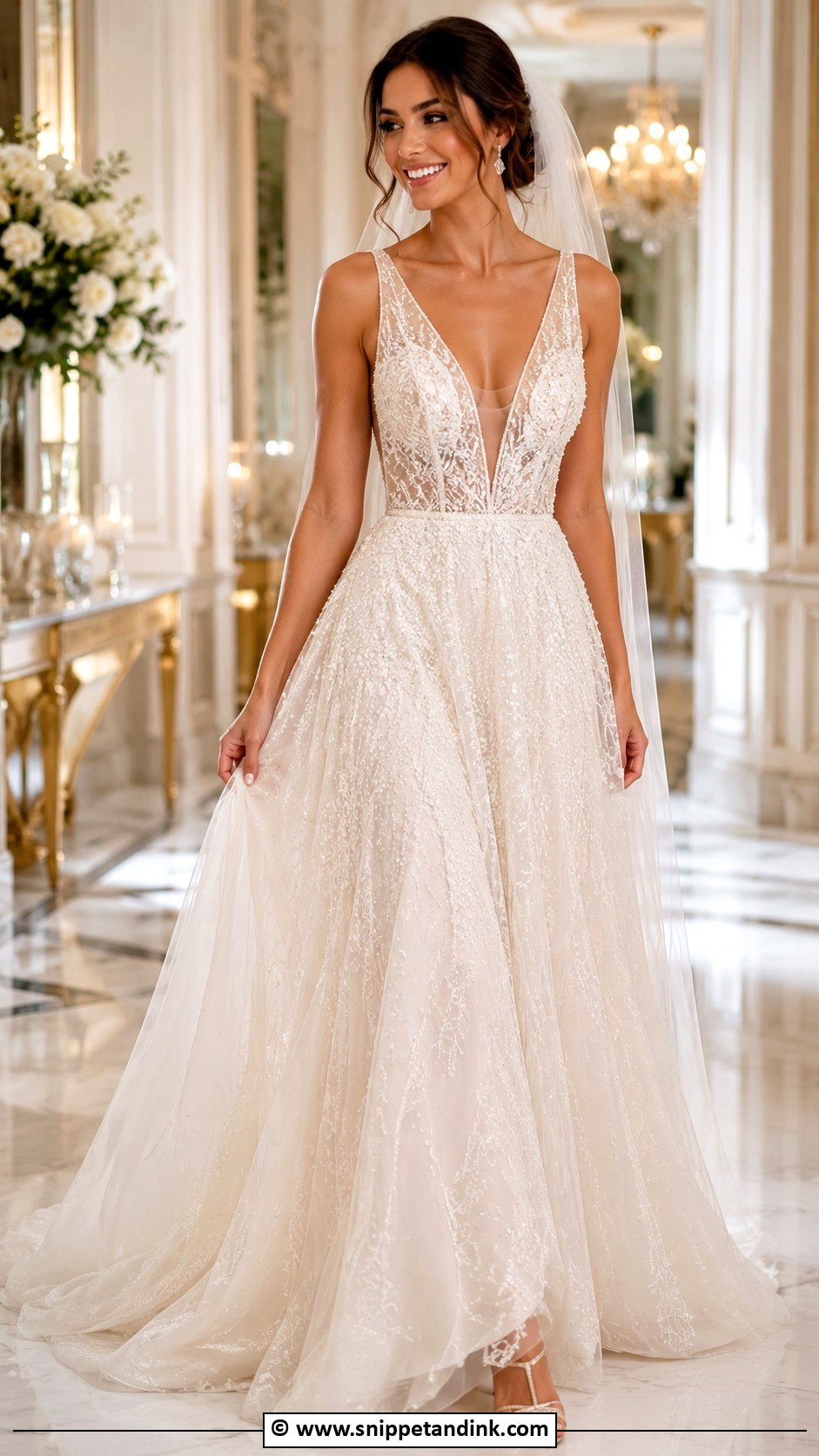
Beading catches light, and a V neckline breaks up the sparkle so the bodice doesn’t read as one solid sheet of shine. Tiny pearls or clear crystals feel subtle; art deco patterns feel much more glamorous. Heavily beaded bodices are heavy, and that weight pulls the V lower over the course of an evening, so ask about a waist stay and secure straps. Let the gown carry the shine with a simple veil and minimal jewellery. Fitted cuts feel glamorous for an evening reception; A-lines feel softer.
28. V Neck Wedding Dress With Floral Applique
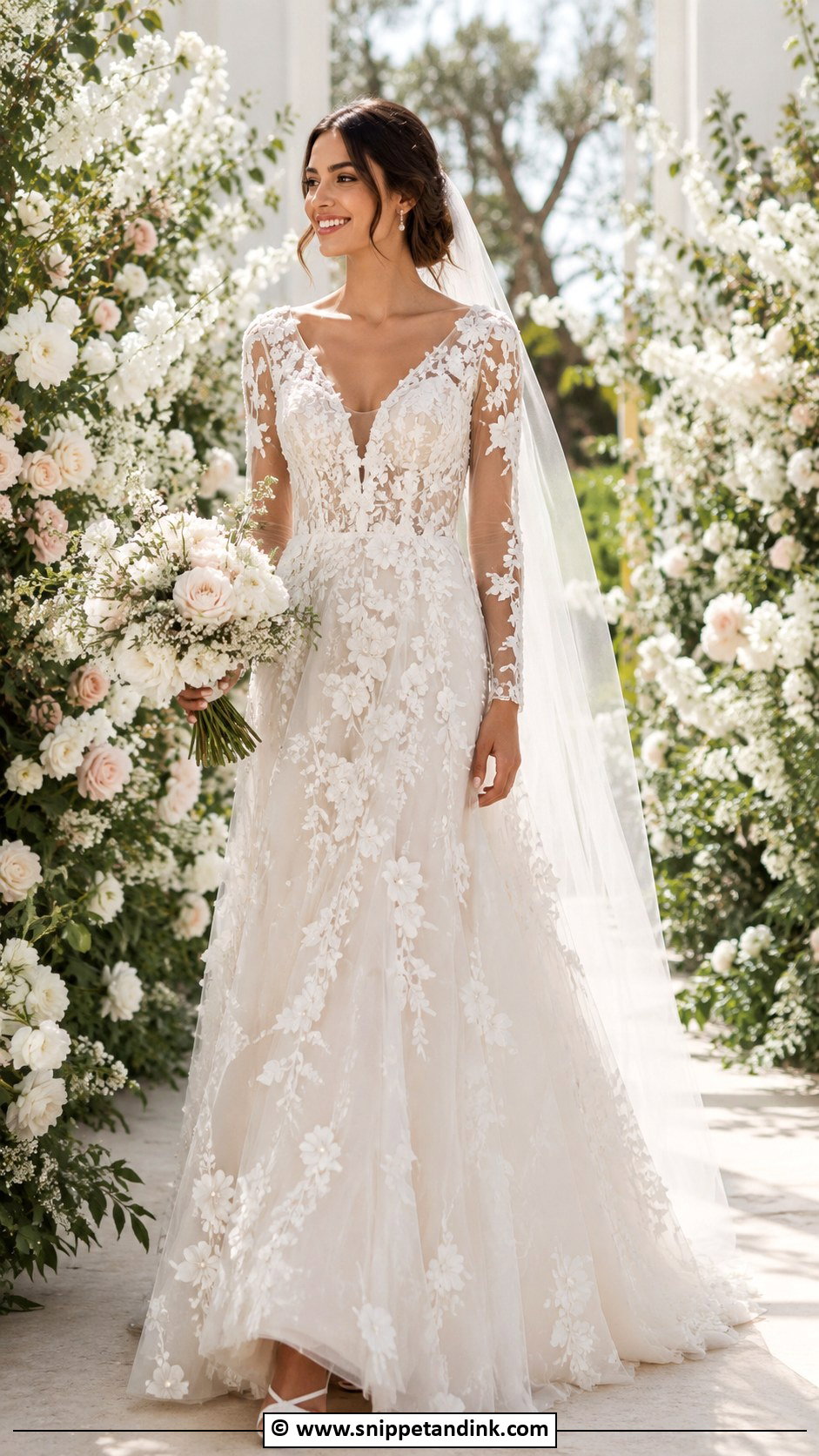
Appliqué gives a gown dimension, and placement decides the mood. Flowers scattered over sheer sleeves feel delicate; flowers massed on the bodice feel more dramatic. Because the V keeps the area near the face open, even fairly dense florals don’t crowd you. 3D blooms read modern, flat lace appliqué reads classic. Ask how the flowers are attached: hand-sewn appliqué survives hugs and dancing far better than glued pieces. Simple earrings and a soft veil let the texture lead.
29. Simple V Neck Wedding Dress
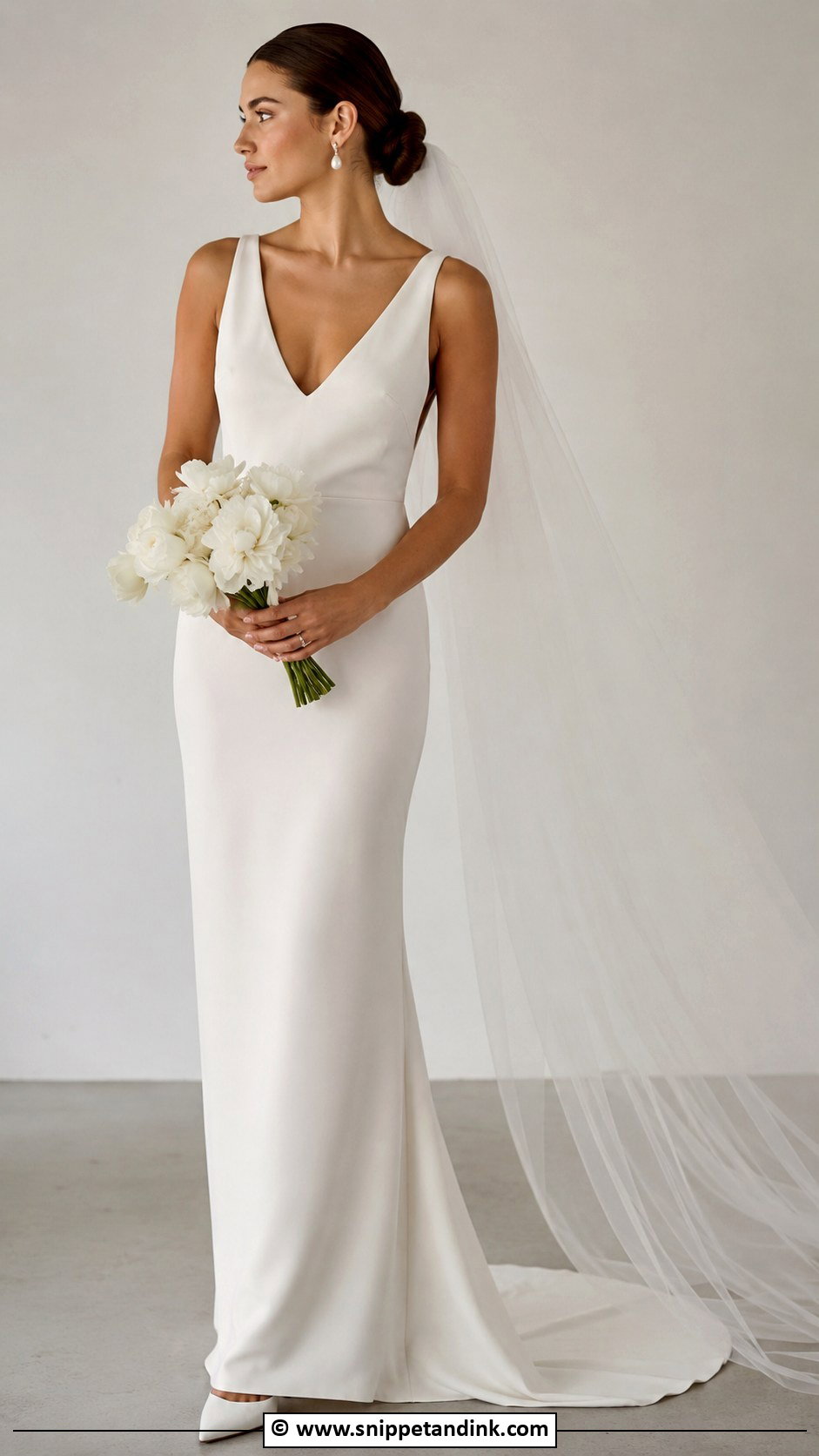
Minimal dresses are the hardest to get right, because there’s nothing to hide behind. Clean lines, smooth fabric and a well-placed V carry the whole look, so fit and fabric quality matter more here than anywhere else on this list. Satin, crepe and silk-style fabrics hold their shape best. Sheath, slip and A-line can all work depending on how much movement you want. I’d spend money on tailoring before accessories. Pearl earrings and a smooth veil are enough.
30. Vintage V Neck Wedding Dress
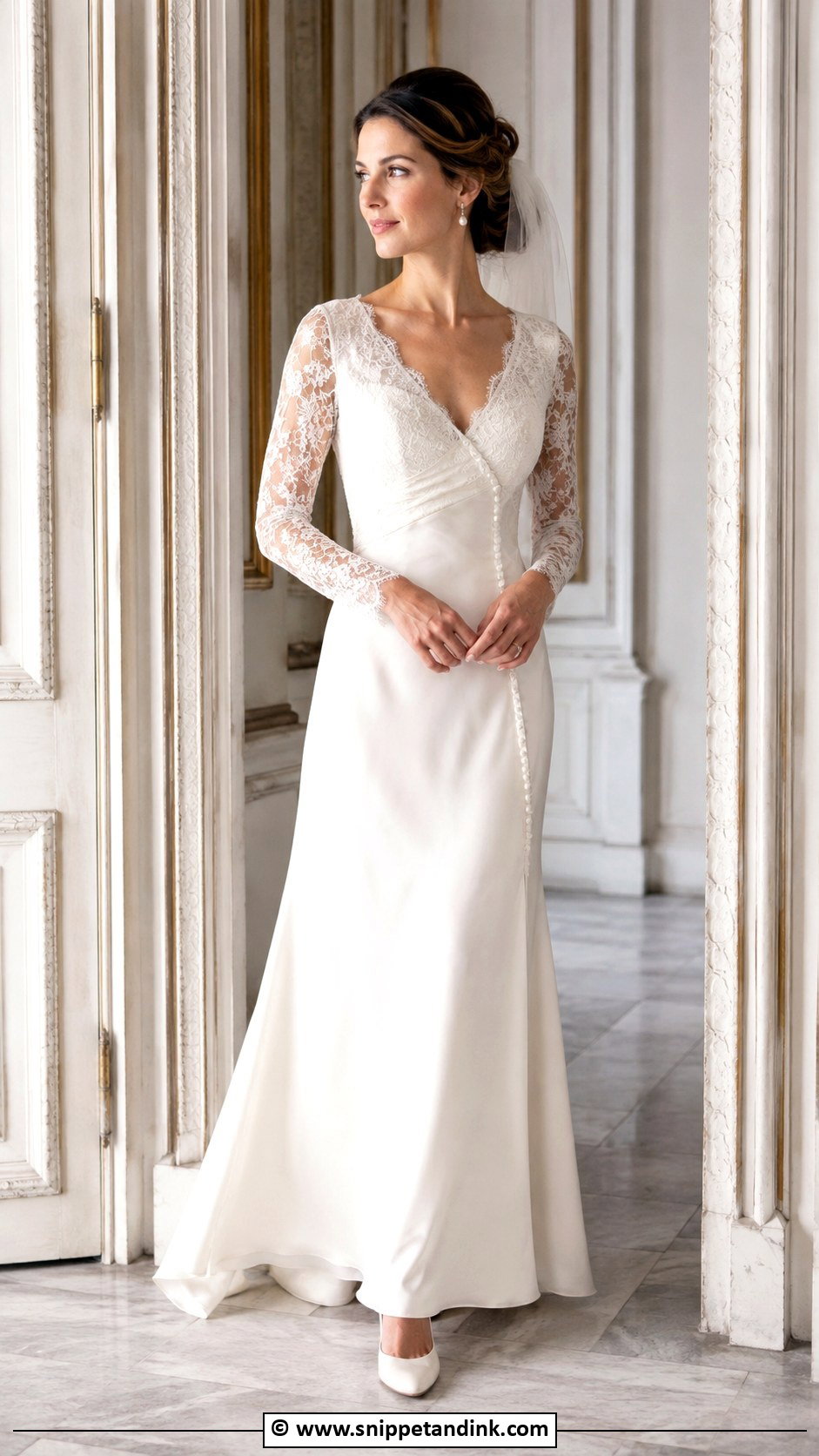
Vintage gowns bring history into the room, and a V neckline is common across several eras, so it feels authentic rather than forced. A slim bias-cut satin gown with soft draping nods to the 1930s; lace sleeves and a relaxed skirt point to the 1970s. Delicate lace, satin buttons and soft beading all fit. Genuine vintage pieces are often fragile at the seams and armholes, so have a specialist seamstress check them before any alteration. A short veil, pearl earrings and classic pumps finish it.
The Fitting Where Your Neckline Gets Finished
Most of what makes a V neckline look right happens in alterations, not in the shop. The usual problem I see is gaping: the edges stand away from the chest when the bride leans forward or turns. A seamstress fixes it by taking a small dart or easing the edge in along the neckline. That takes a few minutes of pinning but needs a skilled hand, especially on lace or beaded fabric.
Moves to make in the fitting room
- Sit down, then lean forward as if signing the register. Watch the point of the V.
- Hug someone, or lift both arms as though dancing. The straps and the edge should stay put.
- Bend at the knee to pick something up. This shows whether the bodice pulls away from you.
- Look at a phone photo taken from slightly above, the angle most guests will shoot from.
Bring the exact bra or adhesive you’ll wear, and your wedding shoes, to every fitting. Many salons suggest starting alterations about two to three months before the wedding, with a final fitting a couple of weeks out; timings vary by seamstress, so confirm yours when you order.
Matching Jewellery to the Point of the V
A necklace and a V neckline have to agree with each other. The rule I follow is simple: the necklace should either echo the V or stay well above it. A pendant that falls into the same V shape, sitting an inch or two above the point, looks planned. A round choker on a deep plunge cuts the long line the neckline was creating.
On a very deep V, or one with heavy lace or beading at the edge, I’d skip the necklace entirely and put the attention into earrings. Drops or a slim linear earring repeat the vertical line without crowding the neckline, and that bare chest looks more striking in portraits than any chain.
Thirty Necklines, One Question: How Deep Feels Like You?
Trends move fast, but how a dress feels when you move, sit and laugh lasts much longer. The same V neckline can be modest, dramatic, sleek or vintage depending on its depth, its fabric and how it’s held up. Think about your venue, your season, the support you need and the photos you’ll keep. Try at least one neckline you’d never pick off a hanger. Somewhere among these thirty is a dress that feels like you on your special day.
You'll Like These Ideas:




Leave a Reply