
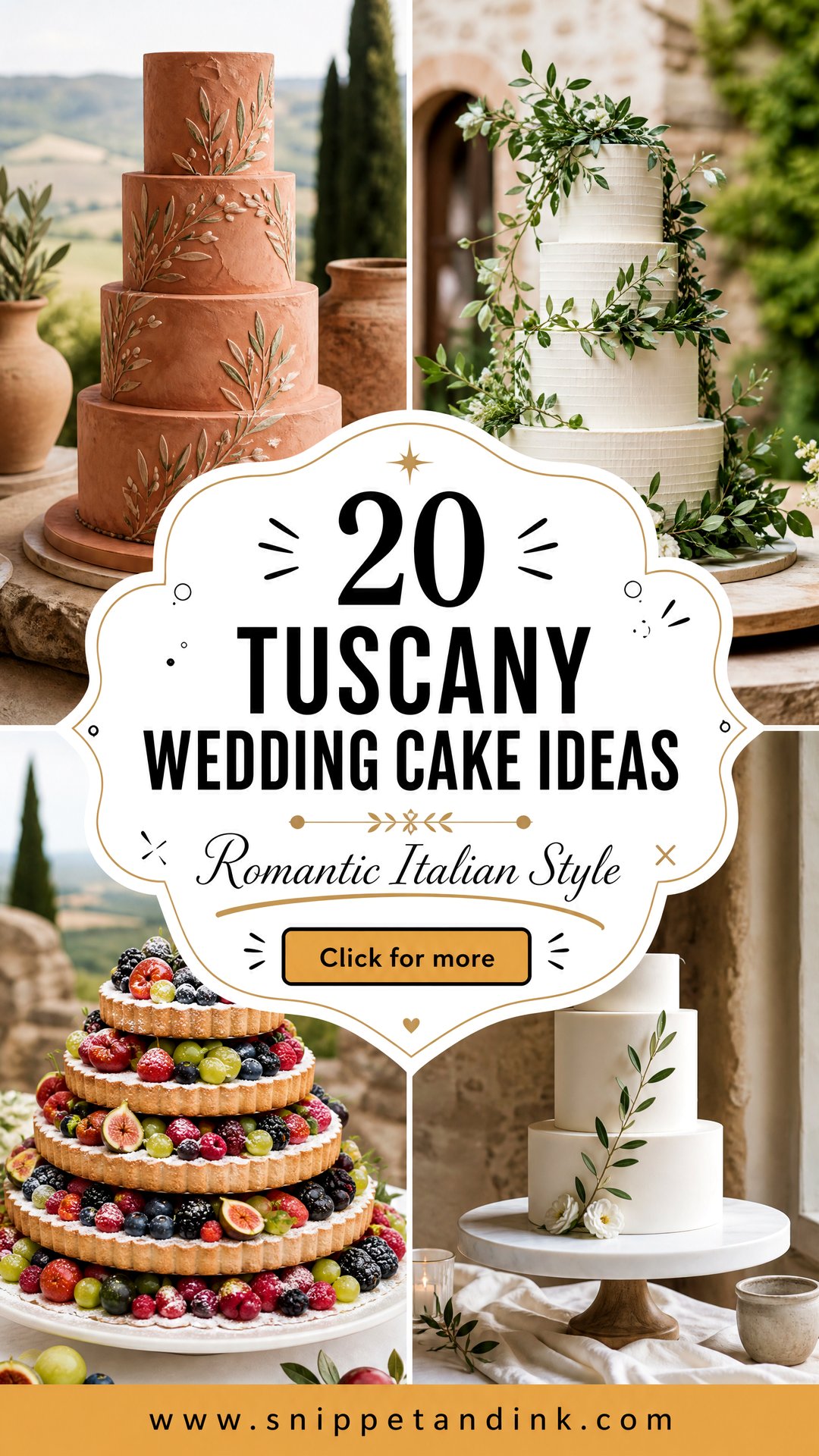
A cake for a Tuscan wedding has a harder job than it looks. It has to sit outside on a stone terrace in late afternoon heat, share the table with olive branches and linen, and still taste like something an Italian guest would recognise. The designs I like best for this setting are underdressed on purpose: a lemon sponge, a semi-naked finish, a few figs, pressed petals, or a millefoglie built just before it goes out. Below are twenty directions with a nod to classic Italian elegance, plus what each one asks of the baker, the weather and your timeline.
How Buttercream, Cream and Pastry Behave in a Villa Afternoon
Before anyone falls for a design, I ask where the cake will stand and for how long. An Italian summer afternoon is hot and dry, and a terrace in direct sun is the worst place for any cake. American-style buttercream made with butter starts to slump in the high twenties Celsius; Swiss or Italian meringue buttercream is silkier but no more heat proof. Cream fillings and mascarpone need to stay cold for food safety as much as for looks.
So the realistic plan is usually this. The cake stays in a cool room or fridge until the reception, it goes out in shade, and it is cut within an hour or two of being displayed. If your planner wants it on show all evening, I’d suggest a display tier in fondant with a cutting cake kept chilled in the kitchen.
Leaves, flowers and fruit that touch the cake
- Olive and bay leaves should be unsprayed, washed and dried, with stems wrapped in floral tape or set in a food-safe pick.
- Edible blooms such as violas, roses and cornflowers need to be grown for eating, not bought from a florist’s bucket.
- Supermarket lemons are often waxed; I scrub them or use dried slices.
- Cut fruit goes on last, ideally at the venue, so juice doesn’t bleed into frosting.
1. Tuscany Millefoglie Wedding Cake
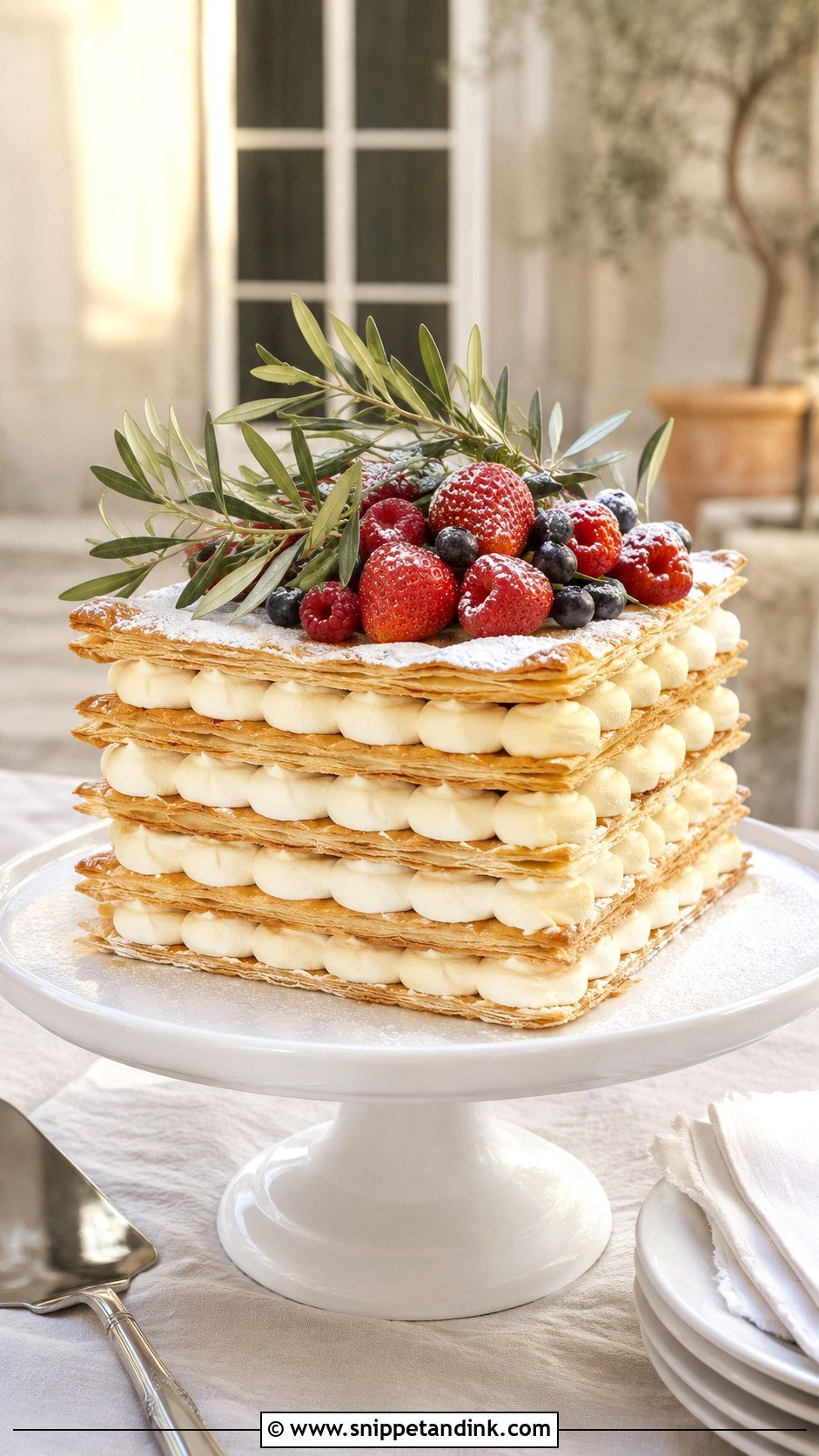
Millefoglie is the cake I’d point anyone to first if the reception is truly Italian, because it is what many families there actually serve. Crisp puff pastry sheets are layered with crema pasticcera or Chantilly and finished with berries or seasonal fruit. The catch is timing. Pastry starts softening the moment cream touches it, so I assemble it as close to serving as the venue allows, ideally on site. A dusting of powdered sugar and a few olive leaves at the base is all it needs.
2. Tuscany Olive Branch Wedding Cake
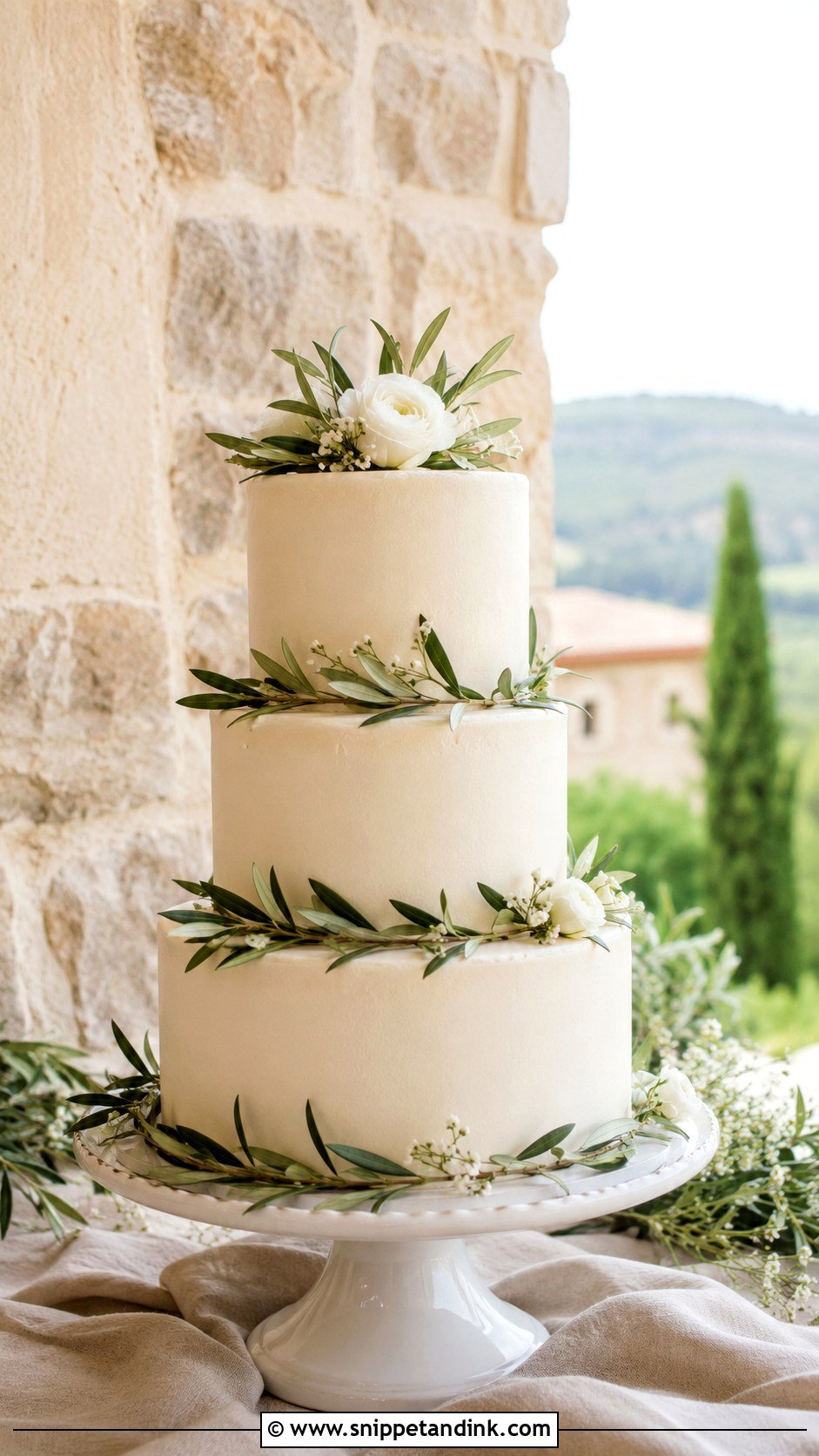
Olive branches do a lot of quiet work on a cake. Their silver-green reads as Tuscany instantly, and the narrow leaves never overwhelm a tier the way a big bloom can. I usually put them on smooth ivory buttercream or fondant, stacked plainly, with the stems tucked loosely so they look cut from a tree rather than arranged. Add a couple of white roses if you want softness, or leave the olive alone. Against old stone walls and warm evening light, the grey-green holds its colour better than most greenery.
3. Tuscany Lemon Wedding Cake
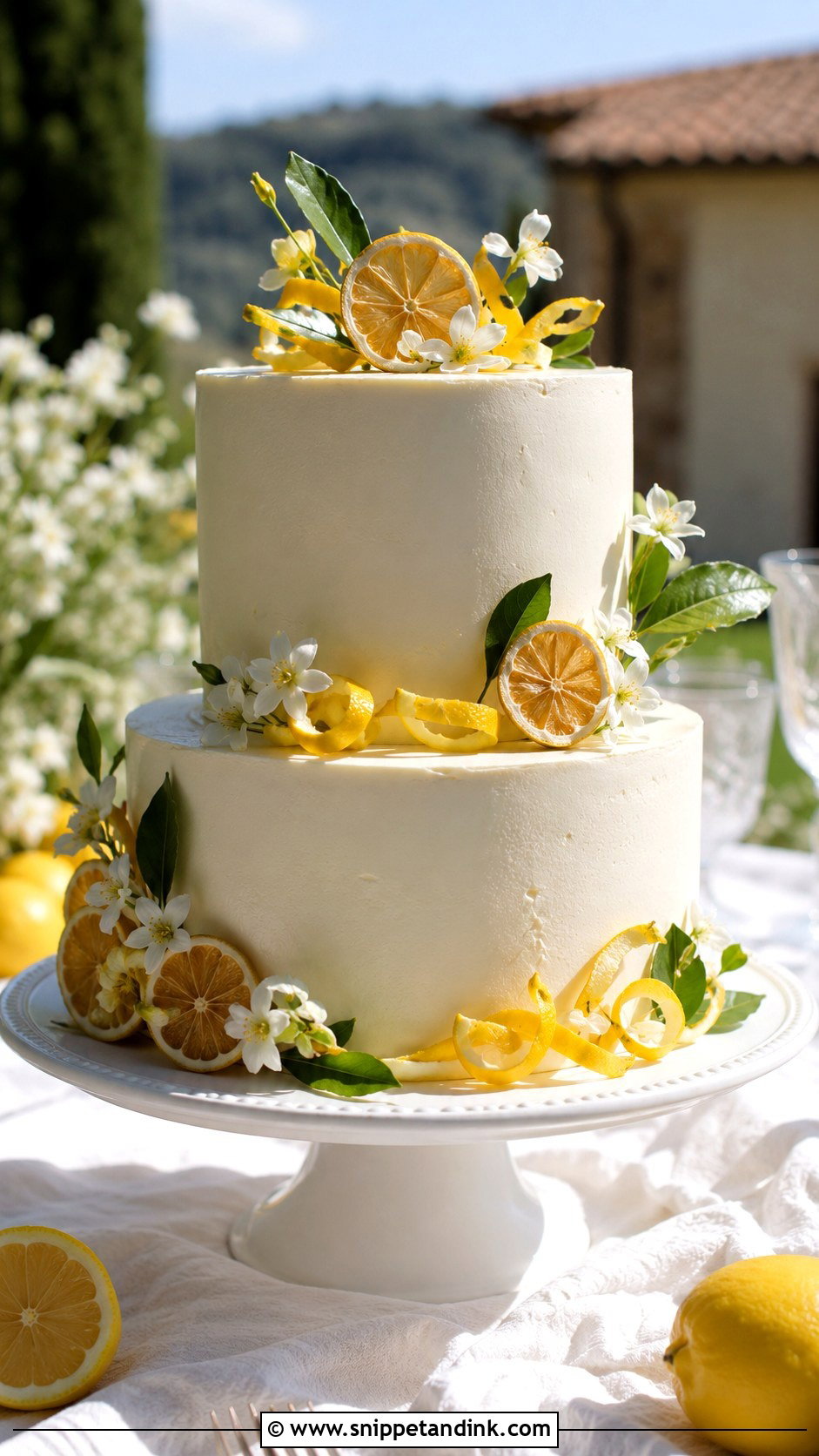
Lemon is the flavour I get asked for most for summer villa weddings, and for good reason: it cuts through a heavy dinner. A lemon olive oil sponge stays moist longer than a butter sponge in dry heat, and a layer of curd adds sharpness. Outside, I keep it to white buttercream with a few dried lemon wheels and small white flowers. One warning: fresh lemon slices weep juice onto frosting within a few hours, so I use dried or candied slices on anything that will sit out.
4. Tuscany Rose Wedding Cake
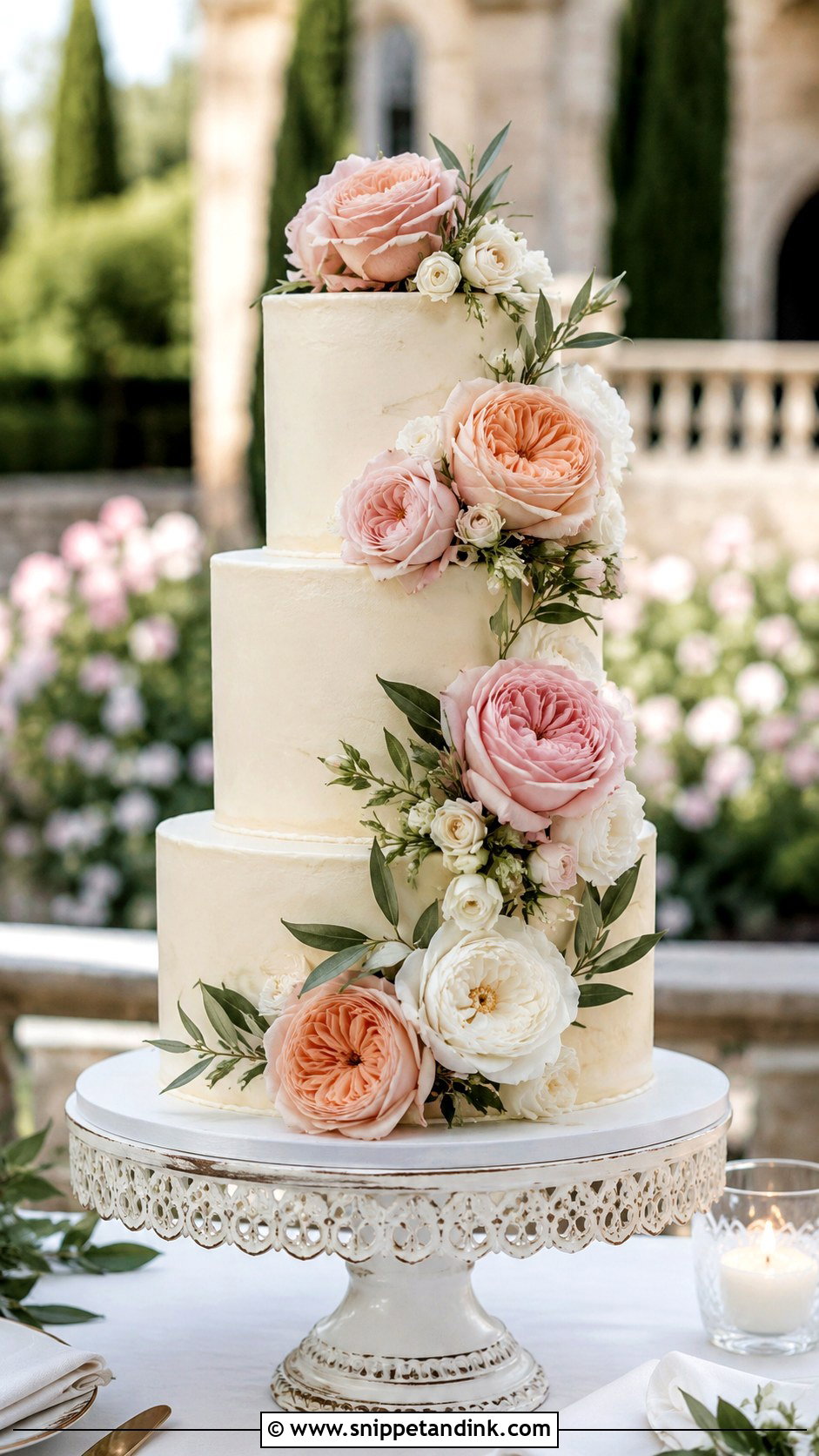
Garden roses in blush, peach or dusty pink give you romance without the formality of a tight rose cascade. I place them where they would fall naturally: trailing down one side, tucked between tiers, or loose around the base. Ask your florist for blooms grown without systemic pesticides, and I’ll wrap or seal every stem before it touches the cake. Vanilla, almond or a light berry sponge suits the soft palette inside.
5. Tuscany Semi Naked Wedding Cake
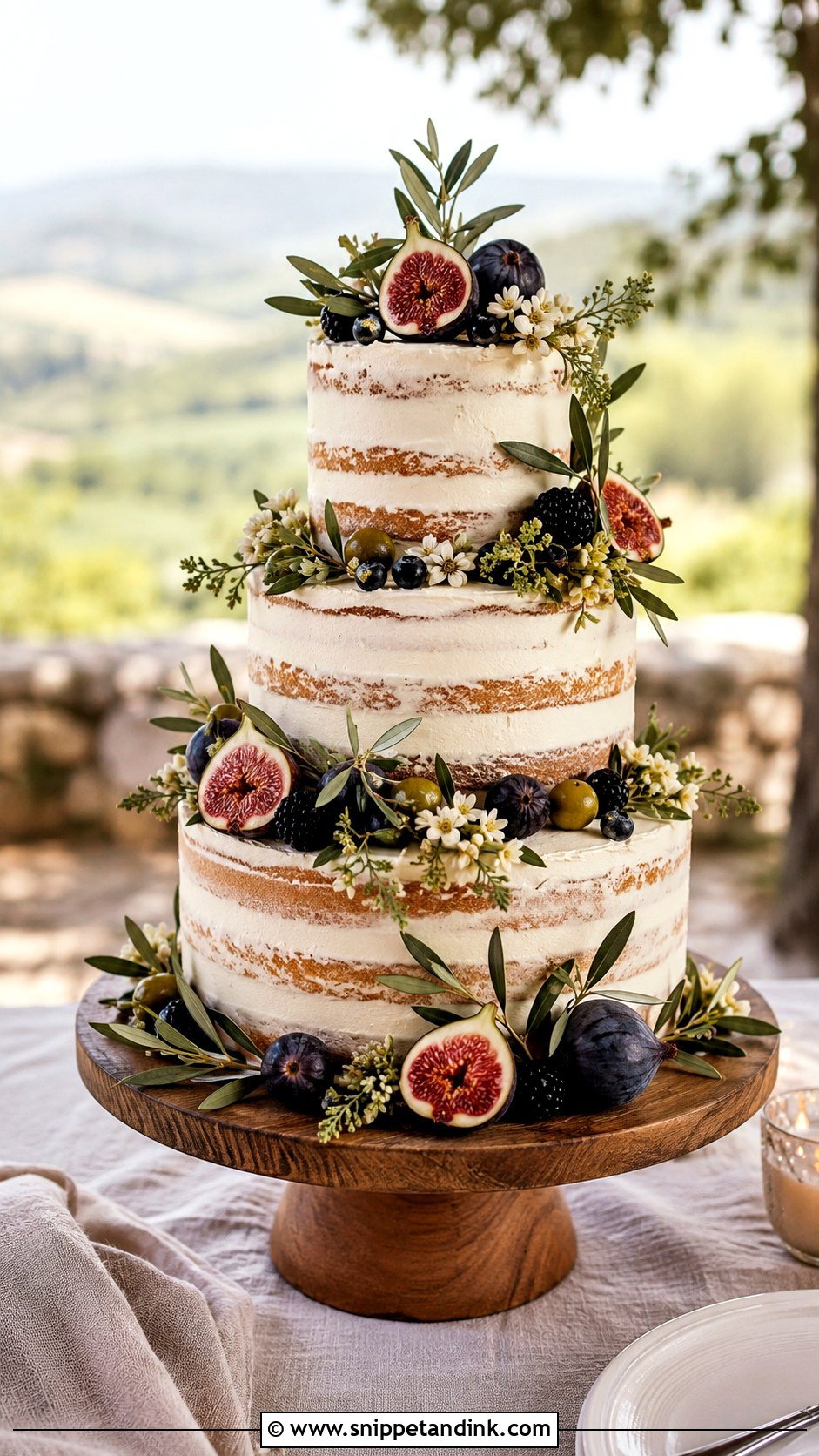
The thin scraped coat on a semi naked wedding cake lets the golden sponge peek through, which suits a countryside setting far better than a glossy finish. That exposed sponge is also its weak point. It dries out faster in warm, breezy air, so I soak the layers with a light syrup and don’t stack it until the day. Figs, berries or olive leaves finish it. On a plain wooden or stone stand it looks relaxed but still considered.
6. Tuscany Fig Wedding Cake
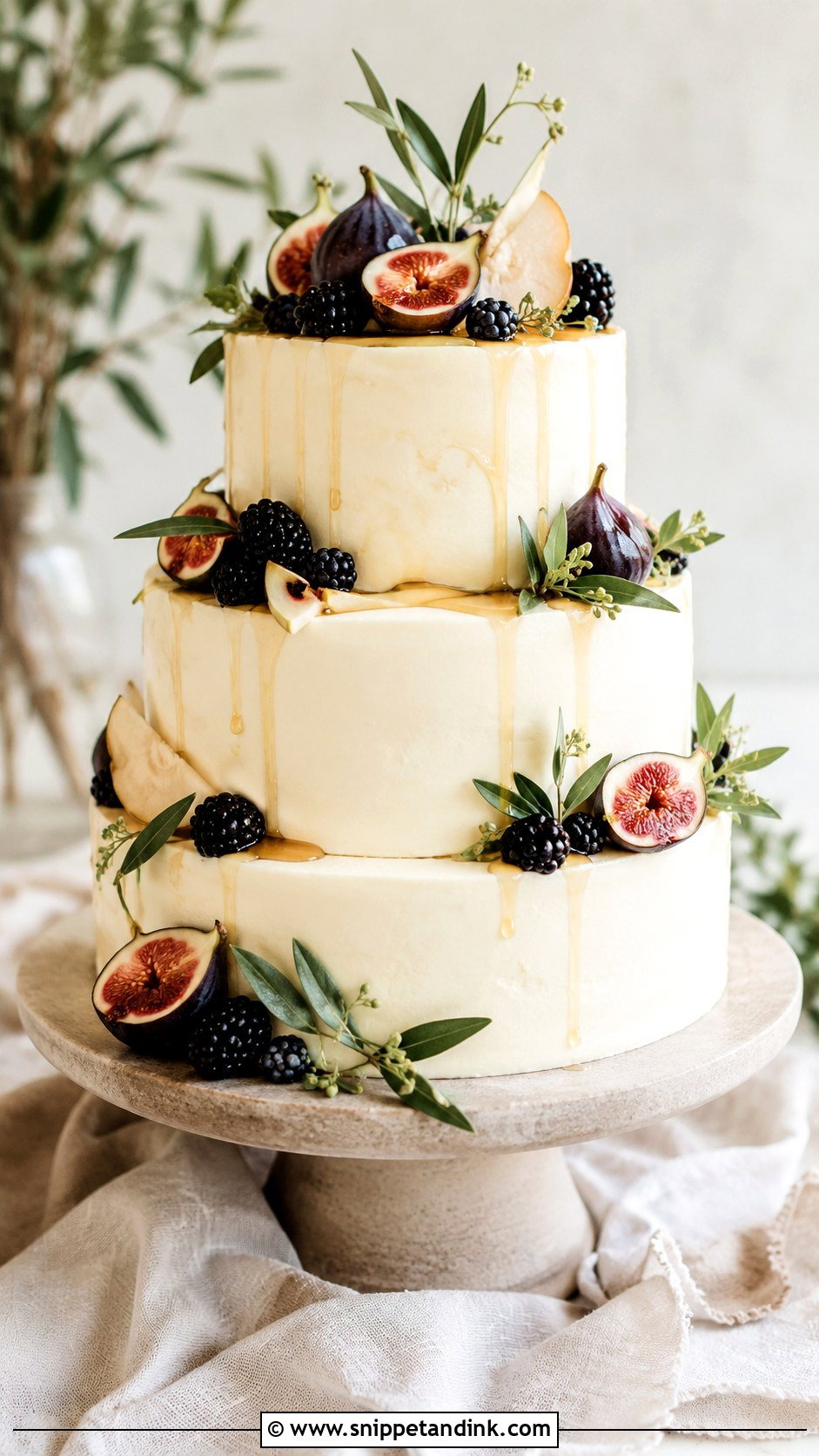
Figs are at their best from late summer into early autumn, which makes this the cake I steer September couples toward. Halved fresh figs show deep purple and honey tones that look rich against ivory buttercream. I cut them as late as possible, since the cut face darkens and softens after a few hours, and a thin brush of warmed apricot glaze keeps them glossy. Blackberries, pears or a drizzle of honey pair well. Inside, honey, almond or a gently spiced sponge suits the season better than anything too light.
7. Tuscany Terracotta Wedding Cake
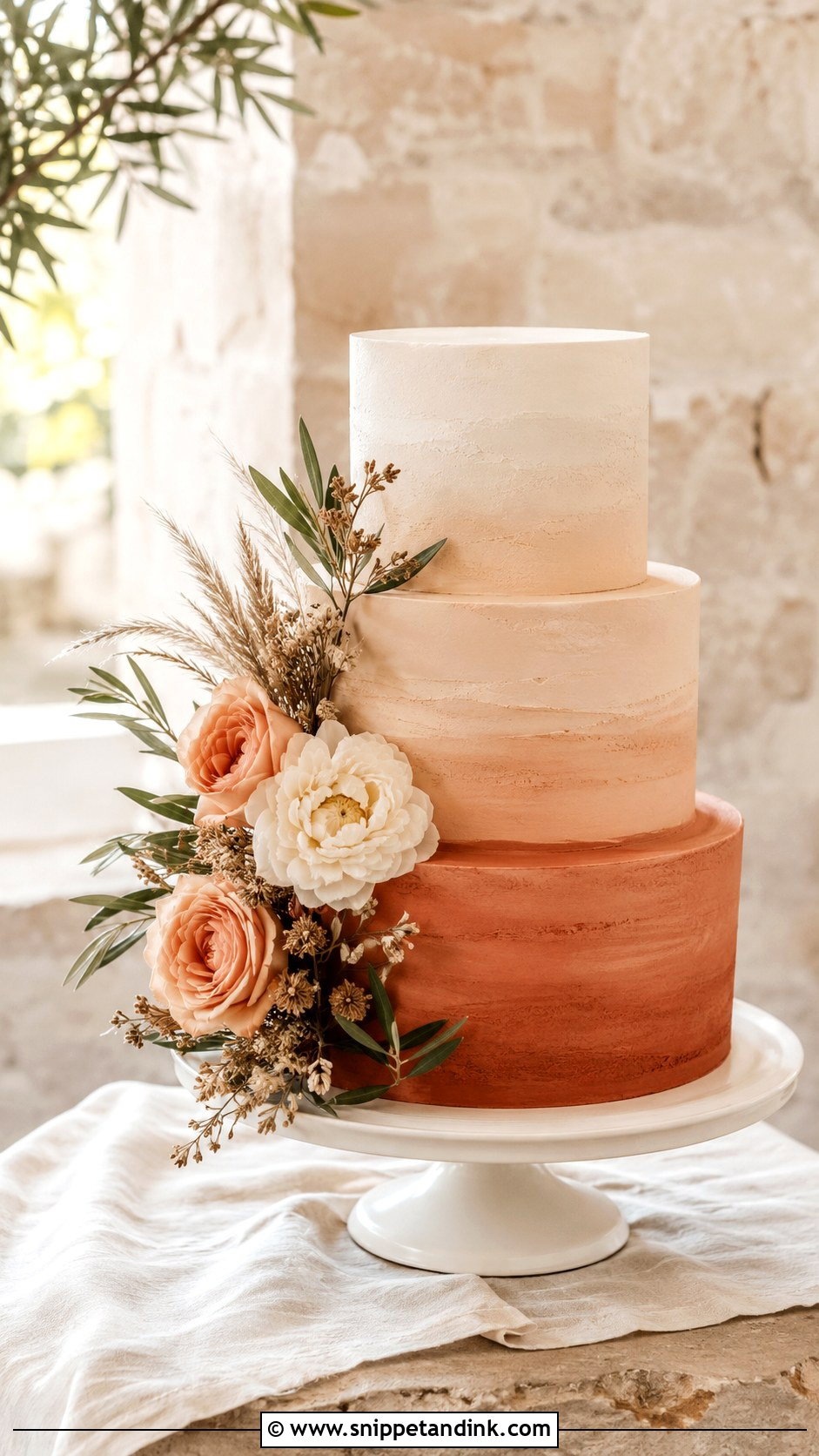
Terracotta works when it is muted. Think clay, soft rust and peach, not the bright orange of a pot fresh from the garden centre. I mix those shades into buttercream in small batches, because strong colour in frosting can deepen as it sits and look much darker by evening than it did at noon. The cake can be fully coloured, ombré, or mostly ivory with terracotta flowers. It pairs naturally with earthy linens and stone, and it won’t date as quickly as a seasonal trend colour.
8. Tuscany White Buttercream Wedding Cake
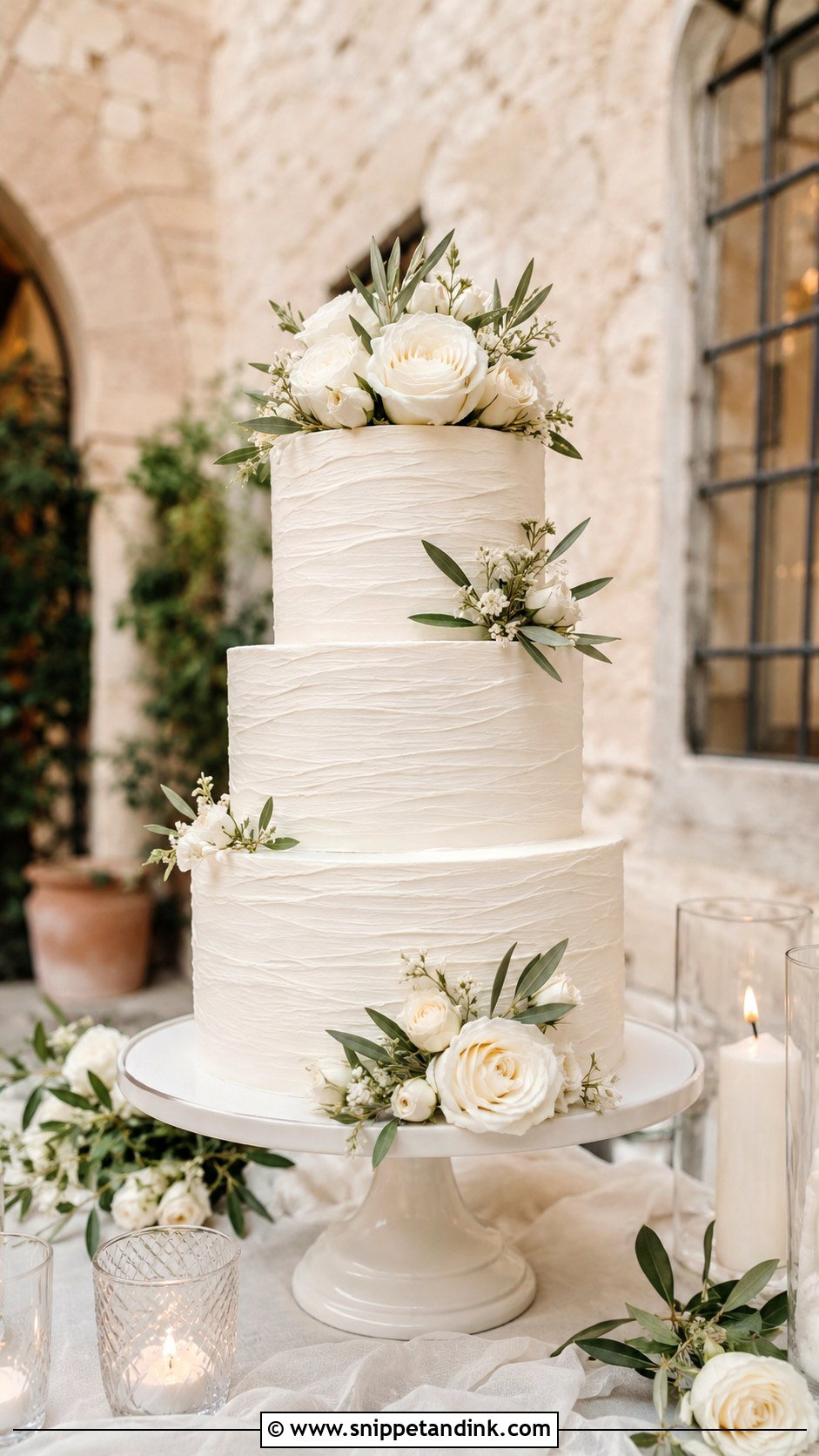
Plain white buttercream sounds like the safe option, but in a Tuscan setting it depends entirely on texture. I decide the finish with the couple: rough palette knife strokes for a farmhouse dinner, a smooth coat with fine piping for a formal villa. Then one link to the setting, maybe olive leaves or a few small fruits. Mascarpone or lemon fillings sit well under it. It’s the cake that lets your tablescape lead.
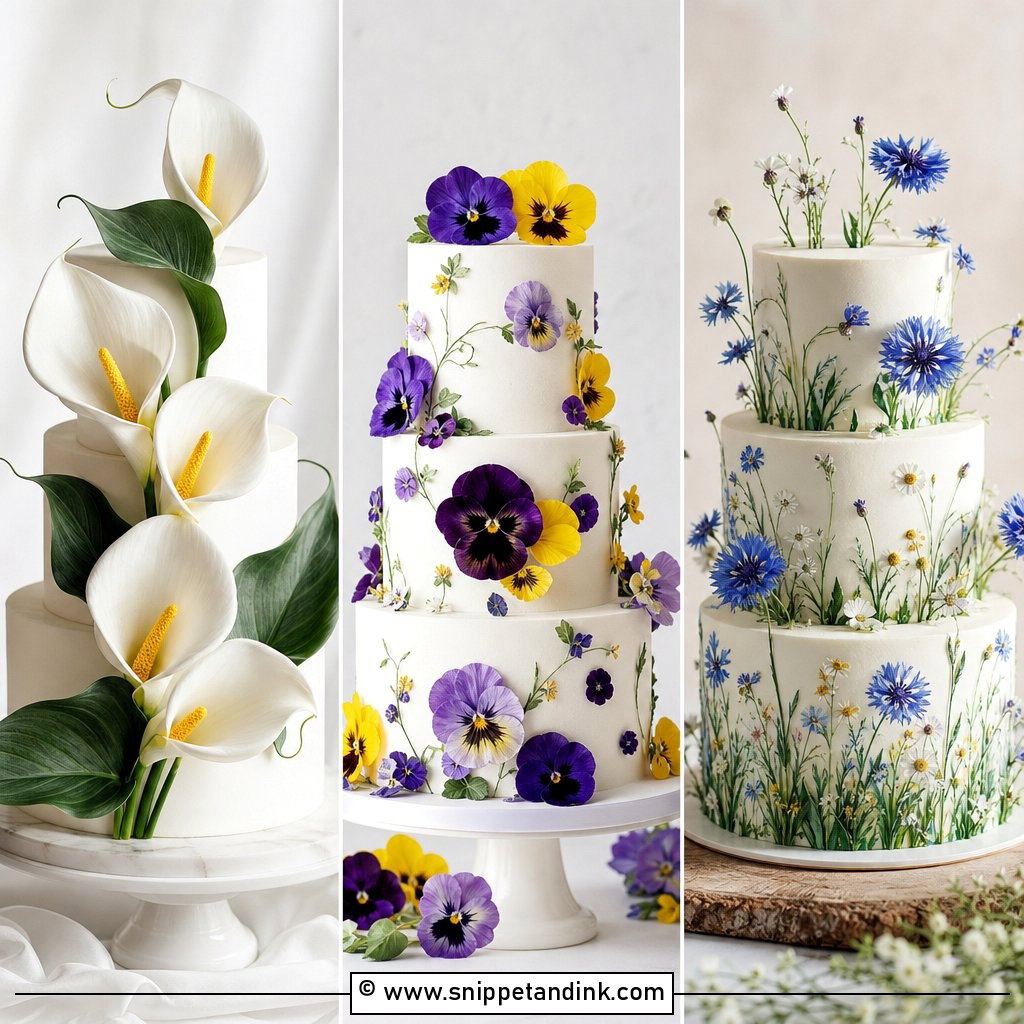
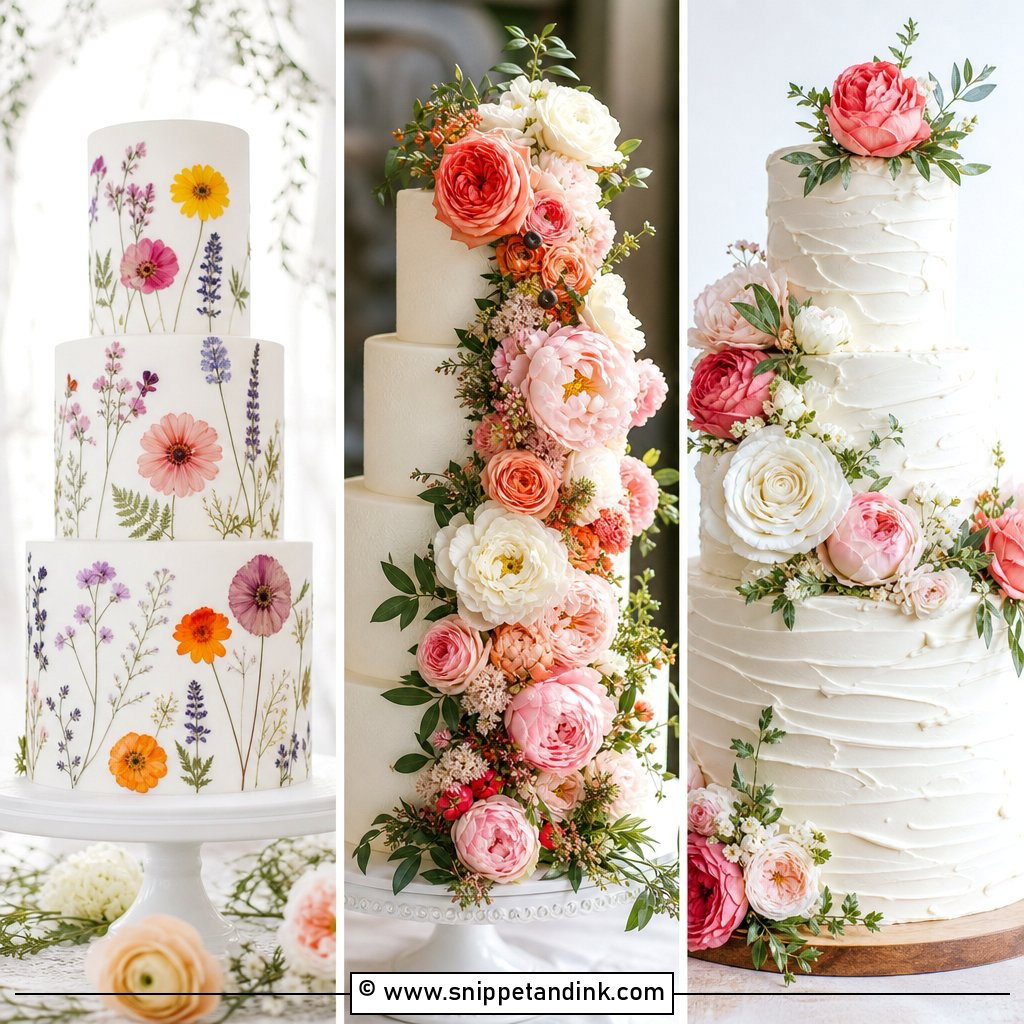
9. Tuscany Pressed Flower Wedding Cake
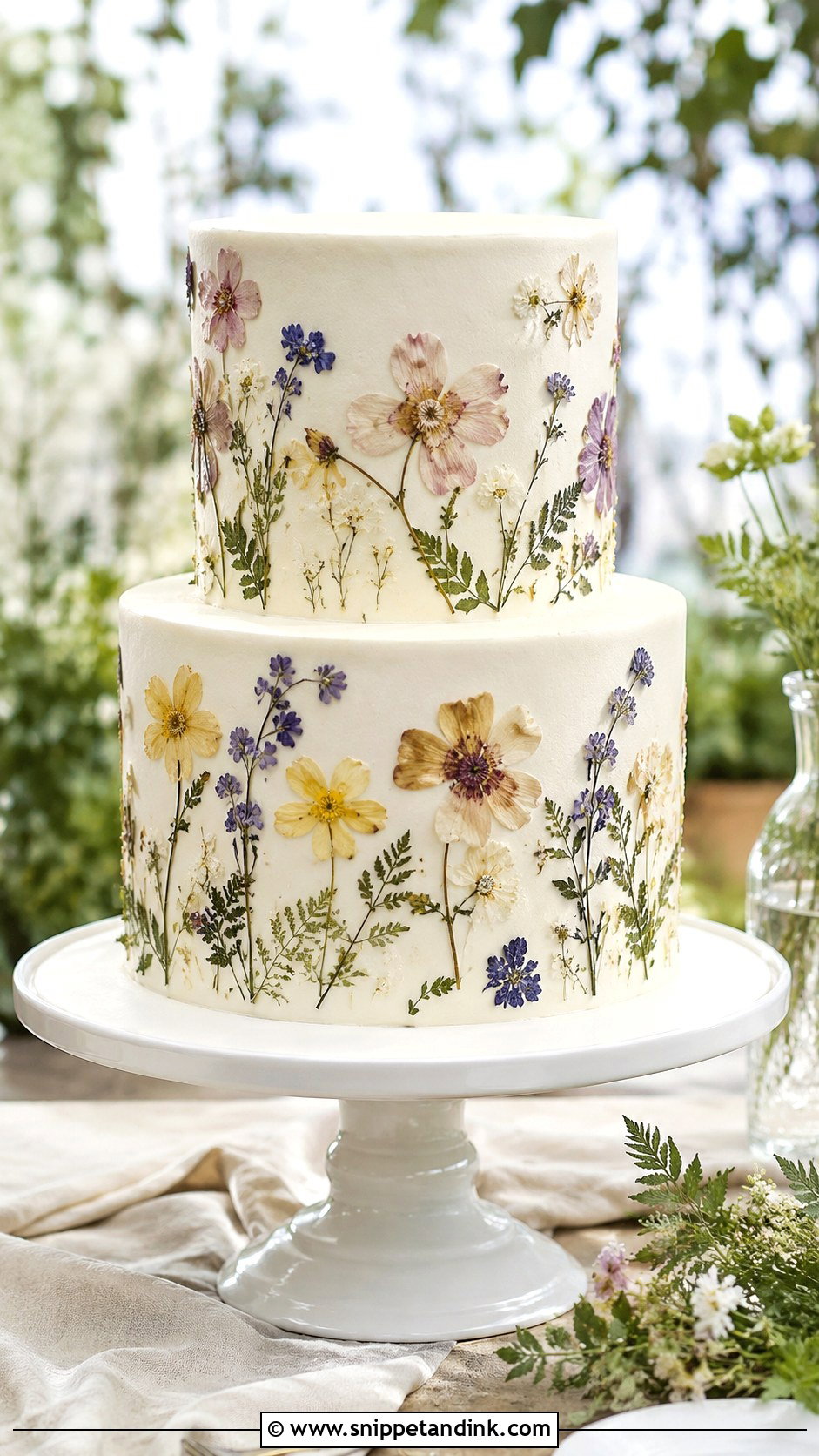
Pressed flowers give a handmade, almost botanical-print feel. I press edible blooms like violas, pansies and cornflowers myself, then lay them onto chilled buttercream so they stick flat without sliding. Spacing changes the mood completely: scattered reads vintage, a neat frame reads modern. Stick to muted ivory, blush, pale yellow and lavender, and keep the base plain so the petals stay visible. A light sponge with lemon filling matches how delicate it looks.
10. Tuscany Greenery Wedding Cake
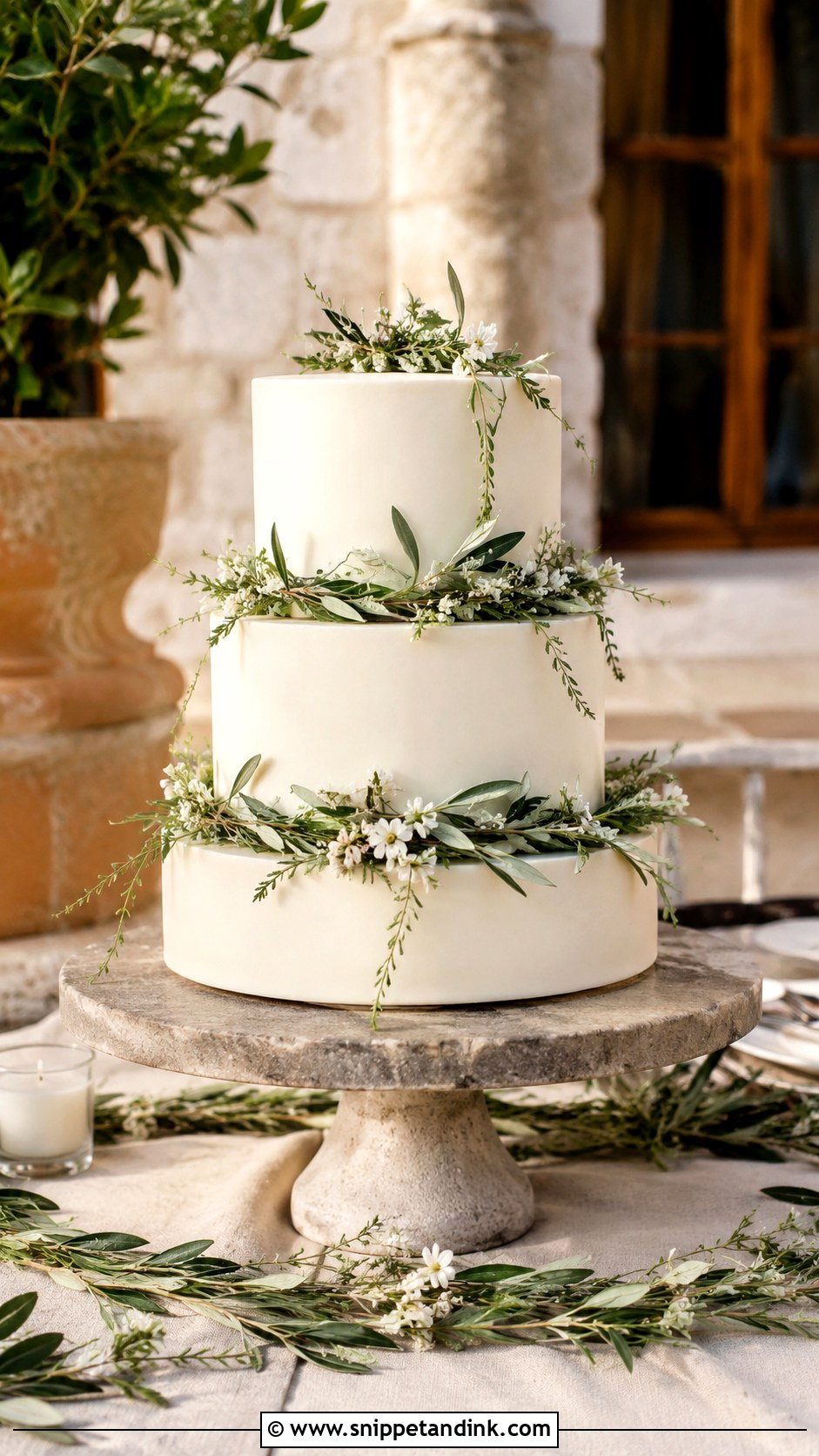
If your venue is already full of greenery, a leafy cake ties in without adding one more flower colour. Olive, bay, rosemary sprigs or trailing vines can wrap around tiers or sit between them. Be careful with eucalyptus, which is not food safe; I only use it on dummy tiers or fully separated from the cake. The base should stay simple and clean edged, ivory buttercream or fondant, so the leaves give the texture. By candlelight on linen and wood it looks calm and balanced.
11. Tuscany Gold Leaf Wedding Cake
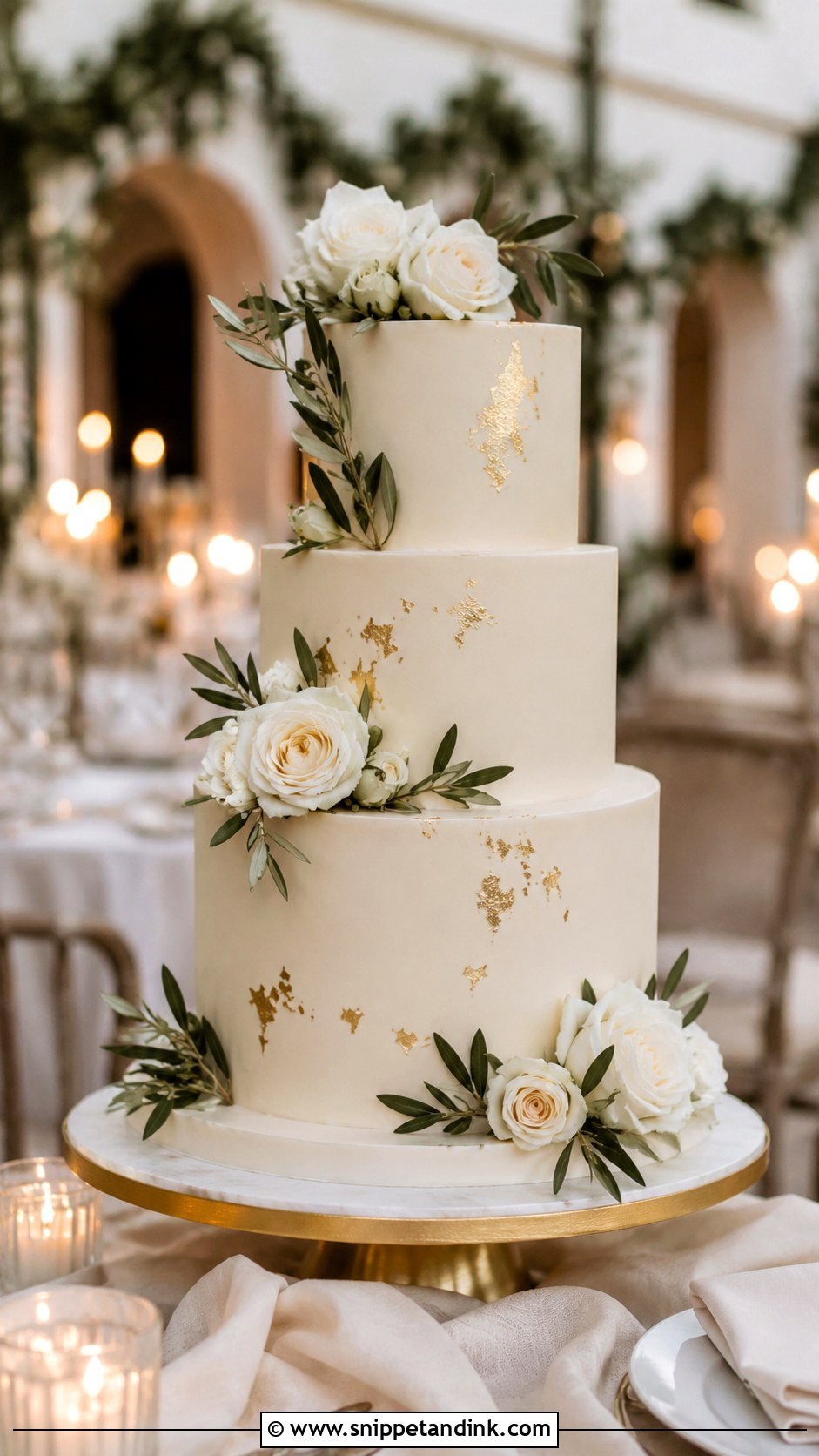
Edible gold leaf is fragile stuff. It sticks to fingers, drifts in the slightest breeze, and I apply it with a soft brush onto a chilled, slightly tacky surface. Used in patches on ivory buttercream or fondant, it catches candlelight without looking flashy. It sits well beside white roses, olive leaves and neutral flowers. This is the evening-reception option. Almond, honey or lemon flavours keep the taste soft and Italian.
12. Tuscany Almond Wedding Cake
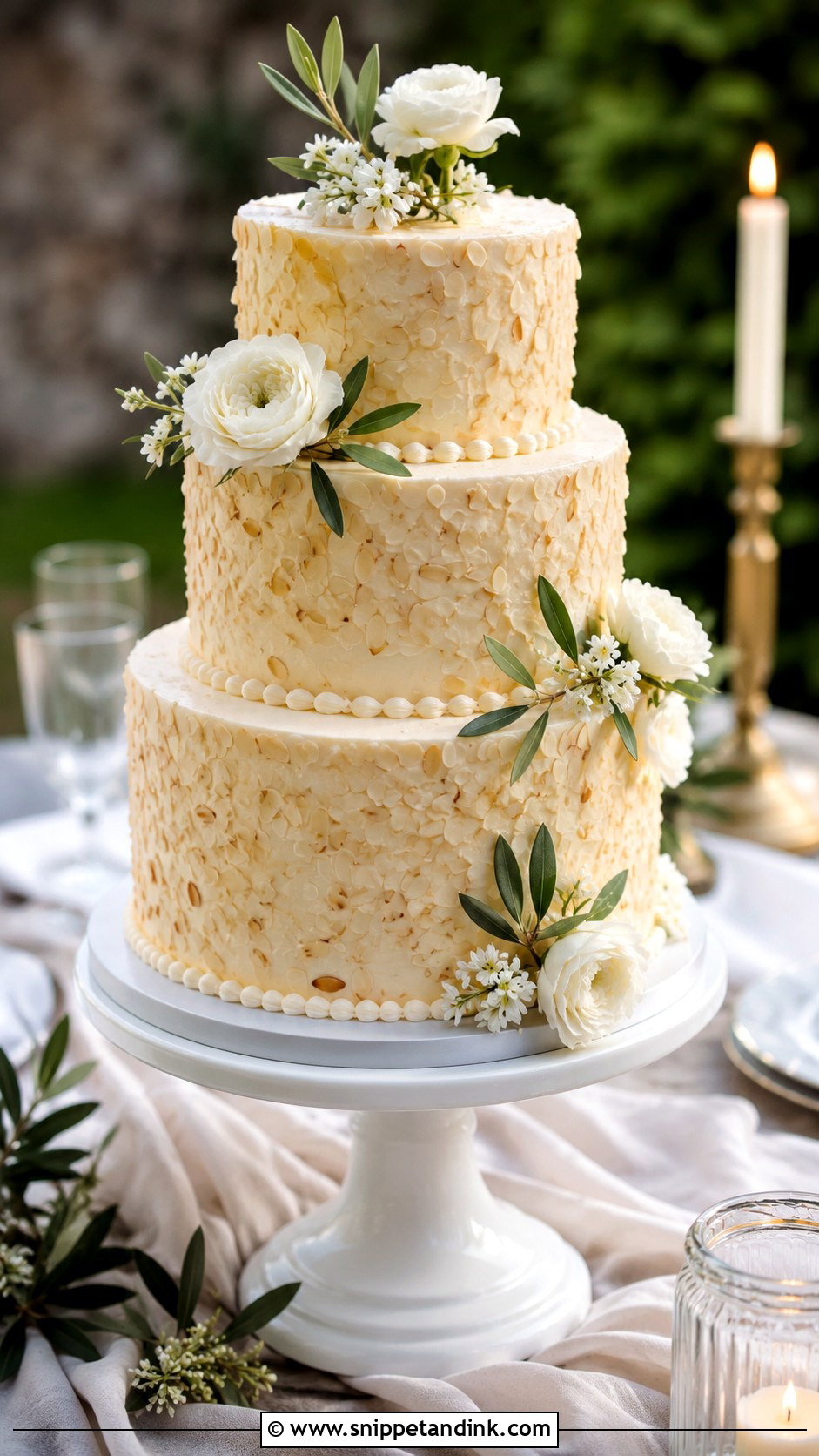
Almond is a flavour choice more than a look, and a good one for a Mediterranean menu, where almond pastries are everywhere. The sponge pairs well with mascarpone cream, vanilla buttercream, lemon curd or a berry filling. Outside I keep it classic: ivory frosting, toasted sliced almonds pressed around the base, white flowers and a few olive leaves. Please check your guest list for nut allergies before committing. If someone at the wedding has one, I’d suggest a separately boxed alternative slice or a different flavour altogether.
13. Tuscany Tiramisu Wedding Cake
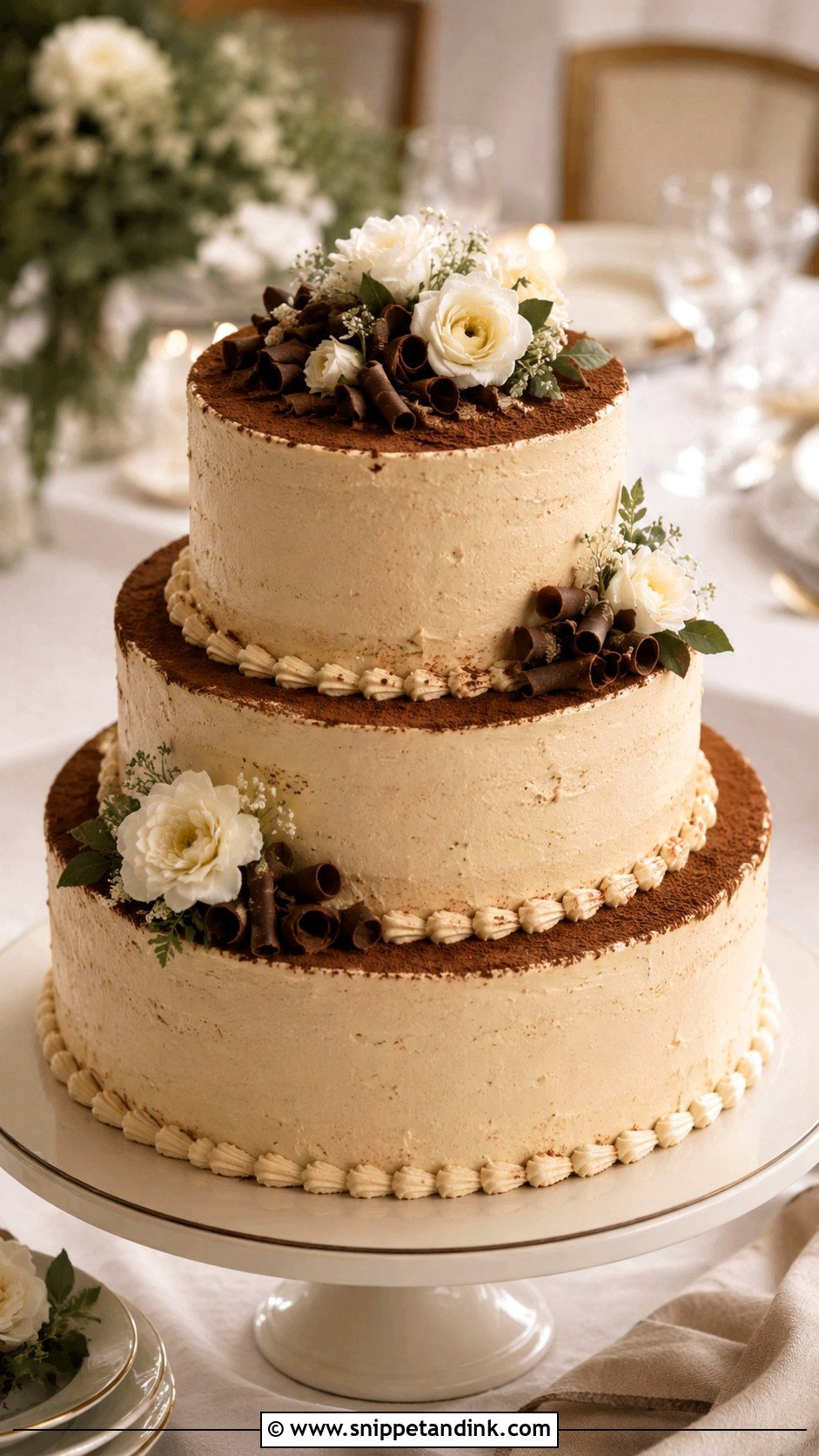
A Tuscany tiramisu wedding cake rebuilds the dessert in tiers: coffee-soaked sponge, mascarpone cream and a cocoa top. Mascarpone cream is softer than buttercream, so I support each tier with dowels and keep the cake chilled until shortly before it’s cut. In real heat it is not the cake for a long outdoor display. Dust the cocoa at the venue, not before transport, or it smudges. It suits intimate dinners where guests eat it soon after it comes out.
14. Tuscany Berry Wedding Cake
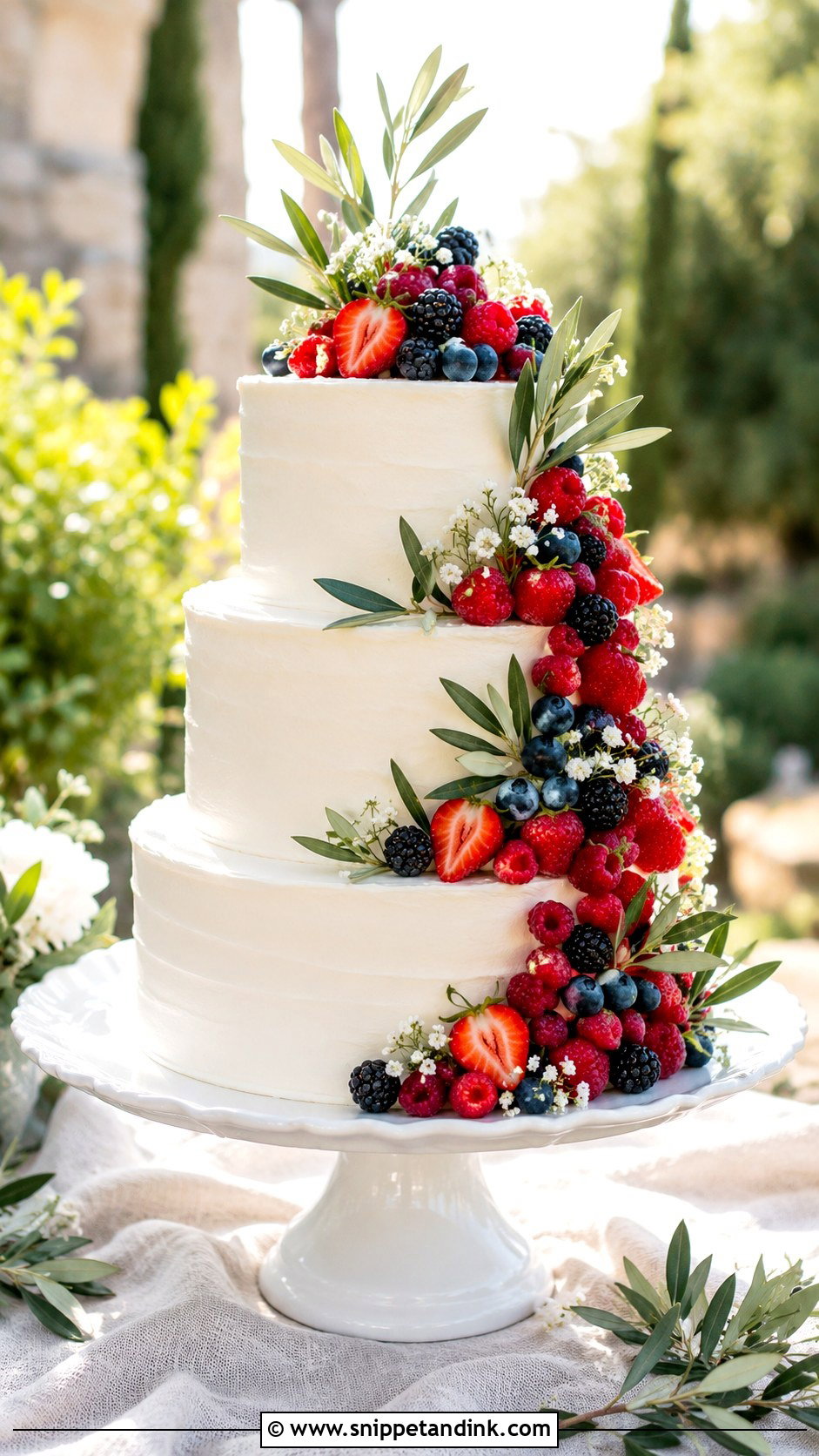
Mixed berries bring colour that looks freshly picked against ivory frosting. The trick I use is to keep berries dry and to add them last, because cut or washed fruit bleeds juice into buttercream and leaves pink streaks. Arrange them between tiers, around the base, or down one side, with a few olive leaves or white flowers so it looks styled. Vanilla, lemon, almond or mascarpone fillings all work. For an outdoor summer reception, it feels light and needs no complicated decoration.


15. Tuscany Pearl Wedding Cake
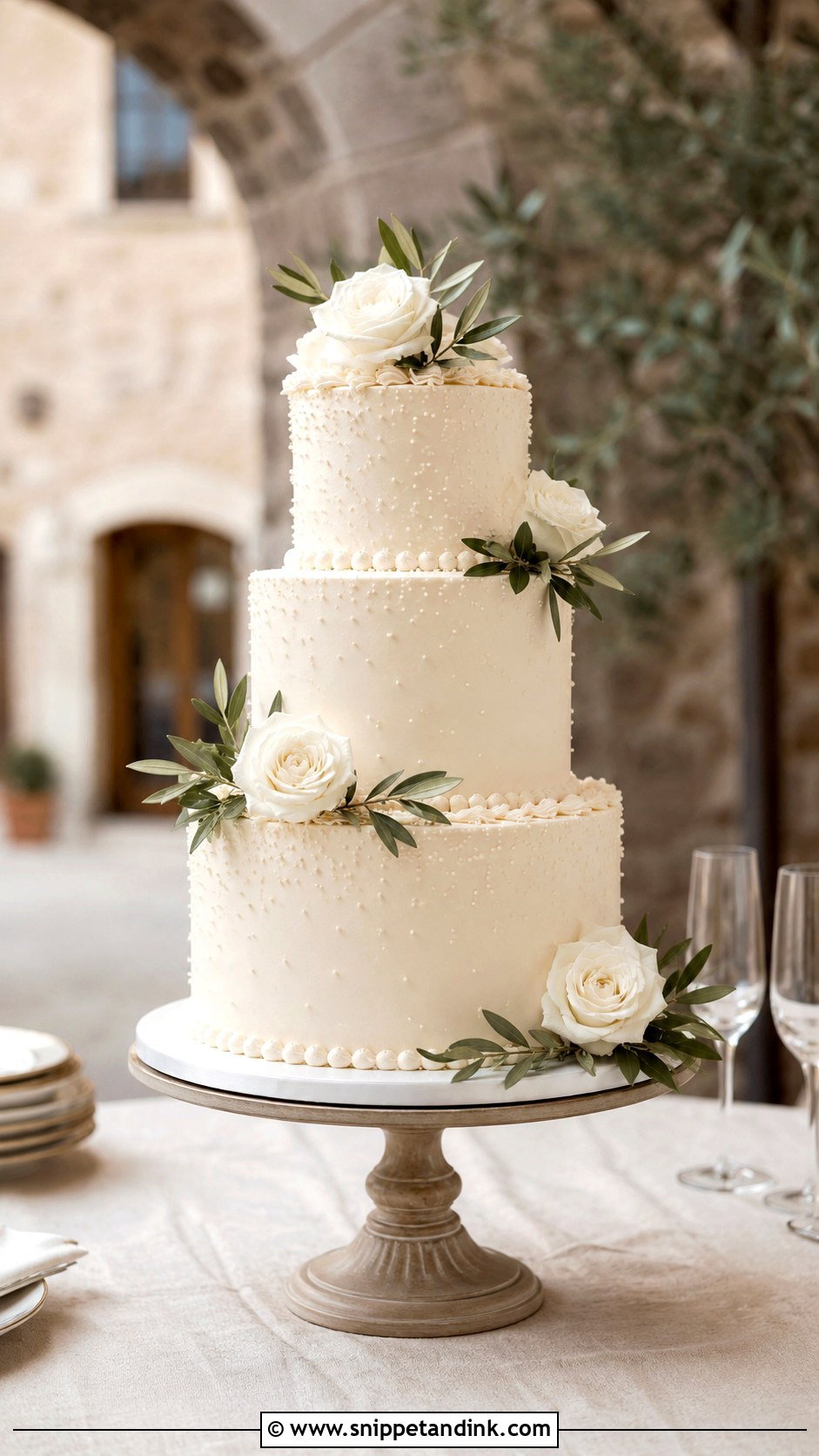
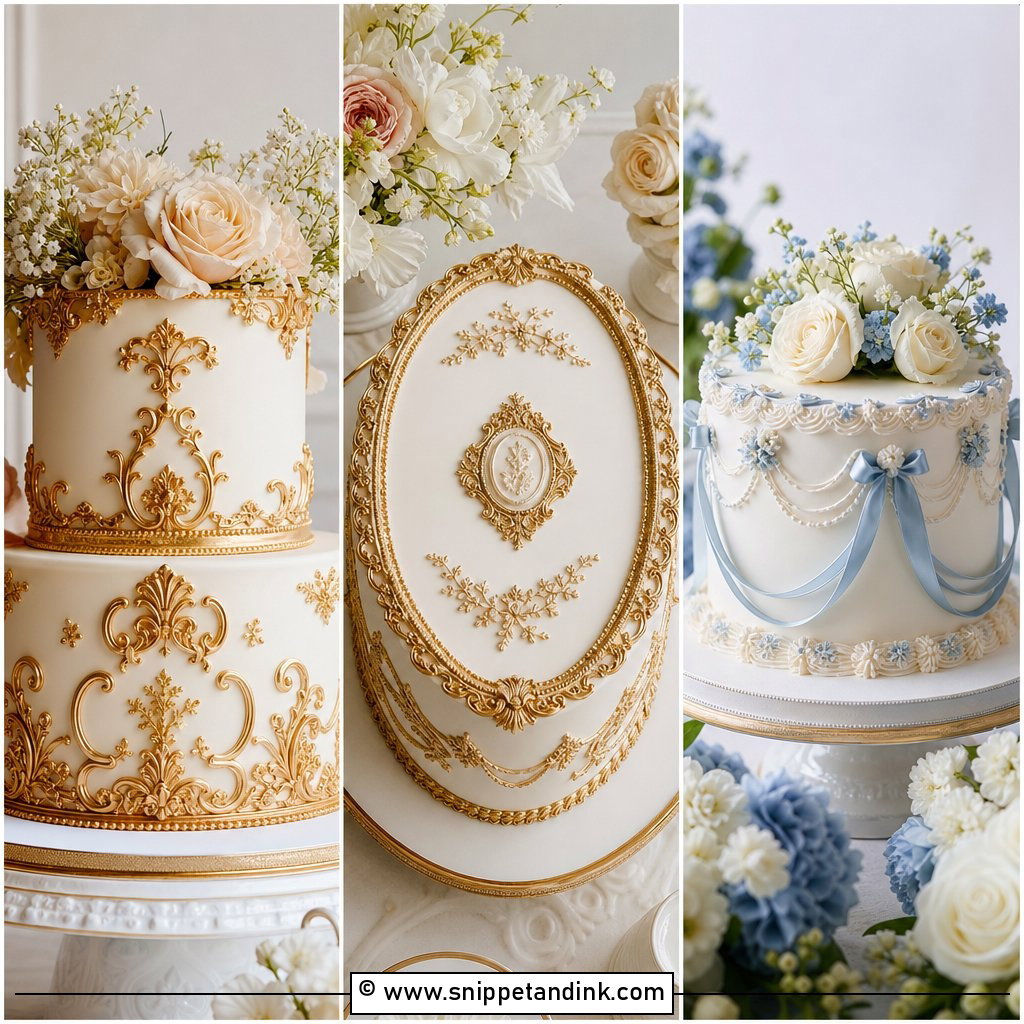
Sugar pearls soften a traditional cake when the palette stays warm: ivory, cream and pale champagne. Bright white pearls on ivory frosting can look a bit cold. I set each pearl into the buttercream while it is still soft, since pressing them in later cracks the crust. A few white roses or olive branches bring the Tuscan mood back in. It suits a historic courtyard or a candlelit villa where you want classic without stiffness.
16. Tuscany Blue And White Wedding Cake
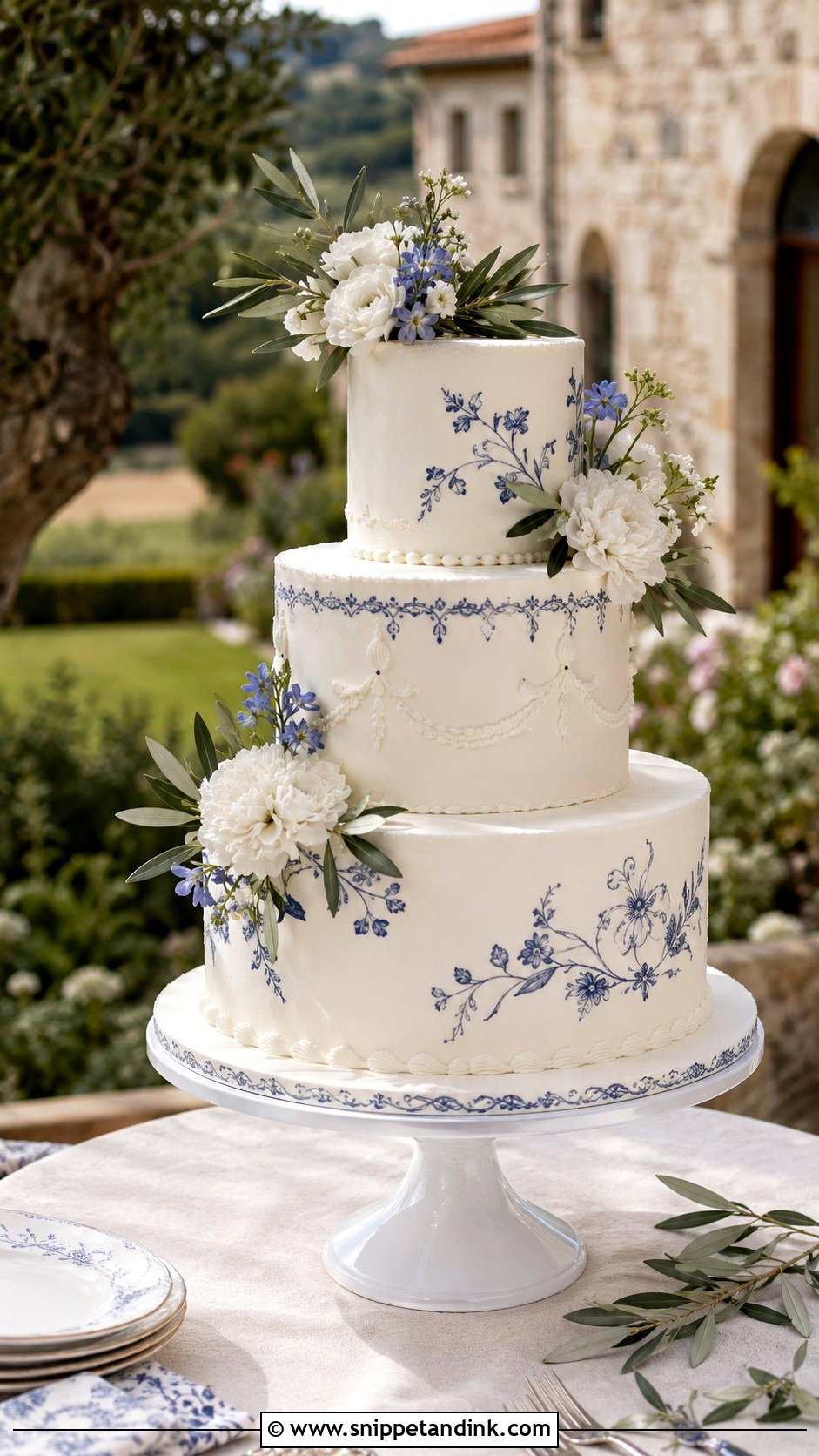
Blue and white borrows from the hand-painted majolica you see across Italy, and it is one of my favourite designs to paint. I work with diluted gel colour on a smooth fondant or firm buttercream surface, so the brushstrokes stay crisp. Keep the base white or ivory so it still reads as a wedding cake. Lemon or almond inside suits the fresh colour. For spring receptions it gives you a colour story without any flowers at all.
17. Tuscany Wildflower Wedding Cake
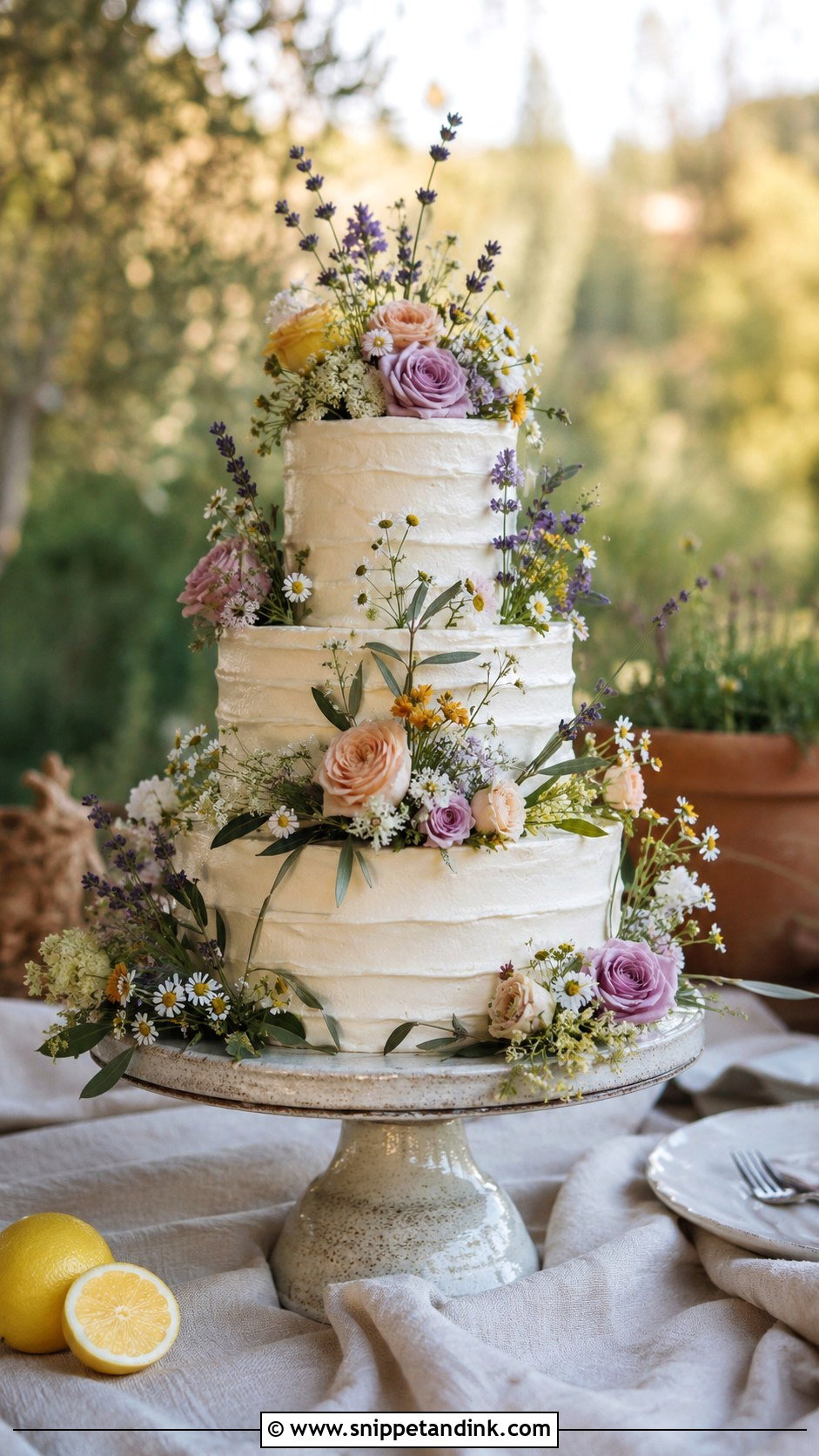
A Tuscany wildflower wedding cake should look gathered from a field, not placed by a ruler. I group small flowers in cream, blush, pale yellow and lavender in uneven clusters on textured buttercream, then add a few herb sprigs. Wild-picked flowers are the risk here, since you can’t know what they were sprayed with, so I use edible or food-safe grown blooms and keep everything else off the frosting. Vanilla, honey or lemon sponge fits.
18. Tuscany Marble Wedding Cake
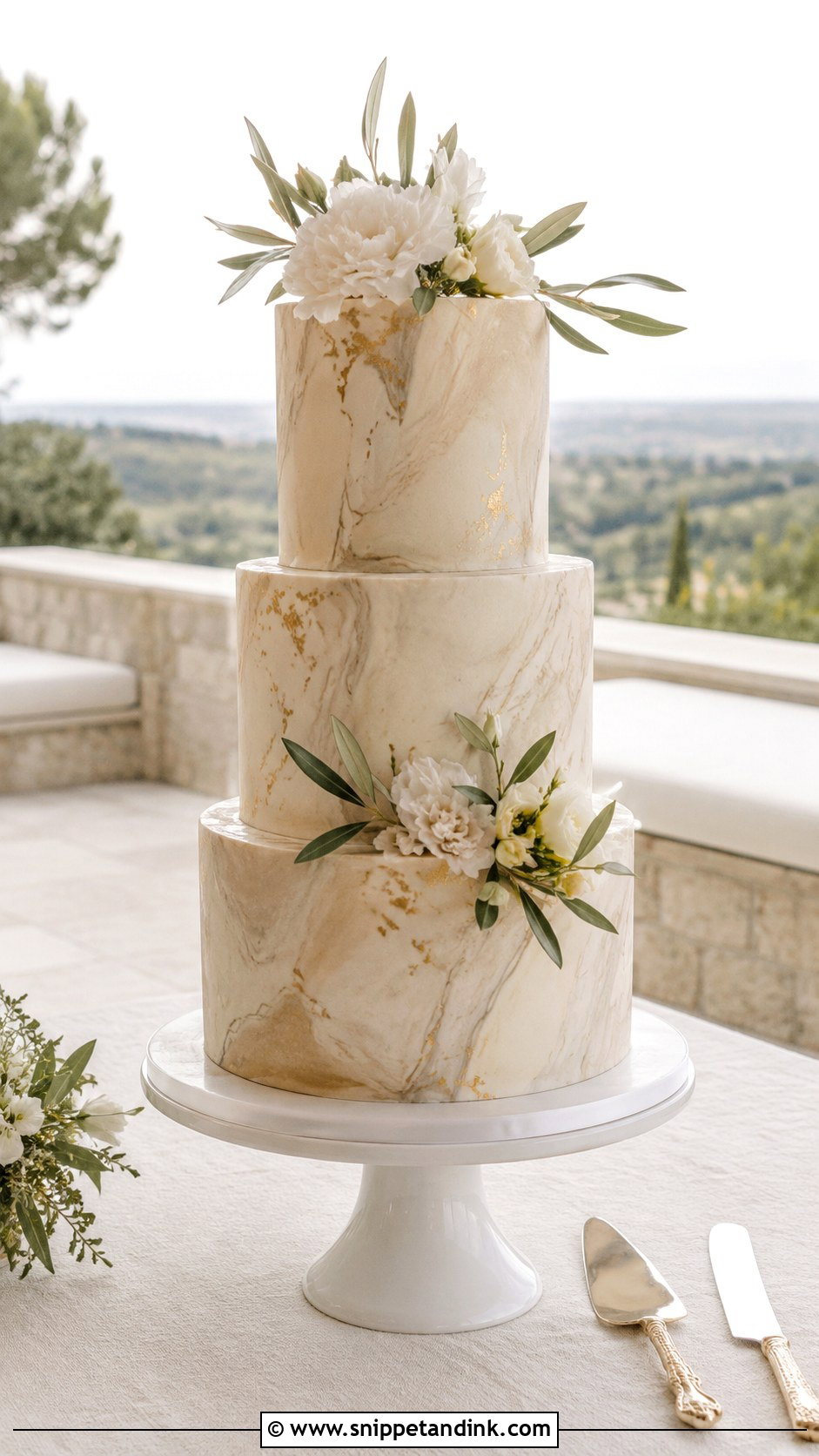
Marbling in ivory and beige can echo the stone of old villas, which makes this the modern choice that still belongs in the setting. I keep the veining subtle and thin; heavy marbling quickly looks like a kitchen countertop. Smooth fondant takes the pattern best, though very polished buttercream can do it too. Gold leaf or white flowers add the bridal finish. Hazelnut, chocolate or almond all suit it, and with linen and candles around it, it looks quietly polished in photos.
19. Tuscany Fruit Tart Wedding Cake
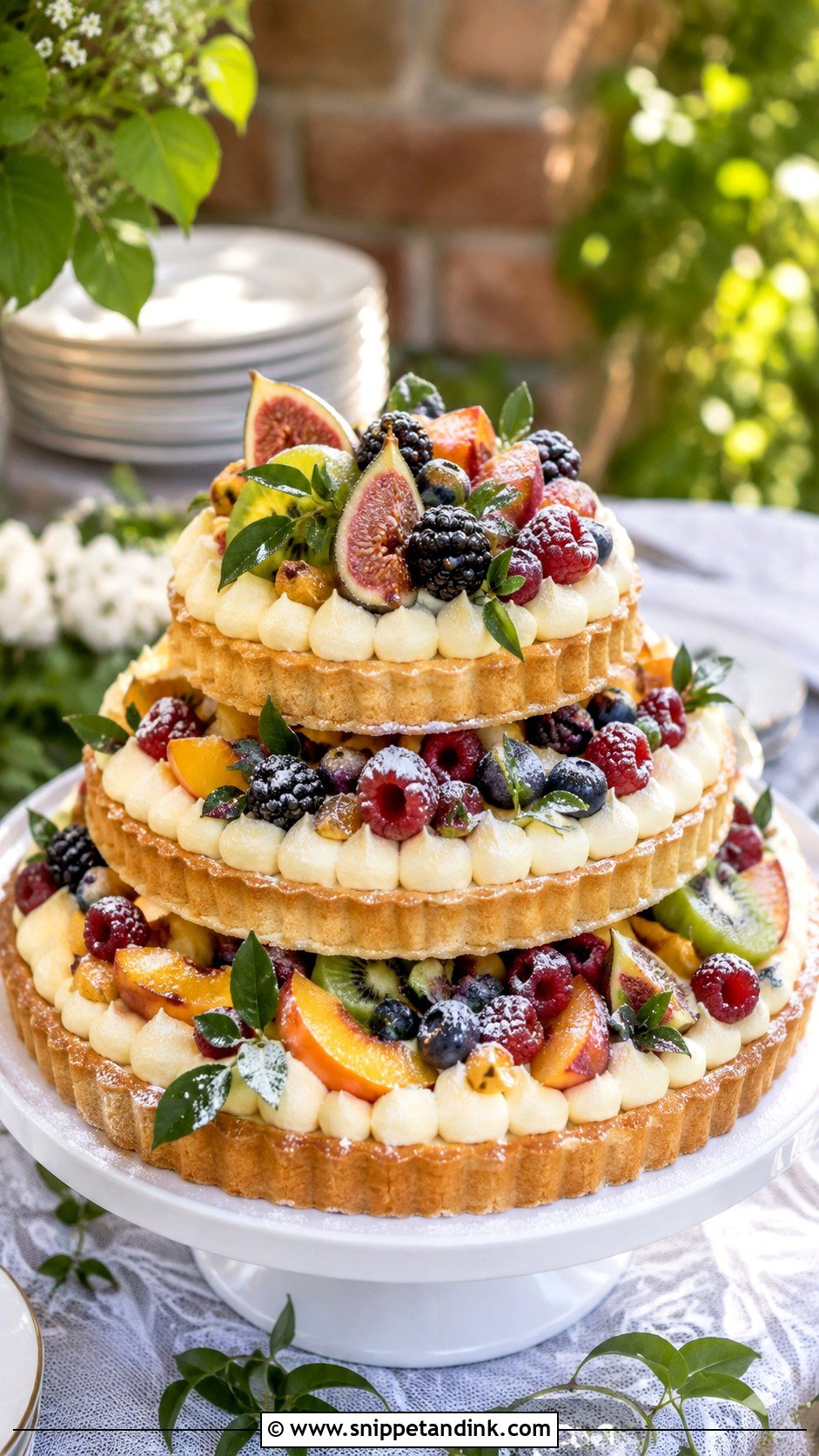
Stacked tarts make a lighter alternative to sponge tiers and suit couples who love Italian pastry. Each fruit tart wedding cake layer is a shortcrust shell filled with pastry cream and topped with berries, figs or peaches. I brush the fruit with a thin glaze so it doesn’t dry out, and I fill the shells late so the base stays crisp. Arrange the fruit neatly but not rigidly. Guests also find tarts easier to serve and eat standing up.

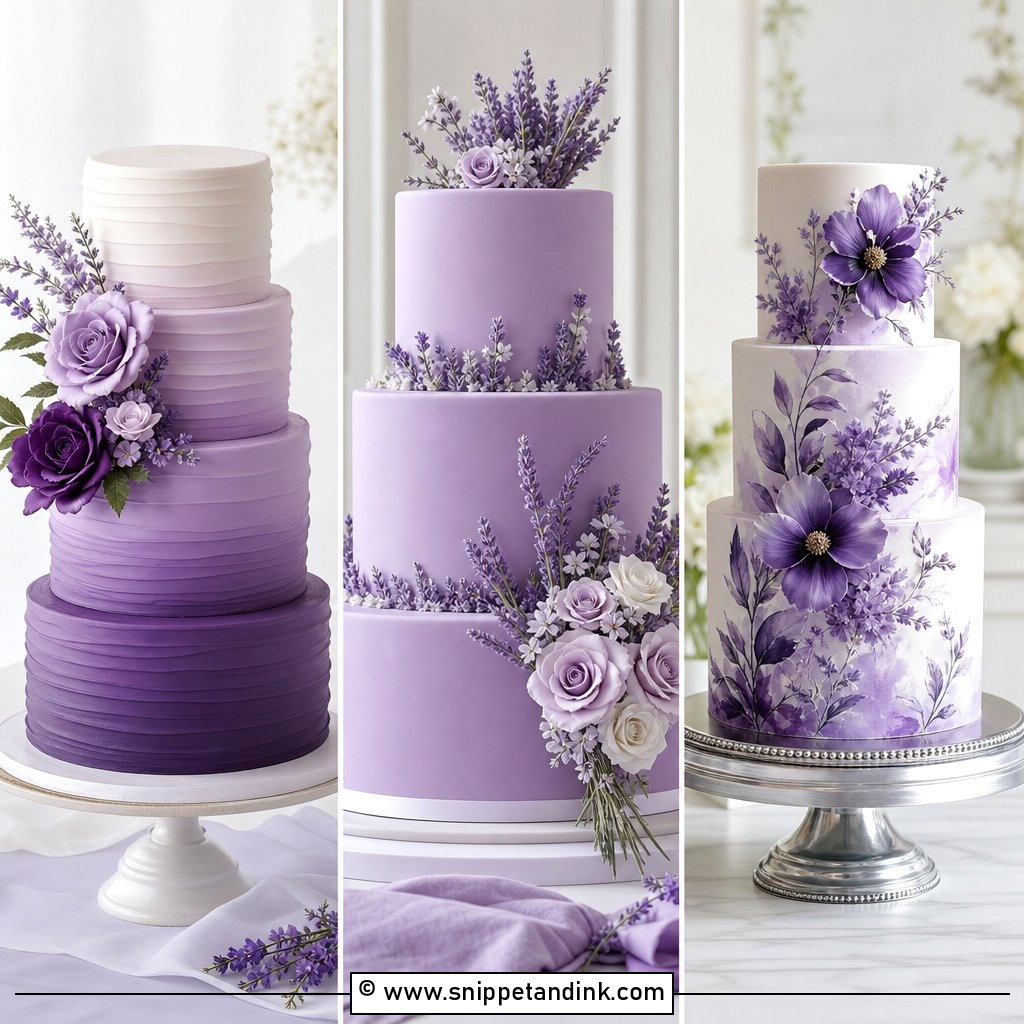
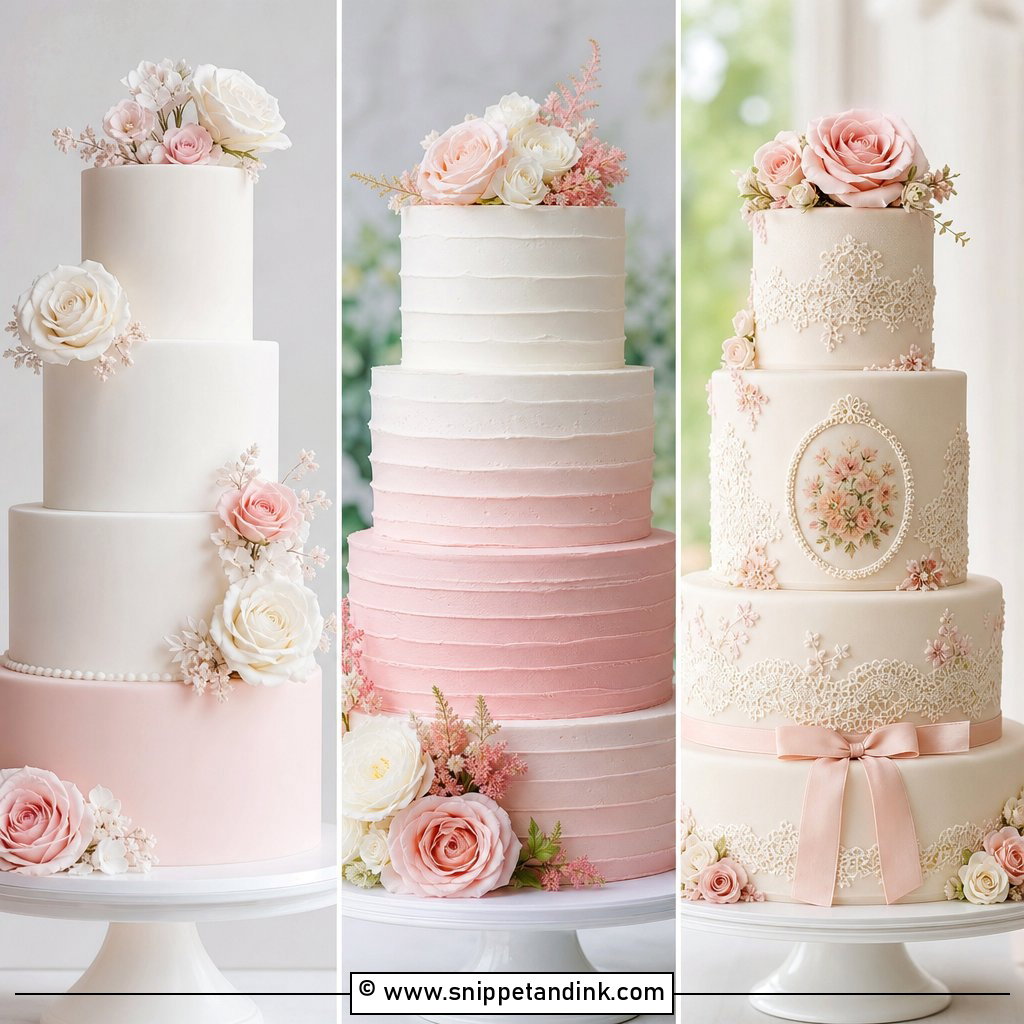

20. Tuscany Minimal Wedding Cake
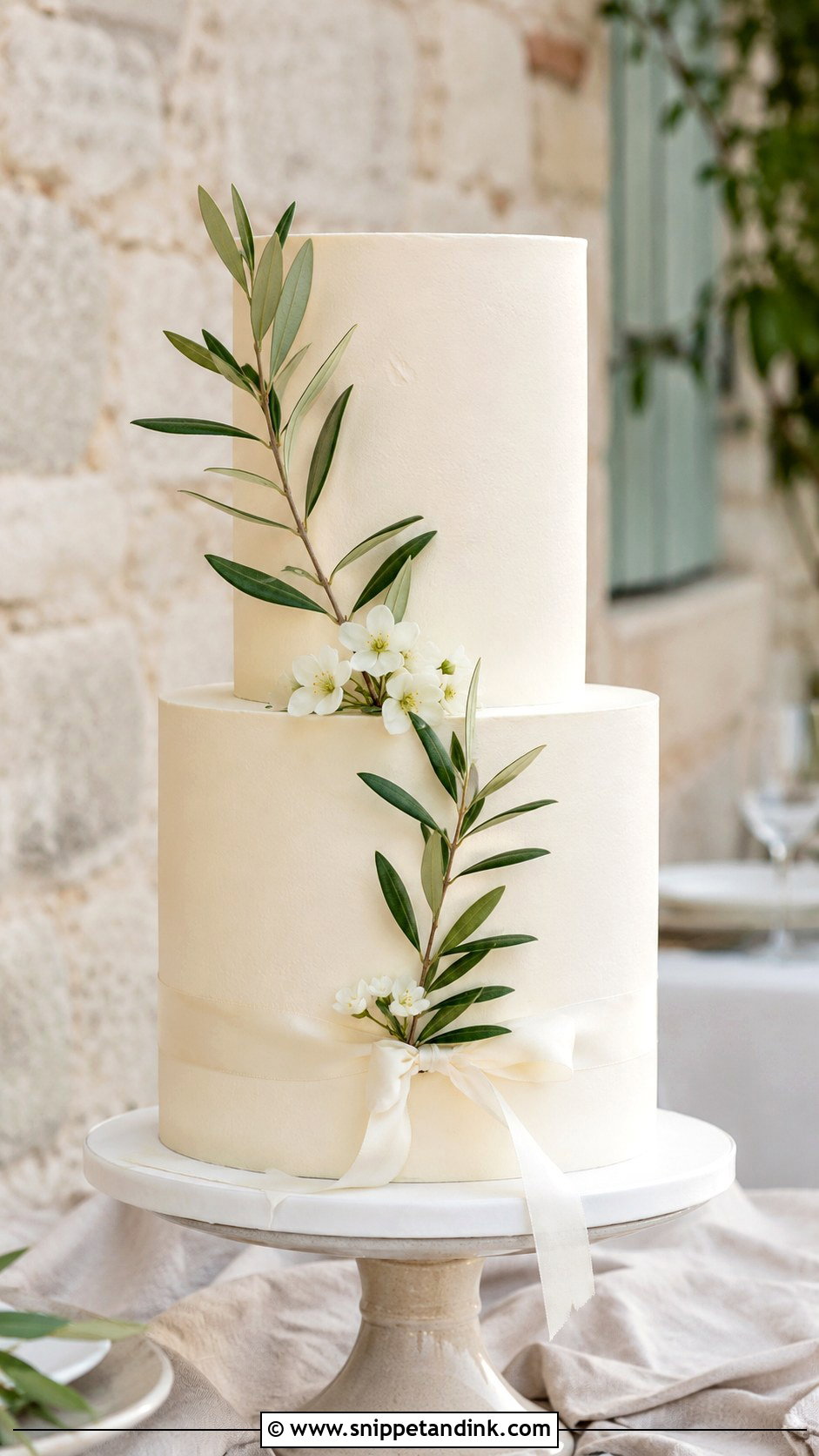
Minimal is harder than it looks, because with nothing to hide behind, every edge and tier height shows. I start with clean ivory tiers in smooth buttercream or fondant and add one deliberate detail: a single olive branch, a small cluster of white flowers, a ribbon, or a patch of texture. The restraint lets the venue and the flowers carry the room. Vanilla, lemon or mascarpone filling keeps the flavour soft.
Ordering From a Local Pasticceria When You Live Abroad
Many couples marrying in Tuscany use a baker near the venue rather than flying one in, and I think that’s often the right call. A local pastry shop knows the heat, the roads up to the villa and the ingredients in season that month. It also means the millefoglie can be assembled minutes from the table. The challenge is communicating a design from another country.
What helps is sending two or three clear photos and naming the one element you care about most, plus your guest count in portions rather than tiers. Italian wedding cakes are often served as the dessert course itself, sometimes with a separate sweet table, so confirm whether yours replaces dessert or comes after it. Ask whether the price includes delivery up the hill, a stand and cutting by the venue staff, since some venues charge a fee for outside cakes and that varies widely.
If you can, book a tasting on a planning trip. If not, ask for the base flavours to be described and trust their classics; a pasticceria that makes crema pasticcera every morning will make a better millefoglie than an imported design squeezed into a fondant shell.
A Cake That Belongs on a Terrace in Tuscany
What makes these cakes work in Tuscany is how little they need. A branch of olive, a few figs, a scrape of buttercream or a crisp millefoglie can connect the cake to the landscape better than a tall, heavily decorated tower. Start from your venue and the month, since heat, fruit season and how long the cake will sit out narrow the choices quickly. Then bring the flavour and flowers back to the menu you’re serving, and let your baker tell you honestly what will hold up.
You'll Like These Ideas:





Leave a Reply