
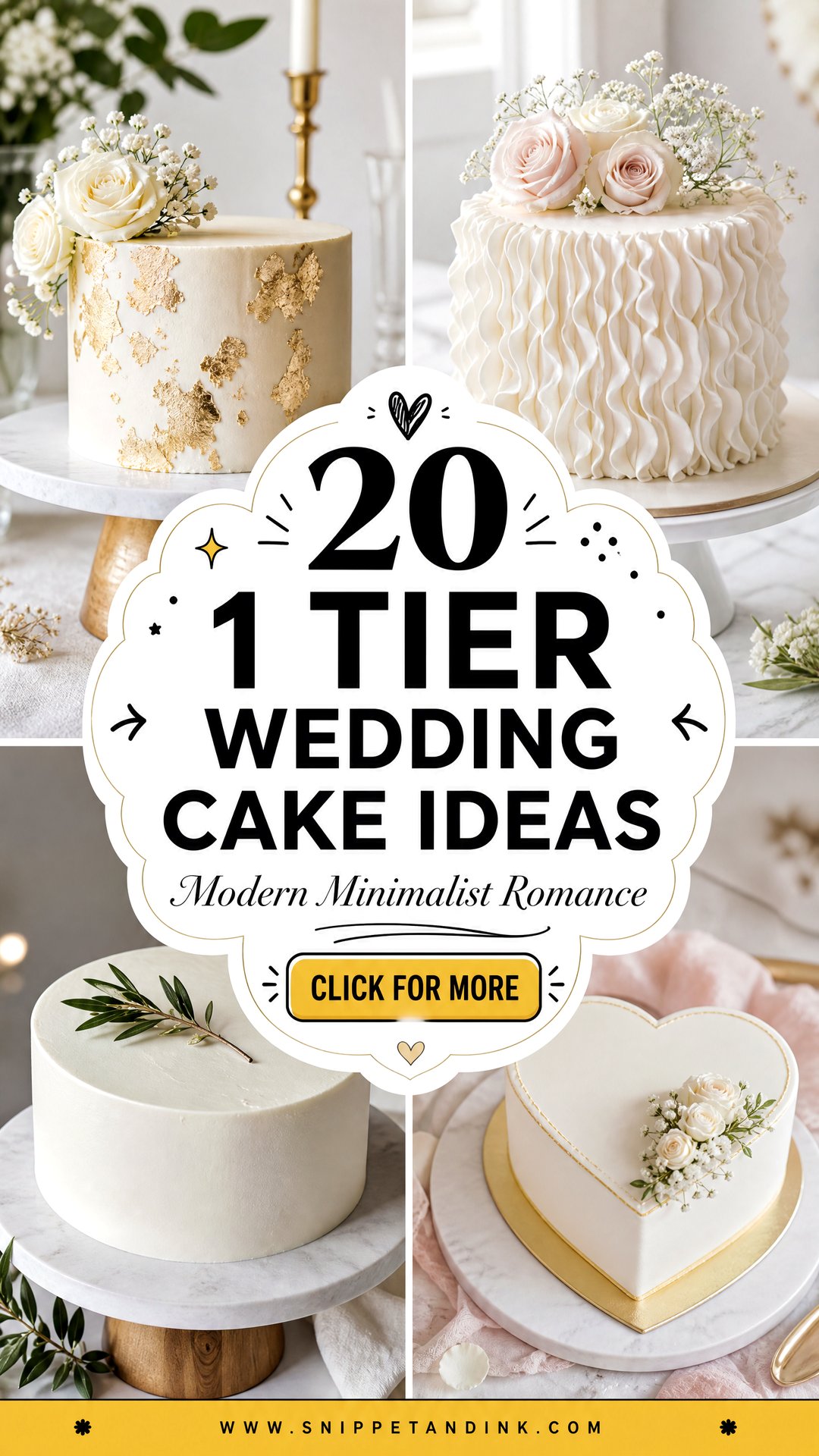
More of my orders each year are for one tier, and it isn’t only about budget. A small cake can be cut, photographed and served without a stacking crew, and couples planning a courthouse wedding, a backyard reception or an elopement often prefer a cutting cake with other desserts beside it. What makes a single tier work is that nothing is hidden: one accent is seen clearly from every side. The twenty designs below are the ones I’d actually build for a minimalist couple, along with what each one needs to hold up on the day.
The Consultation Brief That Gets You a Minimal Cake
Minimal is the hardest word for a baker to interpret, because everyone’s idea of it is different. To me it might mean one sugar flower; to you it might mean no decoration at all. The couples who get exactly what they pictured come in with a short, specific brief.
- Three or four photos of cakes you like, plus one you don’t. The cake you dislike tells me more than any adjective.
- Your guest count and whether this cake feeds everyone or is just for cutting. That decides the diameter before we talk design.
- A fabric swatch, a flower list or your invitation, so colors are matched to something physical rather than to a screen.
- Where the cake will sit: indoors or out, near a window, under a marquee. Finish choices depend on it.
- Flavors you already know you love. On a small cake, the tasting matters as much as the look.
Book earlier than you’d think for something so small. Many independent bakers cap how many cakes they take each weekend, and a single tier uses one of those slots just like a five-tier does. Three to six months ahead is comfortable for a popular baker in wedding season; sugar flowers add a few extra weeks of work.
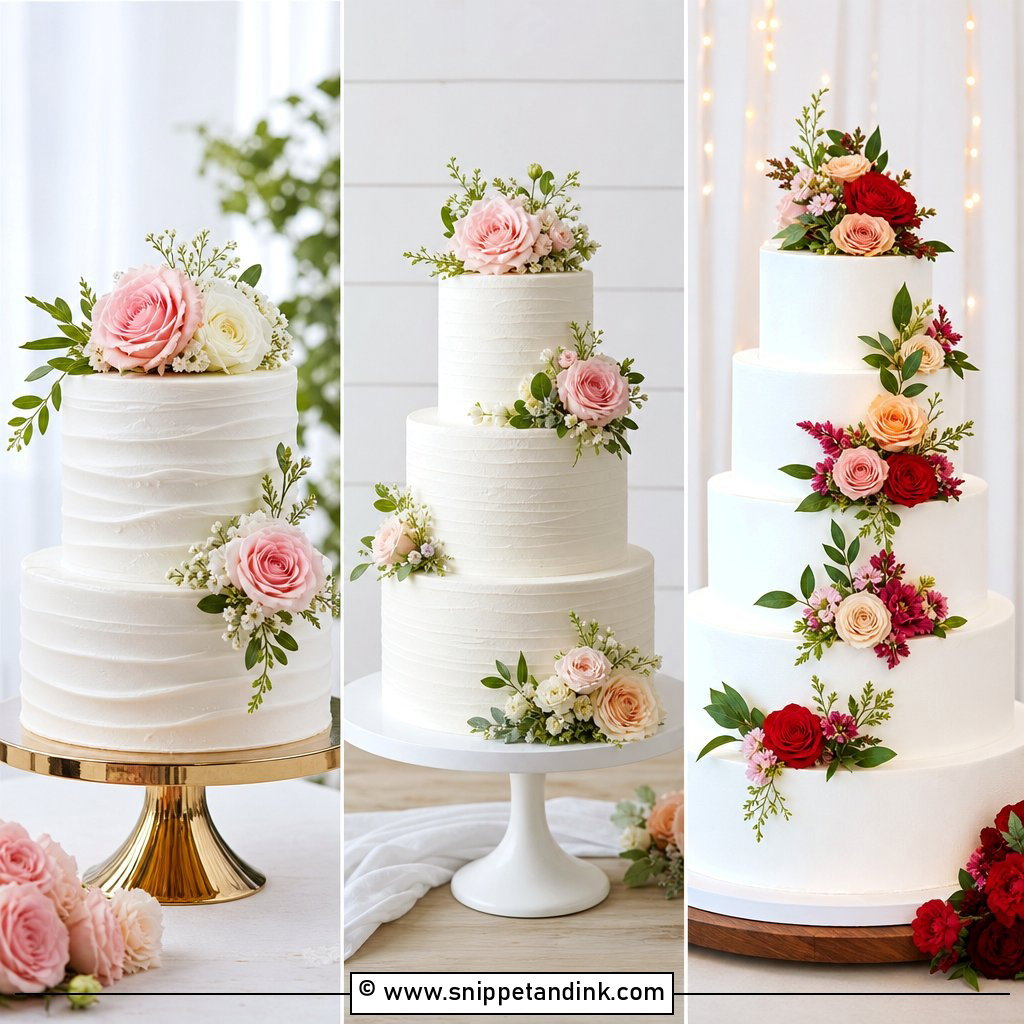
1. 1 Tier Wedding Cake With Fresh Flowers
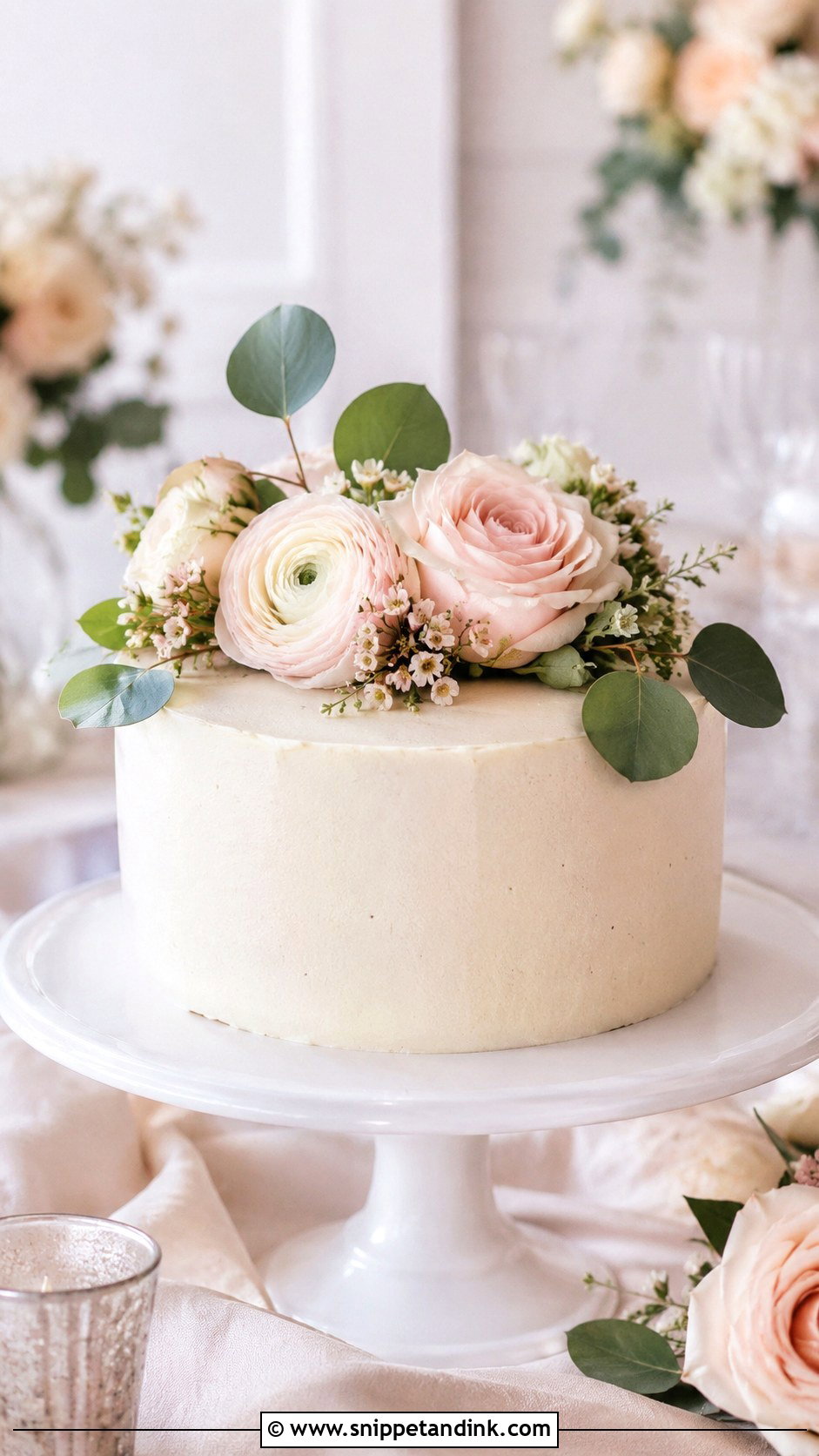
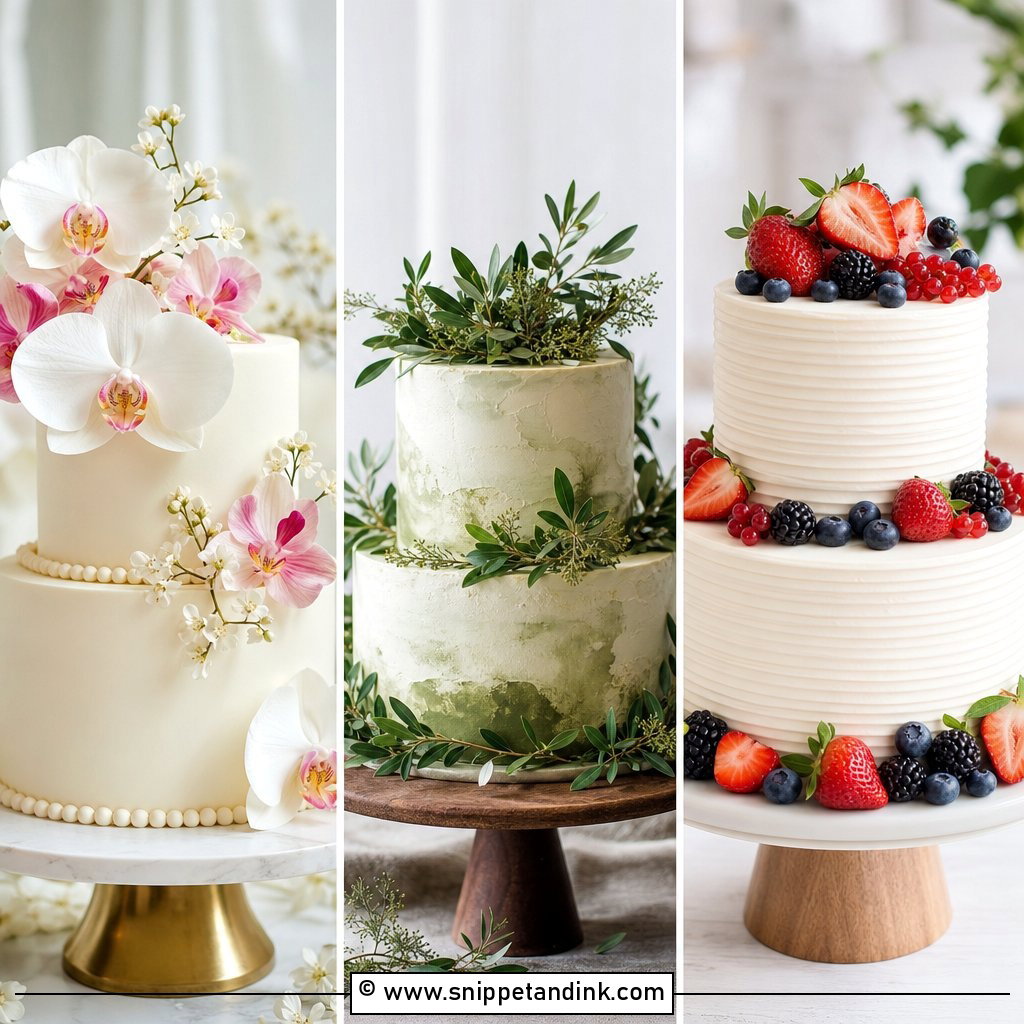
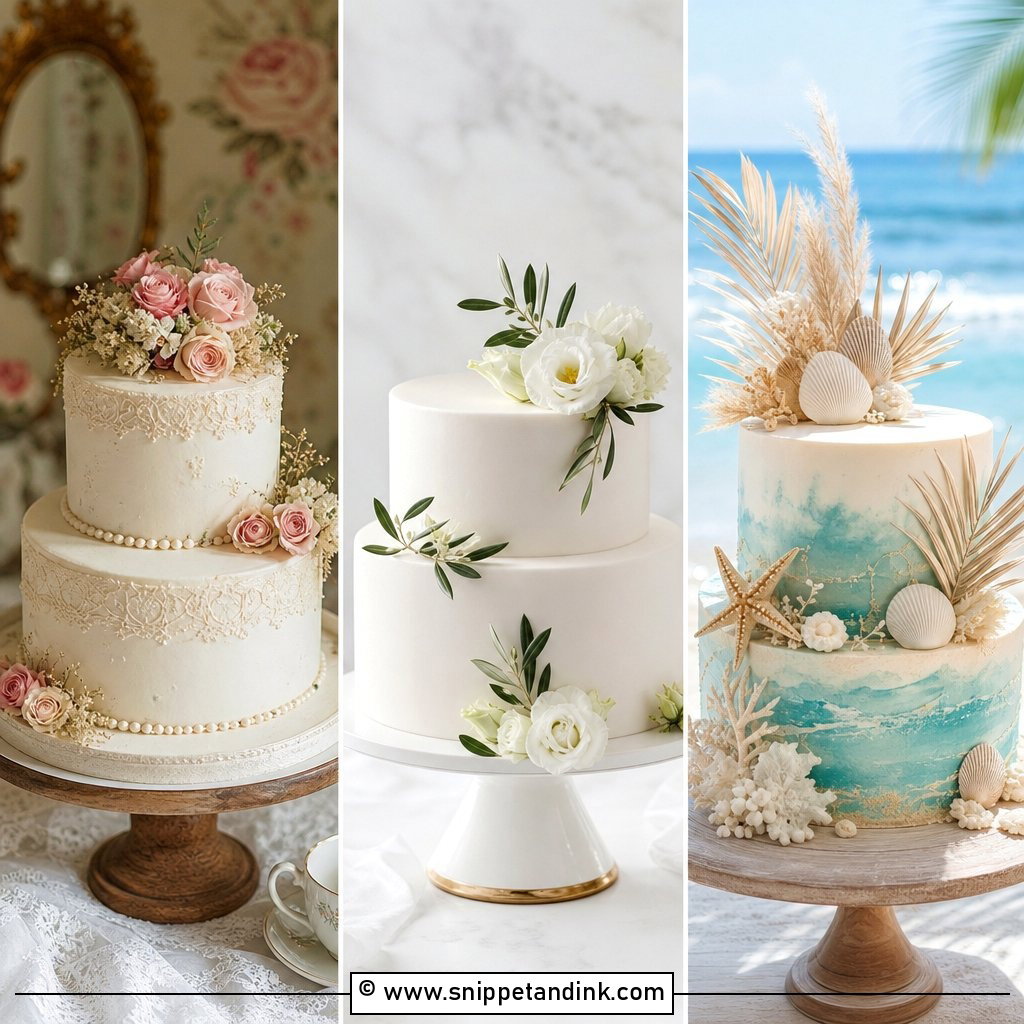
Fresh flowers are the decoration couples ask me for most, and on a single tier I keep them to one placement: a short cascade down one side or a low cluster on top. I start with smooth white or ivory buttercream and repeat two or three varieties from the bouquet so the cake ties into the room. Roses, ranunculus, peonies and orchids are common choices, but no stem should go directly into the cake. Your florist and baker need to agree on unsprayed blooms and wrapped stems or picks before the day, not at setup.
2. 1 Tier Wedding Cake With Pearl Details
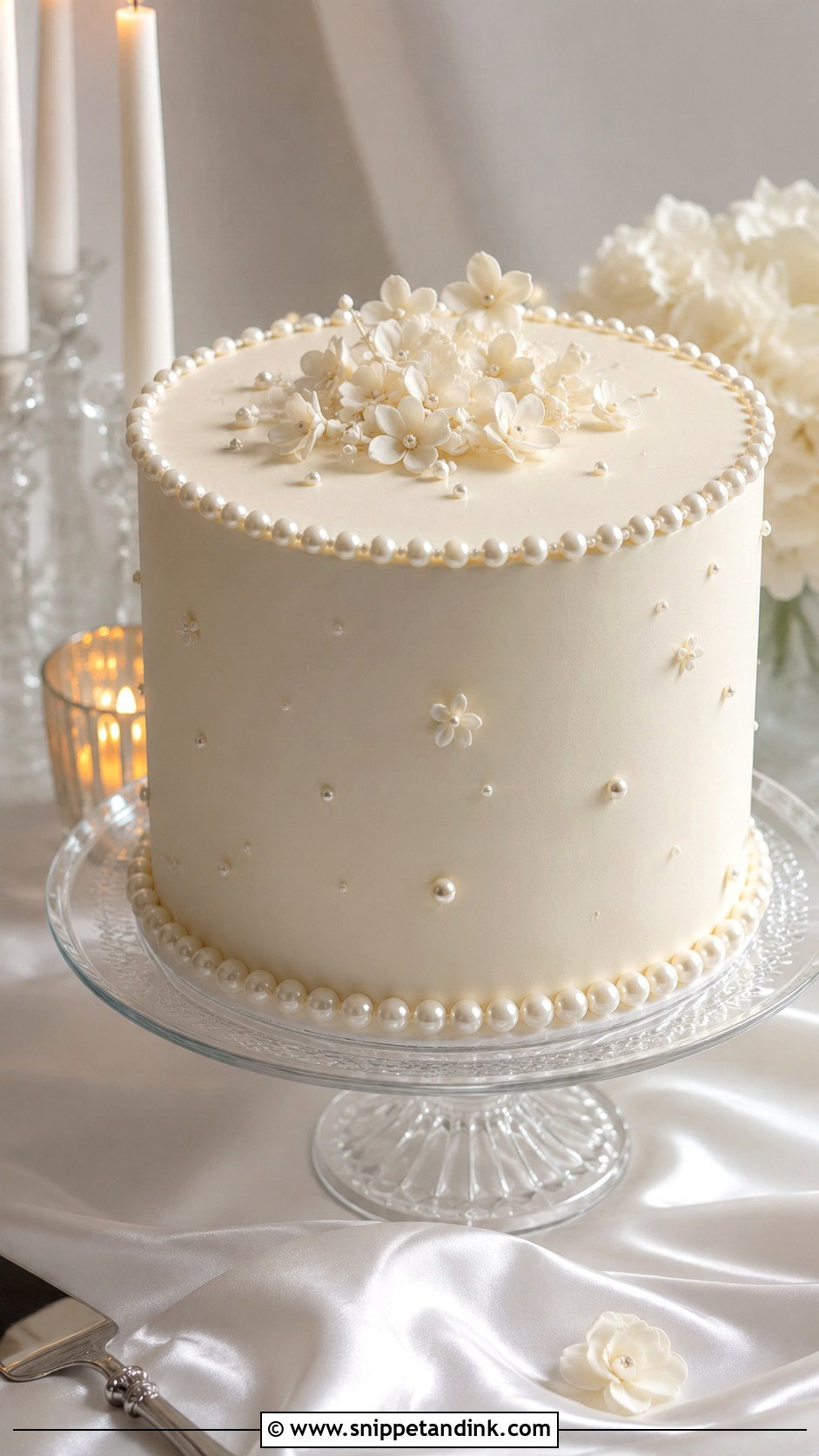
Pearls give a small cake a finished, bridal edge for very little effort. I either pipe them in buttercream, roll them from sugar paste or press in edible pearl beads along the base and top rim. A smooth round is the best canvas, since texture swallows the pearls. Keep it all white or let blush, champagne or pale blue come through in the pearls themselves. A glass stand suits it, and I’d skip extra flowers unless they’re tiny.
3. 1 Tier Wedding Cake With Buttercream Texture
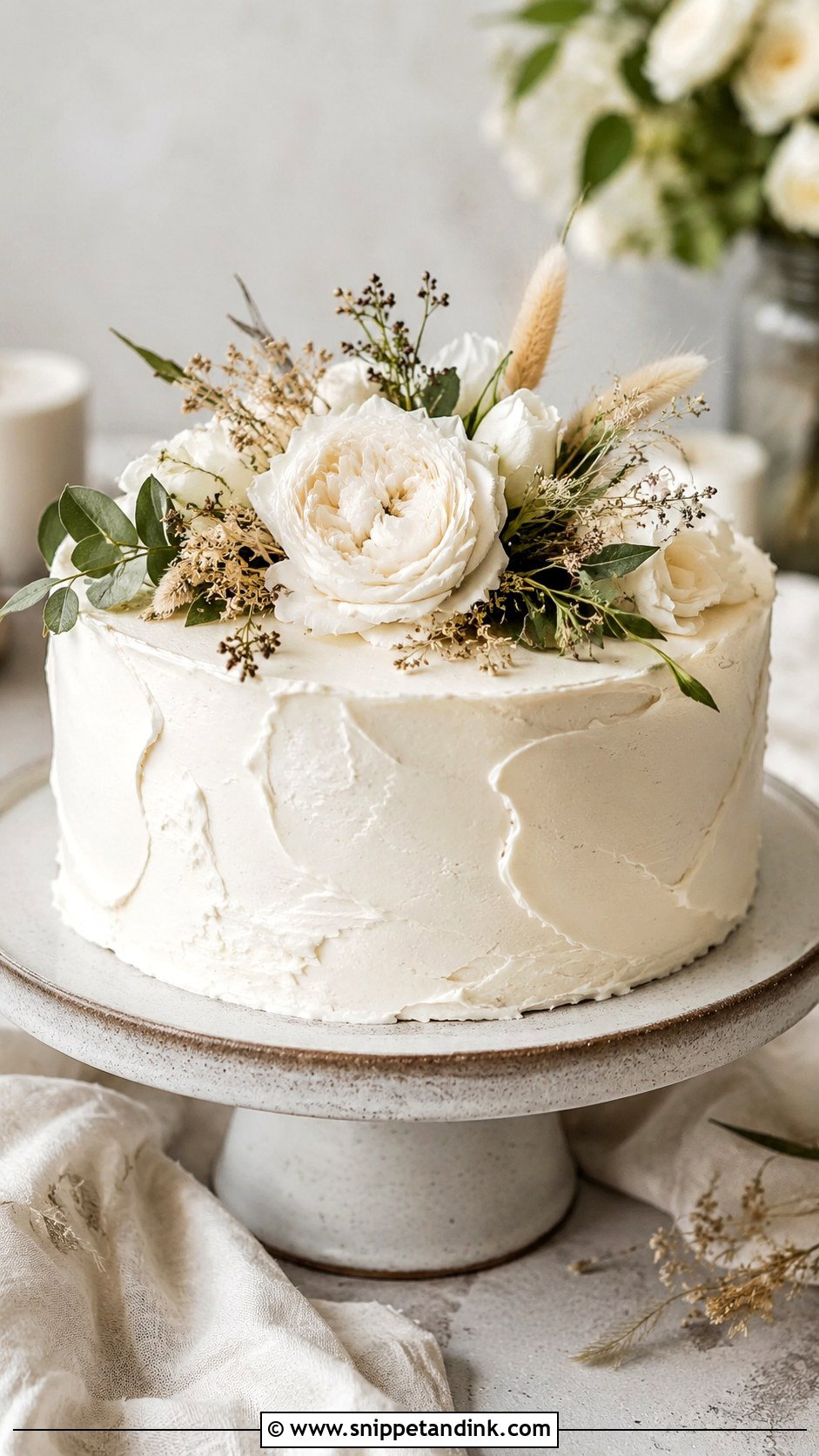
Textured buttercream is honest about being made by hand, and it’s also the most forgiving finish I do. Spatula strokes, horizontal lines, rough stucco or cloud swirls all hide small bulges that a smooth coat would show, and they catch window light in photos. The texture is the decoration, so I add very little: a few white blooms, some dried grass or berries on one side. Ask your baker which buttercream they use; a crusting American style keeps the ridges crisp in warm rooms longer than a soft meringue style.
4. 1 Tier Wedding Cake With Gold Leaf
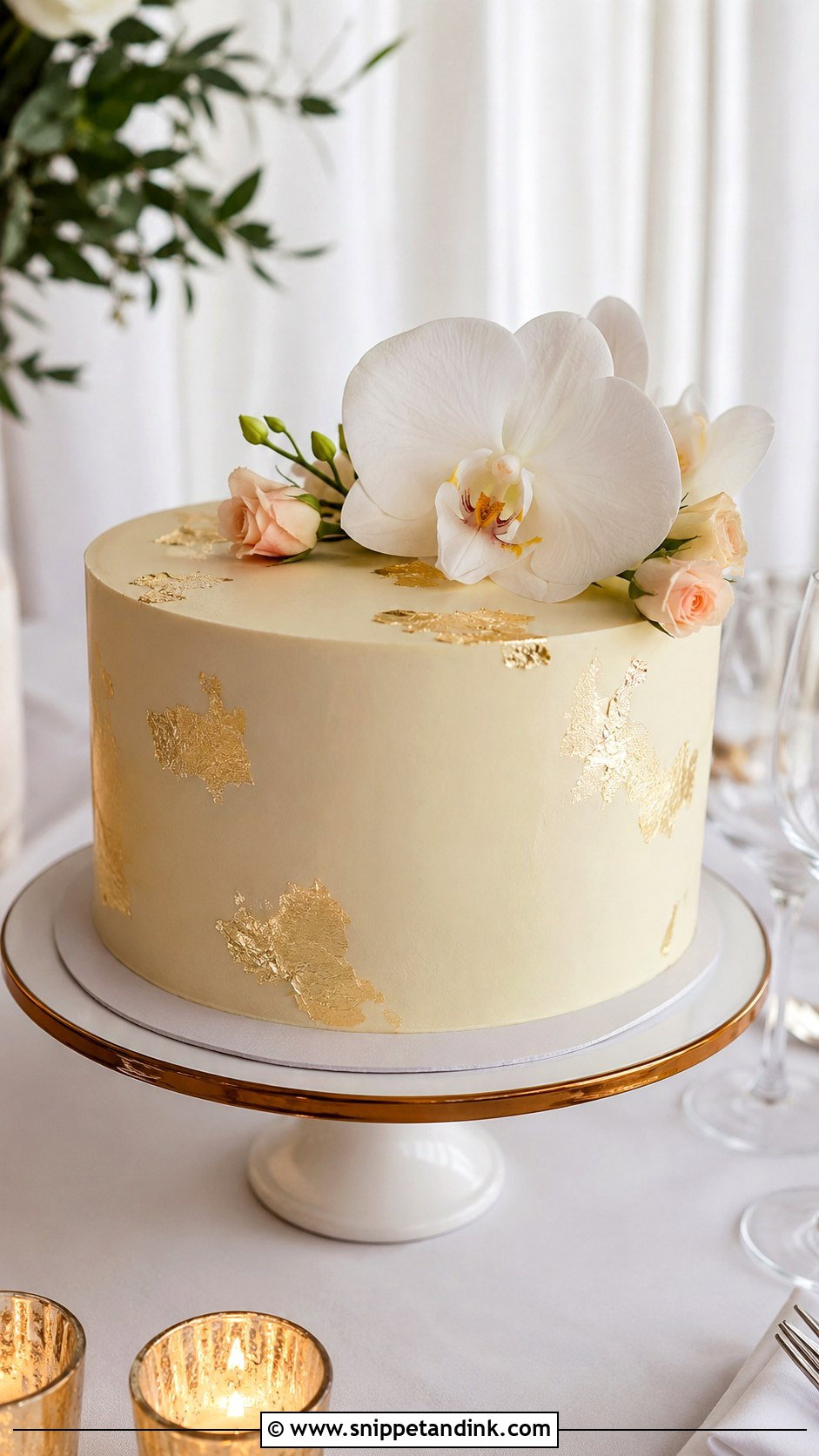
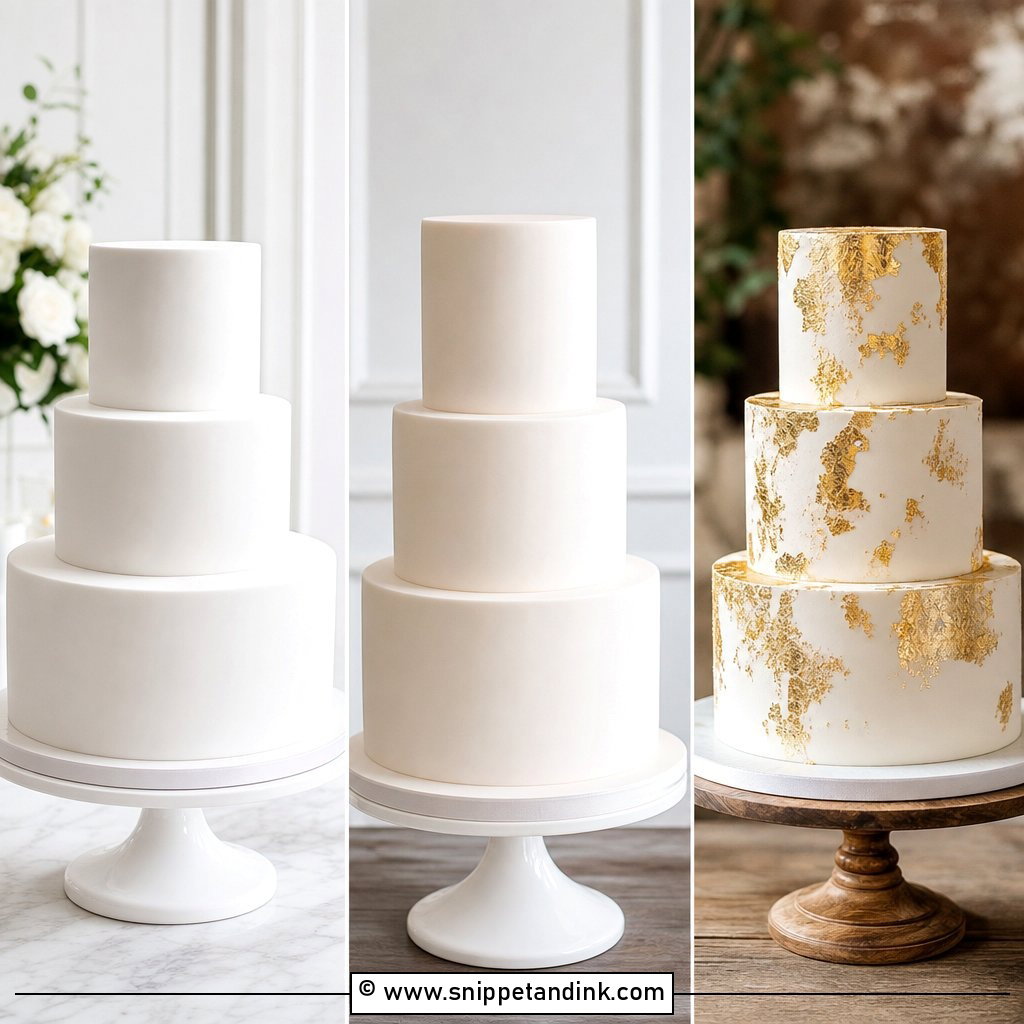
Edible gold leaf is so thin it tears if you breathe on it, which is why I apply it in loose patches with a dry brush rather than trying for even coverage. Torn edges look intentional and artistic; a forced full panel looks like foil. Over ivory buttercream it’s warm and quiet, and over a black, navy, or emerald cake it turns properly dramatic for an evening reception. Make sure your baker uses genuine edible leaf, not craft gilding, and keep the shape plain so the metal is the only detail.
5. 1 Tier Wedding Cake With Greenery
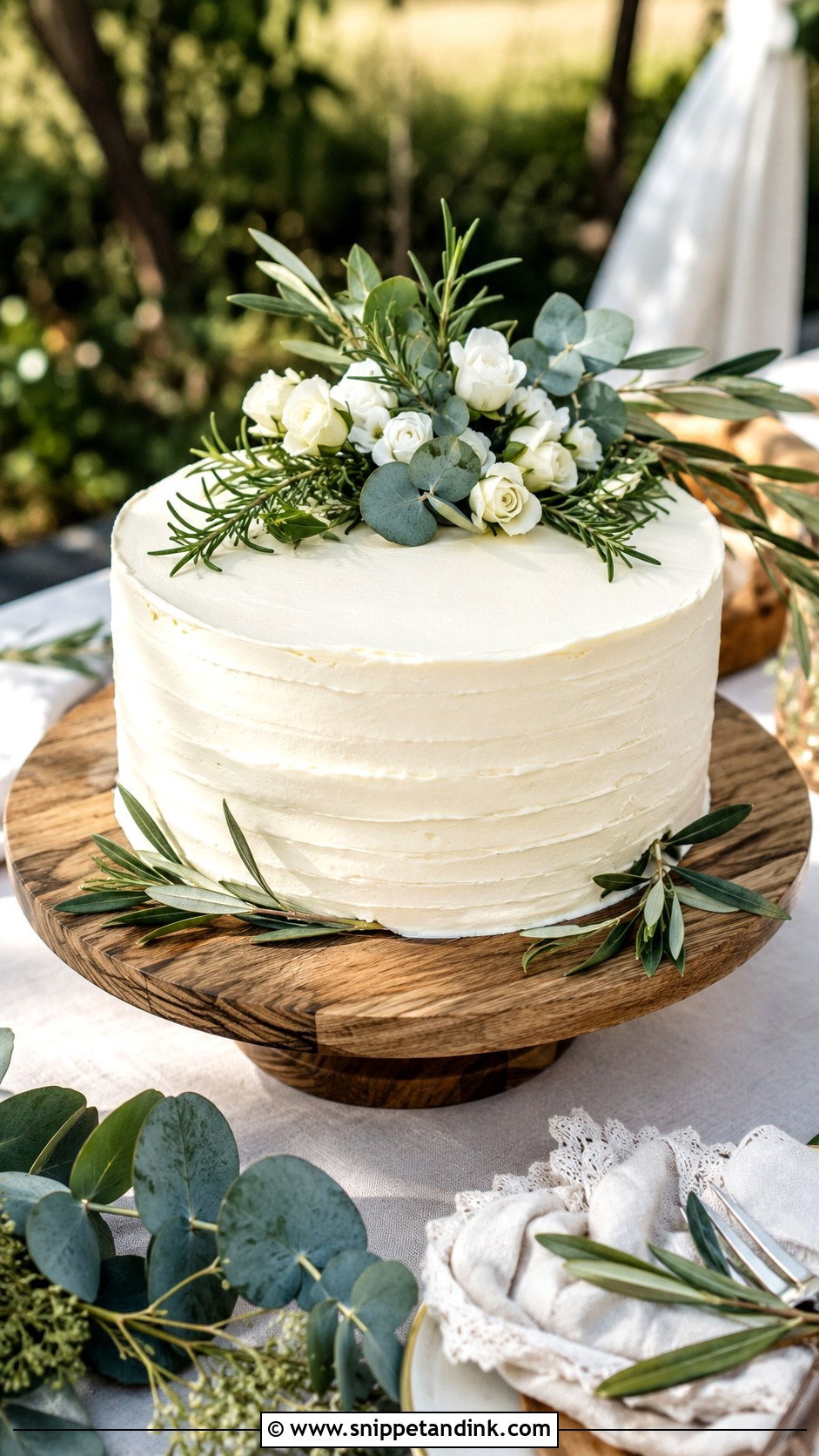
A 1 tier wedding cake with greenery is my answer for couples who find flowers too sweet. Olive, rosemary, ruscus and eucalyptus all hold their shape for hours, which most flowers don’t. Eucalyptus is not food safe though, so it has to sit on a barrier or be wrapped, never pressed into frosting. I frame the base, run a trail down one side or set a neat ring on top, over white buttercream, a semi naked coat or a pale sage tint.
6. 1 Tier Wedding Cake With Fruit
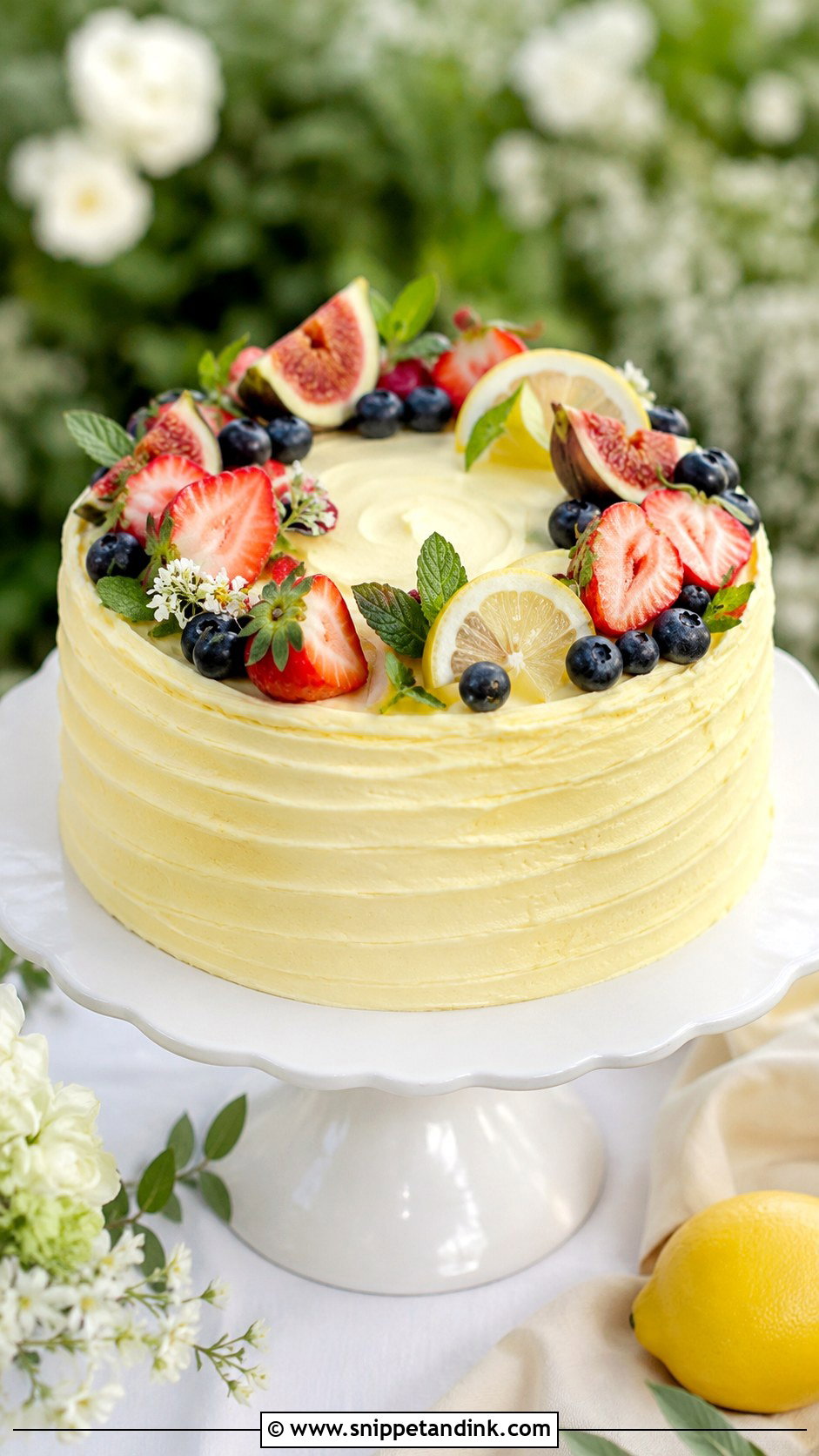
Fruit is where I start thinking about flavor first. Lemon sponge with blueberries, vanilla with strawberries and almond with figs all make sense inside and out, so the topping tells guests what they’re about to eat. I keep the frosting light, a whipped buttercream, Swiss meringue buttercream or a thin glaze, and add cut fruit as late as possible because it weeps juice onto the frosting within a couple of hours. Whole berries, cherries and figs halved at setup last best. A ceramic plate and a few tucked herb sprigs finish it.
7. 1 Tier Wedding Cake With Sugar Flowers
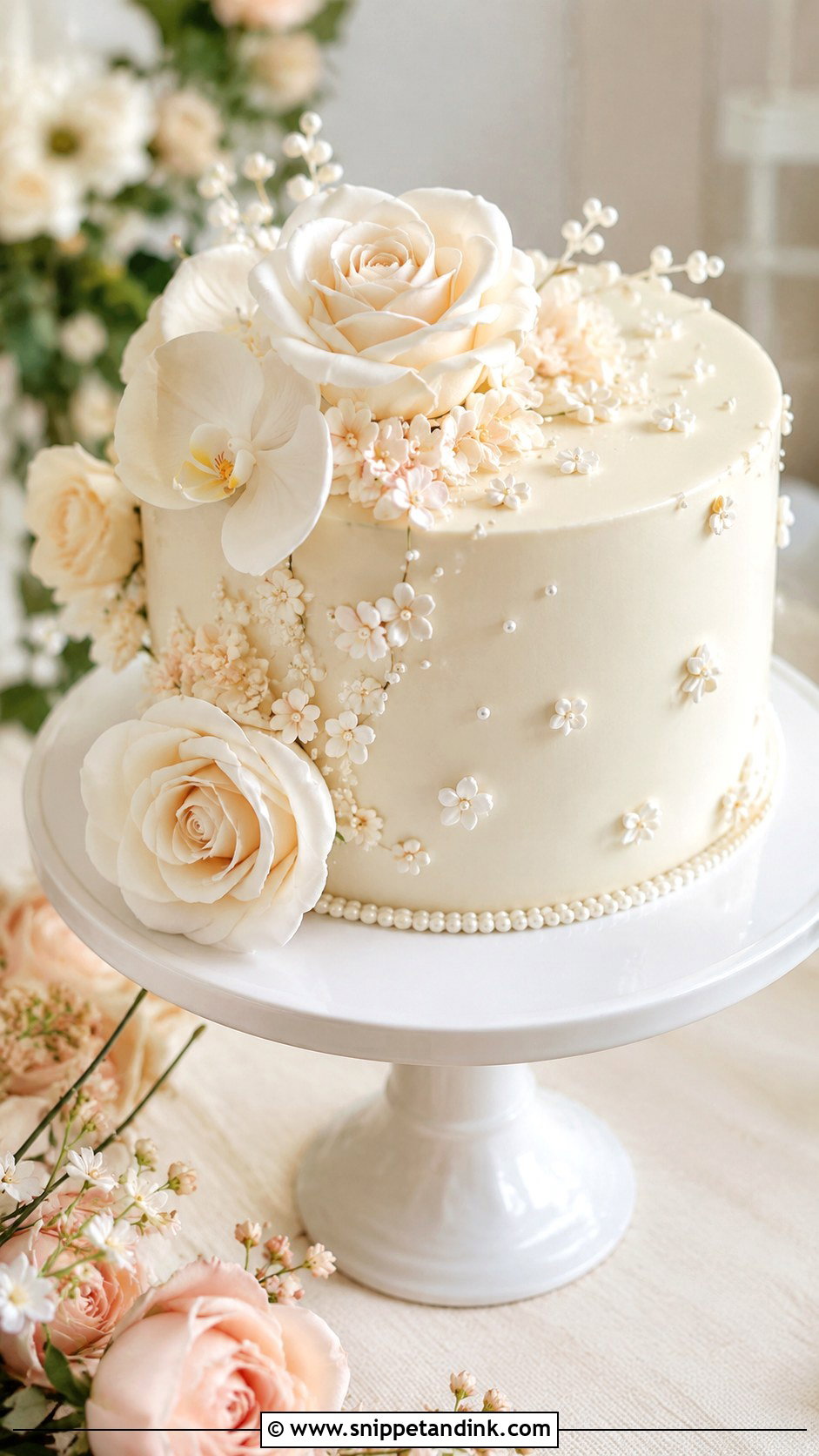
Sugar flowers are the choice I recommend for summer receptions and long display times, since they don’t wilt, brown or bruise. Each petal is rolled and wired by hand, so they can be made to match your exact bouquet blooms and colors, but they take days to dry and need ordering well ahead. They’re edible in theory, though wired flowers must be removed before cutting. On a single tier, one cluster of sugar roses on top or a side spray of orchids is enough.
8. 1 Tier Wedding Cake With Lace Piping
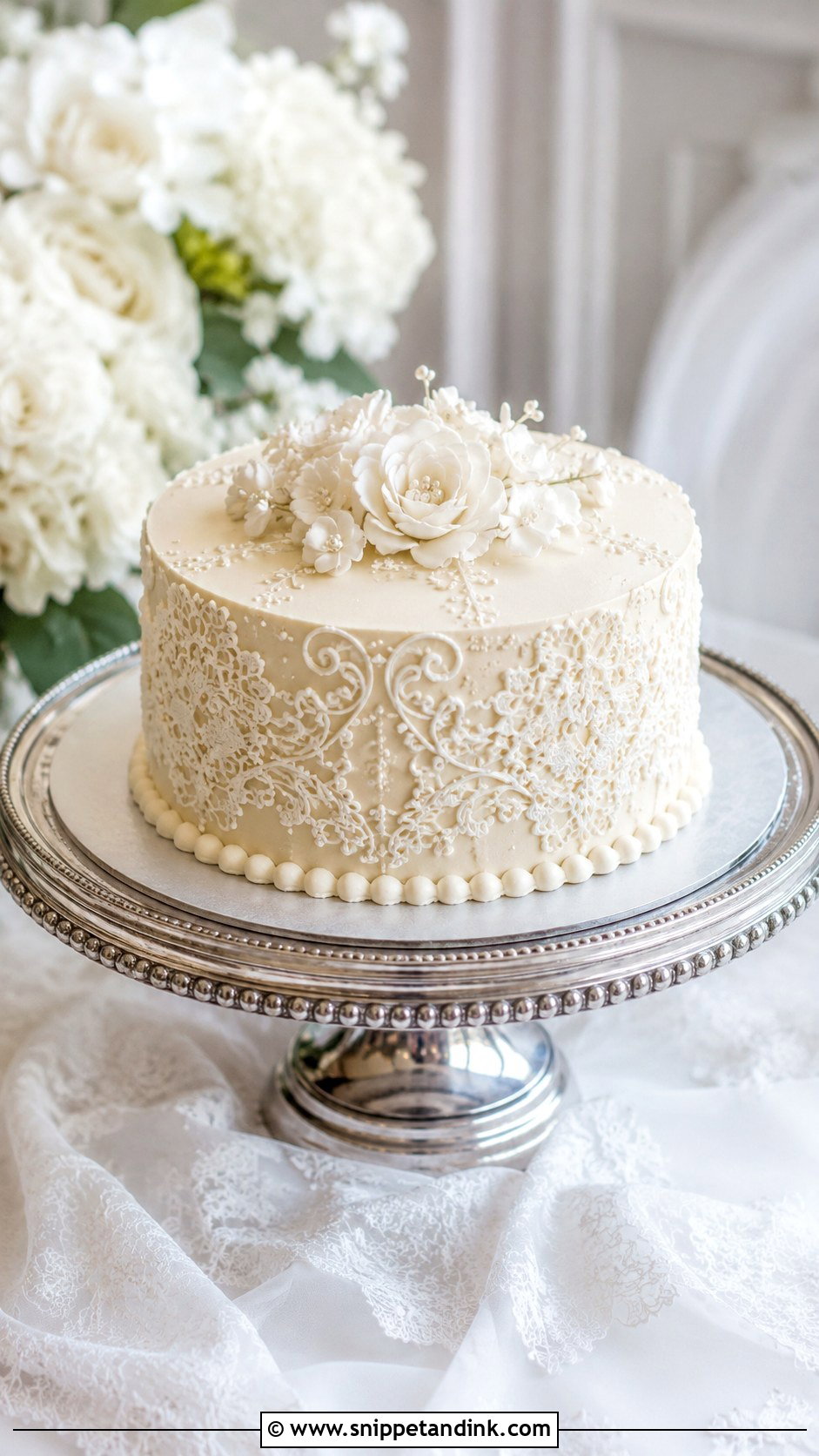
Lace piping can borrow its pattern straight from your dress, veil or invitations, which is one of my favorite briefs. Bring a photo or a fabric scrap to the consultation and the piper can trace the motif. White over ivory reads as quiet texture; white over blush or champagne shows the pattern clearly from a distance. It needs a neat, steady hand and a smooth base, and I’d finish it with only a pearl border or narrow satin ribbon.
9. 1 Tier Wedding Cake With Ruffles
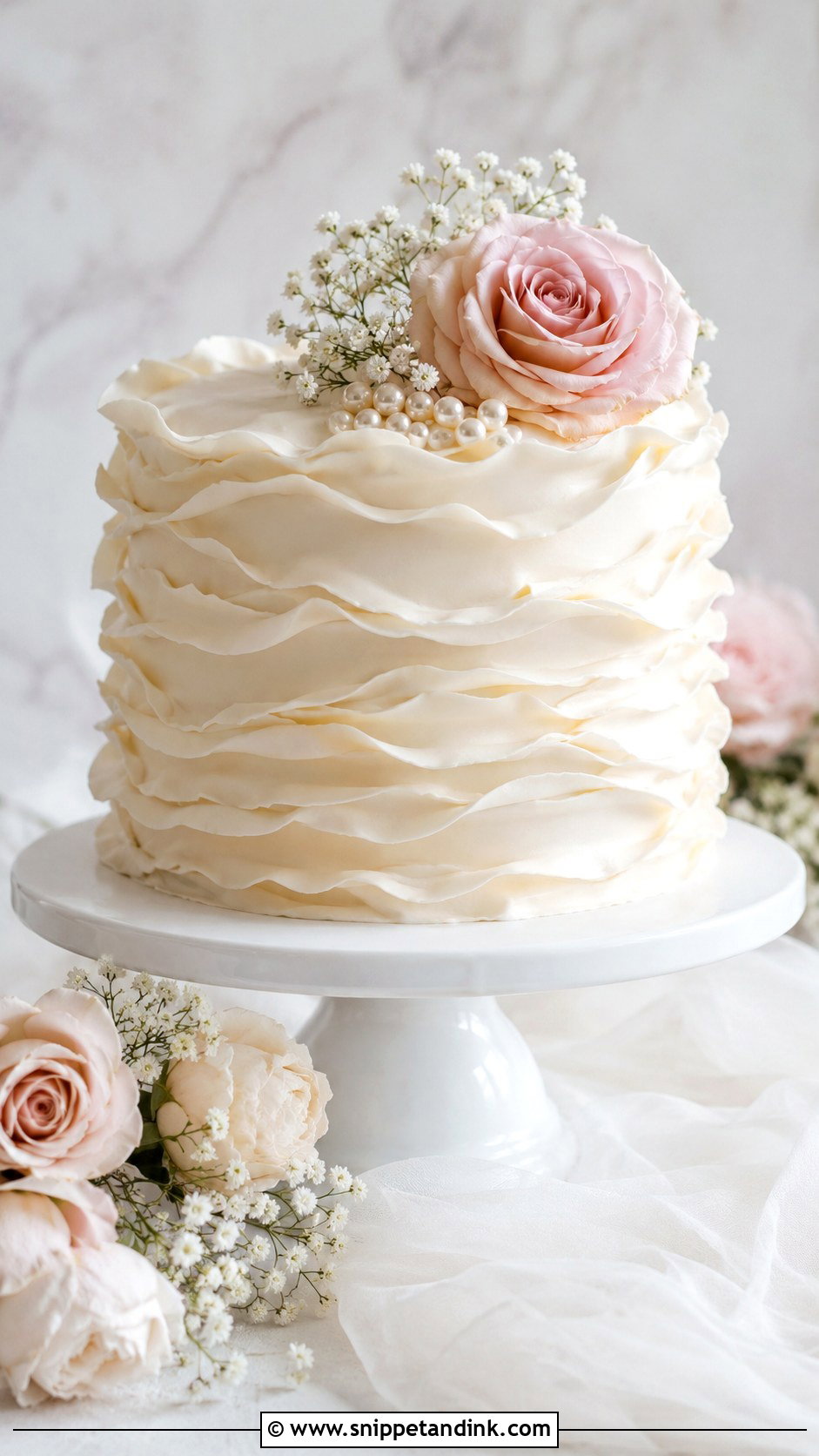
Ruffles mimic fabric, which is why they feel bridal even on a modest cake. Fondant ruffles hold crisp, layered edges; buttercream ruffles are softer and more uneven, closer to a slip-dress feel. Full-height ruffles are heavy for a short tier, so I either ask for a taller tier or limit them to a band around the base. Leave the top smooth and plain, or add one floral cluster.
10. 1 Tier Wedding Cake With Drip
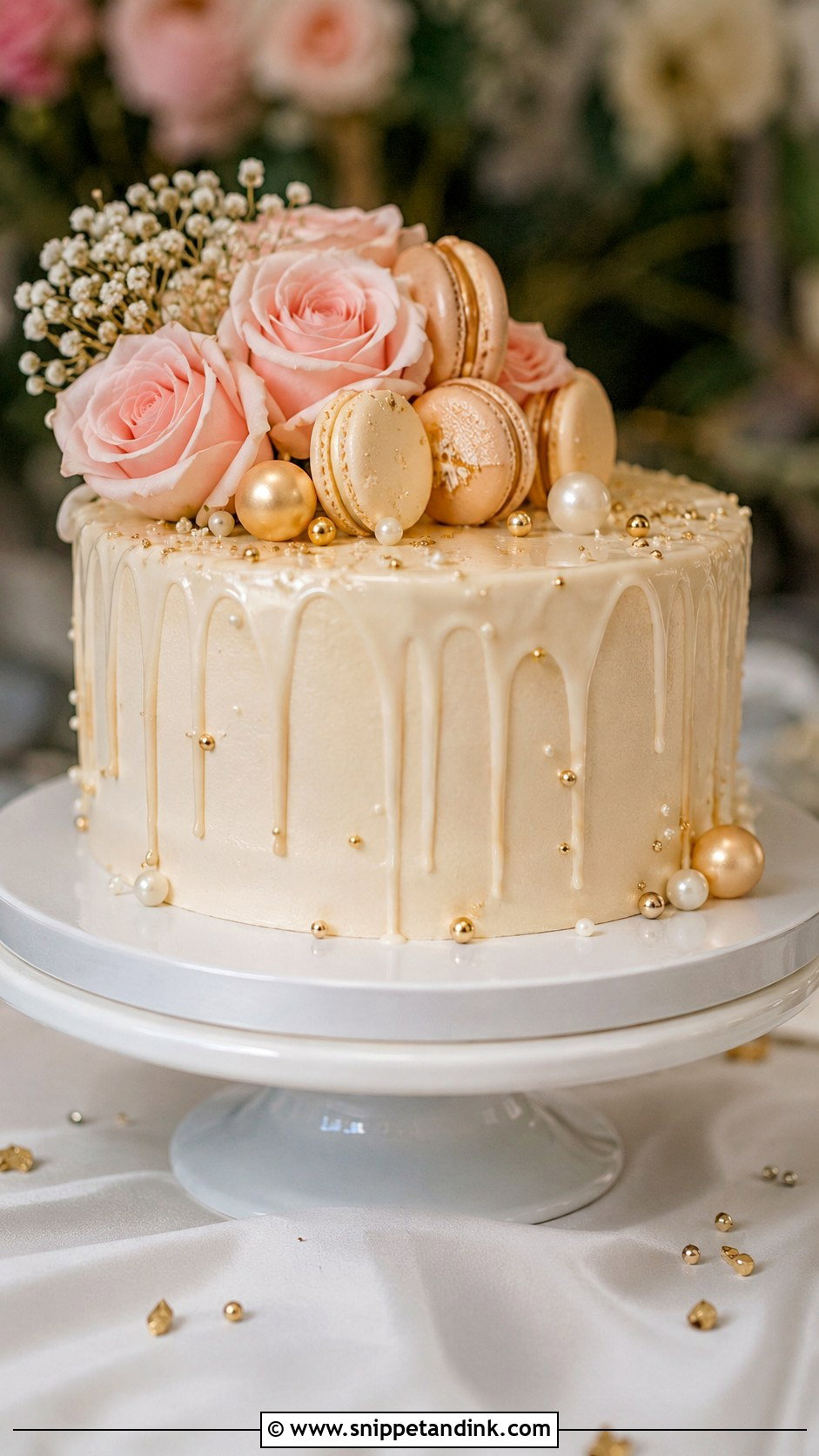
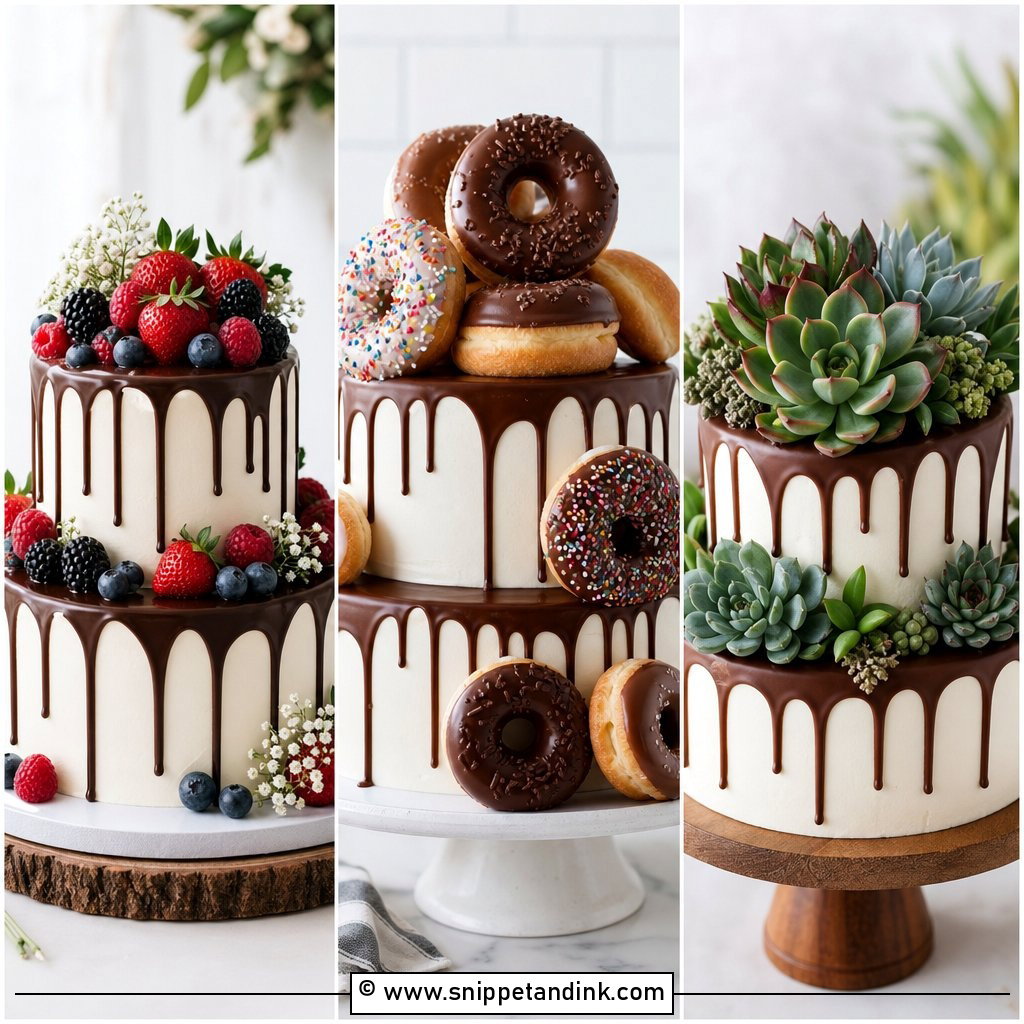
A 1 tier wedding cake with drip can look grown-up if you stay away from bright colored drips. White chocolate, caramel, champagne gold or pale blush ganache all look refined. The drip has to go on a cold cake with ganache that’s just warm, otherwise it runs straight to the board instead of stopping partway down. I finish the top with flowers, macarons, fruit or a few pearls, and it suits vanilla, almond, lemon, chocolate or red velvet sponge.
11. 1 Tier Wedding Cake With Floral Wreath
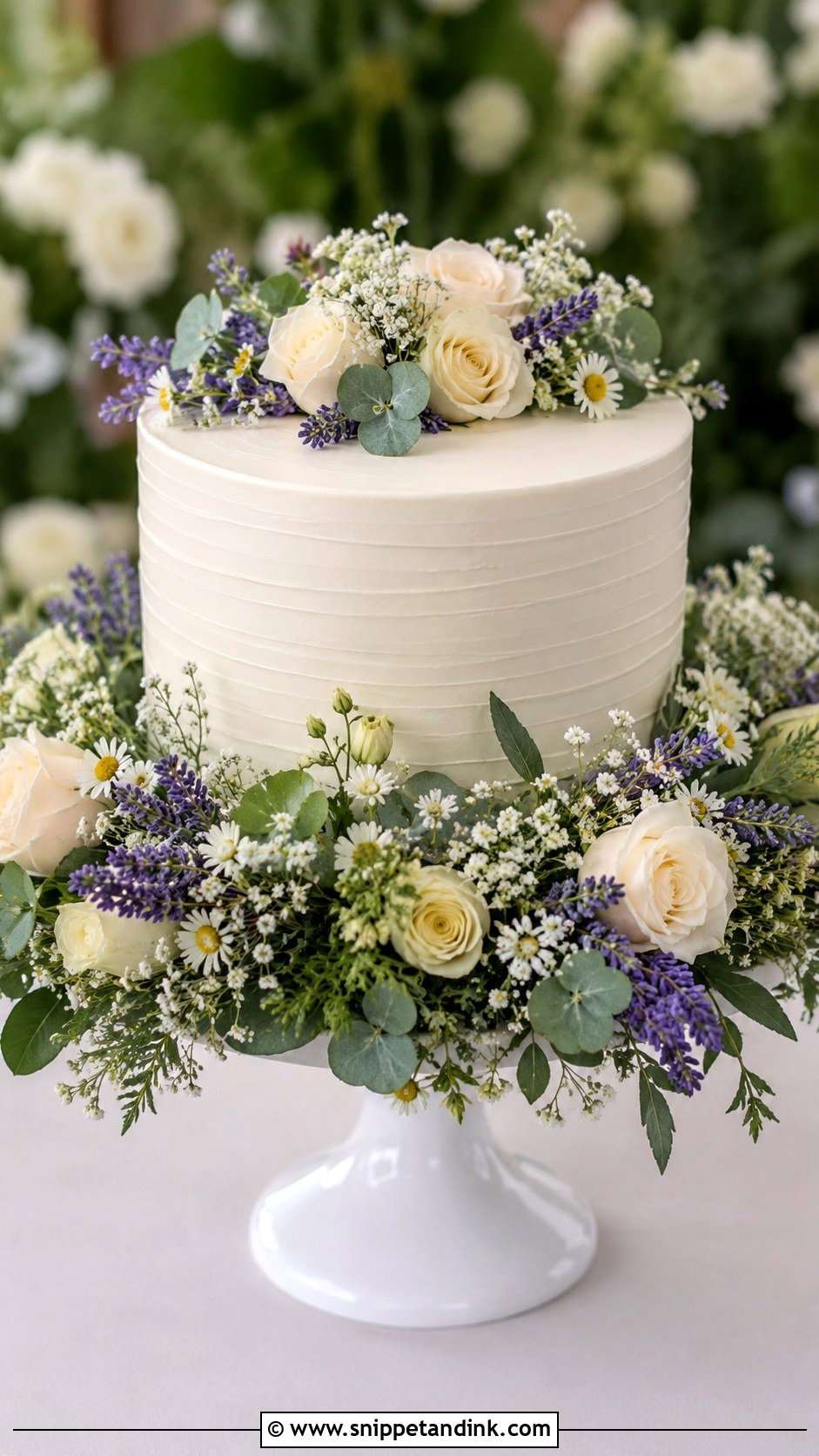
A floral wreath reads evenly from every angle, which matters if the cake sits in the middle of the room rather than against a wall. It can circle the base, ring the top or surround the stand itself, which keeps most stems off the frosting altogether. Small blooms are essential; large heads swamp a single tier. Spray roses, baby’s breath, mini daisies, lavender and tiny orchids are the sizes I reach for, on a plain buttercream base.
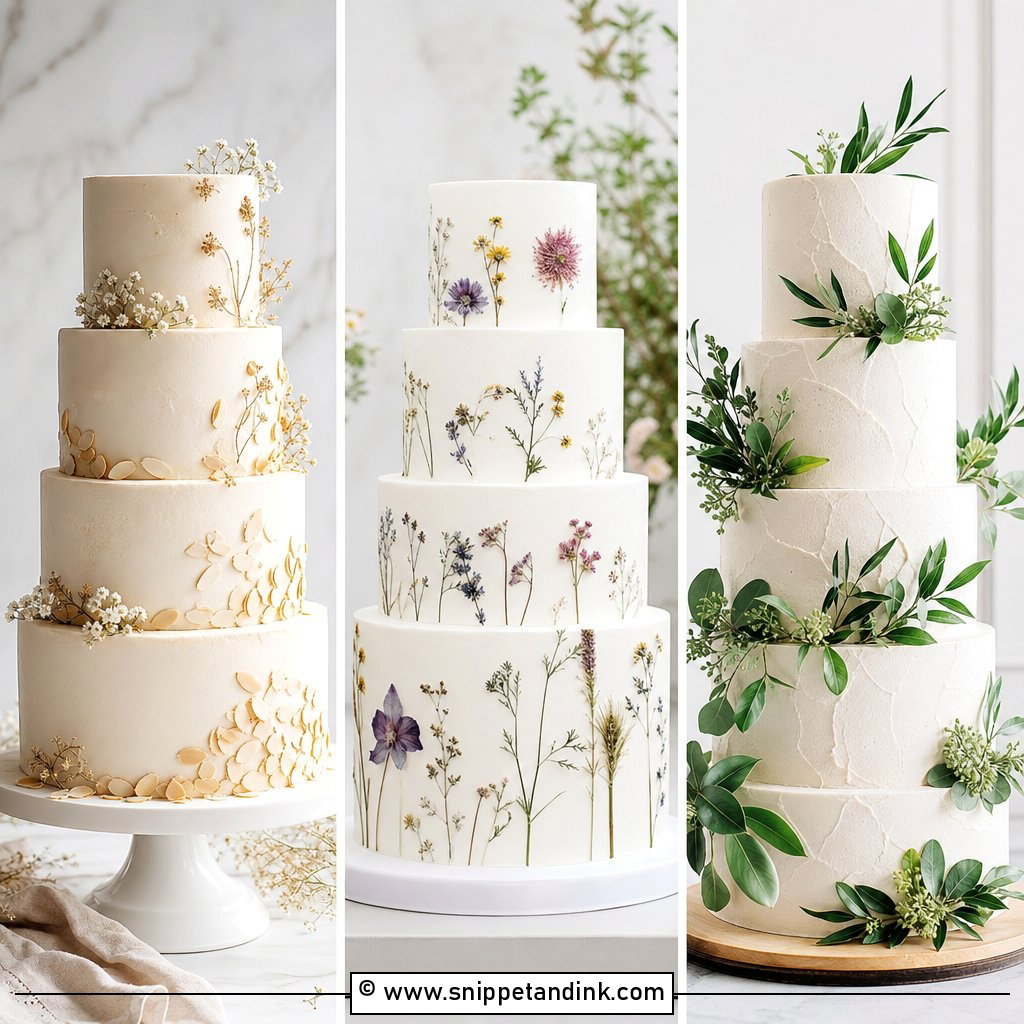
12. 1 Tier Wedding Cake With Pressed Flowers
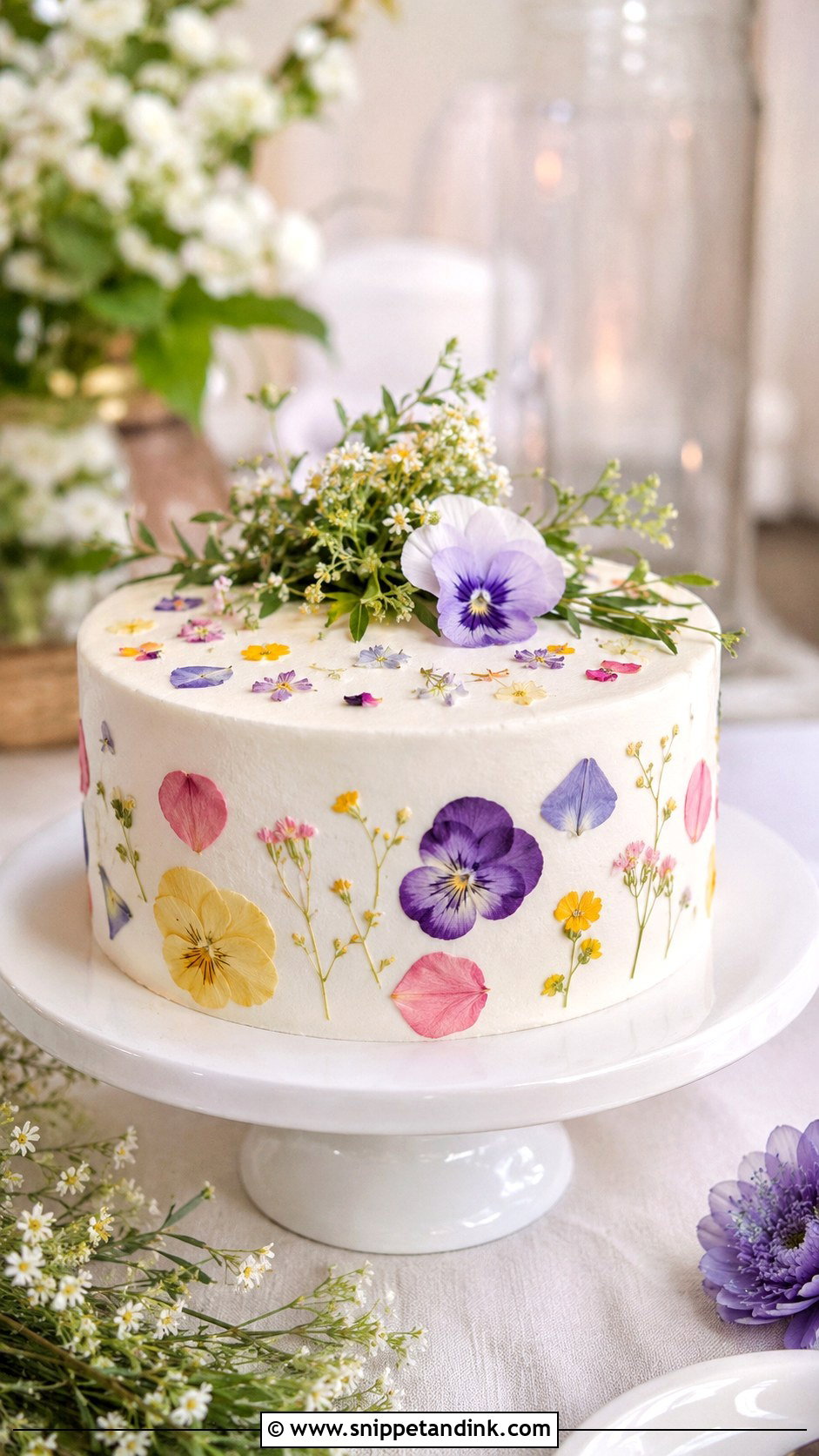
Pressed flowers lie flat against the frosting like a botanical print, so they need a smooth, slightly tacky surface to stick. Soft pastel petals on white buttercream look delicate; brighter violas and cornflowers feel more cheerful. They must be edible varieties grown without pesticides, which is something to confirm with your baker rather than assume. With this much pattern on the sides, the cake needs nothing else beyond a white stand and a simple table.
13. 1 Tier Wedding Cake With Minimalist White Frosting
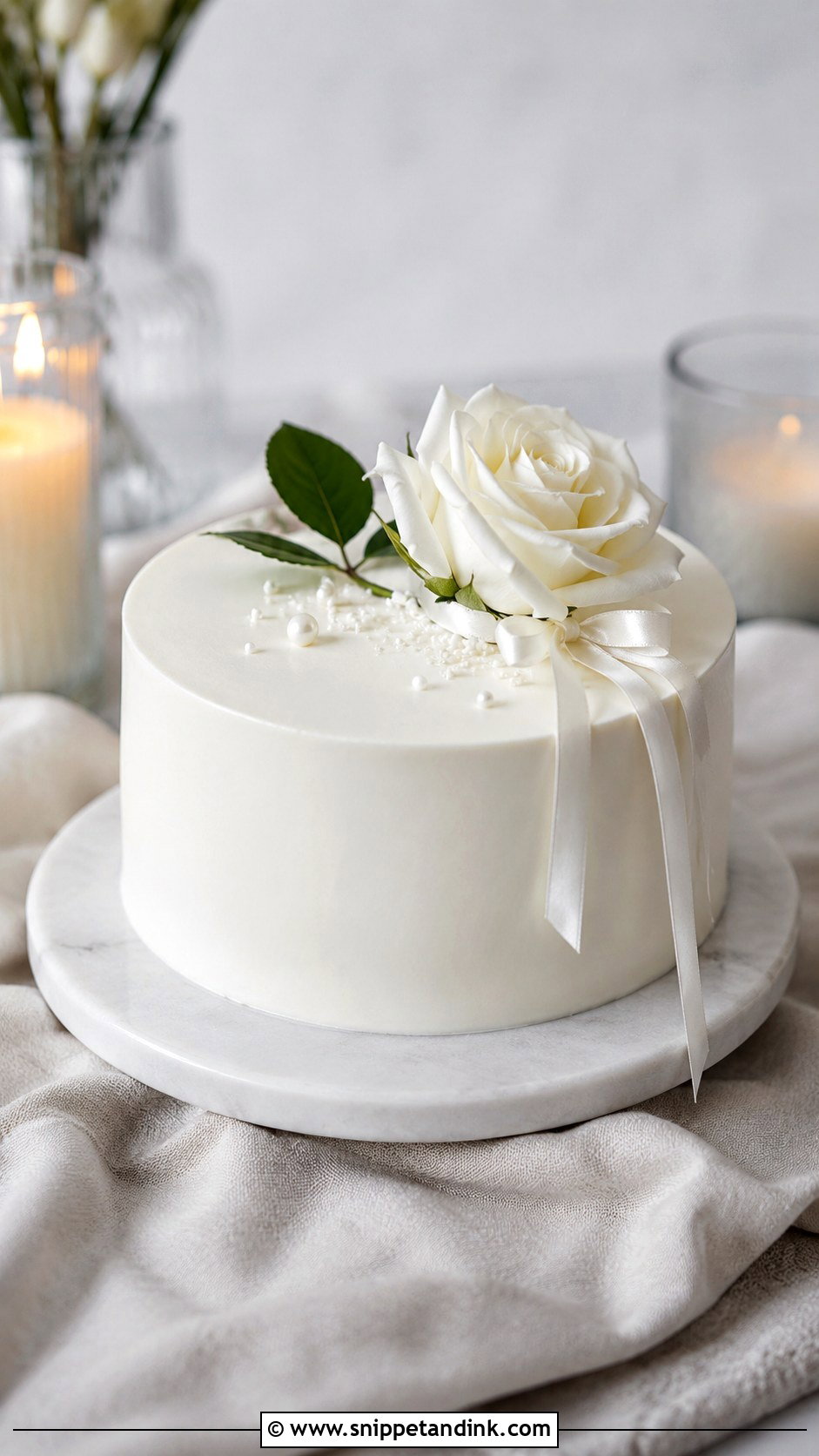
Minimalist white looks simple and is actually the most exacting finish I make, because a smooth white coat shows every air bubble and dented edge. I get the sharpest result with chilled layers, a firm crumb coat and a hot bench scraper for the final pass. One small detail is enough: a fine ribbon, a tiny flower cluster, a pearl border or a small initial topper. Give it a good stand and a few candles around it so it doesn’t read as unfinished.
14. 1 Tier Wedding Cake With Vintage Piping
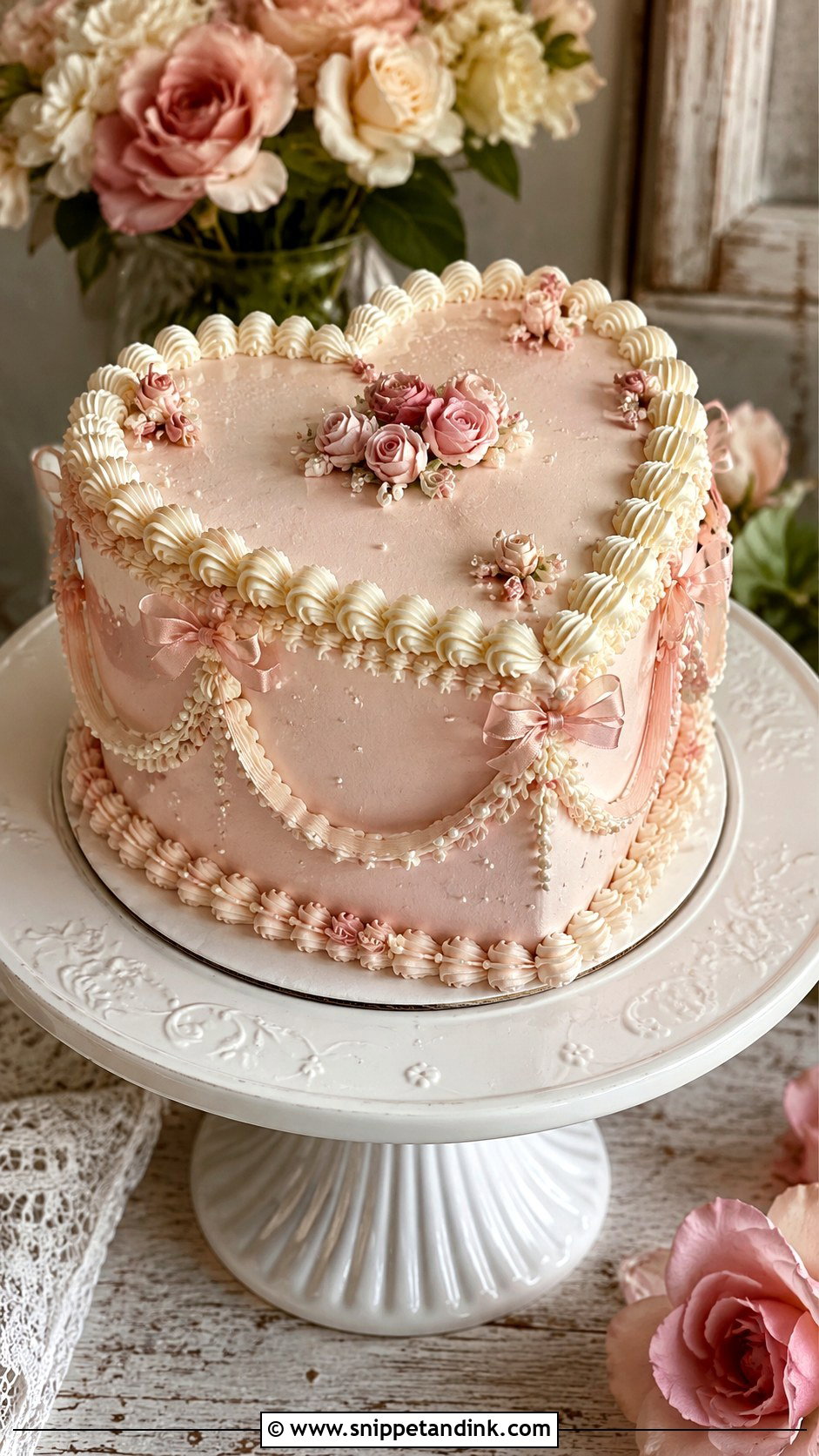
Vintage piping means scalloped borders, shell work, little bows, swags and dots, the look of an old bakery cake updated for a wedding. It shows up best on heart, round or oval shapes in white, blush, butter yellow or pale blue. Piped lettering, initials or a short message makes it personal, and I’d keep to that rather than adding flowers as well. Stiff buttercream holds the shells; soft frosting slumps fast in a warm room, so this is one to keep cool until serving.
15. 1 Tier Wedding Cake With Marbled Fondant
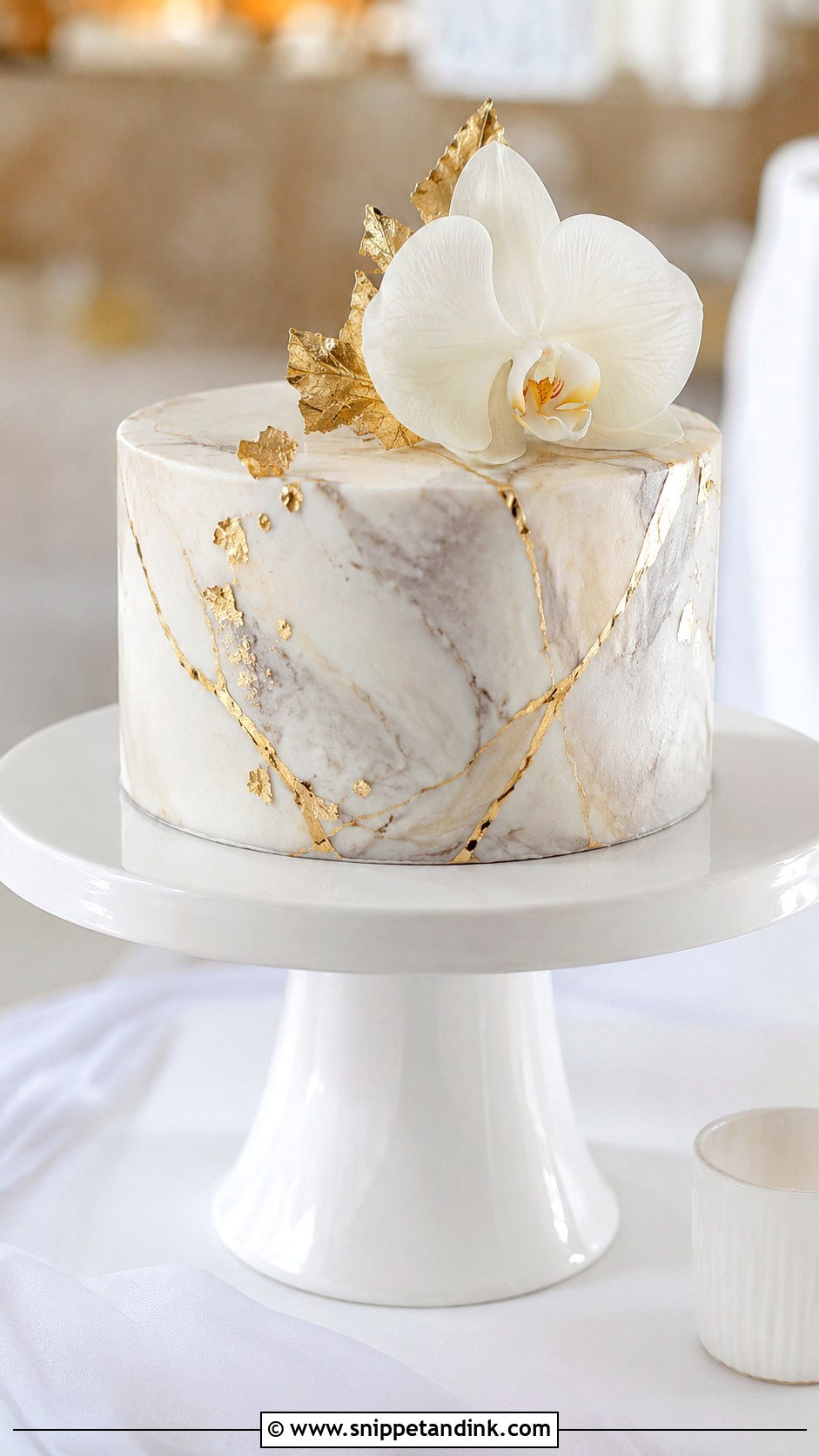
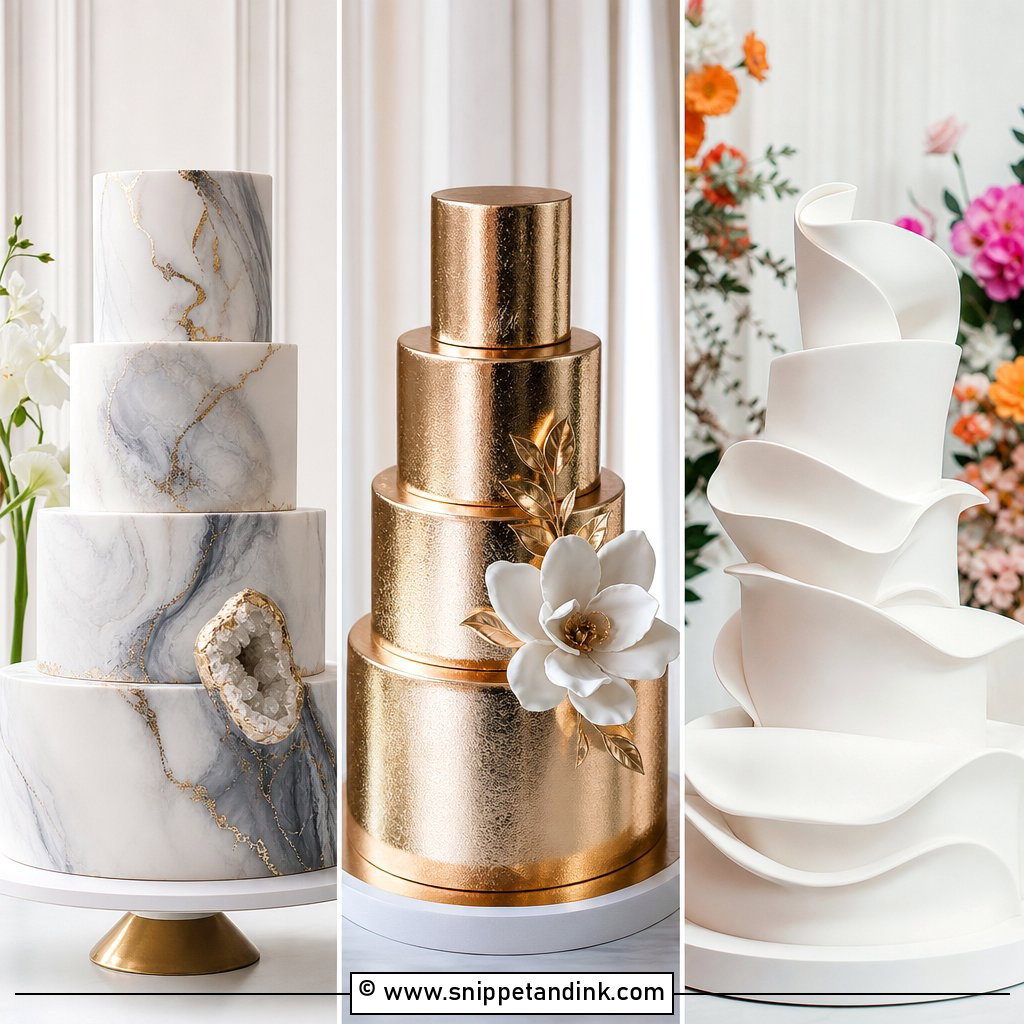
Marbled fondant comes from kneading tinted paste partway into white before rolling, so no two cakes are identical. Grey, ivory, blush and beige are the easiest vein colors to style, and a little edible gold painted along the veins warms the effect. The pattern needs restraint: subtle stone, not swirled tie-dye. One sugar flower, a scattering of gold flakes or a clean acrylic topper is all I add, and it suits gallery, hotel and city venues.
16. 1 Tier Wedding Cake With Semi Naked Frosting
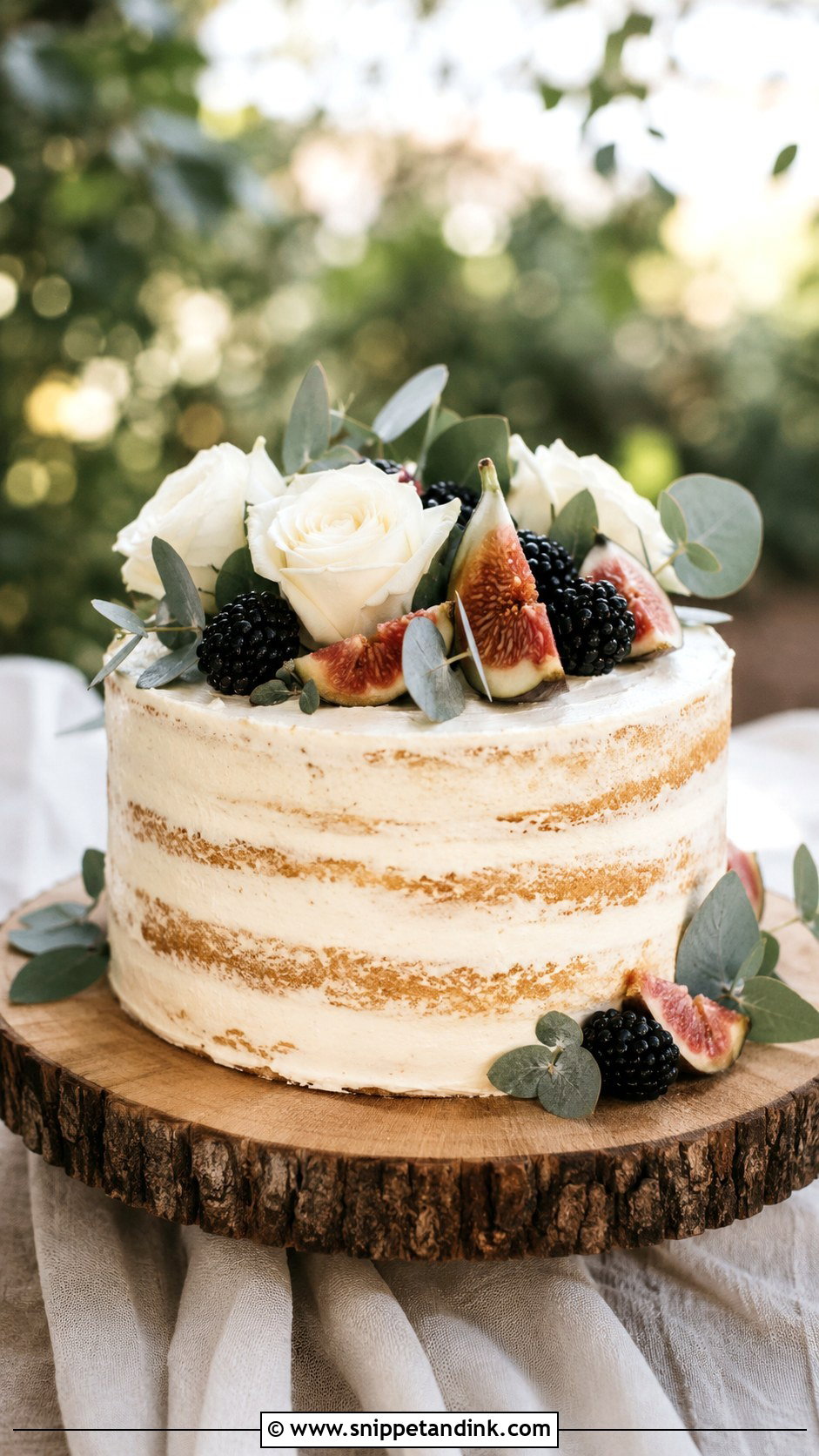
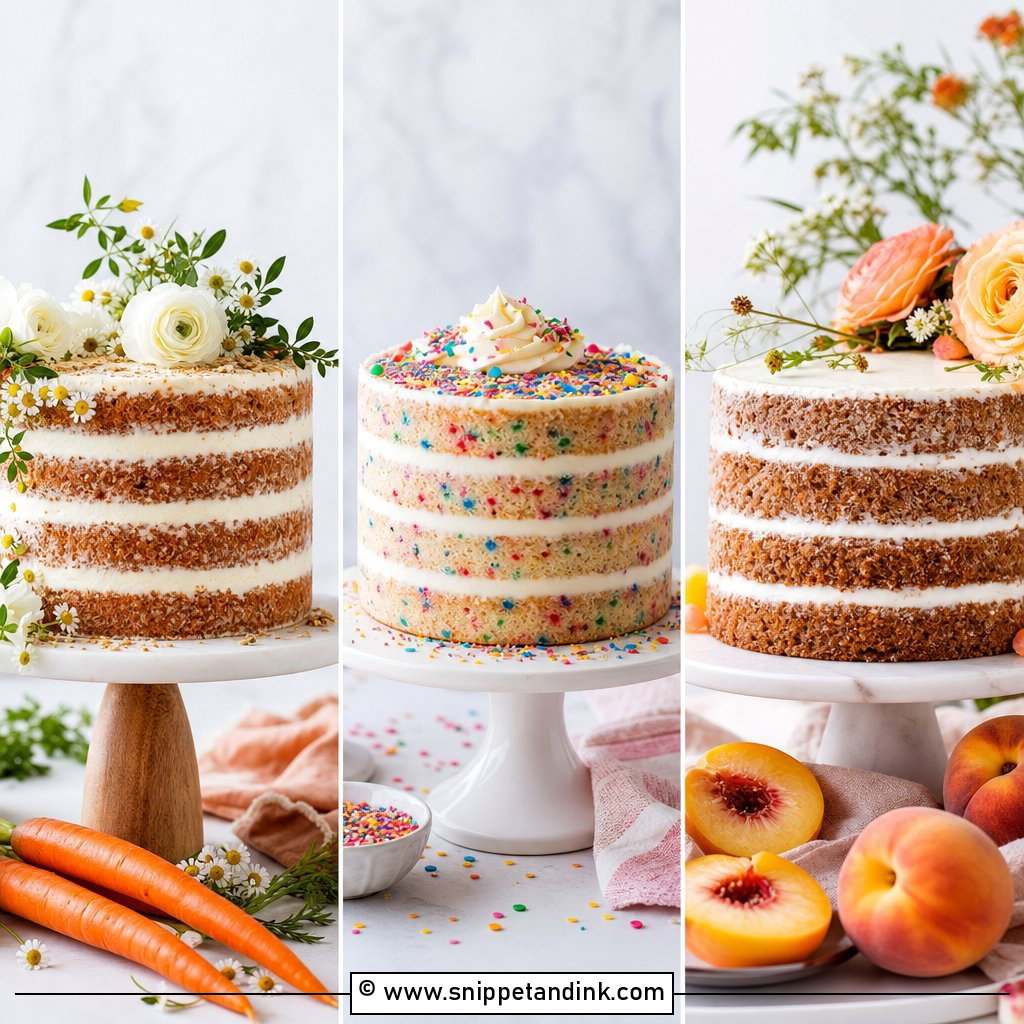
A 1 tier wedding cake with semi naked frosting shows the sponge through a thin, scraped coat, so the cake itself must be fresh, level and evenly filled. Any lopsided layer is visible. Vanilla, almond, spice, carrot and chocolate sponges all suit the finish. Figs, berries, greenery, fresh flowers or a light dusting of icing sugar complete it, and it belongs on a wooden stand with linen and warm light.
17. 1 Tier Wedding Cake With Black And White
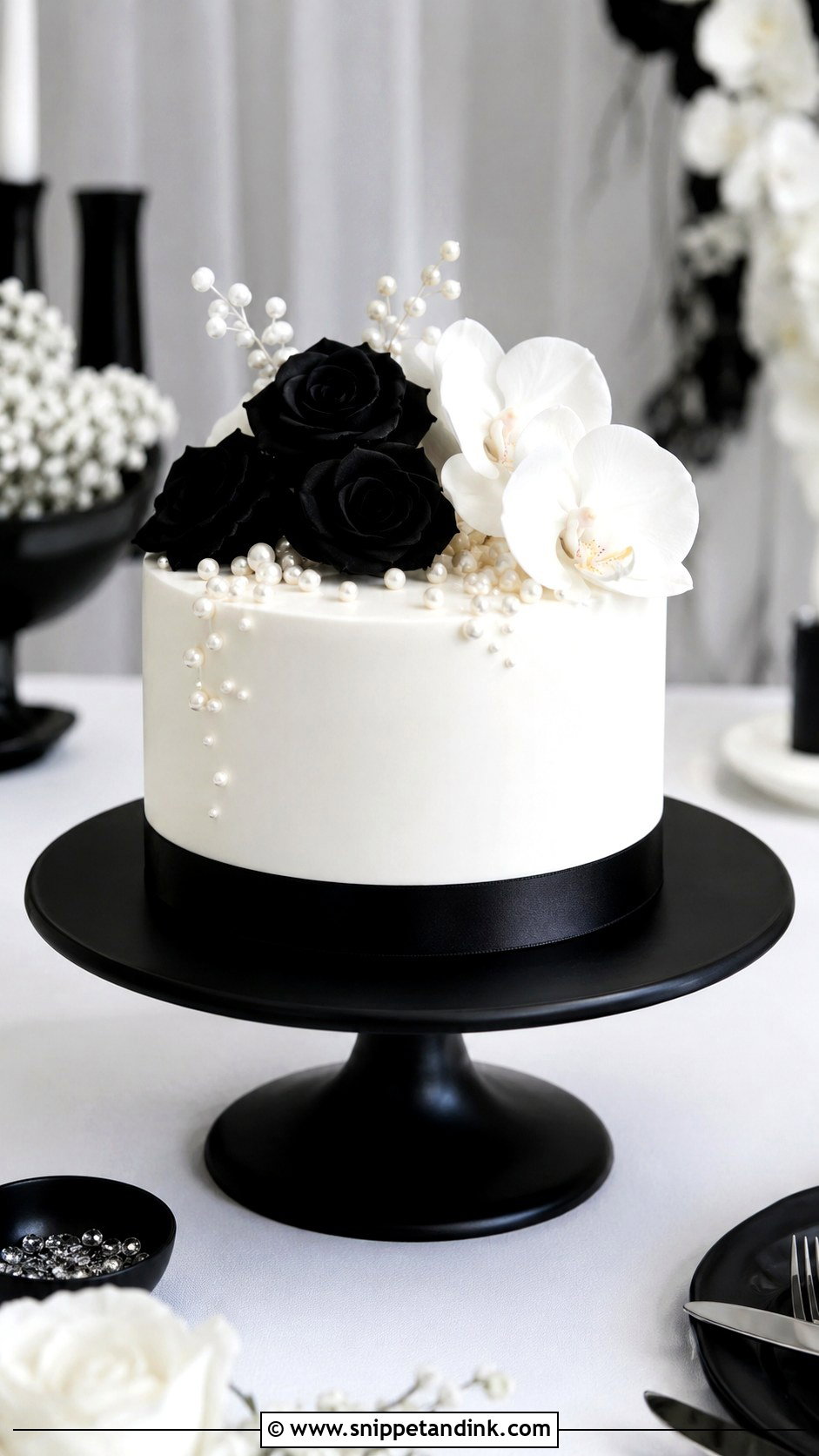
Black and white works on one tier when one color clearly leads. White frosting with black ribbon, fine black piping, small black sugar flowers or a simple monogram is the safer route. The reverse, a black fondant cake with white flowers, is dramatic, but deep black paste takes heavy coloring and can stain mouths, so I usually suggest serving guests from a kitchen cake if you go that way. A touch of gold or pearl softens it for a black-tie room.
18. 1 Tier Wedding Cake With Watercolor Frosting
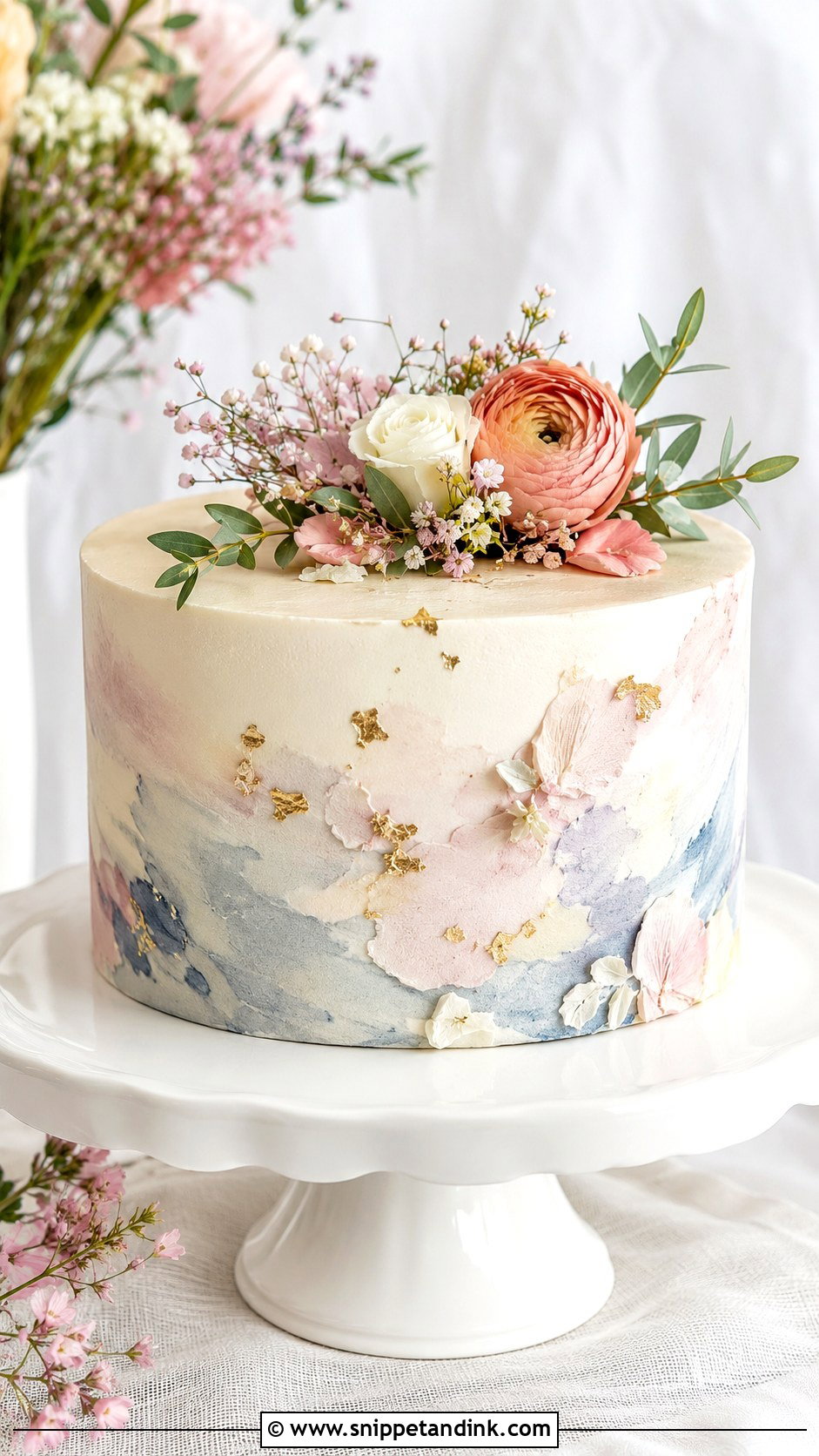
For watercolor frosting I blend two or three tinted buttercreams across the surface with a scraper, so it looks painted rather than flat. Blush, lavender, dusty blue, sage, peach and champagne all work, as long as the tones stay gentle. Colors deepen slightly as buttercream sits, so I mix them a shade lighter than the swatch. A few fresh flowers, sugar petals or a fleck of gold leaf finish it. It’s an easy way to bring color in without committing to one solid shade.
19. 1 Tier Wedding Cake With Square Shape
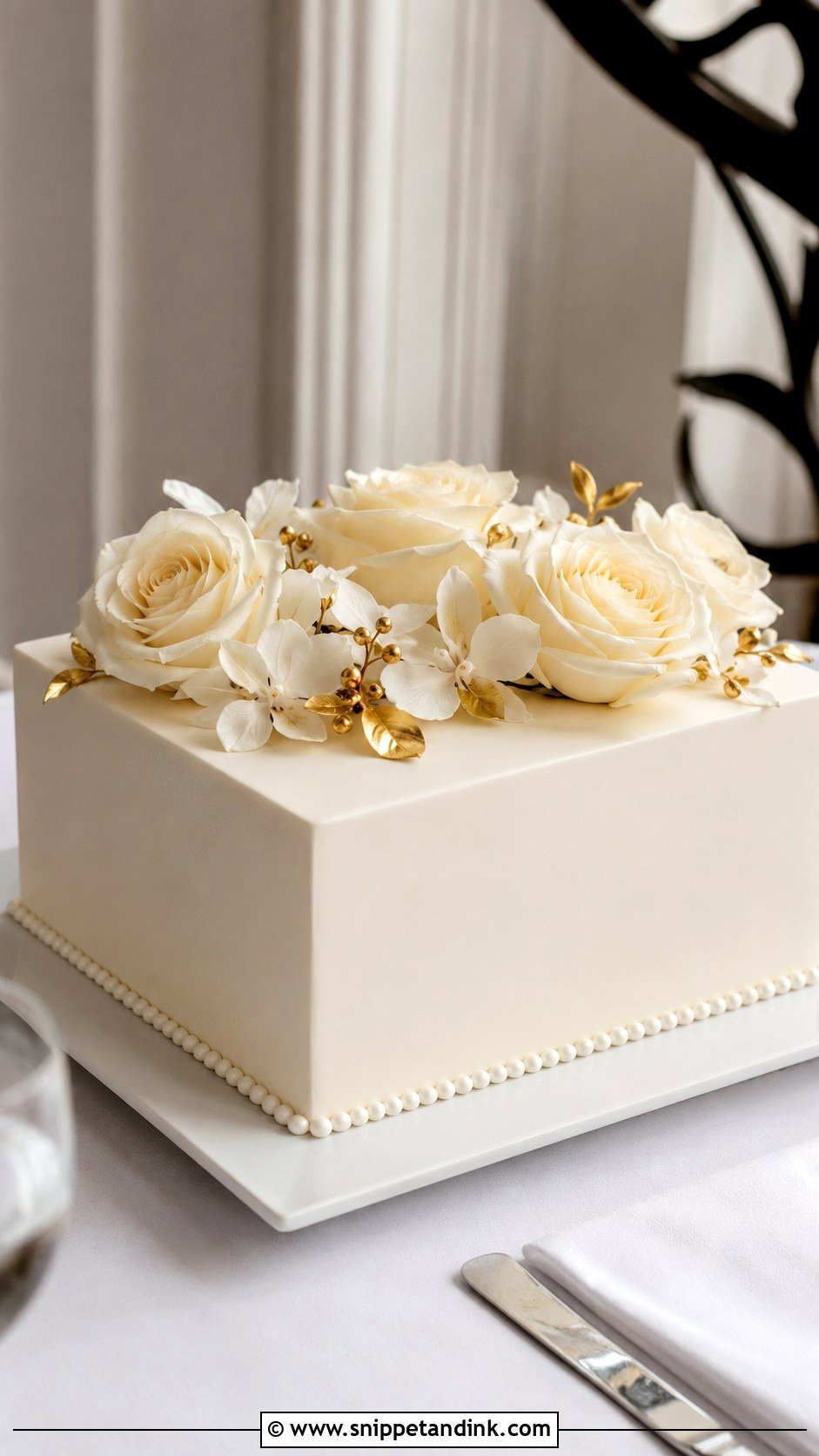
A square silhouette changes the whole feel of a single tier. Sharp corners need a baker confident with square work; buttercream likes to round off at the edges, so ask to see examples. Smooth fondant, marble effects, ribbon bands and geometric piping all suit it, along with white roses, orchids or pearl trim. Squares cut into tidy, even portions, which helps when the cake is feeding everyone. A square platter or plain pedestal echoes the outline.



20. 1 Tier Wedding Cake With Heart Shape
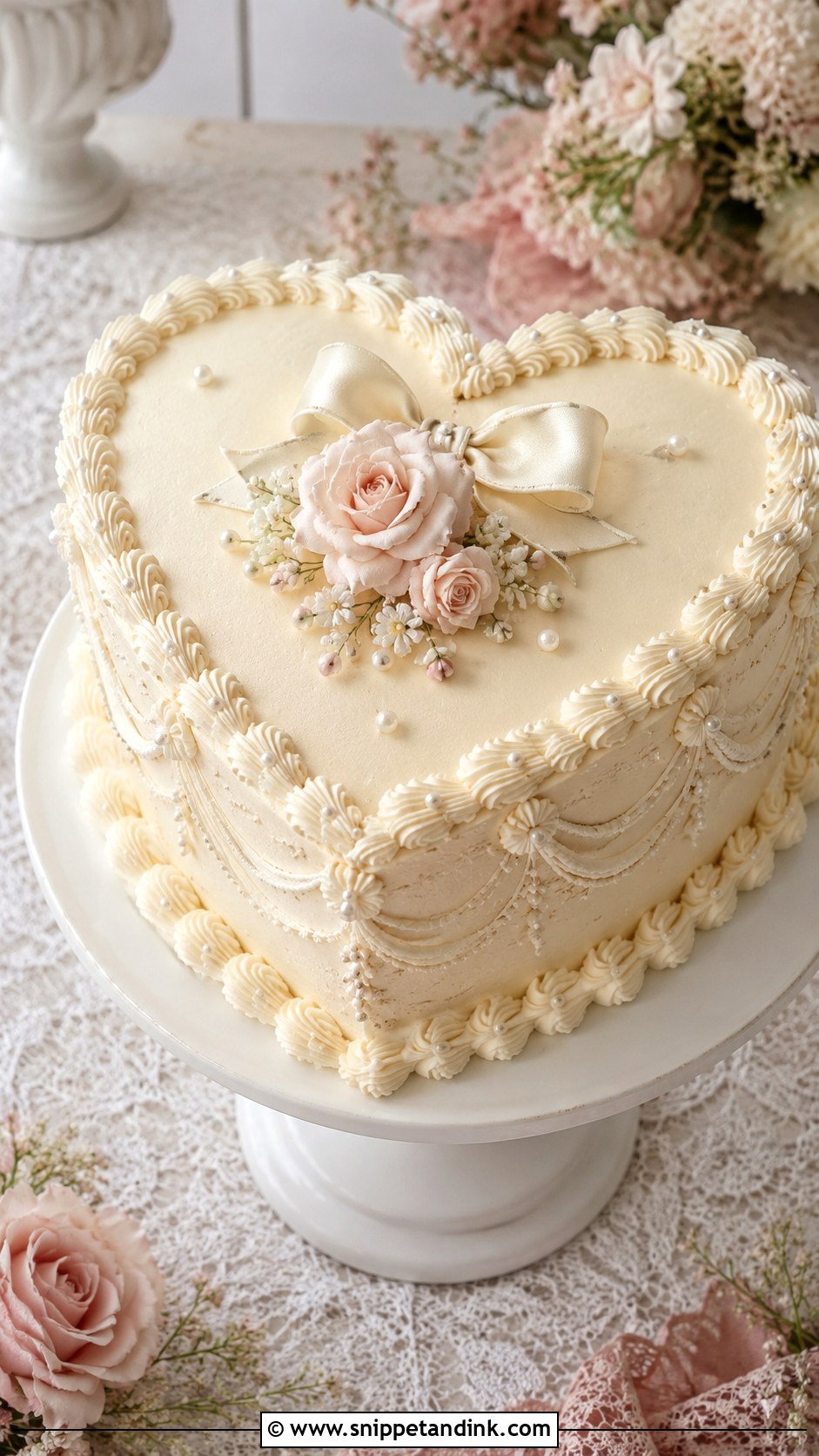
Heart cakes have become the elopement favorite, and the shape is flexible. With piped borders and pastel frosting it reads vintage; in smooth white with one floral accent it reads modern. It takes up little room, so it suits a restaurant table or a picnic setting. I’d add only one extra detail, pearls, bows, tiny sugar flowers or a short message, and keep the colors soft so it doesn’t look like a birthday cake. A pedestal shows off the outline from across the room.
Where a Single Tier Should Sit in the Room
A small cake gets lost on a big round table with a white cloth and nothing else, which is the most common display problem I see at setup. The cake needs height, a background and light.
Raise it so the top of the cake sits around waist to chest height of the people cutting it. A pedestal of eight inches or more usually does it, and a cake table smaller than a standard round makes the cake look proportionate. Put the table against a wall, a window with sheer curtains or a simple greenery backdrop, so the cake has something behind it in photos instead of guests and exit signs.
Light matters more than décor. A pair of candles or a soft spotlight shows off texture and piping far better than overhead room lights, which flatten everything. Keep the table out of direct sun and away from heaters and the dance floor, both for the frosting and for the inevitable bumped elbow.
For the cutting itself, make the first cut toward the back so the side facing the camera stays intact. Then let the caterer take the cake into the kitchen to portion it. A single tier is quick to slice, which means your guests get dessert while the music is still going.
A Small Cake With a Clear Point of View
One tier can carry the cake cutting just as well as five when the design answers to your venue, your flowers and the temperature of the room. Smooth buttercream reads clean, texture reads relaxed, fruit reads fresh and sugar flowers last through a long day. If you’re feeding a crowd, add a kitchen sheet cake, cupcakes or a few small desserts and keep the single tier for the first slice and the photos. Give it a good stand and soft light, and it will hold the room.
You'll Like These Ideas:









Leave a Reply