
Flowers on a cake do a quiet job most couples never notice: they hide seams, cover a slightly soft edge and fill the gap where two tiers meet. Take them away and the cake has nowhere to hide, which is exactly why a flower-free design can look so sharp. The interest has to come from somewhere else, so in this list it comes from pearls, bows, piping, fruit, metal leaf, pattern and shape. Below are 25 cakes I’d happily build without a single bloom, with notes on what each one needs from the finish to work.
Why a Plain Cake Shows Every Flaw
When I quote a minimal cake, couples sometimes expect it to cost less because there’s less on it. It often doesn’t. Fresh flowers cover a lot: a slightly uneven join between tiers, a small bulge where the filling pushed out, a corner that rounded in transit. Without them, the finish itself is the decoration, and getting buttercream truly smooth and edges truly sharp takes extra chilling, scraping and patience.
So the questions I’d ask any baker before booking a flower-free design are about finish, not ideas:
- Can you show me close-up photos of plain tiers you’ve made, not just styled shots with props?
- Do you work in buttercream, ganache under fondant, or both, and which do you recommend for my venue’s temperature?
- How do you cover the base of each tier where it meets the next one?
- Will the decoration be finished in your kitchen or at the venue?
Sharp edges usually come from a firm ganache layer under the covering. Soft, rounded edges suit American or Swiss meringue buttercream. Neither is wrong, but they look different, and the choice should match the style you picked from the list below.
1. Simple White Wedding Cake
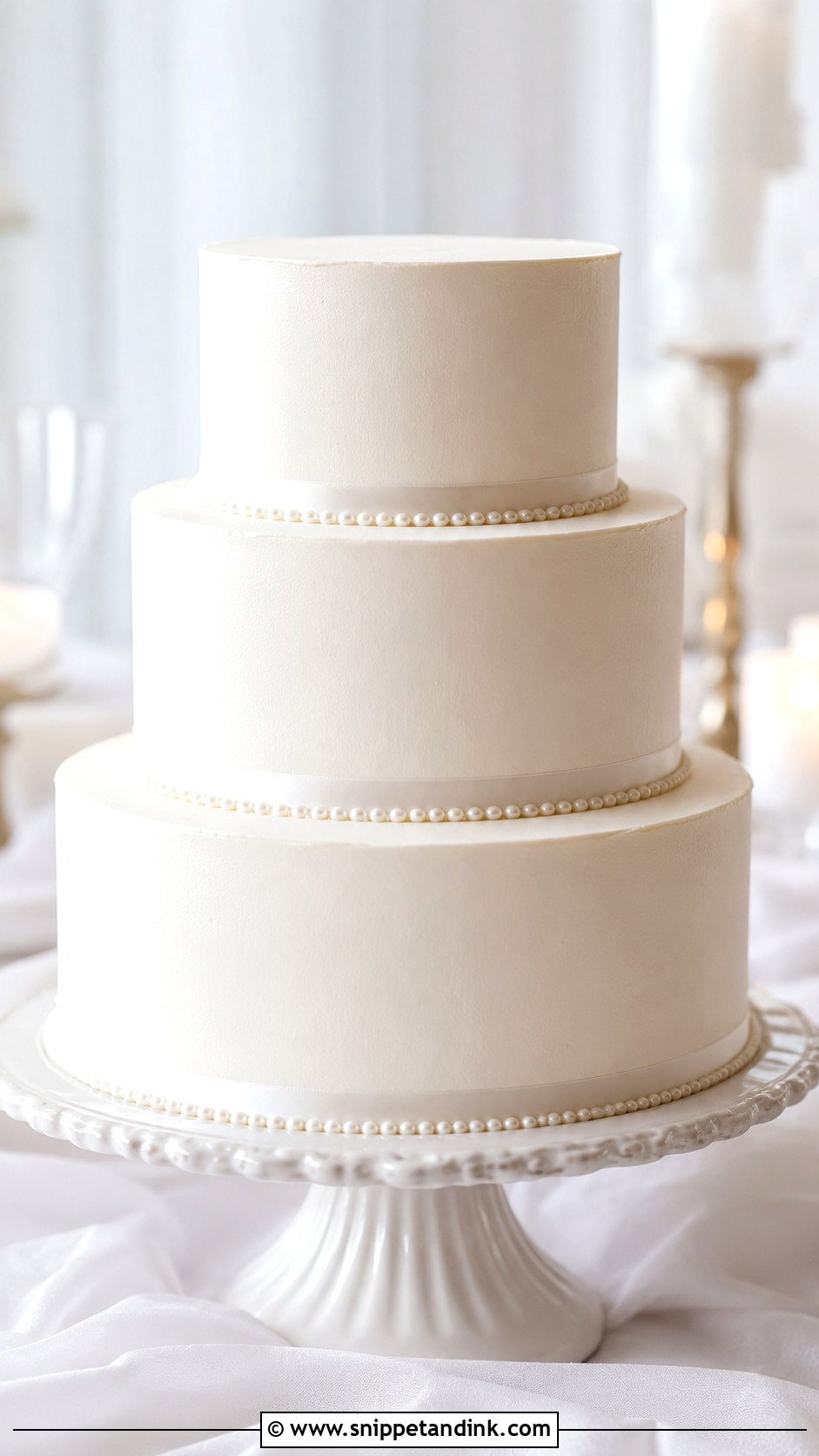
Plain white is the hardest cake to fake. With no decoration on it, every wobble in the buttercream and every rounded corner shows, so I spend more time chilling and re-scraping a simple cake than a busy one. Two or three tiers usually sit best. If you want one small extra, a thin satin ribbon or a soft pearl border at each base hides the join without changing the character. It also sits happily beside candles and glassware that would clash with something louder.
2. Pearl Wedding Cake
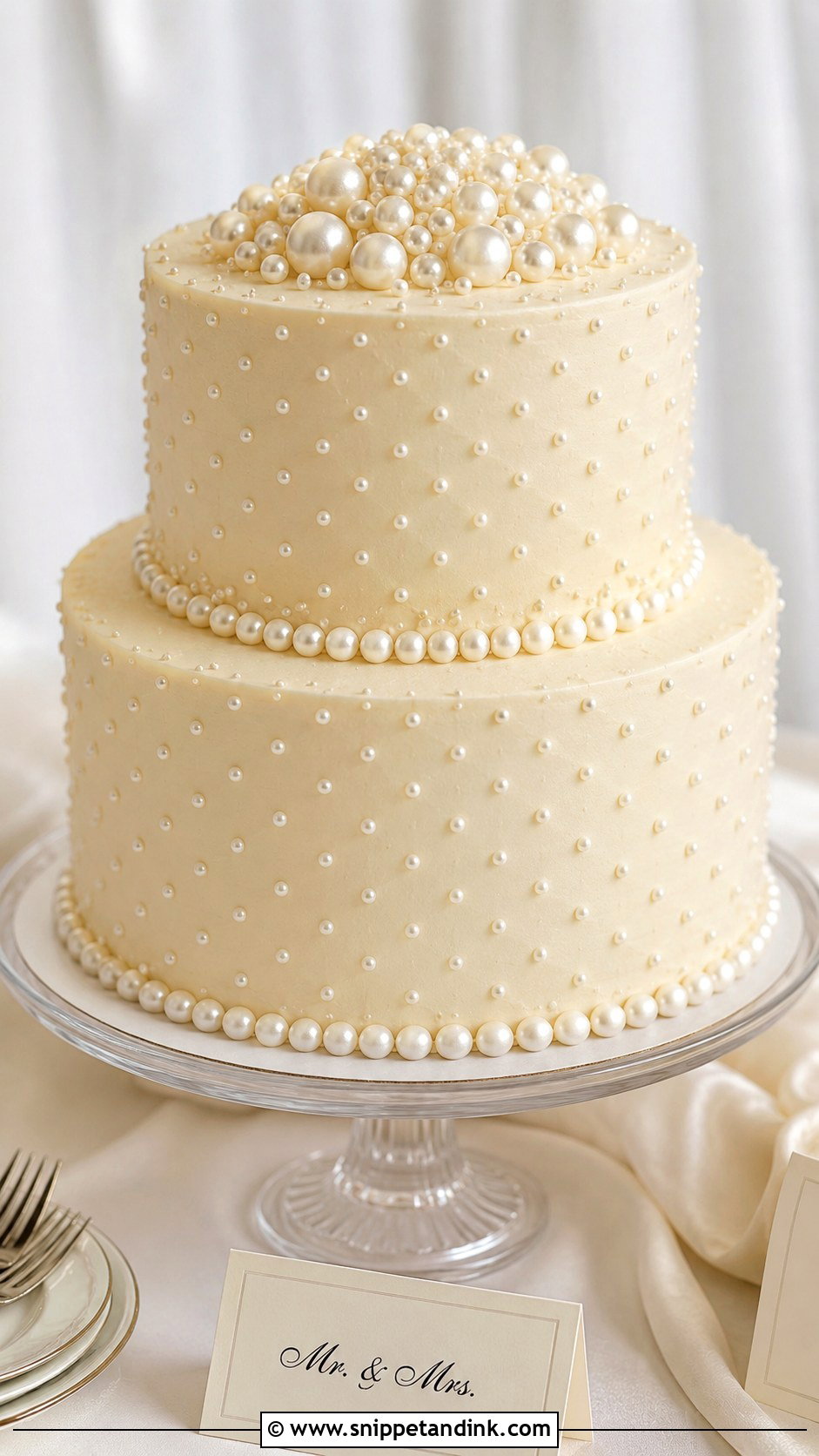
Edible pearls are sugar or isomalt balls, and they’re placed one at a time with a dot of piping gel or royal icing. On buttercream I press them in while the coat is still slightly tacky so they don’t roll; on fondant I glue them. A fading scatter from the base upward looks more current than full rows. For a tall three-tier cake, a pearl border at the foot of each tier gives you the formal outline. One honest warning: pearl luster dust can rub off on fingers during setup, so I place the cake before the final dusting.
3. Bow Wedding Cake
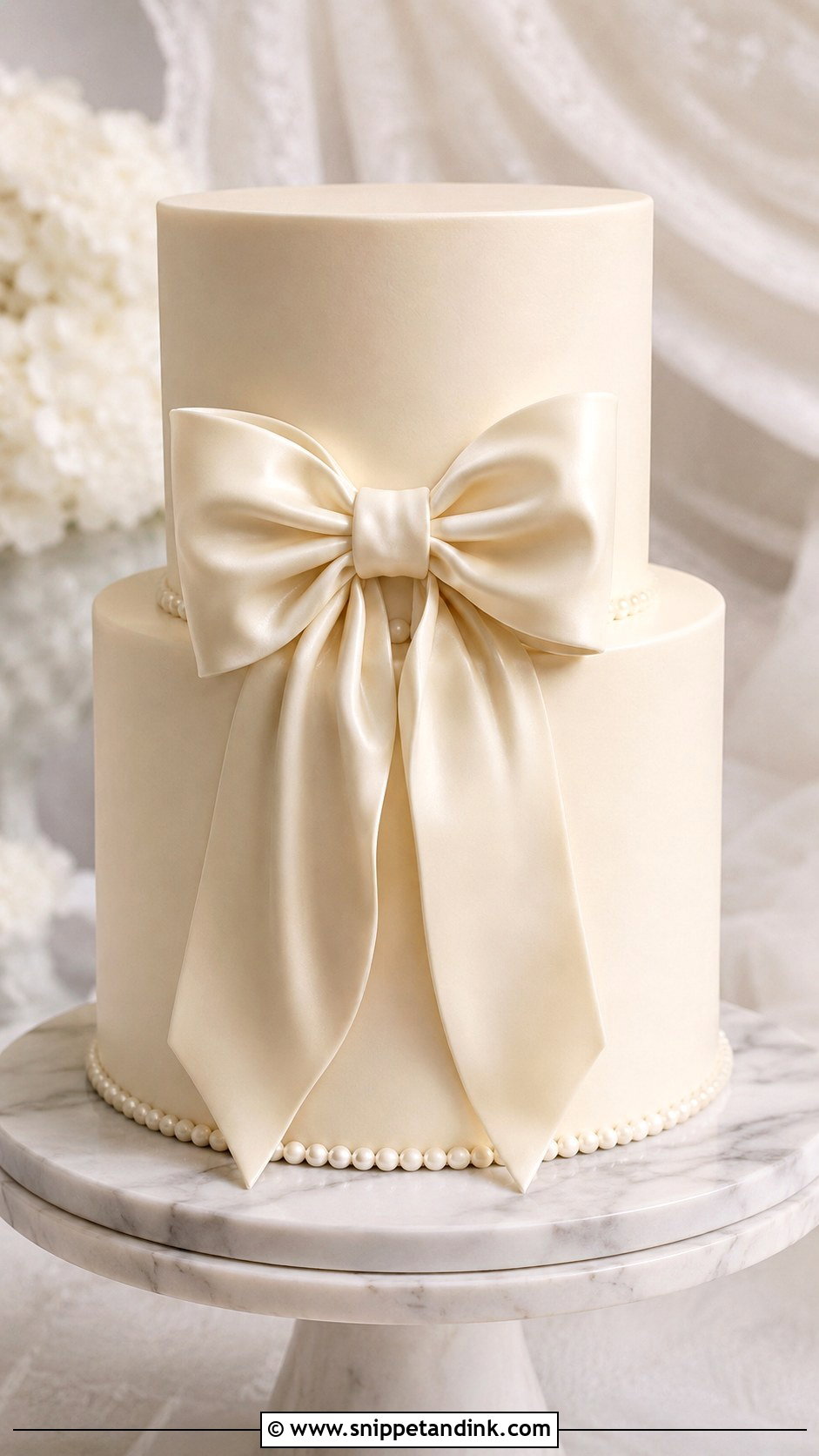
A bow is the closest thing to a flower in terms of softness, and it reads from across a room. I usually make the loops from gum paste or a fondant and tylose mix so they set firm and hold their shape overnight. Wafer paper bows are lighter but go limp in humid rooms. Real ribbon is fine around the outside as long as it sits on a strip of acetate or greaseproof paper, because buttercream grease will stain satin within an hour. One oversized bow on the front is my favorite version; three or four small ones lean more toward vintage.
4. Vintage Piped Wedding Cake
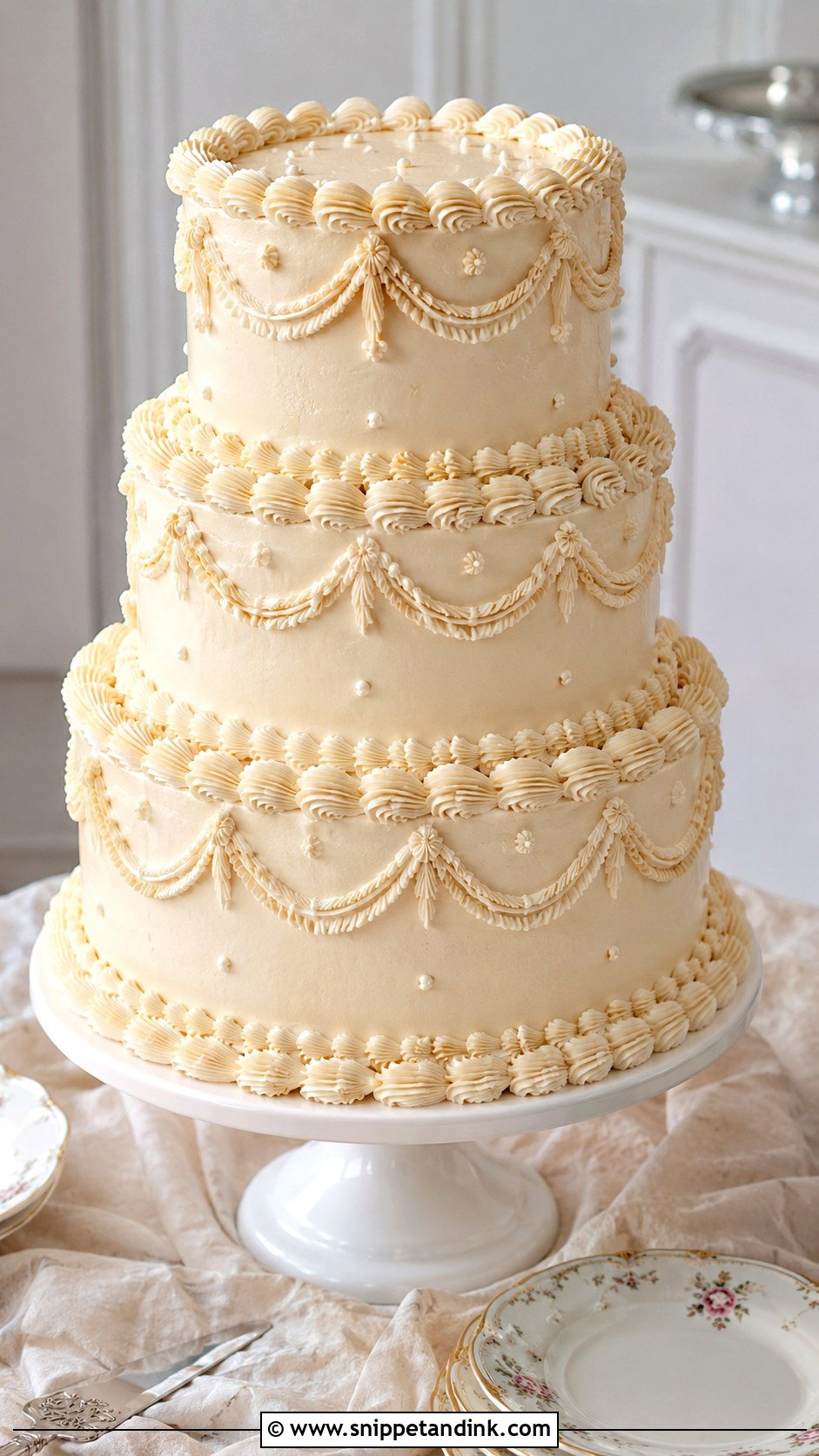
Shells, swags, scrolls and dots done in buttercream carry this style. The piping has to follow the curve of each tier with even pressure, which is why I always ask couples to look at a baker’s piping close up, not just in a wide photo. Neat spacing matters more than quantity. Full white looks classic; ivory warms it under candlelight. If you want a touch more, glacé cherries or a few pearls suit the period feel without breaking it.
5. Lambeth Wedding Cake
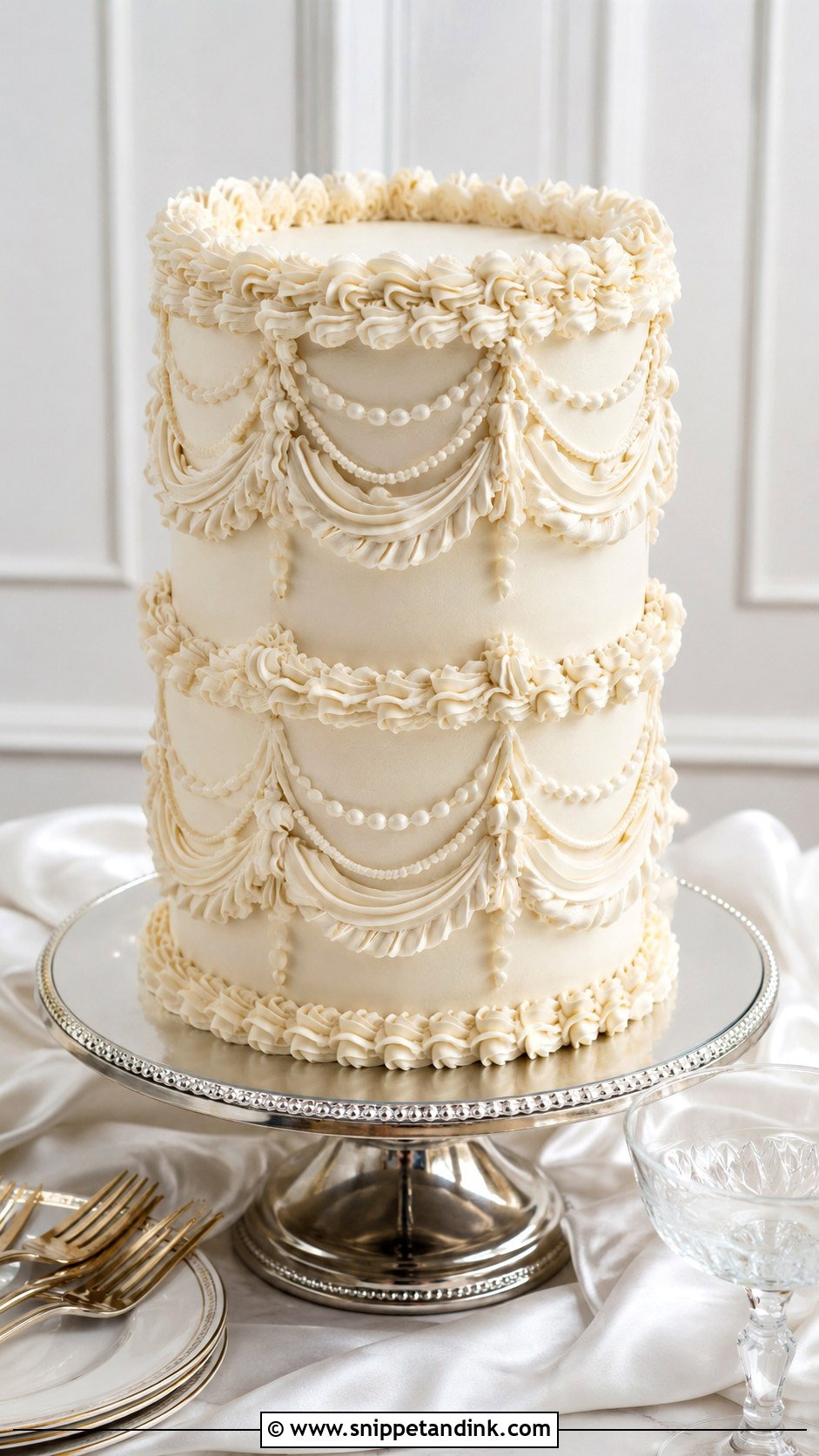
Lambeth is overpiping taken to its limit: line piped on line, shell on shell, until the decoration stands well proud of the cake. It eats time, and it needs tall round tiers so each layer of piping has space. I pipe it in a stiff American buttercream or royal icing because a soft Swiss meringue slumps under its own weight. White on white is the traditional choice, but pale blue or butter yellow makes it feel fresh rather than retro. Keep the topper small, a monogram or nothing at all, since the sides already do all the talking.
6. Ruffle Wedding Cake
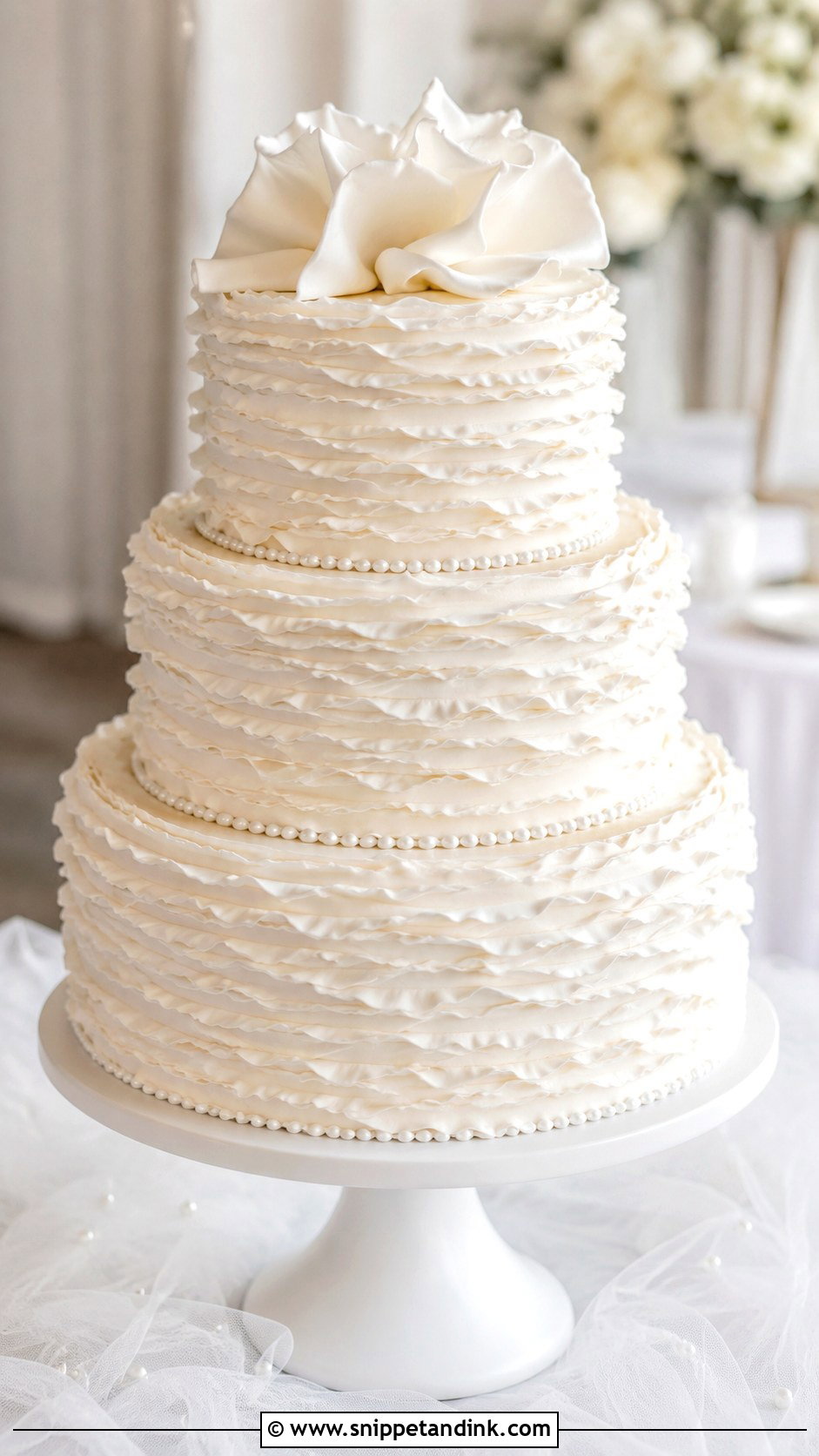
Ruffles bring movement, and the material changes the mood completely. Buttercream ruffles are piped with a petal tip and look soft and a little irregular. Fondant ruffles are rolled thin, frilled and attached strip by strip, which gives a crisper, couture finish. Wafer paper is the lightest of the three but can curl in steam. I’d suggest one ruffled tier between two smooth ones if you’re worried about the cake looking heavy. Ivory or warm white lets the shadows in the folds do the work.
7. Marble Wedding Cake
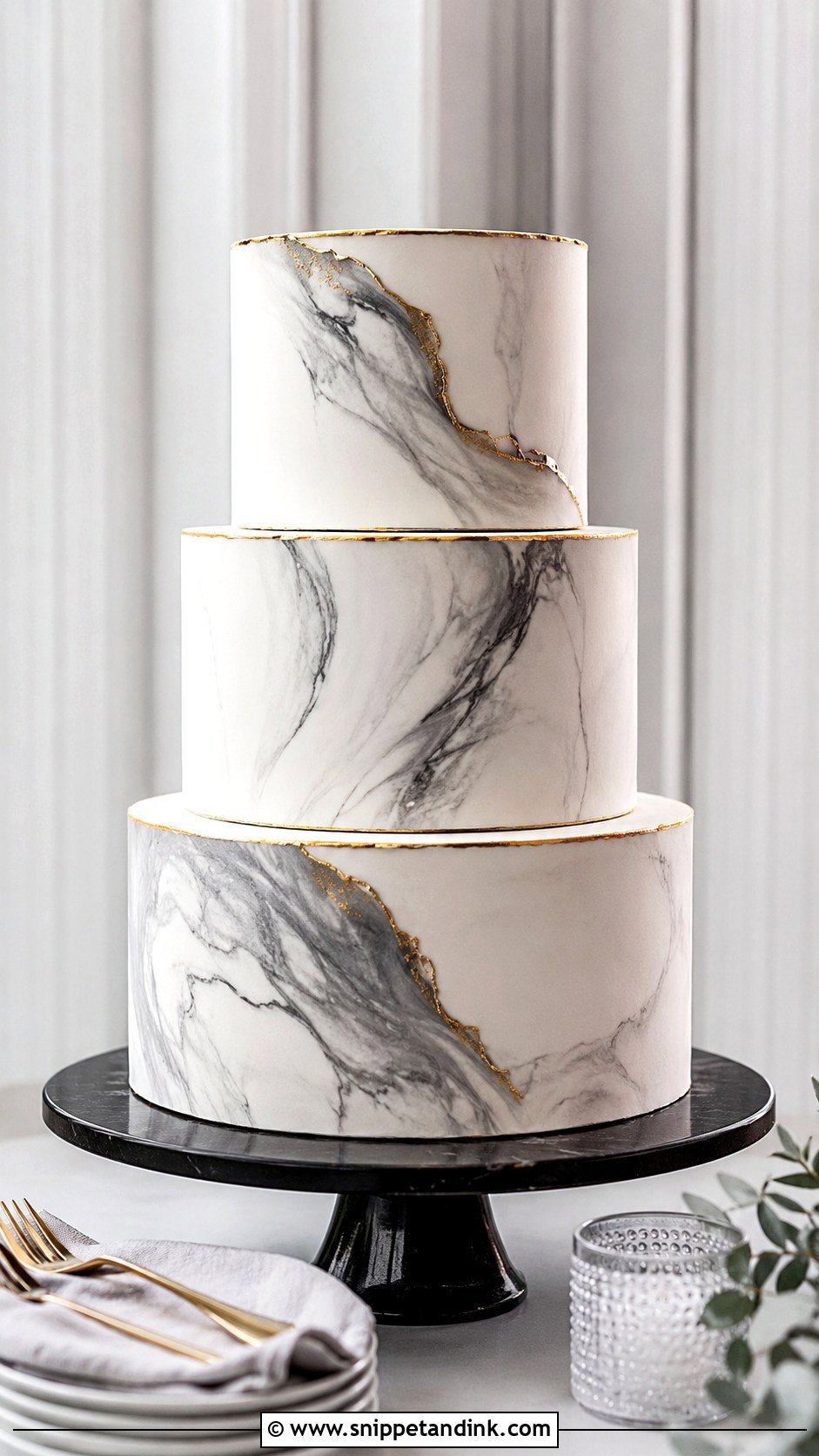
Marble sits better on fondant than on buttercream, because the veining is rolled into the paste before it goes on the cake, so the pattern stays crisp. Soft gray veins look calm; black or gold veining is far more dramatic. I always warn couples that real marbling never repeats, so no two tiers will match exactly, and that’s part of the appeal. A thin metallic edge or a clear acrylic topper finishes it. It suits gallery and rooftop spaces where a traditional piped cake might feel out of place.
8. Gold Wedding Cake
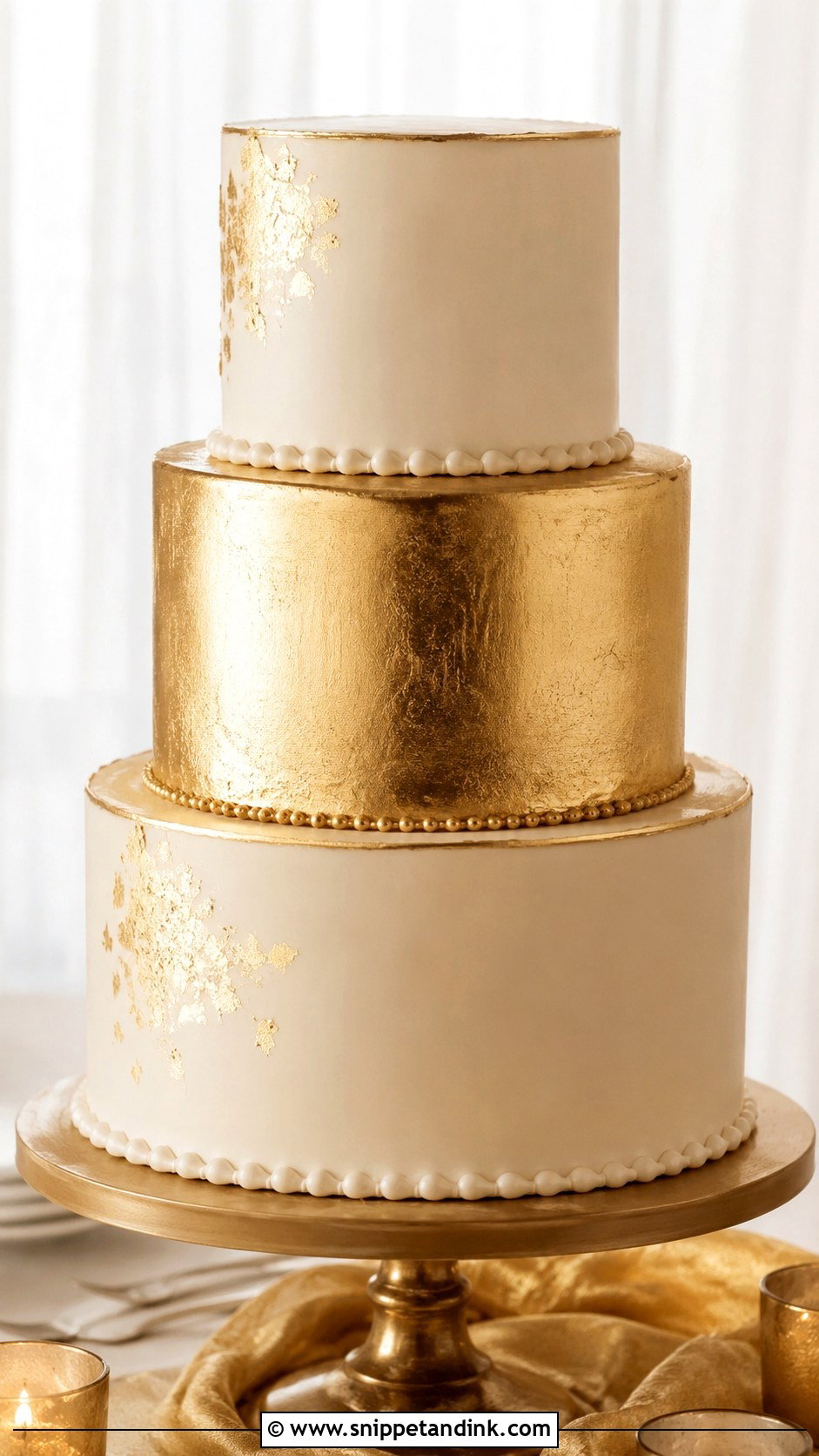
Gold works best when you pick one gold moment and stop. That might be a single leafed tier, painted edges or a few brush strokes. Edible gold leaf is applied in thin sheets onto fondant that is just barely tacky, and it wrinkles if the surface is too wet, which can look intentional or messy depending on the hand. A white cake with one gold tier feels modern; ivory with soft gold edges is warmer. Under evening light the shine replaces what flowers would normally bring, so a mirrored stand is often all you need beside it.
9. Black And White Wedding Cake
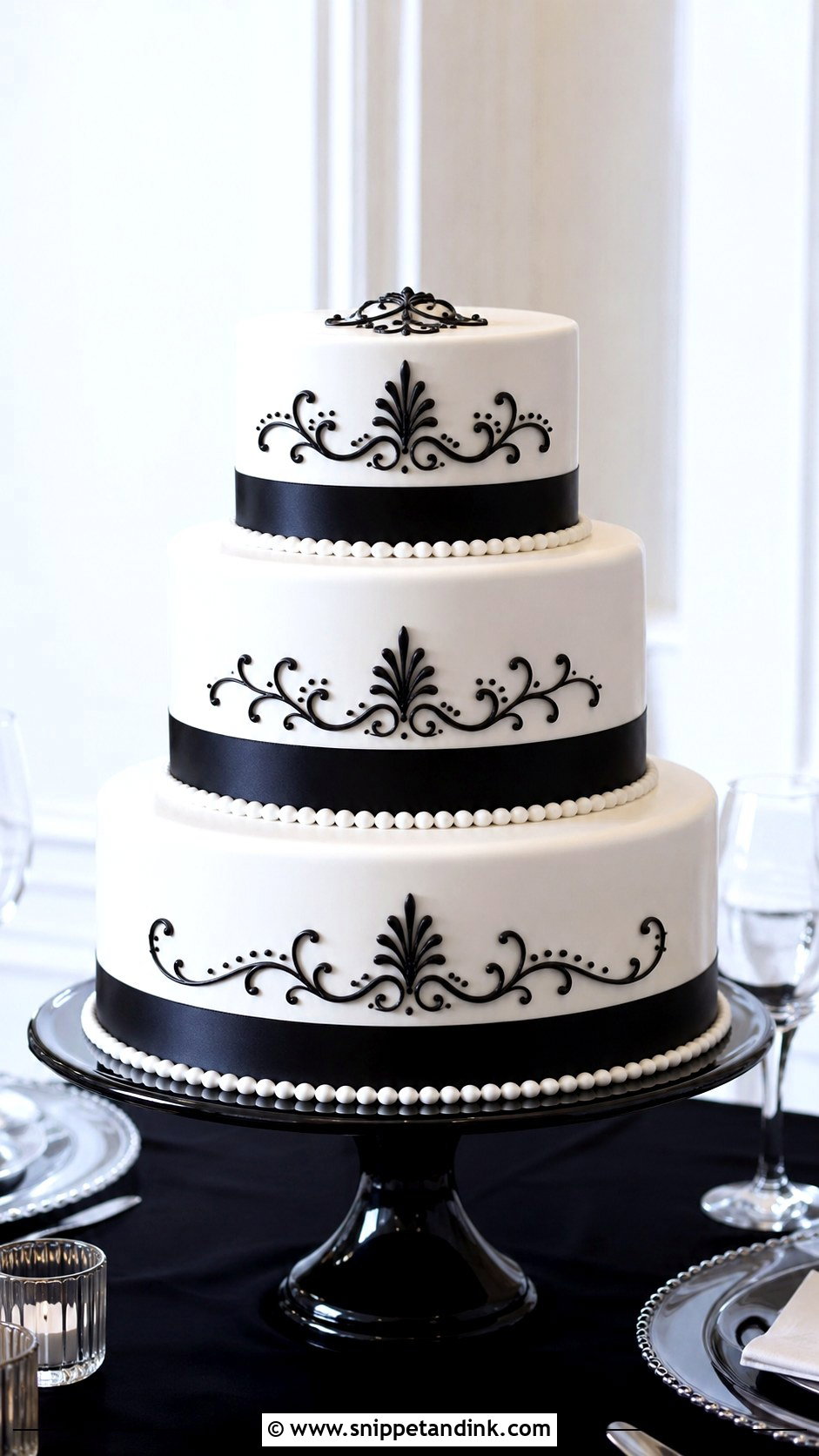
Contrast can be quiet, thin black ribbon on white tiers, or loud, a full black bottom tier with white piping over it. Black icing needs heavy coloring, and I usually start from a chocolate base so I need less dye and the taste stays clean. It can also stain lips and teeth, so I keep black to the outside decoration rather than whole slices. Crisp lines matter here more than anywhere. A black and white wedding cake reads clearly in photos because every edge has a hard outline, so any flaw reads clearly too.
10. Textured Buttercream Wedding Cake
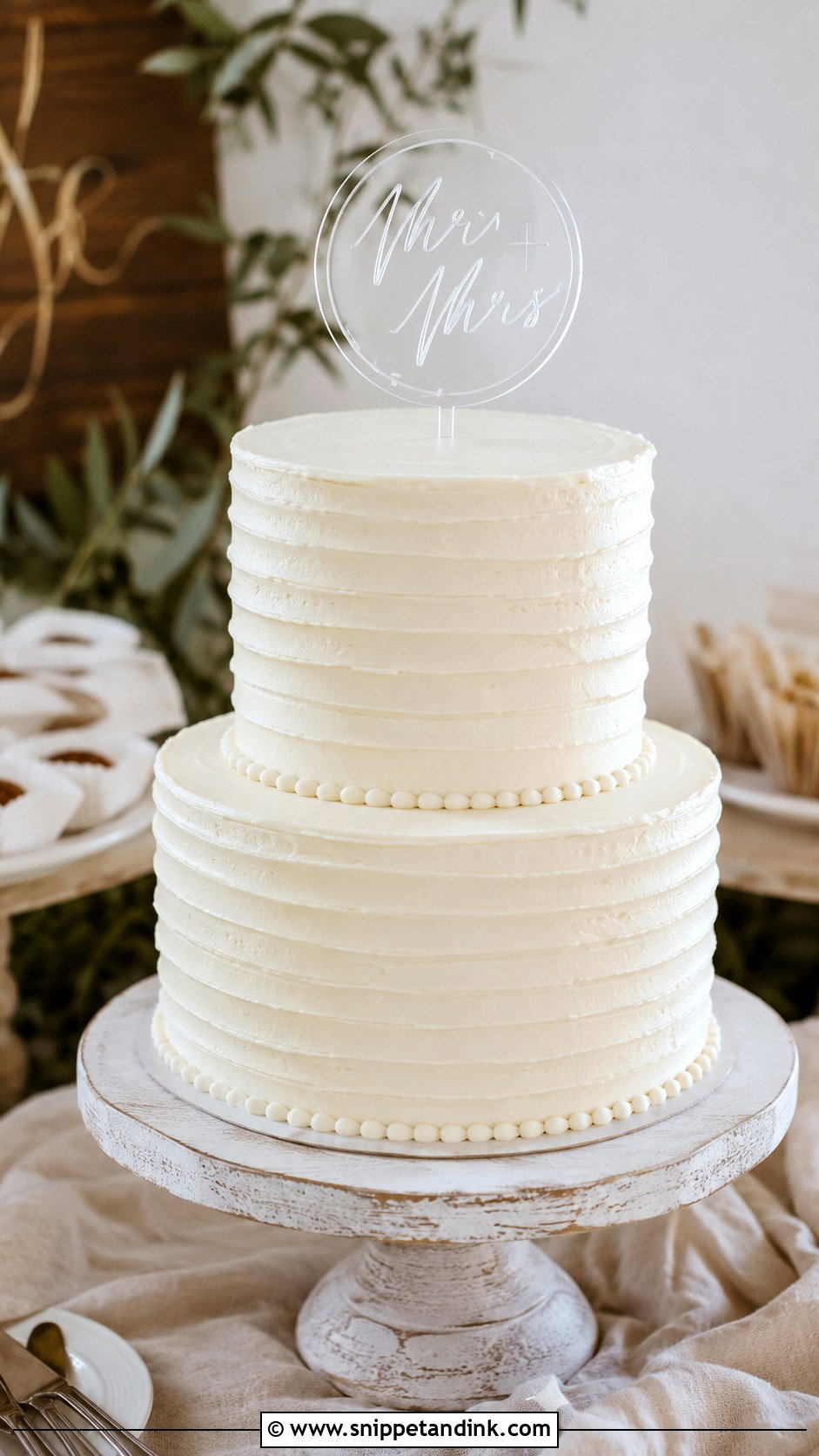
Ridges, spatula swipes and soft horizontal lines are forgiving on the baker and on the day. Small bumps in transport disappear into the texture, which is one reason I suggest this finish for barns, beaches and backyard parties where the cake travels on uneven ground. It’s relaxed without looking unfinished. A clean topper, a little fruit or a ribbon is plenty; more than that and the texture gets lost.
11. Geometric Wedding Cake
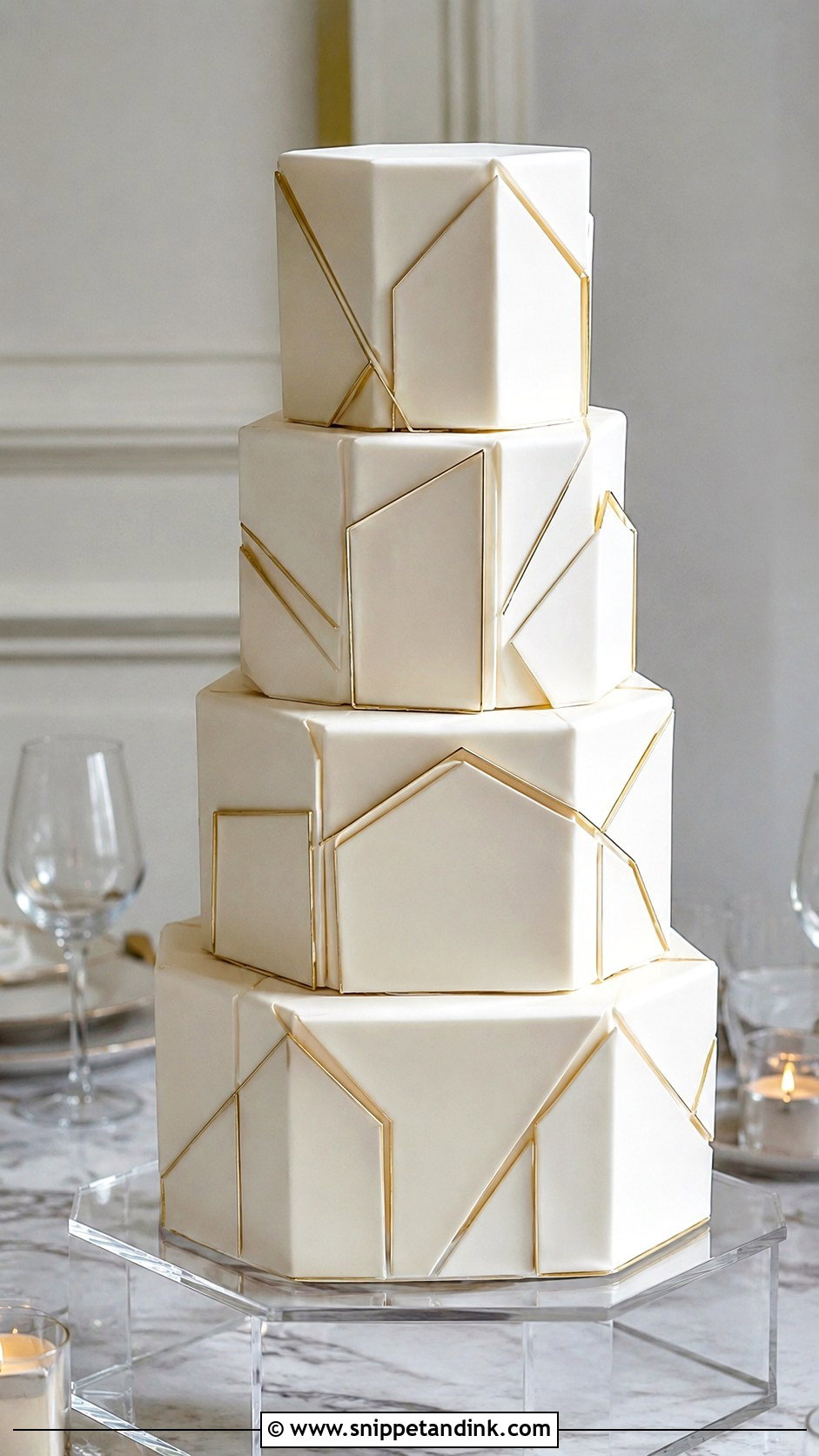
Hexagon tiers, faceted fondant panels and raised shapes all need precise cutting, and this is where a sloppy finish shows fastest. Geometric cakes are usually built on carefully leveled, sharp-edged ganache so the fondant can be pulled tight against the corners. Ask to see a baker’s previous geometric wedding cake work before you commit. White and ivory keep it bridal; taupe or sage accents push it toward modern. It suits venues with clean architecture and acrylic signage.
12. Monogram Wedding Cake
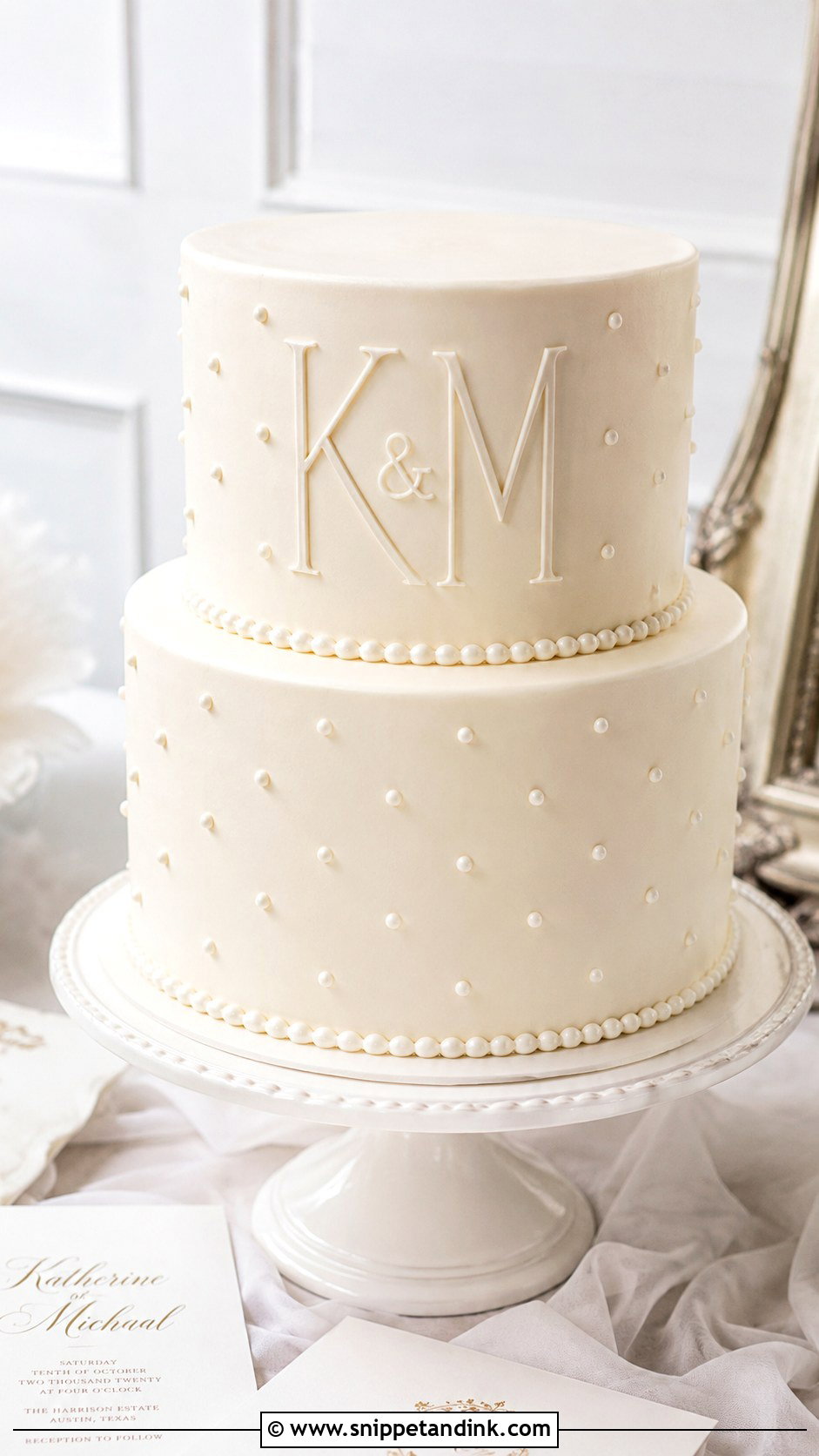
The initials can be piped, embossed into fondant, hand painted or cut as a small topper. On a plain white or ivory cake the monogram becomes the only focal point, so its size and placement matter: I usually set it slightly above the middle of the tier, where the eye lands first. Classic script lettering sits well with pearl borders. Block letters suit a smooth cake with sharp edges. Bringing your invitation to the consultation helps me match the lettering style.
13. Lace Wedding Cake
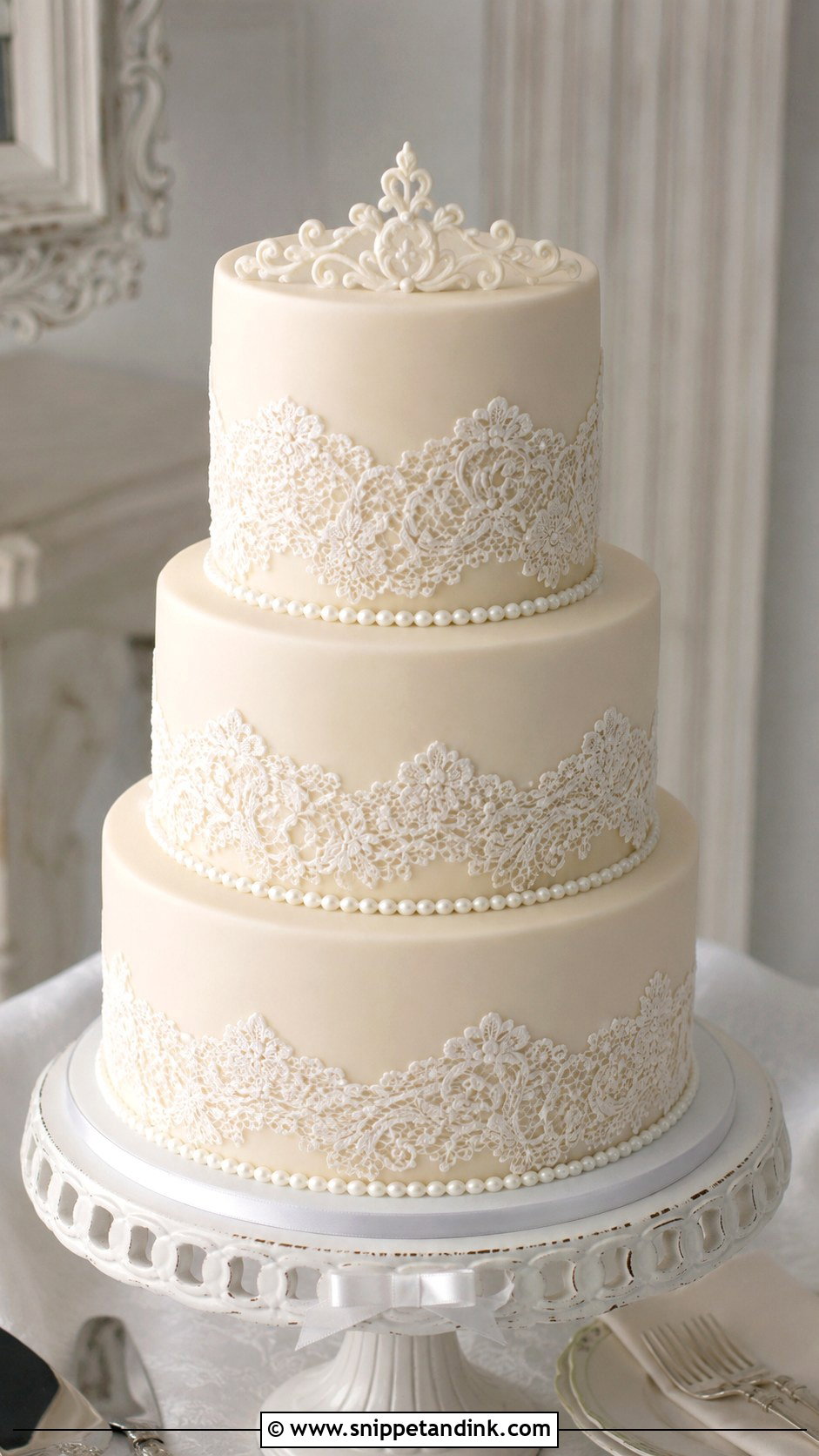
There are three ways to get lace on a cake. Hand piping looks the most like the real thing but takes the longest. Impression mats press a pattern into fondant. Edible lace panels are set in silicone molds and lifted onto the tier, and they’re the most consistent option. Leaving smooth gaps between lace sections keeps it from looking crowded. If your gown has lace, a photo of the actual fabric lets me echo the pattern rather than just suggest it.
14. Watercolor Wedding Cake
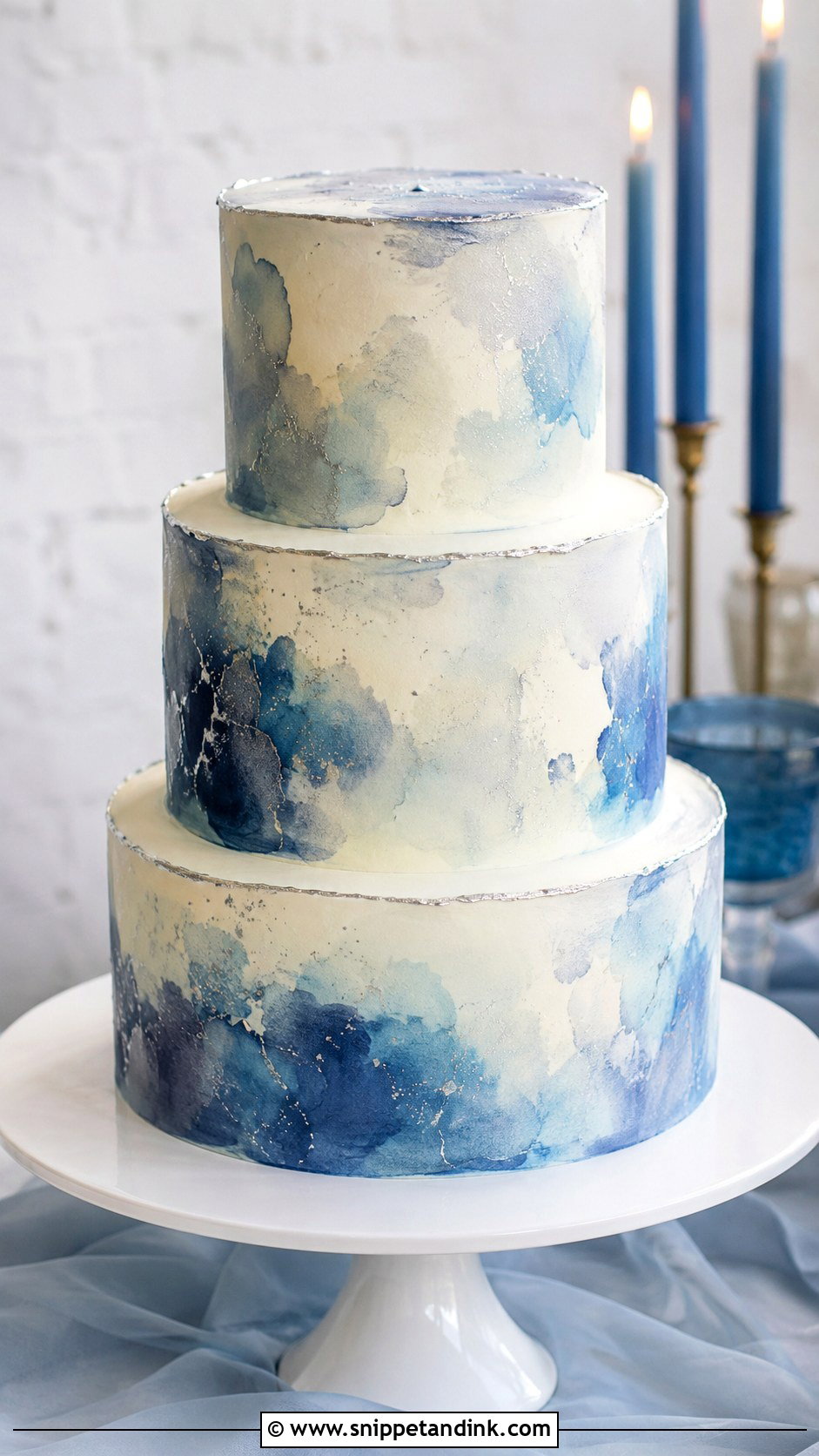
Watercolor effects are painted with diluted gel color or brushed on with a palette knife in buttercream. The trick is building pale layers rather than one strong wash, because color can’t be lifted once it soaks in. Blush, pale blue and sage blend kindly; strong sunset tones can turn muddy where they overlap. Clean edges and a small topper are all it needs. I like it for spring and summer weddings outdoors, where the soft color echoes the light.

15. Fruit Wedding Cake
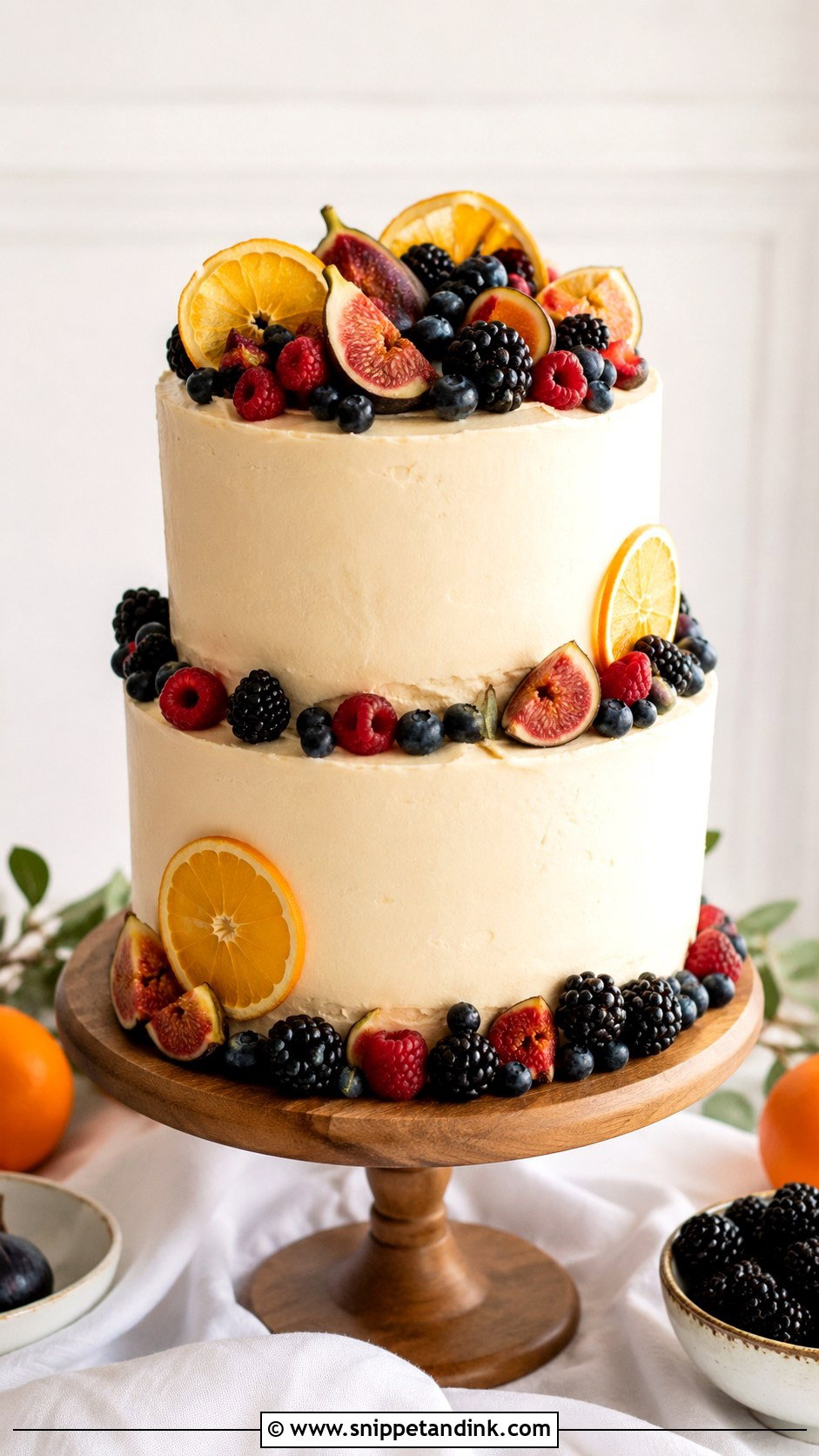
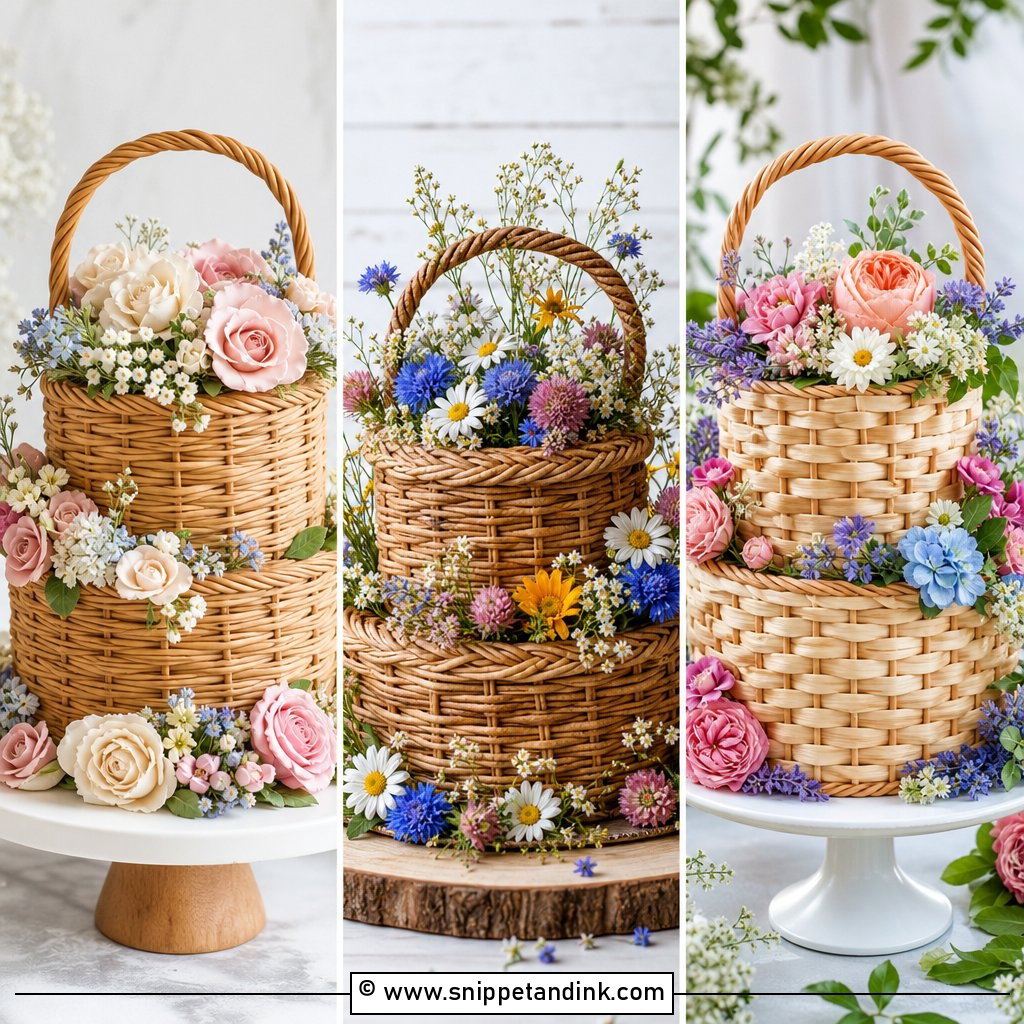
Fruit is the most natural swap for flowers, but it’s also the most perishable decoration. Berries weep juice onto buttercream after a few hours, cut citrus dries out and figs bruise easily, so I place fruit at the venue, not in the kitchen. Glazing it lightly helps it stay glossy. It pairs naturally with a semi-naked finish. Seasonal choices tie the cake to the menu: berries and citrus in summer, figs and pears in autumn. Arrange it in clusters with space around them so it looks deliberate.
16. Drip Wedding Cake
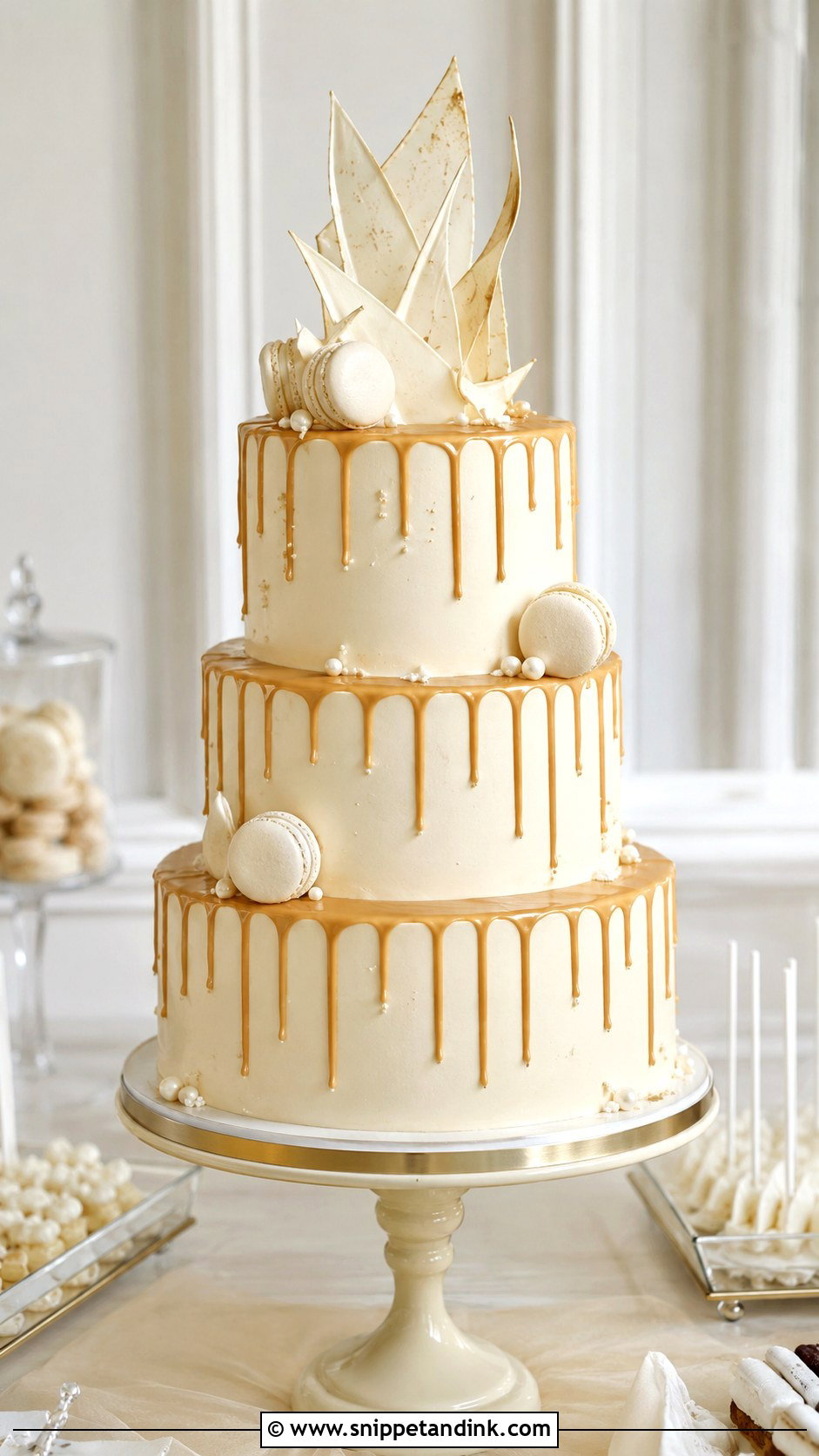
A drip is ganache poured or piped over a chilled cake, and temperature decides everything. If the ganache is too warm it runs to the board; too cool and it stops in short stubs. I test a single drip on the back of the tier before doing the front. White chocolate tints easily to match a palette, while dark chocolate on white tiers gives strong contrast. Macarons or chocolate sails can sit on top. In a hot room, drips soften, so keep this cake away from windows and heaters.
17. Macaron Wedding Cake
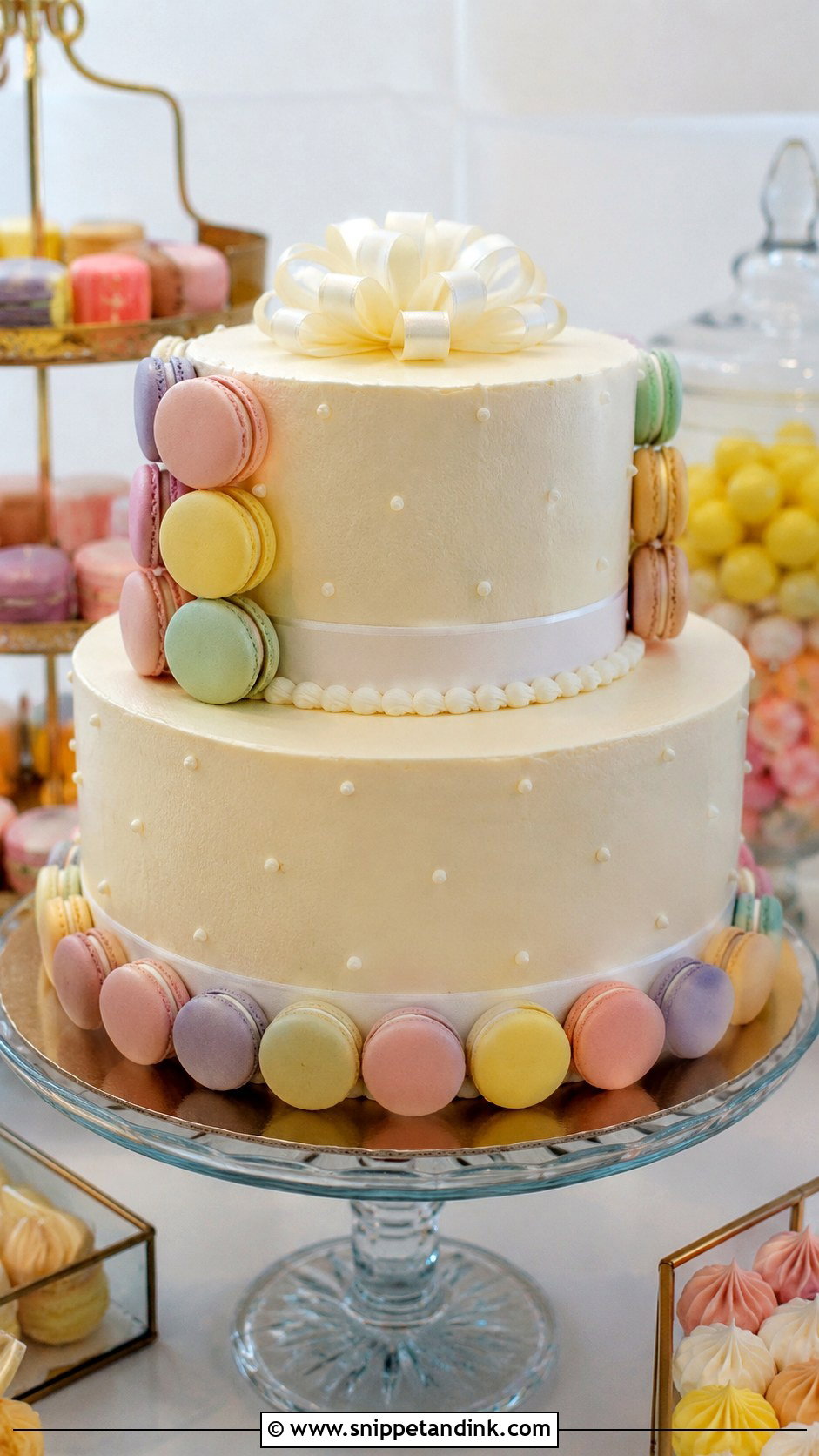
Macarons are decoration guests can eat, which makes this cake popular with couples who dislike waste. They attach with a little buttercream and sit best on a smooth finish where their round shapes stand out. One thing I watch: macarons absorb moisture from the air and from the frosting, so they soften within a day. I fix them on the morning of the wedding. Match the shells to your palette, and if you mix flavors, tell the caterer so guests aren’t surprised.
18. Tall Single Tier Wedding Cake
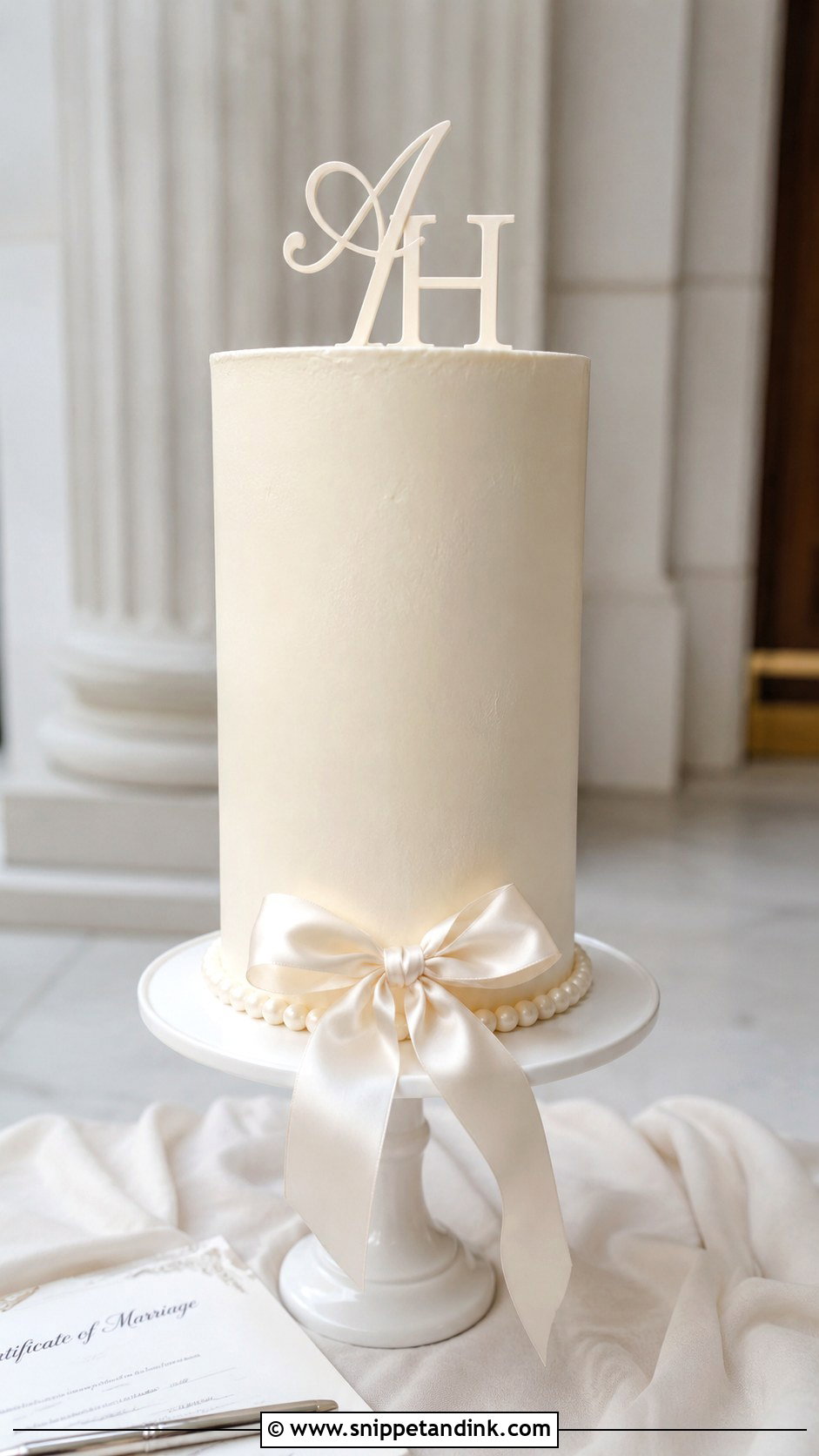
A tall single tier is two or three cake layers stacked to around twice the usual height, supported inside with dowels and a board halfway up. It gives a small wedding real presence on the table. For elopements and courthouse receptions it’s the version I recommend most, because it serves a modest guest count without leftovers. Pearls, piping or a monogram all fit it. Put it on a raised stand and it looks bigger than it is.
19. Square Wedding Cake
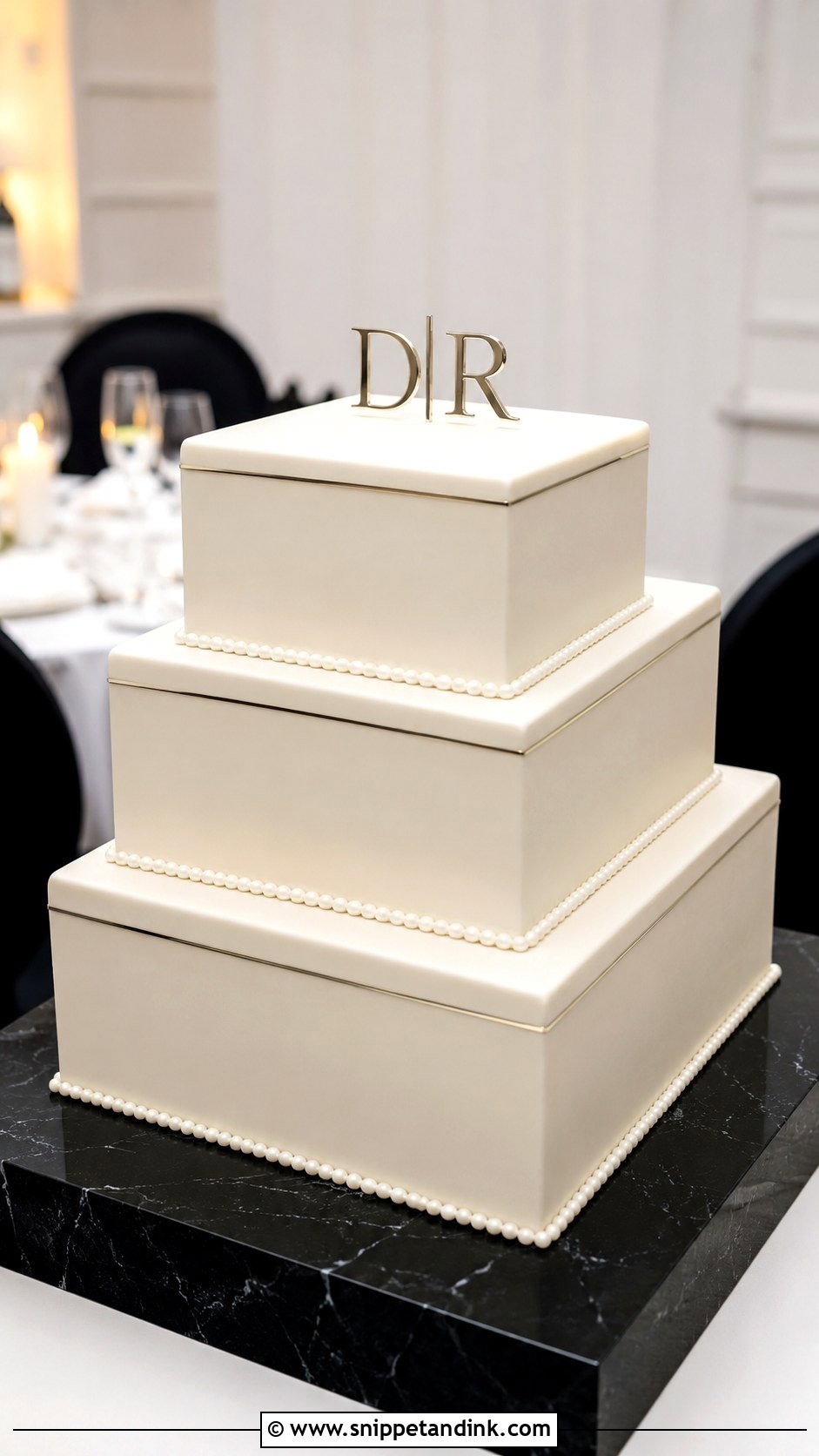
Square tiers are harder to finish than round ones. Each corner has to be sharp on four sides, and fondant tends to tear or pleat at the corners if it’s rolled too thin. That precision is what gives the shape its architectural look. Smooth fondant, light piping or a black and white scheme all suit it. Thin metallic trim on the edges sharpens the outline further. Square cakes are also easier to cut into neat, even portions, which caterers appreciate.


20. Heart Wedding Cake
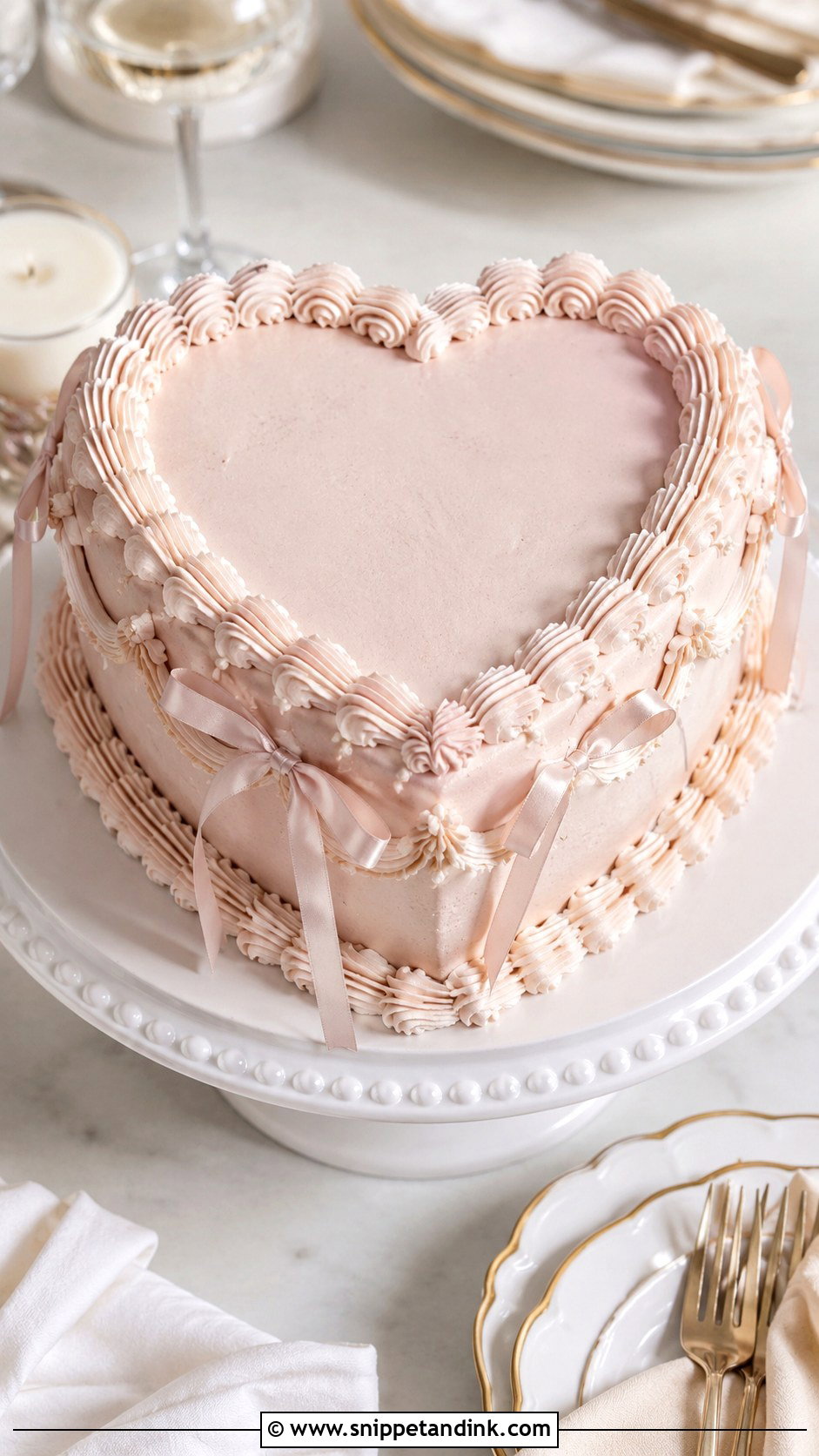
Heart cakes are cut from a sheet or baked in a heart pan, and the point and the two lobes need careful crumb coating to stay defined. They suit small weddings, showers and dessert tables with several cakes rather than a large reception. Smooth buttercream with vintage piping is the classic finish; pearls and a bow work too. Since the shape already says wedding, I keep the decoration modest. Pale pink or red piping gives it a sweeter, more nostalgic feel.
21. Checkered Wedding Cake
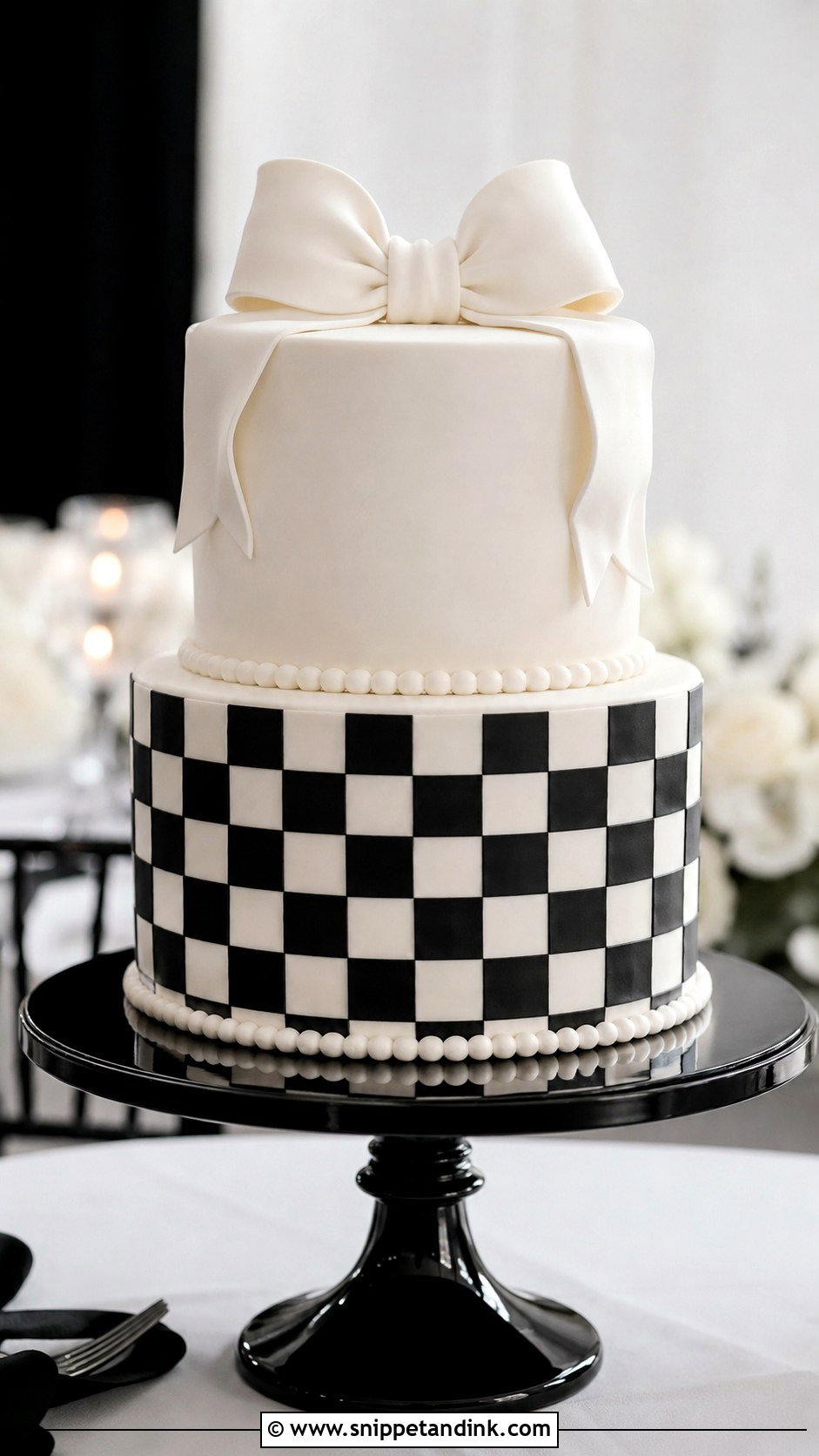
A checked pattern is built from alternating colored sponge assembled inside, or from fondant squares laid outside, and the outside version is far easier to keep straight. Graphic patterns punish small errors, so I measure every square. Black and white is the boldest pairing; ivory and champagne is far gentler. One checkered tier between plain tiers keeps the cake from feeling busy. Leave the rest of the table simple, since the pattern already pulls the eye.
22. Bas Relief Wedding Cake
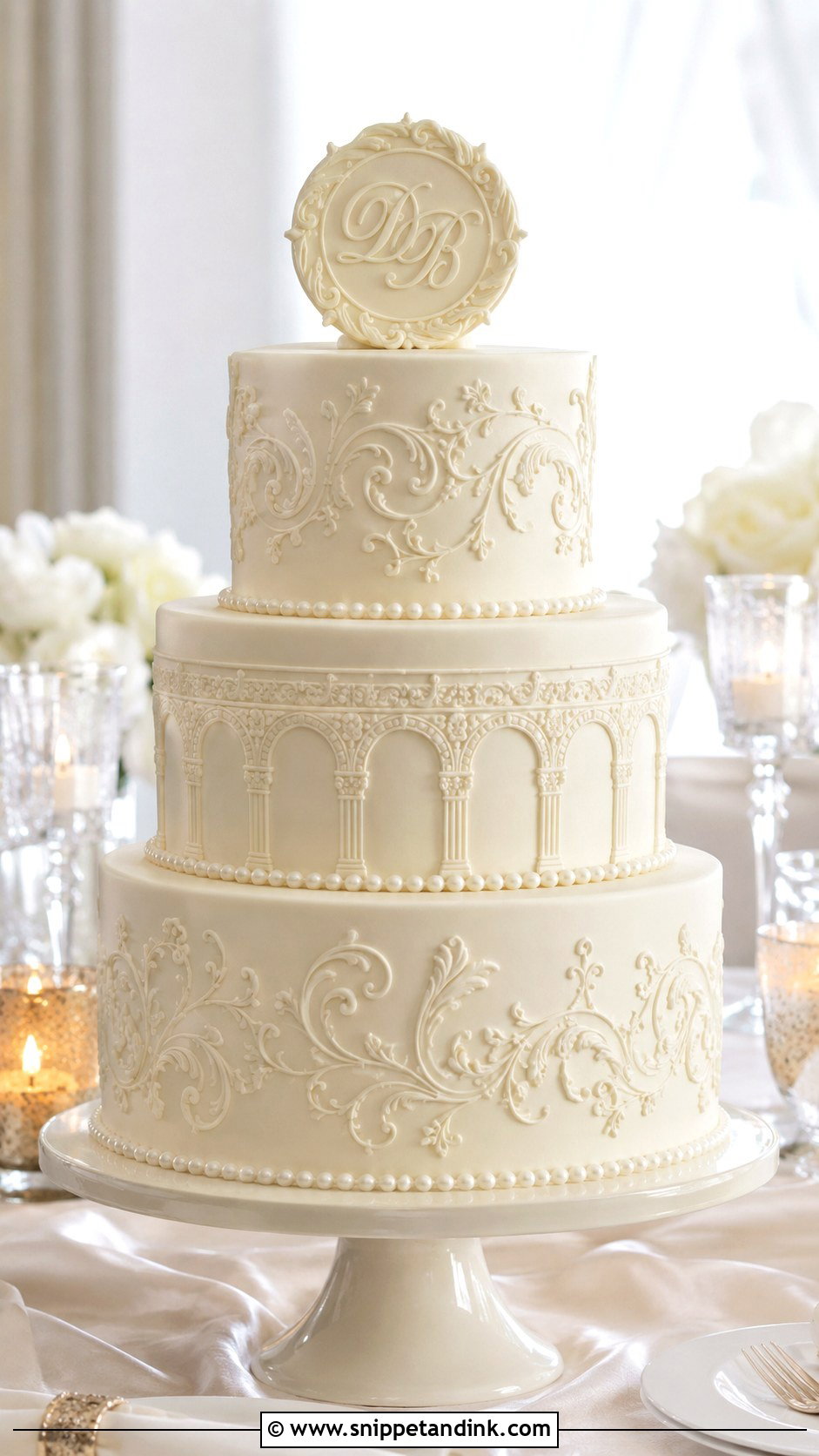
Bas relief means the decoration is raised from the surface like carved stone. I build it from modeling paste shaped by hand or pressed from molds, then attach it to firm fondant. Scrolls, leafy vines, shells, initials or architectural motifs all work without being floral. Kept white or ivory, the shapes show through shadow alone, so lighting matters: side light brings the relief out, while flat overhead light hides it. Ask the venue where the cake table will sit.
23. Silver Wedding Cake
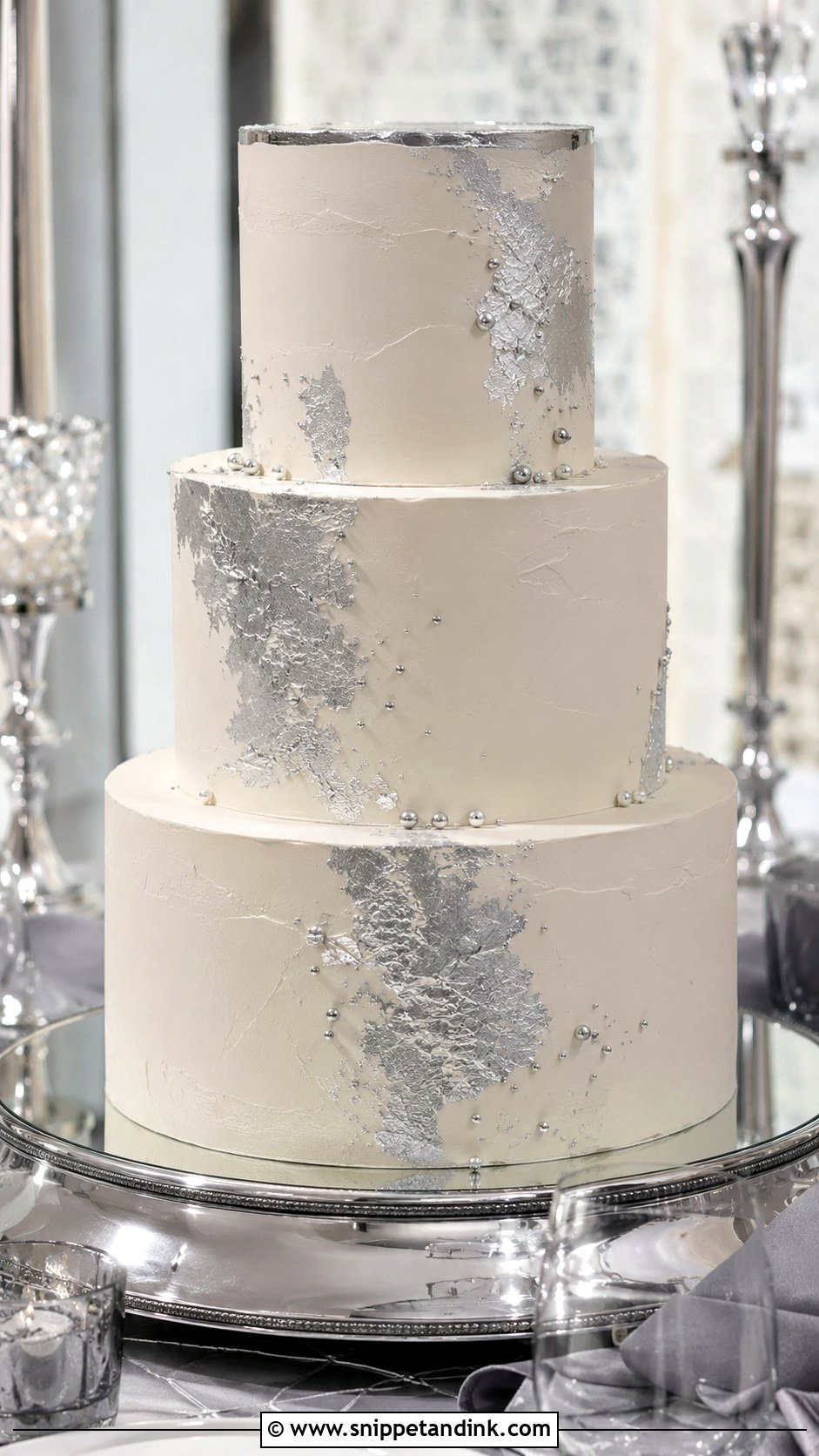
Silver is cooler than gold and suits winter and black-tie receptions. It can be silver leaf, metallic paint, silver dragées or a brushed tier. Not every metallic product sold for cakes is meant to be eaten, so I only use leaf and dusts labeled edible, and keep anything decorative-only on parts that won’t be served. Pair silver with white, pale gray or soft blue. Use it as an accent; a fully silver cake can look like a sculpture rather than food.
24. Ombre Wedding Cake
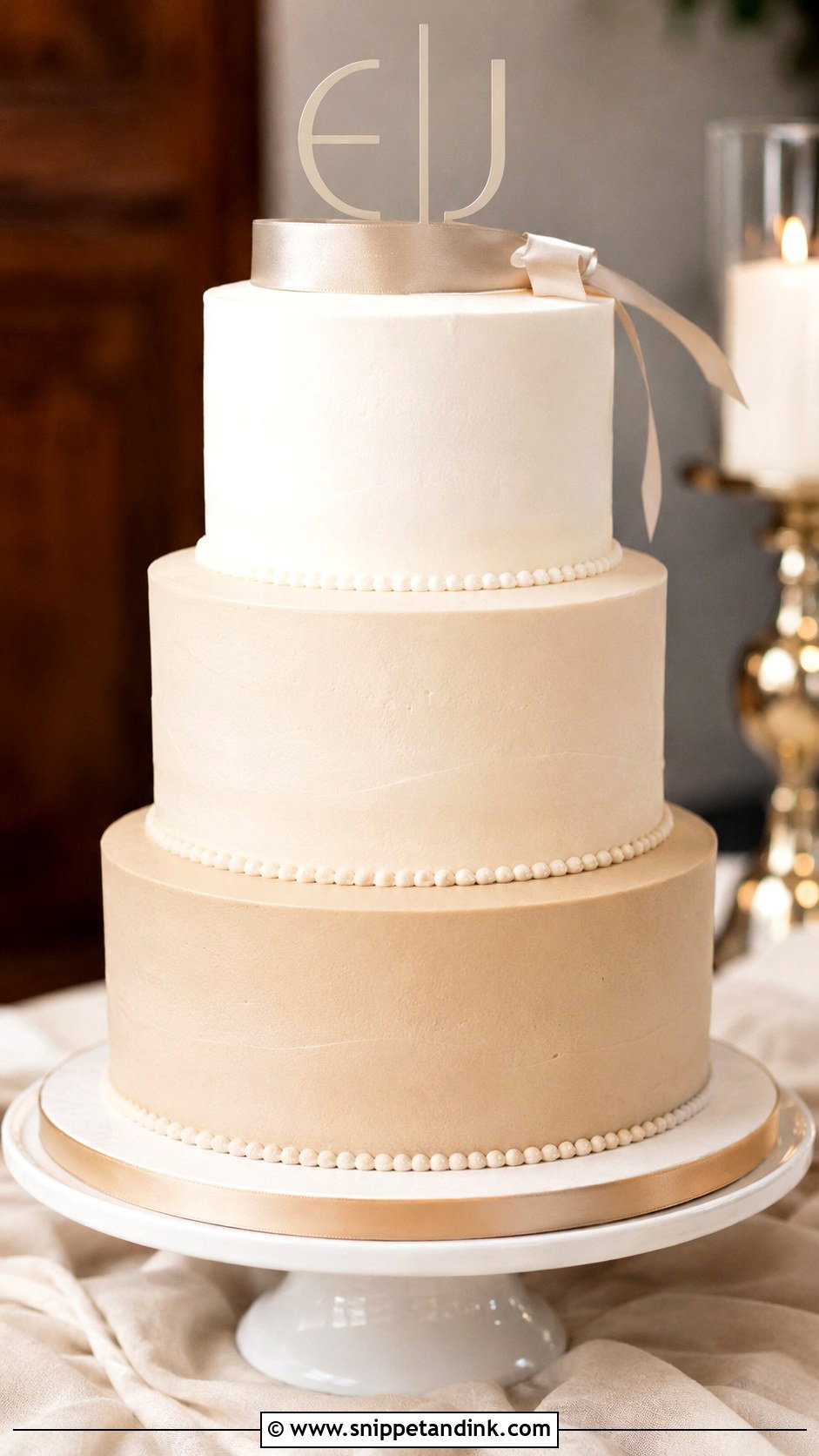
Ombre needs even steps between shades, and that’s harder than it looks. I mix all the colors from one base batch so the hue stays consistent and only the depth changes. White to blush and ivory to champagne are the safest fades; pale to deep blue is bolder. It can be done in smooth or textured buttercream or in fondant. It’s softer than a pattern but more interesting than plain white. A small topper or pearl trim is all it needs.


25. Sculptural Wedding Cake
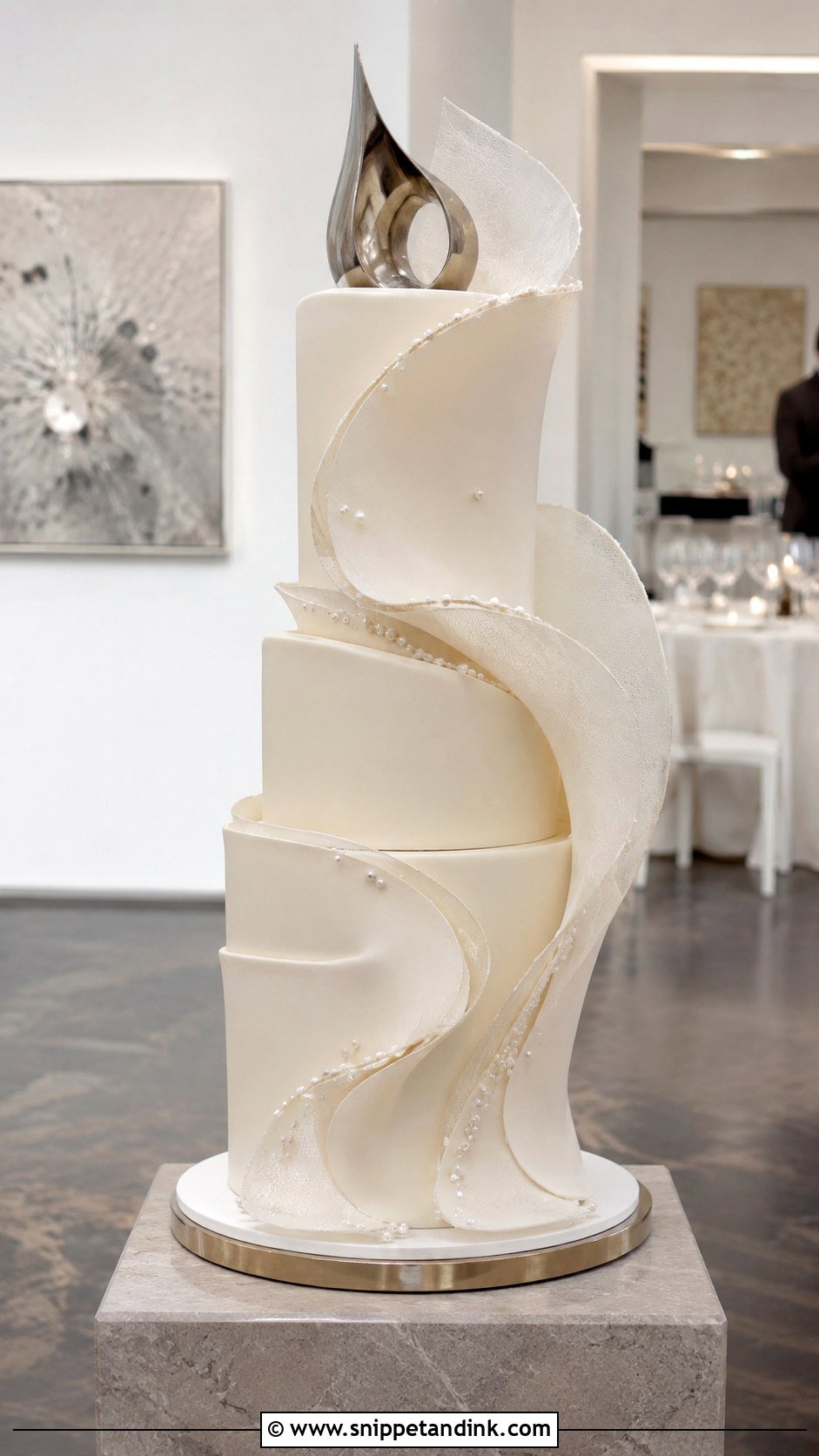
Offset tiers, curves, waves, floating separators and folded fondant all count here. A sculptural wedding cake needs internal structure: dowels, sometimes hidden boards or rods, and a baker who plans the engineering before the design. I’d only book this style with someone who can show you similar builds. Neutral colors keep the shape the focus. Galleries, hotels and modern venues give it the clean backdrop it needs, and good lighting does the rest.
Heat, Delivery and the Cake Table
Minimal cakes are less forgiving on the day, so where the cake sits matters as much as how it’s made. A few things I check before every flower-free delivery:
Room temperature and sunlight
Buttercream starts to soften in a warm room, and a smooth finish shows that softening as dents and sagging long before a textured one would. Direct sun through a window can melt a drip or slide pearls in under an hour. I ask for a table away from windows, heaters, uplights and the dance floor. Fondant over ganache copes with warmth better, though moving it from a cold van into a humid room can make it sweat with condensation. That moisture dries on its own if nobody touches it.
Decorations that go on late
Fruit, macarons, gold leaf on buttercream and some wafer paper details are best added at the venue. Ask your baker how much setup time they need and make sure your planner leaves the table clear and reachable during that window.
Cutting without wrecking the look
If you want photos of the full cake, schedule them before the cut. Tell the caterer which tiers carry inedible supports, ribbon or decorative-only metallics, and which tier, if any, you’re keeping. A tall single tier or a stacked cake with hidden dowels needs to be taken apart before slicing, not cut straight down.
A Flower-Free Cake Still Needs One Star
A cake without flowers can be every bit as romantic as one covered in roses. It just needs one clear feature to carry it: lace, piping, pearls, a bow, fruit, metal, pattern or shape. Pick that feature first and let everything else stay quiet. You also gain control, since nothing depends on what’s in season or on a florist arriving on time. Bring your favorite picture from this list to your tasting and build the rest of the design around it.
You'll Like These Ideas:









Leave a Reply