
Wildflower wedding cakes only work when they look like they belong where they’re standing. Put one in a barn, a backyard or a garden tent and it fits; scatter random flowers on a formal tiered cake and it looks like an afterthought. The flower work itself can take many forms: pressed petals, tiny sugar blossoms, piped buttercream, painted botanicals or a semi naked finish with greenery. I’ve grouped twenty of my favorite approaches below, from calm ivory and lavender to bright daisies, cornflowers and pansies, with the practical side of each one noted as I’d explain it at a consultation.
Bring These to Your First Wildflower Cake Consultation
Couples often arrive with a dozen pinned photos and nothing else. The photos help, but they don’t tell me what I actually need to know. If you bring the items below, we can usually settle on a technique in one meeting instead of three.
- A photo or sketch of your bouquet and centerpieces, with the flower names from your florist if you have them.
- A fabric swatch or paint chip for each color you want on the cake. Screens lie about color; swatches don’t.
- Your venue, the time of year and whether the cake will be inside, under a tent or outdoors.
- A firm guest count, or at least a range, since it decides how many tiers and how much flower work fits.
- Any allergies in the wedding party, because a few edible flowers belong to plant families that trigger reactions.
On timing: book your baker as soon as you have a date and venue, since wedding-season weekends fill early. Sugar flowers and hand painting are made in advance over days, not hours, so a cake heavy on either needs a few months of notice. Edible fresh blooms depend on what’s growing, so we confirm the final varieties a few weeks out and keep a substitute in mind.
1. Pressed Wildflower Wedding Cake
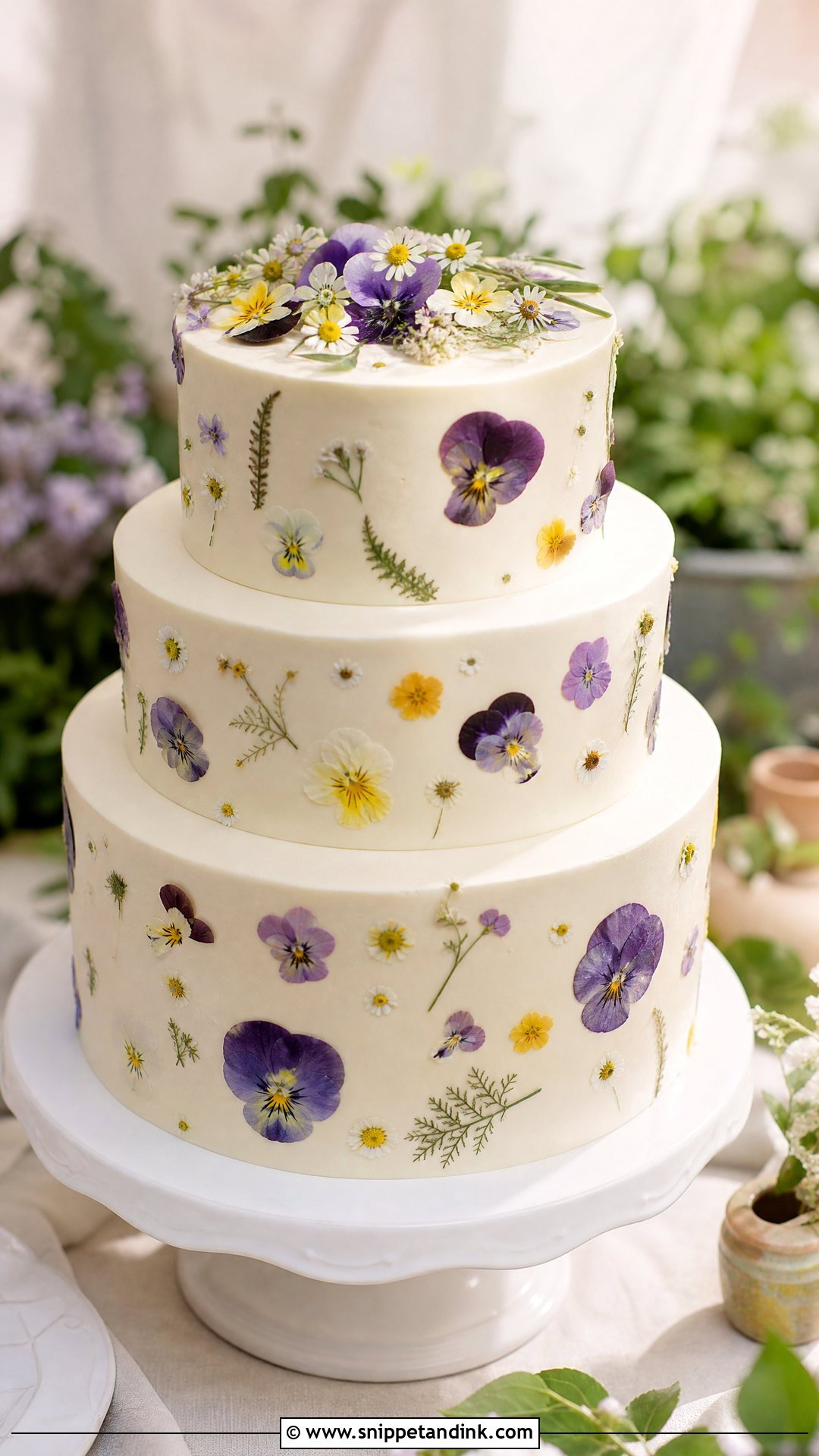
Think of this one as a botanical scrapbook laid on smooth ivory buttercream or fondant. Pansies, violets, chamomile, cornflowers and small daisies are pressed flat ahead of time, so they add color without any weight. On fondant the petals stick with a light brush of water; on buttercream I place them while the coat is chilled and just tacky. Ask for loose spacing. When every petal is the same distance apart, it stops looking like a meadow and starts looking like wallpaper.
2. Semi Naked Wildflower Wedding Cake
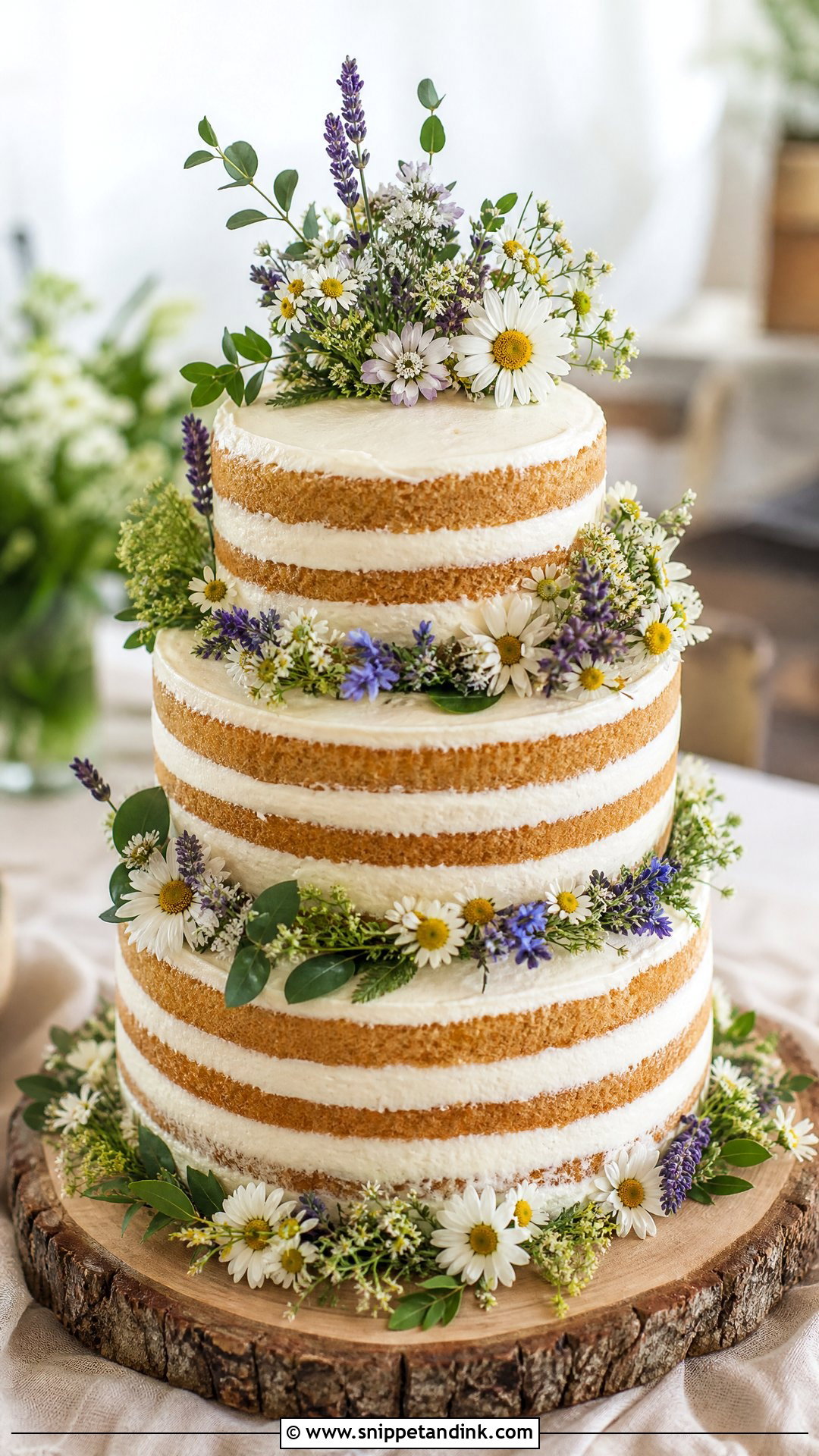
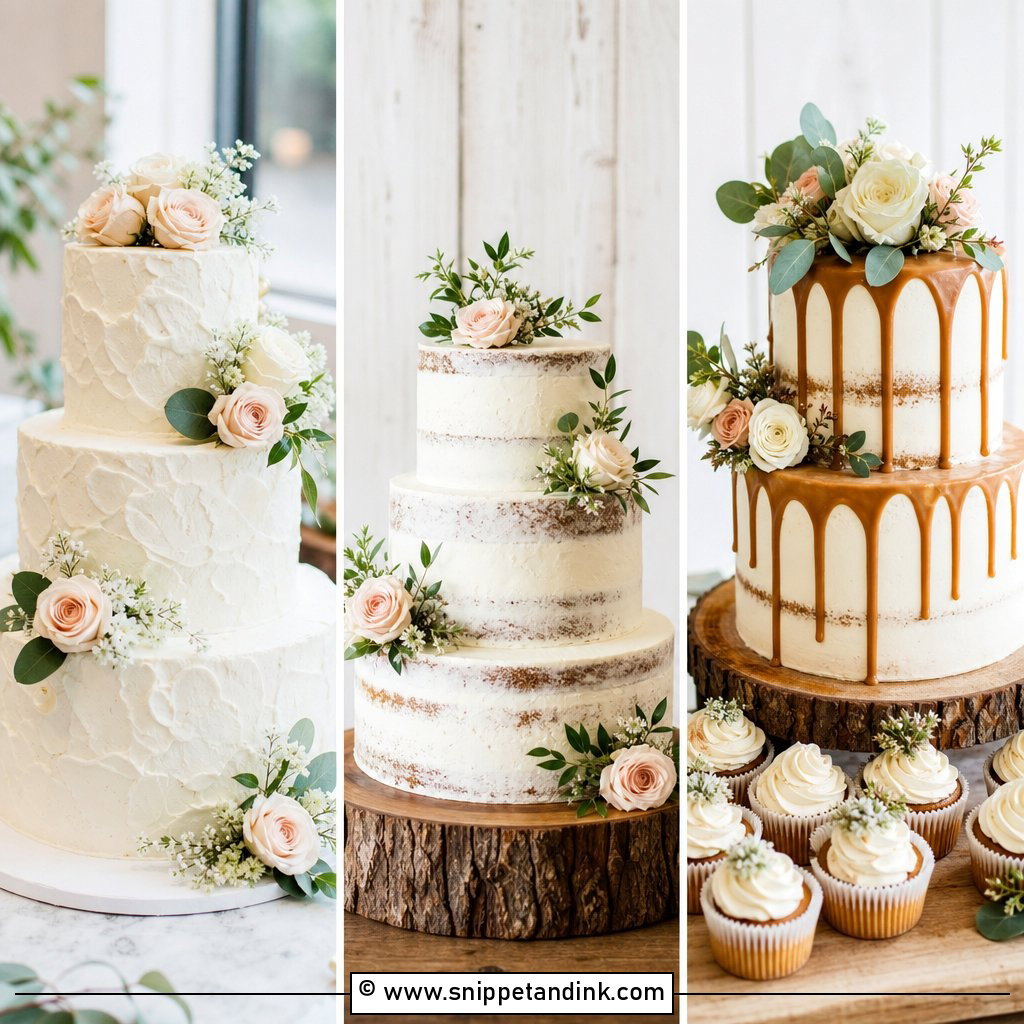
Barns and countryside venues suit a semi naked cake better than almost any other finish. The thin scrape of buttercream lets golden layers show through, and edible flowers can sit along the edges, between tiers or at the base. A pale crumb such as vanilla, lemon, almond or honey cake sets off soft flower colors far better than chocolate does. I leave the scrape a little uneven on purpose. The trade-off with this finish is moisture: the exposed sides dry out sooner, so it shouldn’t sit uncovered for hours before guests arrive.
3. Buttercream Wildflower Wedding Cake
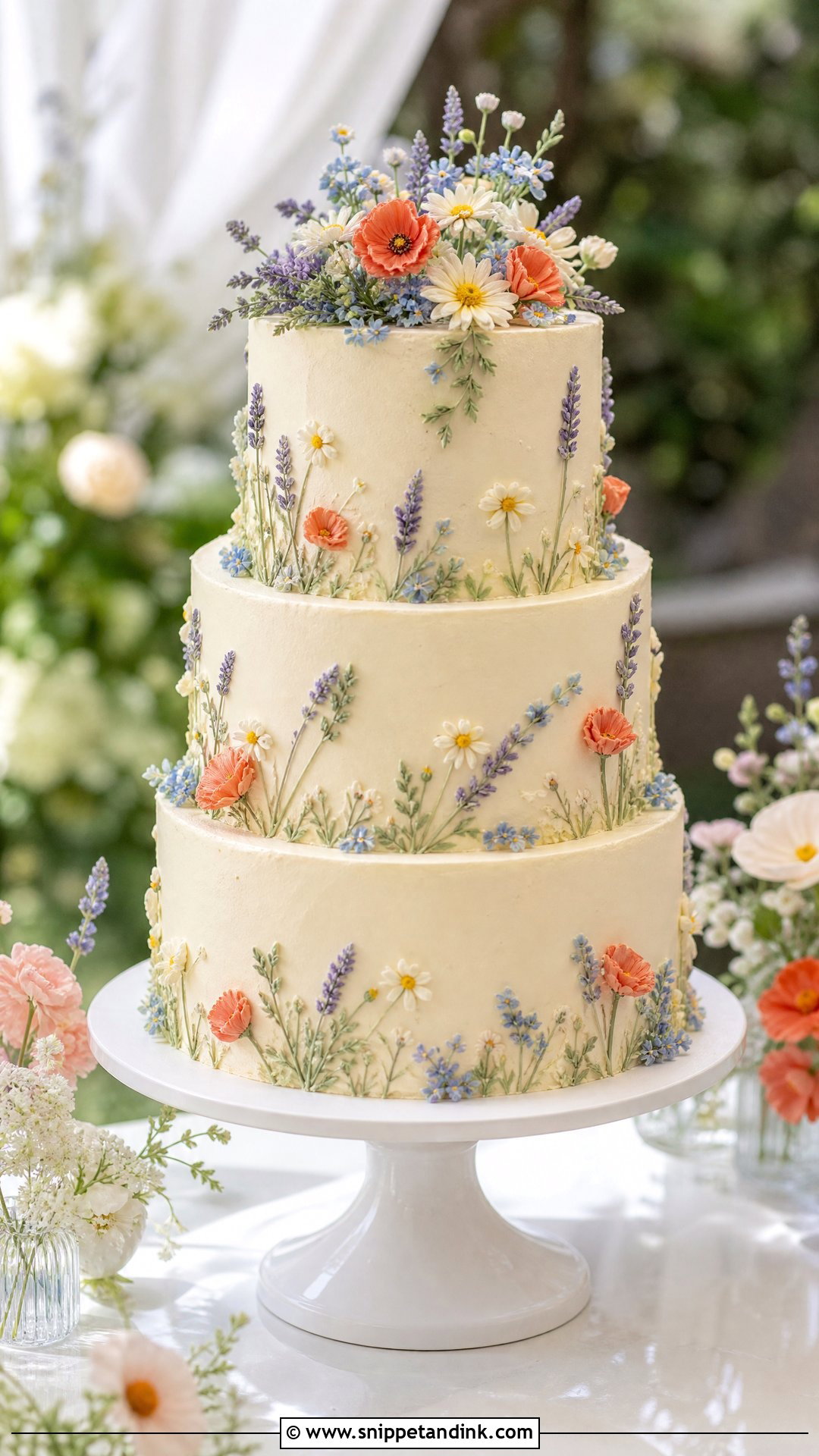
Every flower on a buttercream wildflower wedding cake is piped, which means everything on it can be eaten and the colors can be matched exactly to your swatches. Small daisies, lavender stems, poppies and forget-me-nots wrap the tiers like a painted garden. I pipe the tiny blooms onto parchment, freeze them, then place them on the cake so they keep their shape. Piped petals soften in heat faster than anything else on this list, which makes this a cake for a cool room. A white, ivory, blush or pale sage base keeps the piping readable.
4. Watercolor Wildflower Wedding Cake
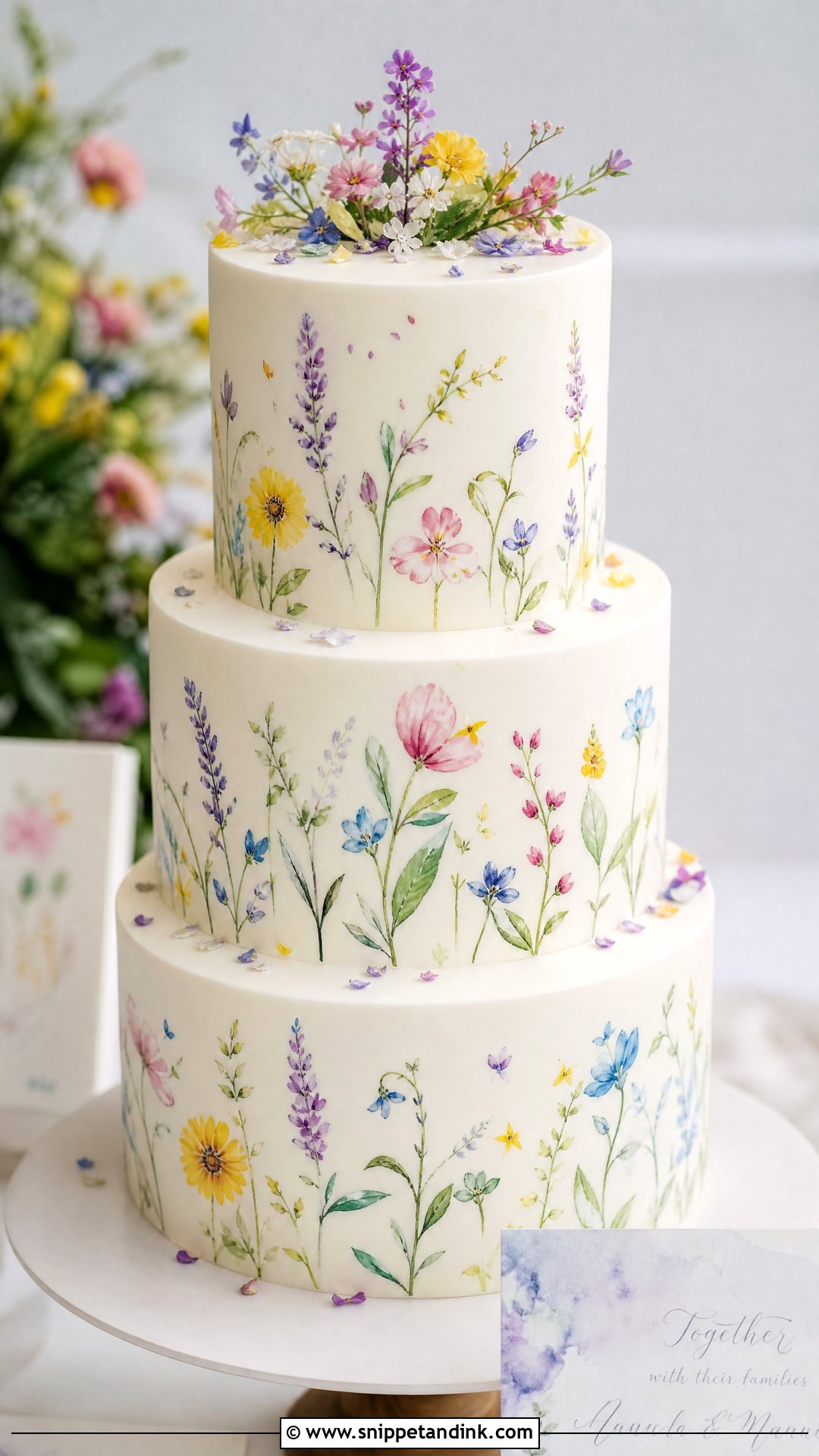
Watercolor flowers are painted onto the cake with diluted food color, and the soft, brushy edges look like a garden journal page. Smooth fondant takes the paint best; buttercream needs to be chilled firm or the brush drags. Lavender, pale yellow, dusty pink and blue are the shades that keep their softness once diluted, while reds tend to go streaky. Keep the flowers small and scattered, or ask for one loose trail from the top tier down. It suits spring weddings and couples with an eye for art.
5. Meadow Wildflower Wedding Cake
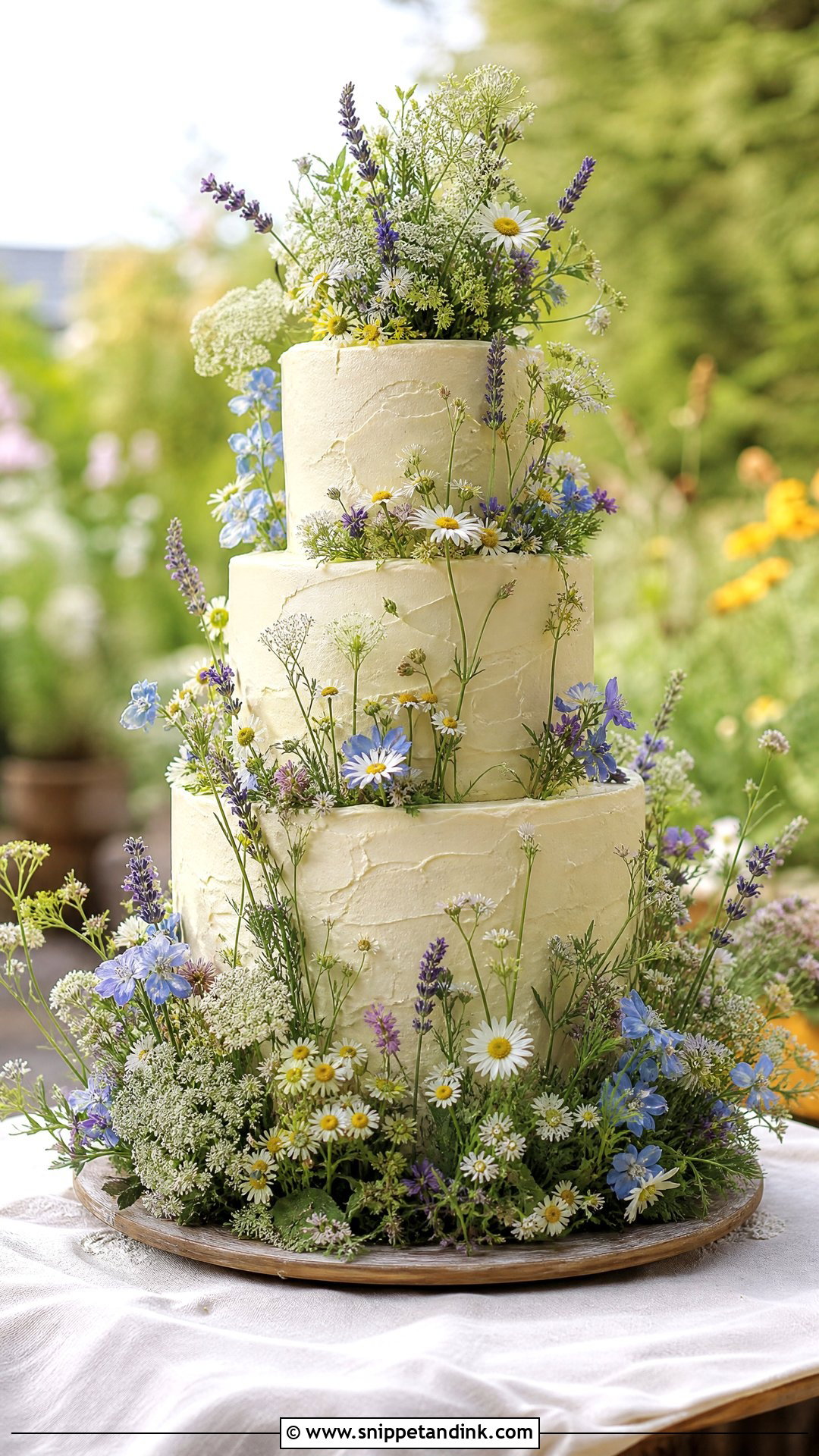
A meadow cake builds a small garden around the tiers instead of putting a few flowers on top. Blooms rise from the base, climb the sides and sit between tiers with soft greenery, and the cake looks as if it grew from the table. Keep the buttercream plain, because the flowers do all the work. Daisies, lavender, chamomile and tiny blue blossoms give the true meadow effect. Queen Anne’s lace looks right but resembles toxic hemlock relatives, so I only use it on the board, never touching the cake, and only from a trusted grower.
6. White Wildflower Wedding Cake
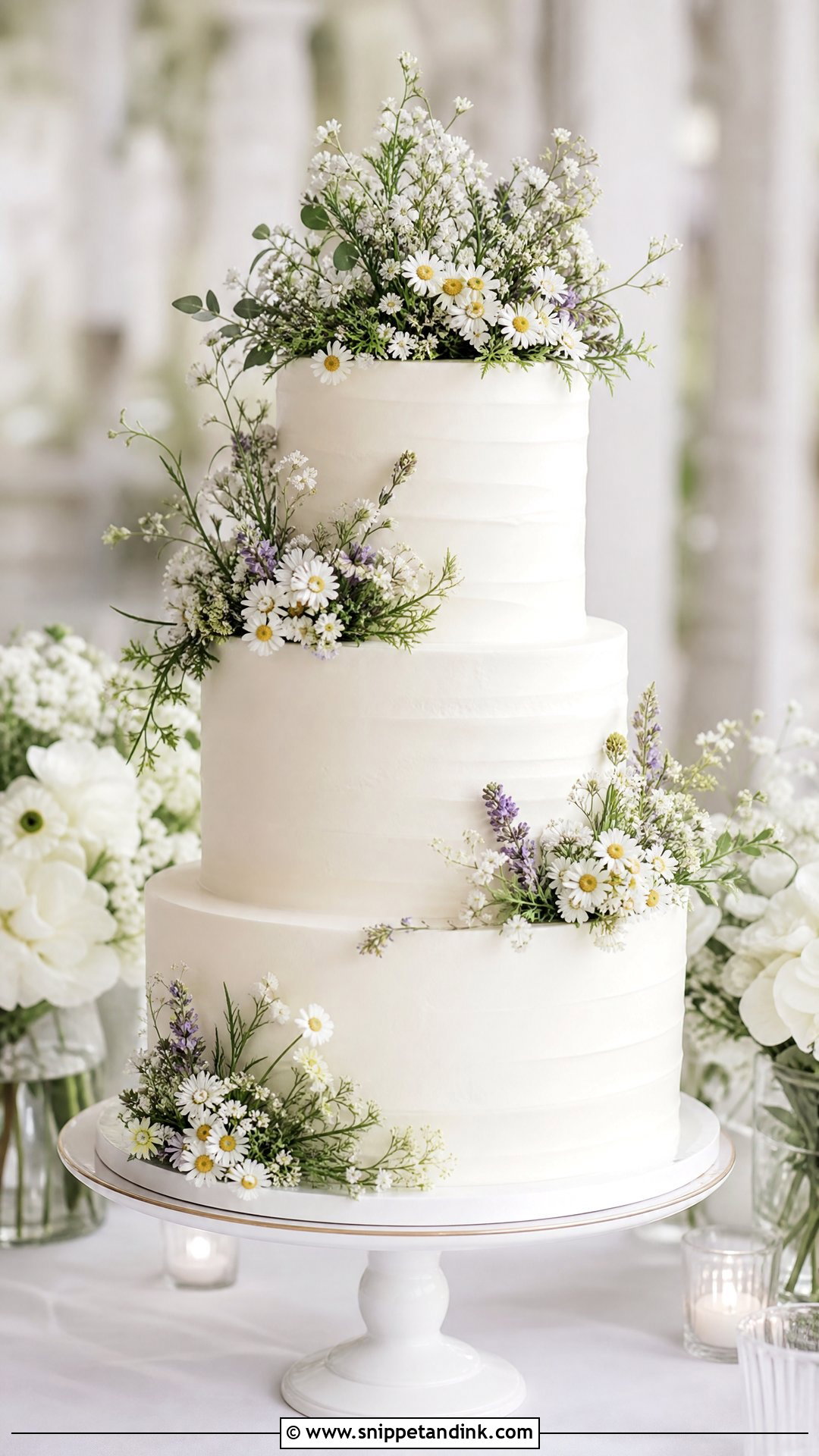
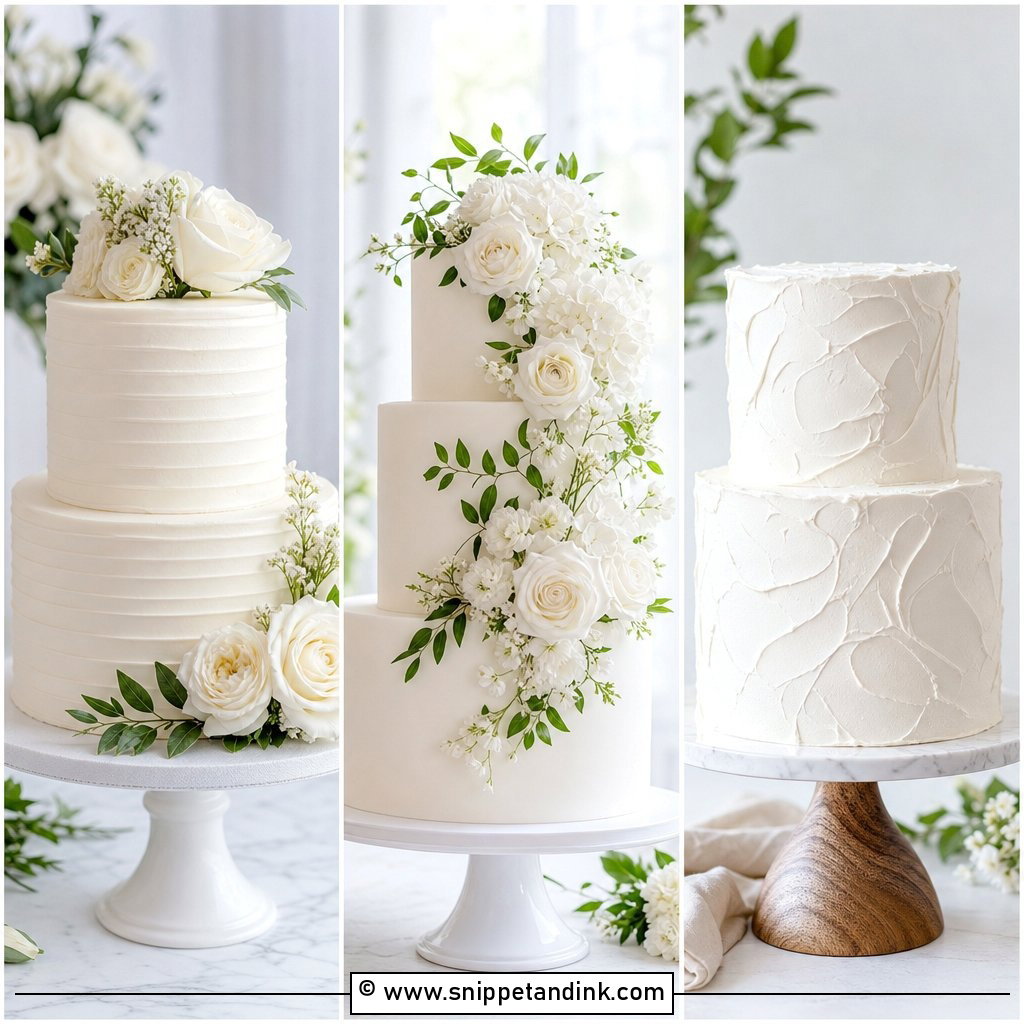
If your arrangements are already bright, a white wildflower wedding cake balances the room instead of competing with it. The base stays white or ivory and the color comes in small doses: white daisies, chamomile and soft green stems, with a few lavender or cornflower accents for contrast. Baby’s breath shows up in a lot of inspiration photos, but it’s an irritant and shouldn’t touch frosting, so I recreate it in sugar. The cake reads classic without going plain.
7. Boho Wildflower Wedding Cake
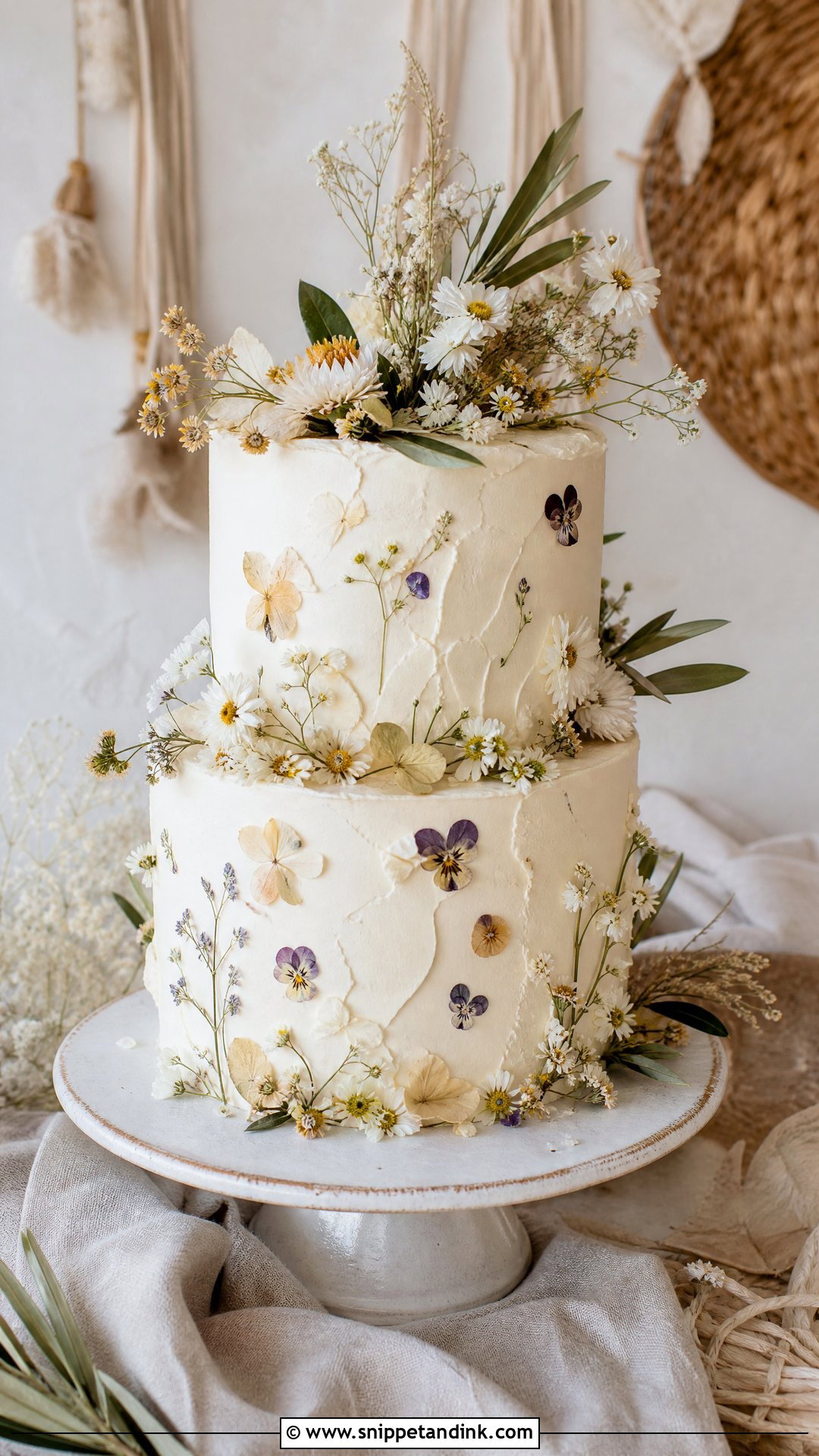
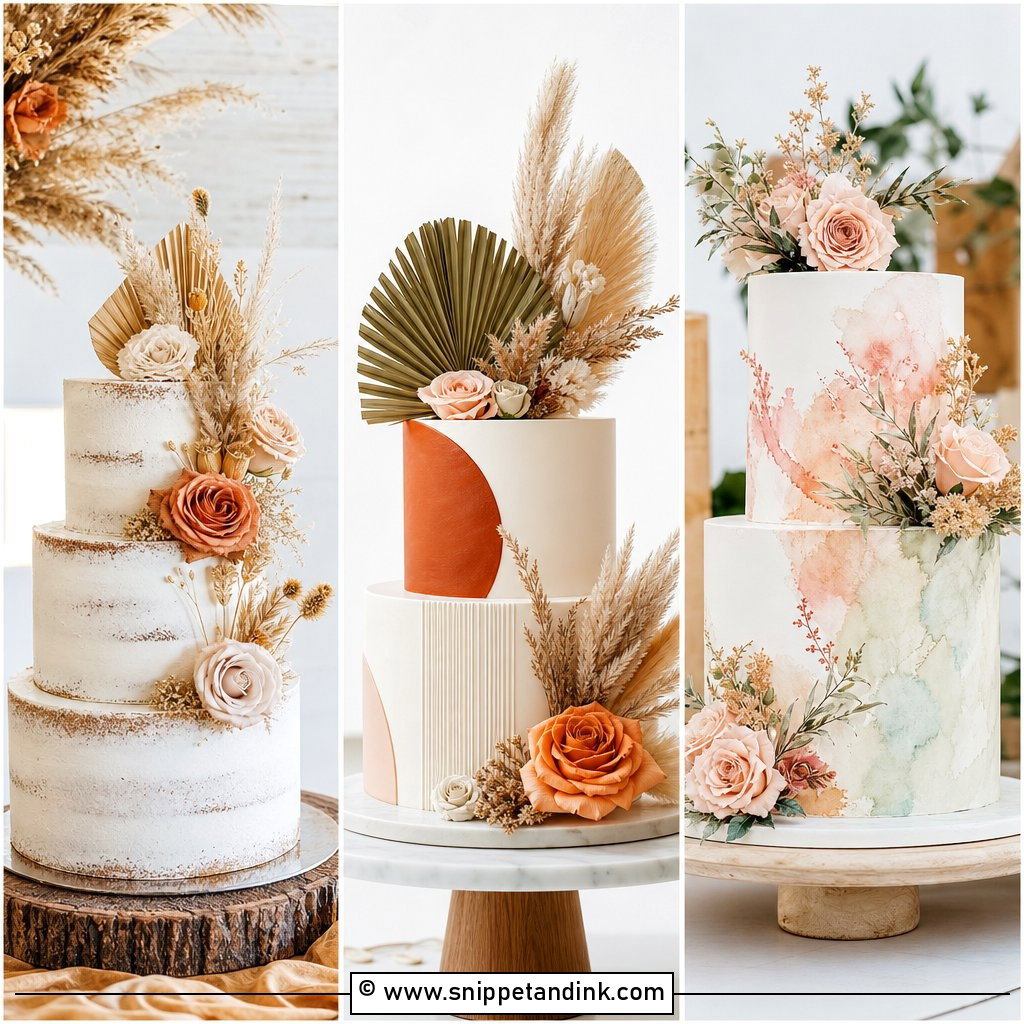
Earthy tones and loose placement define the boho version: ivory buttercream, dried edible petals, beige accents, small daisies and sprigs of greenery. A wood slice or ceramic stand on a linen-covered table finishes the look, and it sits comfortably beside pampas grass and simple bouquets. Symmetry is the enemy here. I place the clusters in odd numbers and at different heights so it looks styled by hand just before guests walked in. Real pampas isn’t food-safe and sheds, so keep it on the table, not the tiers.
8. Rustic Wildflower Wedding Cake
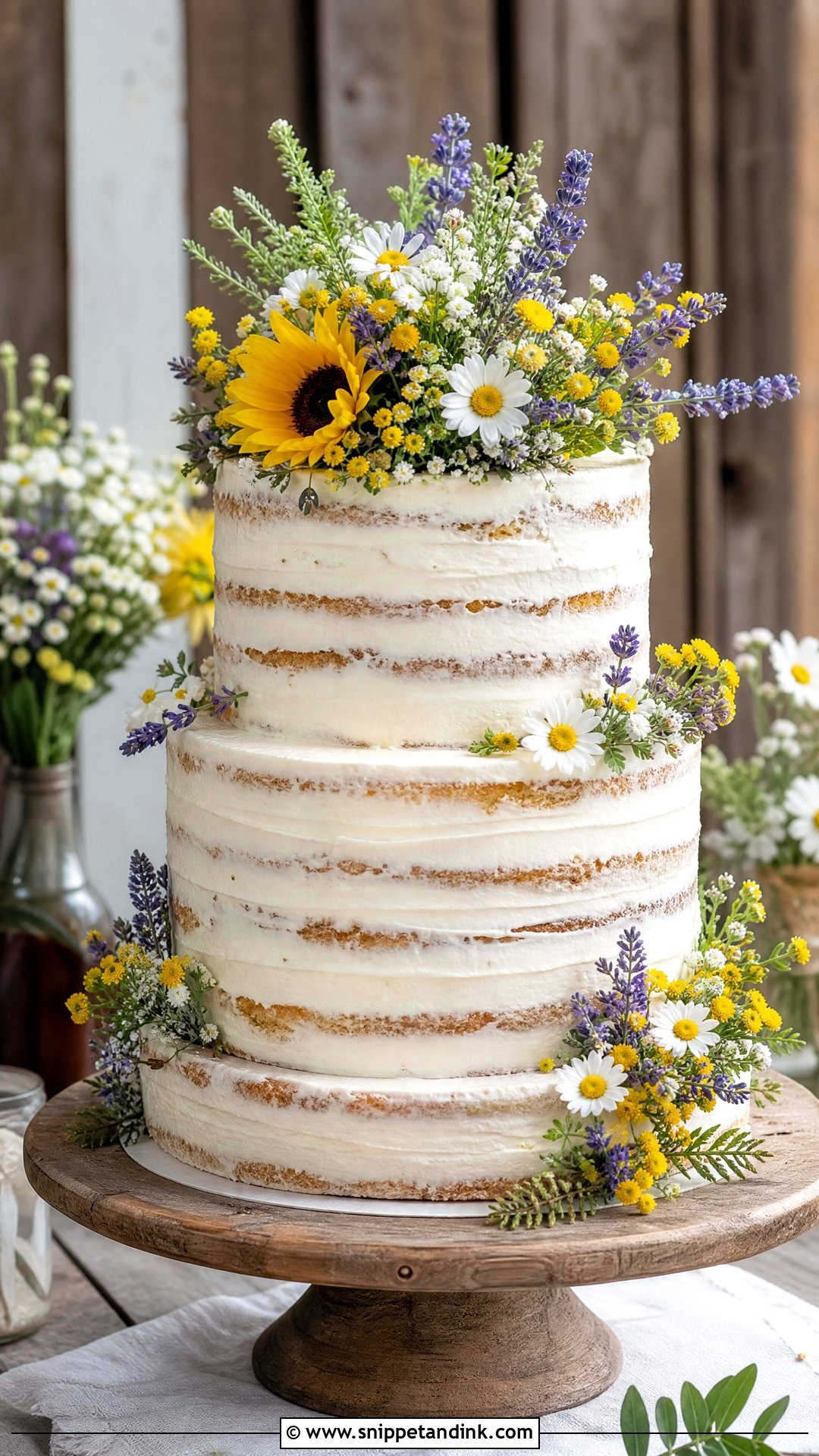
Rustic cakes rely on semi naked frosting, rough buttercream or softly scraped sides, with flowers in small clusters rather than stiff rows. Sunflowers, daisies, lavender and chamomile bring the countryside in. Sunflowers are heavy, though, and a big head will slide on buttercream unless it’s on a pick, so I choose small varieties. Vanilla bean, lemon elderflower, carrot cake and almond are all good flavors, and a wooden stand or plain white platter ties the cake to wood tables and linen runners.
9. Small Wildflower Wedding Cake
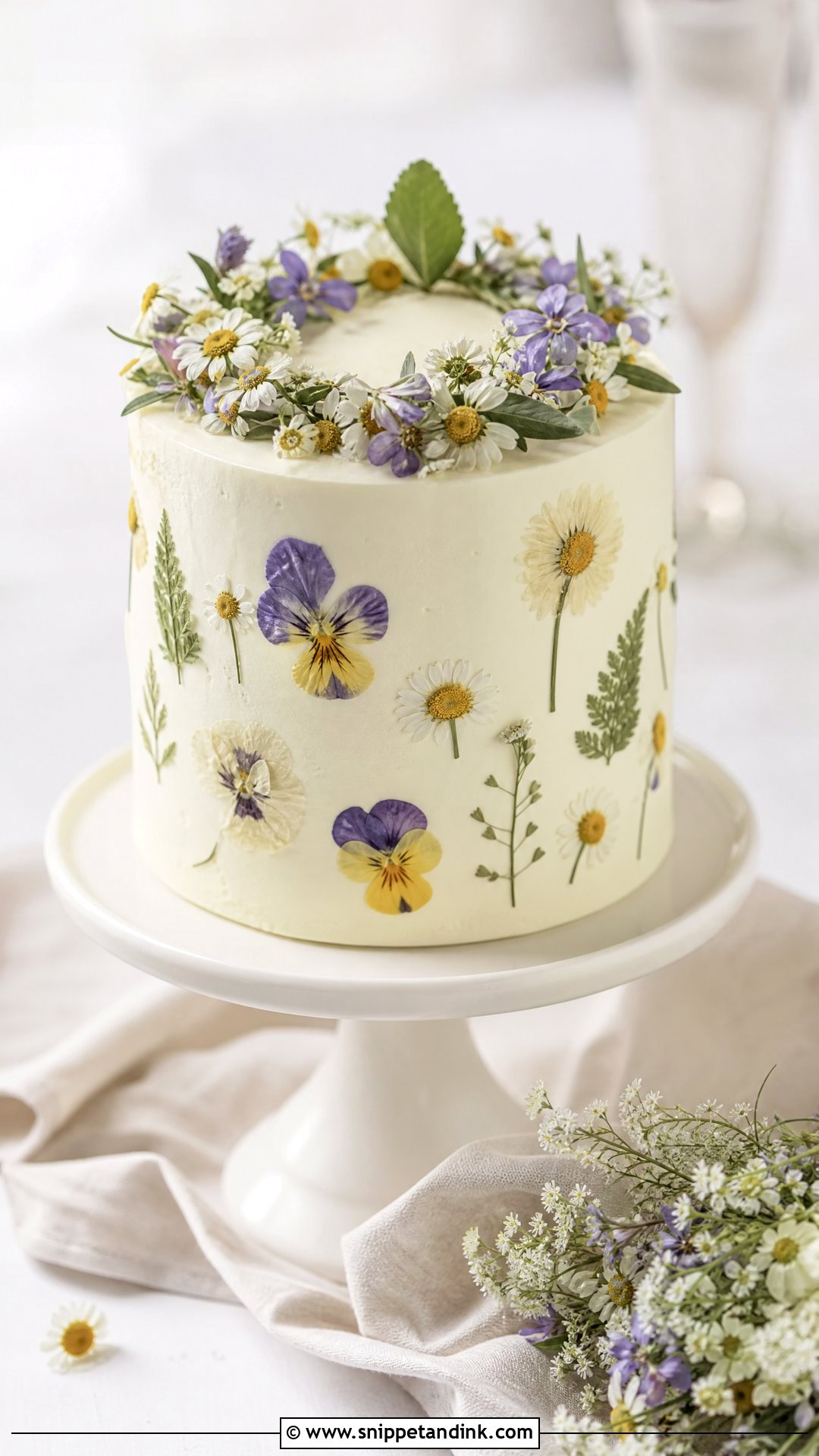
Intimate weddings and elopements rarely need more than one or two tiers, especially with other treats on the table. At this size, every detail is seen up close, so I ask couples for one clear focal point: a spray of wildflowers on top, or a pressed pattern around the sides, not both fighting each other. A clean frosting finish and a confident flower palette do the rest. It’s easy to display, kinder to the budget and photographs well at close range.
10. Three Tier Wildflower Wedding Cake
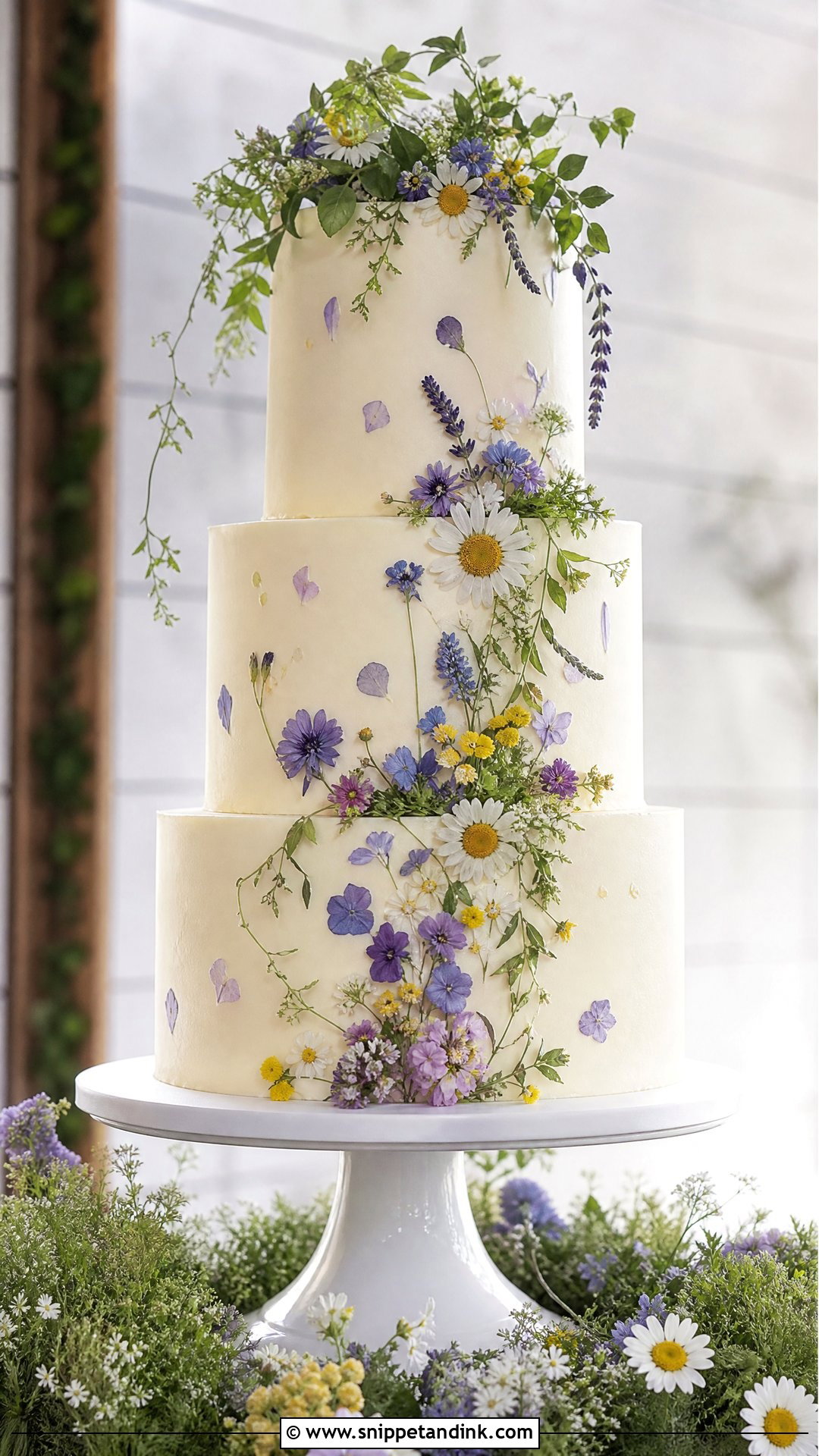
Three tiers give you room to tell a story, and a three tier wildflower wedding cake can vary its treatment from tier to tier: smooth buttercream on one, pressed petals on another, a cascade down the side. That variety keeps it interesting from every angle, which matters for medium and large weddings where guests walk around the cake table. Too many techniques at once looks busy, so I cap it at two plus the cascade. An ivory base ties the tiers together.
11. Blue Wildflower Wedding Cake
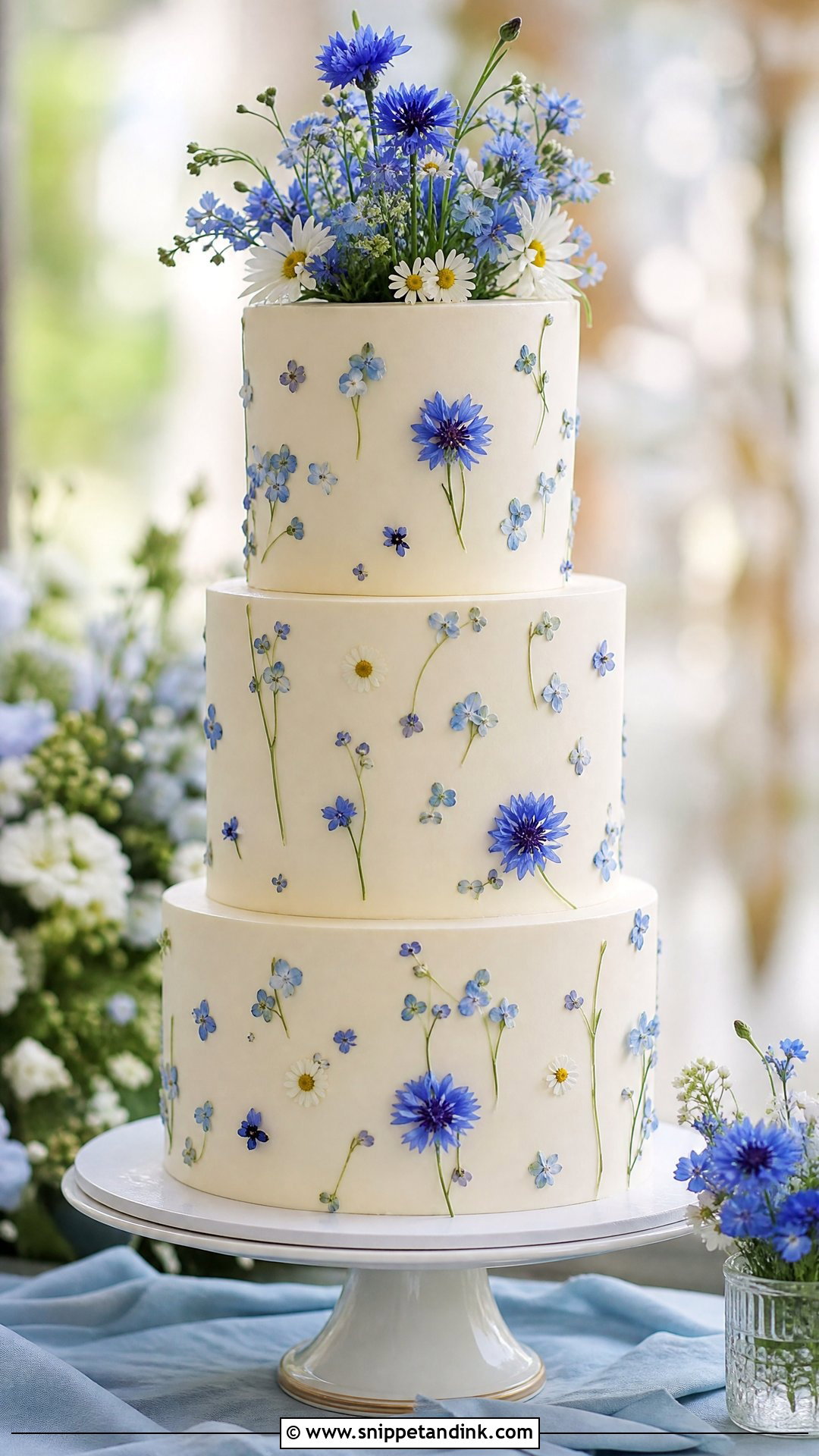
Blue is the color to try if blush feels overdone. Cornflowers, violets and borage are edible; forget-me-nots I make in sugar, since the real ones aren’t something I’d serve. A faint blue watercolor wash on an ivory base gives a more modern finish. Lemon, vanilla, almond and white chocolate flavors suit the cool palette, and small white daisies with green stems stop it from looking cold. It fits spring and summer, coastal gardens and outdoor receptions with blue accents.
12. Purple Wildflower Wedding Cake
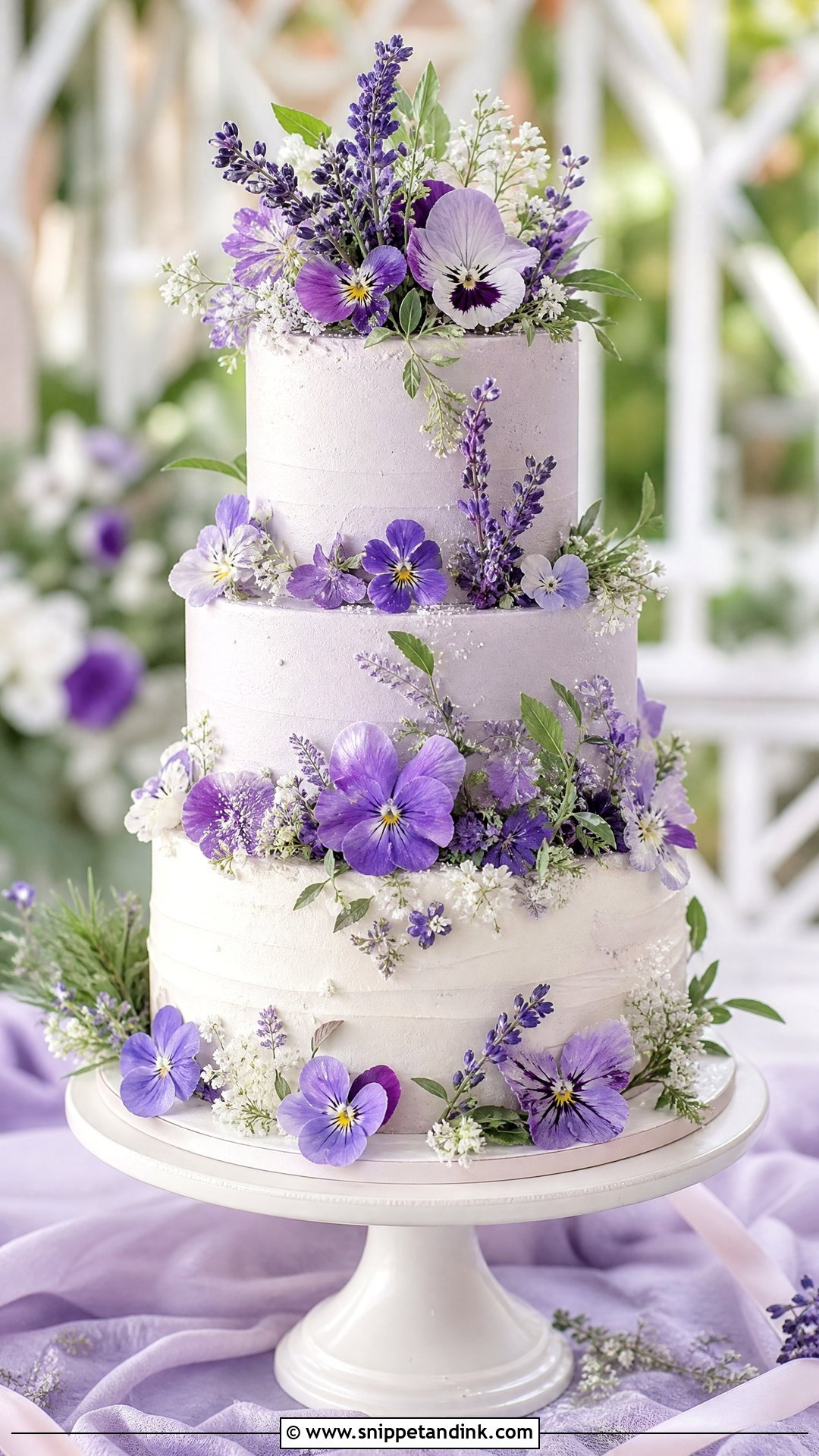
Purple needs a range of shades or it goes flat. I mix deep violet blooms with soft lilac petals and tiny white flowers, using lavender, violets, pansies and lilac sugar flowers with green herbs. White buttercream, pale lavender buttercream and smooth fondant all work as a base. Be careful with tinting the frosting itself: purple coloring can shift toward grey or blue in daylight, so test a sample at the venue’s light if you can. Lemon lavender, honey or blackberry flavors fit the theme.
13. Yellow Wildflower Wedding Cake
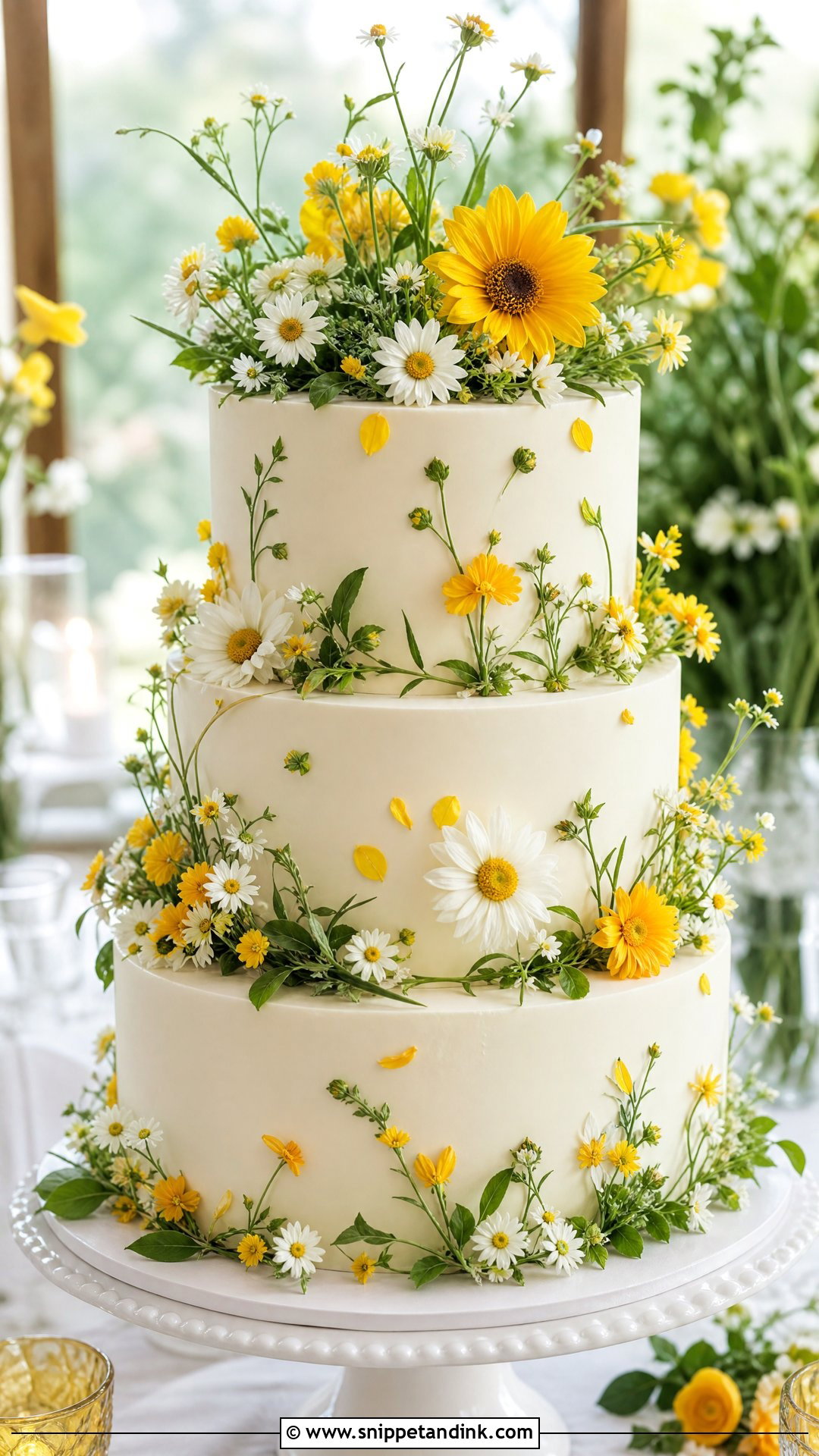
Yellow flowers bring sunshine to the table without shouting, as long as the base stays simple. Daisies, chamomile, calendula, small sunflowers and pale yellow sugar flowers sit well on smooth ivory or lightly textured white frosting. Calendula is a reliable choice because the petals are edible and hold their color in warm weather. Touches of white and green keep it fresh. Pair it with lemon, vanilla or honey cake, or a citrus filling, for a happy summer garden reception.
14. Edible Flower Wildflower Wedding Cake
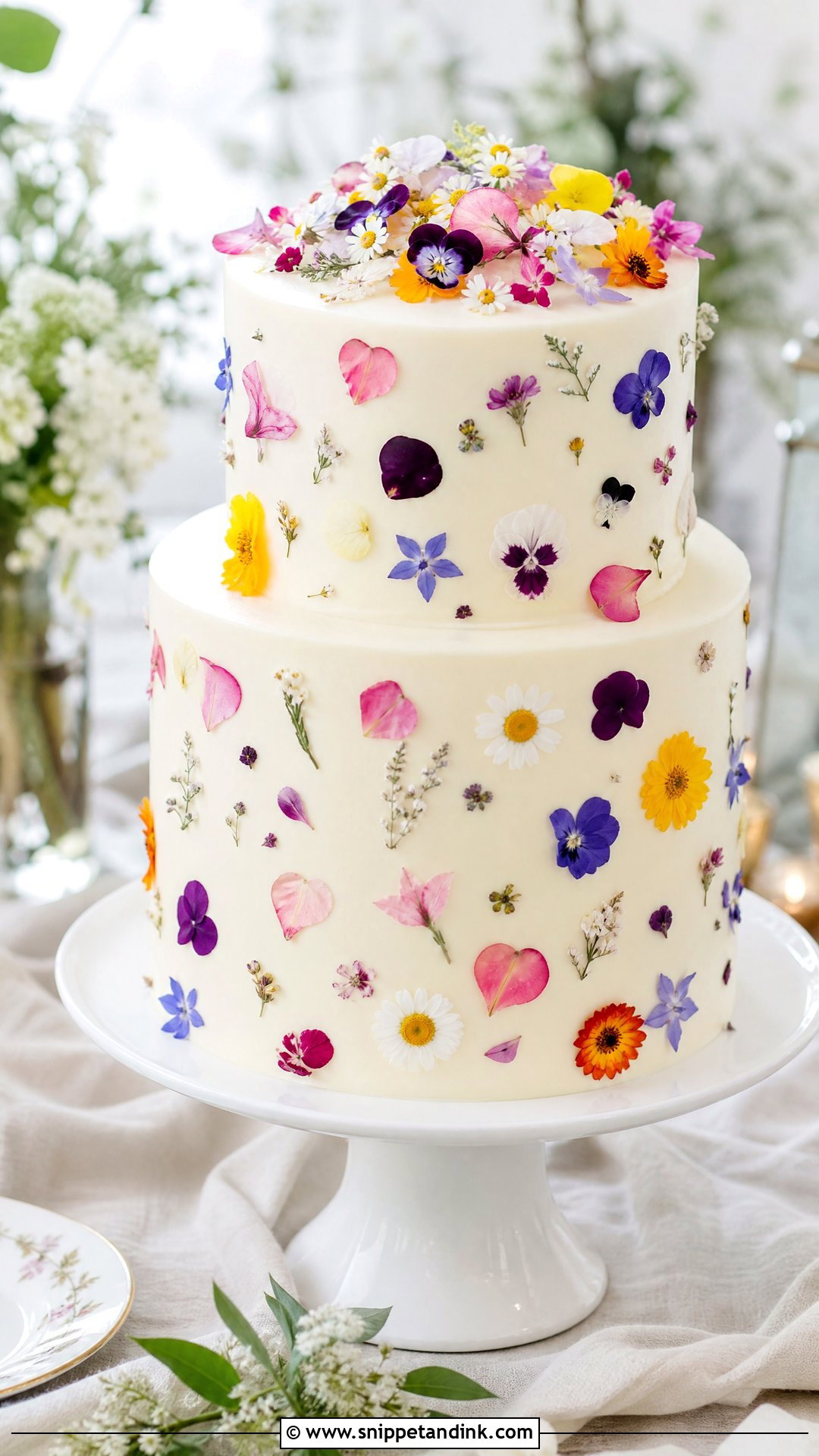
With an edible flower wildflower wedding cake, nothing has to be picked off before slicing. Pansies, violets, calendula, chamomile, borage and edible rose petals are grown for food, and they sit directly on a clean buttercream finish. The words to look for are culinary-grade and pesticide-free; a supermarket bunch or florist stem doesn’t qualify, even if the variety is edible. These blooms are fragile, so I keep them chilled and add them at the venue.


15. Sugar Flower Wildflower Wedding Cake
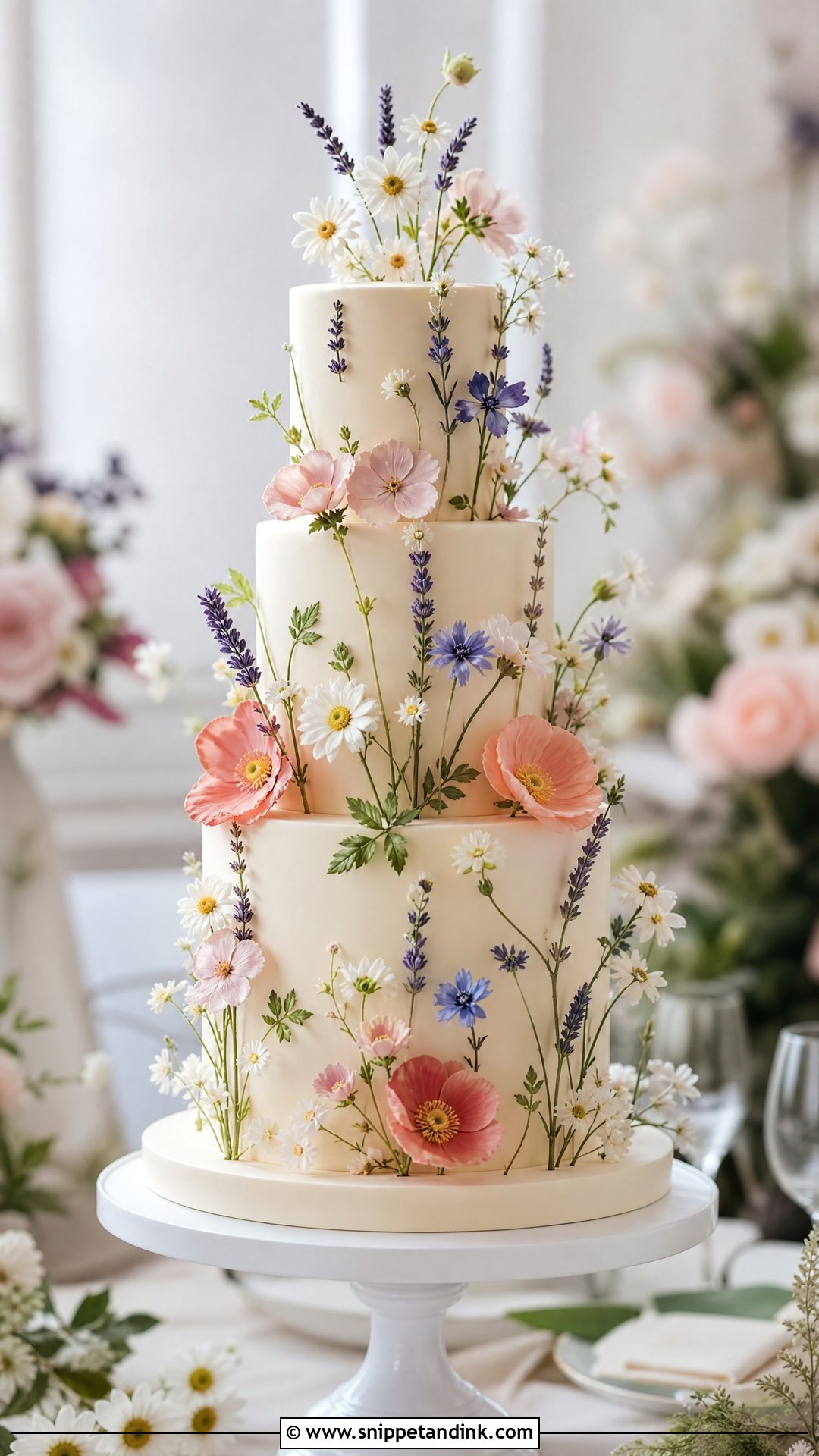
Sugar flowers take care of season, wilting and safety in one go. They can be shaped and tinted to match your bouquet, and well-made daisies, poppies, lavender, cornflowers and wild roses pass for real at arm’s length. The look is more polished than fresh flowers, so I place them loosely to keep it natural. Each bloom is built petal by petal, which is why they take time and add to the cost. Handled carefully, they also become keepsakes after the wedding.
16. Painted Wildflower Wedding Cake
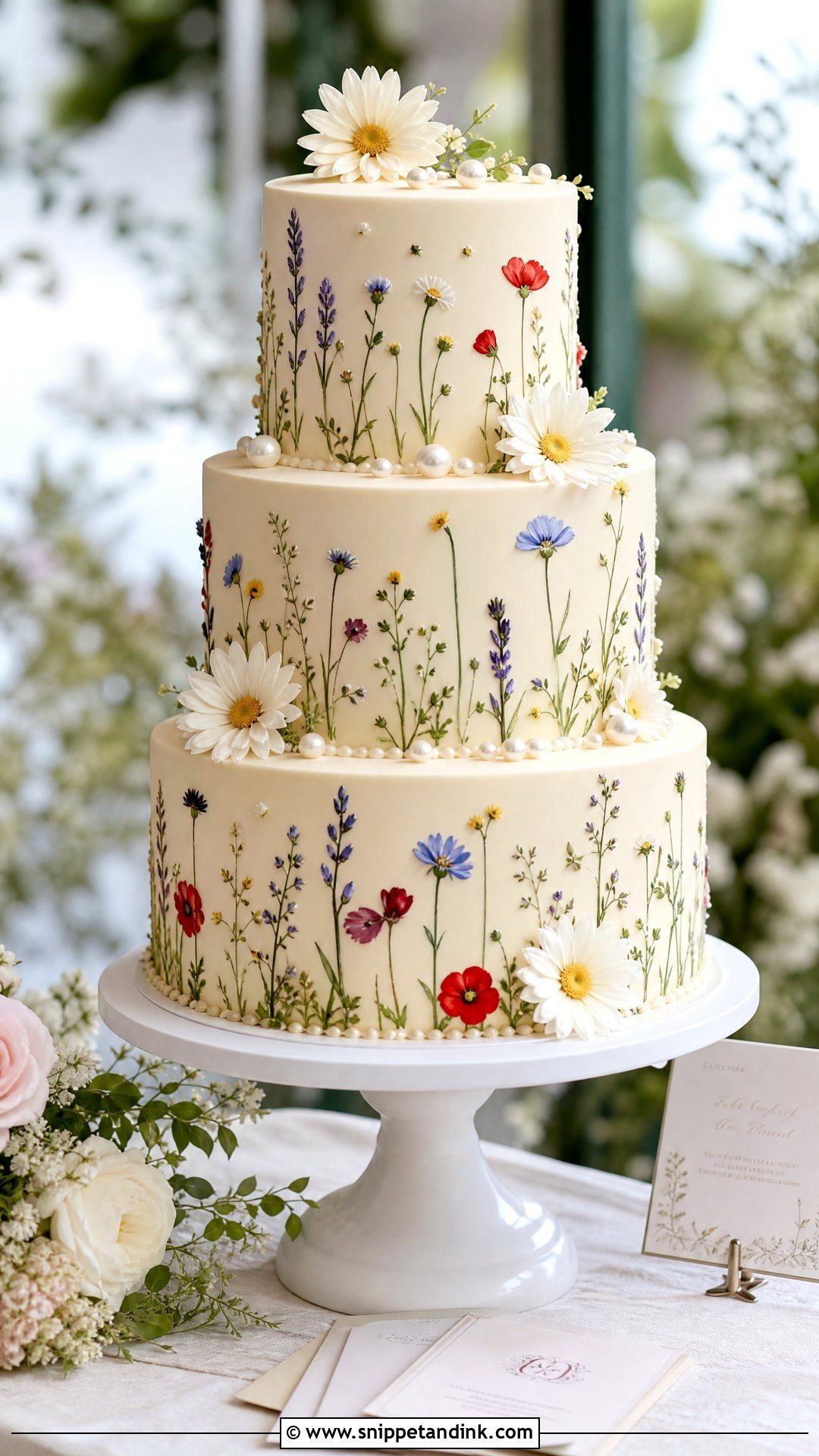
Hand painting lets the cake echo your invitations, bouquet or ceremony backdrop. I start by tracing the main stems lightly before adding color, which keeps the composition balanced on a round surface. Smooth fondant is the easiest canvas for fine stems and tiny petals; buttercream gives a softer, more blurred result. Flowers trailing upward or framing the front tier look most natural. Painting is slow work, so give your baker extra notice if you want this level of detail.
17. Dried Wildflower Wedding Cake
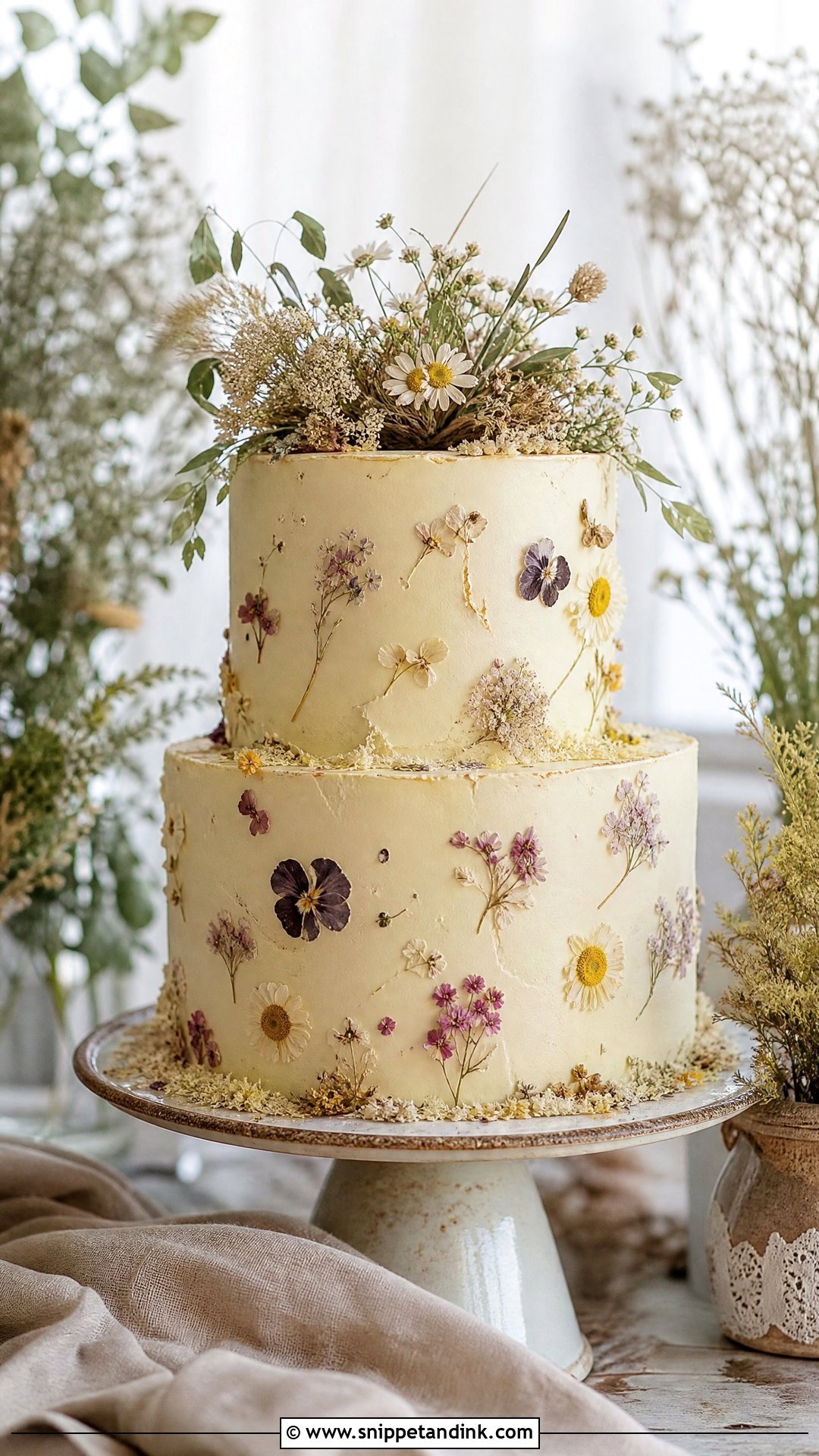
Dried edible petals, pressed flowers and tiny preserved-looking blooms give the cake a muted vintage feel. It sits well with off-white buttercream, beige linens, woven baskets and simple garden décor. Dried petals are brittle and can crumble when the cake travels, so I add the final clusters on site. Keep it light: a thin crown on top or small clusters around the tiers. Honey, almond, vanilla and spice cake echo the earthy tones.
18. Garden Wildflower Wedding Cake
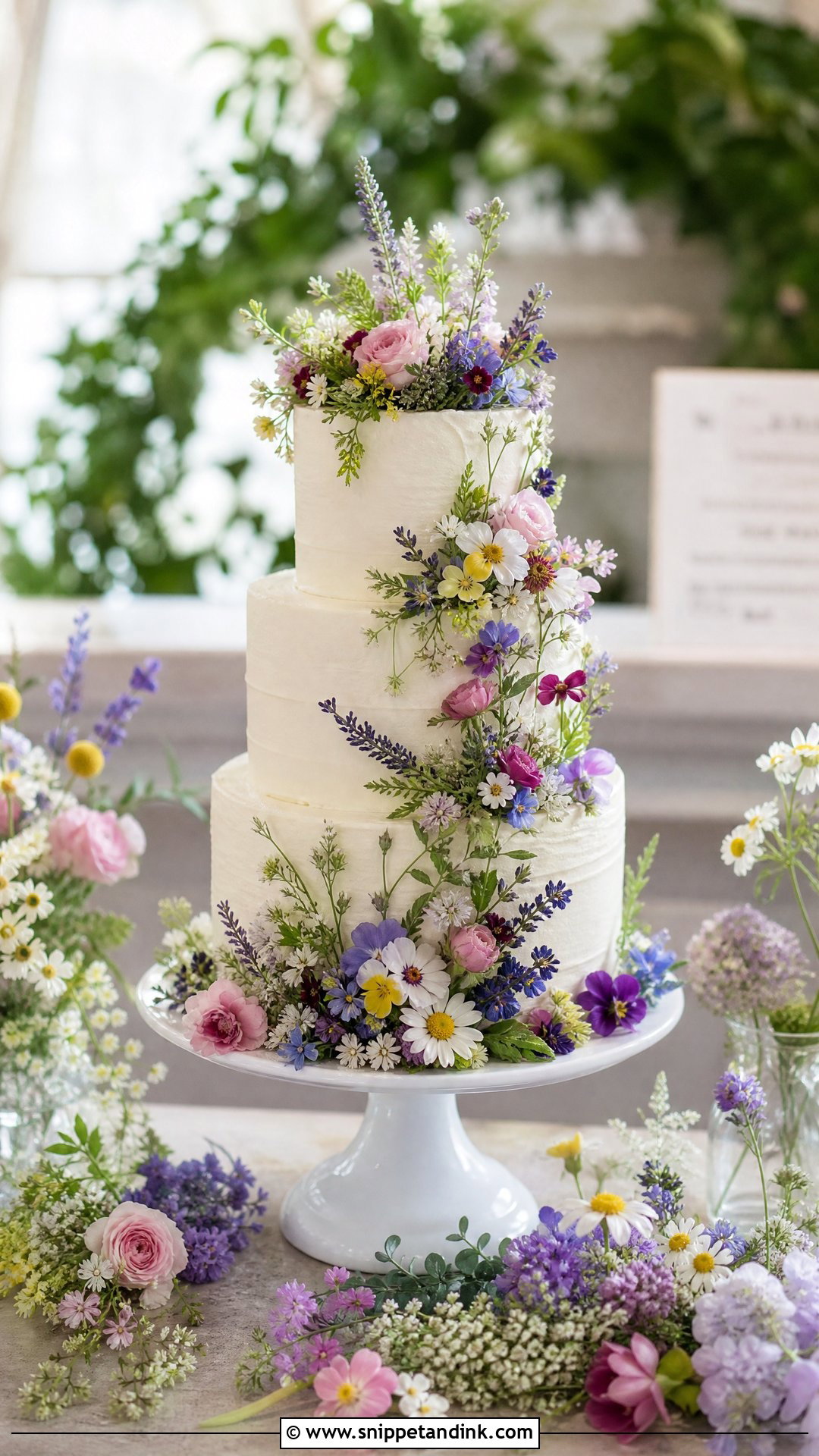
Greenhouses, courtyards, botanical gardens and flower-filled backyards suit the garden version, which is polished but still full of movement. I use smooth buttercream, soft piping and fresh edible blooms arranged like a border. Daisies, lavender, pansies, small roses and leafy herbs give it depth. Gathering the flowers around the base and letting them climb up one side makes a path the eye follows, and it reads well in both wide table shots and close-ups.
19. Vintage Wildflower Wedding Cake
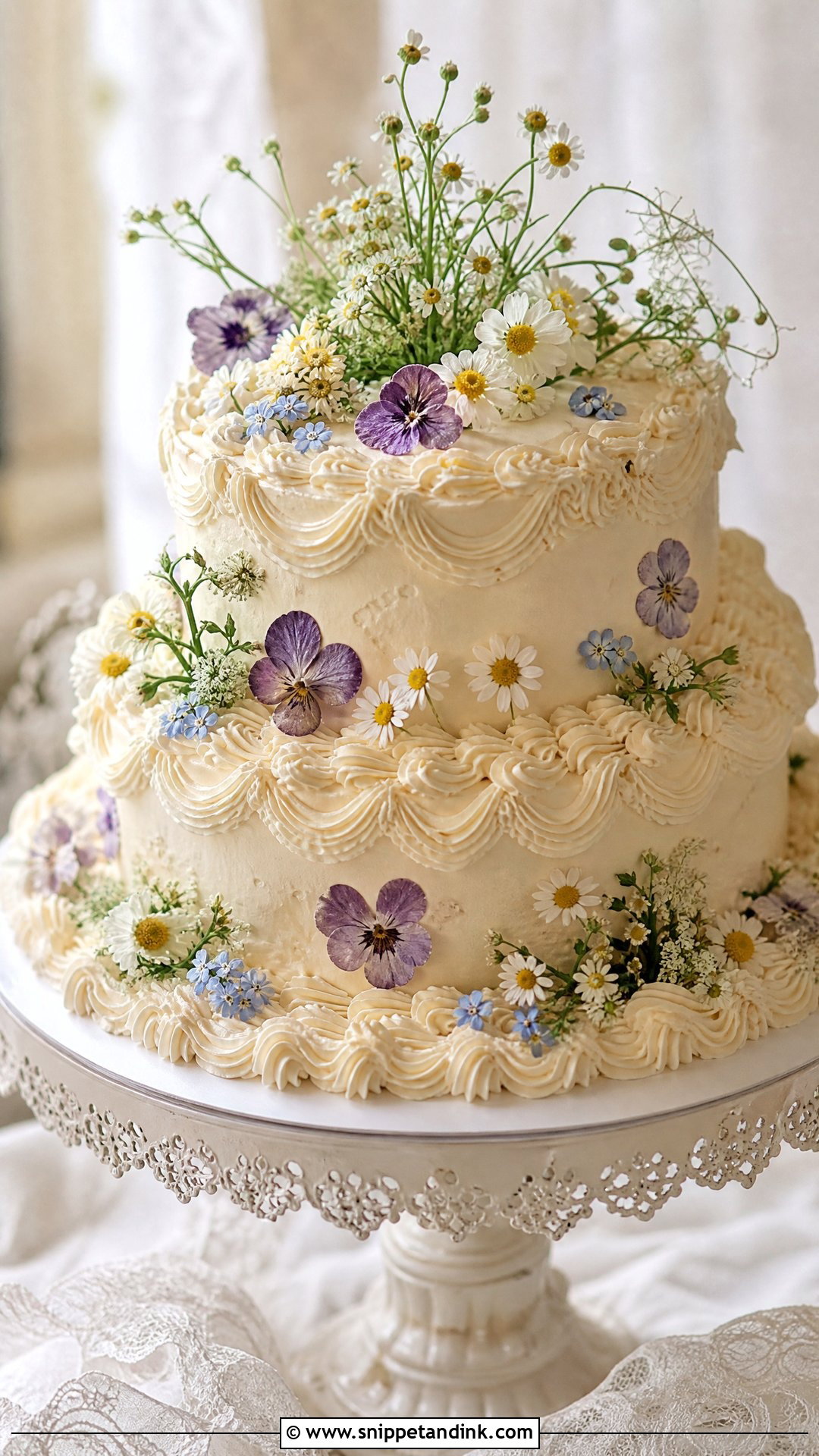
Shell borders, small buttercream ruffles and pearl-like details give a vintage cake its structure; wildflowers stop it from turning formal. Pressed violets, tiny daisies, chamomile and sugar forget-me-nots soften the piping. A gentle palette of ivory, pale yellow, lavender and dusty blue suits heirloom details and lace-inspired décor. Ruffles and shells are the first things to droop in heat, so I’d book this style for a cool or air-conditioned room.

20. Modern Wildflower Wedding Cake
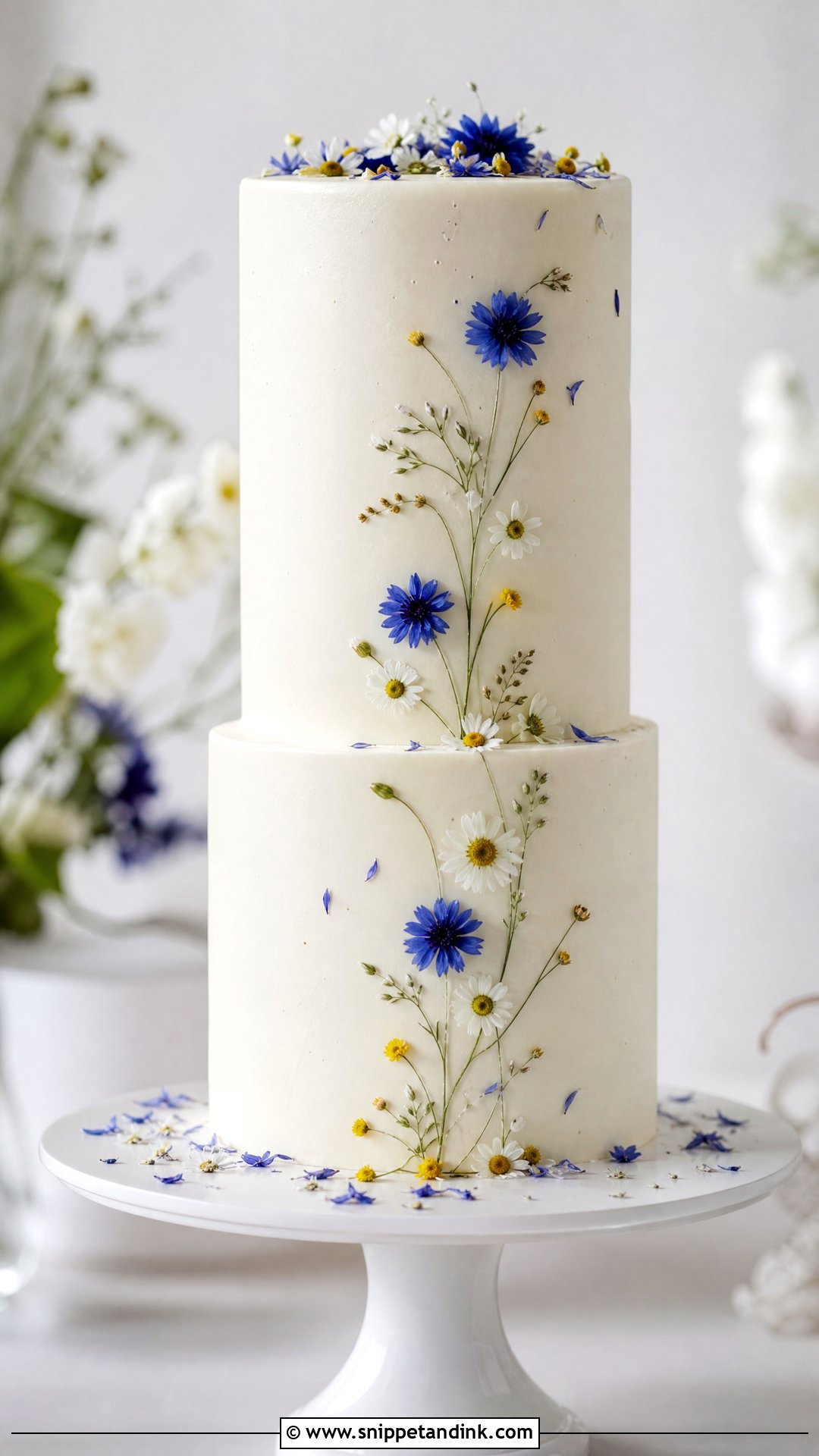
Restraint is what makes the modern version work. One clean tiered cake might carry a single vertical line of pressed flowers, one floral crescent, or scattered petals with plenty of open space. White, ivory or soft sage frosting makes the base, and I hold the palette to three flowers at most, say blue cornflowers, white daisies and yellow chamomile. Couples with minimal décor get a natural detail without clutter. The open space only looks intentional if the frosting is flawless, so expect your baker to spend more time on the finish than the flowers.
Sugar Blooms, Top Tiers and Leftovers Once the Cake Is Cut
Most couples plan the cake carefully and forget about what happens once it’s been cut. A few decisions made in advance save the caterer guessing at eleven at night.
Remove before serving
Anything inedible, including sugar flowers with wire inside, picks, straws and decorative fresh stems, has to come off before slicing. Tell your caterer or planner exactly which pieces those are, and give them a box to put the flowers in.
Keeping sugar flowers
Sugar flowers last for years if they stay dry. Store them in a cardboard box, not airtight plastic, away from sunlight, which fades the petal dust, and away from humid rooms like bathrooms. A small display dome on a shelf works well.
Saving the top tier
If you want to keep the top tier for an anniversary, remove all the flowers, chill it until the frosting is firm, then wrap it tightly in several layers of plastic wrap and foil before freezing. Thaw it slowly in the fridge. Fresh fruit fillings and semi naked sides fare worst in the freezer, so a fully coated tier with a buttercream or ganache filling is the better candidate.
Your Bouquet Is the Best Brief You Can Hand a Baker
Wildflower cakes range from rustic to refined, and each technique has its own character: pressed petals look delicate, piped flowers are fully edible, sugar flowers are polished and meadow arrangements feel freshly gathered. The way to choose is to start from your venue and your bouquet, then talk through flower safety, what’s in season, flavors and how the cake will cope with the room temperature. Compare your saved favorites against a photo of your bouquet, and the right style usually becomes obvious.
You'll Like These Ideas:








Leave a Reply