
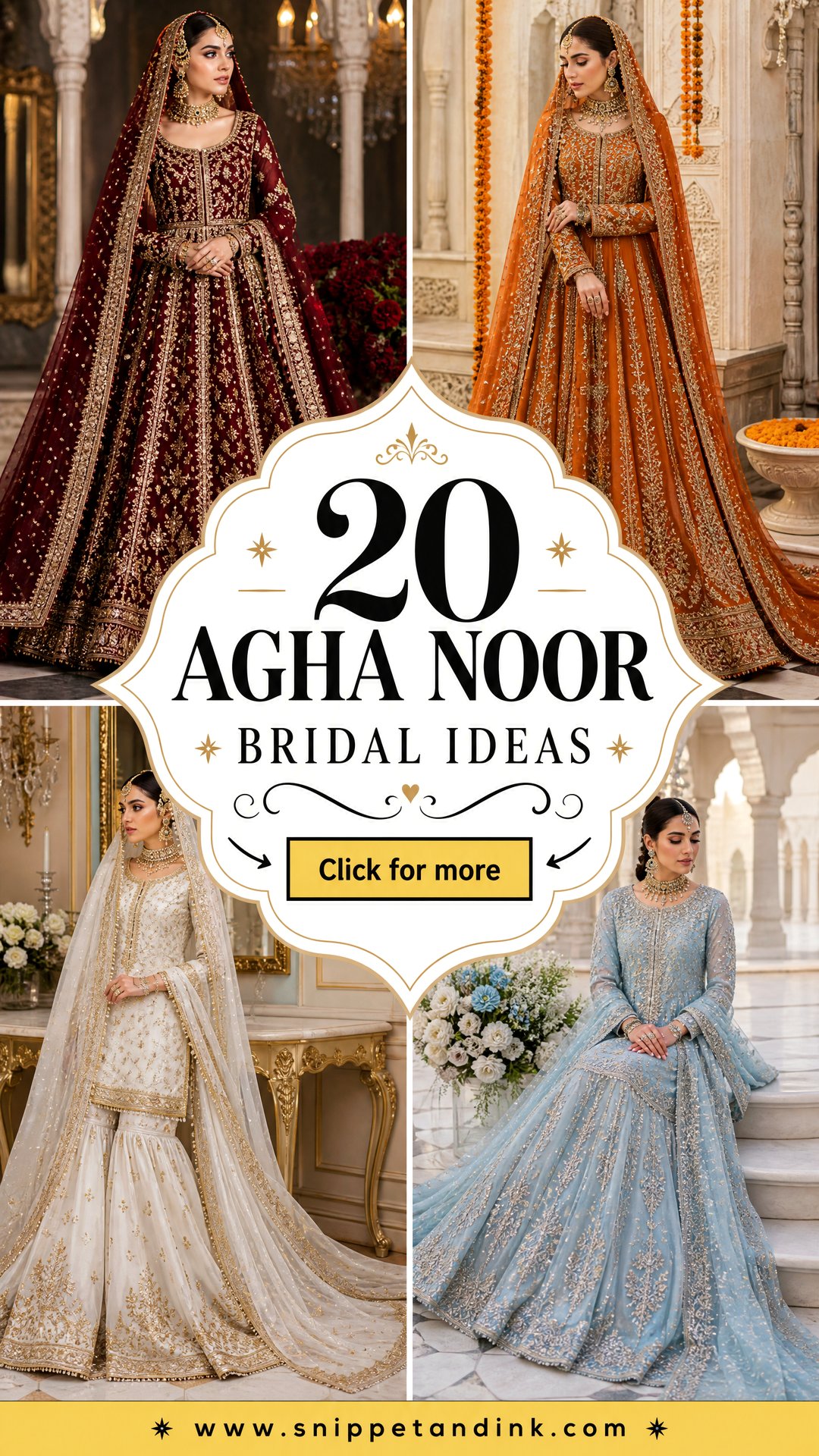
A Pakistani wedding asks one bride to dress for four or five separate events, and each one has its own mood, length of day and amount of dancing. The Agha Noor looks below cover the nikkah, mehndi, baraat, walima and reception, built on the label’s classic silhouettes in jamawar, net and chiffon with zari, zardosi and sequin handwork. For each one I’ve added how I’d handle the jewelry, shoes, dupatta and makeup, because a heavy outfit looks clumsy or polished depending almost entirely on those choices. Reds sit next to pastels, jewel tones and quiet neutrals, and you’ll find full lehengas alongside a simple gharara.
Splitting Four Events Between Heavy and Light Outfits
Most brides I dress want every event to be the showpiece, and by the walima they’re worn out from carrying embroidery all week. I plan the wardrobe by weight first and color second. The baraat outfit can be the heaviest thing you own because you’ll mostly sit on a stage. The mehndi outfit has to let you dance, and the walima sits somewhere in between.
- Baraat: full zardozi or dabka, a can-can or firm lining, and a second dupatta. Expect to need a hand standing up and walking.
- Mehndi: gota, mirror work and lighter fabrics. Wide shararas and pishwas skirts move far better than a fitted lehenga.
- Nikkah: a long shirt and a head dupatta that stays put without constant fixing, in a fabric you can sit in comfortably.
- Walima: a gown or maxi with the work concentrated at the neckline and hem, so it looks finished without the baraat’s weight.
Then look at the order of colors. Two pastels on consecutive days look like the same outfit in the album, while a pale nikkah followed by a red baraat reads as a progression.
1. Red Agha Noor Bridal Lehenga
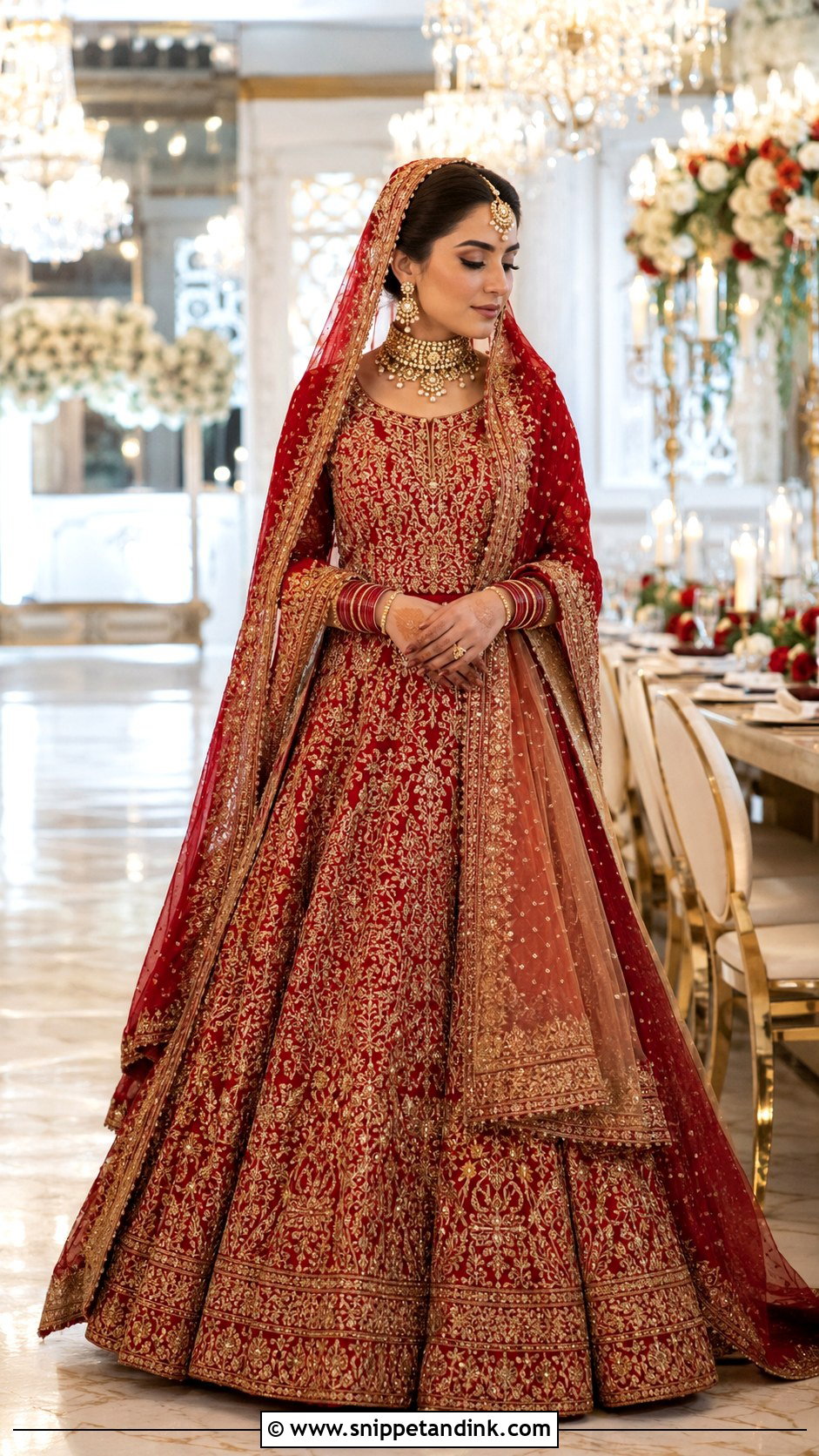
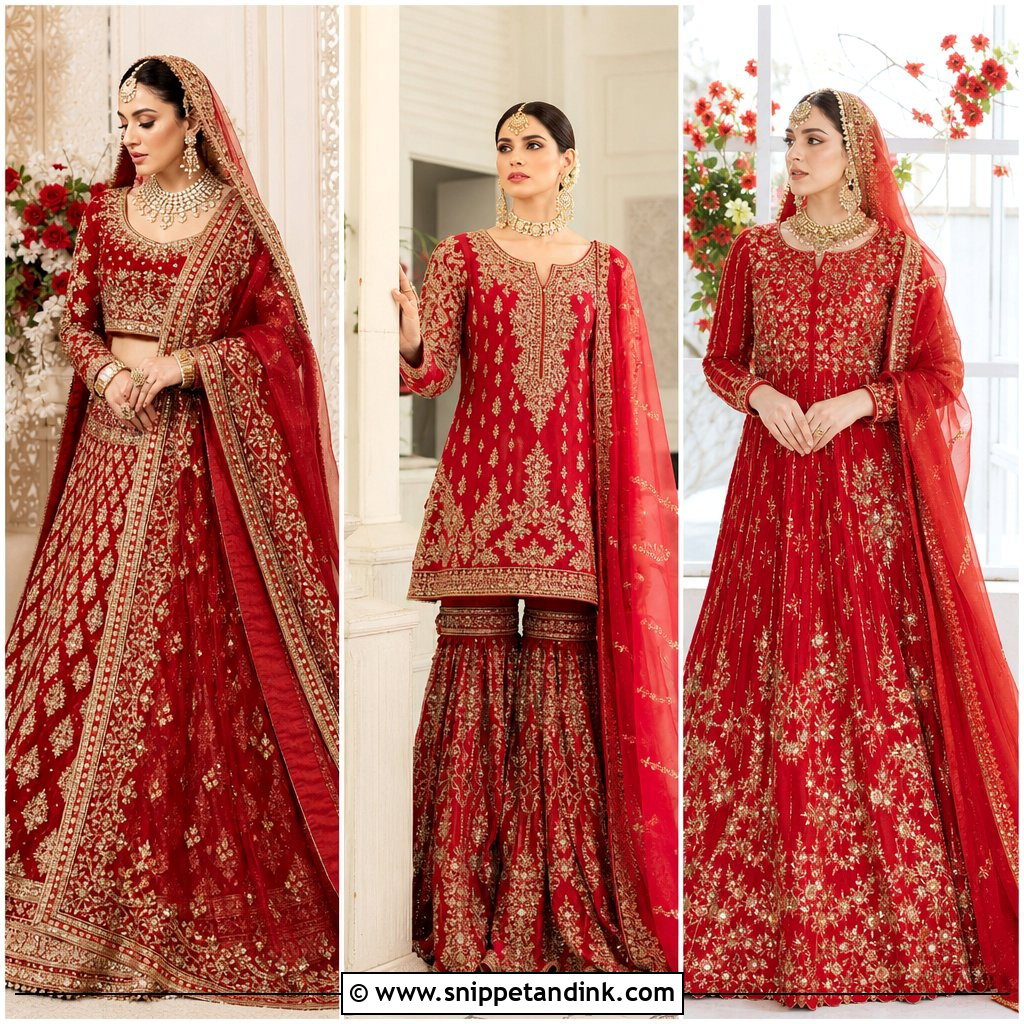
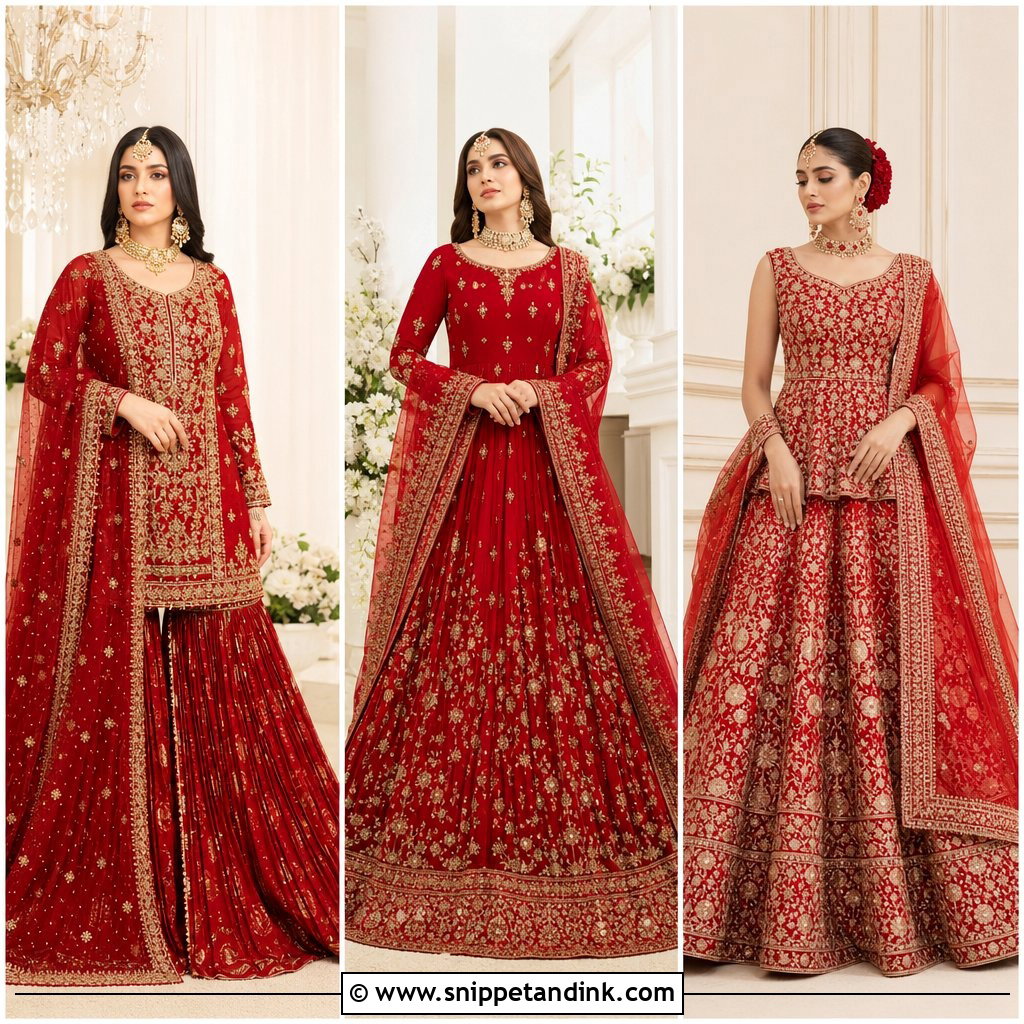
Red is still the color most families picture at a baraat, and under hall lighting nothing else carries as much warmth. Look for a fitted blouse, a richly worked skirt and wide borders; gold zardozi, dabka and sequins give red the depth that reads as couture on camera rather than flat color. The weight is what brides underestimate. A fully worked skirt needs a can-can or a firm inner lining, otherwise the hem collapses the moment you sit on the stage. Wear the embellished dupatta over the head and a lighter one across a shoulder, then add a kundan choker, matching earrings, a maang tikka, red bangles and gold khussa. Defined eyes, a classic red lip and a center-parted bun hold their own against all that work. Keep the clutch small; someone else usually ends up carrying it.
2. Maroon Agha Noor Bridal Kalidar
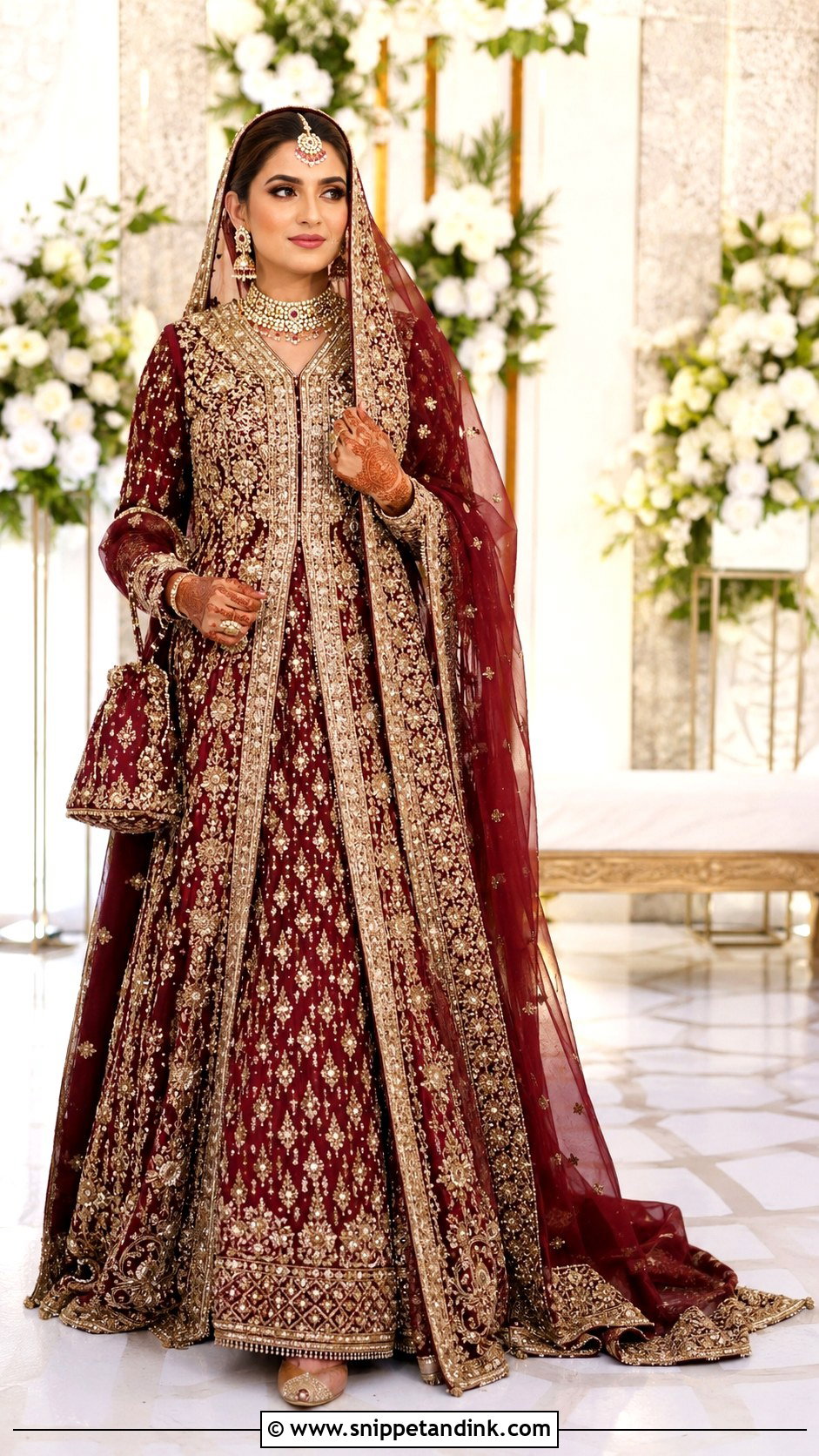
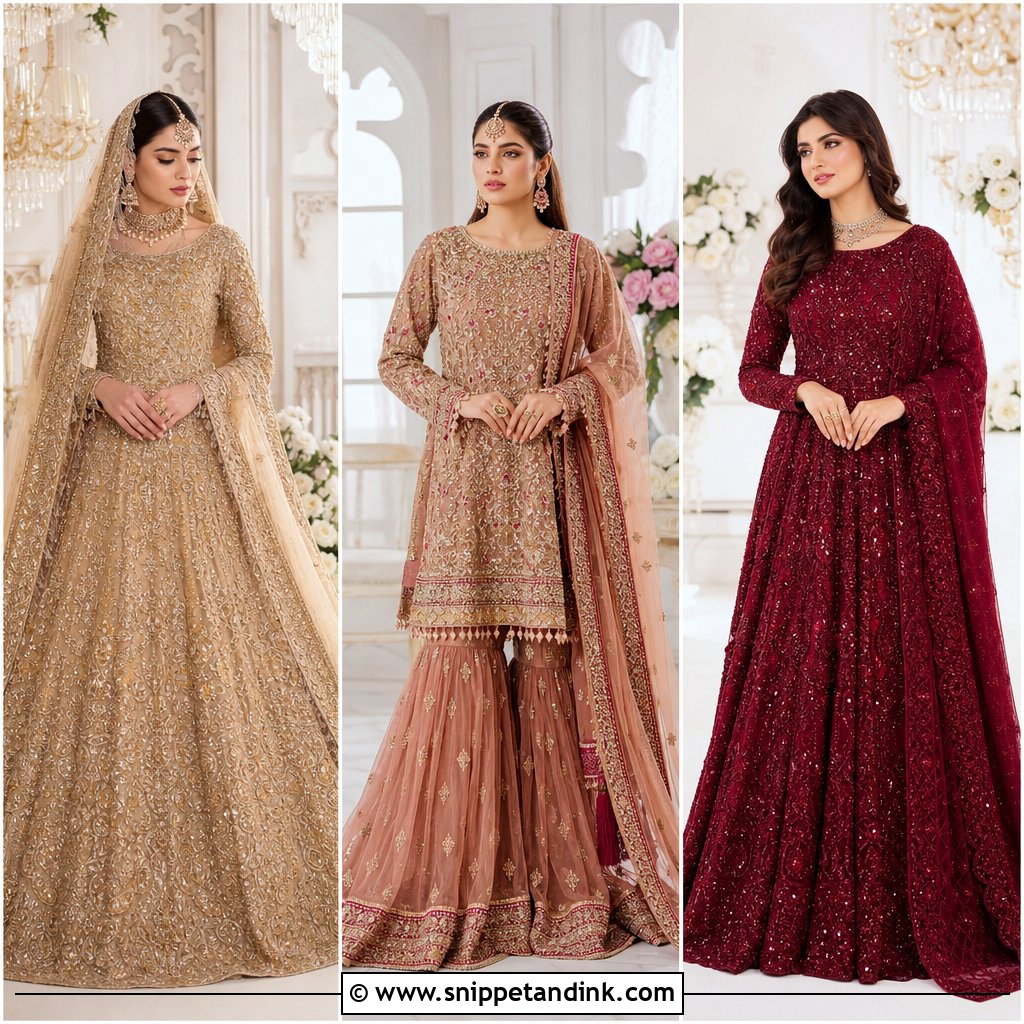
Maroon gives you the depth of red with less glare, and I reach for it when the baraat is an evening event under warm lighting that can push bright red toward orange. A kalidar, the long paneled shirt that flares from the bodice, moves well over a coordinated skirt with an embellished net shawl. Antique gold embroidery on the hem matters more here than on most outfits, because the panels swing as you walk and the hem is what guests actually see. Polki, jhumkas, a matha patti and stacked maroon-and-gold bangles are plenty. Pointed khussa stay comfortable under the full skirt. Bronze eyes, a muted berry lip and a low bun with fresh white flowers leave the neckline and dupatta border clear.
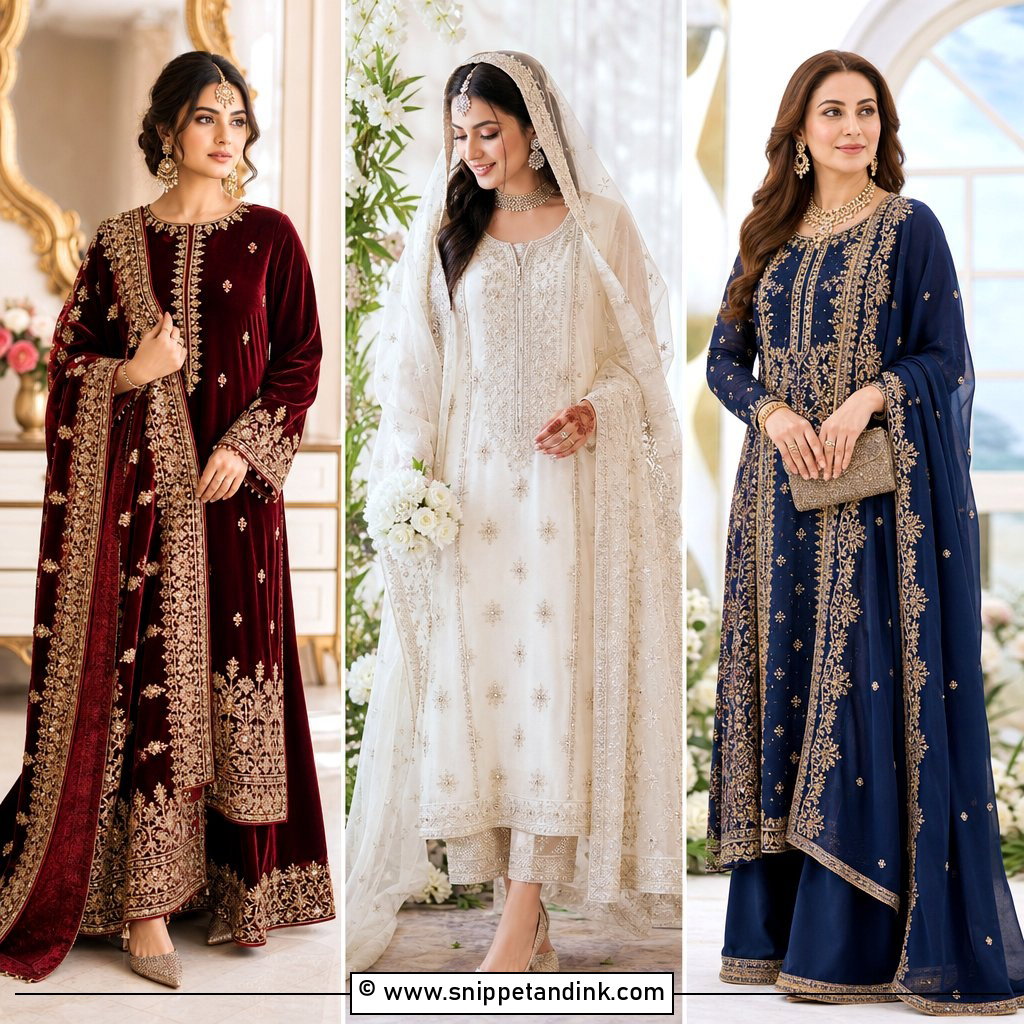
3. Ivory Agha Noor Bridal Nikkah Dress
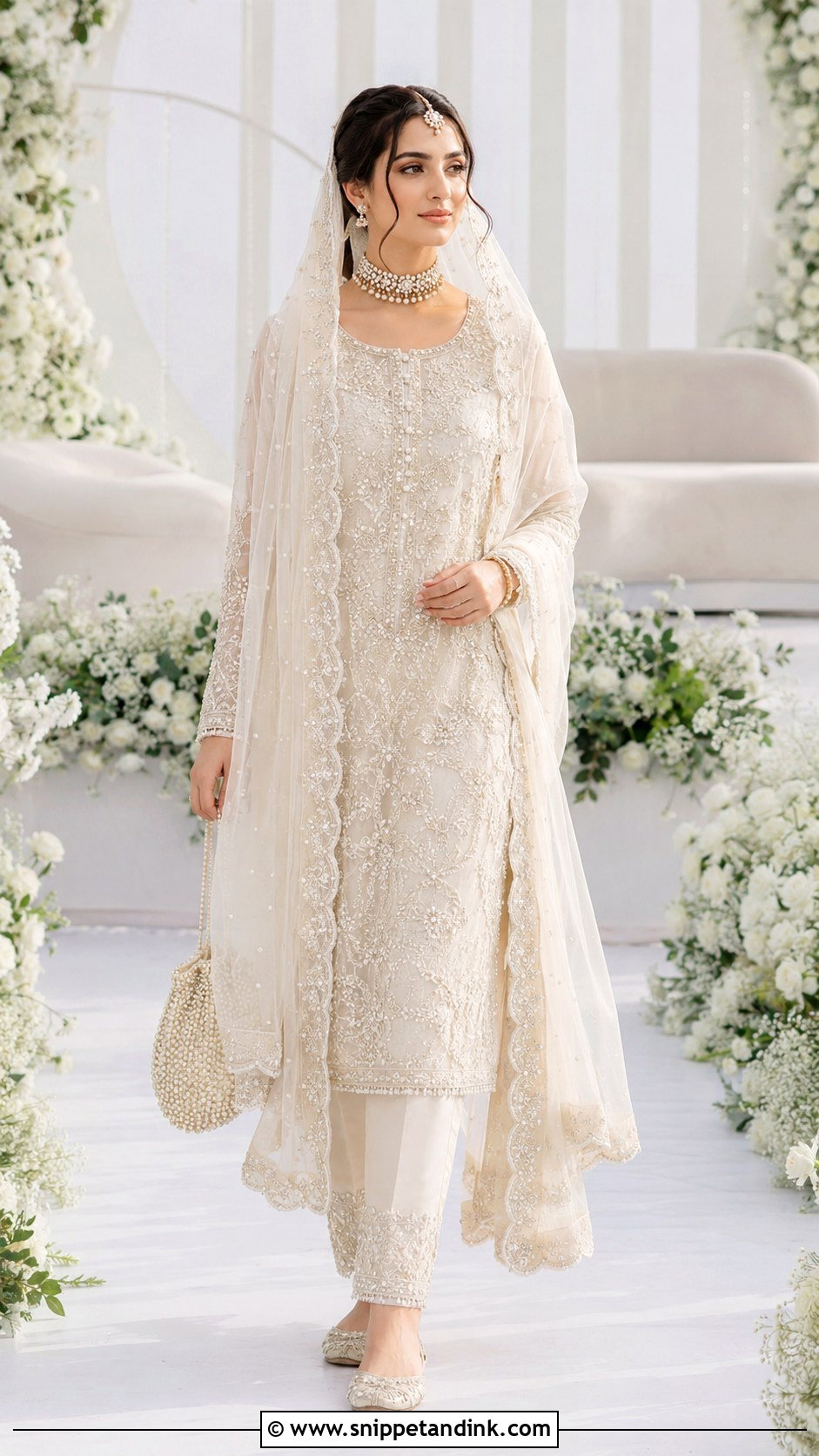
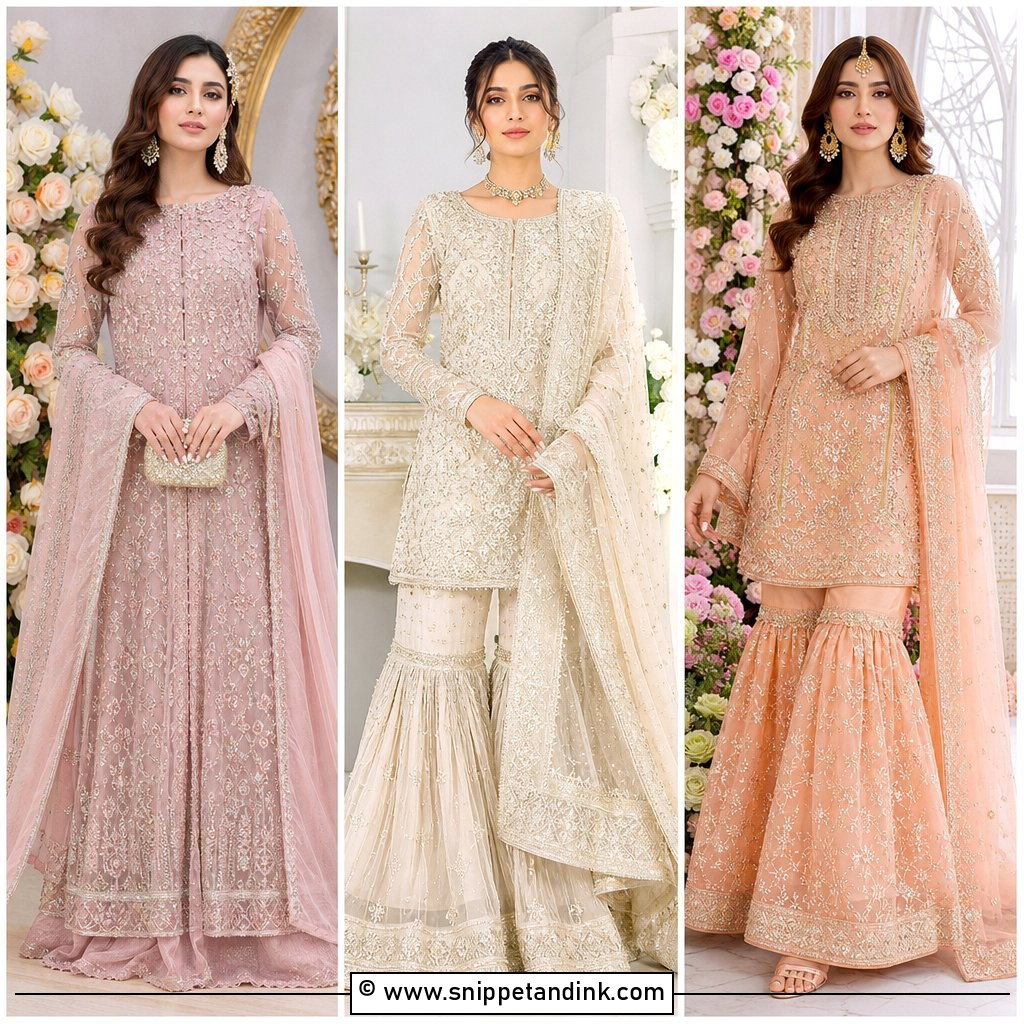
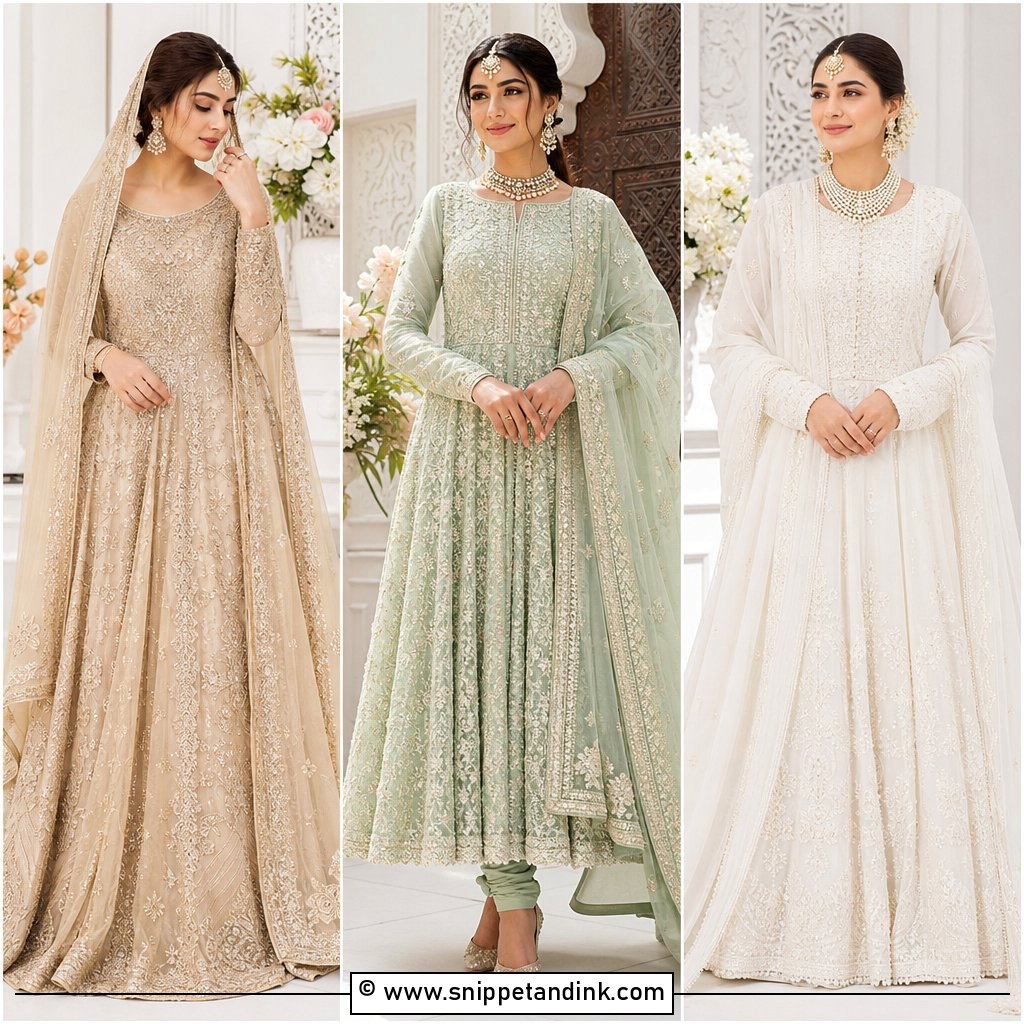
Ivory suits a daytime nikkah ceremony because it looks calm beside the signing table and doesn’t fight window light. A long embroidered shirt, straight trousers and an organza or net dupatta keep it simple, with pearl, silver and pale gold handwork for definition. One warning from fittings: ivory shows foundation instantly, so I hold a thin scarf over the bride’s face while the shirt goes on over her head. Let the scalloped dupatta border frame the face. Pearl drops, a slim choker, a small tikka and ivory khussa are enough, with luminous skin and a soft pink lip. A pearl potli carries the essentials.
4. Blush Pink Agha Noor Bridal Lehenga
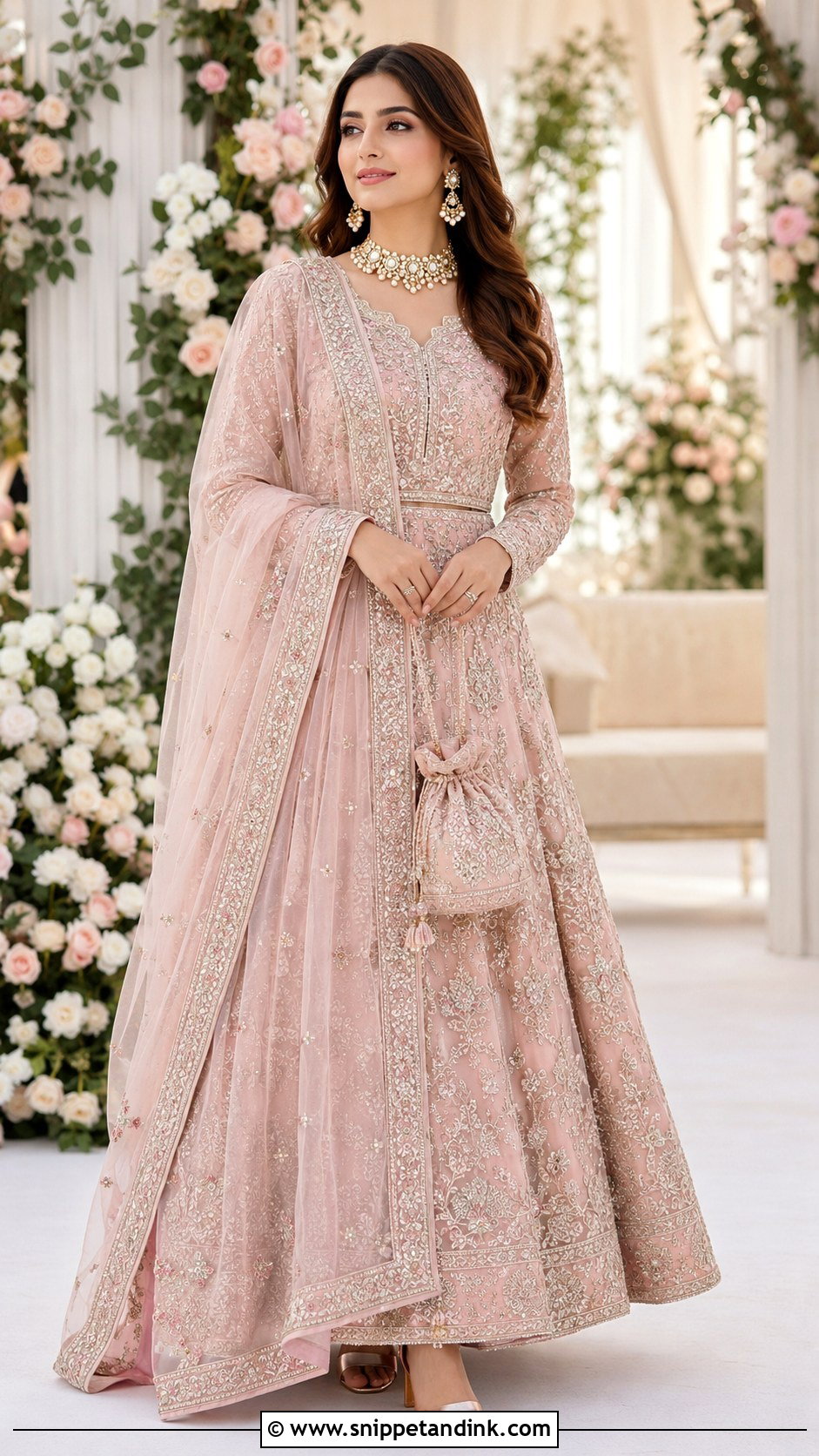
Blush pink is the gentler alternative to red, but it is fussy about undertone. On warm or olive skin a pink with a little peach in it flatters far more than a cool, bluish pink, so hold the fabric against your bare face in daylight before you commit. Look for a delicately embroidered blouse, a full skirt and a sheer dupatta with a visible border, worked in rose gold, champagne and pearl. Wear the dupatta over one shoulder, or lightly over the hair for the ceremony. A polki choker, pearl earrings, a small passa and rose gold heels finish it, with pink-toned eyes, peach blush and a rose lip. A textured low bun with pale flowers and a blush potli tie it together without looking overly matched.
5. Gold Agha Noor Bridal Jamawar Outfit
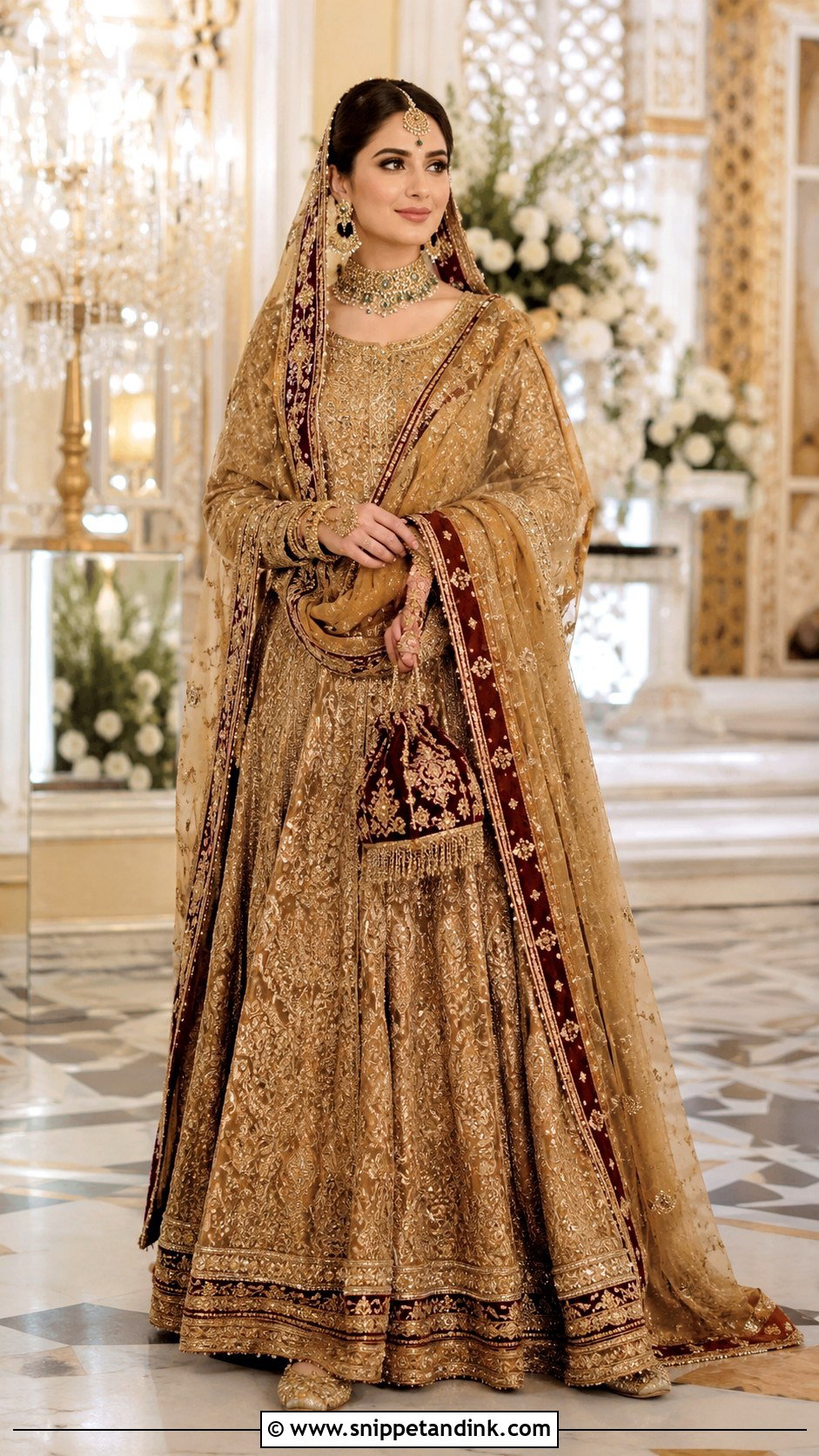
Jamawar is a woven brocade, so the pattern is already in the cloth before anyone adds embroidery. That changes how I accessorize: the fabric does the work and the jewelry only has to support it. Pair a long kalidar shirt and matching jamawar skirt with an embroidered net shawl, then add a traditional choker, medium jhumkas, a centered tikka and a few antique gold bangles. Gold on gold can wash out in photos, so I bring in maroon through the dupatta border, the lip or a small bag. Embroidered khussa, smoked bronze eyes and a deep rose lip keep it traditional, and a center-parted bun leaves the neckline visible.
6. Emerald Green Agha Noor Bridal Lehenga
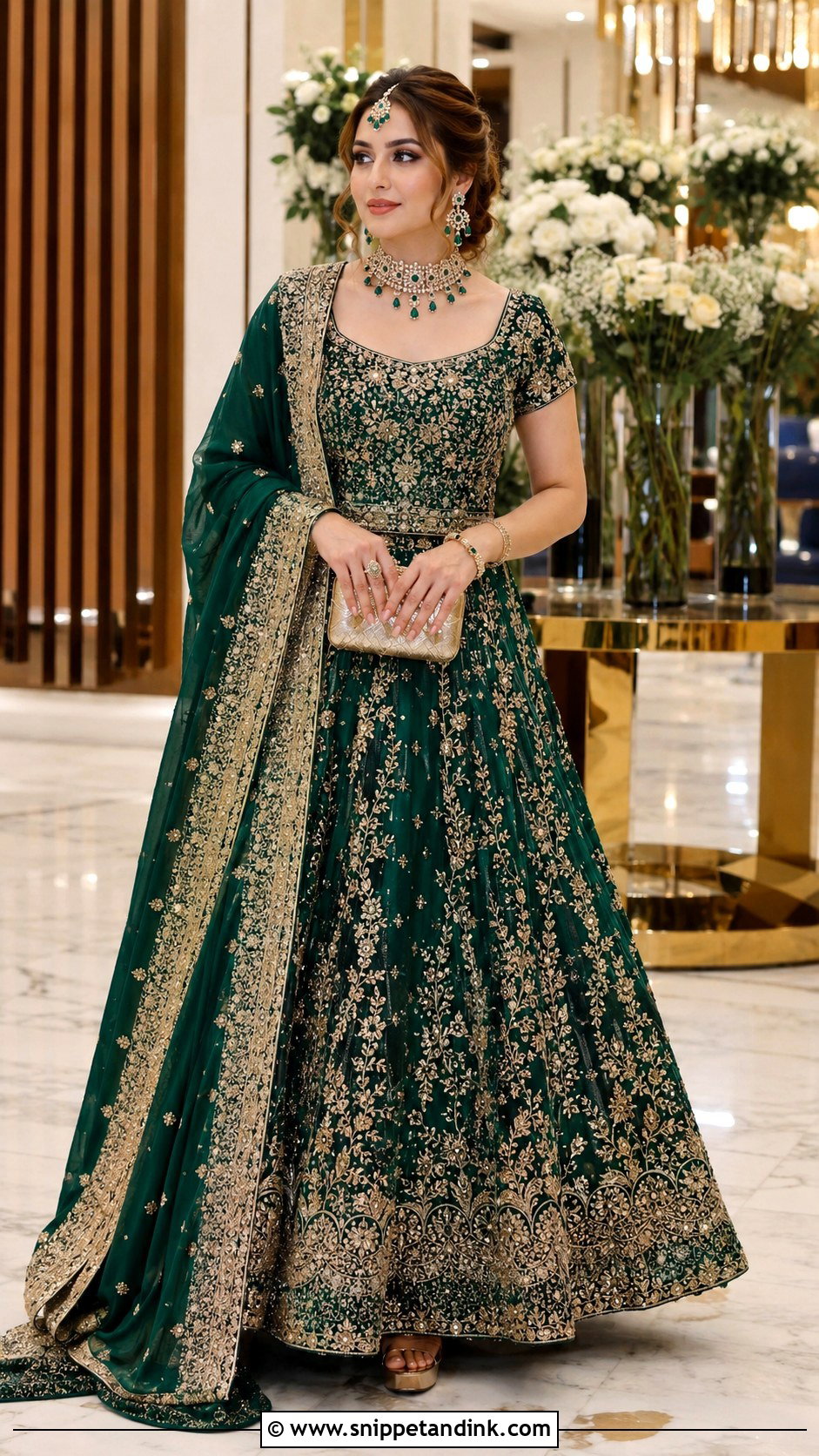
Emerald looks luxurious at an evening reception, but it absorbs light. If the embroidery is clustered, the green between the motifs turns into one dark block on camera, so choose a skirt where the gold work is spread evenly and the color still shows. A structured blouse and a flowing net dupatta complete the lehenga. Kundan with emerald drops (a choker, earrings and a modest tikka) repeats the shade without adding more of it. Platform heels or embellished khussa help under a long hem. I keep the dupatta on one shoulder for this one so the blouse and jewelry stay in view. Bronze eyes, a berry-nude lip, a neat bun and a compact gold clutch.
7. Mint Agha Noor Bridal Gharara
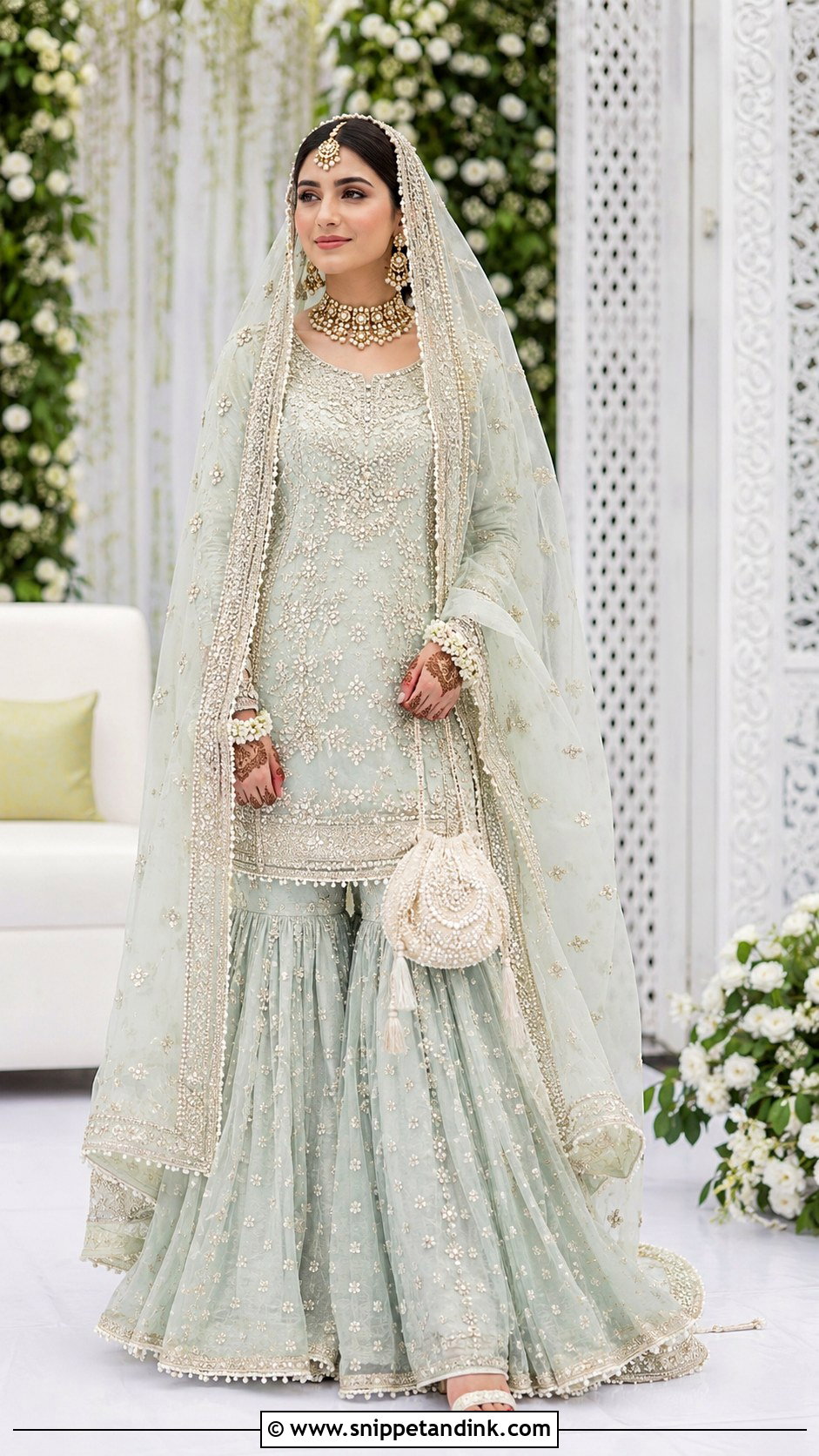
A mint gharara is a fresh pick for a morning nikkah or a small ceremony at home. The set usually pairs a short embroidered shirt with flared gharara pants and a light organza dupatta, finished in pale gold thread, pearls and small sequins. The spot I always check is the gathered joint at the knee where the gharara flares. If it’s stiff with embellishment, sitting cross-legged on floor seating gets uncomfortable fast, so sit down in it at the fitting. Rest the dupatta loosely over the head with one side falling down the arm. Pearl-and-kundan earrings, a simple choker, a dainty tikka and ivory sandals keep it light, with brown liner and a pink-nude lip. Gentle waves or a low floral bun, and a small mint potli.
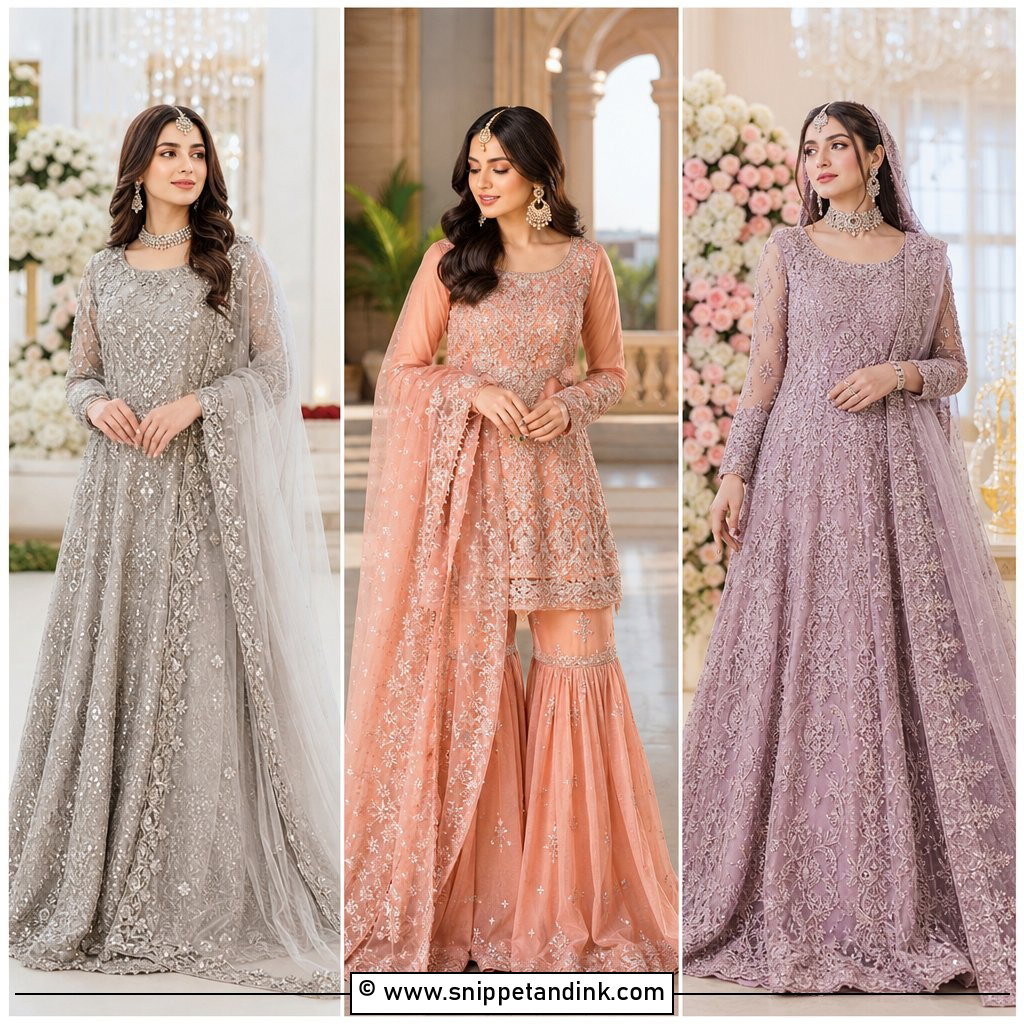
8. Silver Agha Noor Bridal Walima Gown
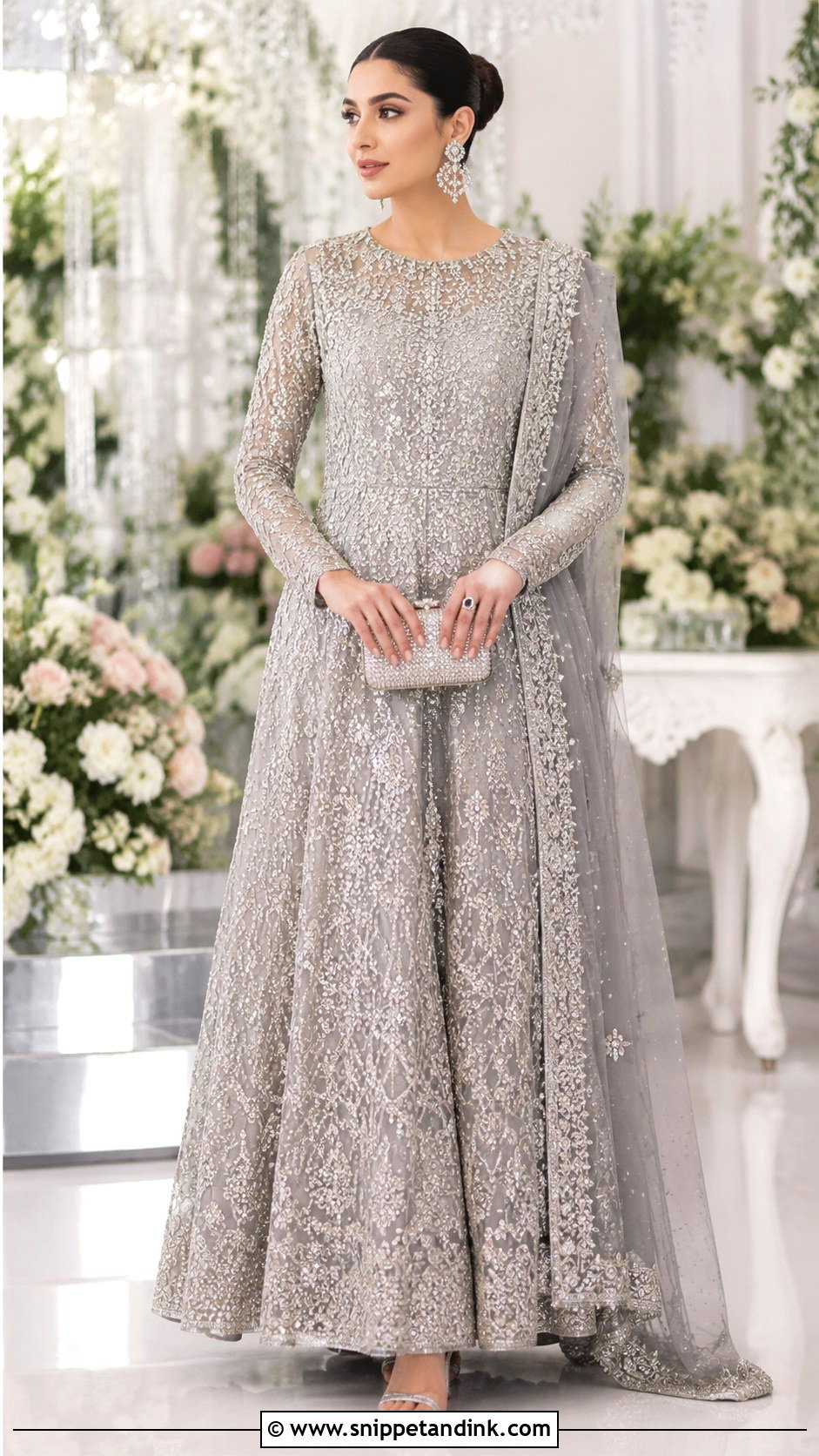
Silver works at a walima because the evening is less ritual and more reception, so you can lean into a floor-length gown. A fitted bodice, full sleeves and a flowing skirt worked with crystals or sequins carry it. Pin the silver-gray dupatta over one shoulder so you can hug relatives without it sliding off. With this much sparkle on the sleeves, I skip stacked bangles entirely; they catch on the embroidery and pull threads. A slim necklace, drop earrings and a minimal headpiece, silver heels and a crystal clutch are enough. Cool eyeshadow and a mauve-pink lip suit the metal, with smooth waves or a sleek low bun.
9. Royal Blue Agha Noor Bridal Maxi
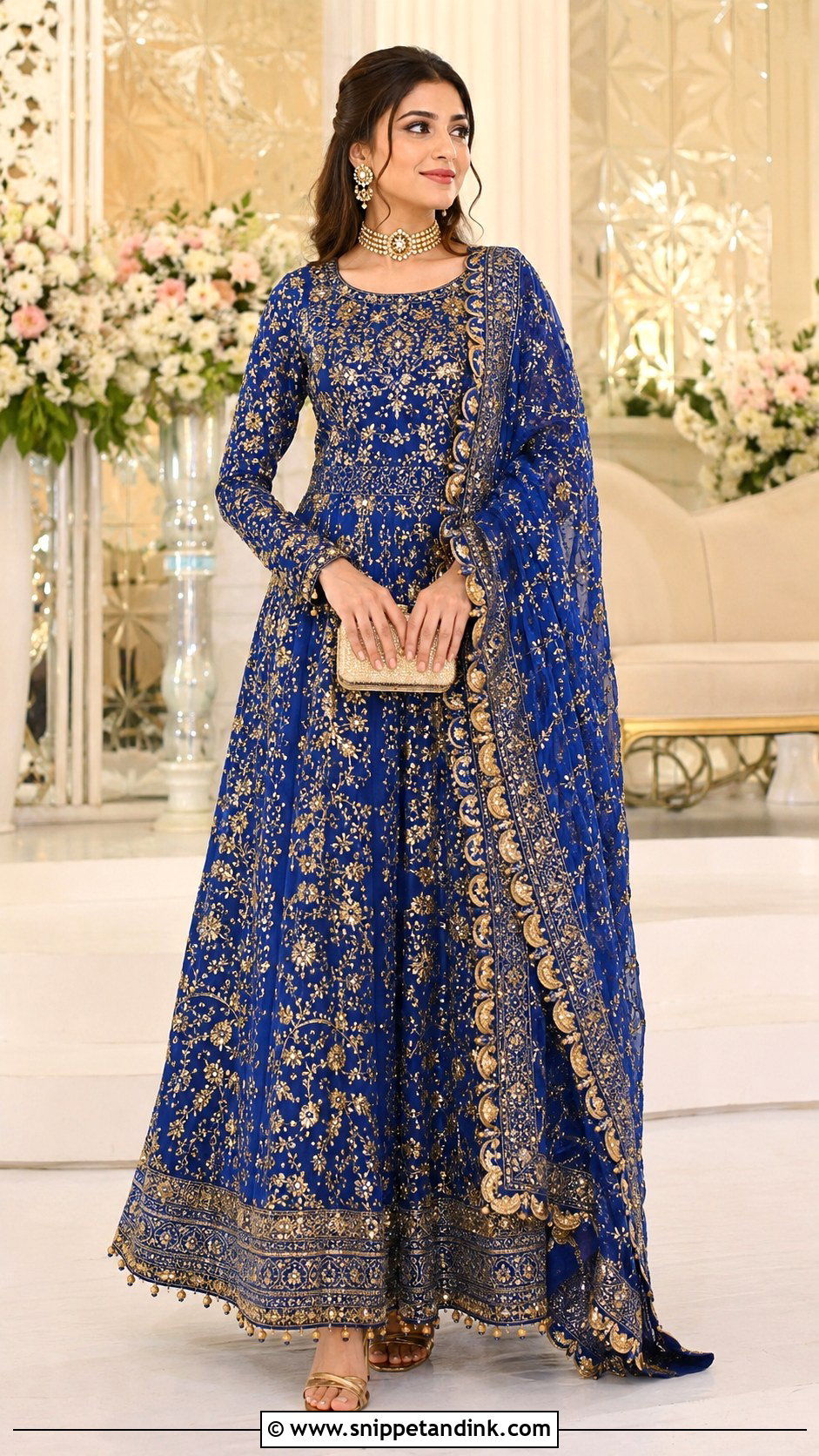
Royal blue is for the bride who is tired of predictable bridal colors, and it suits a reception or engagement. A maxi with a fitted upper body, flared skirt and embroidered sleeves keeps the line long. My rule for metals on blue: match the jewelry to the embroidery thread, not the fabric. Gold work takes kundan; silver or cooler work takes crystal. A slim choker, statement earrings and one cocktail ring are usually the limit before the neckline gets crowded. Add metallic heels and a box clutch in the embroidery tone, sweep the dupatta over one shoulder, and finish with defined eyes, a muted berry lip and a center-parted low bun.
10. Mustard Agha Noor Bridal Sharara
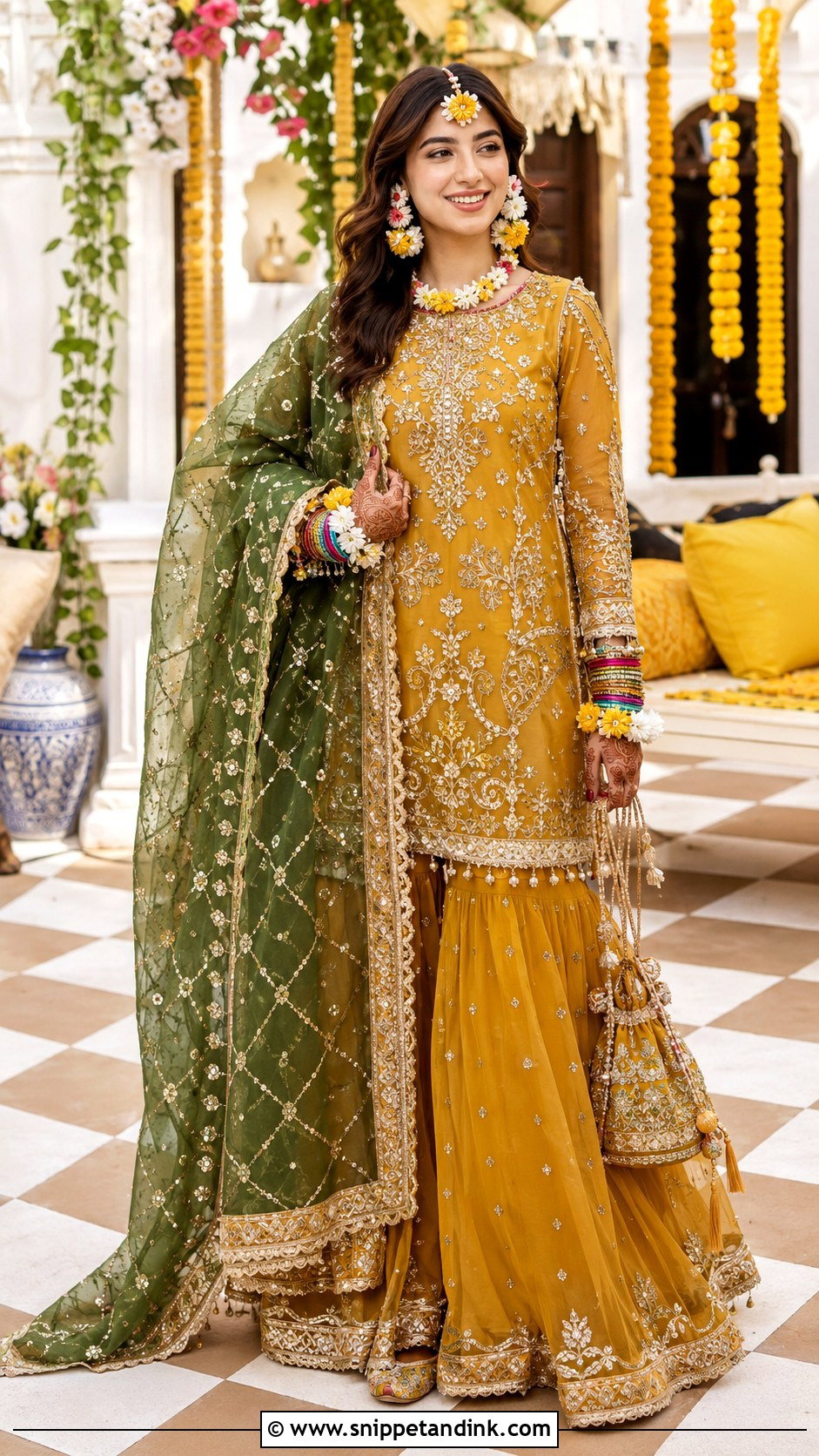
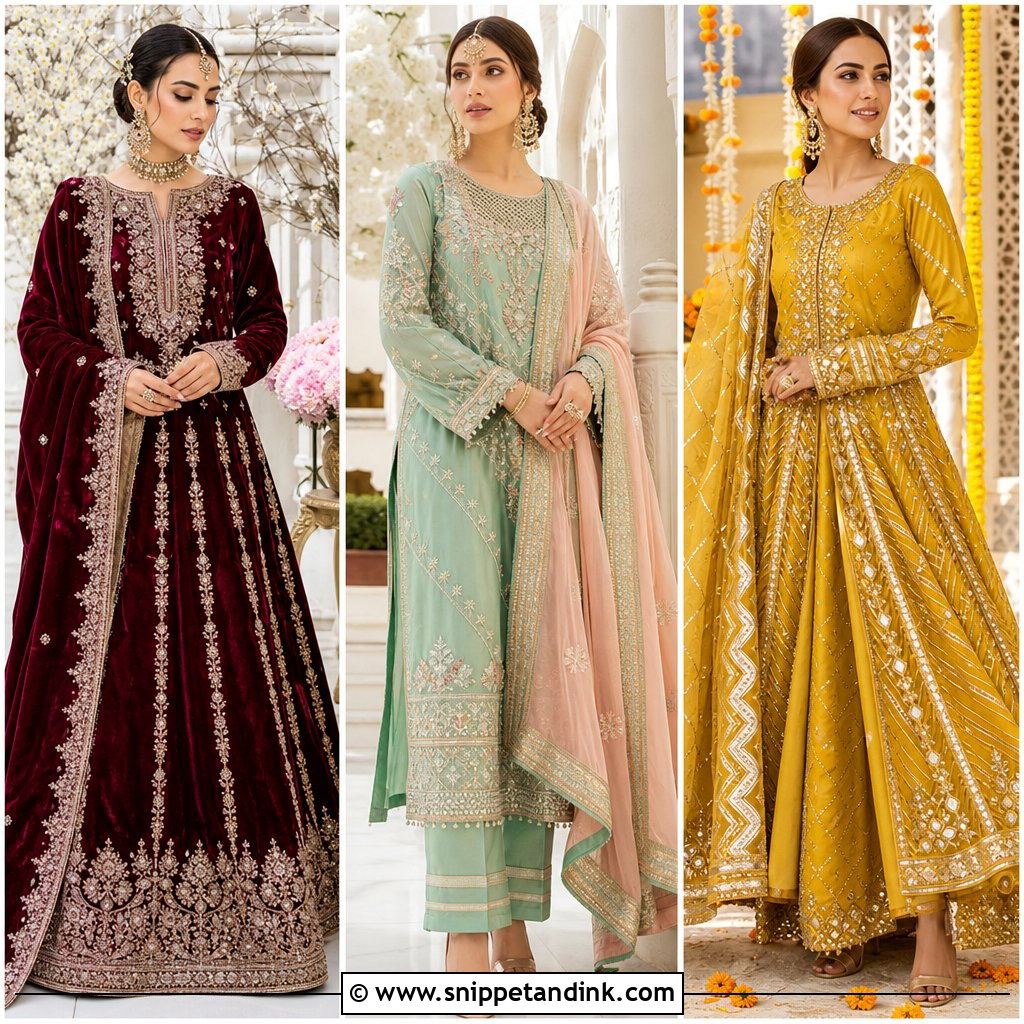
A mustard sharara is made for a mehndi, where you’ll be dancing and then sitting on a low stage for hours. A short shirt with gota embroidery, wide sharara pants and a contrasting green or pink dupatta keep it festive. Gota is woven metallic ribbon stitched onto the fabric, so it gives shine at a fraction of the weight of zardozi, which is exactly what you want when you’re moving. Colorful jhumkas, a floral tikka, stacked bangles and khussa suit the mood. Secure the dupatta on one shoulder with two pins, not one, so your hands stay free for the dholki. Golden eyes, coral blush, a warm pink lip and a loose braid with fresh flowers.
11. Orange Agha Noor Bridal Pishwas
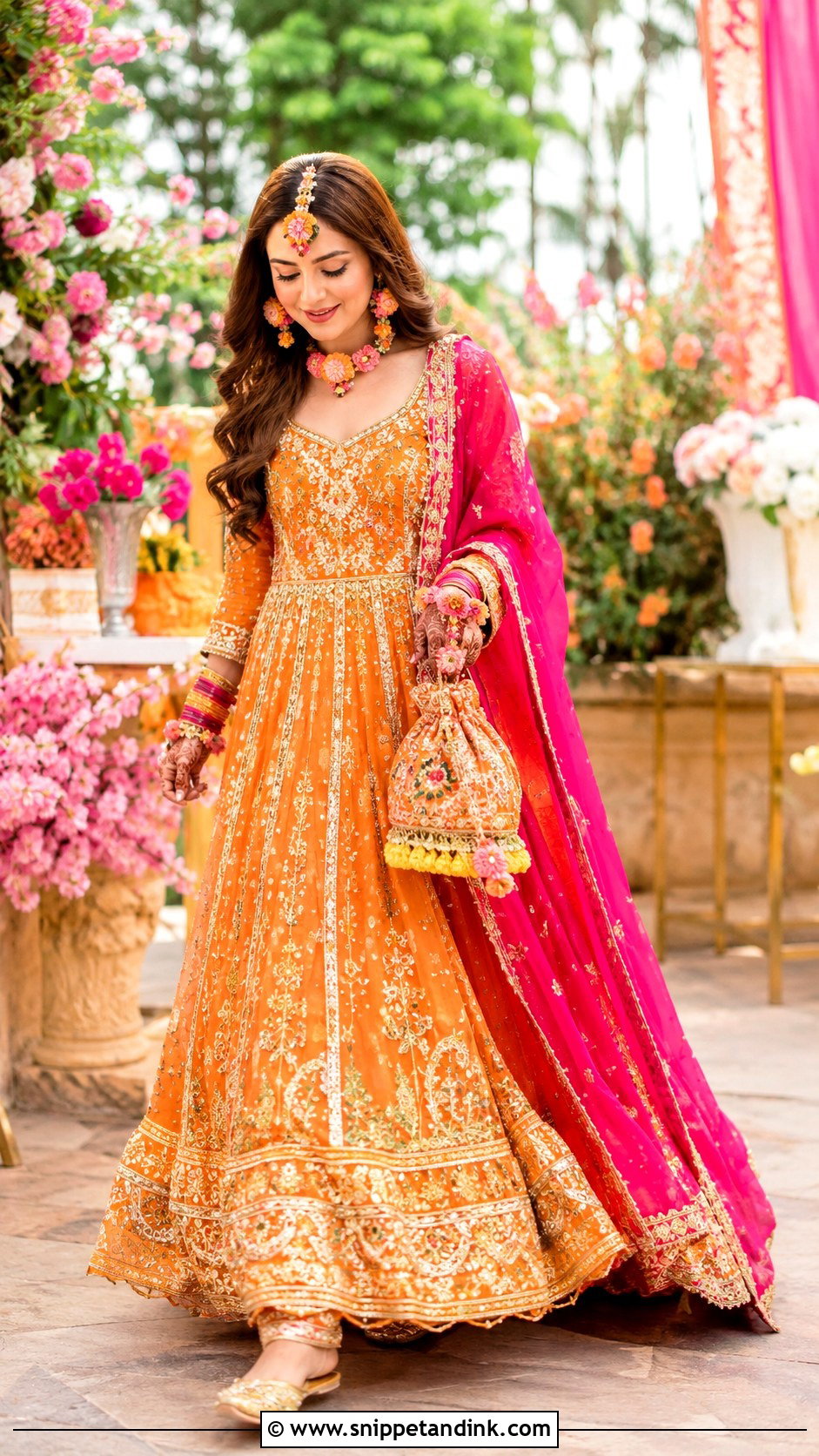
Orange is loud in the best way at a daytime mehndi. A pishwas, a fitted bodice over a full circular skirt, gives it movement, and gold gota, mirror work and florals at the neckline and hem give it detail. Pair it with a fuchsia or green dupatta for a layered palette. Mirror work is heavy for its size, so watch how a mirrored dupatta border sits on the shoulder seam; unpinned, it drags the neckline backward within the first hour. Floral jewelry, medium jhumkas, colorful bangles and gold khussa suit it, with hair in a relaxed braid or half-up with small flowers. Fresh skin, bronze liner, peach cheeks and a coral lip, plus a potli that picks up one shade from the dupatta.
12. Plum Agha Noor Bridal Velvet Dress
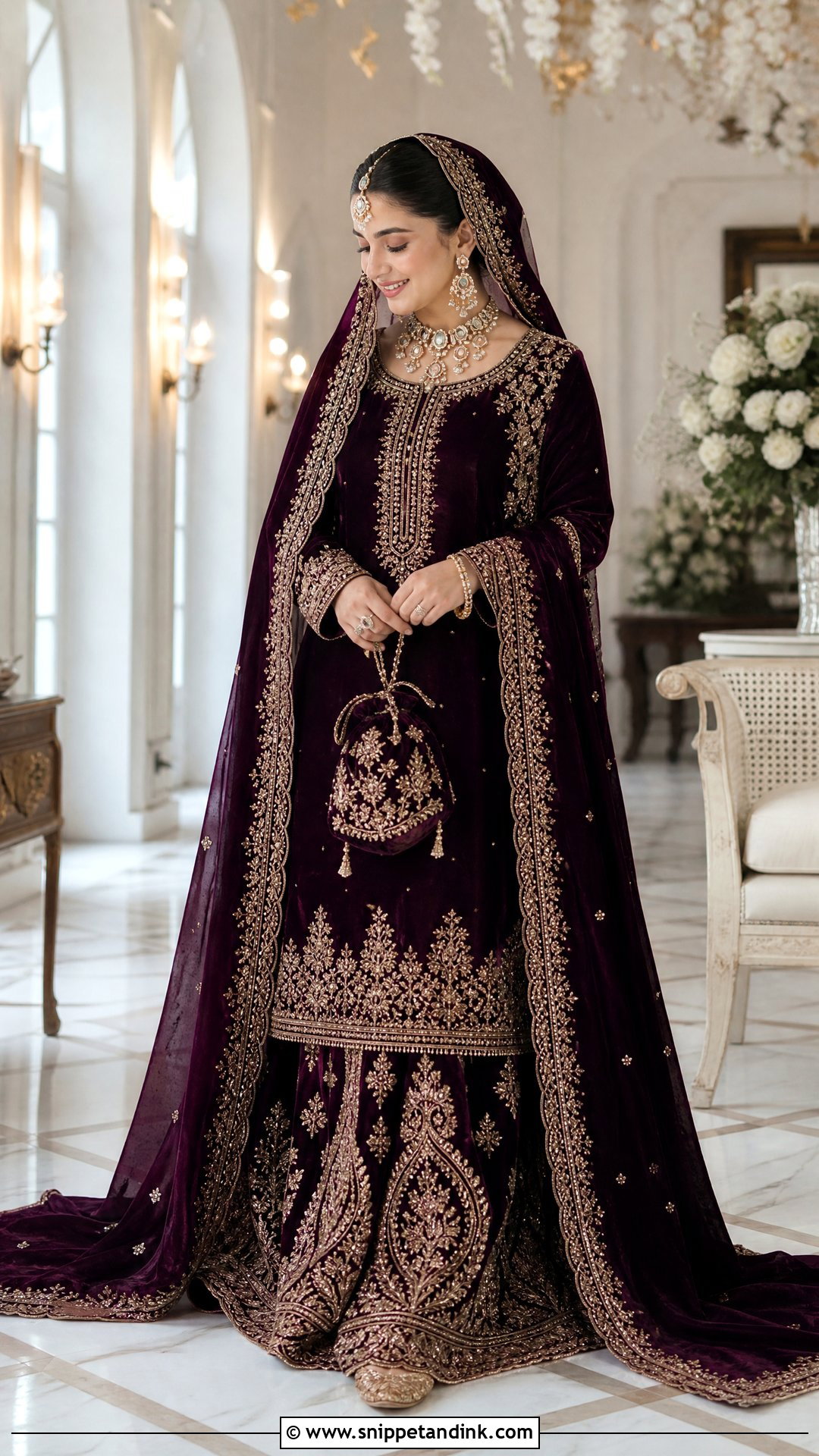
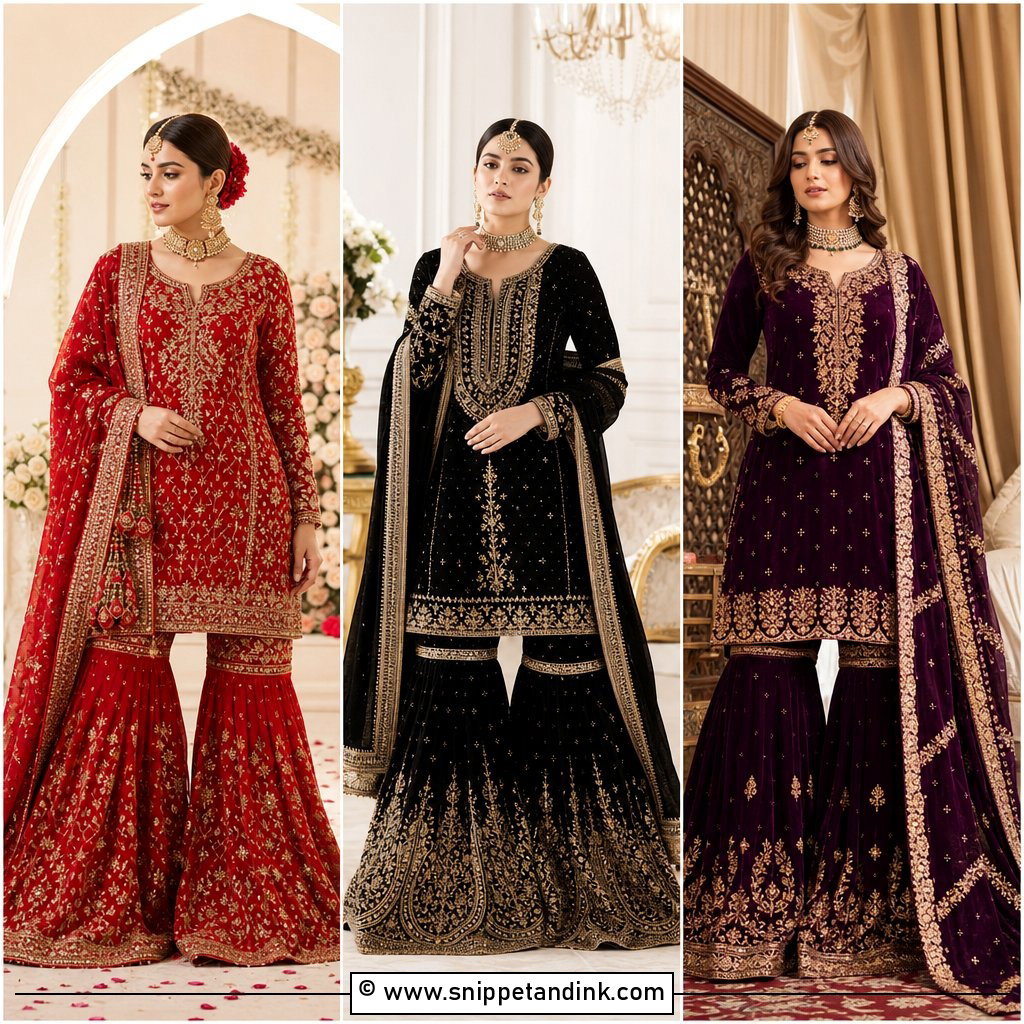
Plum velvet is my first suggestion for a winter wedding, since it looks rich even with restrained embroidery. A long velvet shirt over a lehenga or trousers, with antique gold zardozi at the neckline, cuffs and hem, needs very little else. Velvet has one quirk: the pile crushes wherever it’s pressed, and sitting on the back panel in a warm car leaves a shiny patch. Lift the shirt behind you when you sit down to travel. Polki, drop earrings, a small tikka, antique bangles and closed khussa suit the season. An embroidered shawl can replace the second dupatta and keeps you warm outdoors. Smoked eyes, a deep rose lip and a smooth low bun.
13. Peach Agha Noor Bridal Organza Dress
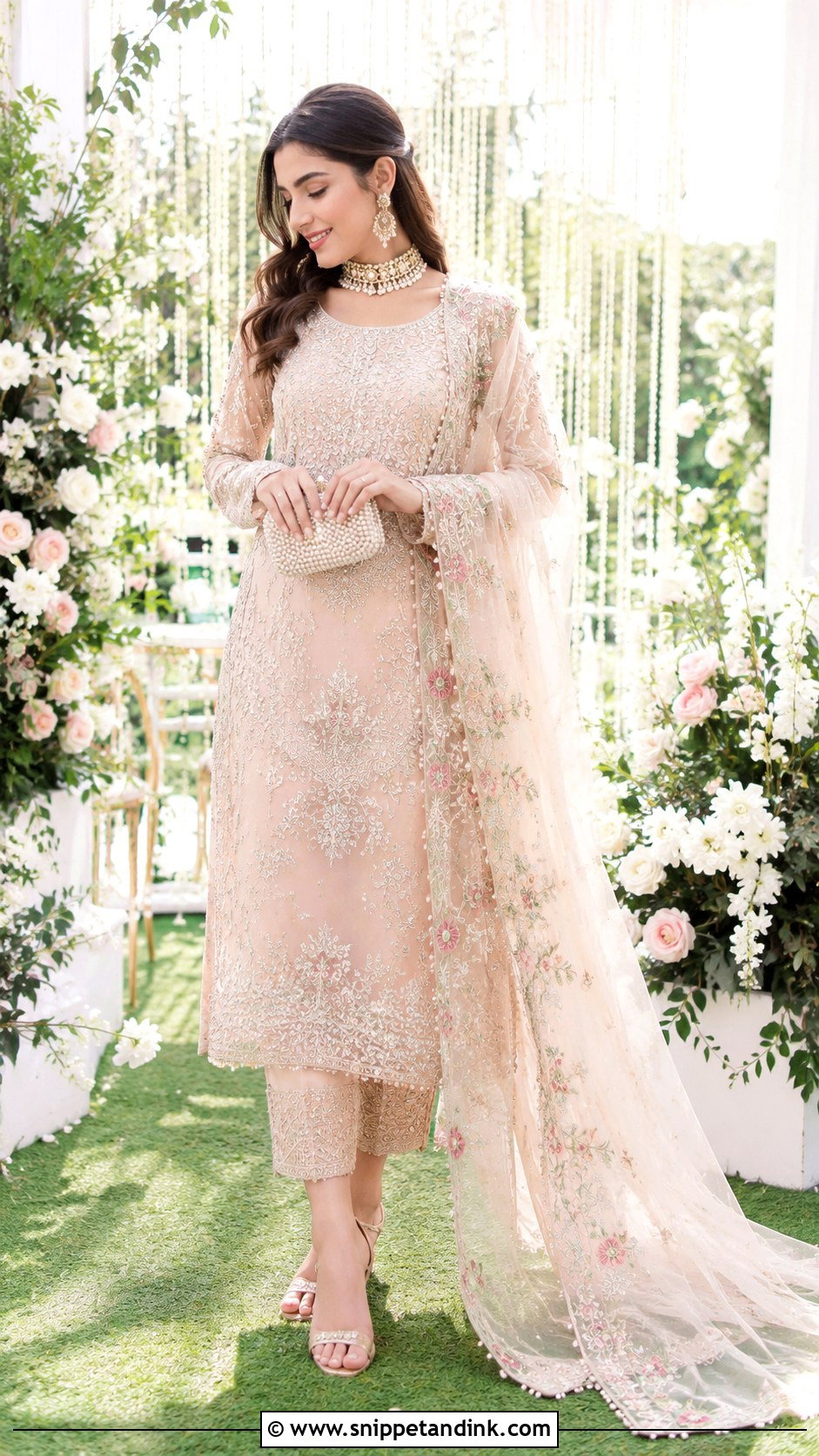
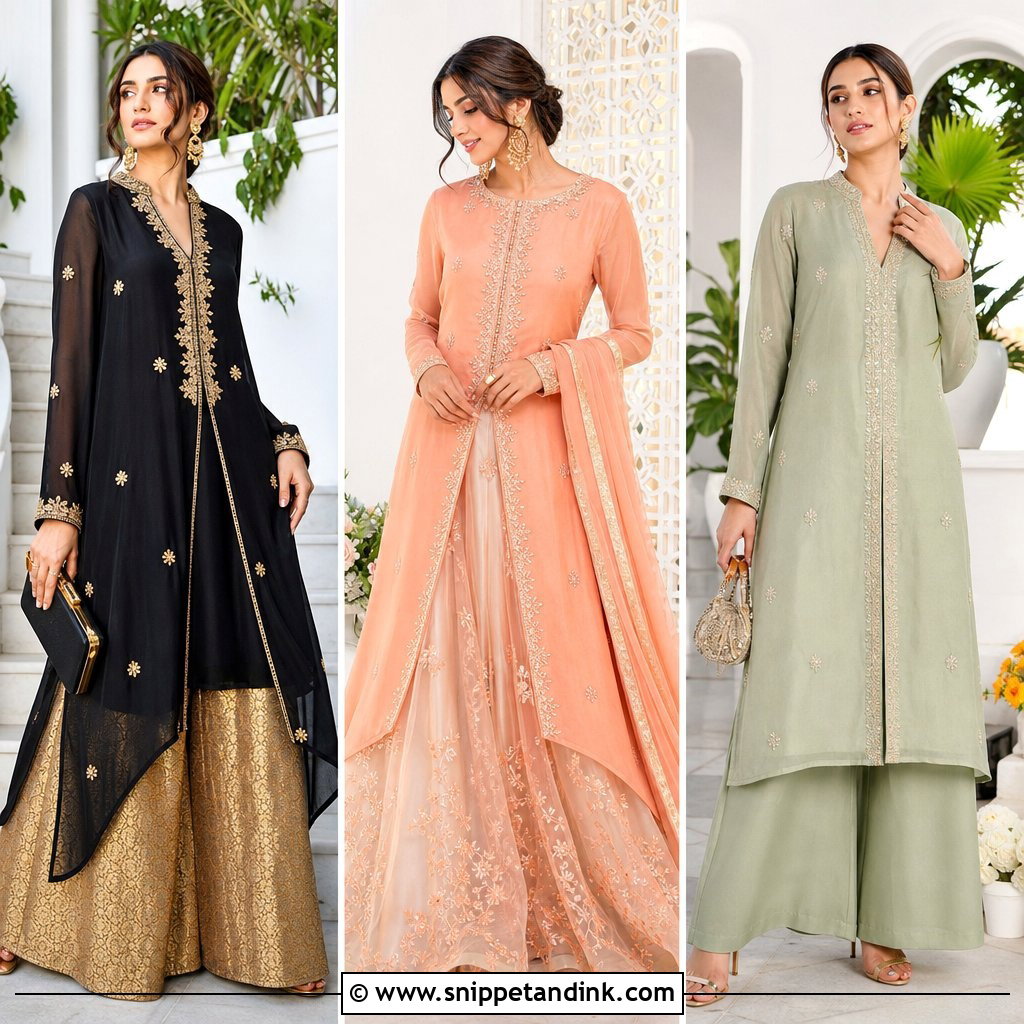
Peach organza is crisp and translucent, and it catches daylight in a way that suits a spring nikkah. Organza holds its shape rather than draping, so a long shirt in it stands slightly away from the body; straight silk pants underneath balance the volume. Ivory, pink and pale gold florals keep the color calm. It also creases sharply in a suitcase, so steam it on a hanger the day before and leave it hanging. Pearl earrings, a delicate kundan choker, a small tikka and champagne heels. Pin the dupatta behind the shoulders, or bring it over the head for the ceremony. Keep makeup soft with a glossy pink lip, then choose loose waves for a modern feel or a low bun for a traditional one.
14. Champagne Agha Noor Bridal Lehenga
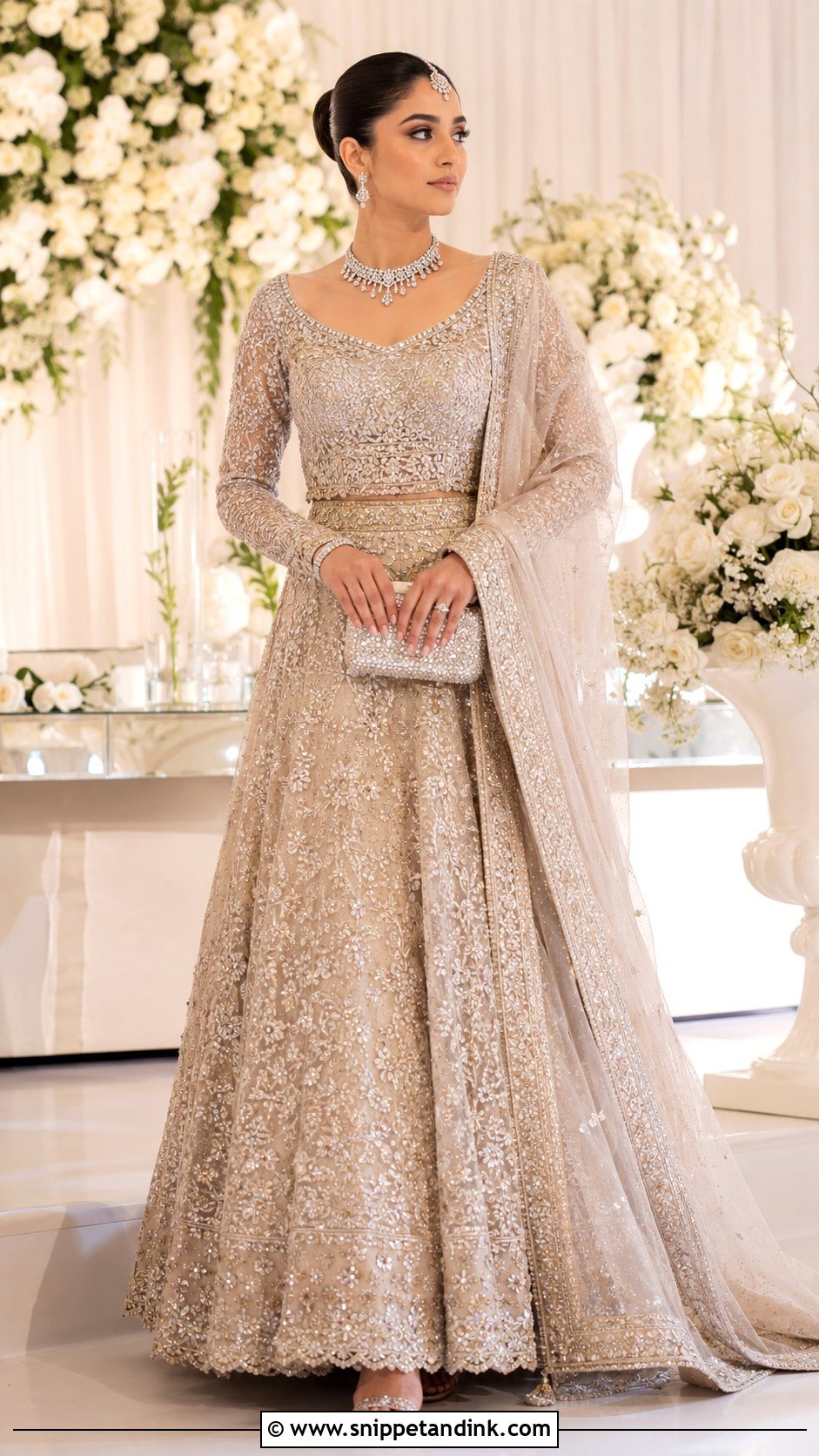
Champagne is the neutral for a bride who loves embroidery but not strong color. Choose a fitted blouse, a softly flared skirt and a net dupatta with crystals, pearls and pale gold thread; tonal work adds dimension without noise. The risk is skin. When the fabric sits close to your own undertone it can wash you out in photos, so I add warmth through blush and a lip one step deeper than you’d expect. Drop earrings, a delicate necklace and one statement ring work better here than a heavy traditional set. Champagne heels and a crystal clutch, the dupatta on one shoulder for a reception or over the head for a ceremony, then a polished bun or smooth waves.
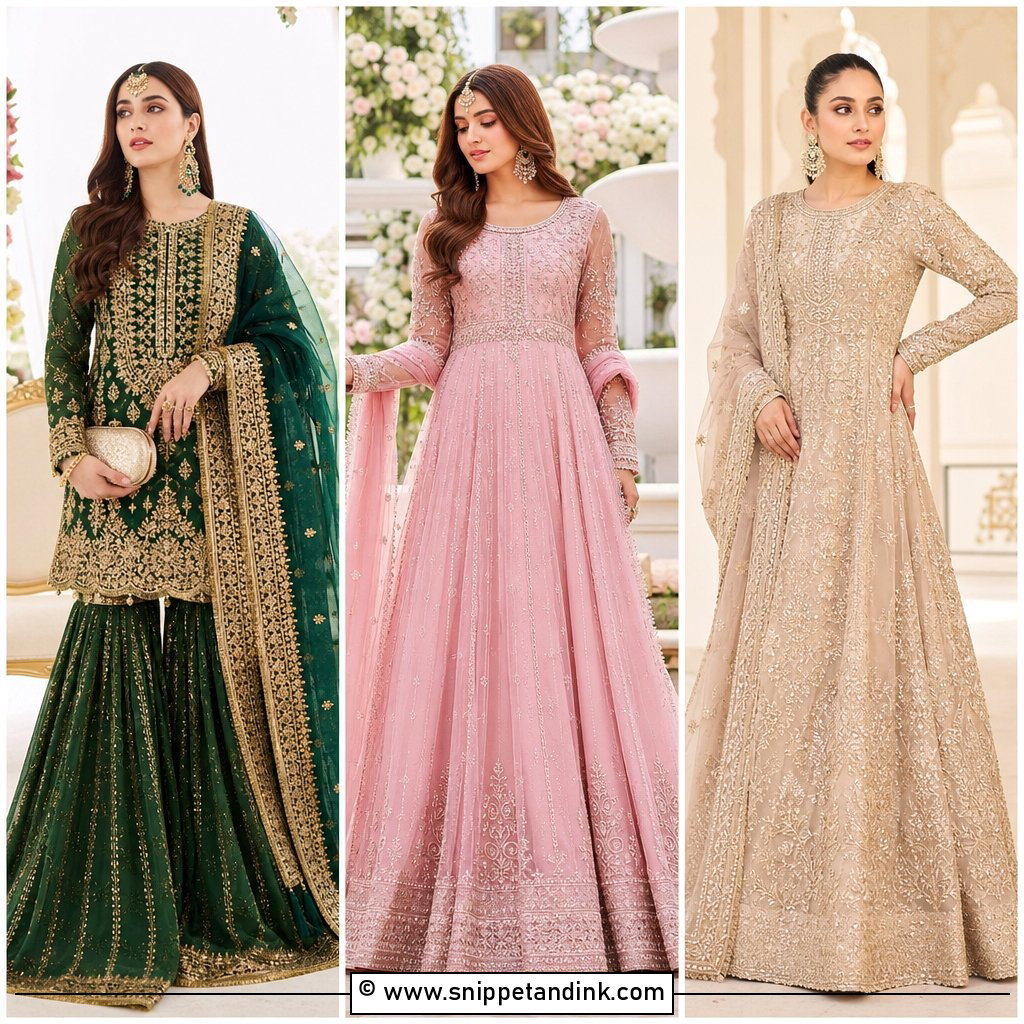


15. White And Gold Agha Noor Bridal Farshi Gharara
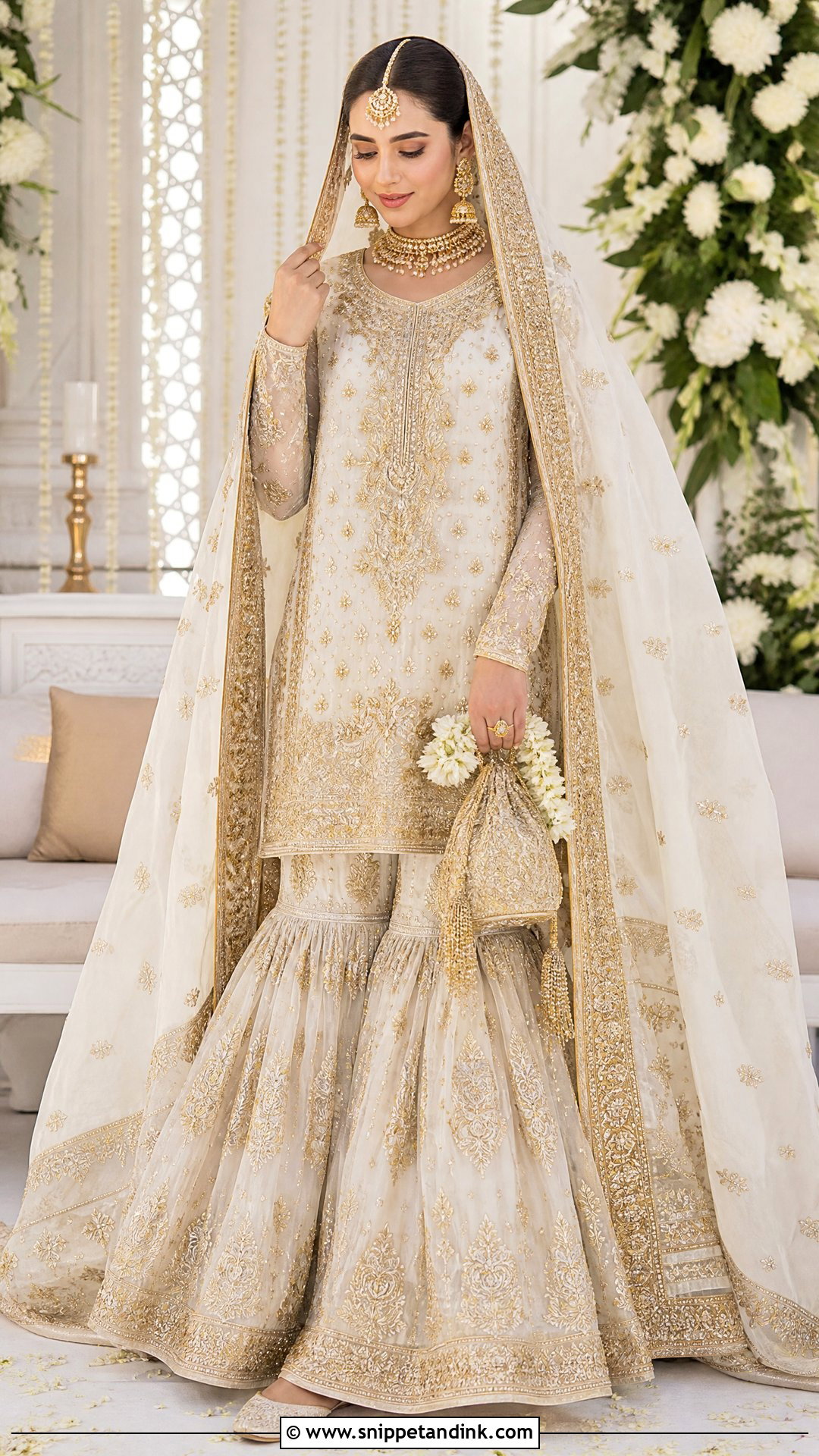
A farshi gharara is the old court silhouette: a short kameez over a gharara so long it trails across the floor. That length is the whole point, and also the logistics problem. Someone needs to lift the hem on stairs, and you should do a practice walk at the fitting in the shoes you’ll actually wear. Intricate zari, pearls and small sequins stop the white from looking plain, and a sheer dupatta with a broad gold border frames it. Wear it over the head for the nikkah, with the front edges arranged around a kundan choker, matching jhumkas, a centered tikka and slim bangles. Ivory khussa are fine since they barely show. Fresh makeup, a low bun with jasmine and a gold potli.
16. Coral Agha Noor Bridal Anarkali
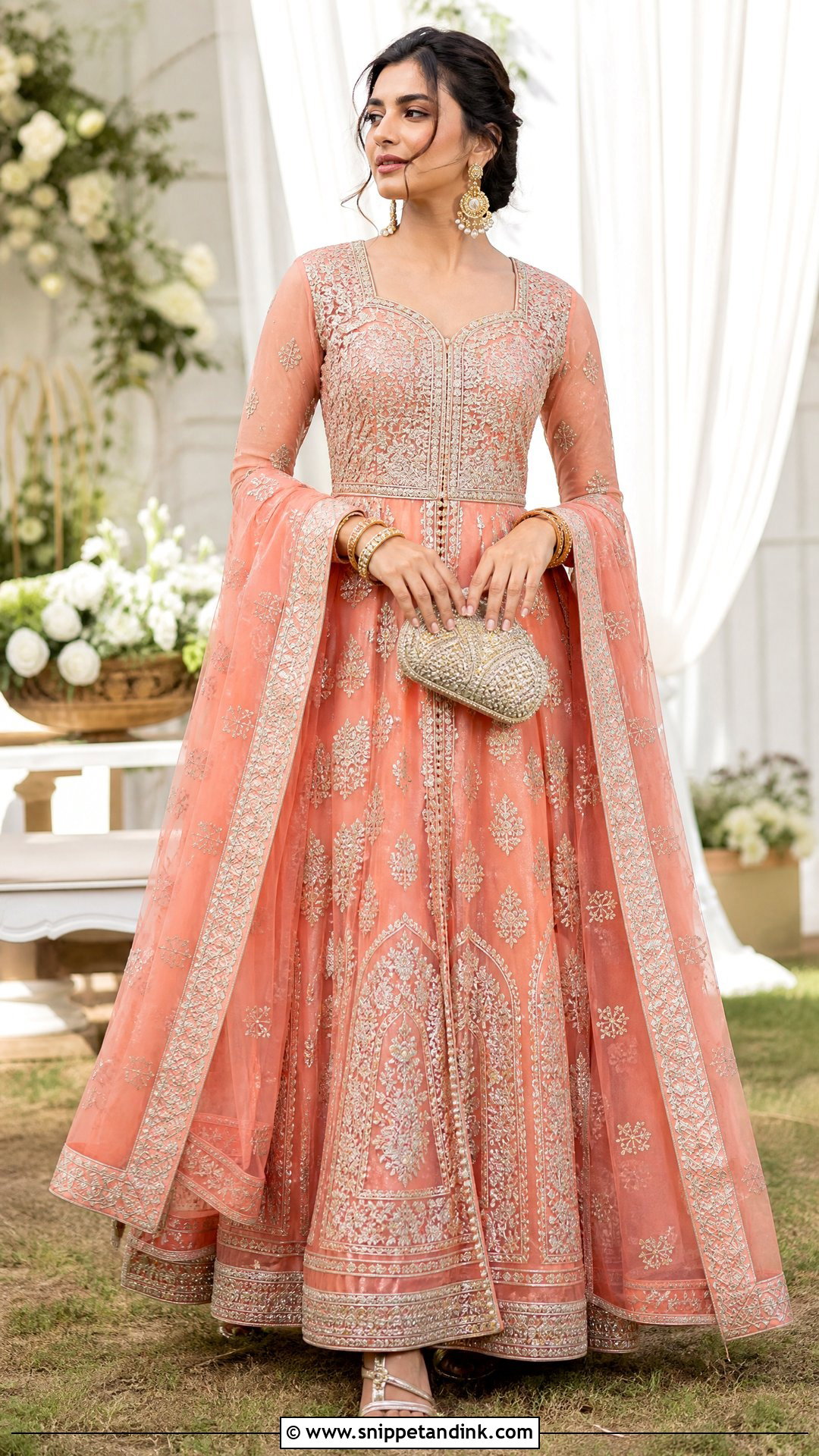
Coral is lively in daylight and suits a festive nikkah, a dholki or a day reception. An Anarkali gives you the flare of a lehenga without its weight, and because it’s one garment there’s no skirt waistband pressing into you through a long lunch. Look for a fitted bodice, flowing panels and gold, ivory or pale pink florals running down embroidered sleeves. Medium kundan earrings, a delicate choker, stacked gold bangles and metallic sandals. Drape the dupatta across both arms so the panels open to their full width in photographs. Peachy makeup, a warm rose lip, loose waves or a low braided bun, and a small embroidered clutch.
17. Lilac Agha Noor Bridal Sharara
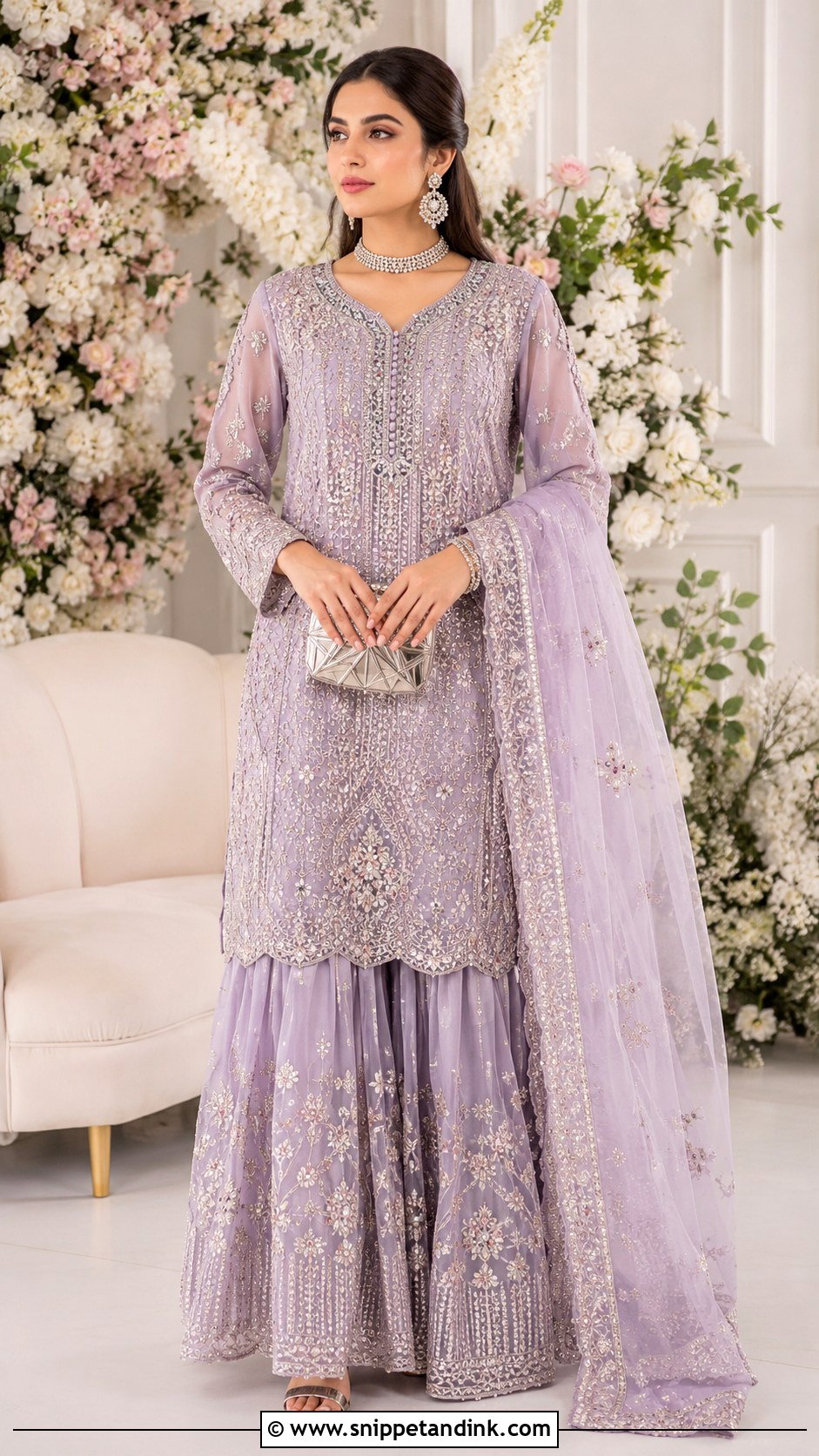
Lilac is a modern pastel for a nikkah or walima. A lilac bridal sharara pairs a long or mid-length shirt with wide flared pants and a net dupatta. Silver thread, pearls and crystals suit the cool shade; antique gold tends to look muddy against lilac, so I keep the metals cool from earrings to shoes. Silver earrings, a slim choker, a small forehead piece and lilac or metallic heels. Leave the dupatta open across the shoulders to show the silhouette, or pin it lightly over the hair. Mauve eyes and a pink-nude lip, then a smooth low ponytail or curled bun and a crystal clutch with little hardware.
18. Teal Agha Noor Bridal Long Shirt
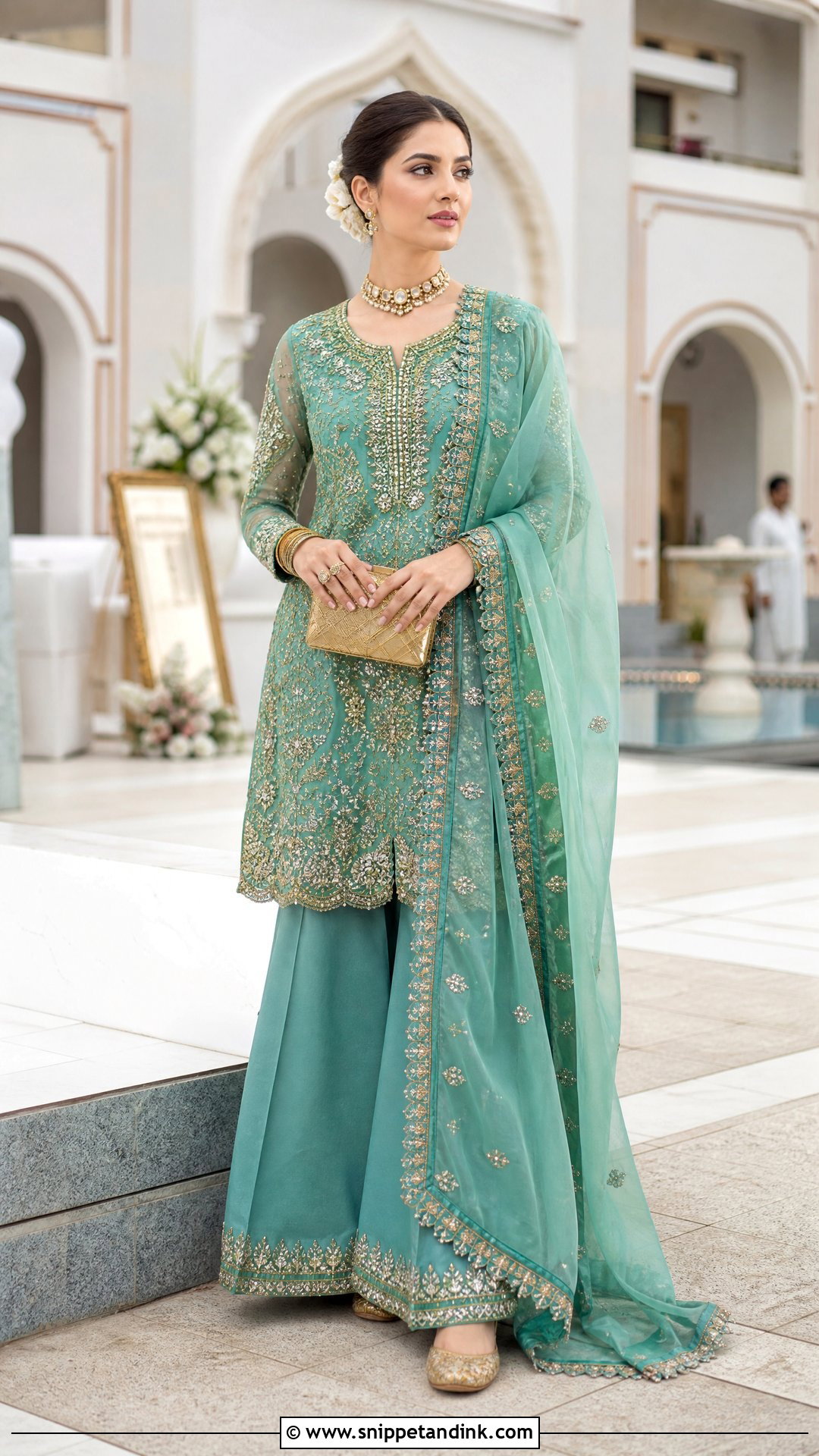
Teal sits between blue and green, which makes it distinctive while still feeling traditional. A long shirt with side slits, detailed cuffs and an embroidered hem goes over a lehenga or wide-leg pants, and antique gold warms the color for evening. Side slits open every time you sit, so check at the fitting that the lining underneath is finished properly, because it will be seen. Shoes follow the hem: khussa if the bottoms are cropped, metallic heels if they’re long. Kundan earrings, a layered necklace, a small tikka and gold bangles. A sheer dupatta worn diagonally shows its border without hiding the shirt. Bronze eyes, a muted berry lip, a center-parted bun and a gold clutch.
19. Powder Blue Agha Noor Bridal Gown
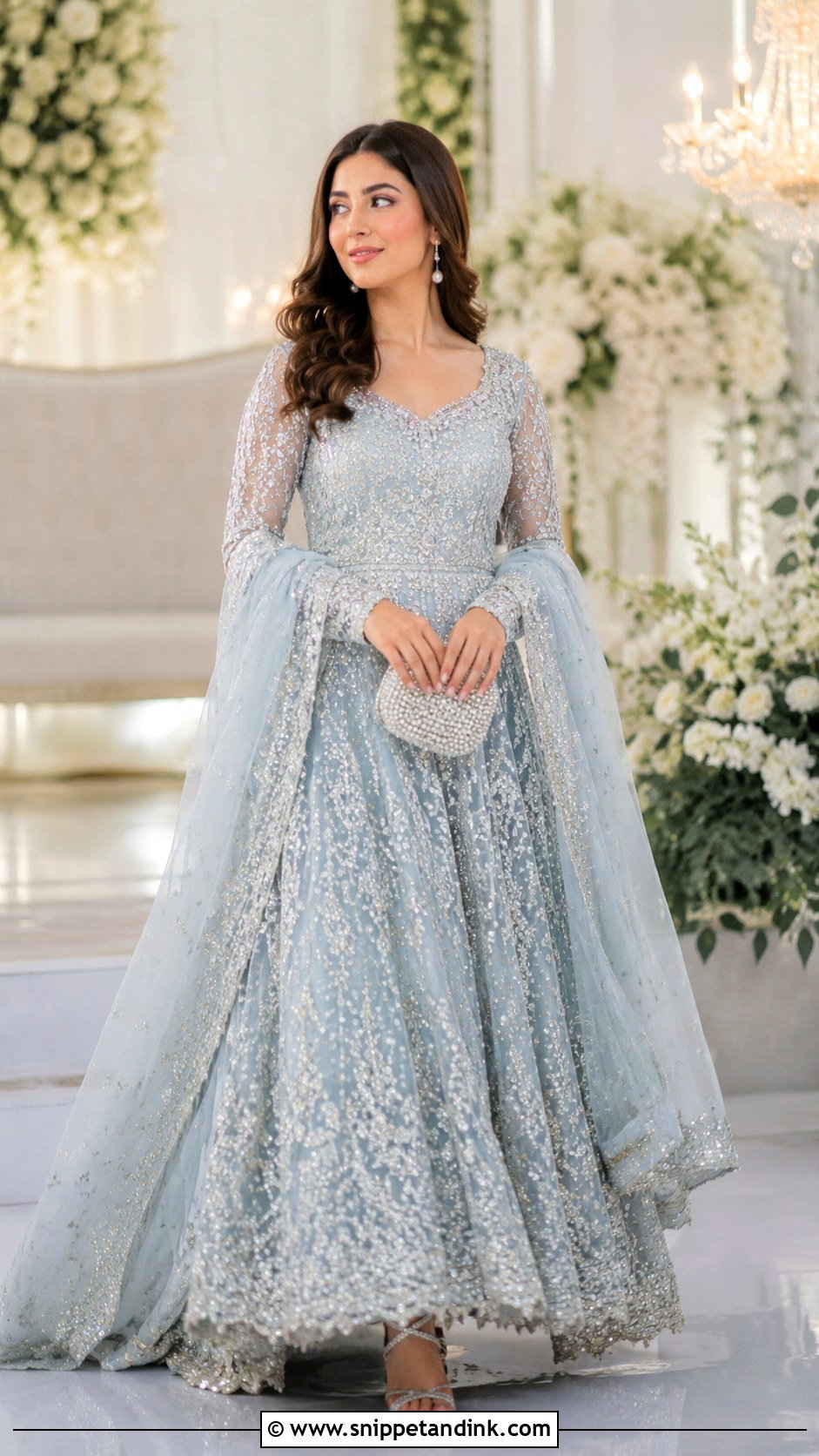
Powder blue feels airy at a walima or daytime reception. A softly structured bodice, full sleeves and a flowing skirt with fine silver embroidery carry it, and pearls and crystals keep the fabric light. Before you buy, check where the beading sits on the sleeves. Heavy work on the inner arm rubs against the bodice all evening and starts to scratch by the time the photos are done. Pearl drops, a small necklace, a slim bracelet and silver heels. A sheer dupatta over the arms adds tradition while leaving the neckline visible. Champagne eyes, a mauve lip, smooth waves or a sleek bun for more formality, and a silver minaudière.



20. Black And Gold Agha Noor Bridal Reception Dress
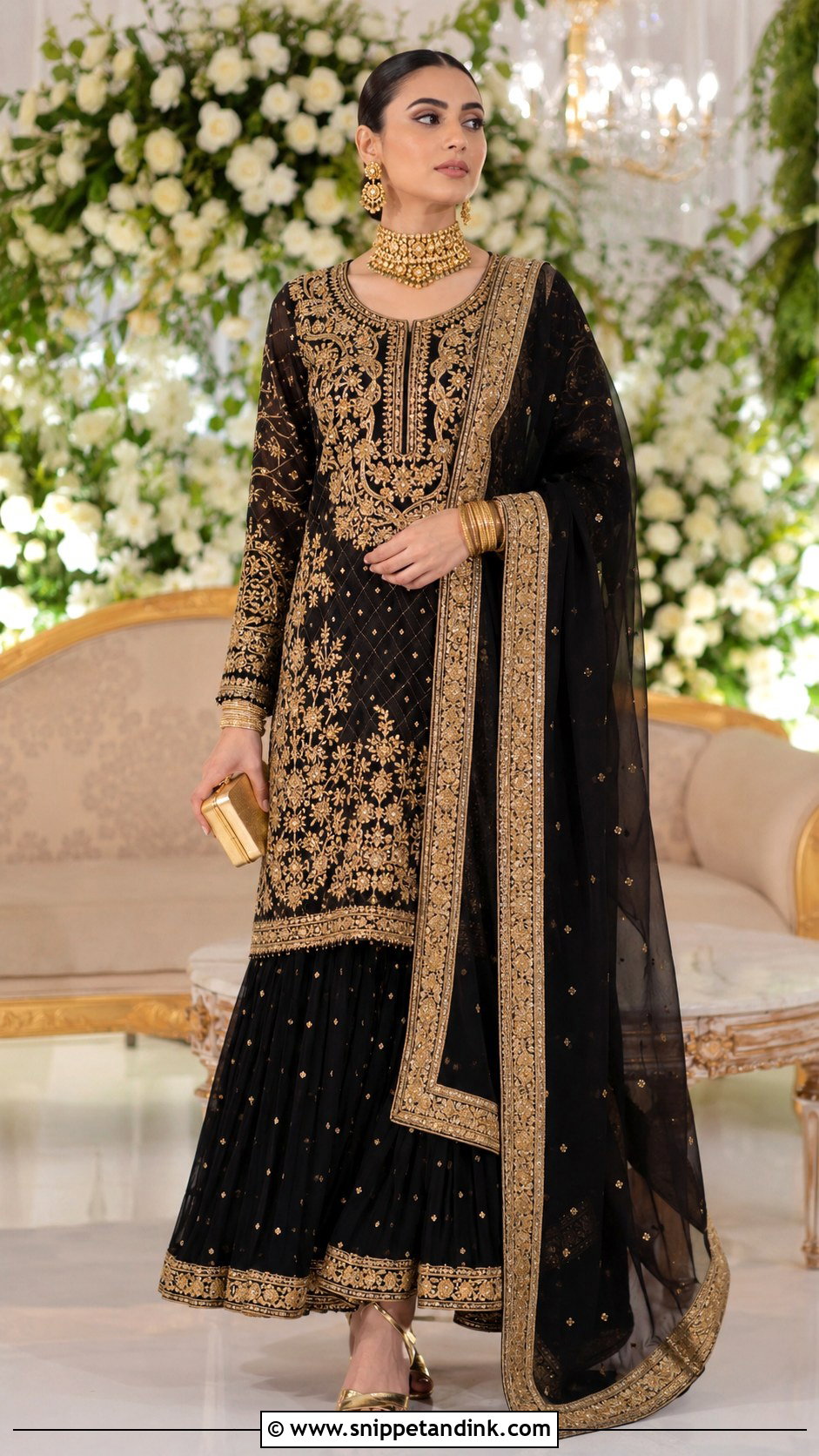
Black and gold is dramatic, so ask the family before you order; in some households black is still avoided at weddings, and it’s better to know early. Where it’s welcome, a long embroidered shirt over a flowing skirt or wide trousers with a gold-bordered dupatta makes a strong reception look. Concentrate the zari, sequins and florals at the neckline and hem so they stand out against the black. Antique gold earrings, a statement choker, a cocktail ring and a few structured bangles, plus gold heels and a box clutch. The dupatta goes over one shoulder only. Defined liner, bronze cheeks and a deep red lip, then a sleek center-parted bun keeps it polished rather than theatrical.
Order Dates and Fittings for Hand-Embellished Wear
Bridal pieces with hand embroidery are made to order, and workshop queues are longest before the main wedding seasons. Ask the store for its timeline in writing when you pay, and leave yourself a margin, because international shipping and customs can add weeks on top. I tell brides to place a bridal order several months ahead and to treat anything shorter as a rush that needs confirming directly with the store.
What I check at the first fitting
- Sit, kneel and raise both arms. Heavy blouses pull at the armhole before anywhere else.
- Lift the skirt in your hands. If it’s heavier than you expected, ask for a wider waistband so it doesn’t dig in after a few hours.
- Wear the actual shoes so the hem is set to the right length; khussa and heels need different hems.
- Try the dupatta with the jewelry on, because a choker and a heavy border compete for the same space at the neck.
Book a second fitting at least two weeks before the first event. Alterations on embellished fabric are slow, since the tailor has to unpick and re-stitch the work around any seam they take in.
Zardozi After the Walima, Folded the Right Way
Once the events are over, these outfits need some care if you want to wear them again or pass them down. Air each piece for a day before putting it away, because perspiration and perfume left in the fabric mark it and dull the metal thread. Stains go to a dry cleaner who handles embellished bridal wear; ask first, since a general cleaner may not work around beadwork by hand.
- Fold with acid-free tissue or soft cotton muslin between the layers, embroidery facing inward.
- Store in a cotton bag or a breathable box, never plastic, which traps moisture.
- Refold along different lines every few months so the zari doesn’t crack along permanent creases.
- Keep velvet flat or loosely rolled so the pile isn’t crushed.
- Spray perfume before you dress, not onto the outfit, because it tarnishes metallic thread.
A Wedding Wardrobe That Lasts All Week
A good wedding wardrobe mixes tradition with colors and shapes that feel like yours. Across these looks you have ivory for the nikkah, bright shararas for the mehndi, red for the baraat and shimmer for the walima. Before settling on any of them, think about the venue, the season and how much you’ll move. Match jewelry to the embroidery rather than the fabric, and treat shoes and dupatta pins as part of the outfit, not an afterthought. The right choice is the one you can sit, dance and greet people in for hours while still feeling like yourself.
You'll Like These Ideas:




Leave a Reply