
Radhika Merchant’s wedding wardrobe mixed Indian handcraft, archival fashion and new couture with a great deal of personal detail. Her celebrations with Anant Ambani ran from Jamnagar to the Mediterranean and finally Mumbai, which meant outfit after outfit, each built for a different room and mood. Below are twenty of them, from crystal lehengas and sculpted gowns to Gujarati ceremonial saris and a dupatta made of fresh flowers. Almost no wedding will have this budget, so with each look I’ve pulled out the styling decision that does translate: how she balanced the jewelry, where she held back, and what the outfit asked of the person wearing it.
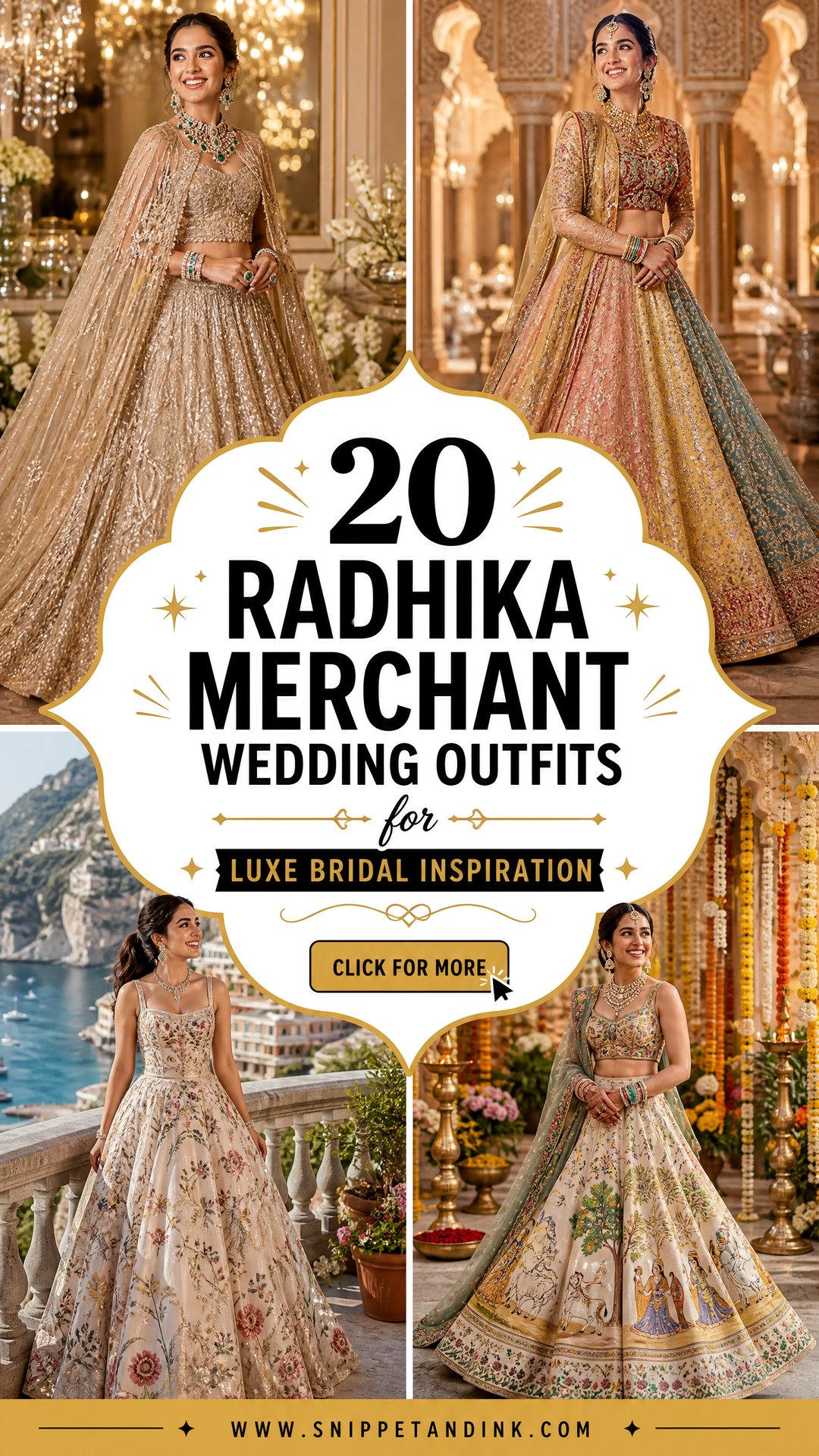
Planning a Multi-Function Wardrobe Without a Couture Budget
Many Indian weddings now run across three to five functions, and each one wants its own outfit. I start with a plain list of the events, then sort them by how much the bride will move, how long she’ll sit, and whether she’ll be outdoors.
Spend where the camera stays longest
That’s usually the wedding ceremony and the reception. Haldi clothes can be stained by turmeric, and mehndi clothes pick up paste, so those are the functions to economize on.
Give every outfit a job
- Haldi: washable fabric, flat shoes, nothing precious.
- Mehndi: short sleeves, or sleeves that roll well past the elbow, because the artist needs your arms bare.
- Sangeet: something you can dance in for hours without pinning and repinning.
- Wedding: weight and heirlooms are fine here, since you’ll mostly sit and stand for the rituals.
- Reception: lighter than the wedding outfit, because you’ll be on your feet greeting guests.
Re-wearing pieces is completely fine. A wedding blouse with a new skirt, or the same lehenga with a different dupatta, becomes a new outfit, and nobody but you will notice.
1. Pink Versace Pre-Wedding Gown
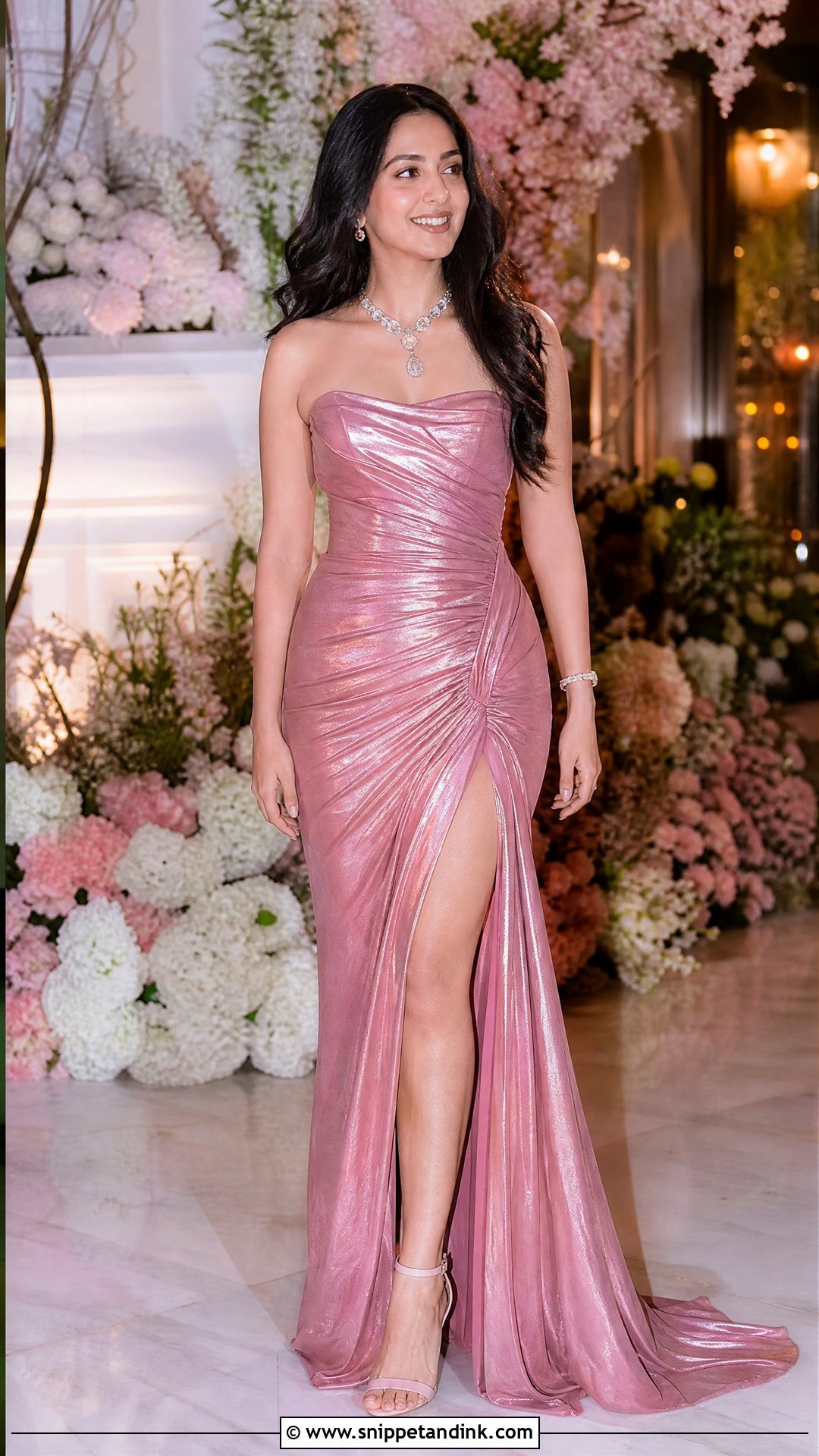
Radhika opened Jamnagar in a custom rose-pink Atelier Versace gown based on the architectural design made for Blake Lively’s 2022 Met Gala appearance. Instead of the original copper and turquoise, her version moved into pink and rose gold, with a fitted bodice, metallic detailing, soft draping and a sculpted skirt. Recoloring a famous silhouette is a smart move if you love the shape but not the palette, and a good dressmaker can tell you whether the structure will hold in a lighter fabric. One statement diamond necklace, soft waves and luminous makeup kept it young. When a gown carries this much construction, I keep the hair loose and the jewelry to a single piece.
2. Multicolor Ashish Fringe Dress
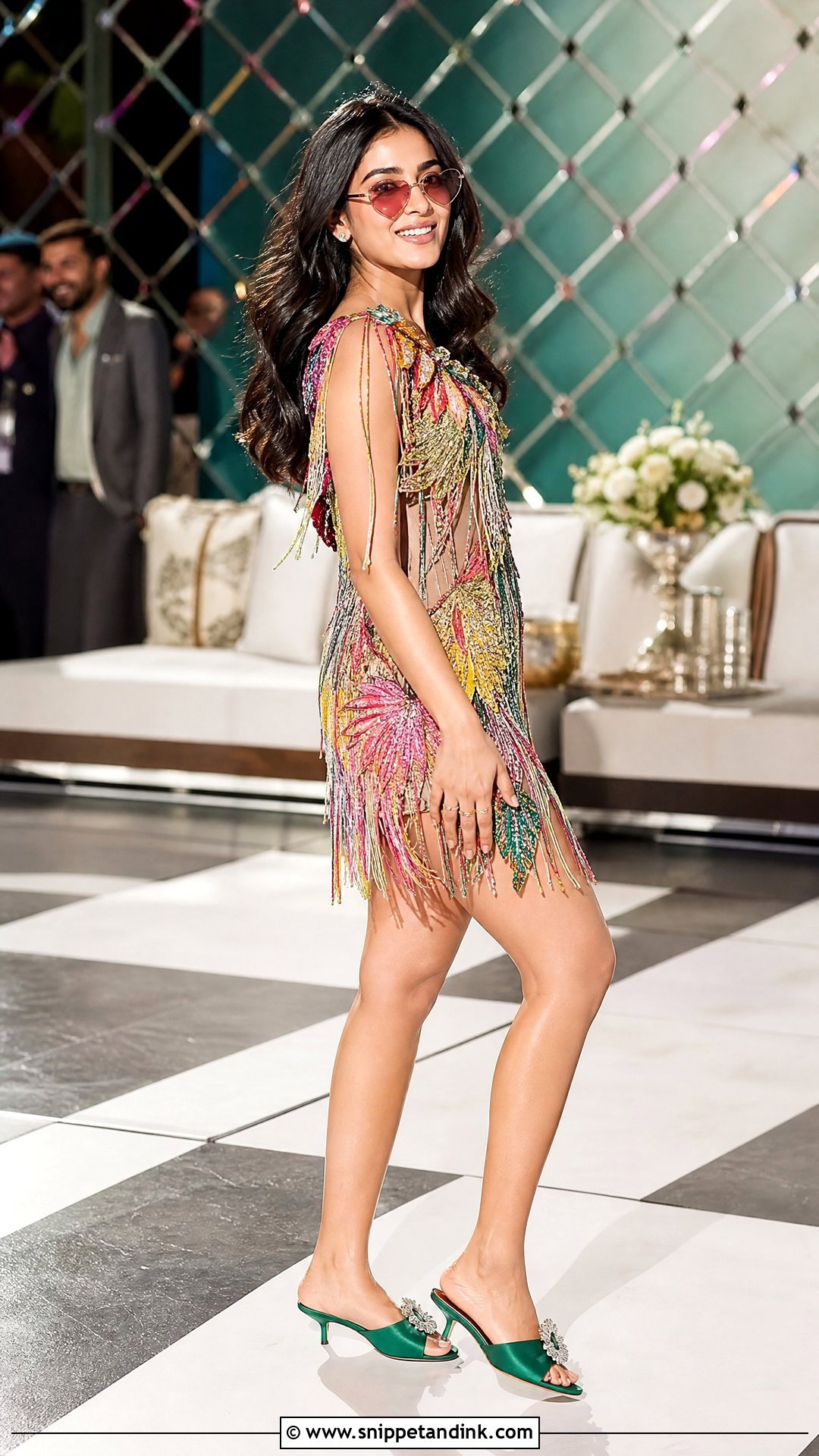
Movement was the whole point when Radhika changed into a multicolor beaded fringe dress by Ashish Gupta. Beaded fringe swings and catches light with every step, and it weighs more than it looks, so a short hem like this one is far kinder to dance in than a long fringed gown. Green embellished Manolo Blahnik mules carried the color down, and tinted heart-shaped Cartier glasses added a bit of humor. She skipped a complicated bag and layered jewelry, which is right, since fringe tangles in chains and bracelets. If you want a party change like this, sit down in it before you buy. Beading on a short skirt can scratch the backs of the legs.
3. Champagne Manish Malhotra Cape Lehenga
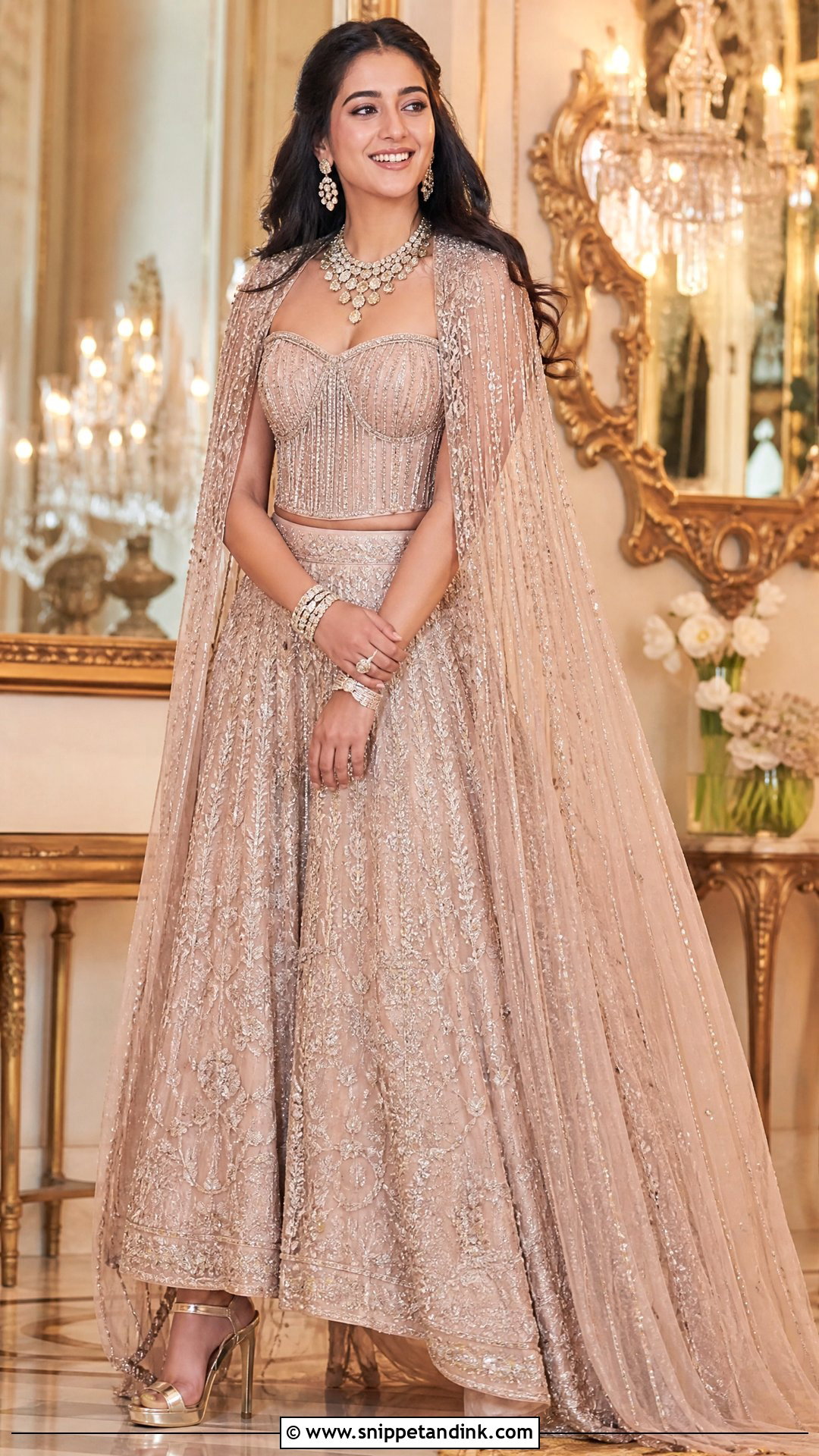
Champagne gave Radhika’s custom Manish Malhotra lehenga a soft glow in Jamnagar. The embellished skirt sat with a structured corset-style choli, and a corded cape replaced the usual dupatta. Mirror work, sequins, metallic embroidery and crystals covered the set, while her layered polki necklace, earrings, bracelets and rings kept it ceremonial. The cape is the idea I’d borrow. A dupatta needs a free hand or a lot of pins; a cape sits on the shoulders and leaves both hands for greeting guests and eating. Ask for it to be hooked at the shoulder seam so it doesn’t slide back over the evening.
4. Steel Blue Crystal Lehenga
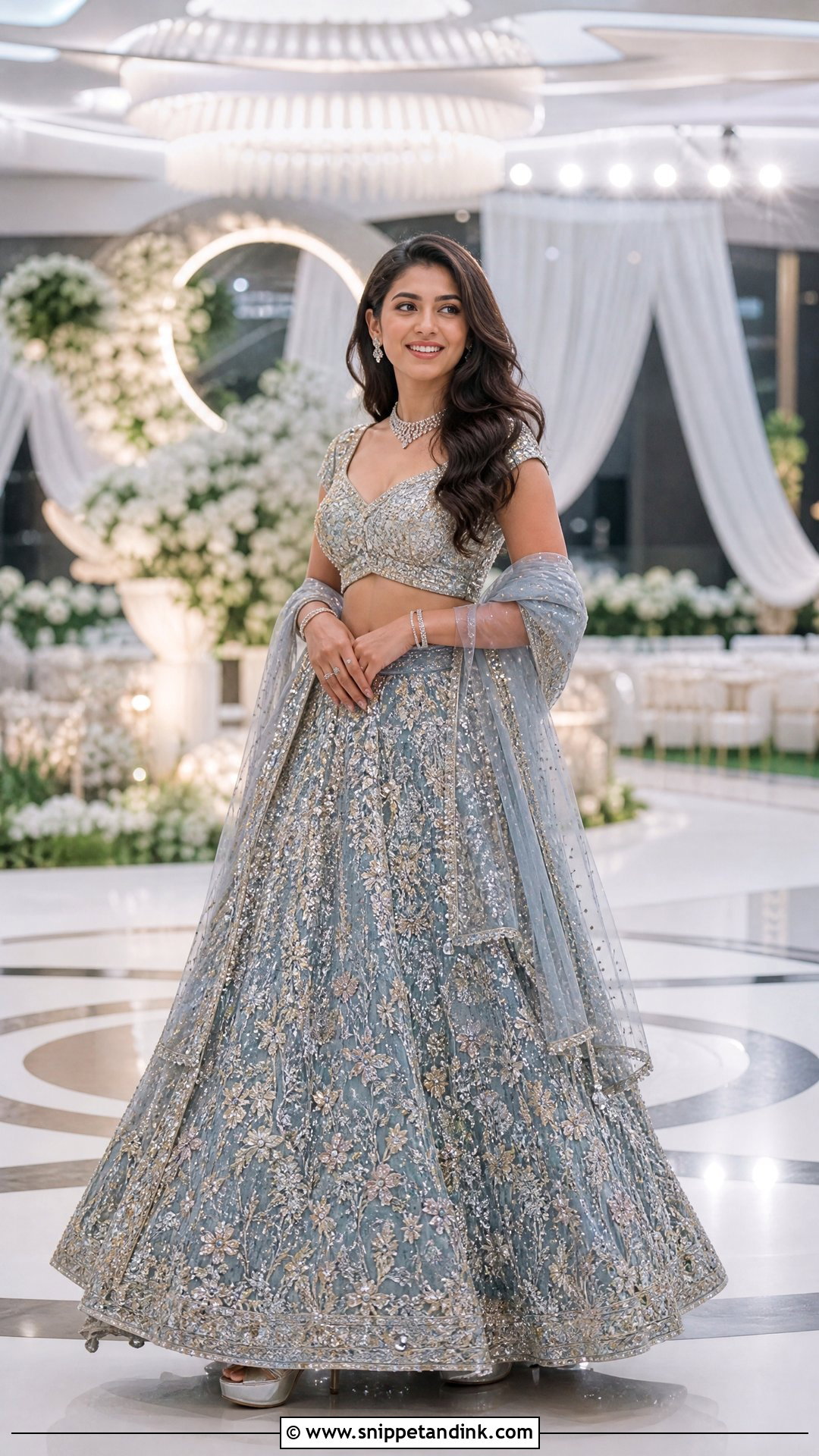
Steel blue is an unusual base for a crystal lehenga, which is exactly why this one stands out. Gold and silver florals sat on the cool fabric, extensive Swarovski work covered the skirt and blouse, and a fitted choli balanced the skirt’s volume. Diamonds suited the icy palette without bringing in a new color. Crystal-heavy skirts are dense and rough at the hem, so I line the bottom edge with soft fabric and check that the stones don’t catch on the other leg while walking. Her hair and makeup stayed soft so the work could lead. For an evening sangeet or reception, steel blue takes silver heels and cool-toned makeup easily.
5. Tarun Tahiliani Hastakshar Sari
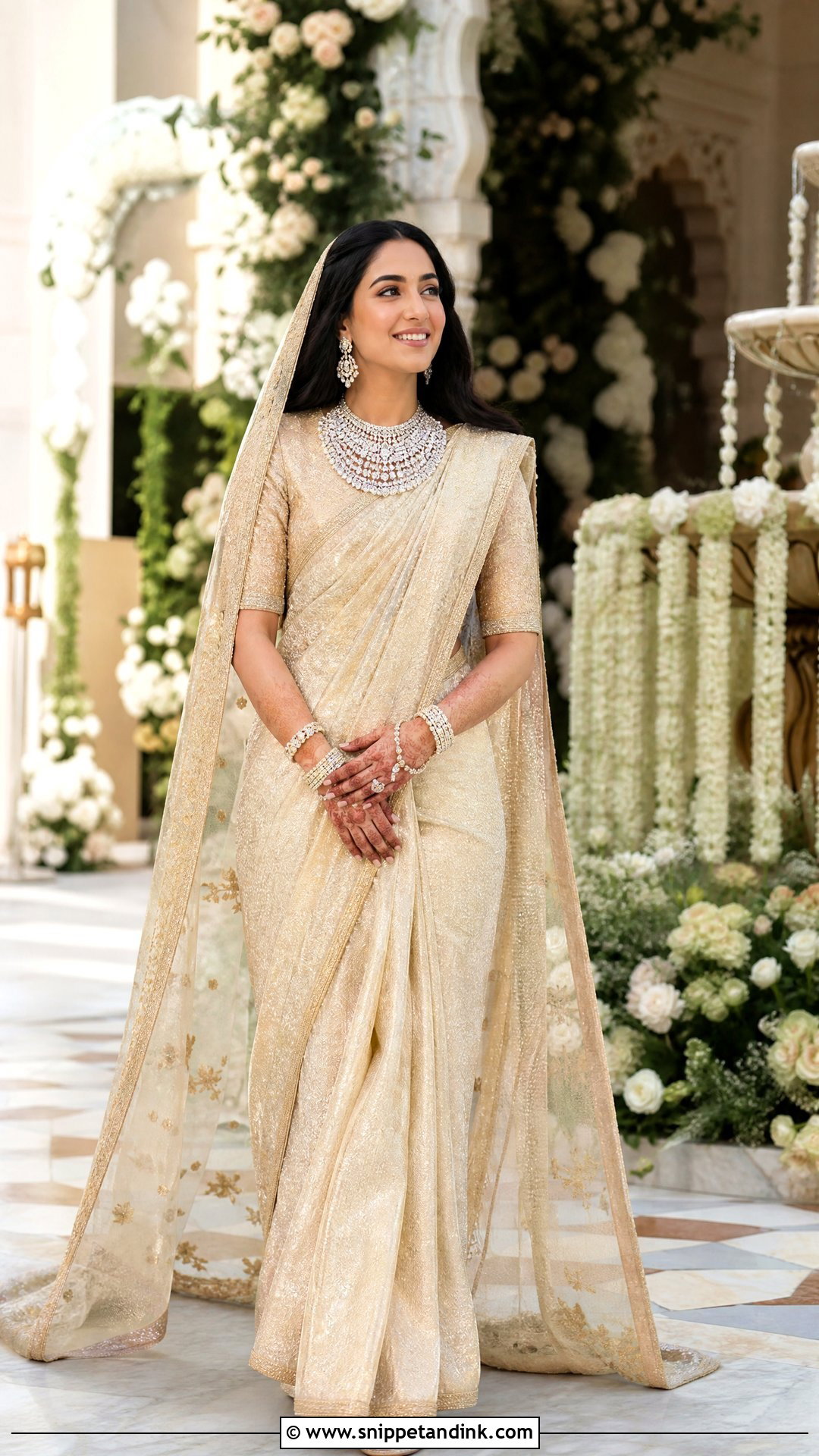
For the hastakshar ceremony in Jamnagar, Radhika wore a custom Tarun Tahiliani sari in pale metallic fabric that wrapped close to the body before running into a veil and train. The embroidery added texture without breaking the line, and the handwoven veil carried real gold thread. A substantial diamond necklace, matching earrings, stacked bracelets and soft waves completed it. Close drapes like this are shaped on the body on the day, so whoever drapes needs a full rehearsal with the actual sari and underskirt. A neutral sari can hold a room through fabric, length and drape alone, but only when the drape is exact.
6. Three-Tone Anuradha Vakil Lehenga
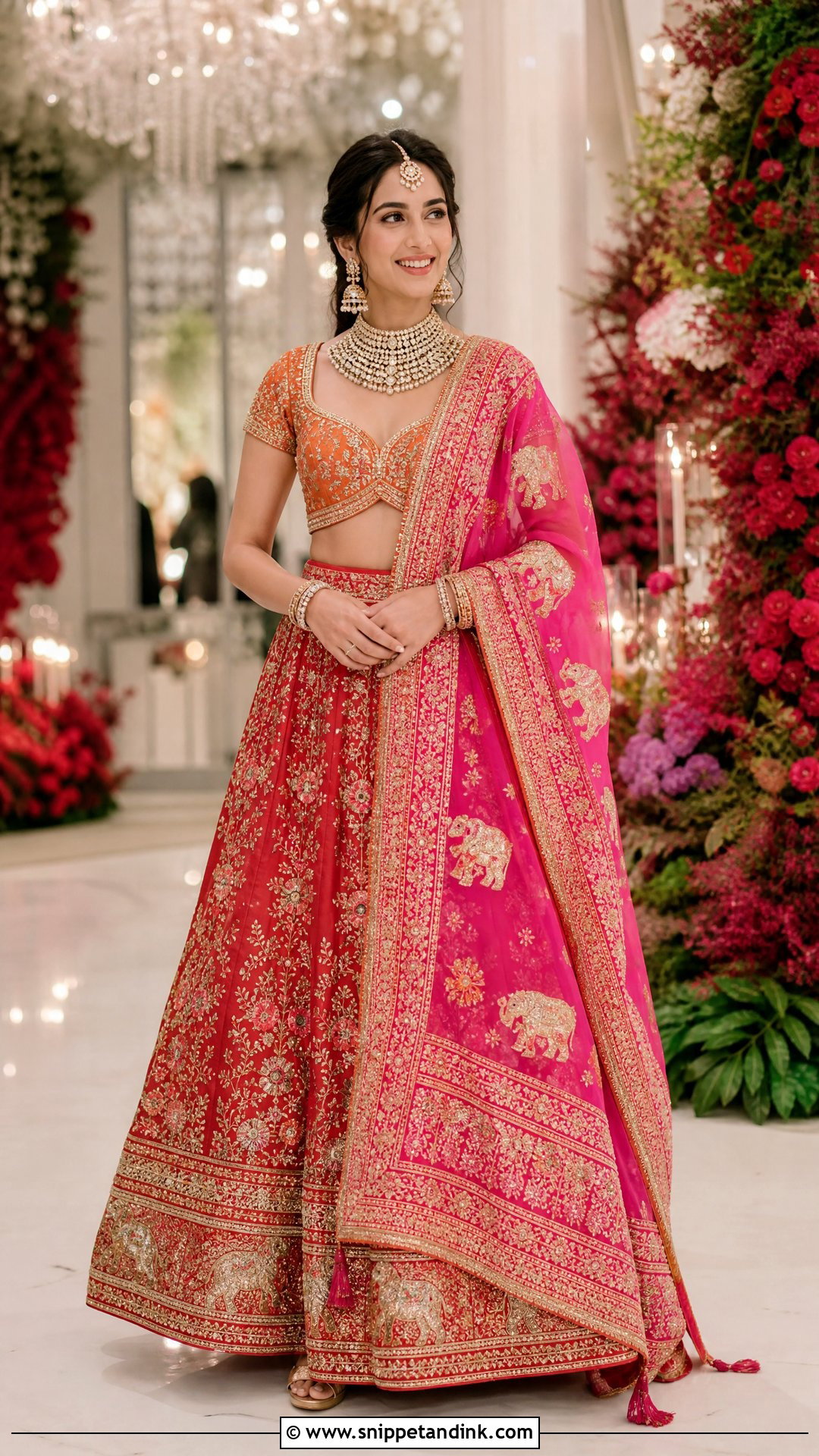
A tangerine choli, a red lehenga and a rani pink dupatta made up Radhika’s custom Anuradha Vakil outfit for a Reliance dinner after Jamnagar. It leaned on handwoven textiles and fine embroidery rather than sparkle, with subtle sequins and elephant motifs on the dupatta as the personal touch. She added a pearl-and-diamond necklace, matching jhumkas, stacked bangles and a round maang tikka. She wrapped the dupatta around her shoulders so all three colors stayed visible, and that’s exactly how I’d wear a three-tone set. Drop it over one arm and a third of the palette disappears. Warm neighboring shades like these mix easily, so nothing has to match exactly.
7. Robert Wun Love Letter Gown
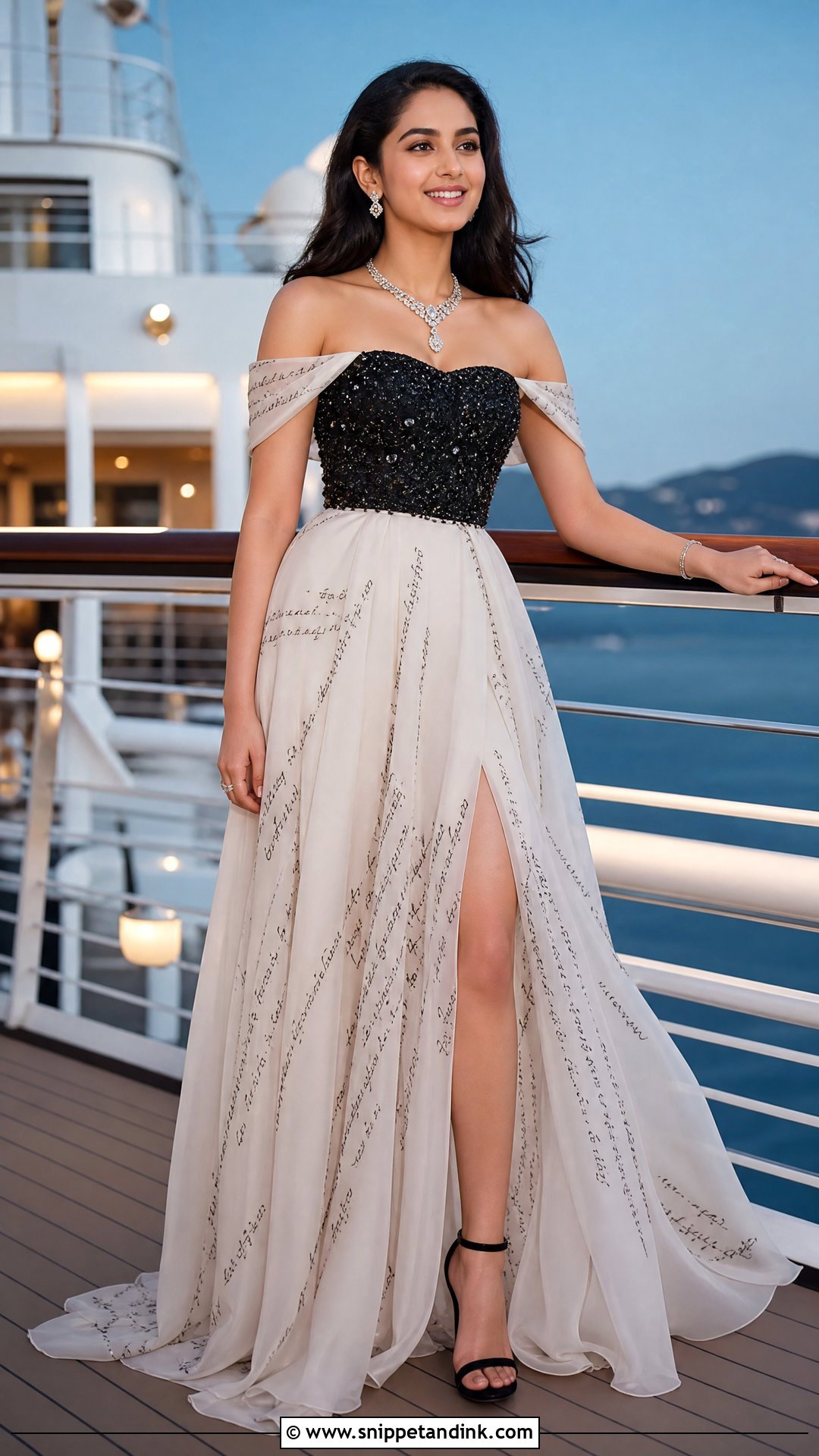
On the Mediterranean cruise, Radhika wore a black-and-white Robert Wun gown with a dark crystal bodice and flowing white French chiffon printed with a love letter Anant wrote to her when she was 22. The off-the-shoulder neckline and cascading fabric kept it romantic, and the monochrome palette kept the words readable. Diamond earrings, a sleek necklace, polished hair and evening shoes stayed out of the way. Text on fabric is something I plan early: printed, embroidered and woven lettering all need proofing, and handwriting loses detail at small sizes. A date stitched into a lining or one line of a letter along a veil edge is the realistic version.
8. Grace Ling Sculpted Toga Outfit
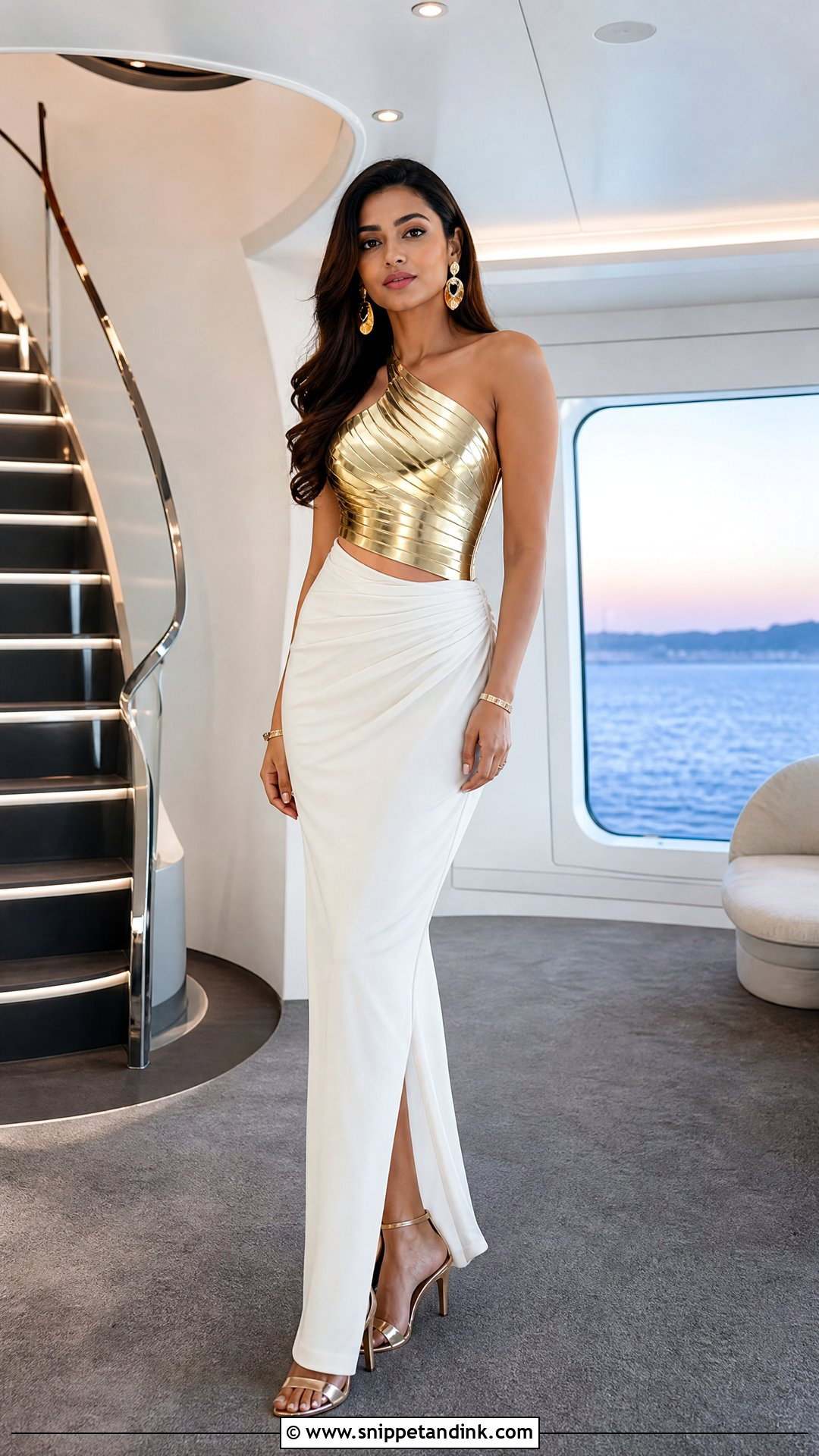
For the cruise’s toga theme, Radhika wore a custom Grace Ling outfit. The sculpted metallic gold bodice looked like draped fabric but was made using aerospace-grade aluminum technology, and it sat over a streamlined white skirt that let the breastplate lead. Gold earrings and loose waves softened the hard surface. Rigid bodices don’t move with you, so sitting, bending and hugging become the real design problems. A wearable version is a metallic corset top over a simple ivory maxi with understated heels and one pair of sculptural earrings, and I’d still try that corset seated before buying it.
9. Blue Versace Masquerade Gown
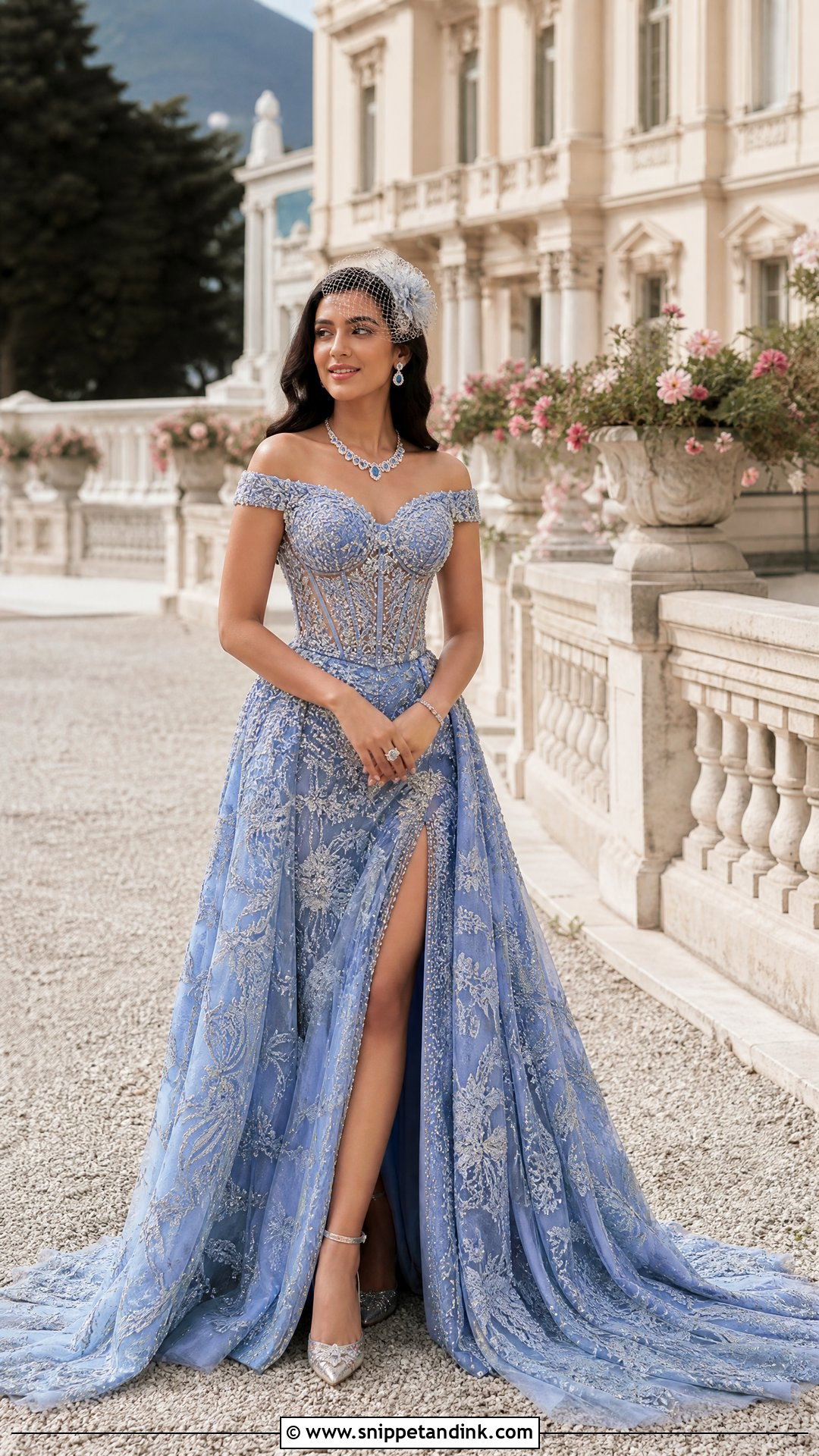
Blue and silver tied Radhika’s custom Versace masquerade gown to the coast of the French Riviera. It was off the shoulder, with shimmering embellishment, a fitted waist and a flowing skirt, and she wore it with a rare blue opal necklace ringed in diamonds. Instead of a mask she chose a delicate bridal fascinator. That’s the lesson for any themed event: one clear reference is enough. A full mask also hides your face in every photo, which matters when it’s your own party. Silver heels and soft, polished hair finished the look.
10. Vintage Dior Portofino Dress
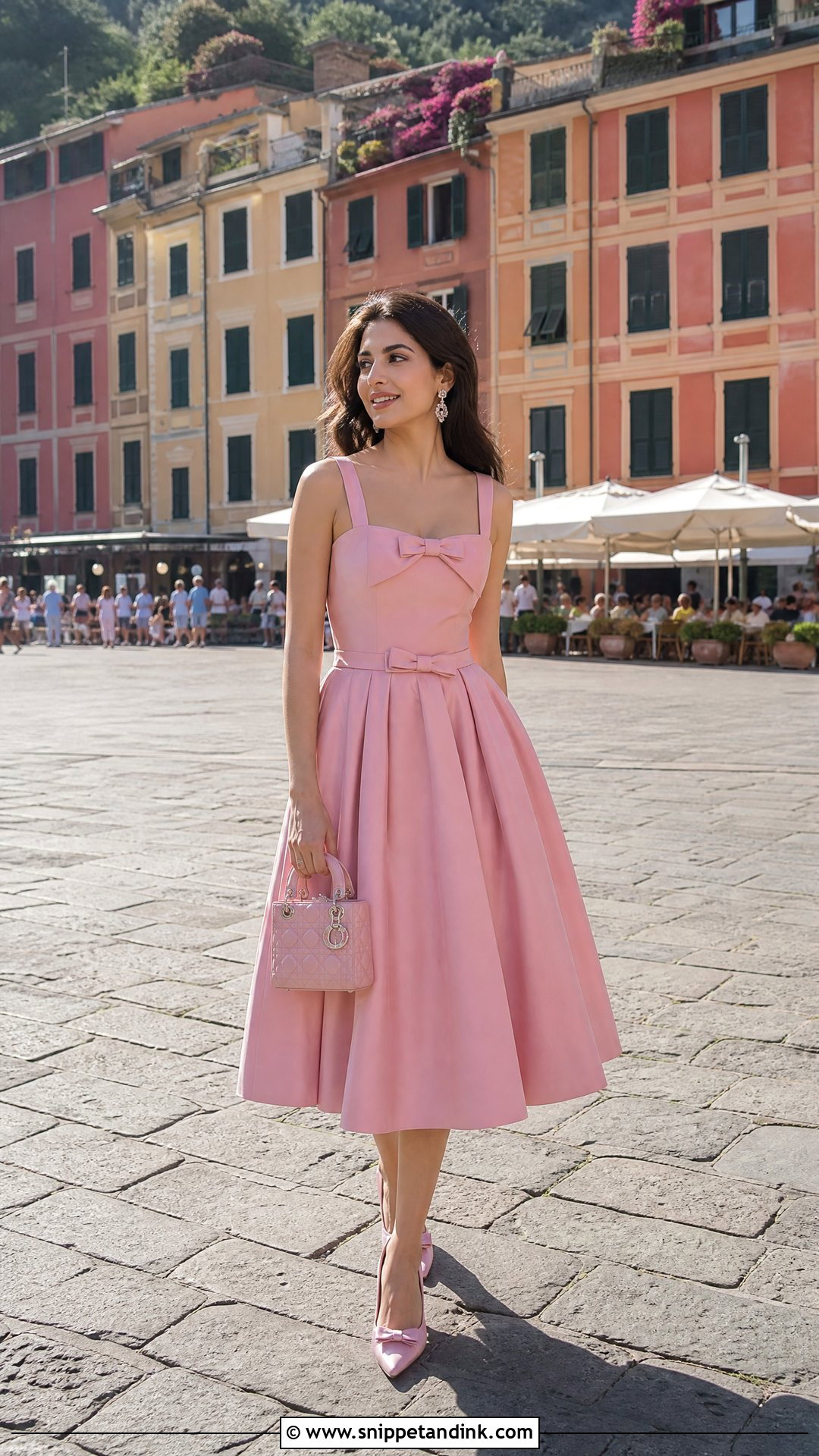
Radhika’s vintage Dior cocktail dress came from Christian Dior’s Autumn/Winter 1959 haute couture collection, designed by Yves Saint Laurent, and she wore it for the final cruise celebration in Portofino. Soft pink, sleeveless and midi length, it had delicate bows and a carefully built skirt, and she kept the accessories to sparkling jewelry and elegant shoes. Vintage couture needs gentle handling. Older silk can be fragile at the seams and underarms, so alterations should go to someone used to period garments, and I’d use dress shields on the day. Fitted properly, a well-kept vintage dress carries an event as well as any lehenga.
11. Pink Manish Malhotra Mameru Lehenga
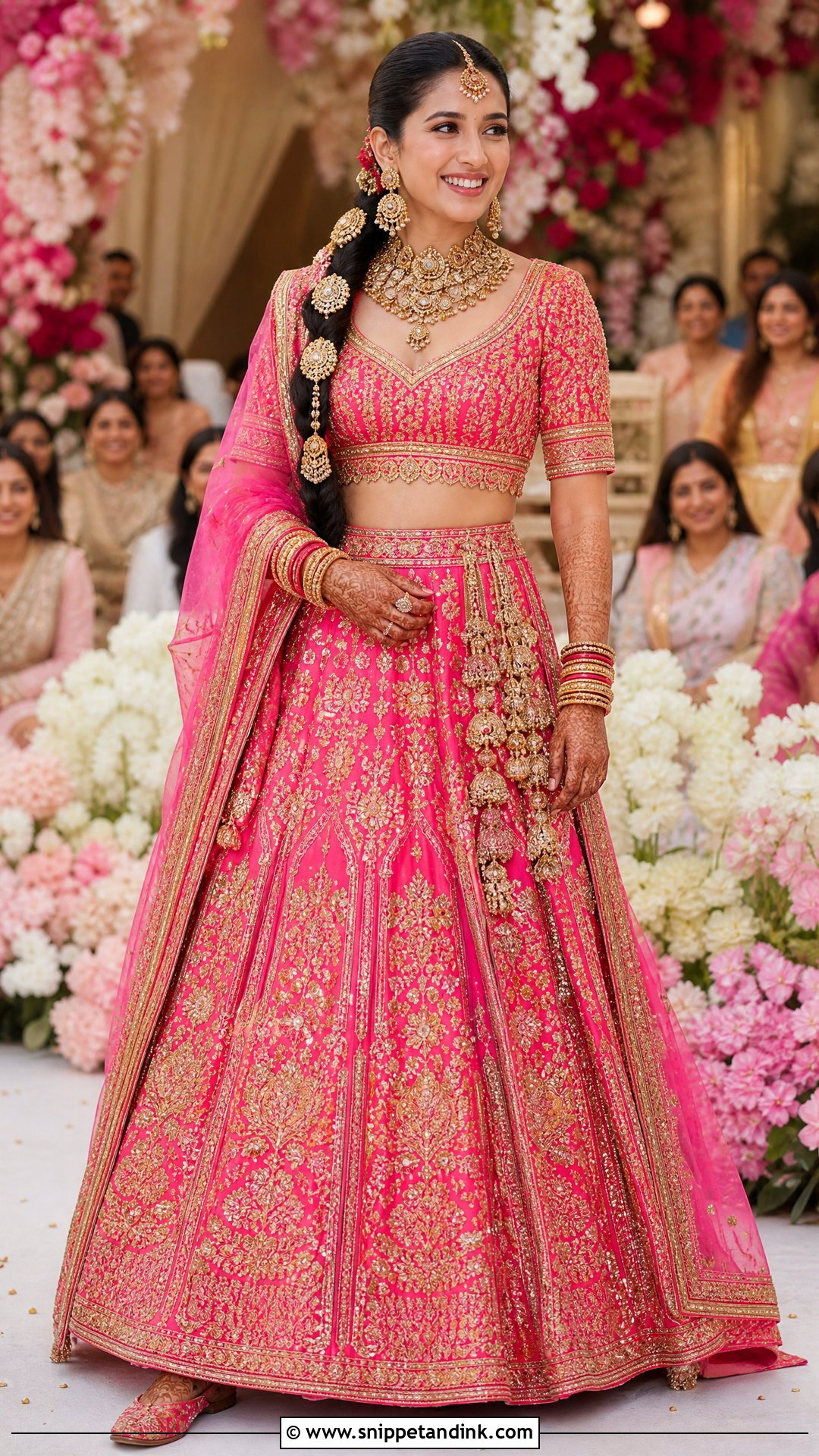
Radhika’s rani pink Manish Malhotra Mameru lehenga was one of her brightest traditional looks, worked in gold taar zardozi with script-inspired detailing. She wore jewelry connected to her mother’s own Mameru celebration, which gave the outfit family weight. A sleek fishtail braid with gold hair accessories kept the neckline clear, and smoky eyes, dusky pink lips and highlighted skin held their own against the saturated fabric. Heirloom pieces often have tired clasps and worn threads, so I have them checked or restrung a few weeks ahead. Keeping blouse and skirt in one dominant color lets heavy embroidery read as a single piece.
12. Purple Jigya Patel Garba Lehenga
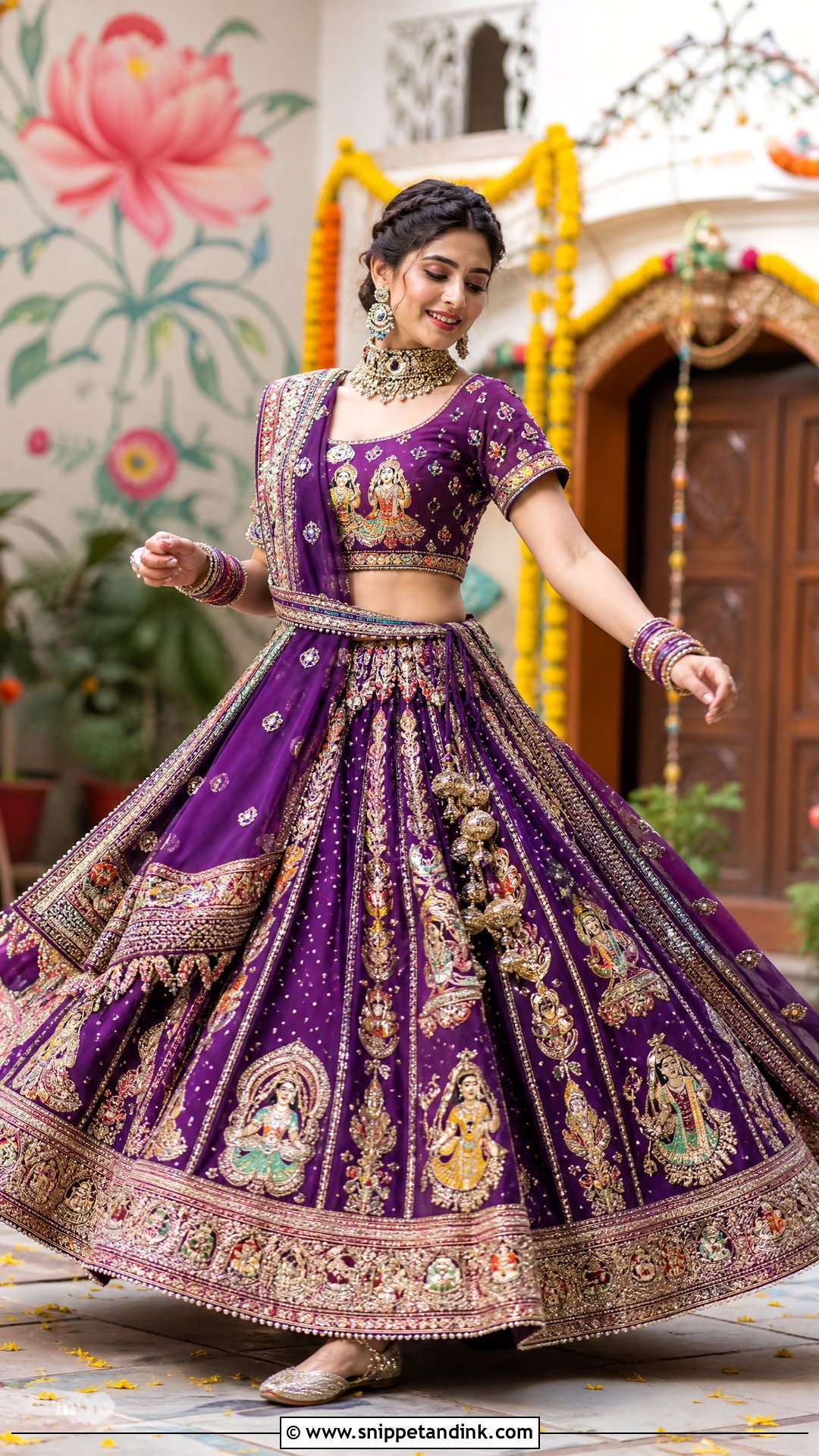
Deep purple was the base for Radhika’s Jigya Patel garba lehenga, worked with Lord Shrinathji motifs in handcrafted pearl, marodi and mochi embroidery. A fitted blouse, a full skirt and a coordinated dupatta gave her room to dance. Garba means hours of circling and clapping, so the practical points matter more than usual: block heels or embellished flats, a dupatta pinned at both the shoulder and the waist, and a hem that clears the ankle on every step. The purple also set this outfit apart from the pink, yellow, gold and red elsewhere in her wardrobe. Match the jewelry’s metal to the embroidery’s metal and the look holds together from head to toe.
13. White And Gold Grah Shanti Sari
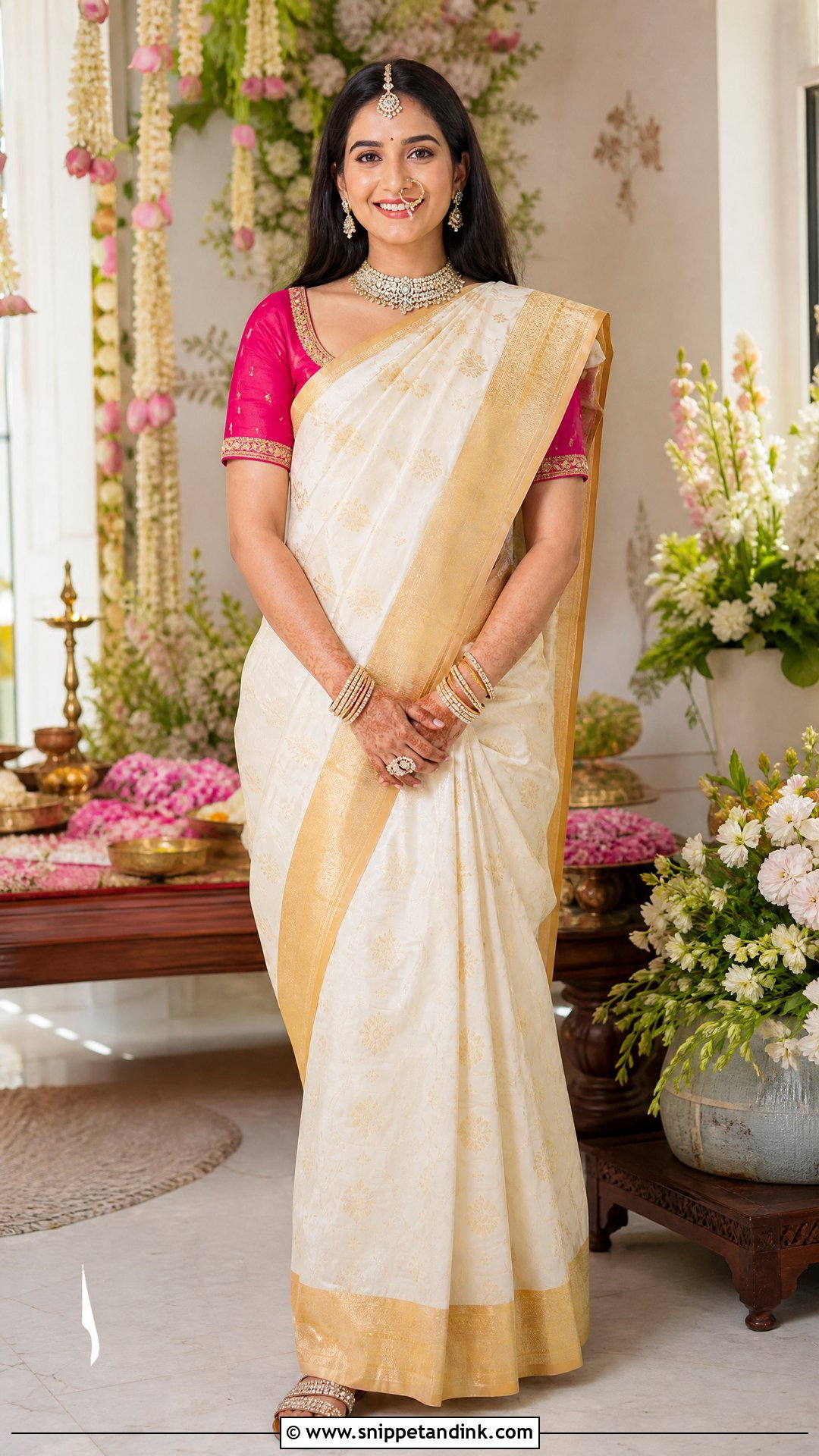
Radhika’s traditional Grah Shanti outfit was a white and gold sari with a contrasting rani pink blouse. The classic drape kept the woven border on show, and the pink brought warmth up near her face, which a pale sari needs in morning light. A diamond necklace, earrings, maang tikka and traditional nath, with neat hair and a centered bindi, kept it suited to prayer. This is the most achievable look in the set: a cream silk sari, a pink blouse, family jewelry, metallic sandals and fresh makeup. Nath fittings vary a lot, so practice putting yours on, and sitting through an hour with it, before a long puja.
14. Crystal Abu Jani Sandeep Khosla Sangeet Lehenga
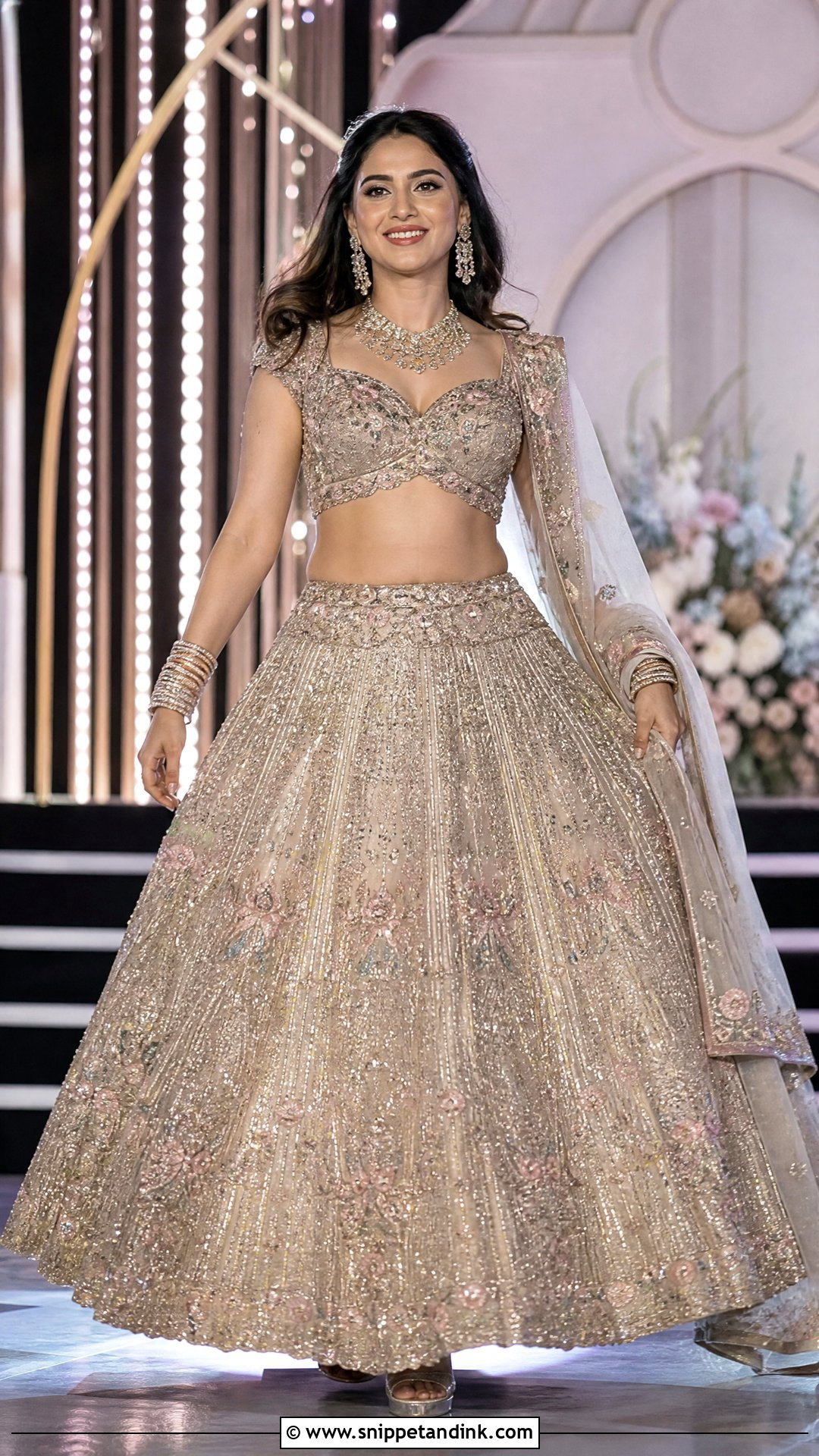
For her main sangeet performance, Radhika chose a chandelier-inspired crystal lehenga by Abu Jani Sandeep Khosla, with a golden base, pastel accents and three-dimensional florals. The fitted blouse and full skirt held their structure for a formal entrance and still let her dance. Diamonds, shimmering makeup and flowing hair kept the whole look in one metallic palette. If you’re performing, rehearse at least once in the actual outfit. Heavily worked blouses ride up during arm movements, and a hem length that looked right standing still can catch a heel mid-turn. Choose footwear nobody sees and jewelry that won’t swing loose.
15. Manish Malhotra Metal Mesh Sari
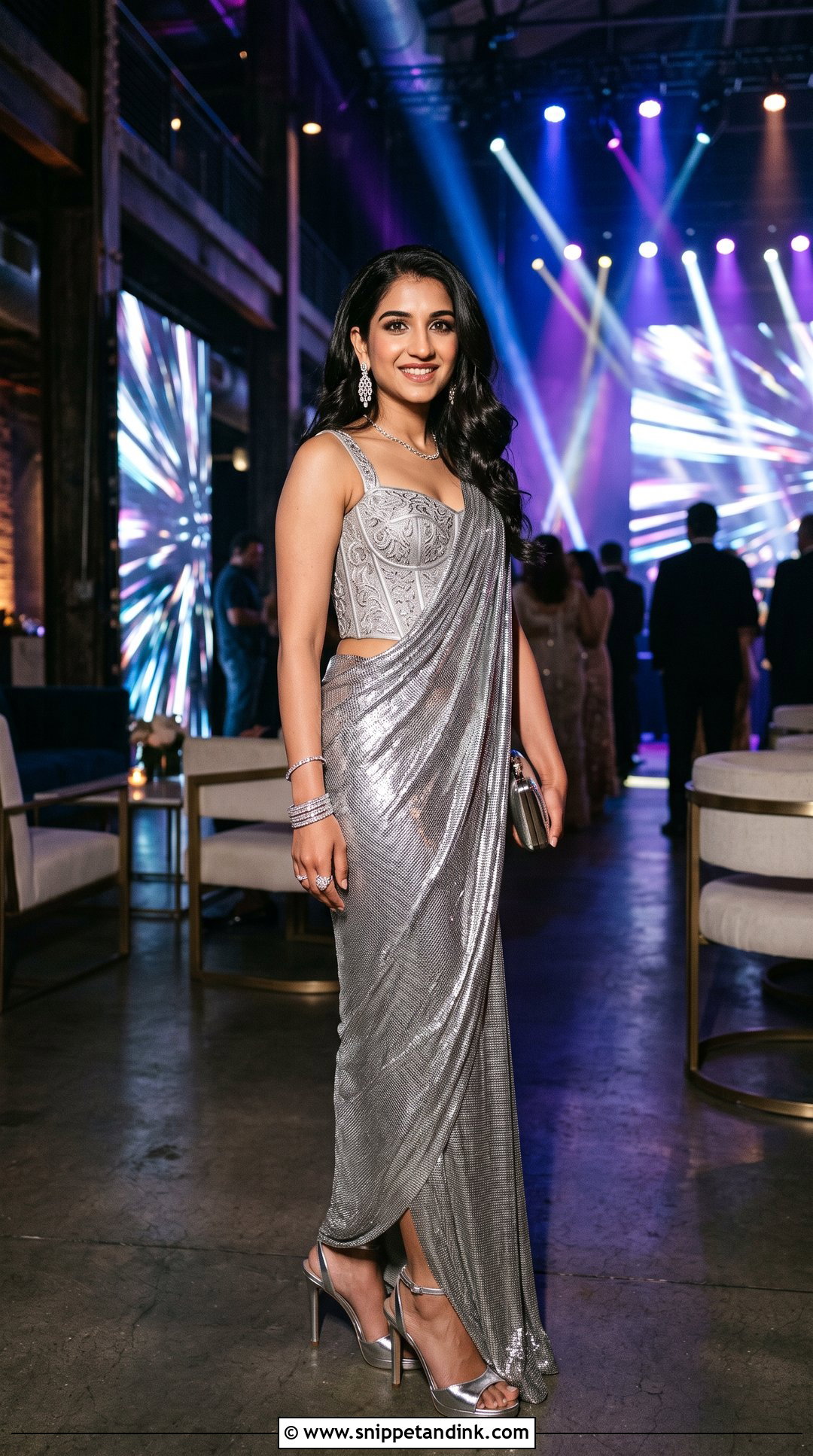
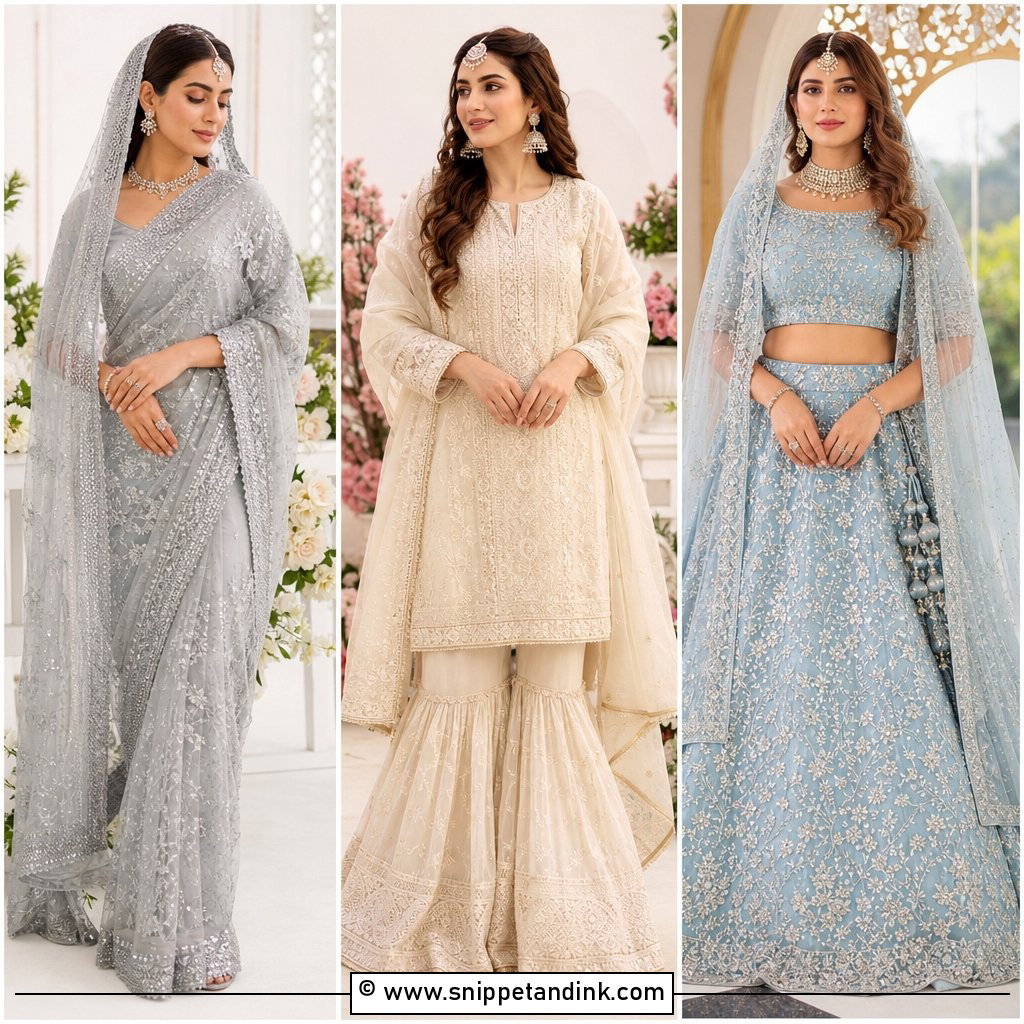
For the sangeet after-party, Radhika changed into a Manish Malhotra sari made entirely of metal mesh, with a structured corset defining the waist and bodice. Metal mesh drapes like liquid but weighs more than silk, so it pulls downward; the corset gives it something to anchor to. Minimal diamonds, loose hair and luminous makeup kept the mood relaxed. A practical take is a silver pre-draped sari with a fitted corset blouse, metallic heels and small crystal earrings. Leave the heavily worked bag at home, and keep fine chains away from the mesh, which snags them.
16. Yellow Anamika Khanna Haldi Lehenga
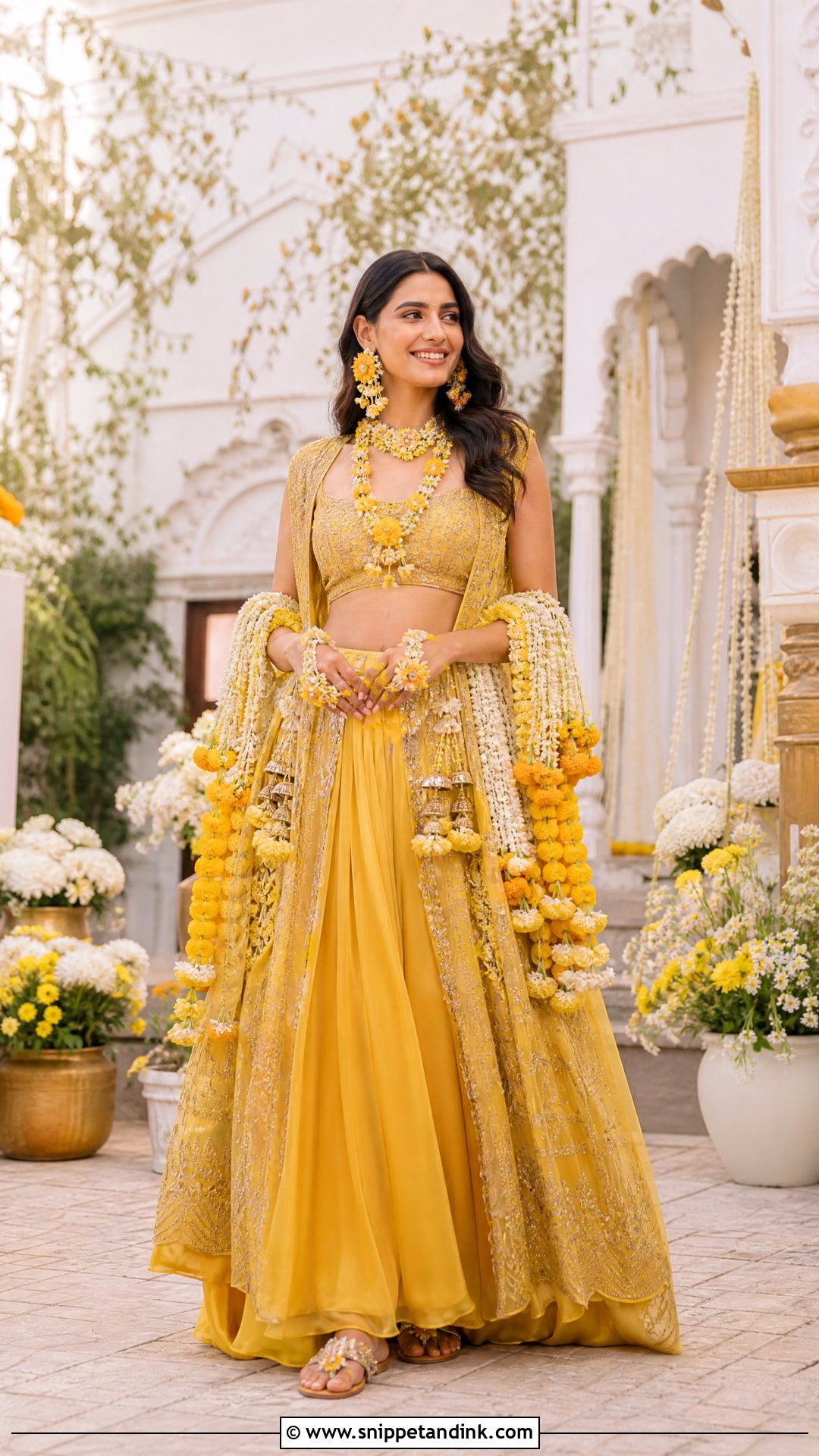
Radhika’s yellow Anamika Khanna haldi lehenga is remembered for its flowers. A sleeveless blouse and flowing silk skirt carried multicolor floral thread work at the waist and hem, and the dupatta was built from more than 90 marigolds, jasmine buds, daisies and other fresh blooms. Floral earrings, necklaces, hand ornaments, arm pieces and kaleeras completed it. Fresh flower jewelry wilts in heat, so it should be attached close to the start and kept cool until then. Turmeric also stains silk for good, so for a haldi I pick a fabric the bride is happy to sacrifice, with flat sandals and a light skirt.
17. Ivory And Red Panetar Wedding Lehenga
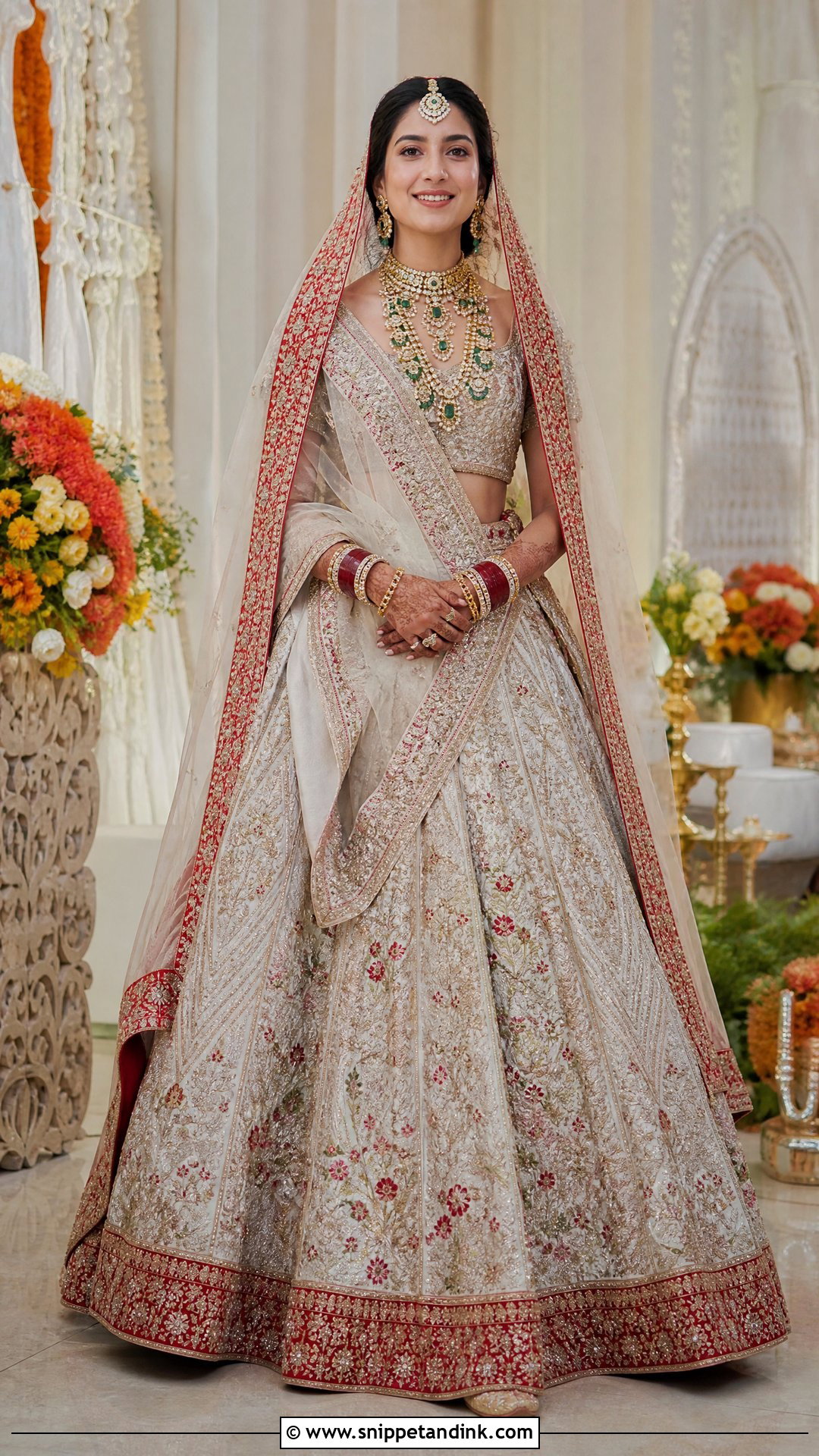
Radhika followed Gujarati panetar tradition in an ivory-and-red wedding lehenga by Abu Jani Sandeep Khosla: a trailing ghagra, fitted blouse, tissue shoulder dupatta, detachable train and an elaborate head veil. Floral bootis, stones, sequins, red resham and zardozi cutwork covered the ivory, and strong red borders gave it edges. Her family jewelry included layered necklaces, earrings, bangles and a maang tikka. The detachable train is worth copying, since it gives you full length for the ceremony and freedom afterward. Repeating red across the borders, veil, lips and jewelry is what makes a pale lehenga read as unmistakably bridal.
18. Red And Gold Manish Malhotra Vidaai Lehenga
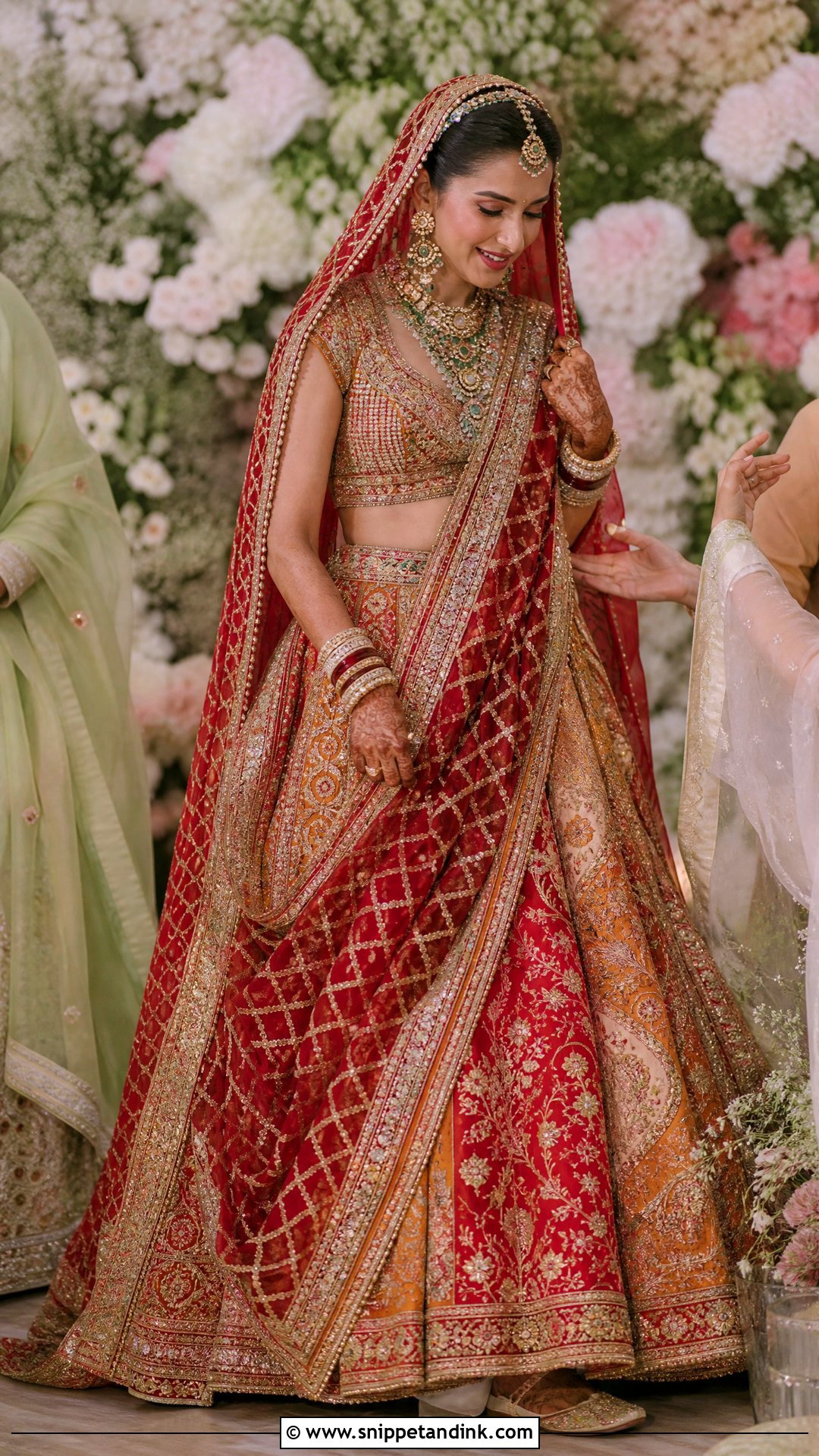
Radhika’s vidaai outfit by Manish Malhotra paired a blouse in real gold karchobi with a multi-paneled Banarasi brocade lehenga in reds, oranges and gold, under a lattice-detailed veil. The archival textile feeling suited a farewell ritual. Heavy jewelry, bridal bangles, embroidered footwear and a formal dupatta drape completed it. Brocade is stiff and heavy, and a vidaai is full of embraces and tears, so I keep the veil as light as the look allows and pin it firmly; a slipping veil is the last thing anyone needs in that moment. Several related reds give depth without breaking the ceremonial unity.
19. Hand-Painted Shubh Aashirwad Ghagra
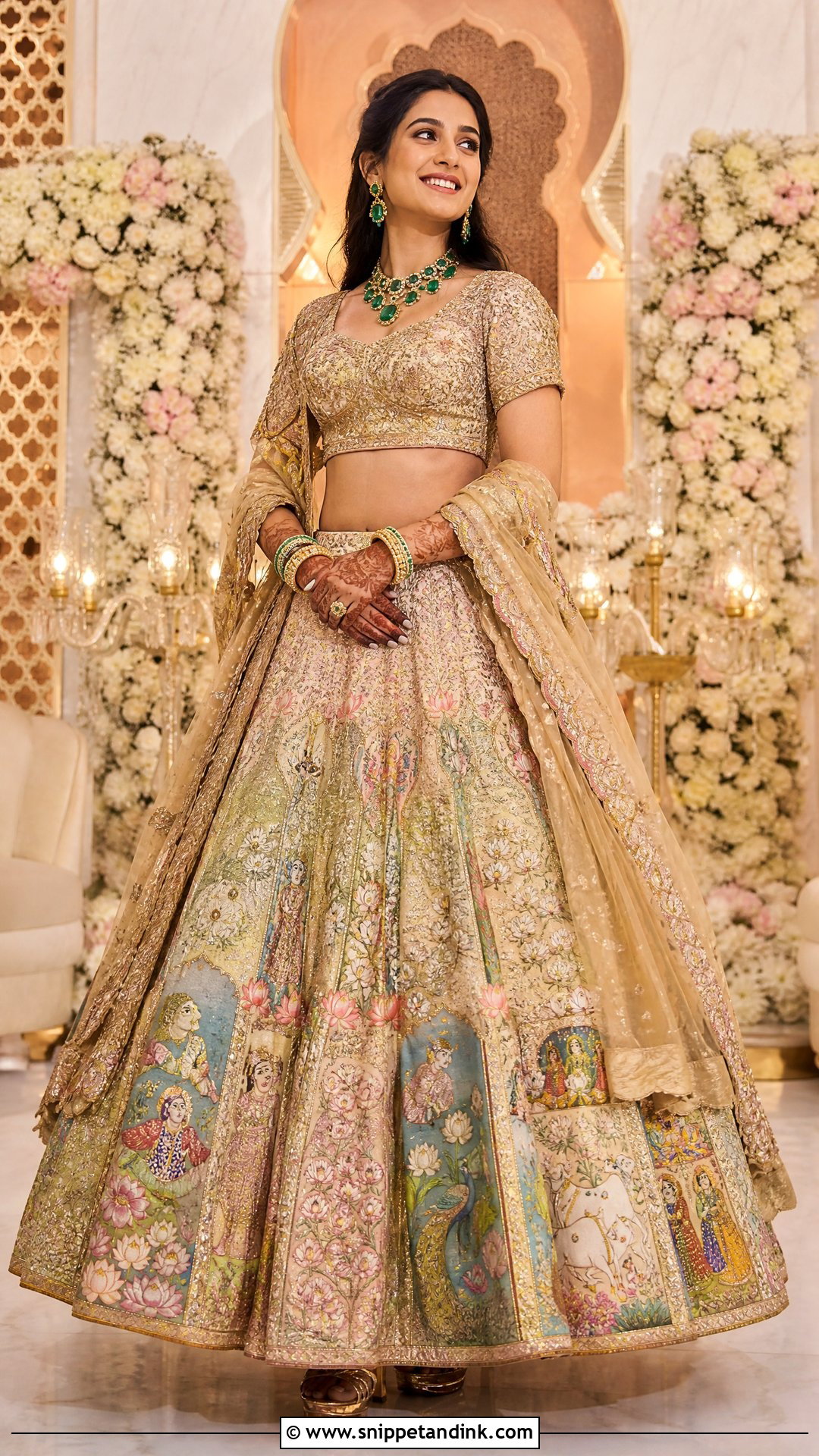
Radhika’s Shubh Aashirwad ghagra came from a collaboration between artist Jayshree Burman and Abu Jani Sandeep Khosla. Painted on a special canvas, it showed human figures, animals, flowers and celestial imagery, with Lakshmi and Vishnu at its spiritual center. An embroidered blouse and a flowing dupatta stayed clear of the painting, and emerald jewelry echoed its greens. With any narrative skirt, I pull accessory colors straight from the artwork and drape the dupatta so it frames the central image instead of covering it. Painted textiles can also react badly to damp, so ask how the paint behaves before wearing it outdoors.
20. Dolce And Gabbana Reception Sari
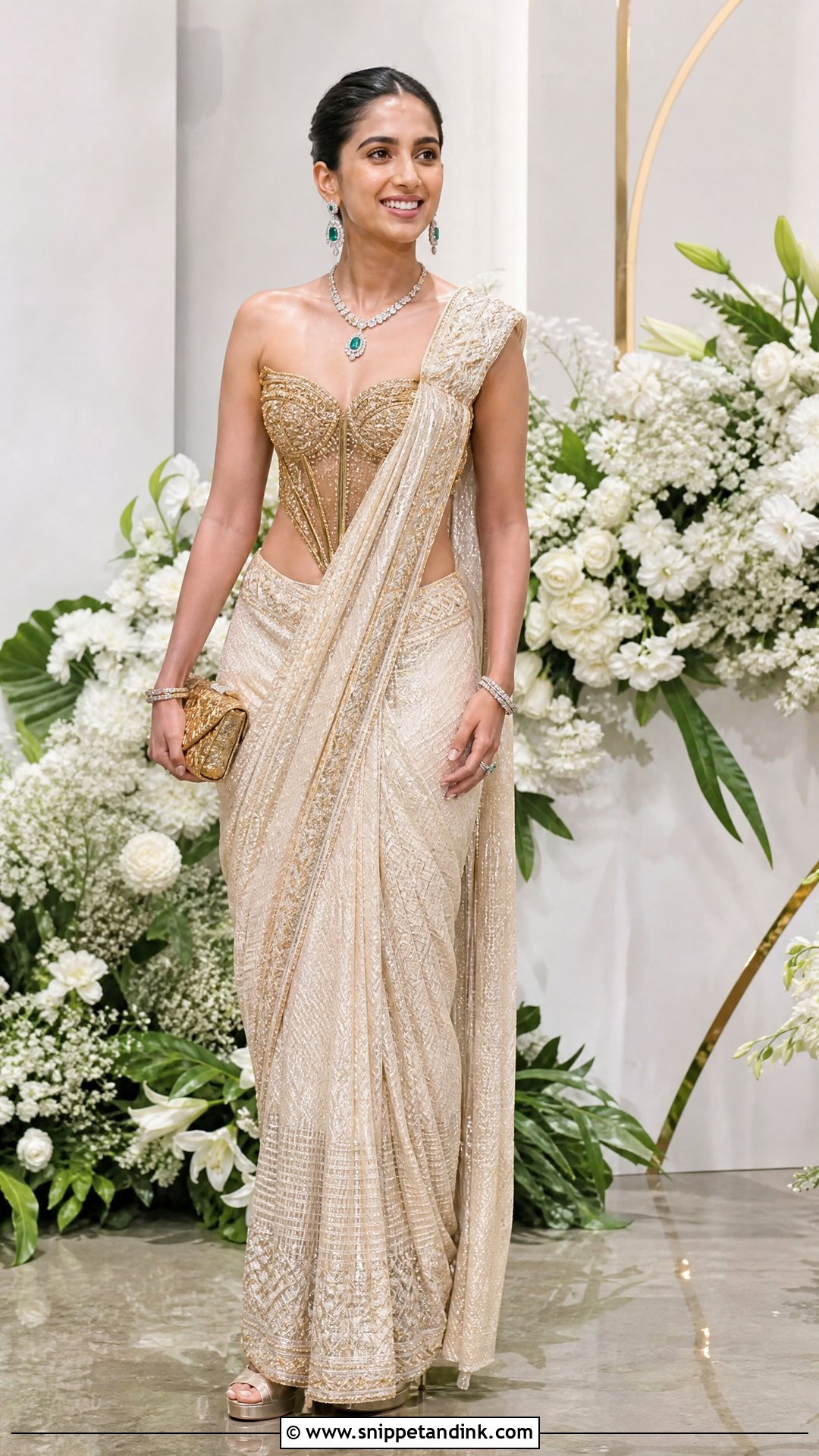
For the Mangal Utsav reception, Radhika paired a gold filigree Dolce & Gabbana corset with a constructed sari by Anamika Khanna. Metallic embroidery on the bodice continued into the sari’s ornate texture, so two designers’ pieces read as one. Statement jewelry, sleek hair and polished makeup added formality without crowding the neckline. A pre-draped sari with a structured blouse in the same color family is what I suggest to anyone who doesn’t want to stand still for a drape on the night; it goes on in minutes and keeps its line. Gold heels and a compact metallic clutch finish it.
A Love Letter on Chiffon, Scaled Down to Real Life
Several of Radhika’s pieces carried private meaning: a letter printed on chiffon, devotional motifs, a mother’s jewelry, painted deities. You can build that into an outfit at almost any budget. It just needs lead time.
- Initials or a date embroidered inside the lining is the simplest version, and a tailor can add it during alterations.
- Handwriting stitched onto a veil edge needs a clean scan of the original and a test sample, because small loops close up in thread.
- Regional or devotional motifs belong in the first design meeting, since they change the whole embroidery layout.
- Anything printed should come back as a swatch for approval before the full length is made.
Allow extra weeks for custom lettering or motifs. If you’re adding a sacred image, talk with your family about where it may sit; many families prefer not to have a deity placed near the hem or the feet.
What a Billionaire Wardrobe Can Teach an Ordinary Wedding
Every outfit here suited its occasion first: couture gowns for destination evenings, bright lehengas for music nights, heritage textiles for the rituals. Her wardrobe also shows that a bride doesn’t need one fixed aesthetic across a multi-day wedding. Vintage Dior, sculpted metal and a hand-painted ghagra sat side by side and still looked like the same woman. At any budget the method holds: let one detailed garment lead, repeat a color across the event, and choose jewelry that adds to the story. I’d add one rule from the fitting room. Wear each outfit for a full hour before its day, because discomfort shows on the face in every photograph.
You'll Like These Ideas:



Leave a Reply