
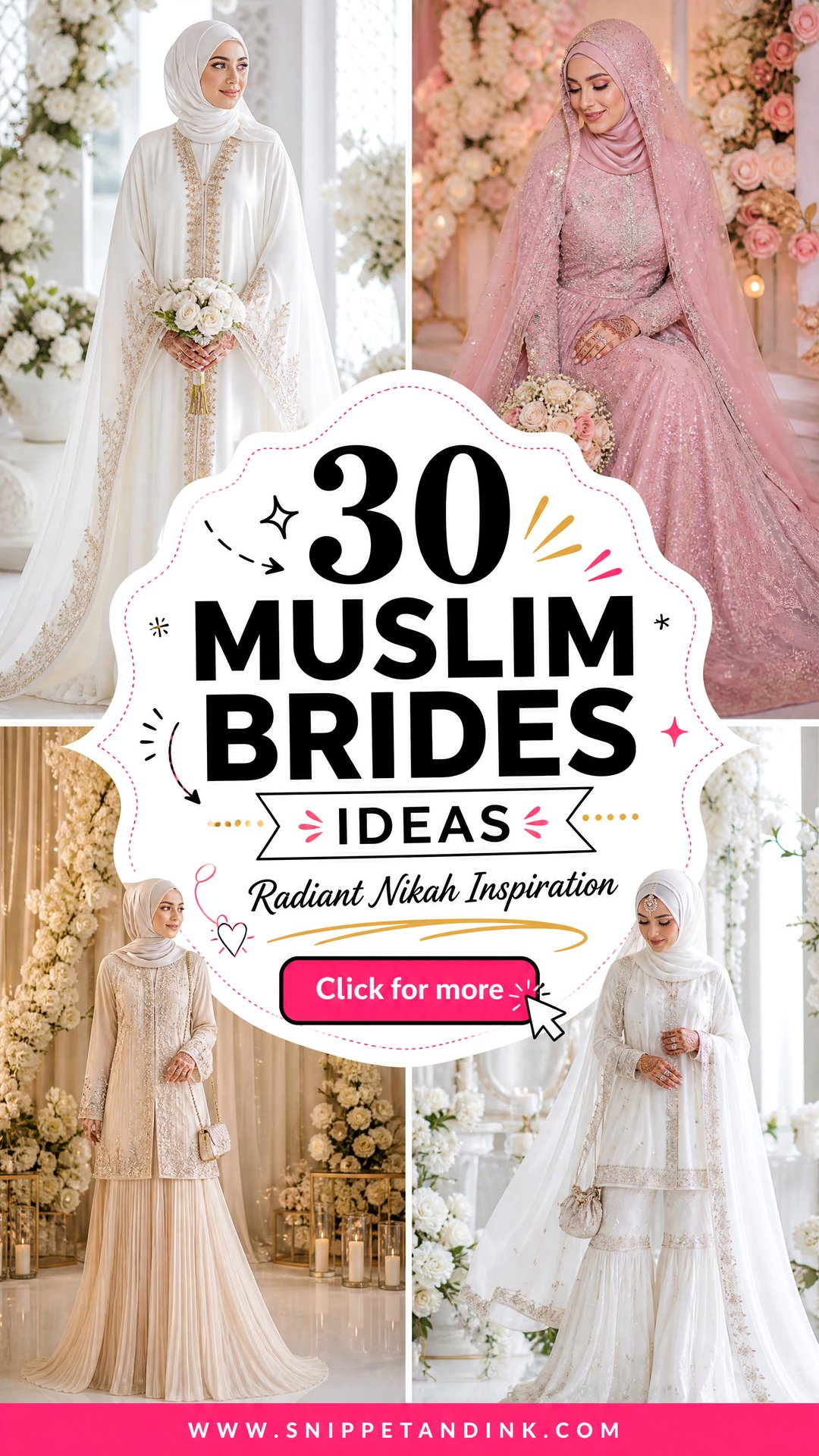
A nikah outfit has jobs most wedding dresses never get asked to do. It has to cover arms, neck and hair through a ceremony where you may sit on a low stage or the floor, stay in place while relatives hug you for an hour, and still look bridal in the close-ups of your hands and ring. When I style a Muslim bride, I plan the dress, hijab, veil, shoes and jewelry as one outfit from the first fitting, because a hijab chosen last almost never sits right against a neckline chosen first. The thirty ideas below run from lace gowns and embroidered abayas to lehengas, kaftans and tailored suits, with notes on what each one asks of you on the day.
Adding Sleeves, Lining and a Higher Neck to a Store Gown
Most bridal shops stock far more strapless and sweetheart gowns than covered ones, so many Muslim brides buy a gown they love and have it modified. That works well when it’s planned in from the start. The first thing I do is ask the shop whether extra lace or fabric can be ordered from the same supplier, because a sleeve that matches the bodice is far easier to achieve than one that only comes close.
What a seamstress can realistically add
- Sleeves set into the armhole, in matching lace or crepe, lined so they stay opaque in flash photos.
- A higher neckline built from an illusion tulle yoke, lined in crepe where the tulle alone would show skin.
- A lace bolero or jacket that buttons over the bodice, which you can remove for a women-only reception.
- A modesty panel behind a slit, or extra length at the hem if the gown runs short with your shoes.
Leaving enough time for it
Gowns ordered through a bridal shop often take four to six months to arrive, and standard alterations usually begin eight to ten weeks before the wedding. Sleeves and a new neckline are more work than a hem and a take-in, so book the seamstress earlier and tell her about the modesty changes at the very first appointment. Wear your hijab to that fitting. A neckline that looks high in the mirror can still gap when you turn your head, and it’s much easier to fix on the first fitting than the last.
1. Muslim Bride White Lace Gown
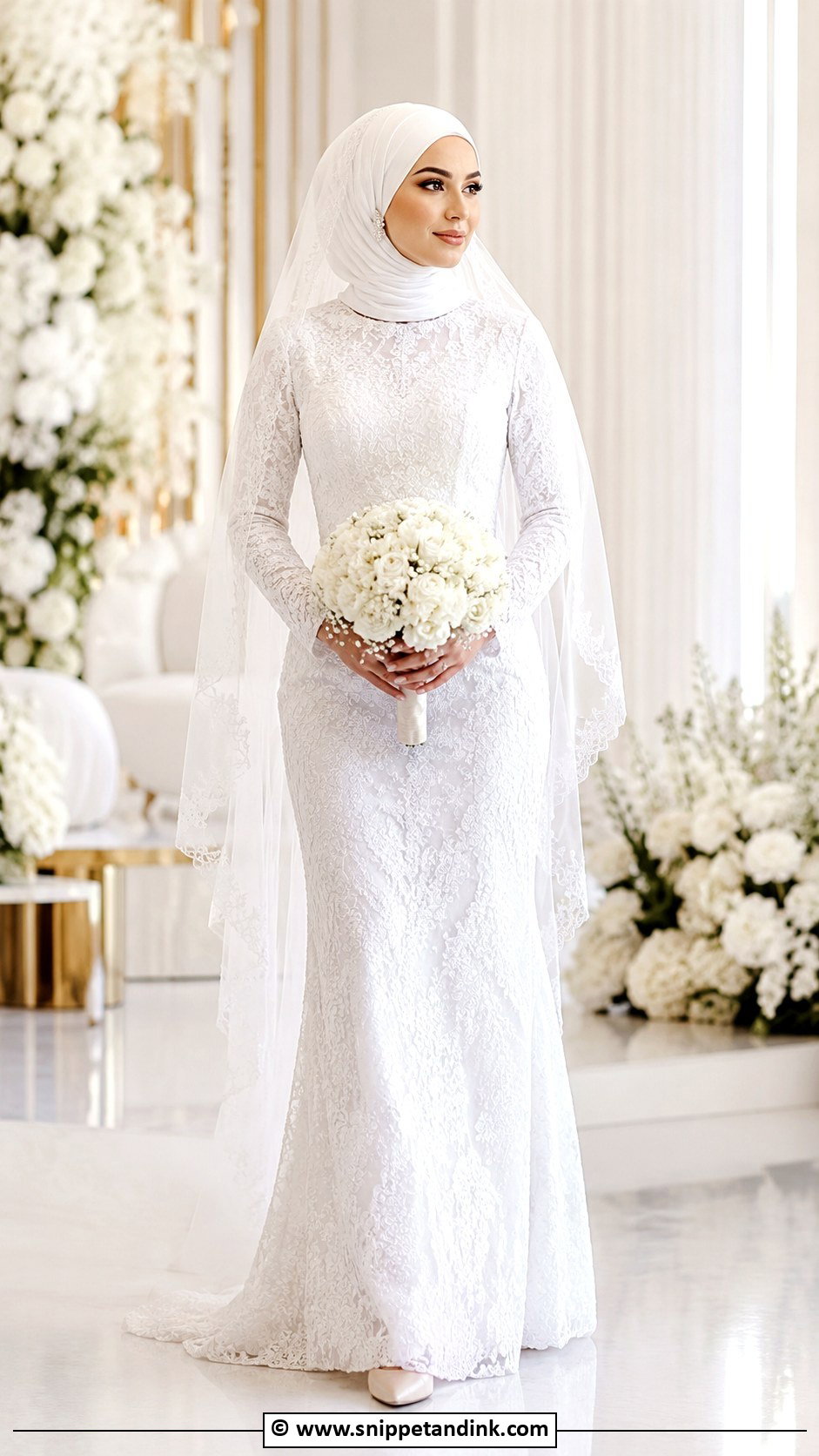
Lace is easy to style around a hijab, because its texture gives the veil and pins something to sit against visually. The thing I check first is the lining. Plenty of gowns sold as long-sleeved use unlined lace on the arms, which reads as bare skin in flash photos, so ask for sleeves lined in an ivory crepe matched to the gown. A white silk or chiffon hijab keeps the face soft and a light veil over it gives the classic bridal outline. Pearl earrings vanish under most hijab styles, so I move the jewelry to a bracelet and a pearl pin at the temple. Keep this one indoors if the train is long; lace picks up grass and dust fast.
2. Muslim Bride Satin A Line Dress
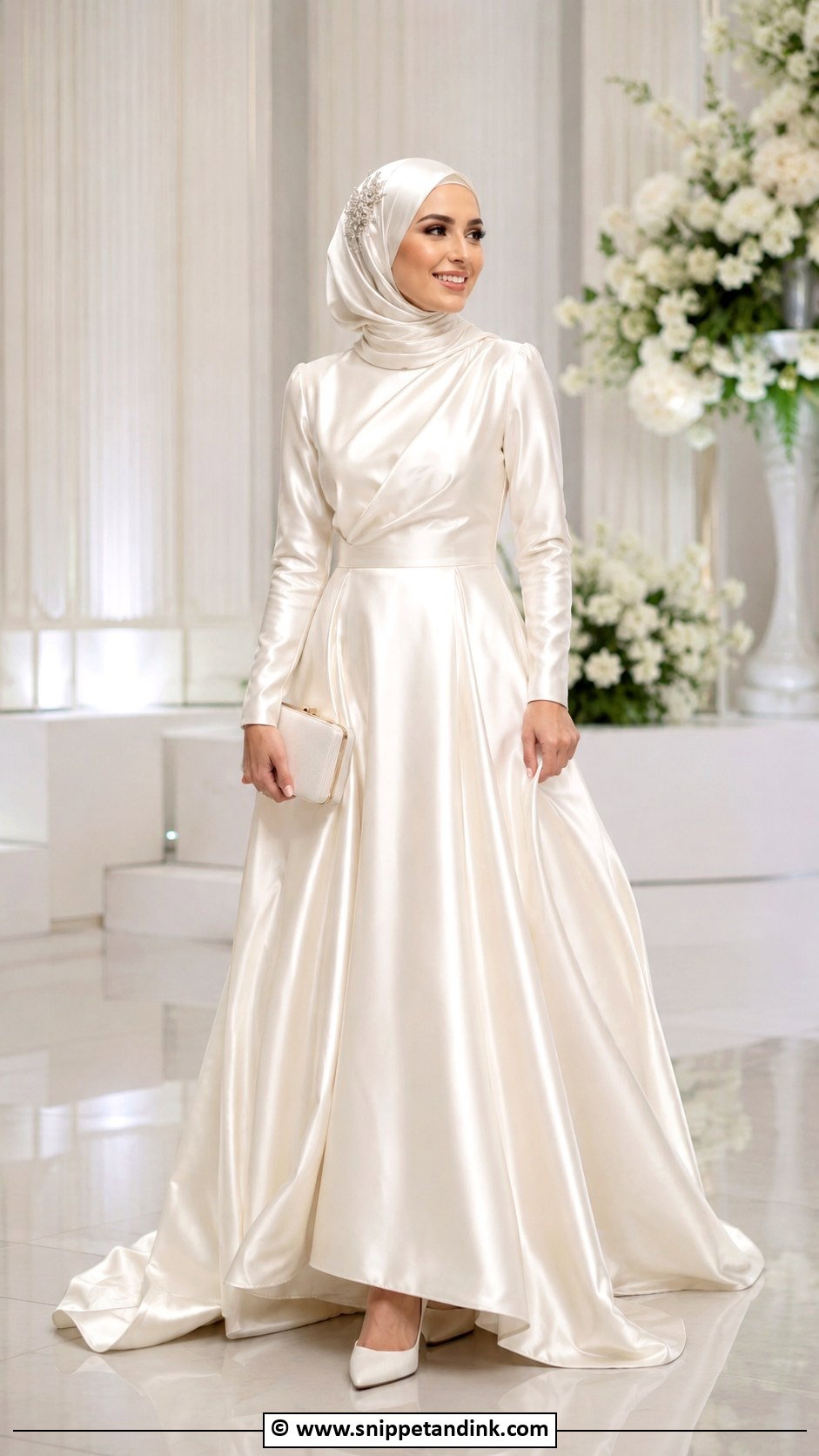
Satin throws light cleanly in photos, but it also creases across the lap the moment you sit for the nikah. I steam it in the room right before the ceremony and ask brides to stand between photo sets. An A-line skirt drops away from the waist and hides those creases better than a fitted cut would. A high neck with fitted long sleeves keeps the line crisp; a bishop sleeve is softer but catches on the bouquet. Match the satin hijab to the dress in daylight, since two whites from different mills rarely agree, then add crystal pins, pointed heels and a structured clutch.
3. Muslim Bride Embroidered Abaya
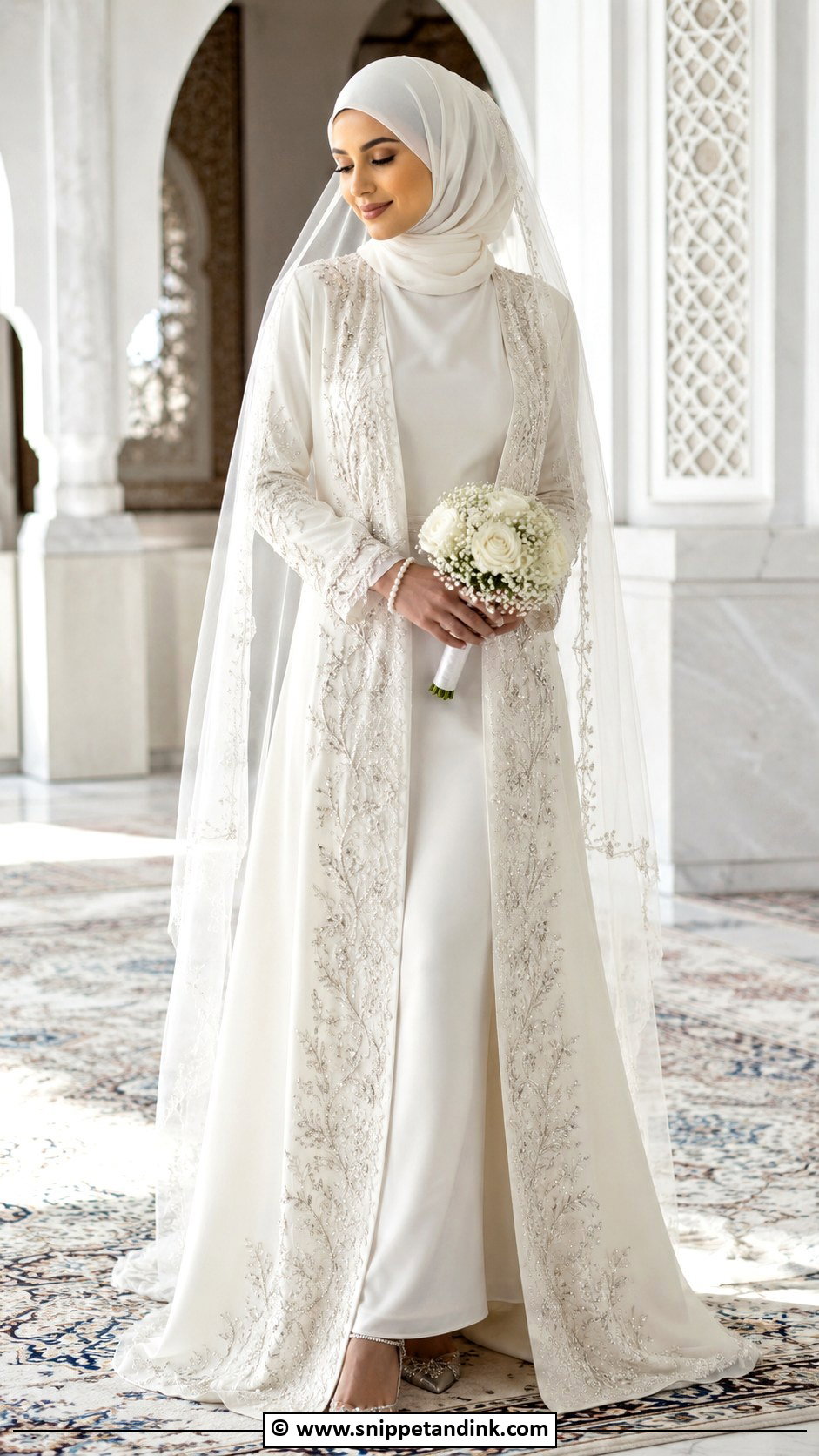
An embroidered abaya gives you two layers to work with: a fitted inner dress for structure and an open outer layer that moves when you walk. The beadwork along the sleeves and hem is where the weight sits, and heavy cuffs slide down over your hands by evening, so I set the sleeve length at the fitting while you hold your bouquet. Ivory, champagne and soft blush all read as bridal. A matching hijab, a light veil and silver or pearl jewelry pick up the shimmer in the embroidery. For a mosque nikah or a small family gathering it feels traditional, and a clean cut stops it looking dated.
4. Muslim Bride White Kaftan
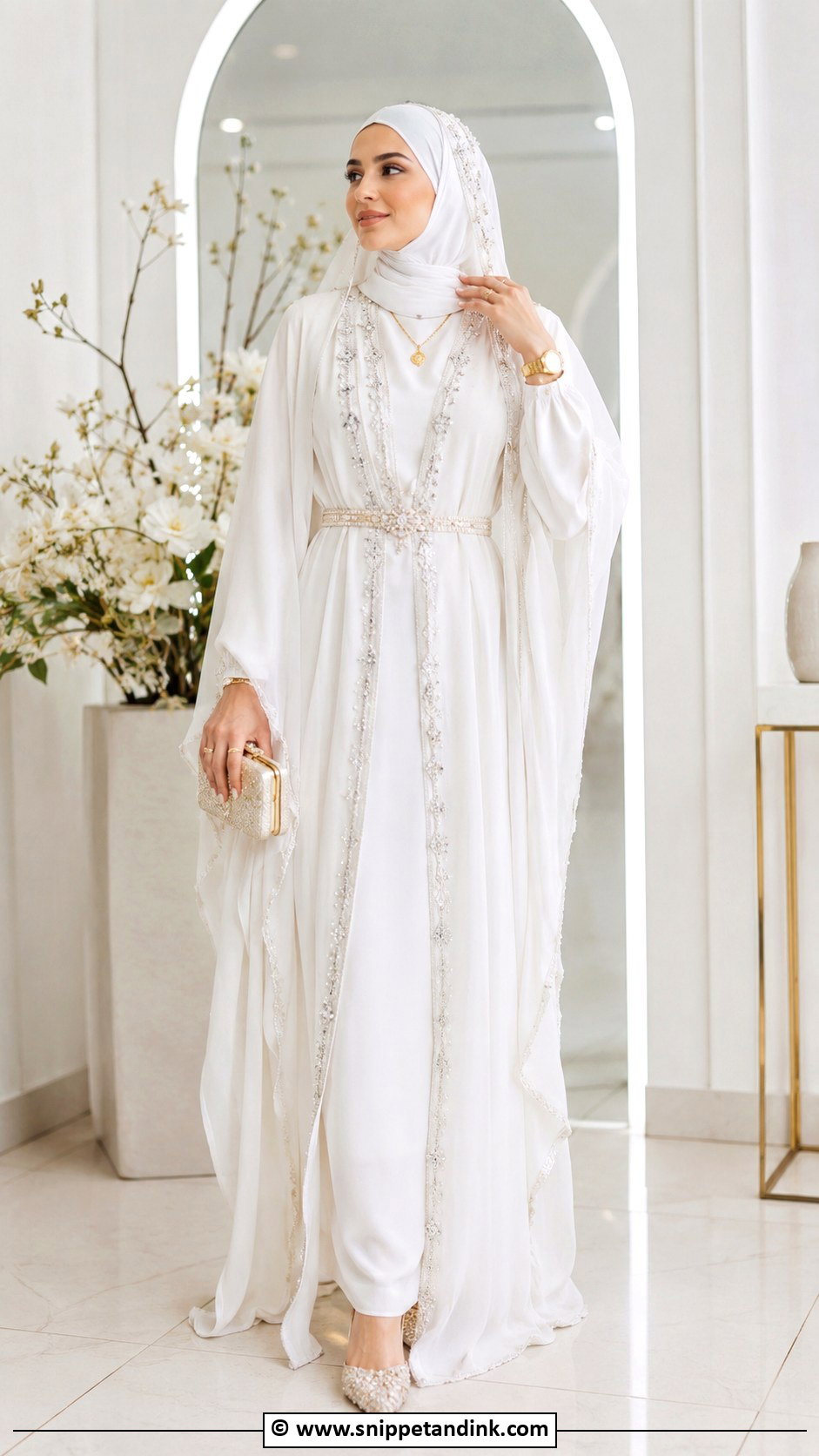
A kaftan does the modesty work through its shape, so every styling decision is about definition. Without a belt or some pleating, a loose white kaftan can look like a robe in wide group photos; with one, it looks regal. I pick the belt at the fitting rather than in the shop, because its height changes how long your legs look. Tuck an ivory hijab neatly at the neck so the embroidered collar stays visible, and let gold jewelry warm the white. On long, multi-event days this is the outfit I suggest most, since nothing pinches when you sit or eat.
5. Muslim Bride Pearl Hijab Gown
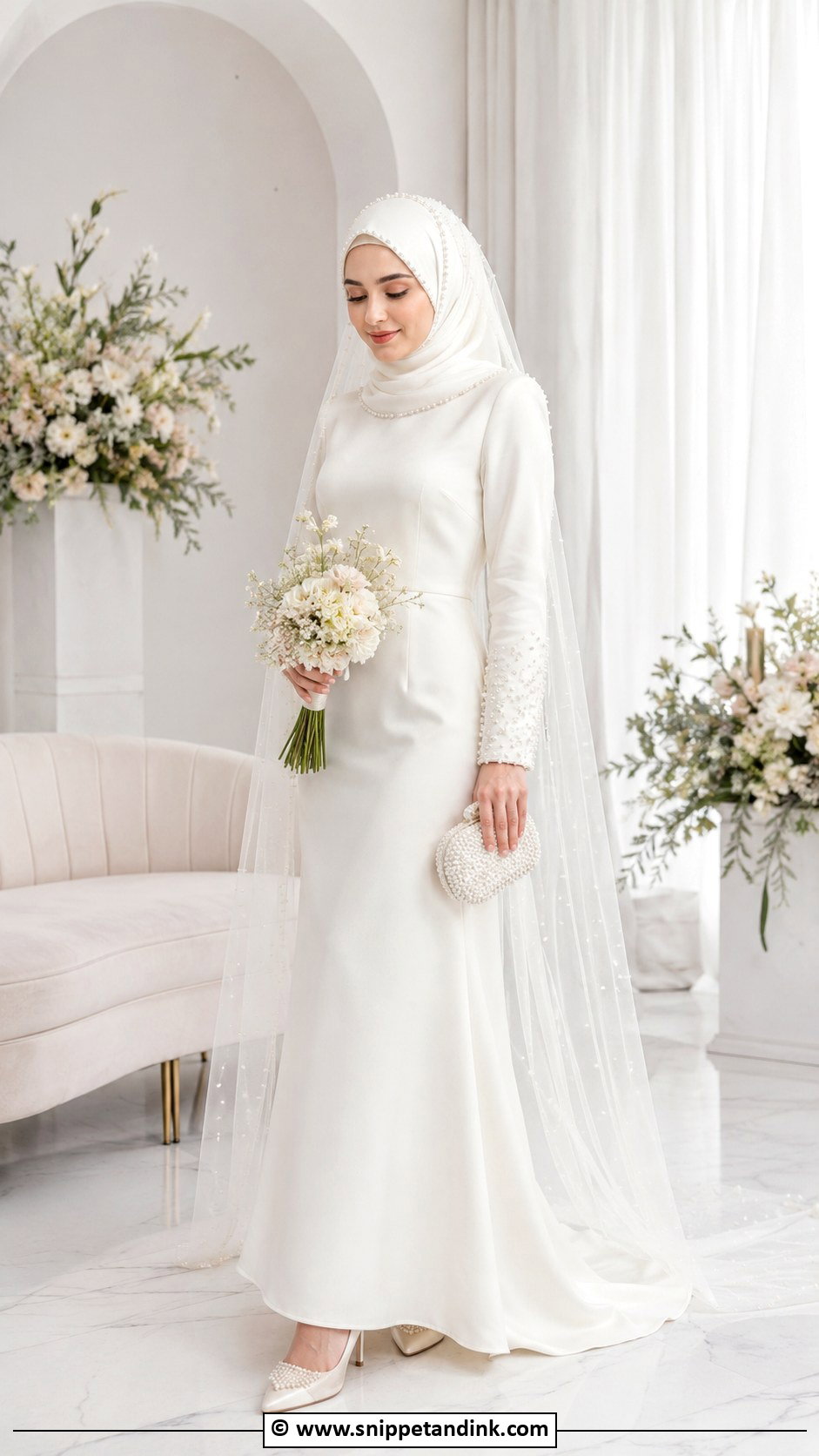
Pearls do their best work near the face. I’d keep the gown plain, high-necked with a straight or A-line skirt, and put the pearls on the hijab edge or a few pins at the temple, where the camera actually looks. One caution: glued pearls on chiffon pull the fabric and pucker it, so sewn trim or pearl pins hold up better. Ivory satin pumps and a small pearl clutch finish the outfit without creating a second focal point.
6. Muslim Bride Long Sleeve Ball Gown
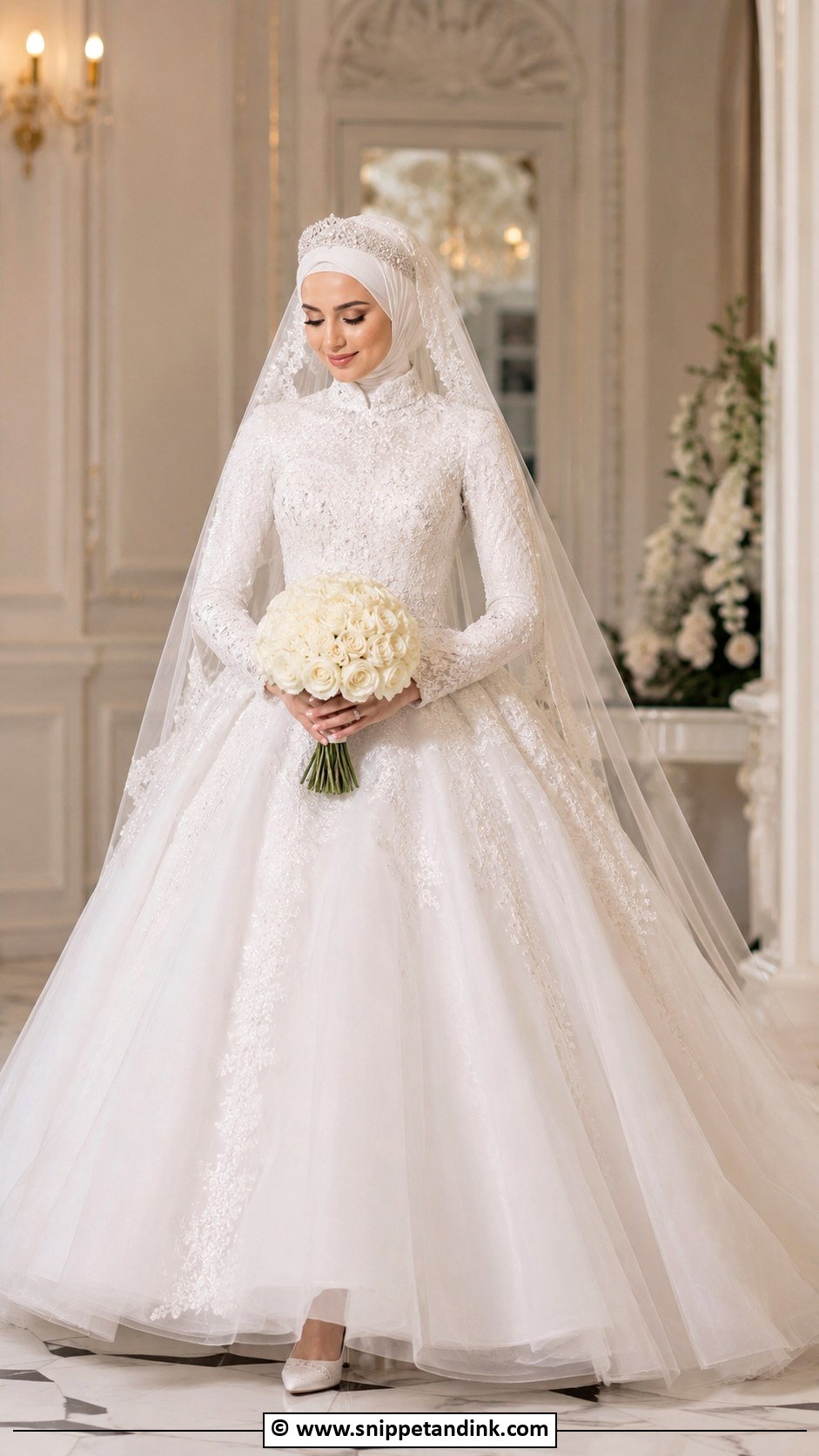
A ball gown is the most physically demanding option on this list. Mikado or layered tulle with a long-sleeved bodice and a petticoat gets heavy, and you feel it by the third hour of greeting guests. Pick the fabric for the skirt shape you want: mikado holds a sculpted line, organza stays crisp, tulle floats. A fitted hijab with a long veil balances the volume, and a tiara or hijab crown keeps the sparkle near your face. I always ask for a bustle and a block heel for ballroom receptions, because stilettos under a heavy skirt make for a long night.
7. Muslim Bride Modest Mermaid Dress
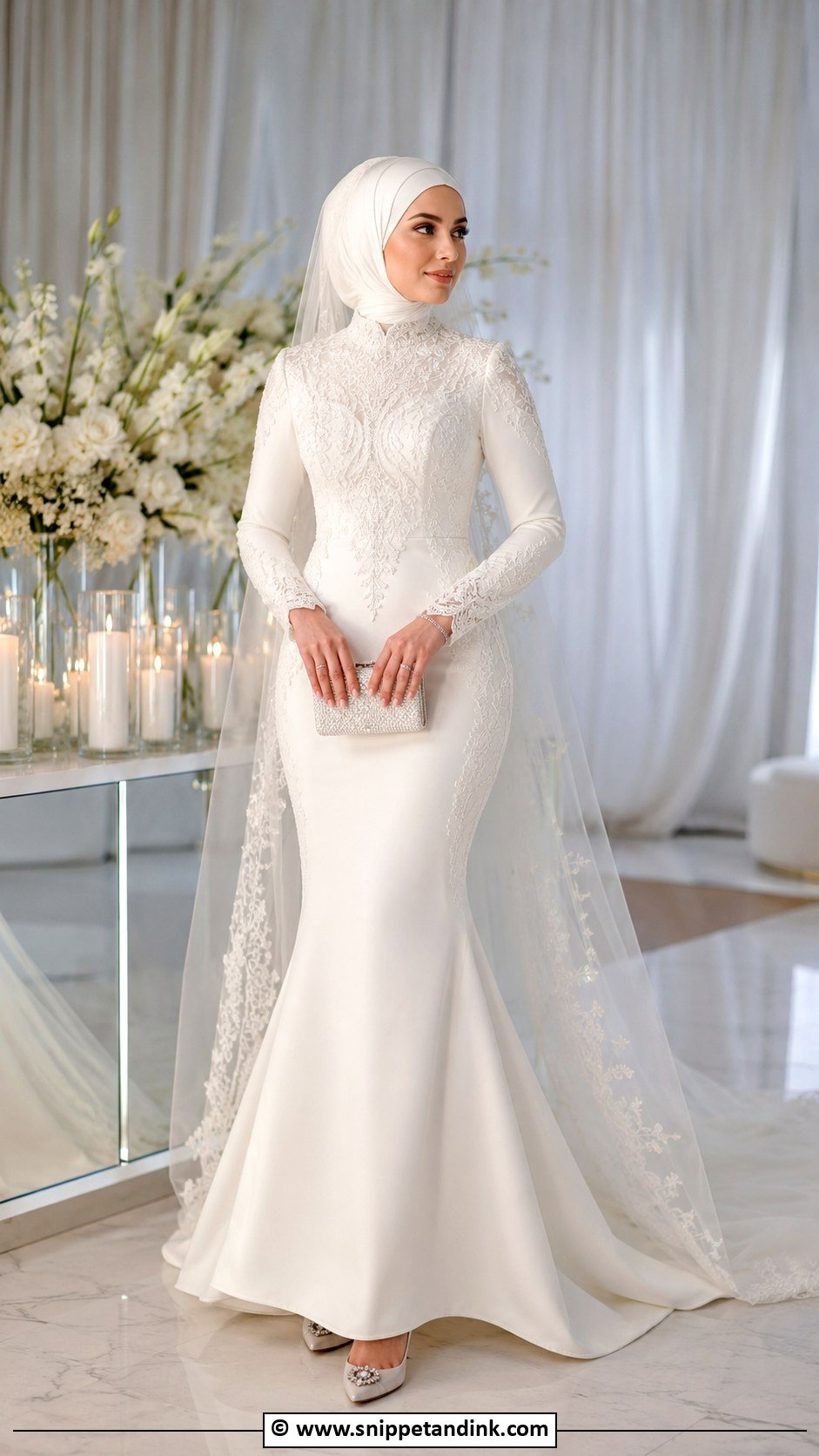
Modest mermaid cuts fail at the knee, not the hip. If the flare starts too high, you can’t climb stage steps or sit on a low sofa without hitching the skirt. At the fitting I ask brides to sit, climb a step and kneel, then set the flare point from that. Lace, crepe and satin all hold the shape. Because the silhouette is already strong, a smooth hijab in matching fabric, plain heels and a minimal clutch are enough, and a long veil softens the fitted line for formal receptions.
8. Muslim Bride Cape Wedding Dress
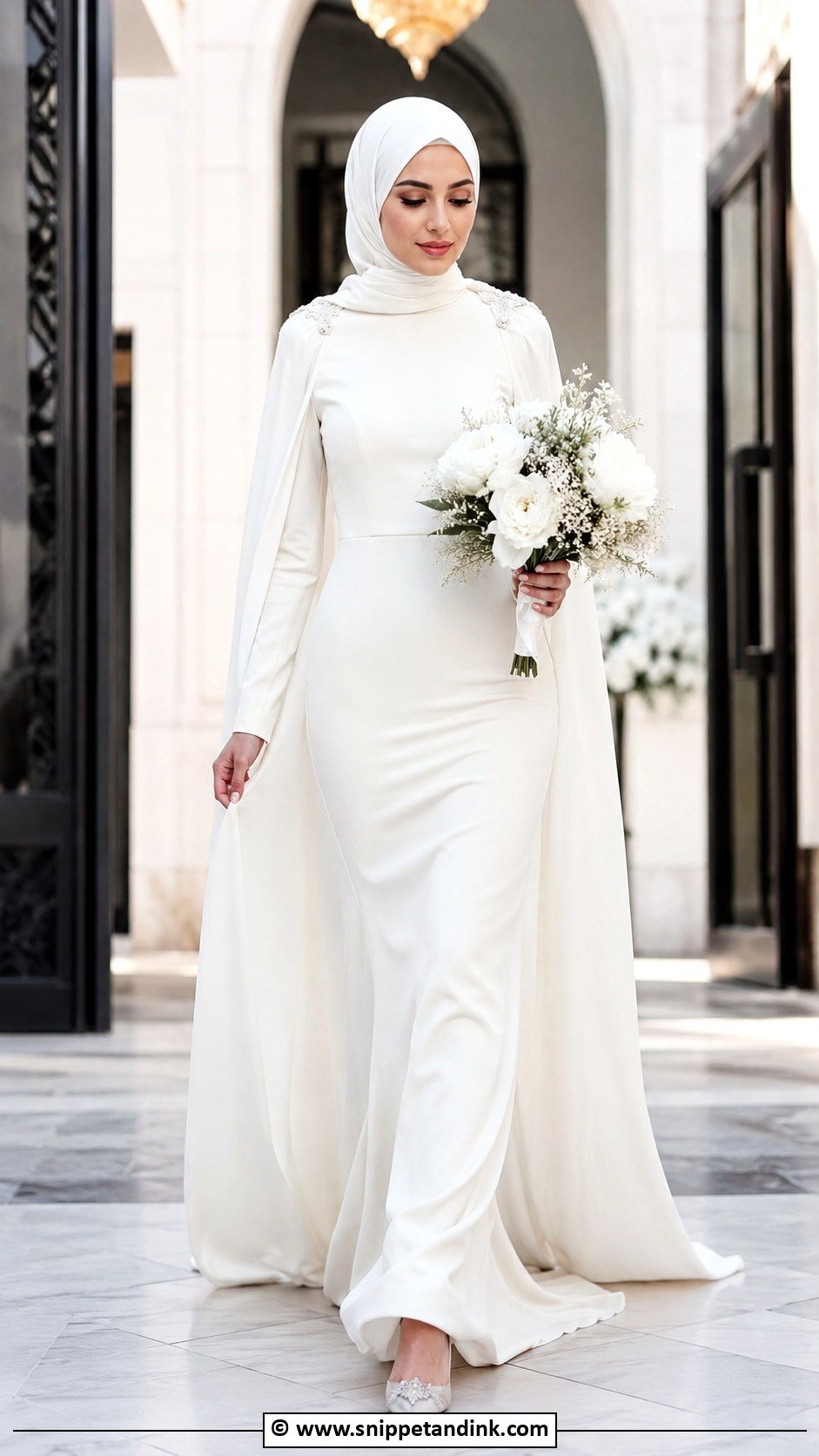
A cape takes over the veil’s job of adding coverage and movement, so the hijab underneath can stay simple. It can fall from the shoulders, attach at the neckline or flow from the back of the gown, and each one moves differently. Shoulder capes swing beautifully in walking shots but slide off unless the seam is anchored with a hidden snap or thread loop, which I ask the seamstress to add. Keep the dress underneath plain so the cape stays the feature, pin a chiffon or satin hijab neatly at the neck, and stop at crystal heels and soft makeup. If you’re planning lots of walking portraits, few options here reward you more.
9. Muslim Bride Ivory Lehenga
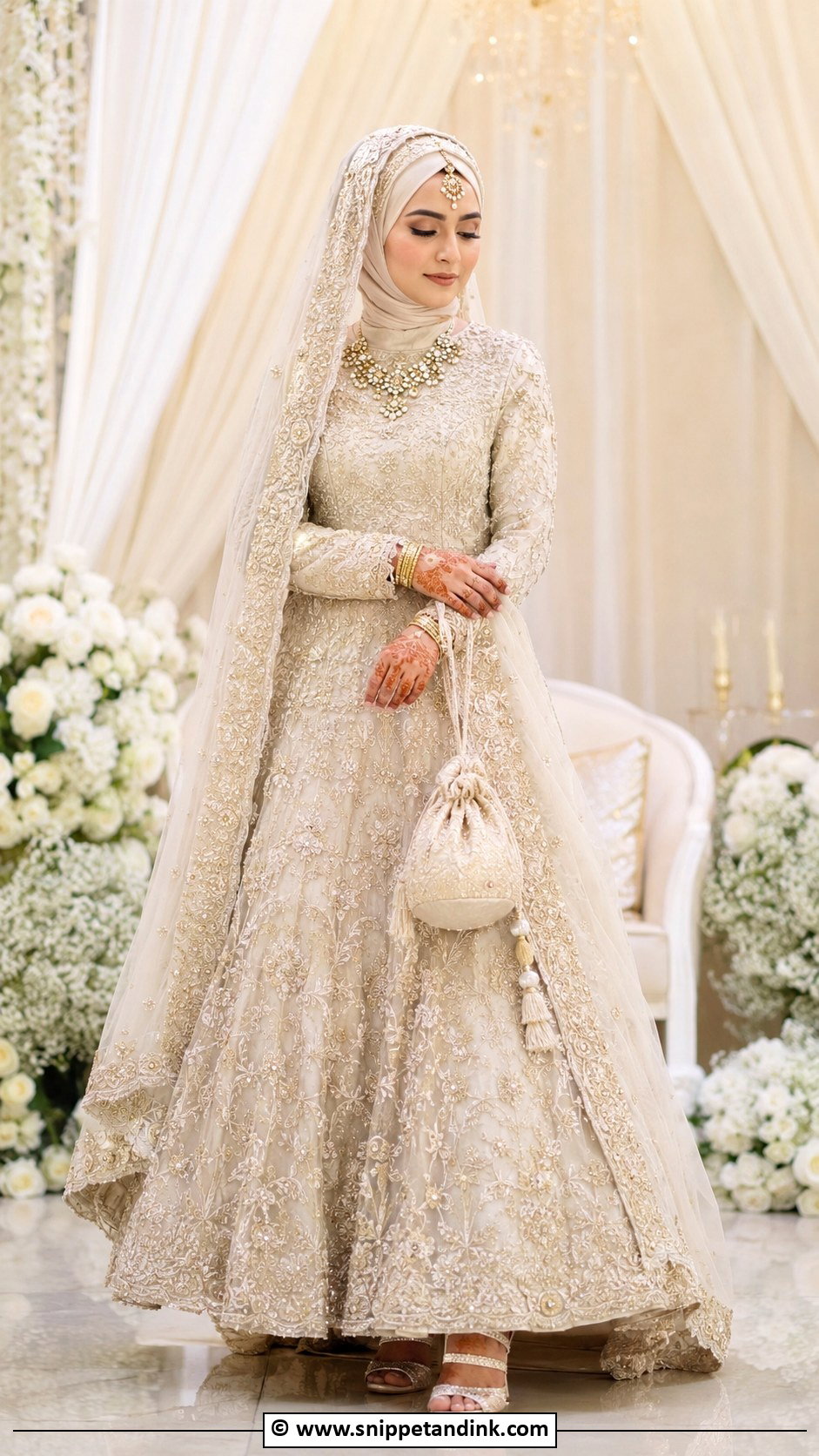
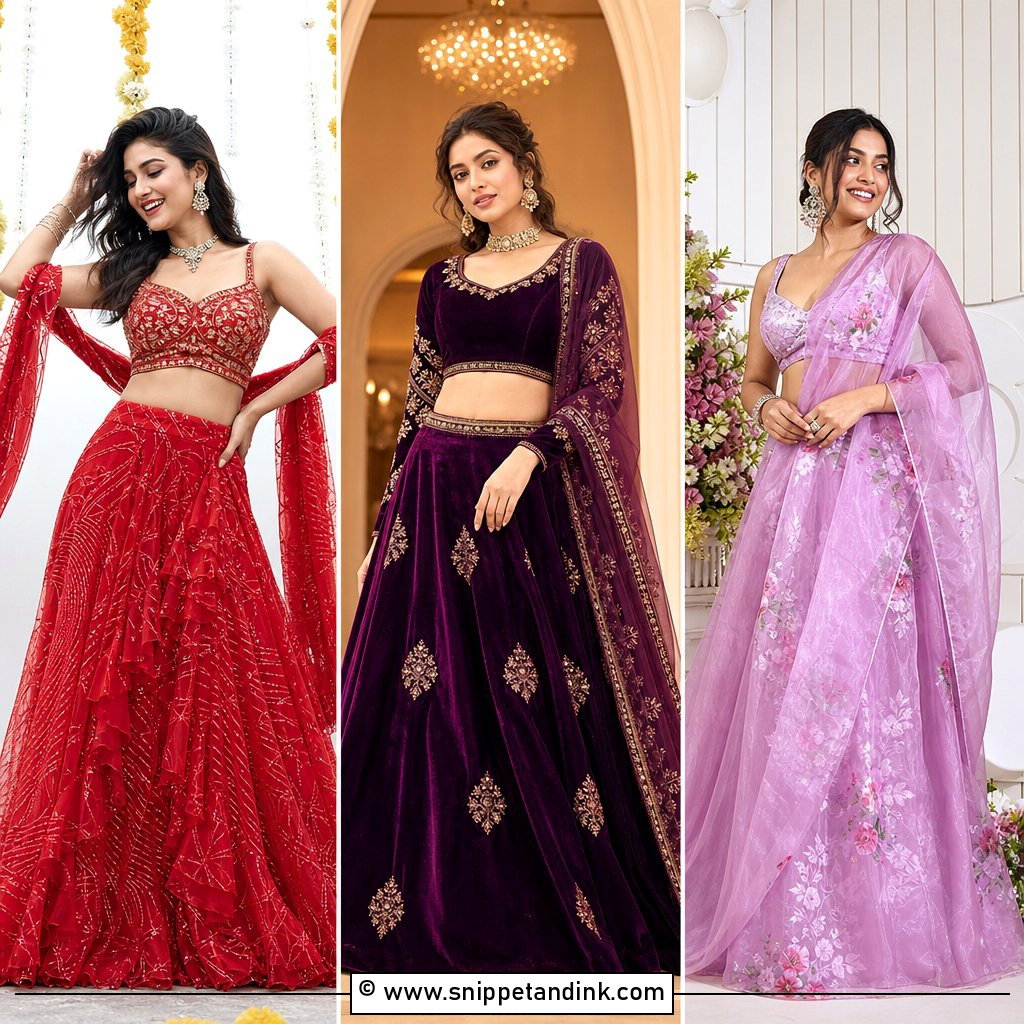
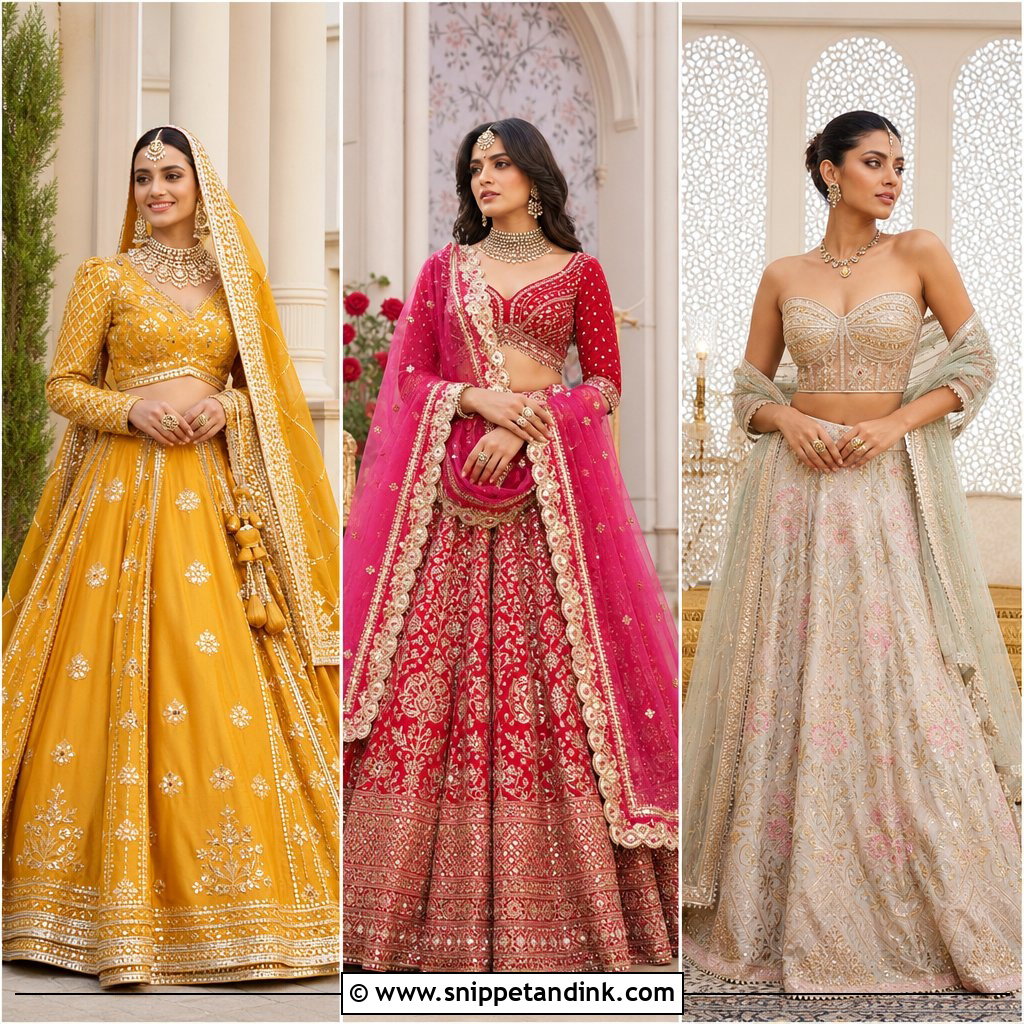
An ivory lehenga gives South Asian brides the craftsmanship of a traditional outfit in a softer palette. I ask for the blouse to be cut long, with full sleeves and a high neck, because a standard lehenga blouse leaves a gap at the waist that the dupatta can’t reliably cover once you start moving. Zari work on ivory can look grey in shade, so check the embroidery outdoors before you commit. Drape the dupatta over the hijab for the ceremony and pin it to the shoulder for the reception. Kundan jewelry, bangles and a small potli bag finish it for a nikah, walima or reception.
10. Muslim Bride Red Lehenga
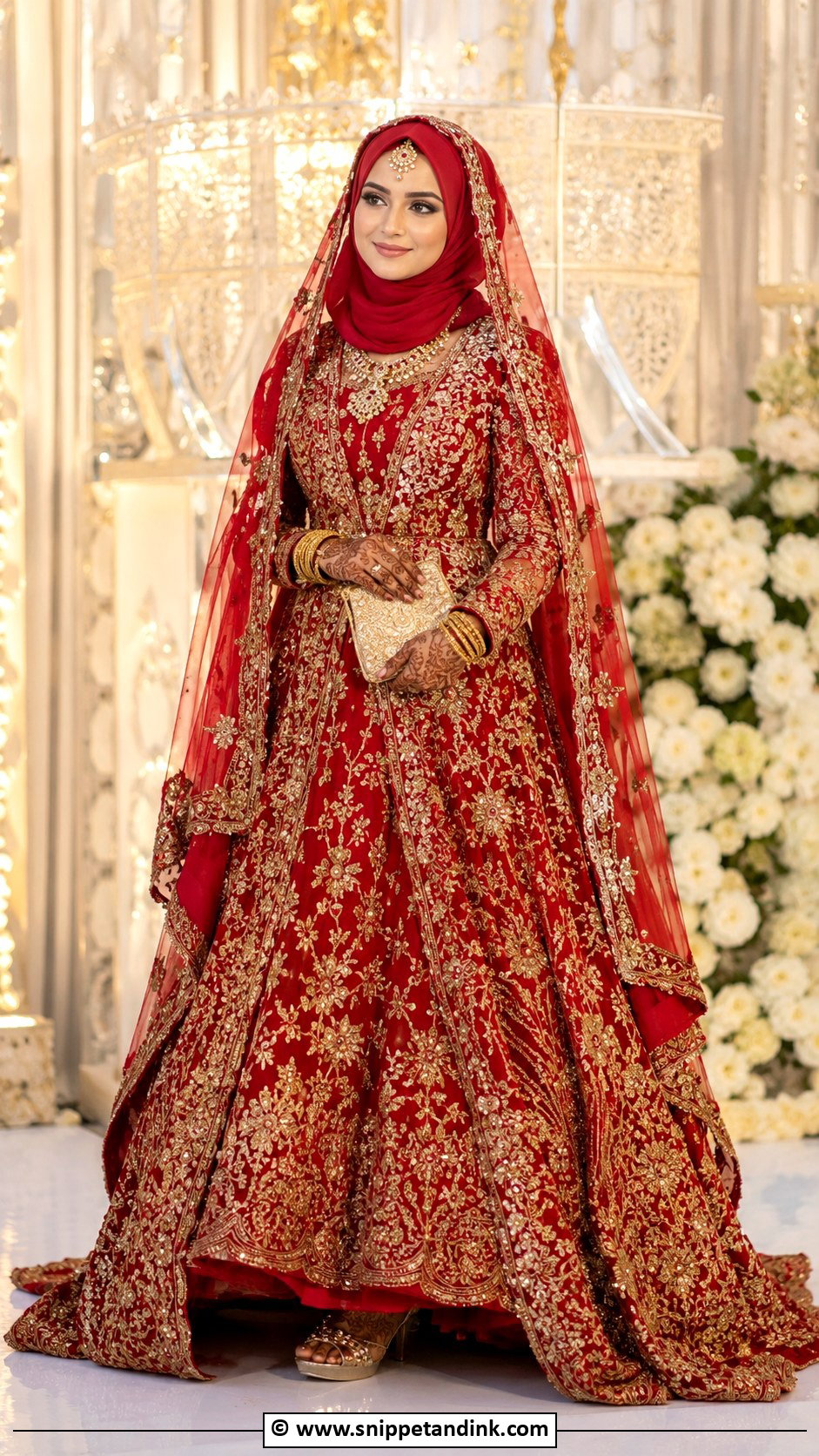
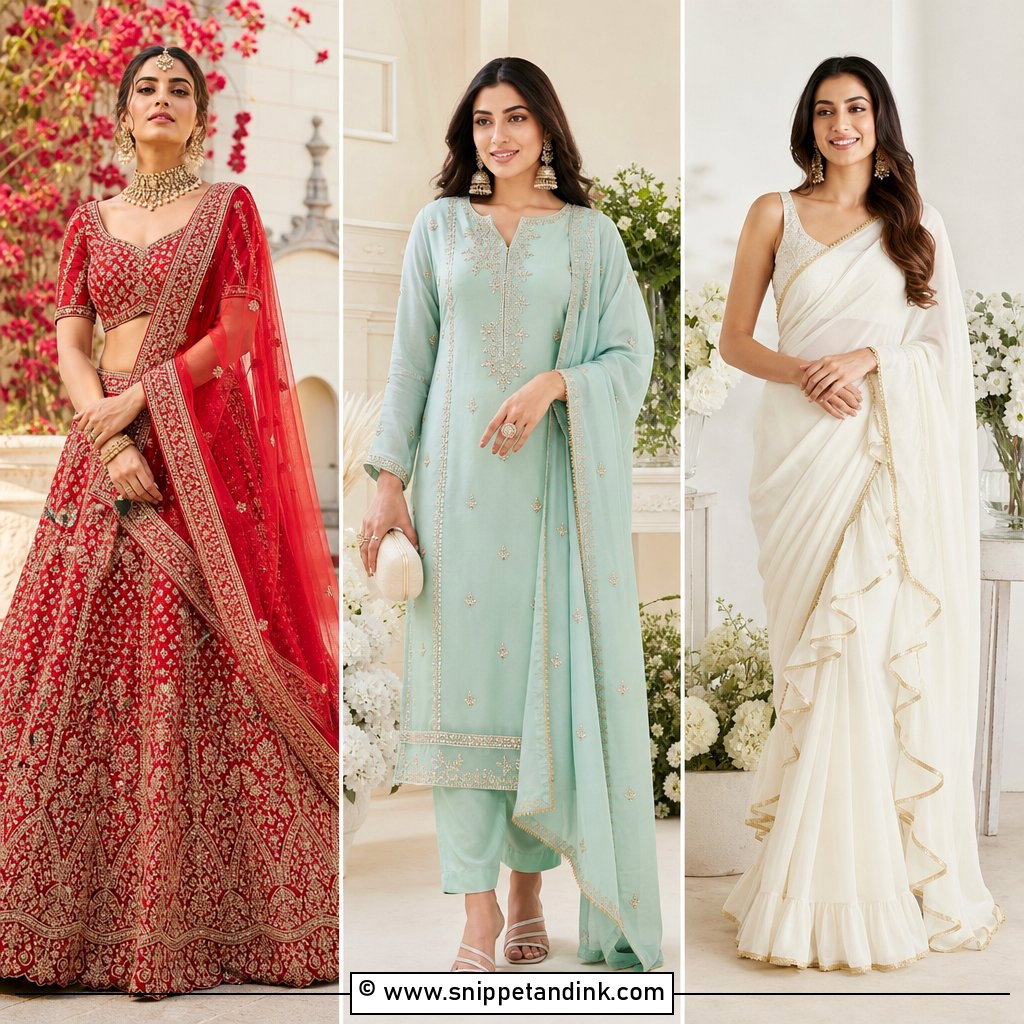
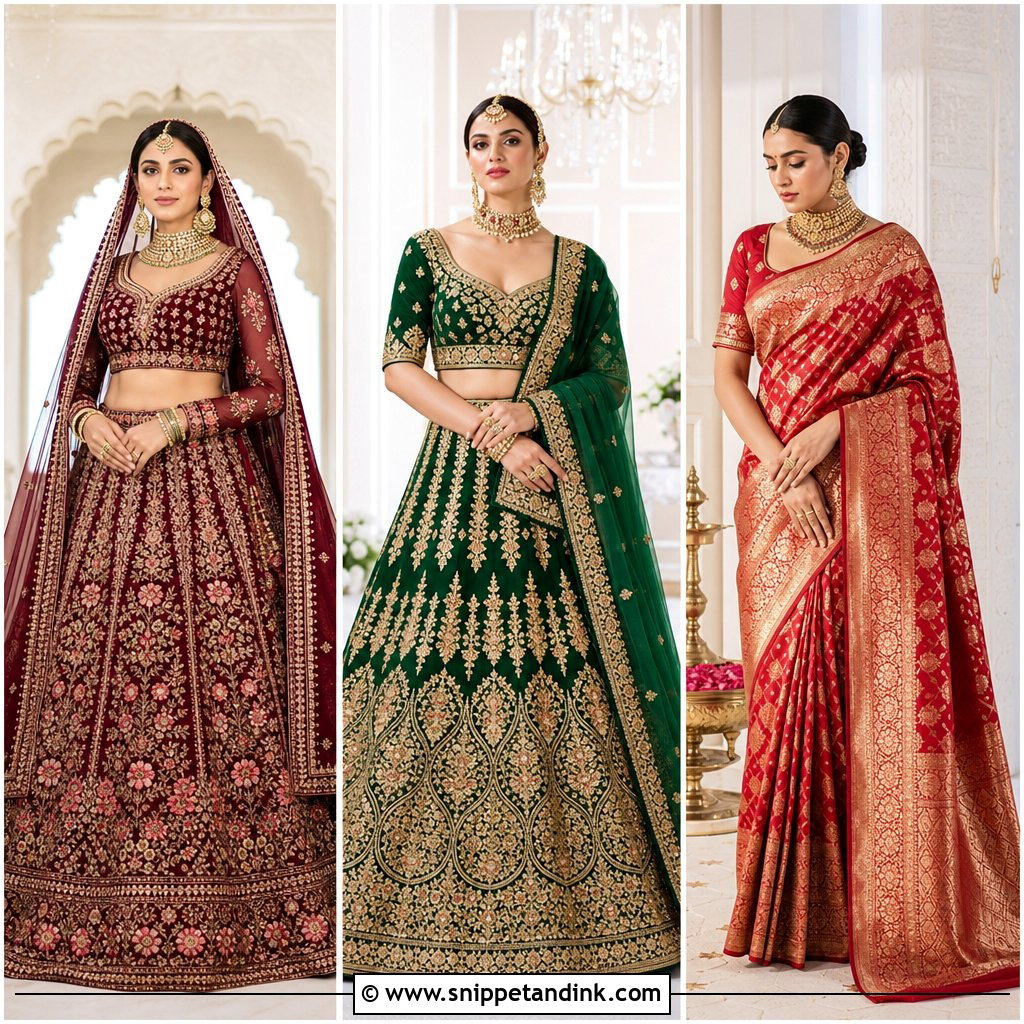
Red with gold embroidery is the classic South Asian bridal choice, and the weight is real: a heavily worked lehenga skirt is a lot to carry through a long evening. I check the can-can and waistband at the fitting, because those decide how you feel at hour five. A long-sleeve blouse keeps coverage, and a red or gold-toned hijab under a matching dupatta holds the outfit together. Gold jewelry and bangles belong here. With embroidery this busy, keep the makeup soft and let the outfit carry the color.
11. Muslim Bride Green Nikkah Outfit
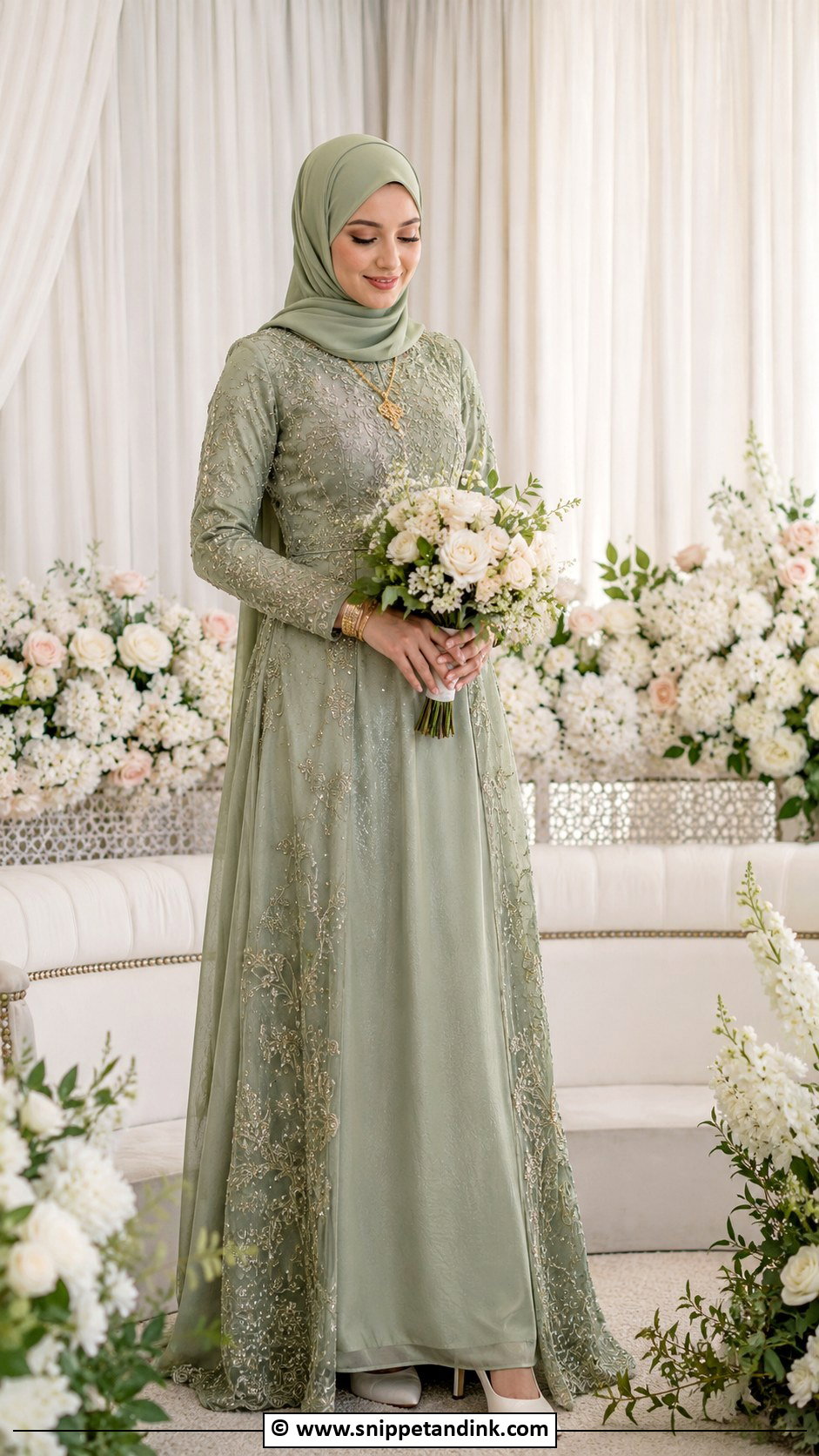
A green nikkah outfit brings color to the ceremony without the intensity of red. Sage and pistachio suit daytime light, while emerald and olive look richer at night but can turn almost black in a dim mosque interior, so test it with a phone photo indoors. A modest maxi, embroidered abaya or long tunic with a flowing skirt all work. I often pair green with an ivory hijab instead of a matching one, because a strong green right against the face can drain warm skin. Gold jewelry and a small white or cream bouquet finish it for a daytime nikah.
12. Muslim Bride Gold Reception Dress
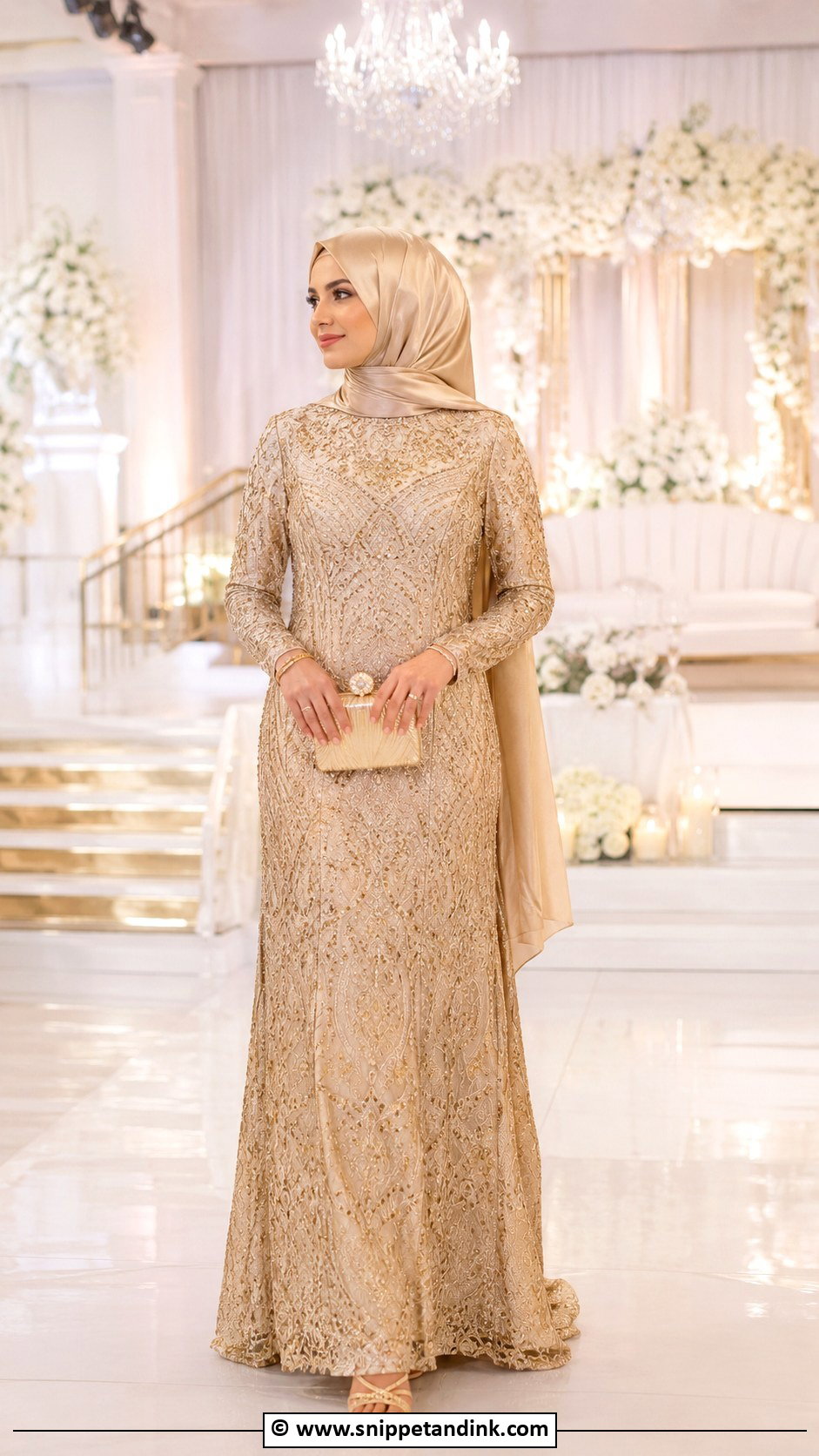
Gold reflects whatever light the hall throws at it, so the shade matters more than the embellishment. Champagne and antique gold look refined under warm reception lighting; bright yellow gold can turn brassy in flash. A long-sleeve gown with beadwork or sequins brings enough sparkle that you need very little jewelry. Keep the hijab smooth satin or chiffon, and if the dress is heavily worked, choose a light, plain veil. Gold heels and a structured clutch are all it needs for an evening walima.
13. Muslim Bride Blush Pink Dress
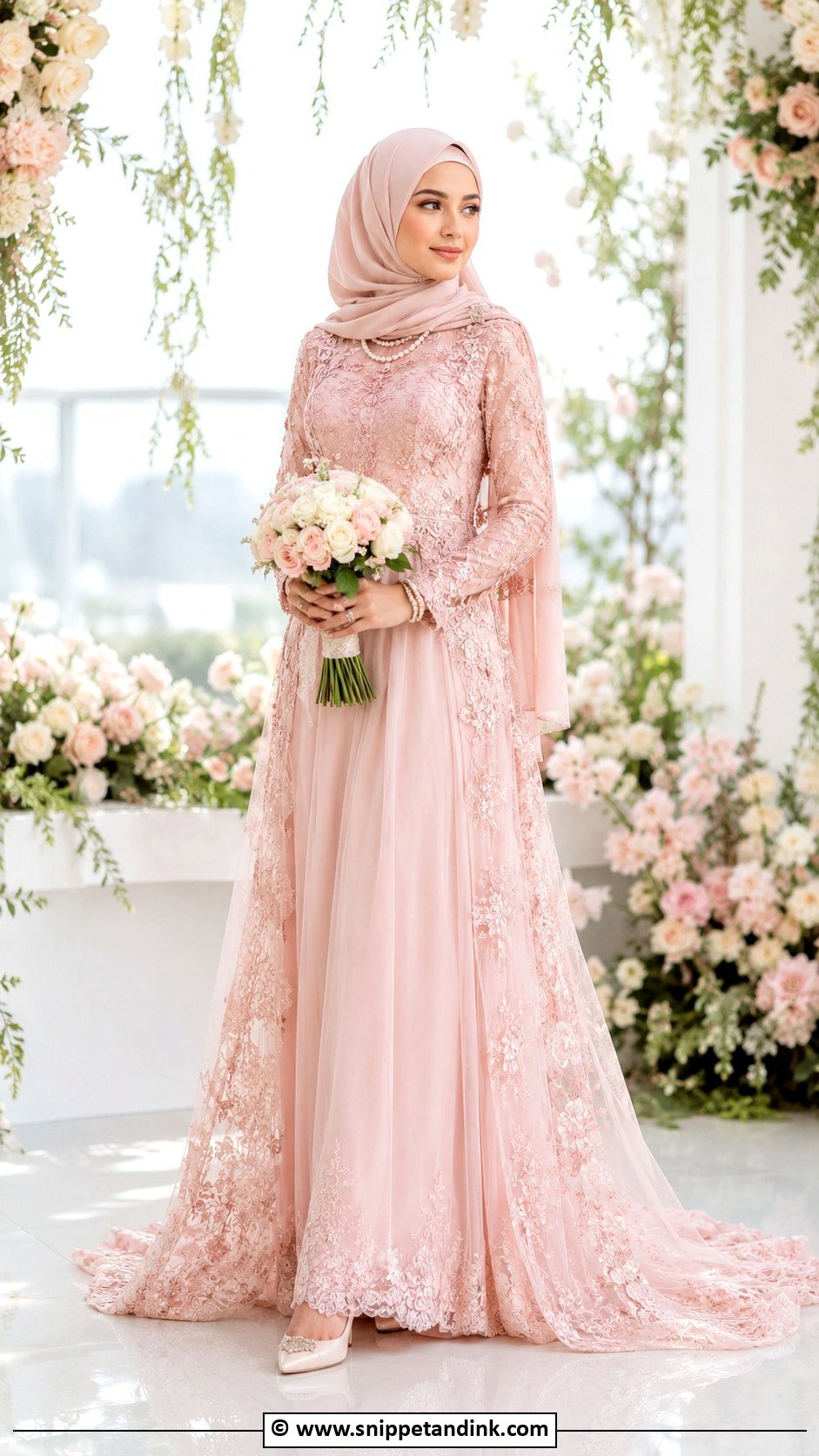
Blush is trickier than it looks on a hanger. Some blush fabrics wash out to beige in photos and others go noticeably pink under warm lamps, so I hold the fabric against your face in both daylight and indoor light before you order. Lace sleeves, floral embroidery or a chiffon skirt keep the gown soft. A hijab one shade lighter than the dress usually flatters more than an exact match. Ivory heels, pearl jewelry and rose-toned makeup tie it together for spring weddings and garden nikahs.
14. Muslim Bride Champagne Gown
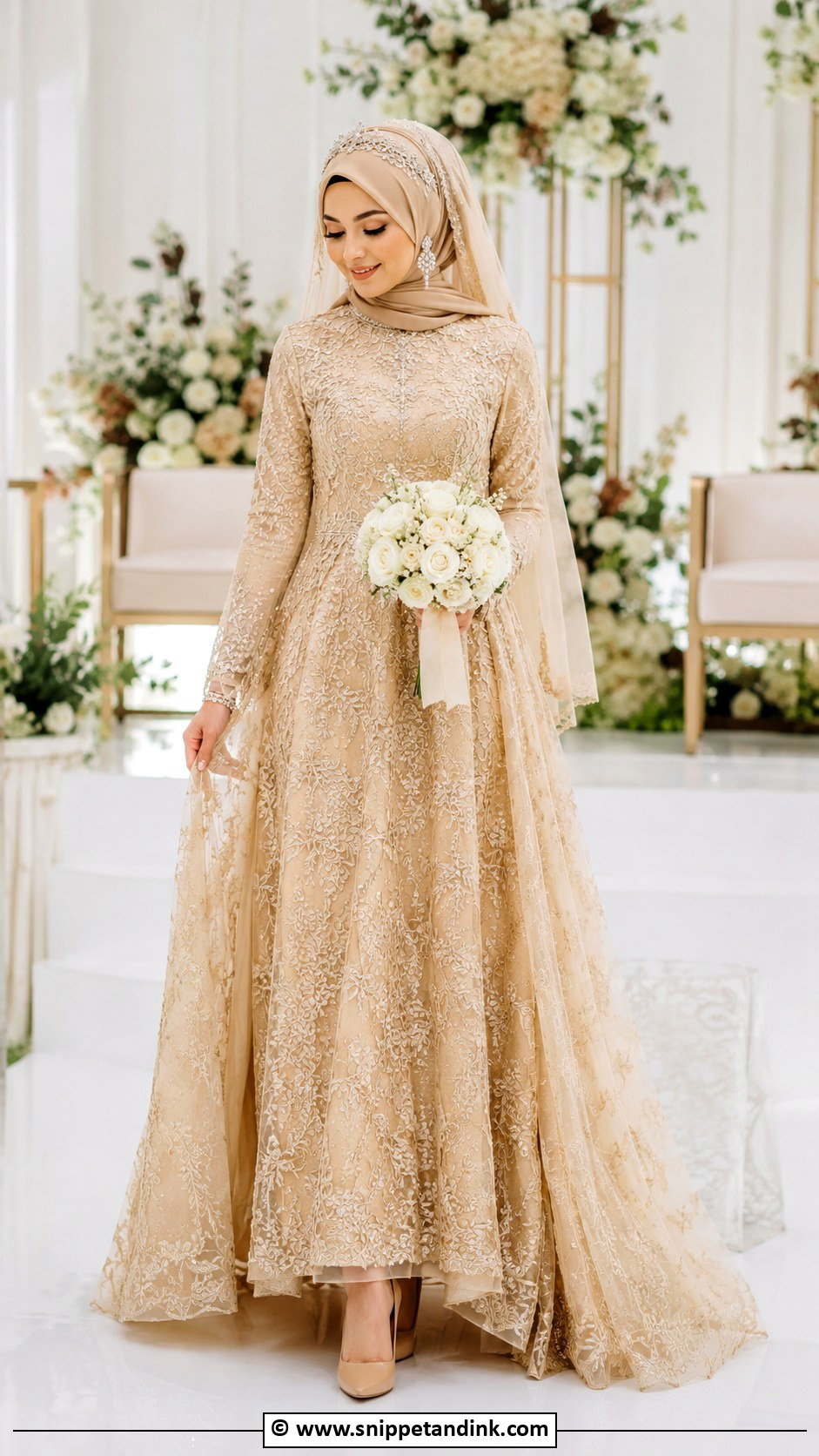
Champagne is the shade I reach for when pure white fights a bride’s skin tone; its warmth flatters olive and deeper complexions. A high-neck gown with soft embroidery, satin sleeves or a tulle skirt keeps it bridal. Order the hijab from the same bolt if the shop allows it, because champagne varies a lot between suppliers and a mismatch shows right under the chin. Gold jewelry adds warmth and crystal cools it down. Since it suits both the nikah and the reception, it’s a sensible single-outfit choice.
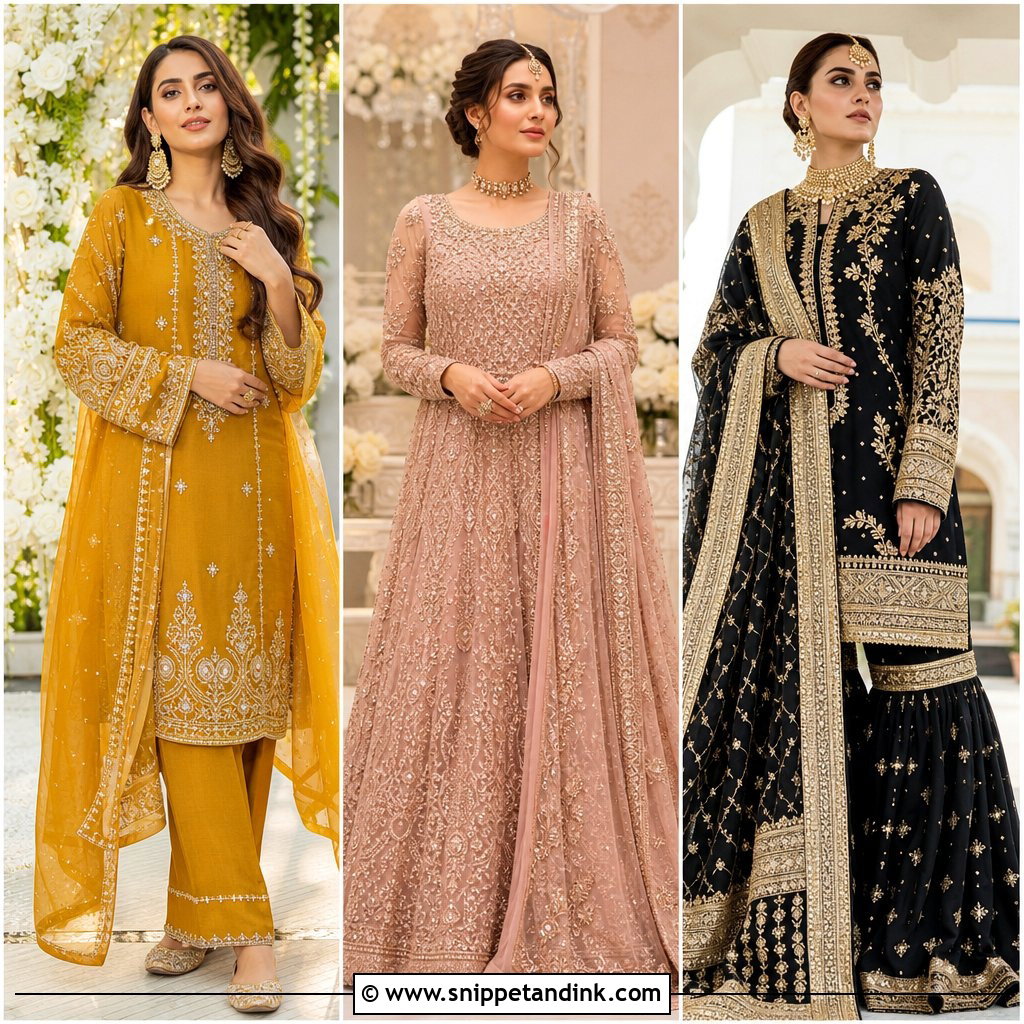

15. Muslim Bride Simple Nikkah Dress
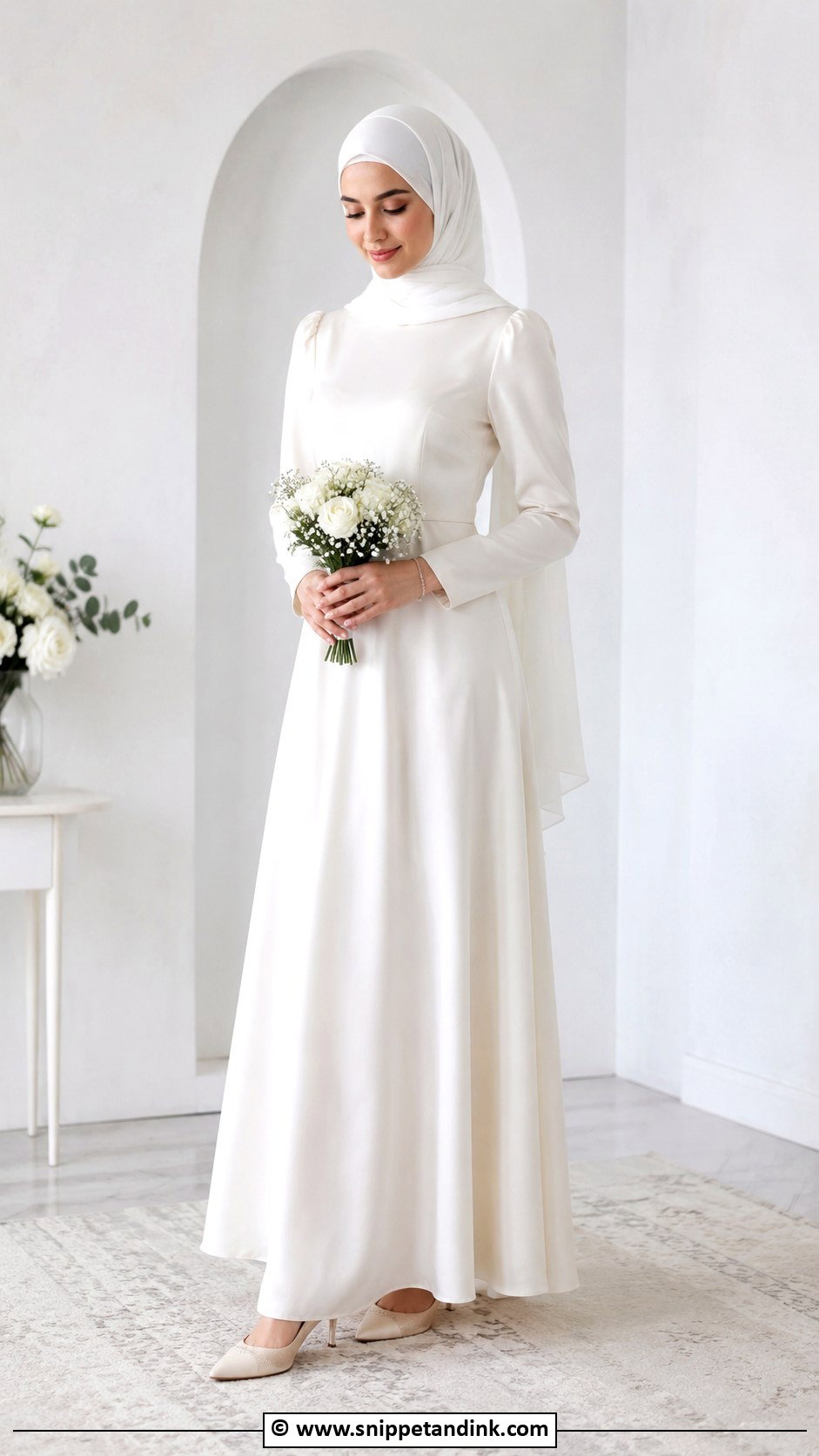
A simple dress puts all the attention on fit and fabric, so I spend the fitting time on the sleeves and hem. A white, ivory or pastel maxi with long sleeves and a modest neckline is the base, and soft pleats or subtle lace make it feel like an occasion. Close-up nikah photos tend to focus on hands, the ring and the signing, so a delicate bracelet earns its place more than a necklace. If the ceremony is in a mosque you’ll probably take your shoes off, so pick a low pair without buckles. A plain hijab and a small bouquet complete it, at a home nikah or a courthouse alike.
16. Muslim Bride Beaded Gown
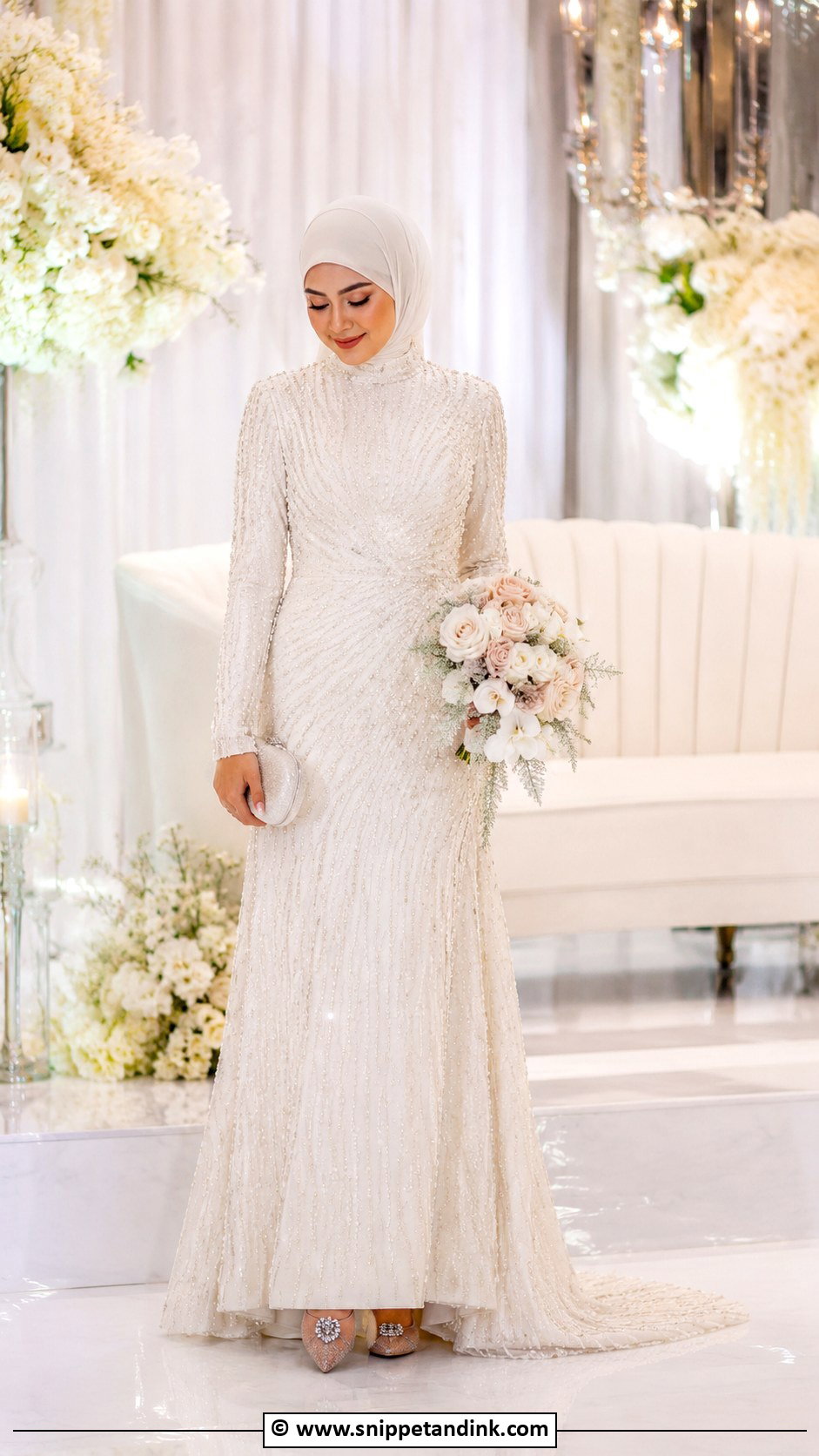
Beading adds weight in exact places, and that changes how a gown hangs. Dense beading on the bodice can drag a lightweight skirt, so I look at the gown on the body, not just the hanger, and ask about extra internal support if the seams pull. Keep the silhouette simple when the beadwork is busy, and let a plain matching hijab give the eye somewhere to rest. Beads snag chiffon veils, so I keep the veil ending above the heaviest zone or choose a tightly woven tulle. Crystal heels and soft makeup are enough for an evening walima.
17. Muslim Bride Tulle Skirt Dress
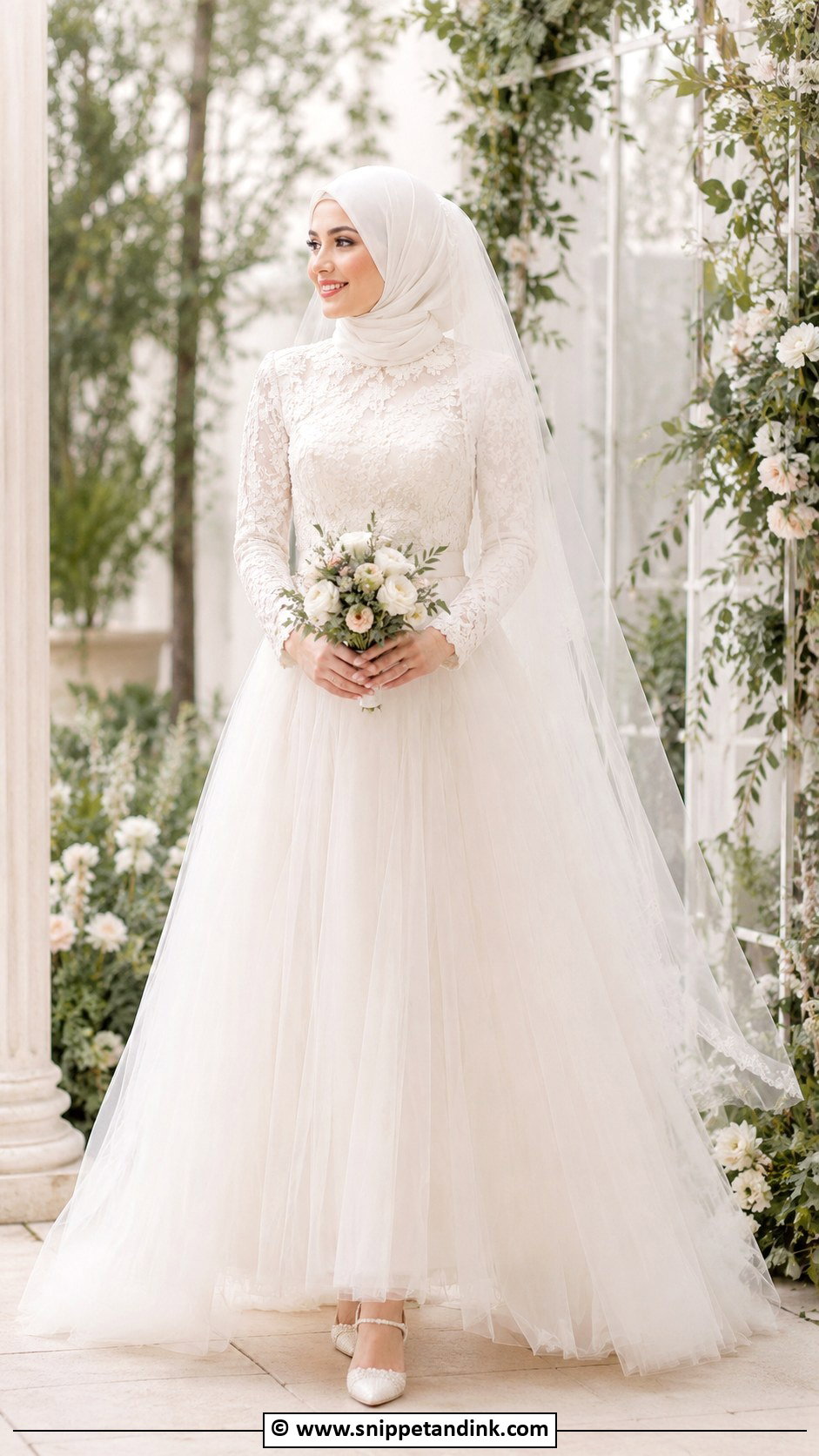
Tulle gives volume without the weight of a ball gown, which suits brides who want the fairytale outline but will be on their feet a lot. A modest bodice with long sleeves and light lace keeps the top tidy. Chiffon is the right hijab fabric here because it shares the softness; satin can look heavy above all that air. The thing I warn about is static: in dry, heated winter venues tulle clings to itself and to tights, and a light anti-static spray on the underlayers solves it. Pearl shoes and a delicate veil finish the look.
18. Muslim Bride Velvet Dress
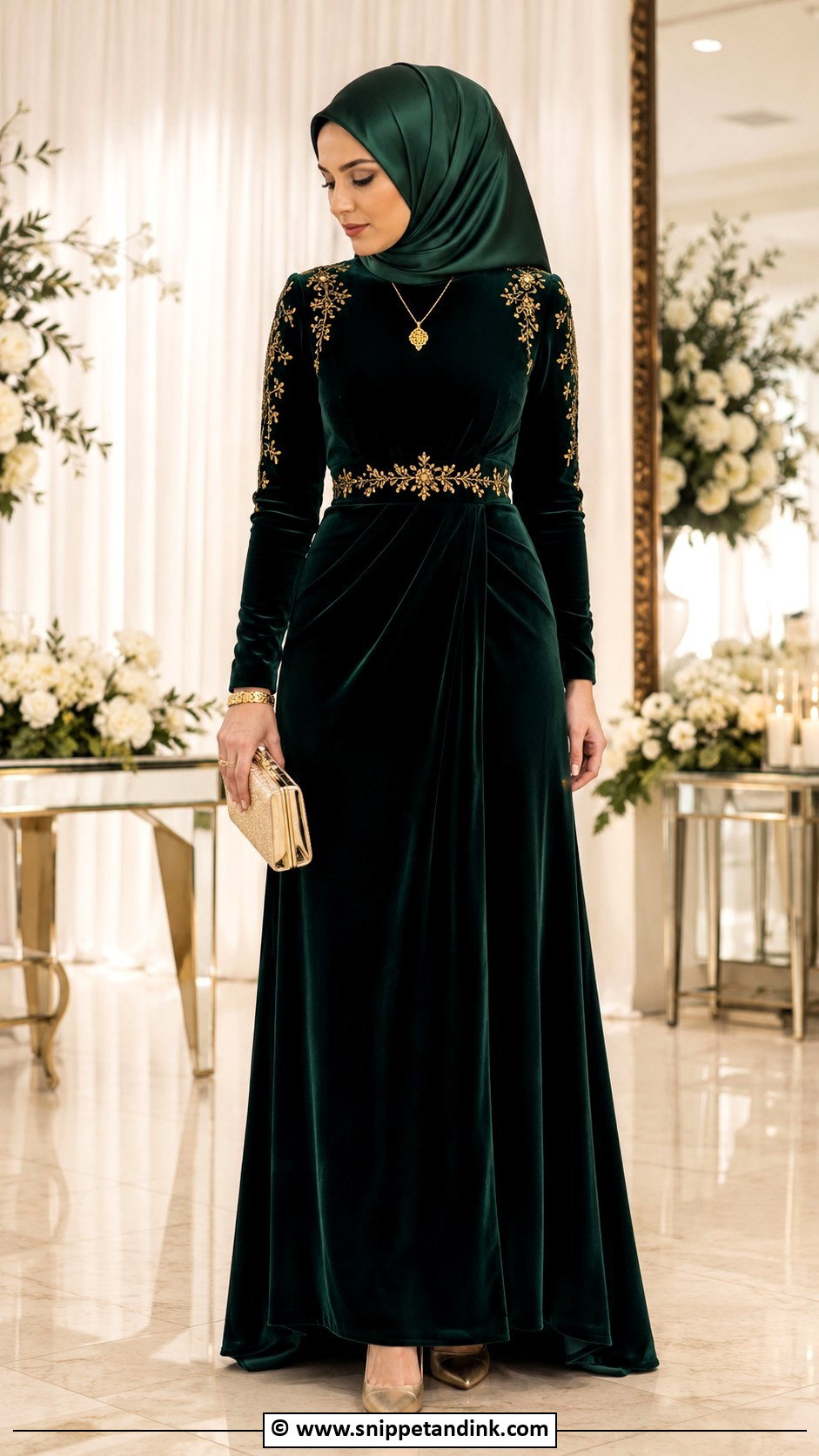
Velvet is a cold-weather fabric, and I’d only suggest it for autumn or winter dates. Ivory, emerald, burgundy, navy and deep champagne all take on a soft sheen because the pile catches light differently from each angle. It crushes where you sit or where a bouquet presses against it, so any touch-ups should be done with a steamer held off the fabric, never an iron. A satin or chiffon hijab gives contrast so the outfit doesn’t feel heavy, and closed-toe heels and gold jewelry suit the season.
19. Muslim Bride Floral Embroidered Dress
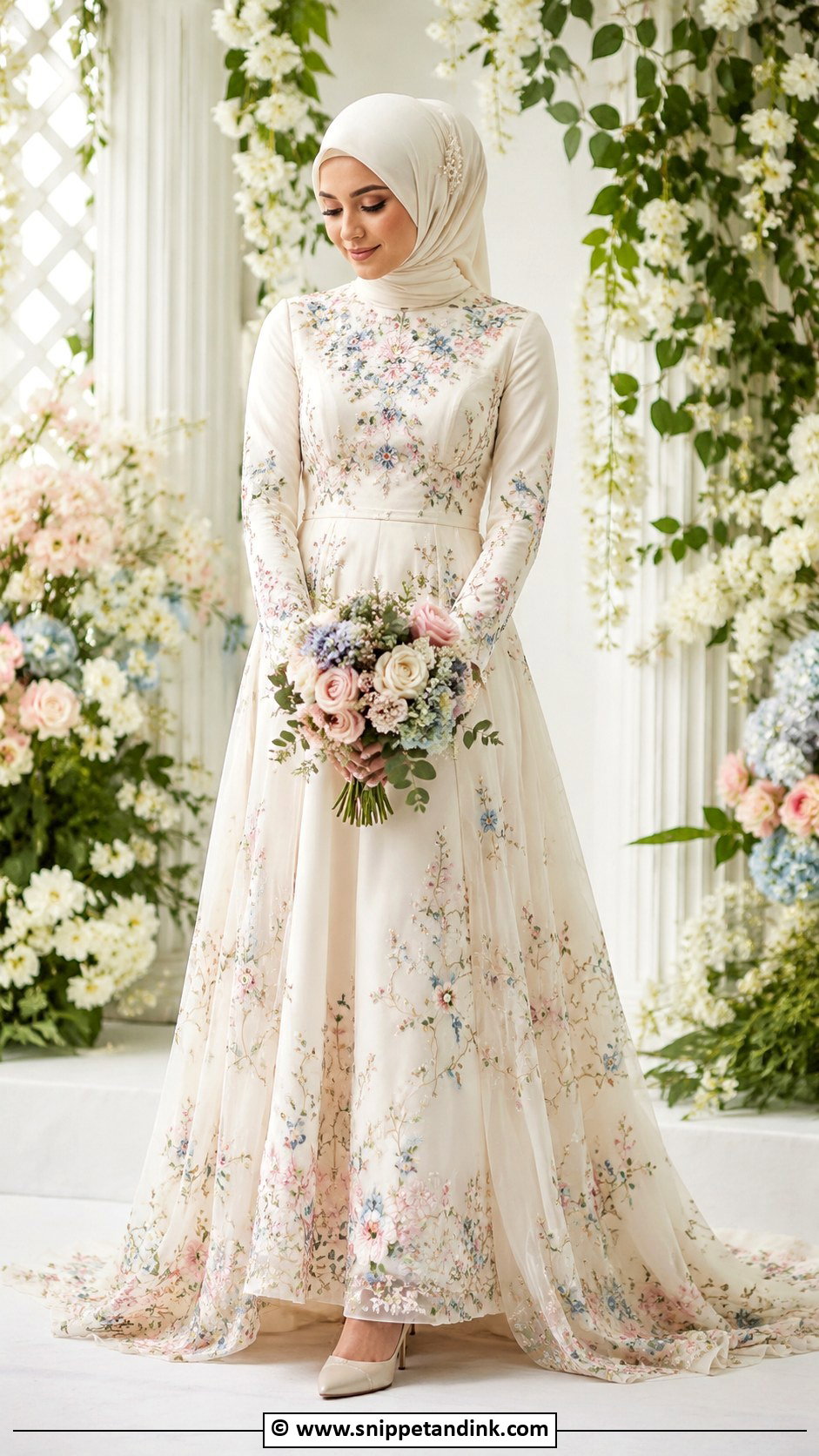
Floral embroidery carries its own detail, so I keep the hijab plain and let one thread color guide everything else. Pull that color into the bouquet and the pins and the outfit looks planned rather than busy. The cut can be A-line, straight or slightly flared as long as the sleeves and neckline cover fully. Pastel thread on white can disappear in bright sun, so check the embroidery outside before buying. It suits spring and summer weddings, with simple heels to keep it from looking casual.
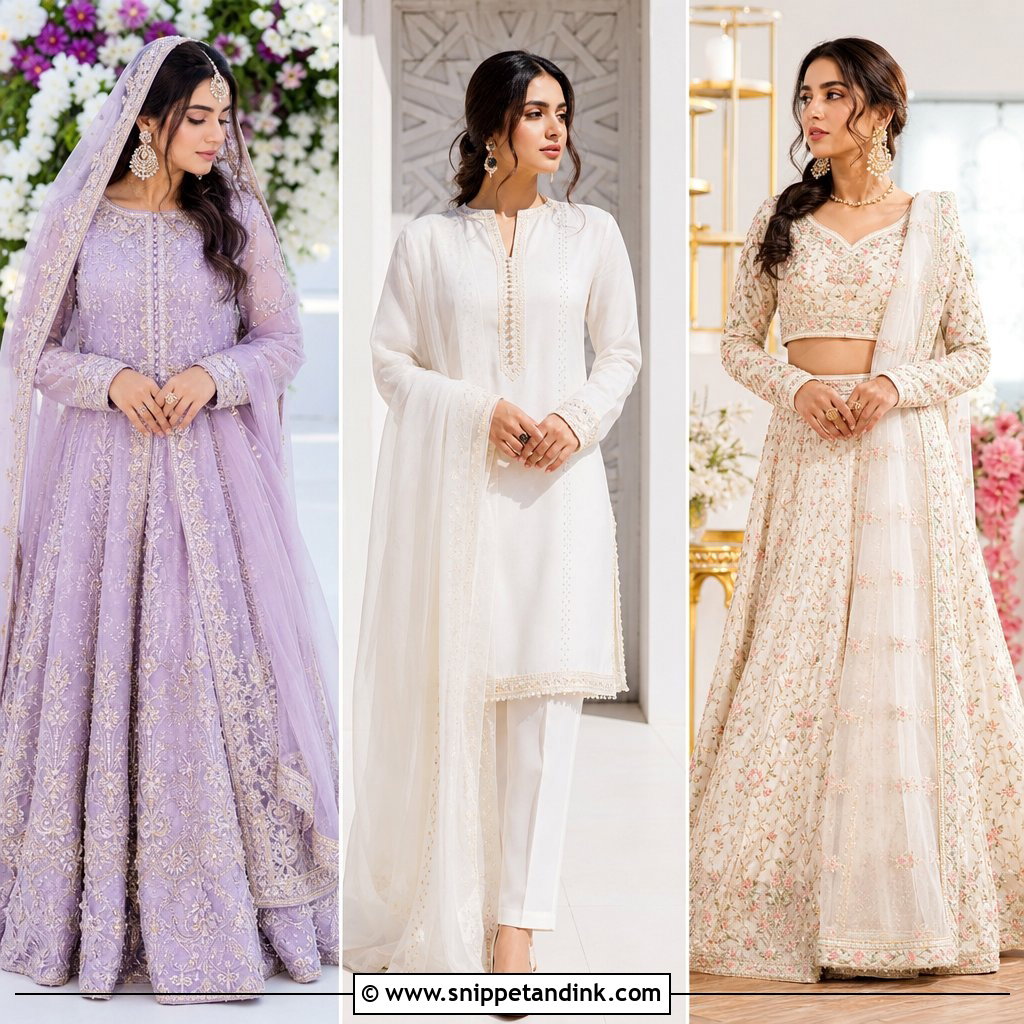
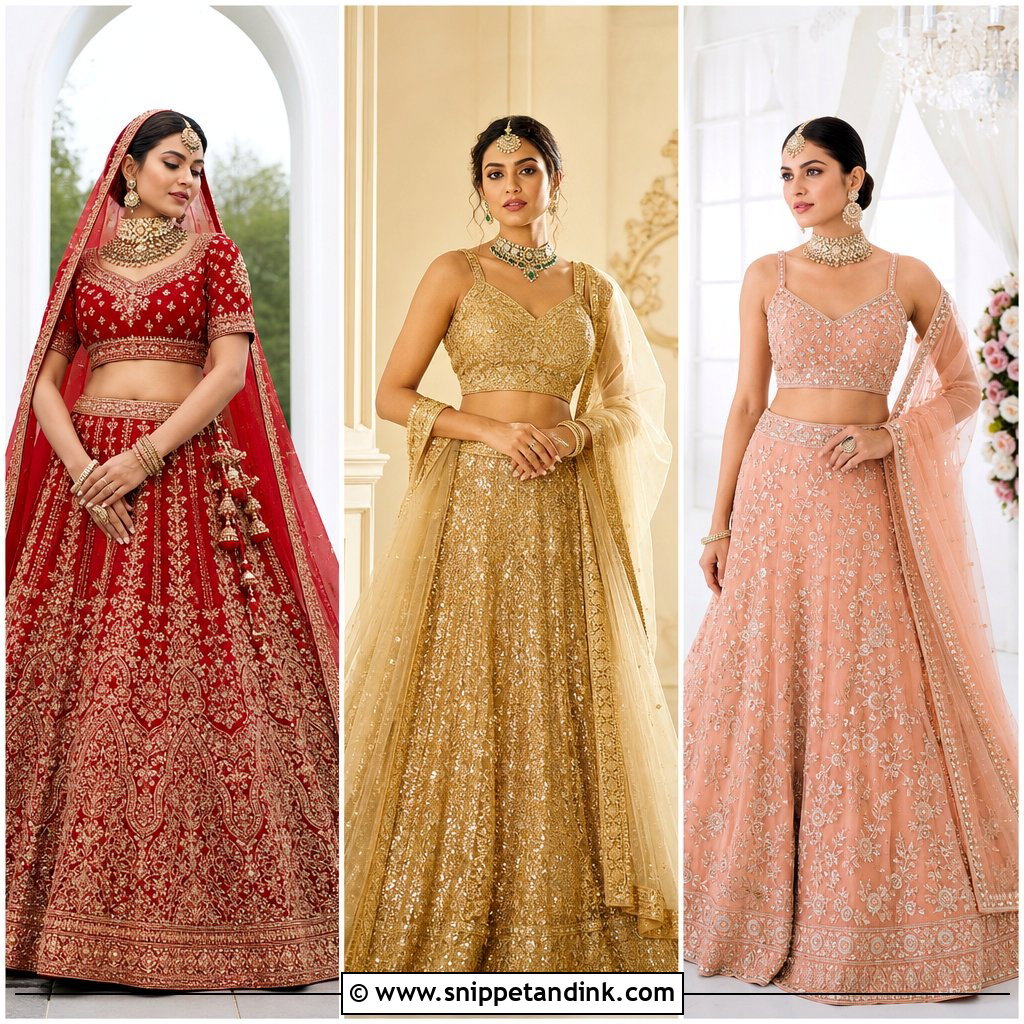

20. Muslim Bride Two Piece Skirt Set
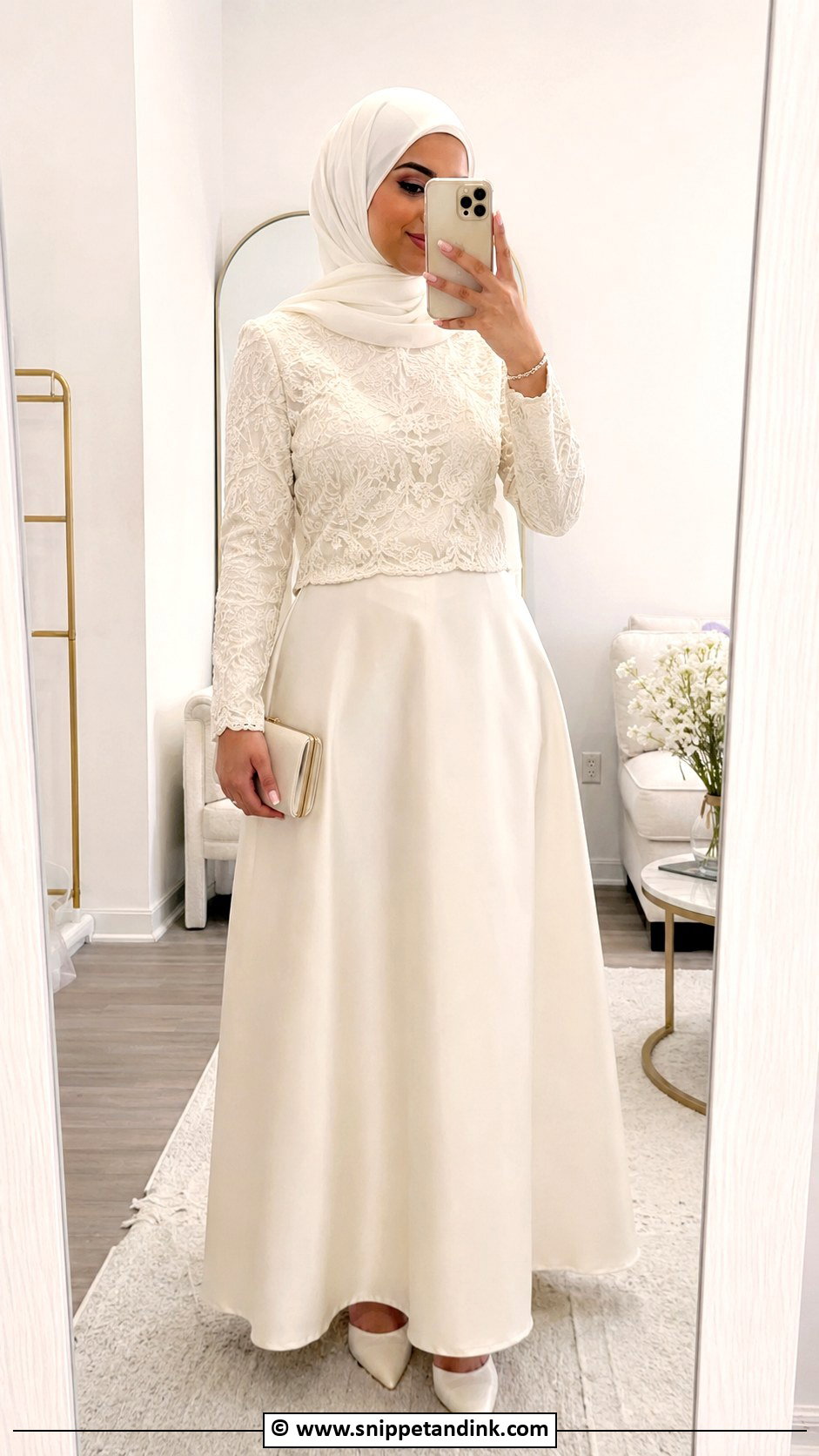
A two-piece set is the most practical route to a made-to-measure look: the top and skirt are altered separately, and you can wear either again afterward. The top is where I spend the fitting time. It has to stay long enough to cover the waistband when you lift your arms to hug relatives, which a mirror check standing still won’t show you. Lace, satin, crepe and brocade all suit it. A matching hijab, pointed heels and delicate jewelry keep it polished for a nikah or a smaller reception.
21. Muslim Bride Bridal Suit
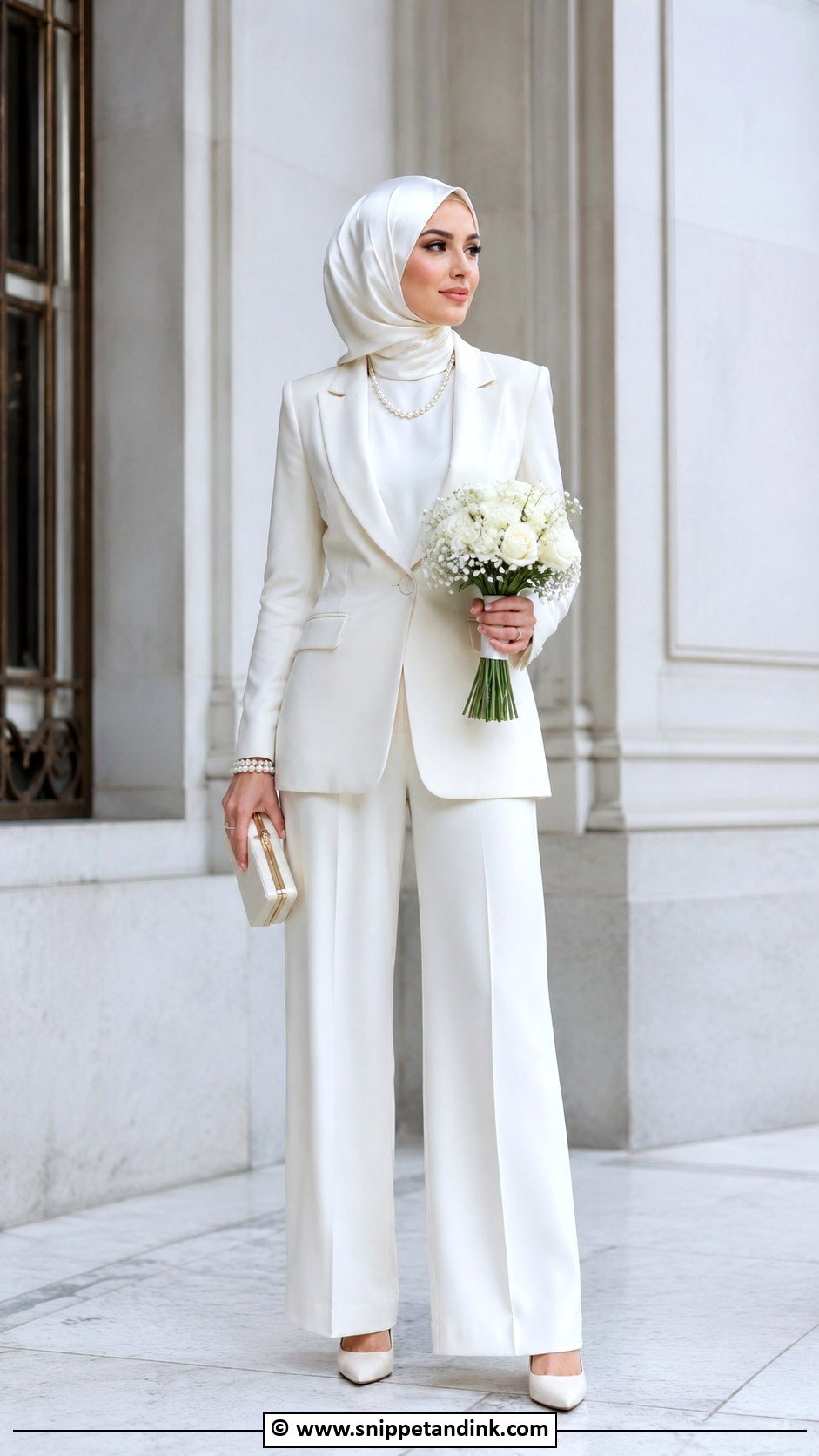
A tailored suit gives the cleanest silhouette of anything here, and it’s comfortable: trousers let you sit cross-legged, climb stage steps and move between events without managing a skirt. Ivory, white or champagne with wide-leg trousers and a modest blouse is the base. Have the blazer cut with enough room to close while you’re seated, since tailoring that only fits standing looks strained in seated photos. A satin hijab softens the sharp lines, and embroidery at the cuffs or lapels makes it unmistakably bridal for a civil ceremony or intimate nikah.
22. Muslim Bride White Sharara Outfit
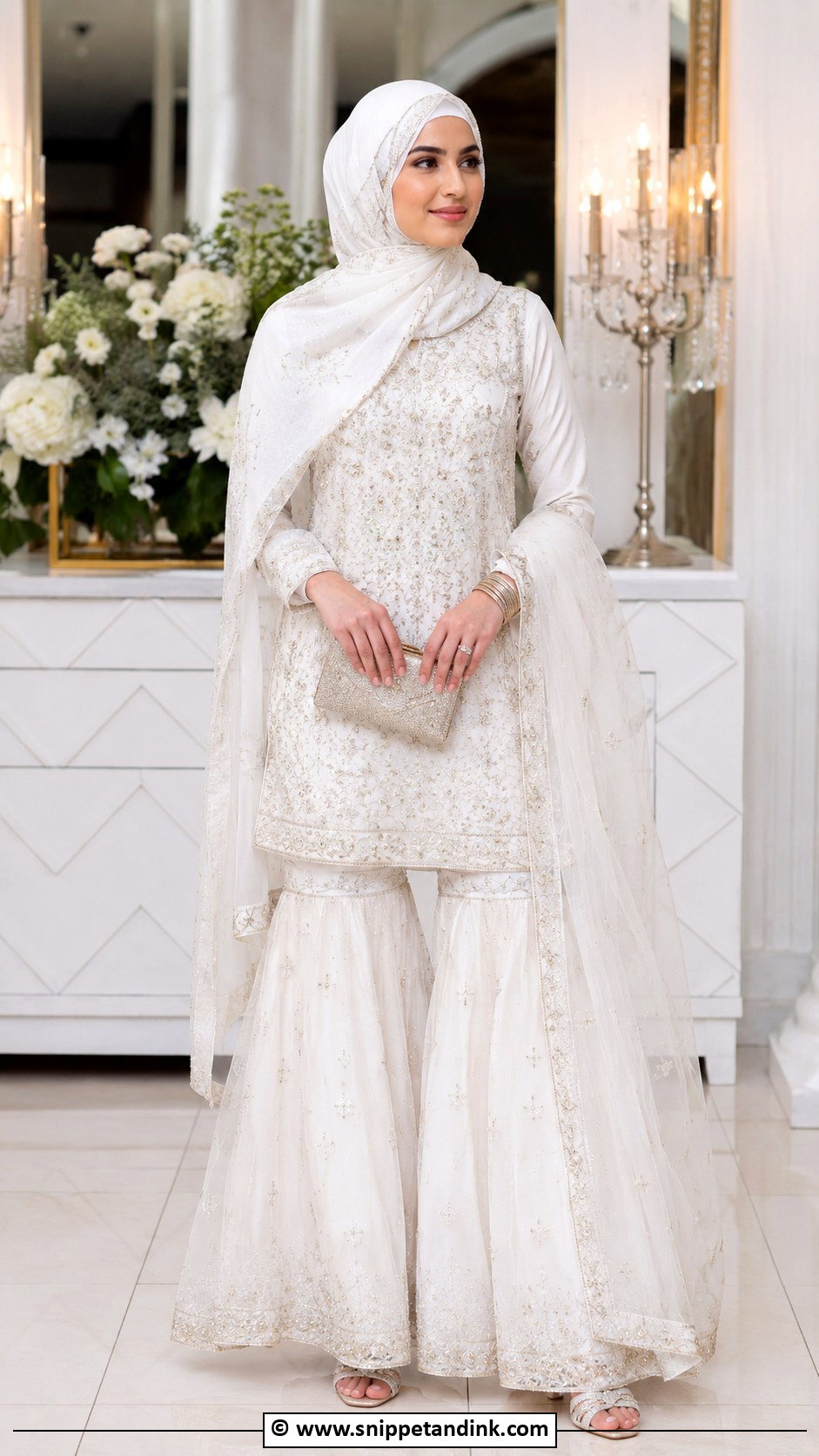
A white sharara outfit moves well and covers fully, which is why I suggest it for brides who’ll dance at a mehndi or walima. The flared trousers create the drama and a long kurta keeps the shape modest. Chikankari is light and breathable for daytime heat; mirror work and pearl embroidery suit the evening. Hem the sharara with your actual shoes on, because the flare should just skim the floor, and an extra centimetre means stepping on it all night. Drape a matching dupatta over the hijab, then add bangles and embellished heels.
23. Muslim Bride Anarkali Dress
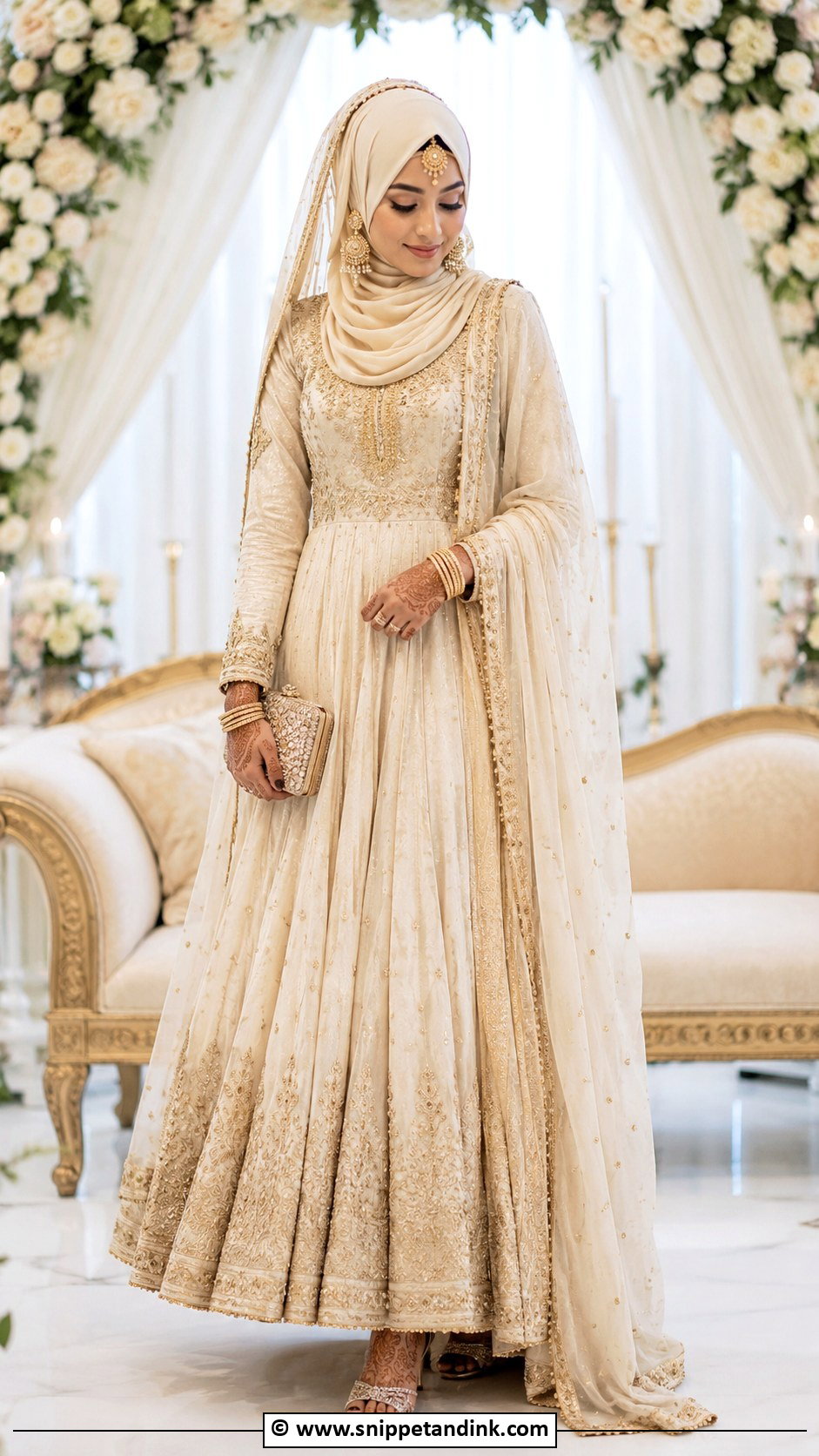
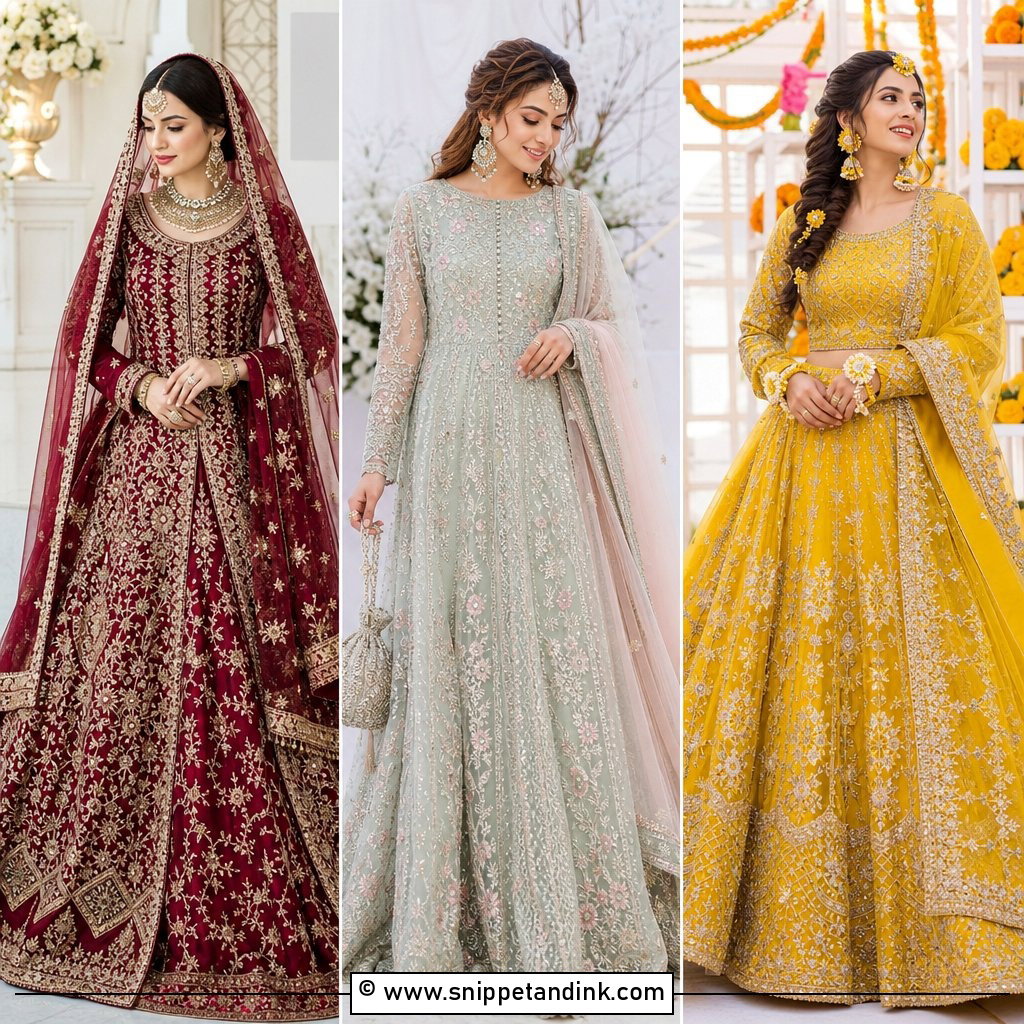
An Anarkali is fitted through the bodice and flares from just under the bust, giving a bridal silhouette without a separate gown, and it flatters most figures. The flare comes from many panels: more panels mean a fuller twirl, but also more fabric to gather when you sit, so I test both. Long sleeves and embroidery in ivory, gold, blush, red or green all work. A matching hijab with a dupatta over it builds the layered modest look, and if your ears are covered, jhumkas can hook onto the hijab at the temple.
24. Muslim Bride Turkish Wedding Dress
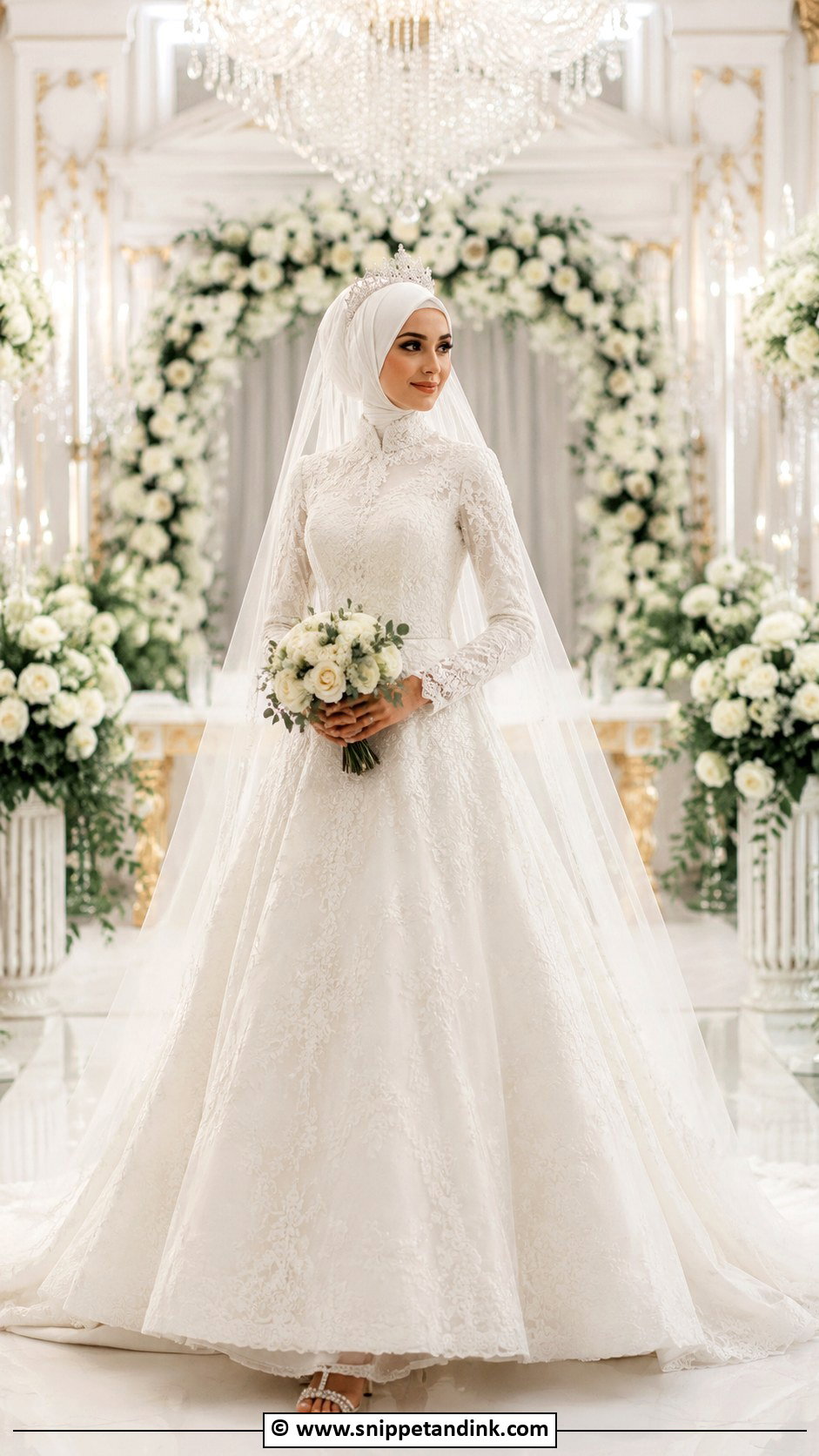
A Turkish-inspired wedding dress usually pairs a modest cut with a defined waist, long sleeves and generous lace or beadwork. The signature is the structured hijab topped with a crown or headpiece, and that needs a firm base: I build it over a grippy underscarf so the crown has something to hold. A-line, ball gown and sleek cuts all fit the style. Ivory or white reads classic, champagne adds warmth. Add a long veil and crystal heels, and keep the jewelry soft, since the crown is already the focal point.


25. Muslim Bride Moroccan Caftan
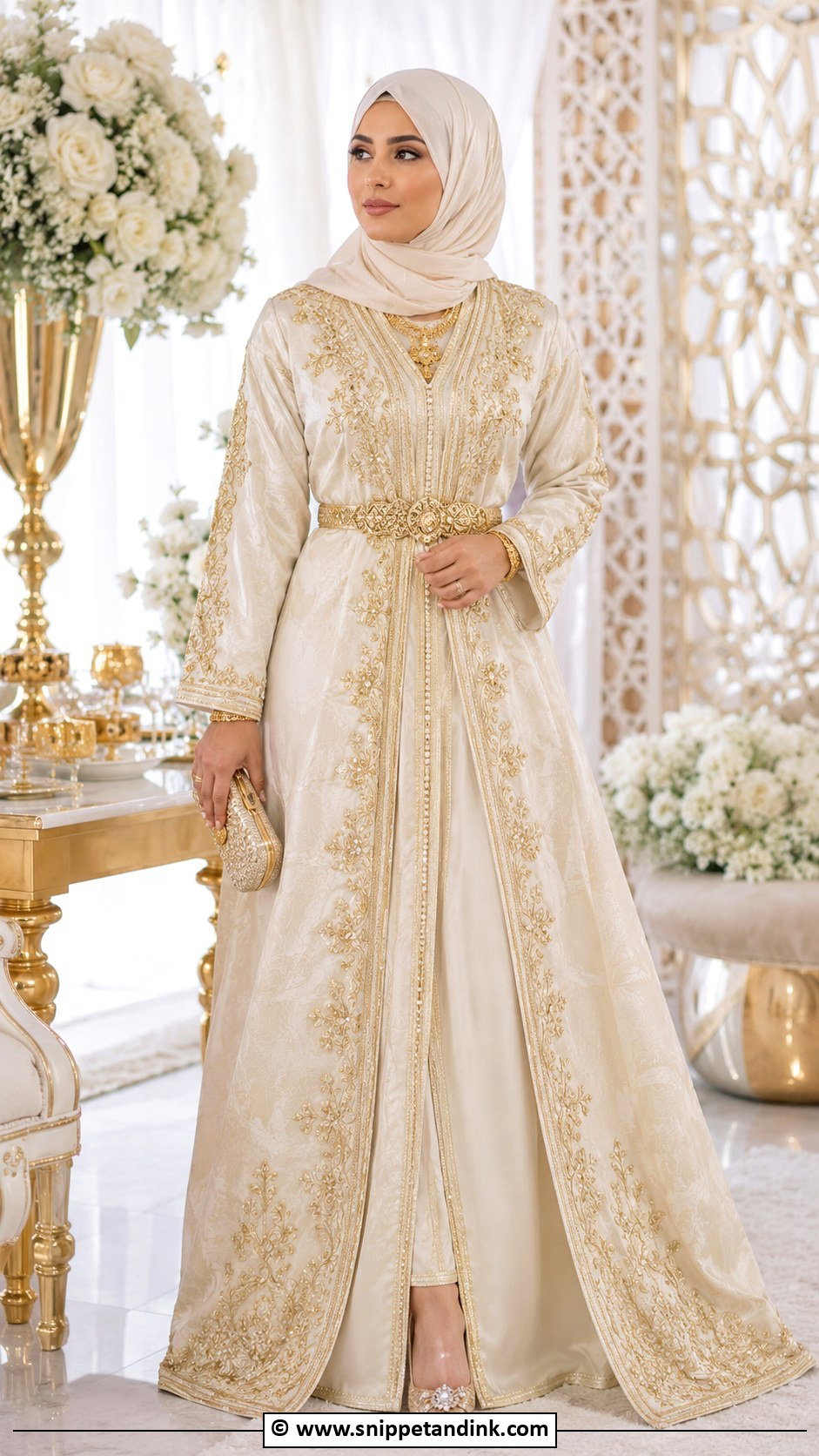
A Moroccan caftan is shaped by its belt, the mdamma, which defines the waist while the loose cut keeps the outfit comfortable. Rich fabric and trim around the neckline do the decorating, so a matching hijab that leaves the neckline visible works best. White, ivory, gold, emerald and deep red all suit it. Many belts are rigid metalwork, so I have brides sit in theirs before the day; a belt that’s fine standing can dig in hard when seated. Gold jewelry and embellished heels finish it for cultural events and reception entrances.
26. Muslim Bride Pakistani Bridal Dress
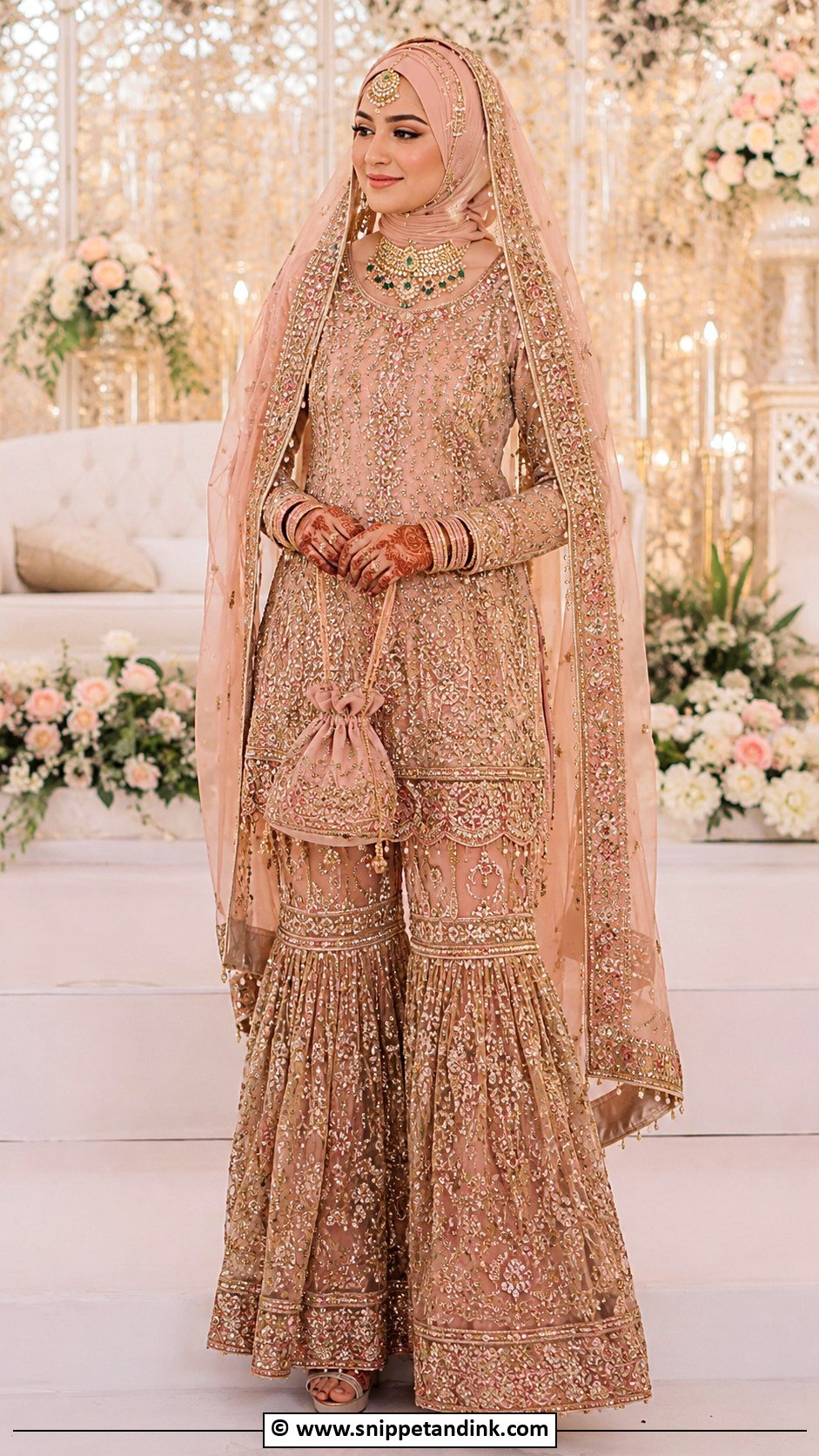
Pakistani bridal wear covers lehengas, ghararas, shararas and long frocks, almost all with heavy hand embroidery. For coverage, choose a long-sleeve kameez or blouse with a covered neck. Style the dupatta over the hijab, and plan where each piece of jewelry will sit: a tikka-style piece pins onto the hijab at the hairline, and the necklace needs a neckline it can rest on. Red, gold, ivory, green and blush are all traditional. These dupattas are often heavily worked and weighty, so I anchor them with several pins at the crown and shoulder rather than trusting one.
27. Muslim Bride Arab Wedding Dress
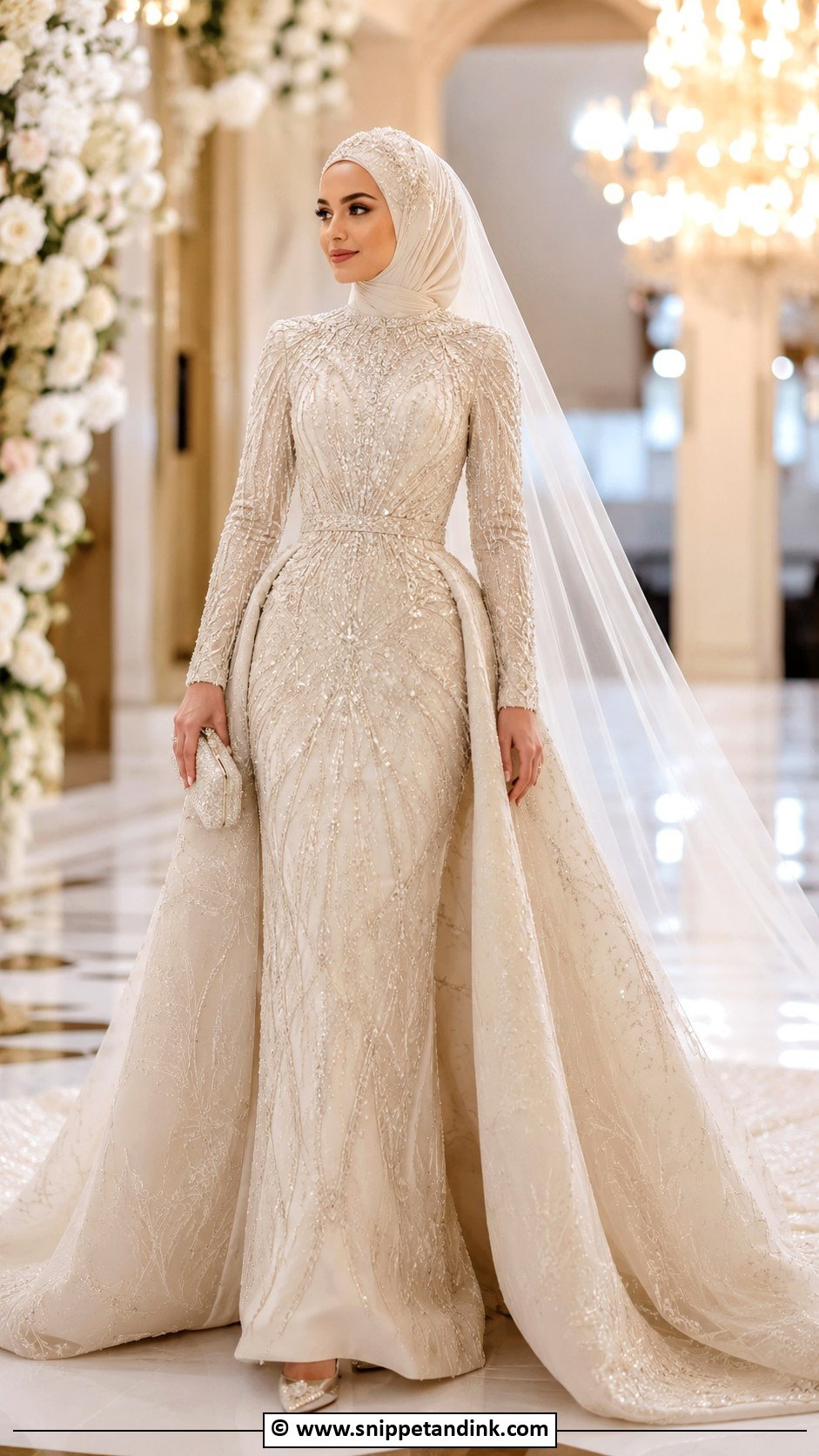
Arab bridal gowns lean glamorous, with beadwork, crystals, dramatic sleeves and a fitted bodice over a full skirt. That much embellishment needs very little help, so I keep the hijab matching and let a sparkling headpiece and long veil complete the outline. White, ivory, champagne and silver stay classic. Watch the sleeve volume with a veil: bell or cape sleeves tangle with veil edges every time you raise your arms. Crystal heels and a small clutch finish it for a grand evening reception.
28. Muslim Bride Minimal White Dress
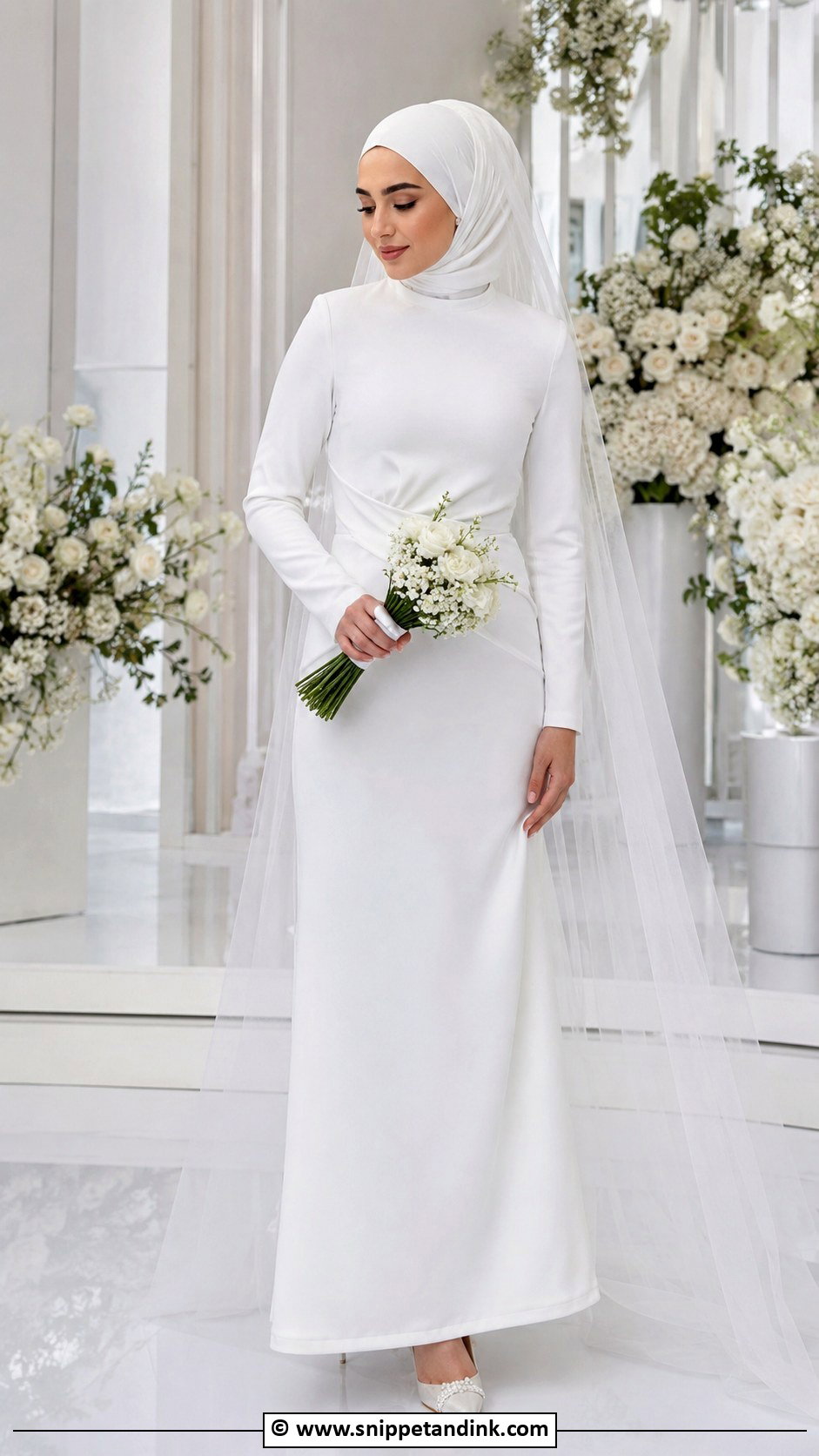
A minimal dress leaves nowhere to hide a poor fit, so this is the one where I’d put the budget into tailoring rather than the gown itself. Crepe, satin or mikado with long sleeves and a high neck give clean lines. A simple white hijab, pearl studs if they show, pointed heels and a small bouquet are enough, with a long plain veil if you want more drama. It leaves room for the venue, flowers and makeup to carry the mood at a modern nikah or civil ceremony.
29. Muslim Bride Sequin Reception Dress
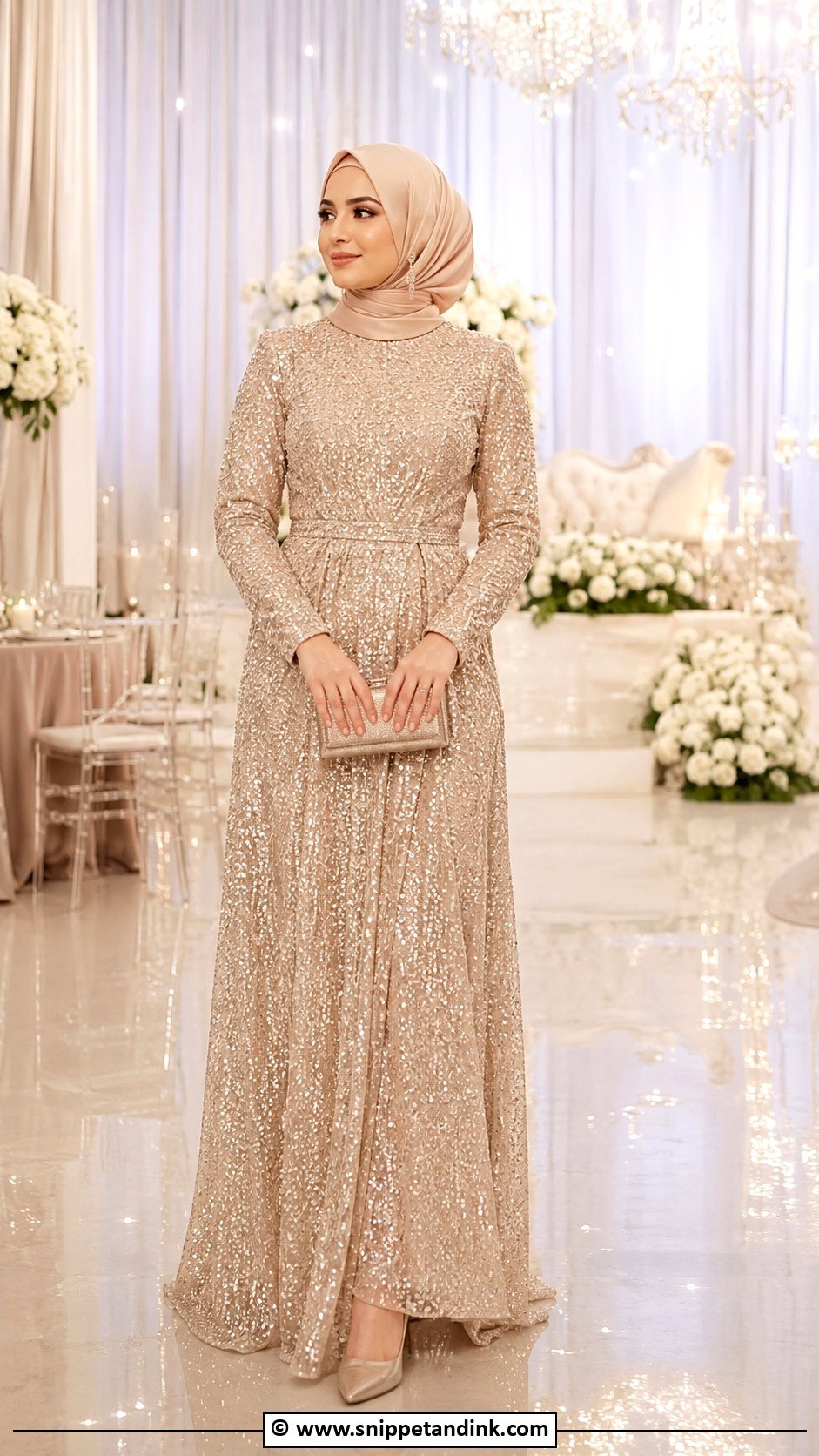
Sequins catch every light source in a hall, so I check the gown under the venue’s actual lighting whenever I can. Soft silver, champagne, ivory and blush sparkle without looking loud. Insist on full lining, because sequin backing scratches the inner arms and neck over a long evening. A plain hijab keeps the focus on the dress, and simple heels, a metallic clutch and delicate earrings finish it. Keep the silhouette simple; the shine already does the work.
30. Muslim Bride Veil Over Hijab Look
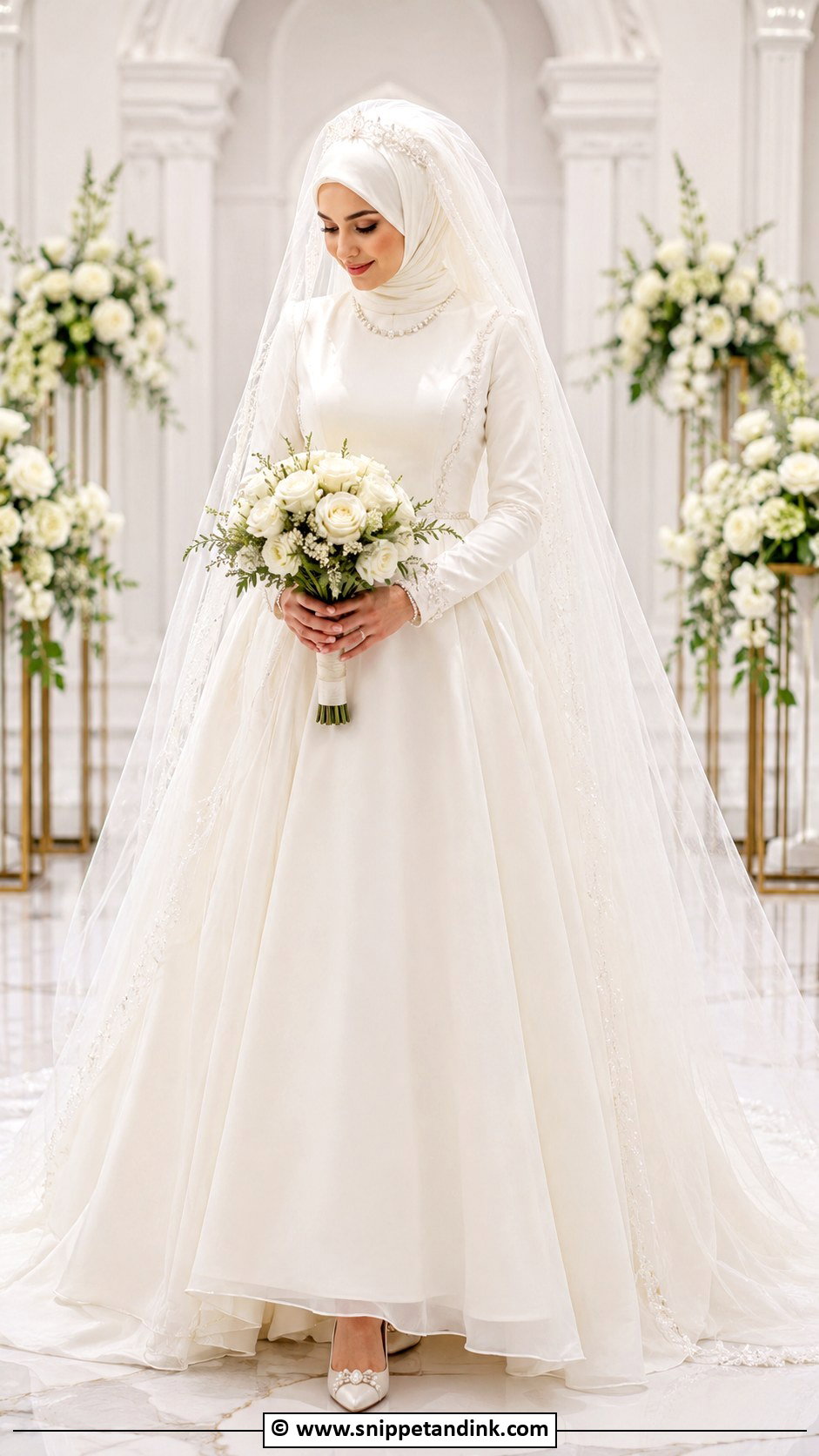
A veil over hijab look works with nearly every dress on this list, from lace gowns to abayas and kaftans. The secret is a hijab that lies flat under the veil, so chiffon, silk and satin beat jersey, which bunches. Secure the veil comb or pins to the underscarf rather than the outer hijab; then if someone steps on the veil, the scarf stays put. A cathedral veil looks dramatic but needs a helper at every doorway, while a fingertip length lets you move on your own. Finish with soft jewelry and a coordinated bouquet.
Pinning the Hijab to Last From Nikah to Walima
The hijab is the part of the outfit that moves most, and it’s where I see the most last-minute stress. The fix is a stable base. An underscarf or bonnet with a grippy inner band holds everything still, and every pin, crown and veil comb goes into that layer rather than into the outer fabric.
- Use fewer, better pins: straight pins at the crown and temples, then a safety pin under the chin. Magnetic pins hold light chiffon but tend to slip on satin.
- Have your makeup finished before the hijab goes on, then retouch foundation along the edge, since it rubs onto ivory fabric.
- Practise the full style at least twice with the actual veil or dupatta, and time how long it takes.
- Pack a small bag with spare pins, a second hijab in the same fabric, blotting papers and a lint roller for dark outfits.
If you’re changing outfits between the nikah and the reception, I’d allow at least forty-five minutes for the dress and the re-pin. Rushing it is how veils end up off-center in entrance photos, and it’s the one change nobody else in the bridal party can do quickly for you unless they’ve practised on you beforehand.
Coverage That Lets You Forget About the Dress
The outfit that works is the one you stop thinking about once the nikah starts. A lace gown with a veil over the hijab, a colorful lehenga, an embroidered abaya or a kaftan can all get you there if the coverage holds, the fabric suits the season and the hijab is pinned to last. Let accessories support the dress instead of competing with it. Bring your hijab, pins and shoes to every fitting, and you’ll see the whole look together long before the wedding.
You'll Like These Ideas:


Leave a Reply