
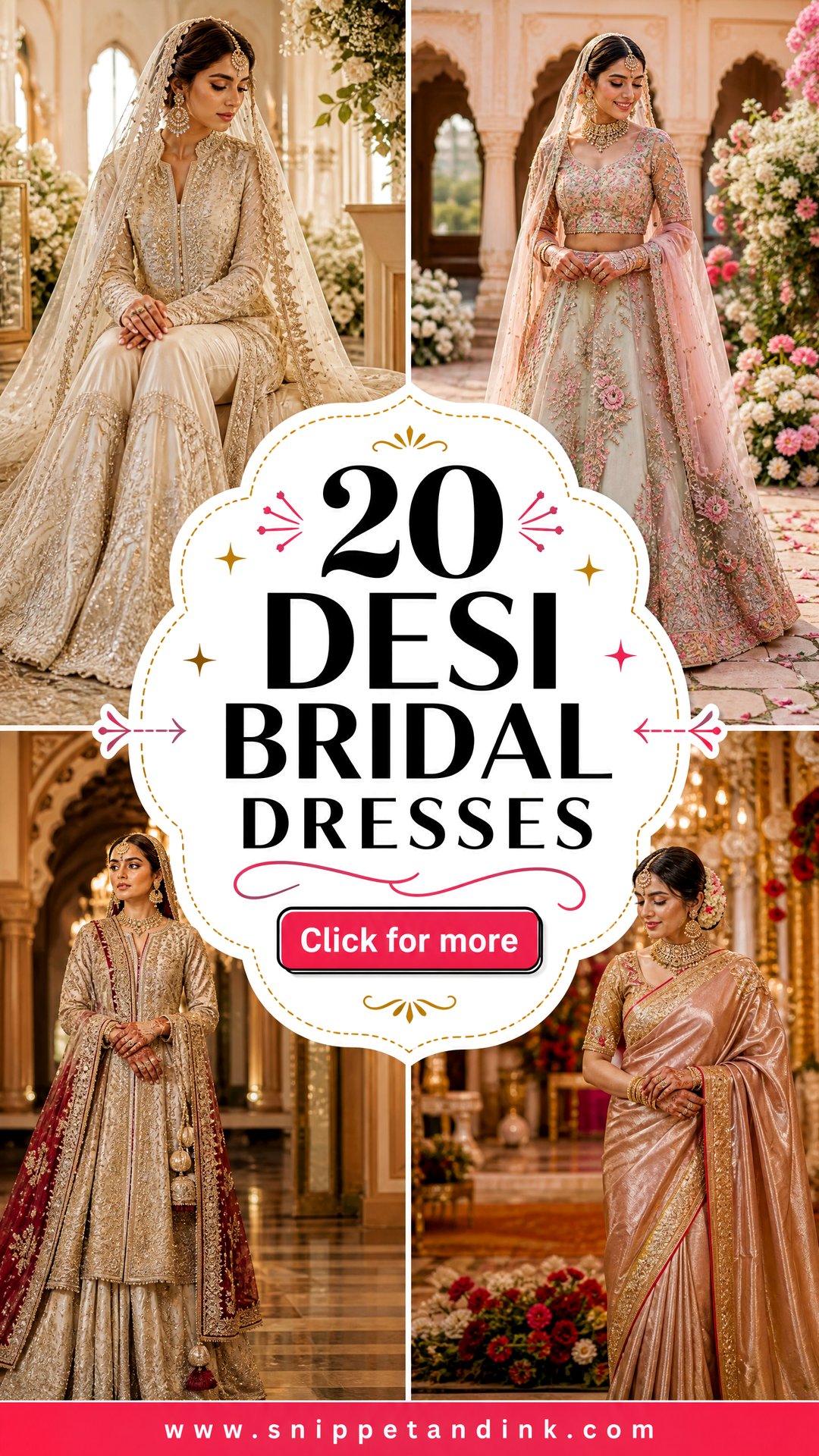
Desi bridal wear asks more of a stylist than almost anything else I dress: hours of rituals, several events, heavy fabric and jewelry that has to sit exactly right with the dupatta. These 20 Desi Bridal Dresses are ones I’d happily style for a wedding ceremony, a nikah, a reception or the pre-wedding events. You’ll find lehengas, regional silk sarees, ghararas, shararas, a pishwas and an Anarkali, in bold reds, jewel tones, pastels and ivory. Each is styled from head to toe, and for each I’ve added what to watch for at the trial, because these outfits are as much about how they wear over a long day as how they look in a mirror.
How Heavy Is Too Heavy for a Bridal Lehenga?
Brides often fall for a lehenga on the hanger and only discover its weight at the trial. Heavily embroidered bridal lehengas can be surprisingly heavy, and you may wear yours for many hours of rituals, photos and greeting relatives. I always ask a bride to wear the skirt for at least twenty minutes during a fitting, walking and sitting, before deciding.
Where the weight sits
Most of a lehenga’s weight hangs from the waistband. A wide, well-fitted band spreads it across the hips; a narrow one digs in. Ask whether the embroidery is concentrated at the border, which is easier to carry, or spread across every panel. The can-can or net layer underneath adds volume and some weight too, and it can be made lighter or removed if the skirt holds its shape alone.
Leave time for the blouse
Custom bridal outfits often take several months from order to delivery, depending on the designer and the amount of handwork. The blouse is usually the piece that needs the most fitting, so plan at least two trials after delivery, the last one close to the wedding with your actual jewelry and undergarments. Weight can shift in the final weeks, and a blouse that’s slightly loose lets heavy necklaces drag the neckline.
1. Red Bridal Lehenga
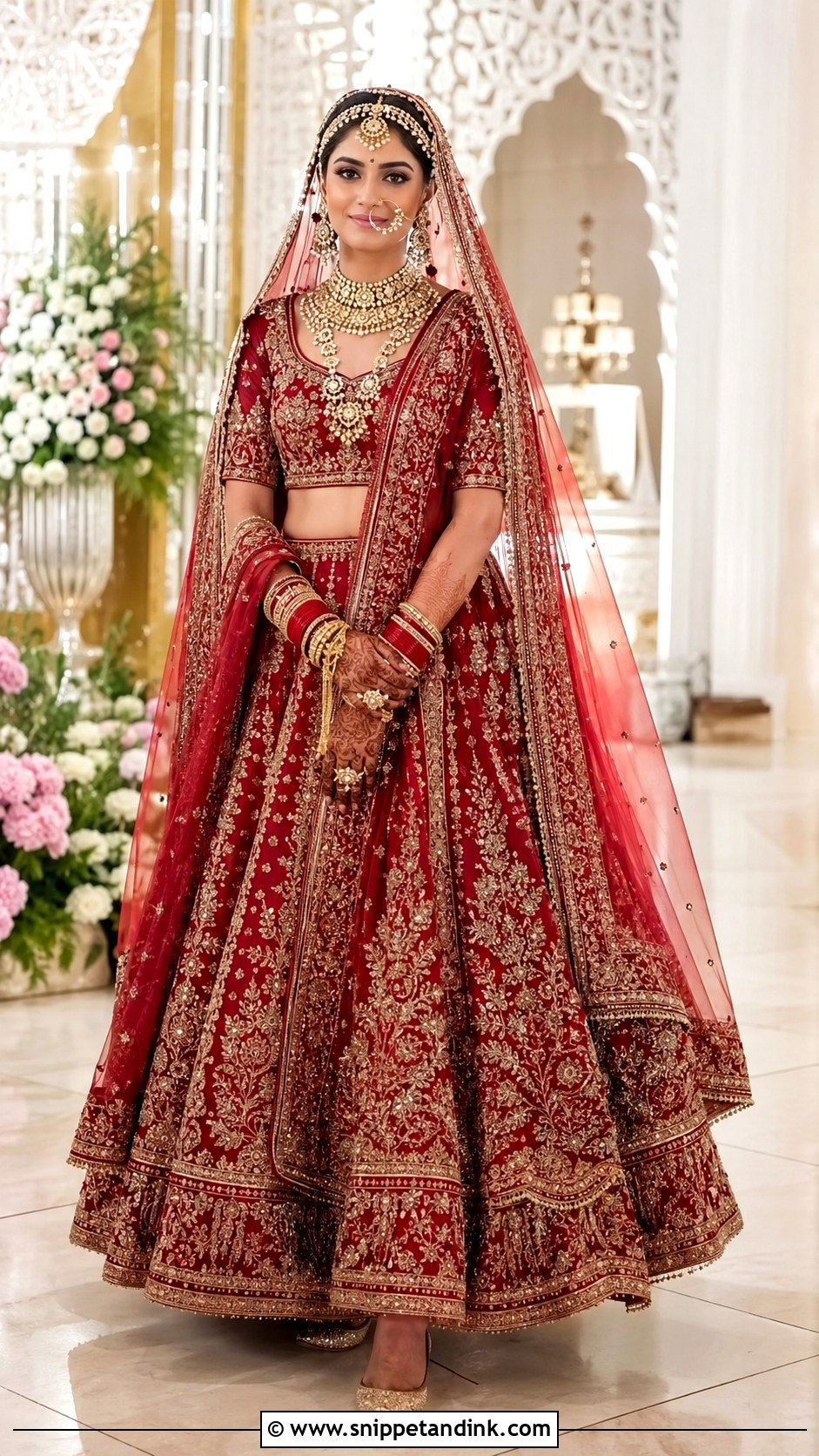
Red is still the colour most families picture, and a crimson lehenga with zardozi, dabka or gold thread embroidery earns that place. Weight is the first thing I check. Heavy zardozi on a full skirt can pull hard on the hips by the end of a long ceremony, so the waistband should be broad and sit snugly, not cinched. An elbow-sleeve blouse balances the volume and gives comfortable cover. I’d use two dupattas, an embroidered one over the head and a lighter one across the shoulder. A gold choker, a layered necklace, matha patti, earrings, bangles and a nose ring if your tradition includes one complete it, with gold juttis under the skirt and a sleek bun dressed with fresh flowers.
2. Maroon Bridal Gharara
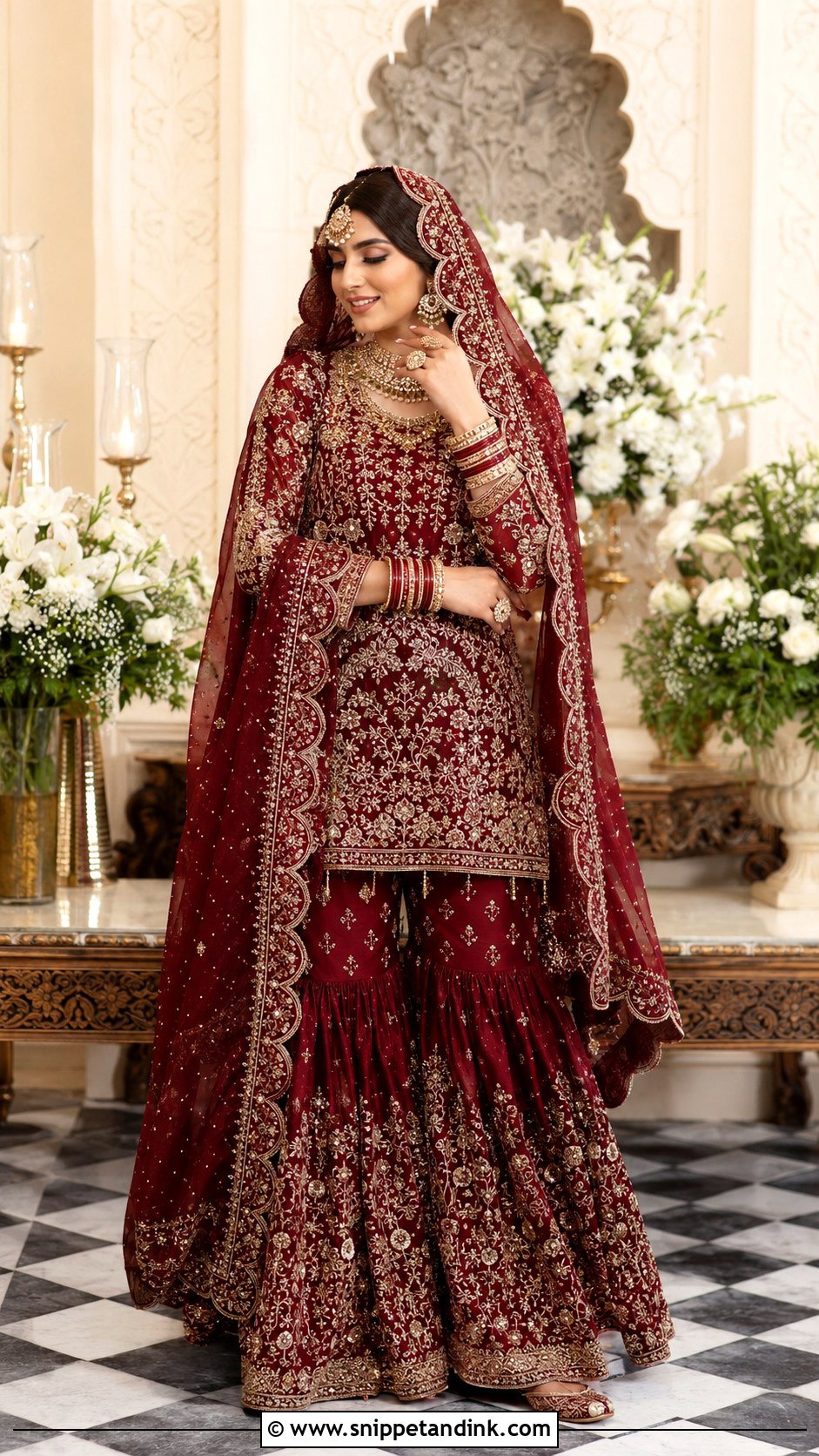
A gharara’s shape comes from the join at the knee, usually covered by a band of gota or embroidery, where the fitted upper leg opens into a big flare. That join must sit right at your knee, or you’ll find it awkward to walk and sit. Maroon gives it a royal depth, especially with traditional gota, zari or kora work and a short, structured kurti. A scalloped dupatta over the head lets one embellished border frame the face. Antique gold jewelry, a centred tikka, stacked bangles and embroidered khussas suit it, with bronze eyes and a berry lip. It moves gracefully and gives you a different outline from a lehenga, which many brides want for at least one event.
3. Ivory Nikah Sharara
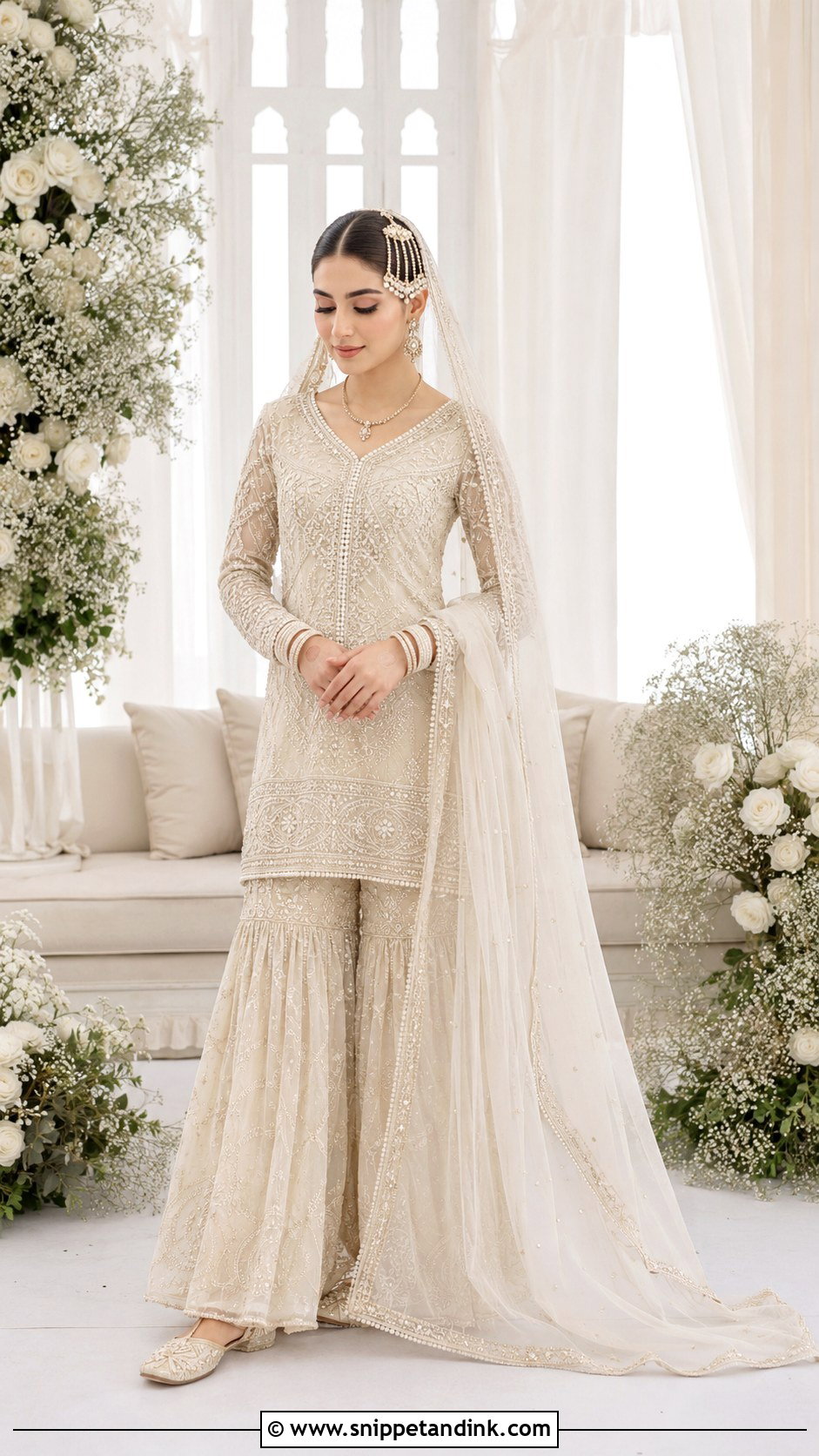
For a nikah, an ivory sharara feels calm and dignified. Choose a long or mid-length kurta with pearl embroidery, small sequins and a little silver or champagne detail, over wide sharara pants that add volume without weight. A sheer organza dupatta over the head finishes it. Organza is slippery, so I pin it in two or three places along the hairline with U-pins hidden under the border, which keeps it framing the face even when you bow your head to sign. Pearl earrings, a delicate passa, a slim necklace and ivory bangles keep the palette soft. Embroidered flats, a small potli, natural makeup and a low bun complete it.
4. Kanjeevaram Bridal Saree
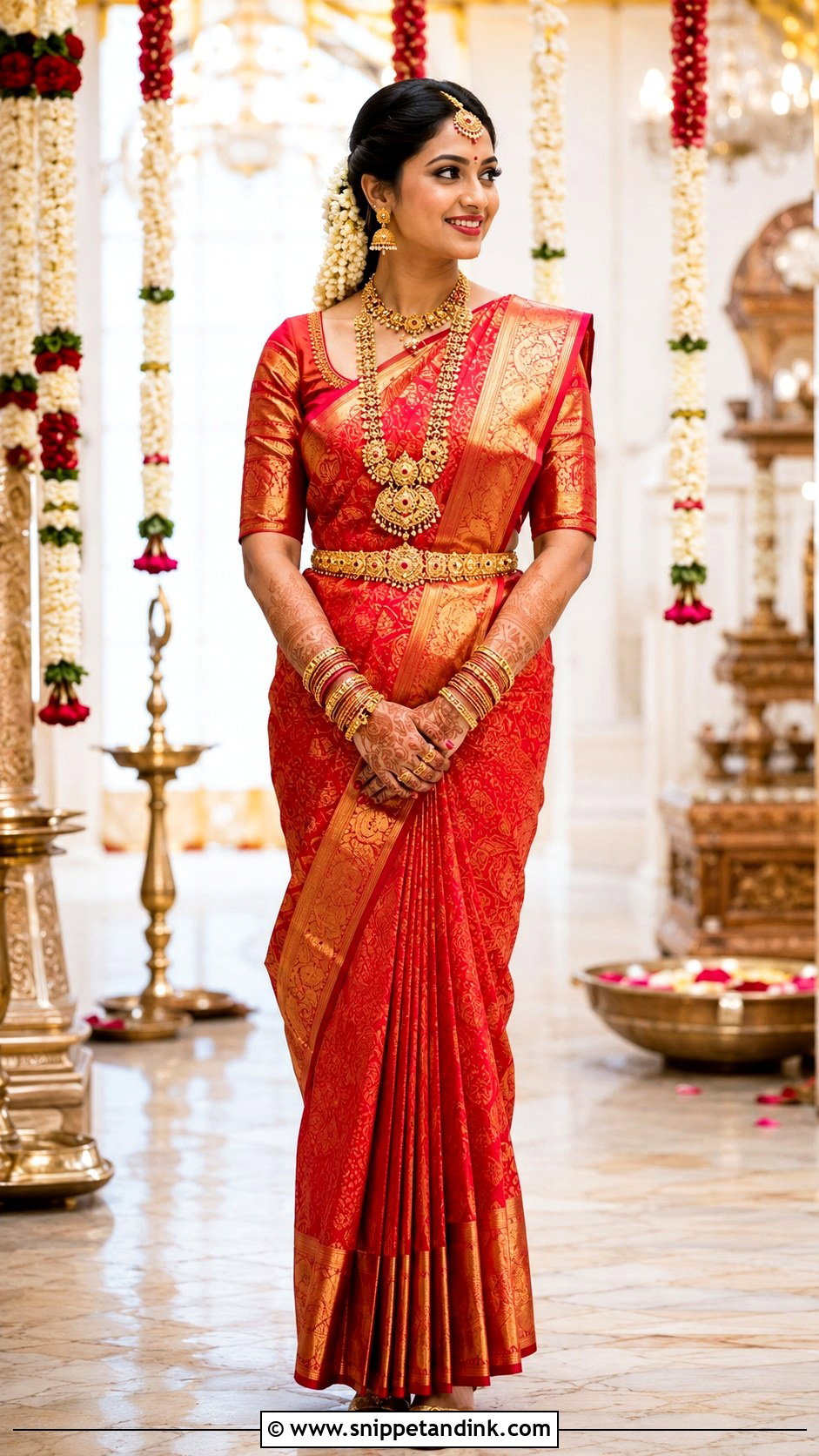
A real Kanjeevaram bridal saree is heavy, thick silk, and that weight is what makes it drape so crisply. Red, rust, green or deep pink with a contrasting gold zari border is the classic choice. The blouse needs firm structure at the neck and shoulders to carry layered temple jewelry, since a heavy haram drags a loose neckline down. Pleats in silk this thick should be pressed the day before and pinned at the waist. Temple jewelry, a long haram, jhumkas, a waist belt, stacked bangles and traditional hair ornaments complete it, with a long braid or bun dressed in jasmine. Low gold sandals are kinder than heels under that much silk.
5. Banarasi Bridal Saree
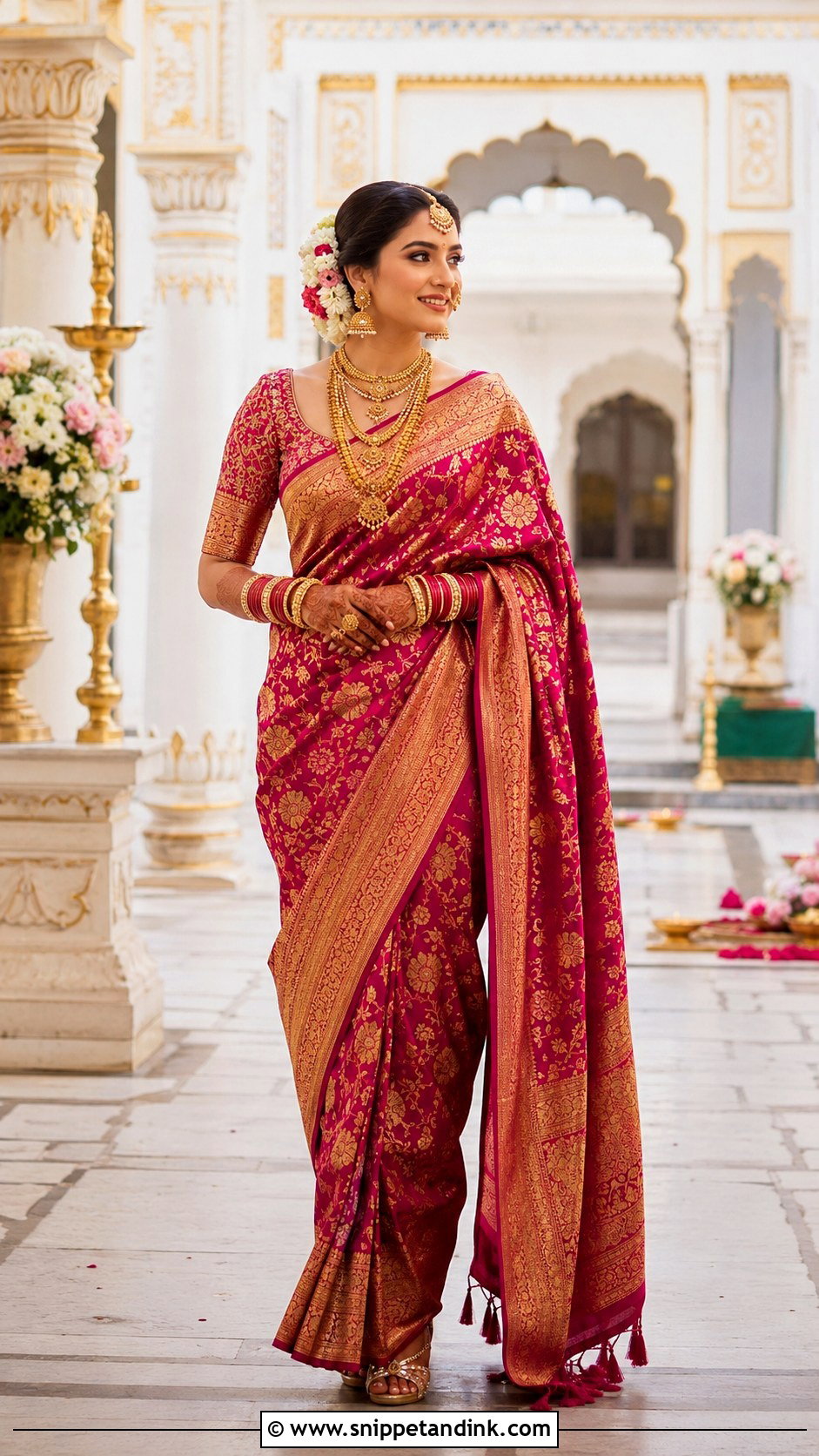
A Banarasi saree is woven brocade, so the pattern lives in the cloth rather than being sewn on, which is exactly why heirloom pieces get handed down. Red, magenta, emerald or royal blue with gold floral or paisley motifs are typical. Pair it with a brocade blouse in a matching shade, then let the pallu fall open so its woven border shows. A choker, long necklace, jhumkas, maang tikka and bangles suit it, with a neat parted bun dressed with flowers and embroidered heels for a little height. A light veil over the saree adds ceremony if your family wants the head covered. If you’re inheriting a saree, have it checked for weak spots along old fold lines before the wedding.
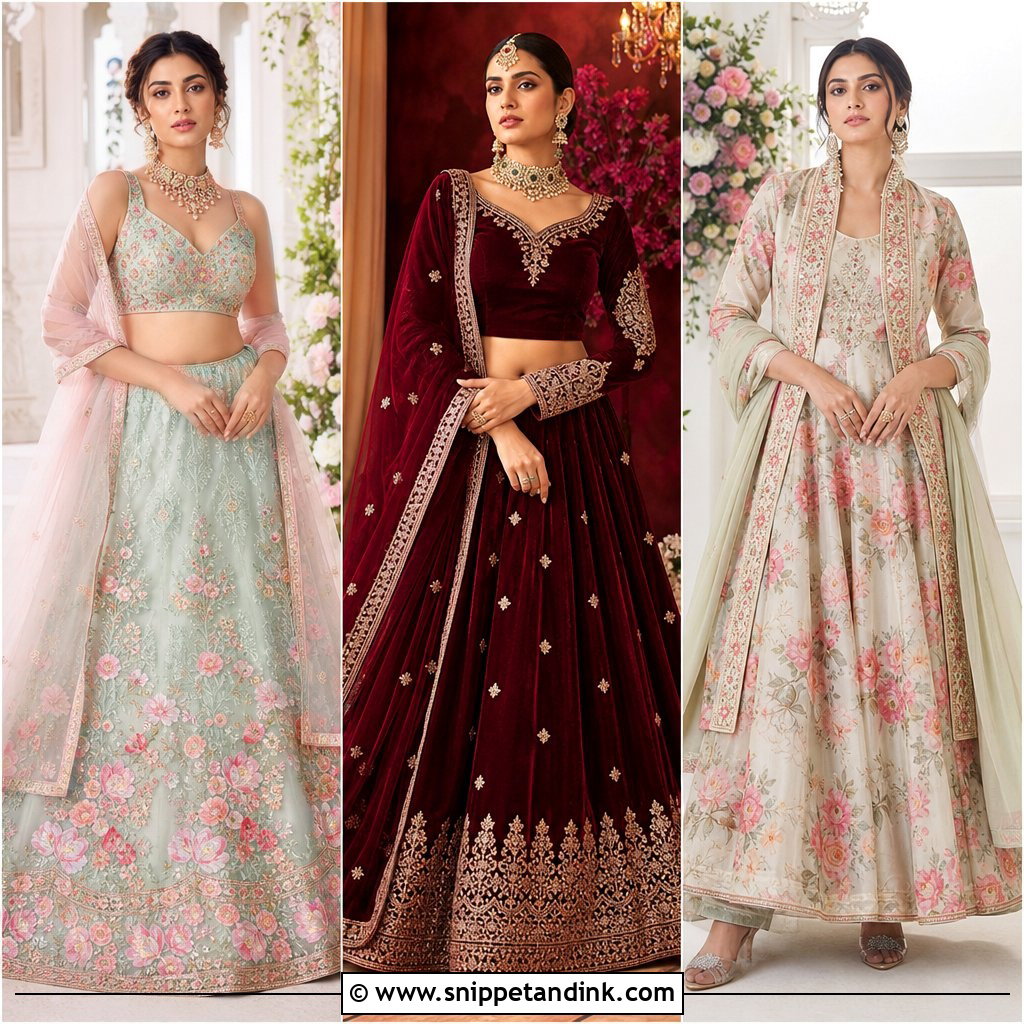
6. Pastel Floral Bridal Lehenga
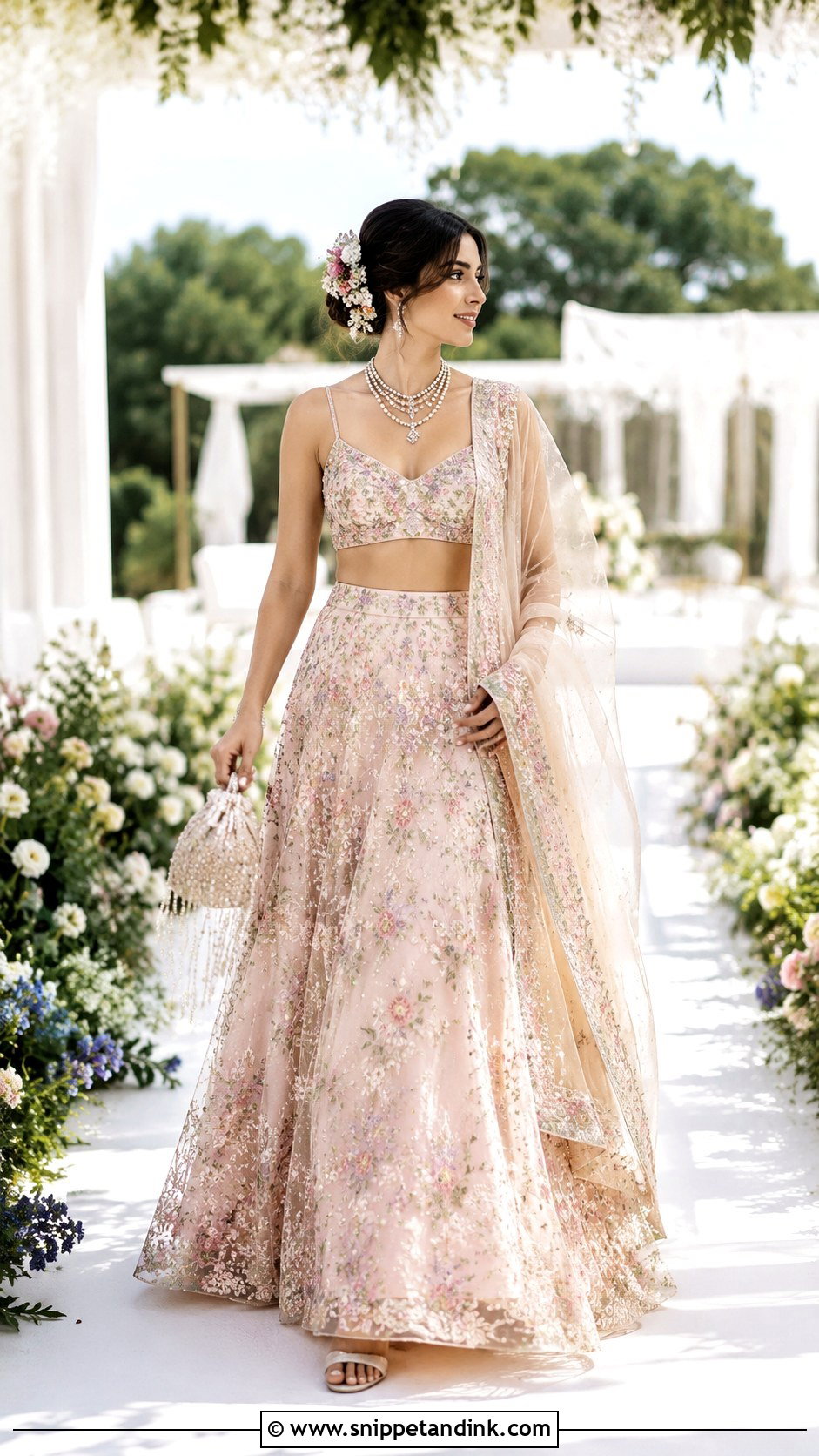
Pastels come alive in daylight, which is why I suggest them for garden ceremonies, daytime receptions and destination weddings. Blush, powder blue, pistachio, peach and lilac all work. Choose a skirt with balanced floral threadwork rather than heavy work from waist to hem; on pale fabric, dense embroidery reads as one block and loses the flowers. Pair it with a structured blouse and a sheer dupatta with a slim embroidered border. Diamond-style pieces, pearls or pale stones keep the palette fresh, with metallic sandals, a beaded potli and soft floral hair accessories. Loose waves or a textured low bun suit the lighter feel. One honest caution: pastels show turmeric and henna stains quickly.
7. Pakistani Bridal Pishwas
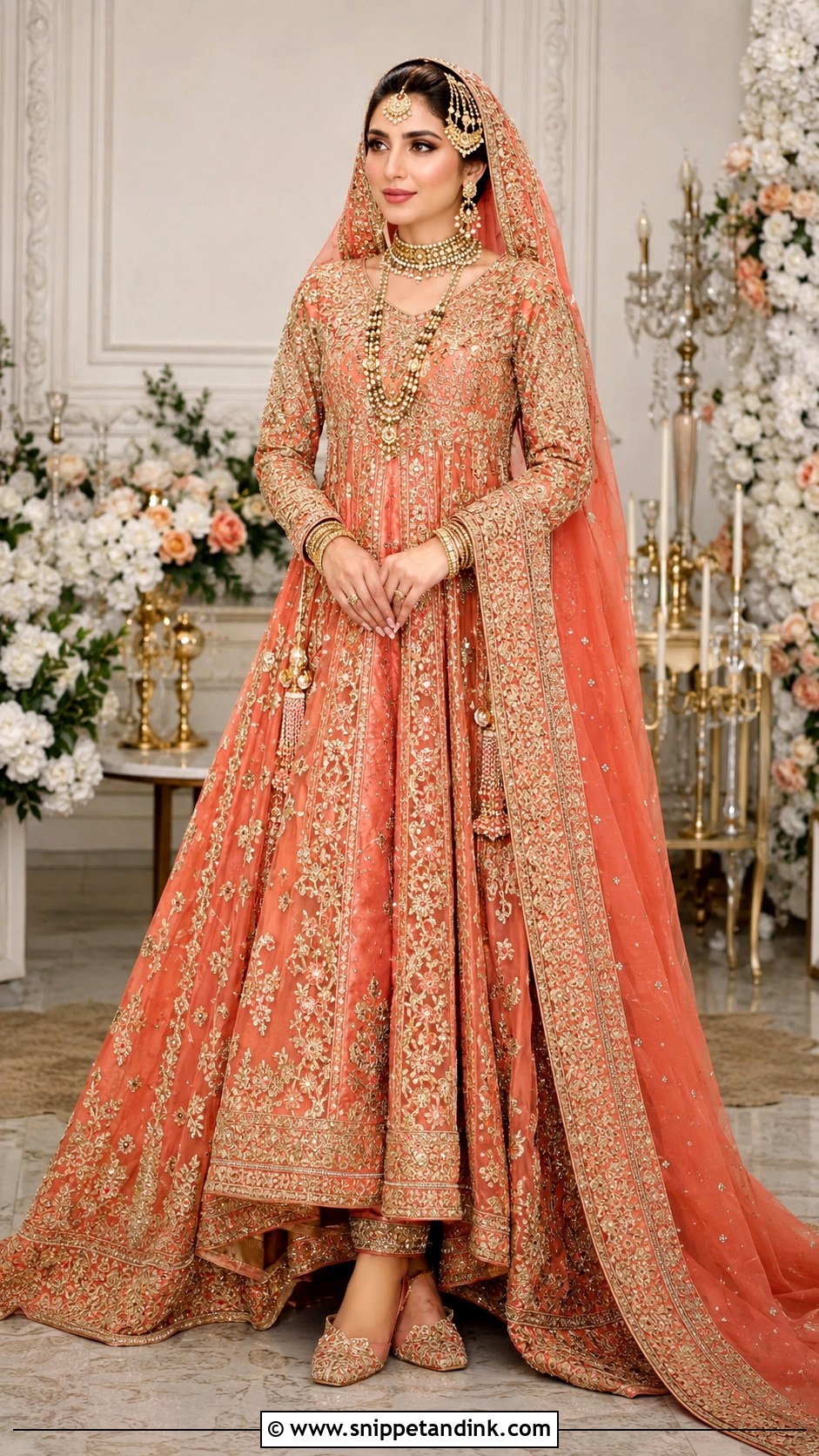
A floor-length pishwas is cut in many panels, and the flare it creates when you turn is the whole point. Red, coral, emerald or muted gold all suit it, with embroidery concentrated on the bodice, sleeves and hem. The bodice must be fitted closely, because all those panels hang from it. Wear it over slim trousers, or over a coordinated lehenga for more volume. A heavily bordered dupatta over the head gives the bridal finish. A choker, long necklace, jhumkas, tikka and a side passa complete it, with embellished khussas for comfort and a centre-parted bun. Practise sitting down in it; a full pishwas needs to be gathered and smoothed behind you.
8. Green Mehndi Bridal Lehenga
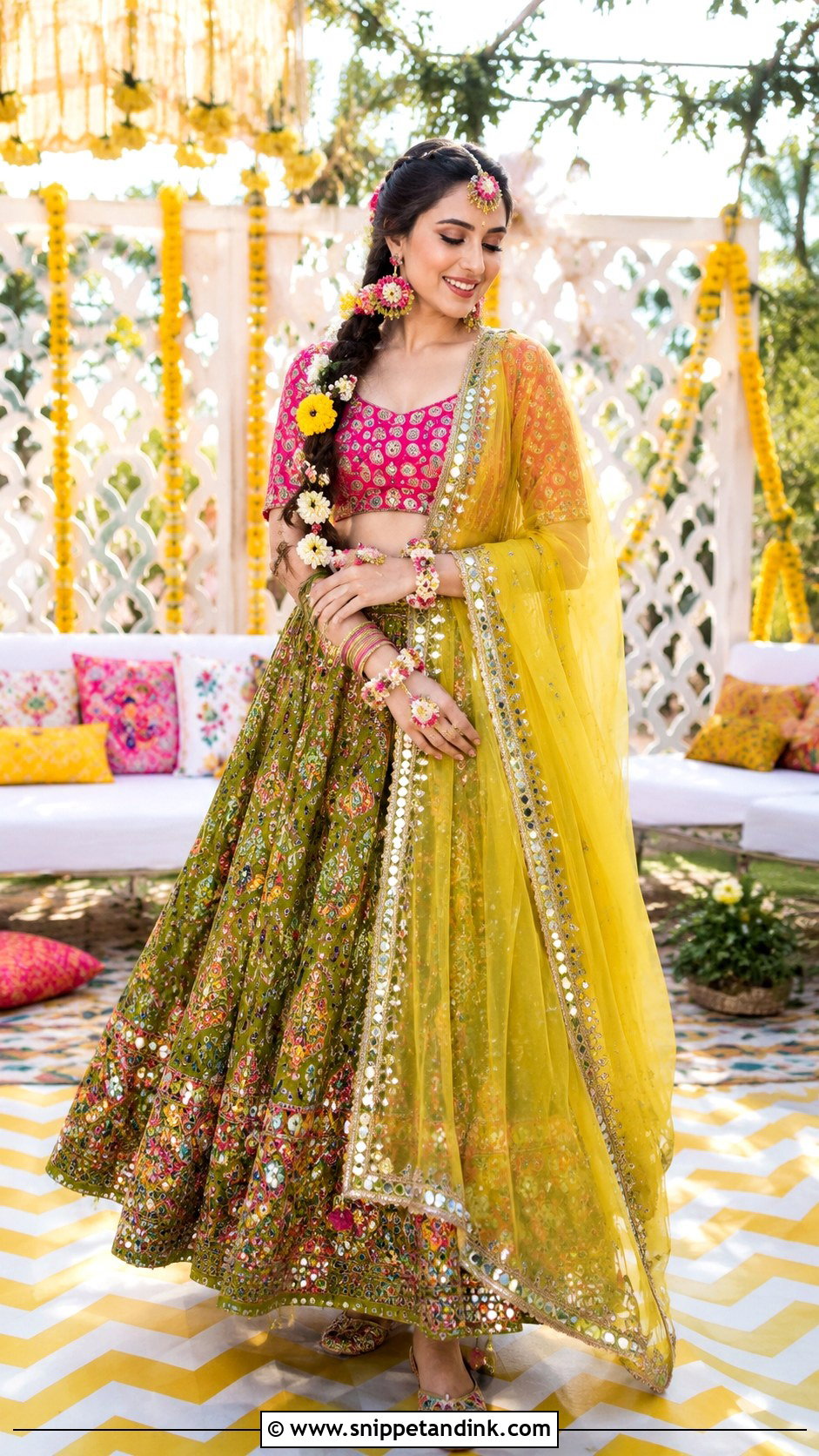
Green is the mehndi colour for many families, and a mehndi outfit has a job beyond looking festive: you’ll be sitting still for hours with wet henna on your hands and feet. Emerald, leaf or parrot green with colourful threadwork, mirrors, gota or small florals keeps it cheerful, and a contrasting pink, orange or yellow blouse adds fun. Sleeves should end above the wrist so they don’t smudge the paste. Pin a light dupatta firmly so your arms stay free. Floral jewelry, colourful bangles, statement earrings and a small tikka finish it. Flat juttis or embroidered platforms make it easy to move, and a braid threaded with flowers suits the mood.
9. Yellow Haldi Bridal Sharara
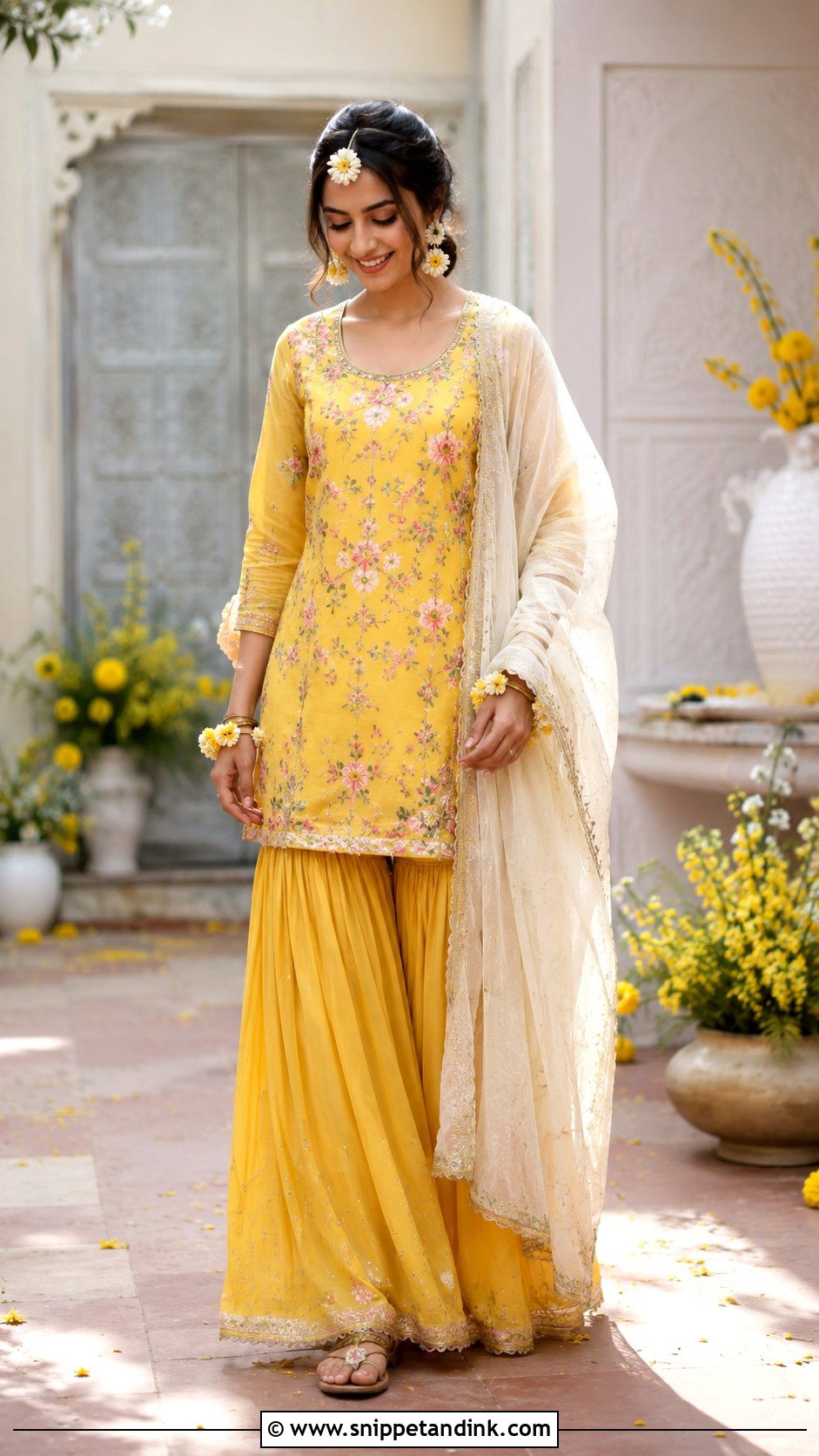
A haldi outfit will get turmeric on it, so I always tell brides to choose something they’re happy to have stained, or to accept that it’s a one-wear piece. Bright yellow is the tradition, and a light cotton-silk, georgette or organza sharara set lets you move. A short kurti with floral embroidery suits the wide sharara pants, and a contrasting ivory, pink or orange dupatta adds colour. Real or artificial floral jewelry, simple bangles and small earrings are enough. Flat sandals that wipe clean are the sensible choice, and leave delicate bags and heirloom pieces aside for this one. A low ponytail, braid or floral bun keeps hair out of the paste.
10. Velvet Winter Bridal Lehenga
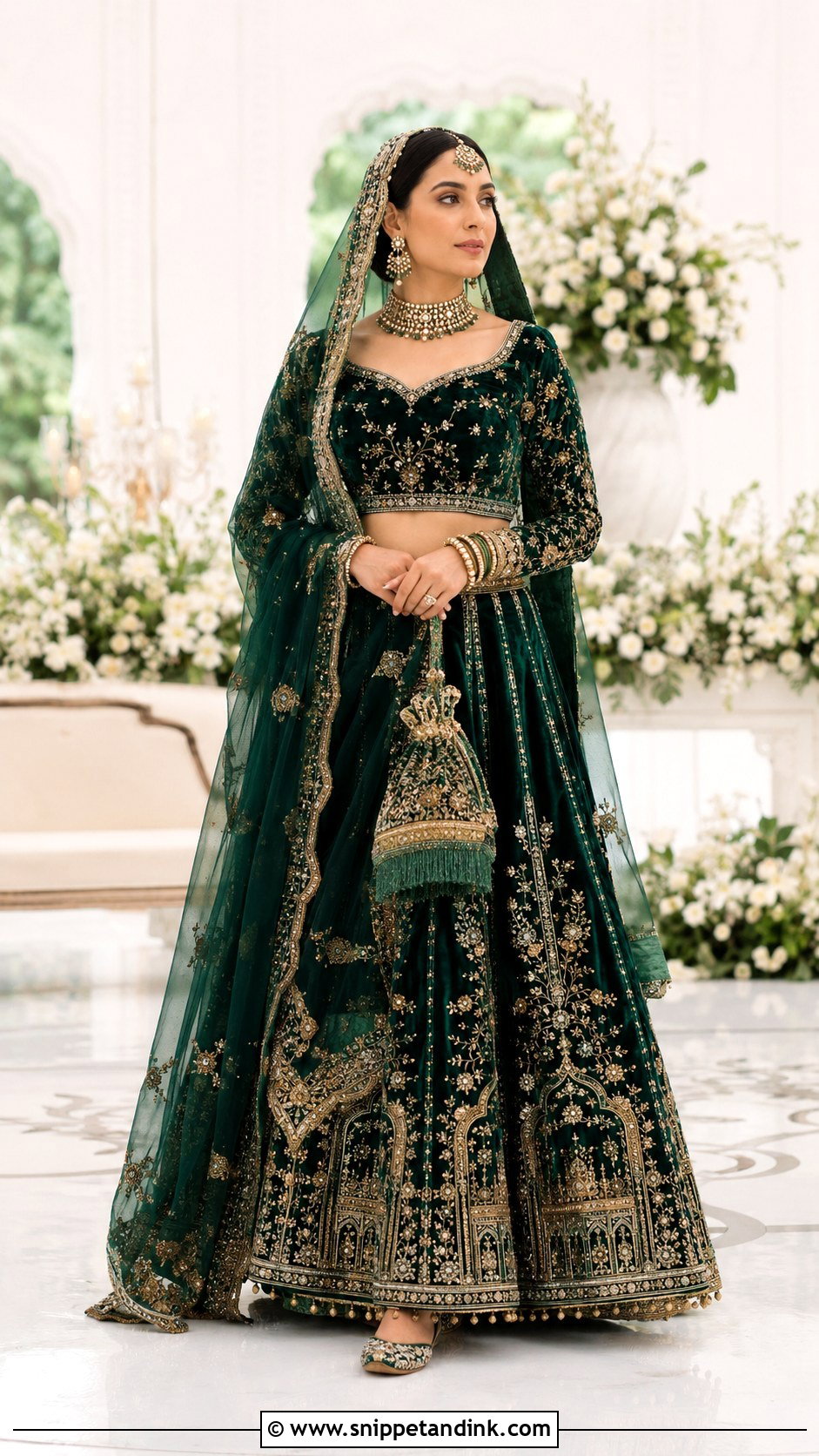
Velvet makes sense for a winter wedding, though it’s heavy, and the weight is the trade-off. Burgundy, deep red, navy or emerald velvet with antique gold embroidery around the skirt border and blouse is the look. Because velvet already has visual weight, I’d keep the embroidery to the borders instead of covering every panel. Use a lighter net or organza dupatta over the head so the whole outfit isn’t velvet. Kundan jewelry, a bold choker, bangles and a structured potli complete it, with closed-toe juttis for warmth and a sleek bun that leaves the neckline clear. Velvet crushes when you sit for long, so steam it the morning of the wedding and smooth the skirt as you rise.
11. Gold Bridal Anarkali
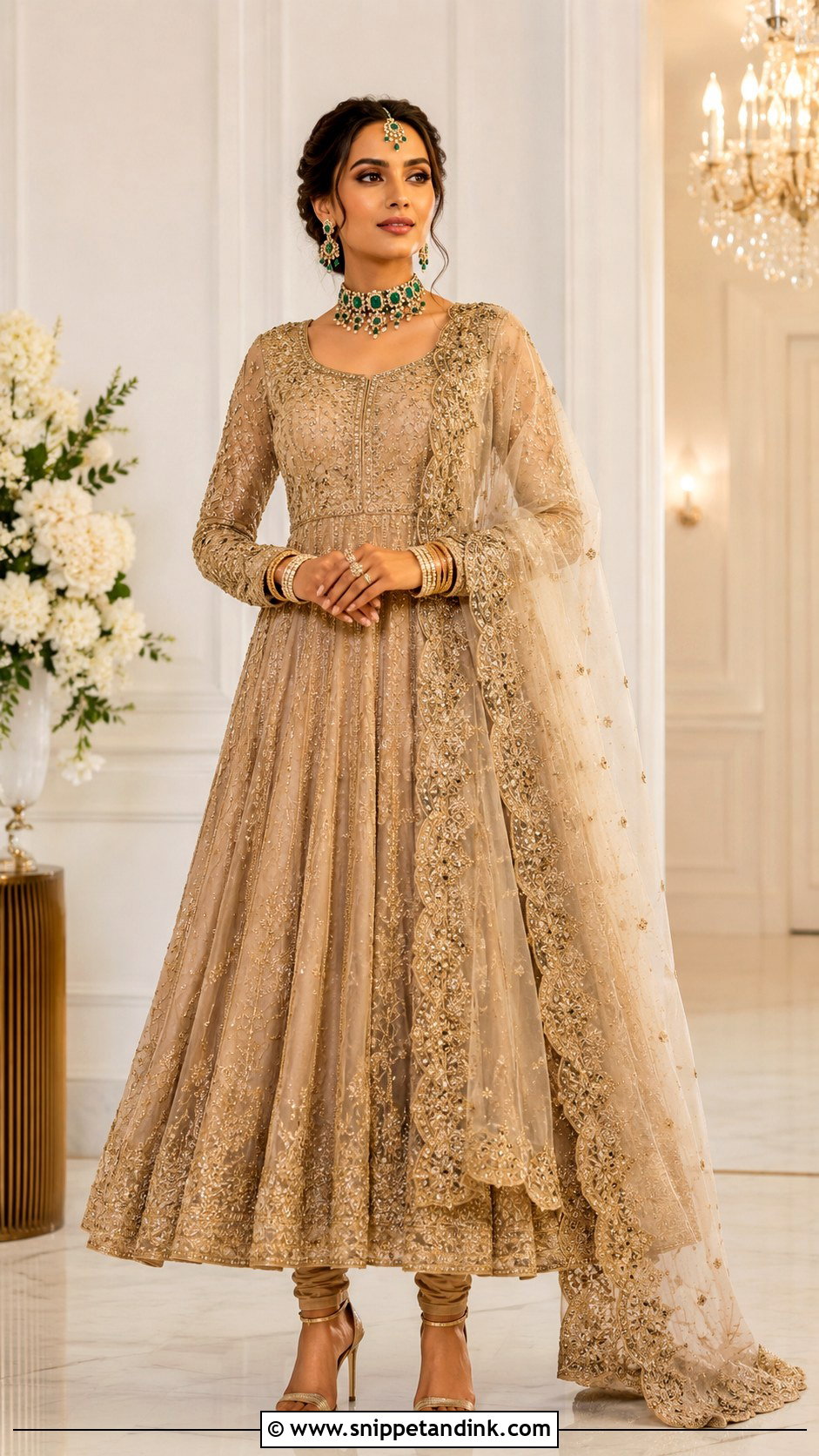
An Anarkali gives you a long, unbroken line, which can make you look taller in a way a lehenga doesn’t. Choose a floor-length design in muted gold, champagne or antique metallic, with paneled construction for flow and embroidery at the neckline, sleeves and hem. Slim churidar underneath and a sheer scalloped dupatta complete the base. Emerald jewelry gives a rich contrast against gold; pearls keep it softer and tonal. Add a centred tikka, earrings, bangles and metallic heels, with a smooth low bun. Metallic fabrics can scratch at the underarm seams, so check the lining there at your fitting. It suits a reception or a formal evening event particularly well.
12. Farshi Gharara Bridal Dress
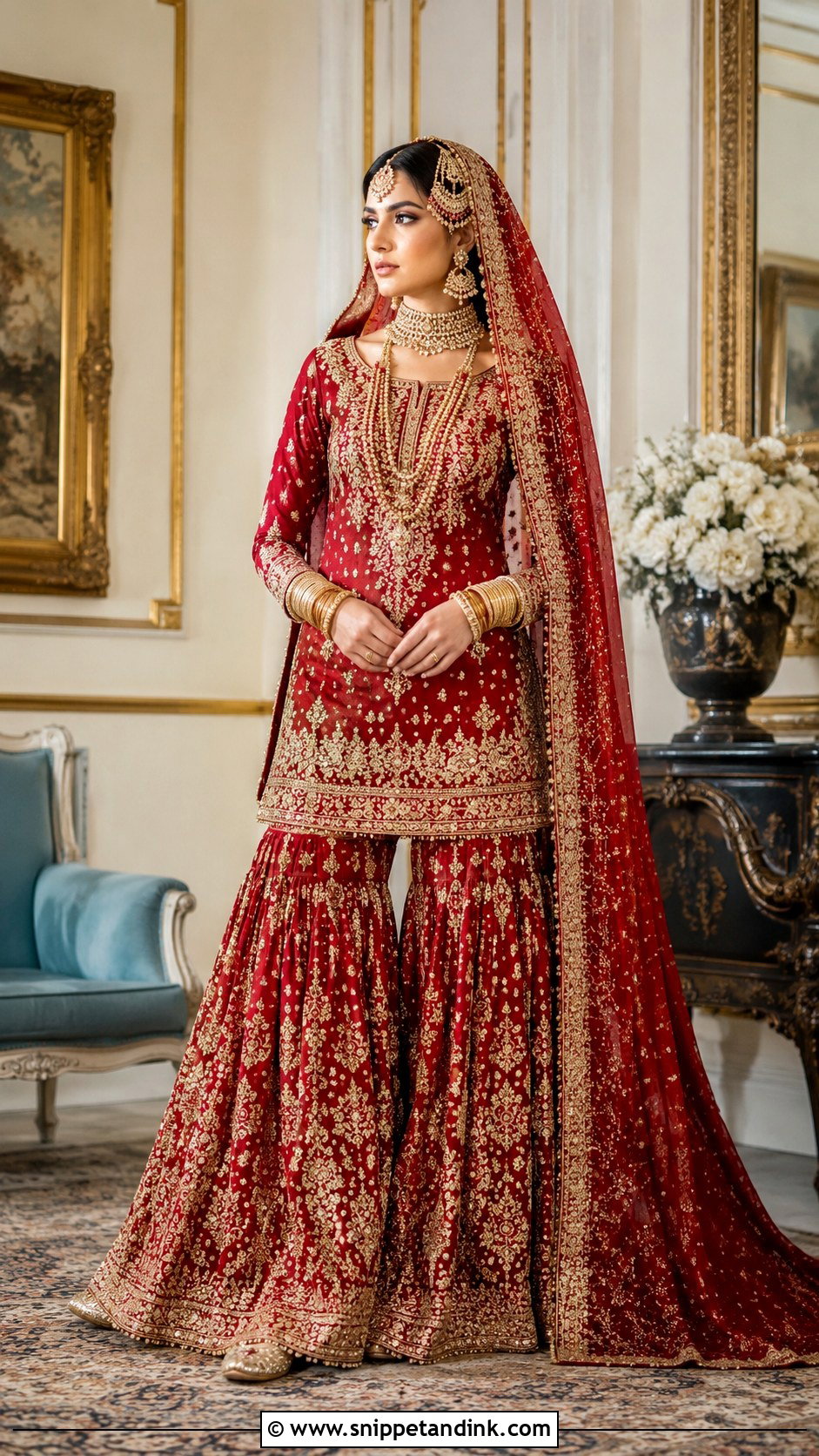
A farshi gharara trails across the floor, and you can’t walk in it without lifting the fabric. That’s part of the old-world ceremony of it, but it needs practice. The outfit pairs a short, closely tailored kurti with enormously wide gharara pants in red, rust, blush or ivory, worked with zardozi, kora, dabka or gota. Drape a long dupatta over the head with one side falling along the arm. A choker, long necklace, passa, earrings and khussas complete it, with a centre-parted bun. Walk in it at home, holding the gathered fabric in one hand, and have a cousin assigned to help on stairs. Fitted well, the effect is grand.
13. Bengali Red And White Bridal Saree
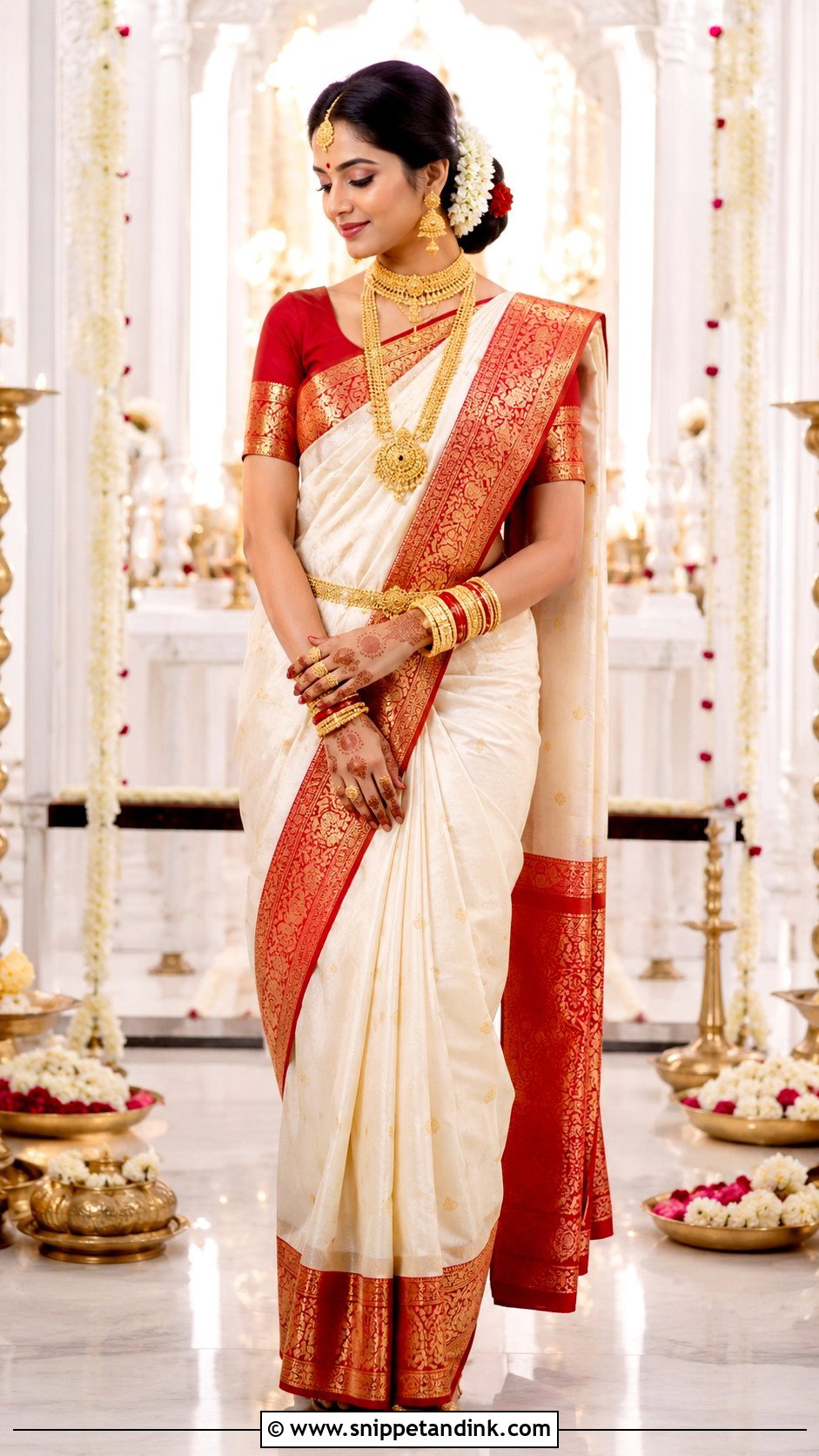
Red and white is unmistakably Bengali: a white, cream or ivory saree with a broad red border and gold weaving, over a fitted red blouse. Make sure the blouse sits securely, since Bengali ceremonies run long and involve sitting on the floor. The saree can be worn in a traditional Bengali drape or a neatly pleated modern one, depending on comfort and family custom. Layered gold necklaces, jhumkas, bangles, a forehead ornament and bridal headwear where it’s customary complete it, along with red alta on the hands and feet. Low gold sandals and a structured bun finish the look. A light saree shows every mark, so keep alta well dried before you dress.
14. Gujarati Panetar Bridal Saree
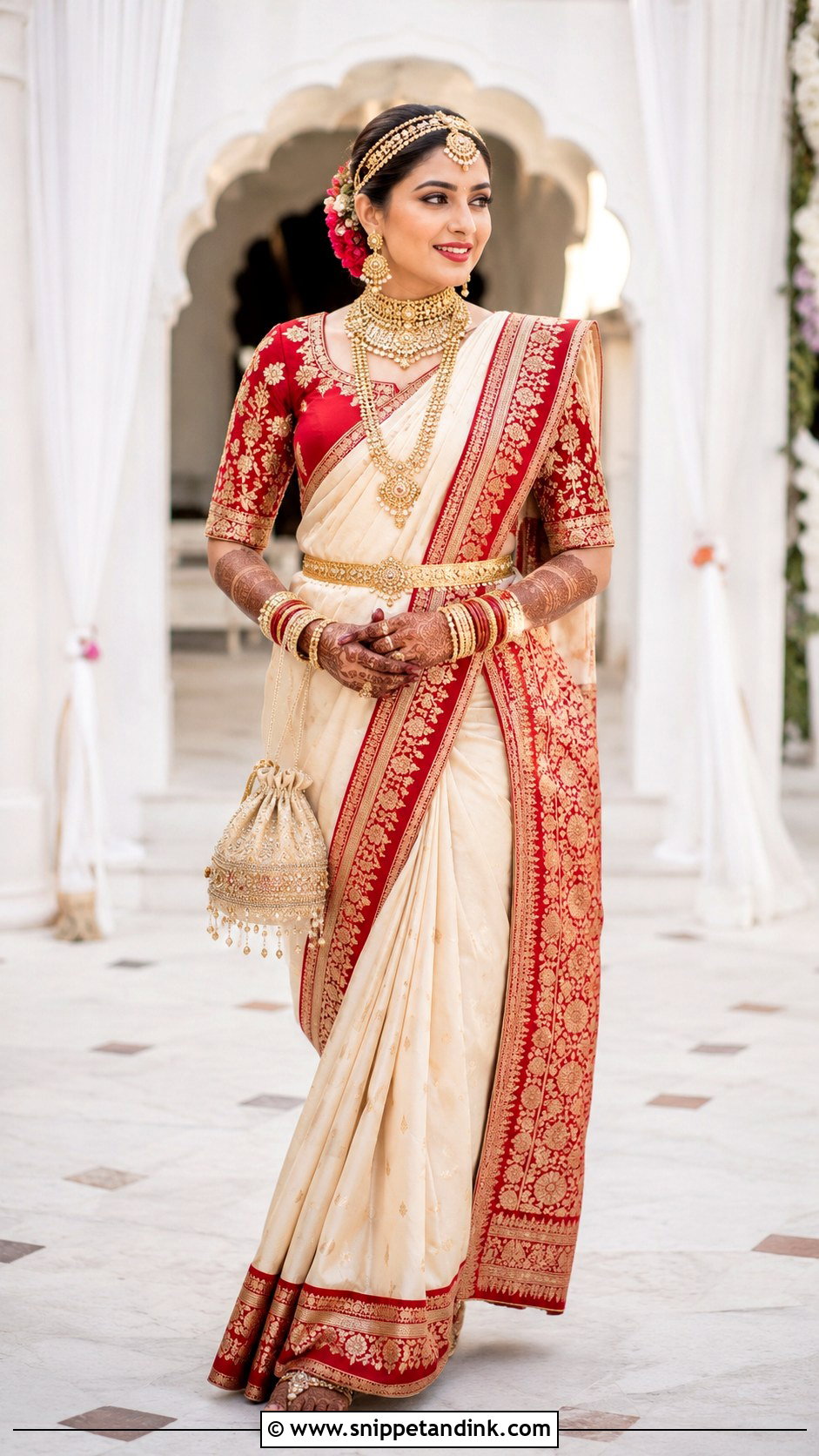
A Panetar is traditionally a white or ivory saree with a red border and gold accents, and in many Gujarati families the bride’s maternal side gives it to her. Style it with a red or richly embroidered blouse to strengthen the bridal colour. The pleats should be pinned firmly and the pallu arranged so its border shows. Gold jewelry, a matha patti, layered necklaces, bangles and a waist belt add richness, with embellished sandals and a small potli. A neat bun with flowers keeps it traditional, and a coordinated red veil can be added if you like. It gives you a light-coloured bridal saree that still feels festive and rooted in heritage.

15. Maharashtrian Paithani Bridal Saree
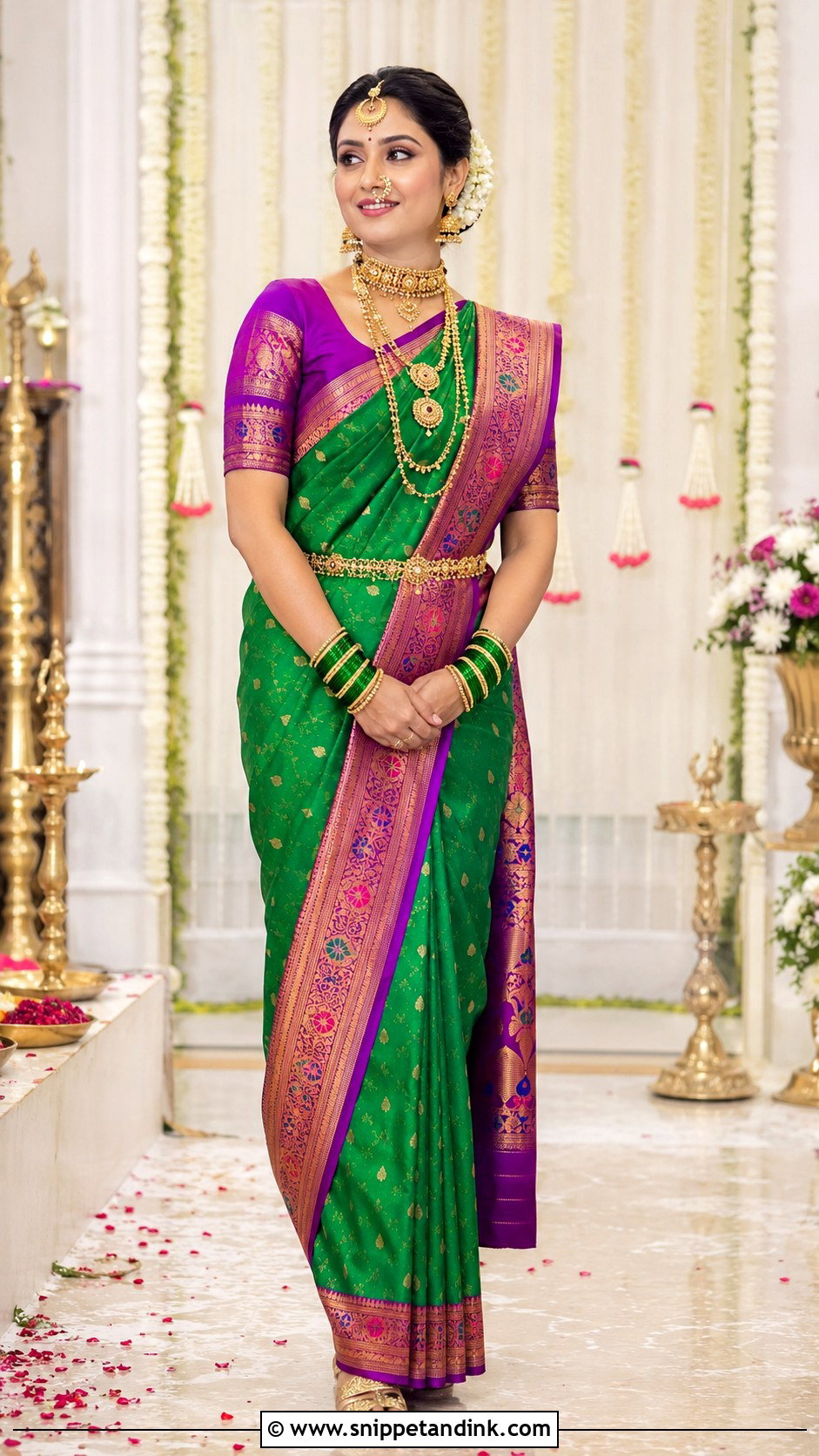
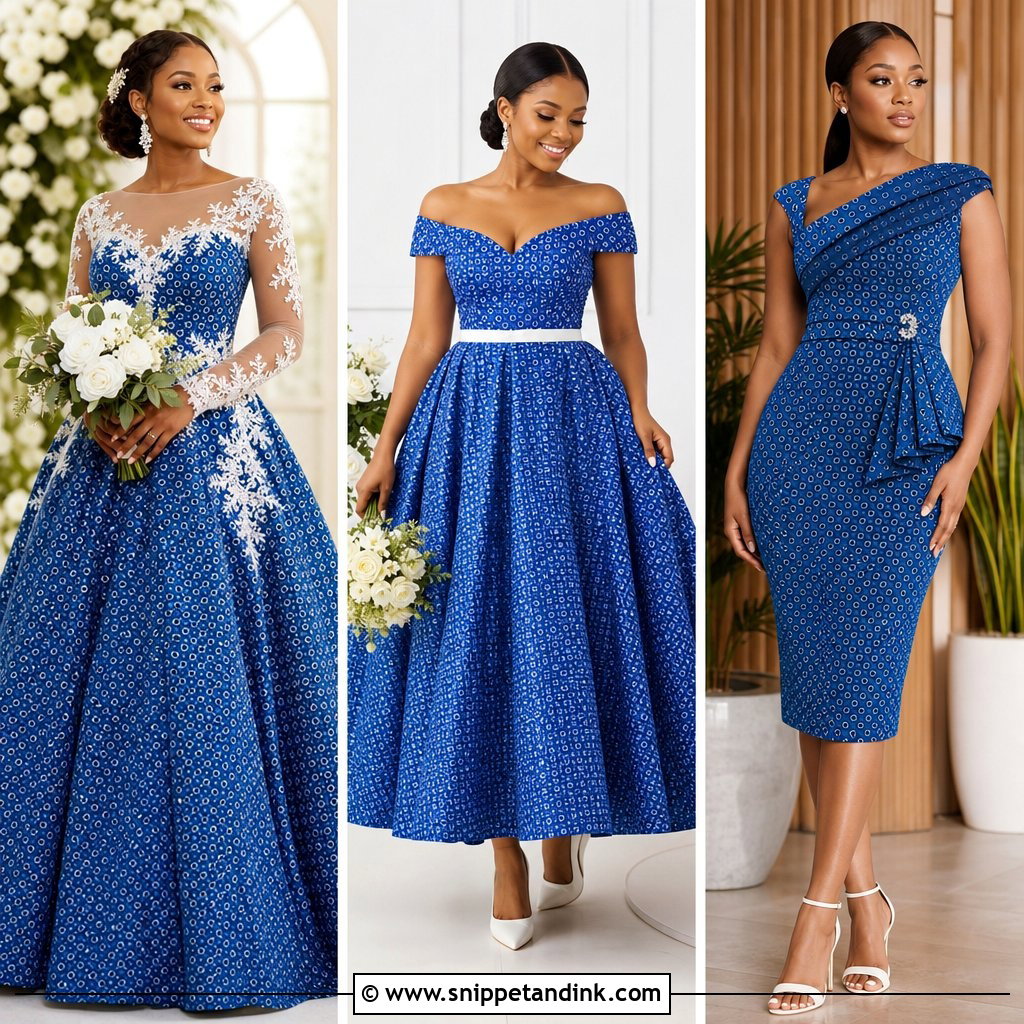
Paithani is handwoven, and its peacock or floral pallu is what people come close to look at, so don’t bury it under a heavy dupatta. Choose green, purple, magenta or golden yellow silk with a contrasting border. A close-fitting blouse that lets you move freely during rituals is essential. Traditional Maharashtrian jewelry completes the look: a nath, layered necklaces, earrings, green glass bangles and a crescent forehead ornament where it’s customary. Drape it in a classic style or a regional nauvari-inspired silhouette, which leaves your legs freer for the rituals. Simple gold sandals and a flower-dressed bun finish it. The weave does the work, so there’s no need for extra surface decoration.
16. Mirror Work Bridal Lehenga
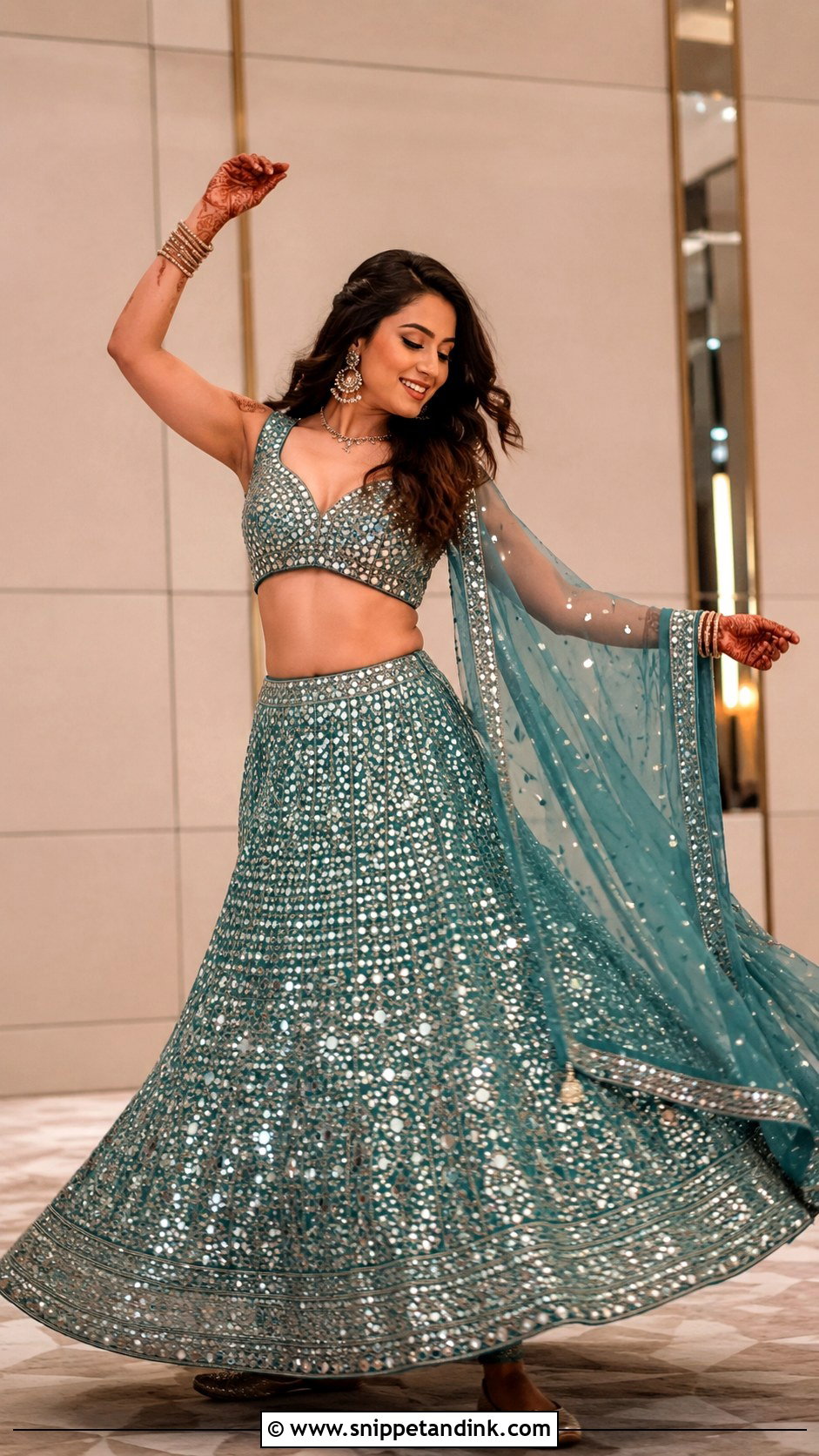
Mirror work catches every light at a sangeet, which is why I keep it for evening events. A jewel tone like navy, teal, fuchsia or emerald makes the mirrors and threadwork stand out. Since you’ll be dancing, choose a fitted blouse with supportive straps or sleeves and a moderately flared skirt rather than a heavy ceremonial one. Drape a light dupatta over one shoulder and pin it firmly at the waist. Statement earrings, a slim necklace, coordinated bangles and block heels or embellished juttis finish it. Mirrors have sharp edges where they’re stitched in, and they can catch loose hair and fine dupattas, so a high ponytail, braid or tight bun is safest.
17. Tissue Silk Bridal Saree
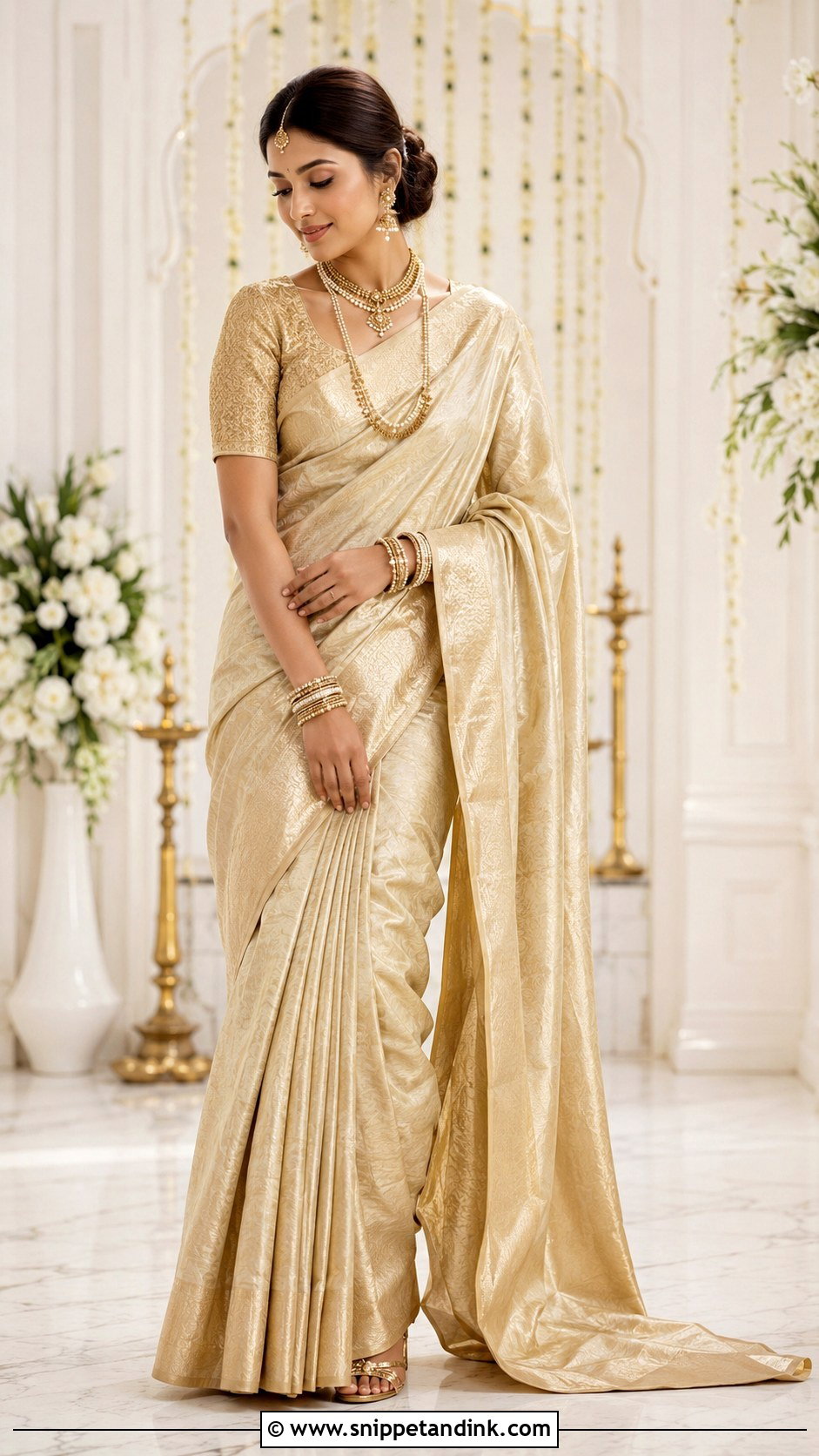
Tissue silk has metallic zari woven through it, which gives it a soft glow without embroidery. It also makes the fabric crisp and springy, so pleats tend to puff out instead of falling flat. I pin the pleats at the waist and the pallu at the shoulder with small safety pins hidden underneath. Choose champagne, pale gold, rose or soft silver with a woven border for structure, and a fitted brocade or embroidered blouse in a matching metallic. Pearls, uncut stones or antique gold suit it, with a small tikka, stacked bangles and metallic sandals. A polished bun or soft waves keep it modern. It suits a reception, nikah or daytime ceremony when you want shine without weight.
18. Blush Bridal Lehenga With Cape
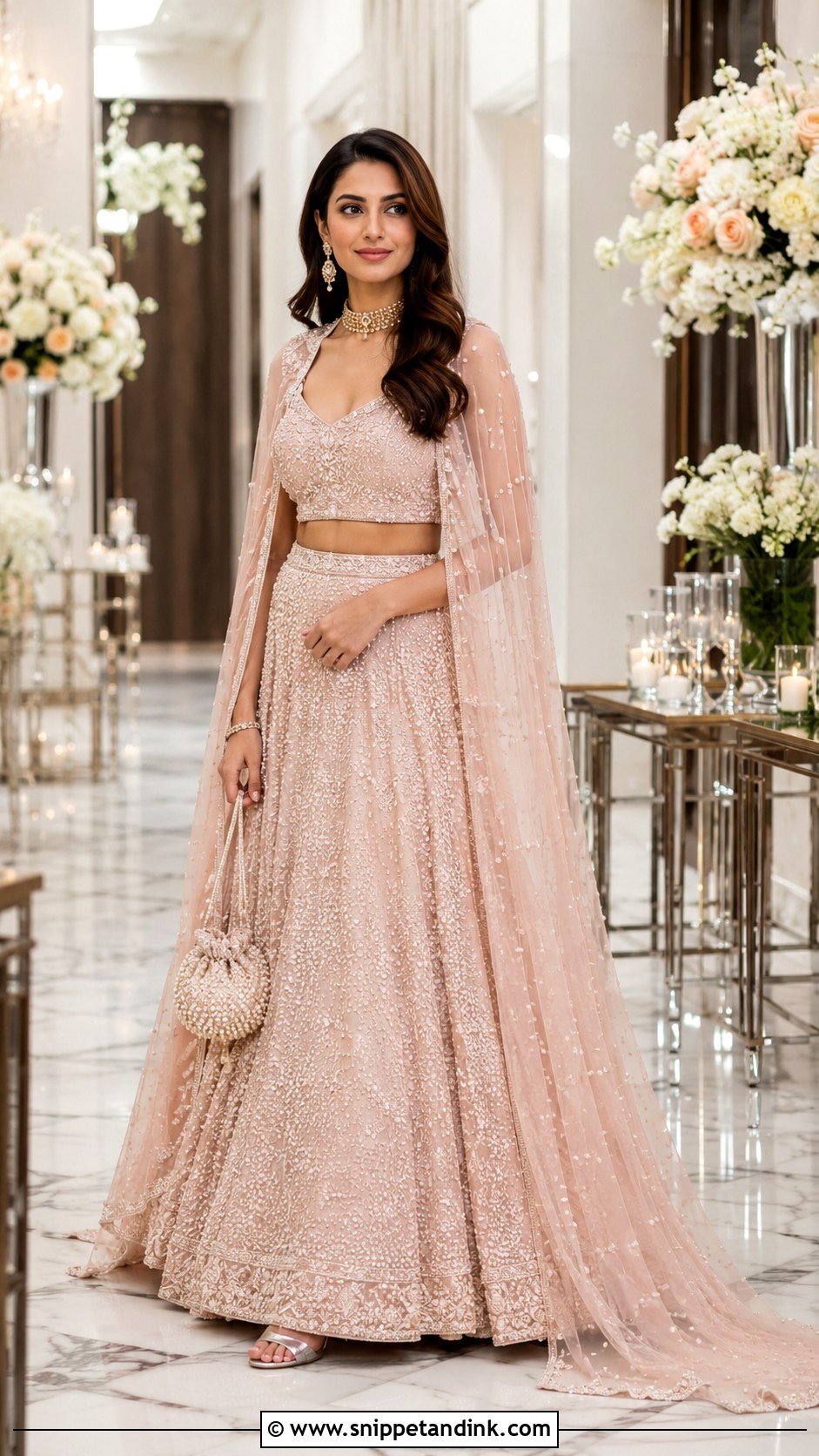
A cape replaces the second dupatta and leaves your hands free all evening, which brides at long receptions appreciate. Choose a fitted blouse and a flowing blush skirt with tonal embroidery, pearls or subtle sequins, then layer a sheer floor-length cape over it. The cape should fall straight from the shoulders, open at the front, so the waist and skirt work still show. A delicate choker, drop earrings, a bracelet and pale metallic heels finish it, with a compact clutch or beaded potli. Soft waves or a low textured bun suit it. Fasten the cape at the shoulder with hidden hooks or snaps, not a front tie, so it doesn’t pull against your throat when you sit.
19. Bridal Saree Gown
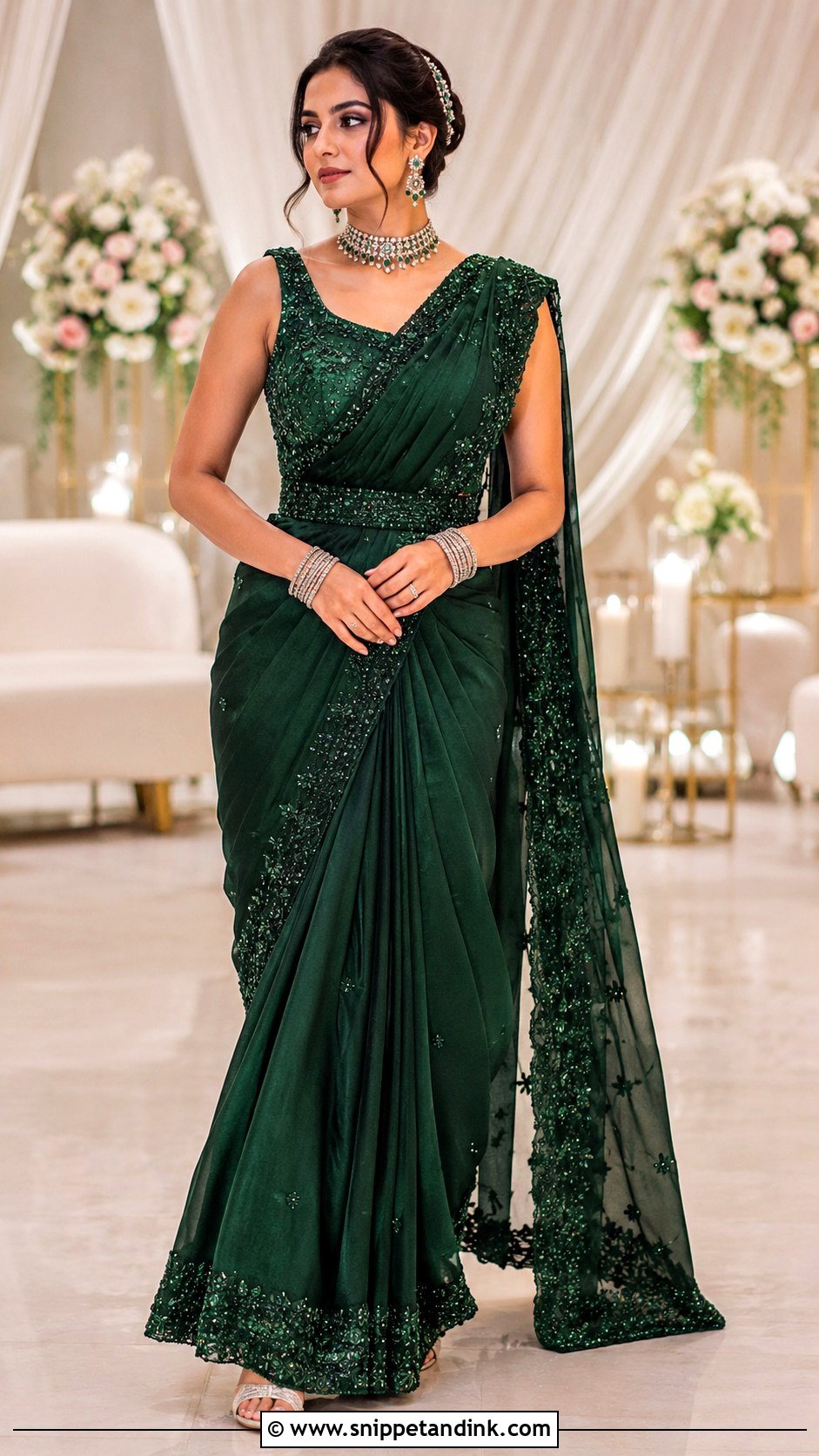
A saree gown gives you the look of a draped saree without anyone needing to drape it. The pleats are stitched, the pallu is attached and falls across the shoulder, and the waist is defined. Rich red, emerald, champagne or midnight blue suit a formal reception, and embroidery at the bodice and pallu border keeps it distinctly South Asian. A statement choker, earrings, bangles and a jeweled hair accessory complete it. Pointed heels add height, though block heels are kinder for a long night. A sleek bun or side-parted waves suit the clean line. Check the pallu’s attachment at the shoulder, since a heavy embroidered pallu pulls the neckline sideways if it’s only tacked lightly.


20. Multicolor Bridal Lehenga
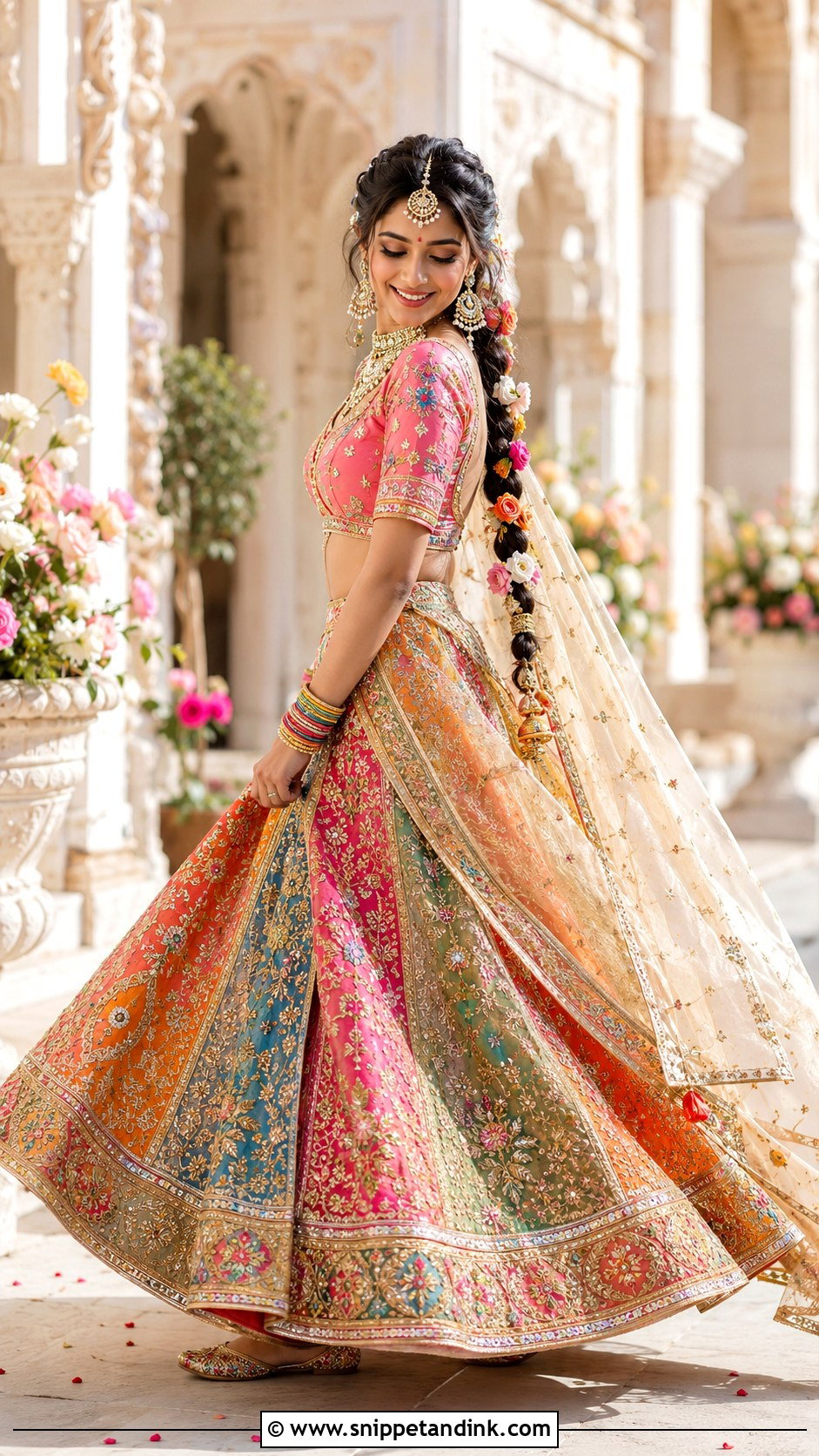
A multicolour lehenga is joyful, but it needs a plan. Pick a coordinated palette, perhaps pink, orange, green, blue and gold, rather than unrelated colours fighting across the skirt. Embroidered panels, floral motifs or woven borders can spread the shades evenly. My rule is to match the blouse to one dominant colour and let a lighter dupatta tie the rest together. Gold jewelry, colourful bangles, a tikka and embroidered juttis complete it, with a braid dressed in small flowers. It suits a mehndi, sangeet or daytime ceremony. Repeating each colour at least twice is what keeps it looking festive rather than chaotic.
Pinning a Head Dupatta That Lasts Through Every Ritual
A dupatta over the head has to stay put through bowing, sitting on the floor, being hugged and having garlands placed around your neck. Here’s the order I pin in:
- Set the hairstyle first, with a firm bun or a padded base at the back for the pins to grip.
- Place the dupatta so the border frames the face evenly, then pin it to the bun with U-pins or small safety pins hidden under the border.
- Add one pin at each side above the ears, so turning your head doesn’t pull it off centre.
- Bring the tail down and pin it to the blouse at the shoulder, or tuck it into the waistband on the opposite side.
- Put the matha patti or tikka on last, over the dupatta, so it holds the front in place too.
Keep spare pins in a small pouch with someone close by. A heavy net dupatta will slip a little over the hours, and a two-minute repin between rituals saves photos.
Storing Zari and Silk So They Reach the Next Generation
Many desi bridal outfits become heirlooms, and the zari is what suffers most in storage. Wrap each piece in soft white muslin or cotton, never plastic, which traps moisture. Refold silk sarees along different lines every few months, since repeated folding in one place can crack the zari and weaken the silk. Keep mothballs from touching the fabric directly, and keep perfume and deodorant off the embroidery on the day. Store everything somewhere dry and dark, with a packet of silica gel nearby in humid weather.
Lehenga, Saree or Sharara for Each Ceremony
Among all these outfits, the right one depends on the ceremony, the season, your family’s traditions and how comfortable you need to be. A red lehenga has classic grandeur, a silk saree celebrates regional weaving, and sharara, gharara, pishwas and Anarkali each give you a different shape. Pastels and ivory are soft; jewel tones and metallics are richer. Whatever you choose, secure draping, good tailoring, comfortable shoes and jewelry that suits the neckline matter more than the trend. Do a full trial with everything on, dupatta pinned, and sit, stand and walk in it. The outfit that passes that test is the one to wear.
You'll Like These Ideas:



Leave a Reply