
Prajakta Koli’s wedding wardrobe stood out because it was quiet. Her celebration with Vrishank Khanal mixed Maharashtrian and Nepali traditions, and almost every outfit carried a story: an ivory haldi sharara, her mother’s Paithani saree, embroidered mehendi separates, a hand-painted bridal lehenga and a reception saree from her in-laws. As a stylist, what I take from it is a method more than a set of looks. Start with what means something to you, then build comfort and jewelry around it. Below are her outfits and close adaptations, with notes on fabric, draping and how each one holds up through a ceremony, so you can copy a look exactly or borrow one idea from it.

Getting an Heirloom Paithani Ready to Wear Again
Wearing a mother’s or grandmother’s saree is one of the most moving choices in this wardrobe, and it needs a little preparation. Silk that has sat folded for years can weaken along the old creases, and zari can tarnish or fray at the edges. I go through an heirloom in this order, a few months before the wedding.
- Open it fully in daylight and check every fold line and the pallu for thin spots, tiny holes or splits.
- Look at the zari border. Dull or blackened metallic thread is common; leave restoration to a specialist rather than rubbing it.
- Send it to a dry cleaner who handles silk sarees regularly, and tell them it’s an heirloom.
- Replace a worn fall and pico so the hem drapes and wears evenly.
- Have a new blouse made. Old blouses rarely fit, and a fresh one changes how the whole drape sits.
- Do a full practice drape with your shoes and jewelry on, and pin it as you would on the day.
After the wedding, air it out of direct sun, then store it wrapped in soft muslin or cotton rather than plastic, which traps moisture. Refold it along different lines every few months so the creases don’t wear through. That small habit is what lets a saree reach the next bride.
1. Prajakta Koli Coral Mehendi Kurta Set
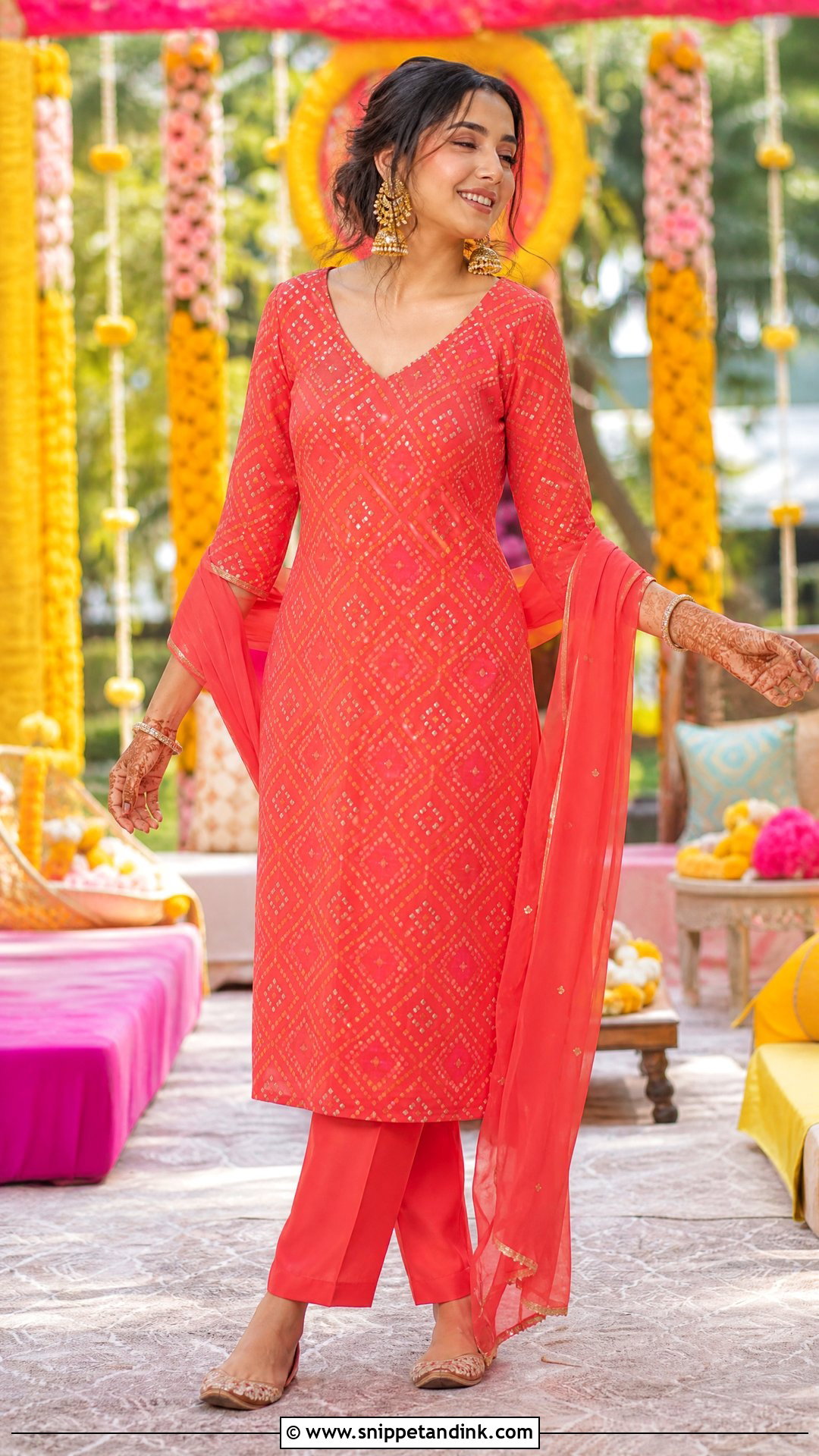
She opened the mehendi celebrations in a coral-red kurta set with small gold geometric details, and it was a sensible choice. Mehendi means sitting still for hours with your hands and feet out of action, and a straight or gently flared kurta with ankle-length pants lets you do that without crushing a skirt. Keep the dupatta light so someone can lift it away once the paste goes on. Gold statement earrings and embroidered juttis keep it traditional. I’d wear slim bangles only on the arm that’s done last, since bangles knock against wet henna. Soft waves and fresh makeup suit a home function or a daytime lunch.
2. Prajakta Koli Green Mehendi Skirt Set
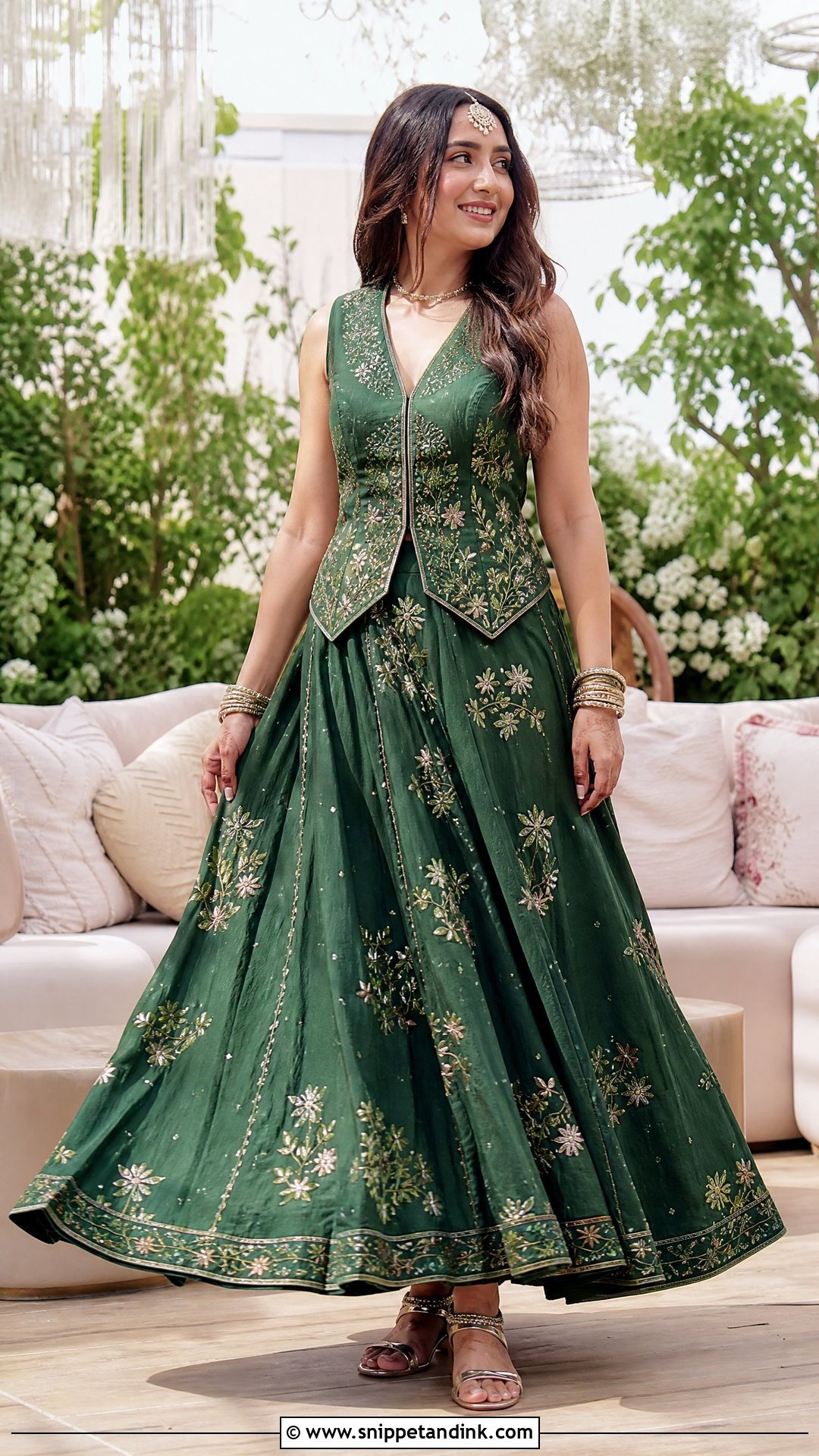
Her custom Anita Dongre mehendi outfit was a deep forest green: a hand-embroidered skirt with a structured, sleeveless waistcoat-style top and no dupatta at all. The embroidery was made by women artisans associated with SEWA, which gives the piece weight beyond how it looks. Dropping the dupatta is clever for mehendi, because there’s no fabric falling onto wet henna. To recreate it, pair an ankle-length skirt with a fitted embroidered top, metallic sandals, a small maang tikka and fine anklets. Keep jewelry light so the needlework shows. A loose braid stays off the neck in an outdoor setting.
3. Prajakta Koli Ivory Haldi Sharara
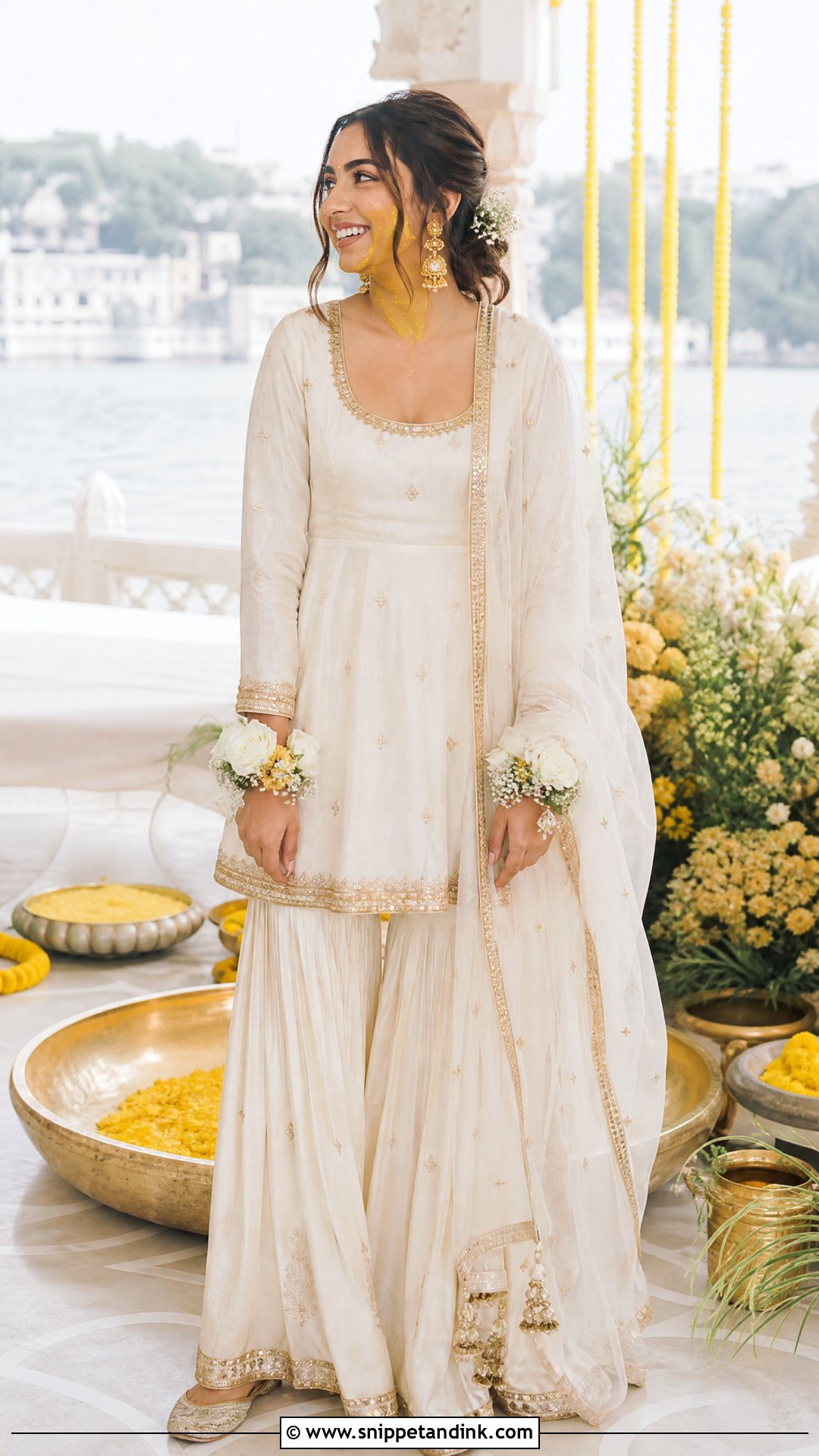
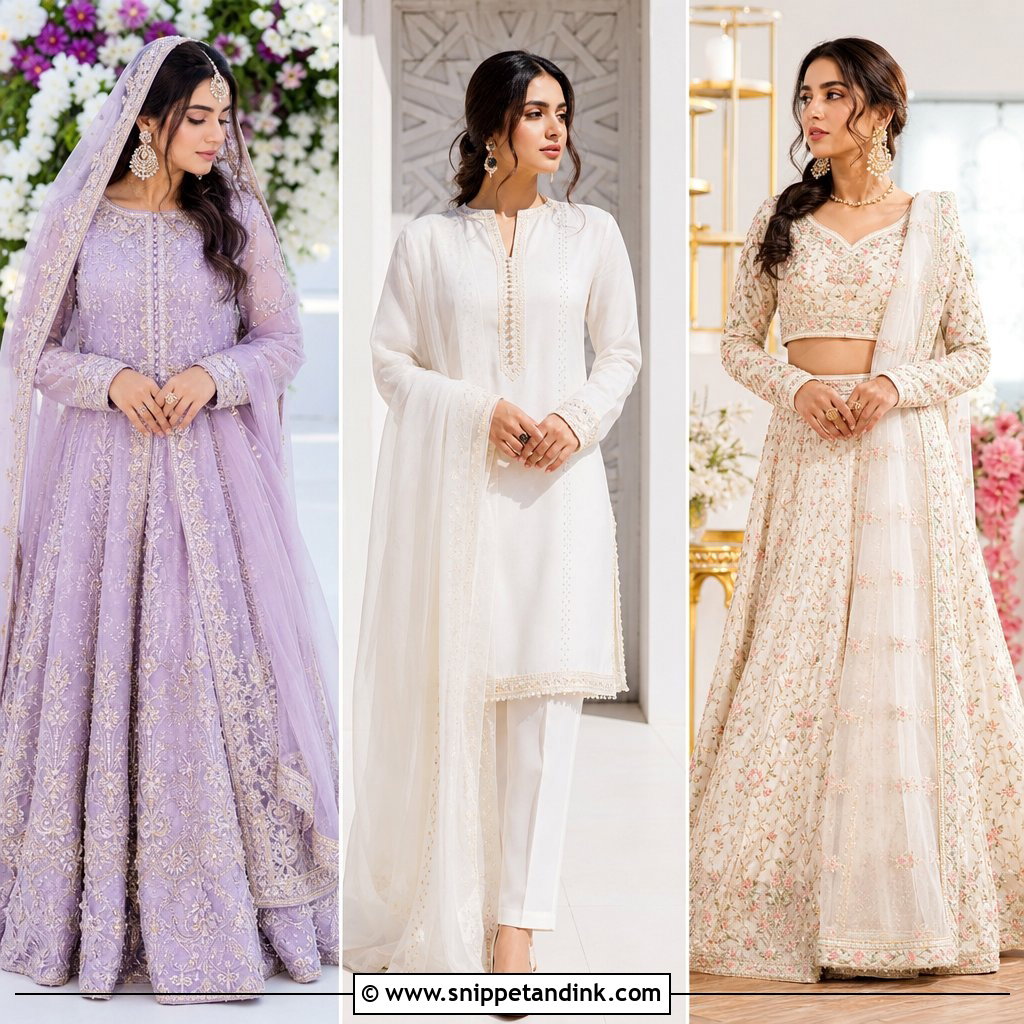
What if a haldi outfit felt calm instead of loudly yellow? Prajakta wore an ivory sharara with delicate gold gota patti, a short kurta and an airy dupatta, and it looked graceful beside the lake. Before you copy it, know that turmeric paste stains ivory cotton and silk readily, and the yellow often won’t wash fully out. I’d either accept the outfit as a one-day piece, choose a washable fabric, or wear a detachable outer layer during the paste itself. Metallic flats, fine gold jewelry and floral wrist pieces finish it. White rose kaleeras add drama, and small gold hair ornaments lift a braid or half-up style.
4. Prajakta Koli Pink Paithani Sangeet Saree
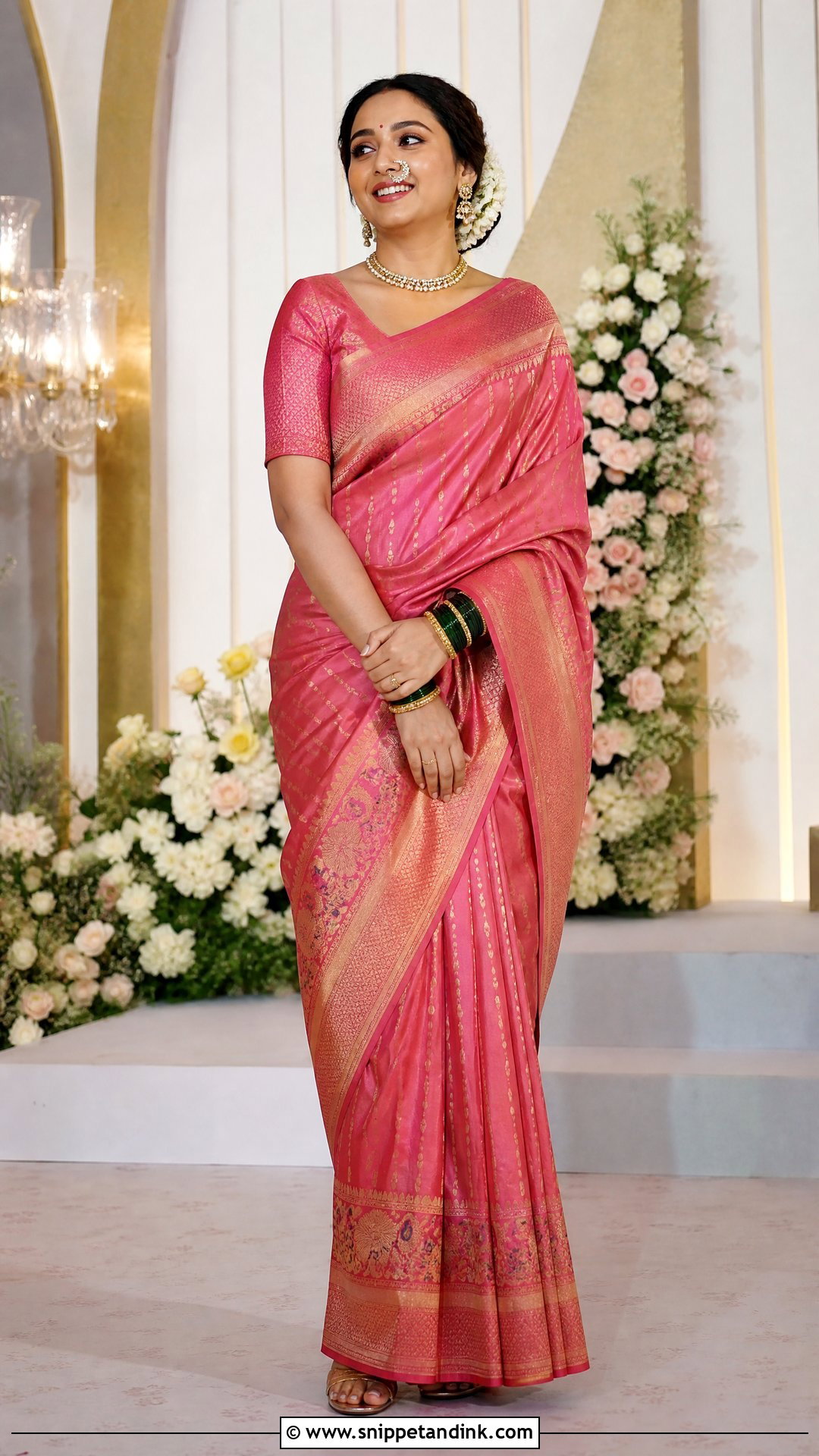
For the sangeet she chose her mother’s pink Paithani over a sequinned lehenga, styled with recognizable Maharashtrian details: a fitted blouse, a traditional nath, a Chandrakor bindi, green glass bangles, statement earrings and fresh jasmine gajra. A Paithani’s zari border is heavy, and on a dance floor the pleats are what fail first. I pin them in at least two places at the waist and once lower down, and I’d skip stilettos for low block heels. A sleek bun keeps the pallu and hair from tangling. Magenta, rose or coral Paithanis with a contrasting border all carry the same feeling.
5. Prajakta Koli Pichwai Wedding Lehenga
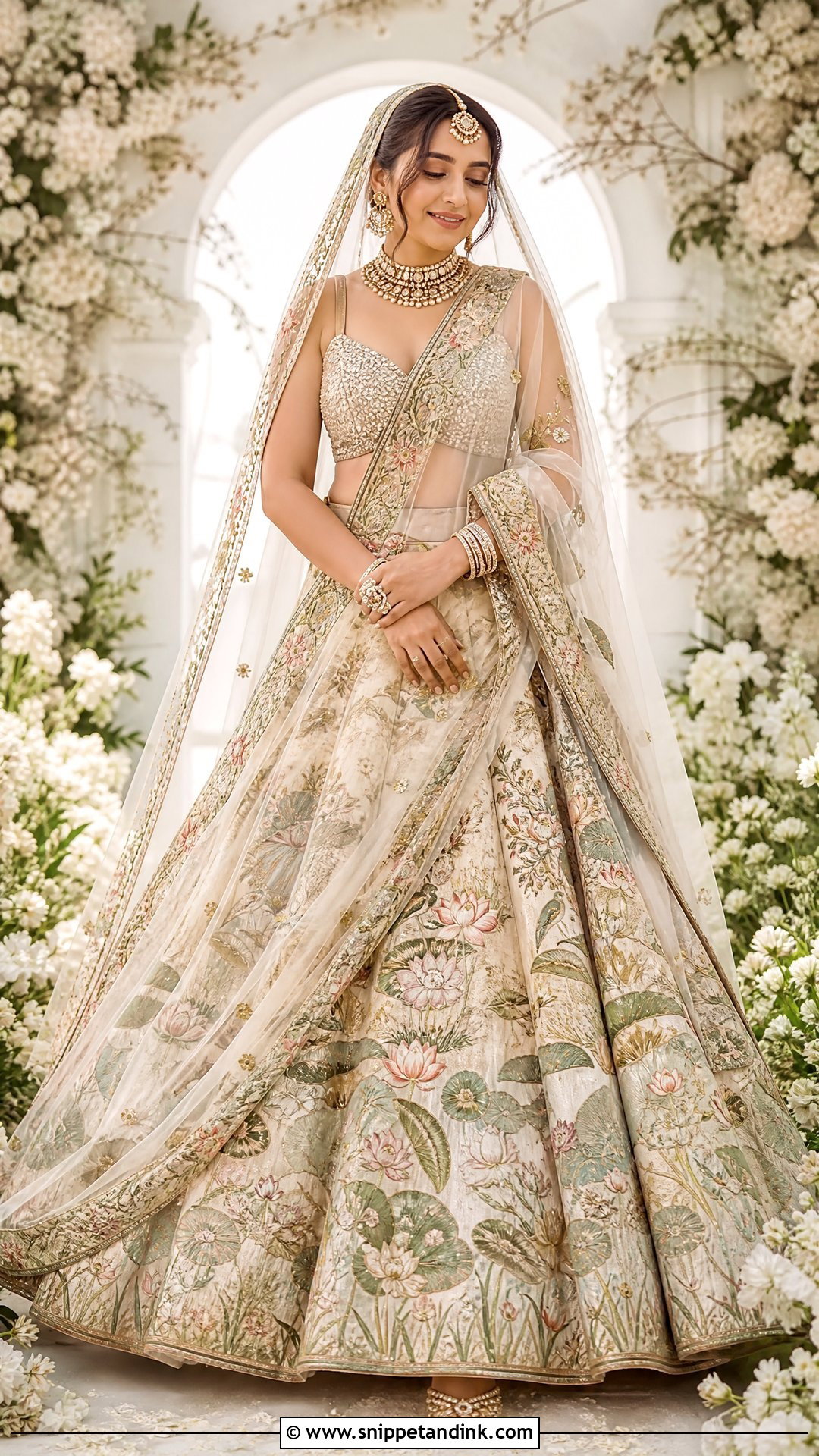
Her main wedding outfit was a customized Anita Dongre Pichwai lehenga, hand-painted with Parijat flowers that connect to the meaning of her name. The palette was cream and muted sage, with a shimmering blouse and two dupattas, one draped over the shoulder and a lighter one worn as a veil. Two dupattas mean two sets of pins and twice the weight on the head, so I anchor the veil to a secure bun or base rather than loose hair, even if waves show beneath it. Finish with a choker, earrings, maang tikka, bangles and cushioned heels. Hand-painted or personalized motifs are the part worth borrowing.
6. Prajakta Koli Banarasi Reception Saree
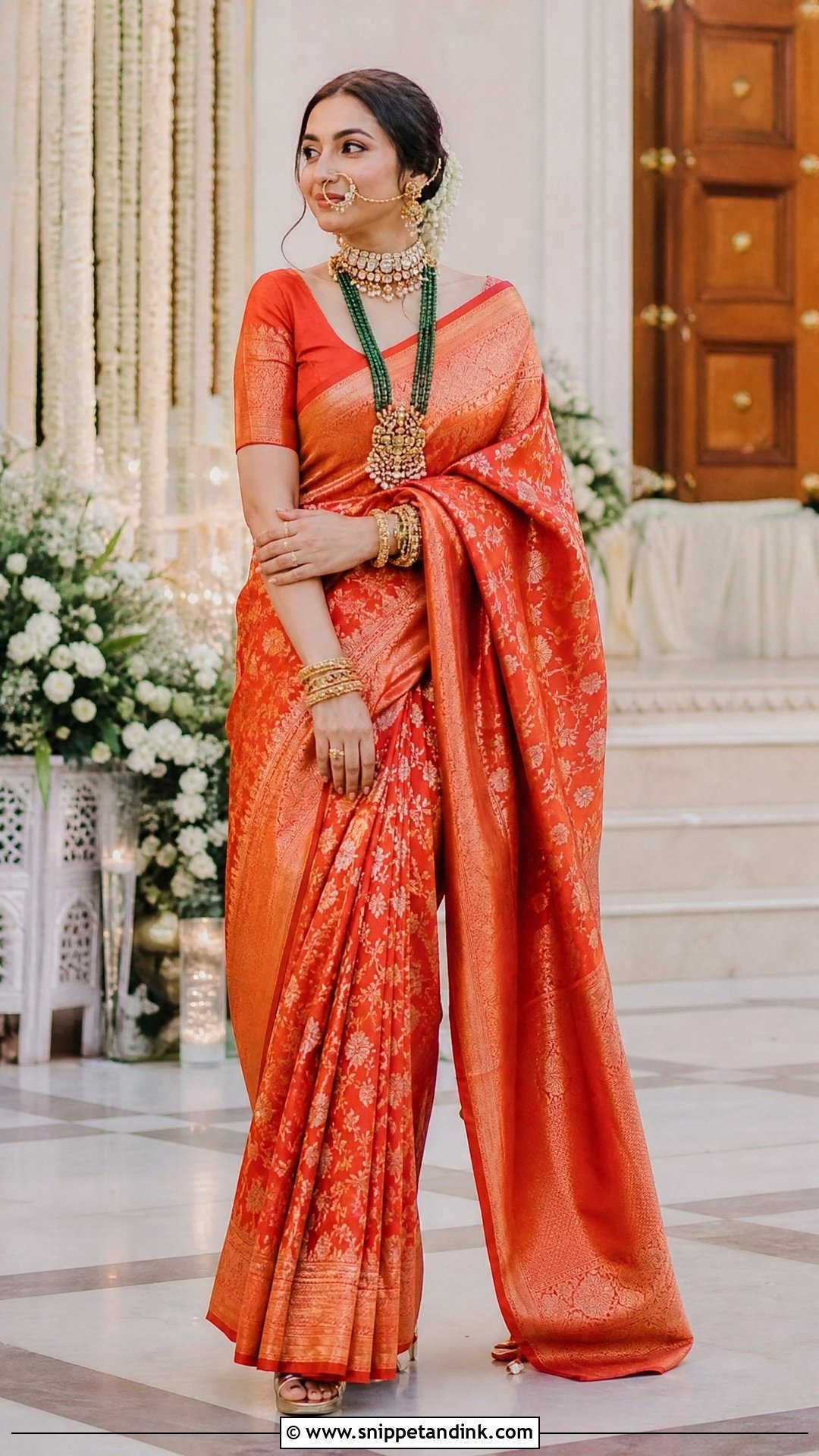
At the reception she wore a rich red-orange Banarasi silk saree given by her in-laws, with floral zari and a long green beaded Tilhari necklace that brought Nepali tradition into the look. It’s a quietly diplomatic outfit: a textile from one family, jewelry from the other. Banarasi silk is heavy and slippery, so I’d have the pleats pressed and pinned before the reception and the pallu fixed at the shoulder with a brooch or safety pin underneath. Kundan bangles, gold heels and a classic bun balance the ornate surface. Any bride joining two backgrounds can use the same idea.
7. Prajakta Koli White And Gold Haldi Gharara
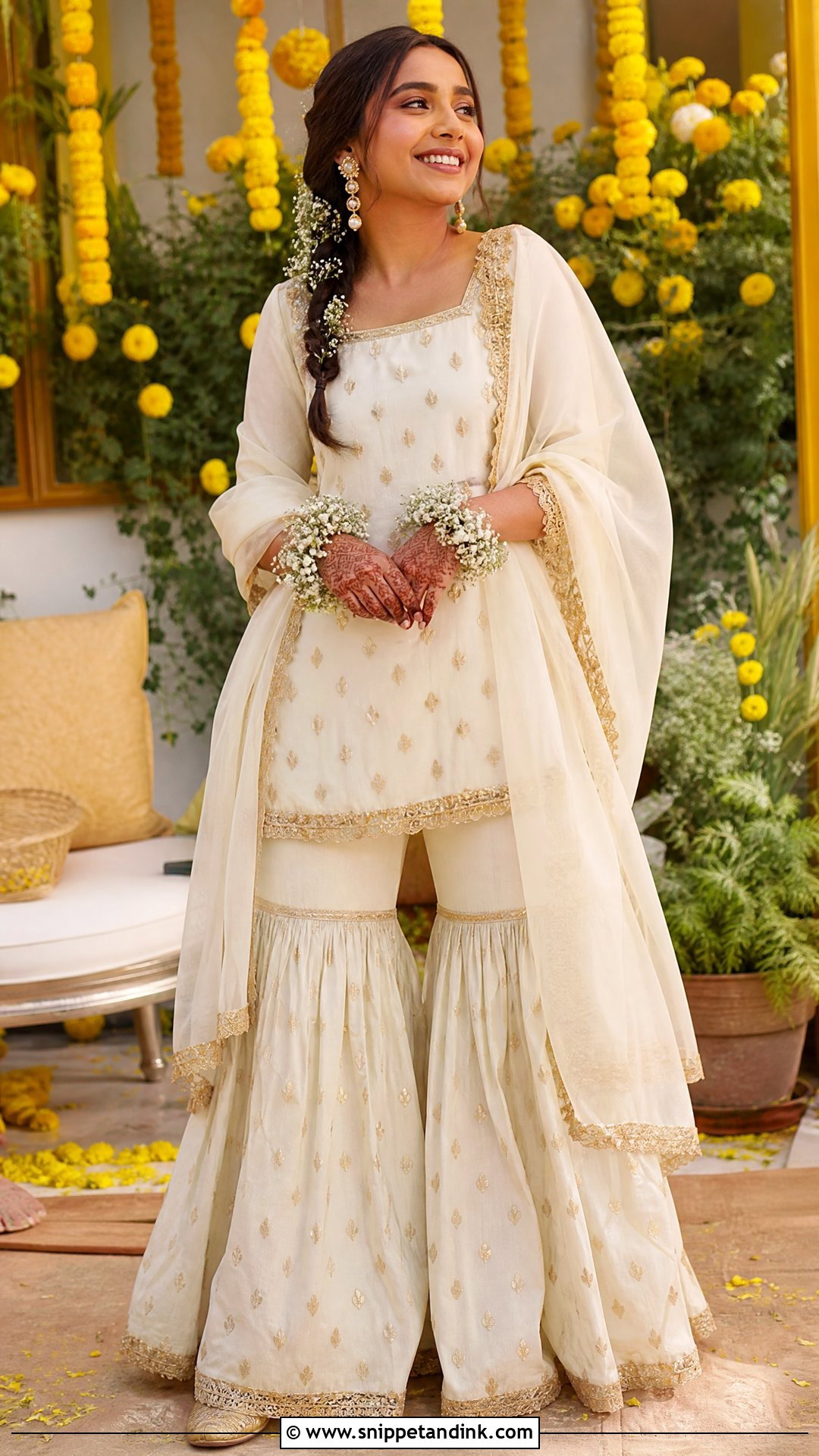
This is a more structured take on her ivory haldi look. A short kurti with gold edging over dramatically flared gharara pants gives more shape than a sharara, since the gharara is fitted to the knee and flares below it. Drape a sheer organza dupatta behind the arms so the hands stay free for rituals. Pearl-and-gold earrings, white floral bangles and flat juttis keep it fresh. If you want color, add yellow flowers to the hair rather than changing the neutral palette. A low braid wrapped with tiny blossoms copes with an outdoor breeze, and the whole outfit is far lighter to manage than an embellished haldi lehenga.
8. Prajakta Koli Forest Green Mehendi Lehenga
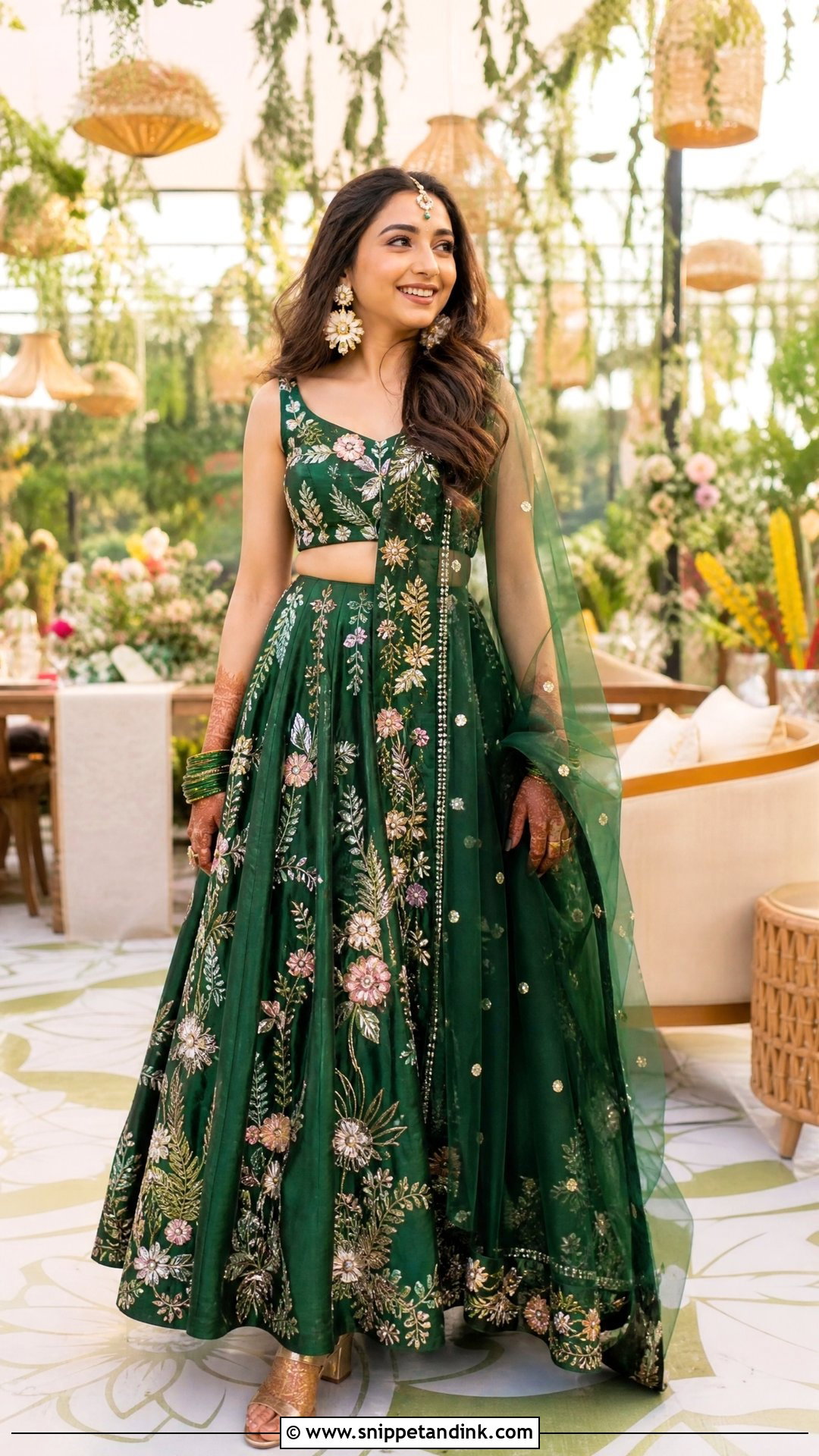
If you’d rather have a proper lehenga shape, her forest green translates easily into a lightweight three-piece set. An embroidered A-line skirt with a sleeveless cropped blouse lets your arms rest comfortably on cushions while the artist works. Keep the dupatta very light, over one shoulder or tucked at the waist, so it never brushes wet henna. Choose threadwork or small mirrors over dense stones, which snag and add weight. Gold block heels, a delicate maang tikka and stacked green bangles finish it. Soft curls and natural makeup stop the deep color feeling heavy.
9. Prajakta Koli Coral Mehendi Sharara
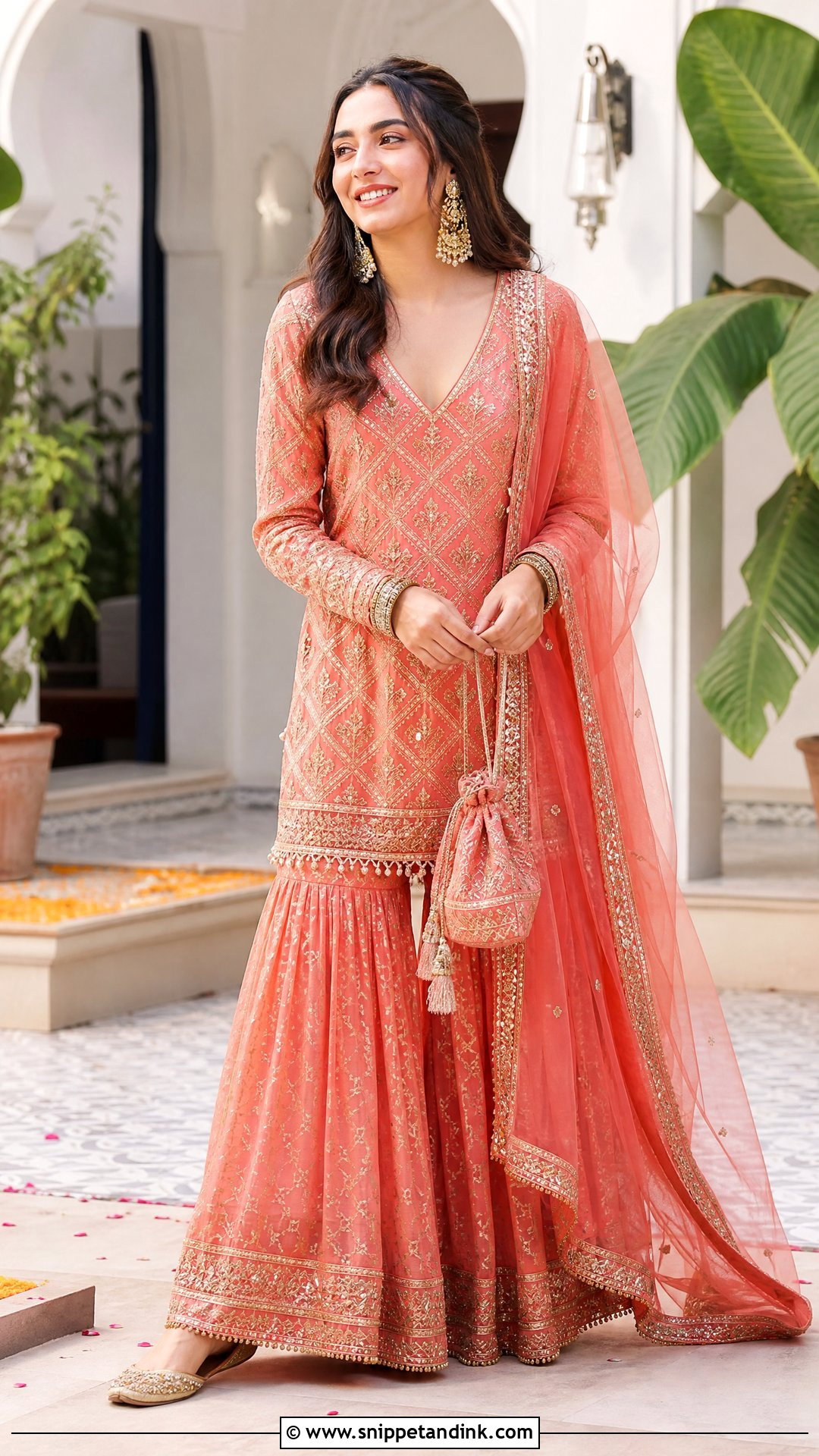
Coral is a cheerful way out of the standard mehendi green. Turn her first ceremony outfit into a sharara: a short kurta with a small geometric pattern, wide flared pants and a sheer matching dupatta. Fine gold motifs catch daylight without glare. Oversized gold earrings, slim bangles, embroidered flats and a compact potli complete it. A half-up style keeps hair off your face while your hands are busy. Once the henna’s on, pin the dupatta at one shoulder or take it off after photos. Sharara pants are forgiving on most figures and you can sit cross-legged in them, which matters at a long mehendi.
10. Prajakta Koli Marathi Paithani Bridal Saree
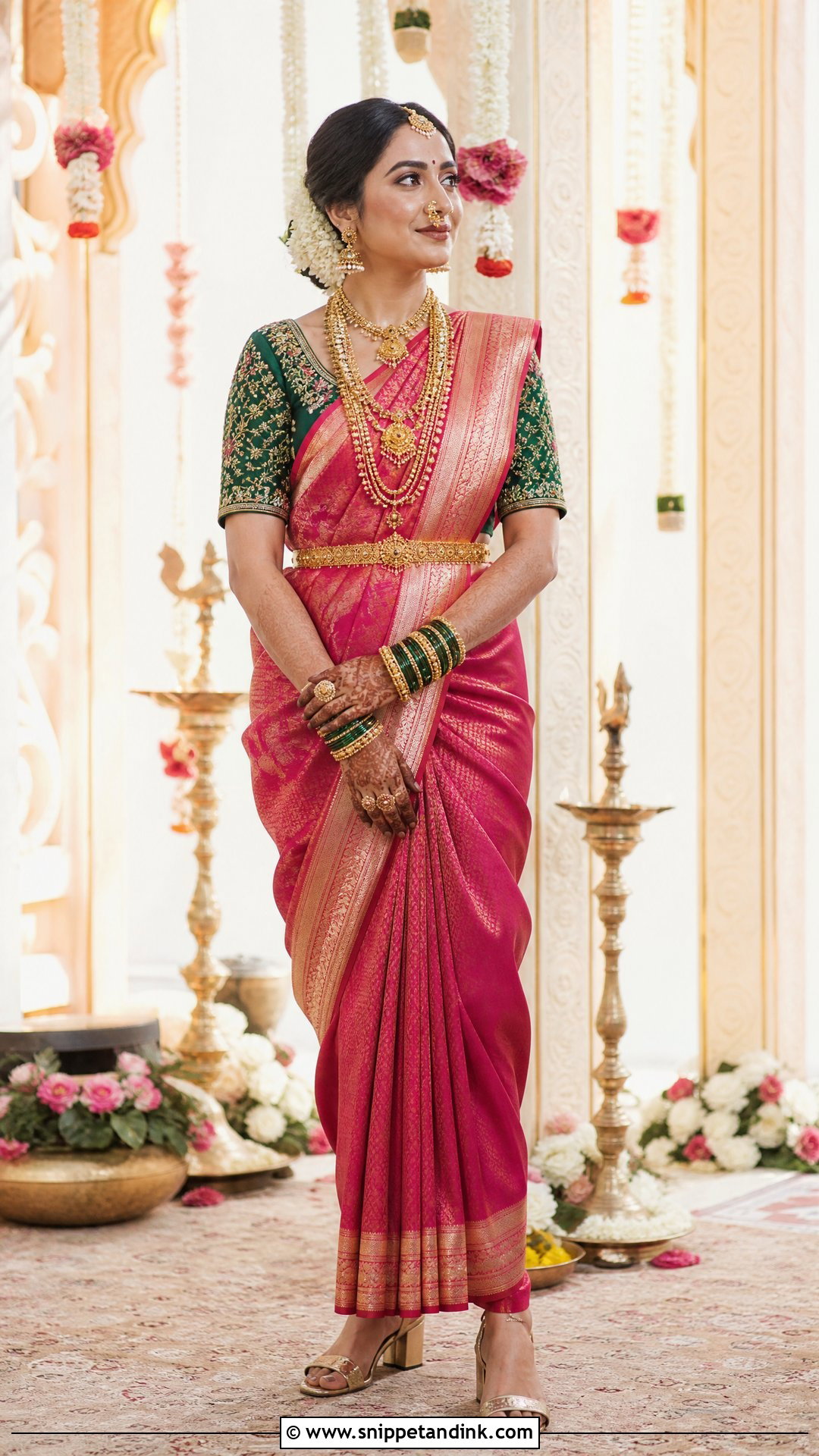
Her Paithani moment also works as a full Marathi bridal look for the main ceremony. A deep pink or rust silk with a peacock border, worn as a Nauvari-inspired drape or a classic pleated one, is the starting point. The Nauvari wraps between the legs, which frees you to walk and sit cross-legged for rituals, but it needs a draper who knows the style, so book one early. Pair it with a contrasting green blouse, a gold waist belt, layered necklaces, a nath and green glass bangles. Put your shoes on before the final length is set, or the hem will be wrong. A crescent bindi and a jasmine-covered bun complete the regional finish.
11. Prajakta Koli Pastel Pichwai Bridal Lehenga
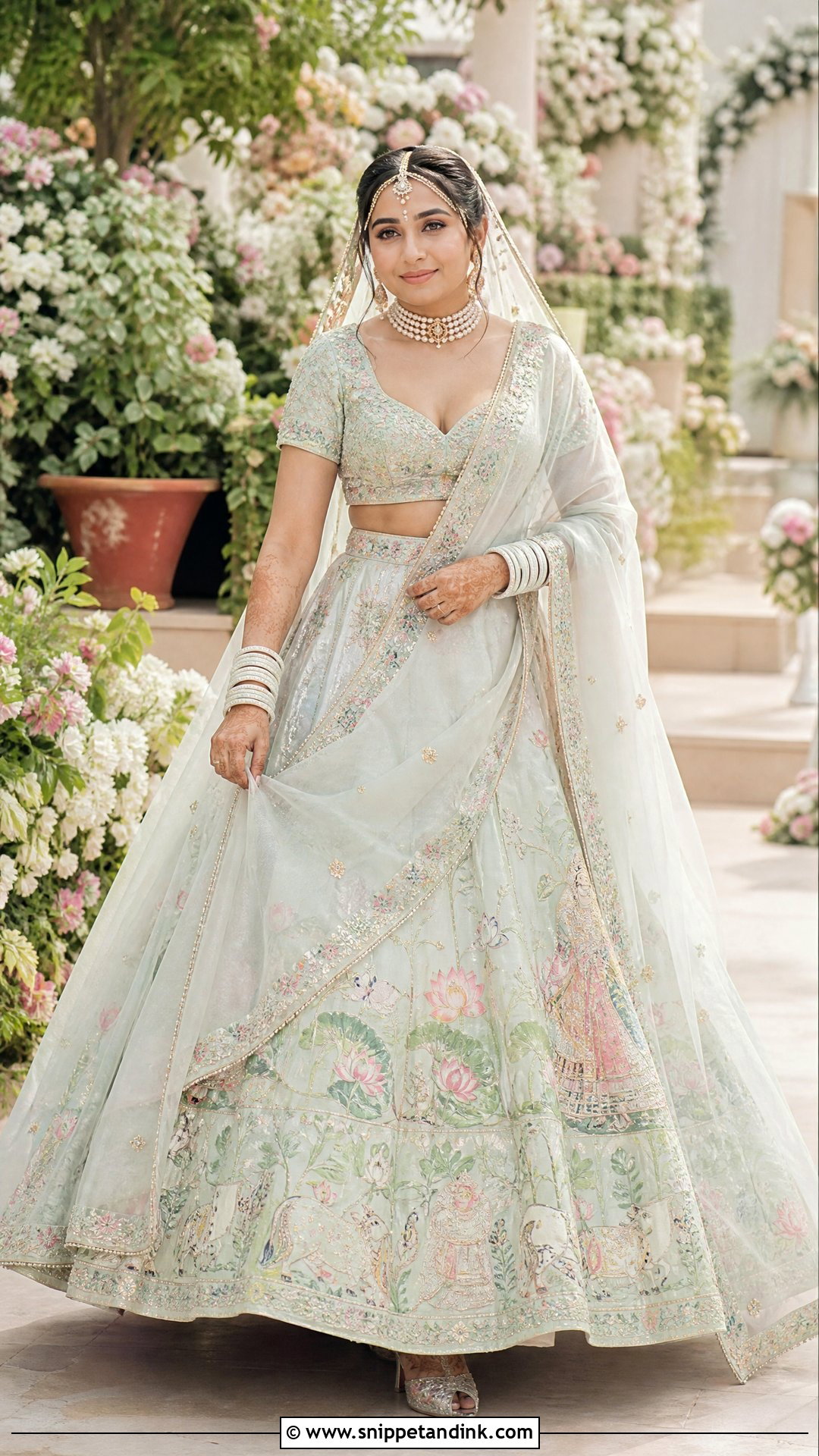
If you love her hand-painted lehenga but want more color, look at pastel versions: pale mint, blush or powder blue with painted flowers, birds or temple-style borders. Ask how the paint is fixed. Hand-painted fabric is usually heat-set, but it can still crack where it’s folded, so I store these rolled rather than creased. Pair the skirt with a lightly embellished blouse and two coordinated dupattas, one across the body and one over the head. A pearl choker, maang tikka and pastel bangles suit the softness. Keep hair in loose waves or a low bun so the painting stays visible, especially at a daytime garden wedding.
12. Prajakta Koli Sage Green Floral Wedding Lehenga
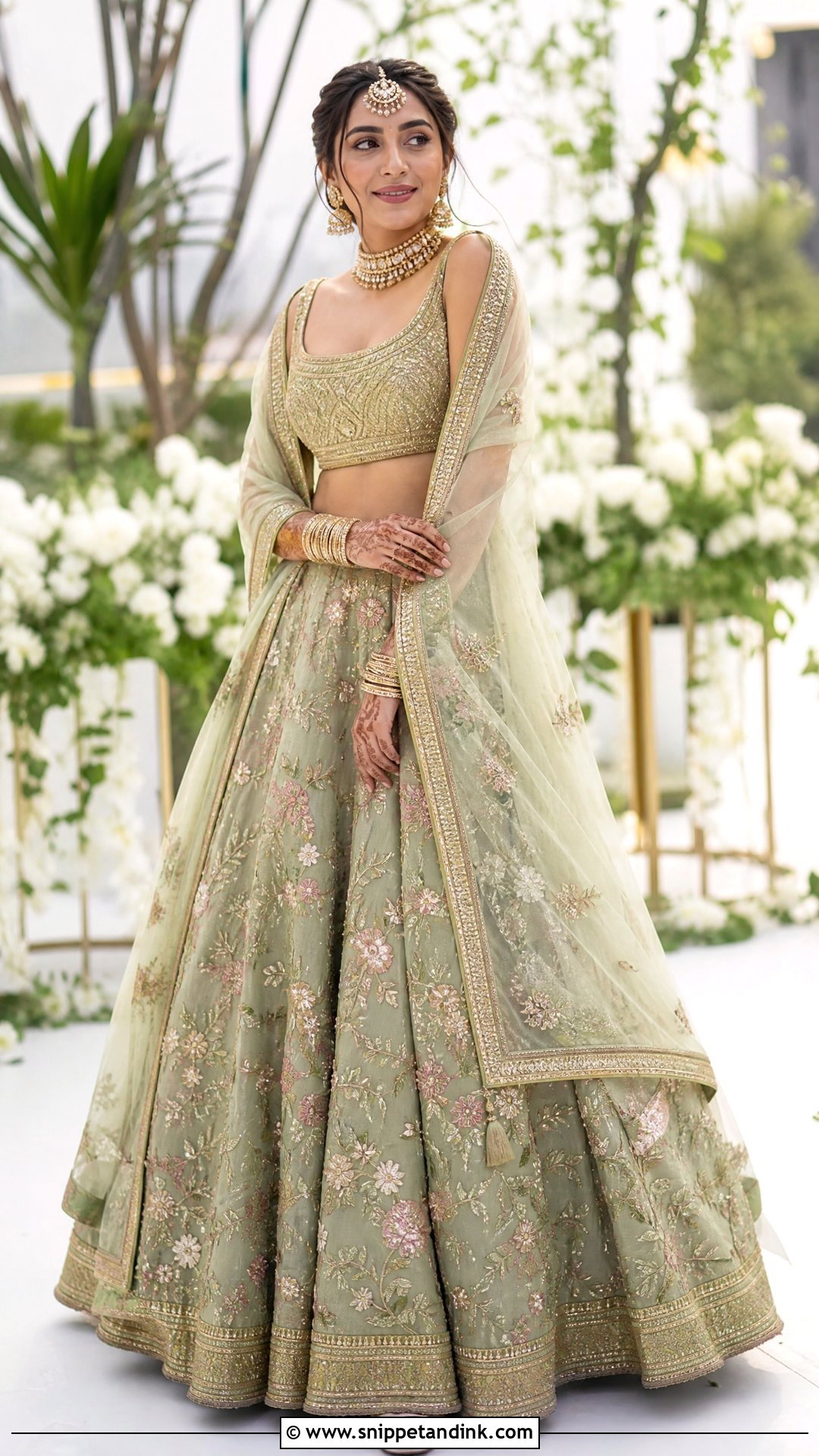
Sage green holds the calm of her bridal palette better than almost any other shade. Build it around a full lehenga with fine floral embroidery instead of sequins, a fitted gold or sage blouse, and a sheer dupatta with a narrow border. Watch the makeup on this one: sage can drain warm skin in photos if the base is too pale, so I’d keep a little warmth in the blush and lip. An antique-gold choker, medium jhumkas and comfortable platform heels work well, and pale pink stones or pearls soften the jewelry. Sage sits well outdoors because it complements greenery without disappearing into it.
13. Prajakta Koli Ivory Double Dupatta Bridal Lehenga
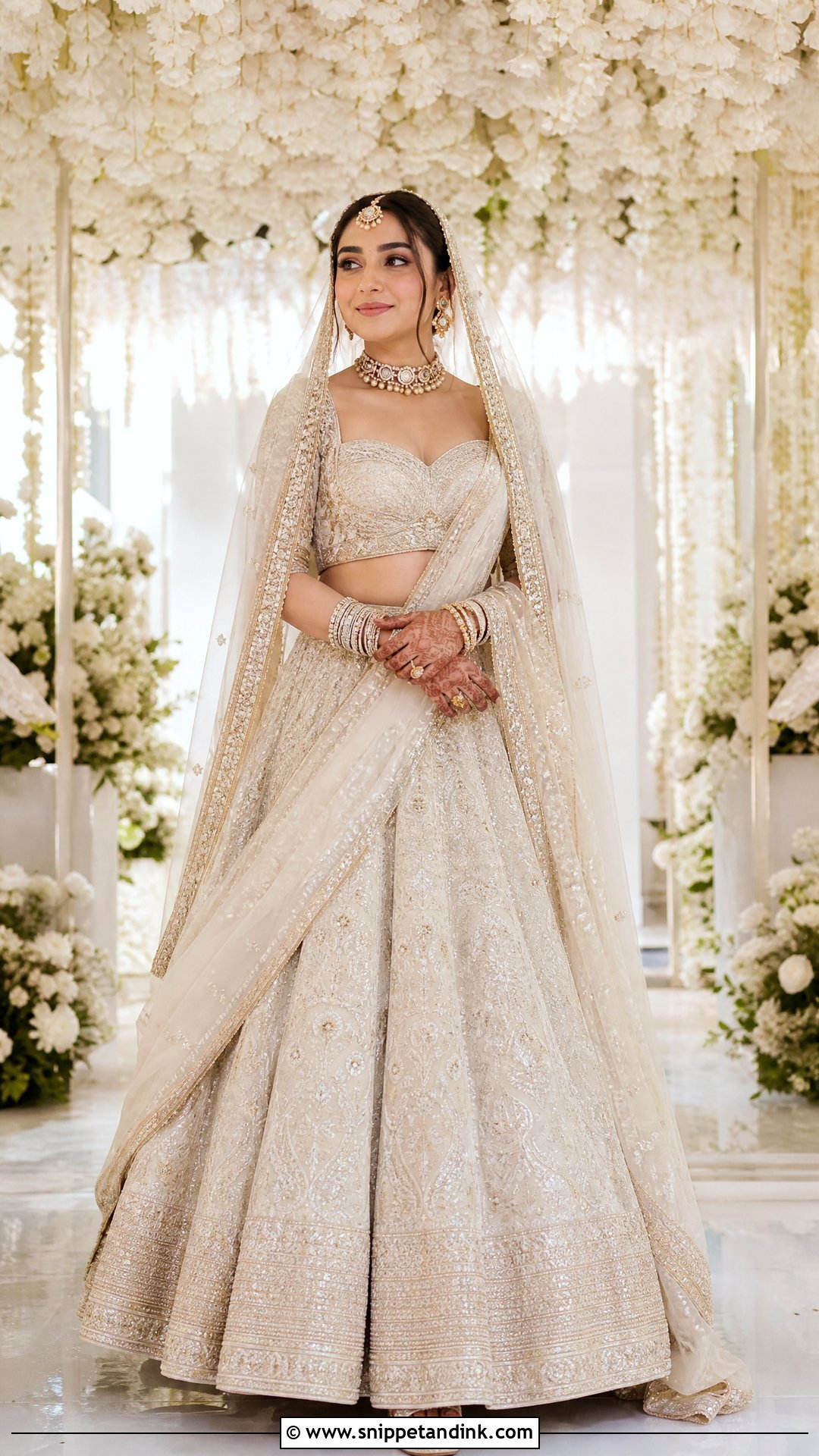
The double dupatta is the part of her bridal look that turns a simple ivory lehenga into something ceremonial. Start with a cream skirt featuring tonal threadwork and a structured blouse with enough grip to hold pins. Drape one dupatta diagonally across the body and use a sheer, lighter one as the veil. Getting two layers to stay put through rituals takes hidden pins at the shoulder, the waist and the back of the bun, and I’d always do a practice drape before the day. A kundan choker, matching earrings and platform sandals complete it. A low bun gives the veil more stability than open waves.
14. Prajakta Koli Red Banarasi Bridal Saree
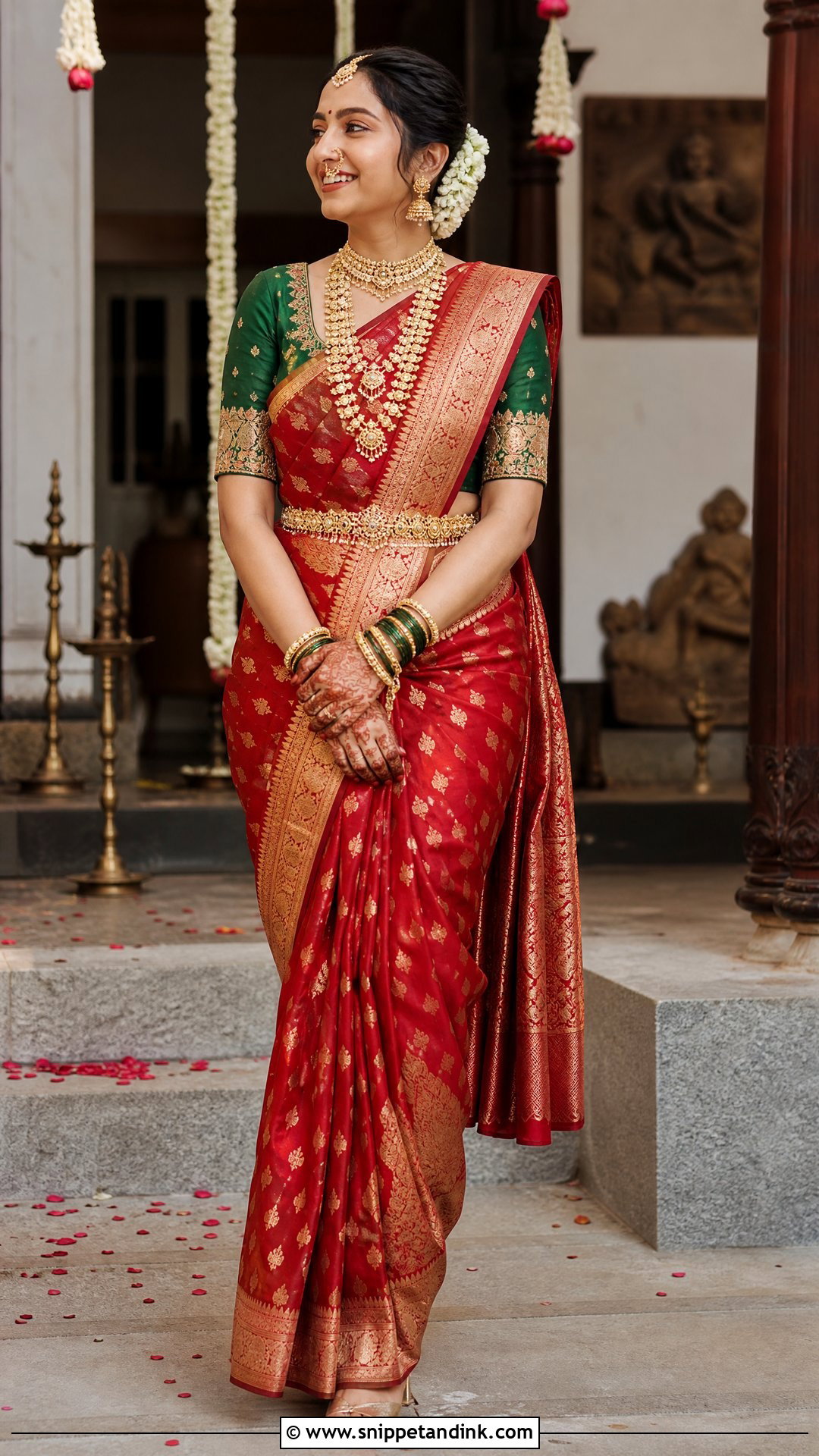
Red Banarasi silk makes a traditional bridal version of her reception look. Choose gold floral brocade and pair it with a matching or deep green elbow-sleeve blouse. The heavier the brocade, the more the pleats want to splay, so a neat drape held by a gold waist belt keeps it controlled. Layered necklaces, jhumkas, a nath and red-and-gold bangles complete the traditional set. Style the hair in a center-parted bun decorated with jasmine. Fresh jasmine wilts in heat, so ask for it to be strung the same morning. A sheer red veil can come off after the ceremony.
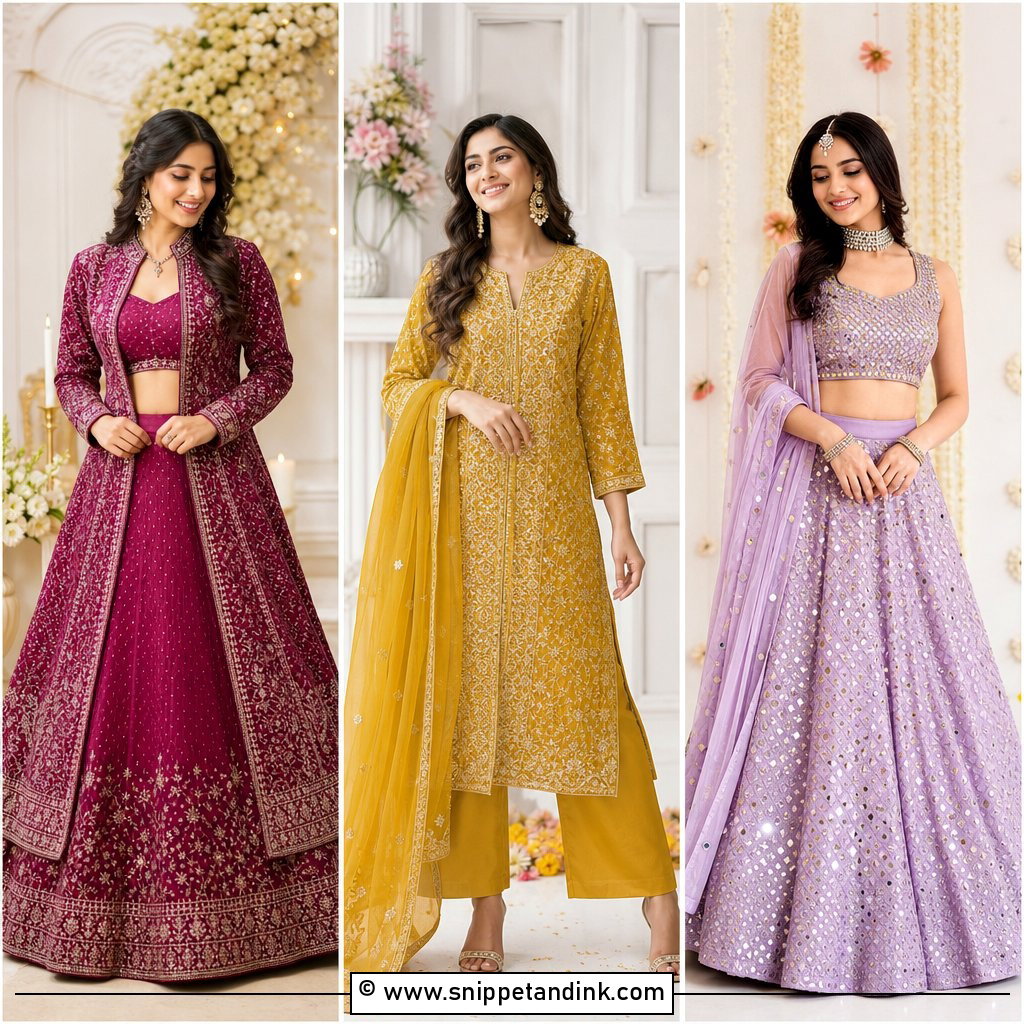

15. Prajakta Koli Orange Banarasi Reception Saree
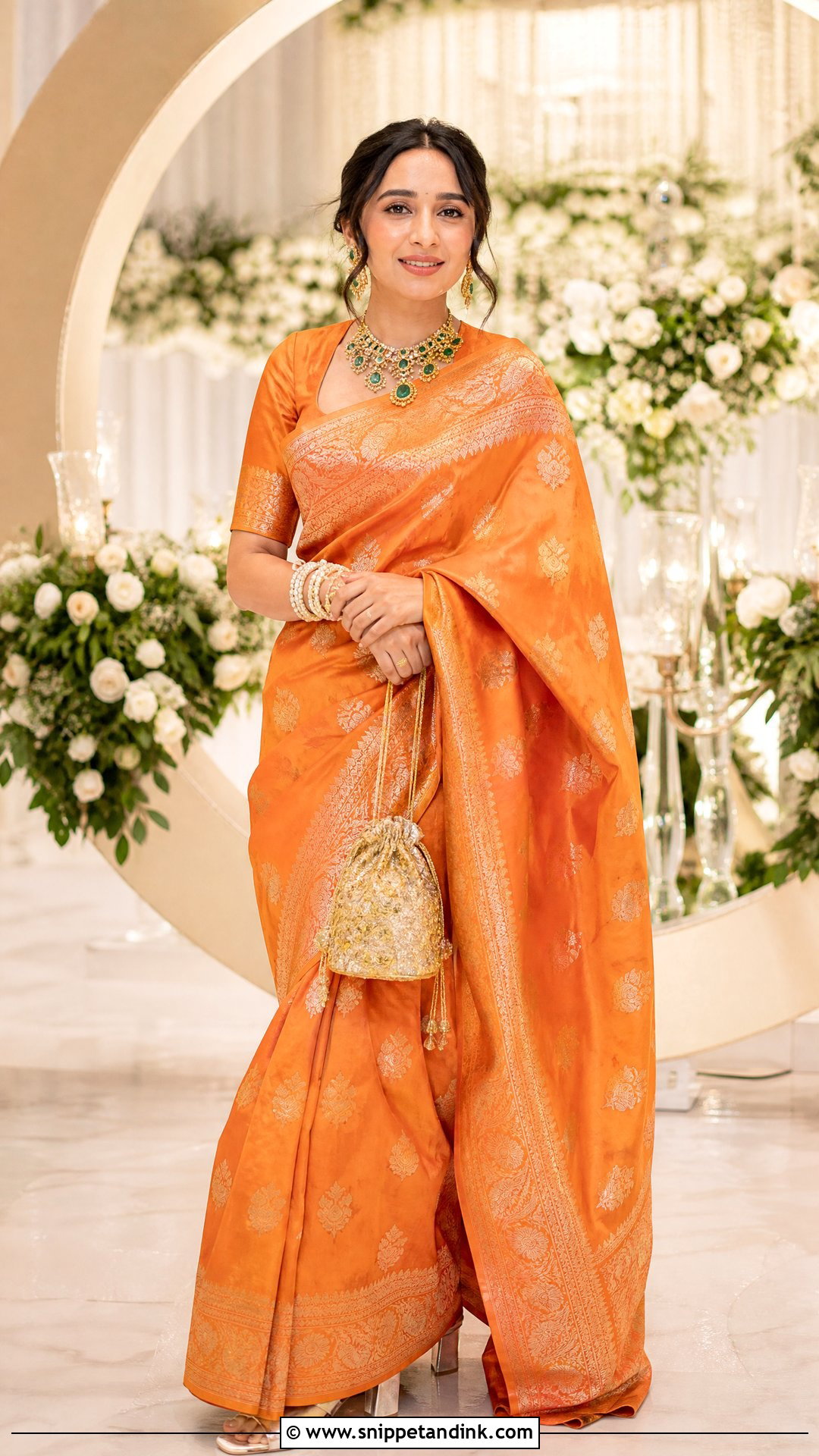
Burnt orange or rust Banarasi silk is a warm way into her reception color story. Pair it with a matching blouse for a long unbroken line, or deep green for contrast. Orange silk with gold zari glows under warm evening lighting, but harsh white flash can push it toward red, so tell your photographer about the outfit in advance. A layered emerald necklace, kundan earrings and metallic block heels work with it. A structured gold potli complements the jewelry. Keep hair in a low bun or brushed-out waves so the look reads current rather than heavy.
16. Prajakta Koli Green Tilhari Reception Saree
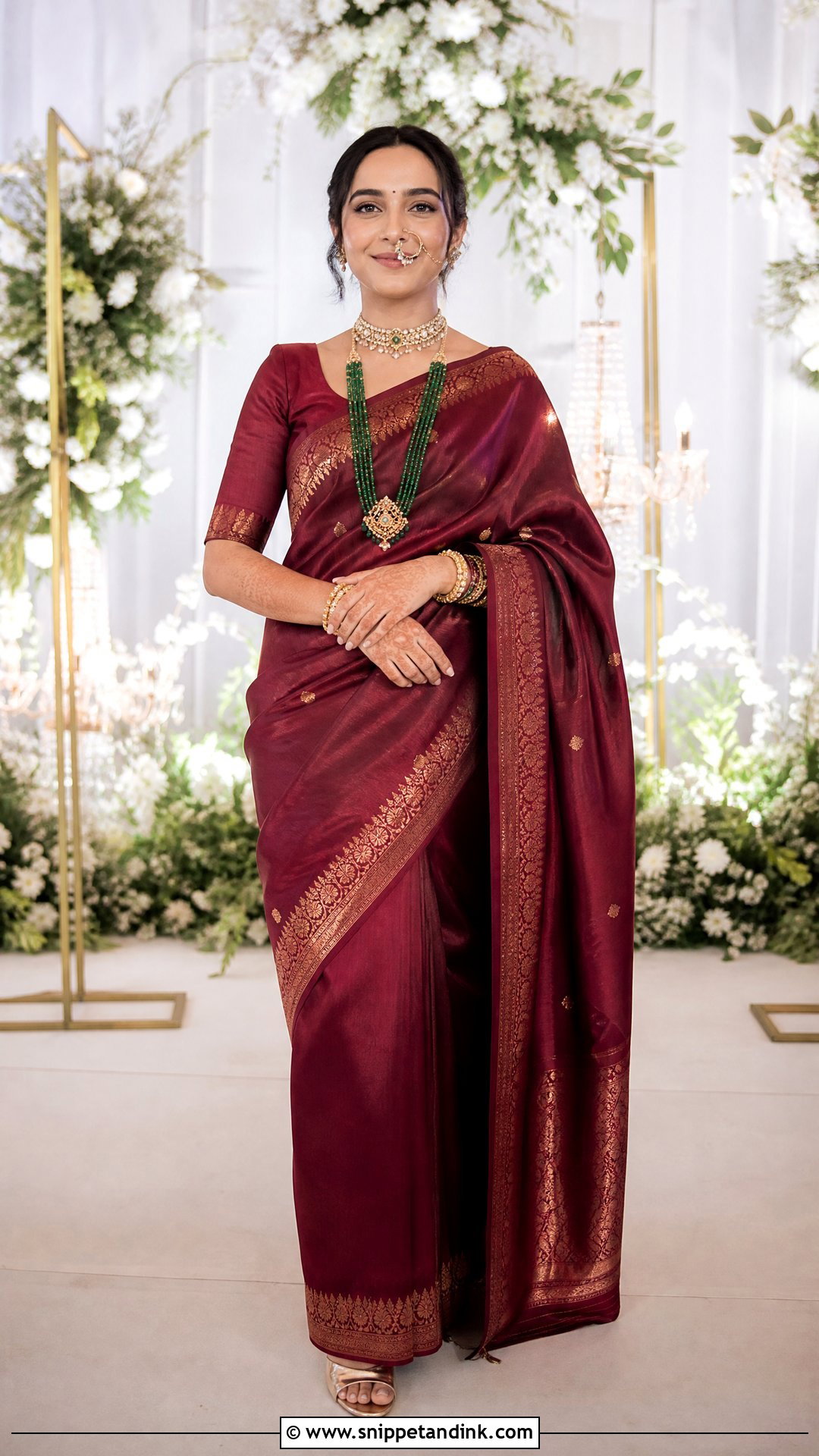
Her green Tilhari can become the centerpiece of a plain reception outfit. In Nepali tradition the long strands of green pote beads with a gold pendant are worn by married women, so it carries real weight, and it deserves room. A red, maroon or orange silk saree with a cleanly fitted blouse and an open neckline gives it that room. Layer a shorter choker above it for depth. I’d pin the pallu so it doesn’t sweep across the beads, which also stops the strands catching on zari. Gold earrings, broad kadas and a nath finish it, with a center-parted bun or polished waves.
17. Prajakta Koli Minimal Gold Bridal Lehenga
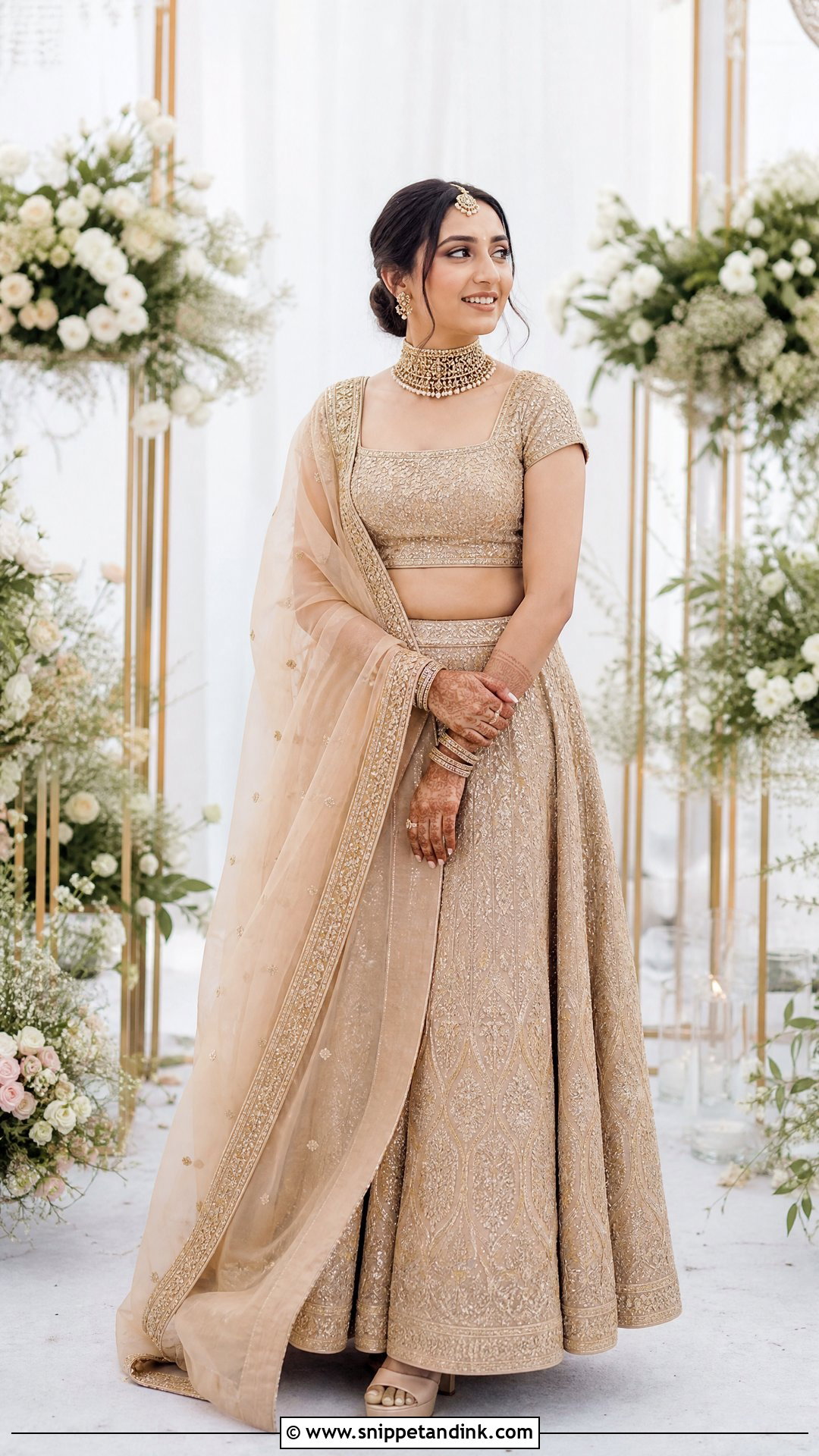
Restraint was the thread through her wardrobe, and a minimal gold lehenga follows it. Choose a soft champagne skirt with tonal embroidery, a fitted blouse and a sheer dupatta with a slim metallic border. Add a second veil only if the ceremony calls for one. I’d wear one statement choker and leave the neckline open around it; stacking necklaces undoes the whole idea. Champagne can look flat in photos without some texture, so make sure the embroidery has a slight raised surface. Small earrings, a fine maang tikka and neutral platform heels complete it, and daylight shows the detail best.
18. Prajakta Koli Heirloom Saree Sangeet Outfit
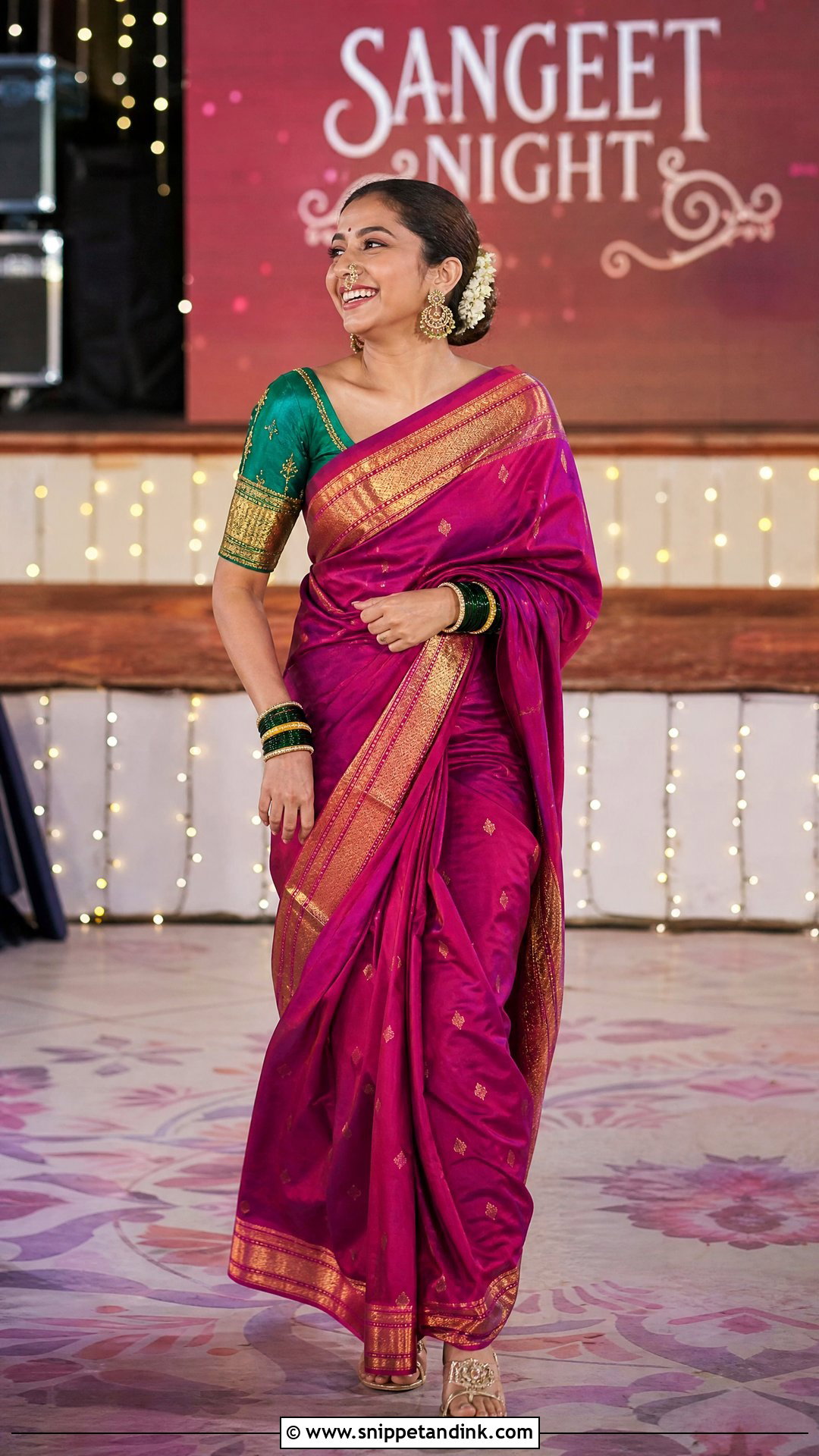
An heirloom saree gives a sangeet outfit real feeling and saves buying something new for one evening. Choose a silk saree belonging to a mother, aunt or grandmother and have a new blouse made for a proper fit. Older silk can be weak along the fold lines, so I check those first by holding the fabric to the light. Reinforce the inner seams if needed and use secure pleat pins. Deep pink, green or purple look festive under evening lights. Add a nose ring, glass bangles, a small bindi and jasmine around a sleek bun, with cushioned sandals for dancing. Like Prajakta’s Paithani outfit, it feels celebratory because of its history rather than its embellishment.
19. Prajakta Koli Embroidered Waistcoat Skirt Set
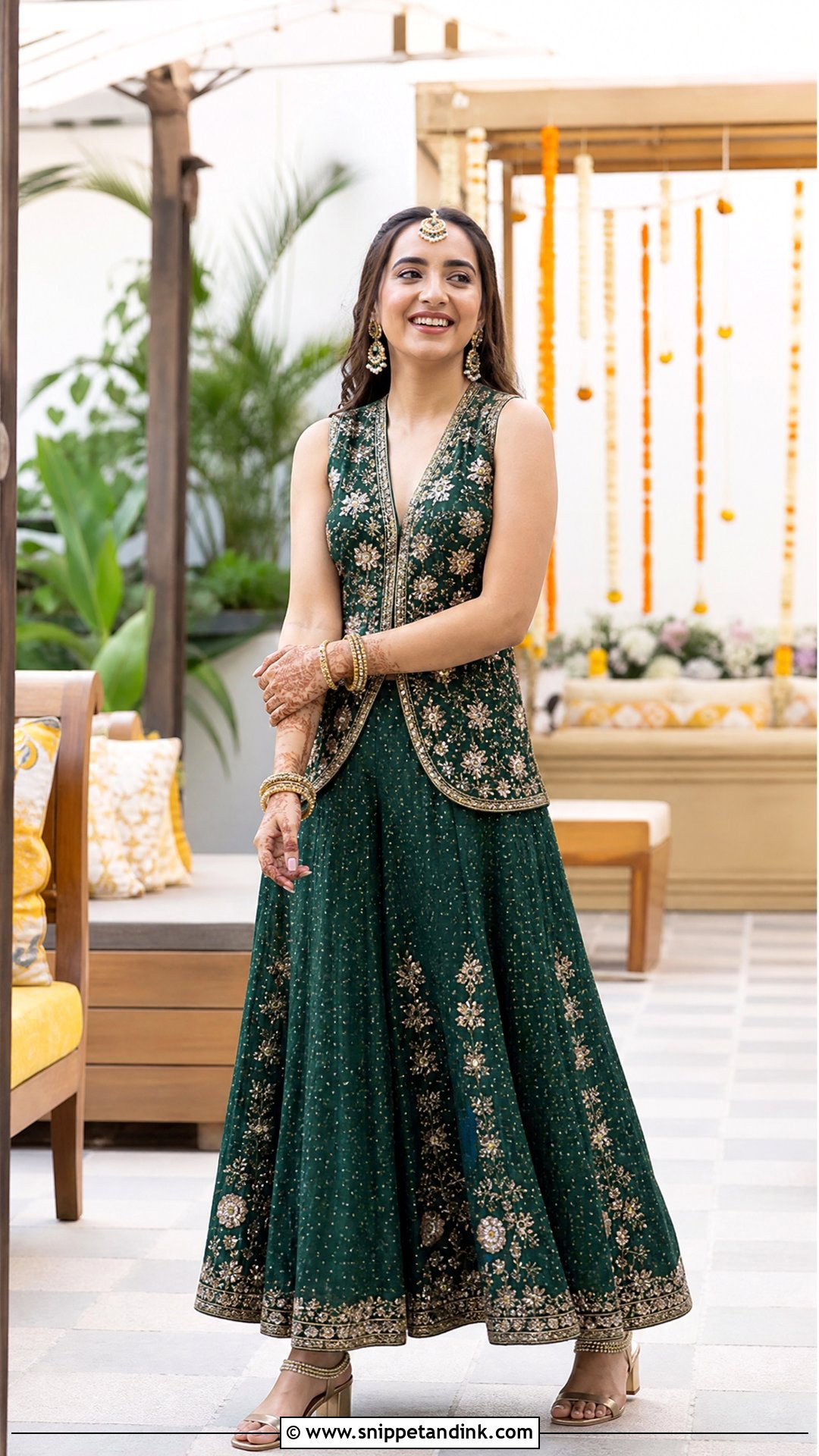
A waistcoat and skirt is a modern alternative to the mehendi lehenga, and it’s the easiest of her looks to wear again. Recreate the green outfit with an ankle-length embroidered skirt and a fitted sleeveless top with a structured front or decorative buttons. Matching pieces make one long line, and no dupatta means free hands and shoulders. Have the top fitted with a little ease at the armhole so you can hold your arms out for the artist without pulling the front. Delicate gold earrings, payal and block-heel sandals finish it. Personalize the embroidery with initials or favorite flowers if you like.




20. Prajakta Koli Minimal Marathi Bridal Saree
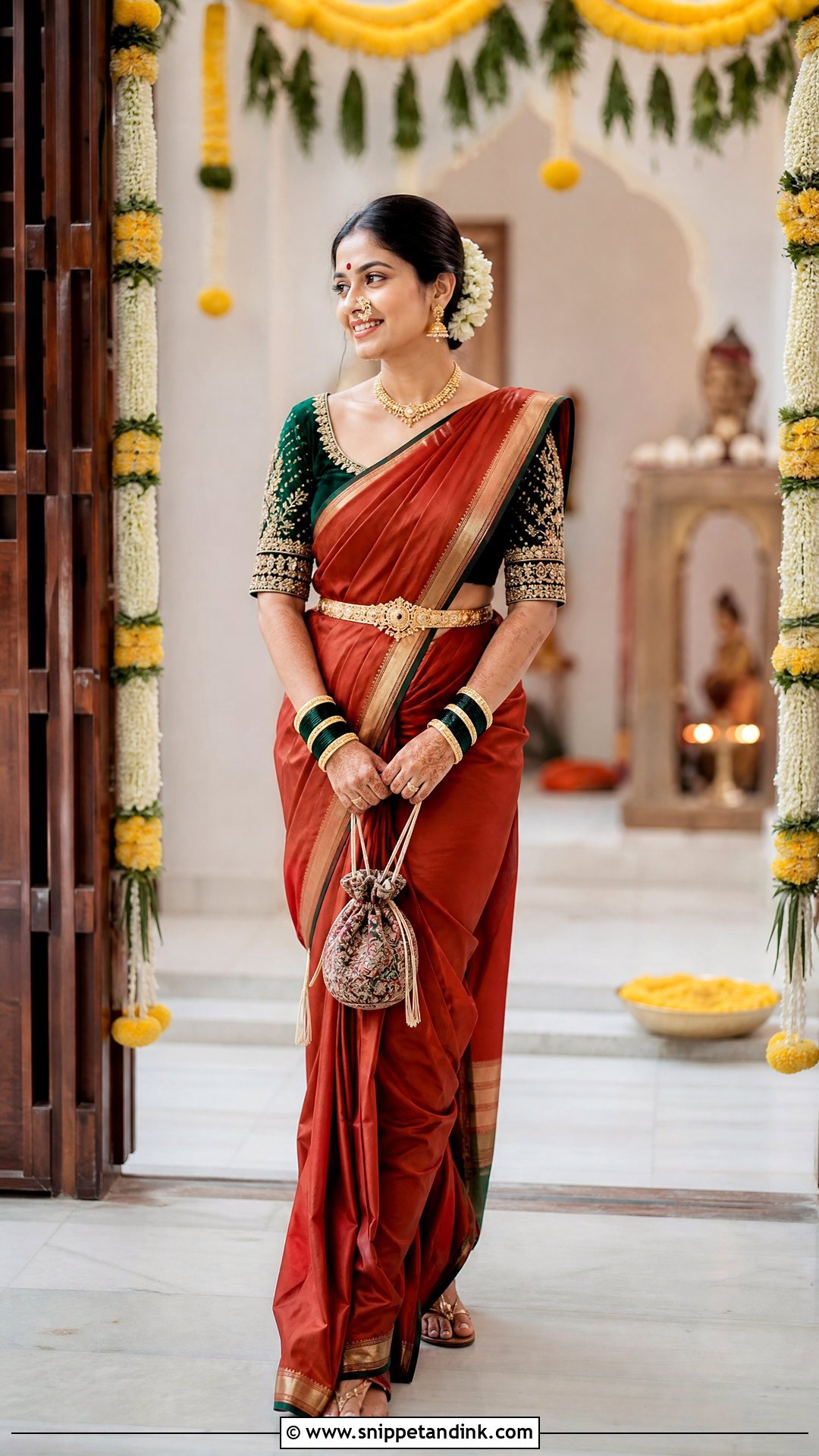
Her preference for restrained styling also suits a minimal Marathi bridal saree. Choose silk in pink, rust, green or mustard with a well-fitted contrasting blouse and a clean traditional drape. Add the nath, Chandrakor bindi, green bangles, gold earrings and just one medium-length necklace. A jasmine bun is soft but stays secure through rituals and dancing. A gold waist belt keeps the pleats in place, and a small embroidered potli holds what you need. If the saree has elaborate zari, take something away rather than adding layers. The textile, the family jewelry and the regional details carry it.
What Each Function Asks of an Outfit
Her wardrobe works because each piece suited its event, not just the color scheme. When I plan a multi-day wardrobe, I think about what the bride will physically be doing at each function before I think about embroidery.
Haldi
Assume the outfit will be stained. Turmeric dyes natural fibers quickly, and while sunlight can fade the yellow, it rarely disappears completely from ivory or white. Cotton or a washable blend is the honest choice, and keep good jewelry for later.
Mehendi
Sleeveless or short sleeves, no long trailing dupatta, and a skirt or pants you can sit in for hours. Paste is usually left on for several hours to darken, so plan the outfit around being unable to use your hands.
Sangeet
You’ll dance, so pleats need extra pins, shoes need cushioning and heavy necklaces need to be fastened properly. Do a quick spin in front of a mirror at your trial and watch what moves.
Wedding and reception
These are the long, formal ones, with rituals, sitting on the floor or on low seats, and hours of photographs. Weight matters more than anywhere else. If you’re joining two cultures, decide early which family piece appears at which event, so nothing important gets left in a suitcase.
Meaning Over Sparkle, From Haldi to Reception
The thing people remember about Prajakta Koli’s wedding wardrobe is how personal it felt. Craftsmanship, heirlooms, Maharashtrian and Nepali traditions and comfortable silhouettes did more than heavy embellishment could have. You can follow the same path: breathable fabric for daytime functions, drapes that are pinned to last, jewelry that means something to both families, and colors chosen for the ceremony rather than the trend. An ivory sharara, a green skirt set, a Paithani, a painted lehenga or a Banarasi saree can all work. Choose one clear idea for each function and let it carry the outfit.
You'll Like These Ideas:




Leave a Reply