
Ask any stylist which part of a lehenga outfit causes the most trouble on the day and you’ll hear the same answer: the blouse. A designer choli carries the support, sets the neckline your jewelry has to work with, and decides whether you can lift your arms to dance or eat. The skirt can be off by an inch and nobody notices; a choli that’s off by an inch gapes, rides up or digs in. Below are twenty choli shapes I style for brides, bridesmaids and guests, from zardozi and Banarasi to corsets, capes and jackets, with notes on fit, dupatta placement and what each one asks of the wearer.

Inside a Choli That Fits Properly
The outside of a choli is what you choose; the inside is what you’ll feel for ten hours. When I look at a designer blouse, I turn it inside out before anything else.
- Cups or padding sewn in, shaped to your measurements, so you don’t depend on a separate bra under a backless or deep design.
- A cotton or soft silk lining against the skin, especially under zardozi, sequins or mirrors, which scratch through thin fabric.
- Seam allowance at the side seams, so the choli can be let out if your measurements change before the wedding.
- Hooks or a side zip placed so you can be dressed quickly; back hooks need a helper, a concealed side zip doesn’t.
- Sleeve and armhole room to lift your arms above your shoulders without the blouse riding up.
For measurements, I ask the tailor to take bust, under-bust, shoulder, armhole and blouse length while you wear the bra you plan to wear, or none if the choli has cups. Measurements taken over a different bra are the most common reason a choli fits badly at the first trial.
Two Trials, Not One
I book a first trial before the embroidery on the choli is fully finished, when the shape can still change, and a final one a few weeks before the wedding. Heavily worked blouses are hard to alter once the handwork crosses the seams, so the first trial is where the real fitting happens. Bring the lehenga skirt to both, since the waistband height changes where the choli should end.
1. Red Zardozi Designer Choli With Bridal Lehenga
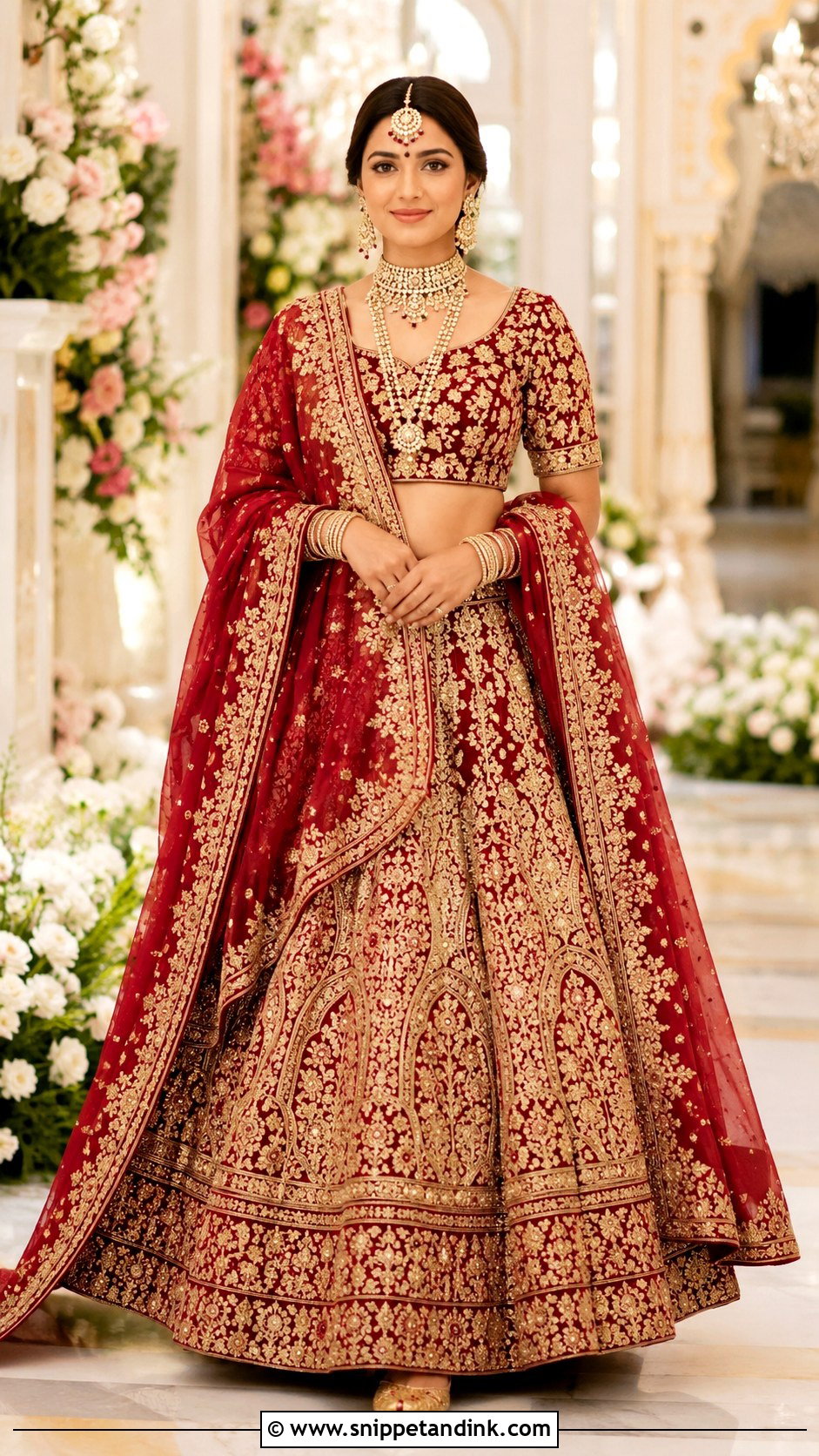
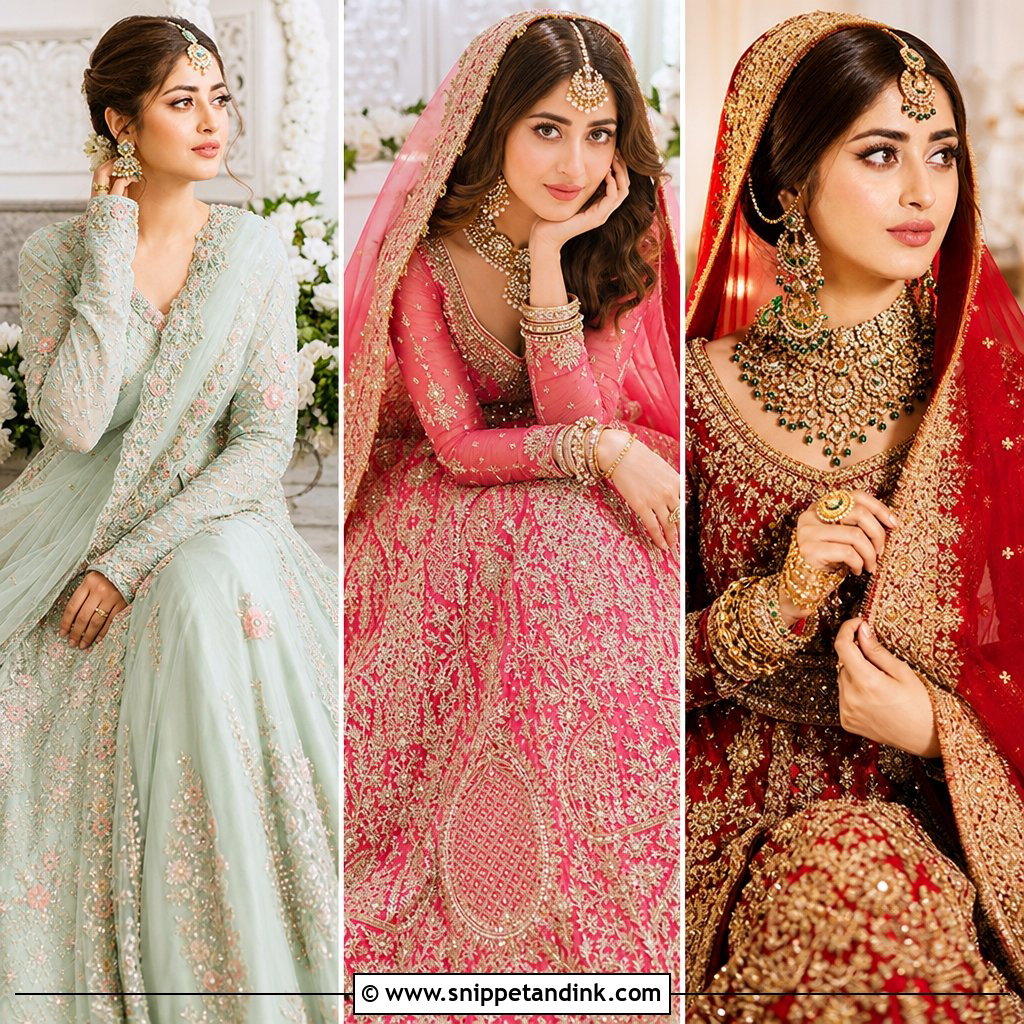
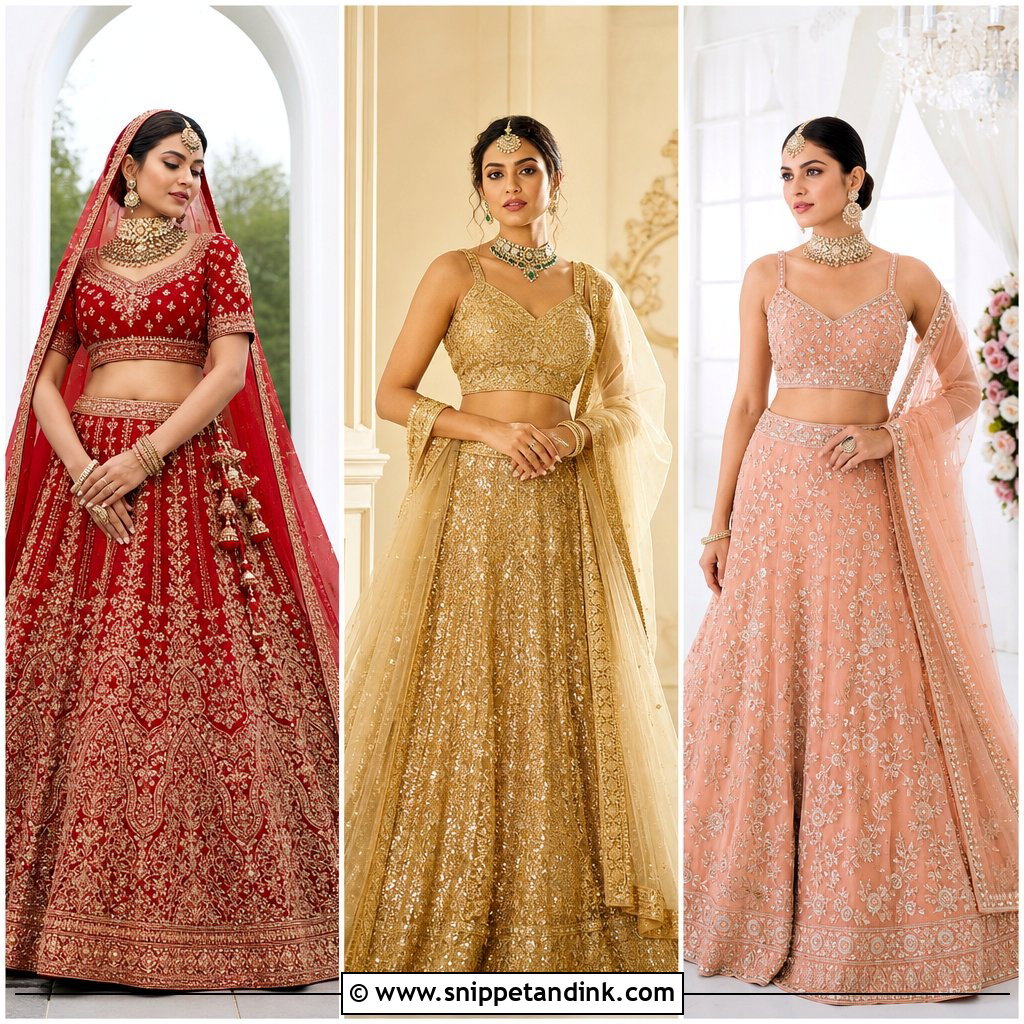
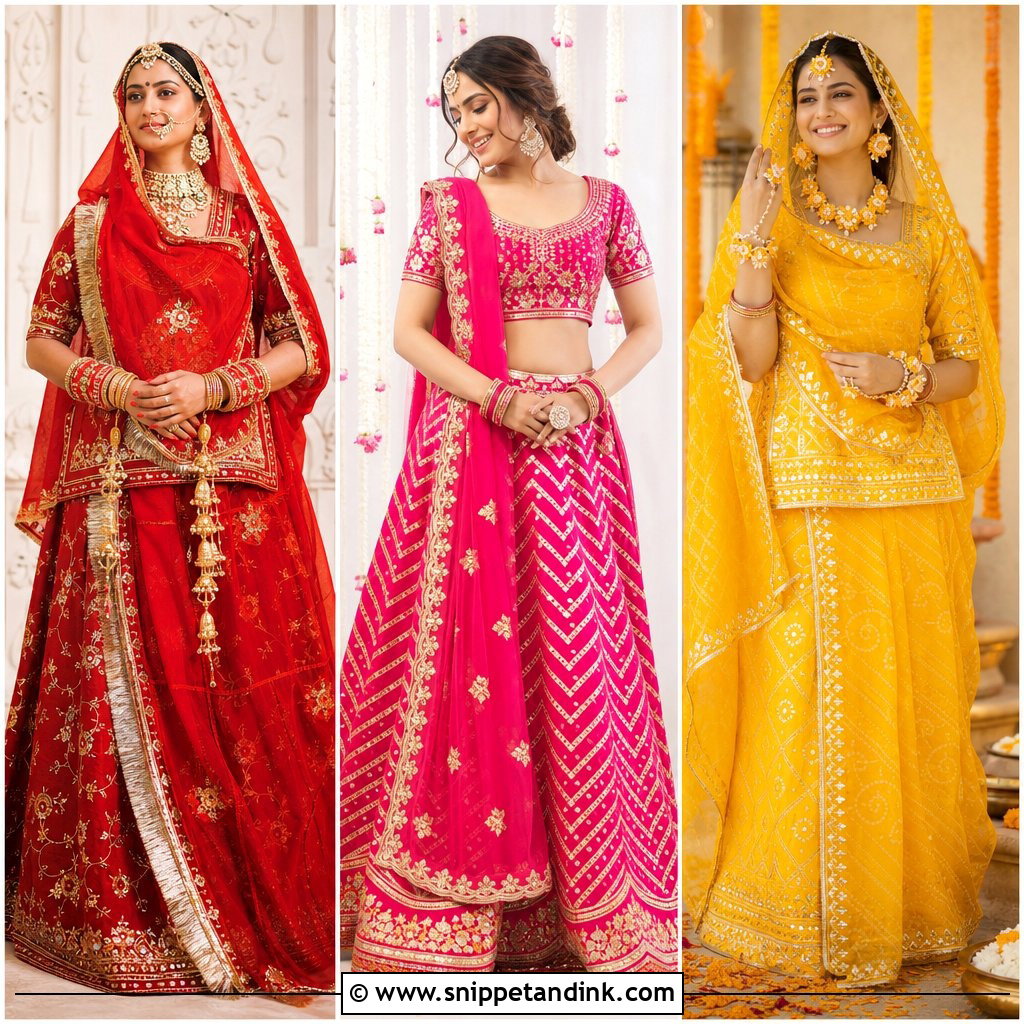
Red zardozi on a structured choli is the classic bridal pairing, and its success depends almost entirely on construction. Zardozi is heavy metal thread, so the blouse needs proper cups, a firm lining and elbow-length sleeves that are fitted but not tight enough to cut off movement. A sweetheart or gently curved neckline sits well under a kundan choker; a deep neckline fights it. Run the gold work across the skirt so the top doesn’t look heavier than the bottom. If you’re wearing two dupattas, the one on the head should be the lighter. A low bun with fresh flowers keeps the neckline clear.
2. Pastel Floral Designer Choli With Lehenga
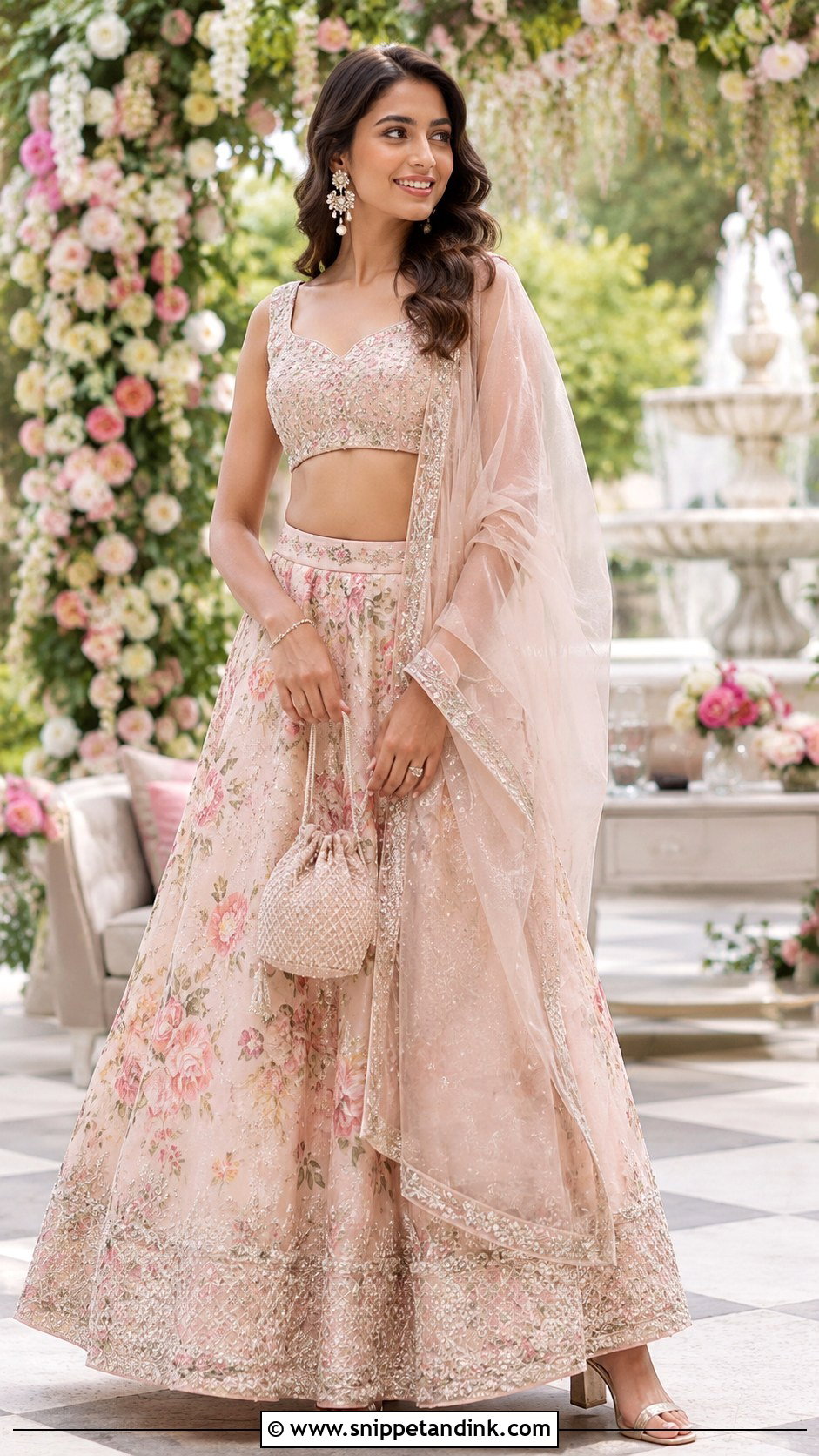
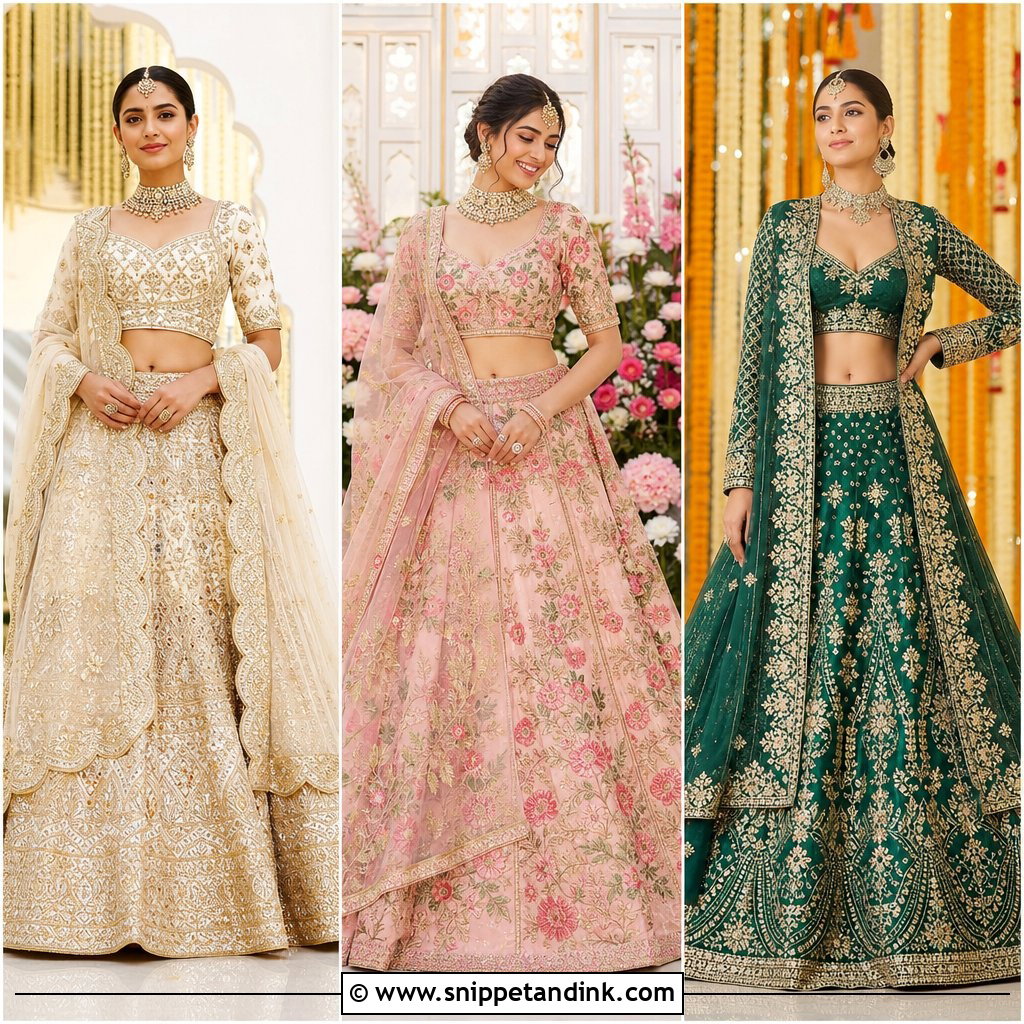
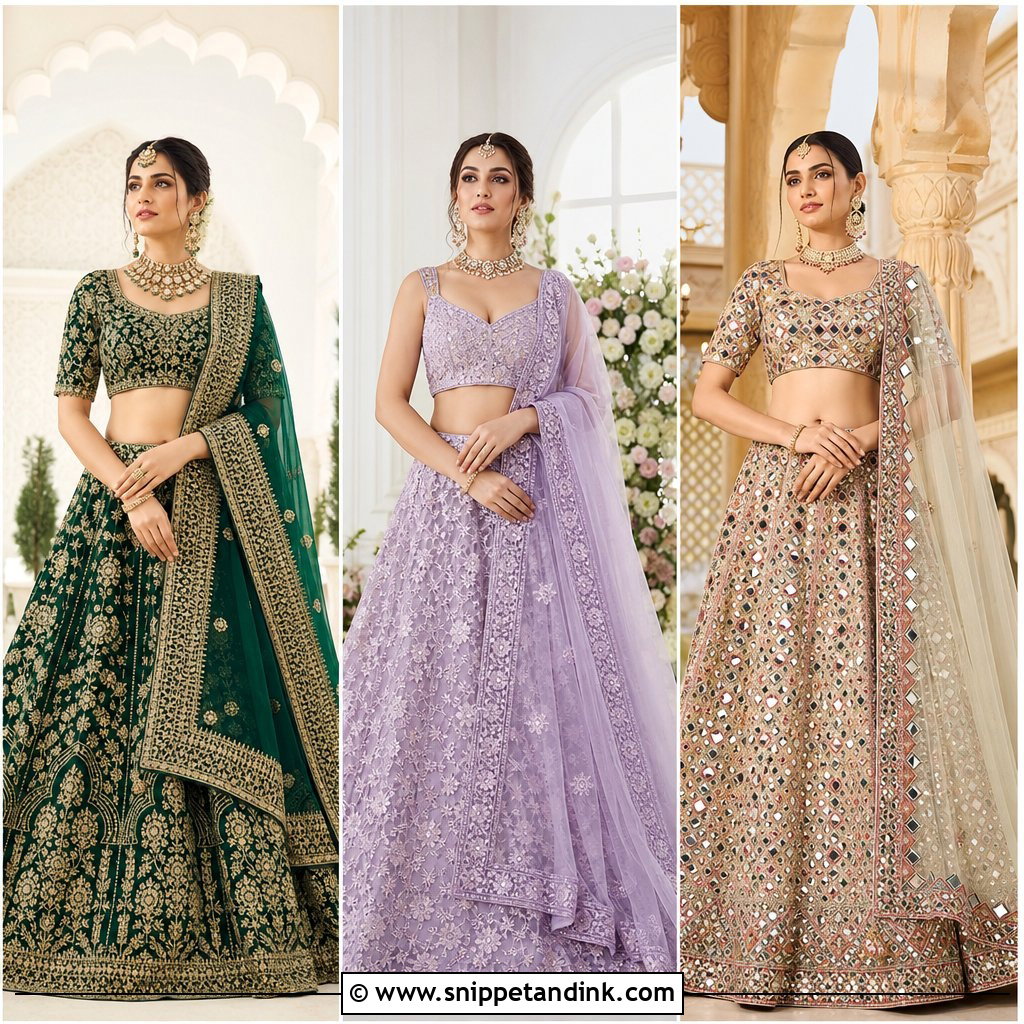
Pastel florals suit daytime and garden events, and they’re one of my most-used bridesmaid looks because the colors photograph well side by side. Blush, mint, lavender or powder blue with floral threadwork stays soft as long as the dupatta border is narrow; a heavy border covers the very embroidery you chose the outfit for. A short-sleeve choli with a modest scoop is comfortable in warm weather. Keep the jewelry to pearls and a fine bracelet. Every piece in similar pastel depth matters more than exact matching.
3. Mirror Work Designer Choli With Sangeet Lehenga
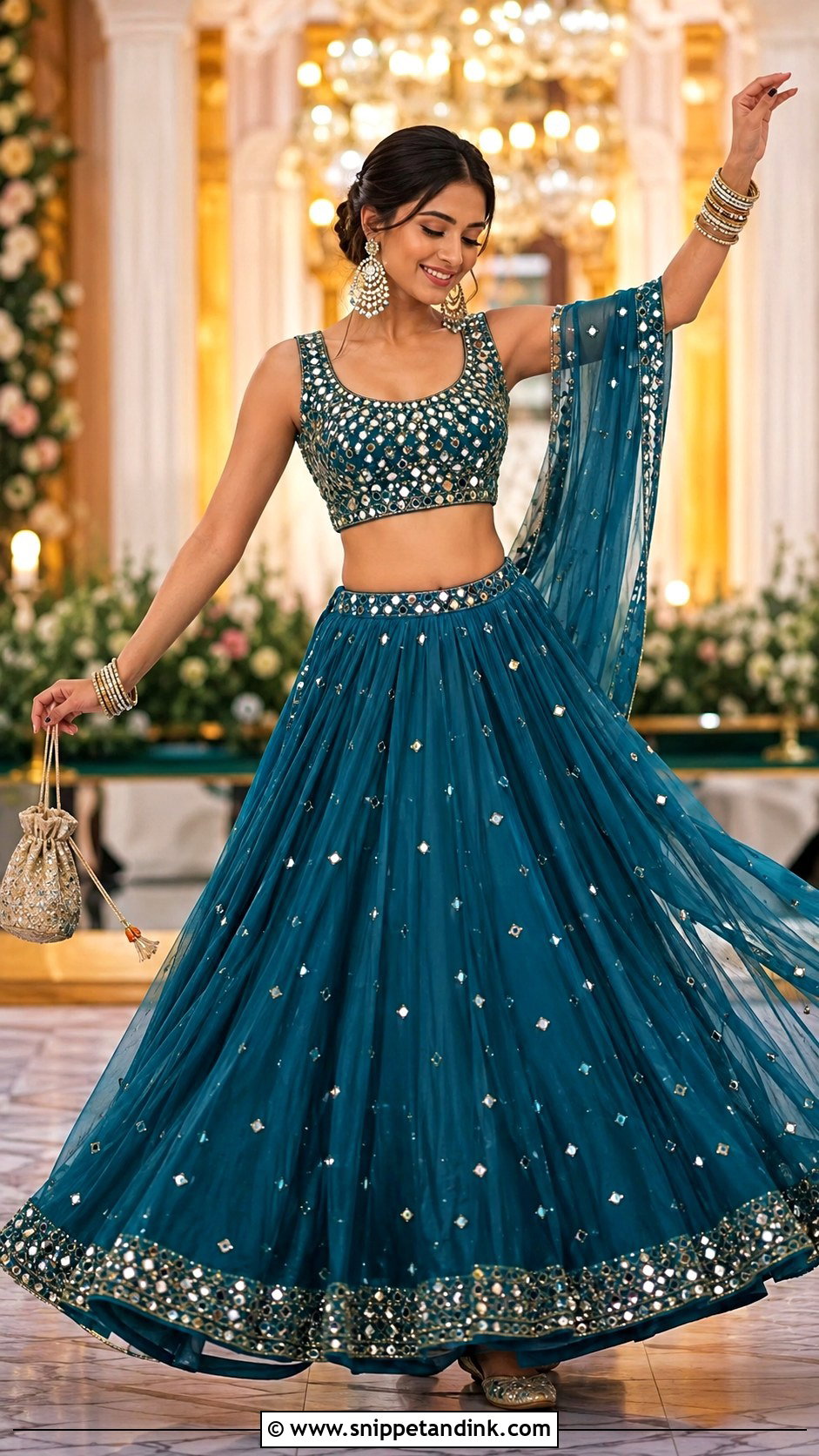
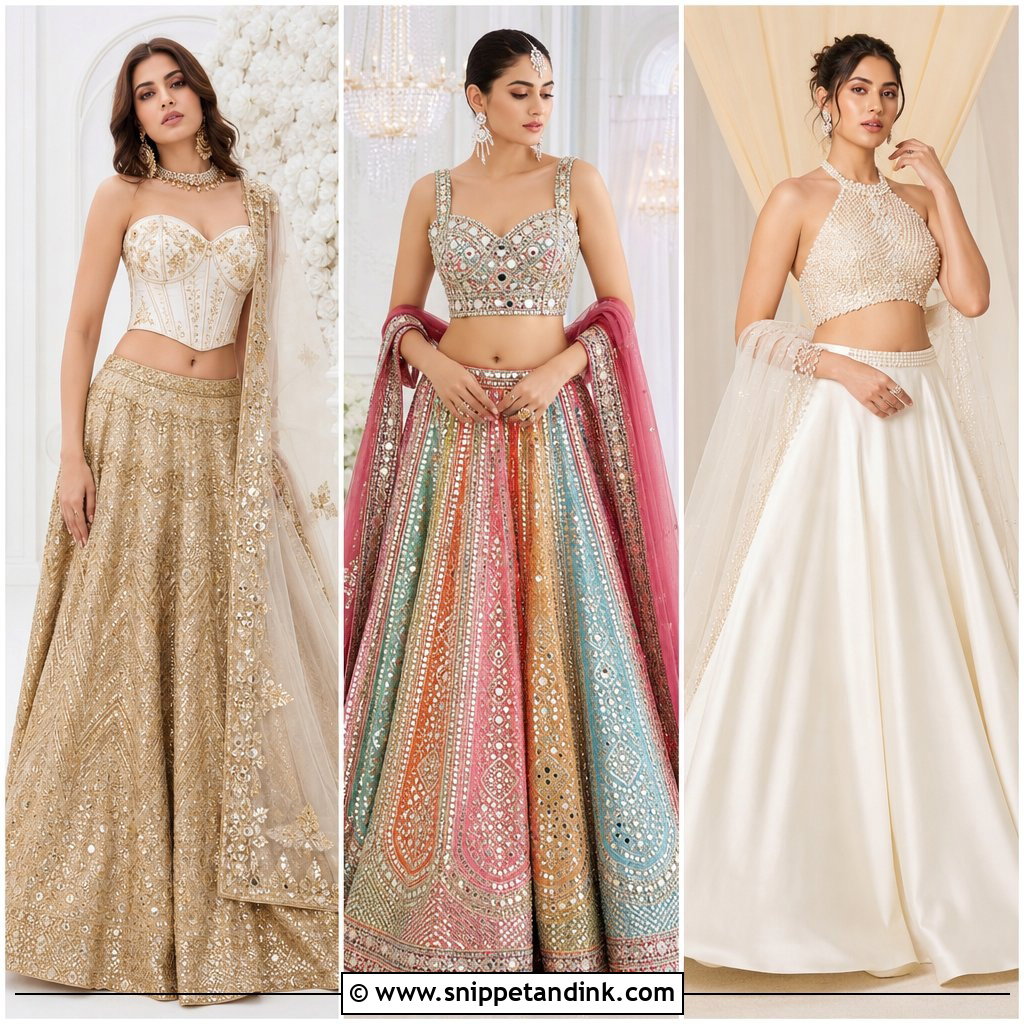
Mirror work is the dance-floor choli, but only if it’s built for movement. I want wide straps, a square neck that doesn’t shift, and a back that’s properly fitted so the blouse doesn’t ride up when your arms go up. Before the event, check that every mirror is stitched tightly; loose ones drop mid-dance and the metal backing can scratch. A light georgette lehenga keeps the skirt from fighting you. Pin a slim dupatta or wear it at the wrist. Hair up in a ponytail or braid stops strands catching on the mirror edges.
4. Velvet Designer Choli With Winter Wedding Lehenga
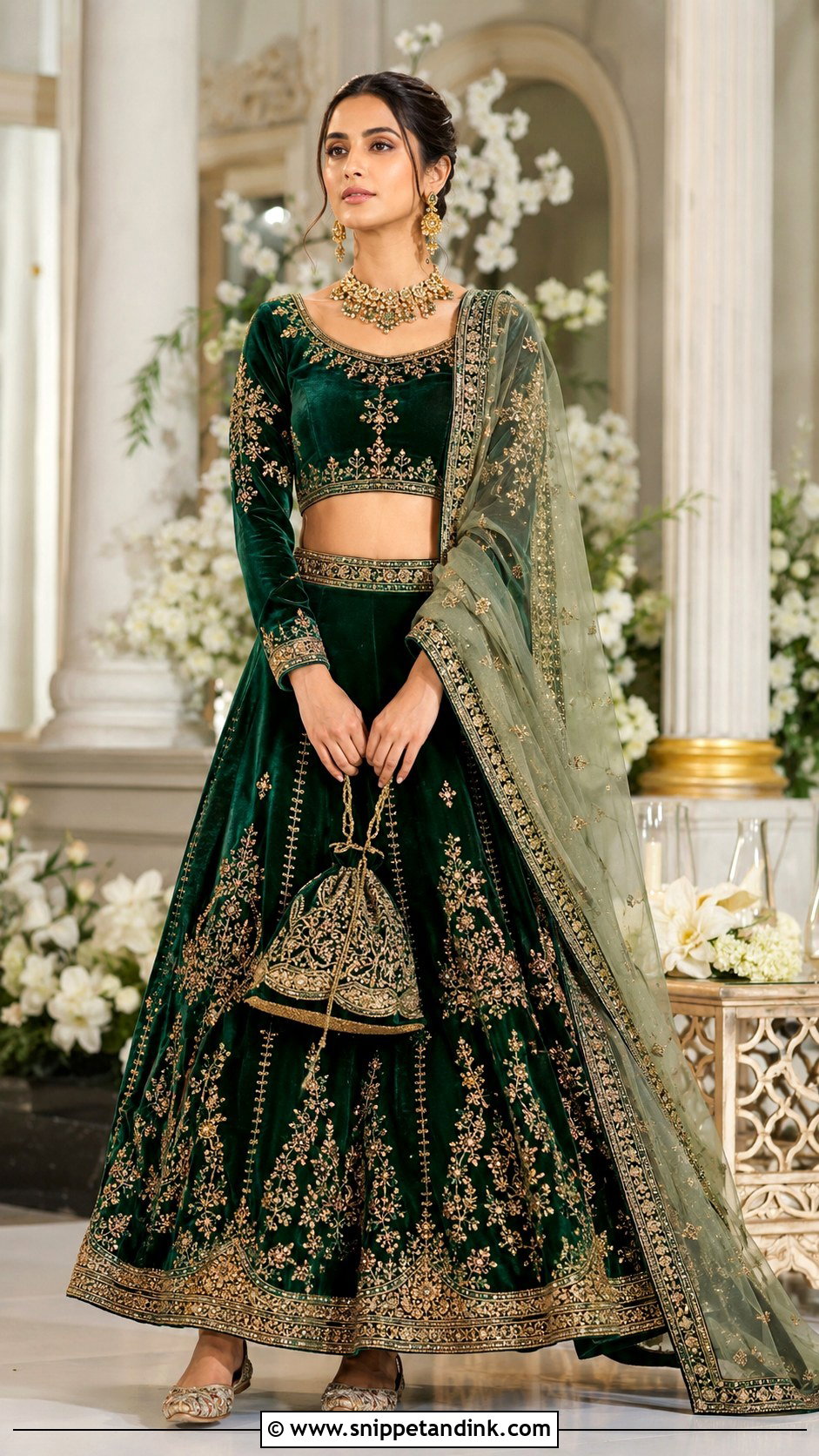
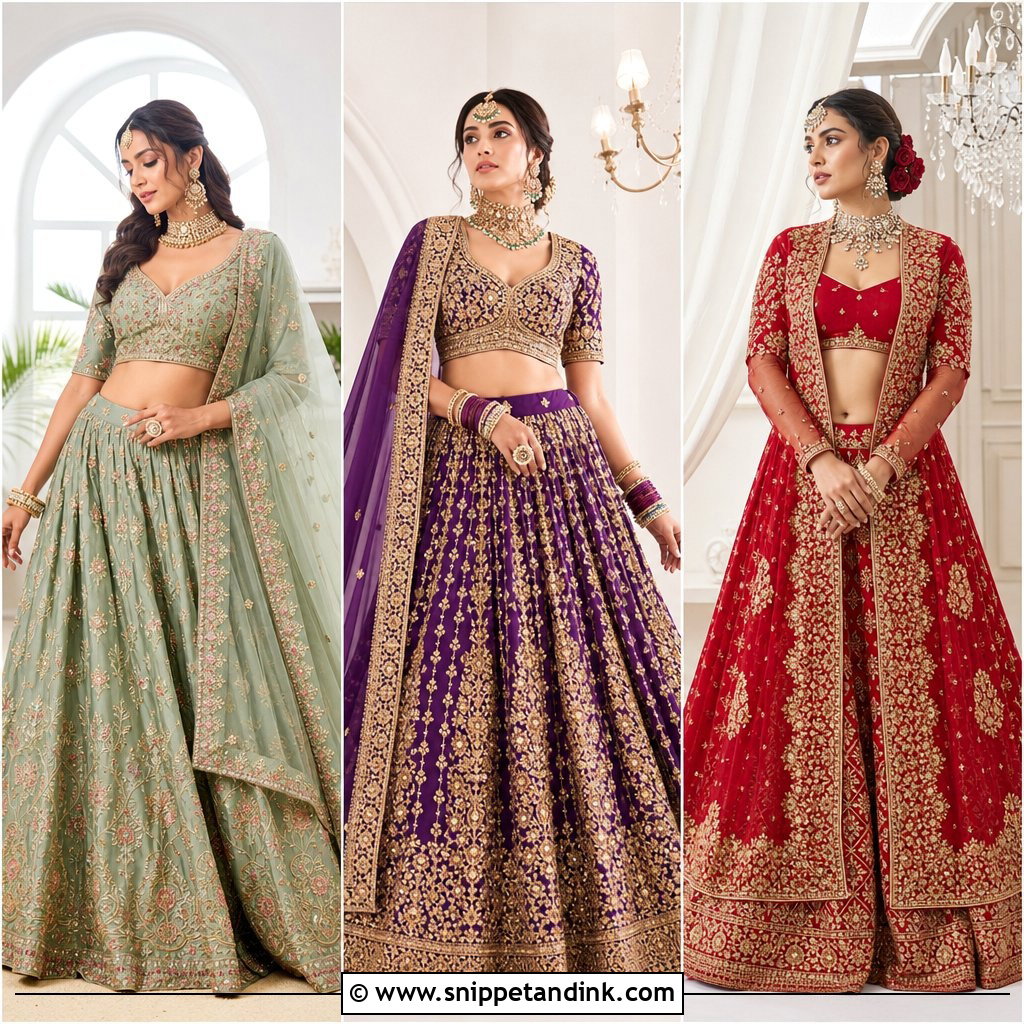
Velvet is a cold-weather fabric and nothing else. In a heated indoor hall, a fully velvet outfit becomes uncomfortable fast, which is why the lining is the first thing I check: cotton or breathable silk, never polyester. An emerald, maroon, navy or plum velvet choli with long sleeves and a higher neck shows off the pile; antique gold embroidery suits it better than bright gold. Balance the weight with a light net dupatta edged in velvet or zari. Closed juttis keep feet warm at an outdoor evening ceremony.
5. Banarasi Silk Designer Choli With Brocade Lehenga
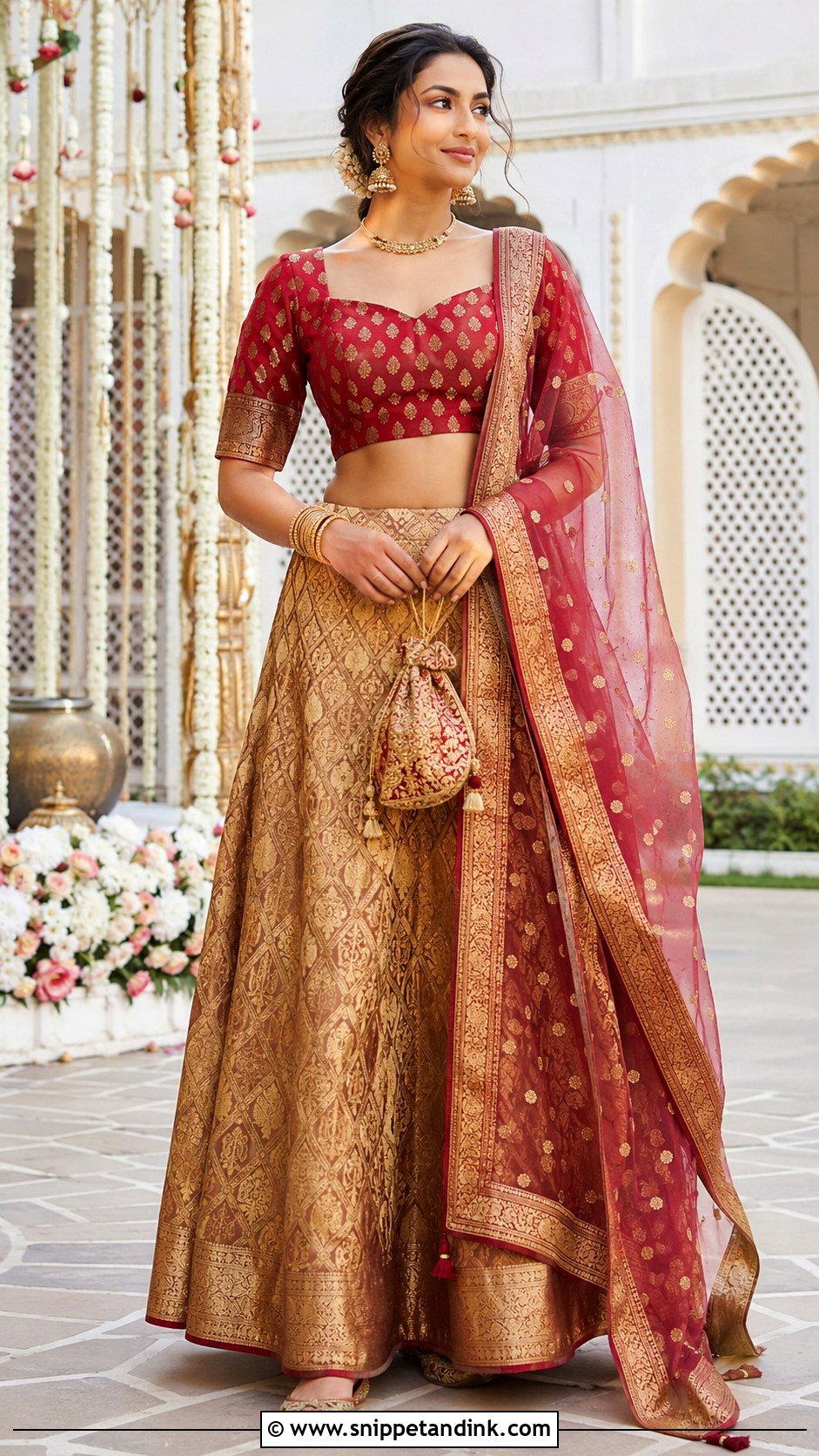
Banarasi silk choli with a brocade skirt is a woven look, and it needs very little added embellishment. A boat neckline and elbow sleeves show the weave cleanly. Jewel tones on top, a contrasting gold or dual-tone skirt below. Silk brocade has little stretch, so I leave extra seam allowance at the side seams for later alterations; an heirloom-quality choli is worth being able to let out. A plain silk or organza dupatta draped diagonally softens all that texture. Jhumkas, a short gold necklace and a center-parted bun suit its traditional character.
6. Pearl Corset Designer Choli With Reception Lehenga
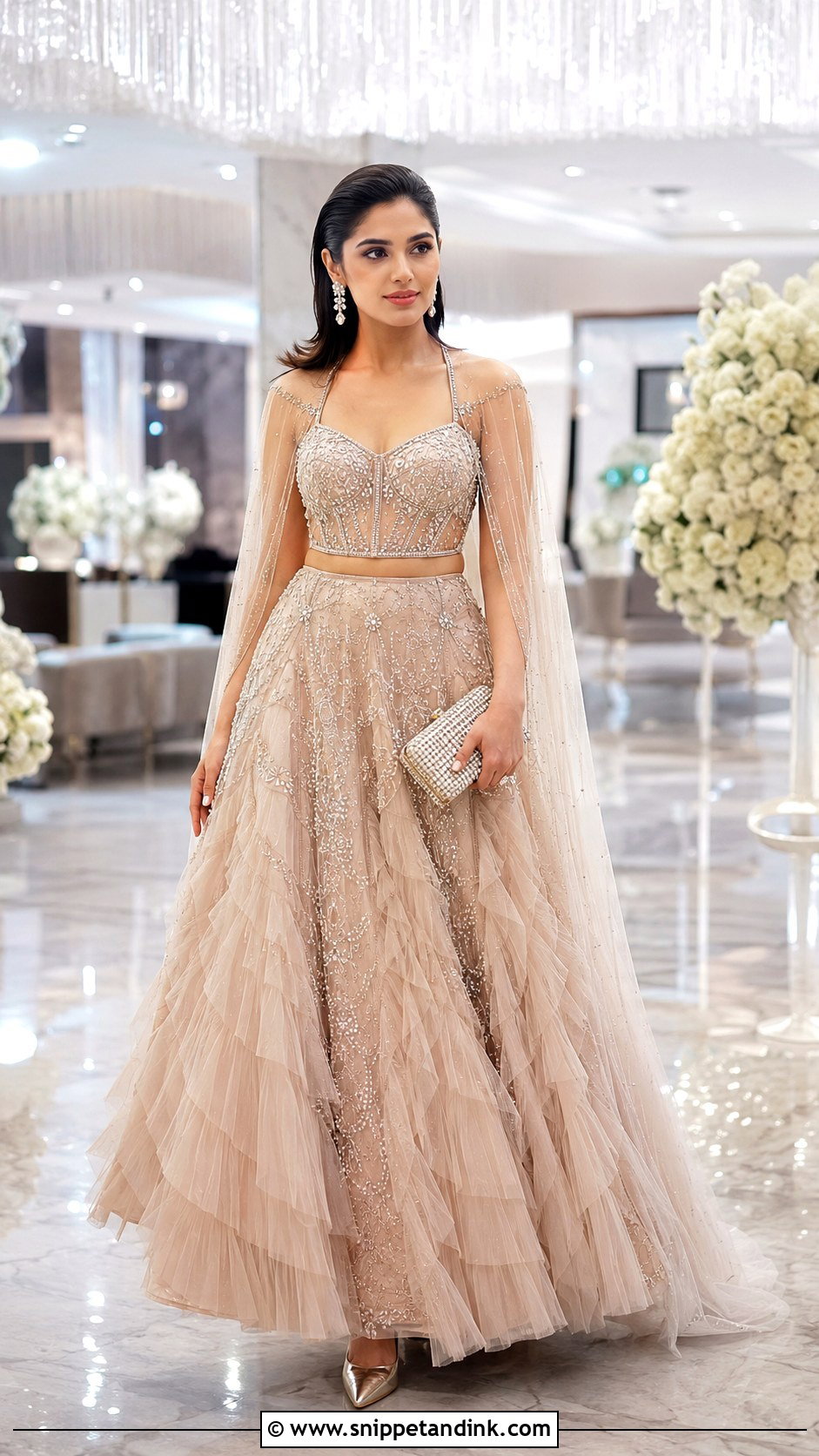
A pearl corset choli gives a reception the structure of a Western gown. The boning and internal support are what hold it up, so it must be made to your measurements; a ready-made corset almost never sits right at both bust and waist. Champagne, ivory, pale gold or dusty rose suit pearls best. I fit corsets with the bride sitting down and after she’s eaten something, because a corset that’s comfortable standing can become painful at dinner. Skip the heavy necklace; pearl drops and a slim bracelet let the bodice lead.
7. Cape Designer Choli With Embroidered Lehenga
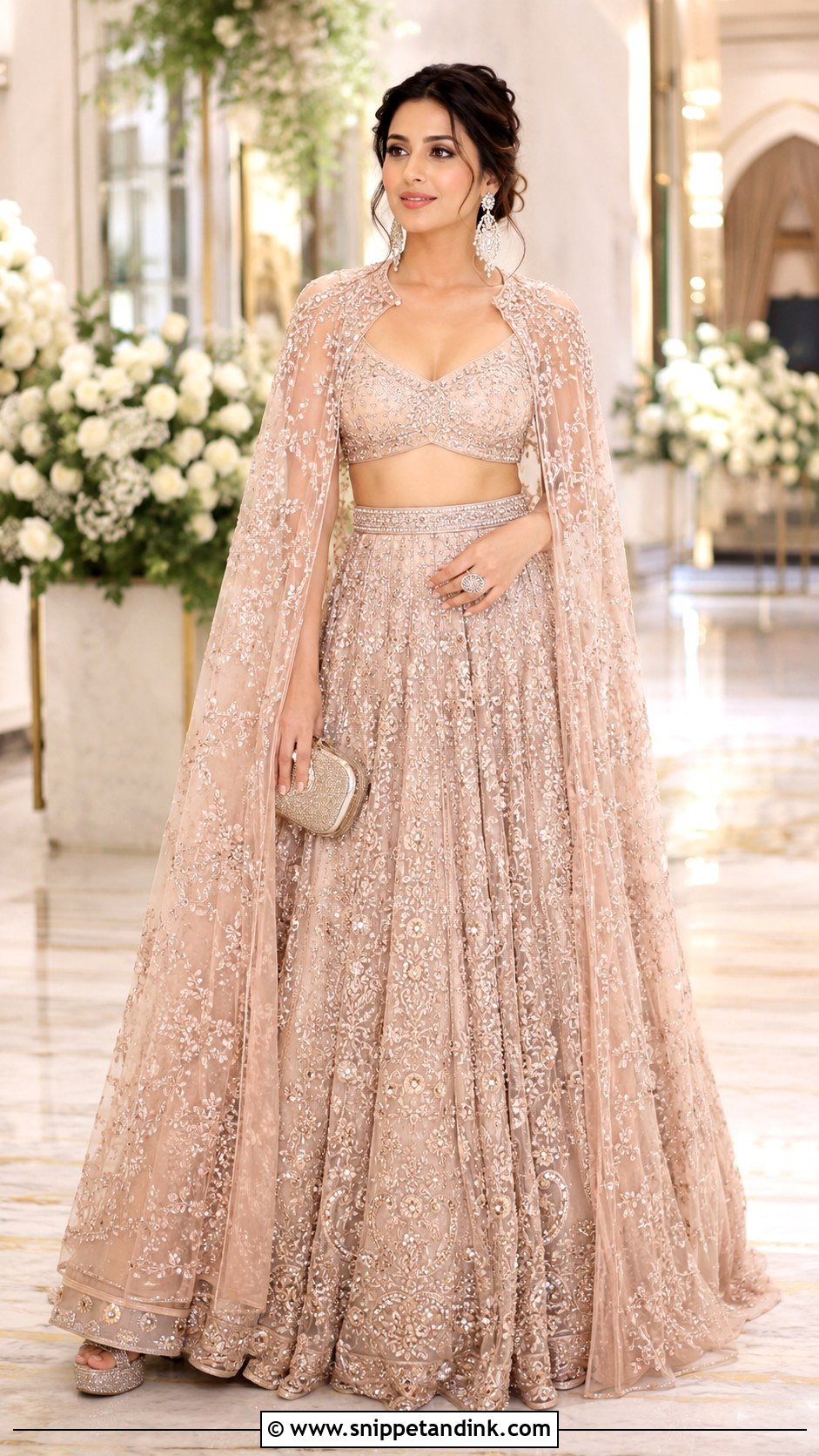
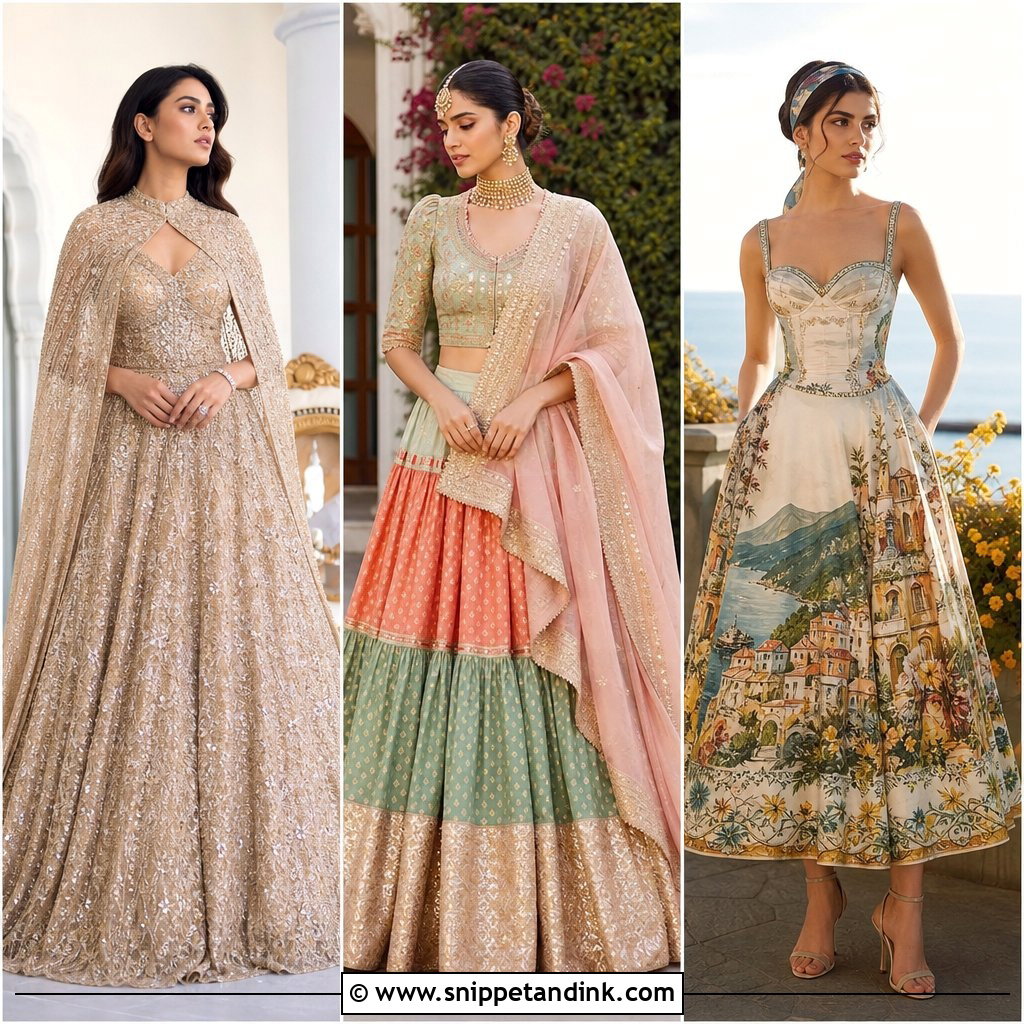
A cape choli is a smart answer for someone who dislikes managing a dupatta all evening. The cape, sheer and lightly embroidered, provides the coverage and the drama, falling to the waist or elbow. I keep the choli under it sleeveless and fitted, and the lehenga high-waisted in the same color family so the line runs unbroken. Embellishment belongs on the cape edges. A big necklace crowds the cape neckline, so I use statement earrings and a cocktail ring instead. Low bun or side-swept waves, so the cape stays visible.
8. Peplum Designer Choli With Wedding Lehenga
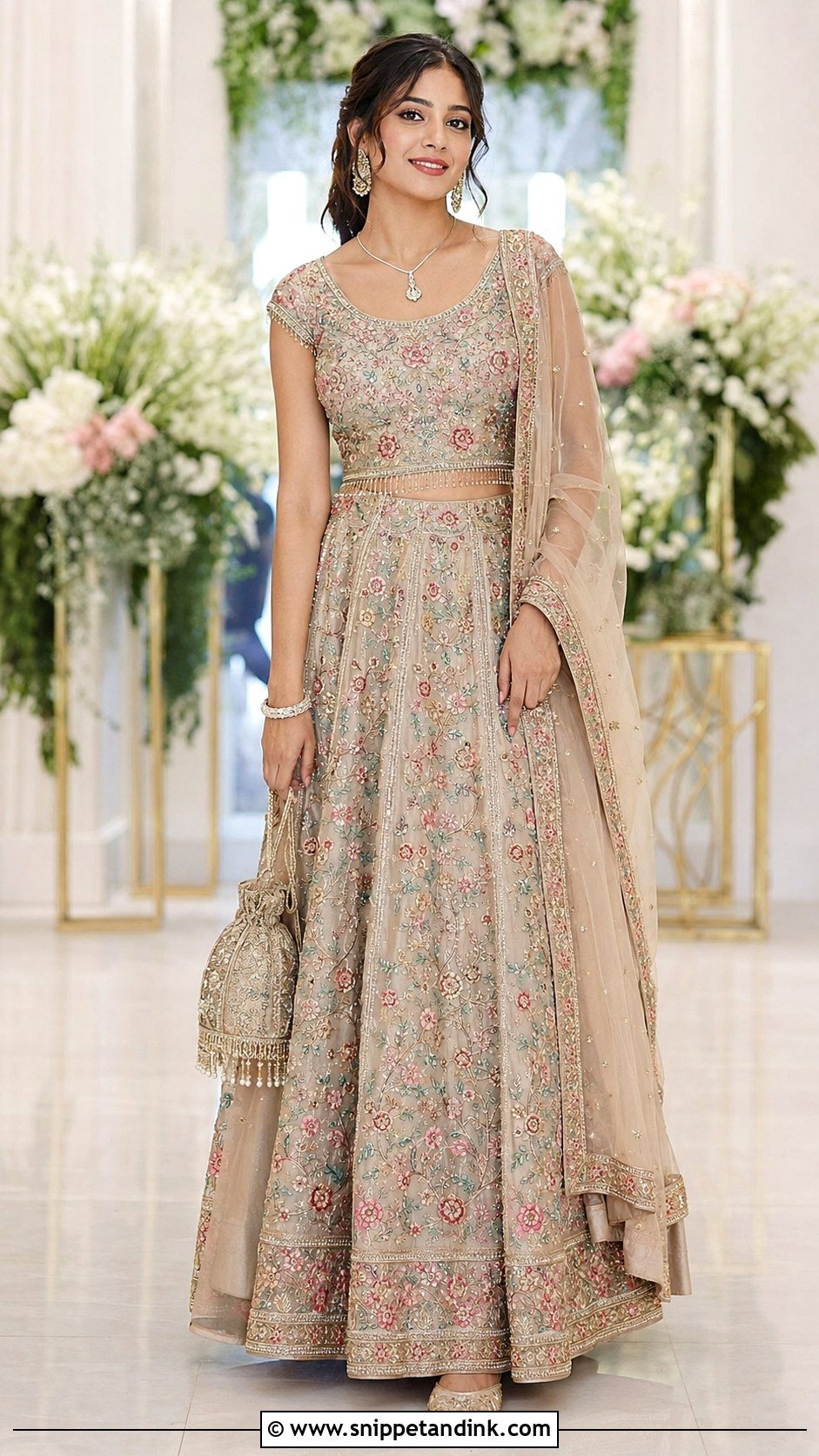
Peplum cholis give more coverage at the midriff and a defined waist, which is why brides who are self-conscious about a cropped blouse often prefer them. The flare should end above the widest part of your hips, otherwise it adds width exactly where you don’t want it. Balance the embroidery: detailed peplum with a simpler skirt, or the reverse. A soft net dupatta over one shoulder keeps bulk away from the waist. Three-quarter sleeves, medium earrings and a slim necklace keep it neat.
9. Jacket Designer Choli With Layered Lehenga
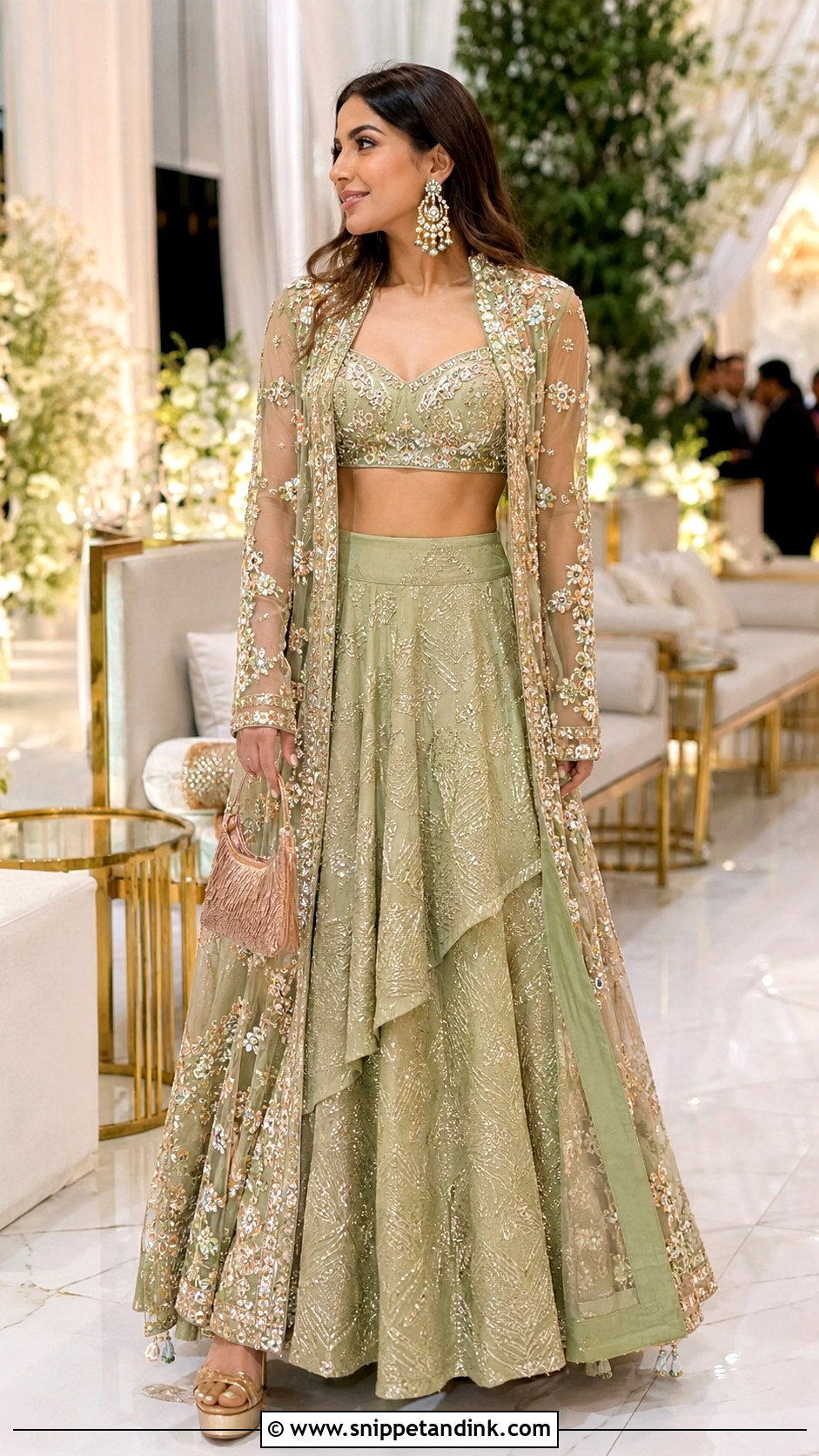
A jacket choli adds a long sheer layer, knee or ankle length, over a cropped choli and high-waisted lehenga. It’s one of my go-to looks for cooler venues because the jacket does a dupatta’s job without the constant re-draping. An open front or single waist fastening, with side slits so you can walk. Tonal embroidery reads understated, contrast thread reads bolder. Keep extra draping minimal, add chandelier earrings and platform sandals, and pull the hair back so the neckline isn’t crowded.
10. One Shoulder Designer Choli With Sequin Lehenga
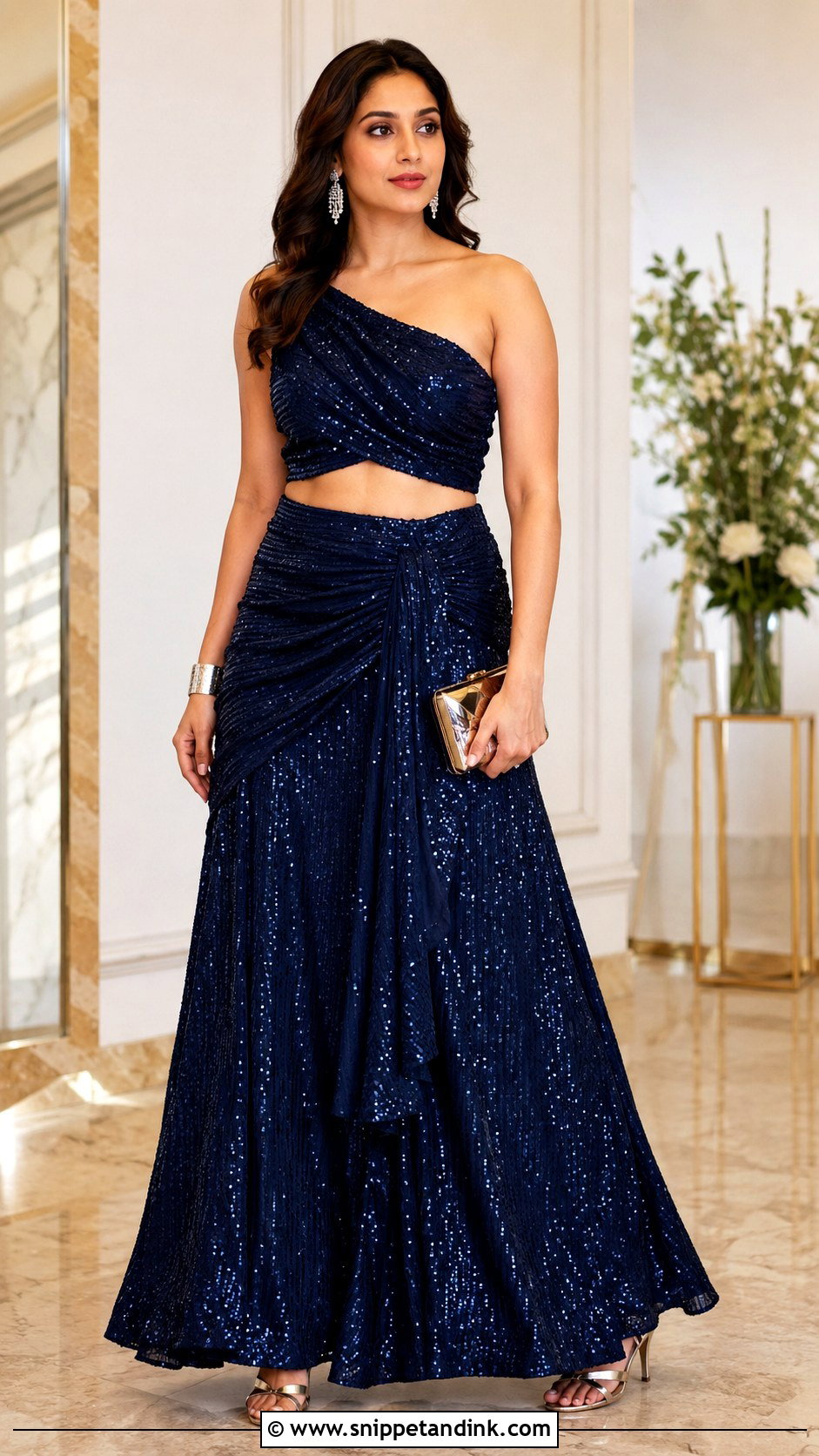
A one-shoulder designer choli is an evening shape and it needs serious internal support, since the single strap carries everything. I’d ask for silicone grip tape along the neckline and a built-in bra, then dance-test it at the fitting. Pair it with a fluid sequin lehenga in midnight blue, silver, deep green or rose. A conventional dupatta hides the asymmetry, so use a drape attached at the waist or shoulder instead. Long earrings and a cuff; skip the necklace.
11. Full Sleeve Designer Choli With Embellished Lehenga
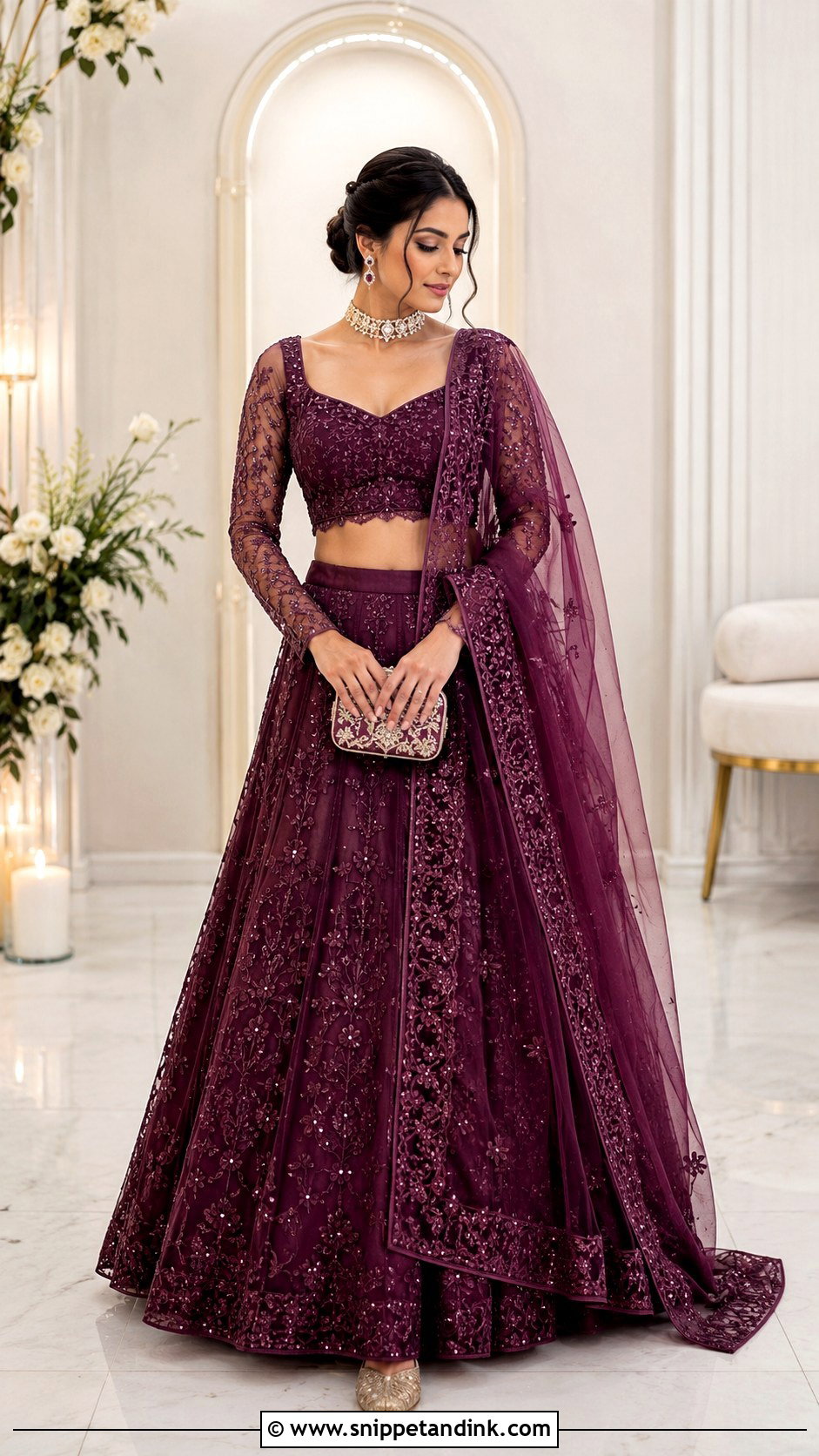
Full sleeves are where embroidery shows best, so this is a choli for detailed sequins, beadwork or floral appliqué. The catch is movement. Embellished sleeves don’t stretch, so I check the armhole and elbow fit by having the wearer hug someone and reach across a table. If either pulls, the armhole needs lowering or the sleeve more ease. Deep jewel tones suit evening, blush or sage suit daytime. Pin a light dupatta to one shoulder so the sleeves stay visible. A choker and small drops keep the upper half balanced.
12. Off Shoulder Designer Choli With Tulle Lehenga
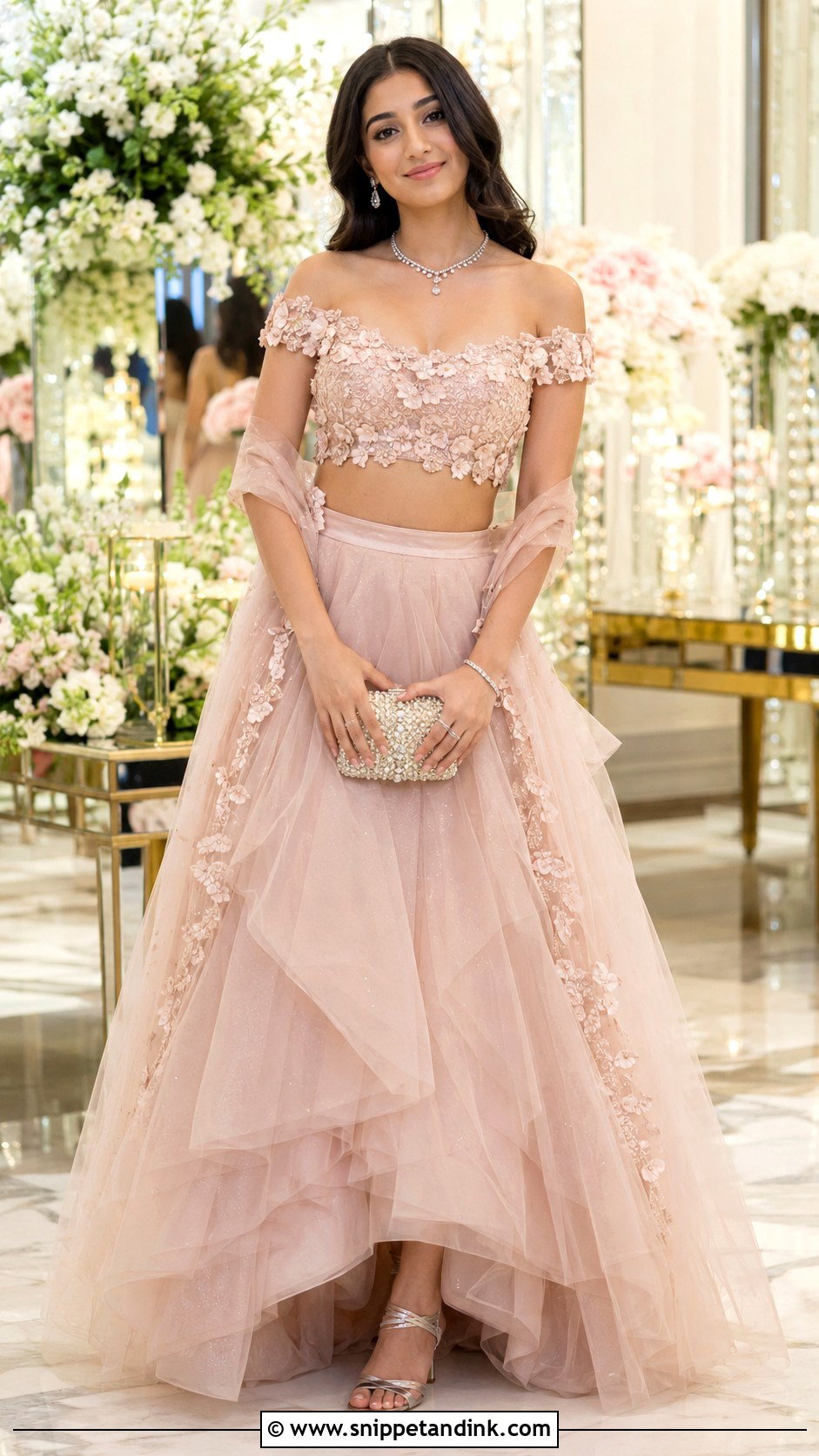
An off-shoulder choli stays up because of what’s inside it: a firm band, grip tape and structured cups. Without those, you’ll spend the evening pulling it back up. A lightly beaded or appliquéd bodice over a layered tulle skirt in blush, lavender, powder blue or muted gold suits a reception. Drape a sheer dupatta loosely at the arms or secure it at the back so the shoulder line stays clear. I’d keep this one indoors; an outdoor evening wedding in cooler weather leaves bare shoulders cold.
13. Halter Neck Designer Choli With Silk Lehenga
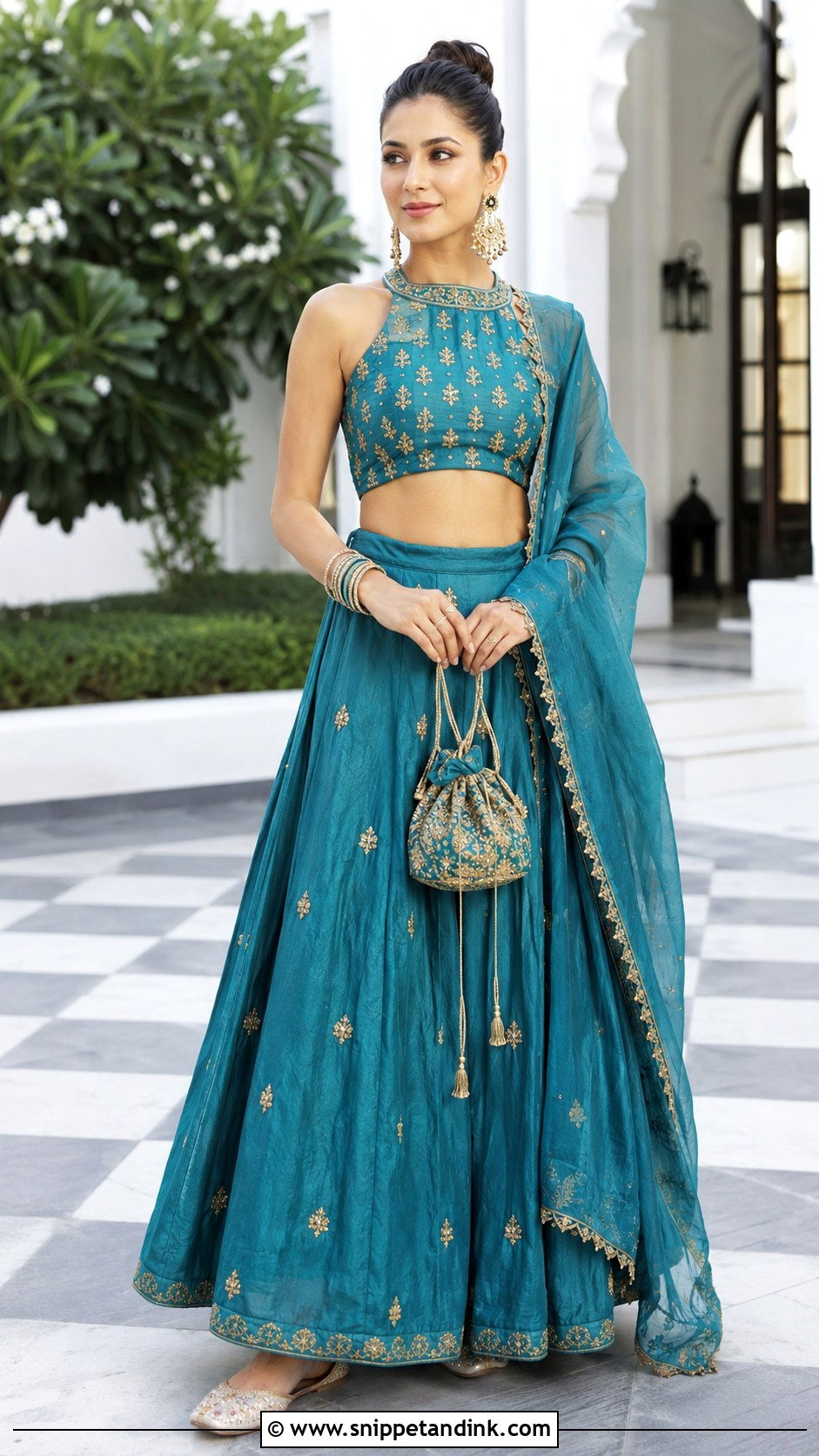
A halter neck gives a silk lehenga a sharper edge, and it pairs well with raw silk or dupion in teal, wine, mustard or fuchsia. Make sure the back closure is secure and that the neck strap doesn’t dig in after a few hours; a wider band at the neck spreads the weight. The neckline itself is the decoration, so skip the necklace for statement earrings and stacked bangles. Drape a light dupatta from one shoulder to the opposite wrist. A high bun or ponytail shows off the shape.
14. Square Neck Designer Choli With Floral Lehenga
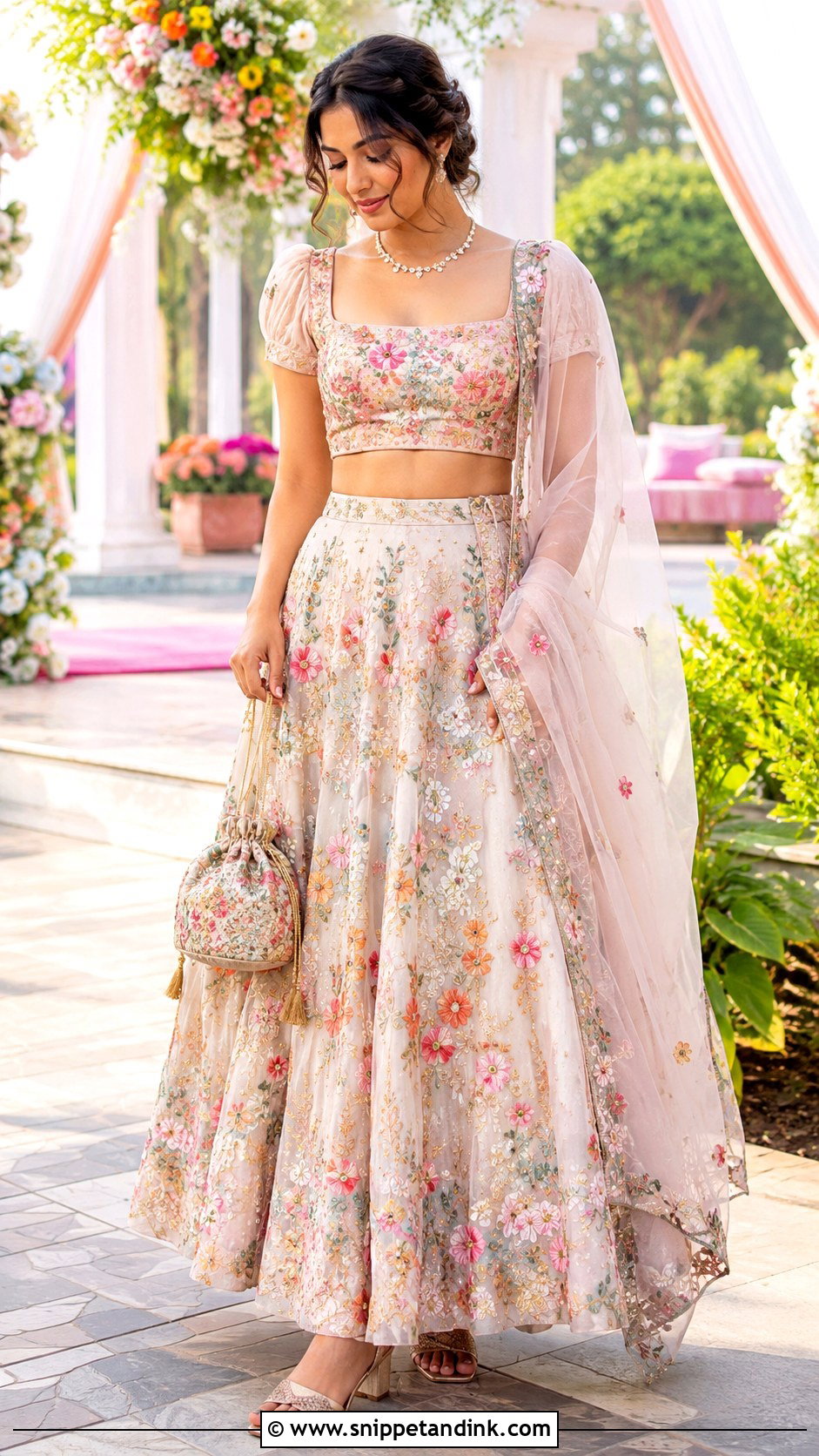
Square necks flatter most frames by showing the collarbone, and they make jewelry easy, since a short necklace or choker sits naturally inside the square. A solid choli over a floral printed or embroidered lehenga keeps the look light for mehendi and daytime events. Puff sleeves read young and playful; slim elbow sleeves read traditional. Pin an organza dupatta behind one shoulder to keep the neckline open. Small earrings stop the top half from looking crowded.
15. High Neck Designer Choli With Organza Lehenga
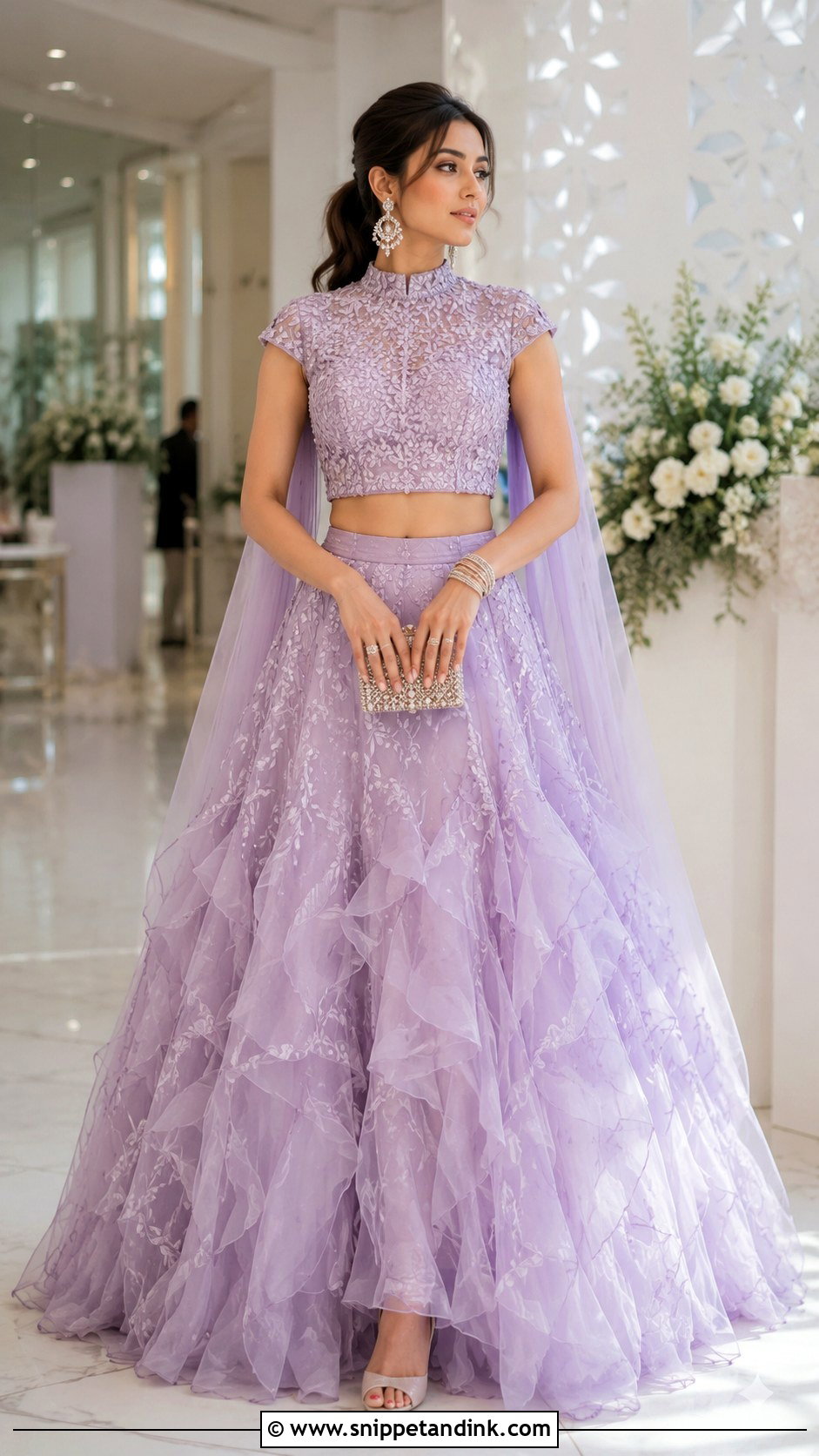
A high neck already decorates the face area, so I leave the necklace off and choose statement earrings. Sleeveless or cap sleeves balance the coverage at the neck. Paired with a full organza lehenga in lilac, pistachio, peach or deep blue, it looks clean and modern. My main fitting note is the organza skirt: ask for a soft lining and controlled layers, because stiff organza against bare legs is scratchy and it creases sharply when you sit. Drape the dupatta from the elbows or attach it discreetly at the back.
16. Backless Designer Choli With Bridal Lehenga
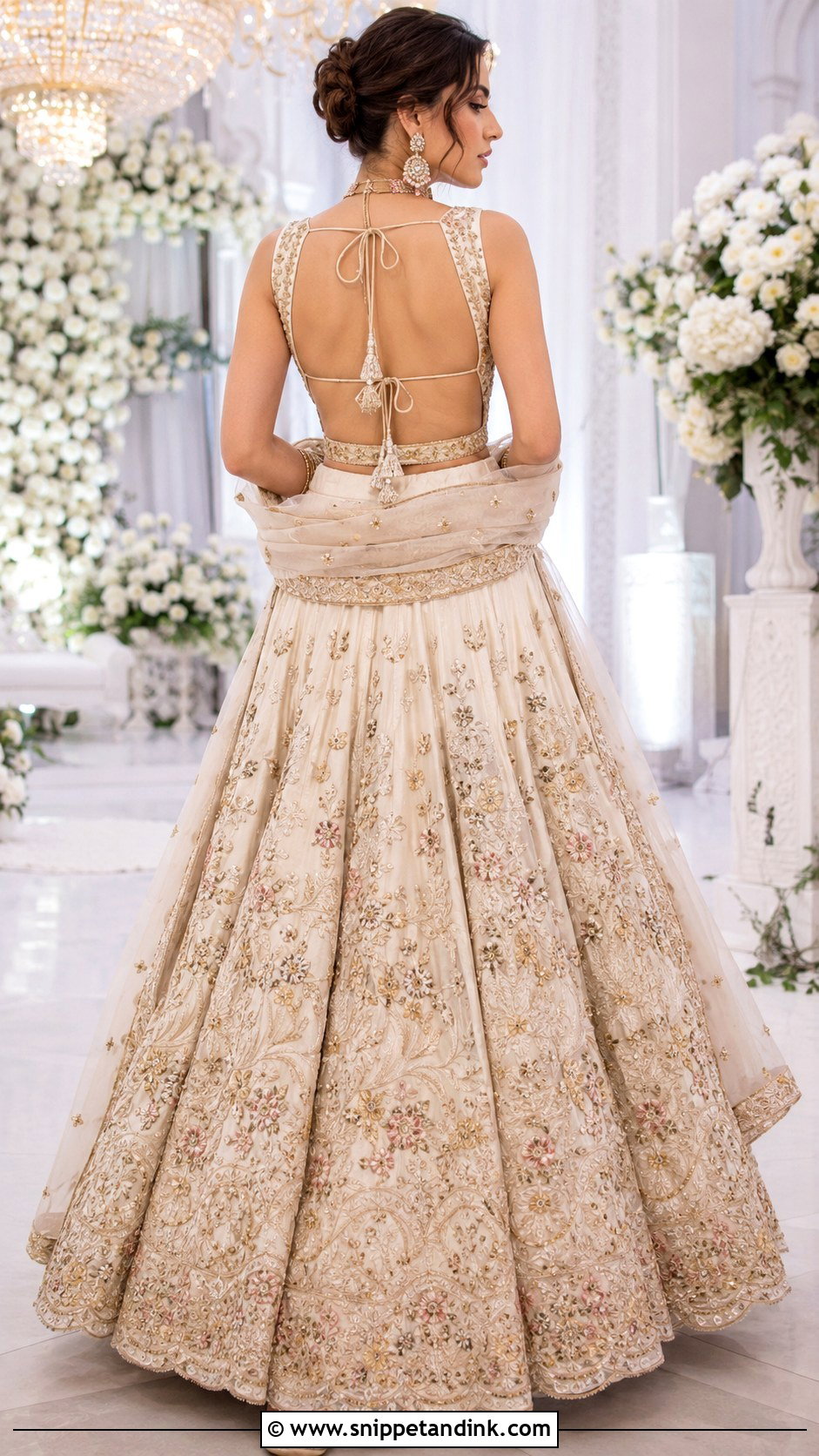
A backless choli is all about the fastening. A tie back with a firm band and proper hooks is what keeps it secure; fashion tape helps, but it’s a backup, not the structure. I’d only suggest this to a bride comfortable with the exposure for a long ceremony, and I always test it sitting, leaning forward and raising both arms. A high-waisted lehenga balances the open back. Tassels on the dori add movement. Wear the hair up or in a side braid so the back stays visible, and keep a dupatta handy for any part of the day where you’d like more coverage.
17. Ruffle Sleeve Designer Choli With Georgette Lehenga
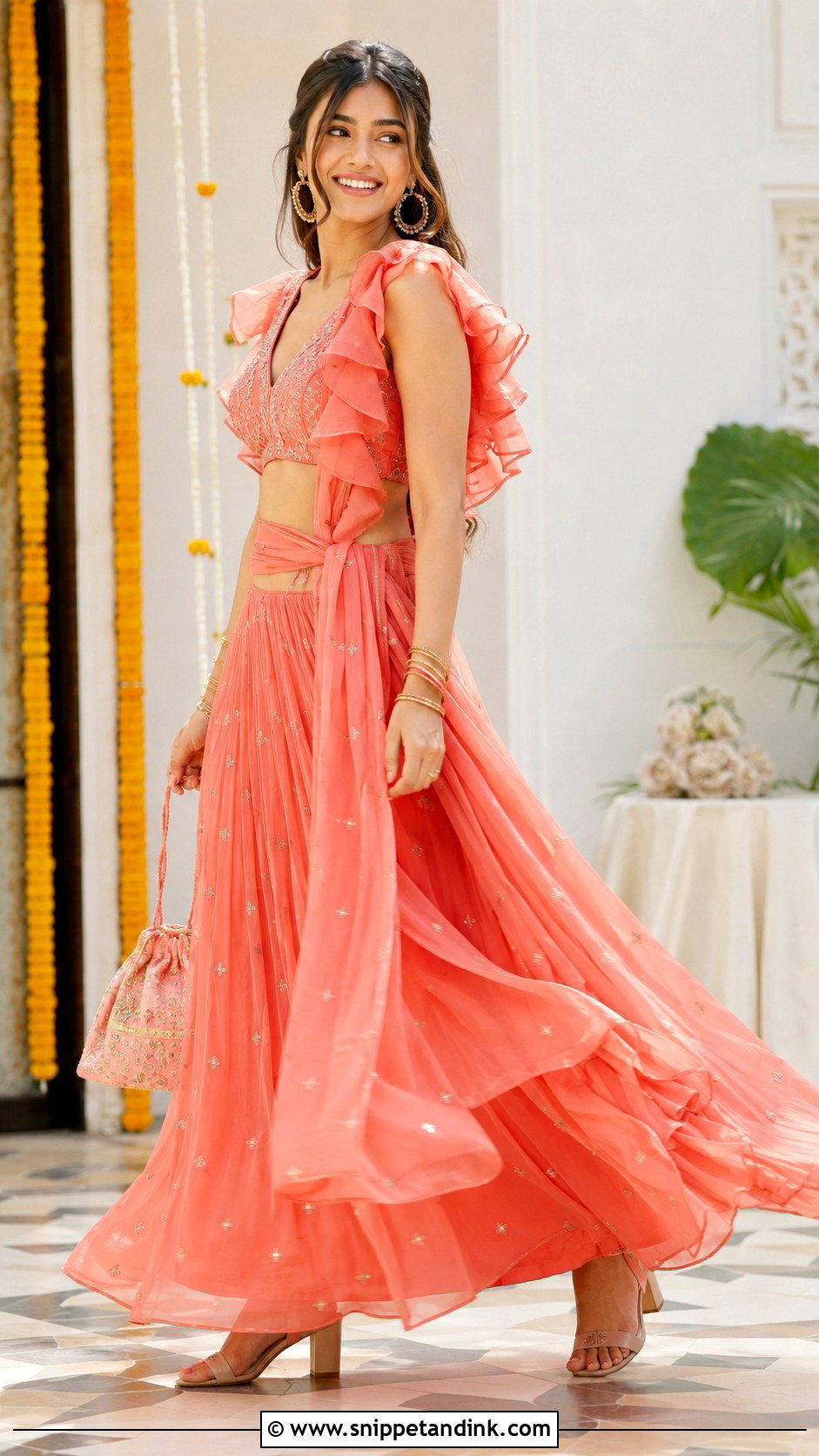
Ruffle sleeves add movement without embellishment weight, which makes them comfortable for mehendi and sangeet. Short layered ruffles or elbow flounces pair best with a flowing georgette lehenga in a single color like coral, turquoise, mauve or yellow. Keep sequins to the ruffle edges and skirt border. I’d secure the dupatta at the waist rather than the shoulder, since a drape over a ruffled sleeve flattens it. Cushioned block heels and a braided ponytail make it easy to dance in.
18. Asymmetrical Designer Choli With Draped Lehenga
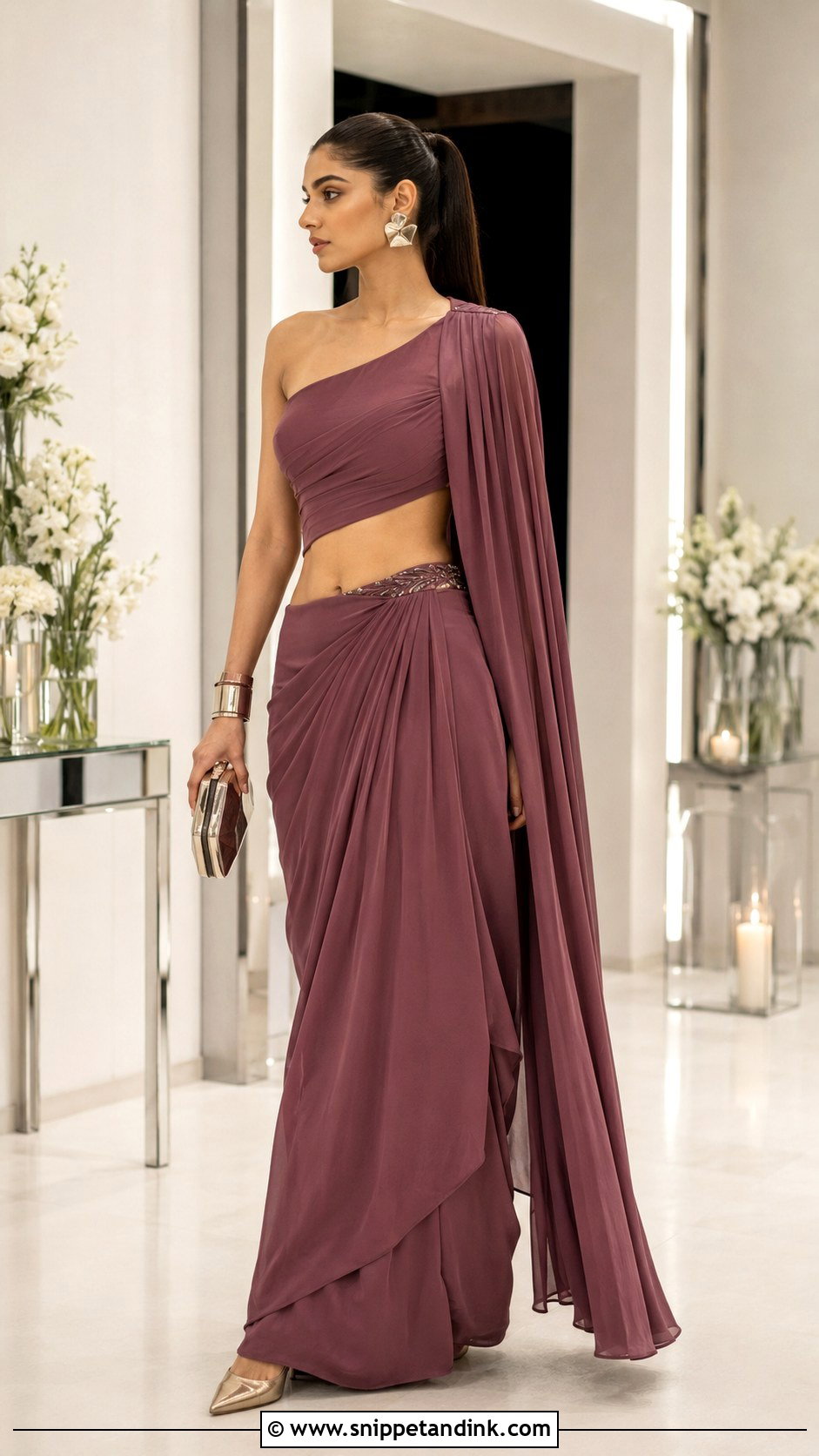
An asymmetrical choli gets its interest from the cut, a diagonal hem, an extended panel or an angled neckline, so I keep both pieces in one color and let the shape speak. A fluid, draped lehenga follows the line well. A pre-attached dupatta or shoulder drape avoids extra fabric breaking the silhouette, and it saves you from re-draping all evening. Sculptural earrings and a slim cuff suit the modern feel. Good for a reception or a formal sangeet.
19. Gold Designer Choli With Contrasting Lehenga
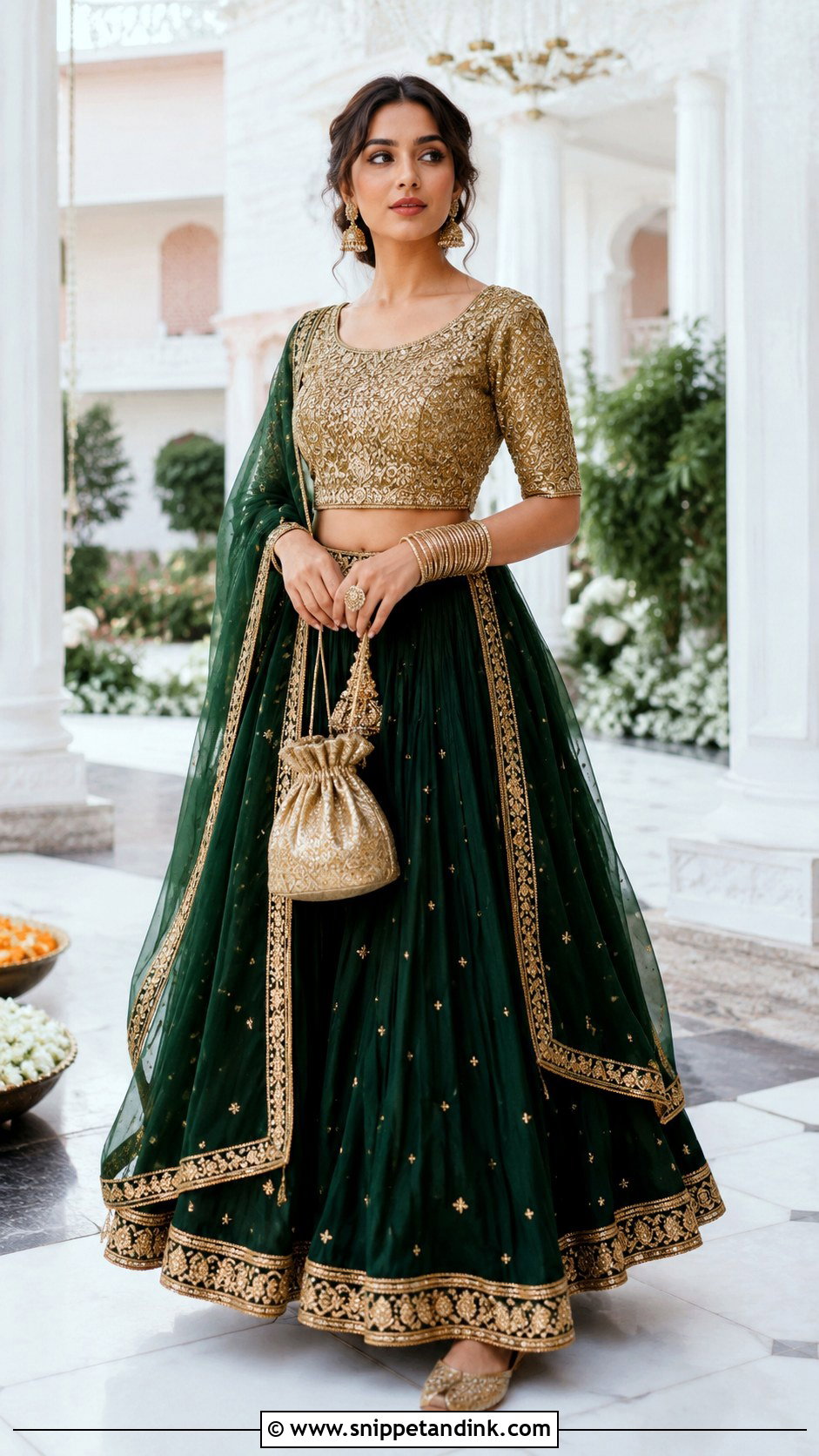
A gold choli is the most rewearable piece on this list; I tell clients to treat it as an investment. It pairs with emerald, burgundy, navy, plum or rust skirts, as long as a little gold shows in the skirt border to link them. A curved neckline with elbow sleeves is the classic cut; sleeveless looks more current. Match the dupatta to the skirt with a narrow gold edge. If the choli is heavily worked, scale the necklace down. Bridesmaids and family members going to several functions get the most from it.
20. White And Gold Designer Choli With Wedding Lehenga
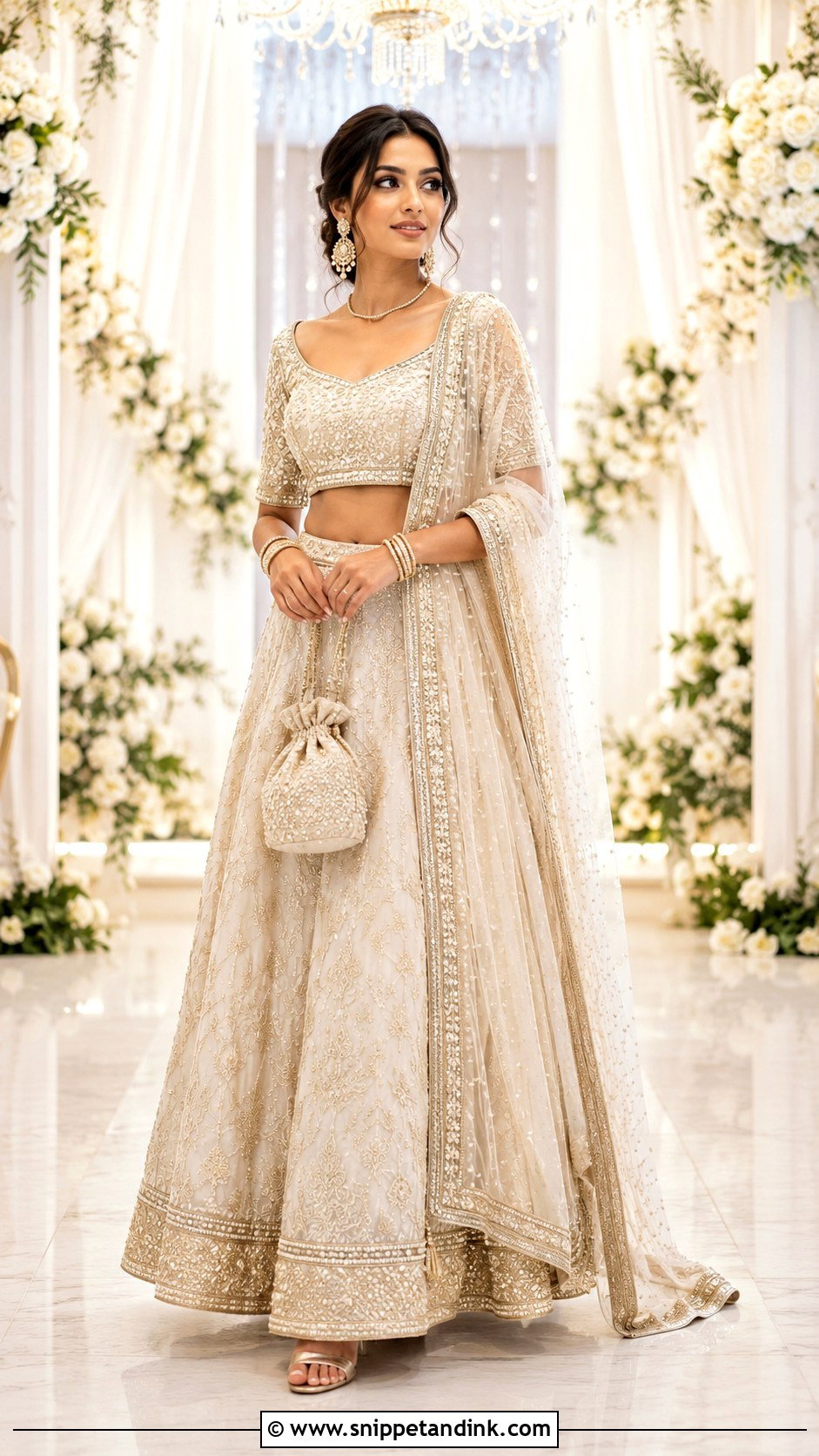
White and gold is luminous, but not right for every wedding: in some communities white is reserved for mourning, and some couples ask guests to avoid pale shades. Guests should check the couple’s dress guidance first. Brides who choose it can add depth with richer embroidery and layered jewelry. Ivory or cream with gold threadwork, pearls or fine sequins, a gold-bordered lehenga with moderate volume, and a sheer dupatta keep it airy. I’d always try ivory under the venue’s lights; cool whites can look grey indoors.
Which Necklace Sits Right in Which Neckline?
A necklace that fights its neckline makes an expensive outfit look unplanned. These are the pairings I use most:
- Sweetheart or deep round: a choker plus a longer layered piece that falls inside the curve.
- Square neck: a short necklace or choker that sits within the square.
- Boat neck: a close choker, or earrings only if the neckline is embroidered.
- High neck, halter or one-shoulder: no necklace; statement earrings instead.
- Off-shoulder: a delicate collar-length chain, or nothing at all.
Bring the actual jewelry to your final fitting. Heavy kundan or polki can pull a neckline forward or catch on embroidery, and that’s far easier to fix with a stitch or a small hook than on the day.
Fit Decides How a Choli Looks After Five Hours
Start with the event, the season and how formal it is. Then think about support, coverage, sleeve movement and where the dupatta goes. Traditional red zardozi, Banarasi silk, floral threadwork, corsets, capes and jackets all set a different mood, but each relies on the same thing: good tailoring. Let jewelry and shoes support the embroidery rather than compete with it. And at your fitting, sit, eat, dance and hug in the choli; if it passes those, it will pass the wedding.
You'll Like These Ideas:






Leave a Reply