
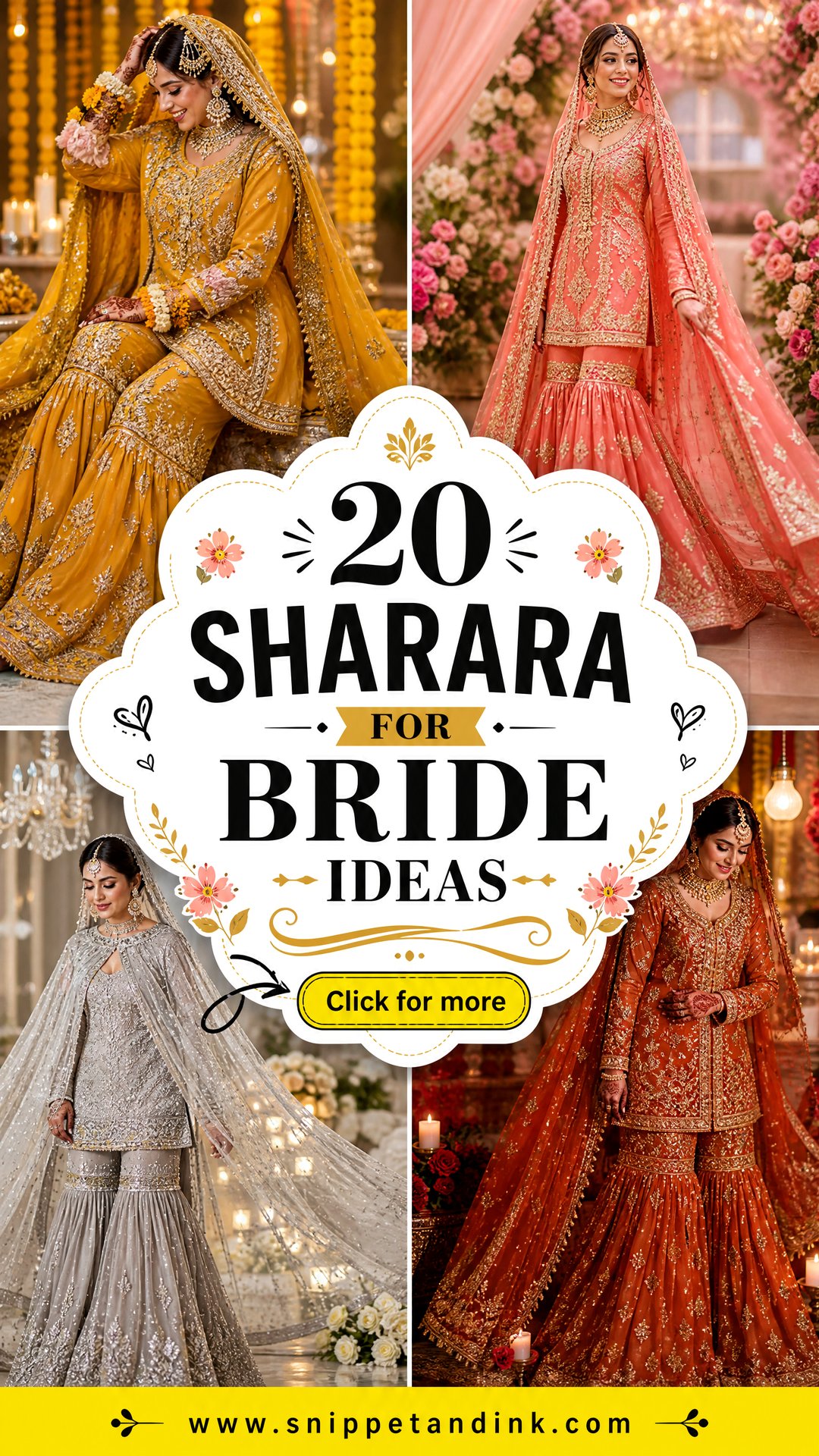
Brides usually come to me torn between a lehenga they love in photos and something they can actually move in for a twelve-hour day. A sharara answers both. The pants carry as much embroidery as a lehenga skirt, but you can sit, climb into a car and dance without hauling a can-can around. The set has to be planned as a whole, though: kurta length, where the embroidery sits, how the dupatta is anchored and which shoes go underneath all change how the pants fall. Below are twenty bridal sharara looks, from classic red to cape sets, with the fitting and styling notes I’d give a bride for each, and which event they really belong to.
How Many Months a Bridal Sharara Needs
A ready-to-wear sharara can be altered in a week, but a made-to-order bridal set is hand embroidered, and that takes time. Timelines vary a lot between designers and seasons, so treat these as a rough guide and confirm dates in writing.
- Four to six months out: finalize the design, colors and fabric swatches. Heavy zardozi or tilla work is slow handwork, and wedding season queues get long.
- Two to three months out: first fitting of the kurta shell and sharara before all the embroidery is attached, when the cut can still change.
- Four to six weeks out: fitting with embroidery done. Wear your actual shoes, the bra or shapewear you’ll use, and bring the dupatta.
- One to two weeks out: final check, including sitting on the floor and raising your arms.
Ask how the embroidery weight is distributed. A sharara with dense work near the hem hangs straight and swings well; one worked heavily at the hips pulls the waistband down and stiffens as you sit. If the pants feel heavy at the fitting, they’ll feel twice as heavy by the rukhsati.
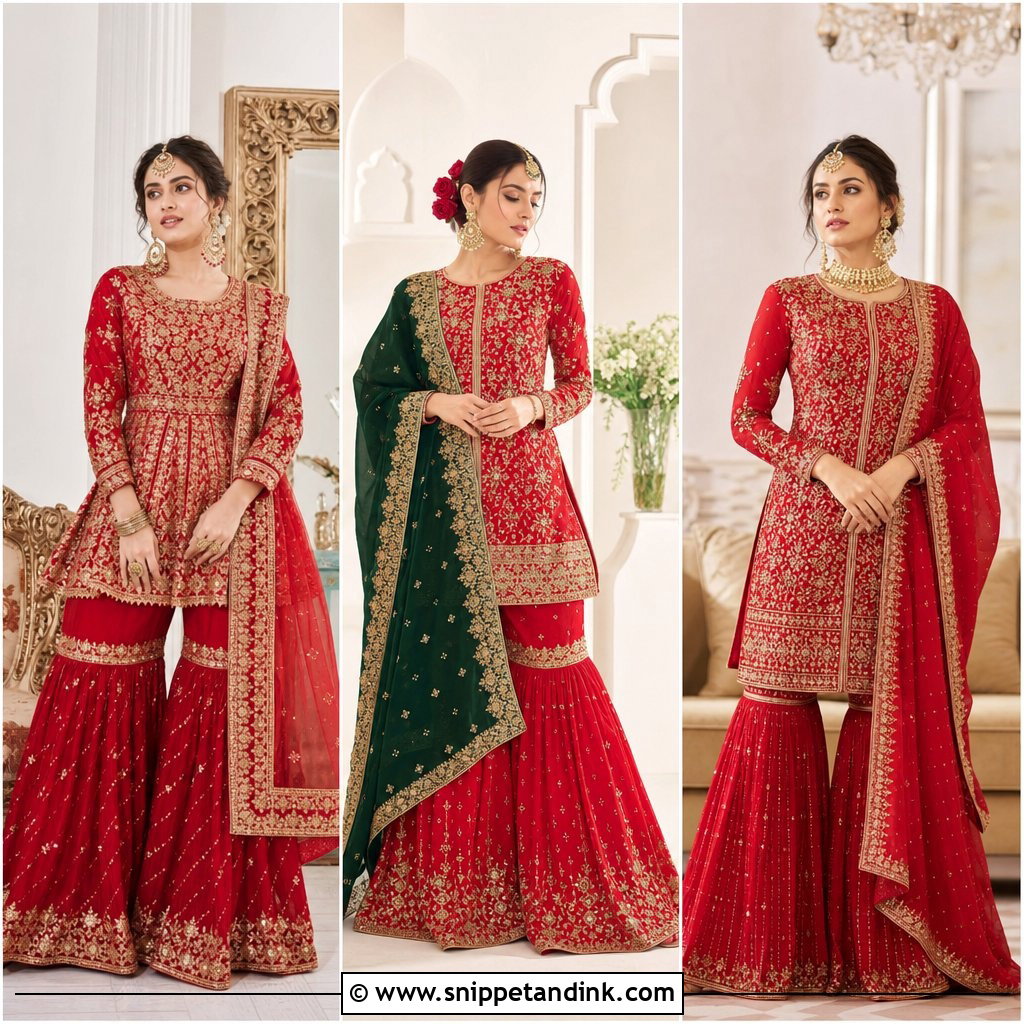
1. Red Zardozi Bridal Sharara
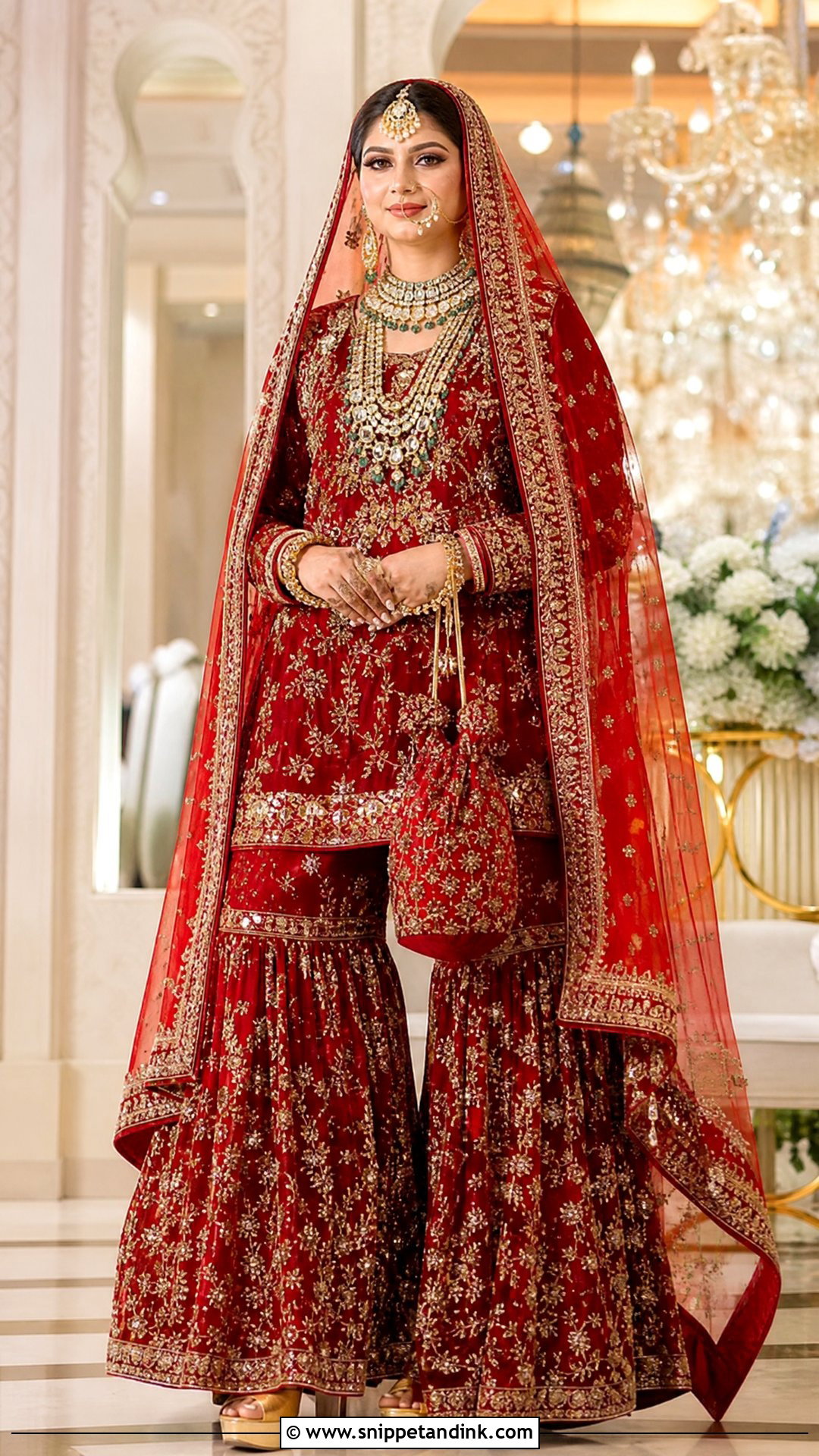
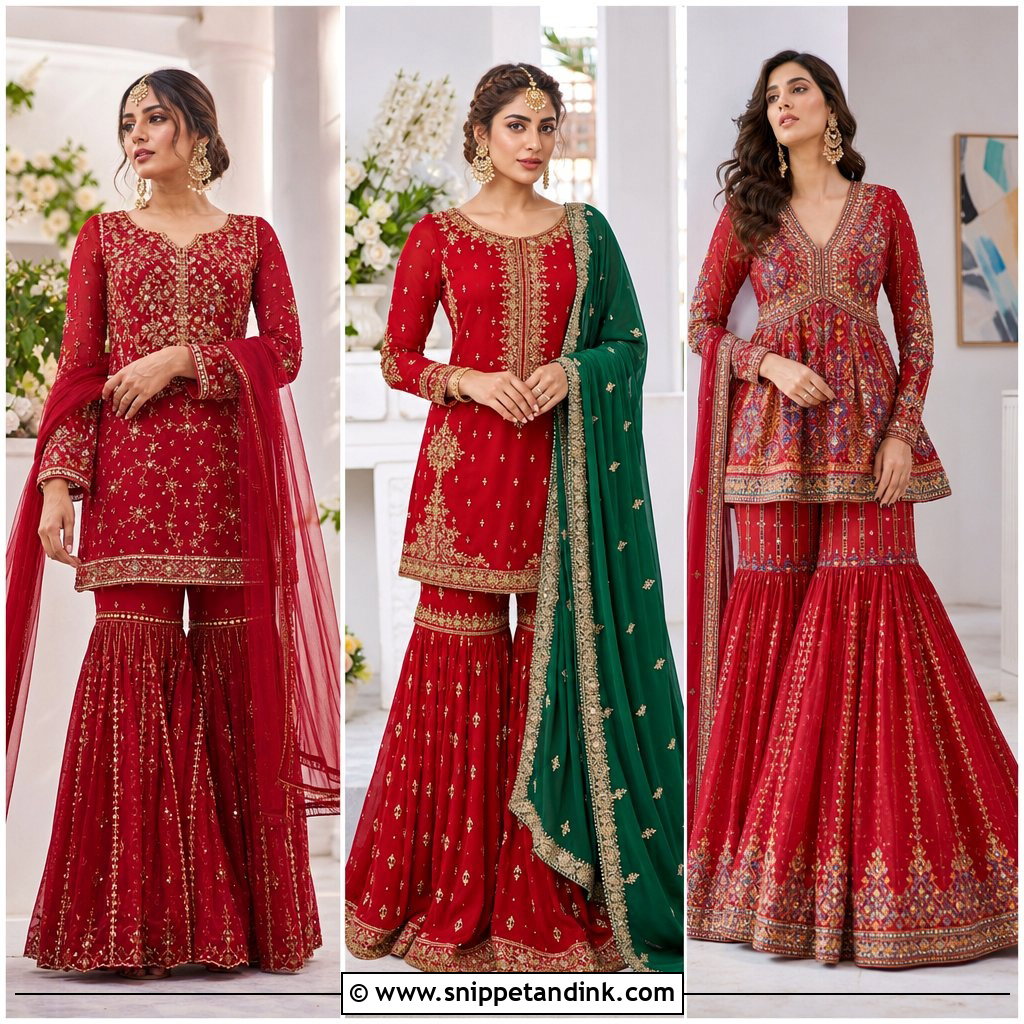
Red with antique gold zardozi is still the outfit I see most for the main ceremony, and for good reason: it reads as bridal from across a hall. Ask for the heaviest work to sit along the hem of the pants rather than all over, because a fully worked sharara can weigh enough to drag at the waistband by evening. A structured mid-length kurta with a square or rounded neck balances the flare. Add a red net dupatta with a broad border, layered kundan, a maang tikka and gold platforms tucked under the hem. A sleek low bun gives the dupatta pins something solid to grip.
2. Ivory Pearl Nikah Sharara
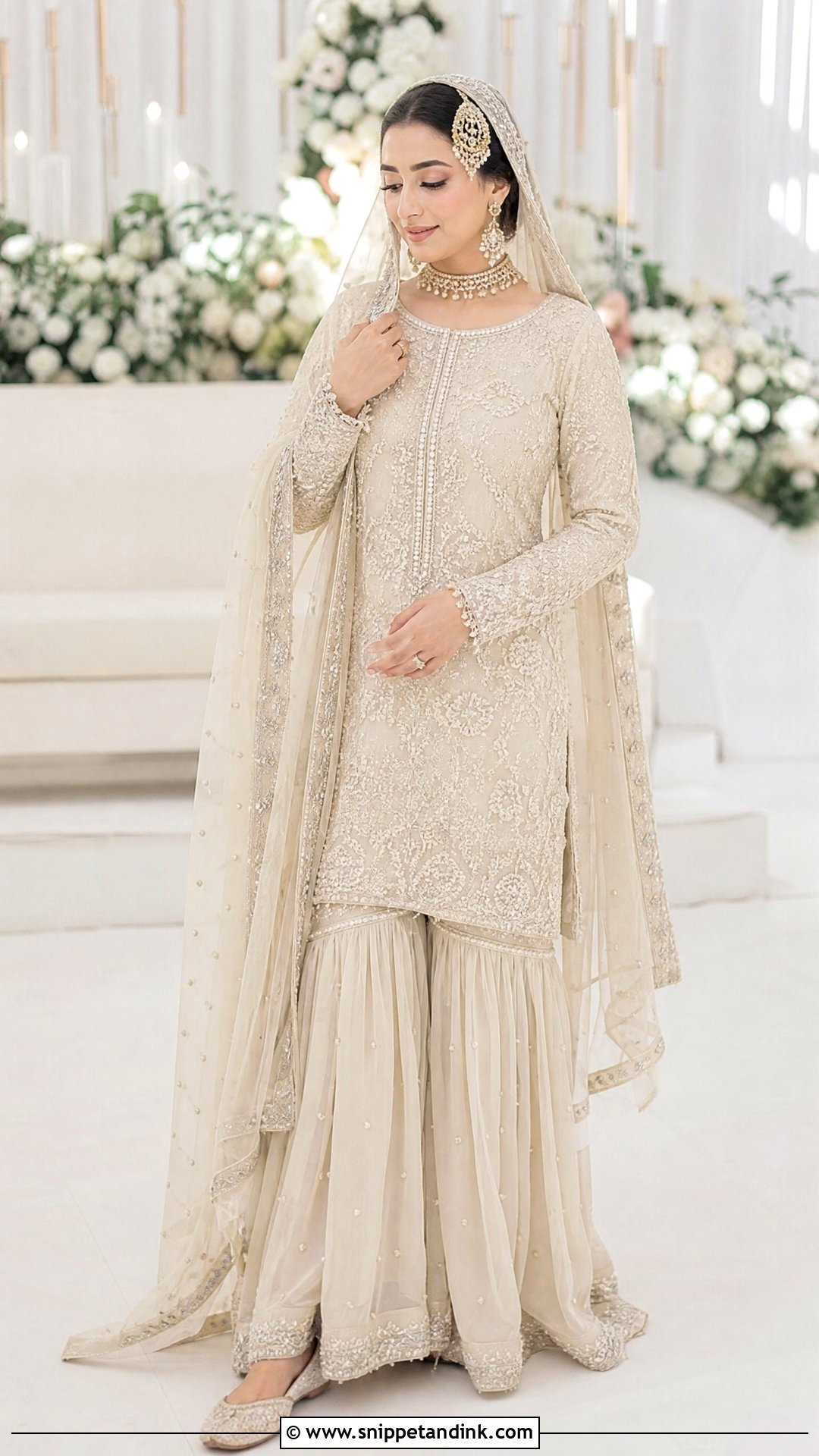
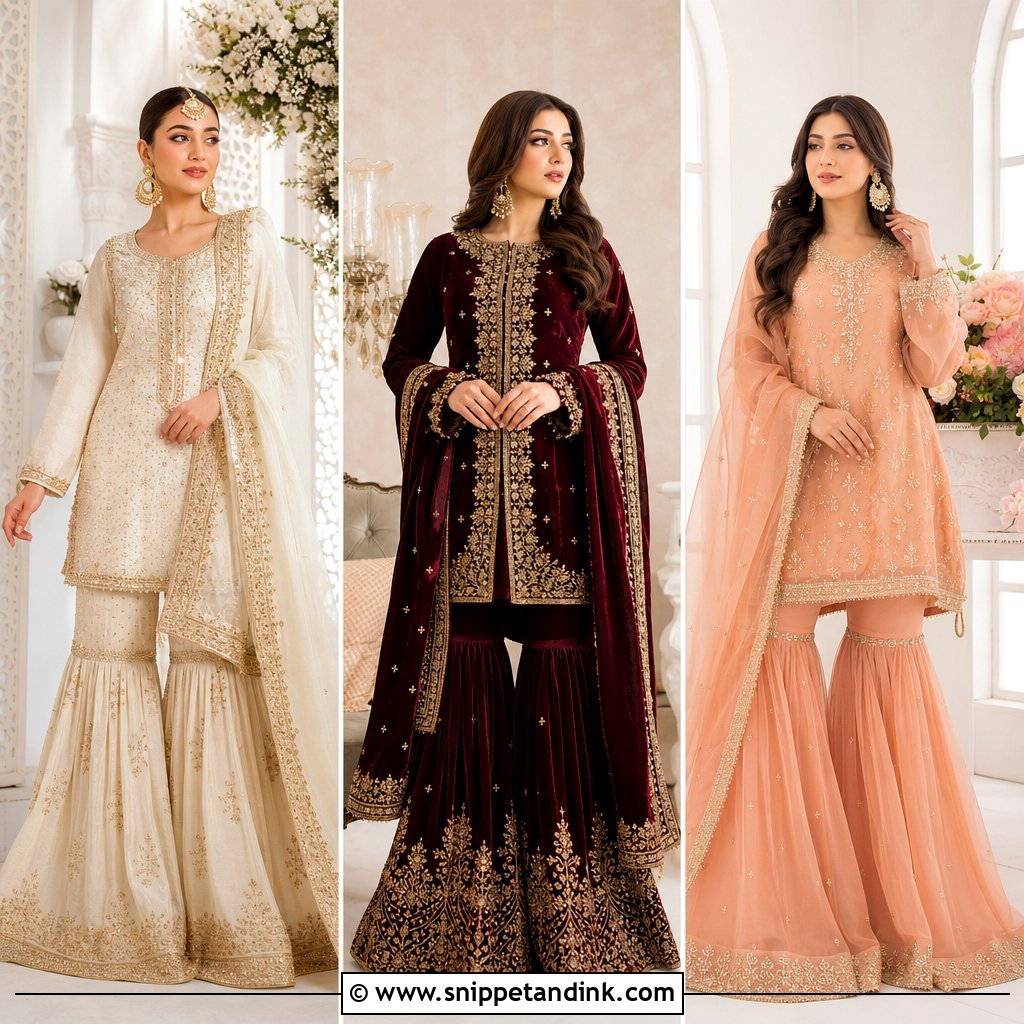
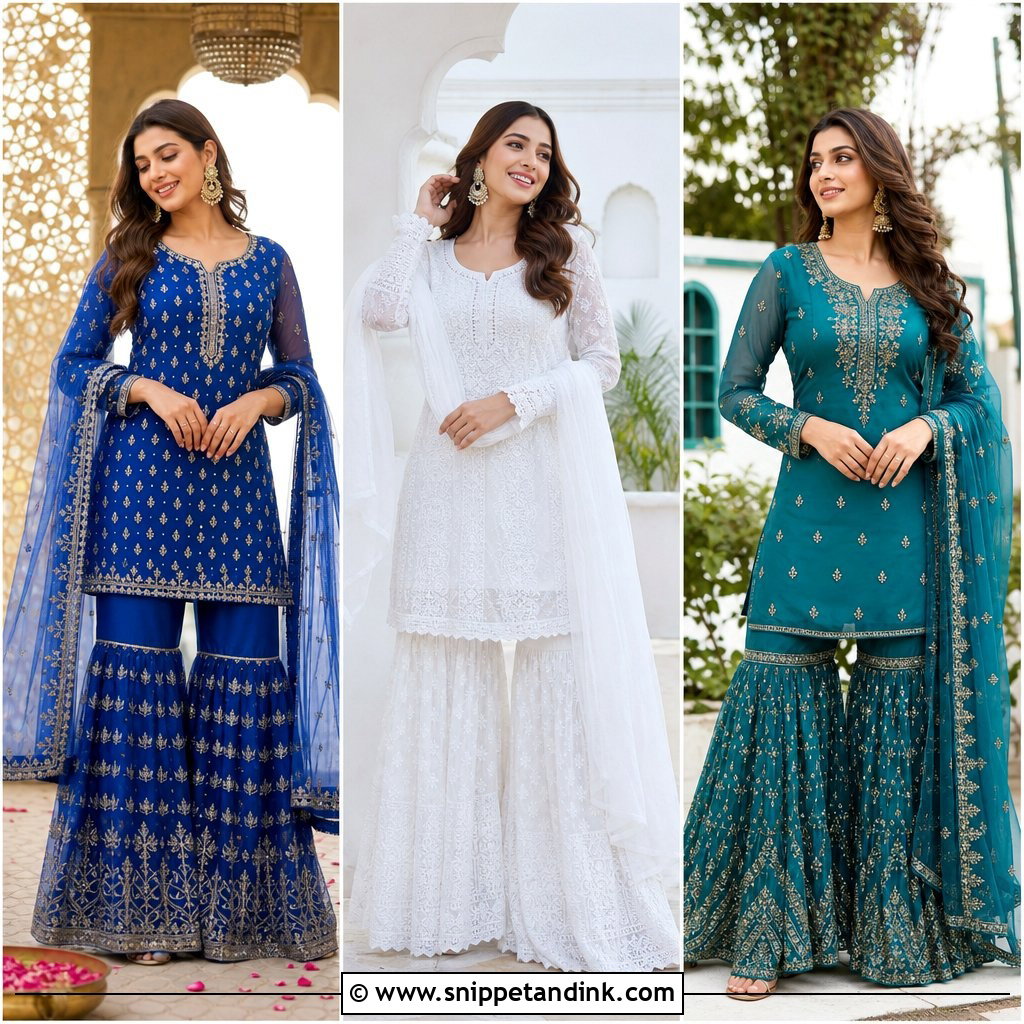
For a nikah, ivory with pearls and fine silver work feels calm and devotional rather than flashy. I pair a high-waisted chiffon sharara with a long straight kurta, pearl vines along the placket and lightly worked cuffs. The sheer veil goes over the head and pins behind the ears, so the choker and passa still show. Pearls are heavier than they look, so check that a pearl-covered dupatta border isn’t pulling the veil backwards when you bend your head. Full sleeves and a higher neck add coverage without losing anything. Embroidered ivory juttis, luminous skin and a rosy nude lip finish it.
3. Blush Pink Mirror Work Bridal Sharara
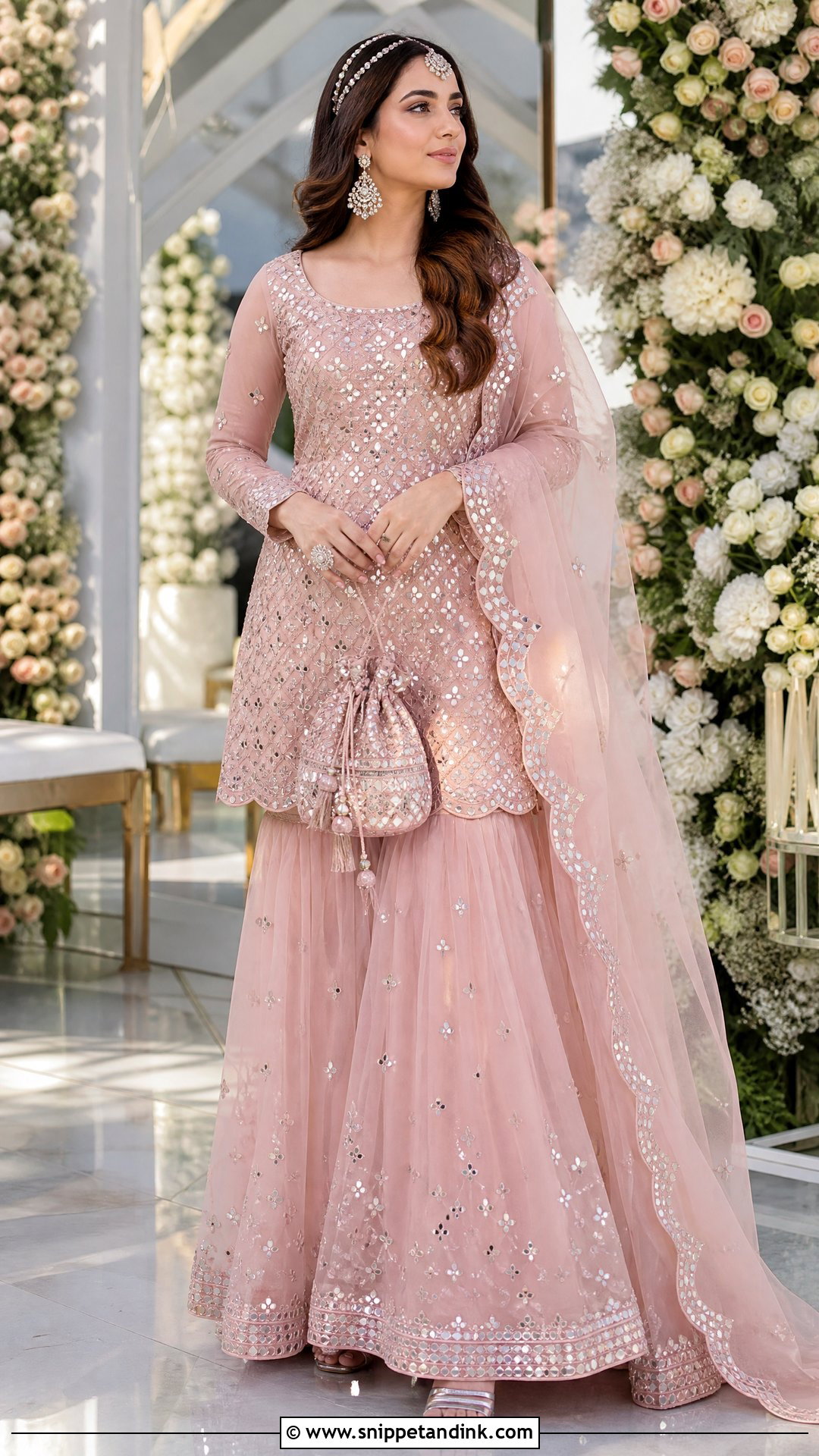
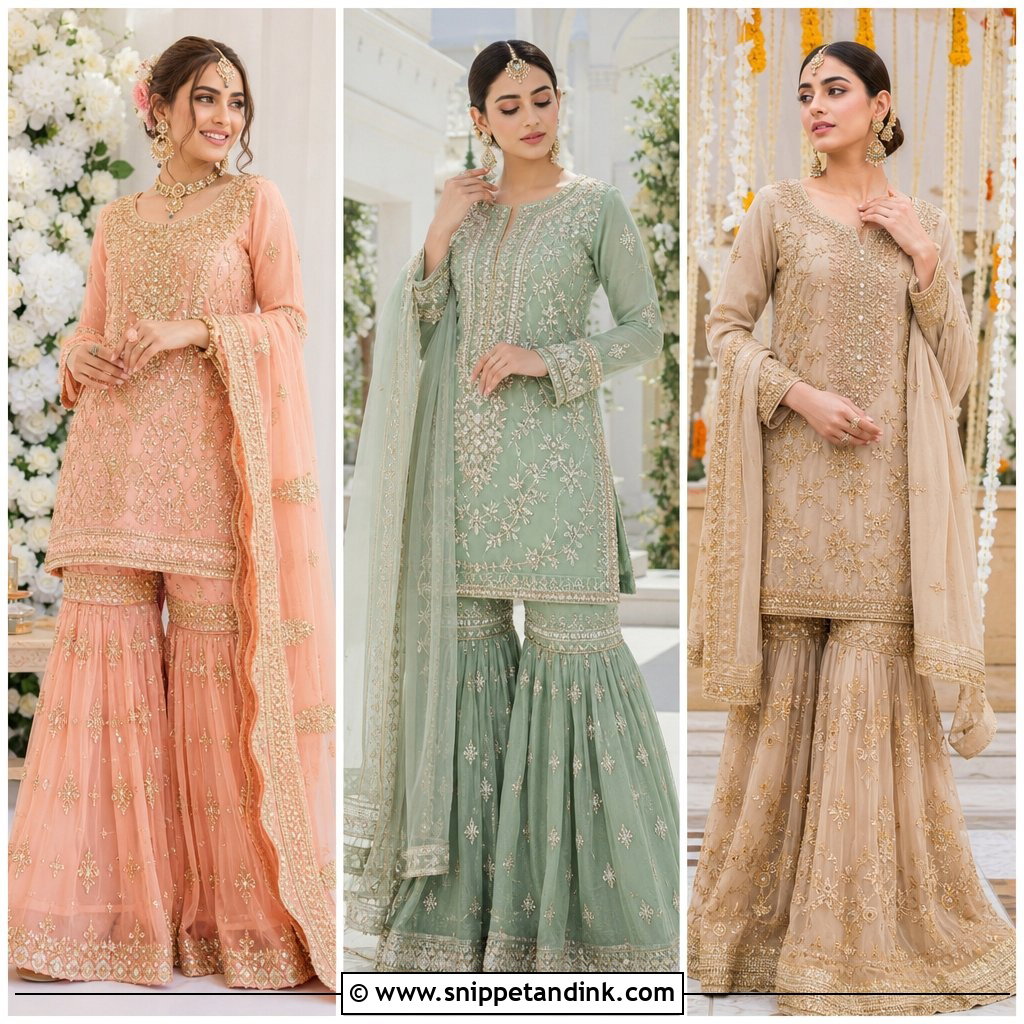
Blush with mirror work suits a daytime sangeet or an indoor pre-wedding event, where light bounces around the mirrors instead of blowing them out. I’d build it on a flared georgette sharara that swings when you walk, with a fitted short kurta edged in mirrors at the neck, sleeves and hem. A scalloped organza dupatta softens it. Mirror borders are rough on the inside, so I ask the tailor to face the sleeve edges with soft fabric before the dancing starts. Silver sandals, chandelier earrings, a small crystal headpiece and a light necklace are enough, and kurta length and rise can be adjusted for any body.
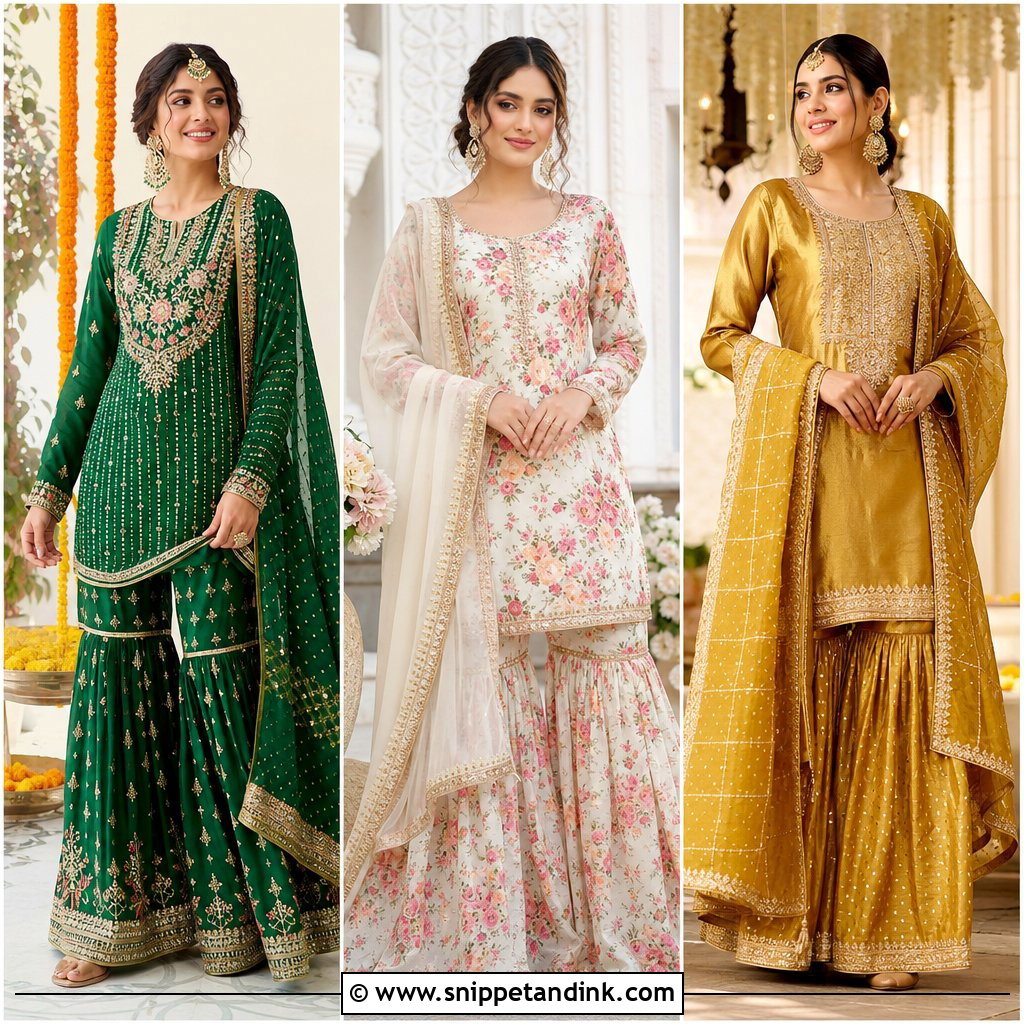
4. Emerald Green Velvet Bridal Sharara
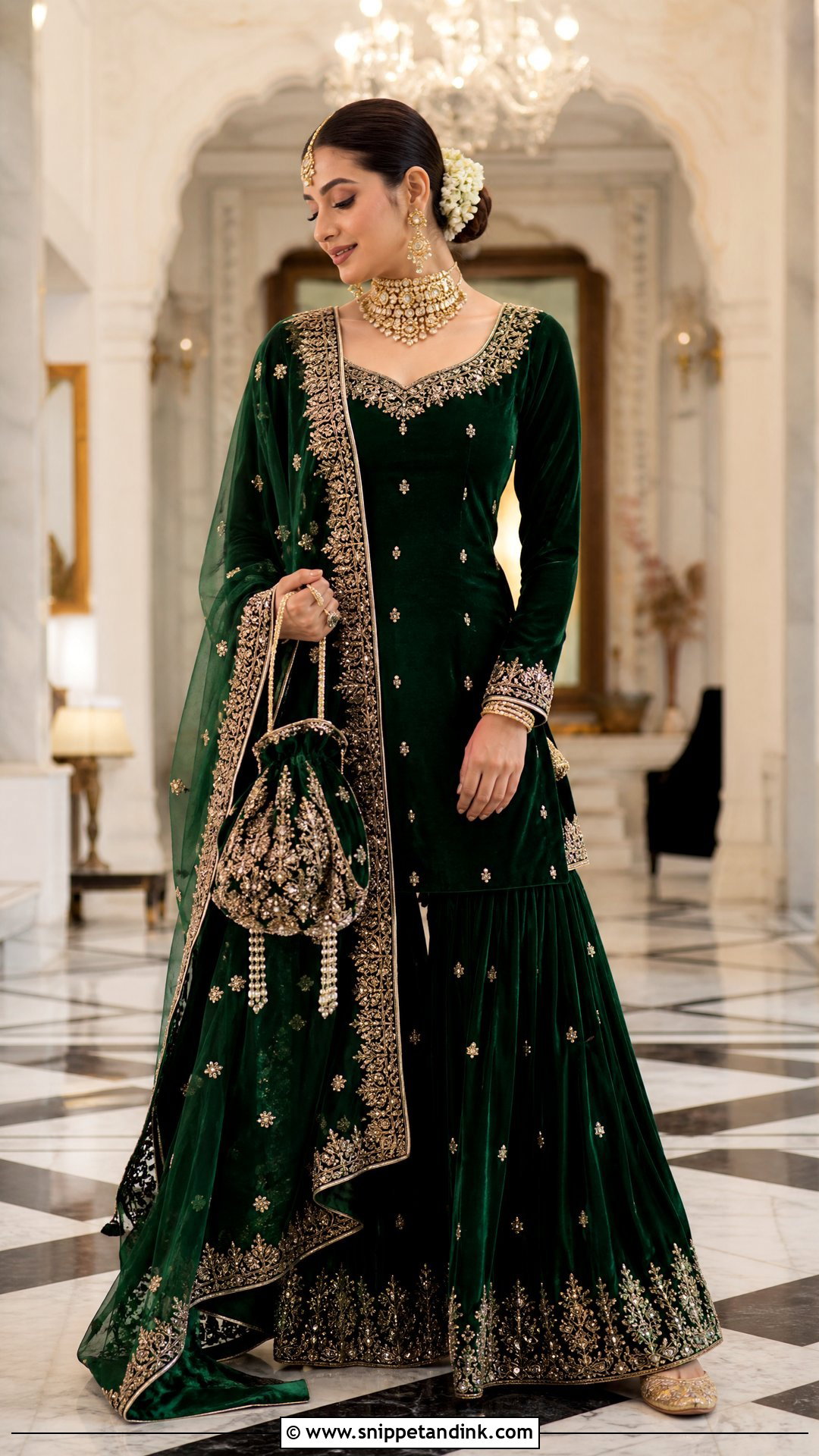
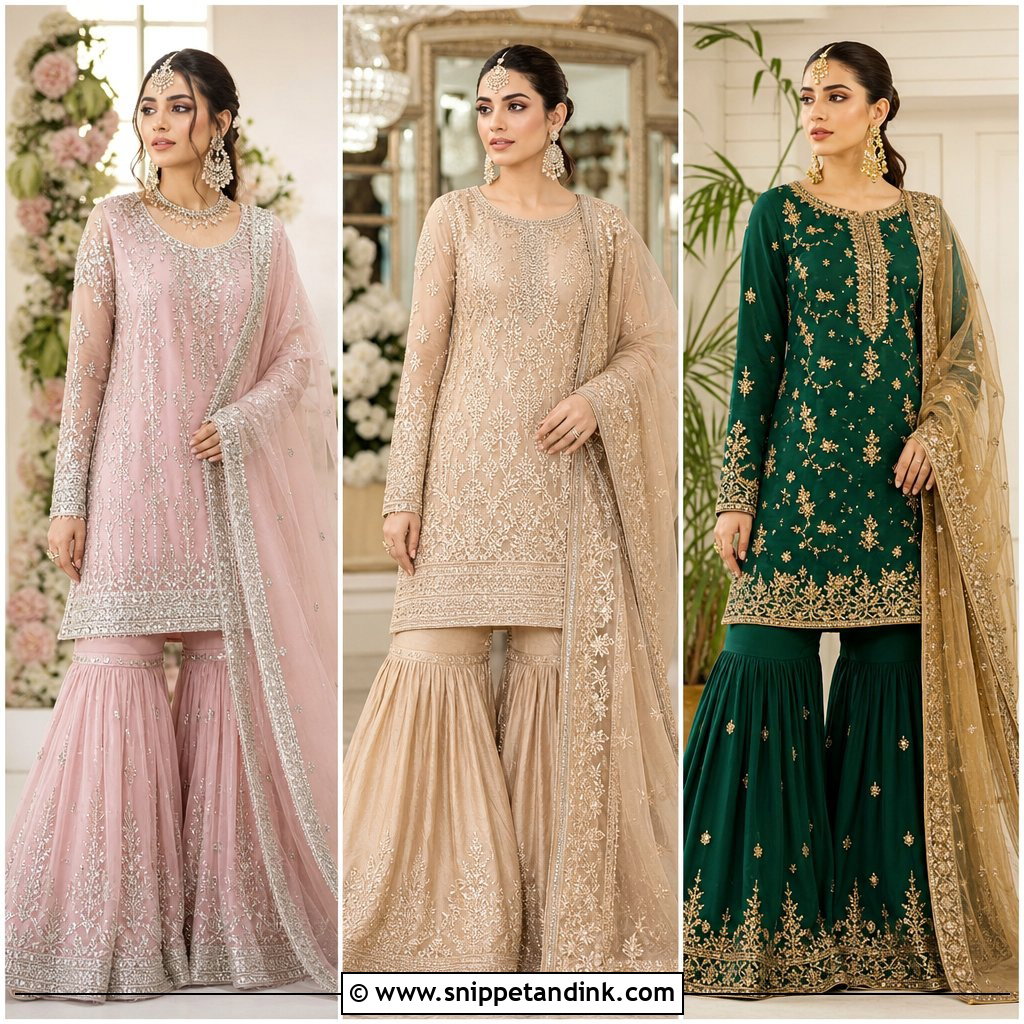
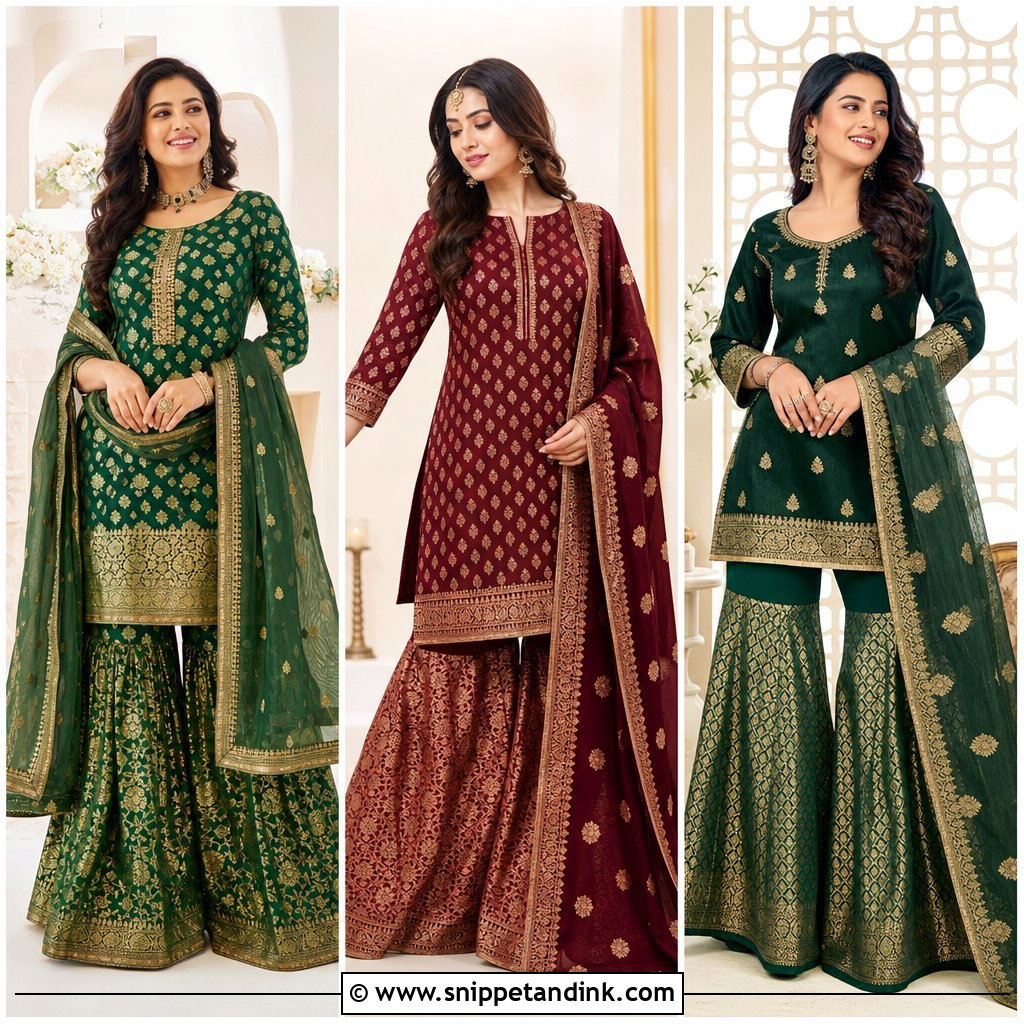
Emerald velvet looks regal, but only if the velvet stays on the kurta. Make the pants in a lighter silk or georgette or the whole set turns bulky and hot. Antique gold embroidery at the neckline, cuffs and lower border warms the green. Velvet shows every crease and fold in photos, so I keep layers away from the waist and steam it on the morning, not the night before. A matching net or organza dupatta with small gold motifs, a polki choker, gold juttis and a center-parted bun with a few white flowers make a winter look.
5. Gold Tissue Bridal Sharara
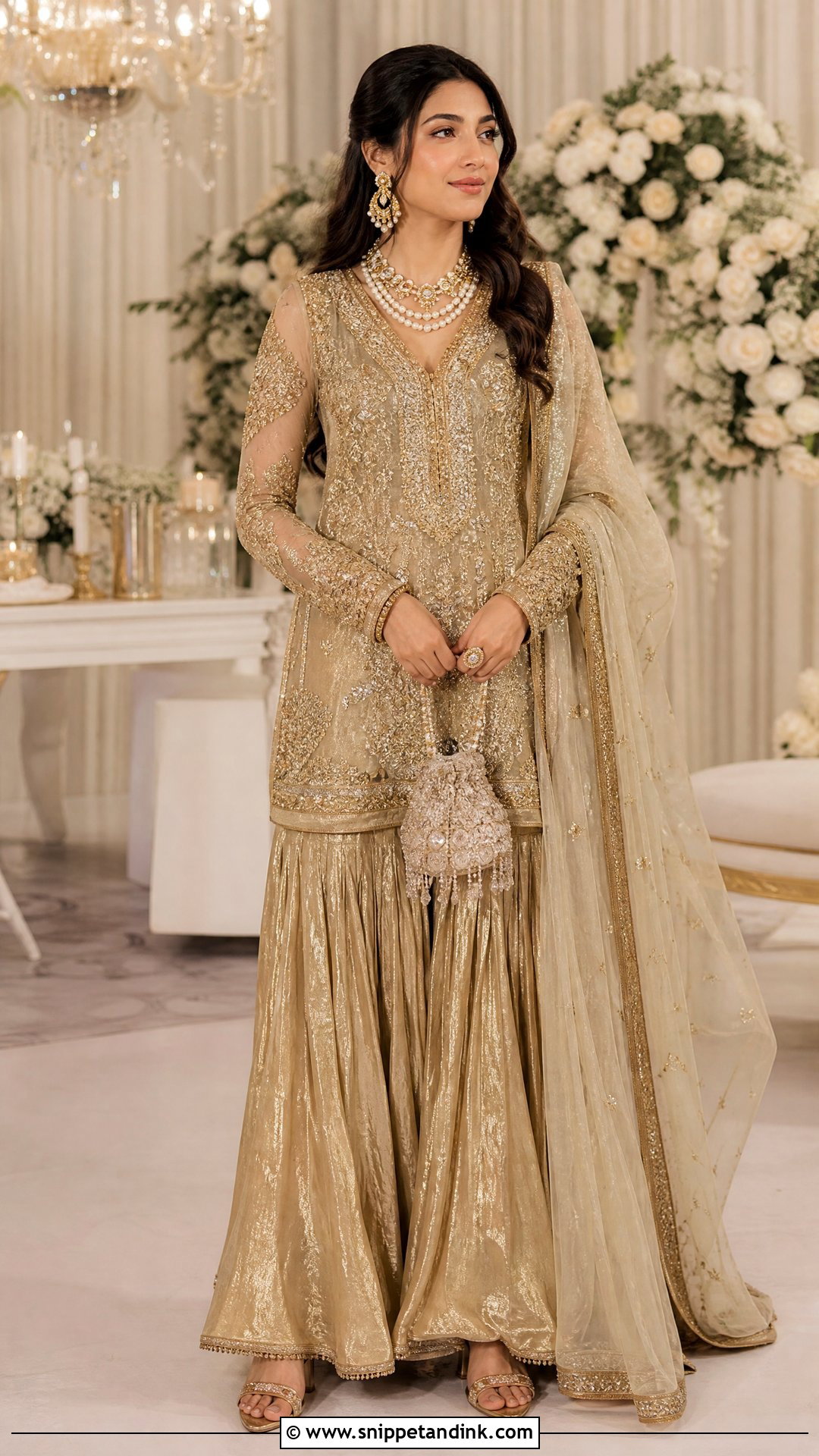
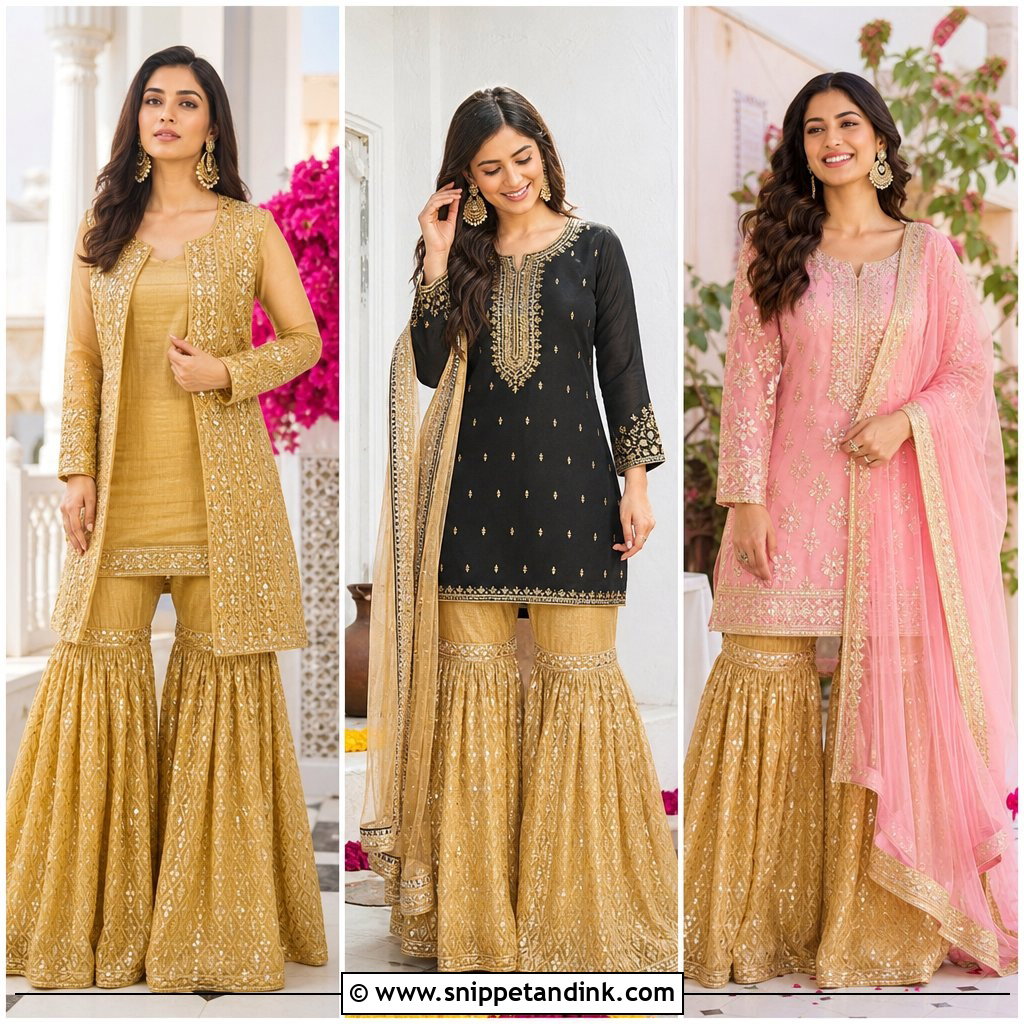
Gold tissue gives you shine without committing to a bold color. Tissue is semi-sheer, so the sharara needs a full lining both for modesty and so the pleats don’t scratch your legs all night. Pair it with a hip-length kurta in tonal sequins and dabka, with a clean neckline. A champagne net dupatta with a narrow border keeps it all metallic. Side slits and fitted sleeves give more shape if you want it. Statement earrings, a necklace mixing pearls with antique gold, a bronze eye and neutral lip suit a reception or formal nikah indoors.
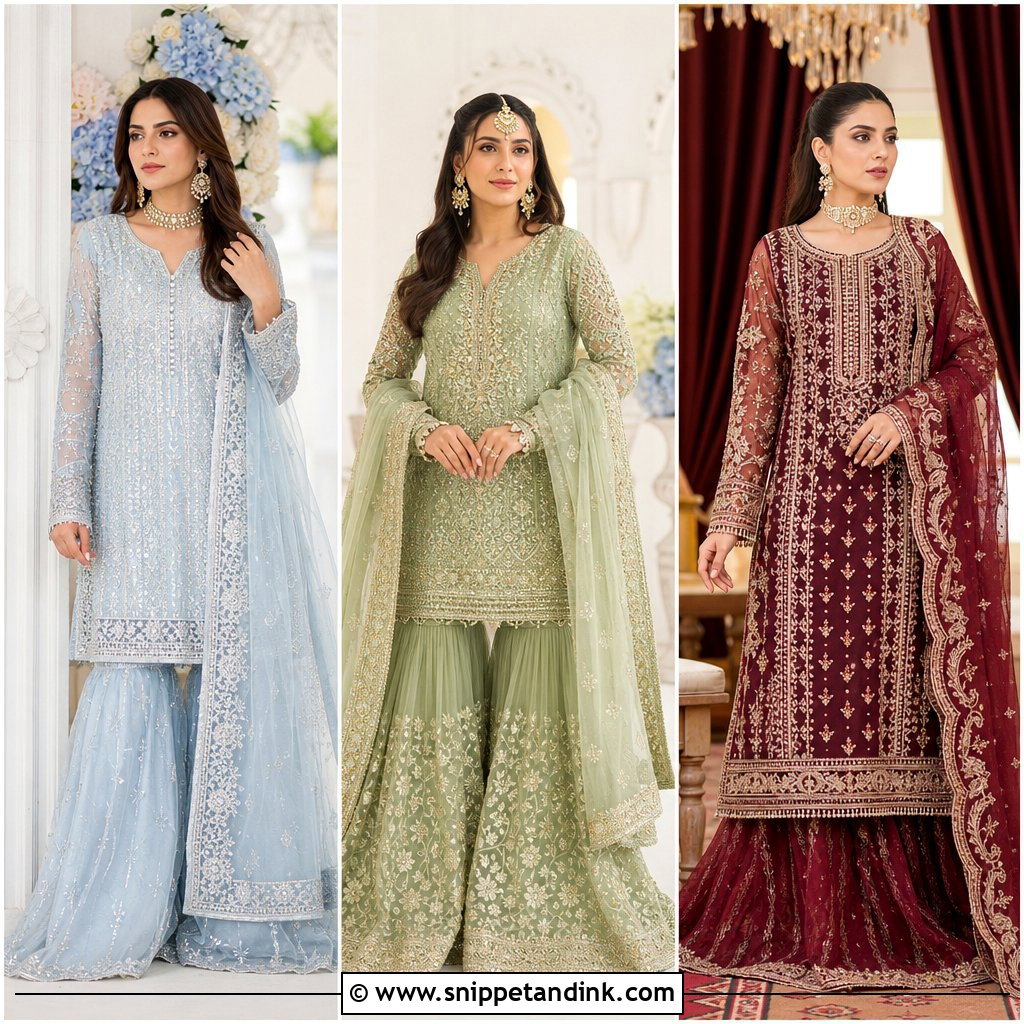
6. Maroon Farshi Bridal Sharara
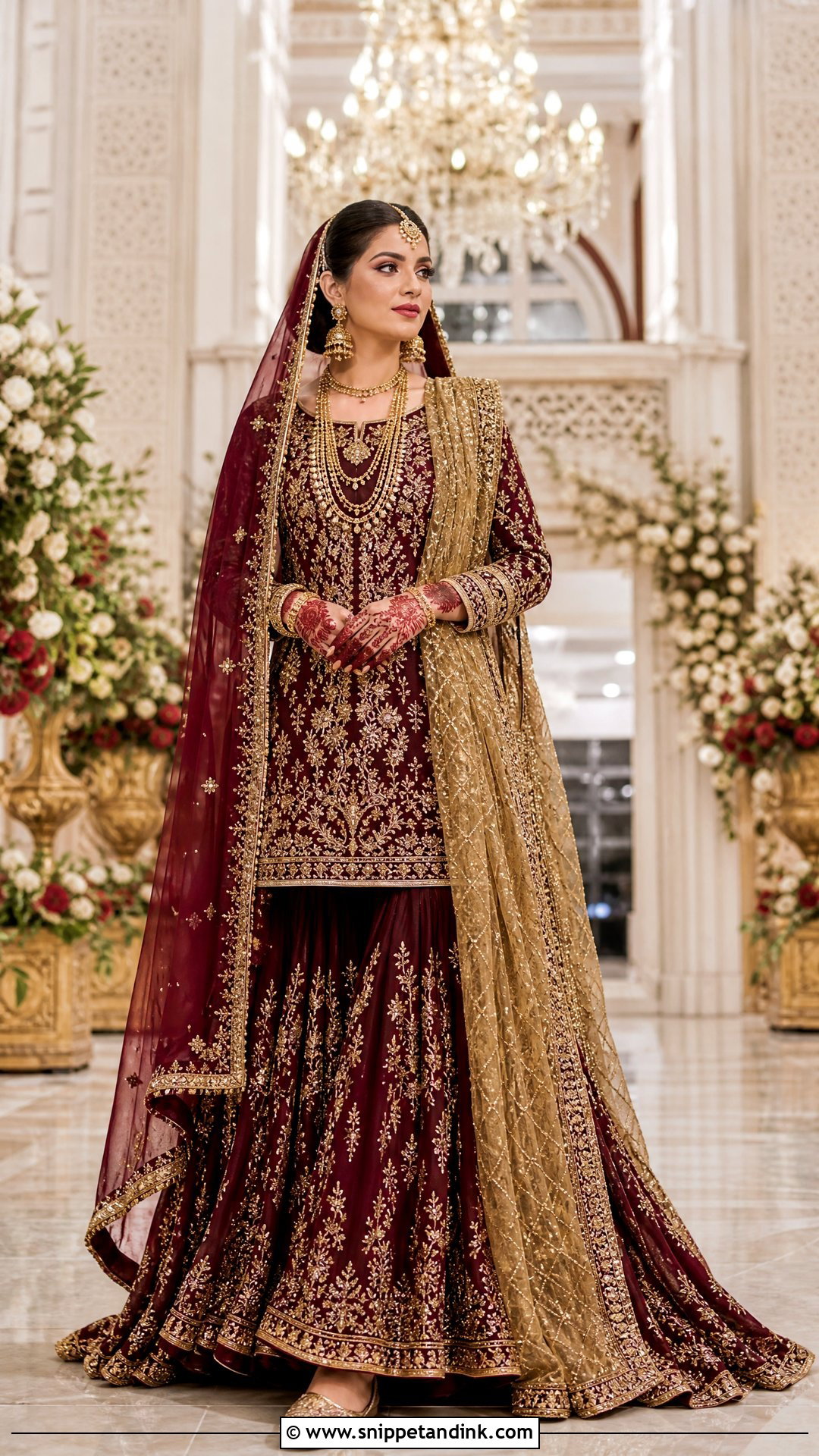
The farshi is the grandest shape on this list and the hardest to wear. Its extra length is meant to sweep the floor, so the kurta has to be short and fitted or the proportions fall apart. Maroon with antique tilla work, beading or floral borders looks old-world in the right way. I often style two dupattas here, a maroon one over the head and a lighter gold one on the shoulder. Book the final fitting in your exact wedding shoes, practice lifting the front panels to walk, and wear block-heel juttis you’re steady in. A low bun supports the double veil.
7. Pastel Blue Organza Bridal Sharara
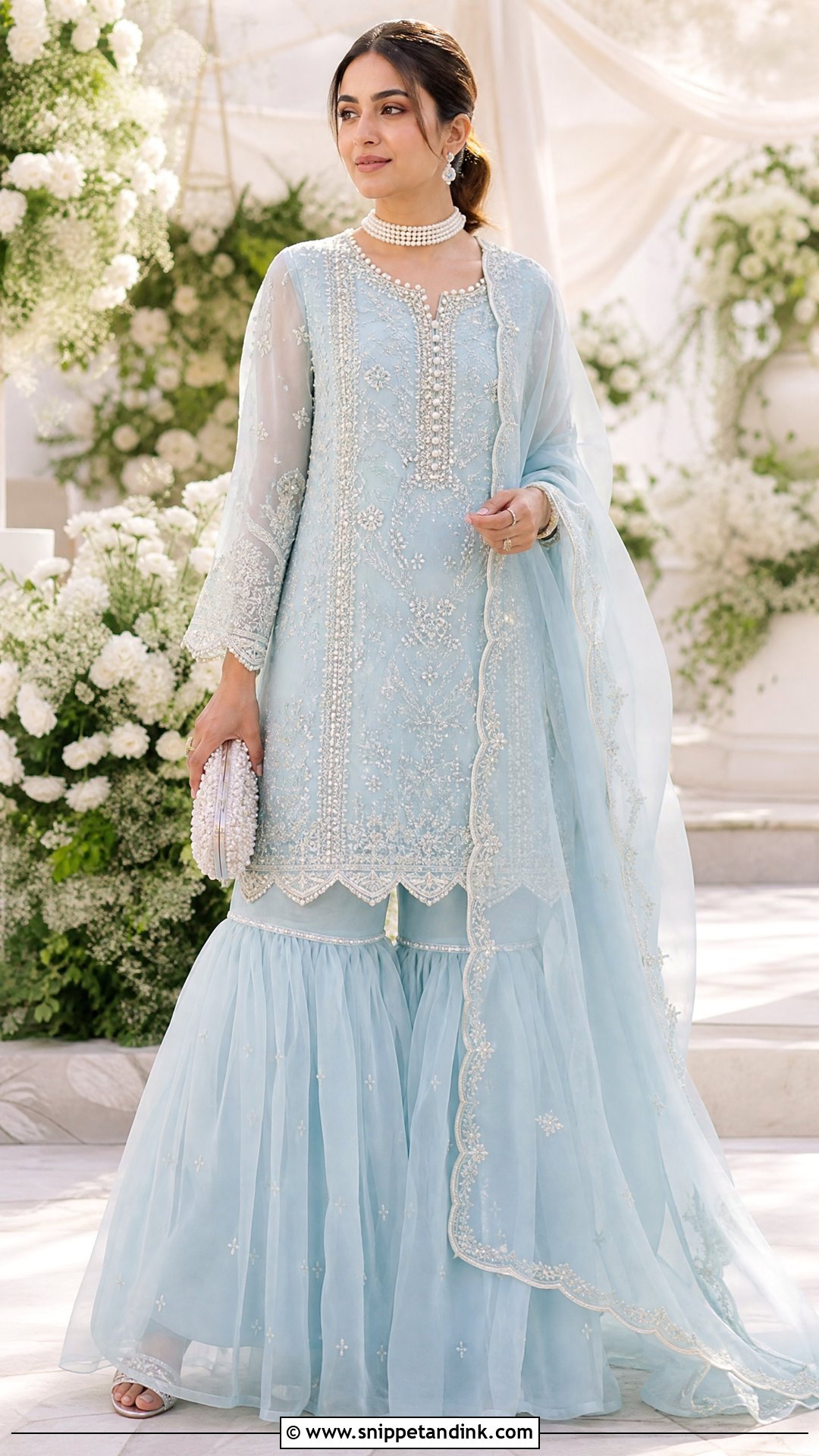
Pastel blue organza is a cool, fresh pick for a daytime nikah or summer engagement. The mistake I see with organza shararas is stiff, oversized pleats that stick out like a tutu, so look for soft gathers instead. A long organza kurta with white threadwork, small pearls and silver sequins keeps it delicate, and a lined kurta with full sleeves makes it modest. A scalloped dupatta, silver heels, a pearl clutch and a refined choker finish it. Decide the veil placement before choosing the hair; a soft bun works under a head drape, polished waves if the dupatta sits on the shoulders.
8. Mustard Mehndi Bridal Sharara
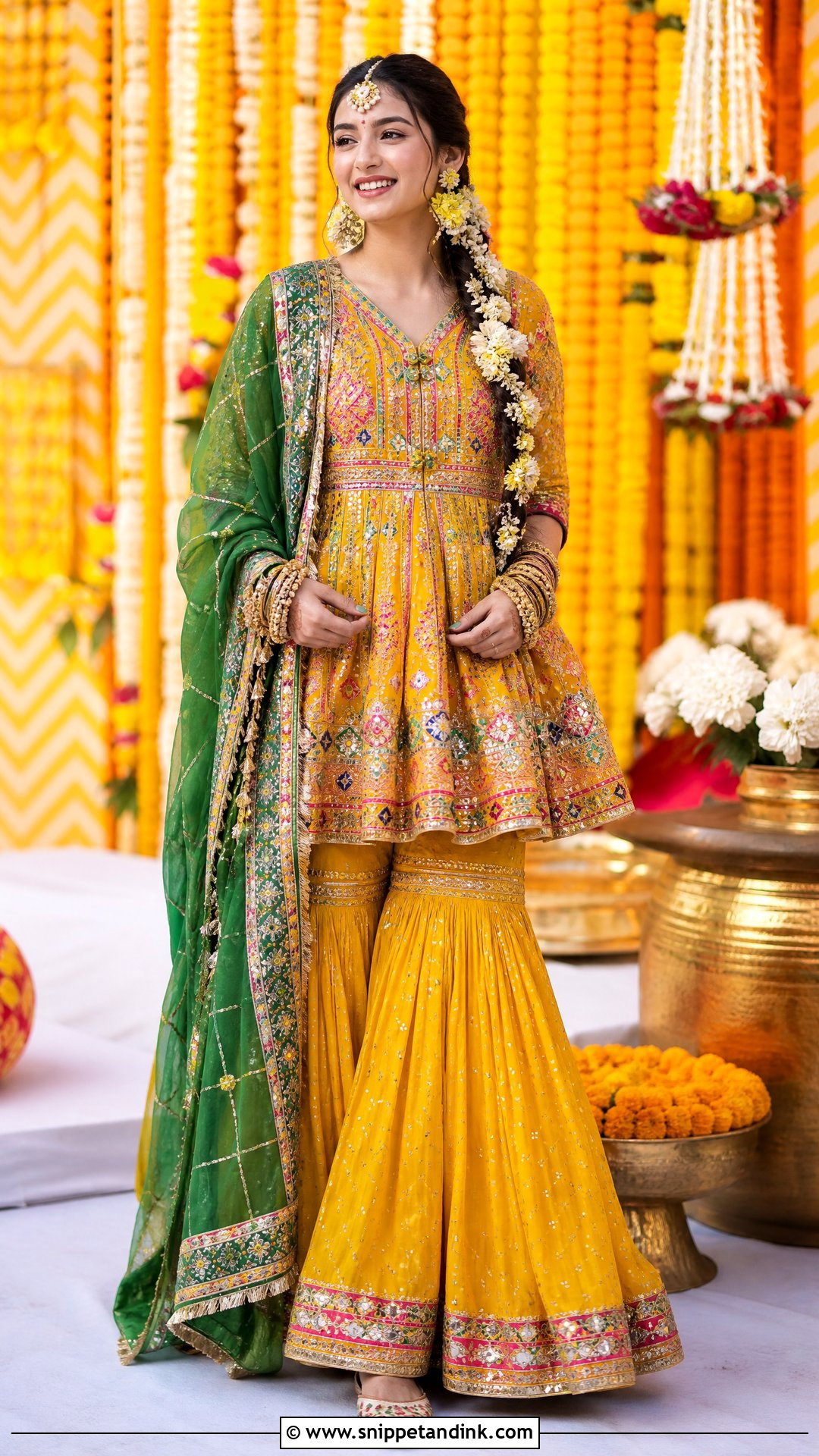
Mustard sets the mood at a mehndi sharara event, especially with green, pink and orange threadwork. Choose breathable cotton silk or light georgette; you’ll be sitting still with wet henna for a long stretch and heavy fabric gets uncomfortable fast. A short peplum kurta with gota borders and three-quarter sleeves keeps your wrists free, which matters more than anything else here. Drape the green dupatta over one shoulder so it can’t brush the paste. Flat juttis, a lightweight tikka and a flower-trimmed braid keep it practical.
9. White And Gold Bridal Sharara
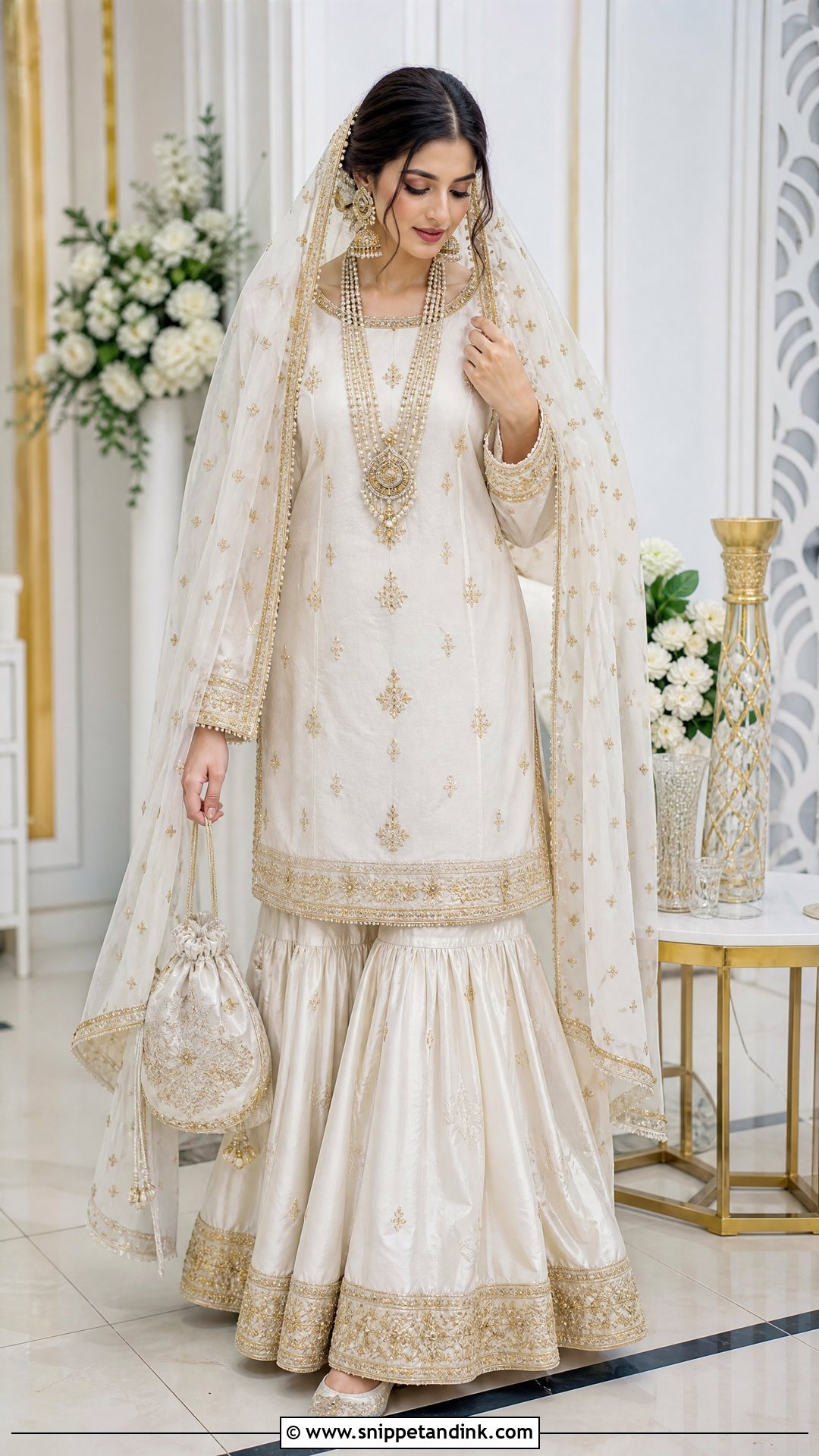
White with warm gold gives a crisp, traditional look with strong contrast. I’d choose a high-waisted silk or georgette sharara with a wide gold border near the floor, and a straight white kurta with intricate motifs, a modest neck and fitted sleeves. A net dupatta with a structured border frames the face when worn over the head. White fabric can wash out the face in photos, so I always ask the makeup artist for warmer peach tones with this one. Antique gold jhumkas, a layered necklace, a small tikka and metallic juttis complete it. Check family traditions before choosing white for the main ceremony.
10. Lavender Sequin Bridal Sharara
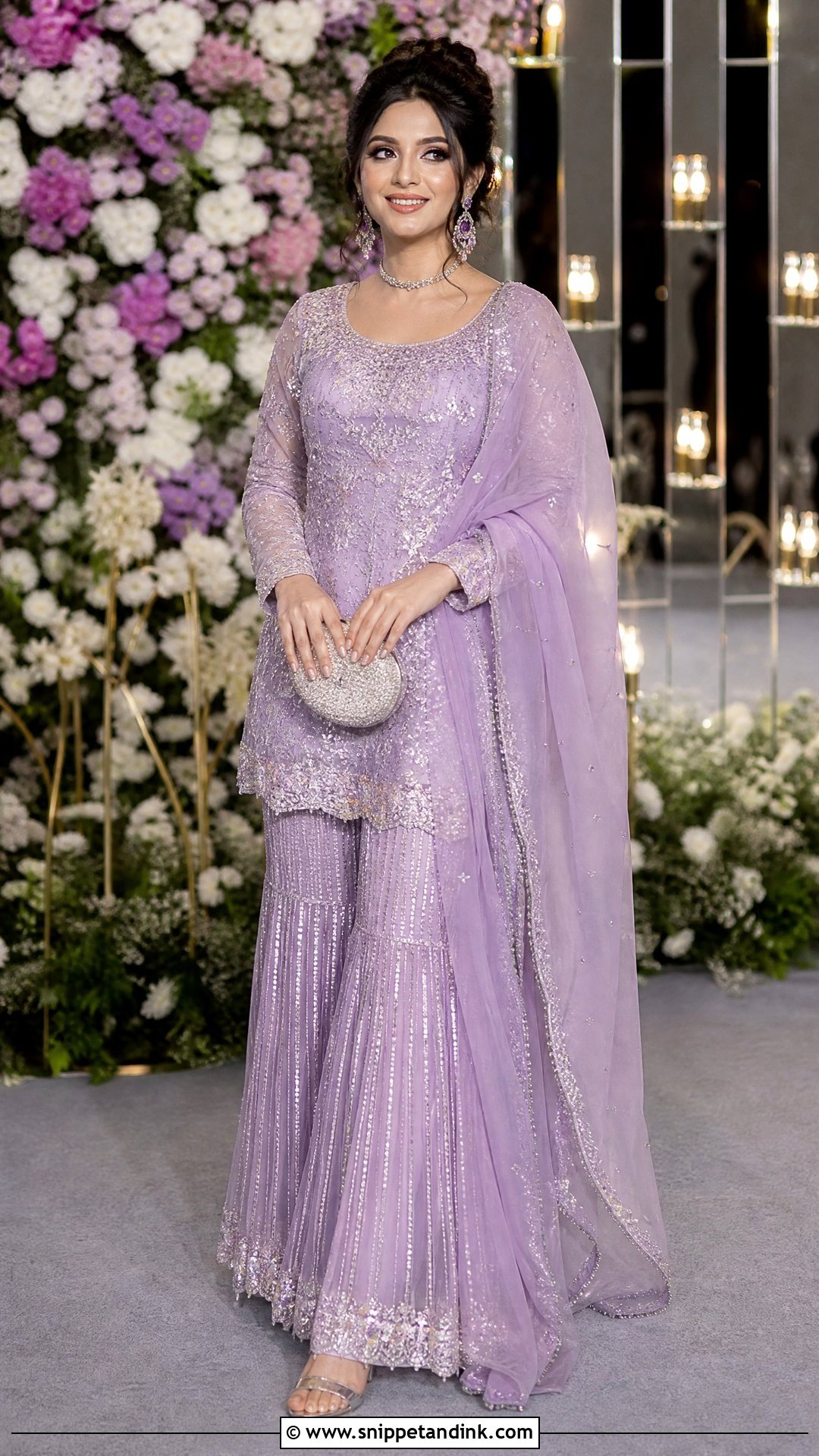
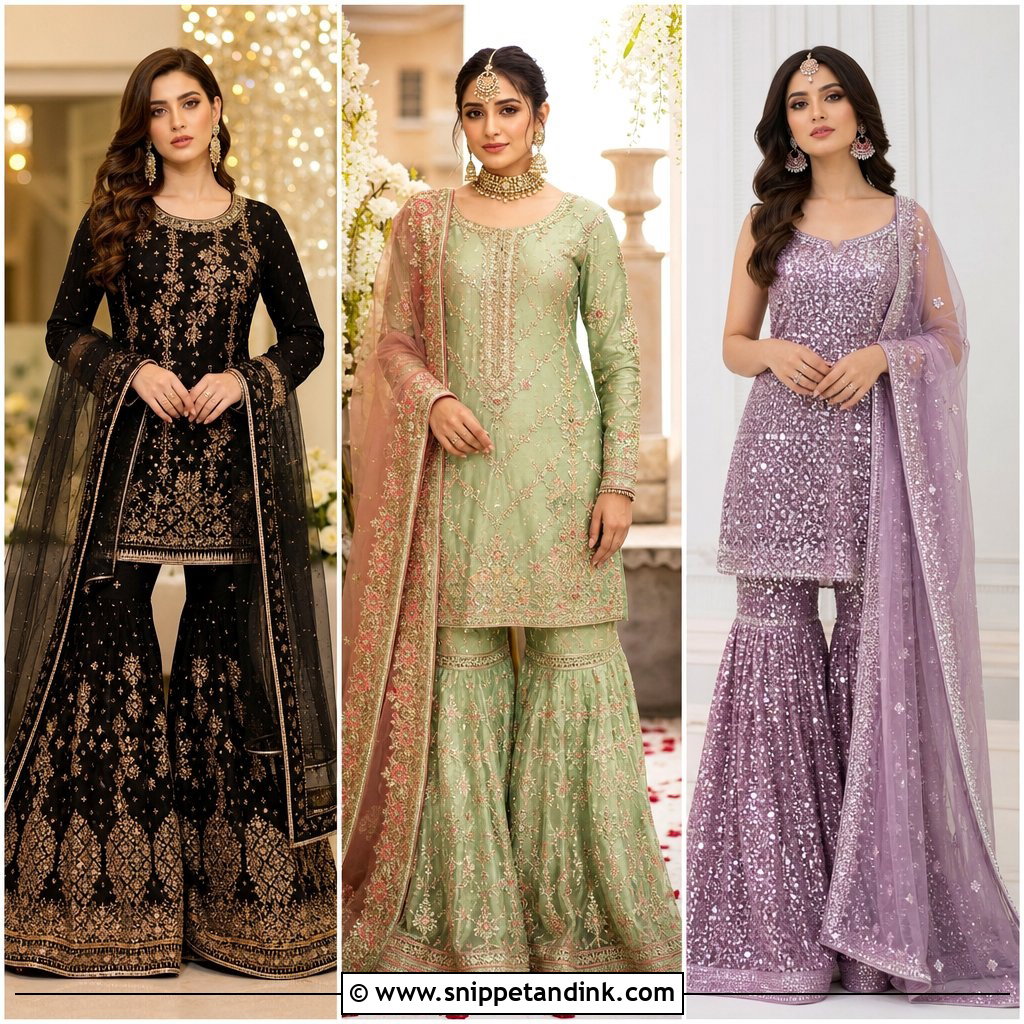
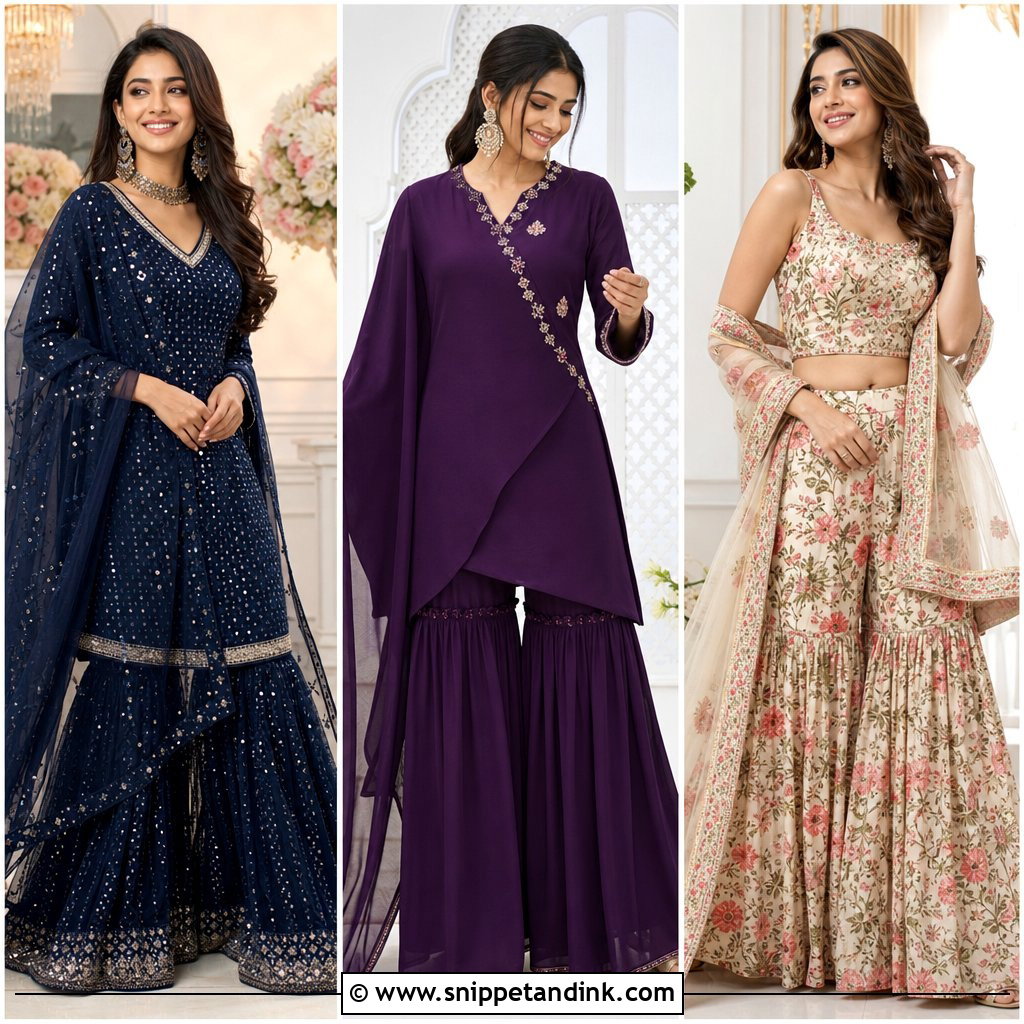
Lavender gives a sangeet or reception a fresh color most guests won’t expect. Vertical sequin lines on the sharara pull the eye up and down, which makes the legs look longer than horizontal bands would. A fitted lavender kurta with a gently shaped waist and balanced work on the neck and sleeves keeps it neat. A sheer dupatta with a slim crystal border is easier to dance in than a heavy one; I pin it at one shoulder and loop the other end at the wrist. Silver heels, a delicate choker, smooth waves and cool pink makeup suit the shimmer.
11. Peach Gota Patti Bridal Sharara
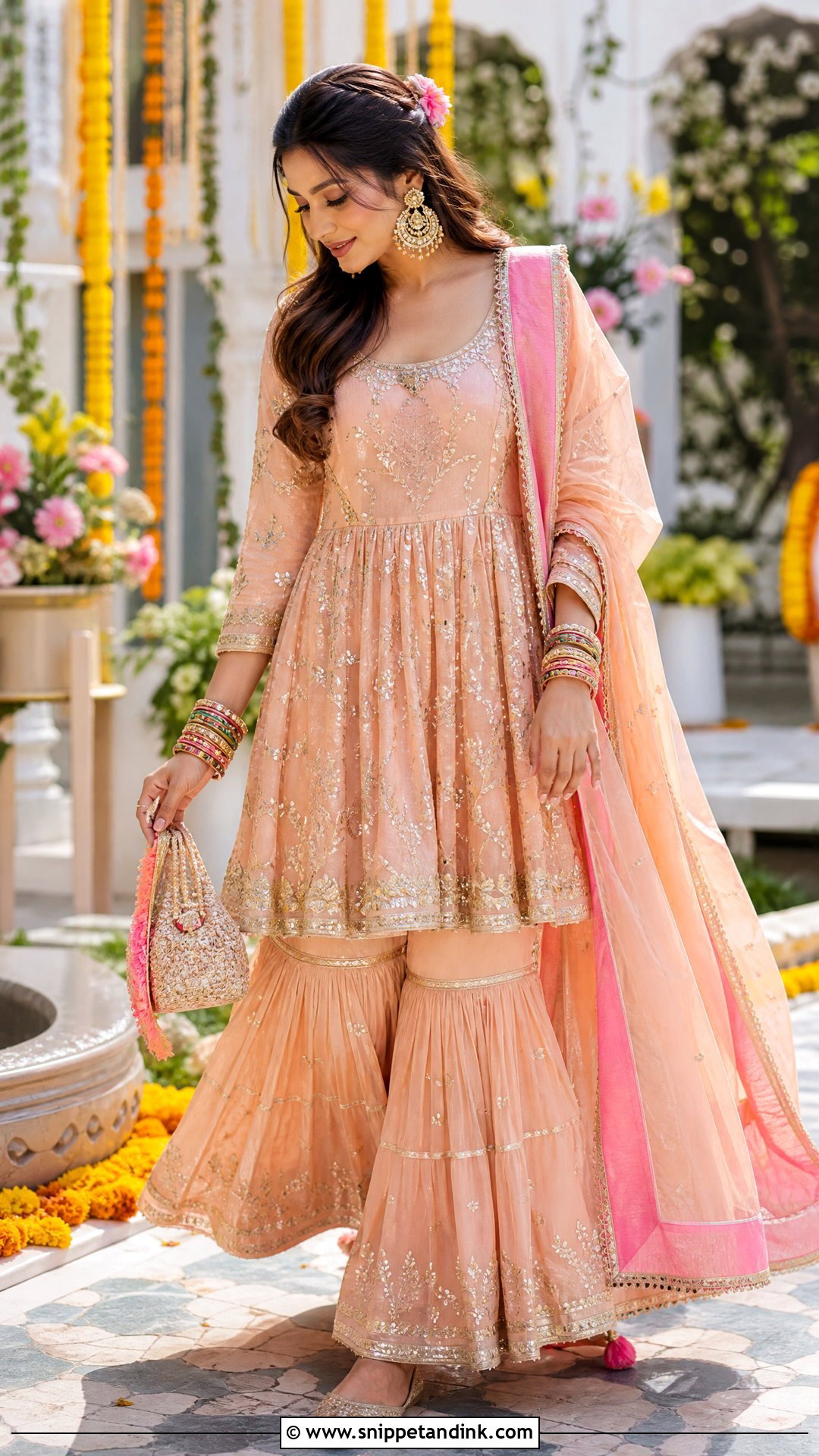
Peach and gold gota feel warm and relaxed by daylight. Place the gota bands a few inches above the hem of a light silk sharara so they don’t scrape the ground and fray. A short, slightly flared kurta keeps it playful with comfortable coverage, and a peach organza dupatta with a pink border gives it edge definition. I tell brides to limit the set to two or three embroidery motifs; more starts to look busy up close. Kundan earrings, colorful bangles and a side braid make it easy to wear through a daytime mehndi or family celebration.
12. Black And Gold Reception Sharara
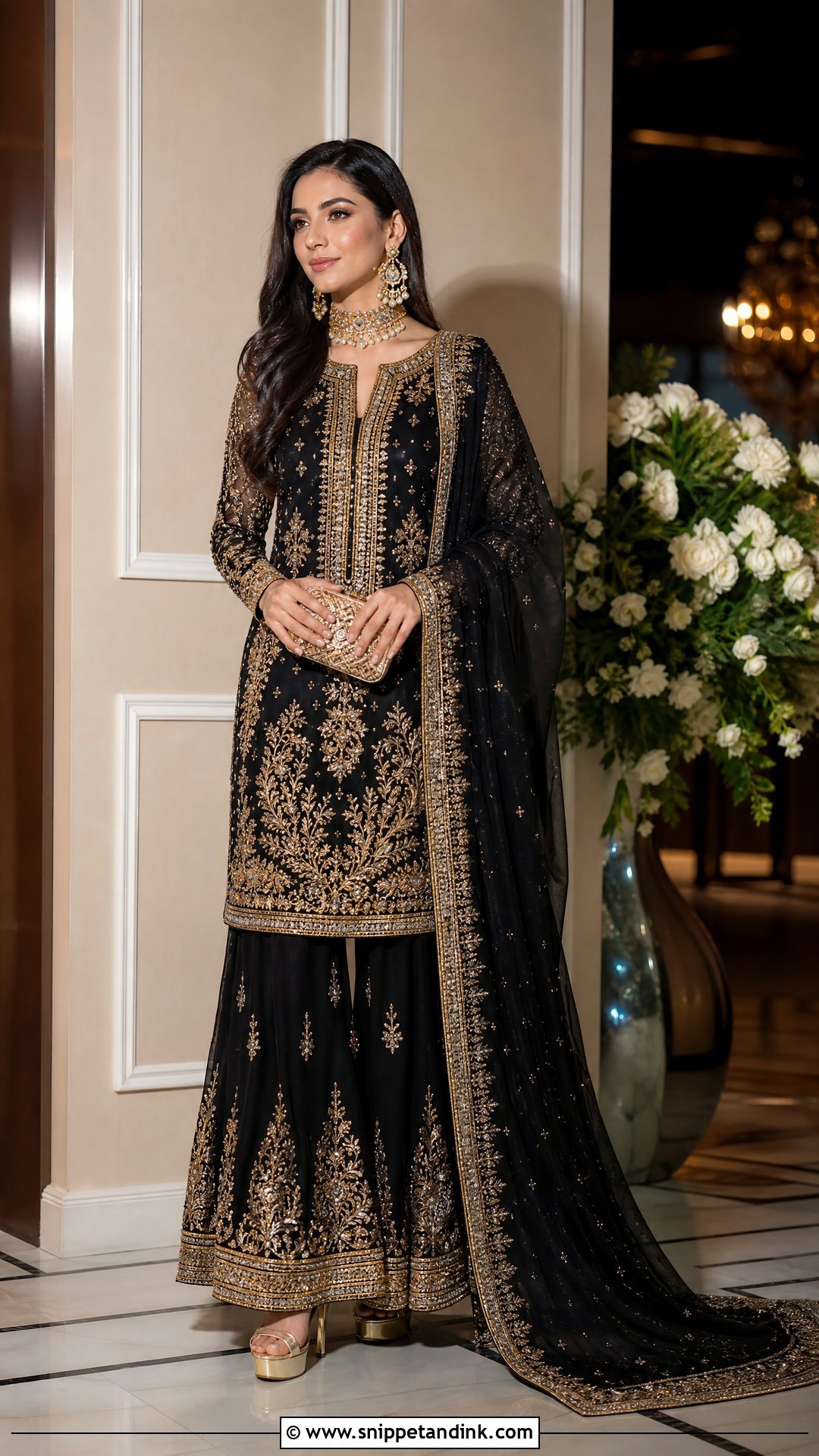
Black is a bold reception choice, and in some families it’s still avoided at weddings, so I always suggest a quick word with elders first. When it works, gold makes it: embroidery along the neckline, side slits, cuffs and hem of a long tailored kurta over a flowing black sharara. Keep the net dupatta’s border medium in width so it doesn’t overpower the kurta. Gold platforms, a sculptural choker and an embellished clutch add formality. One accent of deep red bangles or an emerald ring is plenty. A sleek bun and defined eyes complete it.
13. Coral Resham Bridal Sharara
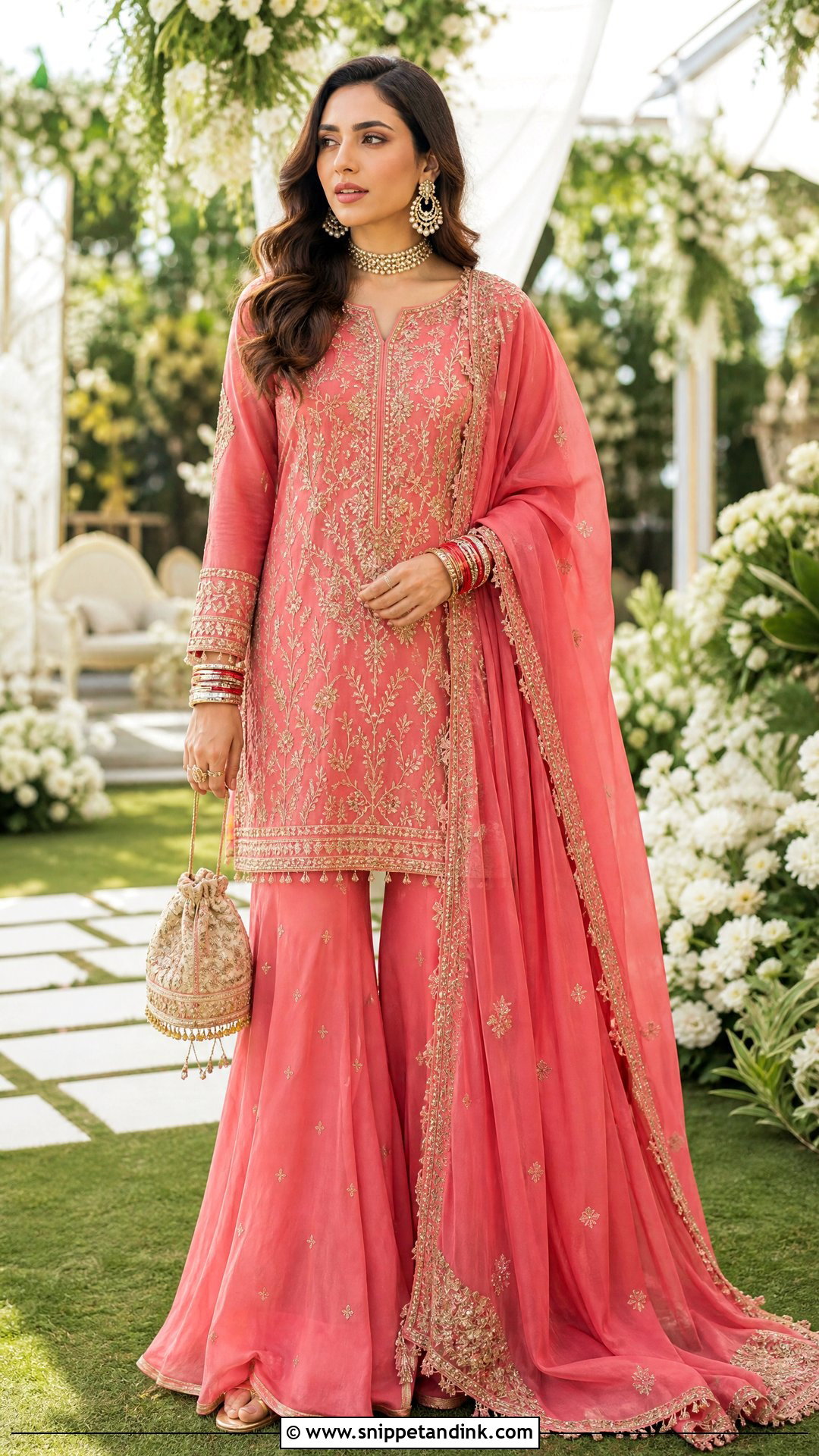
Coral feels warm and celebratory without the weight of traditional red. On matte silk or georgette, pink, gold and green resham embroidery stays soft because silk thread has a gentle sheen rather than a metallic glare. A knee-length kurta with side slits gives more coverage than a crop and eases into the flare. Add a coral dupatta with worked corners and a slim border, kundan earrings, a pearl choker and gold sandals. Fresh flowers woven into a low bun echo the threadwork; peach blush and a coral lip keep the face in tone.
14. Sage Green Bridal Sharara
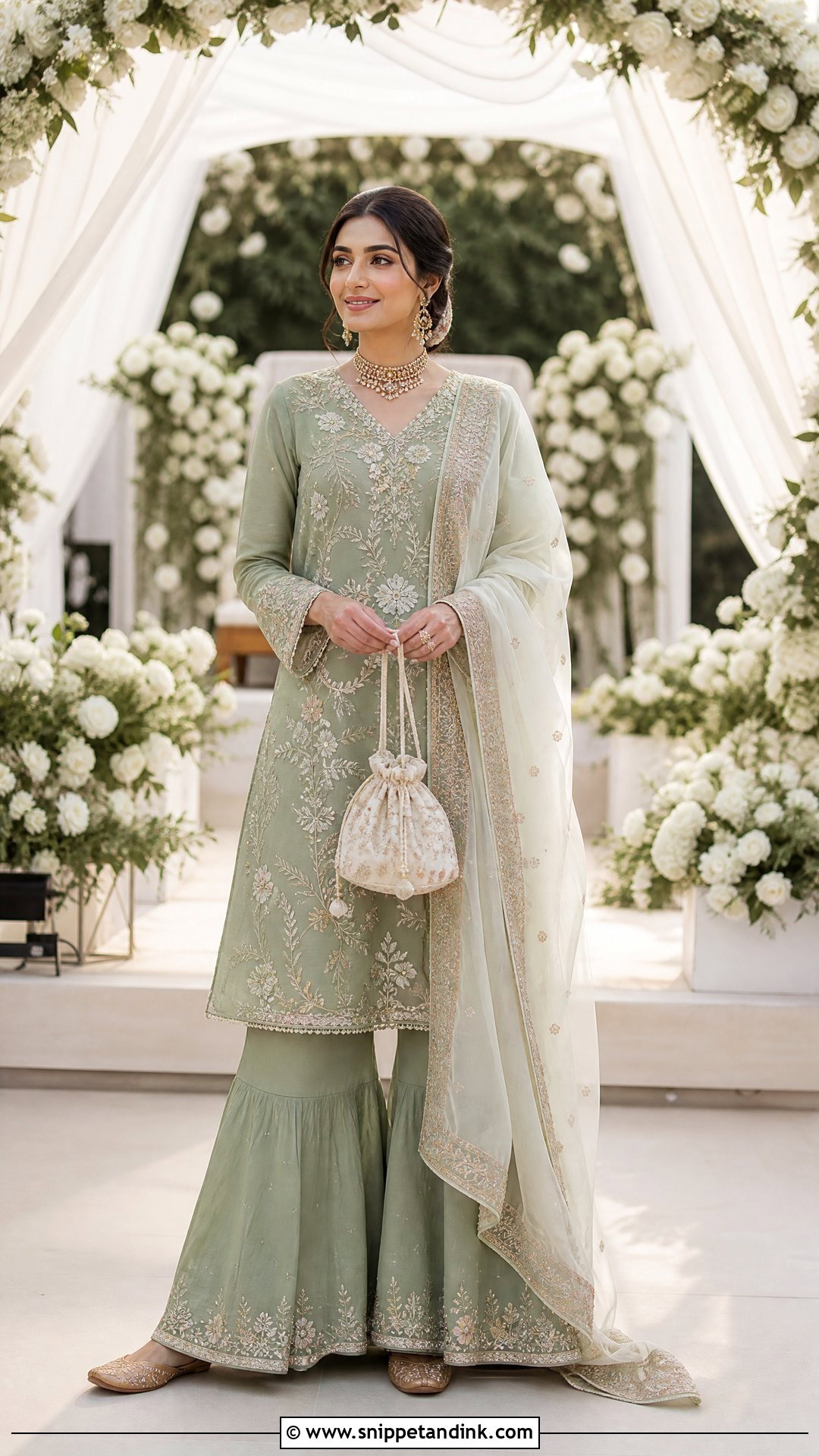
Sage green suits a bride who’d rather wear quiet color than intense sparkle, and it pairs very well with pearls and muted gold. Crepe or georgette in a gentle flare, with a long kurta of botanical embroidery and a lightly defined waist, sets the tone. An ivory dupatta with a sage border ties the colors together. Sage looks grey under some indoor lighting, so I always check a swatch in the actual venue light if I can. Full sleeves, a higher neck and opaque lining add modesty; a low textured bun and natural makeup suit an outdoor nikah.
15. Silver Cape Bridal Sharara
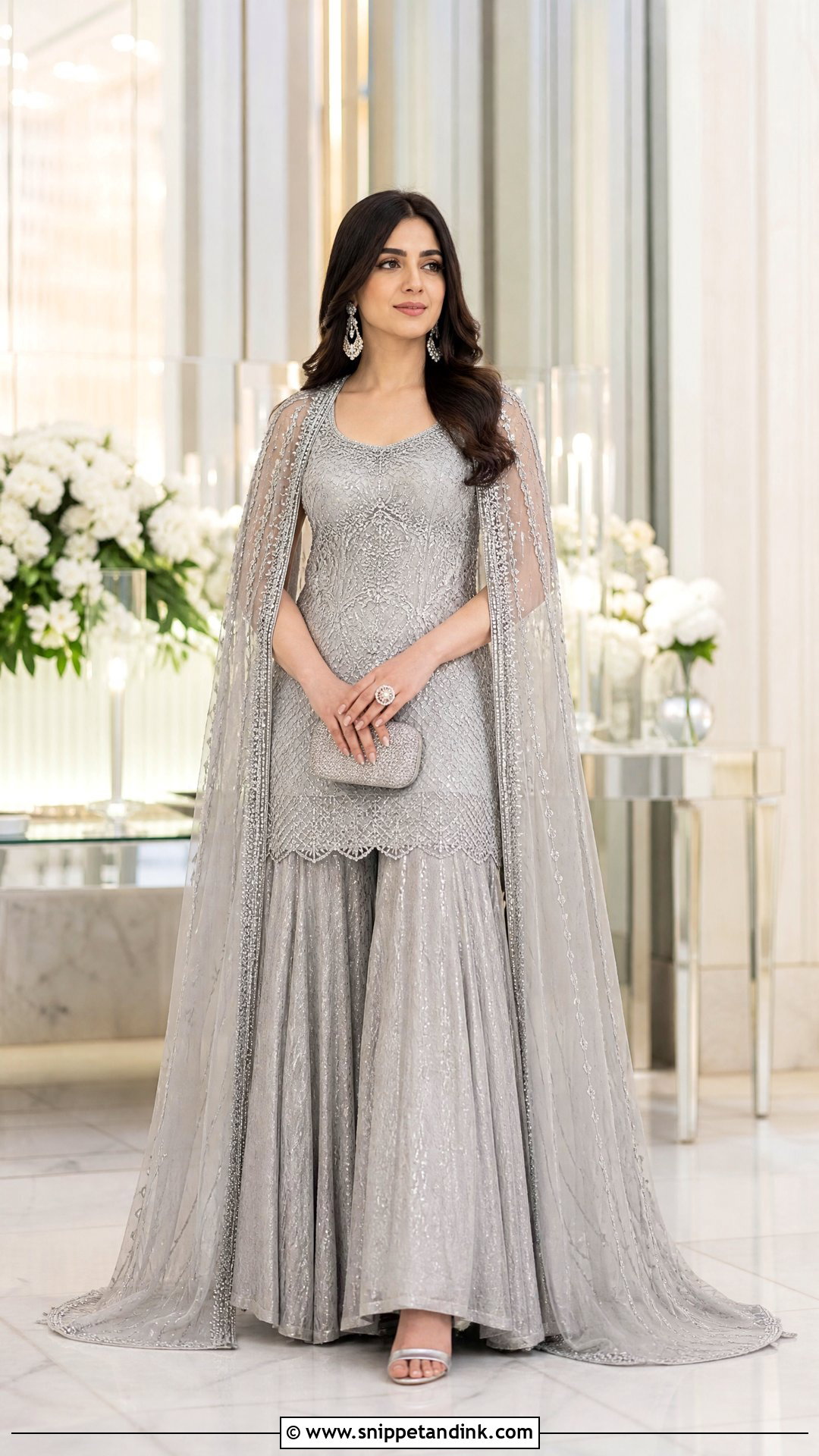
A silver cape set skips the traditional dupatta altogether, which suits a sangeet or reception bride who doesn’t want to manage a long veil while dancing. Fluid high-waisted pants and a fitted sleeveless or short-sleeved kurta in the same silver-grey go underneath a sheer floor-length cape with crystal lines or pearls. The cape must open at the front, or it hides the whole outfit and catches on your heels. If the shoulders are heavily worked, skip the necklace and wear drops and one ring. A sleek ponytail or polished bun keeps the neckline clean.
16. Fuchsia Bridal Sharara
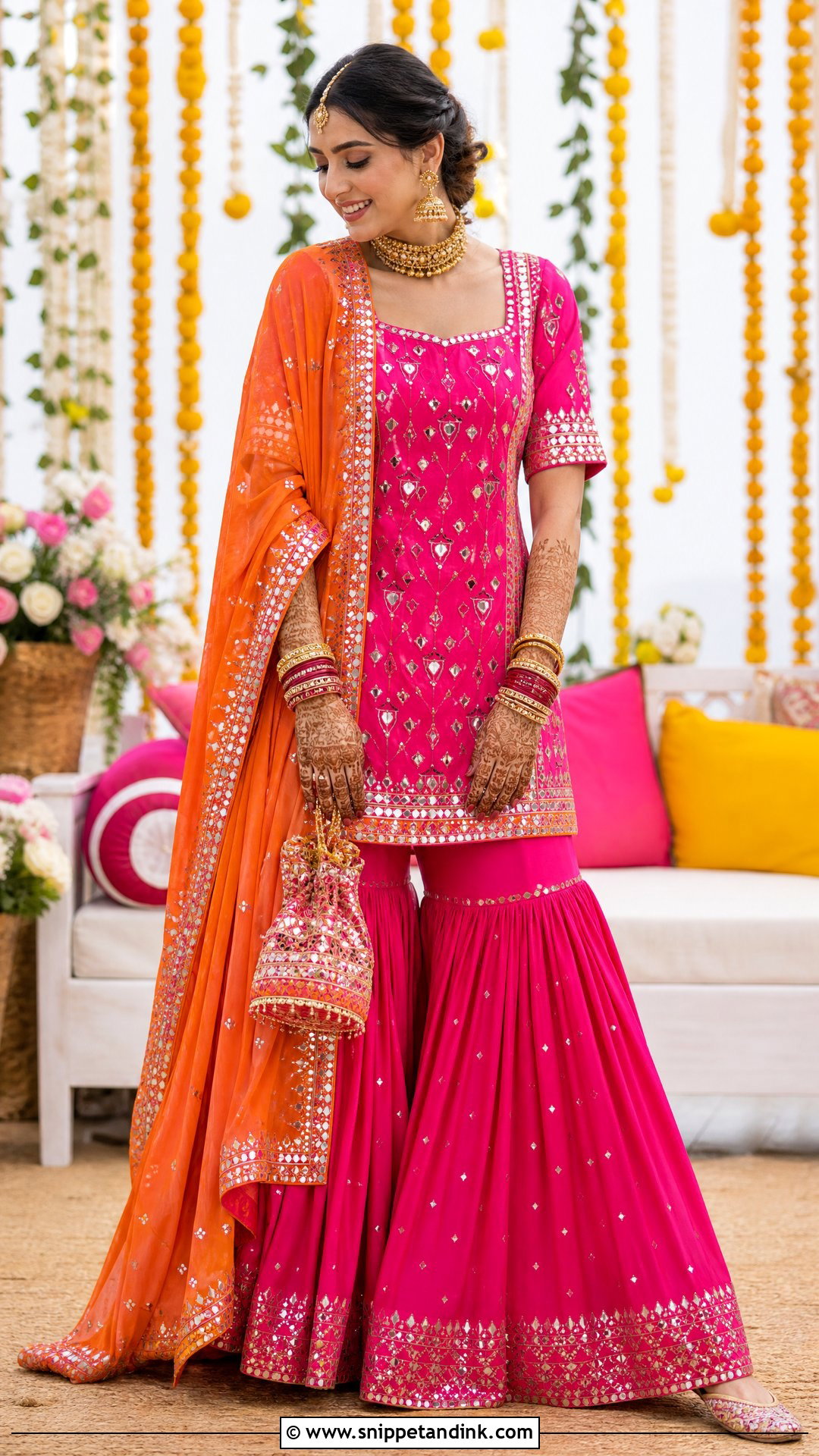
Fuchsia is a joyful choice for mehndi and sangeet, where color is the whole point. Pair a voluminous fuchsia sharara with a short fitted kurta in tonal embroidery, small mirrors and gold. A contrast dupatta in orange, red or green feels traditional; matching fuchsia looks sleeker. Bright pink can cast a color reflection on the skin in close-up photos, so I keep makeup defined but slightly muted. A mid-thigh kurta with high slits works if you want a longer top. Cushioned juttis and a flower-trimmed braid finish it.
17. Champagne Bridal Sharara
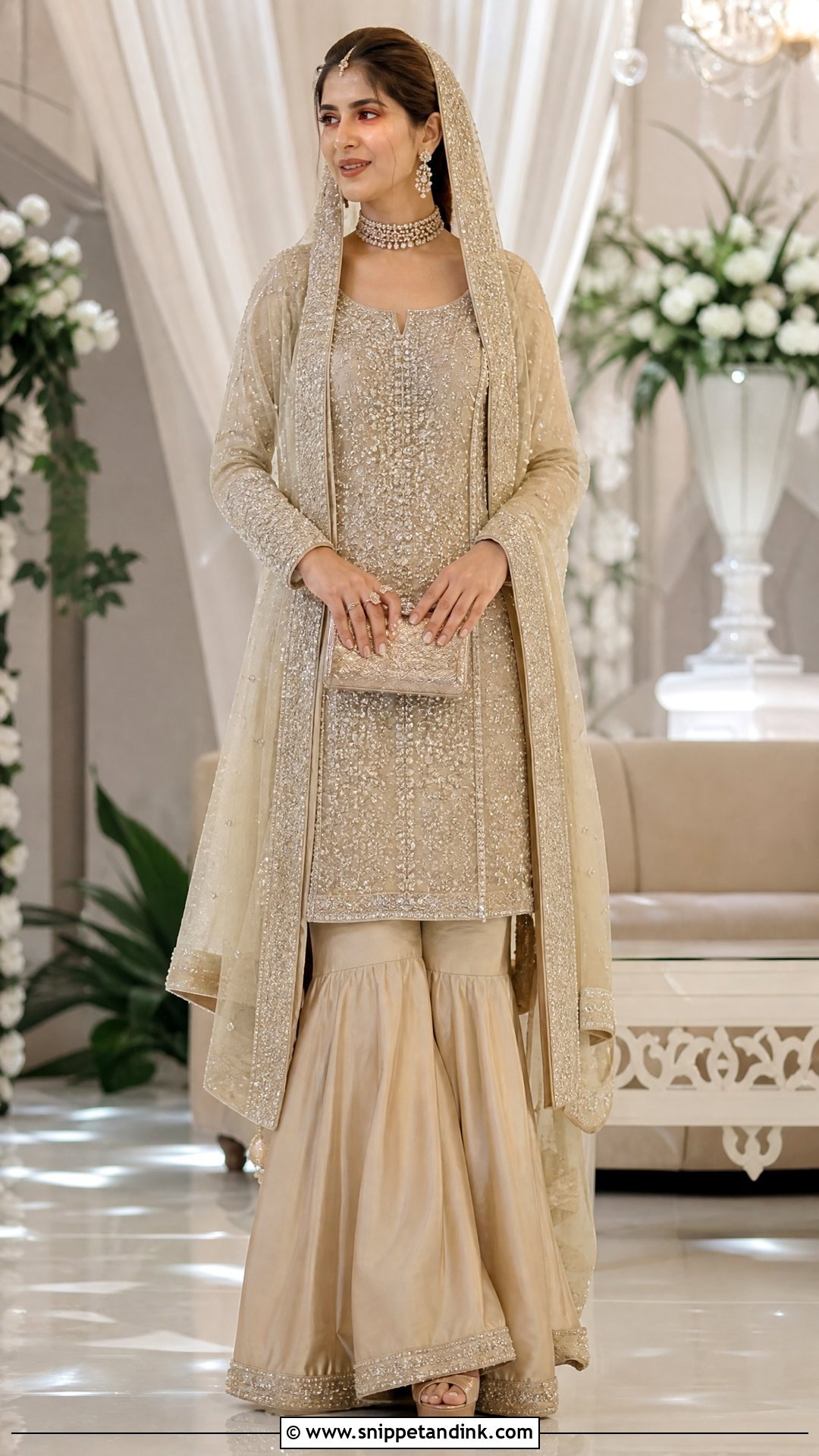
Champagne sits between ivory and gold, and it’s the neutral I suggest to brides who find ivory too stark. A soft satin or tissue sharara with controlled volume, under a structured kurta with crystal, pearl and muted gold work, looks expensive without shouting. Satin marks easily when you sit, so I’d choose a heavier satin or a matte-backed one for a long day. A princess-panel kurta adds shape. Pin the sheer dupatta over the head or across both shoulders. Pearl and crystal earrings, neutral platforms and a rose-nude lip suit a nikah, walima, or formal reception.
18. Rust Bridal Sharara
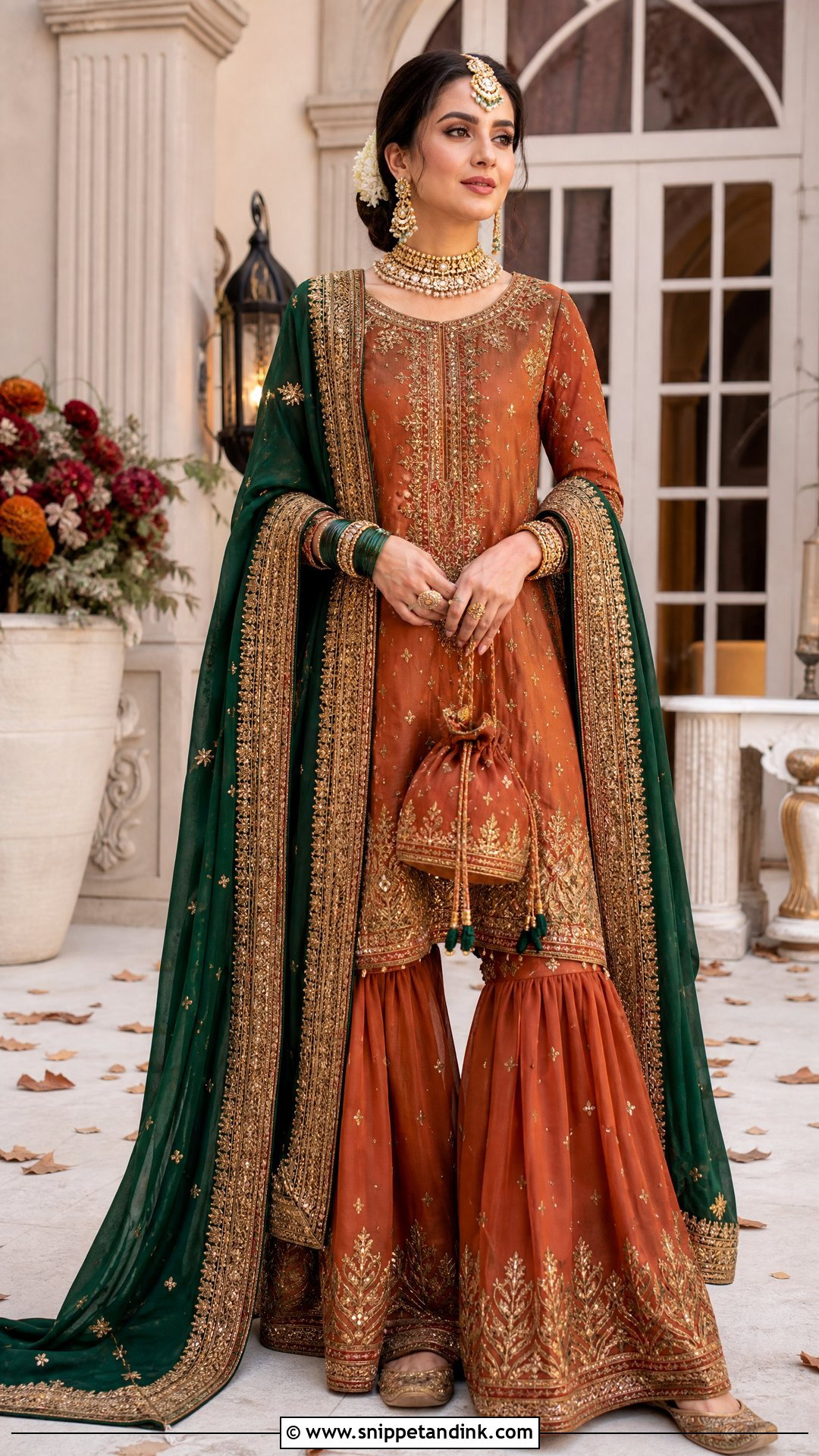
Rust is the earthy alternative to red, and it comes alive with antique gold, copper and a deep green accent. Build it on a flowing rust sharara with embroidered borders and a matching knee-length kurta. Botanical threadwork, dabka and a few sequins add bridal texture without hiding the color. Drape a deep green dupatta on one shoulder or go tonal with a rust veil. Rust shifts toward brown under yellow lighting, so I’d lean on the gold work and bronze makeup to keep it glowing at an evening mehndi or autumn event.
19. Red And Green Traditional Bridal Sharara
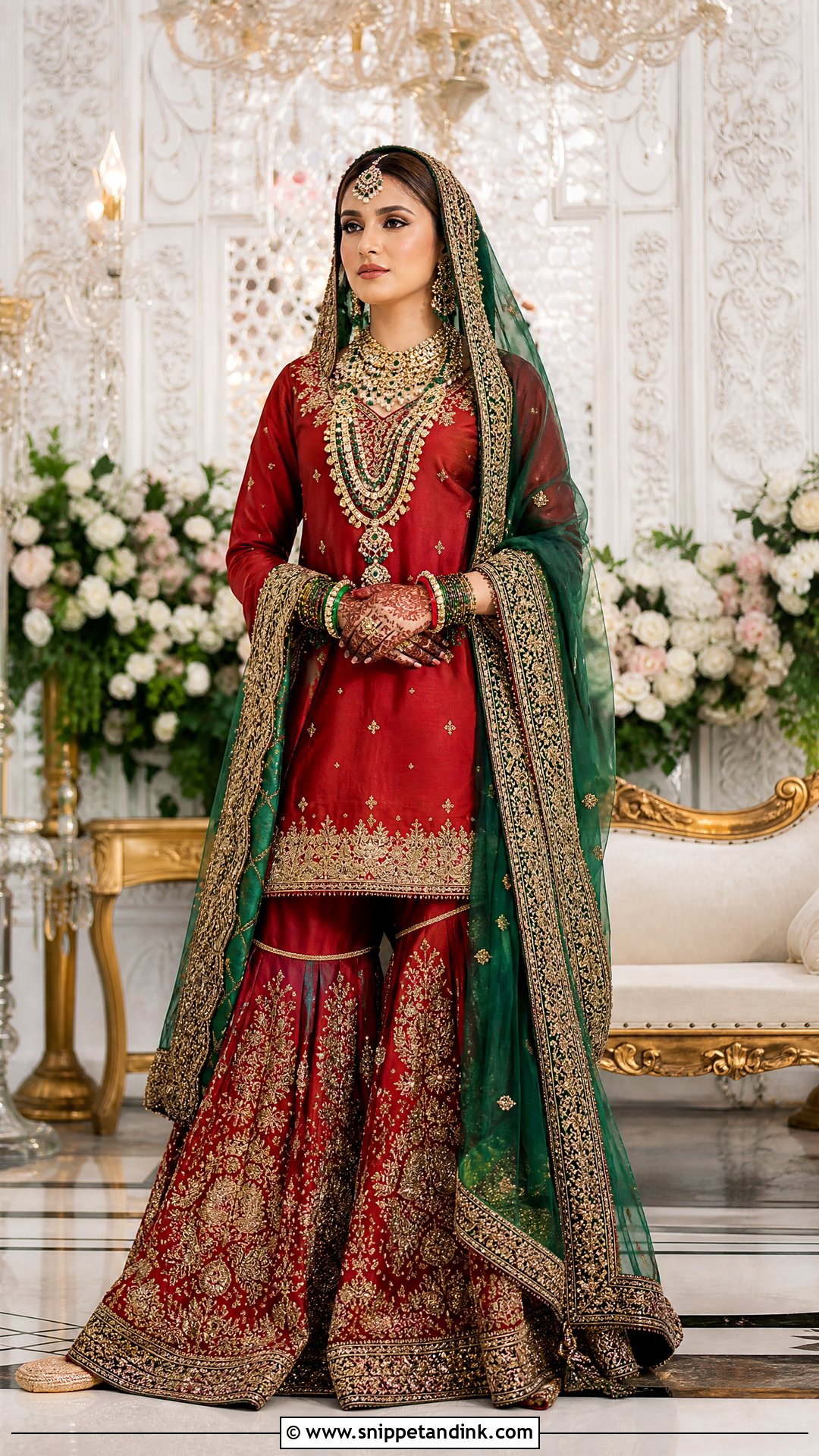
Red and green together look ceremonial straight away. Make the sharara and kurta in red silk and bring in green through the dupatta, jewelry and borders. Antique gold zardozi is what stops the outfit from looking split in two; it runs through both colors and links them. Because the pairing is already loud, I keep embroidery motifs consistent on every piece. Layered kundan, green stone earrings, a tikka and mixed bangles complete it. The green dupatta goes over the head with one worked edge falling across the shoulder, and a sleek bun anchors the extra weight.
20. Powder Pink Long Kurta Bridal Sharara
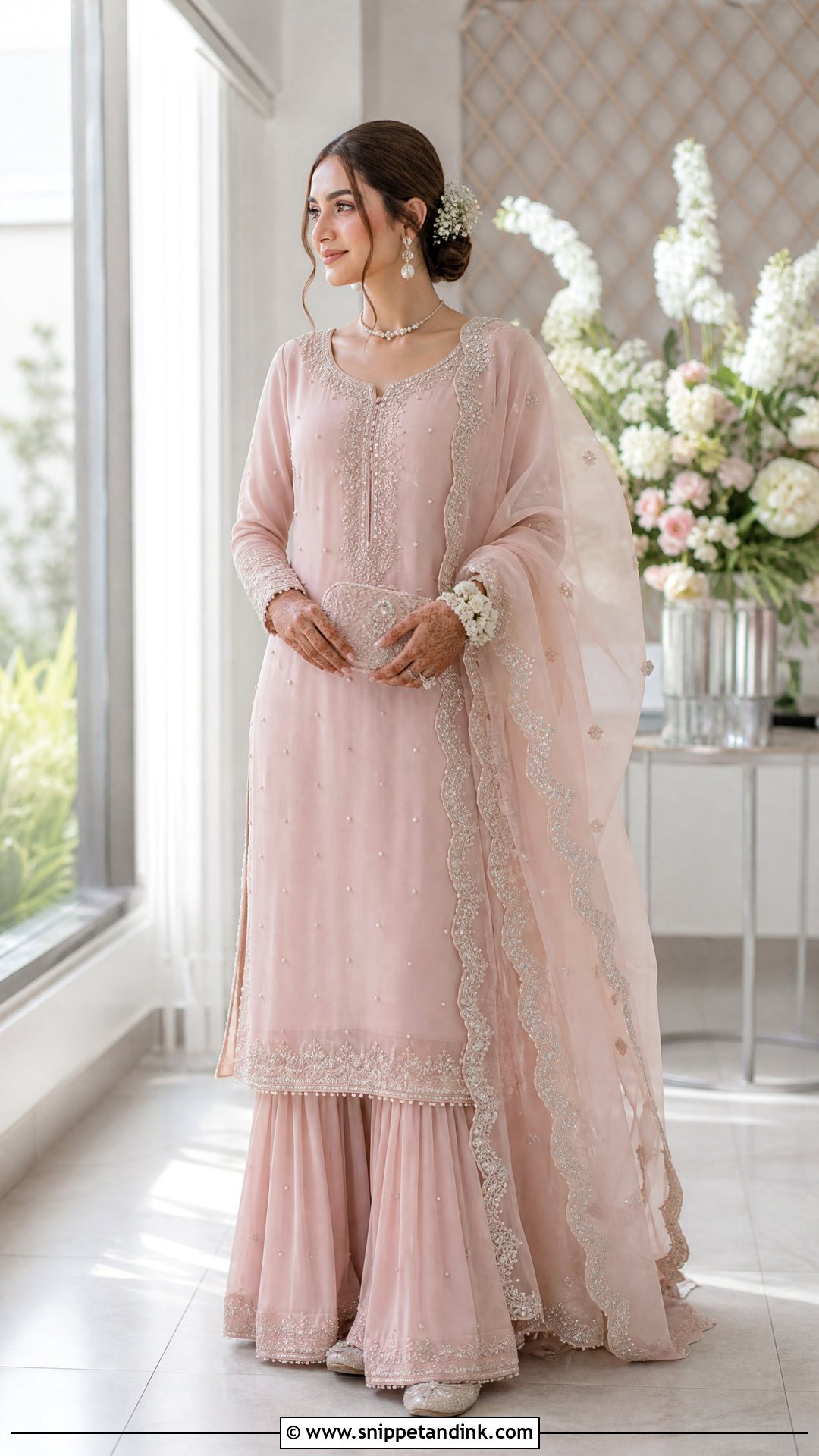
A long kurta over a powder pink sharara makes a tall, modest line. The kurta should end below the knee with high slits so the pants still show when you walk; without slits, the flare disappears and the outfit looks like a straight suit. Fine silver embroidery, pearls and tonal threadwork keep it soft but dressed. A slightly structured shoulder and fitted sleeve stop the long kurta from swallowing a petite frame. Add a scalloped net dupatta, pearl earrings, silver juttis, soft curls and a muted pink lip for a nikah or daytime reception.
Securing a Bridal Dupatta That Weighs More Than You Think
A fully embroidered bridal dupatta can tug your head backwards all day if it’s only pinned at the front. I bring it to the hair trial so the stylist can build the bun or a small padded base exactly where the dupatta will sit. U-pins through the dupatta into the bun hold it far better than bobby pins along the parting.
- Pin the dupatta to the kurta at both shoulders from underneath, so it doesn’t slide when you hug people.
- Leave a little slack at the back of the head; a tight drape pulls on the hairline within an hour.
- If you’re wearing two dupattas, set the heavier one first and the lighter one on top.
- Have one person at the venue who knows how to repin it after the ceremony and before photos.
Packing the Sharara Away After the Wedding
Zardozi, tilla and gota all tarnish and snag if they’re stored badly. Air the set for a day after the wedding, then have it professionally dry cleaned by someone who handles embroidered bridal wear. Fold it with acid-free tissue between the layers so metal threads don’t press into the fabric, wrap it in soft cotton or muslin rather than plastic, and keep it somewhere dry. Refold it along different lines every few months to stop permanent creases at the folds.
Red, Ivory or Rust? Start With the Ceremony
Color is the fun part, but the ceremony should decide the fabric and weight first. A nikah usually calls for coverage and calm detail, a mehndi for breathable fabric and free wrists, a reception for structure and shine. Then balance the flare with the right kurta length, pick shoes you can stand in, and anchor the dupatta before you think about jewelry. Do the final fitting with your real shoes and underlayers. From red zardozi to champagne crystals and bright mehndi colors, any of these looks can be adjusted in sleeves, neckline and embroidery to feel like yours.
You'll Like These Ideas:


Leave a Reply