
A red bridal suit gives you the ceremony weight of traditional wedding wear with the ease of a salwar kameez, and red carries deep bridal meaning across many South Asian traditions. The cut changes everything: an Anarkali swirls, a Patiala is built for movement, a sharara or gharara brings volume at the hem, and a straight suit stays sleek. Before I show a bride any embroidery, I ask about her ceremony, the season, the venue and how many hours she’ll be wearing the outfit, because those answers rule out half the options straight away. Good tailoring matters as much as handwork, and the jewellery, shoes and dupatta drape should frame the suit rather than bury it. The ideas below cover twenty ways to put the whole look together.
Ordering Handwork Early Enough to Have a Proper Trial
Hand embroidery is slow. Zardozi, dabka and dense gota work can take many weeks once the fabric is cut, and busy workshops queue orders before they even start. I’d place a custom bridal suit order around four to six months before the wedding, and earlier still in the main wedding season, so there is time for at least one trial and a round of alterations. Rush orders exist, but they usually cost more and leave no room to fix a bad fit.
What to settle at the first measurement
- Your exact shoes and heel height, since every trouser and hem length depends on them.
- The dupatta length. A standard length covers most drapes, but a double drape or head covering may need more.
- Whether the kameez, trousers and dupatta are cut from fabrics that take dye differently. Silk and net dyed in the same vat can still come out as two reds.
- A spare strip of each fabric, so later alterations can be matched.
- A trial date that sits at least three weeks before the wedding.
At the trial I look at the suit from across the room before I look at the stitching. If the red of the dupatta looks pinker or browner than the kameez at a distance, now is the time to change it.
1. Red Bridal Anarkali Suit
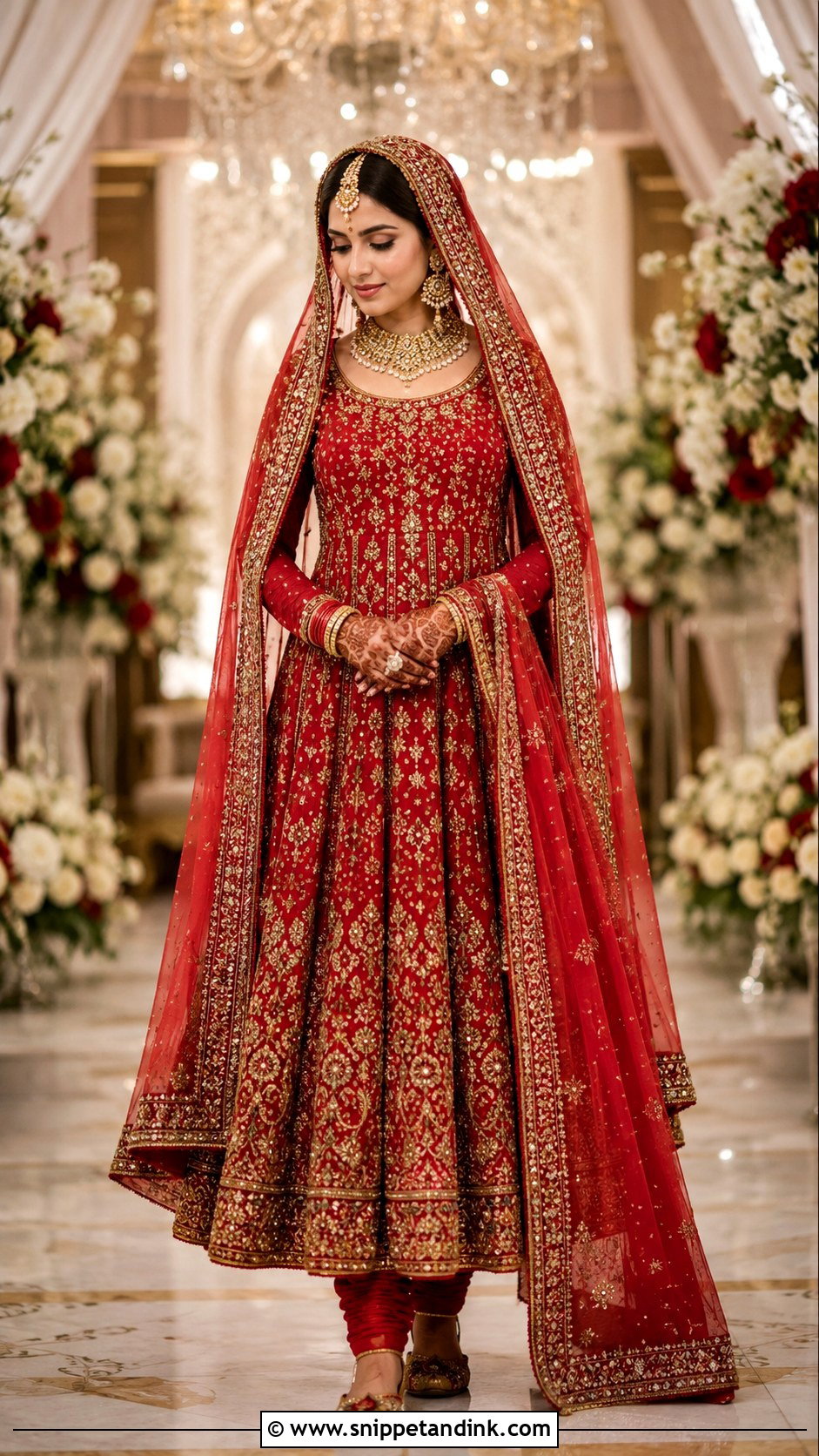
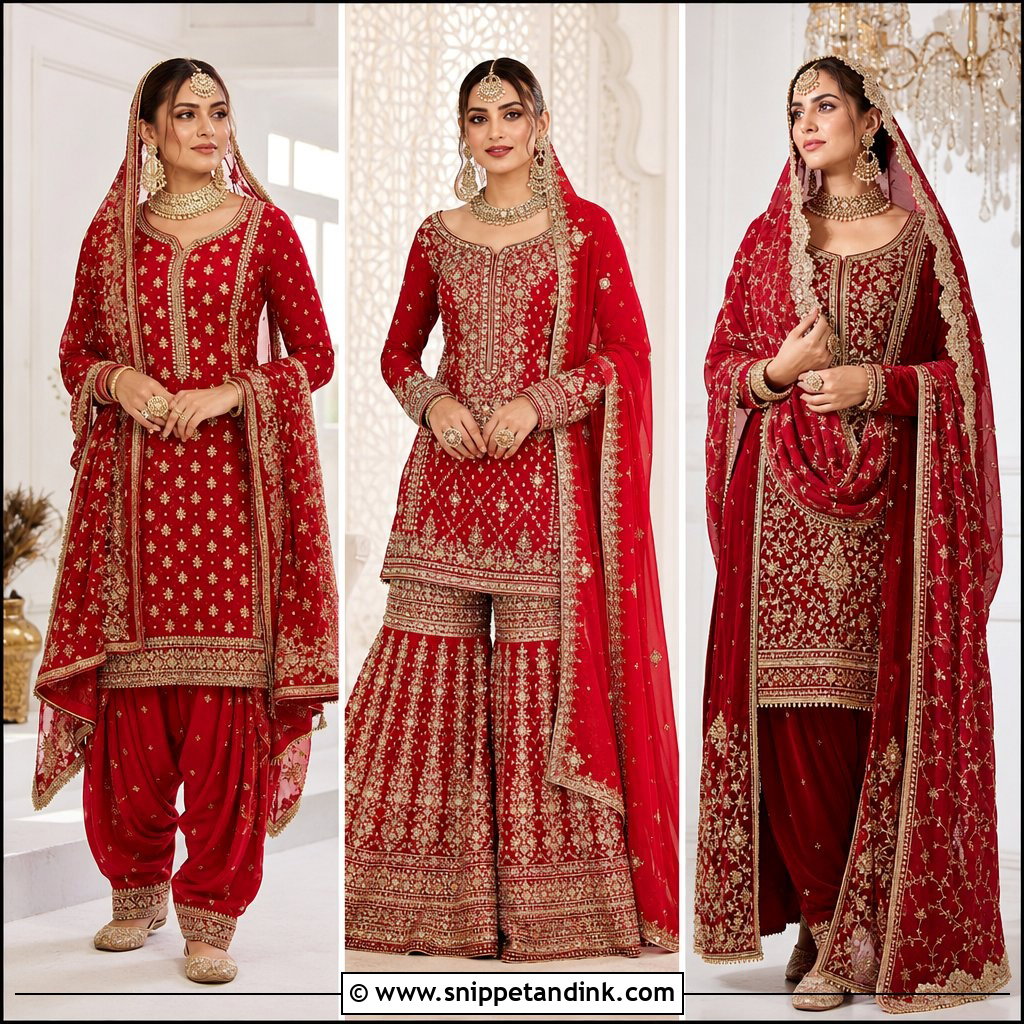
The Anarkali is the cut I see fail most often at the waist seam, so that is what I fit first. When the seam sits right, evenly spaced kalis fall in a smooth circle; when it sits low, the skirt flares from the hips and the whole thing looks shorter. Raw silk or velvet suits a winter wedding, georgette a warmer one. Gold zardozi at the neckline, sleeves and hem is enough without covering the whole body. Pair the Anarkali with fitted churidar pants and a sheer red dupatta with a broad border, then antique gold jhumkas, a matching necklace, bangles and embroidered juttis. Pin the dupatta over one shoulder or over the head for the ceremony, and keep the front embroidery uncovered.
2. Red Bridal Patiala Suit
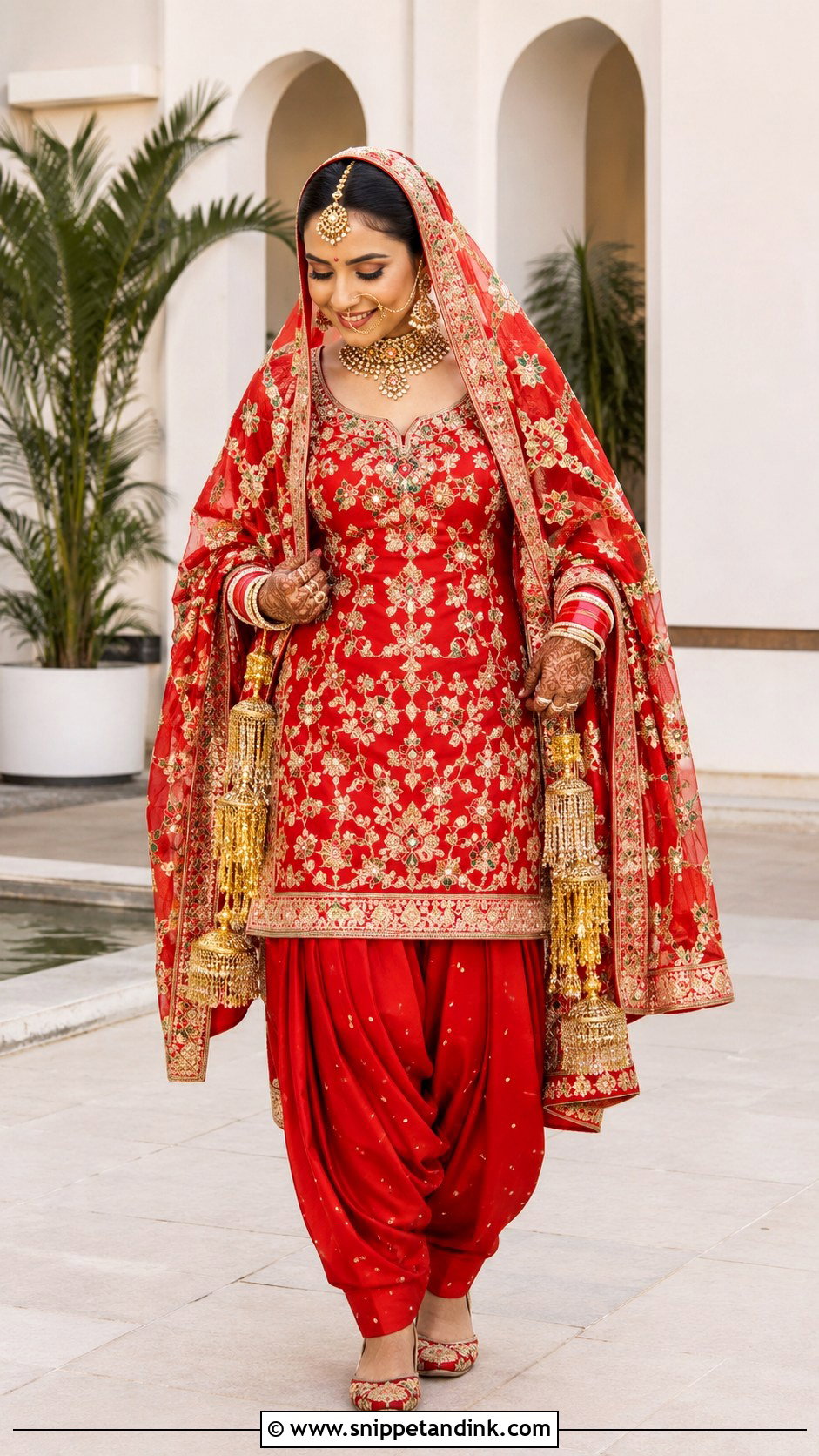
A Patiala is the most comfortable bridal suit I fit, which is exactly why Punjabi brides keep choosing it. Go for a knee-length kameez with dense gold embroidery at the neckline, cuffs, slits and hem, and a salwar in silk or satin with deep pleats that drape rather than puff. Keep the kameez slightly structured or the salwar’s volume swallows it. A red phulkari or a richly bordered net dupatta goes over the head and across one shoulder, with juttis, a kundan necklace, statement earrings, chooda and kaleere. For an Anand Karaj, traditional Punjabi ceremony, the pleats also make sitting on the floor and walking the laavan far easier than a fitted lehenga would.
3. Red Bridal Sharara Suit
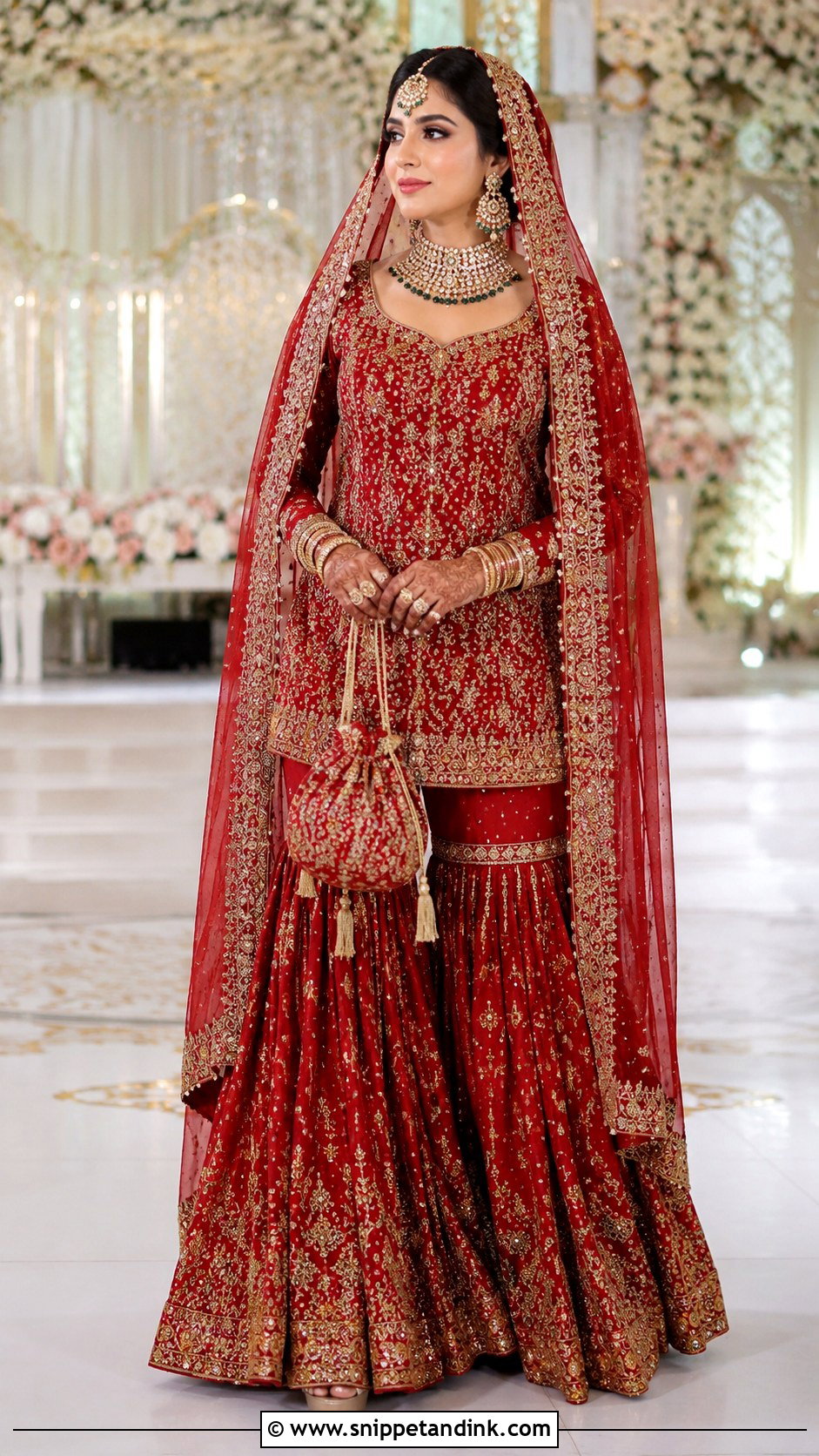
Sharara volume comes from where the flare opens. I’d have it break at the knee for most brides; opening from the upper thigh looks dramatic but adds visible width. Start with a short, fitted kurti worked in zari, sequins, dabka or resham, and give the flares an embellished border so the shape reads in photos. The dupatta goes over the head and loosely around one arm. Platform or sturdy block heels keep that wide hem off the floor, which matters more than people think on stairs. A passa, chandbalis, a layered necklace and a small potli give it a classic Pakistani-inspired finish. Keep the kurti and sharara in exactly the same red, since a mismatch at the hip breaks the line.
4. Red Bridal Gharara Suit
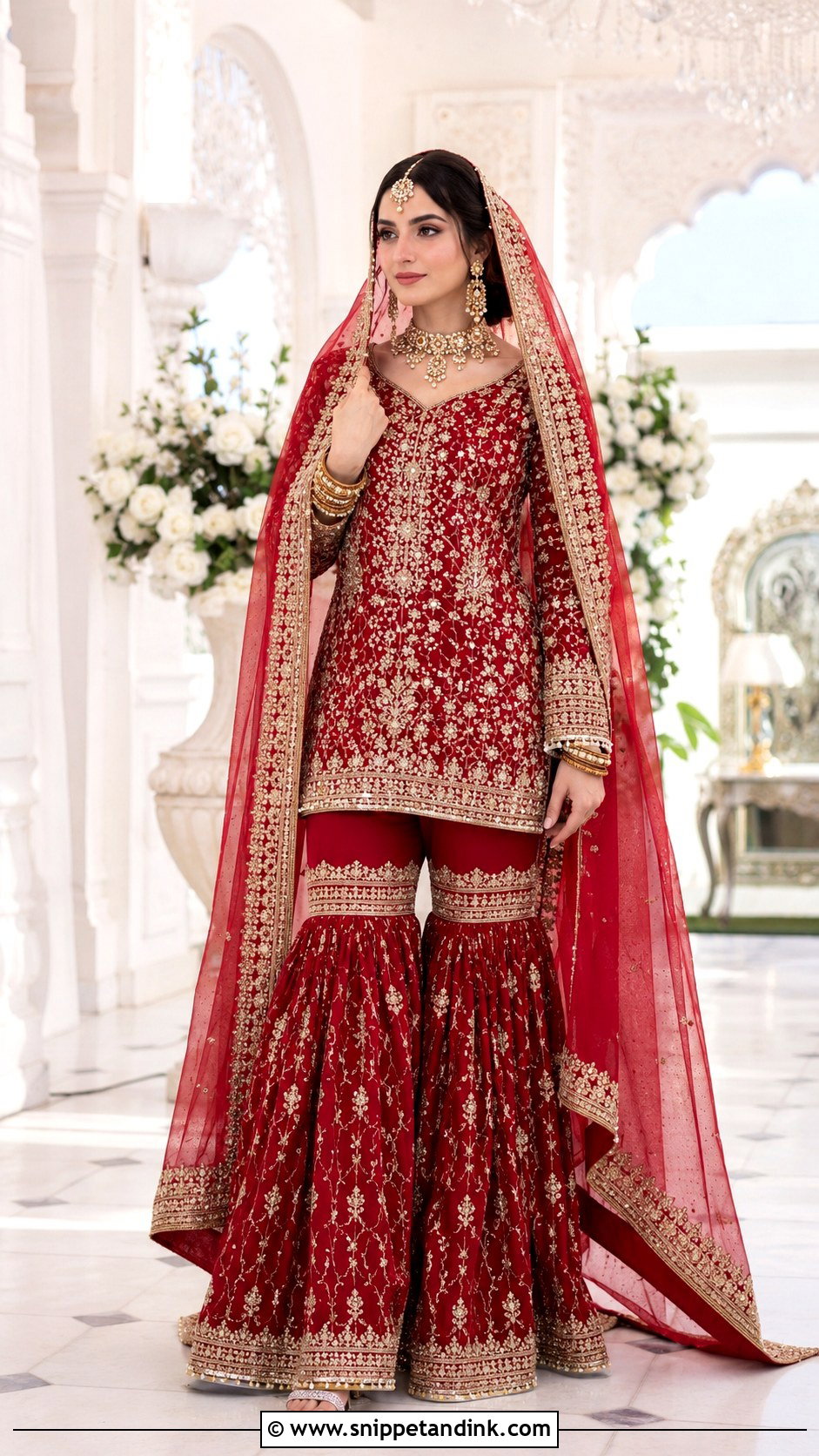
People mix up sharara and gharara, but the gharara is fitted through the thigh and gathered at the knee before it opens wide. That knee seam is the whole point, so highlight it with gota, pearls or metallic work. A short red kurti with delicate work on the bodice and sleeves sits above it, and a sheer dupatta with scattered motifs keeps the construction visible. A passa, kundan choker, long earrings, bangles and embellished heels complete it. The trouser length is critical, so I always do the final fitting in the wedding shoes. If you’d like more coverage, a slightly longer kurti still leaves the gathered knee on show.
5. Red Bridal Straight Suit
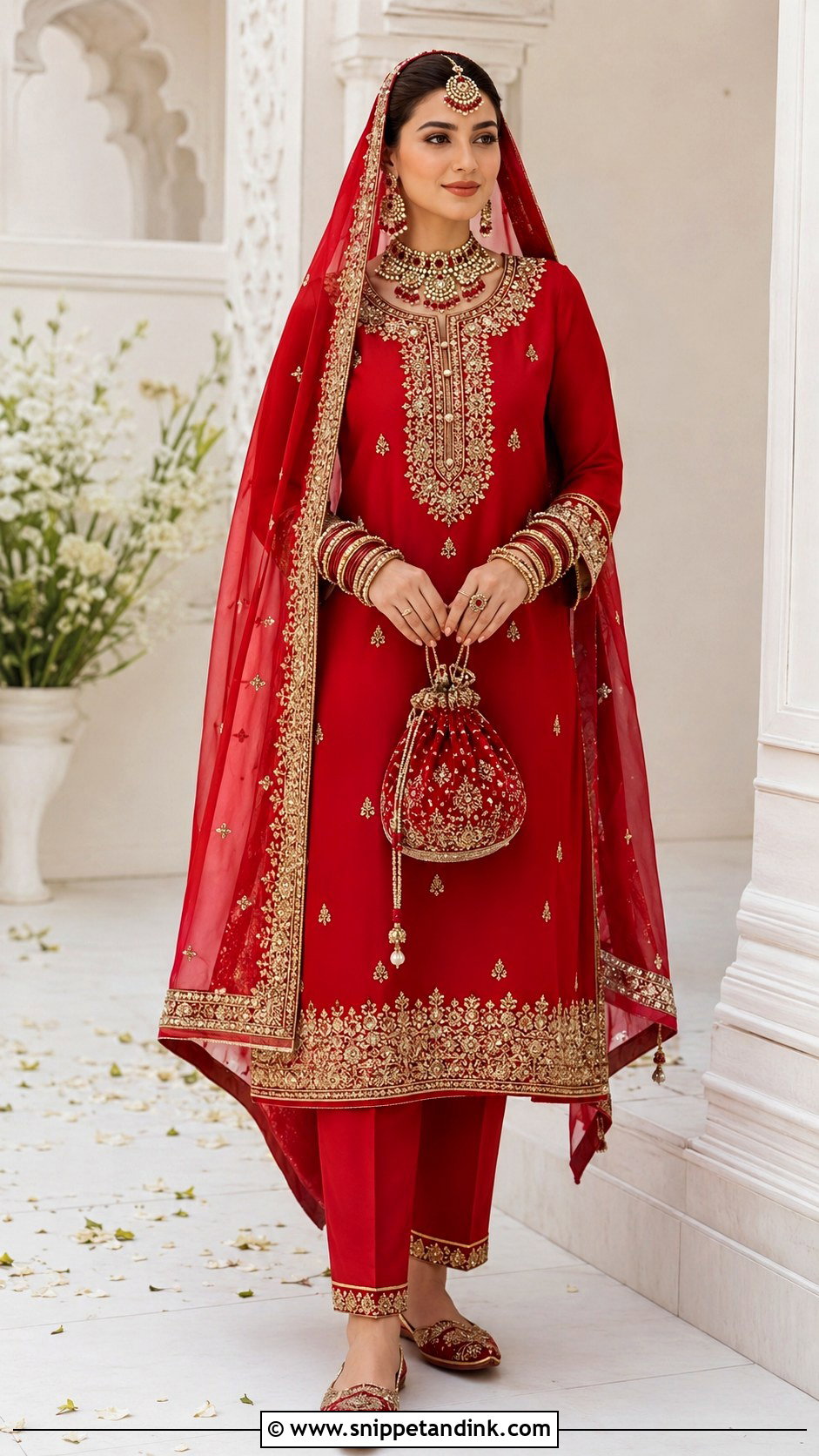
A straight-cut suit relies on fit and a strong dupatta rather than volume. A long kameez in silk, crepe or jacquard with embroidery focused on the neckline, sleeves, slits and lower border, worn with straight pants or a narrow salwar in the same red, stays clean and quiet. The heavily decorated dupatta then does the bridal work: drape it over the head and let one bordered side fall straight down the body. A polished kundan set, red-and-gold bangles, a structured potli and pointed embroidered flats finish it. I shape this kameez with princess seams or side darts so it follows the body without clinging. It suits registry ceremonies, small weddings and the days after the main event.
6. Red Bridal Palazzo Suit
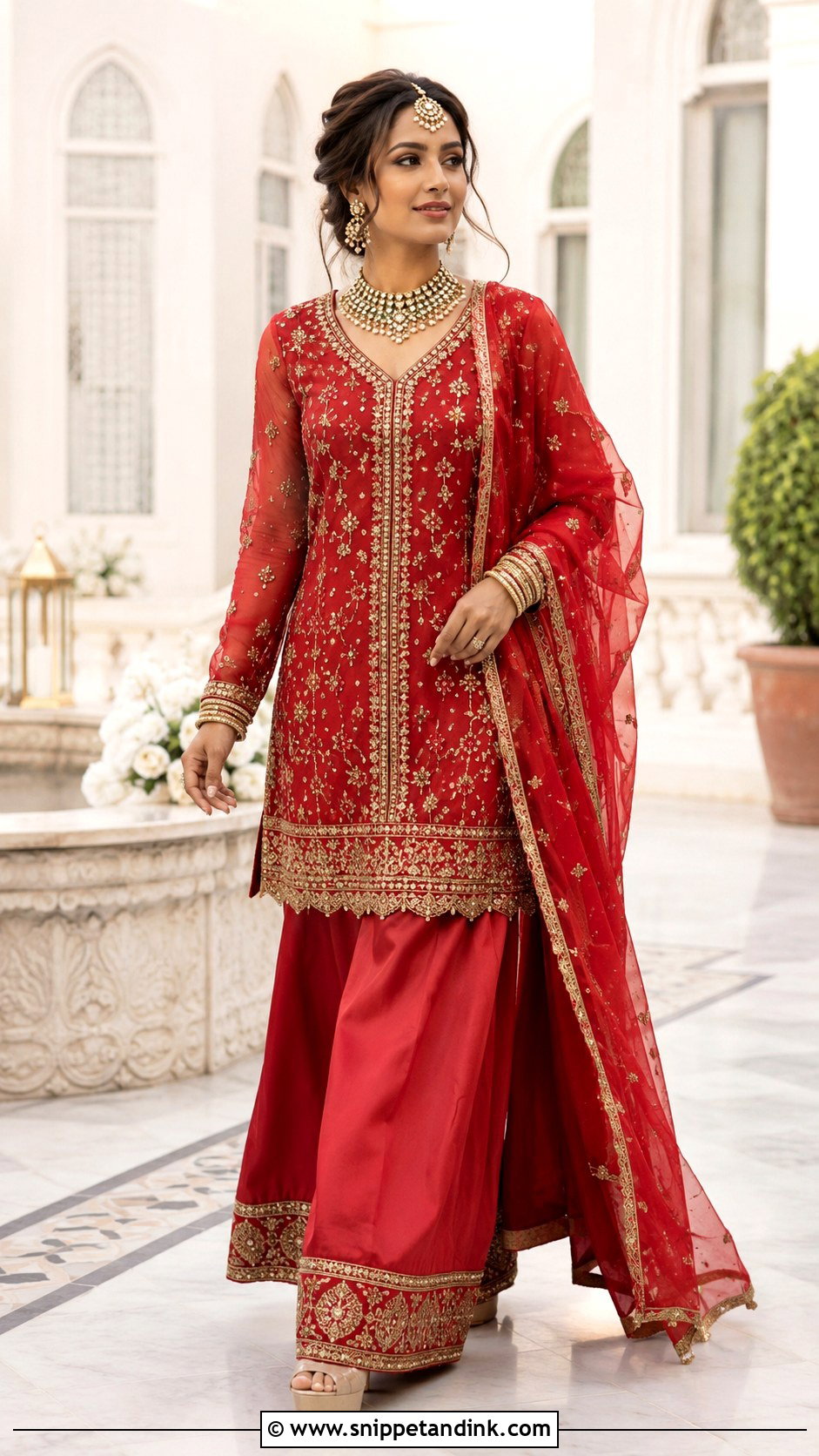
Do you want drama without trousers that restrict you? Palazzos give it. A fitted or straight kameez over high-waisted satin, silk or georgette palazzos with an embroidered hem looks airy but still formal. I keep the kameez to mid-length, because a very long top hides the pants and the outfit loses its point. An organza dupatta with gold edging, worn over the head or pinned to one shoulder, keeps it light. A layered necklace, matching earrings, slim bangles and platform heels are plenty. Concentrate the embellishment near the face and at the hems; the plain stretch between them makes you look taller.
7. Red Bridal Farshi Salwar Suit
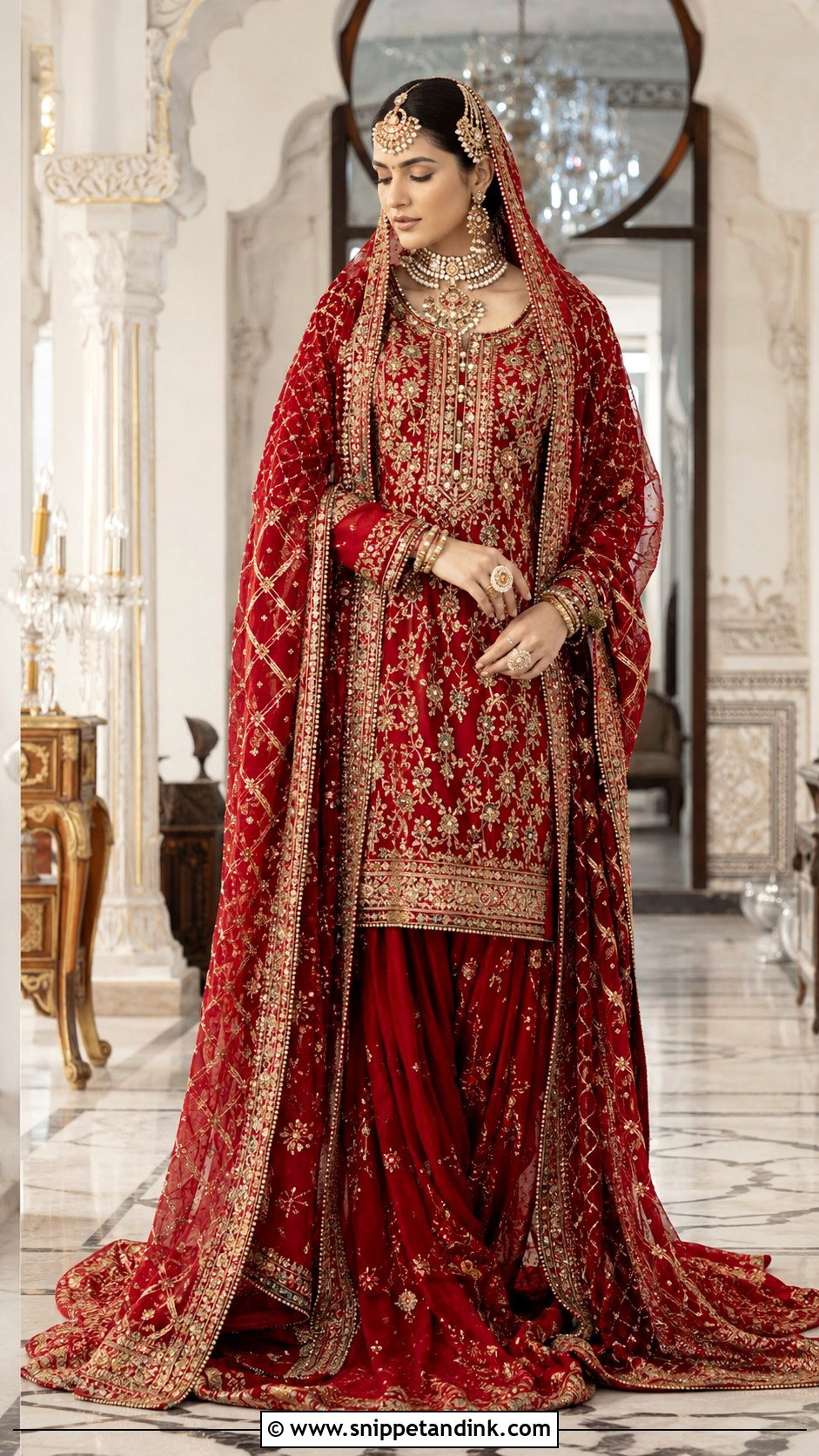
The farshi salwar pools beyond the feet like a small train, and that old-world grandeur comes at a price: you can’t walk in it the way you walk in anything else. Pair it with a knee-length kameez in zardozi, naqshi, dabka or pearl work, a broad-bordered red dupatta over the head and, if you like, a lighter second veil across the arms. Add a passa, layered kundan, statement rings and heels hidden under the hem. Practise walking, turning and sitting in the full outfit at least twice. I also ask the tailor to spread the fullness evenly round the leg, because when the fabric bunches at the ankles, the train drags instead of flowing.
8. Red Bridal Peplum Suit
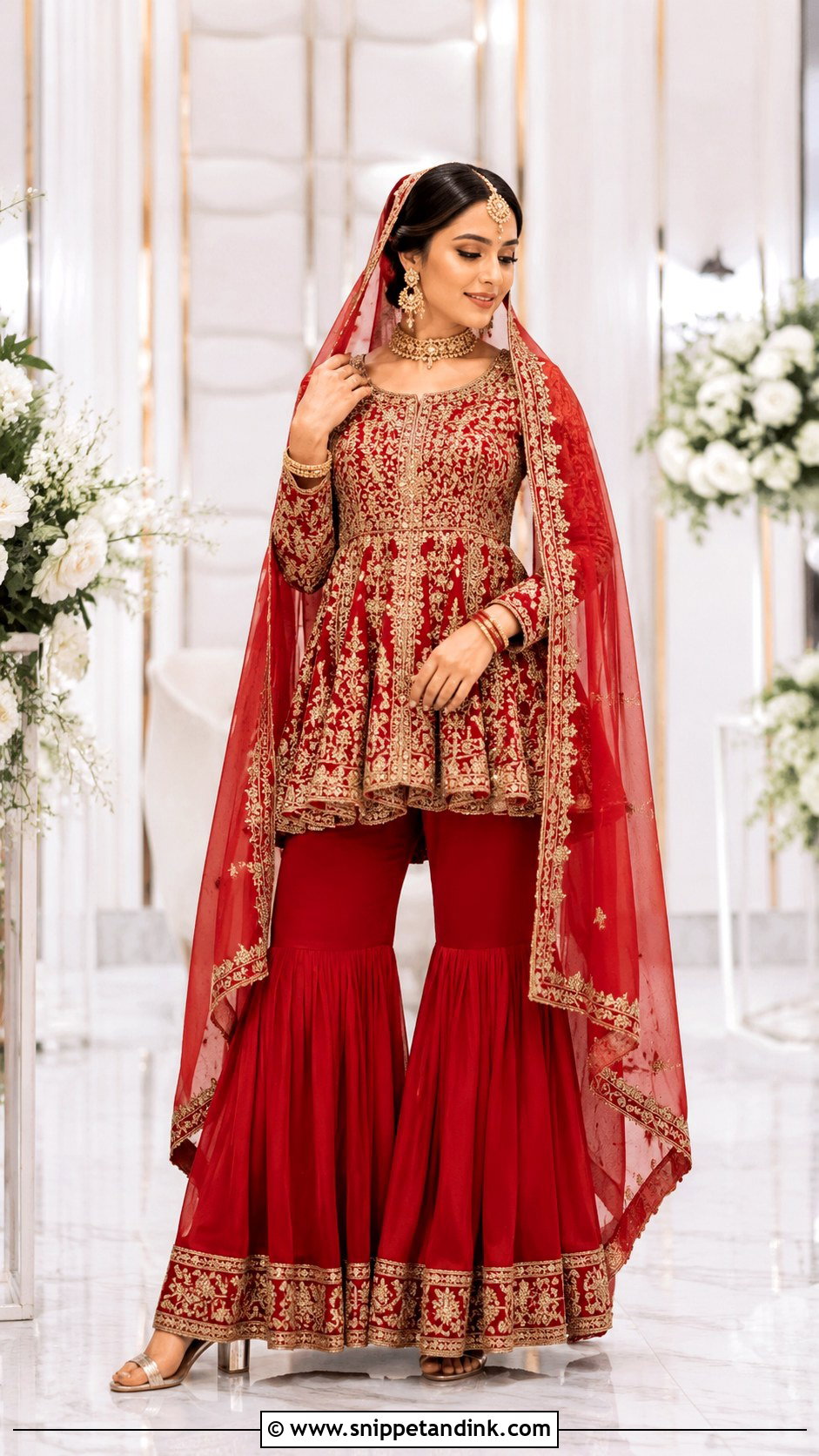
A peplum top gives a sharara or gharara suit a shaped, modern upper half. The peplum should sit at your natural waist and open gently over the hips; if it starts too high it makes the torso look short. Gold embroidery across the bodice and peplum edge defines it, with three-quarter or full sleeves for formality. Red sharara pants with matching borders, an organza dupatta with scattered sequins pinned lightly over the head, chandelier earrings, a short necklace and block-heel sandals complete it. I check for pulling across the bust and waist when the bride sits, since a peplum that strains loses its flare entirely.
9. Red Bridal Jacket Suit
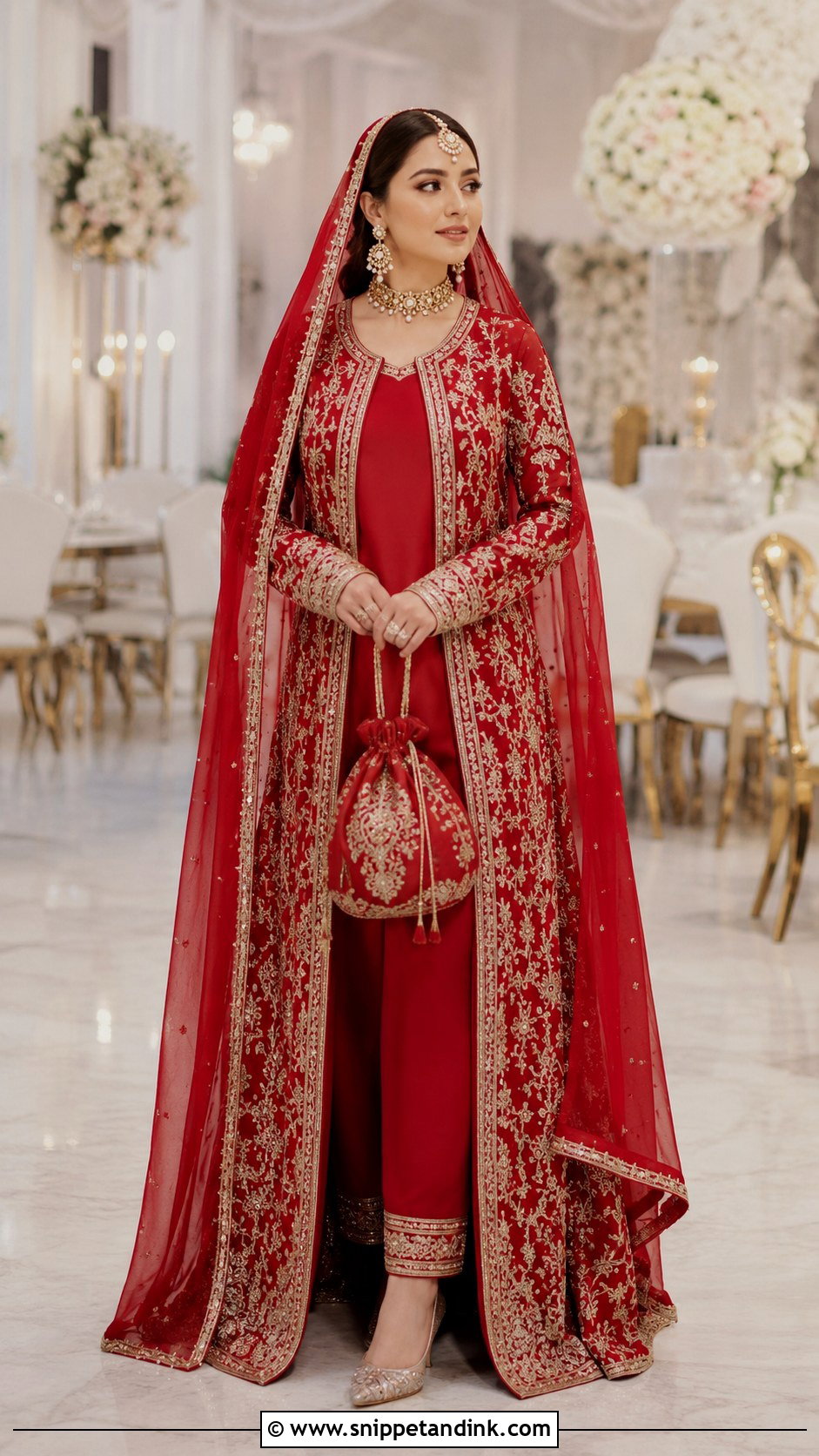
Shoulders make or break a long jacket. If they sit even slightly wide, a floor-length coat swamps the bride in every full-length photo, so I fit the jacket shoulders before anything else. Underneath, a sleeveless or short-sleeved red kurta and straight pants keep it simple. The open jacket in matching silk, organza or net carries gold threadwork, pearls or sequins along the front edges, cuffs and hem, and that open front draws long vertical lines. Choose a light dupatta that won’t fight the jacket, plus a choker, drop earrings, a sleek potli and pointed heels. For more coverage, ask for full sleeves and a higher back.
10. Red Bridal Velvet Suit
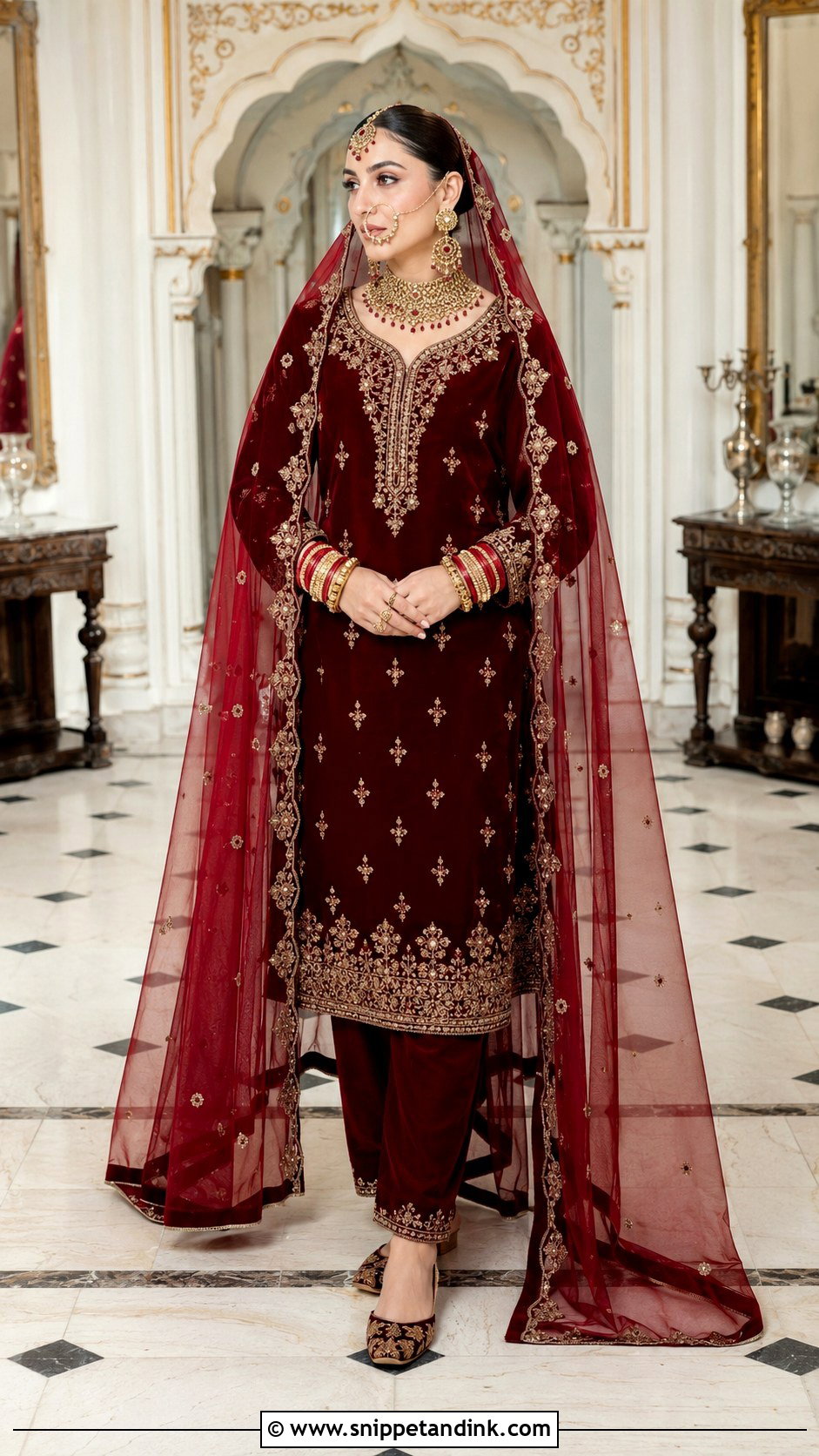
Velvet belongs at a cool-weather wedding. Deep ruby, crimson or maroon velvet with zardozi at the neckline, cuffs and hem looks rich, and silk straight pants, a churidar or a softly flared salwar stop the outfit feeling heavy. A net or organza dupatta, perhaps with a velvet border, adds lightness. Antique gold jewellery, a statement nath, bangles and closed juttis suit it. Skip extra layers underneath, since velvet is already warm. Velvet marks where it’s pressed and crushes when you sit for long, so I steam it on the reverse and ask for a smooth lining. It looks richest at an evening wedding indoors.
11. Red Bridal Silk Suit
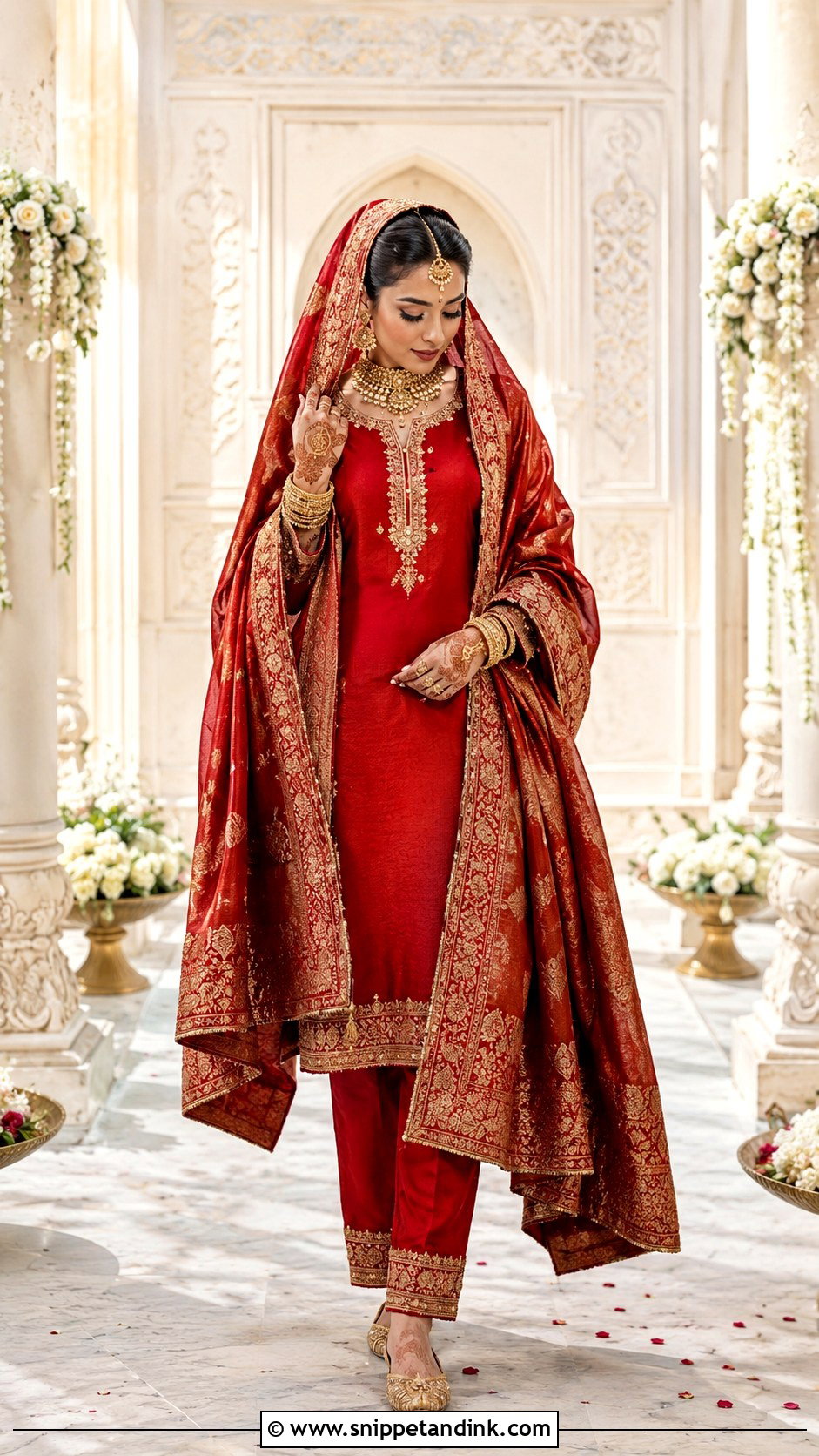
Silk shines on its own, so the embroidery can be modest. Pure silk, Banarasi, raw silk and blends all behave differently. Raw silk holds a crisp shape, while Banarasi brocade is heavier and the woven motifs do the decorating for you. Pair a long embroidered kurta with straight trousers or a salwar in the same red family. A gold brocade dupatta gives definition; a red tissue or organza one keeps it tonal. Temple-style jewellery, kundan earrings, bangles and gold footwear finish it. Silk’s sheen changes the red under different lighting, so I always look at it by a window and then under indoor light before a bride commits.
12. Red Bridal Organza Suit
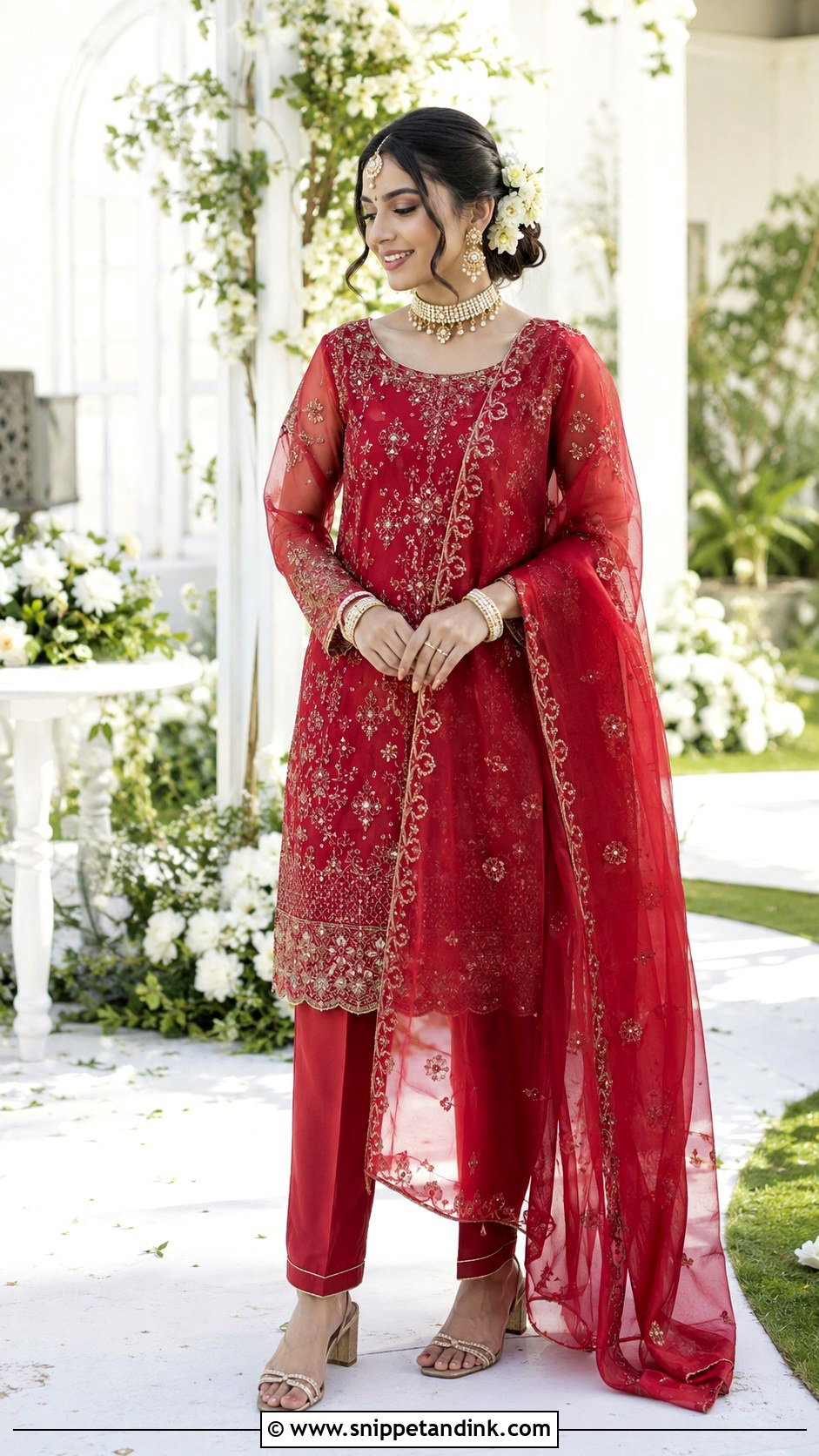
Organza is the fabric I recommend most for daytime and warm-weather weddings, provided it has a soft opaque lining against the skin. Crisp organza scratches on its own. A structured kameez over that lining, with straight silk pants or a lightly flared sharara, looks fresh. Floral threadwork, small sequins and metallic edging give detail without dragging the sheer fabric down. A matching organza dupatta with embroidered corners goes over the head on one side and falls loose on the other. Pearl-accented kundan, slim bangles and low block heels suit it. Organza adds volume wherever it is gathered, so I keep the waist clean and fit the shoulders and armholes closely.
13. Red Bridal Zardozi Suit
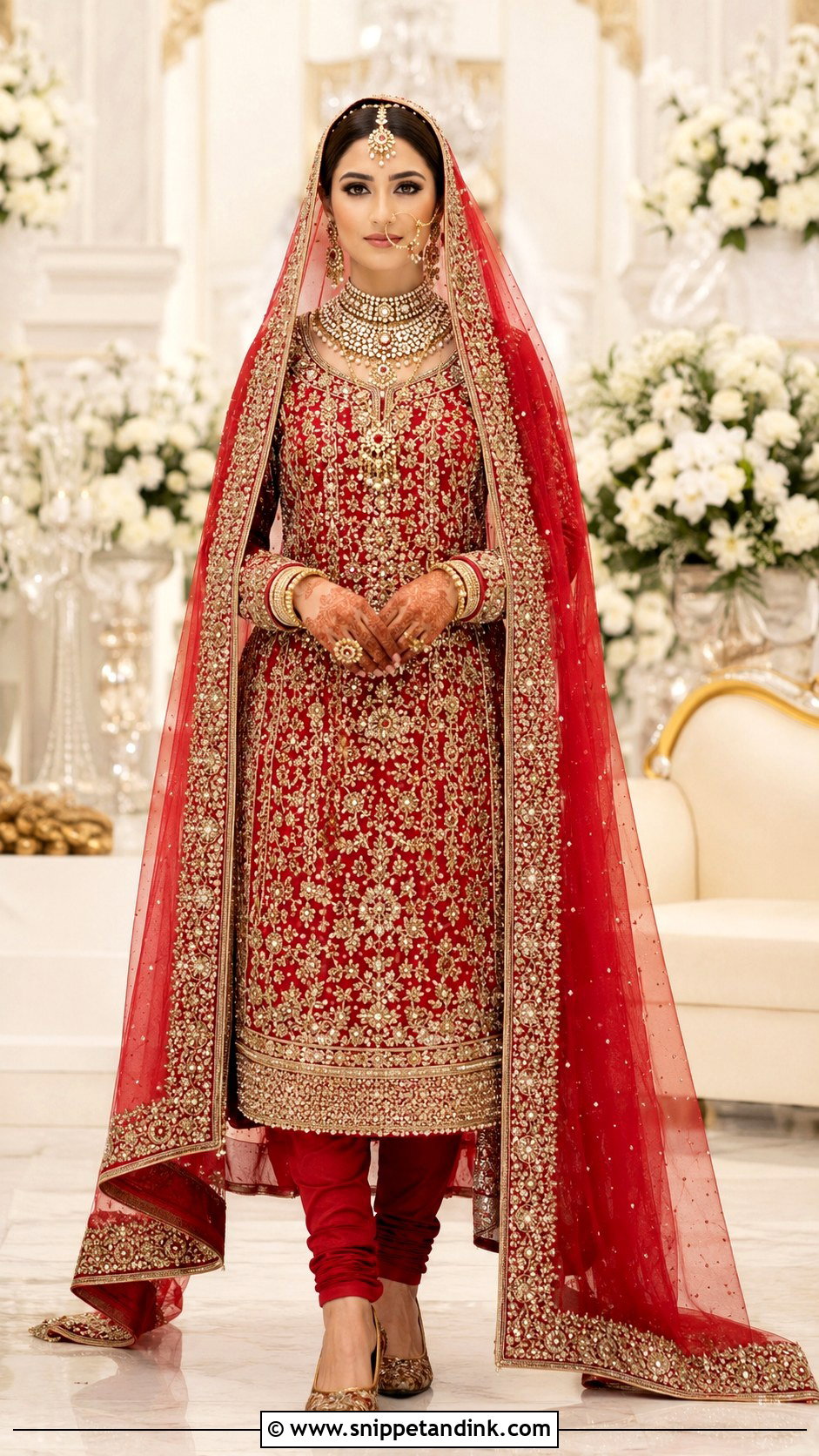
Zardozi is heavy, physically heavy, and a fully worked kameez can feel like a weighted jacket by the end of a long ceremony. That’s why I insist on small plain areas between motifs, particularly at the waist and inner sleeves where you bend. Keep the metallic work at the neckline, bodice, sleeves and lower border, then pair the kameez with a simpler churidar or straight pants. A red net dupatta with a zardozi border and scattered motifs ties it together. A kundan choker, long necklace, earrings, nath, bangles and embroidered juttis complete it. Turn the kameez inside out at the fitting: the back of zardozi is rough, and it needs a proper lining over it.
14. Red Bridal Gota Patti Suit
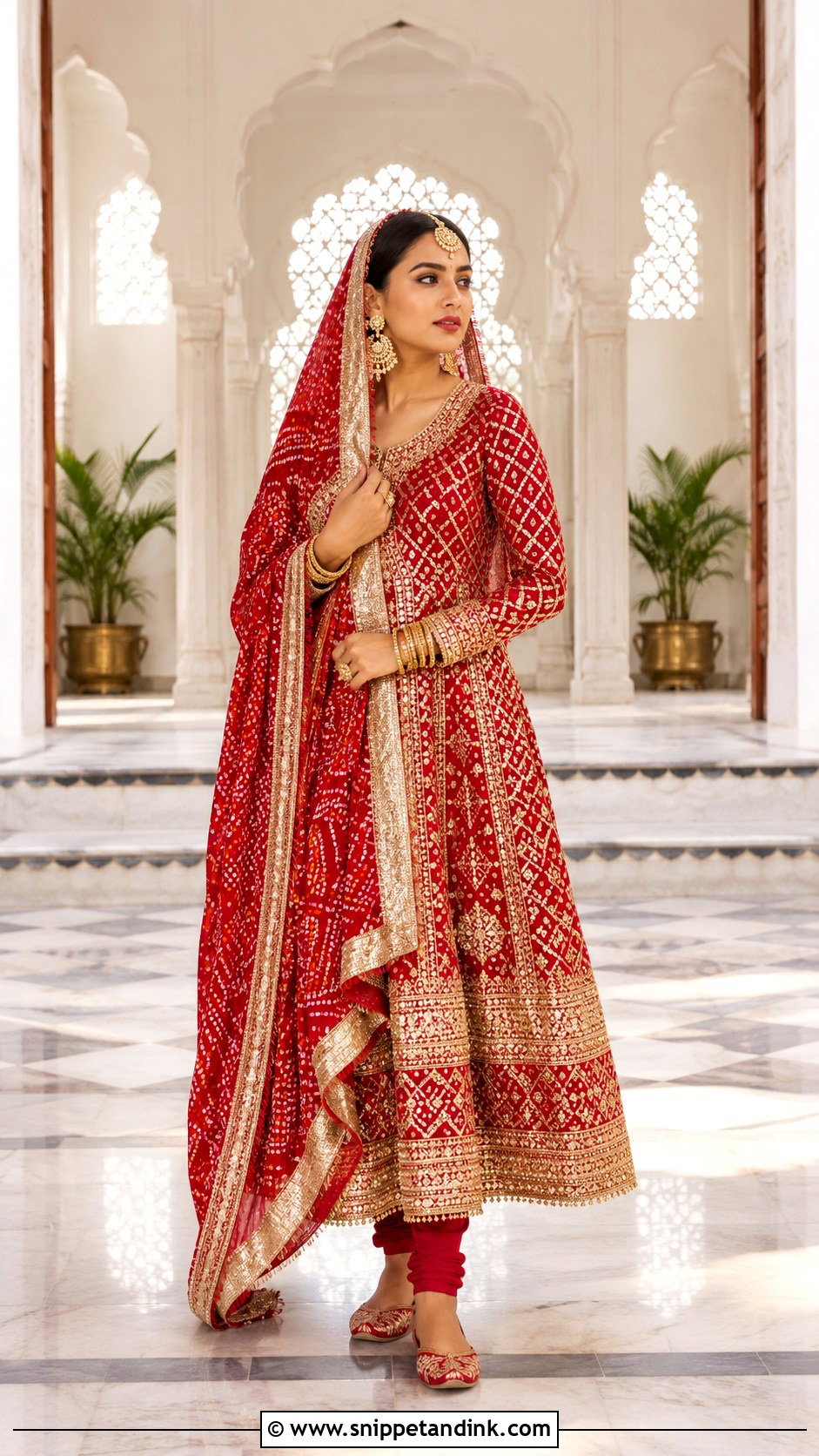
Gota patti catches the light in a softer way than sequins, and it weighs far less than zardozi. Use gold or silver gota in floral, geometric or border patterns on an Anarkali, straight kameez or short kurti, and pair it with a coordinated salwar, sharara, or churidar for whatever volume you prefer. A bandhani or sheer red dupatta with broad gota edging adds another traditional layer. A borla or maang tikka, kundan earrings, mixed-metal bangles and embellished juttis suit it; with dense gota, I hold back on the jewellery. Ask for reinforced stitching on each piece of gota, because the edges lift and catch once the dancing starts.
15. Red Bridal Phulkari Suit
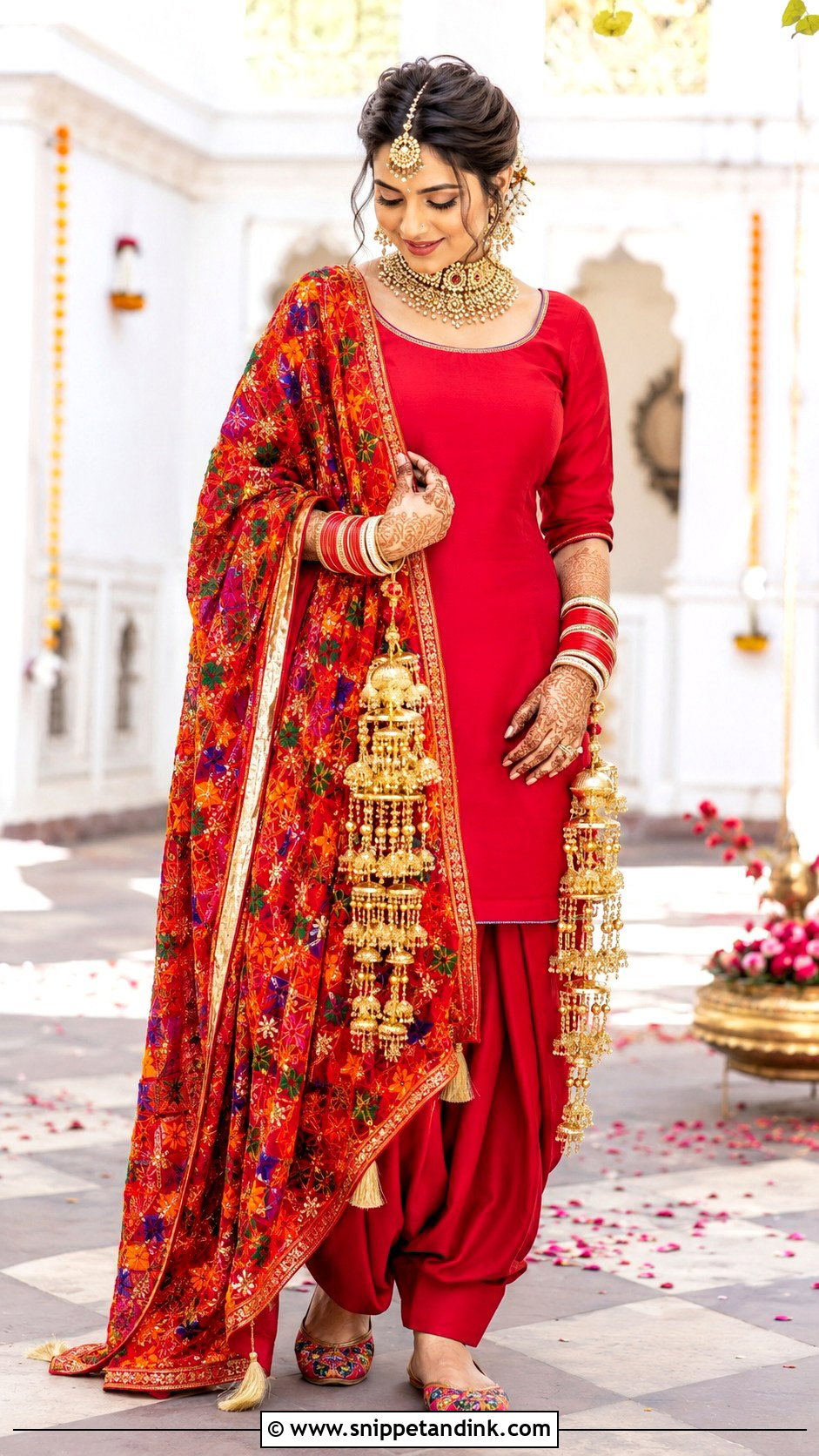
A red phulkari bridal suit carries real family meaning for many Punjabi brides, and sometimes the dupatta itself has been handed down. In that case I build the outfit around it: a solid red silk kameez with a Patiala salwar, letting the phulkari be the centrepiece. If the embroidery is on the suit instead, keep the dupatta simpler. A gold choker, jhumkas, chooda, kaleere and embroidered juttis complete it, and the juttis can pick up one thread colour from the phulkari. Don’t add more unrelated colours through jewellery. Old phulkari can be fragile, so I pin through the border, never the embroidered field.
16. Red Bridal Bandhani Suit
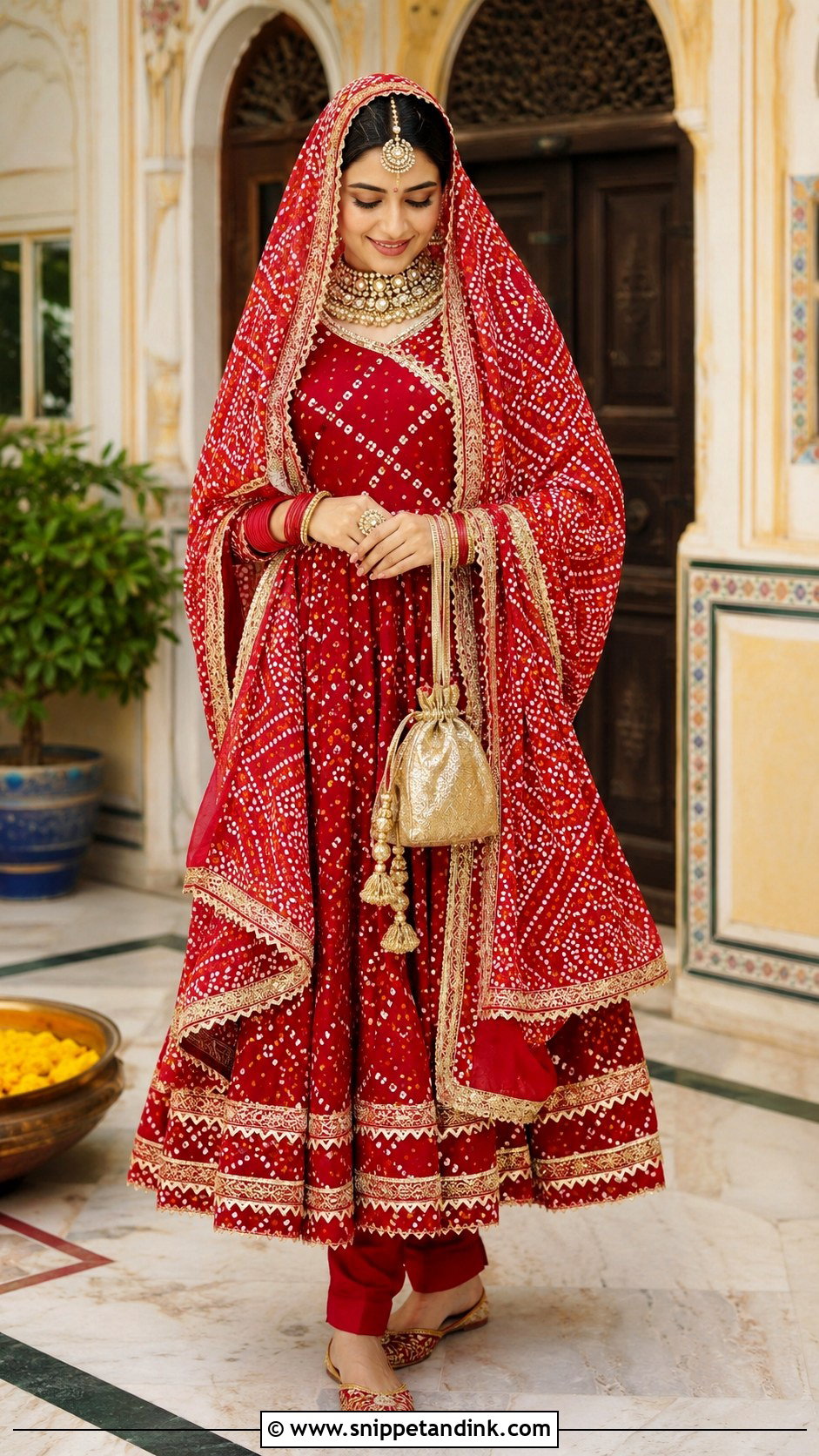
Bandhani’s tiny dots carry real regional character, and the pattern size decides how busy the outfit looks. A bandhani Anarkali or long kameez with gota patti, zari borders or small mirrors pairs best with a solid red churidar or straight pants. Wear a matching bandhani dupatta over the head, or a plain one with a decorated border for something calmer. A kundan necklace, maang tikka or borla, red bangles, a gold potli and embroidered flats finish it. If you want it less busy, go for a larger, more spaced-out tie pattern. I check that the dots line up at the main seams, since a mismatch at the centre front is the first thing a camera finds. It suits a daytime or courtyard ceremony.
17. Red Bridal Mirror Work Suit
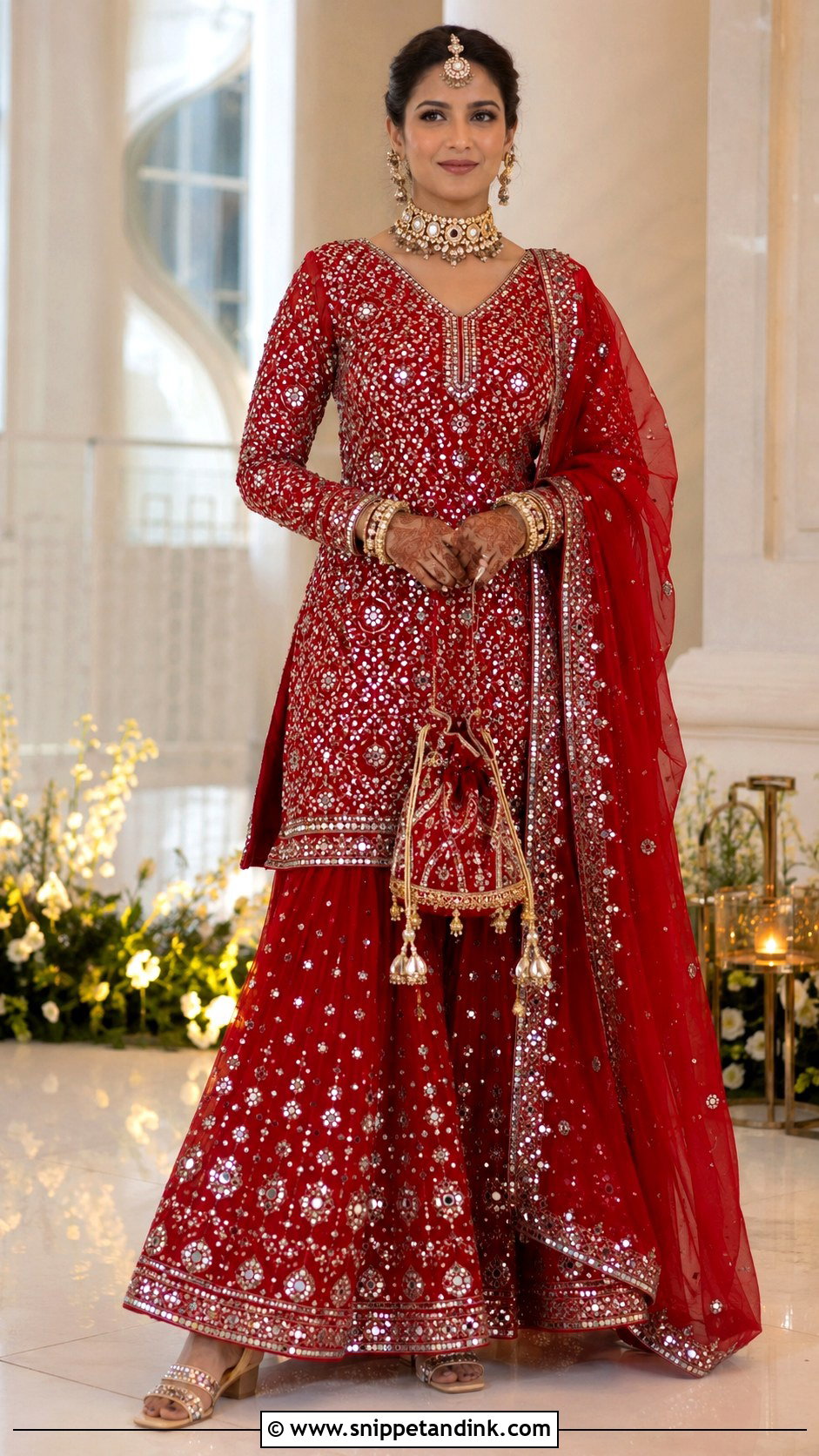
Mirror work sparkles in daylight and under artificial light without relying on metal thread. Small mirrors at the neckline, sleeves and hem of a fitted kameez or Anarkali, with a matching sharara or straight pants carrying a narrower mirror border, keep it festive. Choose a chiffon or organza dupatta with only a few reflective details so the suit stays dominant. Silver-toned or mixed-metal jewellery suits mirrors better than yellow gold alone. Add bangles, a neat potli and comfortable block heels. I steer brides away from large mirrors at the elbows and inner arms, where they catch the dupatta and scrape against bangles, and ask for a smooth lining behind every piece.
18. Red Bridal Double Dupatta Suit
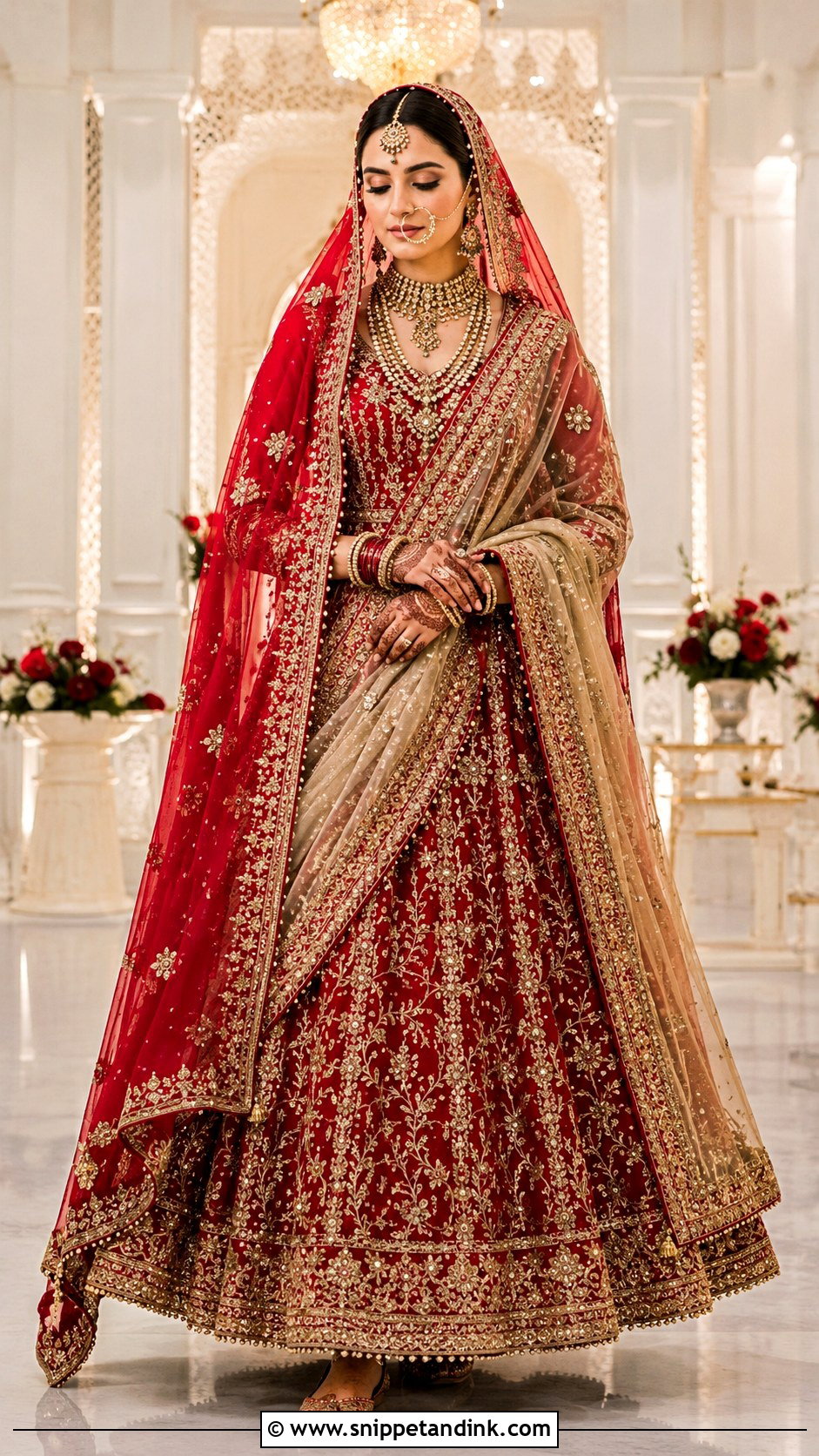
Two dupattas look grand, but they also mean double the weight and double the pins. Start with a heavily embroidered red Anarkali, sharara suit or straight set. One sheer red dupatta covers the head and is secured into the hairstyle; the second drapes diagonally across the body or over one shoulder, in red for a tonal look or muted gold for contrast. A bridal choker, long necklace, earrings, nath and bangles complete it. Keep the head dupatta light, since a heavy border pulls on the hair all day. I ask for small fabric loops sewn at the shoulder so the drapes stay put through greetings and rituals without a dozen safety pins.
19. Red Bridal High-Low Suit
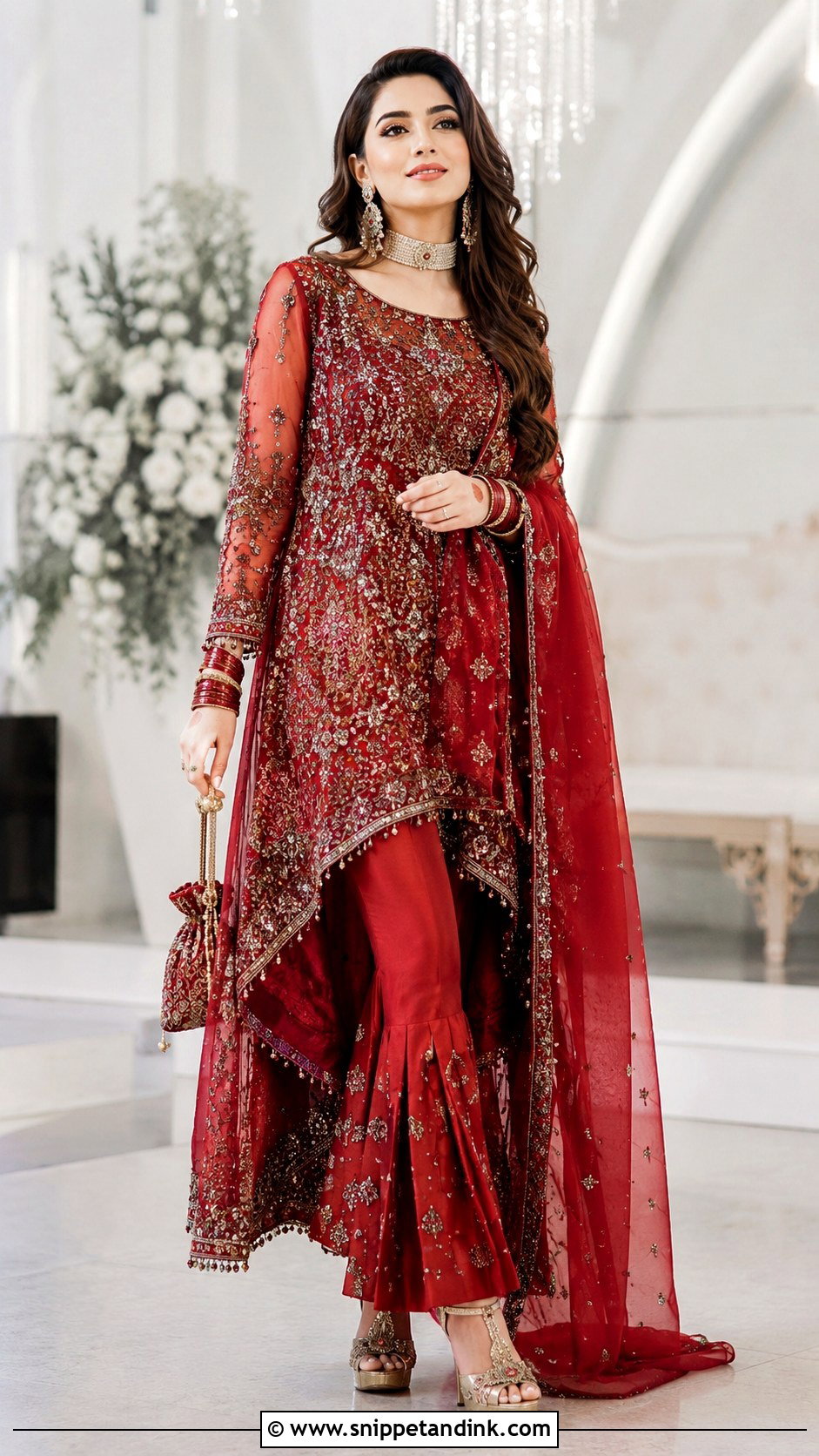
The high-low hemline is shorter at the front and drops toward the calves or ankles at the back, which shows off the trousers while keeping a sense of length. Cigarette pants, a narrow sharara or softly flared trousers all work underneath. Emphasise the curved hem, neckline and sleeves with detailed work, and drape a sheer red dupatta over one shoulder so the shape stays visible. Statement earrings, a delicate choker, bangles, a small potli and ornate heels finish it. Keep the front hem long enough that you’re comfortable sitting. I’d save this cut for a reception, a civil ceremony or a smaller modern celebration rather than a long religious ceremony.
20. Red Bridal Cape Suit
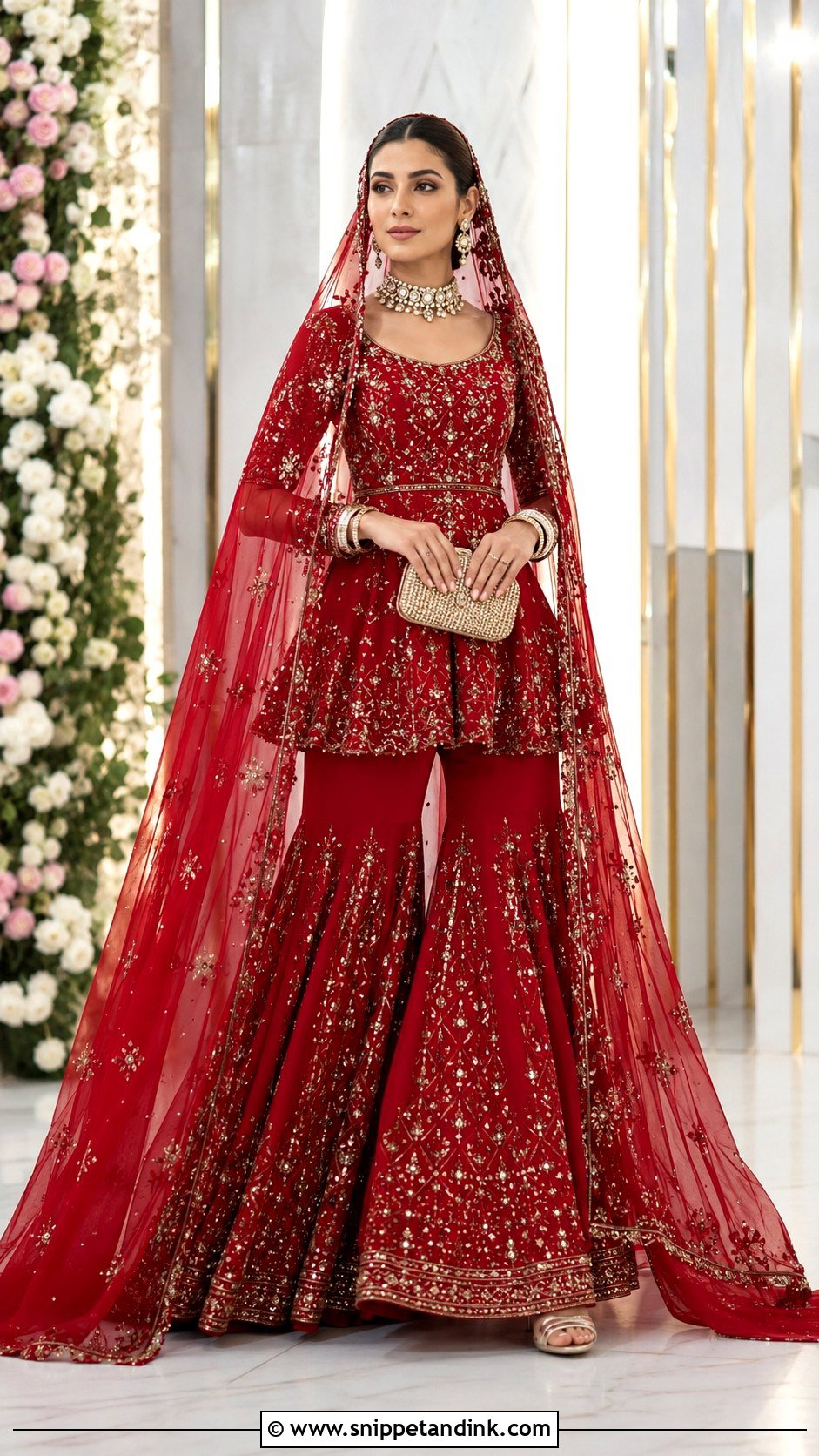
Some brides simply don’t want to spend the day managing a pinned shoulder dupatta, and a cape solves that. Wear a fitted sleeveless kurta or peplum top with straight pants, palazzos or a flared sharara, then layer a sheer embroidered cape that ends at the elbows, knees or floor. Gold motifs at the border frame the body and add formality. A sleek choker, drop earrings, bangles, an embellished clutch and heeled sandals complete it. If your ceremony needs a covered head, add a detachable veil for that part. Keep the inner pieces close-fitting so nothing bunches beneath the cape.
How Heavy Is Too Heavy for a Long Ceremony
A bridal suit gets judged on the hanger, but you wear it for hours, often sitting cross-legged on the floor, standing for photographs, then dancing. Heavy zardozi, a velvet kameez and a bordered net dupatta together can feel like carrying a bag of shopping on your shoulders by the evening. I ask brides to wear the finished suit at home for an hour, sitting on the floor at least once, before the wedding week.
- For a floor-seated ceremony, choose a salwar or sharara with enough room at the knee to fold your legs without strain.
- In summer, lighter fabrics with a cotton lining matter more than how heavy the work looks.
- Keep a soft cotton slip under heavily embroidered kameez fronts to stop scratching.
- Hand someone you trust a small kit with safety pins, bobby pins, a needle and red thread.
Sleeve Length Decides How Much Chooda and Mehndi Show
This is the detail brides forget until the photos come back. Full sleeves cover the chooda and most of the mehndi, and a stiff embroidered cuff will grind against bangles every time you move your hands. Three-quarter or elbow sleeves leave the forearms clear, so the chooda, kaleere and mehndi all show. If you love full sleeves, ask for a soft, unembellished cuff, or a fine sheer sleeve that lets the mehndi show through.
Red, Real Comfort and the Suit You Can Sit In
One colour, twenty very different outfits. Start with the silhouette that suits your ceremony and your body, then build the fabric, embroidery, dupatta, jewellery and shoes around it as one look. Heavy embellishment is not the only way to look bridal; fine tailoring, a rich red and a well-thought-out drape can carry just as much presence. Do one full fitting with your real shoes, jewellery and dupatta, and walk, sit and lift your arms in it. If it still feels like you after that, you’ve found it.
You'll Like These Ideas:




Leave a Reply