
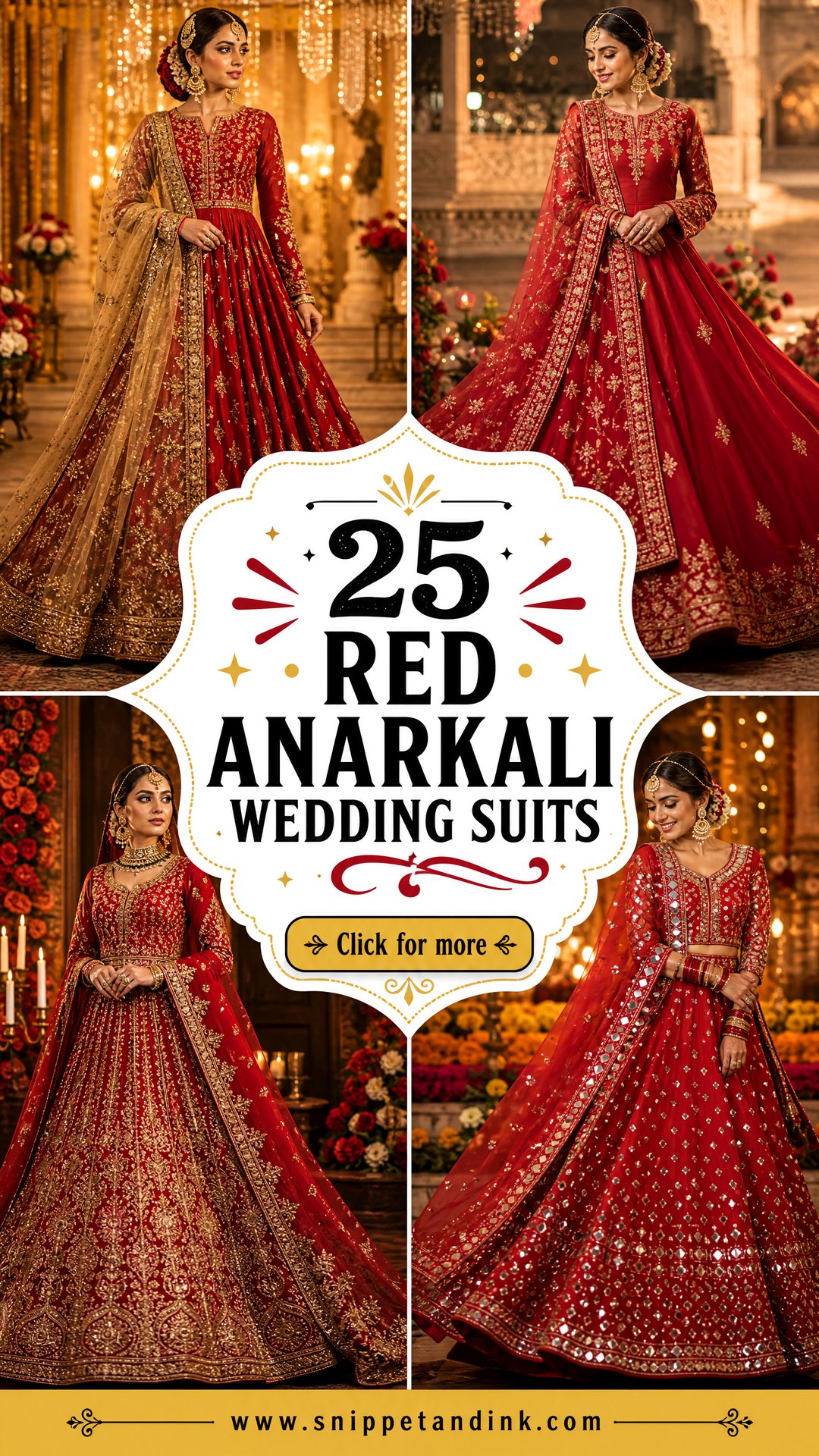
A red Anarkali does something a lehenga can’t: it moves as one piece from the shoulder to the floor, so you get the flare of a skirt with the ease of a single garment. The Red Anarkali wedding suits I style range from floor-length velvet for a winter reception to light georgette for a long daytime ceremony, with jackets, palazzos, shararas, mirror work and zari in between. Below are 25 complete looks, each with the dupatta, shoes and jewellery I’d put with it, for brides, sisters and guests alike.
Orange-Red, Blue-Red or Maroon for Your Skin
Red isn’t one colour. Before I look at embroidery, I hold three red swatches under a client’s face in daylight: a warm orange-red, a true or blue-based red, and a deep maroon. One of them almost always makes the skin look brighter and the others make it look tired.
- Warm, golden undertones usually glow in orange-reds, rust-reds and reds with gold zari.
- Cool, pink undertones often look best in blue-based reds like cherry or crimson, with silver or kundan.
- Deep skin tones carry rich, saturated reds and maroon beautifully; pale pastel-reds can look flat.
- If you’re unsure, maroon is the most forgiving and works on almost everyone.
Check the colour in the venue light too. Warm indoor lighting pushes red toward orange, and some reds look almost brown on camera in dim halls.
1. Red Floor Length Anarkali Suit With Gold Dupatta
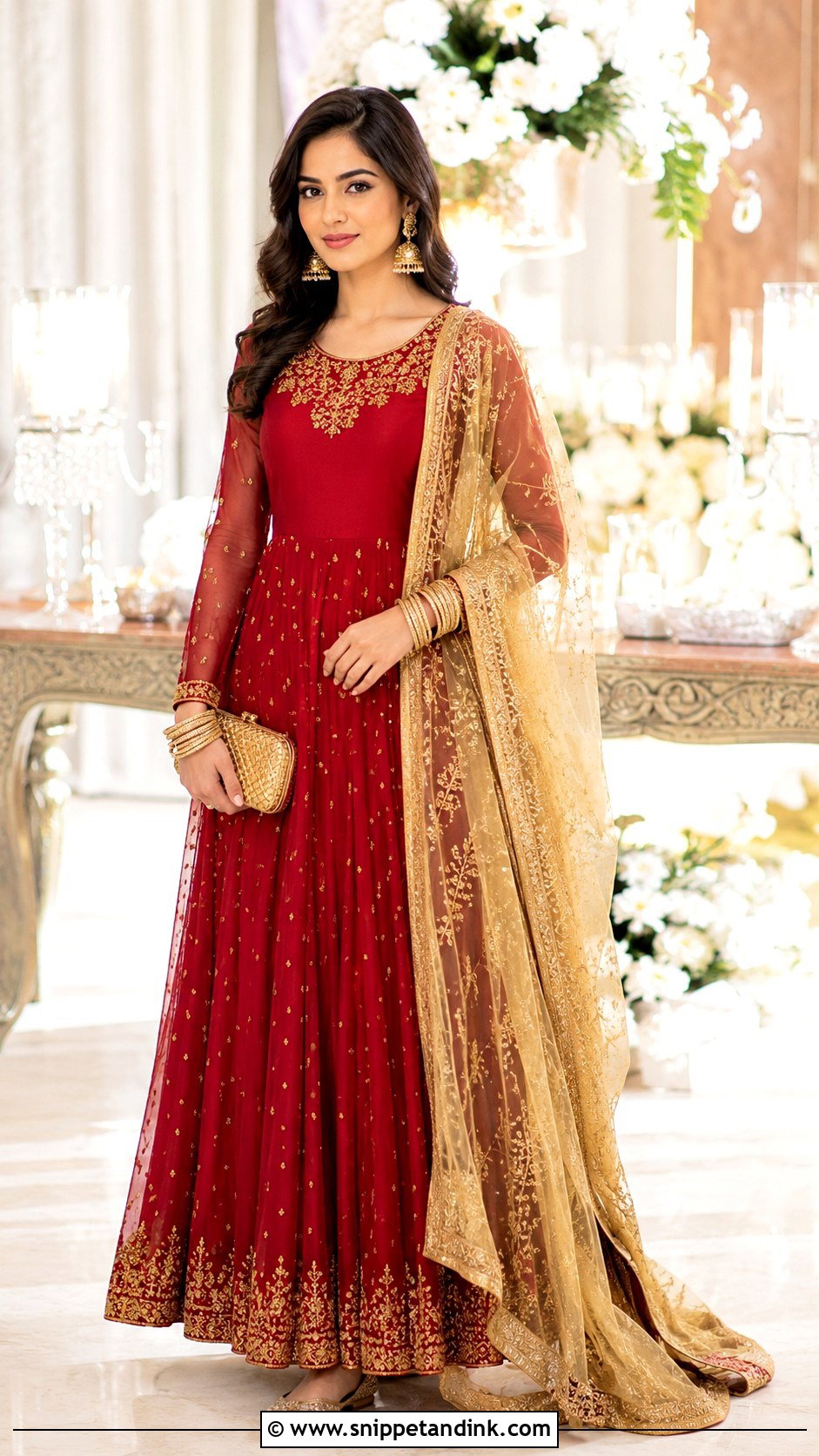
Floor length is the classic, and the flare only falls properly when the bodice fits snugly and the pleats start right at the natural waist. I always hem it with the actual shoes on; a quarter inch too long and you’ll step on the front panel every time you climb stairs. The gold dupatta finishes it. Gold jhumkas, a slim bangle stack and embroidered juttis are enough, and if the hem is heavily worked, keep the neck bare. Receptions and evening family weddings suit it best.
2. Red Velvet Anarkali Suit With Churidar
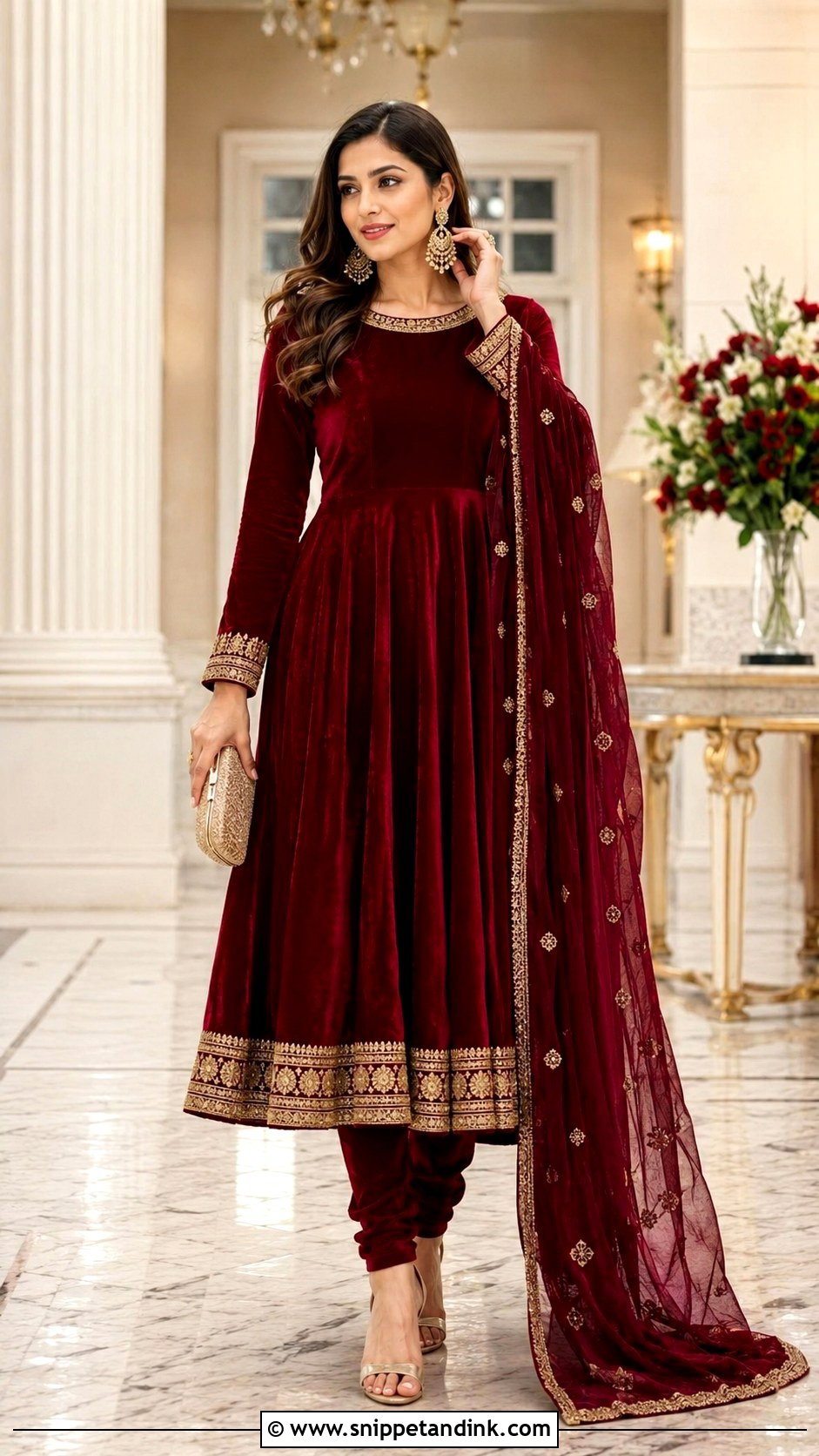
Velvet is warm, so I keep it for winter evenings and air-conditioned halls. Because the pile already looks rich, gold zari at the neckline, cuffs and hem is plenty. A matching or deep maroon dupatta gives a tone-on-tone finish, and churidar keeps the line clean beneath a heavier flare. Kundan earrings, block heels and a compact clutch complete it. Velvet marks easily if you sit on it damp or crease it in a car, so carry it on a hanger, not folded.
3. Red Georgette Anarkali Suit With Embroidered Dupatta
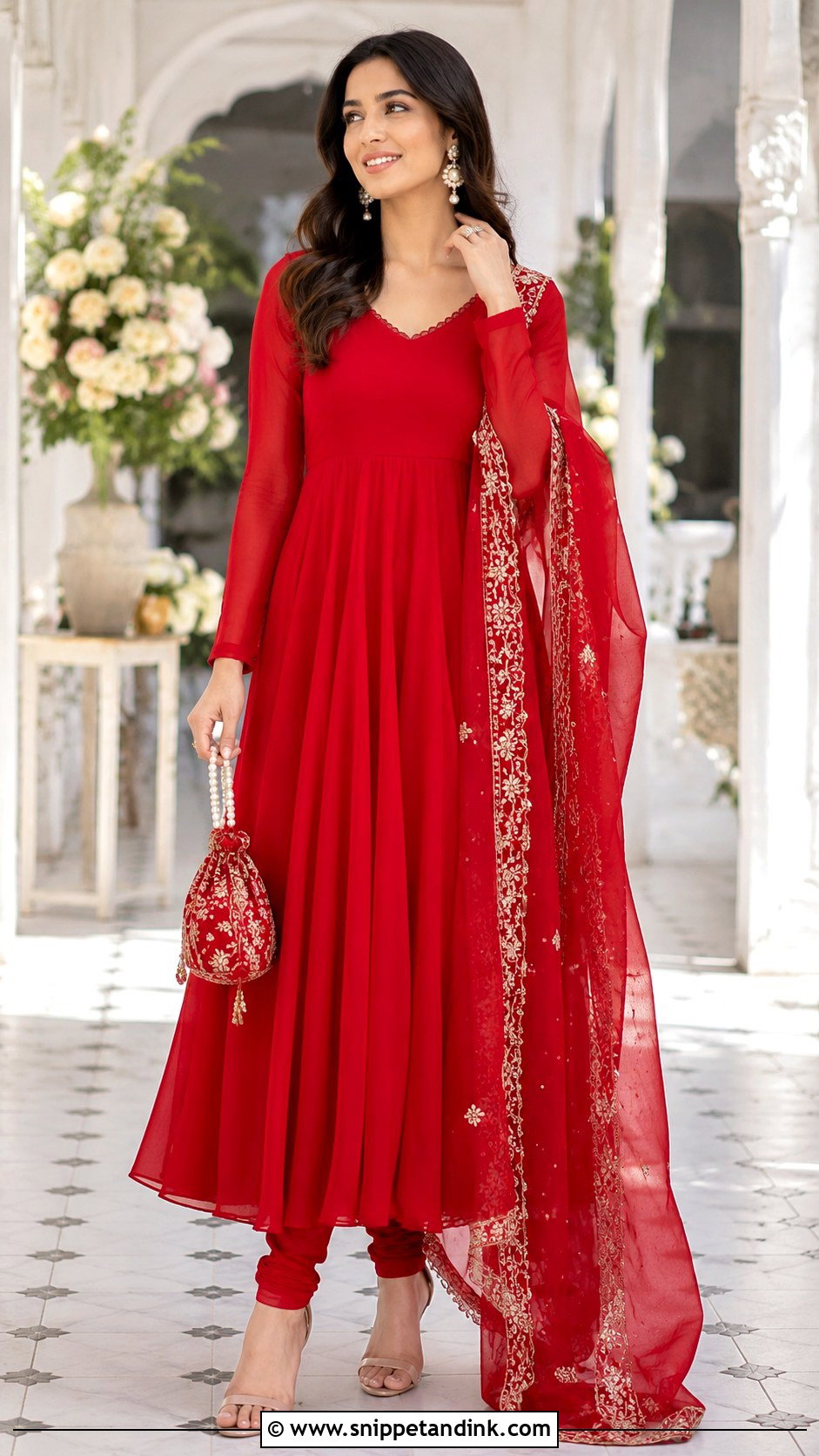
Georgette is my answer for long days and hot weather. It’s light, it drapes, and it doesn’t hold sweat the way heavier silk does. Soft sequin or thread embroidery on the bodice and a dupatta with a statement border keep it festive without bulk. Nude heels, pearl earrings and a small potli bag are enough. Unlined georgette can be sheer in daylight, so check for a good inner lining before buying.
4. Red Anarkali Suit With Palazzo Pants
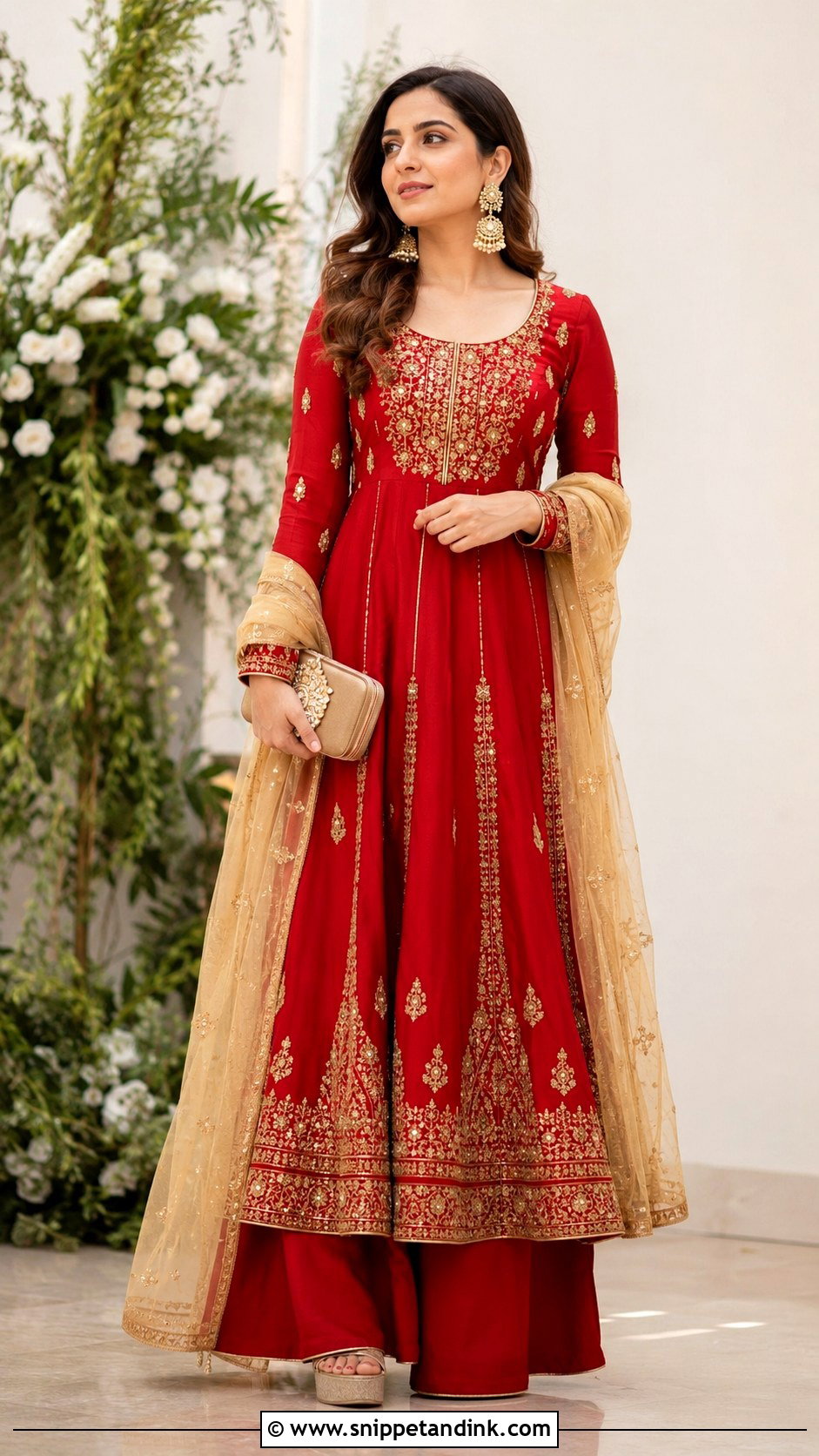
Palazzos give far more room than churidar, which is why older relatives and anyone who sits on the floor for rituals tend to love them. A calf or ankle-length Anarkali lets the wide leg show as you walk. Gold or champagne embroidery keeps it wedding-ready. Platform sandals, shoulder-grazing earrings and a structured clutch balance the volume. It’s comfortable for sangeet and daytime events where you’ll be moving around all day.
5. Red Anarkali Suit With Sharara Bottom
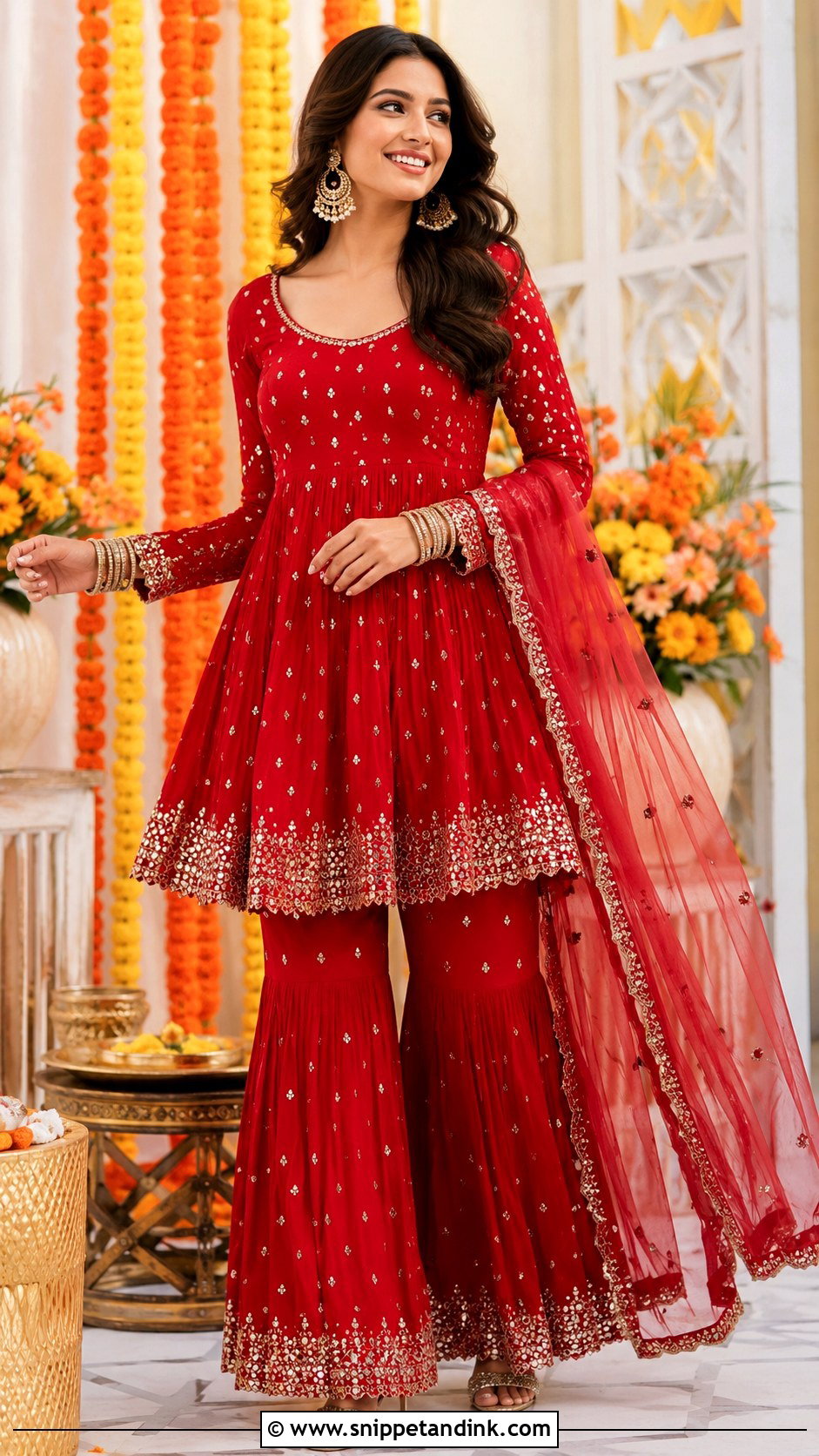
Length is the whole trick with this pairing. A red Anarkali suit with sharara bottom needs a shorter Anarkali or a high-low hem, or the sharara flare disappears underneath. Embroidery at the yoke and the sharara hem links the two pieces. A net or organza dupatta keeps it light. Embellished heels, chandbalis and a sleek bracelet suit mehendi, sangeet and family events.
6. Red Jacket Anarkali Suit For Wedding
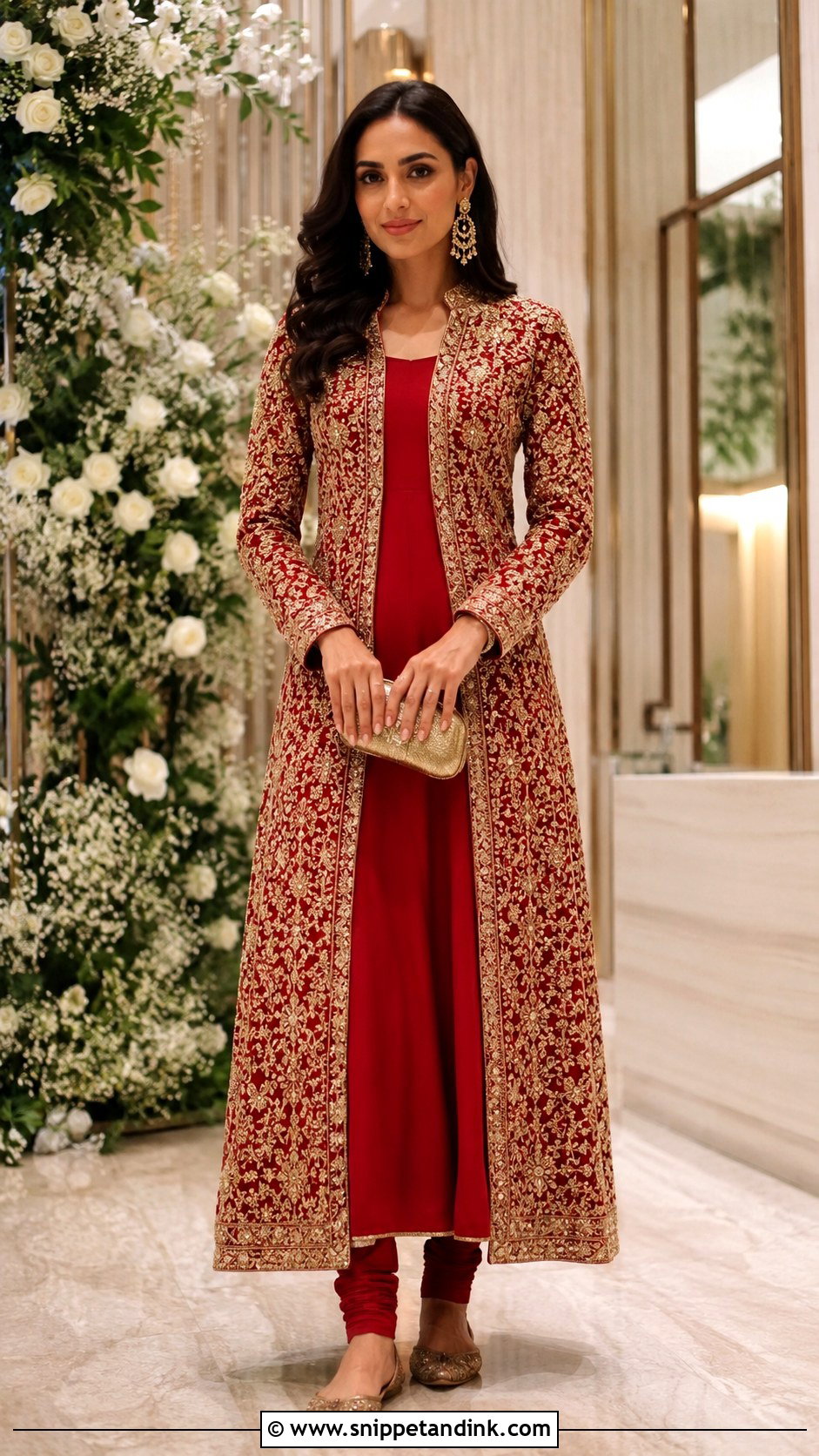
A jacket replaces the dupatta, which means one less thing to adjust all evening. Wear a plain red inner Anarkali under a long, sheer or structured gold embroidered jacket. If the jacket is busy, keep the bottom to churidar or slim pants. Pointed juttis, statement earrings and a metallic clutch suit receptions and cocktail evenings. I check the jacket armholes carefully; layered sleeves pull when you raise your arms if they’re cut too tight.
7. Red Silk Anarkali Suit With Zari Work
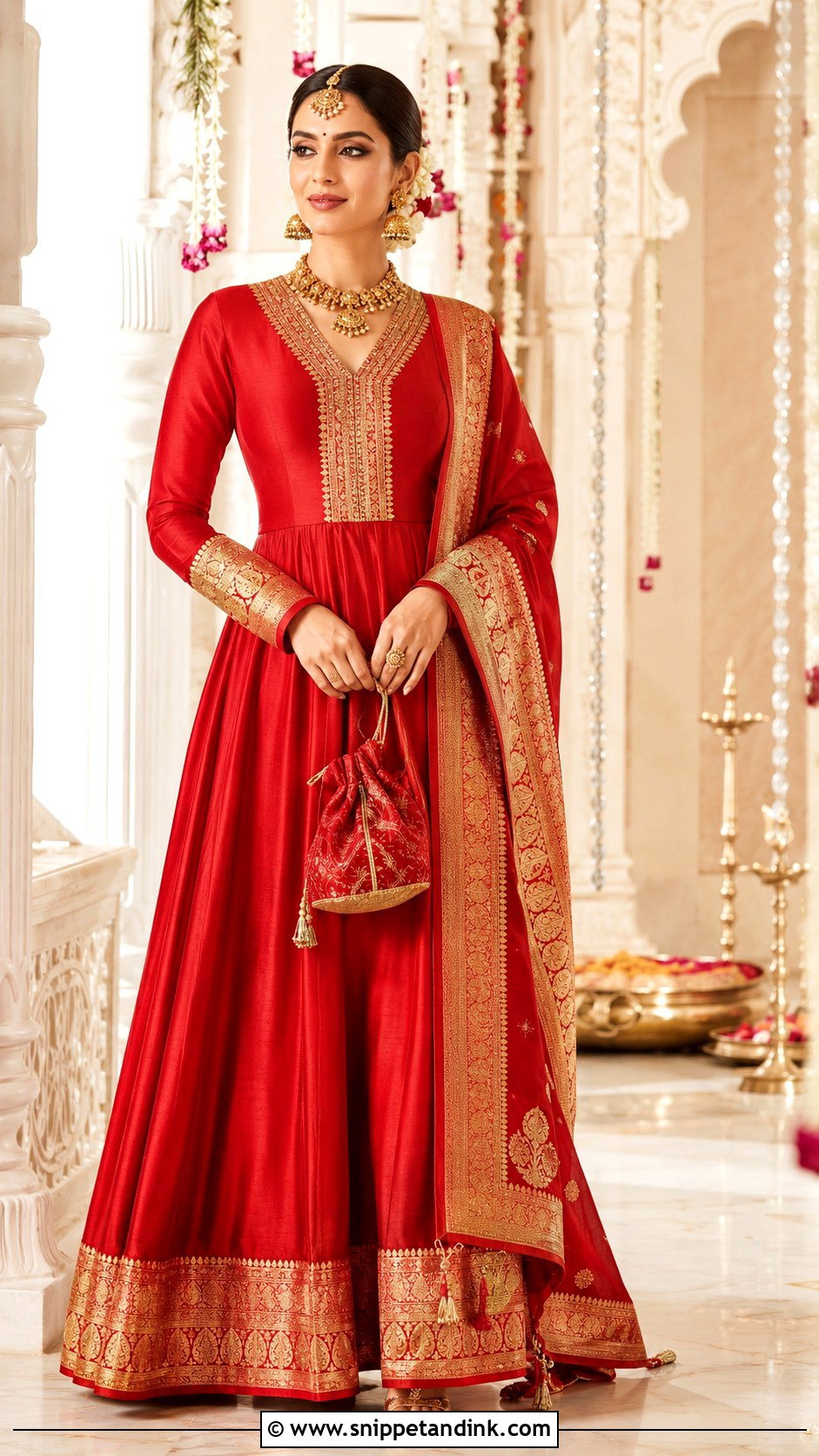
Silk holds the flare in shape far better than soft fabrics, so a silk Anarkali stands out rather than clinging. Zari motifs on the neckline, sleeves and border wear better than all-over work, which can feel stiff and heavy. Add a matching silk or organza dupatta with a gold border, temple jewellery, gold sandals and a potli bag. It suits formal ceremonies and family rituals where traditional dress is expected.
8. Red Net Anarkali Suit With Sequin Work
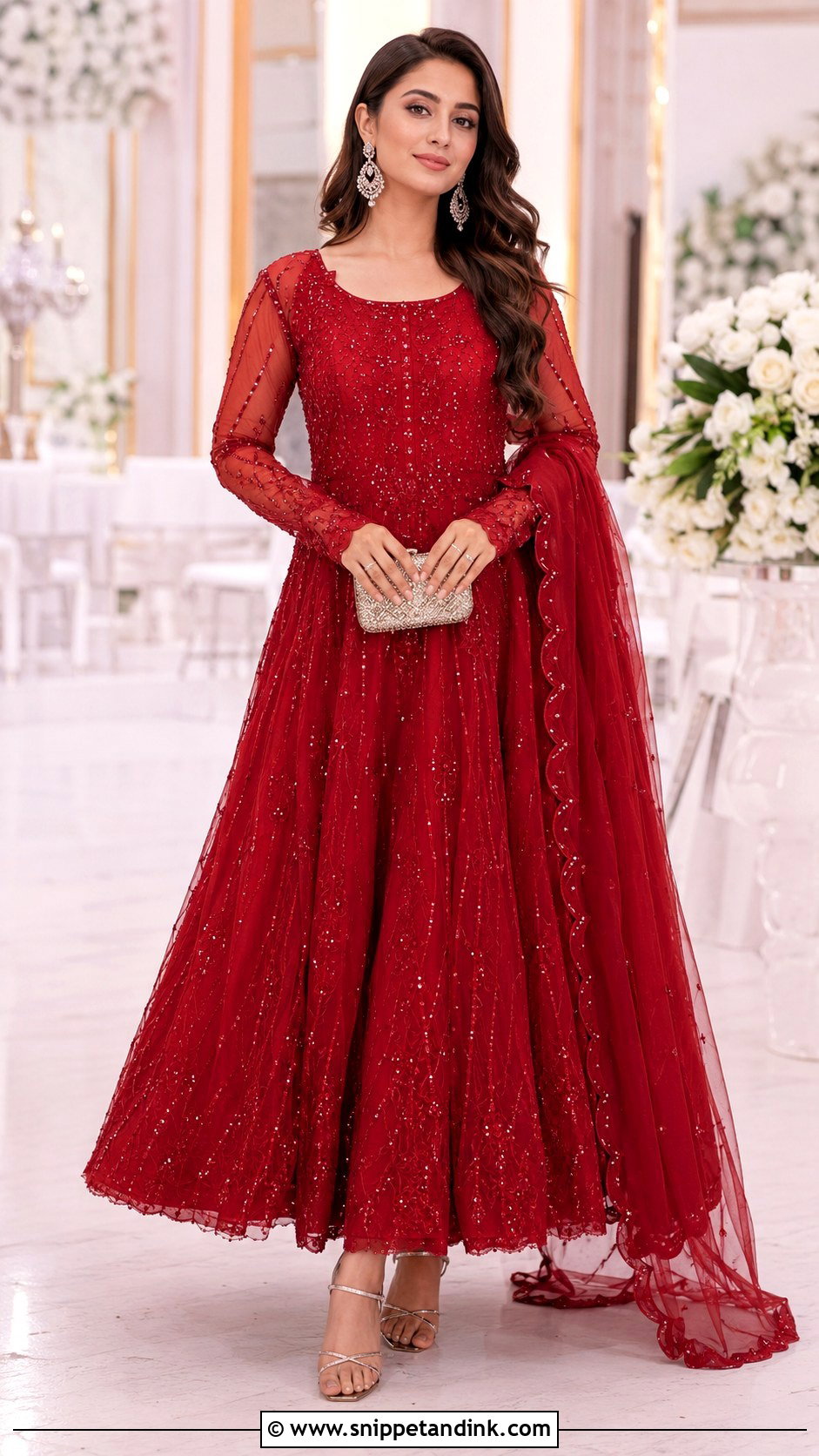
Net always needs a lining, and the lining decides how it feels. A soft cotton or crepe lining stops the sequinned net from scratching your arms through a long evening. Sequins on the bodice and sleeves catch light at receptions and sangeet nights. A soft net dupatta with a scalloped border, crystal earrings, metallic heels and a small clutch finish the look without tipping into flashy.
9. Red Anarkali Suit With Organza Dupatta
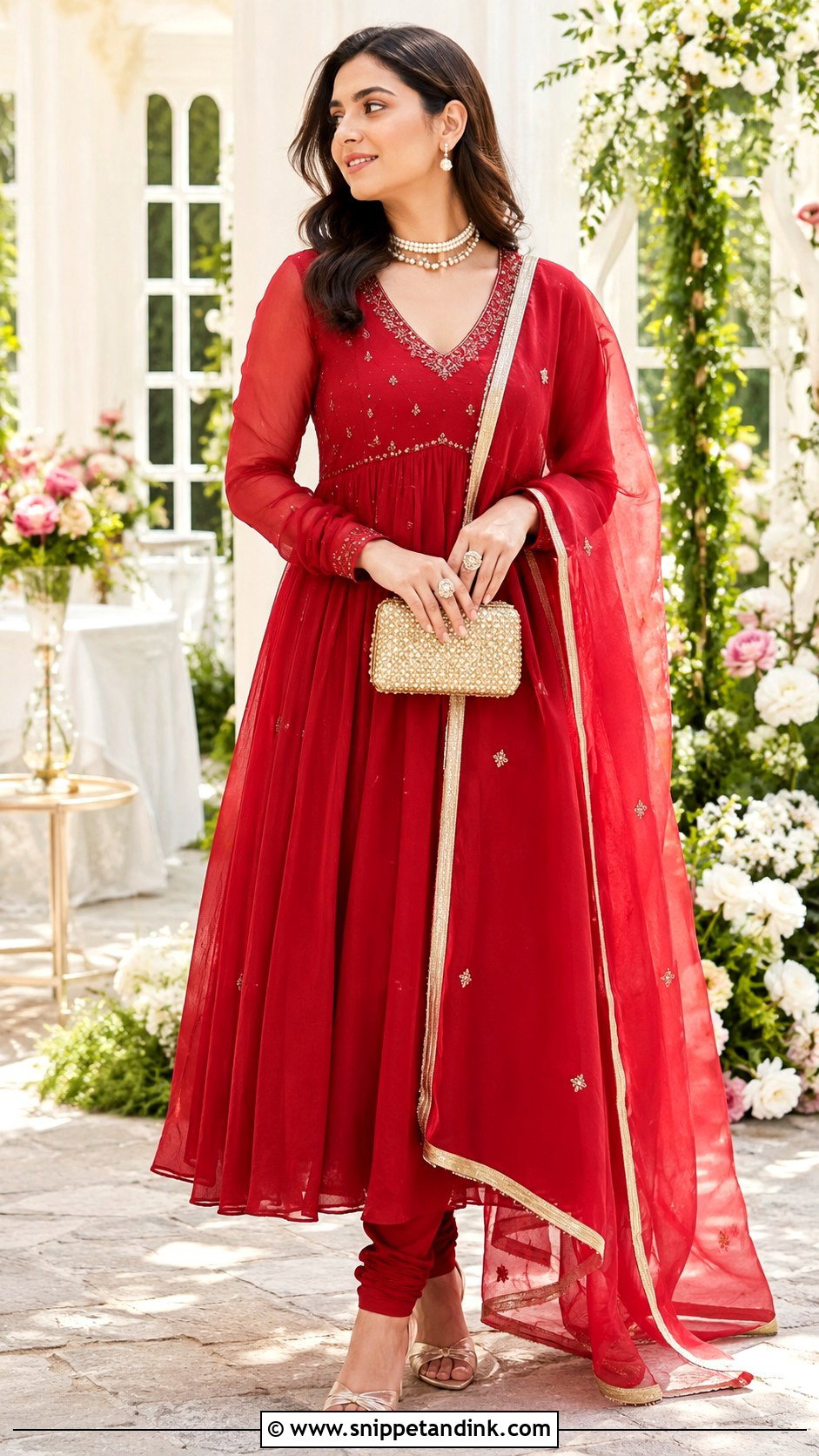
Organza has a slight crispness that lifts the whole suit. A red Anarkali with subtle thread embroidery or a small buta pattern, paired with an organza dupatta bordered in gold, looks fresh for day events and engagements. Pearl jewellery, kitten heels and a soft gold clutch complete it. Drape the dupatta over one shoulder and pin it at the back; organza is slippery and slides off otherwise.
10. Red Anarkali Suit With Heavy Embroidery
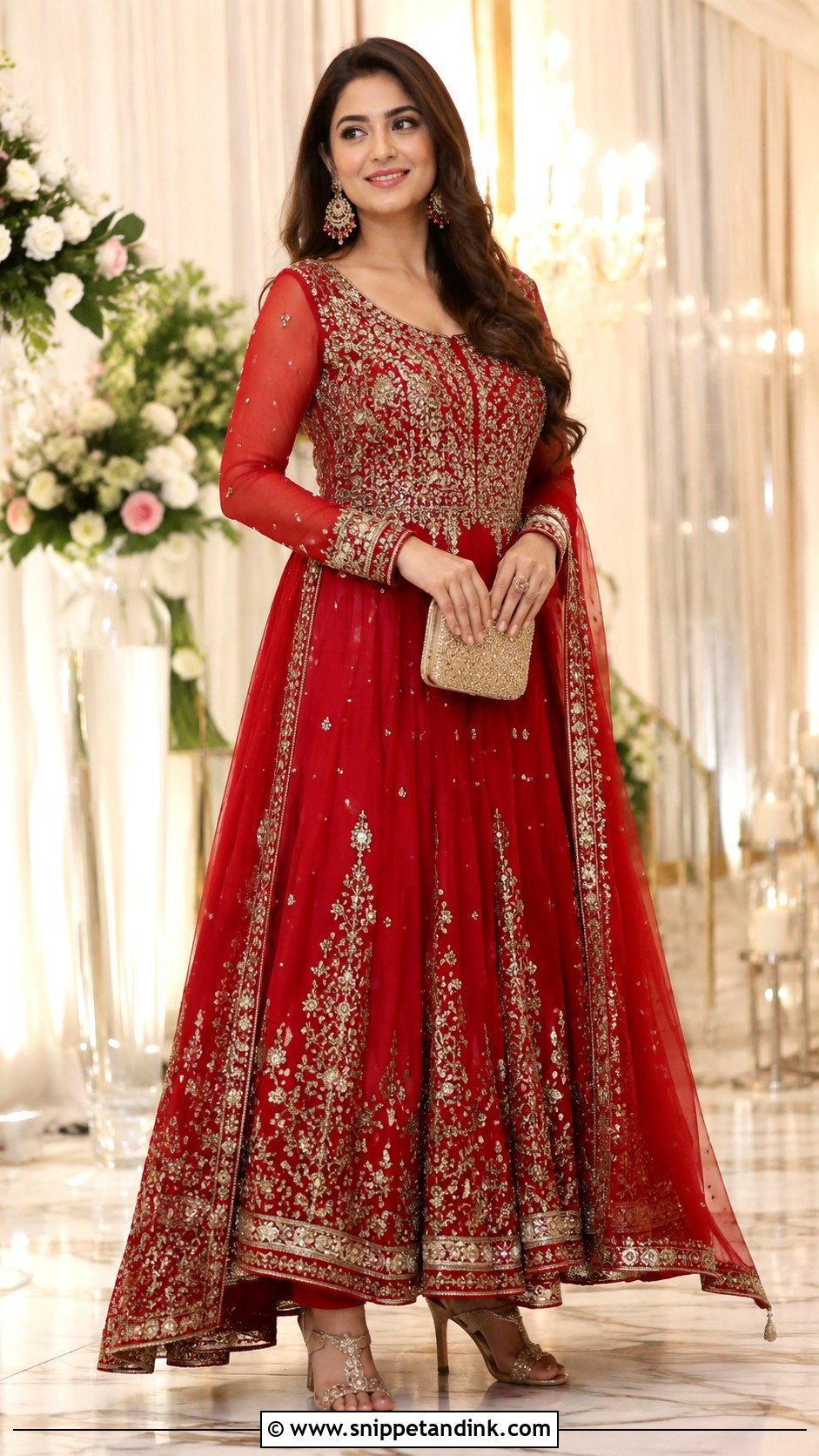
Heavy zardozi, zari, mirror or thread work across the bodice, sleeves and hem makes the biggest impact, and it also adds real weight. When the Anarkali is heavy, go for a light dupatta, or your shoulders will ache by the end of the night. Statement earrings, a ring and embroidered heels are enough. Embroidery concentrated around the face and lower flare gives a royal effect and works well for close family weddings and grand receptions.
11. Red Anarkali Suit With Mirror Work
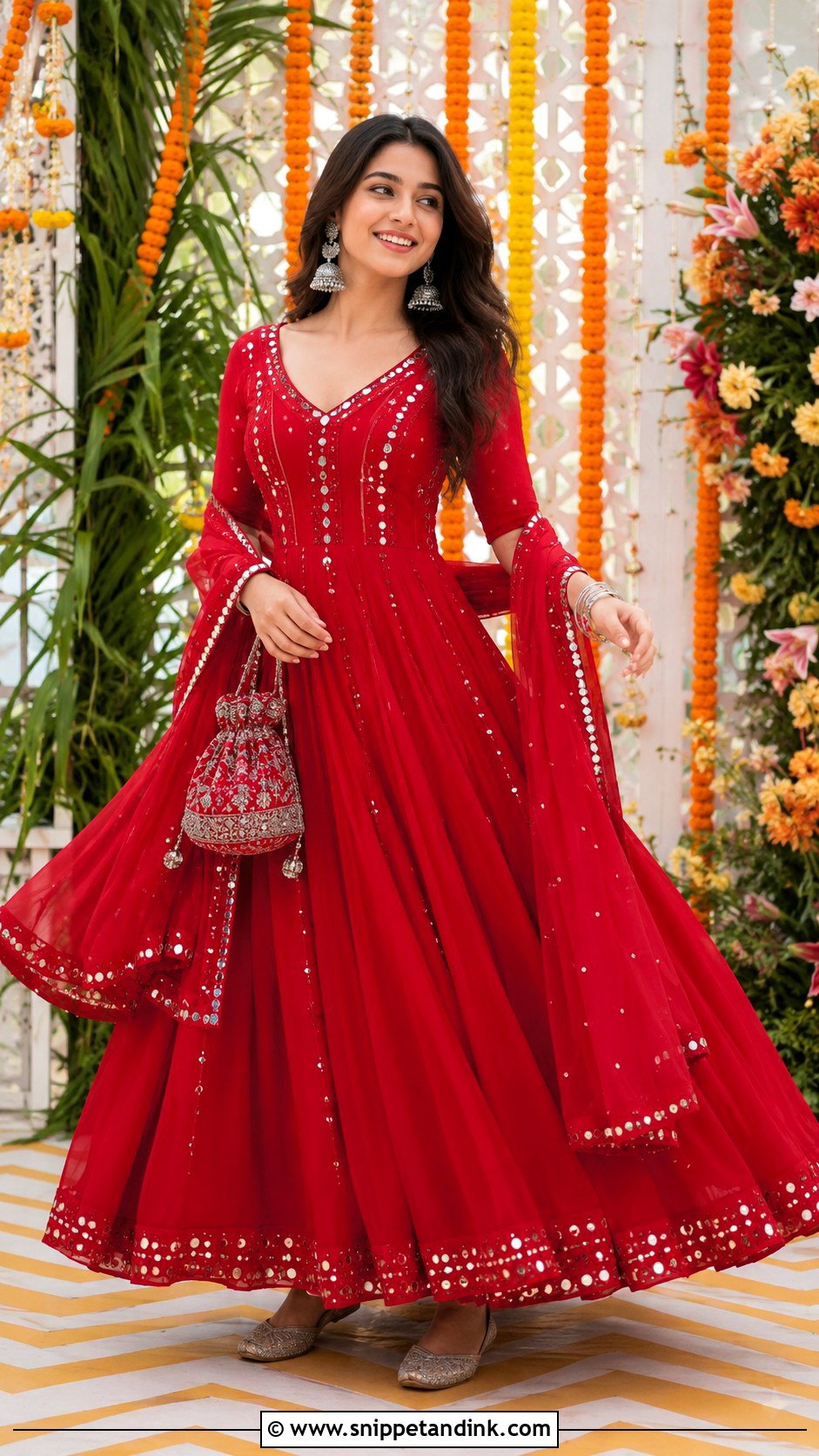
Mirror work reflects light without needing much metallic thread, so it feels bright but not formal. That’s why I put it on sangeet and mehendi outfits. Mirrors at the neckline, waist and hem with a lightweight dupatta let you dance freely. Silver jhumkas, bangles and embellished flats finish it. Large mirrors can catch on dupattas and hair; tiny ones are softer and snag less.
12. Red Anarkali Suit With Cape Dupatta
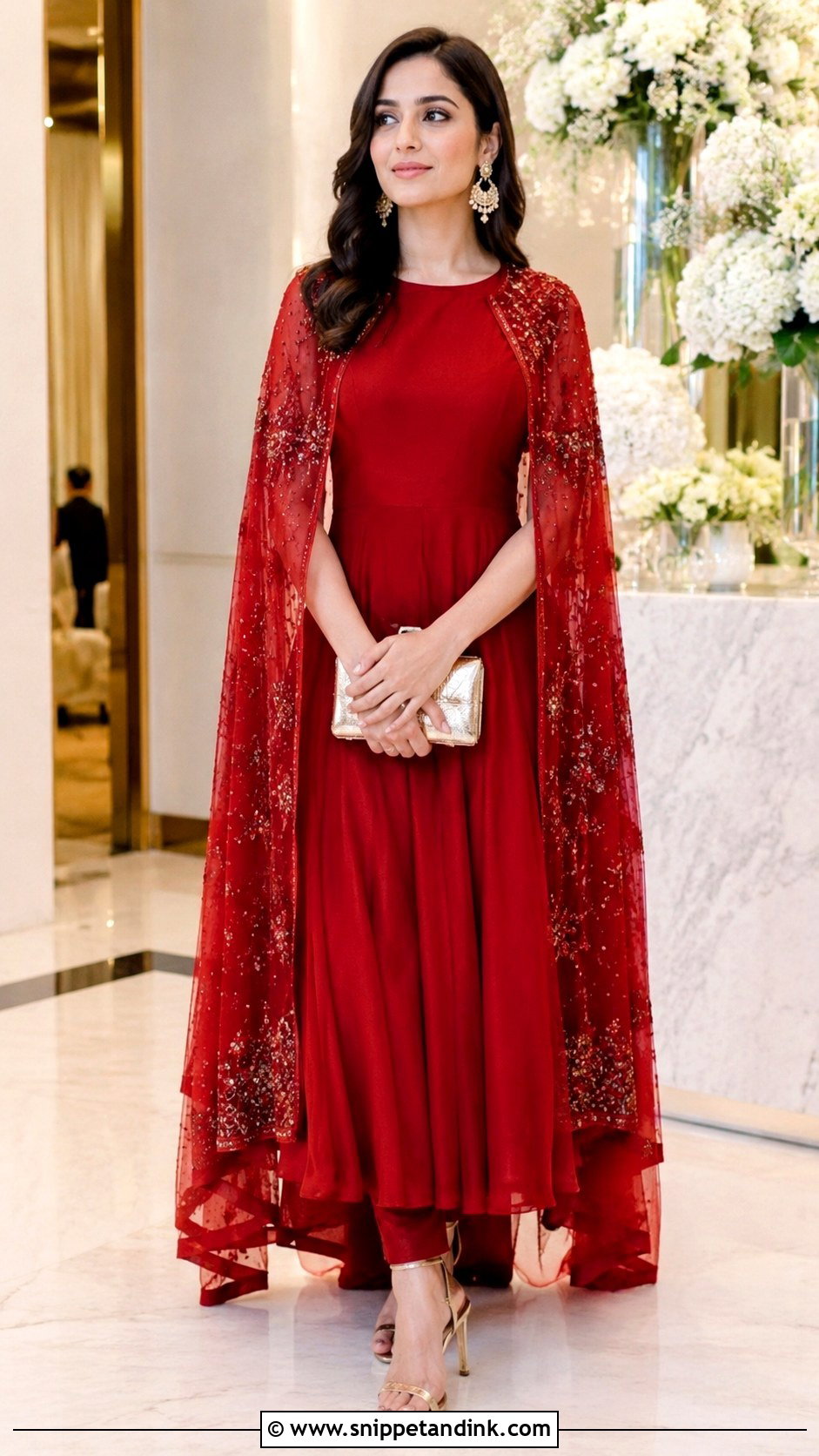
Managing a loose dupatta all evening is tiring. A sheer embroidered cape over a simple red Anarkali gives the same coverage and drama in one piece that stays put. Slim pants or churidar keep the bottom neat. High heels, drop earrings and a sleek clutch suit receptions and engagement parties. The cape frames the shoulders, so keep necklaces small to avoid tangling.
13. Red Anarkali Suit With Banarasi Dupatta
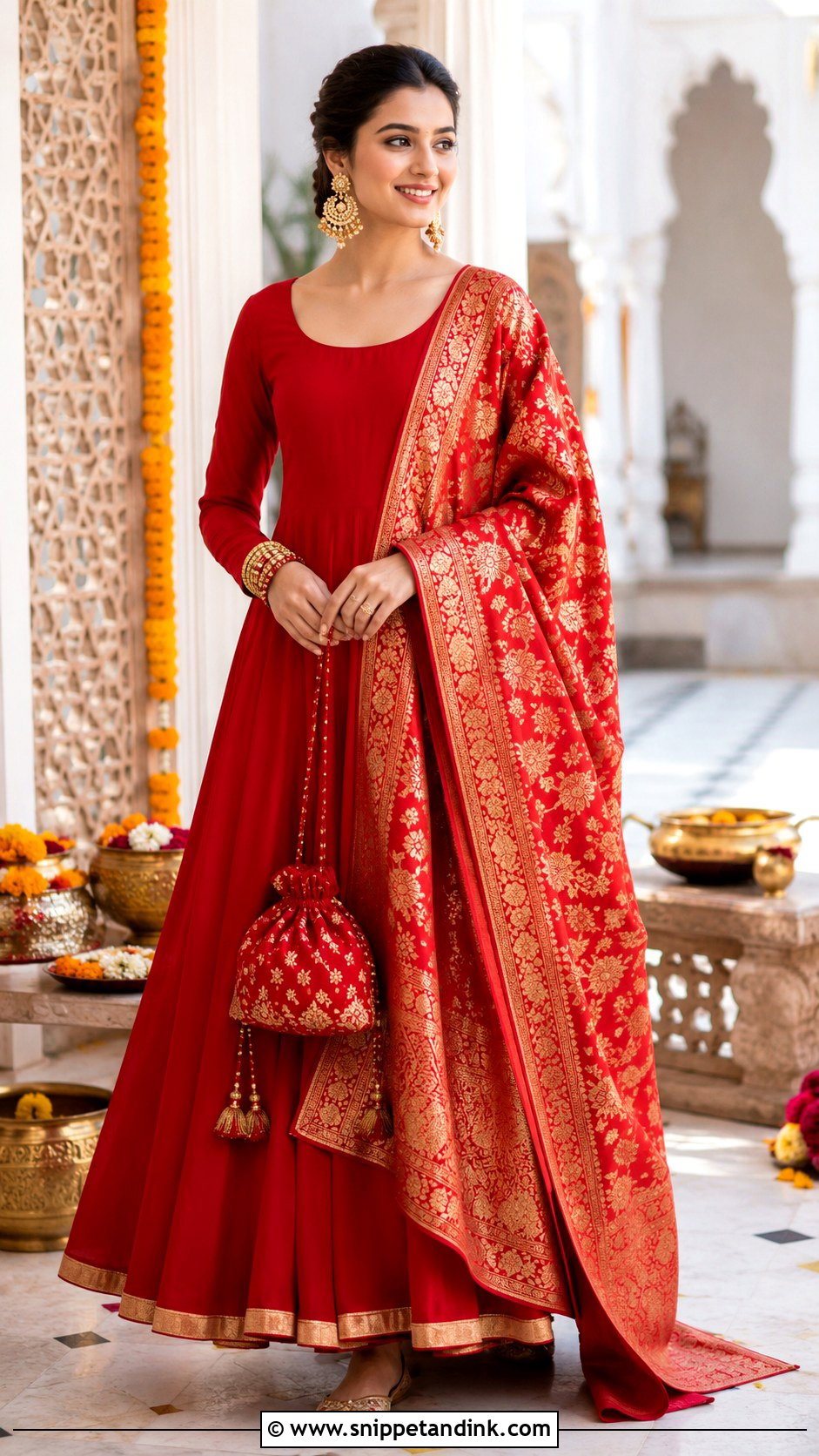
A plain red Anarkali becomes a wedding outfit the moment a rich Banarasi dupatta goes over it. The woven gold, red or maroon texture adds heritage weight without making the suit itself heavy. Kundan earrings, gold bangles and traditional juttis suit it. Keep the hair neat so the dupatta stays the focus. Banarasi silk is heavy, so pin it securely at the shoulder. Later, the same Anarkali can be restyled with lighter dupattas.
14. Red Anarkali Suit With Gota Patti Work
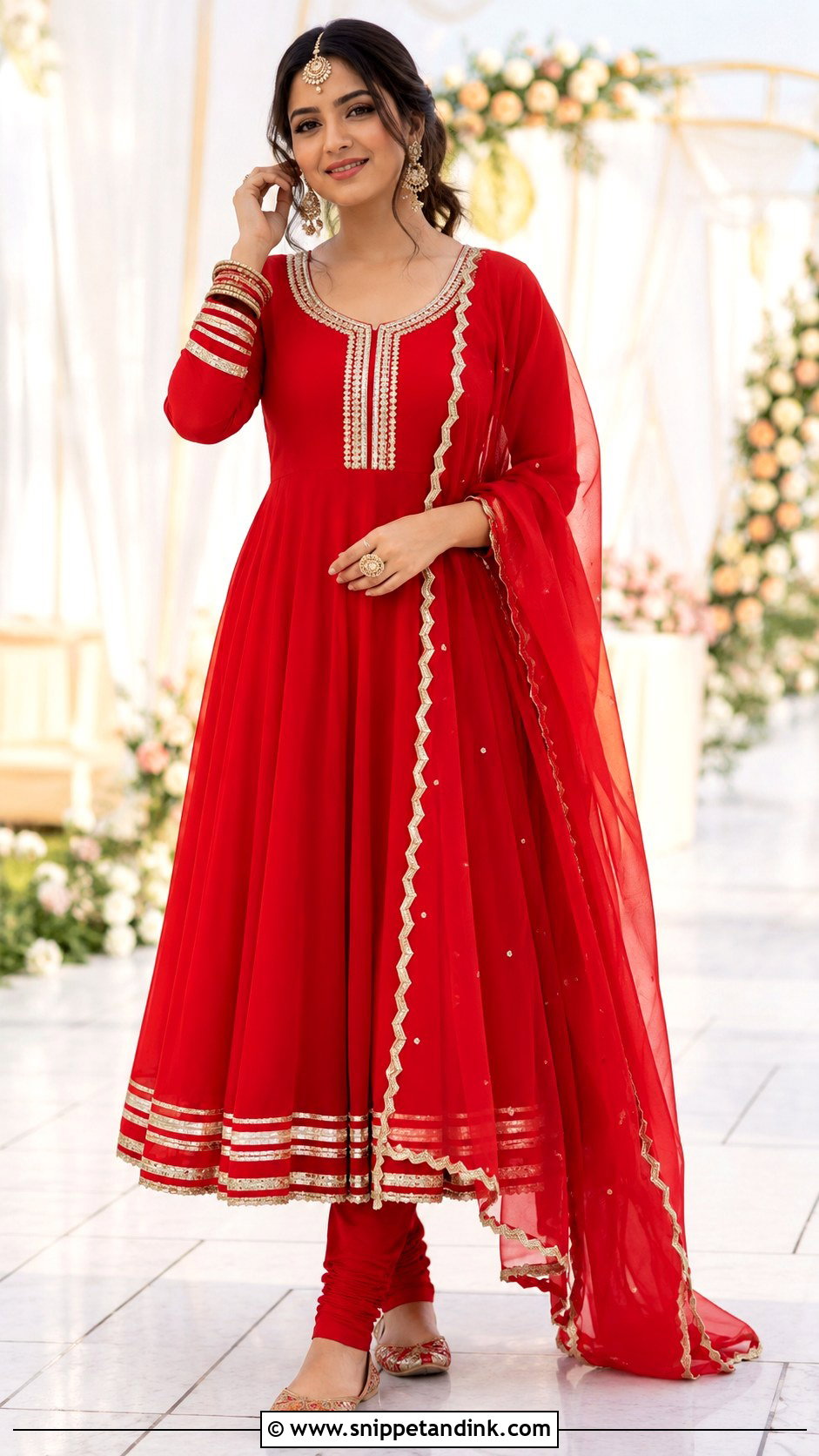
Gota patti is applied ribbon work in gold or silver, which makes it bright and reflective but much lighter than zardozi. A flared Anarkali with gota on the neckline, sleeves and dupatta border, matching churidar and embroidered juttis is comfortable for long events. Add a maang tikka for close family functions. Real gota tarnishes over time; store it wrapped in muslin to slow that down.
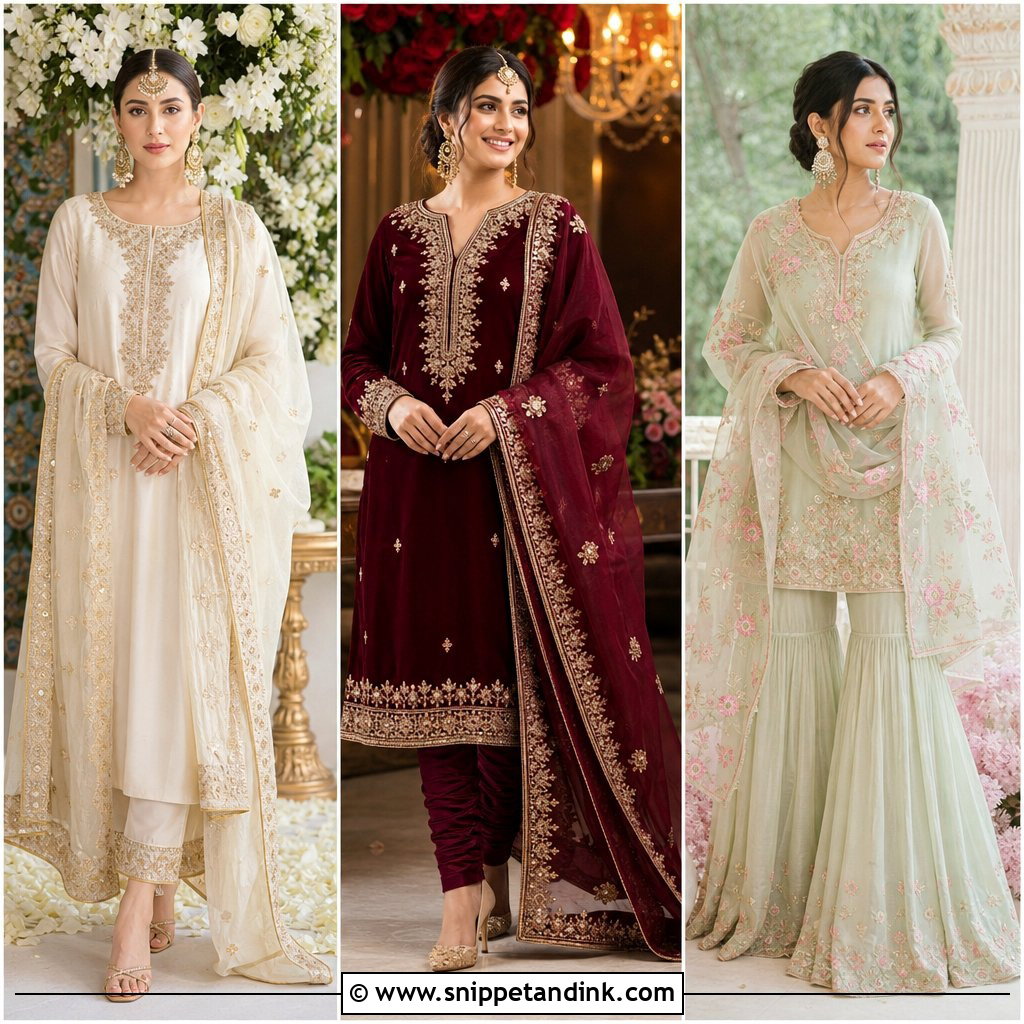
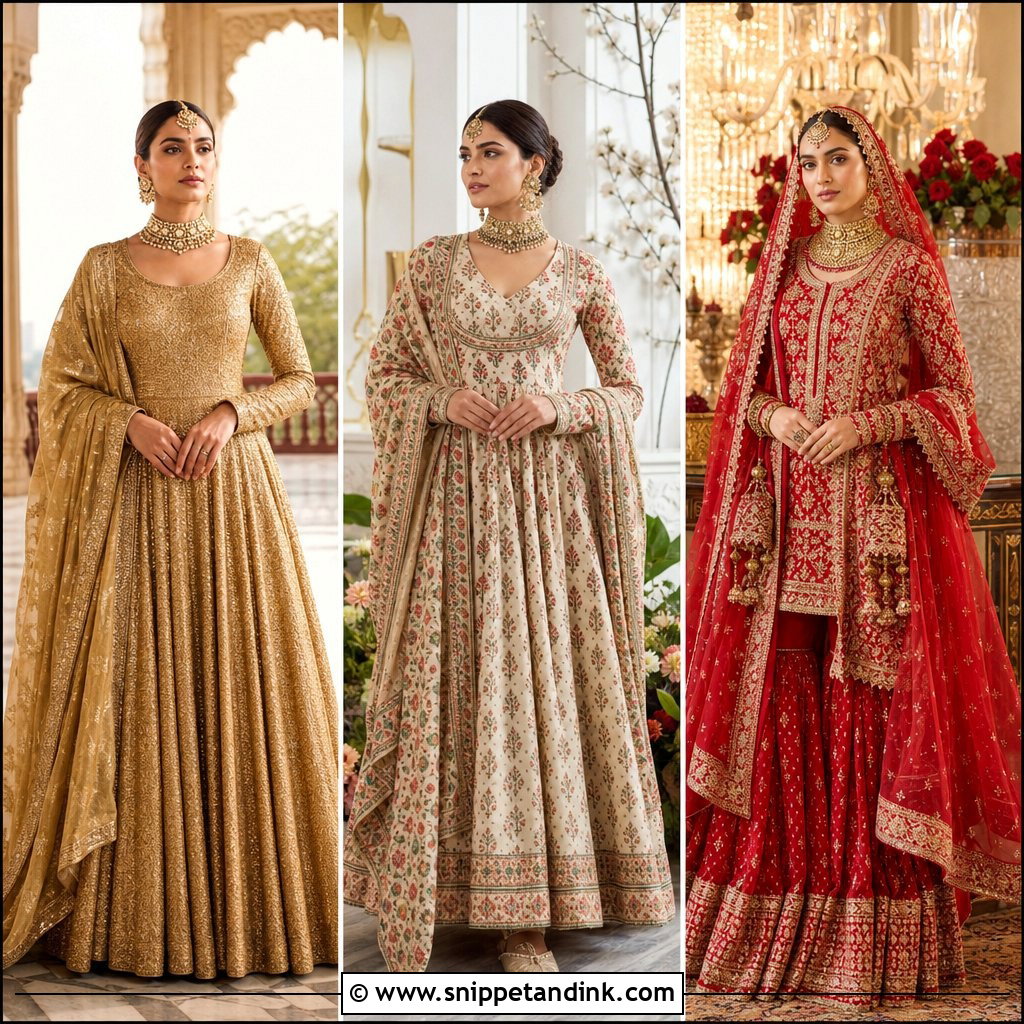
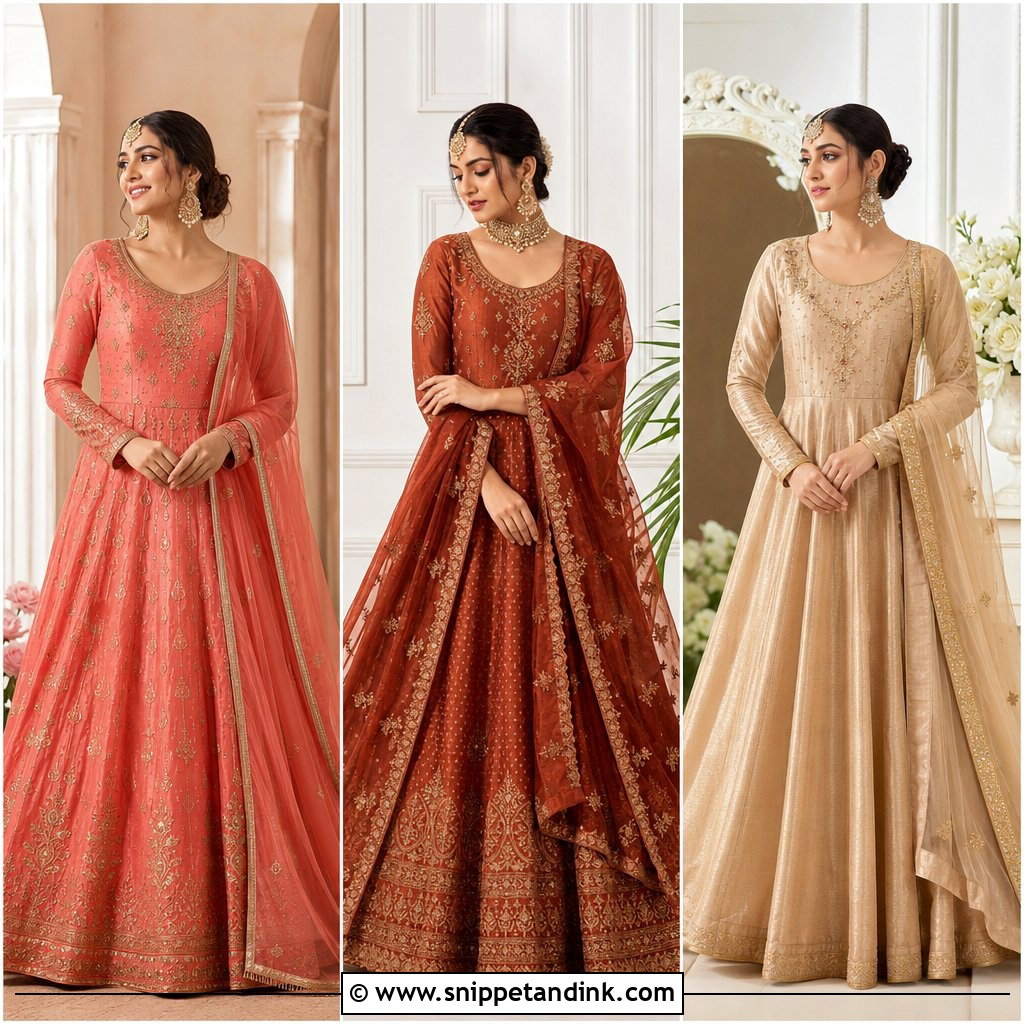
15. Red Anarkali Suit With Dupatta Belt
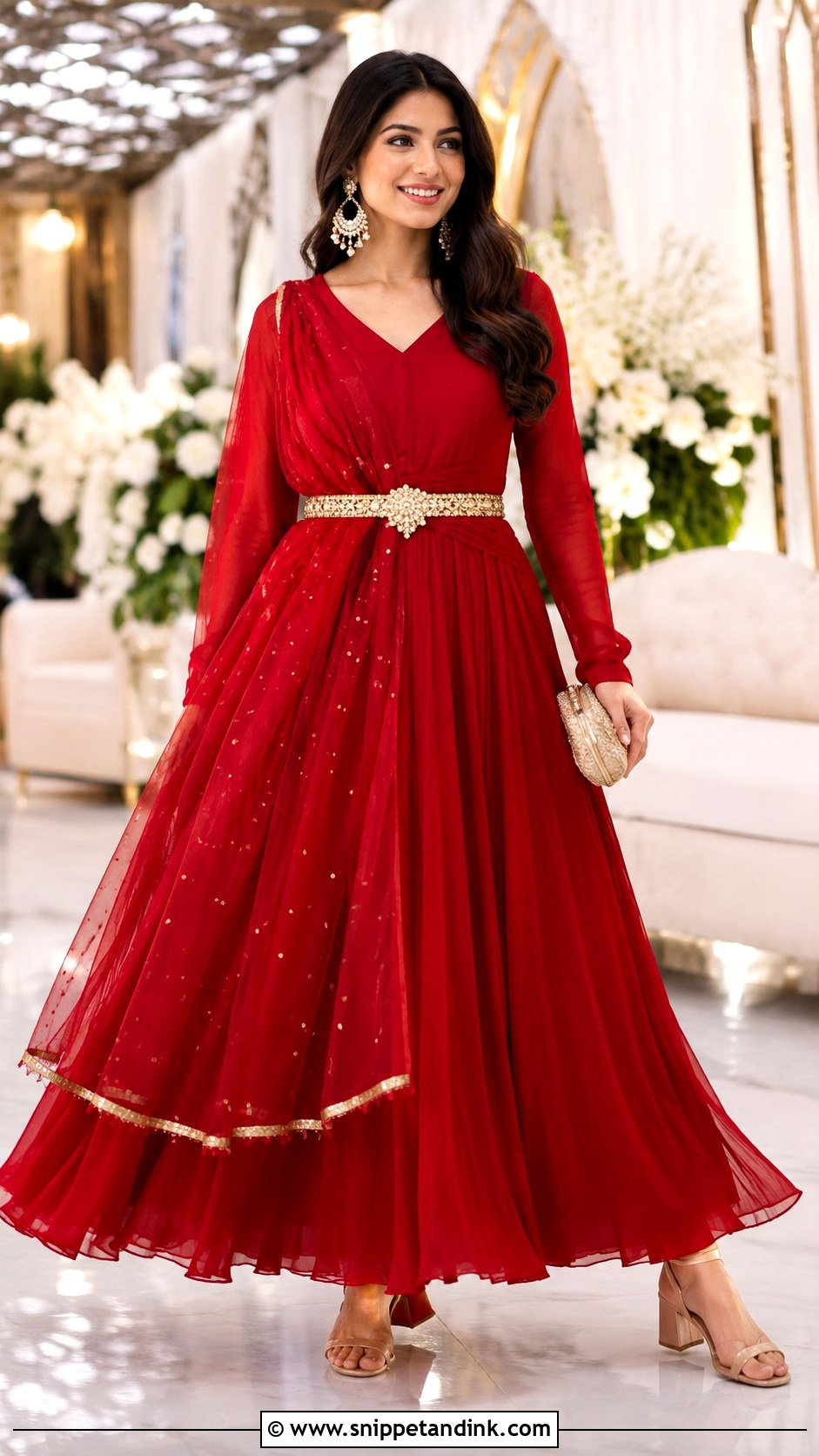
A belt keeps the dupatta secure and defines the waist, and the Anarkali flare looks sharper beneath it. Choose gold, embellished fabric or matching red embroidery. Light georgette or net sits smoothly under a belt; heavier silk bunches. Block heels, a clutch and statement earrings finish it. I like this for sangeet and receptions where you need both hands free.
16. Red Anarkali Suit With Long Sleeves
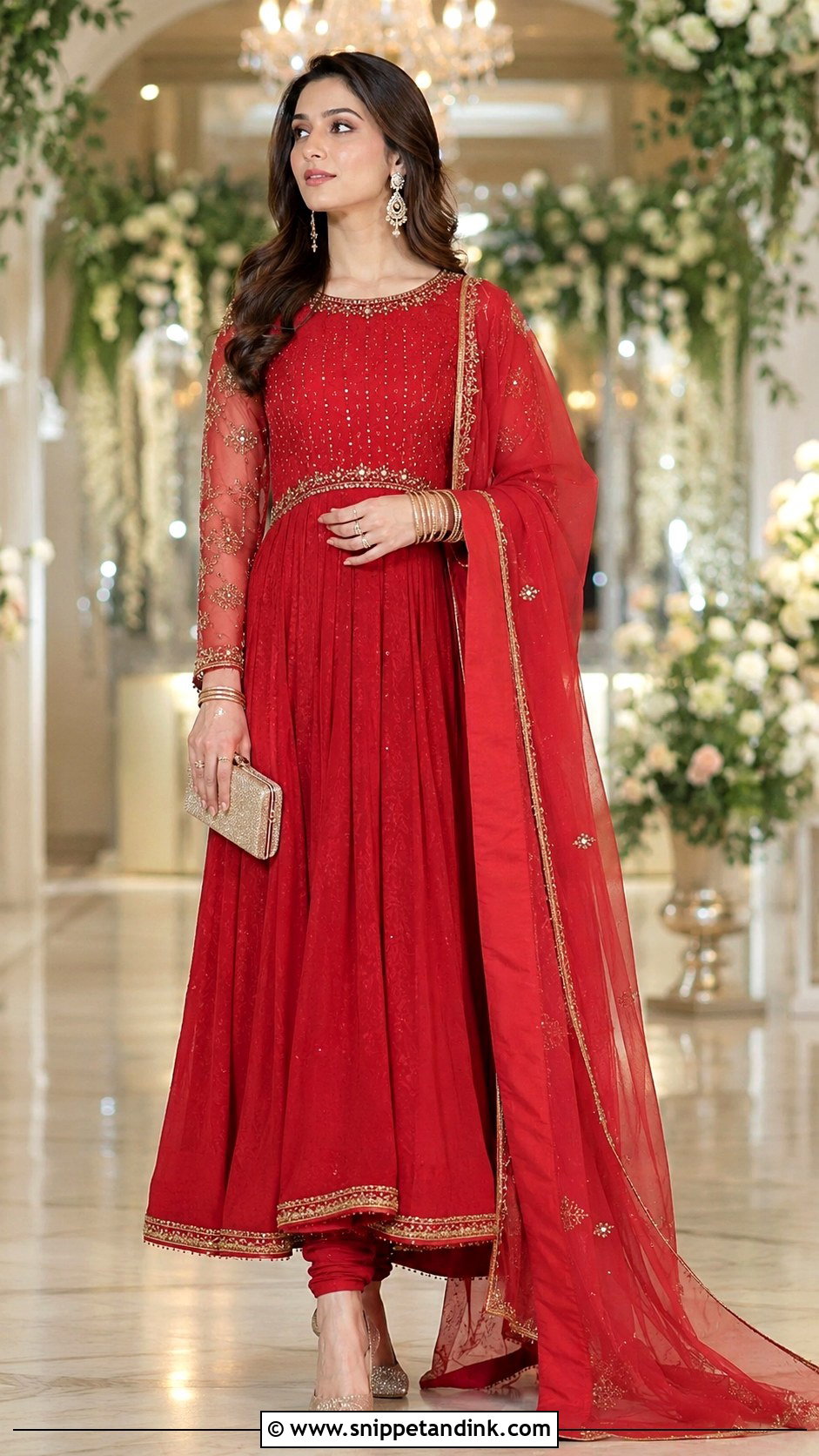
Long sleeves balance a wide flare from top to bottom. Sheer embroidered sleeves keep it light; velvet ones suit cold weather. A matching dupatta with a simple border, pointed heels, delicate bangles and face-framing earrings complete the look. Make sure the sleeves let you bend your elbow comfortably, especially if you’ll be eating or applying mehendi. It’s a good option for anyone wanting more coverage.
17. Red Anarkali Suit With V Neck
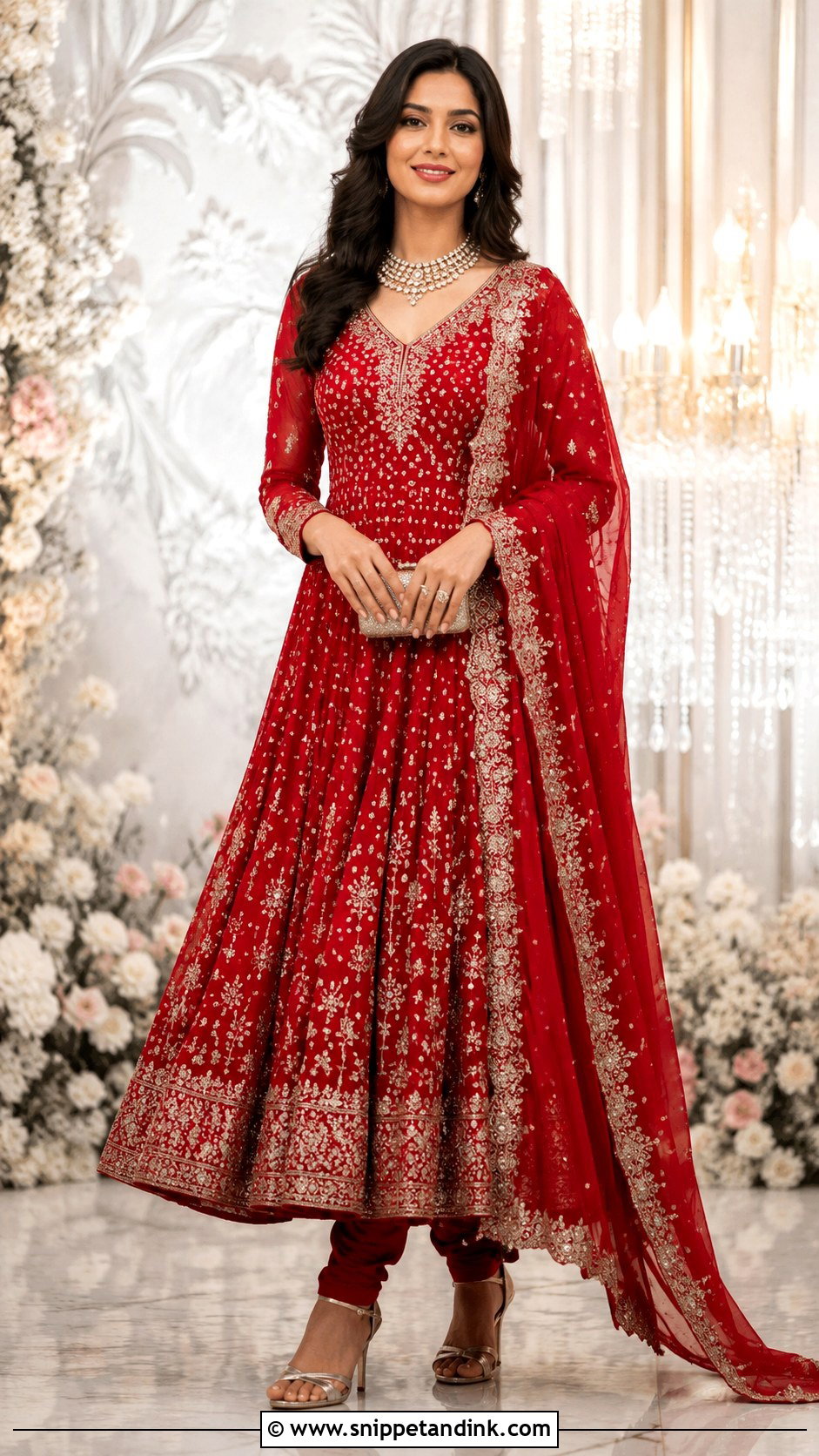
A V-neck elongates the neck and makes room for jewellery, a choker, pendant or layered kundan piece. Embroidery around the neckline makes the shape look deliberate. Churidar, metallic heels and a dupatta draped to one side work well. If the V is deep, balance it with longer sleeves or a heavier dupatta, and use a small safety pin at the point so it doesn’t shift when you lean forward.
18. Red Anarkali Suit With High Neck
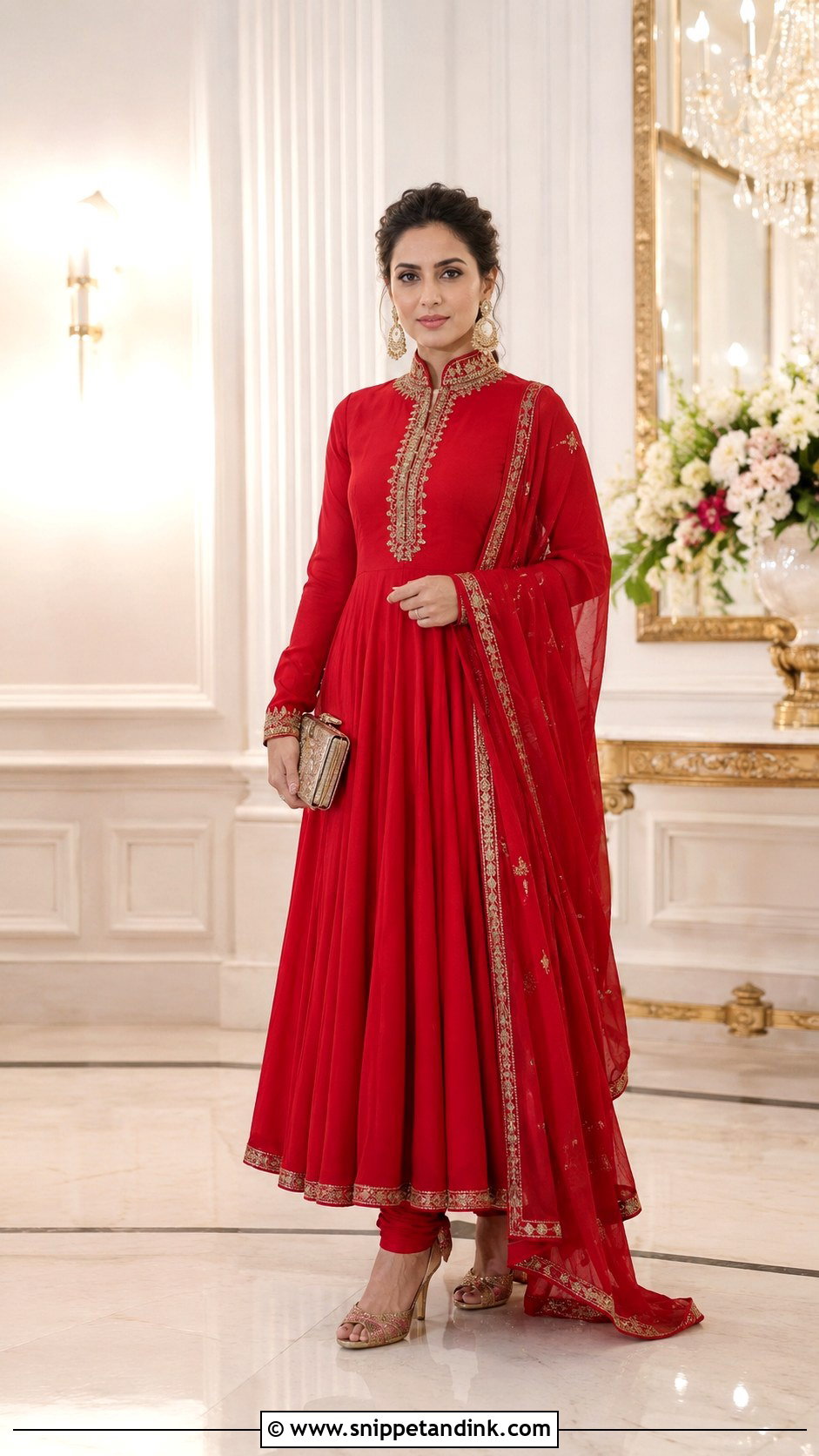
With a high neck, the collar becomes the jewellery. Zari, beadwork or thread embroidery there looks royal, so skip necklaces and wear bold earrings. A sleek bun, soft waves or a side part keeps the neckline visible. Churidar, embroidered heels and a structured clutch complete it. High necks feel warm, so they suit evening and winter functions better than an afternoon outdoors.
19. Red Anarkali Suit With Front Slit
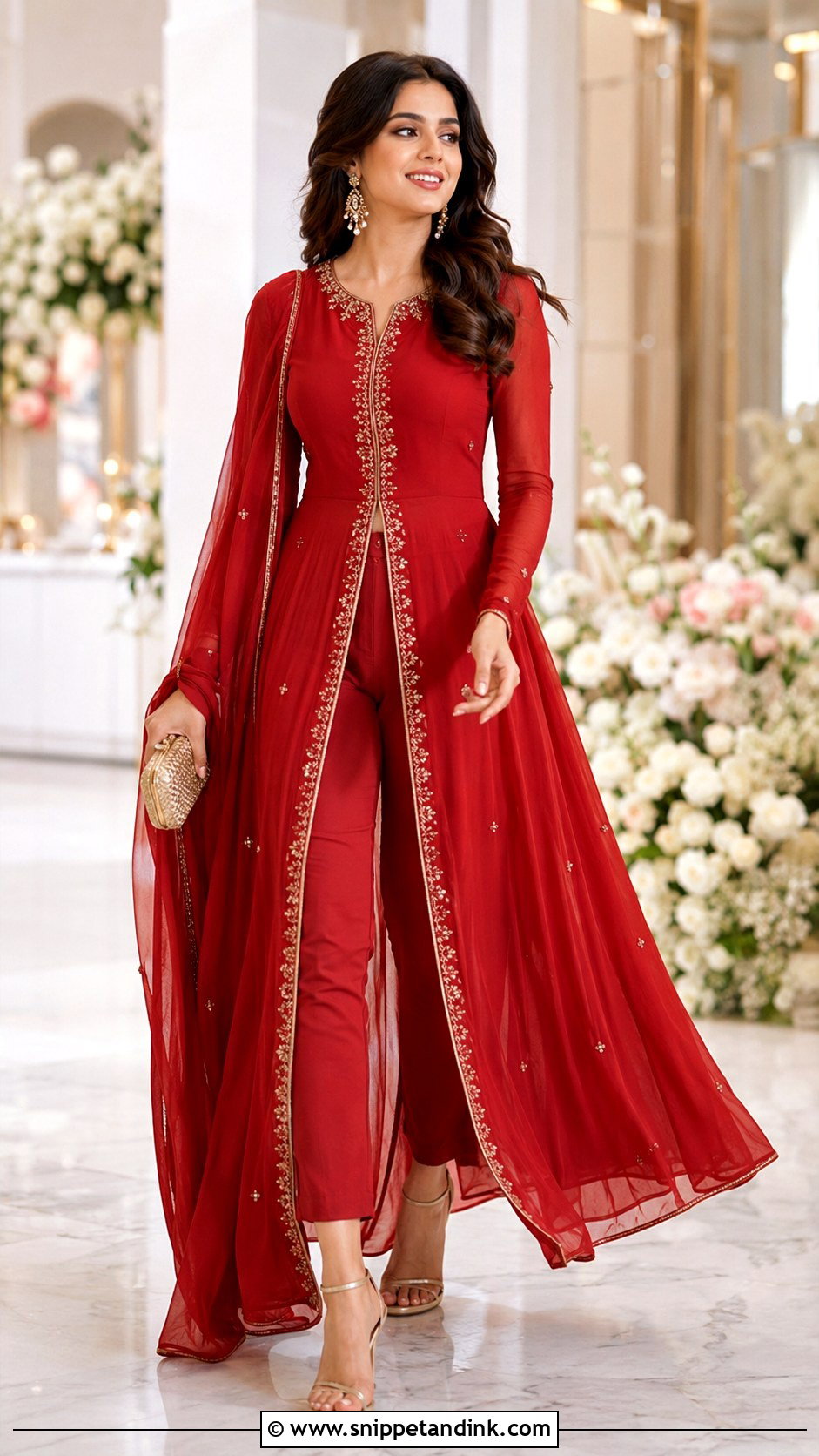
A front slit lets the bottom layer show and makes walking in a long, heavy flare much easier. A red Anarkali suit with front slit works over slim pants, cigarette pants or palazzos. Embroidery along the slit edges finishes it. A light dupatta over one shoulder keeps the line clean. Heels, earrings and a compact clutch suit younger guests and anyone who wants a contemporary edge.
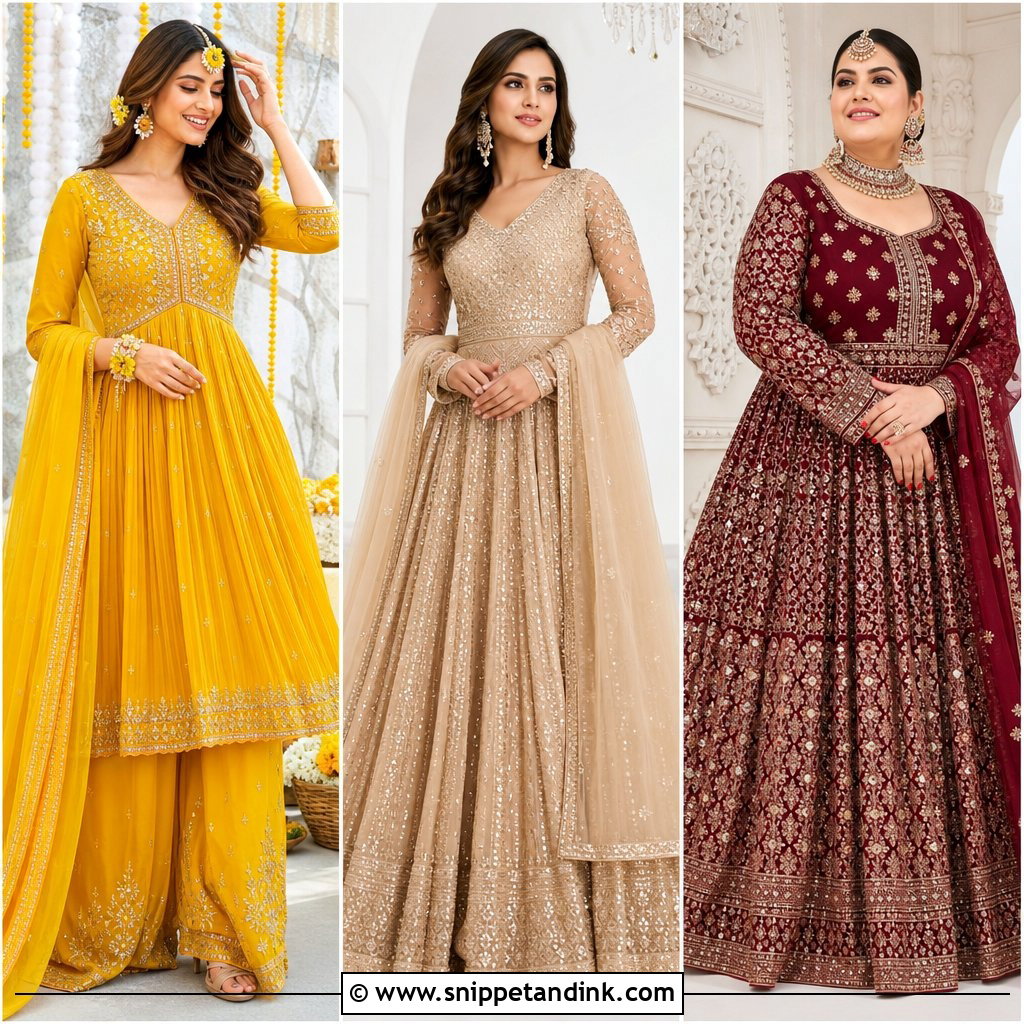
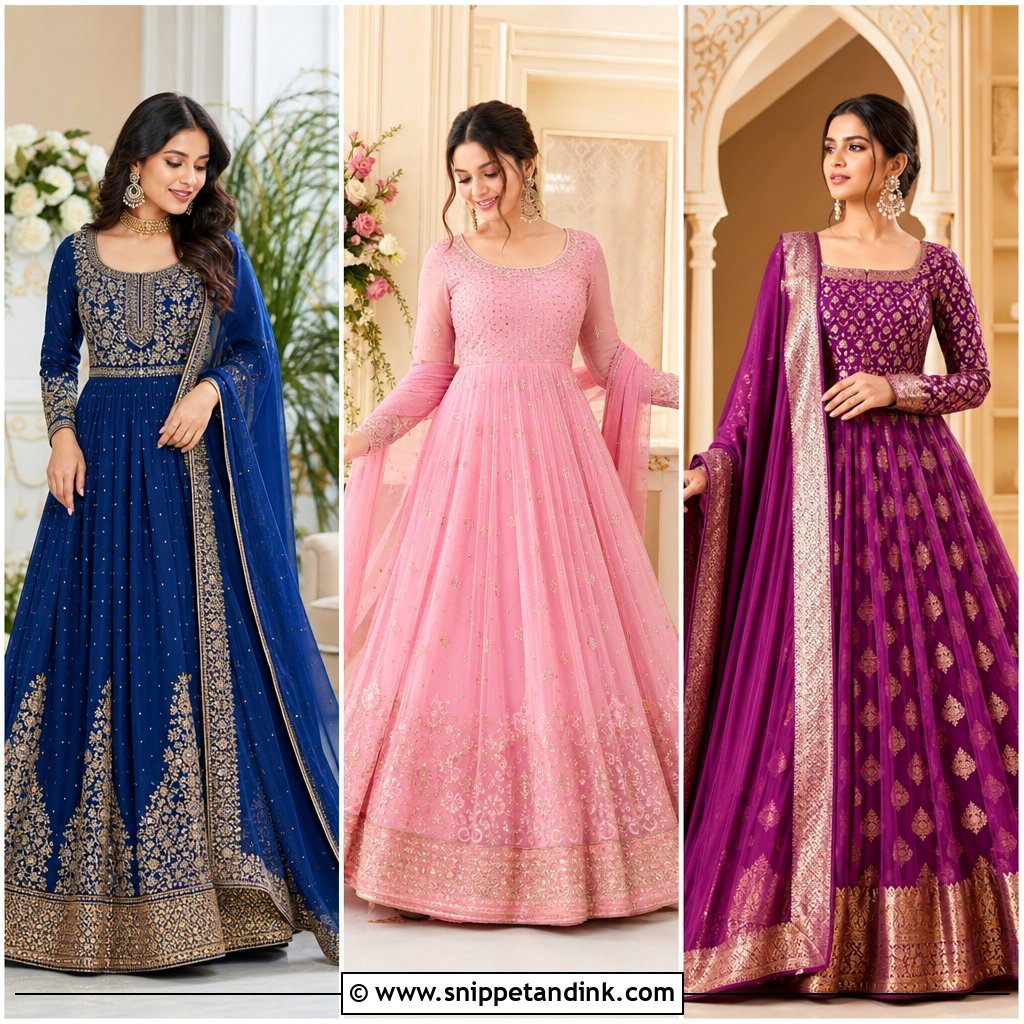
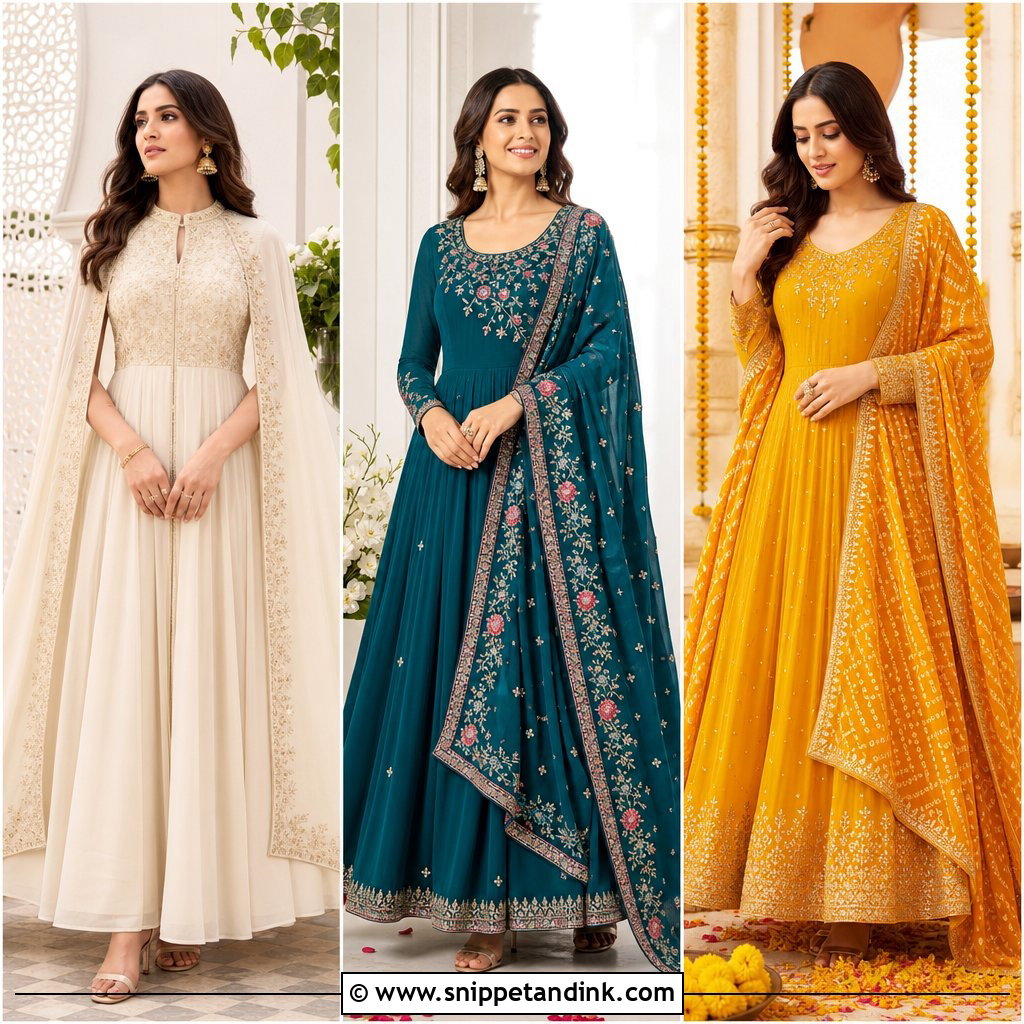
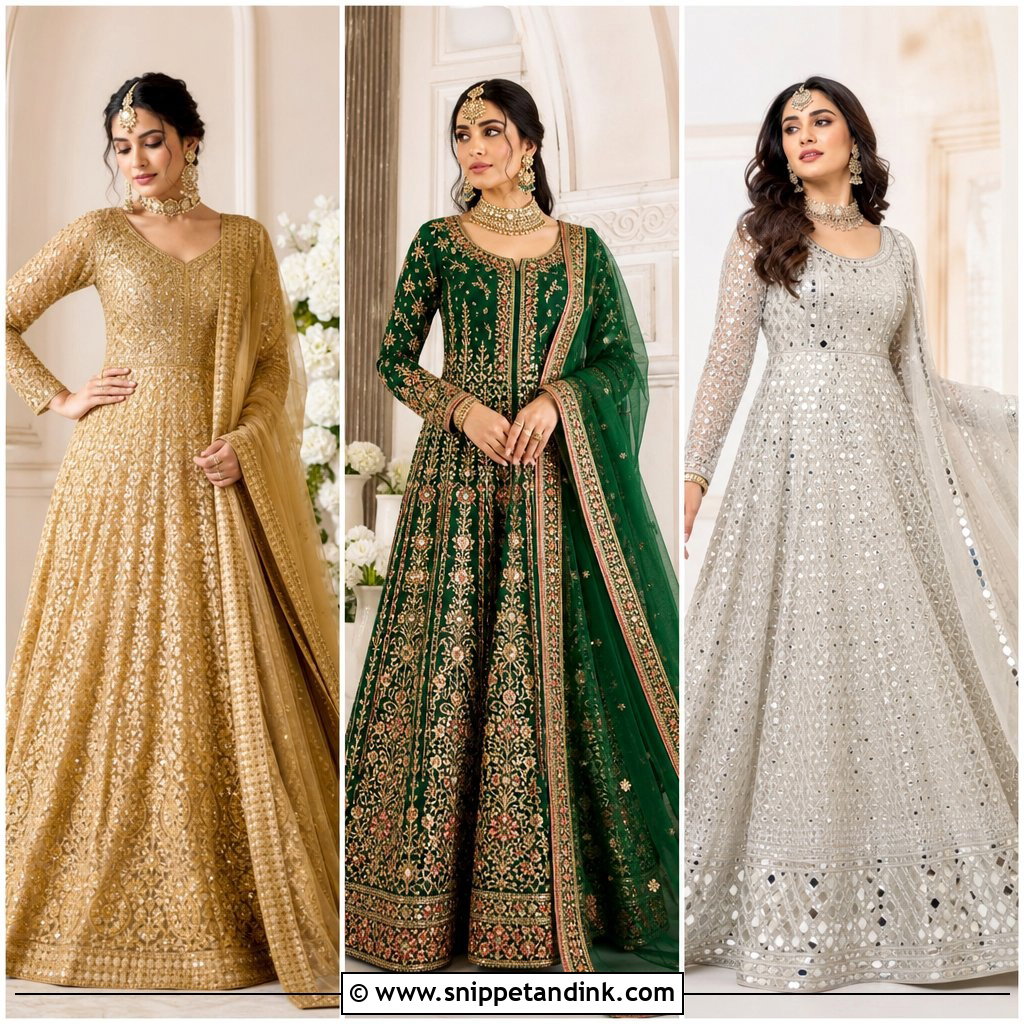
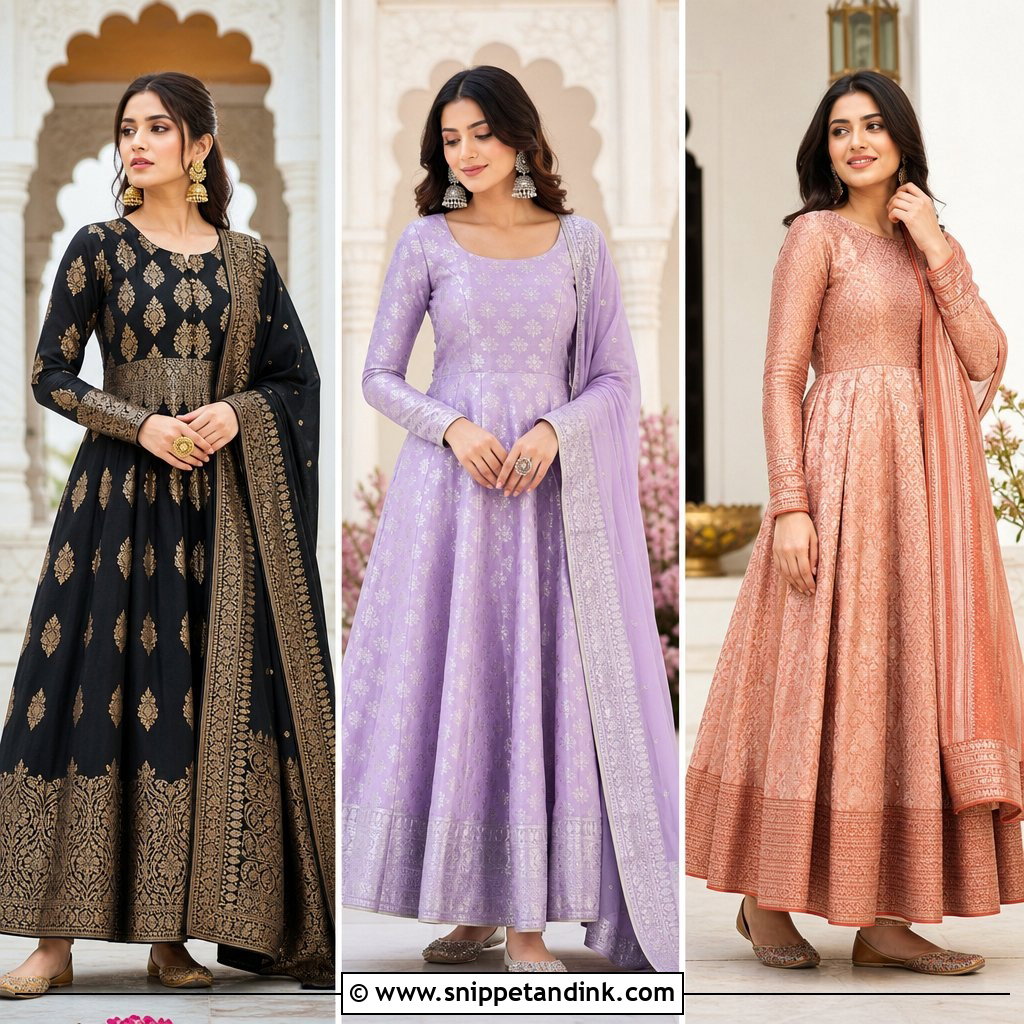
20. Red Anarkali Suit With Layered Flare
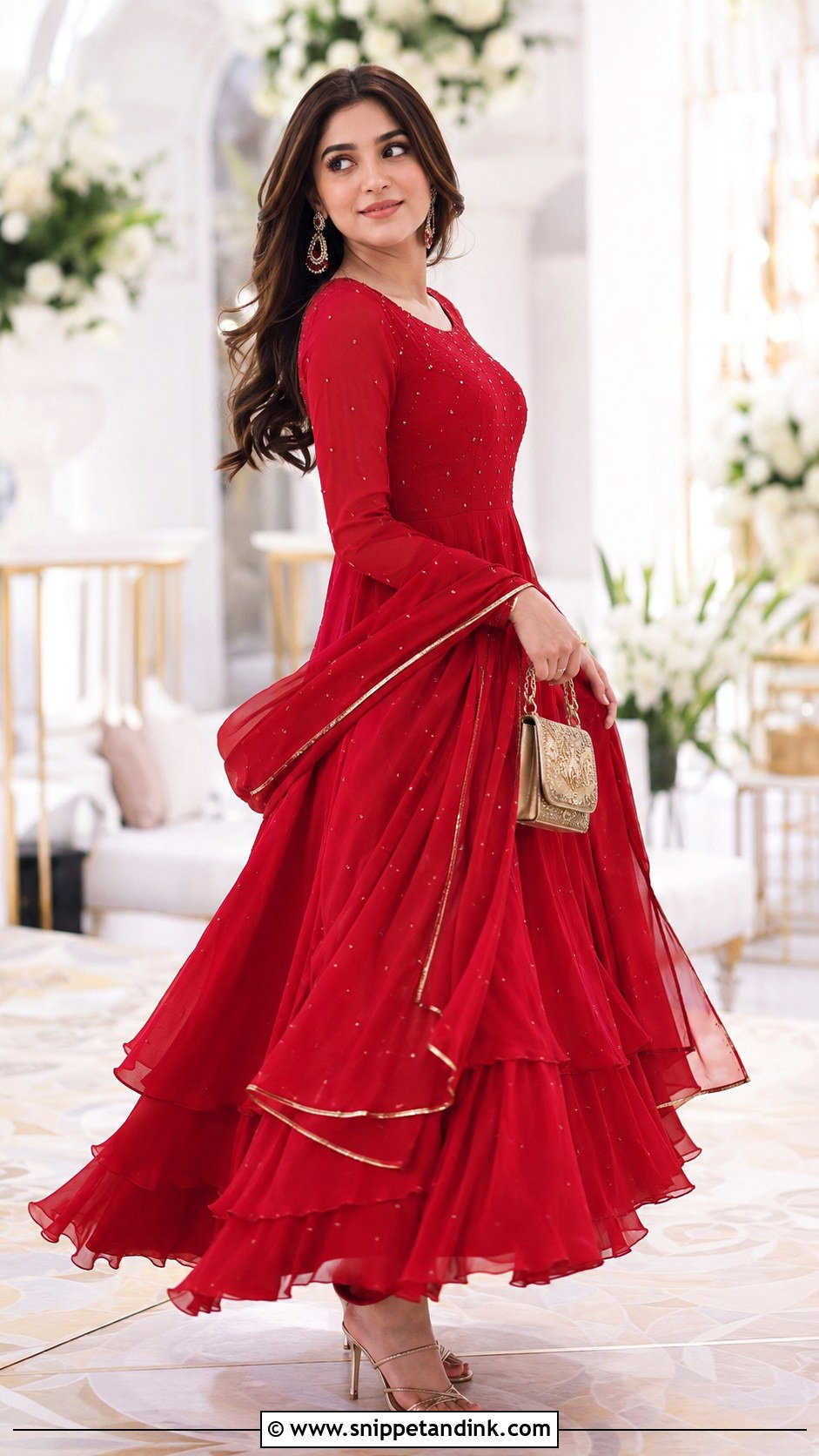
Layers of georgette, net, organza or chiffon create volume that floats rather than standing stiff. The bodice must be fitted, or the flare swallows you. A simple bordered dupatta, delicate jewellery and a small bag are enough. Heels lift the length so the layers don’t drag. Receptions and evening weddings suit it, and many layers do get warm, so consider the season.
21. Red Anarkali Suit With Printed Dupatta
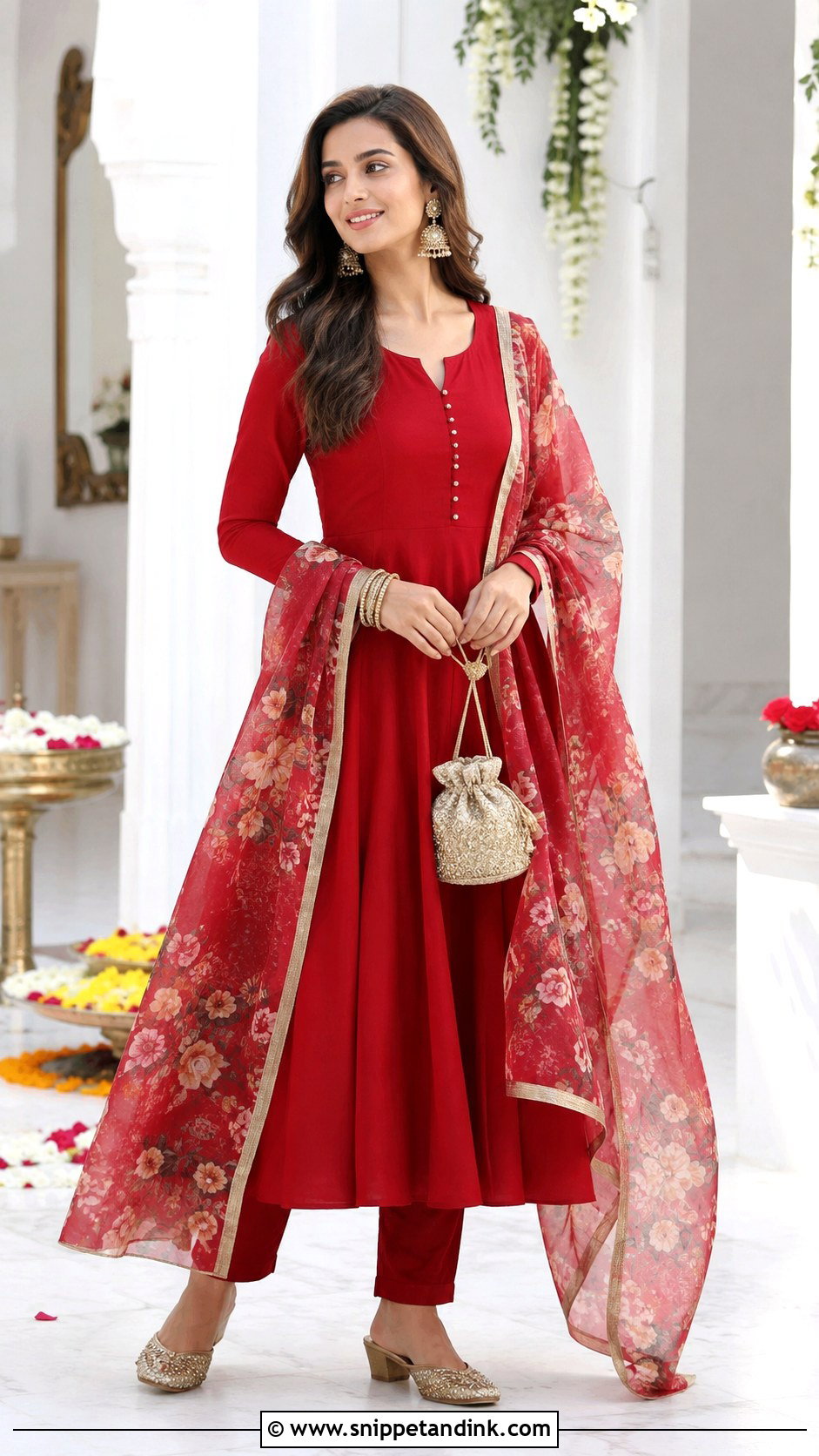
Swapping the dupatta is the cheapest way to make one suit feel like several. A red Anarkali suit with printed dupatta in floral, block print, bandhani or leheriya feels lighter for daytime and pre-wedding events. Jhumkas, bangles and flats or low heels keep it relaxed. Change the dupatta, shoes and jewellery and the same Anarkali works again at the next function.
22. Red Anarkali Suit With Gold Border
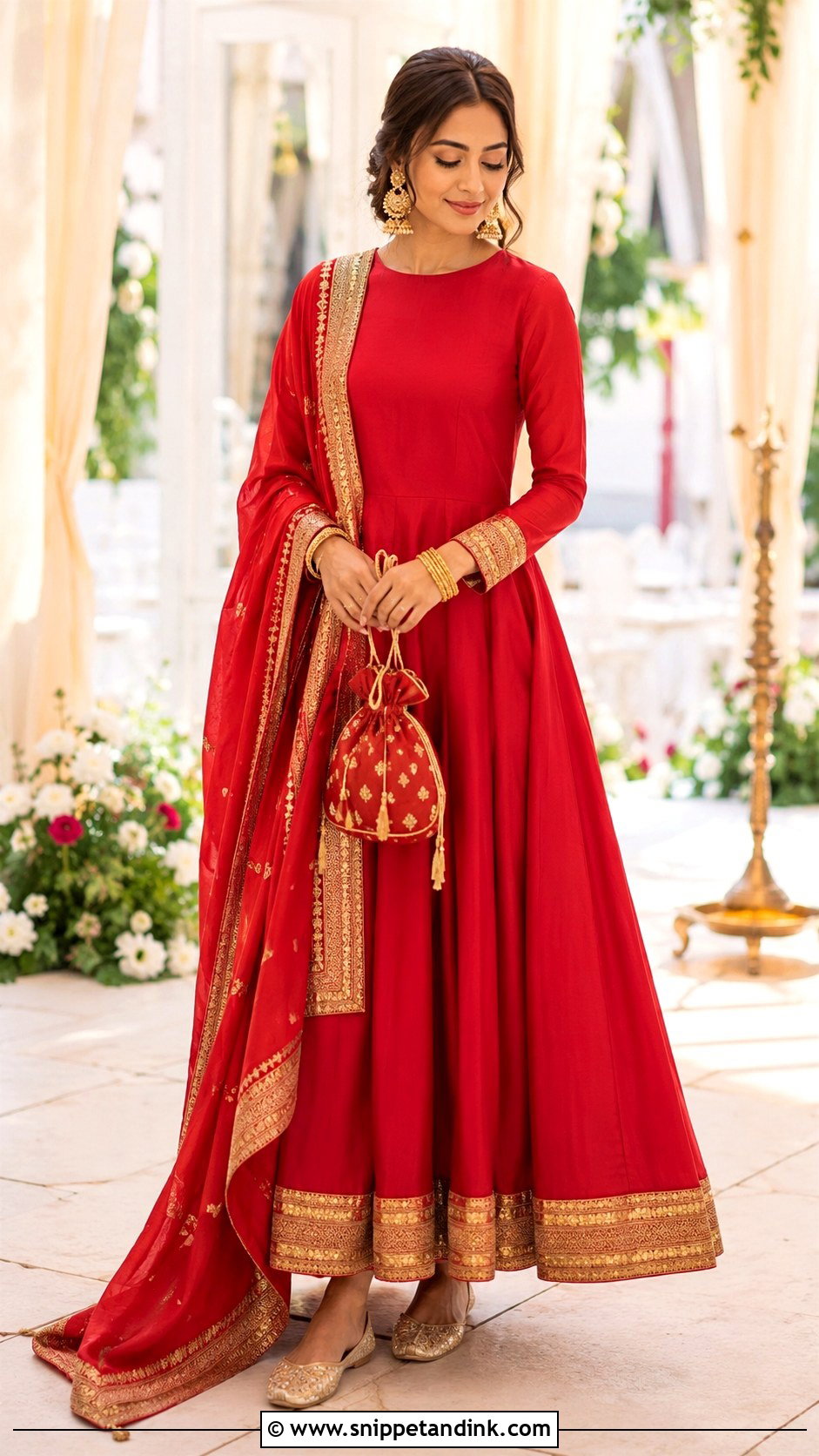
A gold border defines the hem, sleeves and dupatta without all-over embroidery, so it reads clean. A floor or ankle-length Anarkali with a neat flare, gold juttis, a potli bag and medium earrings is a simple guest look. Add bangles or a delicate maang tikka for more impact. It sits comfortably at family events and ceremonies without competing with the bride.
23. Red Anarkali Suit With Kundan Jewelry
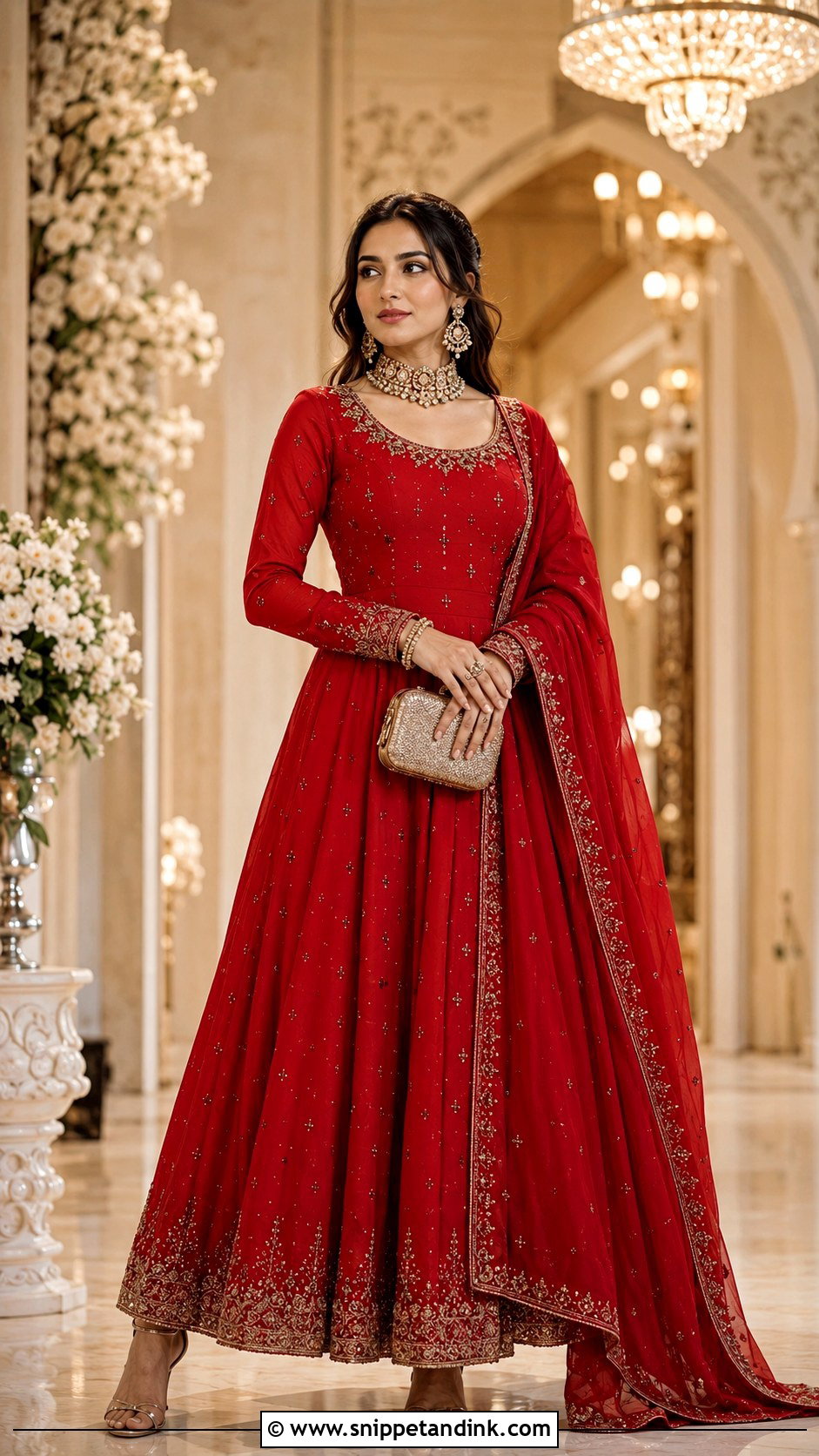
Kundan stones are set in gold foil, which glows warmly against red. Let the jewellery lead: a red Anarkali with subtle embroidery or a rich border, a choker and earrings for a deep or round neckline, long earrings for a high neck. Add a matching clutch, heels and a neatly draped dupatta. Kundan is heavy; long earrings may need ear supports or chains for a full evening.
24. Red Anarkali Suit With Juttis
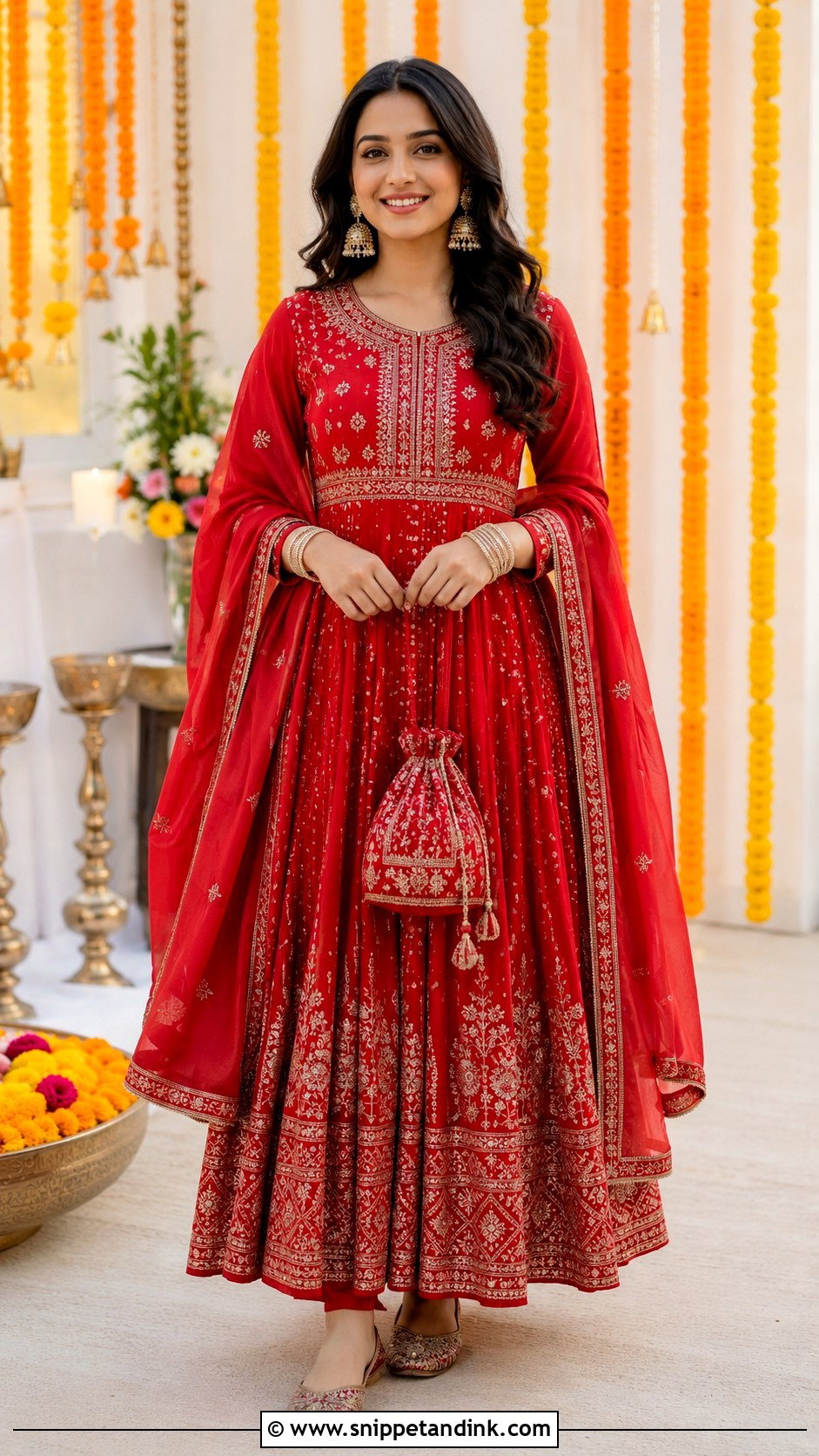
Weddings mean hours of standing and dancing, and heels rarely survive past the second function. An ankle-length Anarkali shows embellished juttis off. Thread work, gota or a light gold border keeps it festive. Jhumkas, bangles and a soft dupatta drape suit sangeet and daytime ceremonies. Break new juttis in at home for a few evenings; stiff leather rubs badly at the heel.
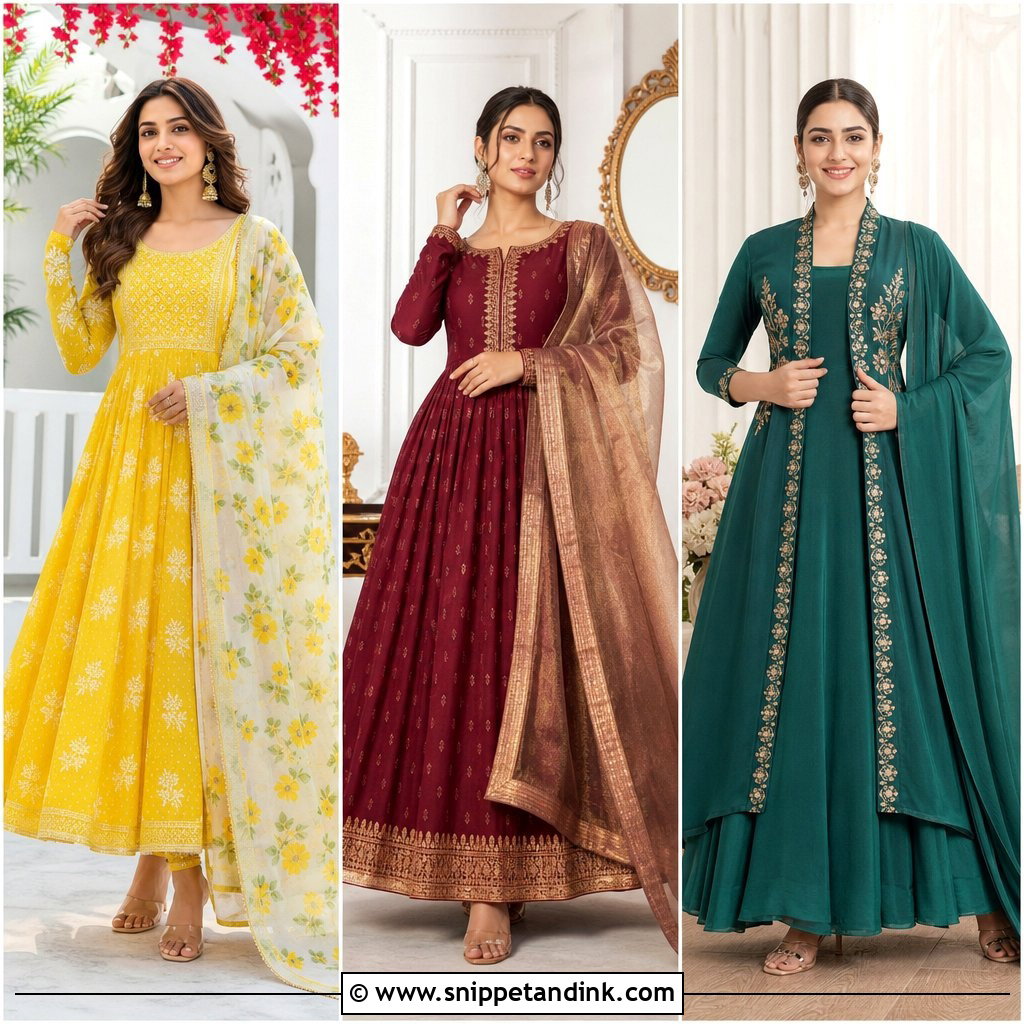
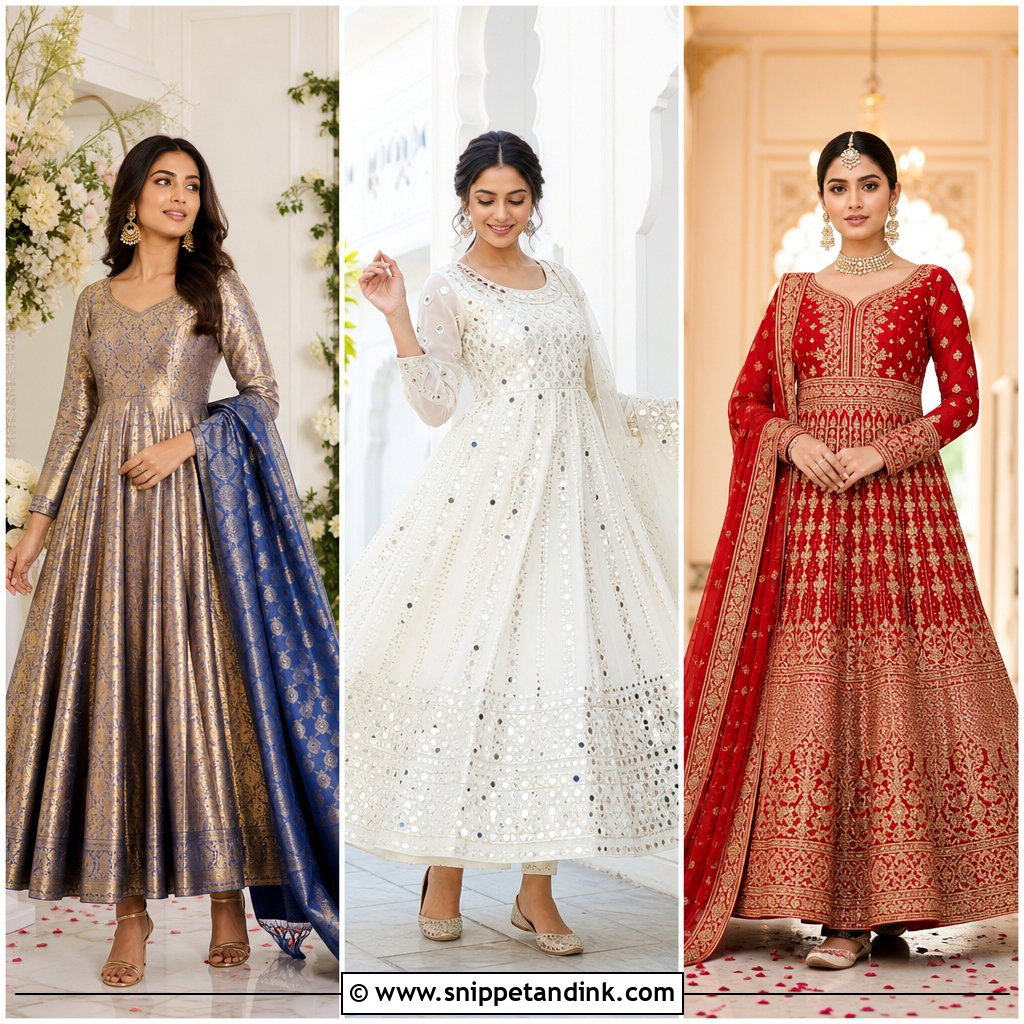
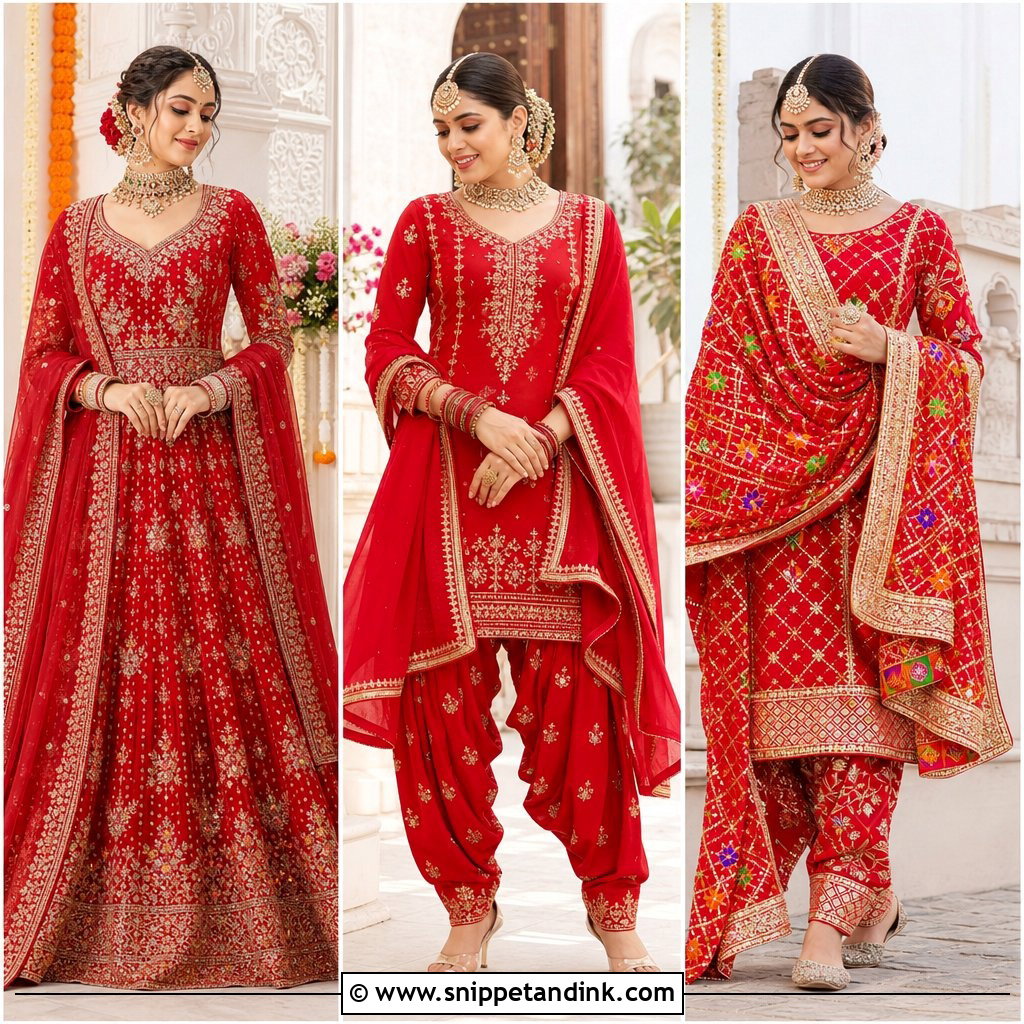
25. Red Bridal Anarkali Suit With Dupatta
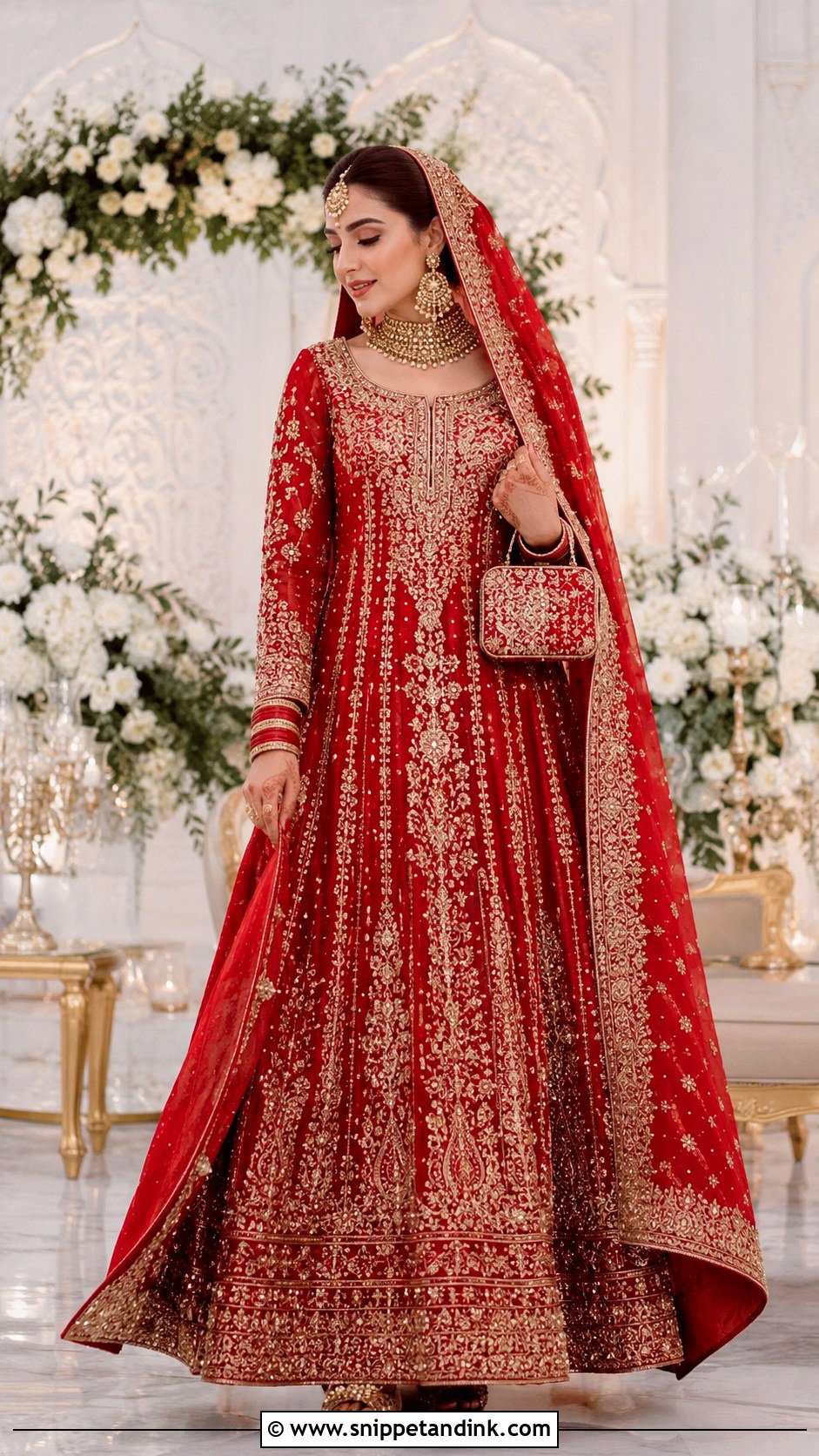
For a bride who doesn’t want the weight of a lehenga, a bridal Anarkali gives the richness of red with an easier silhouette. A floor-length cut with rich embroidery, a structured bodice and a wide flare, plus a matching dupatta with a detailed border draped over the head or across the shoulder. Bridal jewellery, embroidered heels and a coordinated clutch complete it. It suits smaller ceremonies, reception changes and family functions.
How Many Kalis Make a Good Flare?
Ready-made suits are cut for an average waist, so the flare often starts too high or too low on you. I would rather buy one size up and have the bodice taken in than squeeze into a tight one, because the waist seam can be moved but a cramped armhole rarely can.
The flare of an Anarkali comes from kalis, the triangular panels sewn together from the waist down. More panels mean a fuller, rounder sweep; fewer give a slimmer fall. When you’re having one stitched, ask the tailor how many kalis and how much fabric the skirt uses, because that’s the real difference between a suit that twirls and one that hangs.
Fitting Notes I Give Every Tailor
- Set the waist seam at your narrowest point, not where the pattern says.
- Hem the floor-length version with your wedding shoes on, a little above the floor.
- Ask for a can-can or extra lining layer if you want more volume without adding weight to the top.
- Leave a seam allowance on the side seams so it can be let out for later events.
Red dyes are known to bleed, especially in silk and velvet. Never hand-wash a red Anarkali with embroidery; dry-clean it, and store it folded in muslin, away from lighter clothes.
A Red Suit Can Work at Every Function
The same colour can go traditional, modern, simple or grand depending on the fabric, embroidery, dupatta and accessories. Velvet reads regal, georgette light, a jacket contemporary, and a Banarasi dupatta adds heritage. I’d always ask two questions first: which event is it for, and can you wear it for six hours? Answer those and these 25 Red Anarkali Wedding Suits narrow down quickly, from guest looks to bridal options.
You'll Like These Ideas:






Leave a Reply