
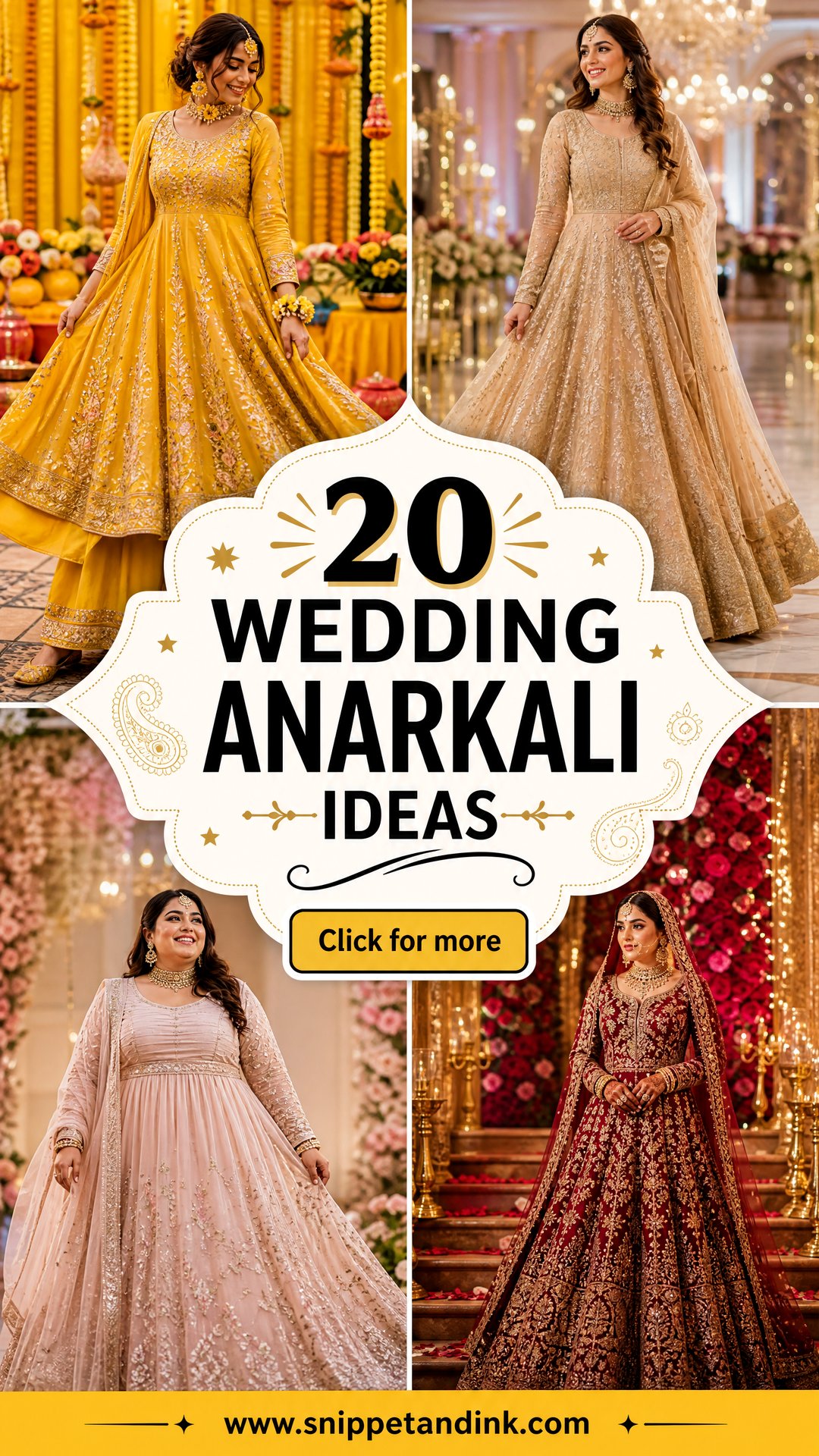
An Anarkali is the outfit I reach for when a bride wants ceremony-level presence but still needs to sit cross-legged for an hour, climb into a car and dance at midnight. The fitted bodice carries the jewelry, and the flared kalis do the rest of the work. These 20 Wedding Anarkali Ideas run from the main ceremony through mehndi, sangeet and the reception, and a few are written for guests rather than brides. Old craft and newer cuts sit side by side here: zari, chikankari, mirror work and Banarasi weaves next to capes, jackets and lighter fabrics. Your role changes the styling more than the dress does. A bride can carry layered jewelry and a heavy border; a guest usually looks better with one strong piece and a lighter dupatta.
Counting Kalis and Feeling the Lining Before an Anarkali Comes Home
Most of what makes an Anarkali sit well is invisible on a hanger. When I shop with a bride, I turn the garment inside out before I look at the embroidery.
- Count the panels. More kalis means more flare and more fabric weight. A fine georgette can take a lot of panels; a heavy silk or velvet with many panels gets tiring to carry by the end of the evening.
- Check the lining fabric. Cotton or soft crepe lining breathes. Polyester satin lining traps heat and clings, which you’ll notice the first time you sit in a warm hall.
- Find the waist seam. It should land at or just above your natural waist. If it hits below, the flare starts too low and shortens your legs.
- Lift the hem. Look for a can-can layer or horsehair braid. It gives the skirt its bell, but stiff net scratches bare ankles, so ask for a soft fabric layer between net and skin.
- Weigh it on your arm. Hold it for a full minute. Hand embroidery, zari and stone work add up, and you’ll be wearing that weight for six hours or more.
Bring the shoes you’ll actually wear to every fitting. Length is set against heel height, and a hem pinned for flats will drag on the floor in heels, or flash ankle if you swap the other way.
1. Red Bridal Anarkali With Zari Dupatta
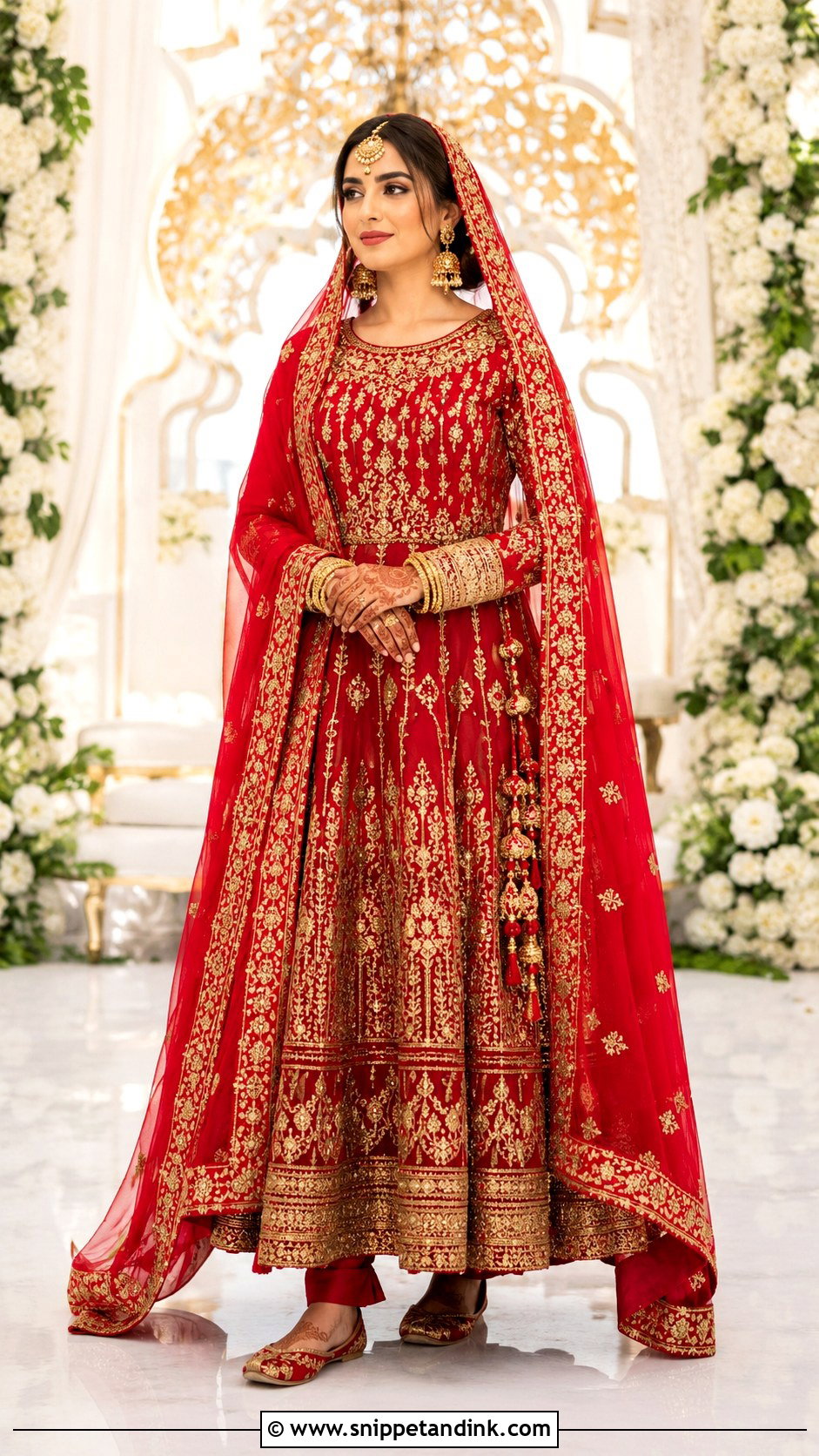
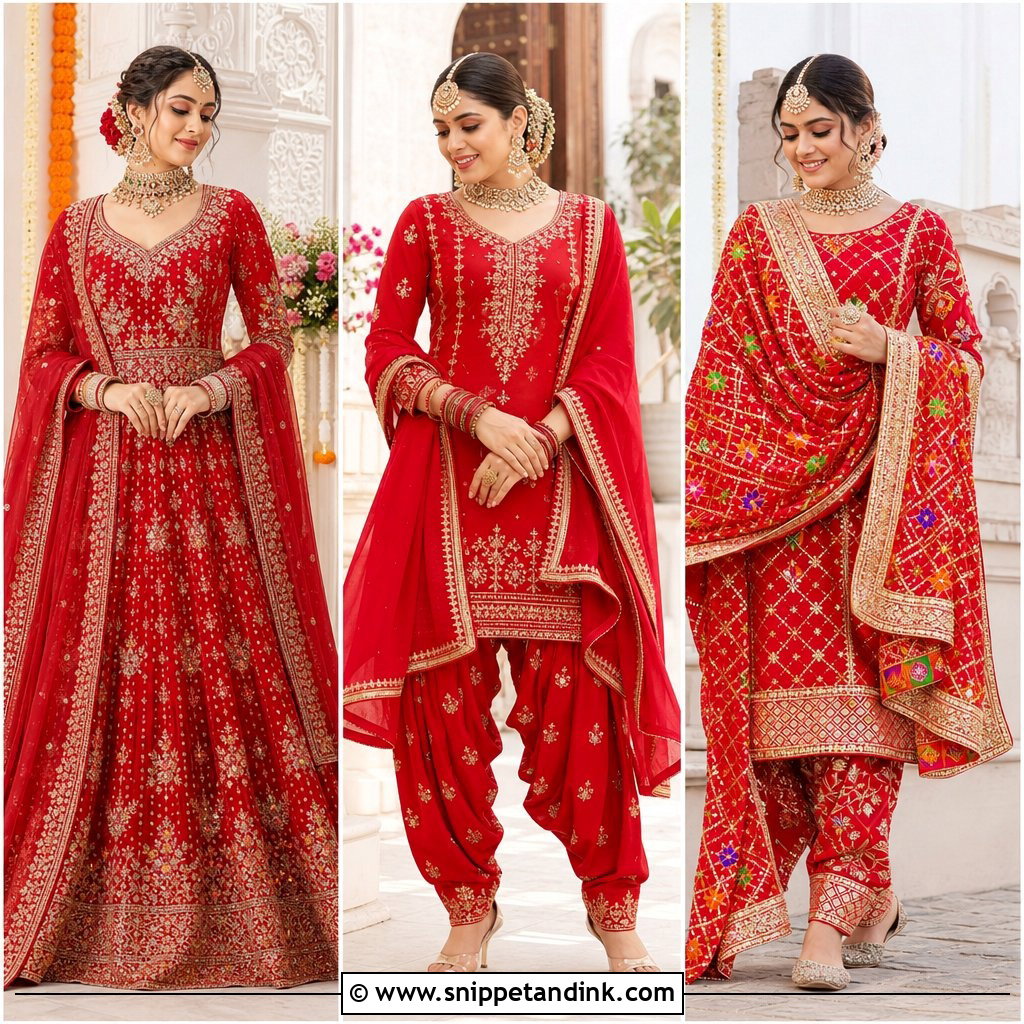
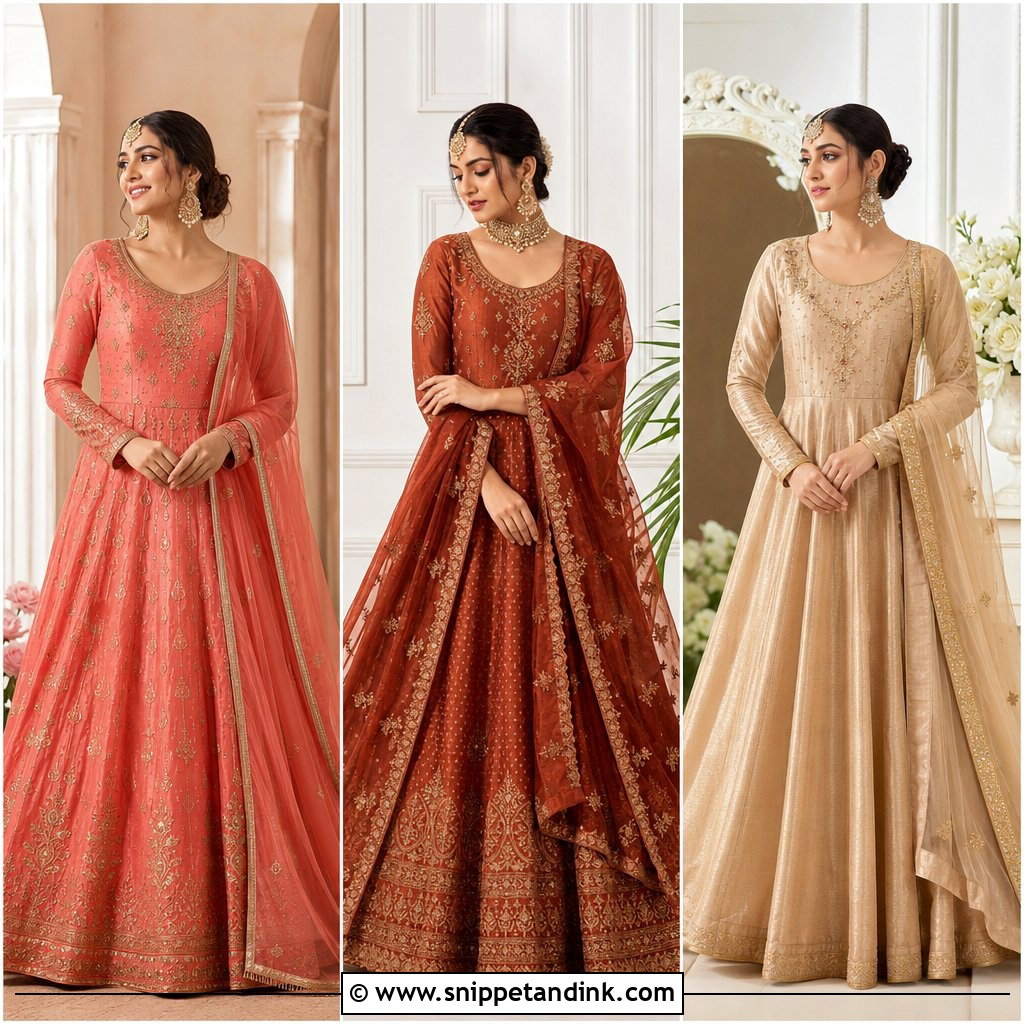
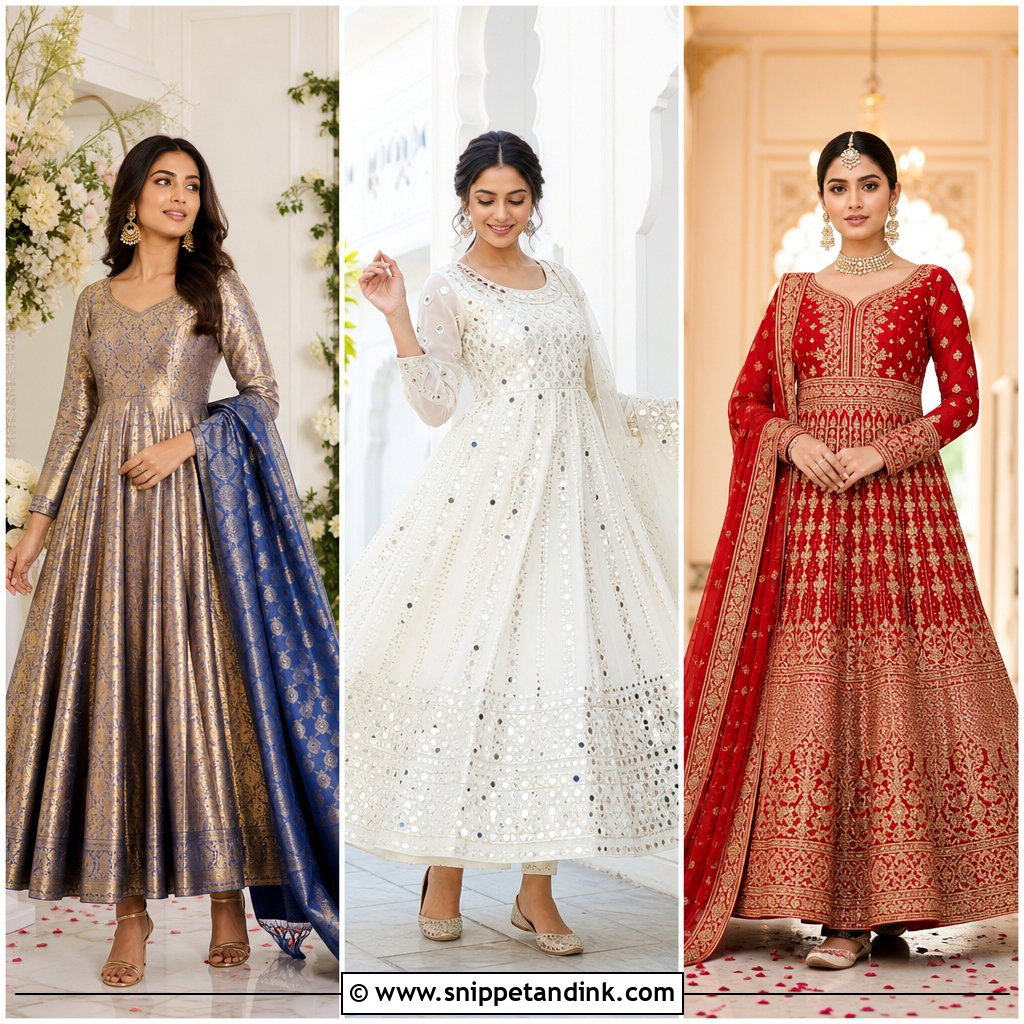
Red silk with antique zari is still the look I see families ask for first, and in an Anarkali it gives you the ceremony without the weight of a lehenga skirt. Ask where the zari sits. Concentrated on the bodice, cuffs and hem, it keeps the kalis swinging; spread across every panel, it drags the flare flat and gets heavy by the second ritual. I pair it with a matching churidar so nothing competes with the skirt, then add a sheer red dupatta with a wide border: one end over the head, the other caught at the forearm. Gold jhumkas, a maang tikka, stacked bangles and embroidered juttis finish it. A sleek bun with fresh flowers holds the head drape better than open hair, which the dupatta slides off within minutes.
2. Ivory Chikankari Wedding Anarkali
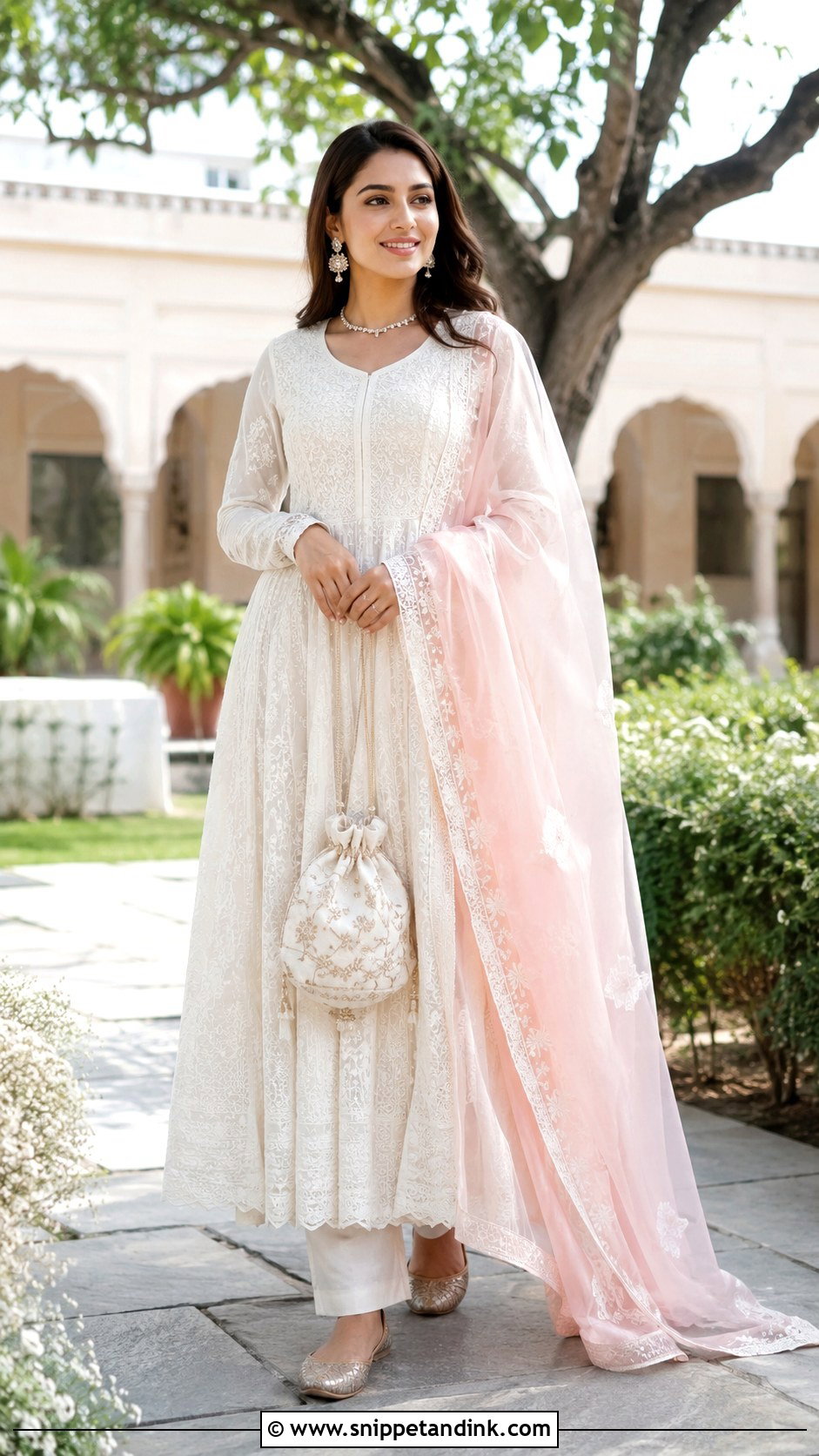
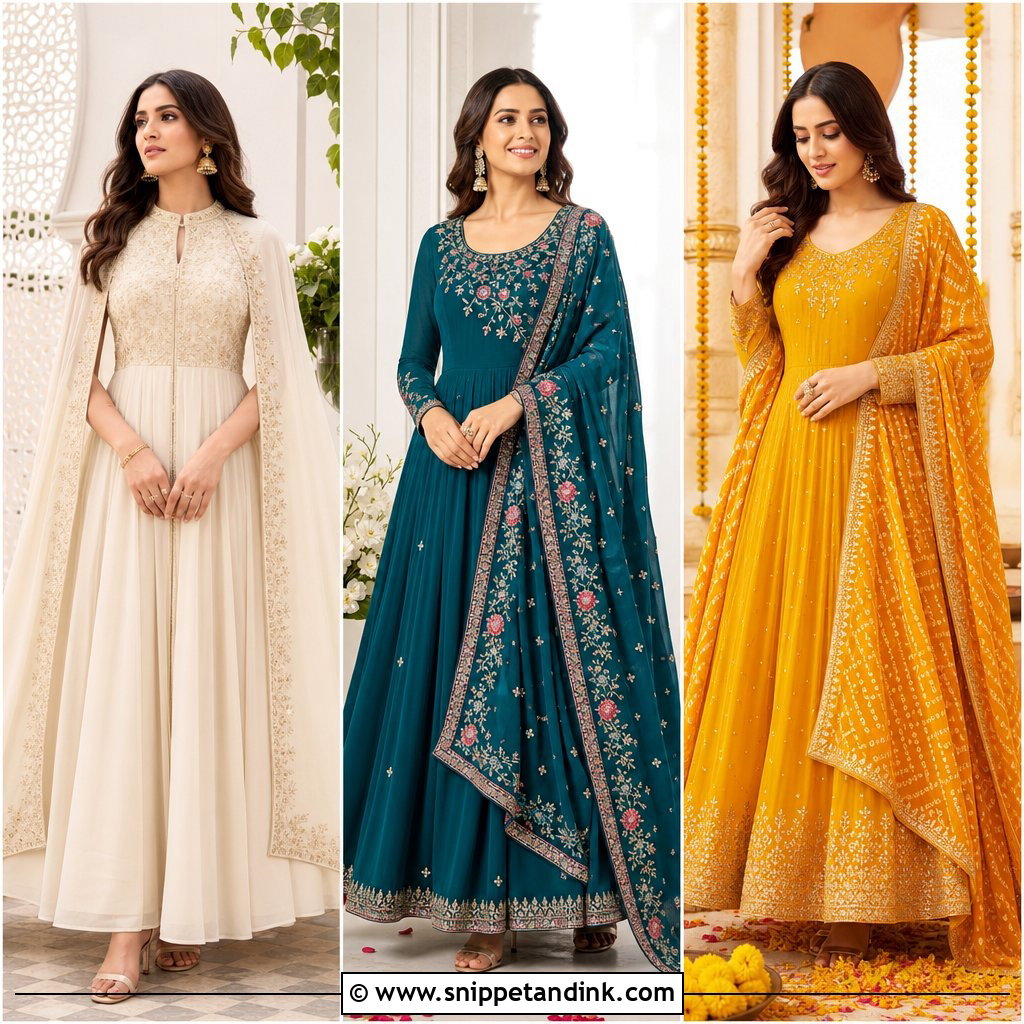
Chikankari is shadow work and fine stitching, so it needs daylight to read. Under warm evening uplighting a tonal ivory piece can go flat and creamy. I look for lightly lined georgette or organza with pearl accents and a soft hem, then check the lining in a window: cheap ivory lining shows every seam and the outline of your churidar. Narrow ivory pants keep the line clean, and a pastel pink, sage or powder-blue dupatta adds color without hiding the threadwork. Pearl earrings, a small potli and champagne juttis are plenty. If you plan a statement necklace, keep the neckline open. Guests, check first that ivory is welcome in the family, and leave head draping and bridal jewelry to the bride.
3. Emerald Velvet Wedding Anarkali
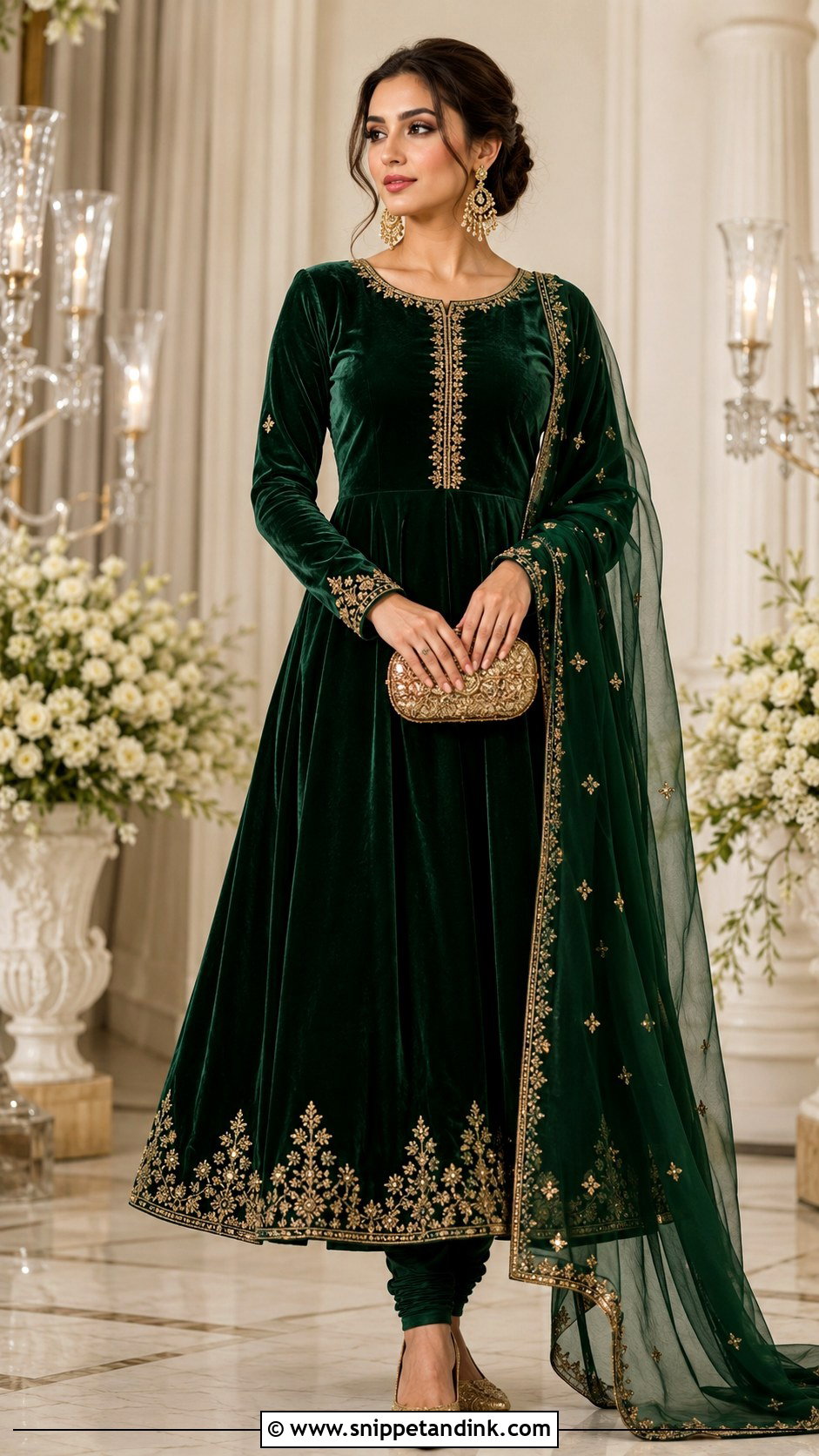
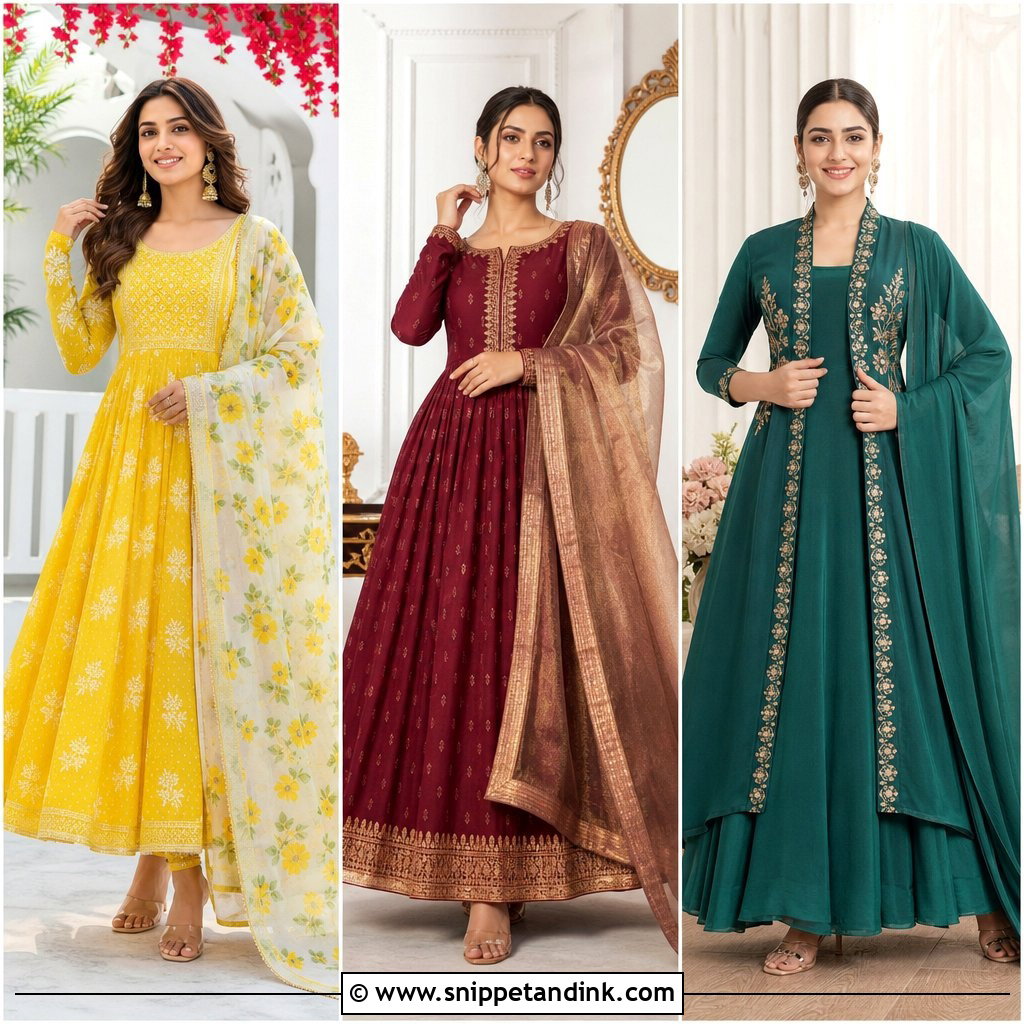
Velvet is a winter fabric, full stop. In a heated banquet hall in October it’s comfortable; at a June ceremony under a canopy it will make you miserable within the hour. For cool-weather functions an emerald velvet Anarkali gives depth that photographs as solid color, with no shine to blow out. Keep the gold embroidery to neckline and cuffs, because the pile already reads rich. Velvet also marks wherever it’s pressed, so I steam it from the inside and never let anyone iron the face. A light organza dupatta with antique-gold trim, gold drop earrings, one ring and a compact clutch are enough. Pointed juttis or low block heels, a low center-parted bun, bronze eyes and a muted rose lip keep the jewel tone from feeling heavy.
4. Blush Pink Floral Wedding Anarkali
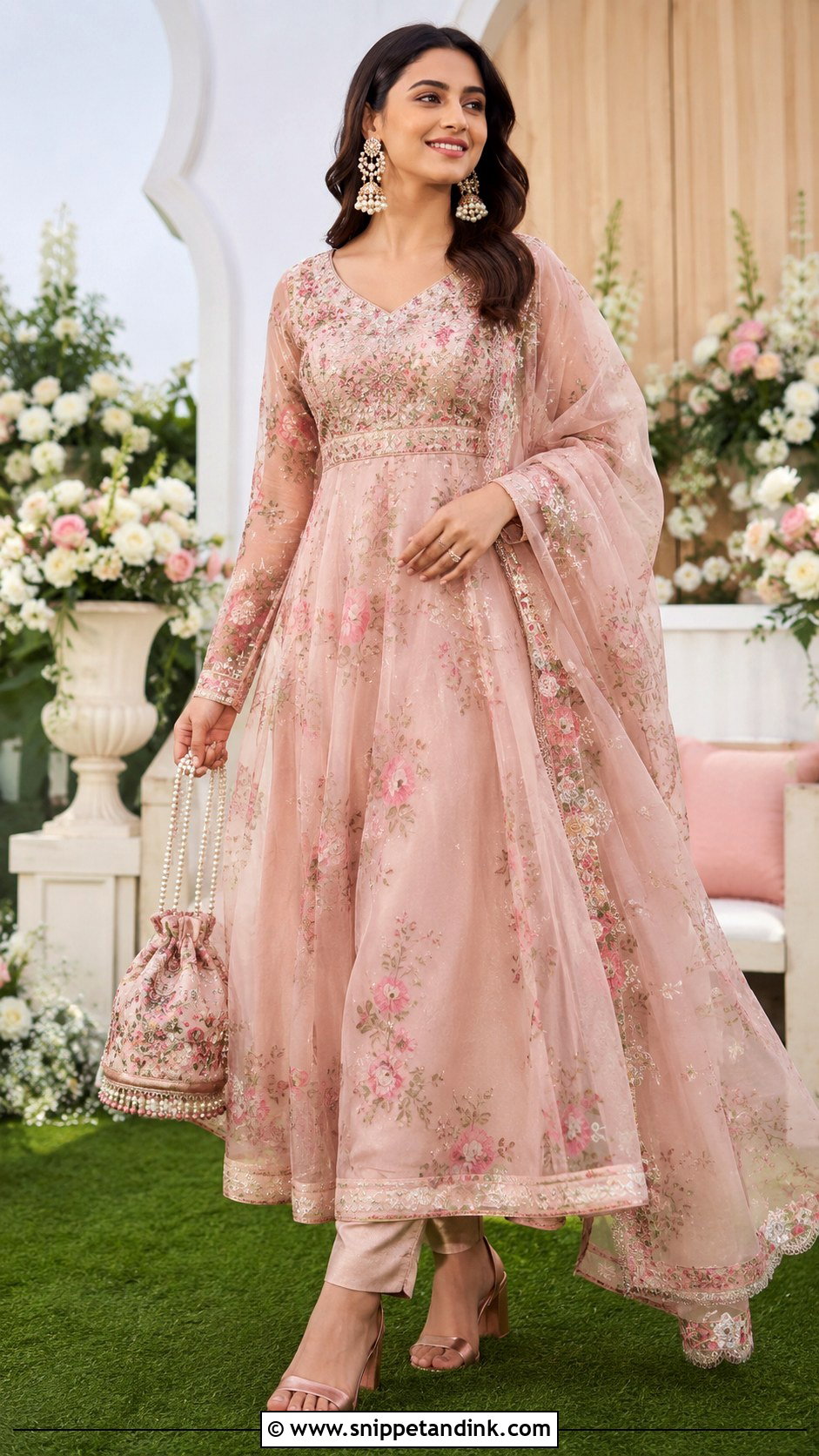
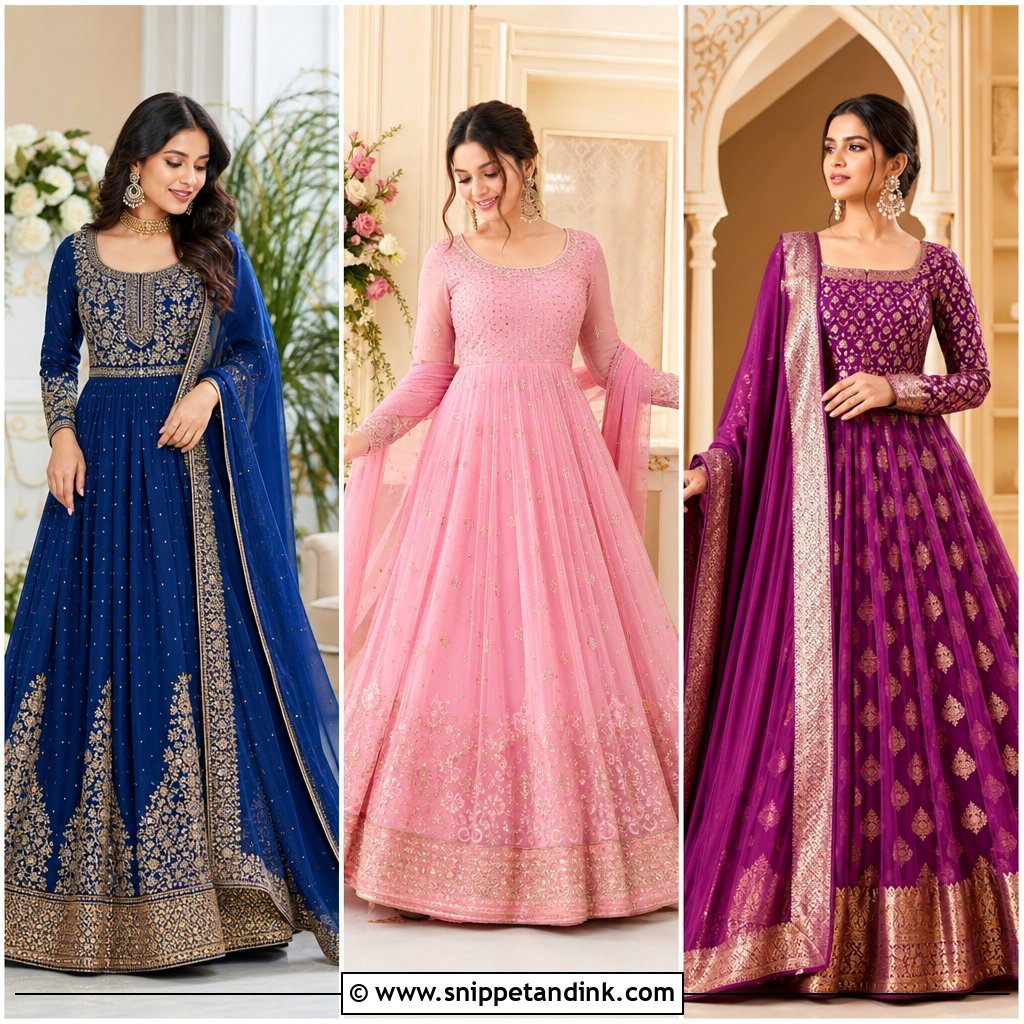
Blush organza or chiffon with scattered floral threadwork suits a garden ceremony, and the scattering is the point: a fully worked surface on a pale base looks stiff and loses the airy flare. Ask for a full lining in a skin-matched shade, since sunlight goes straight through light pink and shows the outline of your legs in every backlit photo. Matching slim pants, a sheer dupatta with a narrow floral border, pearl chandbalis, a pastel potli and rose-gold block heels finish it without looking matched in a box. Loose curls or a textured low ponytail suit the setting. A bride can add a floral maang tikka or a layered necklace; a guest can leave the neck bare and let earrings do the framing.
5. Navy Blue Sequin Wedding Anarkali
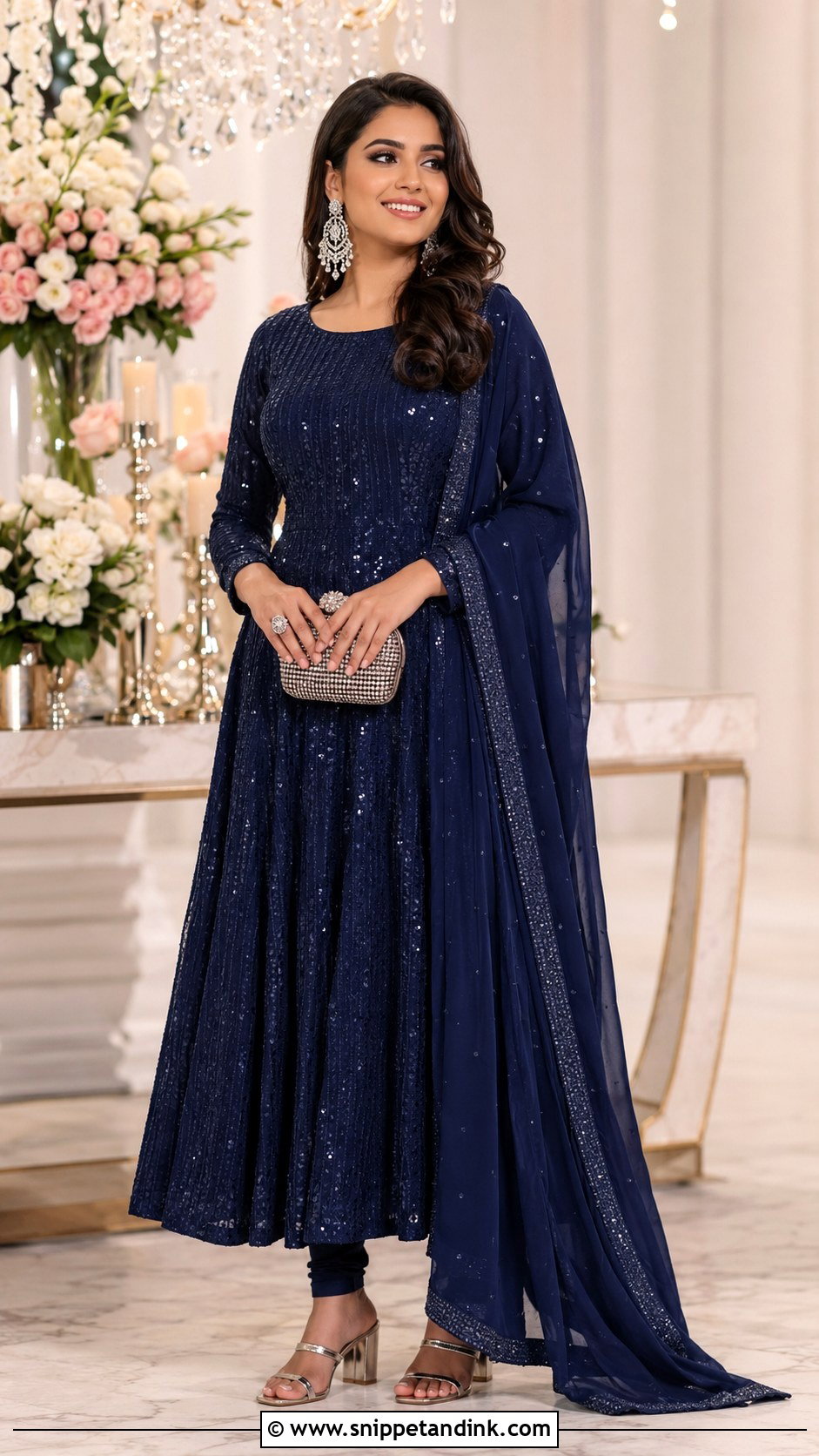
Navy carries sequins better than black does, because the camera still sees the color. Look for fine tonal sequins on georgette rather than large paillettes, which catch the flash in hard white dots. Sequins also scratch: I check the inside of the sleeves and the underarm seam, where sequin backing rubs raw by the end of a long reception. A plain navy churidar avoids bulk under the long hem, and a light dupatta with a slim sequin border is easy to manage. Silver chandeliers, a crystal clutch and metallic block heels are enough shine. A sleek ponytail keeps the neckline visible, with defined eyes and a neutral lip. Bridesmaids can match the navy and vary necklines or sleeve lengths so the group looks planned without looking uniformed.
6. Mustard Haldi Anarkali With Palazzo Pants
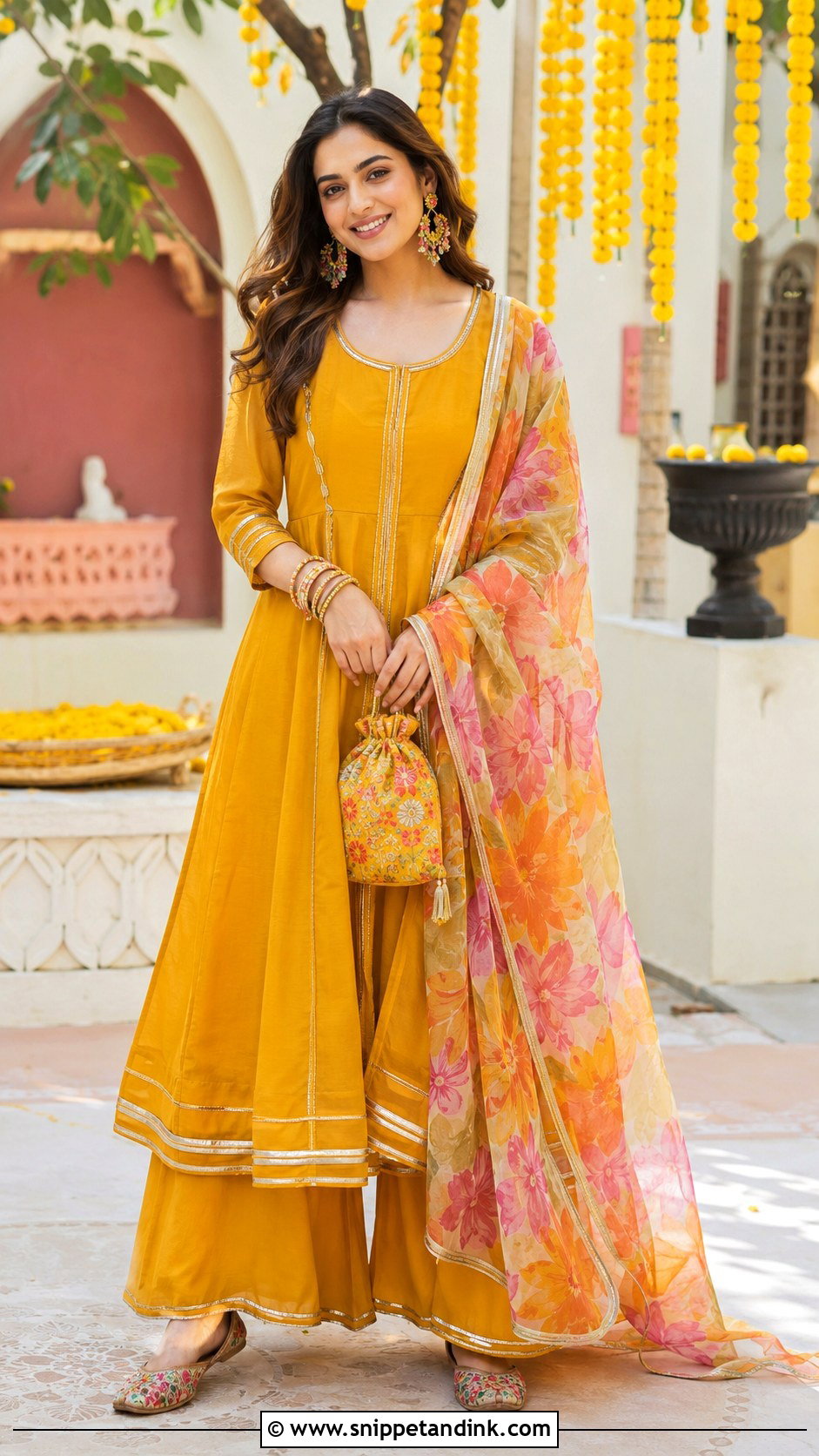
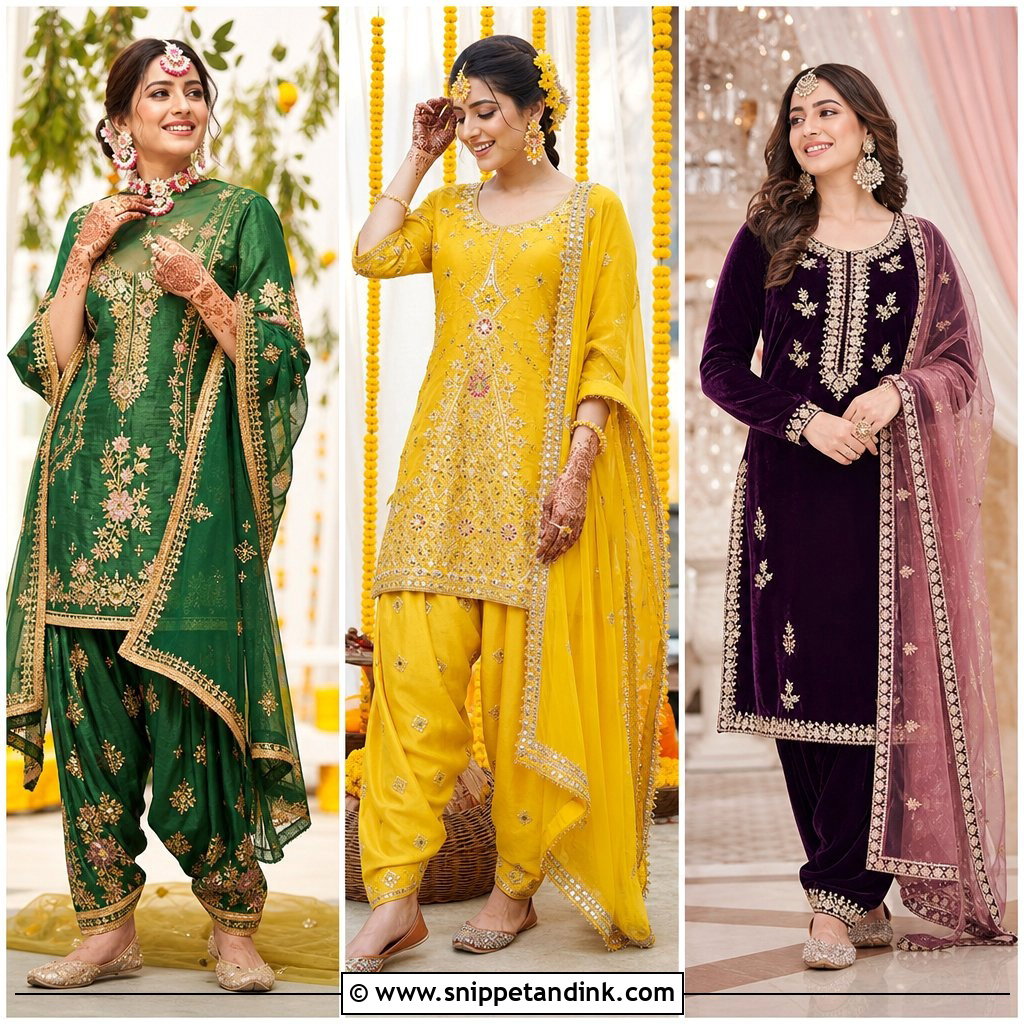
Turmeric paste stains silk and gota permanently, so for haldi I dress people in fabric they’re happy to lose. A mustard Anarkali paired with palazzo pants hides splashes better than any other color, and cotton-silk or chanderi with light gota trim breathes in daytime heat. Calf or ankle length matters here: it shows the wide pants and keeps the hem off a floor that will be slippery with paste and water. A printed organza dupatta in coral, green or soft pink adds contrast. Floral earrings, colorful bangles and embroidered flats are the jewelry I’d risk. Hair goes in a braid or a secure bun, and makeup stays minimal because it will be rubbed off anyway.
7. Green Mehndi Anarkali With Sharara Pants
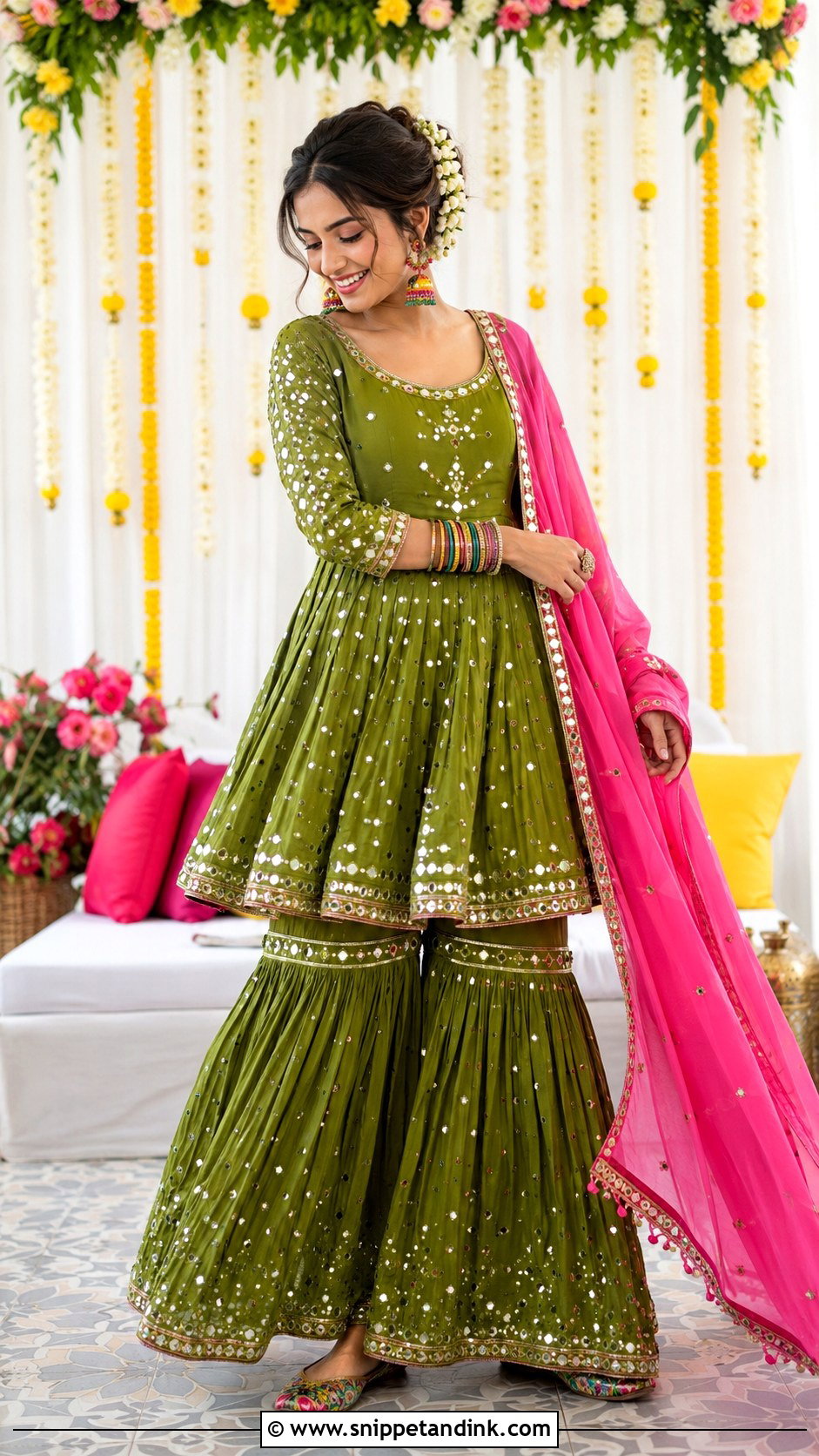
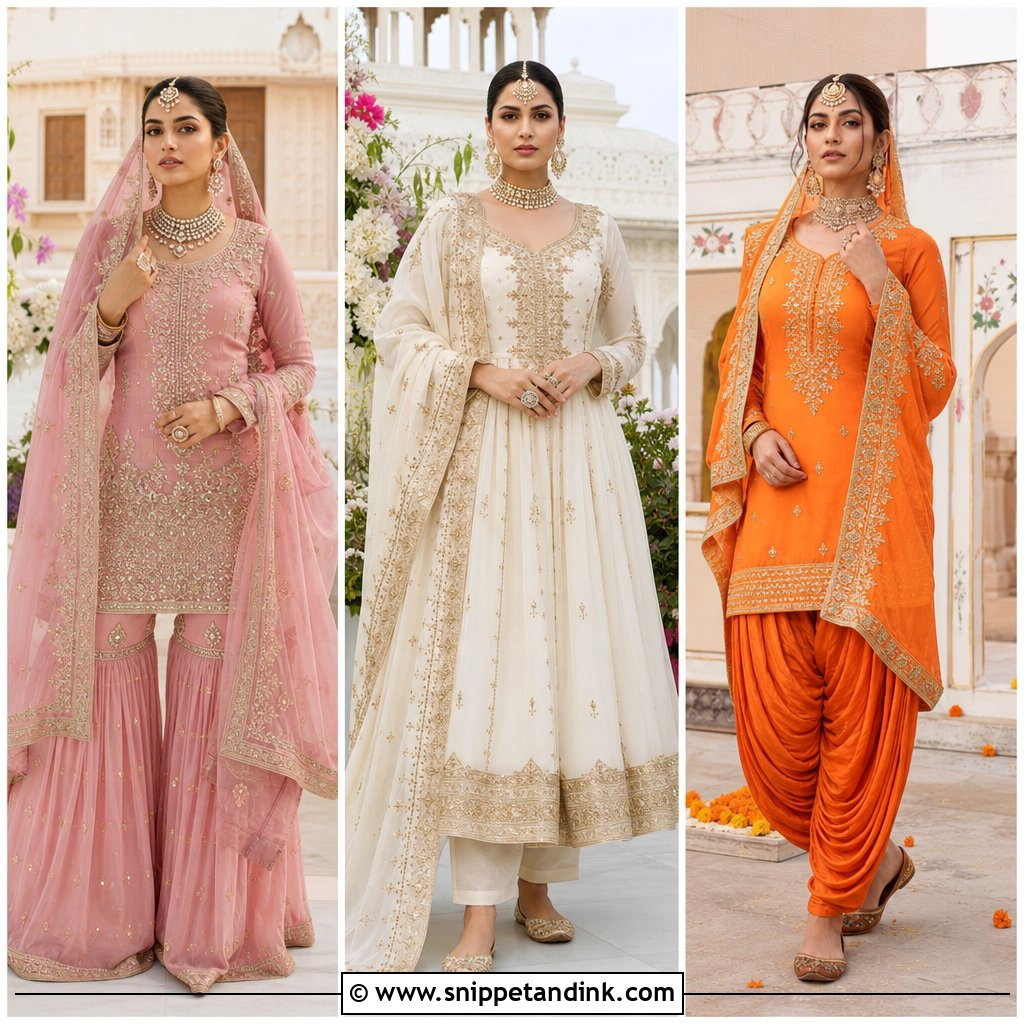
Knee length is the practical choice for mehndi. You’ll be seated for hours with your hands out, and a floor-length Anarkali bunches under you and creases badly. A green top with sharara pants lets you sit, stand and dance without hitching anything up. Lime suits an afternoon; bottle green holds up under evening lights. Mirror work and gota bring enough sparkle that you can skip heavy jewelry. Pair it with matching sharara pants and a light contrast dupatta in pink, orange or yellow, then colorful jhumkas, a few bangles and flat juttis. A flower-dotted braid keeps hair off your shoulders. I always say this to brides: wear short or easily pushed-up sleeves, because damp henna paste and fitted cuffs are a bad combination.
8. Mirror Work Sangeet Anarkali
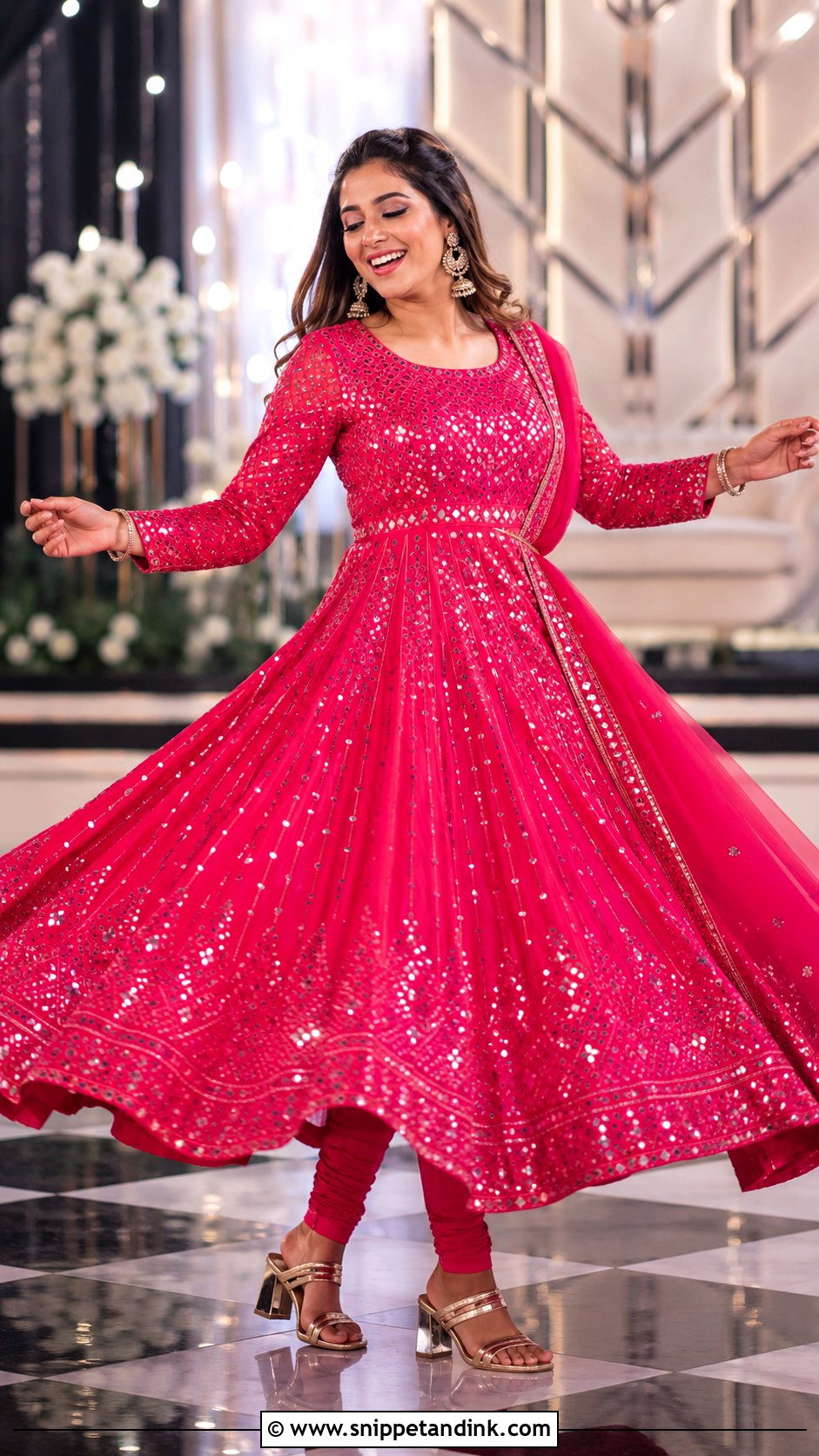
Mirrors throw light back at the camera, which is exactly why a mirror-work Anarkali reads well from the back of a hall during a sangeet performance. Georgette or crepe in fuchsia, royal blue, teal or purple gives the mirrors a strong ground. The circular skirt needs a test: hold a turn for two full spins in front of a mirror and watch whether the hem lifts above your ankle. A stretch churidar and a light dupatta pinned at one shoulder and one wrist won’t fly off mid-routine. Keep jewelry modest since the outfit already shines: medium hoops or jhumkas, a few bangles, comfortable block heels. A high ponytail or braided bun stays neat, and long-wear makeup with little glitter keeps the face from competing with the mirrors.
9. Champagne Reception Anarkali Gown
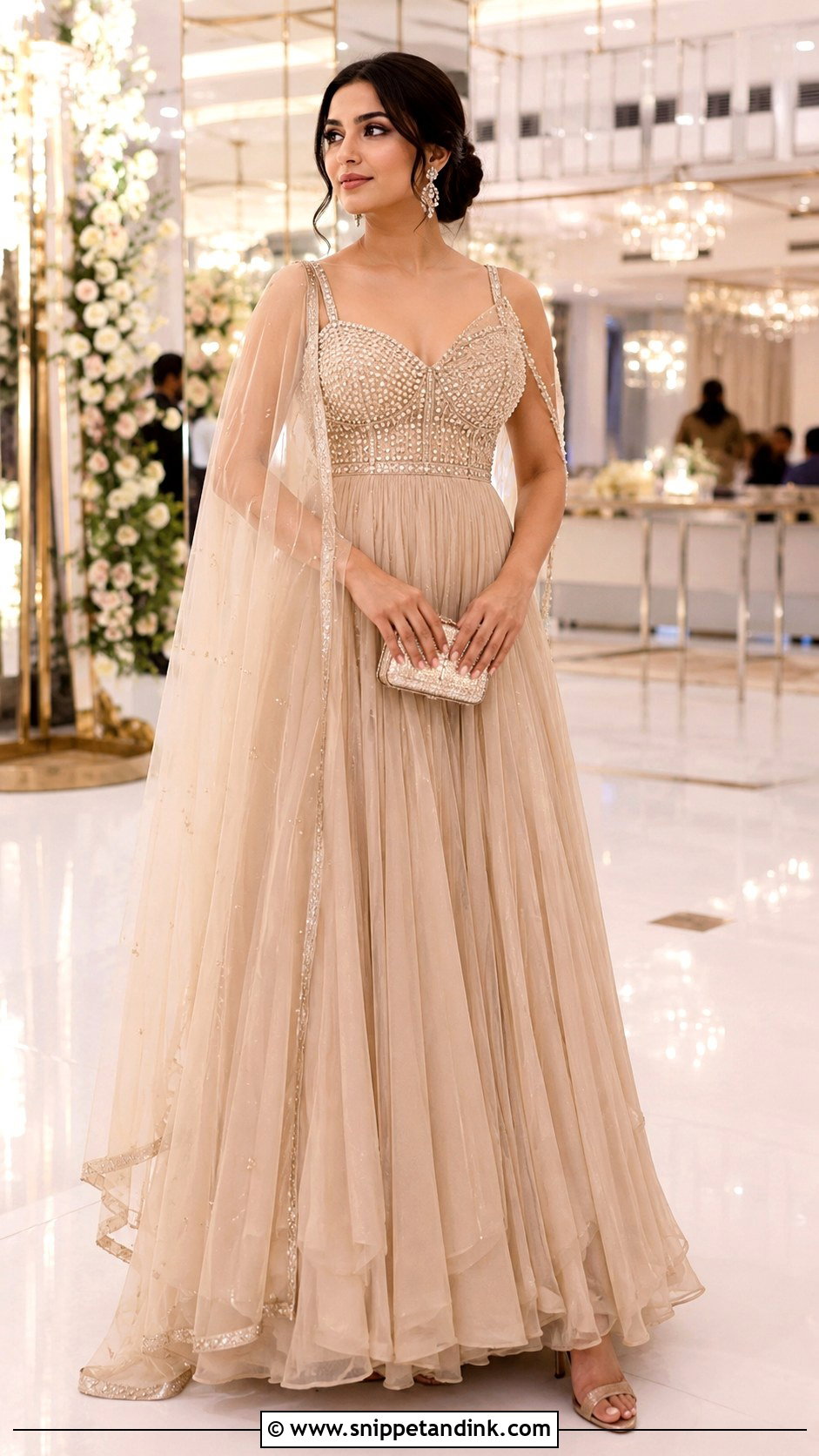
Champagne sits between occasion wear and an evening gown, and that in-between is what makes it right for a reception. The risk is skin tone: on some complexions a champagne close to your own shade washes out under warm lighting, so I hold the fabric against the face in the actual room light before committing. Satin, tulle or layered georgette with pearl work or tonal sequins, a structured bodice and a modest V or square neck keep it modern. Wear fitted pants underneath even if nobody sees them; they stop satin from clinging to your legs. A light shoulder drape or attached cape can replace the dupatta. Crystal earrings, a metallic minaudiere, champagne heels and a sculpted low bun finish it. Brides can add a necklace; guests should stay smaller.
10. Black Embroidered Wedding Anarkali
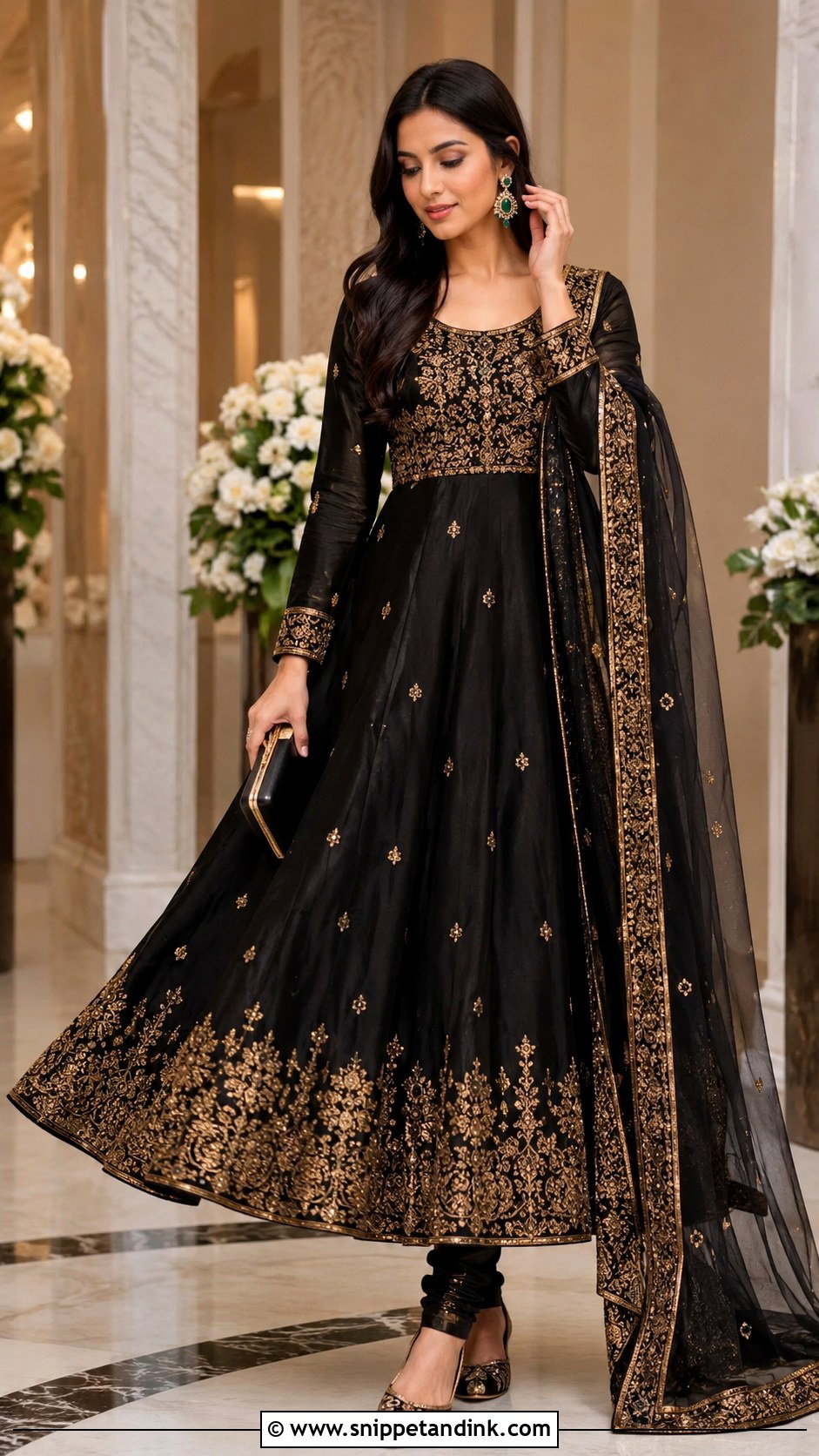
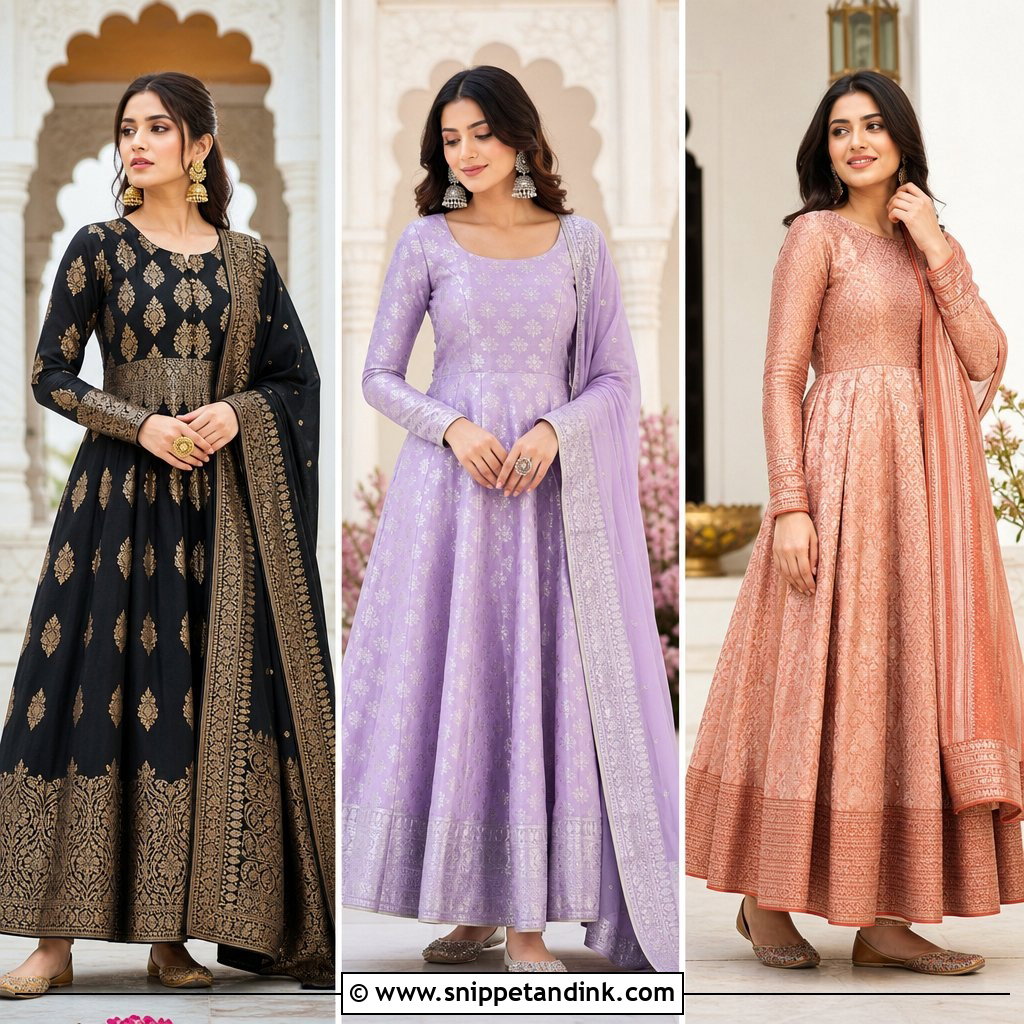
Black needs a conversation before it needs a tailor. Some families consider it unlucky at a wedding, and I’d rather a guest ask than find out at the door. If it’s welcome, save it for the reception or an evening function. A floor-length georgette, silk or velvet Anarkali with gold, silver or jewel-toned embroidery gives the black something to hold the light; plain black on black disappears in low-lit photos. Keep the bodice fitted and the lower panels fluid, with a black churidar and a sheer dupatta edged in metal. Emerald earrings or antique-gold jhumkas add one controlled pop of color. A sleek bun and defined eyes suit it, and a softer lip stops the whole face from looking severe.
11. Jacket Style Wedding Anarkali
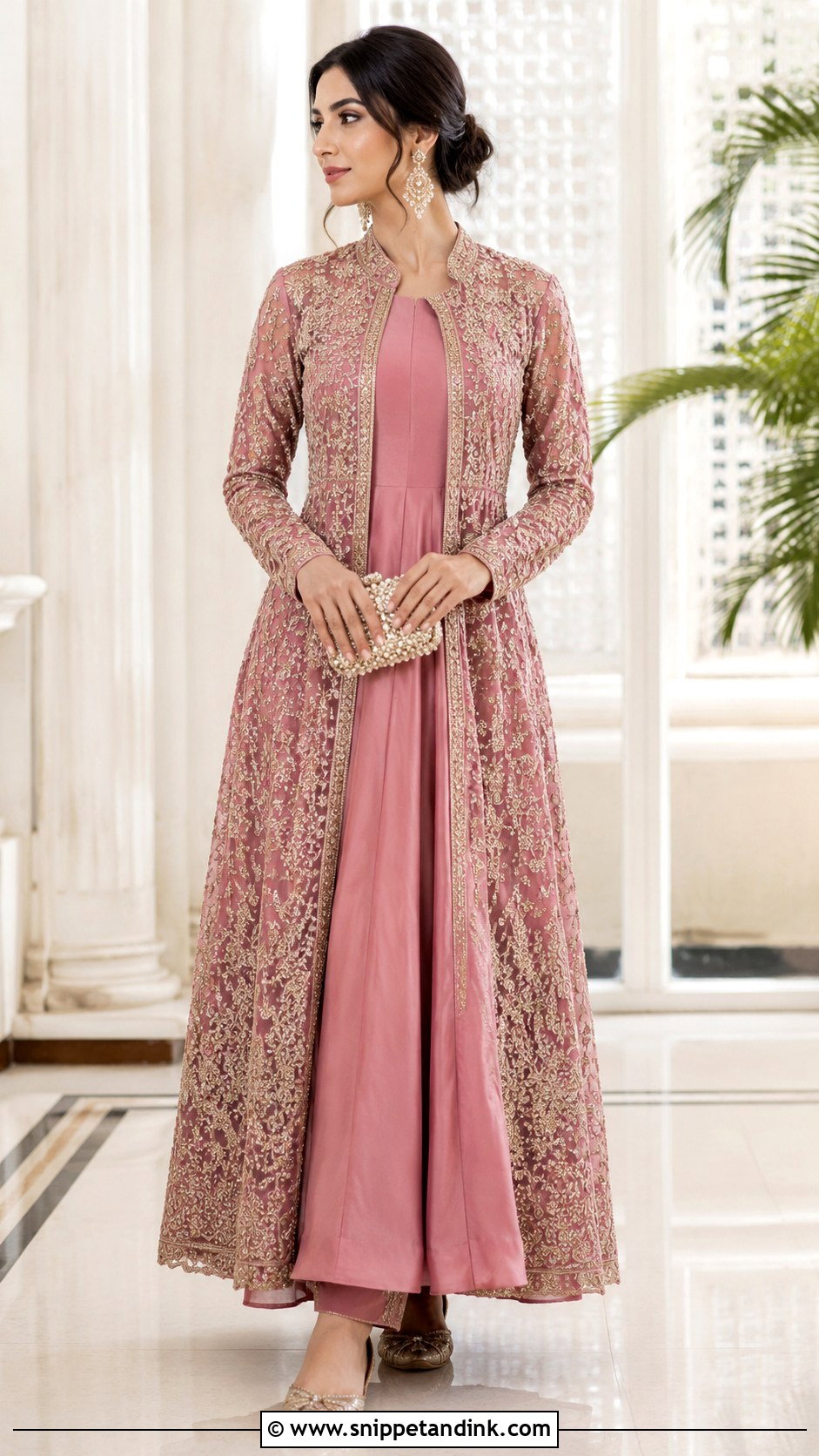
Anyone who hates managing a dupatta should try the jacket version. The base is a simple sleeveless or short-sleeve Anarkali in silk, crepe or georgette, and a long embroidered jacket ending near the hem does the decorative work. A shorter fitted jacket defines the waist instead, which helps if the base has a high seam. Keep base and jacket in one color family for length; contrast cuts you in half. The fitting I care about most is the armhole: a jacket over a sleeved base needs extra room or you won’t be able to raise your arms to hug anyone. Churidar or narrow pants, pointed juttis or low heels, statement earrings and a compact clutch are enough. A polished ponytail or low bun keeps the neckline clean for cooler evenings.
12. Cape Style Wedding Anarkali
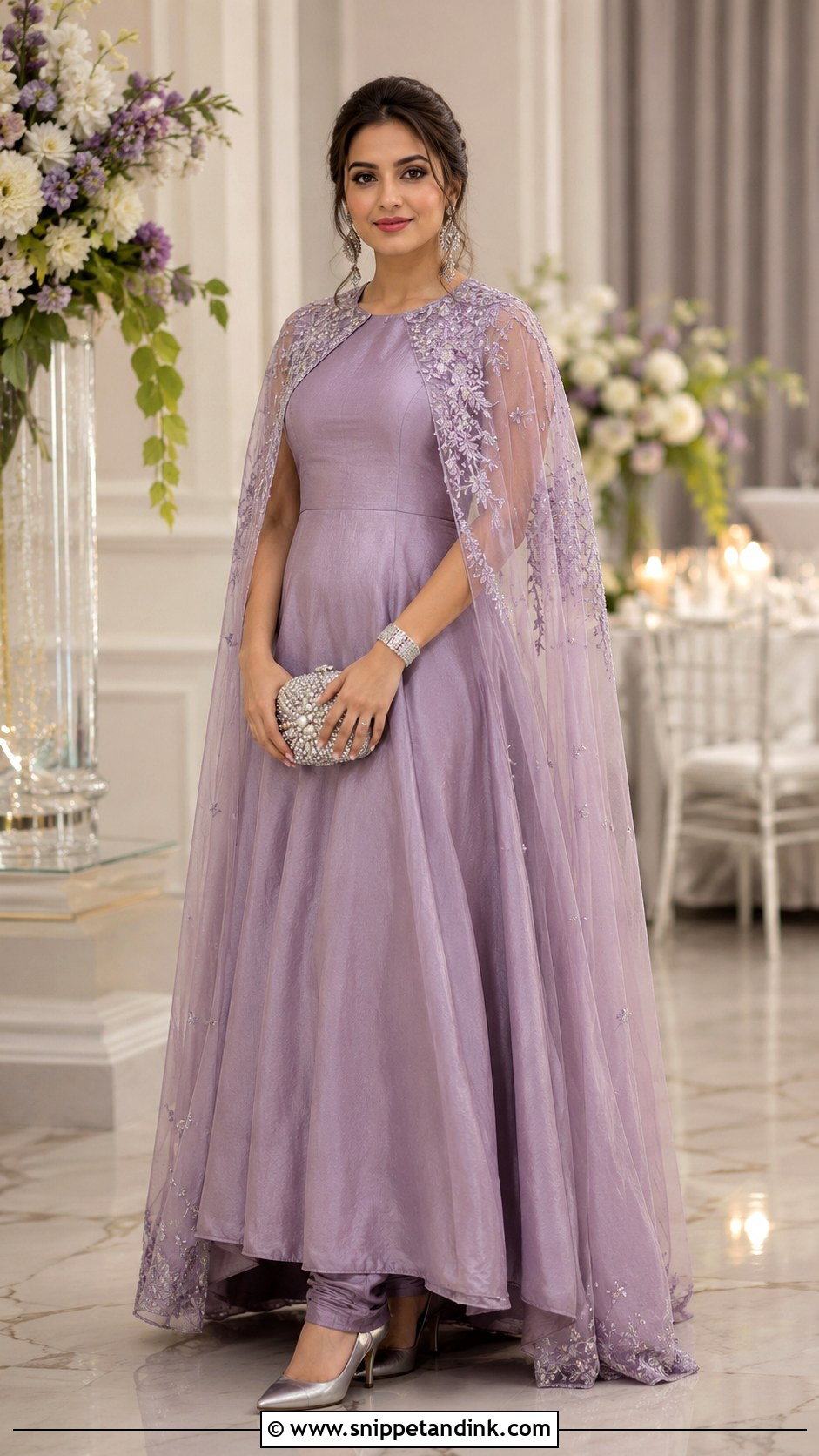
Would you rather skip arranging and pinning a dupatta all day? A cape-style Anarkali gives you coverage without the fuss, and it reads contemporary. The cape is usually sheer and embroidered, attached at the shoulders or neckline, and length changes the effect: waist length keeps your shape visible, floor length adds drama and trails behind on stairs. I check where it’s stitched before anything else, because a cape fixed across the upper arm stops you lifting your hands above shoulder height. Fitted pants and metallic heels sit under the hem. Skip the necklace so it doesn’t fight the cape’s neckline, and go for statement earrings, a slim cuff and a beaded clutch. A center-parted ponytail or smooth bun suits the modern line.
13. Asymmetrical Wedding Anarkali With Cigarette Pants
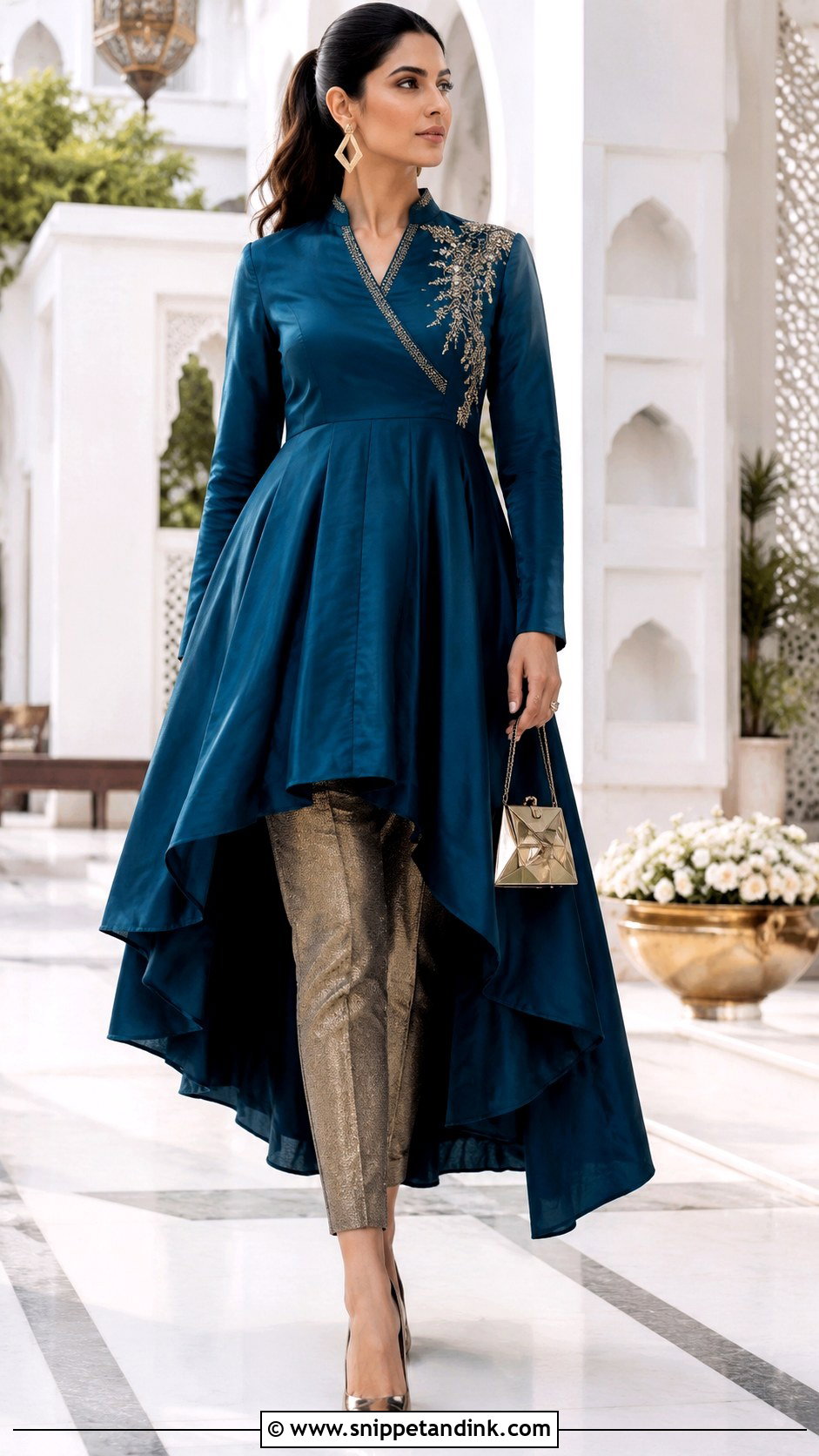
High-low hems only work if the pants underneath are as considered as the top, since a third of the outfit is now trousers. For a cocktail, welcome party or small function, an asymmetrical Anarkali over tailored cigarette pants feels lighter than anything else in this list. Crepe, silk and structured georgette hold an angled hem; very soft fabrics just droop on the short side. I’d keep embroidery to neckline, waist or cuffs. A jewel-toned top over metallic pants gives contrast, while one color top to bottom adds height. Pointed heels, geometric earrings and a structured mini bag match the sharper line, as does a side-parted ponytail. Skip the full dupatta when the outfit already has drama, or add a narrow shoulder drape when the family expects coverage.
14. Anarkali Lehenga For Wedding
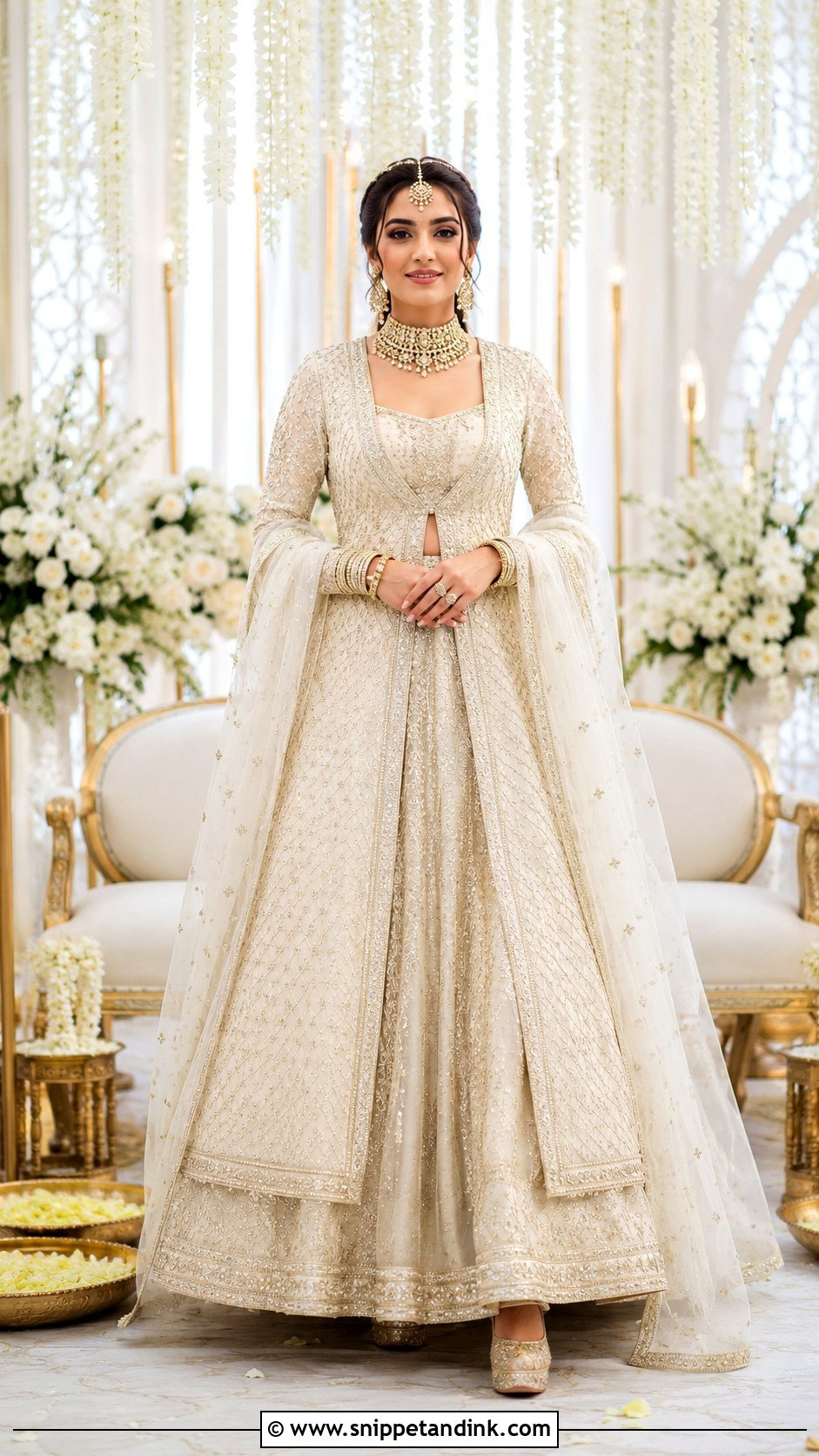
The Anarkali lehenga is two garments, and brides underestimate the weight of that. You have the long flared kurta and a full skirt underneath, both lined, often both embroidered. Choose a top with a front opening or sheer lower panels so the skirt shows, and connect the two through a repeated motif or a related color rather than an exact match. A sheer dupatta goes over one shoulder, or over the head for the ceremony. A choker, earrings, a maang tikka and embroidered platform juttis complete it, and a low bun gives the dupatta and hair accessories something solid to pin into. At the fitting I make the bride sit on a low stool for five minutes. If the waistband digs in or the layers ride up, the lining needs lightening before the day.


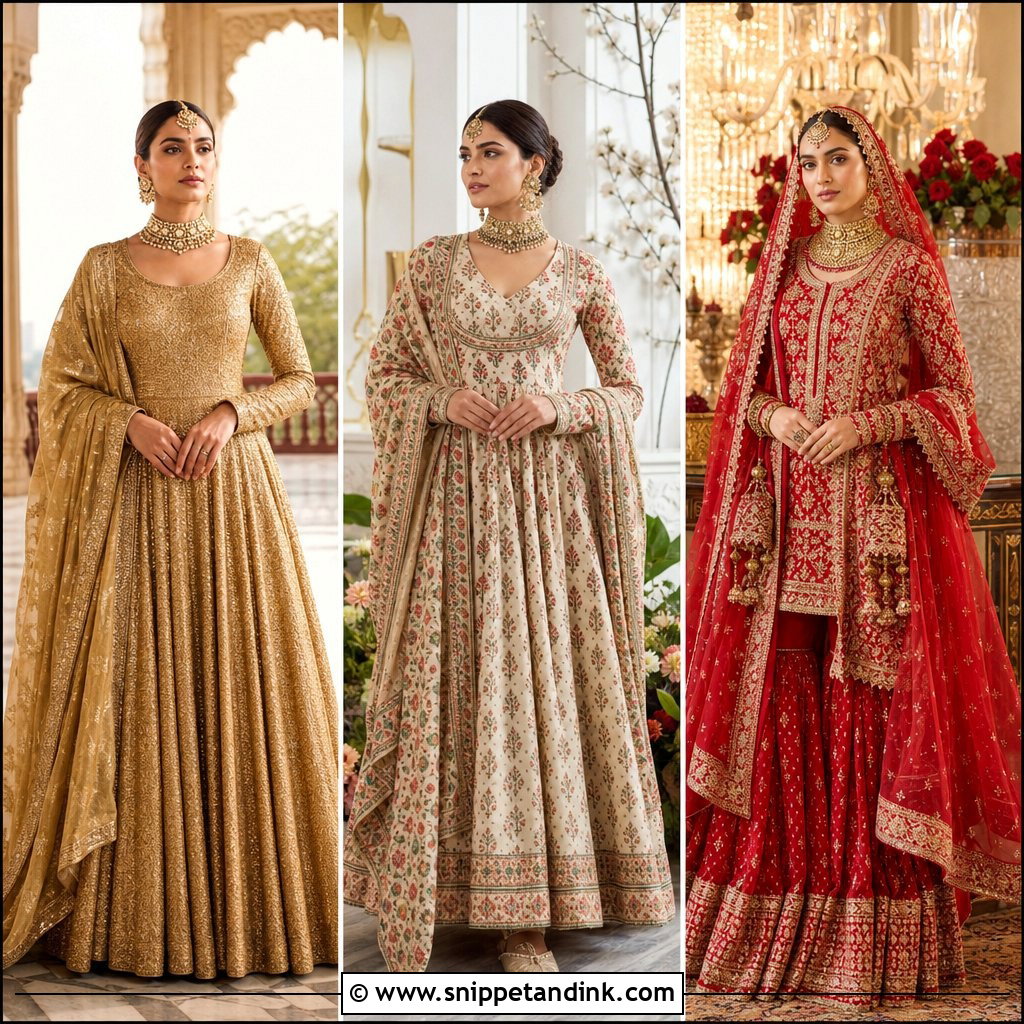
15. Banarasi Silk Wedding Anarkali
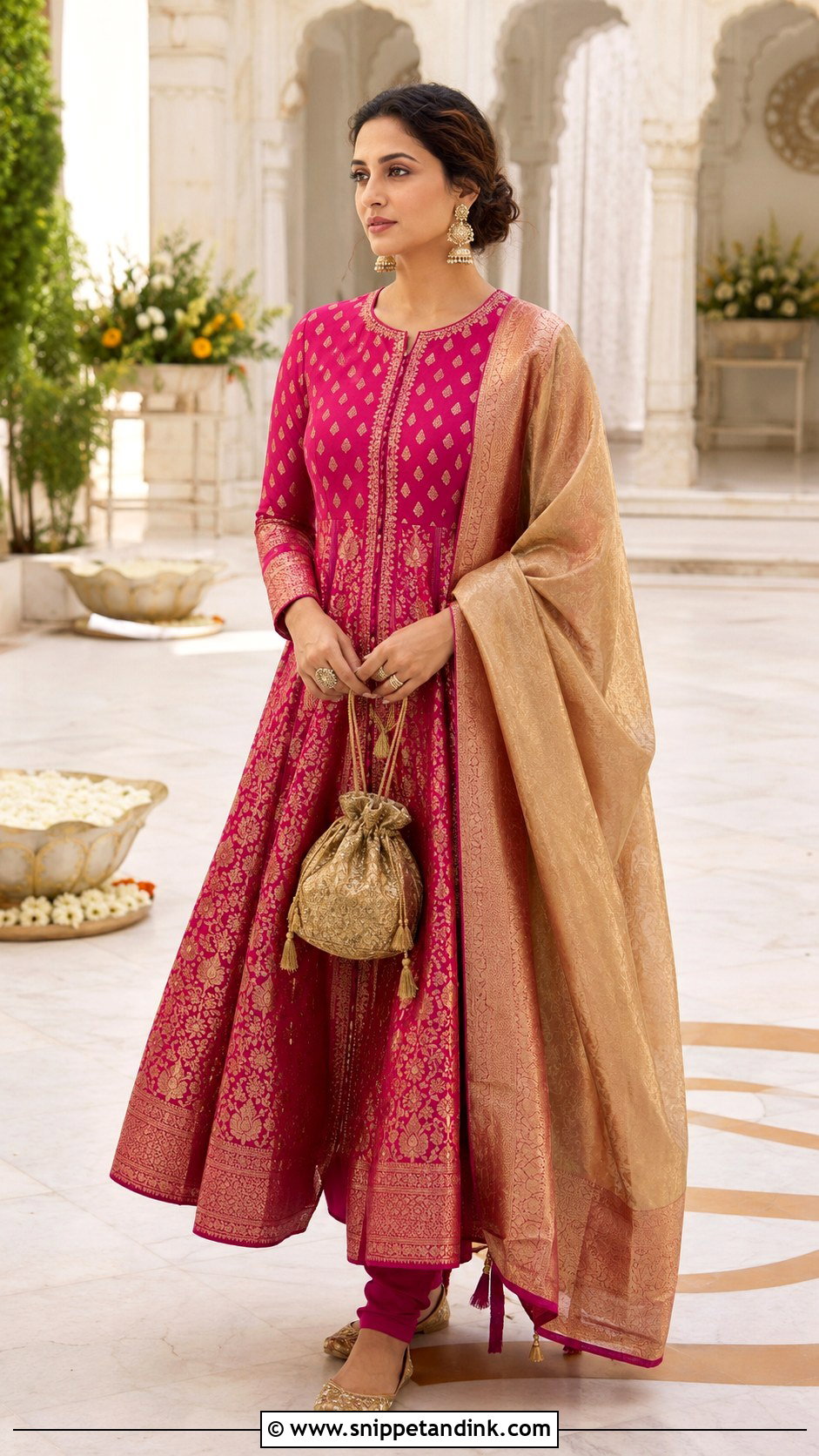
Woven fabric behaves differently from embroidered fabric, and Banarasi silk has the motifs in the weave itself, so it looks rich with almost no added work. It’s also stiffer. A paneled or kalidar cut lets the weight fall in folds instead of standing out like a tent. Magenta, emerald, royal blue and maroon carry the gold best. I pair it with a plain churidar and a contrasting silk or tissue dupatta, plus antique-gold jhumkas, a traditional potli and brocade juttis that echo the weave without copying it. Hair goes in a braided or smooth low bun with a small flower. Brides can layer a choker and a long necklace; guests can stop at one piece. It’s warm to wear, so I keep it for formal ceremonies in cooler months.
16. Organza Wedding Anarkali With Floral Dupatta
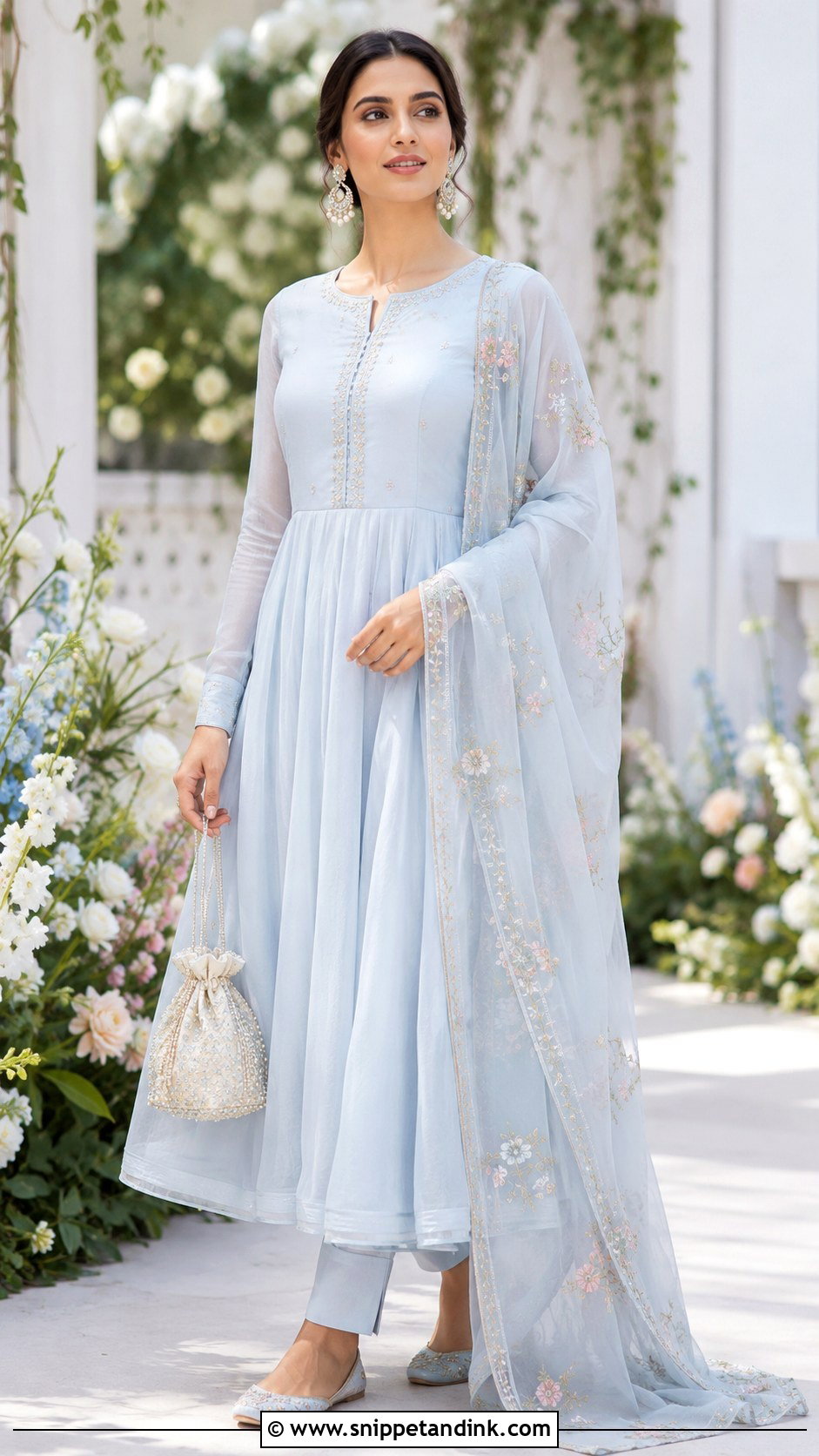
Organza is crisp, and that crispness is both its charm and its trouble. It holds a pastel blue, peach, lavender, mint or dusty pink beautifully in daylight, but it creases sharply where you sit and won’t hang soft until it’s been steamed. A floral organza dupatta can carry the whole outfit with printed blooms, threadwork or a scalloped edge. I always crush a corner of the dupatta fabric in my hand at the shop: if it springs back like paper, it will stand away from your shoulder all day. Ask for an opaque lining. Narrow ankle pants and pastel embroidered juttis keep it light, with pearl drops, a small bracelet and a beaded potli. Soft curls or a low ponytail suit daytime ceremonies, showers and outdoor functions.
17. Plus Size Empire Waist Wedding Anarkali
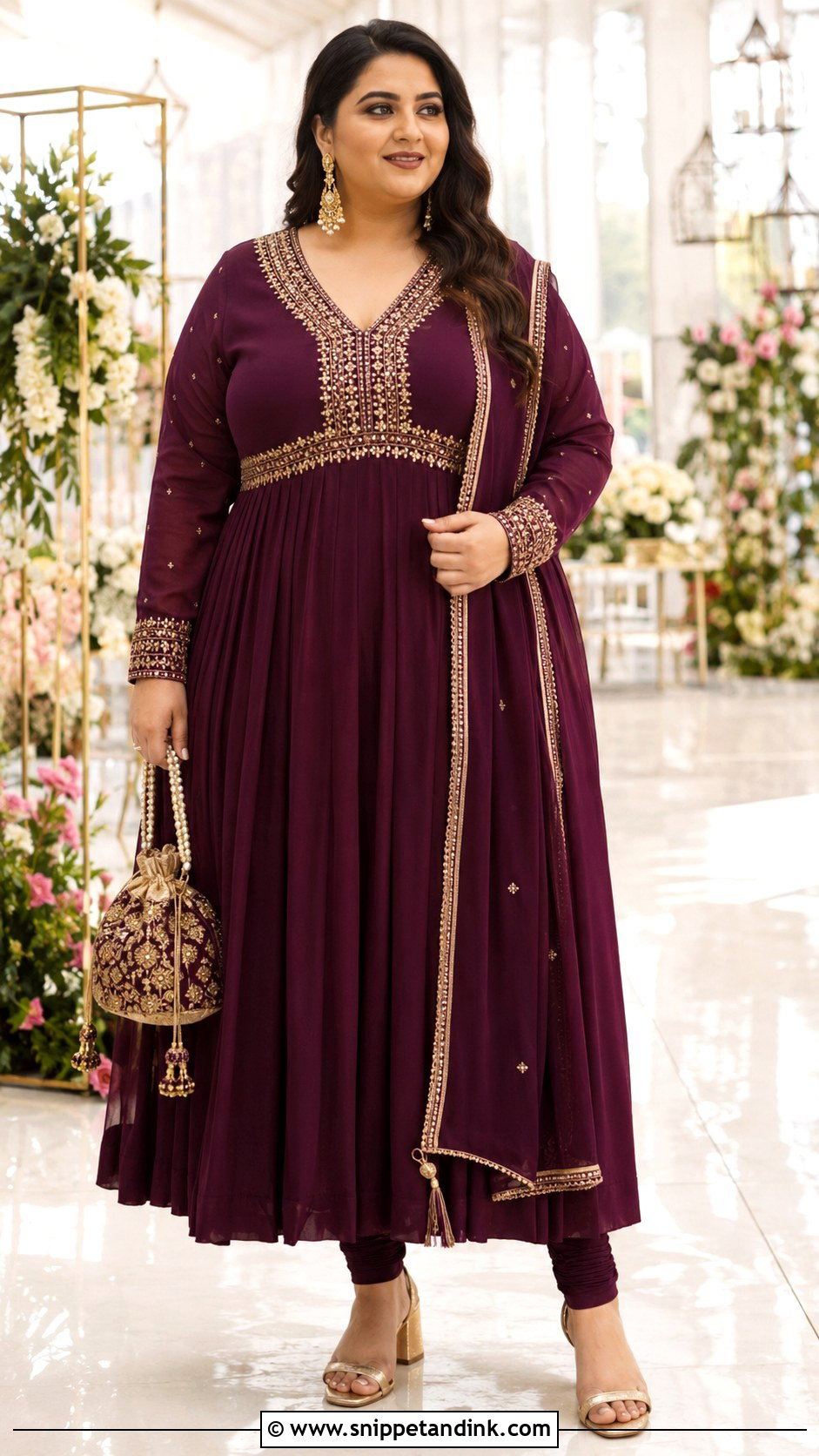
An empire waist is comfortable for a long day because nothing presses on your midsection after a heavy lunch. The bodice has to sit securely under the bust; if it slides even a centimeter the whole line drops. From there the panels should skim rather than cling, which is why I lean toward soft georgette, crepe or silk blends over stiff organza. A V-neck, scoop or structured square neckline all work, and sleeve and hem lengths should be tailored rather than bought off the rack. Stretch churidar, a light dupatta worn vertically over one shoulder, and supportive block heels or cushioned juttis keep you comfortable. Long earrings and a medium potli balance the proportions. Don’t size up too far for comfort; a fitted size with good seam allowances looks better and moves better.
18. Petite Kalidar Wedding Anarkali
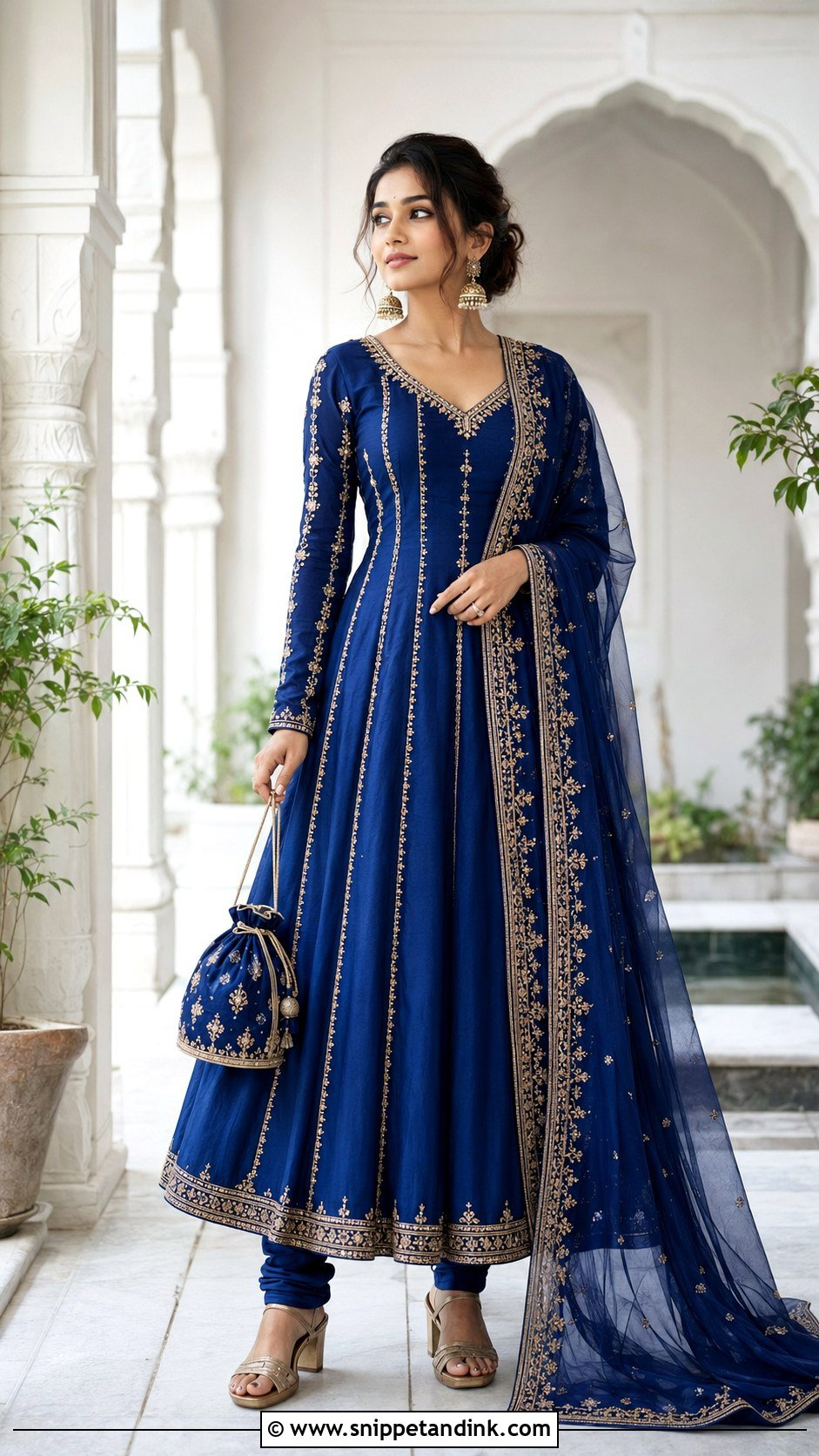
Volume is the issue for petite frames, and a kalidar Anarkali can swallow you if the panels are too wide. Ask for narrower kalis, a waist seam at your natural waist and a hem that just reaches the top of your shoes. Broad borders cut your height, so look for fine embroidery or vertical motifs. A matching churidar keeps one continuous color line, and the dupatta goes lightly over one shoulder rather than wrapped. Low platforms, small to medium jhumkas and a compact potli suit the scale. A high neckline can look elegant on a small frame, as long as you skip the big necklace. I always have shoulder and bodice altered on petite clients’ outfits; standard sizing puts the shoulder seam halfway down the arm.
19. Minimal Pastel Wedding Anarkali
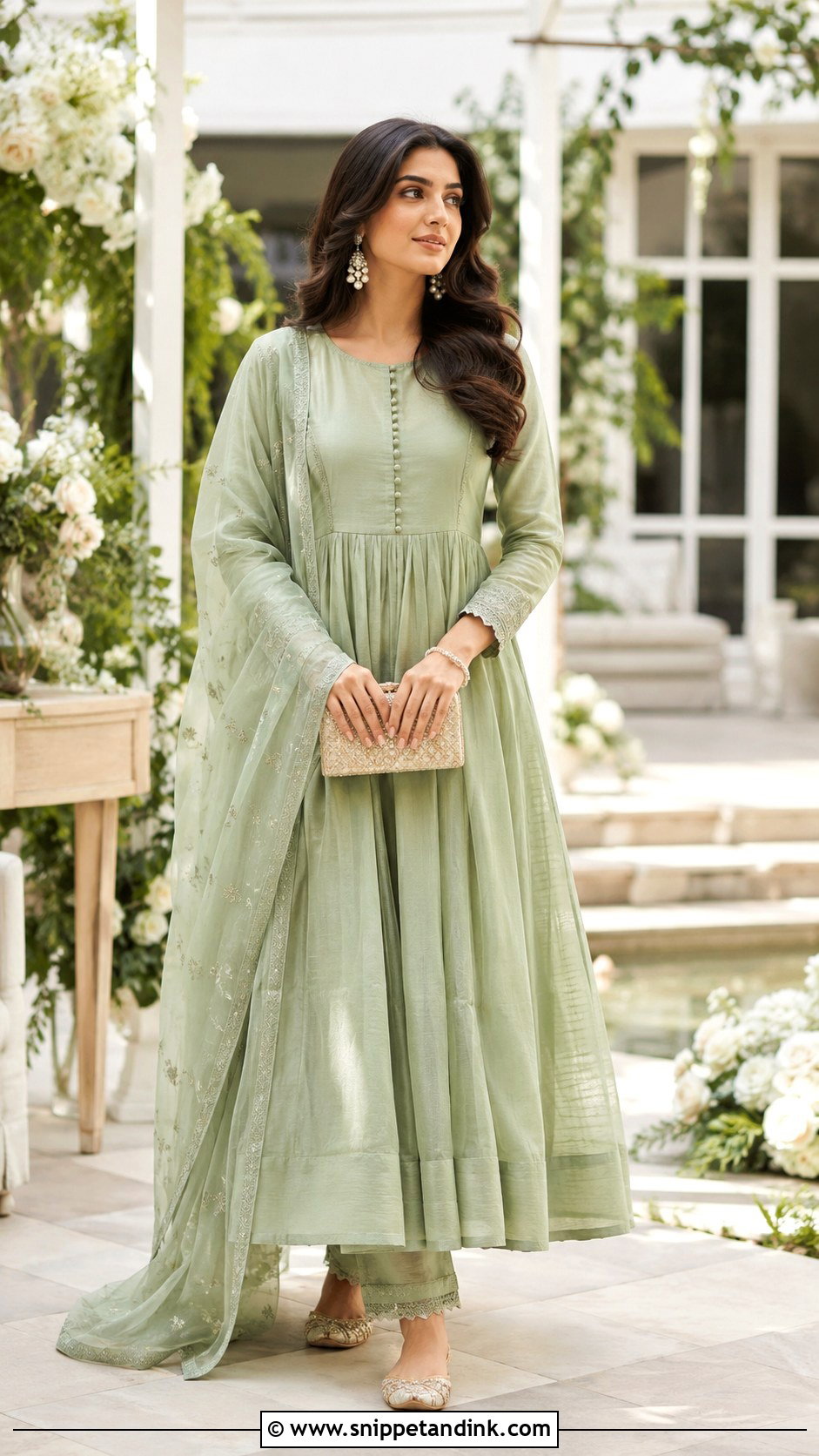
Sometimes the lightly detailed outfit is the one people remember. A powder blue, sage, lilac, peach or muted rose Anarkali with clean paneling and small accents at neck and cuffs suits morning ceremonies, pre-wedding lunches and guests who prefer quiet clothing. Chanderi, silk crepe or soft georgette give enough body to hang well. Pair it with straight pants and a sheer tonal dupatta with a thin border, then pearl studs, a delicate bracelet, neutral juttis and a box clutch. Loose waves or a neat low ponytail, luminous skin and a soft lip finish it. My trick with minimal outfits is to change the jewelry, not the dress: the same Anarkali goes from lunch to an evening function with bigger earrings and a darker lip.
20. Maroon Bridal Wedding Anarkali
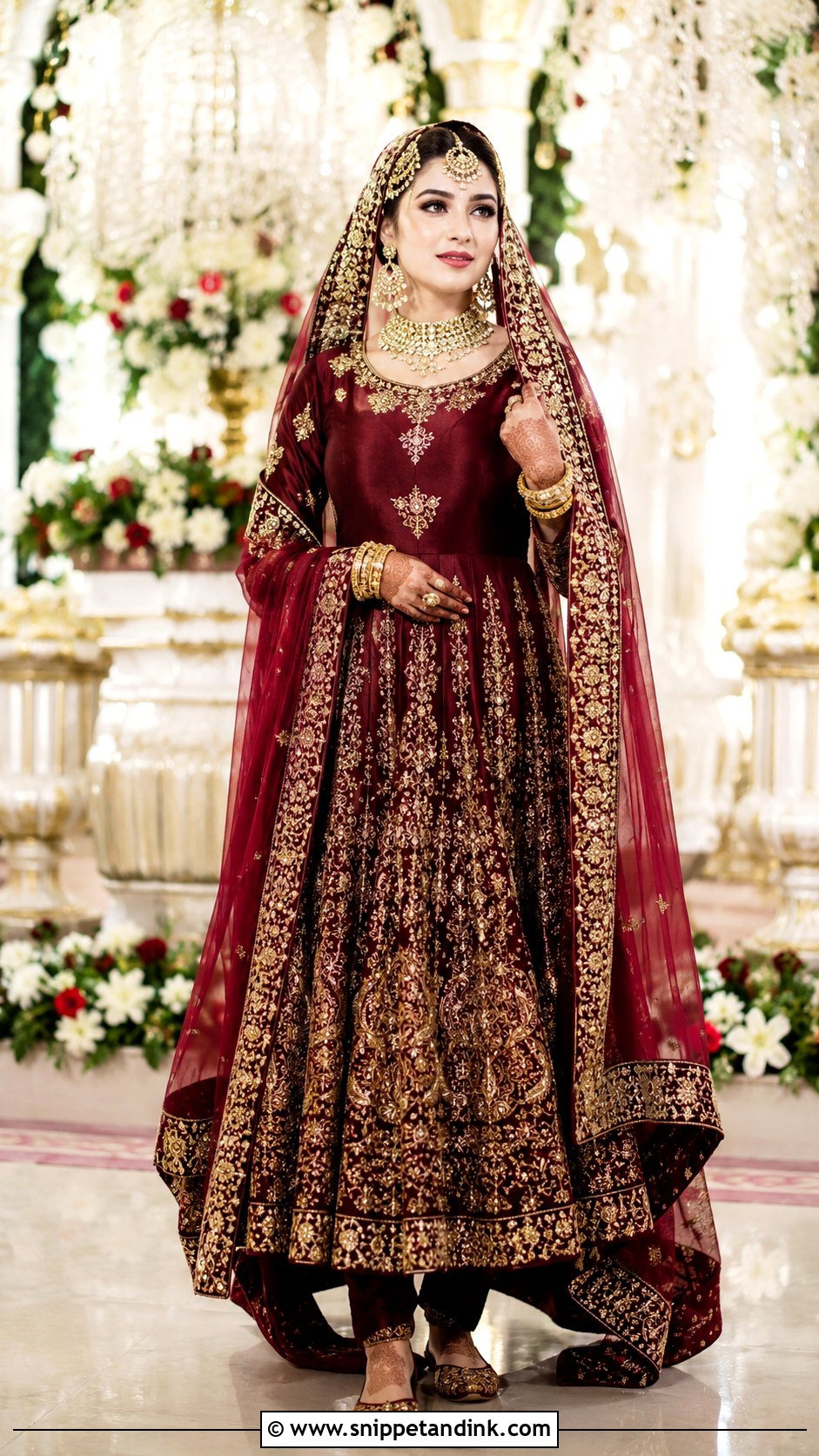
Maroon is the red I suggest to brides who find bright red too loud on their skin. It carries antique gold well in silk, velvet or layered georgette. Choose a floor-length Anarkali with a fitted bodice, full skirt and embroidery placed at the neckline, waist and hem, plus a matching churidar and a maroon net dupatta with a wide border. Drape it over the head for the main ritual, then re-pin it across both shoulders for the reception. Kundan jewelry, a maang tikka, gold bangles and embroidered juttis suit the color. A center-parted bun with flowers is the classic finish. Maroon is heavy on camera, so I keep makeup balanced with defined eyes and a warm neutral lip, and sometimes add a lighter second dupatta for contrast.
Safety Pins, Hair Grips and a Dupatta That Stays Put
The dupatta is where most outfits fall apart by the second hour. A heavy bordered one slides off silk because silk is slippery, and a net dupatta catches on every bangle. I set it in three places, not one.
On the head, the drape goes over a low bun and is gripped into the bun itself with U-pins, never just pinned to loose hair. On the shoulder, a small safety pin goes through the dupatta and the bodice’s inner seam allowance, so the hole lands in the seam and not in the fabric face. At the arm, a fold is caught at the forearm with a tiny pin or a hidden snap that a tailor can sew on in minutes. For velvet and heavy silk, ask the tailor to add a short loop inside the shoulder seam to pin through instead.
Carry a spare: four small safety pins, a few U-pins and a strip of fashion tape in your potli. When the dupatta comes off for dancing, hand it to one named person and tell them to fold it, not ball it, because a crushed net border won’t recover in time for photos.
Storing Zari, Velvet and Organza After the Last Function
Air the outfit overnight on a padded hanger before you put it away; perspiration left in the lining is what stains silk later. Have it dry-cleaned by someone who handles embroidered occasion wear, and point out any food or henna marks so they treat them first.
Wrap zari pieces in plain cotton muslin, not plastic, which holds moisture and tarnishes the metallic thread. Velvet should hang or be rolled loosely, since a hard fold leaves a permanent crush line in the pile. Every few months I tell brides to refold heavy silk along different lines, because the old creases eventually crack. Keep perfume and deodorant off zari altogether; the alcohol dulls the metal faster than anything in the wardrobe.
Matching the Anarkali to the Function, Not Just the Photo
A wedding outfit has to look special and still let you move, sit and eat. Across this list you have red silk and maroon for the bride, chikankari and organza for daytime, velvet and sequins for evening, mirror work for dancing and capes or jackets for anyone done with dupattas. Start from the function, the weather and what the family expects, then think about how many hours you’ll be wearing it. Tailoring matters more than the price tag, especially at the shoulders, bodice, sleeves and hem. Finish with footwear you can stand in, jewelry that doesn’t fight the neckline, a dupatta that’s pinned properly and a hairstyle that supports the outfit.
You'll Like These Ideas:





Leave a Reply