
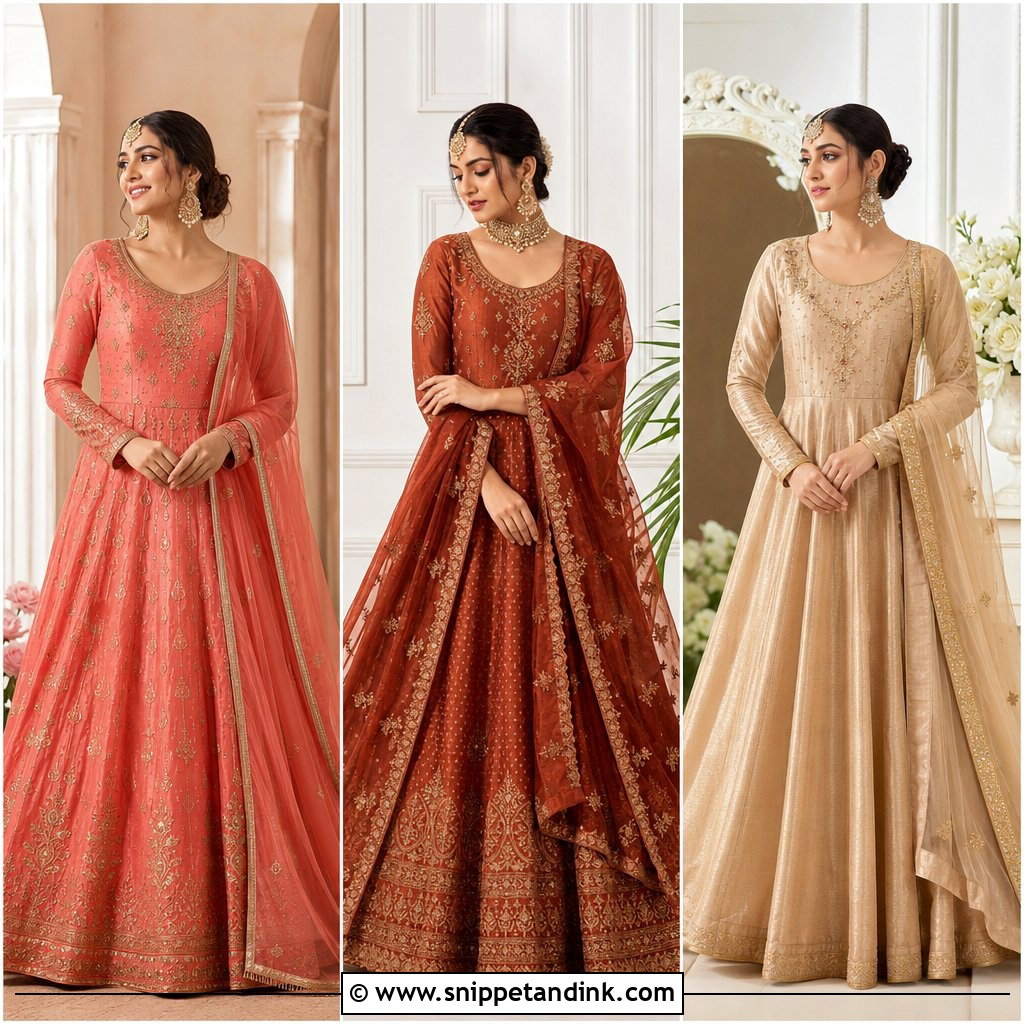
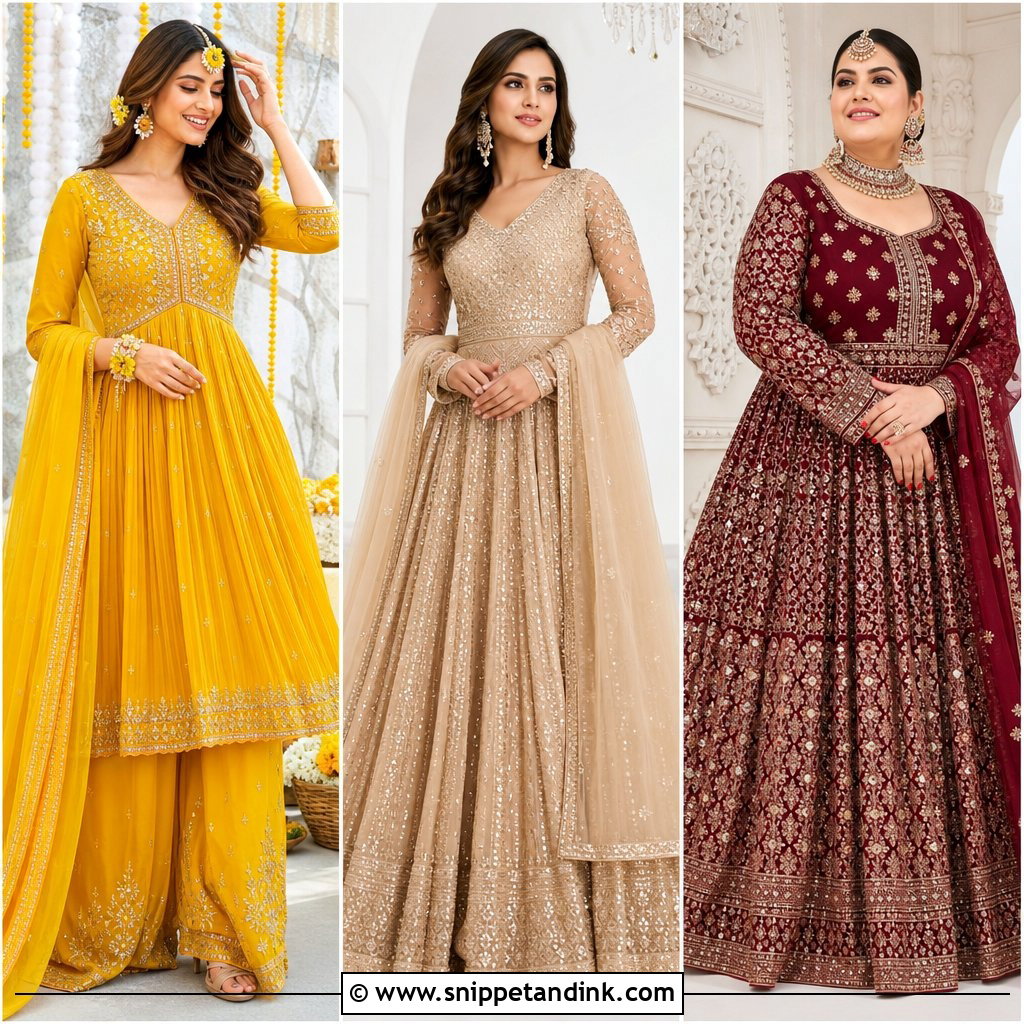
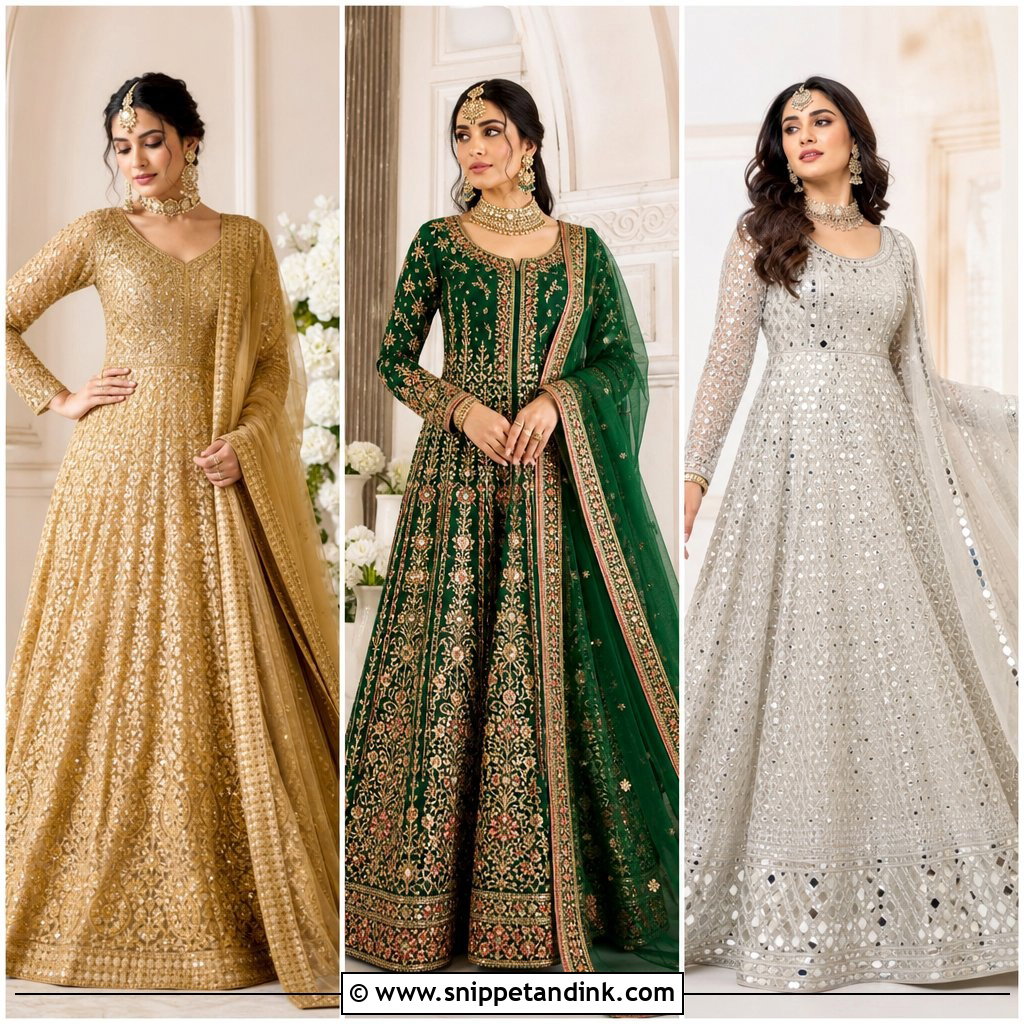
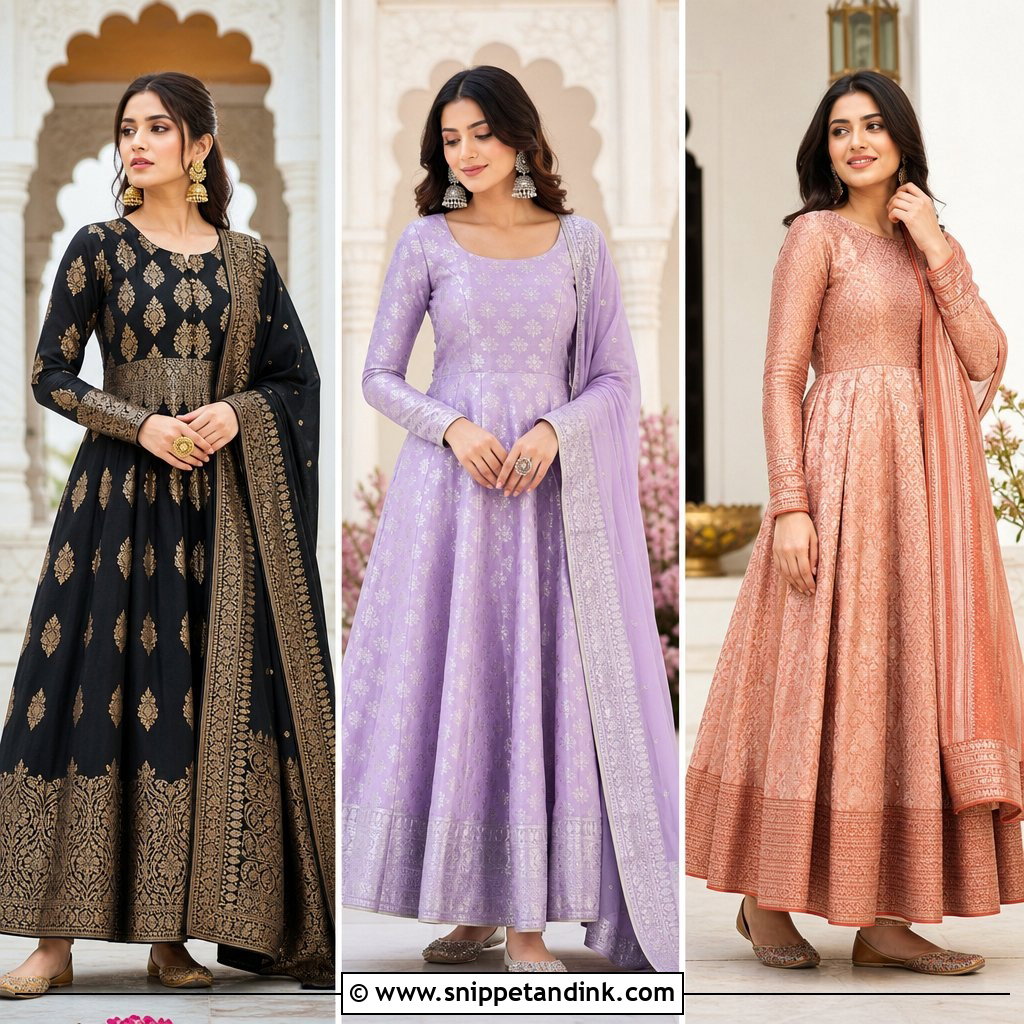
An Anarkali’s long flare does half the styling for you; the dupatta decides the rest. Match it to the dress and the outfit reads polished and formal. Contrast it and you bring in color and personality. Fabric matters as much as shade: organza holds a crisp shape, chiffon falls soft and close, Banarasi silk adds weight and richness, and cotton keeps a daytime outfit cool. The pairings below run from traditional combinations and modern color contrasts to light daytime outfits and detailed evening looks for weddings and family functions. For each one I’ve noted the drape I’d use, plus shoes, jewelry and a bag, so the whole outfit holds together.
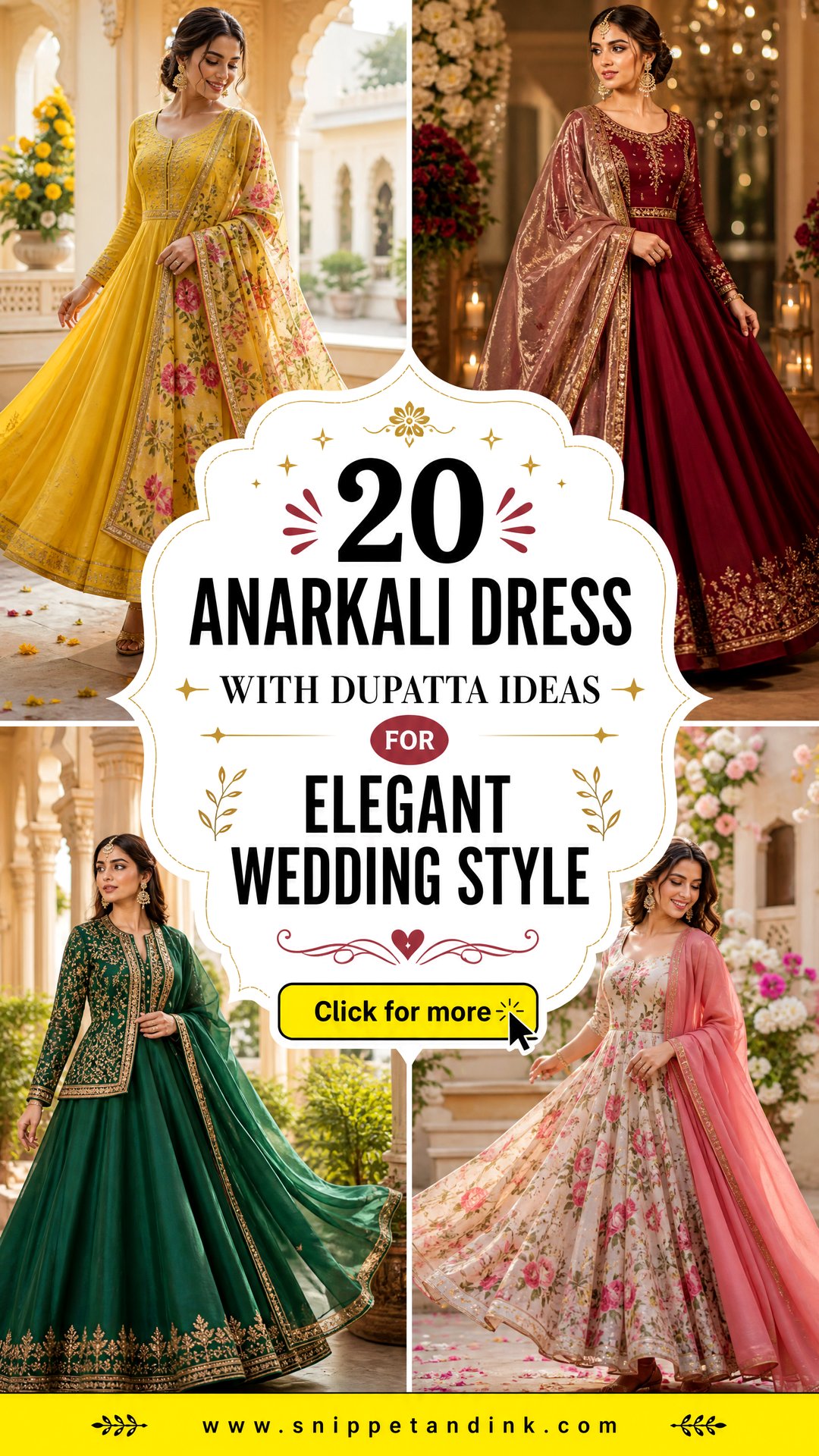
Four Drapes That Suit an Anarkali, and How I Pin Each One
Most of the outfits below use one of four drapes. Each behaves differently over a long function, so pick the one that matches what you’ll be doing, not only how it looks in the mirror.
One shoulder, border down the front
The most versatile. Pleat the dupatta lengthwise into folds the width of its border, lay it over the left shoulder and let the front fall to roughly knee height. I put one safety pin through the pleats into the shoulder seam of the dress and a second at the back of the bodice, which stops it creeping forward.
Loose across both arms
Over the back and resting in the crook of each elbow. It looks airy and suits chiffon and net, but it falls more often than any other drape, so save it for a seated dinner or for photos.
Diagonal across the torso
From one shoulder across the front to the opposite hip, caught at the waist with a belt or a hidden pin. Good for dancing and for carrying things, and it shows off a printed dupatta well.
Over the head
For a temple, a gurdwara or any ceremony where covering is expected. Pin it to the hair at the crown with two bobby pins crossed in an X, then add a safety pin at the shoulder so the weight isn’t hanging from your hair.
Use gold-tone safety pins on gold work so they disappear, and pin through the border or a pleat, never through a single layer of sheer fabric, which tears.
1. Red Anarkali Dress With Gold Dupatta
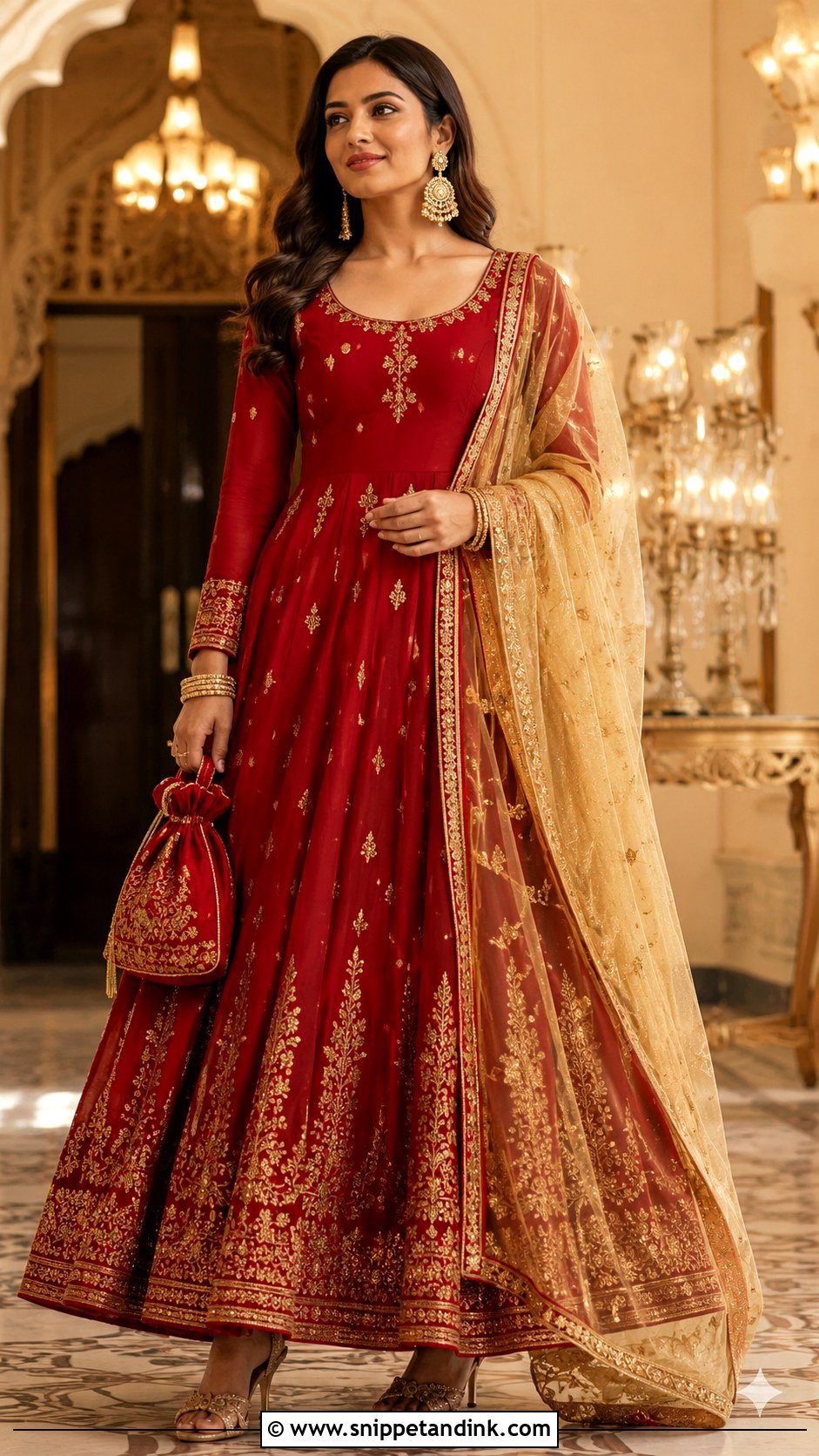
Red with gold is the pairing I reach for when a guest wants something unmistakably festive without a bridal amount of work. Choose a floor-length red Anarkali with zari at the neckline, bodice, sleeves and hem, and keep the gold dupatta light, in tissue or organza, so it never buries the dress. Drape it over one shoulder and let the border fall straight down the front. Tissue is slippery, so I pin it at the shoulder seam and again at the back of the bodice. Gold jhumkas, stacked bangles and an embroidered potli go with gold block heels or embellished juttis, depending on hem length. A sleek bun or soft waves keeps the neckline clear.
2. Black Anarkali Dress With Organza Dupatta
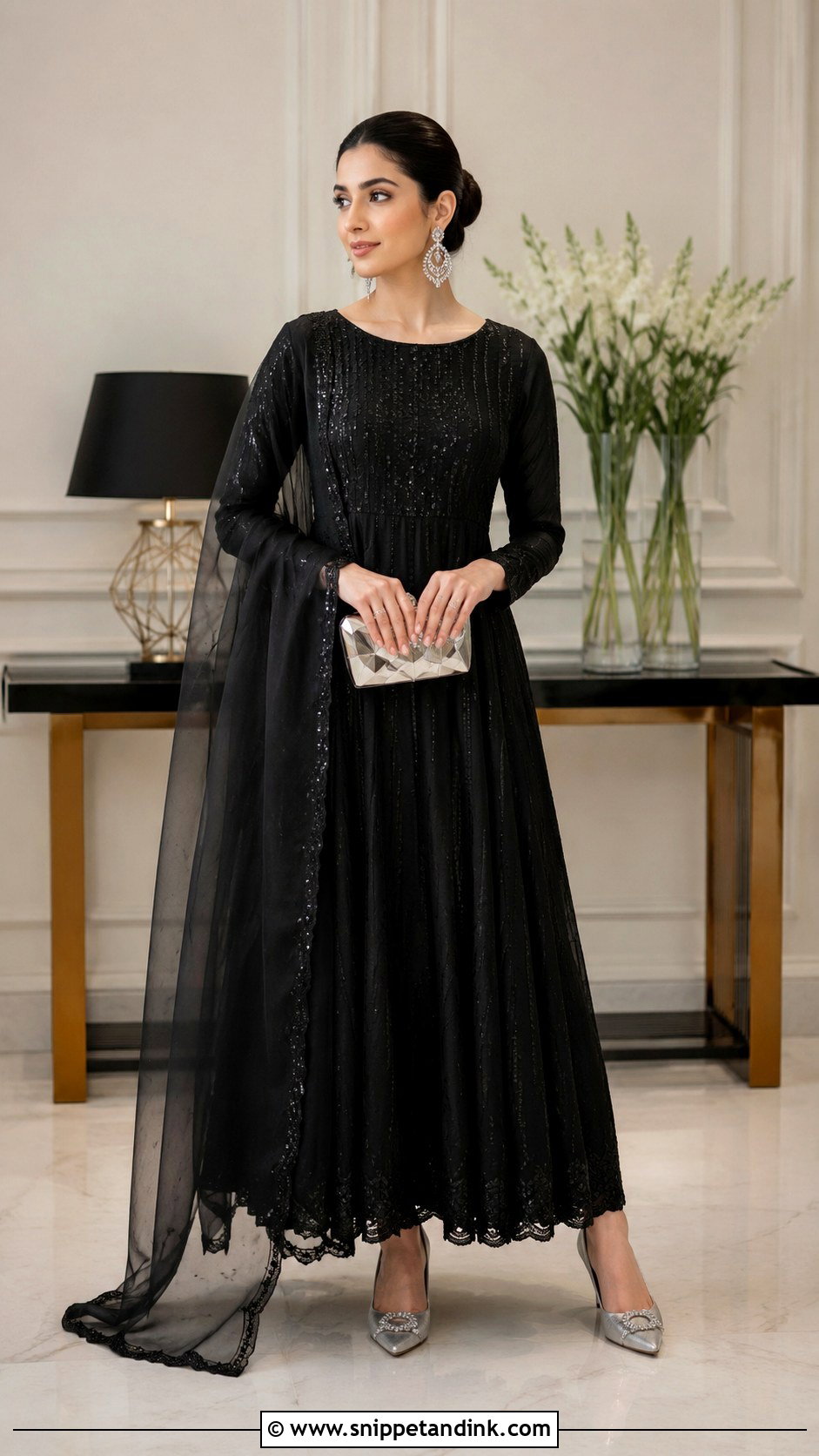
Black needs very little help. Pick an Anarkali with tonal threadwork, small sequins or a narrow metallic border, and a black organza dupatta with scattered motifs and a defined edge. Pin it neatly at one shoulder and let the other end fall behind the arm, so the fitted bodice and the full skirt both stay in view. Organza holds every fold line, which is why I steam it on the day rather than the night before. Silver chandbalis, a structured clutch and pointed metallic heels are enough; skip the necklace if the neckline is worked. Finish with a low ponytail or center-parted bun, softly defined eyes and a berry lip.
3. White Chikankari Anarkali With Pastel Dupatta
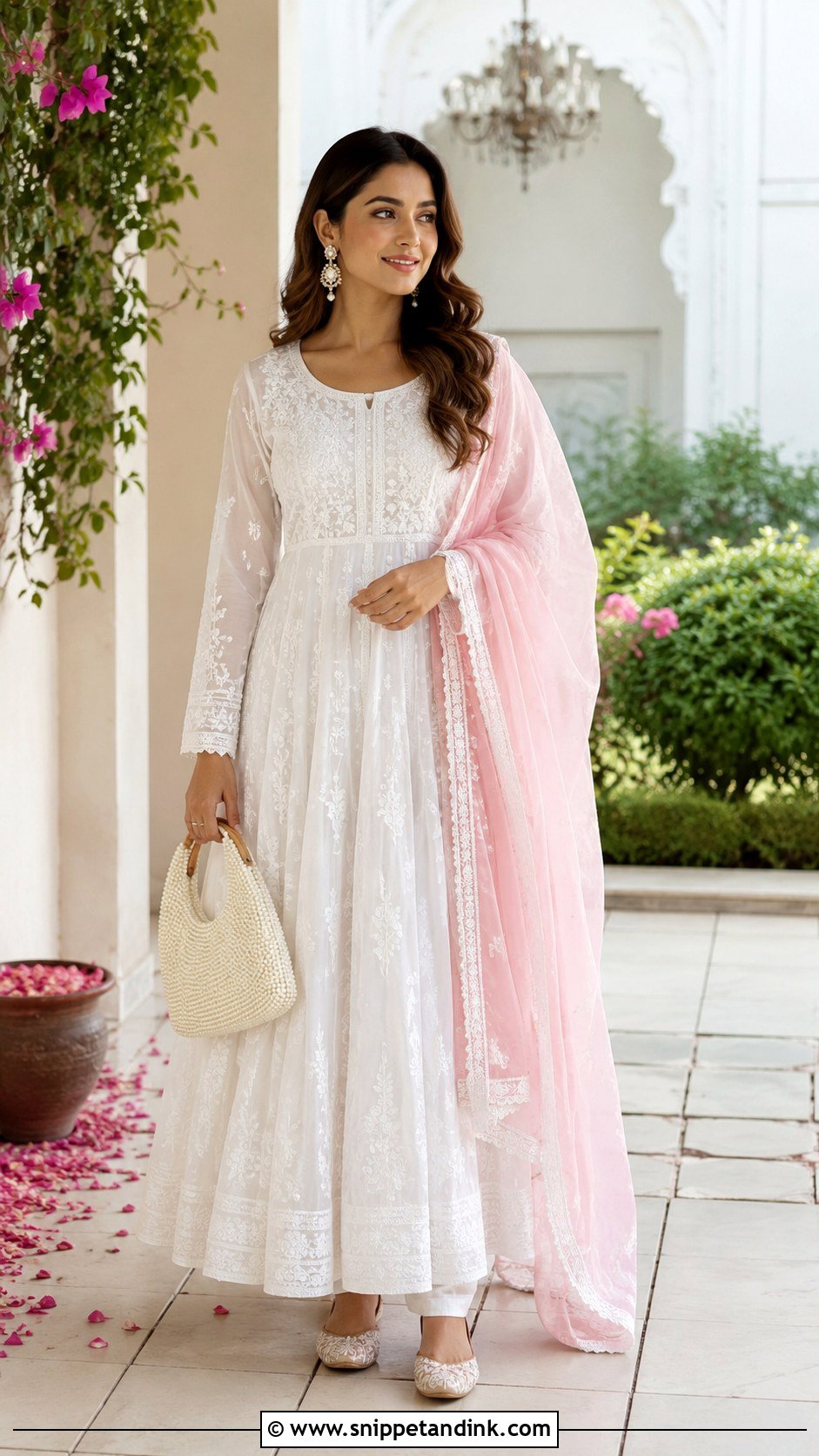
Chikankari on white is delicate, and a pastel dupatta adds color without crowding the needlework. Go for breathable cotton or georgette with tonal embroidery and a comfortable lining. A blush, powder blue, mint or lavender chiffon dupatta works, since chiffon is light enough not to flatten the embroidery beneath it. Wear it loose across both arms for an airy daytime look, or pin it on one shoulder if you’ll be carrying a plate and greeting relatives. Pearl drops, slim bangles and a light embroidered bag sit well with ivory juttis or low block heels. Natural makeup and a relaxed braid suit a daytime function or a family lunch.
4. Green Anarkali Dress With Banarasi Dupatta
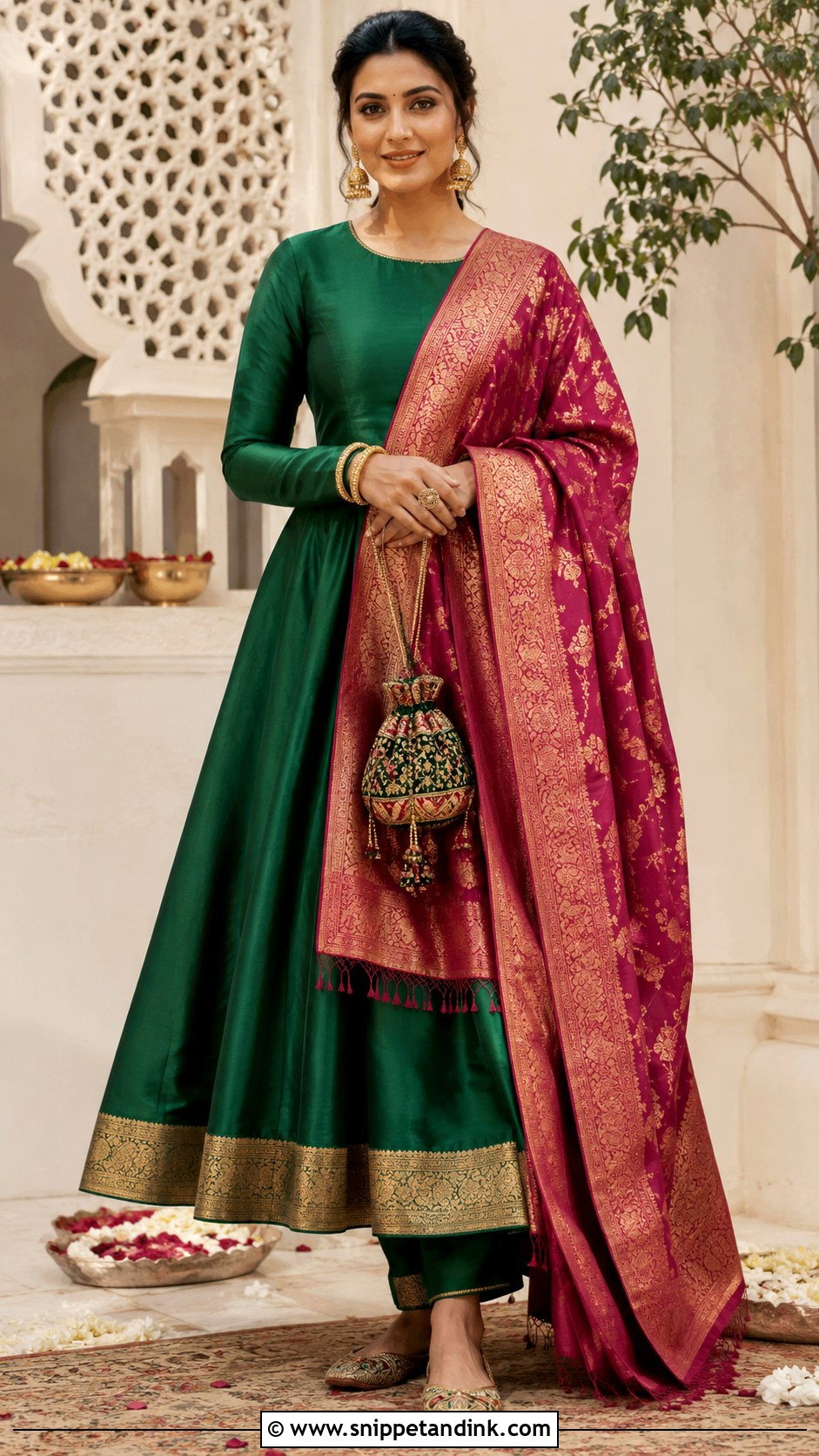
Here the dupatta is the star. Start with an emerald or bottle-green Anarkali in silk, chanderi or a fluid blend, kept fairly plain, so the detailed Banarasi dupatta takes the attention. Red, magenta, mustard or antique gold all contrast well. Banarasi is heavy and stiff next to net, which makes it hard to wear loose, so I pleat it into narrow folds about the width of the border, pin it to the shoulder and let the woven edge run down the front. Traditional jhumkas, a small bindi and gold bangles, with a compact potli and embroidered juttis. A neat bun with one simple hair accessory keeps it composed for formal functions.
5. Pink Anarkali Dress With Net Dupatta
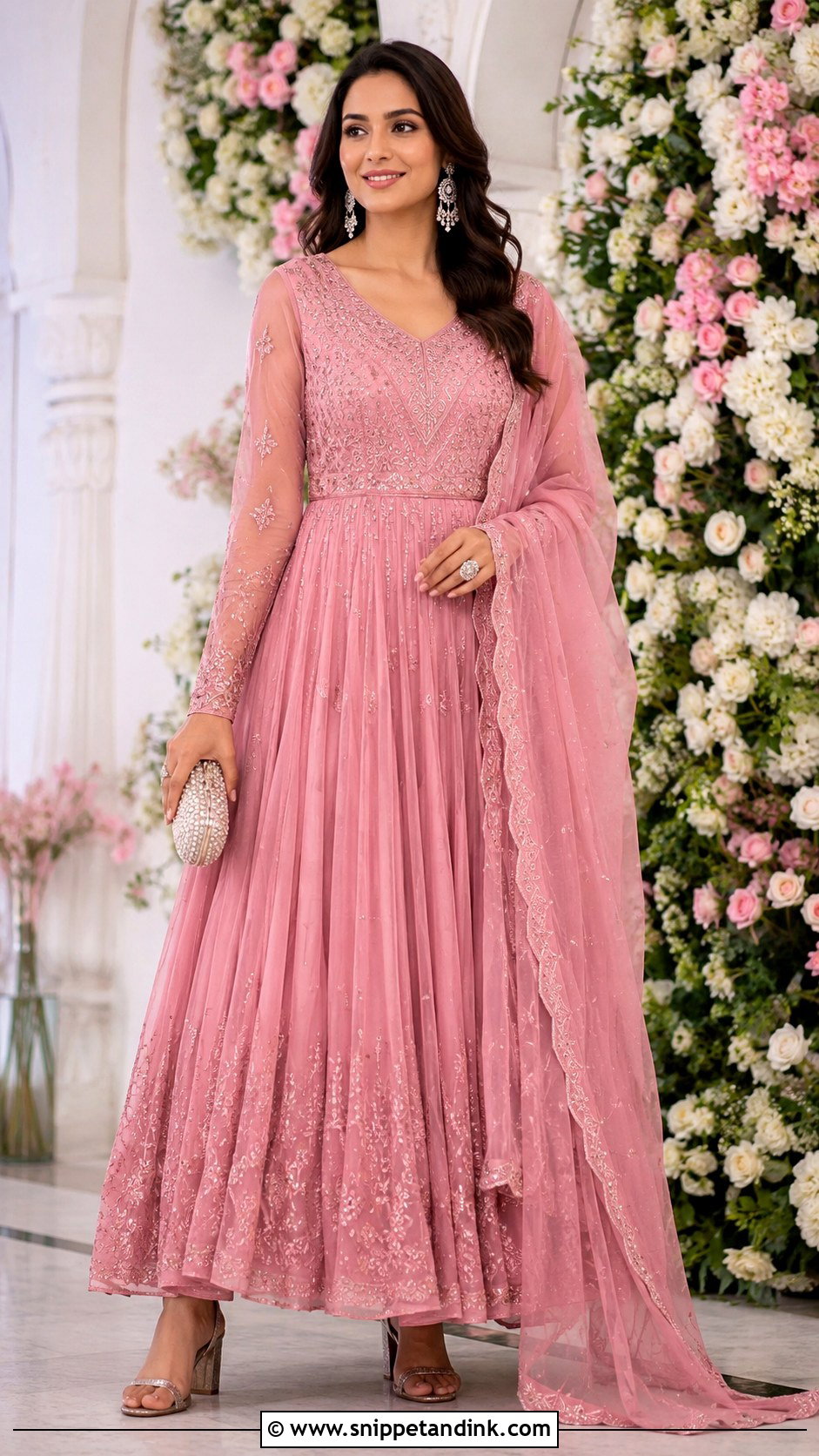
Pink covers a wide range, so match the shade to the occasion: dusty or rose pink by day, bright rani pink for the evening. A fitted bodice, defined waist and wide flare give the best balance. A matching net dupatta with small motifs, scalloped edges or fine sequins can go over both shoulders for a traditional look, or over one arm to show the neckline. Net snags on bangles and rings more than any other dupatta fabric, and that’s one reason I keep the jewelry smaller here: crystal earrings, a beaded clutch and metallic heels. Loose curls or a soft half-up style keep it from feeling too formal.
6. Navy Blue Velvet Anarkali With Embroidered Dupatta
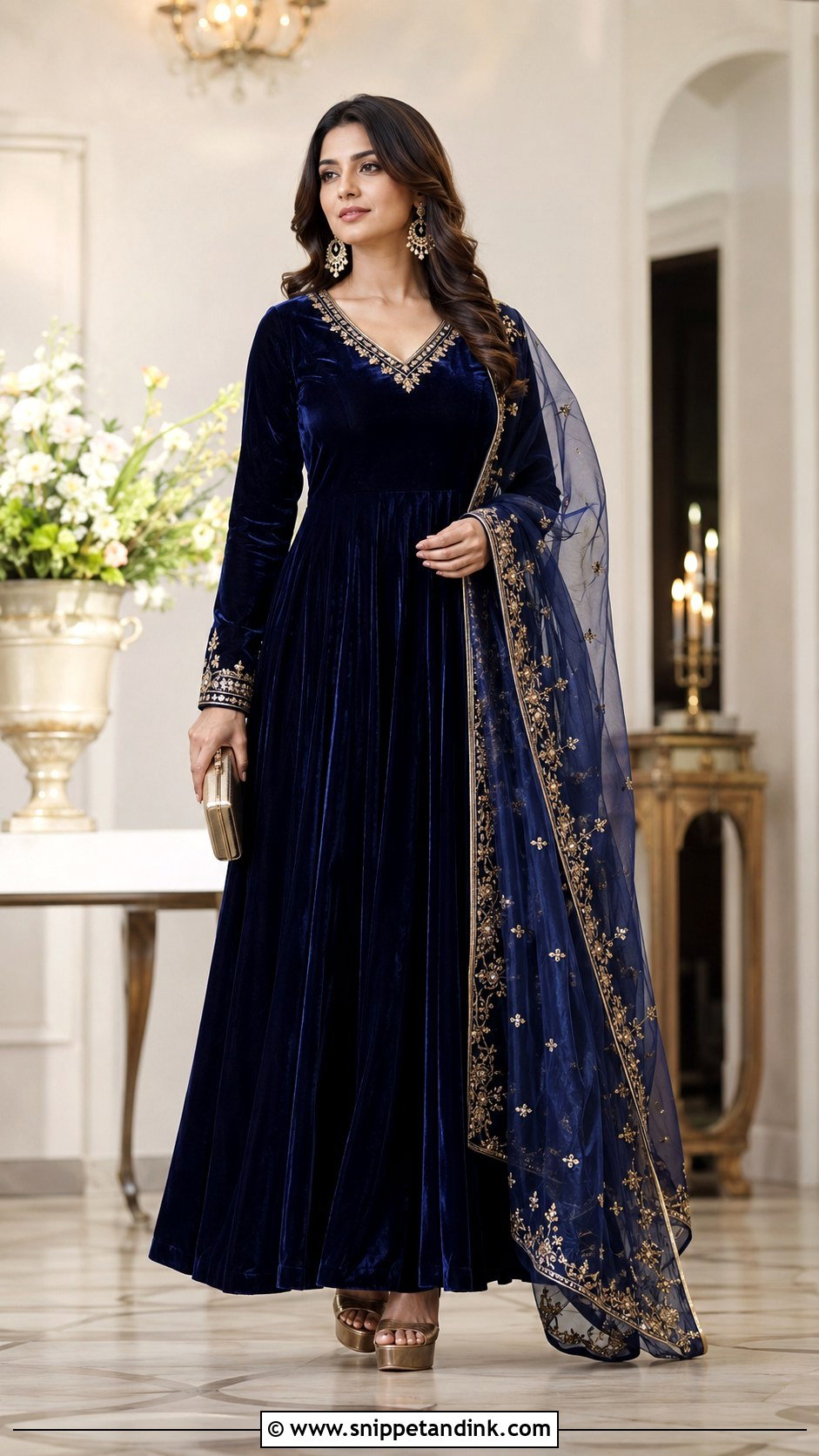
Velvet is a cold-weather fabric, and navy is one of the few dark shades that still looks festive in it. Look for a structured bodice, full sleeves and a controlled flare, because velvet in a huge skirt gets heavy fast. The dupatta must be lighter: chiffon or organza with gold, silver or multicolor embroidery, placed over one shoulder so the pile still shows. A velvet dupatta on a velvet dress is too much weight and too much heat in my view. Antique gold earrings, a small box clutch and platform heels complete it, and if the neckline is detailed, swap the necklace for a statement ring. A sleek low bun suits a formal evening at a cooler indoor venue.
7. Yellow Cotton Anarkali With Floral Dupatta
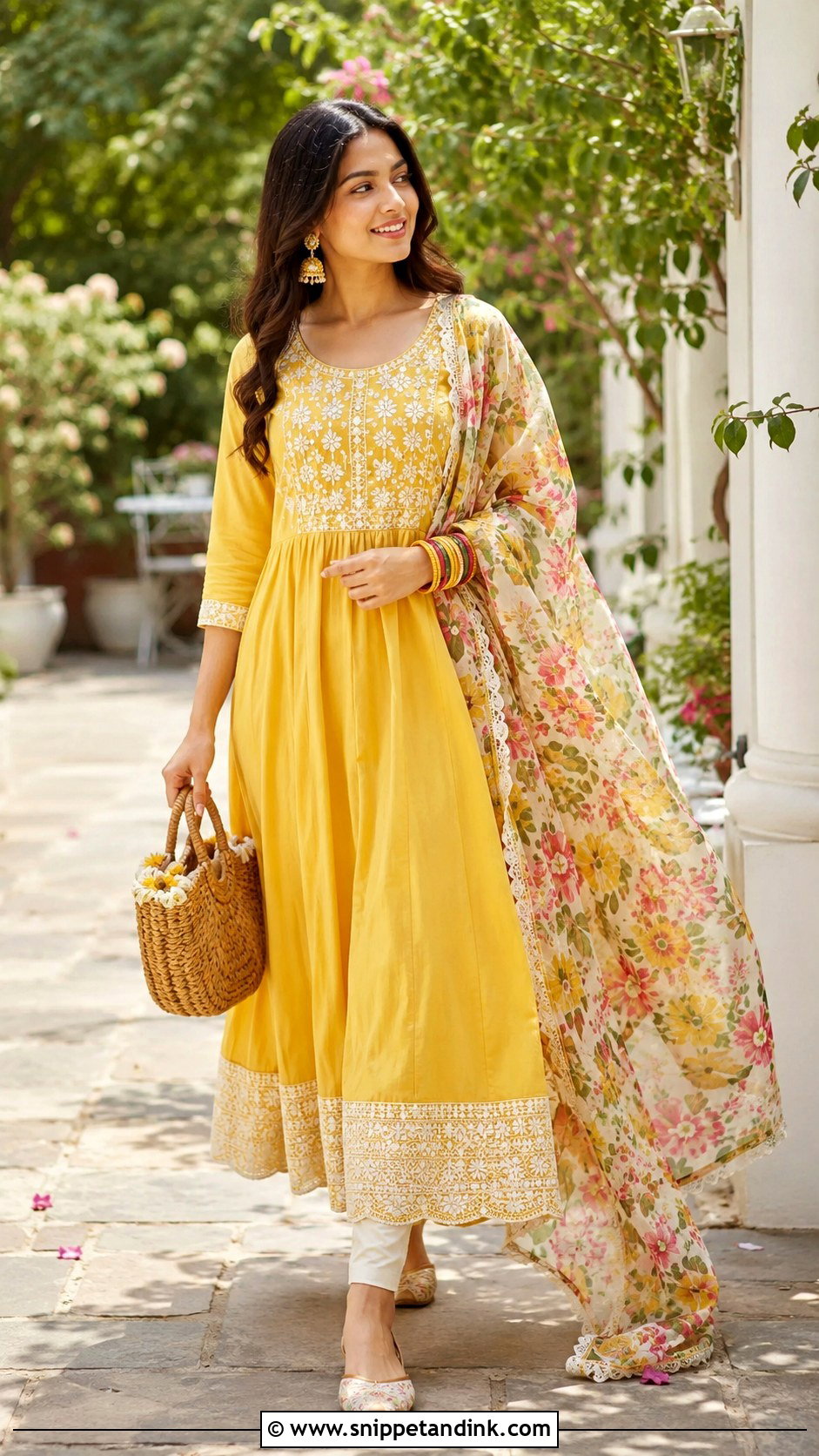
Yellow cotton is what I’d wear to a daytime function where you’ll sit on the floor for hours. A calf- or ankle-length dress with a lightly fitted bodice and moderate flare stays off the ground, and subtle white embroidery, covered buttons or narrow lace give it definition without weight. Pair it with a floral cotton, chiffon or mulmul dupatta picking up pink, green or blue, falling naturally from one shoulder. Cotton creases quickly. That’s part of its charm here, but starch the dupatta lightly if you want it to keep a shape. Add small jhumkas, colorful bangles, a woven bag and flat juttis or kolhapuris, with a loose braid and fresh skin.
8. Purple Anarkali Dress With Contrasting Dupatta
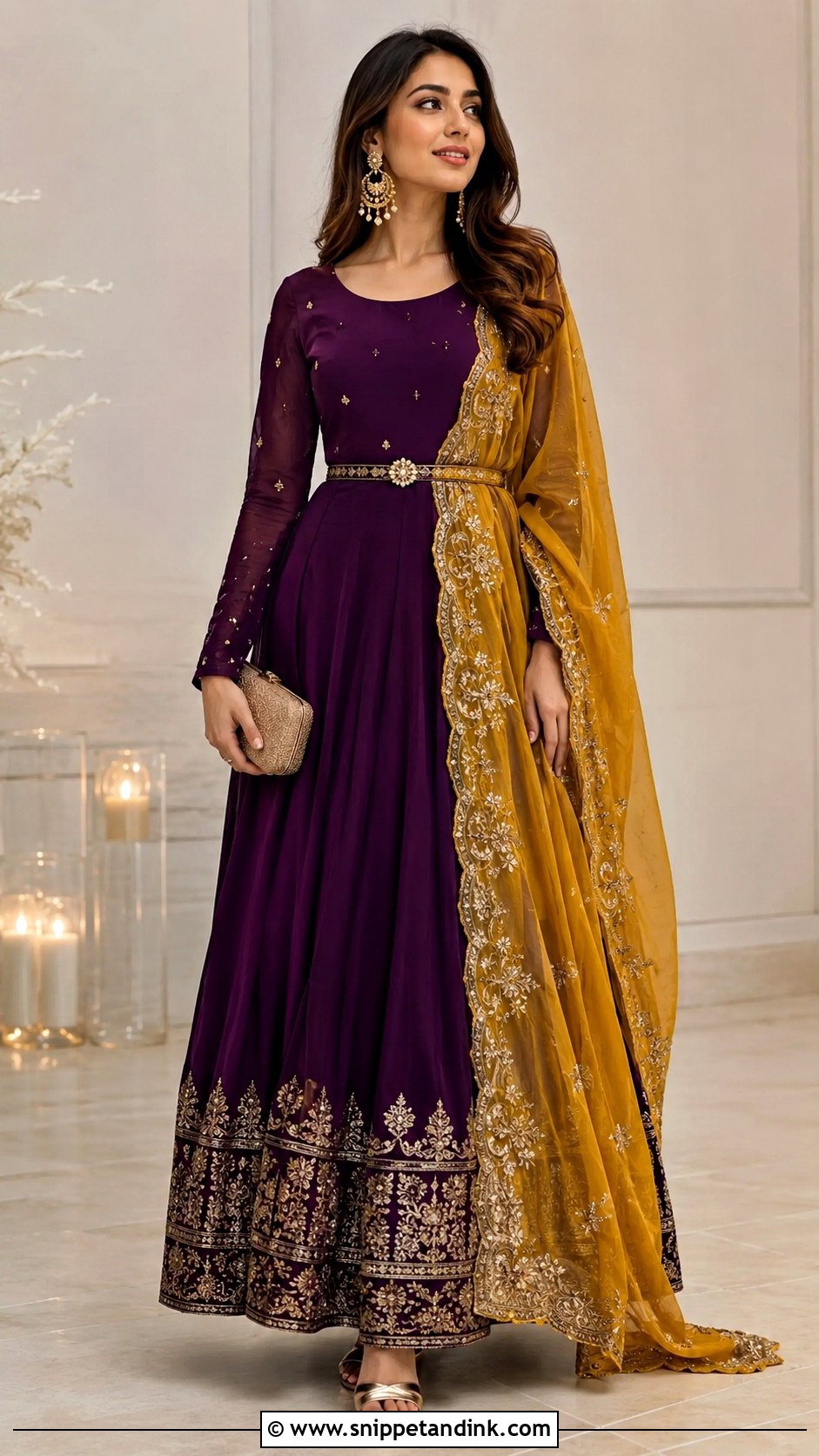
Purple contrasts well as long as one piece leads. Deep plum takes mustard, rust, blush or muted gold; lavender sits easily with mint, ivory or soft pink. If the Anarkali is heavily embroidered, pick a simpler dupatta with a narrow border, and if it’s plain, bring in a printed, woven or embellished one. For hands-free wear, drape it diagonally across the torso and catch it at the waist with a slim decorative belt. I like this drape for guests who plan to dance, because nothing slides off the shoulder. Coordinated earrings, a compact clutch and neutral metallic heels, with a smooth ponytail or side-parted waves, carry it through engagements and evening functions.
9. Ivory Anarkali Dress With Bandhani Dupatta
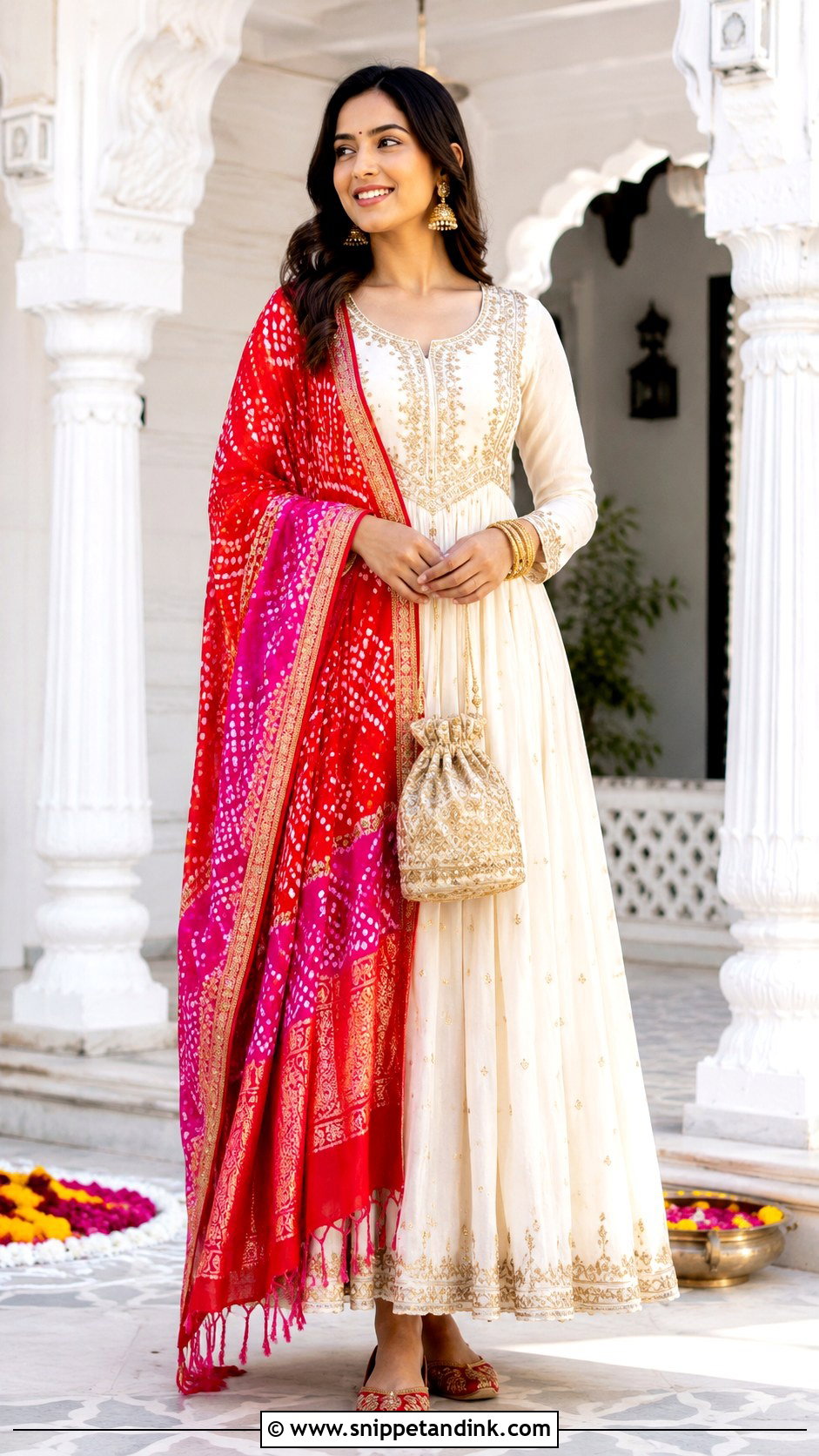
Bandhani is tie-dyed, so its pattern is made of tiny resist dots, and it reads best against a quiet background. An ivory Anarkali with minimal gold piping, light mirror work or tonal embroidery at the neckline and cuffs gives it exactly that. Add a red, pink, orange or multicolor Bandhani dupatta on a side drape so the pattern shows without covering the pale dress. One warning I give every time: new bandhani can bleed dye, so test a corner with a damp white cloth beforehand and keep it off the ivory if rain or a spilled drink is likely. Oxidized earrings, slim bangles and a potli that repeats one dupatta shade go with red or gold juttis and a low bun or long braid.
10. Teal Anarkali Dress With Printed Dupatta
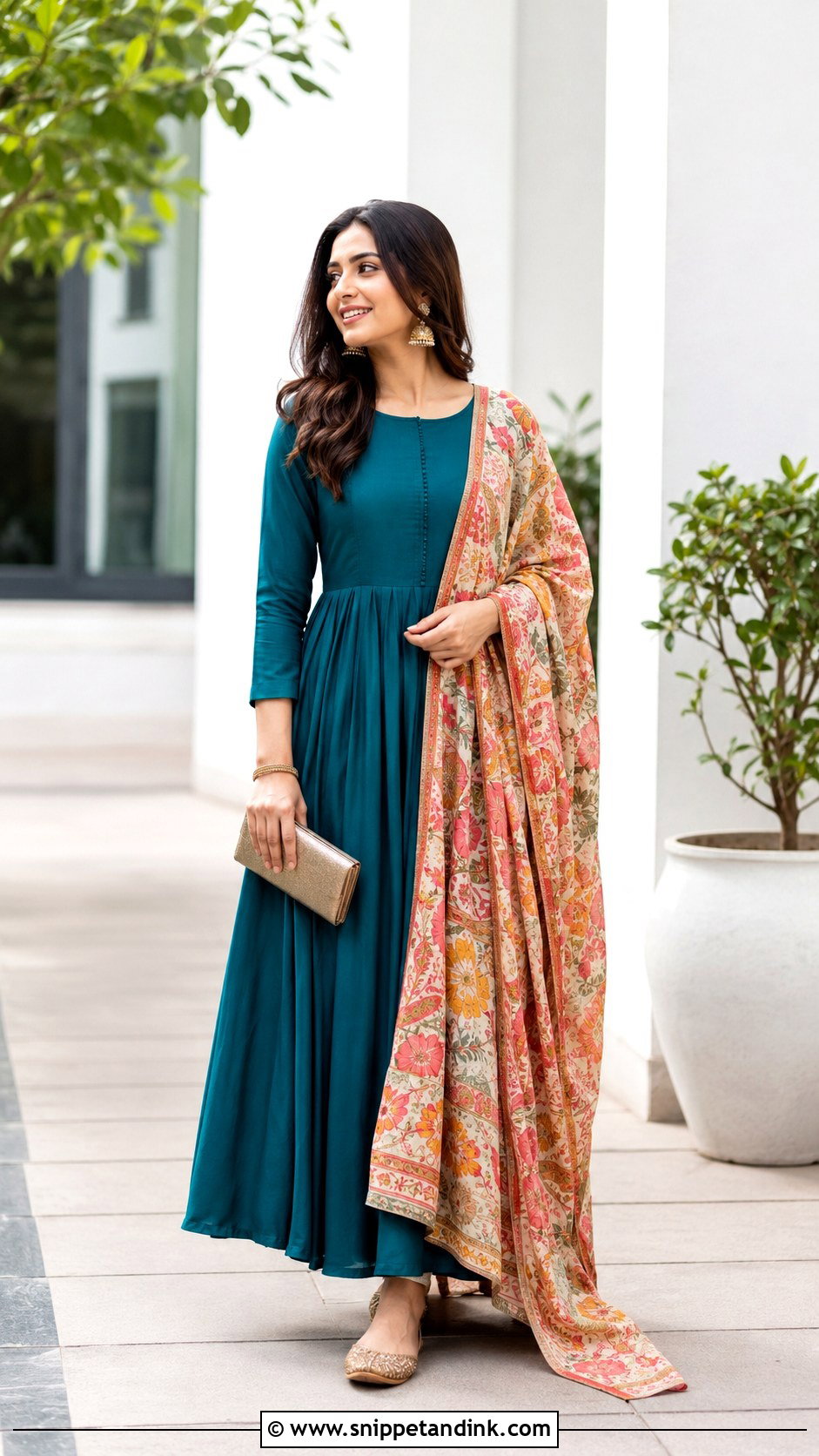
Teal is a forgiving base for a printed dupatta. Choose a solid dress in cotton silk, georgette or chanderi with restrained embroidery at the neckline and hem, then bring in florals, paisley or geometrics in coral, mustard, ivory or pink. Pleat the dupatta at one shoulder and leave the lower part open so the print stays readable. Check the print scale against your frame, since a very large print can swallow a petite guest. Medium earrings, a simple bracelet and a neutral clutch, with metallic juttis or low heels, fresh makeup and a braided ponytail or soft curls.
11. Maroon Anarkali Dress With Tissue Dupatta
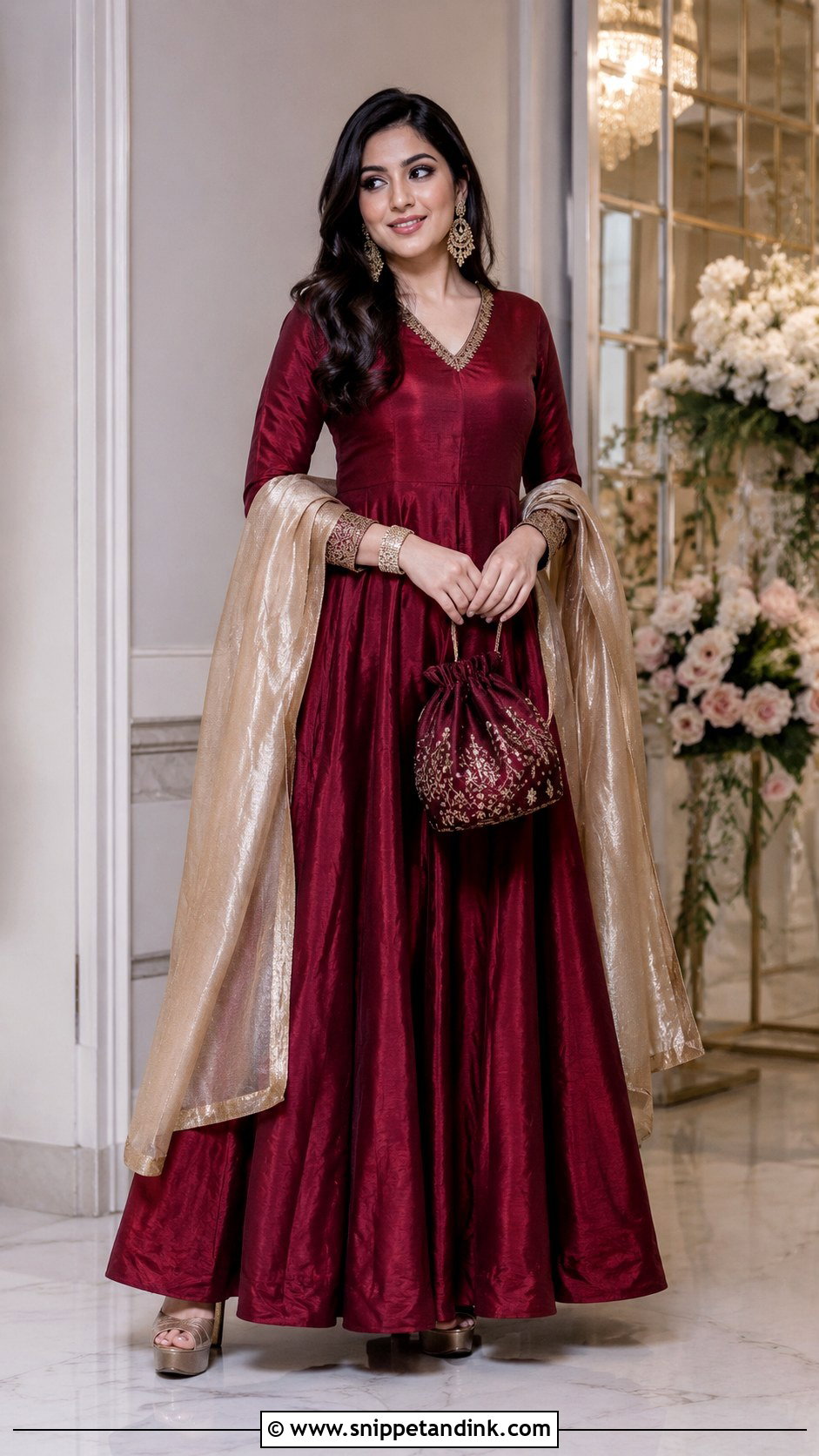
A maroon Anarkali and metallic tissue dupatta give depth and shine for an evening function. Choose silk, brocade or georgette with antique gold embroidery, then a champagne, bronze or muted gold tissue dupatta to lift the dark dress without harsh contrast. Tissue is springy and won’t lie flat if you just throw it on, so fold it into wide pleats and pin it at one shoulder with the border framing the front. Antique earrings, one statement bangle and a structured potli or clutch work with gold platform heels, which stay steady under a flared skirt. Wear the hair up or in smooth waves, depending on the neckline.
12. Powder Blue Anarkali With Sheer Dupatta
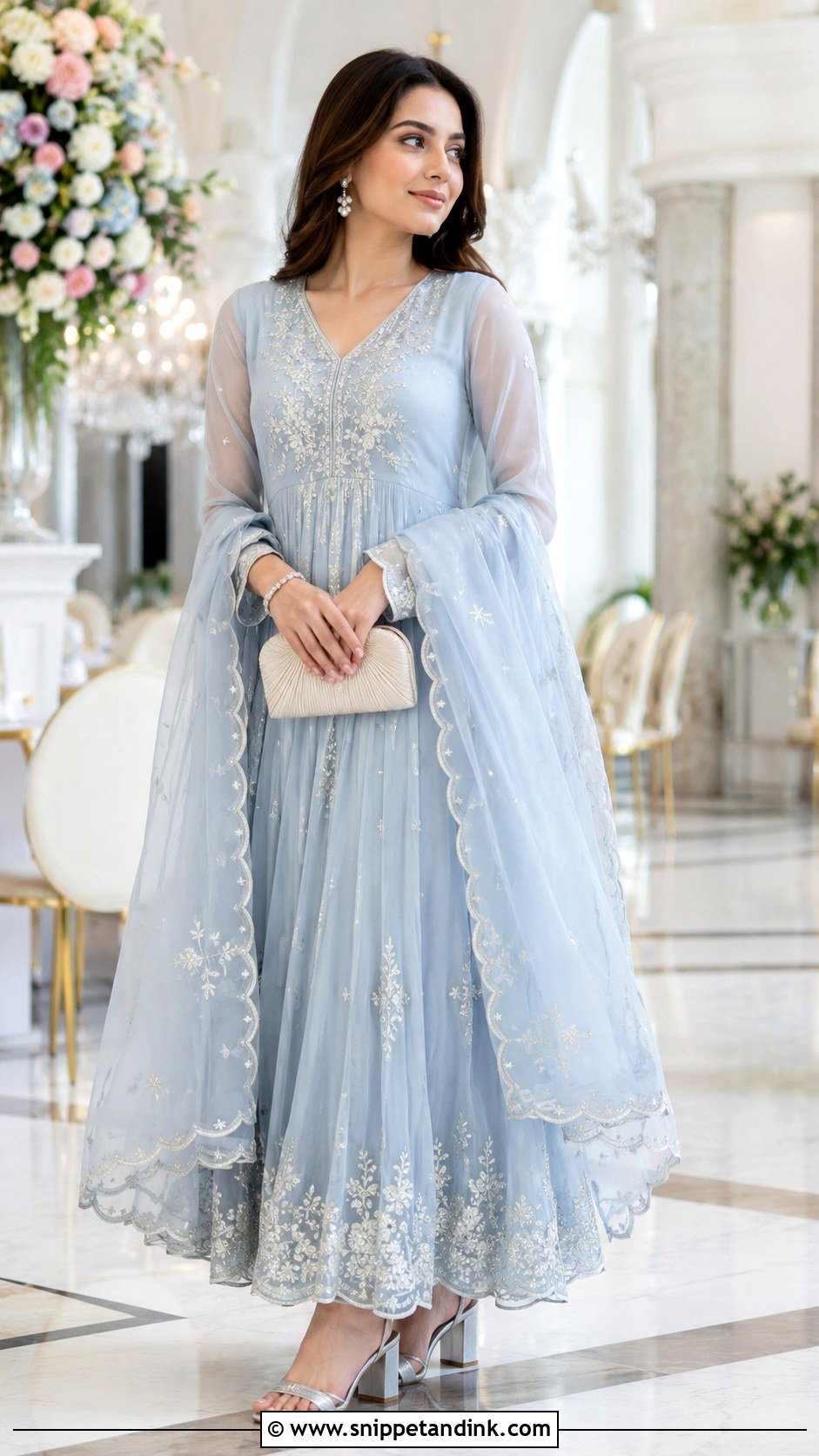
Powder blue is calm enough for daytime functions and formal indoor gatherings alike. Choose georgette or chiffon with silver threadwork, pearls or fine tonal embroidery, and a sheer matching dupatta with a narrow scalloped or beaded edge. Draped loose over both arms, it shows off the movement of the dress, but it will slip, so pin one corner at the shoulder if you’ll be walking around a lot. Pearl earrings, a silver bracelet, an ivory clutch and silver block heels or embellished flats keep the palette light. A soft updo opens a high or boat neck. Pale blue can wash out fair skin in daylight, which is why I add a light pink to the cheeks and a subtle highlight.
13. Orange Angrakha Anarkali With Mirror Work Dupatta
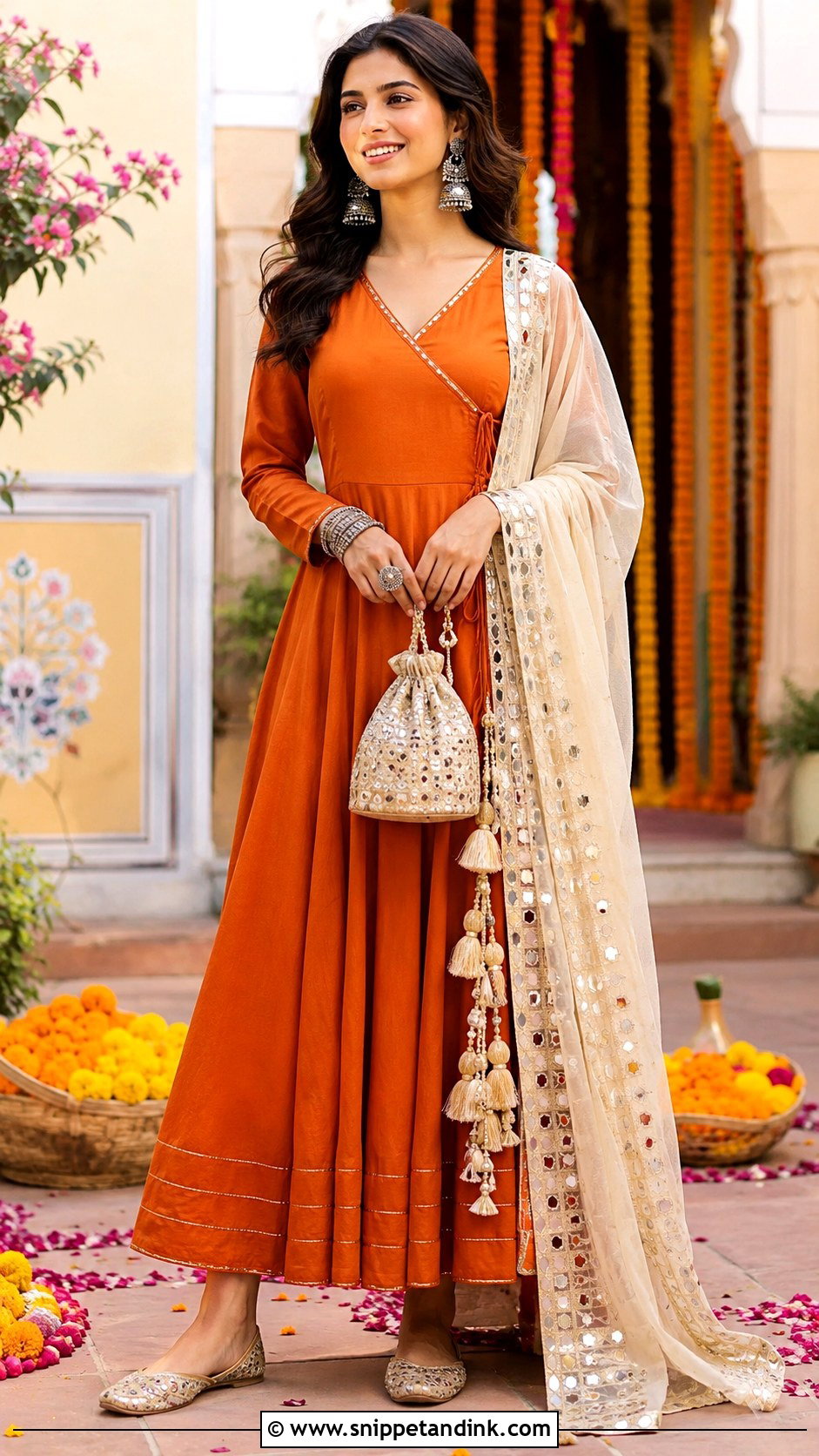
An orange Angrakha Anarkali has a wrap bodice that crosses into a diagonal neckline, tied at the side with tassels that move as you walk. Pick rust, tangerine or burnt orange by the time of day and setting. Pair it with an ivory, pink or matching mirror-work dupatta, and put that dupatta on the opposite shoulder from the Angrakha tie so both details show. It’s the mistake I correct most often with this cut: the dupatta lands on the tie side and hides the best part of the dress. Oxidized jhumkas, stacked bangles and a mirror-work potli, neutral juttis and a braid or low ponytail finish it. Keep the necklace minimal so the crossover neck stays clean.
14. Beige Anarkali Dress With Phulkari Dupatta
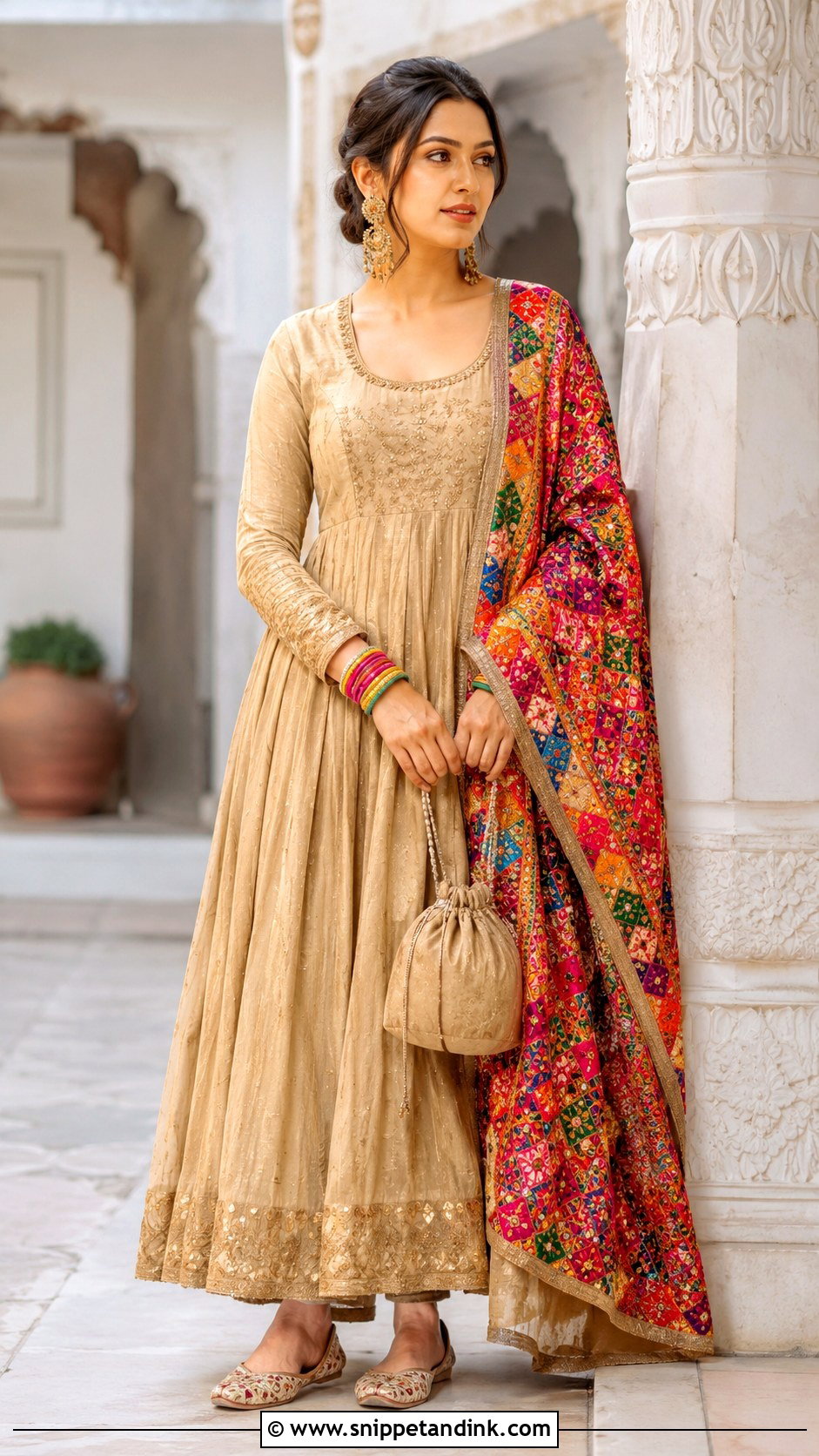
Phulkari is bright, dense floss embroidery from Punjab, and a beige Anarkali gives it room. Keep the dress plain in cotton silk or chanderi with a softly shaped bodice and a generous flare; a few gold touches at the cuffs or neckline link the neutral base to the dupatta. Look for pink, orange, red, green or mustard threadwork, fold the dupatta narrowly at the shoulder and open the lower half so the embroidery shows. Phulkari is heavier than it looks because of all that floss, so I pin it firmly at the back as well as the shoulder. Gold or oxidized earrings, colorful bangles, simple juttis and a solid potli, with a braid or neat bun for daytime family occasions.
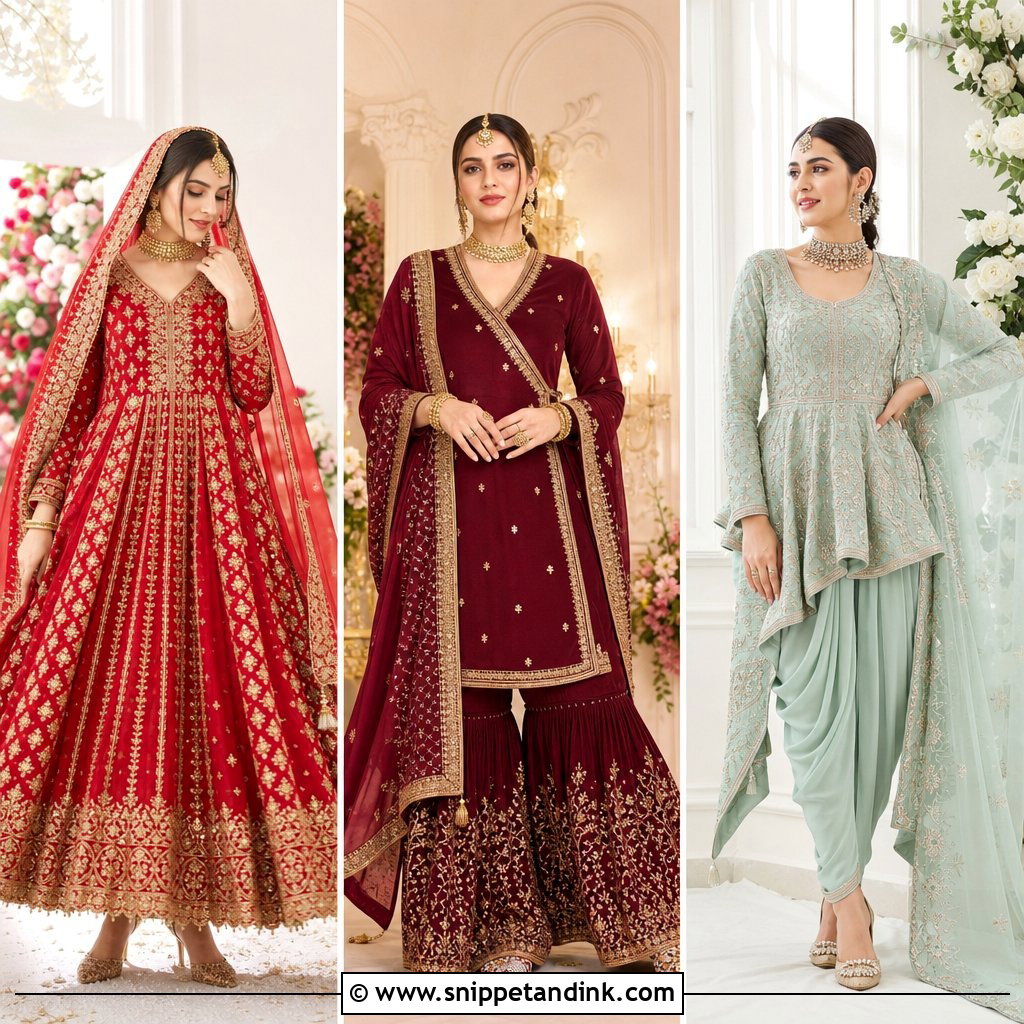
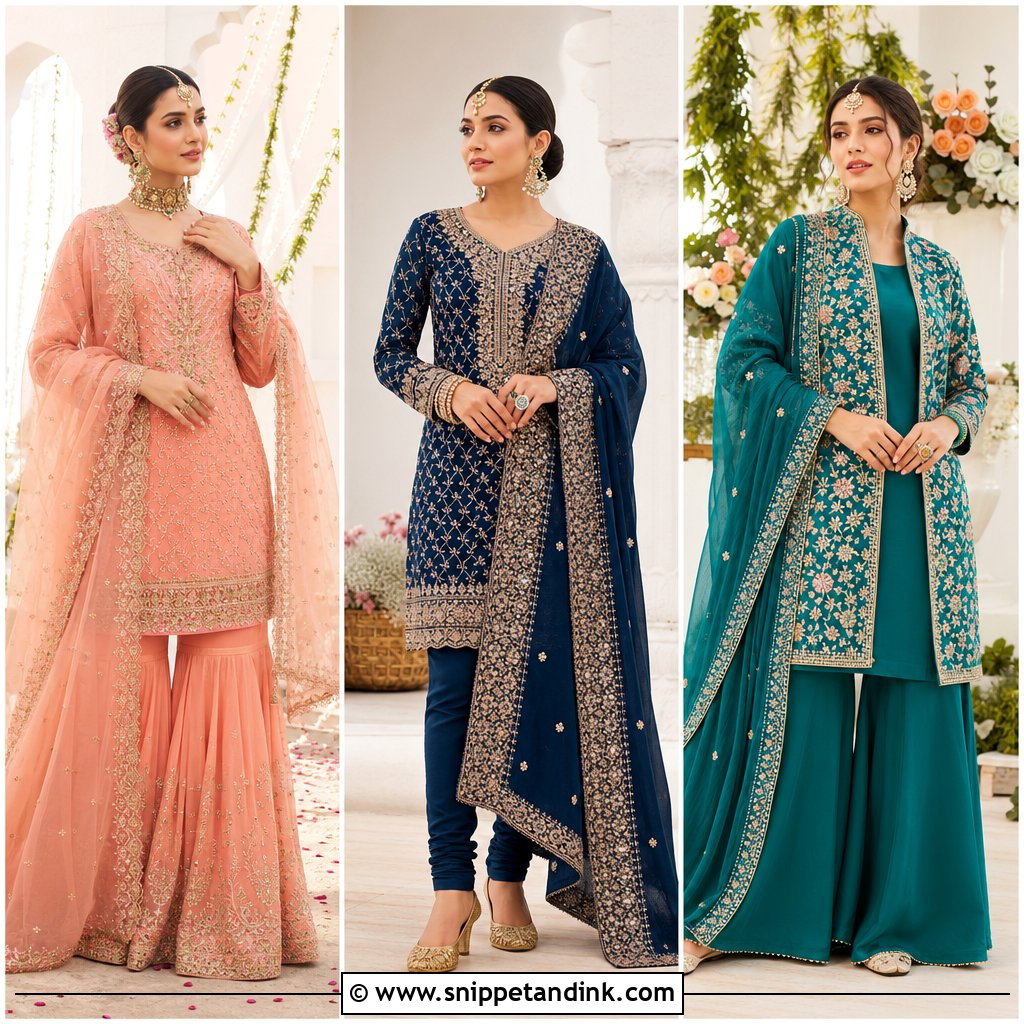
15. Gray Anarkali Dress With Sequin Dupatta
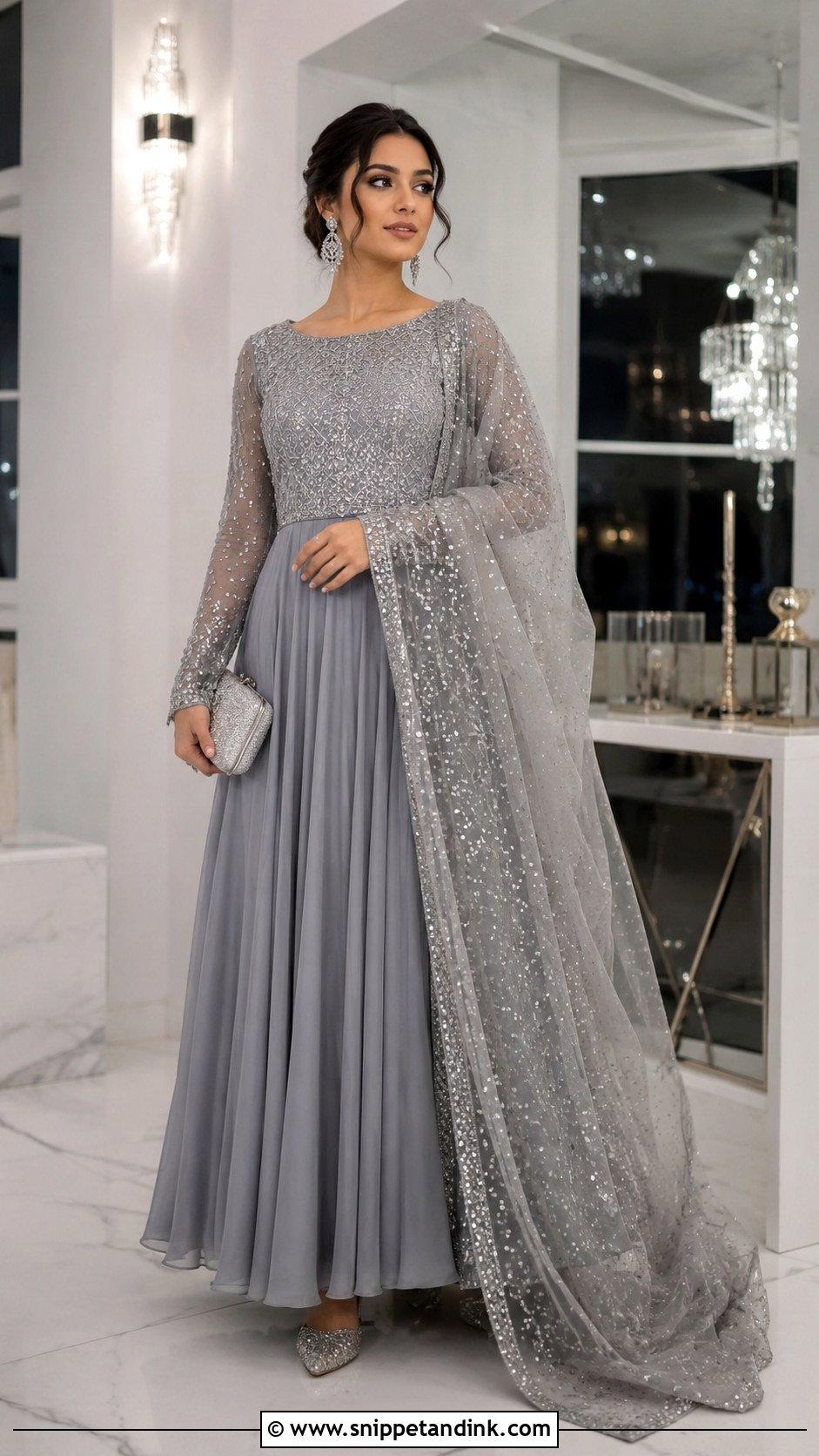
Gray is the modern alternative to bright festive color, and a sequined dupatta stops it from going dull. Pick dove gray, charcoal or silver-gray for the occasion, in a clean floor-length dress with restrained beadwork. A matching or slightly lighter net dupatta with scattered sequins and a narrow border, pinned at one shoulder and run along the arm, catches light without covering the dress. Sequins scratch, so I make sure the dupatta never rests directly against the neck. Crystal drops, a silver clutch and pointed heels, minimal other jewelry, sleek straight hair or a polished ponytail, and a soft rose lip so the cool tones don’t look severe.
16. Peach Layered Anarkali With Ruffle Dupatta
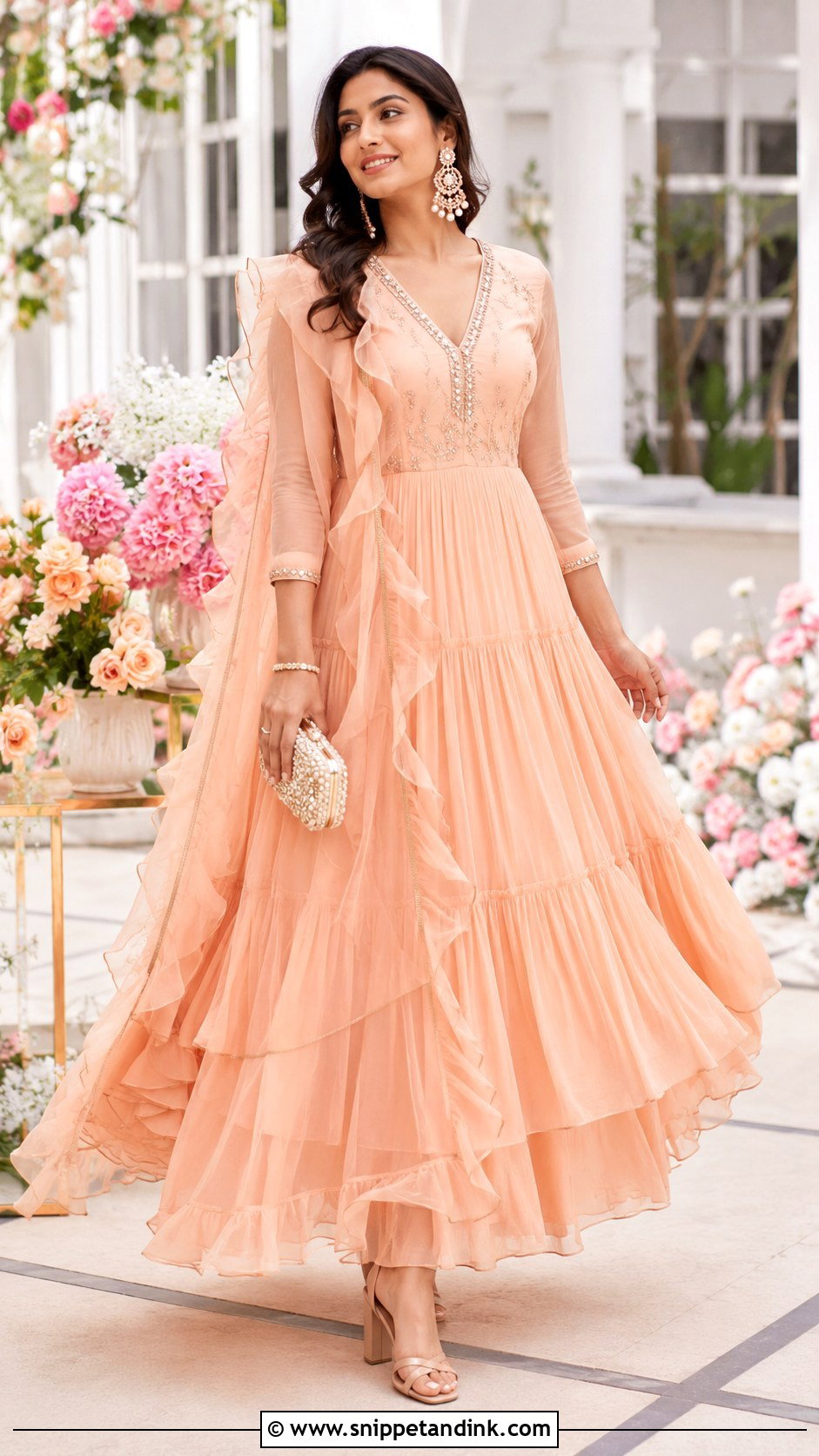
Two or three controlled georgette tiers give a peach Anarkali movement; more than that and the skirt overwhelms a smaller frame. A fitted upper section keeps the balance. Pair it with a matching chiffon dupatta with a narrow ruffle edge, worn over one shoulder and falling behind the body so the layers stay visible from the front. A ruffled edge adds volume wherever the dupatta hangs, which is why I keep it narrow. Rose-gold earrings, a fine bracelet, a pearl or beaded clutch and nude block heels lengthen the line. Loose waves or a relaxed bun suit a daytime wedding, an engagement or a family celebration.
17. Emerald Jacket Anarkali With Plain Dupatta
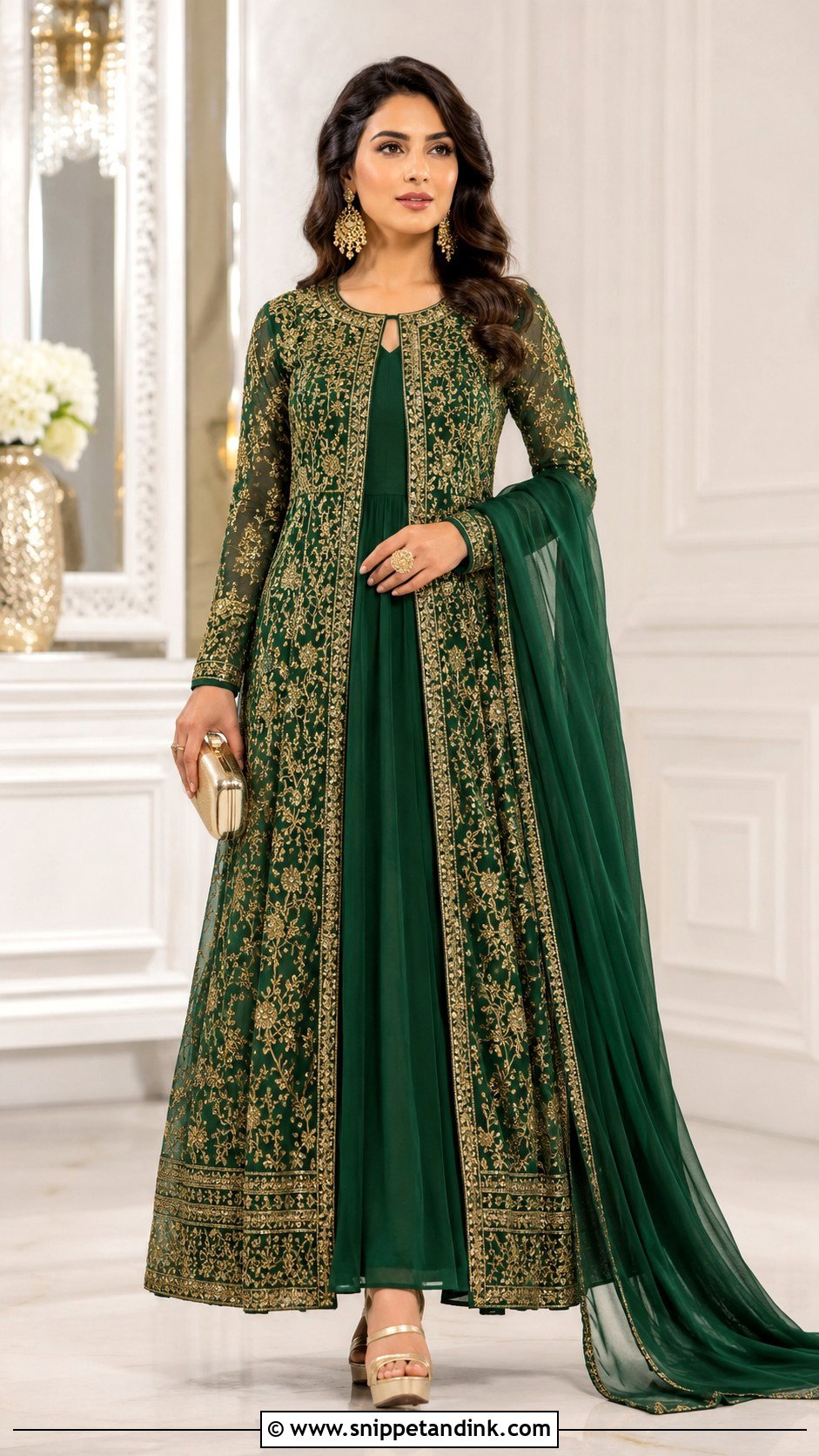
When the jacket carries the detail, the dupatta should go quiet. Start with a simple matching emerald Anarkali, add a sheer or silk jacket with gold threadwork down the front, cuffs and hem, then a plain chiffon dupatta with a slim metallic edge. Carry it over one forearm or pin it behind one shoulder. A dupatta draped across the front hides the jacket opening, and that opening is the whole point of the design. Gold drop earrings, a statement ring and an understated clutch are plenty, with platform sandals or block heels hidden under the hem. A sleek bun keeps the neckline embroidery visible, and you won’t need a heavy necklace.
18. Floral Anarkali Dress With Solid Dupatta
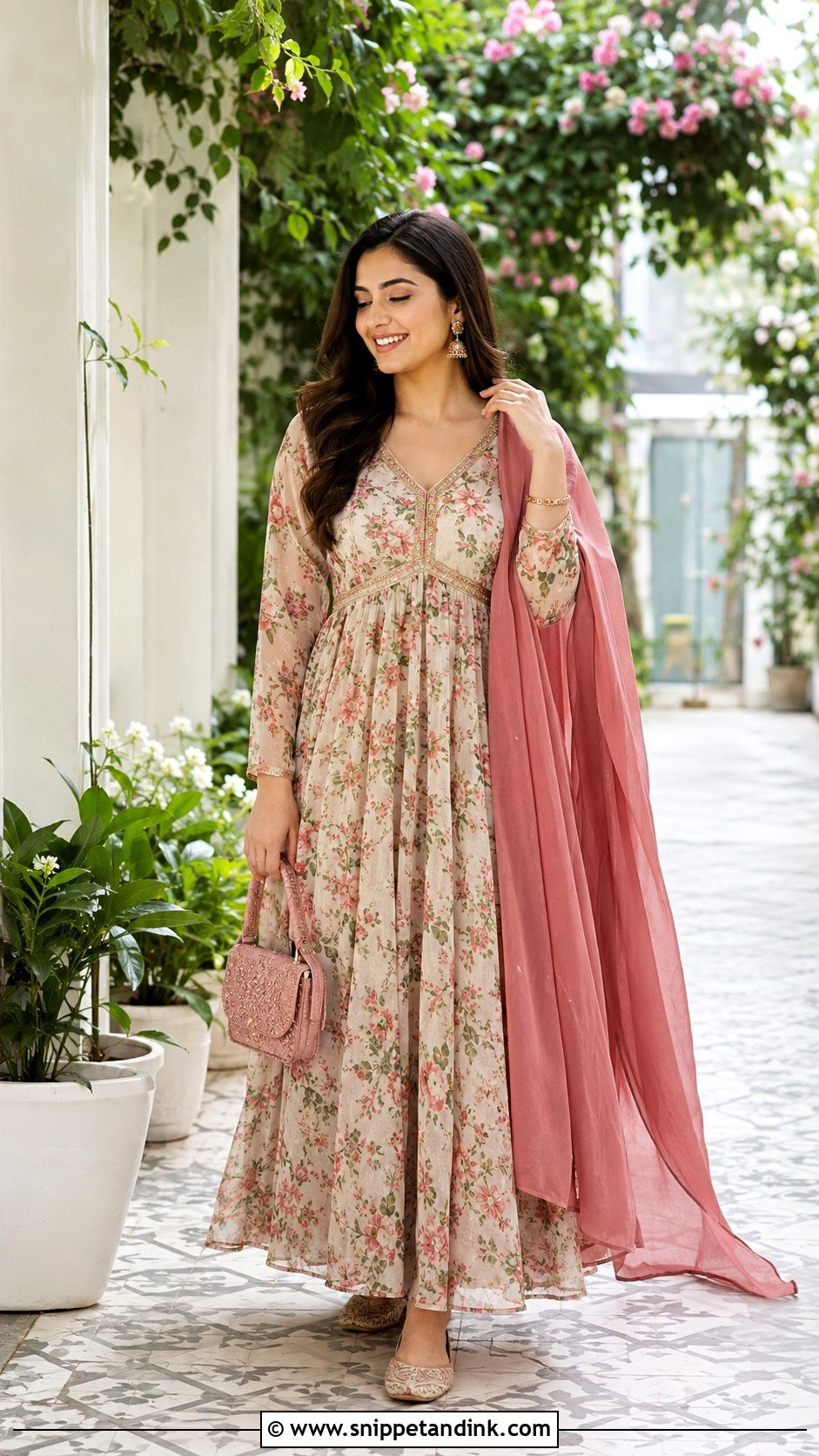
A floral Anarkali is the easiest way to wear color lightly. Keep the print small or medium so it doesn’t fight the flowing silhouette; watercolor florals, block prints and botanicals all sit well on cotton, chiffon or georgette. My rule for the dupatta is to match a secondary color in the print, not the dominant one, so the outfit looks coordinated without looking like a set. Drape it loosely from one shoulder. Small jhumkas, a slim bracelet, a compact bag and neutral juttis or low heels are enough, with soft waves, a braid or a relaxed ponytail for a daytime party.
19. Short Anarkali With Churidar And Dupatta
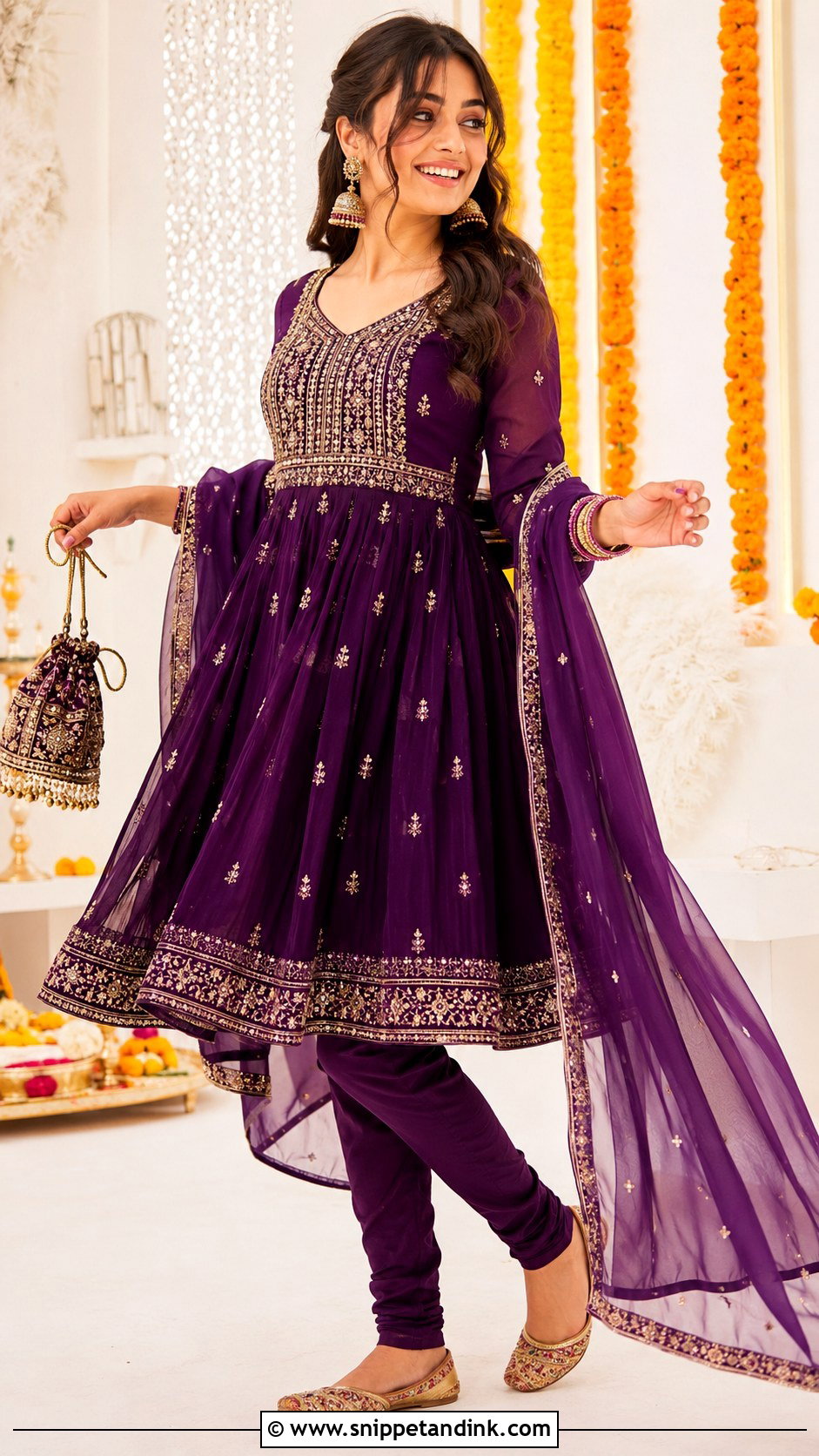
A short Anarkali over a fitted churidar has a defined, practical shape. Knee-length or mid-calf with just enough flare to move works best, in a solid jewel tone, a delicate print or with a narrow embroidered border. Churidar are meant to gather at the ankle, so have them cut long enough to bunch properly; too short and they look like leggings. Add a lightweight chiffon dupatta in the same color family, worn diagonally across the torso or pleated over one shoulder. The shorter hem puts your shoes on show, so embellished juttis earn their place. Jhumkas, bangles and a small potli, with a side braid or low ponytail, keep you comfortable at a function where you’ll be on your feet.
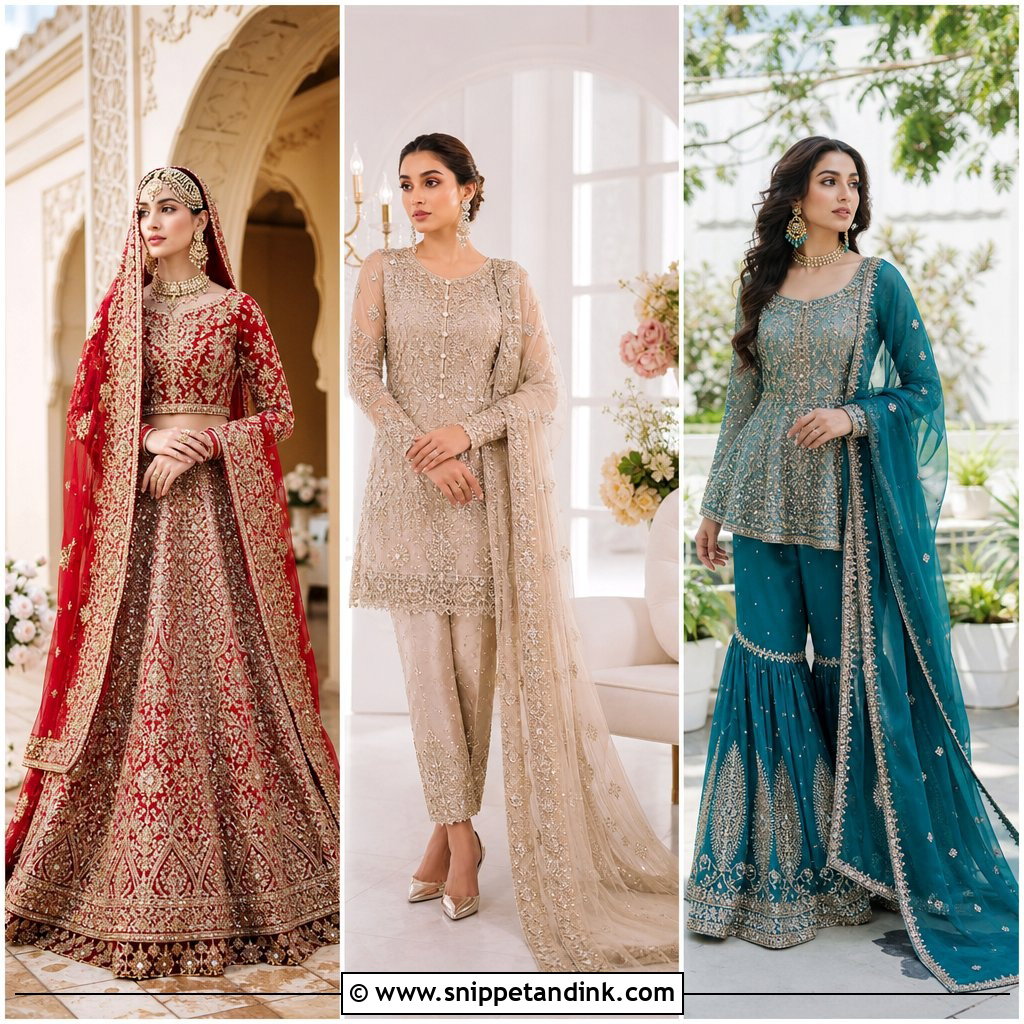

20. Floor-Length Anarkali Gown With Dupatta
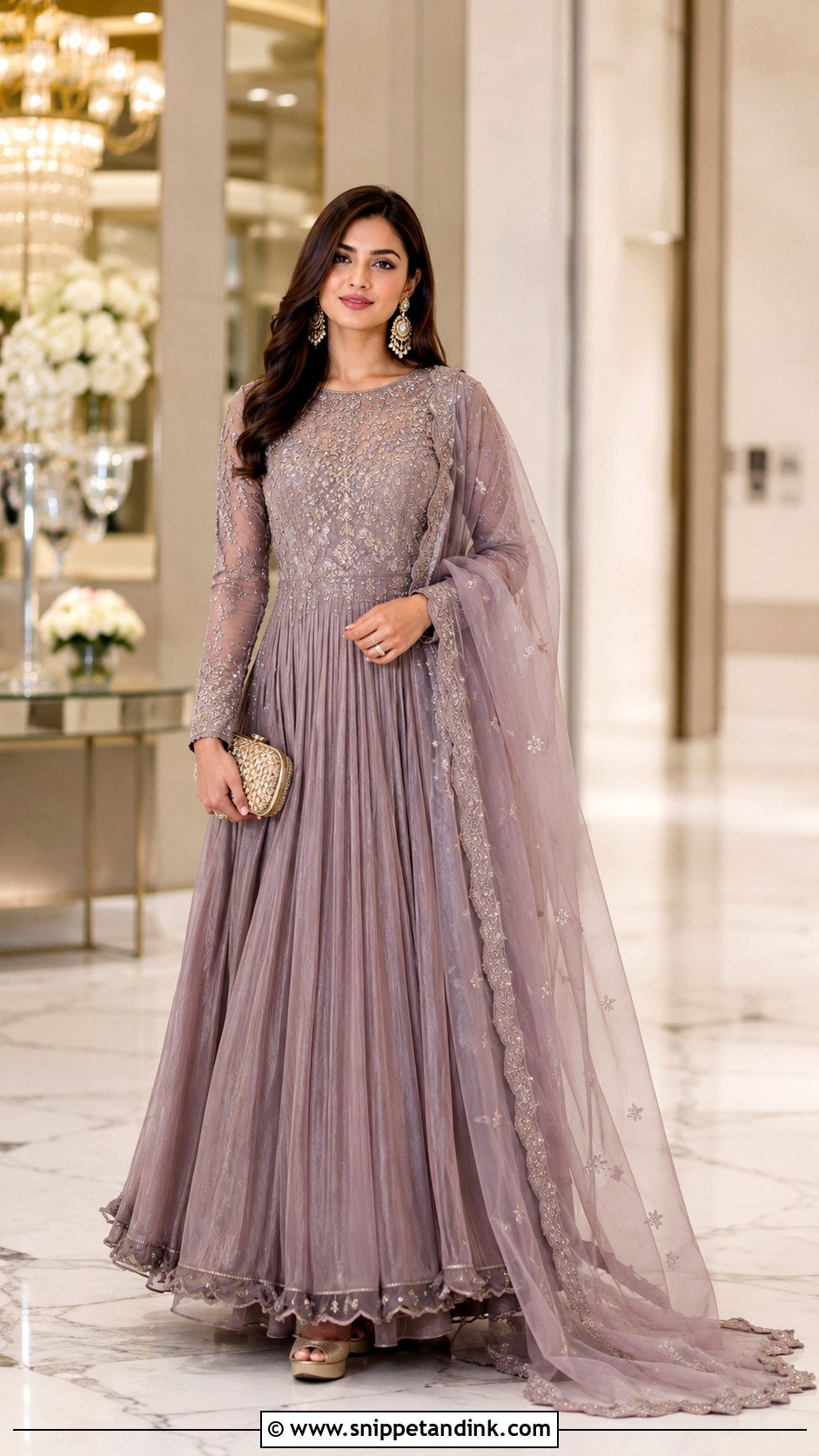
A floor-length Anarkali gown brings drama to a reception or formal evening. It needs a fitted top, a defined waist and a skirt that falls close to the floor without dragging, with embroidery kept to the neckline and sleeves. Pair it with a light net or organza dupatta with a coordinated border, worn over one shoulder and trailing behind the arm to lengthen the line. A trailing dupatta gets stepped on, so I have it hemmed to stop just above the floor when you’re standing. Statement earrings, a small clutch and platform heels suited to the gown’s length are all it needs. Keep accessories few, and finish with a sleek bun or side-swept waves.
Dupatta Slipping Halfway Through the Sangeet?
It happens to most people at some point, usually right as the dancing starts. A few habits help.
- Clip three or four spare safety pins inside your clutch. They weigh nothing and you’ll be the most popular guest in the washroom.
- If a slippery tissue or satin dupatta keeps sliding, pin it through a bra strap as well as the dress. That second anchor stops it dragging the neckline sideways.
- For dancing, switch to the diagonal drape and belt it, or take it off and hand it to someone. A dupatta caught under a heel can pull you off balance.
- Keep sheer dupattas well away from candles and diya trays. Net and chiffon catch fast.
- When eating, flip the loose end back over your shoulder. Turmeric gravies and oily sweets mark silk badly.
Afterward, hang the dupatta to air before you fold it. Heavier zari and Phulkari pieces keep best folded in muslin rather than plastic, which traps moisture and dulls metallic thread.
Plain Dress, Busy Dupatta, or the Other Way Round
Color, fabric, embroidery and drape can make the same flowing silhouette look like a dozen different outfits. Begin with the setting and how formal it is, then pick an Anarkali you can move in. Treat the dupatta as part of the design rather than an afterthought: a heavily worked dress usually wants a simpler dupatta, and a plain one can carry a bold woven or embroidered piece. Choose shoes for the hem length and jewelry for the neckline. Before you leave the house, pin the dupatta, then walk, sit and raise your arms in front of a mirror. If anything shifts, fix it then, not halfway through dinner.
You'll Like These Ideas:






Leave a Reply