
Red velvet is the flavour that gets a gasp at the cutting. From the outside the cake can be the plainest ivory tier in the room, and then the knife goes in and the slice is deep crimson against white frosting. Underneath the colour it’s a mild cocoa sponge made with buttermilk, and the classic partner is tangy cream cheese frosting. That frosting is the part I plan most carefully, because it’s softer than any other wedding finish. Below are twenty designs I’d make with red velvet, from bare rustic tiers to fondant and sugar flowers, with notes on which ones suit a warm garden and which belong in an air-conditioned ballroom.
Cream Cheese Frosting Is Soft, So Decide How It Will Be Used
Every red velvet conversation I have with a couple comes back to the frosting. Real cream cheese frosting is the taste people expect, but it’s soft, it’s perishable, and it doesn’t hold a crisp edge or sit well in a warm room. Rather than giving it up, I decide where it goes.
- Cream cheese inside and out: the most authentic, best for small cakes, cool rooms and a rustic or semi-naked look. It needs to stay chilled until close to serving.
- Cream cheese filling, buttercream outside: my most common choice. Guests get the tang in every bite and I get a firmer shell for smooth sides and piping.
- Cream cheese filling, ganache and fondant outside: the sturdiest option, for tall tiered cakes, long displays and sugar flower work.
- Cream cheese buttercream: a blend that keeps some tang and holds more shape than straight cream cheese frosting.
Tell your baker about the venue before the design is fixed. An outdoor summer wedding, a cake that will be out for photos two hours before cutting, or a long drive all point toward a firmer outer coat. Because anything made with cream cheese should be kept cold, ask the venue whether they have fridge space for the cake and the kitchen cake.
1. Red Velvet Wedding Cake With Cream Cheese Frosting
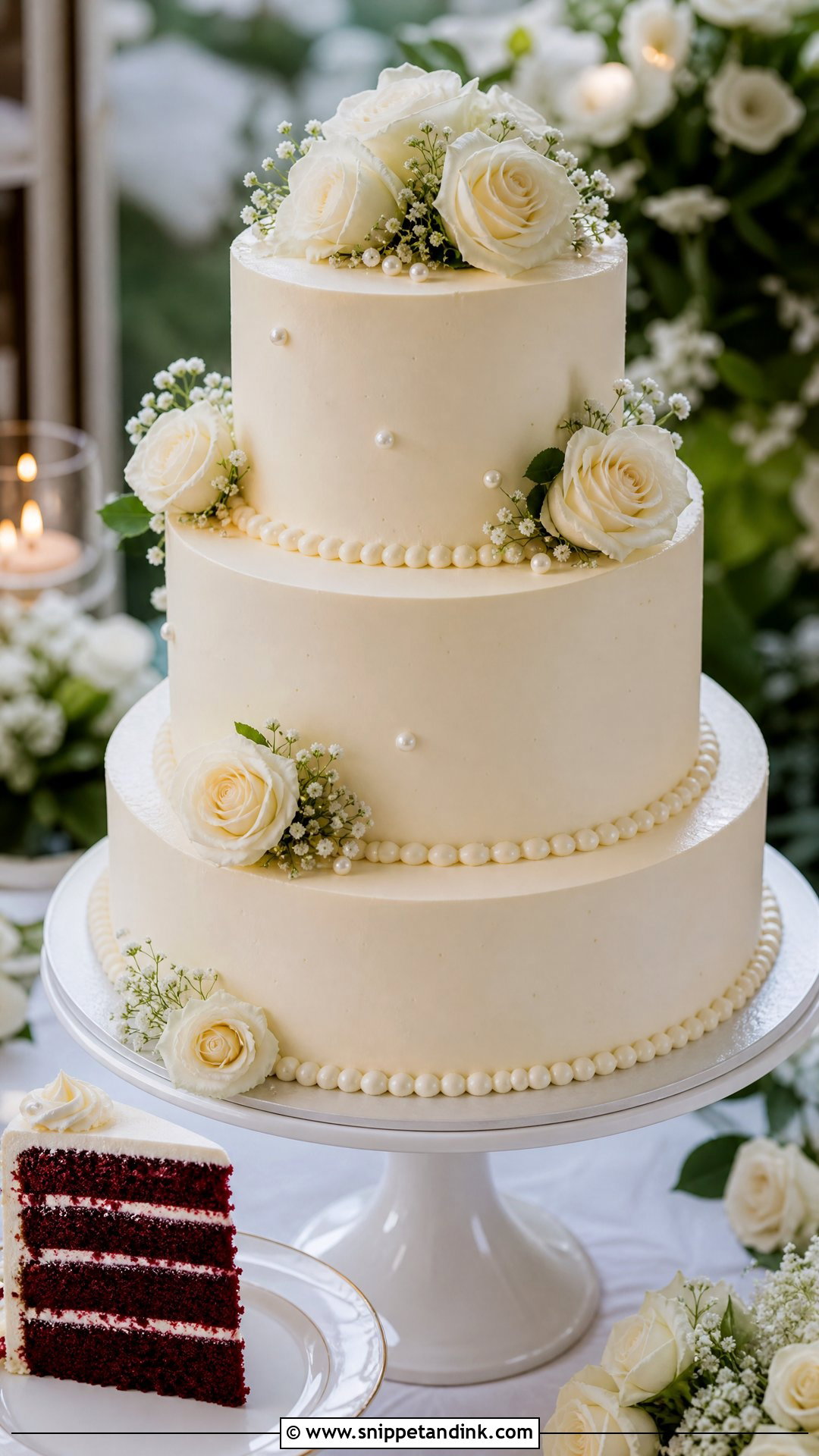
This is the original pairing, and for good reason: the tang of cream cheese cuts the sweetness of the sponge. The contrast at the cut is the whole point, so I keep the outside quiet, two or three tiers with a smooth finish and a simple piped border at each base. Here’s the honest part. A true cream cheese frosting won’t give razor-sharp edges and won’t sit happily in heat, so for a smooth outer coat I often use cream cheese inside the layers and a firmer buttercream on the outside. White roses, small sprigs of greenery or pearls finish it without hiding anything.
2. Naked Red Velvet Wedding Cake
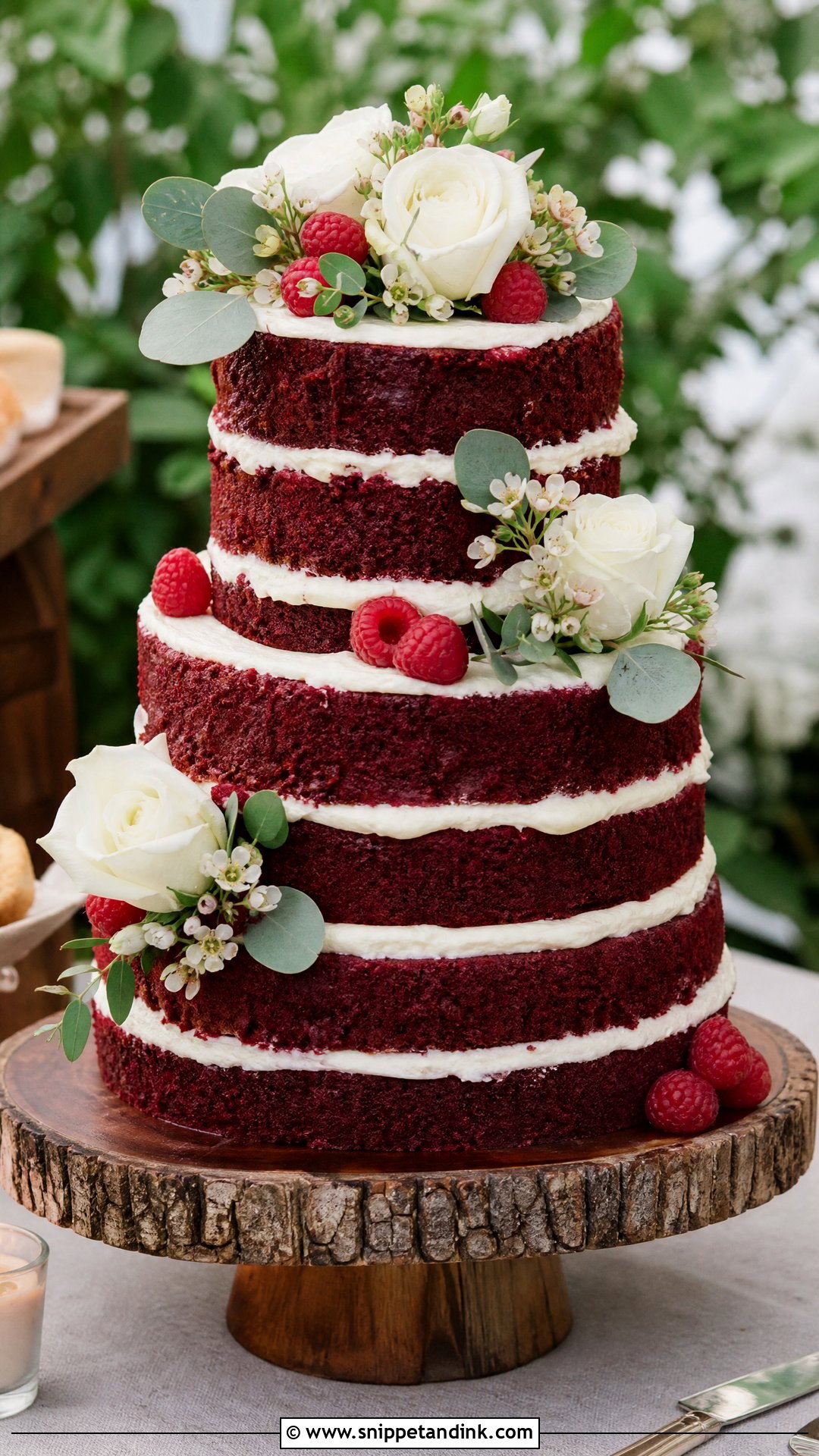
A naked cake has frosting between the layers and only a thin scrape around the outside, so the red sponge is on show. Red velvet is one of the best flavours for it because the colour does the decorating. The trade-off is that exposed sponge dries out faster than frosted sponge, so I bake, fill and stack as close to the wedding as possible and brush the layers with syrup. Berries, white flowers and soft greenery are all it needs, and a wooden stand suits barn and backyard receptions.
3. Semi Naked Red Velvet Wedding Cake
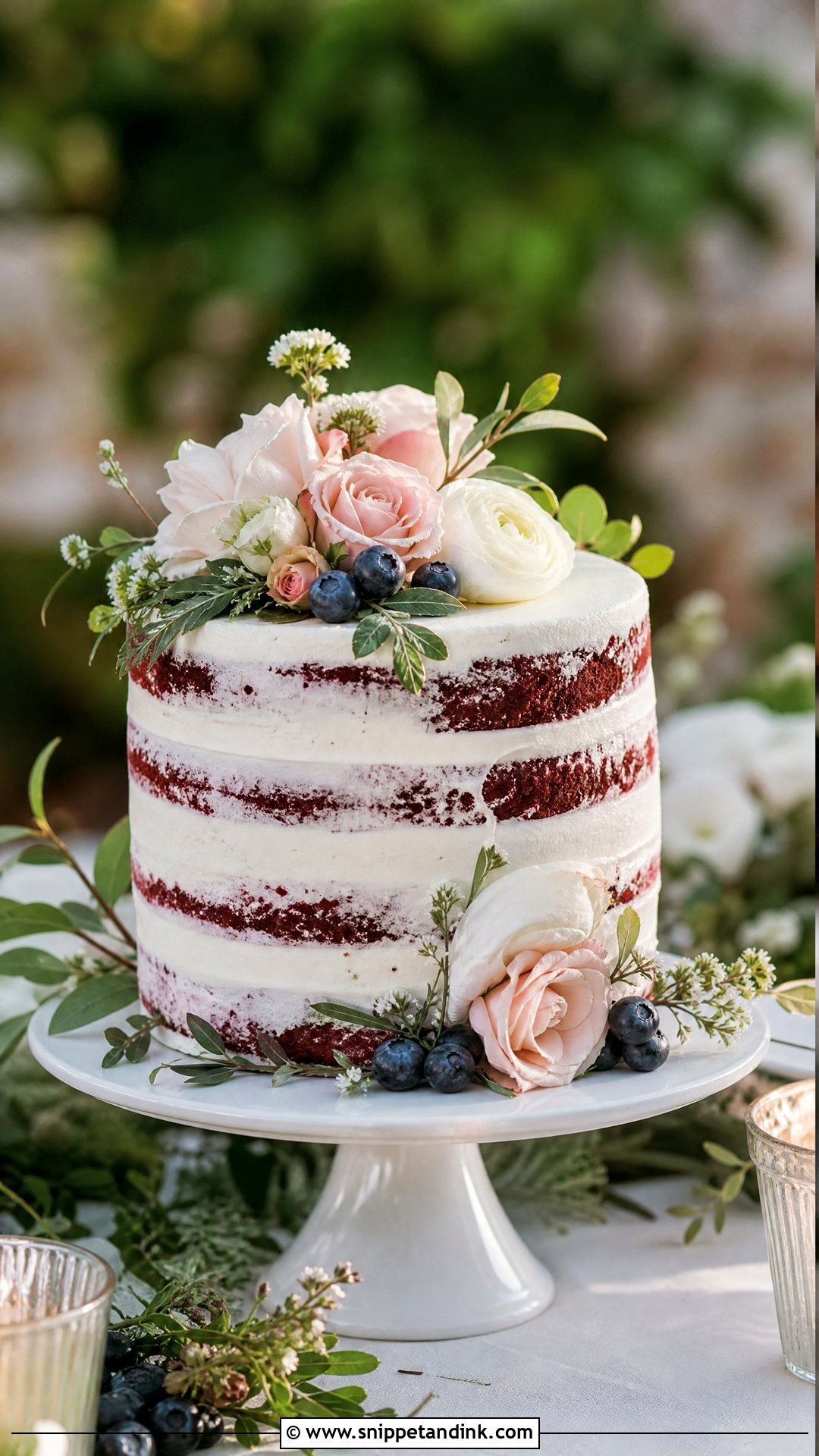
A semi naked red velvet wedding cake has more coverage than a naked one, with the red showing through in soft patches. That thin white coat keeps the sponge moist for longer and looks more finished, which is why I steer outdoor couples here rather than to a fully naked cake. Getting the patches even is a scraping skill; too thin and it looks unfinished, too thick and you lose the red. Garden roses, ranunculus, eucalyptus or seasonal berries suit it from spring into autumn.
4. Red Velvet Wedding Cake With Roses
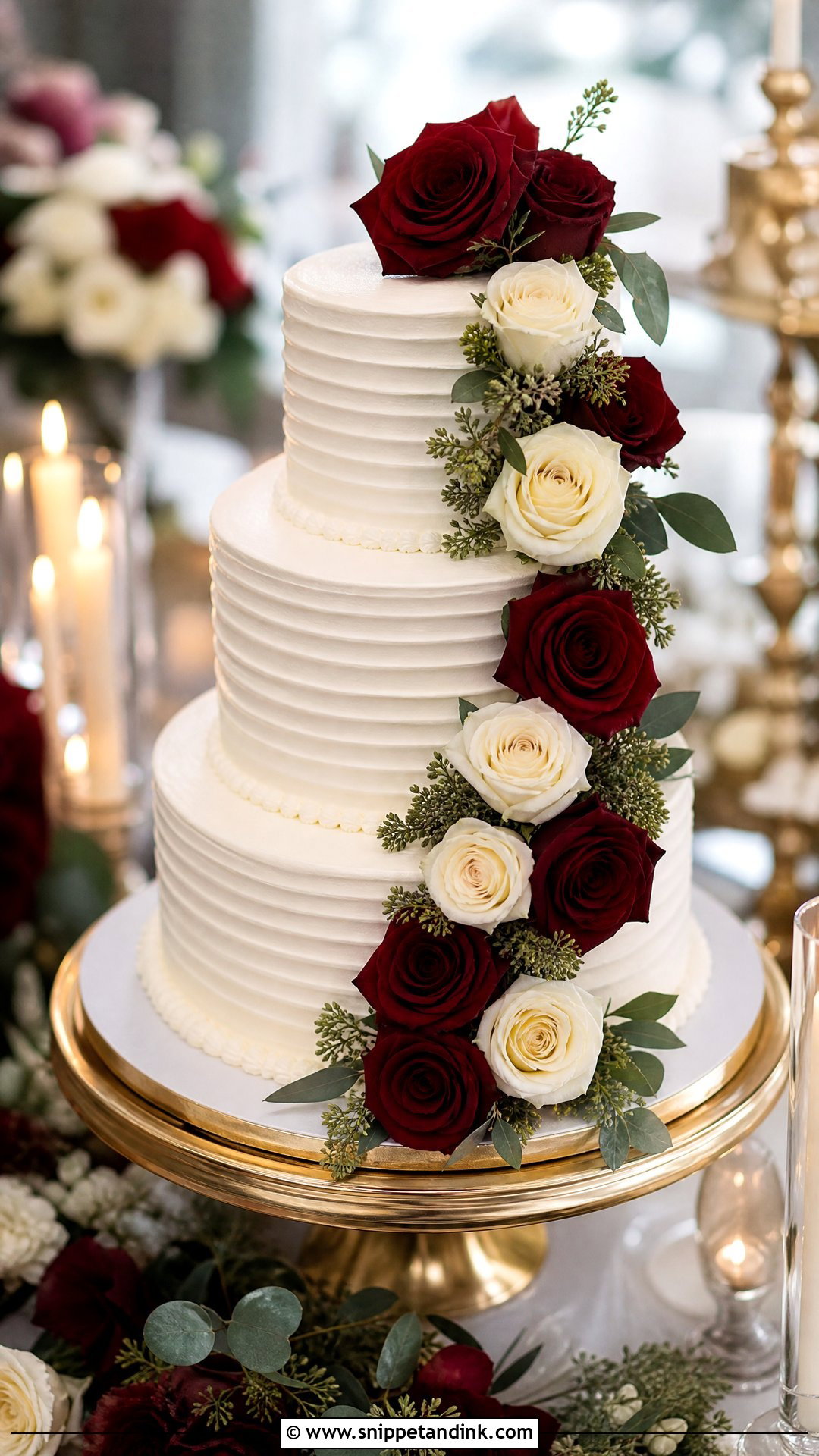
Roses and red velvet suit each other, and the colour you choose sets the mood: white for a bridal feel, blush for a garden wedding, deep red for an evening reception lit by candles. I set them against a smooth white finish so they read clearly. If they’re fresh, they need to be unsprayed and food-safe, with stems wrapped or placed in picks so they never sit straight in the cake. A cascade down the tiers, a ring at the base or a cluster on top all work.
5. Red Velvet Wedding Cake With Gold
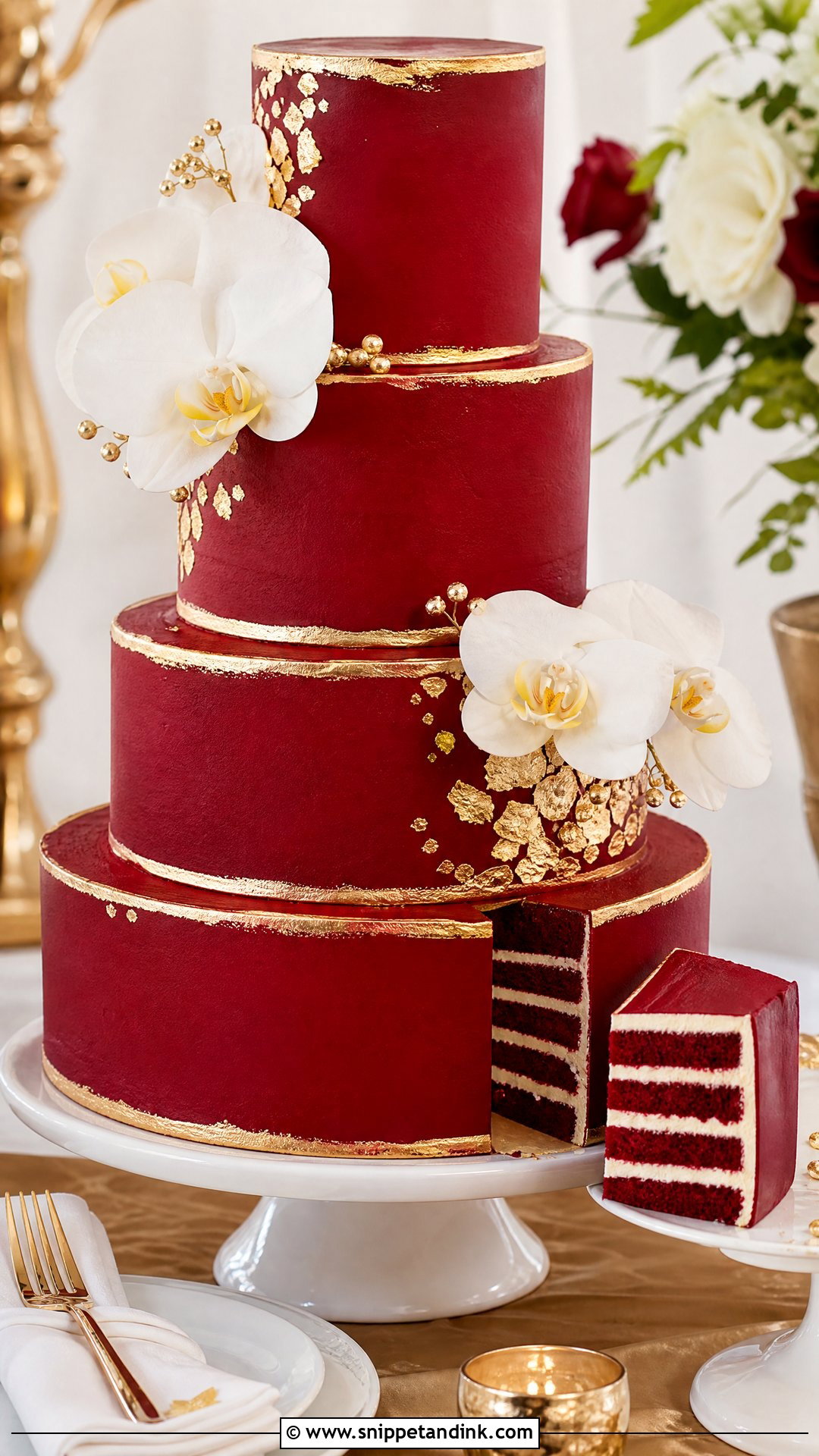
Gold on a white cake hints at the richness inside before anyone cuts it. I apply it as edible gold leaf, brushed edges, one painted tier or tiny gold dragées. Gold leaf is fragile and catches on dry fingers, so I lay it on a set surface with a soft brush, and I keep it to one or two tiers so the cake stays bridal rather than flashy. It suits ballroom and hotel receptions. Red roses or ivory orchids add height if you want more.
6. Red Velvet Wedding Cake With White Flowers
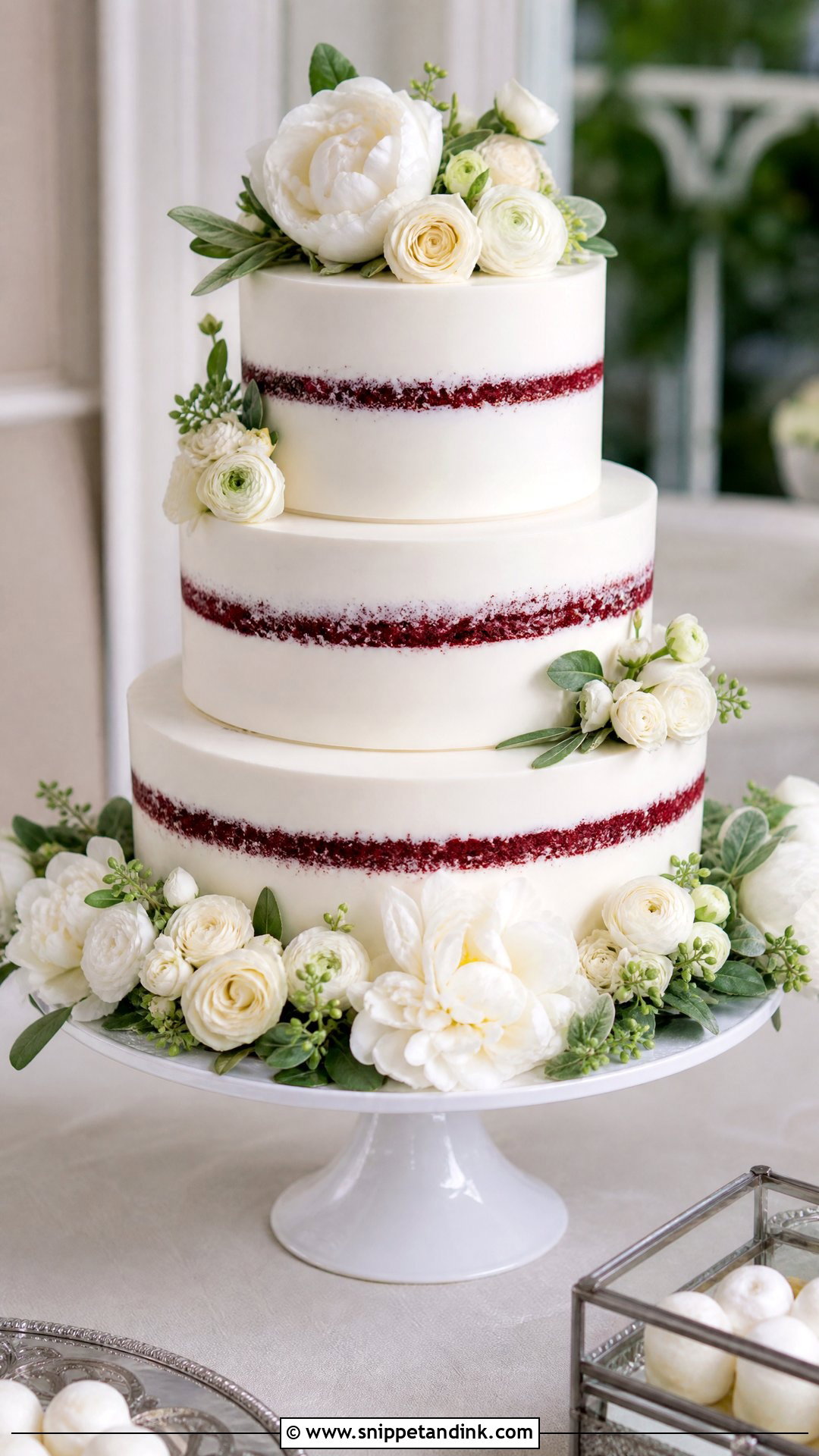
White blooms on a white cake let the red interior be the only colour, which is a quiet kind of drama I like a lot. Peonies, roses, orchids, anemones and ranunculus all work; anemones bring a dark centre that echoes the red sponge. A smooth buttercream or fondant finish gives the flowers a calm background, and three tiers with a little greenery suits most venues. It fits palettes of white, ivory, sage, champagne or soft neutrals.
7. Red Velvet Wedding Cake With Berries
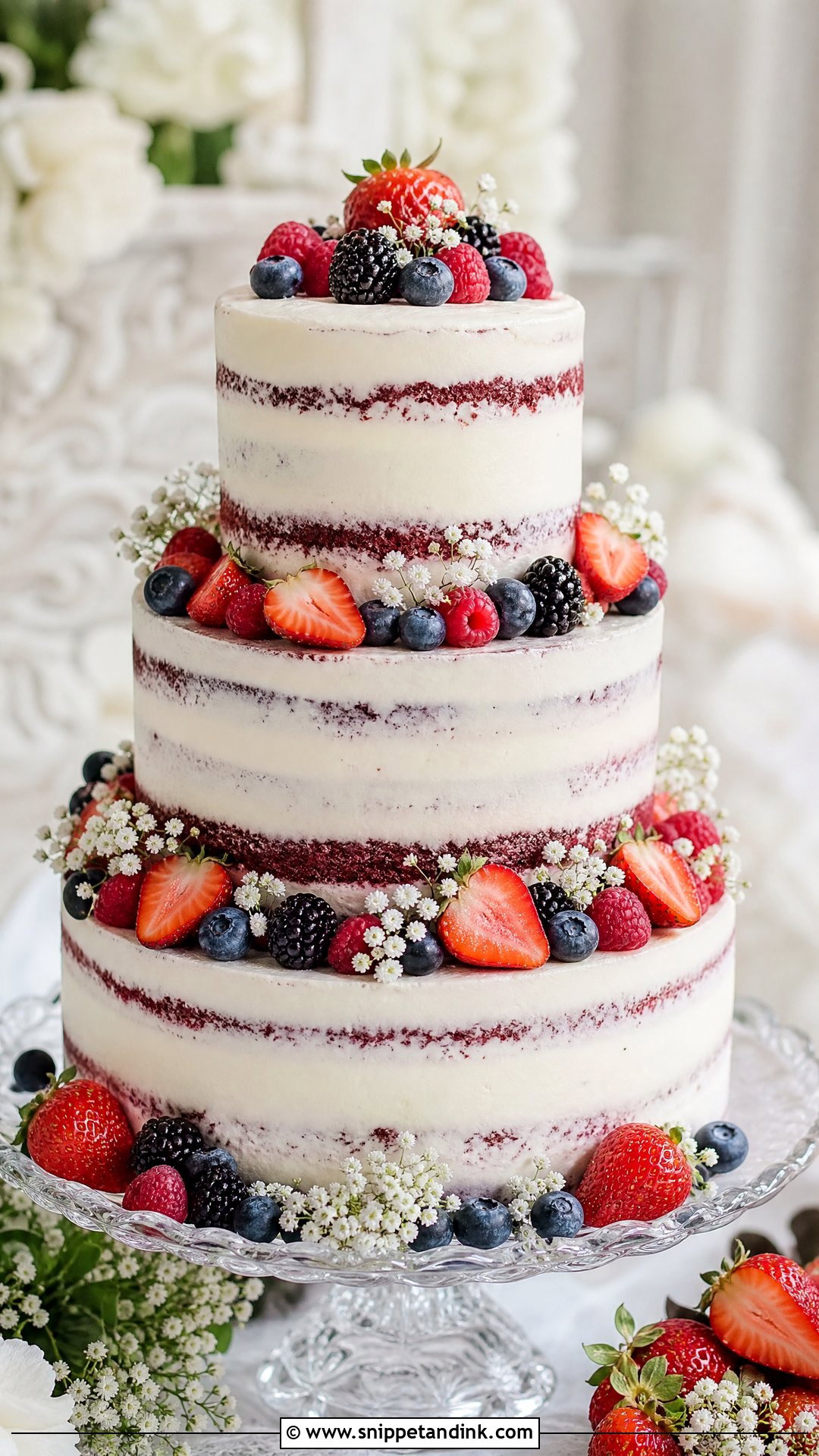
Berries make sense on red velvet because they also suit the flavour: raspberries and blackberries bring a sharpness that plays well with cream cheese. They sit nicely on naked, semi-naked or smooth finishes. The catch is moisture. Cut or washed berries weep into frosting over a few hours, so I dry them carefully and add them on site, as late as possible. Mint leaves or tiny flowers fill the gaps. It’s a natural fit for spring and summer weddings, brunches and outdoor parties.
8. Red Velvet Drip Wedding Cake
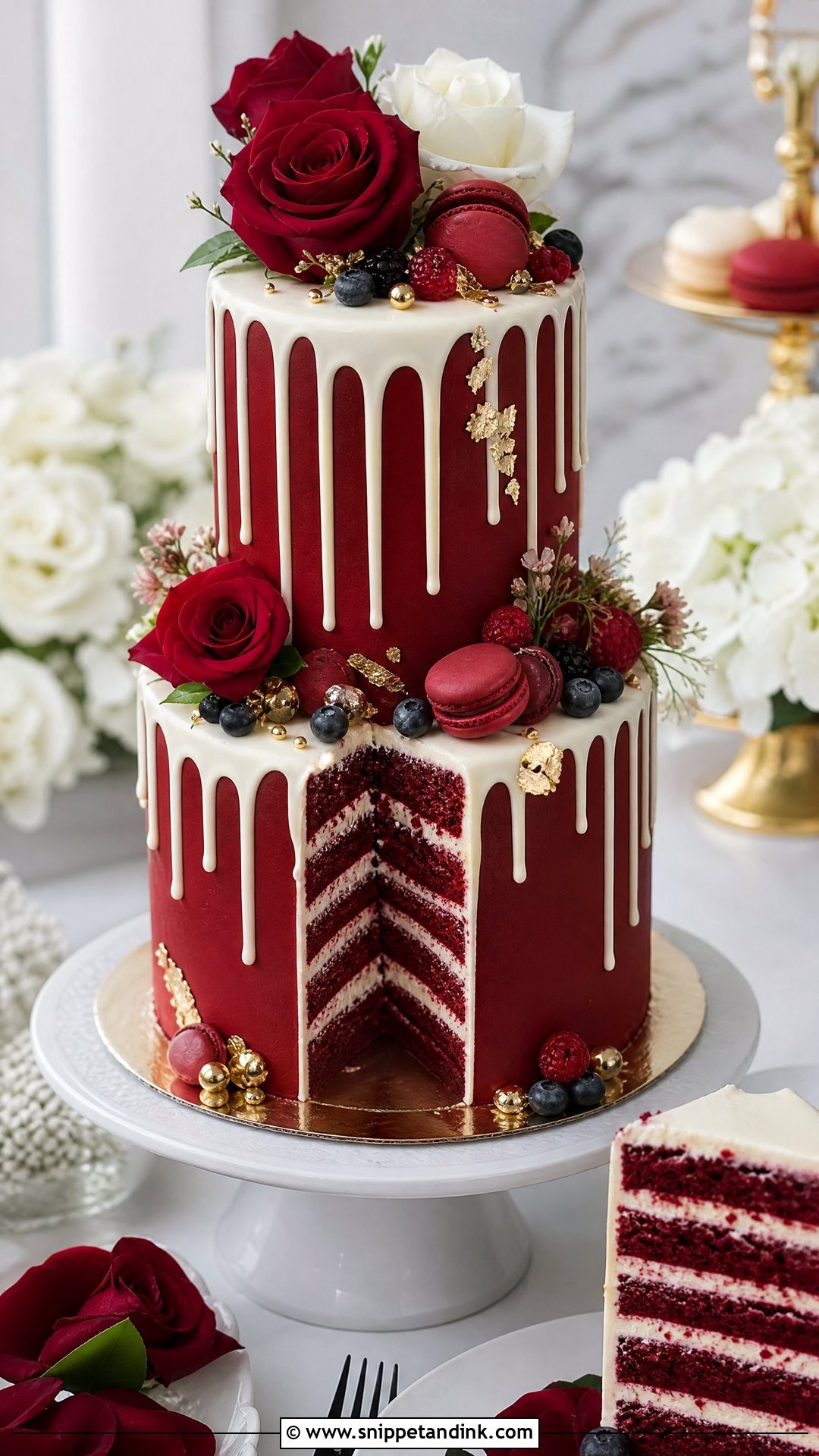
A drip adds movement and a modern edge. I frost in white cream cheese buttercream, chill the cake hard, and then pour a white chocolate drip, cream cheese glaze or red-tinted drip at the right temperature. Too warm and it runs to the board; too cool and it sits in stubby blobs, so I always test one drip on the back first. Roses, macarons, berries or small gold accents on top complete it. It’s playful without losing the classic flavour.
9. Two Tier Red Velvet Wedding Cake
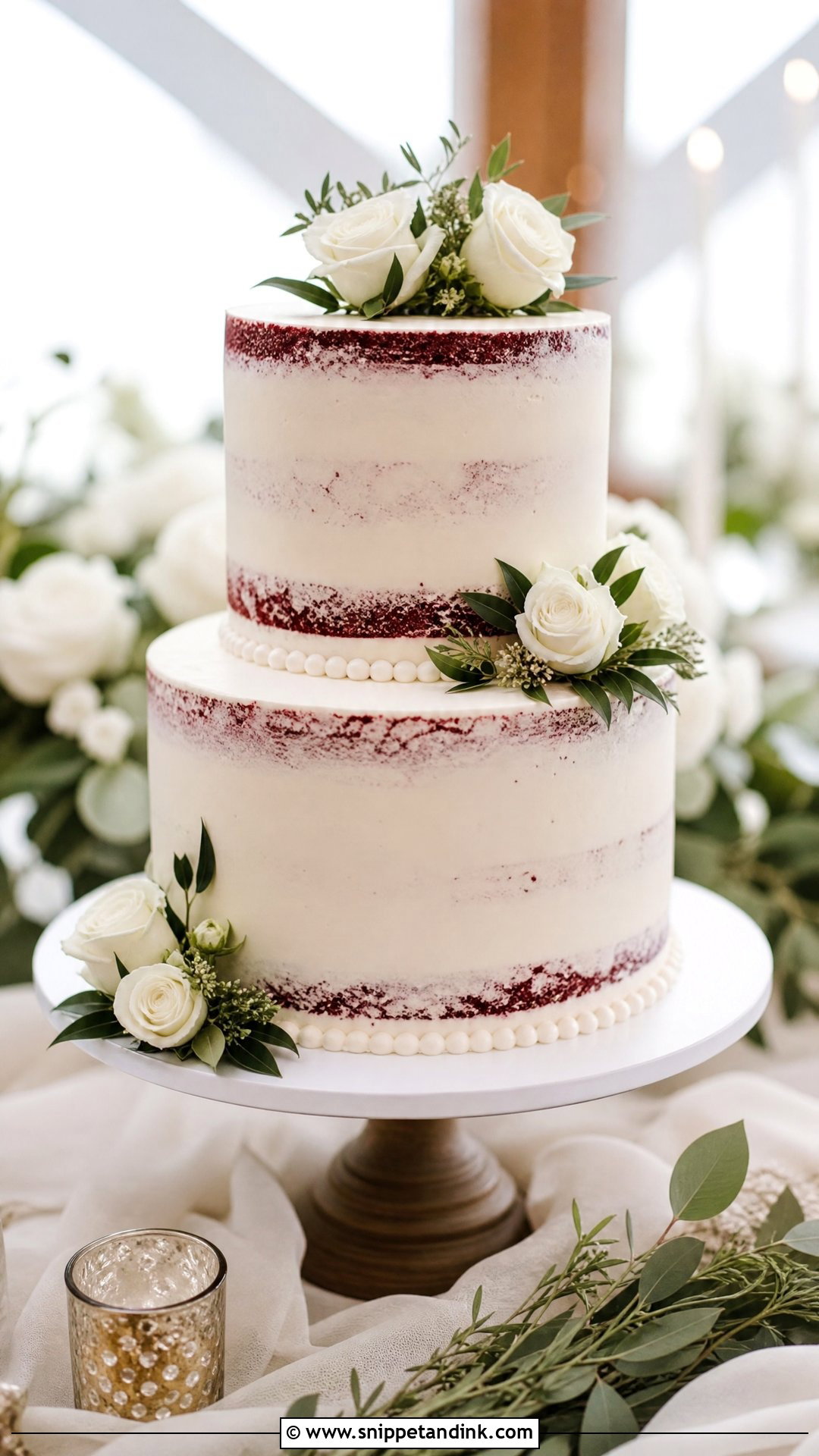
Two tiers suit smaller weddings, elopements and intimate receptions. You still get the height for a proper cutting moment without a cake that dwarfs the room. I can keep it smooth and ivory with fresh flowers or add textured buttercream and pearls. Red velvet is rich, so slices can be modest, but if your guest count outgrows two tiers, add cupcakes, cookies or a kitchen cake rather than going taller. A simple pedestal stand suits it.
10. Three Tier Red Velvet Wedding Cake
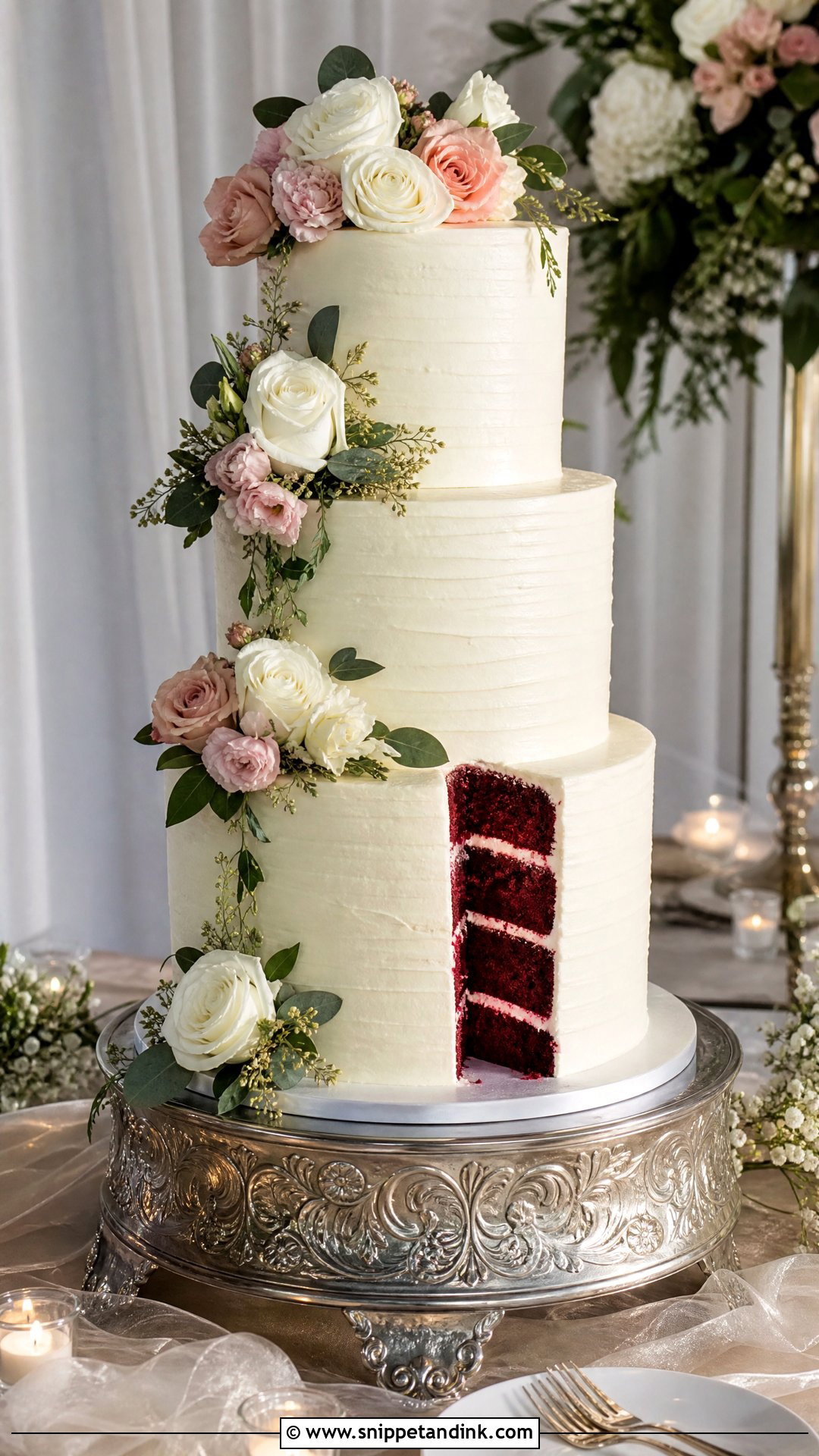
Three tiers is where I have room to design: flowers, piping, texture or metallic details, and still keep the shape graceful. Because cream cheese frosting is soft, a cake this size needs proper internal supports, with dowels and a board under each tier, so the weight doesn’t press down into the layers below. A smooth white finish or subtle buttercream texture both suit it, and fresh flowers cascading from top to base give movement in photos.
11. Red Velvet Wedding Cake With Fondant
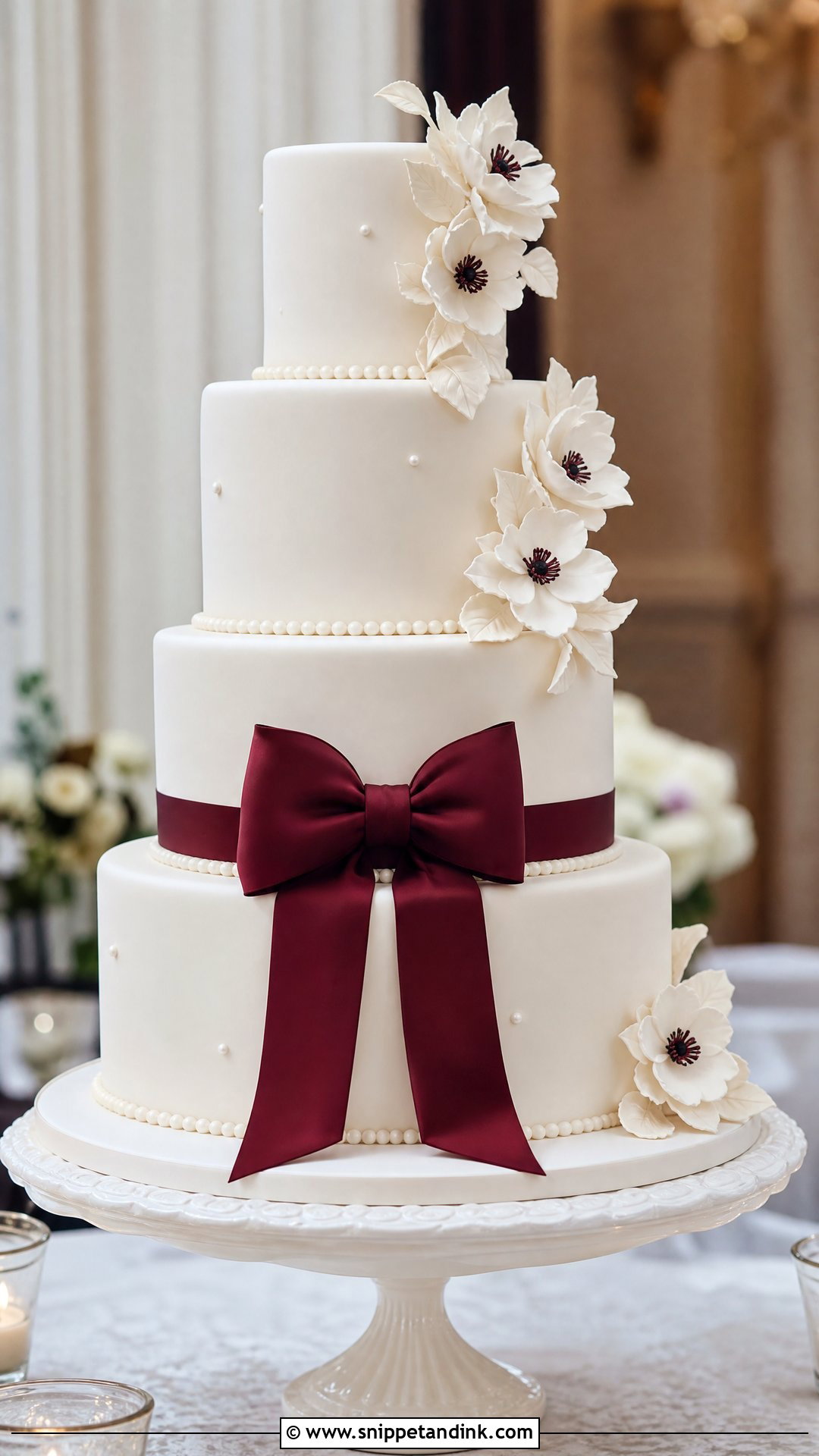
Fondant gives sharp edges, clean tiers and room for detail like bows, lace patterns, ruffles or sugar flowers. It can’t sit straight on cream cheese frosting, which is too soft and wet, so I fill the layers with cream cheese and cover the cake in a firm ganache or buttercream before the clean fondant covering outside. Fondant also protects the cake when it’s on display for a long time, which is why I recommend it for formal and black-tie receptions. Keep the outside white or ivory and let the red appear at serving.
12. Red Velvet Wedding Cake With Buttercream
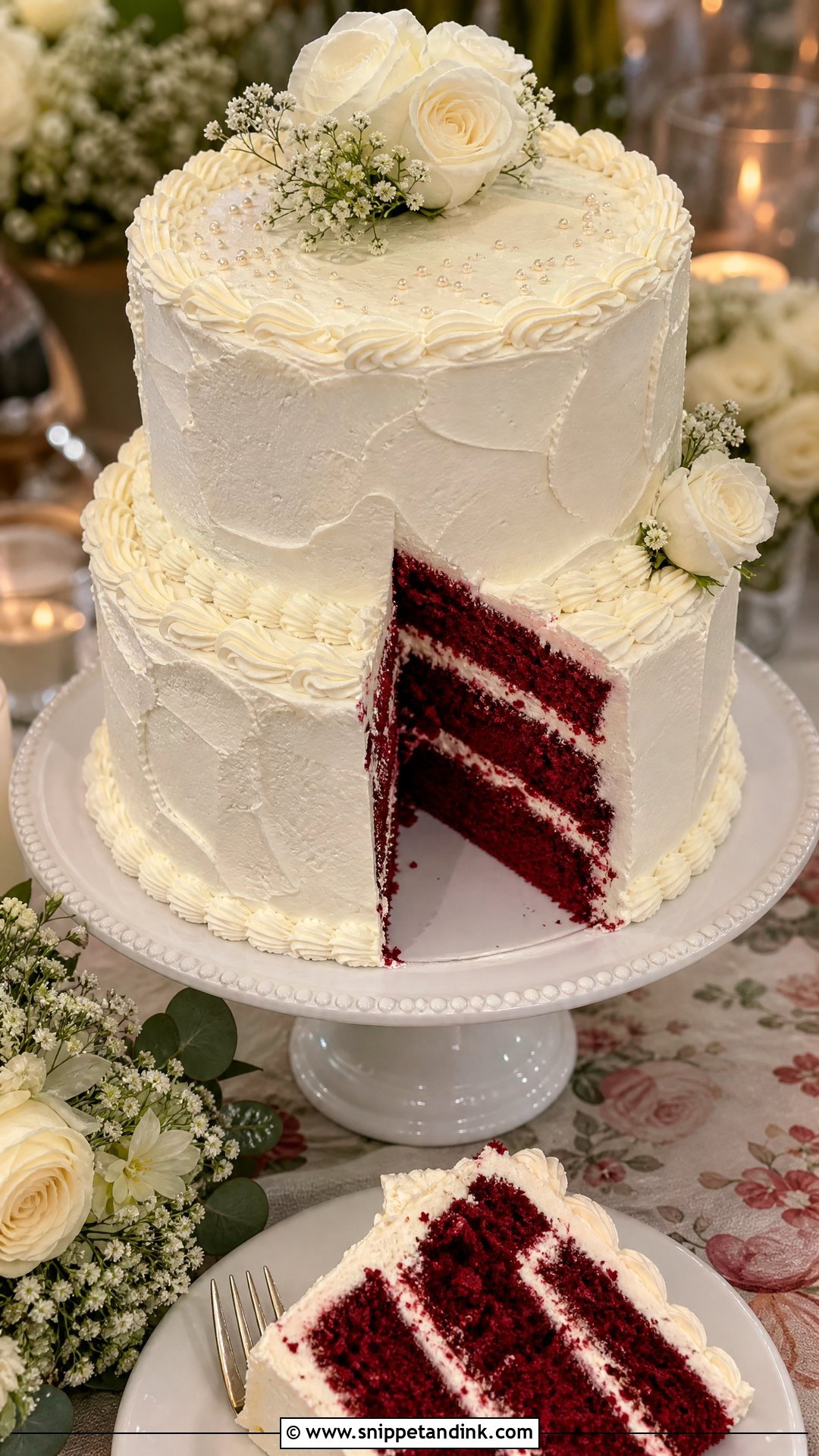
Buttercream gives you the widest range of finishes: smooth, combed, piped, swirled or a rustic spatula texture. For red velvet I usually use a cream cheese buttercream, which keeps some of the tang but holds a shape much better than straight cream cheese frosting. A few small white flowers keep it simple; swirls, borders and pearls make it more detailed. It suits almost every setting, though in summer heat I’d keep it chilled until close to serving.
13. Red Velvet Wedding Cake With Sugar Flowers
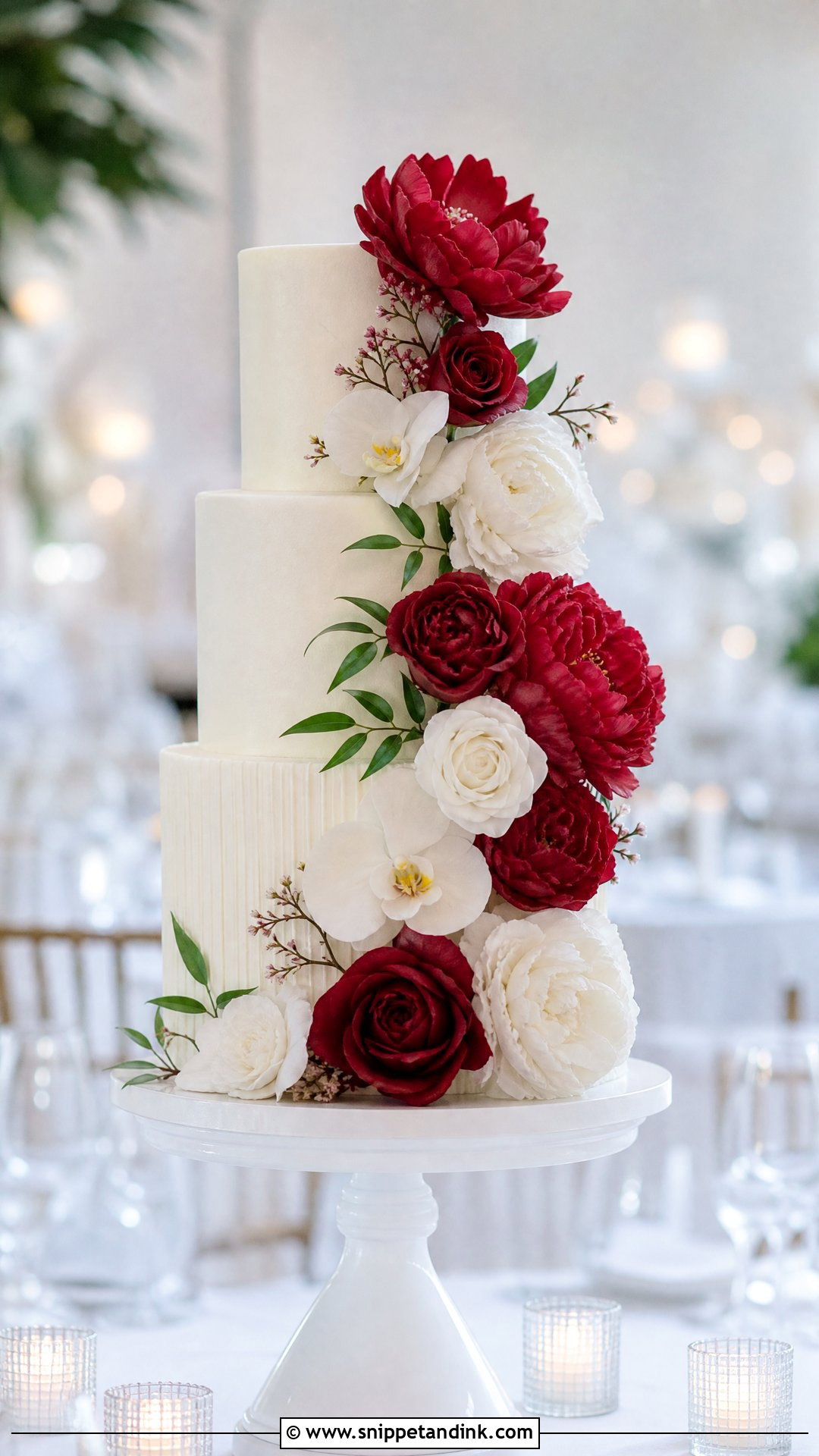
Sugar flowers are made petal by petal from gum paste, so they don’t wilt and they can match your bouquet in colour and variety. Roses, peonies, orchids and sweet peas look especially fine on white or ivory. They take real time to make, so order them well ahead. A diagonal cascade, a single tier wrapped in blooms or one statement topper all work. They’re also a smart answer for warm venues and destination weddings where fresh flowers would droop.
14. Red Velvet Wedding Cake With Pearl Details
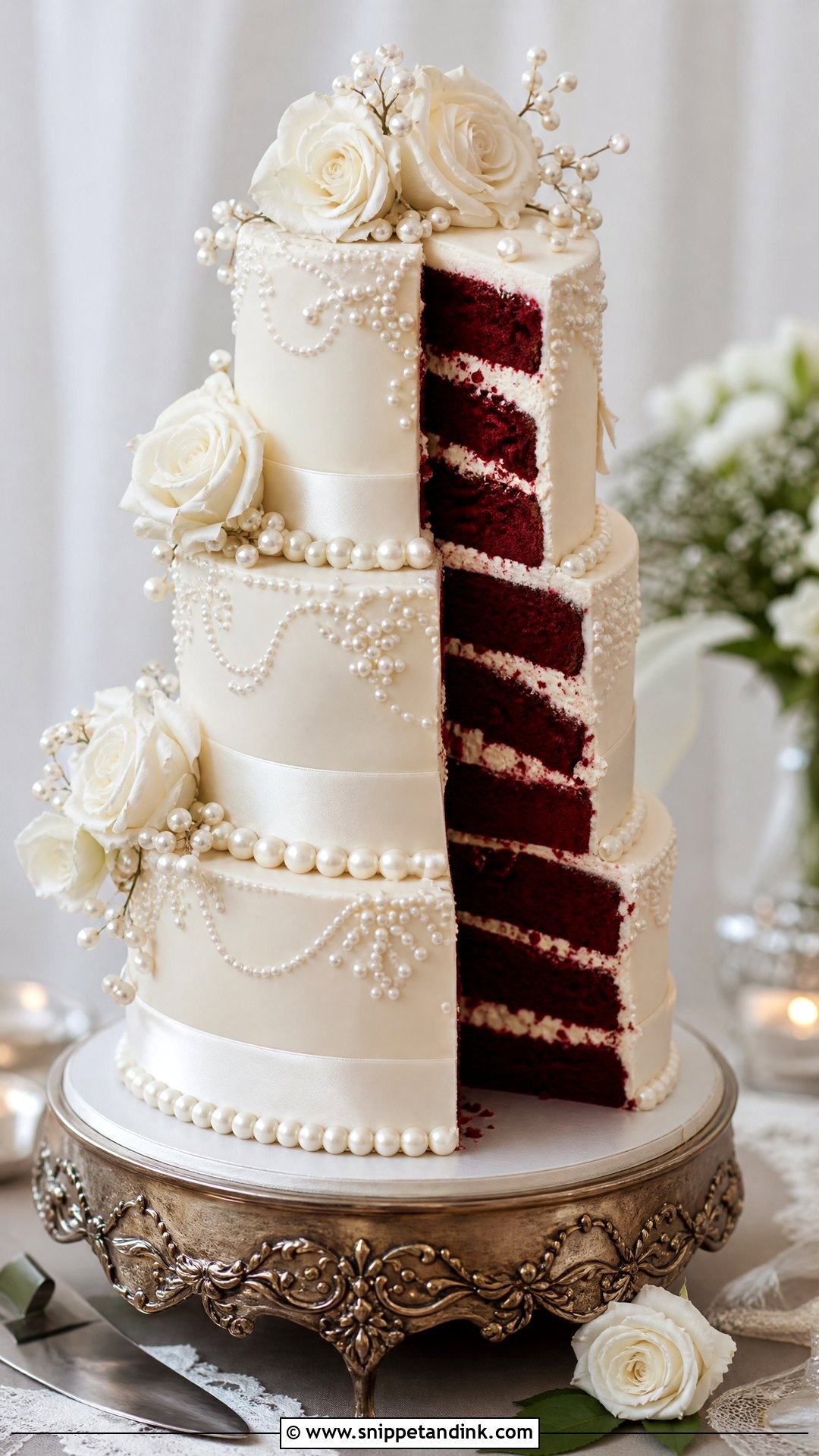
Edible pearls make red velvet look demure from the outside. I place them around the base of each tier, scatter them across the frosting or arrange them in patterns that read like lace. Hard sugar pearls are a little crunchy, so I keep them small and avoid placing them where the knife will hit hardest. Keep the rest of the cake simple, perhaps a satin ribbon or a few white flowers. It suits traditional weddings, hotel receptions and vintage themes.


15. Red Velvet Wedding Cake With Lace
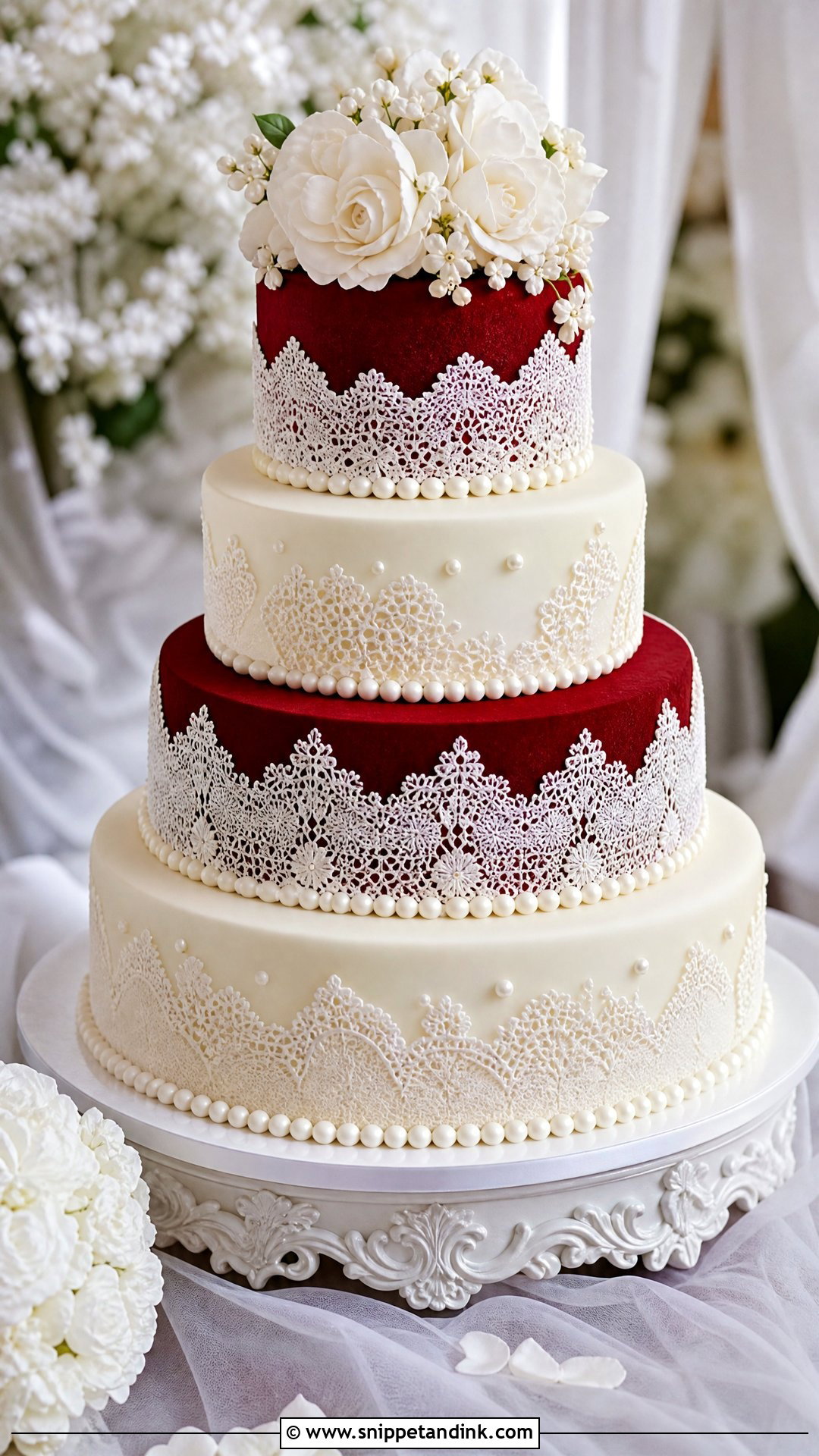
Lace can be made from fondant, royal icing, edible lace mats or piped buttercream, and each looks different. Piped lace is softer and more hand-made; moulded edible lace is crisper. White lace over ivory frosting looks gentle, and it’s lovely when it echoes the lace on a wedding dress, veil or invitations, so bring me a photo or a scrap of fabric. Add pearls, sugar flowers or a small floral topper, and keep the lace to one or two tiers if the cake is tall.
16. Red Velvet Wedding Cake With Ruffles
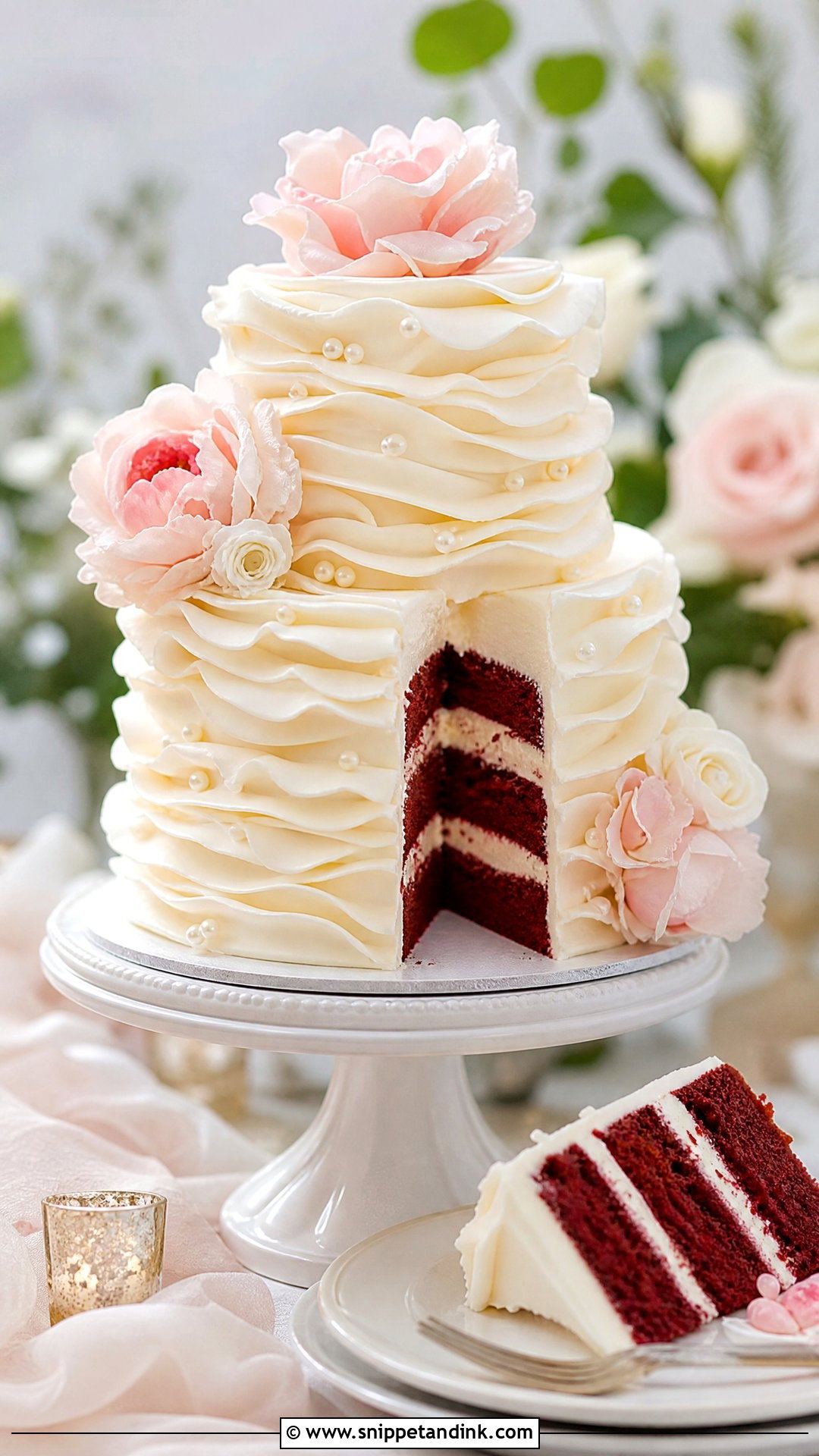
Ruffles bring movement and a soft, feminine texture. Fondant ruffles hold their shape longest; buttercream ruffles look lighter but need a cool room. White, ivory and soft blush all work. I often put ruffles on a single statement tier and keep the others smooth, though a fully ruffled cake is a real showpiece. A few sugar flowers or fresh blooms keep it bridal, and it suits garden-inspired and romantic weddings.
17. Red Velvet Wedding Cake With Fresh Fruit
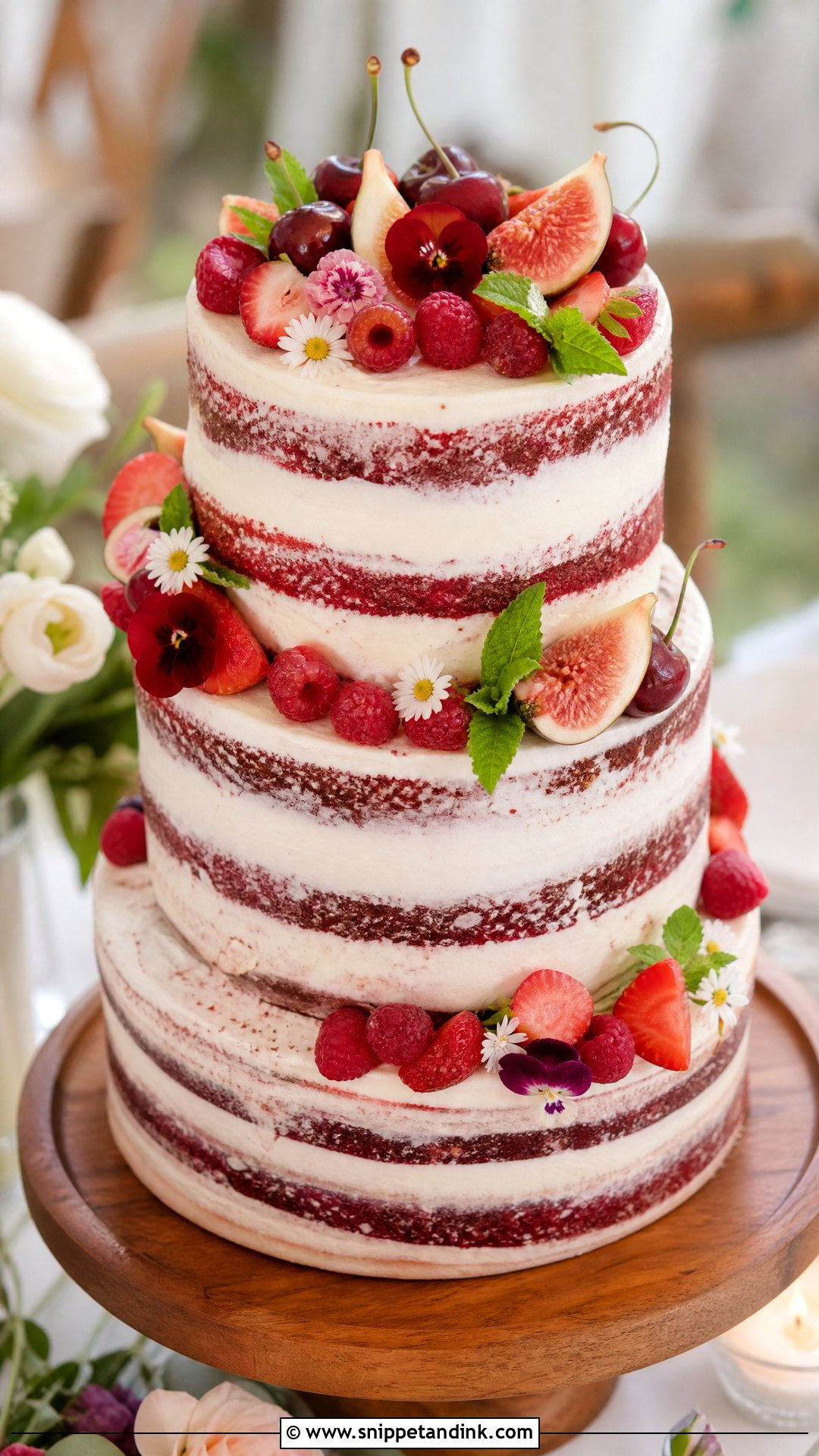
Fresh fruit gives the cake natural colour and hints at the flavour inside. Strawberries, raspberries, figs, blackberries and halved cherries all suit red velvet; I pit cherries and pat everything dry before it touches frosting. Figs cut open look striking on a semi-naked finish. This style belongs at outdoor summer receptions and seasonal dessert tables. Add a few edible flowers or soft greenery and keep the fruit arrangement loose rather than neat rows.
18. Red Velvet Cupcake Wedding Cake
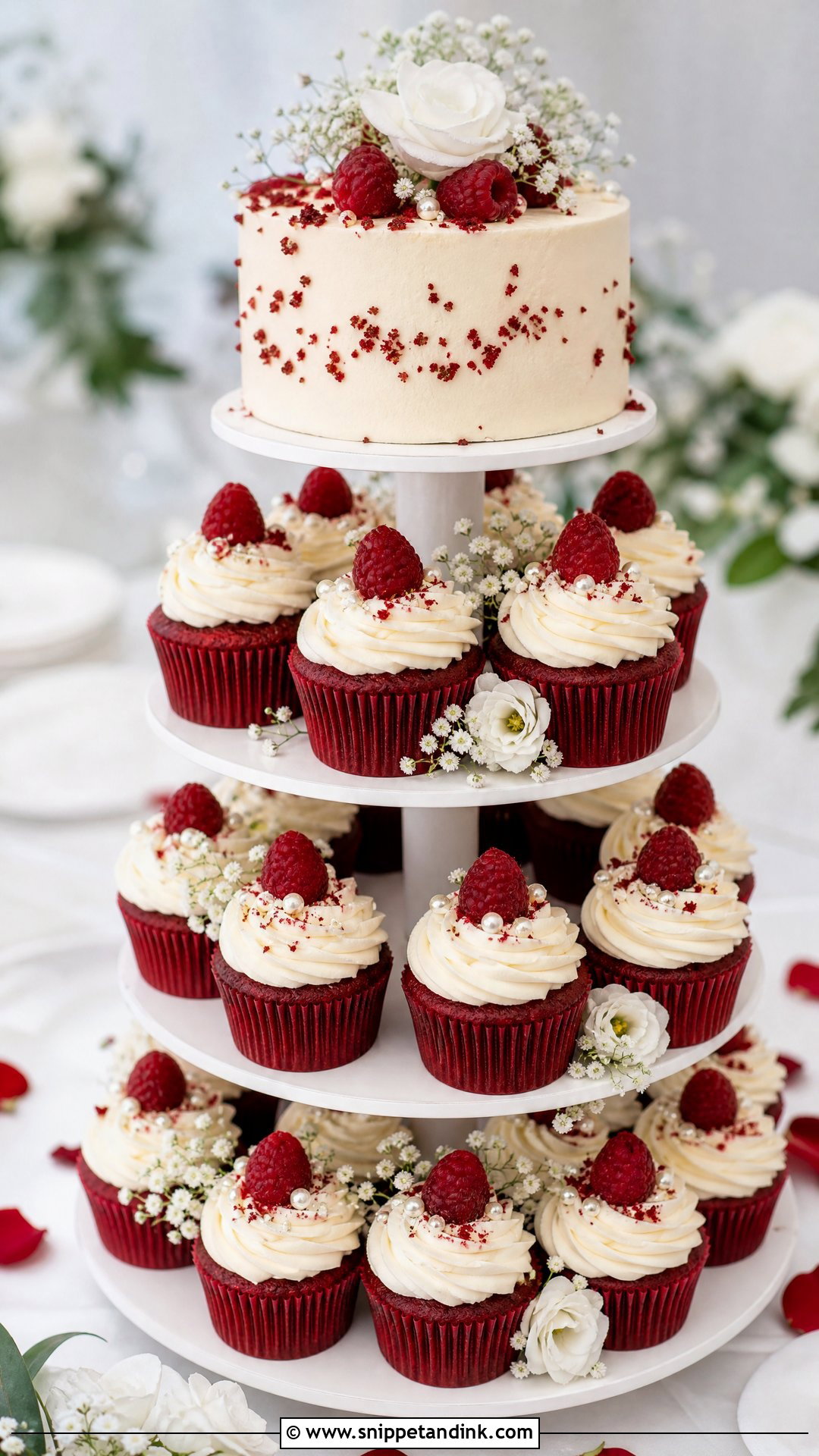
A red velvet cupcake wedding cake is tiers of cupcakes with a small cutting cake on top. It’s quick to serve, since nobody has to slice, and each cupcake gets a swirl of cream cheese frosting with a berry, a flower, a pearl or a pinch of red velvet crumb. It suits casual receptions and buffet tables. A white tiered stand, filled completely with no gaps, keeps it from looking like a bake sale.
19. Mini Red Velvet Wedding Cake
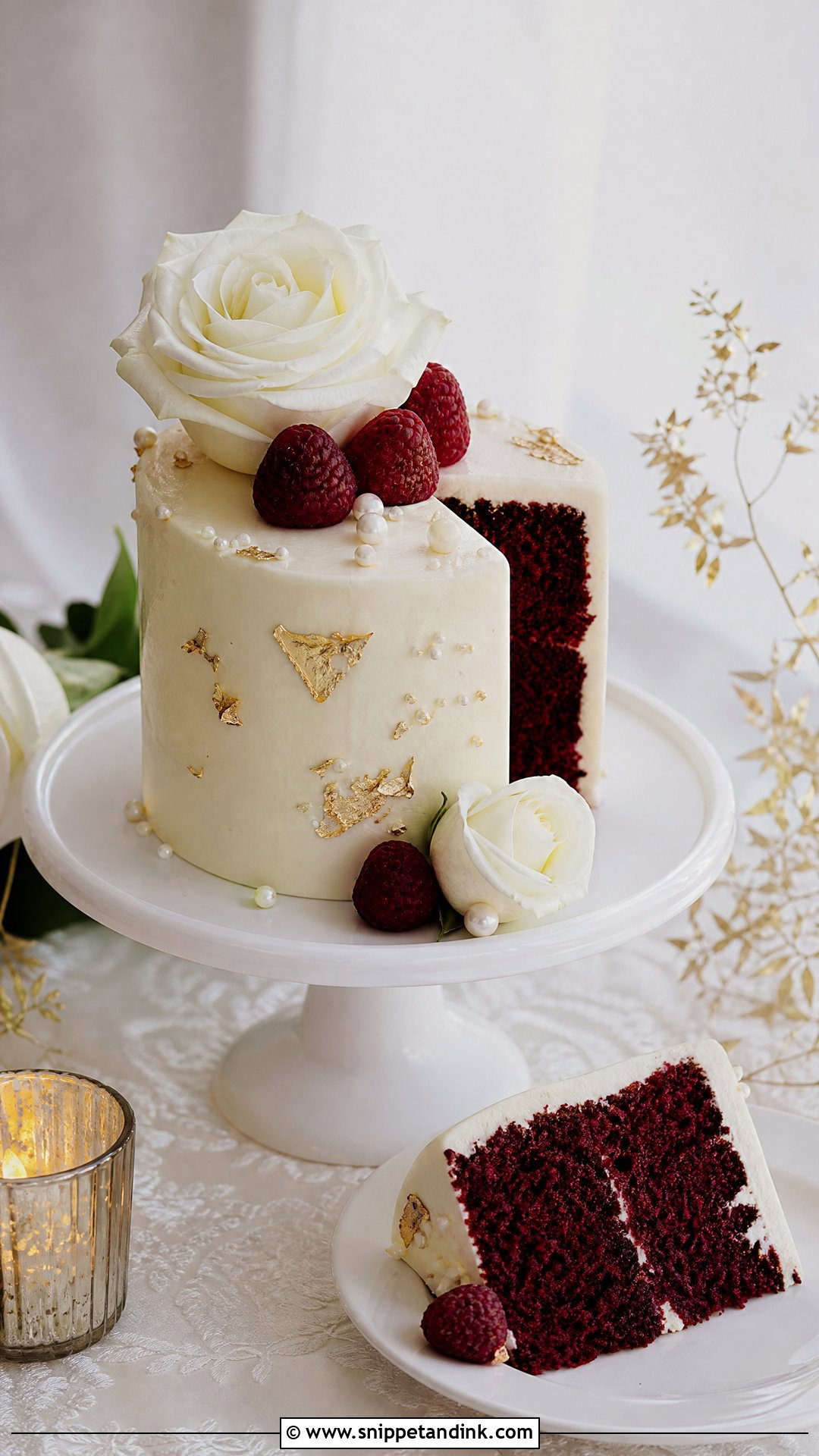
A mini red velvet wedding cake is a single tier for elopements, courthouse weddings, micro weddings or a sweetheart table. Small cakes need sharp finishing because guests see them up close. Smooth frosting, a few fresh flowers and a good stand are enough; gold leaf, pearls or berries add detail if you want it. A single tier is also the easiest red velvet cake to keep cold before it’s served.

20. Heart Shaped Red Velvet Wedding Cake
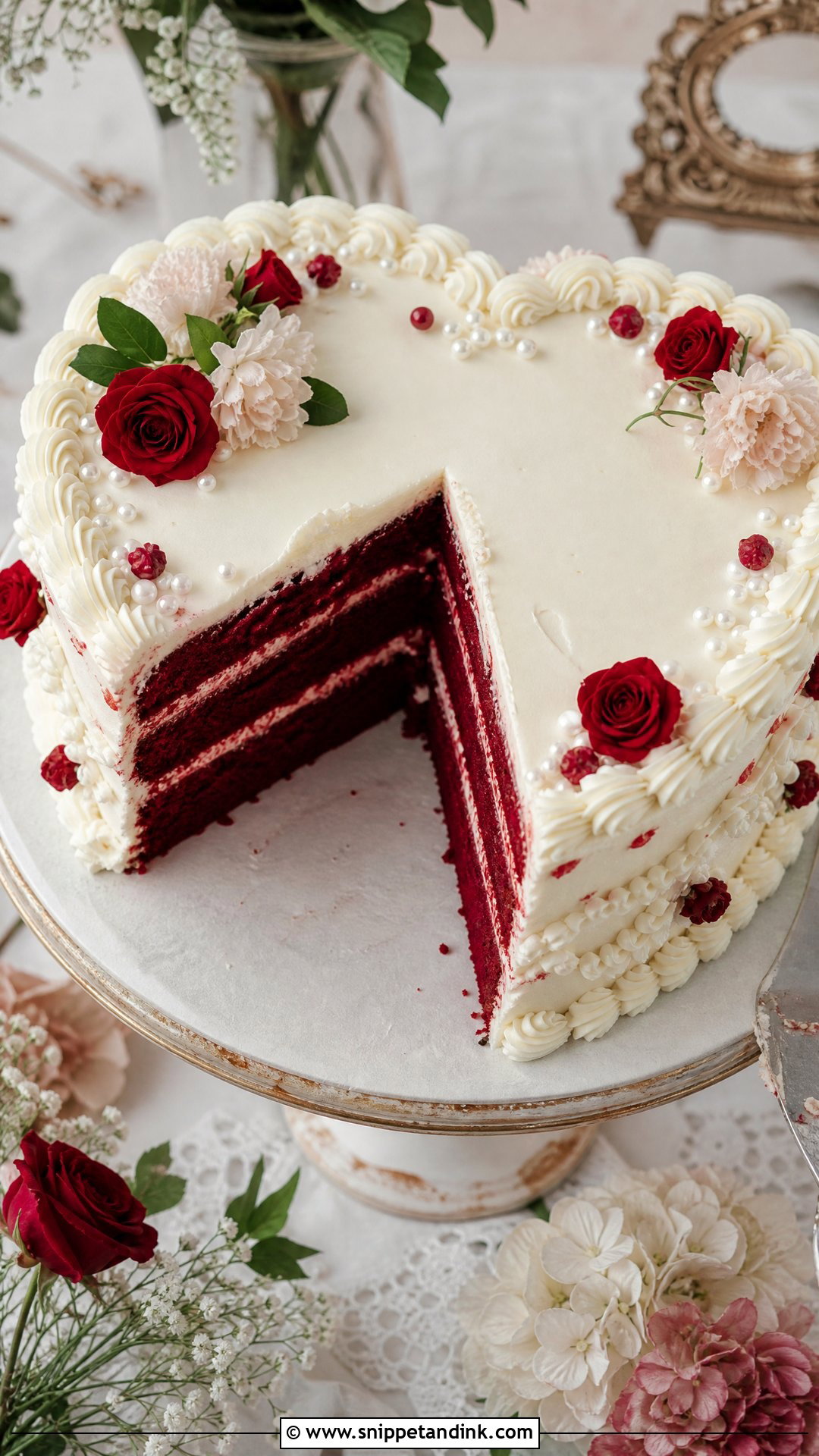
A heart-shaped cake is playful and suits retro-inspired weddings, garden ceremonies and receptions with soft pink, ivory or red. The shape is harder to frost cleanly than a round, especially at the point and the dip, so I chill between coats to keep the edges crisp. Smooth cream cheese frosting, vintage piping, pearl borders or small roses all work. A single heart suits an intimate wedding; stacked heart tiers make a bold centrepiece.
Tasting, Crumb Control and Cutting a Red Cake Cleanly
At the tasting
Good red velvet should taste of more than food colouring. Look for a soft, moist crumb, a gentle cocoa note and a slight buttermilk tang. If it tastes like plain vanilla dyed red, or it’s dry at the edges, say so. Ask what gives the colour, since some bakers use gel colouring and others work with natural colourings like beet, which can turn a duller, browner red once baked. If any guests avoid artificial dyes, that’s worth raising early.
Keeping red crumbs off white frosting
Red sponge sheds red crumbs, and one stray fleck shows on white frosting. I level and trim the layers, apply a thin crumb coat to lock them in, chill it until firm, then add the final coat. If you’re decorating your own small cake, that chilled crumb coat is the step not to skip.
On the night
- Give the caterer a long, sharp knife and a jug of hot water. Wiping the blade between cuts keeps every slice red and white rather than smeared pink.
- Remove any dowels and support boards before slicing each tier.
- Plate slices on white or pale plates so the colour reads; on dark plates it looks brown.
- Refrigerate leftovers promptly because of the cream cheese.
Let the Slice Do the Talking
Red velvet’s reveal happens at the cut, so the outside can be anything from bare and rustic to sharp fondant with sugar flowers. Cream cheese frosting, naked layers, fondant and drips all suit it, and flowers, berries, pearls, lace, gold and ruffles sit well against the white. My advice is to pick the finish for your venue and season first, since that decides how the frosting will behave, and then choose the decoration that fits your guest count and the way you want the reception to feel.
You'll Like These Ideas:












Leave a Reply