
Plain wedding cakes are what I find myself making more and more, and I’m glad of it. A smooth tier shows the quality of the finish in a way piping can hide, and it gives flowers a clean surface to sit against. The blooms don’t need to cover the cake. A cluster of roses on one tier or a few pressed petals often says more than a full wrap. Below are twenty ways to dress a simple cake with flowers, along with the practical things I check before any stem touches frosting.
Which Blooms Can Touch Frosting and Which Can’t
Most florist flowers are grown to be looked at, not eaten, and many are treated with pesticides. Some are also toxic. That doesn’t rule them out, but it decides how they go on the cake. My rough split looks like this:
- Edible when grown without sprays: roses, lavender, violas, pansies, cornflower, calendula, chamomile and dendrobium orchids.
- Decorative only, always wrapped and kept off the frosting: hydrangea, delphinium, calla lily, baby’s breath, eucalyptus and lily of the valley.
For anything in the second group, and for edible flowers bought from an ordinary florist, I wrap the stems in floral tape, push them into a food-safe posy pick rather than straight into the sponge, and set clusters on a disc of parchment or wafer paper. The flowers then come off before cutting, and nobody gets served a petal.
Where edible blooms actually come from
If you want flowers that are safe to leave on the slices, they have to be sourced for eating: from a grower who doesn’t spray, from your own garden, or from a supplier that sells edible flowers specifically. Ordinary florist stems rarely qualify, however fresh they look. I order edible blooms a few days ahead, keep them chilled, and only rinse and pat them dry on the day, because wet petals slide on frosting and bruise quickly.
1. Plain White Wedding Cake With Roses
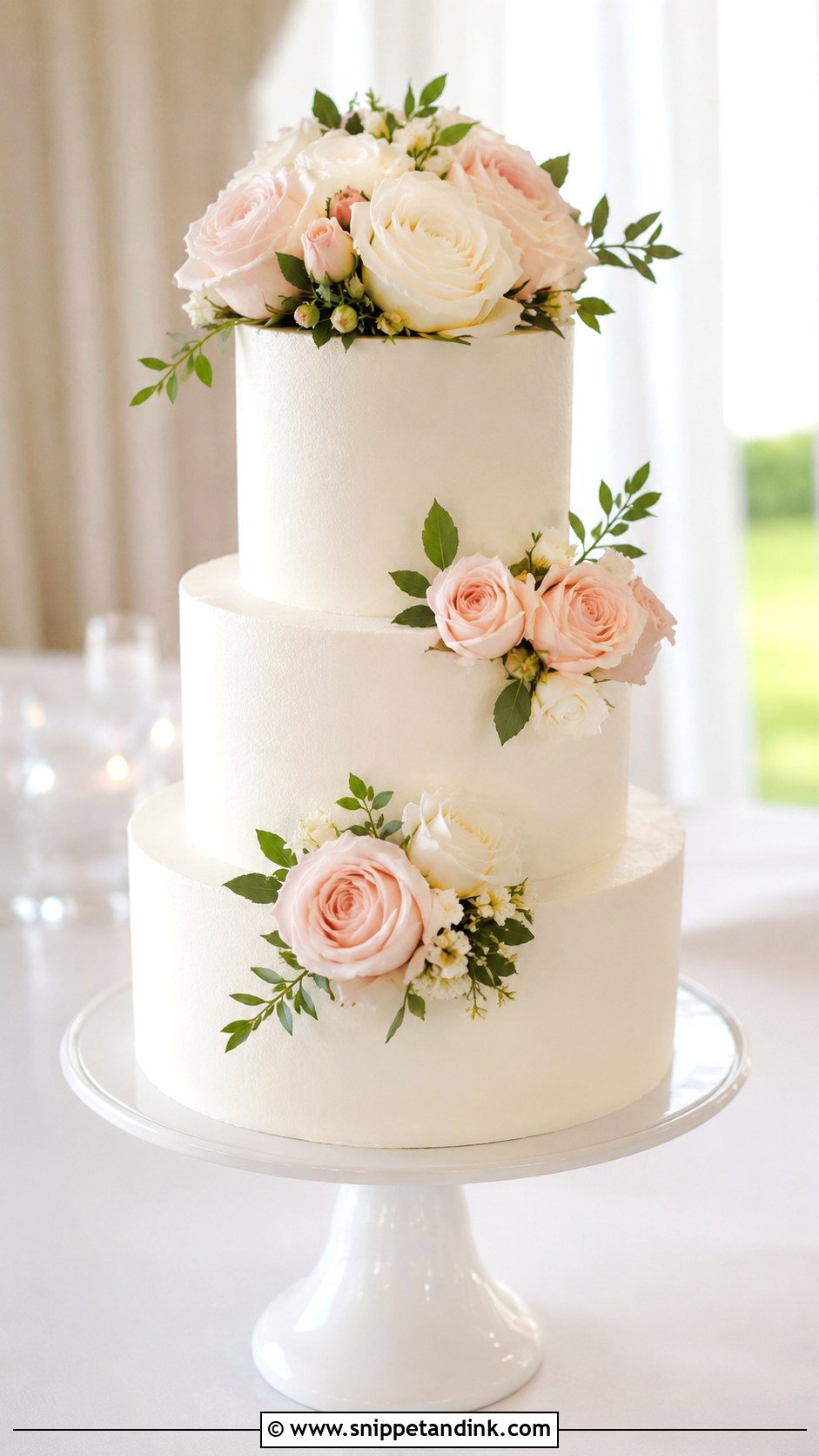
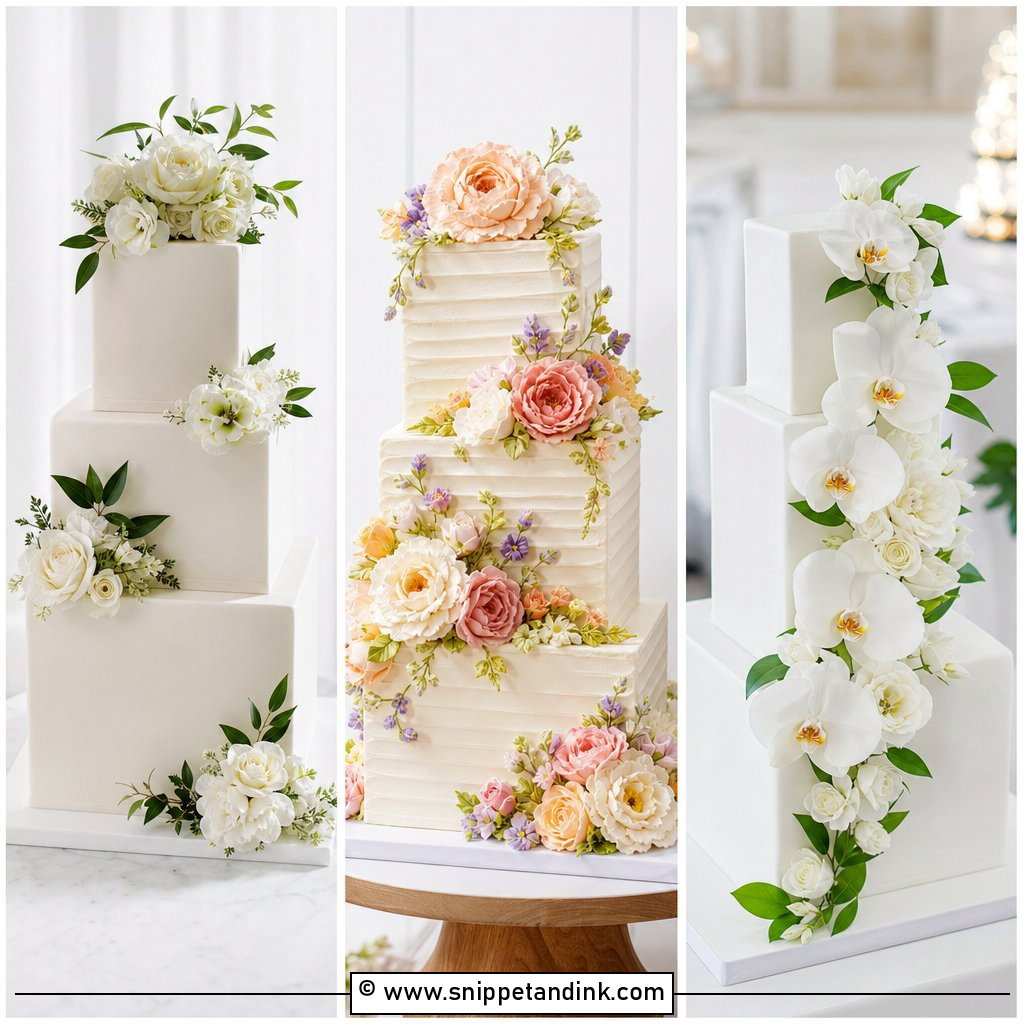
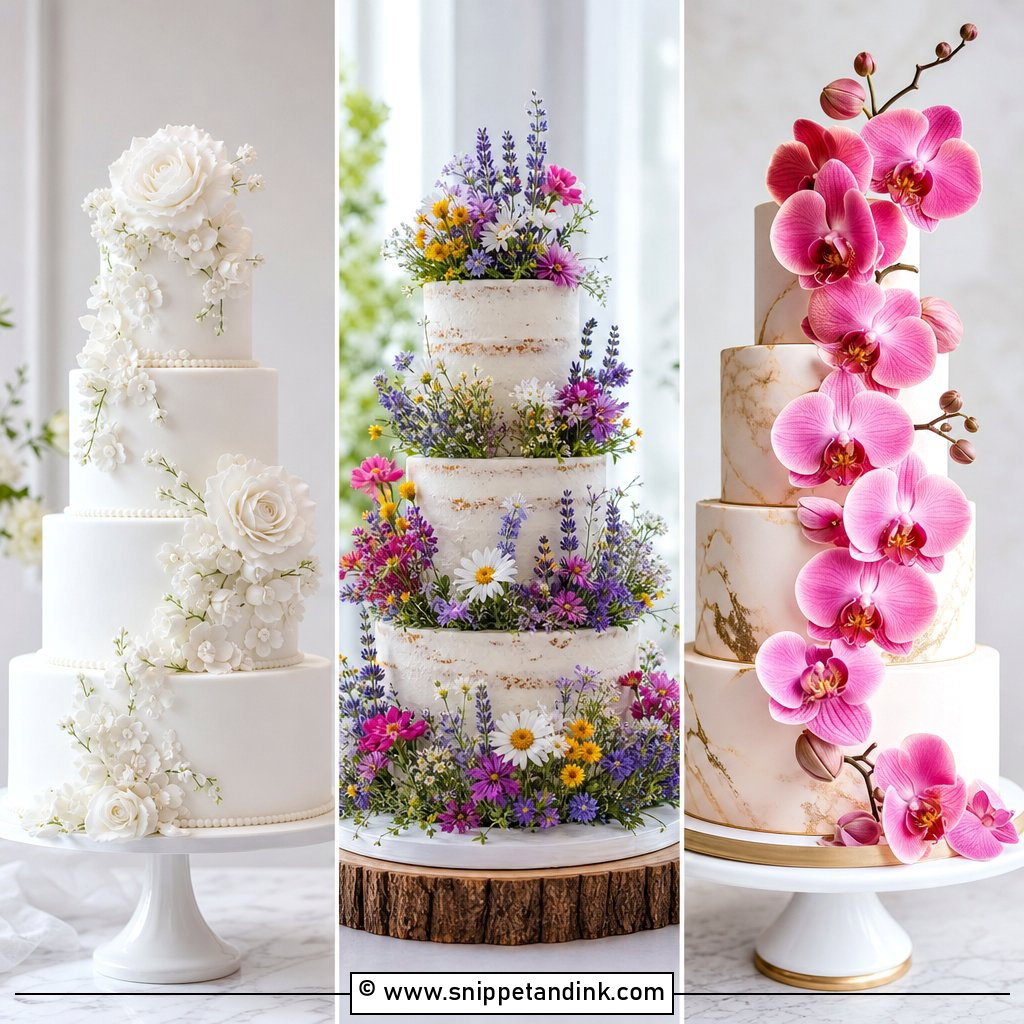
Roses are the flower I’m asked for most, partly because they behave well on a cake. Their petals hold shape for hours, and roses grown without sprays can even be eaten. White roses keep things traditional, blush roses bring warmth, and ivory sits gently beside an ivory dress. On two or three tiers, I’d place them between the tiers or in one side cluster rather than everywhere. Smooth buttercream gives a softer look; fondant gives a crisper one that keeps its edges in a warm room.
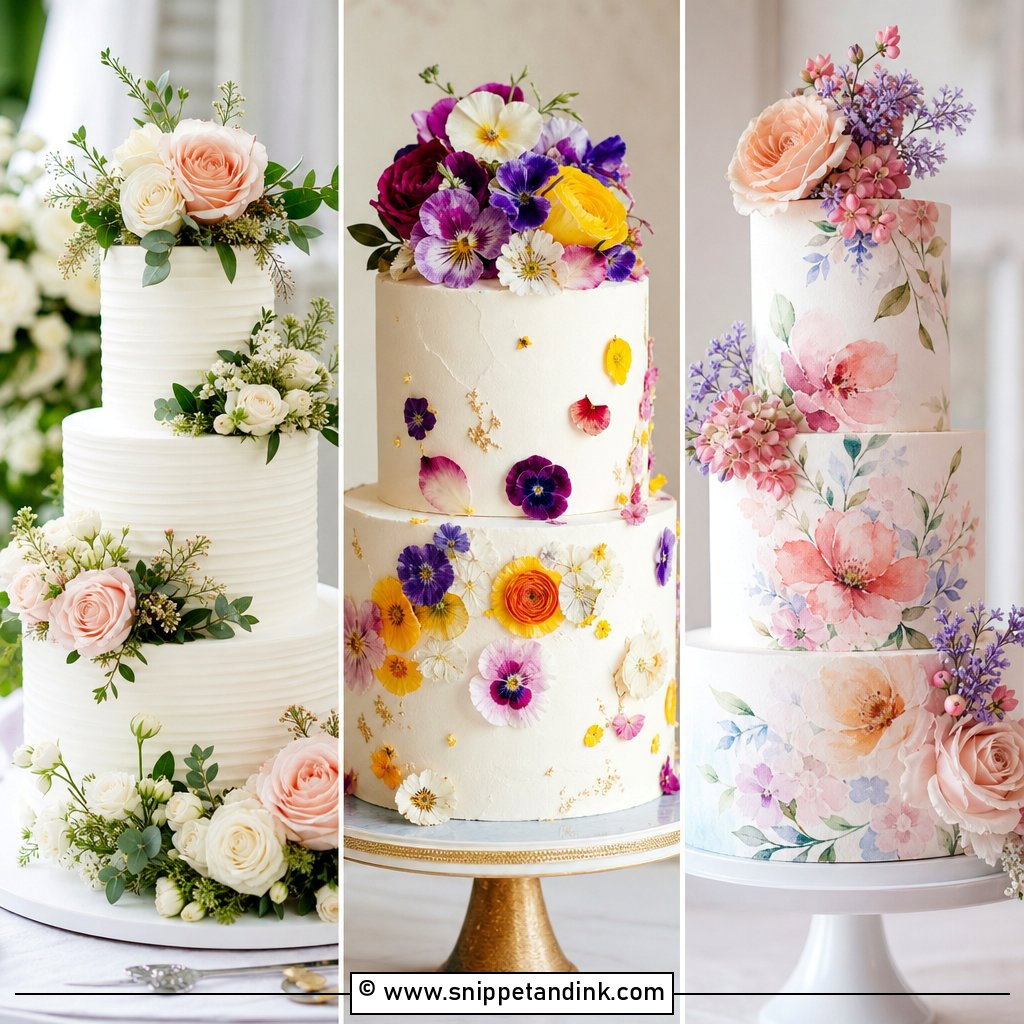
2. Plain Buttercream Wedding Cake With Fresh Flowers
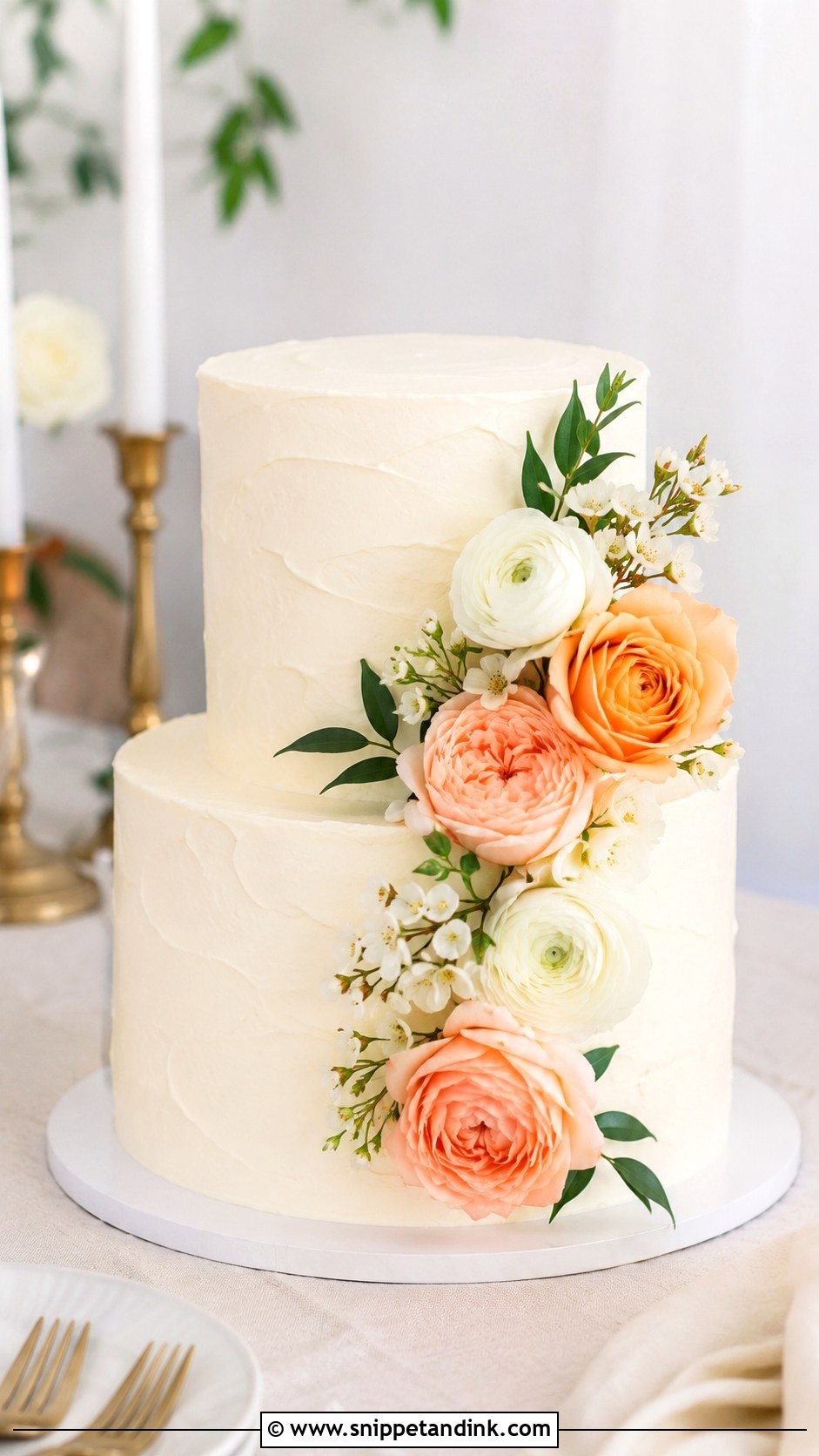
Buttercream softens a cake’s look, and it’s also the finish that reacts most to fresh flowers. Stems and petals carry moisture that can mark the surface, so I always wrap stems and set clusters on a small disc of parchment or wafer paper. Matching the blooms to the bouquet or table arrangements ties the cake to the room. Keep the finish smooth, or with a few light spatula marks, and put the flowers in one place. One generous cluster looks deliberate. Flowers dotted all over look like an afterthought.
3. Plain Two Tier Wedding Cake With Flowers
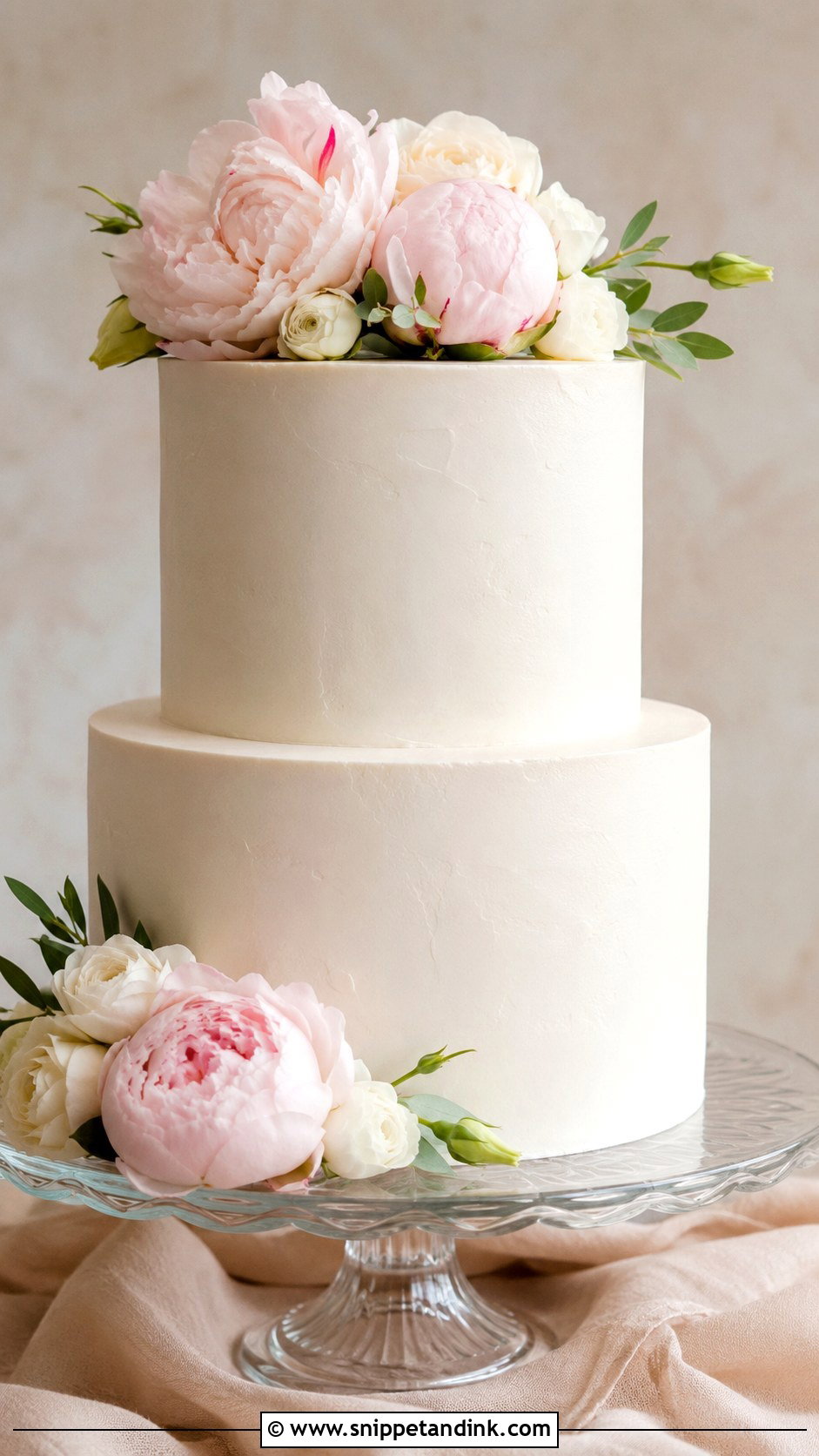
Two tiers suit a smaller guest list, and they’re easier to keep looking plain than a tall cake. Ask your baker how many portions it really gives before you talk flowers, since the number surprises a lot of couples. For placement, I prefer flowers on the top tier or at the base, not both. White, ivory and soft cream frosting all work, and ranunculus or spray roses are better in scale here than big peonies. Add greenery only if the rest of your wedding has it.
4. Plain Three Tier Wedding Cake With Flowers
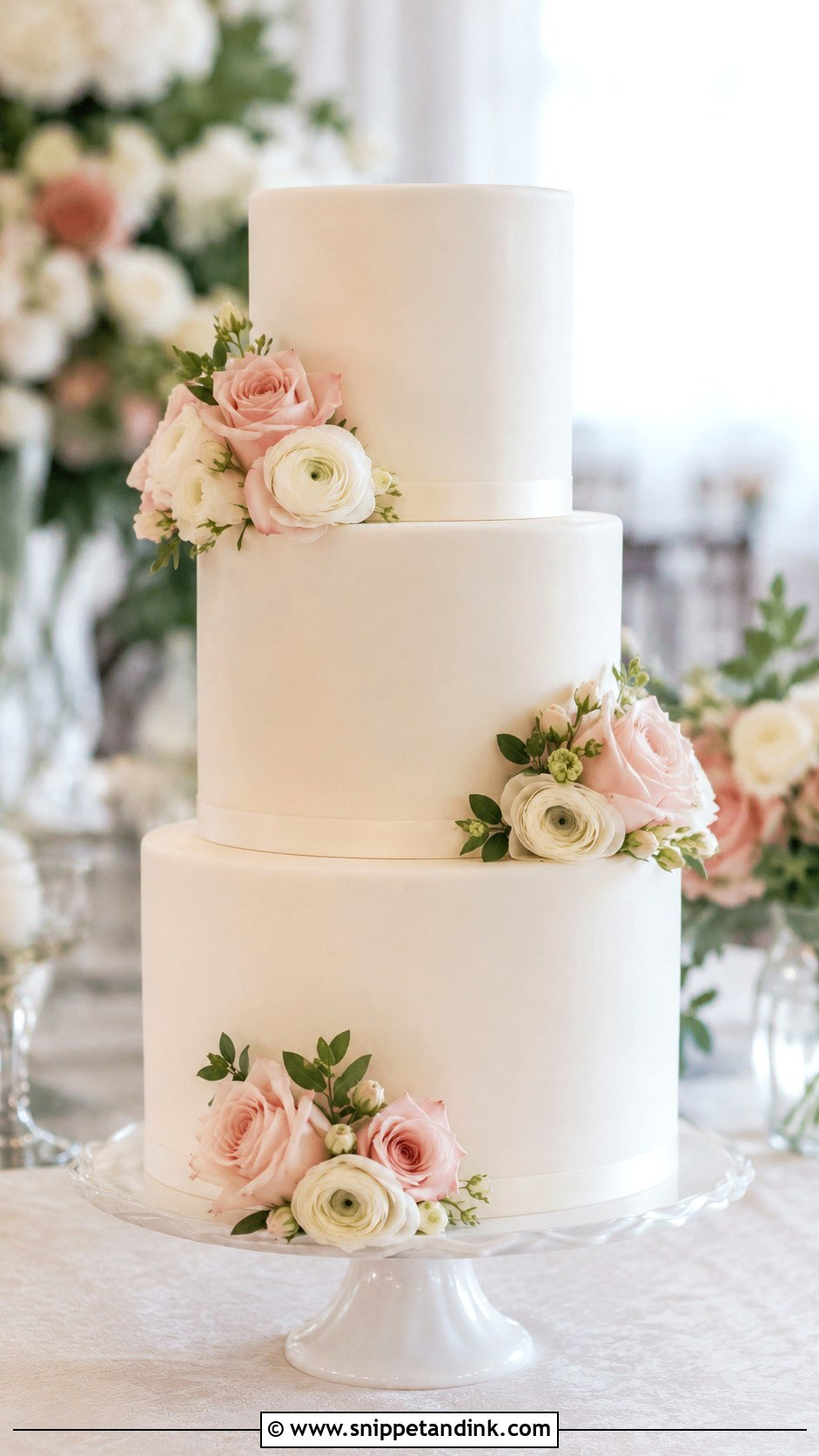
A third tier adds formality and the height to stand up to tall reception arrangements. Plain here means smooth white buttercream or fondant with no heavy piping or colored frosting. I’d trail flowers down one side, or set small clusters where the tiers meet, which also hides the seam between them. Ivory, blush and pale peach blooms stay calm against white. Tall cakes are supported by dowels inside each tier, so the florist needs to know where those are and keep stems clear of them.
5. Plain Fondant Wedding Cake With Flowers
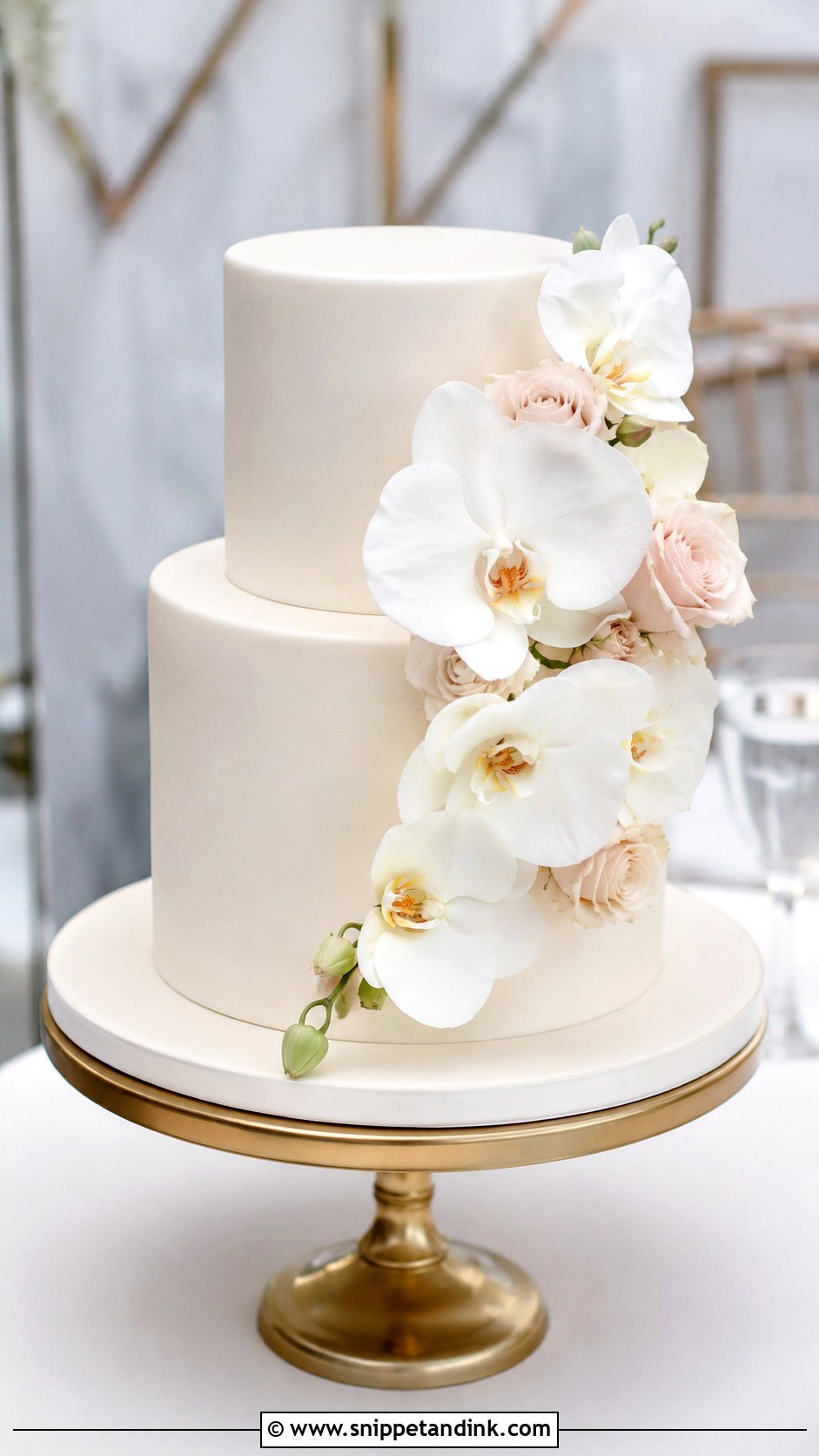
Fondant gives the sharpest edges and the most forgiving surface for flowers, because it seals the cake and doesn’t show moisture marks the way buttercream can. It copes better with a warm room too. With a base that sleek, the flowers become the only detail. A few sugar flowers look refined against fondant, while fresh ones feel softer. I’d keep it to one placement, usually a single arrangement on the top tier.
6. Plain Single Tier Wedding Cake With Flowers
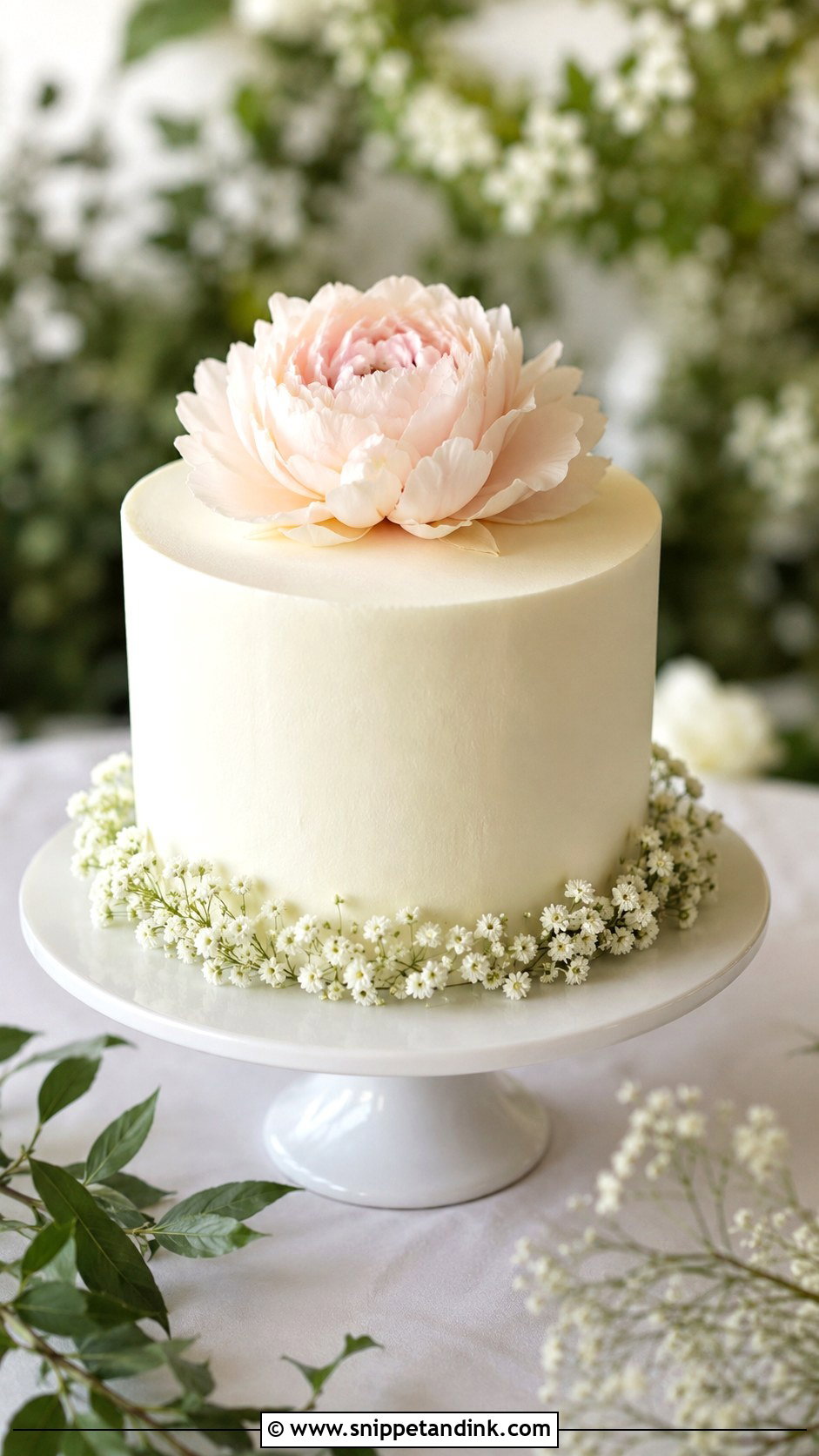
A single tier fits an elopement or micro wedding, or a dessert table where the cake is one treat among many. One large bloom on top reads modern; a ring of tiny flowers around the base reads softer. It needs fewer flowers and less decorating time, so it’s the budget-friendly option too. Choose white or ivory frosting so the flower color stands out. A small cake also travels far better, which matters if it’s riding to a remote venue on someone’s lap.
7. Plain Round Wedding Cake With Flowers
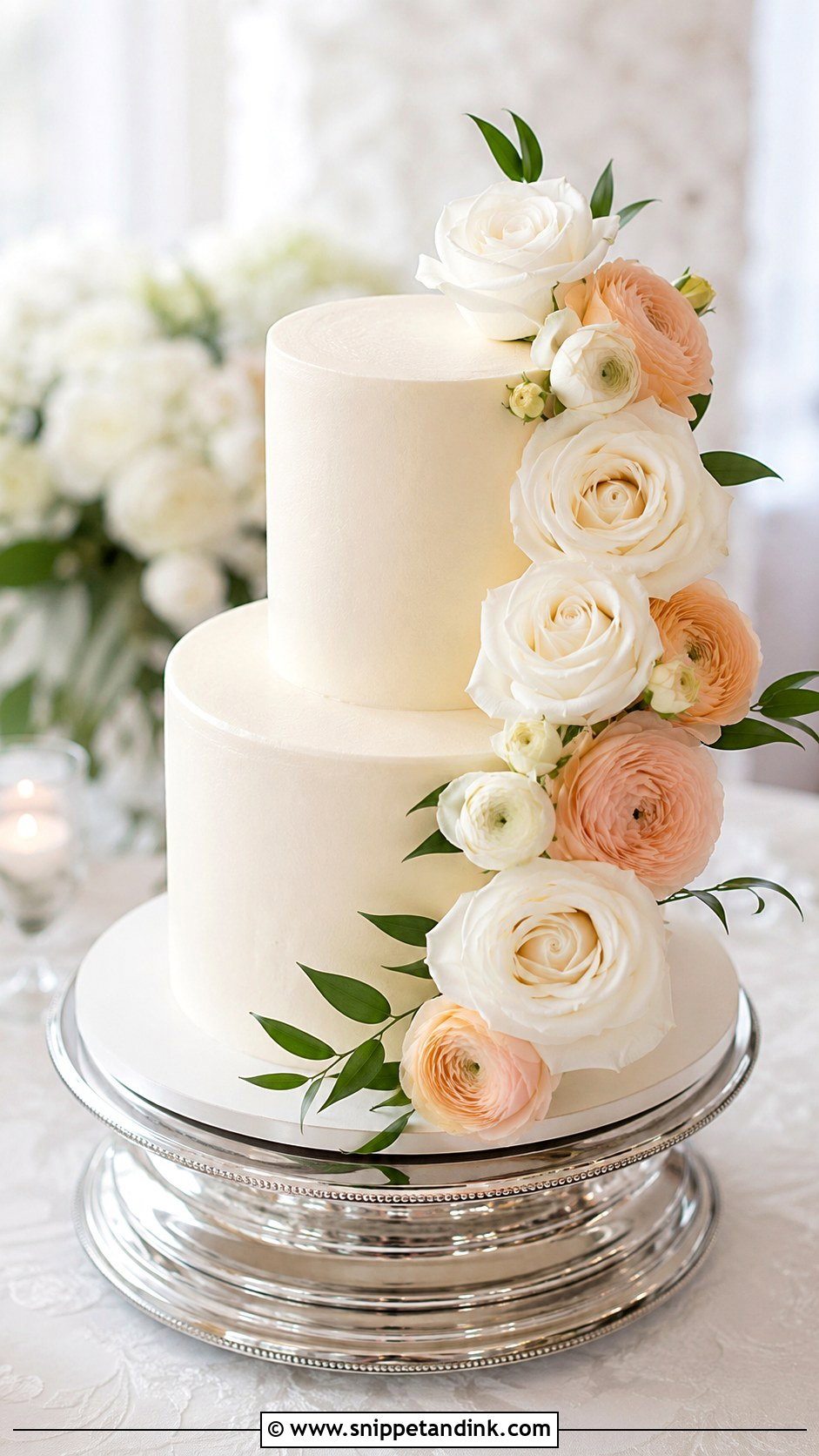
Round tiers are the easiest shape to decorate with flowers, because a cluster can follow the curve without fighting a corner. Smooth sides and sharp top edges matter more on a round cake than people think, since the eye travels all the way around it. For a classic finish, white frosting with roses or lisianthus is hard to beat. Lisianthus is underused: it looks like a softer rose and lasts well out of water.
8. Plain Square Wedding Cake With Flowers
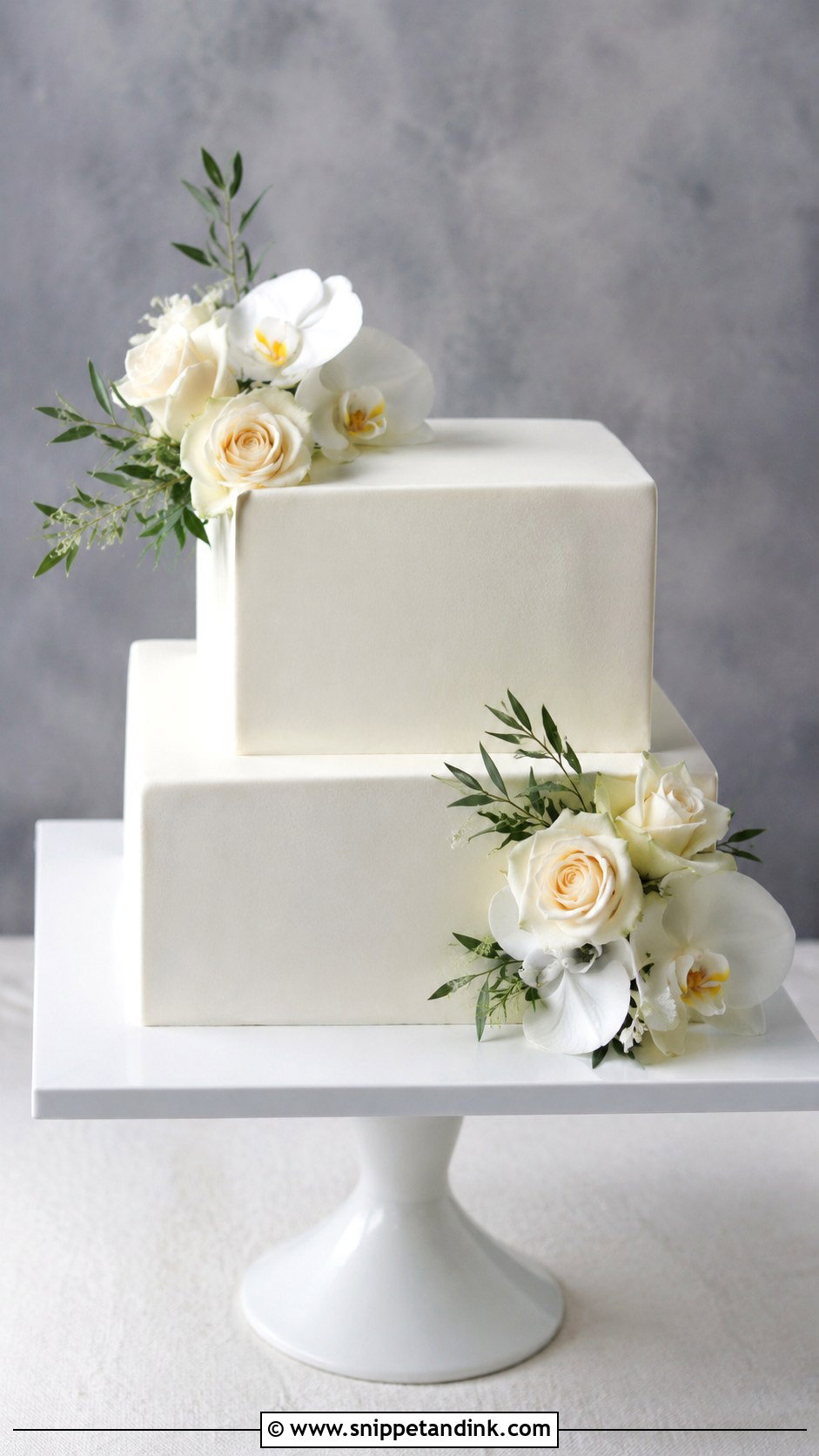
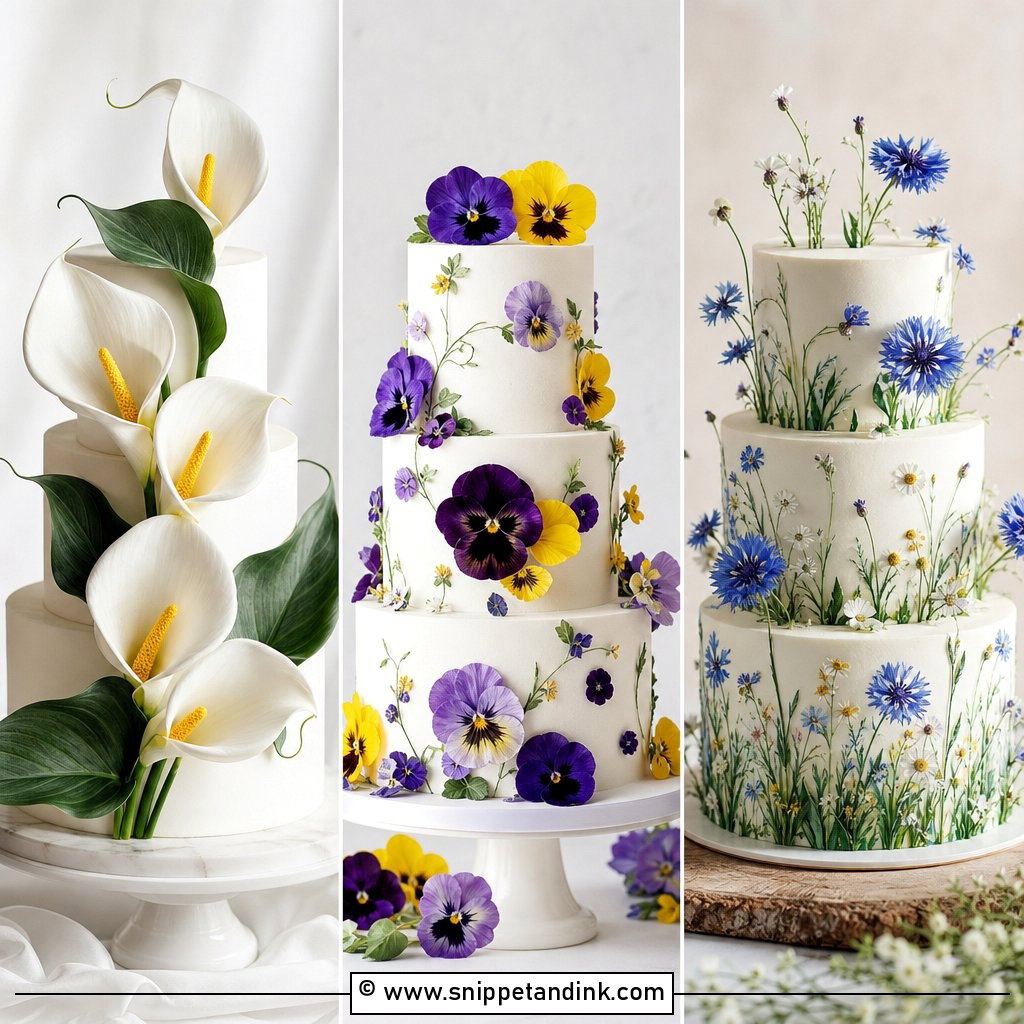
A plain square wedding cake gives a structured, modern line, and flowers supply the softness it lacks. Square tiers are harder to finish than round ones, because every corner has to be sharp, so ask to see square cakes your baker has already made. White or very pale cream keeps it plainest. I’d place flowers on one corner of each tier, stepping diagonally down the cake. Orchids and calla lilies suit the clean shape, but callas aren’t safe to eat, so their stems must be wrapped and kept off the frosting.
9. Plain White Wedding Cake With Greenery
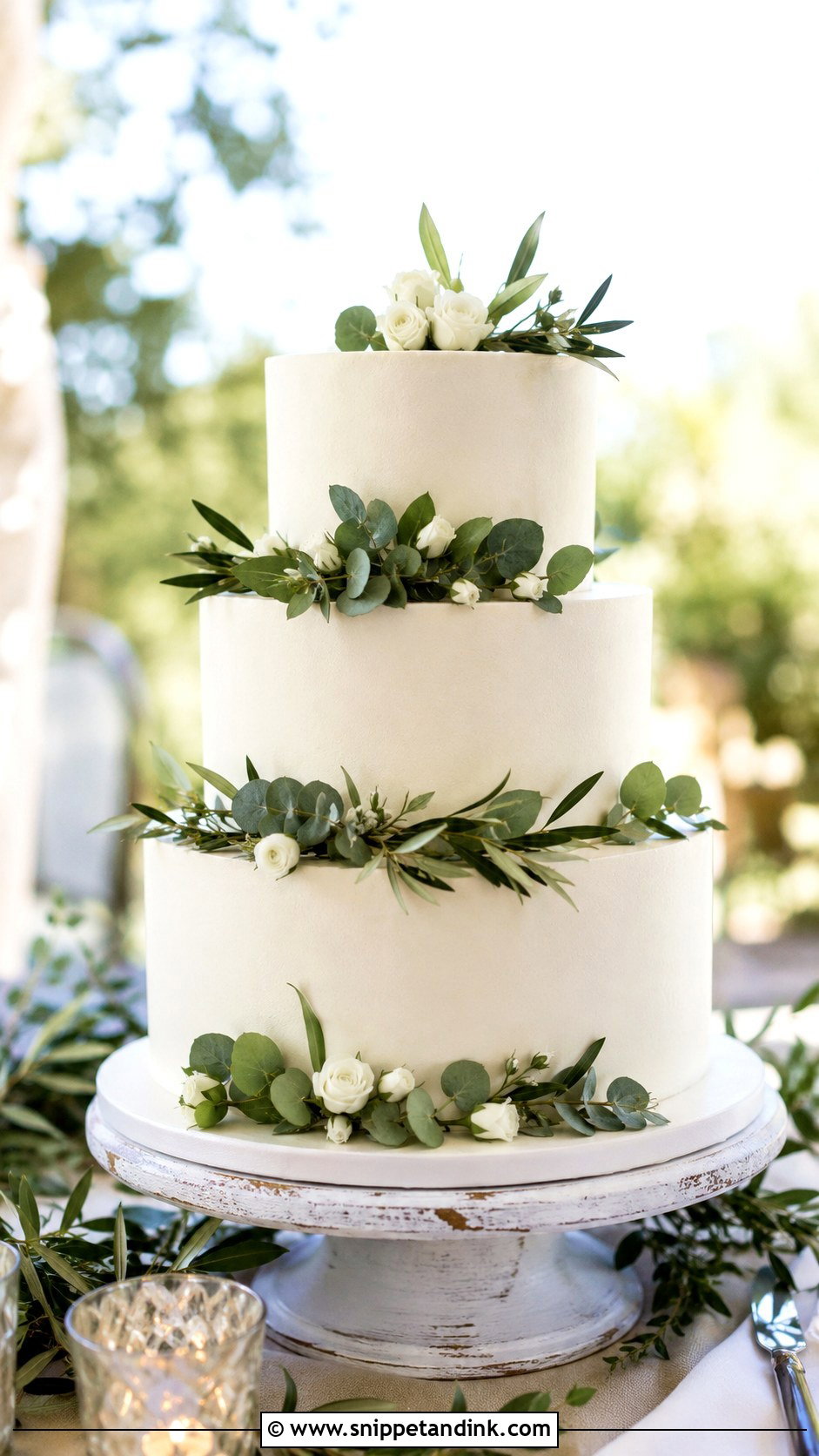
Greenery-led cakes let leaves do the decorating, with a few white blooms at most. Olive leaves and Italian ruscus hold up well out of water. Eucalyptus is lovely but isn’t food-safe, so it needs a barrier between it and the frosting. Keep the cake bright white so the green looks crisp against it. Add a few white roses if the design starts to feel austere.
10. Plain Wedding Cake With Baby Breath
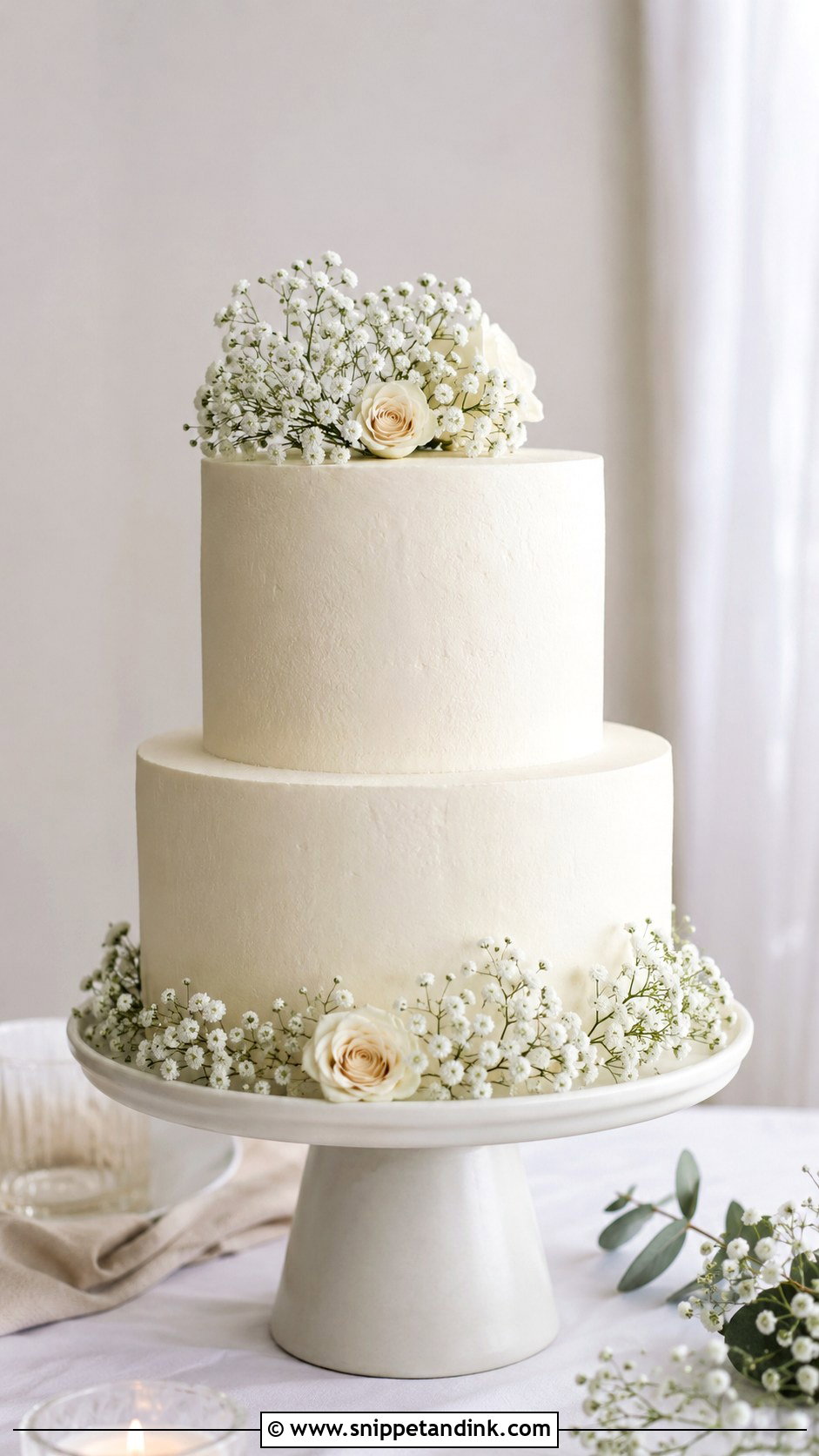
Baby’s breath gives an airy look, but it’s one I always keep from direct contact with frosting, since it isn’t considered food-safe. I wrap the stems and set clusters on a small barrier. Used lightly, a cloud on top or a ring at the base is charming; overdo it and the cake starts to look like a craft project. Smooth white buttercream suits it, and it’s at home at barn and vintage-style receptions. Always settle with your florist and baker who is preparing the flowers and how.
11. Plain Wedding Cake With Peonies
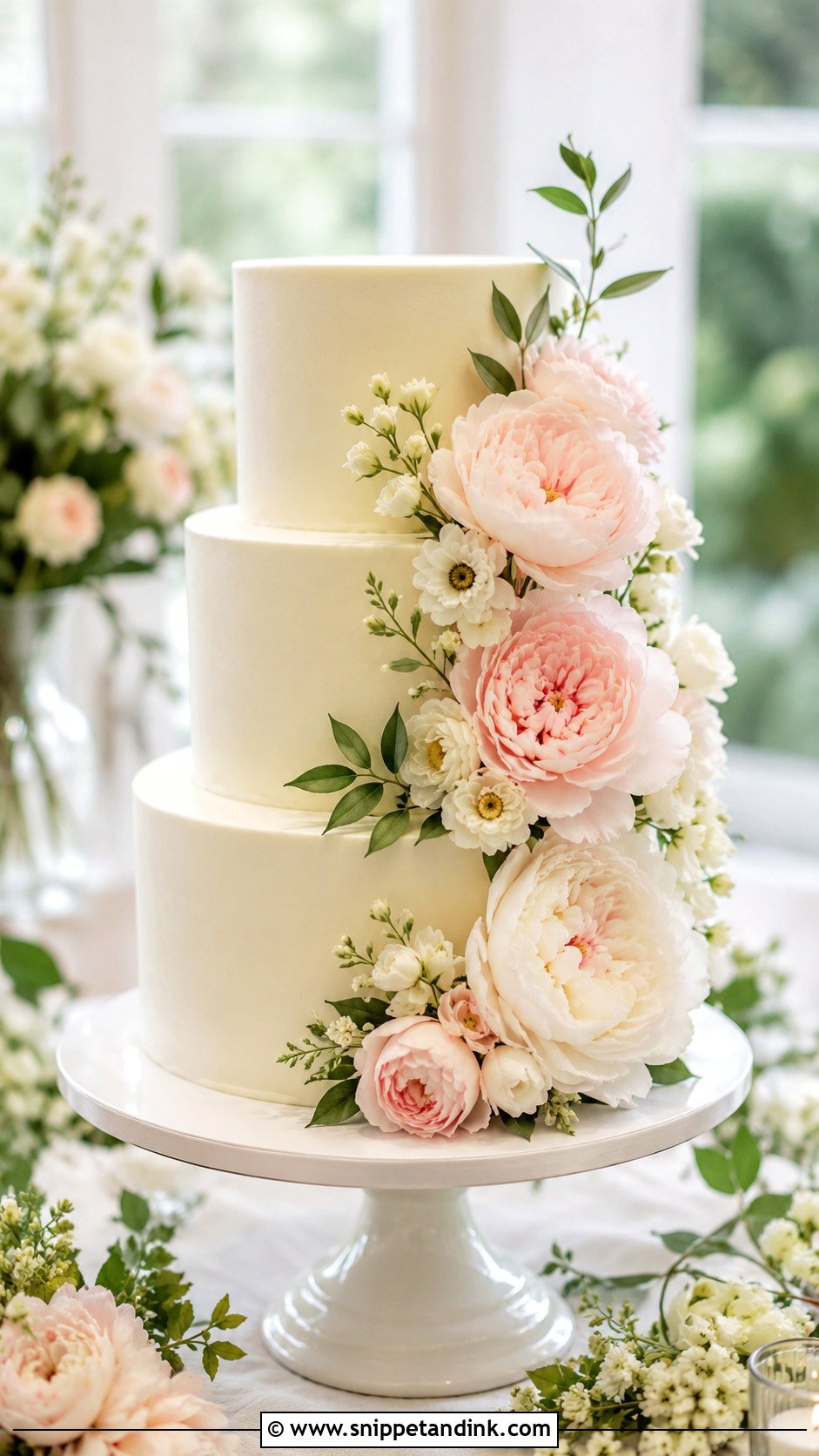
Peonies are big, so two or three finish a cake. One open bloom on top makes a focal point by itself. Because they bring so much texture, the frosting should stay smooth. Buy them a few days early so they have time to open; tight peony buds on the morning won’t give you the look in your photos. Their natural season is short, roughly late spring into early summer, and outside it, sugar peonies are the reliable alternative.
12. Plain Wedding Cake With Orchids
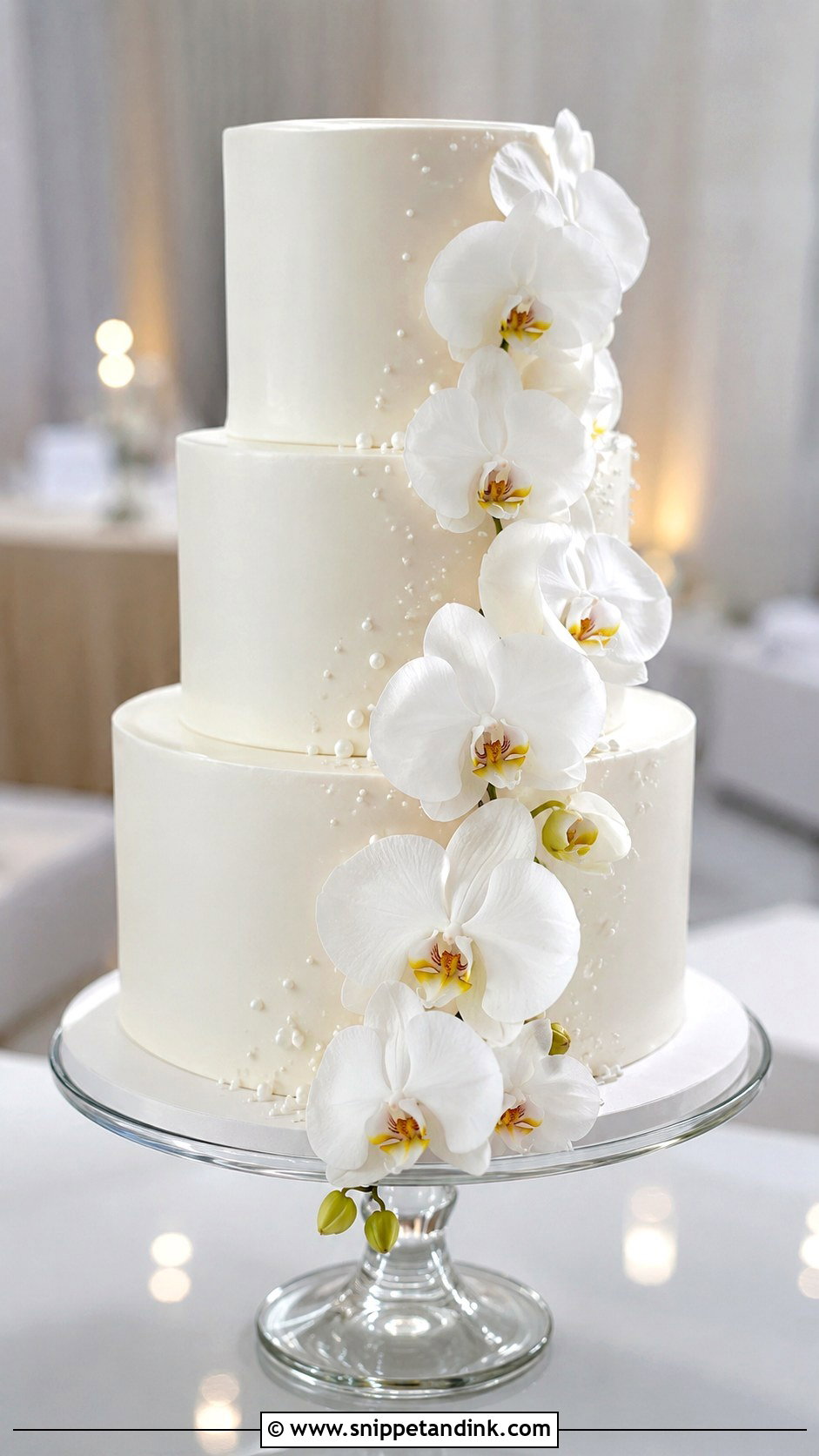
Orchids bring a graceful, slightly modern line, and their shape gives movement without extra decoration. Dendrobium orchids are among the few florist flowers commonly used as edible decoration, which makes them a practical pick for cakes. White orchids look clean on a white cake; pink or lavender ones add gentle color. On tall tiers they cascade well down one side. Skip any piping so the orchids carry the design alone.
13. Plain Wedding Cake With Wildflowers
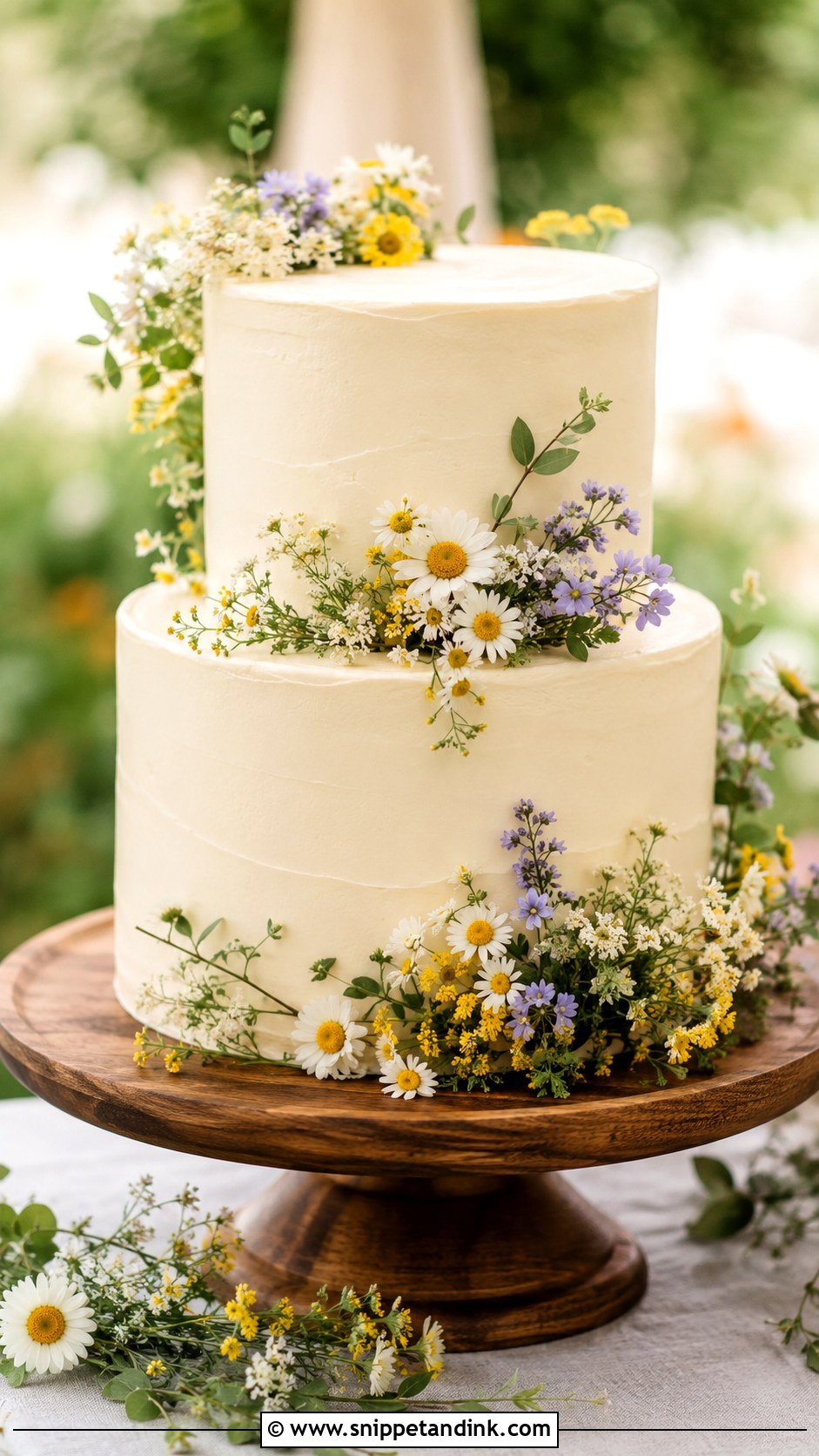
A plain wedding cake with wildflowers looks best when the flowers seem to have landed there loosely. Daisies, chamomile, small yellow blooms and soft greenery give a meadow feel. Buttercream with slightly soft edges suits the mood better than razor-sharp fondant. Limit the palette to two or three colors, or the cake reads messy rather than natural. Foraged flowers are tempting, but only use ones you can identify with complete certainty as edible.
14. Plain Wedding Cake With Pressed Flowers
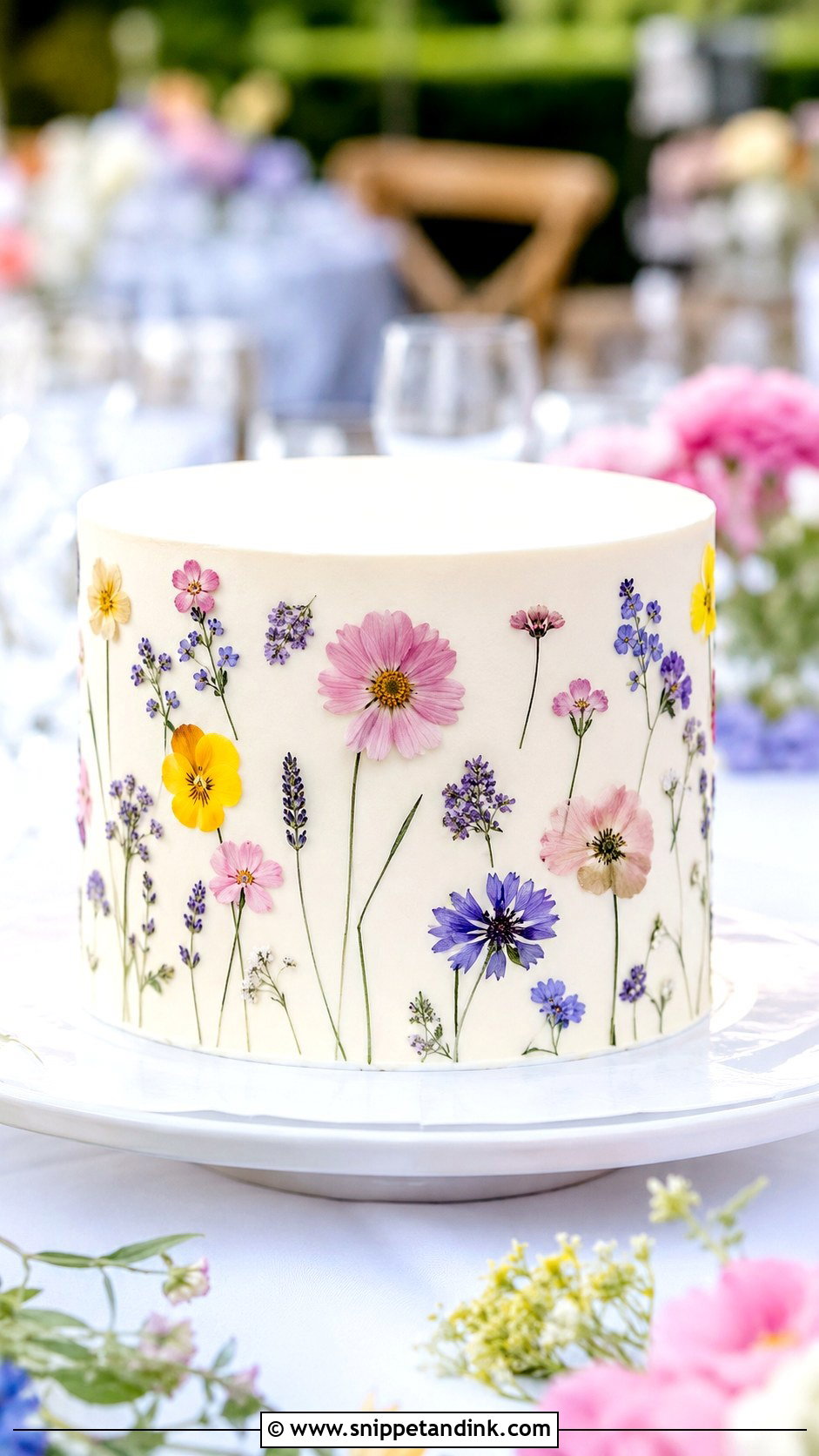
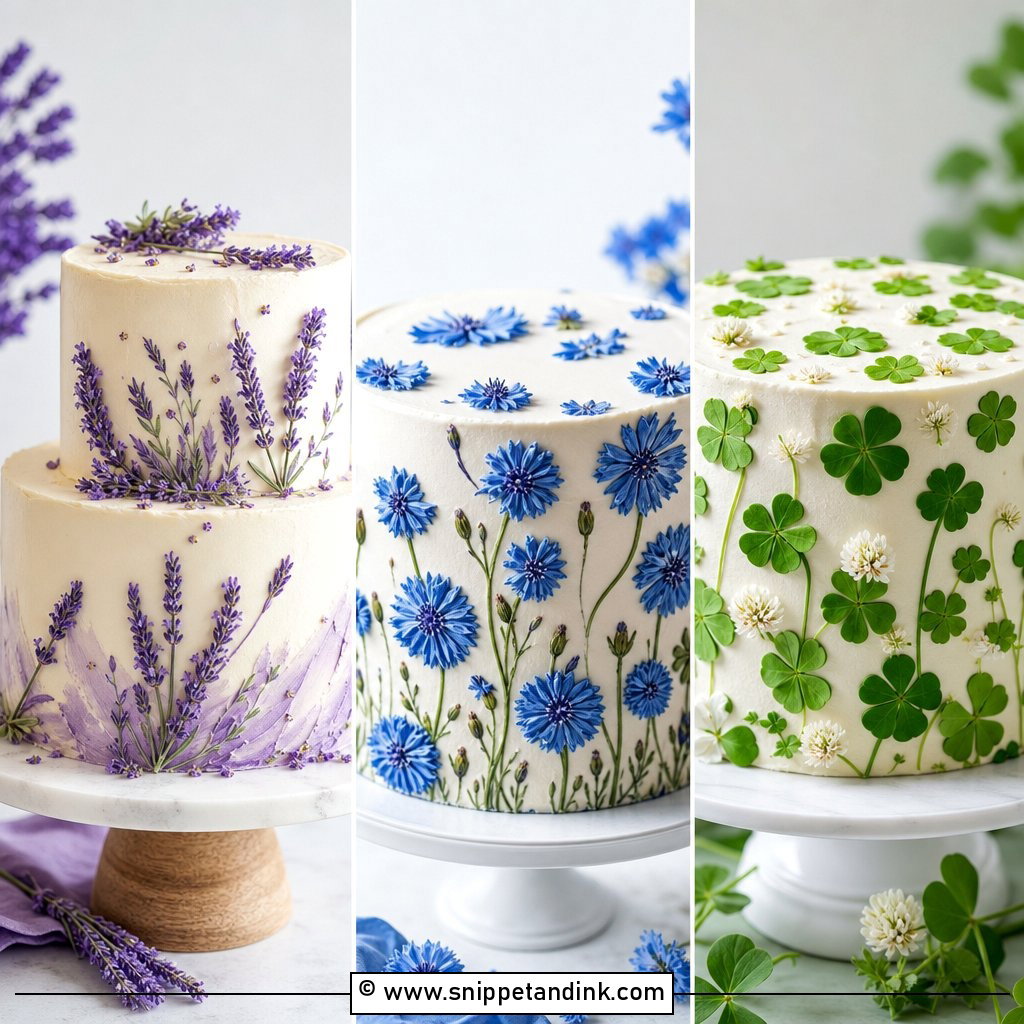
Pressed flowers lie flat against the frosting, so the cake keeps a clean shape while still looking detailed. They need to be edible varieties pressed for food use; violas, pansies and cornflower petals all work. I press them onto smooth buttercream or fondant soon after it’s finished, while the surface is still slightly tacky, so they stick without glue. Pastel petals look romantic, brighter ones suit a garden party. Leave space between them so the cake still reads as plain.
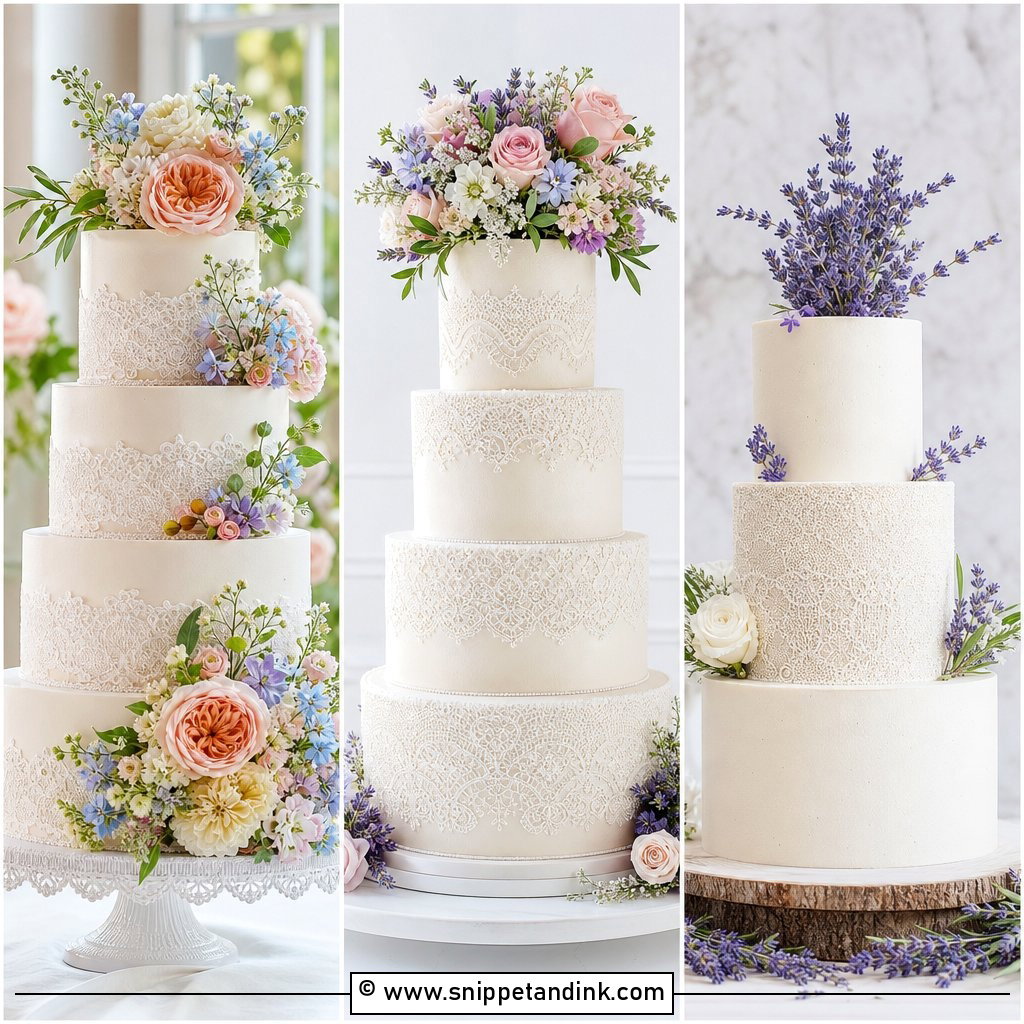
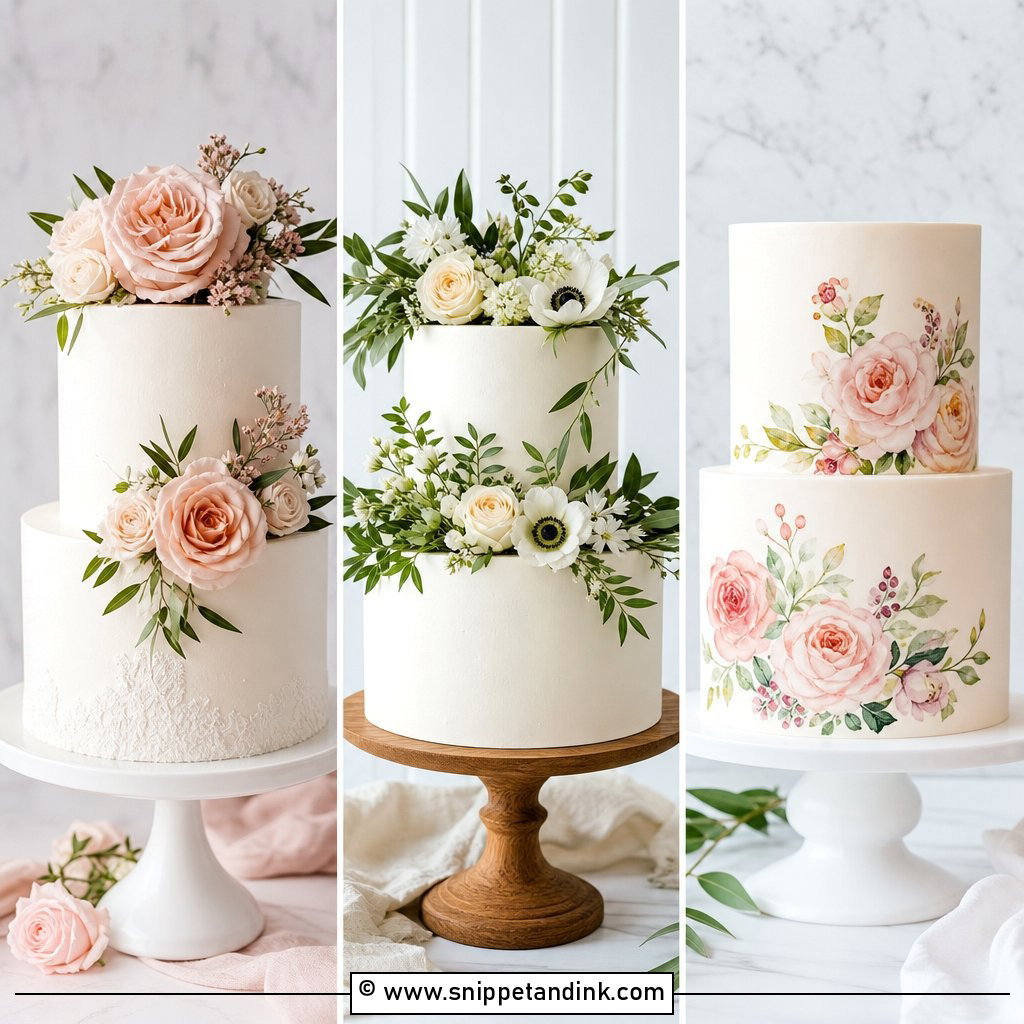
15. Plain Wedding Cake With Sugar Flowers
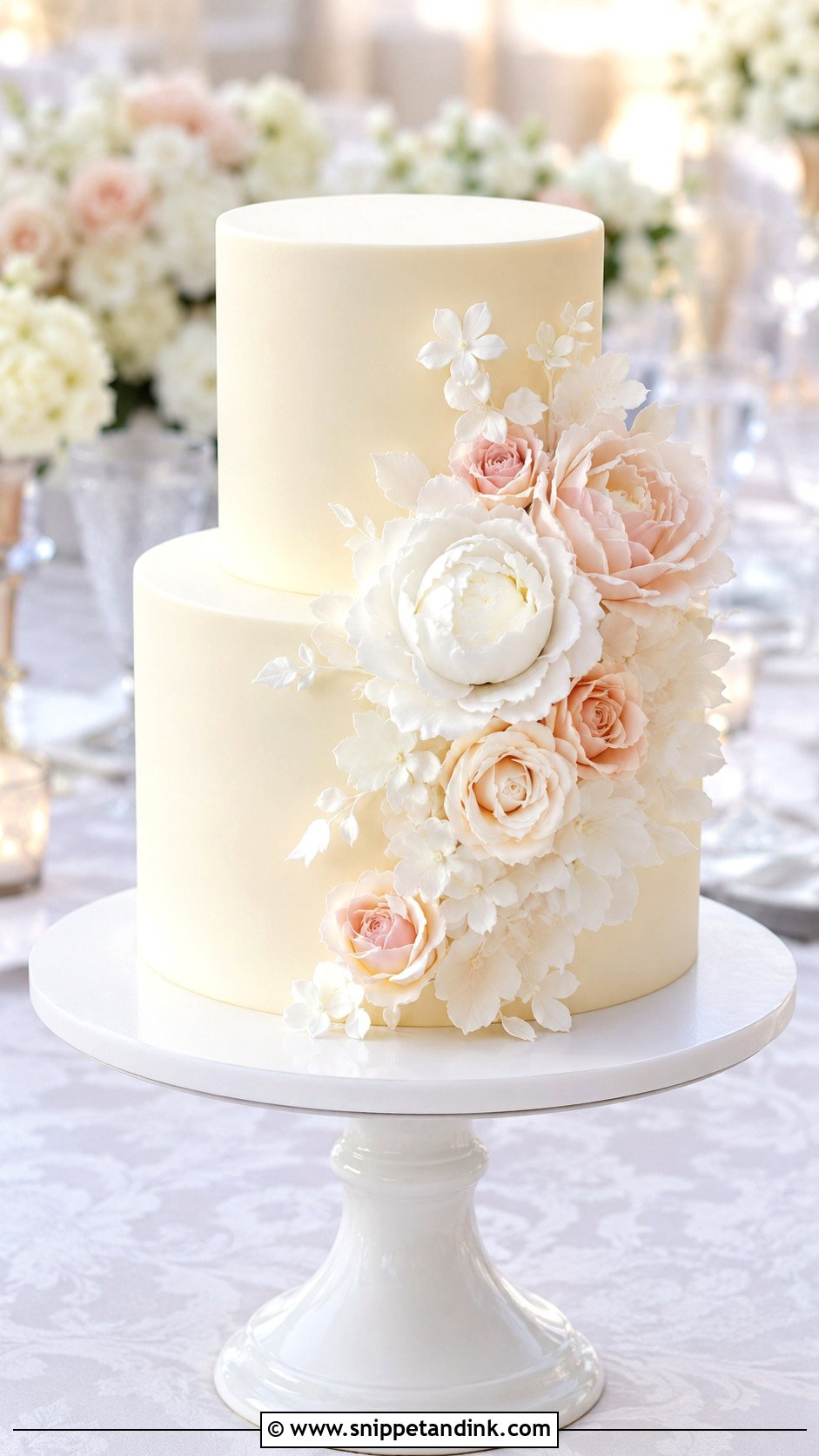
Sugar flowers are the answer for a hot day or a long reception, because they never wilt. They can be shaped as roses, peonies or small blossoms, and you get full control over color and size. Each one is built petal by petal, so order them well ahead. One thing that surprises couples: sugar flowers usually contain wires and aren’t meant to be eaten, so they come off before cutting. Many people keep one as a memento of the day.
16. Plain Wedding Cake With Pink Flowers
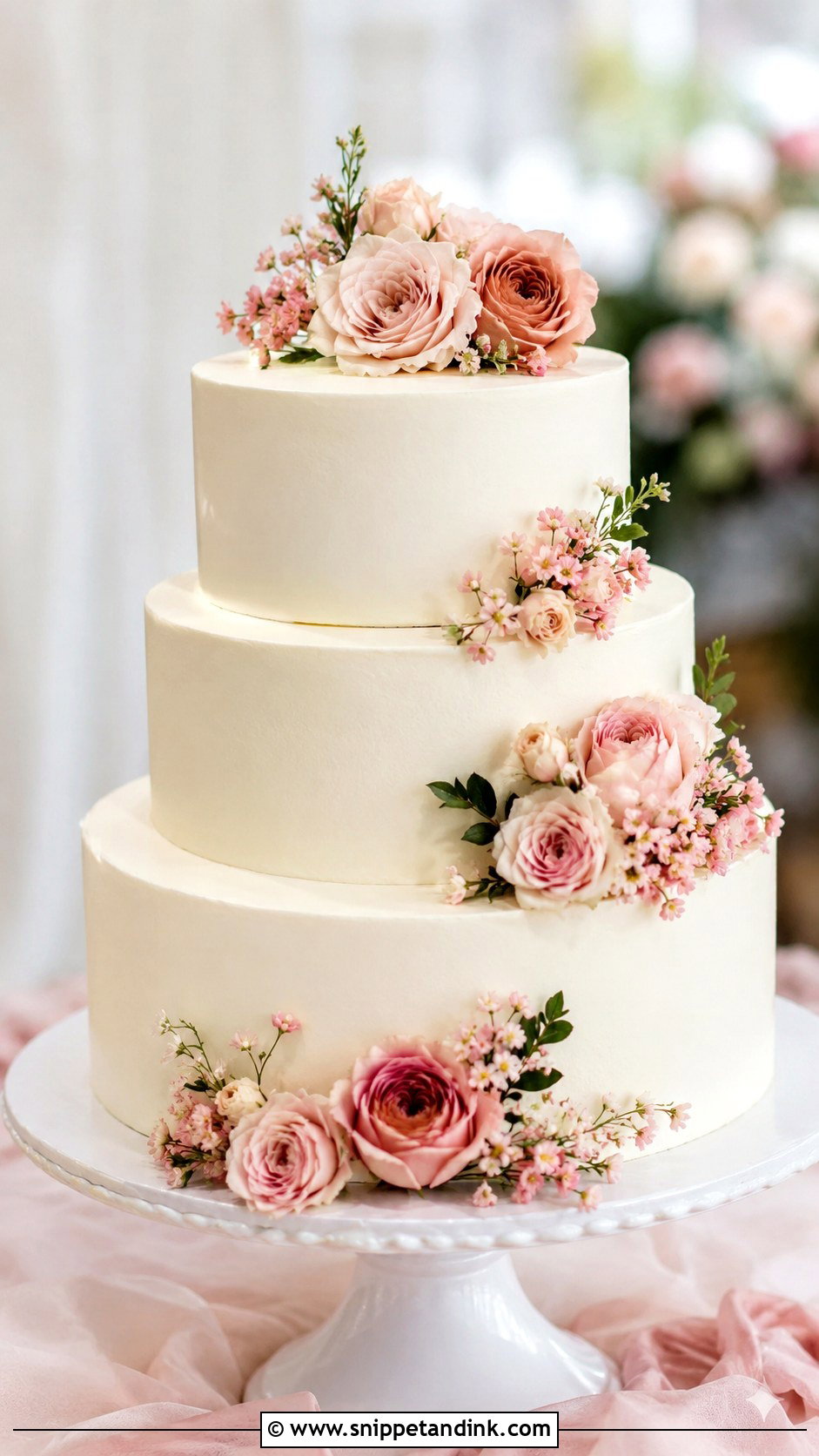
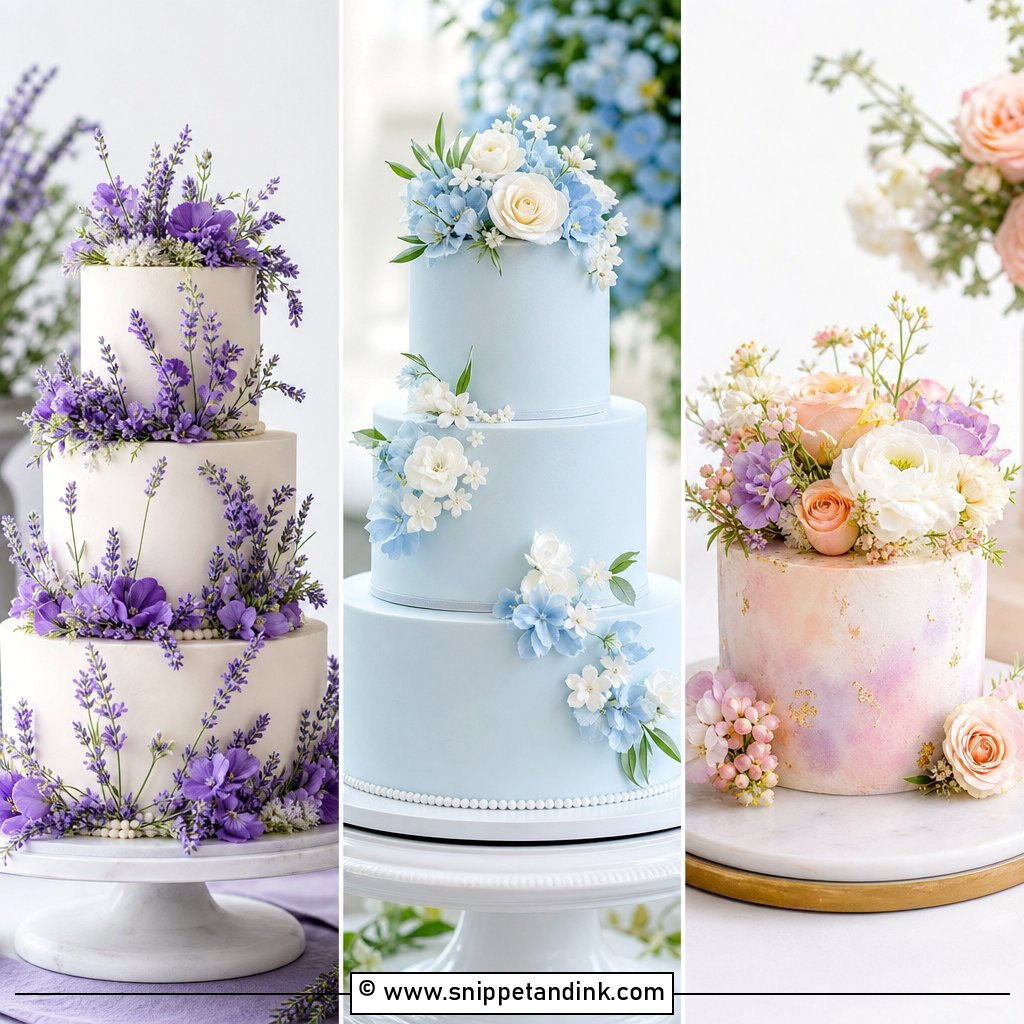
Pink covers a wide range. Blush is subtle, dusty rose feels quieter and more grown-up, and bright pink is cheerful. The darker the pink, the smaller the amount I use on a plain cake, because saturated color pulls the eye hard. White or ivory frosting gives the contrast it needs. A small top bouquet or a gentle cascade both suit this, and spring weddings and brunches favor the paler shades.
17. Plain Wedding Cake With Blue Flowers
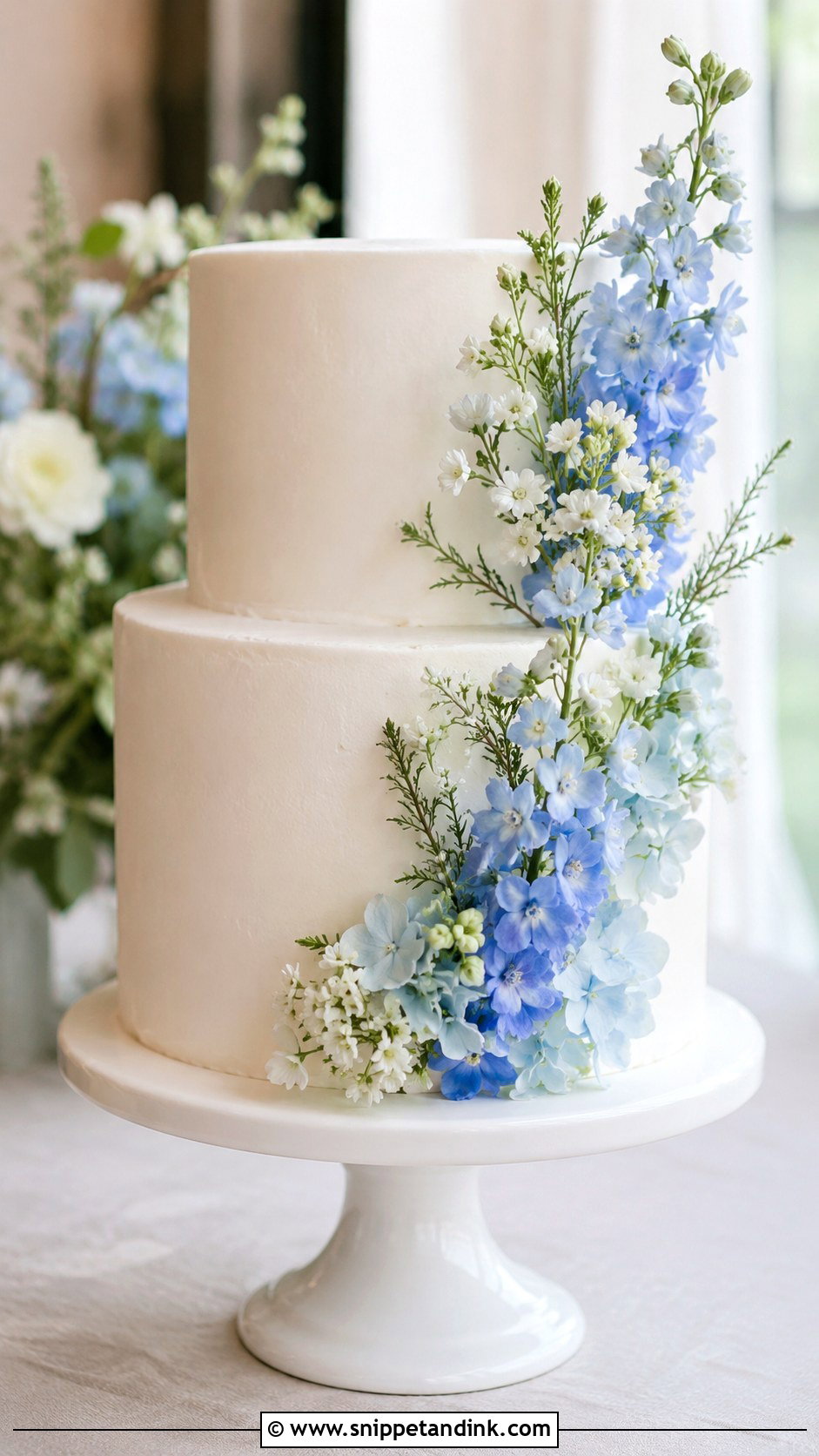
Blue flowers on a cake feel unexpected, mostly because true blue is rare in nature. Delphinium and hydrangea give the strongest blue, but neither is food-safe, so both need wrapped stems and a barrier. Cornflower is an edible alternative with a vivid color. Keep the frosting white or ivory so the blue reads clean. A small cluster on top is enough for a single tier, and a few tiny white blossoms beside the blue soften it.
18. Plain Wedding Cake With Lavender Flowers
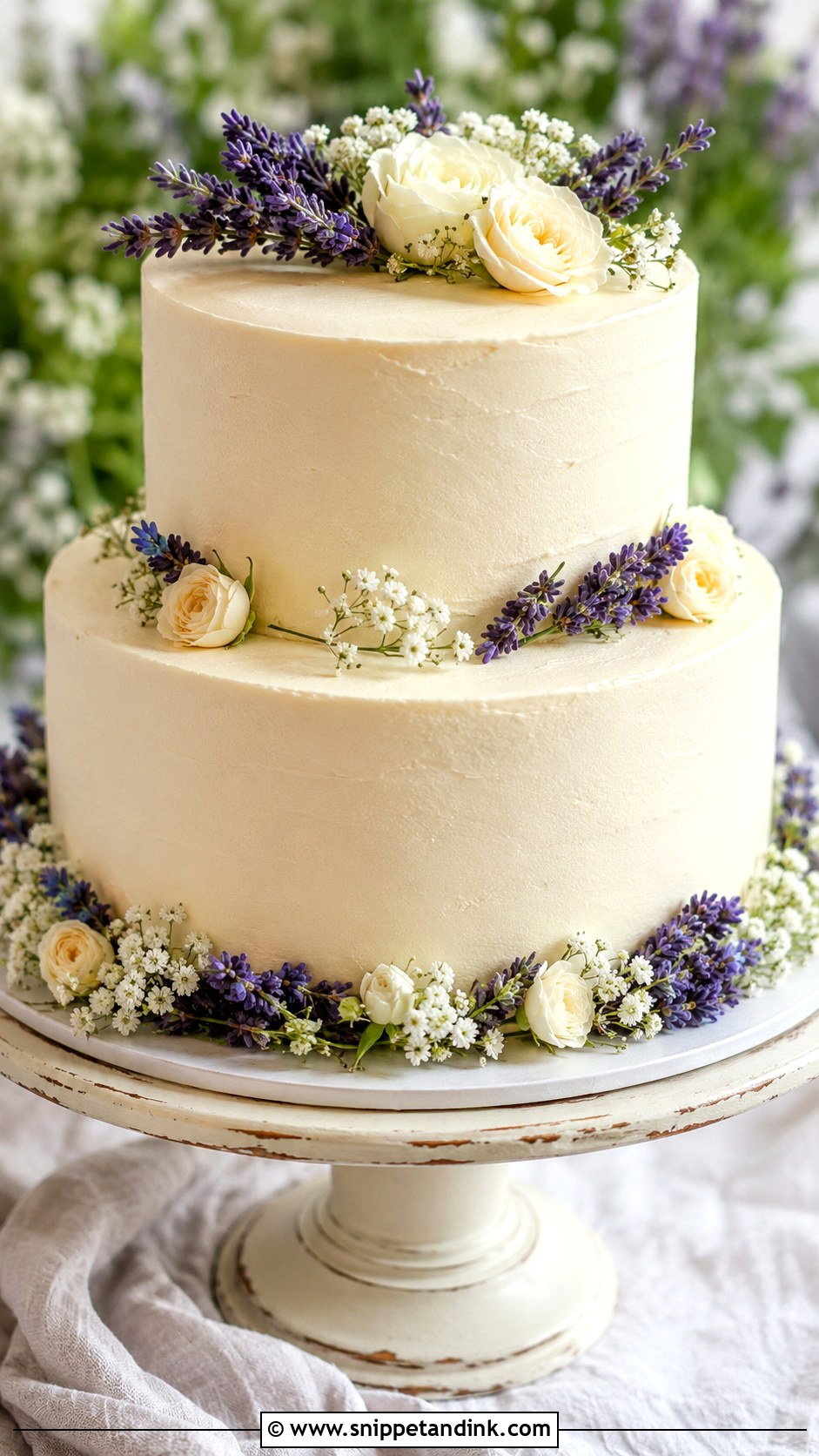
Lavender is one of the few flowers here that’s genuinely edible, and it brings a faint scent to the table. It sits well on white buttercream or ivory fondant, as small sprigs around the base or a few stems on top. Use culinary lavender, since florist bunches may have been sprayed. Mixed with small cream roses, it softens into something that suits a countryside venue.
19. Plain Wedding Cake With Flower Topper
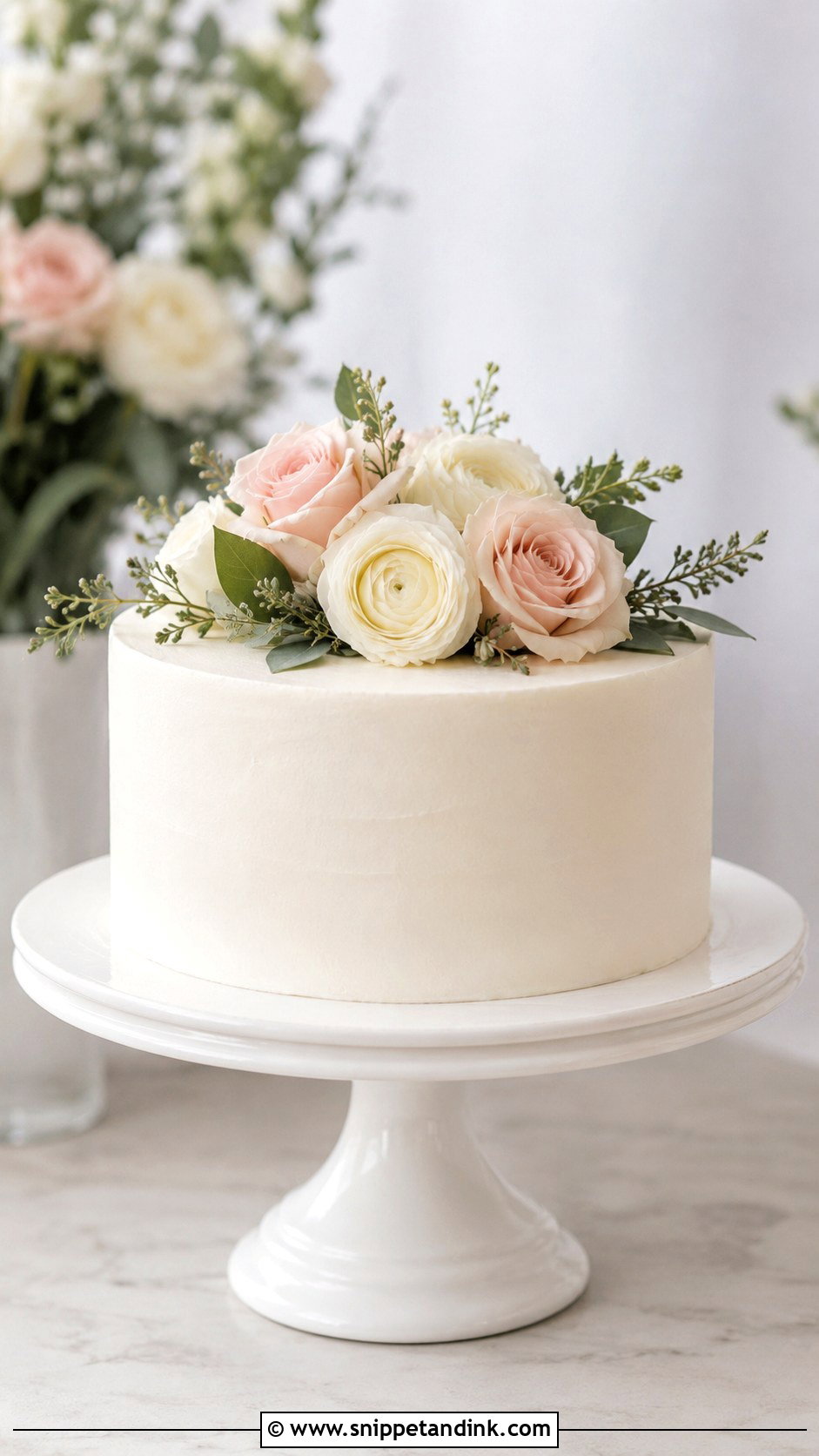
A flower topper keeps the sides completely smooth and puts all the detail on top. I keep the arrangement low and wide, because a tall topper looks top-heavy and can tip in transport. It can match your wedding flowers exactly, which links the cake to the bouquet. I build toppers on a small base so they lift off cleanly before the cake is cut. It works on any number of tiers.
20. Plain Wedding Cake With Flower Cascade
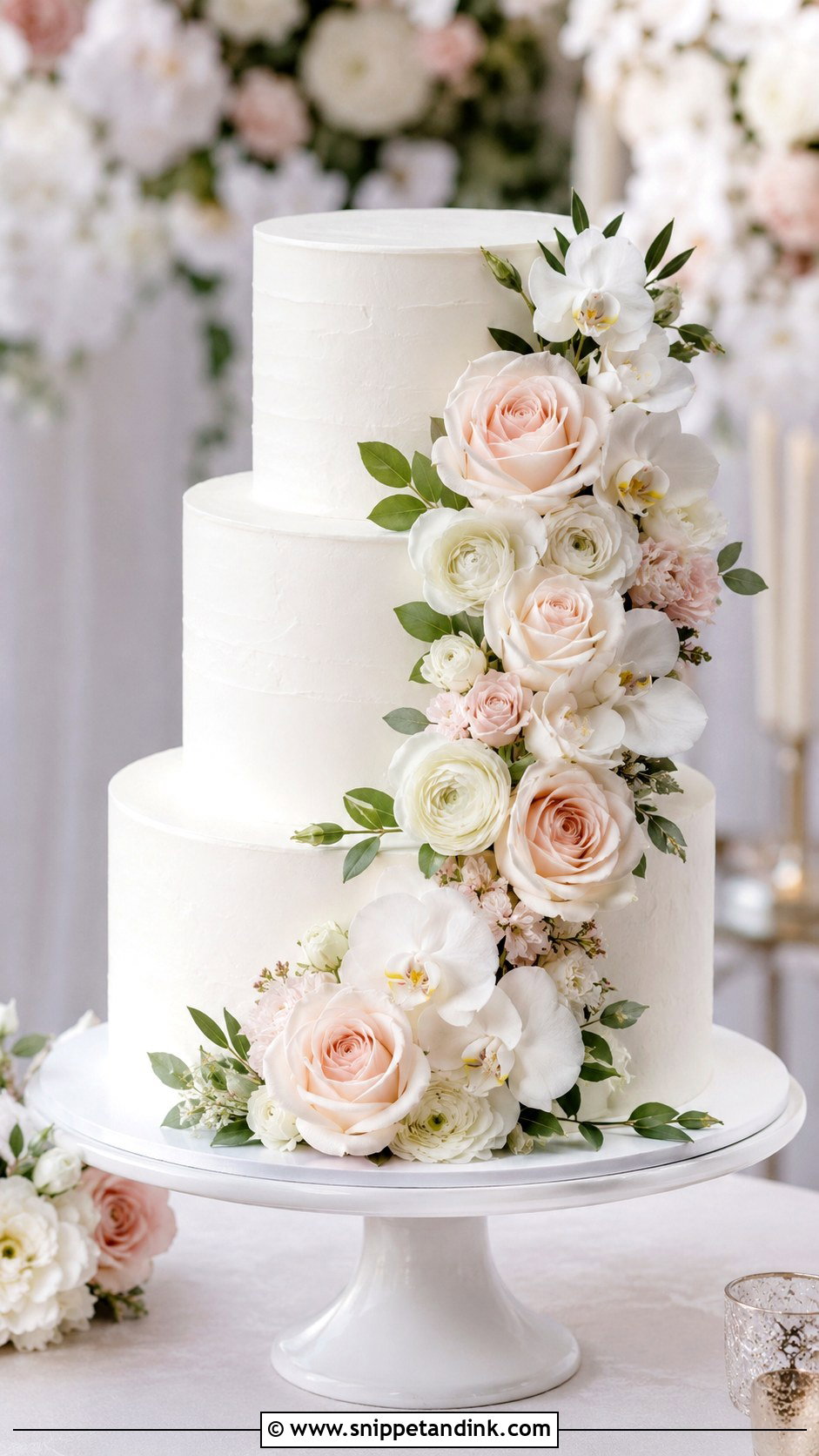
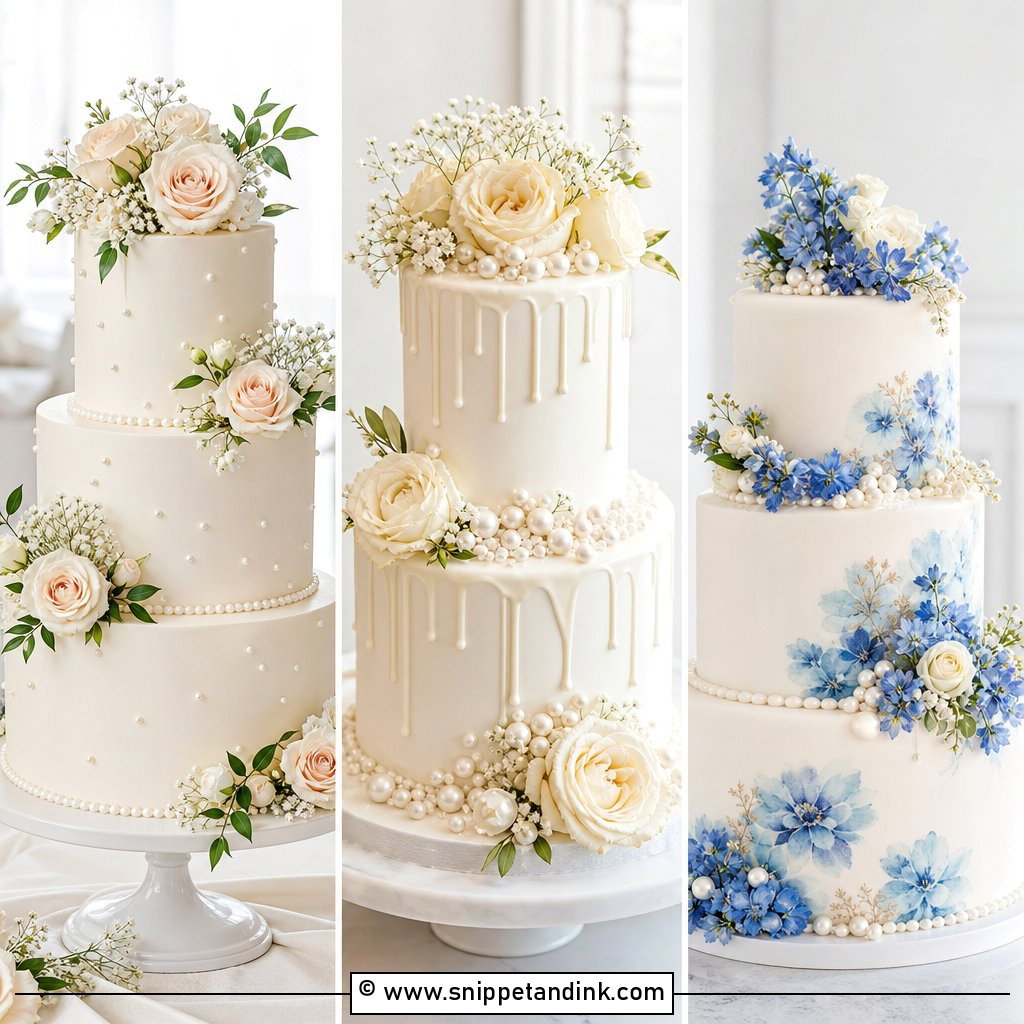
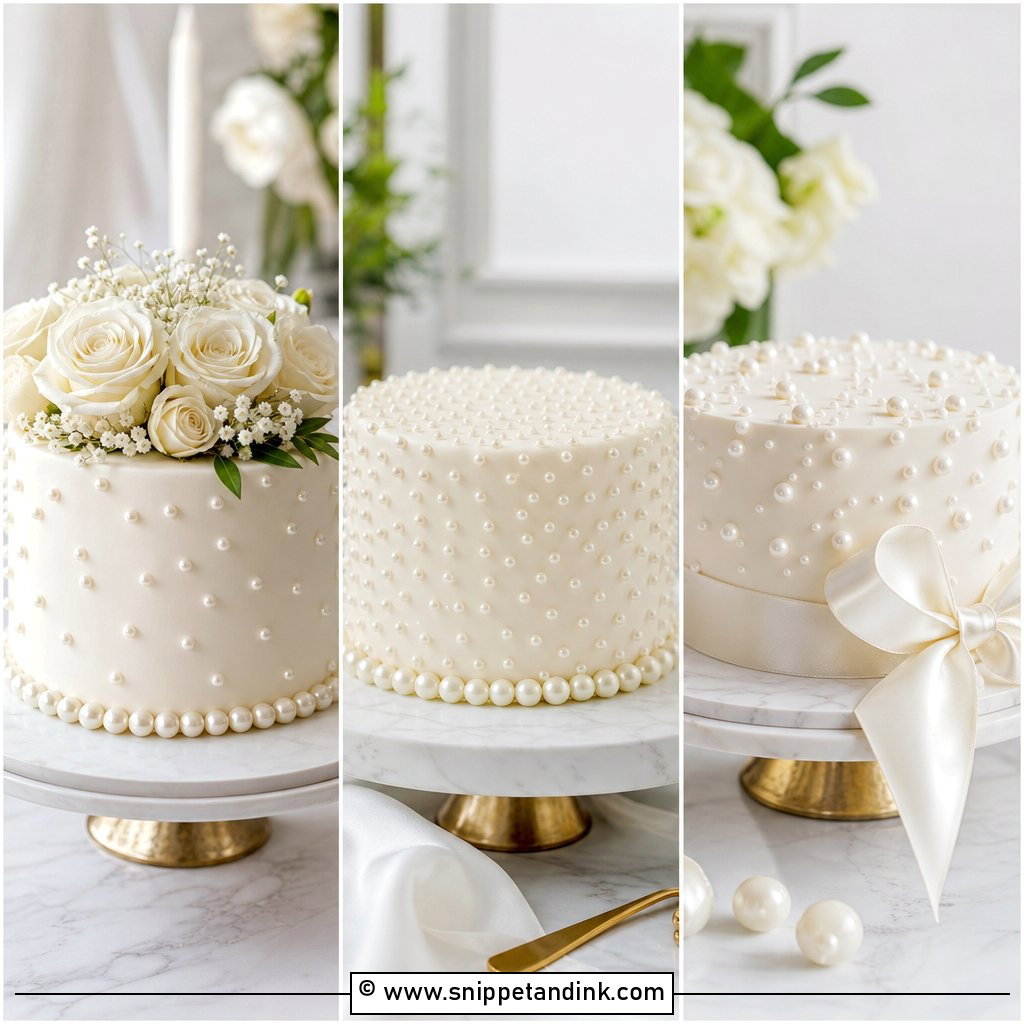
A flower cascade brings movement without any piping. It needs at least two tiers so the flowers have room to travel. I place them diagonally from top to base, since a straight vertical line looks stiff. Roses give a classic cascade, orchids a lighter one. Leave gaps so it looks intentional rather than packed like a wreath. Every stem in a cascade is a point of contact with the cake, so this is where wrapped stems and barriers matter most.
Who Places the Flowers, and How Close to the Reception
Couples often assume the florist and baker have spoken to each other. Often they haven’t. Decide early who puts the flowers on the cake. Some bakers prefer to do it themselves; others leave space and let the florist finish it at the venue.
Timing matters as much as whose hands do it. I set flowers as late as I can, once the cake is in its final spot, because moving a finished cake knocks petals loose. Fresh blooms out of water start to droop within a few hours, and in a warm room buttercream softens around them. Fondant and sugar flowers give far more margin on a hot day.
What to send both of them
- Tier sizes and frosting color, so the florist can scale the blooms.
- One reference photo showing where the flowers go and how much.
- The flower list, with any non-edible stems marked.
- Delivery and setup times at the venue, plus who removes the flowers before the cake is cut.
A Smooth Cake Leaves Room for the Flowers
A plain cake lets each flower count. Roses make it romantic, greenery keeps it fresh, orchids add a modern line, and a scatter of pressed petals gives detail without bulk. Decide the shape and finish first, then the flowers, then talk to your baker and florist together so everyone knows which blooms are safe, who places them and when. Get that right and a simple cake looks exactly as considered as it should.
You'll Like These Ideas:





Leave a Reply