
Pink roses are the flower I’m asked to put on a wedding cake more than any other, and they earn it. They sit happily against ivory, champagne, sage or plain white, and they change character completely depending on how they’re made. A rose can be fresh, sugar-made, piped, pressed, painted or gathered into a cascade, and each one asks something different of the cake underneath. Here are twenty ways I’d use them, with notes on the frosting, the structure and the small decisions that make each design hold up from the first photo to the cut.
Fresh, Sugar or Piped Roses Change the Order Timeline
The type of rose you choose affects the price, the lead time and what happens after the cake is cut, so I settle it at the first consultation.
Sugar roses
Each petal is rolled thin, wired and dried, so a large rose can take hours. I start them weeks ahead. They’re the most controllable for color, they don’t wilt in the heat, and you can keep the topper afterward in a box out of sunlight. They aren’t really for eating, because of the wires and how hard they set.
Fresh roses
Usually the quickest and often the least expensive, but they depend on your florist and on the weather. Most cut roses are grown with pesticides, so they must never go straight into the sponge.
Piped buttercream roses
Fully edible and part of the frosting. They suit softer, bakery-style cakes and look a little less lifelike than sugar, which many couples prefer. In a warm room they soften along with the rest of the buttercream.
1. Pink Rose Cascade Wedding Cake
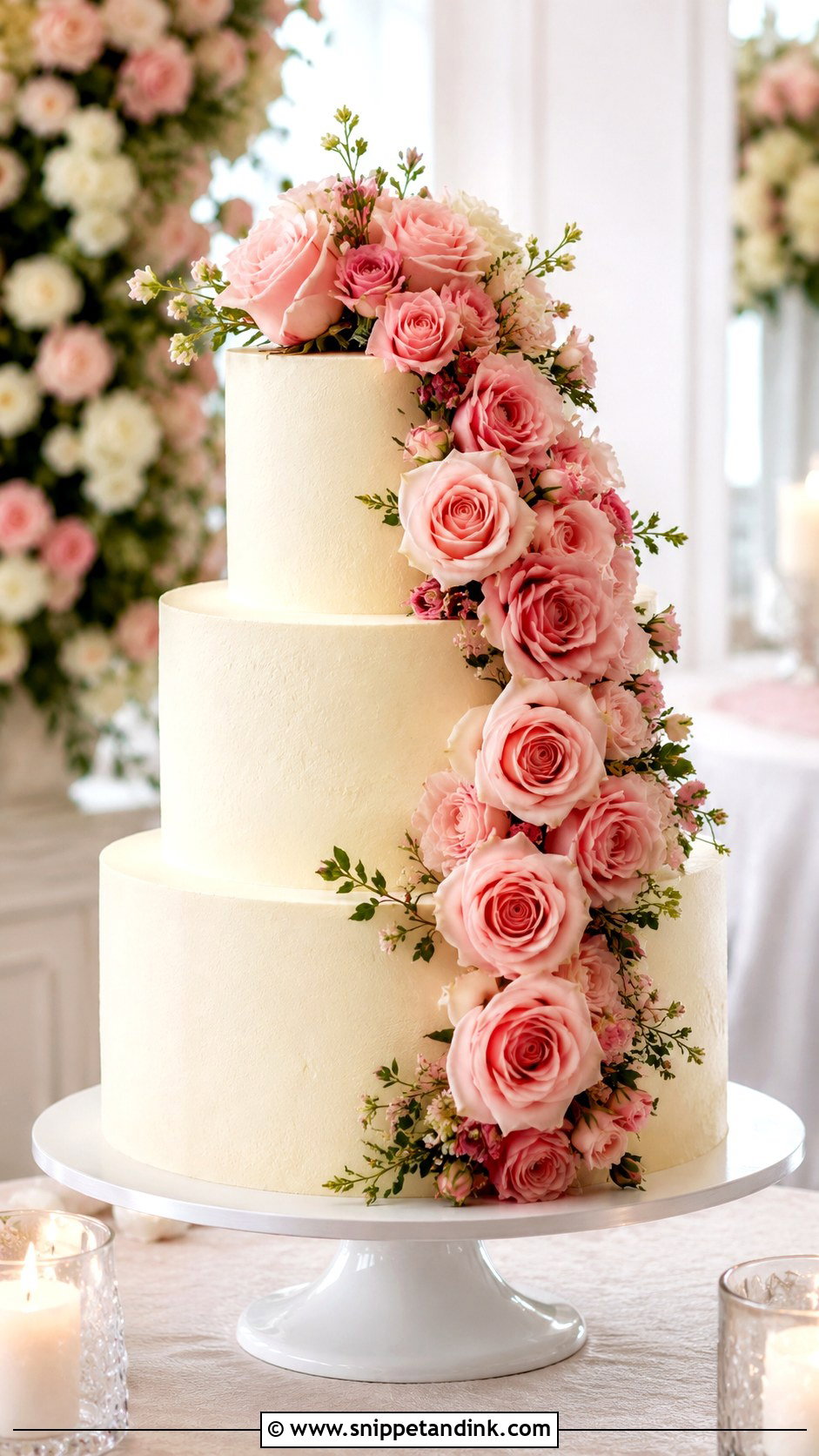
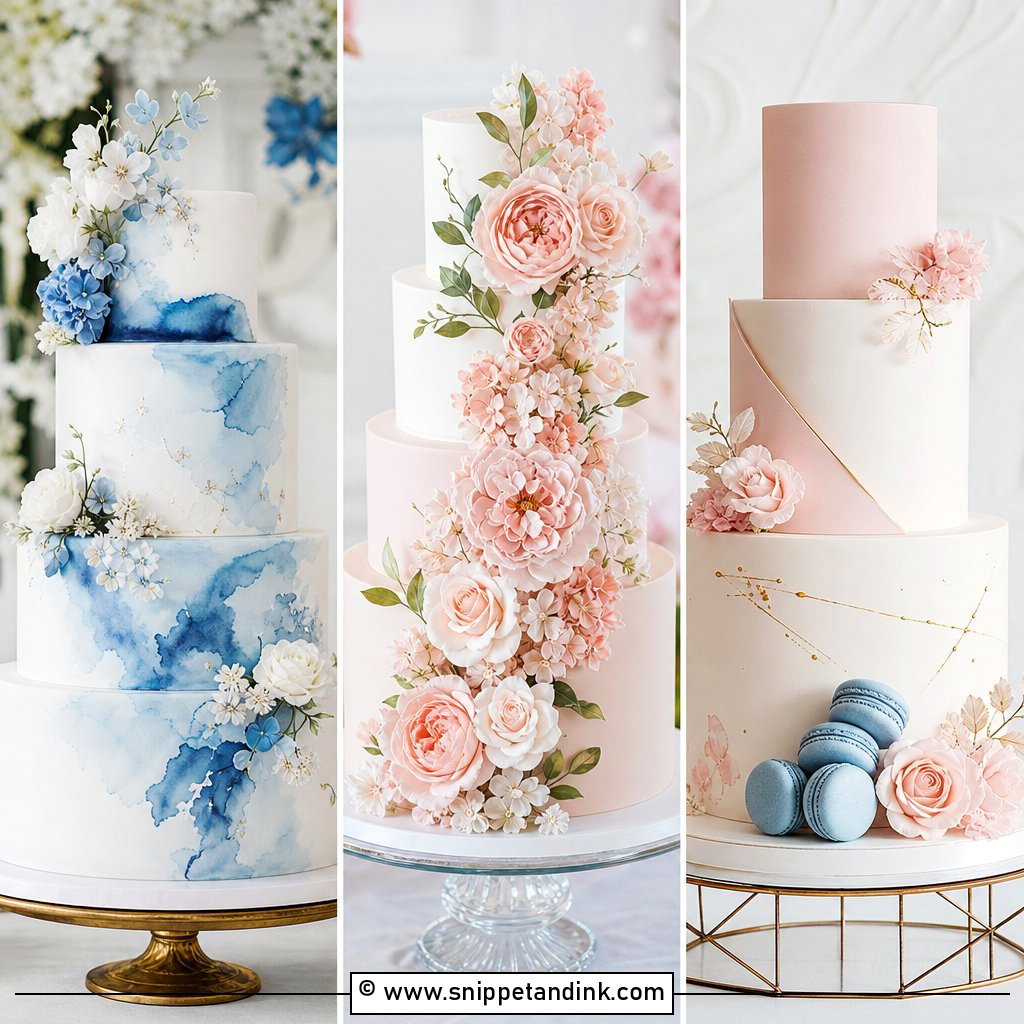
A cascade gives a cake height and a clear path for the eye, from the top tier down to the board. I build it on two to four tiers with an ivory or pale blush finish, grouping open roses with buds so the line tapers instead of ending in a lump. The common mistake is too many full-size blooms; by the bottom tier the cake looks like it’s wearing a wreath. With fresh roses I insert every stem in a barrier, never straight into the sponge. It suits a garden party or a ballroom equally well.
2. Blush Pink Rose Wedding Cake
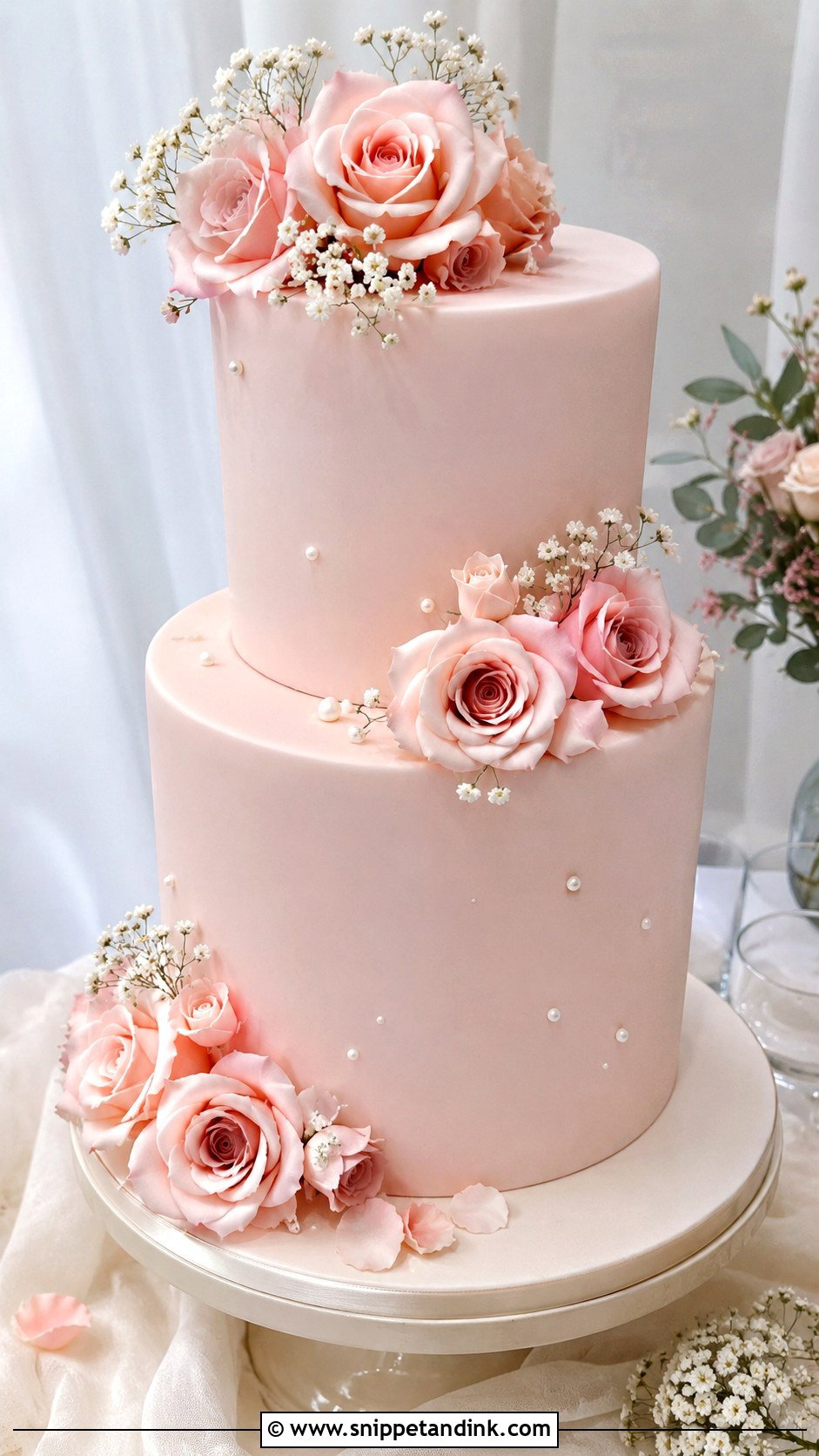
Blush roses let the flowers carry the color while the cake stays ivory, cream or the palest pink. That restraint is what keeps it refined. In buttercream the finish has a soft, made-by-hand quality; in fondant it reads smoother and more formal. I’d pair blush roses with a thin satin ribbon at each tier base or a few small white fillers, and stop there. Deeper pink tends to dominate a small cake, so if you love that shade, use it in just one or two blooms.
3. White Wedding Cake With Pink Roses
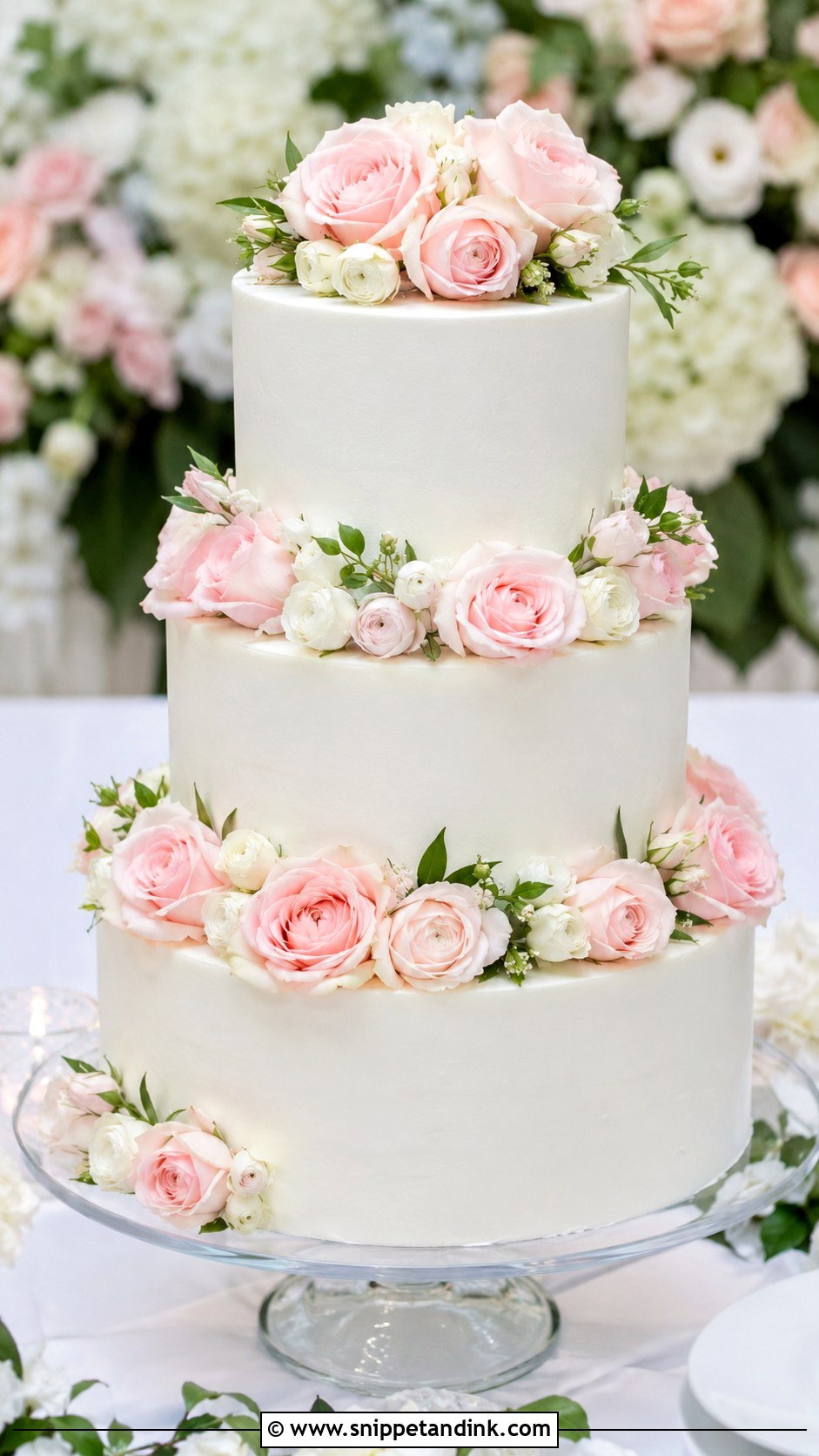
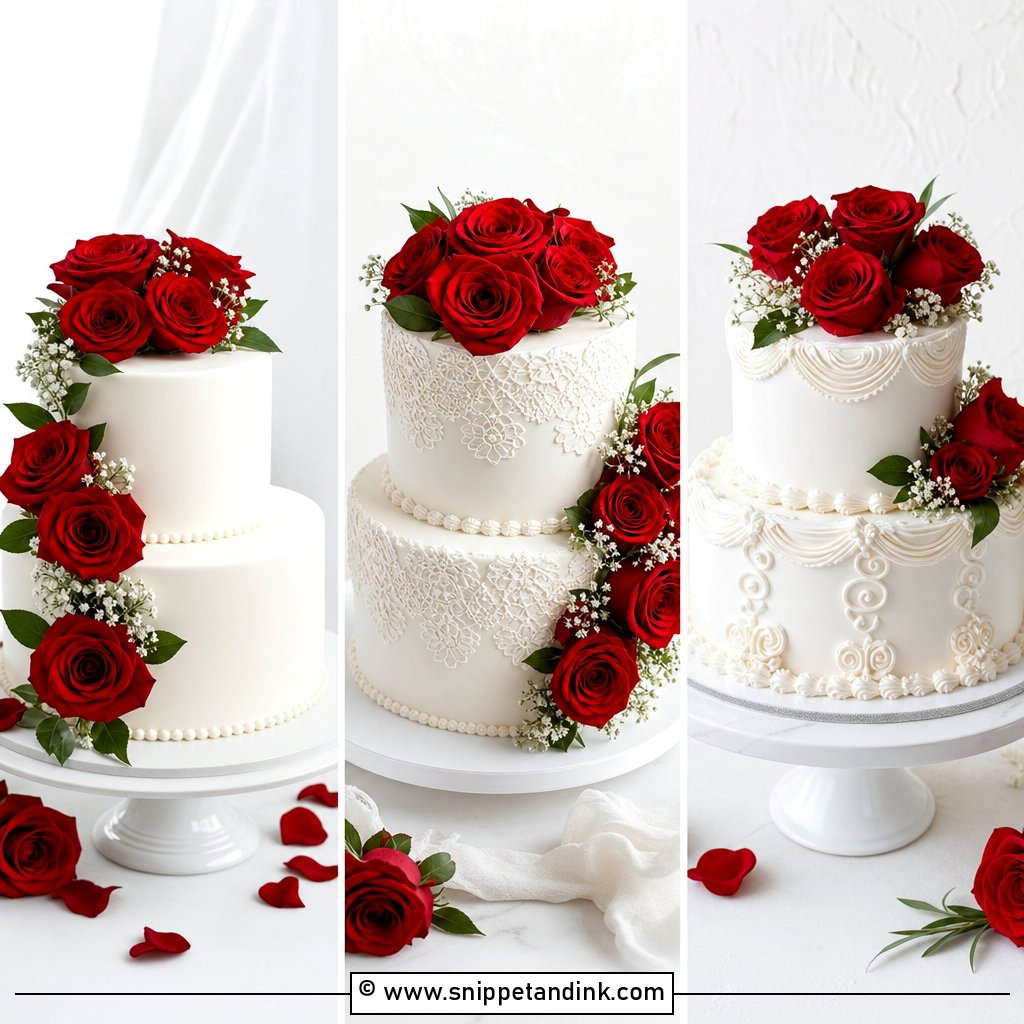
White with pink roses is the cake I’d call the least risky in photos, because white gives every bloom clear space. Roses between the tiers look classic; a tight ring at the top and base looks more formal. For a modern take, I finish smooth buttercream with sharp edges and use almost no greenery. One practical point: pure white buttercream needs whitening or a vanilla that won’t tint it ivory, so tell your baker which white you mean. The pink roses then add just enough warmth.
4. Pink Rose Buttercream Wedding Cake
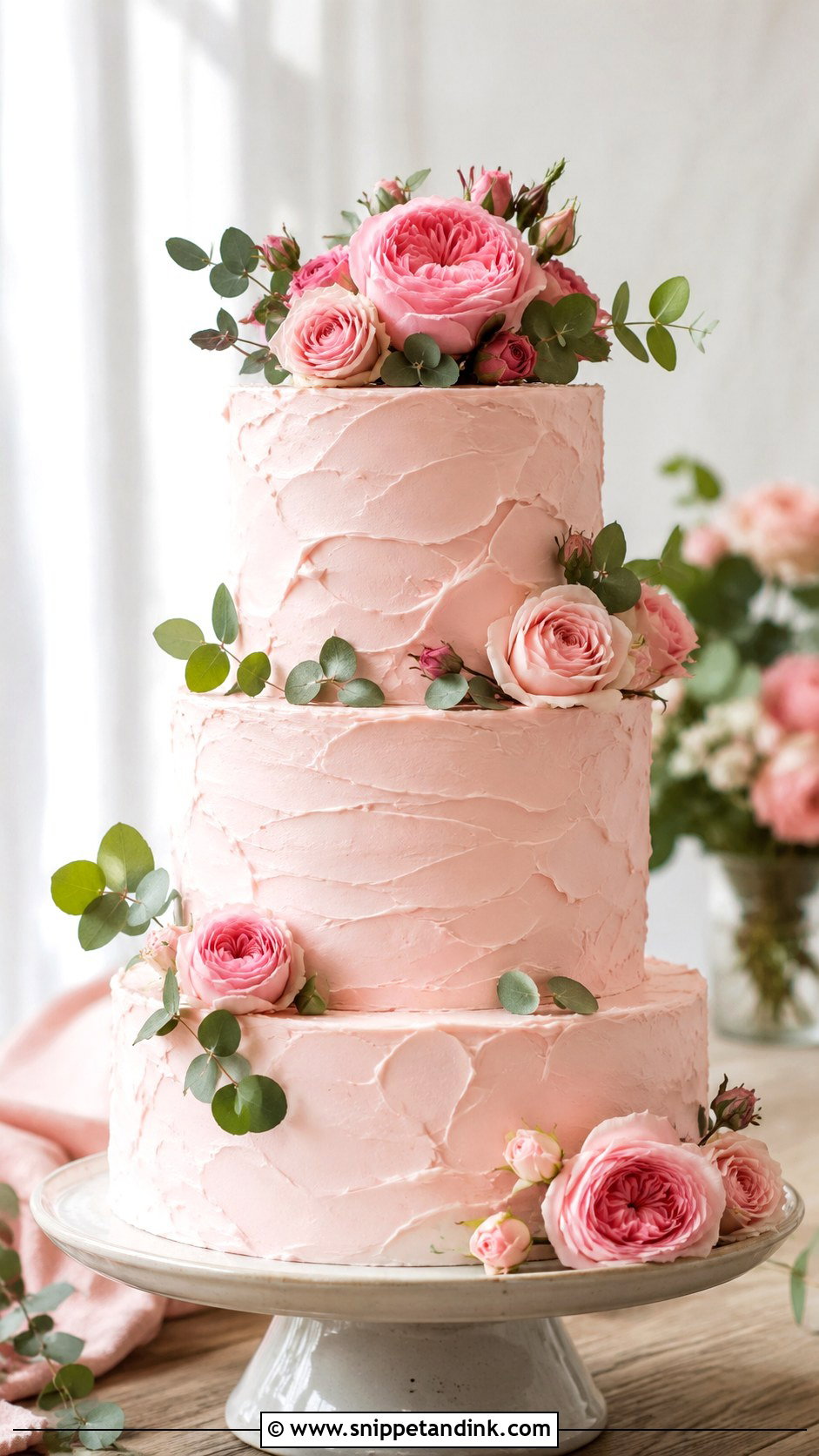
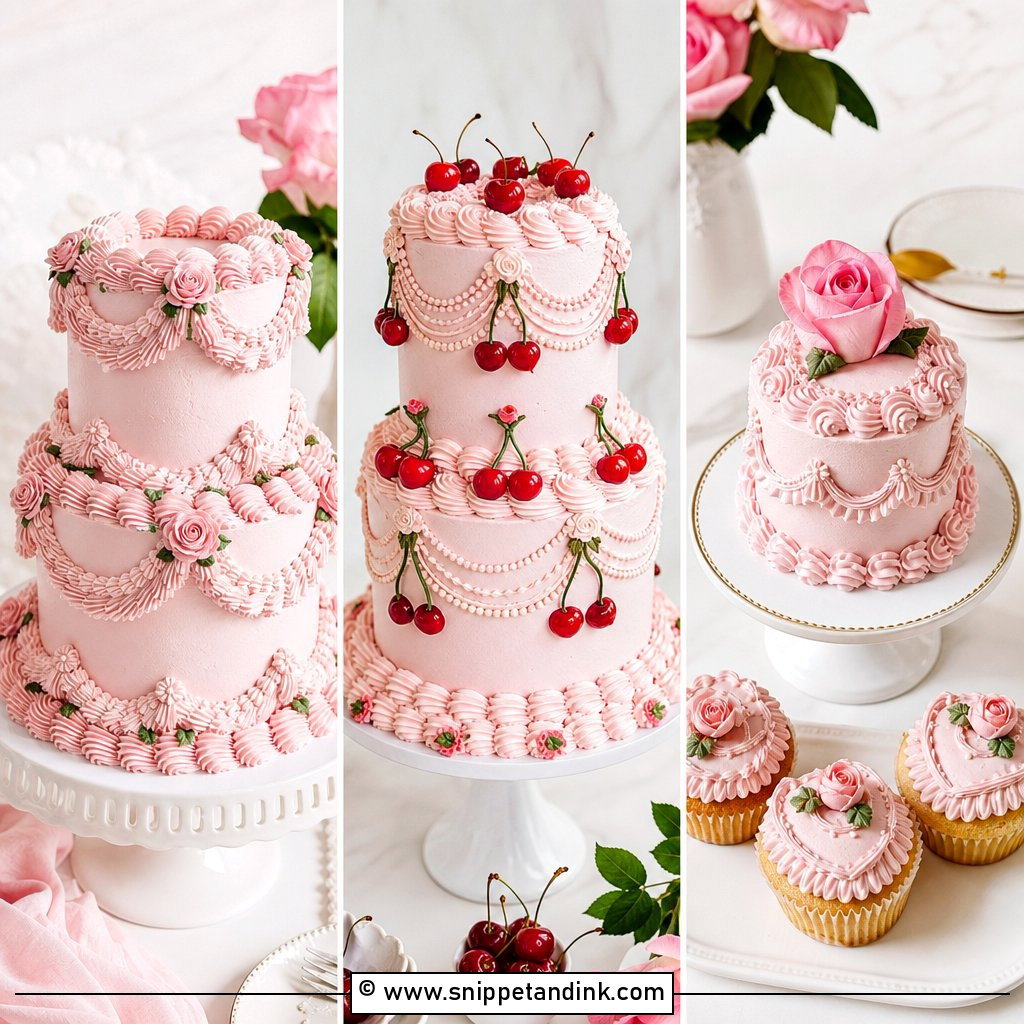
A pink rose buttercream wedding cake has the warm, bakery look many couples are after. The roses can be fresh, sugar or piped rosettes; piped ones are my favorite here because they’re part of the frosting and everyone can eat them. I like a lightly textured finish with roses grouped loosely on each tier. The honest trade-off is heat: buttercream starts to slump in a warm marquee, so for a summer garden wedding I’d use a firmer recipe and keep the cake indoors until the last moment. Vanilla, almond, lemon and strawberry sponges all suit it.
5. Pink Rose Fondant Wedding Cake
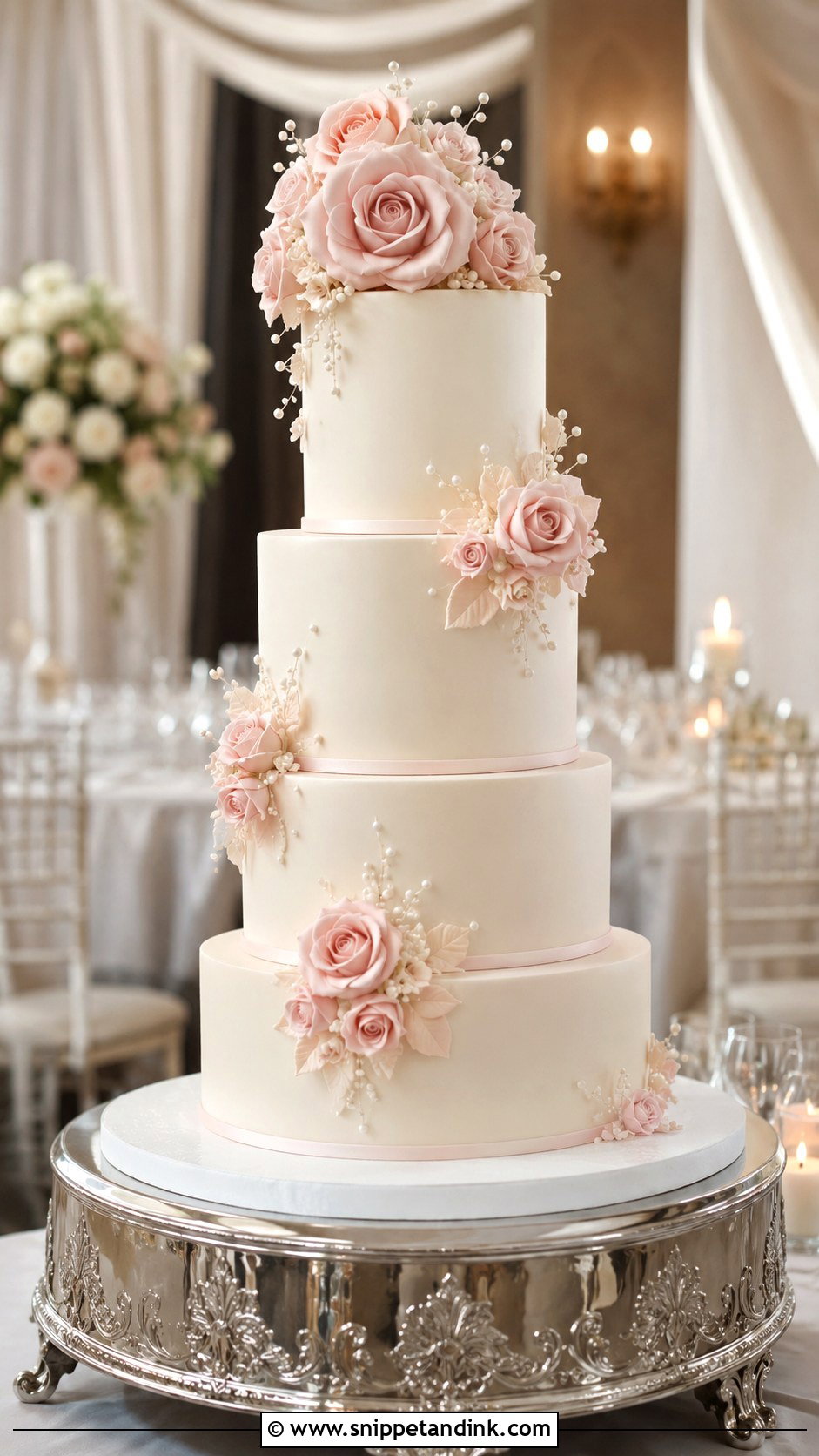
Fondant gives a crisp edge and a flawless surface, which makes it the best backdrop for detailed sugar roses. Both are sculptural, so they sit well together. Tiers can be all white, all blush, or white with one pale pink statement tier. The thing I watch with fondant is condensation: a chilled cake carried into a humid room beads with moisture, so I let it come up to temperature slowly. Keep the roses airy, with space between groupings, so the cake looks formal rather than heavy.
6. Pink Rose Drip Wedding Cake
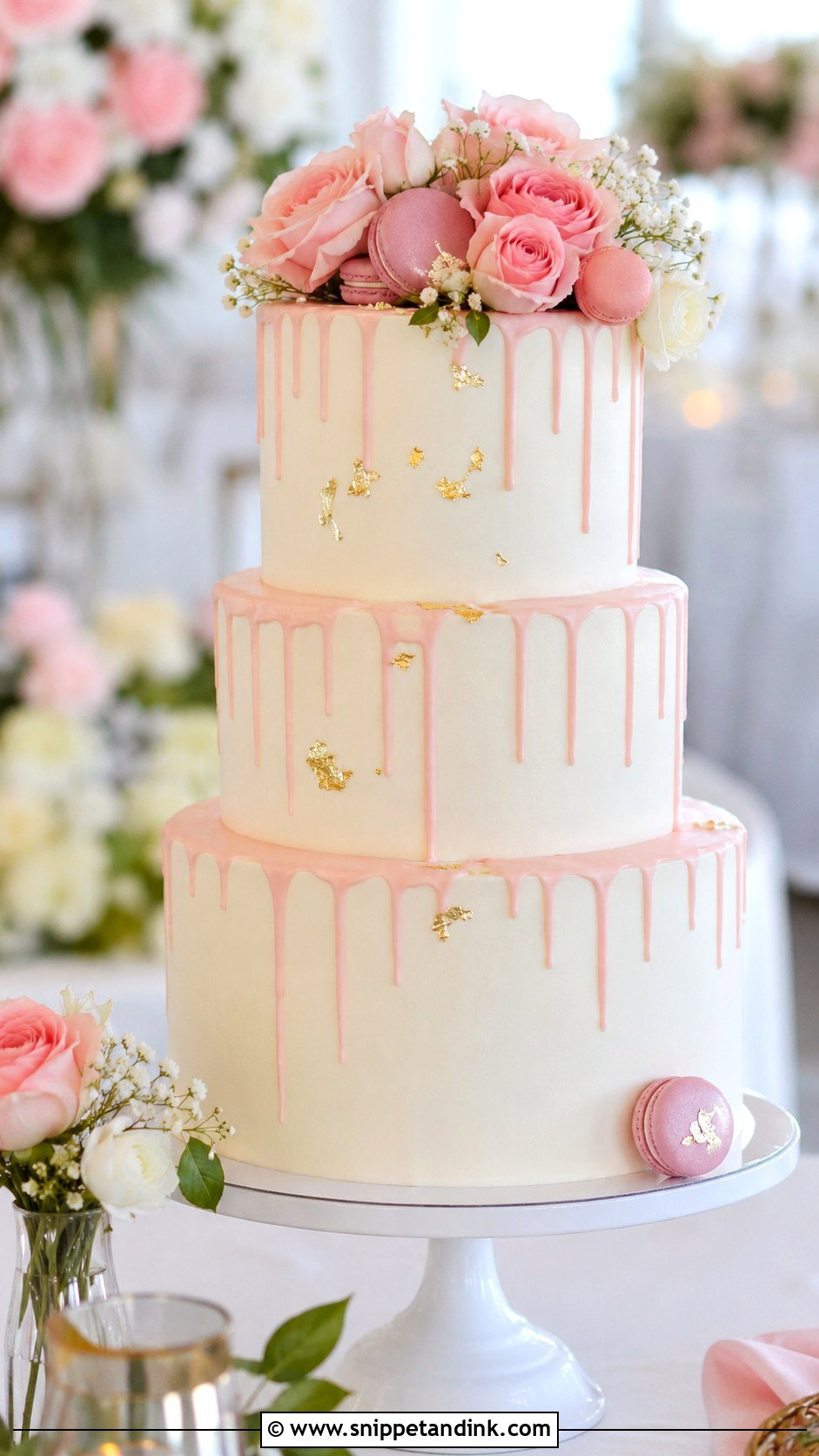
A drip turns a romantic cake playful. I tint white chocolate blush or rose, or go a shade deeper toward berry if the cake needs contrast. The drip has to be the right temperature: too warm and it runs to the board, too cool and it sits in thick blobs, so I test one drip on the back first. Smooth or semi-naked buttercream suits it. Roses on top and down one side keep it bridal, and a little gold leaf or a few macarons can dress it up for a styled dessert table.
7. Pink Rose Ombre Wedding Cake
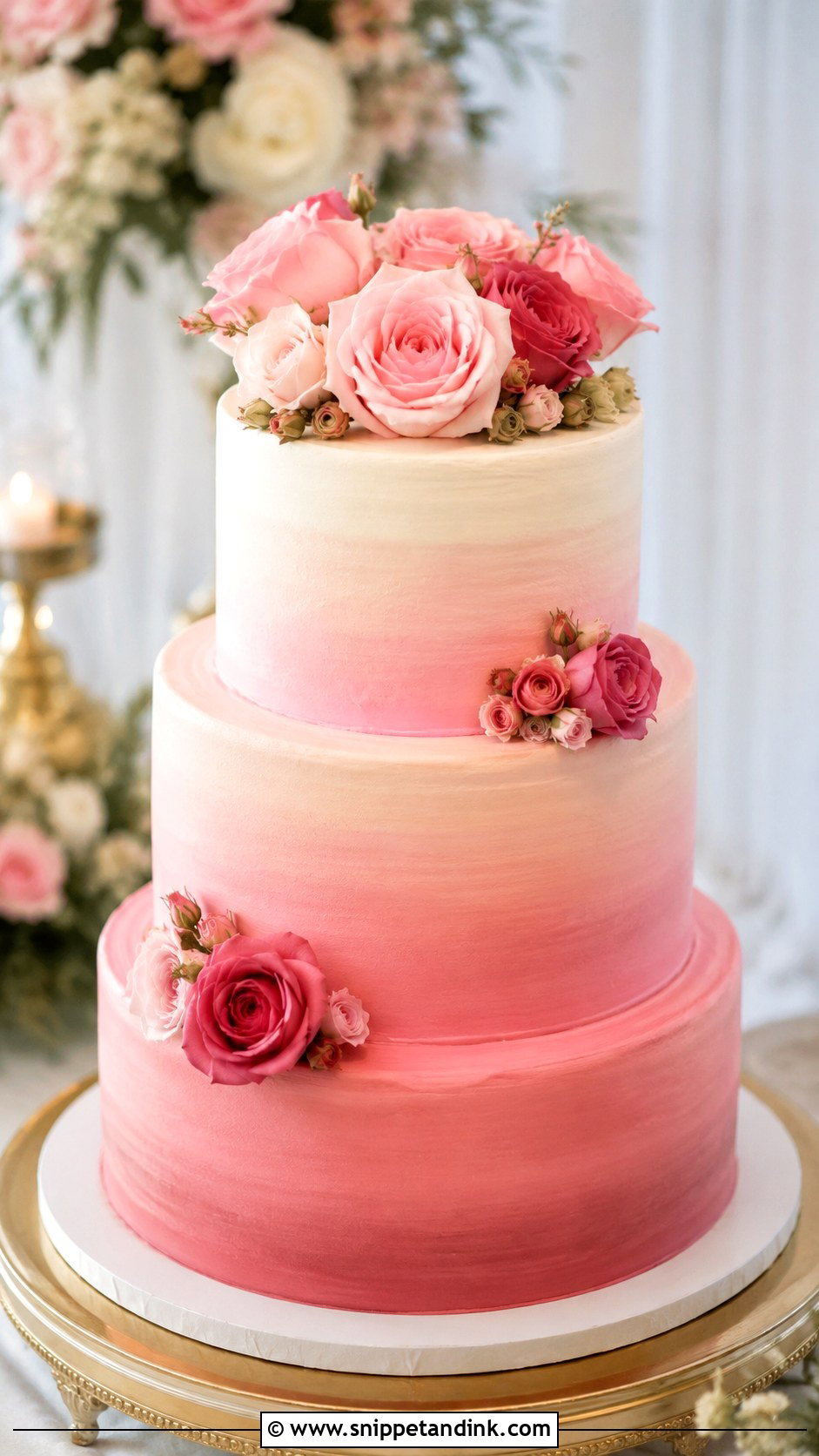
For an ombre, I either tint each tier a step deeper, ivory to blush to rose, or blend the frosting from bottom to top on each tier. The roses should follow the same logic, paler at the top and deeper at the base, so the whole cake has one direction. Ombre suits buttercream best; the blend looks soft where fondant can look striped. I keep other decoration minimal. Do bring a swatch of your linens, because pink frosting can shift slightly once it sits under warm venue lights.
8. Pink Rose Vintage Wedding Cake
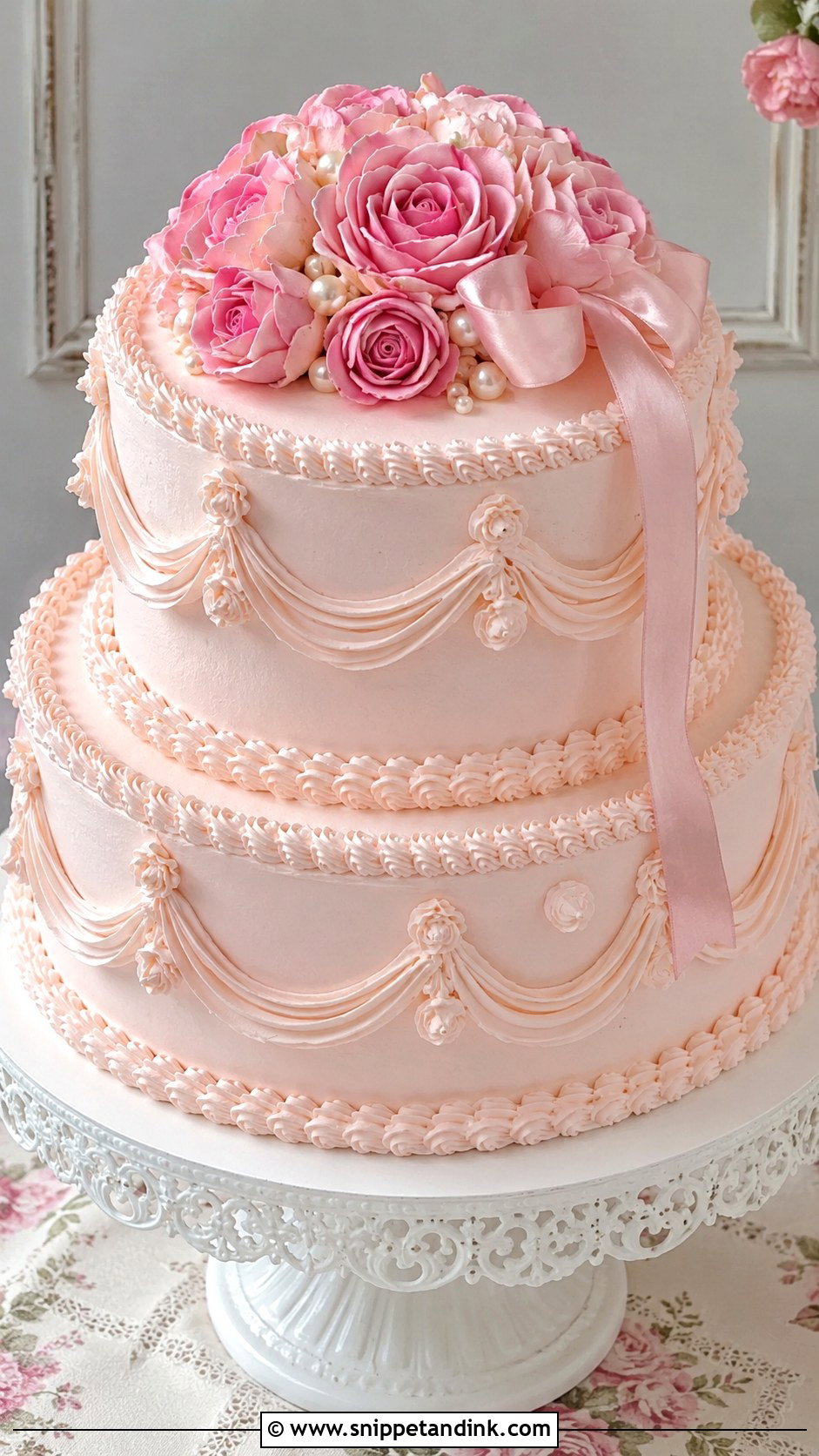
Vintage piping is the style I enjoy most, and it’s slower than people expect. Shell borders, swags and a few neatly placed roses on a two-tier or three-tier cake in blush buttercream take real piping time, which is reflected in the quote. The design needs discipline; one more border can tip it into clutter. Satin bows, pearl dragées and an ornate stand all suit it. If your venue is warm, ask about a crusting buttercream so the fine piping holds its edges.
9. Pink Rose Naked Wedding Cake
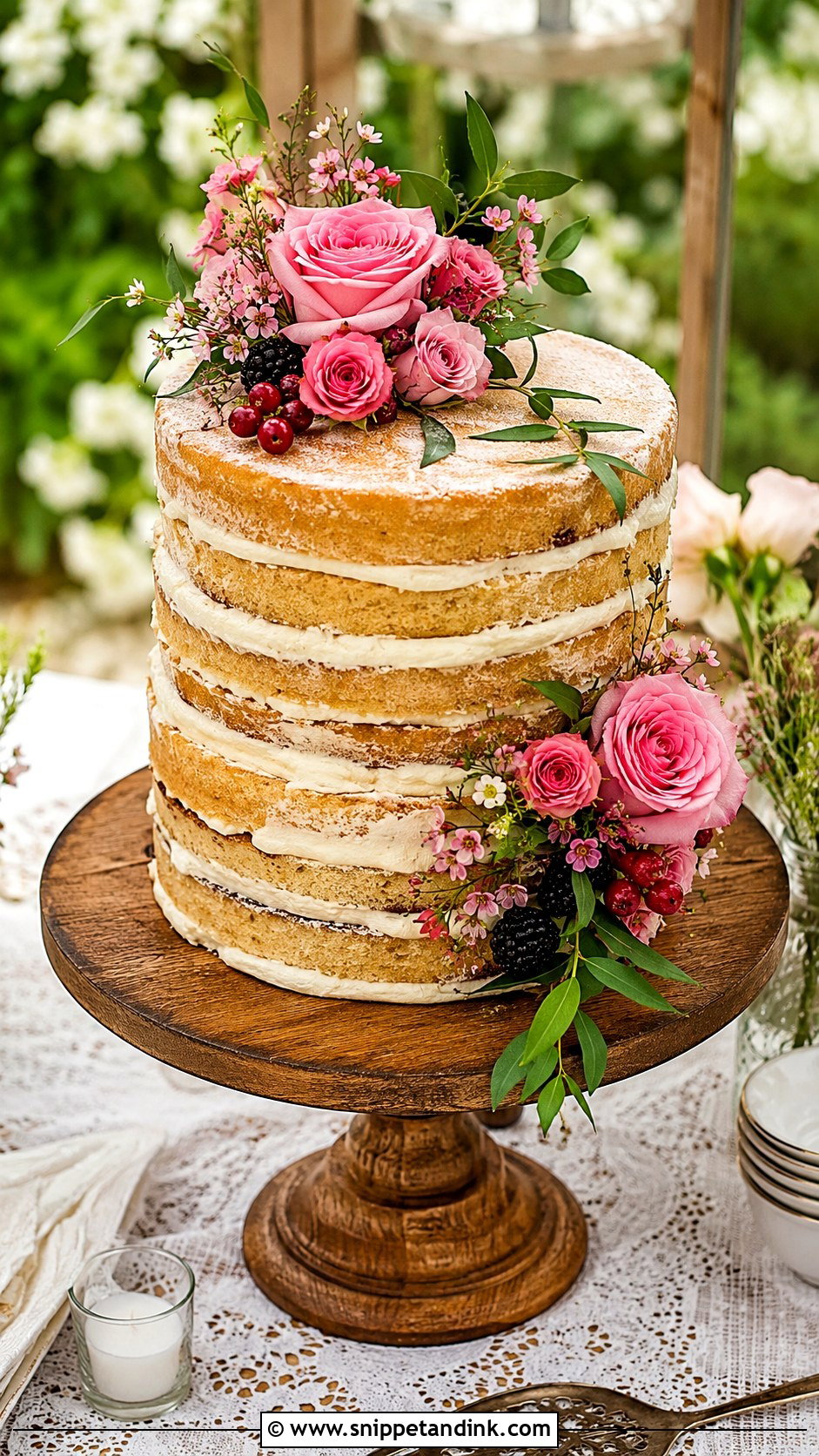
A naked cake shows its sponge layers, which is lovely but unforgiving: the crumb has to be even and the layers level, because there’s no frosting to hide anything. It also dries faster, so I assemble naked cakes as close to the day as I can and keep them covered. Lighter sponges, vanilla, almond, lemon or strawberry, look freshest. Roses round the edge, on top and at the base give the garden effect, and a few berries work if the palette stays soft. Best for rustic, outdoor or small weddings.
10. Pink Rose Semi Naked Wedding Cake
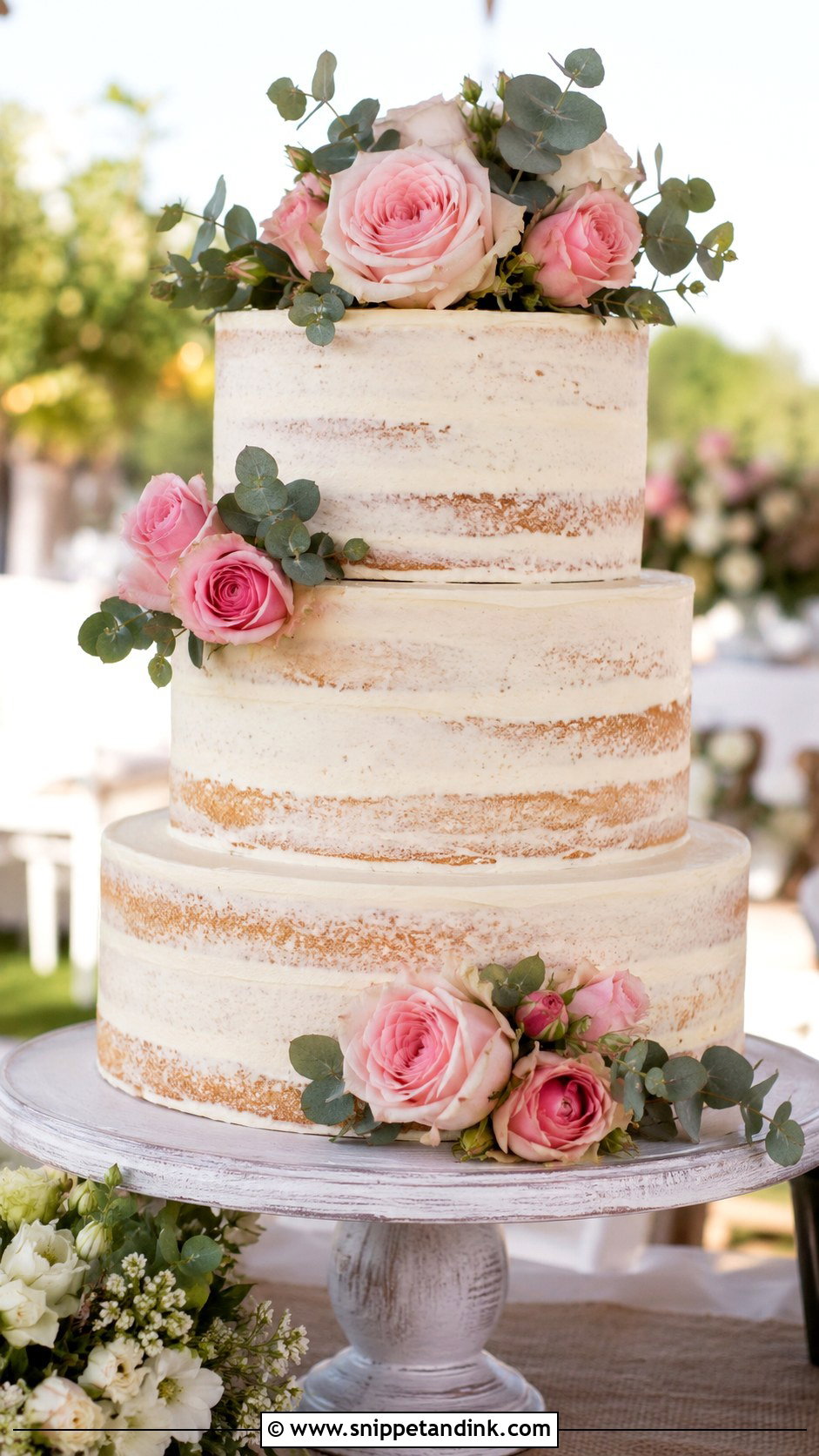
A pink rose semi naked wedding cake keeps the relaxed look but seals the sponge with a thin scraped coat, so it stays moist longer than a fully naked cake. Small clusters suit it better than a heavy cascade. For greenery, I’d use something food-safe; eucalyptus is popular but shouldn’t touch the cake directly, so I keep it on wrapped stems or swap it for rose leaves. It suits barns, garden venues and simple receptions, and it’s the cake to choose if you don’t love a thick layer of frosting.
11. Pink Rose Tall Wedding Cake
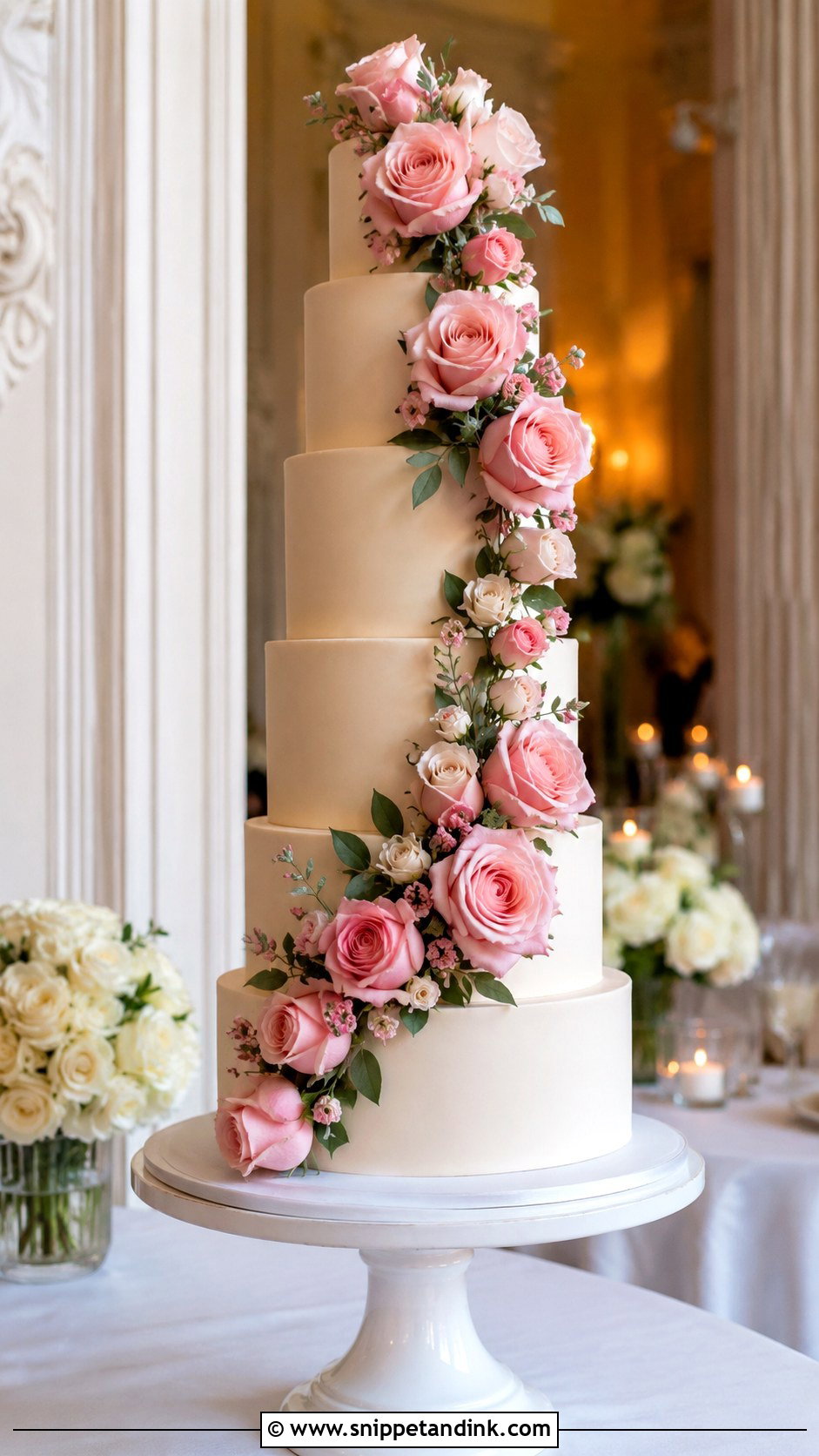
Tall cakes, extended tiers or slim double-height ones create real presence on the table. Roses run vertically up one side, or sit in the gaps between separated tiers for a more classic feel. The structure is the part I worry about: tall tiers need internal dowels and boards at every level and are usually stacked on site. Balance big open roses with smaller buds so the top doesn’t look heavy. It suits formal weddings, large guest lists and rooms with high ceilings, where a short cake would get lost.
12. Pink Rose Single Tier Wedding Cake
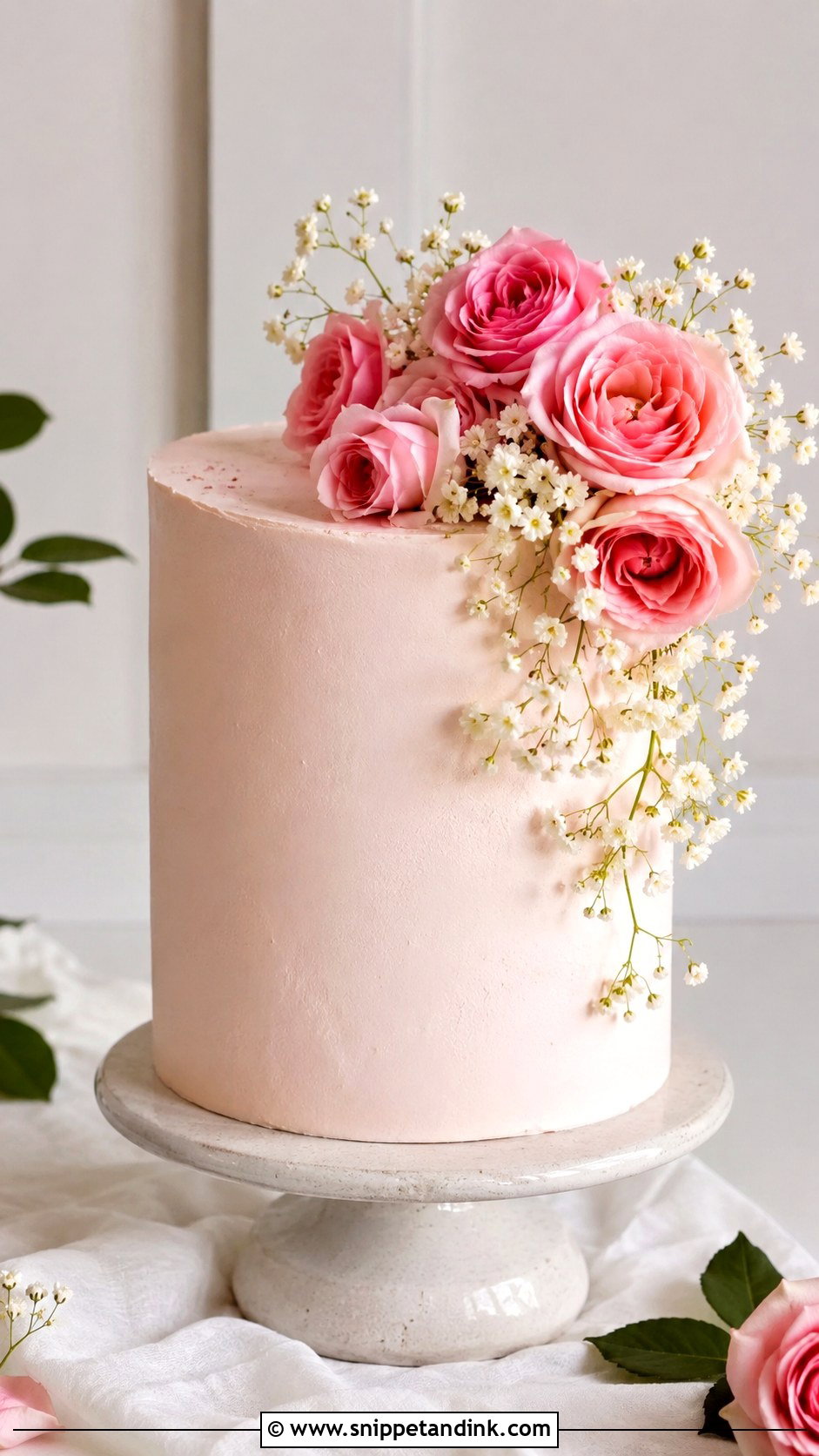
One tier can still feel like a wedding cake. I see it most at small weddings, elopements and dessert tables where the cake isn’t the only sweet. Round, heart-shaped or tall and slim all work, and a few roses on top with one or two trailing down the side make it look finished. A good stand adds the height a single tier lacks. If you’re feeding more guests than it serves, a plain kitchen cake in the same flavor, cut out of sight, is a sensible pairing.
13. Pink Rose Two Tier Wedding Cake
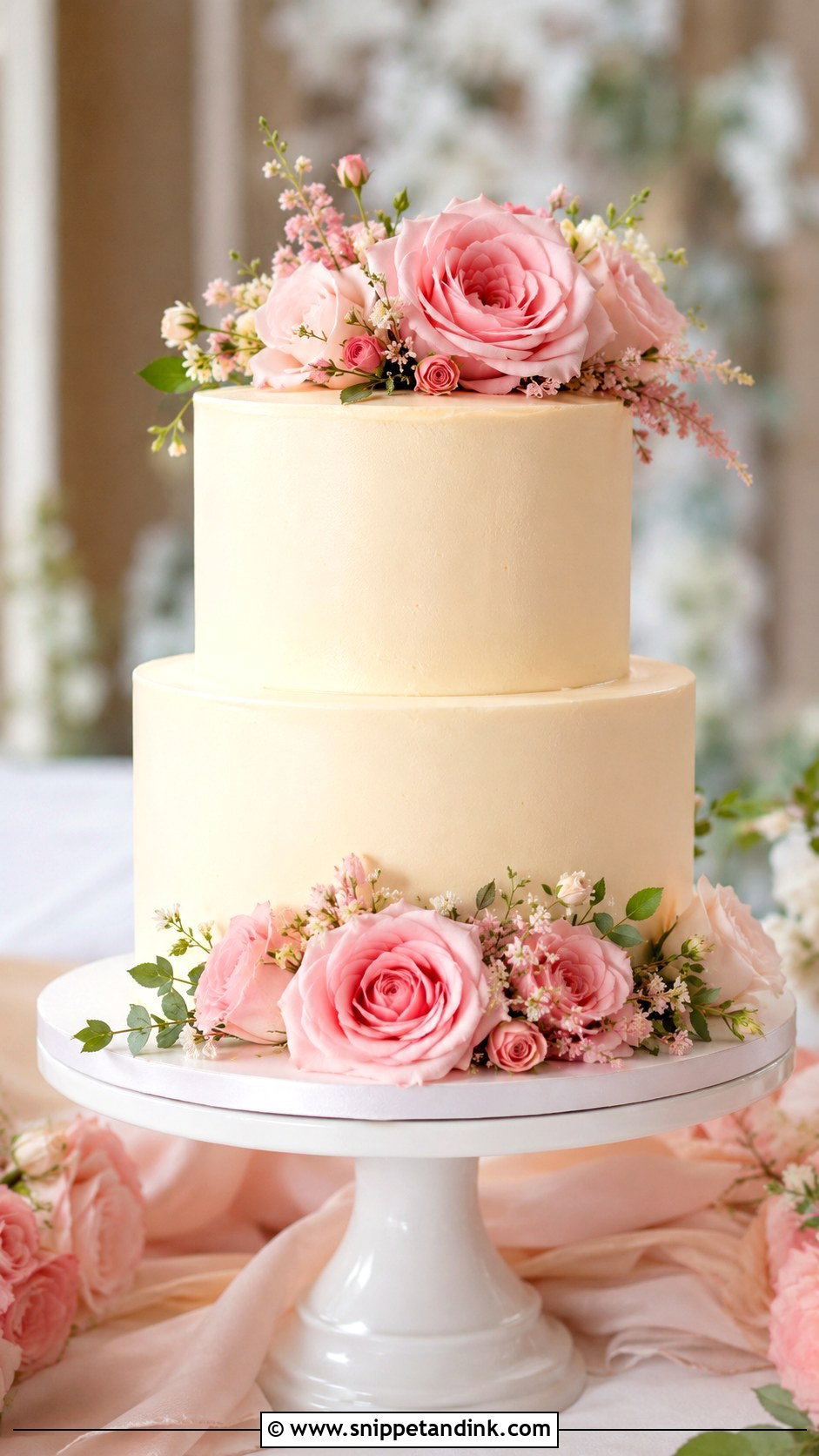
Two tiers give enough height to feel bridal without the cost and structure of a bigger cake, and they travel easily. I put a small arrangement on top and a few roses at the base or side of the lower tier. Blush buttercream with mixed ivory and pink roses reads soft; white frosting with deeper pink blooms reads cleaner. It suits medium-size weddings well. The only thing I’d flag is serving size: two tiers feed fewer people than couples often assume, so check the portion count with your baker.
14. Pink Rose Three Tier Wedding Cake
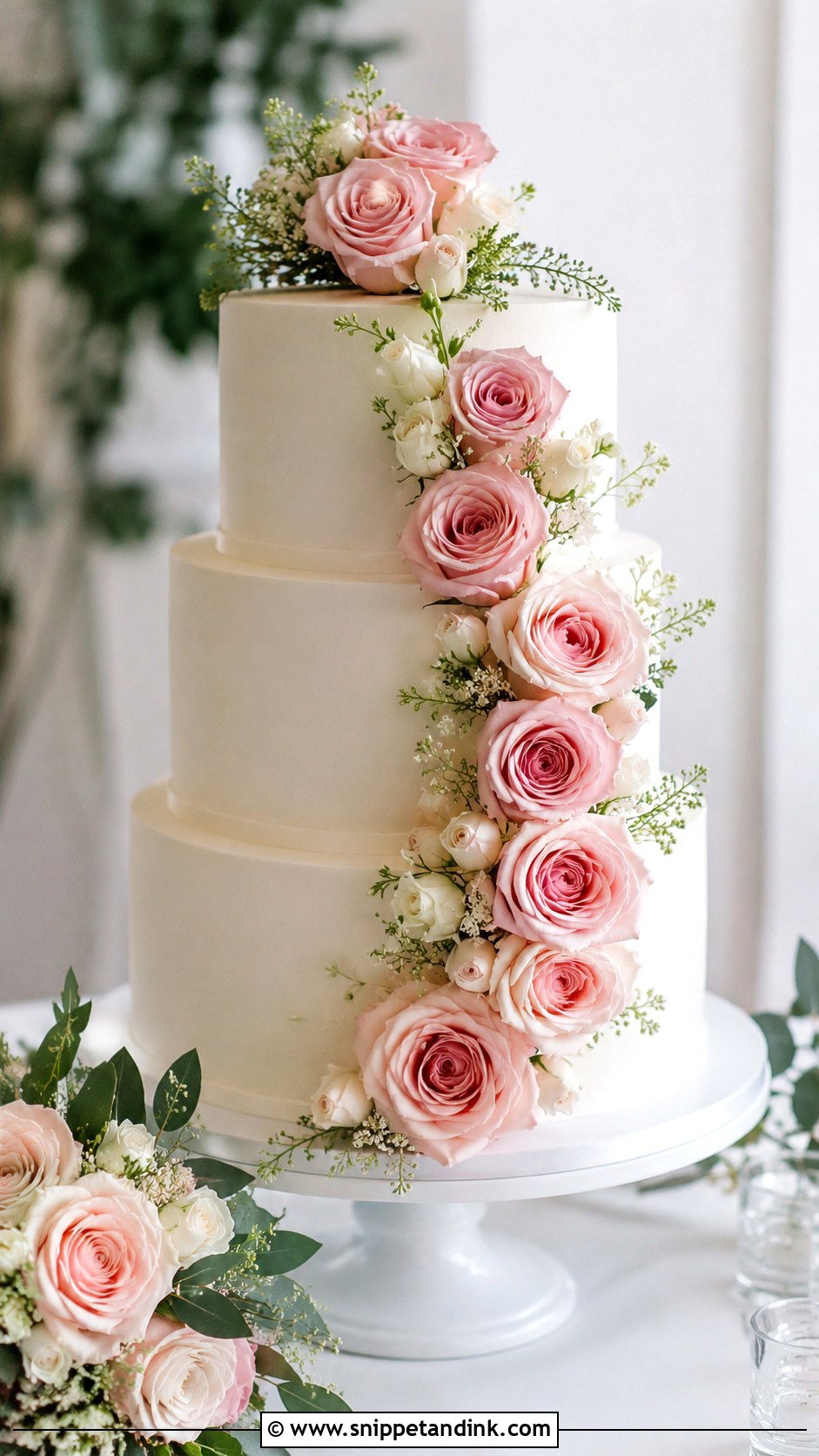
Three tiers fit most weddings and give room for florals without overwhelming the room. Roses can run diagonally, sit between tiers or gather in separate clusters for a garden look. White keeps it classic; blush frosting warms it. If roses are in your bouquet, I’d ask your florist for the exact variety so I can match fresh roses or tint sugar ones to the same shade. Three tiers also make it easy to offer three flavors, which guests always appreciate.


15. Pink Rose Square Wedding Cake
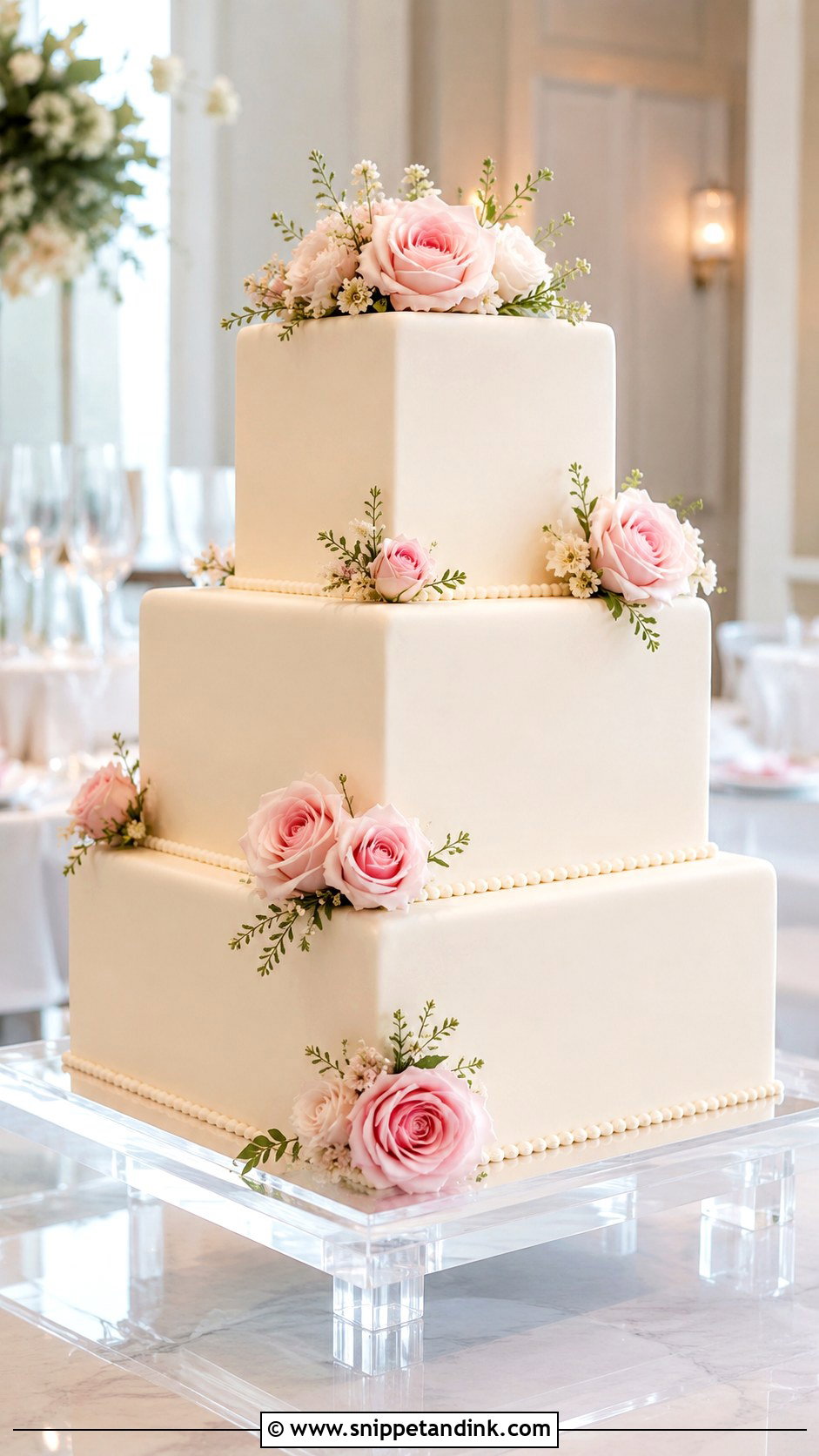
Square tiers are harder to finish than round ones; the corners have to be sharp and the sides truly flat, so I’d only order one from a baker who shows square cakes in their portfolio. That crisp shape is exactly what makes soft roses look good against it. Fondant or very smooth buttercream shows the silhouette best. Put roses at the corners, along one edge, or in a neat cascade, and keep the palette simple. It’s a good match for hotel receptions and contemporary venues.
16. Pink Rose Heart Wedding Cake
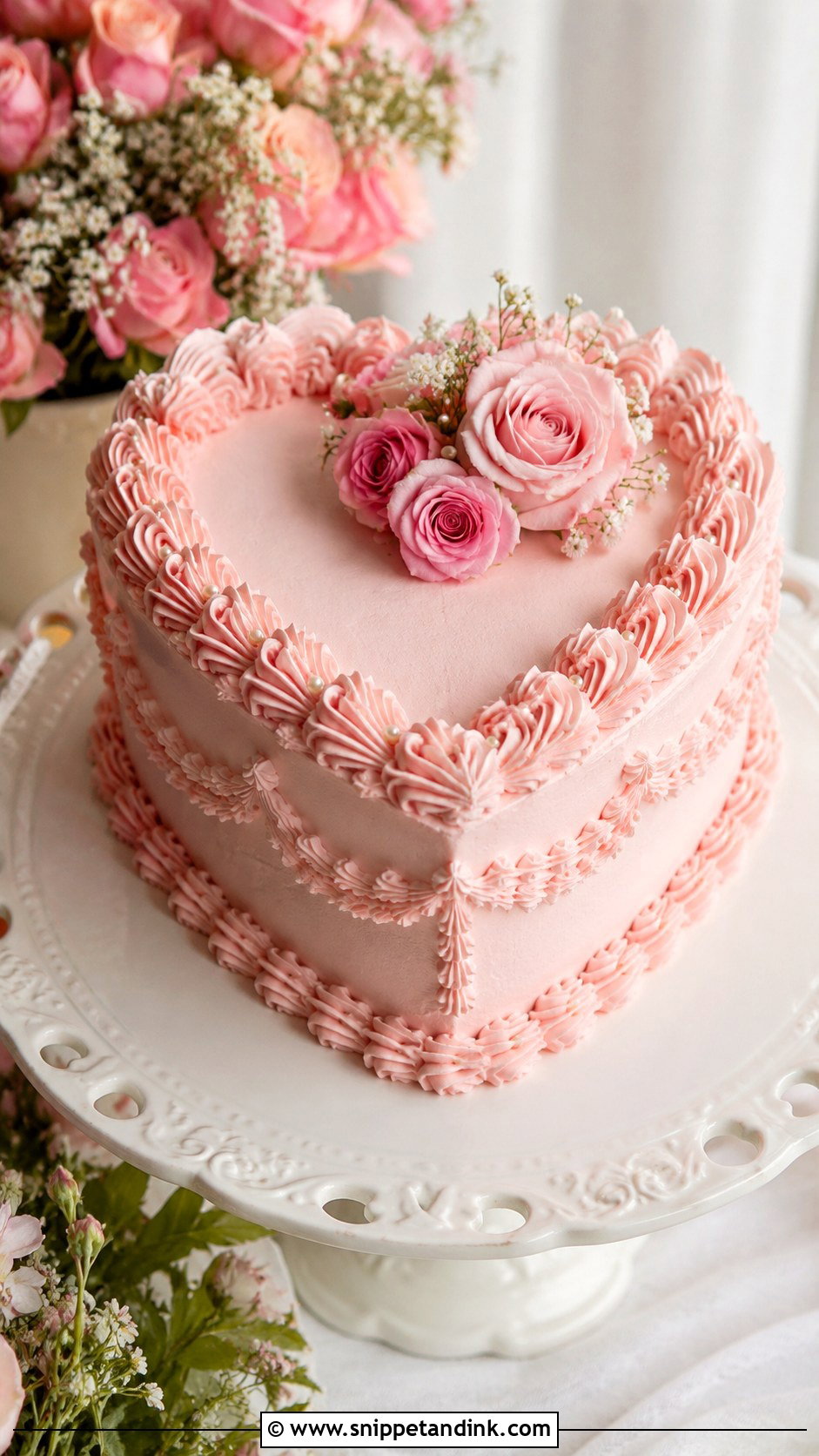
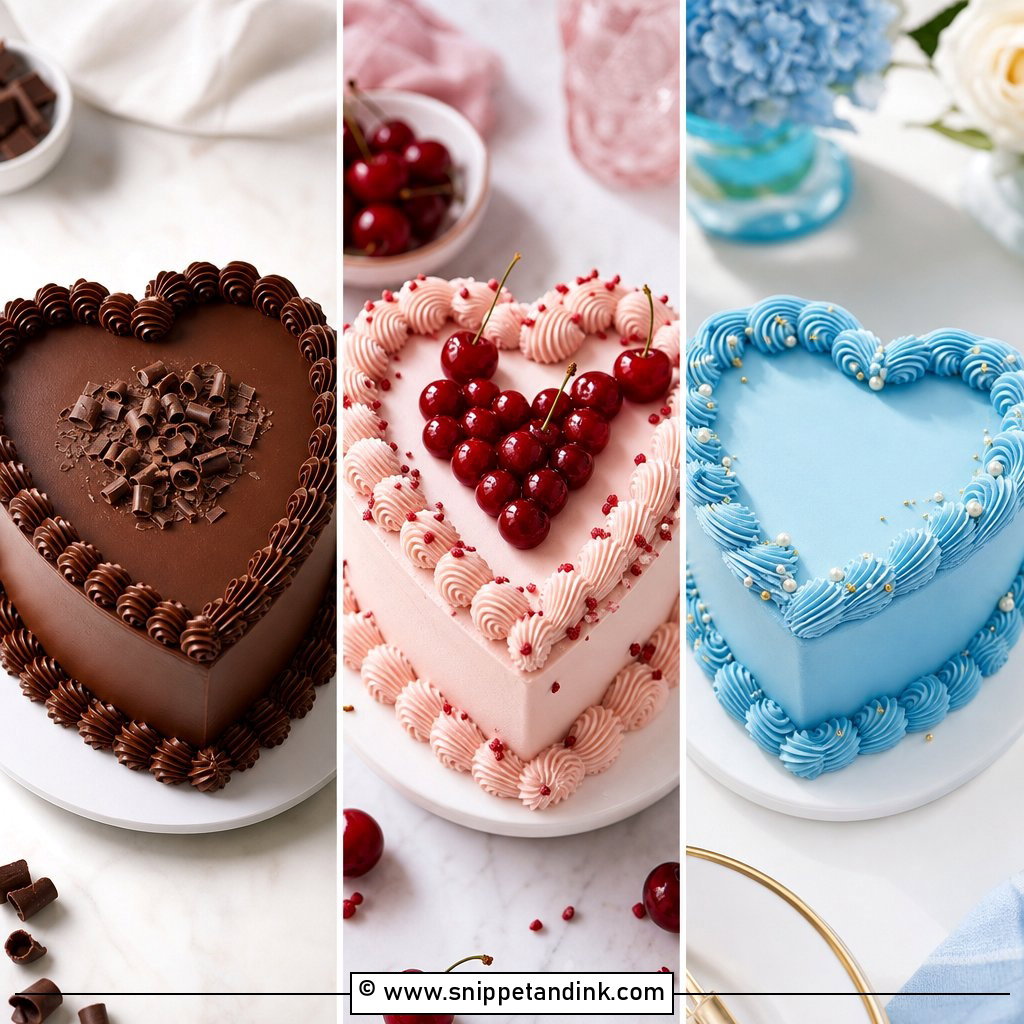
A pink rose heart wedding cake already says love in its shape, so the decoration should hold back. Smooth blush buttercream, a piped border and a few roses on top are enough. It works as a single tier for an intimate wedding or a cutting cake, or stacked for more impact. Fresh roses feel lush, buttercream roses softer and more playful. Heart tiers cut into odd-shaped pieces, so I’d plan on fewer portions than a round cake of the same width.
17. Pink Rose Pearl Wedding Cake
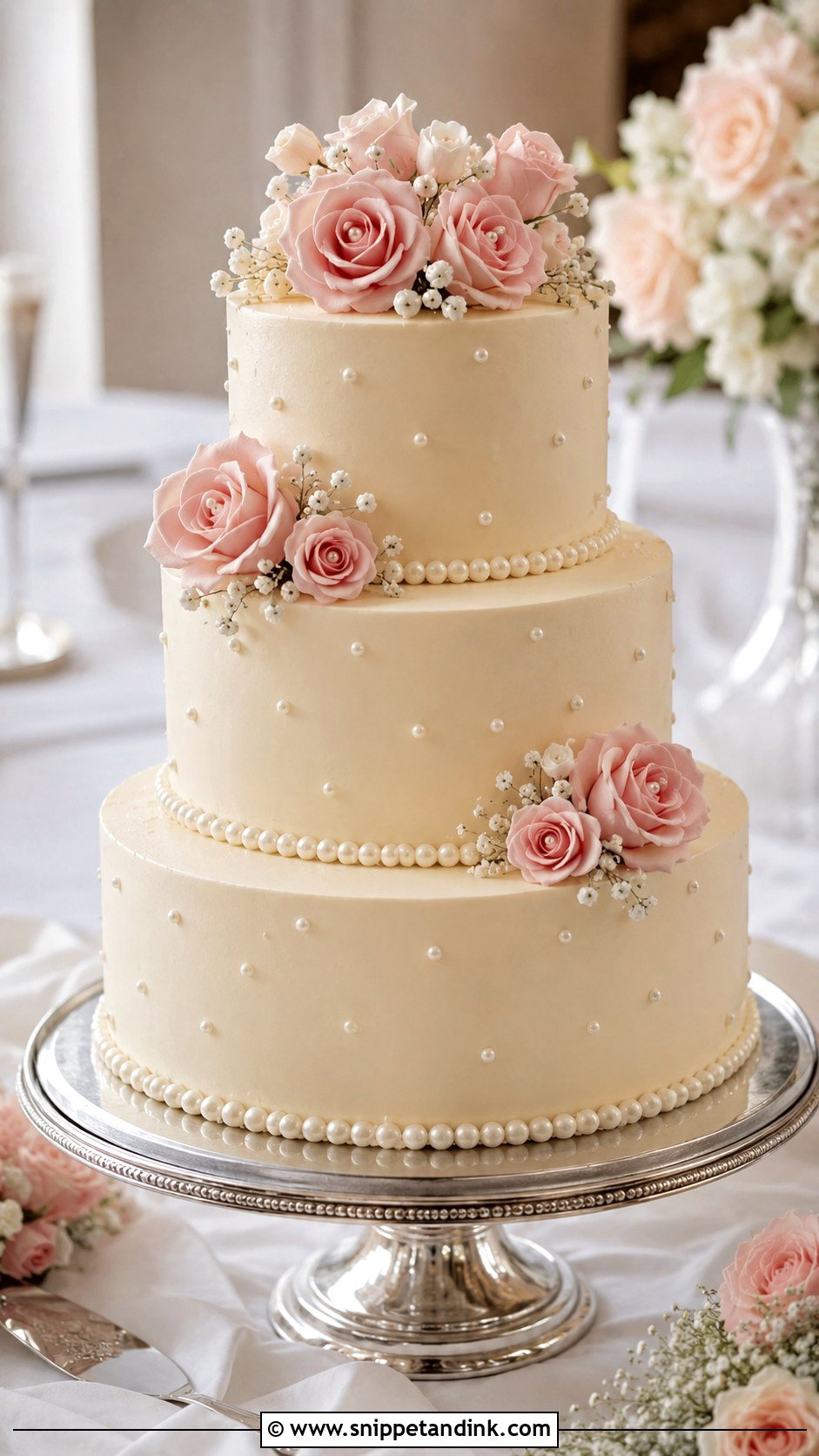
Pearls add shine quietly. I pipe tiny buttercream or fondant pearls around each tier base, or scatter a few sugar pearls lightly across the frosting. Pink roses stop the design from feeling plain. Ivory, white or very pale blush frosting suits it best. Large pearl details crowd a cake quickly, so I keep them small and evenly spaced. Edible sugar pearls are hard on teeth if used heavily, another reason to go easy. It suits a traditional reception or a ballroom.
18. Pink Rose Gold Wedding Cake
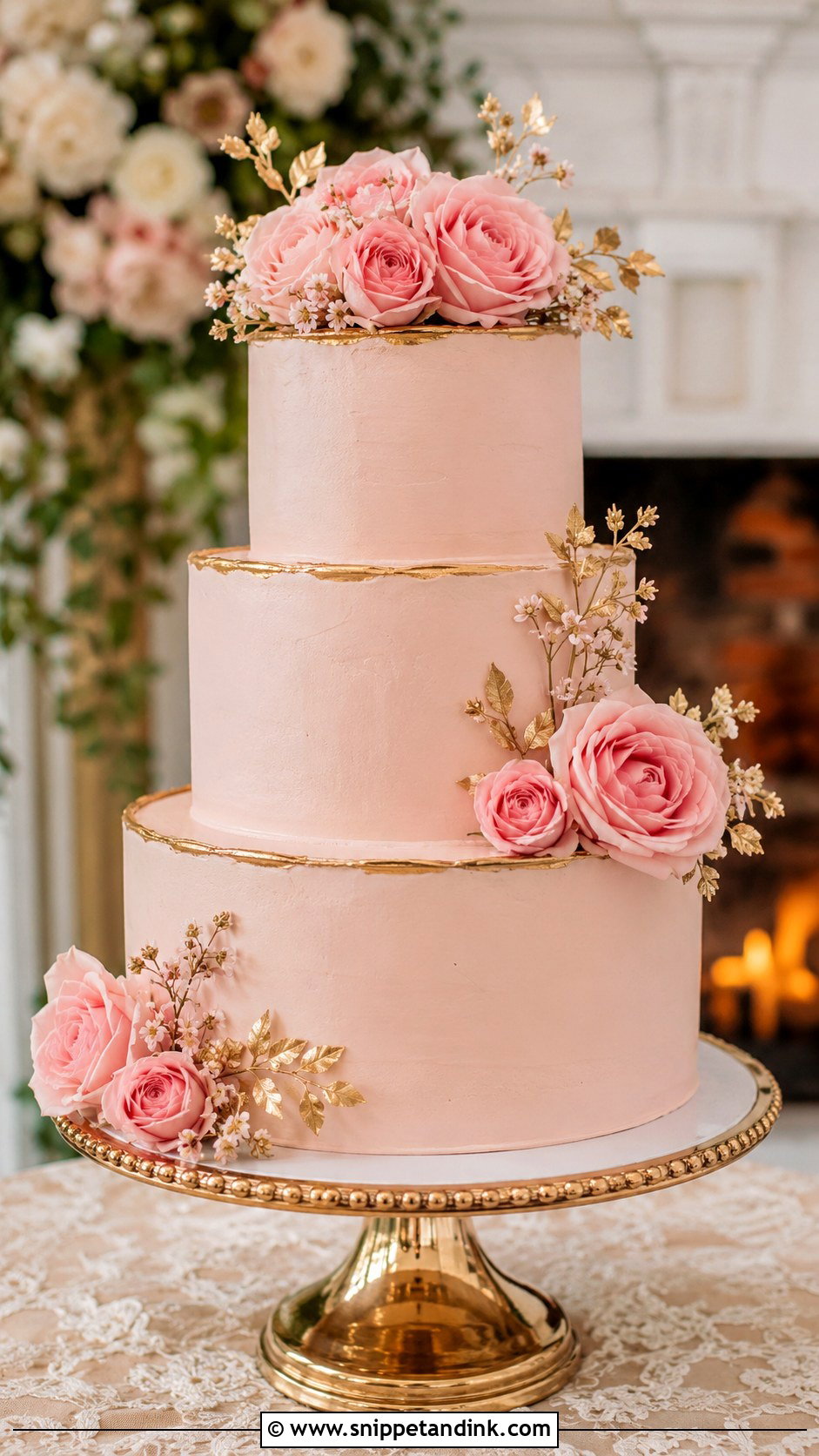
Gold can be a painted edge, a thin band, a few leaf flakes or a subtle drip; I hand-paint it with edible gold mixed into a little alcohol so it dries quickly. Pink roses soften the metal. Keep gold to one or two places; when it’s everywhere, the cake looks like a trophy. A white or blush base lets both roses and gold show. It’s at its best under candlelight and warm lighting, where gold glows rather than glares. Check that any gold used is labeled edible, not just non-toxic.
19. Pink Rose Watercolor Wedding Cake
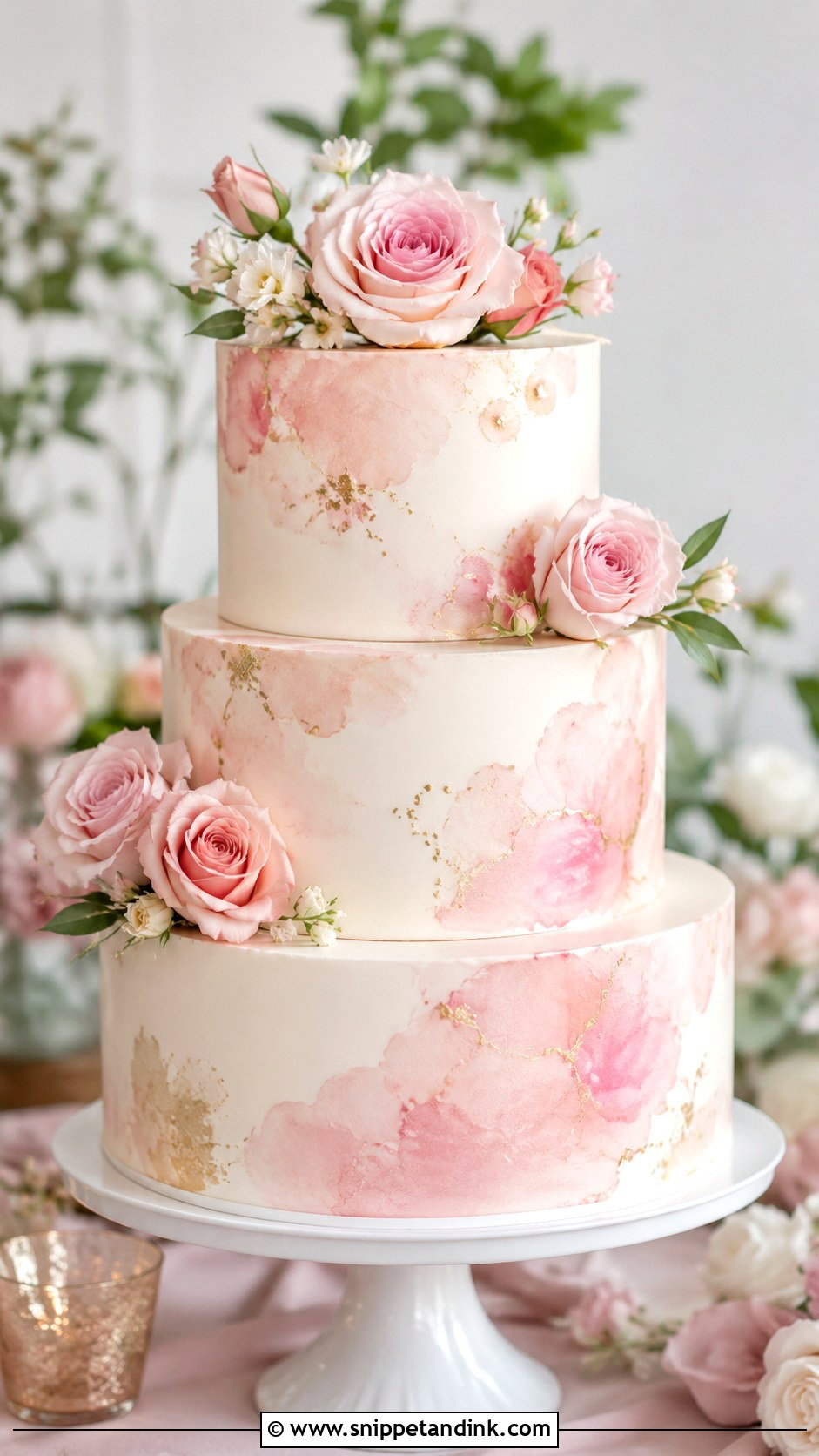
Watercolor cakes are painted with thinned food coloring or blended buttercream in soft washes of pink, blush and ivory, and they look like petals fading across the surface. The roses need to sit in the same tones as the painting, in one or two focused areas, so the wash stays visible. I’d skip a topper or keep it very simple. It suits garden weddings and couples with an artist’s eye. Each one is painted by hand, so no two look exactly alike.


20. Pink Rose Floral Wedding Cake
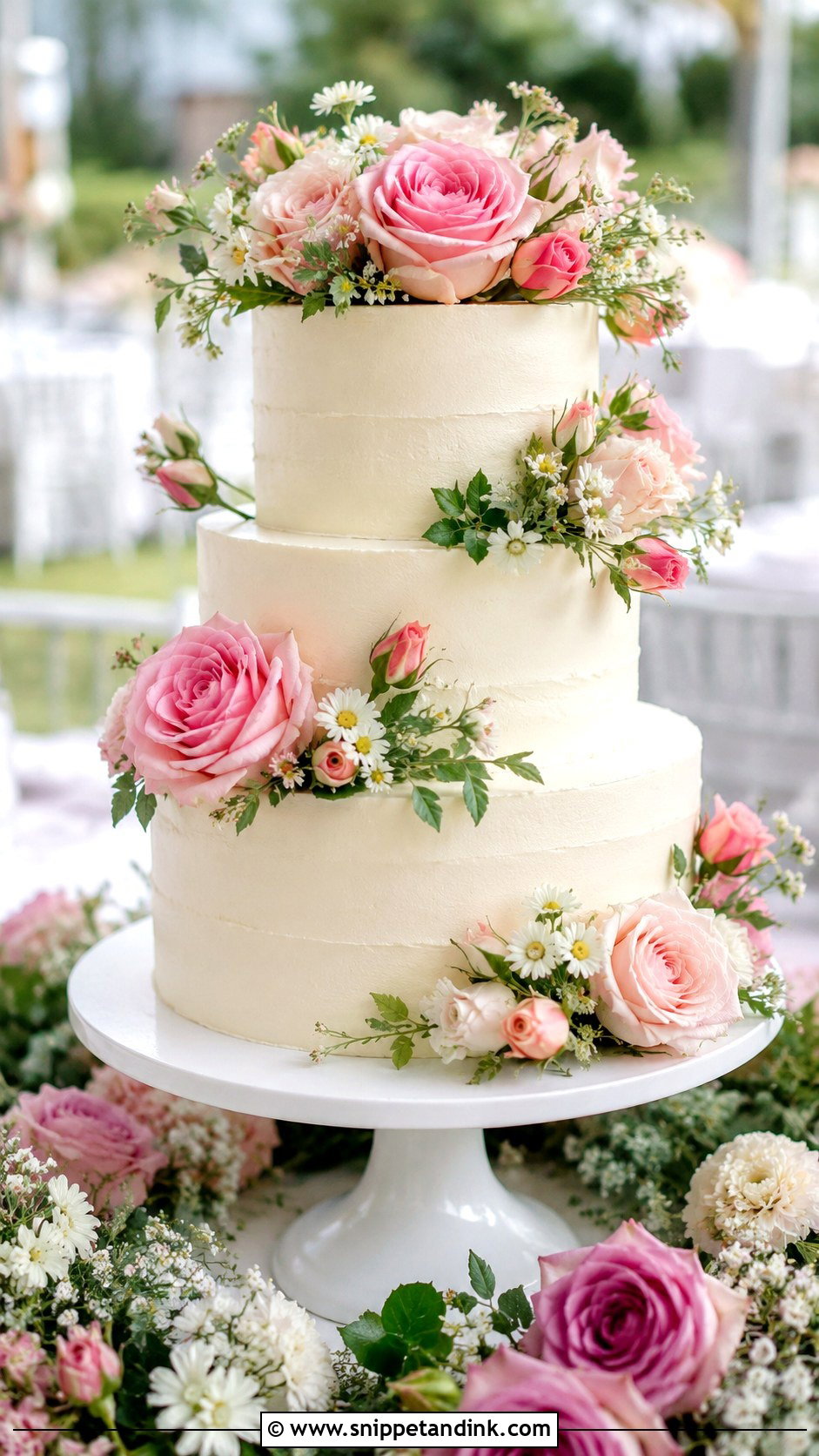
A full floral cake combines pink roses with smaller flowers, buds and greenery for a garden centerpiece. The base should stay plain, smooth buttercream, ivory fondant or pale blush, so the flowers lead. I place flowers on the top, between tiers and at the base so the cake looks finished from every side, including the back the photographer will catch. Ask your florist to set aside matching stems from your bouquet, and make sure every flower that touches the cake is food-safe or wrapped.
Why I Never Push a Florist’s Rose Straight Into Sponge
If your cake is dressed with fresh roses, ask exactly who will put them on and how. I either do it myself or work alongside the florist on the day, because the details matter for safety and for how long the cake looks good.
- Every stem gets wrapped in floral tape and pushed into a food-safe pick or a plain drinking straw, so sap and spray never touch the cake.
- Unsprayed or organically grown roses are the better choice for anything that sits directly on frosting. Florists can often source them if asked early.
- Roses go on as late as possible, ideally after the cake is set up at the venue. Cut flowers start to droop within a few hours in a warm room.
- Greenery gets the same scrutiny. Some popular foliage isn’t food-safe, so I keep it wrapped or replace it with rose leaves.
- Before cutting, whoever is serving lifts every flower and pick off the tier. A stray straw in a slice is easy to miss.
Transport matters just as much. I deliver tiered cakes in an air-conditioned car on a flat surface, and stack tall cakes on site. If your reception is outside in summer, plan a shaded table away from the sun, and keep the cake inside until shortly before it’s cut.
Matching the Rose to the Room, the Season and the Slice
Pink roses can soften a modern cake, dress up a plain buttercream tier or turn a tall cake into the centerpiece. Your venue, guest count, palette and the season decide which version will actually hold up. A cascade adds drama, a single tier suits a small gathering, ombre feels modern, and pearls or gold lean formal. Bring photos of your bouquet and a fabric swatch to the tasting so your baker can match the rose shade, the frosting finish and the cake size to the day you’re planning.
You'll Like These Ideas:









Leave a Reply