
Red velvet is the flavour I’m asked about most after vanilla, and it brings something no other sponge does: the moment the knife goes in, a pale cake turns deep red on the plate. The crumb has a mild cocoa flavour with a little tang from buttermilk, and it sits naturally with cream cheese frosting. That frosting is also its biggest challenge on a wedding table, which I come back to below. Textured buttercream, edible flowers, sculpted tiers and vintage piping all suit red velvet, and the designs that follow range from rustic naked tiers to a black-tie fondant cake, with notes on how each one behaves in a real venue.
Thirty ways I’d dress red velvet tiers for a wedding
Cream Cheese, Ermine or Buttercream: What Red Velvet Can Wear
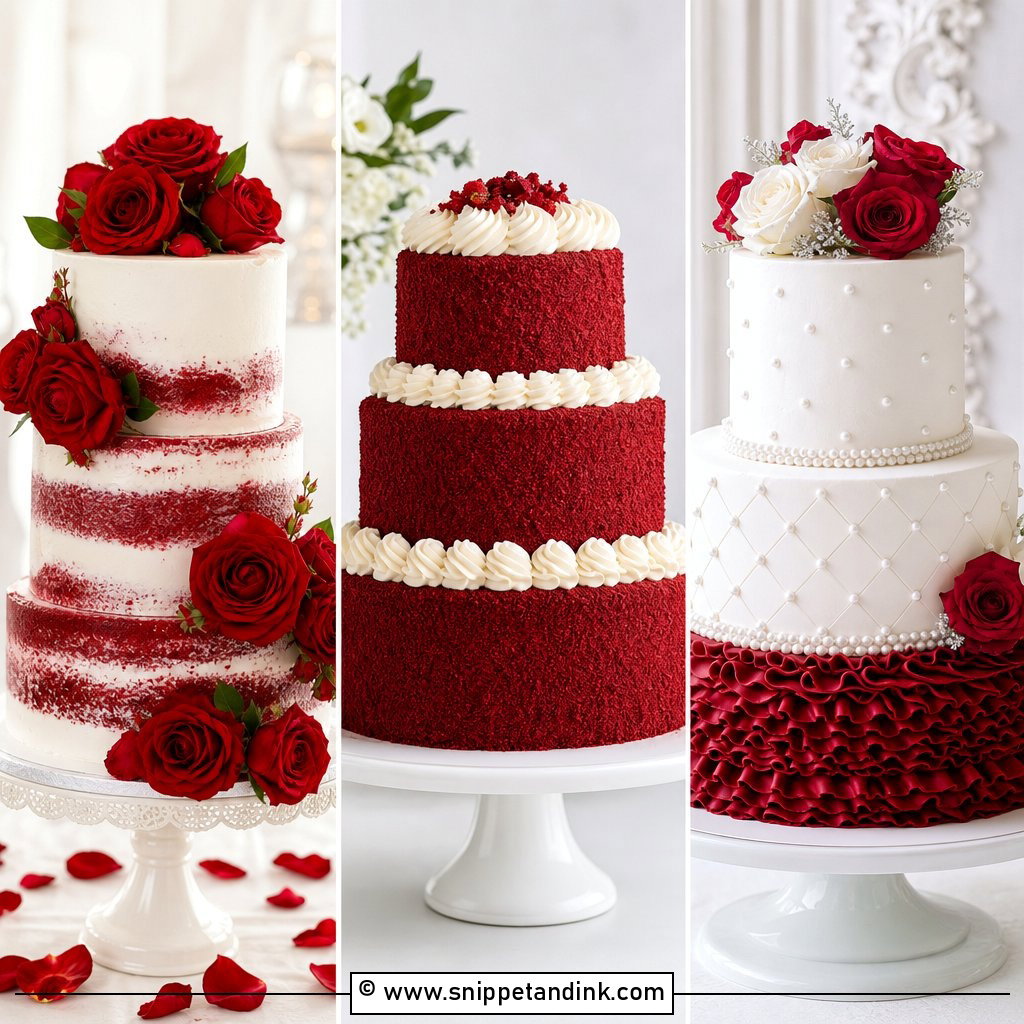
The finish you pick decides more about a red velvet cake than the decoration does, because it controls how long the cake can stand out and which designs are possible at all. Here’s how I talk couples through it.
- Cream cheese frosting: the classic taste, but soft and perishable. It should stay chilled until shortly before serving and suits small cakes, cool rooms and fillings.
- Ermine (cooked flour) frosting: the older traditional partner for red velvet. Lighter and less sweet than buttercream, with a fluffy texture that suits rustic finishes better than sharp edges.
- Swiss or Italian meringue buttercream: smooth and pipeable, and it holds up better in moderate warmth. My usual outer coat when couples want cream cheese flavour inside.
- Ganache under fondant: the most stable option for tall, sharp-edged or long-display cakes.
If your reception is outdoors in summer, be honest with your baker about the timing. A cream cheese cake left on a display table in the heat for hours is a food safety issue, not just a cosmetic one.
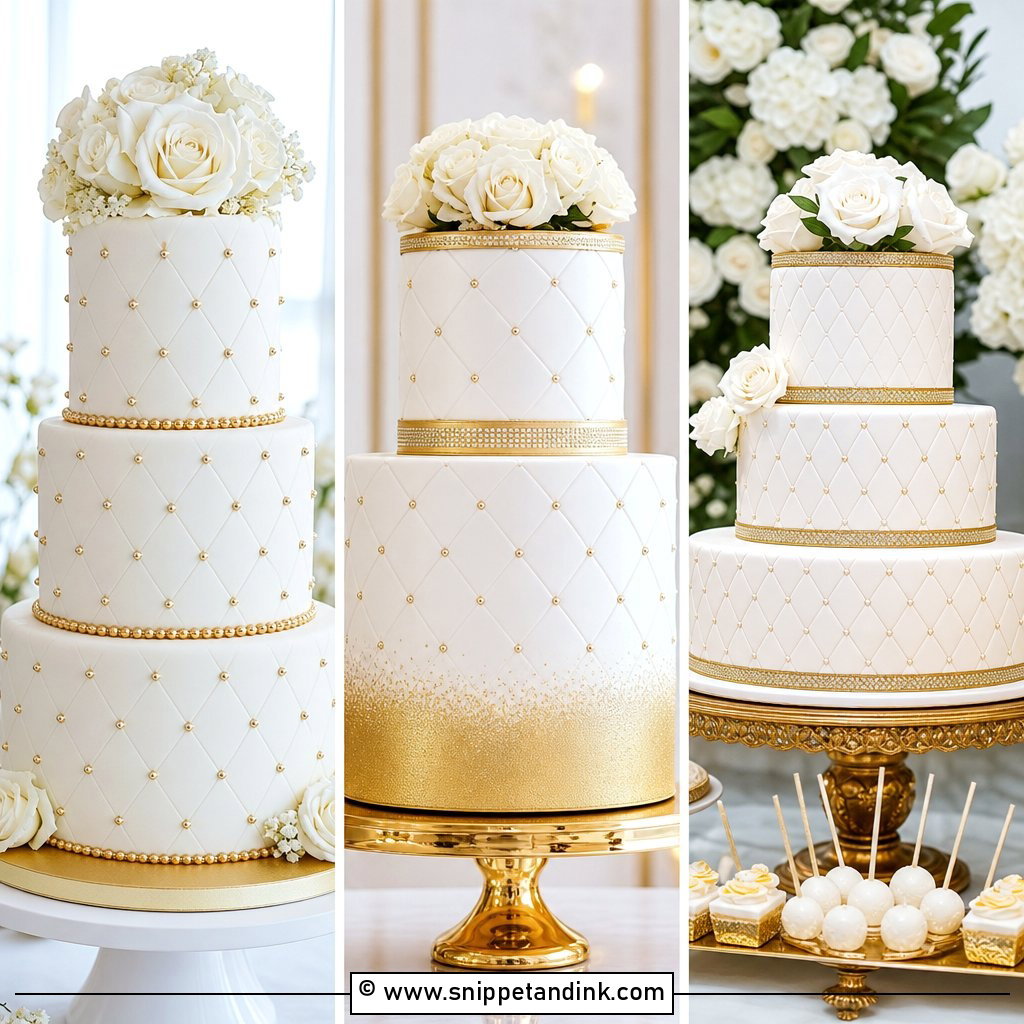
1. Red Velvet Wedding Cake With White Buttercream
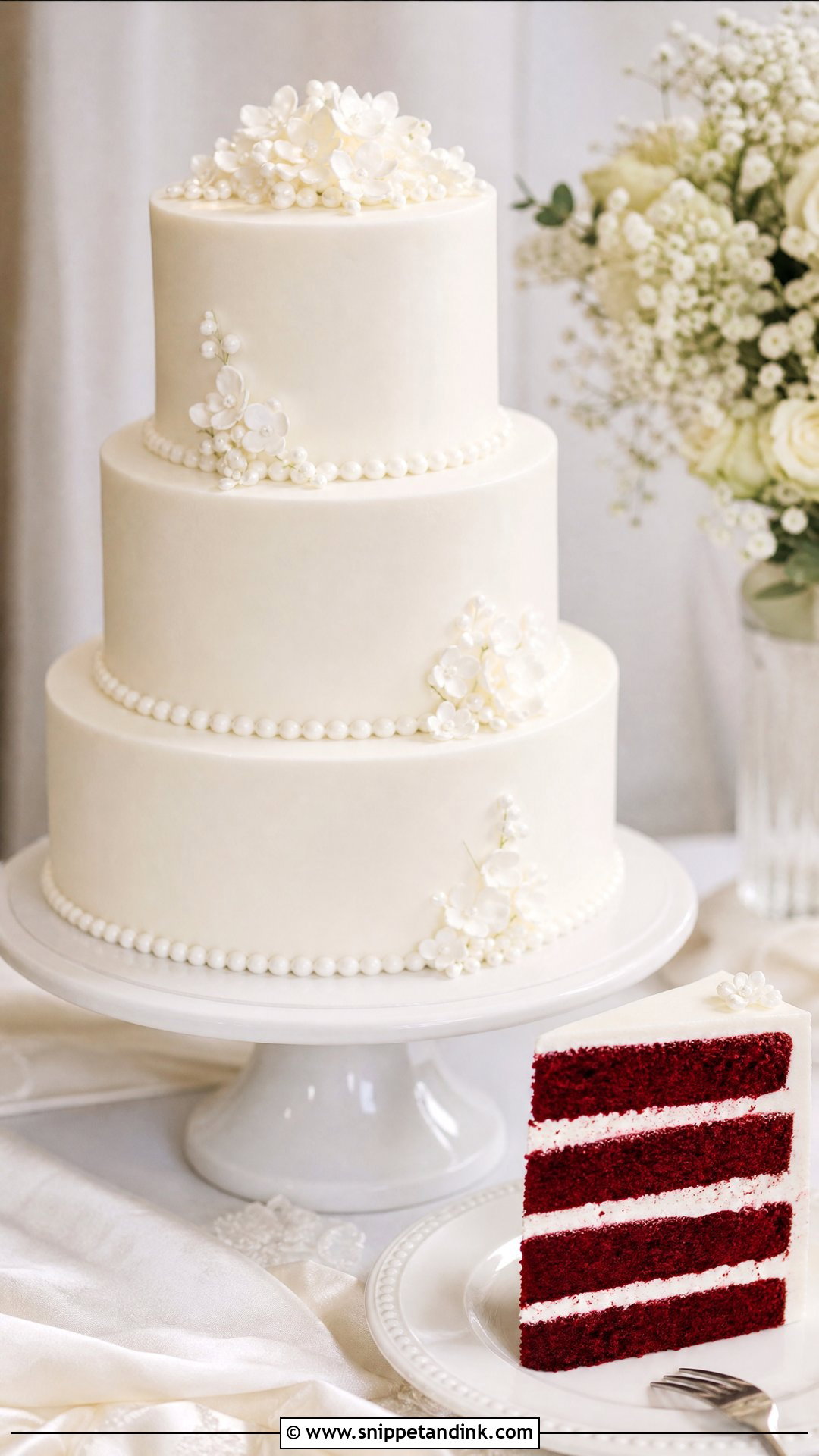
Smooth white buttercream over red layers is where most couples start, and it suits a ballroom as easily as a garden. The surprise comes when the cake is cut. One detail I never skip: a crumb coat, chilled before the final layer, because loose red crumbs show through white frosting as pink specks. If you want the classic cream cheese flavour, I’d use it as the filling and a firmer buttercream outside. Small white flowers, pearl piping or a ribbon at each tier’s base keep it simple.
2. Red Velvet Wedding Cake With Cream Cheese Frosting
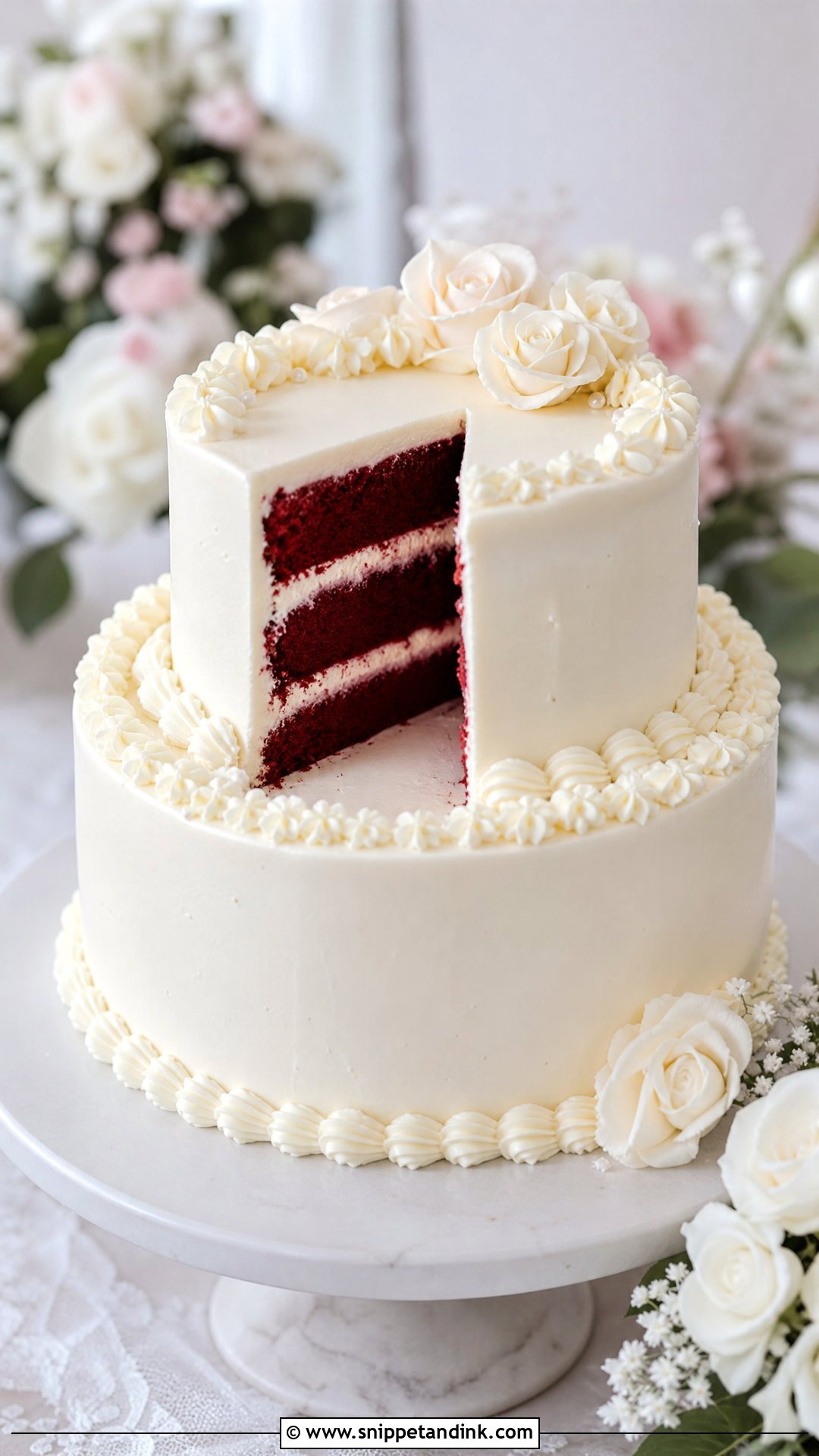
Cream cheese frosting is the traditional partner for red velvet, with a tang guests notice. I finish these cakes in a warm ivory rather than bright white, because cream cheese is naturally off-white and forcing it whiter takes colouring that can taste. The trade-off is softness. True cream cheese frosting does not hold a sharp edge and slumps in warm rooms, so it suits a smaller cake, a cool venue, or a short time out of the fridge. Piped borders, small florals and a few berries finish it.
3. Red Velvet Wedding Cake With Fresh Roses
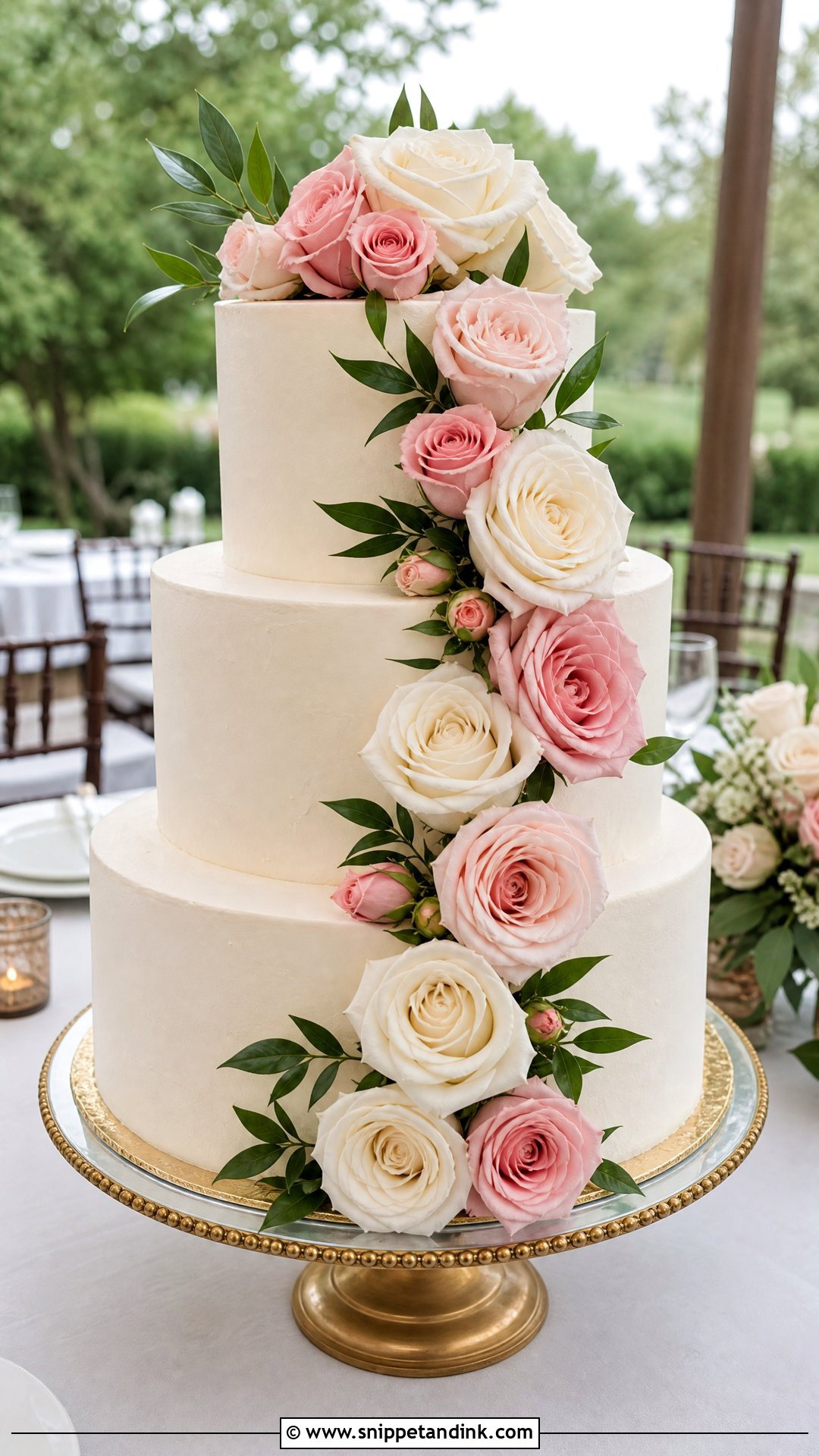
Fresh roses make red velvet feel romantic, whether in blush for a soft look or burgundy and cream for something more dramatic. A cascade down one side of a two- or three-tier cake gives a focal point without hiding the icing. Greenery between the blooms suits a garden; tight, clean clusters suit a formal room. Most roses are not food-safe straight from the florist, as they are often sprayed. I wrap stems in floral tape and insert them into straws or picks so nothing raw touches the cake.
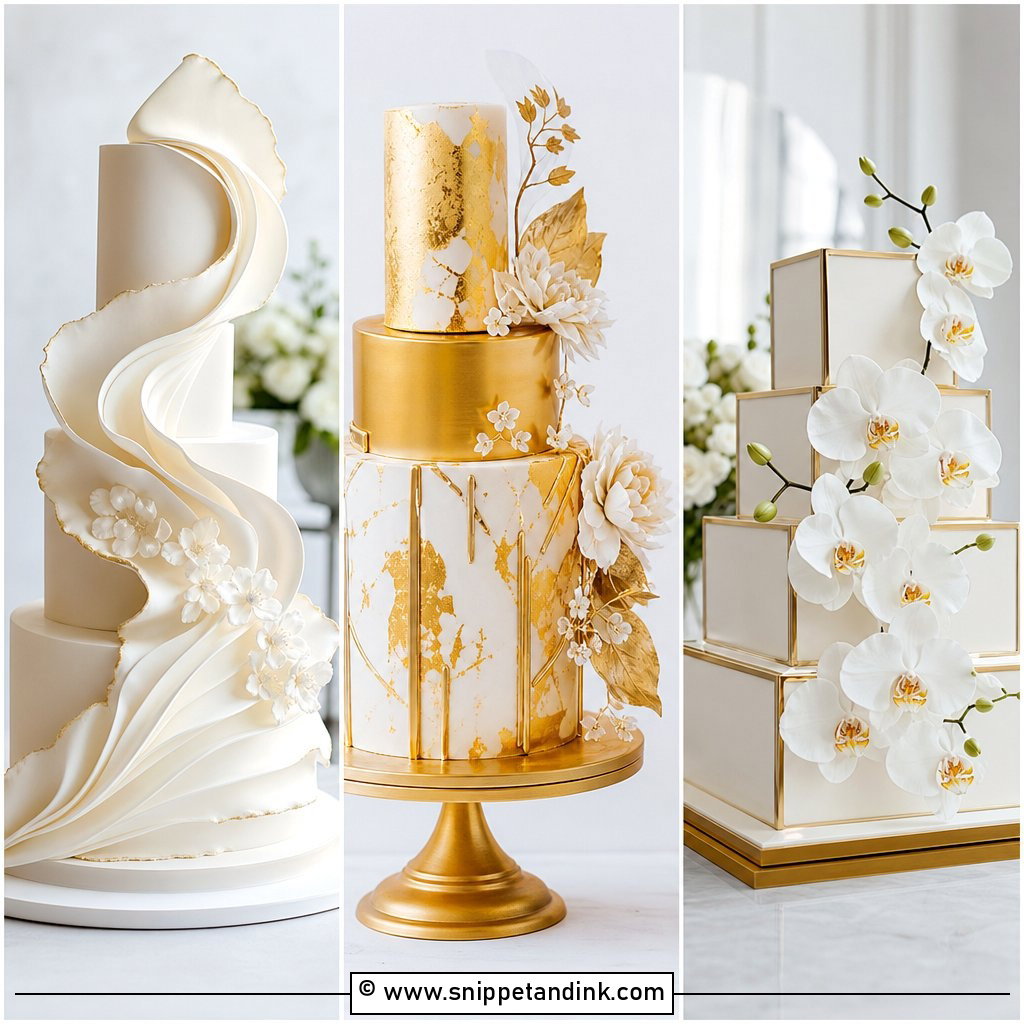
4. Red Velvet Wedding Cake With Gold Accents
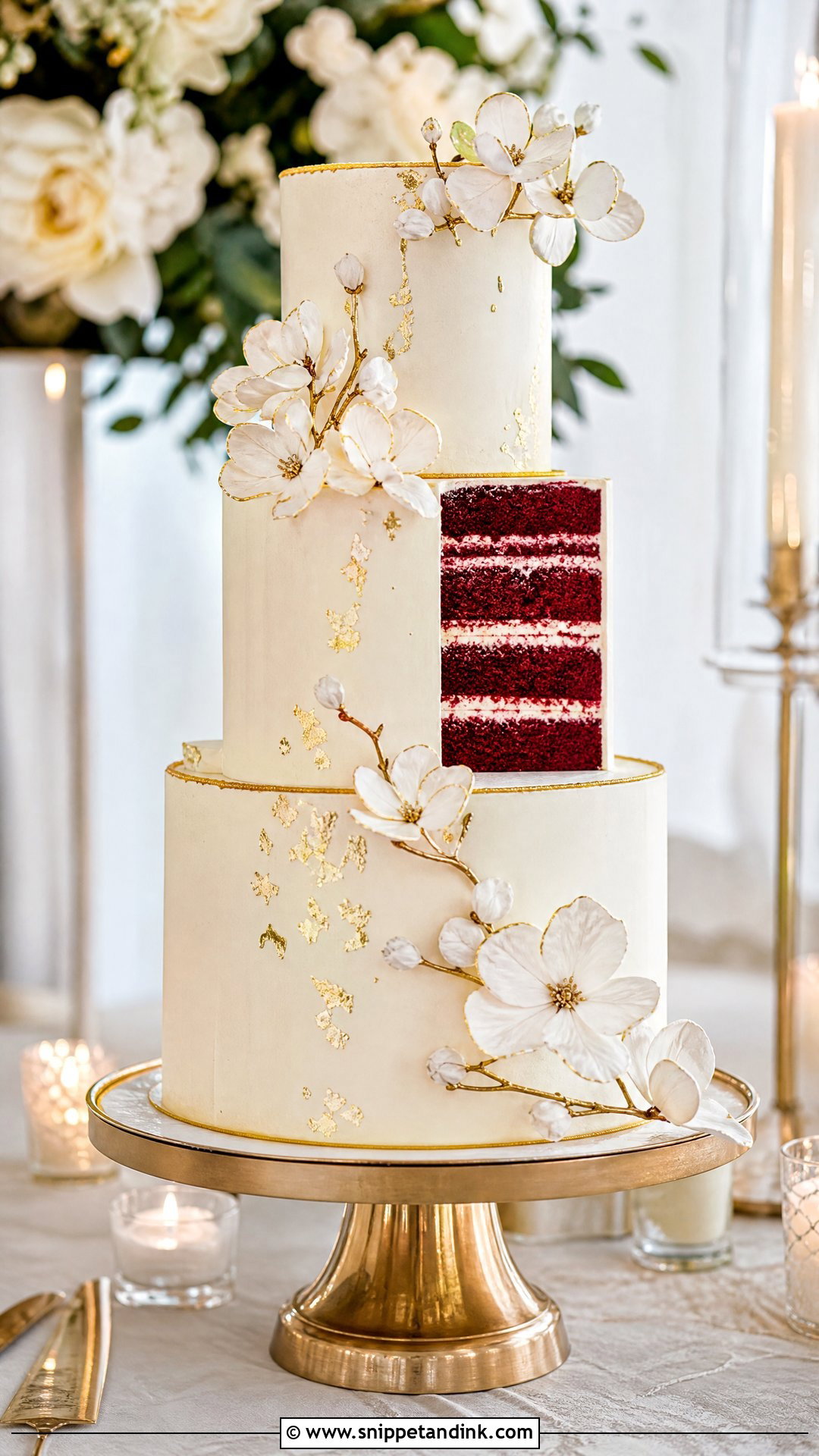
Gold leaf, painted tier edges, gold sugar pearls or a single metallic monogram against ivory frosting look their richest under candlelight, which makes this a cake for evening receptions and hotel venues. Restraint matters: one gold element per tier reads expensive, three reads busy. Gold leaf sticks best to fondant or very well-chilled buttercream. On soft cream cheese frosting, it wrinkles and slides as the surface warms.
5. Red Velvet Wedding Cake With Fresh Berries
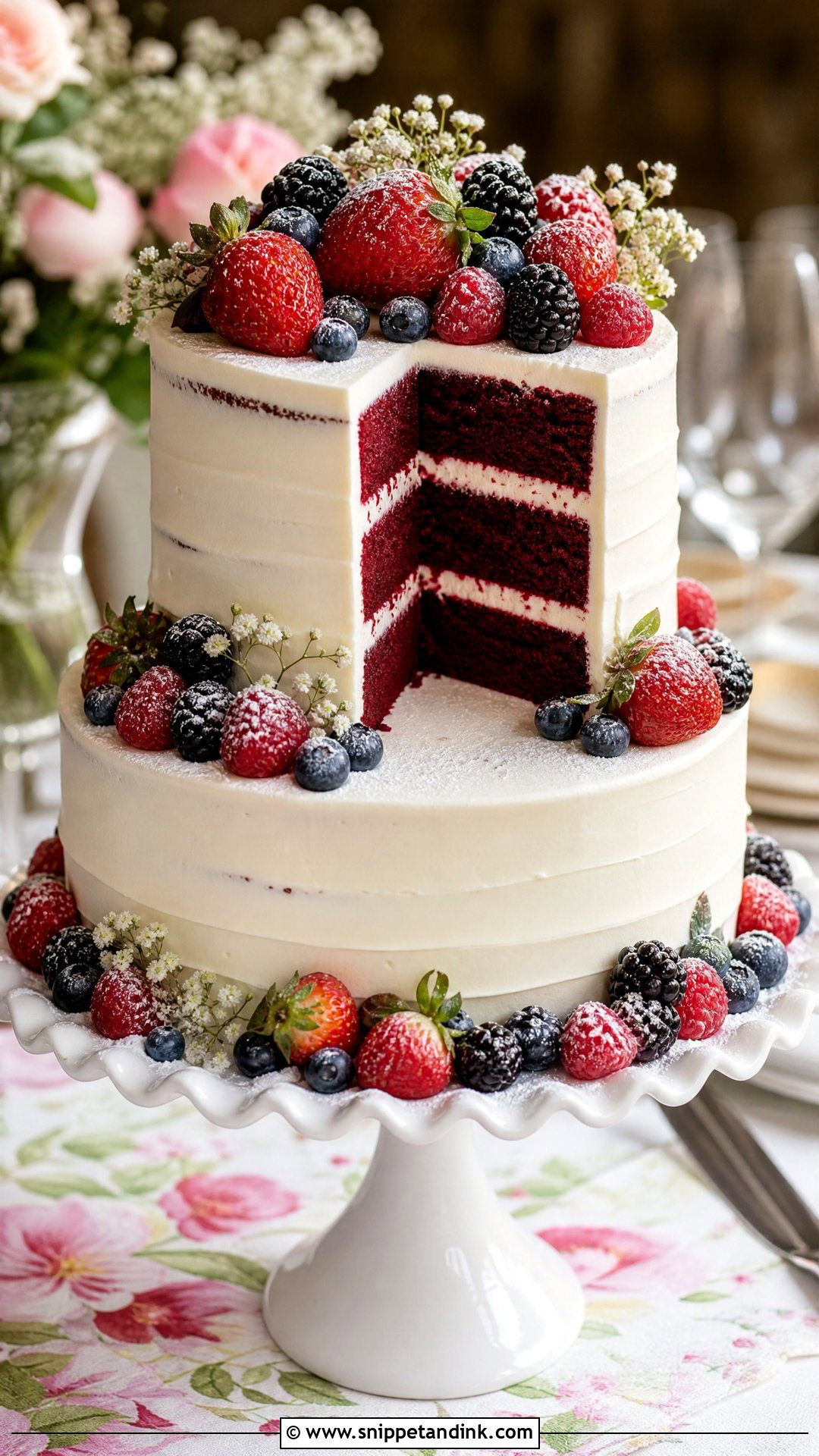
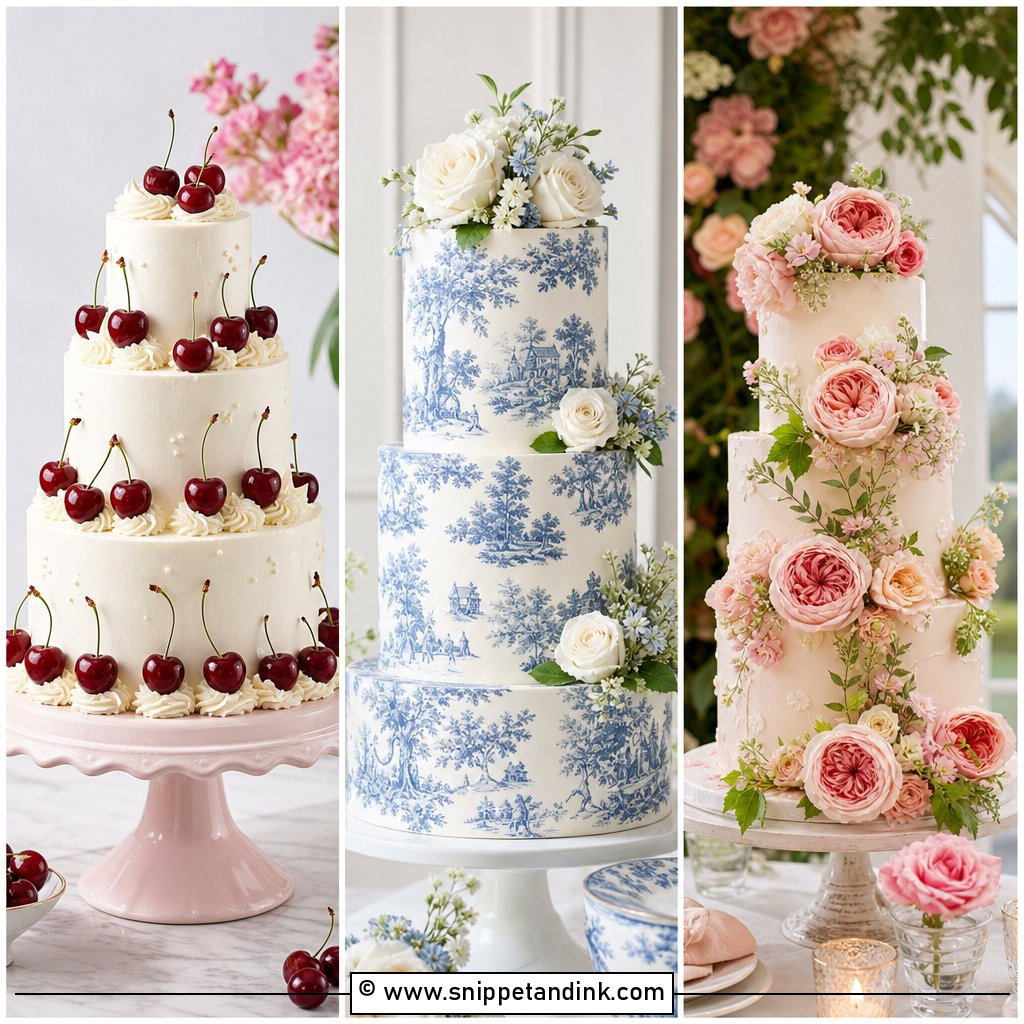
Strawberries, raspberries, blackberries and blueberries against cream cheese frosting or vanilla buttercream give red velvet wedding cake a fresh finish with very little decoration, which suits spring and summer weddings. A berry filling between the layers ties the outside to the inside. I place berries in small clusters rather than covering the cake, and I add them at the venue, not in the kitchen. Cut berries weep juice into frosting within hours, and raspberries bruise in transit.
6. Red Velvet Wedding Cake With Drip
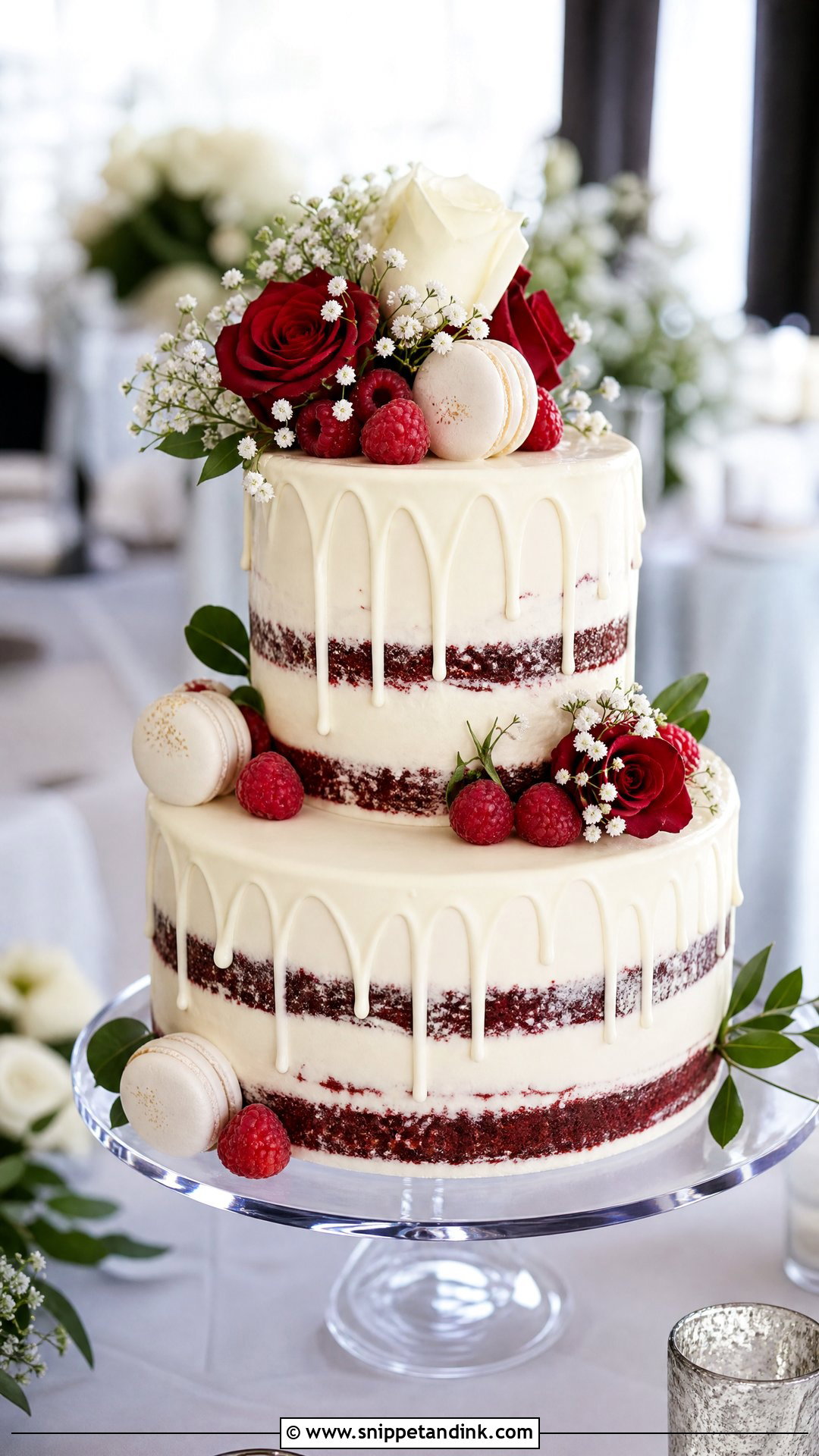
A drip turns red velvet into a modern cake while keeping it bridal. White chocolate is the softest option; deep red or dark chocolate is bolder. The drip should be controlled, so I pour ganache at a lukewarm temperature onto a fully chilled cake, which sets each drip at a neat length instead of running to the board. Buttercream, flowers, macarons or berries on top complete it, and it suits a dessert table because it looks finished from every side.
7. Red Velvet Wedding Cake With Naked Layers
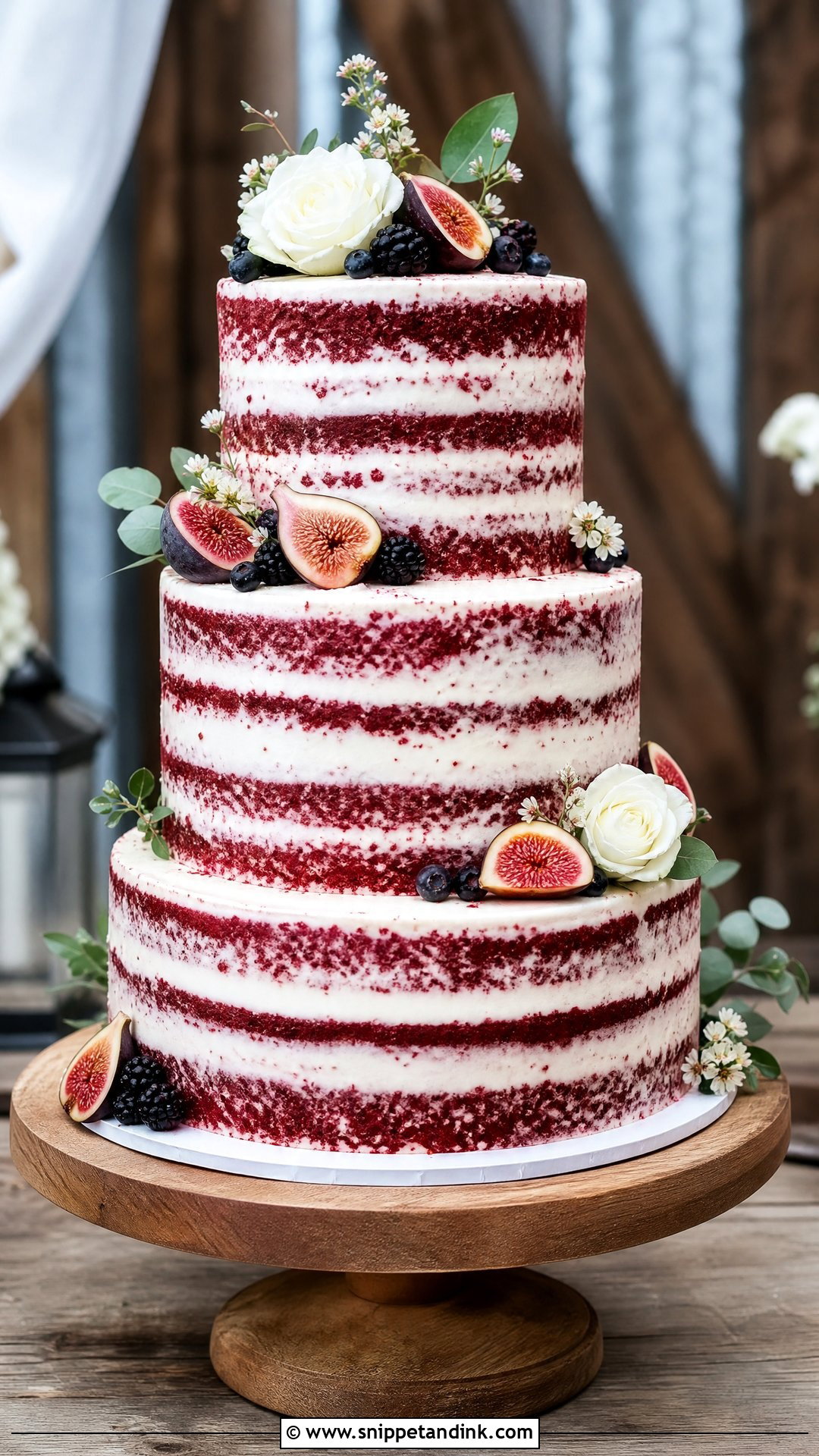
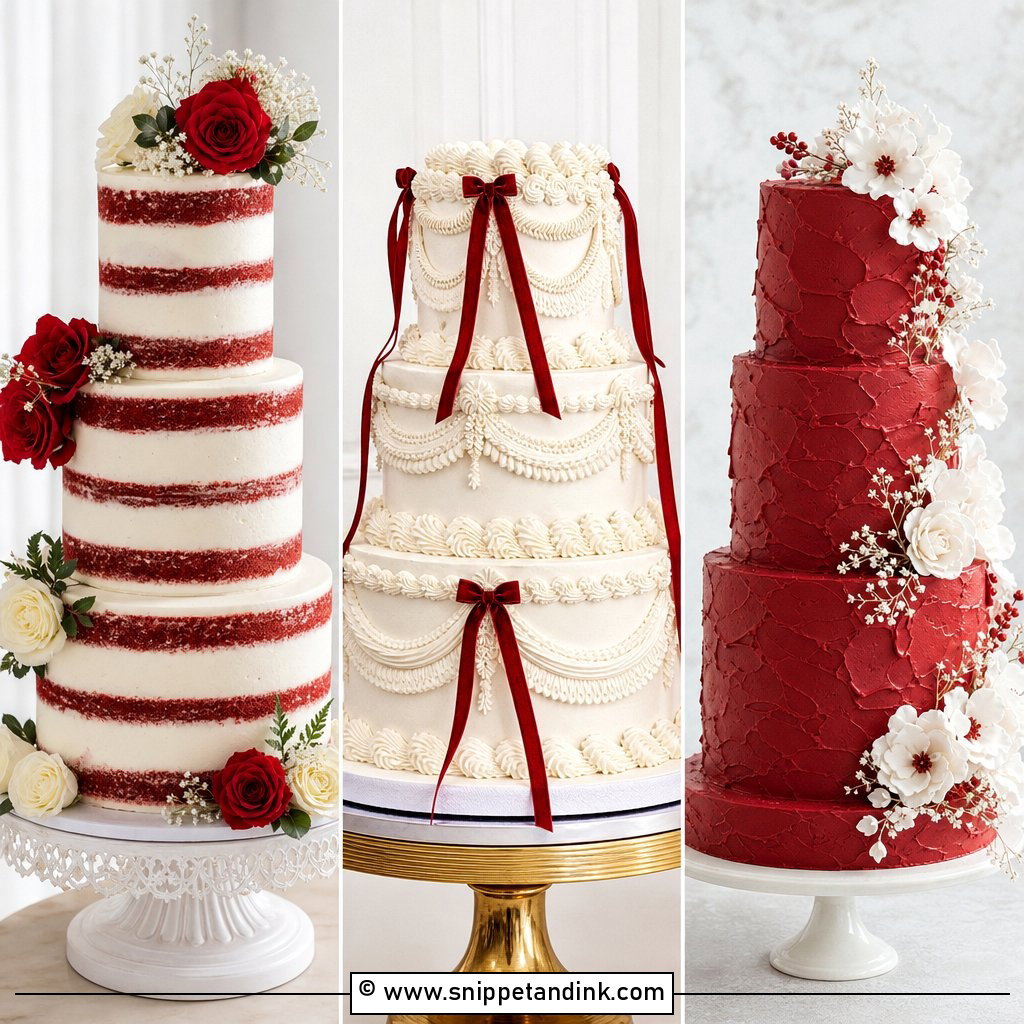
With almost no frosting on the sides, a naked cake shows off the red layers and suits rustic barns and outdoor receptions. Fresh flowers, figs, berries and greenery decorate it well. The honest drawback is moisture: exposed sponge dries quickly in air, so I brush each layer with syrup, assemble it as close to the event as possible and keep it covered until it goes out. It is not the right choice for a cake that will stand in the sun for hours.
8. Red Velvet Wedding Cake With Semi Naked Frosting
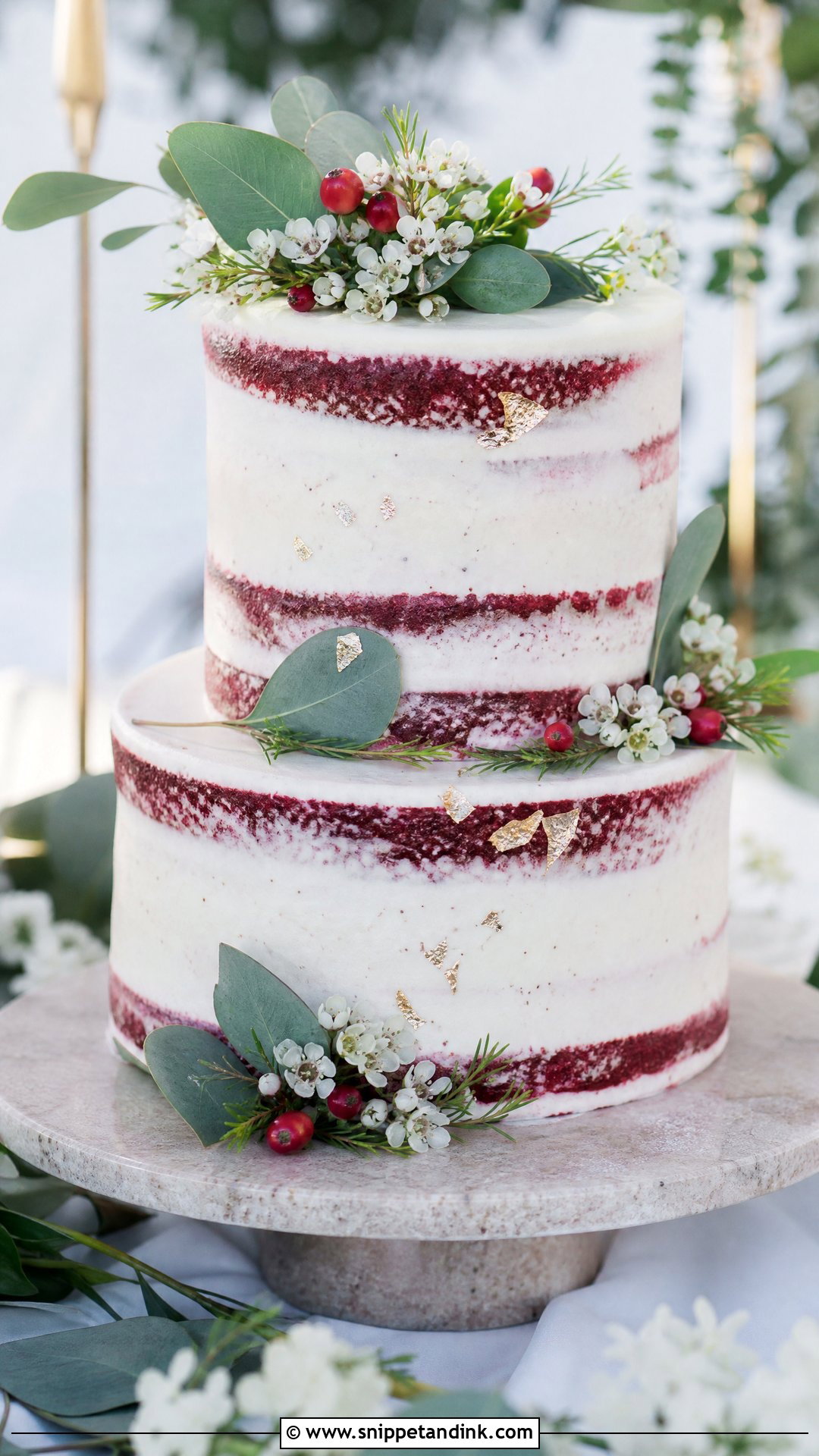
A thin scraped coat lets some red show through while sealing in more moisture than a fully naked cake. It is the compromise I suggest to couples who like the rustic look but want cleaner photos. It works with cream cheese, white buttercream or a lightly textured vanilla finish. Red velvet’s colour is strong, so the amount of red showing changes a lot with how hard the coat is scraped; agree on a photo reference with your baker beforehand. Eucalyptus, berries or small flowers finish it.
9. Red Velvet Wedding Cake With Edible Flowers
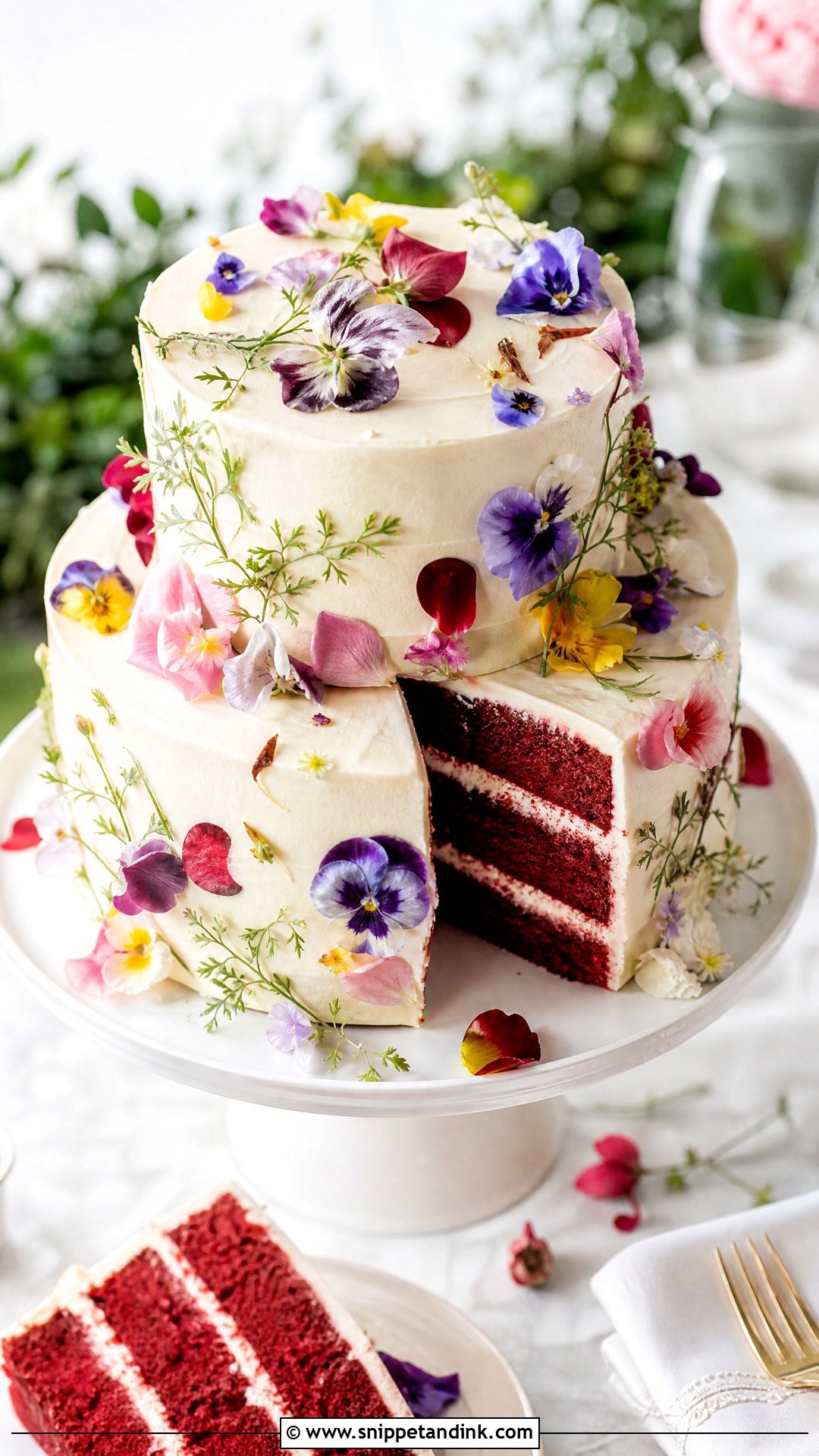
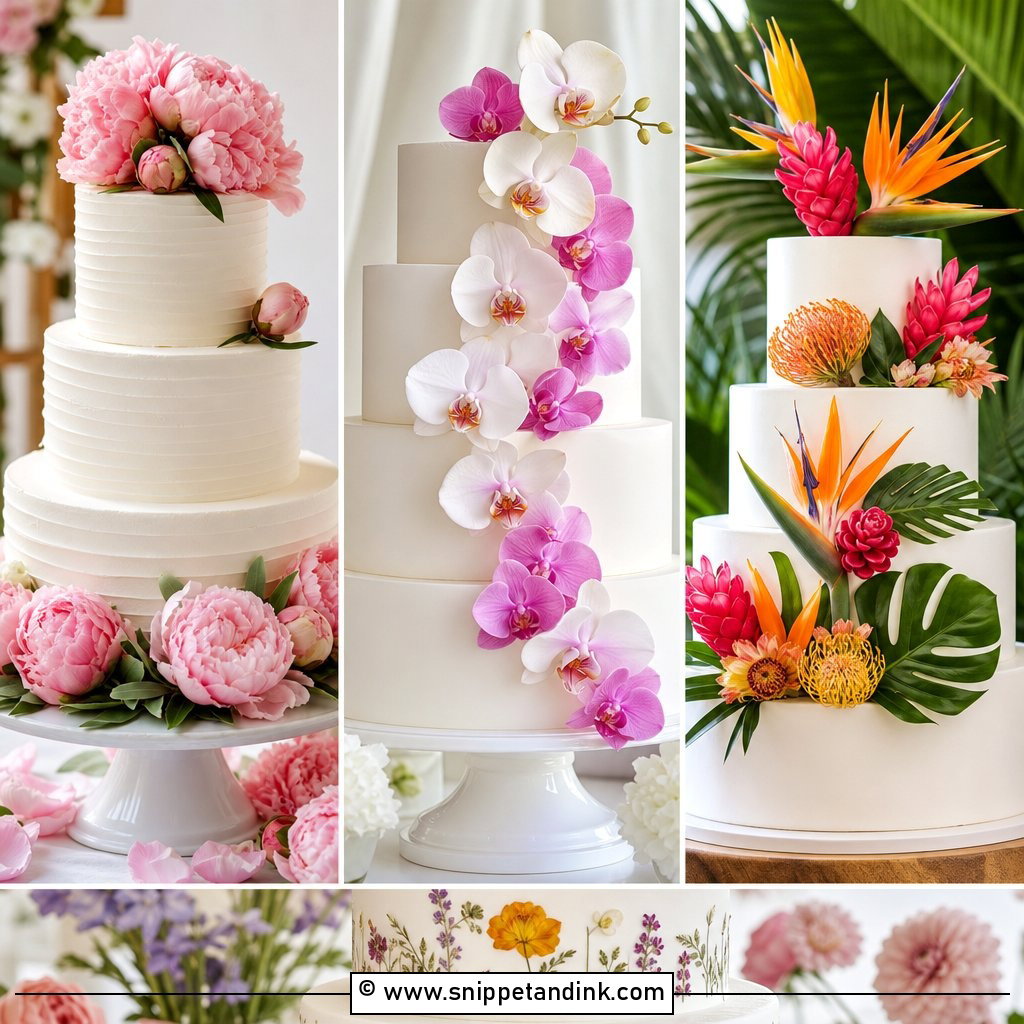
Edible flowers suit smooth or lightly textured buttercream, where they can be the main decoration. Blush, lavender, white, peach or deep red petals can follow your palette, while the red crumb stays hidden until cutting. They fit spring weddings and brunch receptions. Ask for flowers grown for eating, not florist stock, and know that delicate petals like violas and pansies wilt within a few hours in warm air, so they go on last.
10. Red Velvet Wedding Cake With Pressed Flowers
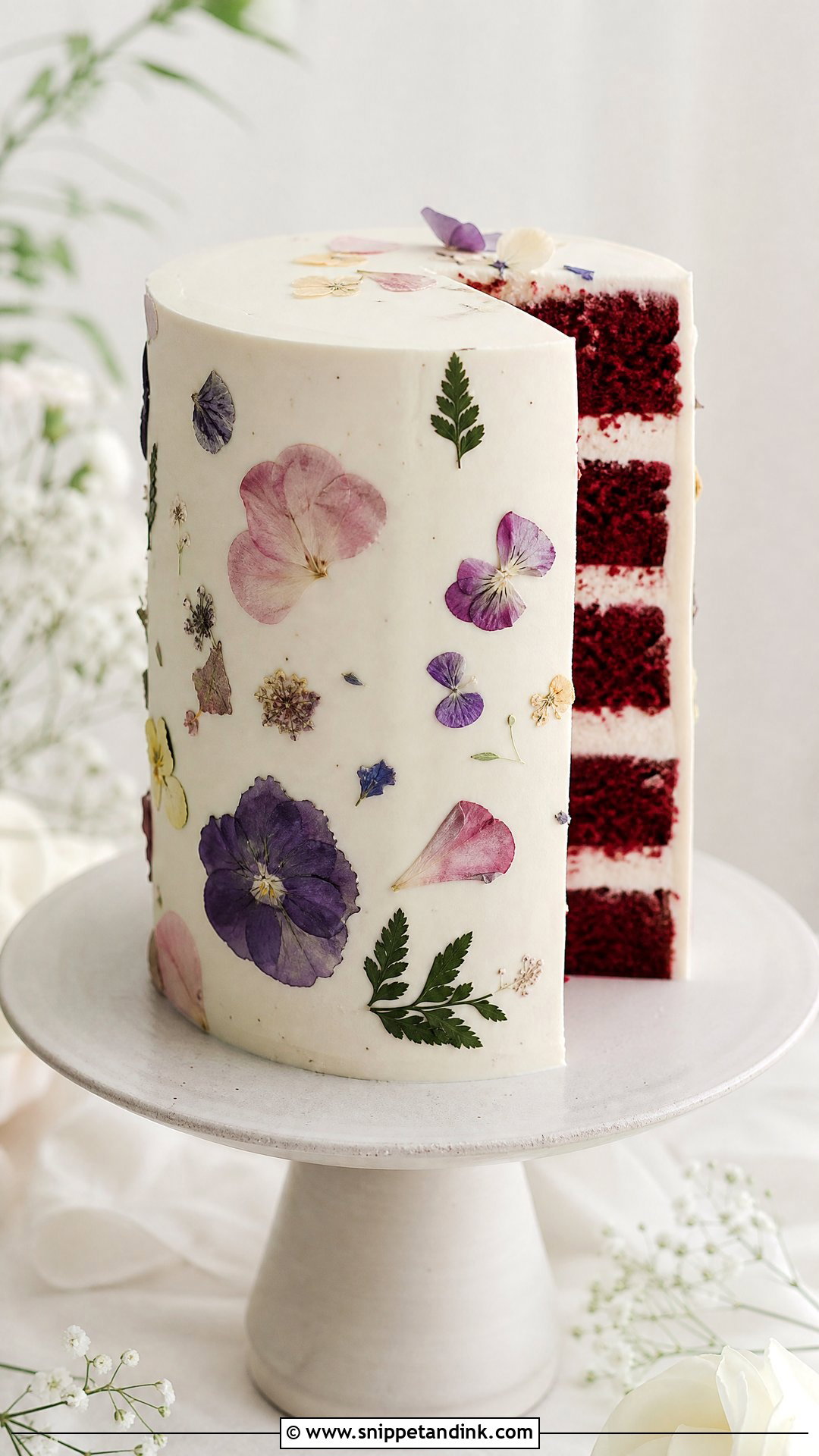
Pressed flowers lie flat against the frosting and create a soft botanical pattern, especially on a tall single tier or a simple two-tier cake. Because red velvet carries the drama inside, the outside can stay gentle. I press edible blooms flat for several days beforehand, and I apply them to chilled buttercream so they stick without sliding. Choose small flowers in your bouquet’s colours. It is a detail that looks carefully planned without being loud.
11. Red Velvet Wedding Cake With Vintage Piping
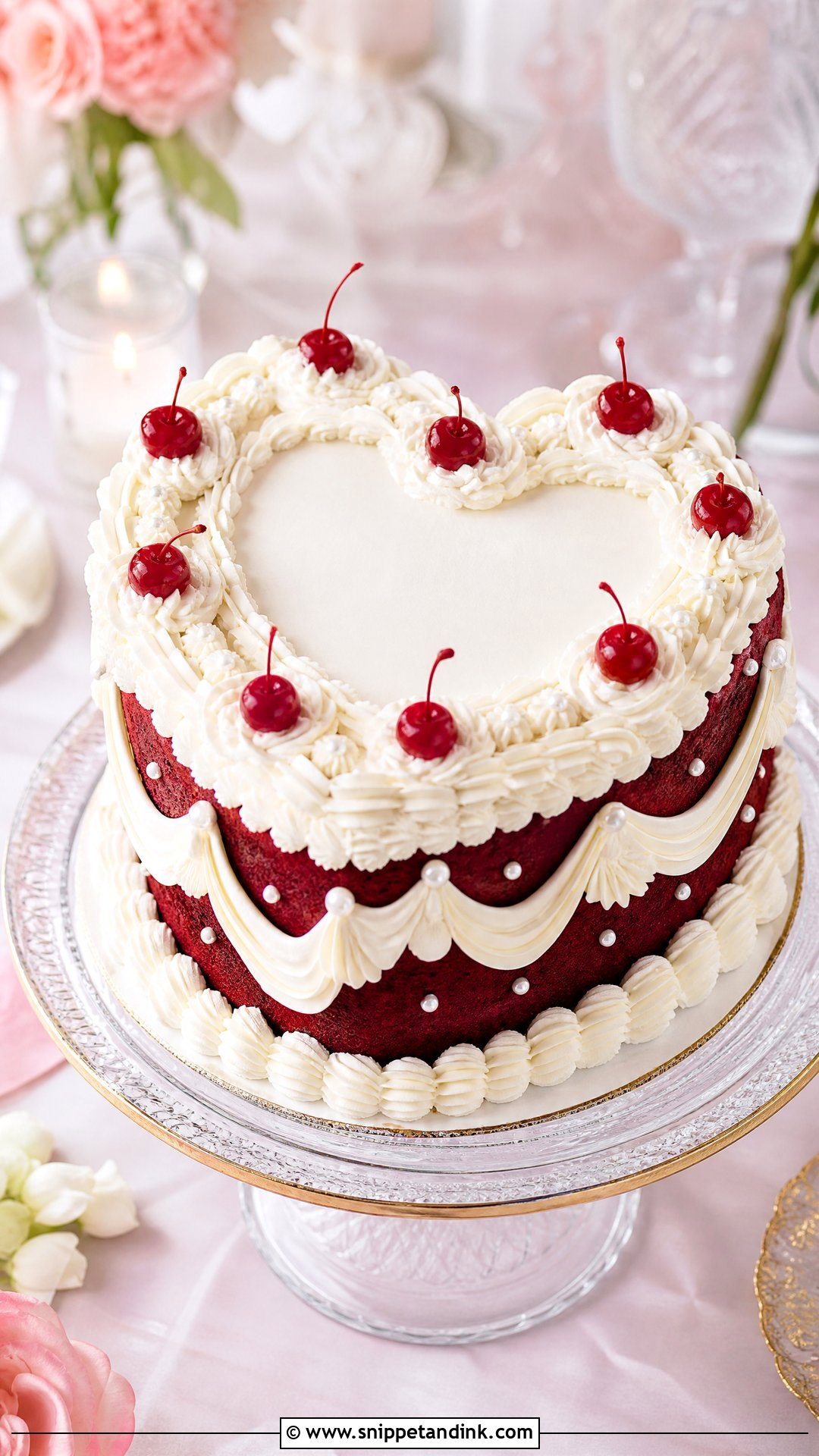
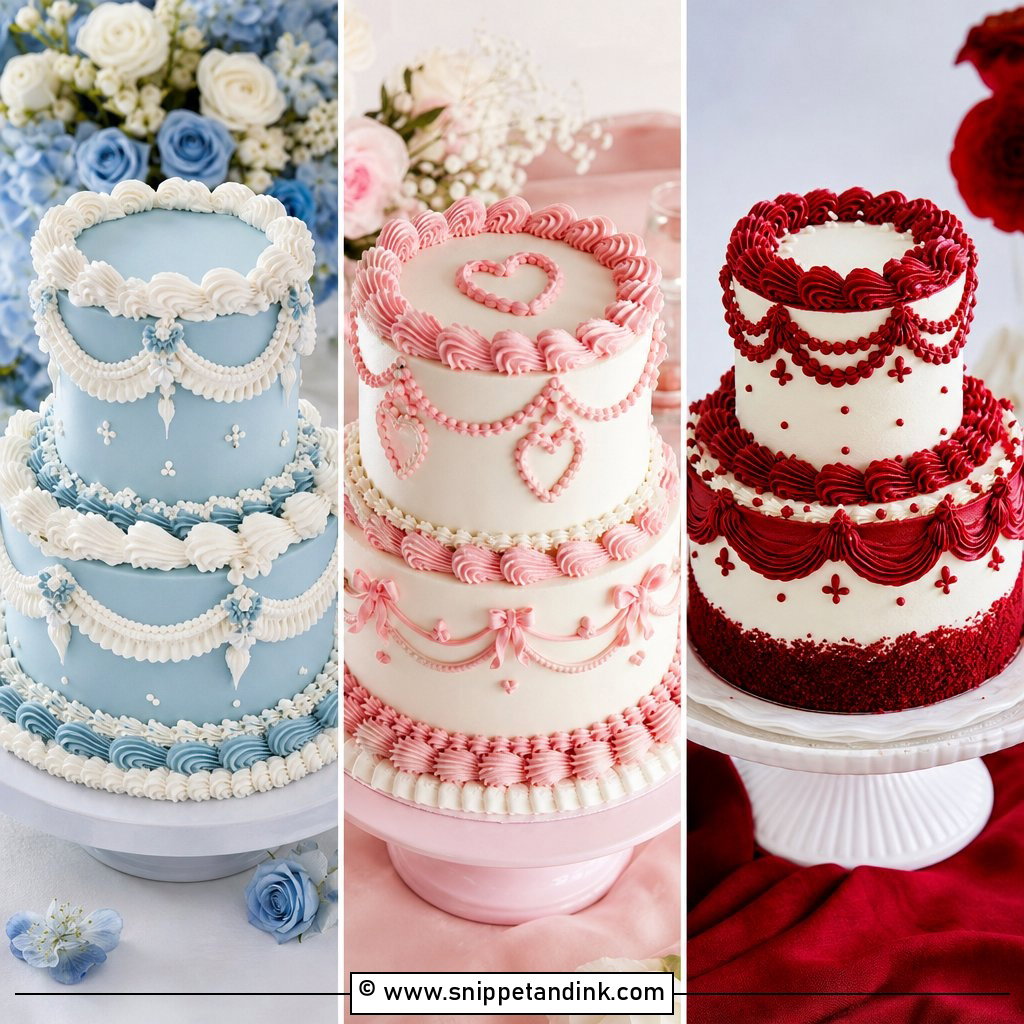
Vintage piping, with its shell borders, swags, rosettes and pearl dots, has made a strong comeback, and it looks right on red velvet. Clean colours like ivory or soft pink keep it fresh rather than dated. A heart-shaped tier, Lambeth-style overpiping or a stacked round cake all work. Fine piping needs a stiff, stable buttercream to hold its ridges; cream cheese frosting is too soft for crisp shells, so I keep that inside as the filling.
12. Red Velvet Wedding Cake With Pearl Details
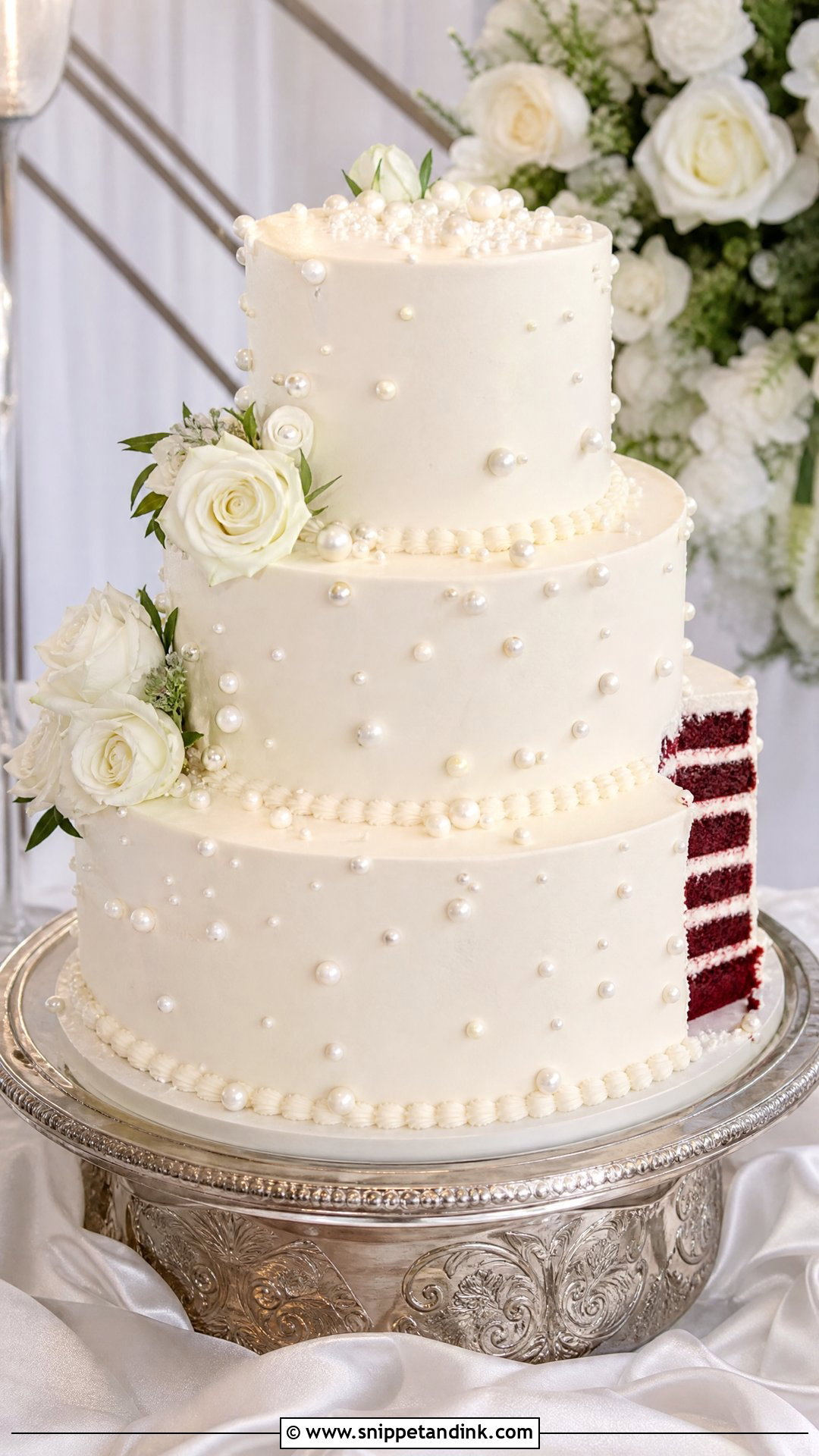
Small sugar pearls around each tier, scattered over smooth frosting or worked into piped borders give a refined bridal look. They suit ivory buttercream, cream cheese frosting or white fondant. Pearls catch the light gently in photos. A few accents keep it simple; clusters with florals make it more detailed. I set pearls into the frosting while it is still slightly tacky, as pressing them into firm icing leaves cracks.
13. Red Velvet Wedding Cake With Ruffle Frosting
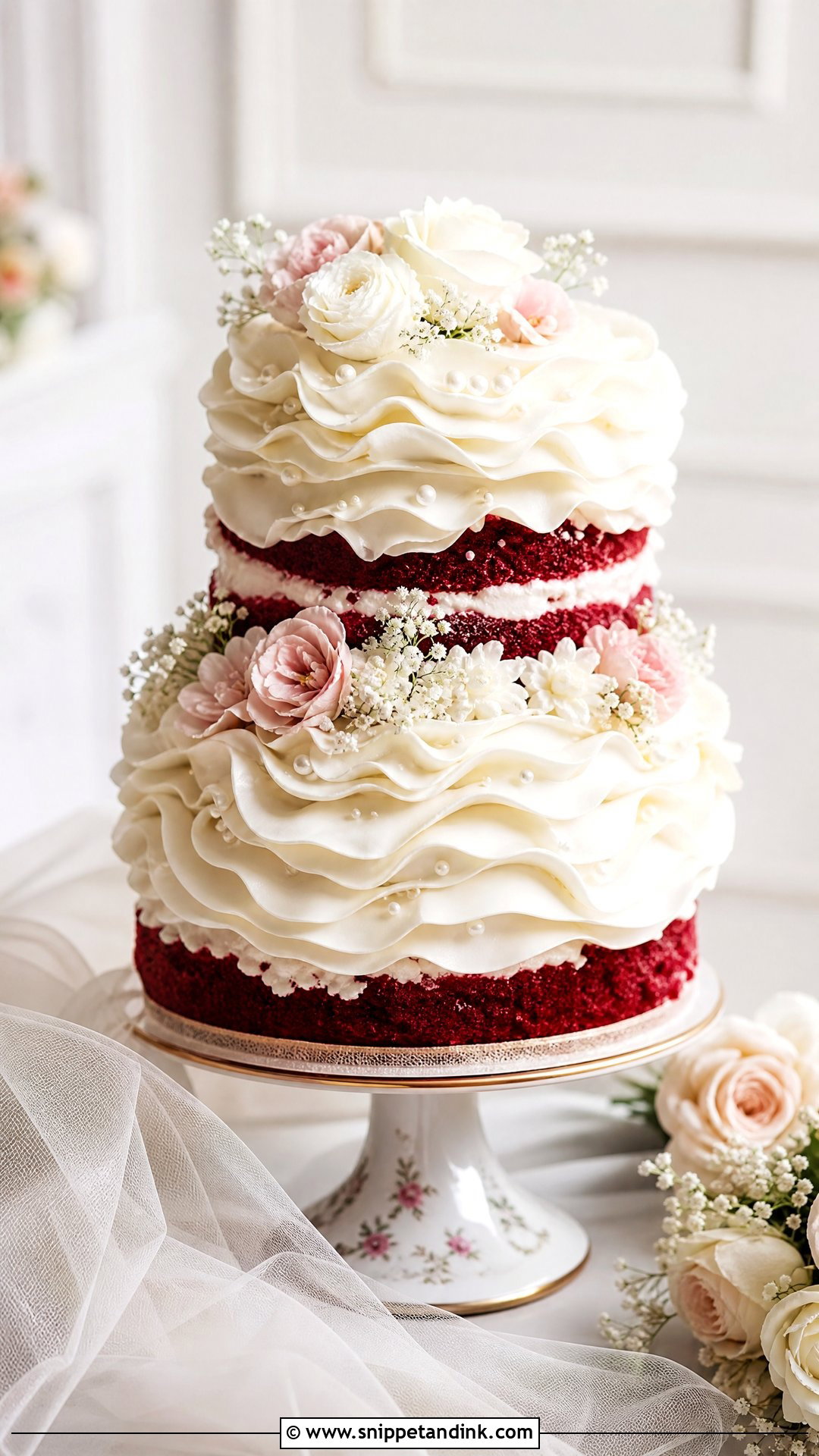
Piped ruffles can look like fabric, petals or waves, and they echo a dress with tulle or soft layers. Ivory or white keeps it bridal against the red interior. Ruffles are detailed enough to stand alone. They take a lot of buttercream, which makes each slice richer, and they need a cool room: ruffles in a warm marquee start to droop and lose definition before the cutting.
14. Red Velvet Wedding Cake With Textured Buttercream
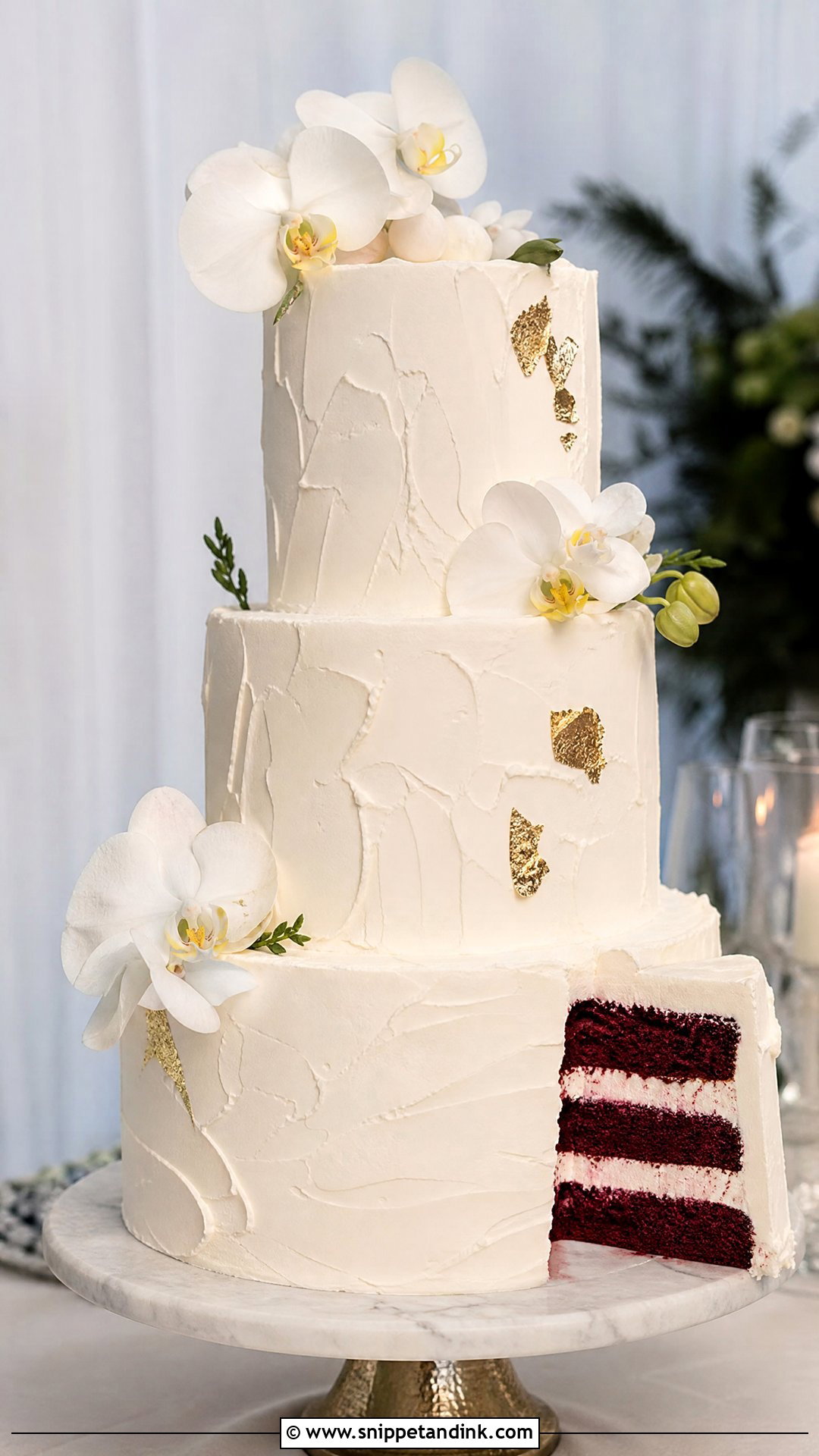
Instead of a perfectly smooth finish, textured buttercream shows spatula lines, combed ridges or a plaster-like surface. It adds depth without heavy decoration and pairs with fresh flowers, gold leaf, berries or greenery. The same technique reads coastal, rustic or minimal depending on colour and texture. It is also forgiving: small bumps from transport that would ruin a smooth cake disappear into a textured one, which is why I suggest it for outdoor venues with long drives.


15. Red Velvet Wedding Cake With Fondant Finish
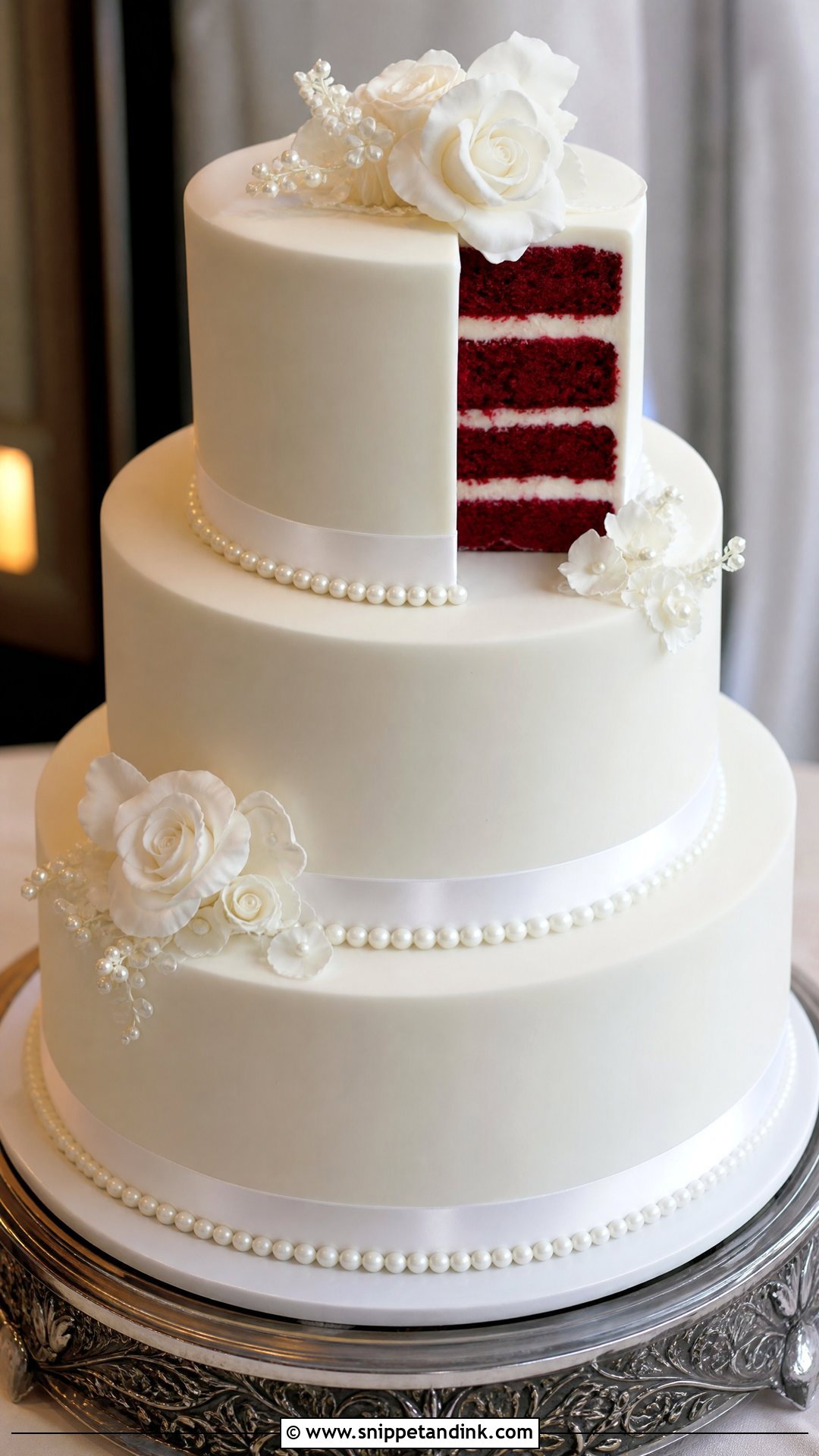
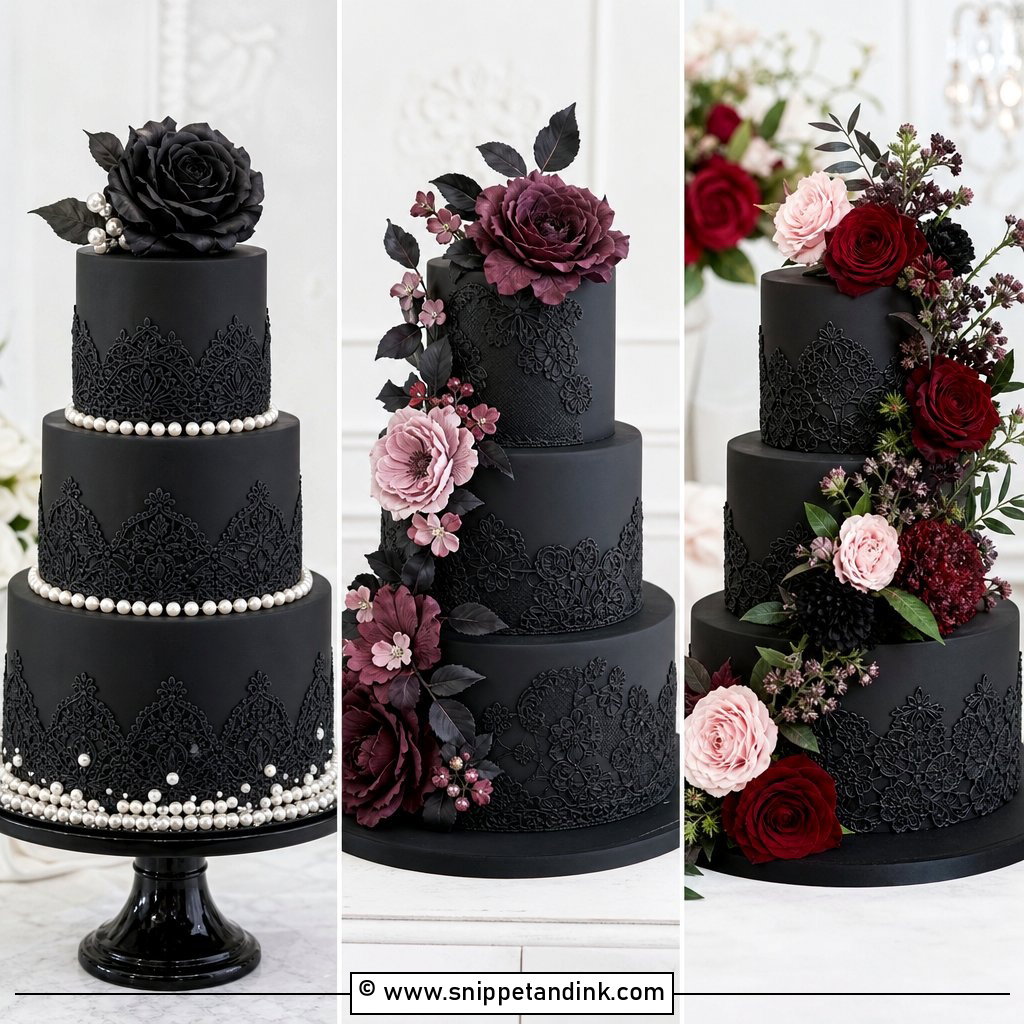
Fondant gives sharp edges and a flawless surface for painted details, lace, monograms or metallic trim, and it supports tall tiered cakes for formal and black-tie receptions. Since red velvet is traditionally paired with cream cheese frosting, many bakers use cream cheese inside and fondant outside for stability. Fondant cannot go directly over cream cheese frosting, which is too soft and moist; I put a firm ganache or buttercream layer underneath it. Keep the cake all white, or add flowers, pearls or gold.
16. Red Velvet Wedding Cake With Lace Detail
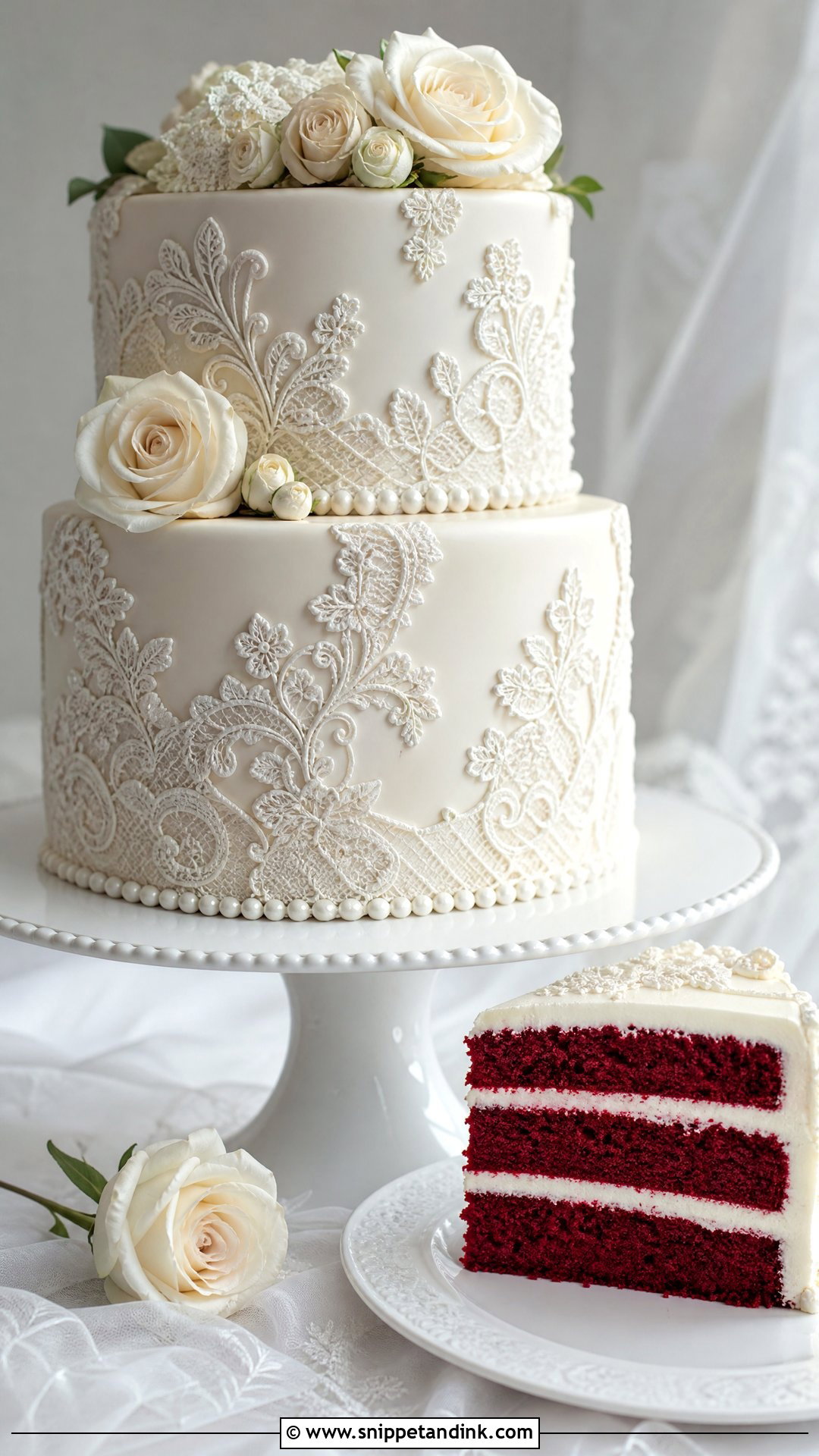
Lace in fondant, royal icing or fine buttercream piping links the cake to the dress. White over ivory is classic; blush or champagne lace feels warmer. It suits church ceremonies and indoor receptions. If you want the lace to echo your gown, bring a close-up photo of the fabric to the consultation. I’d loosely adapt a motif rather than copy the whole pattern, which ends up too busy at cake scale.
17. Red Velvet Wedding Cake With Sugar Flowers
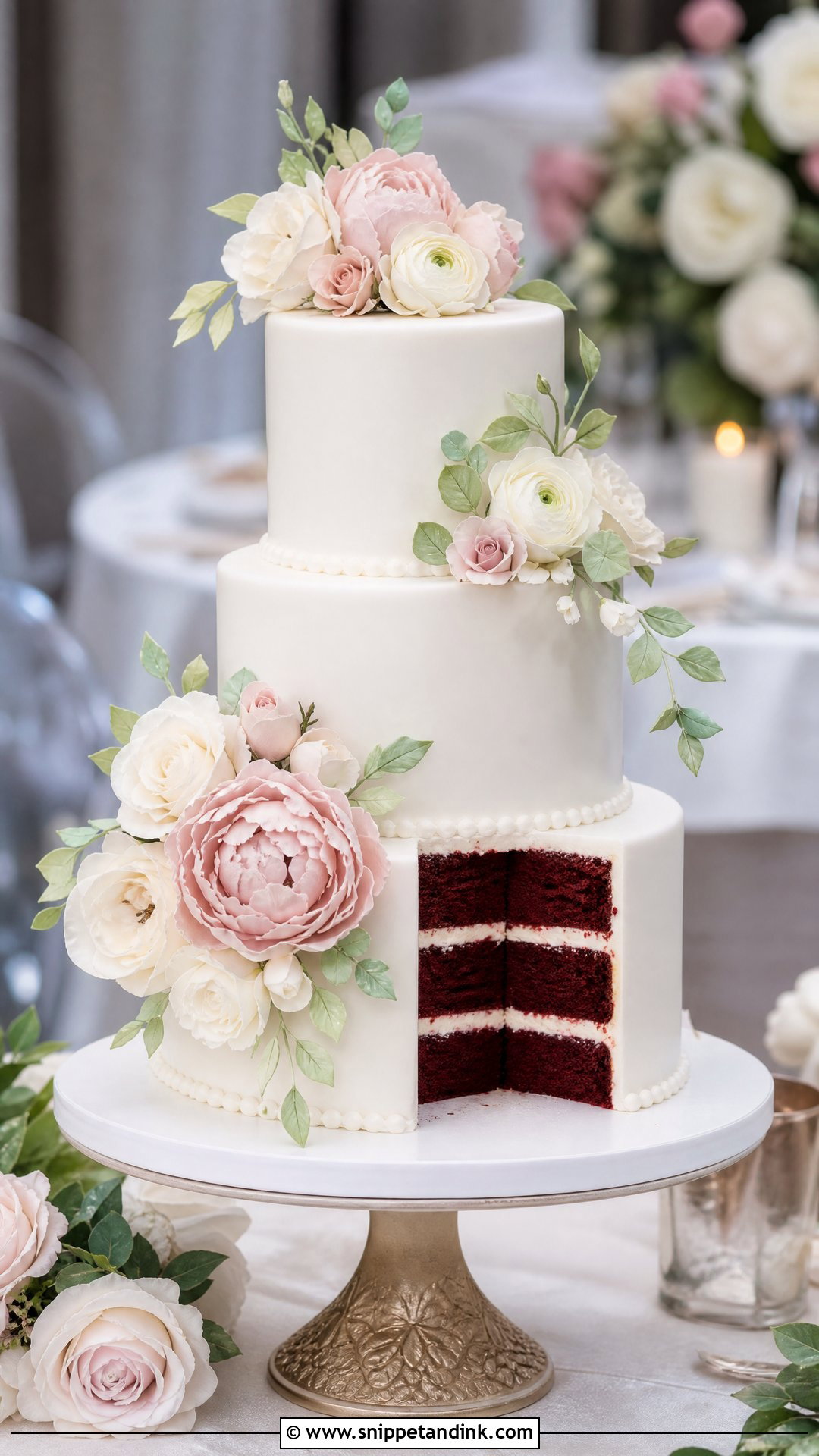
Sugar flowers never wilt, so they are my first suggestion for warm weather, destination weddings or any venue where fresh blooms would struggle. Roses, peonies, orchids, ranunculus or tiny blossoms can match your palette exactly. They show best on smooth buttercream or fondant. Budget time as well as money: realistic sugar flowers are made petal by petal and need days to dry, so they have to be ordered well ahead. They are also keepsakes, since they last for years if stored dry.
18. Red Velvet Wedding Cake With Cascading Flowers
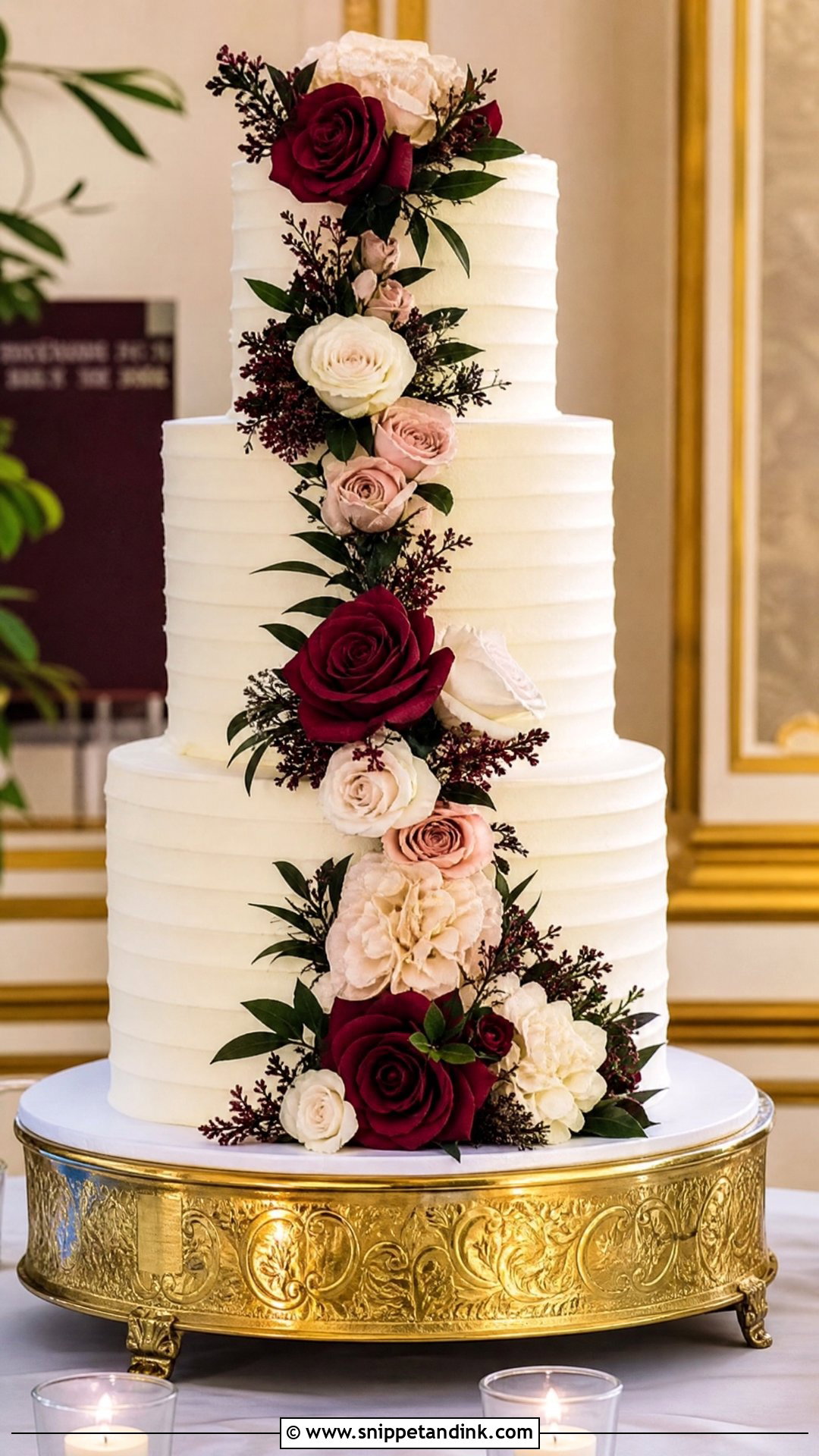
Flowers running from the top tier down one side in a diagonal give the cake height and movement, and the effect suits a three-tier cake while still adding presence to a two-tier one. White and blush blooms read soft; burgundy deepens the red velvet mood. Greenery keeps the cascade natural. A heavy fresh cascade needs support, so I insert flower picks into the tier and never let stems carry their own weight on soft icing. It is the choice when the cake table is a centrepiece.
19. Red Velvet Wedding Cake With Minimalist Style
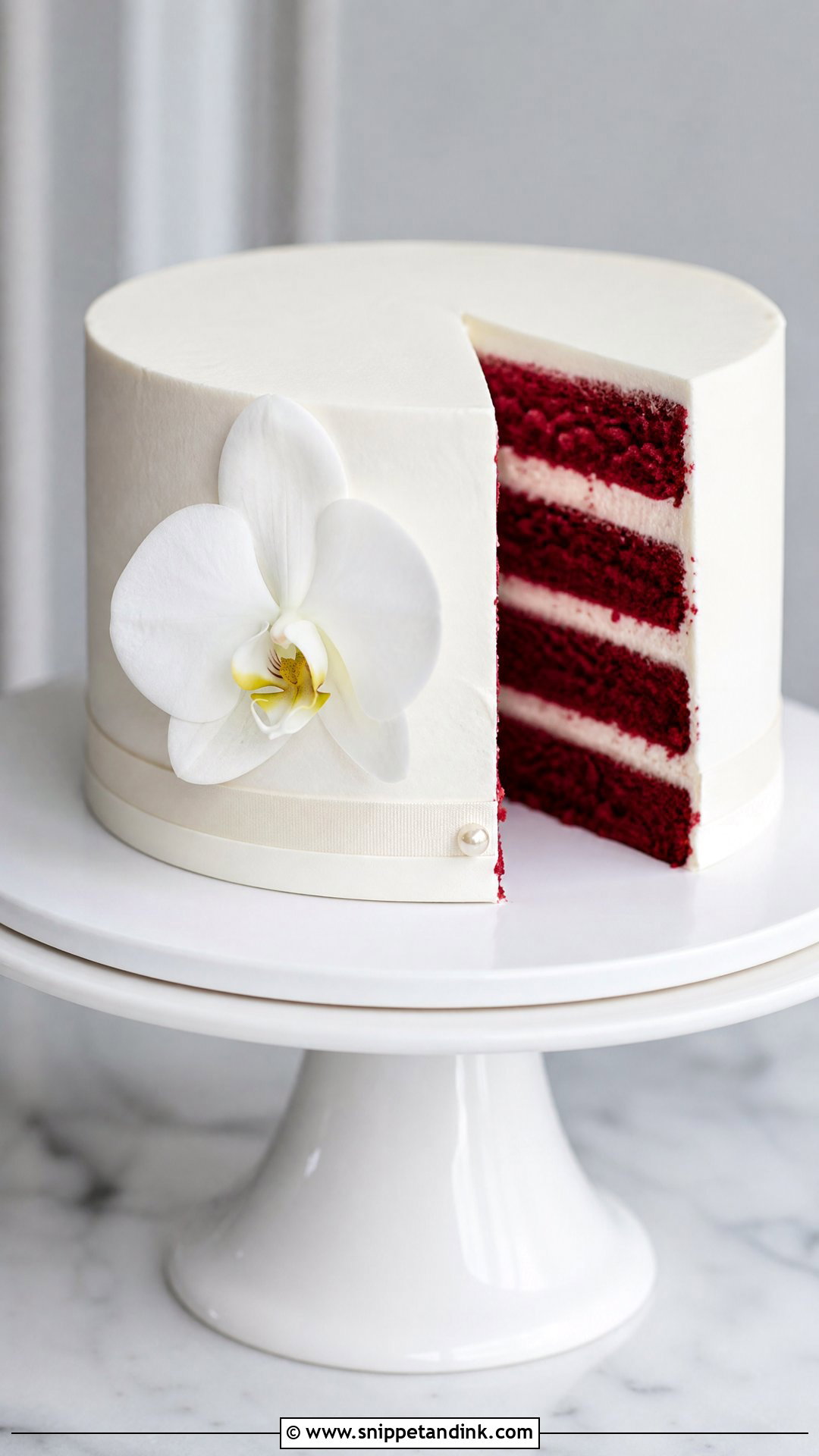
Clean lines, calm colour and a single accent, such as one flower, a fine ribbon or a small monogram, on smooth white buttercream or ivory fondant. It suits modern weddings, courthouse celebrations and intimate dinners, and the plain exterior makes the red slice more striking. Minimal cakes hide nothing, so they demand a perfectly level stack and sharp edges. A minimalist cake should look quiet, not empty.


20. Red Velvet Wedding Cake With Black And White Theme
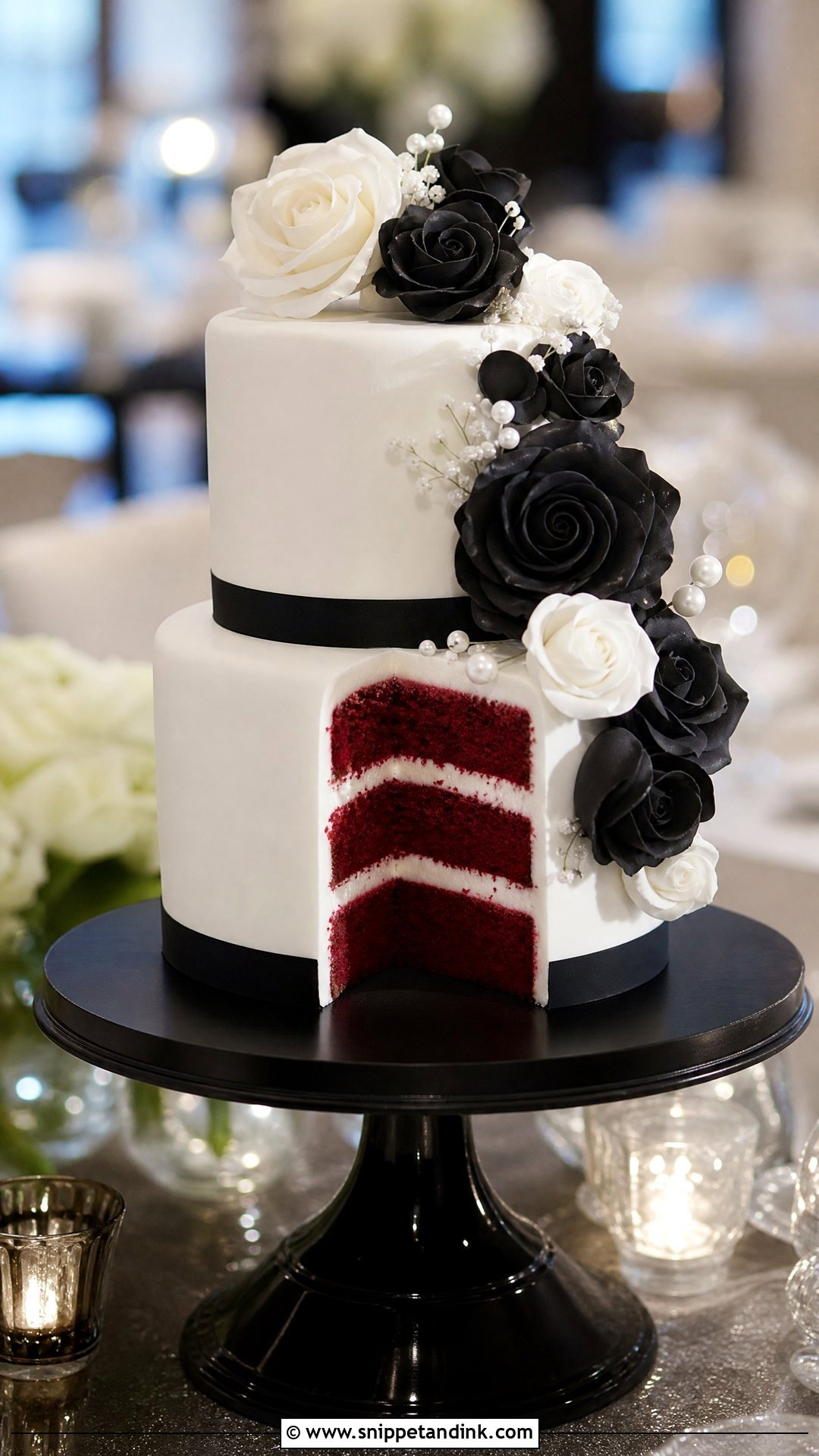
White buttercream with black ribbon, piping, painted details or small black sugar flowers looks sharp at an evening wedding in a city venue, and the red layers inside fit the dramatic theme. Use black sparingly and balance it with white flowers or pearls. Deep black icing needs a lot of colouring, which can stain teeth and taste bitter, so I keep black to fine details and ribbon rather than whole panels.
21. Red Velvet Wedding Cake With Blush Pink Flowers
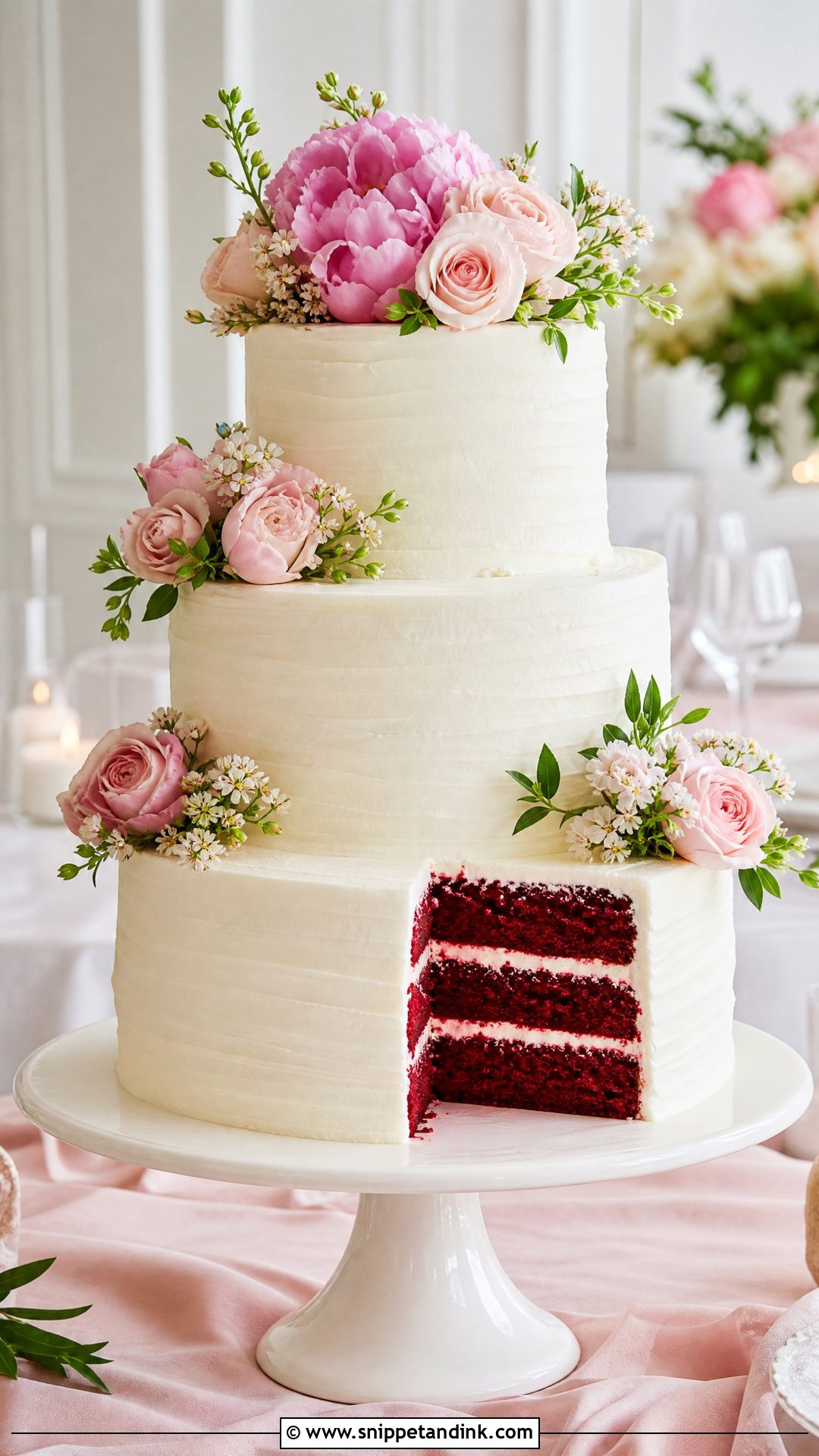
Blush roses, peonies or ranunculus on ivory or white frosting soften red velvet’s bold character and match bouquets and bridesmaid dresses easily. Small greenery keeps it fresh; gold accents make it formal. The red crumb gives depth under a gentle exterior. If you are using real flowers, ask your florist to set aside a few extra stems from your bouquet order so the cake and bouquet match exactly in shade.
22. Red Velvet Wedding Cake With Burgundy Flowers
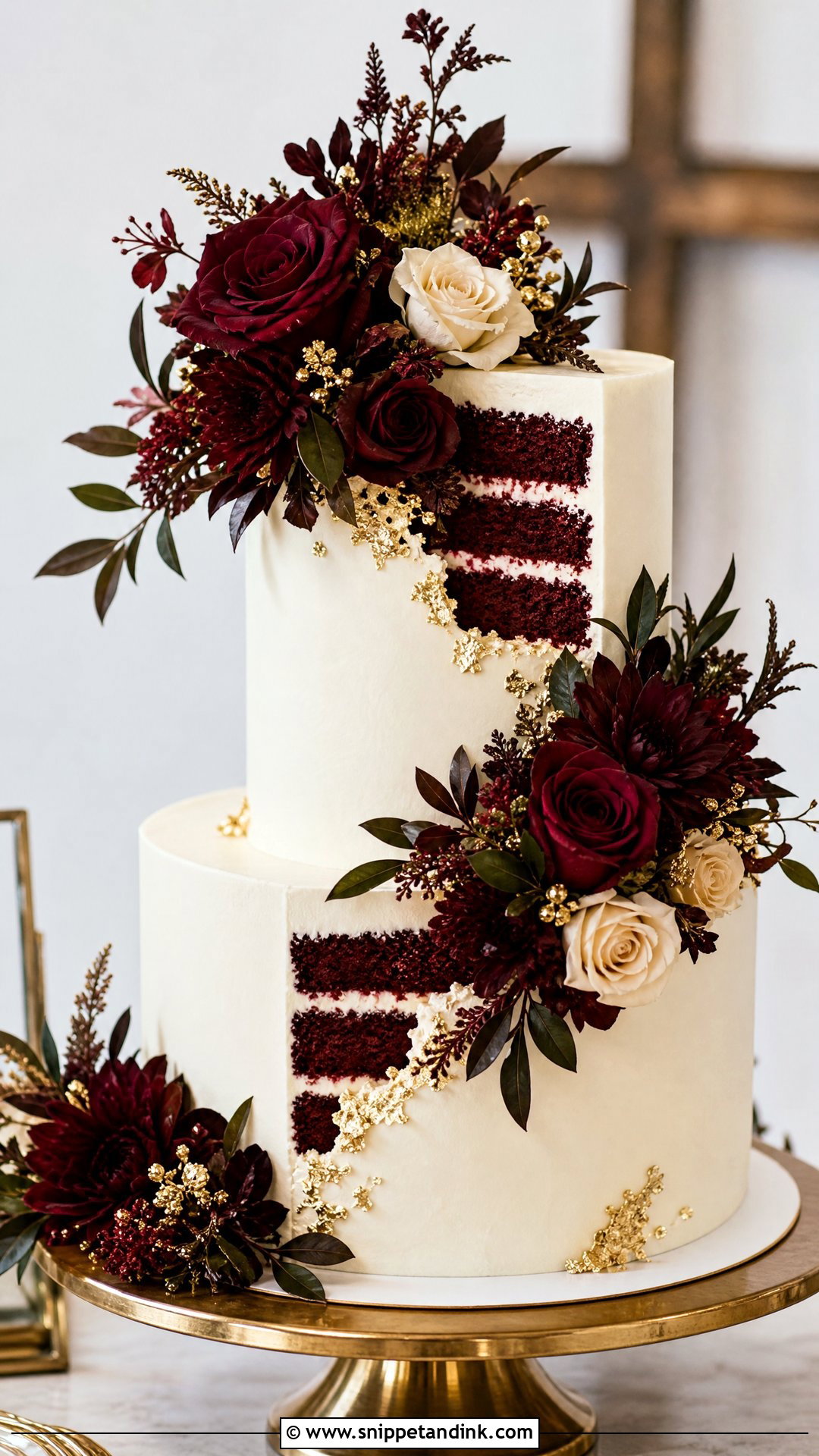
Burgundy blooms on ivory frosting make red velvet feel rich and moody, well suited to autumn weddings and warm evening lighting. They echo the crumb without making the cake look too red. Cream roses, dark greenery or small gold details balance them, on a smooth or semi-textured buttercream. Dark flowers can bleed colour onto pale icing if they are damp, so I make sure the stems and petals are dry before they are placed.
23. Red Velvet Wedding Cake With Greenery
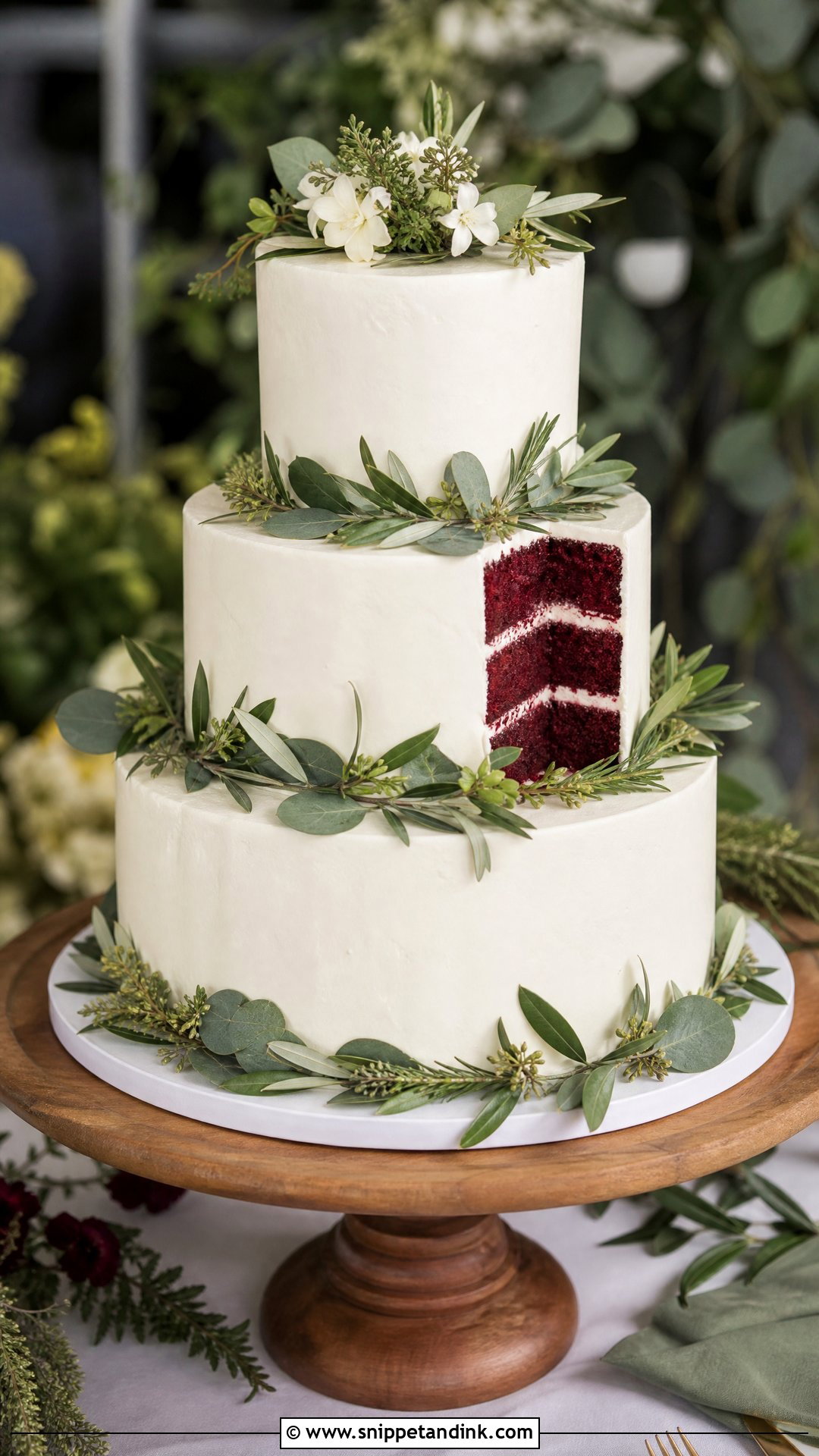
Eucalyptus, olive branches, rosemary and small leaves around the tiers or in a simple side cascade give a fresh, natural finish against white or ivory frosting. It fits garden parties and organic receptions. Some popular greenery, eucalyptus included, is not food-safe, so it should be wrapped or sit on a barrier rather than pushed straight into the cake. A few white flowers or berries add softness to the green-and-cream palette.
24. Red Velvet Wedding Cake With Heart Shape
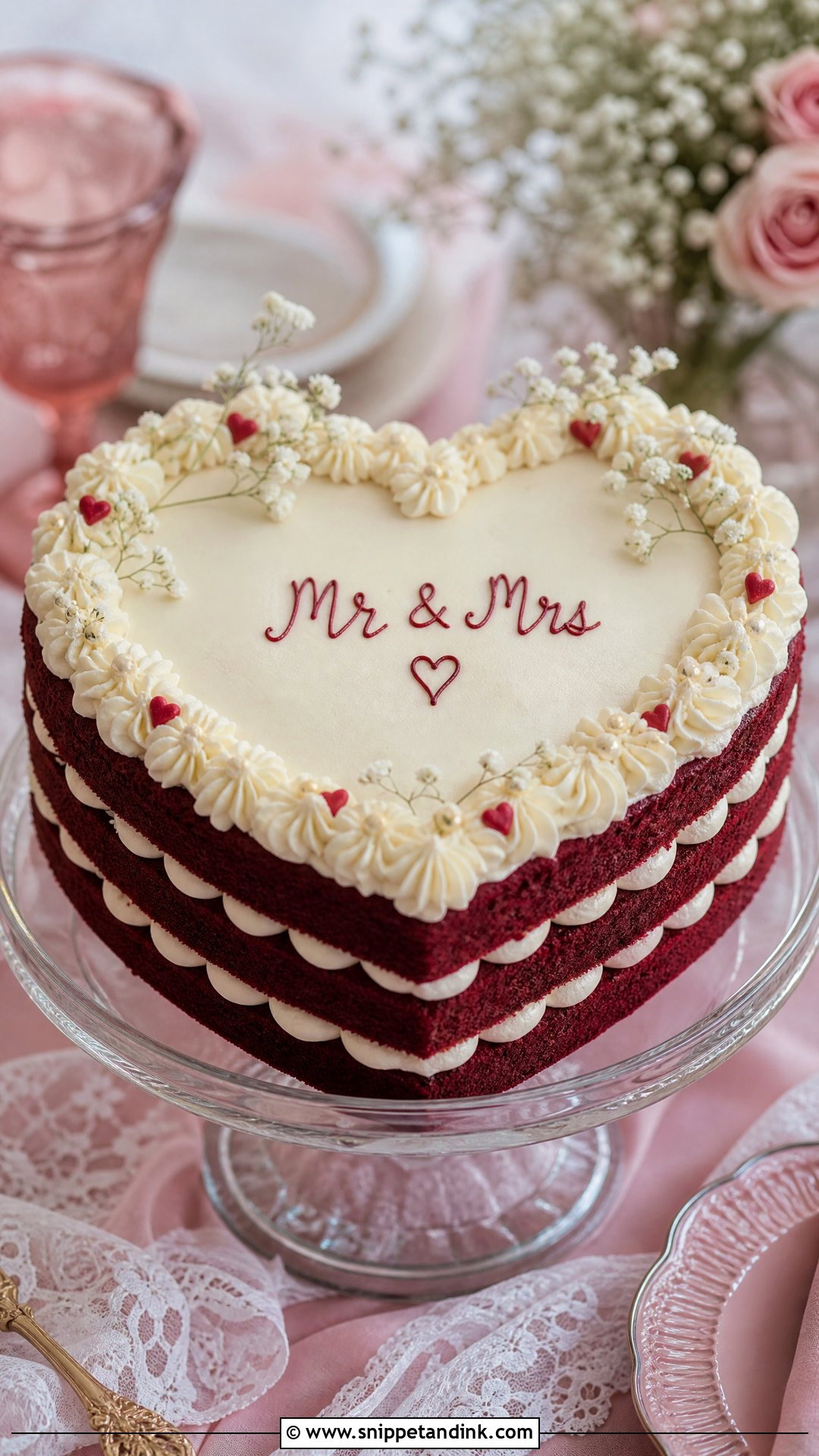
A heart shape breaks away from round tiers and works as a single-tier cutting cake, a vintage piped cake or a dessert table centrepiece. Since the shape already has personality, white buttercream, pearl borders and small flowers are enough. Red velvet suits it naturally. Hearts are harder to ice cleanly than rounds, especially at the point and the dip at the top, so I chill between coats. It suits intimate weddings and elopements well.

25. Red Velvet Wedding Cake With Square Tiers
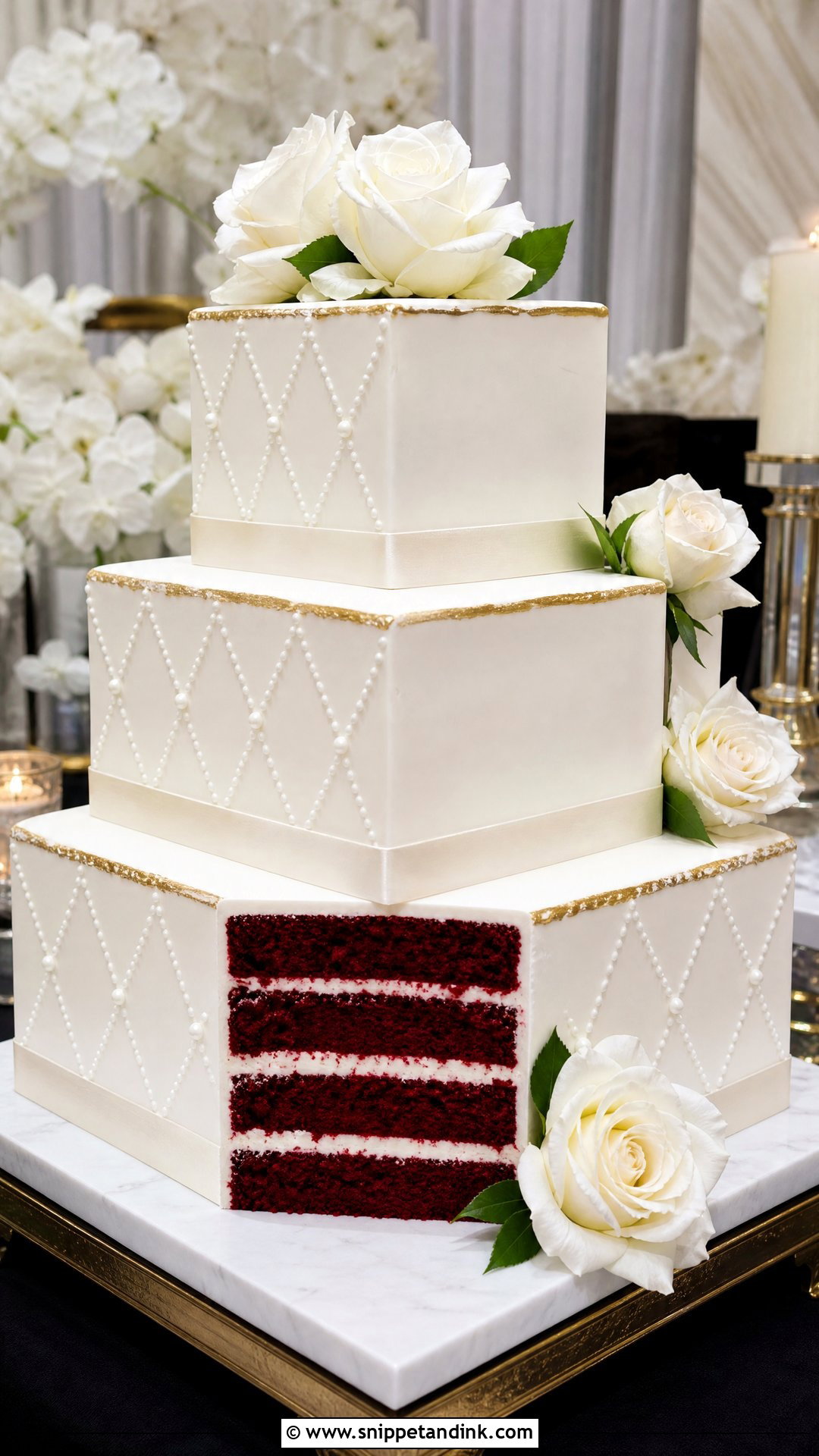
Square tiers look architectural, with sharp corners in smooth fondant or crisp buttercream, and they suit formal and contemporary venues. Decoration can be ribbon and flowers or lace, gold edges and geometric piping. Square cakes also cut into neat, even portions, which helps your caterer. Corners are where buttercream cracks and fondant tears, so I’d only choose this shape if your baker shows you square cakes they have made before.
26. Red Velvet Wedding Cake With Tall Tiers
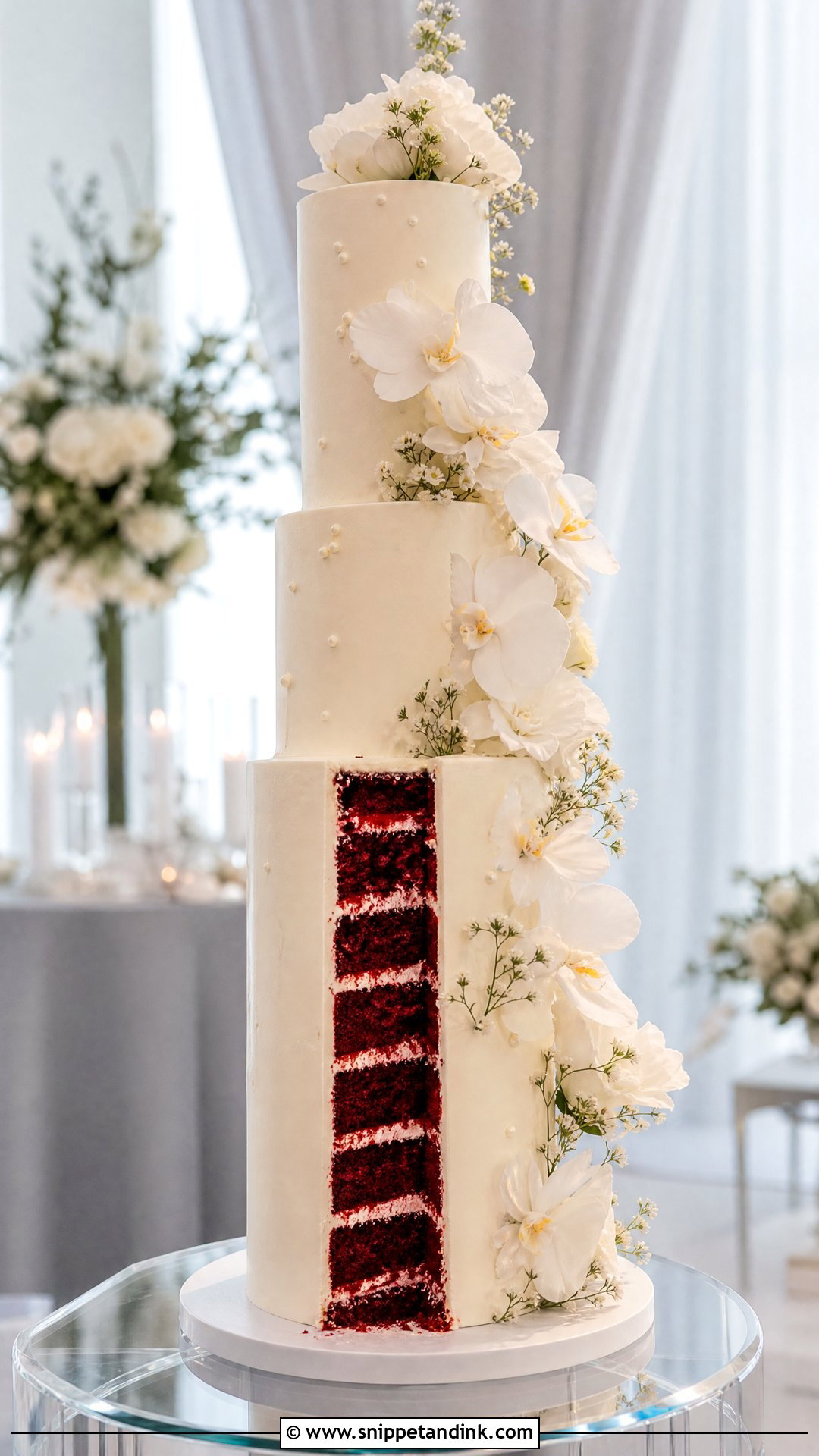
Extra-tall tiers give a two- or three-level cake the presence of a much bigger one. They suit smooth buttercream, fondant or a light texture, and the extra surface carries vertical florals, modern piping or ribbon. Inside, a tall tier is usually two stacked cakes separated by a board and dowels, which keeps the slices a sensible height and stops the tier from compressing. It is the smart way to get height without five or six tiers.
27. Red Velvet Wedding Cake With Floral Wreath
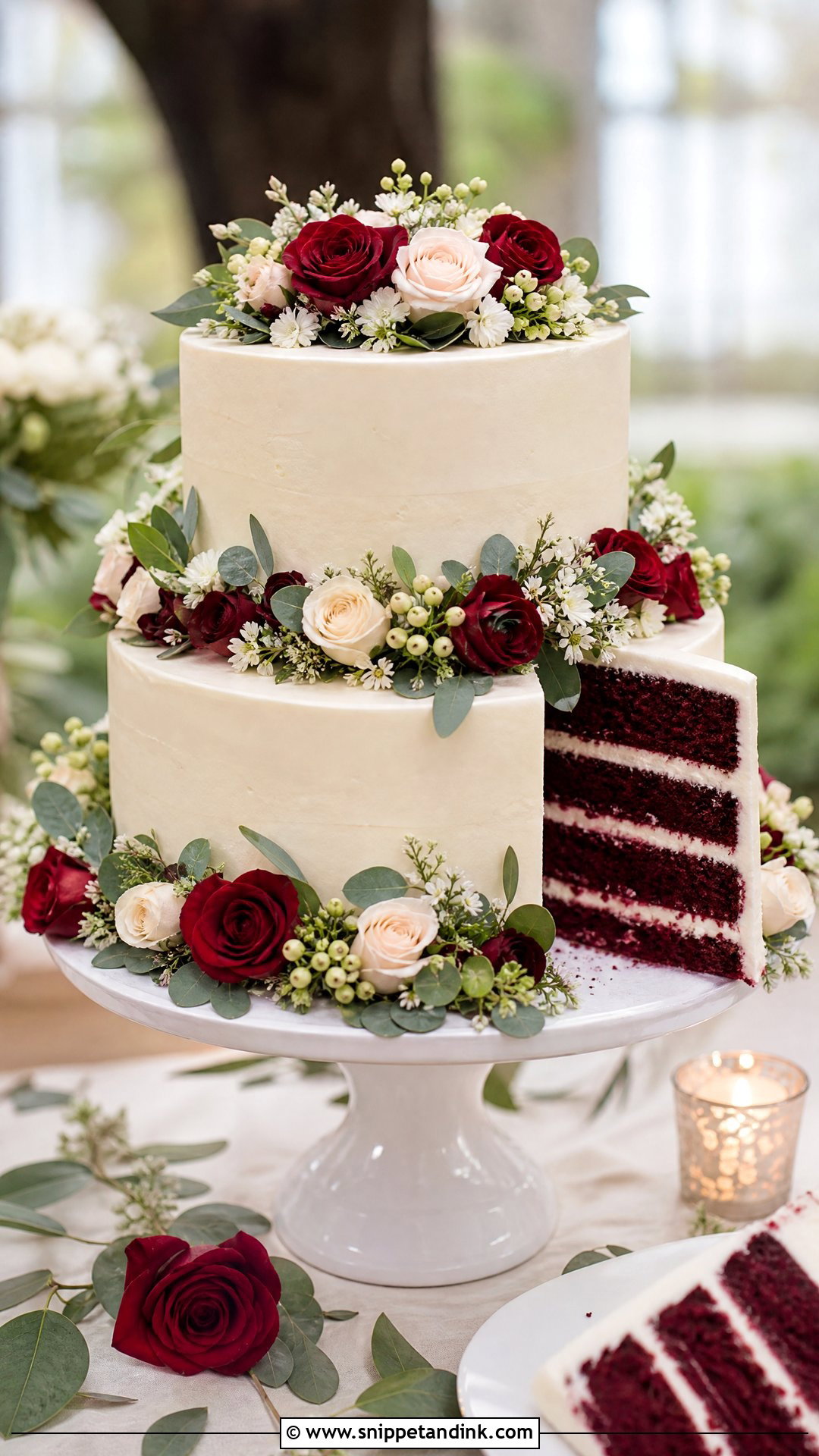
Rings or half-rings of flowers around each tier frame the cake without covering it like a cascade. It suits buttercream, cream cheese frosting or fondant, with small roses, tiny blooms, edible flowers or greenery. The wreath also hides the seam where tiers meet, which is helpful on softer frostings that show board edges. It works well for outdoor and spring weddings.
28. Red Velvet Wedding Cake With Monogram
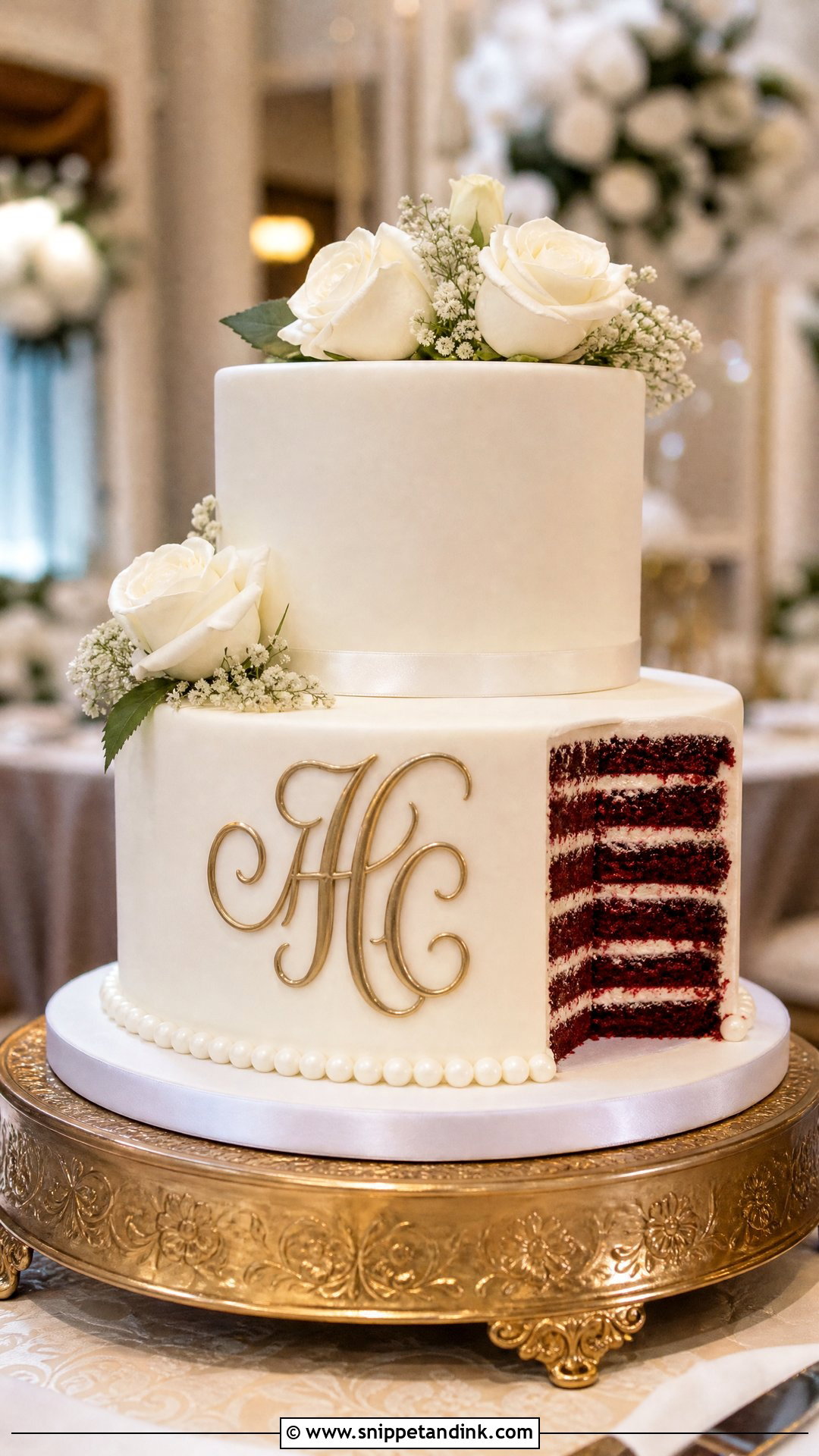
The couple’s initials piped, painted, embossed or made in sugar on the front tier make a formal cake personal. A smooth buttercream or fondant surface keeps the letters clear. A few flowers, pearls or a thin gold border finish it. I usually make sugar monograms as a separate plaque that is attached at the venue. That lets me redo it if a letter breaks, and you can keep the plaque afterwards.
29. Red Velvet Wedding Cake With Marble Effect
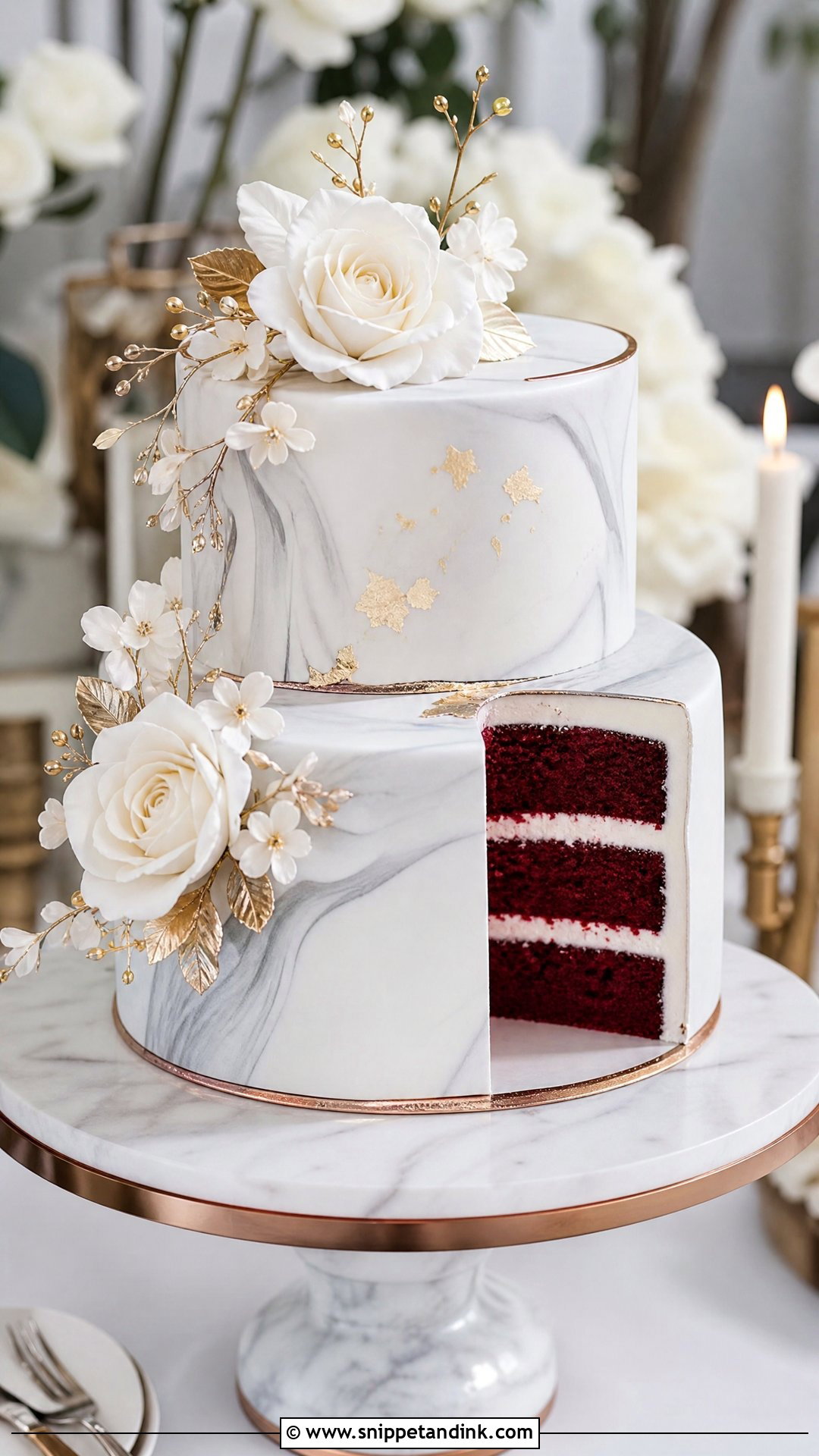
White and grey marbling, blush veining or subtle red swirls hinting at the flavour inside give the cake a contemporary, artistic surface. It pairs well with gold leaf, smooth fondant or clean buttercream. Keep other decoration light so the marble stays the focus. Marbling is done by twisting coloured fondant before rolling it out, so every cake turns out slightly different; if you want a specific veining pattern, ask to see a sample sheet first.
30. Red Velvet Wedding Cake With Cupcake Tower
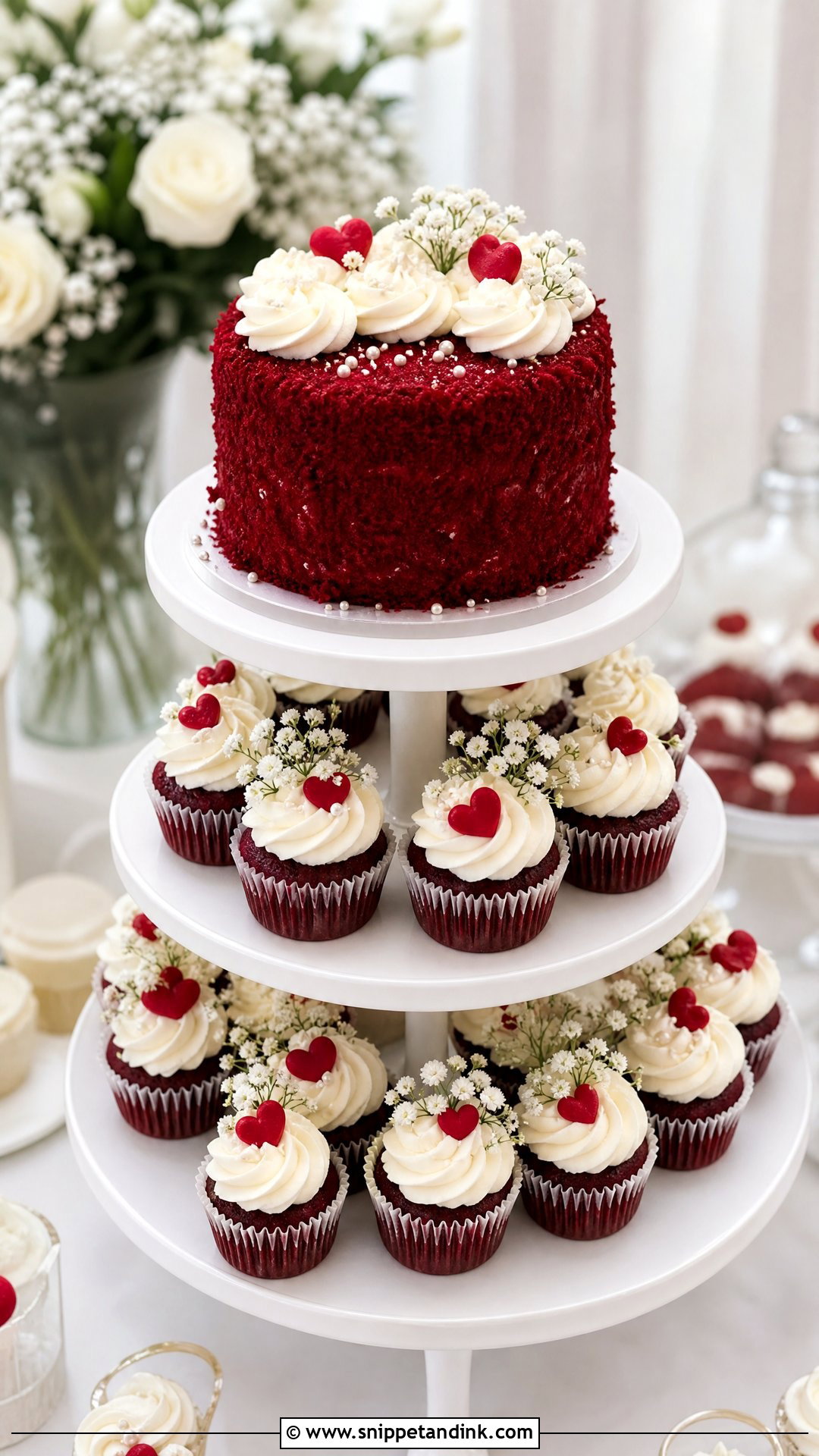
A small cutting cake on top with red velvet cupcakes below, topped with cream cheese frosting, gives you the height of a tiered cake and an individual treat for each guest, which helps at large weddings and when quick serving matters. You can vary decorations with tiny flowers, pearl sprinkles or mini fondant hearts. A cupcake tower also solves the cream cheese temperature problem, since cupcakes can be kept chilled in batches and brought out to refill the stand.
Cutting, Serving and Saving the Top Tier
Red velvet cuts cleanest when it is cool, so I ask venues to bring the cake out of the fridge not long before the cutting. A warm cream cheese layer smears pink across the white icing with every slice. Wiping the knife between cuts helps.
Portion counts are based on slim wedding slices, not dessert-sized wedges. Agree with your caterer which portion size they will cut before you decide how many tiers you need. A cupcake tower or a plain kitchen cake kept in the back can feed extra guests without adding height to the display.
Keeping the top tier for your anniversary
Ask whoever packs the cake to remove flowers and any decorations first, chill the tier until firm, then wrap it tightly in several layers of cling film and foil before freezing. Red velvet freezes better than many sponges, but cream cheese frosting can change texture after months in the freezer. Many couples now ask their baker for a small fresh anniversary cake in the same flavour instead, which always tastes better.
Red Velvet That Holds Up Until the Last Slice
Red velvet can be classic, rustic, modern or deeply romantic depending on the finish. The flavour already has a strong identity, so the design should support it rather than compete. Smooth buttercream suits formal weddings, naked layers suit relaxed venues, flowers add romance, and gold or pearls make it formal. Before you sign off on a design, think about the room temperature, your guest count, how it will be served and how it will look in photos. A cake that looks good at noon and still tastes fresh at nine in the evening is the one worth ordering.
You'll Like These Ideas:



Leave a Reply