
Plain white tiers with a topper still have their place, but most couples who sit down with me now want the cake to say something about them. A romantic theme can be carried by shape, by piping, by flowers, by colour or by what’s inside when it’s cut. Hearts, vintage borders, pearls, pastels, textured buttercream and fruit all turn up in the designs below. My advice before you pick one: know your venue’s temperature, your florist’s plan and your guest count, because those three decide which of these romantic cakes will actually survive the reception.
Which Flowers Can Actually Touch a Wedding Cake
Flowers appear on most of the romantic cakes below, and they cause more last-minute problems than any other decoration. Florist flowers are grown to be looked at, not eaten, and many have been treated with pesticides. Some popular wedding blooms are also mildly toxic.
Generally safe to sit on a cake
- Unsprayed roses, including garden roses
- Violas, pansies and cornflowers
- Calendula and chamomile
- Lavender, in small amounts
Keep these off the frosting
- Sweet peas, ranunculus and hydrangea
- Lily of the valley, foxglove and daffodils
- Gypsophila (baby’s breath), which irritates some people
If you want a non-edible bloom anyway, it can sit on a small disc of parchment or wafer paper, and any stem going into the cake needs floral tape or a food-safe pick. Decide early who places the flowers. When the florist and the baker each assume the other is doing it, the cake ends up decorated in a rush by whoever is nearest.
1. Heart Shaped Wedding Cake
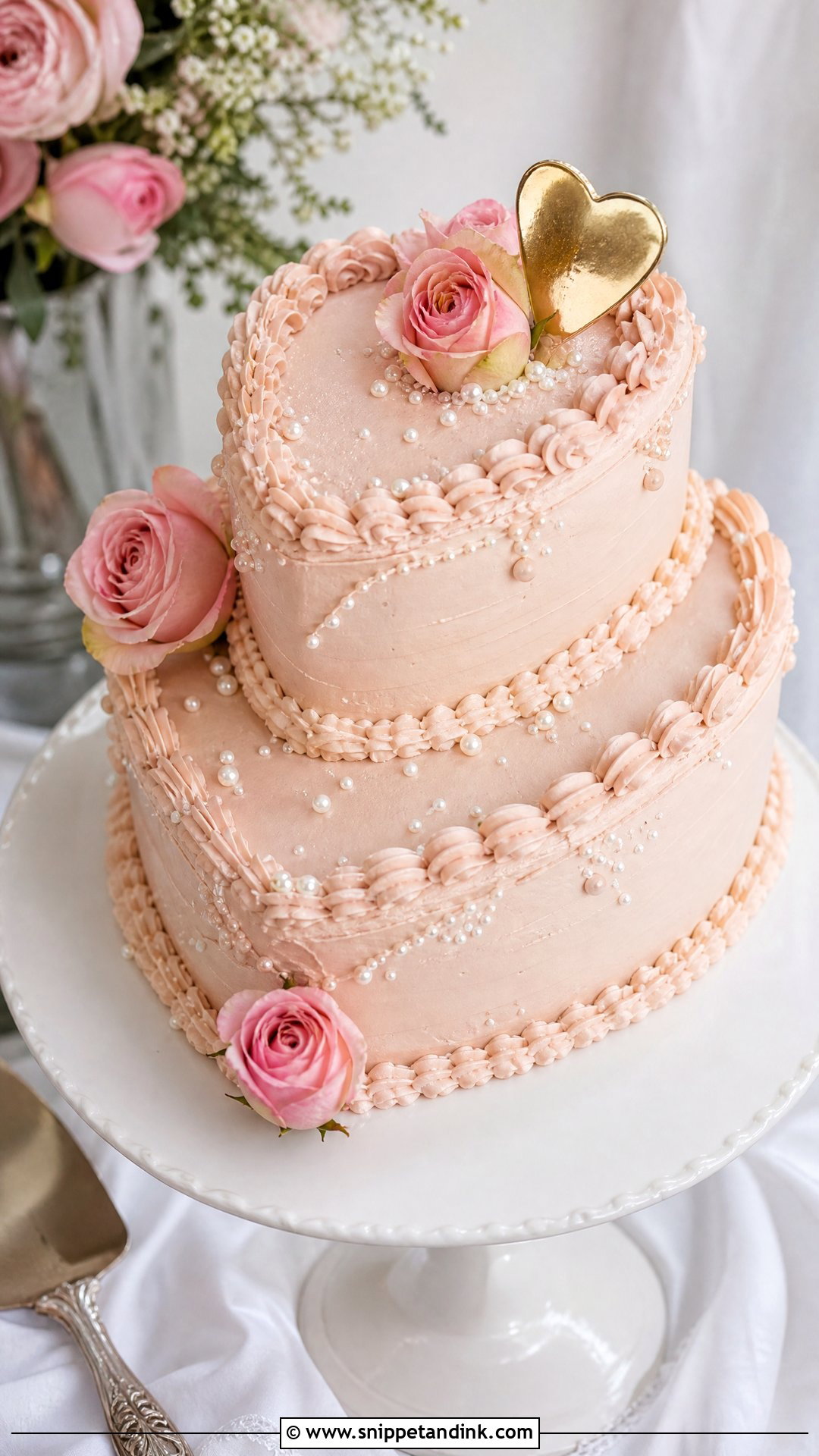
Heart tiers are carved or baked in heart pans, and stacking them takes more care than rounds because the point of each heart has to line up exactly. A single heart tier is right for a small wedding; stacked hearts suit a bigger reception. Smooth buttercream reads modern, piped borders read vintage. Blush, ivory, champagne or a soft red all suit a heart shaped wedding cake, with a few roses, pearl sprinkles or a “just married” message on top. Here the shape tells the story, so I keep everything else quiet.
2. Vintage Heart Wedding Cake
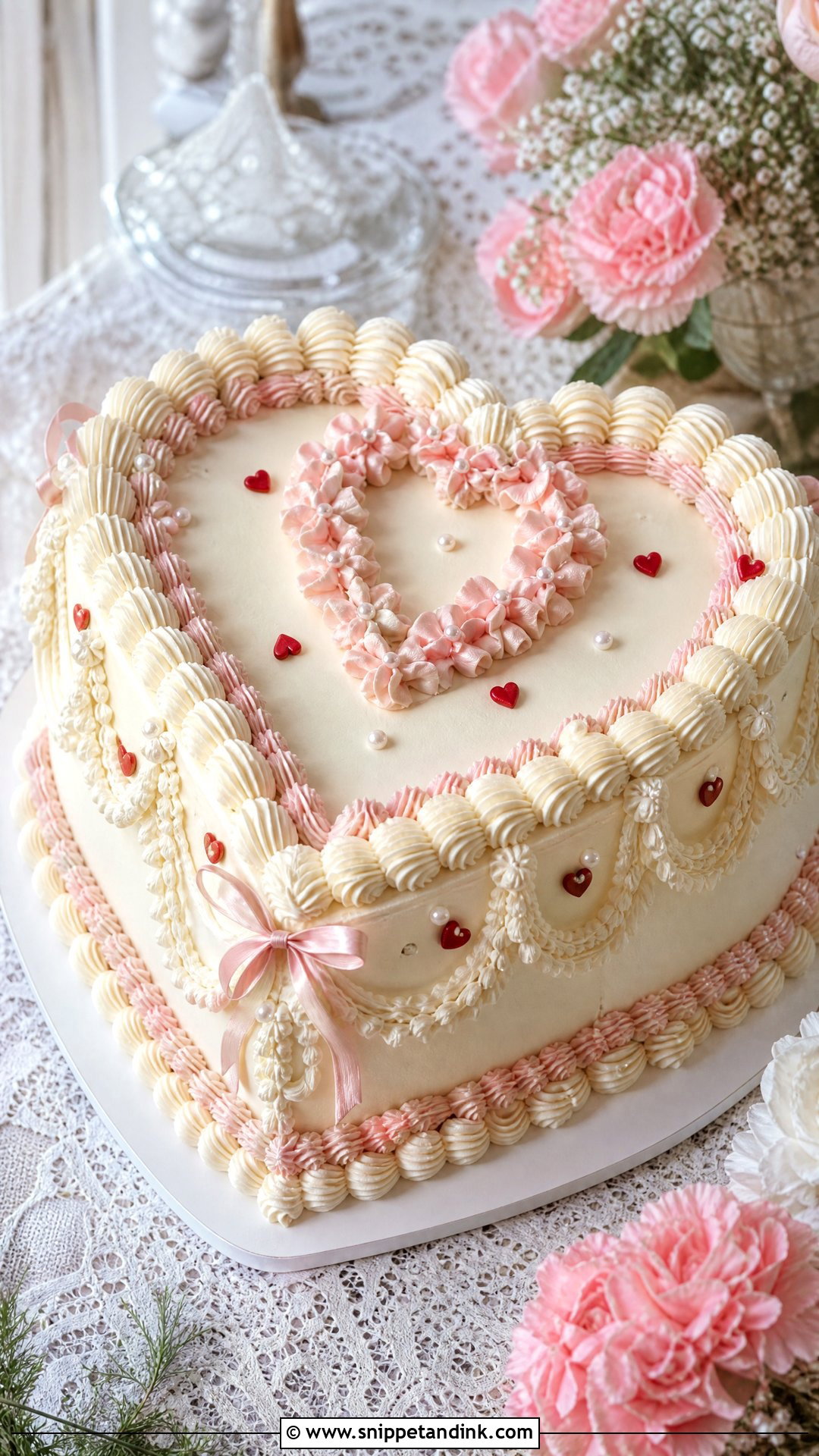
The retro piped style is made almost entirely with three or four piping tips: a shell tip for borders, a petal tip for ruffles, a small round tip for swags and dots. Heart-shaped layers, buttercream swags and little bows complete it. Ivory with pearls keeps it classic; pastel pink, cherry red or pale blue makes it more playful. My caution is volume. A heavily piped tier carries a lot of buttercream, and in a warm garden the swags start to droop within a couple of hours. Indoors or in the shade it’s a joy, and it suits a courthouse wedding with a small party especially well.
3. Red Velvet Wedding Cake
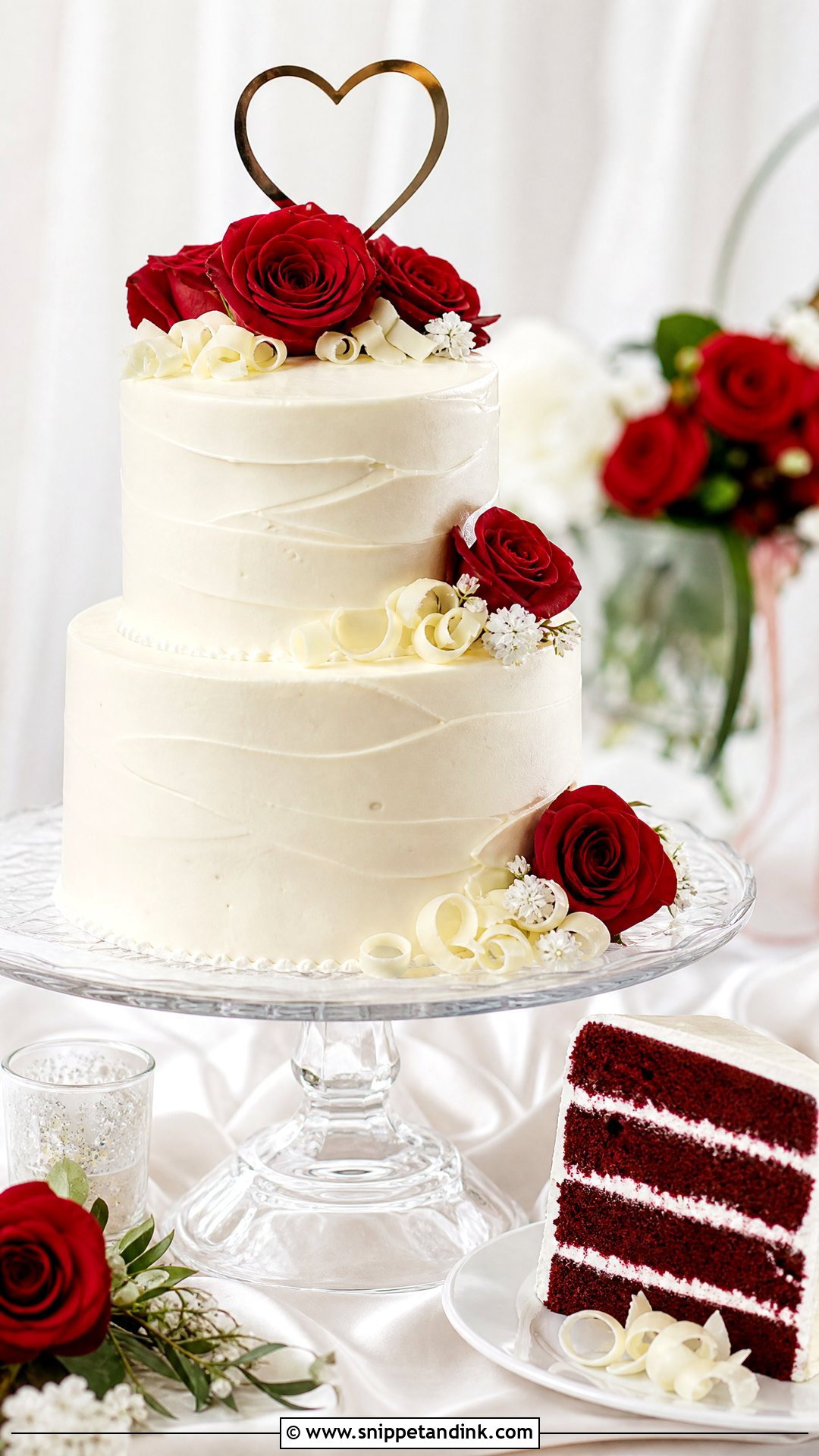
Red velvet’s surprise is in the cut: an ivory cake opens to a deep red crumb. For a wedding I often fill it with cream cheese frosting but cover it in a white chocolate buttercream, which holds a sharper edge and stays whiter. Outside, keep it smooth and ivory with red roses, a heart topper or a thin red ribbon at the base. Put the ribbon on over a strip of parchment or tape, since buttercream grease soaks through satin and leaves dark marks. It’s a natural fit for winter weddings and candlelit ballrooms.
4. Rose Wedding Cake
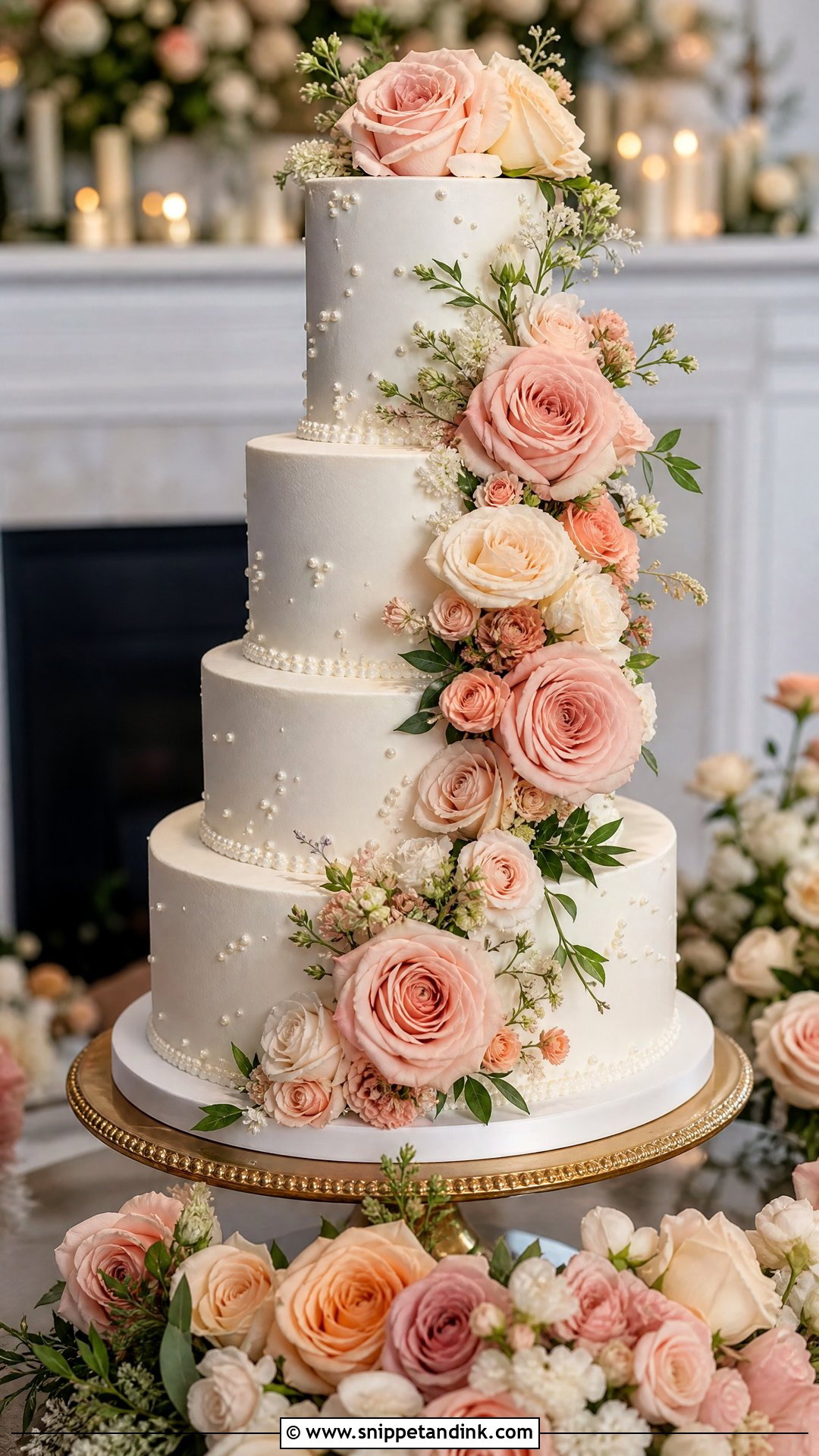
Roses can be fresh, sugar, dried or piped, and the choice is mostly about budget and how long the cake sits out. Sugar roses cost more because each one is made petal by petal, but they don’t wilt and the couple can keep one. Ivory with blush, peach or mauve roses in a gentle cascade feels soft; deep red against white buttercream is bolder. Round, square or heart tiers all take roses well. If any are fresh, they must be unsprayed and wrapped at the stem before they go near the cake.
5. Pearl Wedding Cake
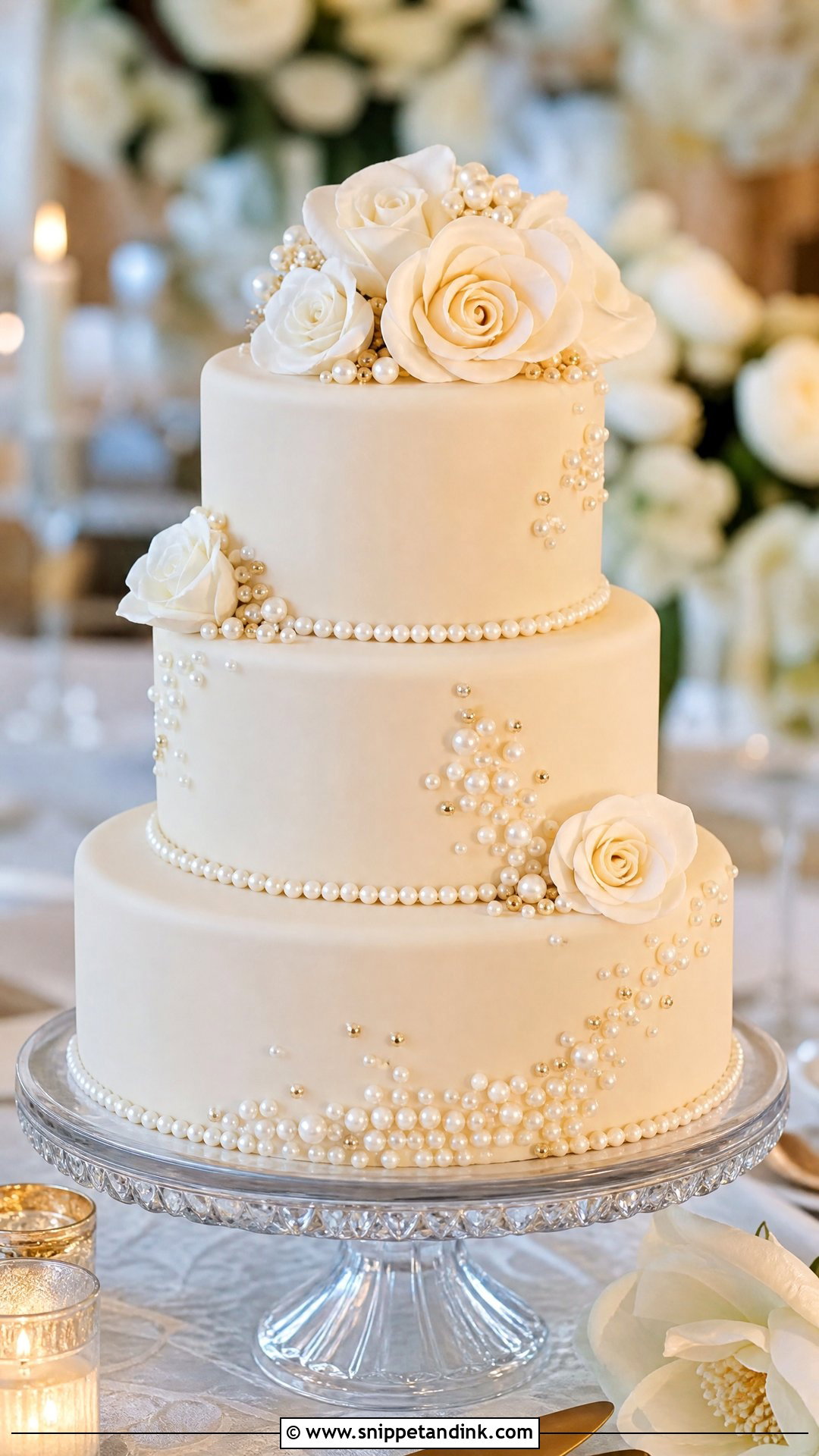
Pearls range from tiny sugar beads to large edible pearl clusters and neat borders at the base of each tier. They shine best on a smooth fondant or chilled buttercream surface, and they look most expensive in ivory, champagne, blush or soft gold. A few roses, orchids or a small heart topper bring in the love theme. I attach larger pearls with a dot of royal icing rather than pressing them in, because heavy pearls slowly slide down soft buttercream during a long reception. Hotel weddings and formal ballrooms suit this cake best.
6. Floral Cascade Wedding Cake
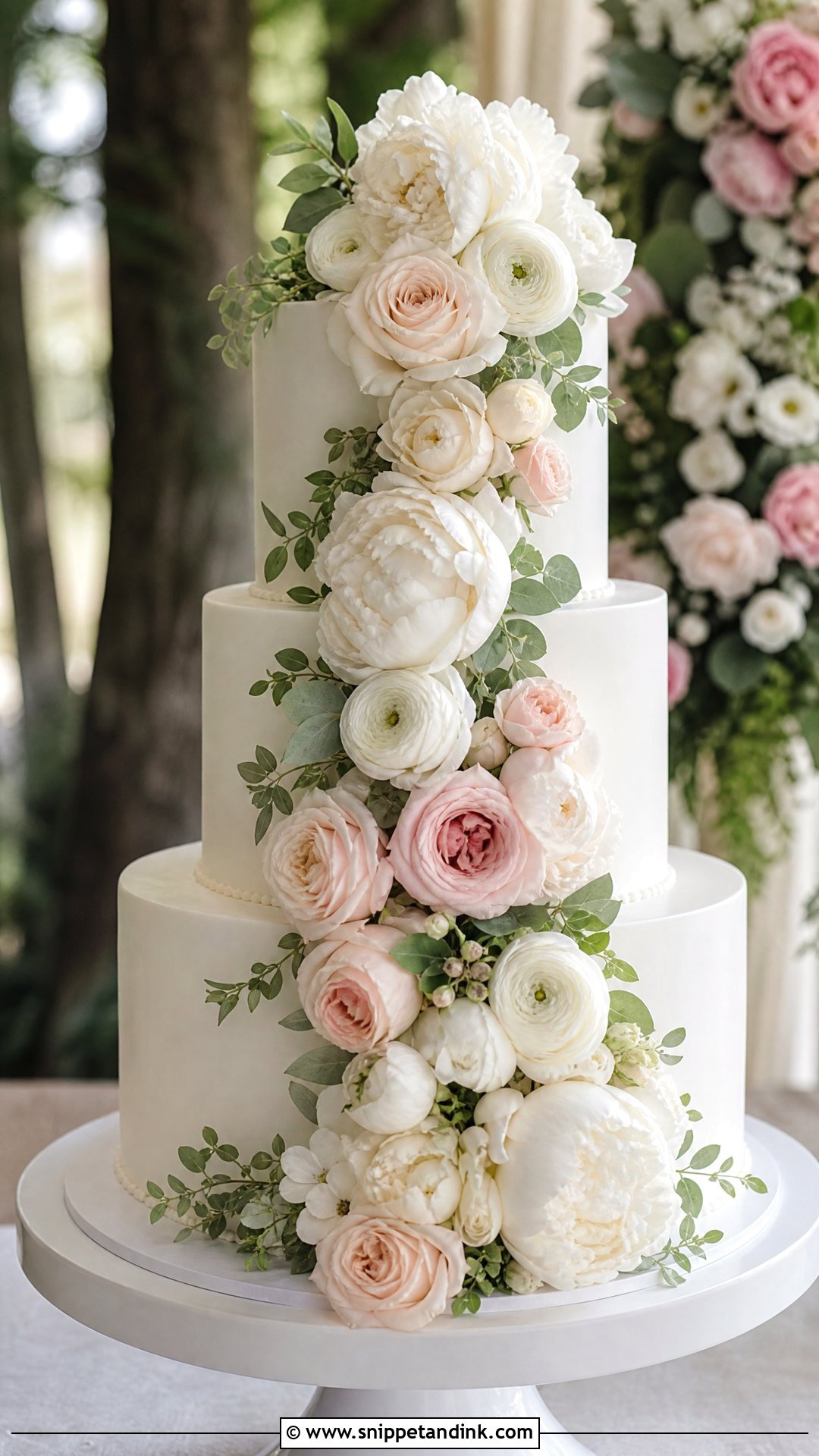
Cascades run from the top tier down one side, and they need planning between florist and baker, since the flowers usually arrive with the florist on the day. Roses, ranunculus, peonies, sweet peas and greenery all look right here, but ranunculus and sweet peas are not food-safe, so they must sit on a barrier and never touch the frosting directly. Under the flowers, plain white buttercream or fondant is enough. Blush, cream, dusty rose and soft red keep the love theme, and repeating the bouquet flowers ties the cake to the ceremony.
7. Pressed Flower Wedding Cake
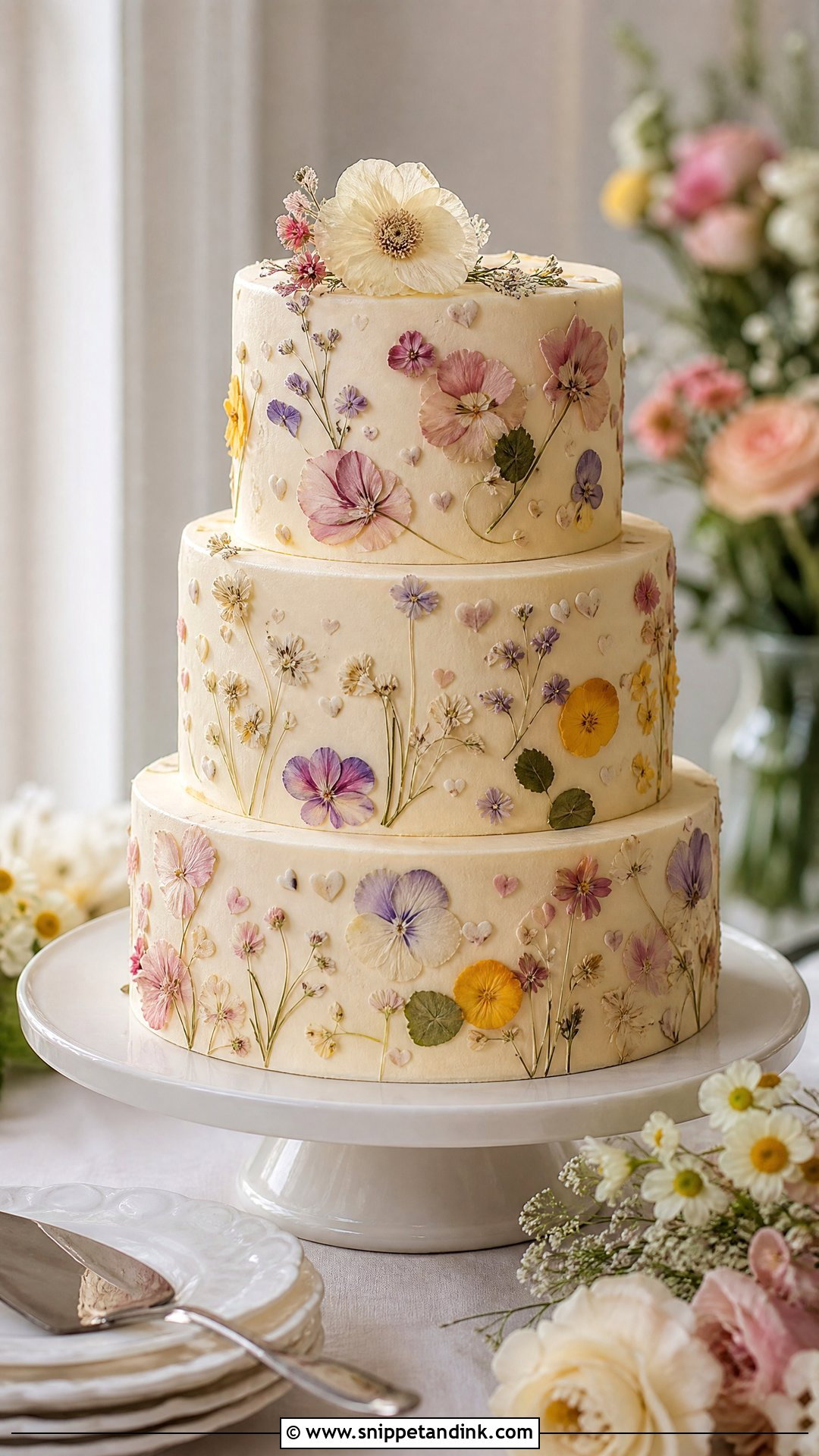
Pressing petals into frosting is far more delicate than placing a big arrangement. A pressed flower wedding cake uses flowers that are actually edible, such as violas, pansies, cornflowers and calendula petals, pressed flat and dried ahead of time. They go onto smooth or semi-naked buttercream while it’s still a little tacky. Pink, lavender, yellow and cream petals keep it light. Pressed flowers fade if they sit in strong sun, so I keep this design for shaded tables, micro weddings and couples who like organic details.
8. Pink Ombre Wedding Cake
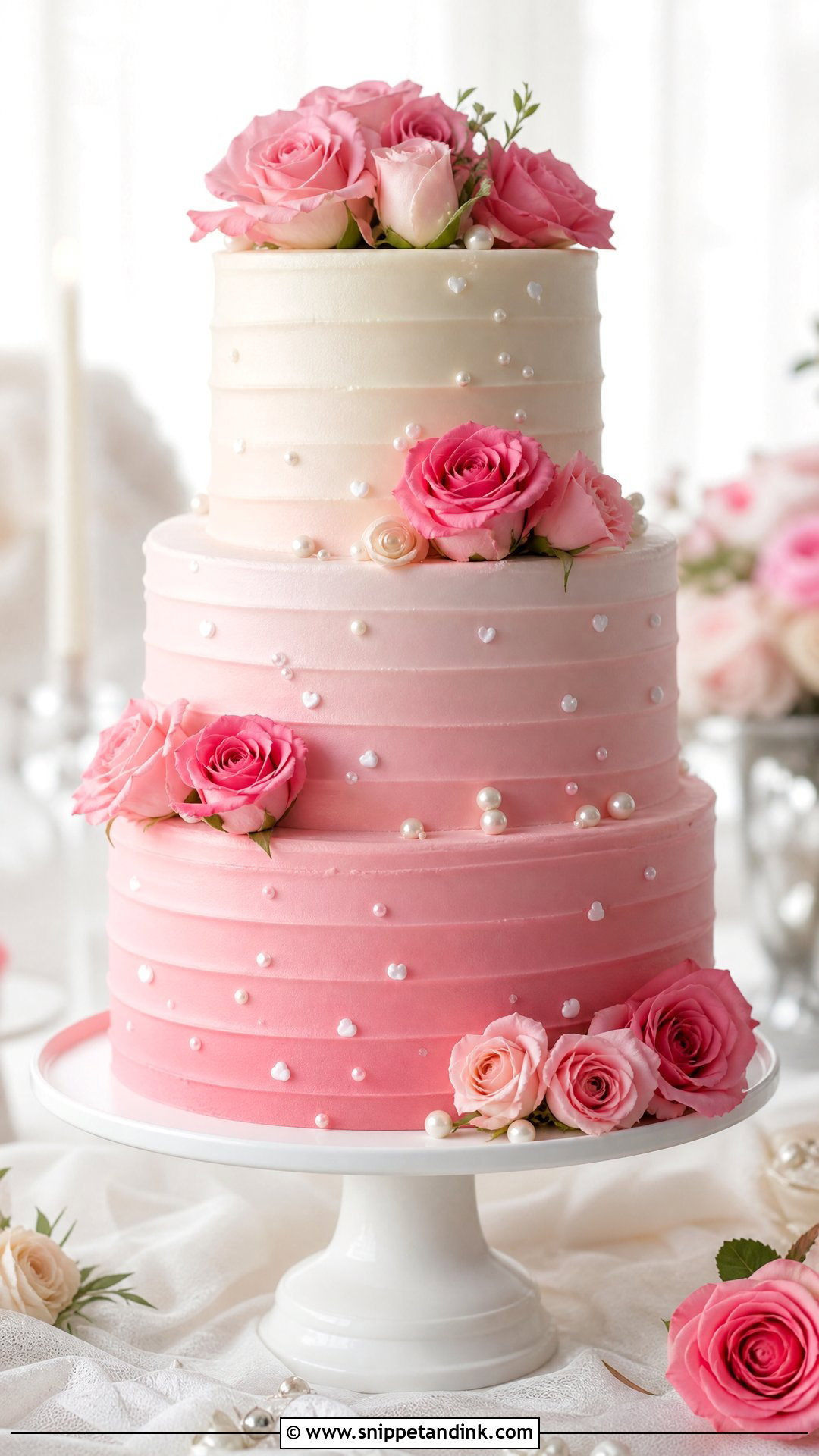
The secret to a good ombre is mixing all the shades from one batch, adding colour step by step, so the gradient moves smoothly instead of jumping. Ivory to blush, blush to rose or pale pink to berry are the common runs. Buttercream blends well, either smoothed or textured in soft waves. Sugar hearts, a few roses or pearls connect it to the theme. If the steps between shades are too big, the cake looks striped rather than faded. It suits a spring wedding or a brunch reception in a bright room.
9. Red And White Wedding Cake
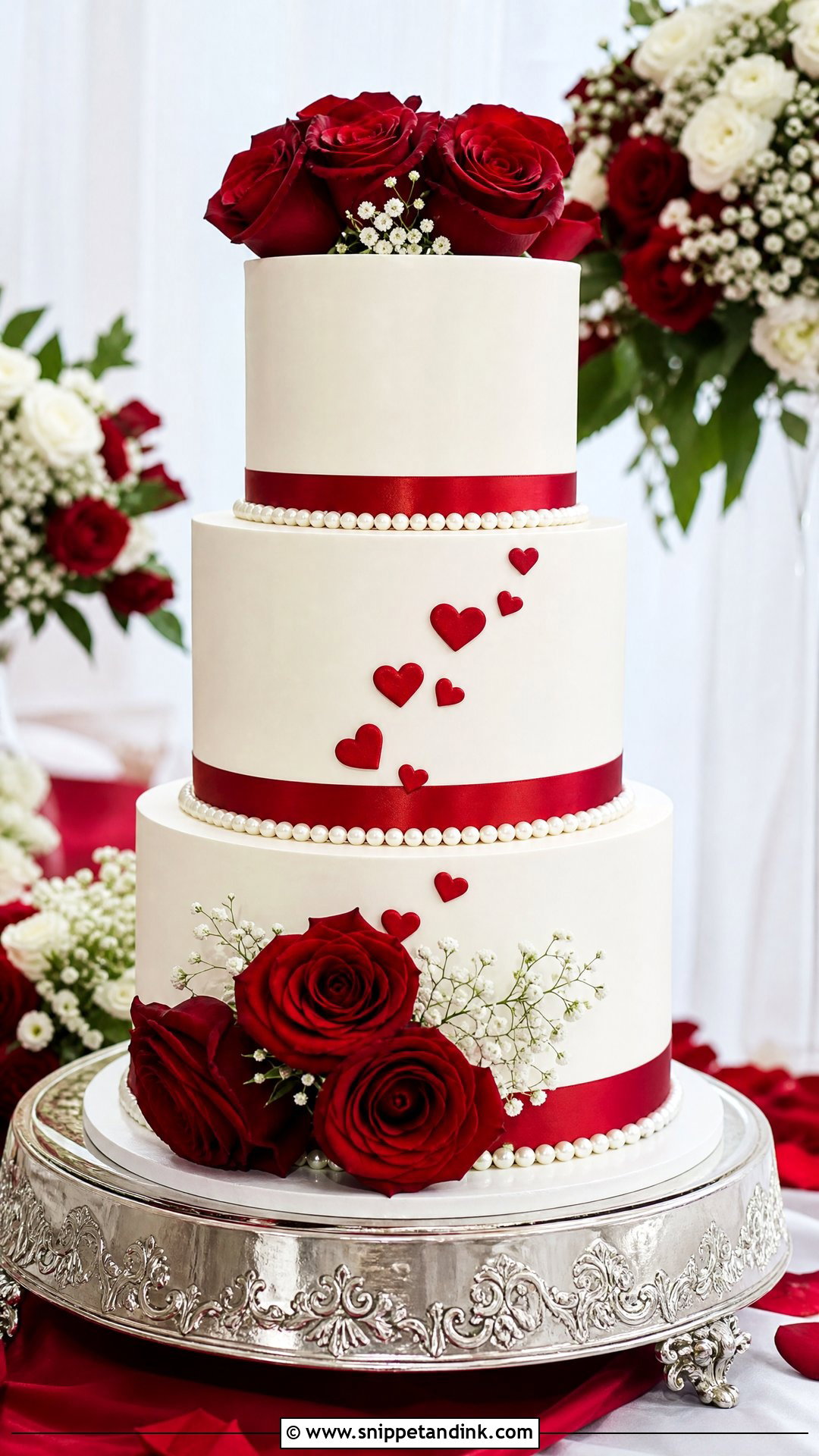
Red on white is the most direct romantic palette there is, and also the easiest to overdo. Red buttercream needs a lot of colour, which can taste bitter, so I’d rather bring red in through roses, sugar hearts or a deep red drip than through a whole red tier. Balance is the craft here; a few strong accents look intentional, a lot looks like Valentine’s packaging. A red velvet or vanilla raspberry inside lets the slice match the outside. It’s at home at an evening wedding in a formal room.
10. Gold Heart Wedding Cake
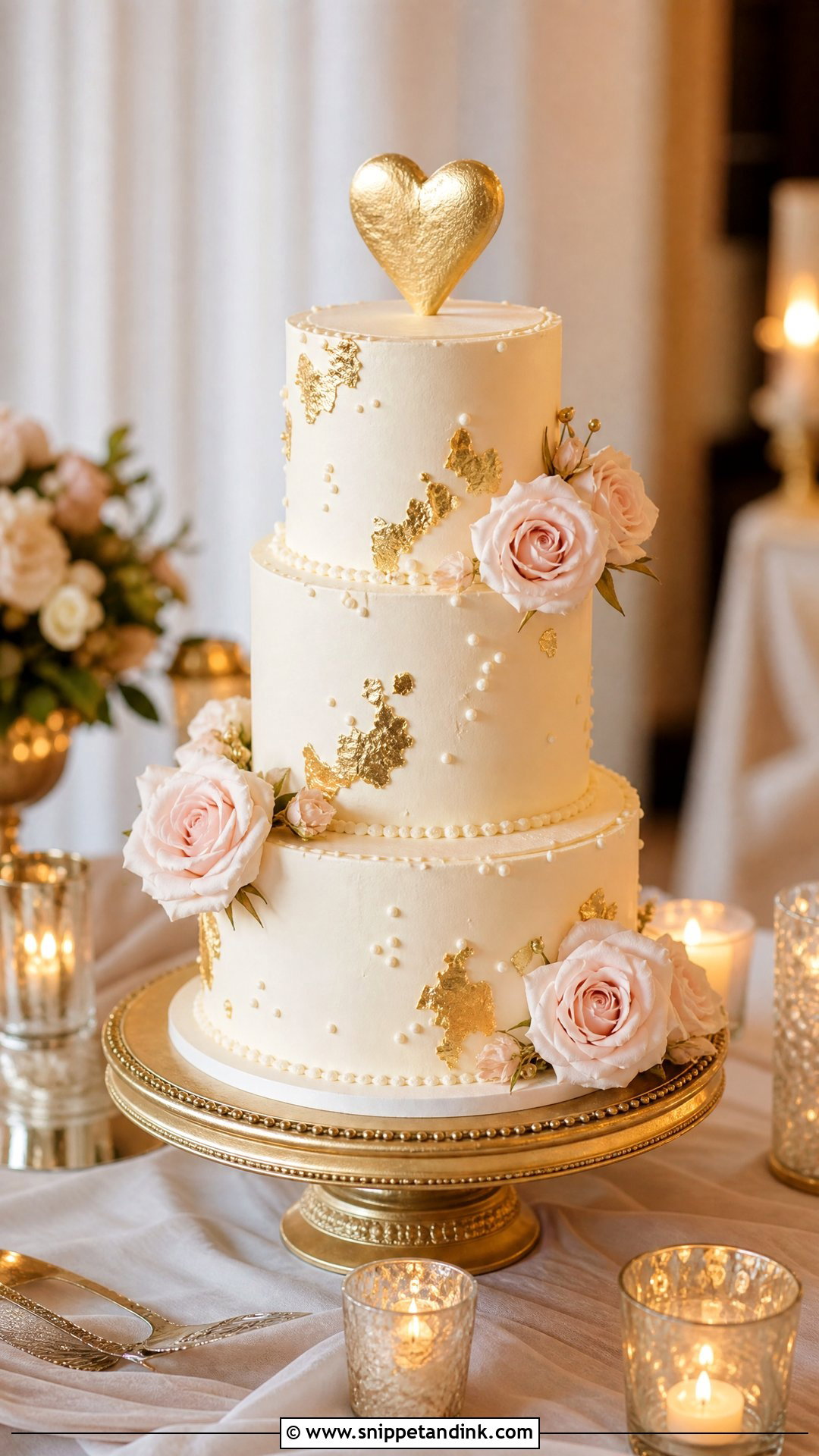
Gold can be a topper, a painted heart, gold leaf or a thin metallic edge on each tier. Painted gold is edible lustre dust mixed with a little alcohol, which evaporates and leaves the colour behind; it only covers well on a firm surface like fondant or crusted buttercream. Pair it with ivory, champagne, blush or beige frosting. Restraint matters, because too many gold areas look busy rather than rich. A few sugar flowers or pearls soften the shine, and it belongs on a black-tie table under candlelight.
11. Love Letter Wedding Cake
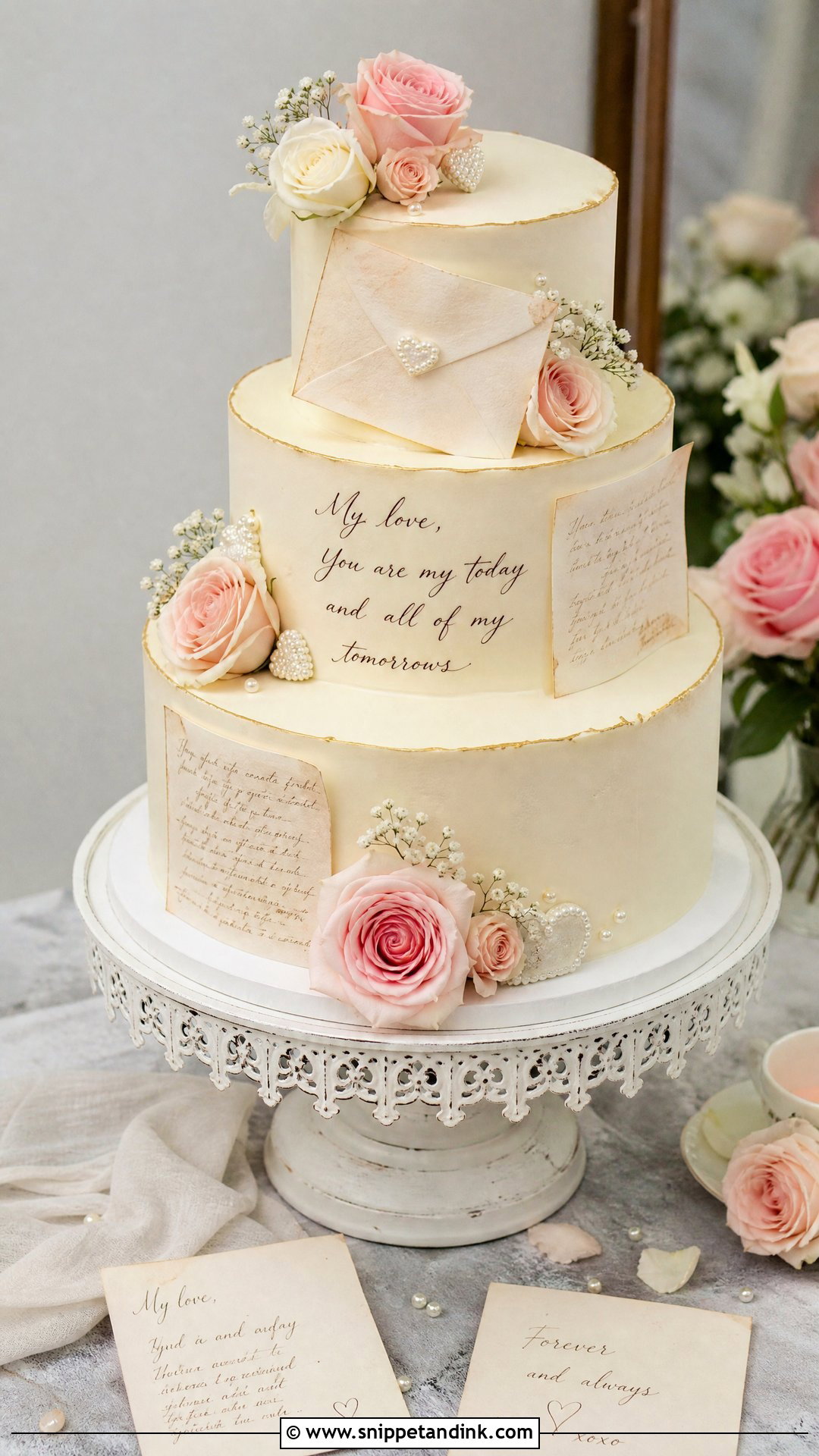
The letters on a love letter cake come from edible script, wafer paper notes, small envelopes or a short phrase piped on the front. Wafer paper can be torn at the edges to look like handwritten pages, and it takes edible ink well. It also wilts in humidity, so I’d swap to thin fondant for a muggy summer venue. Keep the wording short; a long quote turns into a smudge in photos. Ivory buttercream with blush flowers grounds it. It suits couples who wrote their own vows or love poetry.
12. Bow Wedding Cake
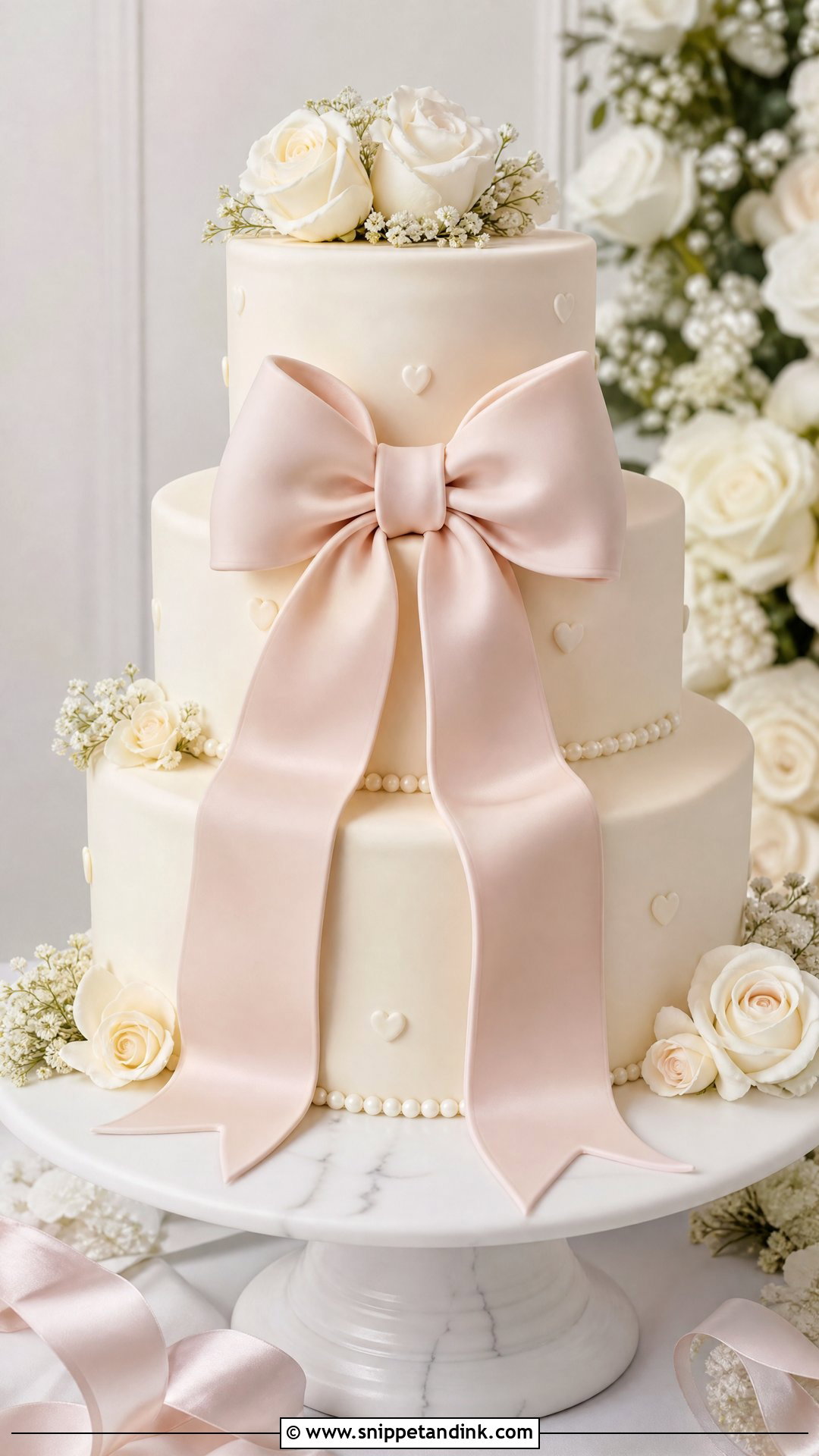
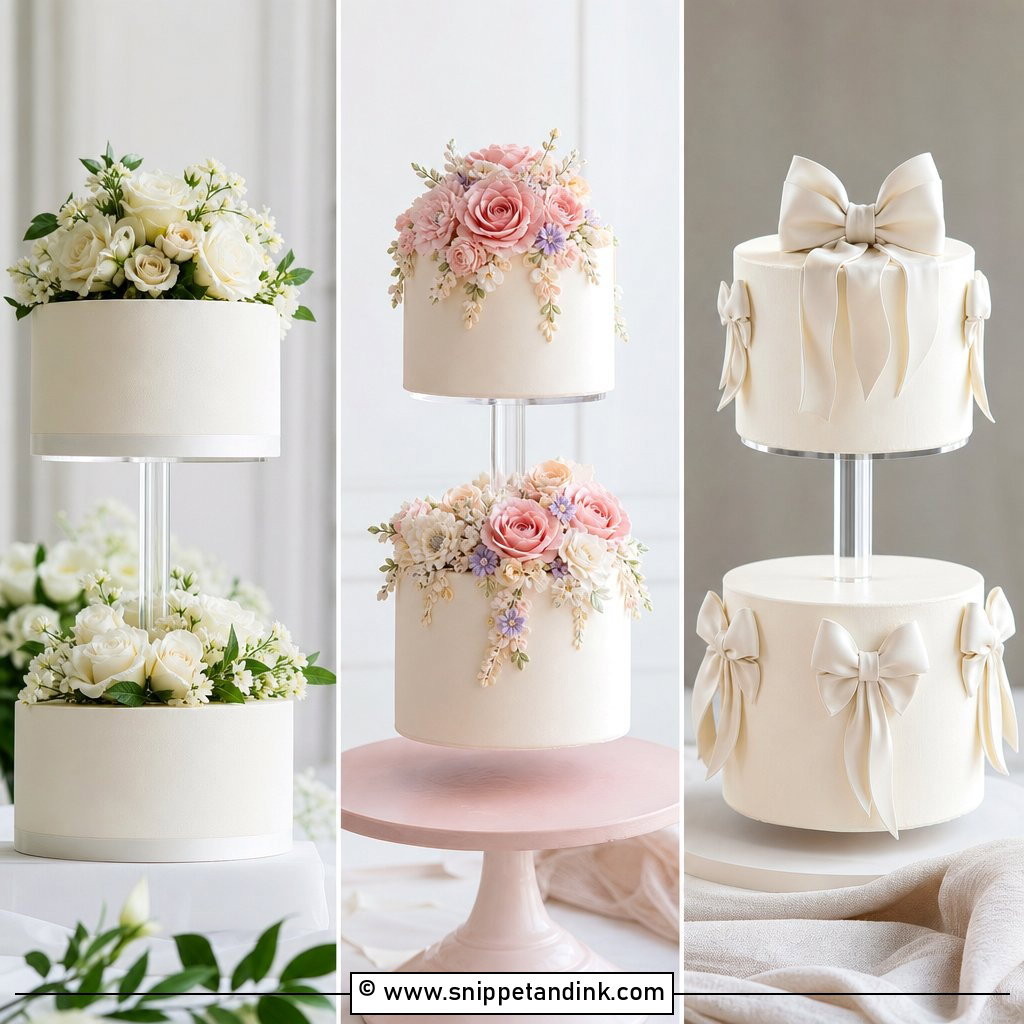
Bows can be fondant, wafer paper, piped buttercream or a real silk ribbon. A large bow looks modern; small repeated bows look vintage. Fondant bows need to dry over a support for a day or two so the loops hold their shape, which is something to factor into your timeline. Real ribbon must have a food-safe barrier under it. Pair bows with pearls, hearts, roses or soft pink accents on smooth white tiers. Keep the bow crisp and structured, or the cake tips from polished into cute.
13. Lace Wedding Cake
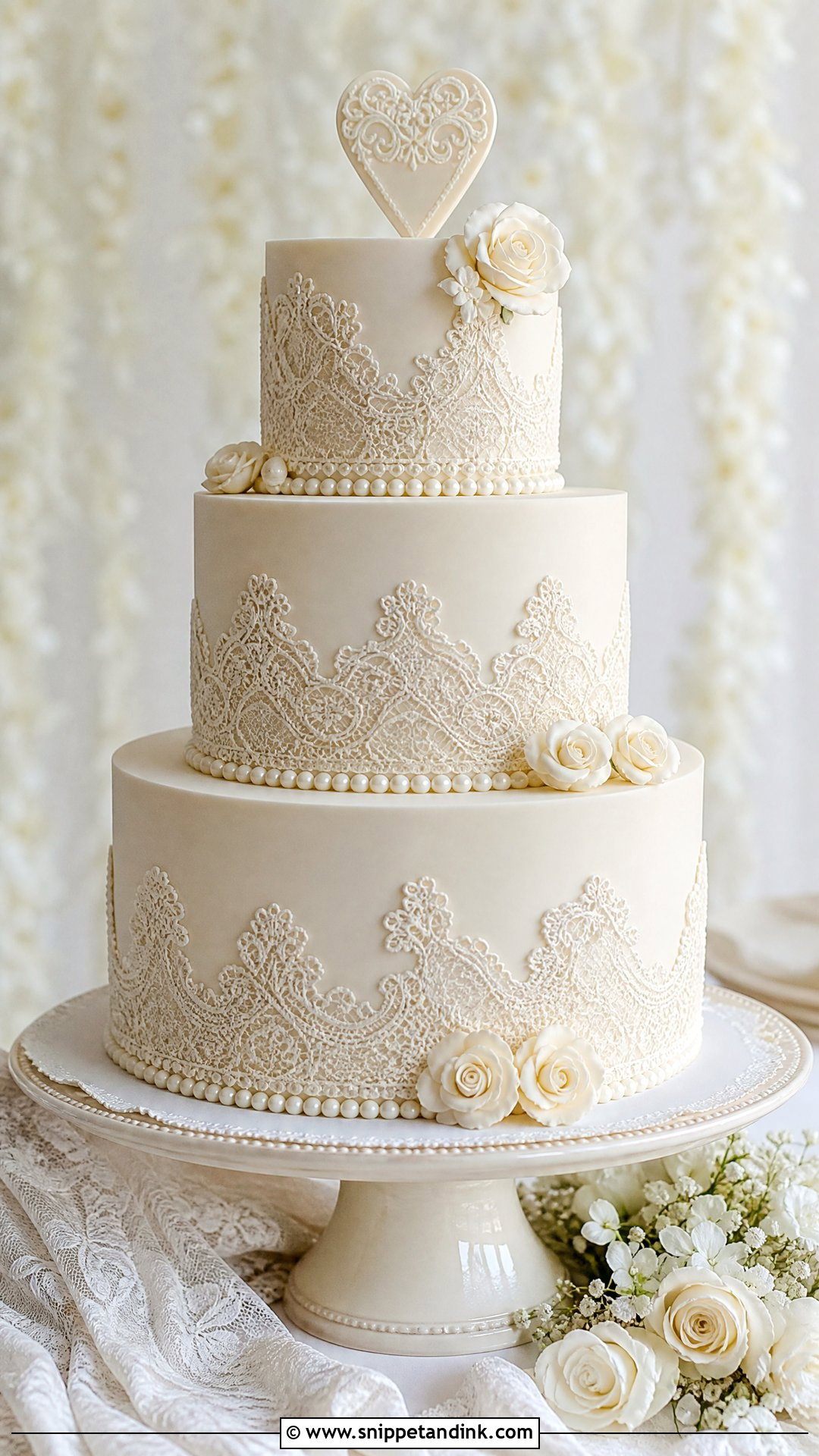
Lace on a cake can match the lace on your dress if you bring a close-up photo of the fabric. I make it with fondant appliqué, piped royal icing, stencils or sugar lace mats, and each method gives a different depth. Ivory on ivory is classic; blush or champagne lace is warmer. Small sugar roses, a pearl border or a subtle heart topper finish it. Ask for fine detail with space between motifs, because lace packed too tight looks heavy from across the room. Church weddings and formal receptions suit it.
14. Buttercream Rose Wedding Cake
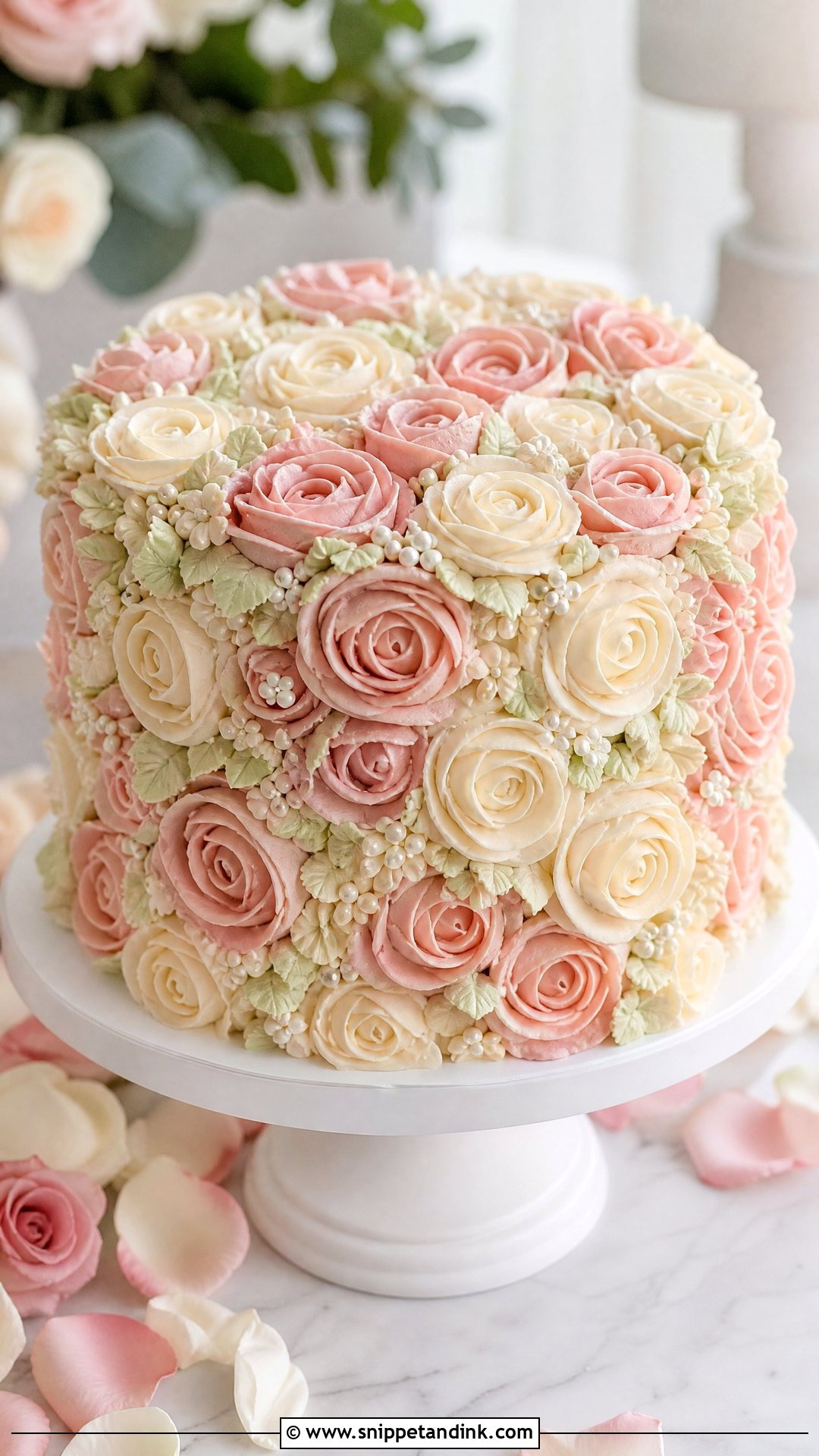
Piped roses make a full floral cake that’s edible from top to bottom, with no worry about pesticides or wilting. They can cover the whole cake, ring the tiers or gather in clusters on the side. Ivory, blush, dusty pink or peach give a classic palette; burgundy and deep rose add drama. The trade-off is that a cake covered in piped roses is a lot of buttercream per slice, so I balance it with a lighter sponge and a thin filling. It scales easily from a small wedding to a large one.

15. Minimalist Heart Wedding Cake
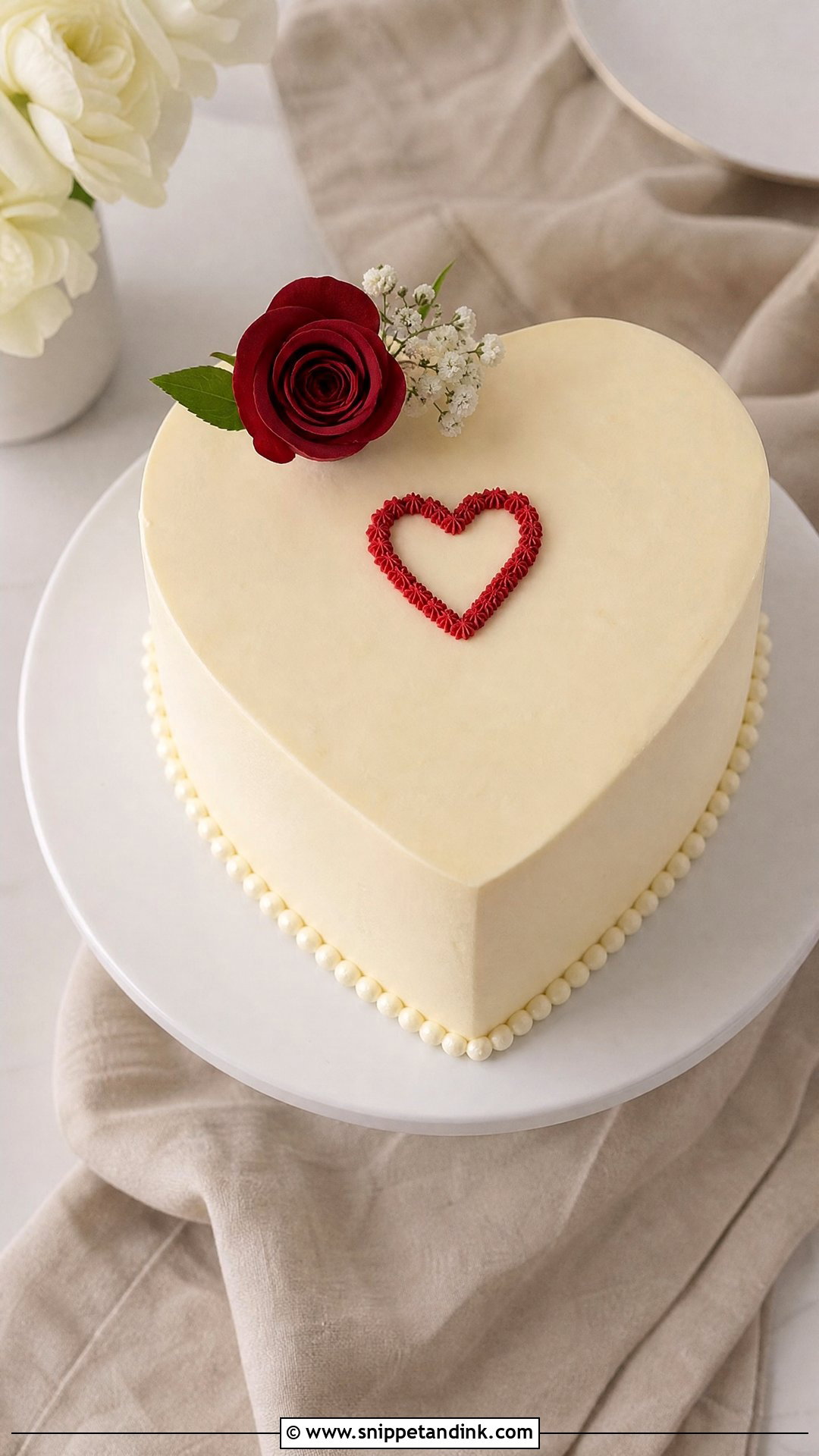
With so little on it, a minimal heart cake is judged entirely on the finish. Every air bubble and soft corner shows, so ask your baker for photos of their plain cakes before you order. Round or heart-shaped, smooth white, ivory, blush or pale beige, with one detail: a red heart, a tiny pearl border or a short piped message. It suits a restaurant reception or a courthouse wedding with a small guest list. Proportion matters more than decoration, so let the baker decide the tier heights.
16. Romantic Drip Wedding Cake
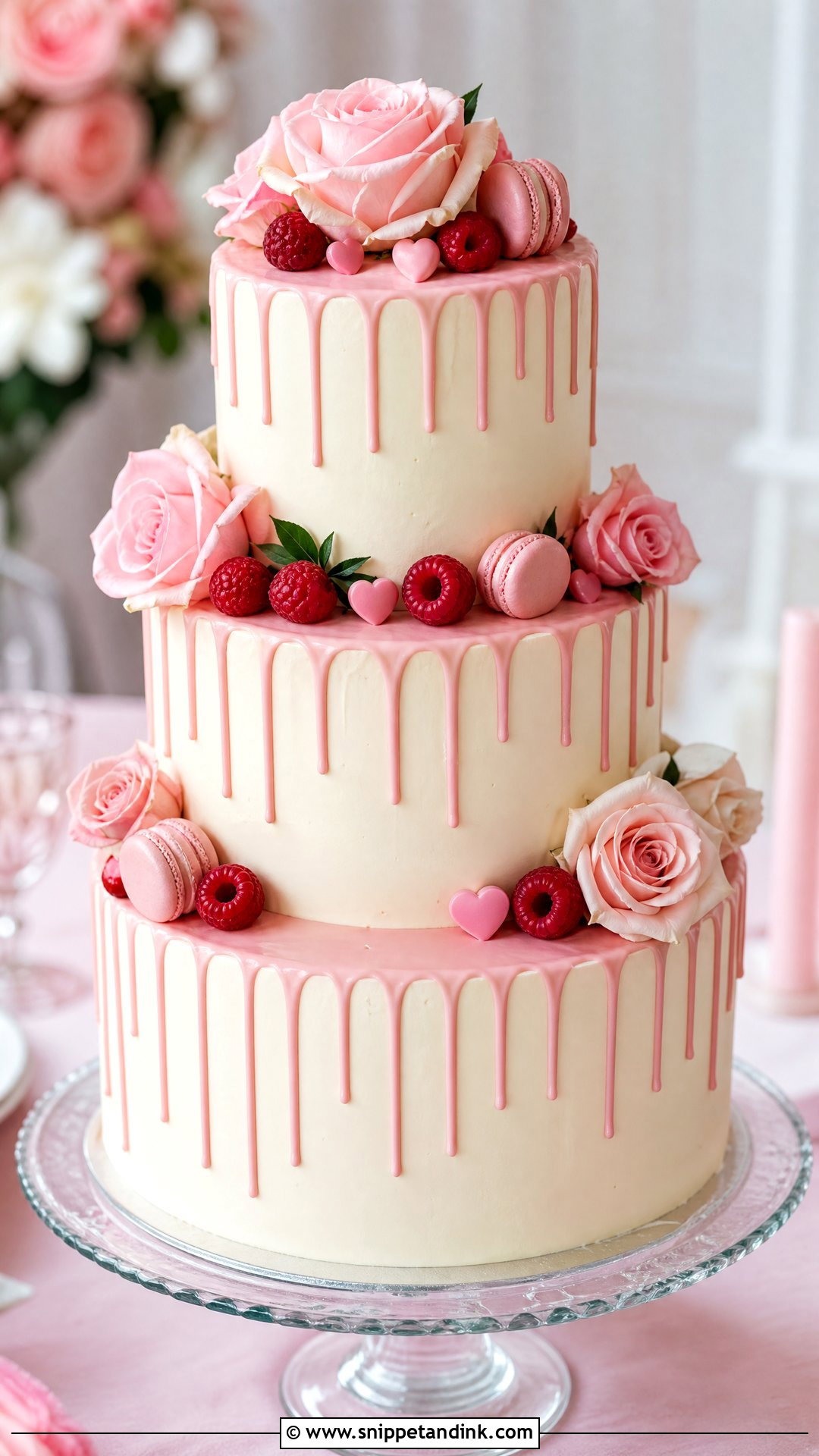
Drips at a wedding need to look controlled, so I chill the cake well first and use a squeeze bottle to set each drip by hand. White chocolate, blush, ruby red or champagne gold drips suit different palettes. The base can be smooth or lightly textured, topped with roses, berries, macarons or small hearts. This is less formal than fondant but still polished. Inside, vanilla raspberry, strawberry champagne or chocolate ganache. Keep a drip cake out of direct sun, because the drips soften and lengthen as it warms.
17. Strawberry Wedding Cake
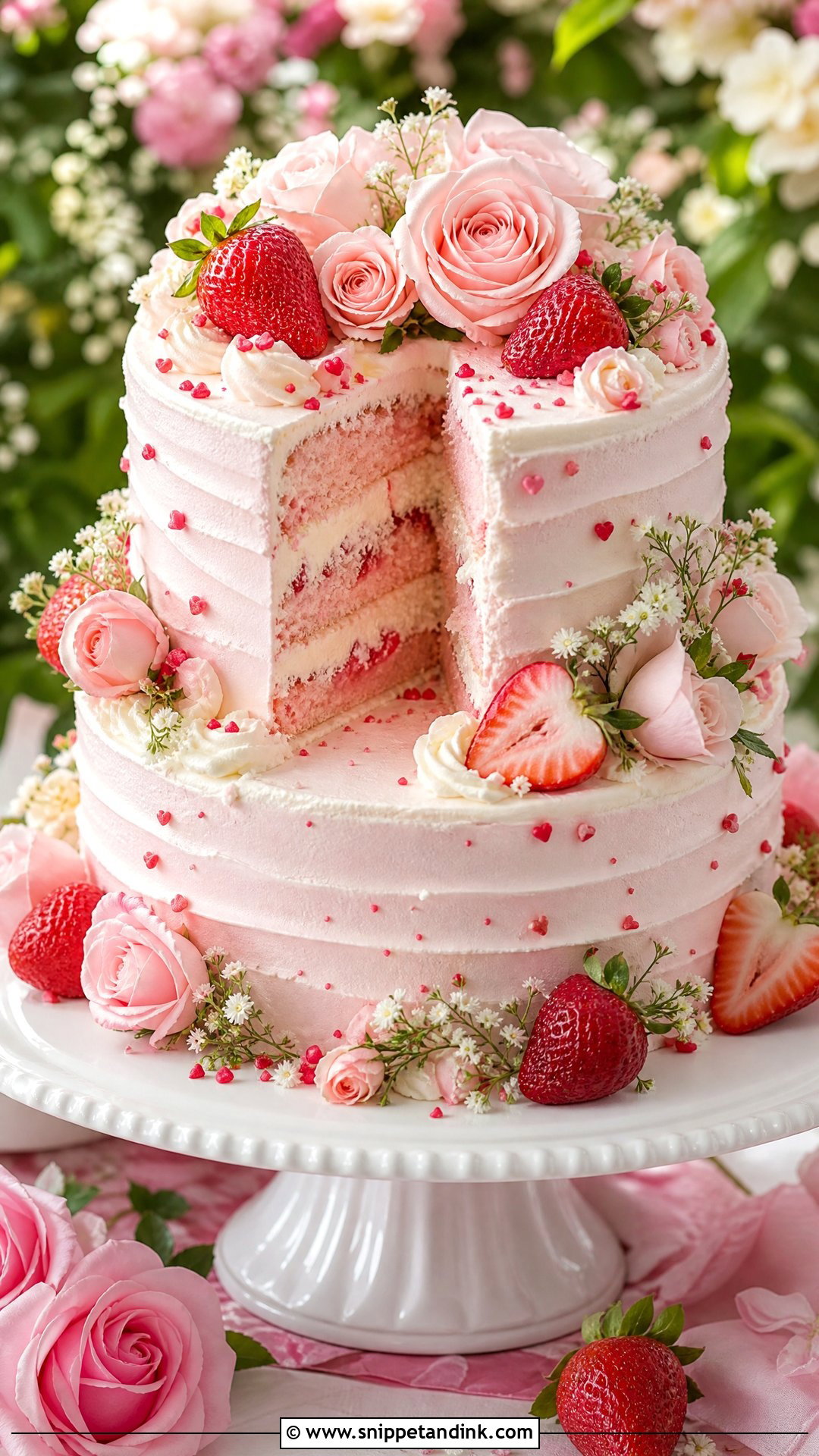
Strawberry cakes taste best on the day they’re filled. Strawberry sponge, vanilla with strawberry filling or white cake with fresh berry layers all work. Outside, whipped cream is lightest but needs refrigeration, so for a long reception I’d choose Swiss meringue buttercream or a pale pink frosting instead. Whole and sliced strawberries, small roses or tiny hearts decorate it. Sliced berries weep within a few hours, so they go on last. It’s a spring and summer cake that most guests will happily finish.
18. Cherry Wedding Cake
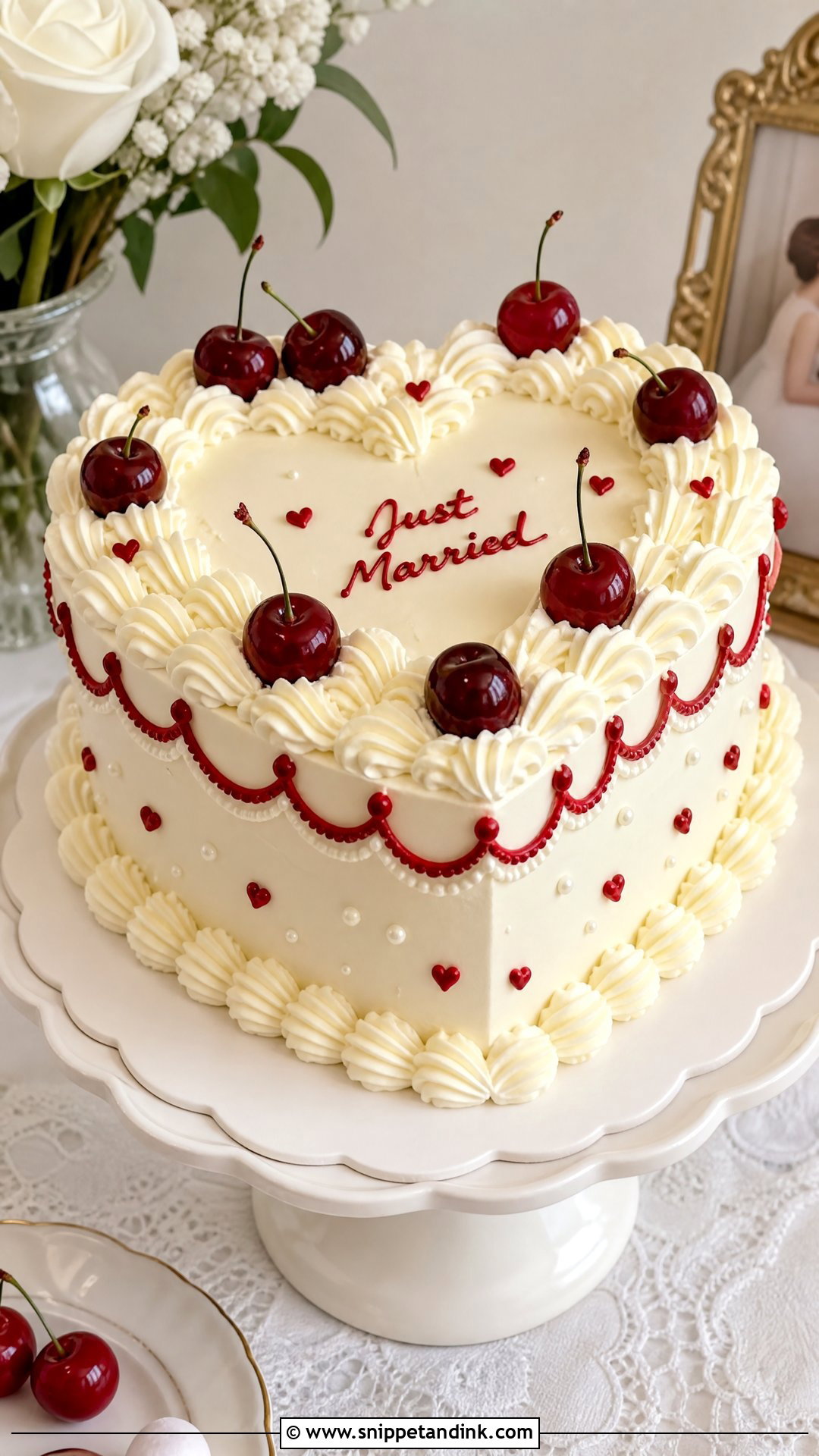
Cherries give a cherry wedding cake its retro charm, especially on a heart or piped design. Inside can be vanilla cherry, almond cherry, chocolate cherry or a black forest style. Outside, white or pale pink frosting with glossy cherries, piped borders, cream swirls and small hearts. Fresh cherries need patting dry before they go on, and stems left on look more vintage, but warn guests about the stones, or use pitted fruit for anything inside the cake. Garden parties and vintage receptions suit it.
19. Champagne Wedding Cake
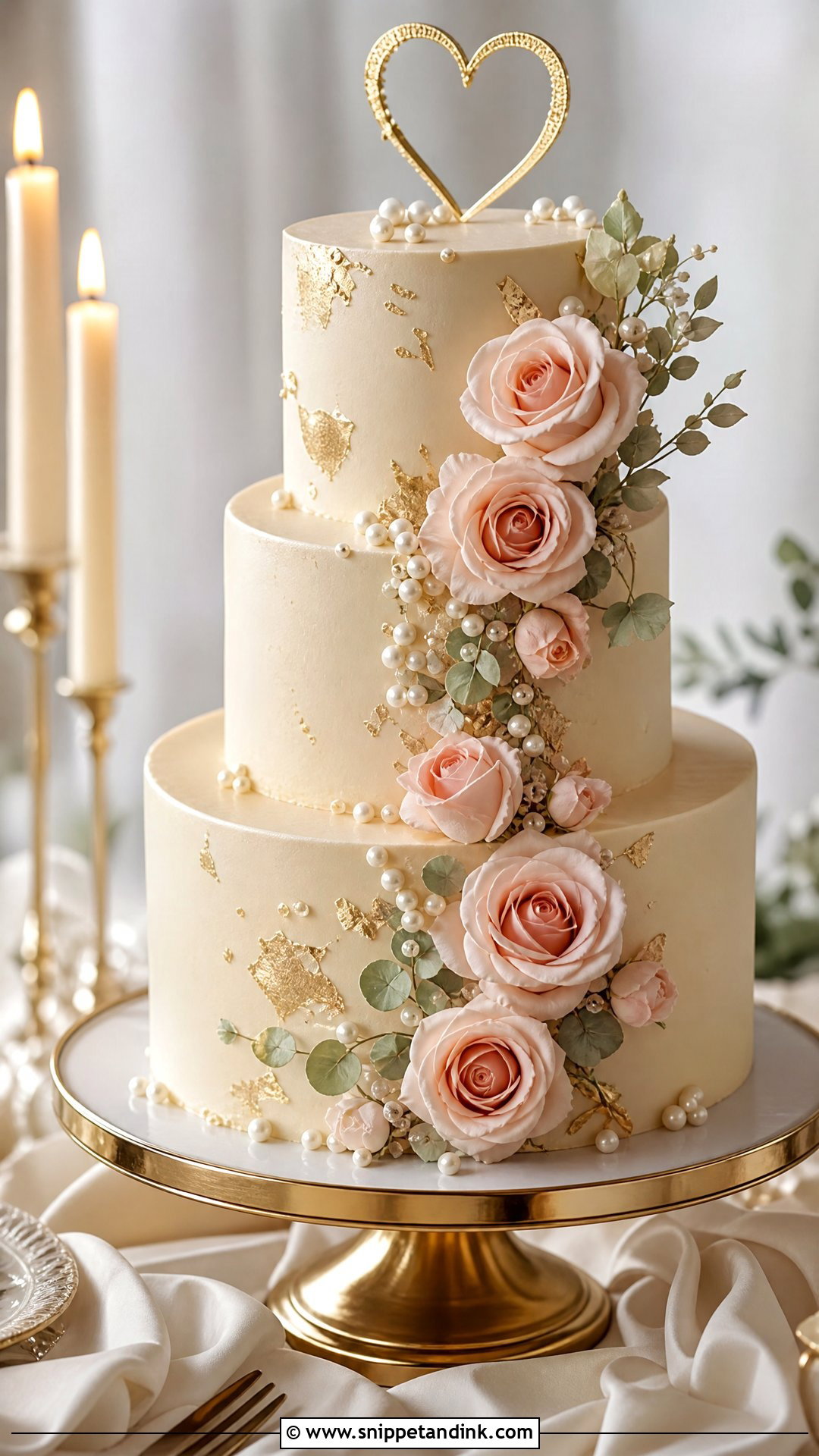
Champagne cake usually has real sparkling wine in the batter or a syrup brushed onto the layers, which gives a light, buttery, slightly sweet crumb. It pairs with vanilla, strawberry, raspberry or white chocolate fillings. For the outside I tint buttercream a warm champagne shade and add pearls, a little gold leaf or blush flowers. Most of the alcohol bakes off, but a soaking syrup keeps some, so mention it if children or guests who don’t drink will eat the cake. Smooth reads refined; delicate piping adds charm.
20. Raspberry Wedding Cake
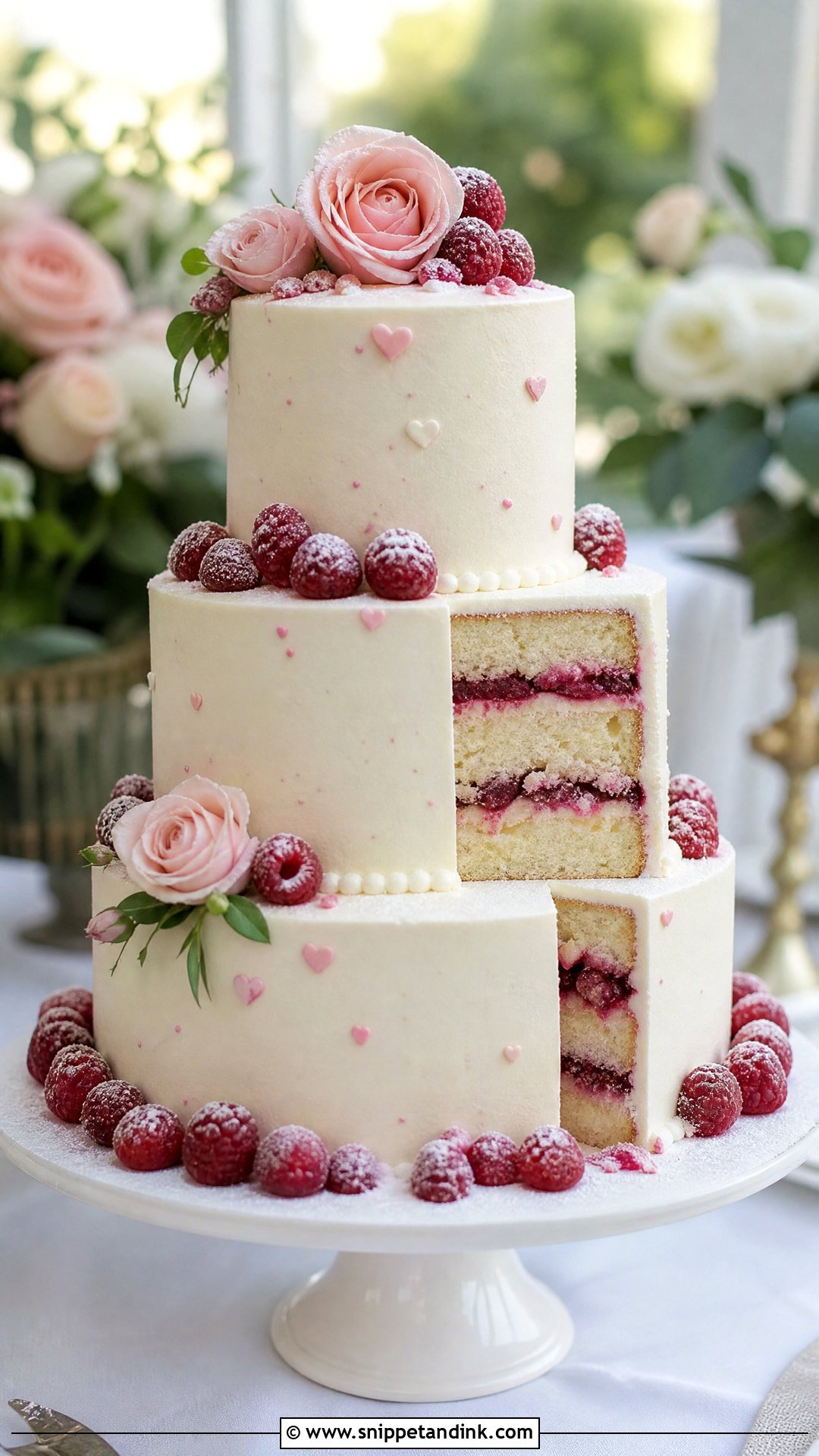
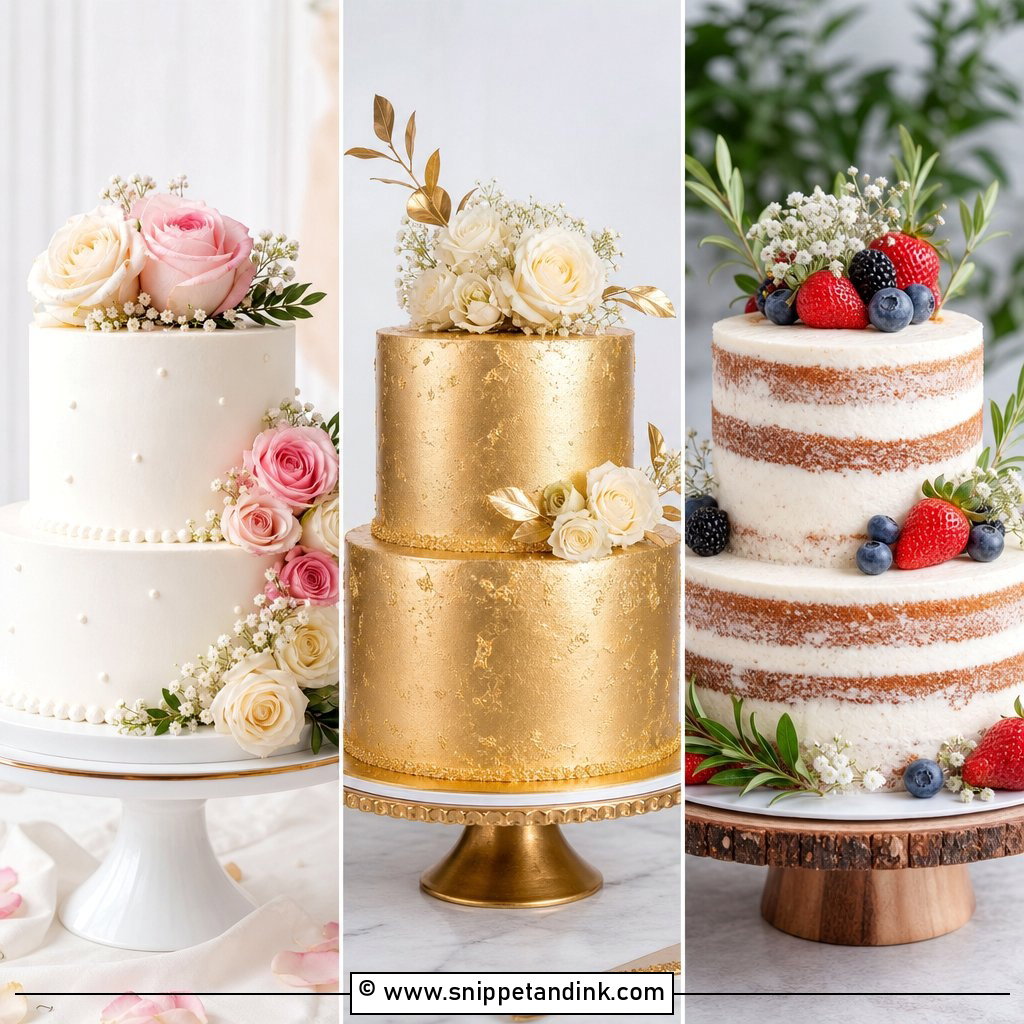
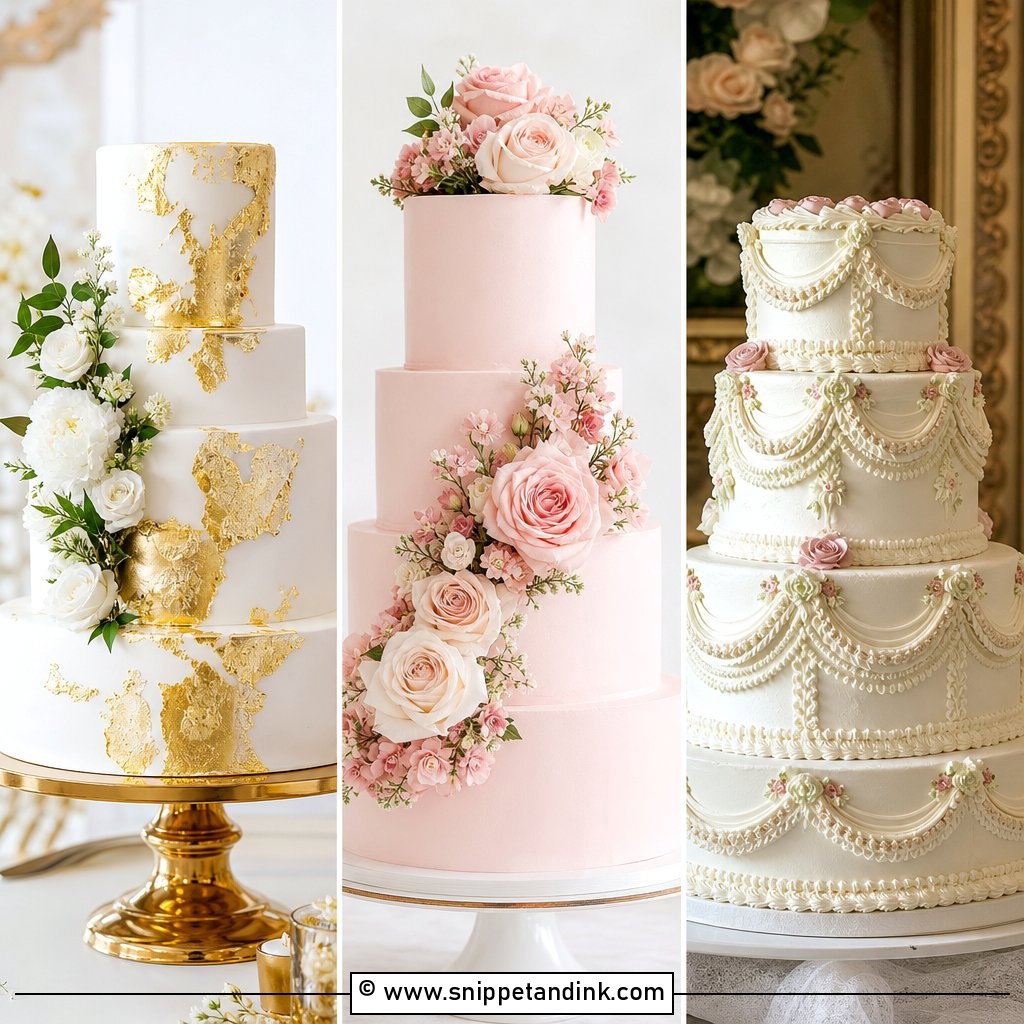
Raspberry brings sharpness that cuts through sweet frosting, which is why it’s one of my favourite fillings for a large wedding cake. Vanilla with raspberry, lemon raspberry or chocolate with raspberry buttercream all work. Keep the frosting ivory or blush, then top with fresh raspberries, roses and a light dusting of icing sugar. Dust the sugar right before display, since it dissolves into damp berries within an hour. Seedless filling is worth requesting if your guests include anyone with dental work. It’s familiar enough for a crowd but less ordinary than plain vanilla.
21. Chocolate Covered Strawberry Wedding Cake
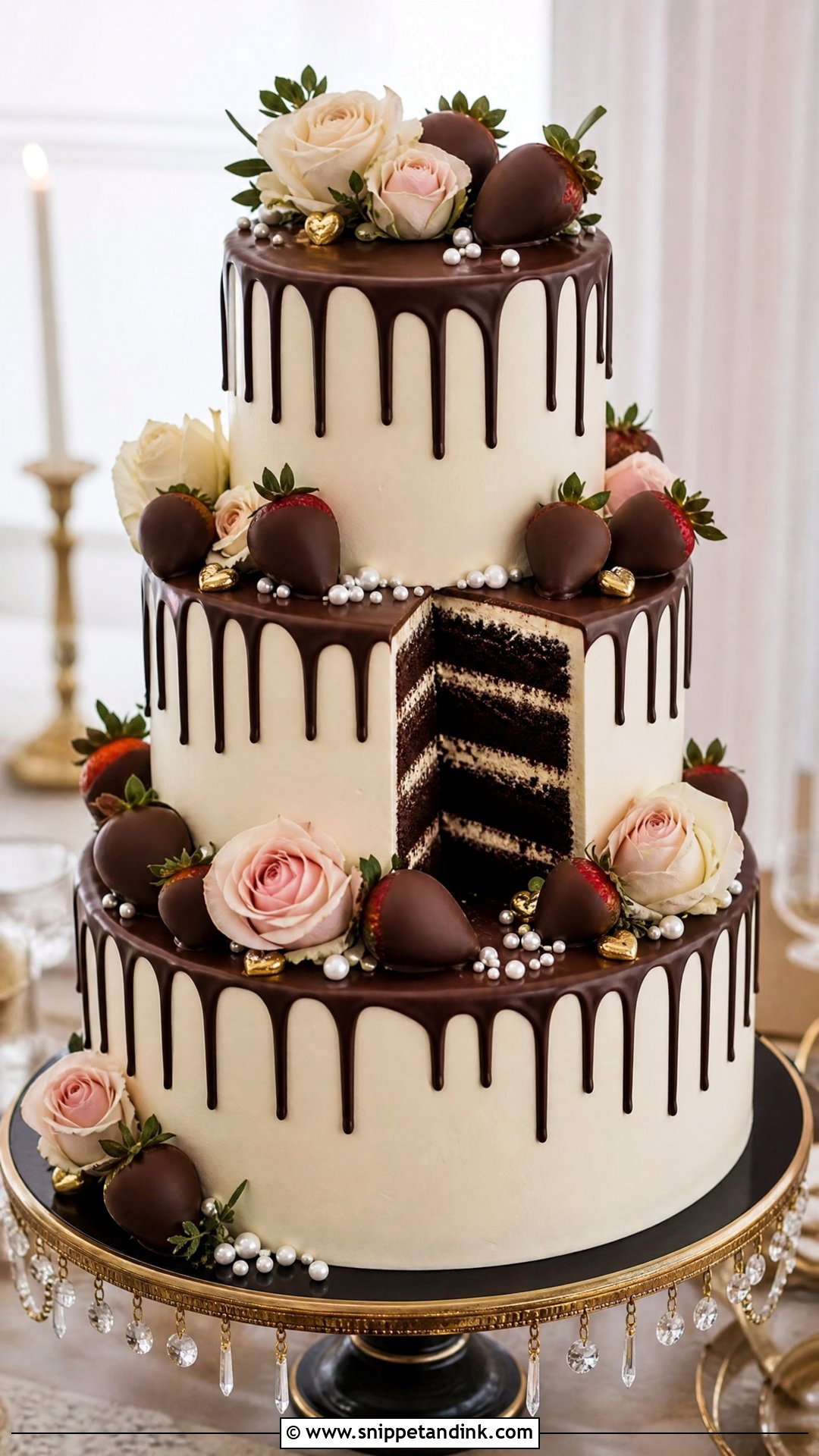
Chocolate with strawberries is the dessert half the room already associates with romance, so a chocolate covered strawberry wedding cake needs very little explaining. Chocolate sponge, vanilla with chocolate filling or strawberry cake with ganache. Decorate with a smooth chocolate drip, dipped berries, piped buttercream and a few gold or pearl accents. I dip the strawberries the same day; dipped fruit kept in the fridge overnight sweats and the chocolate goes dull. Balance the dark chocolate with ivory frosting or blush flowers so it still reads as a wedding cake.
22. Two Tier Heart Wedding Cake
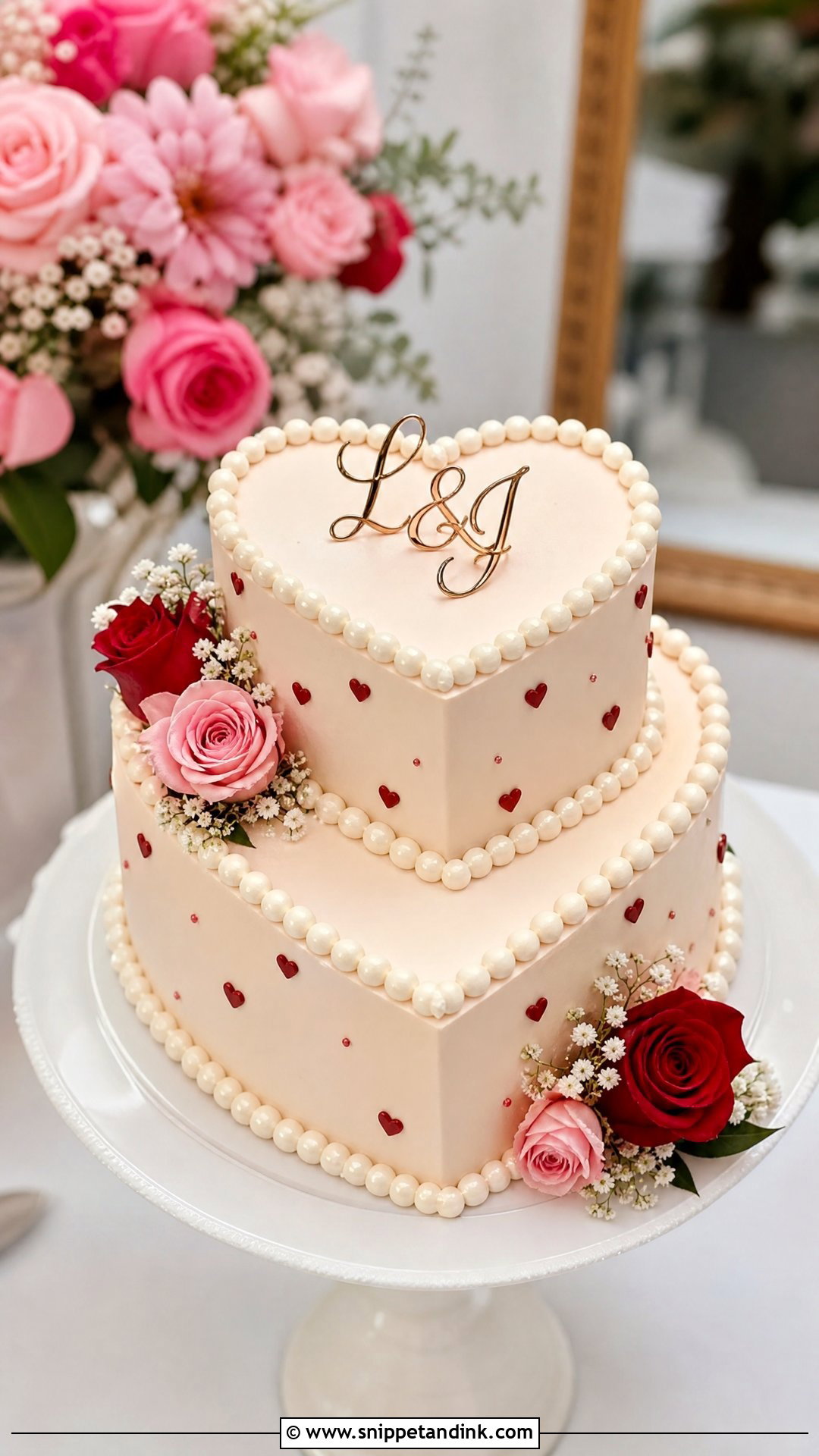
Two heart tiers give a small wedding real height without a cake that’s too big for the guest list. Smooth buttercream with pearl trim is the simple version; piped borders and bows make it vintage. Blush, ivory and red details all suit. Initials, a short message or flowers matching the bouquet personalise it easily. Even two tiers need dowels in the bottom heart, and the top heart has to sit with its point exactly over the lower point, or the whole cake looks slightly twisted from the front.
23. Three Tier Romantic Wedding Cake
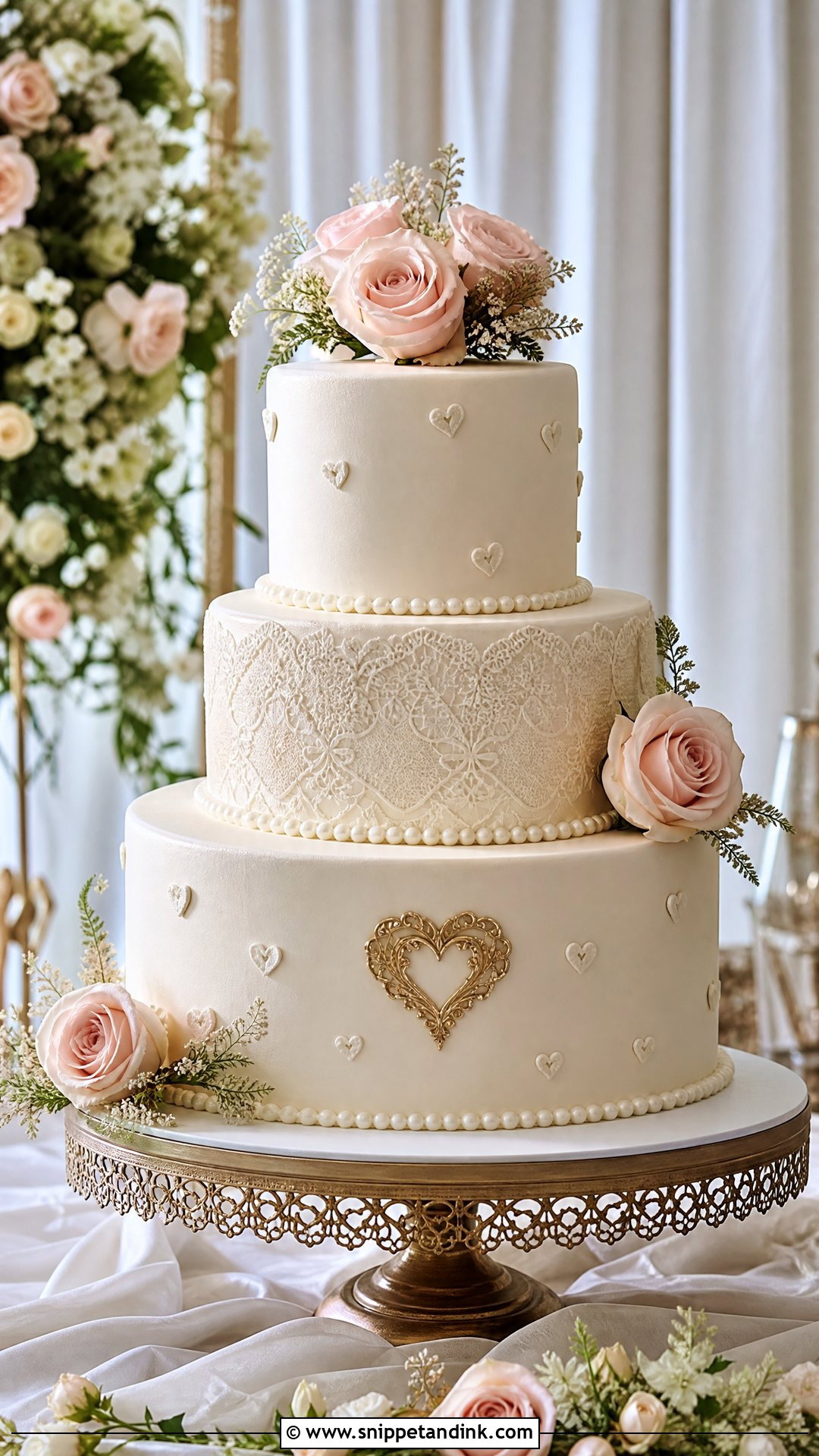
Three tiers give you room to combine ideas without crowding any one surface: lace on one tier, a smooth tier, and flowers on the third, for example. Heart accents, cascading roses, pearl borders, lace texture and blush buttercream can all appear. Keep the palette to a few colours, such as ivory, blush, champagne and soft red, so the tiers read as one cake. This suits a medium to large wedding where the cake is a focal point. Structure becomes a real concern at this height, so a central dowel through all three tiers is standard for travel.
24. Garden Rose Wedding Cake
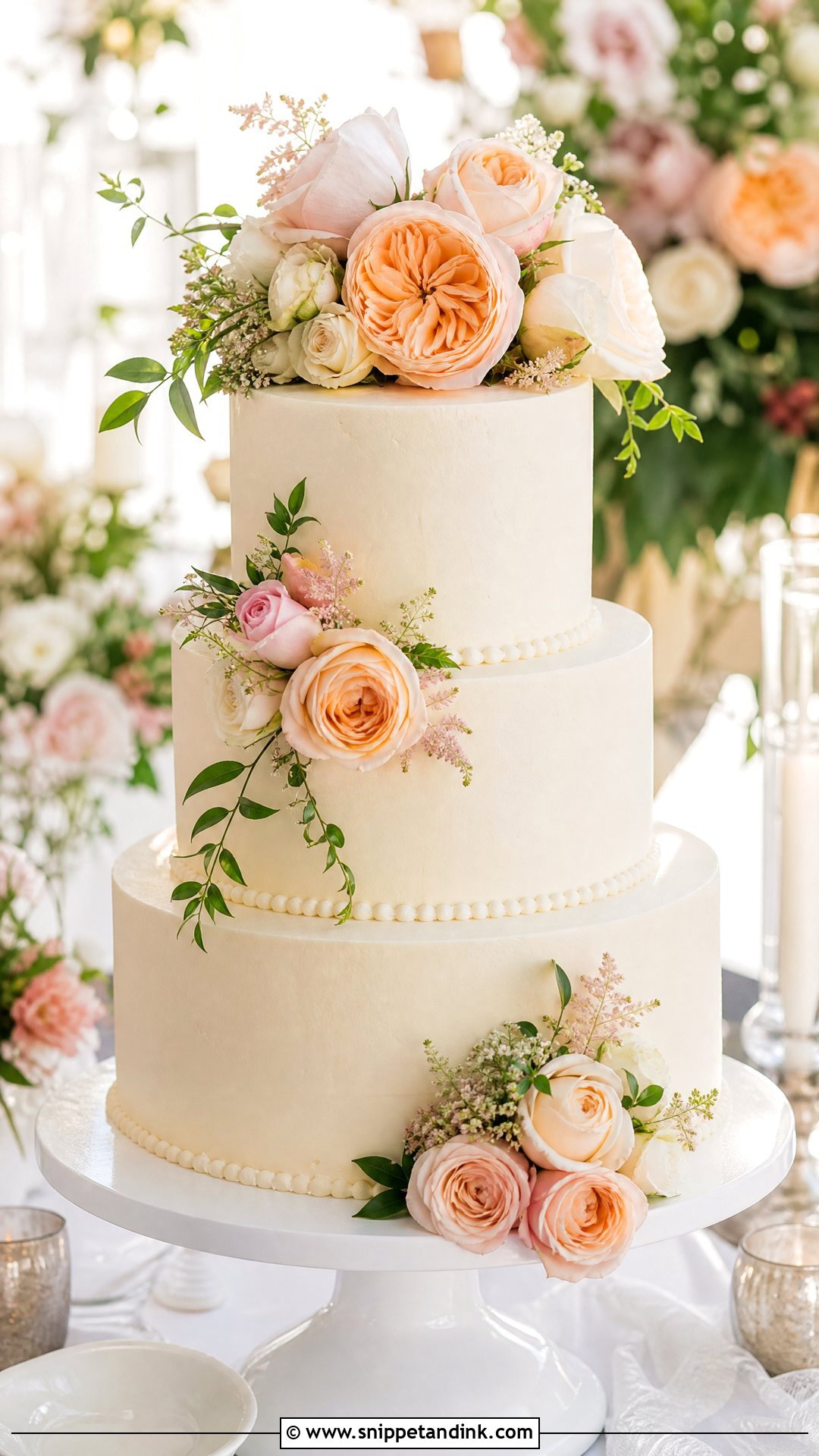
Garden roses open wider and softer than standard roses, which is why designers love them on cakes. Paired with smooth ivory buttercream, light greenery and a few smaller blooms, they bring a fresh outdoor feel. The cake can be round, square or heart-shaped, but the flowers should look like they fell into place, not like they were pinned in a row. Blush, cream, peach and dusty rose give a romantic palette. Garden roses wilt faster than standard ones in heat, so for a summer vineyard I’d place them as late as possible.

25. Pearl And Rose Wedding Cake
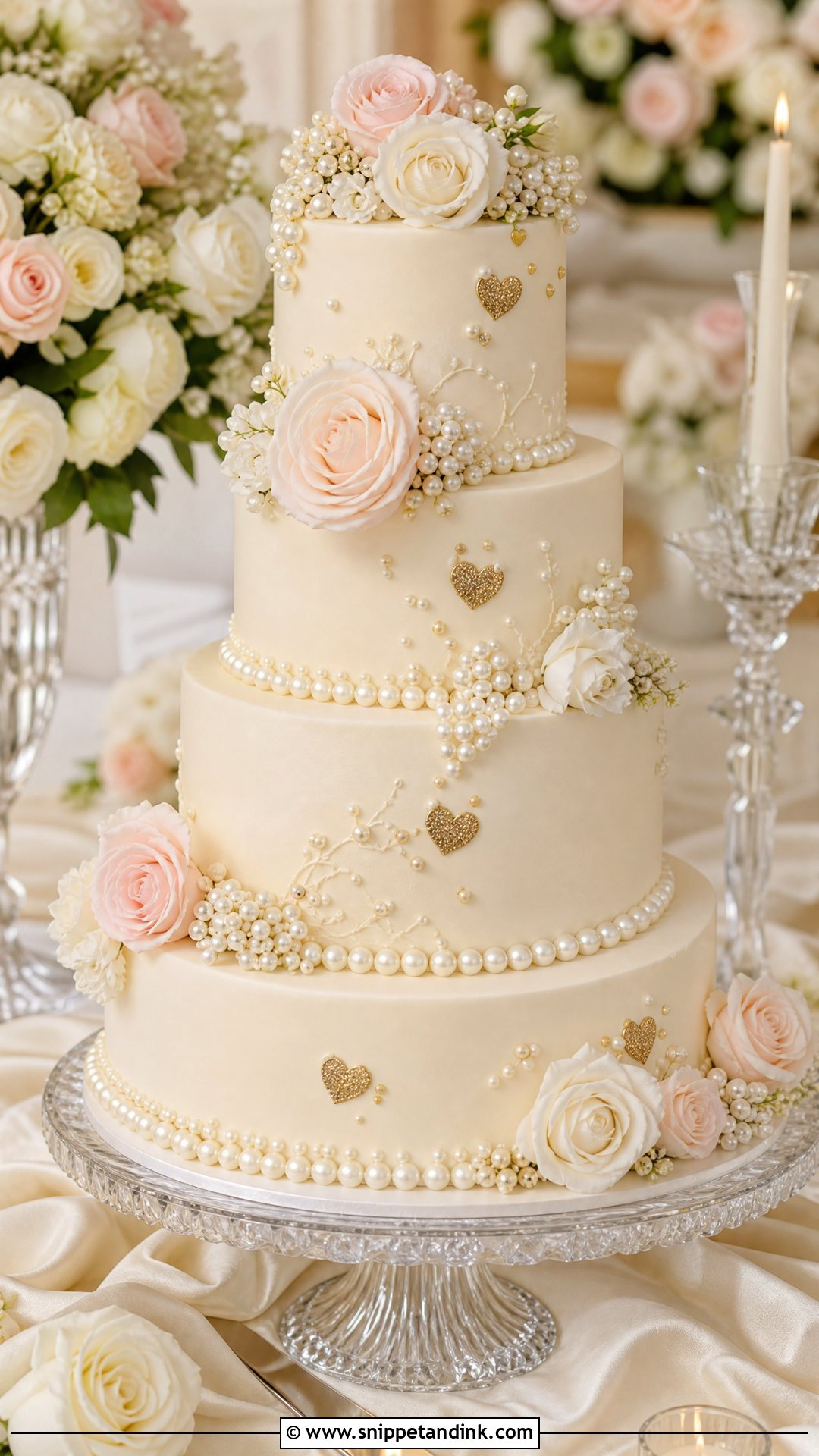
Pearls bring polish and roses bring softness, and the two together suit a classic ballroom reception. Ivory or champagne frosting lets both stand out. I use sugar pearls along the tier borders, scattered clusters, or pearl dragées tucked into the flower arrangement. Blush, white or soft red roses follow your palette. Silver and pearl dragées are decorative and quite hard, so I keep them away from the parts of the cake that will be served. It’s a formal design that still feels warm because of the flowers.
From Display Table to the First Slice
Most cakes are set up an hour or two before guests arrive and cut after dinner, so plan for the cake to stand for four or five hours. Here’s how I’d set that time up.
- Place the cake table away from windows, heaters, candles clustered at the base, and the dance floor speakers. Vibration and heat are what topple tiers.
- Check the table is level and sturdy before the cake arrives. Round banquet tables on uneven floors wobble more than people expect.
- Ask your planner to cut the cake soon after the speeches, before the room heats up with dancing.
- For the ceremonial cut, the couple slices into the back of the bottom tier, where nobody sees a messy edge in photos.
- The caterer then takes the cake to the kitchen and cuts it into narrow wedding portions. Tell them which tier, if any, you want boxed and taken home.
Buttercream will tolerate a comfortable room for an afternoon, while whipped cream and fresh fruit want to go back into the fridge after a couple of hours. If your reception is outdoors in summer, choose your frosting with that in mind before you fall for a design.
Your Cake Should Look Like the Two of You, Not a Theme Board
Romance can be loud, like red and white tiers or chocolate-covered strawberries, or quiet, like a minimal heart, pressed petals, pearls and lace. Season, venue and the flavours you both love matter as much as the look. Before your design meeting, gather a handful of photos, settle a colour palette and decide on the one detail you’d fight for. Then let your baker tell you what’s realistic for the room temperature, travel and timing, and adjust from there. That conversation is what turns a pretty picture into a cake that holds up all evening.
You'll Like These Ideas:




Leave a Reply