
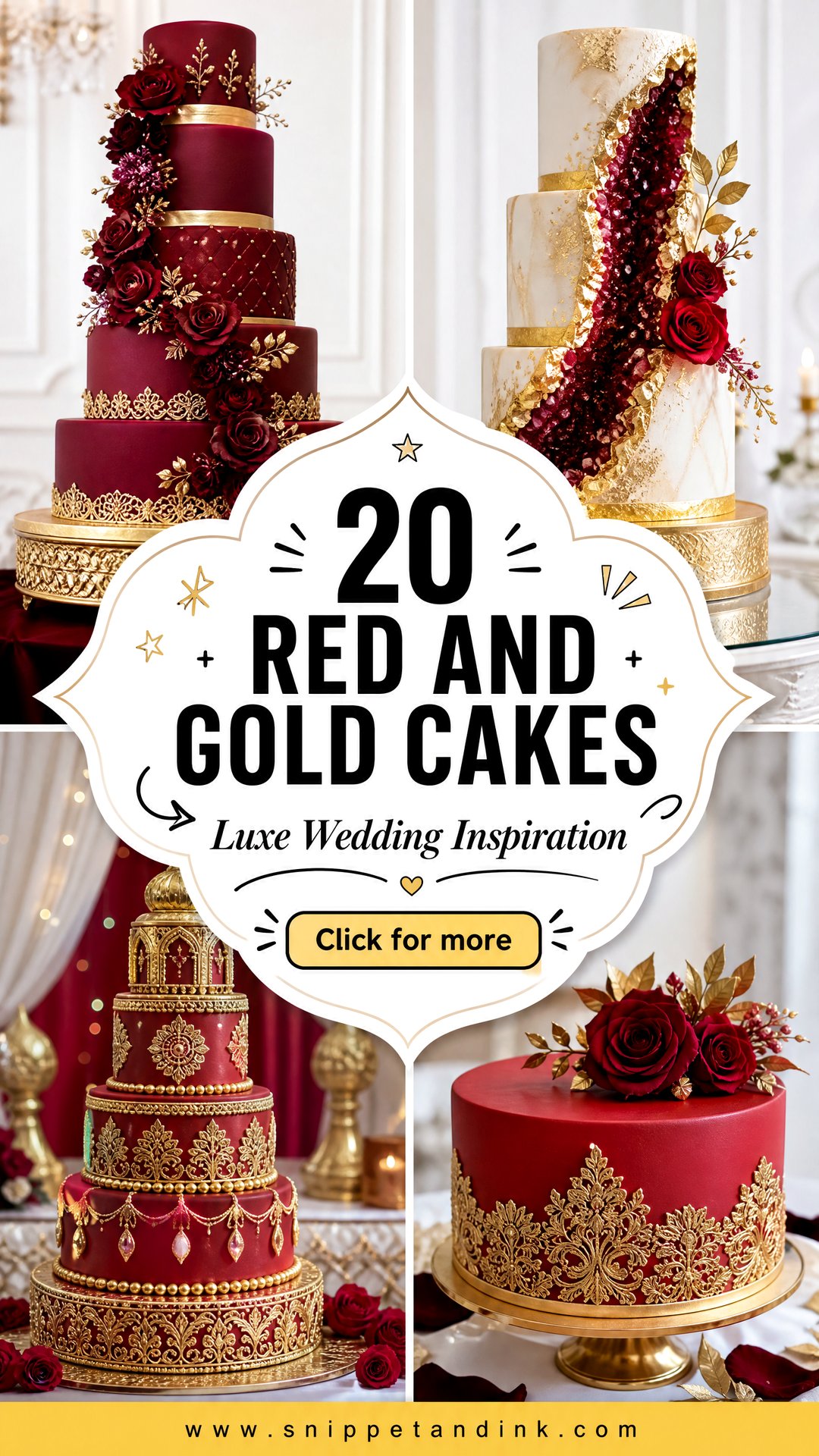
Red and gold is one of the hardest palettes to get right on a cake and one of the most rewarding when it works. Deep red brings warmth and drama, gold brings light, and too much of either turns the whole thing heavy. I see it most at ballroom receptions, fall weddings, black-tie evenings and cultural celebrations where both colors carry meaning. The designs below go from ivory tiers with red flowers to full red fondant, marble, geodes and black-and-gold. For each, I’ve added what it takes to make and where it tends to go wrong, so you can walk into your consultation knowing what to ask for.
Getting a True Red Without a Bitter Taste
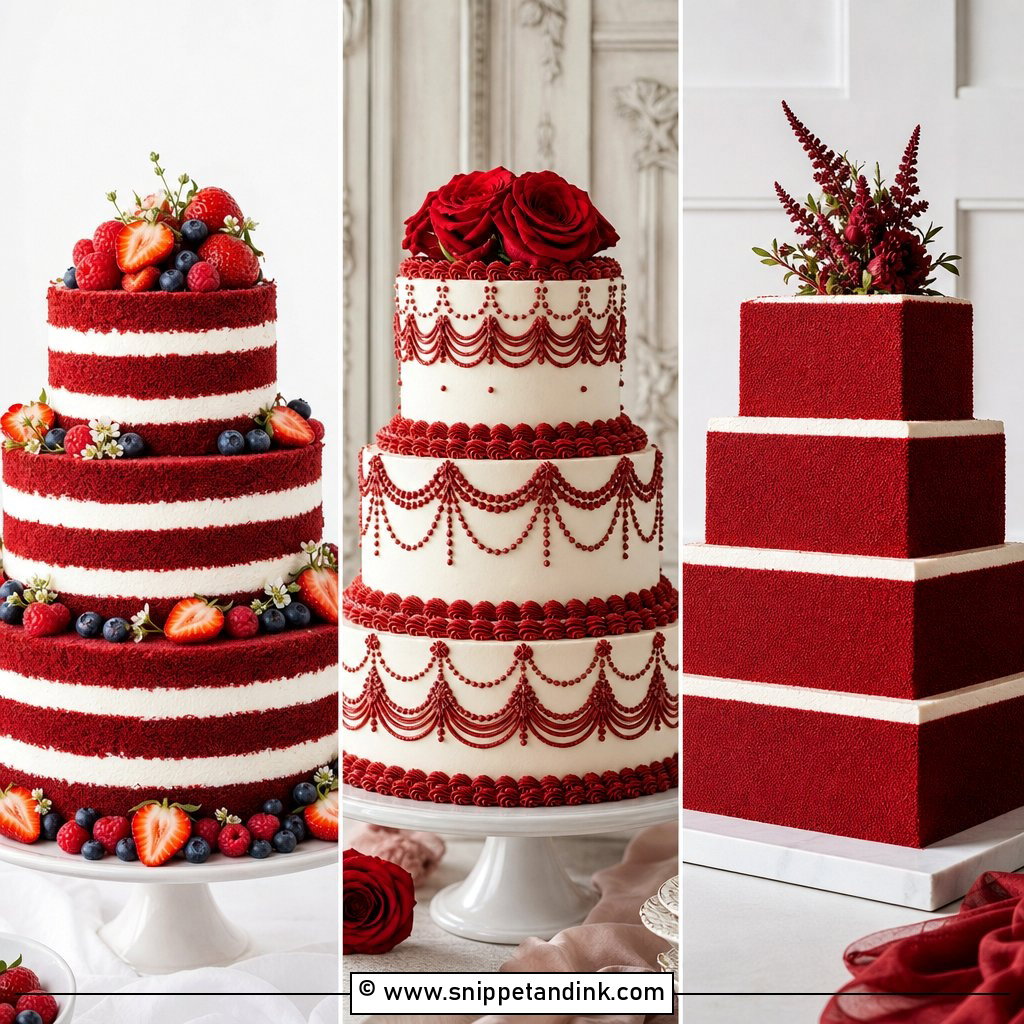
Red is the hardest color in cake decorating. To push white buttercream from pink to a true red takes a lot of gel coloring, and past a certain point you can taste it: a faintly bitter, chemical note that also stains lips and teeth. That’s the trade-off behind every full red tier in this list.
There are ways around it. I start red buttercream from a chocolate base, since the brown already does part of the work, and I color it a day ahead, because red deepens noticeably as it rests. For fondant, I use paste that arrives already deep red. And on many designs, the best answer is to let flowers, fruit or a single tier carry the red, leaving the rest ivory.
At your tasting, ask to try the actual red frosting, not just the flavors. If it tastes off to you, it will to your guests too, and there’s still time to move the red onto the decorations.
1. Red And Gold Wedding Cake With Roses
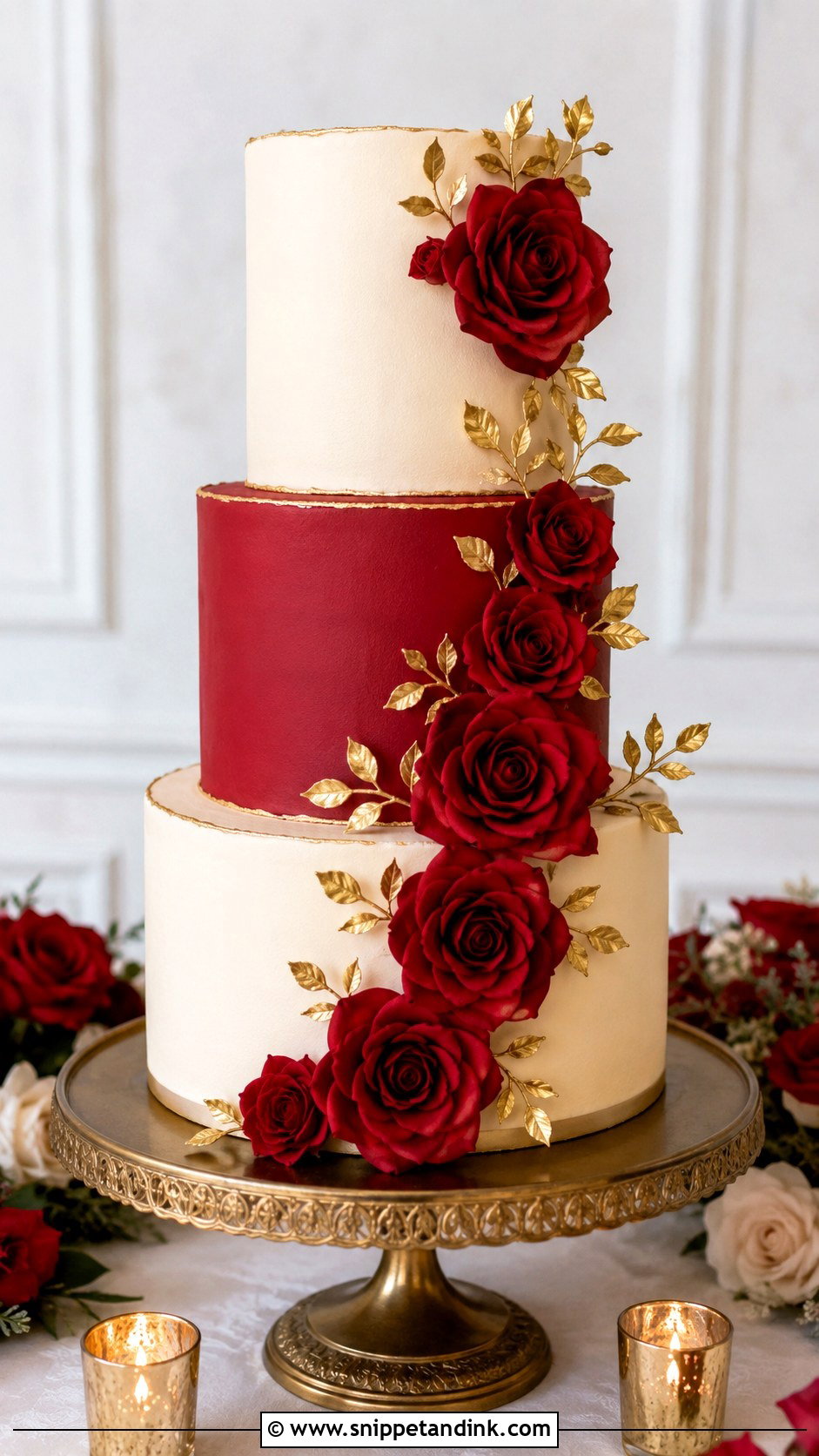
Red roses with gold accents is the classic version, and its success depends on how much gold you allow. Smooth ivory or deep red tiers with a rose cascade from top to base carry the color; the gold should be a supporting line, like a painted tier edge, a few leaf accents or a thin separator. Fresh roses look softer and more garden-like but need wrapping before they touch the cake. Sugar roses are crisper and won’t wilt, which helps if the cake is on display for hours before it’s cut.
2. Red Velvet Wedding Cake With Gold Leaf
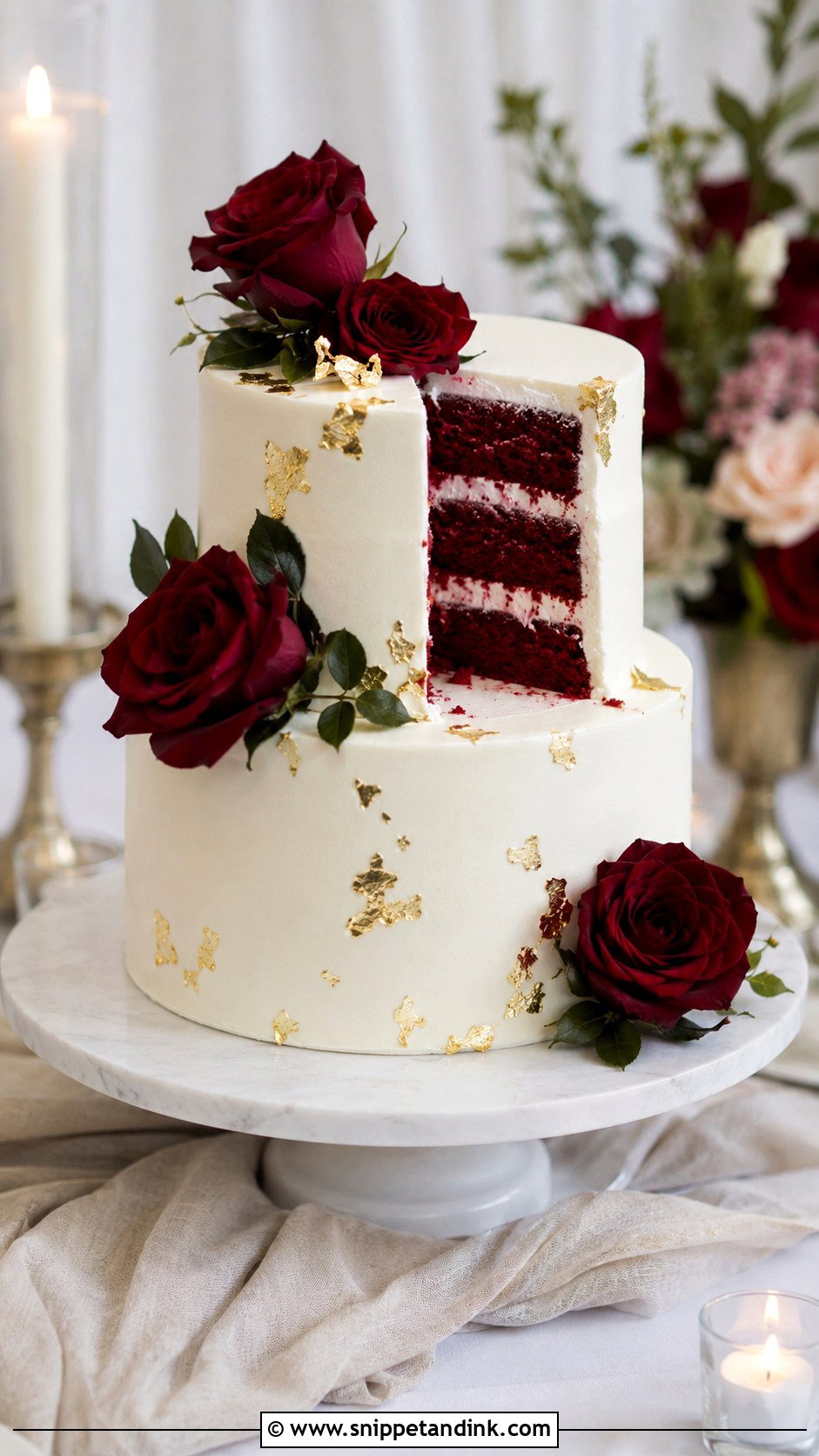
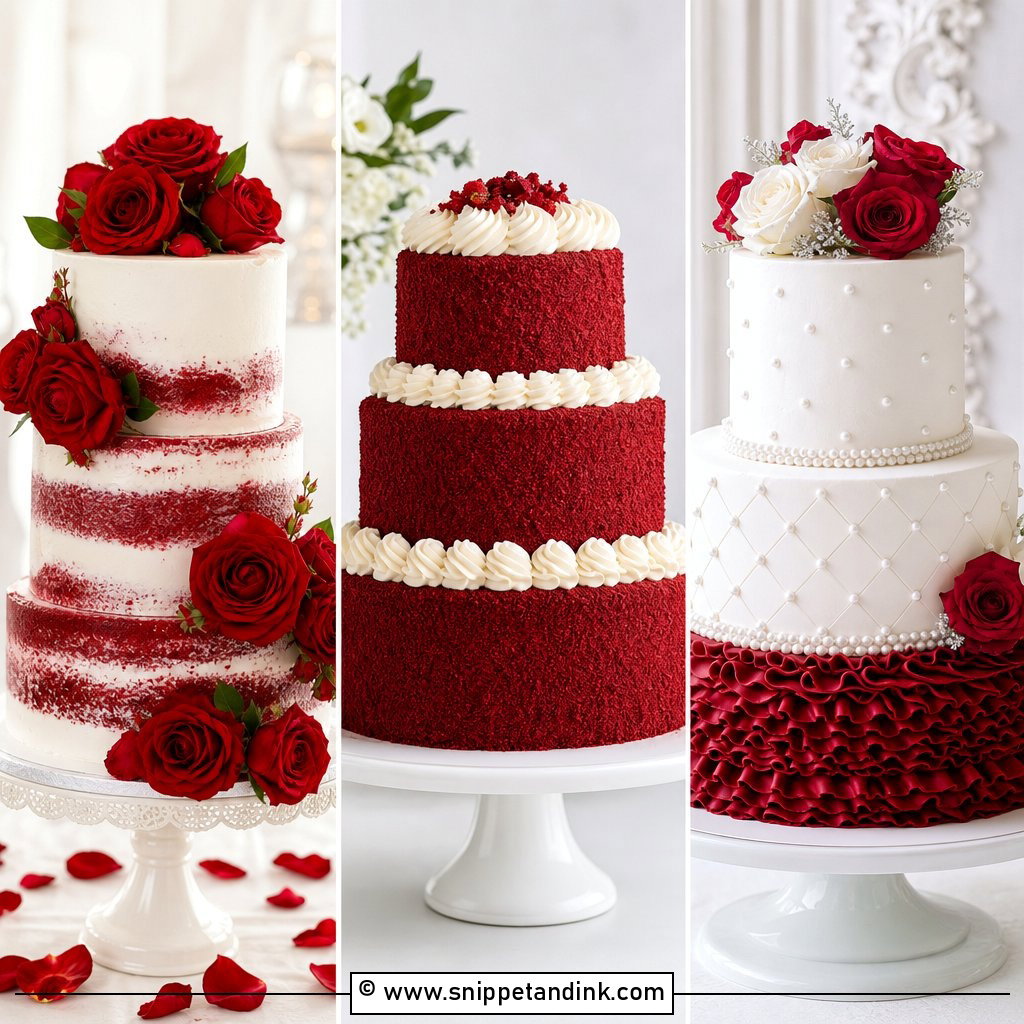
Red velvet carries the palette inside the cake, so the first slice does some of the decorating. A red velvet wedding cake layered with white cream cheese frosting looks striking cut open, with scattered edible gold leaf on a white exterior or burgundy buttercream with gold touches. One practical point: red velvet crumbs show up instantly in white frosting, so I always seal it with a thin crumb coat and chill before the final layer. Lay the gold leaf unevenly, in torn patches, and it reads as natural rather than stuck on.
3. Burgundy And Gold Wedding Cake
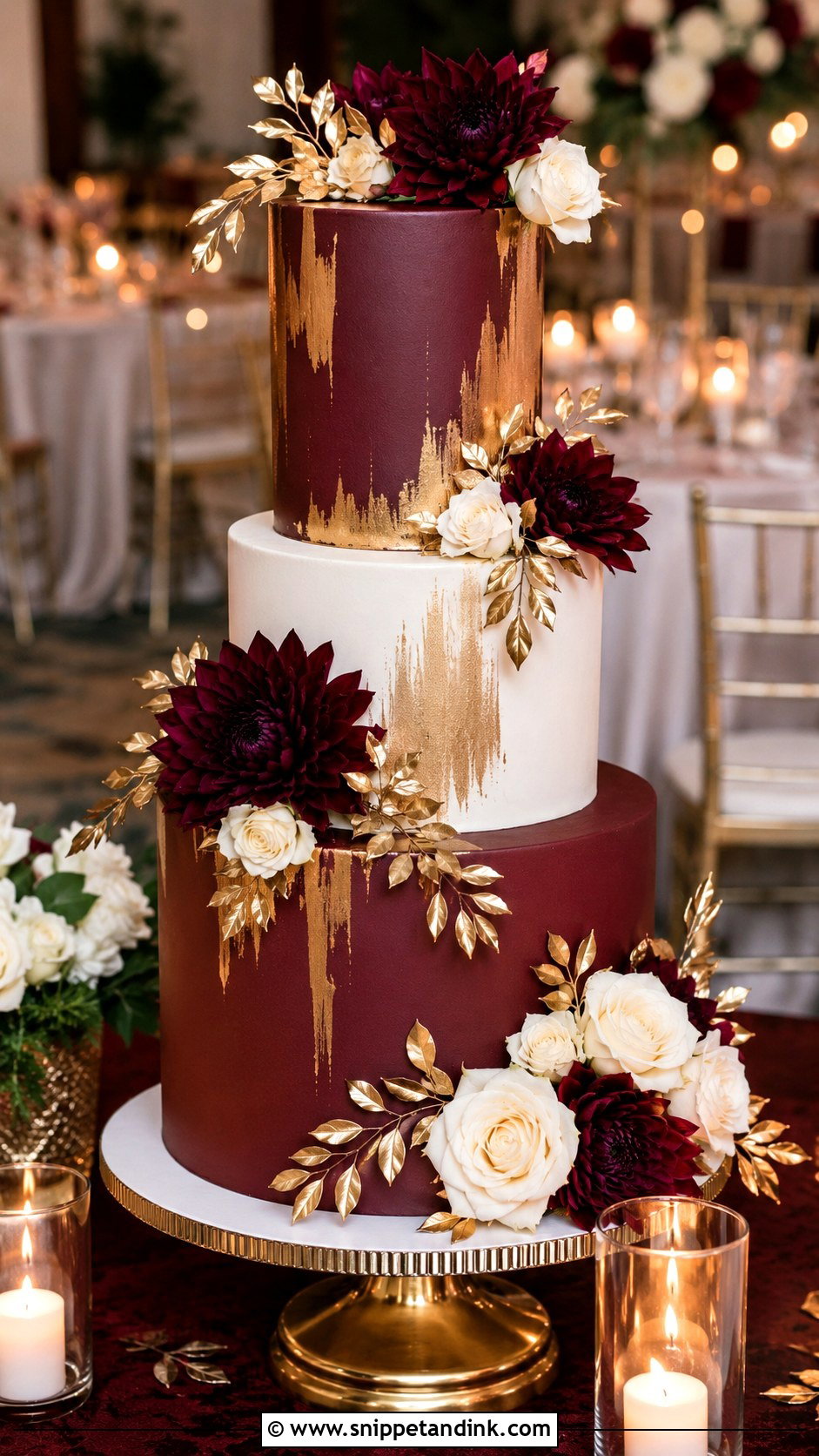
Burgundy reads deeper and quieter than bright red, which is why I suggest it for evening weddings and formal rooms. Matte burgundy tiers, brushed gold panels and cream or blush flowers for contrast give a refined look; dark red sugar flowers and gold foliage on an antique gold stand push it moodier. Burgundy is also easier to mix than true red, since I can build it from red with a touch of brown or violet rather than piling in more red coloring. Chocolate, red velvet, almond, vanilla or spiced cake all sit well under it. Keep the burgundy as the base and the gold as the highlight.
4. Red And Gold Tiered Wedding Cake
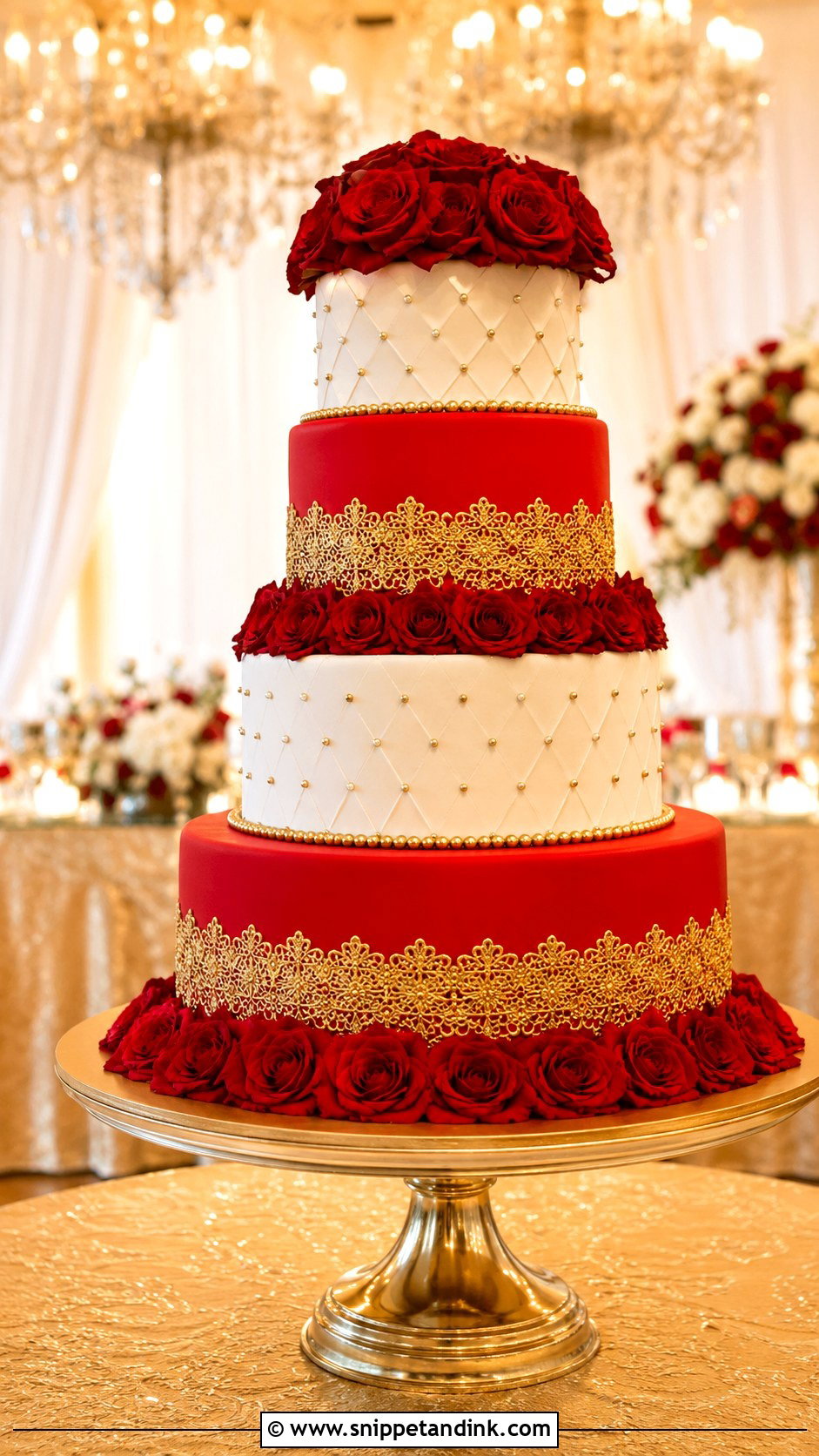
A tiered red and gold cake lets you mix finishes: smooth red fondant on one tier, ivory with gold lace on another, a red floral wrap on a third. Height suits a large reception, where the cake needs presence across the room. What holds it together is matching tones. Red fondant from one batch and red buttercream from another rarely match exactly, so I color every red element from the same mix or make the reds deliberately different. Simple separators, a matching topper or a few red flowers connect the tiers.
5. White Red And Gold Wedding Cake
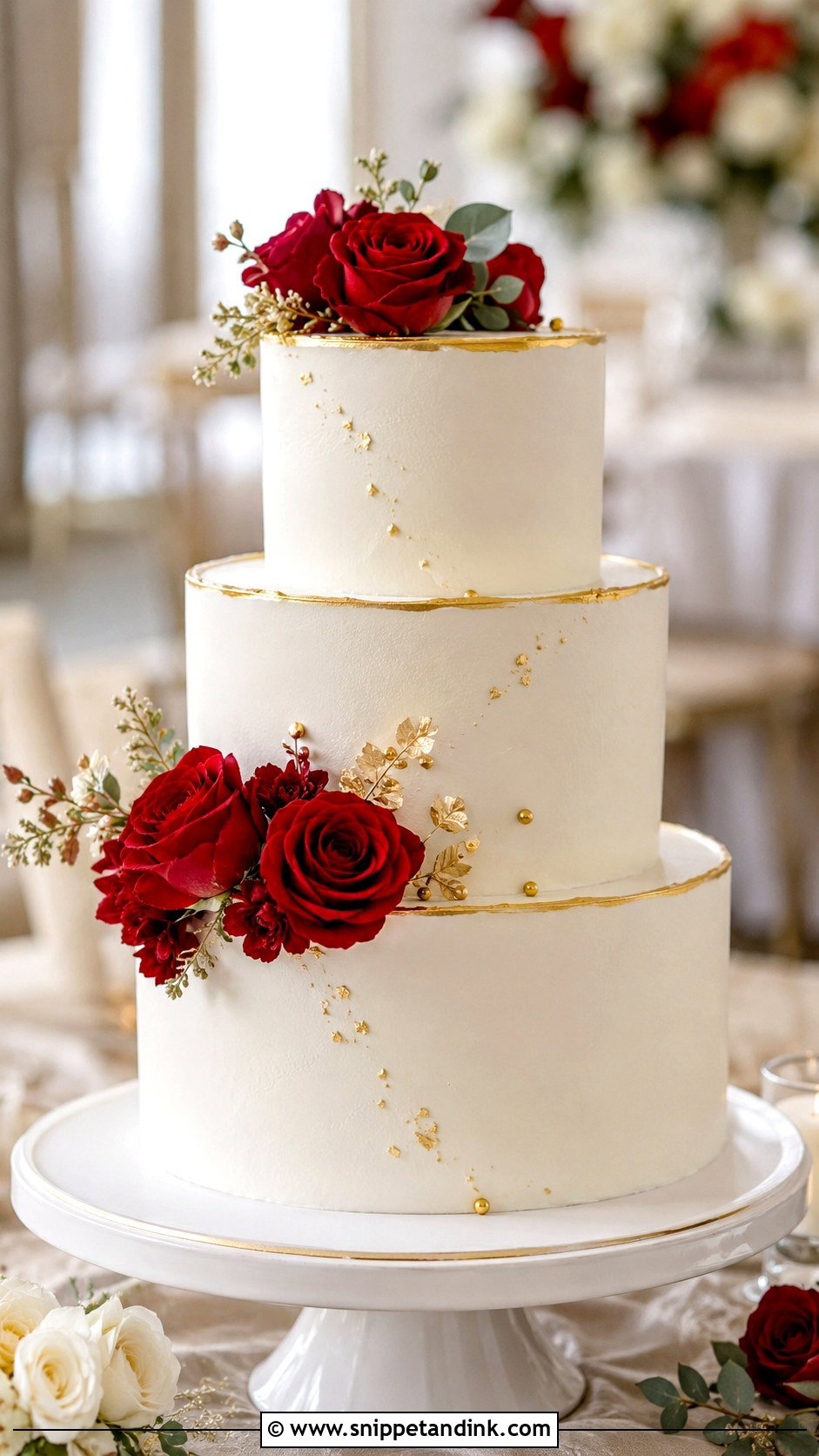
White tiers keep the cake bright and bridal while red flowers and gold trim carry the theme, and it’s the version that adapts most easily to any venue. Red roses, peonies, ranunculus or sugar flowers can be swapped by season and budget. Gold can be painted edges, tiny pearls, stenciled patterns or foil details. Because all the red sits in the flowers, there’s no risk of red coloring staining guests’ mouths, which is a quiet advantage over full red tiers.
6. Red And Gold Fondant Wedding Cake
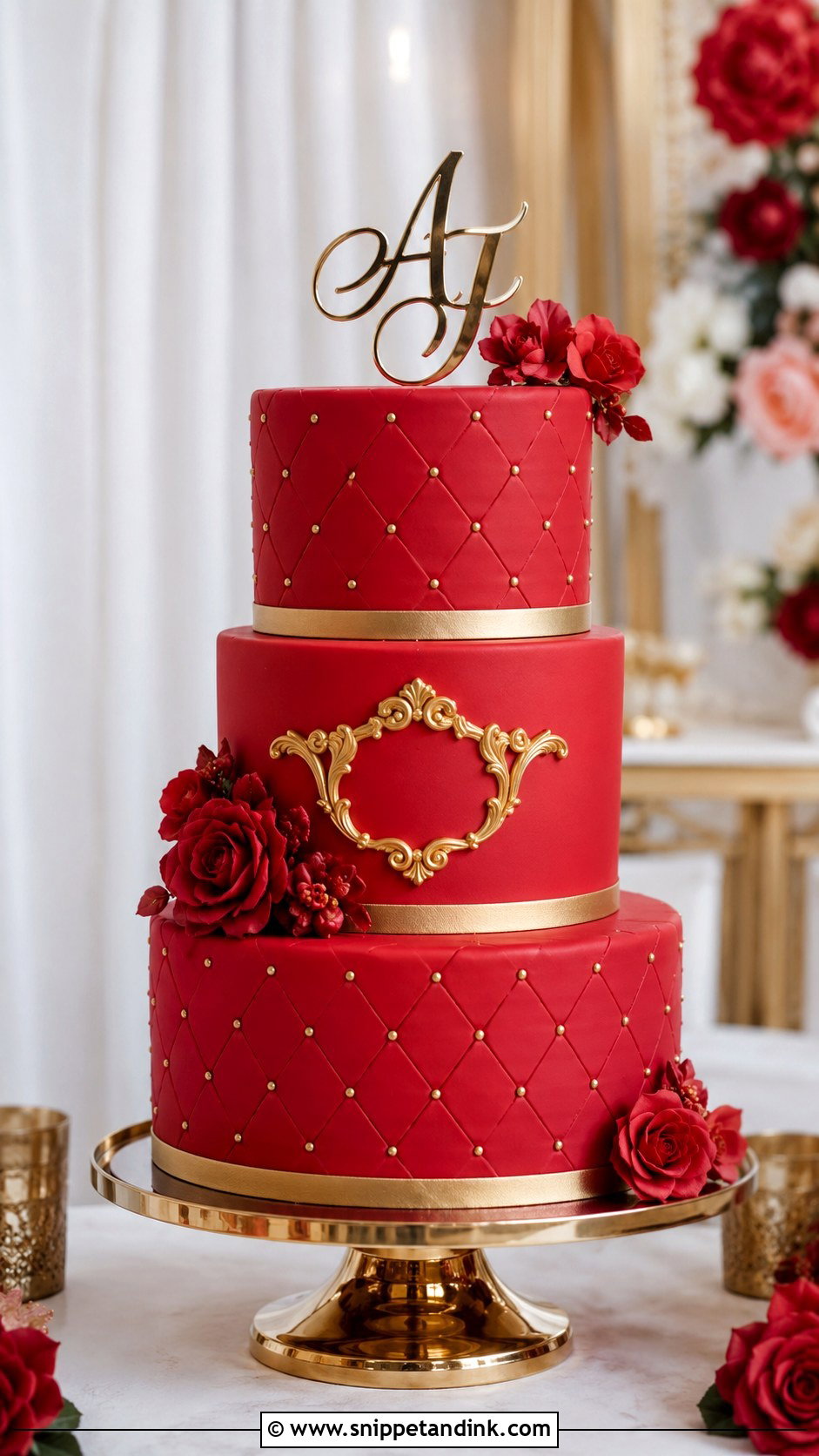
Fondant gives you the sharp edges, color blocking, embossed patterns and painted metallic detail that make this palette look expensive. I buy deep red fondant pre-colored rather than tinting white, because kneading that much coloring into it makes the paste sticky and harder to cover a tier smoothly. Ivory fondant with red and gold accents looks softer. Fondant does protect the buttercream underneath in a warm room, but it sweats if moved from a cold fridge into humidity, so I let it come up to room temperature in its box. For a formal cake, a quilted red tier studded with gold pearls is hard to beat.
7. Red And Gold Buttercream Wedding Cake
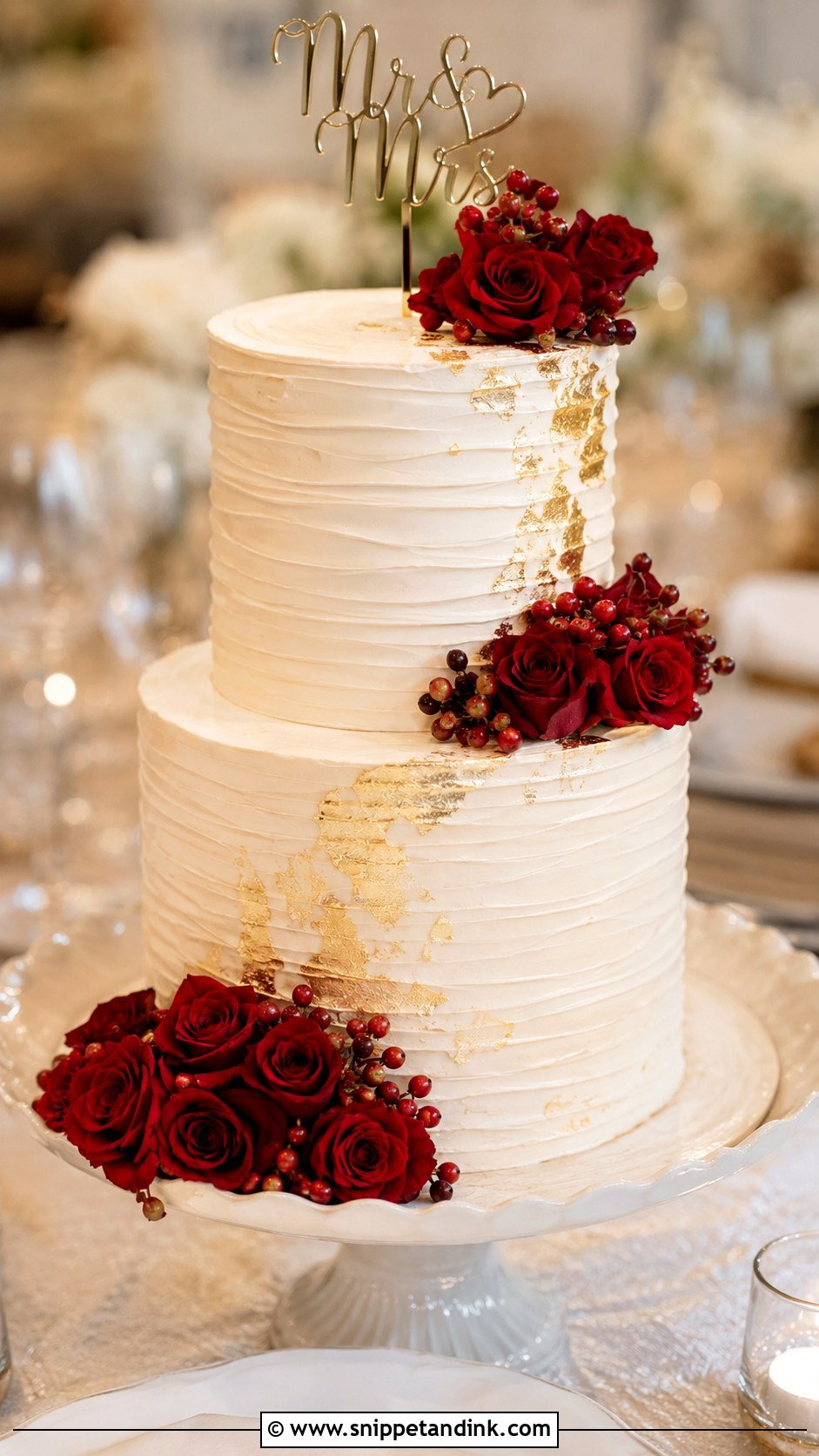
Buttercream feels softer and more approachable than fondant, with texture you can see: smooth sides, rustic swirls, horizontal combing or light texture. I’d usually bring the red in through flowers, berries or one painted tier rather than coloring everything, because a fully red buttercream needs a lot of coloring and can taste slightly bitter. Gold sits best as leaf flakes, a thin drip, painted edges or a metallic topper. It’s the version that tastes as good as it looks without feeling too formal.
8. Red And Gold Wedding Cake With Drip
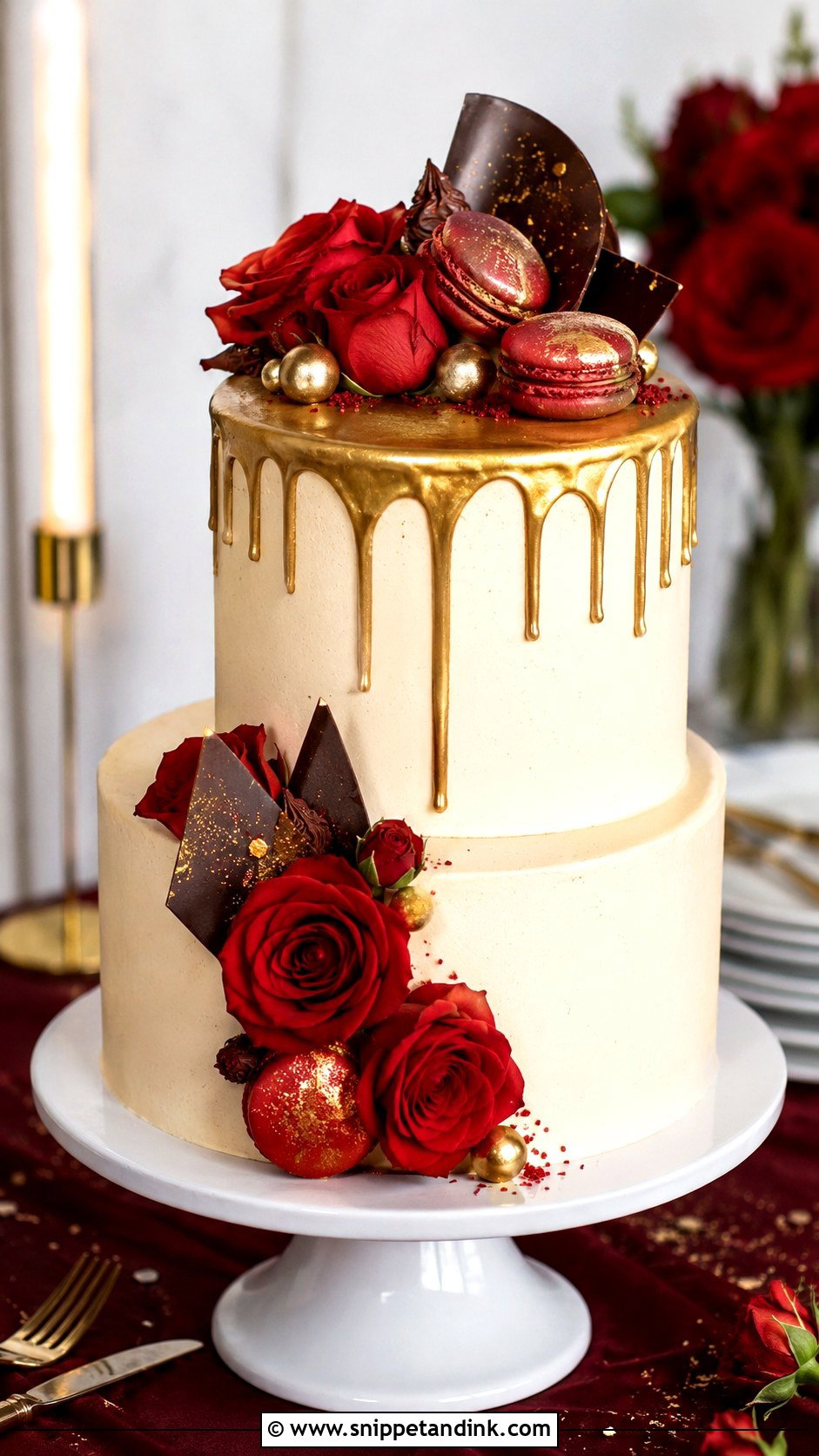
A red and gold wedding cake with drip can run gold over a red buttercream tier, or deep red over ivory with gold leaf accents. For a gold drip, I pour a white chocolate ganache first and paint it with edible gold once it has set; gold mixed straight into the drip turns out dull. Keep the drips neat, even and short for a wedding. Red roses, macarons, chocolate sails or gold-dusted berries on top add height, and the style suits a two-tier or three-tier cake without much else.
9. Red And Gold Marble Wedding Cake
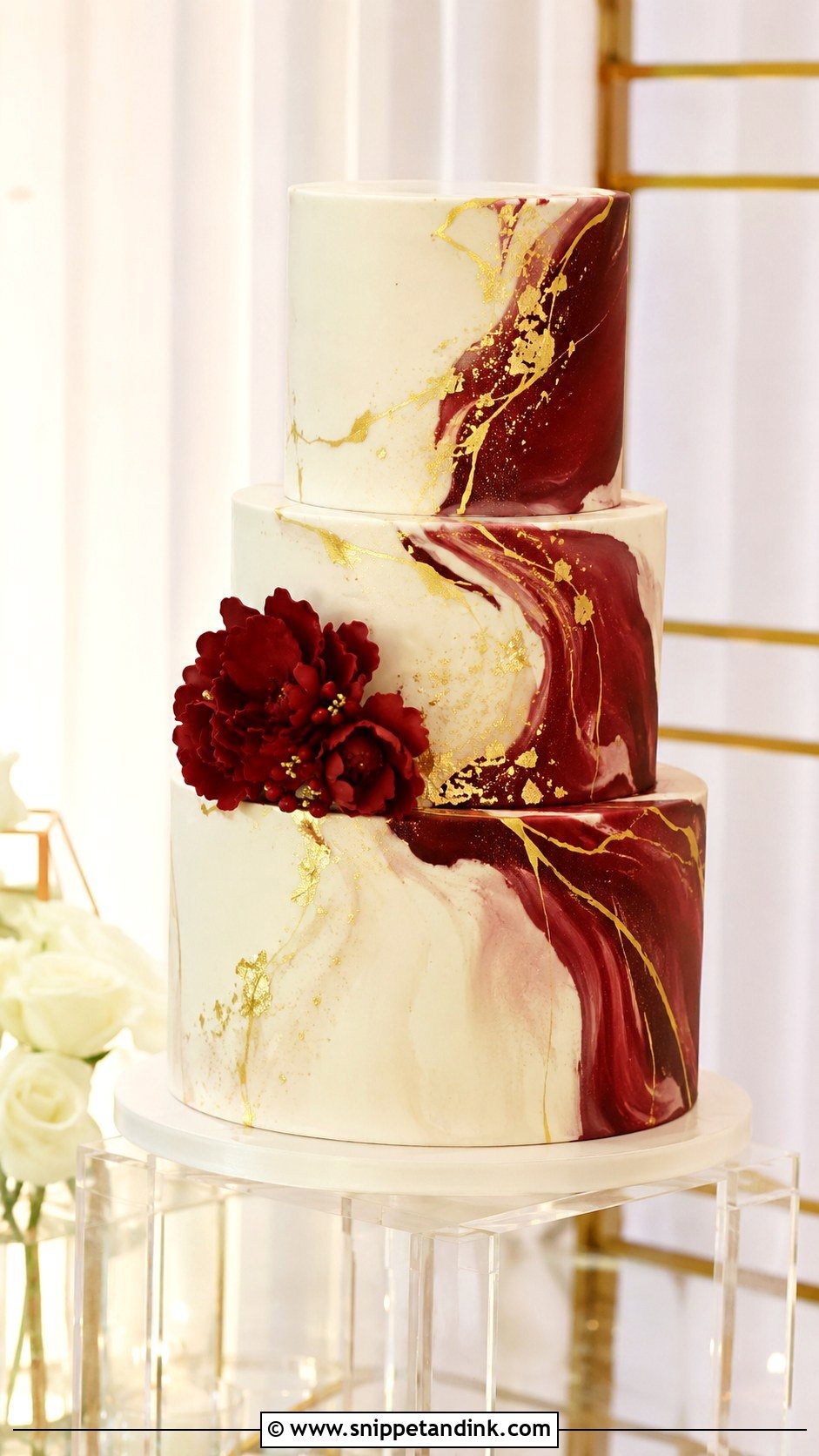
A red and gold marble wedding cake has a modern, artistic feel. The marble is made by partly kneading ivory, deep red and burgundy fondant together, rolling it out and painting thin gold veins afterward. Stop kneading early, since over-mixed colors blend into a flat pink. The veining should look like natural stone, delicate and irregular, not thick stripes. It works on square, round or tall tiers, finished with one sugar flower cluster, a slim topper or a gold stand.
10. Red And Gold Geode Wedding Cake
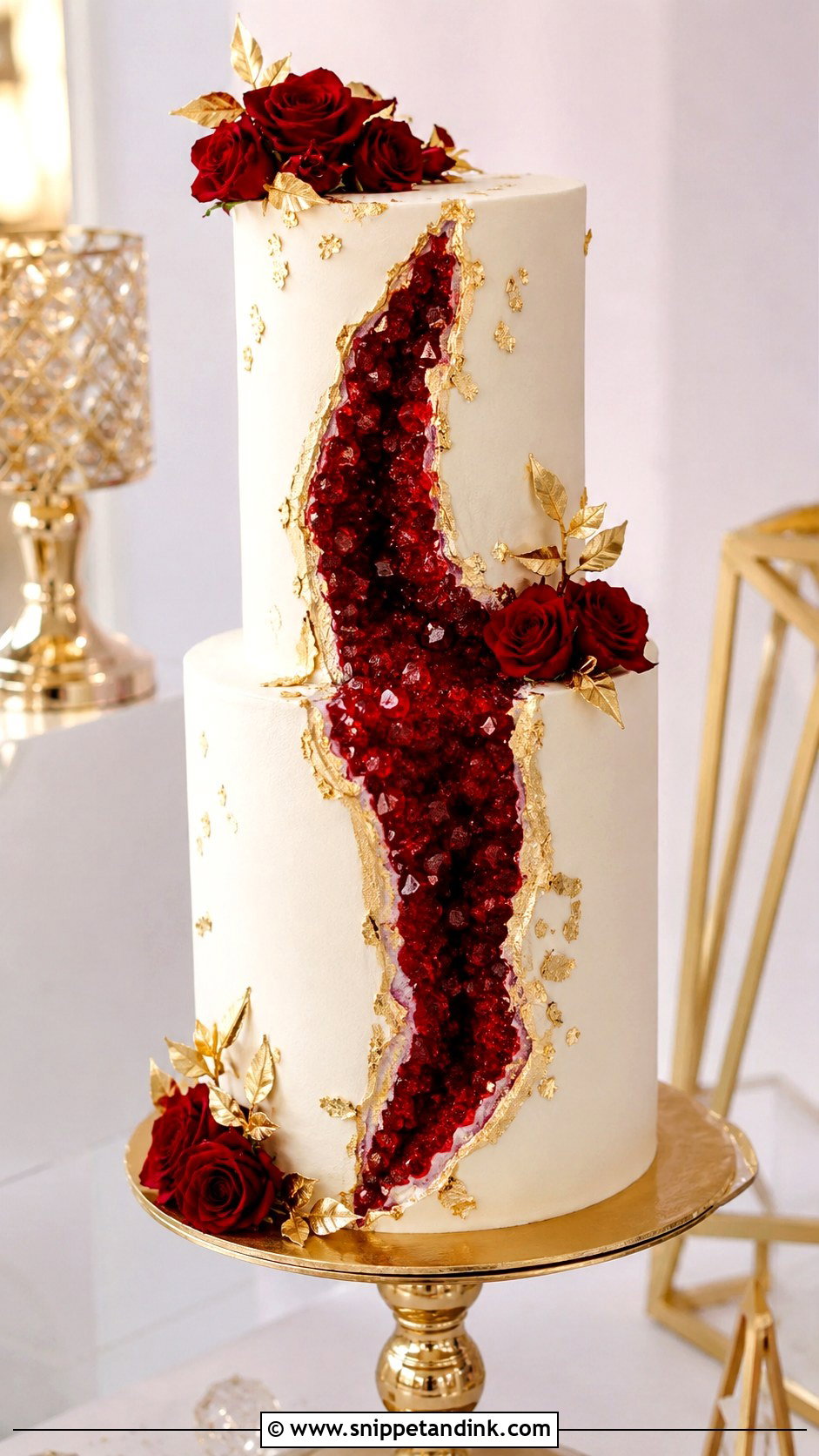
A geode cuts an opening into a tier and fills it with ruby-toned crystals edged in gold. Rock candy is the traditional fill, but sugar crystals draw moisture in a humid room and lose their sparkle, so for a summer reception I’d suggest isomalt crystals, which hold up better. Tall white, ivory or burgundy tiers frame it best. Keep the rest of the cake smooth, add a little gold leaf or a few red flowers at most, and let the crystals do the talking.
11. Red And Gold Floral Wedding Cake
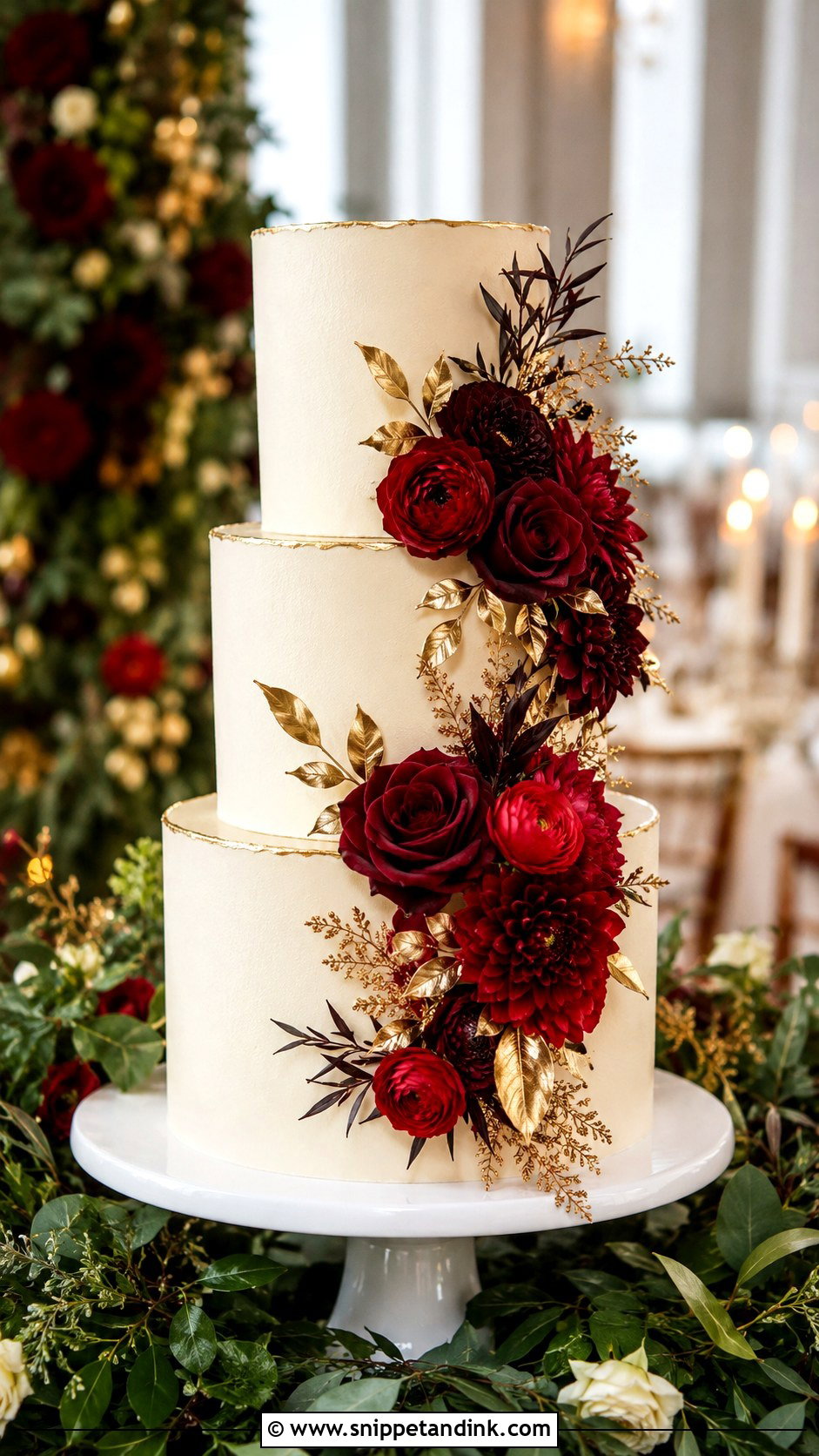
Mixing flower types gives a red and gold floral cake depth: red roses, burgundy dahlias, crimson ranunculus and soft greenery with gold-painted leaves. The base can be ivory, blush or deep red depending on how bold you want it. I’d plan one main cascade or two balanced clusters rather than flowers on every tier. Painting real leaves gold is a florist’s trick, and those leaves must not touch the cake; for any gold foliage that sits on the icing, I make it from sugar. Gold should support the flowers, never compete with them.
12. Red And Gold Square Wedding Cake
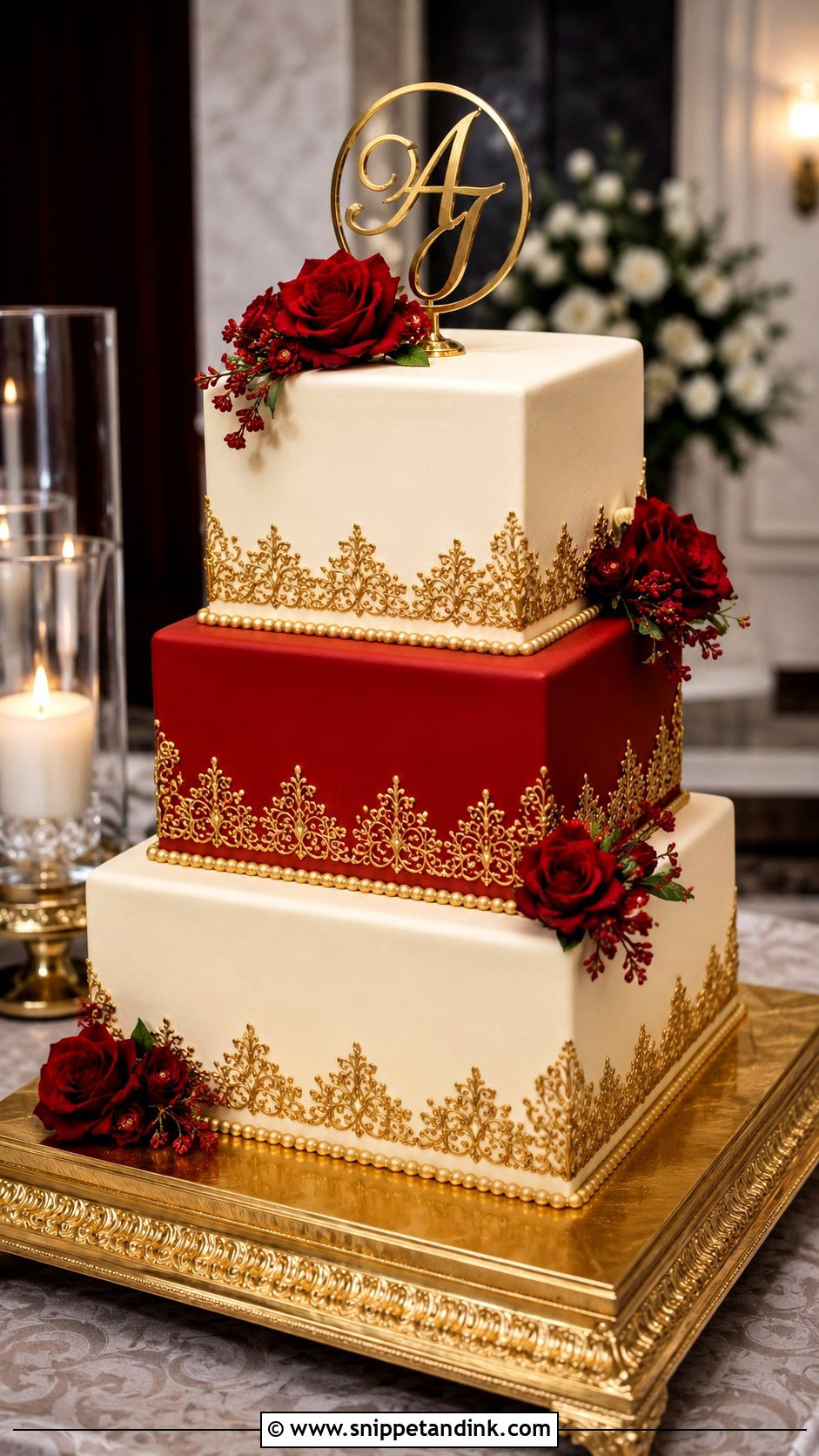
Square tiers feel structured and a little unexpected. Crisp fondant, clean gold borders and red floral corners suit the shape, and the flat sides are ideal for stenciling, monograms or embossed patterns. Sharp corners are the hard part, since fondant tends to tear or pleat there, so square cakes take noticeably longer to cover well. They also serve more slices per tier than a round of the same width. Alternate red and ivory tiers for a grand look, or soften the lines with rounded flower clusters at the corners.
13. Red And Gold Asian Wedding Cake
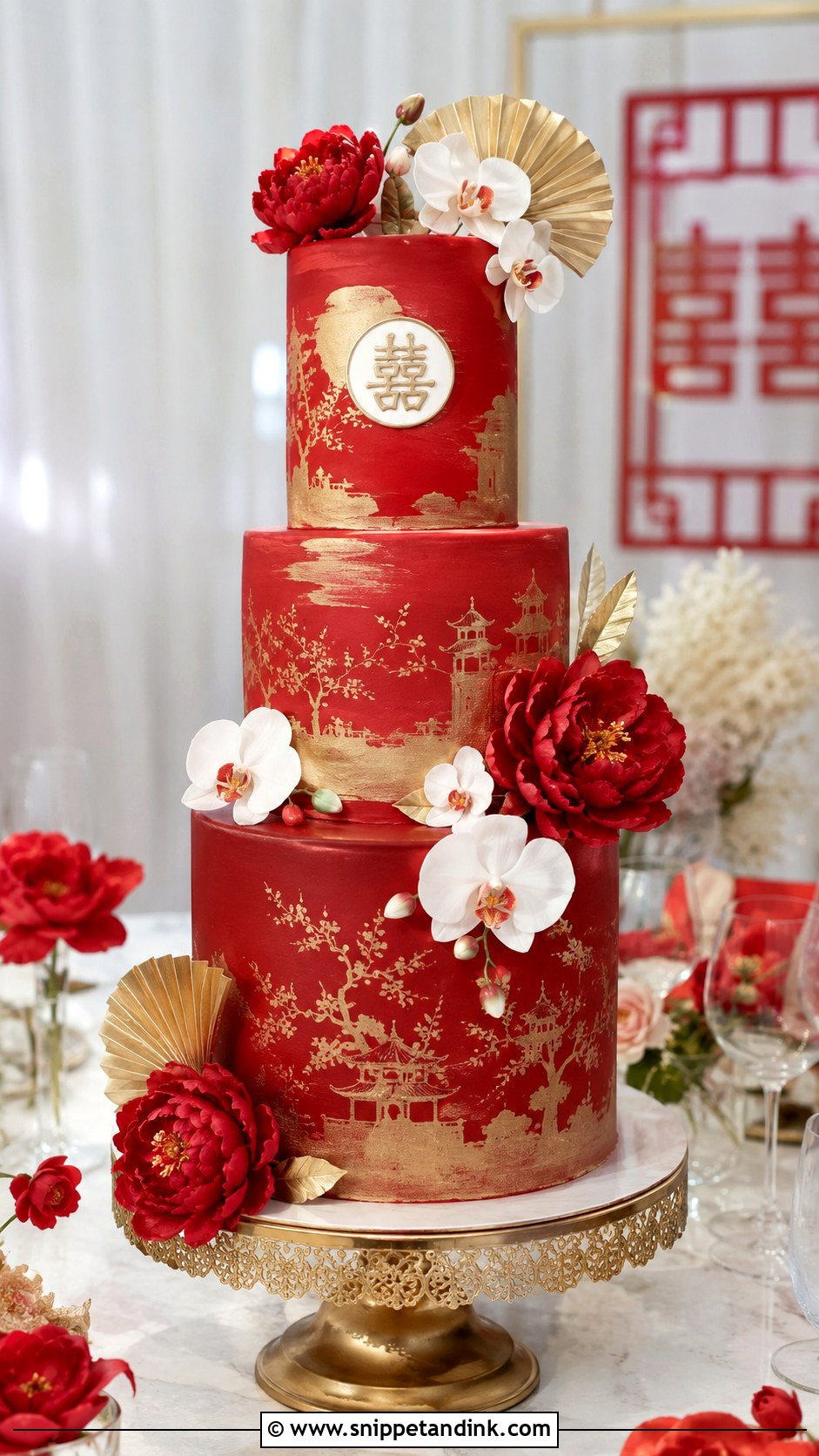
Across many Asian cultures, red and gold together mean celebration, luck and prosperity, so this palette carries real weight at the reception. Smooth red tiers, gold brushwork, delicate florals and patterns taken from the couple’s textiles or invitations make it personal. My one rule here is to design from the couple’s own traditions rather than adding generic symbols, and to ask the family if anything should be avoided. Sugar orchids, red peonies, gold fans or clean geometric accents are good starting points.
14. Red And Gold Indian Wedding Cake
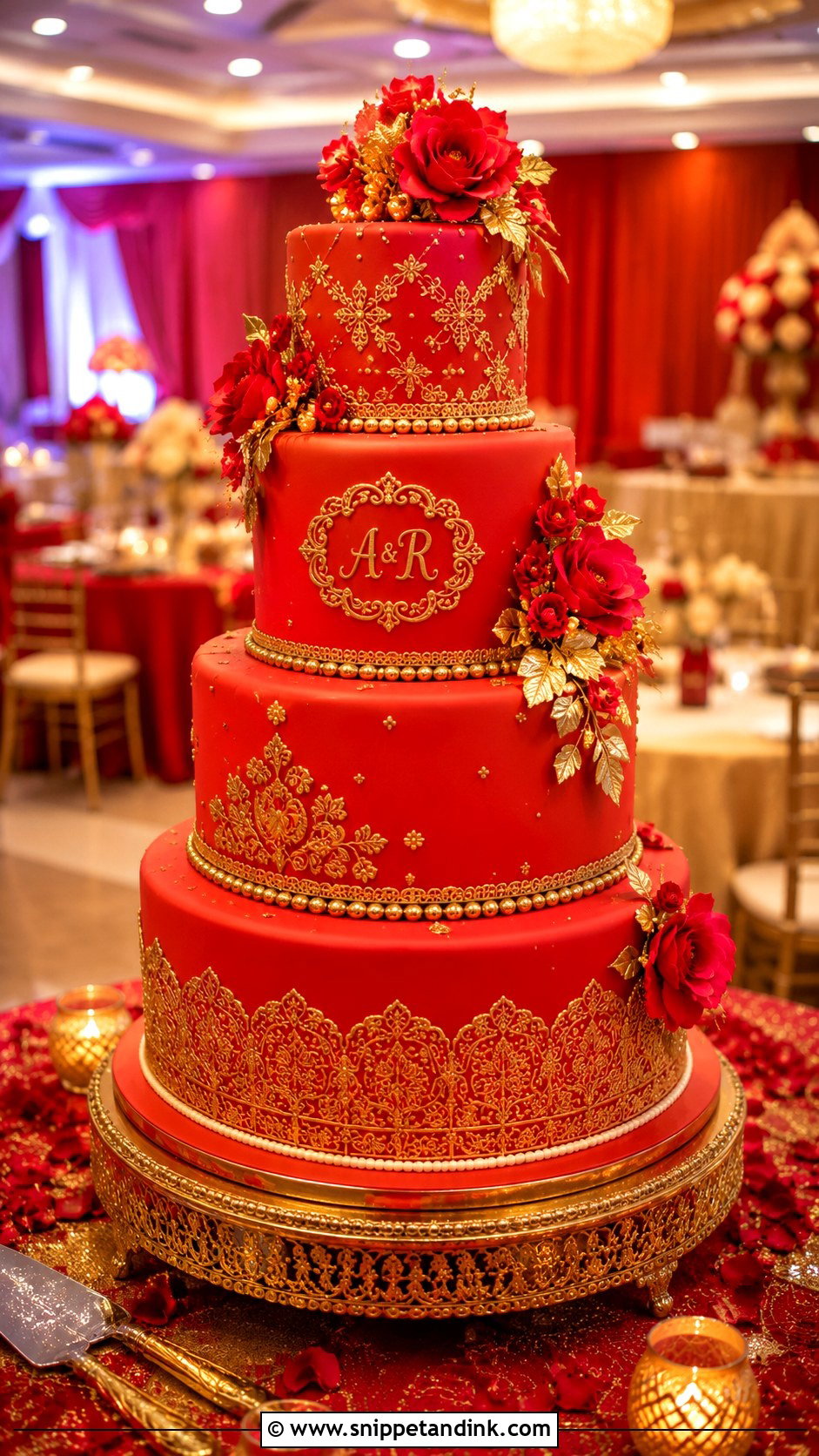
Red and gold is the color of many Indian bridal outfits, and a cake that echoes it can be rich and detailed: red fondant, gold piping, paisley patterns, edible pearls and bold flower clusters. A tall tiered cake suits the large guest lists these receptions often have. Flavors like cardamom, pistachio, rose, mango, vanilla or red velvet tie the inside to the menu. I’d pick one or two strong features, gold stencil work and red sugar flowers for example, because paisley, pearls and flowers all at once crowd the tiers.
15. Red And Gold Chinese Wedding Cake
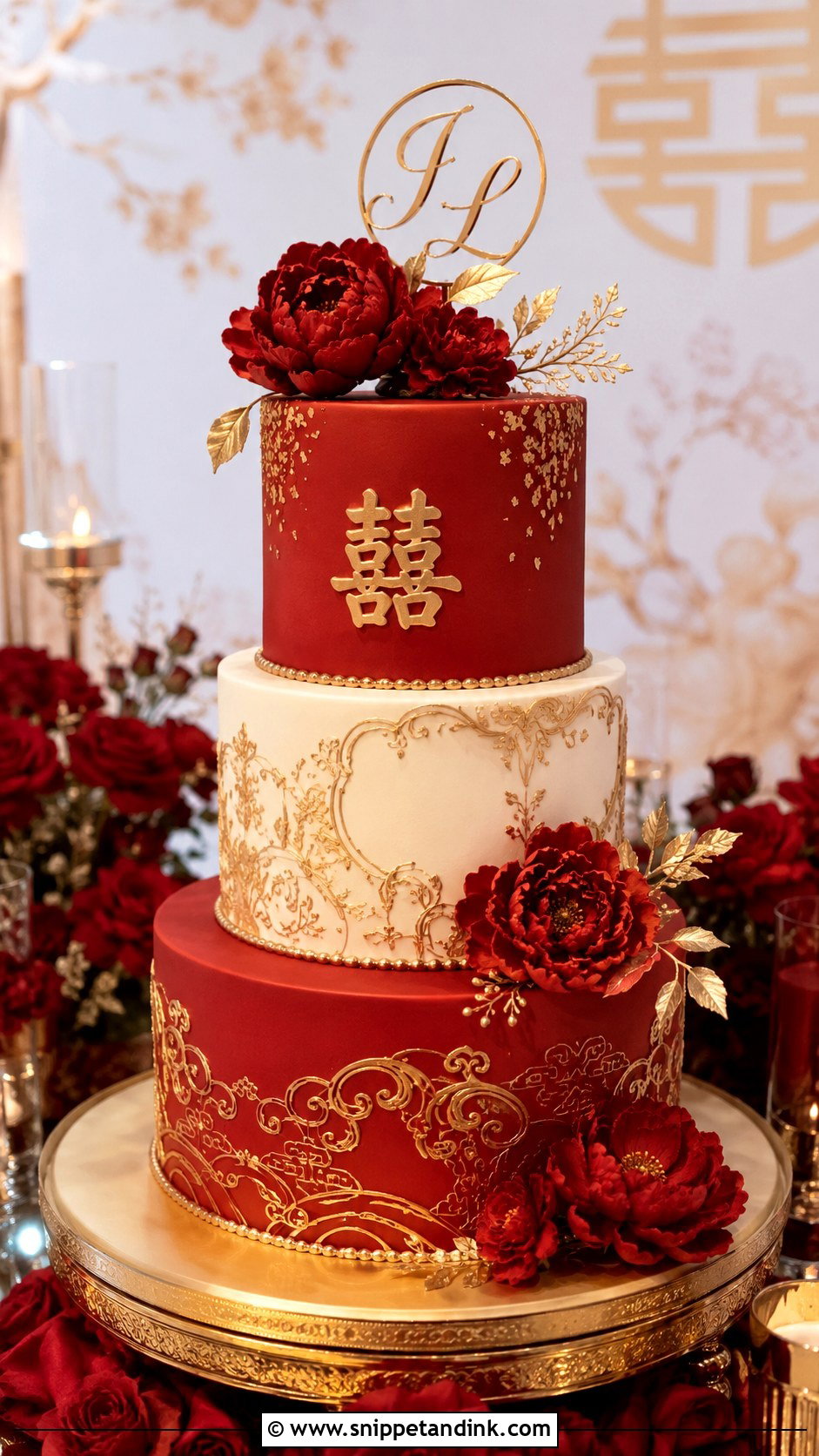
Red and gold is so strongly associated with Chinese weddings that the cake barely needs extra decoration. Smooth red tiers with gold edging, ivory panels, sugar peonies and fine metallic detail make a refined centerpiece. Some couples add a custom topper, initials, a double happiness motif or a pattern from their invitations. For a softer version, white tiers with red flowers and gold trim keep the palette with less intensity. Agree on the symbols with the couple and family before painting anything onto the tiers.
16. Red And Gold Simple Wedding Cake
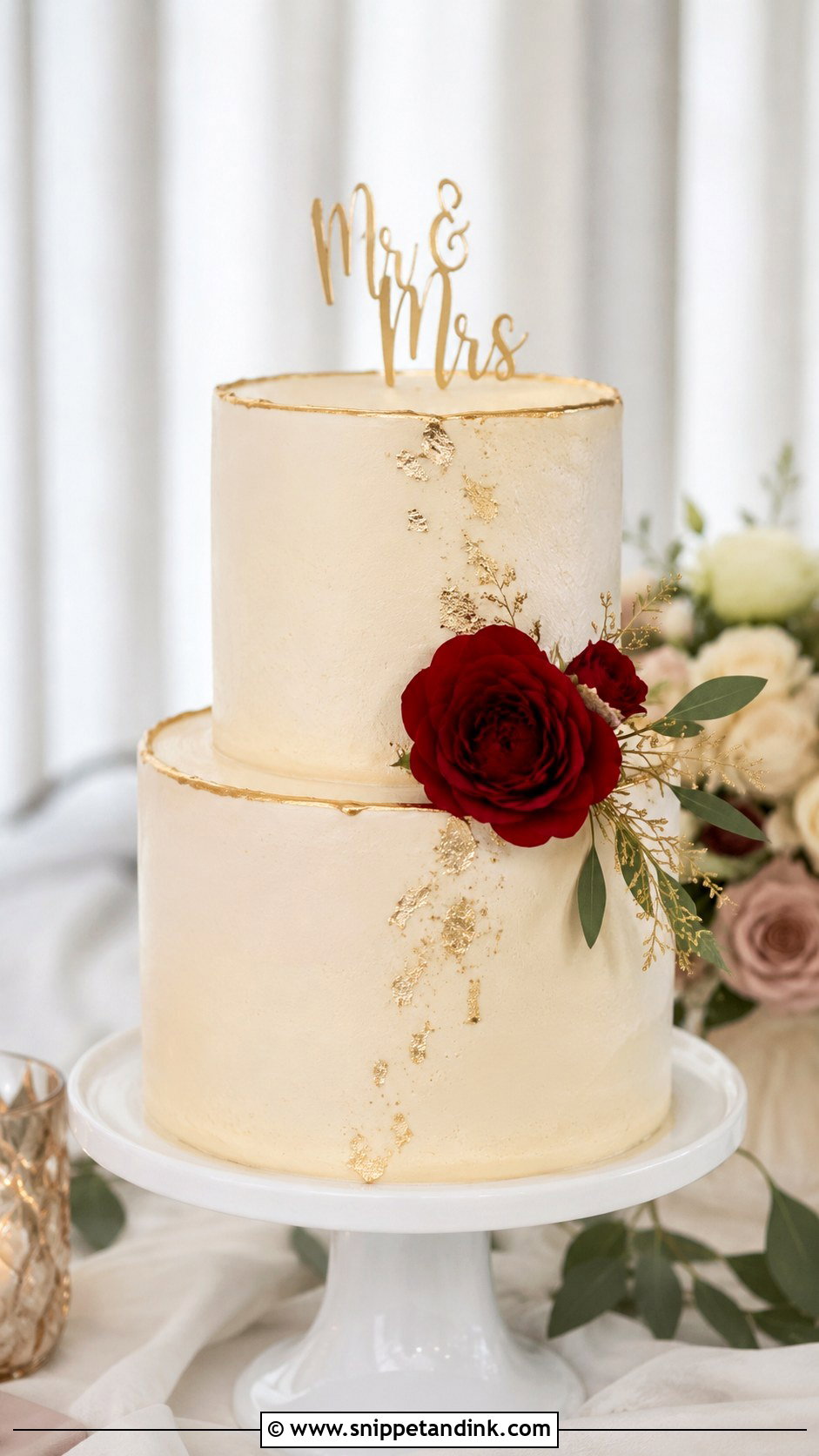
A two-tier ivory cake with red roses and thin gold edging can be as striking as anything heavily decorated, and it suits an intimate wedding, a courthouse ceremony or a restaurant reception. Smooth buttercream or fondant keeps it neat, and one red floral cluster gives the focus. Gold can be a small topper, a painted rim or a few flecks of leaf. With so little on the cake, the finish has to be clean, and the table styling with linens, candles and flowers does more of the work.
17. Red And Gold Luxury Wedding Cake
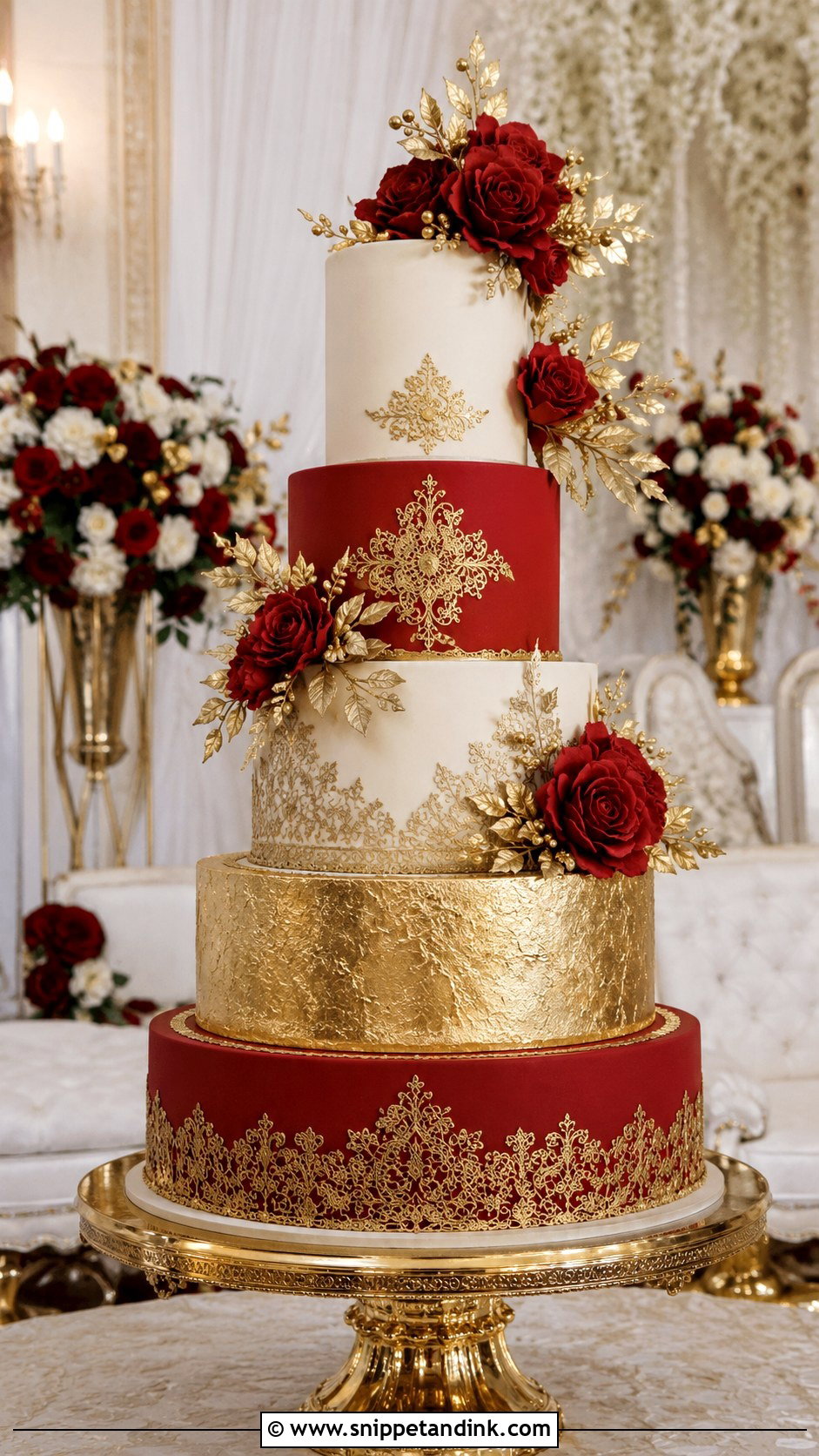
A luxury cake is defined by finish more than quantity. Height, clean tiers, sugar flowers, edible lace, textured panels and hand-painted gold all belong here, but they need empty space between them. I’d combine one gold lace tier, one smooth red tier and one ivory tier with a flower cascade, rather than lace and flowers and paint on every level. Edible lace softens in humid rooms, so it goes on as late as possible. Precision is what makes it look expensive.
18. Red And Gold Rustic Wedding Cake
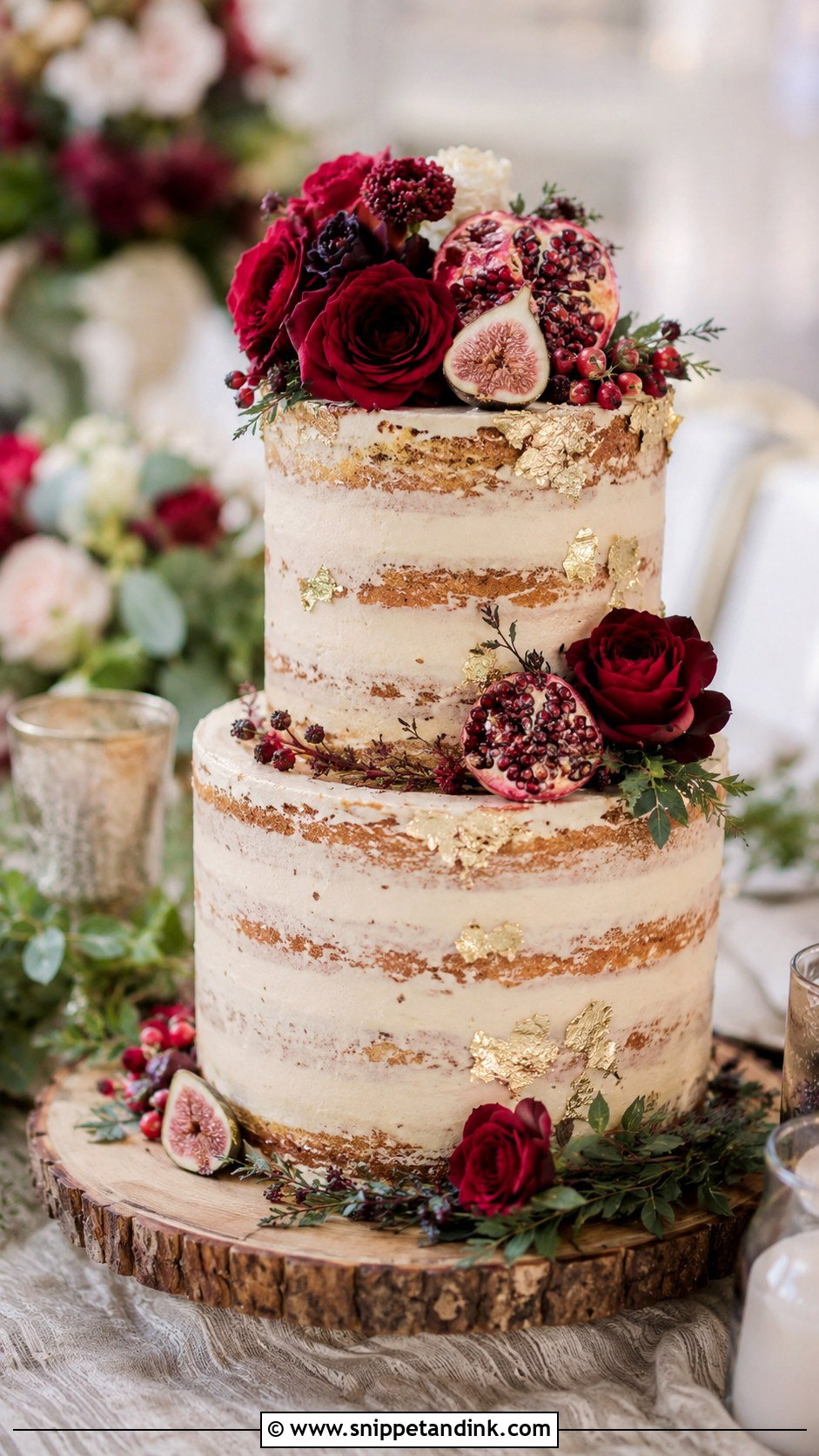
A red and gold rustic wedding cake trades glossy fondant for textured buttercream or semi-naked sides, burgundy flowers, gold leaf flakes and a wood or ceramic stand. Fruit carries the red naturally here: red berries, figs and pomegranate seeds, with roses for softness. Cut figs and pomegranate weep juice onto buttercream after a few hours, so they’re added at the venue. Keep the gold light and scattered. It suits a barn, garden or fall reception with an elegant edge.
19. Red And Gold Black Wedding Cake
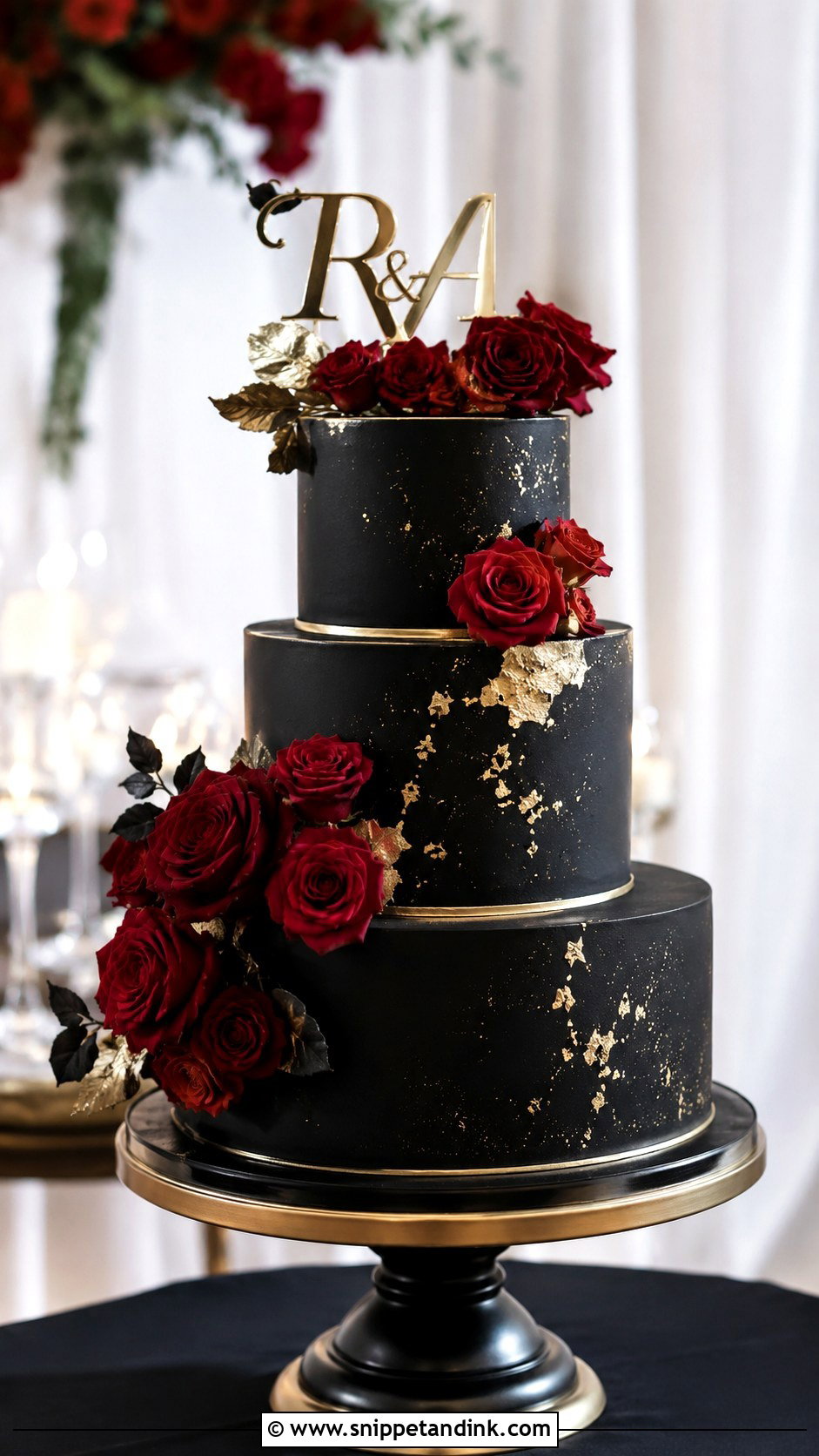
Adding black makes the palette dramatic and modern: matte black tiers for depth, red roses for romance, gold splatter and a sleek acrylic or gold topper. A little gold goes a long way against black. Like deep red, black icing takes a lot of coloring and can stain lips and teeth, so I often keep black to fondant panels that guests peel away, or use cocoa-based black that needs less dye. Keep the lines clean and the decoration deliberate for an evening or formal reception.





20. Red And Gold One Tier Wedding Cake
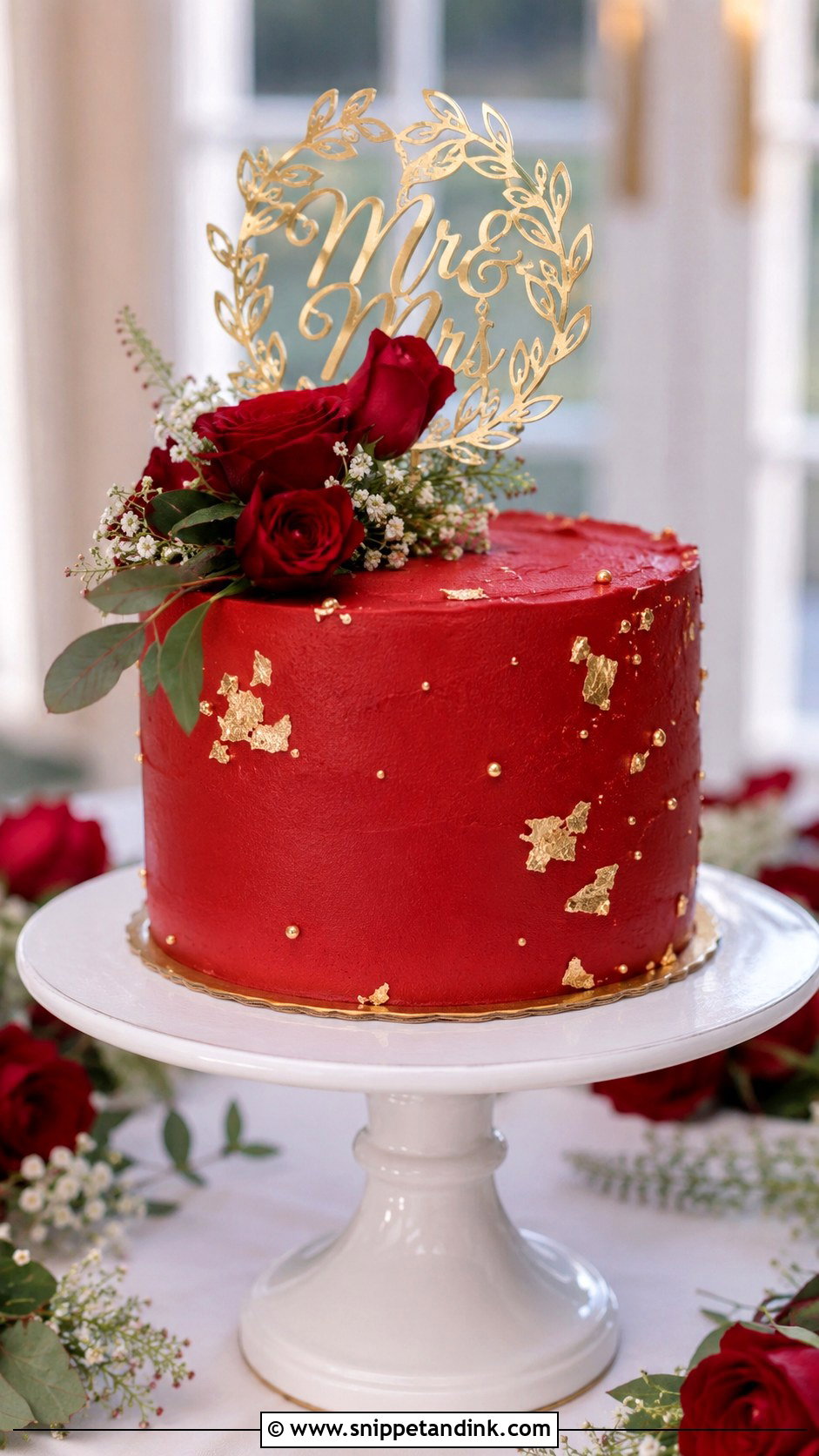
One tier suits a small wedding, an elopement, or a reception where a larger dessert table does most of the feeding. A deep red buttercream cake with gold leaf and a small rose cluster looks elegant without height, while ivory frosting with red flowers and a gold topper is softer. It’s easier to transport, easier to cut and usually more economical. On a good stand with matching flowers, nobody misses the extra tiers.
Is the Gold on Your Cake Actually Edible?
This surprises a lot of couples. Plenty of the gold you see on cakes is made from lustre dusts labeled non-toxic or for decoration only, which means they’re safe to be near food but not meant to be eaten. On a wedding cake, where every surface gets served, that matters.
- Edible gold leaf is real gold beaten very thin, usually around 22 to 24 carat. It’s safe to eat and gives the brightest finish.
- Edible gold paint is made from lustre dust that is approved for food, mixed with a little alcohol or lemon extract, which evaporates as it dries.
- Decoration-only dusts and sprays should stay on parts that won’t be eaten, like a topper or a cake board.
- Gold leaf sticks to fondant with a touch of water or piping gel, and to buttercream only once it’s chilled and firm.
Ask your baker which products they use. A good decorator will tell you without hesitation, and will usually have the labels at hand.
Light the Cake Table So the Gold Has Something to Catch
Metallic finishes only shine when light hits them from an angle. Under dim, flat reception lighting, gold leaf can look like brown paper, and deep red tiers lose their detail. Ask the venue or your lighting supplier for a pin spot or uplighting on the cake table, or at least place it near candles. Keep the cake out of direct sun, which softens buttercream and fades some red colorings within hours.
One Focal Point, Red as the Base, Gold as the Light
Every design here works because it commits to one focal point, whether that’s roses, gold leaf, marble, a geode or the height of the tiers. Red carries the warmth and gold carries the light, so let one lead and the other support. Bring your linens, flowers and invitation to the consultation, ask how the reds will be colored and what the gold is made from, and tell your baker how warm the room will be. With those answers, a red and gold cake looks rich on the table and is still a pleasure to eat.
You'll Like These Ideas:










Leave a Reply