
Heart cakes are back on wedding dessert tables, and I understand why: the shape says what the day is about before anyone reads a piped word. They suit a courthouse lunch as easily as a ballroom, and they’re often the answer when one small cake has to carry the whole table. What separates a good one from a birthday-looking one is restraint. Pick one idea, whether that’s Lambeth piping, pearls, cherries or a single colour, and let the shape do the rest. Below are twenty directions I’d happily bring to a tasting, with notes on how each one behaves once it leaves my kitchen.
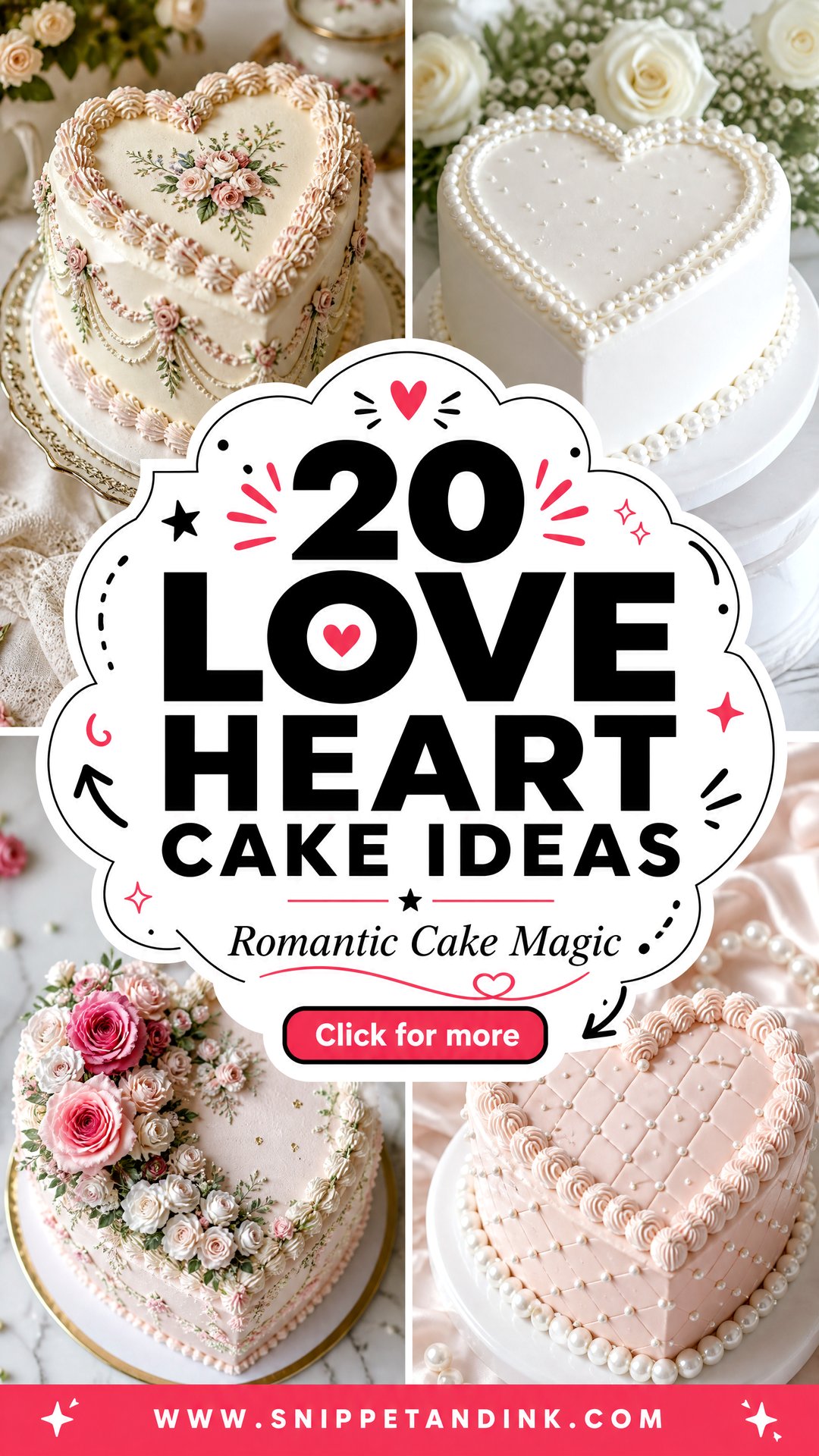
What a Heart Pan Does to Your Servings and Structure
The first conversation I have about a heart cake isn’t about colour. It’s about size, because the shape quietly changes the maths. The dip at the top and the narrow point both eat into the cuttable area, so a heart gives roughly what a round of the same width gives, and noticeably less than a square. Couples who order by eye often come up short.
- Give your baker a confirmed guest count early. If one heart can’t cover it, plan a kitchen cake cut out of sight rather than a heart so wide it no longer looks like a heart.
- Ask whether the tiers are baked in heart pans or carved from a slab. Both work, but carved hearts have more cut edges and need a crumb coat before the final frosting.
- Check what the cake sits on. A heart needs a board cut to its exact outline, with a little margin, because a round board under a heart looks unfinished in close-up photos.
- Decide your frosting with the venue in mind. Buttercream suits the inside curve; fondant can pleat there, and a pleat at the dip is very hard to hide.
Heavy decoration also has weight. Thick Lambeth borders, rows of cherries and gum paste bows all sit on the outer edge, which is exactly where a heart is thinnest. That’s why I ask about decoration before I quote, not after.
1. Vintage Heart Wedding Cake
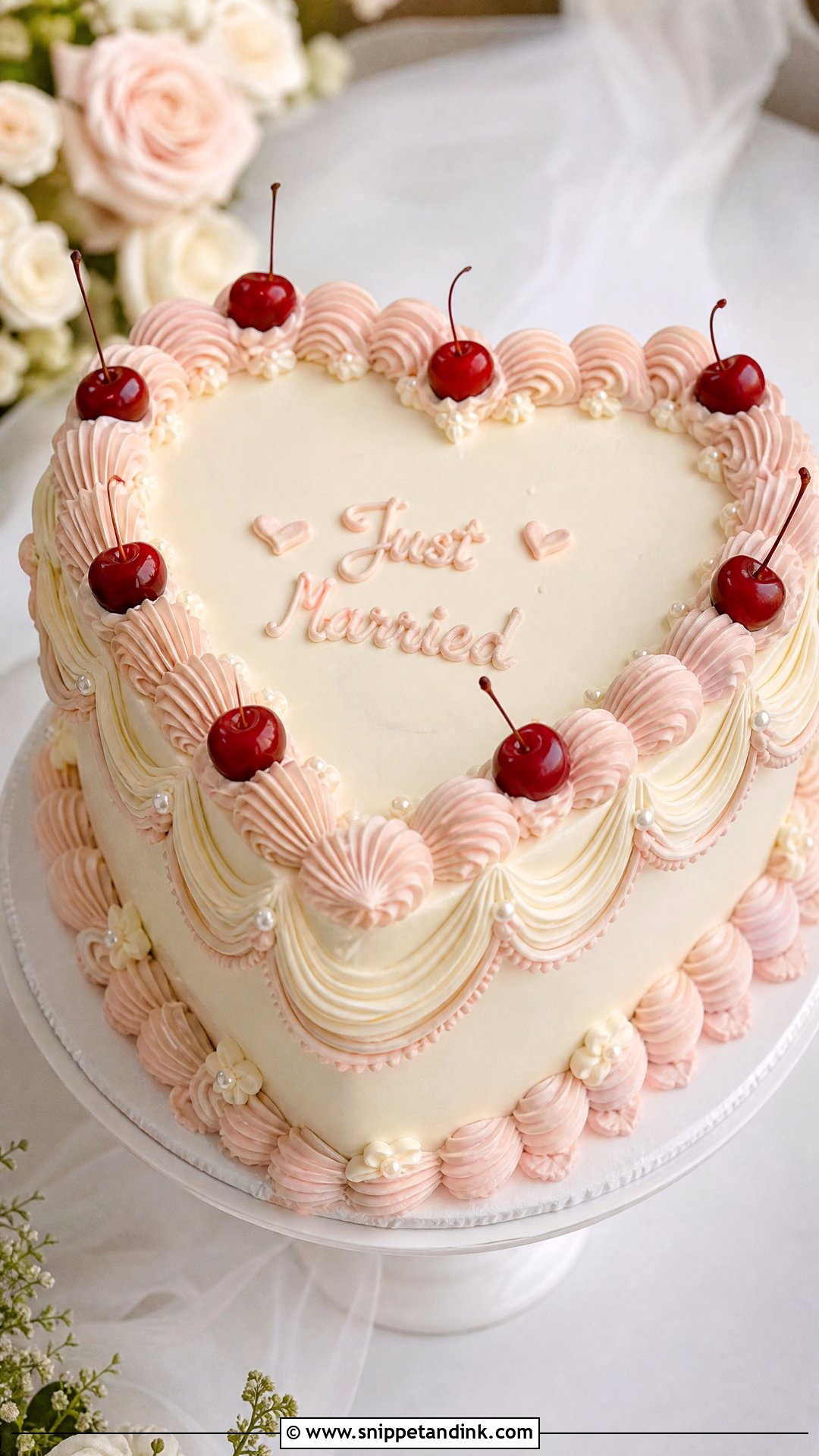
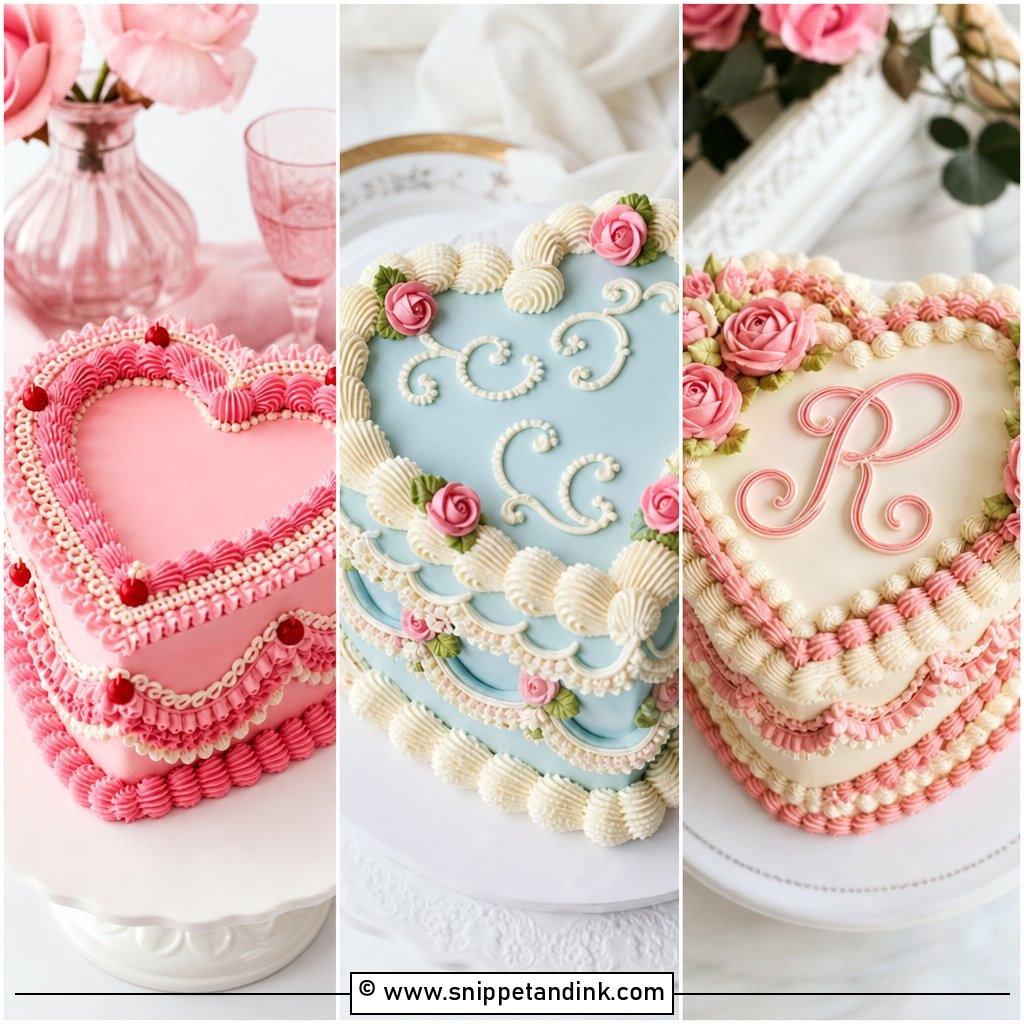
A vintage heart wedding cake leans on thick buttercream borders: stacked shells, swags looped around the sides, tiny dots between them. I keep the base ivory, blush or pale pink and save red for cherries or a pearl trim, because two strong colours fight on a shape this small. A short message on top, “Just Married” or your initials, finishes it. The heavy piping adds real weight to the edges, so I build these on a firm cake board and treat a single heart as a sweetheart-table cake rather than one that serves a crowd.
2. White Heart Wedding Cake
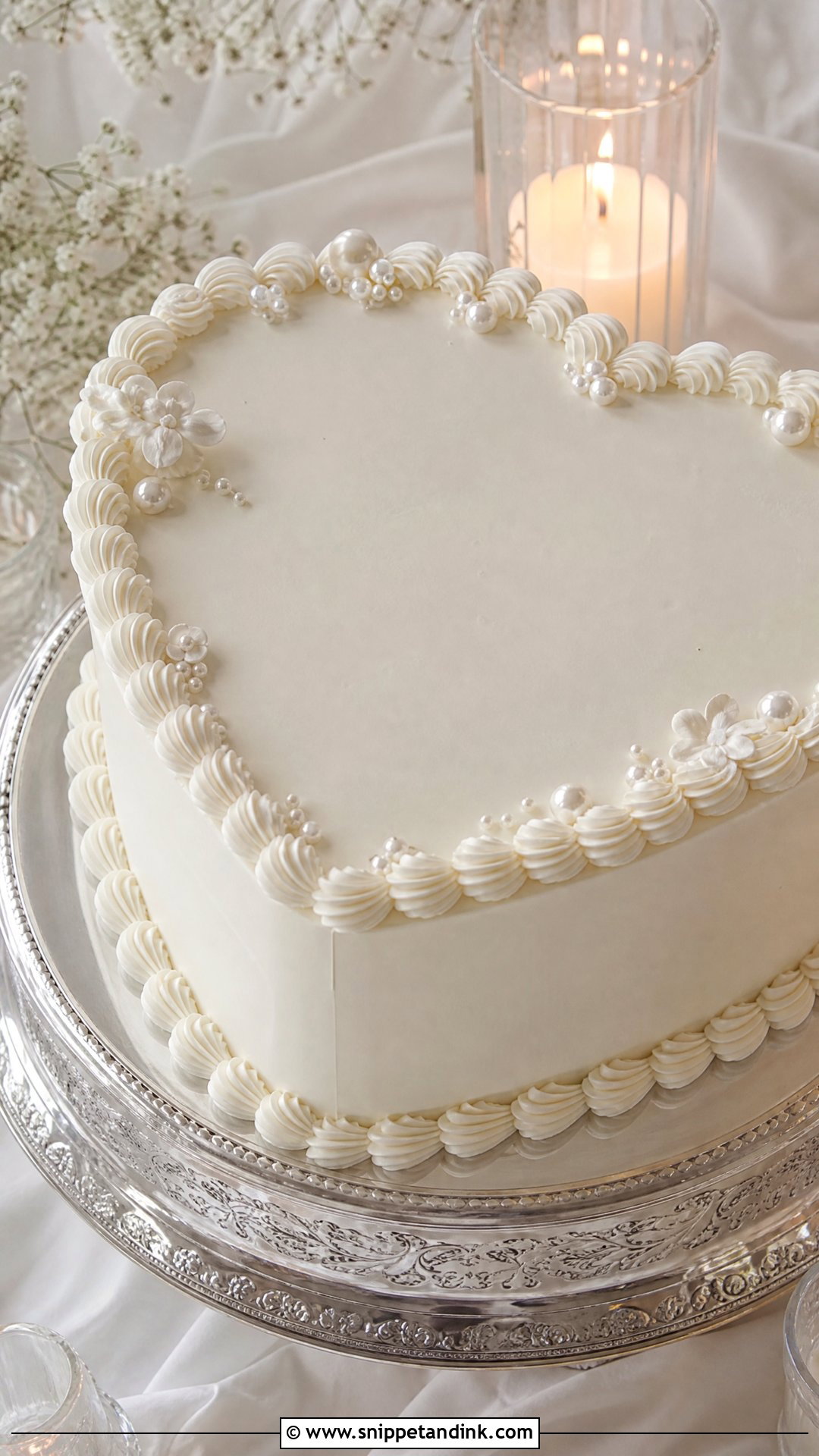
All white is harder than it looks on a heart. The inside curve at the top is where frosting gathers and where fondant pleats, so if you want a crisp finish I’ll usually suggest buttercream, scraped smooth, with pearl piping to hide the join at the base. Pure white can also read flat in photos. Ivory frosting with white piping gives the camera just enough difference to pick out the detail. Set it on silver or plain linen and it will sit comfortably beside formal portraits.
3. Pink Heart Wedding Cake
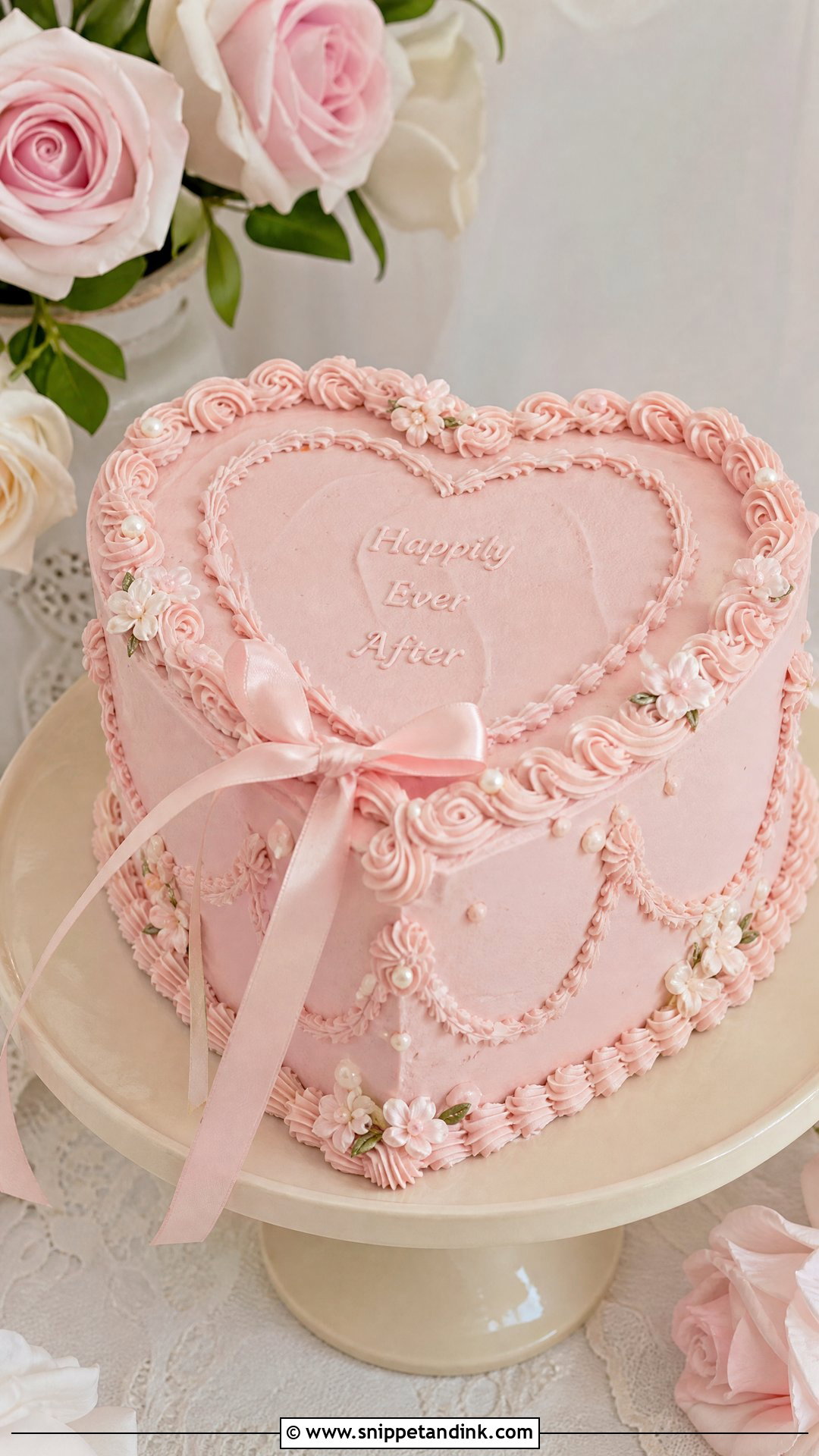
Tone-on-tone is how I make a pink heart wedding cake look grown-up: a dusty rose base, then piping one shade lighter or darker, with a few pearls or a small bow. Pink buttercream shifts as it sits, especially under strong daylight, so I mix the colour a day ahead and let it settle before matching it to a swatch. Spring garden receptions and bridal brunches suit it best. Inside, vanilla bean, almond or a raspberry cream filling keeps the flavour as soft as the colour.
4. Red Heart Wedding Cake
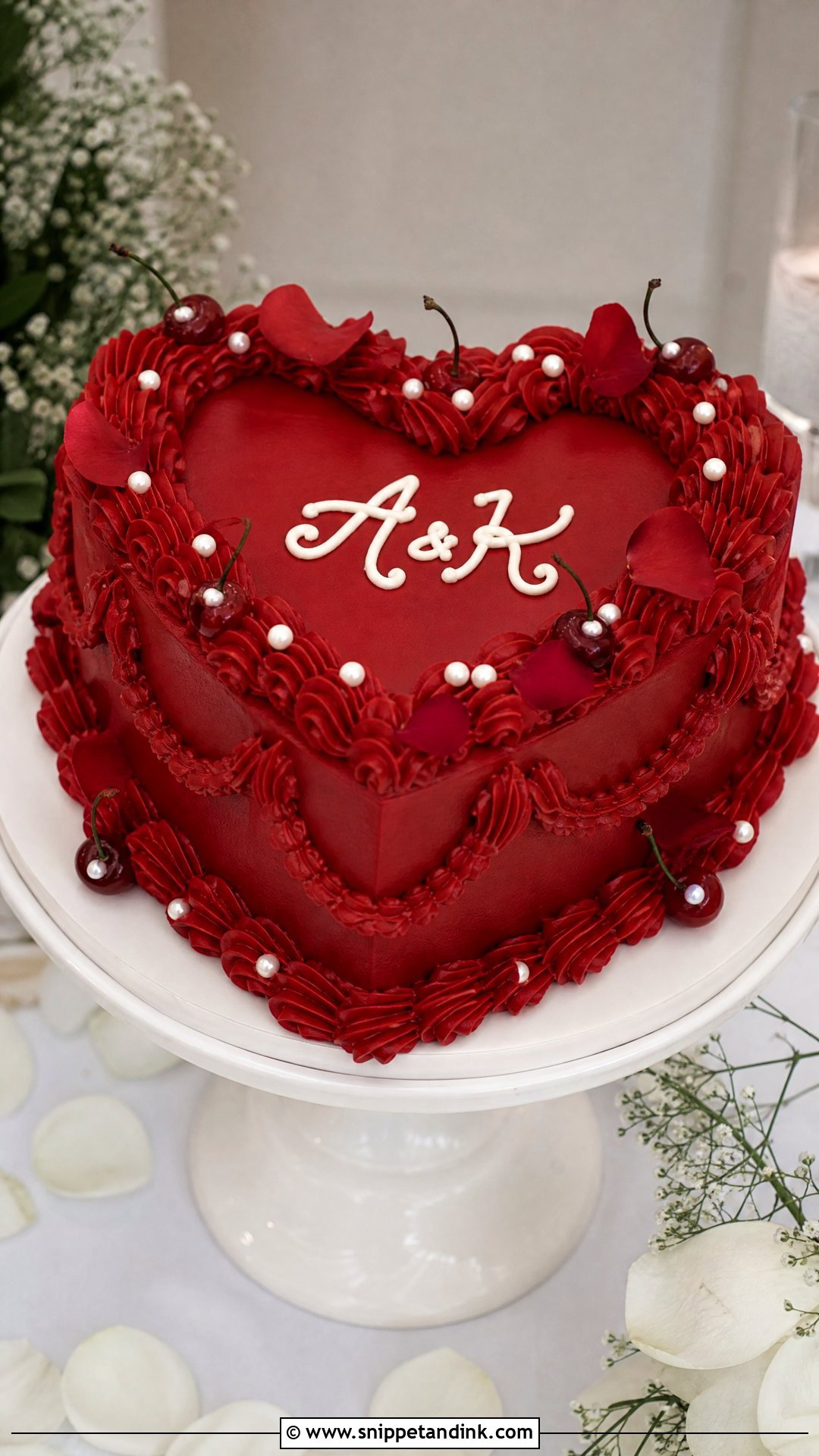
Deep red buttercream takes a lot of gel colour, and it keeps darkening for hours after mixing. That’s why I colour red frosting the day before; mixed on the day, it can look orange-pink at the tasting and then go brick-dark by the reception. If you’d rather avoid a mouthful of dye, reverse it: a white heart with red borders and a few cherries reads just as romantic. Keep the top to initials or a date. Red velvet is the obvious match, though chocolate with a raspberry filling is the one I find guests finish.
5. Lambeth Heart Wedding Cake
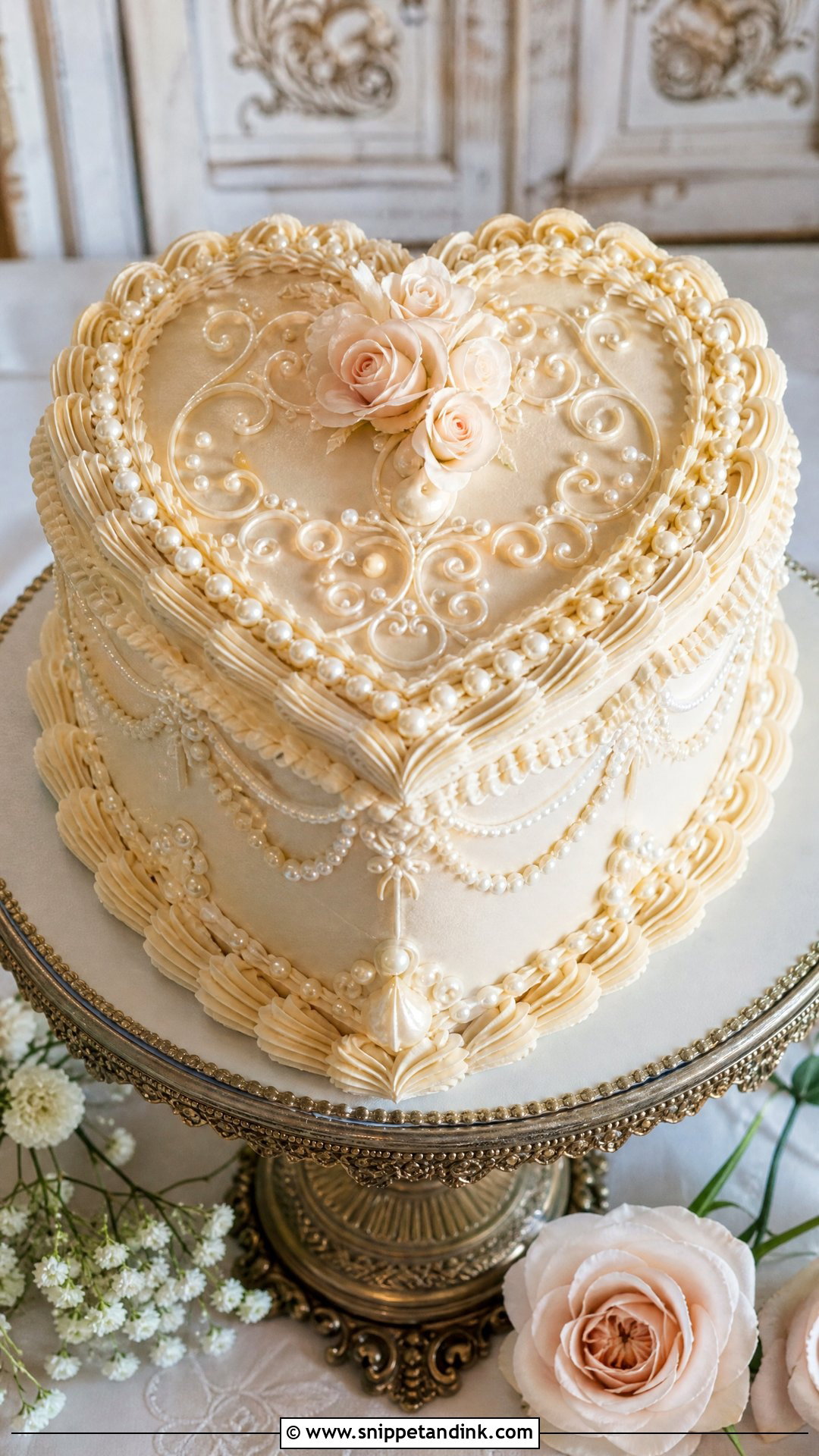
Overpiping is the whole point of a Lambeth heart wedding cake: layer after layer of shells, scallops, scrolls and dots built up until the border stands proud of the cake. Traditionally this was royal icing; most of the soft-looking versions you see now are buttercream. That matters for an outdoor or summer reception, because a meringue buttercream softens fast in heat, and stacked piping is the first thing to slump. For a warm venue I use a sturdier crusting buttercream for the borders and ask for the cake to stay indoors until it’s served. Keep the table plain. The piping is plenty.
6. Mini Heart Wedding Cake
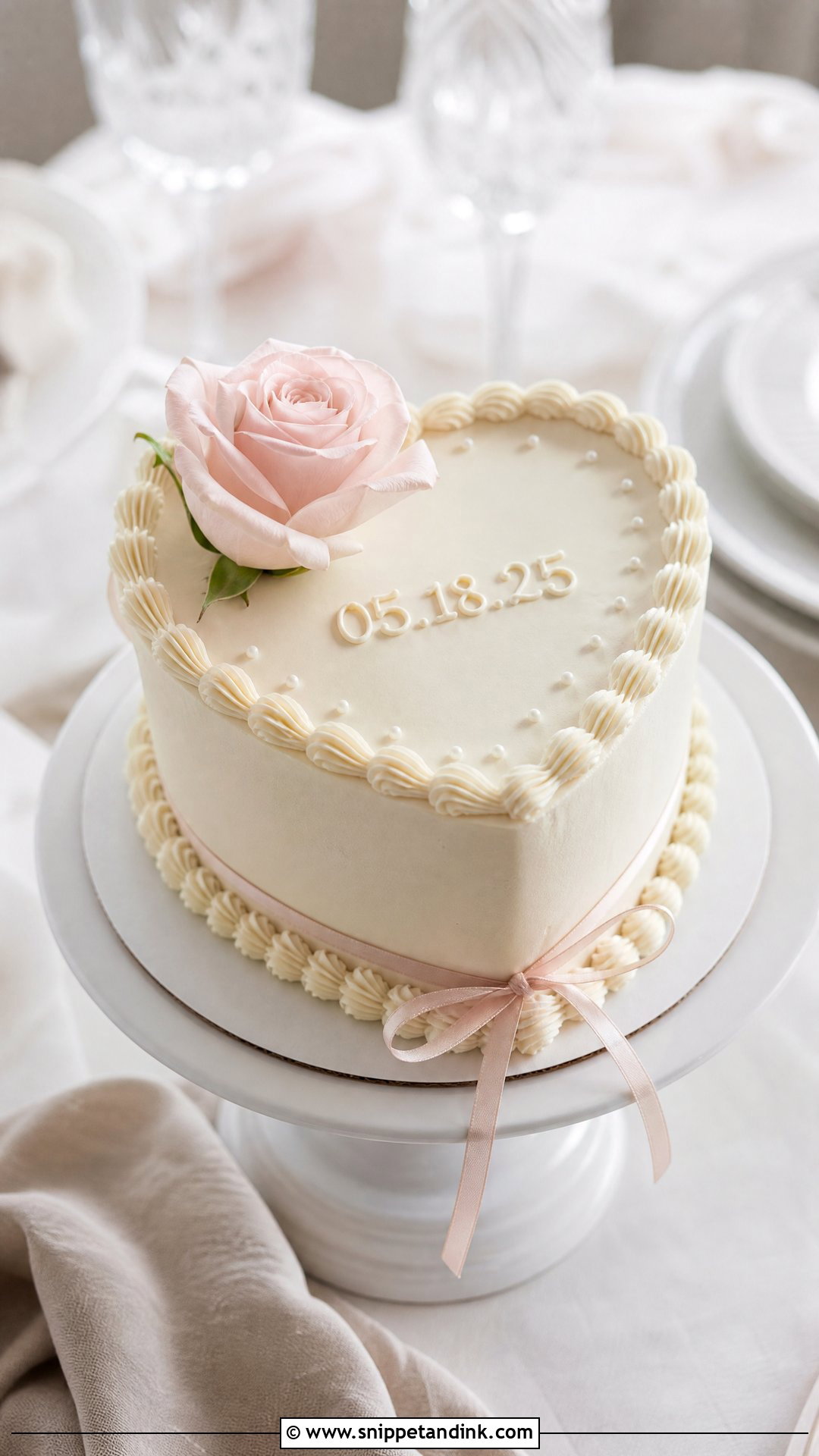
For an elopement or a micro wedding, a mini heart wedding cake gives you a real cake to cut without paying for one nobody eats. A single heart tier usually feeds the couple and a handful of guests, so if you’re hosting more than that, pair it with cupcakes or a kitchen sheet cake cut out of sight. One tier, smooth buttercream, a piped border and a short message is all it needs. A ribbon bow or two fresh blooms keep the small scale from looking like an afterthought.
7. Two Tier Heart Wedding Cake
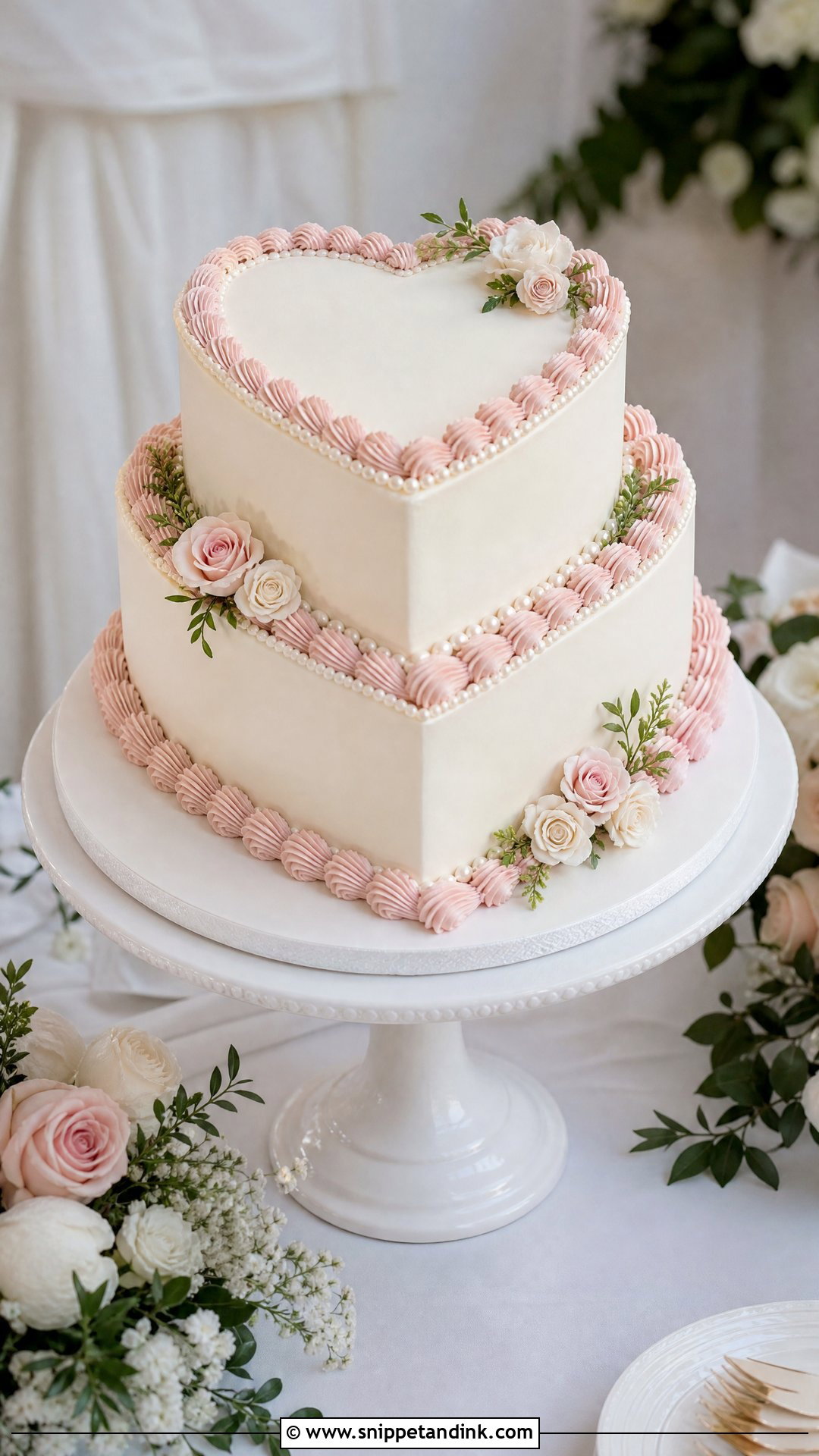
Two heart tiers stacked exactly point over point look tidy, but they leave very little room for decoration on the upper tier. I often suggest a round base with a heart on top: the round carries the servings and the support dowels, and the heart sits like a topper. Either way, the top tier needs its own board and dowels underneath, because a heart has no centre to balance on in the way a round does. One colour plus piping or pearls keeps it calm, and the extra height gives you a proper cake-cutting moment without a tall, nervous structure.
8. Floral Heart Wedding Cake
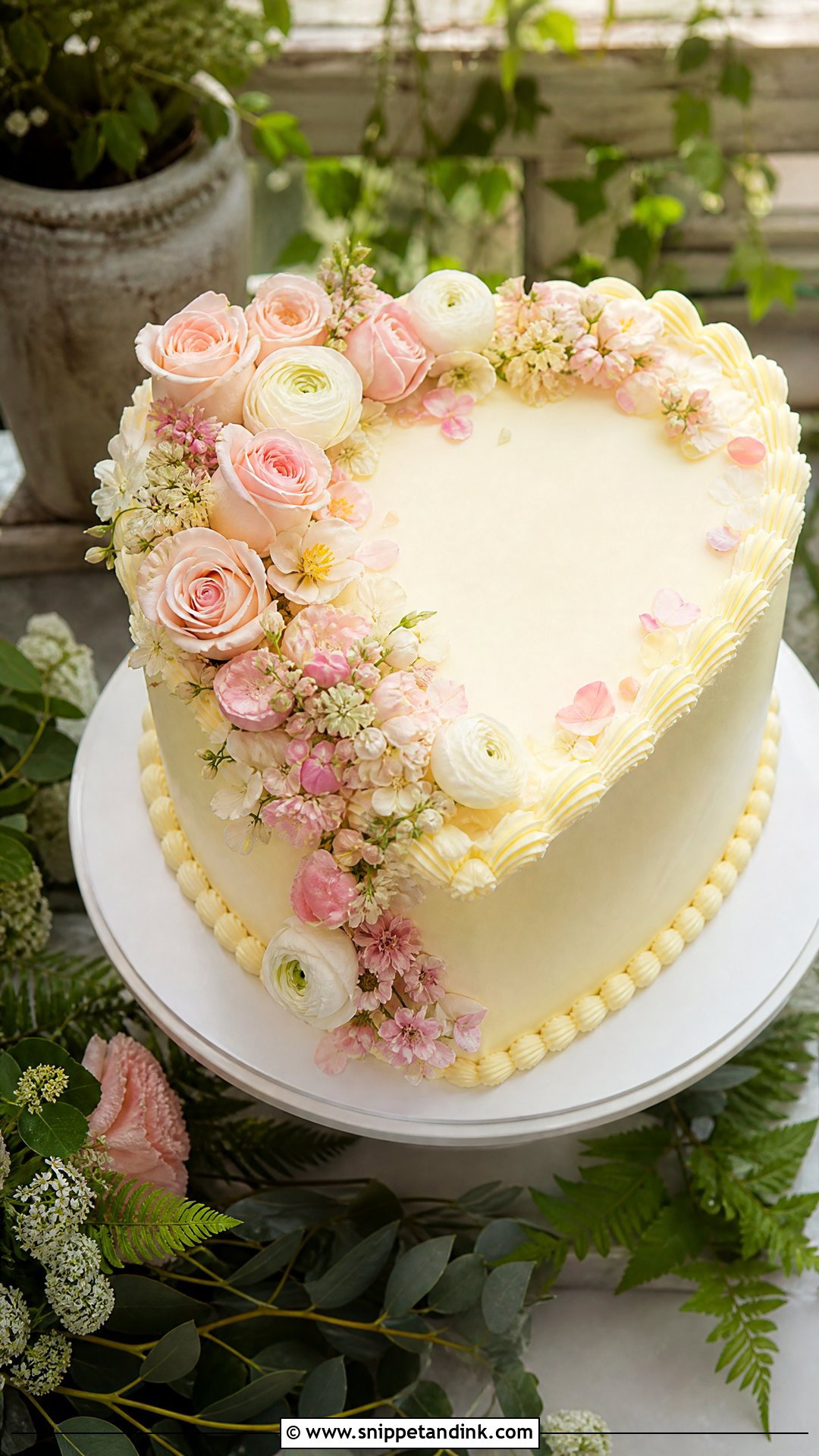
Flowers on a heart should follow the curve, not bury it. I’ll cluster roses, ranunculus or a little baby’s breath along one lobe or around the point and leave the rest of the outline clear, so the shape still reads from across the room. Fresh, pressed edible, sugar or piped buttercream florals all work; sugar flowers cost more but can be made weeks ahead and kept as a memento. Matching the bouquet colours ties it in. Lemon, almond or berry sponges suit the lighter feel.
9. Pearl Heart Wedding Cake
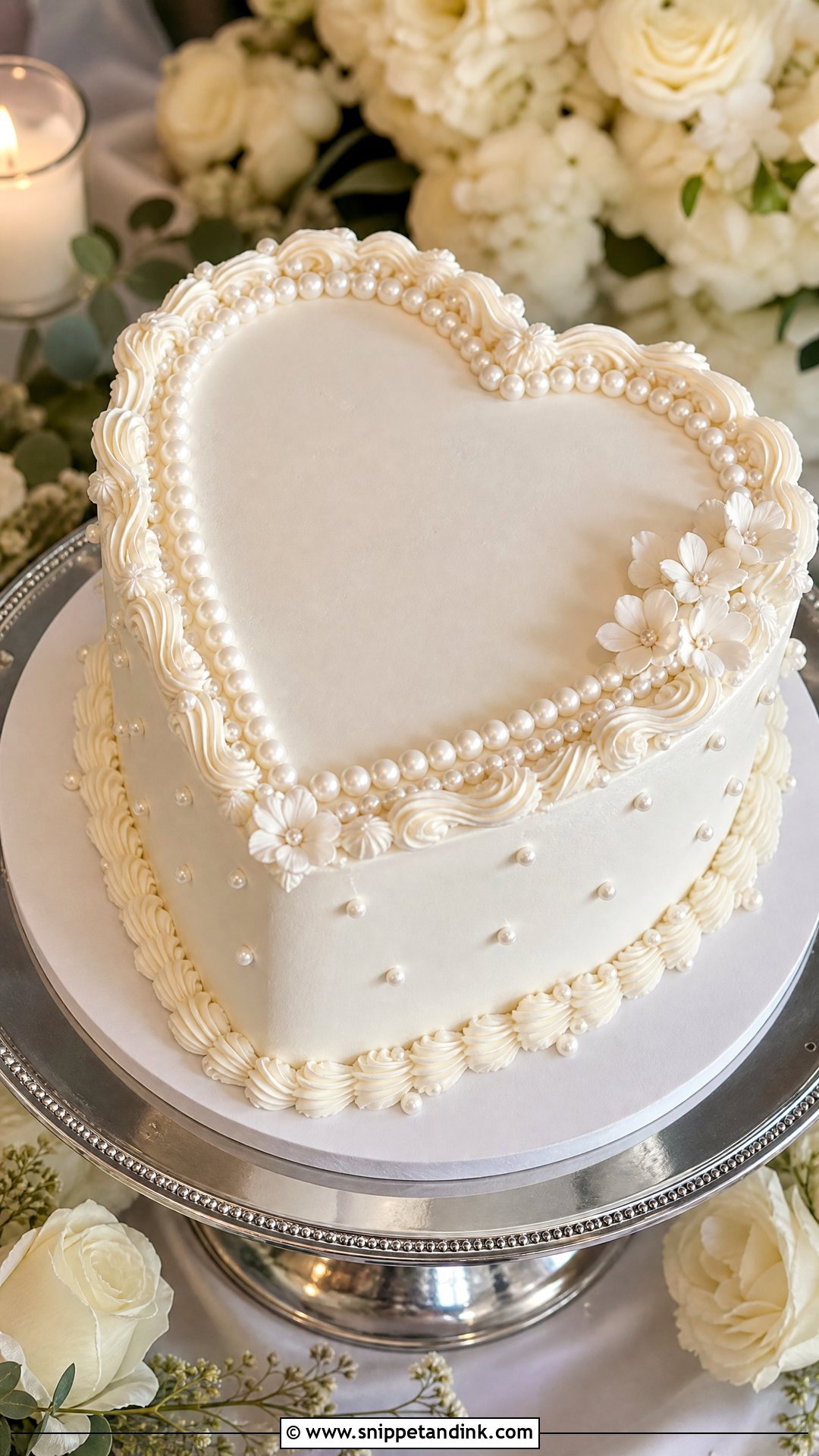
Pearls are where I ask the most questions. Hard sugar pearls look right but can chip a tooth if someone bites one whole, and some metallic dragées are sold as decorative only. On a cake guests will eat, I prefer soft fondant pearls or piped buttercream dots finished with an edible lustre. Outline the heart or run them along the base on smooth ivory buttercream, then stop. A pearl cake with heavy piping as well just looks busy. Vanilla almond sits well under it.
10. Cherry Heart Wedding Cake
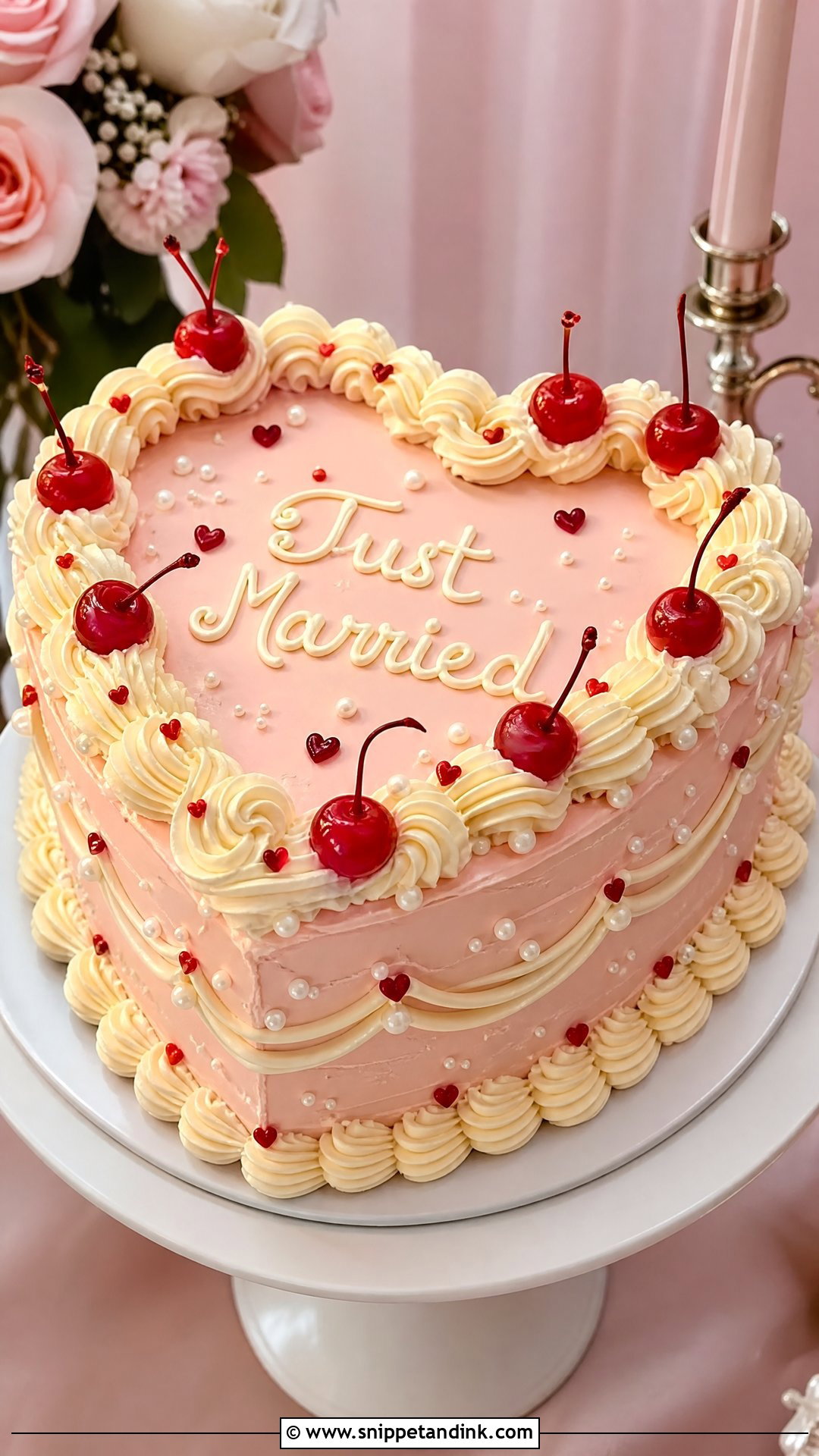
The retro cherry heart is fun to make and fussy to keep. Maraschino cherries bleed red syrup into buttercream within an hour or two, so I drain them, dry them on paper overnight, and place them at the venue rather than in the studio. Ivory, blush or pale pink frosting keeps it bridal rather than diner-counter. It suits a relaxed reception more than a formal one. If you can, put cherry or black cherry filling inside so the topping isn’t only decoration.
11. Bow Heart Wedding Cake
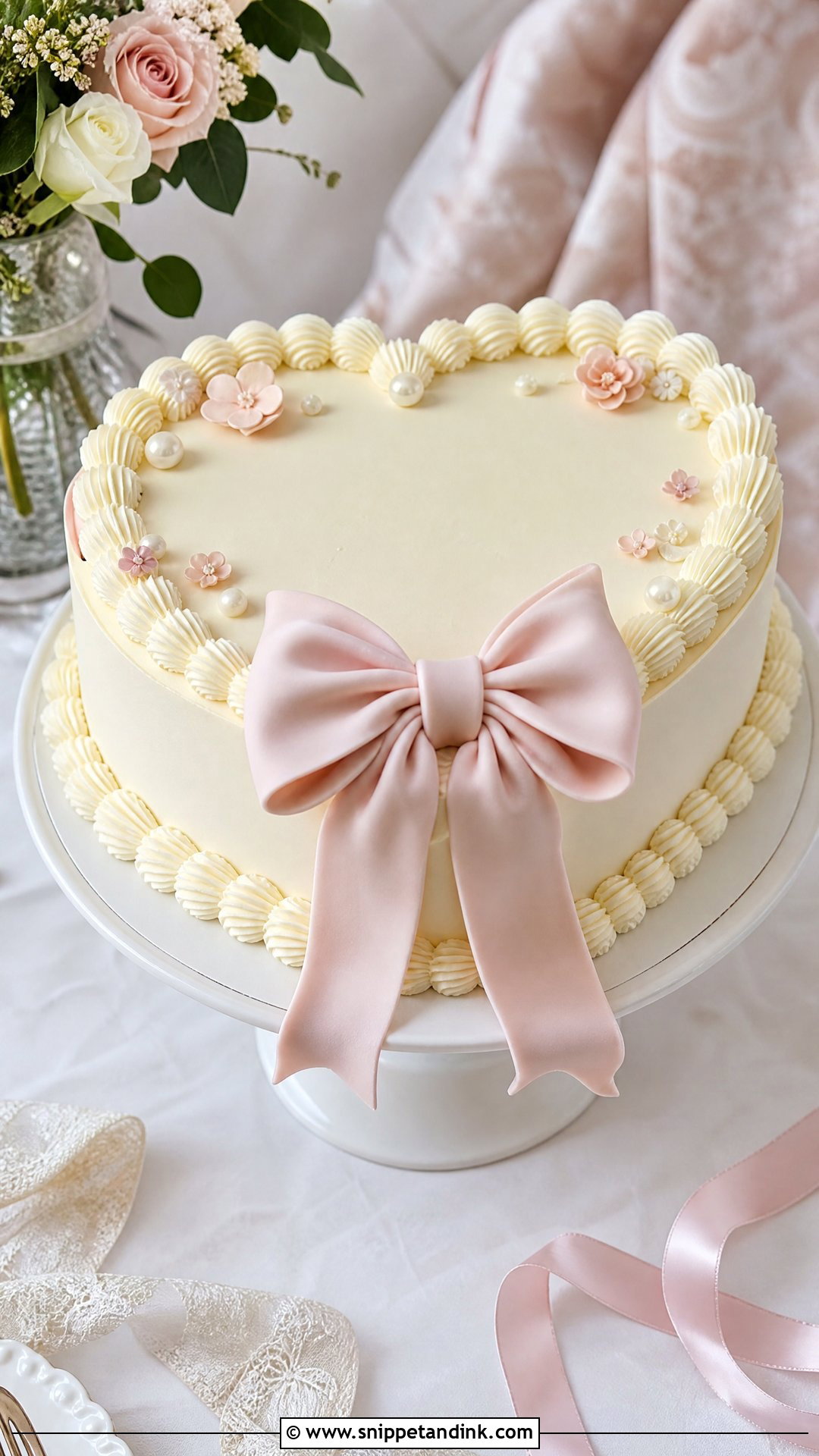
A bow reads best when the frosting around it is quiet. I make wedding bows in gum paste or fondant, which hold their loops, rather than piping them, and I attach real satin ribbon only to a band of fondant or a board, because ribbon pressed straight onto buttercream soaks up butter and leaves a greasy line. Place it at the top edge, at the point, or off to one side. Ivory, pale blue and champagne look especially good with a ribbon detail. It’s a natural echo if your shoes or dress carry a bow.
12. Minimal Heart Wedding Cake
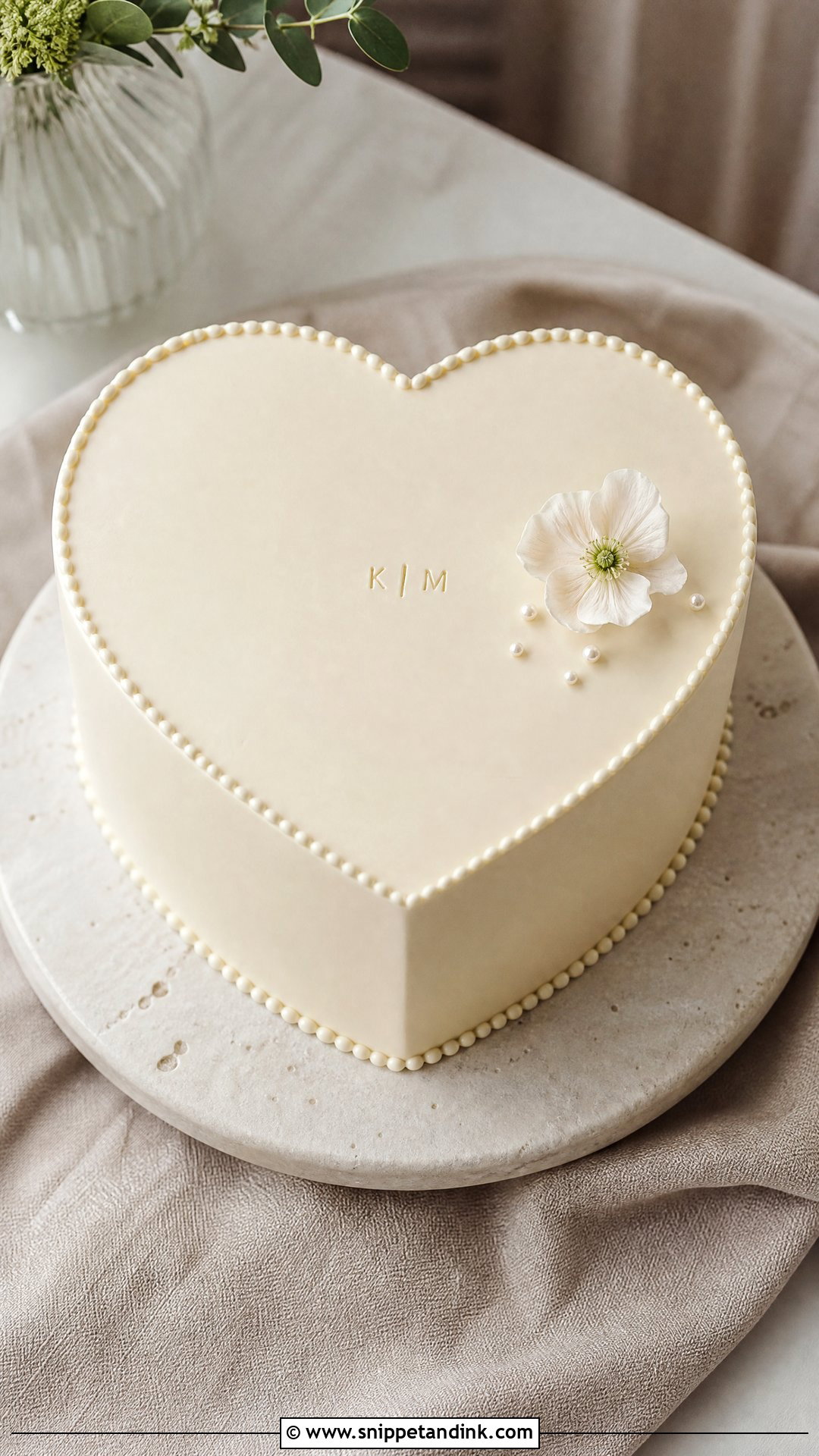
Minimal is honest about the cake underneath. With no border to hide behind, the edges, the inside curve and the sharpness of the point all show, so this is where you want a baker with steady scraping. One detail is enough: a small monogram, a thin line of pearls, one bloom. White, cream or a warm beige keeps it calm. It’s the version I’d suggest if your tablescape is already busy, because it won’t argue with the flowers.
13. Black And White Heart Wedding Cake
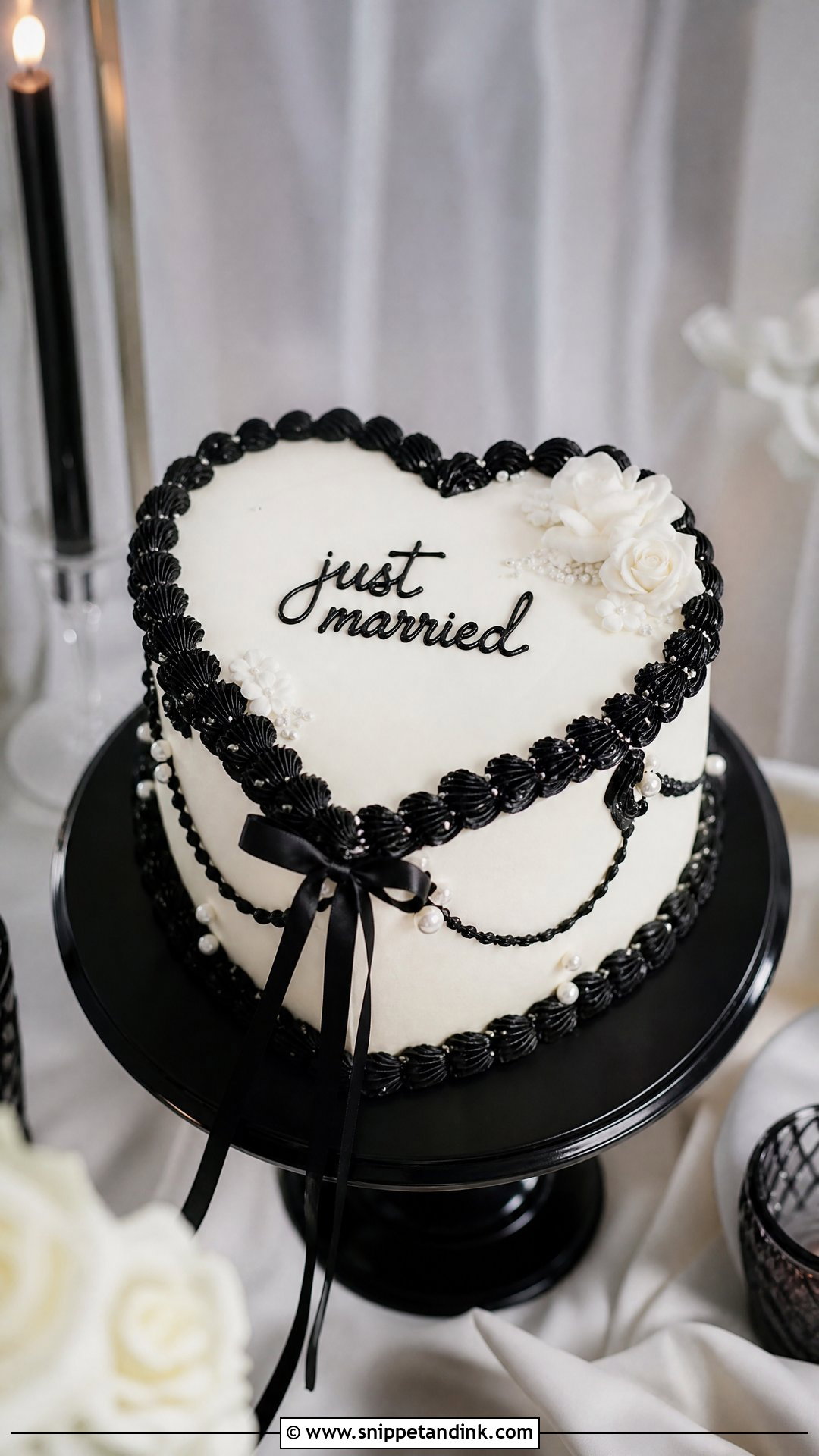
True black buttercream is usually built on a chocolate base so it doesn’t need a whole bottle of colour, and even then it can tint lips and teeth. On a wedding cake I use black sparingly: lettering, a thin piped outline, a bow, all on a white or ivory heart. The contrast gives a sharp graphic edge that photographs clearly. Soften it with pearls or white flowers if it starts to feel stark. It fits a restaurant reception or a black-tie evening, and chocolate or cookies and cream sit naturally with the palette.
14. Blue Heart Wedding Cake
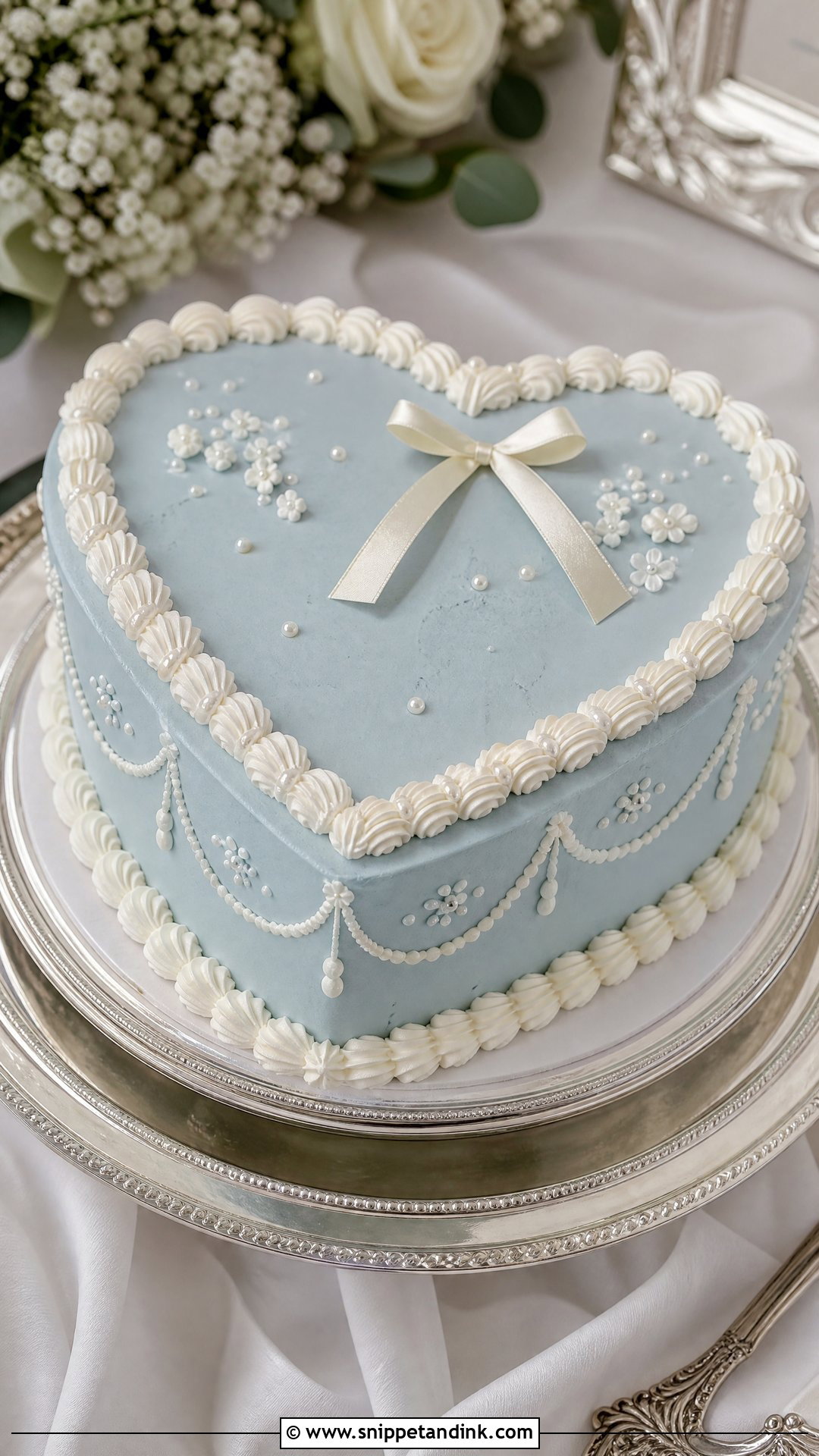
Pale blue buttercream has a habit of turning slightly green, because butter is yellow. I start from the whitest base I can and sometimes add a tiny touch of violet to correct it before the blue goes in. Once it’s right, white piping, a pearl border and a few small sugar flowers keep it bridal, and a smooth powder blue finish takes it in a cleaner direction. It doubles as your something blue and looks at home at a coastal or spring reception. Lemon, coconut or almond suit the cool colour.


15. Garden Heart Wedding Cake
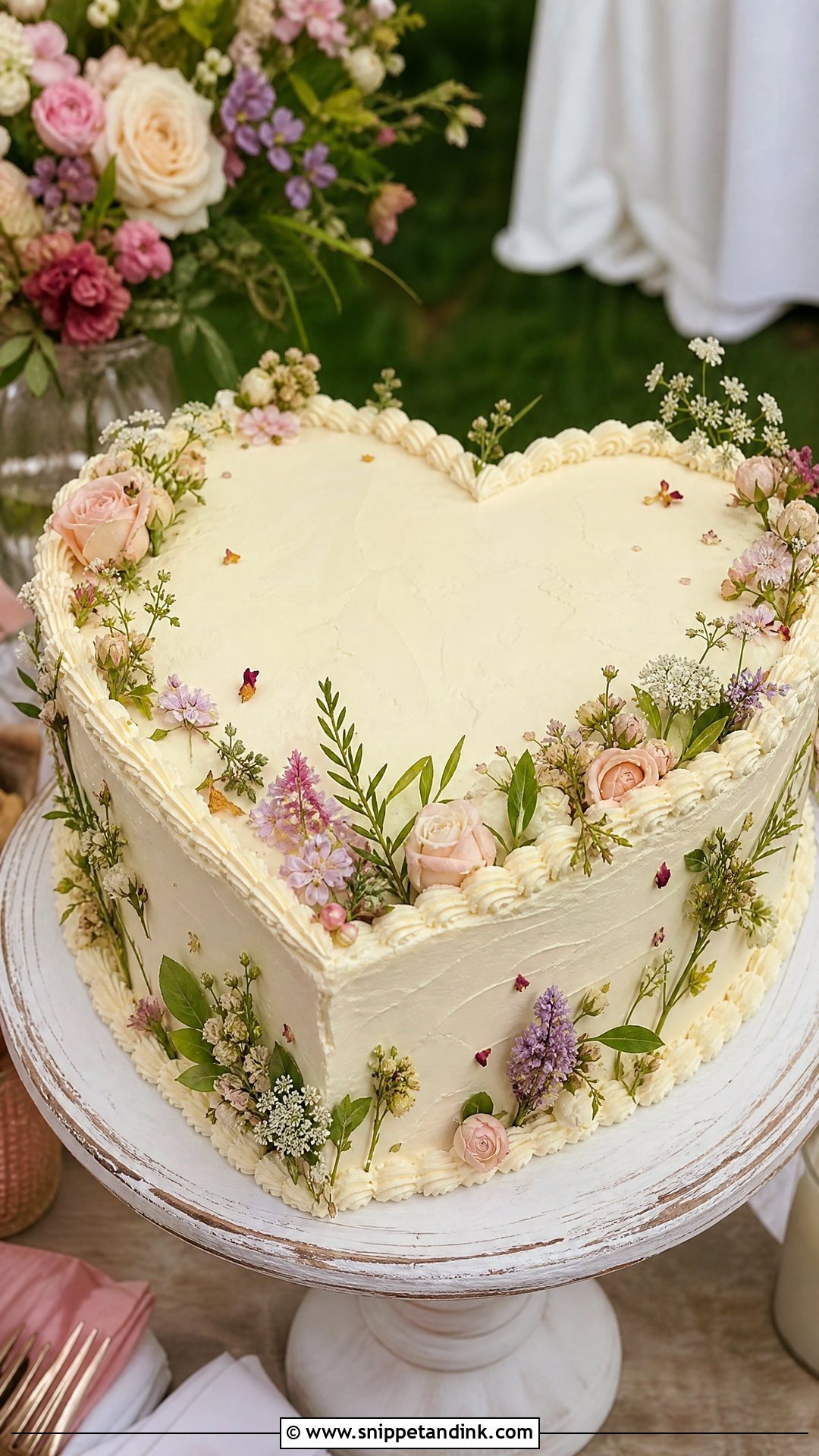
The garden heart is about movement. I ask my florist for small blooms and trailing greenery, then place them so they look as if they’re growing over the top and spilling down one side, not wired into a tight bunch. Buttercream with a loose palette-knife texture suits it better than a smooth finish. Outdoor and tented receptions are its natural setting, though in a tent I keep the cake shaded until the last moment. Lemon elderflower, pistachio or vanilla raspberry fit the mood.
16. Gold Heart Wedding Cake
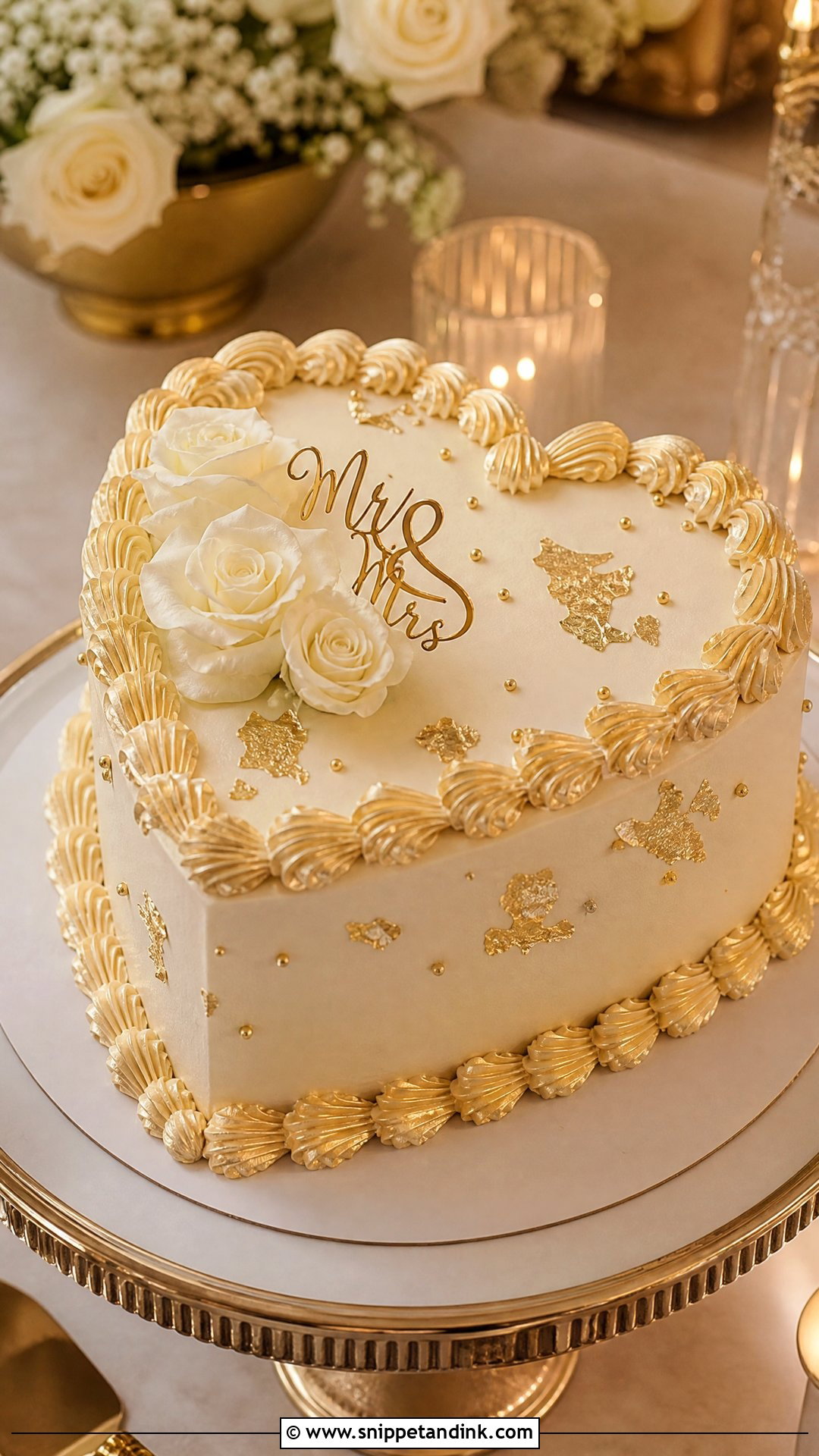
Gold works as an accent here, not a coat. A brushed edge, gold-touched pearls on the border, a little leaf pressed into the piping or a small metallic topper all read as warm and polished against ivory. For anything guests will eat, I use edible gold leaf or an edible-labelled paint; some lustre dusts are marked for display only and should stay on toppers and boards. Candlelit evening receptions bring the gold to life. Caramel, almond or a champagne-flavoured buttercream match it well.
17. Ruffle Heart Wedding Cake
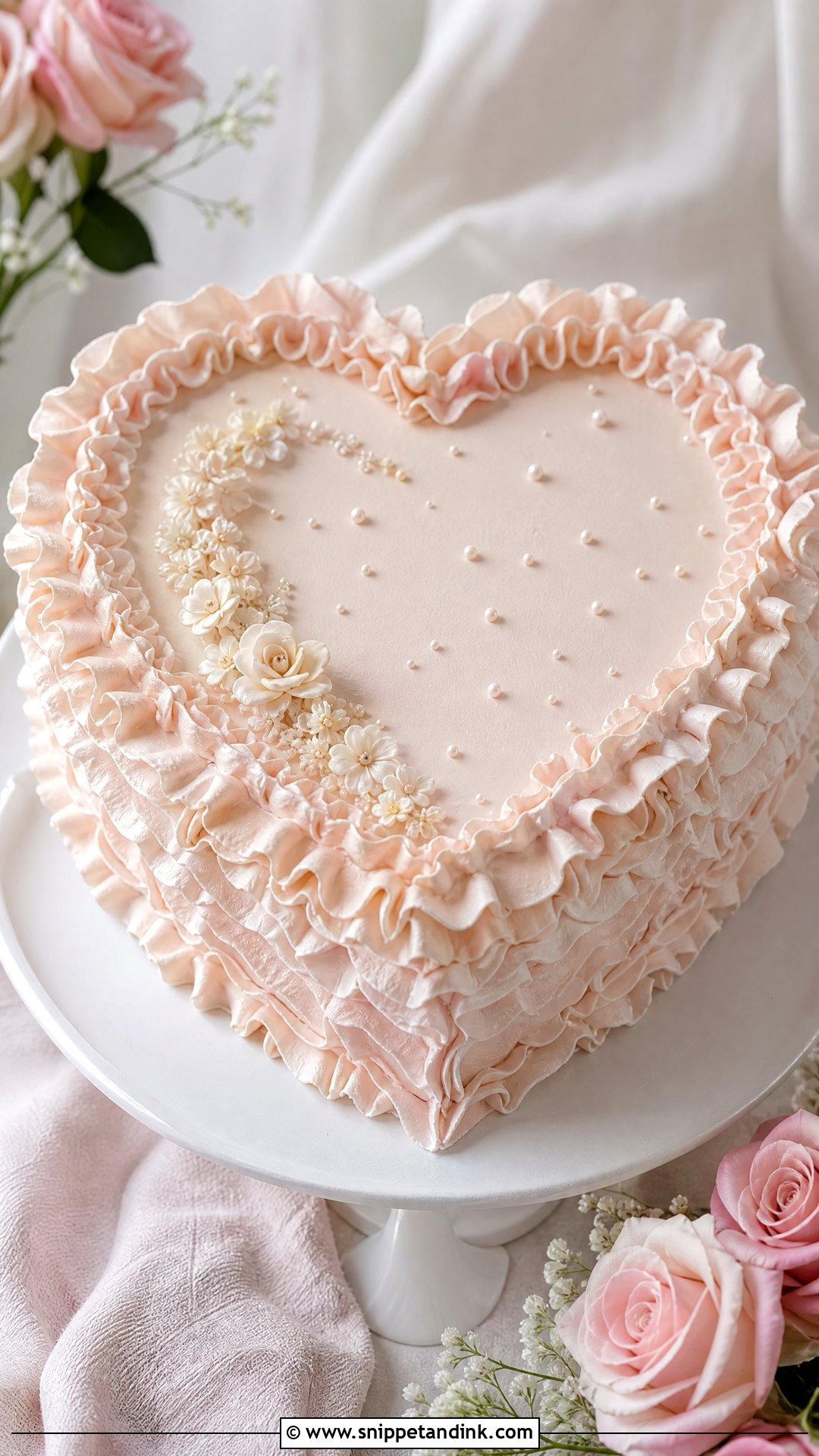
Ruffles are softer to pipe than Lambeth work and far more forgiving in photographs, because the texture hides small wobbles. They can frame the heart, wrap the sides, or form a double border around the top. White, blush or pale peach keeps the look bridal. I’d stop at a few pearls or two tiny flowers; once ruffles are crowded, they lose their shape and the cake looks overworked. Ruffles also take on heat the way any thin piping does, so a cool room helps.
18. Heart Cake With Initials
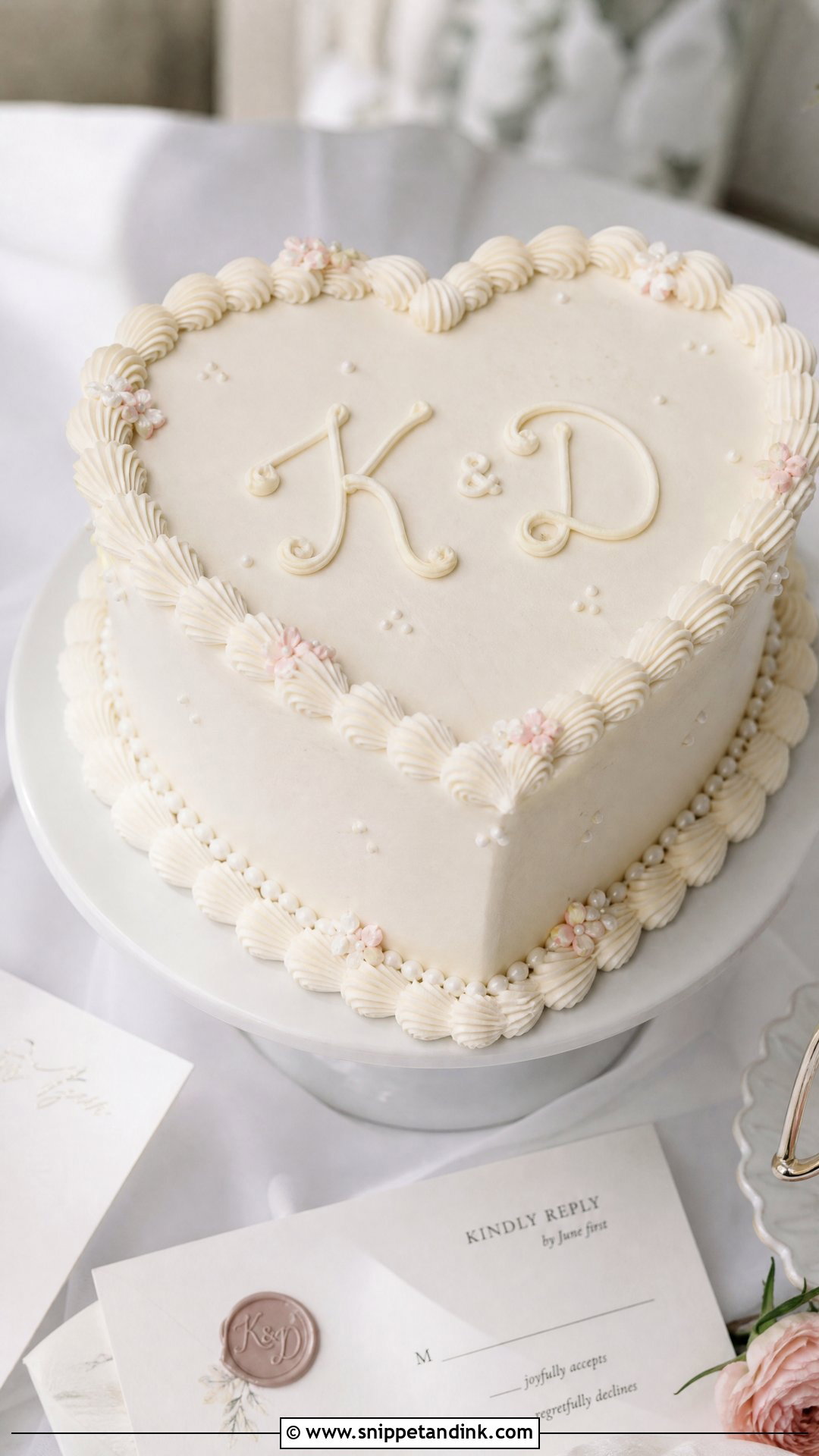
The flat top of a heart is a natural space for lettering: a shared surname initial, or two first initials joined by a small ampersand. I pipe monograms freehand from a template sketched on paper first, then trace the outline lightly onto the frosting so the spacing sits centred on that uneven shape. Keep the letters clean and the base colour neutral so they stay readable from a few feet away. A pearl or cherry border can surround them. It feels made for you without needing a big cake.
19. Heart Cake With Fresh Roses
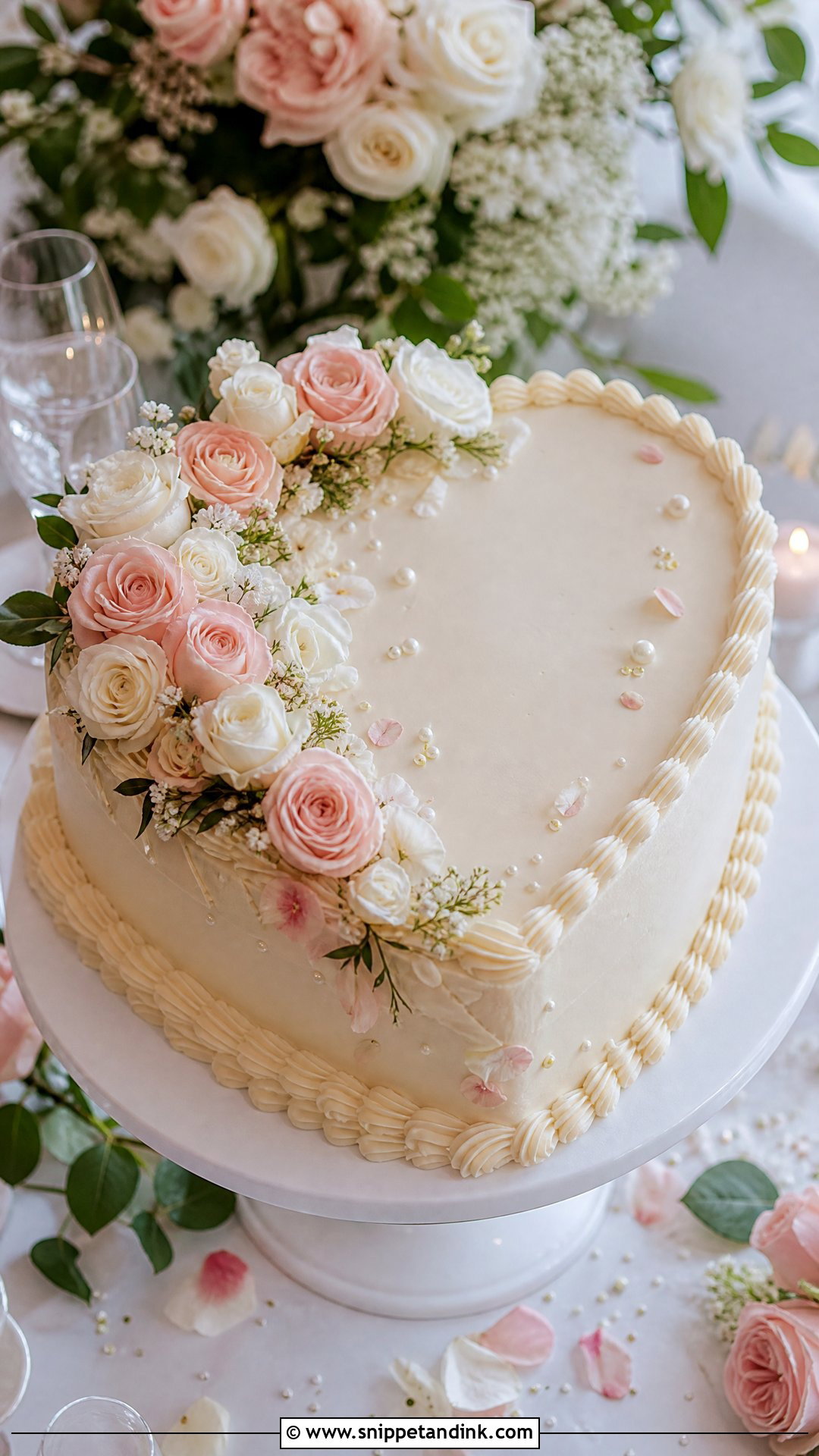
Fresh roses match the shape, but not every rose belongs on a cake. Florist roses are often treated with pesticides or preservatives, so I use blooms grown for food use where I can, wrap or seal every stem, and make sure nothing cut touches the frosting directly. A few heads along one side or around the top curve look far better than a full cover, and the outline stays visible. White, blush and peach are soft; red is the louder romantic choice. Vanilla, almond, raspberry or red velvet suit any of them.


20. Chocolate Heart Wedding Cake
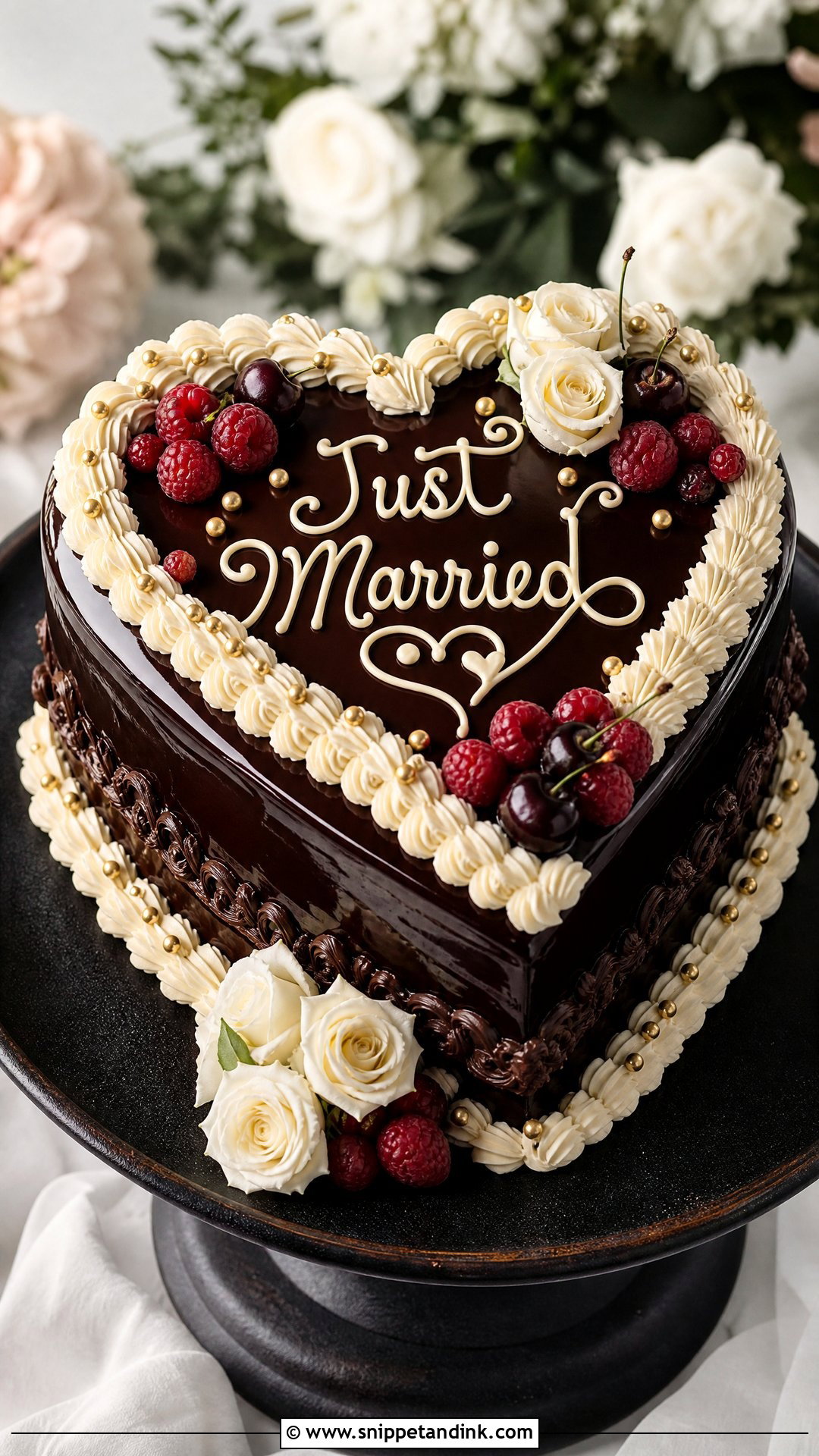
A chocolate heart wedding cake is the one guests actually come back for. Dark sponge, chocolate buttercream or a glossy ganache, then ivory piping, berries, cherries, gold touches or fresh roses on top. Ganache is my preference for a heart because it sets firm and gives sharper edges at the point and the inside curve, and it copes with a warm room better than most buttercreams. It suits evening receptions and darker floral palettes. Raspberry, salted caramel or espresso cream filling keeps the richness in check.
The Point Is the Weak Spot on Delivery Day
Of all the shapes I deliver, hearts make me drive most carefully. The point at the bottom has the least cake behind it, so a sudden stop or a warm car can crack the frosting there first. I chill a heart cake well before it travels, box it on a non-slip mat, and point the tip toward the back of the car so braking pushes it into the box wall rather than out of it.
At the venue, tell your coordinator where the cake is going before it arrives. A spot near a window, a heater or the band’s lighting will soften piping long before anyone cuts it. A cool corner, away from direct sun, is worth more than a pretty backdrop.
Cutting it once the photos are done
A heart doesn’t cut like a round, and caterers who haven’t served one sometimes start from the middle and end up with messy wedges. I give couples a simple plan to pass on:
- Make the ceremonial cut near the point, where a missing slice is least visible in later photos.
- Then cut straight across the cake in rows about two inches apart, working from the top of the heart toward the point.
- Slice each row into small rectangles. The curved ends become slightly smaller pieces, which are handy for children or guests who only want a taste.
- Wipe the knife in hot water between cuts so piping and ganache stay clean on the plate.
If you’re keeping the top heart to eat later, ask for it to come off before cutting begins, boxed with its board. It freezes well wrapped tightly, though delicate piping rarely survives the wrapping intact.
Bring Your Guest Count to the Tasting, Not Just the Photo
The heart already says love, so what you’re really deciding is the mood: vintage piping and cherries, quiet ivory with pearls, or something sharper with black lettering and red buttercream. Save two or three photos you keep returning to, and notice what they share, because that’s usually the one idea worth building on. Then bring your guest count, the venue temperature and how long the cake will be on display to your tasting. Those three details shape the frosting, the structure and the size far more than the picture does.
You'll Like These Ideas:










Leave a Reply