
A royal wedding cake is less about size than about discipline. The tall ones that look regal all share a clear structure, one focal point and decoration that has been planned tier by tier. Some of the designs below follow the old formula of fruit cake, marzipan and hard royal icing. Others keep the look but swap in buttercream, fresh flowers and lighter flavours such as lemon elderflower. I’ve built cakes in both camps, and for each of these twenty I’ve noted what the design asks of the baker and what it asks of you.
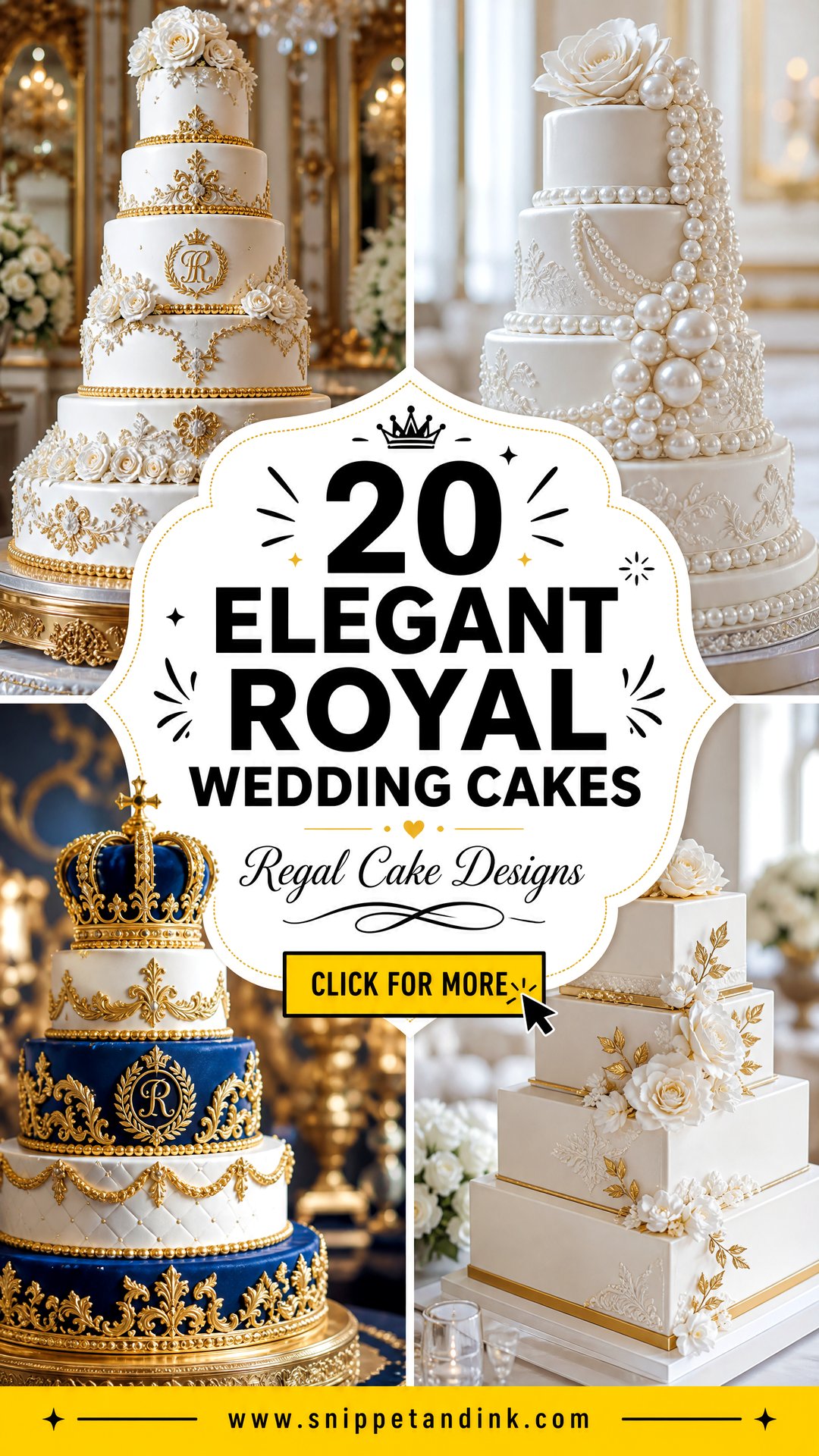
Fruit Cake, Marzipan and Hard Icing: How the Traditional Version Is Built
Many of the cakes here come from a British tradition that is very different from a modern sponge cake, and it changes how far ahead the work starts. The classic version is built in layers over several weeks.
- The fruit cake is baked weeks ahead and fed with brandy or another spirit every week or so while it matures, which deepens the flavour and keeps it moist.
- Marzipan goes on next, rolled thin and smoothed, then left to dry for a few days so its oils don’t seep into the icing and leave yellow patches.
- Royal icing is applied in several thin coats, each one dried before the next, to get a flat, bright surface.
- Piping and sugar flowers come last, once the coating is completely dry.
Because it is so dense, fruit cake can carry heavy decoration and tall stacks, which is why the old royal cakes stood on pillars. If you don’t like fruit cake, I’d keep one traditional tier for those who do and fill the others with sponge. It still looks traditional from the outside.
1. Royal Icing Wedding Cake
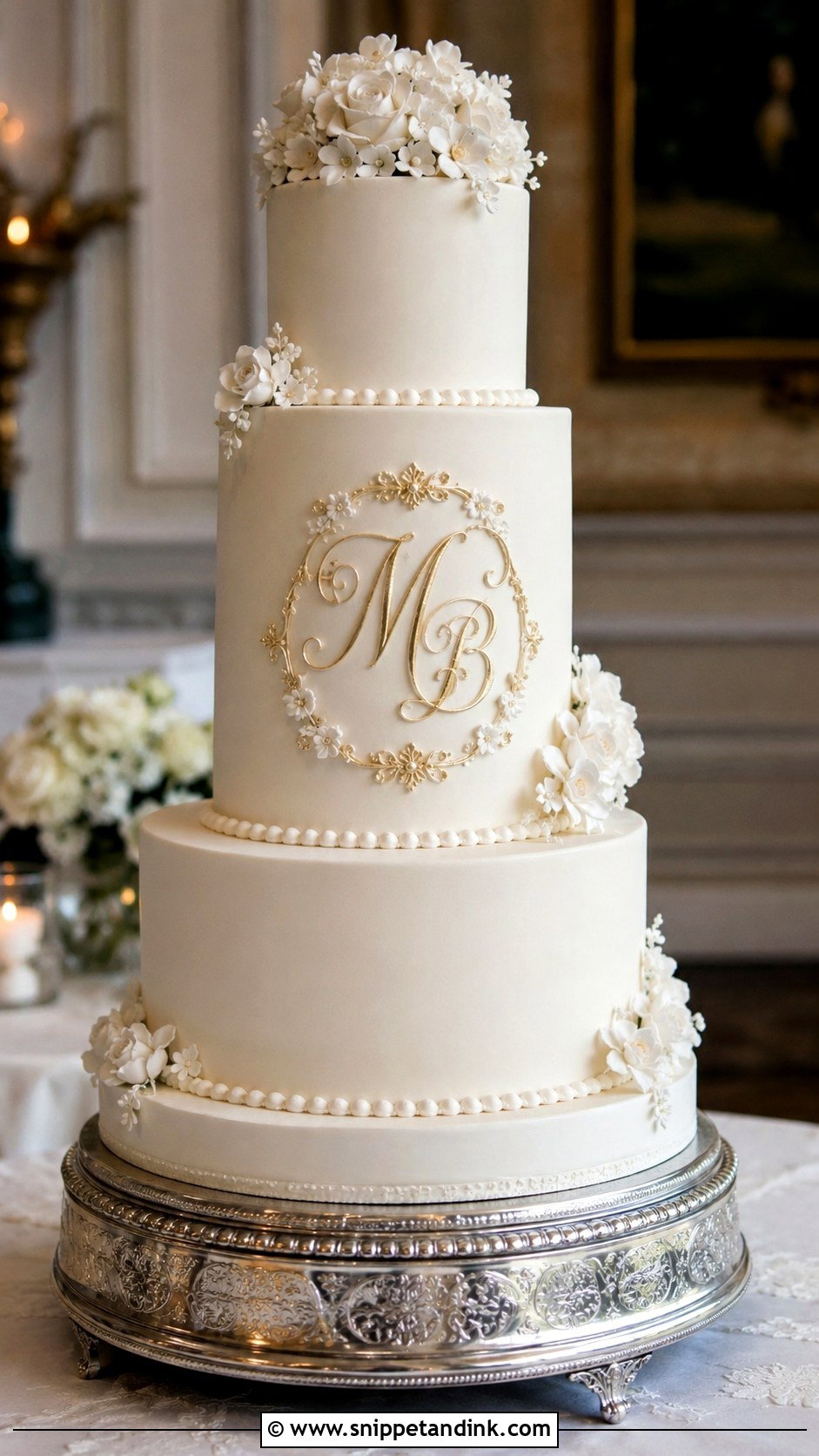
Proper royal icing is egg white and icing sugar beaten until it holds a sharp peak, and it dries almost as hard as porcelain. That hardness is what gives the crisp, bright finish and lets me pipe bead borders, lace and scrolls that stay exactly where they are put. It goes on over marzipan, traditionally on fruit cake or a firm almond sponge. I add a little glycerine to the coating layers so the knife can get through on the day. Keep the decoration to a few scrolls, tidy borders and some sugar blossoms.
2. Lambeth Wedding Cake
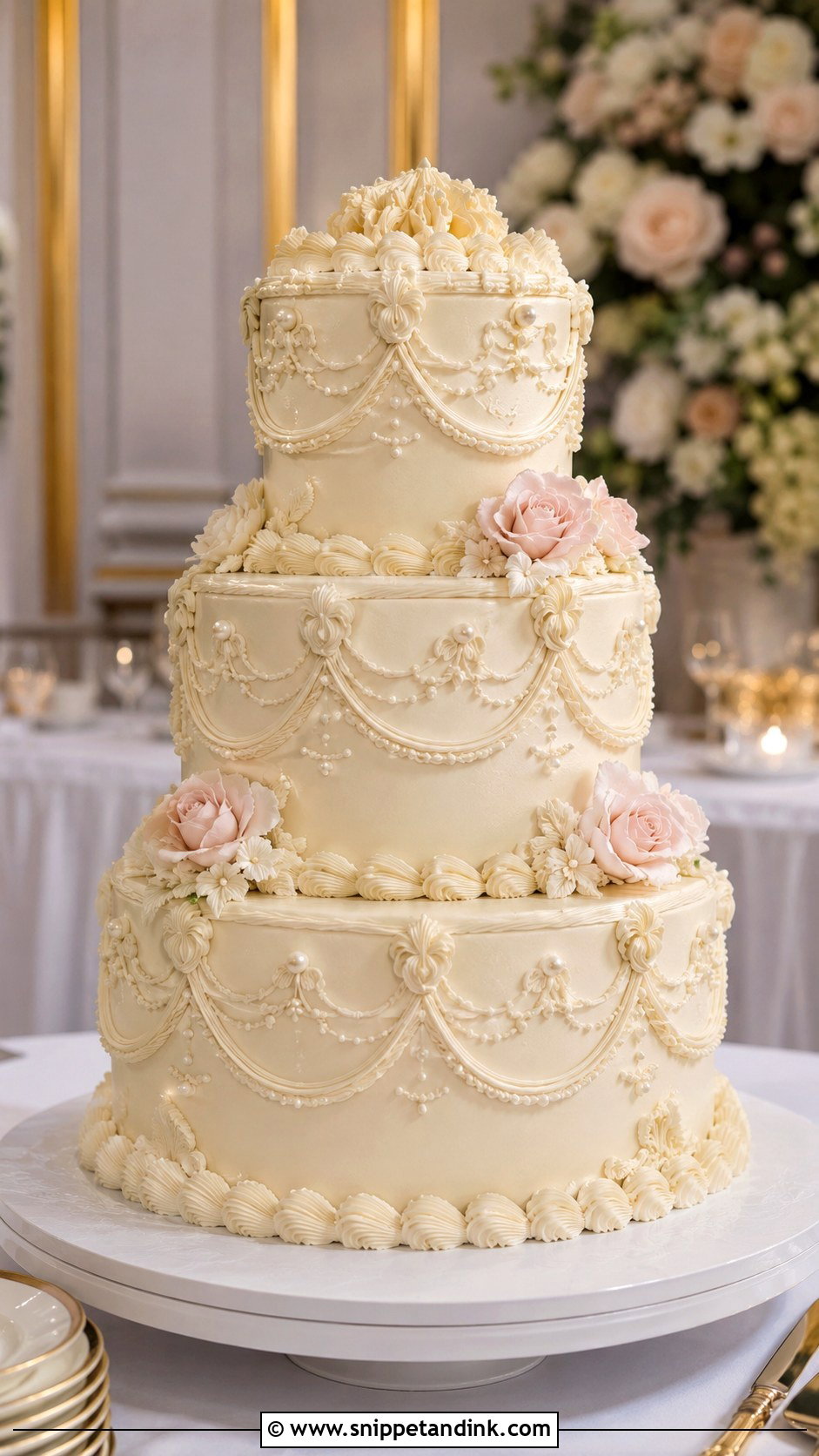
Lambeth is over-piping: line on line, shell on shell, until the borders stand out from the cake in layers. Each layer has to dry before the next goes on, so a fully piped Lambeth cake takes days of work, not hours. Symmetry is everything. I mark each tier into equal sections before piping, with the heaviest work at the borders and lighter detail across the middle. Royal icing gives the sharpest lines. Buttercream Lambeth looks softer and more modern but won’t hold the deepest layers. All white is classic, and blush or pale gold warms it up.
3. Five Tier Wedding Cake
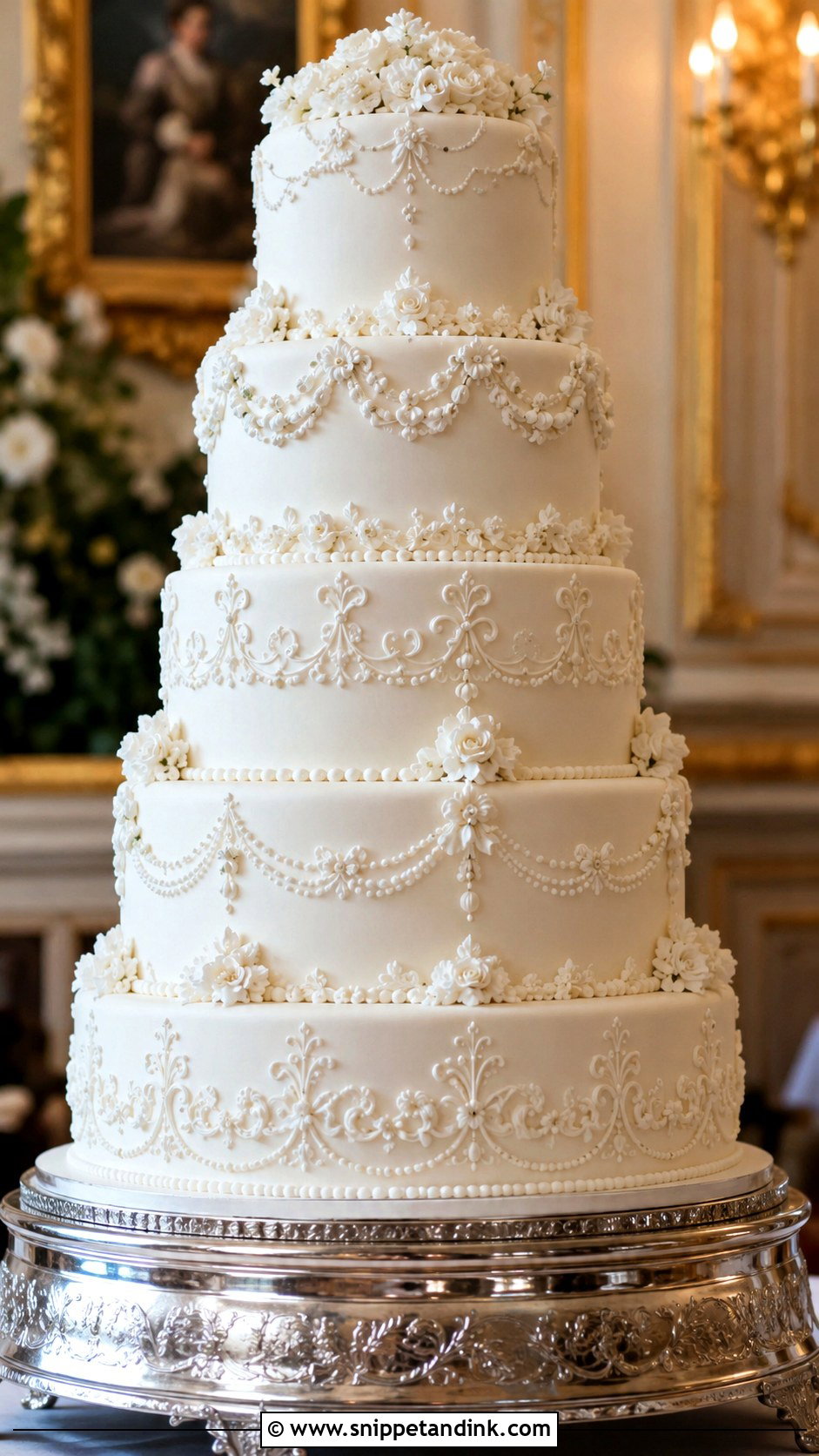
Five tiers is a serious build. Every tier sits on its own board with dowels underneath, and a central rod runs through the stack so it can’t shift. I almost always assemble a cake this tall at the venue. The tiers should taper evenly, otherwise it looks like a tower rather than a cake. One decorative idea running through all five, such as a cascade of sugar roses or fine piped lace, keeps it calm. Set it on a tall pedestal stand and be honest about the guest count, as five tiers often feed far more people than are coming.
4. Sugar Flower Wedding Cake
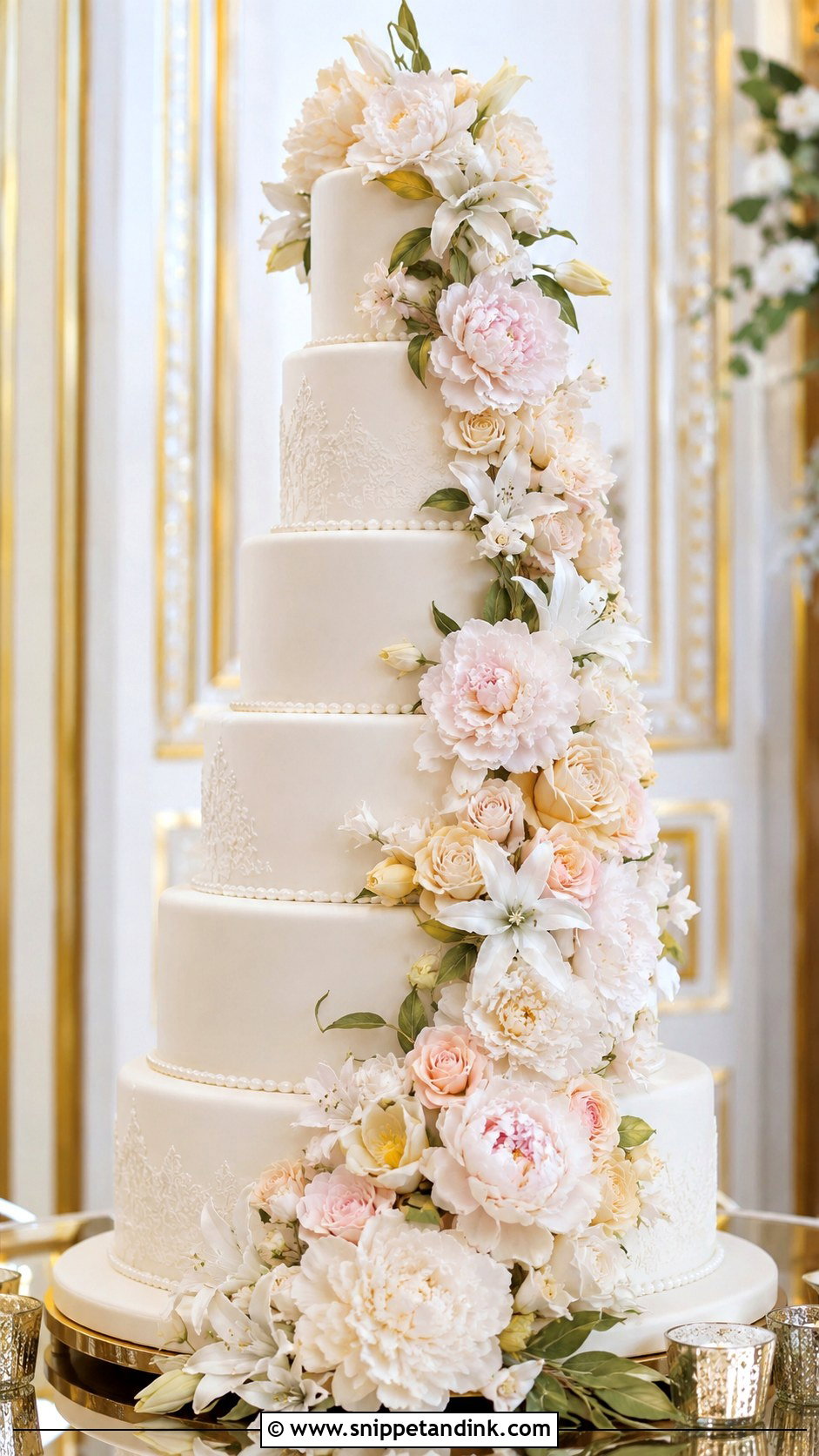
Sugar flowers don’t care what season it is, which is their great advantage. Peonies in October, gardenias in winter, lilies that would otherwise drop pollen on the icing: all possible. Each petal is rolled thin, wired, shaped and dried, so a large cascade is weeks of work and should be booked early. I place the finished flowers in a sweep from the top tier down. Keep the base plain, smooth ivory fondant or buttercream, so the flower work is what people look at. Store them dry afterwards and they will keep long after the wedding as a memento.
5. Gold Wedding Cake
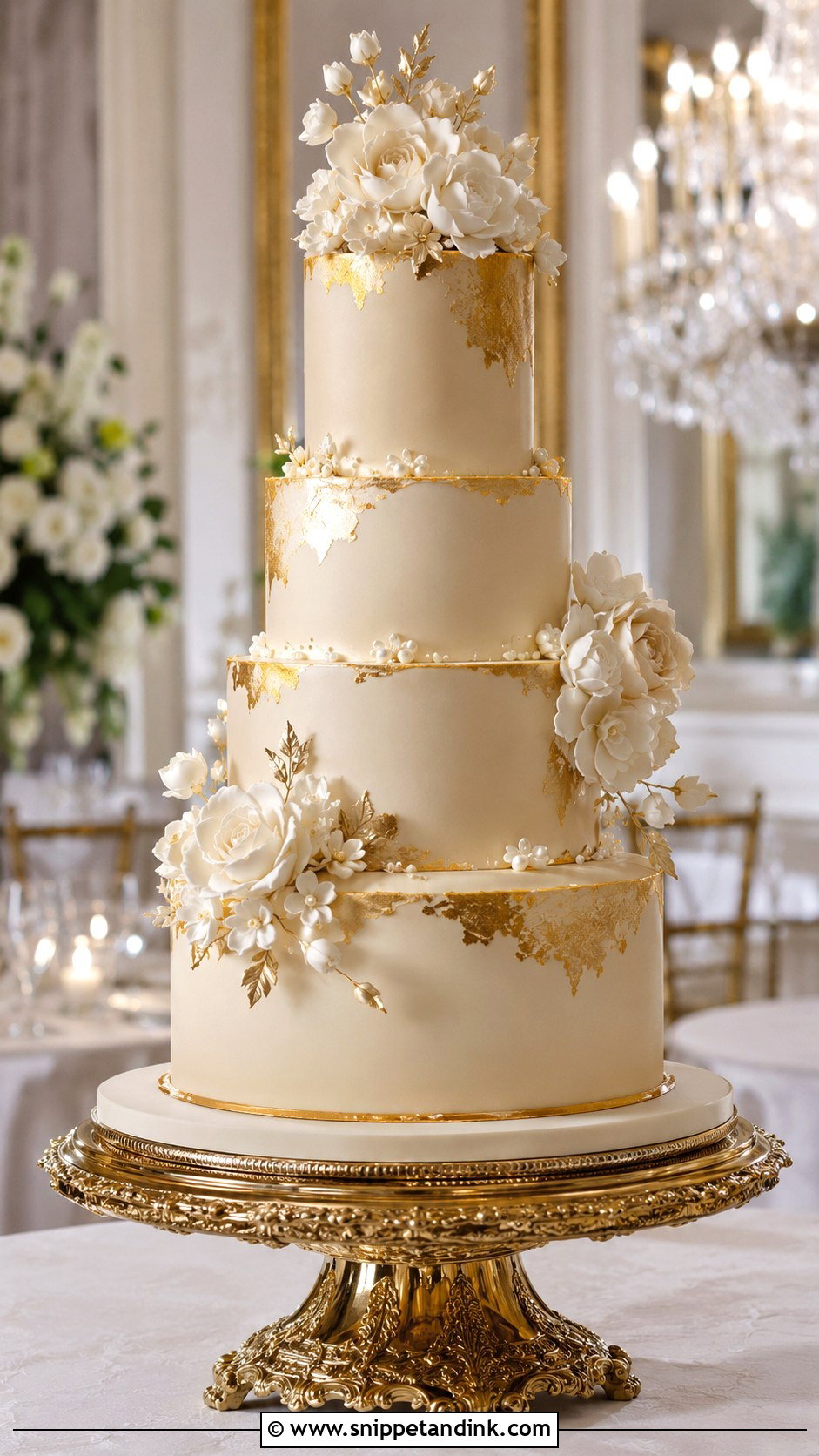
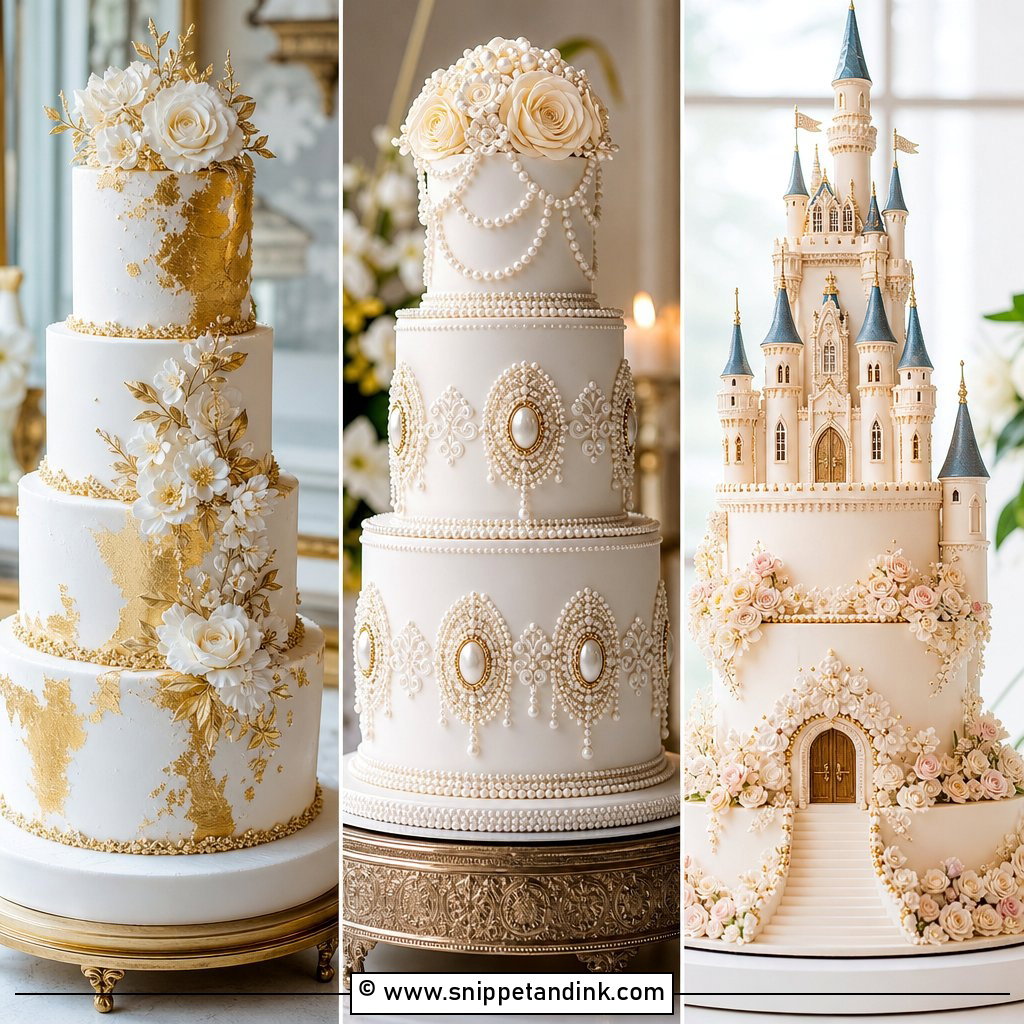
Gold looks royal in small amounts. Thin gold leaf, a painted edge, a gold monogram or gilded tips on sugar flowers all read as rich; a cake fully covered in gold reads as novelty. I apply leaf with a dry brush onto fondant, and I only use gold that is sold as edible, since some lustre dusts are labelled for decoration only. A tall three or four tier cake on an ivory or champagne base gives the cleanest backdrop. Vanilla bean, almond, honey or caramel flavours suit it.
6. Pearl Wedding Cake
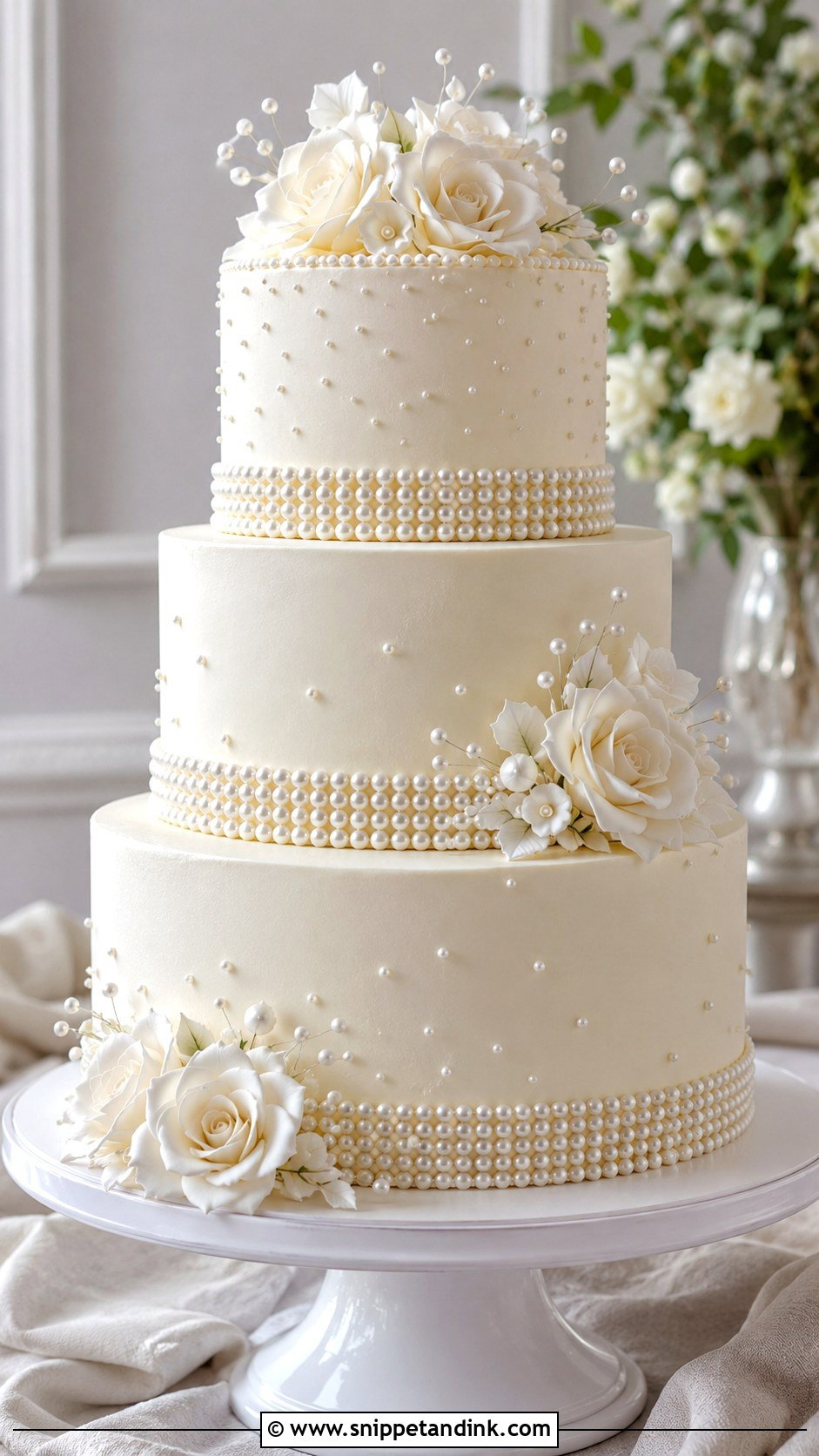
Pearls can be neat borders, scattered accents or full bands around each tier. On white, ivory or pale blush they give a soft, gentle shine. For a formal version I pair them with piped lace or quilted fondant, where a pearl sits at each crossing of the quilting. That quilting has to be marked precisely, because a wandering diagonal line is very obvious on a tall cake. Three or four tiers give enough surface. Vanilla, almond or white chocolate sponge inside, and a few sugar roses or a small bow to finish.
7. Monogram Wedding Cake
The monogram goes on the centre tier, where the eye lands first. I can pipe it in royal icing, paint it in gold or cut it from fondant, and I always ask for the exact lettering in writing, because initials in the wrong order are a mistake no one forgets. The rest of the cake stays quiet: smooth ivory fondant, slim pearl borders, a few small flowers. Ballrooms, estates and black-tie receptions suit this design. Almond, lemon or vanilla bean inside.
8. Crown Wedding Cake
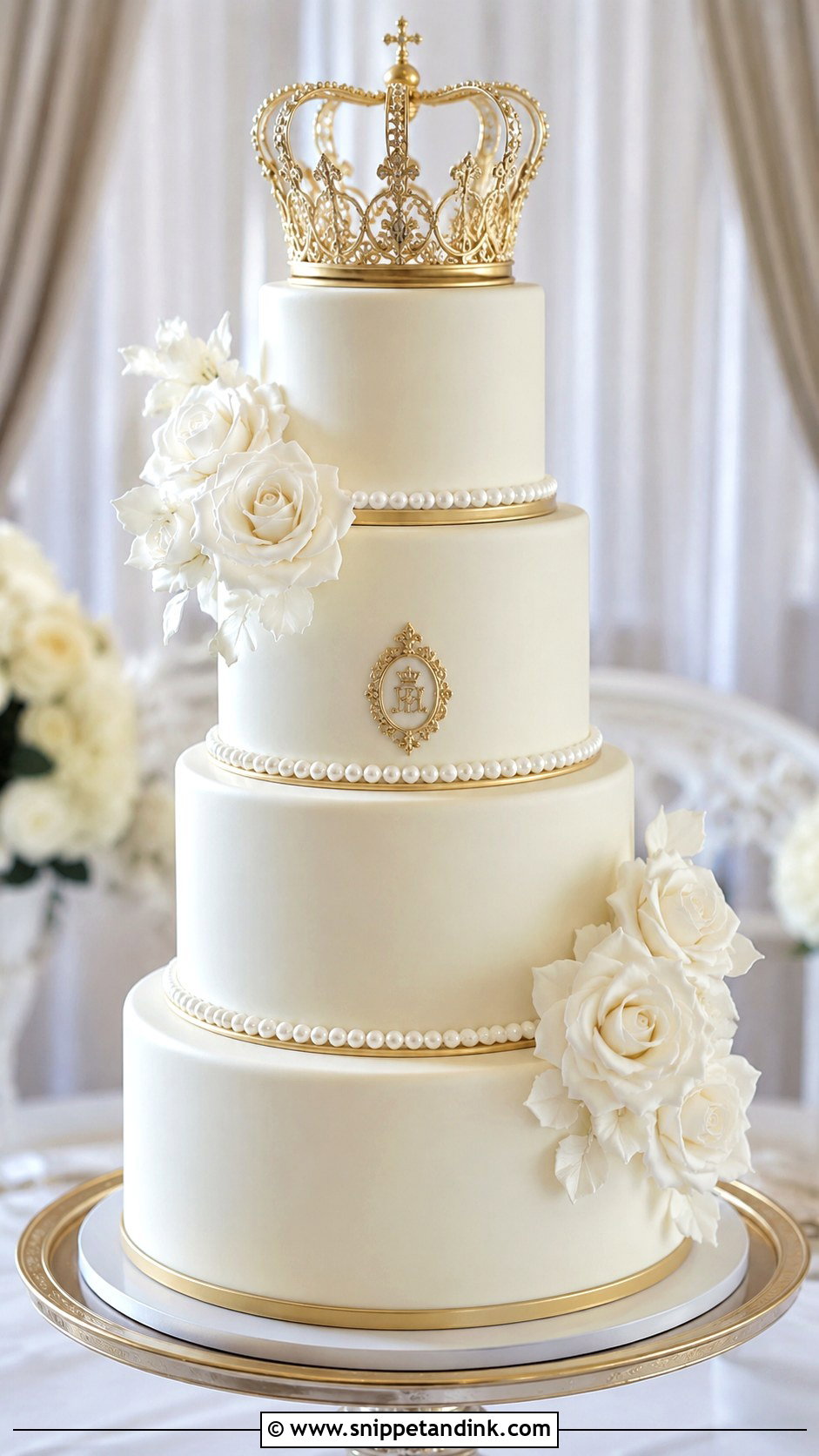
A crown is the design I have to talk couples down on most often. Too big and it looks like fancy dress. I prefer a small, delicate crown or tiara-style topper in gold or white sugar, set on a tall, clean cake that can carry it. Sugar crowns are fragile and made well ahead, so they travel separately and go on last. Ivory icing, gold trim and sugar roses tie it together, with plain fine piping or pearls on the lower tiers. Vanilla almond, champagne or lemon elderflower fit the mood.
9. Lace Wedding Cake
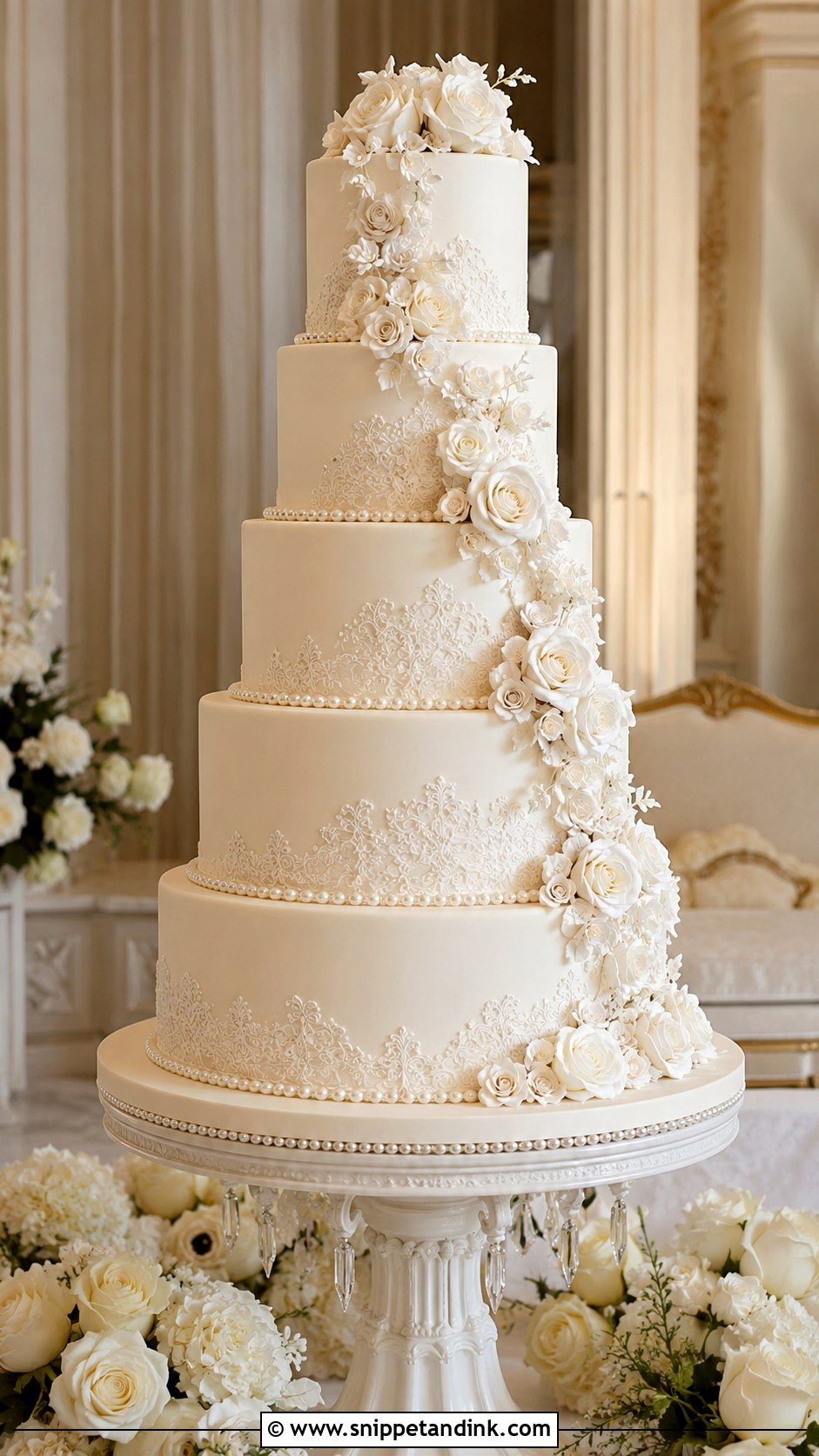
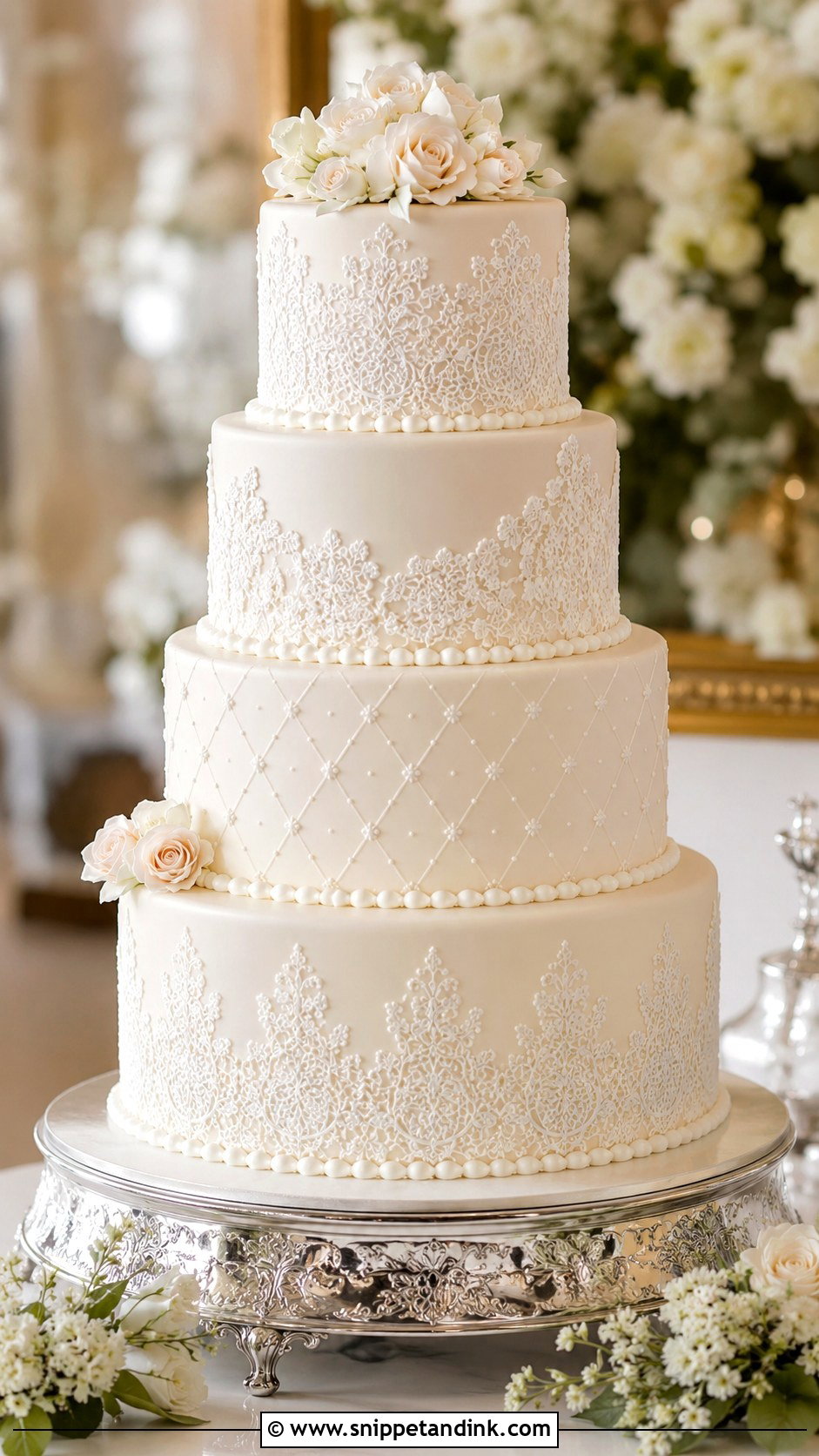
Lace on a cake can be piped, cut as fondant appliqué, made from edible lace mats or stencilled with royal icing. Stencilling is fastest but needs a steady hand, as the stencil can slip and smear. White on white is the most classic choice. Ivory lace over champagne icing looks warmer and older. On three or four tiers I like a slightly different pattern on each, often lifted from the bride’s own dress. Use sugar flowers sparingly, and keep flavours simple, such as almond, vanilla bean or lemon.
10. White Wedding Cake
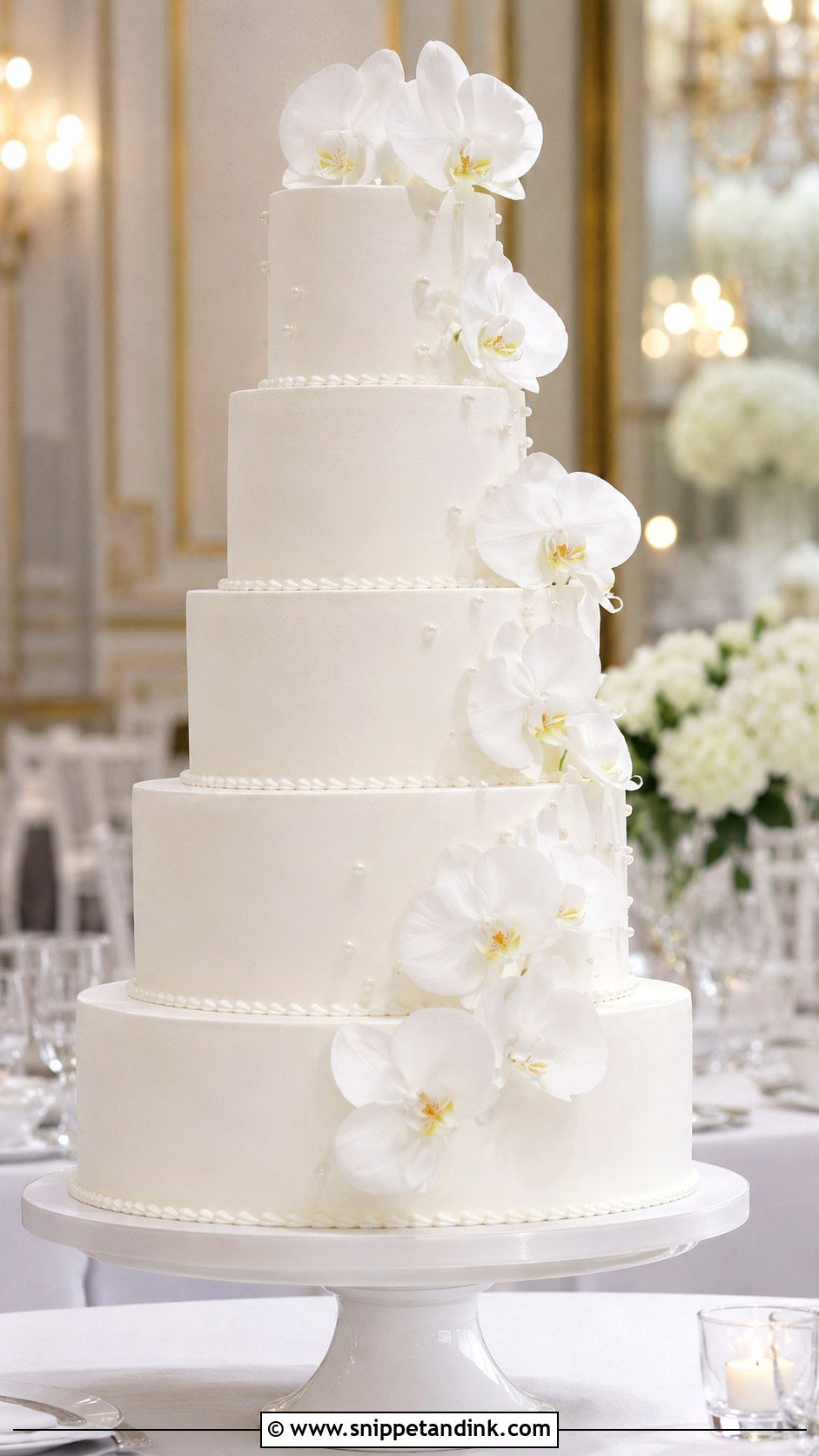
An all-white cake shows every flaw, so it relies on structure: tall tiers, smooth sides, sharp edges, neat borders. Any texture should be quiet, such as subtle piping, soft ruffles or a few tiny pearls. Sugar roses, white orchids or piped lace sit well on it. It goes with any colour scheme, which is why I suggest it to couples still finalising their palette. Vanilla bean, almond, coconut or white chocolate inside. A silver or white stand gives the plain design more presence.
11. Blush Wedding Cake
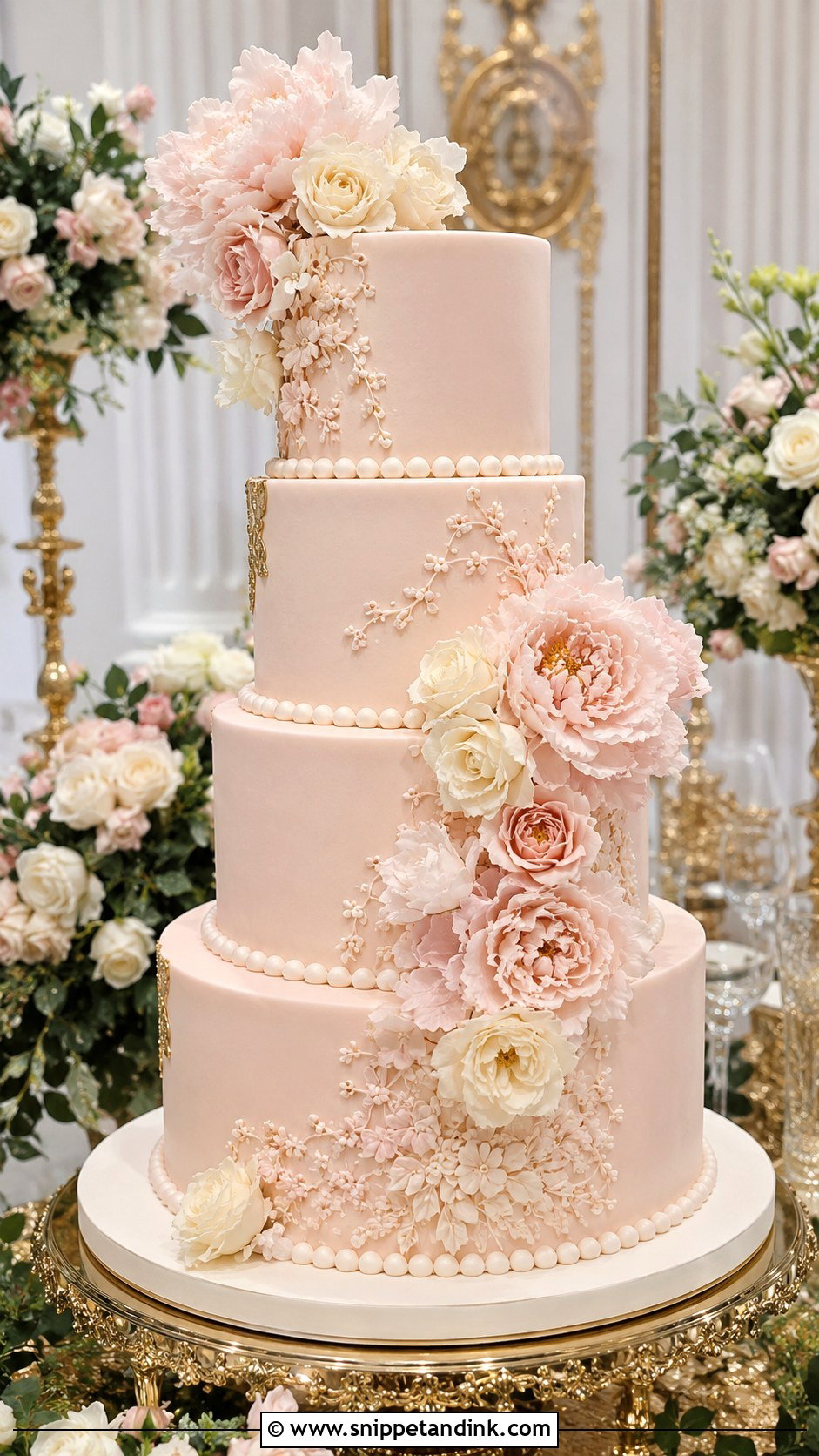
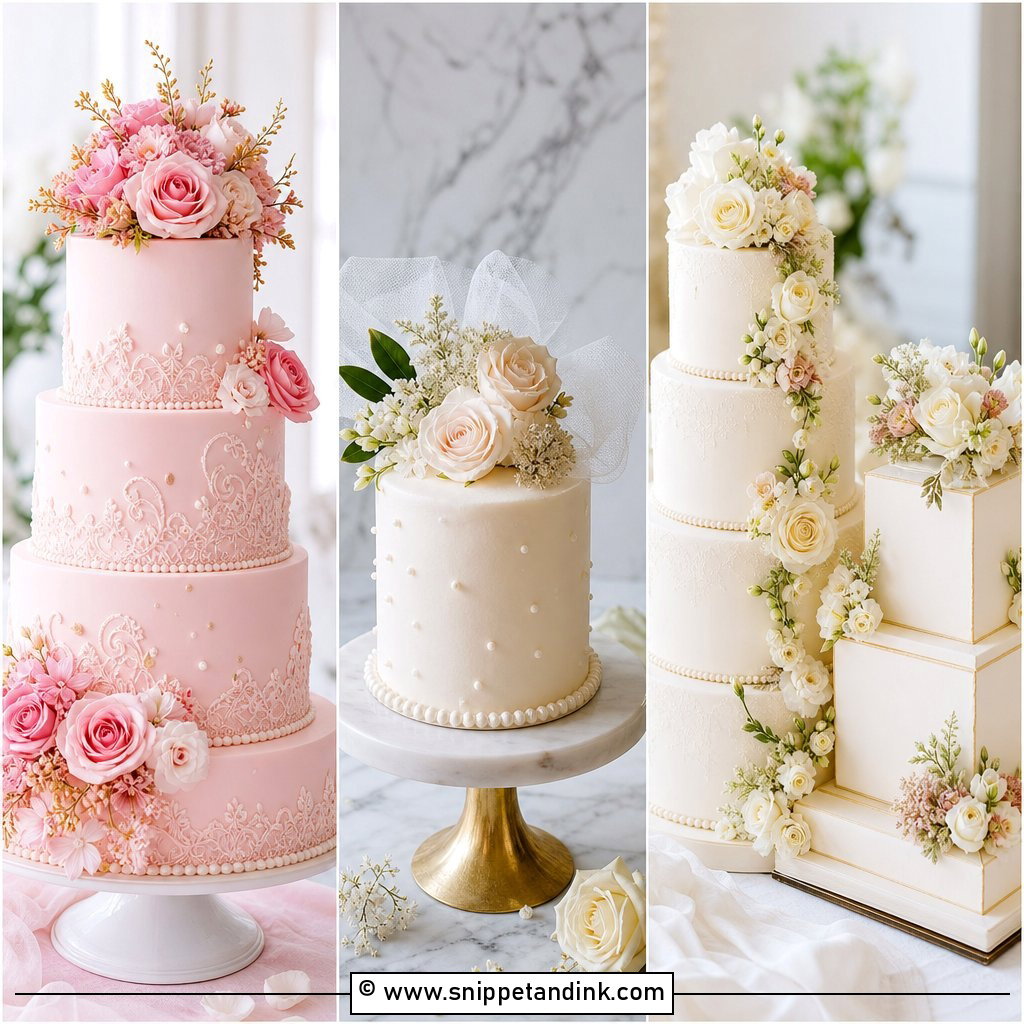
Blush on a royal cake works best in small doses. I either colour one or two tiers in pale pink or leave the whole cake ivory and let blush sugar flowers carry the colour. The second option is safer, since pink icing can fade under bright lights or near a sunny window. Roses, peonies and ranunculus suit it. Strawberry champagne, vanilla rose or almond raspberry inside, with ivory, pearl and soft gold details outside. Keep the finish smooth and the decoration even.
12. Cathedral Wedding Cake
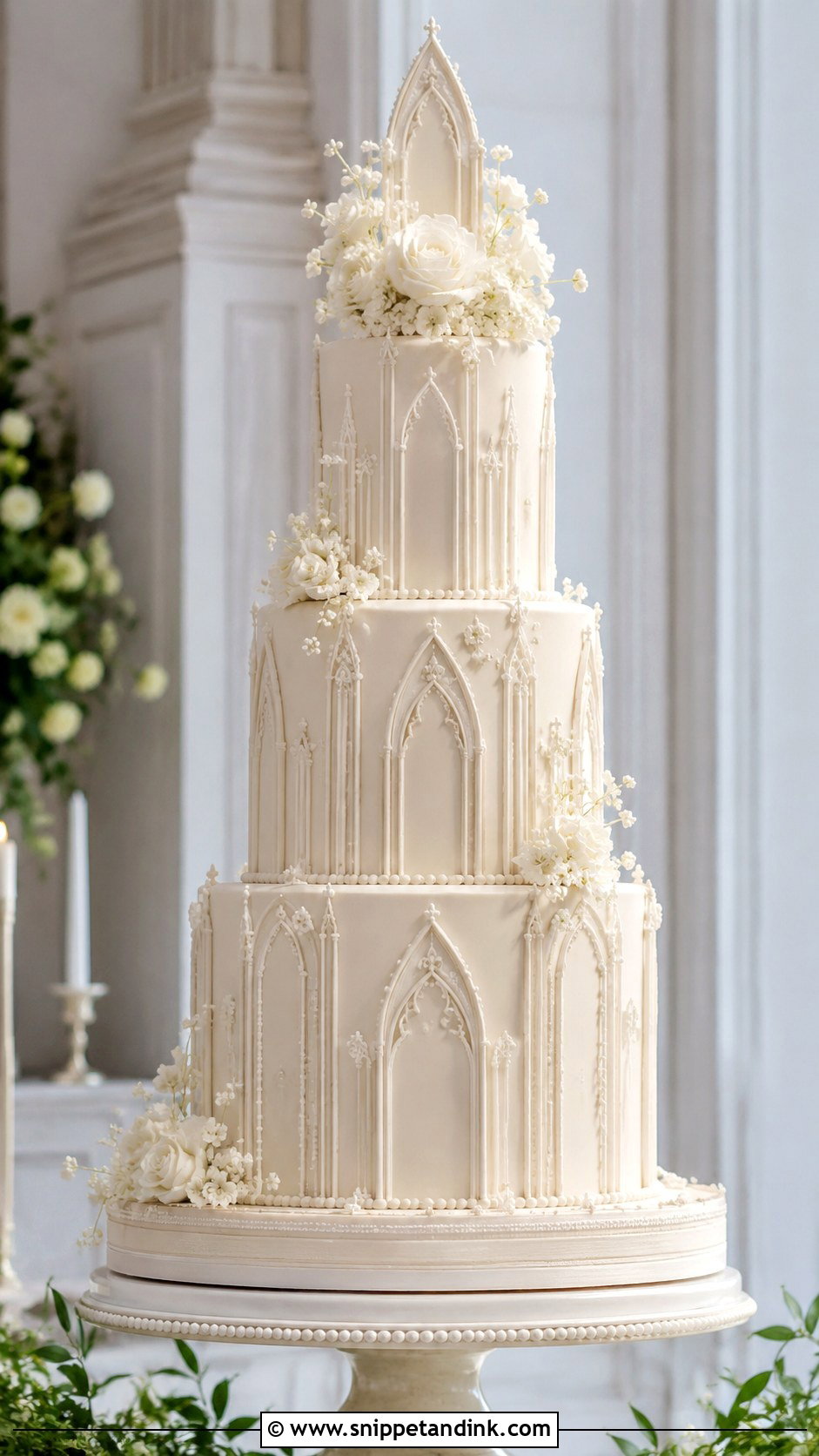
Cathedral cakes borrow from architecture: pointed arches, lace panels, vertical lines that draw the eye up. Royal icing is the only medium that holds pointed arches and fine beadwork, so I pipe the arches onto the side of a firm ivory fondant tier and let them set overnight. A few white sugar flowers soften the stone feeling. It belongs in historic venues and after formal church ceremonies. Rich fruit cake, almond sponge or lemon cake inside, and a high pedestal with simple white flowers.
13. Victorian Wedding Cake
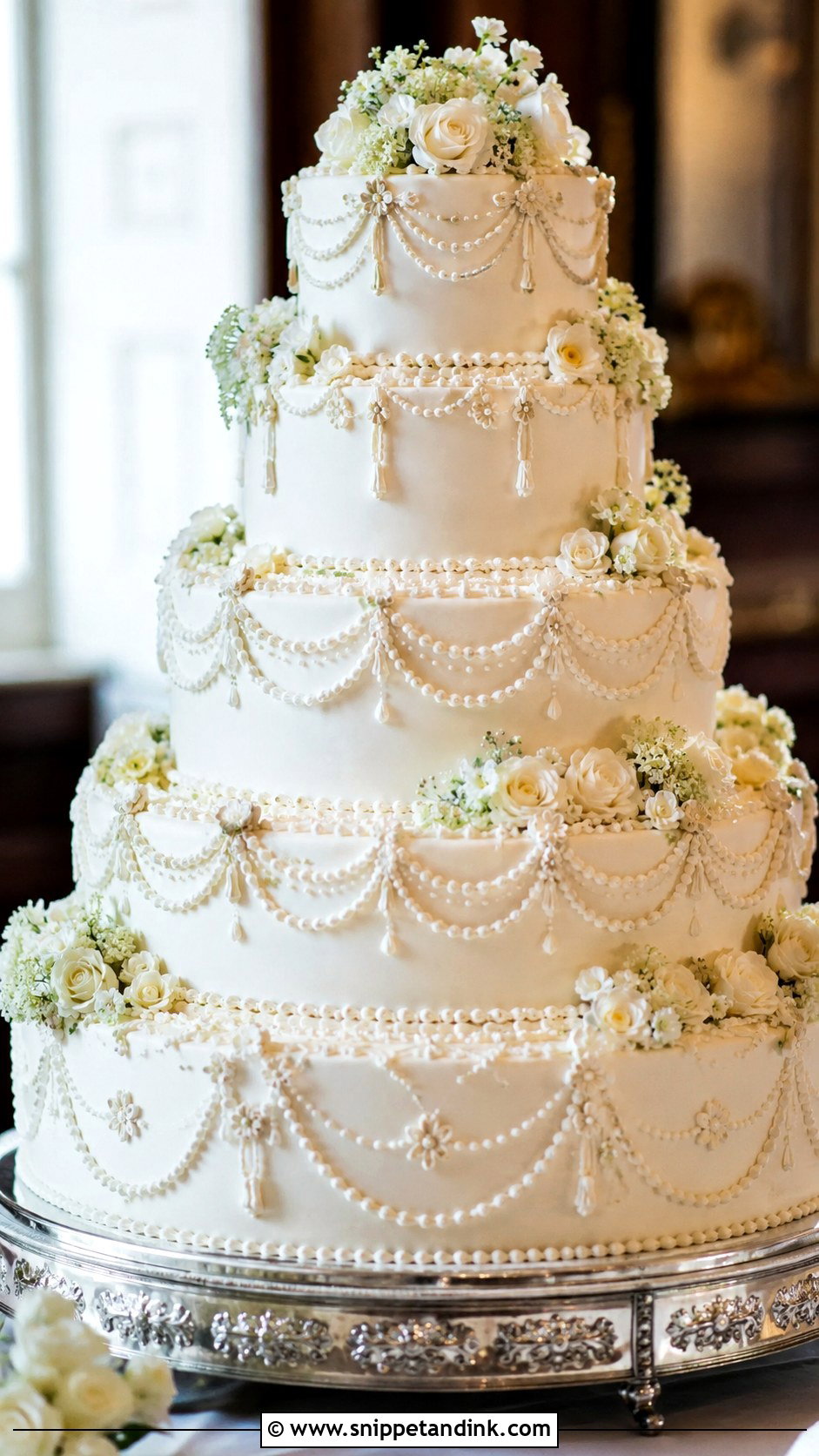
A Victorian wedding cake is where royal icing and over-piping are at home: stacked tiers, garlands, drop lines and sugar flowers. Drop lines are piped in the air between two points and allowed to fall, so they need a still room and dry weather. Humidity makes them sag and snap. Each tier should carry its own clear pattern. White and ivory are the strongest colours, and pale gold or blush can warm it. Fruit cake with marzipan is the true match. A vintage stand completes it.
14. Fresh Flower Wedding Cake
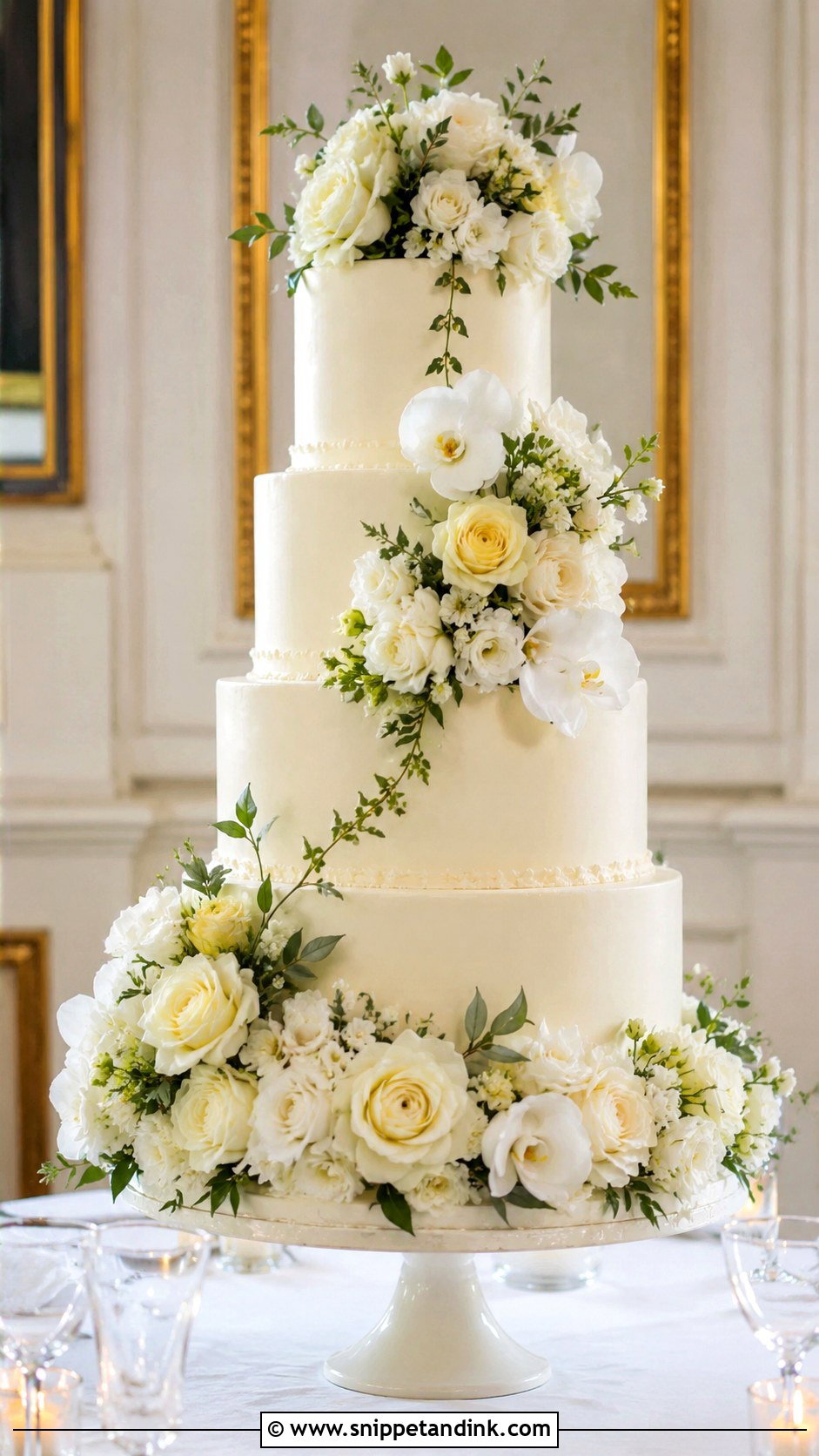
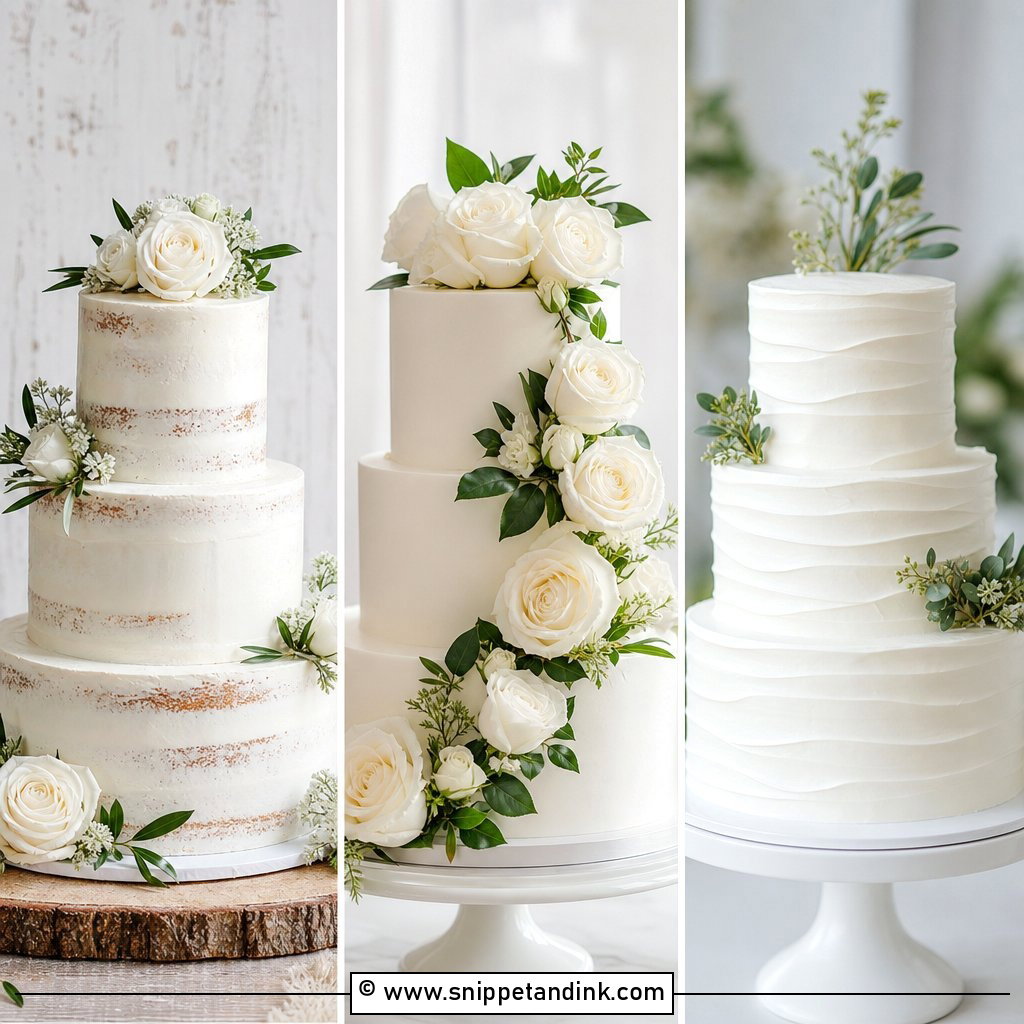
Fresh flowers can look royal when they are arranged in structured clusters or a deliberate cascade instead of being scattered. White roses, gardenias, orchids and a little greenery are my favourites here. Every stem is wrapped and set in a pick or a small barrier, never pushed straight into the cake, and I ask the florist for unsprayed blooms. Gardenias bruise brown if handled, so they go on at the very last minute. A smooth ivory or white base keeps it tidy. Lemon elderflower, vanilla or almond sponge suits the fresh style.

15. Castle Wedding Cake
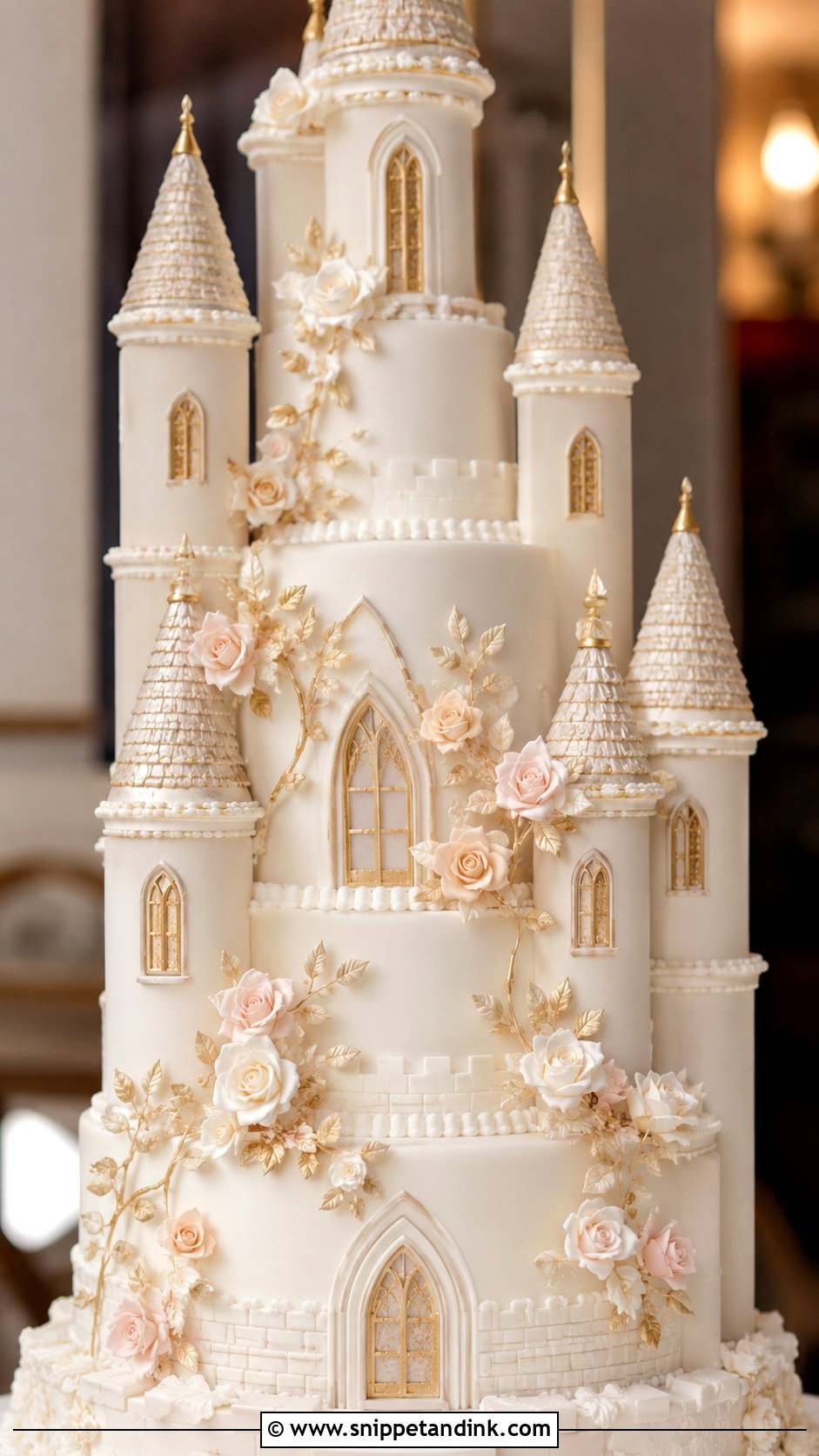
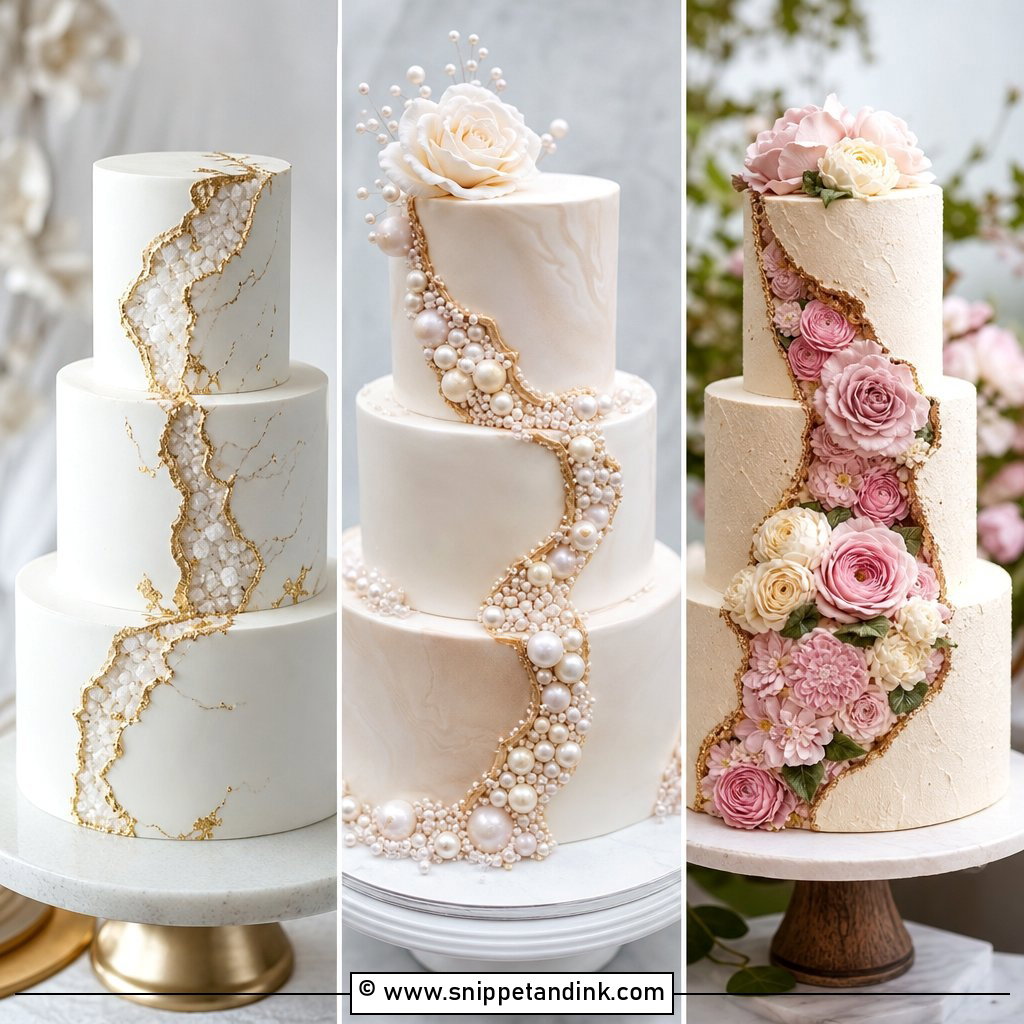
A castle cake lives or dies on restraint. I focus on architectural hints, such as subtle turret shapes, arched windows, pearl borders and soft gold accents, instead of cartoon towers. Turrets are usually made from rice cereal treats or dummy forms covered in fondant, as sponge can’t hold that shape. Piping that mimics stonework or sugar flowers climbing the base add detail. Ivory, champagne and pale gold keep it grown-up. Vanilla bean, almond or white chocolate inside.
16. Baroque Wedding Cake
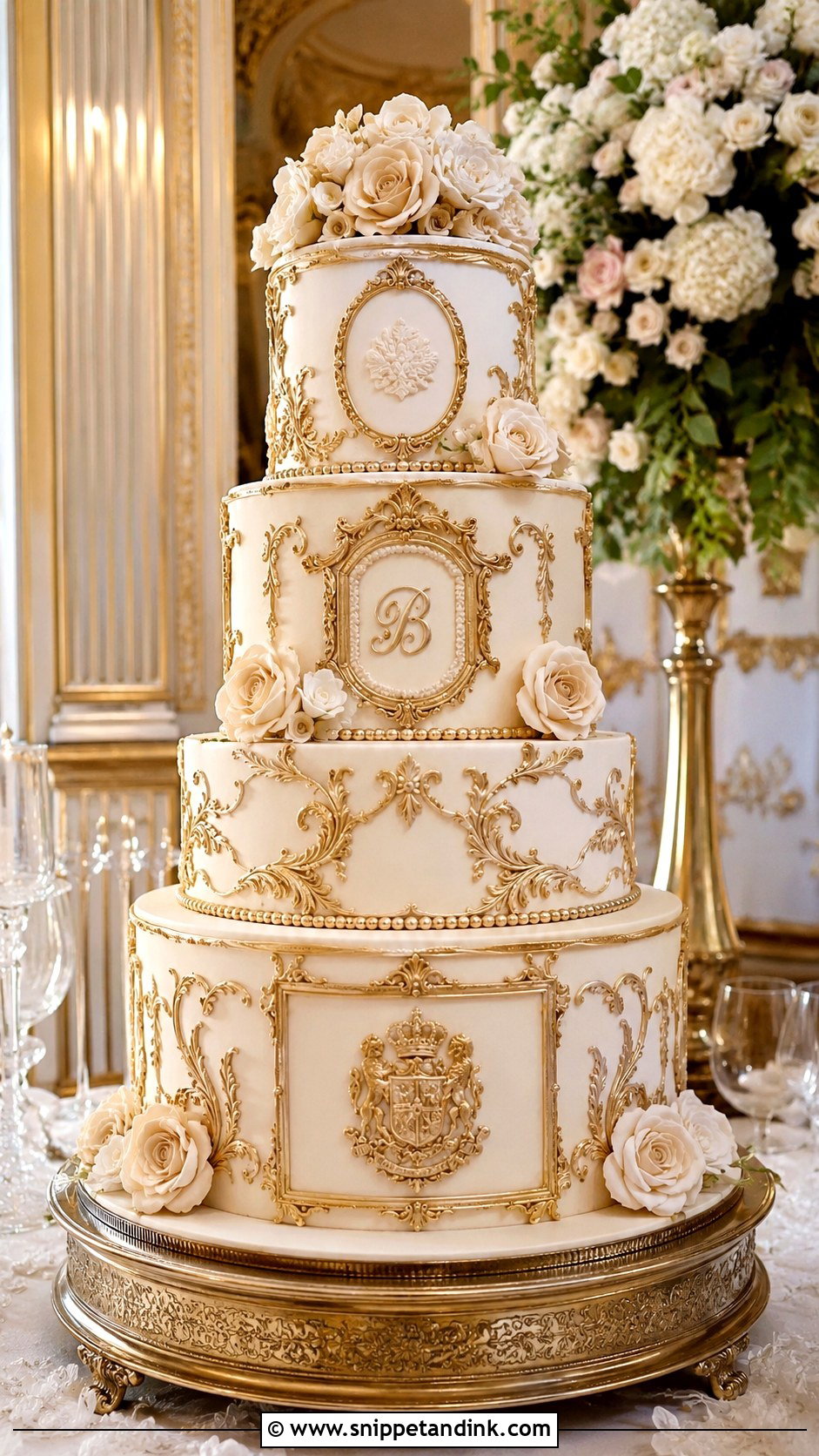
Baroque means gold scrollwork, raised piping, framed panels and dramatic flowers, so I limit the palette firmly to ivory, antique gold and cream. Add more colours and it gets heavy fast. Smooth fondant lets the ornate work stand out, and the scrolls are often moulded, then painted gold by hand. Four tiers give enough height. Hazelnut, vanilla almond or caramel flavours suit it, and a gold stand finishes it. This is a cake for a grand room, not a garden marquee.
17. Regency Wedding Cake
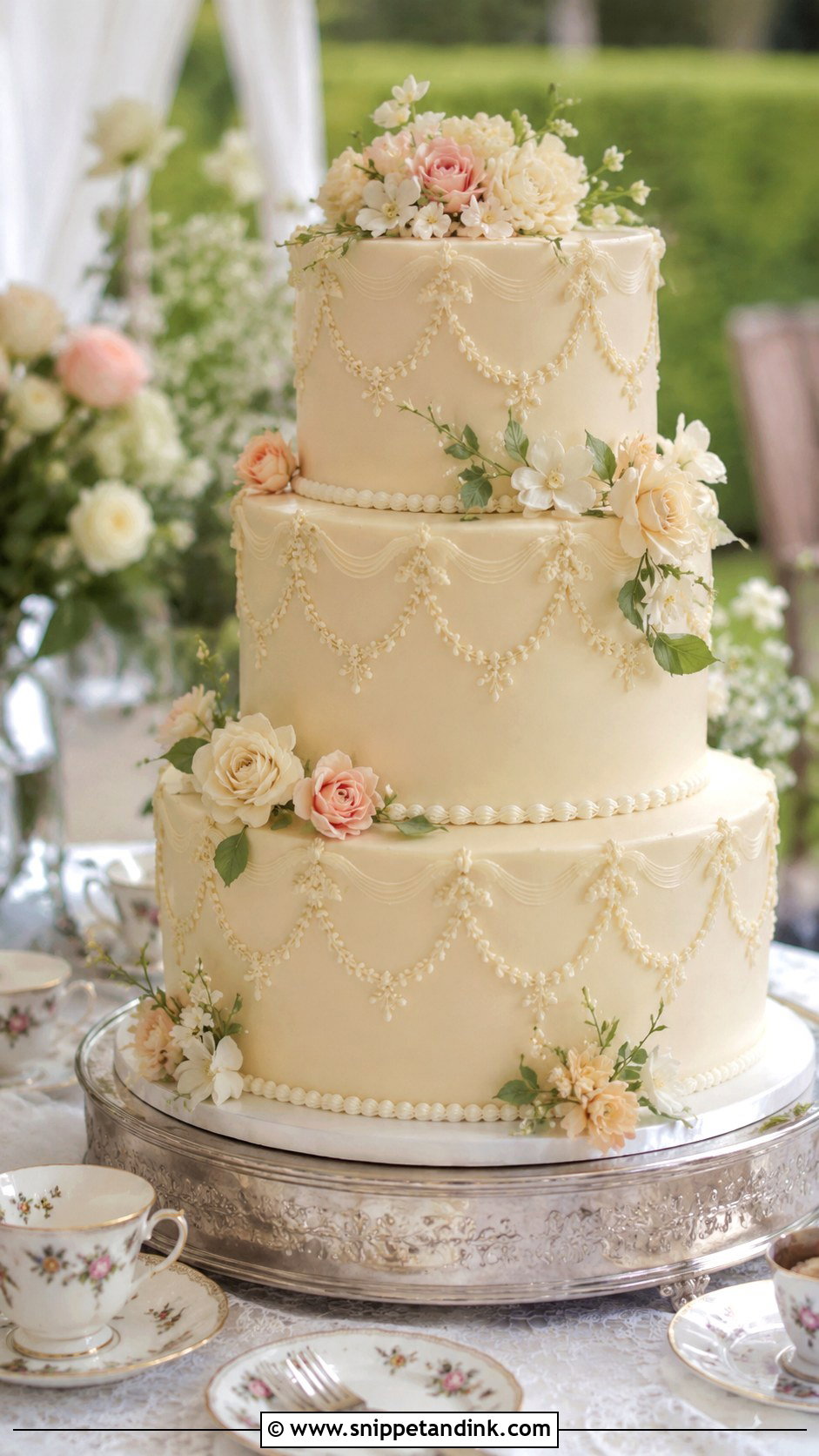
Regency is the gentler side of royal: delicate piping, pastel flowers, lace and a modest tiered shape. Ivory, cream, pale blue, blush and soft green all work. I keep decoration light, with garlands, small blossoms and tidy borders. Three tiers suit it best. Lemon, elderflower, almond or vanilla sponge fits the mood. Display it with vintage china, soft linen and garden flowers, and it will look like it belongs at a long afternoon reception.
18. Royal Blue Wedding Cake
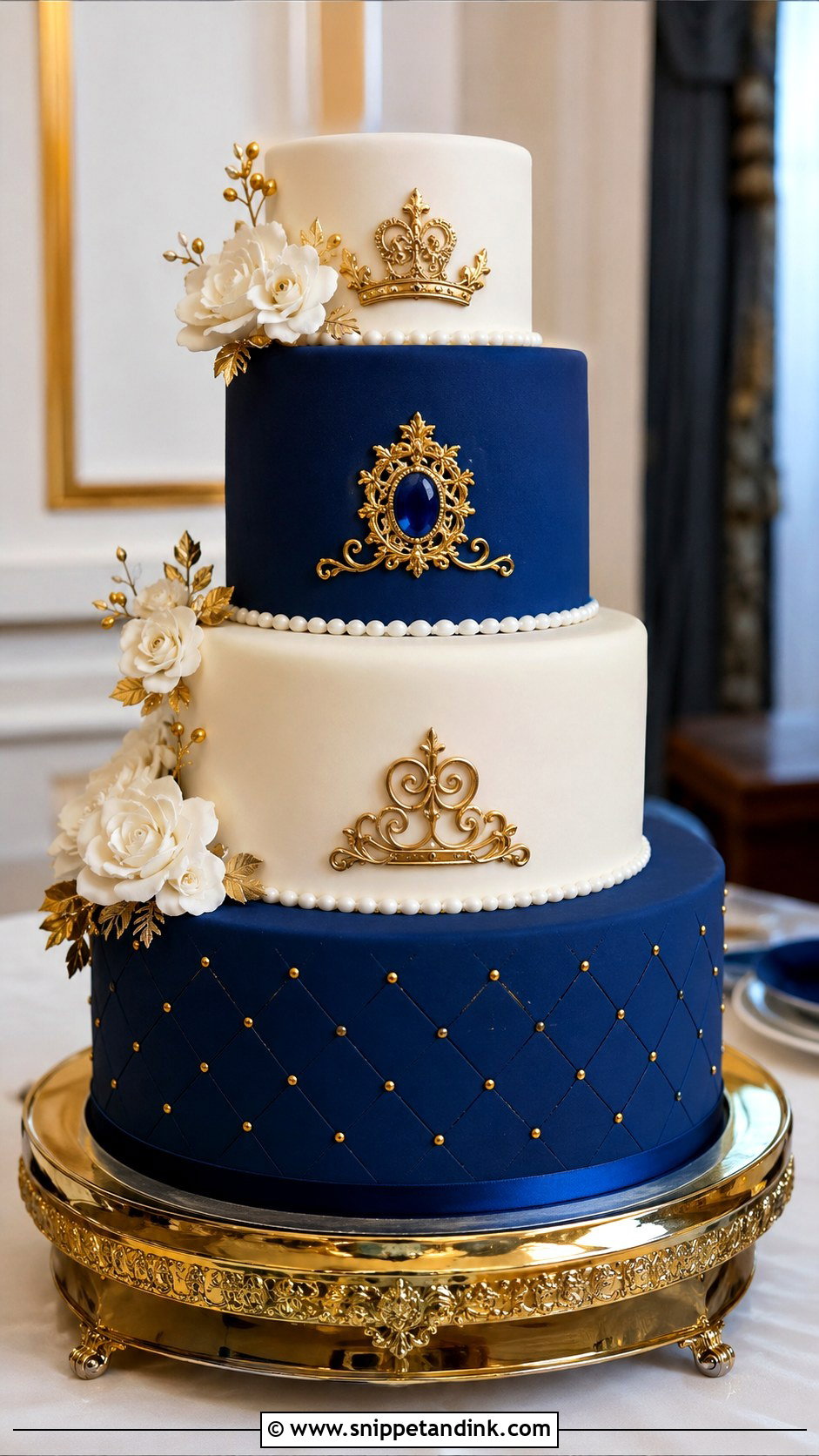
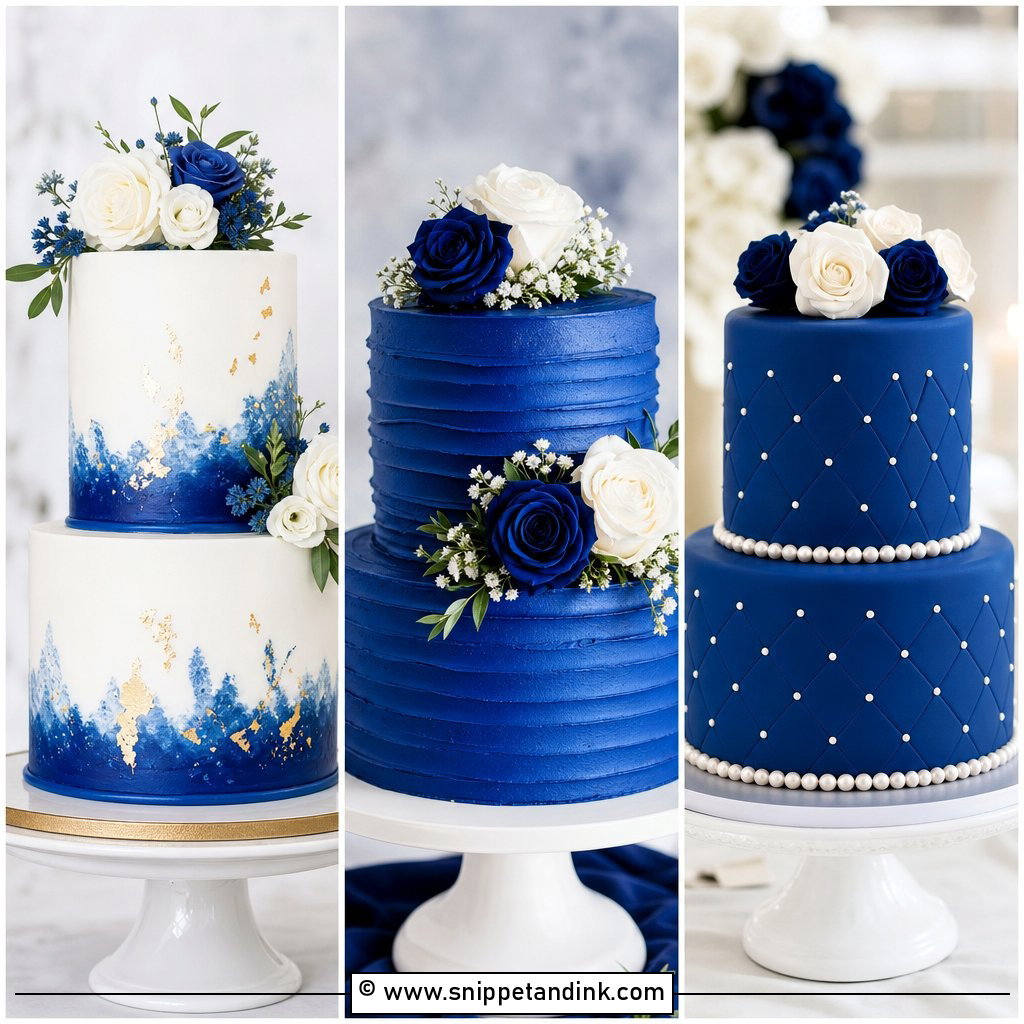
Royal blue is a difficult colour in icing. Getting a true deep blue takes a lot of gel colour, and dark icing can stain lips and teeth and taste slightly bitter. That’s why I usually suggest one blue tier between ivory tiers, or blue painted detail on a white cake, rather than a fully blue cake. Gold trim and white sugar flowers keep it regal. Three or four tiers work best. Vanilla, almond, blueberry or white chocolate inside.
19. Square Wedding Cake
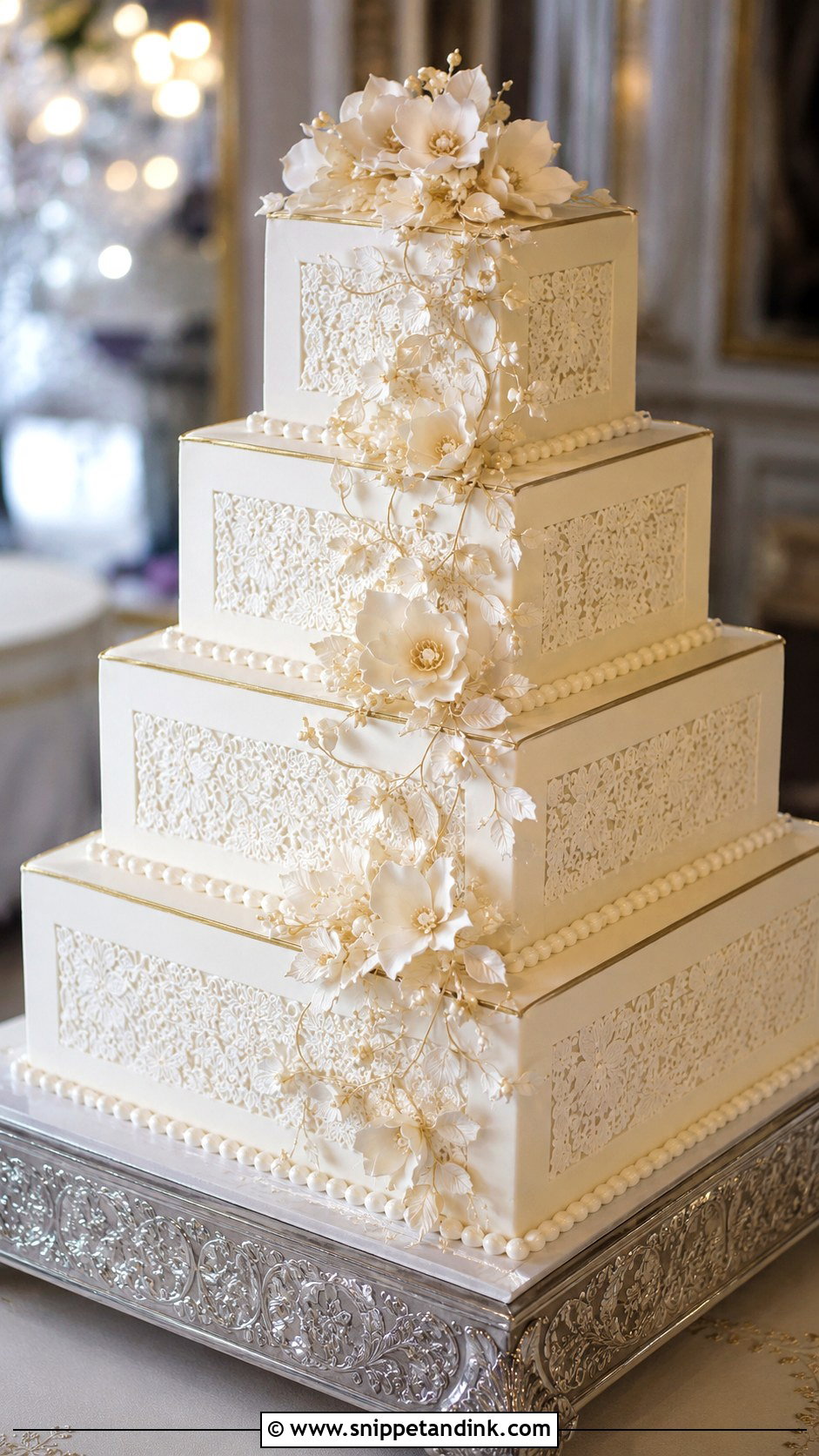
Square tiers are harder to cover than round ones. The fondant has to be eased into every corner without tearing or pleating. When it works, the sharp edges give a strong, architectural outline that suits formal venues. Piped lace, sugar flower vines, pearl borders or gold edging soften the structure. Decoration should be symmetrical, since a square cake is seen from more angles than you think. Almond, vanilla bean, lemon or fruit cake all suit it, and square tiers give neat, even slices.

20. Lemon Elderflower Wedding Cake
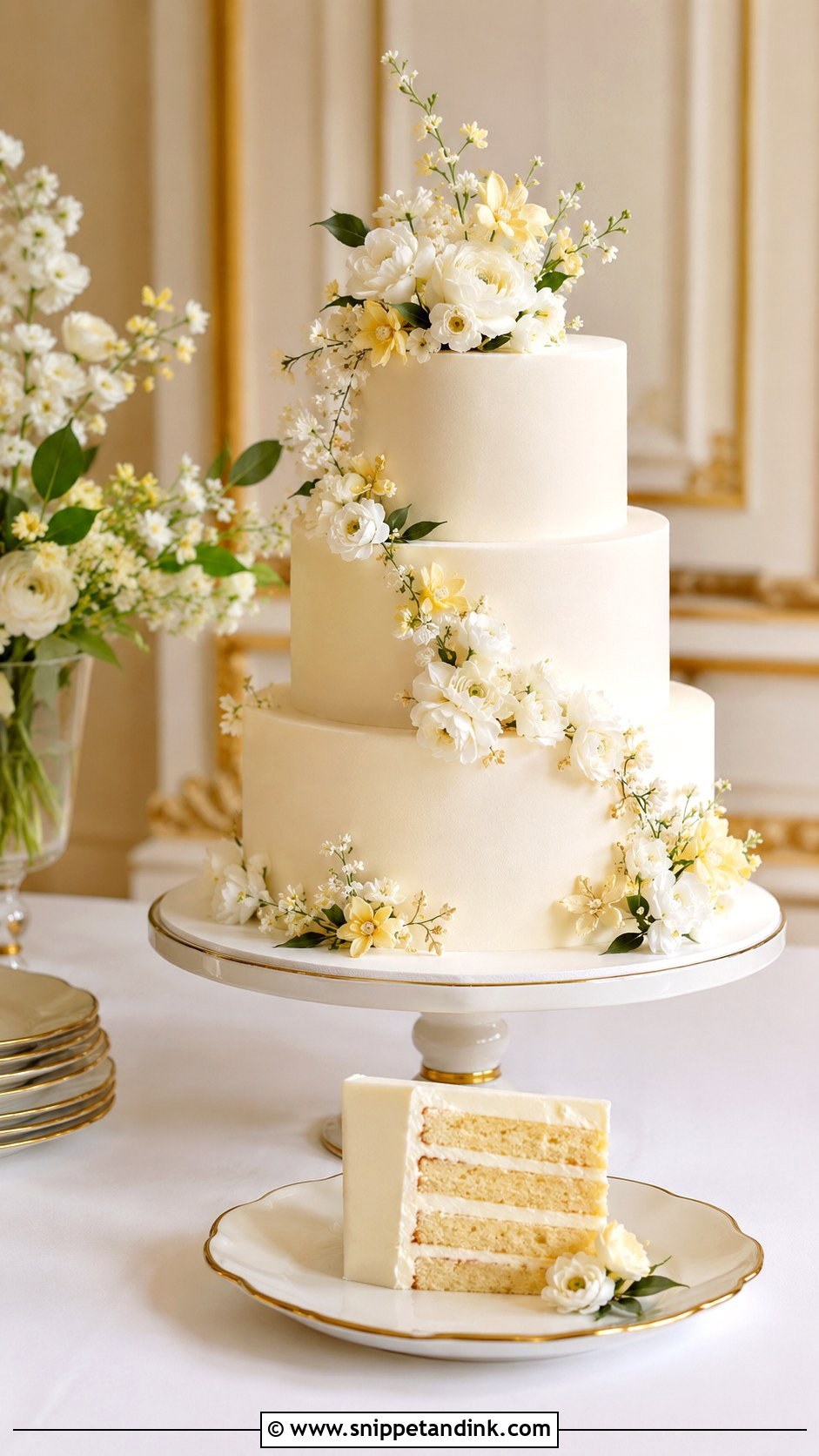
Lemon elderflower is the flavour that made a light, modern cake acceptable at a very traditional kind of wedding. A lemon sponge soaked in elderflower syrup, with lemon curd and a silky buttercream, gives a fresh slice that suits spring and summer. Buttercream needs a cool room, so for a hot day I’d plan a shaded spot for the cake. Outside, keep it airy: smooth buttercream in soft ivory, flowers in white, cream and pale yellow. Tiers on separate stands look current.
Serving a Tall Cake Without Wasting Half of It
A grand cake often looks bigger than the guest list needs, and that’s fine as long as it’s planned. Here is how I make the numbers work.
Portion sizes are not the same for every cake
Fruit cake is rich, so it is traditionally served in small fingers, and one tier goes a long way. Sponge is served in larger portions. Tell me which tiers are which before I quote a size, because it changes the servings a lot.
Dummy tiers for height
If you want five tiers but only need to feed eighty people, one or two tiers can be polystyrene dummies, iced and decorated exactly like the real ones. Nobody can tell from the table. Some couples also have a plain kitchen cake cut behind the scenes so the display cake stays whole for longer.
Keeping a tier
A well-fed fruit cake tier wrapped tightly will keep for a long time, which is where the old custom of saving it for a first anniversary or christening comes from. Sponge doesn’t keep like that. If you want to save a sponge tier, freeze it well wrapped the day after the wedding.
Presence Comes From Structure, Not Size
Every cake in this list looks royal for a reason you can name: tall tiers, careful piping, well-placed flowers or a flawless finish. Royal icing, Lambeth, pearls, lace and sugar flowers belong to the classic side, while lemon elderflower, blush tones and fresh flowers bring it up to date. Start with the room and the number of guests, then decide how traditional the inside should be. The outside follows from there, and your baker can help you keep it to one idea.
You'll Like These Ideas:













Leave a Reply