
Two tiers is the size I bake most often for smaller weddings, and it is more versatile than people assume. It has enough height to read as a wedding cake in photos, it’s easy to cut, and it doesn’t swamp a modest cake table. The design has to work harder, though, because there is less surface and every detail is closer to the camera. Below are twenty ways to finish a two-tier cake, with what I’d watch for on each one, plus notes on portions and proportions so the cake you order actually feeds the room.
Sizing Two Tiers to Your Head Count
This is the first question I ask, because it decides the tier sizes before we talk about flowers. Bakers usually count wedding portions, which are narrow slices roughly an inch wide and two inches deep, cut from a standard four-inch-tall tier. Party slices are about twice that, so a cake sized for wedding portions will feel small if your caterer cuts generous wedges.
As a rough guide for round tiers cut as wedding portions:
- 6 inch on 8 inch: about 35 guests
- 8 inch on 10 inch: about 60 guests
- 10 inch on 12 inch: about 90 guests
- Square tiers of the same width give more portions; tall double-height tiers give more again
If your guest list is bigger, I’d rather add an undecorated kitchen cake in the same flavour than stretch two tiers into a squat shape. Guests can’t tell the difference on the plate, and it usually costs less than an extra decorated tier.
1. Two Step Wedding Cake With Fresh Flowers
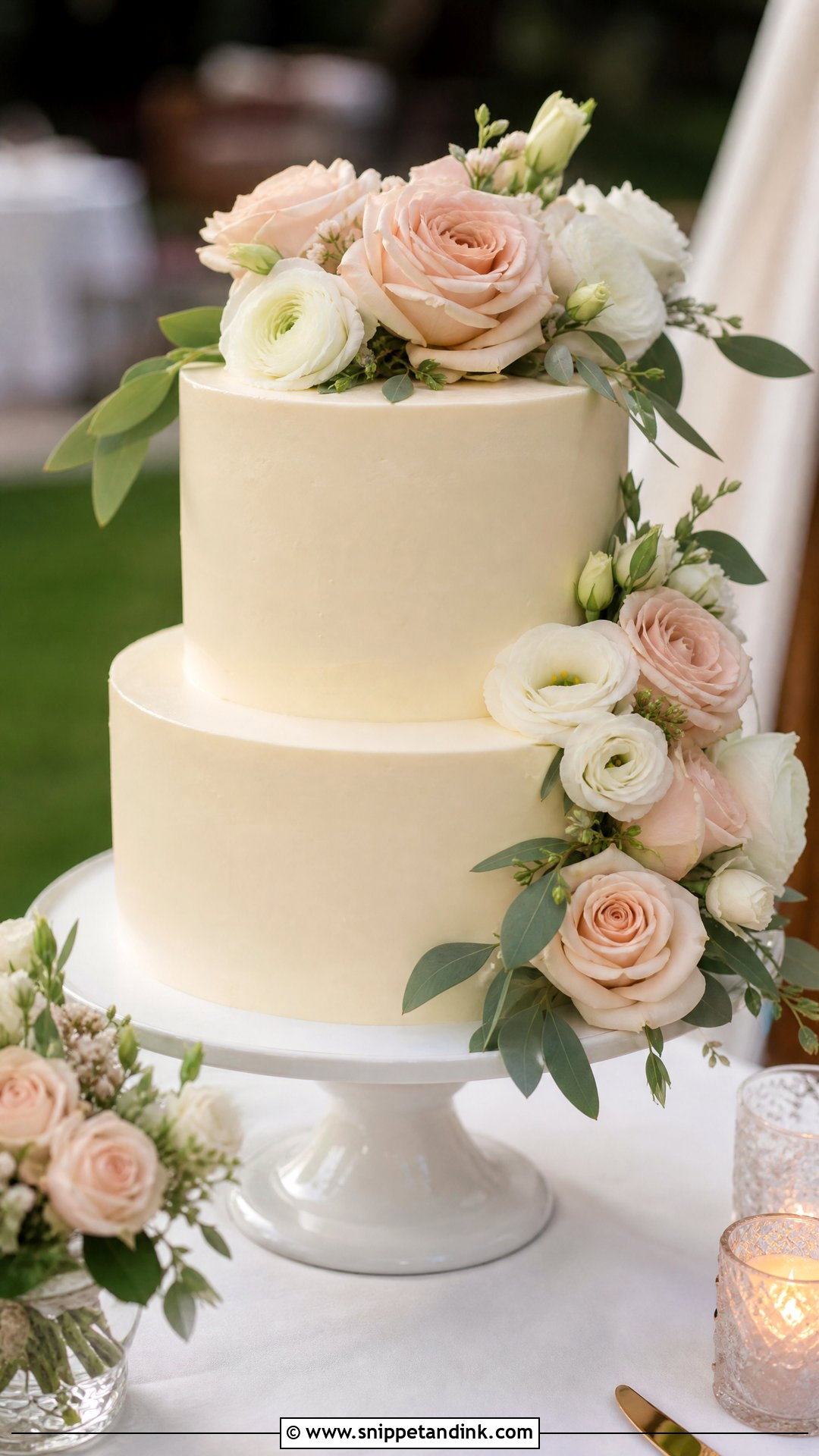
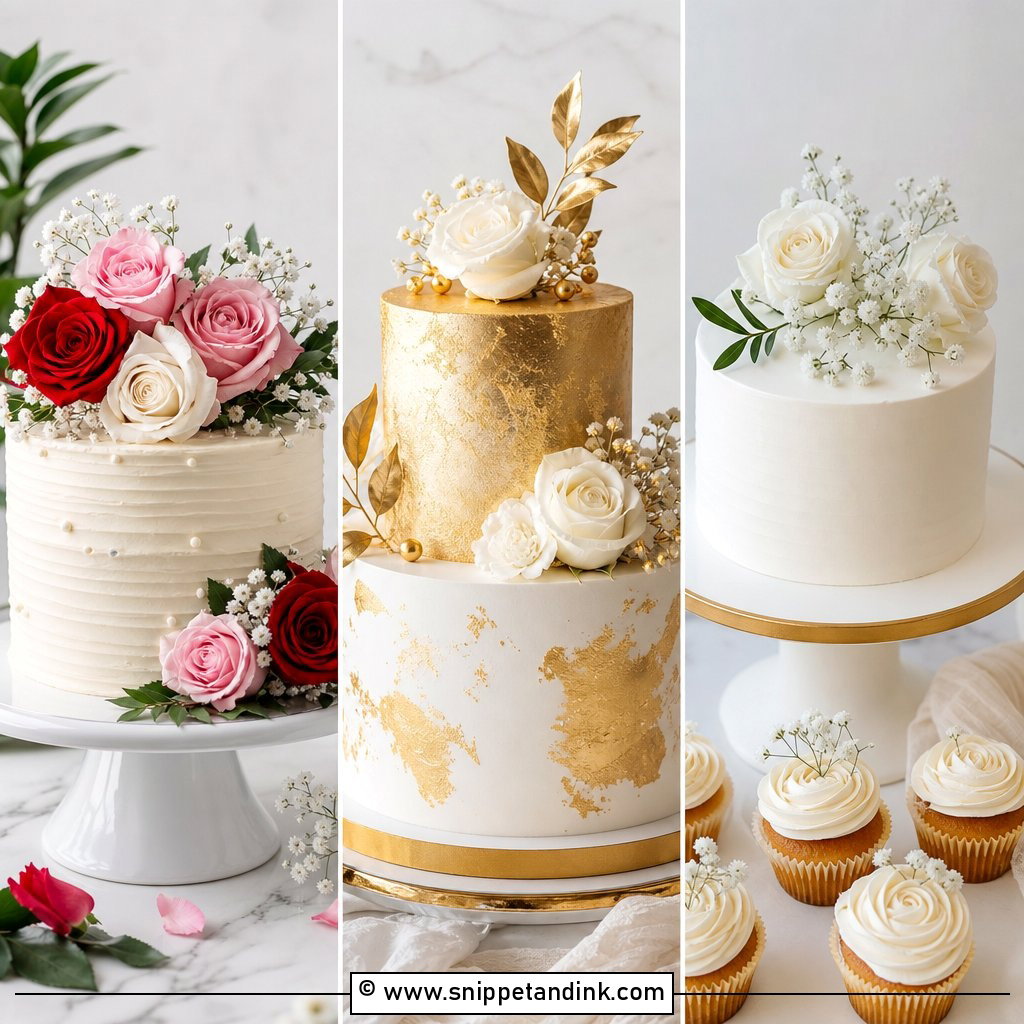
Fresh flowers soften a two-tier cake faster than any sugar work. Smooth ivory buttercream gives the blooms a clean backdrop, and roses, ranunculus, lisianthus or small greenery sprays can sit between the tiers, sweep down one side, or ring the base. Peonies are glorious but open fast in a warm room, so I place them late. Every stem I use is wrapped and set into a food-safe pick, and I only take flowers the florist has confirmed are free of systemic pesticides.
2. Two Step Wedding Cake With Pearl Details
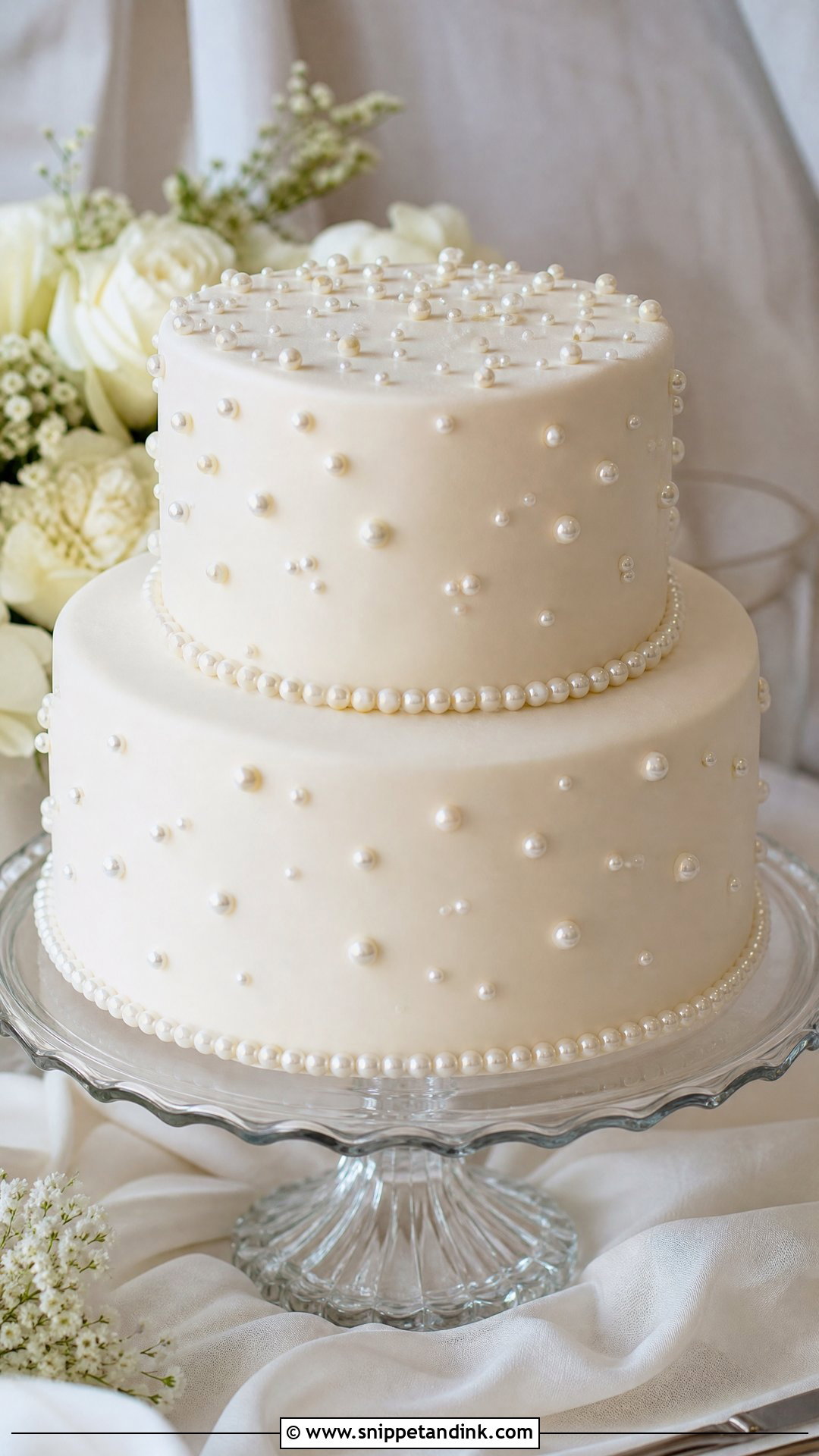
Edible pearls along the base of each tier are the oldest trick in the book and still one of the prettiest. I place them while the buttercream is soft enough to grip; on fondant I use a dot of piping gel. Scattered or in fine vertical lines, they read classic rather than dated as long as the palette stays white, ivory, champagne or blush. If the bride is wearing a pearl veil, this is the cake I’d match to it. Leave the rest plain.
3. Two Step Wedding Cake With Gold Leaf
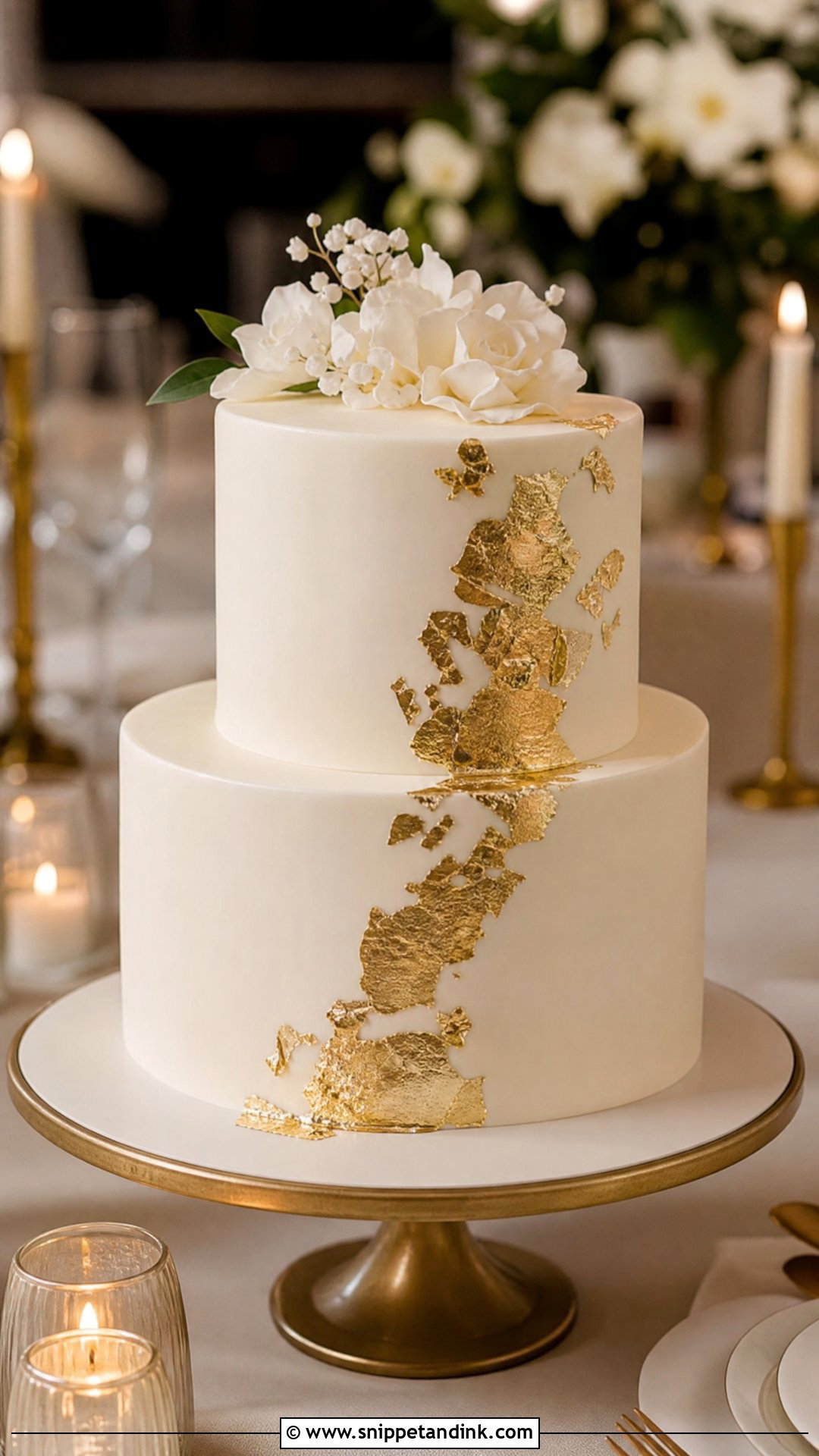
Gold leaf looks luxurious when it’s torn and patchy, cheap when it’s everywhere. On a two-tier cake I’ll usually put broken pieces on one side of the bottom tier and leave the top clean, which gives an asymmetric line candles pick up beautifully at an evening reception. The leaf is so thin it moves with a breath, so it goes on with a dry soft brush onto chilled frosting. Vanilla, almond or a champagne-flavoured sponge suits the look.
4. Two Step Wedding Cake With Buttercream Texture
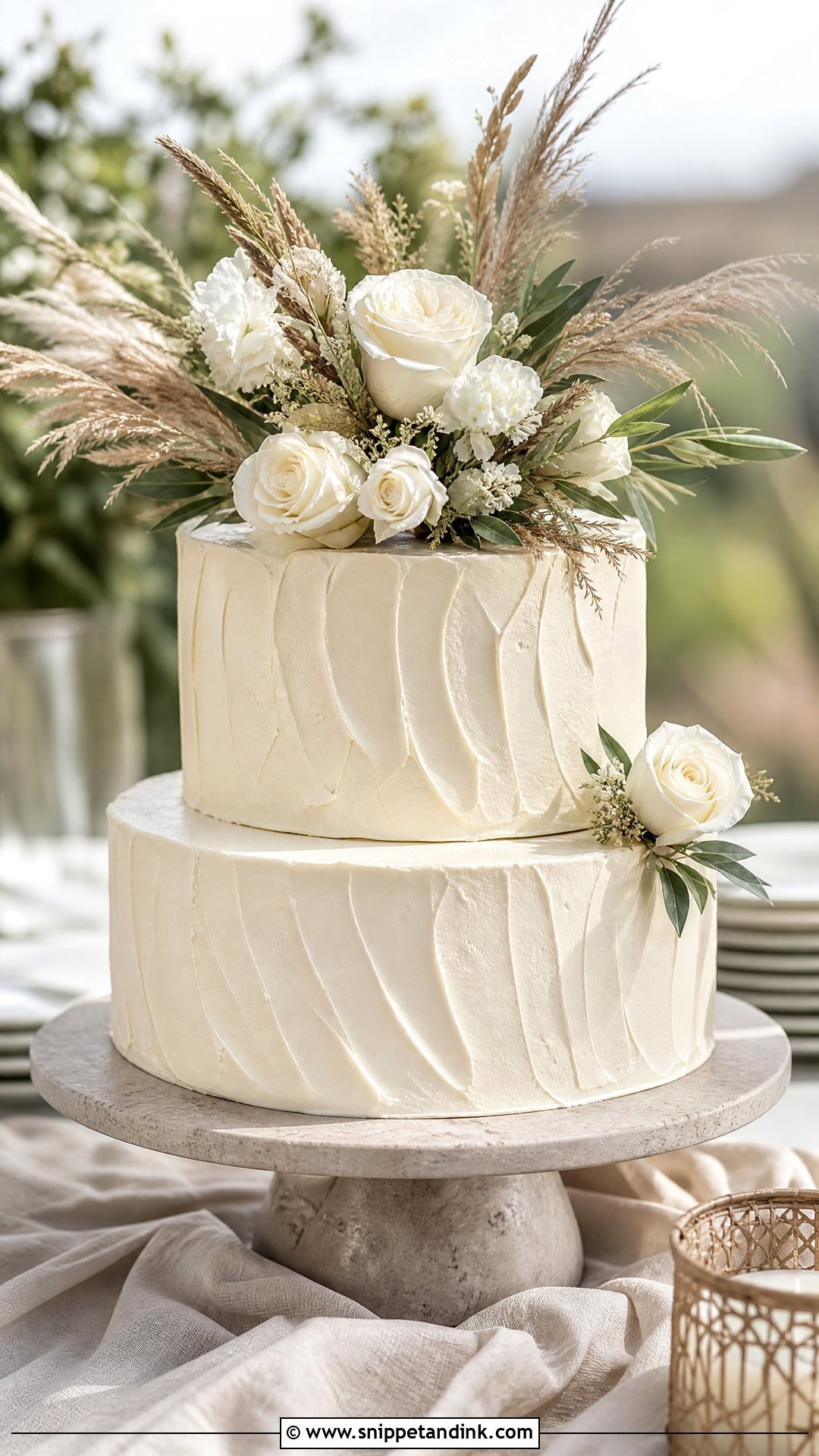
Textured buttercream is forgiving, which is why I recommend it for outdoor and rustic venues. Combed lines, palette knife sweeps or soft waves hide the small marks a cake picks up in transport, where a perfectly smooth finish would show every fingerprint. The texture throws little shadows in photos, so it needs almost nothing else. A few fresh flowers, dried grasses or some greenery will do. One caution: in a hot tent, deep ridges are the first thing to slump.
5. Two Step Wedding Cake With Vintage Piping
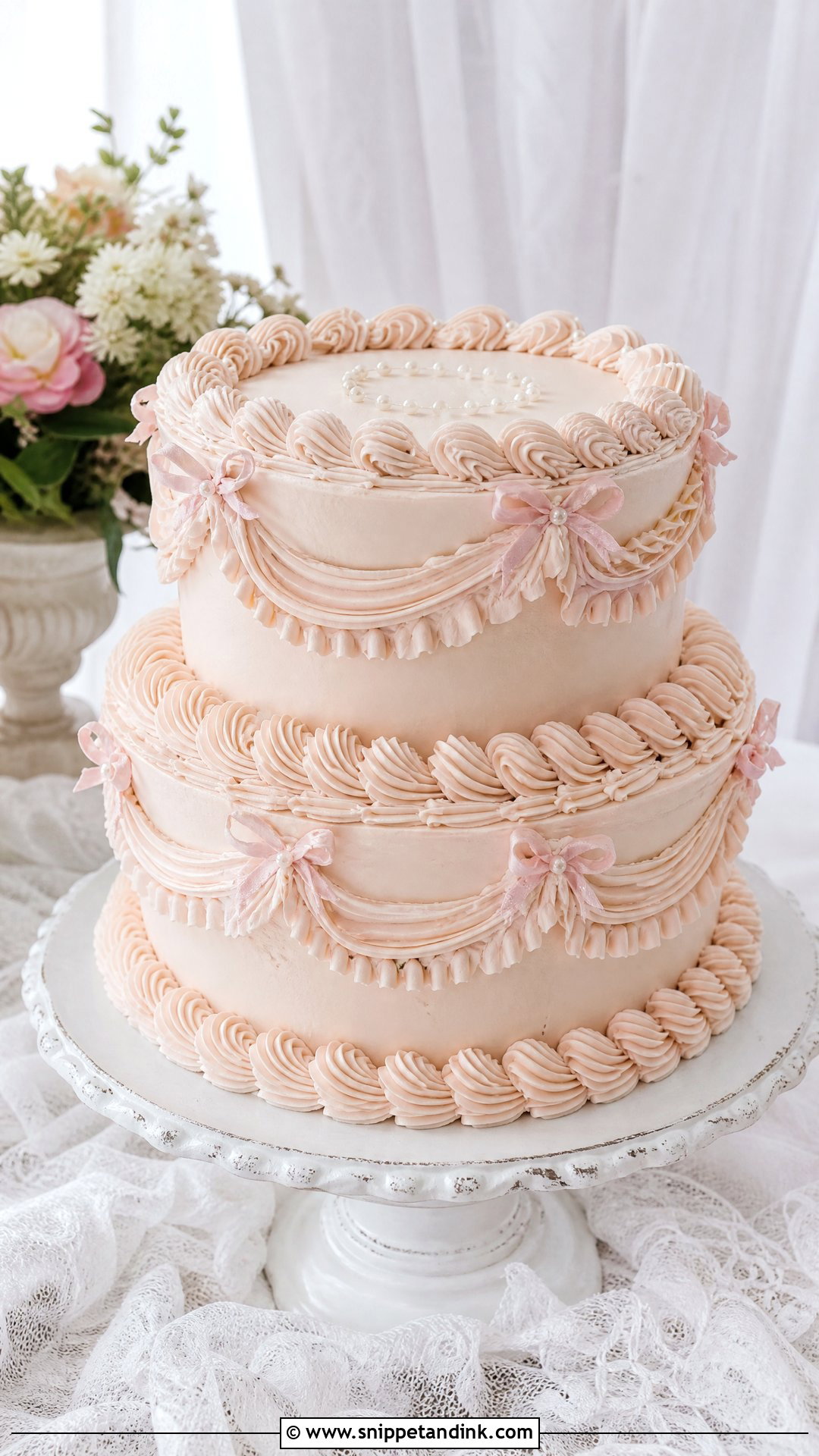
Shell borders, swags, bows and delicate piped details have come back in a big way, and two tiers is a good size for them because the piping stays in proportion instead of disappearing on a tall tower. Vintage piping needs a stiff buttercream that holds ridges, and it takes hours by hand, so expect it to cost more than a plain finish. White, blush, butter yellow or pale blue all work. Keep colour restrained or it tips into a birthday cake.
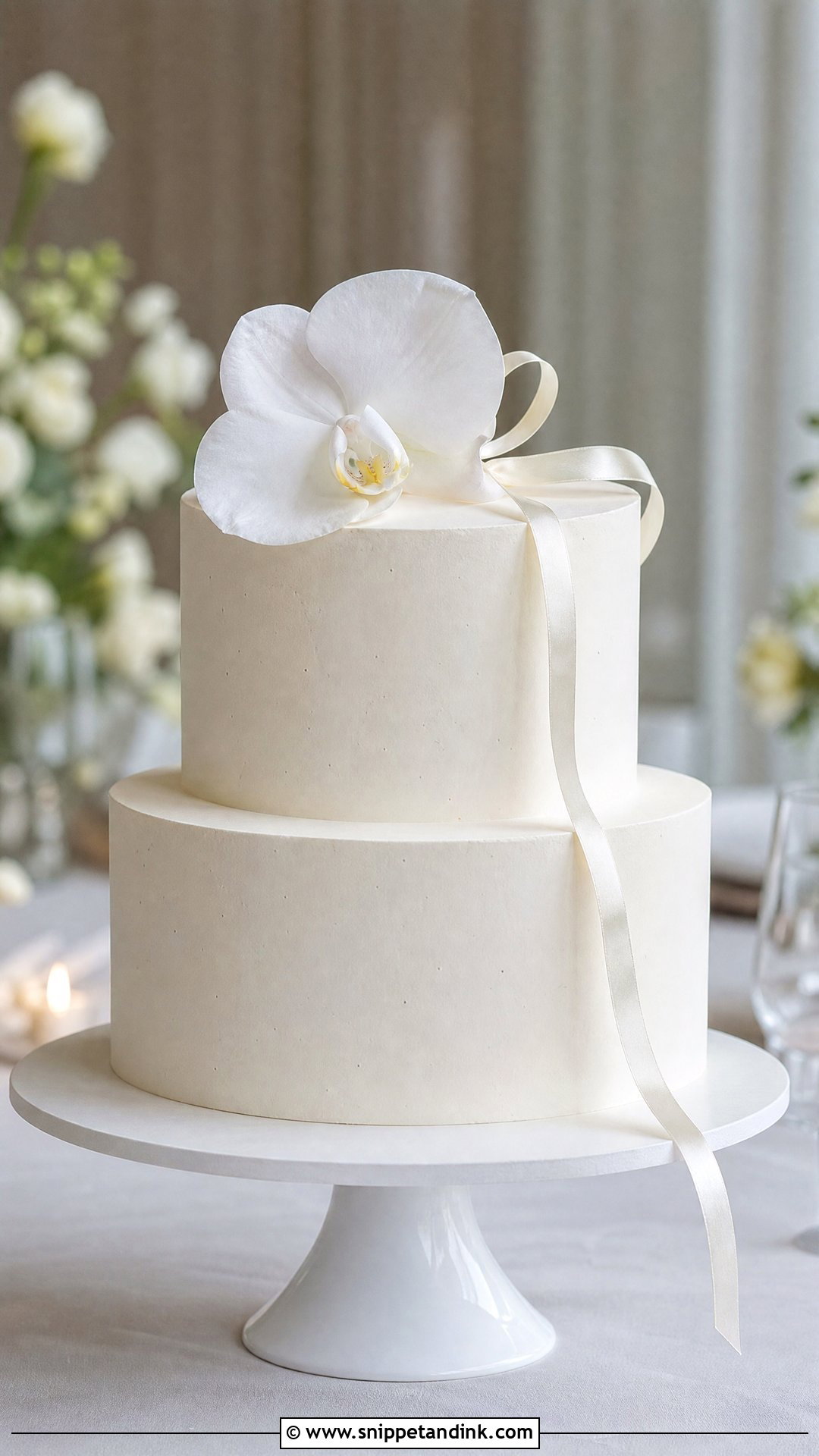
6. Two Step Wedding Cake With Minimal White Frosting
Simple cakes show everything. With no flowers to hide behind, a plain white two-tier lives or dies on sharp top edges, level tiers and a straight stack, which is where an experienced baker earns their fee. I’d add one small accent at most: a single bloom, a thin ribbon, a line of pearl dots. It suits a courthouse wedding or a dinner reception, and almost any flavour sits under it, from vanilla bean to lemon or coconut.
7. Two Step Wedding Cake With Cascading Roses
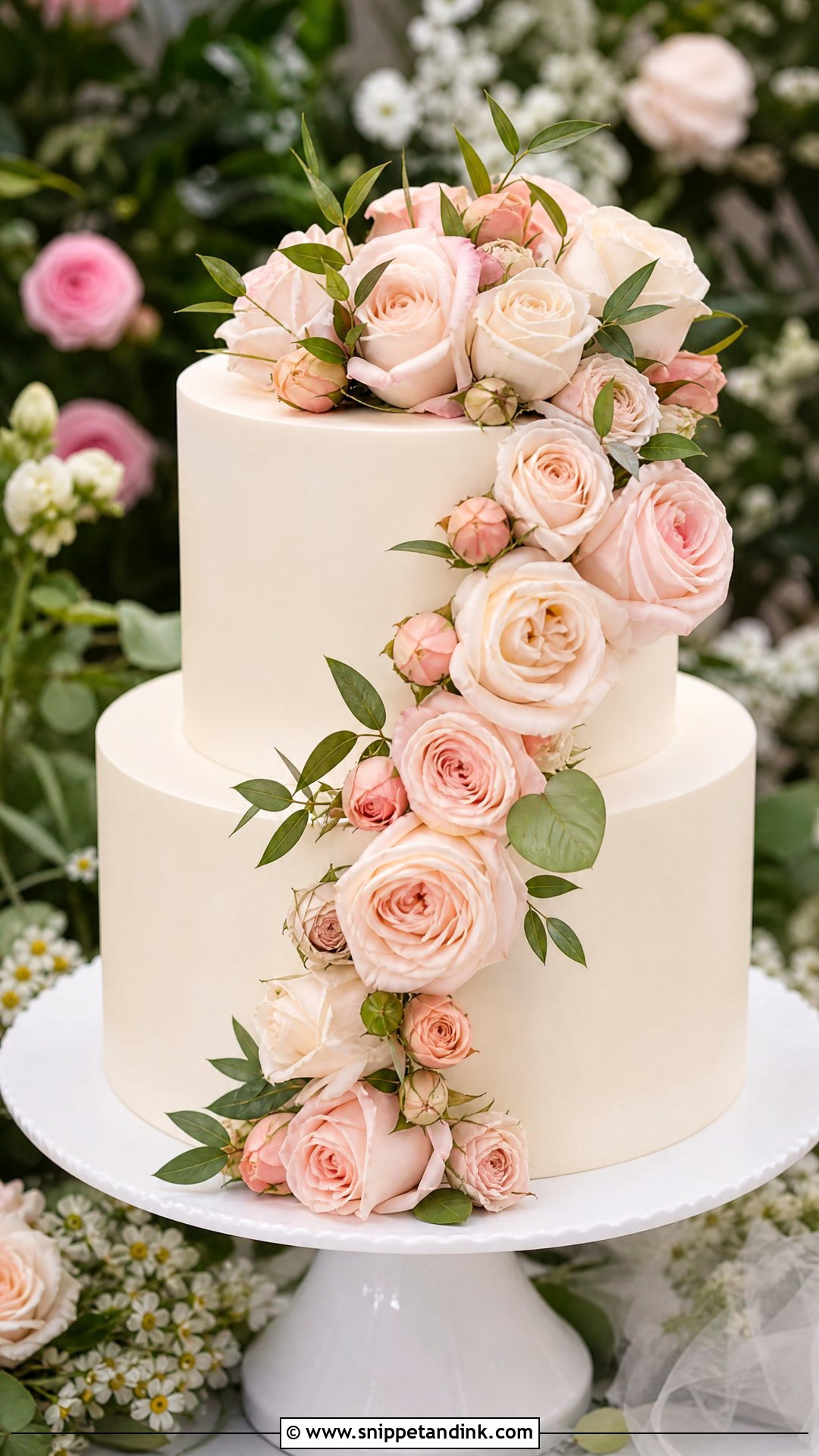
A diagonal cascade of roses from the top tier down to the base draws the eye across both tiers and makes the cake feel larger. I mix open heads with tighter buds and a little greenery so the line has depth rather than looking like a row of pom-poms. White, blush, peach or mauve can follow your palette. Keep the frosting smooth underneath. The common mistake is too many roses; on a two-tier cake, a cascade covering more than about a third of the surface hides the shape.
8. Two Step Wedding Cake With Ribbon Accent
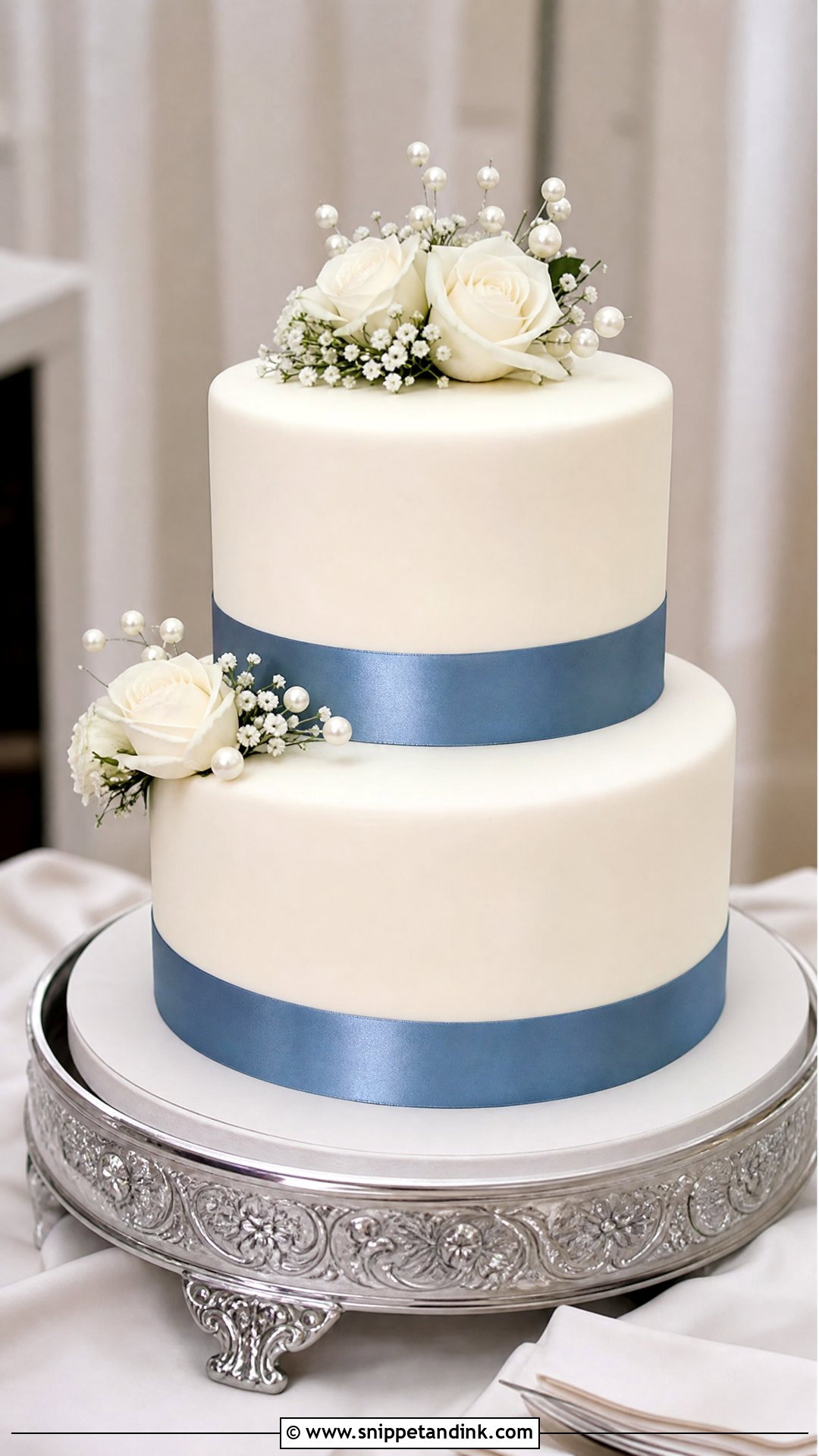
Ribbon is the easiest way to match a cake to bridesmaid dresses or linens. Ivory, champagne, sage, dusty blue or black for contrast all work around the base of each tier. Fabric ribbon absorbs grease from buttercream and goes blotchy within an hour, so I back it with a strip of clear tape or acetate, or wrap it on a chilled fondant cake. Satin shows grease stains faster than grosgrain.
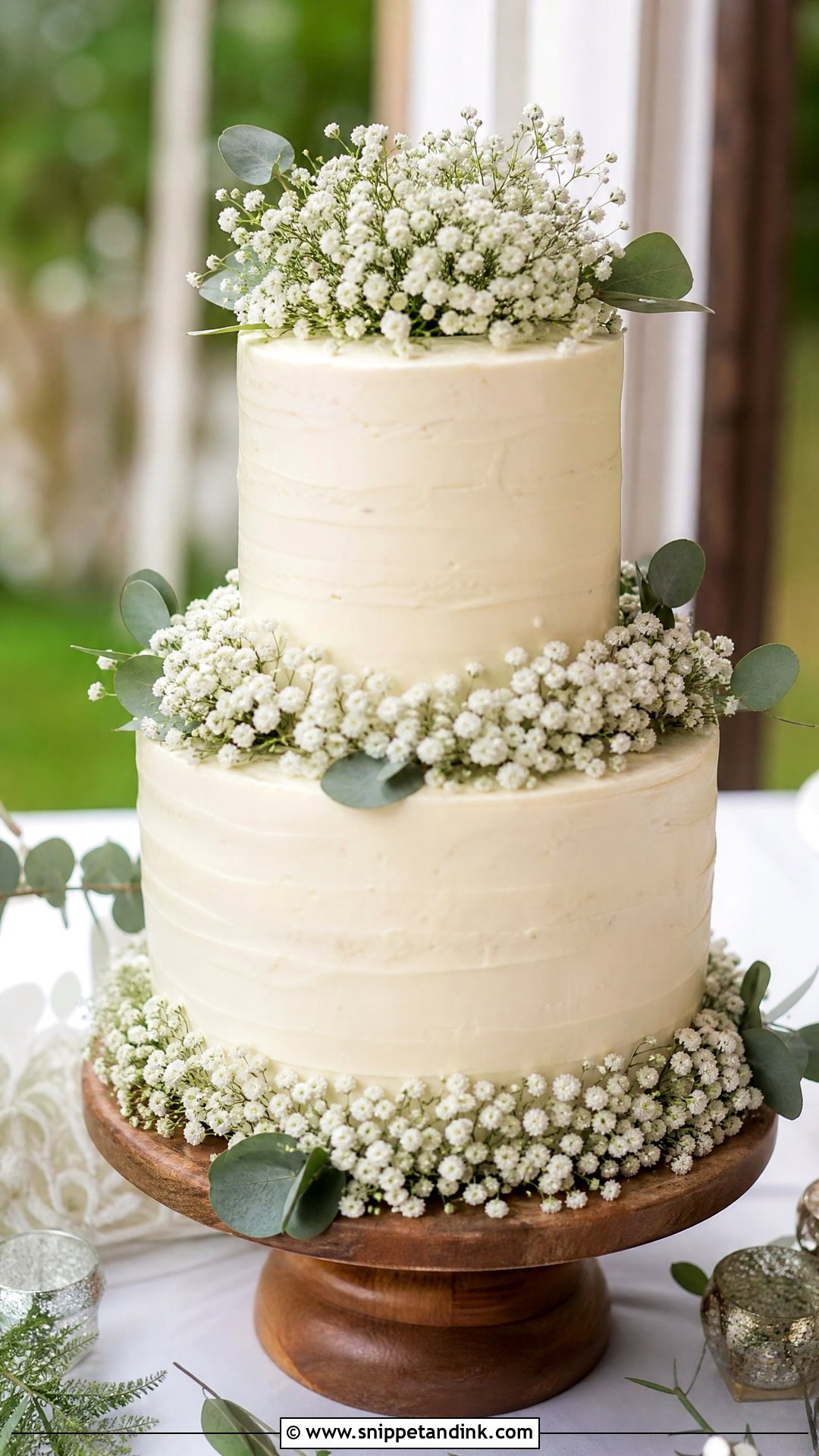
9. Two Step Wedding Cake With Baby’s Breath
Baby’s breath gives an airy cloud of white without adding colour, which suits minimalist and rustic weddings. It is also mildly toxic, so it must never be pushed straight into the cake. I keep it in wrapped bundles, set on a small barrier on top, tucked against a cake board between tiers, or arranged around the base on the stand. Ask the florist to send it already conditioned so it doesn’t wilt into grey.
10. Two Step Wedding Cake With Square Tiers
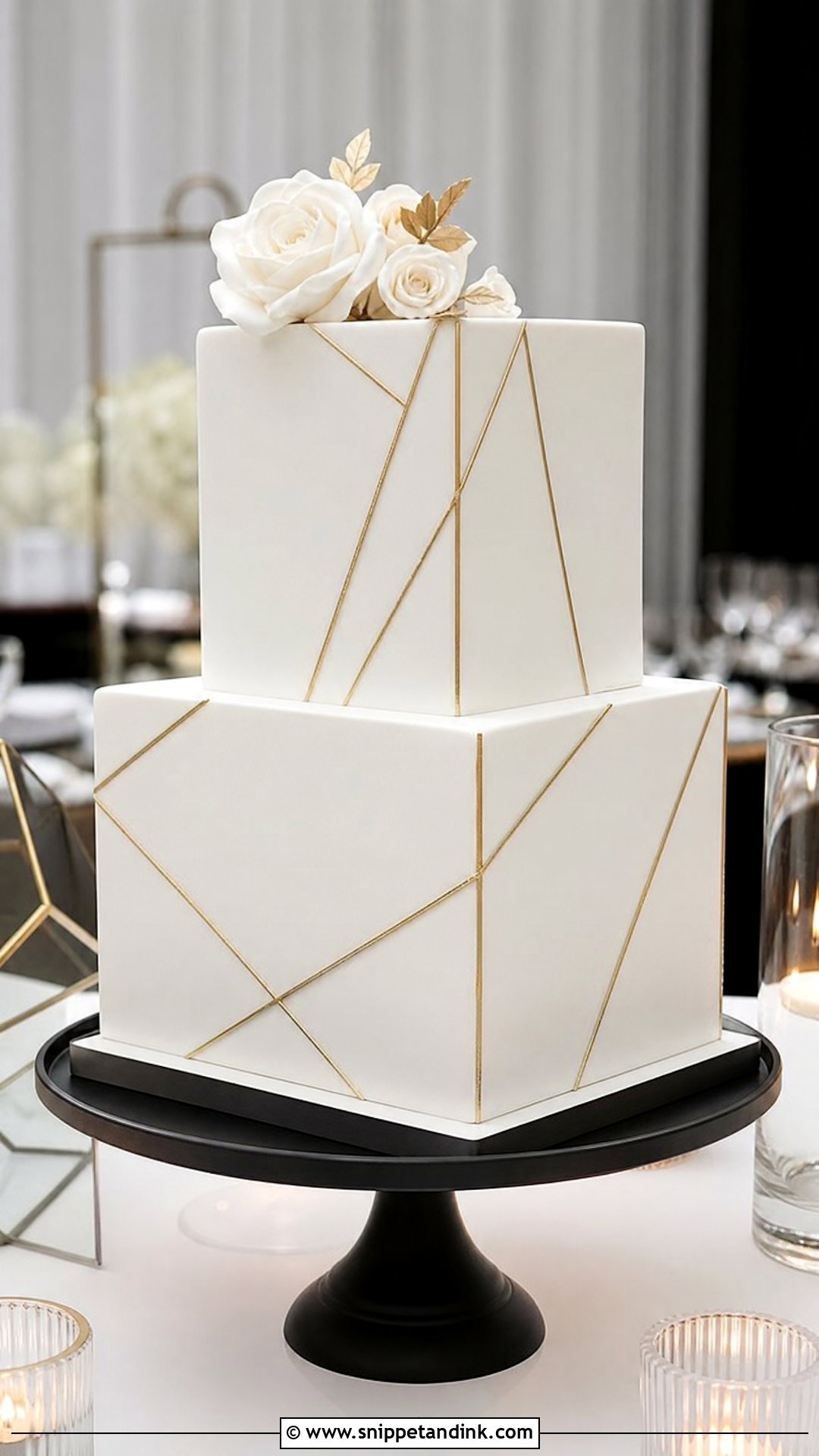
Square tiers give a sharp, architectural shape that a round cake can’t. They are also harder to finish: getting four crisp corners in buttercream takes patience, which is why many bakers prefer fondant here. I like them for city weddings and black-and-white receptions, either all white or with thin metallic lines. A bonus most couples don’t know: a square tier cuts into more portions than a round of the same width.
11. Two Step Wedding Cake With Floral Watercolor
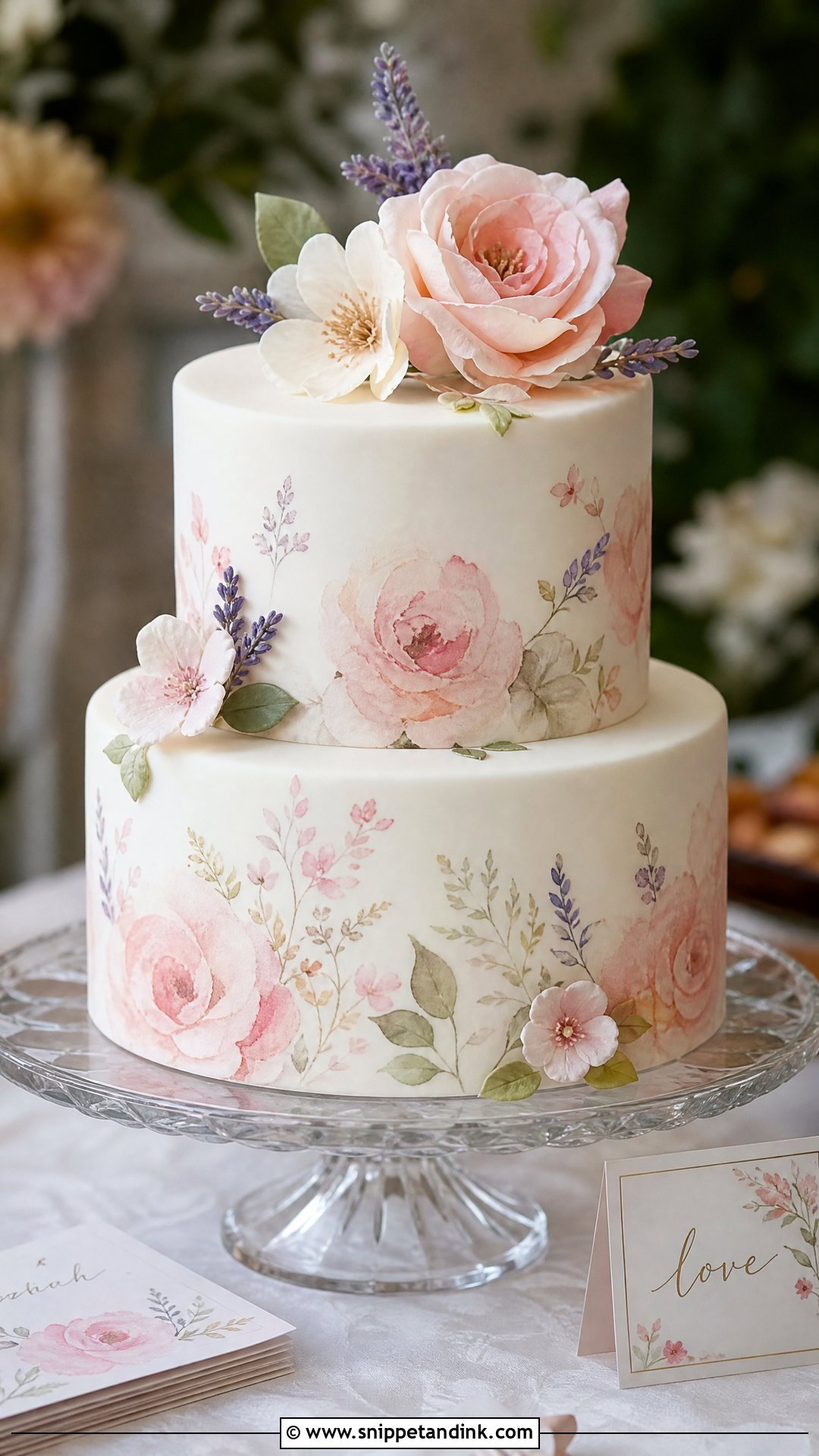
Watercolour painting on a cake is done with diluted gel colour brushed in layers over fondant or very cold, crusted buttercream. Blush, lavender, peach, blue and sage can pick up the flowers or the invitation suite. I keep the strokes loose; tightly detailed petals start to look like a printed decal. A couple of sugar flowers or fresh blooms finish it without crowding the painting.
12. Two Step Wedding Cake With Sage Green
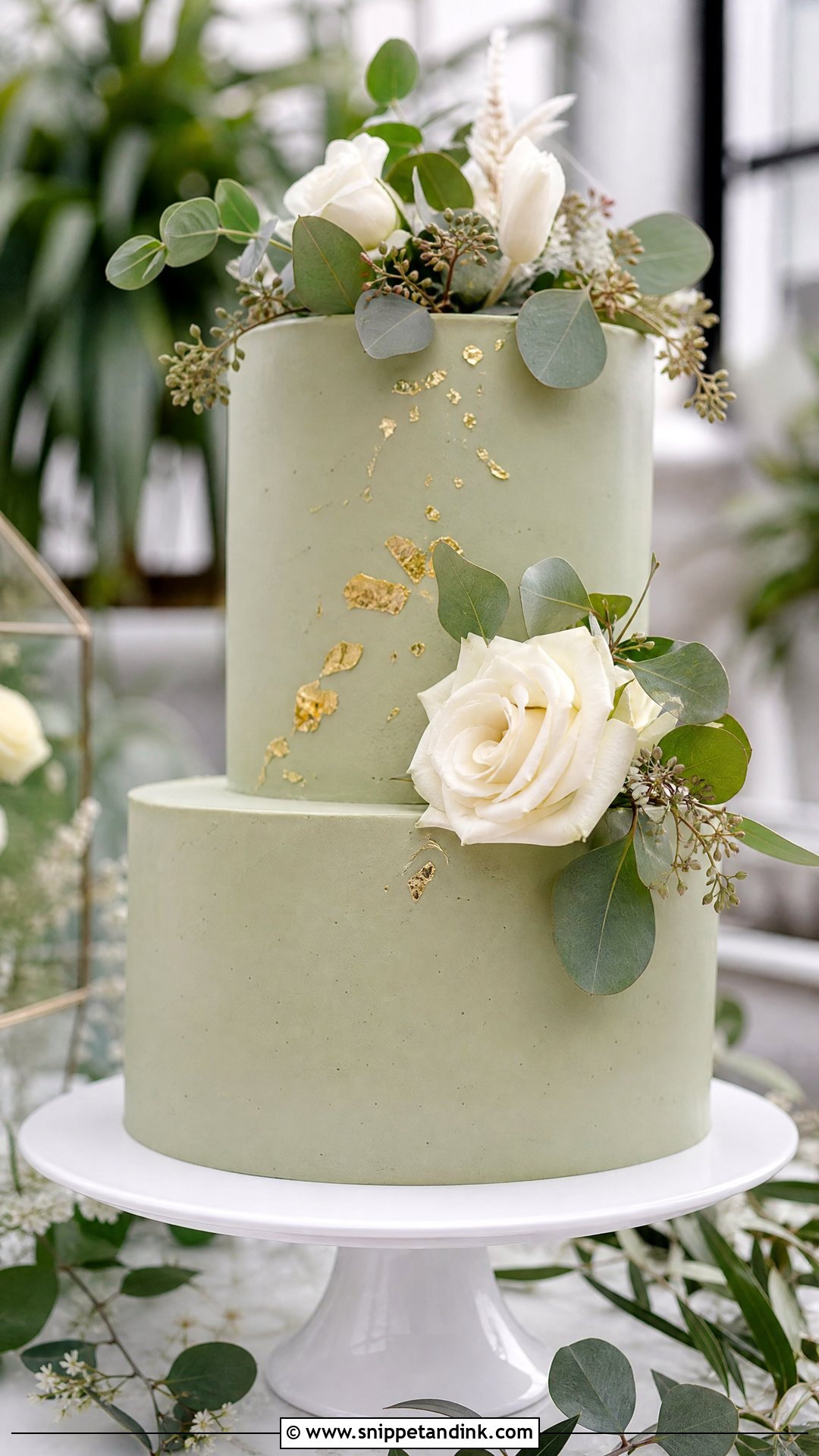
Getting sage green right in buttercream takes a careful hand. Butter is yellow, so a green tint can lean olive or khaki unless the base is whitened first, and I always test a swatch under the venue’s kind of light. On a two-tier cake it sits well with ivory roses, dried grasses or a little gold. Pistachio inside is a natural match. It suits greenhouse venues and outdoor weddings where the cake needs to look like it belongs to the setting.
13. Two Step Wedding Cake With Black And White
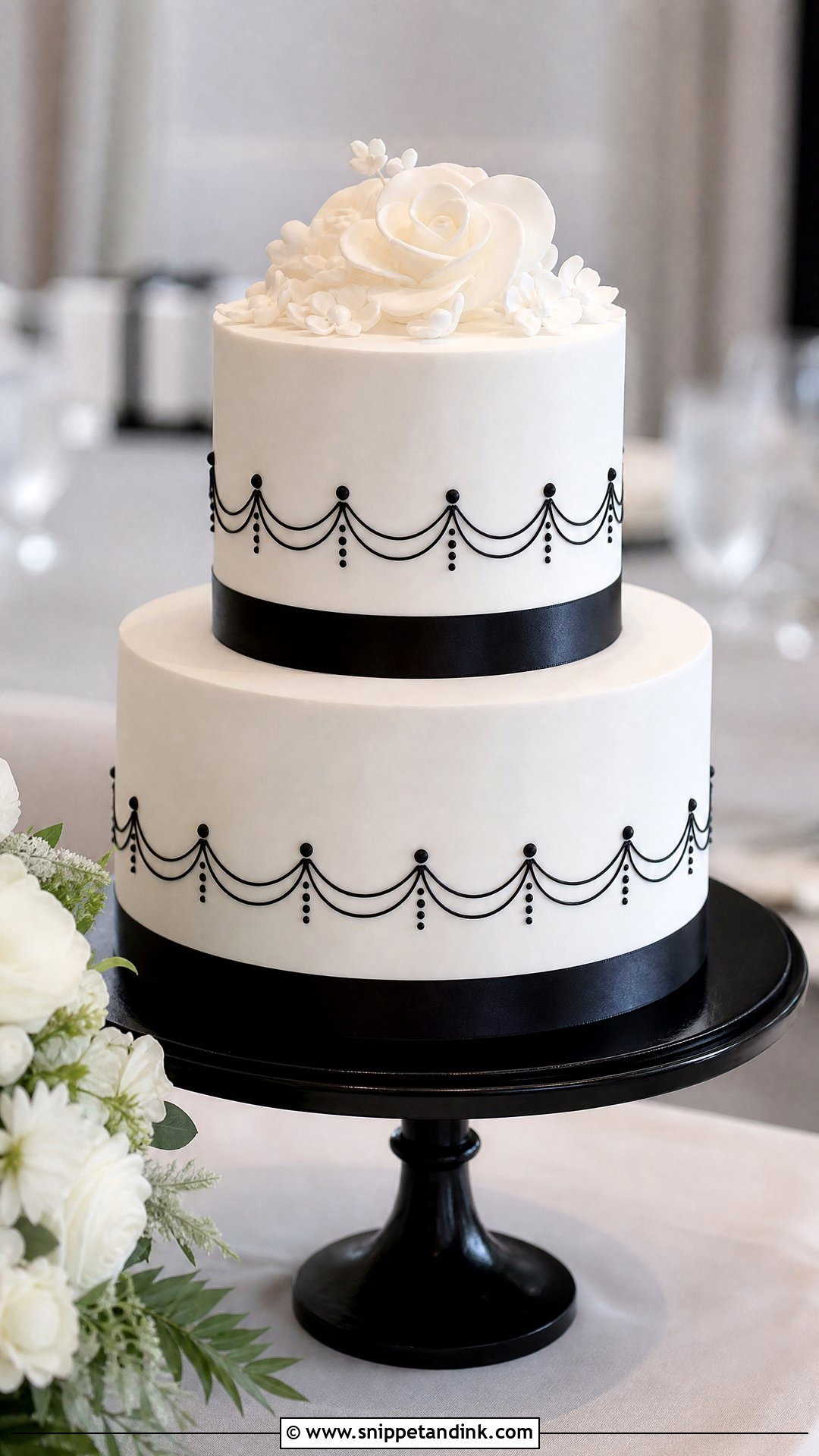
A black and white cake depends on proportion. I keep white as the base and limit black to one element: a ribbon, a band of piping, painted lines or a few sugar flowers. Black colouring needs a lot of gel to get a true black, and heavily tinted frosting can stain teeth and fingers, so I prefer black fondant details or ribbon. It suits formal and city receptions. Keep the tiers sharp and the layout sparse.
14. Two Step Wedding Cake With Lace Piping
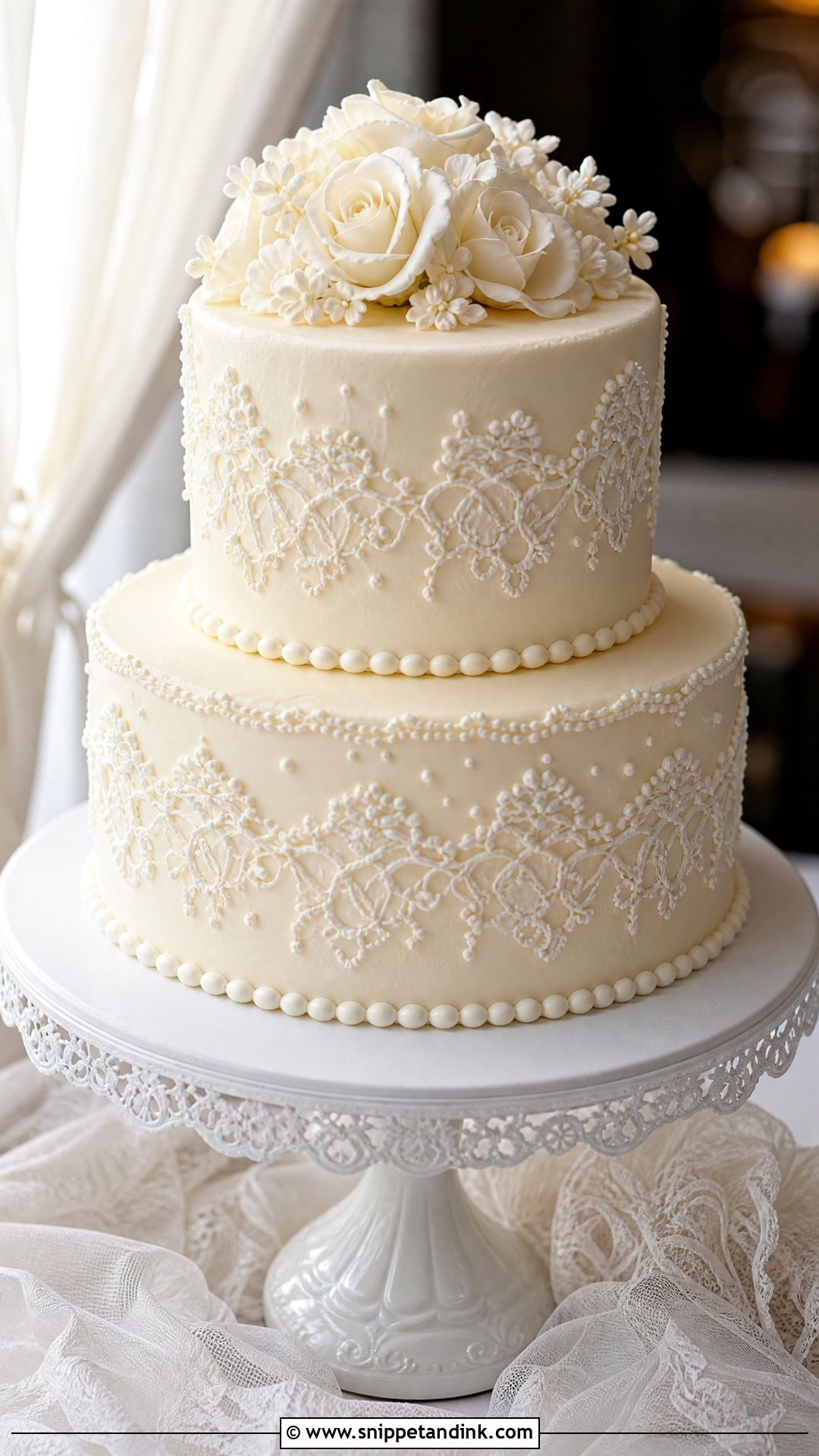
Lace piping can copy the actual lace from the gown, which is my favourite reason to use it. Bring a photo or a fabric swatch to the consultation and I’ll pattern the piping from it. White on white is classic; ivory on champagne is warmer. Hand-piped lace is slow work, so it’s usually priced higher, and it deserves space. Keep flowers to a small top arrangement or a few sugar blossoms.
15. Two Step Wedding Cake With Fruit Topping
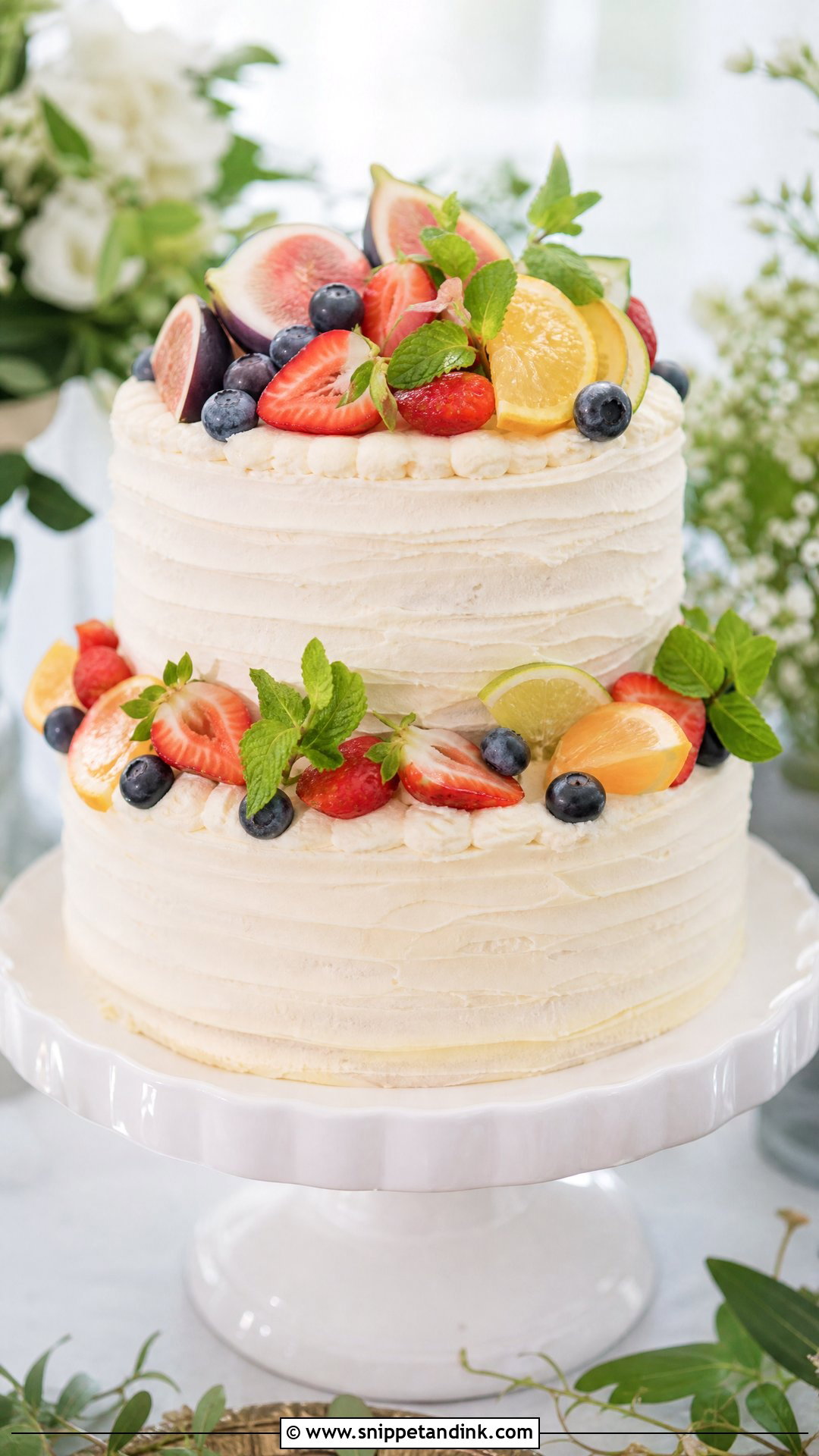
Fruit has to match the flavour, or the cake looks good and tastes confused. Berries with lemon sponge, figs with vanilla, pears with almond. It sits best on whipped frosting, Swiss meringue buttercream or a semi-smooth finish. I add fruit at the venue and keep it dry, because juice bleeds and soft fruit slides in warmth. It suits brunch receptions, garden parties and relaxed outdoor dinners in summer and early autumn.
16. Two Step Wedding Cake With Marble Fondant
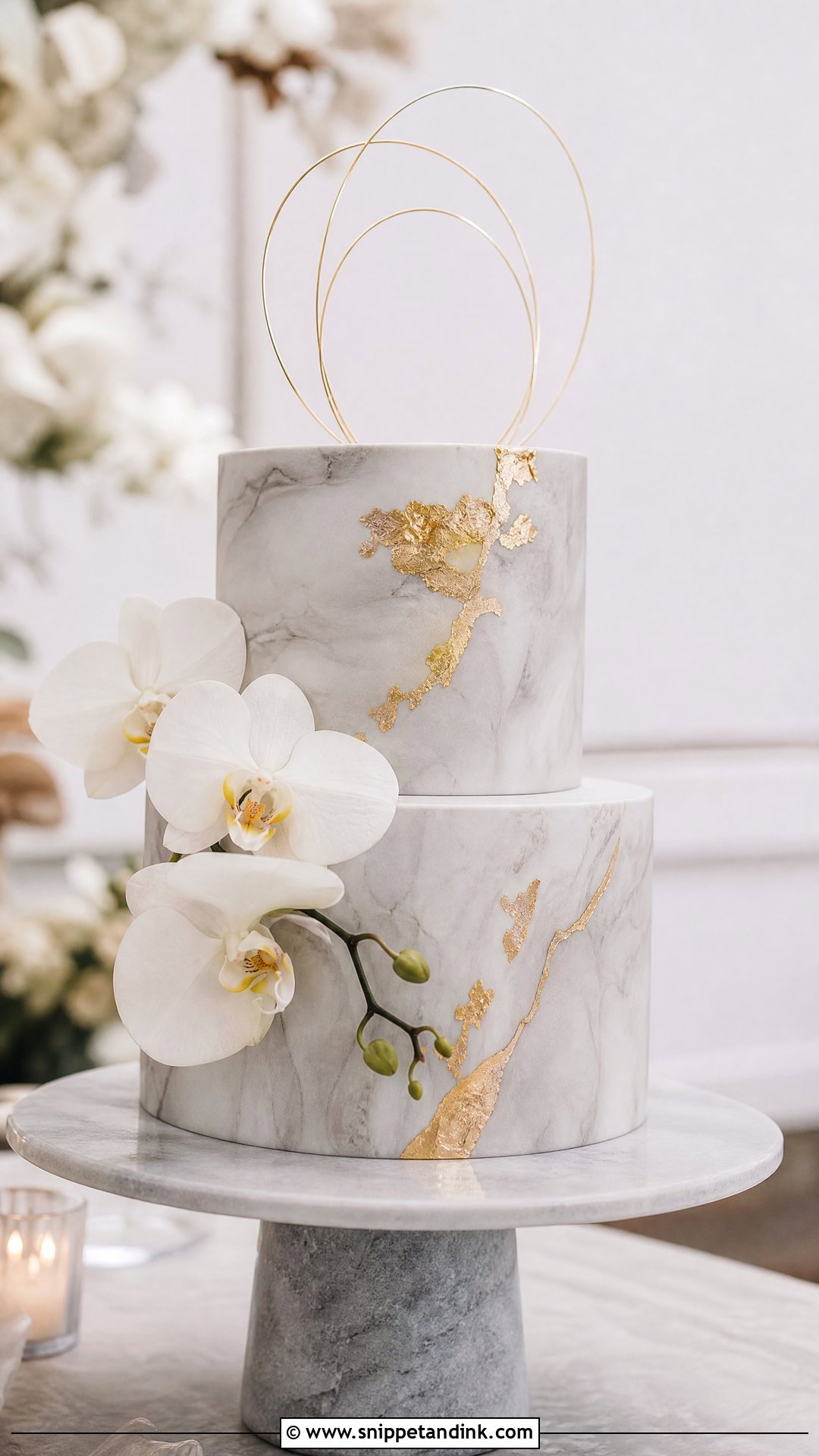
Marble fondant is made by twisting together coloured and white paste, then rolling it once. I stop as soon as the veins look natural, because over-rolling turns marble into a muddy grey. Soft grey, beige, ivory or blush work, and the pattern pairs with gold leaf or white flowers. It suits modern venues with stone or glass. Chocolate or hazelnut underneath gives a nice contrast when it’s cut.
17. Two Step Wedding Cake With Dried Flowers
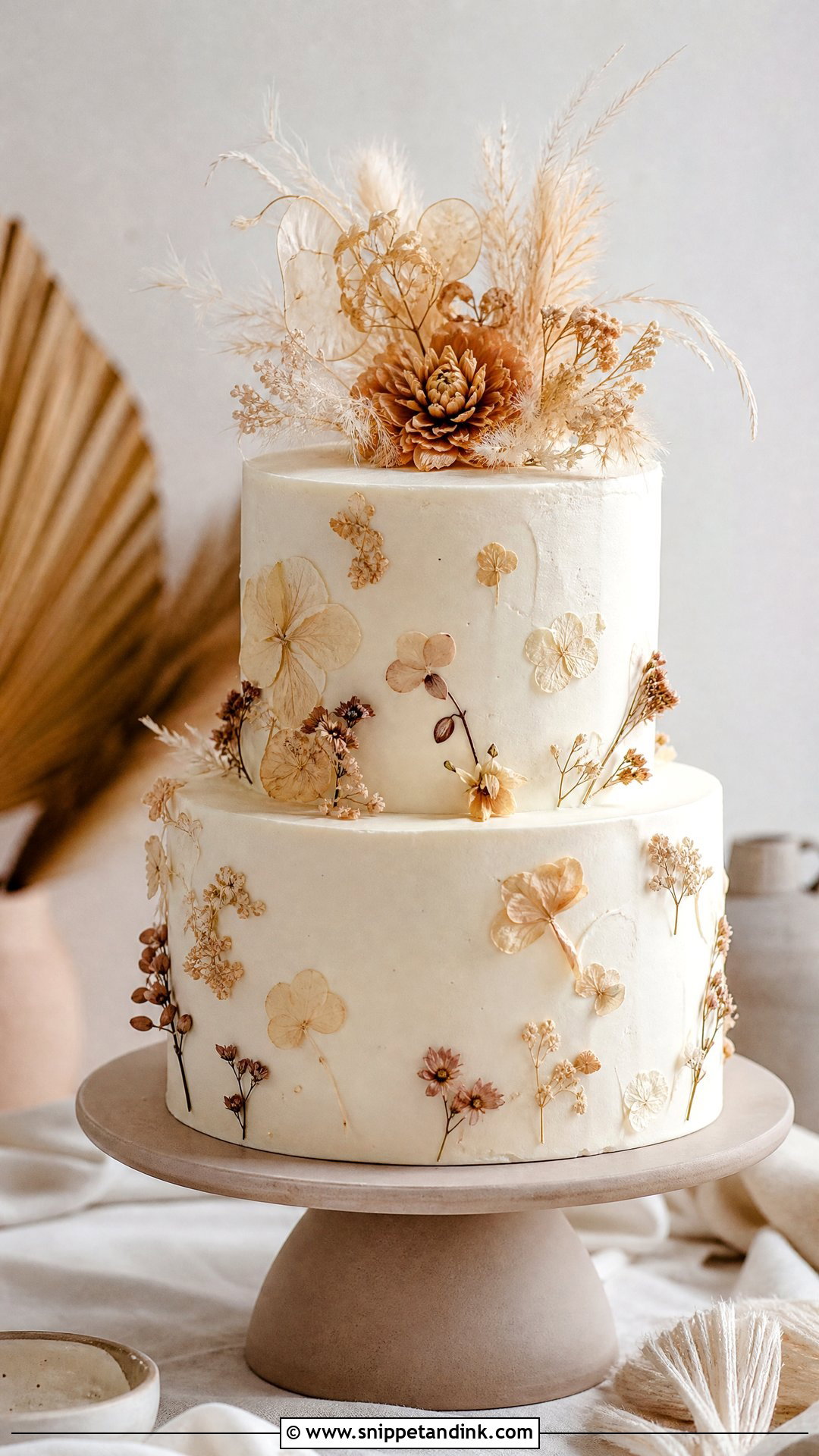
Dried flowers suit boho, barn and autumn weddings, and they don’t wilt in heat, which is a real advantage outdoors. Cream, tan, rust and soft brown pressed petals, grasses and preserved blooms look warm against ivory buttercream. Dried stems still need wrapping or a barrier. Preserved flowers are usually treated with dyes and glycerin, so they should never touch the frosting directly. Keep the arrangement off the cut edges.
18. Two Step Wedding Cake With Blush Pink
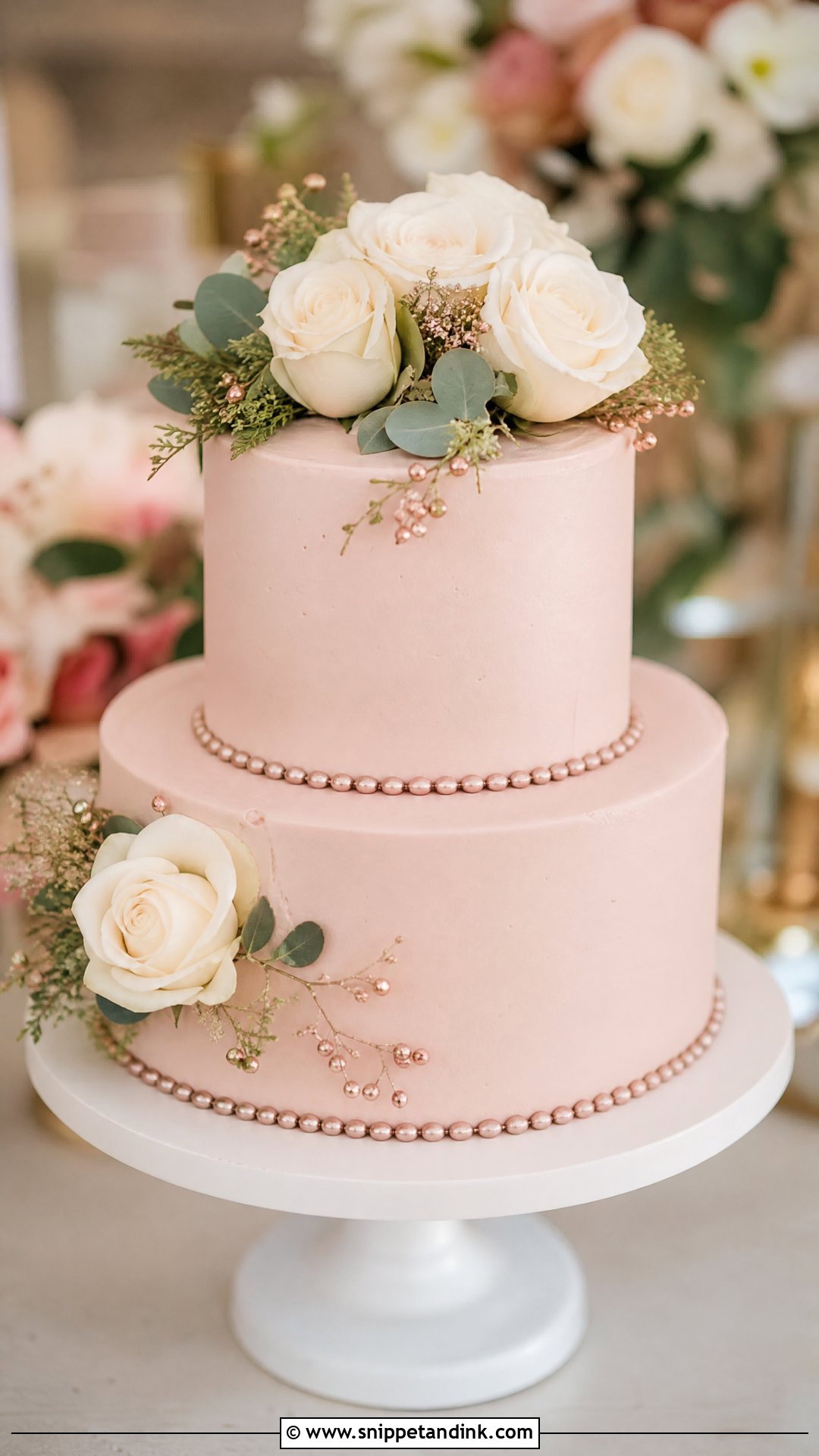
Most couples find blush the easiest colour to live with, and it flatters skin tones in photos sitting next to the cake. You can tint both tiers or keep ivory frosting and add blush flowers. Muted blush ages well; bright pink tips quickly into a baby shower. Pink colouring can also fade in strong daylight, so a cake displayed by a sunny window may look paler by the cutting. It pairs well with rose gold, pearls and white blooms.
19. Two Step Wedding Cake With Hydrangeas
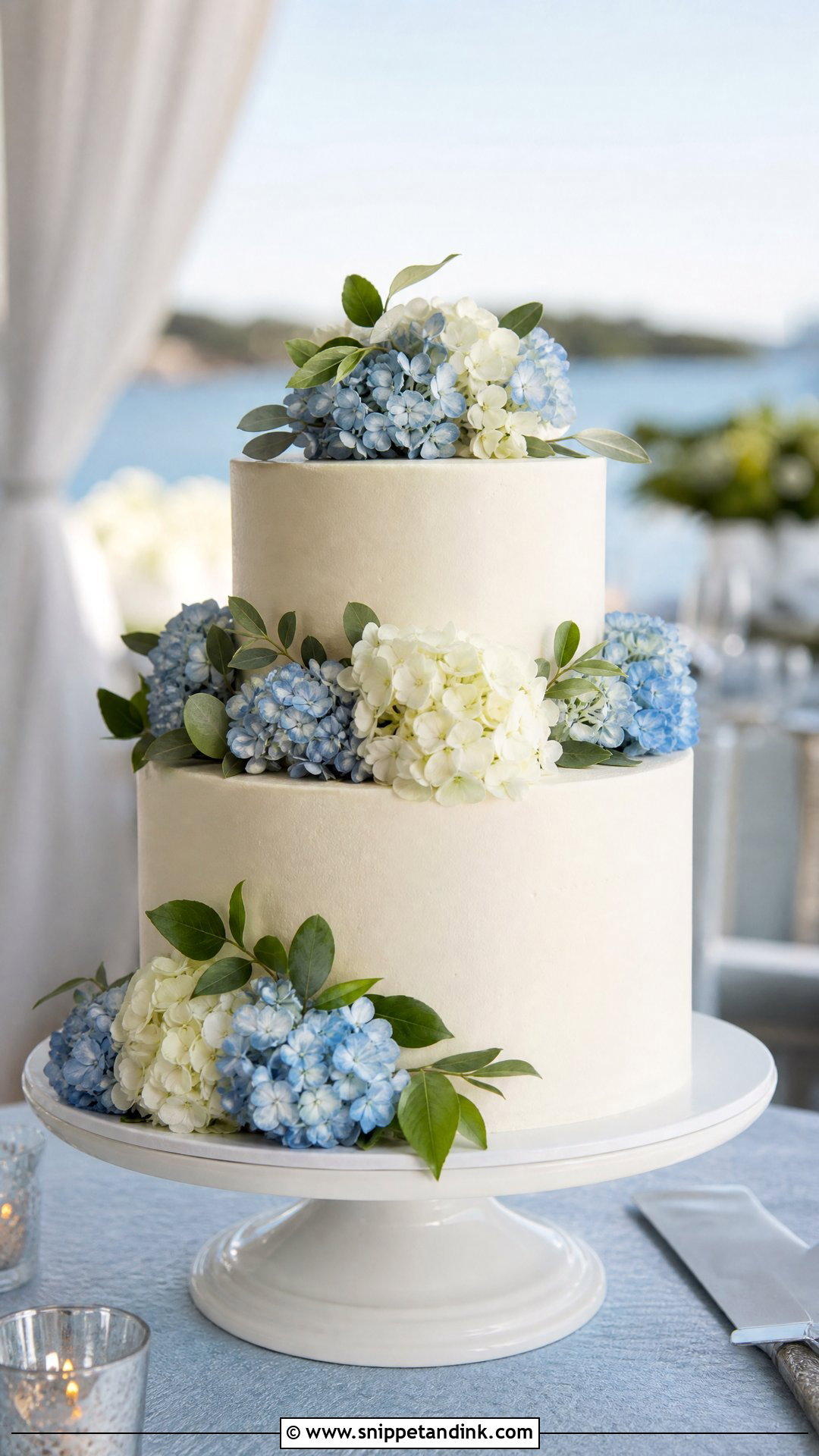
Hydrangeas fill a lot of space with very few stems, which makes them efficient on a two-tier cake. They are also toxic and drink a lot of water, and they wilt quickly once out of it. So I never insert them into the cake: they sit on a barrier around the base or on top, and the florist hydrates them well beforehand. White, blue, lavender and pale green suit coastal and summer weddings. Smooth ivory buttercream keeps the heads looking full.
20. Two Step Wedding Cake With Modern Arch
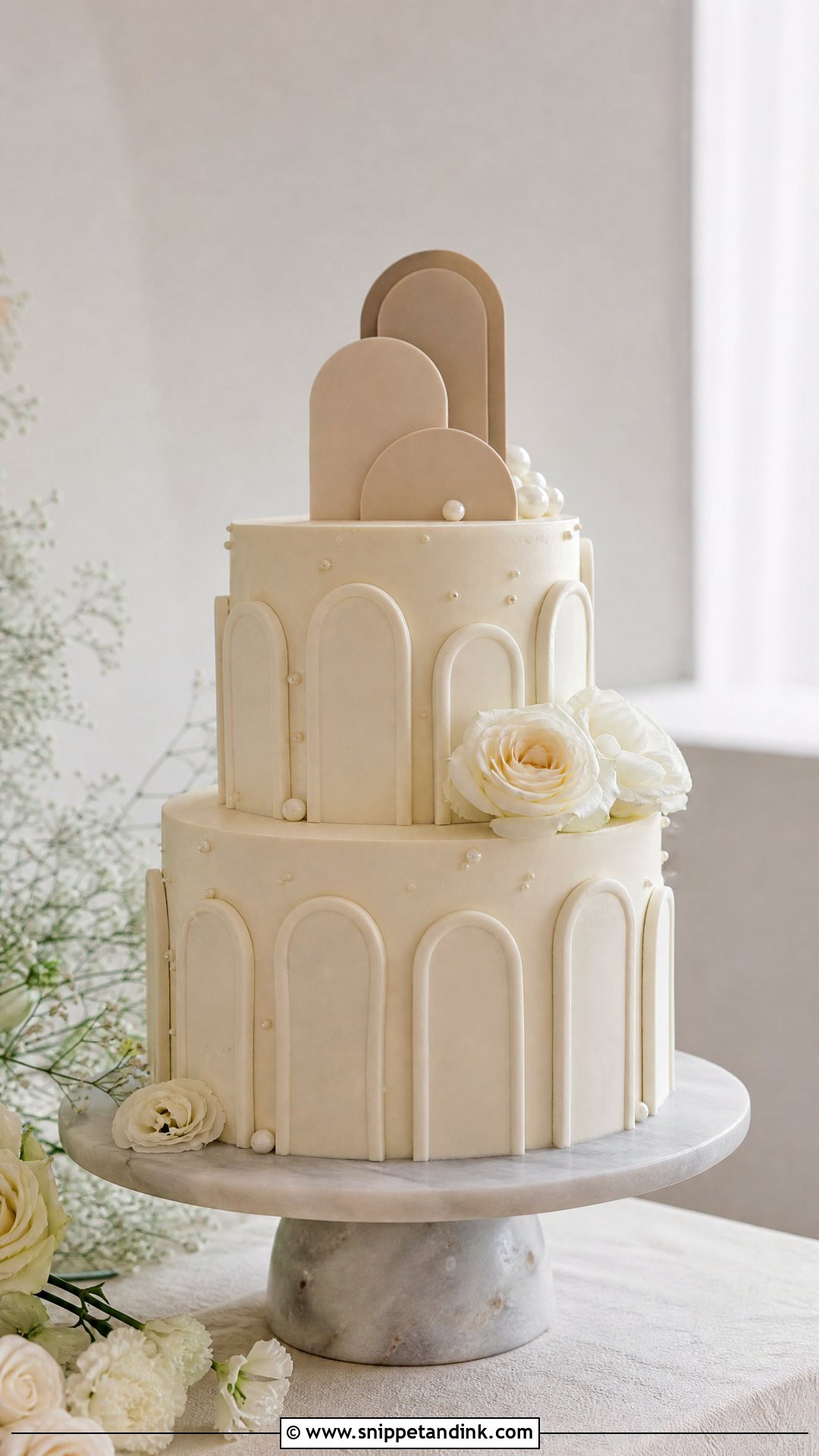
An arch shape brings a sculptural note to a cake without complex construction. I make it as a fondant panel, a piped outline, a raised texture or a painted shape on one tier, usually the bottom, where there’s room for it. Ivory, beige, clay and sage keep it soft. One small floral cluster or a few pearls inside the arch softens the geometry. It suits couples whose decor already uses arches or curved signage.
Proportions That Stop a Two-Tier Cake Looking Short
A two-tier cake can look either elegant or stubby, and the difference is mostly arithmetic. I like a difference of about two inches across between the tiers for a tall, slim look, and four inches when there are flowers to sit on the ledge. Making the top tier taller than the bottom, around five or six inches, adds height without adding servings you don’t need.
Display and setup
- Put the cake on a raised stand; a flat board on a long table makes two tiers disappear.
- Use a small round table rather than the end of a buffet, so the cake has its own space in photos.
- Ask for the cake to be set away from windows, heaters and the dance floor speakers.
- Every tier above the base needs internal dowels and its own board, even at this size.
Two tiers also travel well. It can usually go fully stacked in one box, which means fewer chances for a last-minute assembly problem at the venue. I still bring a small repair kit of matching buttercream, a spare flower or two and a palette knife, because a bump on a stairwell happens to everyone eventually. If your venue has a long walk from the loading door, mention it when you book so the delivery is planned around it.
Treat the Two Tiers as One Design
The best two-tier cakes look like one idea, not two cakes stacked on each other. That means the flowers, texture or colour should run across both tiers, and the tier sizes should sit in comfortable proportion. Before your consultation, know your guest count, your venue’s temperature and where the cake will stand. Bring a photo of your flowers and your dress. With that, a good baker can tell you which of these finishes will look right at your size, and which needs a third tier or a kitchen cake to make sense.
You'll Like These Ideas:






Leave a Reply