
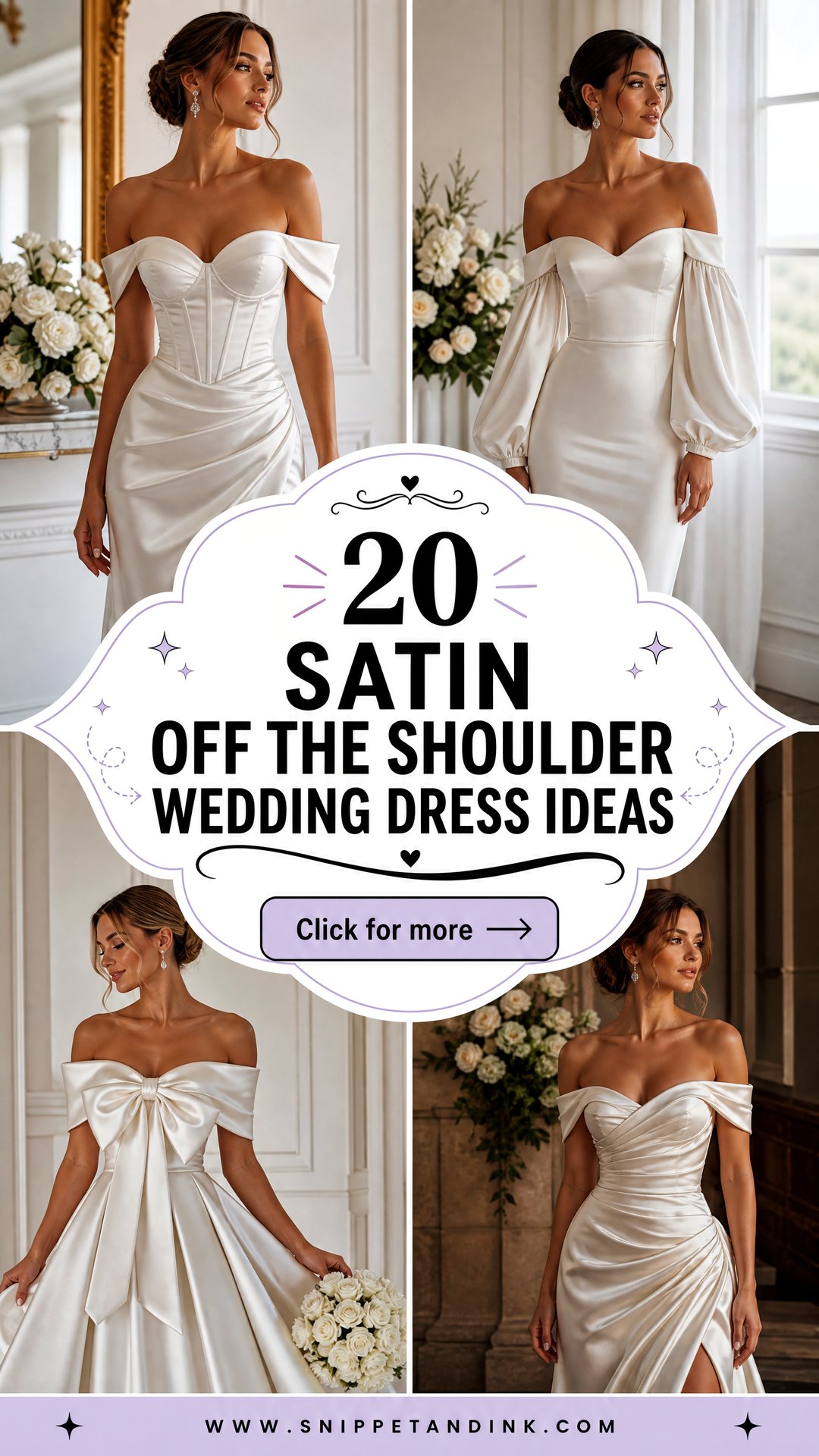
Satin and an off-the-shoulder neckline are an old partnership for a reason: the fabric’s sheen and body give the bare shoulder line a clean frame without needing lace or beading. The neckline adapts to almost any silhouette, from full ball gowns and fitted mermaids to modern columns and convertible gowns with removable pieces. Corseted waists, sculpted draping and statement sleeves are all strong right now, so there’s plenty of room to make it your own. When I help a bride with this neckline, I ask about the venue, the season and how much she wants to move before we talk shape. The twenty gowns below run from minimal to pearl-trimmed, each with the fitting points I’d check.
Not All Satin Behaves the Same Across Your Shoulders
Before we settle on a silhouette, I want to know what kind of satin you’re actually looking at, because it changes how the neckline sits. Satin describes a weave, not a fiber, so two gowns with the same label can feel nothing alike on the body.
- Duchess satin is heavy and stiff with a strong luster. It holds a sculpted fold and a big skirt well, but it’s warm, and in midsummer you’ll notice it by the cocktail hour.
- Silk satin or charmeuse is lighter and drapes close to the body. It suits column and draped styles, though it shows every seam and every crease from sitting.
- Crepe-back satin has a softer shine on one side and a matte texture on the other, and tends to forgive small creases better than high-gloss versions.
- Polyester satin is usually more affordable and resists wrinkles, but some versions look shiny under flash. Ask to see a flash photo of it before committing.
At the boutique, scrunch a corner of the skirt in your hand for a few seconds and let go. If it stays marked, expect the same across your lap after a long ceremony. Then stand near a window: high-shine satin bounces light up under the chin, while a softer finish is kinder in close portraits.
1. Satin Off the Shoulder Ball Gown
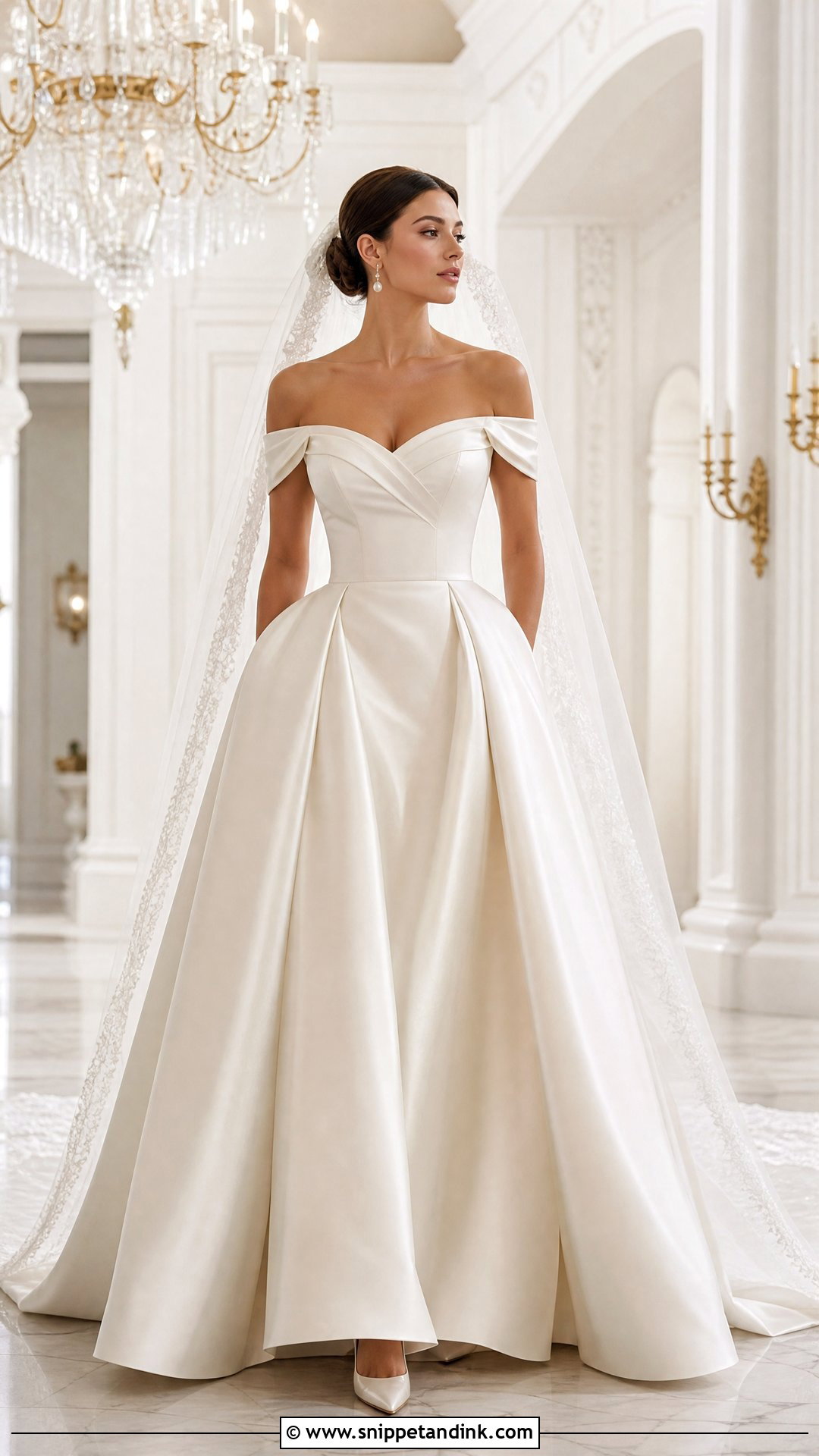
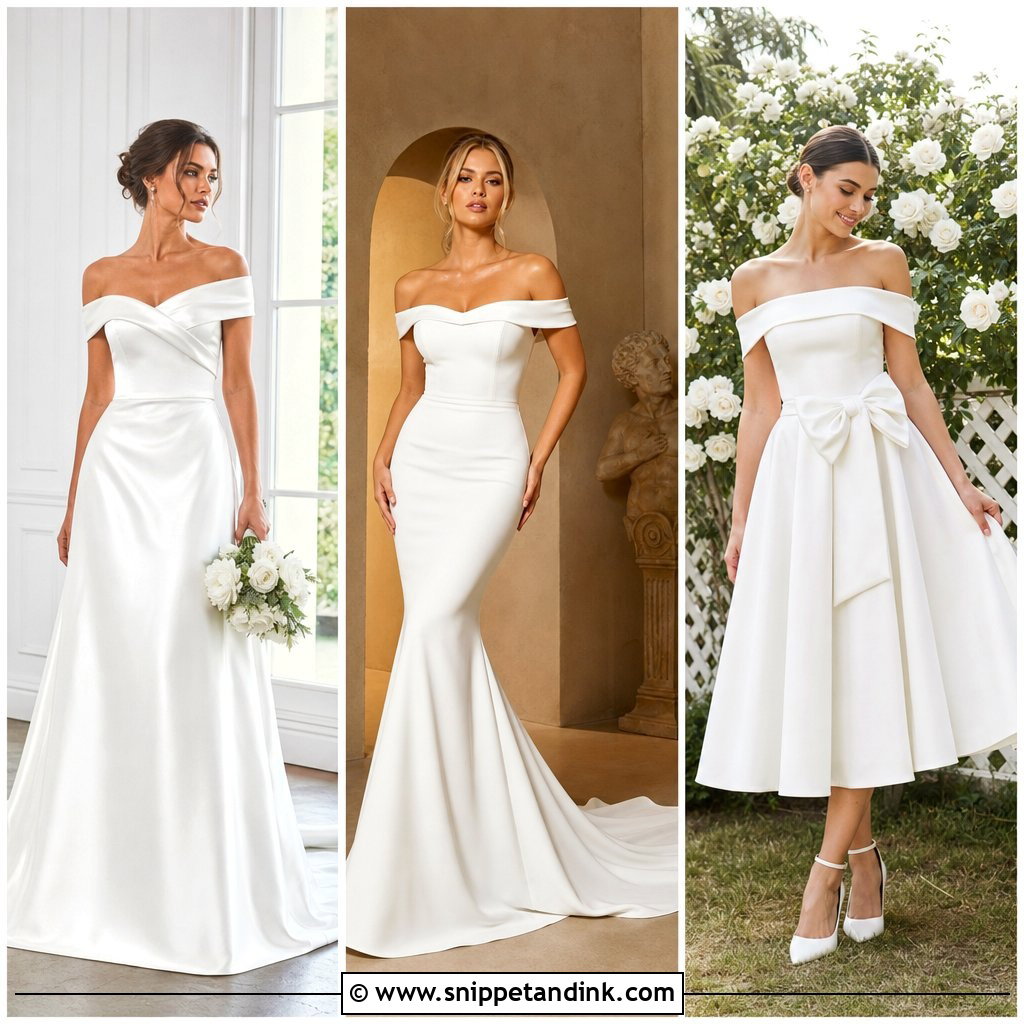
This is the shape most people picture for a grand ceremony, and it depends on the bodice. A structured bodice has to sit securely across the chest so the skirt can expand from the waist without dragging the shoulder bands down. Softly draped bands frame the collarbone and balance all that volume. I’d style it with pearl drops, a cathedral veil, pointed satin pumps under the skirt and a low bun that keeps the neckline in view. Ballrooms, historic estates and big indoor venues suit it. Ask about hidden pockets and the bustle at your first alterations appointment; a full satin skirt with no bustle plan is hard work on a dance floor.
2. Satin Off the Shoulder A-Line Dress
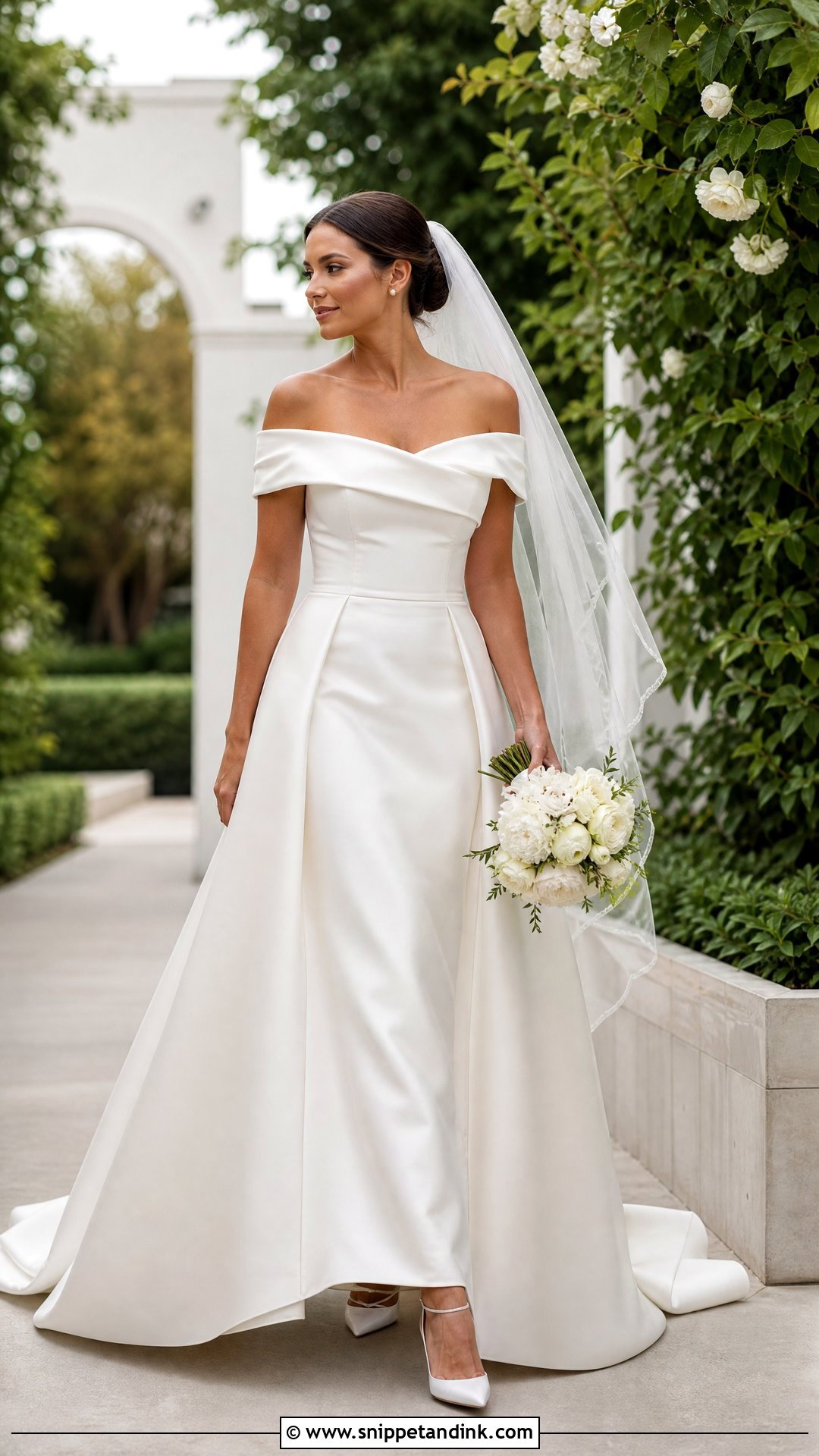
For a formal look that’s still easy to wear, an A-line is the shape I suggest most. The fitted top gives definition and the skirt widens gradually, without the weight of a ball gown. A folded portrait neckline gives enough detail that accessories can stay minimal: a fingertip veil, pearl studs, ivory slingbacks and a small greenery bouquet, with a waved updo or polished ponytail. It adapts to gardens, hotels and traditional ceremony spaces. At fittings, walk, sit and raise your arms. Off-the-shoulder bands on an A-line often look perfect standing still and shift the moment you reach for someone.
3. Satin Off the Shoulder Mermaid Dress
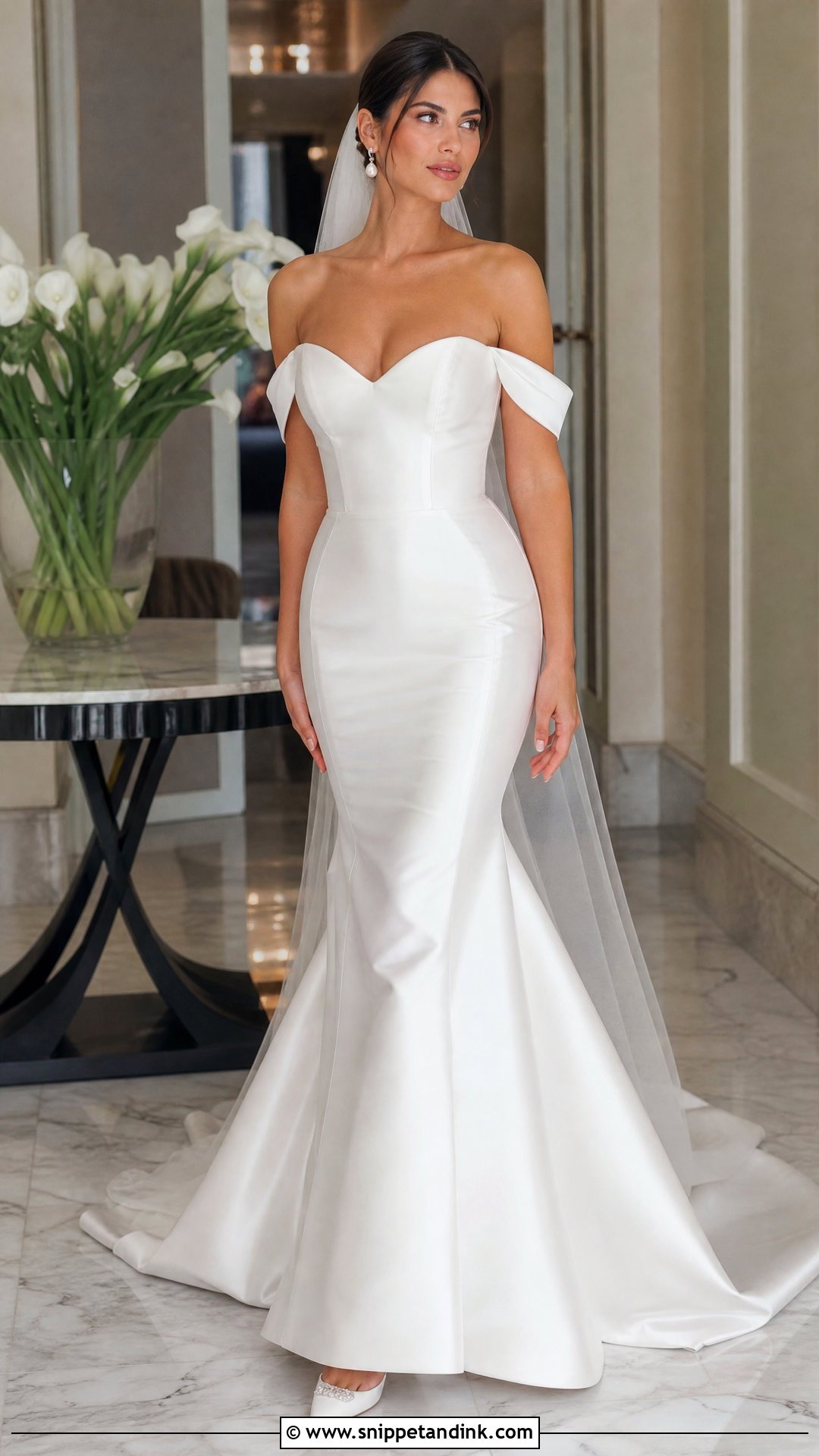
A mermaid shows your shape from every angle, so the seams matter more than the fabric. I look for a gown that follows the torso and hips and then flares near the knee, with seams placed to support that shape rather than just decorate it. A curved sweetheart bodice softens the fitted build, and narrow draped sleeves keep the neckline graceful. Crystal or pearl earrings, a sleek veil, pointed heels and a structured white clutch finish it, with smooth waves or a low twisted bun. The trade-off is movement. Practice walking, sitting and climbing a step at alterations, and plan a secure bustle and backup shoes for the reception.
4. Satin Off the Shoulder Column Dress
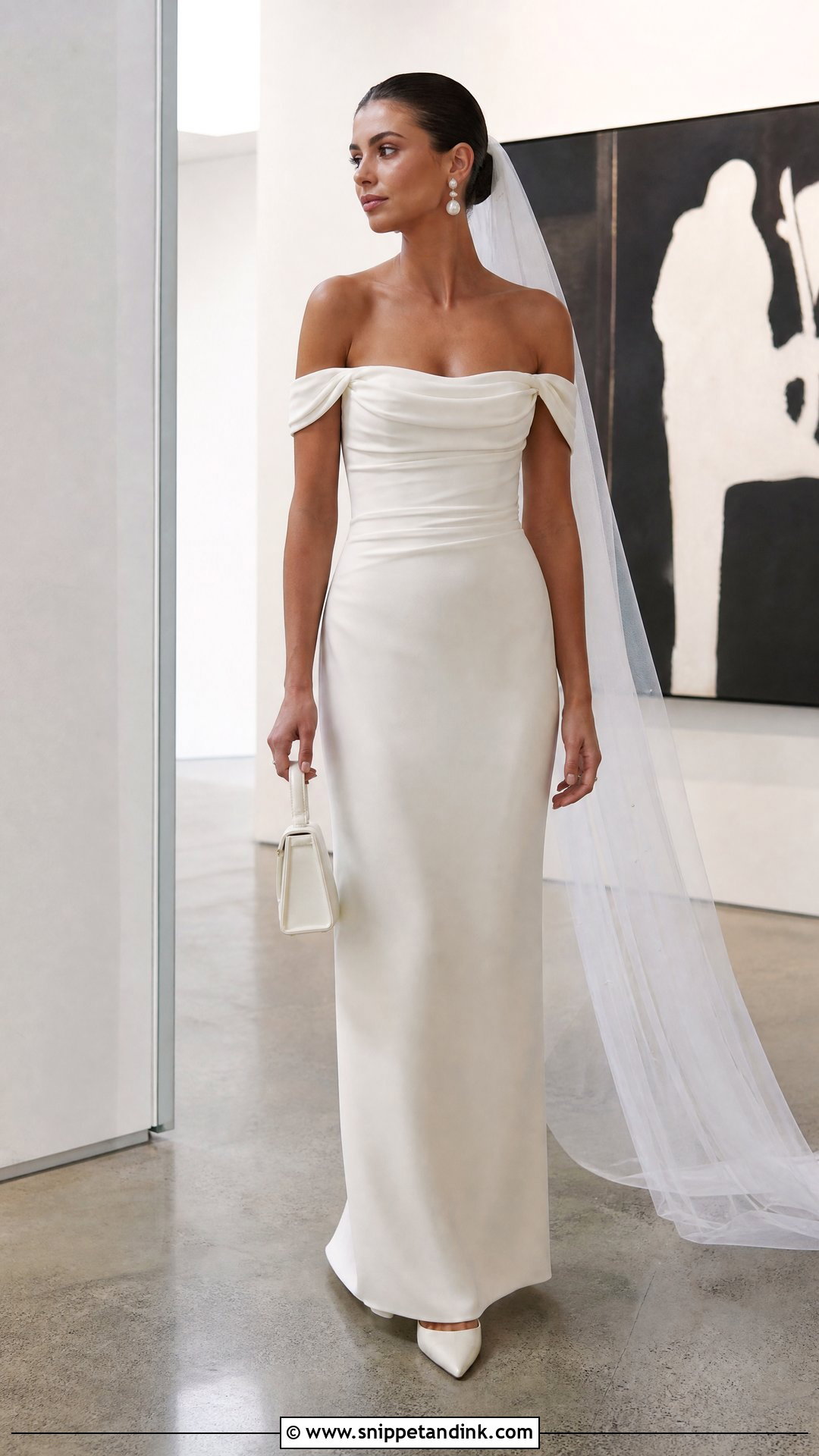
Nothing hides in a column. The satin falls close to the body in one long line, so gentle ruching across the bodice is about the only decoration I’d add. Sculptural pearl earrings, a sleek floor-length veil, pointed pumps and a compact top-handle bag suit it, with a center-parted bun to keep the mood modern. Modern hotels, galleries, rooftops and small ceremony spaces show it at its best. Tailoring is everything here; a few millimeters at the waist, hip or hem are visible on plain satin in a way they never are on a full skirt.
5. Satin Off the Shoulder Corset Dress
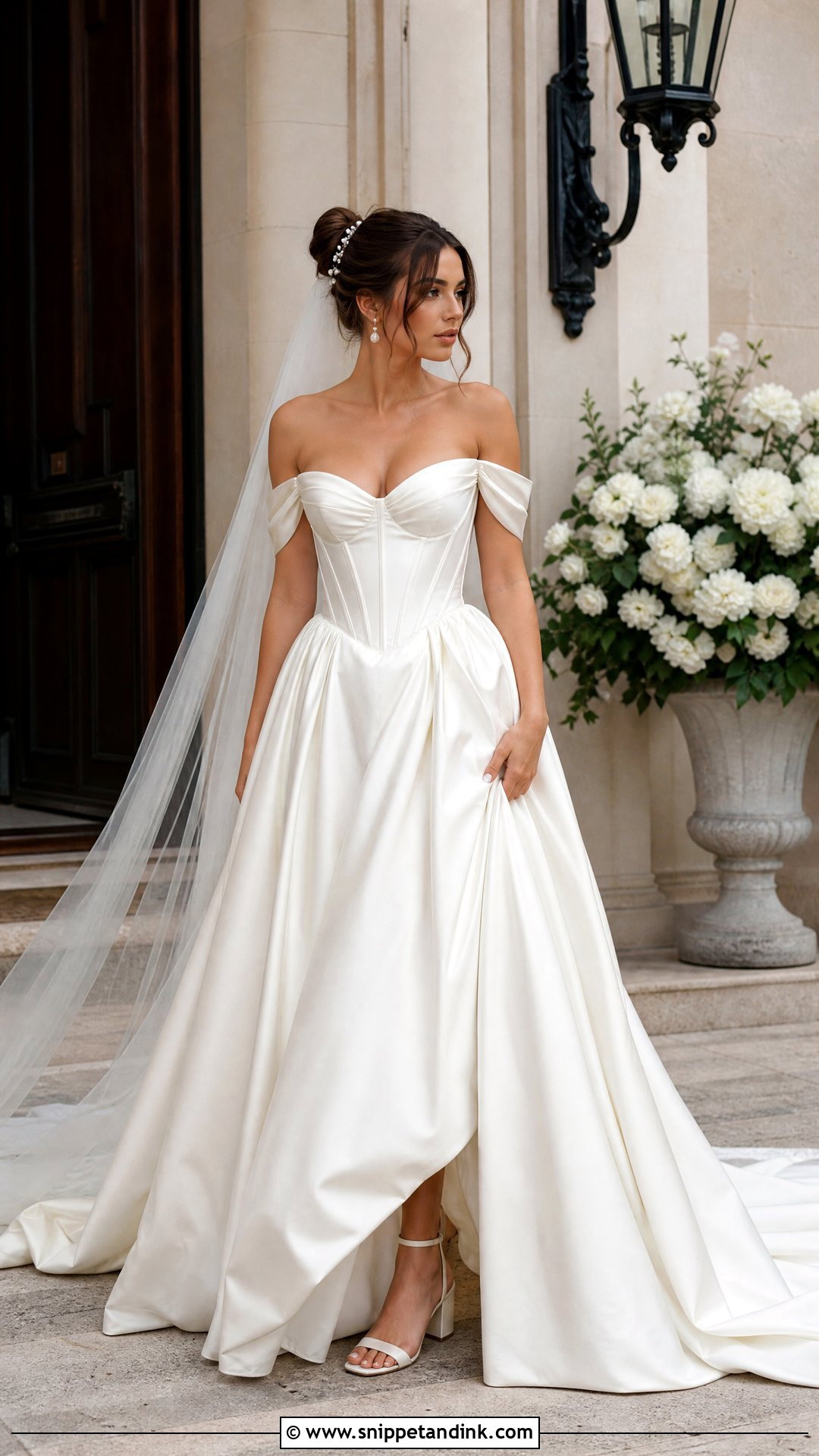
Internal support is what makes an off-the-shoulder corset gown wearable, and the neckline is where you’ll feel it. Visible boning, a curved neckline and a fitted waist can flow into an A-line or full skirt, and softly gathered shoulder straps offset the structured look. Pearl hairpins, drop earrings, a long plain veil and satin block heels coordinate without crowding the bodice. My test at every corset fitting is simple: breathe deeply, sit, and lift your arms. Supportive is right; restrictive is not. Well-fitted cups and a secure back closure matter more than any decoration.
6. Satin Off the Shoulder Basque Waist Dress
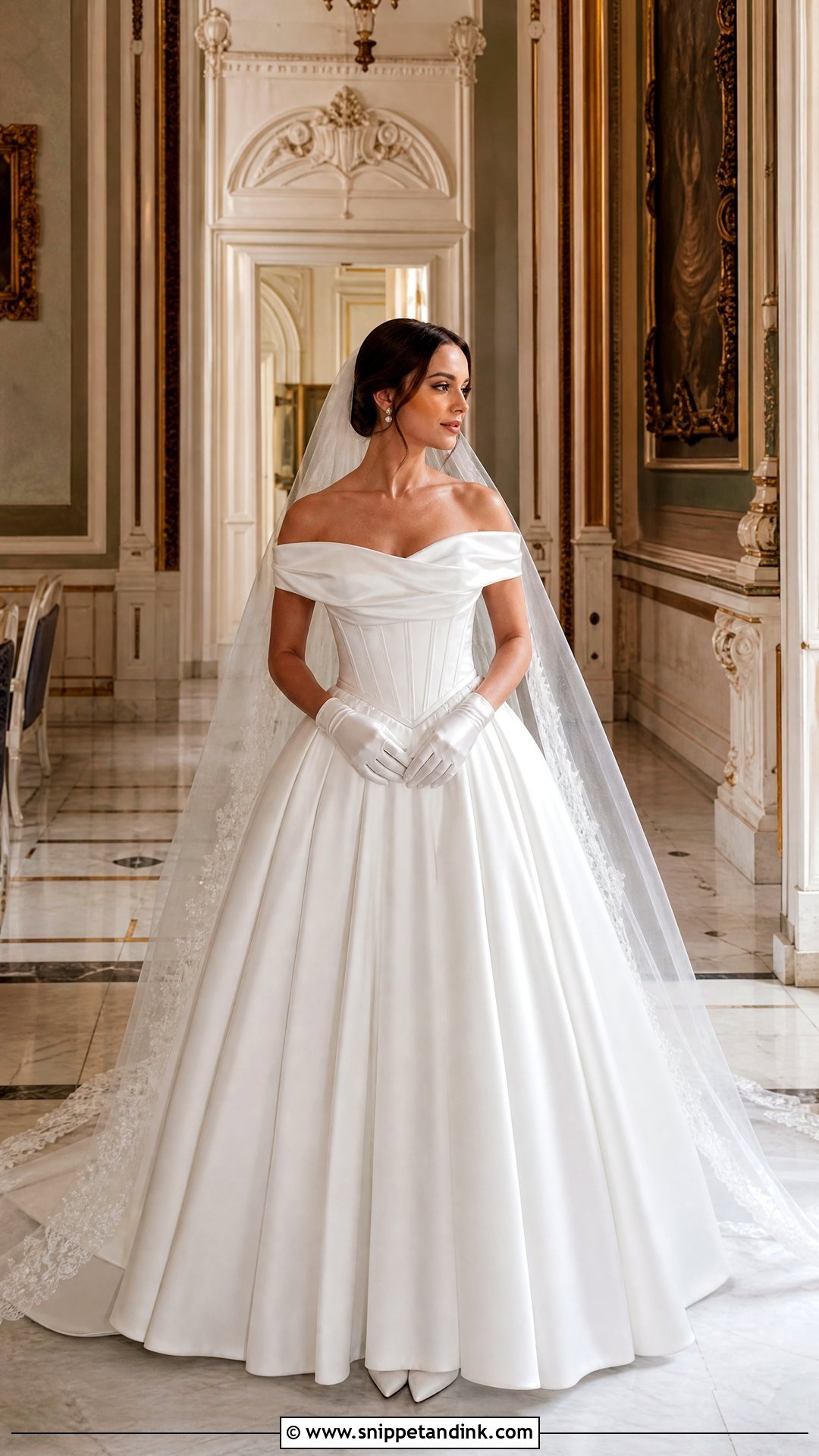
The signature here is a V-shaped point dipping below the natural waist. A basque waist like that, paired with an off-the-shoulder neckline and a full pleated skirt, makes satin look structured and fashion-forward. The long bodice becomes the focus, so I keep accessories restrained: pearl button earrings, a cathedral veil, closed-toe heels and perhaps short satin gloves for the ceremony, with a polished chignon. Large ceremony spaces and formal receptions suit it. The fitting point to watch is the tip of the V; if it folds or kicks out when you sit, the bodice needs adjusting, and the skirt should start below it without bulk.
7. Satin Off the Shoulder Sweetheart Dress
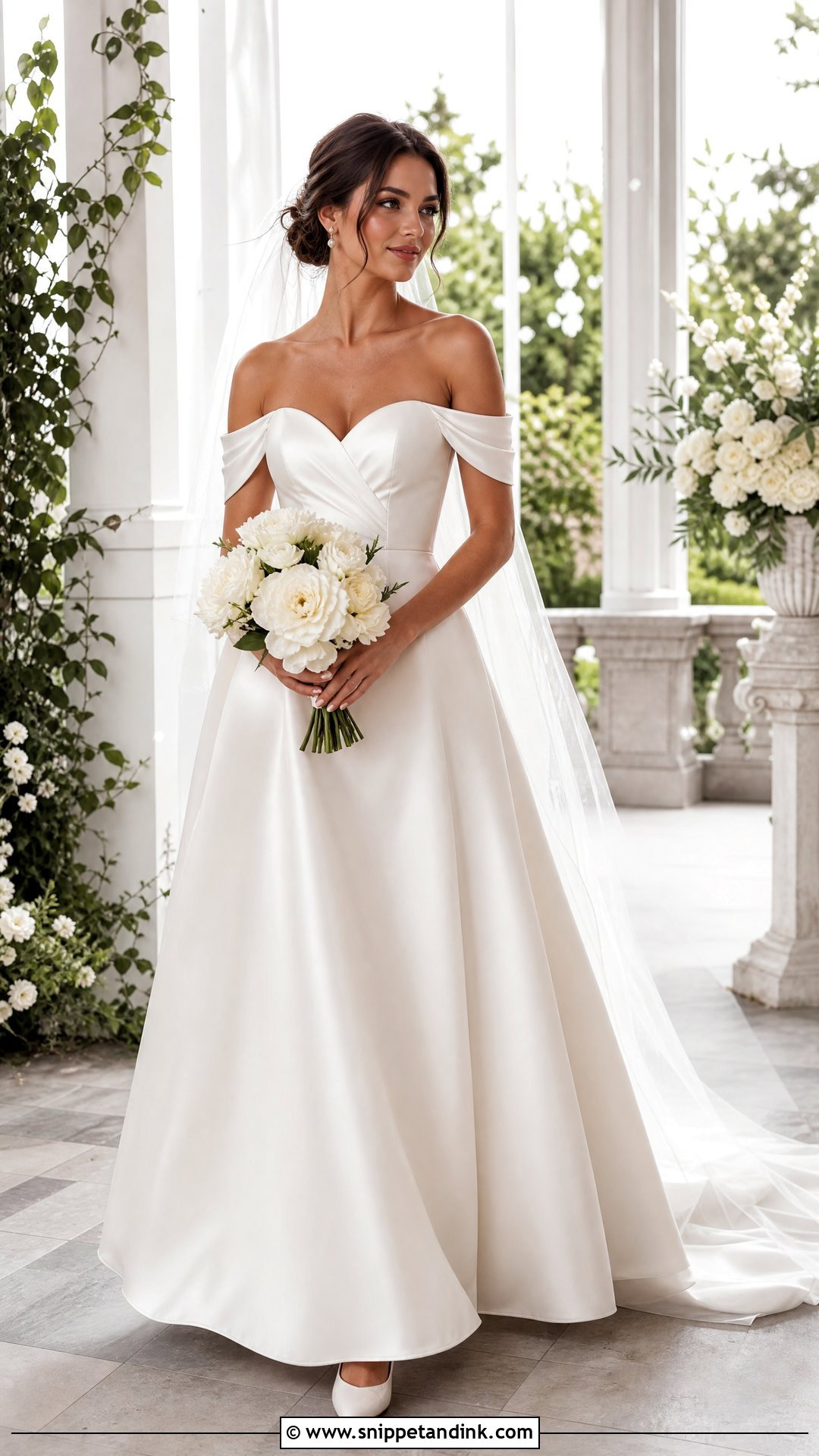
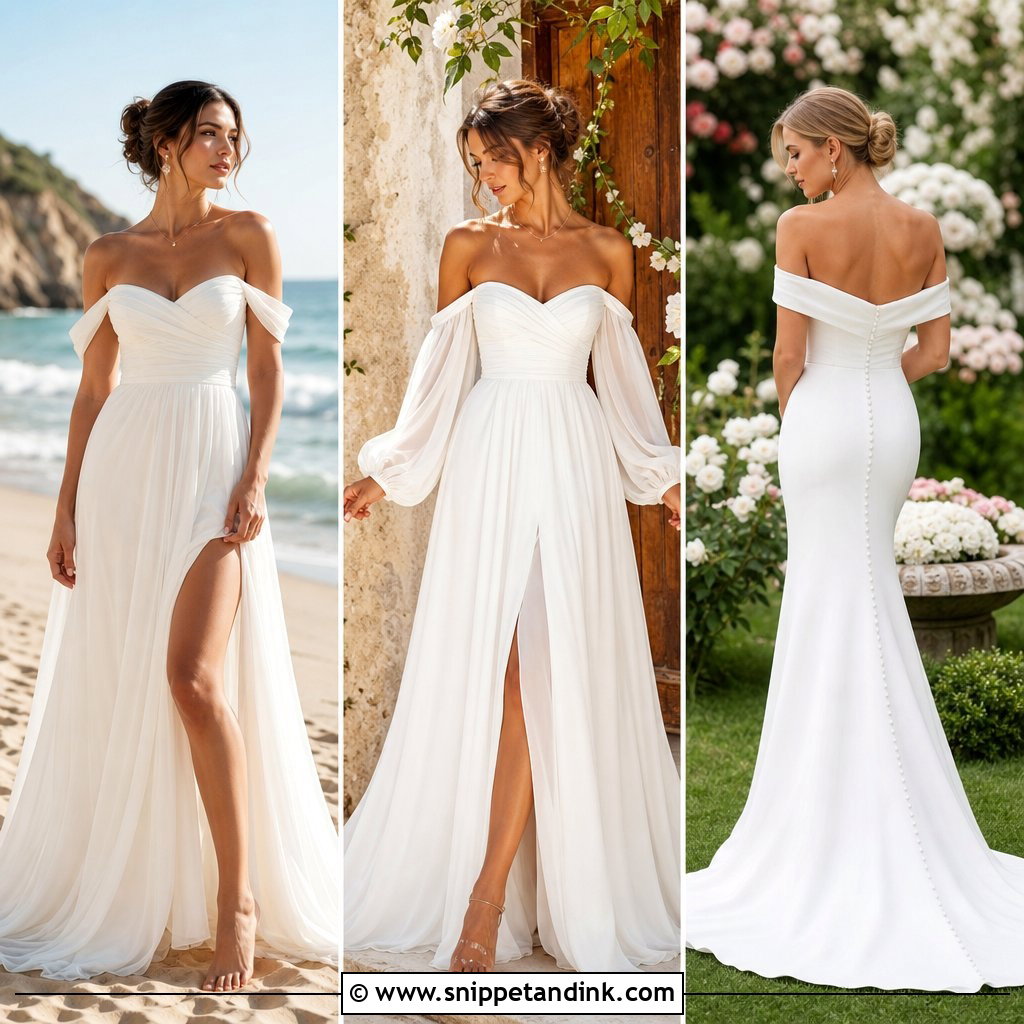
The center dip of a sweetheart adds curve, and draped sleeves carry the line across the upper arms. It pairs with ball gown, A-line, mermaid or fitted skirts, so you can pick the volume you want. Whether to wear a necklace depends on the depth of the dip: a fine pendant can sit inside a deeper one, but I usually leave the neck bare. Pearl earrings, a sheer veil, ivory pumps and a soft bouquet finish it, with loose waves pinned off the face as a softer alternative to an updo. Check that the neckline lies flat to the skin and that the sleeves don’t pull it down when you turn.
8. Satin Off the Shoulder Draped Dress
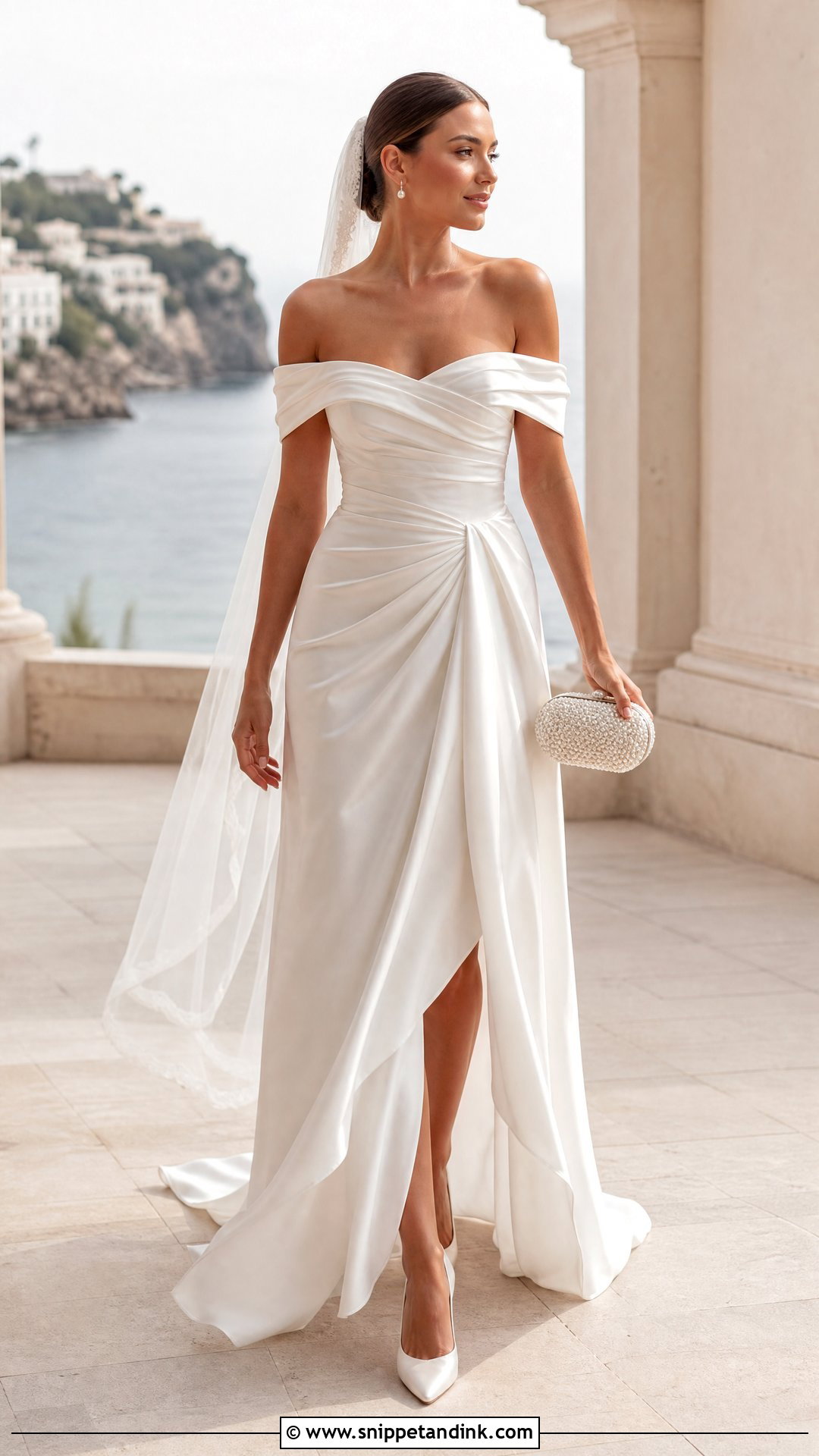
Draping can cross the bodice, gather at the waist or run into a wrapped, asymmetric skirt. Satin catches light across every fold, so well-placed draping gives a plain gown real depth without lace or beading. Badly placed, it just looks crumpled. I always view a draped gown from the front, side and back under the fitting room lights before deciding. Minimal drop earrings, a sheer chapel veil, sleek pumps and a small pearl clutch suit it, with a side-parted bun or brushed waves that echo the movement. Hotel ceremonies, coastal venues and evening receptions are good settings.
9. Satin Off the Shoulder Long Sleeve Dress
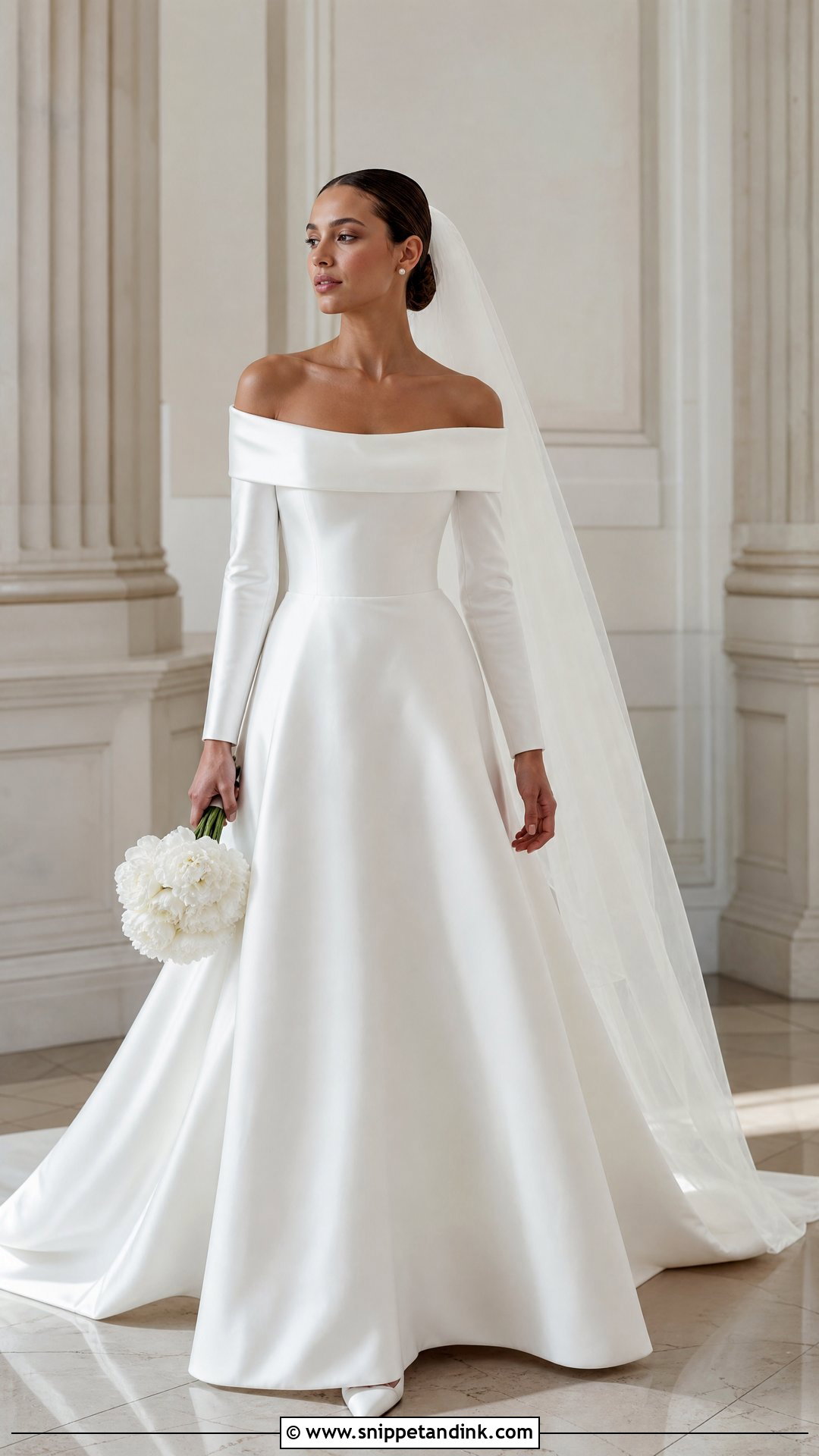
Slim sleeves that start below the shoulder bands and run to the wrist add coverage while leaving the collarbone open. A fitted bodice with an A-line skirt keeps the satin balanced; a streamlined skirt looks sharper. Pearl studs, a plain long veil, pointed pumps and a neat low bun complete it. Cool-weather weddings and heavily air-conditioned venues suit it best. Satin sleeves have almost no give, so I have brides hold a bouquet, hug someone and lift a glass at the fitting. Tightness at the elbow or across the back is far easier to fix then than on the day.
10. Satin Off the Shoulder Detachable Sleeve Dress
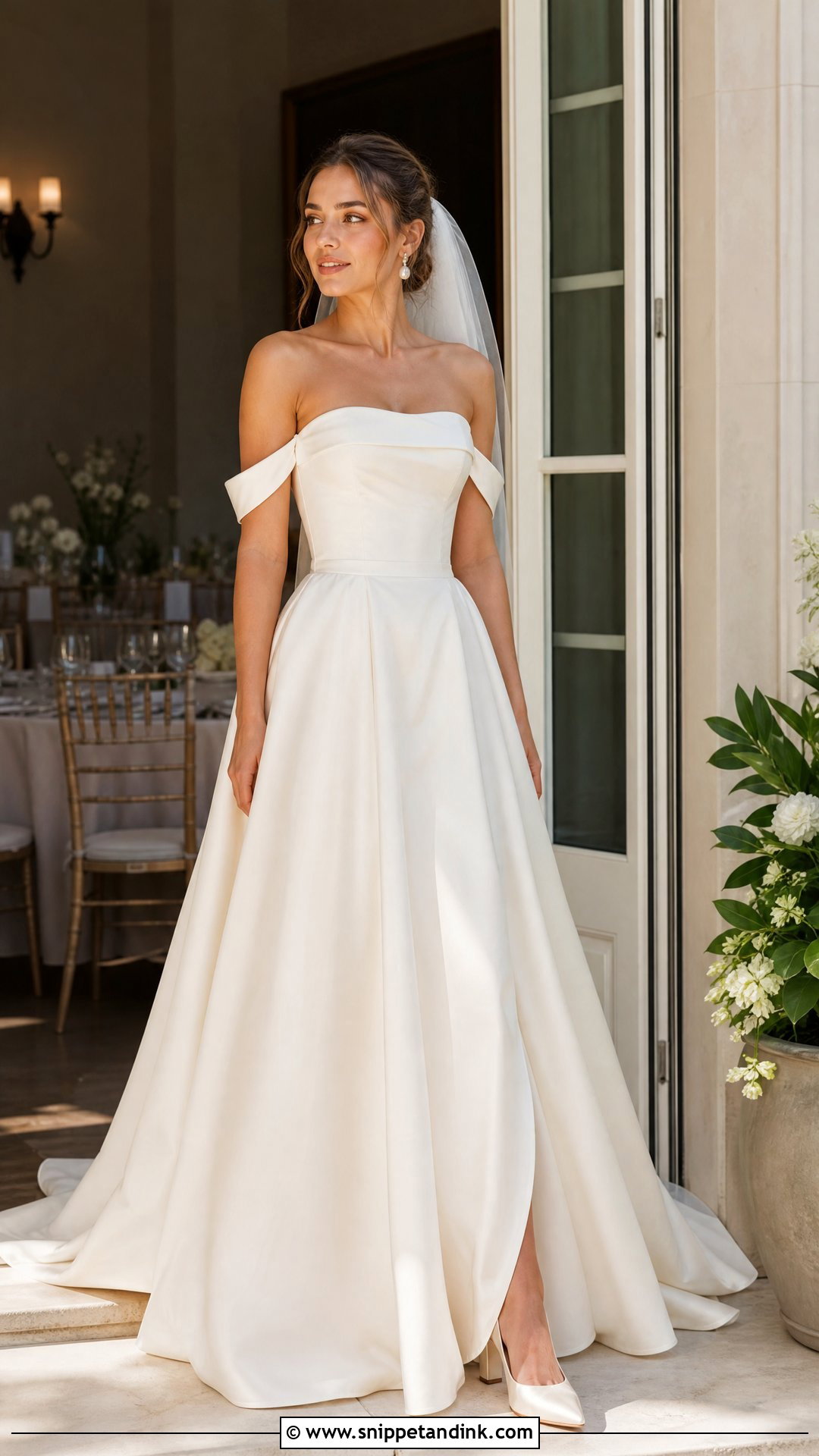
Two looks, one dress. Detachable off-the-shoulder sleeves give you a romantic ceremony entrance and a cleaner strapless line for the reception. Choose sleeves that attach firmly and match the bodice fabric exactly, whether they’re draped bands, fitted long sleeves or soft gathered pieces. Pearl earrings, a chapel veil, satin heels and a structured mini bag work for both looks, and after the sleeves come off you might swap the veil for a decorative comb or a sleek bow. Practice the change before the wedding, give one trusted person the job, and keep the sleeves in a labeled garment bag so they don’t get crushed.
11. Satin Off the Shoulder Dress With Slit
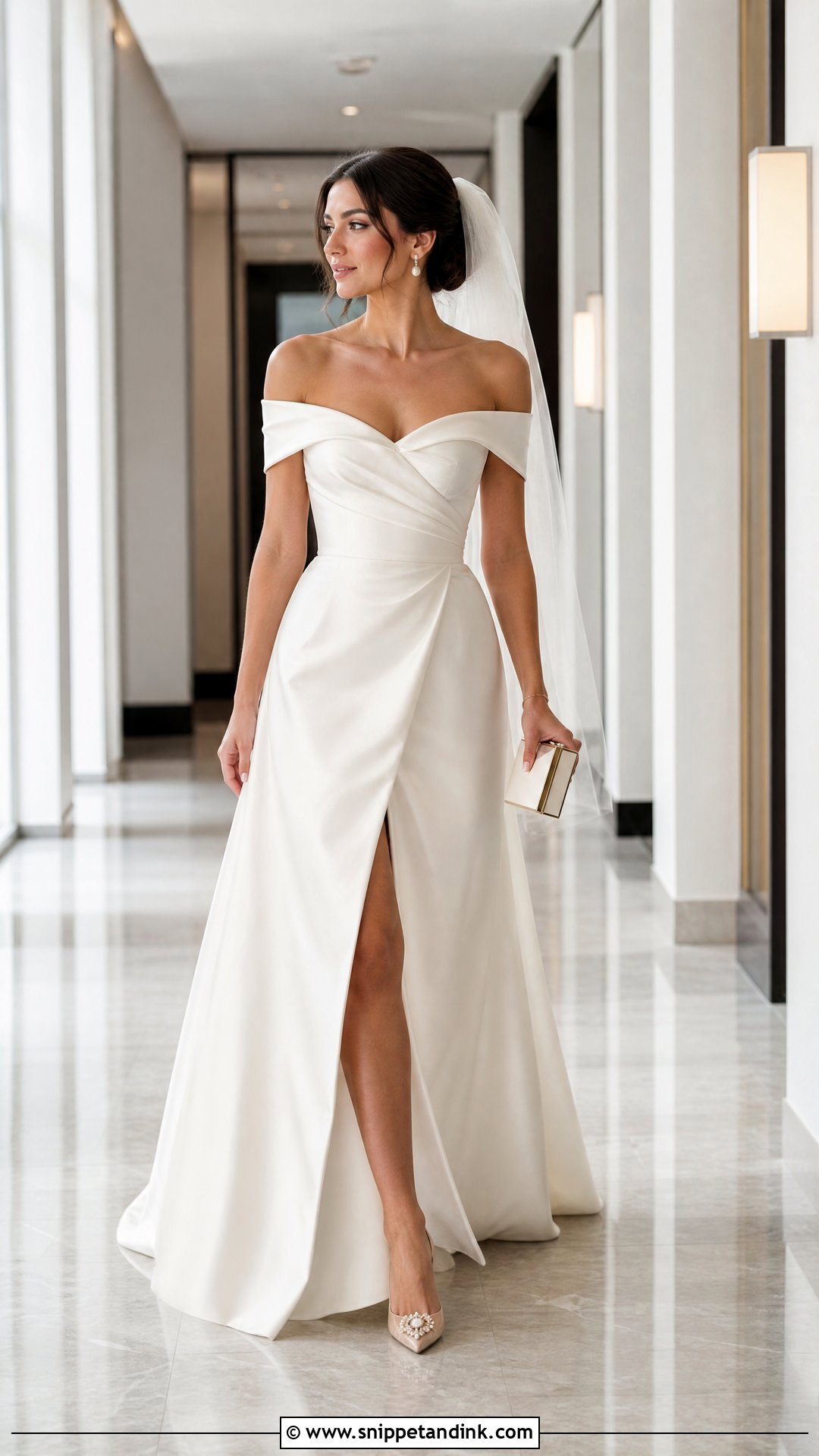
A front or side slit adds movement, and it reads best on a clean A-line or column where it doesn’t compete with other detail. A softly folded neckline balances the leg. Your shoes will be seen, so choose pointed pumps, embellished sandals or comfortable block heels, with pearl earrings, a plain veil, a small structured clutch and a sleek ponytail or low bun. I’d test the slit on stairs as well as walking and sitting, because that’s where it opens widest. A seamstress can lower it or add a discreet modesty panel without changing the design.
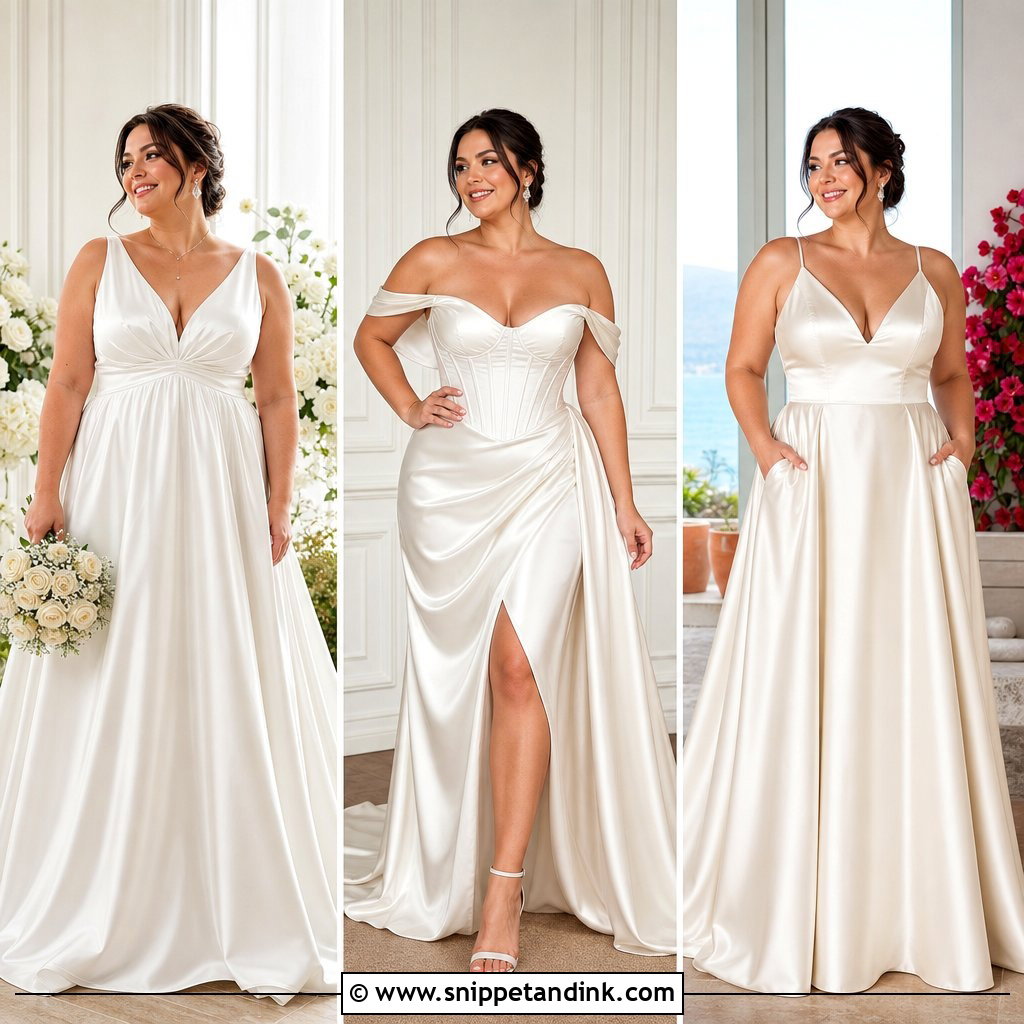
12. Satin Off the Shoulder Dress With Pockets
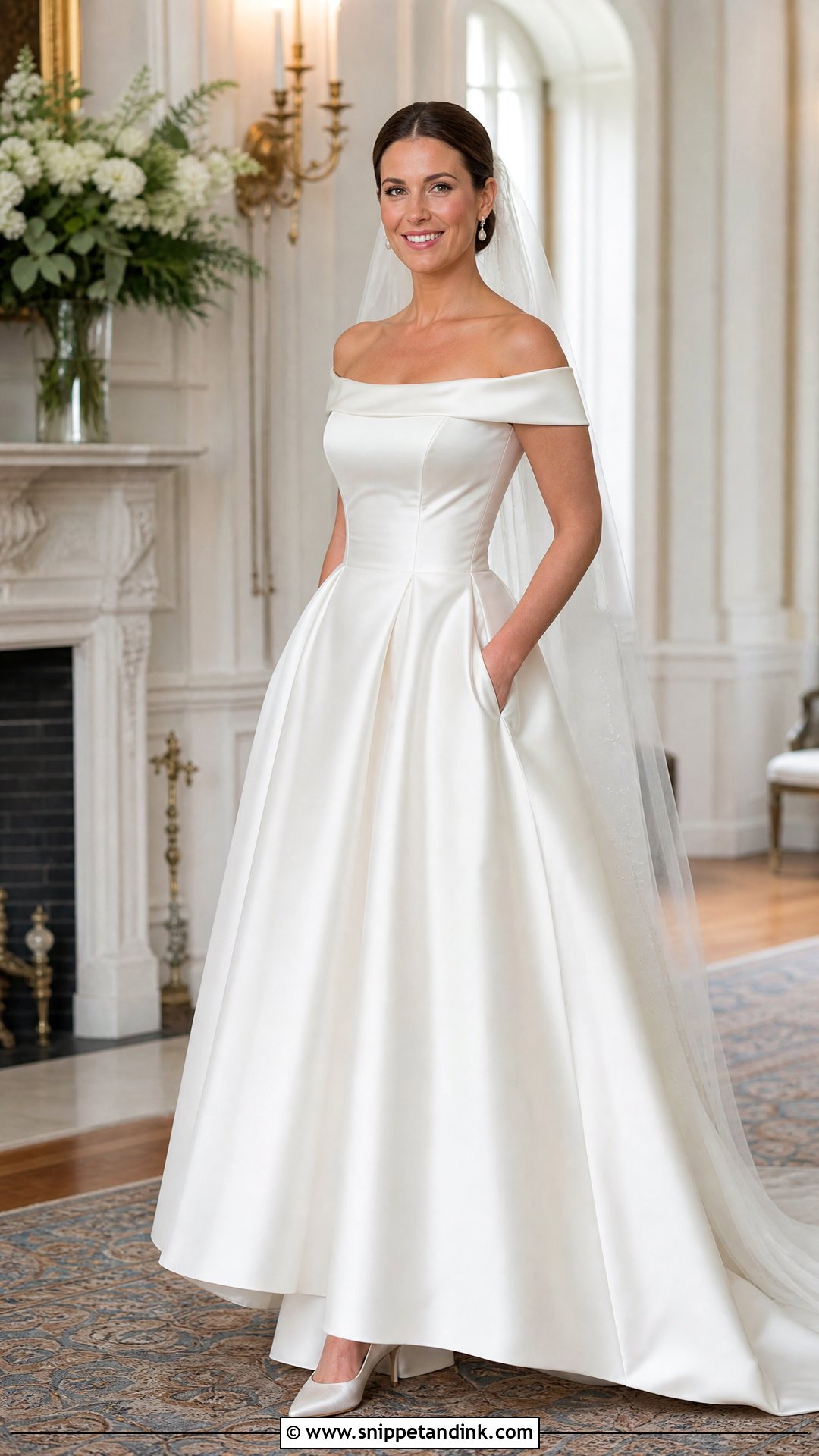
Pockets are the detail brides thank me for later. Hidden pockets add convenience without making the gown look less formal, and they disappear best inside a pleated A-line or ball gown skirt. Keep the bodice streamlined with a folded neckline, good internal structure and a defined waist, and finish with pearl drops, a long veil, satin pumps and a neat chignon. A tissue, a lipstick or a small keepsake is plenty. Anything bulky distorts the skirt line in photos. At alterations, check the openings sit flat and are easy to reach while you’re holding a bouquet.
13. Satin Off the Shoulder Pearl Dress
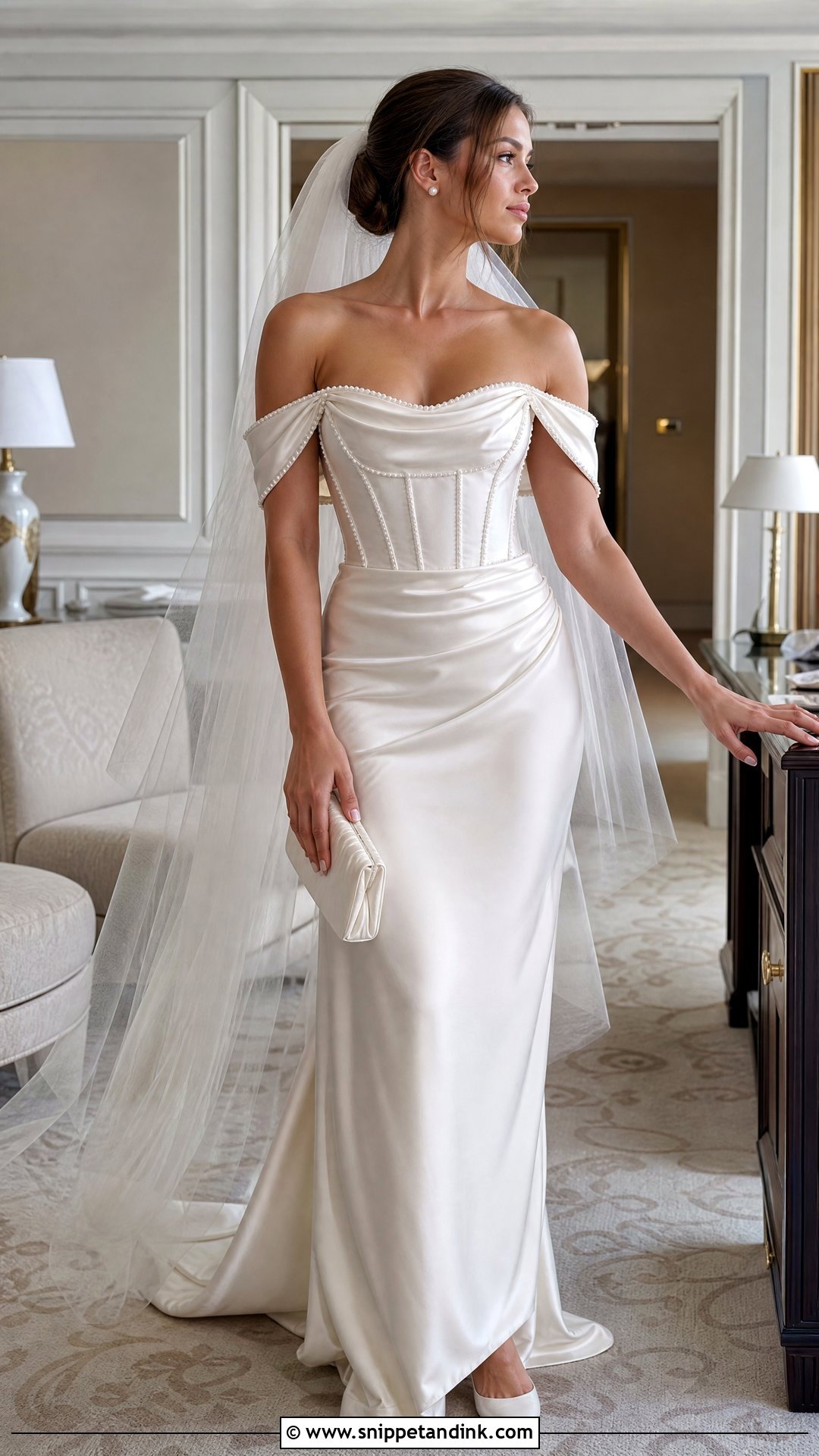
Pearls add texture without covering the smooth finish satin is chosen for. I prefer them focused in one place: the neckline, the shoulder bands, along the corset seams or down the back closure. That way the satin skirt stays the main event. Simple pearl studs, a sheer veil, pointed heels and a small satin bag are enough; several large pearl accessories just compete with the dress. A low bun with a few matching pins ties the hair to the gown. Before you buy, run your arm against the shoulder band. Beads on the inner edge can rub the arm raw over a long day.
14. Satin Off the Shoulder Bow Dress
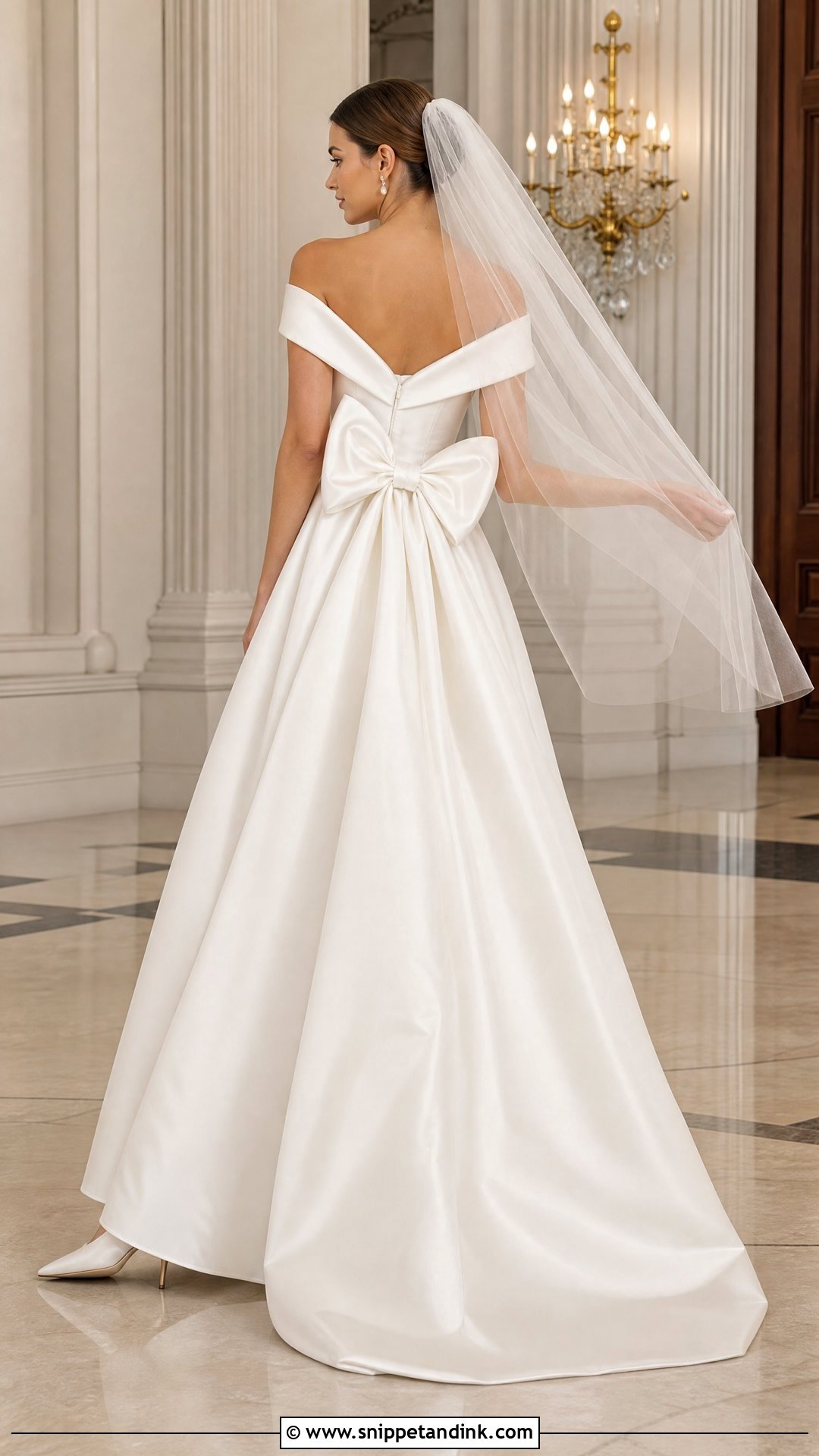
A bow turns a minimal gown into something memorable, so where it sits matters. A structured bow at the back waist, a softer one above the train or narrow shoulder ties all work with a clean bodice and plain skirt. Small earrings, a plain veil, pointed satin shoes and a smooth low bun keep the rest quiet. Look at the dress from behind with the veil on; a large back bow can fight with veil fabric and with the bustle. I’d ask whether it can be removed or adjusted for the reception, especially if it makes sitting uncomfortable.

15. Satin Off the Shoulder Mini Dress
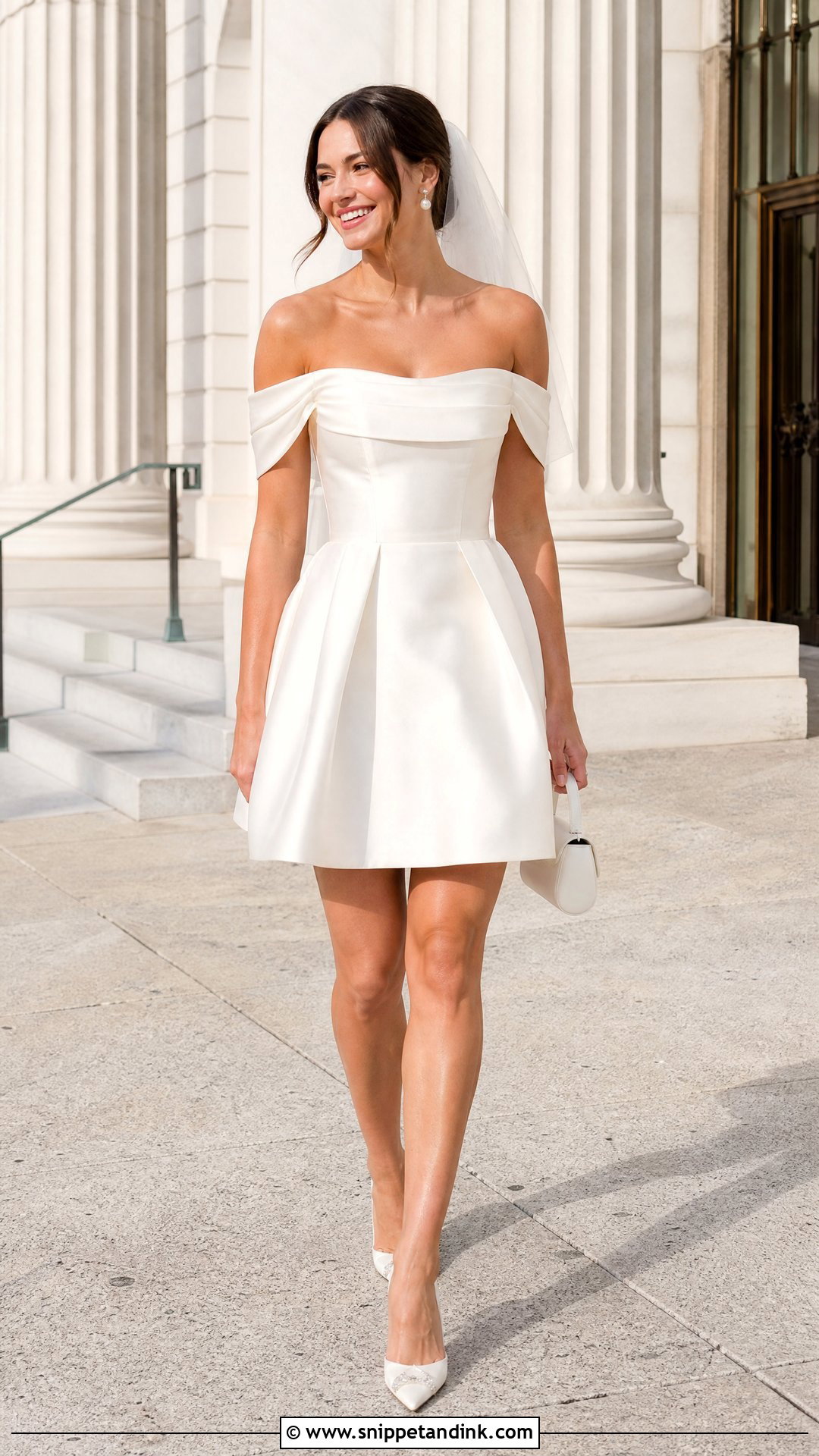
Short satin has a playful confidence, which makes a mini right for a courthouse ceremony, a reception change or a wedding-weekend event. A structured neckline and tailored bodice keep it bridal. A soft flare moves easily; a fitted column looks sharper. Add a short veil, pearl earrings, pointed pumps or low block heels and a small white bag, with a ponytail, smooth bun or curled bob. With legs and shoes fully on show, I check the hem from every angle and have brides sit down in it. Sheer tights or a hem just above the knee give more coverage if you want it.
16. Satin Off the Shoulder Tea Length Dress
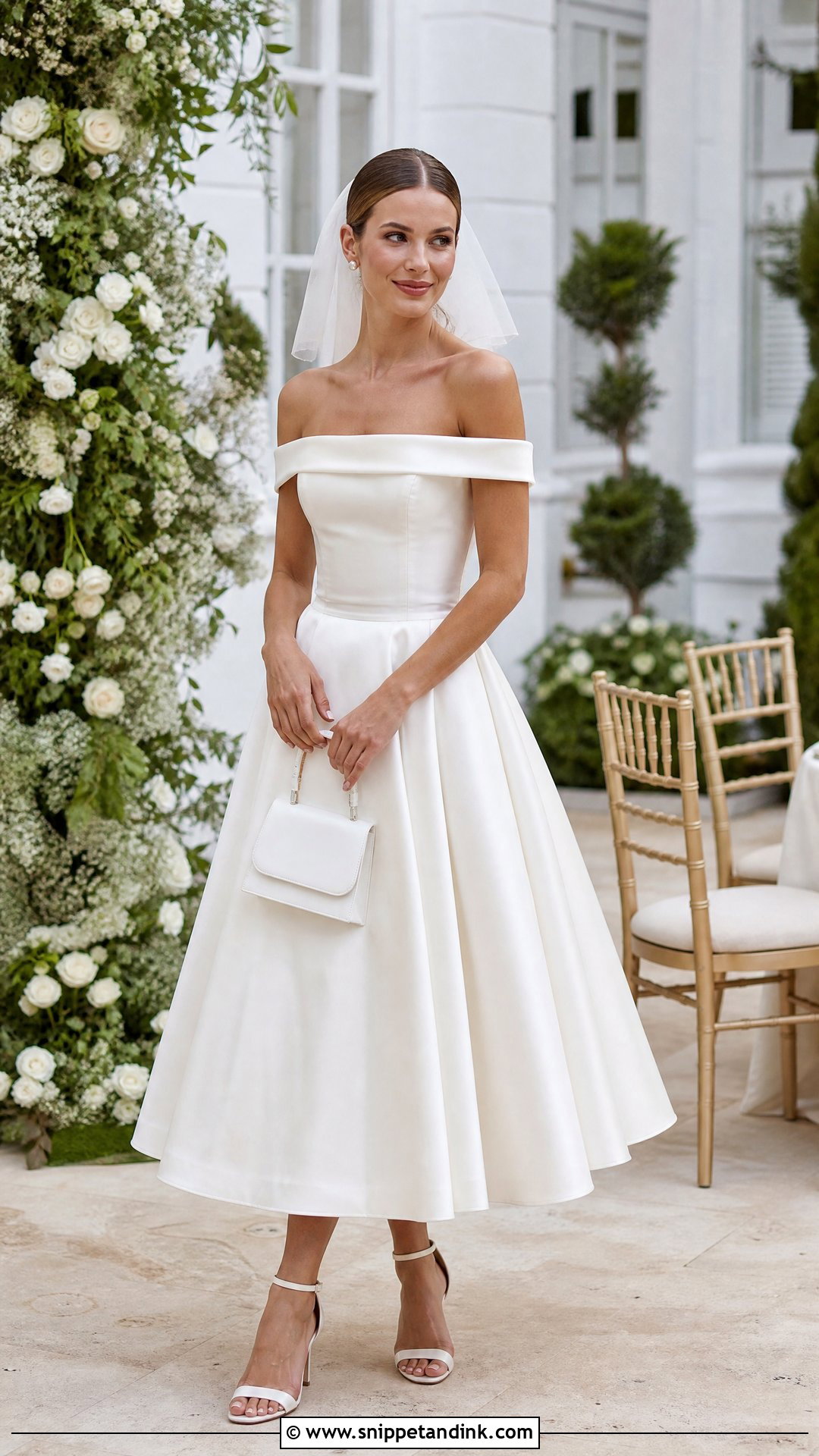
Tea length falls between knee and ankle, so the shoes become part of the dress. A fitted bodice, defined waist and softly flared skirt keep the shape balanced and give the satin some swing. Pearl studs, a short veil, pointed pumps or ankle-strap heels and a compact handbag complete it, with a polished bun or soft shoulder-length waves for a vintage feel that stops short of costume. Courthouse ceremonies, gardens and smaller receptions are a natural fit. Have the hem set while you’re wearing your actual wedding shoes; on this length, a half-inch difference changes how deliberate it looks.
17. Satin Off the Shoulder Drop Waist Dress
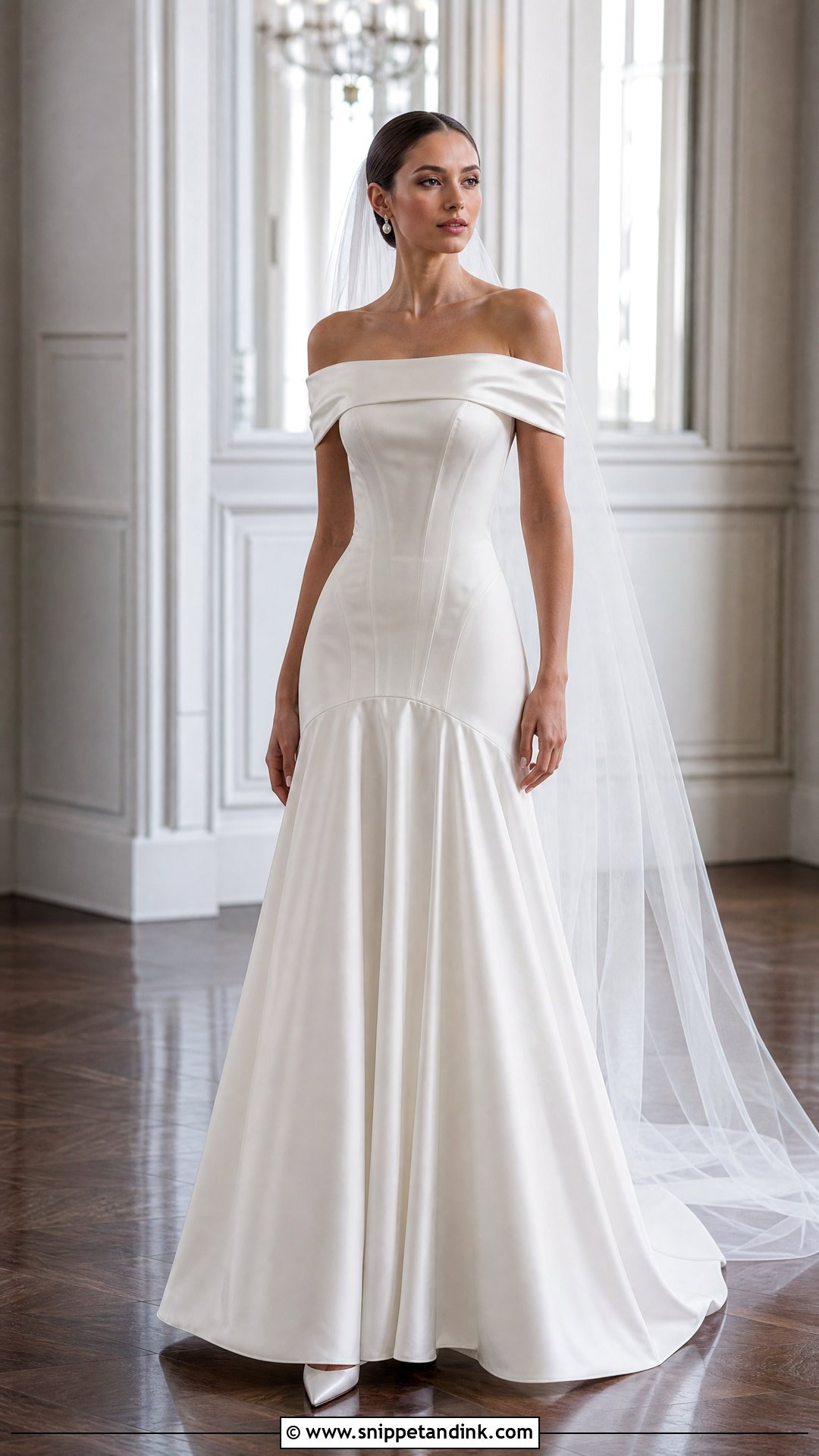
Extending the fitted bodice below the natural waist creates a long, sculpted upper body and a dramatic release into the skirt. Curved seams or light corsetry keep the fit smooth and supportive. Pearl earrings, a long plain veil, pointed heels and a sleek center-parted bun finish it; I’d skip a wide belt, which cuts straight through the long line. Drop waists feel different when you sit, so test it at every fitting and make sure the lower seam doesn’t buckle across the lap. Formal venues, modern ballrooms and editorial-style bridal portraits suit it.
18. Satin Off the Shoulder Ruched Dress
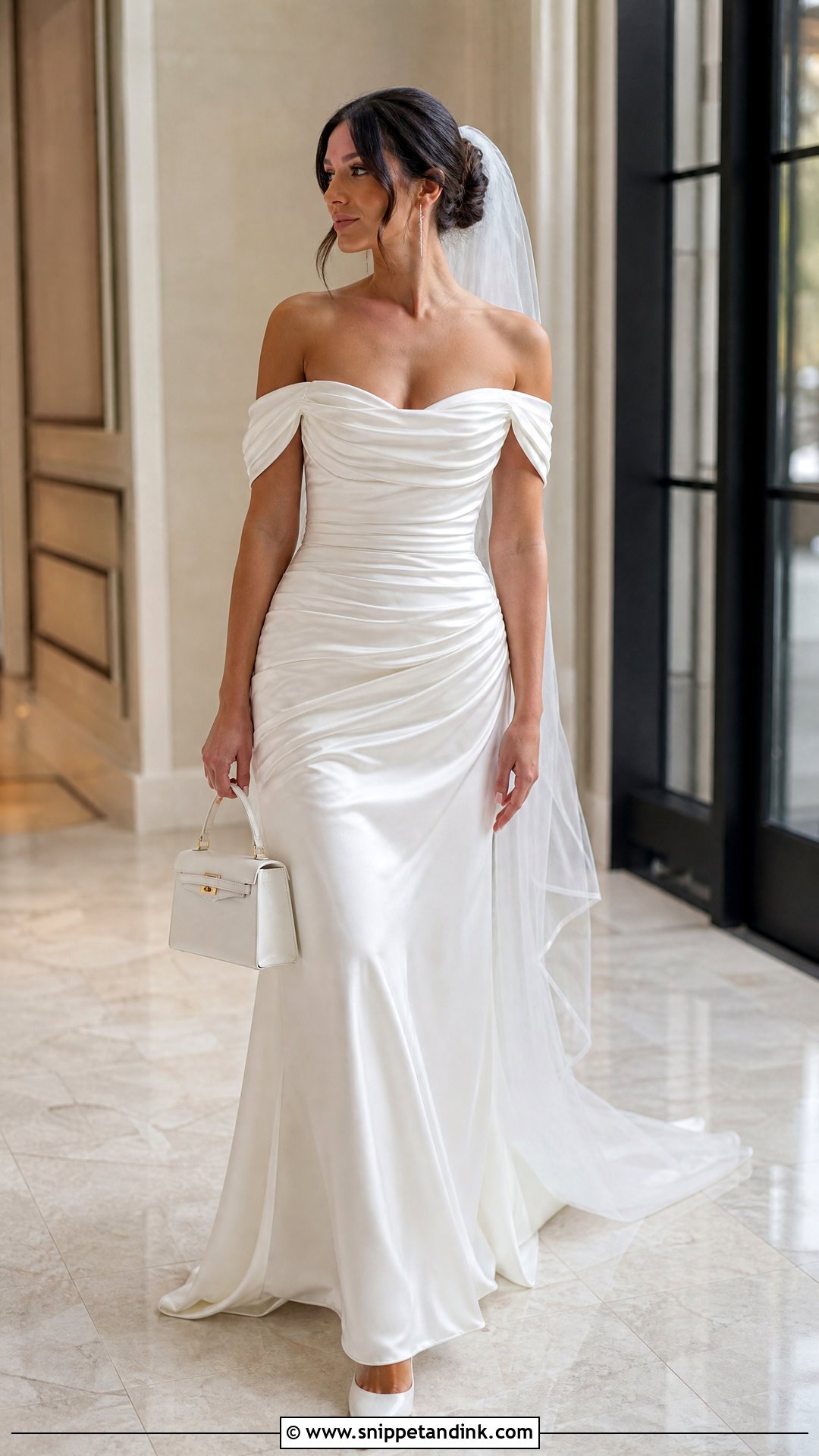
Ruching helps satin follow the body, but only when it’s used in one or two places, such as across the bodice, waist or hip, rather than everywhere. A fitted skirt reads glamorous; an A-line feels more relaxed. Streamlined earrings, a plain veil, satin pumps and a small structured bag suit it. Soft brushed waves echo the gathers, while a smooth bun gives contrast. At alterations, I check that the gathers fall evenly at the side seams, because uneven ruching looks like a fitting mistake rather than a design choice. It suits anything from a formal hotel wedding to a bright outdoor ceremony.
19. Satin Off the Shoulder Cape Dress
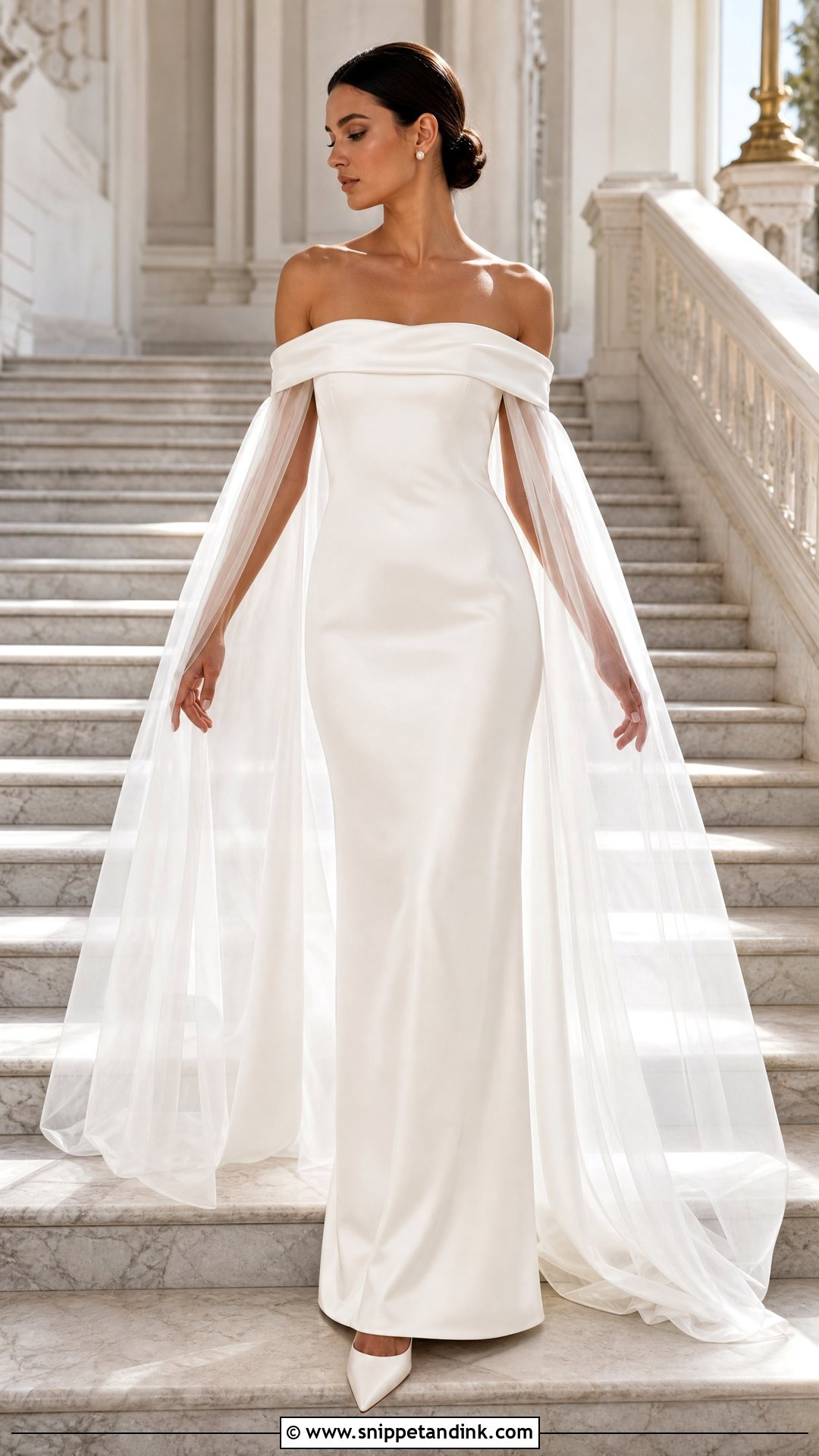
A detachable cape gives ceremony drama without a heavily embellished gown underneath. It might be sheer and floor-length, a structured satin capelet, or something light that clips in near the neckline. Keep the dress itself simple, with a fitted bodice over a column, A-line or ball gown skirt, and add small pearl earrings, pointed pumps and a sleek low bun. I’d skip a traditional veil if the cape already gives length behind you. Check the attachment points against the shoulders, practice taking the cape off quickly, and make sure its hem and the gown’s train work together so they don’t tangle during the entrance.


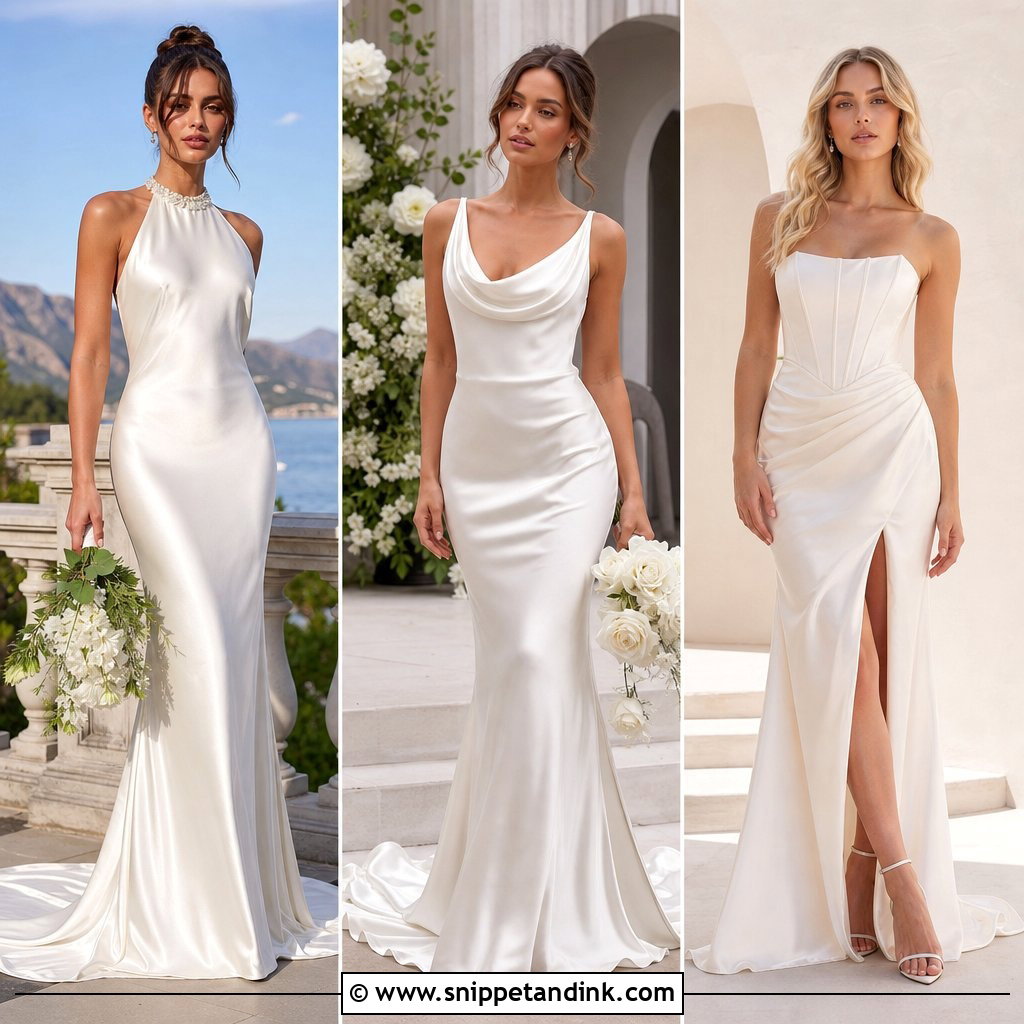
20. Plus Size Satin Off the Shoulder Dress
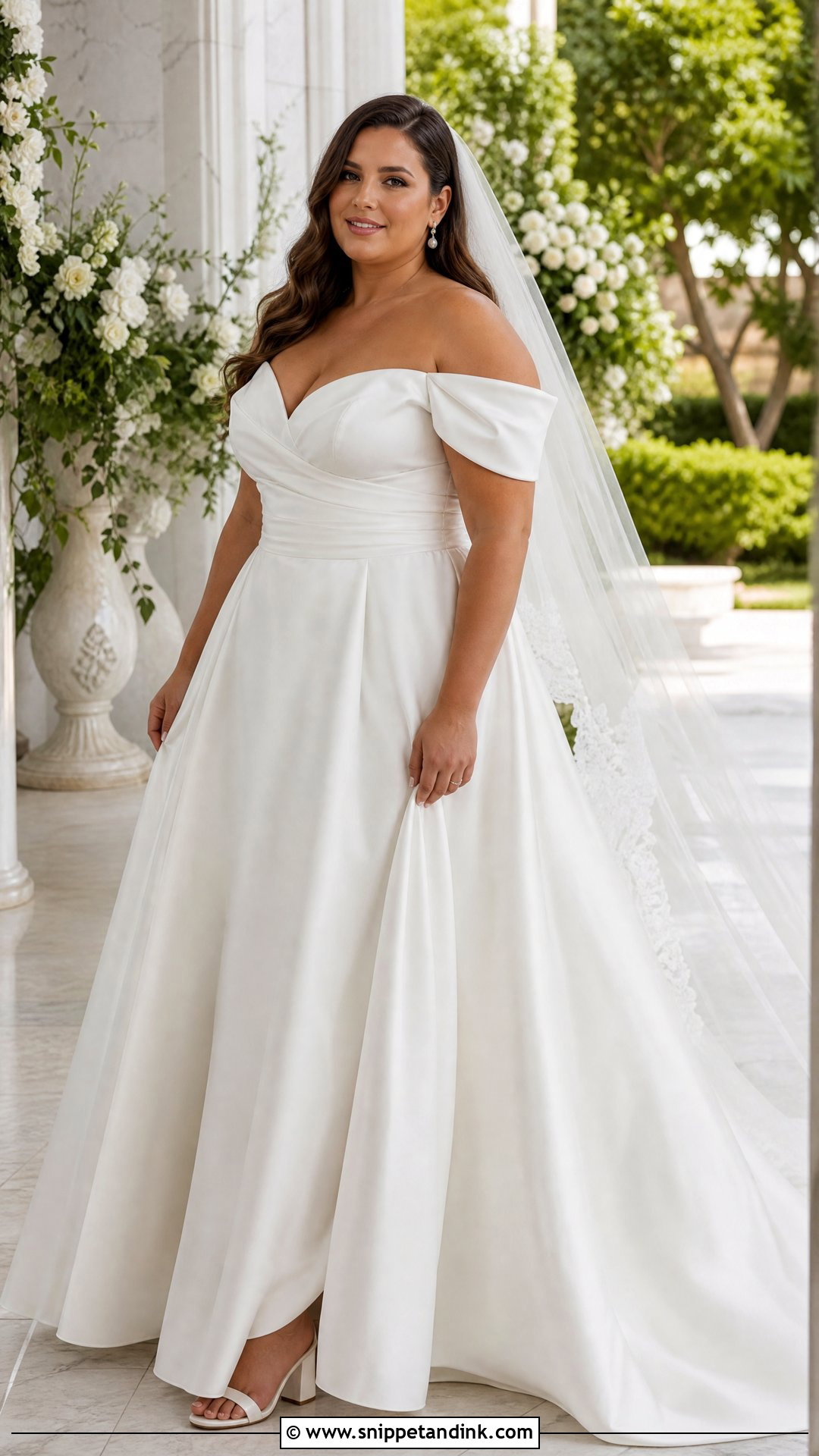
Support comes before style in a plus-size satin off-the-shoulder gown, and good construction makes room for both. Look for internal boning, properly fitted cups and shoulder bands that rest securely without pinning the arms. A-line and ball gown skirts give flowing volume; mermaids and columns skim the body. Choose the shape you actually want rather than following body-type rules. Pearl or crystal earrings, a veil suited to the venue, stable heels and hair that keeps the neckline visible complete it. I’d book fittings with a seamstress experienced in structured bridal gowns, and sit, walk, dance and lift your arms at every appointment.
Stopping the Shoulder Bands From Creeping Up or Sliding Down
The complaint I hear most about this neckline isn’t how it looks. It’s the constant tugging. Bands on the upper arm ride up every time you hug someone, or slip lower when you lift a glass, and most of that comes down to how the bodice is built rather than the bands themselves.
A bodice that’s properly boned and fitted at the ribcage carries the dress, so the bands only have to rest in place. If the gown relies on the bands to hold itself up, you’ll feel it within the hour. Ask your seamstress about a waist stay, which anchors the bodice at your natural waist, and a strip of silicone grip tape inside each band. Clear or skin-toned elastic between the bands at the back is another option, and it barely shows under a veil.
At the final fitting, run the full routine: hug someone, reach for a high shelf, sit, stand and slow dance for a minute. If a band moves more than a finger’s width, get it adjusted then rather than pinning it on the day.
Satin on the morning itself
- Hang the gown in its breathable bag as soon as it arrives, with the skirt free rather than folded on a closet floor.
- Steam from the inside of the skirt and keep the nozzle moving. An iron pressed straight onto satin can leave a permanent shine.
- Blot spills gently with a dry white cloth; even clean water can leave a ring on silk satin, so leave real stains to a cleaner after the wedding.
- In the car, gather the back of the skirt around you instead of sitting on it flat, so you don’t arrive with a crushed panel.
Fit the Bodice First and the Shoulders Will Follow
A satin off-the-shoulder gown has to balance impact, comfort and construction. The neckline works with a traditional ball gown, a contemporary column and nearly everything in between, so let the venue and season narrow things down, then give equal weight to movement, sleeve placement, bodice support and alterations. Keep accessories from covering the neckline or the smooth fabric. I’d bring your actual shoes and undergarments to every fitting and look at the gown from all sides. The dress you want is the one that still sits right after you’ve hugged everyone you love.
You'll Like These Ideas:



Leave a Reply