
Storybook cakes are fun to design and easy to overdo. The ones that work keep a wedding cake’s shape and let the magic live in the details: soft florals, woodland texture, pearls, climbing vines, pressed petals or a little moonlit shimmer. When couples bring me an enchanted brief, my job is mostly editing, deciding which two or three of those ideas the cake can carry before it tips into costume. Garden, ballroom, barn, greenhouse and forest venues all suit some version of it. Here are 20 enchanted cakes, with how I’d build each one and where it can go wrong.
Turning the Fairytale Dial Up or Down
At a consultation I ask couples to place themselves on a simple scale, because enchanted can mean a whisper or a full forest.
- A hint: a classic tiered cake in ivory or a soft color, with one magical element such as pearls, a vine or a few butterflies. It suits formal venues and couples who want the cake to age well in photos.
- A clear theme: two or three related details, for example moss at the base, sugar mushrooms and fern. The cake still has a clean shape.
- Full storybook: textured tiers, many sugar pieces, a themed stand and props around the cake. It needs a large table and usually a bigger budget, since every handmade piece takes time.
My advice is to let the table carry some of the theme. Candles, a moss runner or a wooden stand can do the scene-setting, so the cake itself stays elegant and tastes like a cake rather than a sculpture.
1. Enchanted Forest Wedding Cake
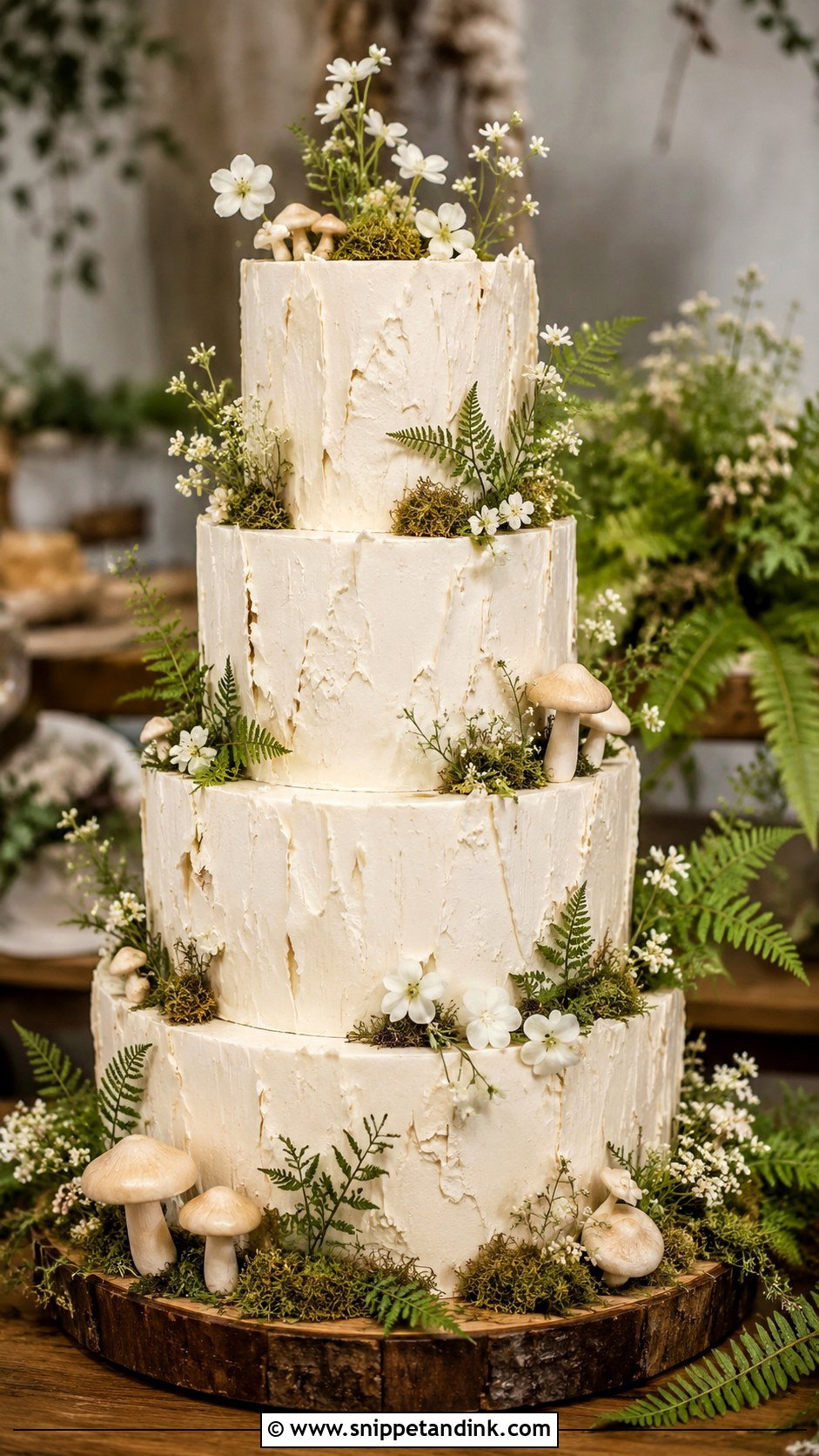
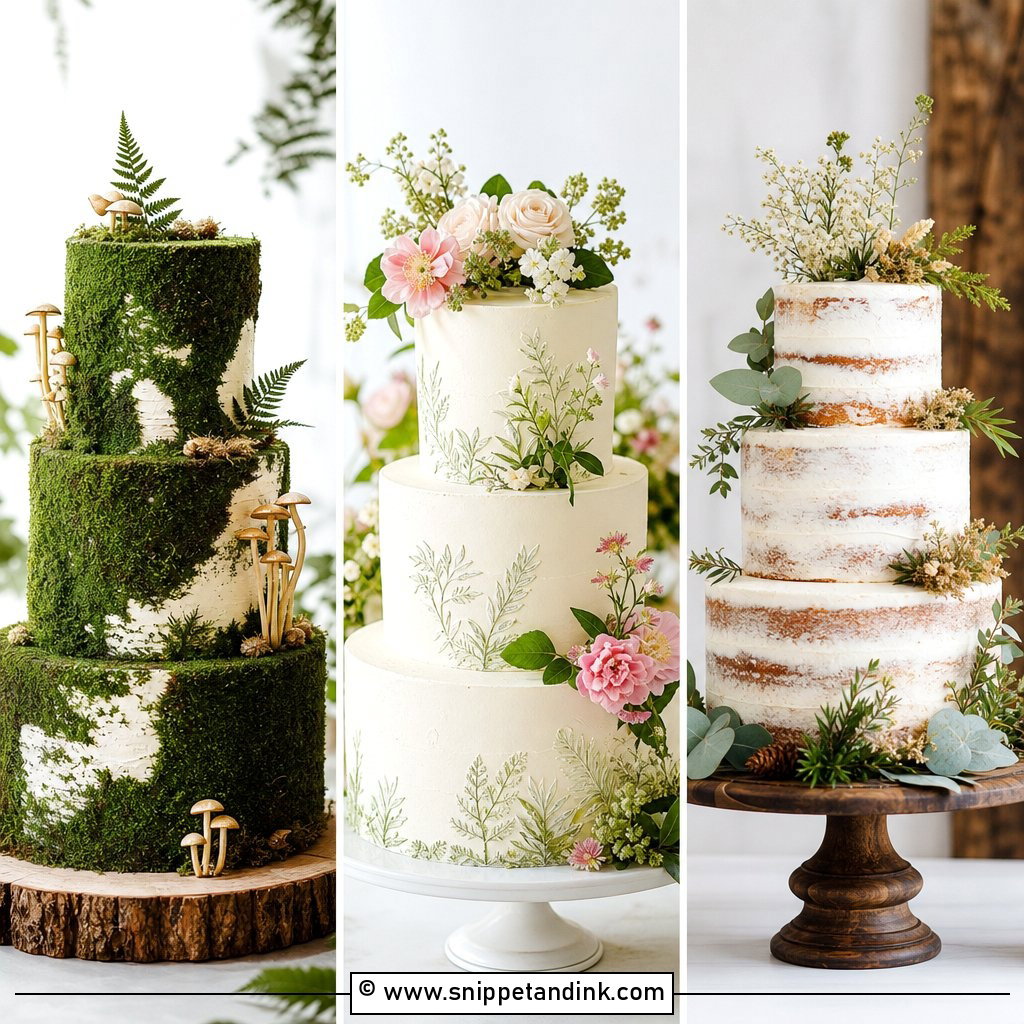
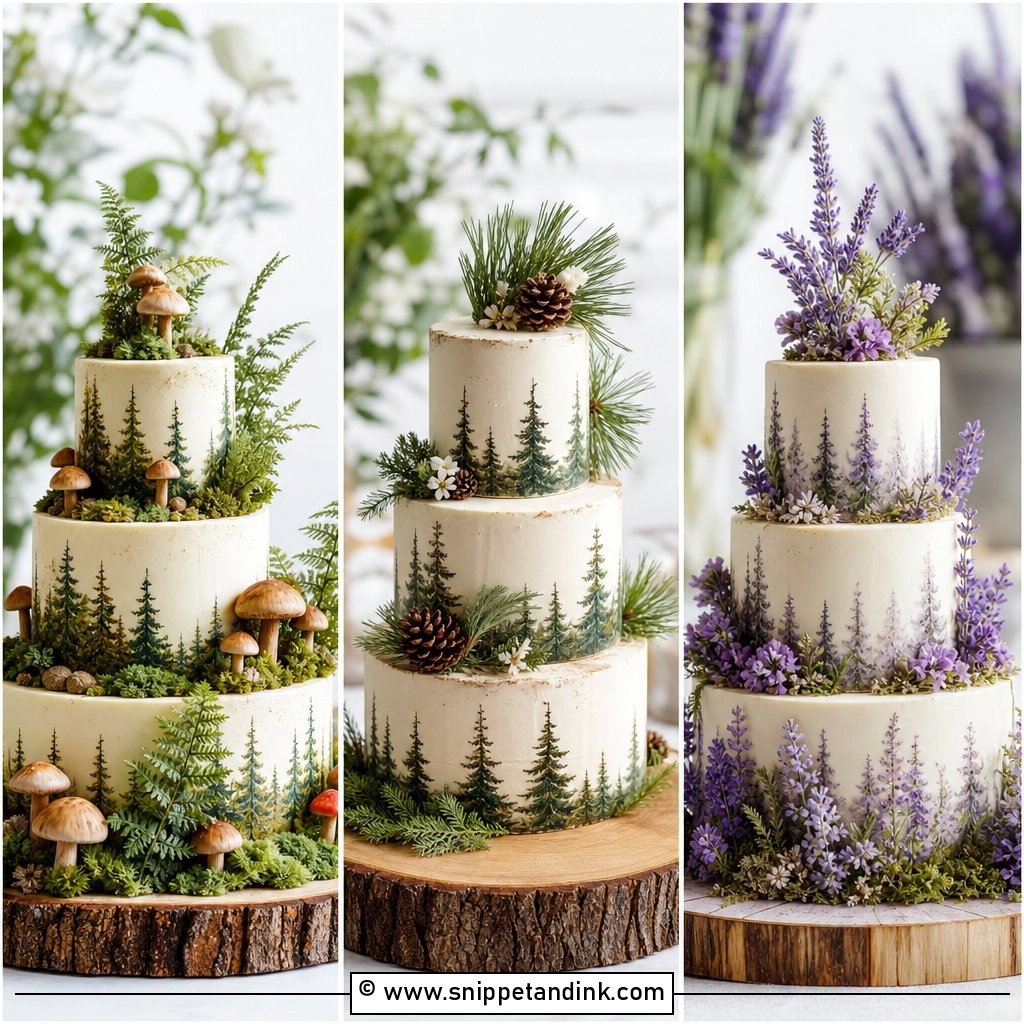
An enchanted forest wedding cake usually runs three or four tiers in soft ivory with details that look gathered from the woods: edible moss, small sugar mushrooms, fern accents and climbing vines. I keep the colors muted, sage, cream, taupe and soft brown, because bright greens make it look like a children’s party cake. A wood slice stand grounds it, with parchment or a board between the wood and the cake. Vanilla bean, honey or spiced pear inside keeps the flavor in the same cozy key.
2. Fairy Garden Wedding Cake
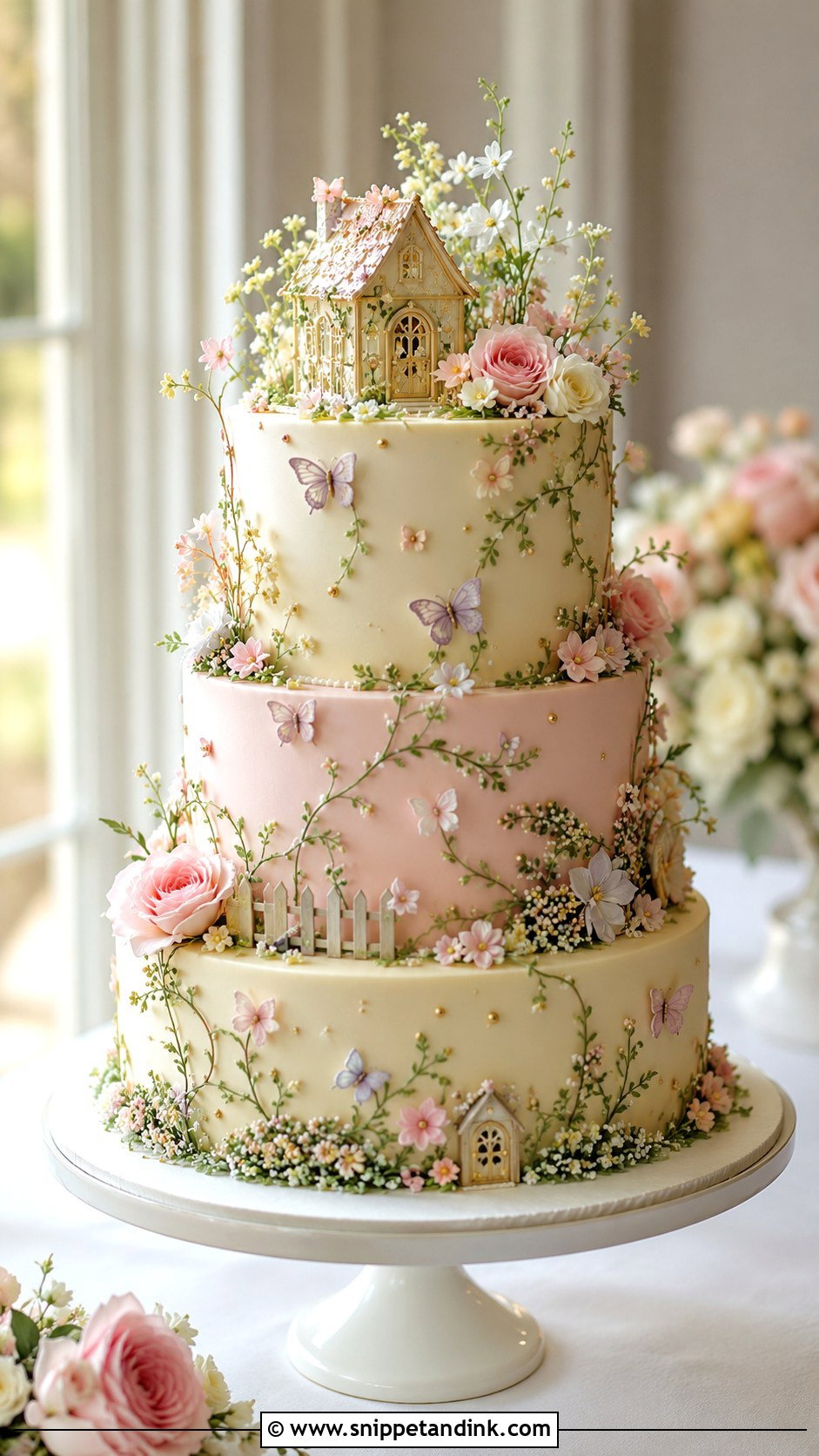
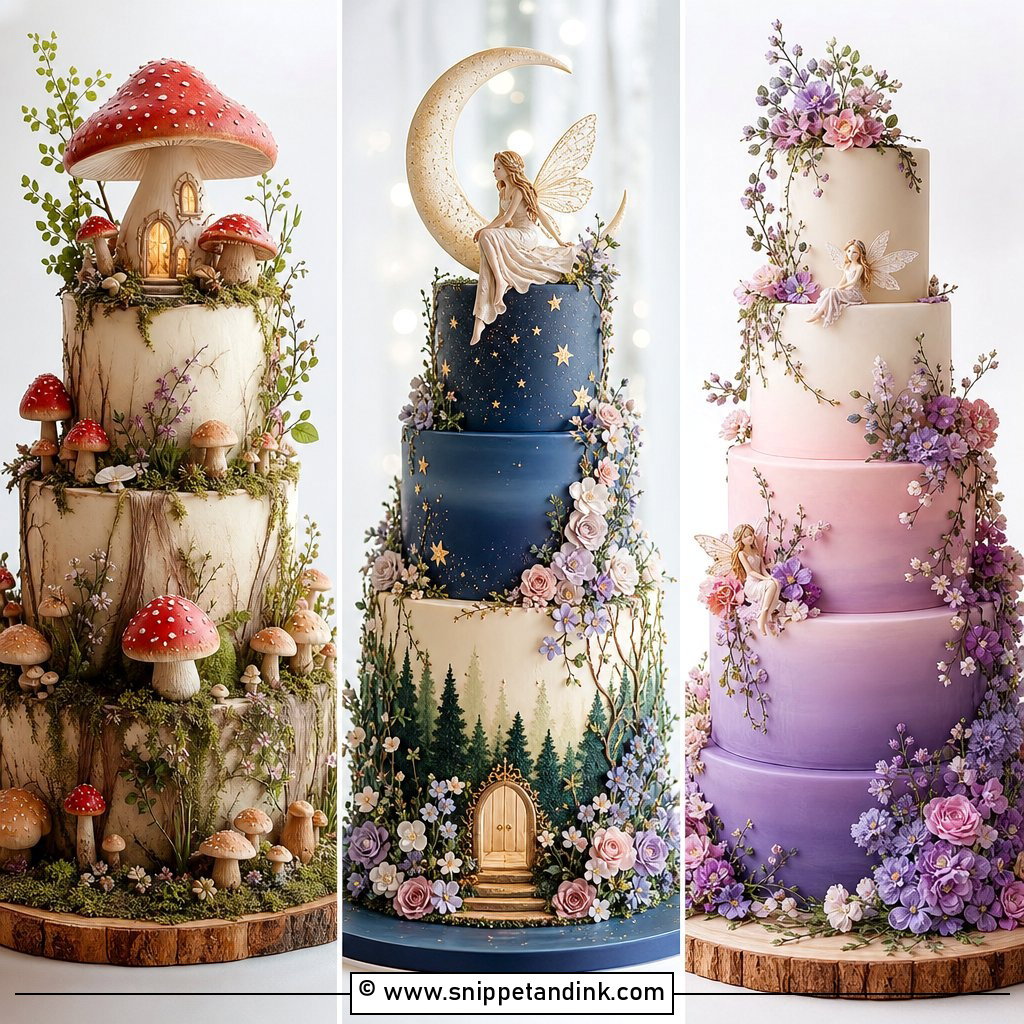
Where the forest cake is earthy, a fairy garden is light: pastel buttercream, tiny sugar blossoms, edible butterflies and a touch of gold. The tiers can be round, stacked or slightly uneven for a grown-in look. I’d lean on sugar flowers over fresh here, since they hold their shape on a long display and give me full control of color. Spring and outdoor weddings suit it, with lemon, elderflower or raspberry fillings.
3. Woodland Wedding Cake
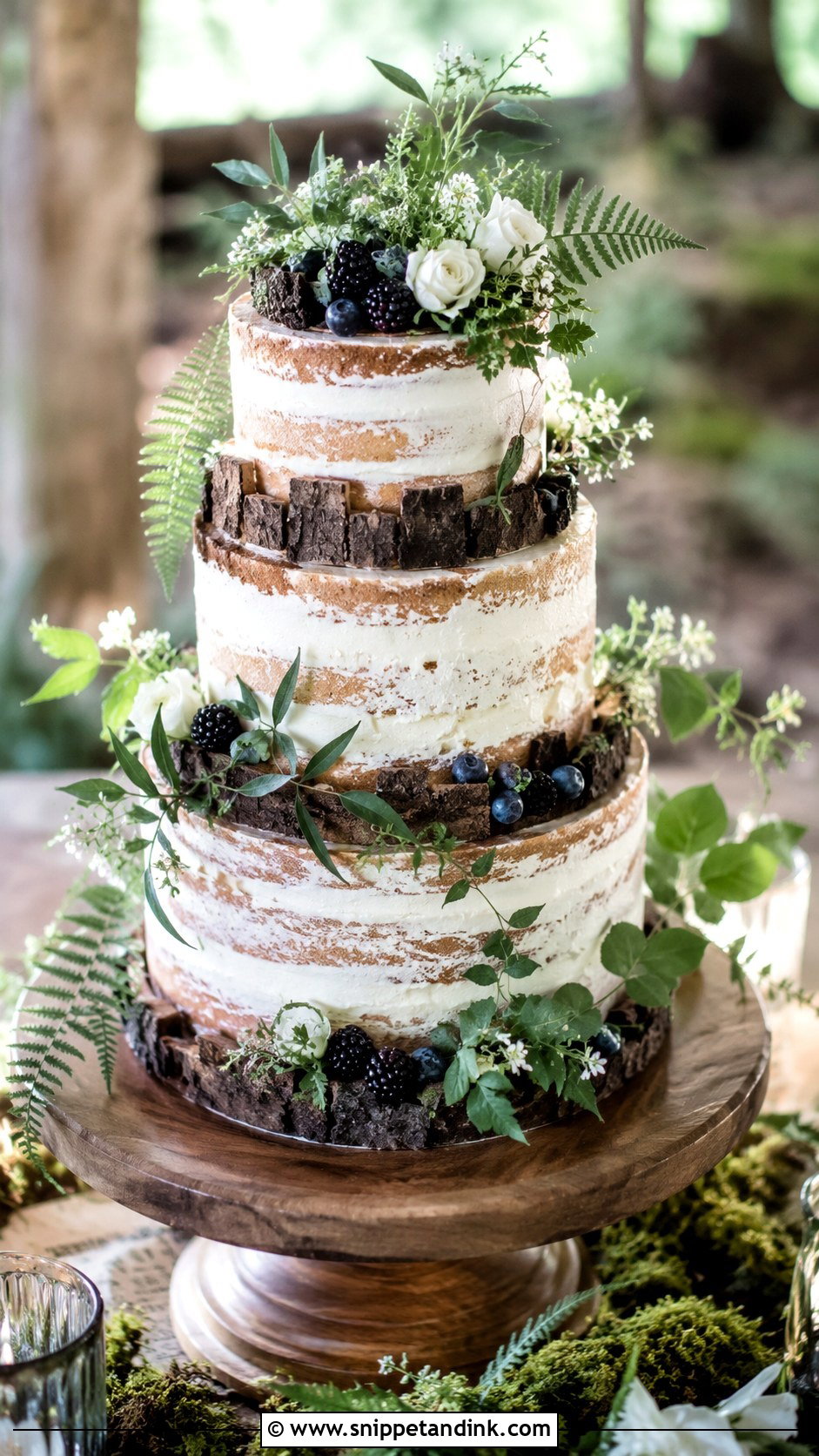
Bark-textured buttercream, hand-painted leaves, fondant acorns and greenery around each tier give you the woods without the drama. The trick is restraint. I keep the tier structure clean and put the natural details at the joins, so the cake still reads as a wedding cake from across the room. A semi-naked finish suits a less formal day. Chocolate, hazelnut, maple, carrot or spice cake carries the woodland mood inside.
4. Moss Wedding Cake
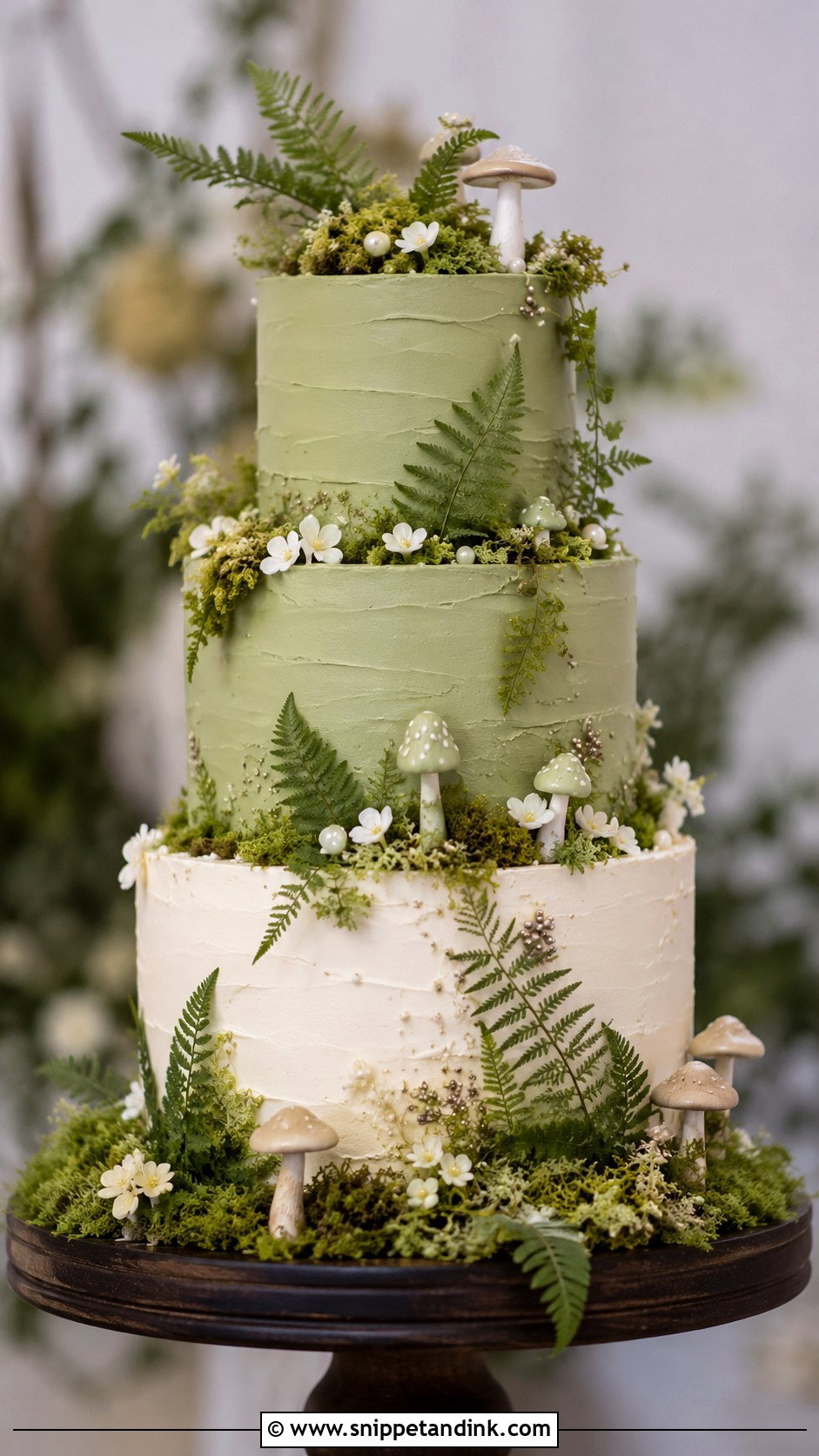
Moss looks magical and is entirely edible when it’s made properly. I make it from finely crumbled green sponge or tinted cake crumbs pressed into buttercream, so it reads as forest floor and tastes like cake. Real moss from a garden or florist should never go on a cake. On a smooth ivory or pale green base, the texture shows clearly; I add small sugar flowers, mushrooms, ferns and a few pearls in patches rather than covering everything. A wooden stand with greenery tucked around the base completes it, and matcha, pistachio or almond flavors suit the color.
5. Mushroom Wedding Cake
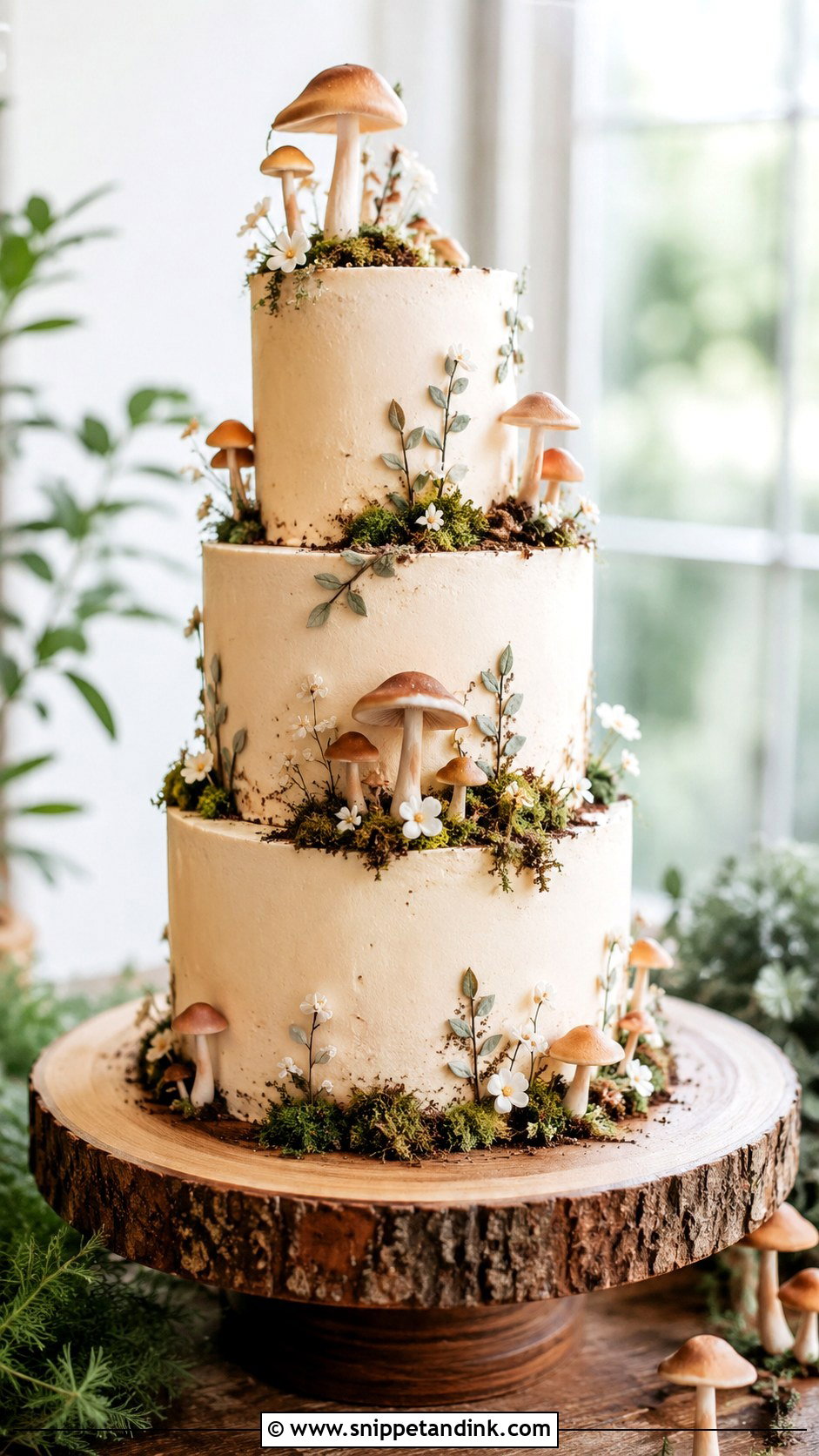
A mushroom wedding cake can be elegant if the mushrooms are realistic, not cartoon. I pipe and bake meringue mushrooms or shape them in sugar paste, then dust them in cream, blush, tan and terracotta so they look like real woodland caps. They sit best clustered at the base or climbing gently up one side. Edible moss, soft leaves and tiny white flowers fill in around them. Brown butter vanilla, chocolate hazelnut and maple walnut suit it. Foraged mushrooms, even dried ones, are never used as decoration.
6. Vine Wedding Cake
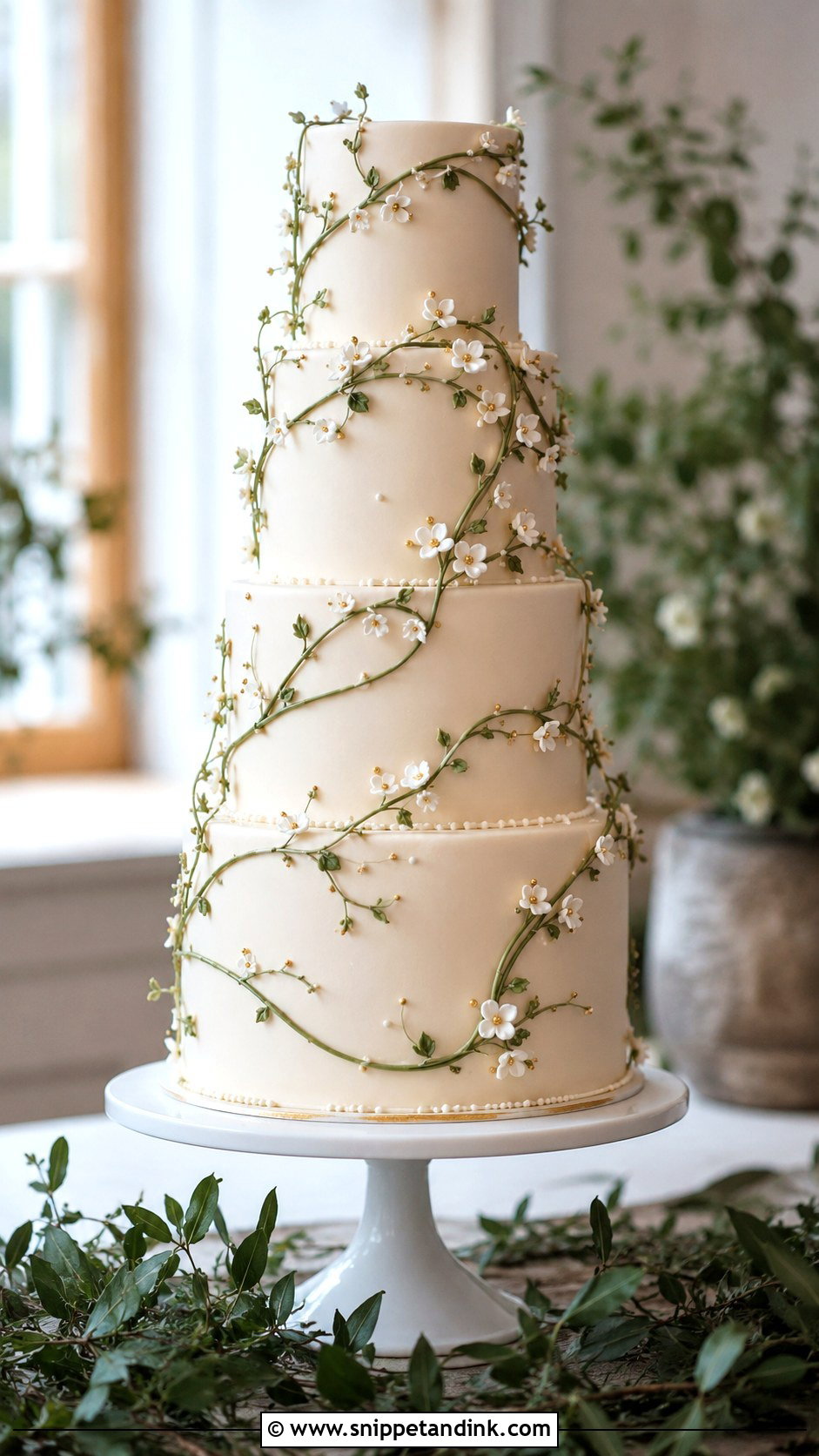
Vines are the most adaptable detail on this list. I pipe them in buttercream, paint them by hand or shape them from sugar paste, depending on the finish. Pale green vines with tiny white blossoms feel like a garden; darker vines wrapping tall ivory tiers feel more like a fairytale. The vertical lines draw the eye up, which flatters a tall cake. A smooth base matters, because vines over rough texture look tangled rather than graceful. Vanilla almond, lavender honey or lemon elderflower suit it.
7. Floral Enchanted Wedding Cake
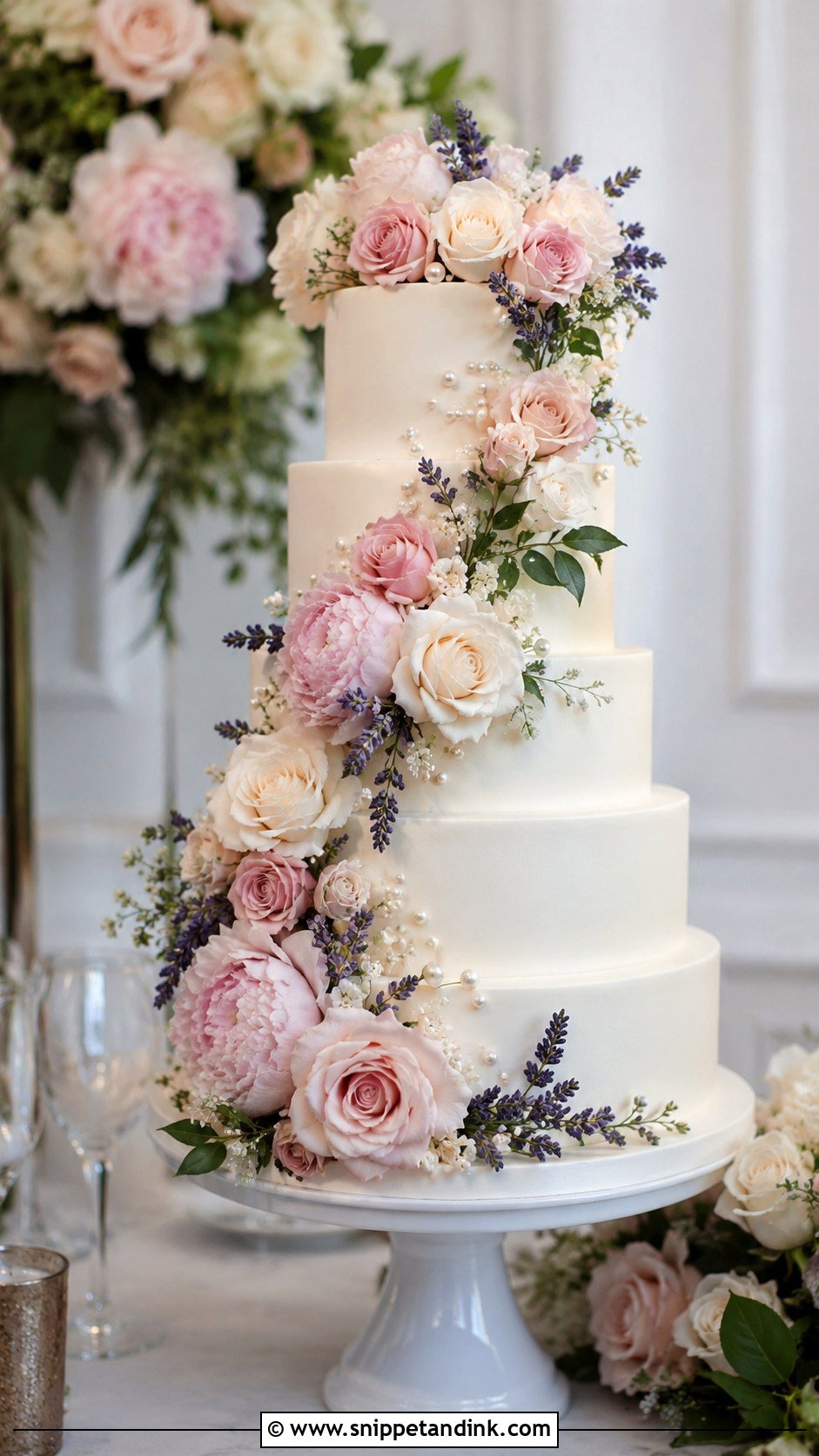
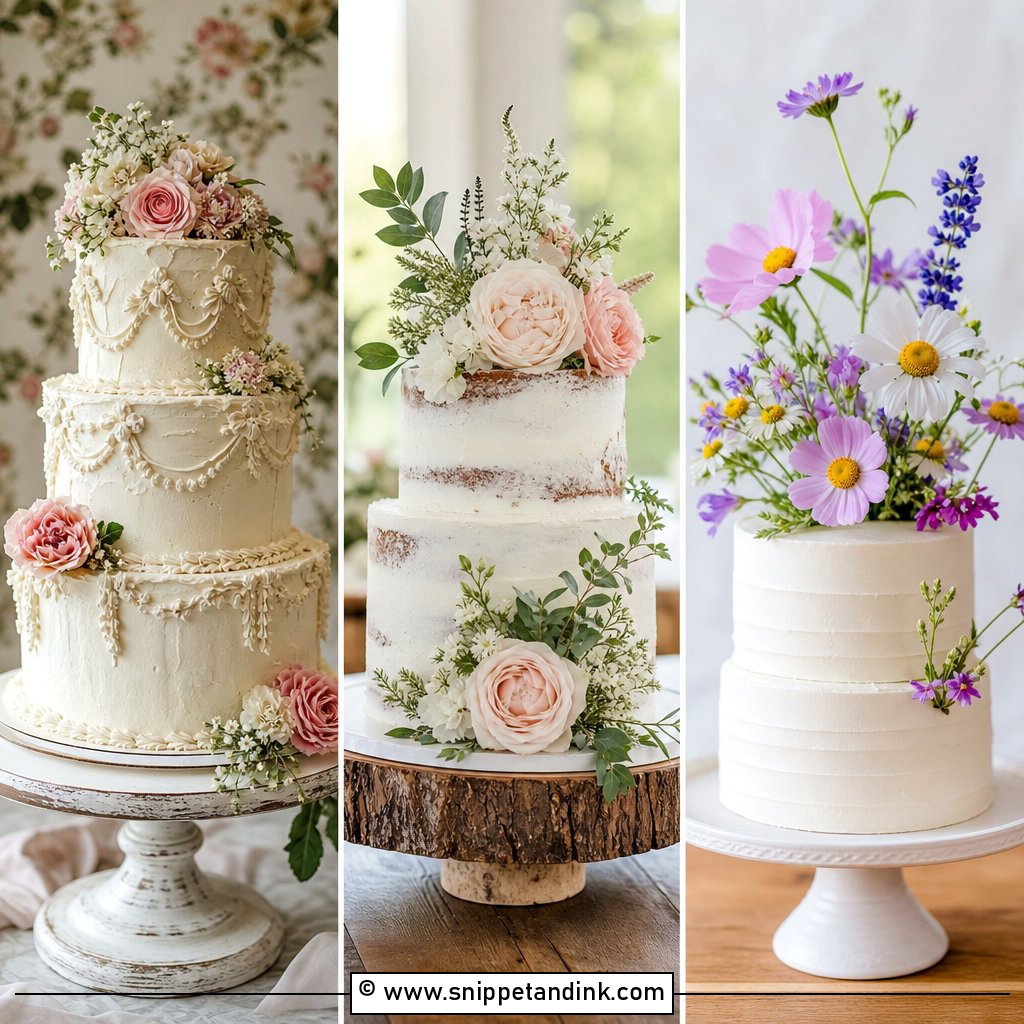
Florals make a cake feel enchanted when they look slightly wild. I place them in loose drifts, with a few stems escaping the arrangement, rather than tight, round clusters. Cascading sugar flowers, pressed edible petals, fresh garden blooms or a mix can all work in blush, ivory, lavender, peach and dusty blue. The cake under them can be smooth, semi-naked or lightly textured. Garden and estate venues suit it, as do vanilla bean, rose or almond raspberry flavors.
8. Butterfly Wedding Cake
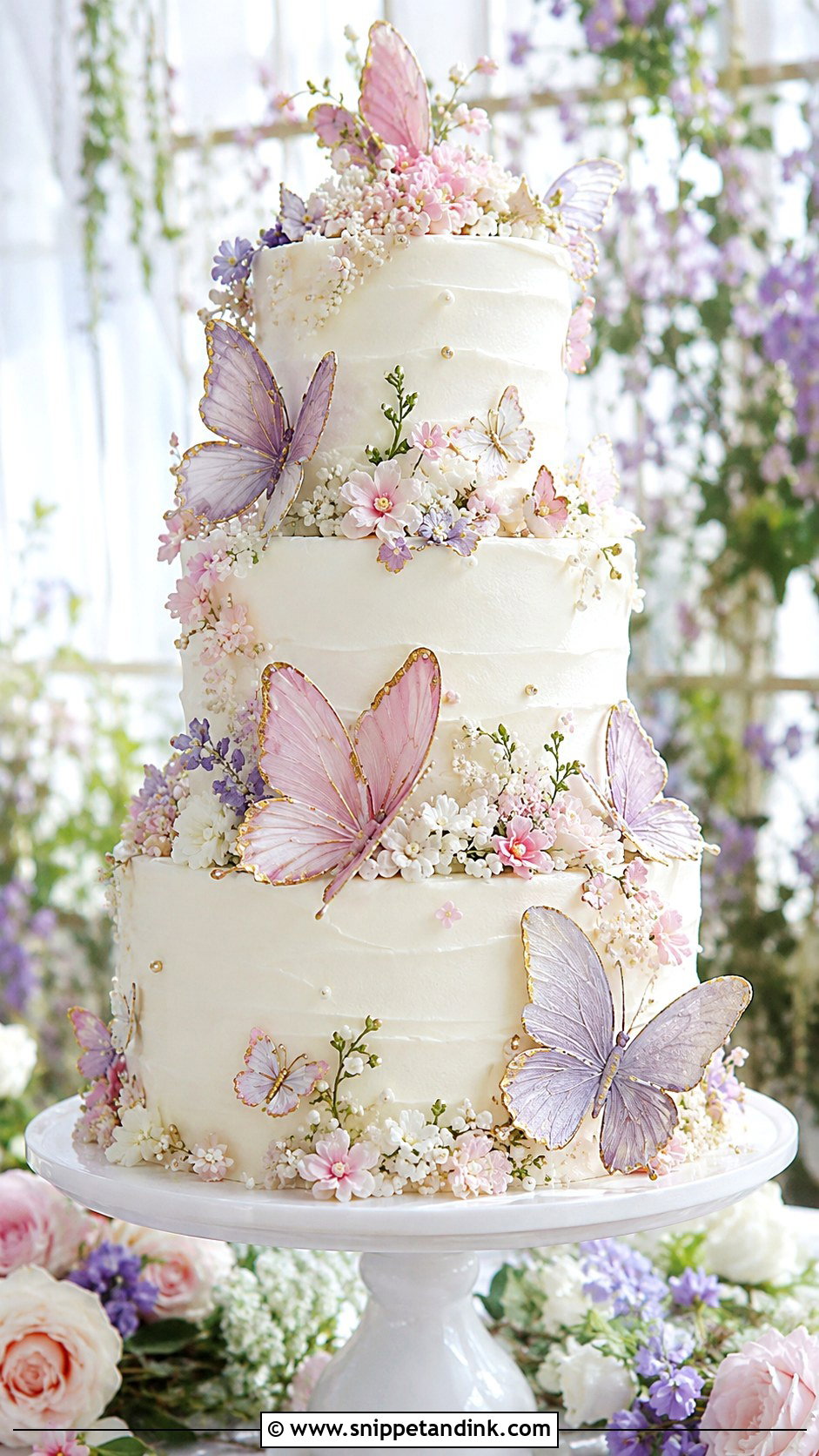
A butterfly wedding cake needs movement, so I place the butterflies as if they’re lifting off the lower tier and thinning out toward the top. Wafer paper butterflies are the lightest and look most delicate, though they curl in humidity; sugar ones are sturdier. Painted butterflies stay flat. Any butterfly on a wire must go into a food-safe pick, never straight into the sponge. White, blush, pale blue, champagne or lavender frosting keeps the background soft, with lemon, coconut or orange blossom inside.
9. Pearl Wedding Cake
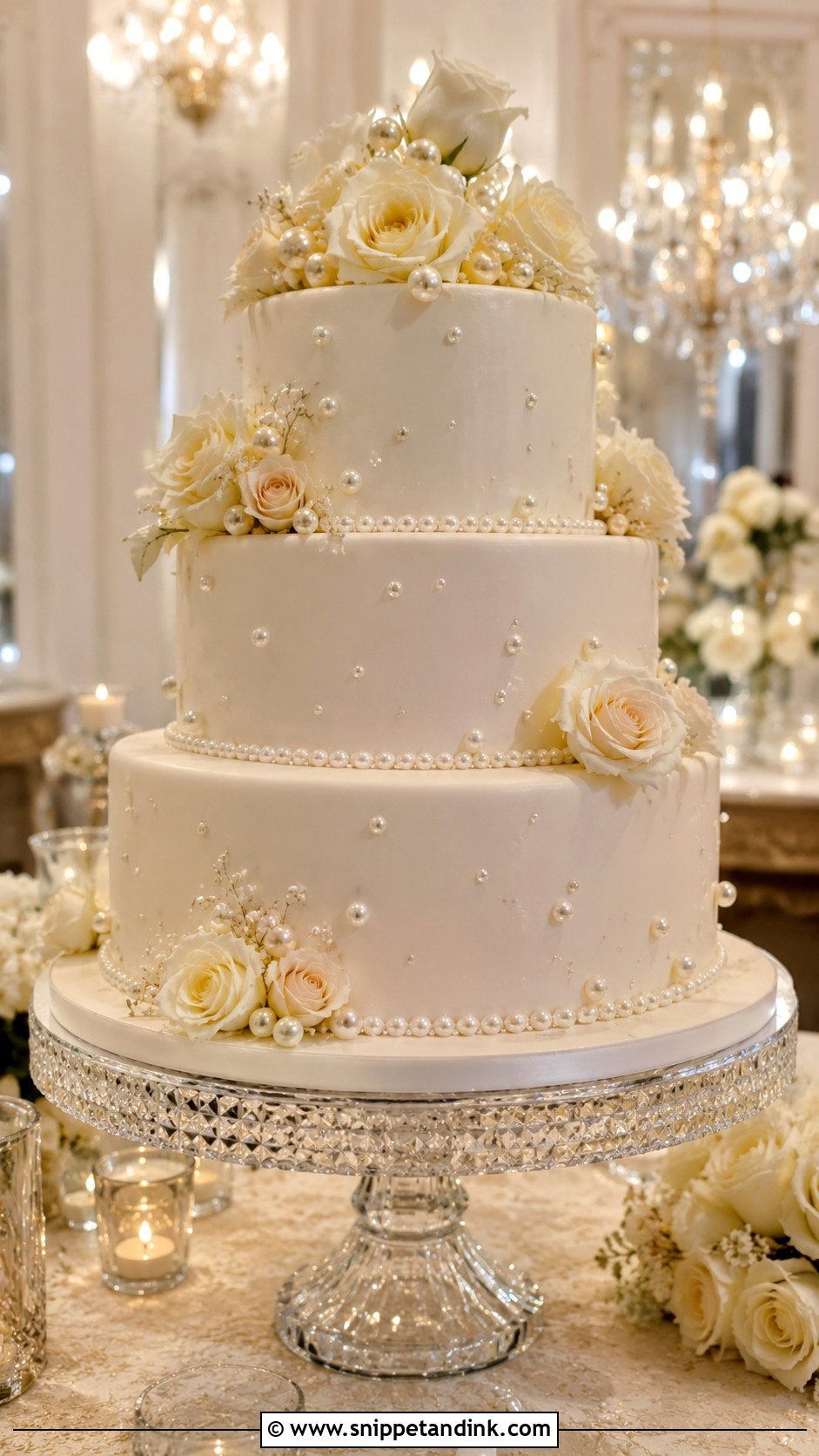
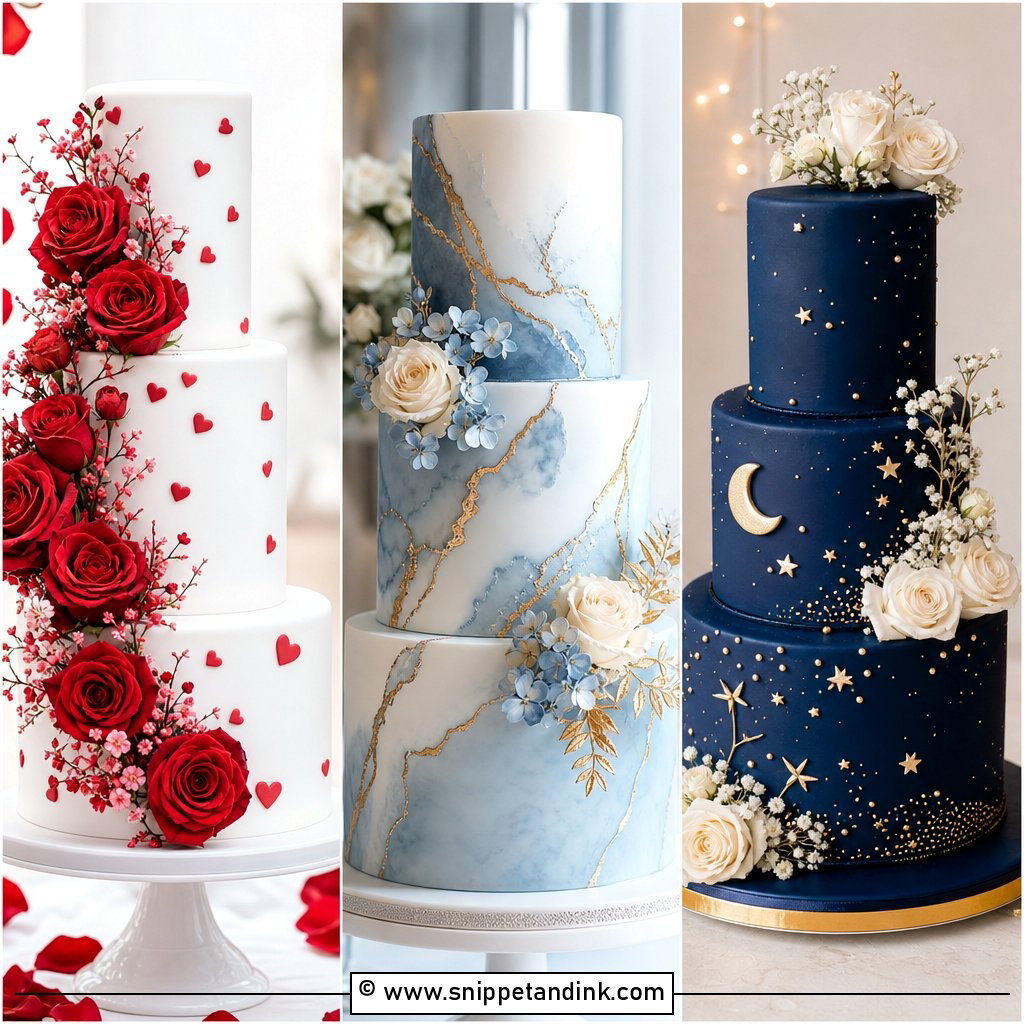
Pearls are a quieter kind of magic. Instead of woodland pieces, the cake relies on shimmer: pearls scattered across smooth fondant, set in borders or tucked among sugar flowers in ivory, champagne, soft pink or pale gold. Tall, slender tiers suit it best. Hard sugar pearls can be tough to bite, so I use softer ones on areas that get sliced and save hard dragees for decoration that comes off. Ballroom and classic receptions with a fairytale feel suit it, with vanilla bean, almond cream or white chocolate raspberry.
10. Gold Wedding Cake
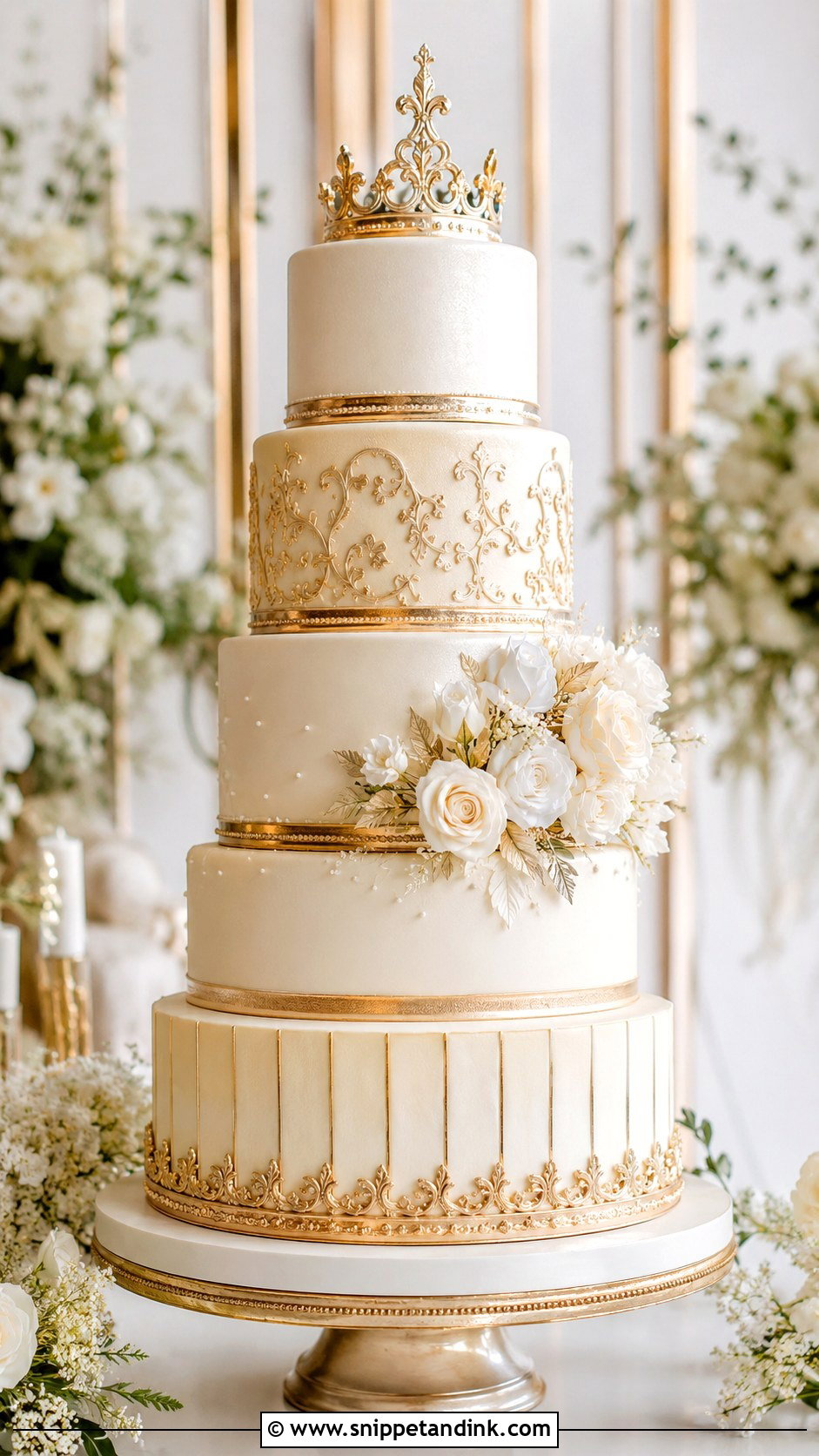
Gold says royal fairytale, and the danger is too much of it. Gold leaf on tier edges, brushed metallic details, thin bands or a soft drip are all enough on their own. I’d pair it with ivory, blush, sage or dusty blue, plus sugar flowers, vines or pearls to keep it bridal. In candlelight, a little leaf glows; a fully gilded tier just looks brassy. Check that whatever gold your baker uses is sold as edible. Vanilla almond, caramel, honey or spiced pear suit the warm tone.
11. Blush Wedding Cake
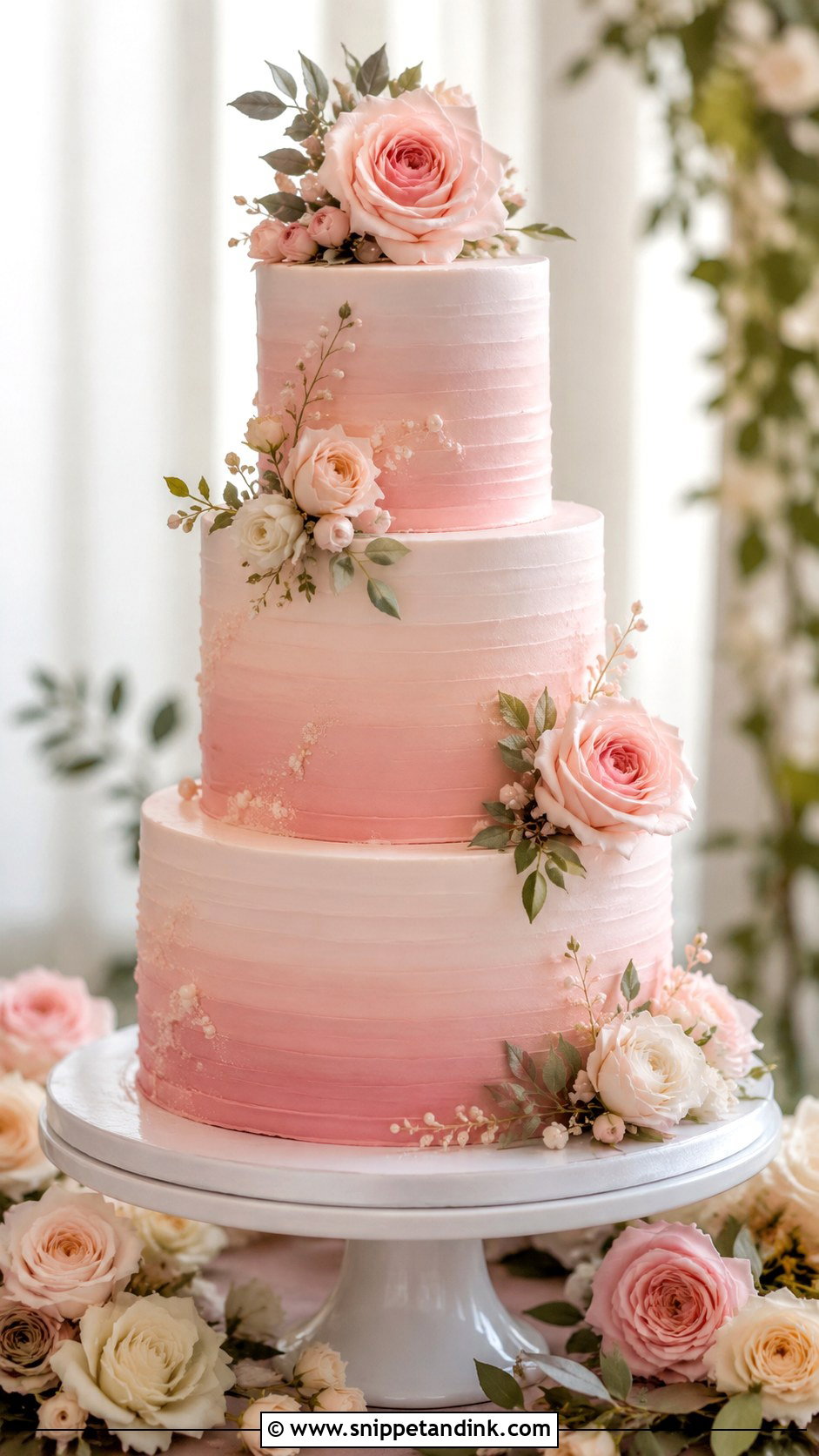
Blush can cover the whole cake in buttercream, fade as an ombre or sit as watercolor shading. I add sugar roses, trailing greenery, small pearls or a little edible sparkle for the enchanted note. Blush sits easily alongside ivory, champagne, mauve and sage, which makes matching flowers and linens simple. Pale pink buttercream can fade in strong sun, so I keep these cakes shaded until they’re served. Strawberry vanilla or raspberry almond keeps the flavor as soft as the color.
12. Lavender Wedding Cake
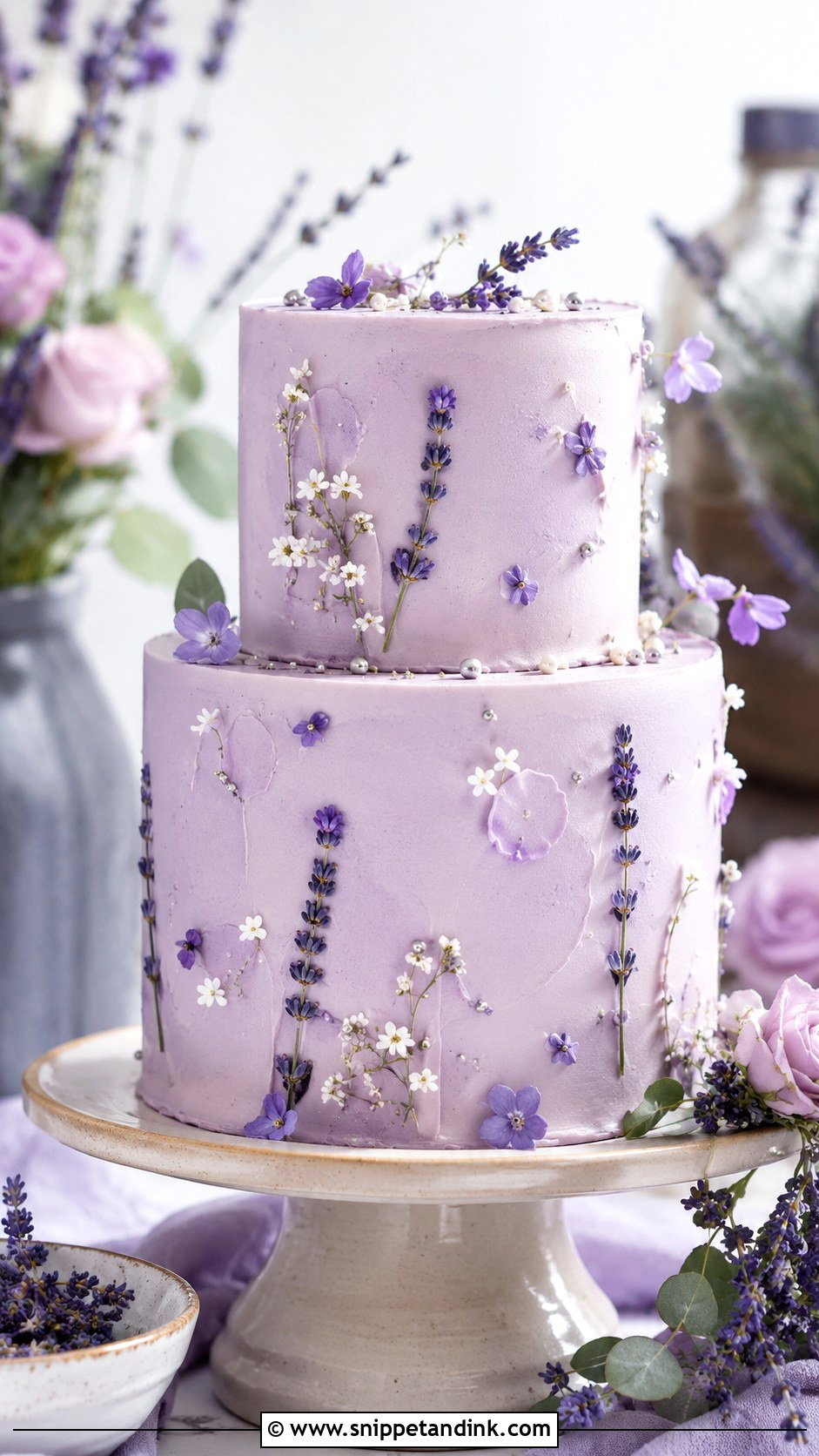
A lavender wedding cake gives you color without boldness. I’d use pale lavender buttercream, watercolor fondant or pressed edible flowers, with small silver or pearl accents for a moonlit feel and greenery to keep it natural. Purple icing is the most likely color to shift: it can fade or turn bluish under light, so I color it close to the event and compare it with your actual flowers, such as lilac, sweet pea or dusty purple roses. Lemon lavender is the obvious flavor; honey almond is a gentler one.
13. Moon Wedding Cake
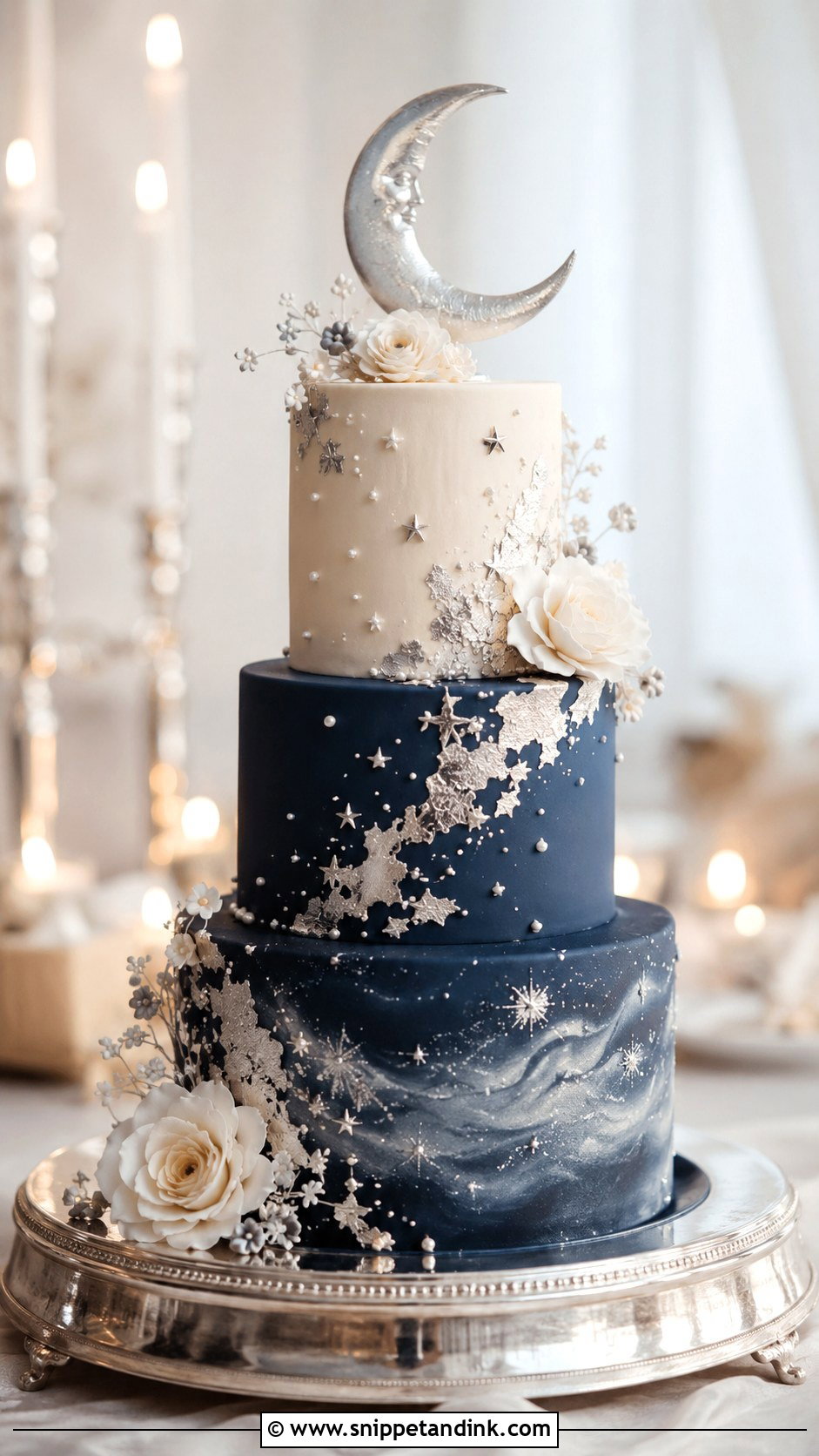
Celestial cakes use deep blue, ivory, silver or soft gray with crescent moons, stars and gentle shimmer. Kept on a smooth base with restrained decoration, they look elegant rather than dark. A crescent topper, silver leaf and tiny pearl stars make a night sky. Deep navy needs a lot of coloring, the same issue as black, so I often keep the blue to one tier and the rest ivory. Evening weddings, string-lit gardens and candlelit ballrooms suit it, with chocolate, Earl Grey or blackberry flavors.
14. Castle Wedding Cake
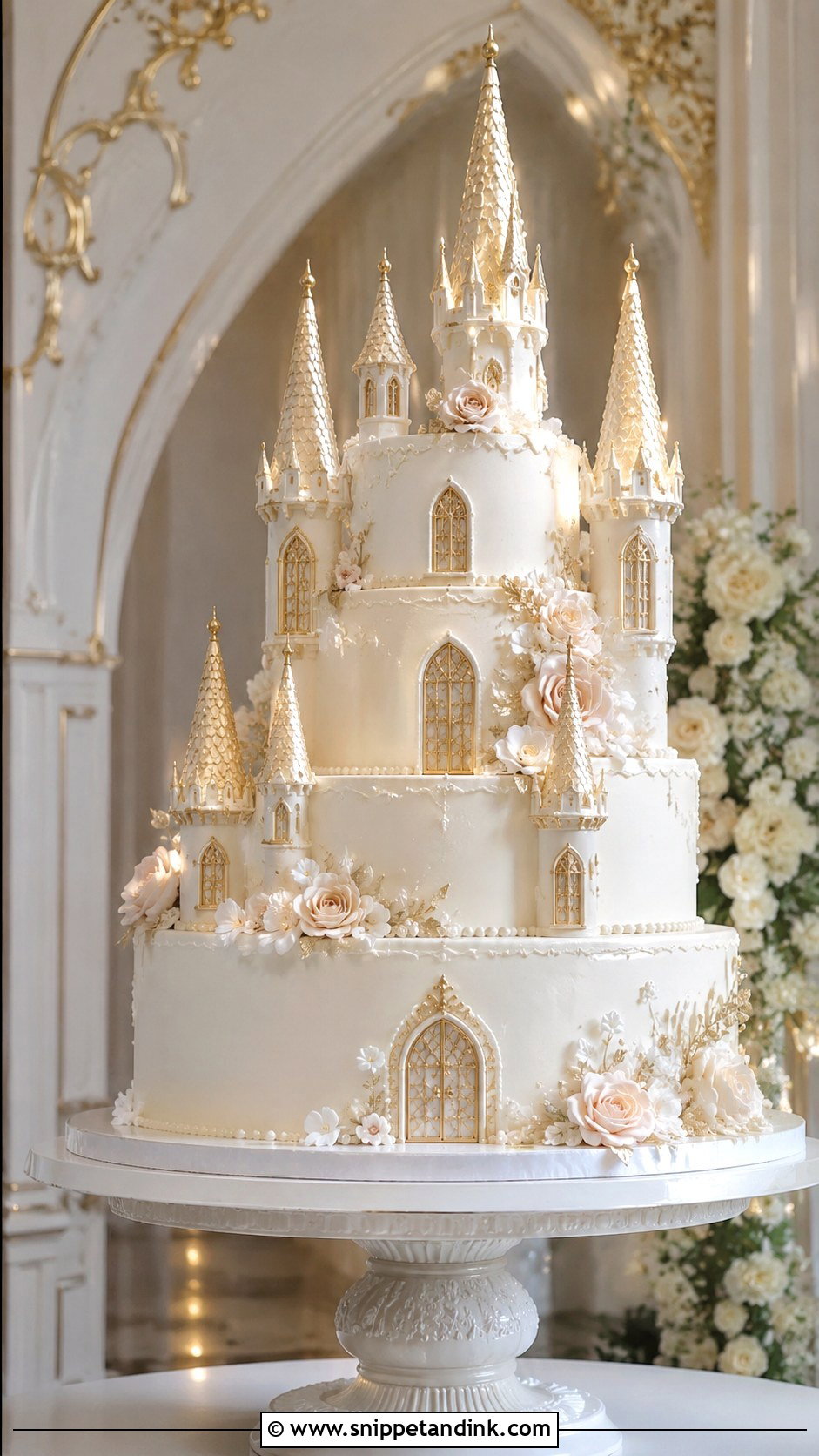
A castle is the boldest choice here, and the hardest to keep sophisticated. I suggest towers through tall, slender tiers instead of adding literal turrets, then add arched windows, pearl borders, sugar flowers and a soft metallic finish. Anything structural, like a tall tower tier, needs internal supports and a central dowel, so it’s worth confirming your baker has built tall cakes before. It works as a statement on a large dessert table at a ballroom or estate. Vanilla almond, white chocolate or strawberry cream keep it crowd-friendly.

15. Watercolor Wedding Cake
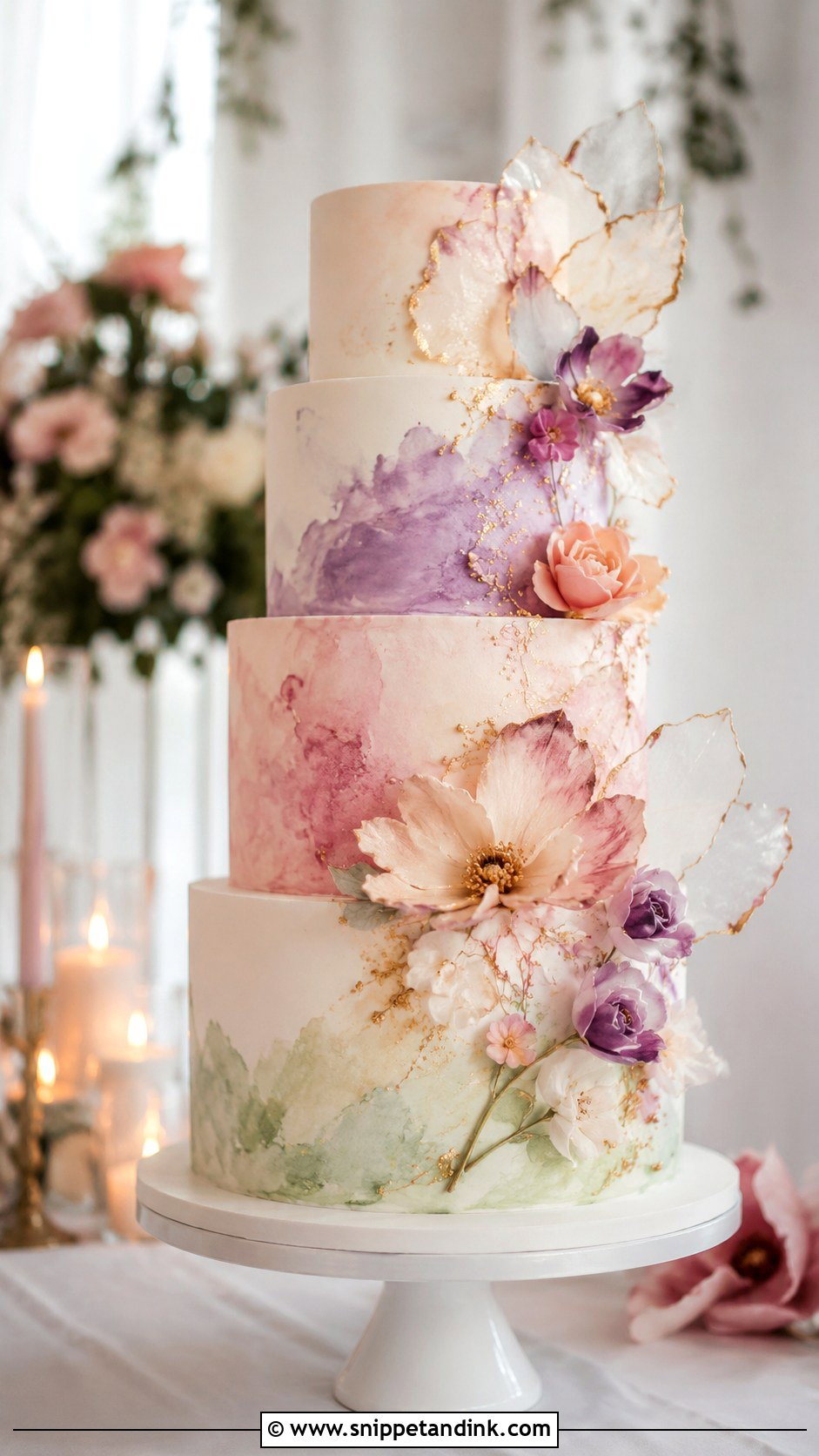
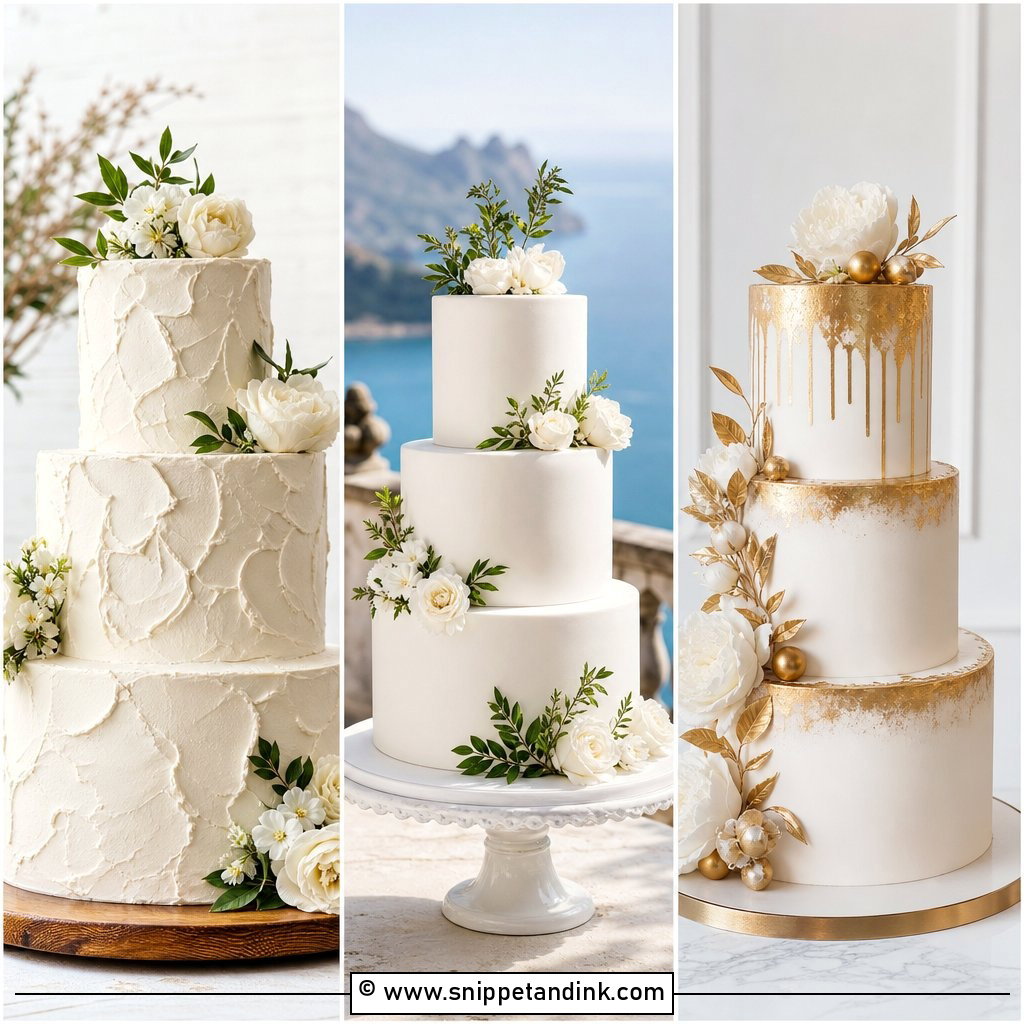
Watercolor makes a cake look like a garden at sunrise or a misty forest. I paint soft washes of blush, lavender, sage, pale blue or peach onto fondant, or blend colored buttercream with a palette knife for a similar effect. Sugar flowers, wafer paper petals or a few gold touches finish it. The colors need to stay pale; if every wash is strong, the painting turns muddy where they overlap. It adapts to modern or romantic weddings, with lemon raspberry or vanilla elderflower inside.
16. Pressed Flower Wedding Cake
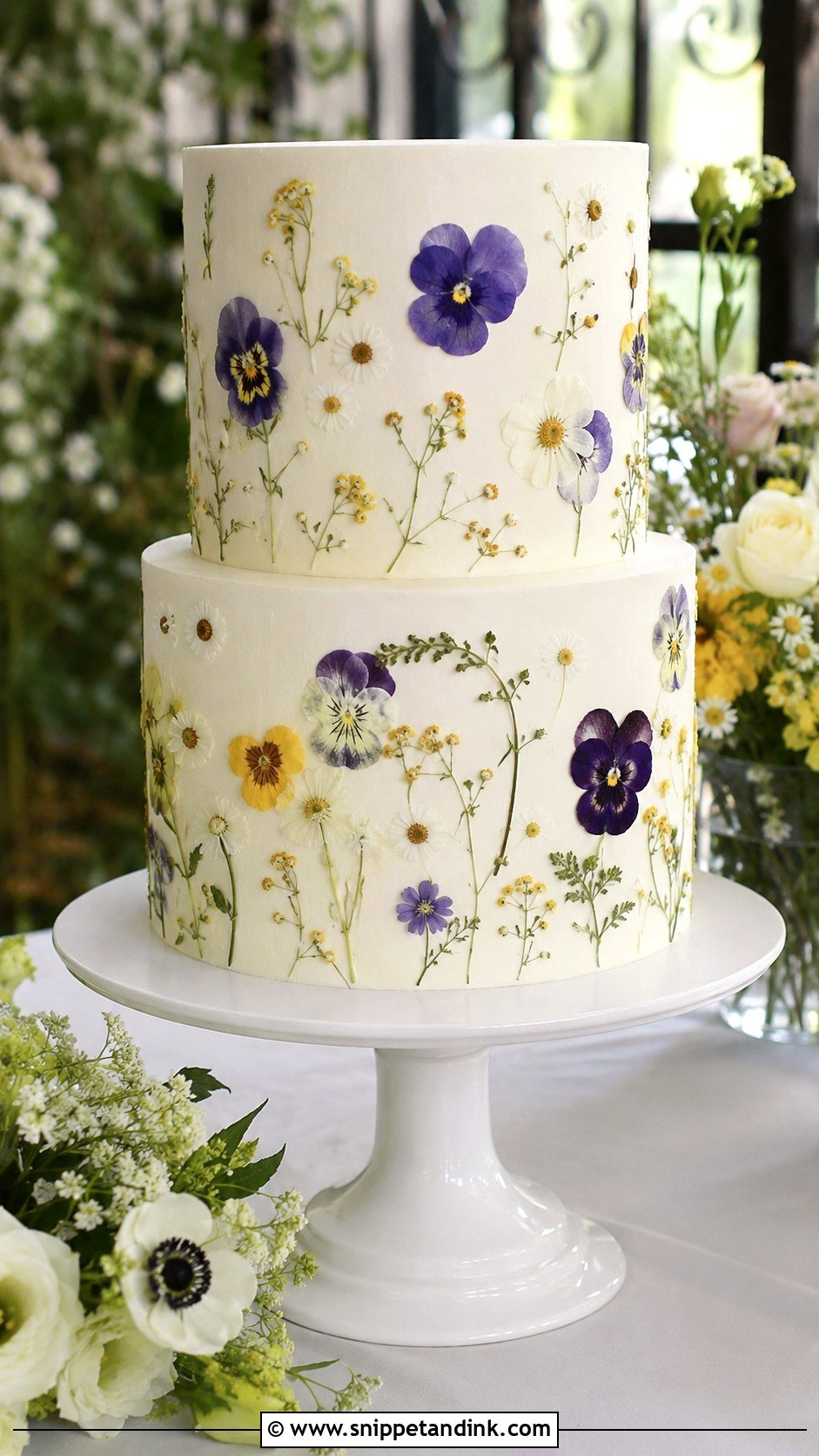
Pressed flowers give a secret-garden feel up close. I lay edible pressed flowers against smooth white buttercream, soft pastel frosting or a semi-naked finish, pressing them gently while the surface is still slightly tacky so they stay flat. Match them to your bouquet for a personal link. They suit spring, summer and garden weddings. Only flowers grown for eating should be used, never stems from a florist’s arrangement, which are usually treated.
17. Greenery Wedding Cake
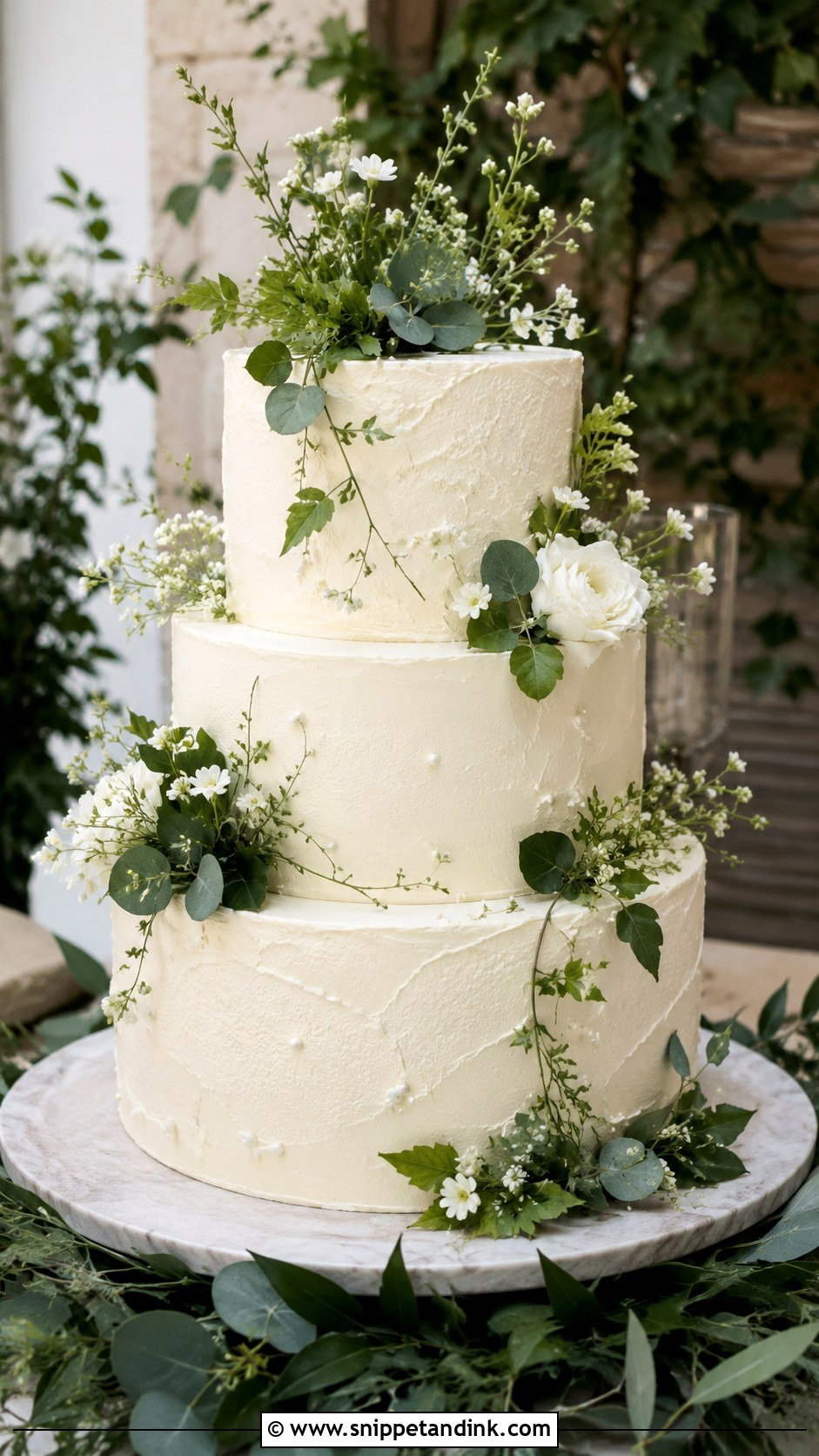
Greenery is the low-key enchanted option: leaves, vines, herbs and small white flowers instead of big blooms. It can wrap each tier or cascade down one side over smooth ivory buttercream, textured frosting or fondant. Fresh herbs and leaves need checking for safety with your florist, and many foliage varieties used in bouquets are not food-safe, so I often use sugar leaves or wrapped stems. Barns, greenhouses and gardens suit it, with flavors like vanilla, pistachio or olive oil citrus.
18. White Wedding Cake
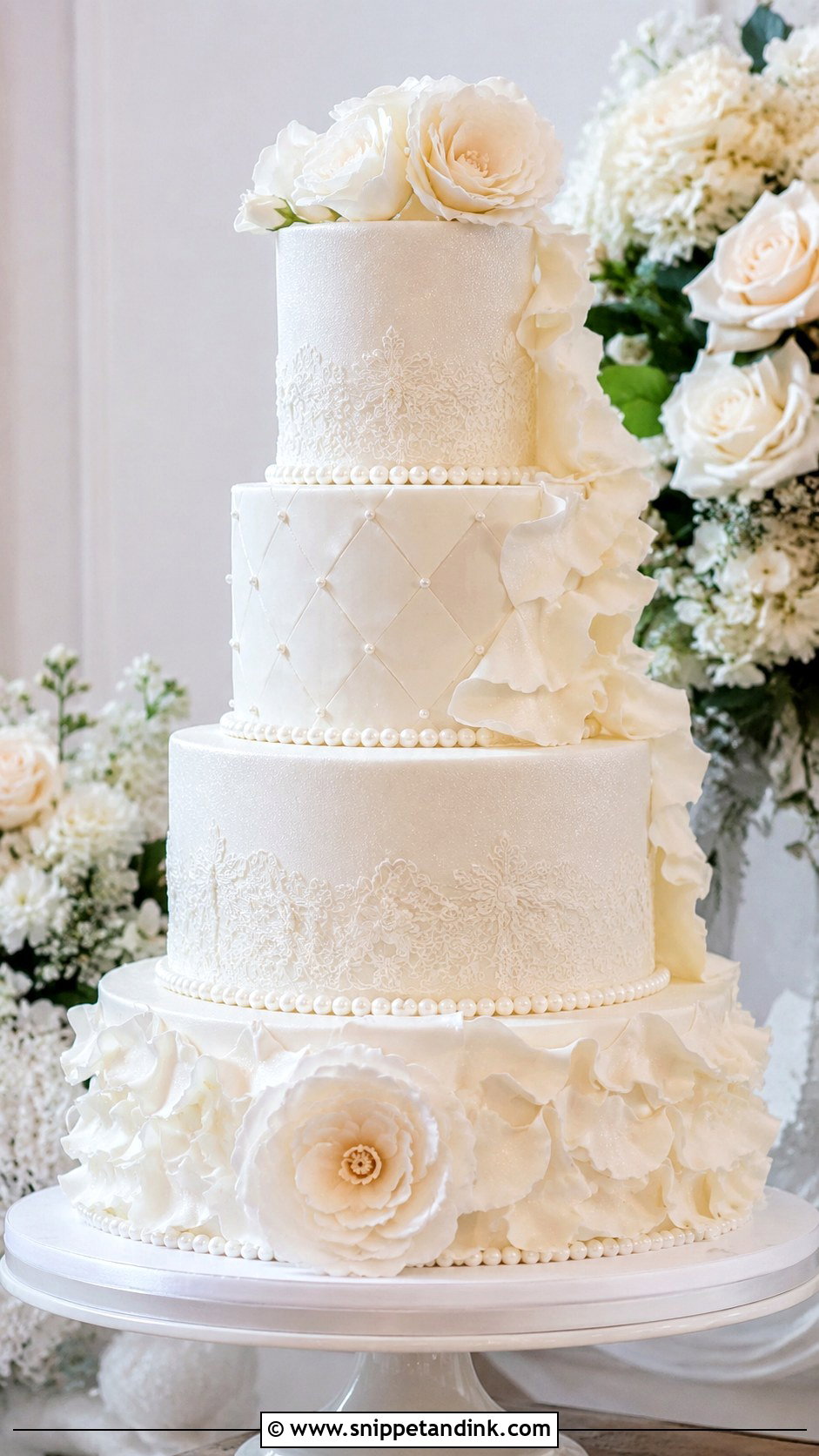
A white cake can be the most magical one in the room if the texture is right. Lace piping, pearl borders, ruffles, sugar flowers and a soft shimmer carry the whole design, with tall tiers and a few touches of greenery or ivory blooms for depth. It won’t date. The weak point is lighting: white detail flattens under overhead lights, so I ask for side light or candles near the cake. Vanilla bean, coconut or lemon cream suit it.
19. Blue Wedding Cake
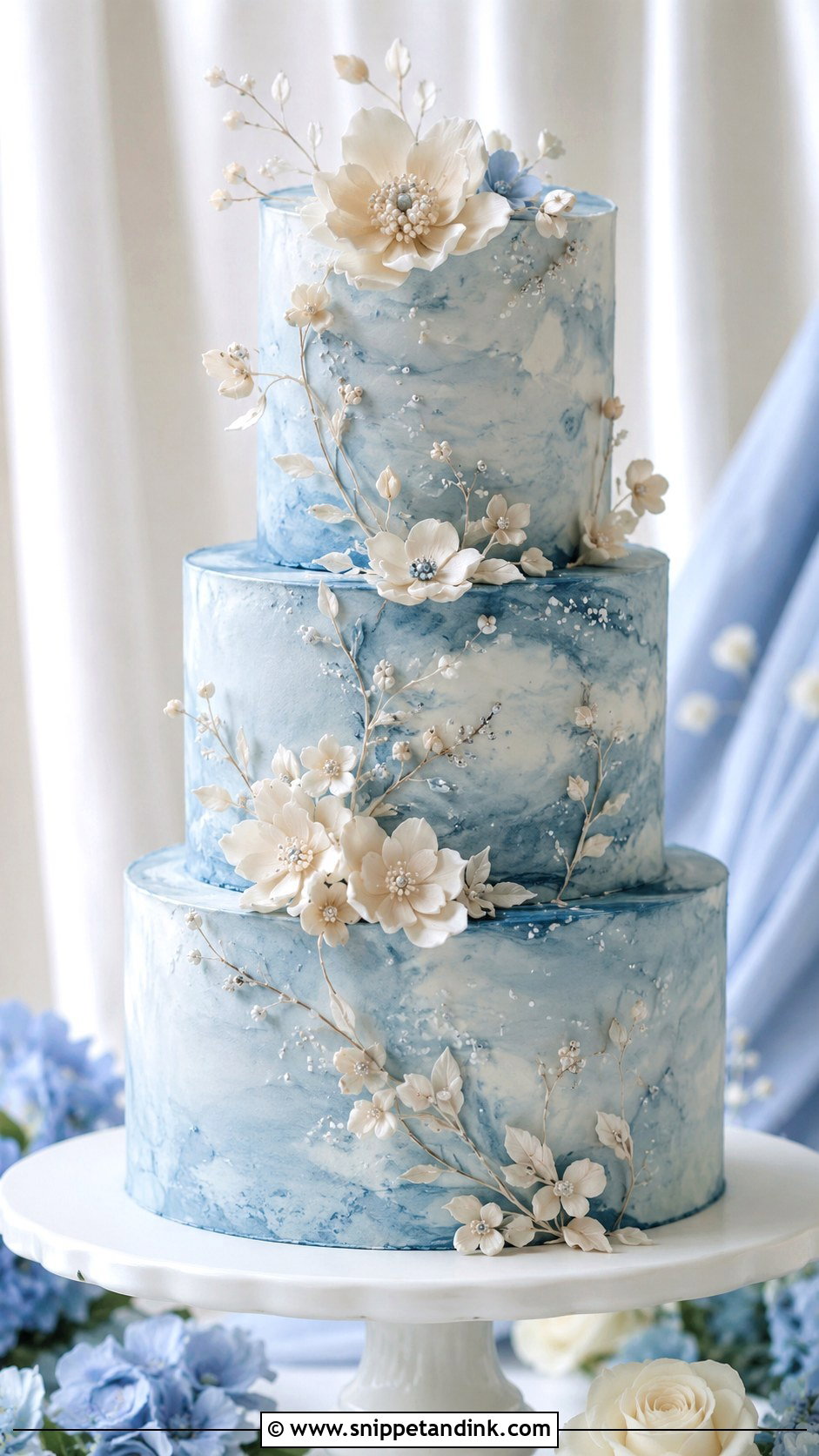
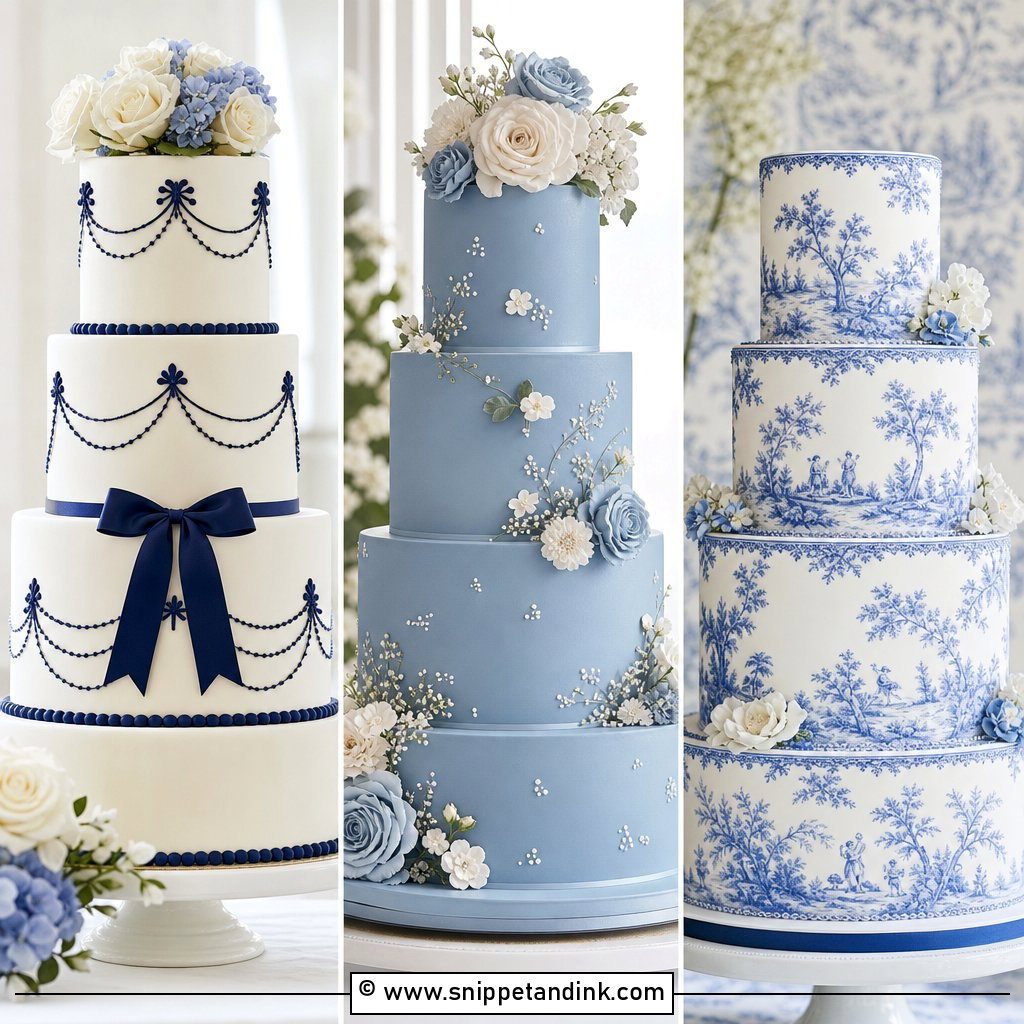
Soft blues like dusty blue, powder blue, slate and blue-gray look like a fairytale sky or a misty garden. Pair them with ivory flowers, silver accents, pearls or delicate vines, or go for a watercolor finish. If your decor includes hydrangeas, delphinium or pale garden roses, bring a photo when we talk color. Blue-gray in particular can read green or purple depending on the lighting, so I mix it against your actual samples. Blueberry lemon or blackberry suit the cool palette.


20. Cottagecore Wedding Cake
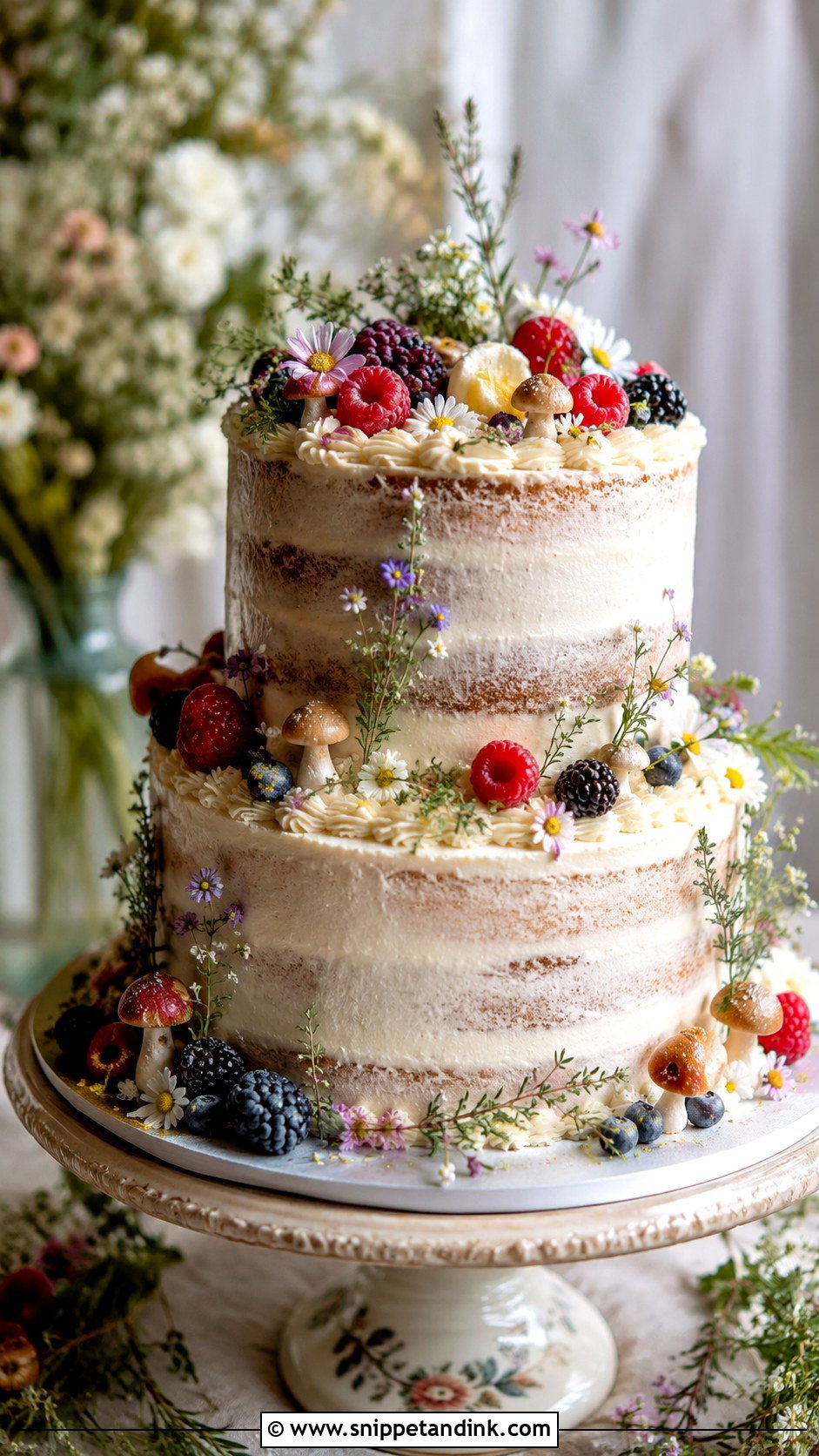
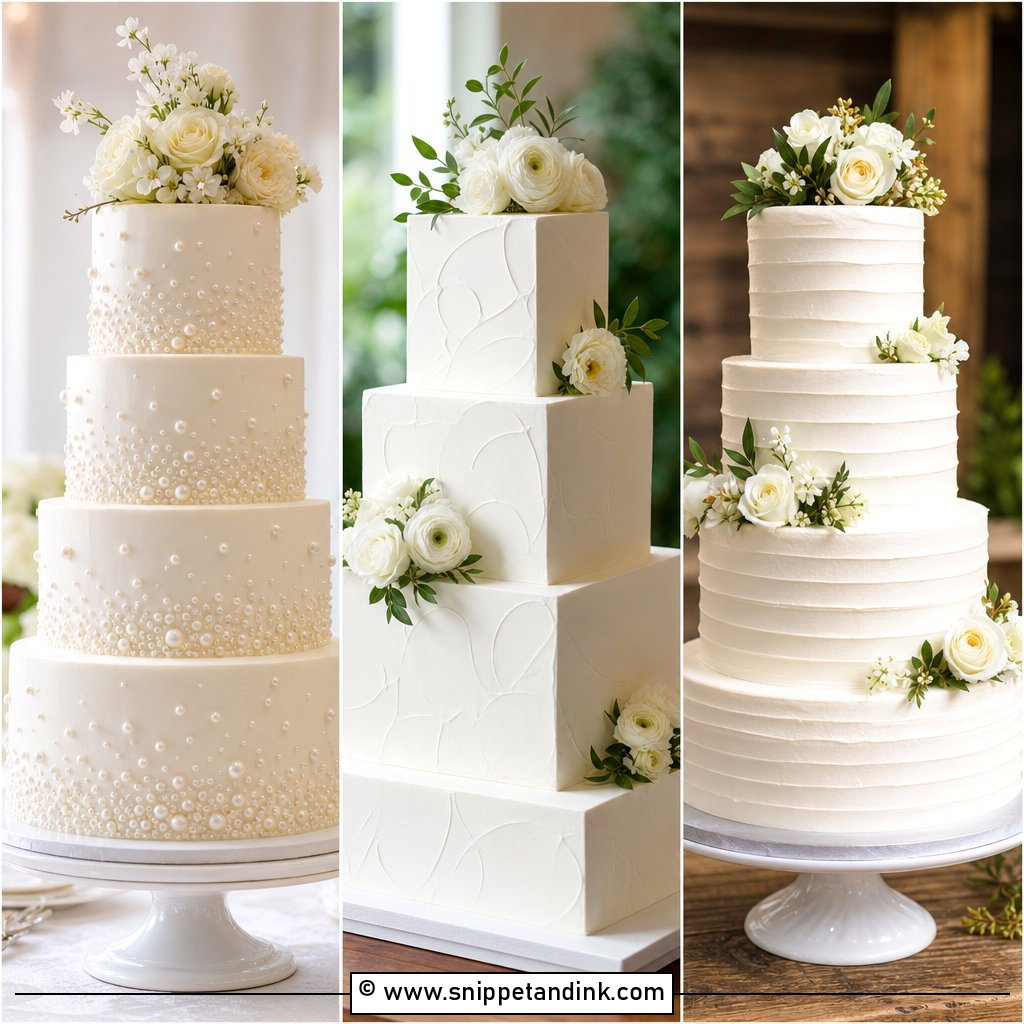
Cottagecore should look handmade and a bit imperfect: soft buttercream texture, small wildflowers, tiny mushrooms, berries, herbs and simple piping. A semi-naked finish, a vintage stand or a wooden table adds to it. Cream, blush, sage, honey and berry tones keep the palette gentle. It’s the most forgiving style here, since small travel marks blend into the texture, which suits backyard and barn weddings. Lemon berry, vanilla honey, carrot or brown butter cake fit the feeling.
Moss, Mushrooms and Bark: What’s Safe to Put on a Woodland Cake
Woodland cakes tempt people to bring in real things from outside, and that’s where I draw firm lines. Everything that looks foraged on my cakes is made from sugar, sponge or chocolate, or it sits on a barrier and comes off before serving.
Made to be eaten
Moss from green cake crumbs or sponge, mushrooms from meringue or sugar paste, bark from chocolate or textured buttercream, and leaves and ferns from sugar or wafer paper. These look the part and are safe if a guest gets a piece on their plate.
Decoration only
Wood slices, branches and real foliage stay under or around the cake, never in it, with a board or parchment between. Wired sugar pieces and fresh stems go into food-safe picks. Wild mushrooms and real moss never touch a cake at all.
Before cutting, whoever serves the cake should remove the inedible pieces, including the dowels and wires inside the tiers. I give couples a short note listing them for the caterer, which saves anyone finding a wire in their slice.
How Much Magic Is Enough for Your Reception?
An enchanted cake works when it feels like part of the room, not a prop dropped into it. Some couples want the full forest, moss and mushrooms included; others want a pearl, moon or white floral cake with just a hint of fantasy. Start with your venue, season and flowers, then decide how far into the story the cake should go. Take your saved favorites to your florist and baker together if you can, so the cake, the table and the flowers are all telling the same tale.
You'll Like These Ideas:





Leave a Reply