
If I had to name the cake size I’m asked for most at chic, smaller receptions, it’s two tiers. There’s enough height for a real cutting moment, it fits on a modest table, and the budget stays sensible. What makes it look elegant isn’t the amount of decoration but the quality of the finish and the restraint in what goes on it. I’ve gathered twenty two-tier designs below, from plain white to watercolour and dried flowers, with notes on what each one asks of the baker and when I’d steer you toward something else. Most can sit in a garden, a courthouse lunch or a hotel ballroom equally well.
Your Consultation Folder: Photos, Numbers and a Swatch
The most useful consultations I have are with couples who arrive with a few concrete things, not a long mood board. A baker can quote and design far more accurately with these in hand:
- Your guest count, and whether the cake is the only dessert or part of a wider table.
- The venue, whether it’s indoors or out, and roughly what time the cake will be cut.
- Two or three cake photos, with a note on what you like in each: the edge, the flowers, the colour. One photo of a cake you dislike helps just as much.
- A fabric or paper swatch of your main colour. Screen colours are unreliable, and a swatch saves a lot of guesswork on tints.
- A budget range. It isn’t awkward; it tells the baker where to focus the detail.
Also ask your venue in advance about cake-cutting or plating fees and whether outside bakers need to provide insurance details. Both can catch couples out late in planning.
1. Two Tier White Buttercream Wedding Cake
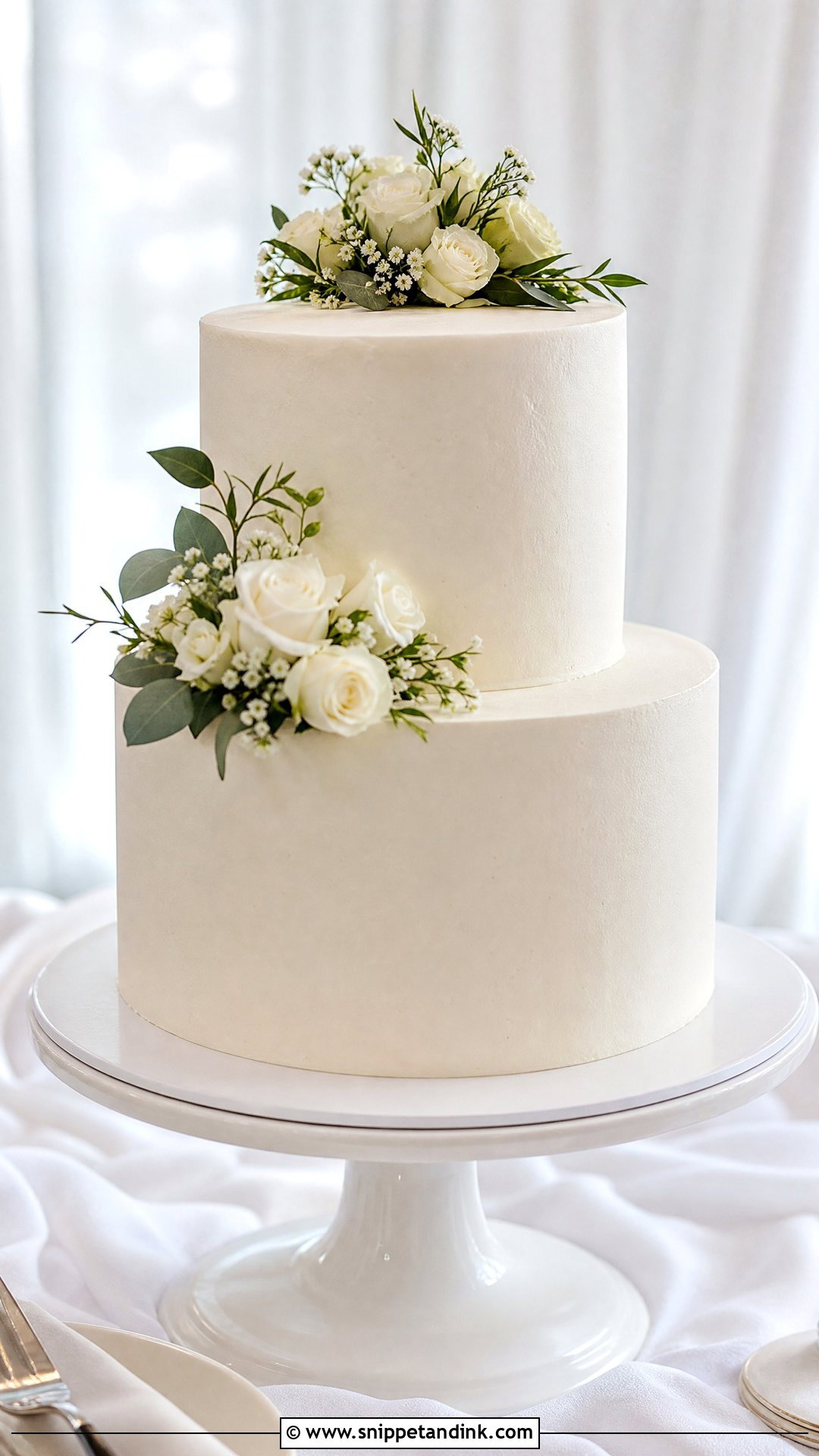
White buttercream is where I’d send anyone who can’t decide. Crisp tier edges and a single off-centre cluster of fresh flowers make it look finished, and it leaves your florist free to echo the bouquet. Smooth or lightly textured both work; pure white looks sharper in photos, while ivory warms it up and is kinder next to an ivory dress. Vanilla, almond, lemon and champagne-style sponges all sit well under it. It’s honestly the hardest finish to do perfectly, and the easiest to spot when it’s done well.
2. Two Tier Semi Naked Wedding Cake
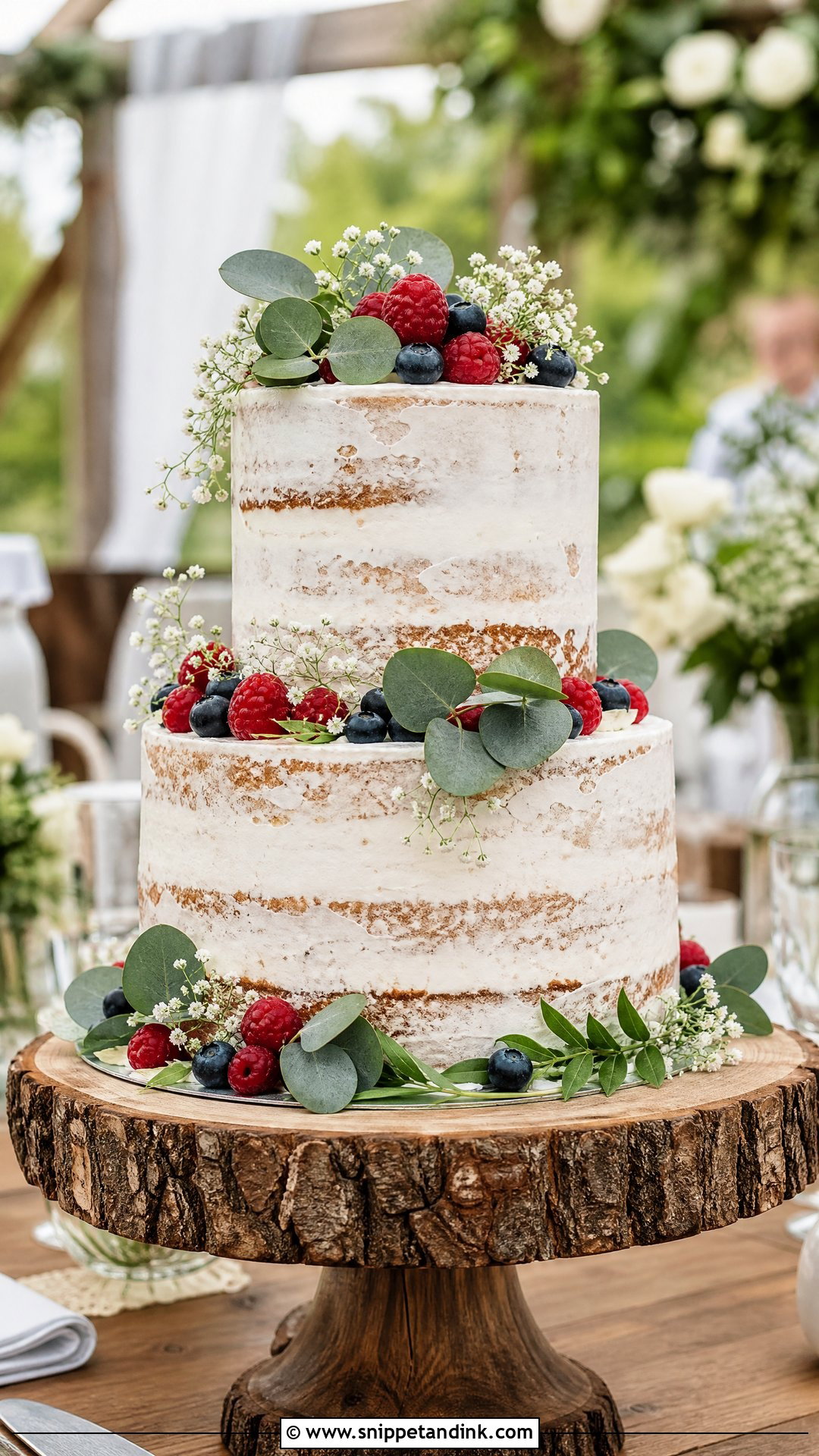
The two tier semi naked wedding cake shows its layers through a scraped coat, so the baking has to be tidy: flat, even layers and a consistent filling line. That’s the difference between a semi naked cake that looks intentional and one that looks unfinished. Vanilla, lemon, carrot and almond sponges all show nicely. Berries, greenery and a few small flowers are enough. It’s a natural fit for barns, gardens and outdoor tables, though I’d keep it out of direct sun, where the exposed sponge dries.
3. Two Tier Pearl Wedding Cake
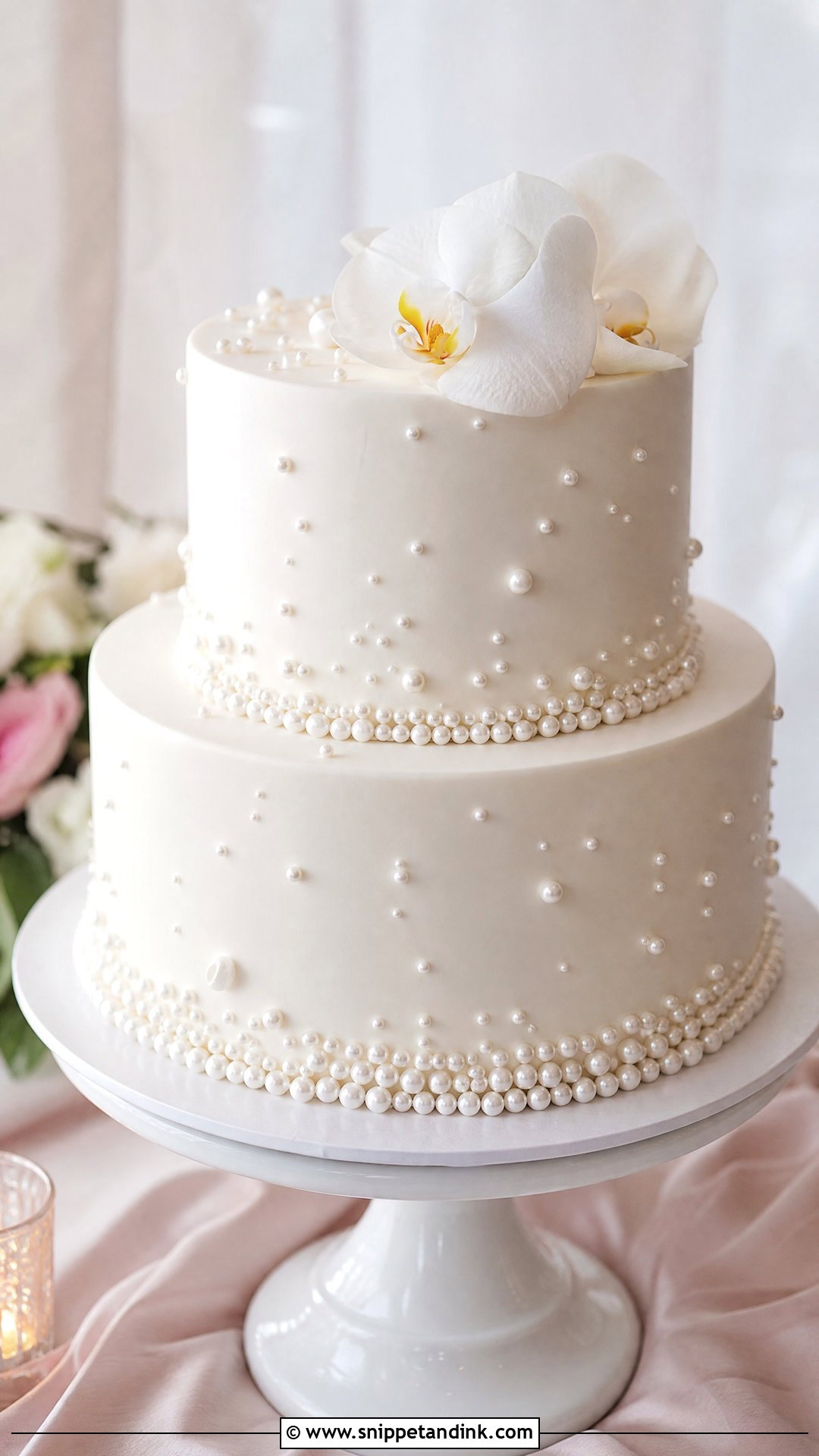
Edible pearls need a smooth, clean surface to look crisp. A row around the base of each tier also tidies the seam where the cake meets its board, which is why I use them as a border so often. Scattered lightly, they look softer and more romantic. Ivory buttercream, white fondant or pale blush all suit them. Add one small flower cluster at most. Ballrooms and restaurant receptions with candlelight show pearls off best.
4. Two Tier Floral Wedding Cake
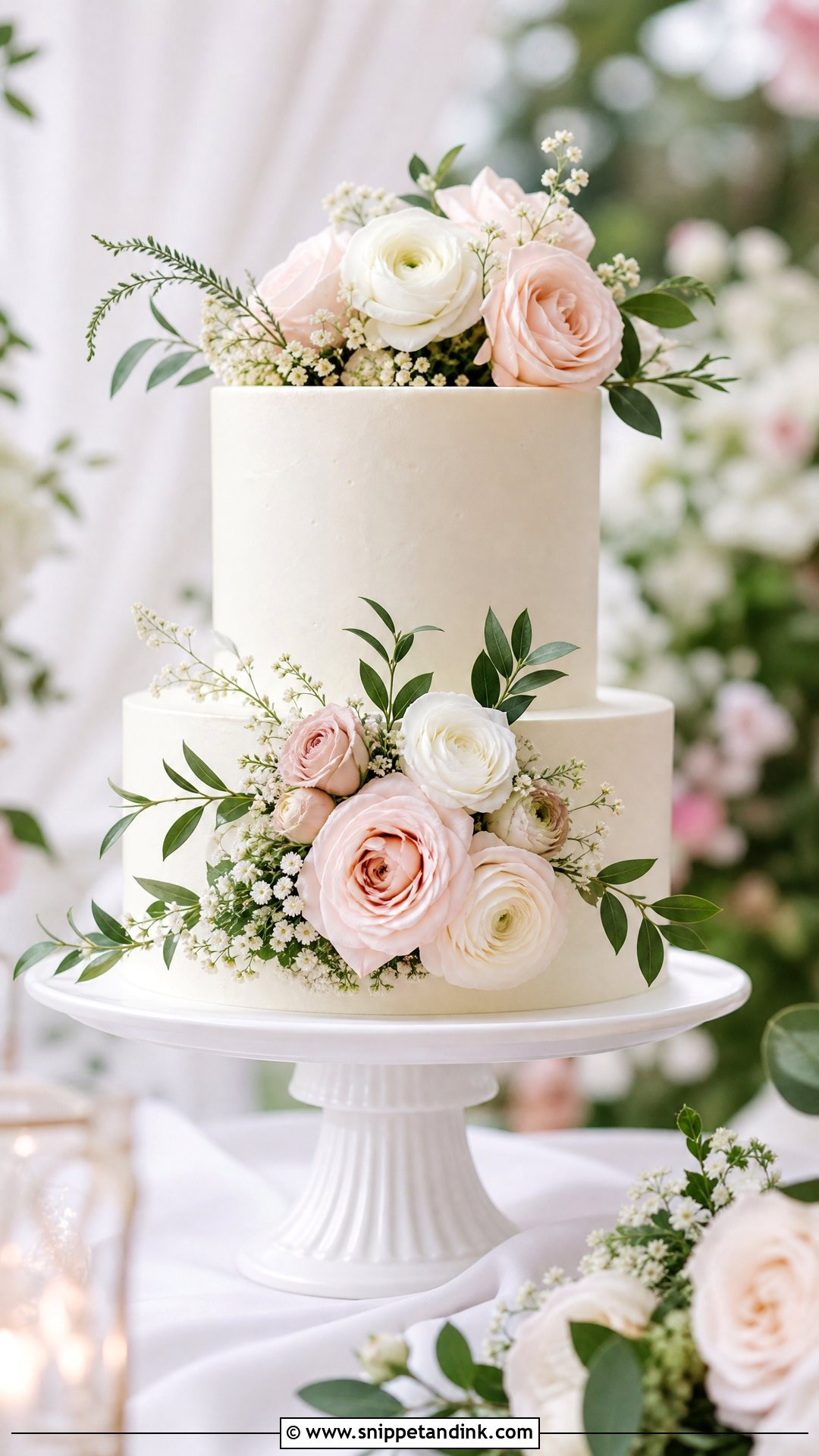
Flowers tie the cake to the bouquet, the arch or the centrepieces. On two tiers, one main bloom with a few smaller accents looks more considered than full coverage. Roses, peonies, ranunculus, chamomile and baby’s breath all work in season. Peonies are the ones I warn about: they open fast in a warm room and can drop petals onto the cake by the time it’s cut. Smooth or lightly textured frosting in white, ivory, pale pink or soft sage keeps the flowers in charge.
5. Two Tier Greenery Wedding Cake
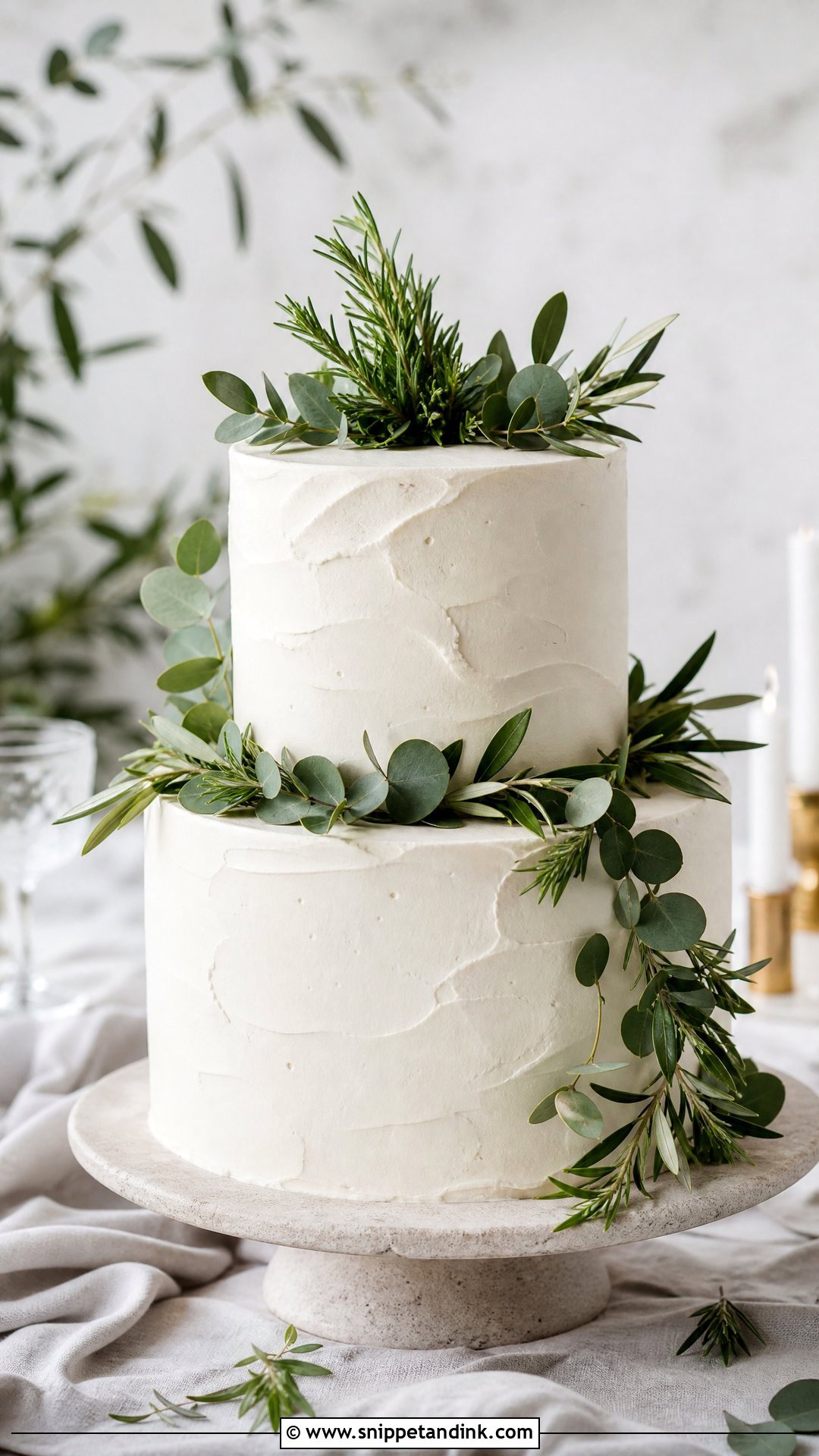
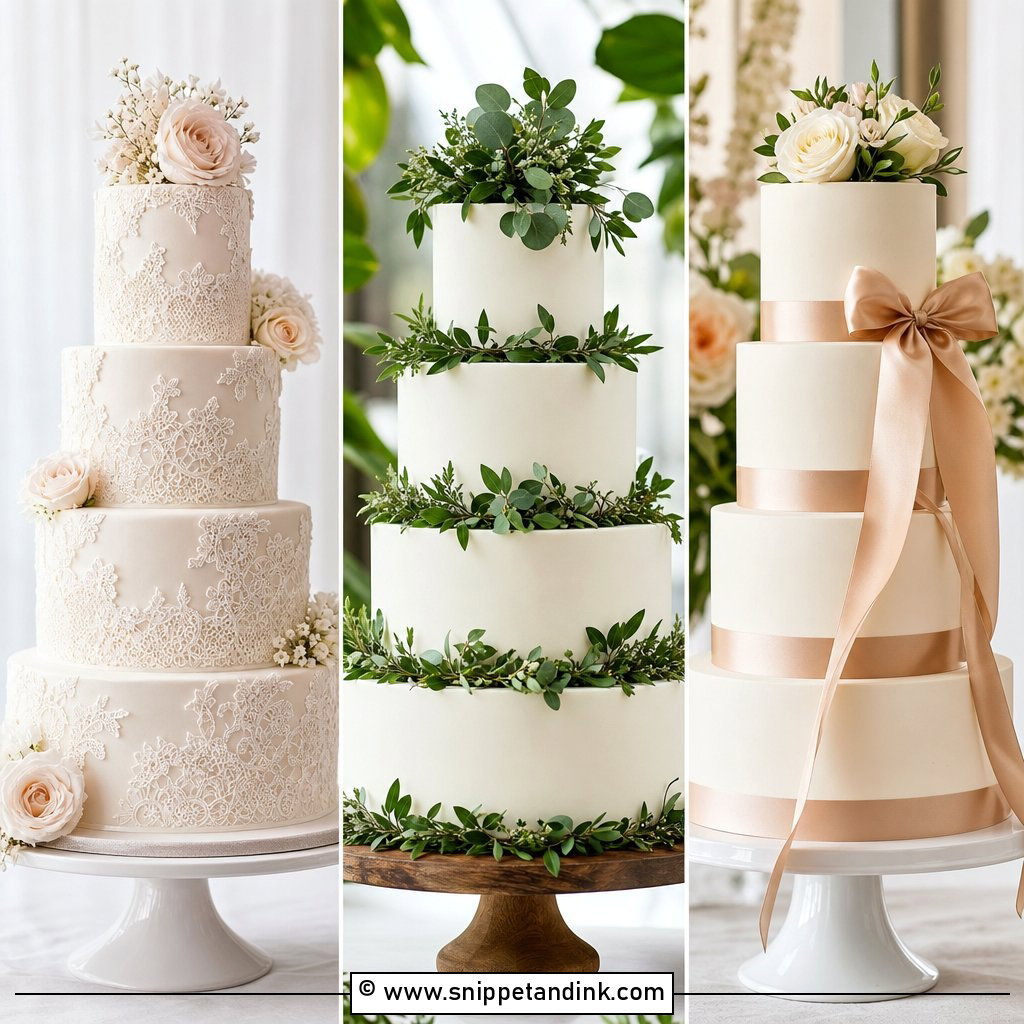
Greenery is a quieter alternative to flowers and suits minimalist and garden weddings alike. Eucalyptus and olive look elegant but aren’t edible, so they sit on a barrier or tucked into the ledge on wrapped stems; rosemary and other culinary herbs can touch the frosting. White buttercream makes the leaves look crisp; ivory warms them. A trail down one side reads modern, a ring at the base reads classic.
6. Two Tier Gold Leaf Wedding Cake
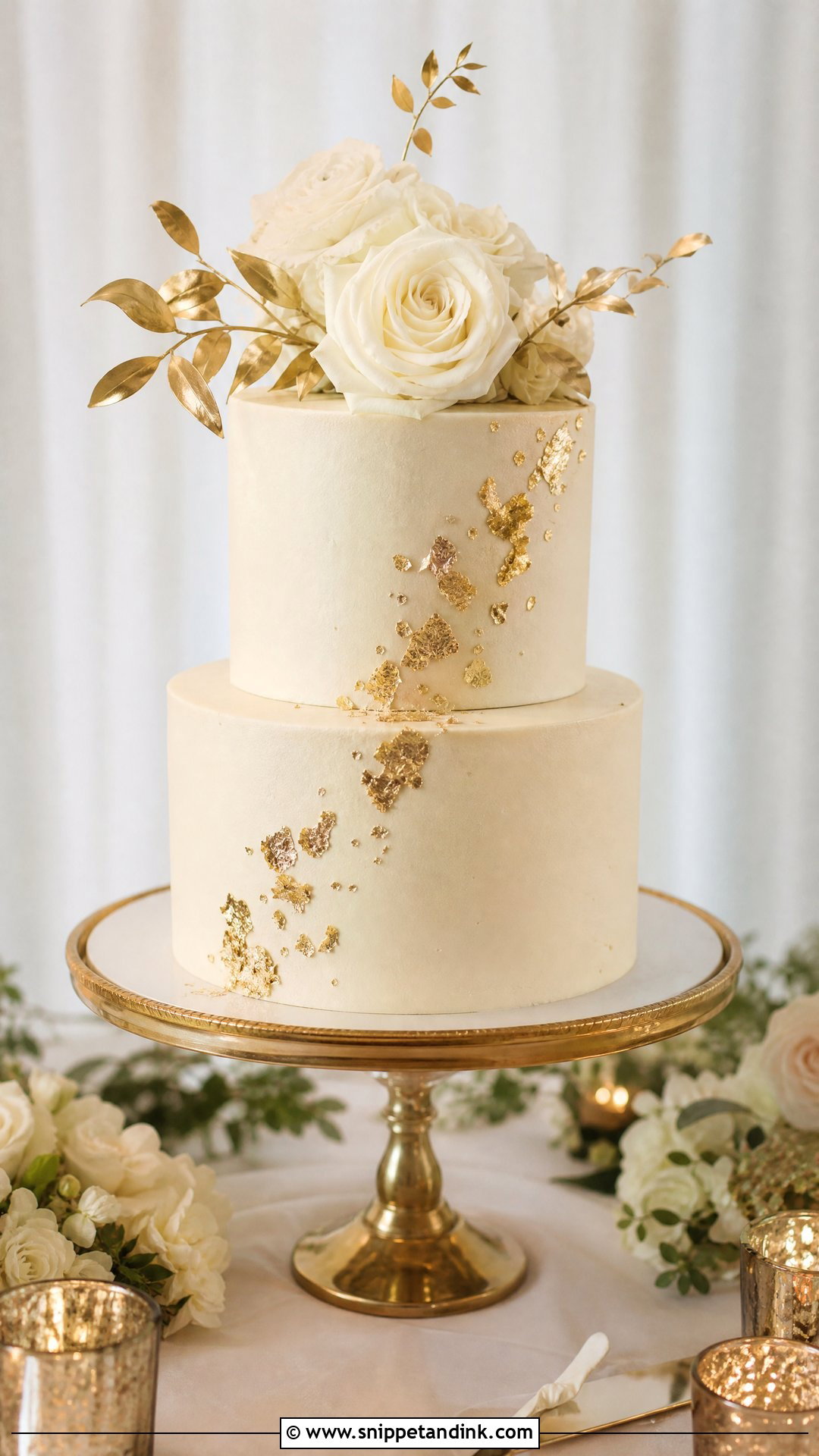
Gold leaf works when it’s used like a highlight, not a coat of paint. I keep it to one side or along the top edges, laid onto chilled frosting with a dry brush so it doesn’t smear. Smooth white buttercream, ivory fondant or pale champagne all make good bases. It pairs with white flowers, blush roses, dried accents or a satin ribbon. A few metallic pieces make a formal reception feel finished without overwhelming a smaller cake.
7. Two Tier Textured Buttercream Wedding Cake
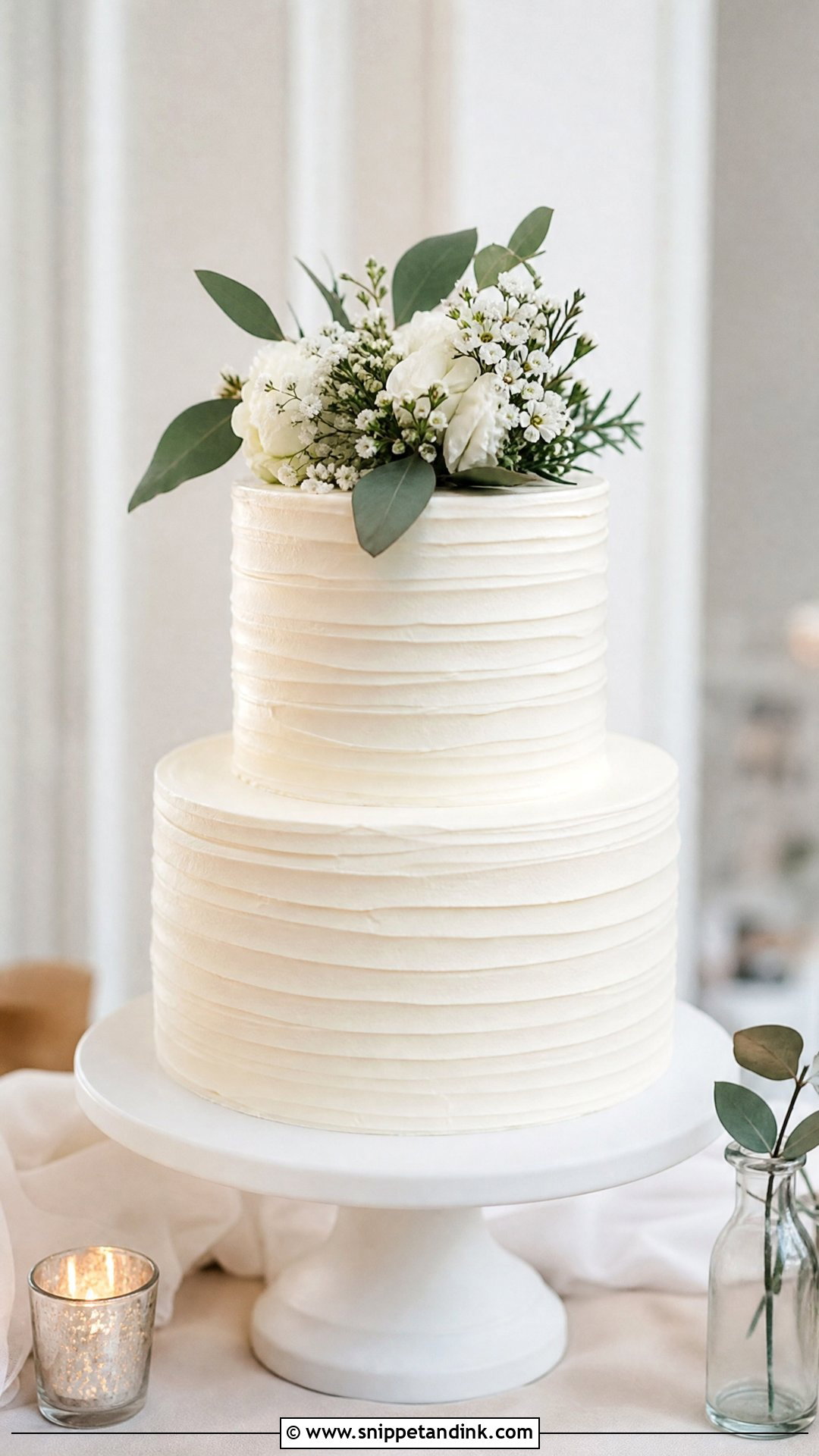
Texture is the most forgiving finish I make. Horizontal combed lines, stucco-style buttercream, palette knife strokes or subtle ridges give movement and hide the small marks that happen in transport. White, ivory, beige, blush and pale blue all suit it. Leave it bare for a modern look or add a small group of flowers or greenery. If you’re worried about a long drive or a warm room, this is the safer choice over a sharp smooth finish.
8. Two Tier Vintage Piping Wedding Cake
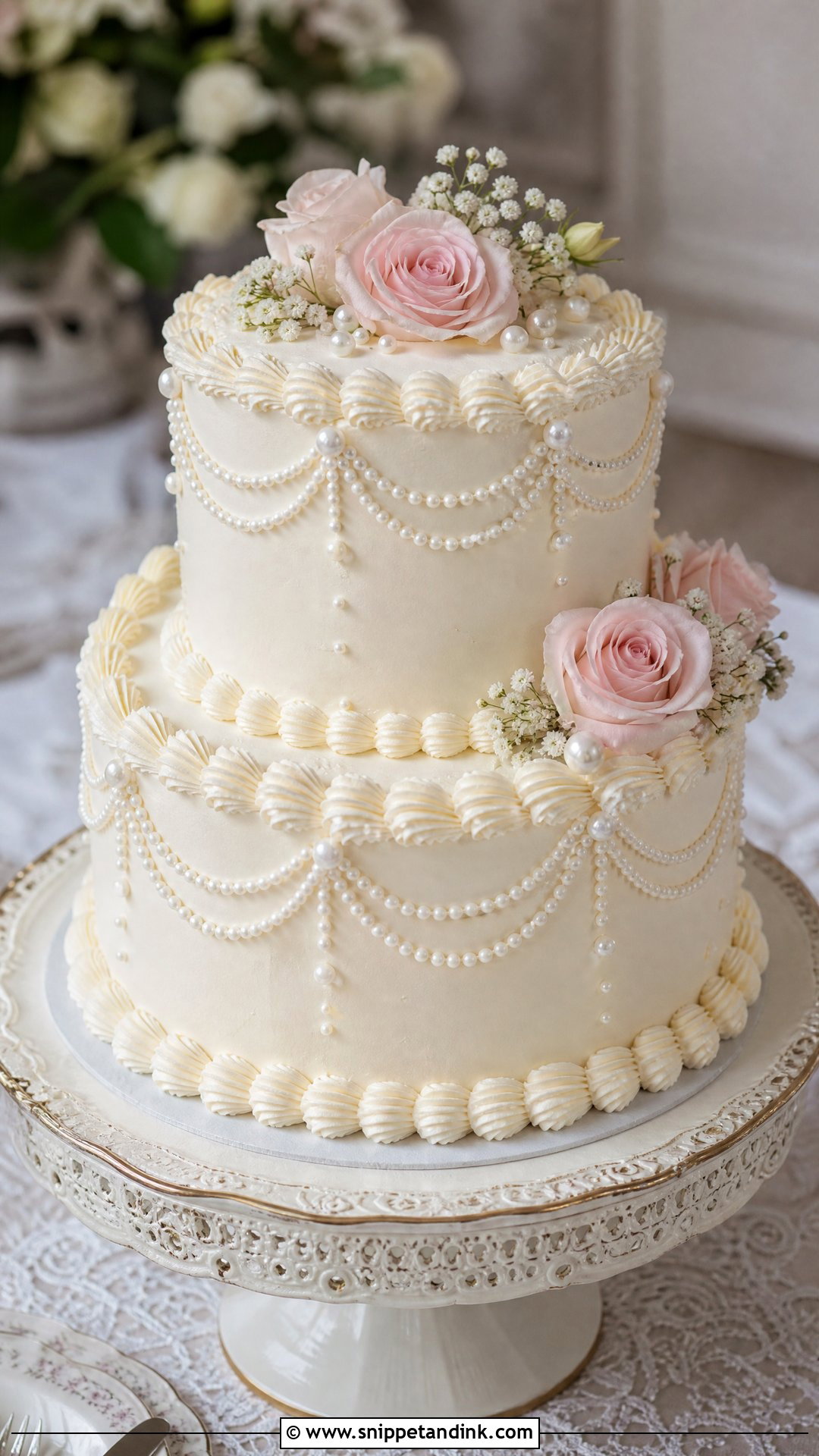
Vintage piping with shells, soft swags and small buttercream pearls has nostalgia without kitsch, as long as the colour stays calm. White or ivory keeps it bridal. Cherries on top push it retro; fresh flowers or pearls keep it refined. Piping is slow, detailed work, so this design costs more than its simple shape suggests and needs booking with enough lead time. It suits courthouse weddings and intimate dinners especially well.
9. Two Tier Ribbon Wedding Cake
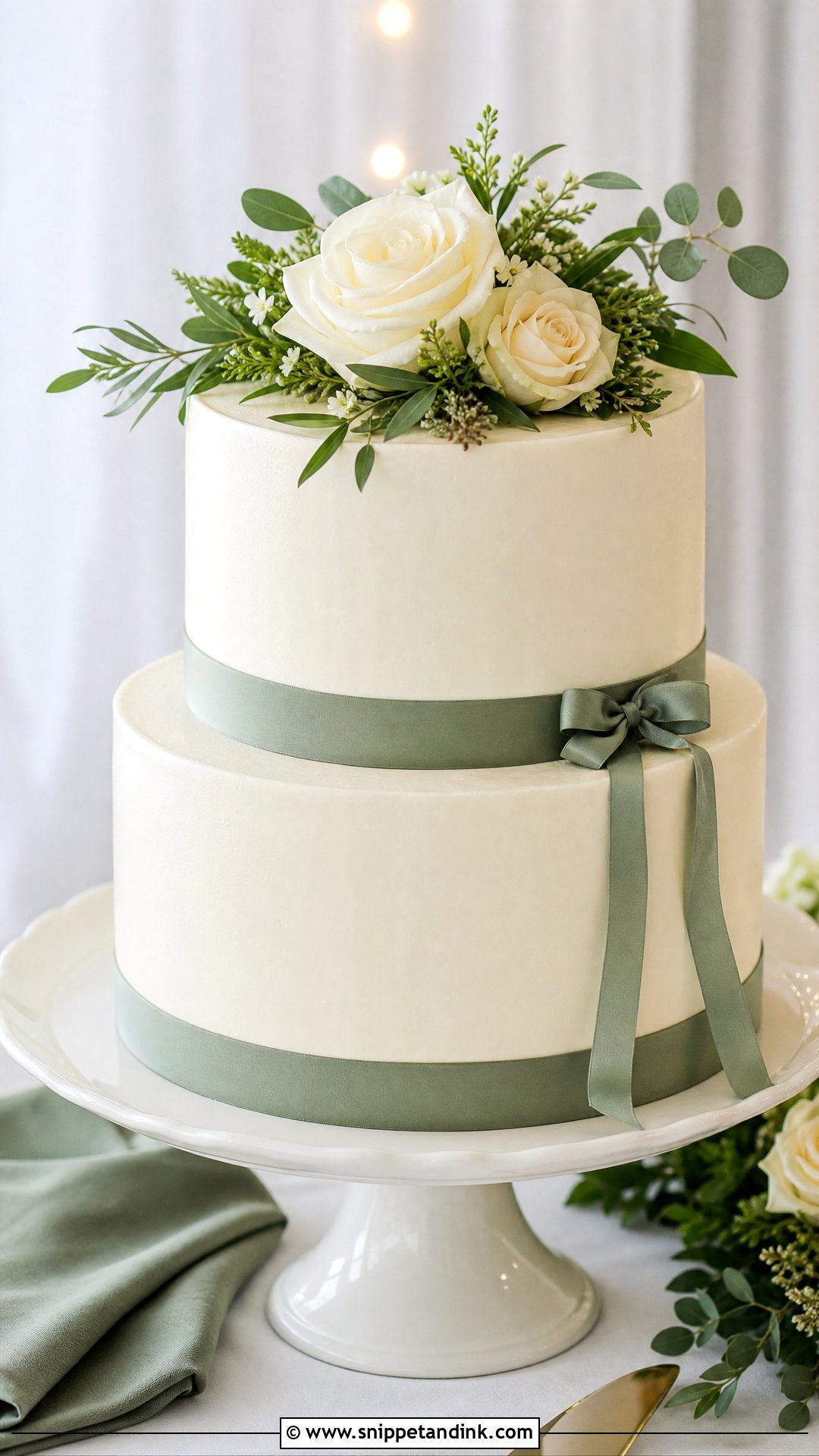
A ribbon around each tier is the simplest way to add colour to a plain cake. Satin, silk or velvet can match the bridesmaid dresses, invitations or flowers; blush, sage, champagne, dusty blue and ivory are the easiest to style. Ribbon placed straight onto buttercream absorbs grease and develops dark spots, so I line it with food-safe acetate. A single flower cluster or a small bow finishes it for a more romantic look.
10. Two Tier Blush Wedding Cake
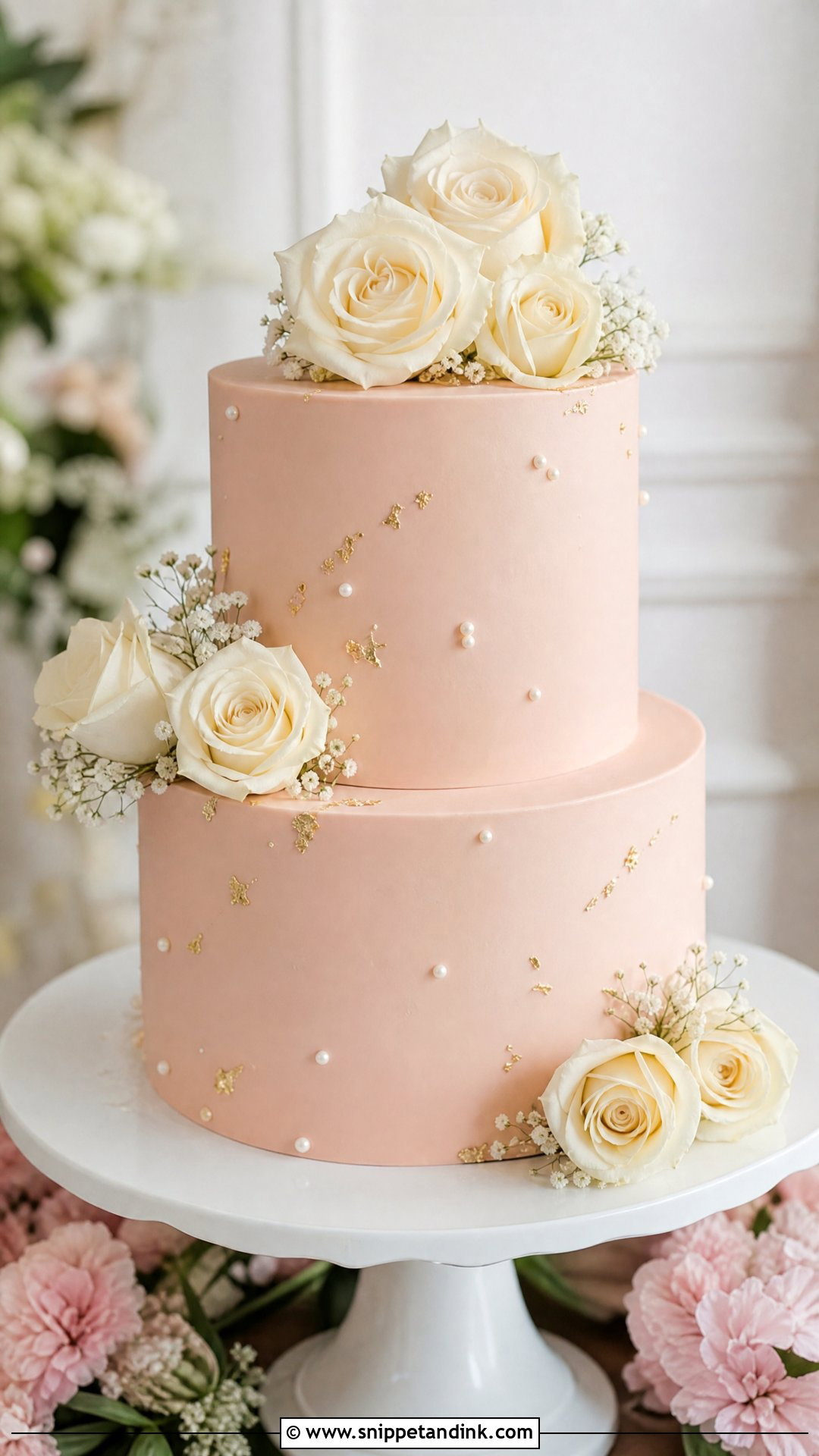
Blush ranges from a barely-there warm tint to a deeper rose, and getting the shade right is harder than it sounds. Pink frosting can shift toward peach under warm tungsten light, so I always check a tinted sample in the room’s lighting if I can. Smooth buttercream looks modern; light texture feels relaxed. Ivory flowers, white roses, small pearls or a touch of gold suit it. Strawberry, vanilla, almond and raspberry-filled sponges match the colour.
11. Two Tier Sage Green Wedding Cake
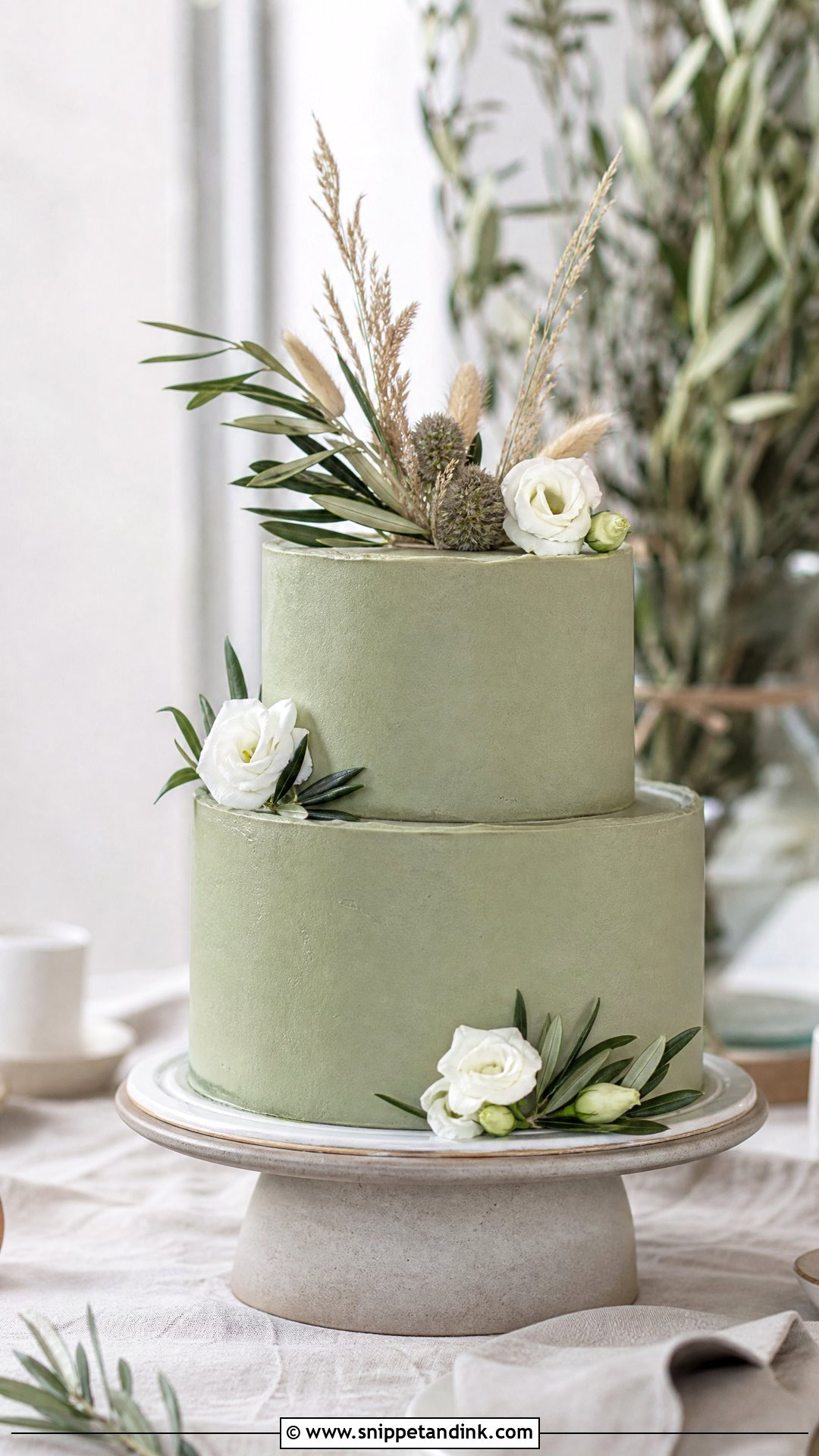
Sage is calm and natural, and stands out more than white without shouting. It suits garden, rustic, coastal and minimalist weddings. Smooth frosting is clean; light texture is softer. Greens are the colours most likely to turn grey or muddy, so I mix sage with a tiny touch of warm tone and keep it pale. White flowers, dried grasses, olive leaves and ivory ribbon pair well. Lemon, vanilla bean, pistachio and almond sponges complement it.
12. Two Tier Lemon Wedding Cake
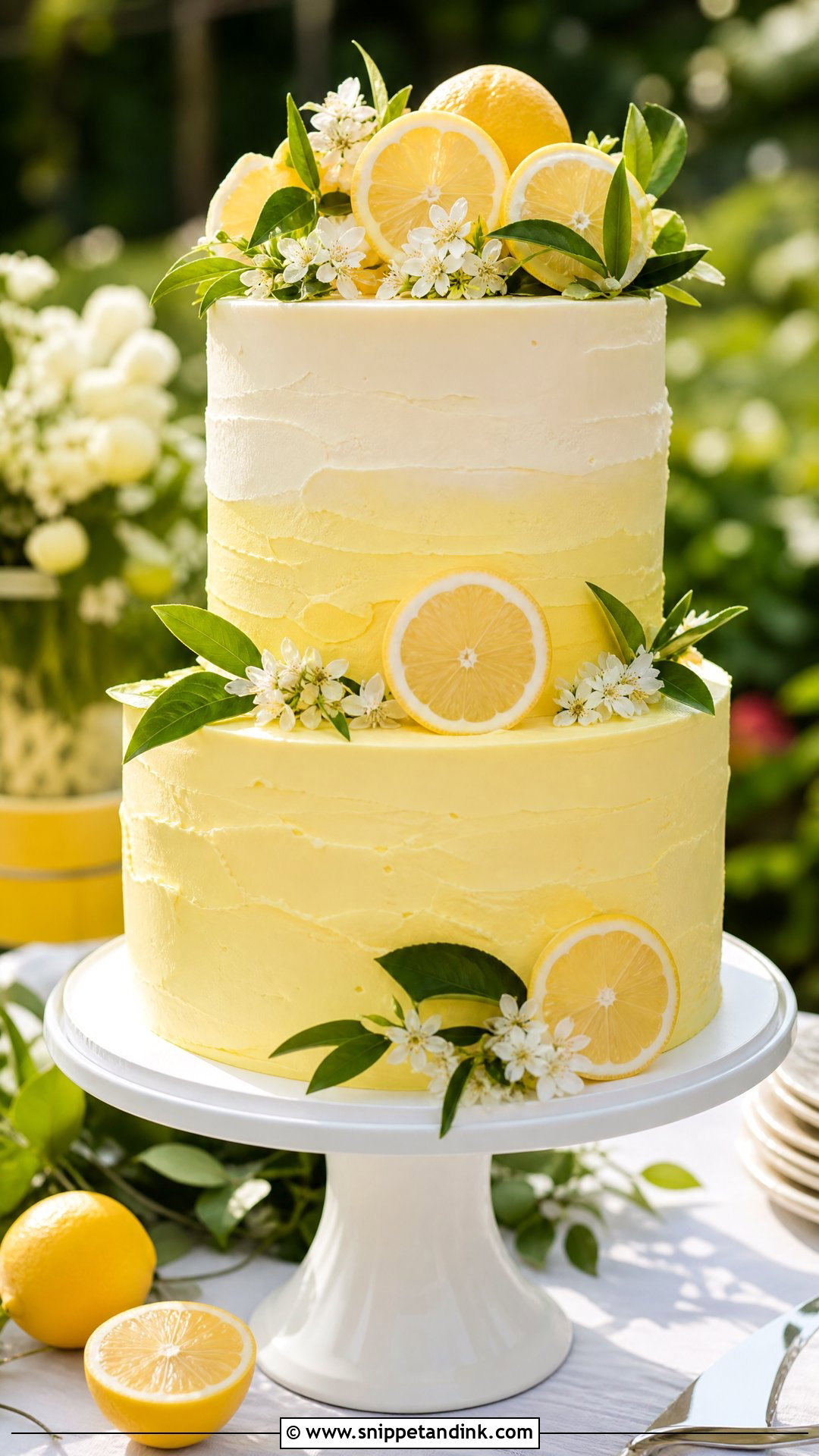
Bright and familiar, a two tier lemon wedding cake can stay simple outside: pale yellow buttercream, white frosting or ivory with lemon slices and small flowers. Inside, lemon pairs with raspberry filling, blueberry compote, elderflower buttercream or vanilla cream. Soft fillings like curd need a firm buttercream ring around each layer on a stacked cake, or the weight of the top tier pushes them out. A few lemons, blossoms or leaves are all the decoration it needs.
13. Two Tier Berry Wedding Cake
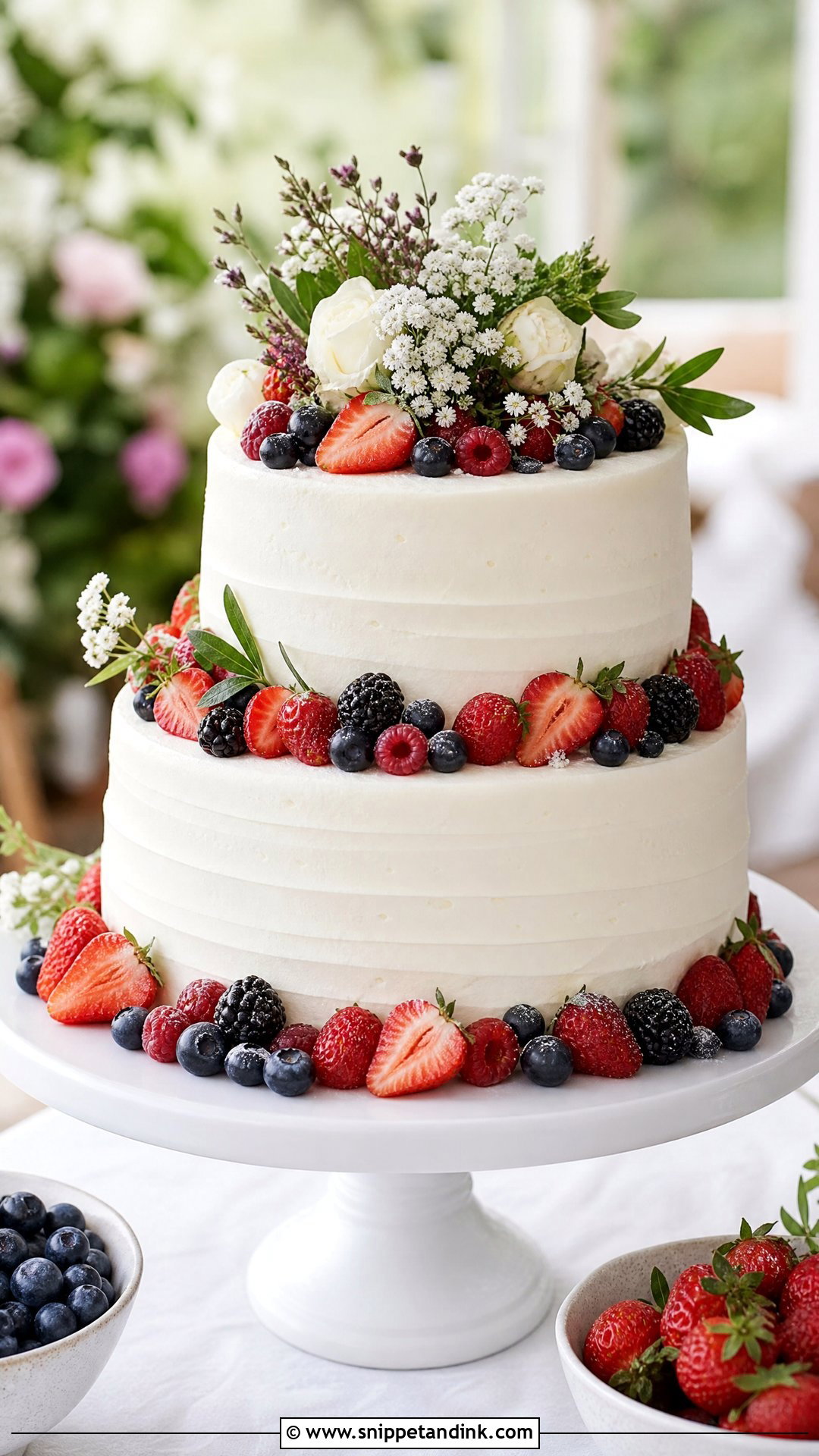
Berries bring colour without complex work. Strawberries, raspberries, blueberries and blackberries can sit around the base, along the ledge between tiers or cascade down one side. Picking berries of similar size makes the arrangement look polished rather than random, and that’s something I sort through by hand. White buttercream keeps the fruit looking crisp. Vanilla, lemon, almond, chocolate and mixed berry sponges all work. Add berries close to serving, as they weep onto frosting over time.
14. Two Tier Chocolate Wedding Cake
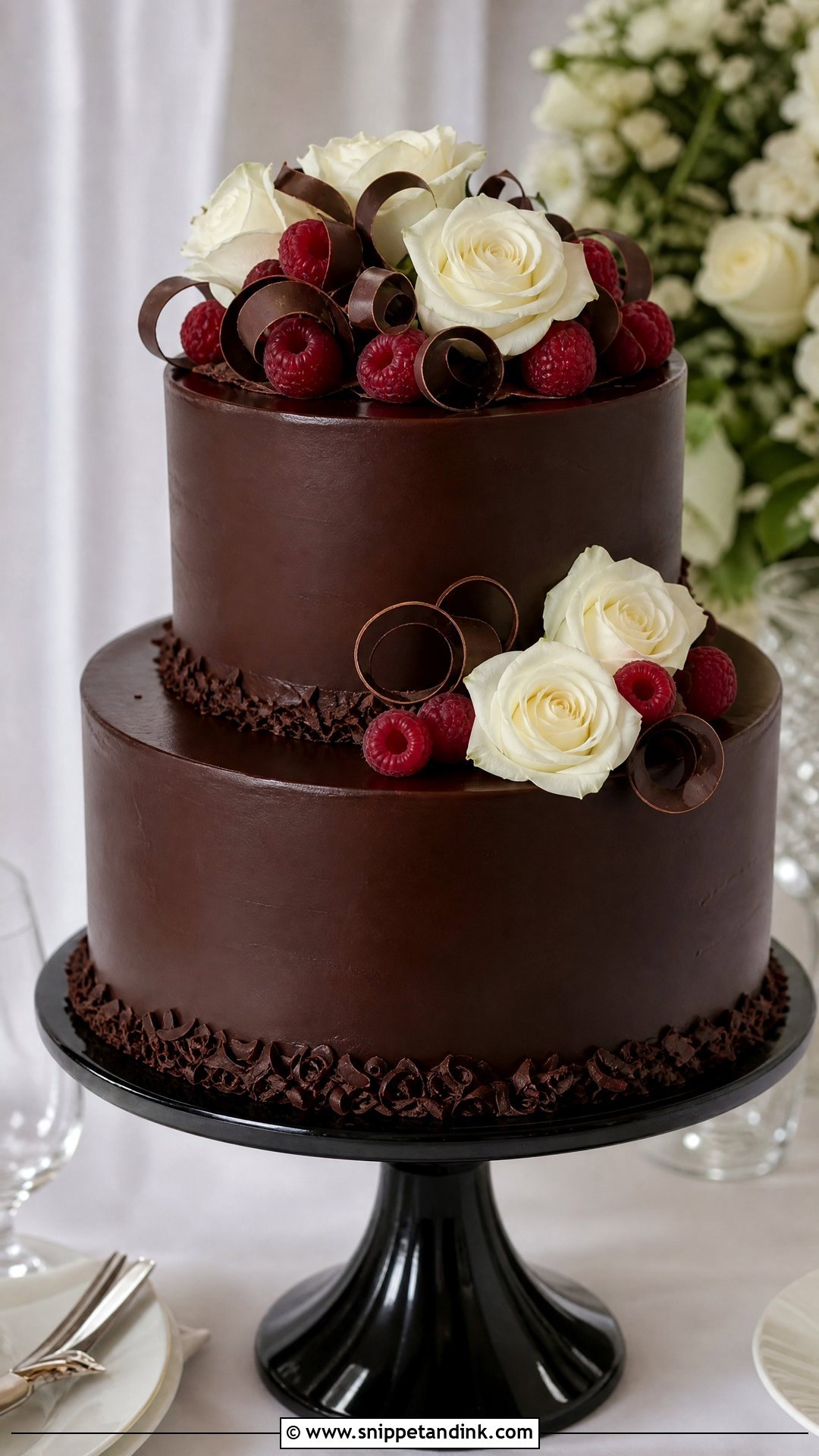
Rich and a little dramatic, a two tier chocolate wedding cake can still look clean. Dark ganache sets firm and holds sharp edges, which is why it’s my preferred coating for chocolate cakes; chocolate buttercream is softer and more classic. White flowers, chocolate curls, berries or a thin drip are all it needs. Dark frosting with pale flowers photographs with real contrast, which suits evening light. Chocolate sponge with espresso, raspberry, salted caramel or vanilla cream filling keeps it interesting.

15. Two Tier Square Wedding Cake
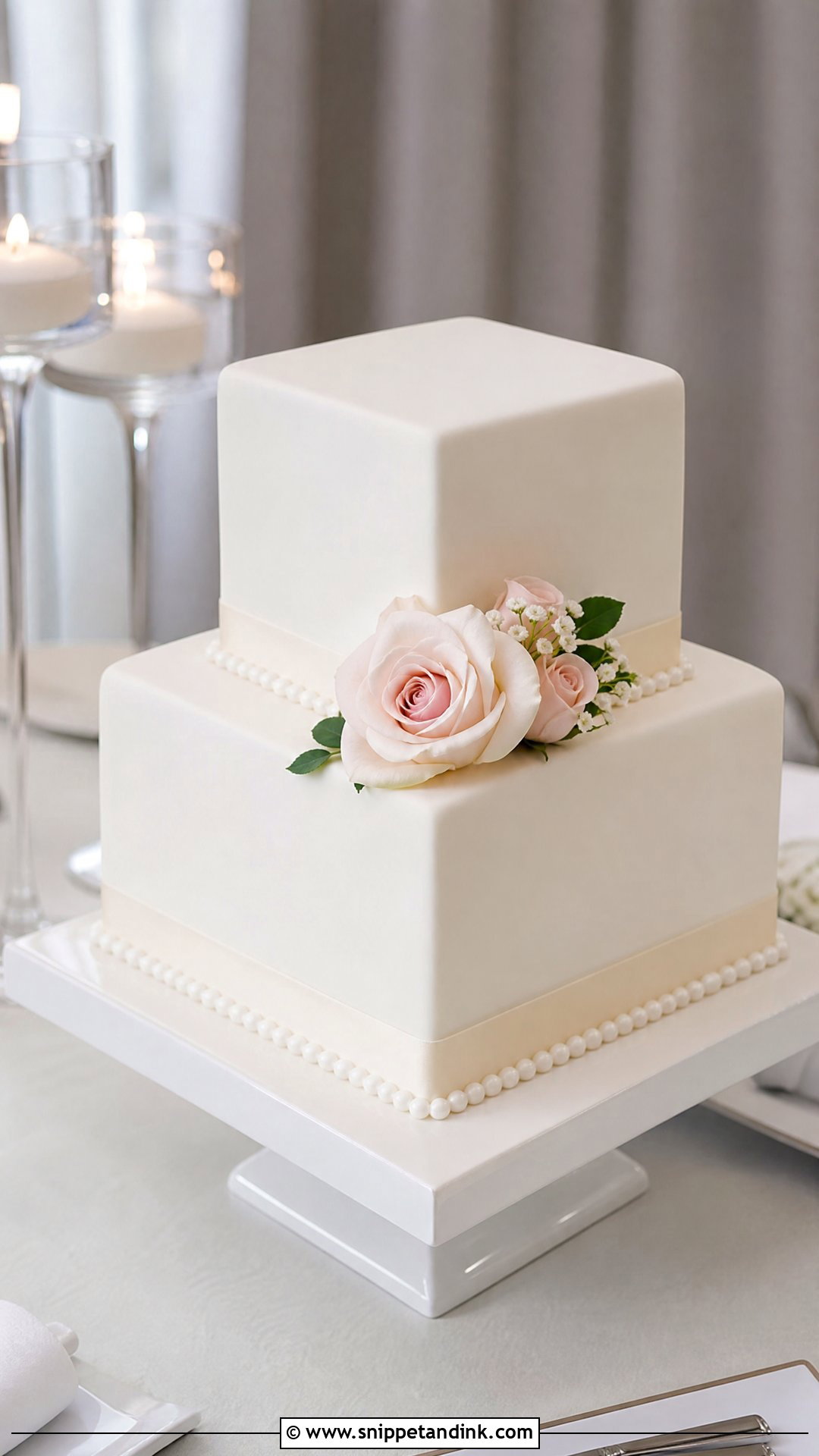
Square tiers look architectural even in plain white, but they’re unforgiving. Corners are the hardest part of any cake to finish sharply, so smooth fondant or very precise buttercream is a must, and they often cost a bit more than rounds. One flower cluster, a thin ribbon, a pearl border or a small gold accent is enough. Aligned tiers look classic; a slight offset or rotation looks more contemporary. Modern venues and city weddings suit it best.
16. Two Tier Round Wedding Cake
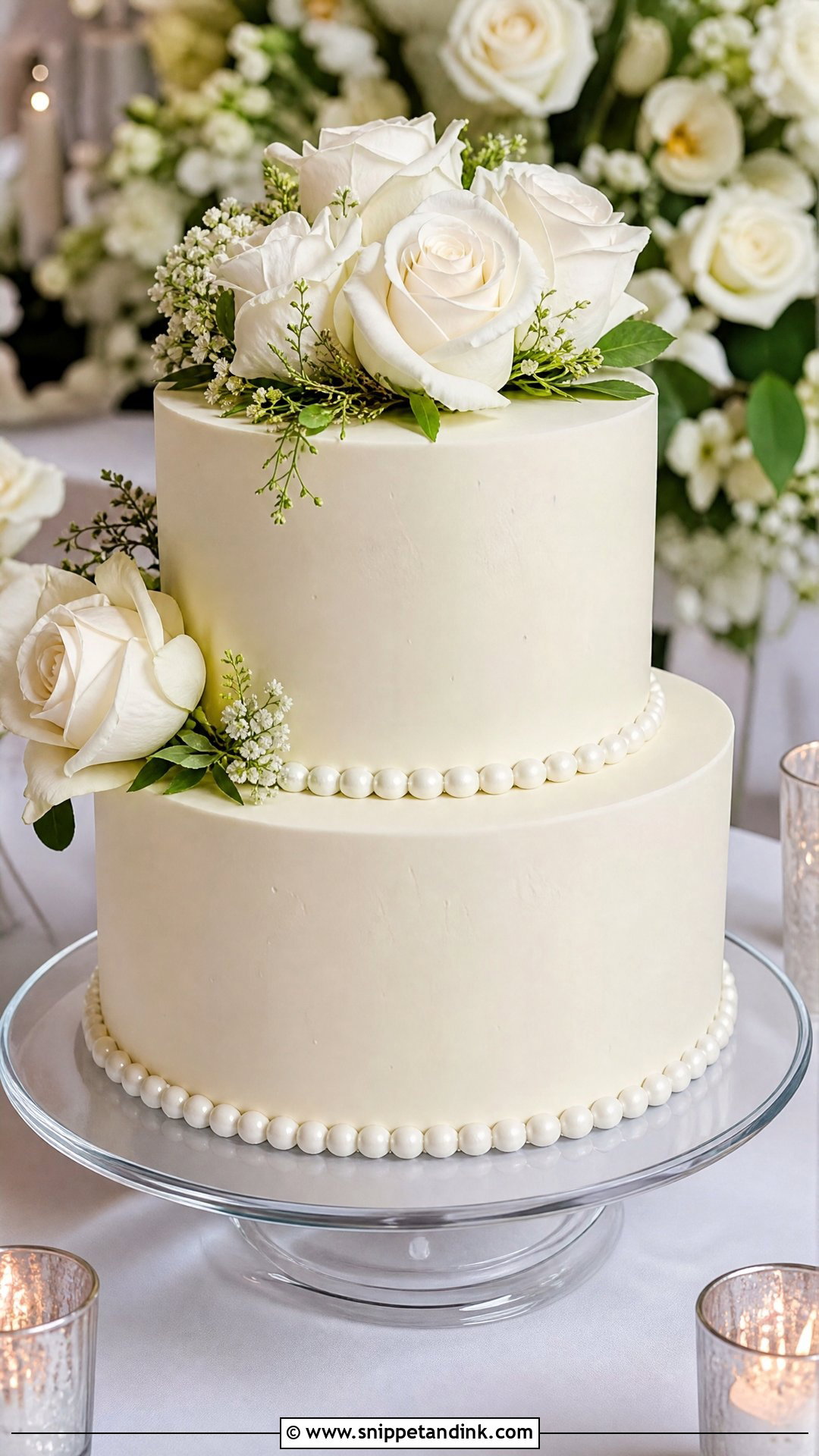
Round is the default for good reasons. A two tier round wedding cake can lean rustic, modern, romantic or classic depending on the finish, and most bakers can produce it more efficiently than other shapes, which helps the budget. Smooth ivory buttercream, neat stacking and one accent of flowers, greenery or pearls is all it takes. Vanilla, almond, lemon, red velvet and chocolate all work in this format. It won’t date in your photos.
17. Two Tier Watercolor Wedding Cake
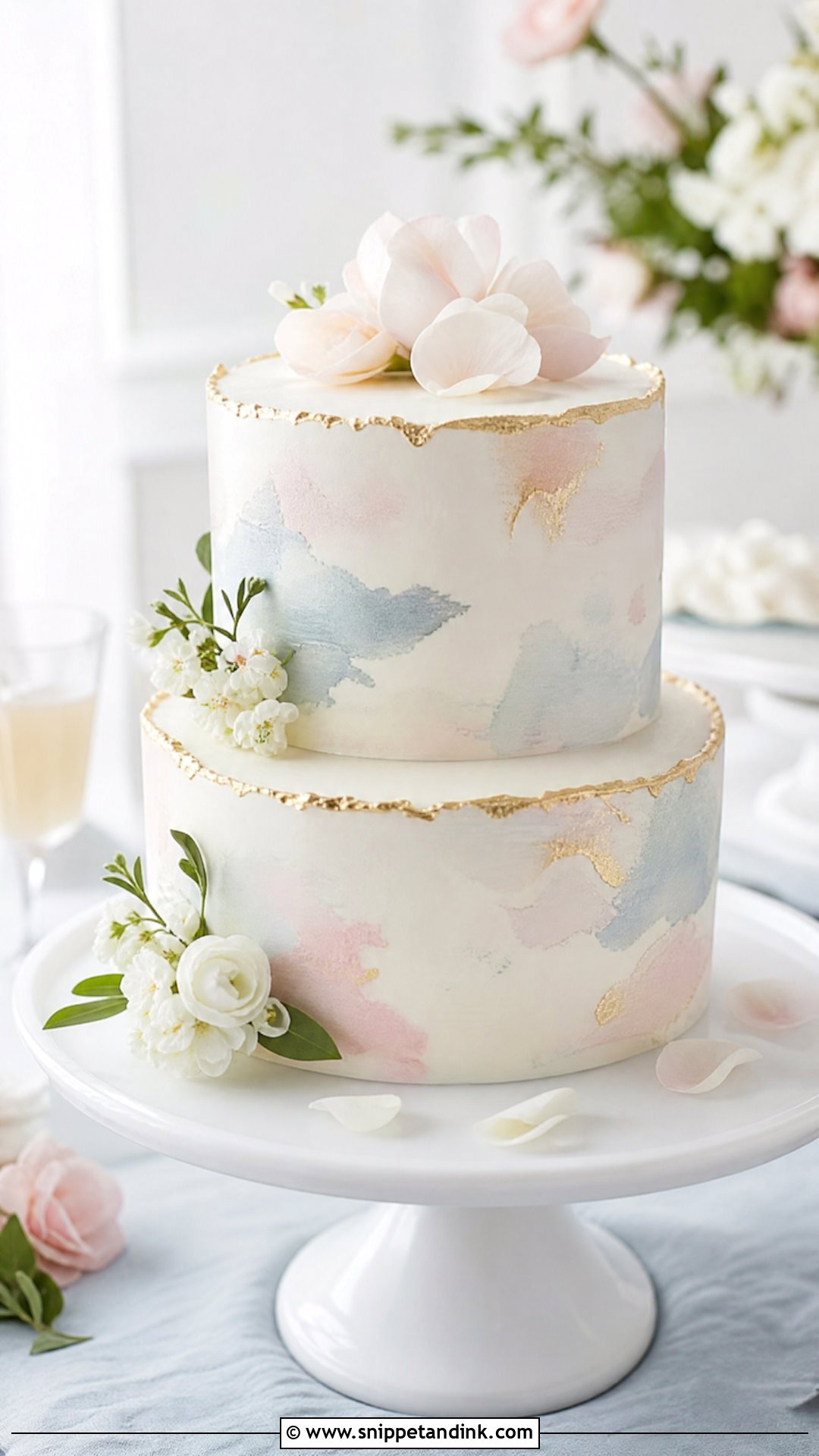
Watercolour finishes are painted or blended across the frosting in pale washes of blush, blue, lavender, peach or sage. I’d keep to one colour family; two competing washes on small tiers can look muddy. Leave it bare for an artistic feel, or add a few flowers or a fine gold edge. Garden and beach receptions suit it, as do romantic indoor rooms. Vanilla, citrus, almond and berry sponges fit the gentle mood.
18. Two Tier Dried Flower Wedding Cake
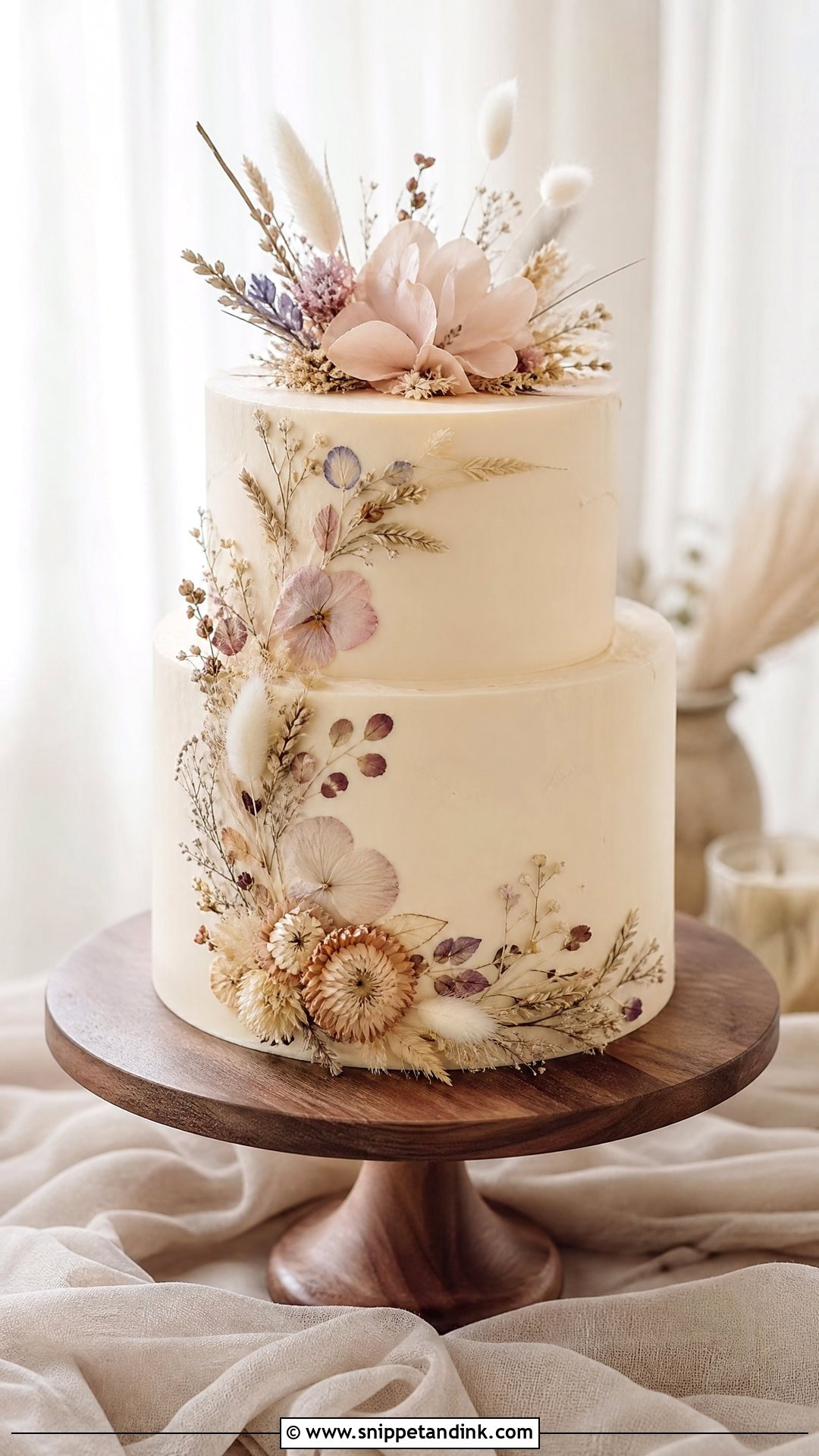
Dried flowers give a natural, textured look that won’t wilt. A dried flower wedding cake on two tiers can use pressed petals, bunny tails and small grasses in beige, blush, caramel and muted peach, against white or ivory buttercream. Many dried flowers are sprayed or dyed, so they shouldn’t touch the frosting directly; your baker should tell you which pieces sit on barriers. It suits boho, outdoor and autumn weddings, though it works year-round. Keep the arrangement airy rather than packed.
19. Two Tier Fresh Fruit Wedding Cake
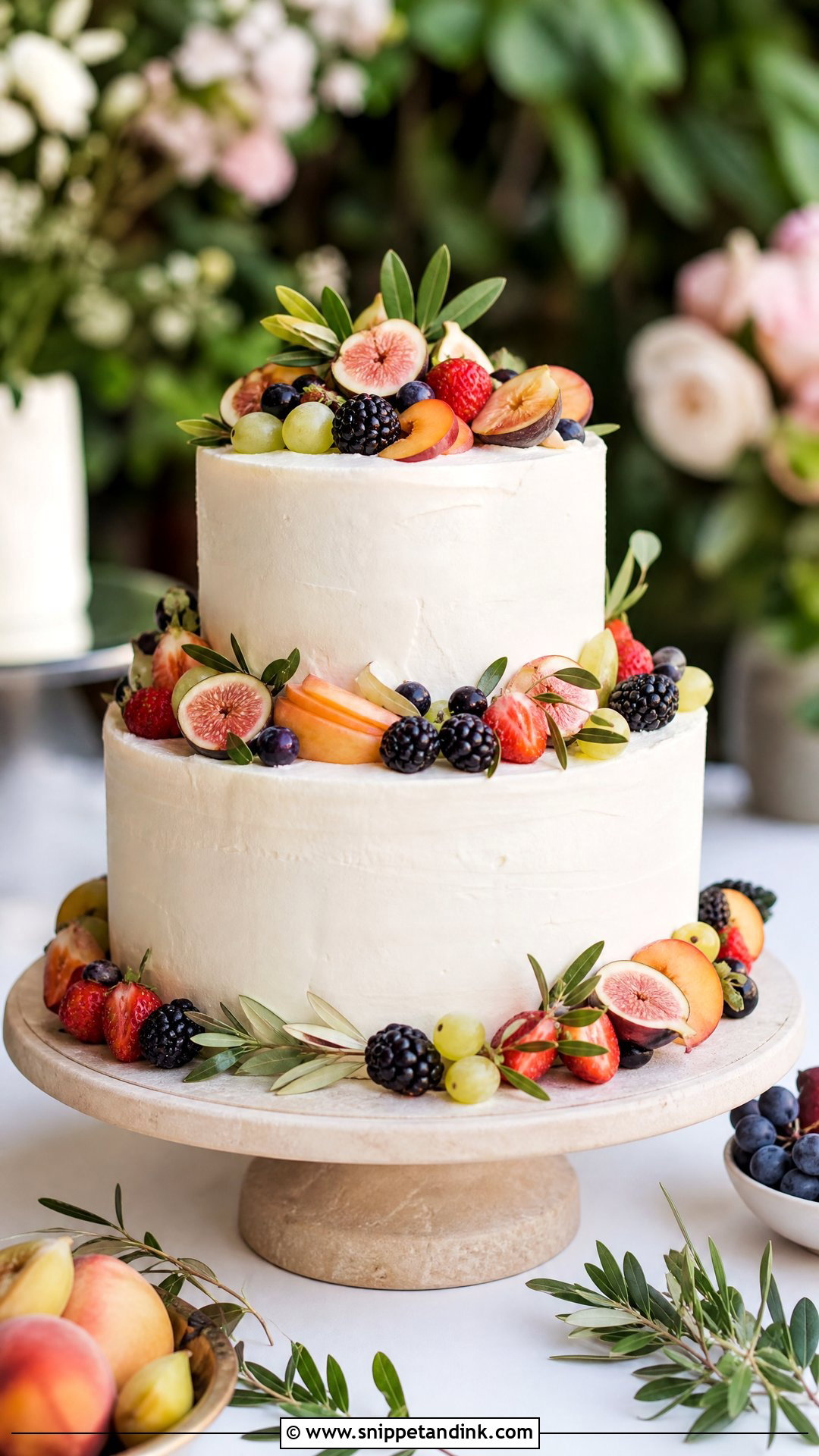
Fruit lets you build the cake around what’s in season. Citrus slices, figs, grapes, peaches, berries and cherries can all work; I suggest choosing two or three and repeating them on both tiers so it looks planned. Whipped frosting and mascarpone cream taste lovely but must stay chilled, so for a longer display I’d use a light buttercream. Vanilla, olive oil cake, lemon, almond and honey sponges all pair well. Space the fruit evenly and balance the colours across both tiers.
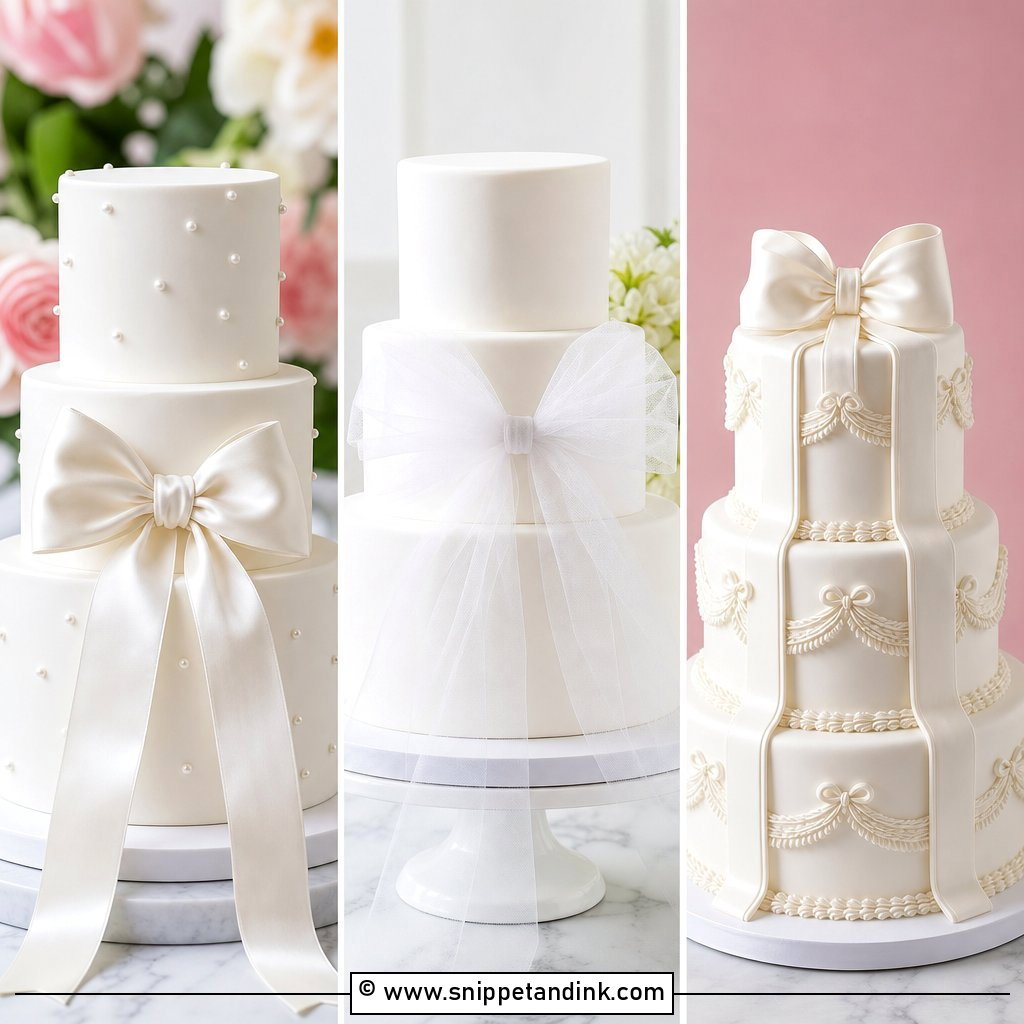
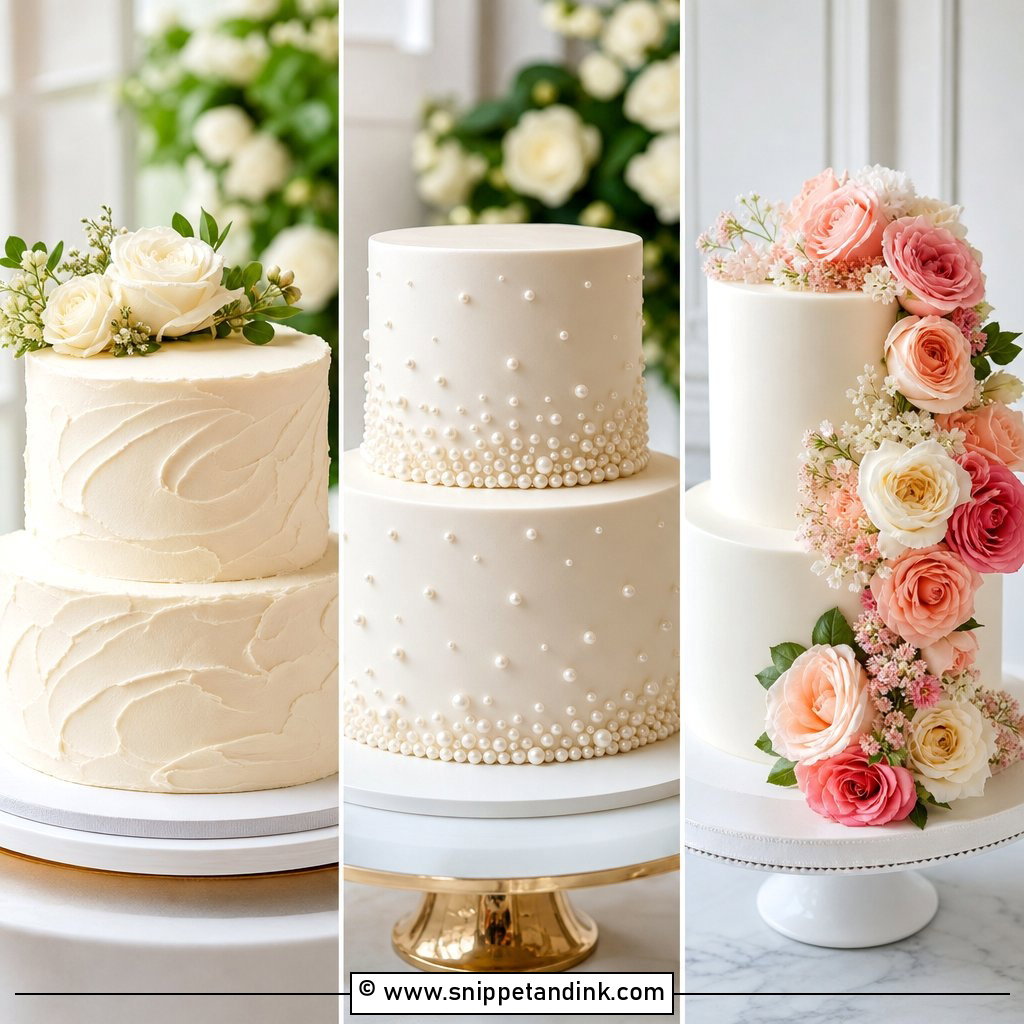


20. Two Tier Minimalist Wedding Cake
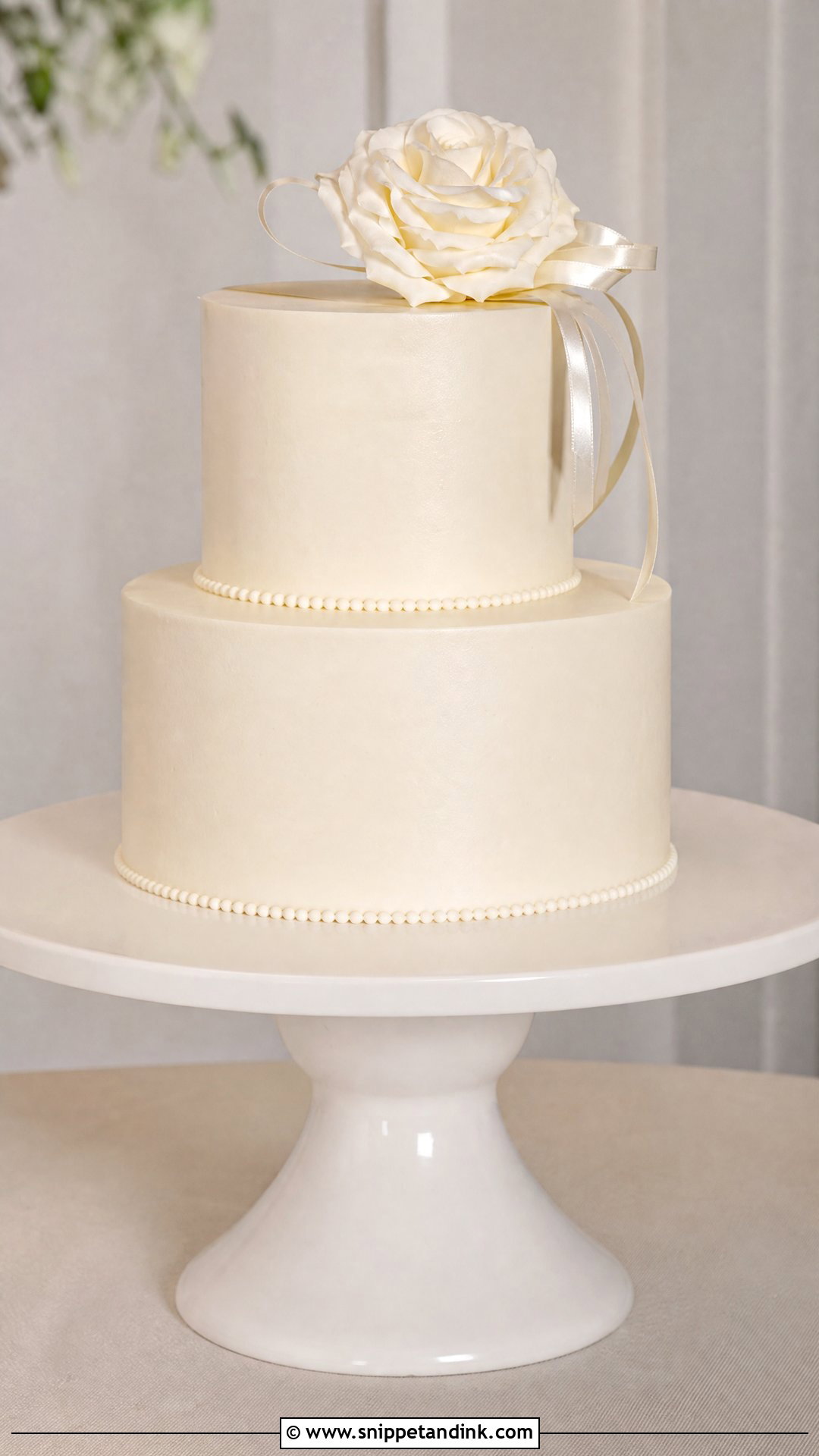
A minimalist cake is pure finish: smooth white buttercream, sharp edges and one detail such as a single flower, a ribbon or a small pearl border. It matches modern stationery, simple flowers and a neutral palette, and it doesn’t crowd a small room. Choose flavours most guests will enjoy: vanilla bean, almond, lemon or chocolate. With nothing to hide behind, the quality of the edges and the stand you choose matter more here than anywhere else on this list.
Where the Cost Hides in a Simple Cake
A plain-looking cake isn’t always the cheapest. Prices vary a lot by region and baker, but labour drives most of the difference, and some simple-looking finishes are slow to make. Sharp, perfectly smooth buttercream edges take longer than a textured finish. Square tiers take longer than round. Hand-made sugar flowers can take hours each. Fondant adds material and time. Delivery, setup, stand hire and any venue cutting fee sit outside the cake price altogether, so ask for them on the quote. If the number comes back high, swapping a smooth finish for texture or sugar flowers for fresh is usually the quickest saving.
Cutting Two Tiers Neatly
Caterers usually handle this, but if a friend or family member is serving at a smaller wedding, the method matters. Lift the top tier off on its board first and set it aside, then pull out the dowels from the bottom tier. On a round tier, cut a circle about two inches in from the outside edge, then slice that outer ring into fingers about an inch wide. Cut the next circle two inches further in and repeat until you reach the centre. A square tier is simpler: cut straight across in two-inch rows, then into one-inch pieces. A long knife dipped in hot water and wiped between cuts gives clean slices.
Start With the Mood, Then Settle the Finish
Two tiers can carry a reception as a true centrepiece when each detail has a reason to be there. Start with the mood of the wedding and match the finish to it: buttercream for softness, fondant for clean lines. Then add one personal element, whether that’s flowers, greenery, pearls, fruit, ribbon or gold leaf. Give the inside as much thought as the outside, too. Classic white, soft blush, fresh berries or a minimal finish, the right two-tier cake leaves room for your own taste without needing anything extra.
You'll Like These Ideas:










Leave a Reply